




New report sustains need for multiplatform approach for brands, even as nano- and micro-influencers are emerging as the backbone of Asia’s influencer economy.
New report sustains need for multiplatform approach for brands, even as nano- and micro-influencers are emerging as the backbone of Asia’s influencer economy.
By John Eiron R. Francisco
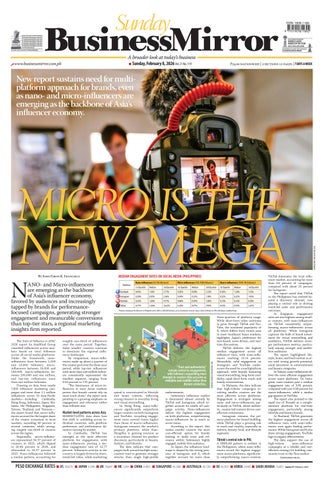
NANO- and Micro-influencers are emerging as the backbone of Asia’s influencer economy, favored by audiences and increasingly tapped by brands for performancefocused campaigns, generating stronger engagement and measurable conversions than top-tier stars, a regional marketing insights firm reported.
The State of Influence in APAC 2026 report by AnyMind Group classified influencers across markets based on total followers across all social media platforms. Under the framework, nanoinfluencers have between 1,000 and 10,000 followers, microinfluencers between 10,000 and 100,000, macro-influencers between 100,000 and one million, and top-tier influencers more than one million followers.
Drawing on data from nearly 7,000 influencer marketing campaigns and more than 1.1 million influencers across 10 Asia-Pacific markets—including Cambodia, Hong Kong, Indonesia, Japan, Malaysia, the Philippines, Singapore, Taiwan, Thailand, and Vietnam— the report found that micro-influencers account for the largest share of the creator ecosystem in most markets, exceeding 40 percent in several countries, while averaging roughly one-third of creators across the region.
Regionally, micro-influencers represented 34.37 percent of creators in 2023, which dipped to 30.46 percent in 2024, and rebounded to 33.57 percent in 2025. Nano-influencers followed a similar pattern, accounting for
roughly one-third of influencers over the same period. Together, these smaller creators continue to dominate the regional influencer landscape.
By comparison, macro-influencers made up about a quarter of the creator pool over the three-year period, while top-tier influencers with more than one million followers consistently represented the smallest segment, ranging from 6.42 percent to 7.91 percent.
“The dominance of micro-influencers in most Asian markets proves that brands cannot rely on mass reach alone,” the report said, pointing to a growing emphasis on engagement and relevance rather than follower size.
Market-level patterns across Asia
MARKET-LEVEL data show how this shift is unfolding across individual countries, with platform preferences and performance dynamics varying by market.
In Cambodia, TikTok has emerged as the most effective platform for engagement, with nano-influencers posting a median engagement rate of 13.77 percent. Influencer activity in the country is largely driven by short, trend-led video, while marketing





spend is concentrated in lifestyle and home content, reflecting strong interest in everyday living and visual storytelling.
In Hong Kong, nano-influencers significantly outperform larger creators on both Instagram and YouTube, recording engagement rates several times higher than those of macro-influencers. Instagram remains the market’s primary platform, while XiaoHongShu is gaining traction as a secondary channel for product discovery, particularly in beauty, fashion, and lifestyle.
The data indicate that campaigns built around multiple nanocreators tend to generate stronger returns than single high-profile
“Trust and authenticity” remain central to engagement, with followers responding more strongly to creators they perceive as relatable and credible rather than distant celebrities.
endorsements.
Indonesia’s influencer market is dominated almost entirely by TikTok and Instagram, which together account for nearly all campaign activity. Nano-influencers deliver the highest engagement on both platforms, outperforming macro-influencers by as much as seven times.
According to the report, this makes smaller creators the most cost-efficient option for brands looking to build trust and relevance within Indonesia’s highly engaged, mobile-first audience.
In Japan, the influencer landscape is shaped by the strong presence of Instagram and X, which together account for more than
three-quarters of platform usage.
While short-form video continues to grow through TikTok and YouTube, the sustained popularity of X, which differs from trends seen in most Southeast Asian markets, highlights Japan’s preference for text-based, news-driven, and realtime discussions.
TikTok delivers the highest median engagement across all influencer tiers, with nano-influencers reaching 13.14 percent. Meanwhile, solid engagement on Instagram and YouTube underscores the need for a multiplatform approach, with brands balancing visual storytelling, long-form credibility, rapid short-form reach, and timely conversations.
In Malaysia, the data indicate that high-volume campaigns involving smaller creators are the most effective across platforms. Engagement is strongest among nano- and micro-influencers, particularly on TikTok, where authentic, creator-led content drives costeffective conversions.
Instagram remains the primary platform for brand building, while TikTok plays a growing role in reach and virality, especially in fashion, beauty, food, and lifestyle segments.
Tiktok’s central role in PHL
A SIMILAR pattern is evident in the Philippines, where nano-influencers record the highest engagement across platforms, significantly outperforming macro-creators.
TikTok dominates the local influencer market, accounting for more than 64 percent of campaigns, compared with about 25 percent for Instagram.
The report noted that TikTok in the Philippines has evolved beyond a discovery channel, now playing a central role in driving trend-led sales and performance outcomes.
In Singapore, engagement rates are also highest among smaller creators, with nano-influencers on TikTok consistently outperforming macro-influencers across all platforms. While Instagram captures the bulk of brand investment for visual storytelling and aesthetics, TikTok delivers stronger performance metrics, particularly among younger and mobilefirst audiences.
The report highlighted lifestyle, home, and food content as areas with strong growth potential, amid saturation in entertainment and beauty categories.
In Taiwan, nano-influencers deliver the most efficient engagement across major platforms. On Instagram, nano-creators post a median engagement rate of 3.82 percent, compared with just 0.98 percent for macro-influencers, while a similar gap appears on YouTube.
The report also pointed to the rapid rise of Threads as a complementary platform for real-time engagement, particularly among lifestyle and beauty brands.
In Thailand, TikTok generates the highest engagement across all influencer tiers, with nano-influencers once again leading performance. While Instagram and X also show strong engagement, YouTube lags in organic effectiveness.
The data support the use of high-volume nano-influencer campaigns as a reliable and costefficient strategy for building community trust in the Thai market.
By Bloomberg News
WITH ample cash but fewer investment options, Chinese speculators have fanned a rally in global metals prices, underscoring just how difficult it is for authorities to channel capital into the real economy.
International prices of base and precious metals, which are heavily keyed to demand in the world’s biggest buyer, went stratospheric last month. Copper, gold and silver all hit record highs, and activity on Chinese futures markets has soared.
“We are seeing rocketing short-term trading volumes in silver, copper, aluminum, nickel, tin and steel wire rod futures markets in the last few months, likely a result of surplus liquidity with a dearth of attractive options elsewhere,” said Duncan Wrigley, chief China economist at Pantheon Macroeconomics Ltd.
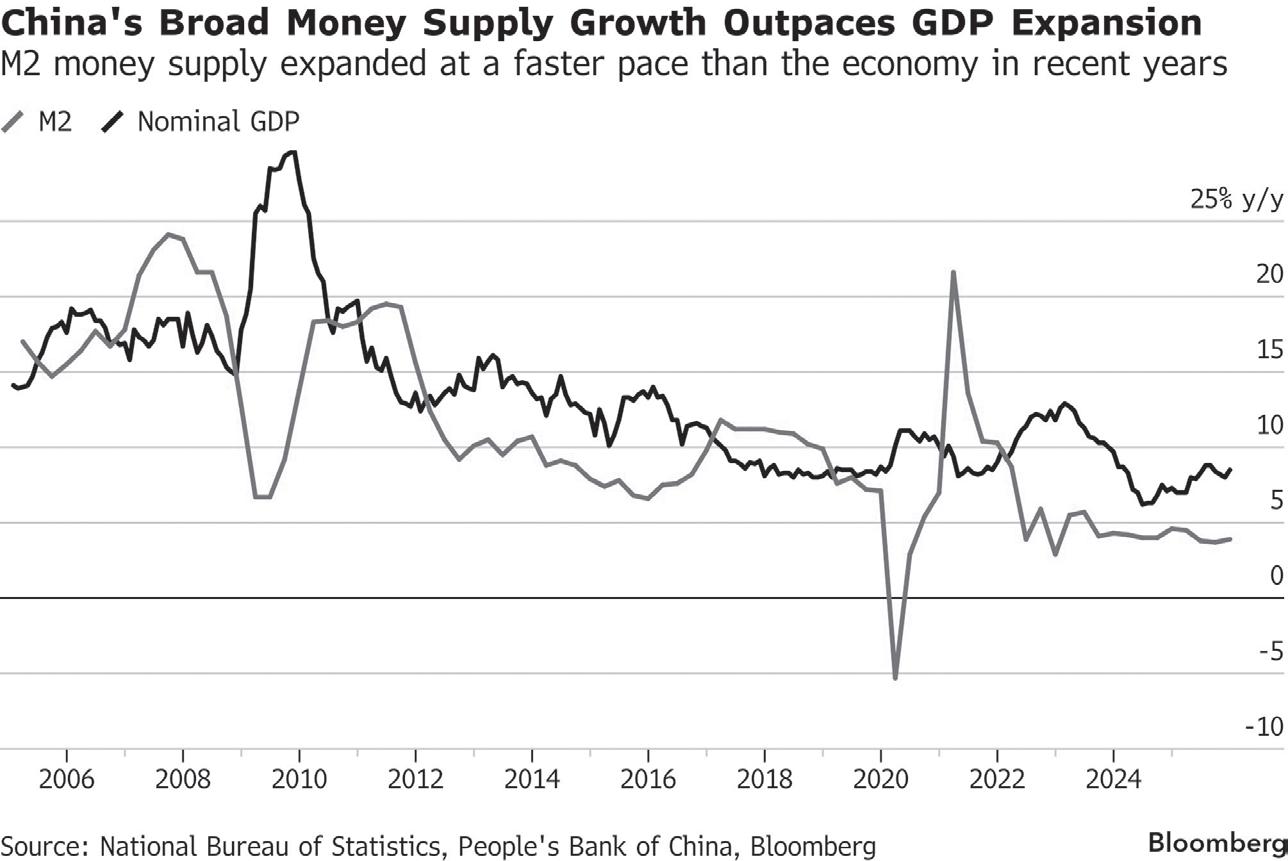
Easy money has helped underpin the economy for years, but the People’s Bank of China is being forced to do more to prop up sluggish growth. The M2 measure of money supply expanded 8.5% in
December from a year ago, a much faster rate compared with the 3.9% rise — feeble by Chinese standards — in nominal gross domestic product recorded in the last quarter of 2025.
Investment in more economically fruitful activities such as retail spending and capital expenditure hasn’t kept pace. Households have been penny-pinching on their day-to-day shopping since the pandemic. Chinese banks last year extended the least amount of new loans since 2018. Fixed-asset investment — covering buildings, machinery and infrastructure — recorded the first annual contraction on record.
“The PBOC can only ensure ample banking system liquidity and guide down interest rates, but it can’t magic up attractive investment options in the real economy,
and so people are chasing returns in the financial markets,” Wrigley said.
Some of the sting has come out of metals markets in recent days, although prices for key items like copper and gold are still near record highs.
China’s worsening economic conditions have amped up calls for more policy support, including monetary measures such as reducing the reserve requirement ratio at banks or outright cuts to interest rates. But the PBOC might prefer to pause a little if it judges liquidity to be more than sufficient and giving rise to asset bubbles.
Ultimately, though, higher raw materials prices should help policymakers seeking to reflate the economy.
But China’s present economic conditions — weak consumption, deflation and industrial overcapacity — don’t support the run-up in prices. Factories that rely on metals to make appliances, phones and cars have scaled back purchases rather than get crushed by the extra costs, leaving real-world demand languishing and disconnected from futures markets.
Financial investors are looking past these factors and responding to long-term justifications for holding commodities, whether that’s currency debasement for

precious metals, the green transition for lithium, or demand from artificial intelligence for tin. Metals like copper and aluminum are also in short supply globally, compounding the fervor.
Speculative fervor
THE scale of the surfeit of cash is part of the problem. Roughly $7 trillion in time deposits held at banks come due this year, a mountain of savings parked by households after years of crisis in the
property sector and lackluster returns from the stock market.
But that money’s being freed up just as the menu of attractive investment choices is narrowing, offering an opportunity for precious metals in particular to shine.
Real estate, once the go-to place to put cash, is now viewed as loss making, said Zhaopeng Xing, senior China strategist at ANZ Bank China Co. Interest rates on bank deposits are meager, equities markets face pressure from state
intervention, and bond yields are subdued, he said.
“Against this backdrop, gold and silver stand out as rare investment options delivering attractive returns,” he said.
Gold’s prestige and historical allure make it a stickier investment for citizens.
“In China, gold is not merely an abstract hedge or a portfolio line item,” said Tommy Xie, head of Greater China research and strategy at Oversea-Chinese Banking Corp. “It is a cultural asset, a store of value, and a form of household savings. This cultural dimension has long underpinned Chinese demand for gold.”
The number of onshore financial products invested in gold more than doubled in two years to over 300 by the end of 2025, according to registrations on the Shanghai Gold Exchange. The value of that gold stood at 243 billion yuan, an increase of more than eightfold — though still a drop in the bucket compared to the 180 trillion yuan estimated for China’s total financial products market.
(With assistance from Jessica Zhou and Martin Ritchie / Bloomberg)
Continued from A1 how consumers discover products, make purchase decisions, and participate in online communities.
Meanwhile, in Vietnam, TikTok delivers the strongest engagement across every influencer tier, while nano-influencers on Facebook also outperform larger creators due to closer personal connections with their audiences.
Fashion and beauty account for nearly half of total influencer spending, reflecting a market where visual inspiration and creator validation play a key role in purchase decisions.
Relatability fuels engagement MOREOVER , audience behavior continues to reinforce the shift toward smaller creators. “Trust and authenticity” remain central to engagement, with followers responding more strongly to creators they perceive as relatable and credible rather than distant celebrities.
Beyond trust, entertainment value, practical advice, and inspiration also shape audience loyalty, as creators increasingly influence

Content trends reflect these preferences. Influencers continue to focus largely on entertainment, fashion and beauty, and lifestyle and home, which remain the most active categories across the region.
While entertainment and fashion content have seen modest declines in share, food and drink as well as lifestyle and home content have posted steady gains, pointing to growing demand for content rooted in everyday experiences, consumption, and practical living.
From influence to commerce
INFLUENCER marketing in Asia is increasingly moving closer to commerce, as campaigns shift from brand awareness toward salesdriven and measurable outcomes, with creators playing a more direct role in shaping purchase decisions, the report said.
It noted that creator-owned brands are gaining traction across the region, while some Southeast Asian marketers are returning to storytelling-led content to meet growing audience demand for emotional connection and authenticity. At the same time, consumer preferences are reinforcing the shift toward nano- and micro-influencers, particularly in live commerce formats where trust and relatability are critical.
While virtual influencers and AI-generated avatars are becoming more visible, the report cautioned

that concerns around credibility and ethics persist, with audiences increasingly expecting clear disclosure of sponsored content. On the platform front, commerce-enabled features continue to expand. YouTube Shopping is gaining ground across Southeast Asia as creators tag products directly in videos, while connected TV formats are beginning to blend long-form content with shopping experiences on smart TVs. Short-form video remains the primary discovery tool, while longer, niche content is emerging as a key driver of sustained engagement and monetization.
Transparency concerns over AI THE report also flagged rising transparency concerns around AI-driven and affiliate-based campaigns.
“Influencer marketing in Asia is rapidly integrating into the commerce ecosystem,” the report said, noting that success will increasingly depend on long-term creator partnerships rather than one-off campaigns, particularly with nanoand micro-influencers that are able to build trust and drive conversions within niche communities. It added that live commerce and shoppable content are expected to mature further, especially on platforms such as TikTok Shop and XiaoHongShu, effectively positioning social platforms as direct sales channels.
While artificial intelligence will play a growing role in content creation and optimization, the report emphasized that human authenticity remains critical, particularly in high-consideration categories. Brands, it said, will need modular, cross-platform content strategies that allow core creative assets to be adapted efficiently for formats such as Reels, Shorts, and other emerging video products.
“Metrics will [continue to] shift from engagement to revenuelinked KPIs [Key Performance Indicators],” the report said, adding that influencer activity will be measured more directly against sales and return on investment.
“In short, influence is becoming transactional,” the report said, noting that brands that build integrated, locally nuanced creator ecosystems are expected to lead the market in 2026 and beyond.
Editor: Angel R. Calso
Sunday, February 8, 2026

By Ben Otto, Rosalind Mathieson, Abhishek Vishnoi and Echo Wong
AS Indonesia’s stocks plummeted last week, a group of executives thousands of miles away were starting to panic for a different reason.
Reports emerged that Danantara, a sovereign wealth fund that reports directly to President Prabowo Subianto, was considering a takeover of one of Indonesia’s largest gold mines. Key investors of Jardine Matheson Holdings Ltd., a Hong Kong-based conglomerate that controlled the mine, were getting anxious, according to people familiar with the situation. The investors wanted Jardine to answer a simple question: Do you still own the gold mine or not?
The episode underscores the quandary facing investors looking at Southeast Asia’s biggest economy: Is the “New Indonesia” envisioned by former leader Joko Widodo—one that would propel the nation into the ranks of the world’s top five economies by 2045—still on track?
For the moment, the answer remains unclear. On the one hand, regulators reacted quickly to MSCI Inc.’s warning that Indonesia may be relegated to frontier-market status, halting a two-day market meltdown and reassuring many money managers about the nation’s long-term prospects. But at the same time, the threatened gold mine seizure suggests that Prabowo may yet find himself on a collision course with foreign investors and Indonesia’s most influential tycoons. Moody’s Ratings on Thursday lowered its outlook on the country’s credit rating to negative, citing concerns over policy stability under Prabowo.
“Overall I see the state as more centralized and predatory under Prabowo,” said Eve Warburton, research fellow at the Coral Bell School of Asia Pacific Affairs at the Australian National University and author of Resource Nationalism in Indonesia: Booms, Big Business and the State. “Understandably, the domestic private sector is anxious and foreign investors are spooked.”
Having waited in the wings for decades, including as a military leader under the late dictator Suharto, Prabowo is now in a hurry. In power for a little more than a year, the 74-year-old former special forces commander is centralizing control, squeezing tycoons,
expanding the military’s role in government and putting confidants into key roles, including installing his nephew at the central bank.
After deadly protests broke out last year over inequality and the cost of living, he responded by firing his finance minister, the wellregarded technocrat Sri Mulyani Indrawati, and elevating a loyalist more willing to loosen the fiscal strings. His government last year came close to hitting a long-held fiscal ceiling imposed after the 1997 Asian Financial Crisis.
For Prabowo, the changes are necessary. The goal of Danantara is to harness Indonesia’s wealth, make state-run companies more efficient and provide funds to invest in industries of the future. Land seizures are all about enforcing the law.
Speaking at the World Economic Forum in Davos last month, Prabowo railed against “robber barons” and “greednomics” while vowing to lift up poorer citizens who live in shacks with no clean water or toilets. He has already begun targeting the nation’s tycoons and billionaires, including considering a new law that would allow authorities to seize assets of individuals allegedly involved in corruption without waiting for a criminal process to prove their guilt.
“Let me say this clearly: There is no investment climate without the certainty of equitable rule of law,” Prabowo said. “Nobody will come in to invest in a country that’s lawless or of dubious legal tradition.”
The Martabe gold mine in Sumatra, Indonesia’s westernmost main island, is just the latest bellwether for where Indonesia might be heading. The communications have been confusing throughout, and it remains unclear how the dispute will be resolved.
Within Danantara, an agency created by Prabowo last year that brought Indonesia’s state-owned enterprises under one roof, a debate has been brewing over the merits of obtaining the gold mine. The fund’s mining unit has yet to communicate plans internally to initiate a takeover, according to one person familiar with its inner workings, noting there is
some concern among Danantara executives that a seizure would hurt investor sentiment. Jardine’s executives initially told institutional investors they didn’t know the status of the gold mine and were racing to find out, according to people familiar with the matter. Senior officials at Danantara eventually told Jardine that the sovereign wealth fund had no intention to take over the mine, but they needed to wait for guidance from Prabowo before formally responding, one of the people said, asking not to be identified discussing private conversations.
Prabowo’s communications office declined to comment and referred questions to Danantara, which didn’t respond to requests for comment. Asked for comment, Jardine said Thursday that its subsidiaries hadn’t received any formal communication from Prabowo’s government about the status of the mine. Discussions are ongoing with Indonesian regulators but next steps are still to be determined, the company added.
Although Indonesia has many things going for it—a young and large population, relatively high levels of consumption and abundant resources like nickel, coal and gas—the negatives are adding up both for companies making investments and traders looking for alternatives to the dollar.
Amid one of the biggest selloffs in Indonesia in decades, officials in Jakarta last week raced to stem the bleeding: They vowed to quickly address MSCI’s concerns over the transparency of shareholding structures, including by doubling the free float to 15%—a figure on par with Thailand though below the 25% in India. The heads of the stock exchange and Financial Services Authority resigned.
The flurry of activity worked, at least for a bit, with the index appearing to halt its freefall despite large swings in recent days. Market players noted that the MSCI move mainly affected equities, without much impact on the currency and bonds, as Indonesia’s investmentgrade credit ratings remain intact, even as the Moody’s outlook cut shows heightened concerns.
But they also said the index provider had a point. The problems had been festering for years, with regulators taking little action to make changes before MSCI stepped in with a statement. Now Indonesian officials have until May to prevent a downgrade, and many investors are hopeful that the episode will spur reforms that ultimate boost market sentiment in the long term.

“If they don’t shape up, they will have lost a big opportunity,” said Greg Lesko, portfolio manager at Deltec Asset Management, citing Indonesia’s demographics and the global rate cycle as positives. “Hopefully the MSCI was a wakeup call.”
That sentiment was echoed even by key officials with Danantara. Pandu Sjahrir, its chief investment officer, said at an economic forum last week that MSCI had long been clear about what the overseers of Indonesia’s stock market need to do.
“I’ll leave it up to the regulators to decide how they want to work on this,” he told an audience at the Grand Ballroom of the Ritz Carlton Pacific Place, across the street from the stock exchange. “I think the information is accurate, and you can’t blame anyone. I think what MSCI did was right.”
The swift reaction by Prabowo’s government to the MSCI statement stood in stark contrast to the confusion over the land seizures. His government last year confiscated an area the size of Switzerland, describing the land as being used illegally. Prabowo last month suggested he could double those holdings in 2026 to fight what he called “hundreds of illegal mines.”
In Davos, the president made no apologies.
“Perhaps these rapacious socalled entrepreneurs feel that they need not recognize the sovereignty of the Indonesian government,” Prabowo said.
The Martabe mine, which is controlled by Jardine through subsidiary PT Astra International, is among 28 operations that had licenses revoked for alleged environmental damage in the wake of devastating floods in December that killed more than 1,100 people in Sumatra. Jardine said Thursday that government investigations into whether the mine impacted flooding are still ongoing.
The dripfeed of statements on
government actions regarding the Martabe mine are adding to the confusion, along with Danantara’s role in the episode. The plan for a new company called Perminas to take over the gold mine slipped out when Dony Oskaria, Danantara’s chief operating officer, made the disclosure last week to reporters at a public forum.
At a business forum in Jakarta this week, Finance Minister Purbaya Yudhi Sadewa—who took the job in September—said MSCI’s warning was good for Indonesia. He noted the nation’s fiscal prudence compared favorably to countries including the US and also called Prabowo’s government “very fair,” saying the revocation of permits for some mining companies was a step toward fostering a positive investment climate.
“It’s not the end of the game,” Purbaya said, referring to the disputed gold mine. “Jardine can always complain, or complain to our government, as long as they conduct their business properly.”
Separately, Hashim Djojohadikusumo, Prabowo’s younger brother and one of his closest advisers, said Tuesday that the 28 companies could appeal the decisions in the courts. In particular, he noted, firms with operations unrelated to floods should have them restored.
“The president has said several times, including to me, that he doesn’t want a miscarriage of justice,” Hashim said. “If the company objects, they should immediately file an objection. I think that’s absolutely right.”
PT Agincourt Resources, which directly operates the Martabe mine, didn’t respond to requests for comment. PT United Tractors, the listed unit that controls Agincourt, said late Thursday in a response to a stock exchange inquiry that Agincourt hadn’t received any information regarding the proposed transfer of the mine to Perminas. Astra International
didn’t respond to a request for comment. Indonesia has refrained from outright cancellation of contracts since 1998, when Suharto’s order to suspend all infrastructure projects led to a prolonged international legal battle over a power plant that involved US investors, according to Kevin O’Rourke, a principal at Jakarta-based consultancy Reformasi Information Services, who has written about the country’s business climate for decades.
“If the government does indeed proceed with unilateral revocation of Agincourt’s contract, this would inevitably reverberate in all economic sectors and further hamper prospects for valuable FDI,” O’Rourke said.
The episode also lands at a moment investors are watching a broader set of signals about how power is being exercised—from court cases that draw international attention to changes that touch core economic institutions. Prabowo raised eyebrows last year when he backed Suharto, his former father-in-law who led Indonesia for three decades, as a national hero—a move that infuriated human rights groups. Critics have questioned the military’s expanding role, including new development battalions linked to the food-security push behind Prabowo’s free meals program, even as troops have been used to accompany teams seizing illegal plantations.
The narrative of a “New Indonesia” took hold a decade ago when the country elected Widodo, its first president from outside the military or political elite. He presided over an expansion of infrastructure in Indonesia, including a planned new capital outside Jakarta, but he also disappointed many supporters by eroding democratic institutions during his second term.
The concentration of power in the presidency under Widodo has now accelerated under Prabowo, according to John Sidel, director of the Saw Swee Hock Southeast Asia Centre at the London School of Economics and Political Science.
“The election and inauguration of Prabowo has marked a real low point in terms of the evolution of Indonesian democracy,” he said. “Arguably it could be worse, and perhaps there is worse to come.” With assistance from Prima Wirayani, Grace Sihombing, Carolina Wilson, Bernadette Toh, Gabrielle Ng, Matthew Burgess, Malavika Kaur Makol, Claire Jiao, Chanyaporn Chanjaroen, Shadab Nazmi and Masaki Kondo/Bloomberg
FBy Matt Day & Annie Bang
mark for capital spending by any single corporation
in any one of the past 10 years, according to Bloomberg data. The search for a comparison to the highflying spending projections—which came as the four reported earnings in the past two weeks—requires going back at least as far as the telecommunications bubble of the 1990s, and perhaps to the build-out of the US railroad networks in the 19th century or postwar federal investments in interstate highways or even New Deal-era relief programs. The ever-larger numbers—in total, an estimated 60% increase from a year ago—means yet another acceleration in the wave of data center construction taking place around the world. The sprint to build these sprawling facilities, which hold racks of humming servers powered by
expensive processors, has pinched energy supplies, raised worries of inflated prices for other users, and brought developers into conflict with communities worried about competition for power or water. It also raises the risk that construction spending by a narrow set of affluent companies, already accounting for a rising share of economic activity in the US, will distort big-picture economic data.
The four companies “see the race to provide AI compute as the next winnertake-all or winner-takes-most market,” said Gil Luria, an analyst at DA Davidson. “And none of them is willing to lose.”
Last week, Meta said full-year capex will rise to as much as $135 billion—a potential jump of about 87%. Microsoft the same day reported a 66% increase in
second-quarter capital spending, topping estimates, and analysts project it will shell out almost $105 billion in capex for the fiscal year ending in June. The news triggered the second-biggest single-day decline in market value for any stock.
Alphabet, founded in a garage south of San Francisco in 1998, on Wednesday rattled investors when it revealed a capital spending forecast that exceeded not just analyst estimates, but the spending of a vast swath of US industry—it plans to spend as much as $185 billion. And Amazon on Thursday bested that with a planned $200 billion in capital expenditures for 2026, also sending its shares tumbling in extended trading. By contrast, the largest US-based automakers, construction equipment
manufacturers, railroads, defense contractors, wireless carriers, parcel delivery outfits, along with Exxon Mobil Corp, Intel Corp., Walmart Inc. and the spun-off progeny of General
Sunday, February 8, 2026
By Bei Hu & Nishant Kumar
MINAL BATHWAL has quietly become one of the world’s most successful macro hedge fund managers, making billions of dollars at Brevan Howard Asset Management.
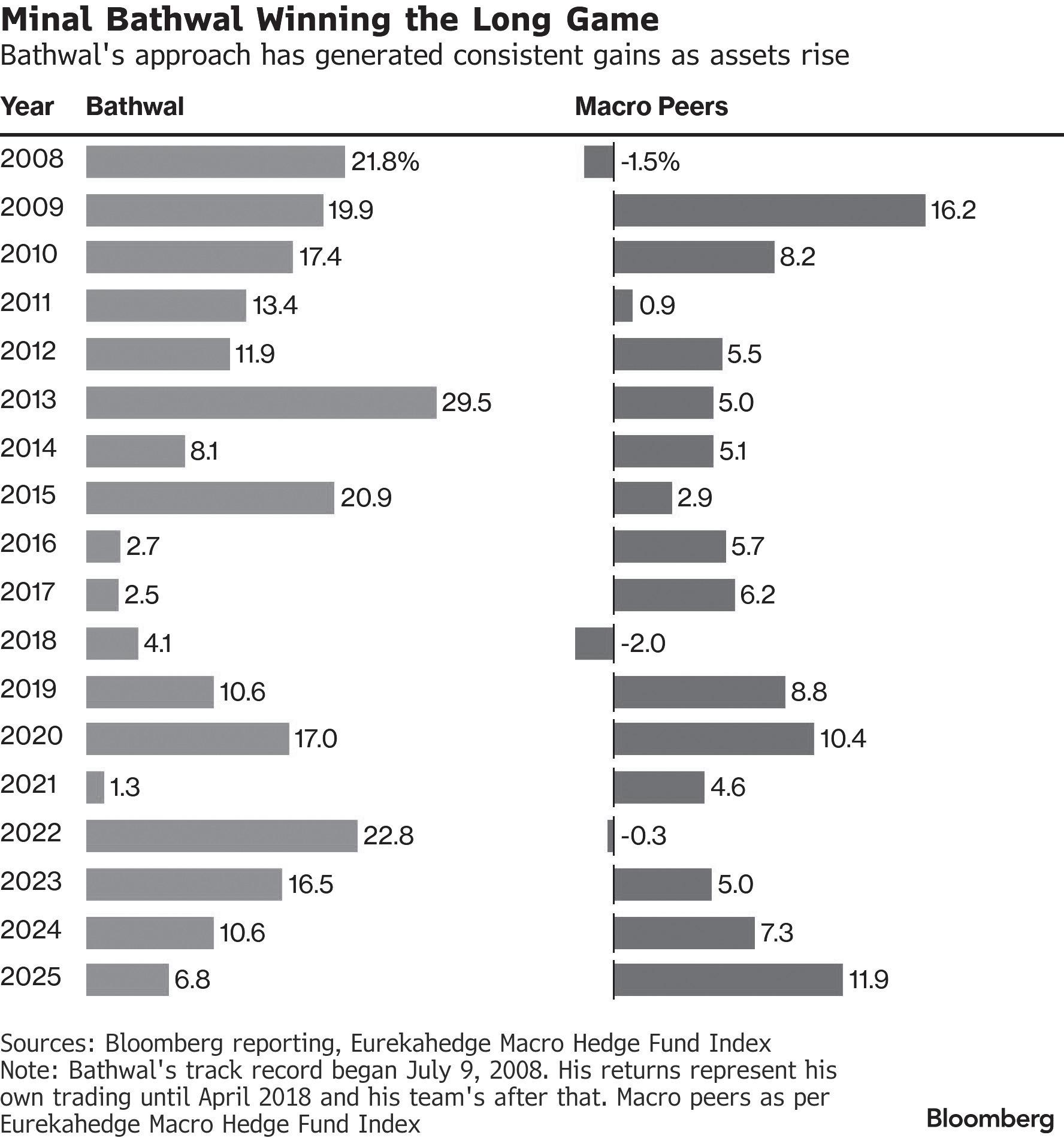
Bathwal hasn’t had a single down year since he started managing money during the 2008 financial crisis—making him a standout in the global macro style of investing that has recently surged in popularity. Now running around $5.5 billion, the Singapore-based fund manager has scored wins on everything from the trajectory of Korean interest rates to the swings of Asian currencies.
This winning run has secured him a place among the five biggest generators of investment profits in the history of Brevan Howard, a $35 billion hedge fund giant that was founded more than two decades ago. He ranks only behind the likes of Alan Howard, the eponymous co-founder who no longer actively trades, and Chris Rokos, another co-founder who brought in around $4 billion before leaving to set up his own firm, court filings show. But despite securing his legend at one of the world’s biggest hedge fund firms, and becoming a coveted client for global banks, the 44-year-old Bathwal remains a relative unknown to outsiders.
While Bridgewater founder Ray Dalio has written numerous books espousing his view of the world, and titans like Bill Ackman and Cliff Asness regularly use social media to talk about markets, Bathwal remains extremely private. He shuns public appearances and has just seven LinkedIn connections. He keeps such a low profile that an old colleague jokes he wouldn’t recognize him in the street. Global macro funds are booming, returning to favor among investors looking to profit from wild swings in everything from Japanese government debt to the price of gold. Investors responding to a recent BNP Paribas SA survey predicted discretionary macro will be the top performing hedge fund strategy this year. They added a la -
ment: There aren’t enough funds led by a single chief with a long track record.
Bathwal appears to fit the bill. A majority of the money in the strategy he leads comes from various other Brevan Howard funds, and another chunk represents retained profits. The strategy has briefly opened a handful of times since it began trading in May 2018, giving a select few external investors a chance to get in alongside other Brevan Howard funds. Some investors wait years for the chance.
Bathwal’s time at Brevan Howard isn’t a story of unchecked success: His returns of around 6.8% last year paled in comparison to some of his biggest rivals, who generated double-digit profits as shifting expectations of the Federal Reserve’s rate path and fears of de-dollarization created a rich environment for macro specialists.
But his long-term track record and consistency are hard to dispute, fueling comparisons with legends such as Stanley Druckenmiller and former colleague Rokos—macro titans who put together decades of returns.
“Minal’s long-term track record and consistency at scale have helped put Asia macro on the map as a major-league opportunity,” said Michael Garrow, chief investment officer of Hong Kong-based HS Group, who has met the fund manager multiple times. “If you look at people that have made returns at a very large scale for a long time, you see several parallels to Minal, with his calmly objective demeanor and ability to stay disciplined through short-term noise.”
Bathwal and his team have generated an annualized return of 12.7% between 2008 and the end of 2025. His trading gains have been achieved with a Sharpe ratio—a measure of a fund’s returns against its level of risk—of 1.7. By comparison, discretionary macro hedge funds have had a Sharpe ratio of 1.4 since 2008, according to data compiled by research firm PivotalPath.
This story about Bathwal and his investment style is based on conversations with more than 10 people who have either worked
with or met him, almost all of whom spoke on condition of anonymity.
A representative for the firm and Bathwal declined to comment.
Rapid rise
BATHWAL got his first taste of managing money in the summer of 2008.
The US subprime mortgage crisis was sending shock waves throughout markets. Global stocks were in free fall. Asian currencies, including those of South Korea, India and Malaysia, were cratering against the dollar. The Fed was in the middle of a historic series of interest-rate cuts that unleashed more than a decade of easy money.
Bathwal had joined a year earlier as a junior trader in Brevan Howard’s Hong Kong office, and at that point had no real experience of investing. What he did have was a deep knowledge of how to assemble complicated trades, thanks to his previous job as a structurer at UBS Group AG.
Whether they’re working for companies trying to hedge currency risk or retail investors looking to juice up returns, structurers tailor and price products—ideally with asymmetric payoffs. This

pectations of Fed rate decisions. Although he manages a majority of the capital in the fund himself, Bathwal has built a 14-strong investment team, including 10 traders. Among them are six junior portfolio managers who trade their own books within the fund: Manu Kapoor, Ankit Soni, Abhishek Pal, Rishi Singh, Swapnil Kalbande and Stephen Wang.
People who know Bathwal describe him as philosophical. He is willing to adjust the size of positions without emotion when the markets move against him, while avoiding costly over-trading, a trap that some industry peers fall into.
That isn’t all instinct. Bathwal is a fan of the work of behavioral economist Daniel Kahneman, who has studied the biases that get in the way of making good decisions and acknowledging bad ones.
knowledge of derivatives and the understanding of global markets and trading skills he was developing at Brevan Howard provided a foundation for Bathwal in those first few weeks and months of managing money.
His early wins included a series of bets over about two years on both the direction and volatility of South Korean rates. It was the largest emerging Asia rates market and the one he dabbled in the most in his UBS days.
The country’s central bank surprised the market with record rate cuts starting from 2008, trying to soften the blow of the global financial crisis. His returns almost immediately got attention from his bosses, who allocated him more capital out of the firm’s Master Fund to manage within months.
He finished the year up 21.81% over six months of trading. In late 2010, he started trading for the firm’s Asia fund, eventually becoming its co-CIO in 2016.
Bathwal, who got his MBA from the Indian Institute of Management Calcutta, said in an interview on Brevan Howard’s internal website that his lack of prior trading experience turned out to be “immensely helpful.”
“Having a blank canvas helped me shape my style and evolve over time,” he said.
Since then, he has generated billions. He scored a 29.49% gain in 2013, as Japan’s ‘Abenomics’ experiment sent the yen tumbling against the dollar and the so-called taper tantrum roiled emergingmarket assets. He chalked up a 20.9% return in 2015, making money from movements in various Asian currencies after the greenback strengthened from the second half of 2014, including the yuan devaluation. In March 2020, as the spread of the Covid-19 pandemic triggered a sell-off across markets, his fund gained 5.46%.
Last year, he is said to have won from trades related to shifting ex-
and salespeople who worked there. No longer. Last year, Meta spent more on capital projects than research and development—mostly engineers’ salaries—for the first time in six years.
The Facebook and Instagram parent at the end of last year owned $176 billion in property and equipment, about five times the tally at the end of 2019.
As the numbers push higher, what is still unclear is whether the companies will all be able to execute on their lofty ambitions. Since the data center build-out has escalated, they’re already competing for finite crews of electricians, cement trucks and Nvidia Corp. chips rolling out of Taiwan Semiconductor Manufacturing Co. factories. “There are
$2.76 billion in December 2015 to $468 million by November 2019. Ernst returned in 2020 and has been a portfolio manager since then.
Bathwal’s own fund—which started trading in May 2018—became a bellwether.
By early April 2021, Bathwal’s Brevan Howard MB Macro Fund had hit $1.85 billion, making it the largest of standalone funds for four traders that the Brevan Howard Master Fund was allocating money to, according to a 2021 due diligence report. Brevan Howard is now returning money from the $1.4 billion fund set up for Fash Golchin, who got his own fund to run at the firm around the same time as Bathwal. The decision makes Bathwal’s the last remaining of a 2017-2018 crop of standalone vehicles Brevan Howard created for star traders.
In the internal interview, Bathwal said the “first true test” of being a good trader is your spouse or partner not being able to tell whether you had a good day or a bad day when you get home from work. “Be passionate about work, not emotional,” he said.
Trading style THERE are a few broad strokes that describe Bathwal’s trading style: He attempts to create option-like payoffs, where relatively small costs can yield much bigger returns. Extraordinary care is given to identifying the best financial instruments to express his views, hedges and the sequencing of different legs of trades, said people familiar with his approach.
He uses a mix of short-term and medium-term trades and sometimes puts on multiple wagers around the same theme, aware of the connections between markets, the people said. Although allocations fluctuate over time, a third of the strategy’s investments may be in ideas unrelated to Asia. Bathwal has long been keen to invest in other regions, and the growing assets at his disposal have given him more firepower to do so, one of them said.
Bathwal’s trading approach falls in line with the trademark Brevan Howard style and was learned from Kaspar Ernst, who hired him when running Brevan Howard’s Asia business in 2007.
Like Ernst, Bathwal combines relative-value trades—such as bets on the shape of the yield curve—with outright wagers on market direction, the people said. Ernst himself was a star in a Brevan Howard career dating back to 2004, leading a team that didn’t have an annual loss for 15 years. He managed the Asia fund, as well as a separate allocation from Brevan Howard’s Master Fund.
In 2019, Ernst decided to take a break from trading for personal reasons. The firm eventually pulled the plug on the Asia fund, whose assets fell from a peak of
and will be bottlenecks,” Luria said.
There’s also the question of how they will afford it. Meta and Google, whose profit mainly comes from digital advertising; Amazon, the largest online retailer and cloud-computing provider; and Microsoft, the biggest seller of business software, are each dominant in their industries and have ample cash cushions. Their willingness to plow huge chunks of that cash into an AIfueled future means those reserves, and investors’ patience, will be tested.
“You’ve had these cash-generating machines,” said Tomasz Tunguz, an investor at Theory Ventures, who earlier in his career worked at Google. “Now, all of a sudden they need that cash, and they need more of it, so they’re borrowing.”
Tunguz, who published a blog last year comparing the AI boom to past investment frenzies, says they don’t always end well. But on the way up, he said, “they are all
Pod shops
BATHWAL’S approach of combining multiple trades rather than relying on a few big swings is well suited to the shifts that have taken place in the hedge fund industry over the past decade.
While a few global macro specialists, such as Tudor Investment Corp. and Soros Fund Management LLC, once made waves with bold high-conviction bets, in recent years there has been a proliferation of so-called podshops—firms like Millennium Management and Balyasny Asset Management—which have effectively shifted the center of gravity for macro traders. These firms operate by allocating and pulling capital to and from a large number of teams. Although the amount of overlap and shared resources between these portfolio managers varies from one pod shop to another, the underlying approach is the same: winners may get more capital and fat payouts, losers can get risk limits cut or lose their jobs at a dizzying pace. That has forced the entire industry to recalibrate risk management practices, on fears that pod-shops’ tight risk limits can trigger a stampede for the exit when crowded trades go wrong.
Other Asia macro managers have come and gone. Adam Levinson’s Graticule Asia Macro fund suffered a devastating loss in the wake of the Silicon Valley Bank collapse almost three years ago. Former Goldman Sachs Group Inc. trader Leland Lim’s Guard Capital, one of the hottest Asia hedge fund startups in 2014, closed three years later amid losses. Dymon Asia Capital’s Danny Yong, lamenting his best vintage years as a trader were over, has hung up his boots and became a coach. Bathwal remains, putting together a multi-year track record that is remarkable among global macro funds—even if it hasn’t yet turned him into a household name. Bloomberg News
huge catalysts for the economy.” What is more certain is that investors who had rushed to buy the tech titans’ stocks over the past year have shown greater hesitance in the face of the skyrocketing capital spending across the board, in some cases selling even when their main businesses—from online advertising and web search to ecommerce and productivity software—have held steady and revenue has exceeded estimates.
“What’s spooking people? Definitely the analyst narrative and the rhetoric” about the pace at which AI will disrupt businesses, said Steve Lucas, chief executive officer of Boomi, a firm that helps companies stitch together their data and software.
“I would not debate the potential of AI,” he said. “I would absolutely



‘Science
By John Eiron R. Francisco
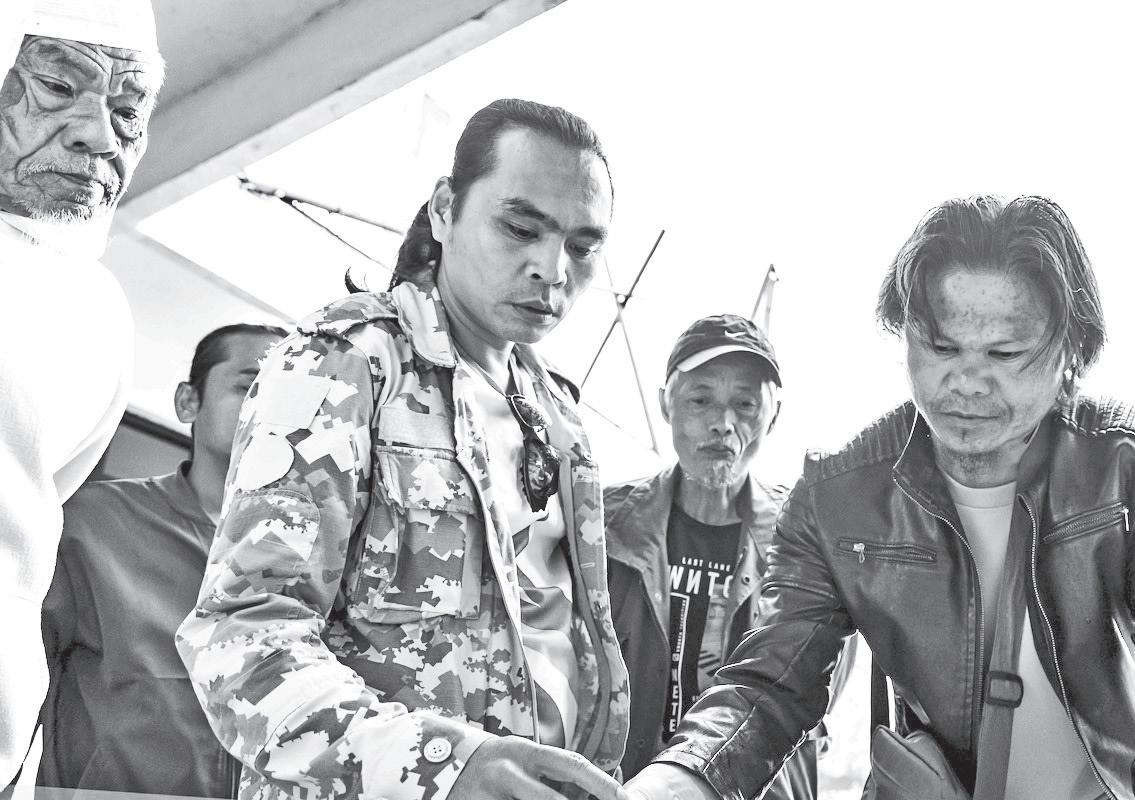
SCIENCE-BASED livelihood projects were rolled out in six Moro Islamic Liberation Front (MILF) camps in Mindanao following the turnover of Department of Science and Technology (DOST)-supported technology interventions aimed at providing peaceful, self-reliant, and sustainable income opportunities in post-conflict communities.
The P49.45-million project, funded and implemented in coordination with the Office of the Presidential Adviser on Peace, Reconciliation and Unity (OPAPRU), covers Camp Bushra, Camp Bilal, Camp Badre, Camp Omar, Camp Abubakar, and Camp Rajahmuda.
The interventions are being implemented under the DOST’s Community Empowerment through Science and Technology (CEST) framework.
“This is part of the steps toward achieving a productive life. This
Iis science for peace,” Science Secretary Renato U. Solidum Jr. said during the ceremonial turnover and signing of the memorandum of agreement (MOA) to Empower Former Combatants on Tuesday at Camp Bushra in Barangay Sandab Madaya, Butig, Lanao del Sur. Solidum signed the MOA with Presidential Assistant David B. Diciano of the Office for Bangsamoro Transformation of OPAPRU.
Solidum shared that peace takes on different meanings for various
sectors, noting that for science and technology workers, it is reflected in development driven by innovation—when knowledge and inventions translate into livelihoods and technology becomes a source of hope.
For farmers, women, youth, and ordinary Filipinos, he said peace means the freedom to pursue education, work, and provide for their families with dignity and security. He added that for OPAPRU and its partners, peace is a shared vision anchored on trust, unity, and sustained collaboration.
However, Solidum emphasized that for residents of former conflict camps and their families, peace goes beyond government programs, describing it as a process of healing—gradually addressing the wounds of the past and embracing new beginnings marked by dignity and hope.
“This healing is not left at the level of words,” Solidum said in Filipino, explaining that it is realized through programs that are purpose-driven, responsive to local contexts, and grounded in genuine concern for communities.
Regional Director Engr. Sammy P. Malawan of DOST-South Cotabato, Cotabato, Sultan Kudarat, Sarangani and General Santos City (Soccsksargen) reported that a total of 12 major technologies were
deployed across the camps, resulting in 27 sub-technologies tailored to beneficiary needs.
Key interventions under the project include the installation of six solar-powered Level II water systems, providing safe and reliable water access to more than 300 households, as well as the deployment of SAFEWATRS water treatment technologies.
Food-safety training, halal compliance orientation, and basic nutrition support were also conducted.
In education and digital access, the project established six Starbooks learning hubs and installed six Starlink connectivity systems with Piso Wi-Fi, improving access to digital science and educational resources for more than 600 learners and educators.
Livelihood interventions include science-based enterprises—such as modern and mobile bakeries, noodle and peanut butter processing, ube jam and halal pastil-in-a-jar production, native Maguindanaon and Maranao delicacies, integrated fruit and vegetable processing, dressmaking, handloom weaving, abaca stripping, and halal catfish by-products processing.
Additional support includes halal catfish production using “More Fish Than Water” technology, na -
tive chicken production for halal poultry, vegetable farming kits, and abaca processing equipment.
To date, the project has generated over 300 direct livelihood beneficiaries across the six camps.
The initiative also integrates disaster risk reduction and climate resilience measures, including the use of solar-powered systems for water supply, education, and connectivity, as well as climate-resilient livelihood technologies and low-water production systems.
Capacity-building activities, including hands-on training in food processing, aquaculture, livestock production, vegetable farming, and basic enterprise development, were conducted from July to October 2025.
Follow-through mentoring, coaching, and enterprisestrengthening activities were carried out in January 2026.
“Honestly speaking, this journey was not easy,” Malawan said in Fillipino, citing distance, security concerns, and differing perspectives.
“That is why at every stage of the project, we chose to listen before acting, understand before implementing, and collaborate rather than dictate,” he pointed out.
Malawan added that the group conducted seven major training
programs and more than 30 onsite, hands-on trainings and consultations, reaching over 500 former combatants and their families during more than a year of project implementation.
Beyond numbers, he said the most important measure of success is strengthening trust in the government, in the peace process, and in the beneficiaries’ own ability to succeed.
“For those of us who were directly involved in implementing the project, this goes beyond a mandate. It has become a journey of partnership. We witnessed your determination to change the course of your future. We saw how hope is replacing the stories of the past,” he explained.
Malawan emphasized that while the turnover marked a key milestone, it did not signal the end of engagement, noting that the Regional Project Management Team will continue to provide guidance, monitoring, and support to ensure the sustained use of the technologies.
On the same day, he announced that Phase II of the Science4Peace Program will begin, providing continued support to the six barangay beneficiaries as part of ongoing efforts to promote sustainable livelihoods and inclusive development.
resistance negates a century of medical progress; four advances are changing the story
MAGINE going to the hospital for a bacterial ear infection and hearing your doctor say, “We’re out of options.” It may sound dramatic, but antibiotic resistance is pushing that scenario closer to becoming reality for an increasing number of people.
In 2016, a woman from Nevada died from a bacterial infection that was resistant to all 26 antibiotics that were available in the United States at that time.
The US alone sees more than 2.8 million antibiotic-resistant illnesses each year. Globally, antimicrobial resistance is linked to nearly 5 million deaths annually.
Bacteria naturally evolve in ways that can make the drugs meant to kill them less effective.
However, when antibiotics are overused or used improperly in medicine or agriculture, these pressures accelerate the process of resistance.
As resistant bacteria spread, lifesaving treatments face new complications—common infections become harder to treat, and routine surgeries become riskier.
Slowing these threats to modern medicine requires not only responsible antibiotic use and good hygiene, but also awareness of how everyday actions influence resistance.
Since the inception of antibiotics in 1910 with the introduction of Salvarsan, a synthetic drug used to treat syphilis, scientists have been sounding the alarm about resistance.
As a microbiologist and biochemist who studies antimicrobial resistance, I see four major trends that
will shape how we as a society will confront antibiotic resistance in the coming decade.
1. Faster diagnostics are the new front line FOR decades, treating bacterial infections has involved a lot of educated guesswork. When a very sick patient arrives at the hospital and clinicians don’t yet know the exact bacteria causing the illness, they often start with a broad-spectrum antibiotic. These drugs kill many different types of bacteria at once, which can be lifesaving—but they also expose a wide range of other bacteria in the body to antibiotics. While some bacteria are killed, the ones that remain continue to multiply and spread resistance genes between different bacterial species. That unnecessary exposure gives harmless or unrelated bacteria a chance to adapt and develop resistance.
In contrast, narrow-spectrum antibiotics target only a small group of bacteria. Clinicians typically prefer these types of antibiotics because they treat the infection without disturbing bacteria that are not involved in the infection. However, it can take several days to identify the exact bacteria causing the infection. During that waiting period, clinicians often feel they have no choice but to start broadspectrum treatment—especially if the patient is seriously ill.
But new technology may fasttrack identification of bacterial pathogens, allowing medical tests
to be conducted right where the patient is instead of sending samples off-site and waiting a long time for answers.
In addition, advances in genomic sequencing, microfluidics and artificial intelligence tools are making it possible to identify bacterial species and effective antibiotics to fight them in hours rather than days.
Predictive tools can even anticipate resistance evolution.
For clinicians, better tests could help them make faster diagnoses and more effective treatment plans that won’t exacerbate resistance.
For researchers, these tools point to an urgent need to integrate diagnostics with real-time surveillance networks capable of tracking resistance patterns as they emerge.
Diagnostics alone will not solve resistance, but they provide the precision, speed and early warning needed to stay ahead.
2. Expanding beyond traditional antibiotics ANTIBIOTICS transformed medicine in the 20th century, but relying on them alone won’t carry humanity through the 21st.
The pipeline of new antibiotics remains distressingly thin, and most drugs currently in development are structurally similar to existing antibiotics, potentially limiting their effectiveness.
To stay ahead, researchers are investing in nontraditional therapies, many of which work in fundamentally different ways than standard antibiotics.
One promising direction is bacteriophage therapy, which uses
viruses that specifically infect and kill harmful bacteria. Others are exploring microbiome-based therapies that restore healthy bacterial communities to crowd out pathogens.
Researchers are also developing CRISPR-based antimicrobials, using gene-editing tools to precisely disable resistance genes.
New compounds like antimicrobial peptides, which puncture the membranes of bacteria to kill them, show promise as next-generation drugs.
Meanwhile, scientists are designing nanoparticle delivery systems to transport antimicrobials directly to infection sites with fewer side effects.
Beyond medicine, scientists are examining ecological interventions to reduce the movement of resistance genes through soil, wastewater and plastics, as well as through waterways and key environmental reservoirs.
Many of these options remain early-stage, and bacteria may eventually evolve around them.
But these innovations reflect a powerful shift: Instead of betting on discovering a single antibiotic to address resistance, researchers are building a more diverse and resilient tool kit to fight antibioticresistant pathogenic bacteria.
3. Antimicrobial resistance outside hospitals
ANTIBIOTIC resistance doesn’t only spread in hospitals. It moves through people, wildlife, crops, wastewater, soil and global trade networks. This broader perspective
that takes the principles of One
Health into account is essential for understanding how resistance genes travel through ecosystems.
Researchers are increasingly recognizing environmental and agricultural factors as major drivers of resistance, on par with misuse of antibiotics in the clinic.
These include how antibiotics used in animal agriculture can create resistant bacteria that spread to people; how resistance genes in wastewater can survive treatment systems and enter rivers and soil; and how farms, sewage plants and other environmental hot spots become hubs where resistance spreads quickly.
Even global travel accelerates the movement of resistant bacteria across continents within hours.
Together, these forces show that antibiotic resistance isn’t just an issue for hospitals—it’s an ecological and societal problem. For researchers, this means designing solutions that cross disciplines, integrating microbiology, ecology, engineering, agriculture and public health.
4. Policies on what treatments exist in the future DRUG companies lose money developing new antibiotics. Because new antibiotics are used sparingly in order to preserve their effectiveness, companies often sell too few doses to recoup development costs even after the Food and Drug Administration approves the drugs.
Several antibiotic companies have gone bankrupt for this reason.
To encourage antibiotic innovation, the US is considering major policy changes like the PASTEUR Act. This bipartisan bill proposes creating a subscription-style payment model that would allow the federal government up to US$3 billion to pay drug manufacturers over five to 10 years for access to critical antibiotics instead of paying per pill. Global health organizations, including Médecins Sans Frontières (Doctors Without Borders), caution that the bill should include stronger commitments to stewardship and equitable access.
Still, the bill represents one of the most significant policy proposals related to antimicrobial resistance in US history and could determine what antibiotics exist in the future. The future of antibiotic resistance ANTIBIOTIC resistance is sometimes framed as an inevitable catastrophe. But I believe the reality is more hopeful: Society is entering an era of smarter diagnostics, innovative therapies, ecosystemlevel strategies and policy reforms aimed at rebuilding the antibiotic pipeline in addition to addressing stewardship. For the public, this means better tools and stronger systems of protection. For researchers and policymakers, it means collaborating in new ways. The question now isn’t whether there are solutions to antibiotic resistance—it’s whether society will act fast enough to use them.
A6 Sunday, February 8, 2026

Editor: Lyn Resurreccion • www.businessmirror.com.ph
The International Day of Prayer and Awareness Against Human Trafficking is observed annually on February 8
THE Catholic Bishops’ Conference of the Philippines (CBCP)
renewed its call for stronger Church structures to address human trafficking, as it observed the National Day of Prayer and Awareness Against Human Trafficking on February 1.
In a statement, the bishops warned that the country continues to suffer from multiple forms of exploitation, including illegal recruitment, forced labor, sexual exploitation, and the growing threat of online abuse, particularly involving children.
They described human trafficking as a “serious and persistent concern” that affects many Filipinos, especially in urban areas, and urged closer cooperation between the Church and government authorities.
Citing data from the United Nations
VGlobal Programme against Trafficking in Human Beings, the survey noted that the majority of trafficking victims in the Philippines are adult females, followed by minor females. Most cases originate from Metro Manila and other urban centers.
Digital danger
THE situation has worsened with the expansion of digital platforms, where traffickers use deceptive online recruitment schemes, offering false promises of employment both domestically and abroad.
The bishops pointed to poverty, lack of education, armed conflict, and recurring natural disasters as key factors that increase vulnerability to trafficking. These conditions, they said, are often exploited through online channels that prey on people seeking economic stability.

“Human trafficking is not merely a social issue; it is a profound moral concern that calls for conversion of hearts
and transformation of systems,” the bishops said, emphasizing the Church’s responsibility to protect the vulnerable
and challenge structures that allow exploitation to persist. They expressed their intention to support national anti-trafficking efforts through diocesan initiatives suited to the Church’s resources and pastoral mission.
Diocesan action against human trafficking
IN a separate statement, Bishop Socrates Mesiona of Puerto Princesa, chairman of the CBCP Commission for the Pastoral Care of Migrants and Itinerant People, called on dioceses to establish and strengthen Diocesan Committees Against Human Trafficking.
He said these committees would help ensure a coordinated pastoral and institutional response to trafficking across the country. According to the commission, about
Francis’ problematic secret decrees in spotlight in Vatican’s ‘trial of the century’
ATICAN CITY—Defense lawyers in the Vatican’s “trial of the century” argued on February 3 that Pope Francis inadvertently violated the fundamental rights of their clients by issuing four secret decrees that gave prosecutors “surreal carte blanche” to investigate in ways reminiscent of a “fascist” state where laws aren’t published.
The tone of argument in the frescoed Vatican tribunal was so charged Tuesday, as the appeals trial resumed after a threemonth break, that at one point the tribunal president asked defense lawyers to refrain from citing Francis by name.
The request by Archbishop Alejandro Arellano Cedillo underscored how Francis’ problematic role in the big financial trial poses something of an existential dilemma for the Holy See.
On the one hand, popes can only be judged by God. On the other, Francis stands accused of issuing decrees that violated the God-given rights of the defendants.
The case concerns the once-powerful Cardinal Angelo Becciu and eight other defendants, who were convicted of a handful of financial crimes in 2023, after a sprawling two-year trial.
London property and more THE case, which opened in 2021, had as its main focus the Vatican’s investment of €350 million ($413 million) in a London property.
Prosecutors alleged brokers and Vatican monsignors fleeced the Holy See of tens of millions of euros in fees and commissions to acquire the property, and then extorted
the Holy See for €15 million ($16.5 million) to cede control of it.
The original investigation spawned two main tangents involving Becciu, who was convicted of embezzlement and sentenced to five and a half years in prison. The tribunal convicted eight other defendants of embezzlement, abuse of office, fraud and other charges.
All the defendants maintained their innocence and appealed. Prosecutors also appealed, since the tribunal largely threw out their overarching theory of a grand conspiracy to defraud the Holy See and instead convicted the defendants of a handful of serious but secondary charges.
Last month, the Vatican’s highest Court of Cassation upheld the lower court’s decision to throw out the prosecutor’s appeal entirely because prosecutor Alessandro Diddi committed an embarrassing rookie procedural error.
On the same day as the Cassation ruling, Diddi also dropped months of objections and abruptly resigned from the case, rather than face the possibility that the Cassation court would order him removed.
At issue is Diddi’s role in a nowinfamous set of WhatsApp chats that have thrown the credibility of the entire trial into question.
The chats, which document a yearslong, behind-the-scenes effort to target Becciu, suggest questionable conduct by Vatican police, Vatican prosecutors and Francis himself.
Francis’ role in focus THE appeal now proceeds on a next line of
defense attack focusing on Francis’ role in the investigation. During the trial, defense attorneys had argued their clients couldn’t receive a fair trial in an absolute monarchy where the pope wields supreme legislative, executive and judicial power.
At issue are four secret executive decrees Francis signed in 2019 and 2020, during the early days of the investigation, that gave Vatican prosecutors wideranging powers, including the unchecked use of wiretapping and the right to deviate from existing laws.
The decrees only came to light right before trial and were never officially published. They provided no rationale or time frame for the surveillance, nor oversight of the wiretapping by an independent judge, and were passed specifically for this investigation.
Legal scholars have said the secrecy of the laws and their ad hoc nature violated a basic tenet of the right to a fair trial requiring the “equality of arms” between defense and prosecution.
In this case, the defense was completely unaware of the prosecution’s new investigative powers. Even Vatican legal officials have privately conceded that Francis’ failure to publish the decrees was deeply problematic.
On Tuesday, attorney Mario Zanchetti argued the whole trial should be annulled because of the secret decrees.
His client, broker Gianluigi Torzi, had his cellphones and laptop seized, and was arrested and detained in the Vatican barracks for 10 days without charge or a judge’s warrant, based on the sweeping powers granted to prosecutors by Francis’ decrees.

Zanchetti argued that even in Iran and Russia, laws must be published, and that the failure to do so risks “making the Vatican’s procedural code fascist.”
He said he wasn’t accusing Francis directly of wrongdoing, but said the late pope had been misled by prosecutors who requested the decrees.
At that point, Arellano the judge said: “I would ask you to not name Pope Francis. We all understand, if you avoid referencing the Holy Father.”
Attorney Luigi Panella, for his part, said the decrees provided prosecutors with a “surreal carte blanche” to investigate.
Diddi had argued that Francis’ decrees provided unspecified “guarantees” for the suspects, and the tribunal originally rejected the defense motions arguing the trial should be nullified because of them.
In a somewhat convoluted decision, the judges ruled that no violation of the principle of legality had occurred since Francis had made the laws.
Zanchetti offered the appeals tribunal a way to avoid a finding against Francis, suggesting that the judges could find that the decrees were merely administrative acts that, because they were never published, are considered “ineffective.”
Such a finding could render the evidence gathered under them inadmissible, but would avoid a finding that Francis himself violated divinely inspired norms guaranteeing the dignity and rights of the defendants.
Nicole Winfield/Associated Press
VATICAN CITY—Pope Leo XIV is facing his first major crisis with traditionalist Catholics: A breakaway group attached to the traditional Latin Mass announced plans to consecrate new bishops without papal consent in a threatened revival of schism.
The Swiss-based Society of St. Pius X (SSPX), which has schools, chapels and seminaries around the world, has been a thorn in the side of the Holy See for four decades, founded in opposition to the modernizing reforms of the 1960s Second Vatican Council.
In 1988, the group’s founder, Archbishop Marcel Lefebvre, consecrated four bishops without papal consent, arguing that it was necessary for the survival of the church’s tradition.
The Vatican promptly excommunicated Lefebvre and the four other bishops, and the group today still has no legal status in the Catholic Church.
But in the decades since that original break with Rome, the group has continued to grow, with branches of priests, nuns and lay Catholics who are attached to the preVatican II traditional Latin Mass.
For the Vatican, papal consent for the consecration of bishops is a fundamental doctrine, guaranteeing the lineage of apostolic succession from the time of Christ’s original apostles.
As a result, the consecration of bishops without papal consent is considered a grave threat to church unity and a cause of schism, since bishops can ordain new priests.
Under church law, a consecration without papal consent incurs an automatic excommunication for the person who celebrates it and the purported new bishop.
The Vatican had tried for years to reconcile with the SSPX, fearing the growth of a parallel church.
Pope Benedict XVI in 2009 lifted the excommunications of the surviving bishops and relaxed restrictions on celebrating the old Latin Mass in a gesture of outreach to all Catholics still attached to the old rite.
But an uproar ensued after one of the SSPX bishops, Richard Williamson, publicly denied in a television interview that Jews were killed in gas chambers during World War II.
Tensions heighten under Pope Francis IN the ensuing years, especially during the pontificate of Pope Francis, tensions with traditionalist Catholics only deepened.
Francis reversed Benedict’s reform that allowed greater celebration of the old Latin Mass, arguing it had become a source of division in the church.
Leo has acknowledged the tensions and sought to pacify the debate, expressing
an openness to dialogue and allowing exceptions to Francis’ crackdown.
But the SSPX said in a statement Monday that it had no choice but to proceed with the consecrations of new bishops on July 1, to preserve the future of the society.
The Rev. Davide Pagliarani, the SSPX superior general, said he had written to Leo explaining the need for new bishops “to ensure the continuation of the ministry of its bishops, who have been travelling the world for nearly 40 years to respond to the
many faithful attached to the tradition of the church.”
The SSPX said that he had received a reply from the Vatican “which does not in any way respond to our requests,” and was preparing to proceed with the planned consecrations given the “objective state of grave necessity in which souls find themselves.”
The Vatican spokesman, Matto Bruni, suggested on Tuesday that the Vatican was still open to negotiations.

“Contacts between the Society of Saint Pius X and the Holy See continue, with the aim of avoiding rifts or unilateral solutions to the issues that have arisen,” Bruni said in a statement.
Concern from other groups
THE old Latin Mass features readings and hymns in Latin with the priest facing the altar, his back to the faithful in the pews. Aficionados of the ancient rite say it is a more prayerful and reverent form of worship than the new Mass ushered in by Vatican II. Vatican II allowed instead for Mass to be celebrated in the vernacular, with the priest facing the pews and a more active participation of the faithful.
Two groups that celebrate the old Latin Mass but have remained in communion with the Holy See, Una Voce International and The Latin Mass Society, expressed concern at the threatened consecrations from the SSPX.
While not agreeing with all the SSPX arguments, the two groups expressed sympathy with the plight of its believers, calling for the Vatican to ultimately regularize the group’s status within the church.
“We urge our bishops, and above all His Holiness Pope Leo XIV, to be mindful of these pastoral realities, which are at this moment precipitating a crisis whose consequences no one can foresee,” the two groups warned. Nicole Winfield/Associated Press
12 diocesan committees have been established over the past three years, mostly in Luzon.
Bishop Mesiona also encouraged parishes to integrate anti-trafficking awareness into their pastoral programs, urging them to become “spaces of vigilance, education, and protection.”
THE appeal of the Philippine bishops comes ahead of the International Day of Prayer and Awareness Against Human Trafficking, observed annually on February 8, a day instituted by Pope Francis and marked on the feast of St. Josephine Bakhita, the patron saint of trafficking survivors. Pope Francis has repeatedly described human trafficking as a “scourge” that gravely violates human dignity. Fr. Mark Robin Destura, RCJ/Vatican News
Bean-throwing ritual celebrates seasonal change, ward off evil at Japanese shrine
HAKONE, Japan—Scores gathered at a shrine in Japan’s Hakone to try and catch “lucky beans,” hoping to ward off evil spirits as they celebrate the last day of winter in the Japanese lunar calendar. Setsubun is also known as “mame-maki,” or beanthrowing. It was celebrated on February 3, on the eve of Risshun, marking the beginning of spring in Japan. Long before modern calendars, the change of seasons was viewed as a vulnerable moment when illness and misfortune could enter lives. Setsubun was meant to contain that instability; people throw the same lucky beans at representations of demons to bring the loathed creatures misfortune.
As people pitch the soybeans, they chant, “Oni wa soto, fuku wa uchi”—“demons out, fortune in.” Families perform the custom at home, while temples and shrines conduct formal ceremonies.
Though the practice may appear playful, its origins lie in ancient purification rites.
Founded more than 1,200 years ago, Hakone Shrine stands beside Lake Ashi in the mountains of Kanagawa Prefecture, west of Tokyo, and for centuries, travelers crossing the mountains often stopped there to pray for protection before continuing through terrain known for sudden weather changes and difficult routes.
On February 2, winter still dominated the landscape as the shrine marked Setsubun. Visitors arrived quietly, bundled against the cold. Shinto priests conducted formal rites, reciting prayers; their movements were deliberate, reflecting the shrine’s emphasis on continuity.
As part of the ceremony, a Shinto priest and a figure dressed as a demon were pulled across the surface of the lake, briefly skimming the water before disappearing in the distance.
By carrying the “oni” across the lake, the ritual symbolically removes misfortune from the community.
The ceremony then continued on land. Roasted soybeans were thrown, voices briefly rising with the familiar chant before falling silent. The beans scattered across stone steps and earth, left where they landed. Eugene Hoshiko/ Associated Press

Editor: Lyn Resurreccion

By Jonathan L. Mayuga
‘
WORLD Wetlands Day is more than a commemoration. It is a call to action to protect ecosystems that sustain life, strengthen climate resilience, and support livelihoods,” said Environment Secretary Raphael P.M. Lotilla.
In a video message played during the annual World Wetlands Day (WWD) celebration held at the Agusan Marsh Wildlife Sanctuary in Agusan del Sur on February 2, the Environment chief highlighted the role of indigenous people and communities as stewards of the country’s natural wealth.
With the WWD 2026 theme “Wetlands and traditional knowledge: Celebrating cultural heritage,” he said it is a reminder that long before modern conservation frameworks, Indigenous peoples and local communities were already practicing stewardship rooted in respect for nature.”
Lotilla said that for the past generations, traditional knowledge has sustained wetlands and preserved cultural identity— knowledge that remains relevant and indispensable until today.
Vital ecosystem
LOTILLA said the Philippines’ observance of the annual World Wetlands Day is an affirmation of the national importance of wetlands as a vital ecosystem for biodiversity conservation, disaster risk reduction, water security, and sustainable development.
“This commitment is further strengthened by our obligations under the Kunming-Montreal Global Biodiversity Framework, which calls on all nations to halt and reverse biodiversity loss by 2030 and to live in harmony with nature,” He said.
“For the DENR [Department of Environment and Natural Resources], this means translating global commitments into concrete action through sound policy, science-based management, and inclusive governance. Central to these efforts is the recognition that conservation succeeds when communities are empowered and their knowledge respected,” he added.
Lotilla said holding the national celebration at the Agusan Marsh Wildlife Sanctuary underscores this principle.
A Ramsar site
THE DENR chief explained that the Agusan Marsh is not only the country’s largest freshwater wetland and home to the

largest remaining intact peatland complex in the Philippines. It is also a Wetland of International Importance, or a Ramsar site, an Asean Heritage Park, and a Flyway Network Site.
“It is further recognized as an Important Bird Area, a Conservation Priority Area, and a Key Biodiversity Area, and is now under evaluation for inclusion in the Unesco World Heritage List,” Lotilla said.
“These distinctions reflect the global value of the marsh, but its true strength lies in the people who have long protected it.
The Agusan Manobo and other communities have shown us that wetlands can be conserved while sustaining culture, food security, and resilience against climate impacts,” he said.
As of December 2024, the Philippines has 10 designated Ramsar sites, which are crucial for biodiversity, coastal protection, and migratory bird habitats.
A Ramsar site is a wetland designated of international importance under the Ramsar Convention on Wetlands of 1971, an intergovernmental treaty aimed at conserving and ensuring the “wise use” of these vital ecosystems.
As of January 2026, there are over 2,520 Ramsar sites globally, covering 253 million hectares.
The treaty was named after the city of Ramsar in Iran, where the agreement was signed
Environmental solutions LOTILLA said that many solutions to today’s
environmental challenges already exist in traditional ecological practices.
“By integrating this knowledge into policy, planning, and on-the-ground management, we strengthen both our conservation outcomes and our cultural heritage,” he said.
The DENR, hence, remains committed to a whole-of-government and whole-ofsociety approach, which upholds traditional knowledge, advances science, and ensures that wetlands continue to provide lifesupporting services for the Filipino people, he said.
Essential ecosystems
“WETLANDS are essential ecosystems that provide both direct and indirect benefits to humanity. They supply food, raw materials, and freshwater resources while also acting as natural regulators of floods, water quality, and climate,” said Assistant Director Mariglo Laririt of DENRBiodiversity Management Bureau (BMB).
“By storing carbon and filtering pollutants, wetlands help mitigate climate change and protect communities from environmental risks. They are also biodiversity hotspots, supporting countless species, including many that are rare or endangered,” she told the B usiness M irror on February 4.
Laririt said beyond ecological and economic contributions, wetlands hold deep cultural and spiritual significance.
She said that many communities depend on wetlands for traditional livelihoods,
while their landscapes inspire heritage practices and a sense of identity.
“In short, wetlands are life-support systems that sustain people, nature, and the planet, making their conservation vital for long-term human well-being; they feed us, protect us from disasters, regulate our climate, and enrich our cultures. Their preservation is not just an environmental priority but a necessity for human well-being and survival,” she explained.
‘Ecological heart’ of Agusan LARIRIT described the Agusan Marsh Wildlife Sanctuary as “the ecological heart” of Agusan del Sur, serving as a massive natural flood control system that protects surrounding towns and farmlands from destructive inundation.
“Its vast wetlands sustain fisheries, regulate water flow for agriculture, and store carbon, making it essential for both local livelihoods and climate resilience,” she added.
She pointed out that parts of Agusan Marsh are peatlands, one of which is the Caimpugan Peatland that is considered the largest and only recorded remaining intact peat swamp forest in the country, containing approximately 22 million metric tons of carbon.
The marsh also provides critical habitat for diverse wildlife—including endemic and migratory bird species—which has earned it various environmental recognitions.
kilometer meal, that I don’t have to travel anywhere, except my backyard, to make food. That certainly helps the climate,” said Carol Connare, editor of The Old Farmer’s Almanac.
where to put your garden. Most produce wants at least six hours of sunlight per day. If sunny spots are few, save them for fruiting plants because leafy greens can tolerate more shade.
and inseason than a backyard vegetable garden. At this time of year, many backyards across the United States are still covered in snow. But it’s the perfect time to start planning for a garden because you’ll want to have supplies ready to start planting just after the last frost date in your area. Below are some tips on how to plan a backyard garden and reasons why you should do it.
Homegrown vegetables have fewer emissions
VEGETABLE gardens benefit the surrounding ecosystem by adding diverse plant life, especially where they replace grass or cover a deck or patio. They also can provide flowering plants for pollinators.
The plants capture and store carbon in the soil, promote healthy soil by preventing compaction and can make the air cooler on rooftops and patios, according to Ellen Comeau, who chairs the advisory council for the Cuyahoga County Master Gardener Volunteers with the Ohio State University Extension program.
Homegrown vegetables and fruits are responsible for fewer emissions than their store-bought counterparts because grocery store produce typically travels long distances on trucks.
“There’s this
Gardening has health benefits
THE health benefits from gardening are multifaceted, “social, emotional, nutritional, physical,” said Katherine Alaimo, an associate professor of food science and human nutrition at Michigan State University.
Gardening promotes physical health because it requires a lot of movement. The food is typically picked at the height of ripeness and eaten fresh so it tends to have more nutrients than grocery store produce.
Alaimo said most gardeners don’t use pesticides and grow their food organically. And of course, when you grow more produce, you eat more produce.
“That’s going to reinforce people eating more fruits and vegetables even in the off season when they’re not growing food. So they try new foods, they potentially increase creativity and their cooking skills,” she said.
Alaimo said gardening also connects people with nature, provides a sense of responsibility and accomplishment and encourages sharing harvests with friends. All of that can contribute to reduced stress, lower blood pressure and higher energy, she said.
Picking the right spot and budgeting SUNLIGHT is the biggest factor in choosing
It also helps to have a nearby water source because you’ll get more food for less effort if you’re not lugging buckets of water a long way.
If you’re growing in the ground, Comeau said it is good to start with a soil test to determine its acidity and nutrient makeup.
Soil samples, once bagged or boxed, can typically be sent to a cooperative extension office at a university. The Old Farmer’s Almanac offers a list of extension offices by state. The results will give you an idea of what to grow and whether you need fertilizer or other amendments.
If you have barren soil or a concrete patio, you can buy or build raised beds with purchased soil.
Connare said raised beds have advantages, such as controlling the soil, but the disadvantages include the cost and the likelihood of compacting soil and eventually needing to replace it.
After finding the right spot, Comeau said the next step is figuring out how much you have to spend. That determines how big the garden is, whether you sow seeds or buy baby plants known as starts and how many supplies you can afford.
Another major investment: fencing for pests. That means digging fences into the soil to stop burrowing animals like groundhogs, making them tall to deter deer
BEYOND its ecological role, the Marsh is deeply tied to the cultural identity of the province, Laririt said.
“Indigenous and local communities live in floating villages within its waters, maintaining traditions that reflect a close relationship with nature,” she said.
By supporting biodiversity, livelihoods, and cultural heritage, Agusan Marsh not only safeguards Agusan del Sur but also connects the region to international conservation efforts, underscoring its importance locally, nationally, and globally, she pointed out.
Seriously threatened
DESPITE their ecological, cultural, and economic importance, wetlands are threatened by pollution and conversion to incompatible uses—such as overexploitation or extraction of resources and various illegal activities.
Citing the Global Wetland Outlook, Laririt said the main threats to wetlands in Asia are—urban/industrial pollution, climate change, and introduced/invasive species.
In the Philippines, however, she said the biggest threat to wetlands is land conversion and pollution.
“This is exacerbated by the common perception that wetlands are wastelands, as well as the impact of climate change. Land conversion [for agriculture, settlements, aquaculture, and infrastructure] is widely recognized as the leading cause of wetland loss in the country. Pollution from domestic waste, agricultural runoff, and industrial activities further degrades water quality and ecosystem health,” she said.
Misconception about wetlands
LARIRIT said the misconception that wetlands are “wastelands” has historically led to their undervaluation, making them more vulnerable to exploitation and neglect.
Meanwhile, climate change intensifies these threats by altering rainfall patterns, increasing flooding, and raising temperatures, which can disrupt wetland ecosystems and release stored carbon (especially in peatlands).
To protect its wetlands, the Philippines subscribes to the Ramsar Convention on Wetlands, which focuses on the conservation and wise use of wetlands, aiming to halt the worldwide loss of these
or installing netting for climbing critters.
Choosing what to grow and when to start
WHAT you can grow depends on what falls into your region’s plant hardiness zone. Californians can grow olives more easily than Ohioans, for example.
Connare recommends finding out what plants are working for your neighbors.
“They might be able to tell you, ‘I can’t grow a Cherokee tomato here to save my life, but these tie-dye ones do great,’” she said.
Once you’ve narrowed down what can grow, pick what appeals to you. Kevin Espiritu, founder of Epic Gardening, said he used to advise people to focus on what grows the fastest and easiest, but now he also emphasizes choosing what you like to eat.
Connare also recommends adding flowers to attract pollinators. Local garden centers are good sources of knowledge about what native plants will attract beneficial insects.
Espiritu advised to figure out the last frost date in your area and plan around that. Many fruits and vegetables are best planted after the frost threat has passed, but some can go in earlier. Cool-season crops like leafy vegetables can tolerate slightly colder temperatures. Seeds can get started indoors weeks before the last frost date.
Comeau said seed packet labels often provide instructions.
“The label will tell you when you can start it and when it can go into the ground.
Some obviously go right into the ground and some can be started ahead of time,” she said.
Caleigh Wells/Associated Press
vital ecosystems.
To implement this treaty, the DENRBMB has been carrying out programs, such as the Coastal and Marine Ecosystems Management Program (CMEMP) under DENR Administrative Order 2016-16, as well as the National Inland Wetlands Conservation Program.
LARIRIT said that across the country, DENR field offices identify, record, characterize, and manage wetlands in collaboration with appropriate governing authorities, guided by policies and procedures formulated by the DENR-BMB. Through her office, the Philippines protects wetlands by integrating them into the country’s network of protected areas and implementing the Philippine Biodiversity Strategy and Action Plan (2024-2040).
The plan includes designating critical wetlands as Agusan Marsh as protected area, Ramsar sites, or Asean Heritage Parks, ensuring legal protection against land conversion and unsustainable use.
Some wetlands that are key to the conservation of specific threatened wildlife species are established as Critical Habitats.
The DENR-BMB is also leading the formulation of a national wetlands action plan, which provides a framework for conservation, wise use, and climate-change adaptation, while coordinating with local governments, indigenous communities, and nongovernment organizations to strengthen management and monitoring. But beyond legal frameworks, the government has been promoting wetland conservation through awareness campaigns, research, and communitybased programs. These efforts highlight the ecological and cultural importance of wetlands, countering the misconception that they are “wastelands,” Laririt said.
The DENR-BMB has been likewise collaborating with international partners under the Ramsar Convention and the East Asian-Australasian Flyway Network to align Philippine wetlands with global conservation priorities.
“By combining legislation, sciencebased management, and community participation, the government aims to safeguard wetlands as vital ecosystems that provide flood regulation, biodiversity habitats, and climate resilience for present and future generations,” Laririt said.
CHEVRON Philippines’ coastal cleanup initiatives in Batangas lead to the release of 146 Olive Ridley sea turtle hatchlings into open waters.

CHEVRON Philippines Inc. (CPI) released 146 olive ridley sea turtle hatchlings into open waters five months after it led a coastal cleanup along the shoreline of Batangas terminal that created a nesting ground for the turtle species.
Last September, CPI’s coastal cleanup rallied 250 volunteers from partner organizations, including SRDC, CJI General Services Inc., 5G Security Inc., the Philippine National Police, Bureau of Fire Protection, Philippine Coast Guard Auxiliary (PCGA), Municipal Environment and Natural Resources Office (Menro), City Environment and Natural Resources Office (Cenro), and Barangay Danglaya. They were able to collect 232 sacks of trash. Through the cleanup, CPI—the marketer of Caltex fuels and lubricants—has protected the shores along the Batangas terminal to facilitate the sea turtles’ nesting and hatching. It has worked with the Cenro, San Pascual Menro, Barangay Danglayan, and PCGA in conservation training, and in protecting the turtles during their mating season.
Although the olive ridley sea turtle is the most abundant in the species, the International Union for Conservation of Nature has listed it at high risk of extinction. Its global
population has declined due to illegal trade and consumption of turtle eggs. Another major threat is plastic pollution, as the turtles can ingest and choke on microplastics in the ocean.
Coastal development
A8 Sunday, February 8, 2026
By Noah Trister The Associated Press
Wthe
(NBA)
The Washington Wizards agreed to acquire star Anthony Davis from Dallas. Over two
after the news broke, there was still no mention of it on the Post’s online sports site. Washington struggles for respect as a sports town, at times an afterthought compared to passionate Eastern cities like New York, Philadelphia and Boston. DC’s population, so the stereotype goes, is too transient, too consumed with politics to care about the local teams. For decades, however, the Post treated sports as a vital part of life in the district. Whatever the rest of the country thought about Washington’s teams and fans, there was no better place to read about sports than the nation’s capital.
If you grew up in DC as a sports fan in the 1980s, the Post wasn’t necessarily the paper of Woodward and Bernstein. It was the paper of Boswell, Brennan, Feinstein, Wilbon and Kornheiser.
More recently, it was the paper of Jenkins, Buckner and Kilgore.
“Growing up reading the Post, I didn’t realize it wasn’t like this in other cities,” ESPN’s Scott Van Pelt said on social media. “I didn’t know how lucky we were to enjoy giants of their craft.” The Post made Washington sports fans feel like they mattered. If those days are over, they should not be forgotten.
Best of the best BEFORE they became TV stars on “Pardon The Interruption” at ESPN, Michael Wilbon and Tony Kornheiser were DC institutions at the Post. When Joe Gibbs’s 1991 team won its first 11 games on the way to Washington’s third Super Bowl title, Kornheiser’s “Bandwagon” columns—which combined his usual wit and irreverence with a cockiness befitting one of the best seasons in National Football League (NFL) history—became as memorable as the games themselves. Before her own television career took off, Rachel Nichols chronicled the Capitals’ run to the Stanley Cup Final for the Post in 1998. John Feinstein was a reporter at the paper before and after his book on Bob Knight turned him into a famous author.
Christine Brennan covered football for the Post in the mid-80s. Now with USA Today, Brennan received the Red Smith Award for contributions to sports journalism from the Associated Press Sports Editors (APSE) in 2020.
The following year, Sally Jenkins— who was still at the Post—won it. The Post’s Shirley Povich received that honor back in 1983.
Thomas Boswell, the Post’s go-to columnist for all things baseball, was given the 2025 Career Excellence Award by the Baseball Writers’ Association of America. He was honored during Hall of Fame weekend last year.
A new era THE Post would never be confused with a tabloid sports section, but the
NOAH WINTER brags he’s been to way more Super Bowls than Tom Brady.
Brady competed in 10—more than any other player. But Winter will be part of the Super Bowl spectacle for his 30th straight year this year, not in uniform but as the guy in charge of the celebratory confetti after the game ends. Winter’s company, Artistry in Motion, also makes confetti for rock concerts, movies, political conventions and the Olympics. But the annual blizzard of color falling onto the field at the end of each Super Bowl is probably what he’s best known for.
It certainly is what he’s most likely to get asked about at dinner parties.
“It’s become an iconic moment,” Winter marvels, sitting in his Northridge, California, office and confetti factory.
Jane Gershovich, a photographer who worked for the Seattle Seahawks when they won the Super Bowl in 2014, said that when the confetti falls, everyone wants to play in it. The players and their families have been known to toss it in the air and make confetti angels.
“Just seeing the players and their kids engage with it at such a wholesome level, it brings a lot of joy to everyone on the field,” she said. Artistry in Motion trucks 300 pounds (135 kilograms) of two-colored confetti for each of the teams to the Super Bowl. They bring confetti cannons onto the field with about four minutes remaining, and line them up around the stadium walls. Even if the teams stream onto the field before the clock runs out, the confetti waits until the timer shows the game is officially over. And the winners’ colors get the go-ahead. AP




technology and user habits.
“We can’t be everything to everyone,” Murray said in a note to staff members.
He outlined the changes in a companywide online meeting, and staff members then began getting emails with one of two subject lines—telling them their role was or was not eliminated.
Rumors of layoffs had circulated for weeks, ever since word leaked that sports reporters who had expected to travel to Italy for the Winter Olympics would not be going.
But when official word came down, the size and scale of the cuts were shocking, affecting virtually every department in the newsroom.
“It’s just devastating news for anyone who cares about journalism in America and, in fact, the world,”
Allen, whose position was eliminated as well, posted a thread on social media of some of the sports section’s best front pages. They are a timeline of DC sports from the past 25 years—which included Major League Baseball’s return to Washington and longawaited championships by the Capitals,
fulfill its mission if it is starved of the resources it needs to survive. And when the newsrooms are weakened, our republic is weakened.” AP

Sure, we have longer, prettier courses, with better grass that can cater to the modern pro game. But the East Course, with its carabao grass, tiny elevated, slick greens and tight layout provides a different kind of test. I would be remiss if I talked about the East Course without mentioning the feared, iconic par-three 8th hole. This par 3 has ruined many scorecards. And with the decision to reverse the nines, the 8th hole becomes the 17th for the Philippine Golf Championship.
Imagine a tight race coming down the last corner, anyone leading or tied would surely feel butterflies as they stand on the tee of this monster of a par 3. Pros have scored double digits on this hole, with some laying up to the front of the green and pitching up to avoid big numbers.
That’s how much respect this hole of 200 yards for the pros demands.
The Philippine Golf Championship should be an exciting start to the year. And speaking of starting the year with good news, Miguel Tabuena, the current top Filipino golfer and legend of the IS Philippines has some great news of his own. Tabuena joins 4 Aces for LIV Riyadh MIGUEL TABUENA was supposed to headline the local contingent for the inaugural Philippine Golf Championship. But a series of events led to a call and Miguel had to withdraw
and fly to Saudi for a chance of a lifetime. The golf world has been abuzz with talk of LIV players returning to the PGA Tour. First it was Brooks


What the science says about working to music
FEBRUARY 8, 2026 | soundstrip.businessmirror@gmail.com
Why Spring Awakening still speaks to growing up uninformed
Story by Justine Xyrah Garcia
That uneasy space, between repression and release, is where Spring Awakening still lives.
Teenage years are supposed to be awkward, confusing, uncomfortable in ways that are hard to explain. But for many young people, that confusion deepens when questions are met with silence and when adults themselves do not know how to talk about bodies, desire, and identity.
Long before it became a rock musical, Spring Awakening existed as a censored late19th-century play by German playwright Frank Wedekind, written at a time when conversations about sexuality and adolescence were actively suppressed.
The work was controversial for its frankness and largely silenced in its own era.But more than a century later, those silences were broken when Spring Awakening was reimagined as a musical in the mid-2000s, with music by Duncan Sheik and book and lyrics by Steven Sater.
Instead of period music, the adaptation gave Wedekind’s story a contemporary rock score.

Publisher :
T. Anthony C. Cabangon
Lourdes M. Fernandez
Editor-In-Chief :
Concept :
Aldwin M. Tolosa
Y2Z Editor :
SoundStrip Editor : Group Creative Director : Graphic Designers :
Jt Nisay
Edwin P. Sallan
Eduardo A. Davad
Niggel Figueroa
Chow Jarlego
Contributing Writers :
Tony M. Maghirang
Rick Olivares
Jingo Zapata
Reine Juvierre S. Alberto
John Eiron R. Francisco
Patrick Villanueva
Ana Zoe V. Davad
Justine Xyrah Garcia
Ginger Franz S. Ocampo
Trixzy Leigh Bonotan
Bless Aubrey Ogerio
Photographers :
Bernard P. Testa
Nonie Reyes
Y2Z & SOUNDSTRIP are published and distributed free every Sunday by the Philippine Business Daily Mirror Publishing Inc. as a project of the
The Philippine Business Mirror Publishing, Inc., with offices on the 3rd Floor of Dominga Building III 2113 Chino Roces Avenue corner
Dela Rosa Street, Makati City, Philippines. Tel. Nos. (Editorial) 817-9467; 813-0725. Fax line: 813-7025
Advertising Sales: 893-2019; 817-1351,817-2807.
Circulation: 893-1662; 814-0134 to 36. www.businessmirror.com.ph
Guitars, pulsing rhythms, and aching melodies became the emotional language of teenage confusion, desire, and resistance— allowing the characters to sing what they were never allowed to say.
This February, The Sandbox Collective brings Spring Awakening back to the Manila stage, carrying with it the same unresolved questions. What happens when young people are left to figure everything out on their own? And what does silence cost, then and now?
In a media roundtable in January, director Alex Pamintuan pointed out that the show’s themes remain unsettlingly current.
“The themes that are being tackled in the show in the 1890s in Germany are still unfortunately happening today,” he said.
Those gaps are not abstract. Pamintuan recalled a conversation with his sister, a medical doctor, that underscored how much remains unspoken.
“She was sharing with me how many of her patients in the delivery room don’t know that they’re pregnant,” he said, calling it a stark reminder of what remains unspoken.
In Spring Awakening, those barriers are most sharply felt when the music takes over. When characters cannot ask questions out loud, they sing them. When authority closes in, the score surges.
Sheik, a singer-songwriter best known for hits like “Barely Breathing” and “On a High,” brings that same sense of emotional restraint and release into the theater. The songs do not soften the material; they intensify it, turning repression into something physical and urgent.
At its core, the musical is not simply about youthful rebellion, but about adults who fail to explain, guide, or listen.
Pamintuan described it as a work that pushes both sides of the generational divide to reflect.
“The show has this transcendent quality and allows not only parents to reflect on how they deal or they discipline their children, but also to have conversations among the youth about how they can navigate these challenges of puberty and adolescence,” he explained.
This staging, he added, intentionally shifts its gaze toward those often pushed to the margins.
“I really wanted to put on a queer lens in terms of really centering the other. Centering to make sure that marginalized voices and voices that don’t necessarily get the platform can be heard,” Pamintuan said.
That choice reshapes familiar characters. Moritz is seen not just as a tragic figure, but as a young person crushed by expectations he cannot meet. Melchior is framed as “too mature” for his peers yet “too young for the adults,” caught between knowledge and consequence.
Even relationships traditionally played for laughs are approached with greater care.










“This queer love that is sort of the laughingstock of the show,” Pamintuan said, “we tackle it in a way that is sensitive and true to how folks who have that experience really feel represented by.”
By refusing to treat queer love as a punchline, the production sharpens the musical’s deeper conflict with authority and silence.
It is a tension that Alex Diaz, who plays the role of Melchior Gabor, recognizes deeply.
“I think everybody at one stage in their life has been a teenager,” he said, “and we’ve all had that kind of itch to seek truth beyond the conditioning authority around us.”
That conditioning, Diaz added, often comes from institutions that discourage questioning.
“So many people are conditioned by whether it’s religious authority or political authority to believe in the truth that is presented to us. Just because something is impressed upon you doesn’t




make it an absolute truth,” he said.
For Omar Uddin, who shares the role of Moritz, the musical’s impact extends beyond youth.
“For me, it’s also an eye-opener to some adults who doesn’t understand what the new generation is going through. This show might help them to understand what they’re going through,” he said.
The Manila staging features Diaz and Nacho Tambunting alternating as Melchior Gabor, with Sheena Belarmino as Wendla Bergmann. Uddin and Nic Chien share the role of Moritz Stiefel. Menchu Lauchengco-Yulo and Ana Abad Santos alternate as the Adult Woman, while Audie Gemora plays the Adult Man.
Spring Awakening will run at the Black Box of the Proscenium Theater, Rockwell, from February 13 to March 22, 2026. Tickets are priced at P3,900 (VIP), P3,600 (Premium), and P2,900 (Regular), and are available via Ticket2Me.
Story by Jingo Zapata
Who the hell is Lisa Sung, and why should you take the time to catch her performances in Manila from Feb. 11 to 14?
For starters, the Korean-American pianist is a music educator with a solid academic background who practices what she preaches with flair and confidence—as heard in her two albums (but that’s getting ahead of the story).
Sung studied jazz at Temple University in Philadelphia, where her teachers included trumpeter Terell Stafford, a member of the Vanguard Jazz Orchestra, and pianist Thomas Lawton.
She later pursued graduate studies at New York University under the guidance of bassist Ron McClure (formerly of Blood, Sweat & Tears) and pianist Don Friedman, whose contemporaries included Chet Baker, Dexter Gordon, and Ornette Coleman.
Now a freelance professor at Calvin University and Aquinas College in Michigan, Sung also directs Calvin University’s jazz band and co-directs its gospel choir.
In 2022, she received the John Sites Jazz Award, which “funds advanced studies for emerging jazz musicians, as well as personal development projects that enhance their career opportunities.”
She then entered the Doctor of Musical Arts program at the University of Michigan, where she became a recipient of the Rachem Merit Fellowship for “demonstrating exceptional talent
and achievement in [her] field.”
How Sung applies what she learned in school is evident in her albums Half Moon (2023) and Dari Sabang Sampai Merauke (2025), both available on Spotify.
In Half Moon, Sung reimagines traditional Korean children’s songs and folk tunes through the vibrancy of jazz.
She is backed across various tracks by vocalists Hyungmi Kim and Sharon Cho; trumpeter Rob Smith; saxophonist Jordan VanHemert; bassists Jeff Pedraz and John Webber; drummers David Alvarez III and Max Colley III; percussionist Kevin Dalton-Jones; and guitarist Nathan Borton.
You don’t need to be familiar with the original versions of the songs—Sung’s interpretations have a life of their own.
The album energizes from the opening cut, “New Year Song,” which begins with Sung’s brisk piano line as Pedraz anchors the rhythm on upright bass, before Smith’s trumpet introduces a lovely melody that develops into a bebop romp, joined by VanHemert on saxophone.
Things cool down with the second track, “Island Baby,” a lullaby Sung plays with such intricacy that she leaves a few seconds of silence before Smith’s

Feb. 11-14

muted trumpet gently sways in—an intimacy that feels right at any time of day.
The tracks with vocals ooze sensuality, never mind that the title song (sung by Kim) was originally written to comfort children during the Japanese colonial period in Korea, or that “Longing for Oppa” (also Kim) and “Dear Mother, Dear Sister” (Cho) are often described as melancholy tunes.
The album’s most famous piece, “Arirang,” Korea’s national folk song, can summon a wide range of emotions depending on the interpreter’s mood and context. More often than not, it evokes gentleness—which is why it has even served as a unifying anthem for North and South Korea at the Olympics. BTS’ forthcoming album, due in March, will reportedly include a version of “Arirang.”
Sung’s band takes the tune on a playful spin, featuring Pedraz’s cascading bass lines and Smith’s ruminative trumpet, followed by Alvarez III’s drums, Dalton-Jones’ percussion, and Sung’s buoyant piano.
The beauty of jazz—its freedom through improvisation—permeates the album, embracing the listener like a lover, intimate but never suffocating.
After reworking vintage Korean music, Sung turns to Indonesia on her latest album, Dari Sabang Sampai Merauke, is injecting pizzazz into traditional Indonesian folk melodies.
Accompanying Sung is a quintet composed of Balinese jazz drummer and percussionist Ida Bagus Putu Brahmanta; Indonesia-based guitarist Reno Joshua; bassist Tom Knific, former director of jazz studies at Western Michigan University and a onetime collaborator of Dave Brubeck; trumpeter Max Colley III, the West Michigan Jazz Society’s 2014 Musician of the Year who has played with Jimmy Cobb; and rising Balinese vocalist A. A. Luna Maharani.
While the trumpet and the saxophone take the lead in Half Moon, here the guitar often occupies center stage.
The title track—regarded as a national song that celebrates the vastness of the Indonesian archipelago

from west (Sabang) to east (Merauke)—opens with quiet grace, moving into a gentle swing driven by guitar and piano before climaxing with Sung’s emphatic, accented notes.
The marriage of Indonesian folk music and Western jazz is a joy to hear, with Sung and her band fully in their element as they transform the sadness of “Apuse” (which means “grandfather” in the Biak language of Papua), the ritual dance rhythms of “Janger,” and the playful spirit of “Kumur Kumur” into showcases of musical sophistication.
This sophistication is never elitist: the songs retain their original melodies while undergoing a refreshing, contemporary makeover.
The five-track album closes with “Arilang,” another take on “Arirang,” this time rendered in a calm, reflective tone.
After touring Indonesia, Korea, and Vietnam, Sung heads to the Philippines for a series of masterclasses and performances: Feb. 11 at the University of the Philippines; Feb. 12 at the University of Santo Tomas and Centro Escolar University; and a two-night stand on Feb. 13 and 14 at Tago Jazz.
By Emery Schubert UNSW Sydney
Music occupies your ears. That leaves your eyes–and your hands–free to get on with the job.
Music can sometimes support tactile and kinaesthetic work, such as our postal worker cancelling stamps with a beat and a ditty. He was able to watch what he was doing, while singing and stomping away.
Intriguingly, even though music is a sound signal—the ear can deal with the auditory airwaves containing other sounds more gracefully than the eye can with visuals. Trying to work while listening to music is very different than trying to work while watching television. This holds true even when you need to be listening to something as part of your work.
Our brains are surprisingly good at separating simultaneous sound sources. This ability is called “auditory scene analysis:” the brain’s way of separating mixed sounds

“PARTICULARLY for boring, repetitive jobs, music can help,” writes the author. “Locking into the beat (psychologists call this ‘rhythmic entrainment’) means your actions sync with the beat of the music, which can make routine tasks feel smoother and faster.” Photo by Andrea Piacquadio on Pexels.com
into distinct sources–like picking out one voice in a noisy room.
So audio tasks–such as listening to instructions or taking dictation–can still be performed with background music, though performance may be somewhat reduced compared with silence. But the ear can juggle streams in a way the eye often can’t.
Music also provides us with joy. Music can spark powerful experiences–belonging, awe, tenderness, thrills–states that can boost mood and motivation. That’s
why some people can’t help plugging in.
If music ever starts to get in the way of focused work, another strategy is to take a “music break:” get a quick hit of your favorite tracks to elevate mood, then return to the task refreshed.
Putting it into practice
IF you want to experiment, try this quick checklist:
Match the music to the task . Embrace rhythm for repetitive or motor tasks; favor instrumentals for reading, writing or anything word heavy
Mind the lyrics. Words in your music compete with words in your head
Keep it moderate. Play music at a volume enough to mask distractions, not enough to dominate attention
Know thyself. If you’re easily overstimulated, keep sessions short or choose calmer genres such as lo fi, ambient or soft classical
Use breaks strategically. If music distracts while you work, save it for short “fuel up” breaks to restore mood and focus.
But there is no hard and fast rule. And music’s not for everyone. For some, the surest way to stay tuned in to work is to not tune in at all. The Conversation n Cover photo by Michael Burrows on Pexels.com
Orchestra of the Filipino Youth opens 2026 with Tchaikovsky concert
The orchestra composed of young musicians under Gerard Salonga launched its new season with virtuoso statement
By Lito Zulueta
THE Orchestra of the Filipino Youth (OFY) opened its 2026 concert season on February 1 at the Proscenium Theater, Rockwell with a bold declaration of artistic confidence: Tchaikovsky’s Violin Concerto in D major, Op. 35. Titled ELEVATE: Triumphs of Tchaikovsky, the concert placed one of the most demanding works in the violin repertoire at the center of the evening, signaling both ambition and maturity for the youth orchestra.
Under the baton of Gerard Salonga, OFY confronted a concerto renowned for its emotional sweep and technical ferocity. Composed in 1878, Tchaikovsky’s Violin Concerto was initially dismissed as unplayable, yet it has since become a cornerstone of the Romantic violin canon. Its soaring lyricism, rhythmic vitality, and relentless virtuosity test not only the soloist’s stamina and expressiveness but also the orchestra’s capacity for sensitivity and cohesion.
Featured soloist was 17-year-old violinist Gavril Tiburcio, whose journey embodies OFY’s mission. A product of Ang Misyon’s grassroots programs, Tiburcio began as an eight-year-old scholar with the Orchestra of the Cardona Youth before rising through the Ang Misyon Children’s Orches-

tra, where he served as concertmaster. Now an accomplished soloist, Tiburcio is the first prize winner of the 2024 NAMCYA Salinlahing Musika (Junior Strings), earning him a solo appearance with the Philippine Philharmonic Orchestra. His selection as a 2025 delegate to the Asian Youth Orchestra confirms his ascent from local promise to international presence.
The 2026 opener builds on OFY’s artistic momentum, most recently demonstrated in Resonant Spaces, the orchestra’s chamber concert at the Proscenium Black Box. That program explored intimacy over grandeur, placing individual musicians in exposed, collaborative roles across Baroque, Romantic, modern, and contemporary repertoire.
Conducted by Salonga alongside Franz Ramirez and Jasper Andra, Resonant Spaces emphasized listening, trust, and shared leadership—qualities that now
By Orville Tan
THE past month has served as a vivid reminder that the Korean Wave is a sophisticated, multi-layered cultural ecosystem that continues to redefine the global music industry.
It began with a sense of grandeur as EXO officially marked their return on January 19 with their 8th studio album, REVERXE. The title track,
“Crown, “ a masterclass in the sophisticated R&B-pop, has become the group’s hallmark. While the release was shadowed by the absence of Chen, Baekhyun, and Xiumin due to ongoing contractual discussions, the remaining members delivered a project that feels both nostalgic and experimental. The global charts immediately reacted, proving that even with a fragmented lineup, the EXO brand remains a foundational pillar of the industry.
Closer to home, the atmosphere was even more electric. On January 24, the SM Mall of Asia Arena transformed into a sea of teal for Day6’s “DECADE” 10th-anniversary tour. It was a night defined by musicality and shared history. The highlight of the evening was a fan-produced “compass” tribute video, which moved the members to reflect on their ten-year journey from “rookie band” to chart-topping stalwarts. Their promise to continue for another decade wasn’t just a sentimental gesture; it was a commitment to the enduring power of the “K-Band” genre, which has found a particularly passionate home in the Philippines.
WHILE the veterans were celebrating milestones, the industry’s heavy hitters were busy expanding their global footprint. January saw the official start of the “ticketing war” for BTS’s Arirang World Tour. Following the announcement of their Goyang opening shows in April, digital queues reached unprecedented lengths with Filipino fans among the most active participants in securing seats for the South Korean dates.
Simultaneously, Stray Kids reached another milestone in their “global festival icon” era. It was confirmed that the group will headline the 2026 Governors Ball in New York: no longer just a “niche” performance, but the main event that drives ticket sales for general music festivals.
FOR the local fanbase, January was a whirlwind of “postconcert blues” and new experiences. The energy from the January 17 shows, RIIZE at the MOA Arena and Red Velvet’s Wendy at the New Frontier Theater, continued to dominate social media trends. Fans dissected every vocal run and choreography clip, cementing Manila’s reputation as a city that provides some of the most enthusiastic audiences in the world.
underpin OFY’s return to large-scale symphonic repertoire.
In 2025, Ang Misyon–Orchestra of the Filipino Youth was named Music Foundation of the Year at the inaugural Filipino Music Awards. The citation honored OFY not only for musical excellence but for its social mission: providing free, high-level classical music education to young Filipinos, many from underprivileged backgrounds. Since 2012, Ang Misyon has supported over 1,200 scholars, transforming access into achievement.
OFY continues with its social and artistic mission in 2026. ELEVATE: Triumphs of Tchaikovsky was more than a concert; it was a portrait of a youth orchestra coming into its own, poised between discipline and daring, and ready to soar. Follow facebook. com/OFY.ph and instagram.com/ofy.ph for more information.

Innovation also took center stage at the Gateway Cineplex, which hosted the final days of the ATEEZ “Light The Way” VR concert. This experience allowed fans to engage with the group’s performance through high-fidelity virtual reality, bridging the gap between digital content and live attendance. As the run concluded on January 25, it set a new standard for how international groups can maintain a “physical” presence in foreign markets without the immediate need for a full tour production.
The Power of the Vote
THE industry’s competitive spirit was also on full display during the final round of voting for the 33rd Hanteo Music Awards, as fan mobilization on apps like Whosfan and Mubeat reached a fever pitch. This digital activism remains one of the most unique aspects of K-pop culture, where the success of an artist is treated as a collective achievement by the fanbase. Whether it’s securing a “Global Artist” award or funding a birthday billboard, the level of organization seen during that stretch highlights a fandom that is as much a marketing force as it is a listener base.
The momentum shows no signs of slowing down. As we look toward the coming weeks, the focus shifts to IVE’s newly confirmed Manila stop in April and the anticipated ticket sales for Chen’s (EXO) “Arcadia” tour.