


To survive the ‘perfect storm’ of AI-driven threats, Asia-Pacific organizations must tear down silos and shun fragmented security approaches, say experts.
By Rizal Raoul Reyes
ARTIFICIAL intelligence (AI) will be at the center of Asia Pacificbased organizations in their cybersecurity strategy in 2025, according to global cybersecurity provider Palo Alto Networks.
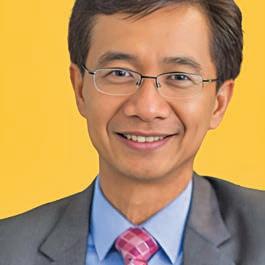
In 2025, our region will face a perfect storm of AI-driven cyber threats, escalating in scale, sophistication, and impact. The days of fragmented security approaches are over—organizations must pivot to unified platforms powered by transparent and trustworthy AI to stay ahead. As quantum attacks loom and deepfakes become mainstream tools of deception, businesses will either innovate or risk being outpaced by adversaries. The stakes have never been higher, and trust will be the ultimate currency in this new era of cybersecurity. Those who fail to adapt risk not just breaches but irreparable damage to their reputation and resilience,” said Simon Green, President, Asia Pacific and Japan at Palo Alto Networks.
In its recent study, Palo Alto also outlined five key trends that cyber practitioners can expect to unfold in the coming 12 months and for which they can position their organizations for a more secure future.
First prediction, according to Green: cyber infrastructure will be anchored around a single unified data security platform. In 2025, Green said the organizations will address heightened complexity by reducing the number of cybersecurity tools in use, and shifting to a unified platform, offering enhanced visibility and control. Nevertheless, the ongoing dearth
in talented cybercrime experts will continue to accelerate this trend. On the other hand, Green said there is a benefit as a unified platform will provide end-to-end visibility and context, spanning code repositories, cloud workloads, networks, and security operations centers (SOCs). “Ultimately this creates a more holistic security architecture with fewer dashboards,” he said.
Green said demolishing the silos and ensuring the confluence of all security layers onto a unified platform will optimize resources, improve overall efficiency, and enable organizations to build more resilient, adaptive defenses against evolving threats.
According to Green, the second trend to watch is the proliferation of deepfakes which, he added, are already being used for nefarious purposes in the APAC region. While some have been used to spread political misinformation, Green said cybercriminals used it to target corporations for financial gain, like the employee at a Hong Kong engineering firm duped into wiring millions of dollars to a scammer who had used deepfakes to imitate the chief financial officer and executive team on a video conference.
C lassified as a synthetic media, deepfake is


Key points about deepfakes DEEPFAKES are created using ad-
vanced AI techniques, such as deep learning and generative adversarial networks (GANs). They can effectively manipulate facial expressions, speech, and even body language to create highly realistic and often deceptive content.
Deepfakes can be used mali-
ciously to spread misinformation, create fake news, or harm individuals’ reputations.
W hile detecting deepfakes can be challenging, there are ongoing efforts to develop tools and techniques to identify them.
Green said it’s important to be aware of deepfakes and to critically evaluate the information you encounter online.
Green pointed out that clever criminals will capitalize on the ever-improving generative AI technology to launch credible deepfake attacks. He warned that the use of audio deepfakes will also become more prevalent in these attacks, as the available technology allows for highly credible voice cloning. “We can expect deepfakes to be used alone or as part of a larger attack much more often in 2025,” he said.
In 2025, there will be a growth in quantum computing projects across APAC, with governments and venture capital firms investing heavily in local initiatives.
Nation-state-backed actors
WHILE quantum attacks on widely used encryption methods are not yet feasible, Green warned that nation-state-backed threat actors are expected to intensify their “harvest now, decrypt later” tactics, targeting highly classified data with the intent to unlock it when quantum technology advances. “This poses a risk to governments and businesses, with the potential to jeopardize civilian and military communications, undermine critical infrastructure, and overcome security protocols for most internet-based financial transactions,” he said.
“ We will likely also see nationstate actors target organizations developing quantum computers themselves, in corporate espionage attacks,” he added.
To counteract these threats effectively, Green urged all orga-
nizations to act and adopt quantum-resistant defenses, including quantum-resistant tunnelling, comprehensive crypto data libraries, and other technologies with enhanced crypto-agility.
Transitioning to these algorithms will help secure data against future quantum threats. Organizations that require high security should explore quantum key distribution (QKD) as a means of ensuring secure communications. As quantum computing continues to become more and more of a reality and potential threats loom, Green said it will be essential to adopt these measures to keep pace with the rapidly evolving cyber landscape, prevent data theft and ensure the integrity of their critical systems. For now, he said CIOs can debunk any hype around this topic to the board. Though significant progress with quantum annealing has been made, he said militarygrade encryption has still not been broken.
Green said regulators in the APAC region are starting to focus on the data protection and cybersecurity implications of the growing use of AI models. Further, he said this is part of an overall bid to build trust in AI use and encourage AI-driven innovation.
In 2025, expect APAC legislators’ AI focus on ethics, data protection and transparency to remain. However, Green said increased use of AI models will lead to greater emphasis being placed on AI security and the integrity and reliability of the data being used. “Transparency and proactive communication about AI model mechanics—specifically regarding data collection, training datasets, and decision-making processes— will be essential for building customer trust,” he said.
By Vinícius Andrade and Ezra Fieser Bloomberg
DEVELOPING nations, already set for a turbulent 2025, are having to cope with ballooning interest payments on $29 trillion of debt that built up over the last decade.
A record 54 countries are spending more than 10% of their revenues on interest payments, according to the United Nations. Some, including Pakistan and Nigeria, are using more than 30% of revenue just to pay coupons.
T he sum—around $850 billion in total last year for both foreign and local debt—is forcing countries to divert money from domestic spending on hospitals, roads and schools while raising risks for emerging-market investors.
“Interest burdens are massive,” Roberto Sifon-Arevalo, global head of sovereign ratings at S&P Global Ratings, said in an interview. “There’s a lot of muddle through, but there’s a tremendous amount of risk.”
It’s an additional challenge in a year of uncertainty for emerging
markets. Donald Trump’s impact on the outlook for US rates and the dollar, heightened geopolitical tensions and concerns over the Chinese economy all set the stage for a bumpy 2025.
Global investors are already yanking their money, with outflows from vehicles focusing on hard-currency EM debt this year topping $14 billion, according to EPFR data compiled by Morgan Stanley.
Despite that, governments managed to squeak by without a single sovereign default in 2024. Emerging-market watchers including RBC BlueBay Asset Management and Morgan Stanley don’t expect any nations to go bust next year either, largely because international institutions including the International Monetary Fund are stepping in and international capi-

boiling
tal markets reopened for some borrowers.
The backdrop has helped settle debt negotiations that had been stalled for years. Fewer countries are trading at distressed levels and some of the world’s riskiest bonds, from Pakistan to Egypt, have beaten peers.
A ll of the top 10 performers in a broad-based gauge tracking sovereign, emerging-market dollar notes are from the high-yield space, averaging a 55% return this year, according to data compiled by Bloomberg. And an index of highyield debt is far outperforming that of investment-grade notes.
But as pandemic-era borrowings begin to come due and interest costs build, money managers are asking how long can the lull last.
“Default risk is lower in the short term,” said Anthony Kettle, senior portfolio manager at RBC.
“But it does set up an interesting situation if you look a little further forward: Can they sustain these interest costs?”
Emerging-market debt has more than doubled over the past decade to roughly $29 trillion, most of which came from local borrowing, according to UNCTAD’s annual debt report.
Th at’s left them saddled with big interest payments as well as bond maturities that will either need to be paid or refinanced. Over the next two years, roughly $190
more challenges in the coming year.
“Poor countries are facing record-high interest payments, putting economiestheirunder unprecedented strain.”
billion of obligations come due on foreign bonds, according to JPMorgan Chase & Co.
A lready some of the riskiest countries are paying more than 9% coupons to tap international debt markets and roll over maturities.
S&P analysts wrote in a report last month that they expect more defaults over the next decade than in the past, due to debt levels and the cost of borrowing. The World Bank also recently warned of record-high interest payments by poor countries.
Risky outlook
THE possibility of another wave of busts underscores the risky outlook for EM debt investors, who were stung by a series of defaults after the pandemic. Ethiopia was the last developing nation to renege on debt payments in late 2023.
Pressure is mounting on the
and rolling it into balls to make
like many
on spending for hospitals, roads, and
IMF to continue stepping in. The Fund is in talks with Argentina, one of its biggest debtors, for a deal by year-end to replace and possibly expand the current $44 billion agreement.
A rgentina, which has defaulted a staggering nine times, faces some $9 billion due between interest and principal payments on its hard currency bonds next year alone.
In Asia, the IMF has already bailed out Sri Lanka and Pakistan—helping propel the debt of those countries by an eye-popping 34% and 43% this year. Angola in October floated the idea of kicking off talks with the IMF on a new program, but later said that for now the Fund will keep providing technical assistance.
About 27% of an emergingmarket debt index is engaged with the IMF and the number of countries relying on the fund’s program should rise further, according to Morgan Stanley strategists including Emma Cerda and Simon Waever.
“ The IMF will still play a key role,” Morgan Stanley strategists wrote in a note on December 3. “We still think that a large share of upcoming programs ending will be refinanced largely due to fiscal concerns.”
With assistance from Kevin Simauchi, Catherine Bosley, Jorgelina do Rosario and Maria Elena Vizcaino / Bloomberg
Continued from A1
Product integrity, supply chain security
IN 2025, Green said organizations are expected to focus more on product integrity and supply chain resilience. Furthermore, Green said organizations will conduct much more thorough risk assessments, consider accountability and legal implications of business outages and review insurance arrangements. In cloud environments, where
complexity and scale amplify risks, real-time visibility has become a necessity. “Expect to see greater focus on comprehensive monitoring involving continuous tracking of both infrastructure and application performance metrics,” he said.
PHL improvements
OSCAR VISAYA , Country Manager, Philippines, at Palo Alto Networks, said the Philippines has shown improvement in its standing as far as cybersecurity security is concerned. “As cybersecurity
takes center stage across public and private sectors, reflected in the Philippines’ rise from 61st to 53rd in the 2024 UN Global Cybersecurity Index, these predictions aim to help organizations navigate 2025,” he said. With local insights—such as deepfakes and cyberattacks fueled by rapid digitalization—and trends across Asia-Pacific, prioritizing unified security platforms and AI advancements will be critical to securing the Philippines’ digital future,” he added.
Editor: Angel R. Calso
Sunday, December 22, 2024 A3

By Martha Mendoza The Associated Press
HEN Bernard Jones
WJr. and his wife, Doris, built their dream home, they didn’t hold back. A grotto swimming pool with a waterfall for hot summer days. A home theater for cozy winter nights. A fruit orchard to harvest in fall. And a vast underground bunker in case disaster strikes.
“The world’s not becoming a safer place,” he said. “We wanted to be prepared.”
Under a nondescript metal hatch near the private basketball court, there’s a hidden staircase that leads down into rooms with beds for about 25 people, bathrooms and two kitchens, all backed by a self-sufficient energy source. With water, electricity, clean air and food, they felt ready for any disaster, even a nuclear blast, at their bucolic home in California’s Inland Empire.
“If there was a nuclear strike, would you rather go into the living room or go into a bunker? If you had one, you’d go there too,” said Jones, who said he reluctantly sold the home two years ago.
Global security leaders are warning nuclear threats are growing as weapons spending surged to $91.4 billion last year. At the same time, private bunker sales are on the rise globally, from small metal boxes to crawl inside of to extravagant underground mansions.
Critics warn these bunkers create a false perception that a nuclear war is survivable. They argue that people planning to live through an atomic blast aren’t focusing on the real and current dangers posed by nuclear threats, and the critical need to stop the proliferation of weapons of mass destruction. Meanwhile, government disaster experts say bunkers aren’t necessary. A Federal Emergency Management Agency 100-page guide on responding to a nuclear detonation focuses on having the public get inside and stay inside, ideally in a basement and away from outside walls for at least a day. Those existing spaces can provide protection from radioactive fallout, says FEMA. But increasingly, buyers say bunkers offer a sense of security. The market for US bomb and fallout shelters is forecast to grow from $137 million last year to
$175 million by 2030, according to a market research report from BlueWeave Consulting. The report says major growth factors include “the rising threat of nuclear or terrorist attacks or civil unrest.”
Building bunkers
“People are uneasy and they want a safe place to put their family. And they have this attitude that it’s better to have it and not need it then to need it and not have it,” said Atlas Survival Shelters CEO Ron Hubbard, amid showers of sparks and the loud buzz of welding at his bunker factory, which he says is the world’s largest, in Sulphur Springs, Texas.
Hubbard said Covid lockdowns, Russia’s invasion of Ukraine and the outbreak of the Israel-Hamas war have driven sales.
On Nov. 21, in the hours after Russia’s first-ever use of an experimental, hypersonic ballistic missile to attack Ukraine, Hubbard said his phone rang nonstop.
Four callers ended up buying bunkers in one day, he said, and more ended up ordering doors and other parts for shelters they were already building.
Hubbard said his bunkers are built for all disasters.
“They’re good for anything from a tornado to a hurricane to nuclear fallout, to a pandemic to even a volcano erupting,” he said, sweeping his arms toward a massive warehouse where more than 50 different bunkers were under construction.
A loaded shotgun at arm’s length and metal mesh window shields to block Molotov cocktails nearby, Hubbard said he started his company after building his own bunker about 10 years ago. He says callers ask about prices — $20,000 to multimillions, averaging $500,000 — and installations — they can go just about anywhere. He said most days he sells at least one bunker.
Under Hubbard’s doomsday scenario, global tensions could lead to World War III, a situation he is prepared to live through.
“The good news about nuclear warfare,” he said, “if there ever was any, that it’s very survivable if you’re not killed in the initial blast.”
He’s not wrong, say US government disaster preparedness experts.
“You want to go to your most robust building” LOOK , this fallout exposure is
entirely preventable because it is something that happens after the detonation,” said Brooke Buddemeier a radiation safety specialist at Lawrence Livermore National Laboratory, where the US government designs nuclear weapons.
Buddemeier and his colleagues are tasked with evaluating what could happen after an attack and how best to survive. “There’s going to be a fairly obvious nuclear explosion event, a large cloud. So just getting inside, away from where those particles fall, can keep you and your family safe.”
Buddemeier and others in the US government are trying to get Americans — who decades ago hid under desks during nuclear attack drills — educated about how to respond.
After a deadly and deafening blast, a bright flash and a mushroom cloud, it will take about 15 minutes for the radioactive fallout to arrive for those a mile or more away from ground zero, said Michael Dillon, a scientist at Lawrence Livermore National Laboratory.
“It’s going to literally be sand falling on your head, and you’re going to want to get out of that
situation. You want to go to your most robust building,” he said. In their models, they estimate people may need to stay inside for a day or two before evacuating.
The government’s efforts to educate the public were reinvigorated after a false alarm missile alert in Hawaii in 2018 caused widespread panic.
The emergency alert, which was sent to cellphones statewide just before 8:10 a.m., said: “BALLISTIC MISSILE THREAT INBOUND TO HAWAII. SEEK IMMEDIATE SHELTER. THIS IS NOT A DRILL.” For the next 40 minutes there were traffic jams, workers running into and out of buildings, families huddling in their bathrooms, students gathering in gyms, drivers blocking tunnels, all in an attempt to seek shelter, without any clear idea of what “seek immediate shelter” actually meant.
Today the federal government offers a guide to prepare citizens for a nuclear attack that advises people to find a basement or the center of a large building and stay there, possibly for a few days, until they get word about where to
See “Nuclear,” A4

By Matt O’brien Ap Technology Writer
CLONDALKIN,
Ireland—
Dozens of massive data centers humming at the outskirts of Dublin are consuming more electricity than all of the urban homes in Ireland and starting to wear out the warm welcome that brought them here.
Now, a country that made itself a computing factory for Amazon, Google, Meta, Microsoft and TikTok is wondering whether it was all worth it as tech giants look around the world to build even more data centers to fuel the next wave of artificial intelligence.
Fears of rolling blackouts led Ireland’s grid operator to halt new data centers near Dublin until 2028. These huge buildings and their powerful computers last year consumed 21 percent of the nation’s electricity, according to official records. No other country has reported a higher burden to the International Energy Agency. Not only that, but Ireland is still heavily reliant on burning fossil fuels to generate electricity, despite a growing number of wind farms sprouting across the countryside. Further data center expansion threatens Ireland’s goals to sharply cut planet-warming emissions.
Ireland is a “microcosm of what many countries could be facing over the next decade, particularly with the growth of AI,” said energy researcher Paul Deane of University College Cork.
Dublin’s data center limits
TWENTY-SIX-YEAR-OLD activist Darragh Adelaide lives in a working-class Dublin suburb just across a busy motorway from Grange Castle Business Park, one of Ireland’s biggest data center clusters. It could get even bigger were Adelaide not a thorn in the side of Google’s expansion plans.
“It’s kind of an outrageous number of data centers,” Adelaide said. “People have started to make the connection between the amount of electricity they’re using and electricity prices going up.”
Ireland has attracted global tech companies since the “Celtic Tiger” boom at the turn of the 21st century. Tax incentives, a highly skilled, English-speaking workforce and the country’s membership in the European Union have all contributed to making the tech sector a central part of the Irish economy. The island is also a node for undersea cables that extend to the US, Britain, Iceland and mainland Europe.
Nearly all of the data centers sit
Sunday, December 22, 2024 go next.
Continued from A3
“Gently brush your pet’s coat to remove any fallout particles,” it says, adding that the 15-minute delay between bomb and fallout allows “enough time for you to be able to prevent significant radiation exposure.”
Jeffrey Schlegelmilch, who directs the FEMA-backed National Center for Disaster Preparedness at Columbia University, said “the scenarios of a nuclear detonation are not all or nothing.”
If a small number of weapons detonate rather than all-out war, he said, sheltering inside a large building to avoid the fallout could save lives.
on the edge of Dublin, where their proximity to the capital city facilitates online financial transactions and other activities that require fast connections. Data center computers run hot, but compared to other parts of the world, Ireland’s cool temperatures make it easier to keep them from overheating without drawing in as much water.
Still, buildings that for years went mostly unnoticed have attracted unwanted attention as their power demands surged while Irish householders pay some of Europe’s highest electricity bills. Ireland’s Environmental Protection Agency has also flagged concerns about nitrogen oxide pollution from data centers’ onsite generators—typically gas or diesel turbines—affecting areas near Dublin.
A crackdown began in 2021, spurred by projections that data centers are on pace to take up one third of Ireland’s electricity in this decade. Regulators declared that Dublin had hit its limits and could no longer plug more data centers into its grid. The government urged tech companies to look outside the capital and find ways to supply their own power.
“What’s happening in Ireland is the politics of basically what happens when you build too many of these things,” said University College Dublin researcher Patrick Brodie. “Even though people have recognized for a while that data centers are energy hogs, there hasn’t really been so many of these moments where, effectively, Ireland issued a red alert.”
Adelaide was a child when Microsoft opened Grange Castle’s first data center in 2009, but enormous complexes built by Amazon, Google, Microsoft and other companies have since expanded around the ruined castle that anchors the business park. They have their own modern fortifications of high fences, surveillance cameras and guardhouses, and don’t display their corporate logos.
In June, Adelaide’s campaign against data centers helped get him elected to a seat on the South Dublin County Council for the leftist People Not Profits Party. The council soon after rejected Google’s plan to build another data center. Google appealed the decision in September.
“It was only going to employ around 50 people,” Adelaide said. “It would have been a massive cost to the local area and to Ireland in general with very little benefit, which is kind of how the tax haven system works.”
The backlash from Dublin-area local planning authorities—com -
“Underground bunkers aren’t going to protect people” NONPROLIFERATION advocates bristle at the bunkers, shelters or any suggestion that a nuclear war is survivable.
“Bunkers are, in fact, not a tool to survive a nuclear war, but a tool to allow a population to psychologically endure the possibility of a nuclear war,” said Alicia SandersZakre at the International Campaign to Abolish Nuclear Weapons. Sanders-Zakre called radiation the “uniquely horrific aspect of nuclear weapons,” and noted that even surviving the fallout doesn’t prevent long-lasting, intergenerational health crises. “Ultimately, the only solution to protect populations from nuclear war is to eliminate nuclear weapons.”
Researcher Sam Lair at the James Martin Center for Nonpro -
bined with stricter, if sometimes contradictory, guidance from the national government—has frustrated data center developers.
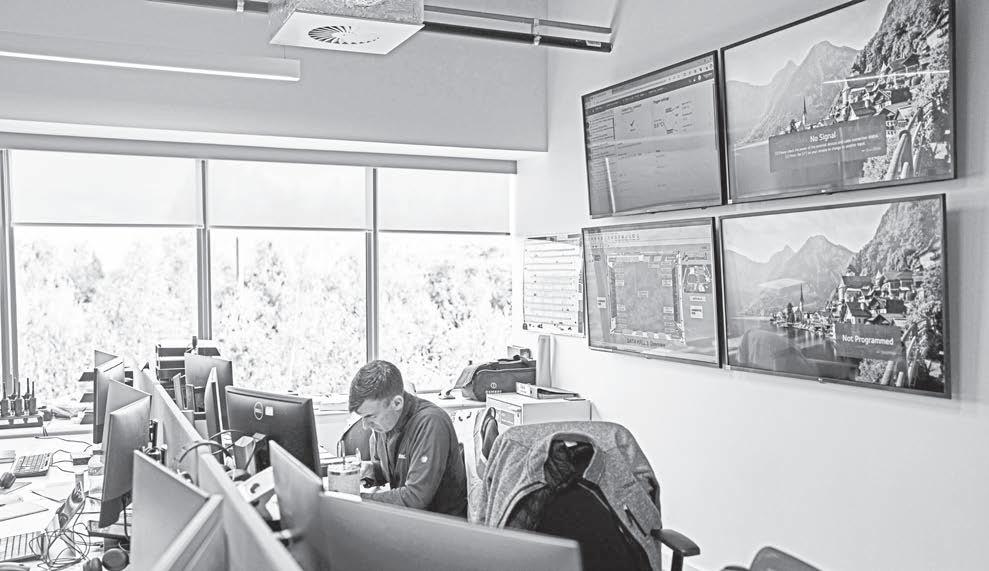
One fully built data center from Texas-based Digital Realty is sitting idle at Grange Castle while it awaits permission to connect to the electricity grid. The company sells space within its data centers for clients such as banks, e-mail providers and social media platforms. It says it lacks a grid connection despite contracting for enough renewable energy to power all of its Irish data centers.
“When we look at artificial intelligence, when we look at new technologies coming along the line, the basic requirement for all of those is power infrastructure,” said Dermot Lahey, who directs Digital Realty’s data center implementation in Ireland, speaking inside a cavernous empty data hall. Ireland has all the elements to make it a “great home for AI expansion,” he said.
“What’s preventing us from being able to leverage that is the fact that the power constraints that we have, or the power moratorium that we have, is greatly impacting our ability to provide space for customers,” Lahey said.
Moving to the boglands?
ONCE colder weather sets in, the smoky fragrance of fireplaces burning briquettes of peat lingers over County Offaly, just over an hour’s drive west of Dublin in a region known as the Midlands. It’s places like this where some data center developers, thwarted by Dublin’s constraints, now see opportunity.
A report commissioned by County Offaly’s government pitches the bog-dotted region as a place to “create thousands of green jobs”
liferation Studies says US leaders stopped talking about bunkers decades ago.
“The political costs incurred by causing people to think about shelters again is not worth it to leaders because it forces people to think about what they would do after nuclear war,” he said. “That’s something that very, very few people want to think about. This makes people feel vulnerable.”
Lair said building bunkers seems futile, even if they work in the short term.
“Even if a nuclear exchange is perhaps more survivable than many people think, I think the aftermath will be uglier than many people think as well,” he said. “The fundamental wrenching that it would do to our way of life would be profound.”
That’s been a serious concern of
and rival “Dublin, Frankfurt, London, Amsterdam and Paris in being an anchor for data centers powered by renewable energy.” Farmer and conservationist Brian Sheridan, 83, is doubtful. He’s seen this region transformed once before, from a vast wetland known as the Bog of Allen to barren pockets of brownfields as people cut away trenches of dense peat soil, or turf – first with spades and later with tractors at an industrial scale to create homegrown fuel.
“The bog started disappearing and it wasn’t being replaced,” said Sheridan, walking along a boardwalk over carpets of moss and sedges in the now-protected Clara Bog Nature Reserve.
Decades of rapid extraction fostered Ireland’s energy independence and employed scores of workers in turf-cutting, briquette factories and power plants. But it also polluted the air and devastated a delicate environment. Bogs that naturally trapped large amounts of carbon dioxide were stripped down to the bedrock, contributing to global warming. When burned, peat is dirtier than coal.
Ireland has largely banned the sale of peat and shuttered the last remaining peat-fired power plants. But the state-supported company at the helm of peat extraction, Bord na Móna, still controls vast tracts of former bogland. It has refashioned itself as a renewable energy provider, laying down wind turbines and solar farms and partnering with Amazon to build a data center near the village of Rhode.
Bord na Móna declined multiple interview requests about its plans, and some residents feel left in the dark.
“Bord na Móna, as far as I’m concerned, are a law unto themselves,”
Massachusetts Congressman James McGovern for almost 50 years.
“If we ever get to a point where there’s all out nuclear war, underground bunkers aren’t going to protect people,” he said. “Instead, we ought to be investing our resources and our energy trying to talk about a nuclear weapons freeze, initially.”
Next, he said, “we should work for the day when we get rid of all nuclear weapons.”
Year after year he introduces legislation pushing for nonproliferation, but looking out his office window at the Capitol, he said he’s disappointed by the lack of debate over what will be a $1 trillion expenditure to build and modernize the US arsenal.
“The stakes, if a nuclear weapon is ever used, is that millions and millions and millions of people will die. It really is shocking that
Sheridan said. “Now that the turfcutting is all finished, they should be gone. But it’s still the same Bord Na Móna and they won’t answer questions.”
Amazon declined to talk about specific projects and has repeatedly signaled it may shift its new data center investments away from Ireland. But an executive said the company is still working closely with the Irish government and characterized Ireland’s challenges as mostly about transmission—building the infrastructure to get new clean energy where it needs to go.
“Ireland has tremendous opportunity for additional renewable energy,” said Kevin Miller, Amazon Web Services’ vice president of global data centers. “However, they also need quite a bit more capacity on the grid to tap into that generation.”
Could wind save Ireland’s data centers?
A TECH-DRIVEN race is on to harness the region’s wind. Backed by a power purchase agreement with Microsoft, the Norwegian wind energy company Statkraft is building nine towering wind turbines in remote former boglands along County Offaly’s eastern edge. Statkraft’s managing director for Ireland, Kevin O’Donovan, said data centers are actually helping to accelerate Ireland’s clean energy transition.
“For a lot of the mainland European countries, demand is going down and that’s actually leading to a challenge to roll out renewables,” O’Donovan said. “Whereas in Ireland we have demand that’s increasing because the country is growing economically and obviously a part of that is the data center growth.”
we have world leaders who talk casually about utilizing nuclear weapons. I mean, it would be catastrophic, not just for those that are involved in an exchange of nuclear weapons, but for the entire world.”
McGovern pushed back against FEMA’s efforts to prepare the public for a nuclear attack by advising people to take shelter.
“What a stupid thing to say that we all just need to know where to hide and where to avoid the most impacts of nuclear radiation. I mean, really, that’s chilling when you hear people try to rationalize nuclear war that way,” he said.
Nuclear war was far from a couple’s mind when they went house hunting in Southern California a few years ago. They wanted a home to settle down and raise their family, and they needed extra garage space. They spotted an online ad
On the other side of Offaly, a group of residents who live along the Lemanaghan Bog near the site of a 7th-century monastery are skeptical of such claims. They are opposed to what a proposed Bord Na Móna wind farm will do to its cultural heritage and ecology. KK Kenny took his concerns to Dublin this fall in a meeting with the country’s taoiseach, or prime minister, Simon Harris. Kenny wants to see the bog preserved for biodiversity. He’d be happy to see data center developers follow through with their pledge to look to other European countries. “They say, oh, they’re going to pull out,” Kenny said. “That would be a great thing. We can’t sustain them.”
Some neighbors of Amazon’s proposed data center in Rhode are more open to the idea. One village resident already commutes all the way to Dublin to work at a data center. Another is hoping it will employ people who’d want to buy new homes.
“We’re all for change,” said Gerard Whelan. “I’ll get work because I build houses. It’s a domino effect.”
At a village pub, the Rhode Inn, Whelan points to a photograph of the old peat-burning power plant where his father worked the control room. Its cooling towers loomed over the village before their demolition two decades ago. Another nearby plant only stopped burning peat a year ago. What happens next for Ireland’s data centers could depend in part on the new national government coming into power early next year. Data centers were not a top iss ue for Irish voters who showed up to the polls on November 29. But analysts expect the two centerright parties forming a new coalition government to face industry pressure to ease limits on data center expansion.
Ossian Smyth, an outgoing minister of state for the Irish government whose Green Party lost nearly all its parliamentary seats, said it would be a mistake to slow down Ireland’s climate commitments. But he also sees the limits on data center growth set by his outgoing government as having resolved most people’s concerns. What other countries can learn from Ireland’s experience, he added, is to carefully manage the effect of data centers on the stability of the electricity system—and make sure their benefits are much more than income or foreign investment.
“Don’t see them as a necessary evil or something that you just have to put up with because it makes money and it gets taxes,” Smyth said.
for a home with at least eight parking spots. On the basketball court, there was a metal hatch. Beneath it was a bunker. This was Jones’ former home, which Jones said he put up for sale for family reasons.
The husband, who spoke on condition of anonymity because of concerns about his family’s privacy, went ahead and bought Jones’ home, bunker and all. They aren’t particularly worried about nuclear war, and haven’t spent a night in the bunker, but they have stored food and medical supplies down there.
“We have told some of our friends, if something goes crazy and gets bad, get over here as fast as possible,” the husband said. “It does provide a sense of security.” Mendoza reported from Sulphur Springs, Texas, and Livermore, California.


Story & photos
by John Eiron R. Francisco
CAGAYAN DE ORO—Two teams of Mindanao-based game developers dominated the first game development competition in the country’s electronic sports (esports) industry that was held during the recent National Science and Technology Week (NSTW) hosted by the Department of Science and Technology (DOST).
Team NinetySix from General Santos City won in the professional category, while EMC: Excelsior Mapuan Creatives from Mapúa Malayan Colleges Mindanao bagged the student category in the“Level Up Esports Game Dev Challenge” during the NSTW celebration in this city.
Kendrick Villaruel, the engineer and developer of Team NinetySix, whose winning game was inspired by the Filipino childhood game “Langit
TBy Bless Aubrey Ogerio
HE Senate Committee on Science and Technology recently approved the bill seeking to expand the Philippine Science High School (PSHS) system, a measure aimed at improving access to science, technology, engineering, and mathematics (STEM) education nationwide.
The proposed “Expanded Philippine Science High School System Act” aims to address geographic disparities, infrastructure limitations and socioeconomic barriers.
“It no longer be one by region, we are longing to have two campuses per region,” PSHS Executive Director Ronnalee Orteza said during the Senate hearing.
At present, the PSHS system admits only around 1,875 students annually out of 23,000 to 30,000 examinees.
Orteza explained that this represents less than 1 percent of the country’s estimated gifted population.
She said the pr oposed expansion may help to bridge this gap by increasing available slots for deserving students, particularly in regions with larger populations, such as Calabarzon.
The bill also seeks to address teacher shortages and the lack of PSHS campuses in underserved areas, including the Bangsamoro Autonomous Region in Muslim Mindanao (BARMM).
“ We do not have a [PSHS] campus there [BARMM], sir, but we are helping them establish their science high school,” she said. “Last week, we met with the [BARMM] Ministry of Science and Technology. They
Lupa,” told the BusinessMirror that the initiative by the DOST played a crucial role in showcasing the talents of Filipino developers, especially in Mindanao, who rarely have access to such events and opportunities.
Villaruel, along with teammates Mark Aeron Jay Ducoy and Russele John Berami, shared that the national competition allowed them to connect not only with individuals from the National Capital Region (NCR) but also with influential industry figures who could open doors for them to bigger opportunities.
The EMC: Excelsior Mapuan Creatives team consisting of Abdul Adzis Abpey, Guillan Fredd Perecho, and Debbie Shane Getigan triumphed over nine other teams of university student game developers.
The team’s winning entry, “Cordillera Chronicles,” is a top-down fantasy role-playing game (RPG) that immerses players in the mysti -
will open Bangsamoro Science High School next year [on a] 14.2 hectare land.”
Sen. Juan Miguel Zubiri, who presided over the Senate hearing, reiterated the importance of codifying support for BARMM in the proposed law to ensure continuity across future leaders.
Budgetary needs
BASED on Orteza’s presentation, the PSHS System expansion requires substantial funding, with an estimated budget of P333 million in the first year and over P1 billion spread across six years.
“The operation will only stabilize when all the campuses are established, so after six years,” she said partly in Filipino.
PSHS scholars c urrently cost P224,211 per capita, with the system’s total budget declining slightly from P2.9 billion in 2023 to P2.7 billion in 2024 and 2025.
The site selection criteria for new campuses include the quality of feeder schools, accessibility, land size and topography, and support from local government units.
The PSHS system also partners with the DOST-Science Education Institute to raise awareness and promote science education in public schools.
Since its establishment in 1969, the PSHS System has produced 27,156 graduates, 98 percent of whom pursued STEM-related courses.
T he measure will undergo further refinement by a technical working group before being presented for plenary deliberations.
Zubiri expressed optimism about its passage before February 14, 2025.
cal Cordillera mountains.
The game is based on an ancient belief warning children not to curse their elders, for fear of angering the “anito,” the spirits that protect the land.
The EMC: Excelsior Mapuan Creatives took home P50,000 and a plaque as the first-place winner, while the second-place award went to Mesheerableos from Cebu Institute of Technology University (Region VII), earning P25,000 and a plaque. The third-place winner was Sinawali Showdown from Caraga State University (Region VIII), receiving P15,000 and a plaque.
Team NinetySix claimed the top cash prize of P75,000 and a plaque. Urianus secured second place with P50,000 and a plaque, while Katakata Creative finished third, winning P30,000 and a plaque.
The participants were challenged to create an original esports game that blends traditional sports, such as

boxing, arnis, volleyball, and basketball, or delved into themes connected to science, technology, culture, and the creative arts.
‘Esports drives investment, employment, innovation in PHL’
IN his speech, Cezar R. Pedraza, director IV of Planning and Evaluation Science, highlighted the rapid and growing global expansion of the esports industry, noting that the sector has already taken off and continues to thrive worldwide.
He said esports is no longer just a hobby—it’s a significant economic force.
There are 43 million active gamers in the Philippines a number, according to Pedraza, that highlights the nation’s strong passion for this dynamic and competitive industry, with Filipino players mainly participating in international modern games and online competitive gaming.

He emphasized that the Philippines has become an attractive destination for investors in esports tournaments and events.
“Beyond gaming itself, the game development industry has generated numerous economic opportunities,” Pedraza said.
These include jobs in event organization, tourism, venue and equipment rentals, technology development and innovation, among others.
Meanwhile, Engr. Sancho A. Mabborang, DOST Undersecretary for Regional Operations, echoed Pedraza’s sentiments.
He said that the esports industry is poised for further growth, driven by the widespread accessibility of smartphones and mobile internet, which reach users across all age groups and demographics.
With projected revenues of $25.1 billion from 2024 to 2029, the user

WOOD carvers from Tugaya, Lanao del Sur, known for their intricate wood carving and brasswares featuring Okir and other Maranao patterns, are set to enhance their craft through technical training programs under an initiative by the Department of Science and Technology (DOST).
The Forest Products Research and Development Institute (FPRDI) of the DOST has partnered with Tugaya’s local government and Bangsamoro agencies of the Ministry of Science and TechnologyBARMM (MOST-BARMM) and the Ministry of Trade, Investment and Tourism-BARMM
(MTIT-BARMM) in launching the “Likhain at Linangin Obra mula sa Kahoy [LiLOK]: Valuing the Wood Carving Industry in the Philippines” program.
The project aims to improve the quality, marketability, and sustainability of Tugaya’s wood carving industry, while preserving its cultural heritage.
“We are confident that the LiLOK program will significantly contribute to the development of the local wood carving industry in the Philippines. Indeed, there are science-based solutions even for challenges related to arts and culture,” DOST Secretary Renato U. Solidum Jr. said.
Several key challenges identified by artisans include issues with wood drying, finishing and preservation, alongside the dwindling supply of raw materials and declining interest in carving among women and youth.
B ased on the US Foreign Agricultural Service’s report, the Philippines relies on imports for 75 percent of its wood and wood products, with the bulk of these consisting of plywood, veneered panels, laminated wood, and both coniferous and non-coniferous wood, either sawn or chipped lengthwise. Further data from the Climate Change
base continues to expand steadily.
“We know that continuous innovations and technology will only make the industry bigger and more competitive, and we are committed to providing solutions and creating opportunities through STI,” he said.
Mabborang highlighted that, through their partnership with the eSports World Federation (ESWF), the initiative will continue to offer training programs, workshops, and seminars aimed at recruiting and nurturing aspiring mentors. The efforts are designed to promote and market the development of local talent, he added.
Looking ahead, Mabborang emphasized that the collaboration with ESWF will play a crucial role in helping Philippine developers gain recognition and attract foreign investments, ultimately enhancing the country’s reputation in the global eSports and gaming industry
Commission
The LiLOK program will
“Again,
Jennifer M. Conda. The initiative will also collaborate with partners, such as the University of the Philippines Open University and UP Los Baños Forestry Development Center, to harmonize policies on the wood carving sector and provide technical support.
Funded by the National Research Council of the Philippines, the program will extend its reach to other carving communities across the country, including those in Hungduan, Ifugao; Guagua, Pampanga; Paete, Laguna; Palawan; and Mogpog, Marinduque. Bless Aubrey Ogerio
A6 Sunday, December 22, 2024

Editor: Lyn Resurreccion • www.businessmirror.com.ph
By Justine Xyrah Garcia
POPE Francis recently reaffirmed the Catholic Church’s mission to be a home for everyone, especially for migrants navigating life in foreign lands.
Speaking to a Filipino community living in Spain during a private audience at the Apostolic Palace, the Holy Father said that the Church will continue to provide warmth and refuge amid the challenges of displacement and uncertainty.
“Everywhere we go, the Church is always a home for us… And today the house of Peter is also like a home for you,” Pope Francis said in the transcript of his message.
The meeting marked the 25th anniversary of the Immaculate Conception and St. Lorenzo Ruiz Parish in Barcelona, a community dedicated to supporting Filipino Catholics.
The Filipino community’s mission in Madrid, named Tahanan— the Filipino word for “home”—
which the pope complimented as beautiful, symbolizes the Church’s role as a sanctuary for those far from their own homes.
Menci Molina is one of the leaders of the Filipino community who had an audience with the pope, a BusinessMirror source said.
She and her lawyer-sister and other close family members were among the founders of Tahanan, the biggest haven for migrant workers in Madrid.
Molina’s lawyer-sister has for decades provided free legal assistance to the overseas Filipino workers while Molina worked for their training/orientation/ upskilling.
The online Vatican News said the more than 200,000 Filipino nationals in Spain has a headquarters in Madrid at the parish

of Nuestra Señora del Espino, or “Our Lady of the Thorn.”
Pope Francis acknowledged the difficulties migrants face, comparing their struggles to “thorns” that cause pain and uncertainty, said the CBCP News.
He reminded the community of the Blessed Virgin Mary’s presence in their lives, offering comfort and hope.
“Our Blessed Mother presents herself to us, so that we do not lose hope and are able to face problems, trusting in her protection and her shelter,” he said.

The pope then praised the Filipinos’ enduring devotion to God, describing them as a “people of faith” who bring their witness to the world, even in foreign lands.
“Thank you for what you do,” he said, urging them to continue inspiring others, especially in the current society that can feel “too rich, too competent, and too selfsufficient.”
The pontiff highlighted two figures of inspiration for Filipinos: St. Lorenzo Ruiz, the first Filipino saint, and Cardinal Luis Antonio Tagle, the prefect (head) of the Dicastery for Evangelization.
VATICAN—Pope Francis has declared the 16 Discalced Carmelite nuns of Compiègne—who were executed during the Reign of Terror in the French Revolution—as saints through the rare procedure of “equipollent canonization.”
Mother Teresa of Saint Augustine and her 15 companions, who were guillotined in Paris as they sang hymns of praise, can immediately be venerated worldwide as saints in the Catholic Church.
The equipollent, or “equivalent” canonization, announced by the Vatican on Wednesday, recognizes the long-standing veneration of the Carmelite martyrs, who met their deaths with unwavering faith on July 17, 1794.

Their final act of courage and faith inspired Francis Poulenc’s well-known 1957 opera “Dialogue of the Carmelites,” based on the book of the same name written by famous Catholic novelist and essayist Georges Bernanos. Like the usual canonization process, equipollent canonization
is an invocation of papal infallibility in which the pope declares that a person is among the saints in heaven. It avoids the formal process of canonization as well as the ceremony, since it occurs by the publication of a papal bull. Longtime veneration of the saint and demonstrated heroic virtue are still required, and though no modern miracle is necessary, the fame of miracles that occurred before or after a saint’s death are also taken into account after a study is made by the historical section of the Vatican Dicastery for the Causes of Saints.
Though the process is rare, Pope Francis has declared other saints through equipollent canonization, such as St. Peter Faber and St. Margaret of Costello, something that Pope Benedict XVI also did for St. Hildegard of Bingen and which Pius XI
MY earliest religious memory is of our synagogue’s Ner Tamid: the decorative electric lamp that hangs in every sanctuary, above the ark holding the Torah scrolls. This lamp, I learned from parents and teachers, was an eternal light—the literal meaning of the Hebrew term Ner Tamid. This meant it had to remain lit continuously. It could never go out.
I’m not certain that, at 7 years old, I quite understood what this lamp symbolized. But I do know that the idea of its being “eternal” concerned me. I was troubled by what my personal experience had taught me about light bulbs: They burn out.
If this lamp needed to be eternal—and if, as I eventually surmised, it had something to do with God—then what terrible thing would happen when it burned out? Or if the power went out in a storm? These thoughts disturbed me. It was as though everything the synagogue meant to me as a child hung upon a light fixture, the Ner Tamid and the small amount of illumination it offered.
Divine presence
WHEN I grew up, I became a profes
sor of Jewish studies. I now know that the Ner Tamid that so fascinated me as a child memorializes the seven-branched candelabra in the biblical tabernacle.
The Torah describes the tabernacle as a portable sanctuary, a place of worship during the ancient Jews’ 40 years of wandering through the wilderness after God brought them out from slavery in Egypt. According to the books of Exodus and Leviticus, this candelabra, fueled with pure olive oil, was to burn from evening until morning throughout the generations. Since the tabernacle was built to be God’s dwelling place, the candelabra’s light marked God’s presence among the Jewish people. In later Jewish history, that candelabra became the model for lamps that continuously burned in the First and Second Temples in Jerusalem—the center of the Israelites’ worship.
The first stood from the time of King Solomon in the 10th century B.C.E. until Jerusalem was conquered by Babylonian armies 400 years later. The second was built around 500 B.C.E. and demolished during the Roman destruction of
Jerusalem in 70 C.E.
Appearing in Jewish art from antiquity until today, this everburning, seven-branched candelabra symbolized the permanence of the people of Israel’s connection to God, and God’s continual presence among the Jewish people. And so it is with the Ner Tamid in synagogues today.
Roots of Hanukkah
EACH year during Hanukkah, I reflect on my youthful trepidation that my synagogue’s Ner Tamid might go out. For Hanukkah recalls an occasion on which, in the second century B.C.E., that is exactly what happened.
At the time, King Antiochus IV of Syria ruled over the Seleucid Empire, which governed much of the Mediterranean and Middle East, including Judea.
In 168 B.C.E., the empire forbade Jewish practices, hoping to forcibly assimilate the Jews into Greek culture, and desecrated the Jewish Temple in Jerusalem— extinguishing the candelabra, or menorah.
Considering my childhood anxiety over the Ner Tamid’s going out even briefly, I can hardly imagine
the pain of this persecution.
Alongside the physical abuses that Jews suffered, the loss of the eternal light must have suggested that God’s presence no longer abided in the Temple or among the Jewish people. I can think of nothing more terrifying.
A ragtag army of Jews revolted, led by the Maccabees, a family of pious Jewish priests. They defeated the much more powerful Seleucid army and recaptured Jerusalem, including the Temple. Inside, according to tradition, they found pure lamp oil sufficient to rekindle the menorah for only one day. Miraculously, that small amount of oil lasted eight days, time enough for additional oil to be prepared.
Keep the light alive HANUKKAH teaches a lesson of hope and resilience—of the need, indeed, of the responsibility, to fight for the human freedoms that are all people’s right. At the same time, the holiday’s central symbol is not a sword but a candelabra. This one holds nine candles, one of which is used to light the other eight—representing each day of the miracle.
Tagle, to whom the pope expressed his particular regard, is also a member of several Vatican dicasteries (departments or ministries), including the Institutes of Consecrated Life and Societies of Apostolic Life, and Divine Worship and the Discipline of the Sacraments.
He explained that the 17th century martyrdom of St. Lorenzo’s demonstrated his steadfast faith despite exile and persecution, while Cardinal Tagle’s Chinese and Filipino roots and global influence exemplified how faith can transcend boundaries and foster unity.
granted for St. Albert the Great.
Who were the Martyrs of Compiègne?
THE martyrs, comprising 11 nuns, three lay sisters, and two externs, were arrested during a time of fierce anti-Catholic persecution.
The French Revolution’s Civil Constitution of the Clergy had outlawed religious life, and the Carmelites of Compiègne were expelled from their monastery in 1792.
Despite being forced into hiding, the sisters secretly maintained their communal life of prayer and penance.
At the suggestion of the convent prioress Mother Teresa of St. Augustine, the sisters made an additional vow: to offer their lives in exchange for an end to the French Revolution and for the Catholic Church in France.
On the day of their execution, the sisters were transported through the streets of Paris in open
“Let us imitate [them]. Both [of them] had to leave their homeland, but both did so with Jesus’ embrace. Trusting in Jesus, both of them faced difficulties without ever losing hope,” Pope Francis said as quoted by CBCP News. He called on Filipinos to follow their steps and devote life serving God.
“In this way, we will be able to build our own Tahanan, that warm and welcoming abode which, like a Mother, our Church should be. May the Infant God bless you and the Holy Virgin keep you,” the Pontiff added.
carts, enduring insults from the gathered crowd. Undeterred, they sang the Miserere, Salve Regina, and Veni Creator Spiritus as they approached the scaffold. Before meeting her death, each sister knelt before their prioress who gave them permission to die. The prioress was the last to be executed, her hymn continuing until the blade fell.
Within the following few days, Maximilien Robespierre himself was executed, bringing an end to the bloody Reign of Terror.
The bodies of the 16 martyrs were buried in a mass grave at Picpus Cemetery, where a tombstone commemorates their martyrdom. Beatified in 1906 by Pope Pius X, their story has since inspired books, films, and operas.
The feast day of the Martyrs of Compiègne will remain July 17, commemorating the date of their martyrdom. Courtney Mares/Catholic News Agency via CBCP News

Each night of Hanukkah, Jews light this hanukkiah, as a ninebranched menorah is called, beginning with one candle and adding a candle each night until the entire candelabra is ablaze.
Ideas about God’s saving power stand deep within the Hanukkah story. But I like to focus on a different kind of miracle that I see here.
The Maccabees initiated their fight against all odds. Similarly, those who lit the little bit of oil they found in the Temple rubble elected hope over despair.
In this, I see the holiday’s most enduring message: When people set their minds to it, when we choose to act, we accomplish that which might appear impossible. The creation of a more perfect world, the kind of world we want to bequeath to coming generations, will indeed be a miracle—but one we must undertake to achieve. And I now have an answer to my childhood concern that my synagogue’s eternal light might go out. If it does, I know that it is up to me to relight it. Alan Avery-Peck, College of the Holy Cross/The Conversation (CC) via AP

Editor: Lyn Resurreccion

By Jonathan L. Mayuga
FIVE new Asean Heritage Parks (AHPs) have been added to the network of top nature reserves and natural parks in the Southeast Asian region, the Asean Centre for Biodiversity (ACB) recently announced.
Three of the new AHPs are from the Philippines, making 14 the total number of AHPs in the country from the previous 11.
The new Philippine AHPs are Balinsasayao Twin Lakes Natural Park (BTLNP), Turtle Islands Wildlife Sanctuary (TIWS) and Apo Reef Natural Park (ARNP).
The two others are Phou Xieng Thong National Protected Area and Nam Poui National Protected Area both in Lao PDR.
The five additional AHPs have expanded the heritage parks’ number to 62.
The announcement was made in November as the AHP Programme marked its 40th year of implementation.
Parks of outstanding values
OIC Assistant Director Armida P. Andres of the Department of Environment and Natural ResourcesBiodiversity Management Bureau
(DENR-BMB) explained that AHPs are selected protected areas, which are known for their unique biodiversity and ecosystems, wilderness and outstanding values.
“AHPs were given the highest recognition because of their importance as conservation areas. With the recent declaration of three new AHPs in the Philippines, collaboration among the national government, CSOs [civil society organizations], LGUs [local government units], communities, and other stakeholders is expected to be further strengthened,” Andres told the BusinessMirror via Messenger.
Guided by the Expanded National Integrated Protected Areas System Act of 2018, the DENR-BMB remains steadfast in ensuring the management effectiveness of the country’s 14 AHPs, alongside the other protected areas nationwide.
LGUs’ vital role
ANDRES said concerned LGUs play a vital role in maintaining the integrity of AHPs by aligning their plans with the conservation plans of the AHPs and complementing programs and initiatives of the national government and CSOs in biodiversity conservation.
On the other hand, the declaration

of Turtle Islands Wildlife Sanctuary as an AHP will be instrumental in strengthening the partnership of the DENR and the Ministry of Environment, Natural Resources and Energy (MENRE) of the Bangsamoro Autonomous Region in Muslim Mindanao (BARMM).
“The [ACB] will also play an important role in providing capacity-building initiatives for AHP managers to support science-based decision-making while also promoting the country’s rich biodiversity,” Andres said.
Hallmark initiative
ACB
Acting Executive Director Clarissa C. Arida said the AHP, launched on November 29, 1984, is a hallmark initiative of Asean for biodiversity conservation. It features a network of protected areas that best represent the common natural heritage in the region.
“For four decades, the AHP Programme has remained relevant and continues to grow—as an outstanding showcase of ‘One Asean’ regional cooperation and the commitment of the Asean member states to preserve and restore its immense natural wealth,” Arida said.
“We provide capacity-building training on how to manage protected areas to park managers, LGUs, and other stakeholders,” she added.
Arida added that as part of the
AHP Programme, the new AHPs in the Philippines will be promoted by ACB, thereby boosting their tourism potential would be essential—bringing in much-needed revenues not only to the LGUs, but more importantly, to the community that helps protect the AHPs.
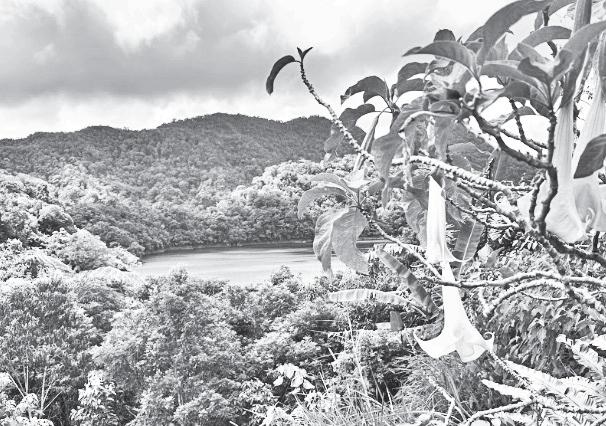
THE Balinsasayao Twin Lakes Natural Park (BTLNP) is designated as the 59th AHP.
Rising to 1,763 meters above sea level, the twin crater lakes of Balinsasayao and Danao are nestled in mountainous tropical lowland evergreen forests and upper montane rain forests in the province of Negros Oriental, in the central Philippines.
Covering an area of 8,016.05 hectares, the park is home to a total of 325 fern species, 237 tree species, 27 mammalian fauna, and 209 resident and migrant birds, of which 14 species are globally threatened.
As an Important Bird Area (IBA), there are a total of 209 resident and migrant birds recorded, 14 species of them are globally threatened most notably, the critically endangered Negros bleeding-heart pigeon (Gallicolumba keayi) and the Visayan wrinkledbilled hornbill (Aceros waldeni).
The Balinsasayao park management allows recreational activities in

Dthe Philippines, the technology’s upfront cost and a lack of public awareness of its benefits remain major hurdles to its widespread use. It is seen that government subsidies and promotional campaigns could help boost its adoption.
A study from the Ateneo de Manila University (ADMU) highlights the persistent challenges preventing widespread adoption of rooftop solar power (RTSP) in Metro Manila and nearby provinces.
Conducted by ADMU Department of Economics Professor Rosalina Palanca-Tan and published in the journal “Challenges in Sustainability,” the study surveyed 403 respondents to understand why households remain reluctant to invest in solar technology despite its undisputed economic and environmental benefits.

the park as long as visitors do not disturb or affect the integrity of the area, including its wildlife and environs.
Turtle Islands Wildlife Sanctuary
THE Turtle Islands Wildlife Sanctuary (TIWS), as the name suggests, is a haven for marine turtles.
Situated in the southwestern tip of the Philippines, it is a pride of Mindanao and the 60th AHPs.
The TIWS is part of the Sulu archipelago in the municipality of Tawi-Tawi, and is characterized as a rocky islet that spans six islands. It is under the jurisdiction of the MENRE of BARMM.
TIWS is known to be the only major nesting habitat of green sea turtles (Chelonia mydas) in the Philippines and the only one in the Asean region, as well.
Based on DENR records, there are 414,529 nests of green sea turtles and hawksbill turtles in TIWS in the past 29 years with an average of 13,817 per year.
It also hosts many unique flora, counting to 281 flora species.
Apo Reef Natural Park
A MARINE nature reserve that stretches 27,488 hectares in the Mindoro, Marinduques, Romblon and Palawan (Mimaropa) region, the Apo Reef Natural Park (ARNP) is situated about 28 km west of the municipality
of Sablayan on Mindoro Island. The largest contiguous coral reef system in the Philippines and the second largest in the world, the ARNP is a marine biodiversity hotspot spanning vibrant coral reefs, pristine lagoons, seagrass beds, various mangroves, and lush beach forests.
It is a sanctuary for over 482 fish species, 63 genera of hard corals, and rare marine invertebrates, such as the endangered green sea turtle and critically endangered hawksbill turtle.
The ARNP is home to iconic species like dugongs, whale sharks, and hammerhead sharks, making the park one of the country’s tourist magnets.
Designated as the 61st AHP, the park is an IBA and holds the distinguished Blue Park Award for its outstanding conservation of marine wildlife.
It is now on the Tentative List from the Philippines for inclusion on the Unesco World Heritage List. Not counting local protected areas, the Philippines has over 240 of national parks and protected areas. However, despite efforts to protect the so-called areas set aside for conservation, illegal activities that undermine their status remain a big challenge with the DENR, having no law enforcement unit that can fully enforce the various environmental laws that are meant to save the country’s endangered wildlife from extinction.
Maynilad, UPD partner for research on water safety, quality
WEST Zone concessionaire Maynilad Water Services Inc. (Maynilad) has partnered with the University of the Philippines Diliman (UPD) to enhance research on emerging pollutants in Metro Manila’s water sources and wastewater systems.
The partnership reflects Maynilad’s proactive approach to ensuring the long-term safety and quality of its water services, a news release said.
Although Maynilad’s water supply consistently meets the stringent Philippine National Standards for Drinking Water, the company recognizes the importance of staying ahead of potential future risks.
Homeowners also recognize that solar energy contributes to environmental protection by reducing greenhouse-gas emissions and air pollution, helping combat the effects of climate change. Overall, the respondents generally viewed RTSP as a sound long-term investment, with added advantages such as increased property value and enhanced roof durability.
However, the upfront cost of installing solar panels remains a major hurdle to public adoption: a home RTSP setup could easily cost over $1,700 (P100,000), equivalent to more than half a year’s salary for minimum wage workers. Many households are unsure if this initial expense is justified by long-term financial and environmental returns.
The survey found that cost by itself does not significantly influence adoption decisions.
Major selling points: long-term savings, eco-friendliness THE Philippines has some of the highest electricity rates in Southeast Asia—as high as $0.20 (around P11.50) per kWh on average, compared to as low as $0.08 (around P4.50) in Vietnam or even $0.06 (around P3.50) in Malaysia. This makes the potential long-term savings from RTSP its biggest selling point for many households.

Respondents said that the trustworthiness of providers, clarity on warranties, and the perceived quality of the installations themselves were just as important considerations as cost, if not more so.
Government support to spur public adoption
Although 82 percent of surveyed households expressed some interest in adopting solar panels, only 20 percent had firm intentions to do so.
This gap apparently stems from a lack of knowledge: while most survey respondents said they understood the broad concept of renewable energy and its role in addressing climate change, few were aware of the specific advantages of RTSPs and how to access reliable installation services. Concerns over the quality of materials,
maintenance needs, and provider credibility also added to their reluctance.
Thus, the study urges stronger government intervention and public education campaigns.
In particular, it suggests improving net metering rates, expanding access to financing options, and accrediting trustworthy RTSP providers to build consumer confidence.
Word-of-mouth recommendations also proved instrumental in decision-making, as households with friends or family who had adopted solar power were more likely to consider it for themselves as well.
Promoting success
munity-based
and
Through the collaboration, UPD will conduct comprehensive testing to assess the presence of unregulated pollutants that have been identified as emerging concerns in other countries.
“Maynilad strictly complies with national water quality standards, providing safe and reliable water to our customers,” said Maynilad Chief Sustainability Officer, Atty. Roel S. Espiritu.
The research will also support Maynilad’s development of advanced treatment methods such as UV photolysis and advanced oxidation to address potential emerging contaminants.
The innovations are key to initiatives like Direct Potable Reuse, which aims to further enhance water sustainability while maintaining the highest safety standards, the water provider said. Maynilad is the largest private water concessionaire in the Philippines in terms of customer base. It is the concessionaire of the Metropolitan Waterworks and Sewerage System for the West Zone of the Greater Manila Area.
It covers the cities of Manila (certain portions), Quezon City (certain portions), Makati (west of South Super Highway), Caloocan, Pasay, Parañaque, Las Piñas, Muntinlupa, Valenzuela, Navotas and Malabon, all in Metro Manila; the cities of Cavite, Bacoor and Imus, and the towns of Kawit, Noveleta and Rosario, all in Cavite province.
“This partnership allows us to anticipate future challenges by exploring advanced technologies and ensuring that our treatment systems remain robust and adaptive,” he added.

A8 | SundAy, december 22, 2024
mirror_sports@yahoo.com.ph
Editor: Jun Lomibao

DALLAS—Dallas Mavericks guard Luka Doncic is starting his own foundation, saying his primary goal is to ensure that children learning how to play basketball are doing so the right way and within a positive environment.
The Luka Doncic Foundation will be formally launched this weekend—World Basketball Day. Doncic plans on bringing 750 children from the Dallas area to a Mavericks game that night against the Los Angeles Clippers as his guests.
H is foundation has already commissioned what was a fivemonth study into youth basketball in the US and the Balkan region of Europe.
The study’s findings, which will be publicly released Saturday, include that “joy, creativity and exploration are being squeezed out of the game,” the foundation said.
“ Basketball has been the joy of my life from day one. I still feel the same things today that I did when I was young. When I’m on the court, having fun, it feels like the ball is smiling back at me,” Doncic said in a release distributed by the foundation. “I want young people around the world to have the same chances to experience that joy.

Sports should be a place where kids can safely learn, grow, laugh, make mistakes and ultimately just have fun,” he added. “That’s why I’m launching this foundation and bringing together an incredible team to guide our work.”
Doncic’s foundation is getting guidance from a Youth Sports Leadership Council, a group that includes his agent Bill Duffy, Golden State Warriors star Stephen Curry. New York Liberty star Sabrina Ionescu, former Slovenia national team coach and current Atlanta Hawks assistant Igor Kokoškov, and Hall of Famers Pau Gasol, Steve Nash, Tracy McGrady and Dirk Nowitzki. Curry said he sees parallels between Doncic’s foundation and things that he and his wife Ayesha Curry are doing, including their “Eat. Learn. Play. Foundation” that assists children and families in the Bay Area.
Luka continues to make a lasting impact locally, as well as on a global scale helping children and families in need from Dallas to Slovenia.... We share values to help improve the health and wellbeing of children through sports and play,” Curry said. “Together, we will help create places for kids to be active, get outdoors, use their imagination and participate in youth sports.” Doncic said his foundation will also work alongside FIBA, the National Basketball Association, the Basketball Federation of Slovenia, Jordan Brand, Gatorade and others to identify pilot programs around the world in which they will implement and test the findings of his foundation’s report. Doncic is giving more than $2.5 million of his personal funds to his foundation.
Luka’s exceptional commitment to represent his country is a great example for younger players to follow,” FIBA Secretary General Andreas Zagklis said. “This valuable research complements FIBA’s mission to make basketball more popular, and we look forward to working together and using this information to help inspire and educate the next generation, both on and off the court.”
Anthony, Bird, Rivers lead candidates for Hall of Fame CARMELO ANTHONY may go into the Basketball Hall of Fame twice next year.
The Hall of Fame released its list of candidates for the Class of 2025 on Thursday, with the list of first-time nominees including Anthony and fellow retired NBA stars Dwight Howard and Marc Gasol.
Women’s NBA greats Sue Bird, Maya Moore, Sylvia Fowles and Chamique Holdsclaw are all first-time candidates as well, along with NBA coaches Doc Rivers and Billy Donovan, Miami Heat managing general partner Micky Arison, Gonzaga men’s coach Mark Few and former Iowa women’s coach Lisa Bluder. A mong the repeat nominees: the 2008 US Olympic men’s basketball team, which included Anthony.
The Hall also unveiled an update to its eligibility requirements, reducing the waiting period for player candidates from three full seasons out of the game to two seasons. The change was unanimously approved by the Hall of Fame’s Board of Governors.
To better recognize the distinguished careers of potential first-ballot nominees in a more timely manner, the board has appropriately shortened the waiting period,” Hall of Fame chairman Jerry Colangelo said. “We are excited about this change and believe that honoring individuals while their contributions are still fresh in people’s minds is both meaningful and impactful.”
Thursday’s announcement is the first step of the process. Finalists will be selected on February 14 in San Francisco at NBA All-Star weekend, and the enshrinement class will be revealed on April 5 in San Antonio at the men’s NCAA Final Four.
Enshrinement events take place on September 5 at the Mohegan Sun Casino in Connecticut and September 6 at the Hall of Fame in Springfield, Massachusetts. There are 189 candidates under consideration in an array of categories, the Hall said.
US women’s team forward Trinity Rodman has opened up about her strained relationship with father, Dennis Rodman, saying he is largely absent from her life.
He’s not a dad. Maybe by blood, but nothing else,” Trinity Rodman told host Alex Cooper on the Call Her Daddy podcast.
R odman said that growing up, her mother tried to shield her two children from the chaotic lifestyle of the former NBA star. Rodman’s mother, Michelle Moyer, divorced Dennis Rodman in 2012.
Trinity Rodman, who won a gold medal with the United States this summer at the Paris Olympics, has a brother, DJ Rodman, who currently plays in the National Basketball Association’s (NBA) G League.
Dennis Rodman responded to his daughter on Instagram, saying he is sorry he “wasn’t the dad you wanted me to be” and said he tried to be a father and will keep trying.
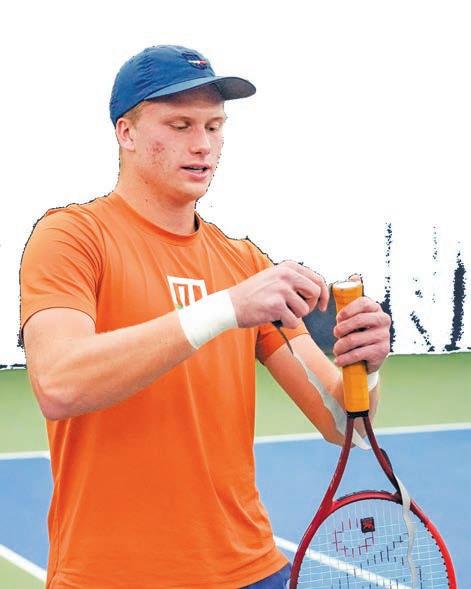
By Howard Fendrich The Associated Press
ORLANDO, Florida— Jenson Brooksby tugged at the right shoulder of his red T-shirt and fiddled with some strands of his dirty blond hair as he spoke to The Associated Press about what he›d like the world—the tennis world, yes, but also everyone else—to know about him.
Once a member of an up-and-coming group of American men making their mark with big wins at Grand Slam tournaments Brooksby wants folks to be aware of what went on while he was away from the tour for nearly two “frustrating” years that, he said, made it “easy to get depressed.” Ranked No. 33 at age 21 in 2022, just a year after going pro, he’s now unranked after being sidelined by injuries, operations and a ban connected to missed drug tests that eventually was reduced.
A nd, as Brooksby prepares to compete again in January, including at the Australian Open, he wants people—other players, yes, but also anyone else, including those who are, or know someone who is, autistic—to hear about his experience living with autism spectrum disorder, which he discussed publicly for the first time during a recent interview.
It’s...just something I don’t want to have to keep to myself,” Brooksby said over a post-workout lunch in a boardroom at the US Tennis Association National Campus. About 20 miles east of Walt Disney World, it’s the site of
MANCHESTER, England—The organization that represents European soccer leagues on Thursday rejected latest proposals for a breakaway super league
D etailed plans for a new rival to the Champions League —the Unify League—were released this week by Madrid-based A22 Sports Management.
It was not clear what support there was for the proposed competition, but A22 said it had held discussions with clubs, leagues and “other parties.”
The European Leagues, which represents 39 leagues and associations, said in a statement that it rejects “any suggestion that a consultation took place with our organization.”
It reaffirmed leagues’ commitment to the current system by which teams qualify for UEFA competitions like the Champions League, Europa League and Conference League.
I will try even when it’s difficult and if it takes a long time. I’m always here And tell you all the time rather it’s your voice or voicemail how proud I am. I always had one wish and it was I wish my kids would call me and come see me. Hopefully one day I can get that,” he wrote in the post.
Trinity Rodman, who also plays for the Washington Spirit in the National Women’s Soccer League, recalled how her father showed up unannounced at a Spirit playoff game in 2021.
She hadn’t spoken to her father in months and was emotional during the
game, then was photographed crying in his arms afterward.
“ The whistle blew and I was so mad, like, ‘You took this happy moment from me. You [expletive] with my head again,’” she said on the podcast.
I think after that was when I lost hope of ever getting him back. It was just like, he’s popping in whenever he’s going to be on a camera,” Trinity Rodman said. “Even at that game, I don’t think it was for me, I think he wanted to have a good conscience. and then be like, ‘Headline, Dennis Rodman showed up to his daughter’s game.’”
Trinity Rodman went on to win a title with the Spirit that year and was named NWSL Rookie of the Year. She said that after that game she didn’t speak to her father again until after the 2023 Women’s World Cup. Dennis Rodman won five NBA championships over a 14-year career. He was inducted into the Naismith Basketball Hall of Fame in 2011.
Too many games? They’re actually not enough, players’ union says SOME elite-level women’s soccer players are dealing with a packed schedule even as others don’t have enough games to play, global players’ union FIFPRO—for International Federation of Professional Footballers—said.
FIFPRO’s study highlighted a disproportionately heavy workload for a few players like Mariona Caldentey, who played 64 times for Barcelona and Spain last season as Barcelona played four different competitions and won them all. Caldentey now plays for Arsenal in England. However, FIFPRO also pointed out that many players had barely half that
number of games—just 33 games per season was the average per player.
FIFPRO said its study showed the impact of “new or expanded competitions in a few countries, notably in Europe and North America, and little or no development elsewhere.” More top-level competitions like a women’s Club World Cup are in development.
W hile attention has previously focused on the impact of overloaded schedules on players, especially in terms of injury as women’s soccer gets a higher public profile and competitions expand, FIFPRO is also raising concerns about “underload.”
Some players who made their countries’ Olympic teams in Paris this year had played fewer than 10 games in the year leading up to the Games, FIFPRO said.
“ There is a two-speed development of women’s football,” Alex Culvin, FIFPRO’s director of policy and strategic relations for women’s football, said in a statement.
“There are players who are squeezed by the calendar and the high cadence of games; this is an issue that is rightly gaining more attention. Yet there are a larger proportion of players who do not have enough competitive matches and are often overlooked.”
Culvin called for “a more balanced calendar” that creates more opportunities to compete but also guarantees rest.
T he study comes at a time when FIFPRO is also pressuring FIFA with its involvement in legal challenges to events that would expand the men›s soccer calendar. Some leading men›s players have talked of considering strike action if their schedules get any busier. AP
preseason training for about a dozen tennis pros.
It’s obviously a personal topic that, even with people you may feel very comfortable with—in my mind, at least for a long time—it wasn’t [something] to just go blurting out as part of a conversation, you know?” said Brooksby, 24, a native Californian who said he was nonverbal until the age of 4. “But I’ve always thought about it and...I, eventually, just wanted to talk about it.”
A s a kid, he said, he spent about 40 hours a week with therapists “to be able to even just start talking...[and] then to get better at communication and social situations.”
Brooks on autism: Big strength
THERE are no blood or biological tests for autism, a developmental disability caused by differences in the brain identified by observing a child’s behavior.
Formerly only diagnosed in children with severe language difficulties, social impairments and unusual repetitive behaviors, autism is now defined in a broader way and used to describe a group of milder, related conditions, too.
Jenson Brooksby called the autism a “big strength” in “pressure moments” on court, allowing him to “focus on two or three specific details really well for a long period of time.»
He also mentioned “something that makes [tennis] a little tougher:” He will have outbursts if he’s losing or if he is upset about a certain shot or aspect of his technique, a tendency his athletic trainer, Paul Kinney, keeps an eye out for, along with signs of discomfort such as reaching for his clothing or hair or leaning forward with hands on knees.
Brooksby, who “presented as a very severe case” as a child, now “is on the very mild end of the spectrum,” according to Michelle Wagner, a board-certified behavior analyst whose area of specialty is autism spectrum disorders. She said she first began working with Brooksby when he was 2 years, 9 months and had been diagnosed by others; the progress he made, Wagner said, is an “unusual and unique outcome.”
Why is Brooksby discussing his autism now?
“I JUST want people to know me for who I am fully, and that’s just another part of me,” Brooksby said. “I’ve had a lot of time out of playing and a lot of thinking I’ve had to do.” Took some getting used to the idea. He was worried,” said his longtime advisor, Amrit Narasimhan, “about what people would think of him.” A nd now?
“He wants players to understand him better; that’s a big part of it,” Narasimhan said. “He wants to tell his story so people can understand who he is.”
Why was his suspension shortened?
BROOKSBY was given what at first was an 18-month suspension by the International Tennis Integrity Agency (ITIA) in October 2023.
He was not accused of testing positive for a banned substance but, instead, of failing to show up for three drug tests within a 12-month period; according to the ITIA’s initial report, his side argued that miscommunication with a doping control officer trying to find him at a hotel in the Netherlands “was not due to any negligence on [the player’s] part.” Brooksby appealed, and he and the ITIA agreed to a reduced punishment, making him eligible to return in March 2024 instead of January 2025. The ITIA said his “degree of fault...should be reassessed” due to “new information relating to the circumstances giving rise to the missed tests.”
The ITIA never announced what that new information was; a spokesman declined to comment on the case Wednesday. But Wagner said the appeal included her input. She oversaw Brooksby’s treatment plan until he was 6, including language development and age-appropriate self-help skills such as getting

The A22’s competition model, which is not requested and unsubstantiated, would increase the number of international matches in an already congested calendar,” it said. “Supporters and stakeholders across the game have consistently made it clear that any attempt from existing or new international club competitions to expand their calendars at the expense of domestic competitions will be rejected.”
A ttempts to launch a Super League in 2021, in which 15 top clubs were protected from relegation, collapsed in the face of angry fan protests.
A 22 launched a revised format last year with promotion, relegation and exit from the competition—as well as a women’s tournament. T he latest plans would include 96 clubs with


DECEMBER 22, 2024 | soundstrip.businessmirror@gmail.com



Publisher :
T. Anthony C. Cabangon
Lourdes M. Fernandez
Editor-In-Chief :
Concept :
Aldwin M. Tolosa
Y2Z Editor :
SoundStrip Editor : Group Creative Director : Graphic Designers :
Jt Nisay
Edwin P. Sallan
Eduardo A. Davad
Niggel Figueroa
Anabelle O. Flores
Contributing Writers :
Tony M. Maghirang
Rick Olivares
Jill Tan Radovan
Reine Juvierre S. Alberto
John Eiron R. Francisco
Pocholo Concepcion
Francine Y. Medina
Justine Xyrah Garcia
Bea Rollo
Trixzy Leigh Bonotan
Bless Aubrey Ogerio
Photographers :
Bernard P. Testa
Nonie Reyes
Y2Z & SOUNDSTRIP are published and distributed free every Sunday by the Philippine Business Daily Mirror Publishing Inc. as a project of the
The Philippine Business Mirror Publishing, Inc., with offices on the 3rd Floor of Dominga Building III 2113 Chino Roces Avenue corner Dela Rosa Street, Makati City, Philippines. Tel. Nos. (Editorial) 817-9467; 813-0725. Fax line: 813-7025
Advertising Sales: 893-2019; 817-1351,817-2807.
Circulation: 893-1662; 814-0134 to 36. www.businessmirror.com.ph
By Reine Juvierre S. Alberto
“In the dimensions of life, when we let go of the things that we try to control too
much, then we find true inner peace.”
NINE-piece collective Ben&Ben, which started as a duo composed of Paolo Benjamin and Miguel Benjami, sold out its first-ever arena concert at the Mall of Asia Arena on December 14, and delivered an unforgettable night filled with pure talent and artistry.
Composed of Poch Barretto, Jam Villanueva, Agnes Reoma, Patricia Lasaten, Toni Muñoz, Andrew de Pano and Keifer Cabugao, Ben&Ben brought its vision of combining its heartfelt music with striking visual animation and compelling storytelling.
The impressive three-hour concert dubbed, “The Travelled Across Dimensions”was produced by Ovation Productions and directed by Paolo Valenciano.
Fans of all ages—yes, children and even grandparents—filled the arena in anticipation of what would become a new dimension. When the entire arena dimmed, the LED wristbands worn by everyone flickered in brilliant colors and the story of Liwanag, a girl traveling across three realms to find her inner peace, was told through Ben&Ben’s songs.
AS Liwanag traversed the first dimension called Light, she was told by Gabay, a much older traveler, that she must go through dimensions and face her personal darkness.
“Could Be Something” set the tone for a night of adventure following Liwanag as Ben and Ben’s infectious energy got everyone jumping to the catchy tunes of their new song about believing in love again.
Old favorites “Paninindigan Kita” and “Pagtingin” sustained the emotion of being consumed with love— that no matter who you’re with and what people will say, love fights for you and will never change.
“Supernatural,” also a new song, is about being captivated by someone so ethereal that it feels like floating off the ground. However, when“Winter”came, the song captured how it felt when someone so dear suddenly got cold or “nanlamig.”
Still, “Maybe the Night” could somehow hold a little hope but during “Autumn,” hope seems gone.
Like what Ben&Ben chorused in “Langhiyang Pag-Ibig ‘Yan,” “Kung balak mo akong iwan, ba’t mo pa ‘ko minahal?”
Regaining energy
LIWANAG blasted through a cavernous mountain, entering the second dimension called Energy. She bravely fought the dark figures surrounding her and fended them off.
Just like in Ben&Ben’s “Burn,” it was a sigh of relief to be brave enough and realize your worth—that you will never be too consumed and left to burn.
Amid all the struggles, pain and suffering in life
tackled in “Sampaguita,” victory is claimed in “War,” written and performed by Kiefer, the band’s violinist.
“I wrote this song when I was young and filled with fear—of life, uncertainties, expectations of society and my own, and relationships. But just like Liwanag, I needed someone who could be a guide,” Kiefer shared before he took center stage.
“I want us all to remember that we all grew up to be who we are together because there are people who helped us grow,”he added, dedicating the song to his best friend and the lover of his soul—Jesus Christ.
Like “Comets,” fleeting moments leave the most lasting impact. This reminded listeners of the beauty of embracing change while “Doors”explored the need to come out in secrets and just surrender.
Meanwhile, “Courage” became an anthem of resilience for many fans.
“Don’t be scared, what have you got to lose?
Haven’t you heard the news?
The war’s been won for us
Be prepared
The miracles for you are far greater than the trials you’ve surpassed”
After all, every trial and failure will result in “Triumph”—a power song. Just like when Liwanag defeated her greatest adversary Dilim, through the help of a glowing dog she called Puhon by sacrificing itself.
Liwanag found a monolith again, which teleported her to a city of glass in the Feel dimension.
SHE found a glass orb that revealed her biggest sources of grief—Gabay and Puhon—and allowed her to face the darkness of her pain.
“Most of the time, we don’t realize that our greatest enemy is ourselves because we often say that we cannot do such things,” Miguel said.
As Liwanag navigated in the Feel dimension, she met a fellow traveler named Mahiwaga. The couple’s romance is narrated through “Peace of Mind” and “Di Ka Sayang.”
Just in time for the holidays, Ben&Ben’s famous carol “Bibingka” and “Ilang Tulog Na Lang,” enveloped the crowd to feel the warmth of the Christmas spirit.
The band’s percussionists Toni and Andrew also showcased their vocal prowess through “Shutter.”
Going back to Liwanag and Mahiwaga’s story, the two try to get to Duyan—a place where travelers find eternal inner peace—but they must let go of each other to reach it. They walked separate paths and bid goodbye.
“Sa Susunod na Habang Buhay,”“Tomorrow With You” and “Leaves” perfectly encapsulate the intense yearning for someone even if you already let them go. You’re still waiting for them to come back and that all will be alright in time again.
So when Liwanag touched the last monolith, she reached Duyan. But it was Mahiwaga that she saw and they both entered a new dimension to achieve their true inner peace.
As the band performed “New Dimensions,” a 3D animation of Liwanag and Mahiwaga flashed on the screen, flying across the dimensions led them to go inside the SM MOA Arena—the new dimension. The band thanked Puppeteer Animation Studio for bringing their vision of Liwanag’s story to life. Pixmob was also credited for its LED wristbands that synched with Ben&Ben’s songs throughout the night. To wrap the show, the band sang the songs “Kathang Isip,” “Araw-Araw” and “Ride Home” which propelled their career during the encore.


THE death of theater director and producer
Bobby Garcia on Dec. 18 at age 55 was a big blow to Filipino performing artists who have worked with him.
“You made my theatrical dream come true with Piaf 11 years ago for Atlantis Theatrical,” said Pinky Amador on her Facebook page.
“Thank you for all your inspiration, brilliance, and humor that you’ve shared with so many others through your productions and your life. Gone too soon. I am truly honored and blessed that I can call you friend, director and colleague. Vaya con dios, my love.”
BITUIN Escalante, whom Garcia had cast in Rent, Tick…tick… BOOM, Jesus Christ Superstar, Rocky Horror Show, Dreamgirls, and Waitress, sent me her thoughts on Messenger:
“I’m gutted. I thought this was the year we were going to finally work together again. We had a great friendship. We butted heads constantly. We sent each other ridiculous texts. He would go off-grid and then, out of the blue, send one line from one of our plays. Like, “You’re a hotdog,” from Rocky Horror.
“There’s a scene in Tick, tick… BOOM! where Jonathan Larsen’s girlfriend gives him his birthday gift at the end of the play, and it’s a thousand sheets of blank music paper. Bobby points out one thing: ‘That’s where Jonathan writes Rent.’ It just elevated everything. He had that kind of eye for the most important details.”
ONE of the most devastated by Garcia’s passing was Jamie Wilson. I will quote in full his response when I asked for his reaction.
“Bobby had been a lifelong family friend. He was a couple of batches ahead of me at Colegio San Agustin. He was always hanging out with my sister Monique.
“I would regularly see him at our Repertory Philippines shows at Insular Life and Rizal Theater.
“Years later, he moved into the world of Philippine theater with a bang, first with Angels in America Parts 1 & 2, then with Rent, which became a theatrical phenomenon, the likes of which I have never quite seen again.
With a few years in between, I realize now that I was with him for his first theater productions, and his last, which was Request Sa Radyo with Lea Salonga and Dolly De Leon.
“What an honor it is to be his bookends on what was an absolutely brilliant career of creating incredible worlds and telling amazing stories for Filipino audiences.
“Bobby lived for theater. When he wasn’t watching shows, he would be busy mounting one while planning the next.
“After more than a decade of not working with him, there was one musical that Atlantis was doing that I absolutely loved, and had just watched on Broadway.
“When auditions were announced, I knew I had to give it a shot. Rock of Ages in 2012 marked my second round with Atlantis, and this time I stayed for the long run. This musical was a milestone in my heart because it was my first conscious manifestation of a role I wanted to do.
“While watching it on Broadway, with Mig Ayesa stealing every scene he was in, I told myself that, someday, I’d love to play the role of Dennis Dupree.
“And, lo and behold, a year later, almost to the day, I was opening as Dennis Dupree on the Atlantis stage. With Mig Ayesa!
“Working with Bobby was never a walk in the park. In fact, it was quite the opposite. He demanded so much of you that, more often than not, there was very little time and energy for anything else while you were doing a show with him.
“HE was relentless in his pursuit of perfection, and he’d find a way to squeeze every ounce of blood, sweat and tears from you in every production. There was always a sense of ‘gird your loins’ as you were about to enter a Bobby Garcia show.
“He was tremendously professional, and I remember being able to set your clock around an Atlantis rehearsal.
“I also remember going home after each rehearsal feeling so physically and emotionally spent, but also feeling like I accomplished so much in just a few hours.
“The beautiful thing about Bobby is that he demanded from you what he demanded of himself, almost always being the first one in and the last one out of the rehearsal room.
“And he was always the most prepared, more often than not, knowing more about your part or your track than you.
“He was also an unforgiving taskmaster, demanding a degree of professionalism from everyone involved that I very rarely see these days.
“And that was because that’s just how he was: He loved the work so much that he demanded utmost respect for the process and for the craft, and that’s not something you can do half-assed. When you commit, you give everything to the show. Just like he always did.
“Working with Bobby gave me my best roles onstage — from Belize and Mr. Lies in Angels in America and Benny in Rent, to Dennis Dupree in Rock of Ages and Dave Bukatinsky in The Full Monty, to Uncle Fester in The Addams Family and Miss Agatha Trunchbull in Matilda: The Musical.
“Eventually he gave me a bigger role to play, as his assistant director in Carrie, and eventually I


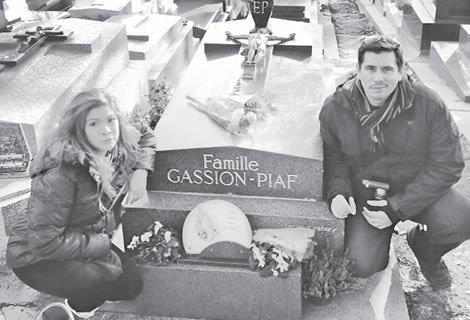
became his associate director. I didn’t know what I was doing at first, but he guided me every step of the way. It was a tremendously pressurized form of mentorship.
“He summed it up perfectly in two ways, which proved to be so invaluable and funny to me over the years: ‘Jamie, you used to be the biggest pasaway in theater, now you’re in charge of all the pasaway!’
“And then he’d lovingly add, by telling me no one could possibly be as pasaway as I was in the past, so that would make my job easier. Oh, how I laughed at that!
“But then the second came with tears, when our lead actor Rycharde Everyle got sick while playing Shrek and couldn’t go on.
“We had two Shrek understudies, and I was first in line to take over. Bobby had just left for Canada after our opening, and when we spoke on the phone, I asked him if I was going on. He emphatically said to me: ‘Jamie, first and foremost, as the assistant director, you are MY understudy! Now go get the show ready!’
“So, with a few tears at the loss of the chance to play the big green ogre, I hunkered down and got to work, and the shows were phenomenal.
“It was only later on that I realized that Bobby was actually mentoring me for my biggest role ever: playing myself: ‘Jamie, you cannot bank on just your talent alone. You need to bring something more of value to the table.’
“Every step of the way, in every show we did, he hammered into me the importance of a good work ethic, the tremendous respect one must have for the process and the craft, and how to be a leader in the most demanding creative profession we have.

“He instilled in me a sense of honesty and integrity, and gave me numerous opportunities to put that into practice.
“He challenged me to do things I thought impossible for me, from singing a high C as Uncle Fester to disco dancing and sanitizing our script in Saturday Night Fever, to working with kids in Fun Home and choreographing all the scene changes in Bridges of Madison County, to handling a few difficult actors and designers along the way, to making sure all his shows were up to his standards, all the way up to his most recent and what was his last production, which proved to be the biggest challenge he’s ever thrown at me.
“When he told me he would be unable to fly back to Manila to direct Request Sa Radyo, he immediately saw the panic in my eyes.
“How does one direct Lea Salonga and Dolly De Leon in a wordless play, running a team that wasn’t there at their rehearsals in New York?
“And so, to calm me down in his offhand way, he casually told me: ‘You can do it, as my AD, you don’t have a choice! You know naman what I want.’
“Well, I thought, yes, I did. And yes, we found a way to do it. And yes, we somehow put on what proved to be an incredible show.
“The huge hole that Bobby has left behind, both in the theater industry and in my heart of hearts, will never be filled. I wouldn’t be the man I am today if it wasn’t for my time spent with Bobby. And now, all that’s left for me to do is to soldier on, and somehow carry on his legacy.
“His passion, his professionalism, his love for telling stories, and his huge and generous heart. That’s what I will carry with me. Thank you, Bobby.”
are
By Devina Bose
The Associated Press
Bells are ringing. snow is glistening. But you’re bummed out.
You could be suffering from a case of the holiday blues, which experts say is not uncommon.
A strained relationship with family, for example, can make this time of year pretty lonely. The holidays are expensive, and financial woes can cause major stress. Anxiety about holiday anything can fuel depression and worsen existing mental health concerns.
“A lot of people at certain years can find the holidays to be more challenging than they have experienced in past years,” said Shilagh Mirgain, a psychologist at UW Health in Madison, Wisconsin. “It’s important to recognize the common humanity that others, too, are struggling.
“You’re not alone.”
Here’s what experts say you can do to make your holiday season a little more bearable, if not cheery.
If family time isn’t super fun, set boundaries
SpendI ng an extended amount of time with family is hard to avoid around the holidays, Mirgain said, but there are ways to make it a little easier.
“Certainly, this year, I think with the recent [U.S.] election, there’s a lot of divisiveness and discord, and you’re probably having to interact with family members that have really opposing beliefs,” she said. “That can bring up strong emotions.”
Think about the boundaries you want to set: What kind of contact do you want to have with your family and how long are you prepared to be around them?
It’s also important to give yourself permission to exit the event—and have some strategies in place, she said. For example, if you need some space, go on a walk or run some errands.
And if stressful conversations come up, have some language ready to go to draw your boundaries quickly and firmly.
“You could say, ‘g osh, thanks for asking, but I don’t talk politics over
“

a
the holidays,’” Mirgain suggested.
If you have grief or are lonely, connect with others
T He holidays can be difficult for people who are grieving or don’t have anyone nearby with whom to celebrate.
“Loneliness and isolation can
someone close to you, the holidays can be the perfect time to reflect on that person’s legacy, said d r e l len Lee, a geriatric psychiatrist at UC San d iego Health.
“Try to honor that person by visiting their grave site or doing something they really loved to do, and then find people to share those memories with,” Lee said. She also advises
‘you’re not alone,’ says psychologist shilagh Mirgain. ‘It’s important to recognize the common humanity that others, too, are struggling.’
feel exacerbated during the holiday season when you look around and it seems like everyone’s getting together and you don’t have plans, or you’re not looking forward to your plans,” Mirgain said.
Find ways to connect with people if that’s something you’re craving, like scheduling calls with people across the country or volunteering in your community.
“There’s so much opportunity to give back during this time, and I think generosity is one of the best things we can do for our own wellbeing,” she said.
And if you’re grieving the death of
people not to tamp down feelings but let yourself grieve.
If money is making you anxious, reach out gIFTS, d inners, decorations—it’s all a lot to keep track of around this time of year, and it’s easy to feel overwhelmed. Those extra expenses and get-togethers can put more stress on your mental health.
For milder symptoms of depression, anxiety or mood issues, lean on tried-and-true methods of self-care, experts said, such as spending time doing something you love or watching a movie.

But it’s important to reach out for help if you start to feel mounting financial anxiety or intensifying symptoms that impair your ability to function. e a rly intervention can keep them from intensifying, Mirgain said, adding that if you have suicidal thoughts, reach out to your provider. ( In these parts, help is available 24/7 via the National Center for Mental Health’s toll-free crisis hotline 1553. Mobile numbers are available as well: 0919-057-1553, 0917-899-8727, and 0966-351-4518—Ed )
If you are overwhelmed, set realistic expectations ReM eMBeR , your holidays don’t have to be a Hallmark movie. give yourself permission to do it differently this year, Lee said.
“We have so many goals, so many targets,” she said. “getting all the gifts, decorating the house perfectly… sometimes it’s helpful to sort of focus on the most important part of it.”
That can look different depending on who you are: The most important part may be spending time with people you don’t get to see often, or having a nice meal with your favorite foods.
Lee emphasized that it is fine to have a low-key celebration.
“I ask people, ‘What’s the best part of the holiday?’” she said, “It’s not usually about the decorations or all these extra things that we all spend a lot of time worrying about.”
n Cover photo by Leeloo The First on Pexels.com