



The family’s pillar needs someone to lean on, too, so the government is moving to follow up on
a study pitching a strong telepsychiatry program for OFWs to support their mental health abroad.


By John Eiron R. Francisco
OVERSEAS Filipino workers (OFWs) shoulder the hidden tolls of migration, including cultural displacement, homesickness, exhausting work schedules, and the constant responsibility of supporting their families financially, pressures that can quietly sap mental resilience and affect performance.
These stressors were among the key findings of a study funded by the Department of Science and Technology-Philippine Council for Health Research and Development (DOST-PCHRD) under its Health Research Policy Translation, Evaluation, and Engagement (POLISEE) Grants Program, which examined how mental health issues among OFWs can be detected and addressed.
The research, titled “Development of Policy Instruments and Stakeholders Engagements for OFW-Inclusive and Sustainable Mental Health and Well-Being Protection,” was led by Dr. Veronica E. Ramirez, a full professor at the University of Asia and the Pacific Foundation Inc., together with Lamberto Francisco A. Ramirez, a research fellow on migration studies at the Center for Research and Communication.
The study surveyed 989 OFWs across three migration stages—predeployment, employment, and return—with participants located in the Middle East, Asia, and Europe.
Researchers noted higher reports of stress in areas where living or working conditions are particularly restrictive. In Malaysia and Kota Kinabalu, workers frequently sought treatment from local health offices but often returned with recurring issues. In Hong Kong, cramped high-rise living conditions and limited time outdoors were cited as significant stressors, especially for domestic workers.
In Singapore, where many Filipinos are employed in professional and skilled jobs, stress levels differed from those of domestic workers who tend to face heavier workloads in other destinations.
The study also observed heightened pressures among Filipino students in Australia who juggle academic requirements while
working part-time. In Europe, cases were notably higher in the United Kingdom, where Filipino workers often join already strained local health systems.
Meanwhile, countries like Italy showed comparatively lower stress indicators due to cultural similarities that made adjustment easier. In the Middle East—including Saudi Arabia and Kuwait—stress levels varied but remained influenced by strict labor environments and limited mobility.
Dr. Ramirez said during the Talakayang Health Research and Technology (HeaRT) Beat press conference in Quezon City on Thursday that many OFWs avoid seeking help due to fears of losing their jobs, lack of health insurance, and the social stigma that may affect their family’s reputation.
“They do have coping mechanisms, guided by the principle of staying strong. They also tend to avoid burdening others with their problems,” she explained.
She also noted that social media can negatively impact OFWs’ mental health, citing exposure to fake news and constant family communication as additional stressors.
“It’s the help-seeking behavior that should be corrected,” Dr. Ramirez told BusinessMirror
Global Pinoys now 10.8M DATA from the Department of Foreign Affairs (DFA) show that the global Filipino population has reached 10.8 million as of the second half of 2024.
More than half, or around 5.4 million, reside in the Americas, with the United States hosting the largest concentration at 4.4 million.
Canada follows with nearly one million, while Malaysia ranks next with about 950,000 Filipinos. Other major communities are located across Asia and the Pacific, home to

around 2.4 million Filipinos, and in the Middle East, which accounts for approximately 2.1 million.
The DFA reported that permanent migrants make up 54.41 percent of all Filipinos overseas, while 34.59 percent are temporary workers. Around 11 percent are considered undocumented.
Sustainable telepsychiatry UNDER the same funded program, Davao-based researcher Dr. Maria Angelica C. Plata of the Davao Medical School Foundation Inc. developed evidence-based policy and program recommendations to establish sustainable telepsychiatry services for OFWs.
The study, ANDITO: Advocating National Discourse, Integrating Telepsychology and Policies and Programs for Overseas Filipinos, was conducted from October to December 2024.
Despite the short implementation period, Dr. Plata said respondents reported high satisfaction and found the service useful, while pilot telepsychiatry programs
in Kuwait and Saudi Arabia also showed positive results.
“We still continue to reach out to policy makers para maging government program na talaga siya, and hindi na siya in the context of research [We continue to reach out to policymakers so it can become a full government program, and not remain only within the context of research],” she said.
Dr. Plata explained that the telepsychiatry program began as a research project in Kuwait in 2021, with limited on-site staff availability—sessions could only be held once or twice a week. Psychiatrists in the Philippines coordinated with the local staff to provide consultations.
“Psychiatry requires extensive talking, so the pace and duration depend entirely on the patient,” she said. At the time, only one or two psychiatrists handled the cases, and the project remained strictly within a research context with a set timeframe.
Dr. Plata added that scaling up the program would require more psychiatrists to meet the needs of a
larger number of OFWs seeking help.
“Once institutionalized under the government, telepsychiatry could be made widely accessible, with multiple resource centers around the world serving Filipino workers,” she said.
Globally, telepsychiatry is gaining traction. According to the World Health Organization (WHO), 51 percent of countries offer telepsychiatry, while 77 percent provide telemedicine or remote patient monitoring.
Telepsychiatry uses technology such as video calls, phone, and secure messaging to provide psychiatric evaluations, therapy, and medication management remotely. It allows psychiatrists to reach more patients and support other providers, making care for conditions like depression, anxiety, and PTSD more accessible and convenient.
Cross-agency mental health plan
The ANDITO study led to several policy recommendations for key government agencies. For the Department of Migrant Workers (DMW),
the researchers suggested integrating mental health education and resilience training into predeparture orientation seminars (PDOS) and requiring mental health screening before deployment.
DMW resource centers abroad could be repurposed to include telepsychiatry stations, with trained staff and culturally sensitive care.
The Department of Foreign Affairs (DFA) was urged to incorporate mental health in diplomatic work, including negotiating agreements for the procurement of psychotropic medications and ensuring continuity of care for OFWs upon repatriation.
Coordination with the Department of Health (DOH) would be essential for implementing telepsychiatry referral systems, while PhilHealth could include online consultations and psychotropic medications in benefits packages.
Gregorio Candelario Jr., head of the Data Privacy and Telemedicine Office at Southern Philippines Medical Center, explained
By Molly Schuetz | Bloomberg
WALT Disney Co. is licensing iconic characters including Mickey Mouse and Cinderella to OpenAI for use on its artificial intelligence video platform and has agreed to take a $1-billion stake in the startup.
As part of the new three-year pact, OpenAI’s Sora will be able to draw from a library of more than 200 animated and creature characters — from Lilo and Stitch to Ariel and Simba — when generating AI videos in response to user prompts. The deal announced Thursday doesn’t cover any talent likenesses or voices, however. So a video could feature Woody from Toy Story but without the voice of actor Tom Hanks, who plays the character in the popular movies.
The landmark deal marks the largest equity investment a major Hollywood studio has taken in an AI model developer to date. As part of the arrangement, Disney will become a major customer of OpenAI, using its tools to build new products and experiences, including curating a selection of Sora videos on the Disney+ streaming platform and deploying ChatGPT for its employees. Disney will also have the option to purchase additional equity in OpenAI.
“The rapid advancement of artificial intelligence marks an important moment for our industry, and through this collaboration with OpenAI we will thoughtfully and responsibly extend the reach
of our storytelling through generative AI, while respecting and protecting creators and their works,” Disney Chief Executive Officer Bob Iger said in the statement.
The companies didn’t offer more details on the licensing agreement. In an interview with CNBC, Iger said “the fact that we’re getting paid for this recognizes the value being created.”
The arrangement is similar to one Disney struck with Fortnite maker Epic Games Inc. last year to create a new games and entertainment universe. In that deal, Disney acquired a $1.5-billion equity stake in Epic and will allow Disney characters to appear in Fortnite as well as new titles. It also includes a collaboration with theme parks.
OpenAI has spent months talking to Hollywood’s largest studio owners, including Disney, Comcast Corp.’s Universal Pictures and Warner Bros. Discovery Inc., about the creative and commercial potential of Sora, Bloomberg News has previously reported. But the studios have been reluctant to get into business with an AI company, wary of how it might use their data and of angering the labor unions with which they work every day.
takes $1-B stake in AI video platform

Disney and Comcast sued another AI company, Midjourney Inc., earlier this year for copyright infringement. And on Wednesday, Disney sent a cease-and-desist letter to Alphabet Inc.’s Google, alleging the tech company is using its copyrighted content to train and develop generative AI models without compensation.
Iger said Disney has engaged with other companies, such as Character.AI, who agreed to take infringing content down, and that Disney had “no choice” other than to send the letter. “The ball is in their court,” Iger said of Google. “We’ll see how they react.”
The Writers Guild of America said OpenAI and other AI companies have “stolen” vast libraries of works created by its members. “Disney’s deal with OpenAI appears to sanction its theft of our work and cedes the value of what we create to a tech company that has built its business off our backs,” the Guild

new technologies that have taken off with consumers and offer a potential new avenue for growth. Media businesses that own copyrights say the companies building those models should pay them in order to train on their work. The major record labels sued two audio AI startups last year, though Warner Music Group and Universal Music Group both settled recently with Udio, and struck deals to collaborate on new commercial music creation and streaming services.
in a letter to its members.
Creative industries from film to music and books have struggled to balance protecting their valuable copyrights with the powerful
Iger said Disney agreed to the deal with OpenAI because the startup is respecting and valuing its creativity, characters and creators and has put up guardrails about how the properties will be used. Iger was confident that it will be a “safe environment” for consumers to engage with Disney’s characters.
“It gives us the opportunity to play a part in the breathtaking growth in AI and in new forms of
media and entertainment,” Iger said on CNBC.
OpenAI unveiled a new version of Sora in September as a standalone social app, available by invitation. As with the original Sora, released last December, users can generate short clips in response to text prompts, but the new app allows people to see videos created by others. Beyond that, users can create a realistic-looking AI avatar and voice of themselves, which can be inserted into videos made with the app by the user or their friends, with the avatar owner’s permission.
“Disney is the global gold standard for storytelling, and we’re excited to partner to allow Sora and ChatGPT Images to expand the way people create and experience great content,” said OpenAI CEO Sam Altman. He added in an interview with CNBC that demand for Disney characters is “off the charts.”
‘YOU CAN CALL ME’
Continued from A1
that as part of the recommendation to include telepsychiatry in PhilHealth’s mental health package, sessions would be accessible through accredited facilities, with psychiatrists linked to these centers to ensure proper guidance and continuity of care.
Candelario said a telepsychiatry session typically costs P4,000 to P6,000, depending on the length, which usually ranges from 30 minutes to one hour. Sessions are conducted via secure video conferencing, eliminating the need for travel while ensuring patient privacy and safety.
“If they [PhilHealth] will carry that based on the current, that would be great. So that the psychiatrist will have the appetite to be there working with the government as opposed to private,” he added. “So, the government needs to be on a par with what they are receiving currently.”
In Dr. Plata’s view, for telepsychiatry to be covered by PhilHealth, services must be offered through primary care centers or mental health facilities accredited by the insurance program.
She noted that only eight such facilities currently exist in the Philippines, and psychiatrists must be linked to these centers to ensure reimbursement, with each facility having dedicated psychiatry stations.
She added that patients could access telepsychiatry through resource centers or their own devices at home. The initial phase will prioritize those without personal devices, such as OFWs in OWWA shelters, where phones and equipment are often confiscated, while digitally literate users will be accommodated in a later phase.
Candelario also noted that medications recommended through telepsychiatry require government-to-government agreements to ensure acceptance abroad, citing the example in Saudi Arabia, which recognizes prescriptions from licensed Filipino psychiatrists.
Secure private cloud systems
are used to protect patient data in line with privacy regulations, and nurses collect patient histories for psychiatrists to review before sessions, allowing for efficient and safe care.
Meanwhile, the Department of Information and Communications Technology (DICT) was recommended to provide high-speed internet and cloud storage for secure telepsychiatry services.
The Philippine Migrant Health Network (PMHN) would help strengthen referral pathways and integrated case management systems, while the Philippine Psychiatric Association (PPA) would develop standardized telepsychiatry guidelines, crisis management protocols, and professional training requirements.
Dr. Plata emphasized that while pilot programs have shown success, institutionalizing telepsychiatry and integrating mental health support into government programs nationwide remains critical to ensure continuous care for OFWs both abroad and upon return.
Asked why OFWs need telepsychiatry services with Filipino psychiatrists instead of relying solely on local healthcare facilities, Dr. Plata cited two key reasons. While facilities abroad may be well-equipped, talking to a fellow Filipino allows OFWs to express themselves in their own language or dialect, especially when problems are culturally rooted or involve employer disputes.
Iba talaga ’pag we can express in our own dialect, makikita mo from their faces na i-express nila, mas magaan ang kalooban nila right after [It’s really different when they can express themselves in their own dialect. You can see it in their faces as they speak—there’s a noticeable relief right after],” she added.
She explained that cultural differences and family values can make certain issues difficult for OFWs to discuss with foreign healthcare providers. Sensitive topics, such as sexuality, are often uncomfortable to address.
“But when speaking with a fellow Filipino, it becomes easier to open up,” she said, adding that

language also plays a major role in helping them express themselves more freely.
Telepsychiatry brings a double win
LAMBERTO RAMIREZ , meanwhile said, wider implementation of telepsychiatry in the Philippines would be a “win-win” for both the local industry and OFWs.
“For the local sector, it’s a boost because it creates additional income and helps build a new industry catering to OFWs’ mental health needs,” he said. He added that OFWs also benefit, as telepsychiatry allows them to address their mental health concerns gradually.
“It’s not an immediate fix, but with continuous monitoring, workers can ensure they are well and fully ready for work,” Ramirez explained.
He emphasized that collaboration with the private sector strengthens its capacity while simultaneously helping solve mental health challenges for OFWs.
“Through cooperation, both sides benefit—truly a win-win,” he said.
In 2019, mental health conditions cost the Philippine economy an estimated P68.9 billion, or 0.4 percent of the country’s GDP) according to WHO.
This figure includes P2.7 billion in healthcare expenses and P66.2 billion in lost productivity from premature mortality, disability, and reduced workplace efficiency.
The significant productivity losses suggest that multiple sectors could benefit from greater investment in mental health, highlighting the need for a multisectoral, whole-of-society approach.
WHO’s investment case shows that timely action could substantially reduce the burden of mental health conditions in the Philippines.
Over the next decade, evidence-based and cost-effective interventions could save more than 5,000 lives and generate around 700,000 healthy life years by lowering the incidence, duration, or severity of key mental health disorders.
Meanwhile, Dr. Ramirez highlighted the importance of worklife balance for Filipino workers abroad. She cited Nordic countries as a model, noting that many OFWs in other regions have limited time off and often work extra jobs, which can take a toll on their well-being.
“Work-life balance should be given attention. Filipinos tend to overwork—they don’t know how to balance work and rest. If they have time, they’ll still work, taking on extra jobs, which eventually affects their health,” she said. Dr. Ramirez recommended incorporating work-life balance measures into employment contracts and educating workers on well-being and a healthy lifestyle to prevent long-term physical and mental strain.
Editor: Angel R. Calso
Sunday, December 14, 2025

By Bloomberg News
WHEN China’s ties with Japan last spiraled over a decade ago, Beijing fueled nationwide boycotts of Japanese brands and even street protests. This time around, President Xi Jinping is taking a more measured approach—for now, at least.
As Chinese fighter jets trained radars on Japanese planes over the high seas of Okinawa last weekend, diners in Shanghai were flocking to the opening of two sushi restaurants. Wait lines as long as 14 hours trailed outside one of the conveyor-belt joints, as Japanese brand Sushiro expanded its stable of roughly 70 restaurants in China. Oscar, a 22-year-old from Fujian province, who gave his English name to discuss sensitive topics, was among its new customers. Asked about the recent spat over Japanese Prime Minister Sanae Takaichi’s Nov. 7 remarks suggesting Tokyo could deploy its military if China attempts to seize Taiwan, he took a balanced view. “I respect our government’s decision. But this is not political. It’s just having a meal,” he added, taking his seat at the buzzing restaurant.
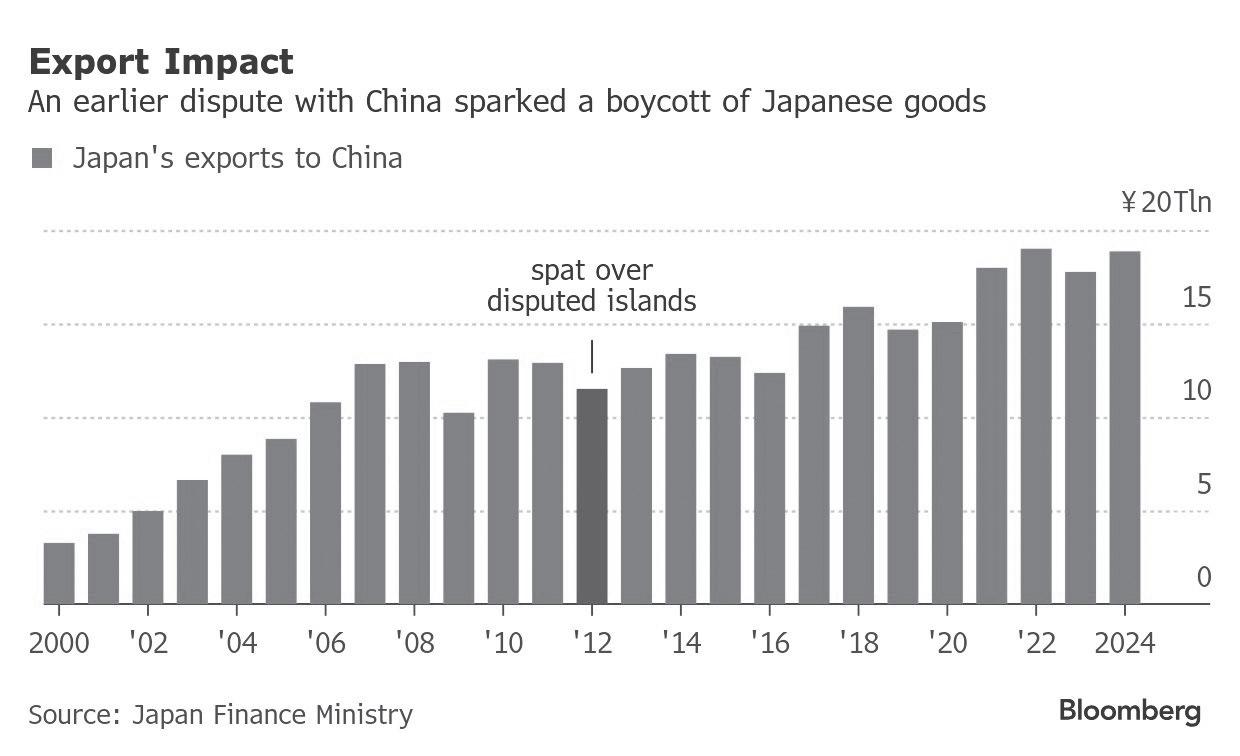
Asia’s top economies might be at loggerheads on the world stage, but for China’s 1.4 billion shoppers it’s largely business as normal. That’s because while Communist Party officials have discouraged travel to Japan, limited seafood imports and canceled some Japanese concerts and films, authorities have avoided stoking public anger to a level beyond their control.
It marks an evolution in China’s economic coercion playbook as leaders calibrate their retaliation to avoid denting already weak consumer spending at home or stirring up hard-to-contain social unrest.
“Inciting public anger could lead to unpredictable outcomes that would potentially be difficult for the government to manage,” said Jeremy Chan, a senior analyst at Eurasia Group and a former US diplomat in China and Japan. “Japanese foods and products remain immensely popular in China,” he added, calling the dispute over Takaichi’s comments “abstract” to the general public.
On China’s largest online retailer, Tmall, revenues for some of Japan’s biggest brands operating in the world’s No. 2 economy haven’t seen a dent since the dispute began—with Uniqlo, Muji, Shiseido, Sony and Panasonic even clocking an increase in business, according to analytics firm Hangzhou Zhiyi Technology.
Underscoring the need for calm, former Global Times editor-in-chief Hu Xijin—once one of China’s loudest nationalistic voices—last month warned against things getting too heated. “The struggle against Japan could be a protracted one,” Hu

posted on his Weibo account. “Maintaining the firmness, rationality and unity of Chinese society means resilience and sustainability.”
The last time China’s ties with its Asian neighbor spiraled to this extent was in 2012, after Tokyo decided to nationalize contested islands known as the Senkaku in Japan and the Diaoyu in China— an uninhabited but possibly resource-rich area in the East China Sea. Back then, bellicose rhetoric in Chinese state media helped stoke anti-Japanese protests in more than a dozen cities including Beijing and Shanghai.
Fast Retailing temporarily closed 42 of its Uniqlo stores in China—then its second-largest market by outlets—and superstore giant Aeon shut 30 of the 35 outlets it had in Guangdong and Shandong provinces. Images of
an attack on a Chinese motorist in central Xian, beaten for driving a Toyota Corolla, tore through China’s internet, further deterring buyers from Japanese cars.
At a Toyota dealership in Shenzhen on Thursday, a saleswoman surnamed Cai said she hadn’t seen any negative impact on sales of the company’s bZ3X model—a $15,000 electric car that’s helping the brand claw back market share in China.
Shoppers milling around Uniqlo’s three-story outlet in Beijing this week also seemed unbothered by the latest brouhaha.
“I want to stand by my country, but I don’t think the situation is so bad we need to stop buying Japanese products,” said one woman in her late fifties surnamed Liu.
“Everything here is made in China anyway,” she added, browsing the brand’s famous HeatTech thermal leggings.
Another shopper surnamed Chen said she liked taking vacations in Japan but had canceled a recent trip over safety concerns. “I saw videos online of Japanese people asking Chinese tourists why they were there,” she added. Deteriorating ties wouldn’t sway her shopping habits, she said, citing the need for good quality clothes.
Footage of Muji’s newly renovated Chengdu store, in China’s southwestern Sichuan province, painted a similar picture. Social media users this month complimented the store’s collaboration with local designers, as they tried products tailored to the Chinese market including chili-oil gelato. Given the situation “I’m surprised it’s still packed,” wrote one user on social media platform Xiaohongshu.
The calm pervading the high street could change if Japan’s leader doesn’t meet Beijing’s demand to retract her comments, said Wu Xinbo, who has advised China’s Foreign Ministry.
“If Takaichi does not adjust her position on this issue, China is likely to increase the pressure,” said Wu, who heads Fudan University’s Center for American Studies.
“Let’s see what will happen.”
Back at the Sushiro sushi joint, a notice by the cash register urged customers for cooperation when queuing, citing recent disturbances amid the throngs of excited diners.
“Let’s work together to maintain civilization and fairness,” the notice read. With assistance from Daniela Wei, Linda Lew, Nectar Gan and James Mayger / Bloomberg
By James Attwood, Antonia Mufarech & Srinidhi Ragavendran
CHILE’S bustling cherry
industry has flourished from a niche crop into a multi-billion-dollar export sensation, accounting for roughly half of global shipments and generating more revenue for the South American country last year than its coveted battery metal lithium. Nine out of 10 Chilean cherries go to China, where the fruit lands in time for Lunar New Year celebrations while northern hemisphere orchards in places like the US, Spain and Turkey lie dormant.
But Chile’s growers risk becoming victims of their own success.
A record harvest last season saturated the Chinese market weeks ahead of the holiday while exposing quality issues that drove down prices—especially early in the season when buyers in Shanghai typically pay juicy premiums for maiden cargoes flown in from Chile.
In the race to capture these higher initial prices, some exporters supplied cherries that were too soft or puny, triggering rejections
and tarnishing Chile’s brand. Zealous exporters got off to a bumpy start again this year before the season’s first waterborne shipment arrived last week in the southern Chinese port of Nansha. The experience illustrates the growing pains of an industry that has become a pillar of the country’s agricultural sector.
Along a fertile stretch of Chile’s Central Valley, José Saenz reaches up and gently squeezes a blush redyellow cherry ripening under the late-spring sun. It’s a new variety pitched to growers like him as the next big thing for China’s lucrative market, where cherries are often gifted as a symbol of good luck and prosperity.
For Saenz, who has cultivated the iconic fruit for nearly three decades, the stakes are high.
“Chinese buyers want fruit that’s firm, sweet, defect-free with good stems,” said Saenz, whose orchards span 60 hectares (148 acres) in three different areas south of Santiago, Chile’s capital. “The first thing they do is reach into the box. If they find soft fruit or flaws, they’ll reject the pallet immediately.”
In a bid to satisfy China’s finicky palate with heartier specimens,

fruit breeders are rolling out bespoke varieties. For growers, it’s a long-term gamble: trees take years to bear fruit, and there’s no guarantee buyers will bite. Some are already snubbing Nimba, one of the newer strains that hit the market in recent years.
Chile’s cherry renown rests on a mix of geography, Mediterranean climate and logistical and commercial expertise. Winter chill hours break dormancy while a dry ripening season helps to avoid rain-induced cracking. Think of California’s own Central Valley flipped south of the equator. As early-season airfreight shipments to China wind down, Chile kicks off its Cherry Express maritime shipments direct to Chinese ports.
The problems started to appear last season. A record crop promised bumper profits for farmers who had expanded orchards to meet China’s voracious appetite. But some of the fruit disappointed top-paying customers. Then there was uneven shipping and a rare freight hiccup. Prices—and profits—collapsed.
“The previous season was challenging, mainly because a very large volume of fruit arrived before Chinese New Year, leading to oversupply during a period of weaker demand,” trade association Frutas de Chile said in a note to Bloomberg.
Industry groups launched a bout of soul-searching. An initial proposal to try to impose a minimum size requirement was watered down to voluntary guidelines and training. Growers were urged to ship only plump, high-caliber fruit to safeguard the prestigious “Chile” brand.
“If we send good fruit, maybe volume goes down, but returns will be better,” said Sergio Karelovic, who oversees Dole Plc’s operations in central Chile. “The market

doesn’t support everything and doesn’t accept everything.”
Last year’s lessons spurred a renewed push for technical upgrades, from protective coverings to fungicide use.
To pass Chinese importers’ tests, cherries must exceed 28 millimeters (1.1 inches) in diameter, contain more than 18% dry matter, display a deep mahogany hue and have a long, green stem that signals freshness, said Mario Maureira, an agronomist at farm services and supply company Agroconnexion.

Sunday, December 14, 2025
TBy Anna Edney
HE company that makes one of the two most widely used brands of formula for premature babies is threatening to stop. That is, unless US health officials and Congress help protect it from lawsuits related to infant deaths allegedly tied to its product. It’s a warning that holds particular power over policy makers and legislators who’ve become acutely aware of the fragility of a baby formula market that’s been mired in recent scandals. The biggest players in the market have struggled with shortages in recent years, and a popular upstart is under scrutiny for a botulism outbreak.
At the heart of the lawsuits is a bowel disease that kills one premature baby every day in the US. Hundreds of claims working their way through the courts allege that Abbott Laboratories failed to warn consumers that its specialty formula and fortifiers for preemies heighten the chances of developing necrotizing enterocolitis, or NEC, which causes the intestinal tissue of the tiniest babies to inflame and die. At least one jury has agreed with those claims, ordering the company last year to pay $500 million to a family who alleged their baby girl suffered NEC-associated brain damage after she ingested the formula.
Abbott has maintained that there is nothing in the current research to back up the allegations it’s facing in court. “Numerous studies and NEC authorities have made clear that preterm infant formula does not cause NEC,” Abbott spokesperson Scott Stoffel said in a statement. “It’s the absence of human milk that increases NEC risk rather than anything harmful in formula — a product that’s been helping infants thrive and survive for nearly 50 years.”
The medical community doesn’t fully understand what causes NEC, though it does know that babies who receive breast milk are at a much lower risk of developing it than those who are given cow’s milk-based formula.
Facing potentially billions of dollars in legal costs, Abbott is throwing everything it has at the issue. Chief Executive Officer Robert Ford last year warned that the company may be forced to pull its preemie formula off the market. Since then, Abbott has invested millions in lobbying lawmakers, according to disclosure forms and other federal records compiled by Bloomberg.
The company also has proposed transferring control of the sales
Continued from A3
“The ideal cherry is firm, crunchy and juicy, with consistent texture and good flavor,” Maureira said. “We work for excellence—not to double production, but to take it to the next level.”
Even small improvements can pay off. Moving up one size grade can add roughly $1 a kilogram to a grower’s return. “The larger the fruit, the greater the profitability,” said Maureira.
Growers are paying attention to packaging too. At a recent industry fair in Santiago, Bolivia-based manufacturer La Papelera SA showed off gold-flecked boxes accented with Chinese characters it says appeal to local tastes.
“The Chinese generally like flashy things,” said Adolfo Silva, the company’s export sales adviser. “3D design, intense gold, different finishes.”
Cautious outlook
CHILE had been projected to ship a record 131 million boxes, equivalent to 655,000 metric tons, in the 2025-2026 season, smashing last year’s record of 125 million boxes. But adverse late-season weather is set to drag that down to about 110 million
may
and distribution of its preterm formula to the federal government to keep it on the market, Abbott told Bloomberg News in a statement.
More recently, it has taken its case straight to Congress to press for a law that would throw out all pending suits and shield it from any future ones, according to lobbying disclosures and congressional staff familiar with the company’s efforts.
Abbott’s preemie products, which are sold under the Similac brand, bring in only several million dollars a year but they threaten to become a liability for the $218 billion company — settlements could cost formula makers collectively as much as $4 billion, Bloomberg Intelligence analysts estimate. On every earnings call with investors this year, Ford has been asked about the NEC litigation.
“What Abbott is doing is saying ‘Let’s protect us or we’ll walk away from the market,’” said Connecticut Representative Rosa DeLauro, the top Democrat on the House Appropriations Committee.
“They hurt families either way. It’s a power play.”
Abbott is “ready to work with anyone committed to following the science and medical experts to ensure continued access to these products,” Stoffel said.
At the same time, the company has received numerous complaints alleging a connection between its products and NEC-related injuries and deaths, Abbott officials admitted during legal proceedings. The company said it investigates all NEC complaints. In all cases, Abbott concluded there is no such connection, according to depositions viewed by Bloomberg of Courtney Colombo, Abbott’s director of post marketing medical safety and surveillance, and Fabrizis Suarez, former medical director at Abbott.
While the FDA requires formula manufacturers to maintain records of all complaints and their investigations, they do not need to submit such reports to the agency.
The Department of Health and Human Services said in a statement that the FDA reviews Abbott’s adverse event reports as part of its inspections of its facilities.
Anika Hunte says her son AriesReign Peterson was “thriving and growing for several weeks” on her breast milk after his premature birth on Jan. 30, 2018, according to her complaint filed in a lawsuit against the hospital where he was born. She’s also suing Abbott.
The lawsuit claims his health began to decline the same day he was given Similac preterm formula
boxes, or about 550,000 metric tons, according to industry participants.
Still, the oversupply and quality issues that softened prices in the costly airfreight portion of this season’s harvest have mostly dissipated now that cherry shipments to China are waterborne, a journey that takes about 23 days. In recent weeks, volumes of traditional export varieties such as dark-sweet Santina have dashed expectations but quality has held up, stabilizing prices, growers and exporters say.
“With the arrival of the first sea shipments, prices in China have held steady, even reaching levels similar to last year,” said Saenz, highlighting returns for sturdy “double-jumbo” size fruit. “We also expect the decline in Chilean production to start becoming noticeable soon.”
Marketed as a breakthrough for its crunch and early maturity, Nimba fetched about half the price of other varieties and has become a warning, according to Pablo Alvayay, who manages a Chinese-owned packing plant in central Chile. “Huge fruit, but with soft texture and bland flavor,” he said of the new variety. “The Chinese touch it once and don’t want it.’’
Cesar Medina, who manages an orchard for a Canadian investment fund that bet heavily on Chilean cherries over the past

and continued to worsen after doctors added a Similac fortifier to the combination. Aries-Reign was diagnosed with NEC and though he clung to life support for some time, he died on April 18, 2018.
“Although Abbott promotes an aggressive marketing campaign designed to make parents believe that Neosure is safe and necessary for growth of a premature infant, the product is in fact extremely dangerous for premature infants,” Hunte alleges in the complaint she filed in her lawsuit against Abbott. Abbott “promotes (and never competes with) human milk as the first choice for preterm infant nutrition,” Stoffel said.
While a wealth of research supports the idea that human milk can protect preemies against NEC, no one has figured out why that is, said Tarah Colaizy, a professor of pediatrics and neonatology at the University of Iowa. She led a study published last year showing donor milk reduces the risk of NEC 50% when breast milk isn’t available for preterm babies. At the same time, even preemies who only receive breast milk can develop NEC.
“We need to know, what is it about not giving human milk that increases risk,” Colaizy said. “Is it a component in the formula? There’s not as much research about how other things might be negative or toxic.”
The influence campaign
ABBOTT’S influence campaign started in July 2024, just days before it received the $500 million verdict. In just a few sentences, CEO Ford set off a panic among public health officials.
“The decision to pull a product is not an easy one,” Ford said in an interview with CNBC’s Jim Cramer. But if the science and data aren’t respected, he said, “then yeah, we have to think about at least what
decade, said Nimba “sold very cheap so it wasn’t good business. Now the market has started to change with the arrival of Santina, which is a little more sought after and better known. So prices are a bit more normal.”
Andes New Varieties Administration (ANA), the Chilean company behind Nimba, defended the variety but acknowledged that firmness is a weak point and that it requires demanding technical management and specific practices that are not always carried out.
“Unfortunately, this year we again observed companies willing to sacrifice flavor in early varieties in order to arrive a few days earlier seeking the highest prices, without understanding that good positioning of a new product is essential for long-term success,” the company said in a note to Bloomberg. “In those cases, results have been much worse than expected, damaging the product’s reputation.”
Cherry picking IN recent years, cherry bonds between Chile and China have deepened. It’s no longer a case of faraway buyers in Shanghai betting on exotic fruit from the other side of the world. These days, Chinese nationals relocate for several weeks of the year to growing towns such as Curicó
not authorized to speak about the deliberations said the report was ghostwritten by nonprofit research organization RTI International, but the report didn’t disclose RTI’s role.
RTI has a relationship with Abbott — it lists the formula maker as a client of its division that helps companies with research and development.
An RTI spokesperson said it did not contract with Abbott in 2024. RTI researchers did not have conflicts of interest when they worked on the report, the spokesperson said.
The NIH said it requires all collaborators to adhere to its financial conflict of interest policies and disclose any competing interests.
is the implication of removing a product.”
He called on public health officials and others concerned about premature babies to “take action,” though he didn’t specify what could be done. Within several days of his comments, Ford met with then-FDA Commissioner Robert Califf and another top agency official, according to a record of meetings held by the agency’s leadership.
Three months later, a scientific consensus emerged in Abbott’s favor. The National Institutes of Health, the FDA and the Centers for Disease Control and Prevention released a joint statement saying: “There is no conclusive evidence that preterm infant formula causes NEC.”
The statement was based on a report the health agencies had commissioned from a working group of researchers, neonatologists and NEC experts in the wake of Ford’s comments. Abbott sought to use the report in its legal defense as many of the cases move collectively through pre-trial deliberations.
Plaintiffs’ lawyers suspected Abbott influenced the report, according to court documents. There are a lot of signs that “some inappropriate things went on,” one of the attorneys argued before the judge in July 2025.
When they sought internal company communications about it, Abbott withdrew its request to use the report at trial “to end distractions and delays” it said the plaintiffs’ attorneys had created, according to company spokesperson Stoffel.
Abbott had no role in the working group’s “membership, deliberations, drafting, or conclusions,” Stoffel said.
A person familiar with the working group’s process who’s
and Rancagua. Some Chinese groups own farms and packing plants. Similarly, big Chilean exporters have gone downstream, establishing a commercial presence in the Asian giant. The two countries signed a free trade agreement two decades ago, and China is Chile’s biggest trading partner. And yet, the surging cherry trade has taken some of the novelty out of the Chilean product in China. “It used to be that giving someone a box of Chilean cherries was a luxury,” Alvayay said. “Now it’s a more ordinary gift.”
Chinese consumers, once dazzled by the bite-size fruit, are increasingly discerning, said Rabobank analyst Gonzalo Salinas.
To reach younger health-conscious consumers in China, some Chilean growers are now marketing snack-sized packages of cherries meant for everyday enjoyment and showing off the fruit’s nutritional value.
“The Chinese consumer has gotten more educated, knows the cherries better and they expect the highest quality in every purchase,” said Salinas, adding that any quality-related price decline could be offset by an expanding customer base for the fruit in China.
As prices level off this season, growers in Chile are grappling with a warmer, drier climate and threats from pest infestations.
momentum earlier this year when lawmakers proposed legislation that would protect it and Reckitt from lawsuits. In March, Representative Diana Harshbarger, a Tennessee Republican, introduced a bill that would grant formula makers a liability shield and throw out current lawsuits. In June, a related amendment directing the FDA to examine and ensure the availability of preterm infant formula moved forward in a House committee, though it wasn’t included in the latest spending package deal to end the government shutdown.
The working group’s report focused heavily on evidence that human milk from mothers or donors is protective, reducing the risk of NEC up to 50% compared to preterm formula.
Even some people who were part of the working group say the conclusion could be confusing. “We say the absence of mother’s milk causes NEC,” said Lisa Stellwagen, a working group member and president of the Human Milk Banking Association of North America. “I don’t agree with that terminology because it’s not clear” and minimizes the role of other potential factors, she said.
Half a dozen working group members Bloomberg spoke to said more research is needed to determine the causes of NEC.
Courtney Weymouth says she wishes she had been warned of the alleged risks of formula for preemies when she gave birth to her son Brent in September 2024. He arrived 16 weeks early, weighed just 1 pound 10 ounces and faced a host of serious health issues.
In the hospital, Brent was given Weymouth’s breastmilk plus a cow’s milk-based fortifier to help him grow. He grappled with NEC multiple times, leading surgeons to remove more than half of his intestines. He survived but must be hooked up to tubes in his crib 12 hours a day to receive his nutrition.
She doesn’t know what brand he received, but both Abbott and the other major preemie formula maker, Reckitt Benckiser Group, are facing lawsuits.
“I think if the formula is causing babies to get NEC, that the companies should be liable for that,” Weymouth said. “It’s changed our lives.”
Seeking a shield ABBOTT’S efforts to arm itself against the litigation picked up
“We’re told to install greenhouses, shading systems, all kinds of technology,” said Alejandro Prieto, who farms 20 hectares near Rapel in central Chile. “Costs keep rising while returns fall. That’s not sustainable.”
Labor costs could also rise if conservative presidential candidate José Antonio Kast— who is vowing to crack down on irregular immigration—wins Sunday’s runoff election and disrupts the seasonal entry of fruit pickers from neighboring Bolivia.
Growers are striving to adapt and manage risk. Harvests are now staggered across more regions and varieties such as bi-color Rainier and Cherry Glow, smoothing out supply and quality. At the same time, the industry is diversifying within China itself and into other markets such as the US, South Korea, Brazil and Indonesia.
Frutas de Chile’s cherry committee has launched a new marketing campaign in China to reinforce the brand and consumer loyalty. JD Fresh, the produce arm of Chinese retail giant JD.com Inc., expects sales of Chilean cherries to keep rising this year after last season’s boom. The company said it now tucks a measurement caliper into each box to assure buyers of size and consistency.
Prices and sales, JD Fresh said, will ultimately depend on how well quality holds up through the season.
“Abbott has a history of safety concerns,” said DeLauro, the top Democrat on the committee, referring to contamination at the company’s Michigan plant that led to nationwide shortages. The facility shut down for nearly four months after babies who ingested the company’s formula became ill and two died.
“Now this is really stunning that they want Congress to bail them out,” she said.
The company is following a playbook largely pioneered by the firearm industry, said Jennifer Pomeranz, a lawyer and assistant professor who leads the Public Health Policy Research Lab at New York University. In the 1990s, gun makers were held liable for firearm-related deaths in multiple key lawsuits. They were able to successfully push passage of a law giving the gun industry legal immunity, said Pomeranz, who has testified on behalf of plaintiffs in the NEC lawsuits. Abbott is also taking a cue from vaccine makers who’ve protected themselves from legal liability through a government-instituted compensation fund. The formula maker’s lobbyists are pushing for a similar fund that would give a payout to people who claim harm from its products, but would bar them from suing Abbott in court, according to a one-pager the company has given Congressional staff. Congresswoman DeLauro said her staff has talked to Abbott about including a warning on its label limiting its usage to larger preemies, but the company has not been willing to entertain the idea. Abbott’s formula stipulates that it should be used as directed by doctors and that they should monitor for gastrointestinal complications. “The instructions are correct and representative of the products and the way they are used,” Stoffel said. With assistance from Bill Allison and Madison Muller/ Bloomberg
Hernán Garcés, chief executive officer of Garcés Fruit, one of Chile’s top growers that pioneered a China presence in 2017, agrees that while Chinese consumption remains buoyant, choosy buyers there insist on large, sweet, firm and glossy fruit “that reflects the joy and energy people want to share during the New Year.”
“The future is quality-led, not volumeled,” Garcés said. In Chile’s formidable roster of fruit exports, including grapes, apples and berries, cherries continue to stand out even as the industry matures, said Rodrigo Traverso, a local account manager at AgroFresh Solutions Inc., a US company that provides post-harvest products and services.
Cherries “used to be an extremely lucrative business for both growers and exporters,” said Traverso. “Today it’s a bit tighter, but it’s still a good business compared with other fruits.” As the fruit becomes more of a commodity than a luxury, smaller growers like Saenz and Prieto aspire to stand out with delicate, high-end varieties. “With so much fruit now, prices inevitably drop,” Prieto said. “There’s

By Joel C. Paredes
AYOMBONG, Nueva Vizcaya—
BDr. Jonar Yago strides confidently between the campus lecture hall and the muddy fields of farmers, embodying the rare blend of academic expertise and practical experience.
As vice president for Research and Development at Nueva Vizcaya State University (NVSU), and a committed plant pathologist, Yago is at the forefront of the scientific battles that shape the fate of Philippine agriculture each day.
It is a battle against microscopic invaders—fungi, bacteria, and viruses—that determine whether a harvest will flourish or fail.
“It is precisely the work of pathologists like us that helped secure Nueva Vizcaya’s reputation as the ‘Citrus Capital of the Philippines,’” Yago explains, highlighting the successful management of diseases like “Huanglongbing,” or citrus greening, that once threatened to wipe out the industry.
“Our work isn’t just theory; it’s translating science into agricultural defense,” said Yago, who is also a returning professor at the NVSU, after a two-year stint as deputy director of the Department of Agriculture’s
Bureau of Plant Industry (DA-BPI).
Yago and his colleagues in the Philippine Phytopathological Society (PPS), the “Plant Doctors on the Go” (PDOG) program, their critical outreach initiative bring top plant health experts directly to farmers and stakeholders in Nueva Vizcaya.
Although their mission is simple, their goals are to empower farmers and other agriculture stakeholders in the filed in determining and addressing debilitating crop diseases.
Great shortage:
A handful of experts for an agricultural nation
THE PDOG program, however, underscores a stark reality in a country whose economy is fundamentally reliant on agriculture, yet suffers from a severe shortage of the very people who can secure its food supply—plant pathologists.
Dr. Cris Cortaga, the PPS president, who is currently engrossed in research work in the University of the Philippines Los Banos Institute of Plant Breed (UPLB-IPB), confirms this scarcity.
“Our plant pathology experts are only few in the Philippines,” he noted. “This platform, PDOG, is necessary because we are the ones who must go to the area that is in need.”

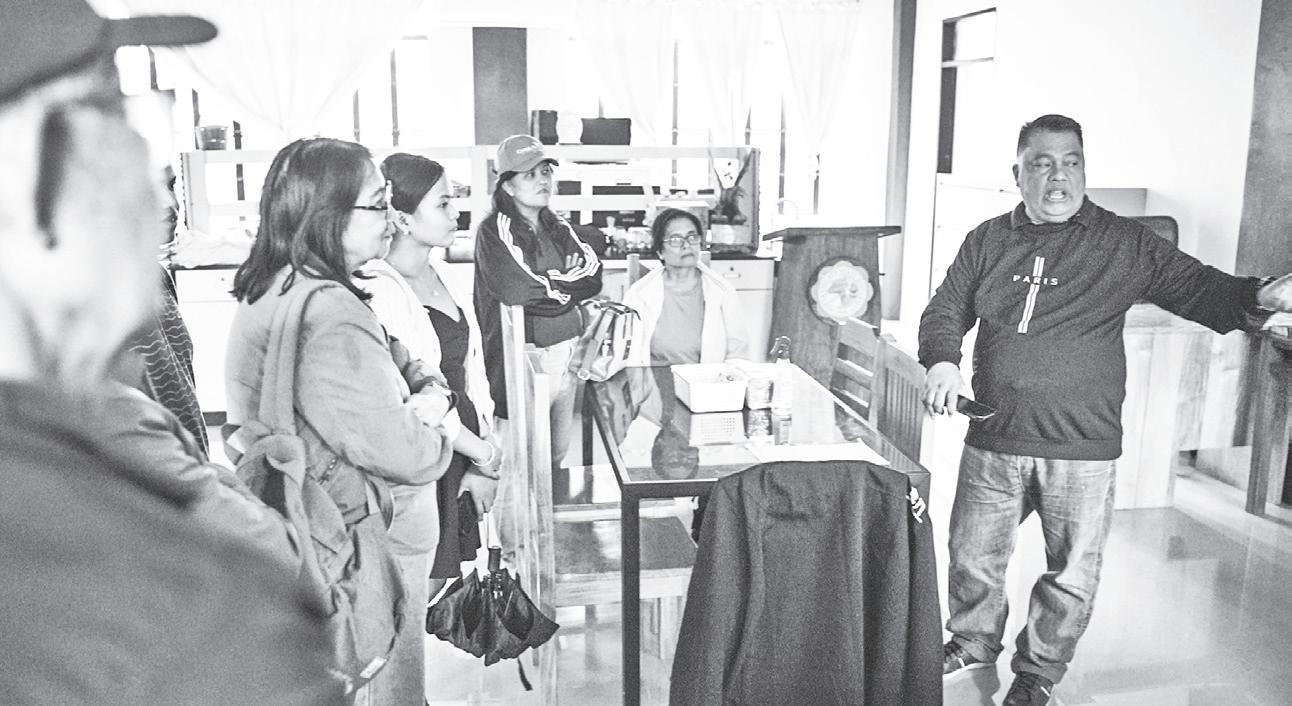
In a country where pests and diseases are constantly evolving due to factors like climate change, the handful of experts could hardly keep pace with the emergence of new strains and long-standing problems.
As a result, the consequences were devastating. In Nueva Vizcaya alone, major losses occur in the yield and harvest of high-value crops like onions and bananas—key agricultural commodities in this upland province in the Cagayan Valley.
Farming is not just tilling soil: It is laboratory science
THE outreach activity, which the PPS
collaborates with the state university, the provincial government and the agriculture science industry through CropLife Philippines, serves not only as a clinic. It is also a crucial educational platform to demystify farming.
Experts emphasize that successful agriculture in the 21st century is far more complex than merely tilling the soil; it is fundamentally an exercise in scientific research, diagnostics, and extensive laboratory work.
The process of saving a sick plant starts not with a spray bottle, but with rigorous identification.
According to the experts at the forum, a plant only gets sick when

SWEETPOTATO farmers may soon have higher yields of the root crop after University of the Philippines Los Baños (UPLB) researchers have found a way to control the weevils that infest it.
A project being implemented by UPLB researchers on the use of ribonucleic acid interference (RNAi) to control sweetpotato weevils has successfully identified a gene responsible for the development of the insect’s exoskeleton, or hard outer shell. Through this knowledge, researchers can target this specific gene to weaken the pest and make it easier to control.
RNAi is a process that silences specific genes, which prevents them from producing proteins. By targeting and disabling key
genes, it can disrupt vital functions in insect pests—such as growth, reproduction, or survival—making it a promising tool for pest control.
Meanwhile, sweetpotato weevil, a major pest in root crop production, can cause up to 100 percent yield loss, severely impacting food security and farmer livelihoods.
The weevil’s larvae damage plants by burrowing into tubers and feeding on them, while adult weevils worsen infestations by laying eggs in the upper parts of the plant. This infestation also increases the risk of fungal infections.
To help address this problem, the Philippine Council for Agriculture, Aquatic and Natural Resources Research and
Development of the Department of Science and Technology (DOST-PCAARRD) funded the project, “Exploring the Efficacy of RNA Interference [RNAi] as a Biopesticide for Managing Sweetpotato Weevil, Cylas formicarius [Fabr.].”
Led by Dr. Karen B. Alviar from the Institute of Weed Science, Entomology, and Plant Pathology of the College of Agriculture and Food Science of UPLB (IWEP-CAFS, UPLB), the research team successfully isolated and cloned a gene vital for forming the insect’s shell, mass-produced it in larger volumes using a medium with ampicillin, and stored it in a glycerol solution at low temperature.
The team reported their developed
protocol for the mass rearing of sweetpotato weevil, enabling a more efficient conduct of experiments.
The researchers are carrying out further studies to develop an RNAi-based product that farmers can use to help control sweetpotato weevils in the field. These accomplishments were shared during a project review led by DOSTPCAARRD Deputy Executive Director Juanito T. Batalon, for Research and Development, and DOST-PCAARRD Crops Research Division Director Leilani D. Pelegrina, with the Council’s Industry Strategic S&T Program Manager for Sweetpotato Fredric M. Odejar and other staff. John Aaron Mark V. Macaraeg/S&T Media Services
all three points of the disease triangle are present: a susceptible host (the crop), a virulent pathogen, and a favorable environment (often excessive moisture or heat).
By diagnosing the causal agent—be it a fungus, a nematode, or a virus— and understanding its life cycle, pathologists can recommend specific, targeted solutions rather than blanket applications of chemicals.
“It is in the laboratory that we truly get to the bottom of the problem,” explained Dr. Lolita Dolores, a retired scientist from the UPLB-IPB,and an active virologist with the PPS.
“A farmer might see yellowing leaves and assume a virus, but our lab work may reveal it’s actually a potassium deficiency, or another physiological problem. Without that diagnostic step, the management is all wrong, and the disease persists,” Dolores explained.
For the PPS members, the PDOG program is a practical application of their academic findings. As Yago puts it, they “translate our sciences into something impactful to the community... so that we can utilize the findings that we see.”
Call to arms for future plant doctors
BEYOND immediate diagnosis and
management, a major goal of the PDOG activity is to motivate the next generation of agriculture students to pursue this challenging but rewarding specialization.
The dedication of the current plant doctors is palpable. Cortaga, despite hurdles of funding and scarce resources, sees the challenges in the Philippines as an opportunity.
“Unlike abroad, where all the problems have been addressed, here there are a lot of problems. For me, it is also an opportunity to address them,” he said.
Dolores, who remains active after years of retiring, viewed her continued participation as a matter of passion and fulfillment.
“The microorganisms are evolving, the weather is changing,” she said. “Plant pathology is continuous. Even though I studied in the past, I’m still learning because there are new diseases.”
By bringing the mobile clinic to Nueva Vizcaya, the PPS is not just treating sick crops, they are sowing the seeds of scientific understanding. The “Plant Doctors on the Go” are demonstrating that the future of food security in the country relies not just on the strength of the farmer’s back, but on the rigor of the scientist’s mind.
Preparation of next-gen professionals for biodiversity-climate nexus urged
LOS BAÑOS, Laguna—The Southeast Asian Regional Center for Graduate Study and Research in Agriculture (Searca) highlighted the need for nextgeneration professionals to be equipped and to engage in the biodiversity-climate nexus.
A Searca Agriculture and Development Seminar Series (ADSS) featured Dr. Dindo Campilan, International Union for Conservation of Nature (IUCN) regional director for Asia and Hub director for Oceania, with his lecture, “BiodiversityClimate Nexus for a Nature-Positive Future: Renewing the Role of Academe in Nurturing Next-Generation Professionals.”
Campilan underscored the persistent fragmentation in treating biodiversity and climate as separate fields, and called for a new generation of experts capable of bridging these critical sectors.
“We face a persistent fragmentation between biodiversity and climate. Often, they are treated as separate worlds, and it remains rare to find professionals who can bridge both,” Campilan said. “The next-generation leaders and professionals must be equipped to understand, address, and work on the intersection of these two.”
He highlighted pressing gaps in academic programs in response to shifting real-world priorities and cited the limited pool of talent suited to work at the biodiversity-climate nexus.
“Global science is clear. We no longer have to debate about it. Climate and biodiversity are two sides of the same coin,” he affirmed.
He pointed out that the same human activities often drive both biodiversity loss and climate change, requiring integrated solutions.


DR . Dindo Campilan
Citing a landmark 2020 paper in Nature, Campilan pointed out that traditional conservation approaches are insufficient, as the rate of biodiversity loss has surpassed nature’s ability to recover.
“It’s no longer enough to just restore and protect. The rate of biodiversity loss has outpaced nature’s ability to recover,” he noted. “We need to do more. That’s why we need to bend the curve,” referring to the need for systemic changes in production and consumption.
The IUCN expert challenged academic institutions to assume a more active role in preparing future professionals equipped to work at the intersection of climate and biodiversity. He called on universities to ensure students gain the skills necessary to navigate rapidly evolving scientific and policy demands.
“This is the opportunity moving forward, especially for young professionals and students,” he said.
Searca’s ADSS serves as its flagship platform to foster the presentation and discussion of contemporary development and research concerns, aiming to spur sustainable transformation of Southeast Asian agricultural systems through innovation and knowledge sharing.
TORO TORO, Bolivia—Legend once had it that the huge, three-toed footprints scattered across the central highlands of Bolivia came from supernaturally strong monsters—capable of sinking their claws even into solid stone. Then scientists came here in the 1960s and dispelled children’s fears, determining that the strange footprints in fact belonged to gigantic, two-legged dinosaurs that stomped and splashed over 60 million years ago, in the ancient waterways of what is now Toro Toro, a village and popular national park in the Bolivian Andes. Now, a team of paleontologists, mostly from California’s Loma Linda University, have discovered and meticulously documented 16,600 such footprints left by theropods, the dinosaur group that includes the Tyrannosaurus rex. Their study, based on six years of regular field visits and published last Wednesday in the
peer-reviewed journal PLOS One, reports that this finding represents the highest number of theropod footprints recorded anywhere in the world.
“There’s no place in the world where you have such a big abundance of [theropod] footprints,” said Roberto Biaggi, a co-author of the study led by Spanish paleontologist Raúl Esperante. “We have all these world records at this particular site.”
Prints record dinosaur behavior —including attempts to swim THE dinosaurs that ruled the earth and roamed this region also made awkward attempts to swim here, according to the study, scratching at what was squishy lake-bottom sediment to leave another 1,378 traces. They pressed their claws into the mud just before water levels rose and sealed their tracks,
protecting them from centuries of erosion, scientists said.
“The preservation of many of the tracks is excellent,” said Richard Butler, a paleontologist at the University of Birmingham who was not involved in the research.
He said that, to his knowledge, the number of footprints and trackways found in Toro Toro had no precedent.
“This is a remarkable window into the lives and behaviors of dinosaurs at the end of the Cretaceous,” Butler added, referring to the period around 66 million years ago at the end of which an asteroid impact abruptly extinguished all dinosaurs and 75 percent of living species along with them, according to scientists.
Footprints face preservation threats ALTHOUGH they’ve survived for millions of
years, human life has threatened these traces.
For decades, farmers threshed corn and wheat on the footprint-covered plateaus. Nearby quarry workers didn’t think much of the formations as they blasted rock layers for limestone.
And just two years ago, researchers said, highway crews tunneling through hillsides nearly wiped out a major site of dinosaur tracks before the national park intervened.
Such disturbances may have something to do with the area’s striking absence of dinosaur bones, teeth and eggs, experts say.
For all of the footprints and swim traces found across Bolivia’s Toro Toro, there are virtually no skeletal remains of the sort that litter the peaks and valleys of Argentine Patagonia and Campanha in Brazil.
But the lack of bones could have natural causes, too.
The team said the quantity and pattern of tracks—and the fact they were all found in the same sediment layer—suggest that dinosaurs didn’t settle in what is now Bolivia as much as trudge along an ancient coastal superhighway stretching from southern Peru into northwest Argentina.
The range in footprint sizes indicated that giant creatures roughly 10 meters (33 feet) tall moved in a herd with tiny theropods the size of a chicken, 32 centimeters (1 foot) tall at the hip. In presenting a snapshot of everyday behavior footprints “reveal what skeletons cannot,” said Anthony Romilio, a paleontologist at the University of Queensland in Australia who also did not participate in the study.
Just from footprints, researchers can tell when dinosaurs strolled or sped up, stopped or turned around.
It’s not clear why so many dinosaurs roamed the site BUT the reason they flocked in droves to this wind-swept plateau remains a mystery.
“It may have been that they were all regular visitors to a large, ancient, freshwater lake, frequenting its expansive muddy shoreline,” offered Romilio. Biaggi suggested that they were “running away from something or searching for somewhere to settle.”
What’s certain is that research into this treasure trove of a dinosaur tracksite will continue.
“I suspect that this will keep going over the years and many more footprints will be found right there at the edges of what’s already uncovered,” Biaggi said. Carlos Guerrero And Isabel Debre/ Associated Press
A6 Sunday, December 14, 2025

BETHLEHEM, West Bank—For the past two Christmases, John Juka’s family restaurant looked about the same as any business in Bethlehem: shuttered and eerily empty.
But on Saturday evening, it bustled with families and was lit by strings of red lights, a hopeful change in the Palestinian city that’s been reeling since war broke out in Gaza.
Christmas celebrations are slowly returning to the traditional birthplace of Jesus in the Israelioccupied West Bank.
While a shaky ceasefire holds in Gaza, Palestinians hope the festivities are a step toward a more peaceful future in a region shaken by tragedy.
“It’s not like it was before the war,” 30-year-old Juka said. “But it’s like life is coming back again.”
Muslim-majority city thrives on Christmas
TOURISM and religious pilgrims have long been a prime economic engine for Bethlehem. Around 80 percent of the Muslim-majority city’s residents live off it, according to the local government.
Those earnings ripple out to communities across the West Bank, a territory long marked by economic precarity.
“When we have 10,000 visitors and pilgrims sleeping in Bethlehem, that means the butcher is working, the supermarket is working and everybody is working,” said Bethlehem Mayor Ma -
her Nicola Canawati. “There’s a ripple effect.”
That economic lifeline vanished when war broke out in Gaza following the Hamas-led October 7, 2023, attack on southern Israel.
Bethlehem’s authorities canceled major Christmas celebrations during Israel’s retaliatory offensive in Gaza, whose health ministry has reported over 70,000 Palestinians killed.
At the same time, Israel’s military scaled up operations in the West Bank, including communities near Bethlehem.
The unemployment rate in the city jumped from 14 percent to 65 percent, the mayor said. Poverty soared, and about 4,000 people left in search of work.
A United Nations report last month said the West Bank is going through its most severe economic downturn on record, citing the ongoing Israeli military operations.
Now Bethlehem residents seek a comeback.
“The decision we took was to reignite the spirit of Christmas and to reignite hope,” the mayor said. “I think this sends a great message to the whole world that we Palestinians love life and we are eagerly looking forward to a peaceful solution.”

Some tourists return ON Saturday, crowds lined with heavily armed police cheered following a prayer calling for peace, and fathers hoisted children onto their shoulders as a towering Christmas tree lit up Manger Square, near the site where Christians believe Jesus was born.
For families like Juka’s that struggled to keep businesses afloat during the war, the sight of the crowds felt like a deep exhale after years of uncertainty.
The family opened the restaurant serving traditional Palestinian food in 1979. As many businesses in Bethlehem buckled
THE Church of Jesus Christ of Latter-day Saints (Church of Jesus Christ) opened its newly completed Alabang, Muntinlupa City temple to the public, its fourth in the country and the second in Metropolitan Manila.
The open house started on November 21 and ran until December 13, except on Sundays.
“The open house provides an opportunity for people to learn about the purpose of the house of the Lord and tour the temple’s beautiful grounds,” the Church of Jesus Christ said on its website. The temple will be dedicated on January 18, 2026, by Elder David A. Bednar of the Quorum of the Twelve Apostles.
during the latest war, the family wondered how long they could hang on.
In August, as ceasefire negotiations picked up momentum, Juka said he began to see visitors walking the streets, and his family decided to reopen.
“Tourists finally feel safe to come back,” he said. “We’re hopeful that we might see peace in our future.”
In November, tourist visits to the city reached the highest since the war began, Canawati said, and reservations suggest that hotels will be at around 70 percent occupancy during Christmas.
Still, few in the hundreds of people gathered in Bethlehem’s square were foreign tourists, and residents said celebrations were nowhere near the size they used to be.
West Bank tensions ANOTHER West Bank resident, 29-year-old Issa Montas, said tensions in the territory have cast a pall over the holiday celebration.
While Bethlehem has long been a religious haven of relative calm, violence and military raids have been occurring regularly nearby. Israel’s military has said it is cracking down on militants in the West Bank and
responding to aggression.
On Saturday, Israel’s military said its forces shot dead two Palestinian men who it said tried to ram soldiers with their vehicle at a security checkpoint in Hebron, south of Bethlehem. Palestinian health authorities confirmed at least one of the dead.
Military checkpoints have turned commutes into sometimes day-long endeavors. Montas, who paints homes in Jerusalem for a living, said he traveled six hours from his home in Ramallah, less than 32 kilometers away, just to reach Bethlehem. At the same time, Israeli settler attacks on Palestinians in the West Bank have reached the highest levels since the UN humanitarian office started collecting data in 2006, peaking in recent months.
Israeli Prime Minister Benjamin Netanyahu, whose government is dominated by far-right proponents of the settler movement, has said the perpetrators are “a handful of extremists.”
Montas spoke with frustration.
“I see a lot of violence, but no one can stop them, not even the Israeli army or police can control them. They allow them to do this,” he said of settlers. “It just feels like whatever I say, it will be useless because no one cares.”
Still, even he expressed cautious hope as children ran through packs of street vendors and a mix of Christmas and Arabic music floated over the crowds.
“This [celebration] is not just for us. It’s for everyone. Christian, Jewish, Muslims,” Montas said. “This Christmas is for everyone.” Megan Janetsky/Associated Press
Michael Bublé: Meeting Pope Leo XIV ‘one of the greatest moments of my life’
VSixty members of traditional and digital media from Metro Manila and major outlets from Luzon, Visayas, and Mindanao attended the event. They were toured around the sacred spaces where members of the Church perform sacred ordinances, or prescribed religious rites.
“I truly believe that this temple will be a blessing to our beloved country. Having another temple here will bless the lives of Filipinos in many ways,” Revillo said.
During the news briefing and tour, Church leaders explained the importance of temples to members of the Church of Jesus Christ, what religious rites are conducted inside the various rooms, and why the Church continues to build temples in the Philippines and around the world.
“I hope that you will see that the temple teaches that Jesus Christ is at the center of all of our doctrines, that we build temples
Preceding the public opening was a media day on November 17 that was led by Elder James R. Rasband, assistant executive director of the Temple Department. He was joined by Elder Carlos G. Revillo Jr., Elder Chi Hong (Sam) Wong, and Elder William K. Jackson of the Philippines Area Presidency, along with their wives.

because we believe that because of Jesus, we can be resurrected and live together again,” Rasband said.
Located in Filinvest Corporate City, Alabang, Muntinlupa City, the temple features design elements that reflect the beauty and cultural heritage of the Philippines.
Its exterior and interior details include a representation of the white jasmine flower, or sampaguita, the national flower of the Philippines.
Currently, there are more than 900,000 Latter-day Saints in the Philippines, worshipping in more than 1,300 congregations. Once dedicated, the Alabang Philippines Temple will serve members living in the Southern part of Luzon.
Additional temples are under construction or have been announced in Bacolod City, Negros Occidental; Cagayan de Oro City, Misamis Oriental; Davao City, Davao del Sur; Iloilo City, Iloilo province; Laoag City, Ilocos Norte; Naga City, Camarines Sur; San Jose del Monte, Bulacan; Santiago City, Isabela province; Tacloban City, Leyte province; and Tuguegarao City, Cagayan province.
Temples of the Church of Jesus Christ differ from meetinghouses or chapels, where members gather for Sunday worship services.
Each temple is considered a house of the Lord, where Jesus Christ’s teachings are reaffirmed through sacred ordinances that unite families eternally. In the temple, Church members learn more about the purpose of life and make covenants to follow Jesus Christ and serve others, the Church of Jesus Christ said.
ATICAN—Michael Bublé called meeting Pope Leo XIV on December 5 “one of the greatest moments of my life,” adding that when he prepared to headline the Vatican’s annual Christmas concert for the poor, he had hoped his example will encourage more people to speak openly about their faith.
The Grammy-winning singer, known for his velvety voice and popular Christmas albums, said faith “changes everything in my life, every single interaction.”
“When you say that you have strong faith, this is shocking to people, which is sometimes hard for me to understand,” Bublé said in response to a question from Catholic News Agency at a Vatican press conference on December 5.
“And with the platform I have, my hope is that … there’s a young person who might listen to me today who might be afraid to share their faith or to be open about it, and they look at me and they say, ‘Wow, look at Bublé. He’s not afraid to share it,’ and maybe it will give them the strength to do the same.”
Bublé met Pope Leo XIV along with other artists participating in the Vatican’s sixth annual “Concert with the Poor” on December 6.
“I am overwhelmed,” Bublé said. “This morning, I had the opportunity to meet the Holy Father. For me, this was something that I knew was going to be one of the greatest moments of my life.”
This year marked the first time a pope would attend the Vatican concert, which was free and offered to 3,000 people in need served by volunteer organizations around Rome. They received a hot takeaway dinner and other

SINGER Michael Bublé called meeting Pope Leo XIV on December 5 “one of the greatest moments of my life.” VATICAN MEDIA
necessities after the event.
“We know that times are difficult for many people, and there’s a lot of darkness,” Bublé said. “I feel like when you have faith, you have your own pilot light. And the lights can go out everywhere, everywhere, but if you have that faith and you have that light inside you, you can find your way.”
The Canadian singer told EWTN News after the press conference that it was especially meaningful to introduce the pontiff to his mother, who was his childhood catechism teacher.
“A lot of people won’t know, but I was raised in the Catholic Church, and my mother was my catechism teacher,” said Bublé, who has noted in previous interviews that he does not identify with a particular organized religion.
“Christmas is about celebrating the birth of Christ and the sacrifice that allows all of us to have an eternal life,” Bublé said, describing how music is central to his spiritual life.
“Music is a gift from God,” he said. “I talk to so many people today about what a gift from God music is.”
Bublé noted that “Silent Night” and “Adeste Fideles” were among his favorite Christmas hymns. He said that he asked the pope for specific song requests for the concert, which featured selections Pope Leo enjoyed. One of them was “Ave Maria,” a piece not normally in Bublé’s repertoire.
He acknowledged feeling “a bit nervous” to perform it before the pope and was coaxed into offering reporters a brief a cappella preview during the press conference. The concert also featured the choir of the Diocese of Rome, the Nuova Opera Orchestra, and Catholic composer Monsignor Marco Frisina. Past editions of the concert have been conducted by composers Hans Zimmer and Ennio Morricone.
“Before every show…I say, ‘Thank you, God, for giving me the ability to connect with these beautiful souls,’” Bublé said. Courtney Mares/Catholic News Agency

Editor: Lyn Resurreccion


By Jonathan L. Mayuga
WITH the theme “Asean Heritage Parks: Asean’s Contribution to the Implementation of the Biodiversity Plan,” the Eighth Asean Heritage Parks (AHP8) Conference early this month concluded on a high note with the resolve to strengthen regional cooperation and showcase how AHPs can contribute to global biodiversity goals.
The AHP8 Conference, held in Ha Long City, province of Quang Ninh, Vietnam, and co-hosted by the Vietnam government, brought together over 300 participants, including park managers, protected area management agencies, technical experts, institutional partners, and key stakeholders to promote cross-sectoral dialogue and promote nature-based solutions, climate action, sustainable resource management, and inclusive governance among Asean member states.
The three-day AHP8 Conference supports the National Biodiversity Action Plan 2021-2030 that is in line with the 2015 Kunming-Montreal Global Biodiversity Framework.
Market place and exhibits ON December 3, Executive Director Jerome L. Montemayor of Asean Centre for Biodiversity (ACB) led the guests in opening the Market Place and Exhibits, which highlighted the AHPs of the Asean member states as well as the milestones and key accomplishments of the AHP Programme over the years.
The marketplace and exhibits were primarily designed for knowledge sharing that allowed visitors to learn about the successful integration of conservation with community benefits, featuring products that tell stories of the region’s rich natural heritage as well as the skills and craftsmanship of the people. On display were information materials
and the programs implemented in the various AHPs.
They also showcased a vibrant range of biodiversity-based goods, educational materials, and traditional arts and crafts created by local communities and stakeholders.
Some of the biodiversity products were derived from indigenous materials that can be found in protected areas, harvested sustainably, and developed by Indigenous peoples and local communities. Unique handmade items reflected the cultural heritage and biodiversity in the region.
AHP managers’ meeting
A CLOSED-DOOR meeting was convened that gathered AHP committee members, site managers, and park superintendents of the 69 AHPs under the AHP Network.
The meeting served as a key regional platform for strengthening collaboration and coordination among the ASEAN Member States (AMS) in the management and conservation of AHPs.
The meeting provided an opportunity for AHP managers to present accomplishments, challenges, and lessons learned in managing their respective parks.
The meeting also paved the way for knowledge exchange and served as a venue for sharing regional and national initiatives and exploring opportunities for collaboration and capacity-building.
Awarding of new AHPs
THE ACB, which implements the AHP Programme, led the awarding of the new AHPs. From 11 initial AHPs designated on November 29, 1984, the number grew to 69, including a total of 14 from the Philippines.
The newly designated AHPs in the recent years were welcomed to the list of AHPs. They include:
2022: 52nd Pasonanca Natural Park (Philippines); 53rd Mt. Inayawan Range Natural Park (Philippines); 54th Bach Ma
National Park (Vietnam); and 55th Con Dao National Park (Vietnam)
2023: 56th Phu Khieo Wildlife Sanctuary-
Nam Nao National Park (Thailand); and 57th Phu Kradueng National Park (Thailand)
2024: 58th Phou Xieng Thong National Protected Area (Lao PDR); 59th Balinsasayao Twin Lakes Natural Park (Philippines); 60th Turtle Islands Wildlife Sanctuary (Philippines); 61st Apo Reef Natural Park (Philippines); 62nd Nam Poui National Protected Area (Lao PDR); and 63rd Royal Thai Army Nature Education Center, Bang Pu (Thailand)
2025: 64th Tengku Hassanal Wildlife Reserve (Malaysia); 65th Bako National Park (Malaysia); 66th Lambir Hills National Park (Malaysia); 67th Pu Mat National Park (Vietnam); 68th Dong Nai Culture and Nature Reserve (Vietnam); and 69th Xuan Thuy National Park (Vietnam) AHPs are protected areas of high conservation importance in the Southeast Asian region, known for their unique biodiversity, representative ecosystems, and outstanding wilderness values.
Vietnam’s rich biodiversity
VIETNAM’S hosting of the AHP8 Conference elevates the country’s position as an Asean leader, enhancing regional cooperation on nature conservation and green tourism.
It is home to 12 recognized AHPs, including Bai Tu Long National Park, which is located next to Ha Long Bay. Bai Tu Long is recognized for its rich ecosystems, mountains, caves and marine, and marine biodiversity.
According to the WorldWide Fund (WWF), Vietnam is the 16th most biodiverse country in the world. It is estimated to contain nearly 10 percent of the world’s animal species, and nearly 40 percent of its plant species are endemic.
Vietnam’s terrestrial, freshwater, and marine ecosystems support nearly 50,000 species, including nearly 7,500 micro-
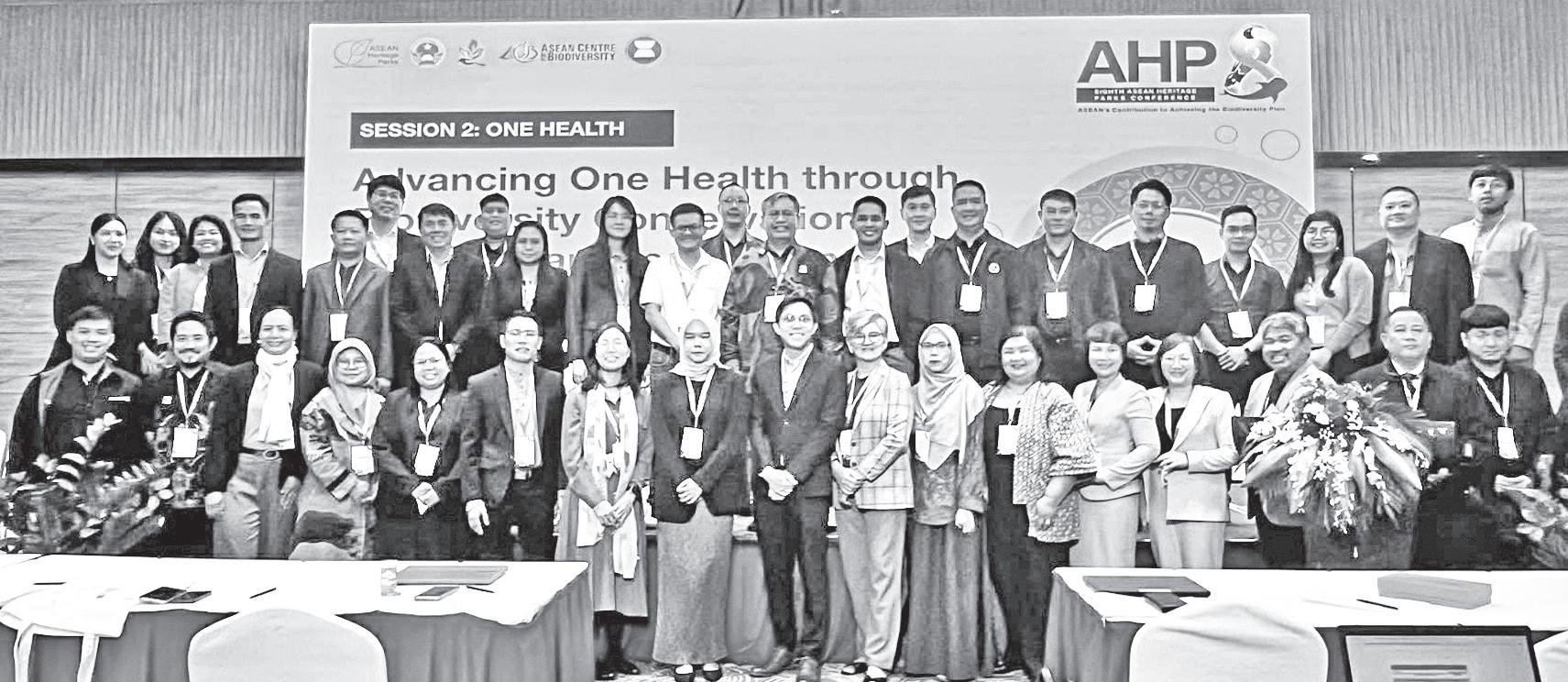
organisms, 20,000 terrestrial and aquatic plants, 10,500 terrestrial animals, 2,000 invertebrates and freshwater fish, and over 11,000 marine species.
At least 1,200 freshwater species live in the Mekong River, including the last remaining populations of the Irrawaddy dolphin, the giant freshwater stingray, and the Mekong giant catfish, according to the WWF website.
War and remarkable recovery
VIETNAM’S protection and conservation measures allowed its remarkable recovery from the devastating impact of war to what it is today in terms of biodiversity.
“Huge swathes of Vietnam’s onceverdant jungles were obliterated not just by iron bombs and napalm, but by deadly chemical herbicides like Agent Orange, which rendered forests barren for decades,” environmentalist Gregg Yan, who has been studying Vietnam’s history for 30 years, shared to the BusinessMirror on November 29.
“After the war, Vietnam also turned to its remaining natural resources to rebuild and used wild timber for construction. Afterwards, many of these plots were converted to farmland in the form of coffee, rubber, cashew, or durian plantations,” Yan said.
Yan said that the general area of Vietnam, termed by the French as Indochina, has seen nearly continuous warfare from the 1940s to the 1980s, and this has caused a significant portion of Indochina’s wildlife to disappear, like the legendary Kouprey.
Parallel sessions highlights DURING parallel sessions, experts and resource persons tackled topics including Naturebased Solutions for Climate Resilience and Biodiversity Conservation in AHPs, Advancing One Health through Biodiversity Conservation, Wildlife Management, and Whole-of-Society Approach; Building Meaningful Partnerships:
Lessons Engaging Indigenous People, Local Communities, Youth, and Women.
Oliver O. Agoncillo, director of Mainstreaming Biodiversity Division at ACB, who presented the highlights of One Health, said the session underscored the need to invest in AHPs and other effective area-based conservation measures, and strengthen governance frameworks that integrate biodiversity, health, and climate resilience.
He said the session came up with the call that “Conservation is Better Than Cure.” Meanwhile, Asiih Budiati, team leader and climate change expert to the technical assistance facility to the Green Team European Initiative, said panelists and participants of the Nature-based Solutions sessions underscored the importance of enhancing the capacities of government and partners to design and develop bankable nature-based solutions project proposals for sustainable financing, integrate a governance framework and a coordination mechanism across multiple sectors to ensure the effective implementation, and foster continuous interagency collaboration within and among stakeholders.
Aubrey Padilla, Asean Youth Biodiversity Leader, meanwhile, underscored the need to build partnerships.
“Meaningful participation of Indigenous peoples and local communities, women and youth is crucial for effective conservation. Strong and lasting partnerships are built when communities are engaged from planning through to decision-making,” she said.
She said success stories of AHPs and Small Grants Programs show that community leadership, gender equality, youth engagement, and traditional knowledge strengthen biodiversity conservation and support sustainable livelihood.
MONTEMAYOR said that the event was very productive and insightful, noting the
successful information sharing and learning experiences.
Through the AHP8 conference, AHPs from select Asean countries were able to showcase inspiring knowledge products and souvenirs.
More importantly, Montemayor noted the conduct of a series of pre-event meetings such as the Scientific Advisory Committee, the Project Steering Committee Meeting of the Asean Effectively Managing Networks of Marine Protected Areas in Large Marine Ecosystems, the Capacity Building on Rights, Openness, Accessibility, Multi-stakeholder governance for Internet Universality (ROAM) by the Technical Assistance Facility to the Green Team Europe Initiative, the Roundtable Discussion on the Road to the Convention on Biological Diversity’s Conference of Parties (CBD COP 17), and the awarding ceremonies of the new AHPs.
“From the plenary sessions, we have heard about the opportunities and challenges for the KM GBF [KunmingMontreal Global Biodiversity Framework] implementation over the next five years; the current trends and status of biodiversity based on available data, and the Asean Biodiversity Plan strategies alongside the opportunities and challenges,” he said.
“By providing a regional platform for the AHP managers, development partners, and key stakeholders, AHP8 created potential synergies waiting to be pursued under the AHP Programme,” he added.
He expressed confidence that the AHP8 Conference has exceeded expectations to strengthen the role of the AHPs in contributing to the Asean Biodiversity Plan and called on AHP Park Managers to become conservation champions by sharing learnings from the conference and translating them into action in their respective sites.
downpours left streets submerged under chest-high water days later, turning entire neighborhoods into islands. The day after the storm made landfall, Hai Duong, 29, rushed to a mall that still had power to charge her phone.
disasters are rising across the region even as spending to protect communities falls short. Asian nations will need $4 trillion for water and sanitation between 2025 and 2040—about $250 billion a year, the Asian Development Bank (ADB) said in a report released on Monday. Governments are under growing pressure to protect power systems people rely on every day. By 2050, extreme weather could leave listed power companies in Asia-Pacific with about $8.4 billion a year in damage and lost revenue, a third higher than now, according to recent research by the Hong Kong-based nonprofit Asia Investor Group on Climate Change and the New York-based MSCI Institute, a sustainability think tank. Those risks have been playing out this year across Asia as it was pummeled by late-arriving storms, relentless rains and severe floods.
In central Vietnam’s Quy Nhon, power lines snapped when Typhoon Kalmaegi blasted the coastal city with heavy rain and strong winds. Floods from the relentless
“I can’t go back because my home is underwater. I just want to see if my relatives are safe,” she said.
Asia’s water resources need to be climate proofed THE ADB report says 2.7 billion people—about 60 percent of the Asia-Pacific population— have access to water for most of their basic needs but more than 4 billion still remain exposed to unsafe water, degraded ecosystems and escalating climate hazards.
Much of the progress since 2013 comes from major gains in rural water access, it says.
About 800 million more people in rural areas now have piped water, helping many countries move out of the lowest level of water security. India played a big part in this shift.
But Asia faces a triple threat: environmental pressures, low investment and climate change, said Vivek Raman, principal urban development specialist at the ADB and a lead author of the report.
“It’s a tale of two realities,” Raman said. The report says water ecosystems were
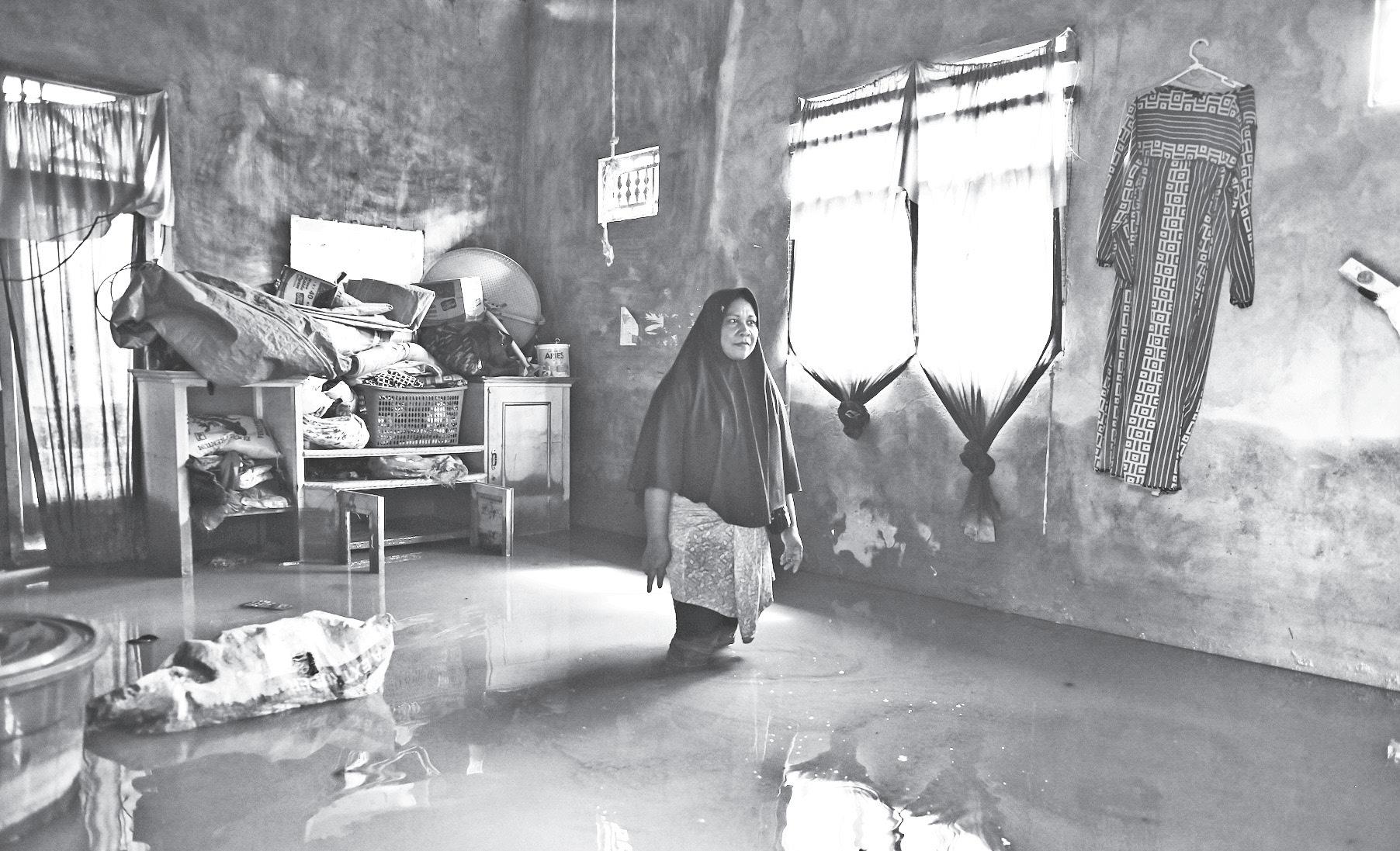
rapidly deteriorating or stagnating in 30 of the 50 Asian countries that were studied, plagued by unchecked development, pollution and land being converted to other uses.
Asia also accounts for 41 percent of global flooding, and its coastal megacities and Pacific islands face mounting threats from storm surges, rising sea levels and salty water pushing inland.
Governments currently meet only 40 percent of the estimated $4 trillion in investment, or roughly $250 billion annually, in funding needed for water and sanitation from 2025-2040. That leaves an annual shortfall of over $150 billion.
Asia’s rapid growth is both an opportunity and a challenge, said Amit Prothi, director general of New Delhi-based Coalition for Disaster Resilient Infrastructure, who was not involved with the report.
opportunity to rethink and build in a new way,” Prothi said. The coalition found that $800 billion in infrastructure, about a third of it in Asia, is exposed to disasters each year globally.
Asia’s power utilities are losing billions due to climate change EXTREME heat, floods and water shortages are already costing Asia’s power utilities
$6.3 billion annually, a figure projected to exceed $8.4 billion by 2050 if companies fail to strengthen climate adaptation measures, research by the Asia Investor Group on Climate Change and the MSCI Institute shows.
Asia accounts for 60 percent of the world’s power generation capacity and remains deeply reliant on coal.
The report warns that climate change threatens both energy security and economic growth across a region where over 4 billion people need reliable electricity.
heat to be the costliest hazard, responsible for over half of all losses by 2050. Heatwaves reduce power plant efficiency and strain transmission networks. India’s main power utility NTPC, Indonesia’s PLN, and Malaysia’s Tenaga Nasional all face a high risk of disruptions caused by rising heat.
Disruptions to water are a big factor
ANOTHER major threat comes from declining river flows in Asia’s major basins, which supply the water needed by coal and gas plants and fuel hydropower dams. At the same time, heavy rainfall and flooding also pose risks, especially in coastal and riverine regions. Malaysia’s Tenaga Nasional faces some of the highest coastal flood exposure due to power plants built in low-lying areas, the report said. Despite mounting hazards, most utilities lacked detailed, funded plans for adapting to climate impacts. The report found that while nine companies of the 11 studied assessed how climate change impacts them, only seven examined risks at individual plants. Just five calculated and disclosed how future climate impacts could raise costs or hurt their earnings. Sibi Arasu And Aniruddha Ghosal/Associated Press A
From 2013 to 2023, Asia and the Pacific experienced 244 major floods, 104 droughts, and 101 severe storms—events that undermined development gains and caused widespread damage.
“The amount of infrastructure we’ll build in Asia in the next three decades will be as much as what was built in the last two centuries. So, this is an
“Overall, if you were looking at the types of impacts and the preparedness of companies, most companies are at very early stages,” said Anjali Viswamohanan, director of policy at the Asia Investor Group on Climate Change. Its study of 2,422 power plants across China, Hong Kong, India, Indonesia, Japan, Malaysia and South Korea found extreme

Obiena
ANGKOK—The numbers suggest EJ Obiena should be running away with the gold. Even though he has dropped from world No. 2 to No. 11, Obviena towers above the competition over the six other challengers in the men’s pole vault of the 33rd Southeast Asian Games in terms of skill and experience . But when he enters Supachalasai Stadium on Tuesday, the two-time Olympian and Asia’s top pole vaulter said he is focusing on his own jumps.
“I just can’t relax and be too confident. My opponents are so determined to win here, especially the host country,” Obiena, 30, told BusinessMirror on Friday.
“I’ll do my very best and be on top of my game. I trained so hard in the offseason, and I hope to do good in my return to this stadium,” Obiena said, referring to his first jump at the Supachalasai stadium two years ago where he dominated the Asian Championship with a vault of 5.91 meters.
On paper, the next best pole vaulter is Thailand’s
Patsapong Amsarng, the Hangzhou Asian Games and 2025 Asian Championships bronze medalist, who is ranked No. 56. That 28-year-old Thai has a personal best of 5.67 meters. The Philippines has another pole vault entry in Elijah Cole, ranked No. 200 with a personal best of 5.41m. Other Southeast Asian pole vaulters looking to challenge Obiena’s six-year SEA Games reign are 24-yearold Jun Low Yu, who holds a personal best of 5.10m and is ranked 483rd, and unranked Graiwich Panyasawat of Thailand, who has a personal best of 5.12m. World No. 210 Idan Fauzan Richsan of Indonesia has a personal best of 5.32m, while world no. 347 Muhammad Naufal Bin Shahrul of Malaysia has a personal best of 5.15m. Obiena’s season best is 5.80m, achieved in the Orlen Copernicus Cup in February in Poland and during the Atletang Ayala World Pole Vault Challenge in Makati City in September. Josef T. Ramos
BANGKOK—Having had less than two weeks to prepare, Gilas Pilipinas kicks off its titleretention bid versus Malaysia on Sunday in the Southeast Asian Games.
Jamie Malonzo, Thirdy Ravena and Ray Parks head a hastily assembled Philippine team—mainly due to the organizers’ eligibility restrictions.
Gametime is at 11:30 a.m. at Nimibutr Stadium (12:30 p.m. Philippine time).
Norman Black believes gold medal remains attainable despite the circumstances, stressing that strong defense can offset the team’s lack of chemistry
“I always believe that defense will help you win games, and it will help you win championships,” Black said. “Sometimes offense can blow hot and cold, and you don’t really make your shots every single night, but you can play good defense every night.”
Matthew Wright, Von Pessumal, Robert Bolick, Dalph Panopio, Justin Chua and Abu Tratter are also on
the squad, joined by Saint Benilde’s Allen Bryant Liwag, University of the Philippines’ Veejay Pre, and Adamson University’s Cedrick Manzano.
The Philippine team will only have two to three practice sessions here before plunging into action in Pool A with Malaysia and Vietnam.
“I figured it would be the quickest way to get the team together. Because like I said, we’ve only had eight days of practice, nine days of practice. So, playing defense was probably the quickest way to really gel the team,” Black added.
The Philippines is eyeing its second consecutive and 20th gold medal overall.
“We’ve been focusing on defensive preparation, make sure that there is good communication. We are assisting one another defensively. We are rebounding the basketball. That’s the most important way to finish your defense.” The Philippines battles Vietnam on Monday.
Josef T. Ramos
CHONBURI—Philippine football is on a historic run after reaching the men’s and women’s football semifinals of the Southeast Asian Games.
“First time. It’s never happened before,” Philippine Football Federation president John Gutierrez said after the Filipinas routed Malaysia, 6-0, on Thursday night to follow the U22 squad to the next round. The U22 booters swept their two assignments in Group C to make the semis after 34 long years. They’re set to face Vietnam on Monday at the Rajamangala Stadium, with a ticket to the gold medal match at stake. The Filipinas, bronze medalists in 2021, are back in the semifinals after failing to get past the group play the last time in Cambodia.
“They’re up against host Thailand in Sunday’s semifinals at the Chonburi Daikin Stadium,” Gutierrez said. “Only now both men’s and women’s football are both through to the semis. We’re very happy about that.”
“But it’s not over yet. We can’t be complacent. We still have to do our work. We want to be in the finals for both men’s and women’s. We have to be fully prepared. Congratulations to the Philippine nation for accomplishing the feat [historic semis in both divisions]. It may not be the end goal yet. But hopefully we’ll get there,” he added.
The PFF chief also has high hopes for the Filipina5, who were slated to compete in the women’s futsal competition from December 12 to 18 in Samut Prakan.
Young gun as co-scoring leader
AFTER her three-goal spree in the Filipinas’ semifinals-clinching 6-0 disposal of Malaysia, young gun Alexa Pino emerged as
the co-scoring leader in the 33rd Southeast Asian Games women’s football play.
Rising to the occasion when the Philippines needed a boatload of strikes against the Malaysians, the 18-year-old Pino netted thrice (45th, 53rd and 70th minutes) to spark the Philippine side to the pivotal victory.
In matching the hat-trick feat in a SEAG match first registered by FIFA Women’s World Cup goal-scorer Sarina Bolden in the country’s 5-0 drubbing of Malaysia in the 2019 SEAG in Binan. Pino drew level with Thailand’s Jiraporn Mongkodle, and Vietnam’s Thai Thi Thao at the front of the scoring race.
“It’s not about the personal goals and stuff,” Pino quickly stressed after her hat trick.
“Our whole team, we all put the ball in the back of the net. And it took not just 11 of us, but everyone who even came out to pitch,” she said. “For 90 minutes, even 98, I think it was. We all came out and played as hard as we could.” Mallie Ramirez, 21, another fresh face in the Philippine team, is in a bunch of players with two goals—Myanmar’s May Htet Lu and Win Theingi Tun and Vietnam’s Nguyen Thi Bich Tuy and Pham Hai Yen.
Ani Markey, Jessica Cowart and Anicka Castaneda, the other Pinay scorers in the romp against Malaysia, joined 13 other players with a one-goal card going to Sunday’s semifinal match against the host Thais.
“It’s a privilege to be on this team, playing with this international team. It’s amazing. And I’m very grateful to have this experience with these girls and this amazing staff that we have here,” Pino said. Jun Lomibao


Aof the swimming competitions at the 33rd Southeast Asian Games in Bangkok. PSC MCO



The Open Championship at Royal Portrush, The BMW Championship, and The Procore Championship. With two majors and four other wins, plus his good finishes in the weeks he didn’t get his hands on the
FILIPINO crew of cheerleaders is giving Pinoy athletes in the Thailand 33rd Southeast Asian Games a big and loud boost. And this marks the first time in the history of the games, and any international sports meet for that matter, that Team Philippines has its own drumwielding cheering crew.
The cheerleading crew is composed of four members of the Tagaytay City Drum and Bugle Corps—Felix Jr. Florendo, Lee Daniel Isla, Jayson Ongray and Jolo Ebrada.
Their presence here is through the initiative of Philippine Olympic Committee president Abraham “Bambol” Tolentino with the help of Philippine Sports Commission chairman John Patrick Gregorio.
The four are employees of the Tagaytay Local Government Unit and have been working part-time
GENEVA—The International Olympic Committee (IOC) took a big step toward reintegrating Russia and Belarus into world sports by advising governing bodies to let the countries’ teams and athletes compete in international youth events with their full identity of national flag and anthem.
Athletes have “a fundamental right to access sport across the world, and to compete free from political interference or pressure from governmental organizations,” the IOC said in a statement.
That message in support of athletes will be welcomed in Russia and Israel, whose athletes have faced recent discrimination, and comes less than three years out from the 2028 Los Angeles Summer Games that risks facing political crosswinds in the United States.
The updated Olympic strategy gave
Russia significant progress in sports politics at a time when Moscow appears to be making no political or military concessions to Ukraine. AP
The IOC move is separate to the upcoming Milan Cortina Winter Games where a small group of Russian and Belarusian athletes will compete as neutral individuals who pass vetting for not having publicly supported the war.
The decision came at an Olympic Summit—an annual meeting chaired by IOC president Kirsty Coventry that invites key stakeholders from the Olympic family. AP
trophy, Scheffler made some serious dough in 2025. Close to $30 million in earnings should have made his dominance in 2025 beyond question. But while Scottie made more money, and won more tournaments, Rory’s fans seem to view things differently.
Rory victorious in sentimental match
GOLFERS won’t admit it, but we love drama. Come-from-behind wins, final hole heroics, disastrous collapses, heartbreak and triumph over adversity are what our golf dreams are made of.
as cheerleaders for the Cavite Patriots (Tagaytay Patriots). The Patriots are a women’s basketball team participating in the Women’s Maharlika Pilipinas Basketball League.
To say they are excited is an understatement.
“At first, I didn’t believe it until I had a plane ticket. When we finally got tickets, I almost did a jumping jack,” said Ongray, 29, a father of one.
Isla, 28, was incredibly happy but also a little nervous because she’ll be interacting with more people than she had done during her time with the Patriots.
“Proud! We’re cheering the Philippines from Tagaytay,” said Ebrada, 30.
Florendo promised to make the most of the cheers, shouts, and applause to repay the trust of the POC and PSC and encourage the athletes to do their best.
During the start of their cheerleading duty last Wednesday, Filipino athletes racked up a 2-29 gold-silver-bronze haul. Last Thursday, they had a 3-5-12 harvest. Jun Lomibao

If the criteria for best player in 2025 included a category for dramatics, then McIlroy would win hands down. Rory won the AT&T at Pebble, The Players at Sawgrass, The Masters (for a career grand slam), and The Irish Open at The K Club. He also won his 7th Race to Dubai on the DP World Tour. While Scheffler had one more major than Rory this year, Rory’s Masters will be remembered for decades to come. The long wait (over 10 years since his last major), the near misses, the pressure on and off the course, all



‘CHRISTMAS
It’s one of hope and renewal with Radisson Blu Cebu’s housekeeping program that gives second chances to incarcerated women
DECEMBER 14, 2025 | soundstrip.businessmirror@gmail.com
boutique label on producing today’s eclectic sounds,
Story by Vincent Peter Rivera
The modern music industry has grown in ways that were once unimaginable. Yet, for the new label, EARDRMS, the enduring quality of the traditional music scene will never go out of style.
On November 20, 2025, EARDRMS, a boutique record label founded by creative-business pioneer Edge Pamute and the renowned musician, producer, songwriter, director, and renaissance man, Jay Ortega, was officially launched.
As a record label, EARDRMS performs the critical functions of producing, curating, compiling, publishing, and distributing collectible Vinyl editions. These releases showcase trailblazers from across the Asian music region.
Beyond these core duties, the label is also dedicated to actively incubating, developing, and promoting a global roster of musicians, DJs, producers, and selectors, always focusing on talent that is sophisticated, eclectic, yet remains accessible to a broad audience.
“EARDRMS will cater to all genres, not just

Publisher :
T. Anthony C. Cabangon
Lourdes M. Fernandez
Editor-In-Chief :
Concept :
Aldwin M. Tolosa
Y2Z Editor :
SoundStrip Editor : Group Creative Director : Graphic Designers :
Jt Nisay
Edwin P. Sallan
Eduardo A. Davad
Niggel Figueroa
Chow Jarlego
Contributing Writers :
Tony M. Maghirang
Rick Olivares
Jingo Zapata
Reine Juvierre S. Alberto
John Eiron R. Francisco
Ica Hontiveros-Cheng
Ana Zoe V. Davad
Justine Xyrah Garcia
Ginger Franz S. Ocampo
Trixzy Leigh Bonotan
Bless Aubrey Ogerio
Photographers :
Bernard P. Testa Nonie Reyes
Y2Z & SOUNDSTRIP are published and distributed free every Sunday by the Philippine Business Daily Mirror Publishing Inc. as a project of the
The Philippine Business Mirror Publishing, Inc., with offices on the 3rd Floor of Dominga Building III 2113 Chino Roces Avenue corner Dela Rosa Street, Makati City, Philippines. Tel. Nos. (Editorial) 817-9467; 813-0725. Fax line: 813-7025
Advertising Sales: 893-2019; 817-1351,817-2807. Circulation: 893-1662; 814-0134 to 36. www.businessmirror.com.ph
electronic/dance/house, contrary to the musical DNA of the label’s pioneers,” said Pamute. “Our label is positioned more to be the foremost purveyors of immaculate taste and impeccable sound. We are selectors of only the best of the best.
Reinforcing the traditional way
The medium that mobilized the partners to establish EARDRMS is the commitment to vinyl. The label’s business model revolves around vinyl on demand, intentionally designed to preserve the traditional record format in 33-1/3 rpm.
This classic format is prized by collectors and audiophiles for delivering a listening experience characterized by “warmth and of the moment clarity.”
This dedication to physical formats was not simply an aesthetic choice for EARDRMS; it is anchored in multiple, strategic purposes.
Among these is the label’s commitment to promoting discovery, ensuring that each vinyl release is intended to showcase eclectic talents for listeners with more sophisticated tastes.
EARDRMS also aims to archive history by pressing music onto vinyl, thereby contributing to the preservation of vital musical works and preventing crucial pieces from being lost in the rise of modern digital pop.
Finally, with each spin of the vinyl platter, the label hopes to capture precious moments and emotions of owners with every sound—allowing the record itself to be a “high-fidelity, collectible physical artifact.”
The founders: Meant to work together
The foundation of EARDRMS is rooted in a decadeslong friendship and complementary professional paths. Label co-founder Jay Ortega revealed that the initial idea came from a mutual friend.
“He came up with the idea, and then he brought me and Edge together,” Ortega explained.
While their mutual friend eventually stepped back due to an early “difference of opinion,” Ortega and Pamute, who had been friends since grade school at Benedictine Abbey (San Beda College) in Alabang, decided to forge ahead. Their personal history was intertwined with the very evolution of the Philippine music scene.
“I’ve known Edge since grade school, high school... We were football teammates,” Ortega recalled.
Their careers, however, followed separate but parallel tracks: “In high school, I already knew that he was getting into the DJ thing… They went to the DJ thing, while I went to ‘music music’ (referring to a deeper focus on the art itself). I started writing songs, recording songs, formed a band, and then, eventually, producing.”

This combined experience proved critical. Pamute’s early influential work with MYX—with Toti Dalmacion—helped shape the rise of iconic independent OPM acts such as Eraserheads, Rivermaya, and Bamboo.
While Ortega built a musical legacy with bands like Gnash, DRT, and Apartel (with Ely Buendia), alongside directing TV shows for ABS-CBN and GMA and conceptualizing live events.
‘There’s curation. There’s selectiveness’
When asked about the designation of EARDRMS as a “boutique” label, Ortega clarified that it pertains to connecting the term to both scale and style.
“We’re small to begin with. But normally, when you enter a boutique, if you’re talking about ‘brand,’ a boutique has a style. They know what they’re doing,” he stated. “There’s curation. There’s selectiveness. And I think we’re there.”
He underscored that the label’s small size is irrelevant to their ambition for quality: “We’re just starting out… We don’t have any egos, nothing. But we’re all about being purists about the sound, about what we put out.”
A never-been-done releases
Starting strong on its launch, EARDRMS immediately established its unique curatorial standard with its initial two releases, showcasing the diversity of its vision.
The First Release, “Xmas: ClassiX RemiXed,” is a limited-edition long play (LP) featuring nine classic Christmas songs alongside original compositions. This “first-of-its-kind” Christmas album was reimagined and remixed by pillars of Manila’s music scene, including RED-I, I-Dren Artstrong, Abdel Aziz, and Ortega himself.
“It’s filled with artists that are very relevant right now. There’s Dubstep, there’s House. They’re all different versions of the Christmas carols we know,” Ortega mentioned,highlighting the artistic variety on the album.
He also noted the inclusion of originals, such as his own track and Gabriel Lazaro’s “It’s The Thought that Counts.”
Meanwhile, the Second Release is an equally never-been-done “Back-2-Back Non-stop Mix”—a 2x LP non-stop Limited Edition DJ mix uniting two former rivals: Toti Dalmacion and Manolet Dario.
“The album is a non-stop mix. As in, there are no gaps,” Ortega stressed. “Normally, if you look at a record, you’ll see the gaps in between the songs, right? [But in this album] There are no gaps. From side A to side B, it’s direct.”

Dalmacion is celebrated as the visionary behind Groove Nation and a pioneer who defined the Philippine underground scene, while Dario is recognized as an architect of Manila’s dance music revolution.
Looking ahead, EARDRMS is actively laying the groundwork for expansion while staying true to its core and own pace.
Ortega confirmed that the label is currently “in the process of discovering new talents” and is in discussions with potential investors to expand their reach, with the goal of starting “Asia-wide, and then eventually globally.”
The team has also set its eyes on producing their next project—a summer-themed release—with careful attention to timing. Ortega uses a simple analogy to explain their philosophy: “We’ll give it the right time. It’s ugly if you eat a fruit that’s not ripe yet. It’s not sweet.”
This commitment to quality over speed ensures every release is meticulously refined. “I want it to happen organically,” Ortega emphasized.
While he remains tight-lipped about the specifics of their next featured talent, he noted, “We’re talking a lot… I don’t want to say if it’s DJ-based or artist-based, but we’re talking a lot for the next one.”
Now that EARDRMS is finally out in the public eye, both Pamute and Ortega’s mission is clear, to become a purist and intentional record label that is committed to global ambition rooted in local talent and a love for the tangible quality of sound.
“We are starting a cultural movement, wherein we want to highlight the best Filipino artists, and hopefully take them to the world stage. It all begins with passion and we are committed to make a difference,” Pamute summarized.
Legendary and award-winning hard rock band Wolfgang is celebrating the 30th anniversary of the release of their highly acclaimed self-titled debut album with a reunion concert on February 7, 2026, at the New Frontier Theater in Cubao.
The classic line-up of Basti Artadi (vocals), Wolf Gemora (drums), and Manuel Legarda (guitars) will be performing together for the first time since 2000 following the release of their sixth studio album, Black Mantra. Gemora migrated to the United States following that album and the band went into a hiatus.
When Wolfgang reformed in 2007, Francis Aquino took over on drums although the band has performed intermittently over the last several years.
Thus far, the band has put out six studio albums (Wolfgang, Semenelin, Wurm, Serve in Silence, Black Mantra, and Villains), one live album (Acoustica), and a mini-album (Ang Bagong Dugo sa Lumang Ugat –Unang Kabanata).
The band kicked off their 30th Anniversary by putting out two versions of their platinum selling debut album (over 40,000 units sold) – dubbed Wolfgang 30, there was the standalone version that featured re-recordings of the classic, and the Wolfgang 30 box set that contained also the re-recording as well as a live and an acoustic mini-album via independent label, Eikon Records.
Most recently, the band’s music was the basis for the masterful rock opera, Si Faust, that sold out its entire three-week run at the Arete in the Ateneo de Manila University.
“Wolfgang the reunion was put together with the intention of bringing our fans back to their days when problems were few and bills were small and only the music mattered,” underscored Artadi.
“This has been a long time coming and I am super stoked to play these amazing songs with these guys,” added Gemora. “I am also excited to perform for our fans both OGs and youngbloods whose support is invaluable to me. Unfortunately, Mon won’t be
present, but his spirit and lyrics will be definitely felt by everyone.”
“I am super excited about this reunion,” enthused Legarda. “Having re-recorded and mixed the Wolfgang debut album to celebrate its 30th anniversary, I am super fired up to play these old songs again. For sure, this will be an awesome show. My one regret is that Mon cannot be with us for this.”
“Mon” is founding member, bassist Mon Legaspi who passed away in 2022 but was able to contribute to the re-recording of their debut album.
Wolfgang will announce who will fill in for Legaspi for the New Frontier concert over the next few days.
During their 90s and early 2000s heyday, Wolfgang won a slew of awards from the NU Rock Awards to the Awit Awards, MTV Pilipinas Music Awards, Katha Awards, and the Asia Voice Indie Music Awards.
Another massive feather in the band’s cap is that they are the only Filipino band to have their music released not only domestically, but also in Japan and the United States.
The band’s concert promoter, Ovation Productions, has played a huge role in bringing over foreign hard rock or metal acts to the Philippines. Previously, Ovation Productions has promoted Metallica, Korn, Incubus, Dream Theater, Stone Temple Pilots, Bon Jovi, and Nazareth to name but a very few.
The Wolfgang 30th Anniversary Reunion Concert is presented by Ovations Productions with Blast TV as the official media partner. Tickets for the concert go on sale this Monday, December 8 and can be purchased at SM Ticket outlets and smtickets.com with prices at P5700, 4700, 3700, and 2700 inclusive of ticketing charges.






It’s one of hope and renewal with Radisson Blu Cebu’s housekeeping program that gives second chances to incarcerated women
By Jt Nisay
‘CHRISTMAS isn’t a season. It’s a feeling.”
—
Edna Ferberg
A glimmering, 32-foot Christmas Tree dressed in blue ribbons and sparkly baubles towered behind Ann Olalo. Speaking to a huge crowd of VIPs dressed to the nines, the Raddison Blu Cebu General Manager opened her welcome remarks in last week’s eventful tree lighting ceremony speech by quoting the American novelist. The statement laid the context of what the holidays mean for the hotel as it celebrates its 15th anniversary, and for the Visayas capital following a series of typhoons and earthquakes.
“Our Christmas tree, which is one of the largest in the city, also represents the values that our team members espouse—it’s about bringing the warmth and excellence as our guests come into our doors,” she said. “Despite the recent calamities that hit us, we also pause and reflect on our blessings, big and small.”
Olalo speaks in a calm yet firm tone. Hours before the tree lighting ceremony, which was followed by a swanky gala dinner, she sat down with members of the national media at the hotel’s acclaimed Feria restaurant, famous for its 70-meter buffet spread. The GM takes pride in Raddison Blu Cebu turning 15 after opening on November 10, 2010, becoming the first Raddison hotel not only in the Philippines, but in the AsiaPacific region. It’s a milestone she described as “rich with stories about growth, resilience, and success.”
Radisson Blu Cebu was twice named Hotel of the Year in Asia Pacific by the Radisson Hotel Group (RHG), along with winning the Operational Excellence Award in both 2023 and 2024, for consistently upholding the highest standards of service, guest satisfaction, and brand integrity. Moreover, the property serves as a premier destination for MICE events and weddings in the Visayas.
Olalo’s eyes lit up as she ran down the accolades, but even brighter, perhaps, when the discussion turned to the hotel’s sustainability efforts. She pointed to the RHG’s awardwinning Responsible Business program, where the group extends its passionate care for others beyond the walls of its hotels, particularly to people, the community, and the planet.
Over the years, Raddison Blu Cebu has paid it forward with lots of local programs, partnering with non-government organizations focused on helping children, distressed communities, and more. This year, the hotel focused on women empowerment by working with Persons Deprived of Liberty (PDL) at Cebu City Jail Women’s Dormitory.



Through the program, Raddison Blu Cebu helps equip incarcerated women with new housekeeping skills, guided by a global curriculum provided by RHG. The property’s goal is to hire these women PDLs, which they call “learners,” once they’re eligible for release. “Skills Behind Walls” includes building a replica of a hotel room inside the jail facility—an underutilized 38-sqm space—allowing the learners to practice their skills in a safe environment. Next month, there are 24 learners eligible to graduate from the program since launching in October.
“It’s a story of second chances,” Olalo said. “It’s about reintegrating them back into society as productive members after their release.”
Together with Olalo at the media sitdown were Ramzy Fenianos, RHG Chief Development Officer for Asia Pacific, and Peggy E. Angeles, SM Hotels and Conventions Corporation (SMHCC) Executive Vice President. Angeles tipped her hat to Olalo for spearheading “Skills Behind Walls.” The program was first rolled out at Park Inn by Radisson North EDSA years ago, which today has several graduates, and at least one hired employee, now working at the hotel.
“When I see her there,” Angeles said, pertaining to the graduate, “you feel proud that somehow you’ve given a chance to give a person like her get back to society without being looked down upon. She’s working with pride, and it’s the same thing we want to do here in Cebu.”
“It’s life-changing for these women,” Olalo added. “The way we started this was

for them to regain self-esteem while they’re in prison, be productive, learn new skills. We know that this program is scalable, so we’re replicating that here in Cebu.”
Meanwhile, Fenianos, the RHG executive, commended SMHCC during the gala dinner. He said the group was with them since day one, and, to this day, serves as
of Asia and Park Inn by Radisson SM City Sta. Rosa are purposefully designed to meet the evolving needs of business, leisure, and MICE travelers,” she said. “We are pleased to strengthen our long-standing partnership with Radisson Hotel Group as we seamlessly work together to create integrated destinations that drive tourism, enrich communi-
‘It’s a story of second chances’ —Raddison Blu General Manager Ann Olalo on the “Skills Behind Walls” program
their largest partner in the market, with more properties under development. It was announced last week that RHG has signed three new properties in the Philippines with SMHCC, strengthening its presence in Metro Manila and Greater Manila. The signings are set to introduce a dual-branded complex at the SM Mall of Asia and add a new hotel in SM City Sta. Rosa development in Laguna.
“We scale with purpose, which reflects trust, performance, and shared belief in the long-term potential of Philippine tourism,” he said.
Angeles added that as SMHCC continues to expand its footprint in key growth areas across the Philippines, as “these three upcoming hotels reflect our commitment to elevating the country’s hospitality landscape through meaningful, future-ready developments.”
“The dual-brand complex at the SM Mall

ties, and contribute to national economic growth.”
Back at the gala dinner, Olalo looked back at Raddison Blu Cebu’s remarkable story over the last 15 years. She discussed the “Skills Behind Walls” program at the Crystal Gala Dinner and Christmas Concert, before a huge crowd comprised of Cebuano leaders and special guests. The GM proudly showed photos of the hotel room built inside the jail facility, and how the incarcerated women, or learners, found a new lease on life through the program.
Once more, her speech included another inspirational quote. This time, to end her speech, and, this time, from Angela Davis.
“’Women in prison are often invisible to society,’” Olalo said, quoting the American activist, “but they are human beings with families, stories, and dreams.”
n Cover photo by Nick Collins on Pexels.com