THE bicameral conference committee on Wednesday approved the proposed P6.352 trillion General Appropriations Act for 2025, which retains key allocations for social programs and increases support for soldiers’ welfare.
Speaker Ferdinand Martin G. Romualdez announced that the bicameral panel upheld the House of Representatives’ decision to allocate P26 billion to the Ayuda sa Kapos ang Kita Program (AKAP), a social assistance initiative designed to support low-income
earners impacted by infl ation and other unforeseen circumstances, amid serious questions raised earlier by some senators, who worried that it partakes of a pork barrel and duplicates other social-welfare programs by other agencies.
e House of Representatives was expected to ratify the 2025 national budget by Wednesday, while President Ferdinand Marcos Jr. is tentatively scheduled to sign the 2025 national budget on December 20.
Expressing gratitude to the Senate for their support, Romualdez said, “AKAP will continue to serve as a lifeline for families at risk of falling into poverty due
to infl ation or emergencies. is program underscores Congress’ commitment to aiding the most vulnerable.”
Despite an initial proposal of P39 billion, AKAP’s funding was adjusted to P26 billion, with P21 billion managed by the House and P5 billion allocated for Senate initiatives. House Appropriations Committee Chairman Rep. Zaldy Co said these significant adjustments to the 2025 national budget, prioritizing social services, healthcare, food security, and electrification, aim to provide long-term solutions and ensure optimal use of public funds.
OVP’s P733-M budget THE budget also retained the P733 million allocation for the Office of the Vice President (OVP), as previously approved by both chambers. Senate Finance Committee Chairperson Grace Poe confi rmed that no additional requests were made by the OVP, although P600 million is earmarked for the office’s social services initiatives. According to Co, “We considered the Senate’s concerns, particularly regarding the Office of the Vice President’s [OVP] budget.” “We retained the P1.3 billion budget cut while ensuring that
BAD loans logged by the Philippine banking system in October 2024 posted a 29-month high, according to the latest data released by the Bangko Sentral ng Pilipinas (BSP).
ADB: Trump policies likely to impact China, PHL in ’27
@caiordinario
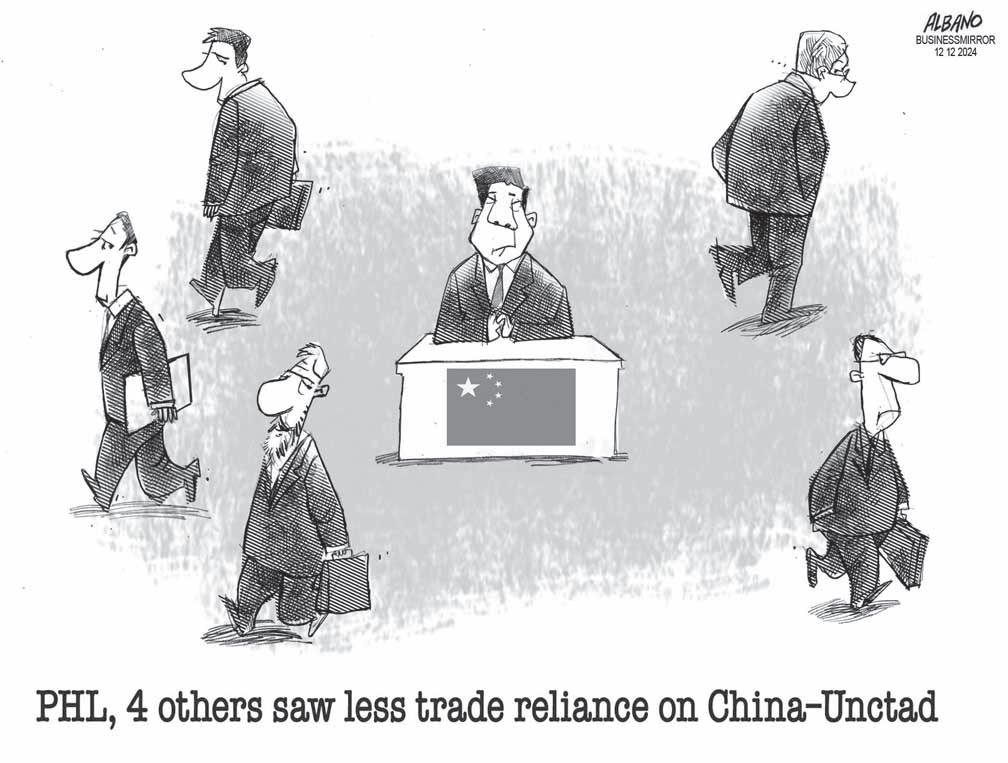
THE policies of the incoming Trump administration, particularly those on trade, will likely impact China and developing countries in Asia like the Philippines beginning in 2027, according to the Asian Development Bank (ADB). Based on the December Asian Development Outlook (ADO), ADB said Trump’s policies could impact China’s economy the most, causing it to slow by 1.2 percentage points over 2025–2028 or 0.3 percentage points per year. is will likely lead to a 0.6 percentage point decline in the
growth of developing countries in Asia like the Philippines. Growth in the Euro area and Japan are also expected to decline but at a slower pace of 0.4 and 0.5 percentage points, respectively.
“Due to the lagged nature of the underlying policy changes, the growth impacts are not immediate, with most economies impacted
mainly from 2027 onwards,” ADB said. e growth of the US economy will also see a decline of 0.7 percentage points, the second largest decline after China, due to Trump policies. But the impact in the US will come earlier compared to the
OOR nutrition and inefficient local governance in general could jeopardize the future Philippine workforce and economic growth, according to the World Bank.
In a special chapter of the Philippine Economic Update (PEU), the World Bank said human capital investment (HCI) is crucial in attaining sustainable economic growth.
However, the Philippines’ HC score remains at 0.52, significantly lower than peers with similar economic status. e World Bank noted that Vietnam’s HCI is at 0.69 while Malaysia and ailand are at 0.61.
“Human capital is a key driver of sustainable economic progress. Investments in human capital lead to higher productivity, incomes, and living standards," the World Bank said.
“ e Philippines’ low HCI warns of the constraints to productivity of the next generation of workers given the prevailing rates of mortality, schooling achievements, and health outcomes,” the report also stated.
e low HCI made the country among the top 10 economies with the highest number of
stunted children worldwide. e data showed 27 of five year olds are stunted.
e report stated that in 2021, about one in four children under the age of five was stunted, or small in size for one’s age; and one in five children was considered underweight and 6 percent were classified as “wasted.” In terms of education, while students in the Philippines spent an average of 12.95 years in school, similar to Vietnam’s 12.86 years, the Filipino students did not learn a lot. e PEU said the average years of learning absorbed by students in Vietnam was 10.68 years while those in the Philippines only logged 7.49 years old learning.
“Worldwide, the share of human capital in total wealth increases steadily with the level of development; high-income countries have more human capital than their lower-income counterparts. Development, then, is intimately linked to building human capita,” the report stated.
e World Bank said more needs to be done in terms of HCI at the sub-national level. is is because 26 percentage points in
Meanwhile, the organization cited a public survey conducted earlier this year by Japan-based GMO Research which found that 83 percent of Filipino consumers believe eggs sourced by restaurants, supermarkets, packaged foods companies, and similar should come only from hens living in cage-free environments.
It also noted that as of 2023, a public scorecard released by the organization found that over 75 percent of the country’s leading hotel groups had set a timeline to use only cage-free eggs, adding that “the country’s restaurant sector is now catching up with this growing sustainability trend.”
“As consumers increasingly prioritize responsible sourcing and sustainable practices, adopting cage-free eggs represents a pivotal step forward for businesses,” Del Rosario said.
“We are encouraged by the commitment demonstrated by these leading restaurant brands and remain optimistic that the remaining brands will soon align with this industry-wide shift toward more humane practices,” she added.
PhilHealth will not get any NG subsidy in 2025 budget
STATE-RUN
Philippine Health Insurance Corporation (PhilHealth) will not be receiving any subsidies from the national government next year.
Senate Committee on Finance Chairperson and Senator Grace Poe told reporters that the government allocated zero budgetary support to the health insurer and redirected the funding to sectors needing it most.
Sa ngayon, ang PhilHealth ay hindi nabigyan ng budget sapagkat kailangan nilang gamitin muna ’yung kanilang reserve funds [As of now, PhilHealth has not been given any budget be-
the OVP’s travel funds were not reduced further. e reallocated funds were directed to agencies like the Department of Health (DOH) and the Department of Social Welfare and Development (DSWD), which manage proven programs such as AICS (Assistance to Individuals in Crisis Situations) and MAIFIP (Medical Assistance for Indigent Filipino Patients),” said Co. Co questioned the redundancy
of the OVP’s initiatives, such as fi nancial and burial assistance. “ ese overlap with national agencies’ programs. It is not practical for the OVP to operate separate social services,” he argued.
Contentious PhilHealth budget
THE Philippine Health Insurance Corporation (PhilHealth) will not receive government subsidies for 2025, as confi rmed by Poe during the closure of the bicameral conference committee meeting on the proposed 2025 national budget. Under the 2025 budget, a subsidy of P74 billion was initially allocated for PhilHealth. However,
cause they need to use up their reserve funds],” Poe said. The senator explained that PhilHealth has about P600 billion in reserve funds while health facilities raised concerns over delays in claims reimbursements.
Kung nakikita naman natin na ganong karami ’yung pera nila, kailangan gamitin nila ’yun dahil nasasayang lang [If we see that they have that much money, they need to use it be-
this allocation was removed in the bicameral panel-approved version of the budget bill. According to Poe, PhilHealth’s budget was one of the contentious issues during the bicameral deliberations.
She explained that the state health insurer currently has a reserve fund of P600 billion, which it should utilize instead of relying on additional government subsidies.
Poe emphasized that PhilHealth must utilize its reserve funds before seeking additional subsidies, citing inefficiencies in processing reimbursements that have caused public frustration.
cause it’s just wasted],” Poe said. Under the 2025 National Expenditure Program (NEP), P53.134 billion was appropriated as a subsidy for PhilHealth, which shall be used for the health insurance premiums of indirect contributors.
A group, led by Senator Aquilino Pimentel III and former Finance Undersecretary Cielo Mango, called on the members of the Bicameral Conference Committee to restore PhilHealth’s budget of P150.92 billion to cover the premiums of 25.28 million indirect contributors.
“Reducing the PhilHealth budget allocation meant for the premium of the indirect contributors destroys the whole nature of PhilHealth as a social health insurance,” the group said.
“It harms the whole membership; not only does this degrade the membership of indirect contributors, but it also makes the direct contributors, the majority of whom are from the
e senator clarified that PhilHealth would still receive operational funds, ensuring the state health insurer can continue its operations despite the removal of the government subsidy.
Soldiers’ allowance
IN line with President Ferdinand “Bongbong” Marcos Jr.’s directive, Romualdez said the bicameral panel approved an increase in soldiers’ daily subsistence allowance from P150 to P350, amounting to P10,500 per month.
Romualdez described the adjustment as a recognition of the sacrifices made by the Armed Forces of the Philippines (AFP) and their families.
House Appropriations Chairman Co said that the increase in soldiers’ subsistence allowance will be funded by a P16 billion allocation in next year’s national budget.
Co said other revised items in the budget include allocations for critical infrastructure, such as dams and solar-powered fertigation systems, to bolster food security. It also funds the construction and modernization of healthcare facilities, including the Philippine Cancer Center, the MEGA Hemodialysis Center at the National Kidney and Transplant Institute, the Women and Children’s Medical Center, the Philippine General Hospital, the Philippine Heart Center, and regional specialty hospitals.
Funds were also allocated to the Solar Home Systems (SHS) program, designed to bring affordable electricity to remote areas.
“ e SHS program supports our
working class, bear a much heavier burden of providing the nancial risk protection of all,” they added. They are the same group that led a petition with the Supreme Court seeking to stop the national government from diverting to the Treasury some P90 billion in PhilHealth excess funds, for use for unprogrammed appropriations. Debunking the lawmakers’ view that PhilHealth has hundreds of billions in excess funds, the group said the health insurer’s nancial statement showed it does not have enough nancial assets to fund future liabilities.
The group said PhilHealth’s liabilities amounting to P1.252 trillion far exceed its excess funds at P488 billion, citing PhilHealth’s March 2024 nancial statements.
“In the future, PhilHealth may not have the funds to pay for the medical needs of its mem-
goal of achieving 100 percent electrification by 2028,” Co said.
He explained that for as little as P8 per day, households could access electricity sufficient for four lightbulbs, a transistor radio, a cell phone charger, a DC fan, and a DC TV. Co assured the public that these budget adjustments manifest the government’s commitment to maximize the impact of every peso. “Each peso in the budget must go to projects that genuinely help our people,” he stressed.
Meanwhile, key focus areas in the 2025 budget include human and social development, job creation, and improving the country’s infrastructure and governance.
e government has set key economic assumptions for the formulation of the 2025 national budget, emphasizing targets that will promote fi scal sustainability and economic stability.
One of the primary drivers behind the 2025 budget formulation is the projected gross domestic product (GDP) growth rate, which is targeted to range between 6.5 percent and 7.5 percent.
e government also expects infl ation to remain manageable, projecting a rate between 2.0 percent and 4.0 percent in 2025.
e total budget is P6.352 trillion, or 22.1 percent of GDP, with P4.247 trillion for new appropriations and P2.105 trillion for automatic appropriations.
After both chambers ratify the bicameral budget version, the 2025 national budget will be submitted to President Marcos for fi nal approval, with a projected beforeChristmas signing timeline.
of the HCI, the disparities are starker among provinces and HUCs in terms of health, especially for stunting and under-five mortality rates than for education outcomes,” the World Bank said.
human capital potential could be lost due to local government unitspecific factors such as governance and service delivery inefficiencies. e data showed sub-national HCI calculations revealed “significant disparities” among provinces and Highly Urbanized Cities (HUCs), with HCI score estimates ranging from 0.48 to 0.74 nationwide.
e World Bank said the lowest performing provinces in terms of HCI are in the regions of Bicol, Central Luzon, Davao, Soccsksargen, and Zamboanga Peninsula. In terms of HUCs, there are relatively higher HCIs but these vary by city.
e report said HUCs with the lowest HCI were in the Zamboanga Peninsula and Soccsksargen in Mindanao, while the city with the highest HCI is in the National Capital Region.
Overall, the World Bank said 16 HUCs out of 33 located in 11 regions have HCIs lower than the median of 60 percent for all HUCs.
e World Bank said due to subnational inefficiencies, stunting rates varied from as high as 43.7 percent to as low as 8.4 percent.
“Looking at the subcomponents
rest of the world.
“Growth dynamics in the US diverge from this trend, as the largest impact materializes in 2026 following the implementation of policy measures,” ADB said.
“Moreover, the threat of higher infl ation leads to a deceleration of monetary easing and higher interest rates in the US compared to the baseline from 2026 onwards,” it added.
Growth forecast kept MEANWHILE , ADB has maintained its growth forecast for the Philippine economy at 6 percent in 2024 and 6.2 percent next year. For infl ation, ADB said this will average 3.3 percent this year, lower than the initial estimate of 3.6 percent, and 3.2 percent next year. In terms of growth, ADB said the slowdown in infl ation as well as the easing of monetary policy rates are expected to boost economic growth. Supply side factors that will buoy economic growth are services sector, construction, and manufacturing.
ADB noted that the country’s manufacturing Purchasing Manager’s Index (PMI) score remained above the 50 threshold at 53.8 in November. is was the highest in over two years and, ADB said, could be credited with the increase in employment.
“Services will continue to be the dominant growth driver, with retail trade, tourism, and information technology–business process outsourcing as major contributors,” ADB, however, said. In terms of infl ation, ADB said the reduction in rice tariffs in June 2024 helped contain infl ation. e Manila-based multilateral development bank noted food infl ation was 3.5 percent in November to average 4.6 percent in the 11-month period. Further, core infl ation was deemed moderate since it averaged only 3 percent in the January to November period.
“Based on analysis of budget data and qualitative case studies, governance and service delivery inefficiencies stood out as key drivers of the discrepancy,” the report also said.
In a statement, the World Bank said investing in human capital is just as crucial for the Philippines to sustain its growth and seize the opportunity for a ‘demographic dividend,’ which will only last for the next 20–25 years.
e Philippines, the Washington-based lender said, stood out as one of the few East Asian nations that can potentially achieve prosperity before its population ages significantly.
e ‘demographic dividend’ refers to the economic growth potential that arises when the labor force is growing more rapidly than the population dependent upon it.
To realize that potential, countries must implement policies that invest in human capital (i.e., education, health, nutrition, and skills) and enable employment of the growing workforce in good-paying jobs.
“Infl ation is expected to remain within the central bank’s 2 percent to 4 percent target, providing scope for further monetary policy easing. Policy rates were cut by a total of 50 basis points in August and October 2024,” ADB said. In a report at the House of Representatives this week, the National Economic and Development Authority (Neda) said rice infl ation fell to 9.6 percent in October 2024 from 22.5 percent in June 2024. e latest data from the Philippine Statistics Authority (PSA) showed rice infl ation was only at 5.1 percent in November 2024. However, Neda said rice infl ation remained the top driver of headline infl ation and contributed 0.9 percentage points to overall infl ation in September 2024. e Neda reported that while the lower rice tariffs reduced the landed cost of imports of the staple, this also caused a double-digit decline in farm-gate prices. (See: www. businessmirror.com.ph/2024/12/10/ neda-lower-rice-tariffs-led-to-declinein-farm-gate-price/) e country’s policy and planning agency said in its report that it is possible that a lack of competition in the rice market may have prevented a greater reduction in retail prices compared to farm-gate prices.
tion cost by as much as P4 per kilo of well-milled rice in the markets by the second quarter of 2025. Boosting local production and increasing government support, including added subsidies and incentives to rice farmers and local millers, is the “best way” to reduce rice prices and never through tariff reduction, Sinag added. e Philippines imports a total of 4.5 million metric tons of rice annually. is consists of 3.8 million MT of imported rice and a buffer stock of 10 percent.
A4 Thursday, December 12, 2024
Senate bill eases gun ownership, mandates 3-year amnesty period
TBy Butch Fernandez @butchfBM
HE Senate has started deliberations on a bill to further refine and strengthen Republic Act 10591, an 11-year-old law which regulates firearms ownership in the country.
Committee Report 424 on the measure, Senate Bill 2895, was sponsored on the floor by Sen. Ronald dela Rosa, a former National Police chief.
In endorsing his panel’s report on the floor, dela Rosa recalled how in 2013, “our legislators made history when they successfully passed Republic Act 10591.”
“Our country has benefited from this law since then, especially in ensuring that only those who are qualified are allowed to own, possess and carry firearms,” the dela Rosa said.
He, however, reminded that like most laws, “there is need to update,” citing Republic Act 10591, “not just to keep pace with new developments but also to ”make it equitable and inclusive.”
He stressed that “unlike in America where the right to bear arms is enshrined in the Constitution, Philippine laws only treat gun ownership as a privilege granted to a few.
“We do not oblige everyone to pick up a firearm as their weapon of choice in protecting themselves. However we must not also be too prohibitive to those who do. We
allow the privilege of ownership of firearms but we do not promote its unwarranted use—that is why we regulate,” dela Rosa explained in his report.
“ Bilang dating Chief, PNP, batid ko ang dami at bigat ng trabahong nakaatas bilang pinuno ng ating kapulisan Nariyan pa ang dami ng mga papeles na dapat pirmahan sa araw-araw. Things that probably our then lawmakers were not able to foresee 11 years ago,” he added.
The Committee on Public Order and Dangerous Drugs that he heads, proposed amendments to address all current issues and concerns in the implementation of RA 10591. This will further advocate responsible gun ownership and ensure the government’s right to regulate the same.
“First, in line with the direction of providing efficient government service, we want to reduce the red tape in the issuance of licenses and permits, The proposed measure authorizes the Chief, PNP to designate a representative to issue a Permit to Carry Firearms Outside Residence or PTCFOR. Meantime, the authority to issue and renew licenses to manufacture and to deal, are likewise given to the Chief, PNP or his duly authorized representative.
“Second, one of the disqualifications for obtaining a license to own and possess a firearm is that the applicant must not be an accused in a pending criminal case before any court of law. The only condition for this disqualification
is that this pending criminal case must be for a crime that is punishable with a penalty of more than two years.”
Noting that the Constitution itself provides that in all criminal proceedings, an accused shall be presumed innocent until the contrary is proved, dela Rosa said the notion of disqualifying all individuals who have been accused of a criminal case “automatically deprives them of the right to be presumed innocent,” Pursuant to this Constitutionally-guaranteed right, the Committee limited the disqualification. Only those applicants with a pending case involving the use of firearms, ammunition and major parts thereof, or when they are otherwise ordered disqualified by a court of competent jurisdiction,” he said.
Third, the dela Rosa committee added individuals or professionals who are exempted from the requirement of a threat assessment certificate. “We acknowledge the threats which as they say “comes along with the nature of their job” who are similarly situated with those already exempted from the requirement. As such, we are proposing to include allied medical professionals and chief security officers of financial and commercial institutions.”
The Committee also included reservists whose mission is to provide the base for expansion of the Armed Forces, an amendment made by Senator Miguel Zubiri,
a reservist. “With this, we can ensure that our citizen soldiers are ready to respond at any given time to the ongoing threat to our country’s territorial waters and sovereignty.”
Fourth, the validity of licenses to manufacture and deal is fixed to a period of ten years. This is in support of the newly passed law, Republic Act No. 12024, otherwise known as the Self-Reliant Defense Posture Act. Wala pong higit na maaasahan natin sa pagtatanggol ng ating bansa mula sa mga dayuhan kundi ang ating mga sarili
Fifth, citing the pride that Philippine sports shooters have brought to the country in several competitions here and abroad, the committee is seeking the prior exemption from the Commission on Elections authority to transport during the election period. This exemption will only be limited whenever they will be competing abroad during the election gun ban. It will be subject of course to safeguards such as being accompanied by a police escort to or from the port or airport of arrival or departure.
Finally, in accordance with the objective of RA 10591 of the proliferation of illegal firearms or weapons, the firearms amnesty is being extended to three years. With the extension, “individuals who have yet to register their firearms or renew their license will take advantage of this leeway without fear of being penalized.”
Sara no show at NBI probe anew
By Joel R. San Juan
V@jrsanjuan1573
ICE President Sara Duterte on Wednesday did not show up anew before the National Bureau of Investigation (NBI) to air her side on its ongoing investigation into the supposed threat she issued against President Marcos, First Liza Araneta-Marcos and Speaker Martin Romualdez.
At a press briefing, NBI Director Jaime Santiago said Duterte’s failure to appear before the agency for investigation can be considered as a waiver of her right to answer the possible charges of grave threats and and violation of Republic Act 11479 or the Antiterrorism Act of 2020 that may
be filed against her. Santiago, however, acknowledged the courtesy shown by the Vice President to the NBI by submitting a letter through her lawyers led by Paul Lim, wherein she denied having made any threat that would constitute grave threats and violation of the anti-terrorism law.
In the letter, Duterte’s lawyers indicated the lack of impartiality of the NBI as an investigating body considering that its investigation stemmed from the statement made by Executive Secretary Lucas Bersamin referring to the Presidential Security Command the supposed active threat on the President as well as upon the directive of the Secretary of Justice.
“With respect, we must state the
obvious that the Honorable Secretary of Justice is this office’s administrative superior, head of agency and the President’s chief alter-ego. Given these facts, you will kindly understand our client’s prudence in her cooperation with your office, and her desistance from appearing at and giving any statement on 11 December 2024,” the letter read.
The letter was signed by Duterte’s lawyers with bears the VP’s conformity signature.
The letter also said the Vice President “vehemently denies having made any threat constituting grave threat under Article 282 of the Revised Penal Code in relation to Section 6, RA 10175 (Cybercrime Prevention Act), terrorism or any other punishable act under RA
11479, or any other crime.
In addition, Duterte’s camp also expressed confidence that the NBI will fulfill its assurance to also investigate the supposed threats to the Vice President.
“We are also confident that given your letter’s assurance that the threats to our clients are also being investigated, the same attention and vigor are being devoted thereto, notwithstanding the absence of any directive from your superiors,” the letter read.
Duterte’s lawyers pointed out that the threat to the Vice President were publicly disclosed almost six months ago.
Santiago said without a sworn
See “NBI,” A5
House leaders file two bills regulating confi, intel funds
By Jovee Marie N. dela Cruz @joveemarie
LNavy patrols in WPS
ongoing despite Chinese illegal activities
By Rex Anthony Naval
DESPITE China’s illegal activities at the West Philippine Sea (WPS), a senior Navy (PN) official said the service will continue patrols in line with it mandate to protect the country’s maritime interests.
“We have always been there conducting patrols... performing our mandate. Just because the other side is instigating via ‘grey zone’ [acts] which are actually illegal, coercive and deceptive actions, means that we have to adjust or react everytime,” the Navy spokesman for the WPS, Rear Adm. Roy Vincent Trinidad, said in a radio inerview on Wednesday.
Trinidad was referring to increasing incidents of Chinese harassment against Filipino vessels in the WPS.
Also, patrol operations in the WPS have always been done regularly by naval and air units under the Armed Forces’ Western Command and the Northern Luzon Command, he added.
These patrols, Trinidad stressed, showcased the Philippine presence in the WPS.
Aside from military force, the PN official also maintained that diplomacy, political, informational, economic means may be used to defend the country’s territorial integrity.
Trinidad also maintained that the Armed Forces, of which the PN is part of, is now shifting to external defense from internal security.
“This was amplified by the statement of the Secretary of [National] Defense [Gilberto Teodoro Jr.] that we will be instituting a Comprehensive Archipelagic Defense Concept,” he added.
US, Japan, Philippines hold trilateral maritime dialogue
THE United States, Japan and the Philippines held their first trilateral maritime dialogue in Tokyo on Monday to further strengthen cooperation among three countries which are facing threats from Chinese aggression in the East China and South China seas.
During the three-hour meeting, diplomatic and maritime officials of the three countries discussed China’s continuing harassment on Philippine vessels in the South China Sea.
“They expressed serious concerns about the People’s Republic of China’s dangerous and unlawful behavior in the South China Sea— including the repeated blocking and harassment of Philippine
EADERS of the House of Representatives on Wednesday filed two measures that regulate the allocation and use of confidential and intelligence funds (CIFs) and impose penalties for their misuse, and oversee government special disbursing officers (SDOs) and penalize fund misappropriation.
Authored by 38 members of the Committee on Good Government and Public Accountability, House Bills 11192 and 11193 stem from investigations into the alleged misuse of P612.5 million in CIFs by the Office of Vice President Sara Duterte and the Department of Education during her tenure as education secretary.
Under the bill, stringent guidelines to address irregularities uncovered during the inquiry will include allocating CIFs to
agencies without public safety or national security roles, issuing funds for activities outside agency mandates, issuing rewards to unverifiable individuals, purchasing intelligence with no demonstrable utility, and failing to execute agreements.
The committee emphasized the inadequacies of Joint Circular 2015-01, which they described as lenient in requiring liquidation of CIF advances compared to regular funds.
The authors said the P112.5 million in CIFs released to the DepEd under the leadership of Vice President Sara Duterte “were used to augment its operations and not for national security,” contrary to the purpose of the funds.
“It is high time that stricter requirements and guidelines be issued in the utilization of confidential funds for confidential expenses. While the necessity of confidential funds for national
security is recognized, it must be balanced with the duty of the government to safeguard utilization of public funds and introduce much-needed statutory changes,” the bill’s explanatory note said.
The proposed Confidential and Intelligence Funds Utilization and Accountability Act limits CIF allocations to agencies with national security, peace, and intelligencerelated mandates. It caps CIFs at 10 percent of an agency’s annual budget, unless otherwise specified by law, and prohibits their use for non-security purposes such as public relations or political activities.
The bill requires agencies to submit CIF reports to the Commission on Audit (COA) and makes fund allocations publicly accessible without compromising national security. Notably, funds lose confidentiality once a notice of disallowance is issued, making them open to public scrutiny.
The COA is also tasked with conducting thorough audits to verify proper use of CIFs and investigate suspected misuse. Civil society groups may monitor CIFs while respecting operational confidentiality.
Violations include failing to comply with documentary requirements, disbursing funds to unauthorized entities, and using CIFs for purposes unrelated to national security or peacekeeping. Guilty oficials face perpetual disqualification from public office, loss of benefits, and liability for fund misuse.
SDOs IN addition, lawmakers filed HB 11193, which seeks to regulate government special disbursing officers (SDOs) and impose strict penalties for the misuse of funds under their control.
IN a public hearing of the Senate Committee on Justice and Human Rights held on Tuesday, December 10, Sen. Christopher Go reiterated his advocacy for strengthening the fiscal autonomy of the Judiciary, emphasizing its importance in upholding judicial independence and ensuring the efficient delivery of justice.
As one of the authors of the measures, Go shared his insights on the critical reforms under discussion.
“The Judicial branch of the government performs several undertakings that are vital in guaranteeing that the rule of law is appropriately upheld and that justice is duly served in the legal system,” Go said, highlighting the necessity of freeing the judiciary from fiscal constraints.
The discussion focused on Senate Bills 1996, 2111, and 2659, which collectively aim to grant the Judicial Branch greater control over its budget.
A member of the Senate Committee on Justice, Go’s version of the legislation, SBN 2111, seeks to ensure that the budget prepared by the Supreme Court is incorporated into the national budget without revisions. However, the Department of Budget and Management (DBM) may propose adjustments, but only after
vessels from operating within the Philippines’ exclusive economic zone — behavior that threatens the freedoms of navigation and overflight of all nations,” the US State Department spokesman said in a readout statement.
The participants have reaffirmed their commitment to the upholding of the international, including the 1982 United Nations Convention on the Law of the Sea.
The meeting came eight months after US President Joseph Biden, then Japanese Prime Minister Fumio Kishida and Philippine President Marcos met at the White House in Washington DC.
“Japan and the US expressed their support for the Philippines’ consistent efforts toward a peaceful settlement of disputes in the South China Sea and reiterated their strong expectation that the parties to the disputes would comply with the Arbitral Tribunal’s award as to the disputes between the Republic of the Philippines and the People’s Republic of China regarding the South China Sea, thereby leading to peaceful settlement of disputes,” the Japanese Foreign Ministry said in a separate statement.
The Philippines has separate bilateral cooperation arrangements with the US and Japan on promoting maritime awaraness.
Japanese MFA said all the parties have agreed to continue with these bilateral “practical cooperation” and enhance the trilateral cooperation sphere next year.
The Philippines will host the next trilateral maritime dialogue next year.
The Japanese delegation is led by Nakamura Ryo, directorgeneral of southeast and southwest Asian Affairs Department of the Japan’s MFA. The US delegation is headed by Mira RappHooper, special assistant to the President and National Security Council Senior Director of the United States.
Philippine Foreign Affairs Undersecretary Ma. Theresa Lazaro led the Philippine delegation which also includes representatives from the National Security Council, Department of National Defense and Coast Guard.
Meanwhile, Japan and the Philippines held a separate bilateral meeting on the sidelines of the trilateral maritime dialogue. The officials of both countries agreed to strengthen bilateral cooperation on wide range of areas including security. With Malou Talosig-Bartolome
written consultations with the Supreme Court or the Chief Justice.
“Currently, the budget of the judiciary is still subject to the regular budgeting process, which goes through the Department of Budget and Management for budget preparation and releasing,” Go explained.
This bill mandates that the budget proposal prepared by the Supreme Court shall be incorporated in the draft national budget without any revisions. Go added the importance of automatic budget releases. “The DBM is also mandated to automatically release to the Supreme Court, without need for any request, the monthly cash requirements of the judiciary,” he noted.
Acknowledging the challenges faced by the judiciary, Go expressed confidence in the bill’s potential to fortify judicial independence.
“It is important to note that the fiscal autonomy of the Judicial Branch is closely tied to its independence and ability to function effectively,” he said.
Go also expressed his gratitude to the chairman of the committee, Sen. Aquilino Pimentel III and Sen. Miguel Zubiri, who also authored the measure.
Editor: Nonnie Pelayo
DOTr cites need for green recovery initiatives
By Lorenz S. Marasigan @lorenzmarasigan
THE Department of Trans -
portation (DOTr) said on Wednesday it is committed to promote sustainable urban mobility, citing the need for green recovery initiatives in the transport sector to address climate change and reduce carbon emissions.
“As a nation that is most susceptible to the effects of climate change, growing pollution, and loss of nature and biodiversity, the Philippine transport sector reaffirms its determination to cooperate for the implementation of transformational changes within our country, as well as among the countries in the region,” Transportation Undersecretary Timothy John Batan said. Highlighting the Philippines’ position as one of the most vulnerable countries to climate change, Batan emphasized the critical role of sustainable transportation in mitigating environmental impacts while driving regional climate ambition.
He said the agency has “various completed and ongoing transport
NBI.
. .
Continued from A4
affidavit submitted by the Vice President, the NBI panel of investigators would have to evaluate and come up with a recommendation to the DOJ on whether pursue criminal charges against her based on available material evidence gathered as well as the testimonies of the members of the media who attended her late night press conference last November 29 where she disclosed that she has already tapped someone to kill the First Couple and Romualdez.
However, Santiago said the NBI will still accept Duterte’s affidavit in case she decides to do so as part of due process and courtesy being extended to her as second highest official of the country.
Santiago said the bureau would submit its recommendation to the DOJ early January
The proposed Special Disbursing Officers Accountability Act introduces clear standards
projects that contribute to the collective effort of having sustainable urban mobility solutions.”
These include large-scale infrastructure projects such as the 147-kilometer North-South Commuter Railway (NSCR), the Metro Manila Subway Project, the Light Rail Transit (LRT) Line 1 Cavite Extension Project, and the Metro Rail Transit (MRT) Line 7.
Batan also cited the implementation of road sector initiatives such as the Public Transport Modernization Program (PTMP), the Edsa Greenways Project, the Edsa Busway, the Cebu Bus Rapid Transit, the Davao Public Transport Modernization Project, and the Taguig City Integrated Terminal Exchange (TITX).
In addition, Batan said the DOTr has prioritized the development and maintenance of airport and seaport projects that align with international social and environmental safeguards.
“The transport sector is seen to play a critical role in sustainable development and holds great potential to further increase the region’s climate ambition,” Batan said.
of next year with our without Duterte’s affidavit.
“So we will proceed. Remember we have the clippings of the video of the press conference…and then we subpoenaed several people and taken their statements, we interviewed them. So all these things will be evaluated now by the panel of investigators ,” Santiago said.
“Expect our recommendation, our report to the DOJ by early January,” Santiago added
When asked to comment on the insinuation made by the Duterte’s camp that the NBI’s investigation would not be impartial, Santiago stressed that the NBI is only mandated under Republic Act 10867 to step in whenever there is a threat to the President, Vice President and the Chief Justice.
“I have been explaining to you and to the Vice President that the investigation will be impartial,” the NBI chief stressed.
to regulate the appointment, responsibilities, and accountability of SDOs. Under the bill, SDOs must be permanent employees with a minimum salary grade of 24 and have relevant educational backgrounds in accounting, auditing, or finance. They must
Office vacancies unchanged at 18% as contraction persists
By Bless Aubrey Ogerio
THE country’s overall office vacancy rate remained at 18 percent this year, primarily due to the Philippine Offshore Gaming Operators (Pogo) ban, according to a real estate services company.
This mirrors last year’s figure, showing the persistent challenges in the property market rather than a recovery, as indicated by the Leechiu Property Consultants (LPC) data.
“There’s been a lot of challenges this year… whether it’s inflation, interest rates, the Pogo ban that happened in July-August. The US election continues to be a waitand-see mode,” Leechiu’s commercial leasing director Mikko Barranda said during a property market report presentation on Tuesday.
The total vacated office spaces grew by 65 percent this year, rising to 690,000 square meters (sqm) from 418,000 sqm in 2023.
The Pogo exit accounted for a big portion of this increase,
with it vacating 274,000 sqm of office space. Of this, 82 percent (224,000 sqm) was due to terminated leases, while 18 percent (50,000 sqm) resulted from lease cancellations.
The Information TechnologyBusiness Process Management (ITBPM) sector also contributed to decreases, with a total of 200,000 sqm vacated. This was mainly attributed to relocations (92,000 sqm, 46 percent) and downsizing (64,000 sqm, 32 percent), while 22 percent (44,000 sqm) stemmed from consolidation activities.
Traditional office spaces saw 216,000 sqm of vacancies because of relocations, which accounted for 79 percent (171,000 sqm). Downsizing contributed 13 percent (27,000 sqm), while consolidation made up 8 percent (18,000 sqm).
In terms of geographic distribution, the Bay Area and Taguig reported the highest vacancy rates at 23 percent each. The former’s high rate was primarily driven by the Pogo shutdown, while newly completed buildings contributed to the latter’s vacancies.
Specifically, the Bay Area’s 453,000 sqm vacant space represents 23 percent of its two million sqm inventory, while Taguig’s 168,000 sqm vacancy constitutes 23 percent of its 700,000 sqm total.
Key business districts such as Makati and Bonifacio Global City (BGC) experienced slight increases in vacancy rates, reaching 13 percent (478,000 sqm out of 3.8 million sqm) and 11 percent (259,000 sqm out of 2.3 million sqm), respectively.
Other districts, including Ortigas-Mandaluyong (615,000 sqm out of 3.2 million sqm, 19 percent), Quezon City (429,000 sqm out of 1.9 million sqm, 22 percent), and Alabang (207,000 sqm out of 900,000 sqm, 22 percent), showed stable vacancy levels with new supply being absorbed.
Nationwide, the total office vacancy stood at 3.3 million sqm, equivalent to 18 percent of the total supply.
Market balance STILL, the LPC reported that demand has grown by 4 percent
year-to-date, reaching 1.1 million sqm compared to 1.07 million sqm last year.
Traditional offices led the demand at 492,000 sqm, followed by IT-BPM companies at 422,000 sqm, government offices at 122,000 sqm—marking a sixfold increase from the previous year—and Pogos at 76,000 sqm.
Looking ahead, the real estate company forecast that vacancy rates will drop to 7 percent within the next six years, approaching pre-pandemic levels. It also predicted a 5 percent annual increase in demand, with a 45 percent ratio of contractions to new demand annually. Additionally, supply and demand trends will converge toward a more balanced market equilibrium by 2027.
“In 2025, we believe that given all these contractions, we will need time to be able to fill this up. So vacancy levels next year will continue to flutter at the same level, and we will see that really take a turn in 2027,” Barranda said.
Groups seek stop to reclamation, dredging projects at Manila Bay
By Joel R. San Juan @jrsanjuan1573 & Jonathan L. Mayuga @jonlmayuga
AFISHERMEN’s group and an environmental advocacy network on Wednesday filed Petitions for Writ of Kalikasan and Continuing Mandamus against various reclamation and seabed quarrying projects at Manila Bay.
The petitions were filed by the Pambansang Lakas ng Kilusang Mamamalakaya ng Pilipinas (Pamalakaya) and environmental group Kalikasan People’s Network for the Environment at the Supreme Court.
The respondents in the petition are the Department of Environment and Natural Resources (DENR) and the Philippine Reclamation Authority (PRA)—the government
also secure fidelity bonds equal to their cash accountability.
Also, it said SDOs are strictly prohibited from delegating fund disbursements and are responsible for ensuring proper liquidation and compliance with intended fund purposes.
agencies responsible for the approval and processing of reclamation and seabed quarrying projects.
Assisted by their lawyers from the Community Legal Help and Public Interest Center (C-Help), Panalakaya and Kalikasan brought to the Court’s attention the distress that coastal communities have been experiencing amid the cumulative and long-term effects of dredging and reclamation activities aat Manila Bay.
The petitioners told the court that between 2019 and 2023 the Philippine Reclamation Authority (PRA) approved 13 of 25 applications for reclamation within Manila Bay, and the Department of Environment and Natural Resources (DENR) issued environmental compliance certificates (ECC) and area clearances (AC) for the said reclamation projects, as well as at least ten seabed quarry permits for
For CIFs, the SDOs must certify that disbursements align with the agency’s mandate related to national security, peace and order, or intelligence gathering.
The bill identifies several violations as prima facie evidence of misappropriation.
utilization of marine sediment in Manila Bay as construction materials for some of the approved reclamation projects.
During the said period, the petitioners claim that Executive Order 74 was in effect or when a holistic approach, cumulative impacts assessment, and reclamation development plans are required before the issuance of ECC, AC and Notice to Proceed (NTP) in reclamation applications.
The PRA and DENR, according to Pamalakaya and Kalikasan-PNE approved the reclamation and dredging projects despite their joint, cumulative, long-term, irreparable and irreversible adverse impacts to the environment, to the livelihood of 300,000 fishermen, and to the entire country in terms of food security and patrimony; and, despite non-compliance with the requirements and provisions of environmental laws and regulations.
“Nagpasyanaangmgamangingisdaat makakalikasan na itaas sa Korte Suprema ang aming hinaing laban sa mga mapaminsalang reklamasyon at dredging sa Manila Bay,” Ronnel Arambulo, Pamalakaya vice chairman said in a statement. For its part, Kalikasan People’s Network for the Environment said that the “DENR’s belated [and still ongoing] cumulative impacts assessment neither cured the legal infirmity of NTPs, ECCs, and ACs issued during 2019-2023 nor addressed the damages caused and risks posed to the environment by these approved reclamation and seabed quarry activities for reclamation.”
The groups’ petition was filed as the DENR is set to release the result of its cumulative impact assessment of reclamation projects by the end of the year reclamation, dredging projects
Offenders, including SDOs and agency heads, will face perpetual disqualification from public office, loss of benefits, and possible criminal, civil, and administrative charges. The right of the state to recover misappropriated funds is protected from prescription or estoppel. The bill mandates agencies such as the Commission on Audit (COA), Department of Budget and Management (DBM), and others to revise their guidelines and issue new implementing rules.
7.
4.
3.
Brief
5. YANG, CHENGXU Project Coordinator
Brief Job Description: Plan, organize, and direct the activities of a construction project, under the direction of a general manager.
6. ZHANG, DEJUN Project Coordinator
Brief Job Description: Plan, organize, and direct the activities of a construction project, under the direction of a general manager.
Basic Qualification: Bachelor’s degree in business or related field of study. Competent in Microsoft applications including Word, Excel, and Outlook. Knowledge of file management, transcription, and other administrative procedures or a related field. With good communication and interpersonal skills.
Salary Range: Php 30,000 – Php 59,999
Basic Qualification: Bachelor’s degree in business or related field of study. Competent in Microsoft applications including Word, Excel, and Outlook. Knowledge of file management, transcription, and other administrative procedures or a related field. With good communication and interpersonal skills.
retrieval.
17. SU, PEI-CHIAN Administrative Assistant
Brief Job Description: Organize and maintain office filing systems (physical and digital) for easy access and retrieval.
18. WANG, YI-WEN Administrative Assistant
Brief Job Description: Organize and maintain office filing systems (physical and digital) for easy access and retrieval.
19. LI, SHUIMING Finance Manager
Brief Job Description: Provide detailed analysis of financial performance and recommend corrective actions where necessary.
20. WAN, JUN Finance Manager
Brief Job Description: Provide detailed analysis of financial performance and recommend corrective actions where necessary.
21. XU, XUNMING Finance Manager
Brief
22. ZHANG, BINGHONG Finance Manager
Brief
23. MA, GUICHUAN Finance Manager Assistant
Brief Job Description: Ensures accurate
BusinessMirror
57.
58. SHI, LIANHE
Brief
59.
60.
61. RAVI KUMAR Documentation Specialist
Brief
62. YANG, ENSHAN Documentation Specialist
Brief
63. DENG, XIAOMIN Product
Brief
64. HONG, BAOSHENG Product Specialist
Brief
65.
Brief
66. CHANG, YU-JEN Sales Account Manager
Brief
67. CHEN, GUILIAN Sales Account Manager
Brief
68. KUO, YI-HUANG Sales Account Manager
Brief Job Description: Generating new sales using existing and
69.
70. LIN, KUAN-CHI Sales Account Manager
71. NGUYEN HUYNH YEN NHI Sales Account Manager Brief Job
72. SHI,
BusinessMirror
delivery visibility in the business systems.
SHANGHAI SHENGKAI BUILDERS CO. LTD. CORPORATION Eastfield Center, D. Macapagal Blvd., Moa Complex, Barangay
112. SONG, LINGYAN Marketing And Sales Assistant
Brief Job Description: Developing and sustaining long-lasting relationship with customers.
113. TAN, KAN-WEN Marketing And Sales Assistant
Unit
Muntinlupa
Richville
114. JIANG, XIRUI Chinese Logistics Staff
Brief Job Description: Responsible for overseeing all aspects of supply chain management.
BAI detects H5N2 bird flu strain in duck farm
TBy Ada Pelonia @adapelonia
he Bureau of Animal Industry (BAI) announced on Wednesday the first detection of the h5N2 strain of avian influenza in the Philippines.
BAI said the highly pathogenic avian influenza (HPAI) type A subtype H5N2 was found in a duck farm in Talisay, Camarines Norte.
“This is the first detection of HPAI H5N2 in the country and the first recorded avian influenza case in the province.”
The attached agency of the Department of Agriculture (DA) said the Animal Disease Diagnosis and Reference Laboratory (ADDRL) reported the positive result on December 6, following routine surveillance conducted by the DA-Regional Field Office V in November.
It added that the remaining birds are being culled and disposed of to contain the infection, with the culling operations expected to have been completed by December 10 and the 1-km zone surveillance concluding on December 11.
“A thorough investigation is ongoing to trace the movement of birds and identify additional risks.”
BAI said DA RFO-5 has triggered its Command Center to oversee operations while a coordination meeting was held with the Regional Quick Response Team for Animal Disease and Emergencies (RQRT-ADE) to review protocols
Following confirmation, BAI said it promptly endorsed the results to DA-RFO 5 and ordered the immediate implementation of quarantine and biosecurity measures on the affected farm to stop the virus from spreading.
DA must hasten construction of postharvest facilities in eastern seaboard–lawmakers
By Jovee Marie N. Dela Cruz @joveemarie
THE House Committee on Aquaculture and Fisheries Resources has called on the Department of Agriculture (DA) to prioritize the development of modern postharvest facilities in the country’s eastern seaboard to mitigate the impact of declining catches in the West Philippine Sea (WPS).
Chaired by Representative Brian Raymund Yamsuan, the committee joined House Minority Leader and 4PS Partylist Rep. Marcelino Libanan in calling on the DA, through the Philippine Fisheries Development Authority (PFDA), to construct more fish ports and cold storage facilities in Samar, Leyte, and other Visayas provinces in the country’s eastern seaboard.
During a recent committee hearing, Yamsuan pressed the PFDA to advance the timeline for constructing a fishport in Oras, Eastern Samar, from its original 2028 schedule to 2025 or 2026.
Both Yamsuan and Libanan pointed said the 2028 schedule for constructing the Oras fishport highlighted the “apparent low priority” that the PFDA has given to the development of the fishing industry in the eastern seaboard.
“This is ironic considering that the eastern seaboard is alongside one of the most productive portions of our waters in terms of fisheries resources. The provinces along the eastern seaboard have more than 100 coastal municipalities dependent on fishing as their main source of livelihood and a coastline stretching more than 2,000 kilometers,” he said.
“Yet, we have learned during our recent hearing that the PFDA seems to have neglected this marine resources-rich area and have focused its attention and infrastructure buildup on the western seaboard, where we have seen increasingly aggressive actions from China.” Yamsuan said he would talk to DA Secretary Francisco Tiu Laurel Jr. about the possibility of moving up the scheduled construction of the Oras fishport as well as the other infrastructure development programs in the eastern seaboard.
The Philippine Statistics Au-
in line with the Avian Influenza Protection Program (AIPP). All disease control measures are being coordinated closely with the BAI.
“Rest assured that BAI is committed to protecting Philippines’ poultry industry from the threat of avian influenza and will maintain close cooperation with other government agencies and stakeholders,” it said.
“We encourage the public to remain vigilant and report any unusual poultry deaths or signs of illness to local authorities for immediate action.”
that two municipalities have active cases of bird flu in the country as of December 6.
The World Health Organization reported last June a confirmed fatal case of human infection with avian influenza A(H5N2) virus detected in a resident of Mexico.
“This is the first laboratoryconfirmed human case of infection with an influenza A(H5N2) virus reported globally and the first avian H5 virus infection in a person reported in Mexico,” it said.
ous events have not acquired the ability to sustain transmission between humans, thus the current likelihood of sustained human-tohuman spread is low.”
Ban on Dutch poultry
M E ANWHILE , the DA temporarily banned the entry of imported poultry sourced from the Netherlands due to a new bird flu outbreak that affected domestic birds.
Agriculture Secretary Francisco Tiu Laurel Jr. signed Memorandum Order (MO) 56, which slapped the temporary ban on domestic and wild birds including their products, such as poultry meat, day-old chicks, eggs, and semen from the European nation.
The DA decided to issue the ban after the Ministry of Agriculture, Nature, and Food Quality confirmed an additional HPAI H5 outbreak in Putten, Gelderland, Netherlands last November 17.
According to the MO, the Dutch agency submitted its official report on November 18.
“There is need to prevent the entry of HPAI virus to protect the health of the local poultry population,” it read.
sion of the issuance of sanitary and phytosanitary import clearance (SPSIC).
He also noted that only birds slaughtered or products processed on or before November 3, 2024, will be allowed to enter the country. The ban does not cover heattreated products. The order said heat-treated products are acceptable following a provision under the WOAH Terrestrial Animal Health Code of 2019.
This is provided, however, that aside from the Veterinary Health Certificate ( VHC), the competent authority will include in the certification the temperature and duration of heating or pasteurization of products and that there is no commingling of raw materials with any other materials of animal origin.
thority (PSA) has reported that for the first half of 2024, fish catch in the WPS went down by 6.78 percent to 101,039.54 metric tons (MT) from 108,392.48 MT for the same period in 2023.
Libanan said during the hearing that the PFDA can counter the declining fish catch in the WPS resulting from China’s incursions in the Philippines’ exclusive economic zone by giving equal priority to the establishment of fish ports, cold storage plants, and blast freezers in the eastern seaboard.
“According to the Bureau of Fisheries and Aquatic Resources, the country’s fish spoilage is at 25 to 40 percent. This is because of the fact that we lack modern facilities like fish ports with cold storage to reduce post-harvest losses. These are what we need in Eastern Samar and other provinces along the eastern seaboard, so that they can contribute more to our fisheries output.”
Owing to the lack of the appropriate facilities, Libanan said export-grade tuna from Eastern Samar is sent all the way to General Santos City to be stored and processed.
He said the PFDA should act fast in developing the necessary infrastructure in provinces along the eastern seaboard to harness the full potential of the area’s fishing industry and boost its contributions to the country’s efforts to attain food security.
The country’s eastern seaboard, surrounded by the West Pacific Ocean, is known for tuna fishing. Some areas of Northern and Eastern Samar are within the Tuna Conservation and Management Zone, which is rich in pelagic fish, such as tuna species, according to BFAR.
The construction of the Oras fishport and its cold storage facilities is provided under House Bill (HB) 10848, authored by Libanan. This measure, along with Libanan’s other bill, HB 10850, which aims to build a fishport with an ice plant and cold storage facility in Dolores, Eastern Samar, was approved by the House aquaculture and fisheries committee.
A proposed legislation of Quezon 4th District Rep. Keith Micah Tan under HB 10384 to establish a multi-species marine nursery in Lopez, Quezon, was also approved during the hearing.
Data from BAI showed that the country imported 9,169 metric tons of chicken from the Netherlands as of September 30. The European nation’s shipments to the country consisted of mechanically-deboned meat. BloomBerg
Figures from the BAI showed
“Available epidemiological and virological evidence suggests that A(H5) viruses from previ-
The order took effect immediately. Manila usually imposes a temporary ban on poultry products from areas with bird flu outbreaks as a preventive measure.
Following this report, Laurel ordered the immediate suspen-
PHL rice imports to surpass 5M tons—USDA report
THE country’s rice imports could breach the 5 million metric ton (MMT) mark by yearend, according to the United States Department of Agriculture (USDA).
In its latest report, the USDA adjusted upward its estimate for the country’s rice imports to a recordhigh 5.3 MMT from the previous 5 MMT due to a smaller crop for marketing year (MY) 2024/25.
“Global imports are forecast up with growth for the Philippines, Vietnam, and Nigeria,” the international agency said.
Figures from the Bureau of Plant Industry (BPI) showed that rice import arrivals as of December 5 reached a record 4.35 MMT.
Of the volume that arrived in
the Philippines, BPI data showed that over 3.33 MMT came from Vietnam, which maintained its status as the country’s top source of imports.
Agriculture Secretary Francisco Tiu Laurel Jr. recently said the country’s rice shipments will hit 4.5 MMT by yearend.
“My estimate is we will hit 4.5 million tons this year for rice,” Laurel said, speaking partly in Filipino. Meanwhile, the USDA raised its rice imports forecast for the Philippines in 2025 to 5.4 MMT from its earlier forecast of 5.1 MMT also owing to a smaller crop.
The international agency also projected that worldwide rice production would slightly decline in 2024/25.
“Global rice production is forecast down slightly based on decreases for the Philippines and Nepal more than offsetting a larger Brazil crop.”
The DA earlier said that the series of storms that hit the country last month could further shrink paddy rice output by the end of the year. (See: https://businessmirror.com.ph/2024/11/26/ storms-shrink-expected-riceharvest-to-19-3mmt/)
Laurel said the agency expects palay production to settle at 19.3 MMT by yearend, lower than its previous forecast of 19.41 MMT following the successive typhoons that battered the country’s agricultural farmlands and fisheries.
“Ang latest estimate namin
ngayon is 19.3 million na lang and baka bumaba pa dahil sa mga bagyo.”
Based on government reports, the farm damage from the recent series of typhoons has reached over P10 billion.
The DA said in its latest bulletin that the agriculture and infrastructure damage from tropical storms Nika, Ofel, and Pepito stood at P785.68 million while losses from typhoon Kristine hit P9.81 billion.
The agency said the Philippines may end 2024 with a palay output of 19.41 MMT, lower than the record 20.06 MMT the country produced last year. This projected figure is equivalent to 12.69 MMT in milled rice. Ada Pelonia
File criminal raps against blacklisted firms, DA told
By Butch Fernandez @butchfBM
WHILE t he Department of Agriculture’s (DA) blacklisting of 10 companies involved in illegal agricultural trade is commendable, Senate Minority Leader Aquilino Pimentel III said the DA must file criminal charges against them to “ensure accountability.”
“Hindi sapat ang pagba blacklist lamang. Kailangan maparusahan
ang mga nagkasala,” he said.
“Dapat may pananagutan ang mga kumpanyang ito sa kanilang mga ginawa.”
The DA, through its Bureau of Plant Industry (BPI), blacklisted these companies for engaging in smuggling and other unlawful agricultural trade practices.
The blacklisted companies include LVM Grains Enterprises, Kysse Lishh Consumer Goods Trading, JRA and Pearl Enterprises Inc., Betron Consumer Goods
Trading, RCNN Non-Specialized Wholesale Trading, and Golden Rays Consumer Goods Trading.
Of these, Kysse Lishh, RCNN, Chastity Consumer Goods Trading, and Golden Rays did not have the necessary license to import goods.
Additionally, La Reina Fresh Vegetables Young Indoor Plants Inc., Vegefru Producing Store, and Yom Trading Corp., all licensed importers, were blacklisted for engaging in anti-competitive practices such as price manipulation and collusion.
“Make an example of these 10 companies para huwag nang tularan. This, however, will only be meaningful if the wheels of justice move swiftly,” Pimentel said.
“This is a clear message that the government is serious about protecting our farmers and consumers from unscrupulous traders.” Pimentel also urged the DA to continue its crackdown on agricultural smuggling and other illegal activities.
China’s falling corn imports show hit to consumer confidence
CHINA S corn imports are expected to total just 14 million tons in the current season, less than half of their peak during a buying spree a few years ago, according to the United States Department of Agriculture (USDA).
The agency trimmed its estimate by 2 million tons for the 2024-25 year through September in a report released Tuesday, citing lower purchases from Brazil. It offers fresh evidence of how China’s economic slowdown and property crisis has battered consumer confidence. Corn is mainly
used as animal feed in the country, and demand growth has suffered as cost-conscious households cut back on meat and restaurant outings.
Beijing asked traders to buy less foreign grain earlier this year, part of an effort to shield local farmers and support domestic prices, which are near the lowest in more than four years. The USDA is also forecasting China’s corn crop will be at a record high this season, despite extreme weather, curbing the need for imports.
China, which satisfies most of its corn consumption domestically, emerged as a
heavyweight in global trading of the grain a few years ago as its hog herd recovered from a widespread disease outbreak and local harvests faltered.
That sent imports spiraling higher, providing a boon to farmers from Ukraine to Brazil and the US.
While its corn purchases are still robust, this season’s outlook compares to a peak of more than 29 million tons in 2020-21 and puts Chinese imports behind Mexico, the European Union and Japan.
USDA also lowered the outlook for the country’s purchases of wheat and barley. China is set to begin its
annual economic work meeting on Wednesday to map out policies for next year, with top leaders hinting at more forceful stimulus amid the threat of a potential trade war with the US. China’s oil demand may peak in 2025, five years earlier than expected, as the shift away from gasoline and diesel accelerates, according to a report from the nation’s largest energy producer.
An OPEC for China’s solar equipment producers isn’t going to work as technological advantages can quickly become obsolete, writes Bloomberg Opinion’s David Fickling. Bloomberg News
Gaza death toll rises amidst humanitarian catastrophe; 26 killed in overnight strikes
By Samy Magdy & Wafaa Shurafa The Associated Press
DEIR AL-BALAH, Gaza
Strip—Israeli strikes on the Gaza Strip killed at least 26 people overnight and into Wednesday, including one that hit a home where displaced people were sheltering in the isolated north, killing 19, according to Palestinian medical officials.
The Israel-Hamas war has raged on with no end in sight, even after Israel reached a ceasefire with Lebanon’s Hezbollah and attention shifted to the overthrow of Syrian President Bashar Assad. Both the outgoing and incoming US administrations have said they hope to end the war before the inauguration but months of ceasefire talks have repeatedly stalled.
The strike that killed 19 occurred in the northern town of Beit Lahiya near the border with Israel, according to the nearby Kamal Adwan Hospital, which received the bodies. Hospital records show that a family of eight was among those killed, including four children, their parents and two grandparents.
Another strike in the built-up Nuseirat refugee camp in central
Haitians demand protection after gang leader kills 100 people in retaliation for son’s death
PORT-AU-PRINCE, Haiti—A gang leader accused of killing more than 100 people in Haiti’s capital to avenge his son’s death was still persecuting residents on Tuesday, according to a rare witness account.
Mackenson Cangé, whose father was among the victims, told Magik9 radio station that residents in the gangcontrolled area said gunmen were still hunting down older people and killing younger ones as well.
“I believe in the justice of my country. But I’m tired of the government (only) condemning these massacres. We need to take action,” he said.
Few details about the two-day killing spree in the community of Cité Soleil on Friday and Saturday have been made public. Residents have not been allowed to leave, and no images of the killings have been shared on social media like they often have been in previous incidents.
A spokesman for Haiti’s National Police did not return messages for comment on Tuesday. Neither did the leader of a UNbacked mission led by Kenyan police that deployed earlier this year to help quell gang violence in Haiti.
For years, police have been unable to penetrate the gang-controlled area, and even human rights groups have not been able to access it this time, relying on witnesses who live there and often refuse to talk for fear of being killed.
Two local human rights groups say more than 100 people were killed on Friday and Saturday, while Volker Türk, UN high commissioner for human rights, said at least 184 people were killed.
It isn’t clear how they determined the number of victims. Numbers vary wildly following massacres in Haiti since they occur in areas with limited or no access.
Gaza killed at least seven people, according to the Awda Hospital. The dead included two children, their parents and three relatives, it said. There was no immediate comment from the Israeli military. The military says it tries to avoid harming civilians and accuses militants of hiding among them, putting their lives in danger.
Militants in central Gaza meanwhile fired four projectiles into Israel on Wednesday, two of which were intercepted, the military said. The other two fell in open areas, and there were no reports of casualties. The war began when Hamasled militants stormed into Israel on October 7, 2023, killing some 1,200 people, mostly civilians, and abducting around 250 people, including children and older adults. Around 100 hostages are
still inside Gaza, at least a third of whom are believed to be dead.
Israel’s retaliatory offensive has killed over 44,000 Palestinians in Gaza, according to local health officials. They say women and children make up more than half the dead but do not distinguish between fighters and civilians in their count. Israel says it has killed over 17,000 militants, without providing evidence.
Thousands more Palestinians have gone missing during the war, some after encounters with Israeli troops.
Israel has been waging a renewed offensive against Hamas in Gaza’s isolated and heavily destroyed north since early October. Troops have surrounded Beit Lahiya, Beit Hanoun and the urban Jabaliya refugee camp, allowing in almost no humanitarian aid and ordering tens of thousands to flee to nearby Gaza City.
Israeli officials have said the three communities are mostly deserted, but the United Nations humanitarian office said Tuesday that it believes around 65,000 to 75,000 people are still there, with little access to food, water, electricity or health care. Experts have warned that the north may be experiencing famine.
Sigrid Kaag, the senior UN humanitarian and reconstruction coordinator for Gaza, told reporters at the UN on Tuesday that civilians trying to survive all across Gaza face an “utterly devastating situation.”
She pointed to the breakdown
in law and order and looting that has left the UN and many aid organizations unable to deliver food and other humanitarian essentials to hundreds of thousands of Palestinians in need.
Kaag said she and other UN officials keep repeatedly asking Israel for access for convoys to northern Gaza and elsewhere, to allow in commercial goods, to reopen the Rafah crossing from Egypt in the south, and to approve dual-use items.
The Israeli military says it allows in enough humanitarian
South Korea’s ex-defense minister formally arrested over brief imposition of martial law
By Hyung-Jin Kim & Kim Tong-Hyung The Associated Press
SEOUL, South Korea—South Korea’s previous defense minister was formally arrested Wednesday over his alleged collusion with President Yoon Suk Yeol and others in imposing martial law last week, as authorities investigate whether their acts amount to rebellion.
Martial law, the first in more than 40 years, lasted only about six hours but triggered a domestic firestorm and large street protests. Yoon and his associates face criminal investigations and impeachment attempts. The Justice Ministry has banned Yoon and eight others from leaving the country as authorities see them as key suspects. It’s the first time a sitting president in South Korea has received a travel ban.
The Seoul Central District Court said it approved an arrest warrant for former Defense Minister Kim Yong Hyun on allegations of playing a key role in rebellion and committing abuse of power, making him the first person arrested over the December 3 martial law decree. The court
said it considered the significance of his alleged crime and chances that he could destroy evidence.
Kim, one of Yoon’s close associates, resigned Thursday and has been detained since Sunday. Prosecutors have up to 20 days to determine whether to indict him. A conviction on the charge of rebellion carries a maximum death sentence.
Kim has been accused of recommending martial law to Yoon and sending troops to the National Assembly to block lawmakers from voting on it. Enough lawmakers eventually managed to enter a parliament chamber and unanimously rejected Yoon’s decree, forcing the Cabinet to lift it before daybreak on December 4.
Kim said in a statement Tuesday that he “deeply apologizes for causing significant anxiety and inconvenience.” He said all responsibility for the imposition of martial law rests solely with him and pleaded for leniency for soldiers deployed to enforce it, saying they were only following his order.
The opposition-controlled parliament passed a bill Tuesday to appoint an independent special counsel to investigate Yoon and other top military officials over the martial law introduction. The main
opposition Democratic Party advocates for a special counsel investigation, arguing that public prosecutors cannot be trusted to conduct a thorough investigation of Yoon, a former prosecutor-general.
During a parliamentary hearing Tuesday, Kwak Jong-keun, commander of the Army Special Warfare Command whose troops were sent to parliament, testified that he received direct instructions from Kim Yong Hyun to obstruct lawmakers from entering the National Assembly’s main chamber. Kwak said the purpose of Kim’s instructions was to prevent the 300-member parliament from gathering the 150 votes necessary to overturn Yoon’s martial law order.
Kwak said Yoon later called him directly and asked for the troops to “quickly destroy the door and drag out the lawmakers who are inside.” Kwak said he discussed Yoon’s order with the commander at the scene and that they concluded there was nothing that could be done, ruling out the possibility of threatening the lawmakers by shooting blanks or cutting off electricity.
At the same hearing, senior officer Kim Dae-woo of the military’s counterintelligence agency said his commander, Yeo In-hyung, asked him if an army bunker in Seoul had space to detain politicians and other figures after martial law was imposed. Yeo is considered a close associate of Kim Yong Hyun. Last week, Hong Jang-won, a deputy director of the country’s spy agency, said Yoon ordered him to help Yeo’s command to detain some of his political rivals but he ignored the president’s order.
Kwak and Yeo are among those who face opposition-raised rebellion charges along with Yoon and Kim, and the Defense Ministry suspended them last week.
Opposition parties and many experts say the martial law decree was unconstitutional. They say a president is by law allowed to
aid and blames UN agencies for not distributing it, saying large amounts of aid have accumulated just inside Gaza’s borders. UN officials say Israeli restrictions, the breakdown of law and order and ongoing fighting make it difficult to access the aid and distribute it, and have repeatedly called for a ceasefire.
The United States, Egypt and Qatar have been mediating talks between Israel and Hamas for nearly a year, and diplomats say those efforts have recently gained momentum.
But Hamas has said it will not release the remaining hostages without an end to the war and a full withdrawal of Israeli troops. Israeli Prime Minister Benjamin Netanyahu has pledged to continue the war until Hamas is destroyed and all the hostages are returned, and has said Israel will maintain a lasting military presence in some areas.
Magdy reported from Cairo. Associated Press reporters Natalie Melzer in Nahariya, Israel and Edith Lederer at the United Nations contributed.
Taiwan demands that China end military activity in Taiwan Strait
TAIPEI, Taiwan—Taiwan demanded Wednesday that China end its ongoing military activity in nearby waters, which it said is unilaterally undermining peace and stability in the Taiwan Strait and disrupting international shipping and trade.
The Foreign Ministry, in a statement posted on its website, said it was responding in part to the activities of a “large number” of Chinese naval and coast guard ships in the first-island chain, the Pacific archipelago off the Asian continental mainland that includes Japan, Taiwan and part of the Philippines.
“The Ministry of Foreign Affairs solemnly demands that the Beijing authorities immediately stop military intimidation and all irrational activities that endanger regional peace and stability,” the statement said.
Taiwan defense officials say they have detected Chinese ships since Monday, both off Taiwan and farther out along the firstisland chain. They described the formations as two walls designed to demonstrate that the waters belong to China.
China restricted airspace off its southeast coast from Monday to Wednesday, an indication that it was planning to hold drills, but the country’s People’s Liberation Army has not confirmed whether it is doing so.
Taiwan has been expecting drills following stops by its president, Lai Chingte, in Hawaii and the US territory of Guam during an overseas trip last week. China claims self-governing Taiwan as its territory and opposes any official contact with America and other foreign governments. A Chinese spokesperson didn’t comment directly on any military exercises but said in a statement posted online Wednesday that the government would not let provocations by Taiwan in collusion with external forces go unchecked.
“We will take necessary measures to resolutely defend national sovereignty and territorial integrity, maintain peace and stability in the Taiwan Strait and safeguard the fundamental interests of compatriots on both sides of the Taiwan Strait,” said Zhu Fenglian, a spokesperson for the government’s Taiwan Affairs Office. The Taiwan Strait is a 160-kilometer(100-mile-) wide body of water between China and the island of Taiwan. China’s military held major exercises around Taiwan following both Lai’s inauguration in May and his national day speech in October. It also held a major drill after Nancy Pelosi, then the speaker of the US House of Representatives, visited Taiwan in 2022.
Biden approves security roadmap to counter China-Russia-Iran-North Korea cooperation
By Aamer Madhani The Associated Press
WASHINGTON—President
Joe Biden has approved a new national security memorandum that is meant to serve as a roadmap for the incoming Trump administration as it looks to counter growing cooperation among China, Iran, North Korea and Russia, the White House said Wednesday.
Biden administration officials began developing the guidance this summer. It was shaped to be a document that could help the next administration build its approach from day one on how it will go about dealing with the tightening relationships between the United States’ most prominent adversaries and competitors, according to two senior administration officials.
The officials, who spoke on the condition of anonymity under ground rules set by the White House, said the classified memorandum would not be made public because of the sensitivity of some of its findings.
The document includes four broad recommendations: improving US government interagency cooperation, speeding up the sharing of information with allies about the four adversaries, calibrating the US government’s use of sanctions and other economic tools for maximum effectiveness, and bolstering preparation to manage simultaneous crises involving the adversaries.
The US for many years has been concerned about cooperation among the four countries. Coordination has accelerated between the countries in the aftermath of Russia’s invasion of Ukraine in 2022.
The officials noted that as
Russia has become more isolated by much of the world, Moscow has turned to Iran for drones and missiles. From North Korea, the Russians have received artillery, missiles and even thousands of troops that have traveled to help the Russians try to repel Ukrainian forces from the Kursk region. China, meanwhile, has supported Russia with dual use components that help keep its military industrial base afloat.
In return, Russia has sent fighter jets to Iran and assisted Tehran as it looks to bolster its missile defense and space technology. North Korea has received from Russia much-needed fuel and funding to help build out its manufacturing and military capabilities. The officials added that Russia has “de facto accepted North Korea as a nuclear weapon state.” China, meanwhile, is benefiting from Russian know-how, with the two countries working together to deepen their military technical cooperation. The two nations are also conducting joint patrols in the Arctic region. Biden and President-elect Donald Trump have sharply different worldviews, but officials in both the incoming and outgoing administrations said they have sought to coordinate on national security issues during the transition.
Netanyahu takes the stand in corruption trial, denouncing charges as ‘absurd accusations’
By Tia Goldenberg
The Associated Press
TEL AVIV, Israel—Israeli Prime Minister Benjamin Netanyahu promised defiantly on Tuesday to knock down corruption allegations against him as he began testifying in his longrunning trial, becoming the first sitting Israeli leader to take the stand as a criminal defendant.
The testimony is another low point for Israel’s longest-serving leader, who also faces an international arrest warrant for alleged war crimes in Israel’s war in Gaza.
In his opening testimony in a packed Tel Aviv courtroom, Netanyahu argued that he was a dedicated leader and a defender of Israel’s interests, swatting away the charges against him as a “drop in the sea” compared to the challenges he has faced protecting his country.
But the charges have torn open divisions in Israel and complicated Netanyahu’s legacy, which has also been tainted by the war in Gaza and the growing international isolation Israel faces because of it. Speaking freely and appearing at ease, Netanyahu said he could balance appearing at his trial with his duties as prime minister at a time when Israel is still fighting a war in Gaza and contending with the fall of Bashar Assad in neighboring Syria.
“I waited eight years for this moment, to say the truth,” Netanyahu said, standing at a podium, with his son Avner and several members of his Likud party seated on the courtroom benches. He
Continued from A10
declare martial law only during “wartime, war-like situations or other comparable national emergency states” and South Korea wasn’t in such a situation. They argue that deploying troops to seal the National Assembly to suspend its political activities amounted to rebellion because the South Korean Constitution doesn’t allow a president to use the military to suspend parliament in any situation.
In his martial law announcement, the conservative Yoon stressed a need to rebuild the country by eliminating “shameless North Korea followers and anti-state forces,” a reference to his liberal rivals who control parliament. Since taking office in 2022, Yoon has had near-constant friction with the main liberal opposition Democratic Party, which introduced motions to impeach some of his top officials and launched a political offensive over scandals involving Yoon and his wife. Yoon avoided impeachment on Saturday after most governing party lawmakers boycotted a floor vote in the National Assembly.
The Democratic Party said it would prepare for a new vote on Yoon’s impeachment on Saturday. The party on Tuesday submitted motions to impeach Yoon’s police chief and justice minister as well. It pushed to impeach Kim Yong Hyun and the safety minister, but they resigned before parliament took a vote.
If Yoon is impeached, his presidential powers would be suspended until the Constitutional Court decides whether to restore his powers or remove
said his testimony would “poke holes in the absurd accusations.”
Netanyahu will answer during his court appearances to charges of fraud, breach of trust and accepting bribes in three separate cases.
He is accused of accepting tens of thousands of dollars’ worth of cigars and champagne from a billionaire Hollywood producer in exchange for assistance with personal and business interests. He is also accused of promoting advantageous regulations for media moguls in exchange for favorable coverage of himself and his family.
Netanyahu, 75, denies wrongdoing, saying the charges are a witch hunt orchestrated by a hostile media and a biased legal system out to topple his lengthy rule. His testimony caps years of scandals that have swirled around him and his family, who have gained a reputation as enjoying a lavish lifestyle at taxpayers’ expense.
Netanyahu’s testimony is taking place in an underground, fortified courtroom for security reasons. Outside the courthouse, dozens of protesters gathered, both supporters of Netanyahu and his opponents. A banner draped outside read “Crime Minister” as each side chanted slogans. Some families of hostages held in Gaza also demonstrated.
At the start of his testimony, a judge told Netanyahu he had the same privileges as other witnesses and could sit or stand as he chose.
Netanyahu told his version of events and shared personal details about his life that he might hope would shape the judges’ perception of him. He
him from office. If he is dismissed from office, a new presidential election would be required.
Ex-defense chief tried to kill himself SOUTH KOREA’S previous defense minister was stopped from attempting suicide while in detention over last week’s martial law, officials said, as police were trying to search President Yoon Suk Yeol’s office Wednesday in their intensifying investigation.
The main liberal opposition Democratic Party also plans to submit a new motion to impeach Yoon for his December 3 declaration that imposed martial law in South Korea for the first time in more than 40 years. Its first impeachment attempt against Yoon last Saturday failed, with ruling party lawmakers boycotting a floor vote.
Yoon’s ill-conceived power grab has paralyzed South Korean politics, frozen its foreign policy and rattled financial markets, greatly reducing his chances of completing his five-year term and casting a turbulent shadow over one of Asia’s most robust democracies.
Shin Yong Hae, commissioner general of of the Korea Correctional Service, told lawmakers Wednesday that Kim tried to kill himself the previous night at a detention center in Seoul. He said that Kim’s suicide attempt failed after center officials stopped him and that he is in a stable condition now.
At the same parliament committee meeting, Justice Minister Park Sung Jae confirmed Kim’s failed suicide attempt.
Kim was arrested early Wednesday after a Seoul court approved a warrant for him on allegations of playing a key role in a rebellion and committing
said at the start of his career in public service he would lose sleep over media coverage but learned it had no meaningful bearing—in contrast to the prosecution’s attempts to paint him as imageobsessed.
He said he smoked cigars but could hardly finish them because of his workload, and hated champagne.
Ahead of the testimony’s start, Netanyahu’s lawyer, Amit Hadad, accused the Israeli justice system of making up the charges in an attempt to ensnare Netanyahu.
“There was a huge effort … to find a few pieces of a puzzle that don’t connect to each other,” Haddad said, as Netanyahu sat on a bench behind him. “In court, in the light of day, we see everything falls apart.”
The testimony, set to take place six hours a day, three days a week for several weeks, will take up a significant chunk of Netanyahu’s working hours, prompting critics to ask if he can capably manage a country embroiled in a war on one front, containing the fallout from a second, and keeping tabs on other potential regional threats, including from Iran.
His lawyer asked that he be allowed to receive notes while testifying to help ensure he could continue running the country, and at some points during the trial, Netanyahu did.
Under Israeli law, indicted prime ministers are not required to step down. But the charges against Netanyahu cleaved deep divisions in Israel, with protesters demanding he resign and former political allies refusing to serve in government with the Israeli
abuse of power. Kim became the first person formally arrested over the December 3 martial law decree. Kim, one of Yoon’s close associates, has been accused of recommending martial law to Yoon and sending troops to the National Assembly to block lawmakers from voting on it. Enough lawmakers eventually managed to enter a parliament chamber and they unanimously rejected Yoon’s decree, forcing the Cabinet to lift it before daybreak on December 4. Prosecutors have up to 20 days to determine whether to indict Kim.
Later Wednesday, National Police Agency Commissioner General Cho Ji Ho and Kim Bongsik, head of the metropolitan police agency of the capital, Seoul, were detained over their actions during martial law, police said. They were accused of deploying police forces to the National Assembly to block lawmakers’ voting together with troops.
The country’s main law enforcement institutions are focusing on finding whether Yoon, Kim and others involved in imposing martial law committed the crime of rebellion. A conviction on the charge of rebellion carries a maximum death sentence.
South Korean police said they sent officers to search Yoon’s office on Wednesday to look for any evidence related to the martial law introduction.
Local media reported the search was underway, but police and the presidential office couldn’t immediately confirm the reports.
Some observers earlier said the presidential security service won’t likely permit searches of Yoon’s office, citing a law that prohibits searches of sites with state secrets without approval from those in charge of those areas.
leader, triggering a political crisis that led to five elections in less than four years beginning in 2019.
Netanyahu’s supporters view the charges as the result of bias and overreach by the justice system.
Despite the pressure, Netanyahu has rejected calls to step down and has used his position as prime minister to lash out at law enforcement, media and courts.
An Israeli court rejected a request by Netanyahu’s lawyers to reduce the expected number of hours of testimony, as well as several other requests to delay its start, which they said were necessary because of the prime minister’s busy schedule and the country’s significant challenges. A verdict isn’t expected until 2026 at the earliest and Netanyahu will have the option to appeal to the Supreme Court.
Since the trial began in 2020, the court has heard prosecution witnesses in the three cases, including some of Netanyahu’s once closest aides who turned state witnesses. The prosecution has tried to portray the prime minister as an image-obsessed leader who broke the law to improve his public perception.
Netanyahu’s testimony could further tarnish his image at a complicated time. His popular support dropped after Hamas’ Oct. 7, 2023, attacks, with the public blaming his leadership for failing to prevent the assault, and if elections were held today he would struggle to form a government. Israel is still fighting Hamas in Gaza with no end in sight, despite heavy international pressure to wind down the war, as well as pressure from the families of hostages held in Gaza and their supporters to bring their loved ones home.
Haitians.
Continued from A10
The killings blamed on gang leader Micanor Altès, also known as Monel Felix and Wa Mikanò, were triggered by his son’s illness and eventual death, according to the National Human Rights Defense Network and the Cooperative for Peace and Development.
The two rights groups said Altès blamed Vodou religious leaders and older people in the community of practicing witchcraft and harming his son.
On Tuesday, Haiti’s Office of Citizen Protection decried the killings, noting the victims were between 60 and 80 years old.
The ombudsman agency said “sorcery accusations never justify violence or summary executions. Older people, who have contributed so much to society, deserve respect and protection.”
It called on police and judicial officials to react quickly and identify all those responsible.
The Haitian Bridge Alliance, a US-based nonprofit, also called for a thorough investigation on Tuesday as it demanded that the government improve security.
“This massacre is a profound tragedy that underscores the escalating crisis of gang violence and lawlessness in Haiti,” said Guerline Jozef, the alliance’s executive director.
Altès controls the coastal communities of Wharf Jérémie, La Saline and Fort Dimanche and is known for robbery, extortion and hijacking of goods and trucks, according to a UN report. Experts say he was not known for being as brutal as other Haitian gang leaders.
The Israeli leader along with his former defense minister also face an arrest warrant from the International Criminal Court for alleged war crimes charges related to the war in Gaza. The warrant puts Netanyahu in the same company as Russian President Vladimir Putin and former Sudanese leader Omar al-Bashir.
PRESIDENT Joe Biden speaks about his administration’s economic playbook and the future of the American economy at the Brookings Institution in Washington on Tuesday, December 10, 2024. AP/SUSAN WALSH
New VAT refund law seen transforming PHL into a premier global shopping hub
THe recent signing of Republic Act 12079 by President Marcos marks a pivotal moment for the Philippines as it aims to transform into a premier global shopping hub. By introducing a value-added tax (VAT) refund system for foreign tourists, the government is not only encouraging increased spending but also positioning the nation as a competitive player in the global tourism landscape. (Read the BusinessMirror story: “PHL to become ‘premier global shopping hub,”’ December 10, 2024).
This initiative, long overdue and widely adopted in many countries, is expected to significantly enhance visitor experience. Tourists will now be able to claim refunds on purchases exceeding P3,000 from accredited stores, provided they take these goods out of the country within 60 days. Such a mechanism is proven to attract more visitors, as seen in touristheavy countries like Japan and Singapore, where VAT refunds have become a staple incentive for travelers.
According to the Department of Finance, the projected revenue loss from these refunds can be easily compensated by the anticipated rise in tourism expenditure, which is estimated to boost spending by nearly 30 percent. This is a crucial development, especially as the tourism sector has yet to fully recover from the impacts of the Covid-19 pandemic. With inbound tourism expenditure on shopping reaching P134.4 billion in 2023, the potential for growth is significant.
Tourism Secretary Christina G. Frasco emphasizes that shopping is a key driver of tourist activity. By enhancing the shopping experience through VAT refunds, the Philippines can elevate its appeal and draw more international visitors. This not only benefits large businesses but also empowers micro, small, and medium enterprises, which are vital to the local economy.
Moreover, the new law encourages foreign tourists to buy Filipino products —such as handcrafted items and textiles—promoting local craftsmanship on a global stage. President Marcos aptly noted that native products tell the stories of the Philippines, and making them more accessible to international consumers will elevate the country’s status in the global market. However, the success of this initiative hinges on the prompt establishment of implementing rules and regulations by the Department of Finance and the Bureau of Internal Revenue. It is essential for these agencies to work efficiently to ensure that the VAT refund system is user-friendly and effectively marketed to potential visitors.
Senate leaders have echoed the optimism surrounding this law, noting that it could significantly boost job creation and economic growth. With tourism accounting for 13 percent of the Philippine workforce, revitalizing this sector could lead to a substantial rebound, bringing employment figures back to pre-pandemic levels.
Republic Act 12079 is a landmark legislation that has the potential to significantly reshape our tourism industry. By harnessing the potential of shopping as a tourist attraction, the country is taking significant strides toward becoming a premier destination in Southeast Asia. The next steps in implementing this law will be crucial, and the world will be watching with great interest to see if its full potential is realized.
BusinessMirror
Through it all, King Dollar
AOUTSIDE THE BOX
S we stand on the cusp of 2025, the year 2024 has been marked by unpredictability across both political and economic spheres. France witnessed a dramatic shakeup when President emmanuel Macron’s government lost its Prime Minister, Michel Barnier, only three months into his tenure, marking the first time in over 60 years a French Prime Minister has been removed via a no-confidence vote. Almost simultaneously in Syria, a coup led to the exile of President Bashar al-Assad, ending more than half a century of al-Assad family rule, thus illustrating the ever-volatile nature of global politics.
In the financial realm, Bitcoin made headlines by finally crossing the US$100,000 threshold, a milestone for the future of cryptocurrencies. However, this financial innovation faces scrutiny, particularly from institutions like the International Monetary Fund. The IMF has offered El Salvador a $1.3 billion loan but with stipulations: “The country must reduce its budget deficit to 3.5 percent of GDP over three years and dial back its embrace of Bitcoin.” This proposal comes despite El Salvador managing to keep its deficit at 2.24 percent of GDP in 2023. As if we needed another reason to despise The Globalists.
Turning to broader economic dis-
cussions, the United States Dollar has remained a central topic, with debates focusing on US fiscal policy impacts, monetary policy adjustments, interest rate changes, trade dynamics, the rise of digital currencies, and how commodity prices affect currency strength. The USD’s role as the world’s primary reserve currency has been both lauded and questioned, especially with emerging competitors like the euro and the Chinese renminbi.
The crux of these discussions often revolves around the USD’s status as the global reserve currency, which provides the US with significant financial leverage, including easier access to global loans and the ability to impose economic sanctions. Yet, this
The crux of these discussions often revolves around the USD’s status as the global reserve currency, which provides the US with significant financial leverage, including easier access to global loans and the ability to impose economic sanctions. Yet, this position is not without its perils, as economic imbalances and geopolitical tensions could pose threats to its continued dominance.
position is not without its perils, as economic imbalances and geopolitical tensions could pose threats to its continued dominance.
To understand why the USD holds this prestigious status, one must look beyond mere US self-interest. Historically, the currency of the leading economic power has always become the global standard, from Venice’s ducat to Amsterdam’s guilder, and London’s pound sterling, each spreading worldwide through trade, even when backed by precious metals. Critics predicting the dollar’s decline often cling to outdated economic models where currency was tied to physical assets like gold, failing to acknowledge the modern, fiat-based debt-driven economic system that thrives on global trust and demand.
The US dollar’s stability, never having been abandoned or fundamentally altered by the government, is a cornerstone of its reserve status.
World Bank sees Myanmar economy shrinking as civil war rages on
T814-0134 to 36. E-mail: news.businessmirror@gmail.com www.news.businessmirror@gmail.com
By Khine Lin Kyaw
He World Bank expects Myanmar’s economy to contract in the current fiscal year, as elevated inflation, a slumping currency, and electricity and labor shortages further pressure a war-torn nation.
Myanmar’s gross domestic product in the fiscal year ending March 2025 is expected to shrink by 1% from a previous 1 percent growth forecast, with the aftermath of Typhoon Yagi in September exacerbating the situation, according to a World Bank report published Wednesday. The military junta put its growth estimate of 3.8 percent. The World Bank said its latest forecast implies that the country’s economic output in 2025 would
have shrunk by about 11 percent since 2019. The declines are due to shocks from a military coup in 2021 that renewed a civil war across the Southeast Asian country.
“A further escalation in conflict, including in the run up to possible elections in 2025, or another severe natural disaster could depress output across a range of sectors,” the World Bank said. If that happens, longer and broader disruptions may follow and plunge
The World Bank said its latest forecast implies that the country’s economic output in 2025 would have shrunk by about 11% since 2019. The declines are due to shocks from a military coup in 2021 that renewed a civil war across the Southeast Asian country.
households deeper into poverty, it added.
It sees inflation staying high at an annual average of 26 percent with price pressures persisting next year from the weak kyat currency, import controls and other disruptions, it said. The growth forecast for the following year remains subdued, as-
Globally, the demand for USD is immense, with 70 percent of physical dollar bills circulating outside the US, symbolizing a level of trust and security not matched by other currencies. The scenario where the US dollar ceases to be the reserve currency is possible only in catastrophic situations like major wars or a profound shift in global economic leadership. Throughout history, the concept of a “reserve currency” has evolved, with nations often mimicking or adopting the dominant trade currency of the time, as seen with Roman coins in China or the postcommunist dollarization in Russia and China.
Despite economic ascensions like that of China, the dollar’s reserve status remains robust due to the lack of a market deep enough to replace it for storing cash reserves. The distinction between currencies used for trade and those for wealth preservation highlights that different currencies can serve different roles in the global economy. As long as debt continues to function as interest-bearing money, the dollar will remain a reserve currency. Even if China overtakes as the biggest economy, it will not knock the dollar off its “reserve” pedestal until there is a robust domestic market someplace else for parking cash.
E-mail me at mangun@gmail.com. Follow me on Twitter @mangunonmarkets. PSE stock-market information and technical analysis provided by AAA Southeast Equities Inc.
suming that the conflict doesn’t escalate, the World Bank said.
Persistent shortages of imported raw materials and electricity are hurting manufacturing, agriculture and services, the report said. Also more than half of Myanmar’s 330 townships are experiencing active conflict, disrupting supply chains and border trade, it added. The bleak outlook is partly due to rising international migration from Myanmar in recent years, triggering domestic shortages of labor and human capital. The United Nations estimates that 1.5 million more people since October 2023 have been displaced, taking the total to some 3.5 million or about 6 percent of the population. bloomberg
L. Cabangon
John Mangun
US Steel drops as Biden set to block Nippon Steel deal
By Josh Wingrove & Joe Deaux
PreSIdenT Joe Biden plans to formally block the $14.1 billion sale of United States Steel Corp. to nippon Steel Corp. on national security grounds once the deal is referred back to him later this month, people familiar with the matter said.
The Committee on Foreign Investment in the United States panel, which has been reviewing the proposed takeover for much of this year, must refer its decision to Biden by December 22 or 23, said the people, who asked to not to be identified discussing a confidential process.
It’s not clear exactly what the CFIUS review will say. However, any referral to the president suggests at least one member of the panel sees the deal posing a risk. Nippon Steel and US Steel are poised to pursue litigation over the process if Biden decides to block the merger, some of the people said.
The fate of the once-fabled US steelmaker has become a hot political issue since the company reached an agreement to be taken over by its Japanese suitor almost a year ago. US Steel has said the deal represents a lifeline and warned it may move its headquarters out of Pennsylvania and shutter some operations if the merger collapses.
Biden—born in US Steel’s home state of Pennsylvania—has long signaled opposition to the sale, and has said the company would remain domestically owned. At the same time, he has stopped short of a pledge to kill the deal, while President-Elect Donald Trump has promised repeatedly to block it.
“The President’s position since the beginning is that it is vital for US Steel to be domestically owned and operated,” White House spokesperson Saloni Sharma said. “The CFIUS process was and remains ongoing.”
Shares of US Steel tumbled as much as 22 percent and closed 9.7 percent lower at $35.26. “This transaction should be approved on its merits,” company spokeswoman Amanda Malkowski said.
Nippon Steel shares rose as much as 1.2 percent shortly after the open on Wednesday before trading little changed as of 12:52 p.m. in Tokyo.
“It is inappropriate that politics continue to outweigh true national security interests—especially with the indispensable alliance between the US and Japan as the important foundation,” Nippon Steel said in a statement. “Nippon Steel still has confidence in the justice and fairness of America and its legal system, and—if necessary—will work with US Steel to consider and take all available measures to reach a fair conclusion.”
Japan’s Chief Cabinet Secretary Yoshimasa Hayashi declined to comment during a press conference on Wednesday, saying the government was aware of the report.
Despite the political pressures swirling around the deal, Nippon Steel has worked for months to build support. The company announced separately on Tuesday a plan to offer a $5,000 bonus to every US Steel worker if the takeover closes.
The CFIUS process was extended in September with a procedural maneuver. That pushed the referral deadline to this month and raised questions about whether the deal might proceed after the election, even as Biden dug in. “I haven’t changed my mind,” he said September 27.
The powerful United Steelworkers union has also opposed the deal. Vice President Kamala Harris echoed Biden’s stance during her campaign as the Democratic nominee in the presidential election.
It’s unusual for CFIUS to reject acquisitions by entities based in a friendly nation such as Japan.
The exact timing of any announcement from Biden is unclear. The president has 15 days from the referral to announce a decision. Another extension to the CFIUS process—which would punt a decision to the next administration—isn’t expected, some of the people said. With assistance from Shoko Oda /Bloomberg
Xi readies bargaining chips for US trade war
ChInA got a head start on a looming trade war with the US by showcasing a new range of tools it’s prepared to use if donald Trump makes good on his threat to punish the world’s second-biggest economy with tariffs.
Restrictions imposed this month by the Biden administration on China’s access to vital components for AI chips provoked Beijing into providing the world a preview of its targets in a second trade war. Days after the curbs, President Xi Jinping opened a probe into Nvidia Corp. and banned the export of several rare materials with military applications. Beijing has also limited sales to the US and Europe of key components used to build drones.
Beijing’s response took a page out of the American and European playbook, extending its export control regime to include a ban on selling some goods to the US by applying it to companies both inside and outside China.
The retaliation appeared calibrated to threaten the US without rocking the fragile bilateral relationship, or inviting blowback on China’s own economy. Most of the swipes seemed symbolic: Exports of the affected metals to America largely dried up this year after earlier curbs, while Chinese companies are already moving to source domestic chips.
“The Chinese government is essentially creating bargaining chips against the US, especially with the anti-trust probe of Nvidia,” said Christopher Beddor, deputy China research director at Gavekal Dragonomics in Hong Kong. “It doesn’t mean they’re going to use those chips just yet, but they’re preparing for negotiations.”
With an eye on growth, China’s decision-making Politburo paired the warning shots with vows for bolder economic support in 2025, easing its monetary policy stance in a rare shift. While those pledges were light on details, more clues could come from an annual economic summit set to begin Wednesday in Beijing.
“Promoting stability on the domestic front is probably the best way to prepare for the ex-
ternal shock” of tariffs and acts as a policy signal, said Haibin Zhu, chief China economist at JPMorgan Chase & Co.
New tools
W H ILE Beijing appears to be bracing for battle, there are some in China who favor a softer response at a time when the economy is battling its longest streak of deflation this century and a housing crash about to enter a painful fourth year.
Retaliatory actions are “never a good choice” from an economic perspective, former central bank Governor Yi Gang said earlier this month at the annual BeijingTokyo forum in the Japanese capital. “But there’s not much policymakers can do about that.”
Beijing has devoted the four years that Trump was out of office to fashioning a new toolbox to retaliate against US actions. That includes adding targeted export controls, and a series of laws that give the government greater control over domestic business deals in the name of national security.
While that risks making any renewed conflict between the world’s biggest economies both broader and more damaging for other countries caught in the crossfire, the latest steps also represent a balancing act for China. Even with the country’s manufacturing dominance, it’s so far doling out measures that carry little sting.
Harry Harding, professor at the National Chengchi University in Taiwan, called the Communist Party’s recent steps a “very cautious retaliation.”
“It does mean that China will respond negatively and try to, in a sense, punish people for pressuring it, but they’re going to do so in a very calculated and deliberate way,” he told Bloomberg TV.
China’s move against Nvidia is a case in point. While the investigation was a surprise,
Restrictions imposed this month by the Biden administration on China’s access to vital components for AI chips provoked Beijing into providing the world a preview of its targets in a second trade war. Days after the curbs, President Xi Jinping opened a probe into Nvidia Corp. and banned the export of several rare materials with military applications. Beijing has also limited sales to the US and Europe of key components used to build drones.
prompted by suspicions that the US chipmaker broke anti-monopoly laws around a 2020 deal, it’s unlikely to hamper growth of the world’s second-most valuable company.
Nvidia has already gradually shifted focus to other markets after Washington launched waves of restrictions on the sale of advanced semiconductors to China. This year, Beijing compounded those problems by pushing local firms to stop buying from Nvidia, which it labeled a national security threat.
Still, Nvidia could be fined more than 20 billion yuan ($2.76 billion) under Chinese antitrust law, which could dish out a penalty up to five times of the company’s annual sales if the violation led to serious results, according to Liu Xu, a research fellow at the National Strategy Institute of Tsinghua University.
“China hopes to use a series of powerful countermeasures to prevent the incoming Trump administration from imposing more severe measures to suppress Chinese companies and its trade,” said Liu, who added that even companies such as Apple Inc. are at risk.
First round
IN the first round of the trade war in 2018-2019, China reacted to US tariffs with its own taxes on imports from the US in a tit-for-tat strategy. It initially tried to match the size of Washington’s actions and then made more symbolic moves, given it
Assad’s fall jolts Iran’s increasingly vulnerable leadership
By Golnar Motevalli
The tanker carrying oil from Iran had been sailing to Syria with critical supplies when it was forced into a U-turn just before entering the Suez Canal. Word of President Bashar al-Assad’s downfall had reached the vessel, with the cargo’s sender reduced from a powerful, longtime sponsor of his regime to a mere spectator of its demise.
In a matter of days, the Islamic Republic had lost one of the last men standing in its so-called Axis of Resistance, leaving its foreign policy effectively in tatters.
Officials in Tehran this week sought to play down the significance, saying they had seen it coming and blaming Assad for intransigence. But as the world weighs the consequences of Assad’s ouster and its impact on Middle East dynamics, Iran is left scrambling to figure out how to respond with questions over the vulnerability of its leadership.
The theocracy already faces major levels of internal dissent and economic pain. With the depletion of its other key allies—Hezbollah in Lebanon and Hamas in Gaza— Iran is now likely to reel back its longstanding strategy of spreading military and ideological influence across the Arab world while girding for the return of Donald Trump to the White House.
“Iran has to contain itself somewhat now,” said Saeed Laylaz, an economist and former adviser to reformist ex-President Mohammad Khatami. “The danger to Iran isn’t from Syria or what happens with the axis, it’s from within.” Iranian Foreign Minister Abbas
Araghchi told state TV the government had some weeks ago been informed that Assad was losing his grip on Syria. Yet, the Syrian army’s immediate retreat and lack of resistance to advancing rebels took Araghchi and his colleagues by surprise. Just days before Assad’s downfall, Araghchi had shared a photograph on social media of himself enjoying a shawarma, a traditional Arab street food, in the Syrian capital, Damascus.
The speed of events “left everyone astonished,” he said after reports emerged on December 8 that Assad had been granted asylum in Moscow. He also blamed Assad for being “too slow and inflexible” as opposition forces led by former al-Qaeda offshoot Hayat Tahrir alSham took over.
Senior officers in the Islamic Revolutionary Guard Corps, which had dozens of senior military advisers stationed in Syria until the weekend, have been insisting that Iran’s Axis of Resistance will continue.
But with Turkey, Israel, Russia and western powers all seeking to assert their interests, it’s unclear whether Iran will have any influence over a country that was its most steadfast ally since the Islamic Revolution in
1979. It also comes after Hamas and Hezbollah, designated as terrorist organizations by the US and allies, were crippled, losing their leaders in recent months to Israeli strikes.
On Tuesday, top Iranian officials were continuing to frame the upheaval in Syria as a discrete event that could be easily explained. The government’s spokeswoman, Fatemeh Mohajerani, told reporters Assad hadn’t engaged in “national dialogue.” Her colleagues, meanwhile, are busy working on that in Iran, she said.
Iran is “selling” its withdrawal from Syria as a choice because of frustration with Assad, according to Sanam Vakil, head of the Middle East and North Africa program at Chatham House. That also gives it time to assess the damage before trying to rebuild its regional network, she said. Tehran will also be focused on how to prepare for Trump’s return and the prospect of a replay of the US president’s first term in office. Trump jettisoned the landmark 2015 nuclear deal between Iran and world powers before waging an effective war on Iran’s economy.
Reviving that deal is at the top of reformist President Masoud Pezeshkian’s agenda. He sees it as key to the Islamic Republic’s survival, enriching the country, attracting investment and reinjecting hope in the swathe of the population that’s been rebelling against the clerical system in power for more than 45 years.
The alternative could be more worrying. One wildcard is if Tehran decides to go for nuclear weapons, according to Torbjorn Soltvedt,
Officials in Tehran this week sought to play down the significance, saying they had seen it coming and blaming Assad for intransigence. But as the world weighs the consequences of Assad’s ouster and its impact on Middle East dynamics, Iran is left scrambling to figure out how to respond with questions over the vulnerability of its leadership.
principal analyst at risk intelligence company Verisk Maplecroft. “An increasingly cornered Iran could bring its own risks, especially amid growing concerns over Tehran’s continued nuclear advances,” he said.
Indeed, Pezeshkian has some formidable economic challenges ahead of him, ones he cannot afford to mishandle as the regime of Supreme Leader Ayatollah Ali Khamenei tries to sustain itself as periodic antigovernment protests get bigger and more frequent.
Hardliners have created a climate that has made Iran both a tough place to live and impossible to invest in, and Pezeshkian has so far failed to bring about any change, said Laylaz.
The latest manifestation of the country’s increasingly autocratic and suppressive policies came last week.
The head of Iran’s judiciary declared that a new bill cracking down on women’s rights and their freedom of dress would be implemented regardless of how much opposition it’s provoked, including from conservative clerics.
The “Chastity and Hijab” law was
imports so much less from the US than it sells.
If Trump were to impose tariffs again, China could once more respond in kind, hitting US exports of machinery or agricultural exports of soybeans, corn, and pork again. Companies are already rushing to get as many goods across the Pacific Ocean and into the US before the presidential inauguration on Jan. 20. China has also upped its use of anti-dumping and countervailing trade investigations in the past few years. With the US pumping billions of dollars of industrial subsidies into the tech industry during the Biden administration, which may open up new avenues for Chinese response to the US.
“We are entering a new phase of US-China tech competition,” said Kevin Xu, a tech investor and founder of US-based Interconnected Capital.
“China is more willing to flex its strengths in the supply chain, like in drone manufacturing and rare earths, to push its own export control on Western firms, while also more willing to inject stronger stimulus to make up for the losses Chinese companies will inevitably incur,” Xu added.
Beijing has attempted to use restrictions to stop its own technology from being exported.
In December last year the Ministry of Commerce banned the export of a range of rareearth technologies including techniques to process ore and produce magnets. That decision may have been motivated by a desire to stop companies in the US and its allies from rebuilding their own capacity to process the minerals and supplant Chinese dominance.
Beijing has a narrow window to send Trump a message while Biden remains in office with little time—or power—to respond, according to Kendra Schaefer, a partner at consultancy Trivium China.
“It is increasingly becoming a political imperative for Beijing to respond strongly,” she said.
“Whether or not it is wise to do so.” With assistance from Edwin Chan and Gao Yuan /Bloomberg
conceived under the previous government of Ebrahim Raisi in response to a national uprising triggered by the death in custody of a young woman who had been arrested by Iran’s “morality police.”
Doubling down on these policies is only likely to raise the risk of another major public backlash, according to the Middle East experts.
The economy, dragged down by mismanagement and corruption, is buckling under US sanctions. Inflation is hovering above 30%, cutting average spending power by a third and now threatening an energy crisis as the country burns heavily polluting, cheaper fuel oil to prop up an aging power grid.
Iran can ill afford more civil unrest when Israel is likely to feel empowered by Trump’s return. Senior politicians in Iran are growing wary that Israel’s military offensive may now close in on Iran’s borders.
Israel says the rebels who have taken control of Syria are Islamists and has stepped up attacks on military sites, hitting airfields and weapons production sites, and sending troops deeper into its neighbor.
“It’s started with Gaza, then it entered Lebanon and in the past two weeks they’ve gone into Syria,” Mohsen Rezaee, a former vice president and veteran commander of the IRGC said on Tuesday. “They intend in the next months to attack Iraq and they dream of continuing their attacks on Iran.”
Israel and Iran traded direct missile strikes earlier this year as Prime Minister Benjamin Netanyahu’s government broadened its conflict in
the Middle East following Hamas’s attacks on October 7, 2023. Israel’s wider goal is to completely upend Iran’s presence in the region and permanently alter its dynamics.
Those close to foreign policy circles in Iran’s government say, therefore, it’s not over for Iran’s regional ambitions. Far from feeling humbled or burned by what many Arab governments see as Iranian overreach, Tehran will just bide its time before molding a new approach.
“It’s clear for now that Iran is weighing up all the options that may arise from Assad’s ouster and will closely assess how the new leadership in Syria will take shape and look for a new policy in the region,” said Diako Hosseini, an academic in Tehran. When Assad visited Tehran on May 30 following the sudden death of President Raisi, Supreme Leader Khamenei issued what was perhaps, in hindsight, a thinly veiled warning. He praised the Syrian leader, telling him “everyone must witness the unique advantage of the Syrian government, which is its resistance,” according to a statement published on Khamenei’s official website at the time. But he also left Assad with a piece of advice.
“Your remarks contained important points,” Khamenei said. “But one point was more significant to me, which is what you emphasized and said, ‘whenever we retreat, the other side advances.’ There is no doubt about this—and this has been our slogan and belief for more than 40 years.” With assistance from Patrick Sykes, Arsalan Shahla, Paul Wallace and Rachel Lavin /Bloomberg
2nd Front Page
‘Pre-RTL functions of NFA to stabilize local rice prices’
THE Department of Agriculture (DA) and the Philippine Competition Commission (PCC) want the National Food Authority (NFA) to regain the functions it lost when the Rice Tariffication Law (RTL) took effect in 2019.
Agriculture Secretary Francisco Tiu Laurel Jr. said the NFA must again be allowed to intervene in the domestic rice market. This was Laurel’s response to Sultan Kudarat Rep. Horacio Suansing Jr. who asked whether the NFA should revert to its price stabilization mandate.
PCC, for its part, said there is need to reinstate the functions of the NFA, including the issuance of licenses, recording and keeping the data of all players in the grains industry to avoid price manipulation and other anticompetitive practices. “Upon the implementation of the RTL in 2019, nawalan ng power ang NFA. Sa tingin mo kailangan ba natin ayusin o ibalik ang dating power ng NFA para sa procurement at saka pag-control ng presyo ng bigas sa palengke?” Suansing asked Laurel.
Laurel said restoring all the functions of the NFA prior to RTL could make retail rice prices stable. He said, however, that “honest people” should manage the agency.
“I believe if we want to control the situation, mas magandang maibalik lahat ng powers ng NFA. It just has to be managed properly by honest people,” Laurel said during the Murang Pagkain Supercommittee hearing on Thursday.
“I think that’s the most important. Assuming meron tayong nal formula or meron kayong bagong batas na ilalabas tungkol diyan, that will solve the problems moving forward for many
years,” he added.
The committee consists of the Committees on Ways and Means, Trade and Industry, Agriculture and Food, Social Services, and the Special Committee on Food Security.
During the same hearing, PCC Director for Competition Enforcement O ce Christian Loren B. De Los Santos underscored the importance of having “readily available” data of inventories and prices of rice, among others, to avoid anticompetitive practices.
“Previously, the NFA had the power to license, record and keep data of all players in the grains industry, so all traders, millers, importers, wholesalers, retailers, must be licensed before the NFA...they must submit their inventories,prices, but that is not present right now,” De Los Santos said.
“One of the problems for us is we have no consistent, readily available data to pinpoint which among these is the problem. So, we have to go to BOC [Bureau of Customs] for importation or DTI [Department of Trade and Industry] and DA [Department of Agriculture] for other parts like wholesalers,” he added.
Supply chain PCC Executive Director Kenneth V. Tanate noted the di erences in the rice supply chain before and after the RTL took e ect.
Malnutrition, lifestyle risks still plague Pinoys across all ages–survey
@blessogerio
NO age group is spared from the burden of malnutrition among Filipinos, as the latest National Nutrition Survey released on Tuesday revealed alarming rates of undernutrition, overweight and unhealthy lifestyle behaviors among children, youth and adults. Among school-aged children from 5 to 10 years old, 21.3 percent are underweight, with boys more signi cantly a ected. Similarly, 17.9 percent are stunted, with higher records in rural areas, while 8.4 percent are wasted.
For adolescents aged 10 to 19 years, 20.7 percent are stunted, especially in rural areas and among those from the poorest households. About 11.5 percent is wasted, predominantly males.
According to the Expanded National Nutrition Survey (ENNS) for 2018, 2019, and 2021, both children and adolescents have a high probability of inadequate intake of most micronutrients, particularly Vitamin C, Vitamin A, Calcium, Iron, Zinc and Folate.
About 12.9 percent of children and 12.5 percent of adolescents are overweight or obese. In both age groups, this is particularly prevalent among urban dwellers and children from the wealthiest households. However, this marks a decrease from the 14 percent of school-age children and 13 percent of adolescents who were overweight or obese, as reported in the ENNS data.
Anemia a ects 5.4 percent of children, considered a “low” public health concern, and 5.8 percent of youth, with females being more vulnerable. The latter, however, is regarded as a “mild” public health problem.
Some youth engage in vices, with 4.8 percent smoking and 10 percent drinking alcohol in the past month.
Among those who drink, over half (51.8 percent) binge drink, with males disproportionately a ected. Additionally, 75.5 percent of youth have insu cient physical activity.
Adults
PEOPLE aged 20 to 59 years are also facing signi cant health challenges, with 7.9 percent affected by chronic energy de ciency (CED).
About 17.3 percent are overweight and 39.8 percent are obese, with obesity being higher among females, urban dwellers and those in the wealthiest quintile. High waist circumference is reported in 14.2 percent, especially among females, adults aged from 50 to 59 years old, and urban residents. The waist-to-hip ratio is elevated at 46.3 percent, with similar demographic disparities.
A total of 24.4 percent of adults smoke, while 37.9 percent report drinking alcohol within the last month. Among drinkers, 58.7 percent binge drink, with males being more a ected. Nearly 47 percent of adults are physically inactive, with higher rates observed in women and urban areas.
“Prior to RTL, the farmers can sell to the NFA. So, from farmers, they sell it to NFA, trader, millers, and traders and even millers only. And then the NFA can sell it to the wholesaler and directly to the consumer,” Tanate said.
“And then we have the importers that sell directly to wholesalers and wholesalers to retailers and millers to wholesalers, retailers and consumers,” he added.
Upon the signing of the Rice Tari cation Law in February 2019, however, the NFA transformed from being a trading and regulatory agency to a bu er stock agency, Tanate noted.
“The role of NFA was refocused on the acquisition, maintenance, and distribution of rice bu er stock,” he said. Tanate said anticompetitive conduct is “more probable among vertically-integrated entities operating in one or more of supply chain.”
De Los Santos, for his part, noted the possible “choke points” or competition concerns in the rice supply chain. “If there is a player that has one or more involvement in the supply chain, there is likelihood that there is an anticompetitive conduct there,” he said.
President Marcos Jr. signed a new law on Monday amending the RTL, which extended the Rice Competitiveness Enhancement Fund (RCEF) to 2031 and increased its annual allocation to P30 billion in a bid to prop up initiatives such as high-quality seed production, farm mechanization, and water management.
Under the new law, the NFA is allowed to
sell rice bu er stocks to government agencies and the public, through Kadiwa ng Pangulo centers, in areas with rice supply shortages or extreme price hikes.
It also permits the NFA to replenish its buffer stocks with imported rice in case of insucient supply of the locally produced staple.
THE reduction in rice tariff rates to 15 percent has costed the national government P13.3 billion in foregone revenues, according to the Bureau of Customs (BOC).
At the hearing of the ‘Murang Pagkain’ Quinta Committee on Wednesday, Customs Assistant Commissioner Atty. Vincent Philip C. Maronilla said the government lost P13.3 billion as of December 6, after rice tariff rates were slashed to 15 percent from 35 percent in its bid to bring down rice prices.
bers, leaving Filipinos who are grappling with the high healthcare costs and out-of-pocket medical expenses without a safety net,” they said.
Moreover, the group also urged to provide the exact allocation for the premium of indirect contributors in the 2025 budget, as mandated by the law. The General Appropriations Bill passed by Congress allotted P53.13 billion from sin taxes for the premium payments of indirect contributors while the Senate proposed an allocation of P47 billion.
“We believe that it is unconstitutional for Congress to use the appropriations law as a vehicle for changing the Sin Tax Laws and Universal Healthcare Act. Congress is inserting these riders, amending, and weakening laws that guarantee our health, and doing so through the backdoor,” the group said.
After President Ferdinand R. Marcos Jr. issued Executive Order No. 62, the government only generated P9.3 billion from the supposed target collection of P22.6 billion should the government retain tariff rates at 35 percent.
Despite the order aimed at lowering rice prices, House Deputy Majority Leader and Iloilo Representative Janette L. Darin raised rice prices has not gone down significantly.
Citing data from the Philippine Statistics Authority (PSA), Garin said rice prices declined by only P0.44, far from what Finance Secretary Ralph G. Recto
had assumed of P6 to P7 in price reduction.
“Global rice prices and landed costs have gone down. ere’s a high supply compared to the demand. However, rice prices did not reduce to how much it should be,” Garin said.
Sinag: Prices still high THE Samahang Industriya ng Agrikultura (Sinag) echoed that five months into EO 62, rice prices remain high.
“ e savings of importers from tariff reduction did not translate to cheaper rice prices. Binulsa lamang ng mga ito ang natipid sa pagbaba ng taripa [ ey pocketed what they saved from the lowering of the tariff ],” they said in a statement.
Sinag urged the Department of Finance (DOF) to return the P13.3 billion in foregone revenues to the Rice Competitiveness Enhancement Fund (RCEF) to give back to the agriculture sector what was lost.
“It is only morally right that these foregone revenues be returned to our rice farmers,” they said. If the foregone revenues were given as cash aid to the farmers, this would reduce their produc-
2024 and 6.85 percent recorded in October last year. Gross NPLs were at P54.34 billion in October 2024, higher than the P54.2 billion posted in September 2024 but higher than the P48.23 billion recorded in October 2023.
Meanwhile, for digital banks (DGBs), the gross NPL ratio averaged 10.57 percent in October 2024. This is the lowest in 13 months or since the 8.46 percent recorded in September 2023. The gross NPL ratio of DGBs was 11.16 percent in September 2024 and 12.95 percent in October 2023.
OVER two-thirds of chain restaurants in the Philippines have opted to source cage-free eggs, according to USbased non-government organization (NGO) Lever Foundation.
In its report, the organization said 69 percent of chain restaurants nationwide, which covers nearly 9,000 restaurants, have made commitments to sourcing only cage-free eggs in their supply chains.
“It is encouraging to see that brands in the restaurant and café
sector in the Philippines are making food sustainability and animal welfare a priority,” Lever Foundation’s sustainability program manager Robyn Del Rosario said. e organization released the 2024 Philippines Restaurant Industry Cage-Free Egg Scorecard, which evaluated the public policies of mid- to large-sized restaurant groups or brands or those operating twenty or more restaurant locations. According to the NGO, among the local restaurant brands and groups that have set timelines to shift to using only cage-free eggs include Jollibee, Chowking, Mang
Inasal, Red Ribbon, Greenwich, e Coffee Bean and Tea Leaf, Highlands Coffee, Mimi & Bros. by MFT Group, e Abaca Baking Company, Angel’s Pizza, and Figaro Coffee. It added that most leading international restaurant brands present in the country have also committed to making the switch, including BreadTalk Philippines, Andok’s, Burger King, Panda Express, Mister Donut, KFC, Dunkin’, Pizza Hut, Dairy Queen, Taco Bell, Krispy Kreme, Auntie Anne’s, Cinnabon, Subway, Tim Hortons, Popeyes, Marugame Udon, Paul Boulangerie, Buffalo Wild Wings, Olive
Garden, Ruth’s Chris Steakhouse, Chili’s, Superbowl of China, Heybo, Shake Shack, illy, Papa John’s, and Pizza Express. e NGO said three other known groups have issued public comments for the Scorecard that they are currently working on developing a cage-free policy. is includes Max’s Group, which operates brands including Max’s Restaurant,
Editor: Jennifer A. Ng
Reforms to boost confidence in PHL capital market pitched
CBy VG Cabuag @villygc
onfidenCe in the domestic capital market is still a key issue among investors, despite the “important steps” taken by the Securities and exchange Commission (SeC) and the Philippine Stock exchange (PSe) to improve corporate governance.
In an in-depth assessment of the Philippine capital market made by the Organization for Economic Cooperation and Development (OECD), it noted that conglomerates in the country still own banks. OECD said this creates “financial risks and corporate governance challenges.”
“Although the Philippine corporate governance code provides key provisions, enforcement is weak. Moreover, the SEC has a wide mandate, limiting resources available for supervision and enforcement,” it said in a report it launched on Wednesday.
“The regulators should be provided with the resources and a clearer mandate to enforce corporate governance rules and guidelines, with a special focus on board and audit committee independence, related party transactions and cross-shareholdings.”
The OECD report also highlighted the weak listing of firms in the Philippines, which it said was among the lowest compared with Philippines’s peers in the Association of Southeast Asian Nations.
“The listing process is long and
suffers from organizational challenges, with requirements being less flexible than in peers. Meanwhile, there is a substantial number of unlisted large companies that both reach listing criteria and outperform listed ones. Regarding smaller firms, the SME board only has 10 companies and the private equity market is nascent,” it said.
“Listing fees are relatively high and the fee structure is more complex than in peer countries. While tax reforms are being proposed, an IPO [initial public offering] tax and stamp duty tax affect the appeal of IPOs.”
It advised authorities to consider establishing minimum payout ratios and incentives for companies to deliver higher value to shareholders, to increase the focus on shareholder returns.
The said study was conducted at the request of the SEC in late 2023 to provide an objective, third-party, and globally-informed perspective of the Philippine capital market. The OECD then developed the report through discussions with market
FLI tender offer 2.3x oversubscribed
FILIN v EST Land Inc. (FLI), the listed property development arm of the Gotianun Group, on Wednesday said its capped voluntary tender offer was oversubscribed by 2.3 times.
The tender offer agent, the company said, received applications totaling 4.23 billion FLI common shares, equivalent to 17.47 percent of the company’s issued and outstanding stock. As a result, the entire 1.86 billion in FLI common share cap of the tender offer was reached, in exchange for 597.12 million Filinvest REIT Corp. (Filreit), or 12.2 percent of its real estate investment trust’s (REIT) issued and outstanding stock.
“The capped voluntary tender offer received significant support from major institutional FLI shareholders, as well as numerous minority shareholders from across the Philippines,” the company said. Filreit’s public float reached 46.68 percent after the tendered shares were accepted and crossed last December 9. This figure was well above the Securities and Ex-
‘Refine
Tchange Commission and Philippine Stock Exchange requirement of one-third of outstanding capital stock for REITs.
Prior to the tender offer, Filreit’s public float was at 34.48 percent. With the expansion in public ownership, FLI also creates room to infuse assets into its REIT, the company said, while remaining compliant to be a publicly listed company, retaining 26.44 percent public ownership in FLI after the tender offer.
The PSE requires 10 percent minimum public ownership for listed firms.
“We are encouraged by the investing public’s robust support of our capped voluntary Tender Offer. Our efforts in delivering this value-enhancing initiative have paid off. As we conclude this transaction, we have greater confidence in creating more shared benefits for shareholders of FILRT through asset infusions and for those of FLI with a virtuous cycle of capital appreciation,” Tristan Las Marias, FLI President and CEO, said.
The tender offer period began on October 7 and concluded on November 27.
The capped voluntary tender offer provided FLI shareholders with the opportunity for their shares to be bought back in exchange for those of Filreit. Meanwhile, FLI stockholders stood to gain from the tender offer by benefiting from price appreciation and a stable dividend yield from Filreit shares.
“In addition, the tender offer also gave FLI shareholders a compelling opportunity to participate in REITs, gaining exposure to a portfolio of income-generating properties.”
As of end-September, Filreit’s portfolio includes over 330,000 square meters of gross leasable area of offices and land leased by a hotel, with the potential for capital appreciation.
BPI Capital Corp. served as the tender offer Coordinator of the capped voluntary tender offer, with BPI Securities Corp. acting as the tender offer agent. VG Cabuag
policies to unlock potential of OSW’
h E Philippines can become a strong contender in the regional offshore wind (OSW) industry, possibly emerging as a leader in Southeast Asia, if the government will continue to adopt policies and strategies that will boost OSW development and the local supply chain.
On Wednesday, the Global Wind Energy Council (GWEC) launched its first country-focused offshore wind supply chain analysis titled “The Philippines Offshore Wind Supply Chain Study,” in Manila.
According to the report, the Philippines has strong potential to become a key player in the Asia Pacific OSW market, thanks to its resources like shipbuilding, skilled labor, and critical minerals. however, GWEC said policy improvements are needed to fully unlock these opportunities.
“While initial offshore wind projects will rely mostly on foreign supply chains, there is an opportunity for the Philippines to develop its own local supply chain in some segments.
To capture this potential, a comprehensive industrial strategy for the wider renewable energy sector could be developed,” it said. GWEC cited critical enablers for the development of the OSW chain in the Philippines. Among these are significant capital investment in local supply chain; policy and government support including comprehensive renewable energy policies and financial incentives, such as subsidies and grants; investment in port facilities to meet the specific needs of the offshore wind industry; and education and research facilities expanding the local offshore wind knowledge base.
“The Philippines is off to a good start with the government showing a strong political will in developing its offshore wind market. however, for the Philippines to fully capitalize on these offshore wind opportunities, the government needs to refine existing policies and scale up its local supply chain,” said Ann Margret Francisco, Philippines
Country Manager at GWEC.
To date, there are 92 OSW contracts awarded by the DOE with aggregate total potential capacity of 68 gigawatts (GW) will be developed in the coming years. This is part of the DOE’s goal to bring the renewable energy (RE) share in the power generation mix to 35 percent by 2030 and 50 percent by 2040 from the current 22 percent
“If we look at the accelerated offshore development scenario--one that is driven by strong policies, high industry engagement, and favorable economic conditions--we can expect 8.5 GW of offshore wind to be built by 2034 in the Philippines,” said Francisco. GWEC said it is working closely with key government agencies, local associations and other stakeholders in advancing critical policy workstreams that can create a supportive ecosystem for the country’s OSW development that not only attracts investments but also ensures long-term viability and competitiveness. Lenie Lectura
stakeholders, including government authorities, industry organizations, market infrastructure providers, investors, legal and financial advisors, and securities exchanges.
“The SEC welcomes the assessment by the OECD of the market conditions and issues that have shaped our financial system over the years,” SEC Chairman Emilio B. Aquino said.
“The report serves as a helpful guide for the SEC and affirms some of the priority areas that we have identified in order to bring us at par with our Asian peers. We remain committed to fostering a robust and dynamic capital market, consistent with our goal of becoming one of the best in Southeast Asia.”
“I am optimistic that there is a clear momentum in the Philippine economy, that many important reforms already in the works will also support capital markets and that there is a genuine will to address perceived areas for improvement,” said Carmine Di Noia, OECD director for financial and enterprise Affairs.
TBy Andrea E. San Juan @andreasanjuan
O yO TA Motor Philippines Foundation (TMPF) is donating P3 million and a brand new Tamaraw vehicle in support of efforts to protect the critically endangered Tamaraw species and its habitat.
In a statement on Wednesday, Toyota Motor Philippines Corp. (TMP) said TMPF signed a Memorandum of Understanding (MOU) with the Department of Environment and Natural Resources (DENR) to support the Tamaraw Conservation Program (TCP).
Under the agreement, the social and humanitarian arm of TMP will donate a brand new Tamaraw vehicle and P500,000 worth of “Bantay Tamaraw” kits for ranger gears and supplies.
TMPF said the resources will help the Bantay Tamaraw rangers conduct regular patrols at all known Tamaraw sites.
On top of in-kind donations, TMPF has pledged a P3-million conservation fund for other key program initiatives, including Tamaraw habitat monitoring and research, support programs for barangay and Indigenous Peoples (IP) volun-
teers, “equipping” of the Tamaraw Research and Conservation Center and other Communication, Education, and Public Awareness (CEPA) activities such as the national Tamaraw Month observation.
The signing ceremony was led by DENR Secretary Maria Antonia yu lo Loyzaga, TMP President Masando h a shimoto, and TMPF President Jose Maria Aligada on the sidelines of the Next Generation Tamaraw grand public launch on December 6 in Makati City. The TCP was created on July 9, 1979, pursuant to Executive Order 544 under the Office of the President, as the government’s arm in protecting the Tamaraw. In 1987, it became a banner initiative under the DENR. The program aims to save the animal from extinction by addressing the several factors threatening its population and habitat, TMP said in its statement.
“The Tamaraw or Bubalus mindorensis is a dwarf buffalo endemic to the Mindoro Island in the Philippines. It was classified by the International Union for Conservation of Nature (IUCN) as critically endangered with 500-600 individuals remaining in the wild as of 2024.”
By Cai U. Ordinario @caiordinario
The Bangko Sentral ng Pilipi-
nas (BSP) and Japan International Cooperation Agency (JICA) has launched phase 2 of the Credit Risk Database (CRD).
BSP Deputy Governor Berna Romulo-Puyat said the CRD is already helping participating financial institutions to better assess credit risk. The database, Romulo-Puyat added, is being used alongside these institution’s own credit risk assessment tools.
JICA Philippines Chief Representative Sakamoto Takema said the second phase could pave the way for the creation of a permanent operating body to maintain the CRD in the country.
“During the second phase we would encourage to establish a permanent operating body; (the) CRD operating entity (or) COe , which will operate and maintain the CRD services in the Philippines,” Takema said in his speech during the launch.
“We believe that the principles of confidentiality, open or public access, transparency, and fairness are the foundations of a functional and sustainable COe,” he added.
Romulo-Puyat considers the CRD an important “step forward” helping small and medium-sized enterprises better access credit, which is also part of the BSP’s financial inclusion goals.
Takema also said the CRD promotes digitalization of financial statements and enables credit risk assessment through data-based scoring models. he added this move is crucial as the BSP’s report indicated that overall loans to small businesses only accounted for less than five percent of the total loan portfolio, significantly lower than the 10 percent mandated under the law.
“We are now transitioning this tool into a web-based service, which will make it even easier to use,” Romulo-Puyat said in her speech last Wednesday. “Today’s launch is an important milestone as we continue this journey, but there’s still work to be done.”
In his speech, BSP Governor el i M. Remolona Jr. said the CRD meets the need for credit risk information,
Banking&Finance
which he considered “an essential public utility.”
Remolona also shared that there are now 33 financial institutions that have decided to participate in the project, higher than the initial target of 20 banks.
“It’s (CRD) like the plumbing of the banking system. Soon, we would be able to get clean water from our tap, we would be able to take nice warm showers, and we would be able to flush our toilets. That to me is the essence of a credit risk database for the banking system,” Remolona said.
Remolona also noted the participation of the embassy of Japan in the Philippines, the Bankers Association of the Philippines, the Chamber of Thrift Banks, Rural Bankers Association of the Philippines and the University of the Philippines have shared their expertise in the project. he added that the CRD also benefited from members of the Third Party evaluation Committee representing the Financial Services Agency of Japan, the University of the Philippines School of Statistics, BSP offices nationwide, Bank of the Philippine Islands (BPI) and the Metropolitan Bank and Trust Co. (Metrobank).
Aside from the BPI and the Metrobank, other lenders that participated in the CRD project implementation last year included the following: Rizal Commercial Banking Corp.; Philippine National Bank; Security Bank Corp.; Maybank Philippines Inc.; Asia United Bank Corp.; Philippine Bank of Communications Inc.; Land Bank of the Philippines; and, Development Bank of the Philippines. The list also included the following: Philippine Business Bank; Sterling Bank of Asia Inc.; China Bank Savings Inc.; Malayan Savings Bank Inc.; Philippine Savings Bank Inc.; UCPB Savings Bank Inc.; 1st Valley Bank Inc.; Bangko Kabayan Inc.; Queen City Development Bank Inc.; Wealth Development Bank Corp.; Sun Savings Bank Inc.; AllBank Inc.; CARD SMe Bank Inc.; First Consolidated Bank Inc.; Luzon Development Bank; Camalig Bank Inc.; Rural Bank of Paracale Inc. (Camarines Norte); Rural Bank of Pilar Inc. (Sorsogon); Rural Bank of San Mateo Inc. (Isabela); BOF Inc.; Lipa Bank Inc.; and, Bangko ng Kabuhayan Inc.
Govt raised ₧1.014T from domestic debt market via Treasury bonds issuance
The national government borrowed a total of P1.014 trillion from the domestic debt market by issuing long-term Treasury bonds (Tbonds) this year, data from the Bureau of the Treasury (BTr) showed.
The amount raised from January to December accounts for 81.74 percent of the P1.240-trillion target to be generated from T-bonds for 2024. Rizal Commercial Banking Corp. (RCBC) Chief e conomist Michael L. Ricafort told the BusinessMirror the narrower budget deficit at P970.2 billion as of end-September reduced the need for more borrowings through T-bonds. The increased dividends remittance of state-run firms to the national government also lessened government’s borrowings and helped fund the budget shortfall, Ricafort added. At Tuesday’s T-bonds auction, the last for this year, the auction committee made a full award of the reissued 10-year tenor Tbonds with a remaining term of nine years and one month. Investors offered to buy P53.208 billion, 3.5 times oversubscribed than the original offering of P15 billion. The average interest rates demanded by investors increased by 0.02 basis points to 5.890 percent from 5.870 percent during the previous auction for the same tenor on October 29, 2024. The rate was lower, however, than the comparable PhP Bloomberg Valuation Service Reference Rates (PhP BVAL) rate of 5.945 percent as of December 9, 2024. Rates ranged from a low of 5.873 percent to a high of 5.895 percent.
Electronic games to jack up Pagcor revenues past target
ABy Reine Juvierre Alberto @reine_alberto
N all-time high of P350 billion in gross gaming revenues (GGR) is expected to be generated by the local gaming industry this year, exceeding the P336 billion fullyear target, the president and CEO of the Philippine Amusement and Gaming Corp. (Pagcor) said.
At the sidelines of an offshore gaming operations forum last Tuesday, Pagcor Chief Alejandro h Tengco told reporters the country’s GGR could hit more than last year’s record P285.27 billion.
Tengco noted that the increase would be bolstered by electronic games (e-games), which have been
By Bless Aubrey Ogerio
DATA obtained by BusinessMirror from the Social housing Finance Corp. (ShFC) revealed that a moratorium on housing loan payments covered 427 community associations and suspended monthly amortizations totaling over P23.07 million.
The financial relief has been extended to 50,149 member-beneficiaries across 10 provinces through the
contributing significantly to the industry’s growth.
e-games continued to push up the Philippines’s GGR, reaching P265.54 billion as of the third quarter of the year, or nearly 80 percent of the target. About P89.06 percent or 33.54 percent of the total GGR as of endSeptember was raised by the e-games
ShFC’s housing loan moratorium. The moratorium primarily was extended to residents in areas severely affected by consecutive typhoons and other natural disasters, especially in the Southern Tagalog and Bicol regions.
Cavite recorded the highest number of beneficiaries, with 10,997 member-beneficiaries benefiting from P8.8 million in suspended monthly amortizations. Quezon followed with 12,234 member-benefi-
sector, which surged by five-fold yearon-year from P14.75 billion.
Casino Filipino online AS such, the gaming regulator also expects its own online gaming operations “casinofilipino.com” to result in higher GGR next year.
Aside from live slots, livestreamed baccarat games and random number-generator games, the platform aims to reach a global audience by breaking physical boundaries and allowing gamers worldwide to play virtually.
“I believe it will [raise more revenues] primarily because the trend right now is electronic gaming. Plus, the brand name of ‘Casino Filipino’ is known and trusted; so I think many will patronage it,” Tengco said.
The Pagcor official explained the launch of the online Casino Filipino before the year ended was delayed due to regulatory hurdles. Tengo said the platform would be launched by the second or third quarter of 2025.
ciaries, accounting for P5.5 million in suspended payments, while Rizal supported 10,193 member-beneficiaries, amounting to P3.6 million in relief. Laguna assisted 9,826 memberbeneficiaries, with a total of P3.19 million in suspended monthly payments, while Batangas helped 749 member-beneficiaries, amounting to P211,533 in relief. In Region 5, Camarines Norte had 1,091 memberbeneficiaries, with P333,000 in sus-
PHL bags $500M ADB loan for finance reform agenda
The Philippines has secured a $500 million policy-based loan from the Asian Development Bank (ADB) for the government’s public financial management (PFM) reform agenda and improve public services for the Filipino people.
The “Public Financial Management (PFM) Reform” program (Subprogram 1) aims to improve national budget frameworks, empower local governments, and establish a PFM system in the Bangsamoro Autonomous Region in Muslim Mindanao (Barmm).
Ricafort said the latest 10-year Tbond average auction yield is the result of the net increase in the comparable 10-year US Treasury yields.
“Since the markets priced in a Trump victory in the U.S. presidential election on November 5, 2024, that could lead to protectionist policies that could lead to higher US inflation, fewer Fed rate cuts, and wider US budget deficits,” the RCBC executive added.
The November inflation print, which picked up to 2.5 percent, still within the Bangko Sentral ng Pilipinas (BSP) inflation target, warrants a possible 0.25 bps local policy rate cut, Ricafort said. he added that the peso-dollar exchange rate—at slightly below P58 levels amid the seasonal increase of remittances from overseas Filipino workers to finance holiday spending—also warrants a rate cut.
The Monetary Board (MB) is expected to reduce key policy rates by 25 bps in its December meeting despite faster inflation and lower-than-expected thirdquarter economic growth at 5.2 percent.
Bangko Sentral ng Pilipinas (BSP) Governor el i M. Remolona Jr. said rising inflation in goods and services could prompt the MB, the BSP’s highest policy-making body, to maintain key policy rates in its meeting in December. however, Remolona said the MB is still keen on a gradual easing, reducing policy rates by 25 bps (See: https:// businessmirror.com.ph/2024/11/21/ bsp-inflation-remains-key-to-policyrates-decision/). Reine Juvierre Alberto
“This new program signifies the Philippine government’s commitment to building an open government founded on the principles of efficiency, transparency, accountability, and good governance,” said ADB Philippines Country Director Pavit Ramachandran. “The program not only strengthens the efficiency and transparency of public funds, but also promotes private sector roles in public services, as well as climate resilience and preparedness for Filipinos.”
According to the multilateral lender, the program is anchored in the government’s “PFM Reforms Roadmap 2024‒2028,” developed in partnership with ADB and endorsed by the President.
UNIVeR SITY of Asia and the Pacific Professor Dr. Jovi C. Dacanay and her Research Associates ella Mae O. Leonida and Michaela Nicole Meriño, both masteral graduates of the School of economics, have achieved a breakthrough into international publishing with their book “Bank Competition and the e ffects on Financial Stability: Insights into the emerging Banking Markets of the Philippines.”
Carefully peered-reviewed, Palgrave Macmillan recently published
It added that the program features the digital transformation of PFM systems and creating an enabling regulatory framework for public–private partnerships.
The program also promotes the fair and effective devolution of public services under the “Mandanas ruling” and fosters local investments in climate resilience and disaster preparedness. The ruling mandates that all national taxes and other taxes and fees collected by the national government be considered in computing revenue allotments to local government units.
The PFM Reform program fosters peacebuilding in the Barmm, recognizing that fiscal autonomy and accountability underpin trust between the Bangsamoro government and its citizens. It supports the Bangsamoro government’s own PFM systems, including local governance, budgeting, and revenue frameworks.
As part of the program, the ADB, together with the Public ex penditure and Financial Accountability (PeFA) Secretariat and other development partners, will conduct the “PeFA Assessment” to guide the country’s PFM reform pathway. Cai U. Ordinario
the book as part of its series on “Studies in Banking and Financial Institutions.” The publication emerges as one of the few locally-authored books that have been well received by the international publishing community.
The book thoroughly explores the stability and efficiency of Philippine Universal and Commercial Banks with an industrial organization framework and application of powerful econometric methods. The authors find broad stability and efficiency in banks in the member-states
By Malou Talosig-Bartolome
CANADA’s export credit agency is opening its office in Manila, immediately partnering with diversified conglomerate San Miguel Corp. (SMC) to help interested Canadian investors on how business is done in the country.
The opening of the ex port Development Canada (eDC) coincided with the Canada’s largest trade mission to the Philippines led by Mary Ng, Canada’s Minister of ex port Promotion, International Trade and economic Development.
“We are really interested in building strong relations with partners in market to identify how we can help Canadian companies get introduced to the Philippines, how to get to know t he Philippine market much better,” eDC President and CeO Mairead Lavery said during a news briefing.
Lavery said executives of the eDC and SMC signed a memorandum of understanding last Wednesday that would introduce
of the Association of Southeast Asian Nations. Nonetheless, it will focus more deeply into Philippine banks.
The book shows that the top 20 Philippine banks have sufficient market power, efficiency and stability that enabled them to withstand economic disruptions like the recent pandemic.
“Bank Competition and the effects on Financial Stability” is the result of five years of research by the authors into the complex topic of the banking market.
Pagcor was also stalled as the government agency had to focus on shutting down Philippine offshore gaming operators (Pogos). The latter were banned in the country for becoming “breeding grounds” for criminal activities, such as online scams, money laundering and more serious crimes.
During Tuesday’s forum, Tengco said the remaining 17 Pogos will all cease operations as early as December 15 (See: https://businessmirror.com.ph/2024/12/11/pagcorsome-banned-pogo-operatorsgoing-underground/).
Despite the ban, the Pagcor official said the closure of Pogos would not affect the country’s gaming revenues as there are other earning streams available for the gaming regulator.
With that, Tengco said he has “a feeling” that Pagcor’s net income “will almost double” this year by as much as P15 billion from last year’s P6.8 billion.
pended payments, while Camarines Sur covered 644 beneficiaries with P226,279 in monthly amortizations. Masbate supported 286 memberbeneficiaries and Sorsogon, with 2,733, also gained from the program, with suspended payments amounting to P122,840 and P644,754, respectively. The moratorium on housing amortization for affected members was enforced in November, with payments resuming on December 1.
Canadian firms for SMC’s consideration of partnership. The conglomerate earlier received a $50-million loan from eDC to finance the expressway that SMC is building.
“We ( e D C) could provide them access to some Canadian companies. At the same time, we could also work with them with some of the investments that they are making, look at their strategies and what they want to do,” Lavery explained.
The launch of the Philippine eDC operation came after the opening last week of its representation in ho Chi Minh, Vietnam. The local opening expands eDC’s footprint from Singapore, India and China.
“We’re very excited with opening in the Philippines because of the demographic dividends; how it has the potential to be hub in Southeast Asia, given strong ties with one million Filipinos in Canada,” Lavery said. “Your government has also improved the ease of doing business.”
Health& Fitness
Pinoy chemist develops new drug to treat acute kidney injury, autoimmune diseases
By John Eiron R. Francisco
S-based Filipino chemist
UDr. Webster L. Santos has discovered and patented a groundbreaking new class of small-molecule drugs for treating acute kidney injury (AKI) and autoimmune diseases.
In an exclusive interview with BusinessMirror, Dr. Webster Santos, vice president of medicinal chemistry and co-founder of S1P Therapeutics, a biotechnology company based in Blacksburg, Virginia, said he felt both humbled and delighted about creating a treatment that could help millions of people globally.
Dr. Santos explained that the molecule at the center of this discovery is called S1P (sphingosine-1-phosphate), a lipid (fat-like substance) present in the blood. This molecule plays a critical role in maintaining the health of the endothelium, the inner lining of blood vessels, which is essential for proper kidney function.
In conditions like AKI and chronic kidney disease (CKD), the endothelium becomes damaged, leading to problems like fluid leakage, blood vessel dysfunction, and decreased kidney function. Normally, S1P binds to receptors on the endothelium to keep these vessels working properly. However, when S1P becomes imbalanced, it can trigger harmful processes in the body.
Protected by intellectual property
T H e drugs developed by Dr. Santos, known as S1P Transport Blockers (STBs), are protected by intellectual property and are currently under review for two patent applications related to their composition.
Unlike conventional treatments that block S1P receptors to dampen the immune system, his innovative approach prevents S1P from exiting the cell.
“For S1P to function, it has to move out of the cell and bind to a receptor,” Dr. Santos explained.
Dr. Webster L. Santos, a Filipino chemist based in the US and an A.C. Lilly Professor of Drug Discovery and Chemistry at Virginia Tech, has authored over 120 peer-reviewed publications and holds more than 20 patents as an inventor.
“Think of it like an on-switch. When this molecule binds to the receptor, it activates processes that can lead to issues like kidney injury. By preventing S1P from exiting the cell, the drugs block this harmful activation,” he added.
This approach not only protects the kidneys but may also lower the risk of heart, lung, and immunity-related complications connected to the S1P pathway,” Dr. Santos explained.
Safer alternative U N LIK e e xisting billion-dollar drugs in the market targeting this area, which come with significant side effects, this method offers a safer alternative, he added.
Dr. Santos revealed that five FDAapproved drugs fall under this category, all of which contribute to immune suppression.
However, studies show that the management of AKI remains largely supportive, as there is currently no pharmacologic therapy that can expedite recovery. The focus, therefore, is on preventing and reducing further damage to the kidneys once AKI has been diagnosed.
“This makes patients more vulnerable to infections from viruses, bacteria, and other pathogens,” he added.
The International Society of Nephrology reports that AKI, which affects 13.3
million people annually, can either resolve on its own or progress to CKD or kidney failure over time.
Between 5.3 and 10.5 million individuals require dialysis or a kidney transplant each year. However, many of them do not receive these treatments due to a lack of resources or financial constraints.
The financial burden of treating kidney diseases and kidney failure is significant, with the annual cost of hemodialysis exceeding $50,000 per patient, placing a heavy strain on healthcare systems.
Potential approval
I N l ight of these challenges, Dr. Santos believes that the potential approval of his drug for treating AKI will be revolutionary.
“We’re just one step away from where they’re working. So we are working in a novel validated pathway. We don’t have any other competitors,” he said.
“There are no approved treatments for AKI, thus new therapeautic approaches are needed,” Dr. Santos added.
He emphasized that their approach is superior to S1P receptor modulators, highlighting that their clinical tests show no negative impact on heart rate in animals, which could suggest a similar outcome in humans.
Additionally, their compounds, he said, do not cause lung leakage. The drugs have shown less immunosuppressive effects, while also demonstrating immunomodulatory and anti-fungal properties.
Clinical Trial Funding
Dr. Santos expressed his appreciation to his collaborator, Dr. Kevin r . Lynch, a professor and vice chair of pharmacology at the University of Virginia and the other part of the management team, highlighting their crucial contribution to the success of their discovery.
“I think collaborators who are the best in the field are crucial. Combining two powerful forces makes the impact even bigger. That’s exactly what we’re doing—combining forces to accomplish something significant,” he noted.
The team is currently seeking to raise $6 million in equity to fund Phase 1 of their clinical trial in Australia. This funding will be used to synthesize the drug under strictly controlled conditions, known as GMP (Good Manufacturing Practice) manufacturing.
Dr. Santos explained that by the fourth quarter of 2025, the process should be completed, as they already know how to manufacture the drug and are now preparing for the first batch.
After synthesis, stability testing will ensure the drug’s efficacy before it is formulated into a tablet form for patient administration.
The main focus now is the Phase 1 clinical trial in Australia, with patient recruitment set for early 2026 (Q1). This phase will involve testing the drug through a single and multiple ascending dose study. The trial should be quick, costing around $4 million, which will also cover data analysis and submission to the FDA.
Additional costs include patent filing, legal expenses, and operational costs for the company’s chief medical officers, regulatory, finance, and other departments.
Venture arms Loo KING a head, the next step is preparing for an IND submission to the FDA to move into Phase 2 clinical trials. Dr. Santos plans to engage venture arms and foundations, such as the National Kidney Foundation, which has a venture fund to support companies advancing treatments for kidney disease.
They are also exploring potential partnerships with pharmaceutical companies and continue investigating additional therapeutic indications.
The team is also exploring applications in Type 1 diabetes, triple-negative breast cancer, and gliosis, with studies already underway.
While AKI is their starting point, Dr. Santos emphasized, “ o n ce we get FDA approval, we aim to rapidly expand and tackle other conditions.”
DOH launches National Cancer Research Agenda
By Claudeth Mocon-Ciriaco
To enhance cancer care in the Philippines, the Department of Health (D o H ), through the Philippine Cancer Center (PCC), launched the National Cancer r e search Agenda (NC r A ) 2024 to 2028, a concrete step to pave the way for lifting the stigma of cancer as a death sentence but a crusade to save lives, according to Health Secretary Teodoro Herbosa. This initiative, Herbosa said, is in alignment with r e public Act ( r A ) No.
SBy Rory Visco Contributor
LOWLy, p eople are becoming more conscious of not just the type of food they eat but by the manner that it is grown and prepared.
a n d why not? a c cording to the World Health Organization (WHO), millions of people become infected by food-borne diseases annually, and researchers have already determined that there are more than 250 food-borne diseases that may lead to bacterial infection caused by viruses, parasites, and dangerous toxins and chemicals. These may result to illness and unfortunately, even death.
Many countries have already instituted measures to combat the onslaught of foodborne diseases but rising incidence continues to be a global concern. This is why many are looking for food that is prepared and processed in the safest way possible and that includes halal food.
What is “halal?”
a S d efined by the Food and Fertilizer Technology Center for the a s ian and Pacific region (FFTCa P), an international agricultural organization,
11215 or the National Integrated Cancer Control Act, which aims to ensure that all Filipinos impacted by cancer receive the best possible care support.
“The launch of the NC r A 2 024 to 2028 will guide research initiatives, support healthcare policies, and empower stakeholders to work toward a future where cancer care is accessible, equitable, and patient-centered. We are more than elated in this collaboration among our stakeholders towards achieving healthy Filipinos dahil sa Bagong Pilipinas, Bawat Buhay
“halal” means “food and beverages that were prepared according to the rules underlined by the Islamic dietary law.” The FFTC- a P b elieves that the “halal” concept “is now a universal terminology, and is accepted by Muslim and non-Muslim consumers. People look at “halal” not only from religious but also from the health and safe food perspectives.”
On the other hand, the Codex a imentarius Commission (C aC ), which was established by the WHO and the Food and a g ricultural Organization (Fa O) of the United n at ions (U n ), adds that halal food should also satisfy certain conditions like it “does not consist of or contain anything which is considered to be unlawful according to Islamic Law; has not been prepared, processed, transported or stored using any appliance or facility that was not free from anything unlawful according to Islamic Law; and has not in the course of preparation, processing, transportation or storage been in direct contact with any food that fails to satisfy the tenets of the previous two conditions.”
a c cording to the FFTC- a P, non-Muslim countries like Japan have already started the implementation of the “halal” process in terms of preparation, production, and marketing of food products. a n d doing business selling
Mahalaga ,” said Herbosa of the launch on November 27, 2024.
The NC r A 2024 to 2028 represents a vital shift on the health and medical services currently being offered to Filipinos who suffer from different types of cancer.
This includes making treatments more effective, affordable, and more accessible to patients who struggle and have lost hope in getting treated.
It also aims to guide cancer research, with the ultimate goal of improving patient outcomes, enhancing population
“halal” food may also be lucrative in the long term. The group cited a report where “halal” food experienced a global market value of approximately US$1.4 trillion in 2017 (P81.232 trillion) and was expected to reach US$2.6 trillion (P150.9 trillion) last year.
“Halal” food to benefit Filipinos’ health “IT is not only lawful but also healthy that will benefit Filipinos’ health,” says a m eerah Tamundong, Chief e x ecutive Officer of a l Barakah, a company that provides authentic “halal” food in the Philippines.
When asked by BusinessMirror if “halal” food, being lawful, is also healthy, Tamundong agreed. “It is healthy because ‘halal’ food products did not just undergo a clean and safe process. The ingredients come only from animals that are clean and raised under lawful care, including the manufacturing facility and equipment used in manufacturing.”
However, when asked why “halal” food is still not patronized in the country, whether it is due to taste, price, and availability, Tamundong believes it is probably because many people still do not understand the aspect of what true “halal” is all about. “In the Philippines, many say that their products are ‘halal’ but this is not
By Candy P. Dalizon
Can C er t reatment can take a toll on both physical and emotional well-being. Patients often experience a range of treatment side effects, including nausea, shortness of breath, pain, and fatigue, which can significantly impact their quality of life.
In a recent forum titled “Quality of Life in Cancer Care: a Holistic a p proach to Healing and Support,” experts from the Quality of Life (QOL) Department of Healthway Cancer Care Hospital (HCCH) discussed the importance of holistic care and outlined the comprehensive support services available to cancer patients and their families. The forum was held in celebration of the hospital’s first anniversary.
“The Quality-of-Life department works alongside the multidisciplinary oncology team, enhancing coordination and ensuring that all aspects of the patient’s health are considered,” said Dr. Mari Joanne Joson, HCCH-QOL and Survivorship Department Chair.
Dr. Joson related that at HCCH, QOL services start with the patient navigators who will help patients go through their cancer journey. e s tablishing an early relationship with the QOL specialists fosters trust with doctors and their colleagues and leads to more personalized care plans for patients and their families. Patients are also given ample time to express their wishes and engage in care planning that respects their choices.
Dr. Joson pointed out that the shared decision-making model allows patients and families to engage in treatment planning with access to comprehensive information from both oncology and palliative care perspectives.
conversations, and decisions at end of life are openly discussed with the team, patient, and their families. By integrating palliative care early in the treatment process, patients can make informed decisions and experience a better quality of life.
Psychosocial oncology P S y CH OSOCI a L o ncology focuses on the emotional and psychological well-being of cancer patients and their families and caregivers. Dr. Mallilin explained that psychosocial oncology is the interface between the medical and human side of cancer and involves the spiritual dimension of the patient as a human being with mind, body, and spirit in a community.
Services offered to individuals include supportive counseling and psychotherapy services for distress, anxiety, depression, grief ; biomedical services for those needing medications for severe distress, anxiety, insomnia, delirium, etc., and mindbody modalities such as mindfulness for cancer patients
We also offer group therapy like family therapy and grief counseling, cognitive behavioral therapy, integrated mindfulness therapy for our patients with breast cancer, and also dignity therapy. Dignity therapy is a kind of modality that we give to patients who have stage 4 cancer, not necessarily end-of-life. So that it’s more of a legacy kind of thing. We talk about the patient, not about the illness,” said Dr. Mallilin.
Pain management Pa I n associated with cancer diagnos es is a serious concern and can lead to increased suffering and reduced quality of life.
health, and shaping informed policies that support cancer control efforts, guaranteeing that every Filipino benefits from advancements in cancer research and healthcare services.
The plan focuses on improving cancer treatment, strengthening healthcare, preventing and detecting cancer early, understanding cancer better through research, providing overall care which includes maximizing patient comfort, and exploring new treatments, such as traditional, complimentary, and personalized medicine.
enough to give them peace of mind that what they are eating—or offering—is true and real ‘halal.’ yo u still can’t find certified real ‘halal’ products in the country because only a few are truly ‘halal’ in the strictest sense.”
The taste of real “halal” an D the taste of real “halal” is what Tamund ong’s company a l Barakah offers for all Filipinos.
Just recently, the company launched its line of food products, all certified as real “halal,” in a glitzy “a r abian n i ghts Feast” setting, where all guests in attendance were decked out in their finest traditional Muslim garb while partaking of a l Barakah’s stellar food offerings. The centerpiece of a lBarakah’s culinary spread were its premium shredded corned beef and minced hash corned beef, their rich flavors complemented by the company’s protein bites and flavorful coffee options such as 3-in-1 brown coffee and white coffee.
Tamundong related that she knew firsthand the challenges of sourcing “halal” ingredients and food in the Philippines. “My fellow Muslims and I didn’t always have the easiest time adhering to our own dietary principles,” she said. “We wanted to eradicate that problem for all our fellow Muslims by providing an easily accessible source for great tasting and healthy ‘halal’ products.”
The forum also featured heads and specialists from HCCH-QOL Department namely Dr. Iris Sylvan Carpio, r e habilitation Medicine Section Head; Dr. Maricar Sabeniano, Supportive and Palliative Care Specialist; Dr. r i zelle Jimenez, Medical n u trition; Dr. Claire Marie Habito, Supportive OncoDermatology Section Head; Dr. Karmi Margaret Marcial, Pain Management Section Head, and Dr. Maria Madeline Mallilin, Psychosocial Support in Oncology Section Head.
Palliative care
T H e In ternational a s sociation of Hospice and Palliative Care defines palliative care as the active holistic care of individuals across all ages with serious health-related suffering due to severe illness. It aims to improve the quality of life of patients, their families, and caregivers.
“Palliative care is a specialized form of medical care specifically designed for people with serious illnesses. Its main goal is to improve your quality of life by providing relief from the symptoms, pain, and stress that are an inevitable byproduct of both the disease and the medical intervention,” said Dr. Sabeniano.
“We can provide support for anyone at any age, at any stage (of disease),” added Dr. Sabeniano, contrary to misconception that palliative care is limited to people who are at the end of their life or have a terminal diagnosis.
Services under Palliative and Supportive Care Section include symptom or distress control and monitoring , psychosocial support, family support p atient navigation Multidisciplinary Team meetings, f amily meetings/conferences , assistance with difficult disclosures/news, goal-setting , a dvance care planning , d ischarge planning, t ransition care planning , h ome care support , s urvivorship care, t erminal care, an d grief support and bereavement care
D r. Joson said hospice care is part of palliative care where even difficult
Citing a study “Update on Prevalence of Pain in Patients with Cancer 2022,” Dr. Marcial said 44.5 percent or almost half, one in two cancer patients did experience pain or their pain is not controlled. a l though the study was published in 2022, Dr. Marcial said the problem remains up to this time probably due to lack of awareness and accessibility.
“Pain management does not mean zero pain. We just want to reduce the suffering, at least minor or mild pain, 1, 2, 3 out of 10. a n d then if we get to zero pain despite the cancer, that’s a bonus,” said Dr. Marcial.
“For pain management, we do pharmacological and non-pharmacological ways. Some of the non-pharmacological, you’ve already heard from the psychological aspect, the palliative, supportive, the nutrition, and later on with the physical therapy,” she added.
Dr. Marcial said pharmacological pain management involves using medication, which can be administered orally, intravenously, topically, or even through a machine such as PC a or patient controlled analgesia. Other services under QOL Department
T H e Q OL Department’s Supportive Oncodermatology Program helps patients complete their cancer treatments with less interruptions by minimizing the impact of skinrelated side effects. a m ong the services offered under the program are wound care, skin cancer screening, and skin biopsy.
Cancer rehabilitation is a subspecialty of Physical Medicine and r eha bilitation o ffering non-pharmacologic management of cancer-related fatigue and asthenia; p ain, dyspnea, and depression, and factors that reduce functionality and quality of life
T he QOL Department also has a n u trition Care Process essential to ensure that patients receive the best possible nutritional support. This involves nutrition screening, assessment, diagnosis, intervention, and monitoring and evaluation.
Editor: Anne Ruth Dela Cruz
Envoys&Expats
Australia-PHL ‘SPRING’ program to reduce poverty, promote gender equality and strengthen inclusion
ANEW Australian initiative boosting social protection, inclusion and gender equality was officially launched as part of the Department of Social Welfare and Development’s (DSWD) annual “Partnership Forum.”
The five-year, P1.5-billion “Social Protection, Inclusion and Gender Equality (SPRING)” program will see the Australian and Philippine governments working closely as Strategic Partners supporting poverty reduction while creating equal opportunities for all Filipinos. It will strengthen local social-protection programs through technical assistance, capacity-building and fostering evidence-based policy reforms. The program will likewise reinforce the Philippines’ gender budgeting and mainstreaming systems, improve disability data for better
services and strengthen indigenous peoples’ access to services.
Amb. Hae Kyong Yu PSM, FCPA and Sec. Rex Gatchalian of DSWD officially signed the SPRING program’s subsidiary agreement, set to run from 2024 to 2029.
Yu noted the importance of the new program in achieving the two countries’ shared vision outlined in the Australia-Philippines Development Partnership Plan 2024-2029: “[We are] committed to working with the Philippines to achieve its development objectives. Through SPRING, we are stepping up our support for
the most disadvantaged Filipinos.”
SPRING builds on Australia’s longstanding support for social protection nationwide, driven by both nations’ shared ambition of building a more prosperous and resilient Philippines.
For his part, Gatchalian highlighted that as a key partner of the program, DSWD welcomed the support to increase investments in the country’s social-protection mechanisms, which assisted some 24 mil-
Israel tourism minister visits PHL, signs joint declaration with DOT
lion Filipinos in 2024.
“The DSWD understands that our country is diverse and constantly evolving. That is why we continue to build partnerships and innovate our approach to be just as dynamic and responsive,” the secretary said. “We thank [Australia for investing in strengthening the Philippine government’s system to reduce poverty and gender inequality, as well as] promote social inclusion.”
L’Chaim event raises glasses as Israel enters local wine market
ISRAEL’S wine industry may be suffering from the effects of the war against Hamas, but remains unfazed as it expands its presence to wine-loving Filipinos.
The Israeli Embassy in the Philippines recently teamed up with its ministries of Tourism, Economy and Industry as it introduced its country’s finest collection of spirits to the Philippine market in the “L’Chaim: Discover Israeli Wine” event.
L’Chaim—a Hebrew phrase meaning, “to life”—is a toast used in drinking to a person’s health or well-being.
Minister of Tourism Haim Katz led the wine-tasting event that gathered enthusiasts, government officials, business leaders, celebrities, media personalities, tour operators, hotel and restaurant owners, sommeliers and wine distributors in the Philippines last December 4 at the elegant and upscale Uma Nota Restaurant in Shangri-La The Fort. Wine has always been a part of the Jewish ceremonies and rituals, and Israel has a 3,000-year-old wine-making industry, many of which are told in the Bible and are familiar among Filipino-Christians.
“The wine presented here for you represents the best of production in the land of Israel, with many receiving international recognition and awards,” Katz said in Hebrew.
Over 50 wine selections from 15 Israeli wineries participated in the event: Amphorae, Barkan, Bin-Nun, Binyamina, Carmel, Flam, Galil Mountain, Golan Heights, Gva’ot, Lotem, Odem Mountain, Recanati, Teperberg, Tura, and Zion.
This author asked the bartender which among the wines appeared to be the favorite during the night. He pointed to Teperberg’s Essence: fruity with champagne-like sweetness, as one of the most requested wines among the guests.
Most Filipinos still prefer drinking beer and liquor. But its young and growing population is increasingly becoming more sophisticated with their tastes, and wine drinking has become popular among them.
(The United States was 2023’s top exporter of wine to the Philippines. The Department of Agriculture estimated shipments to reach $70 million by 2025.)
Amb. Ilan Fluss said Katz
and Sec. Christina Garcia Frasco of the Department of Tourism signed a joint declaration to further strengthen cooperation in tourism. The Israeli tourism minister also met with Philippine Airline officials and discussed the possibility of having direct flights to Israel.
“Visitors from the Philippines are very beloved in Israel and even in the past year—which has not been an easy [one] for us—they continued to come and visit Israel,” Katz said. (See related story in this issue.)
Fluss said that even though Israel is still at war, he believes that, like Filipinos, Israelis are resilient people, and will continue to inno-
vate and grow: “I cannot overlook the challenges we are facing back at home. Let me say, we are a resilient nation. Even in the hardest times, Israel continues to grow, flourish, innovate and build for a better future for all.”
He concluded that, “as a ‘balikbayan’ diplomat, I have seen the same spirit in the Filipinos: your traditions, resilience, hospitality and your orientation toward family and friends. L’Chaim is more than a toast; it is a celebration of everything that connects us.”
That said, let’s tagay to L’Chaim! Good spirits, indeed, from the Holy Land… “Holy wine,” anyone?
ON December 3, Tourism minister Haim Katz of Israel and Sec. Christina Garcia-Frasco of the Department of Tourism signed a joint declaration to foster tourism cooperation between Israel and the Philippines.
“We are excited to see such strong interest from Filipino travelers to Israel,” said Katz. “With the upcoming ‘Jubilee Year,’ we anticipate [that even more Filipinos will be eager to experience the ‘Holy Land,’ as well as the rich history, culture and hospitality our country offers. We hope to see direct flights between Israel and the Philippines very soon, as] this will boost tourism and people-to-people exchange.”
Amb. Ilan Fluss shared that Katz’s official visit is proof of the strong, historically friendly bilateral relations of both countries, especially in the field of tourism: “I hope that this will encourage tourism exchanges between our nations, particularly with the visa-free travel for Filipinos to Israel and vice-versa. I invite Filipinos to experience Israel not just as the
‘Holy Land,’ but to enjoy culinary and experience the ‘Land of Innovation’ and ‘Start-Up Nation.’” Katz’s visit highlighted Israel’s commitment to expanding its presence in the local market, especially for divers and nature-lovers, as “Israelis find the Philippines an attractive destination for diving and water activities.”
Since opening its tourism office in the Philippines in 2017, Israel has witnessed a remarkable 65 percent rise in Filipino visitors in its first year alone. In 2023, a record-breaking 33,000 Filipinos traveled to the Mediterranean country. While here, Katz promoted Israel as a prime destination for wine enthusiasts and engaged with Filipino distributors of Israeli wine. He also met with the Philippine Travel Agencies Association, connected with religious leaders in Manila, and held discussions with Philippine Airlines to advance the goal for establishing direct flights between both countries. This is to make travel to and from the other more convenient and accessible.
TECO upskills Aurora folk with comprehensive computer training
ON December 7, the Phi-Chi Love & Care Foundation in collaboration with the Aurora Province’s local government and the Technical Education and Skills Development Authority (TESDA) held a graduation ceremony for more than 200 local participants who completed intensive basic computer-training courses.
The event gathered guests from various sectors to witness the students’ growth and achievements, who included Rep. Wallace Minn-Gan Chow of Taipei Economic and Cultural Office in the Philippines (TECO) and his wife; Overseas Community Affairs Council member Chiang Fulong, his wife and Senior Adviser Allen Lin; Mayor Shierwin Taay of Dingalan and his wife Aurora; Councilor Abi Galvez; Director Nomer Pascual of TESDAAurora Office; as well as TECO’s section chief Emily Shao, Cultural Center director Eric Chuang and Deputy Director Benjamin Liang.
Also present were key figures from the Love & Care Foundation: founder and honorary president Billy Huang, chairperson Jean Chou, executive
director Nelson Ong and deputy secretary-general Alice Chou, who co-hosted the event. Ong highlighted in his speech the foundation’s long-standing commitment to providing basic computer training through converted container classrooms. The mobile classrooms travel to remote areas offering essential skills such as Internet use, word processing, and basic computer operations that significantly enhance the employability of participants and bridge the digital divide. Over the past decade, the foundation’s computer classrooms have reached remote areas in Northern Luzon that included Isabela, Aurora and Ilocos provinces, as well as in the Visayas such as the cities of Bacolod and Iloilo. The foundation’s top official expressed his sincere appreciation to the sponsors, the Taiwanese businesses and overseas compatriot community for their continued support. Pascual hailed the program, as he stated that TESDA would help certify the training courses that will boost the graduates’ qualifications and job prospects.
AMB. HK Yu PSM, FCPA and Sec. Rex Gatchalian
PROVINCIAL director Nomer Pascual (from left); Councilor Abi Galvez; Aurora Taay and Mayor Shierwin Taay; Rep. Wallace Minn-Gan Chow; Phi-Chi Love & Care Foundation’s Billy Huang, Jean Chou and Nelson Ong
MIN. Haim Katz and Sec. Christina Garcia Frasco.
AMB. Ilan Fluss
TEPERBERG’S Nir Kuttner, Fluss, Israel’s Minister of Tourism Haim Katz, Israeli wine expert and international wine judge Haim Gan, Eddy Gandler of Bin Nun Winery, as well as Shani Zetuni of Amphorae and Lotem Organic wineries
THE Israeli wine event showcased over 50 wine selections from 15 Israeli wineries.
3rd batch of Golden Visas issued to multiple Hotel101 Madrid unit owners
HOTEL101 is pleased to announce the successful issuance of the third batch of Golden Visas to unit owners of Hotel101-Madrid.
With these initial three batches successfully issued by the Government of Spain to Hotel101-Madrid Unit owners, Hotel101 Global expects the succeeding Golden Visa issuances to Hotel101-Madrid unit owners to just flow consistently with new batches of releases expected every few weeks at an even faster pace since Hotel101 has already proven to be a highly suitable Golden Visa investment compliance.
This additional milestone is expected to significantly boost Hotel101 Global’s unit sales revenue, attracting buyers from around the world.
A Golden Visa for Spain, officially known as the Spain Investor Visa, is a residence permit issued to non-European citizens who makes a substantial investment in Spain such as buying a real estate asset worth 500,000 EURO. Golden Visa applicants have to purchase three Hotel101-Madrid units each to comply with the investment requirements.
The Hotel101 business model and concept happens to be a perfect solution for the Golden Visa host country and its investors. When buying a Hotel101 unit, it does not create a negative impact of reducing their local housing inventory, and at the same time comes as
a perfect solution too for the Golden Visa applicants, as the Hotel101 investment does not require them to carry the hassle of maintaining a house or apartment abroad.
The first three Hotel101 overseas projects are expected to generate inflows of US$471 Million (P27.2 Billion) in foreign currency revenues to DoubleDragon. Hotel101 Global expects to complete and fully sell out all its units in Madrid, Spain and Niseko Hokkaido, Japan ahead of schedule. Out of the Hotel101 Global’s One Million operating hotel rooms global target by 2050, 50,000 are intended to be in the Philippines, which is expected to further cement the position of DoubleDragon’s Hotel101 to become the largest hotel company in the Philippines
and simultaneously become one of the Top 5 hotel companies in the world.
The asset-light Hotel101’s unique and novel concept with one type of room all throughout its ecosystem at an average of about 500 rooms per site, allows DoubleDragon to generate revenue and income twice: first from the preselling of the Hotel101 units, then second, after the project is constructed it generates recurring revenues from its hotel operations.
Hotel101 adopts dynamic pricing on its room rates via the Hotel101 Global App where its room price moves up and down depending on the real-time supply and demand on the chosen date of booking.
DoubleDragon happens to be one of the very few Philippine companies that has not only positioned a diversified hard asset portfolio spread out across the Philippines, but it also happens to be one of the very few that has organically developed a novel asset-light concept and highly unique business model in Hotel101 (HBnB) that is portable and exportable to other continents globally. The global expansion of Hotel101 is expected to eventually become one of the major US Dollar inflow generators to the Philippines.
Filinvest Land Earns Spot Among Top Employers in the Philippines for 2025
FILINVEST Land, Inc. (FLI), one of the leading full-range property developers in the Philippines, has been honored as one of the country’s Best Employers for 2025. The recognition, awarded by the Philippine Daily Inquirer (PDI) in partnership with Statista, a global data and business intelligence provider, reflects FLI’s dedication to nurturing an employee-centric culture across its diverse real estate portfolio, which spans residential, township, office, retail, coliving, and industrial park developments.
At the core of Filinvest Land’s success is a steadfast people-first approach, prioritizing the well-being and growth of its employees. FLI recognizes that its employees are the lifeblood of the organization, and every property it builds reflects its commitment to putting its workforce at the heart of its business.
“Our people are our family, and this recognition reaffirms our belief that when we take care of each other, success follows
naturally,” shared FLI President and CEO Tristan Las Marias. “We are grateful to PDI and Statista for the acknowledgement but more than that, we are grateful to our employees who make FLI a company a place of purpose and progress.”
FLI’s commitment to enrich and expand employee potential is evidenced by initiatives that enhance professional development, leadership skills, and activities that deepen their heart for the community. The company partners with the country’s top educational institutions to provide FLI leaders with certificate programs, short courses, and seminars that are essential to our employees’ career growth. In addition, FLI also organizes executive coaching sessions to further sharpen leaders’ expertise and skills, equipping them to tackle challenges and excel in their respective fields.
Employee engagement activities also play a key role in fostering unity and camaraderie. These include annual sports fests, holiday-
themed celebrations, and initiatives that promote health and holistic wellness such as free yoga classes and mind wellness counseling sessions with mental health consultants and psychologists. These efforts reflect a culture where employees are empowered to grow, collaborate, and actively contribute to the company’s success.
Central to these initiatives is “Filinvest Listens,” the company’s employee engagement survey designed to understand the pulse of its workforce. Through this program, FLI actively gathers feedback to ensure the organization is addressing employee needs, fostering an environment of inclusion, and implementing programs that enhance satisfaction and engagement. By listening and acting on employee insights, FLI continues to build a workplace where everyone feels heard, valued, and motivated to excel.
The Philippines’ Best Employers list is built upon an extensive survey that considers both direct and indirect employee feedback. More than 400,000 recommendations from over 10,000 employees were collected using an online access panel, representing companies with at least 250 employees. Additionally, eligible employees participated through the Philippine Daily Inquirer’s website, with over 6,000 individuals submitting responses. This rigorous process ensures a comprehensive reflection of employees’ opinions regarding their workplaces.
As Filinvest Land moves forward, it remains inspired to continue building a workplace where everyone can thrive, succeed, and reach their full potential. Guided by the principle that people are the heart of the company, FLI is committed to creating an environment where each employee feels empowered and valued, knowing that their dedication brings every success to life and fuels the company’s ongoing growth and achievements.
Ten Years Savoring the Art of Living with Ascott Bonifacio Global City, Fundacion Sansó
NOVEMBER 21, 2024 marked a pivotal moment for Ascott Bonifacio Global City as they celebrated ten years of service excellence. Through its decadelong journey toward becoming a trusted and well-loved hospitality brand, the property saw success amidst challenges, distinguishing itself as a strong purveyor of the arts and establishing its brand identity, “Savor the Art of Living” combining both artistic and creative liberty with modern day luxuries. Ascott elevated the festive cheers this holiday season through a well-aligned collaboration with Fundacion Sansó on November 22, 2024, on a night filled with laughter and
Ascott Bonifacio Global City’s lobby was transformed into an art gallery adorned with a collection of beautiful and vibrant artworks, each piece a part of a unique private collection. The installation consisted of Juvenal Sansó’s iconic works, “An Overflowing Cup,” “Diaphanous Vista,” “Transcendental Aspirations,” and “Emerald Isles,” brought together only for the joint celebration between Ascott Bonifacio Global City and Fundacion Sansó. The evening’s celebration proceeded with the lighting of the property’s brilliant Christmas tree; the grand ceremony was led by Taguig City Mayor Maria Laarni “Lani” Lopez Cayetano; Taguig City 2nd District Councillor Ivanovich Agote; Division Chief at the Department of Tourism Ricky Francisco; Director of Fundacion Sansó, Patrick Vaysse; Ascott Limited Philippines’ Country General Manager, Rennan John Reyes, Cluster Manager and General Manager of Ascott Bonifacio Global City; and Faith
Sun Life Investment Management bags three wins in
the Asset Benchmark Research Awards
SUN Life Investment Management and Trust Corporation (Sun Life Investment Management) celebrates its outstanding performance at the Asset Benchmark Research Awards, solidifying its position as a leading force in the investment industry. The prestigious recognition program, hosted by The Asset, a leading financial information provider, honored Sun Life Investment Management as among the Top Investment House under the Local Currency Bond. Meanwhile,
“We
that show our strong entry into the industry,” says Michael Enriquez, President of Sun Life Investment Management and Trust Corporation. “With the dedication and commitment of our people, we are confident that we will grow exponentially, serve even more Clients,
Quijano, Assistant Residence Manager of Ascott Bonifacio Global City, illuminating the lobby to the resonating cheers of those in attendance.
After the tree-lighting ceremony, guests were ushered to the Scott’s Restaurant, where the leaders of Ascott Bonifacio Global City introduced the 10th-year loyalty awardee, recognizing their contribution as the cornerstone to the property’s success throughout the years.
Following the recognition, Ascott’s Executive Chef Prince Patino’s talented team showcased his team’s expertise with an inspired five-course meal that proved to be the night’s showstopper; each course was meticulously curated to pay homage to the artistic legacy of Sansó. The entire culinary journey was an experience that seamlessly brought together the visual elegance of Sansó’s art and Chef Patino’s gastronomic expertise in an unforgettable collaboration that perfectly highlights Ascott Bonifacio Global City as a modern-day house of art.
Chavit joins Sumbingtik Festival
SENATORIAL candidate Luis ‘Manong Chavit’ Singson, dressed in a pre-Spanish colonial costume, waves to supporters as he receives a rockstar welcome during the Sumbingtik grand parade in Cainta, Rizal.
IN a rare moment of respite from his grueling campaign schedule, Senatorial candidate Luis “Manong Chavit” Singson took time to immerse himself in the heart of Cainta, Rizal, during the Sumbingtik Festival 2024. The festival, celebrated on November 30, 2024 was a magnificent testament to the town’s vibrant cultural heritage, with Singson’s presence adding a personal touch to the grand festivities.
The Sumbingtik Festival, named after Cainta’s iconic delicacies suman, bibingka, and latik brought together locals and tourists to celebrate the town’s rich culinary and cultural traditions. Held annually in Barangay Sto. Niño, the festival is a feast for the senses, offering a unique opportunity to taste the town’s beloved kakanin while witnessing the pride of Cainta’s artisans. Cainta Mayor Elenita “Elen” Nieto and Municipal Administrator Johnielle Keith “Kit” Nieto led the spectacular float parade, which featured participants in traditional Muslim attire and elaborately decorated floats.
The event beautifully highlighted Cainta’s efforts to preserve its cultural roots while embracing innovation.
Dressed in a striking Muslim costume, Singson graced the parade as the guest of honor, capturing the attention of the crowd. His presence was more than symbolic. Manong Chavit was there to not only honor tradition but also share his vision for the future of the nation, especially for its most vulnerable sectors. Manong
No. 58 in the Senate ballot, also introduced his groundbreaking “Chavit 500” project, a universal basic income proposal designed to offer unemployed adults P500 monthly. Alongside this, he announced the upcoming launch of VBank, a revolutionary initiative offering free bank accounts to Filipinos, with the aim of empowering those who have long been excluded from the financial system.
Singson’s dedication to public service extends far beyond his current political aspirations.
As former official of Ilocos Sur, he led the province from being one of the 10 poorest in the Philippines to its current status as the fifth richest.
His tenure was defined by economic growth, infrastructure development, and peace—a legacy that he continues to champion as he seeks a broader role in national leadership. When asked about the ongoing tension between President Ferdinand Marcos Jr. and Vice President Sara Duterte, Singson chose his words carefully, maintaining a neutral stance.
“I have nothing to say about that because I supported both of them during the campaign. That’s why I ran as an independent.” he said, emphasizing the importance of unity.
He called for a collective effort to foster national growth, urging political leaders to set aside differences in favor of inviting investments and strengthening the economy.
IN the photo are, from left, Joseph Voltaire Contreras, PDI Executive Editor; Katrina Mae Dalusong, PDI VP For Sales and IGC Group Sales Head; Sheriben Paraguas, FDC FVP Group HR Strategy and Center of Excellence Head; Venus Mejia, FLI EVP and Chief Financial Officer; Amytis Banaag, FLI HR Operations Head; and Atty. Rudyard Arbolado, PDI President and CEO.
IN the photo are, from left, Taguig City 2nd District Councillor Alex Penolio; Ivanovich Agote, Division Chief at the DOT; Rennan
Taguig City Mayor Maria Laarni
Cayetano; Patrick Vaysse, Ascott Limited Philippines’ Country General Manager; Ricky Francisco, Director of Fundacion Sansó;
Parentlife
reyTeCH PArTNerS WiTH GLoBAL Pre-eNGiNeereD STeeL BUiLDiNG LeADer
KirBy
FILIPINO construction firm Reytech Construction and Development Corp. (Reytech, www.reytech.ph) has teamed up with Kirby Building Systems to become the world-renowned firm’s accredited supplier for its preengineered steel buildings or PEBs in the Philippines. This partnership reflects Reytech’s commitment to staying at the forefront of building technology and finding solutions that allow them to further support their client’s goals.
Jay Pantangco, commercial director at Reytech, underlines that using Kirby’s PEBs will streamline costs and expedite project timelines for their clients.
“PEBs allow concurrent project execution by offsite fabrication of structural steel requirements of the projects, without hampering other on-site structural builds. This reduces labor costs and shortens construction timelines, eventually helping our clients attain quicker turnaround and economic payoff,” Pantangco explains.
PEBs are ideal for wide-span low-rise buildings, custom-designed for building factories and warehouses, as well as offices, shopping malls, supermarkets and hospitals.
As a versatile solution with designs tailored to each project, they are also used for multi-level structures like schools and stadiums and even high-rise commercial buildings, since PEBs are earthquakeresistant given that steel structures have high ductility for resisting shock loading.
The transportation sector can also benefit from PEBs in expediting construction of bridges and metro stations. PEBs are also used in various industrial applications, like building shipyards, aircraft hangars, and power plants.
Reytech is soon integrating Kirby’s PEBs into several projects. These include upcoming requirements for Landers Superstores, standalone stores for Popeyes Philippines, and warehouses in LIMA Industrial Park in Batangas, as well as, similar projects in Bulacan.
Krishnakumar Subramanian, general director of Kirby Southeast Asia, explains that Reytech’s dedication to keep up with advancements in construction methodologies and its deep pipeline of projects make the emerging Filipino builder a fitting partner for Kirby’s expansion into the Philippine market.
THE Christmas season has kicked off in full swing as seen in the grand displays, especially in the malls, signaling a time of joy, celebration and giving. Yet, in the midst of the lights, festivities and gifts, it’s worth asking—how can we infuse deeper meaning into this season given the unique situation each of us and our families are facing? This year, let’s aim to make Christmas about purpose, empathy and wellness. As parents, we have a unique opportunity to teach our children about empathy. What better time than now to show them that true giving means understanding and addressing the needs of others? One beautiful example of this purpose-driven approach to the holidays was highlighted at the recent It Starts With U: Get CheCKD event held on November 30, 2024, at Ayala Malls Manila Bay.
Organized by Boehringer Ingelheim Philippines in partnership with Dialysis Philippines Support Group, the Kidney Transplant Association of the Philippines,
Beautifully curated gifts for the home
is here to make the season easy, inviting and ready to celebrate and help you make every joyful moment memorable. Crate & Barrel can be found at SM Aura Premier (0917-8895667), SM Makati (0917-5833373), SM Megamall (0917-8704796) or online at www.crateandbarrel.com.ph n
and the Philippine Alliance of Patient Organizations, the event focused on raising awareness about chronic kidney disease (CKD)—a leading cause of death in the country.
THE GIFT OF HEALTH THE event served as a gentle reminder that while we indulge in the season’s delights—rich foods, latenight celebrations, and endless toasts—our health often takes a backseat. Chronic kidney disease is intricately tied to lifestyle factors like hypertension and diabetes, and the risks tend to escalate during the holidays. Through activity zones, educational talks by medical experts, and interactive booths, It Starts With U: Get CheCKD emphasized the importance of early detection, preventive care, and making informed choices to safeguard kidney health. Visitors were encouraged to gift themselves the priceless treasure of knowledge, learning about CKD and its links to overall well-being.
TEACHING EMPATHY THROUGH ACTION
CHRISTMAS is not only a time to give tangible presents but also a season to teach our children how to care for others. Empathy is one of the most meaningful gifts we can instill in them, and this holiday we can start by showing them how small acts of kindness can make a significant difference.
Take, for example, the free health screenings offered at the event. People were able to undergo a
two-step kidney screening process, which included creatinine tests and urine albumin-creatinine ratio (uACR) tests. Beyond the scientific aspect, the heart of this initiative lies in extending care and concern to those at risk, providing them with knowledge, support and resources to take charge of their health. Why not use this opportunity to talk to our kids about why such acts of kindness matter? Share stories about people whose lives are improved when others extend a helping hand. Let them see that Christmas is not just about receiving but also about giving, especially to those who need it most.
BUILDING HEALTHY HABITS AS A FAMILY
EMPATHY also begins at home. By prioritizing our family’s health this Christmas, we’re setting an example for our children about self-care and responsibility. Incorporate wellness into your holiday plans—whether it’s through balanced meals, staying active, or scheduling routine check-ups.
At It Starts With U: Get CheCKD, one of the highlights was a life-sized board game called Check Your Choices, which made learning about kidney care fun and interactive. Why not create similar experiences with your family? Engage your kids in activities that promote wellness, whether it’s cooking nutritious holiday meals together or joining charity runs to support health initiatives.
PURPOSEFUL CELEBRATIONS
MORE than the physical aspects of health, Christmas
is a time to nurture our emotional and spiritual well-being. Let’s honor the values of love, kindness, and compassion. It starts with small, intentional actions—calling a friend who may be feeling lonely, organizing a family donation drive, or volunteering at local community events. These simple gestures teach children that the true spirit of Christmas lies in thinking beyond ourselves.
As Dr. Greta Cortez from Boehringer Ingelheim Philippines shared, “This season of giving, we hope to gift people the awareness and resources they need, as early detection of chronic kidney disease can make all the difference. By empowering people with knowledge, we’re helping them take the first step toward the gift of better health.”
THE LEGACY OF EMPATHY
THIS Christmas, let’s give our children the tools to carry empathy forward. Start conversations about what it means to be there for others—whether it’s through supporting health initiatives, like It Starts With U: Get CheCKD, or simply being a rainy-day friend to someone in need. Show them that every act of kindness, no matter how small, contributes to a greater purpose.
So as we count down the days to Christmas, let’s celebrate with meaning. Put purpose into your holiday by teaching your
How about a $1 billion contract after Juan Soto’s megadeal?
By David Brandt The Associated Press
FOR the second straight Major League Baseball (MLB) offseason, a norm-shattering contract has been the talk of the winter, with Juan Soto agreeing with the New York Mets on a $765 million, 15-year deal that›s the richest in baseball history.
It comes almost exactly one year after the Los Angeles Dodgers forked out a princely sum of $700 million on a 10-year, heavily deferred deal for twoway Japanese superstar Shohei Ohtani. They are believed to be the two richest contracts in pro sports history.
The way it’s going, a contract approaching $1 billion doesn’t seem out of the question.
But several factors are working against it—at least in the near future.
There’s reason to believe the megadeals for Ohtani and Soto are unicorns in the baseball world. Both players are uniquely talented, surely, but both also had unusual circumstances propelling their value into the stratosphere.
O htani is the greatest two-way player in baseball history, capable of improving any team on both sides of the ball. He’s also the rare baseball player who has true international appeal. His every move ( like his unexpected marriage announcement ) is followed closely in his native Japan, adding another 125 million potential fans who buy merchandise, watch him play and help fill the Dodgers› coffers.
Then there’s Soto—a four-time AllStar and on-base machine who won a World Series with the Washington Nationals in 2019. The X-factor for him is he became a free agent at the prime age of 26, which is extremely hard to do under current MLB rules. Players have to be in the big leagues for six years before testing free agency. The precocious Soto debuted at 19 with the Nats, making him part of a
Potential league debut for No. 1 rookie draft pick
CBy Josef Ramos
ONVERGE will put to test season top overall pick Justine Baltazar as the FiberXers take on the NorthPort Batang Pier on Thursday in the Philippine Basketball Association Commissioner’s Cup at the Ninoy Aquino Stadium. Baltazar, back-to-back Most Valuable Player in the Maharlika Pilipinas Basketball League (MPBL), expressed his excitement after learning that his coaches put him in the active roster.
“I’m very excited but I have no idea if I will play. What’s important is I’m already activated,” the 6-foot-7 Baltazar told BusinessMirror on Wednesday.
“I already attended practice twice and everything looks okay.”
The game is set at 5 p.m.
After being drafted first by Converge, Baltazar needed to fulfill his obligations with Pampanga which he helped lead to the MPBL crown via a sweep Quezon— he booked averages of 15.5 points, 16 rebounds, 5.9 assists, 1.1 steals and 1.2 blocks per game in the regional league.
C onverge Franco Atienza hopes Baltazar would help turn the team into a “three-headed monster” with 6-foot7 mobile big man Justin Arana and import Cheick Diallo.
“Knowing Justin Arana and Balti, they are both quick and versatile and they can shoot from downtown,” Atienza said. “Whether he’ll [Baltazar] play or not, let’s see, but he already practised with us and he’ll be in uniform.”
But Atienza knows the Batang Pier, who are 4-0 in the conference, are tough to beat.
“It’s a tough test for us,” said Atienza, whose FiberXers are 2-1 won-lost. “We’re still evaluating Justin because he came from a long season [in the MPBL].” Meralco, meanwhile, puts its perfect 3-0 card on the line against winless Blackwater (0-3) at 7:30 p.m.
rare group of players who reached the highest level of professional baseball as a teenager. That accelerated his free agency timeline.
It’s rare for players to debut that young, and rarer still for them to develop into stars and test the open market the first chance they get. Two recent examples are Manny Machado and Bryce Harper, who both reached free agency in 2019. Machado signed a free-agent record $300 million contract with San Diego, and Harper overtook him days later with a $330 million contract to join the Phillies.
Most players debut in the big leagues from ages 22 to 26, which means free agency comes in their late 20s or early 30s. A typical example is Yankees slugger Aaron Judge, who is one of this generation’s great players but didn’t hit the market until he was 30.
Judge played three seasons of college baseball for Fresno State before getting drafted by the Yankees in 2013 at age 21—already two years older than Soto was when he made his MLB debut.
It took a few years for the budding superstar to reach the majors, and he was 25 when he had his breakout season in 2018, smashing 52 homers to earn AL Rookie of the Year honors.
By the time he reached free agency after the 2022 season, he had already passed age 30. It’s a major factor that led to him signing a $360 million, nine-year deal with the Yankees, which seems downright reasonable these days after the Ohtani and Soto deals.
Two major trends are colliding that will make it harder for guys like Soto to hit free agency in their mid 20s.
First, MLB teams have been more likely in recent years to take college players early in the draft, betting on more experienced talents. Just 10 high school players were drafted among the top 30 picks in the 2024 draft.
Second, teams are more eager to lock up young, premium talent on long-term deals very early in their careers, well before they hit free agency. Sometimes before they even reach the majors.
Since Soto, just two players have debuted in MLB before their 20th birthday—Elvis Luciano and Junior Caminero. Luciano hasn’t been back to the majors since his 2019 cup of coffee. Caminero is now 21 and has only played in 50 big league games.
Among those that debuted at 20: Fernando Tatis Jr. signed a $340 million, 14-year deal with San Diego in 2021, years before reaching the open market. Milwaukee’s Jackson Chourio got an $82 million, eight-year deal before even reaching the big leagues.
Young stars Corbin Carroll ($111 million, eight years with Arizona), Bobby Witt Jr. ($288 million, 11 years with Kansas City) and Julio Rodriguez ($209.3 million, 12 years with Seattle) also got massive guarantees early in their 20s to forgo an early free agency.
The exception and wild card: Blue Jays slugger Vladimir Guerrero Jr. will be a 26-year-old free agent next offseason. Guerrero hasn’t been as consistent in his young career as Soto, but a standout 2025 season could position him to threaten Soto’s deal.
More likely is that the player to pass Soto isn’t in the majors yet—and might not even be in pro baseball.
When 25-year-old Alex Rodriguez signed his record $252 million, 10year deal with Texas in 2001, it took over a decade for another player to match that total, when Albert Pujols got $240 million over 10 years from the Angels in 2012.
For many players, passing up lifechanging money in their early or mid 20s is too enticing, even if it means that they might not maximize their value on the free agent market later in their careers.
BRIGETTE SANTOS is the Tigresses’ go-to gal in Game 2 of the Finals on Wednesday.
Cool
Smashers target share of lead with idle HD gals
THE Premier Volleyball League All-Filipino Conference preliminaries go full throttle anew on Thursday with Creamline hoping to gain a share of the lead against Zus Coffee at the PhilSports Arena in Pasig City. Fresh from a commanding win over rival Choco Mucho, Creamline aims for a fourth consecutive win to tie Cignal heading atop the standings heading into the holiday break. The Cool Smashers are heavy favorites against the young but tenacious Thunderbelles in the 4 p.m. opener. D espite their early
BRIGETTE SANTOS delivered a career-defining performance to power University of Santo Tomas (UST) to a 78-68 victory over National University (NU) and force a winner-takeall Game 3 in the University Athletic Association of the Philippines Season 87 women’s basketball Finals at the SM Mall of Asia Arena on Wednesday.
S antos, a third-year guard from UST High School, poured in a careerbest 27 points, along with four assists and two steals, while rookie Karylle Sierba also rose to the occasionand scored 15 of her 18 points in the fourth quarter where the Growling Tigresses thwarted
every rally by the Lady Bulldogs.
T he rubber match is set Sunday at the Smart Araneta Coliseum with UST aiming to go back-to-back over the same team it dethroned last season.
“I’m very proud because it’s a team effort from offense to defense,” UST head coach Haydee Ong said. “Even though we’re undersized, undermanned, no foreign student-athlete, the players showed they can do it.”
UST’s victory denied NU a perfect season—the Lady Bulldogs entered the game with a 15-0 record and were hoping to become the first UAAP team to sweep the tournament since Season 82. NU dr ew first blood in the
struggles, the Thunderbelles have shown resilience with back-toback victories over the Nxled Chameleons and the Galeries Tower Highrisers, but a recent four-set loss to the Farm Fresh put them to a a 2-2 won-lost record.
For the defending champions— headlined by Jema Galanza, Michele Gumabao and Bernadeth Pons— victory could be within reach as they continue their dominance in the sixmonth-long tournament organized by Sports Vision.
T he league has become unpredictable with the Thunderbelles, led by promising rookie Thea Gagat and veterans Jovelyn Gonzaga and Chai Troncoso, determined to defy the odds.
series, 72-71, last Sunday.
“I am g rateful to my teammates and especially to our coaches who patiently train us,” Santos said. “We know they give it their best, so as players, we also give it our best.”
R ookie of the Year Cielo Pagdulagan led NU with 16 points, nine she made in the first half, while captain Camille Clarin added 12 points on three triples.
A nn Pingol chipped in 11 points and nine rebounds, while Angel Surada tallied 10 points and seven rebounds, but Tin Cayabyab struggled and missed all seven of her attempts and went scoreless.
Munzon contributes big as NorthPort remains unbeaten in 4 games
NORTHPORT cranked up its defensive game en route to posting its best-ever start at 4-0 in the ongoing Philippine Basketball Association (PBA) Commissioner’s Cup.
And under this “let-the-defensefeed-the-offense” approach thrives Joshua Munzon, one of the league’s premier two-way players and recipient of the PBA Press Corps-Pilipinas Live Player of the Week citation for the period December 3 to 8. Munz on, a member of the AllDefensive Team last season, served as a strong anchor as the Batang Pier outdueled contenders Magnolia and TNT back-to-back to keep their unbeaten run in the mid-season conference going.
T he 6-foot-4 Munzon turned in 25 points, nine rebounds, three
assists and five steals in NorthPort’s 107-103 verdict over the Hotshots then followed it up with a 20-point, three-rebound, two-assist, foursteal statline in the team’s 100-95 dispatching of the Tropang Giga.
In b oth games, Munzon hit a clutch long-distance basket that sealed it—a cold-blooded fourpointer with 49.6 seconds left against Season 48 Commissioner’s Cup runner-up Magnolia and a dagger triple with 1:28 to go versus reigning Governors’ Cup titlist TNT.
“I’m confident in myself. Every time I shoot the ball, I think it’s going in,” said Munzon of taking the big shots down the stretch. “So, you know, just taking that shot with confidence and I was happy it went in.”
With an average of 22.5 points spiked by a 44-percent clip from three-
point territory, 6 rebounds, 4.5 steals and 2.5 assists, Munzon became the second Player of the Week awardee of the conference after Meralco’s Bong Quinto in the opening week.
NLEX’s Robert Bolick, whose 20-point fourth-quarter outburst and 39-point explosion overall propelled the Road Warriors to an epic 104-99 come-from-behind upset of defending champion San Miguel Beer, was also given strong consideration by members of the media regularly covering the PBA beat.
Bolick averaged 35.5 points highlighted by a 65-percent field goal shooting and 80-percent marksmanship from the four-point arc as the streaking Road Warriors took care of business against Terrafirma, 107-95, then the Beermen to go 3-1. Other candidates in the shortlist
But to stun the seasoned Cool Smashers, h they’ll need not only strategy but also unwavering grit and an element of surprise.
T he 6:30 p.m. match between Choco Mucho and Farm Fresh, meanwhile, promises to be another intense battle with the Flying Titans recent loss to eager to bounce back from their loss to the Cool Smashers. T he Foxies, on the other hand, will try to build on their back-to-back victories over the Thunderbelles and the Chargers.
C hoco Mucho—anchored by the explosive Sisi Rondina and seasoned stars Kat Tolentino and Isa Molde—faces a phalanx of rising talents, including Trisha Tubu and Alyssa Bertolano.
for the weekly honors were NorthPort’s Arvin Tolentino, Meralco’s Chris Newsome and Rain or Shine’s Leonard Santillan.
EXPECT Michell Gumabao to deliver the intangibles anew for the Cool Smashers.
Lomibao
JOSHUA MUNZON, shown here against Tropang Giga import Rondae HollisJefferson, proves anew he’s one of the league’s premier two-way players.