LUCENA City, Quezon Province— Crow’s feet on many faces of people in the recent celebration of the Niyogyugan Festival here reveal not only the deep tradition of farming but also unearth a conundrum forcing policy makers to use their coconuts: aging farmers and techinfatuated youth.
According to Dr. Liza Mariano, chief of the Quezon Provincial Agriculturist Office, a quiet crisis has been unfolding: farmers are getting older and fewer young people are stepping in to take their place. For Mariano, this generational gap in the agriculture workforce is a growing concern that could have serious implications not only for the future of the coconut industry but also the country’s food security.
“We’re struggling to engage the youth [to go into farming]. We’re trying to address this with scholarships and livelihood programs; but the challenge remains. No one wants to engage,” she said adding that “the reality is stark.”
Mariano said that just a few decades ago, the average age of farmers was around 53. Today, that number has risen to 58; “and it continues to climb.” W hile she noted that the reasons for this trend are complex, these
to the
that farming is hard work. And it’s becoming
Just don’t MARIANO said that as a parent, she would dissuade her child from going into farming.
“‘Don’t farm, son. It’s hard. Just do TikTok or vlogging to make money,’” not farming, the agriculturist recalls telling her child. This, Mariano added, is a sentiment shared by many in the agriculture community. The combo of captivating city jobs and glittery digital careers has pushed too many young Filipinos away from farms, she said.
With fewer young people entering agriculture, Mariano said there is a likelihood that the country will lose the whole gamut of knowledge and skills necessary to sustain and increase farming.
The lawmaker noted that currently, the average age of Filipino farmers is 58 years old.
“ With the youth sector comprising 44 million individuals aged 15 to 40, there is an urgent need to engage this demographic in agriculture,” Enverga said. “The challenge is not just about sustaining the agricultural sector but also about ensuring national food security by 2030.”
the price. That’s why it’s good for us to have a cooperative so there will be no middleman.”
her family has never given up coconut farming. Luzviminda said she and her children are determined to keep that legacy alive.
Luzviminda said she wants her daughter and son to see that there is a livelihood and future in farming.
It’s not as hard as people think if you know how to manage it and use technology to your advantage,” she said, adding that farming methods have changed significantly since the days of their forefathers.
it, Mariano said.
to make
According to House Committee on Agriculture Chairman Wilfrido Mark M. Enverga, rapid urbanization has led to a significant portion of the rural population, particularly the youth, abandoning agricultural activities in favor of more lucrative professions in urban areas. This trend poses a serious threat to the future of Philippine agriculture, Enverga said.
Only natural FOR over 70 years now, coconut farming has been the primary means of livelihood for Luzviminda Giangan’s family in San Antonio, Quezon Province.
For the Giangan family, coconut farming is more than a livelihood; it’s a way of life passed down through generations. Luzviminda’s grandparents were coconut farmers.
And my parents continued the tradition. I continue farming; and now my children are also doing it. It was only natural for me to carry it forward,” she said. Despite the odds,
“ Technology has played a lot in enhancing our traditional ways into a more productive and sustainable way. In this way, better tools and ways of doing things have made the life of a coconut farmer better,” she said.
“Farming doesn’t have to be hard forever. There are ways to improve and develop our practices. We just need to be open, aware, and willing to accept changes,” Luzviminda added. “We’re no longer traditional farmers—we need to adapt to the environment and use the technology available to us.”
Values valued LUZVIMINDA—whose name is a portmanteau of the names of the country’s three major island groups Luzon, Visayas and Mindanao— said the future of their farm is now in the hands of a new generation. She points to her 15-year-old daughter, Sophia Lois V. Giangan. According to Sophia, the future of farming lies in one’s capacity to adapt to changes and innovate to make processes more efficient. She said she finds happiness in the work her parents are doing and shares her passion with them.
Nag-e-enjoy din ako sa farming kasi bukod sa maraming natututunan, marami kaming natutulungan na mga tao or mga farm workers [I also enjoy farming because, besides the many learnings, we are able to help people or farm workers],” Sophia said, adding that the latter are now able to send their children to school.
These children are now being encouraged by Sophia to take up farming.
“My advice [to these children] is
to always see the opportunities and learnings that can be gained from farming,” Sophia said.
The younger Giangan believes farming is not only a noble profession but also a solution to food security.
The youth must be made aware that food security is one of our main challenges,” Sophia said, partly in Filipino.
According to the provincial government, Quezon has a total agricultural area of nearly 4,168 square kilometers or double the size of Davao City and nearly the size of Tokyo, Japan. The figure also represents nearly half (47.87 percent) of the total provincial land area.
The total area planted with coconuts covers nearly 379,138 hectares (nearly 3,791 km 2), making Quezon the province with the largest coconut production area in the Philippines. In the year 2020, Quezon was credited with producing nearly 1.5 million metric tons, making it the top coconut-producing province in the country.
Moncini “Muneer” Hinay (left) and Raaina Hinay of Kids Who Farm. Moncini says, “Our food doesn’t come from a box; it’s produced by our farmers and food producers.” Raaina adds, “We provide a platform for proactive community engagement. Start small—learning to grow your own food begins at home.”
TECH OR TILLING
Explore markets
THE Giangan family considers the Niyogyugan Festival as an opportunity to highlight the hard work and dedication of coconut farmers in Quezon.
“It’s not just a celebration. It’s a chance to connect with buyers, explore new markets and share our products with a wider audience,” Sophia said.
But unlike the Giangan family who owns their own land, Franco J. Bondeci of the Yakap at Halik multipurpose cooperative said young people are dissuaded from farming because of the problem of tenancy.
Bondeci said the opportunities are limited for tenants and, of course, their children. He added that children of farmers who own the land have a higher degree of motivation to continue the family’s engagement in agriculture.
Farm tenancy also offers little financial security, added Bondeci, who is also a municipal agriculturist.
“Production is not the problem. It’s the price,” he said, “That’s why it’s good for us to have a cooperative so there will be no middleman.”
Bondeci said the presence of a middleman ensures the price is high for the consumer while the farmer’s income remains low.
This situation is appalling because, according to Enverga, agriculture is the primary source of income for most rural families.
Engaging the youth
THE Quezon provincial government seeks to encourage young people into agriculture by providing schol-
arships and livelihood programs. According to Mariano, these initiatives are designed to show young people that farming can be a viable and rewarding career path.
Scholarship programs provide young Filipinos with the education and training needed to succeed in modern agriculture, she said. By equipping them with the latest knowledge and skills, these programs make farming more attractive and sustainable for the next generation, according to Mariano.
Livelihood programs, meanwhile, offer young farmers financial support and resources to start their own agricultural businesses, Quezon Governor Angelina D. Tan said. The programs are also designed to reduce the barriers to entry for young people and encourage innovation and entrepreneurship within the farming community, Tan added.
One of these programs is the Coconut Farmers and Industry Development Plan (CFIDP), funded from the coconut levy fund. The CFIDP includes scholarships for children of coconut farmers.
The Quezon provincial government is also conducting a study on the development of coconut industry growth areas in Quezon. This initiative, which is expected to finish by June next year, aims to establish a value chain analysis and an agribusiness model to increase productivity and income for local farmers.
Income issue
THE Quezon provincial government also tries to address agriculture’s lack of appeal by making the income derived from farming palatable.
Mariano believes young people’s
reluctance to engage in farming is not just because the job exacts physical labor; it’s also about the perceived lack of support and opportunities within the sector. Also, farming is often seen as a low-income, high-risk profession with limited prospects for growth or success.
“ The struggle is real,” the agriculturist said, adding that the average monthly income for coconut farmers here is about P5,000 (nearly $89)—well below the poverty threshold.
That amount makes coconut farmers in Quezon historically among the poorest, alongside fishermen.
According to Agriculture Undersecretary Nora dela Cruz Oliveros, farmers experienced the highest incidence of poverty, with the rate rising from 38 percent in 2009 to 40.8 percent in 2015.
Mariano said the Quezon provincial government addresses the issue by developing value-added products and implementing livelihood programs to supplement farmers’ incomes.
Ingenuity: coco coir log for spill ONE example of value-added products is the coir log, which was tested to contain an oil spill that posed a significant threat to Pampanga’s vital fishing industry. According to Tan, the province of Quezon sent 300 logs of coconut coir after the Pampanga provincial government sought assistance.
Our coconut industry partners did an incredible job: the oil spill was contained in a matter of days. In just three days, they produced and delivered 500 coconut
logs, exceeding the initial request. This is a testament to the ingenuity and dedication of our farmers and processors,” Mariano said.
A coir log is a byproduct of the coconut tree and is well known for its capacity to absorb oil.
We realized the potential of these logs as an essential tool in disaster response,” she explained. “We don’t know when the next disaster might occur, but we are now better prepared to respond swiftly and effectively.”
Currently, Mariano said the province exports coconut sugar to the United States, having secured the necessary license. Likewise, the province is also looking to expand its export of lambanog, which is renowned as the second-best spirit in the world.
According to Mariano, the province also plans to put up a laboratory for methanol testing to boost exports.
Farm owners like the Giangans, on the other hand, diversify their family income by going into the dairy and handicraft businesses.
We produce cow’s milk and goat’s milk, adding another layer of sustainability to our farm,” Luzviminda said. Aside from producing coconut meat (copra), the family also produces virgin coconut oil.
The family business also produces baskets, bowls, and other crafts from the coconut tree.
These products showcase our creativity and resourcefulness,” Luzviminda said.
Other efforts
A GROUP addressing the problem not unique to Quezon province is the Kids Who Farm Sustainable Food Systems Inc. (KWH), a non-profit start-up organized in 2019 by the father-and-daughter duo of Moncini A. Hinay and Raaina P. Hinay.
Muneer, as Moncini is popularly called, said KWF seeks to reverse the persistent trend of aging Filipino farmers by building the expertise of the youth in agriculture and creating urban green job incubation opportunities to engage them in the business of farming to secure food for the future.
Muneer told the BusinessMirror that KWH is the brainchild of his daughter. He said Raaina wanted to
help her school garden in Catalina Vda De Jalon Memorial School in Tumaga, Zamboanga City.
W hile it was founded in Zamboanga City, the KWF has trained over 6,000 individuals across the country on urban agriculture and sustainable production.
Together with his daughter, the KWF has also established 38 community food gardens and school micro-farm projects in 25 barangays in Zamboanga City, providing fresh and hyperlocal food access to local residents, especially during the pandemic.
The KWH provides learning and technology transfer sessions to interested communities, youth groups and sectors. It mentors young farmers and potential young agriculture entrepreneurs. The organization also mobilizes resources and leverages its expertise to get funding and logistics support from its partners, such as the Department of Agriculture. Our food doesn’t come from a box: It’s being produced by our farmers and food producers,” Muneer said.
R aaina, for her part, believes that young Filipinos just need inspiration.
“Our work at Kids Who Farm is just part and parcel of the solution to the challenge faced by young people who want to engage in agriculture or just appreciate food and farming. We are providing them a platform to proactively participate in impactdriven community engagement,” she said. “We always start small or start with a single pot. Learning how to grow your food should start at home with oneself.”
Legislative action
TO address the pressing challenge of aging Filipino farmers, several bills have been introduced in Congress to institutionalize the Young Farmers Challenge (YFC) program.
These proposals aim to empower and encourage the youth to pursue careers in agriculture, ensuring that they become active partners in the country’s agricultural development and modernization.
The bills were filed after President Ferdinand R. Marcos Jr. emphasized the critical importance of a robust agricultural sector. The Chief
Executive also asserted that a strong economy cannot be built without a stable and secure food supply.
The initiative is particularly crucial in times of emergency and shocks to the global economy, like the Russian-Ukraine conflict, logistics clog and the lingering effects of the Covid-19 pandemic.
The measures proposed in Congress seek to address these challenges by encouraging the youth to participate in agriculture. The YFC program is designed to support and empower young farmers and fishermen, making them active partners in food security and agricultural development.
Specifically, the YFC program aims to: motivate young Filipinos to pursue careers or engage in activities related to agriculture; have a voice in agricultural policy debates and program implementation; and offer support for agribusiness and agri-entrepreneurship initiatives, enabling the youth to become agents of development.
The program also seeks to address the myriad challenges faced by young people in rural areas, such as limited access to knowledge, education, land, affordable credit, and green jobs.
The YCF program, launched last year by Senator Imee R. Marcos, gives financial grants of up to P300,000 to its winners. Marcos has said that she considers the program as “the only good news in agriculture.”
The senator has filed a bill to institutionalize the YFC program and which seeks to address poverty, inequality and a lack of social mobility among young farmers who are burdened by their lack of access to knowledge, information and education.
The bill also seeks to address the lack of affordable credit or available land to till, the scarcity of “green jobs” and the lack of venues where young people can participate in debates on and the formulation of policies in agriculture.
Pending the approval of Marcos’s bill and other related policies, the Philippines continues to grapple with whether young Filipinos will choose technology over traditional farming, or leverage technology to achieve the country’s goal of food security.
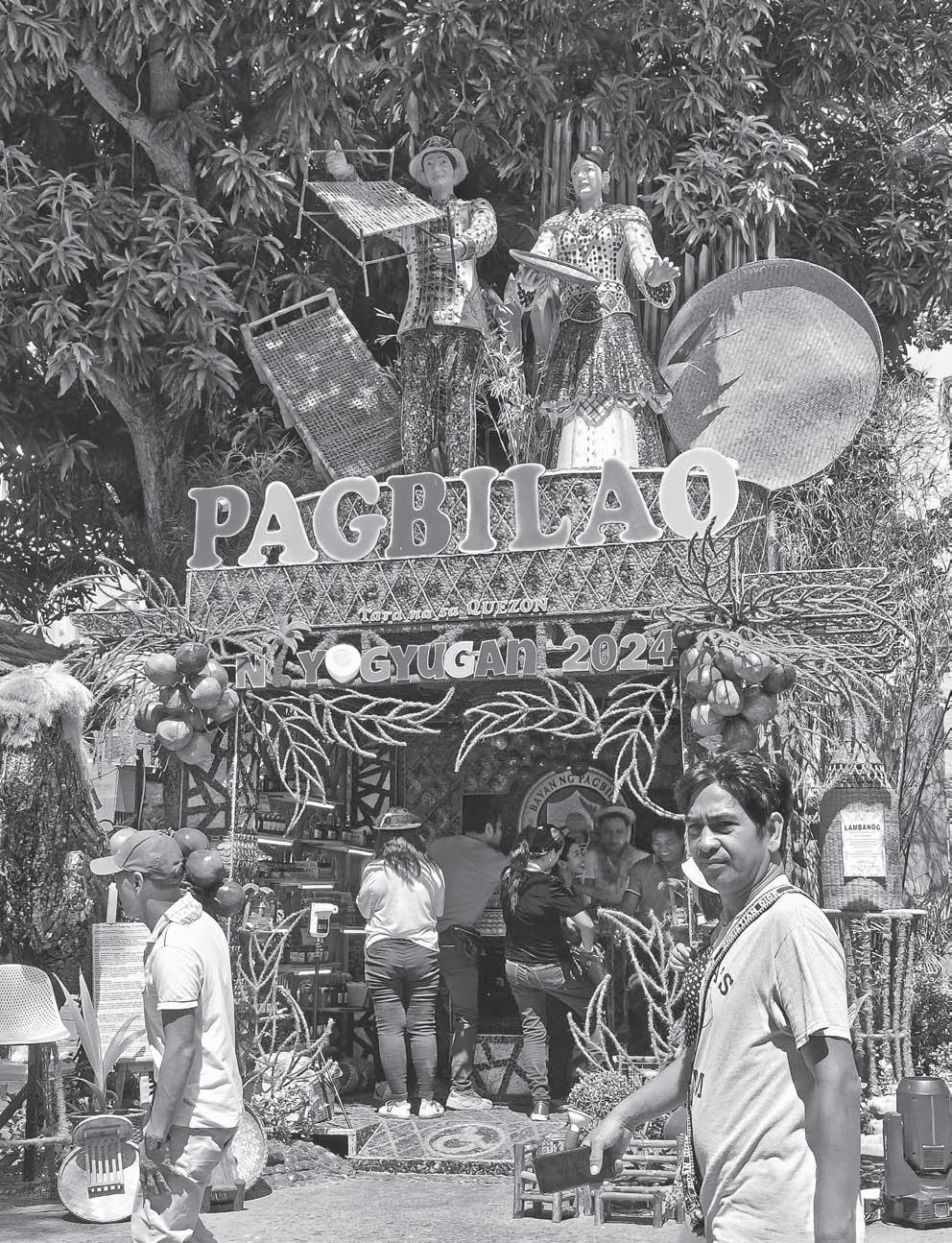
TOURISTS visit Pagbilao’s agri-tourism booth at the Niyogyugan Festival in Lucena City, Quezon Province. The festival celebrates coconut farmers and local tourism. Held annually, it showcases Quezon’s rich agricultural heritage and its status as the top coconut-producing province in the Philippines. JOVEE MARIE N. DELA CRUZ
Editor: Angel R. Calso
Switzerland gets squeezed between China and the US
By Levin Stamm
BACK in 2013, several dozen Swiss business representatives traveled to Beijing to attend the signing of a free-trade agreement between Switzerland and China, toasting the success with champagne.
Implemented the following year, the FTA was hailed in a PricewaterhouseCoopers LLP report at the time as a landmark accord that “recasts the international trade landscape” and might even contribute to “a re-industrialization of Switzerland.”
Ten years on, the deal is due for an update but the euphoria has gone, a reflection of the changed geopolitical environment defined by US-China competition. Some now question whether the talks will even yield a result.
Concern over the trade agreement’s fate is one sign of how Switzerland is being squeezed between rival global powers, casting a pall over its traditional exceptionalism in spheres from neutrality to its solo economic efforts. With the US moving to hinder China’s access to advanced technology and the European Union aligning more closely with Washington, Swiss companies in particular risk getting caught in the middle.
Zurich-based industrial giant ABB Ltd. faced US scrutiny earlier this year over what a Congress committee cited as potential “cybersecurity risks, foreign intelligence threats, and supply chain vulnerabilities” related to its involvement with Chinese stateowned enterprises in supplying cranes for US seaports. ABB said it responded to the committee’s requests “with care.”
Now, Switzerland’s vaunted pharmaceuticals industry with its attendant biotechnology sector is nervously eyeing proposed new US legislation that could curb its ability to collaborate with China.
“There is an uneasy feeling,” said Jean-Philippe Kohl, deputy director of Swissmem, the association for Switzerland’s mechanical and electrical engineering industries. “Geopolitical tensions are particularly sensitive for companies that manufacture high-tech products,” like those at which Swiss excel, he said. “Five to 10 years ago, such concerns were not yet an issue.”
More recently, Switzerland’s been feeling the heat. It was criticized by Western partners for refusing to allow its weaponry to be sent to Ukraine to defend against Russia’s invasion as well as for allegedly lax implementation of sanctions against Moscow over the war. The fact it joined EU sanctions in the first place was viewed by many Swiss as a de facto end of the country’s century-old neutrality principle.
Its engagement with China has been similarly mixed. Beijing lifted visa requirements for Swiss tourists and business travelers in January when Premier Li Qiang visited and laid the foundations for a memorandum of understanding formalizing both sides’ intention to modernize the FTA. That didn’t stop China rebuffing the Swiss government by skipping Switzerland-brokered talks on Ukraine in June. Meanwhile, Syngenta Group—a Swiss agrichem giant owned by Sinochem Holdings Corp. of China—withdrew its long-delayed application for a $9 billion initial public offering in Shanghai, in a sign of the regulatory risks foreign com-
panies have to deal with in China.
Yet while others move to “derisk” business with Beijing, Swiss exports—notably of products like machines, pharmaceuticals and watches—destined for China have outstripped those from either the EU or the US, growing by three-quarters since the trade deal was implemented compared to the EU’s 54 percent and the US with 20 percent in the same period, according to Swiss customs data.
“That the US will one day say that we have to stop this transfer of technology is a primal fear of many companies,” said Kohl of Swissmem, adding that it would be “a disaster” if they had to choose between the US or China.
“Withdrawing from China would be impossible and would be tantamount to a ‘partial amputation’ of their company,” he said.
The Swiss government is careful to maintain good relations with China. But it’s increasingly confronted by domestic resistance, with criticism fueled by reports of Chinese interference.
The Swiss Federal Intelligence Service said in its latest annual report that it is “highly likely that the Chinese intelligence services make greater use of nondiplomatic cover than the Russian services do,” with personnel often working under cover as scientists, journalists or businesspeople.
The Chinese embassy in Bern rejected such assertions, saying in an e-mailed response to questions that “recent reports about so-called China’s spying in Switzerland are all hypes aimed at smearing and hitting China.”
Rather, it said, China “advances mutually beneficial cooperation with Switzerland in accordance with laws and regulations.”
In 2022, the Swiss government decided behind closed doors not to follow EU sanctions against China over allegations of human rights abuses in Xinjiang province. More recently, it opted against extending its current China strategy once it expires at the end of the year. In both cases, members of parliament criticized the government for taking a soft line to avoid triggering economic repercussions.
To Simona Grano, a China expert at the University of Zurich, ditching the China strategy that would inevitably have to touch upon sensitive topics such as human rights or labor conditions is
aimed at keeping relations with Beijing sweet ahead of the 75th anniversary of Swiss-Chinese diplomatic relations in 2025. Modernizing the trade agreement that same year would be “of great symbolic importance for China,” she said.
“Switzerland continues to live in the outdated mentality that it can keep crafting its own foreign policy and navigate a middle path in which the economic sphere isn’t influenced by political issues or geopolitics,” she added.
It’s an approach that looks increasingly untenable as the US expands its use of export controls against China, roping in allies for bans on technology like chipmaking equipment. That deepening standoff with China is a rare point of agreement between the Democratic and Republican presidential campaigns, suggesting no let up for Switzerland or anyone else after the November election.
“The next stage of protectionism in America”
THE Swiss chemical-pharmaceutical industry—accounting for almost half the nation’s exports at $157 billion—could be an early focus. The bipartisan Biosecure Act now making its way through Congress foresees a ban on state agencies collaborating with Chinese biotechnology firms on national security grounds.
While the US remains the most important single country export market for Swiss pharma companies, Chinese firms have become key throughout the supply chain from pre-clinical research to licensing—and that interdependency is a red flag for some US lawmakers. It’s all the more provocative since one of the main Chinese biotech firms named in the legislation, Shanghai-based Wuxi AppTec Co., has a subsidiary in Switzerland.
The company objects to “any unjustified allegations or preemptive actions against WuXi AppTec without due process, including the proposed designation in the draft
Biosecure Act,” a spokesperson said. The Chinese embassy accused the US of having “repeatedly overstretched the concept of national security,” moves it said “seriously violate” the principles of the market economy and fair competition.
For Michael Altorfer, chief executive officer of the Zurichbased Swiss Biotech Association, the Act “is the next stage of protectionism in America.”
“Even if it is still unclear
whether and how the Act will actually be implemented, there is a risk of a spill-over effect or an adjustment of behavior in ‘anticipatory obedience,’” he said.
Switzerland has longstanding ties to China: It was one of the first Western countries to recognize the People’s Republic under Mao Zedong in 1950. Thirty years later, elevator maker Schindler Holding AG became the first Western firm to establish a joint venture in China with a state-owned enterprise.
New geopolitical realities are changing the outlook for that kind of engagement, according to Alain Graf, senior consultant and China expert at Switzerland Global Enterprise.
“The key concern for companies in certain sensitive industries is whether their business with Chinese customers and especially state-owned companies may affect their US business,” Graf said. “Since the rules are not clear and are changing, it is quite a headache.”
It also complicates moves to update the FTA with China. Any renegotiated text would likely be put to a referendum under the country’s system of direct democracy, and it’s questionable whether a new deal could pass without sections guaranteeing
adherence to human rights and labor conditions.
For Beijing, revising the agreement has broader political significance in what it sees as a time of rising protectionism directed against China. The state-backed Global Times said in a recent piece that strengthening cooperation with Switzerland “offers a prime example for Europe to avoid trade frictions and focus on mutually beneficial cooperation.”
Back when it was signed, many saw the Swiss-China FTA as the precursor for a trade deal between China and the EU, “but then things changed and now Switzerland is going its own way,” said Peter Bachmann, executive director of the Swiss Chinese Chamber of Commerce from 2014 until last year. The EU and China concluded a comprehensive agreement on investment in 2020, only for it to be shelved amid tit-for-tat sanctions related to Xinjiang.
The reality now is that Switzerland needs the free trade agreement more than China does, said Bachmann.
“Switzerland has often focused on adaptation and deal making, which has worked well until now,” he said. “But now other values are becoming important.”
Bloomberg News
A BLANCPAIN luxury Swiss watch store in Beijing in July. NA BIAN/BLOOMBERG
Ukrainian troops face crisis as new recruits struggle on the battlefield, commanders say
By Samya Kullab The Associated Press
KYIV, Ukraine—Some new Ukrainian soldiers refuse to fire at the enemy. Others, according to commanders and fellow fighters, struggle to assemble weapons or to coordinate basic combat movements. A few have even walked away from their posts, abandoning the battlefield altogether.
While Ukraine presses on with its incursion into Russia’s Kursk region, its troops are still losing precious ground along the country’s eastern front—a grim erosion that military commanders blame in part on poorly trained recruits drawn from a recent mobilization drive, as well as Russia’s clear superiority in ammunition and air power.
“Some people don’t want to shoot. They see the enemy in the firing position in trenches but don’t open fire....That is why our men are dying,” said a frustrated battalion commander in Ukraine’s 47th Brigade. “When they don’t use the weapon, they are ineffective.”
The accounts come from commanders and soldiers who spoke to The Associated Press on condition of anonymity in order to speak freely about sensitive military matters. Others spoke on the condition that they be identified only by their call signs in keeping with Ukrainian military protocol.
Commanders say the recruits have contributed to a string of territorial losses that enabled Russia’s army to advance, including near the city of Pokrovsk, a
critical logistics hub. If it falls, the defeat would imperil Ukraine’s defenses and bring Russia closer to its stated aim of capturing the Donetsk region. Russian soldiers are now just 10 kilometers (6.2 miles) away.
Adding to Ukraine’s woes are Russia’s huge advantage in manpower and its willingness to accept staggering losses in return for capturing small objectives.
The recently conscripted Ukrainians are a far cry from the battlehardened fighters who flocked to join the war in the first year of the full-scale invasion. The new troops lack even a minimal level of training, commanders and soldiers from four brigades defending the Pokrovsk area said. They described having to plan operations with infantry who are unable to shoot targets and uninformed about basic topography. Some recruits simply lacked faith in the battle plans of their superiors and walked away from prepared positions.
Frustrated with the quality of the new conscripts sent to the front line by territorial recruitment centers, commanders are now seeking to conduct their
own mobilization drives to better screen and train new fighters, multiple commanders and soldiers said.
“The main problem is the survival instinct of newcomers. Before, people could stand until the last moment to hold the position. Now, even when there is light shelling of firing positions, they are retreating,” said a soldier with the 110th Brigade.
Not everyone is turning around and running away from battle, he added.
“No, there are motivated people, but they are just very, very few,” he said. “The position is held as far as there are these people who are motivated and committed.”
Following the implementation of a controversial mobilization law in May that established clearer regulations for territorial recruitment centers, Ukraine is reportedly drafting tens of thousands of fighters per month. Demand is highest in the infantry.
But there are logistical hurdles to train, equip and pay so many incoming people, and commanders constantly demand new soldiers. To ease that pressure, military
leaders have had to take units from brigades in one region and transfer them to different areas to stabilize weak spots.
Some point the finger back at commanders who single out recent recruits for losses.
Viktor Kevliuk, a military expert with the Ukraine-based Center for Defense Strategies think tank, said the training offered to recruits is adequate. He said brigade commanders “are looking for an explanation for tactical failures.”
“Likewise, the brigade commander has the appropriate tools to influence morale. If all these processes are established in the brigade, there will be no significant problems. If these mechanisms fail, we read about the negativity in social networks,” he added.
And in intense fights such as the one in Pokrovsk, “it is the timely tactical decisions of commanders that make the difference, Kevliuk said.
In some instances, terrified new recruits have fled from the fight.
“This fear creates panic and chaos,” said the battalion commander
in the 47th Brigade. “This is also the reason we have lost.”
The loss of the village of Prohres last month in the Pokrovsk region is the most recent example of territorial loss blamed on new recruits, commanders said. Units from the 31st Brigade left in a poorly coordinated frenzy, prompting the 47th Brigade to enter the battle and attempt to stabilize the line.
A similar scenario unfolded in the village of Ocheretyne in May.
Not enough is done to train newcomers, the battalion commander said. “They don’t receive even the lowest standard of training required for our (combat) actions,” he said.
The new men do not have enough practice assembling and shooting their rifles, he said. They also have not learned how to coordinate combat tasks in small groups or to use even simple tactics, he added.
“From the command point, I would like to issue orders to small (infantry) groups, but I am not sure if they are capable of executing these orders because they lack coordination and communication,” he said, adding, “Sometimes, I want to shoot myself.”
Ukraine’s sudden foray into Russia initially stirred hopes that the Kremlin might be forced to divide its military resources to respond. But so far, Russian forces have not wavered in their push toward Pokrovsk and other potential conquests.
Meanwhile, Ukraine’s lightning advance into Russian territory has slowed after two weeks, making only small gains, a possible sign that Moscow is counter-attacking more effectively.
Commanders in the east report that battles have only intensified since the incursion. Local authorities on Monday ordered Pokrovsk’s nearly 53,000 residents to evacuate within two weeks. In the neigh -
boring town of Myrnohrad, even closer to Russian positions, residents were given only days.
The capture of Pokrovsk would undermine Ukrainian supply routes to the Donetsk region and ease Russia’s advance to the eastern cities of Sloviansk and Kostiantynivka. It would also mark Russia’s first major strategic win after months of painfully fought marginal gains.
In the last three months, the majority of Ukrainian territorial losses were recorded in the Pokrovsk area, according to three open-source monitoring groups, with fighting intensifying in the vicinity of the towns of Toretsk and Chasiv Yar. Russian forces dialed up the attacks in an attempt to capitalize on troop fatigue and shortages.
The offensive has also come at a huge cost to Moscow, with an estimated 70,000 troops lost in two months, according to the U.K. Defense Ministry, which posted the projection last month on X. Heavy losses have continued as Russian forces gradually approach Pokrovsk from the east and southeast.
Another challenge for Ukraine is a new tactic in which Russia deploys recurrent waves of smaller infantry units of two to four men. That has flummoxed Ukrainian drone operators, who find it difficult to target them, according to a drone operator with the 25th Brigade who uses the call sign Groot.
“This is one of the main reasons for (Russia’s) success in Pokrovsk,” he said. “It’s harder to detect them,” especially under the cover of leafy trees.
“As soon as the infantry get under the tree lines, it’s really hard to get them out of there with drones, and that’s why we depend a lot on our infantry.”
The Associated Press journalist Volodymyr Yurchuk contributed.
One woman’s custody battle highlights legal gaps for LGBTQ+ families in China
BBy Huizhong Wu The Associated Press
ANGKOK—It’s been more than four years since Zhang Peiyi last saw her son, one of two children from her former marriage.
Denied custody of both kids, Zhang finally settled in June for visitations with her daughter. But after seeing her only once, Zhang’s ex-wife called the meetings off indefinitely. What Zhang thought was the end of a yearslong legal battle is facing yet another hurdle, as she has to go through court again to ask them to enforce her visitation rights.
“These types of disputes are not well protected in our country,” said Gao Mingyue, the lawyer representing Zhang. “This is a reminder that we have to be self-sufficient.”
LGBTQ+ families like Zhang’s have no law to cite when faced with situations like custody or divorce, as same-sex marriage is not recognized in China, meaning the outcome of each case is uncertain and inconsistent.
For straight couples—regardless of marriage status—both are recognized as custodians by law. If the two split, the court decides who gets custody based on factors like the parent’s financial resources, the child’s desire and the home environment—operat -
ing from the principle of making the best decision for the child.
But for same-sex couples who have children via surrogacy or in vitro fertilization, nothing is guaranteed.
Zhang, a Shanghai resident, knows this firsthand. She’s been fighting to see her children since 2020, after a difficult separation.
The two women went to the United States to be legally married and give birth to their children. Zhang’s ex provided the eggs, and Zhang gave birth to a girl and her ex birthed a boy. Back in China, a few years later when the relationship ended, Zhang’s ex took both children and cut off all communication.
When Zhang turned to the law, she discovered just how little protections there were for LGBTQ+ couples in China, where there’s no legal standard for two mothers or two fathers. The law around families is written exclusively for cases of a mother and a father.
While surrogacy is not illegal, hospitals are forbidden from selling eggs or sperm, so laws don’t address issues of parentage where surrogacy is involved. And the courts have so far avoided making any legal precedent; Zhang’s court granted custody to the biological mother, while another court in another case denied custody to the biological mother. Gao represented both cases.
Zhang’s case, which landed in a Beijing court, granted her ex custody and Zhang visitation of the child she birthed. But because the outcome was reached through a settlement, there is no legal precedent set. Although China is not a precedent-dependent country in the way the US is, legal judgements can still have an impact that lawyers and academics cite.
In the other case, in the southern coastal city of Xiamen, the court’s 2020 ruling said the woman suing, who provided the egg that her partner carried, “had no legal basis” for her argument and that it could not affirm that she was the child’s mother.
Further, it said, “the defendant and plaintiff are same-sex partners, and this is not regulated by our country’s marriage law or any other civil laws.”
No DNA testing was done for the case, but Gao wanted to prove that his client was the genetic mother. They provided medical evidence and the opposing side admitted it was his client’s egg, but the court didn’t want to make a ruling, he said. “They just said there’s no way to prove you’re the genetic mother, but even if you had no way to affirm the parentchild relationship, the law actually allows the court to make this judgement,” he said.
“It’s quite messy, and different courts at different times and different places have come to different solutions,” said Darius Longarino, a senior fellow at the Paul Tsai China Center at Yale Law School.
The case drew criticism from one of China’s top legal experts on civil law.
“We can put aside the issue of surrogacy or same-sex couples, when a child is born, that’s a human being,” Yang Lixin, a professor at Renmin University’s law school in Beijing said in an online commentary when the Xiamen case issued a first judgement in 2020.
He said that the court’s decision was basically “nonsense,” adding that the child’s “rights and his position must be protected.”
Some LGBTQ+ couples are trying to stave off the legal ambiguities with a legal agreement, similar to how a prenup works, outlining what would happen to their children if they broke up.
“For same-sex partners, when they decide to have kids, we advise them to sign an agreement on the births,” said Gao. He said some 30 couples have come to his practice inquiring abut drafting agreements that establish the identity of the parents, their mutual agreement to have children, and the responsibility, financial and otherwise, to raise the kids.
He’s drafted eight or nine, but none have had a chance to be tested yet, so it’s unclear how the courts will receive them.
In July, when Zhang got her first legally guaranteed visit to see her daughter for the first time in more than four years, it was a subdued occasion.
“I felt very calm, in those four hours,” she said. “I couldn’t cry then. I didn’t even have time to have a happy reaction, but I was satisfied that at least in those four hours, I was in the same space as her.”
The People’s Court in Beijing’s Fengtai district granted Zhang the right to see her daughter once a month, four hours per visit, which is common in cases with young children. Zhang traveled up from Shanghai and then drove to Hebei province, two hours outside of Beijing, to a home that her ex-partner owns.
Her ex-partner, the only other person present during the visit, required their daughter to wear a facemask, and the girl spent the time doing homework, Zhang recalled. But there were moments when the little girl would sneak looks at the woman sitting with her in the quiet house. They didn’t talk at all, Zhang said, partly because she didn’t know what to say. It was only after Zhang walked out of the house, she said, that she burst into tears.
ZHANG PEIYI, a Shanghai resident, tears up during an interview at her home in Shanghai on July 31, 2024. AP/NG HAN GUAN
10 health innovations focus of TeknoLusugan 2024
TEN health innovations funded by the Department of Science and TechnologyPhilippine Council for Health Research and Development (DOST-PCHRD) and implemented by researchers from the University of the Philippines Manila (UPM) took center stage at TeknoLusugan 2024 held recently at the Philippine International Convention Center. With the theme, “Turning Ideas into Healthcare Solutions,” UPM researchers presented not just inventions but practical solutions poised to make a significant impact in communities nationwide.
The event also marked a turning point in collaboration with industry leaders, presenting market needs directly to innovators, fostering partnerships that promise to accelerate the adoption of these technologies.
In his message, DOST Secretary Renato Solidum Jr. said that the DOST assisted 12 projects implemented by the UPM, with a total allocation of P186 million last year.
“As our community evolves rapidly and the challenges facing healthcare become more complex and multifaceted than ever before, the need for innovation and making sure that breakthroughs reach the target users, our fellow Filipino people have never been more apparent,” Solidum said.
Listed below were the featured health technology breakthroughs.
ETox: POCT Device for Selected New Psychoactive Substances and Pharmaceuticals targets the detection of pharmaceuticals and selected new psychoactive substances.
CFI & DEFA 1 as Leptospirosis Prognosticator is a first-of-its-kind molecular test which can predict the subsequent deterioration of identified patients to a severe case of Leptospirosis, specifically for pulmonary and renal complications.
iFIX: External Fixation and Implant is a treatment used for severe fractures. The project aims to produce external fixator systems at a low cost to make it more affordable to communities and healthcare facilities in the Philippines.
Immersive gamification technology system for cognitive and motor disabilities is an innovative approach utilizing immersive gamification technology to address cognitive and motor disabilities in individuals with cerebral palsy and dementia.
MyBeshie: Telepresence Robot uses artificial intelligence (AI) to monitor patients
and allow the sending of distress signals to a predefined contact health-care worker.
RxBox Telemedicine Device is capable of capturing medical signals through built-in medical sensors, storing data in an electronic medical record (Community Health Information Tracking System [CHITS]), and transmitting health information via internet to a clinical specialist in the Philippine General Hospital for expert advice.
Akapulko Lotion for Fungal Skin Infection, which already has a utility model patent, possesses antifungal properties. The developers are currently seeking pharmaceutical companies interested in manufacturing, distributing, and bringing the product to the Philippine market.
Tsaang Gubat Tablet and Syrup is an affordable, herbal medicine to help relieve abdominal pain and diarrhea in adults.
Ampalaya Tablet for Type 2 Diabetes is a clinically validated herbal drug formulation made from locally sourced ampalaya (bitter gourd) plants to treat type II Diabetes.
Tuklas Lunas Anti Diabetes Tablet is a medicinal formulation made from locally sourced plants for the treatment of diabetes.
The critical role of early screening in healthcare research and development was emphasized by an industry partner, Dr. Diana Edralin, highlighting routine screenings like mammograms and liver function tests for disease prevention. said: “The importance of collaboration between innovators and hospitals is to develop tailored solutions and meet regional healthcare demands.”
According to Dr. Jaime C. Montoya, executive director of DOST-PCHRD, the event serves as a launchpad for a technology-centered healthcare system where curiosity flourishes, industry, the academe, and government agencies join forces to achieve the shared vision of a healthier nation.
“All of us can contribute to turning the tide to better health response in the country. Let us push the boundaries and use innovative technology to empower health and well-being for all,” Montoya said.
The presentation was part of the Philippine Health Research Innovations Matching Event (PHRIME), a technology transfer initiative of the Intellectual Property and Technology Management Unit of the Council.
DOST-FPRDI
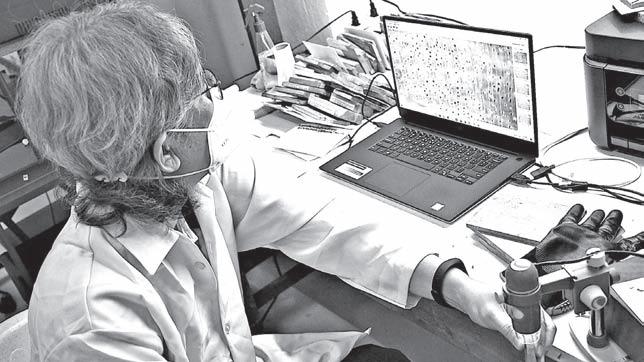
THE accurate and reliabble identification of Philippine wood species is being made possible through cutting-edge molecular-level research and development.
Through the efforts of the Department of Science and Technology-Forest Product Research and Development Institute (DOSTFPRDI), these will ensure alignment with global benchmarks, promoting transparency and confidence in international trade.
“Our commitment to enhancing Philippine wood identification reflects our dedication to sustainable forestry practices,” said Science Secretary Renato U. Solidum Jr.
“By capacitating our researchers into integrating state-of-theart technologies at the molecular level, we are enhancing our capability to accurately classify and certify Philippine wood species,” Solidum added.
Wood identification is the scientific process of establishing the identity of a wood specimen based on its anatomical, physical and structural properties.
It is important for the Philippines as it is used in the country’s
Agri-aqua technologies to help investors, adopters level up
SECRETARY Renato U. Solidum Jr. said that among the priorities of the Department of Science and Technology (DOST) is finding innovative solutions to the existing problems and limitations in various sectors of the country, particularly in agriculture and aquaculture.
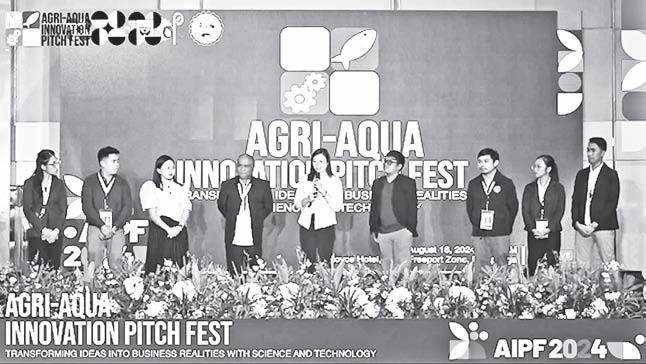
“To all potential technology adopters and investors, as you explore the wide array of sciences available, please consider where to direct your efforts and support. We hope you find the technology that will best match the needs of your businesses in your field,” Solidum said during the Agri-Aqua Innovation Pitch Fest 2024 held on August 16 at a hotel in Clark Freeport Zone in Pampanga.
Spearheaded by the DOSTPhilippine Council for Agriculture, Aquatic, and Natural Resources Research and Development (DOST-PCAARD), in partnership with the Pampanga State Agricultural University and Association of PAQE Professionals, the pitch festival showcased 22 technological advancements and solutions pioneered by innovators in the agriculture, aquatic, and natural resources sector.
Iin his remarks, DOST-PCAARRD Executive Director Reynaldo V. Ebora noted that the country’s rich natural resources and the resilience of the Filipinos have always been the greatest assets.
However, he is aware of the numerous challenges that the Filipino farmers, fisherfolks, and stakeholders face daily.
“These challenges require bold and innovative solutions. The Agri-Aqua Innovation Pitch Fest is our collective commitment to addressing these challenges headon. It is a platform where research meets real-world applications,” Ebora said.
Solidum also called on everyone to extend support to the initiatives of various state universities and colleges, and all the involved consortia that bravely challenge exist -
ing norms, reject past limitations, and are driven by an unwavering passion to effect positive change in the world.
“The Agri-Aqua Innovation Pitch Fest is a powerful reminder that science is truly accessible to everyone, especially those who are driven to make a meaningful impact in the world. This event showcases the ability of science to spark curiosity and foster a hunger for knowledge and inspire people to achieve things without limits,” Solidum said.
Fall in love with the problems, not your solutions SOLIDUM provided advice to the researchers who would pitch their innovative products at the event on how they can achieve success in entrepreneurship.
“Fall in love with the problems and not with your solutions. What does this mean? If we are truly in love with the problem, we will do everything we can to solve it. But if we fall in love with our solutions, what happens is that we become reluctant to share them. This slows down the adoption of our technologies,” the Science Chief said partly in Filipino.
He said that researchers and scientists need to keep pace with the fast-paced approach of entrepreneurs because, if they don’t, it will be hard for them to be successful.
Dr. Robert H. Lo, a member of the board of directors of the Pampanga Chamber of Commerce and Industry Inc,. supported the message of Solidum.
He said that the local inventors and innovators should know the characters of the entrepreneurs.
boosts wood identification
anti-illegal logging campaign by providing basis for charges against violators.
“It would help our biodiversity protection efforts if we could employ the same state-of-the-art techniques in wood identification and preservation,” said Glenn Estudillo, curator of the Institute’s Herbarium and Xylarium Facility.
“Right now, we do our wood identification by examining the wood anatomy. Most countries, however, use more advanced and precise methods, such as molecular technique or DNA sequencing, or machine-aided wood identification. We hope to acquire the needed equipment so we can boost the wood identification service we offer, and at the same time give more value to our vast collection of wood specimens,” Estudillo explained.
It is also important in the realm of culture and local heritage. In the field of archaeology, the identity of wood specimens recovered from study sites can be established.
To date, DOST-FPRDI’s Herbarium and Xylarium Facility houses 2,631 herbarium voucher specimens (810 species from 339 genera and 110 families), and the
most complete wood collection of 10,983 authentic specimens in the country (2,282 species under 463 genera and 197 families of Philippine tree species).
The wood collection represents more than 90 percent of Philippine tree species and is an important reference for archaeologists, foresters and students.
This is a very rare and valuable collection since some of the collected species no longer exist in the natural forests, Estudillo said.
“For example, in our collection is katagpo [Psychotria ilocana Merr.], which has been extinct in the wild for more than 100 years already. Thus, we have to protect this collection because it will be difficult to stockpile and impossible to replicate some of them again,” Estudillo said.
In 2022, the DOST-FPRDI received a request from a foreign film company to identify wood samples from a shipwreck. The ship was said to be part of the Manila-Acapulco Galleon Trade.
According to Estudillo, the specimens were first sent to laboratories in the United States, but their identities could not be established.
The DOST-FPRDI experts, however, were able to identify the woods as molave (Vitex parviflora A. Juss.) and supa (Sindora supa Merr.), both of which are endemic to the Philippines.
“Studies in this field dealing with material culture left behind by past societies, especially prehistoric ones, help people understand how their ancestors lived, and their cultures changed. DOSTFPRDI can contribute to efforts that define social identity,” explained Estudillo.
DOST-FPRDI OIC Director Rico J. Cabangon said, “Our goal is to ultimately assist the Philippines, particularly our law enforcement agencies, in accurately identifying illegally possessed woods… With enough funding support, we can utilize advanced technology to cross-reference DNA profiles of challenging anatomical wood samples with a comprehensive database.”
Cabangon added thar this will allow authorities to accurately identify the species and the origin of timber, bamboo, and other forest products.”
Idohna Leah B. Jomao-as and Apple Jean M. de Leon/S&T Media Service
“Entrepreneurs are always passionate and constantly in a hurry; time is very important to them. Once their passion kicks in and becomes ingrained, they want things to happen immediately. So, there is still a gap. I think we need to find solutions to bridge the gap between research and e ntrepreneurship,” Lo said.
He echoed the message of Solidum that the local technologies need to be impactful and game changers.
Lo also said that the gap should be identified, and the problems that need to be solved should be determined.
“It might be good to ask our industry partners what research they need; it is beneficial to know what their needs are. Some research projects have not complied with the needs of the industries,” Lo said.
Solidum made a reminder that investing in technology is not merely about allocating capital; it is about igniting the spark of creativity, fueling the flames of innovation, and unlocking the full potential of human ingenuity.
“Let us sow the seeds of innovation, cultivate a future of abundance, and reap the harvest of a world where agriculture thrives in harmony with nature. Let us unleash the full potential of technology to create a world that is not just smarter, but more equitable, and effective,”. Solidum said.
Awards
THE fest gave awards for the best poster exhibits and technology pitches, along with cash prizes.
Best Technology Poster Exhibits Category:
THIRD Place: Tibig Leaf Extractbased Meat Tenderizer of the Pampanga State Agricultural University (P2,000);
Second Place: Philippine Carabao Center-Buro Booster (P3,000); First Place: CoPELT Bioleather from Bohol Island State University (BISU) (P5,000).
Best Technology
Pitching Category:
THIRD Place: Pili Postharvest Machines of Bicol University (P5,000)
Pili is considered the flagship commodity of the Bicol Region. The Pili Postharvest Machines were put forth to mechanize the operation and increase production capacity and efficiency.
Second Place: COPELT Bioleather from Cogon Grass of BISU, (P7,000).
COPELT is a plant-based leather that uses cogon grass (Imperata cylindrica) fibers. It is an innovative, eco-friendly, and sustainable bioleather that employs natural binding agents, reinforcing its environmentally conscious approach. The use of cogon grass, an abundant and invasive plant, contributes to the material’s sustainability by repurposing a resource that is otherwise an environmental risk.
First Place: Sago Pith Extracting Device of Caraga State University (P10,000).
A village-level (317kg/hr capacity), SPED developed for grating the pith from the Sago trunk. It rasps the sago pith using a rotating blade rasper without debarking the log to minimize the steps in the extraction process.
Allan Mauro V. Marfal, with info from DOSTPCAARRD//S&T Media Service
A6 Sunday, August 25, 2024
Caritas PH backs petition vs PhilHealth funds transfer
THE Catholic Church’s development and advocacy arm has welcomed moves to block the transfer of “unused” funds from the Philippine Health Insurance Corp. (PhilHealth) to the national treasury.
Caritas Philippines said the funds should be “solely used” for their intended purpose—providing healthcare to PhilHealth members.
Its president, Bishop Jose Colin Bagaforo, said they oppose using the funds for unprogrammed appropriations, as it risks misuse and potential corruption.
“While we appreciate the national government’s concern through the Department of Finance to fund initiatives to support economic growth, we strongly object to the use of PhilHealth funds for unprogrammed appropriations and fear that this move
may lend to the misuse of the funds, not discounting exposing such to corruption,” Bagaforo said.
The organization made the statement in support of a petition filed on August 2 before the Supreme Court, aimed at protecting PhilHealth funds.
The petition was filed by the Philippine Medical Association, Sen. Aquilino Pimentel III, former finance undersecretary Cielo Magno, Dr. Ma. Dominga Padilla, and the Sentro ng mga Nagkakaisa at Progresibong Manggagawa, among others.
The 38-page petition challenges the General Appropriations Act 2024 and Department of Finance Circular 003-2023, which permit transferring PhilHealth’s P89.9 billion surplus funds to the
national treasury.
“We appeal to the honorable justices of our Supreme Court to uphold the principles of the 2019 Universal Healthcare Law and protect every Filipino’s right to health by deciding in favor of the petition,” said Bagaforo, who is also the bishop of Kidapawan.
“As a humanitarian organization and as stewards of the Church’s social mission, we believe it is our civic and moral duty to defend the integrity of these funds,” he added.
Caritas Philippines and its 85 diocesan partners continue to advocate for policies that prioritize the poor and marginalized, reaffirming their commitment to accessible healthcare for all Filipinos. CBCP News
Pope: True faith opens mind, heart
VATICAN—Pope Francis
urged people to truly listen to God’s voice rather than looking to the Lord for a confirmation of their own ideas.
“Brothers and sisters, when faith and prayer are true, they open the mind and the heart; they do not close them,” Pope Francis said on his recent Angelus address.
Speaking from the window of the Vatican’s Apostolic Palace, the pope asked people to be aware of the temptation of looking to God “for a confirmation of what we think” rather than “truly listening to what the Lord has to say to us.”
“This way of addressing God does not help us to truly encounter him, nor to open ourselves up to the gift of his light and his grace, in order to grow in goodness, to do his will and to overcome failings and difficulties,” he said.
“Let us ask ourselves, then: In my life of faith, am I capable of being truly silent within myself and listening to God? Am I willing to welcome his voice beyond my own
mindset and also with his help to overcome my fears?”
Pope Francis asked the Virgin Mary for her intercession to help Christians to listen with faith to the Lord’s voice and “to do his will courageously.”
The pope offered this reflection in his meditation on Sunday’s Gospel, in which the Judeans murmured about Jesus because he said,
“I am the bread that came down
Who is the ‘Laughing Buddha’?
WITH his delighted expression, round belly, bald head and monastic robes, the “Laughing Buddha” is instantly identifiable. However, astute observers might wonder why this buddha does not look like the historical Buddha, who lived in India about 2,500 years ago.
Images of the historical Buddha, known as Siddhartha Gautama or Shakyamuni, depict him with a neutral expression, slim build, tightly coiled hair and monastic robes.
If the Laughing Buddha isn’t the historical Buddha, who is he, and how did he become so popular?
As a scholar of East Asian
from heaven.”
Francis said: “They are convinced that Jesus cannot have come from heaven, because he is the son of a carpenter and because his mother and his relatives are common people, familiar, normal people, like many others.”
“They are obstructed in their faith by their preconception of his humble origins and the presumption, therefore, that they
Buddhism who studies how and why deities transform over time, I see the Laughing Buddha as a key figure that shows how people have adapted Buddhism to different cultural and historical contexts.
The Zen monk who became the Laughing Buddha
ONE of the names for the Laughing Buddha is “Cloth Bag,” which is pronounced “Budai” in Chinese and “Hotei” in Japanese.
Cloth Bag was the nickname of a Chinese Buddhist monk who lived in the 10th century. He belonged to the Zen school of Buddhism, which is known for its stories about monks who reject conventional pursuits like wealth and fame.
Cloth Bag got his nickname because he wandered from town to town carrying a cloth bag full of treasures that he shared freely with children.
Chinese Buddhists, seeing Cloth Bag’s legendary generosity, compassion and joy, concluded that he must not be an ordinary monk, but that he must be a human incarnation of the future Buddha, whose name is Maitreya.
Artists in China depicted Cloth Bag as a plump, laughing monk often surrounded by children or animals.
In a traditional East Asian context, his round belly represents his generosity and abundance,
Filipino Knights called to deepen faith, mission
VISITING Archbishop William Lori of Baltimore, USA. supreme chaplain of the Knights of Columbus, urged the Filipino Knights to be “better disciples” of Jesus by deepening their commitment to faith, charity, and defense of family and life.
have nothing to learn from him. …Beware of preconceptions and presumption,” he warned.
After leading the crowd gathered in St. Peter’s Square in the Angelus prayer in Latin, the pope offered his greetings to a group of students who walked more than 100 miles from the Italian town of Assisi in pilgrimage to the Vatican.
Pope Francis asked people to pray especially for the victims of a plane crash in Brazil that left 62 people dead.
The pope also marked the 79th anniversary of the atomic bombing of Nagasaki and Hiroshima, which killed 70,000 people and 140,000 people respectively and brought an end to World War II.
“As we continue to commend to the Lord the victims of these events and of all wars, we renew our intense prayer for peace, especially for the tormented Ukraine, the Middle East, Palestine, Israel, Sudan, and Myanmar,” Pope Francis said. Courtney Mares/Catholic News Agency via CBCP News
and also symbolizes the positive qualities of wealth and fertility.
From China, images of Cloth Bag as the Laughing Buddha traveled in two directions. They spread first in East Asia to countries such as Vietnam, Korea and Japan.
Zen is a popular form of Buddhism in all of these countries, but it was Japanese Zen Buddhism that attained global popularity in the 19th and 20th centuries.
This means that many images of the Laughing Buddha in the West are based on Japanese models.
Displaying Chinese porcelain IMAGES of the Laughing Buddha also spread west from China to Europe, where 18th-century elites showed their aesthetic sophistication by displaying Chinese-style porcelain, including statues of the Laughing Buddha.
The Laughing Buddha’s transformation into a global icon results from both the fascination with Chinese porcelain in 18th-century Europe and the 20th-century spread of Japanese Zen Buddhism.
Today we see the Laughing Buddha in stores, homes and even as a brandname.
A lot of people may know what the Laughing Buddha looks like, but few may be familiar with who he is or how he became so popular. Megan Bryson, University of Tennessee/ The Conversation (CC) via AP
Speaking to church reporters after celebrating Mass at the Manila Cathedral, Lori challenged their Filipino counterparts “to be Knights who are on mission.”
This mission, he said, includes promoting devotion to the Eucharist and advancing the work of evangelization and charity.
“I would encourage my brothers to continue living those beautiful principles of charity,” said Lori, who is also the vice president of the US Conference of Catholic Bishops.
He pointed out that the real challenge for the Knights has always been “forming ourselves after the heart and mind of Christ.”
“If we have hearts likened to that of Christ, his work will be accomplished in and through us,” he said.
The Knights of Columbus is a global fraternity of Catholic men who dedicate themselves to serving their parish and community.
The organization has 2.1 million members worldwide, with a quarter of them in the Philippines.
As the family stands at the core of the Knights’ beliefs and ideals, the archbishop also challenged the country’s Knights to be role models of family life.
“I think to be good husbands, good fathers, to form families that are unified, peaceful, joyful, where young people can grow, that’s a big challenge,” he said.
Pope Francis has recently recognized the organization for their efforts to build strong families, help the poor, and defend human life. Lori, along with Supreme Knight Patrick Kelly, are in the Philippines to visit the various works of Filipino Knights.
“We’ll be visiting some of the places where the Knights are doing charitable work…and see firsthand our principle of charity being put into action,” he said.
Roy Lagarde/CBCP News
A small group of nuns in rural Kansas vex big firm with their biz activism
ATCHISON, Kansas—Among corporate America’s most persistent shareholder activists are 80 nuns in a monastery outside Kansas City.
Nestled amid rolling farmland, the Benedictine sisters of Mount St. Scholastica have taken on the likes of Google, Target and Citigroup—calling on major companies to do everything from AI oversight to measuring pesticides to respecting the rights of Indigenous people.
“Some of these companies, they just really hate us,” said Sister Barbara McCracken, who leads the nuns’ corporate responsibility program.
“Because we’re small, we’re just like a little fly in the ointment trying to irritate them,” she said.
At a time when activist investing has become politically polarized, these nuns are no strangers to making a statement.
Recently they went viral for denouncing the commencement speech of Kansas City Chiefs kicker Harrison Butker at the nearby college they cofounded.
When Butker suggested the women graduates of Benedictine College would most cherish their roles as wives and mothers, the nuns—who are noticeably neither wives nor mothers—expressed concern with “the assertion that being a homemaker is the highest calling for a woman.”
After all, women’s education has been a mainstay of their community, which founded dozens of schools.
Many of the sisters have doctorates. Most have worked professional jobs—their ranks include a physician, a canon lawyer and a concert violinist—and they have always shared what they earned.
They invest what little they have in corporations that match their religious ideals, but also keep a bit in some that don’t, so they can push those companies to change
policies they view as harmful. This past spring and summer, when many companies gathered for annual meetings with their shareholders, the nuns proposed a string of resolutions based on stock they own, some in amounts as little as $2,000. The sisters asked Chevron to assess its human rights policies, and for Amazon to publish its lobbying expenditures. They urged Netflix to implement a more detailed code of ethics to ensure nondiscrimination and diversity on its board. They proposed that several pharmaceutical companies reconsider patent practices that could hike drug prices. Up until the 1990s, the nuns had few investments. That changed as they began to set aside money to care for elderly sisters as the community aged.
“We decided it was really important to do it in a responsible way,” said Sister Rose Marie Stallbaumer, who was the community’s treasurer for years.
“We wanted to be sure that we weren’t just collecting money to help ourselves at the detriment of others,” she said.
Faith-based shareholder activism is often traced to the early 1970s, when religious groups put forth resolutions for American companies to withdraw from South Africa over apartheid. In 2004, the Mount St. Scholastica sisters joined the Benedictine Coalition for Responsible Investment, an umbrella group run by Sister Susan Mika, a nun based at a Texas monastery who has been working in the field since the 1980s. The Benedictine Coalition works closely with the Interfaith Center for Corporate Responsibility (ICCR), which acts as a clearinghouse for shareholder resolutions, coordinating with faith-based groups—including dozens of Catholic orders—to leverage assets and file on social justice-oriented topics. Tiffany Stanley/Associated Press
STATUE of Budai, or Laughing Buddha, at Miroku-ji in, Himeji City, Hyōgo Prefecture, Japan. It
Editor: Lyn Resurreccion
Biodiversity Sunday
Mapping PHL’s mangroves, natural wealth
By Jonathan L. Mayuga
THE Department of Environment and Natural Resources (DENR) launched last year a project to develop the National Mangrove Map 2023 in partnership with the Philippine Space Agency (PhilSA).
The satellite-derived map will serve as the basis for making informed decisions and developing policies to restore and protect Philippine mangroves.
An archipelagic country with about 18,000 km of shorelines, the country has vast mangroves totaling 500,000 hectares in the early 1900s.
According to various studies, it is widely believed that over 50 percent of the mangroves have been lost.
The Philippine government. through the DENR, has been struggling to protect and conserve its remaining mangrove areas while rehabilitating degraded mangrove forests to restore the abundance of its coastal and marine resources.
Unique ecosystems
MANGROVES have unique ecosystems. Together with seagrass and corals, mangroves are ecosystem-building species that play a very important role in ensuring the survival of many species on the planet, including the human species.
They play a critical role in coastal protection, carbon sequestration, biodiversity conservation, poverty alleviation, and food security.
Mangroves also serve as breeding grounds, playgrounds, and homes to various species, including seafood like crabs, shellfish and fishes, which are very
important source of protein for Filipinos.
Grossly undervalued
ACCORDING to ocean conservation advocacy nongovernment organization Oceana Philippines, despite the very important roles they play and their critical importance in the face of climate change’s worst impacts, mangroves remain undervalued and severely threatened.
Mangrove forests face a multitude of challenges from all fronts—deforestation, land development, reclamation, pollution, conversion of mangroves to fishponds, on the one hand, and climate change and associated sea level rise on the other, Oceana Philippines said.
Worse, it said the improper planting practices, frequent occurrence of stronger typhoons, and weak conservation enforcement have further hindered mangrove conservation efforts.
Diminishing mangrove forests
THE country’s mangrove forests are diminishing.No thanks to the massive conversion of many mangrove areas into fishponds, beaches, and residential and commercial uses, among others, through land reclamation.
In all these activities, mangroves are slaughtered to pave the way for their intended use, including the installation of nets for fishpond use; or worse, dump and fill for urban expansion that would involve residential, commercial, or industrial development.
Worse, in many areas, the practice of harvesting mangroves as natural construction materials, food or processed food, charcoal-making, and firewood, aggravated
the denudation of beaches and mangrove forests.
Measuring our treasures
ENVIRONMENT Secretary Maria Antonia Yulo Loyzaga, citing the need “to measure what we treasure” has appealed to the public for a collaborative effort and urged everyone to take an active role in the mangrove initiative and the safeguarding of the country’s ecosystems.
“Amid the climate emergency and destruction of mangroves, everyone can make a difference by tracking and protecting our natural resources,” she said in a statement on April 29.
T he initiative calls for the private and public sectors, including private individuals and organizations, to visit coastal barangays and verify the presence or absence of mangroves with the easy-to-use ODK Collect app available in the Google Play Store.
They can also submit drone images of local mangroves using the same app.
With over 600 sites and 30,000 validation points across the country as targets, the DENR aims to finalize the field validation of the mangrove map last June.
Mapping natural treasures
ENVIRONMENT Undersecretary Carlos Primo David, for Integrated Environmental Science, underscored the importance of completing the ground validation of the mangrove map, as well as the country’s other natural assets, to effectively protect and conserve the country’s natural wealth against destructive activities.
“Before we can manage any asset that we have, whether it is natural resources or human capital, we have to quantify
first what we have. We can’t manage if we don’t know how much we have and where they are,” said David, who is also the concurrent head of the DENR’s geospatial database office.
We have completed the water resource map of the Philippines. We have identified the watersheds of our rivers. We have also completed the terrestrial forest,” he told the B usiness M irror in a telephone interview on August 20.
He said the Philippines has a declared 340,000 hectares of mangroves.
“We have to validate on the ground and we have validated 250,000 hectares already, about 4 percent of the total forest that we have,” David said.
“N ow we know that they do exist,” he quipped.
Based on the maps, he said the DENR can now develop policies that will effectively protect and conserve the country’s mangrove forest, and possibly, reforest areas where they no longer exist, such as those previously used for aquaculture or fishpond.
Mapping abandoned fishpond, seagrass
ACCORDING to David, the DENR is also eyeing to start mapping abandoned fishponds.
He said this has been turned over to the Bureau of Fisheries and Aquatic Resources (BFAR) but could not be accurately accounted for.
But he expressed hope that the Department of Agriculture and BFAR has a record of abandoned fishponds.
“Since the DA-BFAR is turning them over to DENR, then it is up to us what to do with it,” David said.
“Right now, we are in the process of
measuring these assets,” he added.
Besides the abandoned fishponds, David said the DENR will soon be embarking on another mapping activity, targeting the country’s valuable seagrass.
“What you call the blue carbon, these seagrass beds are more valuable than forest as they are also a carbon sink,” he said.
Alternatives to mangrove charcoal
BEST Alternatives Executive Director Gregg Yan said there are many alternatives to mangroves for charcoal.
“The dried husks of coconuts, for instance, burn well and impart grilled products with a distinctive, coconutty flavor. Dried bamboo stalks also grow much faster than mangrove trees and burn efficiently. Of course, the Best Alternative among all of these would be to use electric air fryers—preferably powered by renewable energy sources like solar or wind power,” Yan told the B usiness M irror via Messenger on August 24.
“In Vietnam, I recently noticed how an entire market that sells barbeque has replaced their old, smoky charcoal grills with affordable and efficient air fryers. Not only is the market cooler without a dozen grills working at once. It is also much safer since the risk of fire is greatly reduced,” Yan said.
“Maybe our favorite barbeque and grilled chicken stands can start experimenting with air fryers in selected branches to finally cut down their dependence on charcoal sourced and processed in our mangrove and mountain forests,” he added.
‘Use mangrove map wisely’
ANNADEL CABANBAN of Wetlands International and concurrent chairman of
Global Mangrove Alliance-Philippines Chapter (GMA-Philippines) which is actively campaigning for the conservation of mangroves in the country, said the DENR Mangrove Map should be able to tell how many hectares need to be protected as well as potential mangrove areas for restoration.
“The goal of the DENR, or the Secretary of the DENR, is to know how big is the area which can be restored. Different methods can be used,” whether it’s through ecological mangrove restoration or associated approach for restoration of mangroves, Cabanban told the B usiness M irror in a phone interview on August 5.
“It is a good intention. If we know what’s the potential, we can plan in a yearly manner, how many areas should be restored. It is not just mangrove restoration, but protection,” she said, adding that the map shows the existing mangroves all over the country.
“F or instance, a certain entity will help the DENR rehabilitate, let us say Mindoro. Then the appropriate action can be taken by the local entity,” she said. In the end , she said the map should be used wisely “not just for the sake of mapping.”
C abanban said the members of the mangrove alliance are willing to sit down and talk with the DENR to help not only to protect the remaining mangroves but also to step up rehabilitation and restoration efforts of the country’s denuded and degraded mangrove forests.
“For the GMA-[Philippines], we want to double the restoration, double the rehabilitation; we want to double the protection,” she said.
US first national strategy to reduce plastic pollution
PLASTIC waste is piling up at a daunting pace around the world.
The World Bank estimates that every person on the planet generates an average of 1.6 pounds (0.74 kilograms) of plastic waste daily.
To curb this flow, 175 nations are negotia ting a binding international treaty on plastic pollution, with a completion target of late 2024.
In July 2024, the Biden administration released the first US plan for addressing this problem.
The new US strategy covers five areas: plastic production, product design, waste generation, waste management and plastic capture and removal.
It also lists actions that federal agencies and departments are currently pursuing.
I study environmental law, including efforts to reduce plastic pollution. As the world’s largest economy, the US is a critical player in this effort.
Based on my research, there are three proposals in the US plan that I believe are important and one omission that I view as a major gap.
Federal standard for measuring microplastics
STUDIES have detected tiny plastic fragments, known as microplastics, in settings that include the atmosphere, drinking water sources, wild animals and human food chains.
While scientists have found that wildlife, such as seabirds, can be harmed by consuming plastic, the effects on human health are less clear.
Unlike other pollutants, microplastics have different effects depending on their size, their shape and where they are found, such as in food, air or water. And humans can be exposed to them via many different pathways, including inhalation, ingestion and touch.
There is no federal standard for measuring microplastics in various media, such as water and soil, so studies lack standardized definitions, methods and reporting techniques.
In 2023, California launched a microplastic monitoring program, which includes developing a standardized method for measuring microplastics in drinking water.
The Biden administration’s plan calls for developing standardized methods for collecting, quantifying and characterizing microplastics and nanoplastics, which are even smaller.
This will help scientists generate consistent data that regulators can use to set limits on microplastics in food, water and air.
Extended producer responsibility
ALL plastics contain chemicals that add properties, such as strength, softness, color and fire resistance.
A subset of these chemicals, including bisphenols and phthalates, have been linked to adverse health effects that include fetal abnormalities, reproductive health problems and cancer.
Some scientists argue that certain types of plastic waste with particularly harmful ingredients or properties, including PVC, polystyrene, polyurethane and polycarbonate, should be classified as hazardous waste.
Currently, the US, Europe, Australia and Japan consider items made from these plastics as solid waste and treat them in the same way as kitchen food scraps or used office paper.
The fact that only about 5 percent of US plastic waste is currently recycled, while 9 percent is incinerated and 86 percent is
buried in landfills, has sparked calls for assigning some responsibility to plastic producers.
Extended producer responsibility laws, which exist for other products such as paint and electronics, make producers responsible for collecting and disposing of their products or paying part of the costs to manage these wastes.
Such requirements give producers incentives to create more environmentally friendly products and support recycling.
As of mid-2024, California, Colorado, Maine and Oregon have adopted extended producer responsibility laws for plastic waste, and about a dozen other states are considering similar measures.
Studies show that when such policies are
adopted, recycling rates increase.
The Biden administration plan calls for launching a national extended producer responsibility initiative that would allow state, local and tribal governments to develop their own approaches while offering a vision for a harmonized national system and goals for plastic waste management.
Support at the federal level could help more jurisdictions enact rules that require producers to help manage these wastes.
Banning single-use plastics
BANS on plastic items are a tool to reduce waste generation. Most of these measures apply to items that are used once and discarded, such as shopping bags, food wrappers and plastic bottles.
Items like these are the most common plastics in the environment.
The US plan calls for developing strategies to “replace, reduce, and phase out unnecessary use and purchase of plastic products by the Federal Government,” including an end to the purchase of single-use plastic items by 2035.
Although this action applies only to use by federal agencies, the US government is the largest single purchaser of goods and services in the world, so this step can send a powerful signal in favor of alternative products.
Capping plastic production CURRENT projections suggest that global
plastic production will double by 2040, with an accompanying surge in plastic waste. In response, 66 countries have formed the High Ambition Coalition, co-chaired by Norway and Rwanda, to support stringent provisions in the global plastics treaty. One of their central goals is limiting global plastic production.
Early in 2024, several nations participating in the treaty negotiations proposed to cut world plastic production 40 percent below 2025 levels by 2040. This concept is still under discussion.
Plastic manufacturers and companies reliant on plastic argue that a production cap would drive up the costs of all plastics. Instead, groups like the World Plastics Council are calling for steps that would reduce plastic waste generation, such as using resins with more recycled content and increasing recycling rates. Through mid-2024, the US had not endorsed a cap on plastic production. However, in August, press reports stated that the Biden administration was changing its position and will support limits, including creating a global list of
MANGROVE trees PHOTO COURTESY OF GREGG YAN
THE Socorro, Surigao del Norte, mangroves provide livelihood to small-scale fishers by serving as nurseries for fish and crustaceans. PHOTO COURTESY OF OCEANAPH, J.H. PRIMAVERA
SUBSEQUENT protection allowed this resilient mangrove species pagatpat (Sonneratia alba) in Ajuy, Iloilo, to recover from earlier cutting by firewood collectors. PHOTO COURTESY OF OCEANAPH, J.H. PRIMAVERA
A8 SundAy, AuguSt 25, 2023
mirror_sports@yahoo.com.ph
Editor: Jun Lomibao
Sinner escapes punishment
By Howard Fendrich The Associated Press
N0. 1-RANKED men’s tennis player Jannik Sinner will be playing in the US Open—which begins in New York next week—even though word just emerged that he tested positive twice in March for a banned anabolic steroid.
It’s a case that no one knew about until Tuesday and one that has drawn all sorts of questions—and, in some instances, criticism—from other players who wonder whether there was a double standard at play because of Sinner’s success, are confused about why this was all kept under wraps, and want to know why Sinner was allowed to keep competing before there was a resolution.
“I will now put this challenging and deeply unfortunate period behind me,” Sinner said in a statement posted on social media. “I will continue to do everything I can to ensure I continue to comply with the [sport’s] anti-doping [program] and I have a team around me that are meticulous in their own compliance.”
Not everyone is completely ready to just move forward. And it will be interesting to see how much scrutiny Sinner receives—from other athletes, from spectators, from the media—during the year’s last Grand Slam tournament, where he will be the top-seeded man.
“Different rules for different players,” 2021 Wimbledon semifinalist Denis Shapovalov wrote on social media.
Here is a look at some of the issues connected to what happened with Sinner:
Who is Sinner?
JANNICK SINNER is a 23-year-old Italian who moved up to No. 1 in the Association of Tennis Professionals (ATP) rankings for the first time in June and is considered one of the leaders of the next group of male tennis stars who will succeed the Big Three of Roger Federer, Rafael Nadal and Novak Djokovic.
Sinner’s first Grand Slam trophy came in January at the Australian Open, where he eliminated Djokovic in the semifinals before erasing a two-set deficit in the final to beat Daniil Medvedev.
He is 48-5 with a tour-leading five titles; his most recent championship came at the Cincinnati Open on Monday.
What is Clostebol?
CLOSTEBOL is an anabolic steroid that can be found in ointments and sprays sold over-the-counter in some countries, such as Italy, and used to treat cuts or
scrapes. It is considered a performance enhancer, and several athletes in various sports have been suspended after testing positive—one high-profile example was San Diego Padres star Fernando Tatis Jr., who received an 80-game ban from Major League Baseball in 2022.
Sinner submitted a urine sample that showed traces of Clostebol during the Indian Wells tournament in California in March— an out-of-competition sample eight days later also tested positive.
Why was Sinner allowed to continue competing?
SINN ER w as provisionally suspended for the two positive results, but he appealed those bans, saying that he inadvertently was exposed to the steroid.
IS
He argued that one member of his team purchased a spray that contained Clostebol in Italy, then gave it to another team member—a physiotherapist—who cut a finger.
Sinner said the physiotherapist then gave him a massage, which transmitted the substance to Sinner.
The International Tennis Integrity Agency [ITIA], which handles anti-doping and anticorruption investigations for the sport, accepted his explanation, as did an independent tribunal, which said Sinner was not negligent and not at fault.
Was Sinner punished?
BECAUSE one of the positive tests came during a tournament, Sinner had to forfeit $325,000 in prize money and 400 ranking points he earned by getting to the semifinals at Indian Wells.
What do other players think about Sinner’s case?
Plenty of players hopped on
social media to offer their takes on the latest high-profile doping case in tennis, a list that includes suspensions reduced on appeal for Grand Slam champions Maria Sharapova and Simona Halep. Nick Kyrgios, the Wimbledon runner-up in 2022, called the situation “ridiculous” and said he thought a ban was warranted.
Tennys Sandgren, a two-time quarterfinalist at the Australian Open, said Sinner’s explanation for how the steroid got into his system “does seem pretty plausible,” but added that “how this was handled really doesn’t seem fair compared to other players whatsoever.”
There also were those who noted that Jenson Brooksby and Mikael Ymer both were suspended for missing tests.
“I do think that they protect top players. By ‘protecting’—they’re going to keep the secret for a couple months. They’re going to keep certain things secret if you’re a top player, because they don’t want the press, the player doesn’t want the press. It’s all going to come out in three months, anyway,” said Chris Evert, an 18-time Grand Slam champion who is now an ESPN analyst. “I do think there’s some protection there, (more) than if you were Joe Smith, ranked 400 in the world.”
Bahrain athletics sanctioned over doping, blocked from naturalizing more athletes
MONACO—Bahrain’s track team will have to pause its successful strategy of naturalizing athletes from Africa after accepting a package of sanctions related to doping.
World Athletics said Thursday that Bahrain had been restricted to a maximum of 10 athletes in the track and field events at the Paris Olympics—which wasn’t announced at the time—and at next year’s world championships in Tokyo. Bahrain’s team in Paris included Kenya-born Winfred Yavi, who won gold in Paris in the women’s 3,000-meter steeplechase, and Nigeriaborn sprinter Salwa Eid Naser, the silver medalist in the 400. Neither athlete was accused
of any wrongdoing in the case announced Thursday. The Bahrain Athletics Association admitted a charge of “conducting itself in relation to doping, negligently and/or recklessly and/ or so as to prejudice the interests of World Athletics or bring the sport of athletics into disrepute,” and another related to its employment of staff to work with athletes, governing body World Athletics said. That followed an investigation into allegations two athletes used blood transfusions at the Tokyo Olympics in 2021 and into the BAA having “engaged” a coach who was under a dopingrelated ban, World Athletics added. Bahrain has agreed not to recruit any more foreign athletes
until 2027, World Athletics said.
The next Summer Olympics are in Los Angeles in 2028. Bahrain has also committed to fund a “talent academy” to develop local athletes and has set up a new national antidoping body.
It’s not the first time Bahrain has faced scrutiny over doping, particularly among its roster of athletes who were naturalized.
Naser missed the Tokyo Olympics while serving a ban for not being available for drug testing. Kemi Adekoya, a former world indoor champion in the 400, got a four-year ban in 2019 in a steroid case.
Marathon runner Marius Kimutai was banned for three years in April after failing a drug test.
In Lausanne, Olympic champion Emmanuel Wanyonyi ran the fourth-
fastest 800 meters time in history last week at the first major track meet after the Paris Games.
Wanyonyi clocked one minute and 41.11 seconds—0.08 faster than his winning time in Paris two weeks ago—to tie Wilson Kipketer’s mark in 1997 that was a world record then. Only Wanyonyi’s fellow Kenyan David Rudisha has run the 800 faster.
“I’m so happy to have run that crazy time here in Lausanne,” Wanyonyi said. “I really loved the crowd here.”
It was a fast early start to the storied Athletissima meet as the global Diamond League circuit resumed after a pause for the Olympics.
Jakob Ingebrigtsen regained his authority in the men’s 1,500—after a shocking fourth place in Paris—to
Why not Olympia? Greeks upset over venue to choose new IOC president
ATHENS, Greece—Officials in
Hoops trouble in Russia league
of the Colombian national team, the country’s basketball federation said Thursday. The federation said it will take legal action “for the improper use of our image and logo” and that it never received a formal proposal to participate in the tournament in the Russian city of Perm.
“The Colombian Basketball Federation did not grant endorsement to any club to participate in the Russian Friendship Cup,” the organization said in a statement. The team was routed 155-53 by a local Perm squad before losing 108-57 to Venezuela. The president of the Russian federation, former National Basketball Association player Andrei Kirilenko, said they did nothing improper.
“We would like to emphasize that all our interactions with the Colombian team took place exclusively through official communication channels,” Kirilenko told Match TV. “Our position remains unchanged: all communications and coordination are conducted only through verified and official sources.”
The team wearing Colombia’s colors was scheduled to play Russia on Friday, but the game was canceled.
“After the first game, we understand that the current level of the Colombian team is lagging behind what was expected, which causes some disappointment for all of us,” Kirilenko said. “In this regard, we have already revised the schedule and format of the tournament to ensure a more balanced and competitive competition.” AP
KENYAN-BORN Winfred Yavi celebrates draped in Bahrain’s flag in Paris. AP
SONDER IN STYLE
Afgan embracing life and passion in
By Bea Rollo
RIDING on the wave of music is Afgan, one of Indonesia’s prominent musical talents. Now launching his second all-English EP, “Sonder,” he is ready to share his ambitions and groundbreaking vocals.
Publisher :
T. Anthony C. Cabangon
Editor-In-Chief :
Lourdes M. Fernandez
Aldwin M. Tolosa
Concept : Y2Z Editor : SoundStrip Editor : Group Creative Director : Graphic Designers :
Jt Nisay
Edwin P. Sallan
Eduardo A. Davad
Niggel Figueroa
Anabelle O. Flores
Contributing Writers :
Tony M. Maghirang
Rick Olivares
Jill Tan Radovan
Reine Juvierre S. Alberto
John Eiron R. Francisco
Pocholo Concepcion
Francine Y. Medina
Rory Visco
Bea Rollo
Trixzy Leigh Bonotan
Photographers :
Bernard P. Testa
Nonie Reyes
Y2Z & SOUNDSTRIP are published and distributed free every Sunday by the Philippine Business Daily Mirror Publishing Inc. as a project of the
The Philippine Business Mirror Publishing, Inc., with offices on the 3rd Floor of Dominga Building III 2113 Chino Roces Avenue corner
Dela Rosa Street, Makati City, Philippines.
Tel. Nos. (Editorial) 817-9467; 813-0725.
Fax line: 813-7025
Advertising Sales: 893-2019; 817-1351,817-2807.
Circulation: 893-1662; 814-0134 to 36. www.businessmirror.com.ph
In an exclusive interview with SoundStrip, Afgan shared how being up close and personal with creating “Sonder” places a special place in his heart.
“[The word] ‘Sonder’ means that everybody is going through their own stories—in their journey in life,” Afgan explains.
“The message behind it is you have to be more empathetic and kind to other people because you never know what they’re going through in life—nothing is ever what it seems, “ he added.
To him, the album is like collecting bits and pieces of life’s experiences put together—so he calls snapshots of living.
“It’s a spectrum of emotions that I felt in the studio when I was making the album—it’s like snapshots of my life, it’s a spectrum of emotions that I felt in the studio when I was making the album— it’s like snapshots of my life,” Afgan said.
Over and beyond with passion FURTHER, known for his dedication and love for music Afgan has recalled what it is like working with other artists. Afgan described it as a feeling of creating a nurturing friendship aside from collaborating on a song.
Afgan featured artists such as GOT7’s Jackson Wang in his song “M.I.A” (2021), JESSI in his latest song “Escape” (2024), and Thuy for “Criminal” (2024).
“Everybody is so nice, they’re genuinely nice people that want to help other artists so that’s how I feel working with them,” Afgan shared.
“With Jackson as well we started off as friends, We collaborated, we met backstage and we became friends on Instagram and that’s basically how it came about,” Afgan stated.
“I reached out to them [and went like] ‘do you wanna be a part of my songs?’ just as simple as that and I send them the music and thank God they like it that’s it they did their own thing,”
music
The fun part is Afgan even shared his top favorites for his latest discography.
Moreover, explaining that the songs make him feel nostalgic—especially the song “Missing the Old Days” as he said it talks about his life as a millennial. The typical 90’s kid from going to the record store and waiting for the music videos to show up on TV calling it something truly memorable.
“‘Escape’ is my number one then ‘Criminal’ it’s a song that I did with Thuy—it’s also my top favorite and another one is called ‘Missing the Old Days’,” he said.
The dreamer in Afgan BEING in the industry for a long time has put Afgan on challenges. Yet, he was able to pull through those years achieving his dreams. He shares that the most surreal moment in his career so far, is performing on stage with his idols, David Foster and Brian McKnight.
“My most surreal moment I think just happened recently because I did a show with David Foster in Jakarta, singing with David Foster is already a big thing but in rehearsal, it was not supposed to happen but David Foster called Brian McKnight and he asked him to sing with me,” Afgan revealed.
Afgan recalled how Brian McKnight is like a living legend to him and that he was his role model growing up.
“Brian McKnight is like my hero, my mom loves Brian McKnight and when I was younger I tried to emulate his vocals and that’s how I learned how to sing—to be able to meet your hero and sing with him is just surreal. Up until now I still don’t believe it because it’s crazy,” he said.
“I think that moment is my surreal moment. It shows that you’ll never know what’s gonna happen in life. Life offers you with so many surprises and you just have to show up when that opportunity comes—and be ready,” he added.
Afgan’s life legacy DESPITE being this global sensation, Afgan still feels burnt out sometimes although this has never dimmed his heart for music.
“That’s a good question nobody ever asked me that (laughs) —well of course it happens sometimes we just feel like less passionate about doing stuff,” Afgan shared.
“I just see it in perspective. I feel like getting to do what I love is already a blessing so I just focus on that and I just keep performing even though I don’t feel like performing, even though I don’t wanna be outside sometimes,” he stated.
Afgan said that taking a break from things and keeping a breather made him resilient in pursuing his artistry as he started at the young age of 18.
“I just wanna be in my safe space but just keep doing it and doing it—just focus on that blessing that you actually get to do what you love and that helps me a lot through these years,” Afgan said.
“It’s been a roller-coaster ride and it has never been easy but if we focus on that I think it will clear out the way,” he added.
The tale of Afgan shows his love for his fans saying he’d like to dedicate his song ‘Sintra’ which means ‘thank you love’ in English. He said that through listening to his songs he wanted to give his fans a sense of comfort and feel less alone.
“It’s how my fans discovered me the first time and they actually stick with me—now I think it’s almost 17 years. So I dedicate that song to my fans because that’s how it all started—that’s how we became family and I consider them family not only as fans,” Afgan shared.
“When they hear my music I want them to feel like they have a friend or someone that can help them get through hard times or actually be there through good times as well. So I think I just want them to feel like they can have a friend,” he said.
Afgan is set to share his passion for the art of music with the world— with love, hoping he will, too, be able to visit the Philippines.
“I’ve never been [to the Philippines] but my best friend, my longest friend, is Filipino and I always wanted to go but I never got the chance. For this Asian tour, I really wanna make it happen–we’ll see maybe after this we can plan it out,” he added.
AFGAN (Photo by Jason Pratana)
A SONG FOR YOU
THE past few months took me to new bars and clubs, as well as familiar ones, with one purpose: to check out interesting gigs.
Humming in my mind as I gathered my thoughts to recall the scenes were the first lines from the Leon Russell classic, “A Song for You”: “I’ve been so many places in my life and time…”
Uno Bistro (Unit 1 Building 1, Salem International Complex, Domestic Rd, Pasay), almost across Terminal 4 or the old MIA domestic terminal, has an easygoing, casual vibe — with indoor and outdoor spaces for serious drinking.
At one corner of the al fresco spot was Monica Flores, lead singer of the soul/R&B band M. Town which Jay Durias put together to be one of the house bands at Pardon My French.
Flores — who attended the UP College of Music, has sung backup for the likes of Angeline Quinto, Arthur Nery, Klarisse De Guzman, Sheryn Regis, and Martin Nievera, and is also a vocal coach — was a revelation when I first saw her jam on the Chaka Khan hit “Through the Fire” with South Border. That’s not easy to sing, but Flores nailed it with aplomb.
At Uno she sang it again and drew applause from the noisy crowd. She obliged to do ABBA, Alicia Keys, Michael Jackson and many other pop standards, which led me to conclude that Flores can sing just about anything and make it sound so easy.
At one point, she and Uno owner, architect Rey Fuentez, duetted on Bread’s “Make It with You” like they meant every word in it.
Monica Flores deserves to be seen by more people in as many places as possible.
Dancing at Tunnel
THAT same night, I also visited Tunnel, a newly opened dance club at Parqal in Aseana City, Parañaque. Nobody was performing, just DJs taking turns spinning records. But there was excitement in the air as dozens of GenZ kids danced with total abandon.
I felt too old to join them on the dancefloor, though the music, which included snippets of Janet Jackson and
other ’90s hits, sounded too good to ignore, urging to stand up and shake my butt near my seat.
I plan to go back and see whether Tunnel is true to its tagline: “Where every genre of music lives.”
Blues at ’70s Bistro
THE following week, long-time friends and I caught the last of the latest homecoming shows of enduring bluesman Binky Lampano at ’70s Bistro on Anonas St. Project 2, Quezon City.
It was an SRO affair with Lampano’s fans, many of them music connoisseurs, watching and listening intently to the artist’s every move and growl.
Onstage, the band was smoking hot, especially Ian Lofamia on harmonica. He played like someone totally possessed by the spirits of all the blues artists who have walked the earth.
Two surprise numbers drew shouts of approval: Lou Reed’s “Walk on the Wild Side” and Van Morrison’s “Into the Mystic.”
Pancake House rocks!
I’VE posted this on Facebook — it seems like the piped-in music at Pancake House outlets is curated to recall the best pop-rock tunes of the ’70s and ’80s.
Here’s a sample of what I heard at its branch at the Malayan Plaza on Opal Road, Ortigas Center: Boz Scaggs (“Lowdown”), Earth, Wind & Fire (“After the Love is Gone”), Nicollette Larson’s version of “Lotta Love,” Atlanta Rhythm Section (“Biggest Part of Me”), Bill Withers (“Just the Two of Us”), Hues Corporation (“Rock the Boat”), Leo Sayer (“You Make Me Feel Like Dancing”), and Kenny Loggins (This is It”).
I heard almost same stuff at the Estancia branch, so I thought there was just one uniform playlist. But then Bob Magoo’s recent post on his Facebook wall jolted me: Now playing at Pancake House: Marc Bolan and T. Rex (“Bang a Gong”).
A talented singer named Monica Flores and other discoveries around town
DUET: Monica Flores and Uno Bistro owner architect Rey Fuentez in a duet on Bread’s “Make It with You”
PANCAKE House relives the best of ‘70s and ‘80s pop-rock via its curated piped-in music.
BLUES night: Ian Lofamia, Edwin Vergara, Binky Lampano, Simon Tan and Rey Vinoya at ‘70s Bistro
DANCE till you drop at Tunnel
Who pays for the wedding? Traditional etiquette doesn’t always hold
By Leanne Italie The Associated Press
NEW YORK—
Attire, travel, food, liquor, flowers: there’s no end to expenses when it comes to traditional weddings.
Through time, though certainly not always, it was the bride’s parents who were expected to pay the bulk of expenses, but like so many aspects of weddings, the etiquette has gotten more fluid. The ages of first-time bridal couples are going up. Parents might be older, too, and thinking about saving for retirement or already on fixed incomes.
So, who pays and how much?
Now, “it’s really a candid conversation” between the couple and those who might want to contribute, said Lizzie Post, copresident of the Emily Post Institute and co-host of the “Awesome Etiquette” podcast.
“Often it’s parents, but that’s not the case for everybody,” she said. “Never assume that anyone else is going to contribute to your wedding.”
Jove Meyer, a wedding planner and designer in New York, agreed.
“We have found over the years that it’s definitely shifted,” he said. “It’s hard to talk about money, but it’s one of the most important questions couples have to ask.”
Among US users of the wedding planning site The Knot, parents on average contribute slightly more than half the wedding budget, with bridal couples covering the rest, said editor Sarah Hanlon.
Age and resources
T HE ages of first-time couples have steadily risen for both men and women since 1998. The median age for men getting married for the first time was 30.2 last year, according to the US Census Bureau. It was 28.4 for
women. In 1947, the medians were 23.7 for men and 20.5 for women.
“As couples marry later in life and are often more financially established, many choose to cover the majority of expenses, or even the entire wedding, themselves, sometimes accepting contributions from their families as a gesture of support rather than obligation,” said Myka Meier of Beaumont Etiquette in New York.
In other cases, parents might have saved over the years with a wedding fund.
What does a wedding cost?
T HE average combined cost of a non-destination wedding ceremony and reception last year among US users of The Knot was $35,000. That was up by about $5,000 from 2022, likely due to inflation and the overall economic landscape. The average cost of a destination wedding and reception was $41,000. First marriages tend to be more expensive than second marriages.
Meyer said weddings can cost far more in places like New York City, where he sees costs as high as $100,000 plus.
Many young people look to Pinterest, Instagram and TikTok for wedding ideas, he said. The issue: Posters put up lovely photos with no price tags. “I think a lot of couples today, not to their own fault, have no idea what a wedding costs,” Meyer added.
Who used to pay what ET IqUETTE on ponying up was clearer in the past.
The list for the bride’s side was long: the engagement party, wedding planner, invitations, photography, videography, venue, bride’s attire, floral arrangements, decor, wedding cake, most reception expenses and more.
Among a groom’s responsibilities: The marriage license and officiant fee, corsages and boutonnières for family members on both sides, rehearsal dinner costs and, sometimes, alcohol for the reception.
All of those costs are now an open question for many couples for a number of reasons.
Gay weddings
M A NY of the couples that Meyer sees paying for weddings themselves are same-sex couples, and couples who face a lot of unwanted strings attached to money offered by parents.
“The people who are paying are those with the resources and/or those with the most requests. Money is power. With samesex couples, more and more they’re paying for it themselves. That’s the largest number for sure,” he said.
Added Hanlon, of The Knot: “Now more than ever, couples are tossing out traditional wedding etiquette rules, especially those that are gendered or based on heteronormative relationships.”
Cultural considerations
MEIEr, the etiquette expert, noted that religious and cultural norms often dictate
which family pays for the wedding, and how much they spend.
If steadfast etiquette isn’t in place, Nick Leighton of the etiquette podcast “Were You r a ised by Wolves?” said it’s increasingly common for expenses to be shared among both families and the couple.
“Each party contributes what they wish,” he said. “That often means that each party will contribute a different amount, which is perfectly reasonable.”
Opting to spend the money on something else
W I TH bridal couples getting older, wedding costs often collide with other pricey desires, like buying a home.
And parents who have saved up to make their children’s wedding dreams come true are more often leaving it up to offspring to decide what to spend those nest eggs on.
At 55, Tammy Mickle in Holland Patent, New York, is a semi-retired school teacher, working three days a week come fall. Her husband retired several years ago. Their only child, a 24-year-old daughter, is a school social worker living at home while she saves money. She and her boyfriend of about two years recently broke up.
The Mickles have been socking away money every week for their daughter’s wedding, amassing about $60,000. That’s $5,000 less than their daughter makes in a year.
“She’s been looking at houses recently and just the other night said, Mom, do you think instead of using that money for my wedding, could I use it for a house now? I was like, if that’s what you want to use it for that’s fine.”
Other parents said they, too, are leaving it up to the kids to decide how to spend wedding funds. Meyer warns that the money may not be enough in the long run to fulfill the wedding fantasies of their kids.
“Of course, wealthy people have the resources to do what they like,” he said. “We tell everyone a wedding isn’t worth going into debt for. You know, it’s an amazing party, but what else in your life are you looking forward to?”
Celebrity chef returns to PHL for 2024 Legendary Chef Series
CELEBr I TY chef Jereme Leung marks his much-anticipated return to Conrad Manila’s 2024 Legendary Chefs Series: The Emperor’s Table from August 22 to 28, 2024, exclusively at China Blue by Jereme Leung. Chef Leung’s weeklong visit presents an opportunity for epicures to indulge in an exquisite and one-ofa-kind culinary experience.
A pioneer in modern Chinese cuisine, Chef Jereme Leung fuses a contemporary approach with culinary traditions, allowing him to craft innovative creations. He has successfully collaborated with select and
renowned hotel brands, including Conrad Maldives r a ngali Island, where he established “Ufaa by Jereme Leung” in 2014, and Conrad Manila with China Blue by Jereme Leung.
“As his home in the Philippines, we are always thrilled to welcome Chef Jereme Leung and his culinary genius back to Conrad Manila,” said Fabio Berto, Conrad Manila’s General Manager. “Year after year, he always brings something new and unique to the table, and 2024 is surely not an exception. I invite all our patrons to join us and discover Chef Leung’s new gastronom-
ic repertoire at the Legendary Chefs Series: The Emperor’s Table.”
During his visit, Chef Jereme Leung will once again elevate the dining experience at the well-loved China Blue with his curated set menu. This includes starters such as marinated crabmeat with avocado and crispy puff roll, marinated sweet plum drunken king prawn, and double-boiled sturgeon tendon and dry sea conch with morel mushroom Kung Fu soup. Main course selections feature wasabi beef wagyu pistachio, green bamboo shoot, panfried black cod with torch ginger flower gra-
vy sauce and pomelo, braised Yin Yang rice (orza rice, Tibet rock grain) with dry scallop and dry fish maw, oyster ginger taste. The cherry on top is a savory dessert, a chocolate egg coconut mousse with mango puree.
The Legendary Chef’s Series: The Emperor’s Table exclusive set menu will be available for both lunch (11:00 am to 2:30 pm) and dinner (6:00 pm to 10:00 pm), daily from August 22 to September 30, 2024. For inquiries and reservations, please call +632 8833 9999 (telephone), +639176504043 (mobile) or e-mail MNLMB.FB@ConradHotels.com.
n Cover photo by Fidel Hajj on Pexels.com
A bride and groom pose for wedding pictures at the be thesda Terrace in New York’s Central Park on May 23, 2017. AP
Wine Dine& BusinessMirror
ELEVATED EATS AND SECRET TREATS
MY FLAVOR JOURNEY THROUGH SHENZHEN’S HIDDEN GEMS
R. Francisco
HENZEN, China—As I be -
Sgan my food journey here, I wasn’t setting my expectations too high. Having already tried various Chinese dishes in Metro Manila, I felt somewhat prepared for what was to come.
I’ve always been a fan of Chinese cuisine—from the comforting warmth of dumplings and bao to the communal joy of hotpot— but I knew that experiencing authentic Chinese food, especially in its place of origin, would be something special.
One dish that caught me off guard was the coconut chicken hotpot. Hotpot, though, is nothing new to me as I’ve enjoyed various versions back in Manila usually with a rich, savory broth. This, however, was something different—something that left a lasting impression.
The soup wasn’t just a typical broth; it was a sweet and fragrant concoction made from raw coconut juice, with strips of coconut adding texture and flavor. This twist on the classic hotpot was something I’d never encountered before, and I found it at Runyuan Four Seasons in Shenzhen.
The story behind this dish is just as interesting as its flavor. It’s said that the coconut chicken hotpot is a creation of a founder from Maoming, Shenzhen, inspired by the Cantonese love for chicken and soup. This innovative take combines these traditional elements with the tropical essence of coconut, creating a dish that’s both familiar and refreshingly new.
To complement this unique hotpot, the restaurant also offers Cantonese-style cured meat clay pot rice, a pairing that elevates the dining experience to another level.
A s I savored each bite, I couldn’t help but think about recreating this dish at home. The combination of tender chicken and the subtly sweet, aromatic coconut broth was simply unforgettable.
Even now, I find myself craving for that distinctive taste, evidence of how special the dish truly is. And while the hotpot itself was the star, the accompanying signature dishes only enhanced the experience,
making it a meal to remember.
A nd another spot we tried was Fanlou , which gave off a vibe similar to a coffee shop in the Philippines. You know how we Filipinos love to hang out in cafes, chatting over a cup of coffee? Well, this restaurant, Fanlou, is quite the same, but it’s a popular place for friends, family, and colleagues to gather and enjoy local dishes like their chicken fried pigeon, or squab. It wasn’t until 24 hours later that I realized I had actually eaten a pigeon. At first, I thought it was just a small piece of fried chicken, though the taste was a bit different—closer to duck. The meat was tender, which makes sense since it’s less than four months old. I was surprised because I’ve never
seen a pigeon served this way in the Philippines.
But this dish actually comes from Cantonese cuisine, a culinary tradition from Guangdong province, particularly from Guangzhou. Squab, or young pigeon, is usually marinated in soy sauce, rice wine, and spices before being deep-fried to get that perfect crispy texture.
Meanwhile, I had the chance to try chicken feet at two different spots here—Runyuan Four Seasons and Fanlou—and they both served it boneless, which was a nice surprise.
It is commonly found in Cantonese cuisine and is often served in dim sum restaurants and often enjoyed as a snack or a side dish.
The flavors were distinct,
though: at Runyuan, the chicken feet had a sweet and sour taste, while at Fanlou, they had a bold, kimchi-like flavor.
It was a unique experience, especially considering how chicken feet are usually served back home in the Philippines. There, we’re used to having them grilled as street food, often with a dip on the side.
The contrast in preparation and presentation made me appreciate the diversity of how this dish can be enjoyed.
Moreover, I’m not usually a big tea drinker, but after exploring a few restaurants in Shenzhen, I found myself gradually falling in love with the different teas they offer. This newfound appreciation even led us to visit the highest res-
taurant in the city, the Altitudes, perched on the 118th floor of the Ping An Finance Center Mall.
Th is spot is known for its stunning 360-degree view of Shenzhen, but it’s not open to the general public—you need to book a reservation in advance. The whole experience felt really premium and exclusive, as we savored various teas and pastries while taking in the breathtaking view of the cityscape, sea, and mountains.
I t hought the day was winding down, but then the Vice President of Marketing for realme Philippines, Jane Yan, surprised us by taking us to one of the city’s “secret restaurants.” I couldn’t stop wondering what kind of place it would be. W hen we arrived, I found my-
self pushing against a wall lined with books, thinking it was just a cozy little library nook. But as I stepped inside, I was blown away— the vibe was undeniably classic. To my surprise, this wasn’t a Chinese restaurant, but a French one, the Galleria Whiskey Bar It felt like we had been transported from Shenzhen straight to Europe for those two or three hours, enjoying delicious meals and French cocktails in such an elegant setting. The whole experience was truly magical. As a first-time traveler to China, I’ve realized that Shenzhen has it all—local foods, entertainment, and cutting-edge innovations and technologies. There’s no shortage of experiences to take home with you.
SAVOR COMFORT FOOD EXPERIENCE AT OKADA MANILA’S THE LOBBY LOUNGE
Anne Ruth Dela Cruz |
Text and Photos by John Eiron
Tea and pastries at Attitudes
One of Decameron Coffee’s top sellers found in Nantou Village
Galleria at Shenzen
Galleria Whiskey Bar
A hidden gem restaurant drawing inspiration from a British restaurant offering classic French cuisine and cocktails.
Dulce Caramel and Chocolate Fudge Danish, Pan a Chocolat, Almond Croissant, Hazelnut Croissant, Peach Macaroon and Chocolate Chip Cookies. Hot Latte, Plain Butter Croissant Ohaina Chocolate Cake
Strawberry Iced Team, Hibiscus, Passion Fruit
Steamed shrimp dumpling with asparagus Chicken fried squab
Wine Dine& BusinessMirror
SIZZLING SPOTS: EASTWOOD CITY’S BEST SISIG PLACES
AS the rainy season settles over the metro, Filipinos find warmth and camaraderie in the simple joys of good food and great company. In this spirit, diners are invited to explore the exciting culinary scene of Eastwood City to uncover the best spots to enjoy the quintessential Filipino comfort food: sisig.
K nown for its savory, crispy, and utterly irresistible flavors, sisig has long been a beloved pulutan that brings friends and families to -
Tgether for memorable gatherings. Here’s a guide on where to find the best sisig in Quezon City’s entertainment capital: First up is the crowd-favorite Manam. The restaurant’s version of the classic dish stands out as its best-selling staple, offering a bursting blend of traditional flavors and modern flair. Crafted with crispy, well-seasoned pork and a medley of zesty ingredients with a hint of spice, this signature sisig delivers a rich, mouthwatering experience
The Matcha
HE Matcha Tokyo is thrilled to announce the grand opening of its third store in the Philippines, now open at the newly launched Opus Mall in Bridgetowne.
Following the success of its first two branches in Mitsukoshi BGC and Gateway 2, The Matcha Tokyo Opus brings a unique blend of minimalist elegance and cozy comfort, elevating the experience to match its premium location.
The Matcha Tokyo was established in 2018 with a mission to bring smiles to people all over the world with the finest quality, organic matcha. As a matcha brand, The Matcha Tokyo introduces new ways of enjoying matcha while also elevating matcha and spreading it all around the world.
One of the ways The Matcha Tokyo does this is through careful preparation at the counter for every order of matcha drinks or desserts. Here, diners can also witness the art of ceremonial matcha which requires proper temperature and meticulous whisking.
The Matcha Tokyo believes in “Matcha for a healthy and beautiful life” and “100 percent Organic Matcha.” It offesr the highest quality matcha in a casual, fashionable, and friendly manner. The Matcha Tokyo wants 100 percent
that has earned it widespread acclaim. G/F, (02) 8553 5192
Similarly, Mesa is another goto place for a taste of the classic comfort food. Its version of sisig is renowned for exceptional crispiness, offering a delightful contrast of textures in every bite. The expertly fried pork is seasoned to perfection, delivering a satisfying crunch that complements its rich, savory flavors. Diners are sure to order this one along with a feast of Mesa’s modern takes of cuisine fa-
vorites. 3/F, +63 968 887 4557
Moving over to a different yet delicious approach, Locavore’s sisig takes an adventurous twist with their delectable oyster sisig, offering a refreshing departure from the traditional pork version. This unique creation blends the briny richness of oysters with the bold, savory flavors of classic sisig, resulting in an indulgent guilty pleasure that’s both innovative and deeply satisfying. G/F, +63 917 512 0159
Finally, Casa Reyes Bistro
Filipino elevates the sisig experience with a diverse array of options that cater to almost every palate. From the rich, crispy lechon sisig or tangy chicken inasal sisig to the inventive paksiw na bangus sisig and lechon sisig served over sotanghon guisado, each variation showcases the restaurant’s creative interpretation of classic Filipino gastronomy.
G/F, +63 917 146 8223 Eastwood City, the pioneer township of Megaworld Lifestyle Malls and Retail Asia Awards
Winner for Mall of the Year 2024, stands as the entertainment capital of Quezon City, offering a vibrant mix of residential spaces, worldclass retail and dining establishments, dynamic alfresco spaces, and one-of-a-kind experiences. For more updates on the latest happenings, visit megaworld-lifestylemalls.com or call their hotline at 8-462-8888 or follow their social media accounts on Facebook, Instagram (@MegaworldLifestyleMalls), and TikTok (@megaworldlifestylemalls).
Tokyo opens its first-ever café concept at Opus Mall in Bridgetowne
Skip to peanut butter world
By Roderick L. Abad Contributor
tions
ctivities
Brand Picnic, where participants raced to complete an image of a SKIPPY Brand snack; and SKIPPY Brand Make It Memories, where attendees took photos with props and share them online to earn a stamp.
Other stations were SKIPPY Brand Sweet Treats Station, where guests created their own SKIPPY Brand snacks; and the SKIPPY Peanut Butter Bites Blitz, an interactive ball pit search for SKIPPY Brand snack bites. W hat’s more, there were SKIPPY Peanut Butter Putts, a course where players sought to sink a ball into a hole; and SKIPPY Brand Snack Smash, a fast-paced game where participants earned points by hitting SKIPPY Brand snacks that pop up on a screen.
Entrance was free to the public, giving families a chance to explore the various booths, create snacks, and join in activities
This café concept sets the new Opus Mall
apart from other branches, both in the Philippines and in Japan. This new design fosters a sense of community and relaxation, providing a space where guests are invited to “Stay & Enjoy,” not just “Grab & Go.” With a focus on creating memorable experiences, the café combines minimalist aesthetics with a warm and inviting ambiance and more tables and chairs, perfect for dining in and savoring the new menu.
New Branch Exclusives
Unique to The Matcha Tokyo Opus are several new dine-in desserts, crafted to delight both the palate and the eyes. You won’t find these desserts anywhere else — not even in Japan! These desserts are:
Vanilla pudding with matcha mochi, whipped cream, sable cookie, and matcha ganache.
Hojicha Panna Cotta
Vanilla pudding with kinako mochi, whipped
designed to make snack time a joyful and connecting experience.
Attendees, likewise, had the opportunity to take home exclusive SKIPPY Brand merchandise, including limited-edition items. World-renown smooth, creamy peanut butter FOR more than 90 years, SKIPPY Brand has made family time more fun with delicious snacks and meals.
SKIPPY Peanut Butter, known for its smooth and creamy texture, is a popular American-style peanut butter made with sweeter, finely milled peanuts. Since its creation in 1933 by Joseph Rosefield, it has become a favorite brand for peanut butter lovers worldwide, offering a less sticky and longer-lasting spread. Through the years, SKIPPY has continued to innovate, introducing products like SKIPPY Natural peanut butter spread, which provides all the flavor with fewer ingredients and less mess. At present, Skippy Peanut
cream, sable cookie, and hojicha ganache.
Matcha Red Bean Kakigori
Shaved frozen milk with red bean, matcha jelly, matcha basque cheesecake, matcha mochi, whipped cream, sable cookie, and matcha syrup.
Hojicha Brownie Kakigori
Shaved frozen milk with coffee jelly, brownie, hojicha basque cheesecake, kinako mochi, whipped cream, sable cookie, and hojicha syrup.
Matcha Parfait
Layers of almond dacquoise, matcha jelly, yuzu jelly, red beans, matcha mochi, matcha soft cream, matcha stracciatella, cotton candy, meringue, and sable cookie.
Hojicha Parfait
Layers of almond dacquoise, coffee jelly, red beans, kinako mochi, hojicha soft cream, hojicha stracciatella, cotton candy, meringue, and sable cookie.
Ube Ice Cream Cone
Ube ice cream with matcha jelly, pinipig streusel, gold-dusted organic rice puff, and red bean.
Chowking treats customers during National Siopao Day
CHOWKING
Siopao. With its freshly steamed, slow-roasted, Hong Kong-style Asado Sarap, Chowking’s Siopao delivers a mouthwatering flavor that will leave you speechless and craving for more—too good that you’ll want to share it with family and friends. The promo applied to all siopao varieties, including the flavorful Chunky Asado
Eastwood
Casa Reyes’ Chicken Inasal Sisig
Locavore’s Sisig Mesa’s Sisig
Matcha Red Bean Kakigori
Matcha Parfait
THIS family enjoys throwing SKIPPY Brand pillow cubes.
MOUTHWATERING
from Chowking
TOP JAPANESE CURRY BRAND TO SCURRY ITS WAY TO MORE FILIPINOS’ PALATES
By Rory Visco Contributor
THE Spaniards ruled the Philippines for more than three centuries, but this was broken momentarily in the 1760s when the British occupied the country for about two years.
A nd it was during this period that Indian soldiers working under the command of the British Army, the “Sepoys,” were believed to have introduced to the Filipino palate what is now known as “curry,” which is based from the Tamil word “kari,” meaning a “sauce or relish for rice.”
However, it is not just the Philippines that got a taste of curry. According to The Japan Times, curry came to Japan from India in the 1850s and 1860s when it started trading with British sailors, and curry made its way to recipe books and restaurants during the 1870s. However, there were marked differences between Japanese curry and the Indian version such as color and texture.
Japanese curry can be thicker or gravy-like because of the use of flour or roux, which is flour and fat cooked together, while Indian curry can be either thin, soup-like or very
thick. Japanese curry also uses curry powder with less spices, while Indian curry uses cumin, paprika, turmeric, and more. Indian curry is vibrant and teeming with flavor, while Japanese curry is lavish and full of “umami” but in a more understated manner, according to the website of Kiiro Japanese Curry House, the first Japanese curry house in the Netherlands.
Japanese curry is almost always eaten with rice, but evolved when udon or ramen noodles were finally used. But for the Indians, which is also a rice-eating country, curry is best paired with flat bread such as roti. Though Indian curry has deeper roots, Japanese curry may have earned the favor of more Filipinos, most likely because it is sweeter than its Indian equivalent.
New curry house WHEN it comes to Japanese curry, CoCo Ichibanya certainly is top of
mind. Just recently, it widened its horizon with the opening of its 16th store in the country, located at the Ayala Malls Solenad in Nuvali, Sta. Rosa in Laguna.
CoCo Ichibanya is expanding, and we thank all our customers for their support. We are excited to bring the food and service that CoCo Ichibanya is known for all over Japan and the rest of the world,” according to Hubert Young, President and CEO of Mugen Group, which brought CoCo Ich-
ibanya to the country. Japanese curry lovers can satisfy their cravings at CoCo Ichibanya, where customers are encouraged to customize their orders based on their liking, from mild to spicy, vegetarian to meat, including toppings and side dishes.
A nd CoCo Ichibanya’s curry set is definitely made affordable while maintaining quality, with curry that costs from P260 and up, or pay more for an upgrade.
Curry meals can be paired with
orders of Curry Naan Bread Set, Seafood Basket, French Fries Basket, Fried Chicken Salad, Fried Shrimp Salad, and Mini Salad. There’s also the must-try omelette, seafood and vegetable options, which include the Pork Cutlet Omelette Curry, Fried Chicken Omelette Curry, Beef Omelette Curry, Kimchi Curry and Eggplant Curry, Fried Fish Curry, and Shrimp Cutlet Curry. For those who can’t live without meat in their meals, there’s the Pork/Chicken Cutlet Curry, Ham-
burg Steak Curry, and Meatballs Curry. Mixed curry options are also available such as the Pork Cutlet and Vegetable Curry and Fried Fish, and Spinach and Stewed Shrimp Curry, all excellent choices. CoCo Ichibanya, also known as CoCo Ichi, now has 1,457 branches in Japan and in other countries worldwide. Through the Mugen Group, it established its first branch in the Philippines as Curry House CoCo Ichibanya at the Estancia Mall in Pasig City in 2015.
Salads
Pork Cutlet Curry
Coco Ichibanya interiors
Wine Dine&
Discovery Primea Presents ‘Elements of Flavor at Flame: Beijing X Manila’
DISCOVERY Primea recently announced the conduct of “Elements of Flavor at Flame: Beijing X Manila,” a captivating culinary event set to bring together the best of French and Asian cuisines. This exclusive experience will be held on August 29, 30, and 31, 2024, at Flame Restaurant, promising an unforgettable dining journey crafted by two distinguished chefs.
Flame Restaurant, located on the 16th floor of Discovery Primea, is known for its Modern Asian cuisine and Josper grilled steaks, which redefines traditional dining. Under the guidance of Executive Chef Luis Chikiamco, Flame has become a culinary landmark in Makati, blending innovation with tradition. The “Elements of Flavor” series is Flame’s premier culinary event, showcasing collaborations with renowned chefs from across the country and the globe. Each installment delves into distinct culinary philosophies, offering guest’s unparalleled dining experiences.
CHEFS AT THE HELM
In a remarkable culinary collaboration, Chikiamco joins hands with Chef William Mahi, the esteemed Chef de Cuisine at the Michelinstarred Jing Restaurant at The Peninsula Beijing. Together, they present a seven-course dinner that marries the elegance of French culinary techniques with the vibrant, diverse flavors of contemporary Asian cuisine.
Recognized for his innovative approach to Asian cuisine, Chikiamco has established Flame Restaurant as a premier dining destination in Makati. With a distinguished career that spans training in France, Mexico, and the Philippines, Chef Chikiamco infuses each dish with a unique flair. “I’ve always admired Chef William Mahi since his days at The Tasting Room. It’s now an incredible honor to cook alongside him,” Chef Chikiamco shares.
Chef William Mahi, a celebrated figure in the culinary world with over 28 years of experience, is acclaimed for his inventive Modern French cuisine. His career, enriched by experiences in Istanbul, Shanghai, and Athens, and collaborations with culinary legends Alain Ducasse and Joël Robuchon, brings a distinctive elegance to this event.
The “Beijing X Manila” theme pays homage to the vibrant culinary landscapes of both cities. It highlights the time-honored techniques of French cuisine, exemplified by Chef Mahi’s Michelin starred Jing Restaurant, and the bold, diverse flavors of Asian dishes, showcased by Chef Chikiamco’s Flame Restaurant. This event blends the refined techniques of French gastronomy with the rich, multifaceted tastes of Asian culinary traditions.
EVENT DETAILS
Dates: August 29, 30 & 31, 2024
Manila, are you ready for Gordon Ramsay?
By Brian K. Ong
GORDON Ramsay isn’t fly -
ing to Manila just yet, but
he has a fantastic reason to visit soon: a restaurant bearing his name in the Philippines’ capital! Internationally renowned and multiMichelin-starred chef Gordon Ramsay has opened a string of successful restaurants across the globe, from the UK and France to Singapore, the United States, and now, Manila!
The Gordon Ramsay Bar & Grill at the Newport World Resorts is the inaugural restaurant by the world-renowned British celebrity chef in the Philippines. This new addition joins the ever-expanding network of Gordon Ramsay Restaurants, boasting over 80 restaurants globally and a total of eight Michelin stars.
As a fan who has followed Chef Gordon since the first season of MasterChef US back in 2010 (which is still going strong in its 14th season today with MasterChef: Generations!), he has certainly become one of my culinary idols. I, for one, am already ready to indulge in the famous Beef Wellington, perhaps a rack of lamb, or even some fish and
chips. I’ve already booked my seat for opening day!
W hile the full menu hasn’t been revealed yet (as of this writing), the team at Gordon Ramsay Bar & Grill at Newport World Resorts promises an exciting dining experience. Expect British classics like Gordon Ramsay’s iconic Beef Wellington, perfectly grilled steaks, fresh market seafood, and a delightful array of sides and desserts.
Complementing the exciting culinary menu is a remarkable bar experience for guests. Gordon Ramsay Bar & Grill offers highend wines from around the world, sought-after spirits, and expertly hand-crafted cocktails.
The restaurant also features two Private Dining Rooms, good for 10 to 20, perfect for intimate gatherings, tastings, and more, according to the website.
Seating Time Options: 6:00 p.m., 7:30 p.m., 8:00 p.m. Venue: Flame Restaurant, Discovery Primea · Rates: Dinner: P8,500++ per person
Wine Pairing: P4,000++ per person
THE MENU
The seven-course menu celebrates a crosscultural culinary dialogue, featuring: Gillardeau Oysters and Wagyu Beef Tartare Gillardeau French Oysters, Wagyu Beef MB5-6, Shallots, Chive, Caper, Pickle, Oyster and Caviar Sauce
Jade Abalone
Black Pepper Cauliflower “Chawanmushi,” Jamon Serrano, Petit Pois
Paired with Champagne Palmer & Co. Brut Reserve NV
A4 Sendai Wagyu Short Rib Celeriac, King Oyster, Porcini, Shiitake, Edamame, Truffled Potato Fondant, Madeira Mirin
Paired with Chateau Chantalouette, Pomerol 2019
Auro Chocolate Flexi Ganache, Chocolate Ganache, Fresh Berries, Mint
The wines selected for this event are sourced in partnership with Premium Wine Exchange, ensuring a perfect pairing for each dish. Interested diners may book by calling Flame at +63 2 7955 8888 or emailing primea. restaurants@discovery.com.ph.
For more information, visit www.discoveryprimea.com. Stay connected with the latest updates by following Discovery Primea on Facebook: Discovery Primea and Instagram: @discoveryprimea.
Chef Gordon, known for his fiery passion and temper in the kitchen, has become a global phenomenon. His shows, both in the UK and internationally, including hits like Kitchen Nightmares, Hell’s Kitchen, Hotel Hell, and MasterChef US, have won the hearts of millions worldwide. L ocated on the second floor of
HILTON Manila is thrilled to announce its remarkable achievements at the Philippine Culinary Cup 2024, which took place from July 31 to August 3, 2024 at the SMX Convention Center in Pasay City. The hotel’s culinary team showcased exceptional talent and dedication, securing a total of 18 medals across various challenging categories. This impressive collection of awards underscores Hilton Manila’s commitment to culinary excellence and highlights the extraordinary skills of its talented chefs.
General Manager John Lucas stated, “The accolades received are a testament to the passion and camaraderie of our chefs, which define the Hilton Manila experience. We encourage growth by keeping our teams engaged and supporting their development. This success reflects the dedication and collaboration that drive our hotel.”
Jeremy Dacanay made a notable impact by earning silver medals in the Poultry and Sous Vide categories for his innovative take on Tapsilog, a beloved Filipino breakfast staple that he elevated to new heights, and his expertly
prepared Sous Vide Tomahawk steak. He also achieved bronze medals in the Creative Breakfast Challenge and Plant-Based Diet Meals. Merald De Leon was awarded a silver medal for his “El Laberinto del Fauno” Choco Showpiece, which was lauded for its extraordinary blend of artistic vision and culinary craftsmanship. Chef Mark Bulado also made a notable impression, securing a bronze medal in the Pasta category for his distinguished creation.
In the Dream Team Challenge, Regine Lee, Sheanne Sto Domingo, and Michael Velasquez earned a silver medal for their three-course menu featuring Mushroom Scallops and Iberico Pork Loin, complemented by vibrant, locally-sourced vegetables.
Eriq Austin Madriaga and Charles Lerie Quiamco won silver medals with their Pork Sinantolan Lumpia and Pancit Bato, dishes that reflect the flavors from the Bicol region. Meanwhile, the Ilocos Platter, a creation by Jomarie Atienza and Katrina Seneres, was inspired by indigenous produce from northern Philippines. This innovative dish earned the duo a Bronze medal in the Filipino Cuisine Challenge. Joezen Del Rosario and Angelyn Mallorca excelled with a bronze in the Young Chefs category with their Nori-wrapped Herb-Crusted Fish and Chicken Roulade, showcasing refined flavors and techniques. Hilton Manila is immensely proud of its culinary team’s success at the Philippine Culinary Cup, highlighting their dedication to enhancing the dining experience and supporting team growth. Executive Chef Lord Bayaban remarked, “We stayed true to Hilton’s
Newport World Resorts Chairman Kevin L. Tan with Chef Gordon Ramsay
The chefs with General Manager John Lucas
Julie lluch: in the realm of terracotta
Sunday, August 25, 2024 |
Edited by Jose F. Lacaba
By Pablo A. Tariman
By Seymour Barros Sanchez
Julie lluch Photo by KiKo Cabuena
2 Sunday, August 25, 2024
Oh, Julie!
2024 Gawad CCP Para sa sininG awardee for sCulPture
Julie lluch is often seen attending season concerts of the Philippine Philharmonic Orchestra. At another time, she raved about a Swiss soloist and a Filipino cello prodigy who took her breath away after a Dvorak concerto with the Manila Symphony Orchestra.
The itinerant concertgoer is this year’s recipient of the Cultural Center of the Philippines’ Gawad CCP Para sa Alagad ng Sining in the field of Sculpture.
The award is a recognition of her unique output in the realm of terracotta “that mirror and reflect the wisdom she had acquired as she took on different life roles, initiating a resurgence in artmaking in the Philippines.”
“This award means so much to me. I really wish my parents could be there when I receive it. I imagine my mom would tell me, ‘Congratulations, Palanga. But come home now, stop playing with mud and start working decently for your future,’” Lluch said.
She added: “The Gawad CCP is a validation of my life's work. The mere thought of it makes me happy. I have always championed clay, arguing for its nobility and strength against the nobler and harder bronze or marble, for its great potential and viability as a major medium for sculpture. I’ve defended it against the biases which regarded it as being lowly provincial and folksy like the palayok. It is a sweet vindication of my wondrous medium which is ubiquitous in all regions of the country.”
Life for Lluch has been providentially good as she took on the challenges of an artist’s life. “The joy of the creative impulse is reward in itself. There was never a day that I did not give thanks to God's faithfulness. I thank the CCP for considering my work worthy of the incredible honor and for recognizing its significant contribution to our culture and society. I accept this honor with deep humility and gratitude.”
MUSIC AS WORK COMPANION
Since her medium involves use of clay and endlessly massaging them to meet her required artistic outcome, she turns to music to make sculpting a source of gratification. Her symphonies and concertos were her refuge and work companions as she does all
the banging, grinding, welding and hammering of her chosen subjects.
Not surprising since music is part of her growing up in an ancestral house in Iligan City. She lived in a house overflowing with music. In her fifth or sixth grade while taking piano lessons, she remembered the large vinyl discs her father brought home.
“He played it on the phonograph and lo and behold, it was a recording of the Piano Concerto No. 2 of Rachmaninoff and with Rachmaninoff himself playing on the piano! I've always thought Artur Rubinstein was incomparable and he looks like my father. But for me, Rachmaninoff is still the best interpreter of himself!” Lluch recounted.
She discovered dance in the dark, rickety cinema in Iligan. “I watched a black and white film of the legendary Anna Pavlova performing Le Cygne (The Swan) to the music of Camille Saint Saens. It was part of a newsreel after the cartoons during the break before the next double movie feature. The fragile grace, the mournful music, the ethereal beauty of it all was indelibly etched in my soul forever.”
LIFE IN CLAY
IN an interview with the CCP Time Capsule, Lluch retraced how she became an artist, which was not surprising since she was married to another artist, painter Danny Dalena. It all began when she saw this potter on television demonstrate his craft. “That had me mesmerized. It was magical! Seeing a lump of clay turning and rising from the potter’s
hands—I was so inspired. The next day, I rushed out to buy a bag of clay, instinctively mixed it with water, and started kneading and kneading. I guess until today I’m still kneading clay.”
That started her long love affair with clay as a medium. “I wax romantic every time I describe it as a very sensuous medium, so wonderful to the touch and so good to be playful with. You become like a little child again when you work with clay. I’m not surprised that God chose it as his medium to fashion the figure of Adam and Eve, the very first sculpture ever, the Book of Genesis tells us.”
Sculpting has been her life for the last 50 years.
Lluch’s first exhibition was in the Sining Kamalig Gallery along Taft Avenue in Manila. It was her tribute to her literary idols, José García Villa and Nick Joaquin. “I gave it its title that sounds like a syllogism: If Joaquin, then Villa; or Busts!”
Apart from Villa and Joaquin, the show included portraits of her daughter, grandmother, brother, husband, some nudes, figures, landscapes—all in baked terracotta. “The show was simple and innocuous enough, nothing hefty or sensational, but it was enough that Nick Joaquin showed up to open it and I was completely happy.”
What followed was her Cacti and the Hearts series and then her Georgia series which she found rather provocative and tacky in character. “These series marked the beginning of a string of the feminine or the feminist consciousness in me which later in time became more ideological,
refined, and expository.”
WOMEN ISSUES
LLuCH later focused on women’s issues like housework, equality, culture of dependence, empowerment, etc. “The feminist art movement which flourished in the 70s and 80s was political in that it called for the equitable distribution and democratization of power and opportunity, in this case, between men and women. We certainly have seen the gains of the movement, albeit still far from becoming a worldview. Its impetus continues, however, and [has] expanded into many branches like health, government, spirituality, along with the larger, horrific, and seemingly insurmountable issues that beset our planet today: wars, pestilence, the pandemic, the threat to nuclear and environmental devastation, drugs, killings, mental breakdowns, fake news, and dictatorships.”
Women issues affected her on a personal and artistic level especially during the dark days of the Duterte presidency made worst by the pandemic.
“In the face of such unrestrained evil, I felt our country was in the grip of a sinister dark spell cast across the land, while the Prince of the powers of the air lords it over the airwaves, radio, TV and social media spreading obscenities, lies and blasphemies. On the streets, the killings go unabated, the mortuaries could no longer contain the dead bodies that pile up so they dig pits where the unclaimed bodies are dumped and burned.
Continued on page 3
JULIE LLUCh with bust of Jose Garcia Villa Photo by KiKo Cabuena
Photos by KiKo Cabuena
BusinessMirror
Continued from page 2
Like an apocalyptic image straight out of science fiction but for real! I was consumed with anger and weakened by a feeling of helplessness. Our recourse was to pray. We didn’t lose hope. We fought back with our art.”
What pained her was the sudden deaths of two poet-activists who are close to her daughters and who happen to be the author’s daughter and son-in-law.
The memory of the two is commemorated in two busts in her latest exhibit Chronicles on Skin, held at Gallery Stephanie early last year.
The sculptor recalled: “Kerima (Tariman) and Ericson (Acosta) were good friends of my daughters. I enjoyed the times they came to visit with their son Eman. The couple teamed up as screenwriters in the making of The Guerrila is a Poet, a film co-directed by (my daughters) Sari and Kiri. When I was doing a bust of Gregoria de Jesus for the National Historical Commission of the Philippines, I asked Kerima if she would model for me. We dressed her up in an authentic Filipiniana baro’t saya, propped her up carrying a wooden rifle for a photo session. With her brown skin, long black tresses, slender figure and comely face, she was a picture of calm loveliness. Little did we know how precious those moments were and how much the photos would mean to posterity. My family and I were so deeply heartbroken when we learned about her demise. Too soon, so young, we cried, knowing what risks, sacrifices and courage she lived through, putting service to country above all else. Ericson left tragically, not long after. We found comfort in the thought that the two are reunited forever.”
Her friends in Resbak (a human rights organization) found an original work by Ericson, a fine pencil drawing of a man lying on his back, bare-chested and with tattoos all over his body. He supposedly did this in his detention cell (in Samar). She transposed this piece of drawing on her sculpture using the title he gave it himself: ‘Badi Grapiti.’
“Ericson is softspoken, one of the gentlest men I’ve met,” she said.
CLAY & BIBLICAL CHRISTIANITY
LLuCH admitted that the tone and temper of her work radically changed when she turned to biblical Christianity. “It didn’t really contradict the feminist slant of my art-making, and woman still remained at the heart of my sculptural works.”
She lamented the limited exposure for women artists as Western art history highlights the male figures of Michelangelo, Rodin, Donatello and Bernini as pioneers or canons in the field of sculpture.
“How frustrating life must have been for women in times past, when only the men were allowed to learn and practice the arts. These are the women who must have painted, sculpted, or made music in secret, and hid behind the names and signatures of their fathers, husbands, or their brothers,
and were not permitted to reveal themselves in public. But unknown to many are accomplished women artists who became famous through sheer talent and sheer determination who refused to be suppressed by society,” she told CCP Digital.
One of Lluch’s favorite Italian women artists was Artemisia Gentileschi (born July 8, 1593). “She didn’t hide behind the cuffs of her father or the false wig of her husband. She just went ahead and did what she wanted to do. There is always a way of making obstacles work for oneself, of turning disadvantage to advantage if one only believes hard enough in what one is doing and not lose sight of one’s goals. I was plain lucky, I guess. Way back in my time, when I was just starting out, the art critic played a clear and strong role in the art community and in the development of the artist. I remember then, when an artist would hold an exhibition of his works, and after his opening, he would wait anxiously to know if the art critic saw his works, took notice, or wrote about it in the newspapers, if he praised it, damned it, or totally ignored it. There was such a connection between the artist and critic and it was quite healthy if not quite dramatic. I remember with great respect the likes of Leo Benesa, Alice Guillermo, Jolico Cuadra, and a few others to whom I am deeply indebted.”
When she got married, she told her husband in jest that she married for art. Indeed, there was huge truth to it. “At least I said I didn't marry for money. I gave birth to three babies, one after the other, and fell into deep depression. It was a turning point, because unless I was being creative, I might as well be insane or dead.”
Pills and downers were no good and one shrink after another didn't ease her suffering.
In desperation, she turned to her husband and announced: “Starting today I will be an artist!”
She surprised herself. She realized that all it needed in the end was a firm decision.
The discovery of clay as her medium was a pivotal moment, coming as it did “like a flash of lightning in a dreary day.”
Earlier, she recalled the hubby say, “Only one painter under this roof.”
Lluch recalled switching on the TV and saw a potter’s demo in one program.
“The hands of the potter gently and firmly grasped the lump of clay that was rising with a turning wheel, moving this and that way to the slightest pressure of his strong, steady hands.”
The prophet Jeremiah came to her mind and her heart skipped for joy.“ Early the next morning I rushed off to buy a bag of clay, and the rest is, shall I say, history?”
(The Cultural Center of the Philippines (CCP) has announced the recipients of the prestigious Gawad CCP Para sa Sining 2024. The awardees for category A are Generoso “Gener” Caringal for his choreographic works that integrate ballet, modern dance, and folk
dance. Jose Iñigo Homer “Joey” Ayala for his works as a composer, songwriter, and singer who uses indigenous musical instruments. Maria Lea Carmen Salonga for her achievements as a performing artist who has been recognised internationally, bringing the Philippines onto the world stage. Jose Lacaba, Jr for his great works of writing as a poet, essayist, screenwriter, and journalist. Miguel “Mike” De Leon for his work as a director, writer, producer, and cinematographer. Julie Lluch for her terracotta sculptures that mirror and reflect the wisdom she had acquired as she took on different life roles. Awards night is on September 20, 2024, 7 p.m. at the Samsung Theater for Performing Arts in Circuit Makati.)
JuLIe LLuCH greeting exhibit guests at Gallery Stephanie
WoRk of Julie Lluch inspired by her late activist friends, kerima Tariman and er icson Acosta WoRk of Julie Lluch in memory of kerima Tariman
RIBBoN cutting of latest exhibit of Julie Lluch at Gallery Stephanie
4 Sunday, August 25, 2024
Book Nook expaNds horizoNs with New BraNch at the podium
In a celebratory atmosphere brimming with literary enthusiasm and community spirit, the Book nook launched its second branch at the fifth level of The Podium on August 15, 2024.
Building on the success of its first location at SM Aura, this new chapter ushers in an exciting milestone for Book Nook’s mission to empower Filipinos through literacy, self-expression, and communal giving.
Book Nook, conceived by architect Sheeren Sy in December 2020, draws inspiration from a simple yet impactful booksharing initiative she encountered in Melbourne, Australia. Sy’s vision was to create a similar space in the Philippines that not only promotes reading but also encourages communal unity—a hallmark of the Filipino value of “bayanihan.”
The architect behind the vision
The new Book Nook branch is a masterpiece by renowned Filipino architect Royal Pineda of Royal Pineda + Architecture Design. Pine-
da, celebrated for his work on iconic projects such as the New Clark International Airport and the Philippines Pavilion at Dubai e x po 2020, lends his visionary touch to the Book Nook. he has transformed the space into a community-centric hub that nurtures learning, sharing, and social interaction.
A harmonious space
The Book Nook’s design is a testament to the power of simplicity and functionality. It is a continuous flow of space that seamlessly blends form and function. From nothingness, the Architect Pineda has crafted a venue for learning, a space where elements are interconnected and purposeful.
A corner of history
A STANDou T feature of the new branch is
the Philippine history corner, which includes numerous books donated by the National historical Commission of the Philippines (NhCP) to promote historical knowledge. Among the collection are copies of Dr. Jose Rizal’s seminal work, Noli Me Tangere. This dedicated area aims to deepen visitors’ understanding of Filipino heritage and history.
A haven for book lovers
Lo C AT e D on the third level of SM Aura, the first branch of the Book Nook has be-
come a beloved hub for book lovers and community members alike. Designed by acclaimed architect William Ti Jr. of WTA Architecture and Design Studio, with a growing collection of over 3,000 books, it has fostered a thriving culture of reading and sharing. The new branch at The Podium aims to continue this legacy, offering a cozy and welcoming environment for visitors to explore, donate, and exchange books.
Continued on page 5
(L-R): SM Engineering Design and Development Corporation President Hans “Chico” Sy Jr., SM Supermalls’ President Steven Tan, Royal Pineda + Architecture Design’s Architect Royal Pineda, videographer Jason Magbanua, Mandaluyong City Councilor Charisse Abalos-Vargas, Book Nook founder Architect Shereen Sy, and WTA Architecture & Design Studio’s Architect William Ti Jr.
THE Book Nook is a community-centric space where stories come alive.
Continued from page 4
This vision wouldn’t be possible without the generous support of several organizations.
Book Nook extends its heartfelt gratitude to: n Anvil Publishing
n IBBY Philippines
n Global Peace Foundation Philippines
n National Bookstore
n National Historical Commission of the Philippines
n Phoenix Publishing House
n Vibal Foundation
n SM Aura
n SM Foundation
n SM Prime
Their contributions have significantly enriched the Book Nook experience, offer-
ing a diverse book collection and developing a space for learning and connection. For more information about SM’s community programs and how you can get involved, visit: https://www.smsupermalls. com/smcares/.
Architect Shereen Sy, the driving force behind the Book Nook.
Architect royal Pineda of royal Pineda + Architecture Design discusses the design concept for the Book Nook at the Podium.
celeBr AteD wedding videographer Jason Magbanua shares his secrets to creating cinematic magic in an exclusive learning session. A DoNor contributes to the new Book Nook learning hub.
the new Book Nook is a reimagined space brought to life by the brilliance of architect royal Pineda of royal Pineda + Architecture Design.
the Book Nook’s design is a seamless flow of organic forms and open spaces, inviting readers on a journey of discovery and connection.
DiScover your next favorite read among the diverse book collection at the Book Nook.
6 Sunday, August 25, 2024
There’s no sTopping “Beep Beep” from winning
By Seymour Barros Sanchez
ADe La Salle-College of Saint Benilde capstone film project won at the Cultural Center of the Philippines’ 36th Gawad Alternatibo Para sa Pelikula at Video and UP Cinema’s Piling Obrang Vidyo XX.
Beep Beep, directed by Raya Martinez and Iane Patacsil from a screenplay by Hazel Juniosa, took home honorable mention in the narrative category of CCP’s Gawad Alternatibo this August and bagged the Best Direction Award, Kidlat Tahimik Special Mention, Best Sound Design for Jansen Adarlo, and Best Production Design for Mei Abendan at POV, an annual interschool film festival, last month.
In the fantasy film, which is set in the multiverse, an inconsiderate, middle-aged woman goes through a series of multidimensional trials to make it home and receive an important package.
Fely (Sharon Ceneta) rides a jeep in what is seemingly a mundane day until she meets Caloy (Marcus Timbas), an intergalactic scout with a mission. As Fely’s selfish attitude clashes with Caloy’s mission, her ordinary ride home becomes an extraordinary trip to the multiverse.
Juniosa, Martinez, and Patacsil also got
ample support from director of photography
production manager Angenique Lerio, camera operator Krimpsson Trillana, gaffer Vian Naguit, digital imaging technician Joshua Rayo, sound mixer Melanie Faye Tampos, and film scorer Gerimaree Morales, among others.
The thesis film was under the mentorship of creative producer Seymour Sanchez and supervising producer Jose Javier Reyes. Gawad Alternatibo is the longest film competition in the country and Asia, with a harvest of Filipino films competing in various categories: Narrative, Experimental, Docu-
mentation, and Animation. Since 1987, it has presented an array of films showcasing the best in alternative storytelling.
“We stand with Gawad Alternatibo’s mission in highlighting films that address critical social issues and promoting alternative films to mainstream commercial cinema,” Juniosa shared.
Beep Beep is available online for free at Cinemata, a streaming platform dedicated to social issue films in the Asia-Pacific region, for a limited time only.
Luigi Soriano, assistant directors Clarisse Llaguno and Alfred Garcia, art director Advent Rivera, script continuity Jireh Nalaza,
Beep Beep directors Raya Martinez and Iane patacsil with producer Hazel Juniosa
Beep Beep team at Up piling Obrang Vidyo Beep Beep team at Gawad Alternatibo
Beep Beep director Raya Martinez with director of photography Luigi Nichol Soriano
Beep Beep behind-the-scenes of stop motion animation