


By Justine Xyrah Garcia
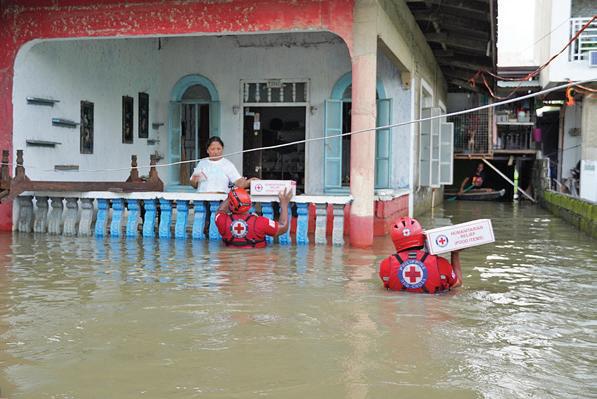
WITH climate change threatening to disrupt worker productivity and business continuity, sustainability must no longer be treated as a peripheral initiative but as a
operational strategy, private sector leaders said on Tuesday.
During a panel discussion at the 46th National Conference of Employers, executives said sustainability must be embedded into company culture, business models, and risk frameworks—not treated as a token CSR effort or promotional campaign.
“Sustainability must be found in your blood, in your sleep. When you wake up, it’s there or else, it will just scare the hell out of you,” asserted Eric Manalang, CEO of Manbrella Packaging Experts.
Manalang added that companies must view sustainability as fundamental to long-term viability, particularly in a country that ranks among the most climatevulnerable globally.
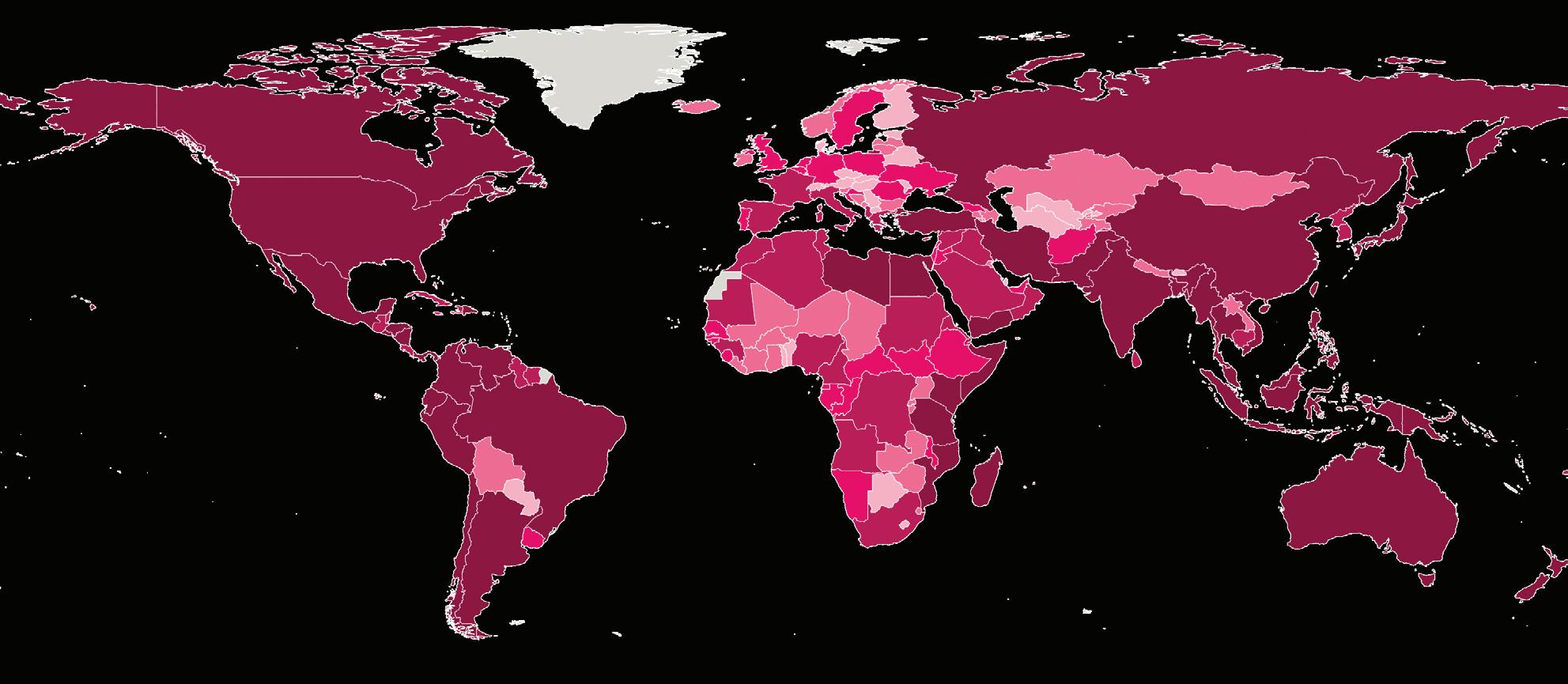
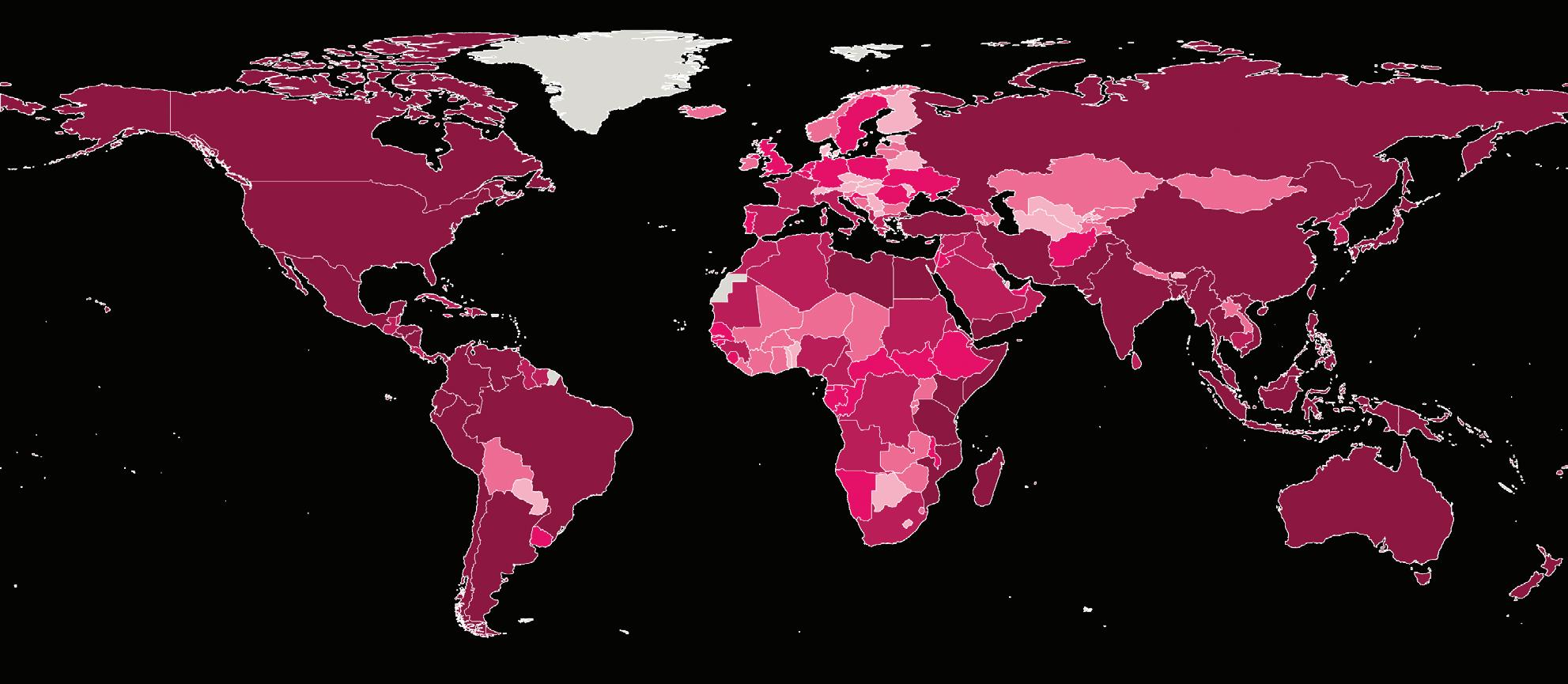
The Philippines retained its top spot in the 2024 World Risk Index, ranking first globally for the 16th consecutive year with a risk score of 46.91 out of 100—reflecting the country’s high exposure to natural hazards and limited capacity to adapt.
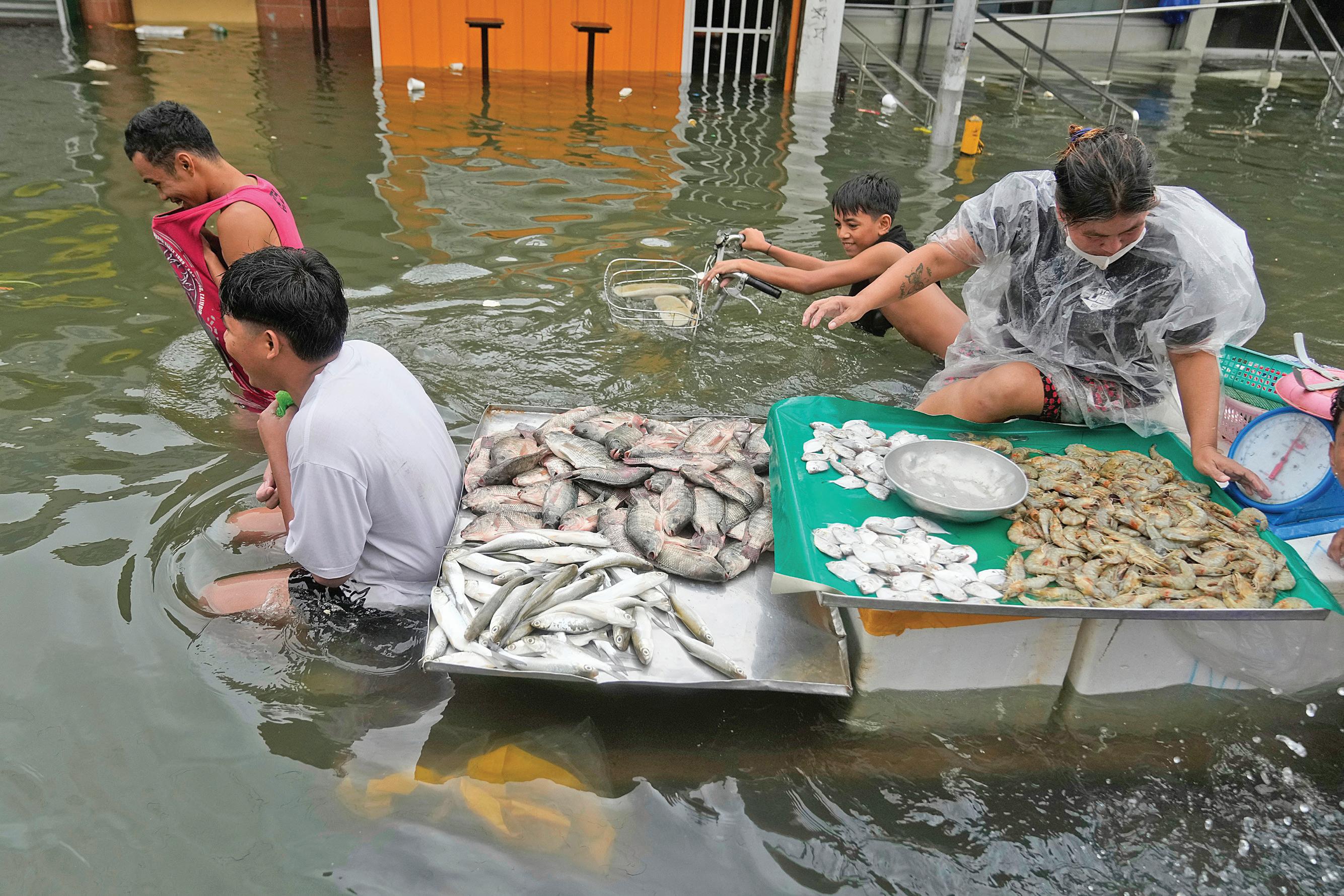
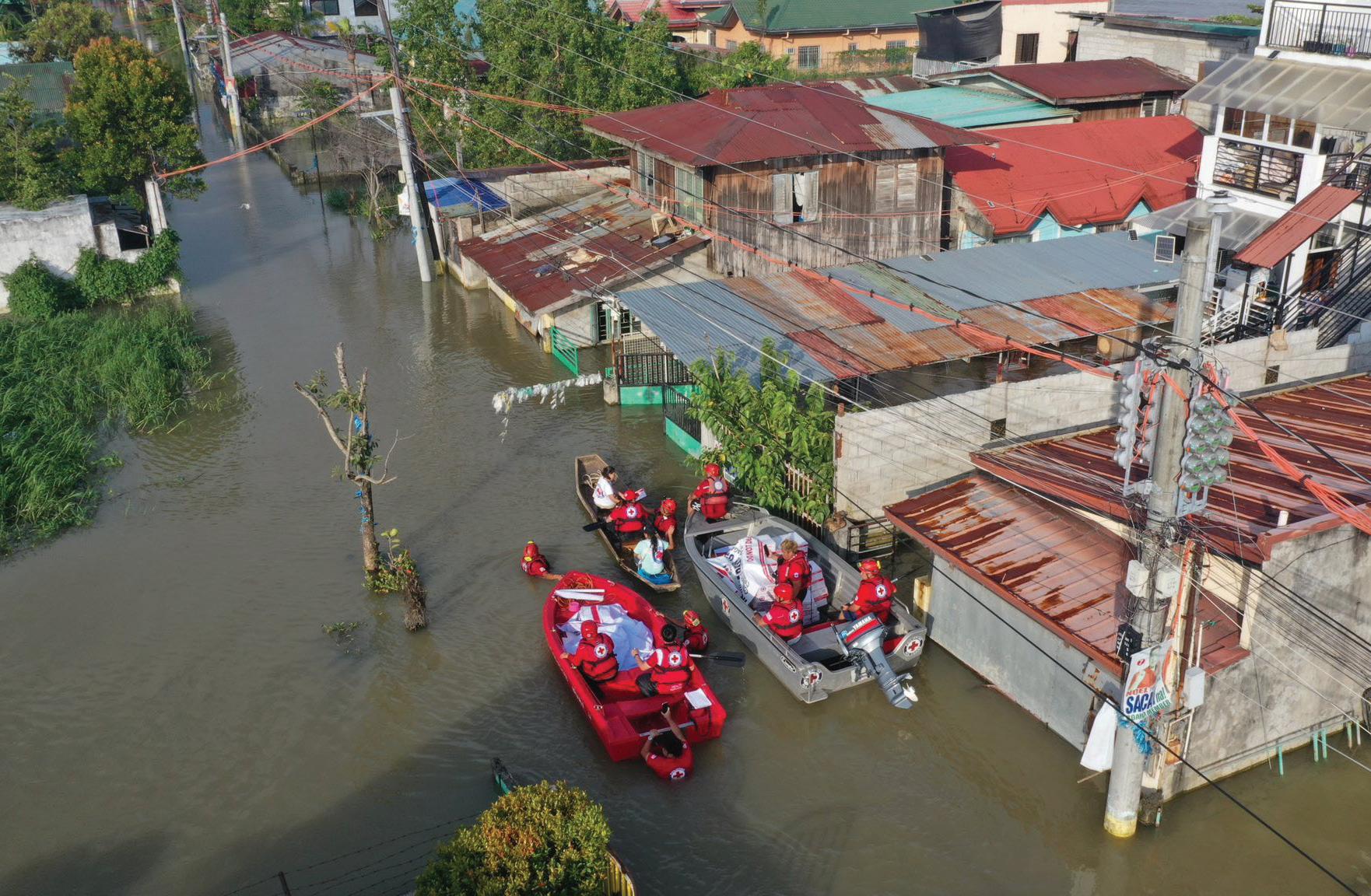
Facing around 20 typhoons annually, the archipelago’s susceptibility to extreme weather elevates threats to infrastructure, marine ecosystems, and livelihoods. With increasing temperatures and stronger typhoons, businesses
‘When the world no longer watches, we do what must be done’
The continuing challenges from the climate crisis and the pandemic have taught us that businesses must make sustainability integral to their workplace culture—or perish.
have been forced to adapt or risk falling behind.
Kristina Pobre, Head of Sustainability at Arthaland, said the effects of climate change are already apparent in basic public services.
“In 2024, because of all the storms as well as the extreme heat that we experienced that year, almost 30 percent of school, school days, teaching days, has been canceled,” she said.
Pobre explained that this disruption could have long-term implications for human capital development as students will continue to miss their time to gain knowledge and skills.
Climate events, she added, also affect food prices and household spending.
“Just because of these storms.... They affect what type of
food we put on the table and how much it costs us,” she said.
For the financial sector, integrating climate risk into lending is no longer optional.
Niki Lizares, VP and Head of Sustainability at Security Bank, explained that the bank has adopted a sustainable finance framework that assesses borrowers on environmental and social metrics—not just financial health.
“It was also a matter of building a sustainable finance framework … a way of classifying borrowers and projects according to newer parameters and, say, the impact of this project on the community,” she said.
Lizares noted that project assessments now include ecosystem and community impacts, such as providing sanitized water or reha-
By
Tbilitating mangrove areas.
“The value in environmental science, they call it the ecosystem value, is now included in that assessment. And this wasn’t there previously,” she said. At the workplace level, sustainability must be reinforced through company culture, not mandates alone.
Jun Cabochan, CEO of Panday Bookshop, shared that during the pandemic, some of his employees voluntarily crafted protective gear for frontliners and provided transport through checkpoints—without being instructed to do so.
“Every company has a culture, whether they like it or not. If it’s not written, it will be tacit and silent— but it will still be a culture. So you better … it’s a better choice to create a deliberate culture,” he said.
By John Boudreau and Nguyen Xuan Quynh Bloomberg
IN Vietnam’s northern manufacturing belt, tariff angst isn’t stopping the flow of Chinese money. If anything, it’s growing.
From a Chinese circuit board maker’s eager calls for workers, to construction crews rushing to finish a new plant for a Shenzhen producer of gaming parts, the electronics hub of Bac Ninh province just east of Hanoi is buzzing with Chinese activity. So much so that provincial officials expect to rubber-stamp $1 billion in new investment licenses—many of them Chinese.
These optics may seem unusual amid a geopolitical trade spat. Just months ago, the rhetoric from hawks in President Donald Trump’s administration had been clear: global producers like Vietnam must rely less on China’s supply chain or risk even higher American tariffs. Trump’s trade adviser Peter Navarro took to Fox News in April and described Vietnam as “essentially a colony of communist China.”
But the reality has painted a different picture for Vietnam.
Trump announced in early July that he’d reached a deal with Hanoi, setting tariffs at 20 percent for goods made in Vietnam and 40 percent for products suspected of being rerouted—or “transshipped” in trade speak—from countries like China. Neighbors in Southeast Asia are getting tariffs of about 20 percent while China faces a duty of about 55 percent, leaving Vietnam relatively secure.
“Vietnam is still in a relatively favorable position,” said Bloomberg Intelligence analyst Steven Tseng. “While its 20-percent tariff isn’t the lowest, it doesn’t necessarily hurt competitiveness given Vietnam’s cost advantage, established industrial base and geographical proximity to China. It still makes sense for Chinese manufacturers to shift to Vietnam.”
My Trinh, a manager at KCN Vietnam, which builds ready-touse factories and warehouses for
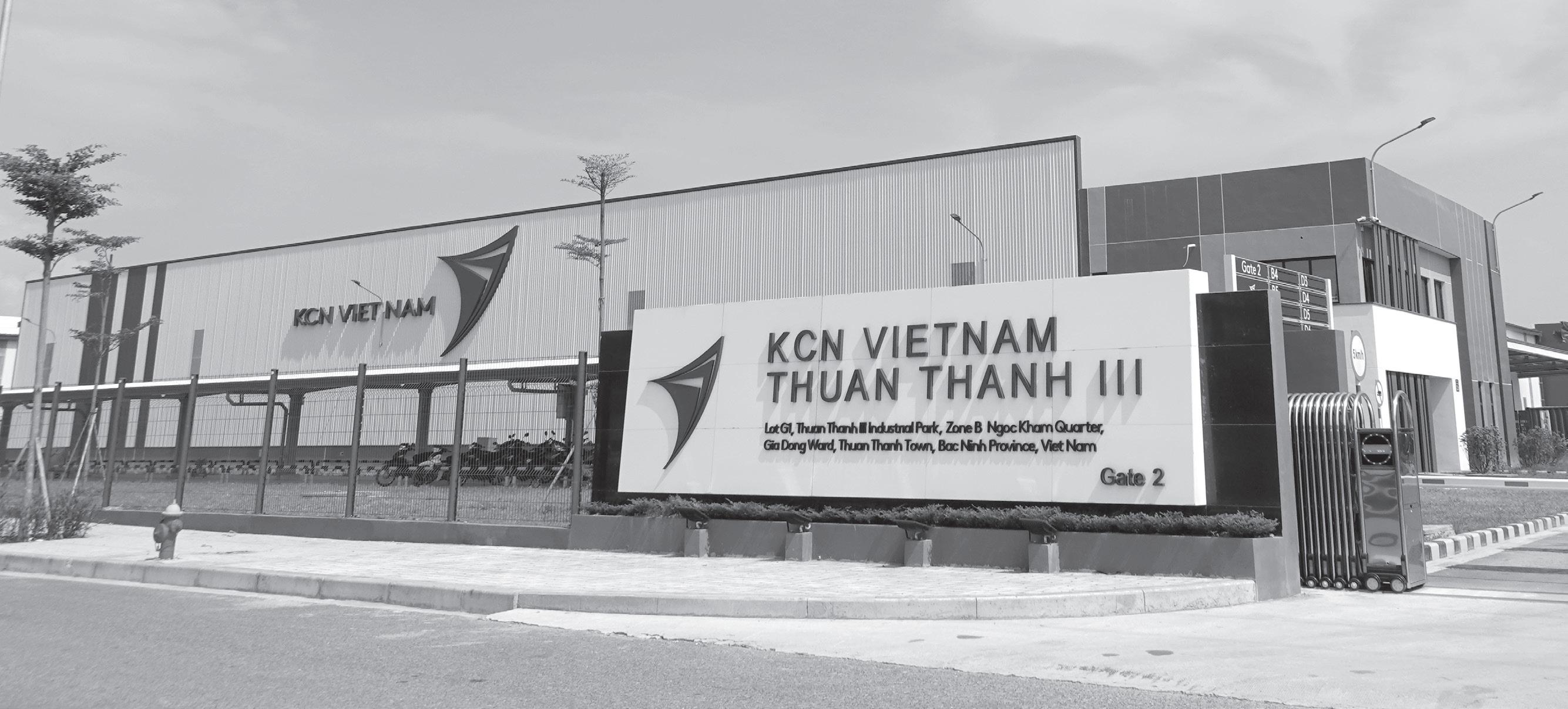
global suppliers, said the first phase of her company’s latest industrial developments sold out fast. Most of the dozen factory shells will bear the logos of Chinese firms, including Shenzhen MYGT Co., which makes game controllers for Microsoft Corp. and Nintendo Co., and Dongguan Rayking Electronics Co., a maker of electroacoustic circuit boards.
“They’re still accelerating without any hesitation,” Trinh said in an interview at a Bac Ninh industrial park earlier this month.
It’s a welcome respite for the Southeast Asian nation. In April, Trump had stood in the Rose Garden and unveiled his laundry list of levies aimed at countries he accused of unfair trade. Among them, Vietnam was hit with a punishing 46-percent tariff, one of the highest among about 90 countries. The country, normally adept at straddling East and West, initially saw orders from US customers fall. Fears the tariff could devastate large swathes of the economy spread fast, and officials quickly dispatched several delegations to Washington.
To Vietnam’s relief, the pause in orders turned out to be brief. Its US trade agreement has meant Vietnam is no worse off than rival nations.
A major sticking point remains what the White House counts as a transshipped product—something the Trump administration is expected to detail soon. But despite the uncertainty, Vietnam’s growing role in the global supply chain has meant that foreign investments are increasing, said Nguyen Duc Long, a Bac Ninh provincial official. Long expects $1 billion in investments in the province on top of $4 billion in foreign money already pledged in the first half of this year.
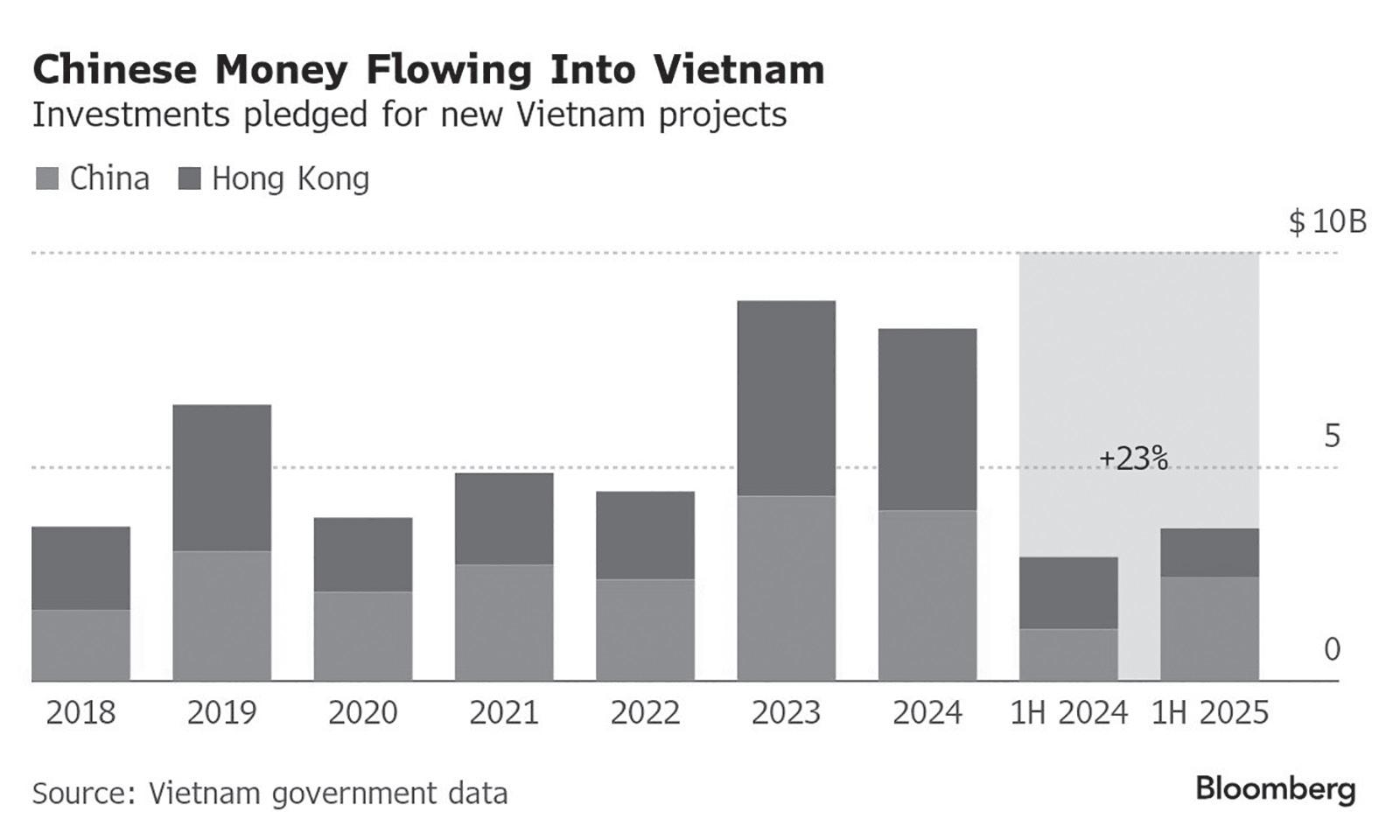
“Companies in our industrial parks are still operating normally,” Long said with casual calm while sipping green tea. “Goods are coming in and going out.” Vietnamese officials have cause to be cautiously optimistic. China remains the country’s largest trading partner by a wide margin. Investments pledged by those from China and Hong Kong in the first half of this year jumped 23 percent on the year to $3.56 billion, according to Vietnamese government data. In the second quarter, after Trump announced his tariffs, they increased 24 percent from a year ago.
But officials in Hanoi also acknowledged that the tariffs could
hit its US exports hard and the tech industry is especially vulnerable. Shipments to America may decline by as much as a third and tech exports could drop by about $15 billion, according to an internal government assessment dated July 11, Bloomberg News reported.
Vietnamese officials have said negotiations with the US are ongoing.Manufacturers may be hit by another curveball: Beijing, not happy that suppliers are expanding beyond its borders, is making it harder for experts and high-tech manufacturing equipment to go abroad.
“Vietnam remains a very attractive investment destination,” said Daniel Kritenbrink, who was US ambassador to Vietnam from 2017 to 2021 and is now a partner with The Asia Group consultancy. “But I don’t know that I’ve seen any massive new projects either. We have to see where these trade negotiations land.”
Staying power
VIETNAM has come a long way from its agrarian past. The Communist government has signed more than a dozen trade deals and is aggressively seeking more pacts in new regions, boosting the country’s appeal to suppliers who ship products across the globe from the Southeast Asian nation.
Labor is cheap, the workforce young and tech-literate. The politics are stable. Logistics are set to get smoother as the government plans billion-dollar infrastructure projects. Rival nations are locking in tariff rates close to that of Vietnam. The Philippines and Indonesia negotiated trade deals with tariffs of 19 percent each, just a percentage point below Vietnam’s, signaling that much of Southeast Asia could get a similar rate.
Apple CEO Tim Cook in May said Vietnam will produce “almost all” of its iPads, MacBooks, watches and AirPods for the American market.
BW Industrial, a logistics and industrial property developer that is a joint venture between Warburg Pincus and Becamex IDC Corp., said it had leased more than 84
percent of its planned space for the year within the first five months of 2025.
“It’s not just Chinese companies,” said Jeffrey Perlman, chief executive officer of Warburg Pincus, which has invested about $2 billion in eight Vietnamese companies. “Most companies—whether American, Korean, Japanese, or others— are moving here regardless.”
China factor THAT momentum, however, runs on Chinese parts.
Vietnam imported nearly $85 billion worth of goods from China in the first half of this year alone, a 26-percent jump year-over-year and nearly 40 percent of total imports. Those goods include electronic components, fabric, machine parts—the kind of electronic guts that power everything from PCs to drones.
“The inputs Vietnam needs for its top exports—phones and textiles—are dependent on China,” said Trinh Nguyen, a senior economist at Natixis.
The irony is that the country’s trade gap with the US—the thirdlargest behind China and Mexico last year—accelerated because of Trump’s first-term trade war with China, which drove more manufacturers to Vietnam. Now, as the nation becomes more entrenched as part of the global supply chain, it finds itself relying more on Chinese parts than ever before. Much of what’s “Made in Vietnam” is made possible by China. Trump had tried to decouple countries like Vietnam from China, as evidenced by the steep 40-percent tariff on transshipped goods, but those efforts “will remain ineffective, as China continues to be a major supplier of a wide range of components,” Bloomberg Intelligence’s Tseng said. At a recent electronics expo in Bac Ninh, Chinese executives fanned out across exhibition halls. The consensus: Vietnam’s attraction will outlast the Trump administration.
“There are so many business opportunities in Vietnam,” said Huang Jun Han, CEO of Guangdong Chau Light Infrared Semiconductor Co., which manufactures components for products ranging from bluetooth earbuds to automobile censors.
Factory renter KCN Vietnam knows this well. It has 11 industrial sites in the country and plans to more than double that number by 2028. Customers “are really pushing us” to get factories ready as soon as possible, said KCN Chief Operations Officer Hardy Diec. “The majority are signing five-plus year contracts. They are here to invest for the longer term.” With assistance from Nguyen Dieu Tu Uyen / Bloomberg
Editor: Angel R. Calso
By Heesu Lee & Soo-Hyang Choi
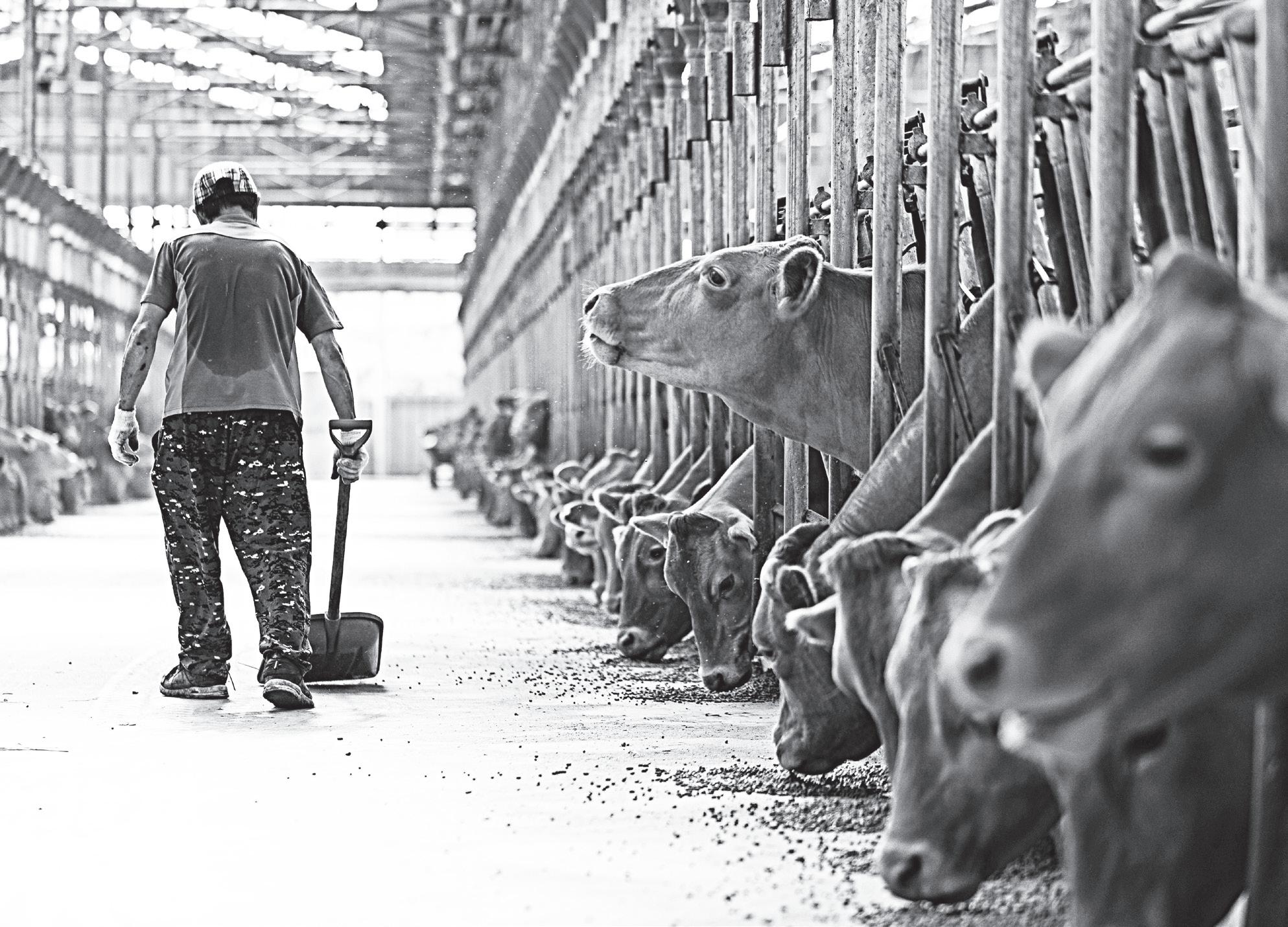
IN a sweltering cattle shed south of Seoul, flies dart across hundreds of cows sitting at the heart of a trade talks between the US and South Korea.
Lee Jongtae, 62, has raised cattle and grown rice with his family for more than 15 years in a rural part of Cheonan, just outside of the capital. Both parts of his business have been under threat as President Lee Jae Myung’s two-month-old government considered allowing the US greater access to South Korea’s beef and rice markets, a politically sensitive topic that spurred widespread protests back in 2008.
“It keeps me up at night— just thinking about it makes my blood boil,” said Lee Jongtae, who participated in the demonstrations almost two decades ago, as he checked on his roughly 400 cattle. “This is probably the biggest crisis we’ve faced since starting this farm.”
Thousands of farmers were nervous about getting left behind as South Korea raced to reach a last-minute deal with Washington, fearing President Donald Trump’s across-theboard tariffs on Korean exports at 25 percent. Yet, compared with 2008 when more than a million people hit the streets of Seoul, the political power of farmers has declined as the chip and car sectors have increased in prominence.
Trump said Wednesday on social media that a deal had been reached, setting a 15 percent tariff on South Korean exports, and securing a $350 billion investment pledge from Seoul. The agreement also includes purchases of $100 billion worth of American energy and allows for greater access for US products.
South Korea later said that rice and beef were excluded from the concessions, citing their political sensitivity and historical context. That shows President Lee’s efforts to shield these sectors, which remain deeply symbolic and politically charged following mass protests in 2008. Still, in his posting, Trump said South Korea would be “completely open” to trade with the US, including agricultural products, leaving open the possibility of a difference of interpretation of the details, as has happened with other recent trade deals.
By trying to ring fence a further opening up of the rice and beef markets, President Lee was likely looking to avoid
provoking the kind of rural backlash that has rattled previous administrations. His calibrated approach may help preserve political momentum after a June election victory that lifted business and consumer sentiment and pushed stocks to record levels. Still, the government faces scrutiny over how securely it has protected its agricultural sector, the scale of its investment pledge and whether the deal delivers enough relief for Korea’s export sectors.
Farmers feared they would end up paying the price for that deal as Seoul looked to offer something that would delight one of the key groups in Trump’s support base at the risk of sparking outrage similar to the backlash in 2008.
South Korea already has a free trade agreement with the US and its corporate giants have pledged tens of billions of dollars of investments as the trade talks continue. Seoul is also expected to increase US energy imports, review digital regulations flagged by Washington and explore partnerships in shipbuilding and defense.
Broaching the topic of agricultural market access is politically fraught but strategically valuable. Possible measures include lifting a ban on US beef from cattle over 30 months old and expanding quotas for buying US rice, moves that will hit farmers like Lee.
For President Lee, farmers’ discontent could have become the first major setback of his presidency. Any perception that core public interests are being compromised could quickly undermine public trust early in Lee’s term and generate opposition within his own party.
A cautionary tale is the presidency of Lee Myung-bak, who in 2008 was seen as giving ground too easily to the US during trade talks at the start of his term. He lifted a ban on American beef imports related to earlier mad-cow disease outbreaks and stirred a debate tinged by national pride over beef production, food safety and US pressure. Weeks of protests by tens of thousands of demonstrators, candlelit vigils and go-slow tractor convoys triggered a freefall in Lee’s approval ratings. With his
administration in its first major political crisis, Korea was forced to scramble to rework the terms.
“This is sensitive,” said Kichang Chung, a senior foreign attorney specializing in international trade litigation at Lee & Ko, in an interview with Bloomberg TV on Tuesday. “The beef issue caused major political unrest about 20 years ago. But it is meaningful for the Korean government to put that issue on the table with the United States.”
Beef influx
SOUTH KOREA imported 493,452 tons of beef in 2024, nearly 1.7 times the volume of domestic hanwoo beef production, with just over half coming from the US, according to customs and industry data.
Separate US Meat Export Federation figures show South Korea imported about $2.2 billion of American beef in 2024, making it the largest foreign buyer by value.
Under Lee Myung-bak’s trade deal with the US, a 40 percent tariff on American beef was gradually reduced over a 15year period. A 2.6 percent duty remains in place for 2025 and that is scheduled to drop to zero next year.
South Korea’s per-capita consumption of beef is among the highest in Asia, according to the UN’s Food and Agriculture Organization. It’s used for steaks, barbecued or marinated and grilled in bulgogi or galbi dishes. Gomtang, a beef bone broth, is Korea’s equivalent of chicken soup for the soul.
Drawing on advantages of scale, US beef comes in at a competitive price of about $9 per kilogram, compared with more than $13 for domestic production, according to customs and industry data from May compiled by Bloomberg.
“Young people with tight budgets are already leaning toward US beef,” said Lee Jongtae, the farmer in Cheonan, part of the bellwether region of Chungcheong where half the residents voted for Lee Jae Myung in June. “If the restrictions are relaxed any further, it will deal a serious blow to us.”
Premium products
THE higher price of local beef also reflects its different characteristics. The government has tried to elevate the highly marbled Hanwoo beef as a premium product through a grading system. While that offers potential for a higher markup, Lee said his margins have shrunk by more than 30 percent as the costs of producing higher grade Hanwoo rise. To lower costs, he began growing rice as cattle feed, pouring savings into tractors and silos, while his debts continued to rise, he said.
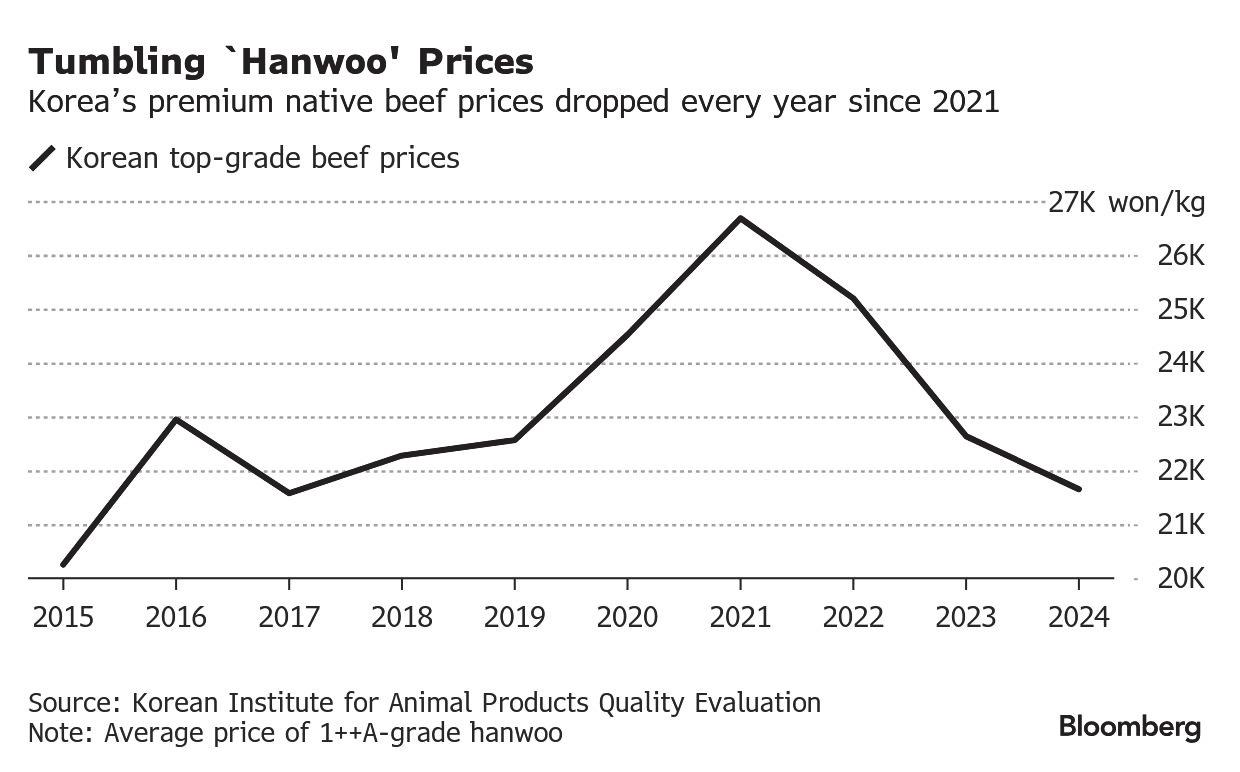
But the price of Hanwoo beef has fallen in recent years, adding to the squeeze and leaving farmers vulnerable to any further changes in market dynamics.
“I wanted to pass this farm on to my son, but now I regret bringing him into this,” Lee said. “To move forward, you need to see at least a glimpse of the future, but it’s completely dark at the moment.”
Reflecting the high political stakes of opening up further to US imports of beef and rice, lawmakers from President Lee’s Democratic Party had issued a rare statement standing against the government and vowing to protect farmers “until the end.”
“Our agriculture and rural communities have solely borne the brunt of international trade negotiations for the last 30 years,” DP lawmakers on the National Assembly’s agriculture panel said in the statement. “The consequences—decline in grain self-sufficiency, surge in farm household debt and the disappearance of rural communities—remain unhealed to this day.”
Lee appears likely to use the legislative power of his party to appease farmers and navigate the tricky balancing act facing pressure from inside the country and outside. The National Assembly could pass a grain act that would require the government to automatically purchase surplus rice if certain conditions are met as early as next week—a bill that had been vetoed by former President Yoon Suk Yeol.
“I can tell you that we are doing our best to minimize our concessions to protect our domestic industries,” Woo Sang-ho, a South Korean presidential secretary said Monday, acknowledging that negotiators were under strong US pressure to accept demands on agricultural products.
This time around, the government can at least argue that it’s not alone in coming under heavy US pressure as Trump tries to reshape global trade. Policymakers can also point to concessions on beef already announced by other countries including Australia.
Most sectors in South Korea’s economy will be taking a hit from Trump’s barrage of tariffs, making it difficult for the agriculture industry to insist it should be exempt from the pain.
On an overall economic level the farming sector generates about 1.5 percent of gross domestic product whereas the automobile and semiconductor industries are key drivers of the nation’s total exports, which are equivalent to more than 40 percent of the economy. Chips
accounted for around 21 percent of exports last year, while cars comprised around 10 percent.
The strength of the agricultural community to trigger protests is also likely weaker than in 2008. At the end of 2024, farmers accounted for just 4 percent of the total population, with nearly 70 percent over the age of 60. Still, for President Lee, this aging but politically engaged group represents a highly mobilized voting bloc.
Rice carries even heavier symbolism in South Korean society. The country imposes a 513 percent tariff on rice imports beyond an annual quota of 410,000 tons, roughly one-third of which is allocated to the US.
Consumption has fallen over the years due to demographic shifts and changing diets. The government has been buying up surplus rice, expanding incentives for farmers who shift to alternative crops. It also launched a program to reduce rice-growing areas by 80,000 hectares this year.
Against that backdrop, the talk of more US rice imports felt contradictory to local farmers, as it would add to already excess supply while relying on subsidies is only a short-term fix that doesn’t guarantee the industry’s
sustainability.
Song Taesung, 54, a rice farmer in Cheonan, said he felt a sense of betrayal when Trade Minister Yeo Han-koo said agricultural concessions are always painful but may be strategically required. That’s because President Lee campaigned on protecting the market and his party’s base overlaps with key rice-producing regions.
“President Lee was the one who criticized the Yoon administration for not protecting farmers—but now they want to bring in more American rice?” Song said. “This goes beyond deception. It feels like a complete betrayal.”
Following Yeo’s comments, protests erupted almost immediately across the country, with farmer groups accusing the government of using their livelihoods as bargaining chips. Both farmers, Lee and Song, say they are ready to take to the streets again should any deal end up containing harmful concessions.
“Sure, it’ll be a symbolic win for Trump and his supporters in rural America,” Song said. “It’s heartbreaking that we’re being used as a political tool when it’s a matter of life or death for us.” Bloomberg News

By Erika Kinetz & Elsie Chen
The Associated Press
ROME—Stealth submarines fitted with space-shooting lasers, supply-chain sabotage and custom-built attack satellites armed with ion thrusters. Those are just some of the strategies Chinese scientists have been developing to counter what Beijing sees as a potent threat: Elon Musk’s armada of Starlink communications satellites.
Chinese government and military scientists, concerned about Starlink’s potential use by adversaries in a military confrontation and for spying, have published dozens of papers in public journals that explore ways to hunt and destroy Musk’s satellites, an Associated Press review found.
Chinese researchers believe that Starlink—a vast constellation of low-orbit satellites that deliver cheap, fast and ubiquitous connectivity even in remote areas—poses a high risk to the Chinese government and its strategic interests. That fear has mostly been driven by the company’s close ties to the US intelligence and defense establishment, as well as its growing global footprint.
“As the United States integrates Starlink technology into military space assets to gain a strategic advantage over its adversaries, other countries increasingly perceive Starlink as a security threat in nuclear, space, and cyber domains,” wrote professors from China’s National University of Defense Technology in a 2023 paper.
Chinese researchers are not the only ones concerned about Starlink, which has a stranglehold on certain space-based communications.
Some traditional US allies are also questioning the wisdom of handing over core communications infrastructure—and a potential
trove of data—to a company run by an unpredictable foreign businessman whose allegiances are not always clear.
Apprehensions deepened after Russia’s 2022 full-scale invasion of Ukraine made clear the battlefield advantages Starlink satellites could convey and have been exacerbated by Musk’s proliferating political interests.
Musk pumped tens of millions of dollars into President Donald Trump’s reelection effort and emerged, temporarily, as a key adviser and government official. As Musk toys with the idea of starting his own political party, he has also taken an increasing interest in European politics, using his influence to promote an array of hard-right and insurgent figures often at odds with establishment politicians.
Musk left the Trump administration in May and within days his relationship with Trump publicly imploded in a feud on social media. SpaceX, the rocket launch and spacebased communications company that Musk founded and that operates Starlink, remains inextricably linked with core US government functions. It has won billions in contracts to provide launch services for NASA missions and military satellites, recuperate astronauts stranded at the International Space Station and build a network of spy satellites for the National Reconnaissance Office.
Starlink’s space dominance has sparked a global scramble to come up with viable alternatives. But it’s crushing first-mover advantage has given SpaceX near monopoly power, further complicating the currents of business, politics and national security that converge on Musk and his companies.
Starlink dominates space SINCE its first launches in 2019, Starlink has come to account for about two-thirds of all active satellites, according to Jonathan
McDowell, an astronomer at the Harvard-Smithsonian Center for Astrophysics, who writes a newsletter tracking satellite launches. SpaceX operates more than 8,000 active satellites and eventually aims to deploy tens of thousands more.
Beijing’s tendency to view Starlink as tool of US military power has sharpened its efforts to develop countermeasures— which, if deployed, could increase the risk of collateral damage to other customers as SpaceX expands its global footprint. The same satellites that pass over China also potentially serve Europe, Ukraine, the United States and other geographies as they continue their path around the earth.
Starlink says it operates in more than 140 countries, and recently made inroads in Vietnam, Niger, Somalia, the Democratic Republic of Congo and Pakistan. In June, Starlink also obtained a license to operate in India, overcoming national security concerns and powerful domestic telecom interests to crack open a tech-savvy market of nearly 1.5 billion people.
On the company’s own map of coverage, it has very few dead zones beyond those in North Korea, Iran and China.
No other country or company is close to catching up with Starlink. Amazon billionaire Jeff Bezos has taken aim at rival Musk with Project Kuiper, which launched its first batch of internet satellites into orbit in April. So far Amazon has just 78 satellites in orbit, with 3,232 planned, according to McDowell, and London-based Eutelstat OneWeb has around 650 satellites in orbit, a fraction of the fleet it had initially planned.
The European Union is spending billions to develop its own satellite array—called the IRIS2 initiative—but remains woefully behind. EU officials have had to lobby their own member states not to sign contracts with Starlink while it
gets up and running.
“We are allies with the United States of America, but we need to have our strategic autonomy,” said Christophe Grudler, a French member of the European Parliament who led legislative work on IRIS2. “The risk is not having our destiny in our own hands.”
China has been public about its ambition to build its own version of Starlink to meet both domestic national security needs and compete with Starlink in foreign markets. In 2021, Beijing established the stateowned China SatNet company and tasked it with launching a megaconstellation with military capabilities, known as Guowang. In December, the company launched its first operational satellites, and now has 60 of a planned 13,000 in orbit, according to McDowell.
Qianfan, a company backed by the Shanghai government, has launched 90 satellites out of some 15,000 planned.
The Brazilian government in November announced a deal with Qianfan, after Musk had a scorching public fight with a Brazilian judge investigating X, who also froze Space X’s bank accounts in the country. Qianfan is also targeting customers in Kazakhstan, Malaysia, Oman, Pakistan and Uzbekistan and has ambitions to expand across the African continent, according to a slide presented at a space industry conference last year and published by the China Space Monitor.
Russia’s invasion of Ukraine supercharges concerns CONCERNS about Starlink’s supremacy were supercharged by Russia’s 2022 full-scale invasion of Ukraine. The war was a turning point in strategic thinking about Starlink and similar systems. Ukraine used the Starlink network to facilitate battlefield communications and power fighter and reconnaissance drones, providing a decisive groundgame advantage. At the same
time, access to the satellites was initially controlled by a single man, Musk, who can—and did—interrupt critical services, refusing, for example, to extend coverage to support a Ukrainian counterattack in Russiaoccupied Crimea.
US-led sanctions against Moscow after the full-scale invasion also curtailed the availability of Western technology in Russia, underscoring the geopolitical risks inherent in relying on foreign actors for access to critical infrastructure.
“Ukraine was a warning shot for the rest of us,” said Nitin Pai, co-founder and director of the Takshashila Institution, a public policy research center based in Bangalore, India. “For the last 20 years, we were quite aware of the fact that giving important government contracts to Chinese companies is risky because Chinese companies operate as appendages of the Chinese Communist Party. Therefore, it’s a risk because the Chinese Communist Party can use technology as a lever against you. Now it’s no different with the Americans.”
Nearly all of the 64 papers about Starlink reviewed by AP in Chinese journals were published after the conflict started.
Assessing Starlink’s capabilities and vulnerabilities STARLINK’S omnipresence and potential military applications have unnerved Beijing and spurred the nation’s scientists to action. In paper after paper, researchers painstakingly assessed the capabilities and vulnerabilities of a network that they clearly perceive as menacing and strove to understand what China might learn—and emulate—from Musk’s company as Beijing works to develop a similar satellite system.
Though Starlink does not operate in China, Musk’s satellites nonetheless can sweep over Chinese territory.
Researchers from China’s National Defense University in 2023 simulated Starlink’s coverage of key geographies, including Beijing, Taiwan, and the polar regions, and determined that Starlink can achieve round-the-clock coverage of Beijing.
“The Starlink constellation coverage capacity of all regions in the world is improving steadily and in high speed,” they concluded.
In another paper—this one published by the governmentbacked China Industrial Control Systems Cyber Emergency Response Team—researchers mapped out vulnerabilities in Starlink’s supply chain. “The company has more than 140 first-tier suppliers and a large number of second-tier and thirdtier suppliers downstream,” they wrote in a 2023 paper. “The supervision for cybersecurity is limited.”
Engineers from the People’s Liberation Army, in another 2023 paper, suggested creating a fleet of satellites to tail Starlink satellites, collecting signals and potentially using corrosive materials to damage their batteries or ion thrusters to interfere with their solar panels.
Other Chinese academics have encouraged Beijing to use global regulations and diplomacy to contain Musk, even as the nation’s engineers have continued to elaborate active countermeasures: Deploy small optical telescopes already in commercial production to monitor Starlink arrays. Concoct deep fakes to create fictitious targets. Shoot powerful lasers to burn Musk’s equipment.
Some US analysts say Beijing’s fears may be overblown, but such assessments appear to have done little to cool domestic debate. One Chinese paper was titled, simply: “Watch out for that Starlink.”
Chen reported from Washington.
TKanupriya Kapoor & Sing Yee Ong
HE hardest part of building a wind farm along the misty ridges of southern Laos wasn’t hauling 25-ton blades up mountain roads or laying 71 kilometers (44 miles) of cables in thick vegetation. It wasn’t even removing unexploded bombs left over from the Vietnam War. Instead, it was bureaucracy that kept engineering veteran Nat Hutanuwatr up at night—the delicate diplomacy and seemingly endless paperwork required for neighboring Southeast Asian nations to share clean
electricity. It was, he says, like “climbing a series of Everests.”
After more than a decade of government talks, biodiversity surveys and financial negotiations, Hutanuwatr’s Monsoon Wind started exporting power to Vietnam this month. Its 133 turbines bring a heterogeneous region of 700 million people one step closer to a long-awaited supergrid—a vast, interconnected power network that will eventually carry clean energy from the expansive north to densely populated islands to the south. Part of the ambition behind the grid is fueled by environmental concerns. Southeast Asia is a major driver of coal growth and breaking

that dependence on fossil fuels—vital for the world to avoid the worst climate-change scenarios—requires a single network that allows inexpensive, clean power to flow.
Reliable green electricity is also critical for a region that aims to succeed China as the factory of the world, attracting billions from major manufacturers with weighty climate commitments, from Apple Inc. to Samsung Electronics Co. An interconnected grid could boost the GDP of every Southeast Asian country by between 0.8 and 4.6 percentage points, according to a US-funded study.
Yet executing that vision has proved complex. The Association of Southeast Asian Nations— the grouping of ten nations that is the region’s main political organization and a key proponent of the supergrid—has long struggled with diverging priorities and tends to avoid bold decisions. It has no framework for crossborder energy deals, leaving developers alone to navigate a matrix of varying technical specifications and local political hurdles. And that’s before considering the outlay, an investment that would require at least $100 billion by 2045, according to the Asian Development Bank, roughly a quarter of Malaysia’s gross domestic product. All of this makes Monsoon Wind an encouraging milestone, and evidence that a push is finally in motion to connect countries from Myanmar to the scattered islands of the Philippines and Indonesia.” We want this to be a role model for cross-border renewable energy exchange,” said Hutanuwatr,
the chief operating officer of Bangkok-based renewables developer Impact Electrons Siam. “If we start with bilateral deals like our project, we can showcase how to make it work.”
There is heartening movement elsewhere too, with a 30-kilometer cable due to connect Malaysia’s hydropower-rich Sarawak state to neighboring Sabah by October. That will eventually link up with the rest of the island of Borneo, including Indonesia’s provinces and Brunei, and then with peninsular Malaysia across the South China Sea. These are small wins, but the industry is celebrating. Hutanuwatr still spends his days poring over paperwork in a makeshift office or driving over rough terrain to inspect wind turbines, but he hosted a team party in June to mark the completion of the Monsoon Wind farm. With a bottle of beer in hand, dressed in jeans and a hoodie emblazoned with the project name, he addressed a cheerful crowd of workers, recalling the first visit to pitch the idea of importing power to Vietnam’s state utility.“ They looked at us like we were crazy,” the 56-year-old said, smiling. The utility insisted he secure approvals from both Vietnam’s prime minister and the Laos National Assembly—no small feat in countries where decisions are not always transparent or swift. He ultimately did as asked.
“We now have expertise in negotiating with a range of difficult stakeholders,” he declared, before joining a round of karaoke. Bloomberg News

IN the fight against African swine fever (ASF), the government is turning to science to protect its pigs and food security.
During the PIGusapan event on Monday, Science and Technology Secretary Renato U. Solidum Jr. explained that responding to diseases like ASF is solving everyday challenges in the food chain while also preparing if ever there will be a possible pandemic.
“We are not just addressing preparedness for future pandemics but also our existing food problems. That’s why it’s critical to show that Filipinos can develop technologies that help secure our food supply,” Solidum said.
The Science and Technology chief called the effort “a timely opportunity” to present local, science-based solutions for the struggling swine industry. Since ASF first entered the Philippines in 2019, it has affected 76 out of 82 provinces. As of May 9, four provinces remained under active outbreak, down from seven in midApril, based on government data.
On one hand, the Bureau of Animal Industry reported a 25.9 percent rise in meat imports in the first quarter of 2025 compared to the same period last year. Over half of that, or 53.2 percent, was pork.
The Department of Agriculture, for its part, has called on local producers to raise an additional 2 million hogs annually to support the industry’s recovery.
The DOST said that continued pork imports serve as a stopgap measure to stabilize supply while the industry recovers.
Homegrown techs to help
THE DOST has supported several diagnostics and vaccine research initiatives, including projects under its Virology and Vaccine Research Program (VRP).
Among the developments are technologies created by BioAssets
Corporation, with backing from the the DOST’s Industrial Technology Development Institute (DOSTITDI).
Two of the technologies are TUSLOB Rapid DNA Extraction Kit and VIPtec ASFV Real-time PCR Detection Kit, allow for quick, real-time detection of ASFV at the site of outbreaks.
The tools work using Polymerase Chain Reaction (PCR), a method that amplifies DNA for accurate diagnosis, similar to the technology that tests Covid.
The project is monitored by the DOST-Philippine Council for Agriculture, Aquatic and Natural Resources Research and Development.
The third technology is the first Filipino-made “Mobile Biocontainment Laboratory [MBL]” developed by BioAssets Corp. MBL was intended to support rapid response to potential outbreaks and improve capacity building and disease surveillance that would enable farmers and veterinarians to craft mitigation strategies, preventive and control measures at the point-of-need.
‘Agham must be felt’ SOLIDUM emphasized that technology must translate into realworld impact.
“We want science to be felt [agham na ramdam]. That’s why we aim to provide real solutions,” he said in Filipino During the media forum, he reported that about P1 billion has so far been allocated to the Virology and Vaccine Program, which includes research and development for ASF.
“Our long-term goal is to help ensure health security, food sustainability, and national resilience— and that can only be achieved by working together with other agencies and universities in the country,” he said in his opening message. Bless Aubrey Ogerio

By Bless Aubrey Ogerio
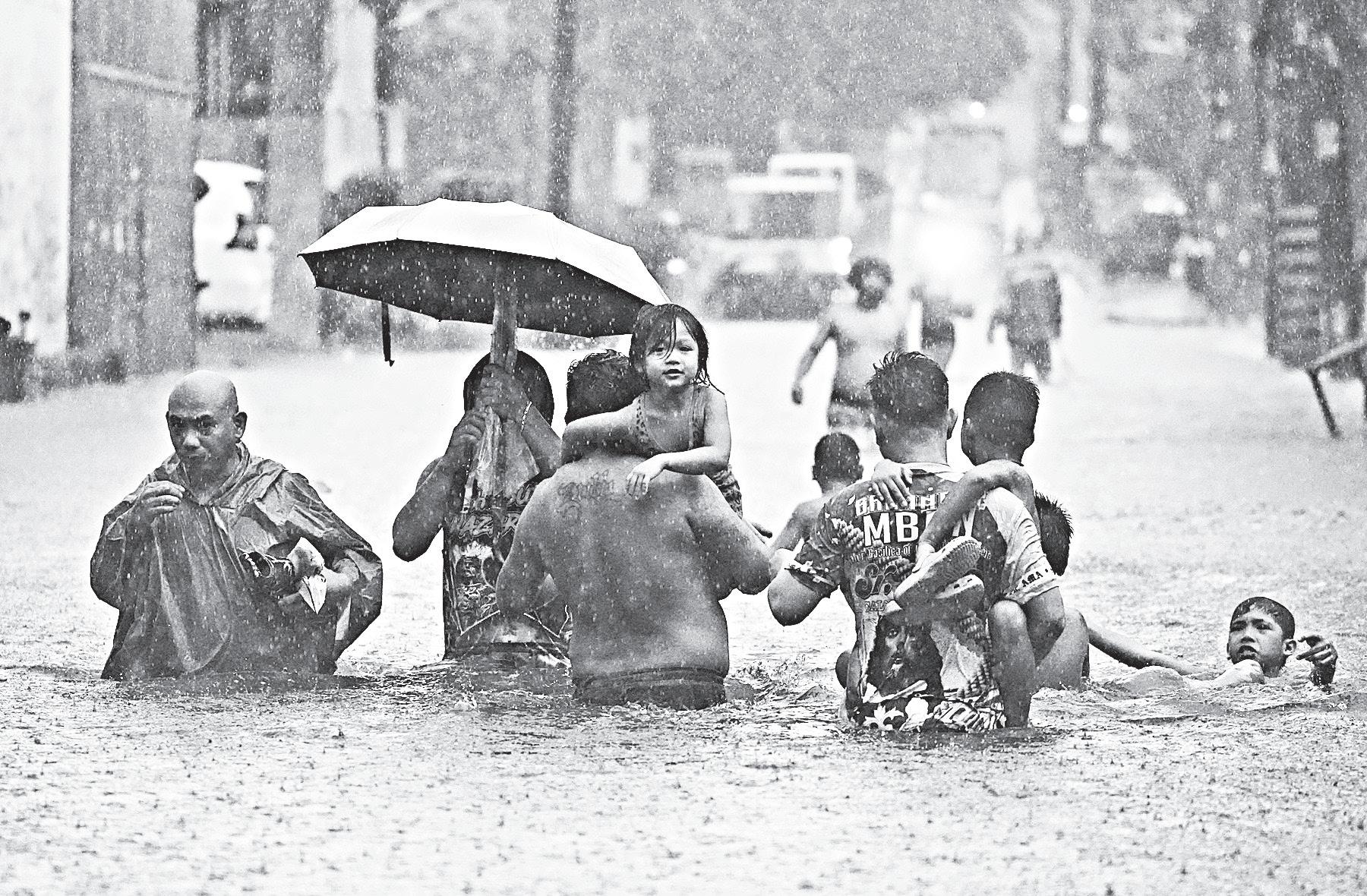
AFTER reeling from the adverse effects of three typhoons and monsoon rains that hit the Philippines a week ago, the Department of Science and Technology (DOST) said it is expanding its nationwide early warning systems and integrating artificial intelligence (AI) tools to improve disaster detection and response amid frequent weather and seismic threats.
DOST Secretary Renato U. Solidum Jr. said the agency is prioritizing upgrades to earthquake, tsunami and weather monitoring infrastructure.
“We’re maximizing the use of artificial intelligence to process data faster, especially for weather and geological hazards,” Solidum said on the sidelines of the Post State of the Nation Address (SONA) discussions on Tuesday in San Jun City.
“Even in hazard mapping, we’re applying AI technologies,” he aded.
According to Solidum, the Philippine Institute of Volcanology and Seismology (Phivolcs) currently operates 125 seismic stations and aims to increase this to 255 in the next five years.
In addition, 400 strong motion recorders—devices that help determine earthquake magnitude more quickly—will be deployed to enhance tsunami warnings.
From the current 29 tsunami detection systems, the target is to expand to 53, while tsunami warning stations will increase from 63 to 100.
At the same time, the Science chief said that the state weather bureau plans to install one additional Doppler radar—a tool in tracking rainfall intensity and wind movement—and two new flood forecasting and warning centers for major river basins within the year.
Beyond national infrastructure, the DOST is also scaling up community-based resilience programs, which include “smart and
sustainable towns” and the Community Empowerment through Science and Technology (CEST) initiative.
There are at least 91 “smart cities” across the country.
PBBM on disaster preparedness
IT should be recalled that President Ferdinand E. Marcos Jr., in his SONA on July 28, said that the government is strengthening disaster preparedness, especially as there are still 12 typhoons expected to visit the country, according to DOST-Philippine Atmospheric, Geophysical, and Astronomical Services Administration (DOSTPagasa).
This is also in addition to the four active volcanoes being monitored by the DOST-Phivolcs, such as Mount Kanlaon in Negros.
“We must never stop preparing because the threats are constant. Proper disaster habits should be natural and automatic. Because disasters, especially typhoons, come one after another, it is vital to instill the principle of continuous improvement— where we learn, improve, and grow from each experience. We address our shortcomings and identify where we can still do better,” the President said in Filipino.
In response to these concerns, he said that the government will construct more modern evacuation centers, in addition to essential infrastructure.
He said the country is currently using advanced technologies for
early and accurate prediction— such as Doppler radars, broadband seismic stations, and the landslide sensor systems.
“For effective disaster response, the Mobile Command and Control Vehicles distributed by DOST to 11 local government units nationwide are proving helpful,” he added.
The MOCCOV, the brainchild of Filipino inventor Dennis Abella, is engineered to navigate and operate efficiently in the country’s diverse and often rugged landscapes. It is equipped with the latest state-of-the-art communication technologies and was developed with the full support of the DOST—specifically, a financial grant from the agency’s CEST program, the DOST said.
Featuring PTZ perimeter cameras, a weather station system, a waterproof quadcopter drone, a satellite router with internet connection, UHF/VHF radio communication systems, and a Starlink connection, the MOCCOV enables seamless coordination and real-time updates during emergencies.
The vehicle is also equipped with vital rescue and medical tools, including a folding rescue boat with an outboard motor, an automated external defibrillator, an emergency and trauma bag, an oxygen tank with a regulator, collapsible military-grade medical beds, a blood pressure monitoring kit, and electronic devices for tracking vital signs, the DOST added.
Recent tsunami alert COMING on the heels of back-to-
back storms and southwest monsoon (habagat) rains, the country faced another threat on Wednesday morning.
Phivolcs issued a tsunami advisory on July 30, following the 8.8 magnitude earthquake off the east coast of Kamchatka, Russia, one of the world’s strongest ever recorded.
Based on the data, wave heights in Philippine coastal areas facing the Pacific are expected to be under one meter. The waves were not expected to be large, but could persist for several hours.
Phivolcs advised the public to avoid the beach and coastal areas in 26 provinces, including Cagayan, Isabela, Quezon, Eastern Samar and Davao Oriental, until further notice.
“People whose houses are located very near the shoreline of these provinces are advised to move farther inland,” Phivolcs stated.
“Owners of boats in harbors, estuaries or shallow coastal water of the above-mentioned provinces should secure their boats and move away from the waterfront. Boats already at sea during this period should stay offshore in deep waters until further advised,” it added.
The agency lifted the warning at 4:40 p.m. on the same day as no tsunami hit the Philippines. Reports say tsunami with a height of 3 meters to 4 meters hit Russia; waves of up to 1.3 meters were recorded along shores in Japan; while smaller surges hit Hawaii; and US west coast were hit by waves less than a foot above the normal sea level. No damage was recorded.
‘ W E grew up with stories about doctors, policemen or firefighters as our heroes. But what we didn’t realize until this camp was that there are other heroes, too—those who silently worked behind the scenes. They understood the climate, protected the oceans, and cared for our future.”
These were the moving words of Sylldhea Jaireh B. Bayud, a high school student from General Santos City, as she reflected on her experience at the 2025 Climate Science Youth Camp (CSYC), that was initiated by the the Department of Science and Technology-Science Education Institute (DOST-SEI). Together with 39 students and 20 teachers from Mindanao, Bayud travelled to Camiguin for a 10-day immersive learning experience on meteorology and oceanography, DOSTSEI said in a news release.

Camiguin: A natural laboratory for learning KNOWN for its unique microclimate, marine biodiversity, and exposure to extreme weather, Camiguin provided the perfect setting for understanding climate impacts and the urgency of science-based solutions. The island province recently served as the campers’ laboratory for a week as they explored coral reefs, mangrove forests, and weather-monitoring stations in the area.
Through sessions led by experts
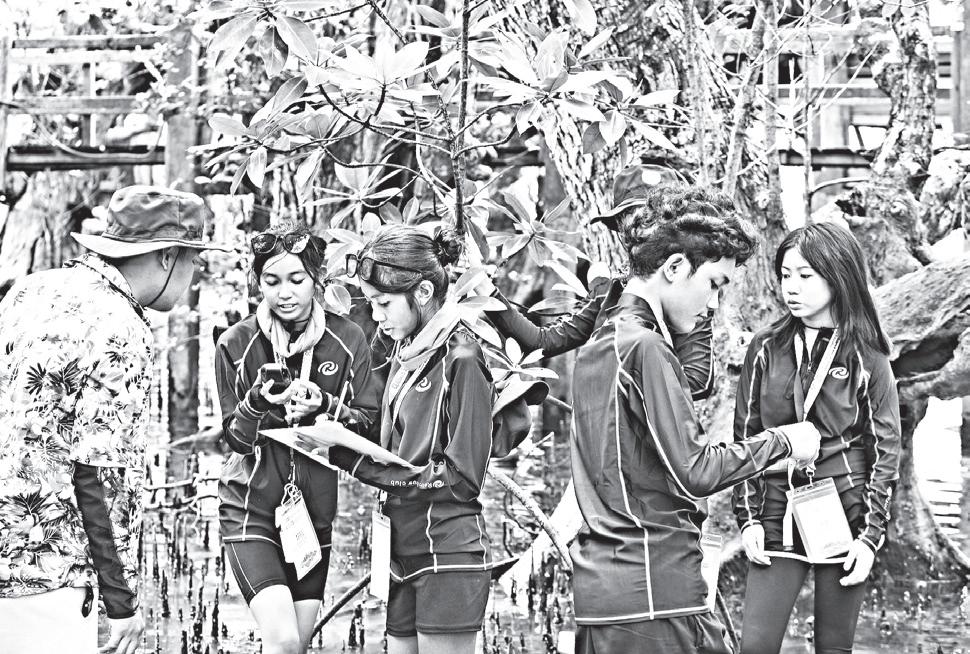
from the University of the PhilippinesMarine Science Institute (UP MSI) and the DOST-Philippine Atmospheric, Geophysical and Astronomical Services Administration (DOST-Pagasa), students and teachers engaged in a variety of experiential modules, the DOST-SEI said.
Meteorology sessions tackled fundamental topics such as weather forecasting, hydrometeorological hazards, and the critical role weather
stations play in disaster prediction and mitigation.
Meanwhile, oceanography modules explored topics on the relationship between the ocean and climate, discussing thermohaline circulation, climate resilience, and the role of bioshields as land-to-ocean filters.
The immersive field exposure also included a visit to DOST-Pagasa’s Synoptic Weather Station, giving
the participants a closer look at how weather instruments and data inform public weather forecasts.
From learning to leading BUT the camp wasn’t just about learning science—it was about becoming leaders grounded in community realities.
In a special session, DOST-SEI
Director Dr. Jayeel S. Cornelio introduced the fundamentals of community-based research.
A professor of sociology prior to entering the government, Cornelio shared his experiences and taught the students how to conduct an effective focus group discussion (FGD) with community members. Insights from his session were practiced by the students when they engaged with members of the Municipality of Sagay. They conducted FGDs with teachers, students, barangay officials, tourism workers, farmers, and fisherfolk.
Through these conversations, participants heard real stories about
how climate change affects daily life and livelihoods. What they learned then shaped their climate action plans. Ideas ranged from school-based to community-based initiatives. Groups proposed school-based eco-friendly fashion shows and climate awareness competitions. Other teams suggested the need for community-based waste management and recycling programs.
A mission to carry forward AS the boats left Camiguin’s shores, campers carried more than field notes and certificates—they carried a mission. They had seen vulnerable coastlines. They had spoken with climate-affected communities. They had worked alongside scientists. Now, they were returning home not just as students, but as stewards of nature. With programs like CSYC, DOSTSEI continues to invest in Filipino youth who will lead with compassion, curiosity, and a commitment to building a resilient nation.
A6 Sunday, August 3, 2025
By Nicole Winfield
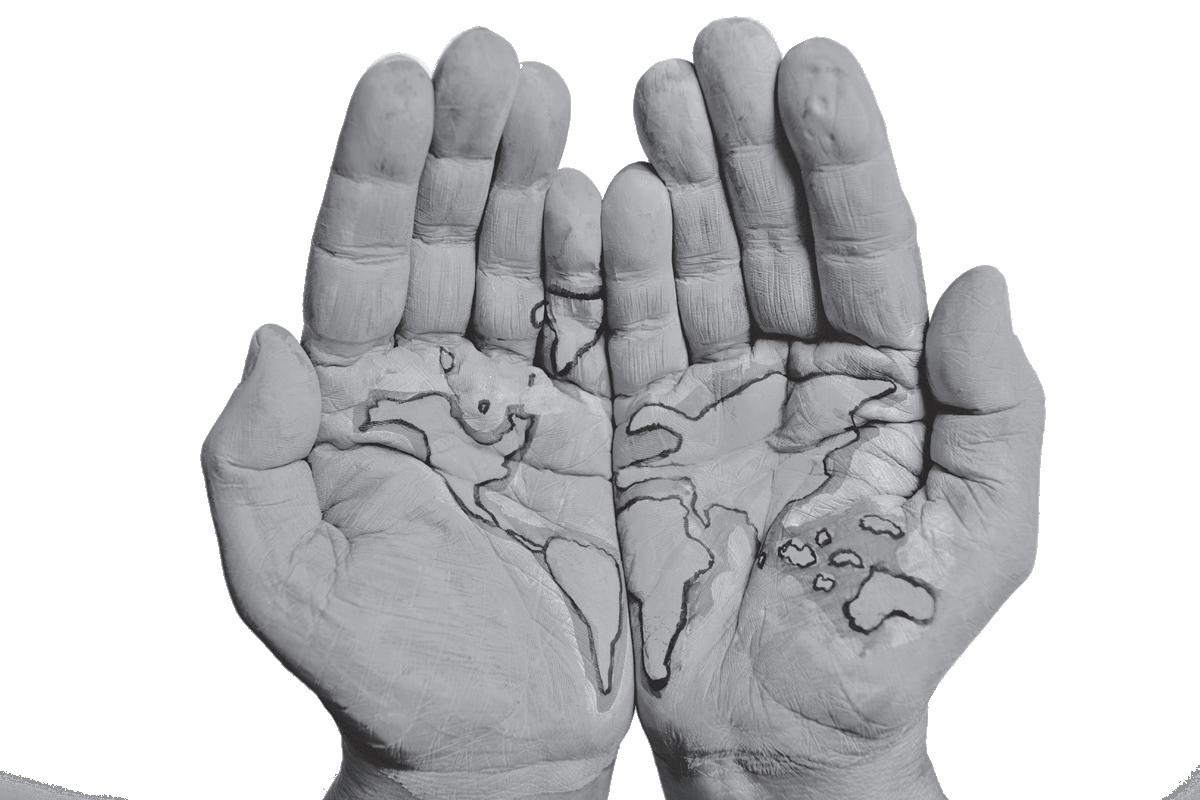
ROME—Italy agreed on Thursday to a Vatican plan to turn a 430-hectare (1,000-acre) field north of Rome—once the source of controversy between the two—into a vast solar farm that the Holy See hopes will generate enough electricity to meet its needs and turn Vatican City into the world’s first carbon-neutral state.
The agreement stipulates that the development of the Santa Maria Galeria site will preserve the agricultural use of the land and minimize the environmental impact on the territory, according to a Vatican statement.
Details weren’t released, but the Vatican will be exempt from paying Italian taxes to import the solar panels, but won’t benefit from the financial incentives that Italians enjoy when they go solar.
Italy, for its part, can use the field in its accounting for reaching European Union clean energy targets.
Any excess electricity generated by the farm beyond the Vatican’s needs would be given to the local community, officials said, speaking on condition of anonymity because the agreement was not public.
Vatican officials have estimated it will cost under €100 million ($114 million) to develop the solar farm, and that once it is approved by the Italian parliament, the contracts to do the work could be put up for bids.
Vatican foreign minister Archbishop Paul Gallagher signed the agreement with Italy’s ambassador
TO mark the 350th anniversary of the Apparition of the Sacred Heart of Jesus, the National Shrine of the Sacred Heart in Makati City will launch a special devotional exhibit at the Mall of Asia in Pasay City.
The exhibit, highlighting the continued relevance of the Sacred Heart devotion, opened on August 1, in time for First Friday devotions. It will be accessible to the public from August 2 to October 31 during regular mall hours at the Skypark, MOA Sanctuary, on the mall’s fourth level.
“This is not just an exhibit, but a meaningful opportunity for the faithful to deepen their awareness of the devotion to the Most Sacred Heart of Jesus,” said Fr. Roy Bellen, a member of the shrine’s team ministry.
Bellen said the exhibit invites reflection on God’s enduring love for humanity.
“This year marks the 350th year since our Lord revealed, through a saint, His overflowing love for mankind despite sin and the lack of love shown by humanity in return,” he said.
The exhibit is part of the national shrine’s broader initiative to renew and promote devotion to the Sacred Heart.
“We invite everyone to visit the exhibit—it will help deepen our
understanding of the devotion and strengthen our faith,” said Bellen, who is also the president of Radio Veritas.
Among the exhibit’s highlights are a painting of the Sacred Heart of Jesus by Fr Arman Tangi, SSP, and relics of St. Margaret Mary Alacoque and St. Claude de la Colombière, two saints closely associated with the devotion.
The devotion to the Sacred Heart traces its origins to the mystical visions of St. Margaret Mary Alacoque, a Visitation nun in Paray-le-Monial, France, who reported visions of Jesus between 1673 and 1675.
In the Great Apparition of June 1675, Jesus revealed his heart— crowned with thorns, aflame, and bearing a cross—and requested the institution of a Feast of the Sacred Heart, to be celebrated on the Friday following the octave of Corpus Christi.
Although initially met with skepticism by Church leaders, the devotion spread with the help of St. Claude de la Colombière and was formally recognized in 1856 by Pope Pius IX.
The Jubilee celebration aims to renew this centuries-old devotion and inspire a new generation of Catholics to encounter the merciful love of the Sacred Heart.
Norman Dequia/CBCP News


to the Holy See, Francesco Di Nitto.
The Italian parliament must approve the arrangement since it has financial implications for the territory, which holds extraterritorial status in Italy.
The Santa Maria Galeria site has
long been the source of controversy because of electromagnetic waves emitted by Vatican Radio towers located there since the 1950s.
The once-rural site some 35 kilometers (20 miles) north of Rome is dominated by two dozen short-
and medium-wave radio antennae that transmit news from the Catholic Church in dozens of languages around the globe.
Over the years as the area became more developed, residents began complaining of health
problems, including instances of childhood leukemia which they blamed on the electromagnetic waves generated by the towers.
The Vatican denied there was any causal link but cut back the transmissions.
Pope Francis last year asked the Vatican to study developing the area into a vast solar farm, hoping to put into practice his preaching about the need to transition away from fossil fuels and find clean, carbon-neutral energy sources.
Pope Leo XIV visited the site in June and affirmed that he intended to see Francis’ vision through. Leo has strongly taken up Francis’ ecological mantle, recently using a new set of prayers and readings inspired by Pope Francis’ environmental legacy.
In the 1990s at the height of the controversy over the radio towers, residents sued Vatican Radio officials, claiming the emissions exceeded the Italian legal limit, but the court cleared the transmitter. In 2012, the Vatican announced it was cutting in half the hours of transmission from the site, not because of health concerns but because of costsaving technological advances in internet broadcasting. AP
St. John Henry Newman to be declared 38th Doctor of the Church
POPE Leo paves the way for St. John Henry Newman to be declared a “Doctor of the Church.”
Newman is one of the great modern thinkers of Christianity, a key figure in a spiritual and human journey that left a profound mark on the Church and 19th-century ecumenism, and the author of writings that show how living the faith is a daily “heart-to-heart” dialogue with Christ.
A life spent with energy and passion for the Gospel—culminating in his canonization in 2019—will soon lead to the English cardinal John Henry Newman being proclaimed a Doctor of the Church.
The news was announced on July 31, in a statement from the Holy See Press Office, which reported that during an audience granted to Cardinal Marcello Semeraro, Prefect of the Dicastery for the Causes of Saints, Pope Leo XIV has “confirmed the affirmative opinion of the Plenary Session of Cardinals and Bishops, Members of the Dicastery for the Causes of Saints, regarding the title of Doctor of the Universal Church, which will soon be conferred on Saint John Henry Newman.”
‘From Shadows and Images into the Truth’
“Lead, kindly Light, amid the encircling gloom, Lead Thou me on.
The night is dark, and I am far from home— Lead Thou me on… So long Thy power hath blest me, sure it still Will lead me on O’er moor and fen, o’er crag and torrent, till The night is gone, And with the morn those angel faces smile Which I have loved long since, and lost awhile.”
John Henry Newman was 32 years old when this poignant prayer rose from his heart during his return to England after a long journey through Italy.

Born in 1801, he had already been an Anglican priest for eight years and was widely recognized as one of the most brilliant minds in his church—a man who captivated with both spoken and written word.
The 1832 trip to Italy deepened his inner search. Newman carried within him a thirst to know the depths of God, His “kindly Light,” which for him was also the light of Truth—truth about Christ, the true nature of the Church, and the tradition of the early centuries, when the Church Fathers spoke to a still undivided Church.
Oxford—epicenter of his faith and the place where the future saint lived and worked—became the road along which his convictions gradually shifted toward Catholicism.
In 1845, he distilled his spiritual journey into the Essay on the Development of Christian Doctrine, the fruit of a long pursuit of that Light, which he came to recognize in the Catholic Church—a Church he saw as the very one born from the heart of Christ, the Church of the martyrs and the ancient Fathers, which, like a tree, had grown
and developed through history.
Soon after, he asked to be received into the Catholic Church, which took place on October 8, 1845. He later wrote of that moment: “It was like coming into port after a rough sea; and my happiness on that score remains to this day without interruption.”
Devoted to St. Philip Neri IN 1846, he returned to Italy to enter, as a humble seminarian— despite being a theologian and thinker of international renown— the Collegio di Propaganda Fide.
“It is so wonderful to be here,” he wrote. “It is like a dream, and yet so calm, so secure, so happy, as if it were the fulfilment of a long hope, and the beginning of a new life.” On May 30, 1847, the circle of his vocation was completed with his ordination to the priesthood.
During these months, Newman was deeply drawn to the figure of St. Philip Neri—another soul, like himself, “adopted” by Rome.
When Blessed Pope Pius IX encouraged him to return to England, Newman went on to found an Oratory there, dedicated to the
saint with whom he shared a joyful disposition.
That good humor remained intact even through the many challenges he faced in establishing Catholic institutions in his homeland, many of which seemed at first to falter. Still, his mind continued to produce brilliant writings in defense and support of Catholicism—even under fierce attack. In 1879, Pope Leo XIII made him a cardinal. Upon hearing the news, Newman wept with joy: “The cloud is lifted forever.” He continued his apostolic work with undiminished intensity until his death on August 11, 1890. On his tomb, he asked that only his name and a brief phrase be inscribed, one that encapsulates the extraordinary arc of his 89 years of life: Ex umbris et imaginibus in Veritatem, (From shadows and images into the Truth.)
Benedict XVI beatified him in 2010, honoring a man of deep prayer who, in the pope’s words, “lived out that profoundly human vision of priestly ministry in his devoted care” for people: “visiting the sick and the poor, comforting the bereaved, caring for those in prison.
‘Cor ad cor loquitur’ NEWMAN was canonized in 2019 by Pope Francis, who, in the encyclical Dilexit nos, explained why the English cardinal had chosen as his motto the phrase Cor ad cor loquitur—“Heart speaks to heart.” The pope noted, beyond any dialectical argument, the Lord saves us by speaking from His heart to ours: “This realization led him, the distinguished intellectual, to recognize that his deepest encounter with himself and with the Lord came not from his reading or reflection, but from his prayerful dialogue, heart to heart, with Christ, alive and present. It was in the Eucharist that Newman encountered the living heart of Jesus, capable of setting us free, giving meaning to each moment of our lives, and bestowing
Editor: Lyn Resurreccion

By Jonathan L. Mayuga
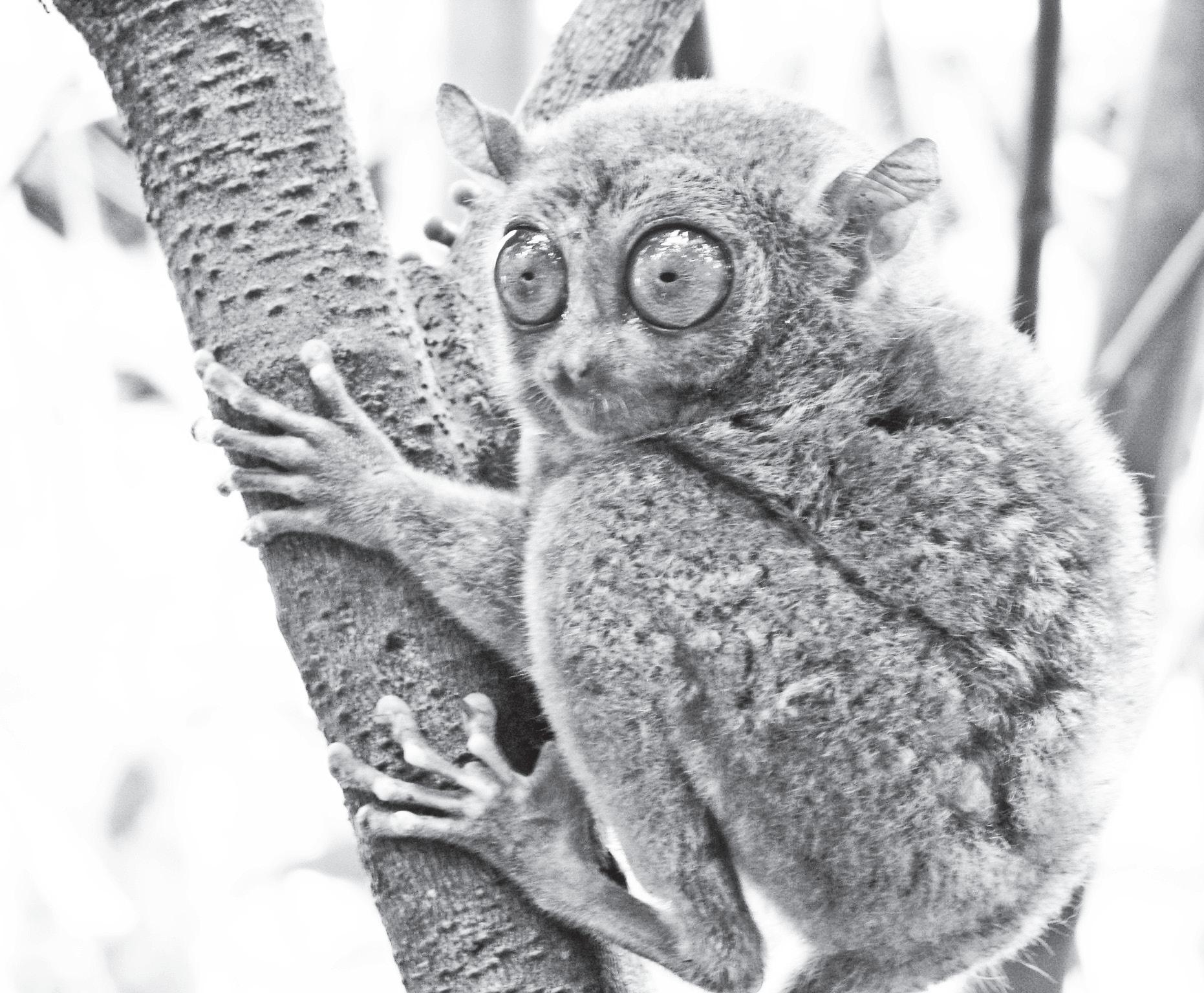
WHILE the Philippine tarsier is very popular, very little is known about this amazing tiny creature. In Bohol, an interaction with tarsiers is being promoted as an adventure of sorts for foreign and local tourists.
This insect-eating primate is shy and elusive, but because some of them have been accustomed to interacting with people, they have become seemingly domesticated and even enjoy being fed with crickets by tourists.
It is one of the smallest primates in the world and can be found in the Philippines. This very iconic animal brought fame to Bohol, the way the famous “Chocolate Hills” did.
Still, very little is known about where they live and how they behave in the wild.
According to Eunice Jean C. Patron of the University of the Philippines Diliman-College of Sciences Communication (UPDCSC), thanks to social media, increasing data on biodiversity conservation, especially for tarsiers, have become increasingly accessible, citing a recent study by UP Diliman researchers.
The
MARIA SABRINA TABETA and Simeon Gabriel Bejar of the UPD College of Science’s Institute of Biology (UPD-CS IB) explored public posts and group posts on Facebook that mentioned Philippine tarsiers.
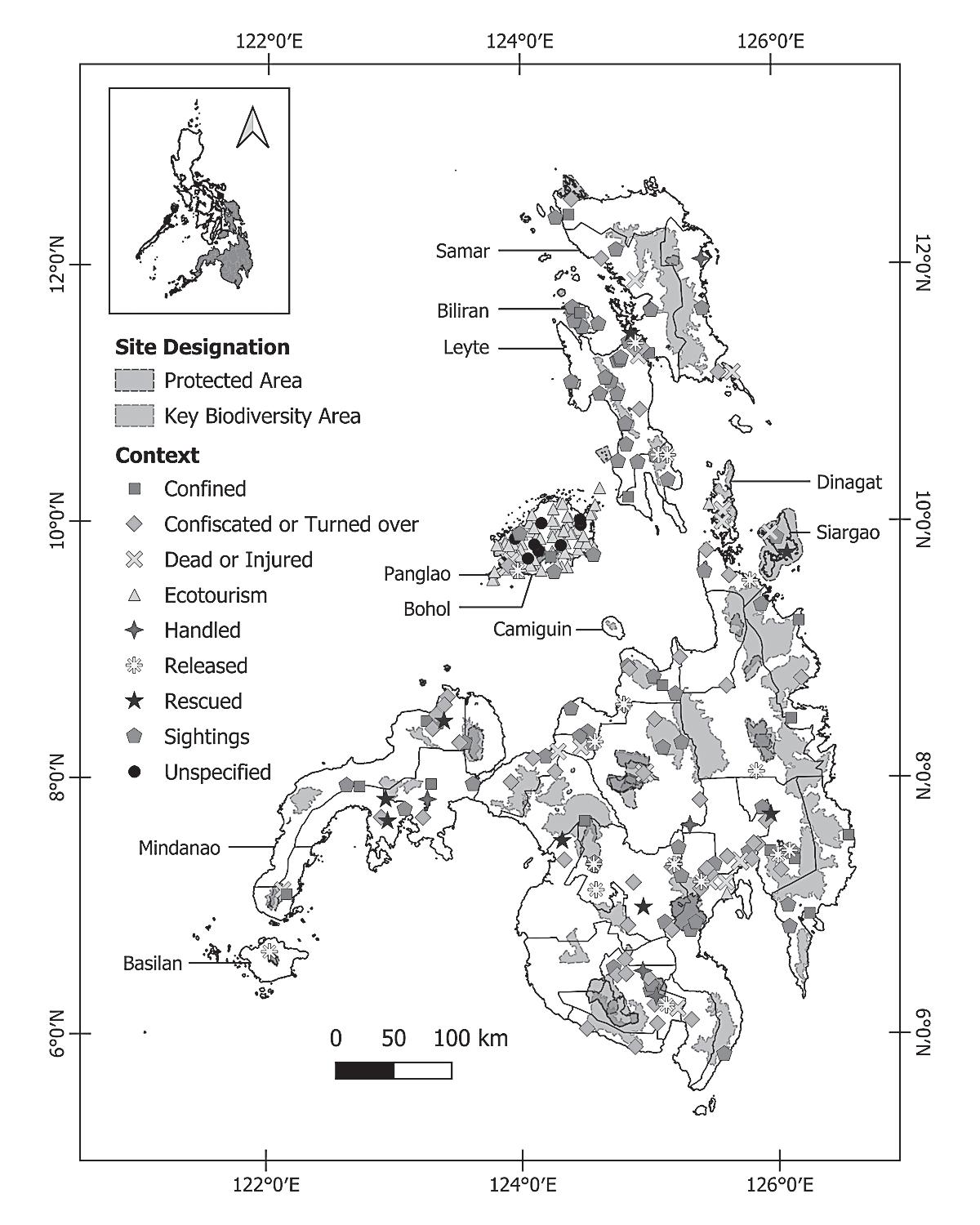
After gathering a total of 1,125 posts published between 2006 and 2024, the researchers mapped out the locations where people encountered tarsiers and identified whether these places were within protected areas or key biodiversity areas.
“What we found was astonishing—people reported encountering tarsiers in 29 provinces, which is more than twice the number listed in official conservation records like the International Union for Conservation of Nature [IUCN] Red List or even the citizen science platform iNaturalist,” the biologists shared.
Tarsier-human encounters
MANY of the encounters between humans and tarsiers took place outside protected areas, often in environments altered by human activity.
The results of the study suggest that tarsiers may be more adaptable to human-altered environments than what was initially thought.
“While most posts showed tarsiers in the context of ecotourism, others featured wild sightings of the primate, individuals kept in captivity, handovers to authorities, rescues, and even cases involving injury or death,” they added.
mushroom craze unleashed an invasive species harming native fungi
By Aishwarya Veerabahu University of Wisconsin-Madison
OLDEN oyster mushrooms, with their sunny yellow caps and nutty flavor, have become wildly popular for being healthy, delicious and easy to grow at home from mushroom kits.
But the food craze has also unleashed an invasive species into the wild, and new research shows it’s pushing out native fungi.
In a study that is believed as the first of its kind, fellow mycologists and I demonstrate that an invasive fungus can cause environmental harm, just as invasive plants and animals can when they take over ecosystems.
Native mushrooms and other fungi are important for the health of many ecosystems. They break down dead wood and other plant material, helping it decay.
They cycle nutrients, such as carbon and nitrogen from the dead tissues of plants and animals, turning them into usable forms that enter the soil, atmosphere or their own bodies.
Fungi also play a role in managing climate change by sequestering carbon in soil and mediating carbon emissions from soil and wood.
Their symbiotic relationships with other organisms also help other organisms thrive.
Mycorrhizal fungi on roots, for example, help plants absorb water and nutrients. And wood decay fungi help create wooded habitats for birds, mammals and plant seedlings.
However, we found that invasive golden oyster mushrooms, a wood decay fungus, can threaten forests’ fungal biodiversity and harm the health of ecosystems that are already vulnerable to climate change and habitat destruction.
The dark side of the mushroom trade
GOLDEN oyster mushrooms, native to Asia, were brought to North America around the early 2000s. They’re part of an international mushroom culinary craze that has been feeding into one of the world’s leading drivers of biodiversity loss: invasive species.
As fungi are moved around the world in global trade, either intentionally as products, such as kits people buy for growing mushrooms at home, or unintentionally as microbial stowaways along with soil, plants, timber and even shipping pallets, they can establish themselves in new environments.
Many mushroom species have been cultivated in North America for decades without becoming invasive species threats.
However, golden oyster mushrooms have been different.
No one knows exactly how golden oyster mushrooms escaped into the wild, whether
from a grow kit, a commercial mushroom farm or outdoor logs inoculated with golden oysters—a home-cultivation technique where mushroom mycelium is placed into logs to colonize the wood and produce mushrooms.
As grow kits increased in popularity, many people began buying golden oyster kits and watching them blossom into beautiful yellow mushrooms in their backyards. Their spores or composted kits could have spread into nearby forests.
Evidence from a pioneering study by Andrea Reisdorf (née Bruce) suggests golden oyster mushrooms were introduced into the wild in multiple US states around the early 2010s.
Species the golden oysters pushed out
IN our study, designed by Michelle Jusino and Mark Banik, research scientists with the US Forest Service, our team went into forests around Madison, Wisconsin, and drilled into dead trees to collect wood shavings containing the natural fungal community within each tree.
Some of the trees had golden oyster mushrooms on them, and some did not.
We then extracted DNA to identify and compare which fungi, and how many fungi, were in trees that had been invaded by golden oyster mushrooms compared with those that had not been.
We were startled to find that trees with golden oyster mushrooms housed only half as many fungal species as trees without golden oyster mushrooms, sometimes even less.
We also found that the composition of fungi in trees with golden oyster mushrooms was different from trees without golden oyster mushrooms.
For example, the gentle green mossy maze polypore and the elm oyster mushroom were pushed out of trees invaded by golden oyster mushrooms.
Another ousted fungus, Nemania serpens, is known for producing diverse arrays of chemicals that differ even between individuals of the same species.
Fungi are sources of revolutionary medicines, including antibiotics like penicillin, cholesterol medication and organ transplant stabilizers. The value of undiscovered, potentially useful chemicals can be lost when invasive species push others out.
The invasive species problem includes fungi
GIVEN what my colleagues and I discovered, we believe it is time to include invasive fungi in the global conversation about invasive species and examine their role as a cause of biodiversity loss.
That conversation includes the idea of fungal “endemism”—that each place has a native fungal community that can be thrown out of balance.
Native fungal communities tend to be diverse, having evolved together over thousands of years to coexist. Our research shows how invasive species can change the makeup of fungal communities by outcompeting native species, thus, changing the fungal processes that have shaped native ecosystems.
There are many other invasive fungi. For example, the deadly poisonous death cap, Amanita phalloides, and the orange pingpong bat, Favolaschia calocera, are invasive in North America. The classic red and white fly agaric, Amanita muscaria, is native to North America but invasive elsewhere.
The golden oyster mushrooms’ invasion of North America should serve as a bright yellow warning that non-native fungi are capable of rapid invasion and should be cultivated with caution, if at all.
Golden oyster mushrooms are now recognized as invasive in Switzerland and can be found in forests in Italy, Hungary, Serbia and Germany. I have been hearing about people attempting to cultivate them around the world, including in Turkey, India, Ecuador, Kenya, Italy and Portugal.
It’s possible that golden oyster mushrooms may not be able to establish invasive populations in some regions. Continued research will help us understand the full scope of impacts invasive fungi can have.
What you can do to help MUSHROOM growers, businesses and foragers around the world may be asking themselves, “What can we do about it?”
For the time being, I recommend that people consider refraining from using golden oyster mushroom grow kits to prevent any new introductions.
For people who make a living selling these mushrooms, consider adding a note that this species is invasive and should be cultivated indoors and not composted.
If you enjoy growing mushrooms at home, try cultivating safe, native species that you have collected in your region.
There is no single right answer. In some places, golden oyster mushrooms are being cultivated as a food source for impoverished communities, for income, or to process agricultural waste and produce food at the same time.
Positives like these will have to be considered alongside the mushrooms’ negative impacts when developing management plans or legislation.
The Conversation (CC) via AP
Emerging threats
THROUGH some of the Facebook posts they analyzed, the biologists also identified emerging threats to tarsiers—such as attacks by pet dogs and cats, forest fires, and infrastructure projects.
These trends point to increasing contact between people and tarsiers, which could put the species at risk.
“This study shows how social media posts can offer meaningful insights about elusive species like the Philippine tarsier and help fill in gaps left by traditional research,” the biologists explained.
“Furthermore, it highlights how everyone can play a part in conservation just by sharing their observations of wildlife,” they added.
To keep the momentum going, the biologists launched the Philippine Tarsier Conservation and Research Initiative on Facebook—a platform for sharing knowledge, raising awareness, and sparking action to protect tarsiers.
Patrón said the study, titled “Improving Our Understanding of a Cryptic Primate, the Philippine Tarsier (Carlito syrichta), Through Social Media,” is published in the International Journal of Primatology, a multidisciplinary forum devoted to current research in fundamental primatology.
By Ginny G. Novenario
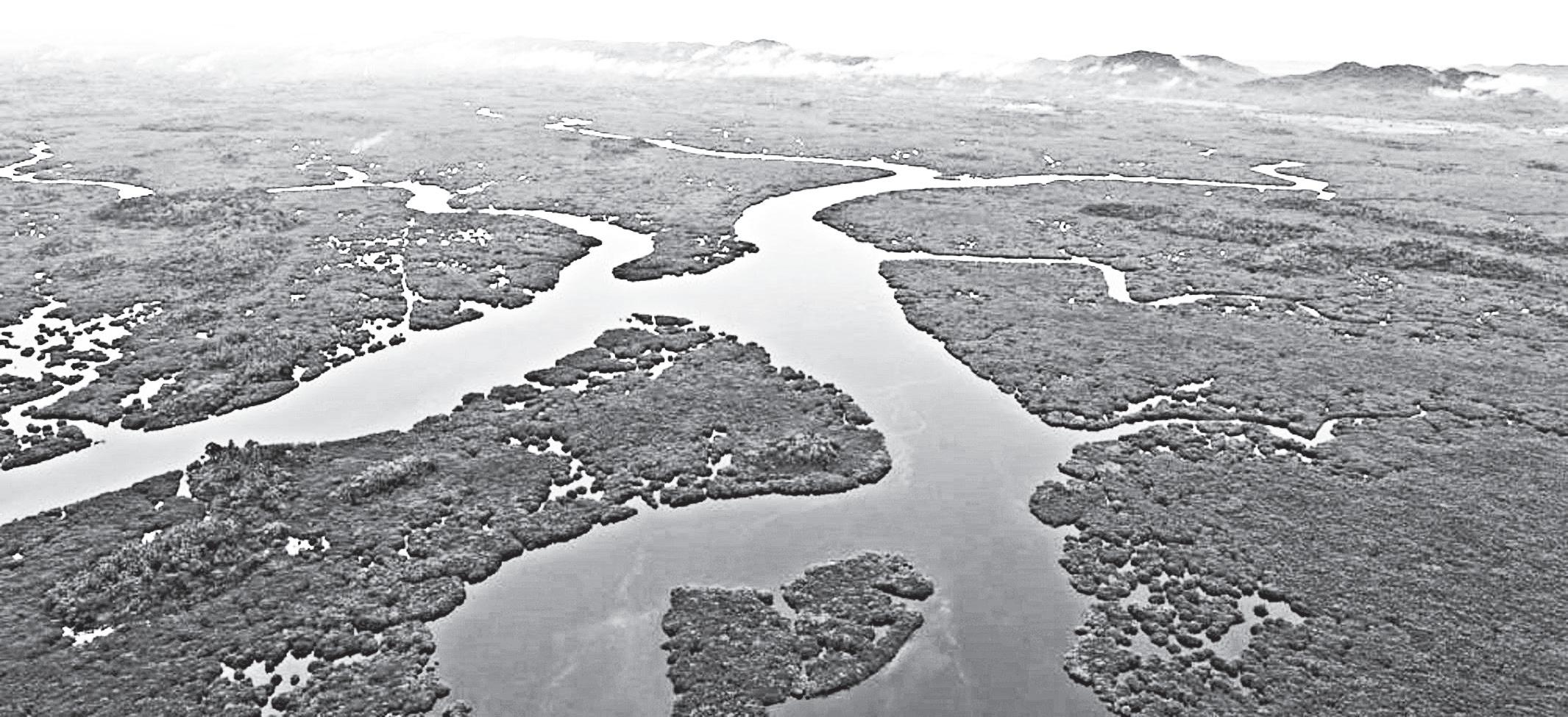
MANGROVES are part of coastal forests. Like terrestrial forests in mountainous and inland areas, mangroves forests are highly effective in absorbing and storing carbon dioxide from the atmosphere as well as from the ocean, earning the tag “blue carbon sinks.”
Thus, mangroves help in mitigating climate change. Carbon dioxide in the atmosphere is one kind of greenhouse gas that damages Earth’s protective ozone layer, leading to a changing global climate.
In his talk at a recent Policy Forum on Reforestation, Dr. Dixon Gevana, professor and director of the Forestry Development Center at the University of the Philippines Los Baños College of Forestry and Natural Resources, said that mangrove restoration can contribute as much as four times the value of forest reforestation in sequestering carbon.
Besides climate change mitigation, mangroves also act as natural protective barriers when storm surge occurs.
In the Philippines, mangroves also count among the country’s biodiversity hotspots, where the
country reportedly hosts more than half of known mangrove species.
Importantly, for coastal communities, mangroves also play a crucial economic role, acting as nurseries for fish and other aquatic life.
Thus, they are critical in the livelihood of fisherfolks while they also serve as lifeline for the sustenance of marginalized coastal communities and the population in general.
Yet unexplored, mangroves also have value in eco-tourism as is the case with the Bakawan EcoPark in Aklan, as cited by Dr. Lorena Sabino in the same forum.
However, sadly, Gevana noted that mangroves in the country are in a sorry state of degradation.
Every year, he said, an estimated 330,000 hectares of mangroves are being destroyed. Drivers of this degradation are aquaculture expansion, road construction, infrastructure development and ongoing reclamations.
While many relevant policies are in place, governance is a problem at the local level, Gevana said. There is also a lack of specific guidelines on mangrove planning and restoration. As it is, availability of funding has influenced
mangrove restoration efforts, he pointed out. Questions about where and which species to plant are hardly considered.
More than mere bio-physical aspects, the socio-ecological aspect should be incorporated by factoring in the needs of coastal communities.
As discussant, Dr. Annadel Cabanban, director of Wetlands International, batted for a wholesociety and whole-ecosystem approach for the country’s mangrove restoration program. Cabanban said this should involve political leaders and multistakeholders. She also recommended an integrated approach that encompasses forests in watershed areas down to deltas and mangrove areas.
At the same time, local governments must play an active role in crafting and implementing zoning laws. She called for the designation of a 100-meter belt around coastal areas as well as the reversion of abandoned, under-utilized fishponds for mangrove restoration. The Policy Forum on Reforestation was organized by the National Academy of Science and Technology, a policy advisory and recognition body attached to the Department of Science and Technology.
BT3,
Clase on paid leave as part of a sports betting investigation. The Ortiz probe is related to in-game prop bets on two pitches thrown by the right-hander that received higher activity than usual during his starts at Seattle on June 15 and against St. Louis on June 27. The gambling activity on the pitches was flagged by a bettingintegrity firm and forwarded to MLB. Clase was placed on leave more than three weeks after Ortiz. It’s not clear if Clase was sidelined as part of the same investigation, and he hasn’t been formally accused of wrongdoing.
n In February 2025, umpire Pat Hoberg was fired by Major League Baseball for sharing his legal sports gambling accounts with a friend who bet on baseball games and for intentionally deleting electronic messages pertinent to the league’s investigation. While MLB said the probe did not uncover evidence Hoberg personally bet on baseball or manipulated games, MLB senior vice president of on-field operations Michael Hill recommended on May 24, 2024 that Hoberg be fired. Commissioner Rob Manfred he upheld Hill’s decision. Among the highest-rated umpires at judging the strike zone, Hoberg could
GROWING up in a family of horsemen in Ontario, John Campbell knew how prestigious the Hambletonian was— then he saw good friend Ray Remmen win the first to take place at the Meadowlands in 1981.
“It was beyond a big deal,” Campbell said. “It was something special.”
This weekend, the biggest event in harness racing celebrates a centennial anniversary with the


apply for reinstatement no earlier than 2026 spring training. MLB said the friend made 141 baseball bets between April 2, 2021, and November 1, 2023, totaling almost $214,000 with an overall win of nearly $35,000. That included eight bets involving games where Hoberg was working.
n In June 2024, San Diego Padres infielder Tucupita Marcano was banned for life by MLB for betting on baseball. MLB said Marcano placed 387 baseball bets totaling more than $150,000 with a legal sportsbook in 2022 and 2023. The 24-year-old Venezuelan with 149 games of major league experience became the first active player in a century banned for life because of gambling. Oakland Athletics pitcher Michael Kelly was also suspended for one year for betting on baseball while in the minor leagues, and three minor leaguers also were banned for one year for betting on big league games: pitchers Jay Groome of San Diego and Andrew Saalfrank of Arizona, and infielder José Rodríguez of Philadelphia. Each of those four players wagered under $1,000. Saalfrank and Rodríguez played previously in the majors. n In April 2024, Toronto Raptors forward Jontay Porter was banned for life from the National Basketball Association (NBA) after a league probe found he disclosed confidential information to sports bettors and wagered on games, even betting on the Raptors to lose. In making the
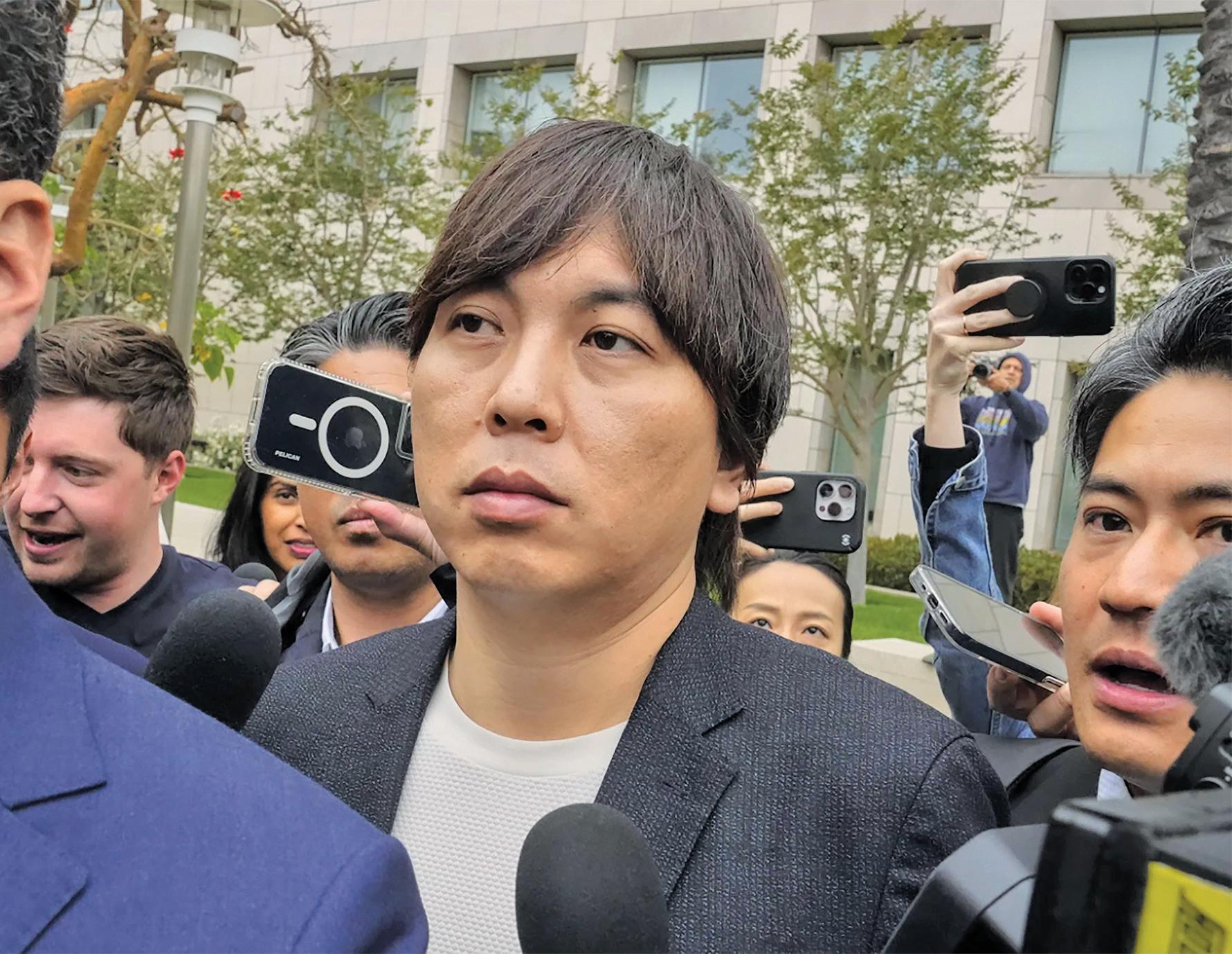
IPPEI MIZUHARA, the former interpreter for Los
announcement, Commissioner Adam Silver called Porter’s actions “blatant.” The investigation started once the league learned from “licensed sports betting operators and an organization that monitors legal betting markets” about unusual gambling patterns surrounding Porter’s performance in a game on March 20 against Sacramento.
100th running of Hambletonian.
While harness racing, like its thoroughbred equivalent, no longer holds the same prominence it once did in the US sporting landscape, the storied history of the Hambletonian and its evolution to grow interest in Europe are responsible for its longevity.
“To have this big event still going on 100 years, it’s something that I’m sure they didn’t even envision when it was formed,” said Campbell, a Harness
Racing Hall of Fame driver who won the Hambletonian a record six times and participated a record 32 consecutive times from 1983-2014. “It’s the consistency of it. They raced it no matter what, through the Depression, through World War II, so it was always there.” Campbell is now president and CEO of the Hambletonian Society that has shepherded the race named for the founding sire of standardbred horses through changing times.

The purse is the sport’s richest at $1 million, a long way from the nearly $75,000 on the line during the inaugural rendition in 1926 at the New York State Fair in Syracuse. The Hambletonian bounced around to Lexington, Kentucky; Goshen, New York and Du Quoin, Illinois, before finding a home in East Rutherford, New Jersey.
“Even during the war, they did have to because of gas rationing take it to Yonkers,” said Tom Charters, who worked at the Hambletonian Society from 1984-2017, including a lengthy stint as president. “That’s part of the charm of it, I think: the multiple venues and where it’s gone and where it’s been.” AP
The league determined that Porter gave a bettor information about his own health status prior to that game and said that another individual—known to be an NBA bettor—placed an $80,000 bet that Porter would not hit the numbers set for him in parlays through an online sports book. That bet would have won $1.1 million.
n In March 2024, the Los Angeles Dodgers fired Ippei Mizuhara , the interpreter and close friend of newly acquired two-way star Shohei Ohtani, following reports regarding his ties to an illegal bookmaker. Three months
SAM OSBORNE returns to Philippine shores not just seeking redemption—but gunning for domination—as he leads a deep international professional field in the highly anticipated Ironman 70.3 Lapu-Lapu on August 10 at Mactan Newtown in Cebu. The New Zealand star, who placed second to Henri Schoeman last year, is poised to go all the way this time with the defending champion opting out of the race. A consistent performer across all three disciplines, Osborne is expected to shine on the grueling 1.9-km swim, 90-km bike and 21-km run course of the event presented by Megaworld and set against the scenic yet punishing terrain of Lapu-Lapu City.
“The key is to manage the heat, control the effort and stay cool under pressure,” said the seasoned 13year pro, eyeing his first Philippine endurance crown.
But a stacked field awaits him. Australian Caleb Noble, who finished fourth last year, is back with renewed focus and hunger.
Known for his power in the swim and run, Noble is eager to finally reach the top of the podium, saying the key to success is showing up sharp in all three segments. Also in the mix is Calvin Amos, another Australian standout who took fifth in 2023—he’s a meticulous planner and firm believer in preparation, the 2022 pro debutant follows the mantra “Trust the training and enjoy the ride.”
Amos’s steady rise in the pro ranks makes him a legitimate threat to the title.
Joining them are fellow Aussies Brett Clifford, Josh Ferris,
later, Mizuhara pleaded guilty in federal court to bank and tax fraud for stealing nearly $17 million from Ohtani’s bank account. He spent the money to cover his growing gambling bets and debts with an illegal bookmaker, plus $325,000 worth of baseball cards and his own medical bills. Mizuhara capitalized on the language barrier to keep Ohtani’s financial advisers from understanding their client, and at times, Mizuhara even impersonated the player to the bank to prolong the fraud.
n In 2023, six-time major tournament-winning golfer Phil Mickelson was alleged to have wagered more than $1 billion over the last three decades in a book written by gambler Billy Walters. Walters also wrote that Mickelson wanted to place a $400,000 bet on the 2012 Ryder Cup, in which he played for the United States. Mickelson wrote in a lengthy social media post that he has stopped gambling, and acknowledged his betting habits crossed the line from moderation to addiction. Mickelson denied betting on the Ryder Cup.
n In 1989, Pete Rose agreed to a lifetime ban after an investigation for MLB by lawyer John Dowd found Rose placed numerous bets on the Cincinnati Reds to win from 1985-87 while playing for and managing the team. Now 82, baseball’s all-time leader with 4,256 hits remains ineligible for induction into Cooperstown, and has numerous requests for reinstatement denied. AP

empowerment and local heritage. Inspired by the legendary Cebuana heroine Reyna Bulakna, the inclusive event is open to all genders and ages 5 and up, serving as both a symbolic and literal journey of strength, unity, and empowerment. On August 9, the focus shifts to the youth with the RLC Residences Ironkids, a fun and formative multicategory race designed for kids aged 6 to 15—with swim-run and runonly categories, the event fosters discipline, confidence, and a passion for healthy living.
The excitement continues on race day with the Sunrise Sprint, a beginnerfriendly version of the triathlon featuring a 750-meter swim, 20-km bike and 5-km run.



Tariffs on South Korea’s products threaten the ‘K-beauty’ boom in the US
AUGUST 3, 2025 | soundstrip.businessmirror@gmail.com
Story by Justine Xyrah Garcia
BY day, he’s a singer, songwriter, and producer whose love songs have racked up millions of streams. By night—quite literally—he’s a fulltime registered nurse working 12-hour graveyard shifts in Florida.
At 22, Le John Escoro, better known simply as Le John, is doing what few artists in his position have pulled off: building a music career with no manager, no major label, and no industry machine to prop him up. Just songs, self-discipline, and a belief that doing it alone doesn’t mean doing it halfway.
In an exclusive interview with BusinessMirror’s SoundStrip, Le John spoke candidly about carving out his place in the scene while juggling two identities— nurse and artist—that rarely intersect.
“I work a night shift, like 12 hours, three consecutive days straight. And then on my days off, I do music,” he said. “Sometimes it’s hard because I’m tired from work.”
He’s only released eight songs since 2020, a

Publisher :
T. Anthony C. Cabangon
Editor-In-Chief :
Lourdes M. Fernandez
Aldwin M. Tolosa
Concept :
Y2Z Editor :
SoundStrip Editor : Group Creative Director : Graphic Designers :
Jt Nisay
Edwin P. Sallan
Eduardo A. Davad
Niggel Figueroa
Chow Jarlego
Contributing Writers :
Tony M. Maghirang
Rick Olivares
Jill Tan Radovan
Reine Juvierre S. Alberto
John Eiron R. Francisco
Pocholo Concepcion
Francine Y. Medina
Justine Xyrah Garcia
Bea Rollo
Trixzy Leigh Bonotan
Bless Aubrey Ogerio
Photographers :
Bernard P. Testa Nonie Reyes
Y2Z & SOUNDSTRIP are published and distributed free every Sunday by the Philippine Business Daily Mirror Publishing Inc. as a project of the
The Philippine Business Mirror Publishing, Inc., with offices on the 3rd Floor of Dominga Building III 2113 Chino Roces Avenue corner Dela Rosa Street, Makati City, Philippines. Tel. Nos. (Editorial) 817-9467; 813-0725.
Fax line: 813-7025
Advertising Sales: 893-2019; 817-1351,817-2807. Circulation: 893-1662; 814-0134 to 36. www.businessmirror.com.ph
slow pace by streaming standards—but deliberate by design.
Every track, he says, is built line by line, lyric by lyric.
“I’m a perfectionist when it comes to my craft. I don’t release songs just for the sake of releasing,” he explained.
Despite the heavy schedule, Le John believes independence is no longer a barrier in today’s landscape. With the right mix of strategy and sound, artists can make it on their own terms.
“Honestly, I believe that anyone can break out without major label backing. We have social media and the internet, and anyone can blow up if they do the right marketing. Anyone can learn marketing. Everything is right there,” he said.
It is that mindset that has carried him to this point in his career.
From bedroom covers to viral singles
Le John’s journey started back during his high school days, when a classmate casually told him he had a good voice.
By the following year, he was already learning how to produce music using nothing more than an iPad.
“At first, I started doing covers so I could practice how to record,” he recalled. “Actually, before I released my first song on Spotify, I had only done one cover.”
That first original track—which he wrote, produced, and released himself—marked the beginning of a self-directed path that would eventually lead to the founding of Moody Music, the


independent label he now co-owns.
For him, having creative control is not optional—it’s a must.
“It’s important to me because I have full control of the entire narrative and also the sound. That’s important to me and also part of my identity as an artist,” he said.
That identity began to gain wider traction in September last year, when his single “Tayo” gained momentum on TikTok.
The track—a soft, nostalgic pop tune—found a second life in the platform’s “AU” or alternate-universe fan edits.
Without a label push, it still cracked TikTok’s trending charts and reached No. 4 on Spotify’s Top Philippine Songs chart.
“I’m really thankful because I didn’t expect it, especially since I don’t have major label backing,” he said. “So I really didn’t expect that this would blow up this much.”
Few months later, he followed it up with “Naiilang,” a soulful sequel that drew from the same imagined world as Tayo.
However, he clarified that both songs were not autobiographical as they were majorly inspired by fictional scenarios and inspired by the kind of storytelling his audience engaged with on TikTok.
“Most of my songs are not personal experiences but based on imaginary scenarios I create in my head,” he added.
Now, he’s working on the final chapter of what he calls a “trio” of connected tracks.
Advice for the next self-starters
Le John is aware that not every artist can afford a producer or a full team. But that, he says, shouldn’t be an excuse to wait.
His advice to younger artists: learn the tools, and take control.
“One thing really is investing in… like if, for example, you don’t have a producer, it’s very rare to find a good producer,” he said.
“So my advice is really to produce your own music so you have full control. And also, it saves you a lot of money,” he added.
Le John also emphasized the importance of learning the business side of things, especially if you really want it to become your full-time work.
“If you want to make a living through music, you also have to understand the business side of music.”
Though currently based in Florida, Le John is returning to the Philippines next month.
Whether for a visit or something more longterm, he’s looking forward to immersing himself in the local OPM scene.
“I just want to explore more music opportunities there,” he said.
And if there’s a message that runs through his catalog—and his story—it’s that while being selfmade may take longer, it truly sounds better in the end.
It means every lyric, every stream, and every credit is truly yours.

Story by Ica Hontiveros-Cheng
AT 22 years of age, Filipino-Japanese R&B artist Reiko, is filled with positive charisma. In Japanese there is an onomatopoeia that they use- “kirakira” which means “sparkling, glittering” and this was the impression that I got from him, when we sat down for a one-on-one interview, it was as if he was sparkling, such was his charisma, and his tanned skin, bleached hair and easy-going smile definitely helped add to his sparkle.
Growing up bi-racial, Reiko struggled to fit in with his classmates, “When I was in Japan, when I was a kid I really struggled to fit in, cause when I was the I was at home I spoke Tagalog, and then I ate Filipino food and watched umm Filipino television or like Disney Channel, Cartoon Network, TFC. But when I went to school, my friends really did not get that, obviously ‘cause they were all Japanese, and I did not get like- you know what they were like talking about? So I- I was a really lonely kid at first.” Reiko says when asked about what it was like growing up in Japan.
“But one time, when I was eight years old,” Reiko continued to share. “I sang for the first time in front of people, and everybody clapped, and even if it might have been polite clapping, I still felt seen. And I loved that feeling, I felt that I existed for the first time. And I think that was when I first fell in love with music.” Reiko says, smiling, his eyes twinkling at the same time.
“I started singing my heart out everywhere and my whole life as a student revolved around that. But then, when I was 18 years old, COVID hit. And I was really depressed since there was no school. And that was when I auditioned for the boy band THE FIRST. I finished as a finalist, and I trained to be in a boy band for two years.”
Coming on his own
Reiko caught the eye of music label BMSG founder ‘Sky-Hi’ who had him debut as a solo artist. In fact, Reiko just finished his first solo tour around Japan. And recently released his R&B Trilogy “Love Deeper”, “Take It Back” and “Kimi no Sei” - the songs showcasing his smooth vocal prowess.
We got to talk about Reiko’s influences in music, whom he said includes Michael Jackson and Bruno Mars. I was surprised when he also named a number of Filipino artists such as: Dionella, Zack Tabudlo and Moira Dela Torre. He even cheekily teased about doing a collaboration with a local artist soon.
Riding the wave
Being multi-lingual, being able to speak in Japanese, English, and Tagalog, Reiko realized that it doesn’t matter what language he sings in, as the barriers in music have long been erased and fans will simply love a song, because of how it makes them feel, regardless of the language. We both agreed that the success of K-Pop is the perfect example of this. He does sing in Tagalog in his song ‘Hanggang kailan pa’ for those of you who are curious.
“And I want to ride that wave.” Reiko says. “I want to use being multi-lingual to be able to connect better with my fans.”
With the end of the year fast approaching, I asked Reiko what he wanted to accomplish before the year ends, and I was surprised when he quickly answered: “Personally, I want to finish my Assassins’ Creed game on the PS5.” I was reminded that he is still a kid after all. A wonder kid who can sing and perform very well.
Reiko was quick to get back to business: “For my career, I want to release something big, like an album, or an EP, or a mini album.” We parted ways with Reiko giving me a copy of his CD, which he signed of course, and a couple of stickers. We parted ways in Japanese, “Ganbatte!” I told him, it is an encouragement to do your best, and I know that with Reiko’s talent, positive outlook and sparkling (“kira-kira”) personality, we will definitely see more of his undeniable talent.

By Mae Anderson The Associated Press
NEW YORK—
When Amrita Bhasin, 24, learned that products from South Korea might be subject to a new tax when they entered the United States, she decided to stock up on the sheet masks from Korean brands like U-Need and MediHeal she uses a few times a week.
“I did a recent haul to stockpile,” she said. “I bought 50 in bulk, which should last me a few months.”
South Korea is one of the countries that hopes to secure a trade deal before the Aug. 1 date President Donald Trump set for enforcing nation-specific tariffs. A not-insignificant slice of the U.S. population has skin in the game when it comes to Seoul avoiding a 25 percent duty on its exports.
Rosy industry
ASIAN skin care has been a booming global business for a more than a decade, with consumers in Europe, North and South America, and increasingly the Middle East, snapping up creams, serums and balms
from South Korea, Japan and China.
In the United States and elsewhere, Korean cosmetics, or K-beauty for short, have dominated the trend. A craze for all-in-one “BB creams”—a combination of moisturizer, foundation and sunscreen—morphed into a fascination with 10-step rituals and ingredients like snail mucin, heartleaf and rice water.
Vehicles and electronics may be South Korea’s top exports to the US by value, but the country shipped more skin care and cosmetics to the US than any other last year, according to data from market research company Euromonitor. France, with storied beauty brands like L’Oreal and Chanel, was second, Euromonitor said.
Statistics compiled by the US International Trade Commission, an independent federal agency, show the U.S. imported $1.7 billion worth of South Korean cosmetics in 2024, a 54 percent increase from a year earlier.
“Korean beauty products not only add a lot of variety and choice for Americans, they really embraced them because they were offering something different for American consumers,” Mary Lovely, a senior fellow at the Peterson Institute for International Economics, said.
‘Part and parcel of the same thing’
ALONG with media offerings such as Parasite and Squid Games, and the popularity of K-pop bands like BTS, K-beauty has helped boost South Korea’s profile globally, she said.
“It’s all part and parcel really of the same
thing,” Lovely said. “And it can’t be completely stopped by a 25 percent tariff, but it’s hard to see how it won’t influence how much is sold in the U.S. And I think what we’re hearing from producers is that it also really decreases the number of products they want to offer in this market.”
“I’m not really sure where the direction of K-beauty will go to with the tariffs in place, because one of the things with K-
Korean products, owners Sue Greene and Herra Namhie are taking a similar break. They purchase direct from South Korea and from licensed wholesalers in the U.S., and store their inventory in a warehouse in Ontario, California. After years of no duties, a 25 percent import tax would create a “huge increase in costs to us,” Namhie said.
She and Greene made two recent orders to replenish their stock when the tariffs
‘A not-insignificant slice of the US population has skin in the game when it comes to Seoul avoiding a 25 percent duty on its exports.’
beauty or Asian beauty is that it’s supposed to be accessible pricing,” added Winnie Zhong, manager of Senti Senti, a retailer that sells international beauty products at two New York boutiques and through an ecommerce site.
Taking a pause
DEVOTED fans of Asian cosmetics will often buy direct from Asia and wait weeks for their packages to arrive because the products typically cost less than they do in American stores. Rather than stocking up on their favorite sunscreens, lip tints and toners, some shoppers are taking a pause due to the tariff uncertainty.
At Ohlolly, an online store focused on
were at 10 percent. But they have put further restocks on hold “because I don’t think we can handle 25 percent,” Namhie said. They’d have to raise prices, and then shoppers might go elsewhere.
The business owners and sisters are holding out on hope the U.S. and Korea settle on a lower tariff or carve out exceptions for smaller ticket items like beauty products. But they only have two to four months of inventory in their warehouse. They say that in a month they’ll have to make a decision on what products to order, what to discontinue and what prices will have to increase.
By Orville Tan
FAN Projects 101: Fan projects are grand gestures of love from fans to idols. It’s how we take part in special moments during an idol’s birthday, a group’s debut anniversary, or a huge milestone like a music show win or world tour stop.
What’s cool is these projects often double as celebrations of fandom itself and, sometimes, even as away of giving back to the community. It’s fandom culture at its finest: collective, creative, and often altruistic.
Dito sa Pinas, we mix Korean-style ideas with our own Pinoy flavor. Here are some popular types of fan projects you’ll see:
n Birthday Ads & Billboards. Perhaps the most visible projects are the giant birthday greetings. Fans pool funds to rent out LED billboards in high-traffic spots, like EDSA billboards or LED screens in malls, to display a “Happy Birthday” message for their idol. If you’ve been around malls recently, chances are you’ve seen a huge screen flashing something like “Happy Birthday, [Idol Name]!” with their photos and a message from the fandom. It’s become so common that even non-fans passing by are like, “Ah, sina SB19 ‘yan.” But we Pinoy fans didn’t stop at local billboards. In an unprecedented move, fans of P-pop girl group BINI pulled off a project this year: a video billboard ad at Hapjeong Station in Seoul, South Korea to honor member Maloi on her birthday. Imagine a Filipina idol’s

face on a Seoul subway screen, funded by Filipino fans! Likewise, Filipino K-pop fandoms have participated in global projects for Korean idols. It’s now almost tradition that for major idol birthdays, you’ll find Times Square in New York or subway stations in Seoul glowing with their images. In fact, Filipino fans have helped sponsor some of those overseas ads too. (After SB19 won a global fan-voted contest in 2023, A’TIN put up a celebratory ad in Times Square to mark the win–represent! )
n Cup Sleeve Events. Borrowed from Korean café culture, these are fan-organized gatherings at local cafés where, when you buy a drink, you receive a customized cup sleeve printed with an idol’s face and a message, like “Happy Jungkook Day!” Fan clubs host them on or around
an idol’s birthday or debut anniversary, turning a café into a mini shrine for the day. They decorate the place with banners, balloons, and standees, and often prepare freebies like photocards or stickers for attendees. You grab your frappe, get a cute sleeve and some freebies, and meet fellow fans who are just as crazy about the idol as you. During the pandemic, some did “drive-thru” style pick-ups for safety, but now they’re mostly back in-person. It’s also great promo because curious onlookers at the café or mall see the festivities and go, “Anong meron dito? ”
n Charity & Outreach. Many fandoms mark special occasions by giving back. Instead of (or in addition to) flashy ads, they donate to charities in the idol’s name. For example, Filipino ELFs (Super Junior fans) run done blood donation drives for Leeteuk’s birthday. PH BLINKs (Blackpink fans) organized a coastal clean-up to celebrate Rosé’s day. ARMYs have famously done community pantries and relief drives under BTS’ name. One group of ARMYs in Cavite even set up a “Borahae Pantry” to distribute food during the lockdown, inspired by a similar community pantry movement. Puwede na kaming maging superheroes, ‘di ba?
And there are so many more kinds of projects: fan art exhibits, free rice distributions (yes, that happened), flash mobs, fan-organized mini concerts, you name it. Filipino fans’ creativity knows no bounds. We’ve even seen collabs, like multiple fandoms joining together for a big charity project or a multi-group tribute event.

n Making Idols Feel the Love. One beautiful thing about fan projects is how they can touch the idols themselves. Idols really notice these efforts! They often post thank-you messages or mention them in vlogs.
When YoungTak, a Korean trot singer, held his album showcase, he was so moved by international fans’ support that he said, “Fans are like family to me... those who promise to stay are my biggest driving force.” Comments like that make all our hard work worth it (cue the ugly crying). Some idols even visit their billboards or send snacks to cup sleeve events in gratitude.
If you’re feeling inspired to start a project, a few practical tips: Plan early and budget wisely. Coordinate with established fan clubs if possible. Always get permits or permissions for public displays or events. And promote your project on social media to get fellow fans involved. You’d be surprised how many are willing to chip in or help out if you just ask. Platforms like FanFlare are here to make things simple, and more affordable!
So, what fan project have you been dreaming of? Maybe a birthday flash mob in Luneta? A charity drive in your hometown? Or something quirky like naming a star after your idol? As we say, lakas ng trip, or dream big. Remember, in this fandom life, tayo ang bida when we come together. Our idols give us so much; it’s awesome to give a little back. And, indeed, through fan projects, we turn our dreams (and sometimes crazy ideas) into reality: one LED billboard, cup sleeve, or community pantry at a time. Padayon, stans!