
Inflation fears rise as peso hits record-low
By Andrea E. San Juan @andreasanjuan
against the dollar on Tuesday, keeping imported inflation risks alive which are seen to feed into fuel, food, and power costs.
“As the peso breaches P61, it keeps imported inflation risks alive—fuel, food, and power costs rise—so the [Bangko Sentral ng Pilipinas] BSP’s hawkish bias stays intact and rate cuts are harder to justify,” Jonathan L. Ravelas, senior adviser at Reyes Tacandong & Co. said in a Viber message on Tuesday. From a market’s perspective, fresh record lows, said Ravelas, “hurt sentiment and raise

THEBy Andrea E. San Juan
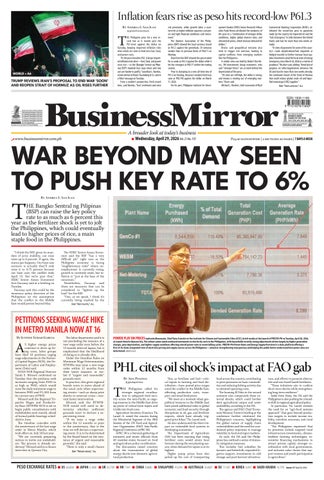
Bangko Sentral ng Pilipinas (BSP) can raise the key policy rate to as much as 6 percent this year as the fertilizer shock is yet to jolt the Philippines, which could eventually lead to higher prices of rice, a main staple food in the Philippines.
“I think the BSP, given its mandate of price stability, can raise rates up to 6 percent. If again, the status quo happens. Our base case scenario is actually they’ll only raise it to 4.75 percent because our base case, the conflict ends April 15. But we’re past that,” HSBC Senior Asean Economist Aris Dacanay said at a briefing on Tuesday. Dacanay said this could be the monetary policy direction of the Philippines on the assumption that the conflict in the Middle East would persist beyond May.
The HSBC Senior Asean Economist said the BSP “has a very difficult job” right now as the Philippine economy is facing “stagflationary risks” where unemployment is currently rising, growth is currently weak, but inflation is “just at the base of the mountain.”
Nonetheless, Dacanay said there are measures that can be considered to “lighten up the load” for the BSP.
“One, as we speak, I think it’s currently being masked by the
By Justine Xyrah Garcia
AS higher energy prices continue to drive up living costs, labor groups have filed 16 petitions urging wage adjustments in the National Capital Region (NCR), the Department of Labor and Employment (Dole) said.
DOLE -NCR Regional Director
Sarah S. Mirasol confirmed on Tuesday that the petitions seek increases ranging from P200 to as high as P845, which would raise the daily minimum wage to between P895 and P1,500 from its current rate of P695.
Mirasol said the Regional Tripartite Wages and Productivity Boar (RTWPB)-NCR is set to begin public consultations with stakeholders next month, ahead of formal public hearings scheduled in June.
The timeline coincides with the anniversary of the last wage order in Metro Manila, which took effect on July 18 last year.
“We are currently preparing notices to invite our stakeholders. The process is already underway,” Mirasol said in a chance interview in Quezon City.
The labor department said it is not precluding the issuance of a new wage order even before the 12-month interval lapses, but it emphasized that the likelihood of doing so is already slim.
Under the Omnibus Rules on Minimum Wage Determination, RTWPBs may issue a new wage order within 12 months from their latest issuance, or earlier if “urgent and reasonable” grounds exist.
In practice, this gives regional boards room to move ahead of the usual cycle when supervening events—such as sharp price shocks or external crises—warrant faster intervention.
Mirasol said the RTWPBNCR would still need to determine whether sufficient grounds exist to declare a supervening event.
“If we issue a wage order within the 12 months or prior to the anniversary, that is the time we will declare a supervening event. It is to be determined by the Board based on the existence of urgent and reasonable grounds,” she said. “There is only a small chance
risk premiums, while growth takes a nearterm hit as higher inflation squeezes consumers and tight financial conditions curb investment.”
The Bankers Association of the Philippines (BAP) showed the local currency closed at P61.3 against the greenback, 59 centavos weaker than its previous finish of P60.71 on Monday.
Data from the BAP showed the peso traded for as weak as P61.3 against the dollar while it hit the strongest at P60.77 within the trading session.
Prior to slumping to a new all-time low of P61.3 on Tuesday, the peso’s weakest level was seen at P60.748 against the dollar on March 31, 2026.
For his part, Philippine Institute for Devel-
opment Studies (PIDS) Senior Research Fellow John Paolo Rivera attributed the weakness of the peso to a “combination of stronger dollar conditions, higher global interest rates, and elevated oil prices, which increase demand for dollars.”
Rivera said geopolitical tensions also tend to trigger risk aversion, leading to capital outflows from emerging markets like the Philippines. A similar view was held by Robert Dan Roces, SM Investments Group economist, who said “stronger forces” are at work behind the depreciation of the peso. “US rates are still high, the dollar is strong, and money is moving out of emerging markets,” Roces said. Michael L. Ricafort, chief economist of Rizal
Commercial Banking Corporation (RCBC), attributed the record-low peso to payments made by the country for imported oil and the “lack of progress” in



TBy Ada Pelonia @adapelonia
HE Philippines called for stronger regional coordination to safeguard food security across the Asia-Pacific as ongoing tensions in the Middle East drive up prices of critical farm inputs and trickle into food costs.
Agriculture Secretary Francisco Tiu Laurel Jr. raised the concern during the Ministerial Segment of the 38th Session of the UN Food and Agriculture Organization (FAO) Asia-Pacific Regional Conference (APRC 38).
APRC 38 is a biennial gathering of ministers and senior officials from 46 member-states focused on food and agriculture policy coordination.
The discussions raised concerns about the transmission of global energy shocks into domestic agricultural production.
This, as fertilizer and fuel—critical inputs in farming and food distribution—have posted price surges amid the conflict in the Middle East, affecting production costs, transport, and retail food prices.
“We meet at a moment when geopolitical tensions in the Middle East have posed additional risks to global economic and food security through disruptions in oil, gas, and fertilizer exports, which have already triggered price hikes,” Tiu Laurel said.
He also underscored the direct impact on vulnerable food systems in developing economies.
The Department of Agriculture (DA) has been warning that rising fertilizer costs would strain local farmers during the wet planting season, when demand for inputs is at its highest.
Higher pump prices have also jacked up the cost of transporting
food across the country, contributing to price pressures on basic commodities and reducing fishing activity due to elevated operating costs.
The looming El Niño in the second semester also compounds these external shocks, which could further dent agricultural output and water availability, according to the DA.
The agency said FAO Chief Economist Máximo Torero’s briefing at the conference further reinforced the Philippines’s concerns, highlighting the global nature of supply chain vulnerabilities and the need for coordinated policy responses to manage volatility in food and input markets.
As such, the DA said the Philippines has outlined a series of domestic mitigation measures.
This includes fuel subsidies for farmers and fisherfolk, expanded logistics support, investments in cold storage and post-harvest infrastruc-
ture, and efforts to promote alternative and non-fossil-based fertilizers.
“These initiatives aim to cushion short-term shocks while strengthening long-term resilience.”
Aside from these, the DA said the Philippines is also pushing for a broader shift in regional agricultural policy.
In particular, Tiu Laurel stresses the need for an “agri-food systems approach” that goes beyond production targets to include income stability, nutrition outcomes, and rural development.
“The Philippines expressed that its priorities include targeted rural infrastructure investments, climateresilient farming technologies, innovative financing mechanisms to attract private capital, stronger coordination with local governments, and inclusive value chains that support women and youth participation in agriculture.”
Aside from the food itself, the packaging materials of food items and essentials sold by Fast-Moving Consumer Goods (FMCGs) are also expected to become more expensive.
“There’s a shortage of plastic pellets at a time when your economy will likely return to a sachet economy,” he also noted.
Meanwhile, HSBC Global Investment Research sees the Philippine economy growing by 3.4 percent at an adverse scenario or if the Middle East conflict lingers beyond May of this year.
Mild impact on air fares as CAB lowers fuel surcharge
By Lorenz S. Marasigan
AIRLINE passengers will see a marginal reduction in fuel surcharges starting May 1, as the Civil Aeronautics Board (CAB) lowered the surcharge ceiling by just one level.
that we will issue it within the 12-month period but still, we will consider it,” she added.
Currently, the daily minimum wage in Metro Manila stands at P695, the highest in the country, while the lowest is in the Bangsamoro Autonomous Region in Muslim Mindanao (BARMM) at P411.
Data from independent think tank IBON Foundation showed that as of January, the average daily nominal wage rate stood at P503, which is P750 short of the estimated P1,253 family living wage.
In its latest 15-day advisory, the regulator said it has reduced the surcharge ceiling from Level 19 to Level 18 for May 1 to May 15, still two notches from the maximum of Level 20. The new rate means domestic passengers on the shortest routes of up to
Key rate…
oil crisis, but the fertilizer shock has not hit the Philippines yet, but as we speak, a kilogram of rice is at 47 pesos,” Dacanay said. As such, Dacanay emphasized the importance of “certainty” in rice poli-
200 kilometers—such as Cebu to Tagbilaran or Cebu to Bacolod—will pay a maximum surcharge of P593 per passenger per segment, down from P627. On the longest domestic routes exceeding 1,000 kilometers, such as Manila to General Santos or Manila to Zamboanga, the ceiling ranges from
cy. He said this can help temper prices in the retail rice market and that would be “a huge, huge inflation relief for the 113 million Filipino consumers,” he added.
The HSBC Senior Asean Economist said the 6-percent interest rate forecast for this year could still go down should the price of rice go back to P40 per kilo.
“If rice prices go back to 40, I do

P593 to P1,734 depending on distance—a modest easing from the P627 to P1,834 range that applied in the second half of April. International travelers see comparably thin relief. Passengers flying from the Philippines to destinations across the region—from nearby Taiwan, Hong Kong, and Vietnam to farther Middle East points—will pay surcharges ranging from P1,958.44 to P6,738.77 per passenger one way under Level 18, compared to P2,070.77 to P7,125.32 at Level 19.
Those flying the longest international routes to North America, the United Kingdom, or the Netherlands will see the ceiling ease from P15,397.15 to P14,663.96. The one-level dip reflects a
think you can shave off 50 to 75 basis points from that. So hopefully, the President pushes through with its plan of cracking down on the abuses that you see in the middle market and at the same time lowering rice tariffs because that will be a huge relief to consumers,” added Dacanay.
Meanwhile, the HSBC Senior Asean Economist explained that the Philippines is yet to feel the blow of the fertilizer shock.
He pointed out that there’s usually a 3- to 6-month lag from when fertilizer prices shoot up.
“So surprisingly, the oil and urea spike coincided with each other. So add 3 to 6 months from April. So it can start in July. For me, I priced it in September,” added Dacanay.
He explained that a global shortage of fertilizer will affect yields of food supply.
An earlier story in the BusinessMirror explained that the uptick in fertilizer prices due to the Middle East conflict could dent the Philippines’s rice and corn production.
BMI, a unit of Fitch Solutions, has projected that the country’s rice and production will decline by 0.6 and 0.7 percent, respectively.
Rice production (in milled rice terms) might reach 12.3 million metric tons (MMT), from the estimated output of 12.37 MMT last year; while corn production could slide to 8.27 MMT, from last year’s 8.331 MMT.
BMI made the forecast after flagging the effects of a prolonged closure of the Strait of Hormuz
slight softening in jet fuel prices. Level 18 corresponds to a fuel price range of P72 to less than P75 per liter, compared to Level 19’s P75 to less than P78 per liter.
Data from the International Air Transport Association (Iata) as of April 24 show global jet fuel averaging $179.46 per barrel—down 2.7 percent in a single week, 2.3 percent less the prior month’s average, but still 99.3 percent higher than the price seen a year ago.
Passengers who have already purchased tickets and need to rebook should note that under existing CAB rules, the fuel surcharge will be adjusted to the rate prevailing at the time of rebooking—not the rate when the original ticket was purchased.
on the fertilizer industry, prices, and application. Fertilizer is a key farm input for staple grains, such as rice and corn.
“The continued shipment halt through the Strait of Hormuz and subsequent sulphur squeeze are triggering a domino effect across commodities markets beyond just the energy sector, including the fertilizer market,” it said in a report. (See: http://businessmirror.com.ph/2026/03/31/ costly-fertilizer-seen-cuttingrice-corn-output/)
Given this, Dacanay pegged headline inflation to peak at 8.1 percent in the fourth quarter of this year, driven by food inflation, on the assumption that the Middle East conflict extends beyond May of this year.
The Monetary Board, the highest policy-making body of the Bangko Sentral ng Pilipinas (BSP), raised the Target Reverse Repurchase (RRP) Rate by 25 basis points to 4.5 percent at its policy meeting last Thursday.
BSP Governor Eli M. Remolona Jr., also the Monetary Board chairman, attributed the move to hike interest rates to what he called a “deteriorated” inflation outlook with elevated oil and fertilizer costs expected to spill over to food prices and services.
The central bank also revised upwards its inflation forecast for the year to 6.3 percent, which is above the BSP’s 4-percent tolerance ceiling. (See: https://businessmirror.com. ph/2026/04/24/price-shocksprompt-tweaks-to-keyrates/)
Peso trails other Asean currencies
IN a message sent to the BusinessMirror Rivera said the local currency “has been underperforming relative to some of its Asean peers but it is not the worst in the region.”


standard security package to accommodate heads of state, their spouses, and delegates.
Col. Bert Nioda of PSC said around 1,600 to 1,800 personnel have been trained and deployed, with assets prepositioned and scenario-based rehearsals already conducted. Across sectors, government agencies are implementing a “whole-of-society approach.”
Dr. Joshua Brillantes, regional director of the Department of HealthCenter of Health Development in Central Visayas (DOH-CHD 7), said they have raised Code Blue alerts, mobilizing 55 medical teams and placing hospitals on standby, while sanitation and water safety inspections have been completed for billeting areas. Brillantes shared they will conduct inspections of government hospitals to establish dedicated “fast lanes” for patients who may experience medical emergencies during the Asean Summit. He added that several private hospitals have also been identified as receiving facilities for medical evacuation, ensuring that patients can be swiftly transferred and treated in case of untoward incidents.
Office of the Civil Defense Central Visayas (OCD-7) regional director Joel Mamon said the Bureau of Fire Protection (BFP) and Department of Information and Communications Technology (DICT) are also supporting emergency response and communications aside from their own personnel. Mamon added that staging areas have also been prepared to respond swiftly to any man-made or natural calamities that may occur.
The Department of Social Welfare and Development in Central Visayas (DSWD-7) has readied 14 evacuation centers, along with mobile command units, tents, and relief supplies.
In a separate interview with the BusinessMirror, DSWD-7 regional director Shalaine Lucero said the agency has already identified three families currently undergoing profiling.
She noted that these families were residing along the designated convoy route.
Local government units (LGUs), under the Department of the Interior and Local Government (DILG), have been instructed to heighten security measures, clear convoy routes, and coordinate closely with communities to ensure safety even in tourist areas. Energy security has also been prioritized, with the Department of EnergyVisayas Field Office (DOE-VFO) confirming stable and redundant power systems across key venues such as the Mactan Expo Center, Mactan World Museum, and major hotels.
According to DOE Regional Director Renante Sevilla, backup generators and substations have been tested, with a 24/7 energy operations center set to monitor supply throughout the summit. Tourism officials, for their part, are preparing curated experiences for delegates, including eight tour packages featuring Cebu and nearby destinations such as Bohol.
DOT-7 OIC director Gelena Dimpas-
Asis said a flagship island-hopping tour dubbed “Paglawig” aims to showcase the region’s attractions while maintaining strict safety protocols. Despite the scale of preparations, authorities continue to call for public cooperation.
“Recent market data show that at certain points, the peso was among the weaker performers in Asia, reflecting heightened sensitivity to global shocks,” the senior research fellow of PIDS underscored.
He explained that the main reason is “structural”—the Philippines is a net importer of oil and goods, so higher global oil prices and a stronger dollar increase demand for foreign currency.
“This widens the trade deficit and puts pressure on the peso. In contrast, commodity exporters or economies with strong external surpluses tend to have more stable currencies,” Rivera also told this newspaper.
Looking ahead, Ravelas said he expects continued volatility and “mild depreciation” rather than a “sustained peso rebound.”
DILG-7 stressed that “security does not involve only the police and military—it also involves the community,” urging residents to remain vigilant and supportive.
Organizers expressed confidence that the summit will proceed smoothly, underscoring Cebu’s readiness not only in security but also in hospitality.
“We are prepared for all scenarios… There will be no reason to fail,” Batara said.
We further emphasized the need to accelerate biodiesel and bioethanol blending, promote the adoption of electric vehicles and electric cooking, enhance renewable energy deployment, and explore the role of emerging technologies, including civilian nuclear energy, in accordance with international safety standards,” they said.
Housing Loans
Housing loans in a high-cost economy: Is now the best time to commit?
Government housing programs, including those offered through the Pag-IBIG Fund, continue to play a significant role in expanding access to homeownership.
By John Eiron R. Francisco
RISING prices in both global and local markets continue to weigh on the daily budgets of Filipino households, as inflationary pressures affect key spending areas such as fuel, food, electricity, and transportation.
In recent weeks, increases in fuel prices have driven up transportation costs, which then ripple across the prices of goods and services. Electricity bills and basic commodities have also crept upward, quietly but consistently stretching household budgets. For many families, a larger portion of income is now devoted to simply getting through the month.
Th is leaves little room for savings and even less for long-term financial decisions. In this kind of environment, housing, one of the most basic human needs, becomes not just a necessity but a major financial question.
Renting, in particular, has remained a major recurring expense.
Rental rates in many areas continue to rise due to demand for properties, maintenance costs, and rising
utility expenses, which are often passed on to tenants.
A lthough for many, renting has long been the more immediate and practical option. It offers convenience and flexibility. You can move cities for a new job, adjust to changing life circumstances, and walk away once the contract ends.
There’s a certain freedom in knowing you are not tied down.
But that flexibility comes with a trade-off. Monthly rent, no matter how long it is paid, does not build ownership.
Th is has led many to consider housing loans as an alternative path to homeownership. A housing loan allows a buyer to acquire a property by paying it off in monthly installments over an extended period. Instead of continuous rental payments, amortizations gradually build equity toward full ownership of the home.
For many households, this structure appears more financially practical in the long run, especially when monthly loan payments are comparable to rental costs. It offers a pathway from paying for occupancy to building ownership over time,

which is why housing loans remain a widely used financial tool among workers and families. However, housing loans are long-term commitments, typically spanning 10 to 30 years depending on the financing arrangement. Because of this extended timeframe, financial readiness becomes a criti-
cal consideration before taking on such obligations.
Income stability is one of the key factors. Borrowers need a consistent and reliable source of income to ensure they can meet monthly amortization requirements while also covering other living expenses. This becomes especially important
in periods where the cost of goods and services continues to fluctuate.
O verall household expenditure also plays a major role. When a significant portion of income is already allocated to essentials such as food, transportation, utilities, and education, adding a fixed longterm payment can limit financial flexibility. This may reduce a household’s ability to absorb unexpected costs or financial shocks.
Interest rates are another important consideration. Depending on the lending program and prevailing economic conditions, changes in interest rates can affect monthly payments or the total cost of borrowing over time. This makes long-term planning essential when evaluating housing loans.
Given these factors, financial experts note that there is no single fixed “best time” to take a housing loan. Instead, the decision is generally based on financial readiness, including stable income, manageable expenses, and the capacity to sustain long-term payments.
Housing loans are typically more suitable when individuals have stable employment, predict-
able income, and a clear long-term plan to remain in the property. Under these conditions, monthly payments can be incorporated into a structured financial plan. Conversely, housing loans may become more challenging when income is irregular or when household expenses already take up a large share of earnings. In such cases, long-term financial obligations may place added pressure on monthly budgets.
Government housing programs, including those offered through the Pag-IBIG Fund, continue to play a significant role in expanding access to homeownership. These programs provide structured financing options designed to support Filipino workers in acquiring homes over time, often with more accessible terms compared to private lending options.
Despite the availability of these programs, the decision to take a housing loan ultimately remains a personal financial choice. It depends on whether a household is prepared for long-term responsibility within a continuously changing economic environment.

Co slips from DOJ posse in Czechia
JUSTICE‘NPA now desperate for
By Rex Anthony Naval

By Joel R. San Juan @jrsanjuan1573
Secretary Fredderick Vida on Tuesday admitted that that fugitive former congressman Rizaldy Co is no longer in the Czech Republic.
Vida made the announcement after meeting with his counterpart and other high ranking officials of Czechia.
Vida has been tasked by President Marcos to head the Philippine mission to Prague in a bid to bring Co back to the country so he can face trial for plunder, graft and other criminal charges in connection with his alleged involvement in the multi-billion anomalous flood control projects of the government.
The delegation left the country last April 22 and is expected to return to Manila on April 30, without concrete information on Co’s exact whereabouts.
“I have to share difficult news mga kababayan. Czech authorities have informed us that Mr. Zaldy Co is no longer in their custody,” Vida announced.
Aside the information that Co is no longer within the territory
House panel holds last impeachment hearing vs Duterte
By Samuel P. Medenilla @sam_medenilla
THE House Committee on Justice has summoned the National Bureau of Investigation (NBI) to its last hearing on the impeachment complaints against Vice President Sara Duterte on Wednesday to shed light on her alleged “kill threat” against President Marcos, First Lady Liza Marcos and former Speaker Ferdinand Martin Romualdez. NBI officials led by Director Melvin Matibag, have been invited to present findings of the bureau’s investigation into the alleged assassination threat made by the Vice President at a televised news conference in November 2024.
The NBI officials are expected to shed light on whether Duterte’s remarks constitute a “credible and actionable” threat under the law.
The panel’s chairperson, Batangas Rep. Gerville Luistro said the NBI is expected to help them determine if “Duterte’s remarks constitute a credible and actionable threat under Philippine law.” House Committee on Human Rights chairperson and Manila Rep. Bienvenido Abante Jr. said the statement from Duterte may be deemed as “high crime.”
For his part, Deputy Speaker Francisco Paolo Ortega V, who represents La Union, raised questions about fitness for public office of Duterte.
The threat as well as Duterte’s alleged misuse of P612.5 million in confidential funds, unexplained wealth, and Statements of Assets, Liabilities and Net Worth (SALNs) discrepancies were the grounds cited in the impeachment complaints filed against the Vice President.
During the hearing, the Committee will rule on whether the third and fourth impeachment complaints, which were found sufficient in form, substance and grounds, establish probable cause for an impeachment trial.
The panel is aiming to submit its report to the plenary once Congress resumes its regular sessions May 4.
Wednesday’s hearing is seen as pivotal, as it focuses on one of the most direct and personal allegations against a sitting Vice President, grounded in her own statements.
Luistro has emphasized that the panel’s task is to determine probable cause based on evidence, not political noise, likening the process to a preliminary investigation.
of Czech Republic, Vida said its officials refused to provide further information on Co, including when and why was he released from their custody.
The DOJ chief said Czech officials merely cited Schengen rules and data privacy policy in denying their request for additional information.
They also raised the lack of police cooperation agreement between the two countries as well as the lack of international arrest warrant or red notice issued by the Interpol against Co. Vida said the government’s application for the issuance of a red notice has been pending with the Interpol for almost six months now.
Vida expressed belief that Co was still under Czech custody before they left Manila last April 22 and upon their arrival in Prague on April 24.
“We pursued any additional information and their reply was –we can no longer give you further information,” Vida said.
Co has been in hiding since he left the country in August 2025 or before the flood control scandal broke out.
He has been issued with arrest warrants by the Sandiganbayan in connection with his alleged criminal offenses.
Likewise, his Philippine passport has already been cancelled.
Vida also disclosed that the President has already been informed of this development.
“Yes, he has been informed. As to the exact reaction of the President, I am not privy but definitely a comprehensive report will be made,” Vida said.
The DOJ secretary noted that the Philippine government did not waste time in trying to bring Co back to the country from the time the President announced Co’s arrest by Czech authorities last April 16.
He noted that the government immediately coordinated with international authorities and dispatched a mission to Prague.
“But we are working across sovereign borders and every country has it own laws, processes and timelines and we cannot compel a foreign government to act outside
its legal framework. What we can do is work within those frameworks as aggressively as the law allows,” Vida stressed.
Still, Vida expressed optimism that Co would eventually be caught and returned to the country considering that he is still in Schengen area based on the “workable” intelligence information that the mission has gathered.
Schengen covers 29 European countries that have abolished border controls.
Vida also defended the President’s announcement about Co’s arrest, insisting that it was not premature since it was the information available at that time.
“When the President made the announcement, that was the facts available, that Co was here in Czech Republic,” he said.
Vida said based on their information Co was carrying an expired passport when he was accosted by Czech authorities on April due to possible immigration related issues.
He also said intelligence information indicates that Co is travelling around Schengen area by land.
“Definitely he was traveling by land… We got information as to the registry of the vehicle,” he said.
Vida refused to provide further details, noting that detwrmining Co’s remains an “active operation.”
OSG asks SC to junk pleas vs House over Sara impeachment proceedings
THE Office of the Solicitor General (OSG) on Tuesday asked the Supreme Court (SC) to dismiss the petitions seeking to stop the alleged “mini-trial” being conducted by the House or Representatives Committee on Justice in connection with the impeachment complaints filed against Vice President Sara Duterte.
In its 85-page comment-opposition, Solicitor General Darlene Berberabe also denied claims that the House panel employed a double standard and violated Duterte’s right to due process during its proceedings.
It may be recalled that four petitions have already been filed before the SC seeking to enjoin the House Justice committeee from the further conduct of proceedings on the two impeachment complaints filed by Joel T. Saballa et al and Nathaniel Cabrera. The first petition was filed by
a group of lawyers led by Israelito Torreon, which was followed by another petition filed by the Vice President herself.
The third petition was filed by One Bangsamoro Movement, Commission on Education (CHEd) Commissioner Ronald Adamat and several lawyers.
The fourth petition was filed by another group of lawyers led by Hue Jyro U. Go, Micah Lorelle P. de Guzman, and Jake Leoncini.
The petitions all sought the issuance of a temporary restraining order (TRO) to immediately enjoin the impeachment proceedings by the House committee.
Duterte’s petition sought to declare as void ab initio or void from the beginning the impeachment complaints filed against her, as well as the proceedings in the committee which stemmed from the said complaints. In its comment-opposition,
the Berberabe argued that the Supreme Court (SC) can only exercise its power of judicial review over impeachment proceedings only in instances of grave abuse of discretion or violation of basic rights.
However, the OSG noted that the petitions do not raise such issues as they merely assail matters that are internal to the House, such as the committee’s application of standards in determining sufficiency in form and substance, the manner of conducting hearings, and the use of compulsory processes.
“Respondents humbly yet strongly maintain that the process and manner of evaluating the sufficiency of an impeachment is strictly within the authority of the House as vested by the Constitution and materialized in its Rules of Procedure in Impeachment Proceedings,” Berberabe said.
Balikatan troops repel ‘enemy landing’
By Rex Anthony Naval
SOME 500 soldiers from the United States, Philippines, Australia, and New Zealand on April 27 successfully conducted coordinated fires from the land and air to defeat a simulated adversary attack in Aporawan, Palawan, as part of this year’s Exercise Balikatan.
“During the counter-landing live-fire training, forces demonstrated their ability to sense the actions of a dynamic notional enemy, make collective real-time decisions, and coordinate an array of fire from missile systems, fighter aircraft, mortars, and machine guns,” the RP-US Balikatan Exercise Combined Joint Information Bureau said in a statement on Monday night.
It also said that the combined advanced intelligence, surveillance, and reconnaissance capabilities with lethal firepower through a combined, multi-domain command and control node to think, decide, and act as one team defeated the attempted “invasion.”
“We can talk about all the capabilities we have, but the integration of those capabilities is the cornerstone of how this is done right,” said US Marine Corps Col. G. J. Flynn III, commanding officer of Marine Rotational Force—Darwin.
“The friendships that we made being in the dirt in defensive positions alongside each other, that is what really matters about this event,” he added.
This training served as the first time that these four nations have conducted a counter-landing livefire event during Exercise Balikatan.
Participants included US Marines from the Marine Rotational Force—Darwin, soldiers from the US 7th Infantry Division/MultiDomain Command-Pacific, Philippine marines from the 3rd Marine Brigade and elements of the Philippine Air Force and Philippine Army. They were joined by soldiers from the 5th/7th Battalion, Royal Australian Regiment, and for the first time, soldiers from the 2nd/1st Battalion, Royal New
ARMED communist rebels are running out of fighters and have resorted to recruiting minors and foreigners, an official of the National Task Force to End Local Communist Armed Conflict (NTF-Elcac).
Undersecretary Ernesto Torres Jr., NTF-Elcac executive director, said the recruitment of minors and foreign nationals into into the ranks of armed guerrillas “is a clear sign that the New People’s Army [NPA] is running out of local support and resorting to desperate measures to sustain its ranks.”
Torres said recent encounters between the military and NPA rebels proves “the fact that they are now deploying children and even foreigners into armed encounters.”
This he said, “exposes the true state of the movement—it is no longer sustained by the Filipino masses.”
The statement follows the April 19, 2026 encounter in Toboso, Negros Occidental, where 19 NPA fighters were killed, including two Americans—Lyle Prijoles and Kai Dana-Rene Sorem.
“This is not international solidarity. This is exploitation. These individuals are being drawn into a violent conflict that is not theirs, simply to fill a dying movement’s ranks,” Torres pointed out.
Authorities also confirmed that two of those killed in the same encounter were minors—16-year-old Jolinda Jimena and 17-year-old Dexter Patoja—whose identities were validated through investigation and claimant-relatives.
Zealand Infantry Regiment.
“Beach defense is not the responsibility of a single unit or domain, it requires seamless integration across services and with our allies,” said Philippine Marine Corps Col. Dennis Hernandez, Armed Forces (AFP) spokesperson for Balikatan 2026.
“Exercises like this ensure that we are prepared to protect our coastal communities and territorial integrity with precision, speed, and overwhelming coordination.”
The training began with ISR assets detecting a mock enemy amphibious vessel, providing intelligence for decision-making to the C2 node. As the vessel approached the coast, High Mobility Artillery Rocket Systems engaged targets from their position at the beachhead.
As enemy assault amphibious vehicles and fast boats raced toward the beach in the training scenario, targets were met with fire from mortars, Stingers, and anti-armor
In a separate incident on April 17 in Samar, another minor identified as alias “John Paul” was killed in an encounter with government troops, bringing to three the number of minors killed in combat this month alone.
“This is no longer an isolated incident. This is a pattern. And that pattern is one of desperation. They are scraping the bottom of the barrel—recruiting the young, the vulnerable, and even foreigners—just to keep their armed struggle alive,” he added.
Torres emphasized that the recruitment and use of minors in armed conflict violate the International Humanitarian Law, as well as Republic Acts 11188 and 7610, and the Philippines’ commitments under the Optional Protocol to the Convention on the Rights of the Child on the involvement of children in armed conflict.
“These are not just tactical decisions. These are criminal acts. The Communist Party of the Philippines-NPA-National Democratic Front must be made to account for these grave violations of both domestic and international law,” he said. Torres also warned that the involvement of foreign nationals suggests that recruitment efforts have expanded beyond Philippine borders, targeting individuals from the diaspora and foreign sympathizers.
“When a movement can no longer convince its own people, it looks [for succor] elsewhere. That is exactly what we are seeing now,” Torres said.
“No legitimate cause will ever justify placing children in the line of fire. This is a gross and inexcusable violation of their rights,” Torres said.
DILG eyes graft, corruption raps vs two Makati SK chairpersons
THE Department of the Interior and Local Government (DILG) has recommended the filing of criminal complaints against two Sangguniang Kabataan chairmen in Makati City for separate incidents of alleged wrongdoing committed in connection with their respective Halloween Party projects last year.
Local Government Secretary Juanito
Victor Remulla identified the SK chairpersons as Natalia Georgianna M. Tupaz, chairperson of the barangay Dasmarinas Village SK, and Cecilia L. Louise P. Yabut, chairperson of barangay Magallanes Village SK. Both SK chairpersons are currently suspended.
In the case of Tupaz, Remulla said that in October last year, a certain Ms. Riscaya the owner of JMVC Catering Services, a longtime supplier of the barangay, approached the Bids and Awards Committee (BAC) representative and the Punong Barangay of Dasmarinas.
By Jonathan L. Mayuga @jonlmayuga
ANATIONAL fishermen’s federation expressed alarm over the reported delay of compensation for the fisherfolk and coastal residents affected by the no-sail zone related to the ongoing RP-US Exercise Balikatan in Zambales.
In a statement, the Pambansang Lakas ng Kilusang Mamamalakaya ng Pilipinas (Pamalakaya) said at least 4, 840 registered fishermen in Subic, Zambales, are affected by the 11-day no-sail zone policy, as US and Philippines troops joined by soldiers and sailors from Australia, New Zealand and Japan started the annual Balikatan military exercises from April 20 onwards.
Fishermen in Zambales and other areas affected by no-sail zones during the Balikatan exercises are intended beneficiaries of livelihood assistance or compensation, as assured by the Armed Forces (AFP) and local governments (LGU). The no-sail zones prohibit fishing in specifically designated areas, leading to significant loss of income and other
Riscaya alleged that Tupaz asked for a standard operating procedure (SOP) or a kickback for their Halloween Party project, amounting to 20 percent of the project cost. In another incident, on October 16 last year, the barangay’s Administrative head asked Tupaz to submit an SK resolution relative to a discrepancy in fund transfer. Tupaz, however, responded that the SK Secretary is unable to sign as she was out of town. However, she said that she would just have the secretary’s sister sign the resolution on her behalf.
livelihood opportunities.
Pamalakaya said that fishermen and coastal residents in Zambales have yet to receive proper compensation amid the no-sail zone.
“Small fisherfolk who bear the brunt of the rising fuel cost can’t afford another delayed and insufficient distribution of compensation,” the group said in a statement.
“Ever since the oil price shock, our fuel cost has increased by up to 120 percent per fishing trip, and we’re already deep in debt because our income can’t recover the rising production cost,” Fernando Hicap, Pamalakaya national chairperson, said. The fishers’ group earlier slammed the joint military drills as “costly and inappropriate,” especially in the midst of an economic crisis, and demanded that the funds used for the Balikatan be diverted to economic support and livelihood subsidies for the ailing sectors such as farmers and fishermen.
Pamalakaya
Korea to help setup PHL’s cyber security center
By Lorenz S. Marasigan @lorenzmarasigan
THE Department of Infor -
mation and Communica -
tions Technology (DICT) said on Tuesday it has signed an agreement with the Korea International Cooperation Agency
(Koica) to establish a National Cyber Security Center (NCSC) in the Philippines.
The project is backed by a $25.60-million grant from South Korea—the largest Koica-funded project in the country to date.
Information and Communications Technology Secretary
Overseas postings offered at Dole Labor Day jobs fairs
By Mary Jade Jadormio
THE Department of Labor and Employment (Dole) said its nationwide Labor Day job fairs will now include overseas vacancies, widening employment options for Filipinos seeking work on May 1.
Labor Assistant Secretary and Spokesperson Lennard C. Serrano said available jobs in the simultaneous fairs have reached around 165,000 as more employers confirmed participation.
The latest figure is higher than the 154,000 openings earlier announced by Dole ahead of the Labor Day activities.
Serrano said the hiring events will be held in 89 job fair sites nationwide under the government’s Labor Day celebration.
“In short, local at overseas po ang mga bakanteng hinalo sa ating nationwide job fair,” Serrano said.
He said the fairs are open even to returning overseas Filipino workers who may prefer to seek jobs locally or apply again for foreign employment.
“Welcome iyong mga galing abroad. Puwede silang mag -apply,” Serrano said.
Dole expects about 1,700 employers to participate in the nationwide recruitment activities, up from earlier estimates released by the department.
Serrano said the government is also offering skills orientation seminars during the fairs to help applicants upgrade competencies and improve their chances of getting hired.
He said some of the training sessions are intended to guide workers who may later want to qualify for overseas jobs.
According to Serrano, many returning workers usually say their main goal is to go home and rebuild their lives in their home provinces.
Gusto lang nilang makauwi. Iyon ang number one objective,” he said.
Because of this, Dole is coordinating with local public employment service offices to match applicants with vacancies in their regions once they return.
He added that workers may also avail themselves of assistance under the Dole Integrated Livelihood Program, which offers starter kits and support for small community-based enterprises.
For local vacancies, Serrano said top hiring sectors include wholesale and retail trade, manufacturing, construction, business process outsourcing, and accommodation and food services.
OZAMIZ CITY—The Medical Services of America (Philippines), Inc. (MSAPH), a leading health care company, has officially entered into a partnership with Mayor Hilario A. Ramiro Sr. Medical Center (MHARSMC), the largest Department of Health (DOH)–run hospital in Ozamiz City, Misamis Occidental, to serve as MSAPH’s mechanical ventilator partner. Under this agreement, MSAPH will provide mechanical ventilators for use in the hospital’s pulmonary and critical care services, supporting patients who require assisted ventilation. The partnership covers a wide range of patient needs, including adult, pediatric, and neonatal care, ensuring that even newborn infants requiring respiratory support have access to reliable and clinically appropriate ventilatory equipment.
Beyond equipment provision, MSAPH will deliver technical and clinical support through its team of skilled respiratory therapists and licensed biomedical engineers. This includes ventilator setup, preventive maintenance, performance checks, and on-site technical assistance to help ensure patient safety, equipment reliability, and uninterrupted clinical operations.
MSAPH is a leading healthcare
Henry Aguda and Republic of Korea Ambassador Lee Sanghwa led the signing, joined by Koica Deputy Country Director Lee Hwayeon and Koica Country Director Youngsun Jung.
“Cybersecurity is no longer a technical concern alone. It is about protecting the daily lives of our
services provider specializing in cardiopulmonary outsourcing solutions for hospitals nationwide. The company also offers medical equipment rental and maintenance services, ensuring reliable and efficient healthcare operations.
Complementing these is its homecare division, which provides medical equipment and supplies for patients beyond the hospital setting. MSAPH is a subsidiary of the Lopez-led First Philippine Holdings Corporation and partners with nearly 40 hospitals all over the country.
Hospital leadership emphasized that the partnership strengthens MHARSMC’s capacity to deliver high-quality respiratory care in line with DOH standards, particularly in critical and intensive care settings. MSAPH’s involvement supports the hospital’s mission to improve access to advanced medical technology for the people of Ozamiz City and the wider Misamis Occidental region.
MSAPH reaffirmed its commitment to supporting public healthcare institutions by combining modern medical equipment with professional expertise, underscoring its role as a long-term partner in improving respiratory and critical care outcomes across the Philippines.
citizens, their data, their transactions, and their confidence in the systems they rely on,” Aguda said.
Under the signed Records of Discussion, the DICT will launch a five-year program to build the Philippines’ central hub for cyber threat monitoring, incident response, and coordinated defense
across government systems.
“What we are building is trust, trust between nations, and trust that our systems will serve and protect our people,” Aguda said.
The NCSC is designed to strengthen information security management across government agencies, improve
crisis response mechanisms, and train a new generation of cybersecurity professionals.
“When a partnership begins well, it lays the foundation for a meaningful and successful outcome. We are confident that this initiative will deliver lasting benefits for the Filipino people,” Lee said.
Senator urges immediate activation of Apsa
By Butch Fernandez @butchfBM
WARNING that the Middle East crisis has heightened instability in global energy markets, Sen. Sherwin Gatchalian on Tuesday called for the accelerated implementation of the Asean (Association of Southeast Asian Nations) Petroleum Security Agreement (Apsa).
The country, he said, is in a prime position to lead the region toward energy resilience, being this year’s Asean Summit host. It should place the operationalization of Apsa at the top of the agenda to shield member states from potential supply shocks.
One intervention he cited is the Coordinated Emergency Response Measures (CERM), where Asean member states shall endeavor to
supply petroleum to any member state facing a critical shortage of at least 10 percent of normal domestic needs for 30 straight days.
“The ongoing conflict in the Middle East highlights just how easily external shocks can compromise our energy supplies, threatening the economic growth of ASEAN member states,” said Gatchalian, chairman of the Sen -
BIR files charges vs Harry Roque, wife
THE Bureau of Internal Revenue (BIR) has filed a criminal complaint before the Department of Justice against Herminio “Harry” Roque Jr., his wife Mylah Reyes Roque, and Percival Sazon Ortega for alleged tax violations involving Biancham Holdings and Trading Inc.
In a statement, the BIR said the investigation revealed that the Roques and Ortega allegedly failed to file the required tax returns and pay the corresponding taxes due on the transfer of shares of stock and on increases in authorized capital stock.
According to BIR, the total estimated tax deficiency amounts to P3.35 million.
BIR said it found probable cause to charge the Roques and Ortega with willful attempt to evade taxes under Section 254, and failure to file tax returns under Section 255, of the
“The findings of sufficiency in form and substance of the subject impeachment complaints, and all actions emanating there from involve non-justiciable issues, as they are political questions in the purest sense,” it added.
The OSG also maintained that all the impeachment complaints were referred to the House Justice panel in compliance with Article XI, Section 3 (2) of the Constitution.
The chief government counsel said the Journal of the House and the captured livestream of the February 23, 2026 session would show that the referral of the impeachment complaints to the committee was done by the entire House and not by the Speaker or the Secretary General alone.
The OSG also insisted that the impeachment complaints do not violate the one-year bar, contrary to the claim of the petitioners.
On the issue of double-standard employed by the committee, the OSG pointed out that the impeachment complaints against the President stemmed from an entirely different set of facts and allegations.
Berberabe stressed that the only standard adopted by the House in determining sufficiency in substance can be found in Section 5, Rule III of the Rules of Procedures, which only requires“recital of facts constituting the offense charged and determinative of the jurisdiction of the committee.”
“The different outcomes for the impeachment complaints against the two highest officials of the land resulted from the consistent application of the law to different circumstances, which is the hallmark of a fair and undiscriminating process,” the OSG said.
The OSG also denied that committee proceedings have turned into a fishing expedition against Duterte.
Berberabe explained that the issuance of compulsory processes for the production of documents and attendance of witnesses are allowed under Section 7, Rule II of the Rules of Procedure in Impeachment Proceedings.
Sara allies raise new arguments A SUPPLEMENTAL petition has been filed by
National Internal Revenue Code of 1997, as amended.
The BIR also filed separate tax evasion complaints against Terjonan Transport Company Inc., Rhodora Andrada Zamora, and Maria Teresa Emflorgo Sarmiento, for alleged willful failure to pay value-added tax (VAT) for the taxable year 2017, amounting to P9.178 million.
It also filed a case against Niefel Mae Heria Demonteverde for alleged failure to pay delinquent tax liabilities for the taxable year 2019, amounting to P8.44 million, covering income tax, VAT, and other statutory obligations.
BIR said under Section 254 of the Tax Code, tax evasion is punishable by a fine ranging from P500,000 to P10 million and imprisonment of six to 10 years
a group of lawyers before the Supreme Court (SC) raising a new ground to stop the ongoing what they call “mini-trial” being conducted by the House of Representatives Committee on Justice in connection with the impeachment complaints filed against Vice President Sara Duterte.
In their 55-page supplemental petition, the petitioners sought to declare as unconstitutional House Resolution 892, which authorized the House Committee on Justice to continue impeachment proceedings during the regular recess of the House of Representatives from March 21, 2026 to May 3, 2026, with the same force and effect as if the House were in session.
The petitioners argued that the House resolution violates Article XI, Section 3 of the Constitution.
The said provision states that: “A verified complaint for impeachment may be filed by any Member of the House of Representatives or by any citizen upon a resolution or endorsement by any Member thereof, which shall be included in the Order of Business within ten session days, and referred to the proper Committee within three session days thereafter.”
It further declared: “The Committee, after hearing, and by a majority vote of all its Members, shall submit its report to the House within sixty session days from such referral, together with the corresponding resolution. The resolution shall be calendared for consideration by the House within ten session days from receipt thereof.”
According to the petitioners, the committee committed grave abuse of discretion amounting to lack or excess of jurisdiction when it conducted substantive impeachment hearings, received evidence, entertained motions, acted on subpoenas, compelled attendance, and expanded the evidentiary record during a period when the House was not holding plenary sessions.
Thus, the petitioners said, all hearings, orders, resolutions, subpoenas and other compulsory processes of the committee should be declared null and void.
They also asked the Court to order the respondents to cease and desist from using and introducing any evidence gathered during the recess period of the House.
The petitioners pointed out that the
Violations under Section 255, meanwhile, carry penalties of fines and imprisonment of up to 10 years, in addition to payment of the tax liabilities due.
Internal Revenue Commissioner Charlito Martin Mendoza said the filing of the complaints reflects the BIR’s continuing case build-up and filing of Run After Tax Evaders (RATE) cases under the Revenue Collection and Base Protection pillar of the DARES reform program.
DARES Reform Program is a five-point priority legacy agenda launched by the BIR in early 2026 to modernize tax administration and enhance transparency.
He said BIR will pursue all necessary legal actions against individuals and corporations who deliberately evade taxes or ignore lawful assessments. PNA
Supreme Court has already clarified that, for purposes of impeachment, a session day, means a calendar day on which the House of Representatives holds a plenary session.
Petitioners maintained that this constitutional rule cannot be bypassed by a House resolution.
They argued that once the House went into regular recess, the constitutional basis for treating committee acts as part of the impeachment timetable ceased to exist.
The supplemental petition asserted that House Resolution 892 effectively detached impeachment proceedings from plenary accountability.
“Petitioners do not come before this Honorable Court to shield the Vice President from accountability, nor to place her beyond the reach of any lawful impeachment process.
Petitioners do not ask this Court to declare allegations against her may never be heard, examined, or acted upon,” the petitioners said.
“But it if chooses instead to proceed through resolutions, hearings, compulsory processes, and recess-period acts that transgress the Constitution’s own structure, then this Court must say so plainly,” they added.
Named as respondents in the Torreon et al.’s petition were Batangas Rep. Gerville Luistro of Batangas and Speaker Faustino Dy III. Joel R. San Juan
ate PROTECT ad hoc committee.
Signed in 2009, Apsa employs the principle of mutual aid and assistance among Asean member states during times of energy emergency to stabilize petroleum supply.
“As host of the Asean Summit this year, we have a platform to activate this long-inactive agreement,” he said, speaking mostly in Filipino.
“This is not about conclusions. This is about whether there is enough evidence to proceed,” she said in earlier hearings. The panel will also decide whether to open the sealed box from the Bureau of Internal Revenue (BIR) containing the income tax returns (ITRs) of Duterte and her husband, lawyer Manases Carpio.
The BIR explained during last Wednesday’s impeachment hearing that the National Internal Revenue Code allows the disclosure of tax information to Congress only in aid of legislation and, even then, “provided that the examination will be done in an executive session.”
BIR Commissioner Charlito Martin Mendoza cited Section 20(a) of the National Internal Revenue Code, which allows the BIR to furnish Congress with pertinent information, including industry audits, collection performance data, and status reports on criminal actions and taxpayer returns.
Even without the ITRs for now, the House Committee on Good Government and Public Accountability chairperson, Rep. Joel Chua of Manila said the documentary picture already forming before the committee is troubling enough because the figures from the SALN, the Anti-Money Laundering Council (AMLC) and the Securities and Exchange Commission (SEC) are not lining up with one another.
systems like the Javelin and tube-launched, optically tracked, wire-guided (TOW) missiles. The event culminated with a final defensive line of direct-fire weapons from all participating nations engaging the last wave of targets, neutralizing the threat, and successfully defending the beachhead.
The counter-landing live-fire event, and other military training conducted during Balikatan 2026, builds tactical proficiency, compatible capabilities, and military-tomilitary coordination, exemplifying the “shoulder-to-shoulder” spirit of the Balikatan exercise, the statement said.

A6 Wednesday, April 29, 2026
Editor: Angel R. Calso
Trump reviews Iran’s proposal to end war ‘soon’ and reopen Strait of Hormuz as oil rises further
By Arsalan Shahla & Eltaf Najafizada
UNITED STATES President
Donald Trump convened his national security team to discuss Iran’s proposal to end a war now in its third month and which has left thousands dead across the Middle East, as well as disrupted energy supplies.
Trump will address the matter “very soon,” White House Press Secretary Karoline Leavitt told reporters on Monday. “His red lines with respect to Iran have been made very, very clear,” she said, adding they included preventing
Tehran building a nuclear weapon — something the country has long-denied wanting to do. Iran has signaled it may be willing to accept an interim deal to reopen the Strait of Hormuz in exchange for Washington end -
ing its blockade of Iranian ports, while postponing more complex negotiations over the country’s nuclear program. It is insisting on keeping some control over shipping through the strait, which Washington is unlikely to accept.
The president has told his advisers he’s not satisfied with Iran’s latest suggestions, the New York Times reported, citing multiple unnamed people briefed on the discussions. While it’s unclear why, his administration has previously said any deal must include agreements to curb Iran’s nuclear activities.
The warring sides agreed to a ceasefire around April 7 and hostilities may resume if they fail to agree to fresh talks.
Iran’s offer to end the war is “better than what we thought they were going to submit,” Secretary of State Marco Rubio said to Fox News. Yet the White House has “questions about whether the person submitting it had the authority to submit,” he said, echoing previous US claims that Iran’s leaders are divided over their negotiating strategy.

The strategic Strait of Hormuz, through which a fifth of the world’s oil and liquefied natural gas flowed before the conflict began in late February, remains at a virtual standstill. Brent crude extended its advance on Tuesday, trading 3% higher to over $111 a barrel, a one-month high on a closing basis.
Foreign leaders are increasingly frustrated with the diplomatic impasse and the continued clo -
sure of the waterway, which has led to fuel rationing across much of Asia and Africa and fears of a global economic slowdown. German Chancellor Friedrich Merz said the US was being “humiliated” by Iranian leaders and he didn’t see “what strategic exit the Americans are now choosing.”
The first LNG shipment since the war began appears to have traversed the waterway to exit the
Persian Gulf. The Mubaraz, which loaded a cargo from the United Arab Emirates around early March, is now passing the southern tip of India, according to ship-tracking data. It’s unclear what led to the vessel opting to make the journey.
US Senator Lindsey Graham, a Trump ally, said on X he was skeptical of Iran’s proposal: “Clearly, if this offer is accurate, Iran is playing games. Mr. President, stick to your guns for the good of the nation and the world.”
Iran’s Foreign Minister Abbas Araghchi, on a visit to Russia on Monday, told President Vladimir Putin that Tehran was committed to strengthening the partnership between their nations. Moscow is one of Tehran’s closest partners. The ceasefire between Israel and Hezbollah in Lebanon remains shaky, with each side accusing the other of attacks that breach the terms of the agreement. The Israeli military, on Monday afternoon, said it was striking Hezbollah infrastructure sites in the Bekaa valley and across southern Lebanon. With assistance from Carla Canivete/ Bloomberg
US, Iran clash at UN nuclear treaty review over vice presidency and atomic ambitions
UBy Edith M. Lederer
The Associated Press
NITED NATIONS—The United States and Iran clashed over Tehran’s nuclear program as a review of the treaty meant to prevent the spread of atomic weapons got underway Monday at the United Nations, a confrontation almost certain to be repeated during the monthlong meeting.
At issue was the election of Iran as one of 34 vice presidents of the conference, where
191 parties to the Nuclear Nonproliferation Treaty are reviewing its implementation as they have done every five years since it took effect in 1970. Iran was a candidate of what has been dubbed the “nonaligned movement,” made up of 121 mainly developing countries.
Tensions over Tehran’s nuclear program escalated ahead of the Iran war, with President Donald Trump vowing to ensure the country cannot build an atomic weapon. Iran has enriched uranium to near weaponsgrade levels, but Tehran insists its program

is only for civilian purposes.
The meeting began as Iran offered to reopen the Strait of Hormuz if the US lifted its blockade of Iranian shipping and ended the war, while delaying talks about the nuclear program.
The US and Iran lash out during speeches at the UN IRAN is a party to the Nuclear Nonproliferation Treaty, which requires the country to cooperate with the U.N. nuclear agency. But Iran has not given inspectors from the International Atomic Energy Agency access to nuclear sites that were bombed by the US last June. Christopher Yeaw, US assistant secretary of state for arms control and nonproliferation, said that while there may be differing views about Iran’s ultimate intent and how to address its program, Iran has shown “contempt” for its commitments under the treaty.

Trump pursues new levies to replace the tariffs the Supreme Court rejected
By Paul Wiseman Ap Economics Writer
WASHINGTON—When the Supreme Court killed his favorite tariffs in February, President Donald Trump promptly rolled out temporary import taxes to replace them. But those stopgap levies expire in less than three months.
Now the administration is scrambling to put more durable tariffs in place to keep revenue flowing into the US Treasury and to shore up the president’s protectionist wall around the American economy.
Starting this week, the Office of the US Trade Representative will begin hearings in two investigations that are expected to lead to a new round of US tariffs—taxes paid by importers in the United States and usually passed on via higher prices to consumers who are already fed up with the high cost of living.
Trump’s newest tariff push is sure to face more challenges in court but is likely to prove sturdier than the one the Supreme Court tossed out.
First up is a hearing Tuesday and Wednesday into whether 60 economies—from Nigeria to Norway and accounting for 99% of US imports—do enough to prohibit the trade in products created by forced labor.
“For too long, American workers and firms have been forced to compete against foreign producers who may have an artificial cost advantage gained from the scourge of forced labor,” US Trade Representative Jamieson Greer said in March. The administration could punish scofflaws with new tariffs.
Then, next week, the administration will hold hearings on whether 16 US trading partners—including China, the European Union and Japan—are overproducing goods, driving down prices and putting US manufacturers at a disadvantage. The economies being investigated account for 70% of US imports, according to Erica York of the Tax Foundation. Again, the probe could result in new tariffs.
Most major economies, including China, the EU and Japan, are on both lists.
Trump’s top trade official insists he won’t prejudge the investigations THE administration has brought the cases under Section 301 of the Trade Act of 1974, which authorizes tariffs and other sanctions against countries found to engage in “unjustifiable,” “unreasonable” or “discriminatory” trade practices.
US Trade Representative Greer, who is overseeing the investigations, has insisted he won’t prejudge them.
But importers and foreign countries have doubts the process will be fair. After all, Trump’s Treasury secretary, Scott Bessent, did not wait for the investigations to be completed to proclaim that the US government will replace its original tariff revenues with new import taxes, including ones to be imposed under Section 301. The president himself has said that new tariffs “are going to get us more money.’’
“If you believe the Treasury secretary and the president, then the cake is already baked,” said Scott Lincicome of the libertarian Cato Institute’s Center for Trade Policy Studies. “These investigations will result in tariffs that approximate what the Supreme Court overruled in February.’’
On Feb. 20, the high court ruled that Trump had overstepped his authority by invoking the 1977 International Emergency Economic Powers Act (IEEPA) to impose double-digit tariffs on almost every country on Earth. Trump had used the act to plaster taxes on imports with eager abandon. For example, he conjured up a new tariff on Canada (though he never actually imposed it) because he didn’t like a Canadian television ad criticizing his trade policies.
He used the threat of IEEPA tariffs to strong-arm top US trading partners—

including the EU, Japan and South Korea—into accepting lopsided trade agreements. The levies also brought in a lot of revenue—$166 billion—before the Supreme Court shut them down, ruling that IEEPA couldn’t be used to impose tariffs. Now the federal government must refund money to importers who paid those tariffs.
Tariffs remain Trump’s go-to TRUMP had a handy way to quickly recoup some of the lost revenue—which had been expected to hit $1.6 trillion over the next decade—at least temporarily. Section of 122, also of Trade Act of 1974, allows the president to impose global tariffs as high as 15% for up to 150 days.
The administration wasted no time. Two days after the Supreme Court decision, it slapped 10% Section 122 tariffs on imports. Trump said he’d raise the levies to the maximum 15% but hasn’t.
The clock runs out on those tariffs July 24. Congress could extend them. But lawmakers have little enthusiasm for approving what amounts to a big tax as November’s midterm elections approach: American voters are already furious about the high prices, for which tariffs are at least partly to blame.
Section 301 offers another opportunity to replicate the protectionist impact of the IEEPA tariffs. There are no limits on the size of Section 301 tariffs. They expire after four years but can be extended.
Perhaps best of all, from the Trump administration’s perspective after its Supreme Court defeat, Section 301 tariffs withstood legal challenges when the president used them in his first term to pound China in a dispute over Beijing’s sharp-elbowed policies to promote its own tech companies.
Any new 301 tariffs are sure to be challenged again in court. But judges might not throw them out.
“Even if it is a veiled—or less-thanveiled—attempt to reinitiate the IEEPA tariffs, he still has the cover of the process itself,’’ said trade lawyer Joyce Adetutu, a partner at law firm Vinson & Elkins.
Importer calls investigation a “sham’’
CRITICS have latched onto the speed with which Trump’s latest investigations are proceeding. Imposing the Section 301 tariffs against China in the president’s first term took nearly a year of investigation and public comment. If the latest investigations produce new tariffs in time to replace the expiring Section 122 levies, the process will have taken less than half that long.
“It’s such a short timeframe,’’ said Kenya Davis, a partner at the law firm Boies Schiller Flexner who has done pro bono work on human trafficking and forced labor. “It’s so condensed that it doesn’t make a lot of sense that they can do it that quickly.’’ Importers bracing for the return of painful tariffs can take some comfort in knowing that Trump’s Section 301 tariffs likely won’t be as erratic as his IEEPA levies. He has to follow procedures before imposing them.
“One of the reasons Trump used IEEPA is because it was just a complete blank slate’’—or seemed to be before the Supreme Court ruling, Cato’s Lincicome said, describing it as “a little tariff switch in the Oval Office that Trump could flip on and off anytime he wants; he wakes up in the morning and he doesn’t like a Canadian television commercial, he flips the switch...You really can’t do that with 301.’’
“Rather than choosing to use this review conference to defend the integrity of the NPT and call Iran to account,
Continued from A12
519-room Hotel101-Manila at the MOA Complex in Pasay, and the 606-room Hotel101-Fort in Taguig, “continue to consistently operate at very high occupancy levels.” However, the company failed to disclose the exact occupancy rates for both hotels as well as their latest generated revenues.
According to a real estate consulting firm, DoubleDragon is among the top 10 hotel investors in the country, which account for 21,600 keys of the total 40,000 hotel keys in the pipeline until 2028. Total private sector investments in the hospitality sector have been estimated at P250 billion. (See, “10
Spanish Grand Prix partner Hotel101-Madrid was recently designated an official hotel partner for the Formula 1 Spanish Grand Prix from 2026 to 2035 through an exclusive agreement with MATCH Hospitality Europe. The hotel features modern amenities, including an all-day dining restaurant HBNB Kitchen by
the company.
Continued from A4
Tupaz was able to submit a signed resolution.
According to Remulla, the BAC of Barangay Dasmarinas Village filed a case for dishonesty, misconduct and commission of offense involving moral turptitude against Tupaz before the Sangguniang Panglusod of Makati City.
Remulla said that charges for Direct Bribery and Violation of Republic Act 3019 or th AntiGraft and Corrupt Practices Act will be filed against Tupaz for demanding payment of an SOP or kickback.
She will also be charged with falsification of public documents for falsification of the SK secretary’s signature in their resolution.
He said the cases will be filed before the Office of the Ombudsman.
On Yabut’s case, Remulla said that on October 10, a meeting was held among the Barangay BAC, the BAC-TWG, and Yabut.
Yabut was allegedly instructed to prepare a purchase request and an SK Resolution for their Halloween Project.
“During the meeting, she informed the body that one of the SK Kagawads, Ethan Sun, is in Canada on a personal trip.
However, on October 14, 2025, the required documents were submitted, and they contained the signature of SK Kagawad Sun.
Upon investigation, the Barangay learned that the signatures were forged.
Yabut admitted that the SK Kagawad Sun
we instead elect Iran a vice president,” Yeaw said. “It is beyond shameful and an embarrassment to the credibility of this conference.”
The United States was backed by Australia and the United Arab Emirates. The United Kingdom, France and Germany—parties to the 2015 nuclear deal to curb Iran’s nuclear program that Trump pulled the US from in 2018—also expressed “concern.”
Iran’s ambassador to the U.N. in Vienna, Reza Najafi, called the US allegations “baseless and politically motivated,” declaring its opposition to the US as a vice president of the review conference.
He said the United States was the only country to use nuclear weapons and accused it of expanding its nuclear arsenal in violation of the treaty and obstructing progress toward a Middle East free of nuclear weapons by supporting Israel.
Equally alarming, Najafi said, are the US and Israeli attacks twice in less than a year on Iran’s “peaceful nuclear facilities,” which he called “a grave violation of international law and a direct assault on the integrity of the global nonproliferation” regime. Russian Ambassador-at-Large Andrey Belousov, head of its delegation to the conference, objected to singling out Iran and expressed hope that the criticism and “politicization” starting on day one will not affect the outcome, which he expressed hope will be successful.
did not sign the document, but maintained that his consent and approval were secured. She also said that it has been the practice of the SK.
Subsequently, a complaint was filed by the Punong Barangay of Magallanes against Yabut before the Sangguniang Panglunsod of Makati, which found Yabut guilty of misconduct and imposed a suspension of three months, by virtue of a resolution in April 2026.
Remulla said that a criminal case for falsification of public documents will be filed against Yabut as well as the SK Treasurer for falsifying the purchase request and SK resolution.’
“This is a clear display of corruption at the smallest unit of the DILG. We will not let this pass. Ang nakakainis dito: mayaman na ang mga ito; gusto pang magpayaman. Gagawin namin ang lahat para maidulog ito sa Ombudsman,” he said. Remulla then warned other SK officials against committing similar offenses.
“Matuto naman kayo, mahiya naman kayo. Mayaman na kayo, magnanakaw pa kayo!” Remulla said.
According to Remulla, SKs now have autonomy from Barangays, and the autonomy gives them the power to decide on their funding. This, he said, allows SK officials “to commit crimes at a very young age,” which is why he is personally in favor of abolishing the SK because it has become breeding ground of corruption.
“Bata pa, natututo na. Ang SK, after the first year [in office], 50 percent hindi na napasok kasi nag-aaral, nagtatrabaho. Election becomes a sort of badge for them to commit abuse. Youth Council na lang,” he ended.
Also Monday, Iranian Foreign Minister Abbas Araghchi met with Russian President Vladimir Putin, Russian state news agency Tass said. Russia broadly has stayed out of the latest conflict even as it’s been floated as a possibility to take in Iran’s highly enriched uranium.
Russia blocked agreement at the last review AT the last treaty review conference in August 2022, which was delayed for a year because of the Covid-19 pandemic, Russia blocked agreement on a final document over its February 2022 invasion of Ukraine and references to Moscow’s occupation of the Zaporizhzhia nuclear plant and shelling at Europe’s largest nuclear power facility. At the opening session Monday, U.N. Secretary-General António Guterres urged the treaty parties “to stand together and safeguard humanity from the grave threat of nuclear annihilation.” For the first time in decades, he said, the number of nuclear warheads is rising and nuclear testing is on the table. For too long, he added, the pact’s commitments remain unfulfilled. He urged all countries to recommit to disarmament and nonproliferation, and in the new technological era of artificial intelligence and quantum computing to “ensure that, until nuclear weapons are eliminated, humanity never cedes control over their use.”
CONTAINERS are stacked at a port
DBM to tap DPWH savings to fund ₧2.7-billion fuel subsidy expansion
By Samuel P. Medenilla @sam_medenilla & Butch Fernandez @butchfBM
THE Department of Budget and Management (DBM) will tap public works savings last year to finance the proposed expansion of the fuel subsidy program of the Department of Transportation (DOTr).
During the hearing of the House Committee on Transportation last Tuesday, the Department of Budget and Management (DBM) Assistant Secretary Dante B. De Chavez disclosed DOTr has asked for additional budget for the said initiative.
“The DOTr and the DPWH [Department of Public Works and Highway] submitted a request in the amount of P2.7 billion to cover the additional funding requirements intended for the P10 fuel discount for qualified beneficiaries to be charged against the 2025 savings of the DPWH from the various infrastructure projects. [The] said request is already under process by the DBM,” he said.
Cebu businesses balance rising costs and wage demands amid fuel shock
By Carmel Pedroza
CEBU CITY—Businesses in Cebu are feeling the ripple effects of the ongoing Middle East crisis, as rising fuel costs disrupt operations across industries heavily reliant on transport and logistics.
For a region long known as a central trading hub, the sudden spike in fuel prices has created both immediate strain and a longer-term call for adaptation.
Cebu Chamber of Commerce and Industry (CCCI) President Regan Rex King described the situation as both challenging and eye-opening for the local business community.
“The fuel crisis has hit us really hard and unexpectedly,” King said, emphasizing that fuel remains the lifeblood of most enterprises in Cebu.
“We are dependent on shipping and logistics. From importation to transferring goods, everything uses fuel, so a lot of businesses are really affected,” he added during the Open Line Media Forum on Tuesday, April 28, 2026.
Despite the impact, King stressed that the situation is not without opportunity.
“It’s not doomsday. It’s a wake-up call for us to find ways of mitigating these risks,” he said, noting that similar disruptions may recur in the future.
He pointed to the growing interest in electric vehicles and solar energy as signs that businesses are beginning to explore alternatives to reduce dependence on traditional fuel sources.
For now, many companies are focusing on practical cost-cutting measures.
King highlighted simple but effective strategies, such as reducing electricity consumption and optimizing fuel use.
One example is implementing carpool systems within companies.
“If you have 10 employees each using separate vehicles, that’s 10 vehicles consuming fuel daily. But if you shift to carpooling, that’s a significant reduction already. There’s no one-size-fits-all solution. Each company has to understand where and how it can cut costs,” he explained.
The strain is particularly evident among micro, small, and medium enterprises (MSMEs), which make up about 60% of CCCI’s more than 800 members.
Some businesses have already been forced to temporarily close or scale down operations, with empty storefronts becoming more visible in shopping centers.
“We are very conscious of helping MSMEs thrive because they are critical to Cebu’s economy,” King said.
To address this, CCCI has been coordinating with government agencies such as the Department of Trade and Industry (DTI) and its Small Business Corporation (SB Corp), which offers financial support programs for struggling enterprises.
Earlier this month, SB Corp., DTI’s financing arm, introduced a P4-billion MSME Business Fund offering affordable financing with interest rates of less than one percent per month for MSMEs affected by the crisis. The chamber is also working with Technical Education and Skills Development Authority to address employment gaps by aligning workforce skills with industry needs.
Alongside rising fuel costs, the issue of wage increases has also come into focus.
Launched earlier this month by DOTr’s
Land Transportation Franchising and Regulatory Board (LTFRB), the program provides financial assistance and fuel vouchers to qualified beneficiaries.
As of 26 April 2026, DOTr has already utilized P1.18 billion of the budget for the program which has benefitted 189,065 operators and 68,039 drivers.
DOTr is already requesting for an additional P5 billion for the extension of its service contracting program for PUV drives and operators until July.
The program, which was launched on 15 April 2026, currently only has a P1 billion budget.
“The DOTr also submitted a request for additional funding of P5 billion to cover the additional funding requirements for the service contracting program to be charged from any available funding sources and is also currently being processed by the DBM,” De Chavez said.
Both the fuel subsidy and service contracting programs are aimed to cushion public utility vehicle drivers and commuters
from the high pump prices caused by the Middle East conflict.
Sen. Bam: Natl budget should fund subsidies, discounts THE national budget, and not consumers, should fund the electricity subsidies and other mandated discounts in order to promote greater transparency and sustainability, without placing undue burden on non-beneficiary consumers, particularly low- and middle-income households.
Senator Bam Aquino emphasized this in his Senate Resolution No. 375, which calls on the Committee on Energy to look into the design, targeting, and financing of these subsidies, particularly the lifeline rate provided by Republic Act No. 9136 (Electric Power Industry Reform Act).
At the same time, Aquino prodded the senators to review “this additional burden,” noting how so many middle class Filipinos are already reeling from the impact of the oil price shocks and related problems spawned by the Middle East war that began February 28.
Chiz: Tap ₧30-B RCEF funds to shield farmers from El Niño and rising fuel costs
THE P30-billion Rice Competitiveness Enhancement Fund (RCEF), created under Republic Act No. 11203, should be tapped to finance interventions that go beyond short-term cash aid to shield farmers from El Niño and rising global fuel costs, according to Senator Francis “Chiz” Escudero.
Escudero pointed to the P15 billion allocation for “Other Priority Programs, Activities and Projects” under RCEF, or the Rice Tariffication Law, that could be redirected to interventions that“most effectively promote farmers’ productivity, supply resiliency, and address food security emergency situations on rice due to supply shortage or extraordinary increase in prices.”
“Another thing that can help farmers is the P30 billion portion from the rice competitiveness enhancement program, specifically the P15 billion for other priority programs,” Escudero said, noting that this fund can be mobilized for expanded financial assistance, rice credit, and irrigation projects.
Government interventions in this time of compounded crisis, marked by El Niño’s looming dry spell and global fuel shocks from Middle East tensions, must be forward looking, he stressed. “Short-term and immediate ayuda can help in these times, but we must also look at long-term programs that will. boost production and the farmers’ capability for weathering the
dry season and high prices of fuel,” he added.
Escudero shared his suggestion as the Department of Agriculture (DA) started rolling out the P10 billion Presidential Assistance for Farmers and Fisherfolk Program, which provides P2,325 each to more than 4.17 million farmers and fisherfolk nationwide.
The DA has described the cash aid as a lifeline against soaring fuel costs, with initial payouts already underway in Ilocos Region, Cagayan Valley, Central Luzon, Western Visayas, and Zamboanga Peninsula.
The senator added that the goal is to strengthen farmers’ resilience. “Ang mahalaga ay matulungan silang makabangon at makapagpatuloy sa produksyon, upang manatiling matatag ang ating suplay ng pagkainkahitsagitnangkrisis.”
Agriculture officials have acknowledged that the assistance is modest and primarily designed as short-term relief. They are also bracing for a moderate to strong El Niño later this year, with the Philippine Atmospheric, Geophysical and Astronomical Services Agency raising the likelihood of development to 79 percent by June.
The weather phenomenon is expected to bring prolonged dry conditions, strain irrigation systems, and cut farm output, particularly rice and corn. Butch Fernandez
Fuel hikes, inflation postpone Catholic youth conference
ANATIONWIDE gathering of Catholic youth ministers has been postponed due to rising fuel prices and inflation, which have sharply increased travel and operating costs, church officials said.
The 23rd National Conference of Youth Ministers was scheduled on Aug. 18 to 22 in the Diocese of Kidapawan.
Bishop Antonio Marcelino Maralit Jr. of San Pablo, chairman of the Catholic Bishops’ Conference of the Philippines Episcopal Commission on Youth, announced the decision in a letter to youth leaders.
He said the continued increase in pump prices had raised transportation costs for delegates coming from dioceses across the country.
The bishop added that prices of food, accommodations, and other conference needs had also gone up in recent months.
“Exorbitant travel costs may prevent many dioceses from sending their delegates,” Maralit said.
He said the added expenses could reduce participation and affect the purpose of the national gathering.
Maralit also said holding a costly largescale event while many Filipino families face financial strain would send the wrong message.
“As a Church that walks with its people, we believe that holding an expensive largescale event while our families struggle to meet their basic needs would create a severe disconnect from the pressing realities of our flock,” he said.
“We should not add to the burden of the people if the government has enough money for subsidies,” Aquino said.
“It’s important for us to understand the system for collecting and ensure it is not being shouldered by our fellowmen in the middle class who are also suffering,” he added.
He also pointed out that exploring alternative financing mechanisms, including partial or full funding through the national budget, may promote greater transparency, accountability, and sustainability in the delivery of social protection measures.
It should also be ensured that such subsidies do not result in unintended or disproportionate costs on electricity consumers.
Based on initial estimates, subsidyrelated charges may add several centavos per kilowatt-hour (kWh) or approximately P20 to P100 per month to the electricity bills of non-beneficiary households, depending on consumption levels.
The senator filed the resolution in response to growing complaints from consumers that subsidies for marginalized end-users
are being passed on to their electricity bills through a cross-subsidy mechanism.
He stressed that the Current Reliance on cross-subsidy mechanisms results in a redistribution of costs that may place a disproportionate and cumulative burden on non-beneficiary consumers, particularly low- and middle-income households who do not qualify for existing subsidies, Aquino pointed out.
Aquino also underscored the need to ensure that social protection policies do not impose additional and avoidable burdens on ordinary consumers who do not qualify for existing subsidies, noting that they are already experiencing increased financial strain due to the oil crisis.
Invoking Section 73 of Republic Act No. 9136 provides for the grant of a lifeline rate, defined as a subsidy on monthly electricity bills for marginalized end-users who have difficulty paying for electricity at full cost.
Republic Act No. 11552 strengthened this policy by expanding qualified beneficiaries, covering households under the Pantawid Pamilyang Pilipino Program (4Ps).
Under rules issued by the Energy Regulatory Commission (ERC), beneficiaries consuming between zero and fifty kilowatthours (kWh) per month may receive up to a 100 percent discount on applicable electricity charges. In addition to the lifeline rate, senior citizens receive a 5 percent discount on electricity bills for consumption up to 100 kWh per month under Republic Act No. 9994, or the Expanded Senior Citizens Act of 2010, which may also lead to costs being passed on to other consumers.
While
“The objective of this
is not to remove or
the lifeline rate subsidy, but to ensure that it remains welltargeted, fiscally sustainable, and equitably financed, without unduly shifting the burden to other electricity consumers,” he stressed.
ICC refers Duterte case to Trial Chamber III
THE International Criminal Court (ICC) has formally referred the case The Prosecutor v. Rodrigo Roa Duterte to Trial Chamber III, composed of Judges Joanna Korner of the United Kingdom, Keebong Paek of the Republic of Korea, and Nicolas Guillou of France.
The referral order, signed on April 24 by ICC President Judge Tomoko Akane, First Vice - President Judge Rosario Salvatore Aitala, and Second Vice - President Judge Reine Alapini - G ansou, cited the need to manage workload and expedite proceedings.
The move comes a day after Pre -Trial Chamber I confirmed all charges of crimes against humanity against Duterte.
The judges found substantial grounds to believe he is responsible for murder and attempted murder committed as part of a widespread and systematic attack against civilians in the Philippines between November 2011 and March 2019, in the context of the “war on drugs” campaign. See related story: https://businessmirror.com.
ph/2026/04/24/duterte-bound-for-icctrial-on-crimes-against-humanity/ Judges’ profiles
JOANNA Korner (UK)—Serving a nine - year term since 2021, Korner is a Queen’s Counsel and Companion of the Order of St. Michael and St. George.
With more than 45 years in criminal law, she previously prosecuted high - ranking leaders at the International Criminal Tribunal for the former Yugoslavia.
At the ICC, she has presided over complex trials including The Prosecutor v. Ali Kushayb. She is known for her “no - nonsense” trial management.
He added that the safety, well-being and peace of mind of participants were among the main reasons for postponing the conference.
Church organizers said a new schedule for the event will be announced once economic conditions become more stable.
Maralit urged youth ministers to continue accompanying young people and sustaining ministry work despite current challenges. Mary Jade Jadormio
Keebong Paek (Republic of Korea)— Elected in 2024, Paek began his career as a public prosecutor in 1992 and later served as Director at Korea’s Ministry of Justice, handling ICC - related matters.
He also worked at the UN Office on Drugs and Crime before joining Kim & Chang law firm, specializing in white - c ollar crime and cross - border asset recovery.
A graduate of Seoul National University,

Columbia Law School, and Hanyang University, his PhD focused on ICC evidence law.
Nicolas Guillou (France) — Also elected in 2024, Guillou previously served as Pre -Trial Judge at the Kosovo Specialist Chambers, Chef de Cabinet at the Special Tribunal for Lebanon, and Liaison Prosecutor at the U.S. Department of Justice.
He has sat in ICC chambers handling cases including Lubanga, Katanga, Ntaganda, Al Mahdi, and Ongwen, and presided over proceedings in the Palestine situation.
His reputation as a principled jurist has drawn respect in Europe and controversy abroad, particularly after U.S. sanctions in 2025 linked to his role in the Israel/Palestine investigation.
What to expect during the trial
TRIAL Chamber III will convene status conferences with the parties to set the trial date and adopt procedures for fair and expeditious proceedings.
The Chamber will rule on preliminary issues, including disclosure of evidence.
Under Article 63 of the Rome Statute, Duterte must be present during the trial. He has been detained at the ICC Detention Centre in The Hague since March 2025.
Victims will play a central role: 539 have already been authorized to participate, represented by lawyers Joel Butuyan, Gilbert Andres, and Paolina Massidda of the ICC’s Office of Public Counsel for Victims. Additional victims may still apply through the Court’s Victims Participation and Reparations Section.
ICC suspects, including Duterte, are presumed innocent until proven guilty beyond
reasonable doubt. They retain rights such as legal representation, the ability to present evidence and call witnesses, the right to remain silent, and protection against self - incrimination.
The Court also requires the Prosecution to disclose both incriminating and potentially exonerating evidence.
Wider context
SINCE its establishment in 2002, the ICC has pursued only a handful of heads of state.
Former Côte d’Ivoire President Laurent Gbagbo was tried and later acquitted; Kenyan President Uhuru Kenyatta’s charges were dropped; Sudan’s Omar al - B ashir remains wanted but has never been surrendered; Libya’s Muammar Gaddafi’s case was terminated after his death.
Duterte is the first Asian head of state to be committed to trial at the ICC.
The ICC investigation into the situation in the Philippines was opened in September 2021 and continues to pursue alleged crimes committed during the anti - d rug campaign.
The Office of the Prosecutor has encouraged individuals with relevant information to come forward through secure channels.
Observers note that while none of the three judges has yet delivered a conviction at the ICC, their combined reputations point to a panel that will demand ironclad proof. The trial is expected to be lengthy, closely watched, and politically sensitive, as it tests the Court’s ability to hold a former head of state accountable under international law. Malou Talosig - Bartolome

Commodity traders reap windfall from Mideast war as PHL economy struggles
AMONG the biggest winners of the ongoing conflict in the Middle East are commodity traders, particularly those in the energy sector. A Bloomberg report indicated that several of the biggest commodity traders in the world are already seeing huge profits since Russia’s invasion of Ukraine in 2022. (See, “Commodity traders reap billions in profit as war upends markets,” in the BusinessMirror, April 22, 2026). One commodity trader even disclosed that their first-quarter earnings had already surpassed the previous year’s level.
The financial results are an early indication that commodity trading firms, which are mostly owned by small groups of senior executives, are some of the major beneficiaries of the war, according to the Bloomberg report. The profits, it said, have been driven by huge dislocations across energy markets, with immediately-available cargoes of oil and fuel products trading at huge premiums due to the closure of the Strait of Hormuz. One executive, who asked not to be identified discussing confidential details, said his company had made profits of as much as $20 to $30 a barrel on some crude oil trades.
Meanwhile, industries that rely on imported energy and oil are now seeing high prices eat into their profit margins. Local restaurants, for instance, have recorded lower sales in recent weeks, based on the survey of industry group RestoPH. (See, “Rising fuel costs drain PHL restos, hurt sales,” in the BusinessMirror , April 22, 2026). The industry group, which was organized during the Covid lockdown, noted that its members are feeling the energy crisis—foot traffic is down especially in malls and its members are seeing small group sizes, fewer add-ons, and a shift toward value meals and solo dining options.
In a recent internal survey, RestoPH said 79 percent of respondents reported a moderate sales drop of 10 percent to 30 percent due to energyrelated costs, 12 percent reported a slight drop below 10 percent, while 6 percent have recorded a drop of more than 30 percent. What is alarming is that no member reported sales growth. Compounding the challenges from the energy crisis is the high rent in malls and rising cost of utilities. Ultimately, this would affect the most vulnerable in the value chain— the nation’s planters, who are also grappling with the high cost of inputs, particularly fertilizer. As the war in the Middle East drags on, the impact on countries reliant on imported energy and inputs is becoming more severe. Even if the war ends in a few days, the return to normal conditions would take months so prices would not immediately go back to levels seen before the United States and Israel attacked Iran.
The government’s fiscal space must be shrinking to a point that it may no longer be able to provide additional subsidies and is now doing away with other activities to save money. For instance, the Department of Budget and Management (DBM) has ordered all government agencies, government-owned and -controlled corporations and state universities and colleges to defer big-ticket purchases and non-critical infrastructure projects to generate savings. As the end of the war in the Middle East is not yet in sight, the government should review its spending priorities, tighten its belt further, and reallocate resources to sectors that badly need support.

Digitally empowered Filipino youth

TMark Villar
THE BUILDER
HE way we learn has changed over the recent years. Modern education has moved away from old, heavy textbooks into a world of digital tools, such as smartphones, tablets, laptops and desktop computers.
Digital tools make learning more interesting and effective by giving students easy access to information at their fingertips.
Instead of reading from old textbooks that cost the government billions of pesos to produce, students can use videos, games and apps to understand difficult topics. Information from textbooks can also be designed into digital data, complete with infographics and even videos.
These tools help students work together on projects from anywhere, teaching them how to use technology responsibly. This means that learning today is no longer confined to a desk. It is possible by using the internet to explore vast fields of knowledge.
While digital learning is exciting, it has also created a new problem. Many students are being left behind because they cannot afford the technology they need.
While some children attend classes with the latest laptops and highspeed internet, others, particularly
T. Anthony C. Cabangon
Lourdes M.
TM. Cruz Jr.
Eduardo A. Davad Nonilon G. Reyes
D. Edgard A. Cabangon Benjamin V. Ramos Aldwin Maralit Tolosa Rolando M. Manangan
BusinessMirror is published daily by the Philippine Business Daily Mirror Publishing, Inc., with offices on the 3rd


in remote public schools, are forced to share a single old smartphone among siblings or walk miles just to find a reliable Wi-Fi signal.
This “digital divide” has become a wall that keeps talented but underprivileged students from reaching their full potential.
To address this, we filed Senate Bill No. 2048, or the Boosted Technology Subsidy (BTS) for Students and Learners Act. The proposed measure aims to make sure every Filipino student has the tools to succeed in the modern age.
In the past, students had to memorize facts from a single book. If the book was old, the information was outdated. Now, digital tools make learning more active, with real-time information. Students can also watch high-quality videos that explain difficult subjects.
Digital tools also facilitate interactive learning. Classmates from different locations can work on the same project at the same time using the internet.
This is how people work in mod-
By Dan Strumpf, Tooba Khan & Bilal Hussain
HE US and Iran failed to kick off a second round of peace talks this weekend despite a last-minute push by Pakistan, delivering a blow to Islamabad’s efforts to broker a settlement to end the two-month-old war.
After days of anticipation, President Donald Trump on Saturday called off a planned trip by his special envoys Jared Kushner and Steve Witkoff to Islamabad for round two of peace negotiations with Iran, saying the Islamic Republic had “offered a lot, but not enough” to merit new discussions. Iran’s foreign minister instead made two separate visits to Islamabad on the weekend, with Axios reporting that a new proposal was made to the US and conveyed through Pakistani mediators.
The failure to get the US and Iran back to the negotiating table underscores the limits of Pakistan’s mediation efforts, led by military chief
Field Marshal Asim Munir along with Prime Minister Shehbaz Sharif. Although a ceasefire since early April has largely held, the US and Iran remain deadlocked on the blockade of the Strait of Hormuz, which has choked off supplies of crude, fuel and natural gas. Iran has also resisted US demands to totally roll back its nuclear program. Under the Obama administration, it took 20 months to negotiate a deal with Iran on its nuclear program, and it’s unrealistic to expect a meaningful resolution to the crisis in a short time, said Adam Weinstein, deputy director at the Quincy Institute in New York.
ern offices today. By using digital tools in schools, students are getting ready for their future jobs. They are learning “digital fluency,” which means knowing how to use technology well and responsibly.
While technology is exciting, not everyone can use it. Digital divide is like a wall that stands in the way of poor students. Some of them have to walk long distances just to find free Wi-Fi in a park or a library. According to the Second Congressional Commission on Education (EDCOM II), this is a major problem in the Philippines. This is where SB 2048 comes in. Having a computer and internet should not be a “luxury,” but a basic right for learners. The bill focuses on people who need help the most, including students in public schools, learners in state universities and colleges and students in Alternative Learning Systems. By helping these students, the government is investing in the future of the country. If the youth are tech-savvy, the whole Philippines becomes more competitive in the world stage.
Under SB 2048, students will receive digital tools from the government and the private sector.
The BTS Act offers a “subsidy” of up to P30,000 to buy a laptop or a tablet. This is enough to get a reliable machine that won’t break down easily.
The bill also provides pocket WiFi devices and a monthly allowance to pay for data. This means students can study from the safety of their homes. The bill will also provide stu-
dents access to artificial intelligence (AI) tools. These programs can help students do research faster and understand difficult topics more clearly, leaving them more time to practice critical thinking.
To prevent abuse, the bill provides strict rules to make sure money isn’t wasted. For example, it is illegal to sell or give away the laptop the government provides. These devices are for learning, and they should stay with the student until they finish their education.
The bill also counts on the support of the private sector.
Through the Adopt-A-School Act, companies that donate computers or internet services to schools can get tax incentives. This creates a partnership where the government and big businesses work together to help the next generation.
When we provide students these digital tools, we are not just giving them gadgets. We are building them a bridge to a better life. Technology should not be a wall that divides the rich and the poor. Instead, it should be a door that opens up a world of opportunities for all.
I believe that once enacted into law, this bill will help improve Philippine education and foster an inclusive economic growth that benefits everyone.
For feedback e-mail to senatormarkvillar@ gmail.com or visit our web site: https://markvillar. com.ph
The failure to get the US and Iran back to the negotiating table underscores the limits of Pakistan’s mediation efforts, led by military chief Field Marshal Asim Munir along with Prime Minister Shehbaz Sharif. Although a ceasefire since early April has largely held, the US and Iran remain deadlocked on the blockade of the Strait of Hormuz, which has choked off supplies of crude, fuel and natural gas. Iran has also resisted US demands to totally roll back its nuclear program.
“Pakistan can provide a venue and momentum, but it can’t force either side to compromise,” he said.
“Trump’s approach is to shoot first, bring a loaded gun to the negotiating table, and demand surrender. That may have worked briefly in places like
Venezuela, but it is unlikely to work with a country like Iran.” The stalled negotiations follow weeks of shuttle diplomacy orchestrated by Pakistan. Two weeks ago, Islamabad hosted marathon talks between US Vice President JD Vance and an Iranian delegation, which failed to deliver a peace deal. Munir then visited Tehran a few days later to mediate further. Trump announced a ceasefire between Israel and Lebanon shortly after.
Expectations were high that Pakistan would pull off a second round of negotiations this past weekend that would lay the groundwork for an end to the war. However, ahead of the weekend, both sides were sending conflicting messages about the prospects of talks. Pakistani officials told reporters late on Friday that Iranian Foreign Minister Abbas Araghchi was arriving in Islamabad to advance new See “Stalled,” A11
China blocks Meta’s $2
billion acquisition of AI firm Manus
CHINA has decided to block Meta Platforms Inc.’s $2 billion acquisition of agentic AI startup Manus, a surprise move to unwind a controversial deal that’s drawn fire for the leakage of technology to the US.
The National Development and Reform Commission ordered the deal’s cancellation in a brief statement Monday. The powerful state planner said in a one-line notice that it’s decided to prohibit foreign investment in the startup in accordance with laws and regulations, without elaborating.
The ruling is likely to send a chill through China’s burgeoning AI sector, and emerged weeks before a highprofile summit between US President Donald Trump and China’s Xi Jinping. Beijing has tightened scrutiny of key industry firms in the wake of the deal, which has largely been completed. The sale was initially hailed as a template for startups with global aspirations, but domestic critics have since lamented the loss of valuable technology to a geopolitical rival.
Manus’s founders got their start in China but relocated their headquarters and key staff to Singapore in 2025. It wasn’t clear when the deal was announced in December whether Beijing would exert its authority on a transaction that technically took place beyond its borders.
“The Manus block is a clarifying moment,” said Ke Yan, a tech analyst with DZT Research based in Singapore. “Manus was Singapore-incorporated with founders based here, and it still got pulled back. Beijing’s signal is that what matters isn’t where the legal entity sits.”
The decree on Manus may deal a setback to Meta as it looks to compete in AI against rivals from Microsoft Corp. and Alphabet Inc.’s Google to OpenAI and Anthropic PBC. Manus was supposed to help Meta leapfrog into a leading position in the hot sphere of AI agents, or services that use artificial intelligence to execute tasks.
Still, it’s unclear how Meta would unwind the deal. Manus employees have joined Meta, capital has been transferred and the startup’s executives have joined the US firm’s rapidly expanding AI team. Manus staffers have already moved into Meta offices in Singapore, while investors including Tencent Holdings Ltd., ZhenFund and Hongshan have received their proceeds, according to people familiar with the matter. The people spoke on condition of anonymity to discuss a private transaction.
Meta said in a statement that the deal complied with applicable laws and it expected a resolution to China’s investigation, without elaborating. The company’s shares slid less than 1% in premarket trading.
Beijing’s regulators have wielded outsized power for years, forcing top executives at companies like Alibaba Group Holding Ltd. and Tencent Holdings Ltd. to reform their business practices with little resistance.
Perhaps the closest parallel to the Manus move was Beijing’s decision to compel its leading ride-hailing player, Didi Global Inc., to delist from the New York Stock Exchange shortly after its initial public offering in 2021. Once hailed as the Uber of China, the Beijing-based company hasn’t been able to relist since and has a market valuation of about $17 billion.
Beijing and Washington are jockeying for leverage ahead of their historic meeting in May. As rivalry heats up in the AI space, Xi is trying to both fence off China’s top technology and talent from the US, while underscoring his growing confidence in the development of homegrown semiconductors.
The latter point was on display last week when the Chinese AI startup DeepSeek unveiled its V4 model that boasts deeper synergy with Huawei Technologies Co. chips.
That high-profile release looked timed to project confidence ahead
The signatures we’ll never see

Iof Trump’s visit.
The US has spent years restricting China’s access to American technology, including the Nvidia Corp. chips used to train most AI models.
“Beijing likely views this move as a justified tit-for-tat and mirroring of the export controls, investment restrictions, and counter-tech transfer probes by American authorities over the years,” said Brian Wong, an assistant professor at the University of Hong Kong.
Beijing’s agencies have since moved to discourage a repeat of the Manus maneuver, which was completed with unusual speed. The buyout triggered a Beijing probe into illegal foreign investment and tech exports shortly after its announcement.
Agencies including the National Development and Reform Commission have told key AI firms including Moonshot AI and Stepfun in recent weeks they should reject capital of US origin in funding rounds unless explicitly approved, Bloomberg News reported last week. Regulators have also decided on similar restrictions for ByteDance Ltd., the owner of TikTok and the most valuable startup in the country.
Those restrictions risk further isolating China’s recovering tech sector from the venture backing that has underpinned it for two decades, much of which was sourced from American pensions and endowments. It follows Beijing’s decision to restrict “red chips”—a type of Chinese company incorporated overseas — from seeking initial public offerings in Hong Kong, threatening to upend a decades-old playbook that helped Chinese companies tap foreign capital by floating overseas.
The overarching intent of the restrictions is to prevent US investors from taking stakes in sensitive sectors where national security is a priority. The twin moves suggest that regulators are worried about a leakage of homegrown technology abroad as Chinese-founded startups and companies explore international opportunities.
Launched in March 2025, Manus is a general AI agent capable of automating complex tasks, ranging from S&P 500 analysis to drafting sales pitches. A month later, its parent Butterfly Effect raised $75 million in a round led by Silicon Valley’s Benchmark, valuing it at $500 million. The investment triggered a probe by the US Treasury over potential violations of restrictions on investments in sensitive technologies.
In July, Manus relocated its China-based staff to Singapore, cutting dozens of roles in the process. Meta announced its acquisition in December after Manus surpassed $100 million in annualized revenue. It remains unclear what other action Beijing will take following its investigation. Manus co-founders Xiao Hong and Ji Yichao had been barred from leaving China, the Financial Times reported in March.
Beijing’s move reflects how important AI has become for China’s technological ambitions, especially against the backdrop of rising strategic competition with the US, said Alfredo Montufar-Helu, managing director at Ankura China Advisors. And in the same way that the US has tried to prevent China’s access to advanced semiconductors, China is now moving to constrain American access to AI tech, he said.
“It’s the Chinese leadership realizing AI is a strategic asset,” he said. “And important in terms of who will emerge victorious in the strategic competition with the US.” With assistance from
Peter Elstrom and Olivia Solon/Bloomberg
Dr. Jesus Lim Arranza
MAKE SENSE
REMEMBER the exact moment I started to doubt the Senate Blue Ribbon Committee. It wasn’t during the hearings themselves—those dramatic exchanges I followed on television, shaking my head at the staggering figures. It wasn’t even when the first news broke about the flood control funds, money meant for dikes and drainage systems that apparently washed away into thin air.
No, my disappointment crystallized in April 2026, when I read that Chairman Lacson had suspended hearings indefinitely. Not because the investigation was complete. Not because justice had been served. But because they couldn’t get enough signatures.
Eleven signatures. That’s all it takes for a committee of 17 senators to issue a report. Eleven people to agree that the evidence gathered— the documents, the testimony, the paper trail of ghost projects and fictional flood control structures— deserves to see the light of plenary debate. As of mid-April 2026, only four had signed: Lacson, Hontiveros, Pangilinan, and Aquino.
Four. Let that sink in. Seventeen senators sat through hearings, listened to witnesses, reviewed the evidence that allegedly implicates three of their own colleagues, and yet only four were willing to put their names on paper.
I am a taxpayer. My money flows into the national treasury. I watch roads crumble while new infrastructure projects are announced with fanfare. I pay for flood control systems that, apparently, exist mostly on paper. And now I am asked to accept that the people I elected to investigate this cannot muster the simple administrative act of signing a document?
The excuses feel like insults.
One senator says she won’t sign
unless there is a “complete and thorough investigation” first. But the hearings happened. Witnesses testified. Evidence was presented. What she means, I suspect, is that the investigation didn’t go far enough in directions she would have preferred—or perhaps went too far in directions that made her uncomfortable. Other majority senators reportedly found the draft report “weak” and “lacking,” preferring to introduce amendments on the floor. But the floor can only debate what the committee sends up. And the committee cannot send anything up because they won’t sign.
How convenient.
There is even a rival minority report — 576 pages, I am told, produced in December 2025. Chairman Lacson dismissed it as having “no standing under Senate rules.” Whether he is correct or not, the very existence of competing reports tells me everything I need to know: this is not about truth-finding anymore. This is about positioning, about protection, about the unspoken code that binds senators to one another even when the public trust demands they break ranks.
The Philippine Constitution is not ambiguous. Article XI, Section 1 declares that “Public office is a public trust.”
Now I wonder whether our senators ever truly believed in their oath of office at all. I respect the office. I respect
I do not know if some implicated senators are guilty. I have not seen the evidence myself. But that is precisely the point: neither have I seen the report that supposedly recommends preliminary investigation. The very document that could begin the process of accountability—for them or for anyone else—is trapped behind a wall of missing signatures, procedural objections, and what looks to my cynical eye like quiet protection.
the institution. But respect is not a suicide pact, and my patience as a concerned taxpayer is not infinite. When Chairman Lacson floats the idea of a “Chairman’s Report” directly to the Ombudsman—bypassing the committee altogether—I feel a flicker of hope. At least the evidence might not rot in a folder somewhere. At least someone is trying. But the fact that this workaround is even necessary is a condemnation of the entire process.
A group of lawyers filed a Supreme Court petition in March 2026 to compel the release of the draft report. Think about that: citizens had to go to the highest court in the land to force an elected body to share the findings of its own investigation into taxpayer money. Money we earned, we sweated for, we entrusted to them.
I do not know if some implicated senators are guilty. I have not seen the evidence myself. But that is precisely the point: neither have I seen the report that supposedly recommends preliminary investigation. The very document that could begin the process of accountability—for them or for anyone else—is trapped behind a wall of missing signatures, procedural objections, and what looks to my cynical eye like quiet protection.
How many more months will pass? How many more floods will come, and how many more Filipinos
will wade through waist-deep water while we wait for 11 people to pick up a pen?
I am a taxpayer. I am one of millions. And I am tired of being told that accountability is complicated, that justice takes time, that we must respect the process. The process is broken. The signatures aren’t coming. And the only thing flooding right now is my disappointment. What troubles me most is this: a room full of senators, seated in the same hearings, confronted with the same evidence, listening to the same testimonies—yet emerging with conclusions so utterly opposed. The facts do not bend to the beholder, and truth does not splinter into convenience. So why do their judgments diverge so sharply? The answer lies not in what was seen or heard, but in what each was willing to accept. The difference is not in the evidence, but in the conscience—or the lack thereof.
In the private sector, we have given what we can: our effort, our coordination, our resolve. At the Federation of Philippine Industries, we stand with the Bureau of Customs and other agencies, not as bystanders but as partners, pushing back against smuggling and all forms of illicit trade. We are not merely fighting crime—we are helping build a nation. If only our senators would do the same: rise above self-interest and act for the country’s soul. If only their conscience would speak louder than political calculus—sign the report, bare the truth, and let justice, however painful, run its course. But silence and delay have their own weight. And so all that remains for me is to pray—not out of weakness, but out of hope—that righteousness finally finds them. Because in the end, as the old Tagalog song reminds us, “Tanging Diyos lamang, ang nakakaalam.” Only God knows. And perhaps, in time, so will the people. Dr. Jesus Lim Arranza is the Chairman Emeritus of the Federation of Philippine Industries and concurrent Chairman of the Anti-Smuggling and AntiIllicit Trade Committee.
China’s crowded battery market weighs on energy storage
INTENSIFYING competition in China’s battery and energy storage sector is beginning to weigh on earnings, as a flood of new entrants squeezes margins and raises fears of bruising price wars seen in other clean energy industries.
Sungrow Power Supply Co., one of the country’s leading makers of renewable energy equipment, reported a sharp decline in first-quarter profit, underscoring the pressure facing manufacturers as capacity expands faster than demand. Net income fell 40% from a year earlier to 2.29 billion yuan ($335 million) in the Januaryto-March period, the Hefei-based company said in a filing on Monday.
The result missed the 3.32 billion yuan average estimate from analysts surveyed by Bloomberg. Sungrow’s shares fell as much as 5% before recovering most of the losses.
On an earnings call with analysts, the company warned of a steady decline in energy storage gross margins, which have been as high as 40% in the past two years. It also said it would explore more cooperation through its supply chain, perhaps to
Stalled. . . continued from A10
peace talks with the US. Iranian officials quickly denied Araghchi was in the city for talks, saying the foreign minister was instead in Pakistan for a bilateral visit. By Saturday evening, he had left Islamabad for Oman—by which time Trump had called off the visit by his team. Araghchi then returned to Islamabad on Sunday, and arrived Monday in Russia to meet President Vladimir Putin to meet President Vladimir Putin.
Araghchi said he discussed with Pakistan the conditions under which negotiations with the US can continue, the state-run Islamic Repub -
include mutual shareholding pacts.
The quarterly drop followed an earnings miss at the full year, with the company citing margin pressure in an increasingly crowded field. Across China, manufacturers are racing to capture a share of the global energy storage boom by accelerating market entry or expanding production, heightening competition and eroding profitability.
Solar lessons
THE rapid buildup has stoked concerns that the battery and energy storage industry could mirror the fierce rivalry of China’s solar equipment sector, where overcapacity and aggressive price competition have led to widespread losses. Authorities have already stepped in, holding at least two meetings with battery makers in the past three months to urge
lic News Agency reported Monday. Axios reported that Iran signaled it might accept an interim deal whereby it reopens the Strait of Hormuz in exchange for Washington ending its blockade of Iranian ports.
“A mediator that could end this conflict on terms Washington deemed acceptable would be viewed globally as a miracle worker,” said Christopher Clary, associate professor of political science at the University at Albany. “A mediator that failed would merely be a normal country. The problem is Pakistan wanted to be viewed as a miracle worker.”
Islamabad began lifting security restrictions on Sunday that had been in place for several weeks, fur
The rapid buildup has stoked concerns that the battery and energy storage industry could mirror the fierce rivalry of China’s solar equipment sector, where overcapacity and aggressive price competition have led to widespread losses. Authorities have already stepped in, holding at least two meetings with battery makers in the past three months to urge restraint on capacity expansion and to discourage price wars.
restraint on capacity expansion and to discourage price wars.
“The rise of formidable challengers in the energy storage market could portend the kind of cutthroat pricing that has hammered solar,” Bloomberg Intelligence analysts including Chia Chen wrote. They added that Sungrow’s scale and brand strength should help support its margins relative to smaller peers.
ther signs that talks between the two sides weren’t likely soon. Police checkpoints were taken down, universities announced the resumption of in-person classes and hiking trails on the periphery of the city had reopened.
Trump has continued to offer praise for Munir and Sharif despite holding back envoys for new talks. Iran’s ambassador also thanked Pakistani authorities and Islamabad residents for their support.
“It’s beyond Pakistan’s remit and ability to bring both to the table,” said Burzine Waghmar, a member of the SOAS South Asia Institute at the University of London. “The Pakistanis have given it their all. Perhaps they will realize how the Turks too found it
Not every company in the sector is feeling the pressure. Contemporary Amperex Technology Co. Ltd. posted a jump in first-quarter net income, supported by resilient demand from electric vehicle makers and a growing contribution from energy storage. Smaller rival Ningbo Deye Technology Co. has said it expects net income to rise by as much as 70% in the first three months of the year, as geopolitical disruptions to traditional energy markets buoy demand for alternative energy solutions.
Sungrow, meanwhile, is pressing ahead with plans for a Hong Kong listing as it looks to accelerate overseas expansion. The company said recently that it has refiled its application for an H-share offering, in line with the timetable and requirements of the Hong Kong Stock Exchange.
A secondary listing later this year could help fund global growth, according to Bloomberg Intelligence, even as competition at home continues to intensify. With assistance from Foster Wong and Dan Murtaugh/Bloomberg
difficult to mediate in Istanbul prior to the end February war.”
Without a lasting peace deal, it’s unclear how long a ceasefire will hold and when the vital Strait of Hormuz can be reopened. Pakistan in particular has been hit hard by the energy crisis, with rolling blackouts in Islamabad and fuel shortages hitting citizens, undermining an already fragile economic recovery.
“Pakistan is especially exposed to the global energy shock,” Clary said. “It has anemic economic growth, high levels of import dependence, and substantial flows of remittances from the Gulf. The longer this goes on, the worse it is for Pakistan. That is the biggest cost Pakistan will suffer if mediation fails.” Bloomberg
2nd Front Page
BusinessMirror
2nd shock, from urea prices, may hit PHL harder–expert
By Andrea E. San Juan @andreasanjuan
HIGHER
prices of food are seen to drive the country’s headline inflation to a peak of 8.1 percent in the fourth quarter of this year on the assumption that the conflict in the Middle East would persist beyond May, according to HSBC Senior Asean Economist Aris D. Dacanay.
At a briefing held in Taguig City on Tuesday, the HSBC Senior Asean Economist signaled that there is another shock that should be of larger concern for the Philippines.
“I do believe that we are not the most vulnerable country when it comes to the oil shock. But we are the most vulnerable when it comes to the food shock that’s incoming,” Dacanay said.
Recalling 2022 when the RussiaUkraine conflict escalated, he said there was another oil shock. One to two months after this occurred, he
said urea prices went up. “Urea is basically fertilizer. Three months [after] urea prices went up, food inflation across Southeast Asia went up,” the HSBC Senior Asean Economist underscored. As such, Dacanay pointed out: “I think it’s this second wave of inflation that the Philippines would need to really worry about.”
Looking ahead, the HSBC Senior Asean Economist said if the conflict in the Middle East persists beyond May, “We forecast that inflation, full-year inflation to be 6.3 percent,
where the peak will be at the fourth quarter, where inflation will peak at 8.1 percent, driven not mostly by energy but by food. Again, if the conflict persists [beyond May].”
According to Dacanay, it is worth noting that the Strait of Hormuz is not only putting a cap on global supply of energy.
“If you have oil, you also have fertilizer,” the HSBC Senior Asean Economist said, further explaining that when you process natural gas, the by-product is ammonia.
“If you combine ammonia with carbon dioxide, it becomes ammonium nitrate, which is the key ingredient for urea. And urea prices have already doubled since then,” Dacanay pointed out.
The HSBC Senior Asean Economist said a third of seaborne traded fertilizer in the world passes through the Strait of Hormuz, with most being urea.
“That’s massive,” Dacanay said, adding that global shortage of fertilizer will affect the yields of food supply maybe not now, “but the yields of food supply maybe perhaps in three or six months’ time.”
Given these developments in the global arena, the HSBC Senior Asean Economist expressed hope that
the Philippines would anticipate this “second wave of inflation.”
Within the Asean region, Dacanay said the Philippines is the largest net importer of food as a percent of the Gross Domestic Product (GDP) “not because we import all our food, but because we’re a less developed country.”
This means Filipinos spend a larger proportion of their incomes on food, which the country sources from abroad.
“I would put Philippines, Singapore, and Thailand when it comes to the vulnerability to food inflation, because Thailand is one of the most fertilizer-intensive countries in Southeast Asia,” added Dacanay.
With this, he said food inflation is expected to rise throughout Southeast Asia for producers and non-producers.
“For producers who use a lot of urea, and for non-producers who have to import their food,” Dacanay said, stressing anew that the conflict persists beyond May.
As to the effect of this second wave of inflation on Filipino consumers, the HSBC Senior Asean Economist said consumption in 2026 will “likely be quite weak.”
TBy Lenie Lectura
HE Asean Energy Ministers convened the Special Asean Ministers on Energy Meeting (AMEM) on Monday to discuss ways to boost preparedness and response measures amid ongoing tensions in the Middle East.
The officials underscored the urgency of coordinated regional action amid evolving geopolitical developments affecting energy markets and supply chains, particularly oil and gas supply. It also affirmed Asean’s collective responsibility to safeguard regional energy security through strengthened cooperation, including with dialogue partners through Asean-led mechanisms, and timely policy responses.
The meeting was chaired by DOE Secretary Sharon S. Garin and was attended by energy ministers and representatives from all Asean Member States, with the support of the Asean Secretariat, Asean Centre for Energy (ACE), and Asean Council on Petroleum and Energy (Ascope).
The ministers said the disruptions in key energy transit routes could have far-reaching implications on global oil supply chains, especially for Asean as a net energy-importing region.
“We expressed concern over
developments in the Middle East and their potential impact on global oil and gas markets, including price volatility and supply uncertainties.
“We further noted potential implications not only for crude oil and natural gas, but also for the supply and pricing of critical refined petroleum products, particularly diesel, gasoil, naphtha, liquefied gases and other energy-related inputs, including fertilizers, which underpin economic activities, including urban services, food security, industrial production, and transport systems,” they said. They pointed out that the importance of the Asean Framework Agreement on Petroleum Security (Apsa) as a key regional mechanism to enhance preparedness and collective response to potential oil and gas supply disruptions.
“We reaffirmed Asean’s commitment to strengthening regional energy security and resilience through enhanced regional cooperation and coordination. In this regard, we highlighted the importance of supply diversification, including clean and renewable energy transition, broadening sources of crude oil and refined products, strengthening intra-Asean energy trade.
10K security forces deployed for Asean Summit in Cebu
By Carmel Pedroza
EBU CITY—Around 10,000
Csecurity forces will be deployed for the upcoming Asean Summit in Cebu, as the Armed Forces of the Philippines (AFP) assured the public that no threats have been monitored so far for the highlevel regional gathering.
During a multi-agency briefing on Tuesday, April 28, officials emphasized that security prepa -
PAG -IBIG Fund released P32.92 billion in home loans in the first quarter of 2026, up 9% from P30.22 billion in the same period last year, as the agency continued to expand access to home financing for Filipino workers.
The amount financed 20,926 homes from January to March 2026, also higher than the 20,315 homes financed in the first quarter of 2025. Of these, socialized housing loans accounted for P2.95 billion, financing 3,439 homes, up 68% in amount and 92% in number of units from the same period last year, reflecting Pag-IBIG Fund’s sustained push to serve members from lower-income sectors.
The growth comes as President Ferdinand R. Marcos Jr. visited housing projects financed by Pag-IBIG Fund in recent weeks, where he checked on the progress of housing developments and met with borrowers who are now homeowners. The visits highlighted the continuing efforts of the Marcos administration to make decent homes more accessible to Filipino families under the Expanded Pambansang Pabahay para sa Pilipino Program.
Department of Human Settlements and Urban Development Secretary Jose Ramon P. Aliling said the higher home loan releases show the progress being made in carrying out President Marcos’ directive to expand access to homeownership, while also helping stimulate economic activity through housing production.
rations—spanning land, sea, air, and cyber domains—have been underway since the third quarter of 2025.
While authorities described the security environment as “fluid,” they maintained confidence that comprehensive measures are in place to ensure a safe and orderly summit.
AFP representatives, led by Joint Task Group Cebu commander Col. Joel Benedict Batara, said military

units from the Philippine Army, Air Force, and Navy have been strategically deployed, including quick reaction forces (QRF) equipped with armored capabilities.
Additional augmentation from other regions and national government units is also expected as the event draws closer.
“We are more than ready for this activity,” Batara said, noting that preparations have included a series of interagency conferences and coordination efforts with the Philippine National Police (PNP), which led early implementation of security protocols from December 2025 to January 2026. From the police side, Asean spokesperson Police Col. Kim Mo-
litas confirmed that approximately 10,000 police officers and personnel from other government agencies are already on the ground, with more reinforcements arriving from Regions 6 and 8.
Molitas also reiterated a strict “no permit, no rally” policy during the summit period, which is expected to host around 20,000 guests, including 15 world leaders. The Philippine Coast Guard (PCG) has deployed 92 personnel along shorelines and 12 seaborne units, alongside issuing notices to mariners to secure coastal and maritime zones. Meanwhile, the Presidential Security Command (PSC) has doubled its
“What the Pag-IBIG Housing Loan gives our members is a real chance to own a home through monthly payments that are often lower than rent. Instead of spending on rent, our members are able to make payments toward a home they can call their own. The amount they save from lower monthly payments can then go to food, education, daily needs, and even to their Pag-IBIG Regular Savings and MP2 Savings. This matters most for our members from lower-income sectors, which is why we are glad to see more of them benefit through socialized housing,” Acosta said.
“At the same time, Pag-IBIG Fund remains strong because our borrowers continue to pay responsibly. We thank them for keeping their accounts updated, because through their discipline, we are able to help more Filipino families own a home,” Acosta said.
“The efforts of the Marcos administration are bearing fruit. More Filipino workers are now gaining access to decent homes, and this is a clear step forward in fulfilling President Marcos’ directive to make homeownership within reach of more families. Housing also creates jobs, supports construction and allied industries, and helps drive economic activity. As the Expanded 4PH Program continues to provide greater affordability, we expect even more opportunities for homeownership to open for our members, especially those from underserved sectors. This is Bagong Pilipinas in action,” Aliling said. Meanwhile, Pag-IBIG Fund Chief Executive Officer Marilene C. Acosta said the agency remains focused on helping members own homes through monthly payments they can afford, while keeping Pag-IBIG Fund strong for future borrowers.
DoubleDragon’s
By Ma. Stella F. Arnaldo Special
HBusinessMirror

Editor: Jennifer A. Ng
Passenger revenues buoy PAL financial results in Q1

By Lorenz S. Marasigan @lorenzmarasigan
FLAG carrier Philippine Airlines (PAL) said on Tuesday it posted a net income of $78.55 million in the first quarter, up 2.6 percent year-onyear, as the flag carrier rode sustained passenger demand and a jump in cargo revenues.
Total revenues climbed 9.7 per-
cent to $895.70 million during the period. Passenger revenues, the airline’s primary revenue driver, grew 8.7 percent to $759.65 million on the back of 4.30 million passengers carried, a 6.1-percent increase from the same period last year.
Available seat kilometers expanded 7.2 percent while flights mounted rose 8.4 percent, reflecting capacity
additions aligned with demand.
Cargo revenues surged 22.5 percent to $43.21 million, supported by tighter global airfreight capacity — particularly on lanes disrupted by the Middle East conflict. Ancillary revenues rose 11.2 percent to $83.56 million, driven by higher uptake of value-added travel services.
Operating profit reached $101.85 million for the quarter as revenue
growth outpaced the rise in costs.
Total operating expenses increased 7.1 percent to $793.85 million. Flying operations—the airline’s largest cost item—rose 9.2 percent to $447.08 million, reflecting higher flight activity, late-quarter fuel price pressures, and increased depreciation and amortization from fleet expansion.
PAL President Richard Nuttall acknowledged that the first-quarter results do not yet fully reflect the conflict’s impact.
“(T)hese results only partially reflect the impact of the escalation in the Middle East late in the quarter, which has introduced volatility in fuel prices and disrupted parts of the global aviation network. We are actively managing our network and costs to protect margins and liquidity. While near-term headwinds remain, we are confident in the strength of our fundamentals and are taking prudent steps to sustain our momentum,” he said.
SM Prime Q1 profit flat as costs soar
SHOPPING mall operator SM
Prime Holdings Inc. on Tuesday said its net income for the first quarter came in flat at P11.66 billion compared with the previous year’s P11.65 billion, as costs and expenses outpaced revenue growth.
Total revenues rose a slim 2 percent to P33.3 billion, from last year’s from P32.8 billion on higher rental income and other revenues, which helped cushion weaker revenue from real estate sales.
“Recurring income will remain central to our performance in 2026,” Jeffrey C. Lim, the company’s president, said.
Affecting the company’s performance, Lim said, was its weak residential sales, but shopping malls picked up the slack.
“Hopefully in the second, third and fourth quarter for the year, malls will be able to continue to deliver the recurring business. Because on the residential side, we expect that it will be a bit weak even in the next two to three quarters,” Lim said.
Steven Tan, SM Supermalls president, said “foot traffic did not drop at all”, during the first quarter but sales grew by double digits.
Lim said the company is reviewing its capital expenditures (capex) for the year, which the company has set at P100 billion. Capex for the
Megawide,
Tfirst quarter reached P15.5 billion, down 9 percent from P17.1 billion a year earlier.
“When we review the capex for the P100 billion, there are certain locations that we decided probably, maybe we should not pursue yet and move it to next year. There are also those that are supposedly for redevelopment that can be deferred. So, all of these are fluid up to now and we continue to review (things) because, it’s very difficult to really make a projection.”
Rental income jumped 8 percent to P21.6 billion from the previous P20 billion on higher mall and office occupancy.
Other revenues accelerated 11 percent to P3.9 billion from P3.5 billion, driven by higher ticket sales, stronger food and beverage revenue and increased uptake of experiential offerings.
Real estate sales declined 16 percent to P7.8 billion from P9.2 billion as revenue recognition from prioryear sales moderated and cancellations impacted booked results. Costs and expenses increased 3 percent to P16.6 billion from P16.1 billion mainly due to higher depreciation and amortization charges and fixed overhead costs.
Malls remained the largest top line contributor, now accounting
for 61 percent of total revenues. The segment delivered P20.4 billion, up 8 percent from P18.9 billion the previous year, because of high occupancy and sustained interest in experiential offerings.
The residential segment contributed P8.3 billion, representing 25 percent of total revenues for the quarter and down 14 percent from P9.7 billion a year earlier.
Higher leisure residential sales partially offset weaker core residential performance.
Hotels and convention centers generated P2.2 billion, equivalent to 7 percent of total revenues and 8 percent higher than P2 billion a year earlier.
Improved room occupancy, higher average daily rates and increased convention center bookings accounted for the growth.
The office segment contributed P2.5 billion, accounting for 7 percent of total revenues, up 10 percent from P2.2 billion a year ago on improved occupancy.
The board approved a regular cash dividend of P0.42 per share, corresponding to 25 percent of the company’s 2025 net income. The cash dividends amount to approximately P12.2 billion and will be paid on May 27 to shareholders of record as of May 13. VG Cabuag
DA
HE Department of Agriculture (DA) has forged an agreement with Megawide Construction Corp. for various infrastructure projects that aim to modernize the country’s farm sector. Agriculture Secretary Francisco Tiu Laurel Jr. said the memorandum of understanding (MOU) with Megawide will introduce innovation in the high-value crops sector through infrastructure-led and market-driven initiatives, farm-to-wholesale food markets, and protected farming under agro-solar environments.
Such a partnership is expected to boost farmers’ incomes, reduce postharvest losses, and bolster the country’s long-term food security, he said.
To accomplish this, the DA said Megawide will support the rollout of agro-solar farming systems that integrate crop production with renewable energy generation.
seal deal for farm infra projects

Last month, the airline announced that it would suspend several international and domestic routes starting April, citing “changing conditions affecting global aviation.”
The flag carrier said it suspended two international routes and three domestic routes, effective in stages from mid-April through early May and lasting until further notice. On the international side, PAL grounded its Cebu-Guam service starting April 16 and its Cebu-Ho Chi Minh City flights starting April 19, with limited exceptions on May 1, 3, 24, and 31. Domestically, the Clark-Siargao route goes dark on May 4, followed by Cebu-Ozamiz on May 5 and CebuCalbayog on May 6. PAL did not specify the exact nature of the “changing conditions,” but the suspensions come as jet fuel prices have surged more than 100 percent from their level a year ago, a direct consequence of elevated crude oil prices driven in part by sustained Gulf tensions.

Aboitiz keeps close watch on impact of price shocks
CONGLOMERATE Aboitiz Equity Ventures Inc. (AEV) said the impact of the Middle East war on the company will largely depend on the reaction of consumers to the oil price shocks.
Jose Emmanuel Hilado, the company’s CFO, said the conflict’s immediate impact has so far centered on the increasing cost of logistics, packaging, materials, among others, most of which can be passed on to consumers.
“If consumer spending weakens, this could affect either margins or sales volume. But this is still an evolving situation, and really depends on when the Middle East crisis will be resolved.”
Sandro Aboitiz, CFO of Aboitiz Power Corp., said the company has not had any operational disruptions as a result of the war, though he acknowledged that costs soared as it imports all the fuel that it burns in its coal power plants. Its supply agreements provide the company with “meaningful” passthrough protection of fuel costs, and that contractual structure continues to be a key mitigate for the company, he said.
“The situation is fluid. So, we monitor the situation daily, stress testing our fuel procurement plans and engaging with our counterparties across the industry. Our priority, of course, is to ensure that none of this translates into supply disruption for our customers and for the communities that we serve long term,” Aboitiz said.
“One thing we’re watching out for on the power side, obviously, is the potential reduction in demand as a result of higher cost. But I think longer term, the crisis actually validates our strategy behind investing in renewables.”
Manuel Lozano, CFO of Union Bank of the Philippines (UBP), said the lender is strengthening capital in response to the market volatility.
“While the environment has become much more uncertain, especially on interest rates, banks in the Philippines remain quite well capitalized, so that’s key. Key is to give confidence, ensure that our shareholders, depositors, regulators, all know that the Philippine banks are ready to address and to manage these volatilities.” VG Cabuag
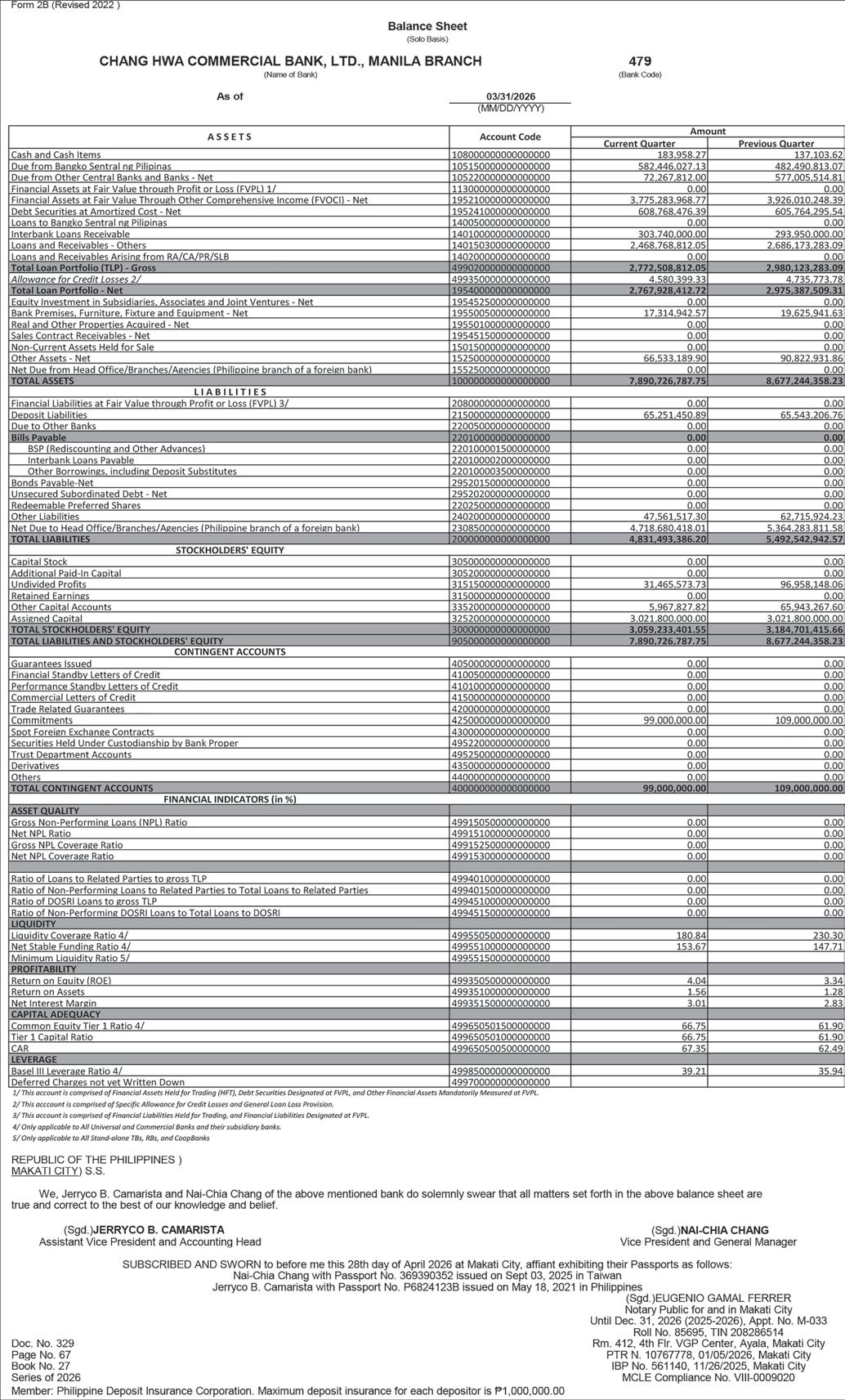
MIXED results marked the Bureau of the Treasury’s auction on Tuesday, as the government fully and partially awarded bids for the dual-tranche long-term debt papers.
The auction committee raised a total of P25.020 billion via the 4-year and 10-year Treasury bonds (T-bonds), out of the P40 billion total offering.
The Treasury successfully raised the full P20 billion through the reissuance of Fixed-Rate Treasury Note (FXTN) 07-70, which has a remaining life of four years and two months.
The 4-year T-bonds fetched an average yield of 6.741 percent, higher by 31.5 basis points than the secondary benchmark rate of 6.426 percent for the same tenor.
Investors’ asking yields ranged from a low of 6.600 percent to as high as 6.799 percent. The coupon rate for the tenor stood at 6.375 percent.
According to Michael L. Ricafort, chief economist at Rizal Commercial Banking Corp., market hesitancy to lock into long-term bonds forced yields higher as investors demanded higher returns to compensate for uncertainties.
Ricafort said the lingering Middle East war has pushed global oil prices higher, stoking inflation concerns. The latter spread to the weakness of the Philippine peso, which hit a record P61.3 last Tuesday, making imports more expensive.
T-bond yields also went up after the Bangko Sentral ng Pilipinas (BSP) raised the key policy rates by 25 basis points last week and signaled further rate hikes if the Middle East war persists and if inflation remains way above the 2 to 4 percent target range, Ricafort added.
“Trump announced indefinite ceasefire until talks with Iran are concluded, but there is lack of progress on another round of US-Iran talks/negotiations to deescalate the war for the second weekend already,” Ricafort said. Meanwhile, demand for the 4-year T-bonds amounted to 27.8 billion with a bid-to-cover ratio of 1.4 times.
On the other hand, the FXTN 10-74, which has a remaining term of nine years and 10 months, was partially awarded by the auction committee.
The tranche was undersubscribed, as total tenders reached P18.1 billion and below the P20 billion offer. Only P5.020 billion was awarded by the Treasury.
Average auction yield for the 10-year tenor settled at 6.857 percent, up by 7.1 basis points from the 6.786 percent capped in the previous auction for the same tenor last March 17. Awarded yields ranged from a low of 6.800 percent to as high as 6.870 percent. The coupon rate was capped at 5.925 percent. Compared to the secondary benchmark rate for the same tenor, the securities’ average yield is higher than the 6.817 percent for the same tenor.
This April, the Treasury raised a total of P125.020 billion via the issuance of T-bonds, close to its P140billion programmed borrowing for the month.
In May, the Treasury seeks to borrow as much as P268 billion by auctioning government securities, of which P128 billion will be borrowed through Treasury bills and P140 billion through T-bonds. This year, the government will borrow a total of P2.682 trillion, in favor of domestic sources. Outstanding debt of the national government reached P18.15 trillion as of endFebruary, up by 0.14 percent from P18.133 trillion a month earlier.
S. Alberto
Juvierre
Reine
Banking&Finance Fitch outlook on LandBank ‘negative’

By Reine Juvierre Alberto @reine_alberto
FITCH Ratings Inc. has turned its outlook on state-owned Land Bank of the Philippines (LandBank) to “negative,” mirroring the credit rater’s recent outlook change on the sovereign due to the bank’s ties to the government.
In a commentary last Tuesday, Fitch revised its outlook on LandBank’s ‘BBB’ long-term issuer default ratings (IDRs) to “negative” from “stable.” Fitch simultaneously affirmed LandBank’s government support rating (GSR) at ‘bbb’ and its
WEALTH manager ATR
Asset Management Inc.
(Atram) has launched a new equity income feeder fund that the wealth manager created to lure income-seeking investors navigating volatile global markets.
According to Atram, its “Nasdaq Equity Income Feeder Fund” enables investors to tap into innovation-led companies within the Nasdaq-100 Index while generating regular monthly payouts.
Unlike traditional equity funds that rely largely on price appreciation, the new fund is structured to monetize volatility, offering a more consistent return experience across different market conditions, Atram said through a statement.
By selling call options on the Nasdaq-100 Index, the fund earns
Tshort-term IDR at ‘F2.’
This comes after Fitch revised its outlook on the Philippine sovereign to “negative” from “stable” citing disruptions in public investments and exposure to the ongoing global energy shock.
premiums that are distributed to investors as income.
Atram Trust Corp. Head of Products Jose Miguel B. Liboro said the strategy is to “monetize volatility,” including geopolitical risks and other market uncertainties, to generate income even in volatile conditions.
“This fund allows investors to stay invested in the Nasdaq while generating income from market movements. By converting volatility to cash flow, it helps investors remain invested across market cycles,” Liboro said.
According to Atram, its target fund, the JPMorgan Nasdaq Equity Premium Income Active UCITS ETF, managed by JP Morgan Asset Management Inc., has historically delivered annual income in the range of
Since LandBank’s GSR and longterm IDRs are equalized with the sovereign, Fitch said a downgrade in the sovereign’s rating would trigger a downgrade for the bank.
Fitch said the sovereign has the ability and propensity to prioritize any required state support for the bank, as it is a wholly state-owned policy institution with “high systemic importance” as it holds 14 percent of the nation’s deposits.
“The GSR and Long-Term IDRs could also be downgraded if Fitch believes there is a material reduction in the sovereign’s propensity to support the entity,” the credit rater said.
If a “material dilution” in the state’s ownership of the bank, or if the bank’s policy roles were to diminish materially or be transferred to other institutions, then a downgrade would be possible.
9 to 11 percent, paid out monthly.
However, income levels may vary depending on market conditions, and are not guaranteed, Atram noted.
“Everybody’s worried about [the] volatility of equity markets these days. This product has less volatility, has less data exposure to the Nasdaq, to the equity market versus a traditional product,” JP Morgan Asset Management’s US Equity Group Investment Specialist Christian Mariani said in the launch.
“As the world’s largest active ETF provider, covered call strategies have been a cornerstone of our ETF product suite with robust interest across markets,” Ayaz Ebrahim, JPMorgan Asset Management CEO for Singapore and South East Asia added. Reine Juvierre S. Alberto
“However, we believe both scenarios are unlikely to occur in the near term,” Fitch said.
As the implementing agency for agrarian reform, LandBank’s policy mandate is to serve the agriculture and fisheries sectors and support rural development.
“We believe these remain highly relevant policy priorities for the Philippines today, and its broader remit of enhancing financial inclusion to micro, small and medium enterprises take on increased importance during periods of slower economic growth,” Fitch said.
A positive credit rating action or upgrade is possible if the sovereign outlook returns to “stable,” Fitch said.
“An upgrade of the GSR or LongTerm IDRs would require an upgrade of the sovereign rating, which is unlikely in the near term in light of the
Negative Outlook,” it added. LandBank has been one of the top contributors of dividends to the national government in recent years, with its dividend declaration amounting to P32.35 billion in 2025. The state-run lender’s net income rose by 24 percent to P43.98
Proceeds will bankroll green and social projects nationwide, such as renewable energy, food security, housing, employment and socioeconomic empowerment, according to the LandBank. (See https://businessmirror.com. ph/2026/02/18/landbank-raisesp50b-from-bond-sale/)
The deceptive side of AI

WE cannot deny this. Artificial Intelligence (AI) has given us so many benefits that it excites me on what more it can offer in the future.
the preacher is dead, and no such sermons were delivered by him even in the past.
By Rizal Raoul S. Reyes @brownindio
HE Aboitiz-led Union Bank of the Philippines (Unionbank) partnered with the central bank and the ATRAM Trust Corp. to digitize the Personal Equity and Retirement Account (PERA) ecosystem.
By embedding this voluntary retirement program into its core mobile application, Unionbank is positioning itself as a leader in long-term wealth solutions, leveraging average total cost fund management expertise and the central bank’s regulatory framework to streamline the customer onboarding journey, a statement issued by the lender read. With the evolving economic landscape, government-mandated pension programs such as the Government Service Insurance System (GSIS) and Social Security System (SSS), as well as employer-provided retirement plans, may not always be
sufficient to meet future needs, according to the lender. The PERA offers an additional layer of financial support, empowering customers to take a more proactive approach to financial planning—whether for retirement, long-term goals, or added financial security.
According to Unionbank, it has created a “fully-digital PERA experience that allows customers to open an account without filling out lengthy forms or uploading multiple documents.” Once onboarded, customers can begin growing their long-term and retirement savings through investment products accredited by the Bangko Sentral ng Pilipinas.
The lender said ATC will play an administrative role providing customers with a range of investment products to choose from.
The announcement on the PERA integration came after Unionbank disclosed last Monday of having posted a net income of P3.8 billion

in the first three months of the year, more than double from the previous year’s P1.43 billion.
The bank said it was able to continue with the momentum that started in the second half last year, when it saw a significant earnings uptrend, despite some trading losses arising from market volatility associated with the Iran conflict.
Last week, Unionbank was flagged by Moody’s Ratings as being more exposed to risks arising from “shrinking” financial buffers of retail borrowers amid higher inflation.
Moody’s Ratings said last Monday that UBP had the largest share of retail loans among its rated Philippine banks at around 60 percent of its total loans, while unsecured retail loans accounted for around 40 percent of its total loans.
“We view the latter as a relative weakness because this asset class has underperformed compared to corporate loans,” said Moody’s Ratings.
By Butch Fernandez @butchfBM
WITH the arrest of over a hundred culprits in money muling and social engineering scams just for the first two months of 2026, Senator Mark A. Villar touted the growing impact of the Anti-Financial Account Scamming Act (Afasa). Such recent arrests and convictions are clear proof that the law is effectively being enforced to combat online financial crimes and protect Filipino consumers, Villar said last Tuesday.
“As the principal sponsor and author of the Afasa, I am encouraged that we are now seeing real and measurable results—leading to actual arrests, stronger case buildups, and successful convictions,” the solon added.
According to Villar, “the response
However, there looms a scary possibility of the results of misinformation, deception, cybercrime and even its effect on humanity in terms of learning the right values. Much has been written about AI but I cannot help but write about it because of my own personal experiences.
I learned that popular speakers were being cloned—not only their faces but their voices as well. For instance, I was listening one time to Billy Graham’s classic sermons, and I was surprised that he was saying something to the effect that you do not need to be kind to everyone. I realized that it must be AI perhaps that is cloning him because this does not align with the true teachings of Christianity. And I was right.
When I visited his actual YouTube channel, there was no such video. Thus, from that time on I became careful to check on the channel to make sure it is authentic and original. There were examples shared by AOC Network Channel showing different cloned popular preachers saying for instance “what if there is no hell? What if heaven is here now?” Another preacher, Voddie Baucham, was cloned to say, “no hunger for holiness, no love for Christ.” But
to complaints has been fast-tracked, and the evidence against criminals has become stronger.”
“This is the kind of protection our people need in this digital age,” he added, speaking partly in Filipino.
Recent operations highlight how AFASA is being implemented on the ground.
According to the Philippine National Police Anti-Cybercrime Group (PNP-ACG), more than 90 individuals have been arrested since January this year for acting as money mules, for the illegal sale of ATM cards, ewallets and other financial accounts used in fraudulent schemes.
Last February, the National Bureau of Investigation (NBI) apprehended 20 foreign nationals involved in social engineering schemes, where perpetrators impersonate other individuals to defraud victims—an offense penalized under Section 4(b)
Authors are being cloned too. Oftentimes, the Al books were sold even before the books were released. In Today’s channel in YouTube, Lisa Sun and Jane Friedman are one of the few authors whose books were sold in Amazon. However, they never wrote these books. The problem is when the books were pulled out by Amazon, new AI books by Jane Friedman were again sold in Amazon. It is important, therefore, that before we believe anything we see in social media, we must be discerning. And we can only discern rightly if we go to the real source. Read the book and material by the real author. What is scary is when children, teenagers, even Millennials and even adults who are clueless, would not be able to discern and readily believe what they see in social media or even in certain applications.
AI is here to stay. But we need to protect not only ourselves but. more especially, the future generations from being deceived and be victims of proliferation of lies and deceptions.
Wilma Miranda is a Finex Business Column Writer, the Managing Partner of Inventor, Miranda & Associates CPAs, Former Head of Business Development and Member of the Board of Directors of Knowledge, Process, System Outsourcing. The views expressed herein do not necessarily reflect the opinion of these institutions and the BusinessMirror
(1) of the Afasa. A significant milestone was reached this month when four individuals were convicted by a Regional Trial Court for violating Section 5(d) of the law, marking one of the early successful prosecutions under the Afasa.
“Clearly, the Afasa is effective in fighting online scams. The law now has teeth: fraudsters cannoy easily get away now, because the authorities have faster and more effective tools against them,” Villar said.
The senator affirmed his commitment to strengthening safeguards against financial fraud while promoting greater public awareness in the digital space.
“We will not stop strengthening the laws and boosting the drive against cybercrime. Alongside this, we ask the public to be more vigilant and careful in their online transactions,” Villar added.
An Instagram DM changed everything for Rachel Reid, Jacob Tierney and ‘Heated Rivalry’
BY HILLEL ITALIE
The Associated Press
NEW YORK—To the cheers and applause of thousands of BookCon attendees, Heated Rivalry author Rachel Reid and directorscreenwriter Jacob Tierney walked on to the main event stage at New York’s Jacob Javits Convention Center. The two Canadians have been international celebrities for just a few months, and still find themselves wondering if all the noise is for someone else.
“We don’t really get to experience this kind of energy and fandom in person very often,” Tierney told The Associated Press just after their joint appearance, a highlight of the weekend gathering of (mostly) young book fans. “It’s been a bit more of an amorphous online thing.”
Since the first episode of Heated Rivalry dropped last November, Tierney’s adaptation of Reid’s Game Changer series featuring star-crossed hockey greats Shane Hollander and Ilya Rozanov has become a phenomenon that boosted the sport’s popularity, made Reid a leader of the thriving genre of sports romance fiction, and made Olympic torchbearers out of lead actors Hudson Williams (Shane) and Connor Storrie (Ilya). Tierney expects to begin filming the second season this summer, based in part on the second of Reid’s novels about Shane and Ilya, The Long Game. The author, meanwhile, is working on a third Shane and Ilya book, Unrivaled. Both are scheduled for 2027 releases.


NEW ROMANCE FOR POLITICIAN
THE politician is reportedly having his marriage annulled, which is not surprising since he and his wife have long been separated. What’s intriguing is why he is doing it now. The politician has been involved with other women since the separation but his alleged current girlfriend seems to be someone he is serious with. One proof that the relationship is serious is that a certain social-climbing celebrity is very close to the current girlfriend and if you didn’t know who is

Heated Rivalry fans know well the story of how the Crave (HBO Max) show was born, and of Reid’s jarring swing from despair to exhilaration. In August 2023, she learned that she had early onset Parkinson’s disease. Days later, she received an Instagram message from a man she had never met, but would soon change her life in a very different way: Tierney. The 46-year-old Tierney is a Montreal native, former child star and award-winning filmmaker whose credits include the TV series Letterkenny. In October, Little, Brown and Company will release a collection of Tierney’s annotated scripts, I’ll Believe in Anything: The Making of Heated Rivalry Season 1. Reid, 44, is a longtime hockey fan. Born Rachelle Goguen in Halifax, Nova Scotia, she chose her pen name for the practical reason that it’s easier to pronounce and remember. She’s been open about the impact of fame and her health, posting an Instagram announcement in February that she was pushing back the release date of Unrivaled from this fall to next summer. Onstage, she acknowledged it had been “tricky” to write since the series took off.
“I’m in a place where the whole world seems to care
with who, you’d be surprised by this friendship. The socialclimbing celebrity does not just befriend anyone. She’s very picky and is only close to people she sees to be on the same level as her. The current girlfriend of the politician is beautiful and famous but not usually the type the celebrity becomes close to.
ANCESTRAL HOME
A POLITICIAN who’s selling his house is calling it his family’s ancestral home as if his forebears built it. The politician was the one who had the house built at the height of his popularity. Certain things happened after the house was built and the politician’s plans for it are not fulfilled fully. So it lay there, lived in by his unemployed relatives and he is right to sell it but not right that he’s marketing it as the family’s ancestral home. It’s not true that he’s selling it because he is broke. More like, the house is going to waste and the money from the sale could be used for his kids.
TRAUMATIZED
THE young actress’ trauma about her face still persists years after it started. The young actress used to be in a

Eugenia Last

about what happens next to these characters,” she said. “I’m still determined to stick to what I’ve always done when I was writing, just kind of pretend I’m writing for me and I hope other people like it.”
During their AP interview, Reid and Tierney spoke of the joy of sex on the page and screen, and how Shane and Ilya just won’t leave them alone. The conversation has been edited for clarity and brevity.
Writers talk about writing the books they want to read, and filmmakers making the movies they want to see. With these books, it comes out of that?
Reid: I really like a forbidden romance. I really like the rivals-to-lovers element. I just also like a queer love story with a happy ending. And I really like hockey, so I think there’s just a lot of elements in it that are just very much what I personally would like. I think if this show had come out and had nothing to do with me, I would be obsessed with it still.
Tierney: I did not grow up with stories like this.
loveteam where her partner and his friends would continually tease her about her wide face even in public. It got to a point when she’d make sure to get a hairstyle that partially covers her face. But the teasing did not stop and she went to doctors, asking what could be done. She went through a number of procedures and she’s since moved on from the loveteam but deep inside, the young actress is still hurting from the insults. She still sees her face as very wide. She does not think of herself as beautiful and she still is uncomfortable with teasing.
IT’S REALLY OVER THERE is a blind item that appeared (not here) that a young couple cannot admit they have broken up because they have an upcoming movie. People are saying it’s just a gimmick for people to talk about the movie. The truth is that they were indeed in a relationship several years ago (around 2022). They broke up a year after that not because of cheating or any major issue but their respective schedules. While they still
and
into what makes you happy. You have more choices than you realize. ★★★
LIBRA (Sept. 23-Oct. 22): You’ll gain insight into what’s available and how to take advantage of a situation that offers financial stability. A change of plans will favor you, and using your negotiating skills to get ahead will turn into a selling feature for those who want to pursue your talents. A relationship with someone special will offer long-term benefits. ★★★
SCORPIO (Oct. 23-Nov. 21): Engage in events that give you a platform to show your attributes. Stepping out, speaking up and physically taking control of whatever situation you face will pay off. Do your thing, take note of how others respond and set up meetings that will help you complete your purpose. Physical improvements will attract attention, and romance is favored.
SAGITTARIUS (Nov. 22-Dec. 21): Pull in the reins when it comes to spending on others or on pricey entertainment. Invest your money in something that has room to grow and will add to your comfort or enhance your skills. A positive change is heading your way, and the interactions you encounter will be the stepping stones to reaching your goals. ★★★★★
CAPRICORN (Dec. 22-Jan. 19): Stop, look, listen and be hesitant to buy into something you know little about. Misinformation, poor choices and following someone else instead of taking the path that suits your needs and budget will determine how far you get. Rely on yourself, not others, and adjust as you go to further your plans. ★★
AQUARIUS (Jan. 20-Feb. 18): Embrace change; put your energy toward meeting new people, changing your surroundings and setting up a routine that is cost-efficient, leads to

Image
‘Heated Rivalry’... How to stop running on empty
We don’t as gay men, as queer people. We do not get to have happy endings in media very often. I would definitely have watched it (even if he didn’t direct it), that’s for sure. I’m sure I would have had notes. I’m a little picky.
At what point for either of you did you realize that you had something big here?
Tierney: It was a kind of a series of increasingly surreal and overwhelming moments. And by the time the sixth episode aired, it really did feel like we were kind of at the center of a strange maelstrom. But I also was like, “Am I making this up? Is this actually happening?”
Reid: I did a bookstore event the day after the trailer came out. They showed the trailer at the event, and everybody in the audience knew every word of the trailer and was saying it along with the trailer. So that was when I was like, “OK, this is going to be nuts.”
Writers and filmmakers have talked about the difficulty of writing or filming sex scenes. Was that a challenge for either of you?
Reid: Honestly, I love writing them and I’ve never found that to be the difficult part. I think it might be the easiest part for me. I actually really enjoy it. Not to praise myself too much, but I think maybe that’s why people like the scenes. They weren’t hard for me. It’s not a scary thing. It’s not the part that I have to close my eyes and write or anything. It’s my favorite part.
Tierney: Sex is a language in this show, sex is a way that we watch this couple evolve over the course of a fairly long amount of time in terms of the story, eight years. And so the sex is different every time, a way of watching them evolve both separately and together. I think sex reveals a lot about yourself that you don’t even intend to reveal. And I find that quite fascinating as a storyteller.
How real are Ilya and Shane for you? Do they live on in your heads?
Reid: Yeah. That’s why I keep writing books about them, because they just keep talking. With other characters, I’ve written the books and they’ve left. But these guys just stick around. What is it about them that makes it that way?
Reid: They’re fun to write. I love it.
You’ve talked about your struggles with getting the next book done. Any updates on that?
Tierney: It’s a coloring book now.
Reid: It’s 20 pages.
Tierney: Don’t tell the truth.
Reid: The thing that hasn’t changed is how much fun they are to write. I find their voices very easy to put on the page. More than any other characters I’ve created, they arrived fully formed. They kind of just appeared one day.
Were they based on anybody, at least loosely, who you know?
Reid: There’s a lot of myself in Ilya, for sure. There’s a lot of, kind of hockey player archetypes— the flashy, cocky European superstar, that’s definitely a type. The uptight, very serious good boy-captain. And there’s been plenty of NHL players from decades of hockey. And I’ve been a fan for decades. And obviously there have been some really great rivalries. And we’re getting probably to the end of the (Sidney) Crosby-(Alex) Ovechkin rivalry right now. But that rivalry at its peak was so fun.
What do you see of yourself in Ilya?
Reid: A sense of humor, mostly. It’s a little bit mean. I also kind of like to use humor to cover up emotions, you know, things like that. I think I also notice things about people a bit, but maybe stay quiet about it.
I’ve heard a lot of writers talk about writing a book that gets made into a film. And the actors are just so good that when the writer comes back to writing about those characters, they’re seeing those actors in their head. Is it going that way for you?
Reid: I told Jacob I wish I had never met them. (Laughing) It is challenge writing without thinking about somebody having to actually say or do what I’m writing, for sure. I’m trying to just block that out. I just need to pretend it definitely will never happen, because I think that’s the only way I can do it.
And you still hope to have the next book out at some point next year?
Reid: Yeah. That book will come out June 1. Hell or high water, it’s coming out.

EVERY day, you face countless demands on your time and attention. From work responsibilities to family obligations, social commitments, and personal goals, it can feel like your energy is being pulled in every direction. Yet, the most overlooked aspect of living well is learning to recognize and protect your energy levels. Understanding when you are drained and how to replenish yourself is not selfish. It is essential for your well-being and for your ability to show up fully for others.
The first step is awareness. You cannot protect what you do not notice. Take a moment to reflect on your daily patterns. Notice when you feel alert and engaged, and when you feel sluggish or irritable. Keep in mind that energy comes in many forms. Physical energy is what allows you to move through your day, while emotional energy influences how you feel and relate to others. Mental energy affects your focus and clarity, and spiritual energy connects you to a sense of purpose or meaning. When one area is low, it can ripple across all aspects of your life. For example, if you skip sleep to finish work, you might feel physically tired, emotionally irritable, and mentally foggy. Recognizing these signs early is the key to preventing burnout.
Once you can identify energy drains, you can start protecting your energy. Start with your environment. Surround yourself with people and spaces that lift you rather than drain you. Pay attention to the conversations you engage in. Some discussions can be inspiring and energizing, while others can leave you feeling depleted. Setting boundaries is crucial. It is acceptable to say no to requests that exhaust you. Saying no does not make you selfish. It makes you responsible for your own well-being. For instance, if a friend asks for a favor that requires a significant commitment during your already busy week, it is healthier to decline politely and explain your need to recharge. Protecting your energy may also mean limiting exposure to negative news or social media that leaves you anxious or overwhelmed.
Another practical approach is to schedule regular breaks. Even short pauses can restore your



energy significantly. Stand up and stretch, take a walk outside, or simply close your eyes and breathe deeply for a few minutes. You might find that these micro-breaks improve your mood and productivity more than pushing through exhaustion. Similarly, prioritize sleep and proper nutrition. A consistent sleep schedule, balanced meals, and adequate hydration are foundational ways to maintain physical energy. When your body is well-fueled, your mind can function more clearly and your emotions remain more stable. It is equally important to engage in activities that replenish you emotionally and spiritually. Hobbies, creative pursuits, and moments of quiet reflection can recharge your inner reserves. Some people feel energized after reading a good book, while others regain strength by spending time in nature or practicing meditation. Do not underestimate the power of joy. Laughter, connection with loved ones, and simple pleasures such as listening to music or cooking a favorite meal can boost your energy in ways that work obligations cannot. Make it a habit to notice which activities refill your cup and schedule them intentionally. Energy management is not a one-time effort. It is a daily practice that requires ongoing attention. Begin each day by checking in with yourself. Ask


Five emerging style innovators to watch
FROM encapsulating the rich tradition of craftsmanship of their hometowns to translating the language of memory, music, and nostalgia into tangible works of art, here are the next-gen designers whose creative and innovative concepts wish to reshape the future of fashion—one where theoretical knowledge, practical skills, and creative vision align. First seen at the 10th anniversary showcase of Sinulid, the highly successful annual culminating event of the Fashion Design and Merchandising (FDM) Program of the De La Salle-College of Saint Benilde (DLS-CSB), the debut collections of these promising talents bring forth contemporary approaches and distinct voices into the conventions of the local style scene.
n Monica Francesca Cortes—demonstrates
strong design acumen and compelling visual expression in Mangan Ta. Kapampangan for “kain na” or “let us eat”, it draws inspiration from the process of cooking shrimp—an act of love rooted in the Kapampangan tradition and cuisine.
n Shagami Felizco—exhibits her innovative technical skills and visual experimentation as she offers a groundbreaking approach to the established creative textile process. An homage to her Quezonian history, Walang Tamad sa Quezon displays exceptional fabric manipulations and techniques which blend pageant glamour with rich storytelling.
n KC Bianzon—offers a fresh perspective in presenting a fashion designer’s individuality and ingenuity, from concept building and development, to final layout and presentation. In the digital portfolio for I Have Been Here Before, she presents an album
choices to support your energy rather than deplete it further. When you plan your day, prioritize highenergy tasks for when you feel most alert. Leave lower-energy tasks for moments when your strength dips. Over time, you will become attuned to your natural rhythms and find that you accomplish more with less strain.
Finally, do not underestimate the impact of mindset on energy. Negative self-talk, persistent worry, and perfectionism drain your reserves. Reframe challenges as opportunities for growth and remind yourself that taking care of your energy is not optional but essential. By valuing your energy, you send a message to yourself and others that your well-being matters. You become more resilient, more present, and more capable of giving your best to both work and personal life.
Protecting your energy is a form of self-respect. It allows you to live with clarity, purpose and vitality. Recognize your limits and honor them. Recharge when needed and engage fully when you feel strong. Your life becomes richer when you respect your own energy and make deliberate choices to safeguard it. By treating your energy as a priority, you create a foundation for sustainable productivity, deeper relationships, and a greater sense of personal fulfillment.
LOOK from the Walang
➤


which encapsulates the quiet ache of growing up and the tenderness of remembering.
n Pancho Tinsay—presents a strategic range plan that effectively communicates creative design and a strong brand narrative as he recognizes the value and relevance they hold within the fashion market. Guided by purpose and utility, his brand Freedom in Garment embodies the vision of functionality informing aesthetics.
n John Simon Co—explores new concepts and showcases the ability to create fashion-forward and directional designs through his thought-provoking collection, The Treaty. A reclamation of the language of military wear as one of memory, love and resilience, it takes inspiration from the military scene he grew up in and serves as a tribute to his father for allowing him to pave his own path.
LOOK from The Treaty Collection of John Simon Co
➤JOHN SIMON CO
LOOK from the Mangan Ta Collection of Monica Francesca Cortes ➤MONICA FRANCESCA CORTES
Tamad sa Quezon Collection of Shagami Felizco
SHAGAMI FELIZCO
Hino Motors Philippines welcomes Maki Yamazaki as new president
Hino Motors Philippines Corporation (HMP) officially announces the appointment of Maki Yamazaki as its new president, marking the beginning of a new chapter in the company’s continued commitment to delivering Total Support to Filipino customers and businesses.
Yamazaki brings with her nearly two decades of progressive experience within Hino Motors Ltd., underpinned by a strong foundation in international business, marketing, and organizational development. She began her career in HML’s Human Resources Division before expanding her scope across key global regions including Europe, the Middle East, Africa, China, and ASEAN. She also gained valuable field experience during her assignment at Hino Motor Sales Australia Pty., Ltd., where she served as Executive Coordinator for the Brand Franchise Division. Most recently, prior to her appointment as HMP President, Yamazaki served as

Maki Yamazaki is the new president of Hino Motors Philippines Corporation
Deputy General Manager of the Marketing Department for the ASEAN Division of HML, positioning her at the forefront of regional growth initiatives and equipping her with strong insights into Southeast Asian markets, including the Philippines. With this extensive global and regional experience, Yamazaki is set to lead Hino
Motors Philippines with a strategic vision focused on strengthening market presence, enhancing dealer and customer engagement, and advancing Hino’s Total Support commitment. Her leadership is expected to further integrate global best practices with localized strategies, ensuring that Filipino customers continue to receive reliable products and comprehensive aftersales support tailored to their needs.
Prior to this transition, Shingo Sakai served as President of HMP from January 2023 to December 2025. During his tenure, the company reinforced its Total Support philosophy, expanded its dealership network, and celebrated its 50th year in the Philippine commercial vehicle industry, milestones that provide a strong platform for continued progress.
HMP expresses its sincere appreciation to Sakai for his meaningful contributions and leadership. As the organization moves forward, it remains firmly committed to its mission of supporting Filipino industries and communities, now under the leadership of Yamazaki, with the continued guidance of Vicente T. Mills, Jr. as Chairman.
With Yamazaki at the helm, Hino Motors Philippines looks ahead with confidence— driven by a global perspective, regional expertise, and a renewed commitment to delivering real, reliable, and future-ready mobility solutions for the long haul.
Cobra marks 20 years with ‘Liwanag sa Dilim’campaign, Daniel Padilla as new ambassador

COBRA Energy Drink marks its 20th year with the launch of a new campaign that celebrates the strength, resilience, and determination of Filipinos, values that have defined the brand for the past two decades.
At a time when many Filipinos continue to face the demands of everyday life, there are days when you feel tired, when getting up feels heavy, and when showing up feels harder than usual. But you still get up. You still go to work. You still do what needs to be done. That quiet decision to keep going, that is where true strength comes from. Cobra calls this “liwanag na nasa loob mo.”
Titled “Ang Liwanag na ’To Nasa Loob Mo. (Para Sa’min) Pag Meron Ka Nito, Wala Kang Talo,” the campaign serves as a reminder that every Filipino carries an inner light, a source of strength, hope, and determination that pushes them to continue no matter how difficult life gets. Cobra Energy Drink stands as a partner to Filipinos, supporting
them in their everyday journey as they continue to move forward and face each day’s challenges.
According to Apple de Belen, Marketing Manager for Cobra, the campaign was inspired by the everyday experiences of Filipinos who continue to show up and do what needs to be done despite life’s challenges.
“The campaign is about a simple but powerful truth — that you are stronger than you think. Ang liwanag na hinahanap mo, nasa loob mo na. ‘Wala Kang Talo’ is a mindset. It’s not always about winning or being number one. Sometimes, winning simply means not giving up. As long as you keep showing up, keep trying, and keep moving forward — wala kang talo,” de Belen shared.
For 20 years, Cobra Energy Drink has been part of the everyday lives of Filipinos, from construction workers and drivers to students, athletes, and everyday hustlers who continue to work hard and push forward for their families
and their dreams. The campaign is a tribute to them and to the strength that lives within them. Bringing the campaign to life, Cobra introduced its new brand ambassador, Daniel Padilla, who represents the modern Filipino — determined, resilient, and quietly strong in the face of life’s challenges. This is brought to life through a cinematic TV commercial set to the song “Liwanag sa Dilim,” where Padilla is seen falling and rising again as a soft glow emerges from his chest, symbolizing inner strength. After drinking Cobra Energy Drink, the glowing Cobra icon appears on his chest and the light radiates outward. The story then expands to everyday Filipinos, including a rider, a mason, and other workers, each igniting their own “liwanag,” reinforcing that this inner strength is shared across different walks of life.
The campaign was officially unveiled at the Cobra at 20: Tatak ng Walang Talo Media Launch held on April 16, 2026, at Marquis Events Place, BGC, where Cobra introduced its new campaign and new brand ambassador while celebrating 20 years of energizing the Filipino spirit.
Joanna Araullo, Senior Brand Manager for Cobra, shared that Cobra’s commitment has always been to support Filipinos in their everyday lives.
“For 20 years, Cobra has been a partner of Filipinos sa arawaraw nilang trabaho at sa pang-araw-araw na laban sa buhay. Hindi lang ito energy drink — katuwang ito ng Pilipino. As a proudly Filipino brand, we make sure that our products remain abot-kaya and accessible so we can continue to reach and support more Filipinos every day,” Araullo said.
She added that Cobra continues to innovate to support different needs of Filipinos through its variants such as Cobra Original, Cobra Citrus, Cobra Smart, and Cobra Vitamin C. As Cobra celebrates its 20th year, the brand remains committed to its message: “Ang liwanag na ’to nasa loob mo. Pasiklabin with Cobra Energy Drink. Para sa’min, pag meron ka nito, wala kang talo.”
Because for Cobra, the real energy is not just in the bottle — it’s in every person who refuses to give up, no matter what.
Discover more about Cobra’s #WalangTalo campaign, and join Daniel Padilla in his Cobra journey by following Cobra Energy Drink on Facebook, Instagram, and TikTok.
Ateneo B2016 wins division championship in Bali 7s football tournament (U10 Division)
THE Ateneo Varsity Born 2016 team won the Division Championship in the U10 age group at the prestigious Bali 7s Football Tournament in Bali, Indonesia. The team competed against teams from across the globe, including Indonesia, Malaysia, Singapore, Australia, India and the Netherlands. The Eaglets showcased not only their skill and discipline, but also their heart and character. After several setbacks in the group stages, including injuries, sickness and ailing stomachs for some key players, the Eaglets were placed in a precarious position, with dim hopes of securing silverware; however, the team rose to the occasion and capped off their Cinderella story. The advent of Easter during the knockout stages invigorated the boys as they secured victories over four Indonesian teams. In the championship match, the Eaglets faced a tough Australian Team almost twice their size. After a long back-and-forth with the Aussies with almost equal possession between the teams, with a few minutes left in the game, Arby Soller drew a foul inside the penalty box.
The injured Diego Tagarda, who was sidelined
because of an injury brought about by a tackle from an opposing player from game 2, then finished the play with a smooth penalty shot to the left corner of the goal to complete his 5th international goal of the tournament. The remaining minutes saw the Eaglets stave off relentless attacks by the Aussies until the final whistle blew with the Eaglets winning 1-0. Incidentally, the U10 Championship match took place simultaneously with the U16 Women’s Division Championship where a Philippine team also won and the kababayans celebrated together. Beyond the win, this triumph represents a testament to the boys’ hard work, the guidance of their coaches, and the unwavering support of their families. Most importantly, it reflects the Ateneo spirit: teamwork, and playing with honor.
The team was coached by Mark Maravilla and assisted by B2013 varsity football Captain Miguel Tagarda who is a Grade 6 student of Ateneo.
The team was composed of Sandro Abadilla , Knox Angeles , Lucas Bulalacao, Luc Lopez, Marco Macaraig, Paco Molina , Andres Prieto, Calvin San Diego, Arby Soller and Diego Tagarda, and Jacob Turla.

Manila Hearing Aid, World Vision, Phonak partner to empower Filipino children
MANILA Hearing Aid, the pioneering leader in Philippine hearing healthcare, proudly announces a meaningful partnership with global hearing technology innovator, Phonak and international humanitarian organization, World Vision. This collaboration marks another significant step forward in their ongoing mission to expand access to hearing care while supporting the growth, learning, and development of Filipino children and families.
As Manila Hearing Aid approaches five decades of service, the partnership reflects the company’s continued commitment to creating hearing care solutions that extend beyond the clinic—bringing expert care and life-changing opportunities directly to communities that need them most.
Since 1976, Manila Hearing Aid has been dedicated to helping Filipinos reconnect with life’s special moments through better hearing. With a legacy grounded in innovation, compassion, and medical excellence, the company has continuously expanded its reach through advanced diagnostic tools, global partnerships and patient-centered care.
“This collaboration represents our enduring belief that hearing care is synonymous with quality of life,” shares Dr. Liza Abaño-Robles, President of Manila Hearing Aid. “For 50 years, our mission has always been to make hearing care more accessible to Filipinos. Through this partnership, we are able to bring support beyond traditional clinical settings and into communities where it can create lasting impact on our future; our own children.”
By working together with organizations that share the same purpose-driven values, Manila Hearing Aid continues to strengthen its role as a trusted partner in improving communication, confidence, and overall well-hearing as a core aspect of well-being.
Manila Hearing Aid partnering with World Vision highlights the importance of early hearing awareness and its connection to education, communication, and personal development.
Hearing plays a critical role in how individuals connect with others, process information, and fully participate in everyday experiences. When hearing challenges are identified early, individuals are better equipped to engage with their surroundings and build meaningful relationships.
Through this initiative, Manila Hearing Aid reinforces its advocacy of making hearing care more inclusive and accessible.
By combining medical expertise with communityfocused programs, the partnership aims to create opportunities for individuals and families to receive guidance, support, and access to appropriate hearing solutions.
The partnership follows a multi-phase approach that combines the community development expertise of World Vision with the globally-acclaimed hearing technology of Phonak in hearing innovation to support learning.

Phase 1: Awareness and Advocacy
The collaboration begins by strengthening awareness on the importance of early hearing detection and its connection to communication, confidence, and educational development- through multimedia and public relations.
Phase 2: Hearing Screening Support Manila Hearing Aid will deploy Hearing Screening Programs through Mobile van hearing assessments for beneficiaries to support families and guide them on early hearing concerns.
Phase 3: Learning and Development Support World Vision reinforces literacy and child development initiatives, while Phonak-led innovations continue
listening environments.
World Vision brings extensive experience in community development and child-focused programs, ensuring that initiatives reach families who can benefit most from early support and educational opportunities. Phonak contributes global expertise in hearing innovation, demonstrating how technology can be used as a powerful tool for social good. Manila Hearing Aid combines both to create a proactive series of events that showcase Manila Hearing Aid. For more information about Manila Hearing Aid and its hearing care services, visit the official Manila Hearing Aid website or follow their Facebook and Instagram pages for updates on future initiatives and community programs.
The evolution of global capability centers: From cost efficiency to enterprise value
AT the GCC Forum 2026, held in partnership between KMC and Asia CEO, there was a strong sense that the role of Global Capability Centers is entering a new phase. With over 100 attendees from enterprise, government, and global services organizations, the forum brought together leaders aligned on one clear direction: GCCs are no longer just about cost efficiency, but about building long-term enterprise capability and resilience.
Parikshat Nagpal opened the discussion by framing the two forces shaping this transformation: rapid technological advancement and the growing influence of artificial intelligence. While AI continues to unlock new levels of productivity, it is also fundamentally changing how work is structured. Transactional and repetitive roles are gradually being redefined, creating space for more complex, higher-value work.
This shift presents a clear opportunity. Organizations are now able to build teams that go beyond execution, teams that can think critically, solve problems, and contribute to business outcomes in a more meaningful way. He also highlighted the emergence of nano and micro-GCCs, signaling that this model is no longer limited to large multinational enterprises. More companies are now able to adopt and scale GCCs in a way that aligns with their specific needs and growth trajectory.
Building on this perspective, Michael Alejandro provided a broader view of the ecosystem supporting GCC growth in the Philippines. His remarks underscored the importance of alignment across government policy, industry needs, and talent development. This alignment, he noted, will be critical in ensuring that the country remains competitive as demand for capabilitydriven operations continues to grow.
He emphasized that the Philippines is well-positioned to support this next phase, with a strong talent base and increasing collaboration between the public and private sectors.
As organizations look to build more strategic and future-ready operations, this foundation will play a key role in enabling longterm success.
The conversation then moved into two panel discussions moderated by Nicki Agcaoili and Mark Lwin. Across both sessions, leaders shared firsthand insights into how GCCs are evolving within their organizations.
In the first panel, the focus was on rethinking the GCC operating model. Many organizations, as discussed, continue to rely on traditional performance metrics such as SLAs, productivity, and headcount. While these remain useful indicators of efficiency, they do not fully capture the broader value that GCCs can deliver. There is now a clear shift toward outcome-driven models. Organizations are placing greater emphasis on how teams contribute to solving business challenges, improving decisionmaking, and influencing overall performance. This reflects a more mature and strategic view of GCCs, positioning them as capability hubs rather than support functions.
A key factor enabling this shift is ownership. Panelists noted that in many organizations, decision-making is still concentrated at headquarters, with offshore teams focused primarily on execution. However, as companies begin to distribute responsibility more effectively, local teams are stepping into more strategic roles.
When ownership is paired with accountability, teams are able to move beyond task-based work and contribute to innovation and continuous improvement. This transition requires not only structural changes but also a shift in mindset— recognizing offshore teams as partners in strategy rather than extensions of execution.
The second panel explored how organizations can design GCCs for long-term scale. One of the clearest takeaways was that scale alone does not guarantee success. Without the right structure, even well-resourced GCCs can become fragmented, limiting their ability to generate insights and drive impact.
In contrast, organizations that take a more intentional approach to design are seeing stronger results. By structuring GCCs around complete workflows or value streams, teams gain greater visibility into the broader business context. This enables them to identify inefficiencies, contribute ideas, and take ownership of outcomes. Design, in this sense, becomes a critical lever. It determines whether a GCC operates as a support function or evolves into a fully integrated part of the organization’s strategy.
Across both discussions, talent emerged as the defining factor in GCC success.
However, the nature of talent itself is changing. The demand is no longer limited to execution-focused roles. Organizations are now prioritizing individuals who can adapt to change, navigate complexity, and contribute to transformation initiatives.
This shift is driving a renewed focus on talent development. Companies are investing more in continuous learning, leadership development, and global exposure to ensure that their teams are equipped to take on highervalue work. Over time, this approach not only strengthens individual capabilities but also enhances the overall maturity of GCC operations.
Beyond talent and operating models, the forum also highlighted the importance of infrastructure and trust. Enterprisegrade infrastructure is now a baseline requirement, enabling organizations to support both remote and on-site teams with consistency and reliability.
At the same time, trust remains a key enabler of growth. As GCCs demonstrate consistent performance and build strong relationships with global headquarters, they are increasingly entrusted with more complex and strategic responsibilities. This progression reinforces their role as long-term partners within the organization.
In closing, Tracy Ignacio emphasized that building highperforming GCCs requires more than a clear strategy. It requires disciplined execution, alignment across functions, and a sustained commitment to developing both people and operations. Looking ahead, the direction is clear. Organizations are moving toward more integrated models that bring together talent, infrastructure, governance, and operating design into a cohesive approach. As the Philippines continues to strengthen its position in the global GCC landscape, it is increasingly becoming a destination not just for delivery, but for building capability-driven operations that create lasting value.
In the photo are, from left, Jose Ramon Abaño, Executive Committee of Manila Hearing Aid; Constance Yeo, Representative Services Senior Manager Asia of Sonova Group; Tze Peng, Managing Director of Sonova Group; Carlos Jose Bate, General Manager of Manila Hearing Aid; Dr. Liza AbañoRobles, President of Manila Hearing Aid; Dr. Herbert Carpio, National Director of World Vision; Wish Cruz, Private Sector Partnerships Manager of World Vision; Geomel Jetonzo, Regional Education Advisor of World Vision; and Rafael Paolo Quimel, Corporate Partnerships Officer of World Vision.
Daniel Padilla is Cobra’s newest Brand Ambassador.
Editor: Tet Andolong

Arthaland’s Liv to bring green living to Katipunan
By Rizal Raoul S. Reyes @brownindio

GREEN developer Arthaland is reinforcing its commitment to sustainability with the recent groundbreaking of Liv, a mixed-use, two-tower residential development on Katipunan Avenue. This project marks a new era of eco-friendly, connected urban living in Quezon City.
“Liv is a community shaped by the same foresight families embrace when building for future generations. By uniting purposeful design, accountability, and opportunity, Liv reflects Arthaland’s enduring vision of Building Sustainable Legacies,” said Jaime C. González, Vice Chairman and President of Arthaland in his keynote remarks.
During the project's recent groundbreaking, Cornelio Mapa, treasurer and executive vice president of Arthaland, shared that Liv is a commitment to the long-term well-being of the next generation. He said one of the most striking features of the project is the pedestrian bridge connecting the development directly to the Ateneo campus. He pointed out that this wasn’t merely a logistical choice but was born out of an alignment of values.
Fully funded and maintained by Arthaland, the bridge is expected to improve pedestrian safety, ease movement between the campus and surrounding establishments,

and support better traffic flow along Katipunan Avenue.
“Liv is our vision for how future communities should be built—connected, sustainable, and designed to elevate your everyday life. Through Liv we are creating lasting value not only for residents but for the entire neighborhood,” said Oliver L. Chan, Executive Vice President and Chief Sustainability Officer of Arthaland.
“When we were explaining to them all the features of sustainability, the discussion went faster because of that aligned thinking,” said Mapa.
Chan added the Katipunan skyline is no stranger to high-rise developments, but a new player is shifting the conversation from mere “convenience” to “conscientious living.” Chan said Arthaland is positioning Liv as a benchmark for student-centric, sustainable housing right at the doorstep of Ateneo de Manila University.
The 46-story Liv North will be the first of this two-tower development. It will offer 748 residential units comprised of well-appointed studio to two-bedroom residences suited for


investors, parents acquiring homes for their children, and professionals seeking a prestigious address near leading institutions and key business districts.
Homes also feature a multi- passenger bathroom design, with the toilet and shower in separate spaces for added efficiency, privacy, and comfort.
With Ateneo aiming for a 2030 sustainability goal and utilizing renewable energy, Celeste Cariño, Arthaland
Capturing leisure-centric opportunities

Conclusion
THE Philippine hospitality and leisure sector continues to show growth momentum, driven by expanding foreign hotel brands, rising tourist arrivals, and major airport modernization projects. The return of in-person events has boosted demand for MICE facilities, encouraging developers to invest in large convention-led developments.
Colliers Philippines’ survey results show that travelers value room upgrades, breakfast, and amenity access as alternatives to room discounts, underscoring the need for curated promotions. Palawan, Boracay, and Cebu remain top domestic destinations, supported by continued developer activity and new infrastructure. However, improving competitiveness remains key to catching up with ASEAN peers in tourism arrivals.
The Middle East crisis remains a challenge, but hotel developers and operators are proactively tweaking their offerings and are looking for international markets that can partly fill the void left by slower arrivals from the Middle East and stifled demand from households receiving remittances from their relatives working in the region. Even prior to the Middle East crisis, we saw a relentless expansion of foreign hospitality brands in the Philippines. The travel and tourism sector has tremendous potential given the projected rise in ar -
rivals and modernization of airports across the country. Definitely, there’s more to explore in the Philippines which should give foreign and domestic travelers alike more than 7,600 reasons to love the Philippines.
The return of in-person events has been fueling the demand for MICE facilities across the Philippines. There’s no doubt that developers are cashing in on this gargantuan need for massive convention halls.
The strong take-up for this sub-segment should also be buoyed by the rise in foreign tourists, including business travelers.
What do you think is a fair trade-off for a 30% discount?
About 46 percent of our respondents prefer room upgrade as a fair trade-off for a 30 percent discount on room rate, followed by buffet breakfast at 38 percent and access to amenities at 17 percent.
Colliers encourages hotel operators to create curated packages and promotions to lure more guests into their properties. This may be done through guest profiling as long-staying business travelers may prefer room upgrades while short-staying leisure travelers might opt for buffet breakfast and free access to amenities.
Which local destination outside of Luzon are you likely to visit over the next 3 months?
Unsurprisingly, Palawan was the most preferred destination of our respondents (45 percent), followed by Boracay (17 percent) and Cebu (16 percent). Both Palawan and Boracay have been awarded as the third and fourth best islands to travel accord -
ing to the Travel + Leisure Luxury Awards Asia Pacific 2024.
Colliers believes that hotel operators should remain active in capturing demand from domestic tourists that are enticed by impulse travel as well as foreign visitors. Property firms should explore building either hotels or leisure-centric residential enclaves in popular destinations across the Philippines. Among the developers with leisure presence in Palawan include Megaworld, Ayala Land and Sta. Lucia Land.
Meanwhile, among developers that have resort-themed developments in Boracay, Cebu, and Davao include Rockwell Land, Torre Lorenzo, and Cebu Landmasters.
Colliers believes that the leisure sector will also likely benefit from the new and upcoming public infrastructure projects of the government.
The modernization and expansion of airports such as the Panglao, Laguindingan, Zamboanga, Ninoy Aquino International Airport (NAIA) and the New Manila International Airport as well as the development of new roads to emerging tourist destinations will likely entice more long haul and highspending tourists.
Much needs to be done for the Philippine tourism sector—we lag in total arrivals compared to our ASEAN peers and our recovery to pre-covid figures remains lackluster. We need to ensure that the country’s travel and tourism sector is competitive to attract more foreign investments into the sector and to generate more jobs in the countryside. The Philippines has more than 7,600 islands and in every islet and corner of the archipelago there’s always more to explore!
Associate Vice President for Project Development emphasized that Liv fits perfectly into the ecosystem. She said the bridge provides a secure, private landing for students and faculty, effectively removing the stress of Katipunan’s notorious traffic from their daily routine.
For parents and students alike, Chan said the primary luxury in Katipunan is time.By living across
the street, Chan said students reclaim hours previously lost to commuting, allowing more time for academics and wellness.
Cariño said the units feature "multi-passenger toilets, a Japaneseinspired design where the water closet, shower, and vanity are separated.” This allows multiple roommates to get ready simultaneously, streamlining the morning rush,” she said.
Chan said Liv also offers a student-centric environment by offering library-style co-working and costudying areas to foster a productive community environment. As an Arthaland project, Liv continues the developer's legacy of premium green developments. Despite catering to a mid-to-overweight market with smaller studio units (25 to 29 square meters),Cariño said the sustainability features remain uncompromised.
Chan said residents can achieve energy savings 20 percent to 40 percent lower utility bills compared to conventional buildings. For water conservation, Liv features rainwater
harvesting for irrigation and toilet flushing.
In terms of health and wellness, Mapa said Liv will focus on air quality, natural light, and a secure environment.
While the real estate market faces global headwinds like inflation and rising fuel prices, Chan said Arthaland remains bullish on Liv. The project hit its end-year sales target within the first month of launching, he said.
“The best hedge against inflation is gold. The second best is property,” they noted, adding that the energysaving features of a green building provide a further buffer against rising costs of living.
Liv is slated for completion by 2030. As the younger generation becomes more vocal about climate change and environmental responsibility, Liv serves as a proof of concept: that you can build for the future while solving the very real, very stressful problems of the present. Liv will have an average of P325,000 per square meter.
Megaworld to build a ‘Beach Club’ in Ilocandia Coastown
FOLLOWING the overwhelming success of its beachside residential village inside the 84-hectare Ilocandia Coastown in Laoag City, Ilocos Norte, property giant Megaworld continues to ramp up its development in its first township in northern Luzon as it prepares a first-of-its-kind Beach Club along the township’s 1.4-kilometer pristine coastline.
The Ilocandia Beach Club will be Laoag’s first and only “beach club,” inspired by the tropical vibrance of the world-famous beach clubs of Sentosa Island in Singapore. It will feature a main beach club facility with direct access to the beach, complemented by a promenade of restaurants and alfresco dining destinations, cafés, and shops.
The main club facility will have a state-of-the-art fitness center, swimming pools for adults and children, private VIP lounges with
unobstructed sea views, relaxation areas as well as walking and jogging paths—all for everyone’s enjoyment of the beachside community.
“Our goal is to offer a unique, vibrant, and exciting beachside township experience in Ilocandia Coastown. We envision Ilocandia Beach Club to be the township’s flagship lifestyle hub and the definitive centerpiece of the Ilocandia Coastown experience where guests can enjoy a unique beachside lifestyle. This will further highlight Ilocandia Coastown’s identity as a premier destination in this side of Ilocos Norte,” says May Santos, head of sales and marketing, Ilocandia Coastown.
The design of Ilocandia Beach Club highlights the sea as a main visual centerpiece. A breezy arcade will serve as the central artery of the beach club, guiding visitors toward a curated mix of premium amenities. The coastal experience then extends
all the way to the beachfront, with beach loungers and striped umbrellas offering guests a cozy escape along the coastline. Land development of Ilocandia Coastown will commence early next year. As Megaworld’s first and only live-work-play integrated township in the whole Ilocos Region, Ilocandia Coastown will have its own iconic town center, lifestyle mall, office and commercial developments, hotels, shophouse district, as well as leisure and recreational facilities that complement the township’s beachline. Ilocandia Coastown is strategically located just adjacent to the world-famous Fort Ilocandia Hotel. The township is only less than 10 minutes away from the airport, and just less than 30 minutes away from Paoay Church, one of only four Baroque Churches in the Philippines recognized as a UNESCO World Heritage Site.

THE bright and inviting living and dining area of the 1-bedroom unit.
ILOCANDIA Beach Club in Ilocandia Coastown
LIV will push the boundaries of sustainable vertical living in Katipunan.
LIV will feature a dedicated footbridge accessible to the public that connects Liv's podium area to Ateneo de Manila University.
B8 Wednesday, April 29, 2026
A Heritage in Motion: 2026 Tour of Luzon on
By Josef Ramos
CALATAGAN, Batangas—
The Tour of Luzon 2026 begins on Wednesday with a 150-kilometer stage from Calatagan to Tagaytay City, as 91 cyclists vie for an early advantage in the prestigious race. A total of 13 teams—six foreign and seven local—will compete, with Stage One firing off at 9 a.m. at the CaSoBe beachfront and finishing at the Praying Hands in Tagaytay. Defending individual general classification champion Joo Dae Yeong of the Gapyeong Cycling Team leads the field.

It’s going to be a tough start because of the heat and the route, but winning Stage One gives a slight edge in this 14-stage race,” 7Eleven Cliqq coach Ric Rodriguez said. The 7Eleven Cliqq Road Bike Philippines team, which finished fourth overall last year, features Antoine Huby of France, Jonty Harris of New Zealand, Cormac Breffni or Ireland, Jaypee Olarte and former MPTC riders Jonel Carcueva and Mervin Corpuz.
Other riders to watch include Standard Insurance’s Ronald Oranza, bronze medalist in the 2023 Southeast Asian Games, and Junrey Navarra.
We hope to surpass our secondplace finish last year. This edition will be more challenging with 14 stages instead of eight,” said Standard Insurance coach Reinhard Gorantes. Philippine Sports Commission
chairman Patrick “Pato” Gregorio thanked sponsors and supporters during the opening ceremony, highlighting the event’s role in promoting sports tourism. The revival that began in 2025 continues in 2026. This shows how public and private sectors can work together. The PSC is proud to support this iconic event,” Gregorio said.
A lso present were Philippine Olympic Committee president Abraham Tolentino and Tour of Luzon chief organizer Arrey Perez. The ceremony concluded with the return of the Perpetual Trophy by defending team champion MPTC DriveHub.
The other teams in the two-week
Teen star Castillo sails to silver at Sanya Bay
By Aldrin Quinto
SBay Haihong Square.
C astillo placed second in four of the 13 races and wound up with 58 points and a net 39.
Th at put him in second behind Wang Yiguo of China, who had a net of 12 from a 16 aggregate.
Thonup Watchirawit of Thailand bagged the silver with a total of 57 points and also a net 39.
Castillo, who at 17 bagged gold in the Southeast Asian Games in Thailand last year, came up with a superb run at the resort city in calm conditions in the morning before heavy downpour in the afternoon. Wang was the most consistent, emerging on top in all but three outings.
You really put all your heart into these competitions. My family told me to always be careful, do your best,
while my coaches, they said ‘Always stay focused,’” Castillo said. The competition here in China is a bit tough because it’s not just the SEA Games but you are competing against the best in Asia,” he added.
I n beach wrestling at the Sanya Bay Yuhai Club, Miriam Grace Abby Balisme could not sustain a strong start, falling in the women’s 60kg, 0-4, to South Korea’s Kwon Youngjin. B alisme ealier scored a 2-1 victory over Singaporer’s Danielle Lim. C allum Roberts, bronze medalist in the Southeast Asian Games last year, went winless in three bouts in the men’s +90kg division.
Joe Fer Callado dropped two matches in the men’s 70kg and Neonards Cervantes was also unable to break through in two bouts in the men’s 90kg class.
I n sports climbing at the Tianya Haijiao Venue Cluster, John Frones finished in 6.08 seconds for 28th overall in the first phase, with the top 16 advancing to the final.
Juan Miguel Azupa was 35th at


7.20 seconds, Kevin Jeffrey Pascua 38th at 10.12 seconds, and Gerardo Acebedo IV was 39th. Glory Ann Dizon ended 27th overall at 10.07 seconds in the women’s competition, Precious Cabuya was 31st at 17.94 and Mecca Cortizano 32nd at 18.27.
KATHLYN BUGNA reaffirmed her status as the country’s brightest junior tennis prospect with another commanding double-title performance in the Bagong Pilipinas Juniors Age-Group Championships at the Villareal Stadium courts in Roxas City, Capiz, over the weekend.
The Batang Onay/RSB standout from La Carlota delivered a near-flawless campaign, underscoring her growing dominance on the national stage.
She dropped just one game en route to the girls’ 16-andunder crown and conceded only three games in ruling the 18-and-under division of the Group 2 tournament, which drew a deep field of rising talents from across the country.
I n the 16-and-under finals, Bugna sealed the title with a 2-1 (ret.) victory over doubles partner Theriz Zapatos, capping a dominant run that included lopsided wins against Dominique Calingasan and Princess Obaniana.
She carried that same intensity into the premier division where she dismantled Besper Zapatos, 6-1, 6-1, before advancing past Theriz Zapatos via a 1-0 (ret.) result in the semifinals.
She then crushed Tori Deocampo, 6-1, 6-1, in the finals to complete another clinical title run.
Not content with two championships, Bugna added a third trophy by teaming up with Theriz Zapatos to rout Deocampo and Besper Zapatos, 8-3, in the 18-and-under doubles finals, further proof of her all-around strength and competitive maturity. Her Capiz triumph followed similar victories in Bacolod and the first leg of the Capiztahan event, making her run even more impressive as she continues to dominate across multiple stops of the national circuit.
The tournament
cyclingfest supported by the MVP Group and Philippine Amusement and Gaming Corp.and aligned with the National Sports Tourism Inter-Agency Committee are the Seoul Cycling Team, LCW UAE Cycle, Malaysia National Team, CCN Factory Racing from Hong Kong and Ponti Wijaya Racing Team from Indonesia, Go for Gold, Standard Insurance Philippines, DReyna Orion Cement Pro Cycling Team, 7Eleven Roadbike, Excellent Noodles and Pangasinan Cycling Team.
The second stage will go to Clark in Pampanga followed by Stage 3 in New Clark City in Capas, Tarlac, Stage Four from Palayan in Nueva Ecija to Bayombong in Nueva Vizcaya, Stage Five to Santiago, Stage Six to Tuguegarao, Stage Seven to Pagudpud, Stage Eight to Paoay and Stage Nine to Laoag in Ilocos Norte, Stage 10 to Candon in Ilocos Sur, Stage 11 to San Juan still in Ilocos Sur, Stage 12 to Agoo in La Union to Mangatarem, Stage 13 in Lingayen, Pangasinan, and Stage 14 to Camp John Hay in Baguio City. Details about the race are in the official website tourofluzoncycling. com and Facebook page https://www. facebook.com/tourofluzoncycling
It’s Japan vs Thailand in Sanya final
SANYA, China—Ren and Non Matsumoto showed understated dominance, calmly dispatching Thailand’s Mungkhon Salinda and Seehawong Patcharaporns, 21-14, 21-13, on Tuesday in the women’s beach volleyball semifinals at the Asian Beach Games. Awaiting them in the final match are Thailand’s Kongphopsarutawadee
Hiajiao center court. The Matsumoto sisters, winners of two straight Beach Pro Tour Futures titles last year, finally let the big smiles shine through at the mixed zone after a clinical outing. They stayed composed whether leading or trailing, allowing themselves some moments of celebration as they methodically erased a four-point deficit. The Japanese pair sealed the win in 31 minutes. Ren said they are “very happy” and are bracing for another stern test from Thailand.



“Tomorrow will also be difficult, she is very tall,” Ren said, referring to the 6-foot-3 Kongphopsarutawadee. Good movement around the court will be key, according to the 26-year-old Ren, noting the Thais’ strength at the net.
Kongphopsarutawadee and Naraphornrapat, silver medalists in the Asian Championships in 2023 and part of the team that placed second to the Philippines in the Southeast Asian Games in Thailand last year, look to secure a statement victory in the finale.


LeBron is not done yet
WHO said LeBron James is old fogey?
Hello?
At 41, James does not only have the usual spring in his legs. He also has so much gas still left in his tank. He is short to being labelled Mr. Forever. Proof: he carried the Los Angeles Lakers again to a pulsating 112-108 victory over the Houston Rockets last weekend.
Th at moved the Lakers to a 3-0 card in their best-ofseven series against the Rockets in the National Basketball Association (NBA) Western Conference playoffs. Just one more win and they advance.
A gain, James starred in the win, swiping his third steal in the last 13.6 seconds of the game to trigger LA’s resurrection. W hat he did next was next to impossible? Not to James. Have you forgotten? He makes difficult things look easy. A habit his bashers love to hate.
A nd this night was no different.
H e fired an improbable three. The ball swishing the net. Overtime.
The five-minute extension was but a mere show of going through the motions as James towed the Lakers to a win never
RESURGENCE marked the boys’ division while sheer domination defined the girls’ side as Zoji Edoc and Tristan Padilla led their respective divisions in the International Container Terminal Services Inc. John Hay Junior Philippine Golf Tour (JPGT) Championship Tuesday at the quaint yet punishing John Hay Golf Club in Baguio City.
doc seized control in the boys’ 7-10 category with a blistering three-under 66, building a four-shot lead over Summit Point leg winner Zach Guico. e rising star from Taytay surged early, firing six birdies over the first 10 holes as he deftly navigated the course’s uphill climbs and downhill drops,
The Thais fought tooth and nail against a determined Chinese team being egged on by the home crowd and took control in the second set 5-1 and held on to force a deciding set. It was nip and tuck in the third, but the Thai pair strung up three consecutive points for a 13-10 lead on the way to victory in one hour and one minute. Dong and Jiang will battle Mungkhon and Seehawong for the bronze medal. Aldrin Quinto
where club selection and touch became crucial in the thin mountain air.
“ This leg is especially important given the strength of the field, and I’m doing everything I can to come out on top,” said Edoc, who appeared more nervous answering questions than tackling the John Hay challenge.
I struggled with my approach shots and putting at Summit Point, but I’ve managed to improve in those areas here,” he added.
Guico, who drubbed Edoc by five shots at Summit Point, threatened early by birdying three of his first eight holes. But the mountain course struck back. Four bogeys over his last seven holes derailed his charge, leaving him with a 70 and trailing Edoc by four shots heading into the final round of the 36hole tournament. The rest of the field struggled to keep pace as Mount Malarayat leg champion

doubted by, yes, James’ own Mom. A nd yes, LA’s Marcus Smart starred in overtime, scoring eight of his 21 points in that period. By doing that, he preserved his three charities in regulation after he got fouled attempting a trey, slashing Houston’s six-point lead to three, 101-98, with mere ticks remaining. Then, James took over, burying his triple for a 101-all tie that forged overtime.
delivered a near-flawless performance in the boys’ 15-18 division. He gunned down seven birdies against two bogeys for a 64, surging to a commanding six-shot lead over Suzuki, who holed out with a birdie on the ninth to save a 70.
PHILIPPINE Olympic Committee president Abraham “Bambol” Tolentino (left) and Olympic Council of Asia president Sheikh Joaan bin Hamad Al Thani sign the documents affirming the Philippine hosting of the Seventh Asian Beach Games in Cebu in 2028 at the Conifer Resort in Sanya. POC MEDIA POOL
ANYA, China—Teen star Dhenver
John Castillo bagged the silver medal in the foil windsurfing event in sailing at the Asian Beach Games on Tuesday at Sanya
KATHLYN BUGNA (third from left) with Tricel Martin, co-MVP Anthony Castigador and coach Ronald Martin. PPS PHOTO
DHENVER JOHN CASTILLO pushes past setbacks to claim second spot. POC-PSC MEDIA
TRISTAN PADILLA sets pace in the premier class 15-18, while Zoji Edoc starts strong in the 7-10 division. JPGT