NG
borrowings decline 12.4% to ₧830.4B as of Q1–BTr
By Reine Juvierre S. Alberto
GROSS borrowings by the national government fell to P830.389 billion as of the first quarter of the year, down by 12.41 percent from a year ago, due to the state’s reduced reliance on foreign lenders.
L atest data from the Bureau of the Treasury (BTr) showed the state’s gross borrowings dipped by P117.701 billion from P948.090 billion posted from January to March last year.
O f the P830.389-billion gross borrowings for the quarter, the bulk or 85.87 percent

went to domestic borrowings, reaching P713.132 billion. The remaining 14.12 percent went to external borrowings at P117.257 billion.
D omestic gross borrowings for the first three months of the year rose to P713.132 billion, higher by 9.21 percent from P652.986 billion in the same period in 2023.
E xternal or foreign gross borrowings, meanwhile, declined to P117.257 billion, down by 60.26 percent from P295.104 billion recorded in January to March last year.

Ferdinand R. Marcos



BSP: MIDEAST TENSIONS TO BLAME IN PESO SLIDE
By Cai U. Ordinario @caiordinario
THE Bangko Sentral ng Pilipinas (BSP) blamed the recent depreciation of the Philippine peso on escalating tensions in the Middle East, even as he gave assurances they can manage “any unnecessary movement and excessive volatility.”
I n a statement, BSP Governor Eli M. Remolona Jr. said the escalation of the conflict has prompted “safehaven” inflows to the US dollar.
B ased on BSP data, as of April 26, the Philippine peso closed at P57.869 to the greenback. On a year-to-date basis, according to the Rizal Commercial Banking Corp. (RCBC), the foreign exchange rate was at P57.71 to the US dollar, marking a 4.2-percent depreciation since the beginning of the year. The story has been one of dollar strength rather than peso weakness. Escalating tensions in the Middle East led to safe-haven flows into the US dollar at the expense of most other currencies,” Remolona said.
“ Nonetheless, the BSP continues
to monitor the market and stands ready to manage any unnecessary movement and excessive volatility,” he added.
RCBC Chief Economist Michael L. Ricafort said the peso has been taking a beating in the past two years or since the Russia-Ukraine war erupted in February 2022.
R icafort’s data showed the peso averaged P55.755 to the dollar in 2022. This marked a P4.76 or 9.3percent depreciation on the year Ukraine was invaded by Russia. However, the Philippines is not alone in this predicament. Other Asian currencies have also been affected by the escalating tensions in the Middle East.
AYALA GROUP AIMS TO HASTEN E-VEHICLE TRANSITION OF PHL
By VG Cabuag @villygc
CONGLOMERATE Ayala Corp. said it is committed to increase its investments in the electric vehicle (EV) sector in its bid to build the country’s first EV ecosystem and encourage the public to use transportation options that will not require fuel.
Jaime Alfonso Zobel de Ayala, CEO of the Ayala Group’s automotive arm, said the conglomerate expects EV to comprise 20 percent of new car sales by 2030. The company is keen on cornering a significant share of this market.
In the short term, our focus is to set up the local EV ecosystem by bringing in a compelling line-up of four-wheel EVs as well as by widening the charging infrastructure, store footprint, and our internal capabilities,” Zobel said. He said the group is engaging
potential institutional partners for the rollout of charging stations.
T he company said it is investing some $50 million, or about P2.75 billion, to develop 100 charging stations in some 50 locations in the country by the end of the year.
We believe that more players and more investments are necessary for the public to become comfortable with the availability of charging, and to reach the government’s goal of over 7,000 charging stations by 2030,” Zobel said. “ We recognize that the shift towards clean technology will take time to materialize. Thus, our focus today is to enable that transition.”
ACMobility, together with Ayala Land Inc. and Integrated Micro-electronics Inc., launched a network of 33 EV charging stations in 16 locations across the country last year.

‘Reforms, not Cha-cha, made latest investments possible’
THE Philippines’ recent victories in securing more foreign investments were not due to Charter Change but the correction and refinement of rules that paved the way for “opening the doors” to investment inflows for certain sectors.
T his was according to a rejoinder (See: https://econ.upd.edu. ph/dp/index.php/dp/article/ view/1553/1038) written by professors from the University of the Philippines School of Economics (UPSE), who asserted that the points raised by the Foundation for Economic Freedom (FEF) against their earlier paper actually bolster anti-Charter Change arguments.
I n a rejoinder, the UPSE economists said this was particularly observed in the position taken by FEF regarding renewable energy and the “entry of Starlink into the Philippine market.”
It is our view that the key to
gaining investor confidence is rather mundane: palpable improvements in sector coordination, fair regulation, and lower perceived corruption, as well as amendments to long-standing administrative rules and ordinary statutes that impede market entry and distort the playing field,” the UPSE economists said.
“ The goal after all is not a governance utopia, and historical experience has already demonstrated how the required improvements in corruption perception are well within reach,” they added.
T he UPSE economists said allowing the entry of foreign firms in renewables was done by “correcting and refining” a 2009 promulgation of the Department of Energy (DOE) while Starlink’s investment highlights the success of initiative to amend the decades-old Public Service Act (PSA).

ROTARY CLUB OF MANILA JOURNALISM AWARDS 2006 National Newspaper of the Year 2011 National Newspaper of the Year 2013 Business Newspaper of the Year 2017 Business Newspaper of the Year 2019 Business Newspaper of the Year 2021 Pro Patria Award PHILIPPINE STATISTICS AUTHORITY 2018 Data Champion EJAP JOURNALISM AWARDS BUSINESS NEWS SOURCE OF THE YEAR (2017, 2018, 2019, 2020, 2021) DEPARTMENT OF SCIENCE AND TECHNOLOGY 2018 BANTOG MEDIA AWARDS P25.00 nationwide | 2 sections 22 pages | n Monday, April 29, 2024 Vol. 19 No. 195 See “BSP,” A2 See “NG,” A2 PESO EXCHANGE RATES n US 57.8690 n JAPAN 0.3720 n UK 72.4346 n HK 7.3925 n CHINA 7.9934 n SINGAPORE 42.5758 n AUSTRALIA 37.7248 n EU 62.0992 n KOREA 0.0422 n SAUDI ARABIA 15.4297 Source: BSP (April 26, 2024)
BusinessMirror
See “Reforms,” A2 See “Ayala,” A2
BETWEEN
THE TIKTOK LAW KICKS OFF A NEW SHOWDOWN
BEIJING AND WASHINGTON. WHAT’S COMING NEXT?
area in
now parched due to the prolonged heat wave. As the heat index rises, concerns grow about the lasting effects of this weather phenomenon. Reportedly, the El Niño phenomenon may last longer than expected, potentially affecting 56 provinces by April, as forecasted by weather bureau Pagasa. NONIE REYES
PARCHED PARADISE
Dried twigs and land, once a thriving mangrove
Las Piñas,
EXPLAINER »B4 CEBU’S
President
Jr. (4th from left) leads the capsule-laying for Cebu’s first-ever standalone convention facility, the P1.5-billion Mactan Expo Center, together with Alliance Global Group Inc. (AGI) Chief Executive Officer Kevin L. Tan (4th from right). The state-of-the-art facility will be Cebu’s first and only standalone convention center and will offer almost 10,000 square meters of MICE space. Also in photo are (from left) Lourdes T. Gutierrez-Alfonso, chief operating officer, Megaworld; Cong. Cindi Chan of the lone district of Lapu-Lapu City; House Speaker Martin G. Romualdez; Sec. Antonio Lagdameo Jr., special assistant to the President; Cebu Gov. Gwendolyn Garcia; and Lapu-Lapu City Mayor Junard Chan. MEGAWORLD CORP.
ICONIC CONVENTION CENTER NEAR THE BEACH IS RISING
Preference for LCVs means boon to business–economist
By Andrea E. San Juan @andreasanjuan
LARGER sales of commercial vehicles in the Philippines signifies growing business and economic activities, according to an economist from the University of Asia and the Pacific (UA&P).
“ In my opinion, Filipinos have shown stronger demand for commercial vehicles over passenger cars because the productive use of commercial vehicles results in income,” Cid L. Terosa, UA&P Associate Professor, Senior Economist and Input-Output Analysis Specialist told the BusinessMirror in an e-mail. Terosa said many businesses and firms require commercial vehicles for their operations. With this, he said, “An economy with growing business and economic activities will therefore have more commercial vehicles on the road than passenger cars.”
Meanwhile, he noted, passenger cars have limited uses: “They are chiefly used for passenger transport and not the transport of items for trade and commerce.”
T he joint report of the Chamber of Automotive Manufacturers of the Philippines Inc. (Campi) and the Truck Manufacturers Association (TMA) released last April 19 showed 81,935 commercial vehicles were sold in the first quarter of the year.
T his is a 12.2-percent growth compared to the 72,531 units sold in the three-month period in 2023.
T he commercial vehicle units sold in the January to March 2024
bills (T-bills), higher by 80.36 percent than the P34.220 billion it generated in the same period last year.
I n terms of domestic borrowings, the national government borrowed a total of P61.720 billion through the net sale of Treasury
A total of P310 billion accounted for the sale of Fixed Rate Treasury Bonds for the quarter, down by 15.47 percent year-on-year from P366.675 billion, based on Treasury’s data.
Meanwhile, the state also raised P341.412
period represents 74.26 percent of the vehicle sales pie, which were 109,606 units.
O n the other hand, passenger cars sold in the first quarter reached 28,211, representing 25.74 percent of the vehicle units sold in January to March. However, passenger cars posted faster growth at 14 percent while commercial vehicles only grew by 12.2 percent.
C ommercial vehicles consist of five categories. Among these categories, light commercial vehicles (LCV) accounted for the largest chunk of the vehicle sales pie: 60,302 units of LCV were sold in the said period, or 74.09 percent share of the total sales in three months.
T his was followed by Asian Utility Vehicle (AUV) as the auto industry sold 18,673 units of these, for a 22.94-percent share of the vehicle sales pie.
For her part, Philippine Chamber of Commerce and Industry (PCCI) President Enunina Mangio told the BusinessMirror in a Viber
billion from the issuance of Retail Treasury Bonds (RTBs) in February. This is higher by 35.43 percent from the P252.091 billion worth of RTBs it sold in the same month last year.
Foreign borrowings
message last week that Filipinos prefer commercial vehicles such as vans, trucks and multicabs over passenger cars because “they are seen as more practical..aside from transporting passengers, they can also be used to move goods and serve as mobile businesses or family vehicles.”
M angio said this is “important” in a growing economy like the Philippines, where she said, many owners have to use their vehicles for both personal and commercial purposes.
“ The relatively large average size of Filipino families which also include extended family members make it more practical to acquire commercial vehicles that typically have more seating capacity compared to passenger cars,” the PCCI chief noted.
M angio also cited the “unpaved and underdeveloped transport infrastructure” as a factor behind the preference for commercial vehicles, saying “commercial vehicles can better cope with challenging road conditions.”
Ricafort noted that based on net currency market changes, the Philippines is now in the middle of the pack.
The data showed the Indian Rupee depreciated the least against the US dollar at 0.2 percent while the Japanese Yen depreciated the most at 12.3 percent since the start of 2024.
“[The Philippine peso is] already similar to the performance of other ASEAN/Asian currencies versus the US dollar since the start of 2024,” Ricafort said.
Geopolitics, biggest risk
GEOPOLITICS was identified as the top global economic downside risk in the near-term, according to the results of the latest Global Risk Survey of Oxford Economics.
Oxford Economics said geopolitical risk was cited by 57 percent of businesses as their top nearterm risk. These geopolitical tensions include but are not limited to the Middle East, Taiwan, and Russia-North Atlantic Treaty Organization (NATO).
Geopolitical concerns also remained prominent in the medium-term. The data showed 79 percent of respondents called this is a “very significant risk to the global economy over the medium term.”
Businesses were particularly worried about the Middle East. These concerns were shared by almost two-thirds or 65 percent of the respondents.
In the case of renewables, the correction and refinement was done in Section 19 of the Implementing Rules and Regulations to the Renewable Energy Law (RA 9513), the UPSE economists said.
Meanwhile, businesses have not lost hope when it comes to policy rate cuts as these remain the key opportunities that could prop up the global economy.
Oxford Economics data showed two-fifths or 38 percentofrespondentscited substantial monetarypolicy loosening as the top upside risk over the next two years.
However, businesses chose to be cautious in terms of the pace of policy easing. Overall, businesses anticipate relatively limited policy easing. This translates to an average easing of 100 basis points to 125 basis points by the major central banks over the course of 2024 and 2025.
Earlier, the BSP said it remained undaunted by the recent depreciation of the peso as well as the rise in oil prices due to geopolitical tensions in the Middle East.
Remolona told reporters the depreciation of the peso is an “adjustment” that would only have a small impact on monetary policy.
As to the impact of higher oil, Remolona said there is no sense of escalation with regard to the tensions in the Middle East and that “retaliation will not be massive.”
The rise in oil prices has led some analysts to believe that it may prompt the US Federal Reserve to tighten monetary policy further instead of easing it. However, Remolona said this only supported his expectations that the Fed will not ease monetary policy as early as the market anticipates.
MEANWHILE , under foreign borrowings, the government borrowed a total of P21.822 billion from project loans, down by 15.31 percent from the P25.766 billion it borrowed in the first quarter of last year.

The state’s borrowing through program loans from January to March declined by 9.74 percent to P95.435 billion from the P105.731 billion recorded in the same period last year, based on Treasury’s data.
T he government borrows to meet its spending requirements and to finance its budget deficit.
For the government to meet its spending requirement and finance its budget deficit, it borrows at a 75:25 mix, wherein 75 percent of the amount would come from the local debt market and the rest is borrowed externally.
For March alone, gross borrowings dropped to P207.265 billion, a 12.77-percent decline from P237.602 billion posted in the same month in 2023.
Gross borrowings for the month fell as the government borrowed less from foreign sources at P50.870 billion, down by 44.44 percent yearon-year from P91.557 billion.
D omestic borrowings settled at P156.395 billion in March 2024, up by 7.09 percent from P146.045 billion it recorded in the same month in. 2023.
The total outstanding debt of the national government surged to P15.178 trillion as of end-February this year, up by 10.37 percent year-on-year from P13.752 trillion.
The bulk of the total debt stock is domestic debt at 69.68 percent or P10.576 trillion, while 30.32 percent is external debt at P4.602 trillion.
This year, the national government targets to borrow P2.202 trillion to secure financing, based on government data.
Ayala
Last year, ACMobility became the official national distributor of BYD, China and the world’s largest manufacturer of plug-in hybrid and pure electric vehicles.
BYD currently has three dealers across the country, and ACMobility intends to increase this to up to 20 dealers this year, Zobel said.
This week, ACMobility will open a BYD dealership in Cebu, the first outside of Metro Manila.
M eanwhile, ACMobility entered into a strategic partnership with Bosch to incorporate integrated vehicle technology in its after sales operations.
B osch Car Service will offer mechanical repairs to intricate electronics, engine systems, safety features, comfort upgrades, transmission expertise, and a host of other services and diagnostics.
L ast month, AC Industrials, the parent company of ACMobility, signed a memorandum of understanding with Bosch Philippines to explore new business opportunities in the country.
AC Industrials and Bosch Philippines said they intend to explore potential business activities in various industries, including mobility solutions, manufacturing, energy, and healthcare, among others.
T he Diliman economists said the DOE “conflated” kinetic energy and forces of potential energy, leading to a 40- percent limit in foreign equity for renewable energy. Kinetic energy, they explained, includes water, wind, solar and marine current, among others, while potential energy is a natural resource.
The current DOE leadership proactively corrected this misinterpretation and promulgated amendments to the IRR in November 2022, removing the foreign ownership limitations imposed by a previous DOE [order],” the rejoinder stated.
In the case of Starlink, it was also approved by the National Telecommunications Commission as a value-added service (VAS) in May 2022 even before the IRR of the PSA.
In terms of telecom investments, in general, UPSE economists said “historical facts” would also show that Dito Telecommunications entered the bidding for the telecom market in 2018 before the Public Services Act was passed in 2022.
This means, the economists said, the 60-40 rule, contained in the 1987 Constitution, still applied in the business venture of Dennis Uy and China Telecom.
“Hence this particular anecdote ‘proves’ nothing about the restrictiveness of existing constitutional provisions nor anything about congressional flexibility, since Dito’s entry required no congressional action or amendment to the constitution,” UPSE’s
Artes added the heat stroke break shall be done alternately by those assigned in a particular area to maintain visibility of traffic enforcers and street sweepers, and to ensure field operations are not hampered.
Under the policy, on-duty traffic enforcers and street sweepers are allowed to leave their posts in shifts so that they can rehydrate, seek shelter from the sun, and take a 30-minute break to avoid heat stroke.
Field personnel could also take an additional 15-minute break time in case the heat index, or the “human discomfort index” in Metro Manila reaches 40 degrees Celsius and above.
Iligan jail, too
MEANWHILE it’s not just field workers in state agencies who are being protected from the extreme heat.
Detainees in congested facilities such as Iligan City Jail-Male Dormitory (ICJMD) are also being monitored.
“Unfortunately, the LTO-LTFRB-DOTr group appears to overlook this potential to bolster our domestic automotive industry,” the groups noted, adding that the country’s local jeepney producers currently lack the capacity to produce or assemble units quickly.
C iting “initial estimates,” the trade and employers group noted that jeepney producers can produce at most 5,000 units per year. “It would take several years for Filipino manufacturers to supply enough electric jeepneys for the nation,” they noted.
We advocate for increased government
As Ayungin Shoal is a part of the exclusive economic zone (EEZ) of the Philippines, we cannot agree to any such understanding that violates the Philippine constitution or international law,” he stressed.
Malaya reminded the public, and the media, that all statements from the Chinese Embassy regarding the WPS should be taken with a grain of salt.
economists pointed out. Earlier, the FEF economists said it is high time for the Philippines to “try solving the problem” after the country has already spent “100 years of solitude” from Foreign Direct Investments (FDIs). F EF disputed the arguments in the paper released by economists from the University of the Philippines School of Economics (UPSE) that said an economic cha-cha was not necessary to attract FDIs. (See: https:// businessmirror.com.ph/2024/04/12/ cha-cha-not-a-necessary-1st-stepto-lure-investments/)
Members of the FEF insisted that removing restrictions on foreign investments is a necessary first step in attracting FDIs in the Philippines. The UPSE economists said improving institutions and processes must be prioritized, but FEF said without “opening the door” to foreign business, they will not benefit from these institutional reforms. The members said the recent government decision liberalizing the renewable energy (RE) sector is expected to yield results as several billion dollars worth of investments have already been committed.
O nce the country opened up the RE sector, FEF said Bloomberg identified the country as the 4th best destination for these investments. This transformed the country into the “new darling of the RE global industry.” Potential investments in manufacturing of machinery needed for RE projects such as wind turbines and solar panels, FEF also said, can make the country a manufacturing hub for these machines in the region. Cai U. Ordinario
To avoid keeping them for prolongted periods inside congested, hot detention areas of poor ventilation, the facility intensified its cultural, sports and other recreational activities for Persons Deprived of Liberty (PDL).
There is a ‘Dancers Behind Bars,’ with at least 10 PDL spending up to two hours a day practicing a growing repertoire of a score of dances. Although they are barred from performing outside the facility, they are producing a dance routine to be uploaded soon on the facility’s social media channels. Also, sports activities such as basketball and volleyball tournaments have been organized to keep the PDL out in the open air. B illiards, table tennis games and guitar playing sessions are also held at the multipurpose area to keep the PDL away from their packed dormitories in the hottest hours of the day. Others may go to the recreation area for board games, including monopoly, Brazilian checker, chess, scrabble, and tic tac toe.
support through its financial institutions to build the local jeepney industry’s production capacity. Additionally, adopting a more realistic timetable for the rollout of domestic jeepneys could facilitate this transition,” the groups noted.
The Leaders Forum called for an “urgent” review of the PUVMP in order to address its legal, financial and human rights infirmities; a suspension of the deadline for consolidation for an indefinite period of time; and advocate for the creation of an affordable, sustainable and carbon-neutral mass transport system.
These are the same people who said that the entire South China Sea is theirs, who militarized artificial islands, who created military bases in our EEZ, who claim that the videos of blocking, dangerous maneuvers, and water cannons are all fabricated by the media in cahoots with the Philippine government. It is a trap, nothing more, nothing less,” he added. Rex Anthony Naval
BusinessMirror www.businessmirror.com.ph Monday, April 29, 2024 A2 News BSP...Continued from A1 Chinese claim...Continued from A10 Reforms...Continued from A1 Postal...Continued from A10 Employers...Continued from A10
NG... Continued from A1
... Continued from A1
• Editor: Vittorio V. Vitug
PHL’s first steel section plant seen to cut costs, create jobs
THE Philippines’s first steel section plant, which will start producing beams and bars next year, is expected to bring down construction costs and generate tens of thousands of jobs for Filipinos as the industry reduces dependence on imported steel, according to SteelAsia Manufacturing Corp.
According to SteelAsia Chairman and CEO Benjamin O. Yao, the firm’s plant in Lemery, Batangas, will be fully commissioned in 2025 and will substitute the importation of steel sections products like H beams, I beams, and angle bars that are used for infrastructure like bridges, railways, high-rises, industrial buildings, telco towers and transmission towers.
Yao explained through a statement construction of its steel mill has progressed after the company secured last week an P8.3-billion loan from the Government Service Insurance System (GSIS), the Development Bank of the Philippines (DBP) and Philippine Business Bank (PBB).
The P18-billion steel section mill in Lemery would be the company’s seventh plant, the others being rebar producers. Apart from rebar, the Philippines imports over 80 percent of its steel requirements.
With a “robust” local steel industry, Yao said he sees that construction costs would go down and create new manufacturing industries, along with tens of thousands of jobs.
The same statement quoted GSIS President and General Manager Jose Arnulfo A. Veloso
as citing the importance of investing in infrastructure projects that “provide long-term sustainable returns.”
“By enhancing our country’s manufacturing capabilities, this project sets the stage for increased domestic production and economic resilience,” Veloso said.
“It addresses our need to reduce dependency on imported steel, which in turn helps balance our trade and keeps more capital within the Philippines. This not only strengthens our economic position but also supports our broader goals of nation-building,” he added.
SteelAsia is the country’s “flagship” steel company and industry leader. The company operates steelmaking, rebar manufacturing and rebar fabrication plants in Bulacan, Batangas, Cebu and Davao.
In 2022, the participated in a 5-year development plan for the Philippine steel industry. Its Lemery Section Mill is the second in this pipeline. In October last year, SteelAsia commissioned operations of the world’s most modern rebar mill, a P10-billion investment in Compostela Cebu.
According to a story published by the B usiness M irror , UA&P economist Victor A. Abola said the Philippines could experience a construction and housing boom that may last three to four decades. (See: https:// businessmirror.com.ph/2023/07/21/34-decade-phl-construction-boom-seen/)
Andrea San Juan
Weakening external demand to dampen exports—experts
By Andrea San Juan @andreasanjuan

THE growth of exports in Asia will unlikely be sustained due to foreseen weakening of external demand this year, according to UK-based think tank Oxford Economics.
“We maintain our caution about the general outlook for external demand. With global growth likely to be a subdued 2.5 percent this year, the dazzling exports growth in Q1 is unlikely to be sustained,” Oxford Economics said last Friday.
While the think tank estimates that in seasonally adjusted dollar terms, Asian exports recorded the strongest quarter of growth in the first quarter of 2024 since the first quarter of 2022.
“But that masks the decline seen in the latest two monthly data prints,” Oxford Economics noted, adding that exports contracted by around 2 percent month-on-
month in March, the largest fall in 10 months.
The UK-based think tank said the regional breakdown points to “broad based” declines in China, the rest of North Asia, and South and Southeast Asia.
However, it said, “we would caution against reading too much into the monthly data at this point due to possible seasonal distortions typical to the period around the Lunar New Year.”
Oxford Economics also noted that electronic exports appear to have “held up,” attributing to turn in the chip cycle. However, it emphasized that the picture is “not equally rosy” among all electronic exports.
Illustrating the recovery experienced by the countries within the reigon, the think tank said economies on the “higher end” of the supply chain such as South Korea, Taiwan, Japan, and Singapore have been “rebounding strongly.” Meanwhile, it said those on the
lower end such as Malaysia, Thailand and the Philippines “have not enjoyed as much success.”
“We suspect this is due to the nature of the upturn in the semiconductor cycle, led by advanced chips, which is concentrated in the former countries,” Oxford Economics explained.
Overall, the UK-based think tank noted recent data suggest the “strength” in Asian exports may still have some way to go. For one, the chip upcycle should keep exports of advanced semiconductors and associated manufacturing equipment elevated.
According to the latest data released by the Philippine Statistics Authority (PSA), the Philippines’s export earnings posted a 16-month high in February 2024 as the demand for semiconductors picked up. (Full story here: https://businessmirror.com.ph/2024/04/12/february-export-earnings-up-15-7-a16-month-high/)
The Philippine Export and Import Statistics in February 2024 showed the country’s export earnings jumped 15.7 percent, the fastest growth it recorded since the 20.6 percent posted in October 2022.
The last time the country’s exports posted double-digit growth was 15 months ago, in November 2022 when earnings from the shipment of local products grew 14.1 percent. The country’s top exports are electronic products which, in February 2024, posted growth of 26.8 percent.
Earlier this month, the Semiconductor and Electronics Industries in the Philippines Foundation Inc. (Seipi) said it is already seeing some “modest” growth based on global market demand. (https://businessmirror.com.ph/2024/04/11/seipibanks-on-global-market-demandto-see-modest-growth/)
This despite the Philippine semiconductor and electronics industry’s flat growth projection for this year.

A3 Monday, April 29, 2024 www.businessmirror.com.ph
Economy
Marcos: Pinoys prevailing over current challenges
By Jovee Marie N. Dela Cruz @joveemarie
PRESIDENT Ferdinand R. Marcos Jr. has proclaimed that Filipinos are prevailing over the current challenges confronting the nation, attributing this triumph to ongoing government efforts in infrastructure development and poverty alleviation programs.
Addressing attendees at the 503rd Commemoration of the Victory of the Philippines in the Battle of Mactan in Lapu-Lapu City last Saturday, Marcos expressed elation at the enduring spirit of valor and patriotism evident among Filipinos.
“I am pleased to see that the patri -
otic spirit is alive and thriving not only here in Mactan, not only in Cebu, not only in the Visayas, but throughout the entirety of the Philippines. It is manifested in our confidence in our own strength and our belief that the progress of our nation hinges on our collective efforts,” President Marcos remarked.
He said that while patriotism is shown through love for one another, it will also protect the country’s rights and sovereignty against any oppressors.
As modern times hurl new challenges, the President also stressed the need for unity and courage to fight oppression, inspired by the bravery of the people of Mactan in the past.
“In this era, we face new challenges where solutions do not rely on force or arms. It requires our courage, our action, and above all, our unity,” he asserted.
Marcos acknowledged the formidable nature of combating prevalent issues such as poverty, illness, hunger, ignorance, stagnation, and lack of opportunities, reaffirming his administration’s unwavering commitment to confront and resolve them.
The president admitted that combating the said problems was never easy, but his administration remained committed to fighting them and taking the necessary measures to address them.
Highlighting the successes of
various government programs and initiatives, including the establishment of essential infrastructure such as schools and hospitals, Marcos reiterated his administration’s dedication to providing assistance to those in need and fostering an environment conducive to investment and job creation.
Before concluding his speech, President Marcos urged Filipinos to continue what Datu Lapu-Lapu fought for and ensure that the Bagong Pilipinas the nation is striving for will offer overflowing hope, unity, and opportunity for the next generation.
“Let us continue the fight and ensure that the New Philippines overflows with hope, unity, and opportunity for the next generations,” he said.
4CCMM Board to call on new Chief PNP Marbil
THE Board of Trustees (BOT) of the newly organized 4th Class Club Metro Manila (4CCMM), an organization of former Philippine Military Academy (PMA) cadets, graduates and non-graduates included, is set for a courtesy call on Police General Rommel Francisco D. Marbil of PMA Class ‘91. The activity is slated on Monday, May 6, 2024, at the Office of the Chief Philippine National Police (PNP) in
Camp Crame, Quezon City. The BOT, whose members were elected recently during its 1st Fellowship and Organizational Dinner Meeting on April 13, 2024 include former PNP Chief Roberto “Bobby” Lastimoso PMA ‘67, Bernie Miaque PMA ‘87, Audie Mongao PMA ‘92, Leo Bungubong PMA ‘98, Edmund Tan PMA ‘80, Raul Villanueva PMA ‘90 and Ace Esmeralda ‘89. A Council of Elders was formed composed of Renato De Villa PMA
‘57, Panfilo Lacson PMA ‘71, Gregorio Honasan PMA ‘71, Arthur Balmaceda PMA ‘71, Daniel Abinoja PMA ‘74, Raul Gonzales PMA ‘75, Samuel Pagdilao
PMA ‘79, Ariel Querubin PMA ‘79.
It also includes the three 4-star ranks in active service namely Armed Forces Chief of Staff Romeo Brawner Jr. PMA ‘89, PNP Chief Rommel Marbil PMA ‘91 and Philippine Coast Guard Commandant Ronnie Gavan PMA ‘93.

Biñan Public High Schools new NJLA-LGU project beneficiaries
BIÑAN, Laguna—Some 18,636 junior public high schools in Biñan City are the latest beneficiaries of the Nick Joaquin Literary Awards-Local Government Unit (NJLA-LGU) Advocacy for English and Literature project.
With Biñan City Government as one of its LGU partners, the NJLALGU project will benefit Grades 9 and 10 students in the city’s junior public high schools.
SENATOR Christopher “Bong” Go, the Senate Committee on Finance vice chairperson, has supported infrastructure and community development projects in various parts of the country to improve public service delivery and promote inclusive development.
One of these initiatives is the new tourism plaza in Baroy, Lanao del Norte. Go personally participated in the blessing and turnover ceremony on Thursday, April 25, underscoring his active involvement in the region’s development. Mayor Grelina Lim hosted the event, which drew attendees from various sectors of the municipality.
During the ceremony, Go expressed his pleasure at seeing the project come to fruition. His role was crucial in securing the funding necessary for the plaza, reflecting his commitment to enhancing public spaces nationwide.
The new tourism plaza is expected to be a central hub for community activities, including cultural festivals, local government
events, and everyday gatherings of residents. It will also be a venue to showcase to visitors what the locality has to offer in terms of local economy and tourism. Go also commented on the broader impacts of such developments: “Ang pagpapaganda ng ating mga pampublikong lugar ay hindi lang para sa kasalukuyan kundi para rin sa kinabukasan ng ating mga anak. Ito ay investment sa ating komunidad.”
Aside from the project, Go supported various projects and initiatives throughout Lanao del Norte, aiming to bolster local economies, enhance community facilities, and improve connectivity and safety through better infrastructure.
A notable project that received Go’s support is the installation of solar-powered street lights in Baroy, Lala, and Kapatagan. These installations illuminate once-darkened roads, enhancing safety for pedestrians and drivers alike. In Maigo, the project extends from Barangay Balagatasa to Poblacion. With Go’s support, constructing farm-
The new PMAyers social group will hold its first Board Meeting immediately after the 1PM courtesy call on the same day. Its main purpose is for fellowship, and camaraderie as well as to provide scholarship and skills training for in distress members.
Roberto “Bobby” Lastimoso, PMA ‘67 was elected Chairman of the Board of Trustees while Bernie G Miaque, PMA ‘87 was elected Chief Executive Officer (CEO) and President.
Go joins blessing, turnover of new tourism plaza in Lanao
to-market roads is a significant boon for farmers in Bacolod, Lala, and Magsaysay, ensuring agricultural products can reach markets faster and more efficiently.
In Iligan City and Munai, major road projects like bypasses, diversions, and road rehabilitations are underway, through Go’s support. These efforts are expected to alleviate traffic congestion, improve trade routes, and facilitate quicker response times for emergency services, contributing to the overall connectivity and resilience of the region.
Go also supported flood control and drainage structures in Iligan City to tackle issues of flooding, which has historically affected the area during the rainy season.
Moreover, the construction of public and multi-purpose buildings in towns like Baroy, Pantao Ragat, and Salvador, supported by Go in the past, fosters social engagement by providing venues for community activities and government services. These structures serve as hubs for social interaction and civic engagement, crucial for building cohesive
House mourns passing of Cavite Rep. Barzaga, 74
THE House of Representatives grieves the passing of one of the chamber’s reputed legal eagles, Rep. Elpidio “Pidi” Barzaga Jr. of Dasmariñas City, Cavite. Speaker Ferdinand Martin G. Romualdez recalled Barzaga as a reliable source of legal counsel and an expert in navigating the complexities of the national budget, given his background as a certified public accountant and a lawyer.
“We are deeply saddened by Cong Pidi’s passing. The House of Representatives has just lost a great legal thinker and a smart number-cruncher,” the Speaker said. “I myself consulted him on a number of legal issues. He was always lending a helping hand. We will also remember him as an indefatigable lawmaker who made it a point to attend sessions and participate actively in committee hearings with extensive preparations,” he said.

In a statement, the Barzaga family confirmed that the lawmaker passed away at the age of 74 on Saturday (Philippine Time) in California, USA.
Barzaga, as he was affectionately known, served the people of Cavite and the City of Dasmariñas for many years. His advocacy for education, healthcare, and poverty alleviation has touched the lives of many and has had a profound impact on the future of
communities.
del Norte
Meanwhile, the Panguil Bay Bridge project, a significant component of the “Build, Build, Build” program initiated under former president Rodrigo Duterte, represents a transformative infrastructure development for the region. This bridge connects the city of Tangub in Misamis Occidental with Tubod in Lanao del Norte, drastically reducing travel time across Panguil Bay.
Go, who is known as ‘Mr. Malasakit’ for his compassionate public service, then expressed his commitment to the welfare of residents: “Ang layunin natin ay hindi lamang pagpapaganda ng imprastraktura kundi ang paghubog ng mas matatag at masiglang komunidad para sa lahat.”
“Ito ang simula ng mas malawak na pagunlad na nakatuon sa kapakanan ng bawat Pilipino,” concluded Go.
On the same day, Go also attended the Lanao del Norte Barangay Congress in Tubod town before heading to Baroy, where he also aided indigent residents.
his constituents, according to briefers issued by the House.
Throughout his tenure, Barzaga’s relentless pursuit of justice and his compassion for those in need earned him the respect and admiration of both colleagues and constituents alike. He will be remembered not only for his legislative accomplishments but also for his genuine concern for the welfare of others, the House added.
Barzaga is survived by his wife, Dasmariñas City Mayor Jenny Barzaga, and sons, BM Kiko, Third, and Enzo. Jovee Marie N. Dela Cruz

These include: Binan Integrated National High School; Binan Secondary School of Applied Academics; Dela Paz National High School; Jacobo Z. Gonzales Memorial National High School; Mamplasan National High School; Nereo R. Joaquin National High School; Siant Francis Integrated National High School; Southville Integrated National High School; St. Anthony Integrated National High School; and, Binan City Science and Technology High School.
A Memorandum of Agreement was signed between Biñan City Vice Mayor Angelo ‘Gel’ Alonte and Philippines Graphic Executive Vice-President and General Manager Loida S. Virtudazo to formalize the implementation of the project.
The NJLA-LGU project is the brainchild of Philippines Graphic, initiator of the NJLA and the Philippines Graphic Reader, the only monthly magazine completely devoted to publishing the short stories and poems written in English by budding and veteran Filipino writers and poets.
“I am implementing a program to distribute copies of the Philippines
Graphic Reader among all junior public high schools in our city, starting in April,” Alonte said. He added that this initiative aims to provide junior high school students across Biñan with the chance to explore a diverse range of literary works in the form of short stories and poems curated by Philippines Graphic Reader. “By immersing themselves in these materials, students can improve their language proficiency, critical thinking abilities, and appreciation for literature.”
Alonte further expressed full confidence that Grades 9 and 10 Biñan students will appreciate reading short stories and poems written by Filipino short fictionists and poets.
“Introducing them to the works of local authors not only enriches their literary experience but also allows them to connect with stories and themes that are culturally relevant and reflective of their own experiences,” he added.
Philippines Graphic EVP-GM Loida S. Virtudazo said they will make the formal presentation of the LGUs and schools involved in the project at this year’s NJLA event, set to be held this May 7 in SAMSUNG HALL, SM Aura Premier in Taguig City.
“This is the beginning of a longrange NJLA-LGU-public high schools project to promote English proficiency through Literature Appreciation via the Philippines Graphic Reader. And it starts with popularizing the works of Filipino poets and writers in the hearts and minds of young readers,” Virtudazo said.
Military exercise goals met despite Chinese presence
By Rex Anthony Naval
DESPITE the presence of Chinese ships, Filipino, American and French naval vessels participating in “Balikatan’s” first “multilateral maritime exercise” are still attaining their training objectives.
“On a daily basis we are successful and we are achieving our training objectives,” Western Command spokesperson Captain Ariel Coloma said Sunday.
He made this comment when asked on whether MME participants are bothered by the presence of People’s Liberation Army Navy (PLAN) near their exercise area.
MME participants are identified as the Philippine Navy’s offshore patrol vessel BRP Ramon Alcaraz (PS-16), landing dock BRP Davao Del Sur (LD602), the USS Navy’s landing ship dock USS Harpers Ferry (LSD-49) and French Navy’s Floreal-class frigate, FS Vendémiaire (FFH-734).
This as another PLAN vessel, with bow number 578, was spotted around 9 a.m. as the “Balikatan” naval ships were sailing in the northern part of Palawan for their scheduled search-and-rescue and photo exercises Sunday.
Also, last Saturday, another PLAN ship with bow number 793, was spotted but this vessel is no longer tagging along with the naval craft taking part in the MME.
Coloma said that they are constantly monitoring and recording what these Chinese are doing.
“We record, then we report whatever our ships are monitoring in the area,” he added.
And as of time, Coloma said that they are still to record any untoward incidents involving these Chinese vessels.
The MME which started on April 25 is part of the 39th iteration of the “Balikatan”.
It is one of the major components of “Balikatan” which aims to enhance the participating naval forces’ interoperability. It is scheduled to end on April 29.
A4 Editor: Vittorio V. Vitug • www.businessmirror.com.ph Monday, April 29, 2024
2024, photo shows (from left, seated) Biñan Vice-Mayor Angelo ‘Gel‘ Alonte and Philippines Graphic Executive Vice-President and General Manager Loida S. Virtudazo, (standing), City Government of Biñan Supervising Administrative Officer Irene D.
THIS Sunday, April 21,
Balido and Nick Joaquin Literary Awards-Local Government Unit (NJLA-LGU) Project, Special Project Officer Leah Caling-Bonotan during the signing of a memorandum of agreement between the NJLA-LGU Advocacy for English Proficiency and Literature Project and the City of Biñan, Laguna.
Editor: Angel R. Calso
The World
Israel presents new cease-fire proposal as Hamas reviews options amidst intensified peace efforts
By Samy Magdy & David Rising | The Associated Press
CAIRO—Hamas said Saturday it was reviewing a new Israeli proposal for a cease-fire in Gaza, as Egypt intensified efforts to broker a deal to end the months-long war and stave off a planned Israeli ground offensive into the southern city of Rafah.
Senior Hamas official Khalil alHayya gave no details of Israel’s offer, but said it was in response to a Hamas proposal two weeks ago. Negotiations earlier this month centered on a six-week cease-fire proposal and the release of 40 civilian and sick hostages in exchange for freeing hundreds of Palestinian prisoners in Israeli jails.
A separate Hamas statement said leaders from the three main militant groups active in Gaza discussed attempts to end the war. It didn’t mention the Israeli proposal.
The statements came hours after an Egyptian delegation ended a visit to Israel where it discussed a “new vision” for a prolonged cease-fire in Gaza, according to an Egyptian official, who spoke on condition of anonymity to freely discuss the developments.
It wasn’t immediately clear whether Israel’s proposal was directly related to the visit.
The discussions between Egyptian
and Israeli officials focused on the first stage of a plan that would include a limited exchange of hostages held by Hamas for Palestinian prisoners, and the return of a significant number of displaced Palestinians to their homes in northern Gaza “with minimum restrictions,” the Egyptian official said. Mediators are working on a compromise that will answer most of both parties' main demands, which could pave the way to continued negotiations with the goal of a deal to end the war, the official said.
Hamas has said it won’t back down from demands for a permanent ceasefire and full withdrawal of Israeli troops. Israel has rejected both and said it will continue military operations until Hamas is defeated and that it will retain a security presence in Gaza.
There is growing international pressure for Hamas and Israel to reach a cease-fire deal and avert an Israeli attack on Rafah, where more than half of Gaza's
2.3 million people have sought refuge.
Israel has insisted for months it plans a ground offensive into Rafah, on the border with Egypt, where it says many remaining Hamas militants remain, despite calls for restraint including from Israel’s staunchest ally, the United States.
Egypt has cautioned an offensive into Rafah could have “catastrophic consequences” on the humanitarian situation in Gaza, where famine is feared, and on regional peace and security.
The Israeli military has massed dozens of tanks and armored vehicles in southern Israel close to Rafah and hit locations in the city in near-daily airstrikes.
Early Saturday, an airstrike hit a house in Rafah’s Tel Sultan neighborhood, killing a man, his wife and their sons, ages 12, 10 and 8, according to records of the Abu Yousef al-Najjar hospital's morgue. A neighbor’s 4-month-old girl was also killed.
Ahmed Omar rushed with other neighbors after the 1:30 a.m. strike to look for survivors, but said they only found bodies and body parts.
“It’s a tragedy,” he said.
An Israeli airstrike later Saturday on a building in Rafah killed seven people, including six members of the Ashour family, according to the morgue.
Five people were killed in the Nuseirat refugee camp in central Gaza overnight when an Israeli strike hit a house, according to officials at the al-Aqsa Martyrs Hospital.
Elsewhere, Israeli forces shot and killed two Palestinian men at a check-
point in the Israeli-occupied West Bank, the military said. It said the men had opened fire at troops stationed at Salem checkpoint near the city of Jenin.
Violence in the West Bank has flared since the war. The Ramallah-based Health Ministry says 491 Palestinians have been killed by Israeli fire.
Washington has been critical of Israeli policies in the West Bank. US Secretary of State Antony Blinken, who is expected in Israel on Tuesday, recently determined an army unit committed rights abuses there before the war in Gaza.
But Blinken said in an undated letter to US House Speaker Mike Johnson, obtained by The Associated Press on Friday, that he’s postponing a decision on blocking aid to the unit to give Israel more time to right the wrongdoing. Blinken stressed that overall US military support for Israel’s defense wouldn’t be affected.
The US has also been building a pier to deliver aid to Gaza through a new port. Israel's military confirmed Saturday that it would be operational by early May.
The BBC reported the UK government was considering deploying troops to drive the trucks to carry the aid to shore, citing unidentified government sources. British officials declined to comment.
Another aid effort, a three-ship flotilla coming from Turkey, was prevented from sailing, organizers said.
Student protests over the war and its effect on Palestinians are growing on college campuses in the US, while demonstrations continue in many countries.
See “Israel,” A8
Monday, April 29, 2024 A5
Pope makes historic visit to Venice to check Vatican’s art exhibit inside women’s prison
By Nicole Winfield & Paolo Santalucia The Associated Press
VENICE, Italy—Venice has always been a place of contrasts, of breathtaking beauty and devastating fragility, where history, religion, art and nature have collided over the centuries to produce an otherworldly gem of a city. But even for a place that prides itself on its culture of unusual encounters, Pope Francis’ visit Sunday stands out.
Francis is traveling to Venice to check out the Holy See's pavilion for this year’s Venice Biennale. It's a first for a pope, and has given the 60th edition of the world's longest running international art exhibit reason for another round of headlines.
The Vatican chose to stage its pavilion inside Venice's women's prison, and through a deal with the Italian Justice Ministry, invited inmates to work alongside the artists. The result is a multimedia exhibit “With My Eyes,” that is open to the public by reservation only and under strict security conditions.
Francis will tour the exhibit, meet with the inmates and then address Venice’s artistic community at large inside the chapel of the prison, which was once a convent for reformed prostitutes.
The Vatican exhibit has turned the convent-prison into one of the mustsee attractions of this year’s Biennale, an unusual art world darling that greets visitors at the entrance with Maurizio Cattelan’s wall mural of two giant filthy feet. The work, titled “Father,” recalls Caravaggio’s dirty feet
or the feet that Francis washes each year in a Holy Thursday ritual that he routinely performs on prisoners.
After that encounter, Francis heads by boat across the Giudecca Canal to Venice's iconic Santa Maria della Salute basilica to meet with young people. Then he is driven by golf cart over a pontoon bridge laid across the Grand Canal for the occasion to Piazza San Marco, where he celebrates Mass in the shadow of the city’s spectacular Byzantine basilica.
Francis’ dizzying morning visit, which will end before lunchtime, represents an increasingly rare outing for the 87-year-old pontiff, who has been hobbled by health and mobility problems that have ruled out any foreign trips so far this year.
But it's also unusual because it comes as Venice, sinking under rising sea levels and weighed down by the impact of overtourism, is in the opening days of an experiment to try to limit the sort of day trips that Francis is undertaking.
Venetian authorities last week launched a pilot program to charge day-trippers 5 euros ($5.35) apiece on peak travel days. The aim is to encourage them to stay longer or come at off-peak times to cut down on crowds and make the city more livable for its dwindling number of residents.
For Venice’s Catholic patriarch, Archbishop Francesco Moraglia, the new tax program is a worthwhile experiment, a potential necessary evil to try to preserve Venice as a livable city for visitors and residents alike.
See “Pope,” A9

BusinessMirror

3 GLARION TECHNOLOGIES
GLARION TECHNOLOGIES
5 GLARION TECHNOLOGIES CORPORATION
6 GLARION TECHNOLOGIES
13 MARINEPARADISE DIVING RESORT Solo, Mabini, Batangas YEEJO, KIM General Manager
Korean guests, reservation and related tasks
SHIINA, KANAKO
14 MITSUBA PHILIPPINES CORPORATION
Lot 1, Block 14, Phase II, First Cavite Industrial Estate, Langkaan I, City of Dasmariñas, Cavite
15 NEW WAVE INFOTECH LIMITED PHILIPPINES, INC.
6th, 7th, 9th-12th Floor, Southwoods Office Tower 2, San Francisco, City of Biñan, Laguna
Assistant Project Manager
Brief Job Description:
Manage and guide the digitalization project overall activity to ensure that jobs are completed properly on time.
FENG, JIANJUN
Foreign Customer Service Representative
Brief Job Description:
Field incoming help requests from foreign end users via both telephone and work orders in a courteous manner, consistent with company standards.
HUANG, JIEPING
16 NEW WAVE INFOTECH LIMITED PHILIPPINES, INC.
6th, 7th, 9th-12th Floor, Southwoods Office Tower 2, San Francisco, City of Biñan, Laguna
17 NEW WAVE INFOTECH LIMITED PHILIPPINES, INC.
6th, 7th, 9th-12th Floor, Southwoods Office Tower 2, San Francisco, City of Biñan, Laguna
Foreign Customer Service Representative
Brief Job Description:
Field incoming help requests from foreign end users via both telephone and work orders in a courteous manner, consistent with company standards.
IHENWE, ONYEBUCHI
NATANIEL
Foreign Customer Service Representative
Brief Job Description:
Field incoming help requests from foreign end users via both telephone and work orders in a courteous manner, consistent with company standards.
Basic Qualification: With 5-10 years relevant work experience in a Japanese Automotive Manufacturing setup.
Salary Range: Php 90,000 - Php 149,999
Basic Qualification:
Computer literate and having finished at least Secondary Education and must be able to speak, write and read Chinese, Malaysian, Vietnamese, Indonesian or Indian language.
Salary Range: Php 30,000 - Php 59,999
Basic Qualification:
Computer literate and having finished at least Secondary Education and must be able to speak, write and read Chinese, Malaysian, Vietnamese, Indonesian or Indian language.
Salary Range:
Php 30,000 - Php 59,999
Basic Qualification: Computer literate and having finished at least Secondary Education and must be able to speak, write and read Chinese, Malaysian, Vietnamese, Indonesian or Indian language.
Salary Range:
Php 30,000 - Php 59,999
April 29, 2024 NOTICE OF FILING OF APPLICATION/S FOR ALIEN EMPLOYMENT PERMIT/S (AEP/S) Notice is hereby given that the following companies/employers have filed with this Regional Office application/s for Alien Employment Permit/s: NO. ESTABLISHMENT NAME OF FOREIGN NATIONAL, POSITION AND BRIEF DESCRIPTION QUALIFICATION AND SALARY RANGE 1 CONTOUR OPTIK PHILIPPINE INC. Block 1, Lot 4, Phase 1, Suntrust Ecotown, Sahud Ulan, Tanza, Cavite DENG, ZHIYONG Assistant Production Manager Brief Job Description: Lead the major process and check the quality of finish product of eye wear. Basic Qualification: Can speak fluently Mandarin, With eyewear manufacturing experience, indepth knowledge of production management, risk management, & safety regulations Salary Range: Php 30,000 - Php 59,999 2 EPSON PRECISION (PHILIPPINES), INC. Special Export Processing Zone, Lima Technology Center, Bugtong na Pulo, City of Lipa, Batangas ZHANG,
Printer Procurement Department Japanese Support Brief Job Description: Ensure continuous operation of ink procurement section Basic Qualification: Must be fluent in Japanese with full knowledge in activity related to ink procurement Salary Range: Php 90,000 - Php 149,999
CORPORATION Covelandia Road, Binakayan, Pulvorista, Kawit, Cavite ZHOU, XIANGYANG Chinese Customer Service Representative Brief Job Description: Manage incoming calls and customer service inquiries Basic Qualification: Able to speak, read and write Chinese language Salary Range: Php 30,000 - Php 59,999 4
CORPORATION Covelandia Road, Binakayan, Pulvorista, Kawit, Cavite NWAY NWAY LWIN Myanmari Customer Service Representative Brief Job Description: Manage incoming calls and customer service inquiries Basic Qualification: Able to speak, read and write Chinese and Myanmari language Salary Range: Php 30,000 - Php 59,999
TENG
Covelandia Road, Binakayan, Pulvorista, Kawit, Cavite THIDA MYINT Myanmari Customer Service Representative Brief Job Description: Manage incoming calls and customer service inquiries Basic Qualification: Able to speak, read and write Chinese and Myanmari language Salary Range: Php 30,000 - Php 59,999
Covelandia Road, Binakayan, Pulvorista, Kawit, Cavite HO, DUC TUNG Vietnamese Customer Service Representative Brief Job Description: Manage incoming calls and customer service inquiries Basic Qualification: Able to speak, read and write Chinese and Vietnamese language Salary Range: Php 30,000 - Php 59,999 7 GLARION
CORPORATION Covelandia Road, Binakayan, Pulvorista, Kawit, Cavite HOANG THI HUONG Vietnamese Customer Service Representative Brief Job Description: Manage incoming calls and customer service inquiries Basic Qualification: Able to speak, read and write Chinese and Vietnamese language Salary Range: Php 30,000 - Php 59,999 8
Covelandia Road, Binakayan, Pulvorista, Kawit, Cavite LO VAN HAI Vietnamese Customer Service Representative Brief Job Description: Manage incoming calls and customer service inquiries Basic Qualification: Able to speak, read and write Chinese and Vietnamese language Salary Range: Php 30,000 - Php 59,999 9 GLARION TECHNOLOGIES CORPORATION Covelandia Road, Binakayan, Pulvorista, Kawit, Cavite LU, DUY KHOI Vietnamese Customer Service Representative Brief Job Description: Manage incoming calls and customer service inquiries Basic Qualification: Able to speak, read and write Chinese and Vietnamese language Salary Range: Php 30,000 - Php 59,999 10 GLARION TECHNOLOGIES CORPORATION Covelandia Road, Binakayan, Pulvorista, Kawit, Cavite LU, VAN TUAN Vietnamese Customer Service Representative Brief Job Description: Manage incoming calls and customer service inquiries Basic Qualification: Able to speak, read and write Chinese and Vietnamese language Salary Range: Php 30,000 - Php 59,999 11 GLARION TECHNOLOGIES CORPORATION Covelandia Road, Binakayan, Pulvorista, Kawit, Cavite NGUYEN THI THANH GIANG Vietnamese Customer Service Representative Brief Job Description: Manage incoming calls and customer service inquiries Basic Qualification: Able to speak, read and write Chinese and Vietnamese language Salary Range: Php 30,000 - Php 59,999 12 HEWTECH PHILIPPINES CORP. Lot 9, Blk. 6, Light Industry and Science Park III, San Rafael, City of Sto. Tomas, Batangas SEIDA, RYOTA Wire Harness/Solar Harness Manager Brief Job Description: Manage and supervise production flow Basic Qualification: With technical background, managerial skills and experience in wire harness/ solar harness manufacturing set-up Salary Range: Php 30,000 - Php 59,999
CORPORATION
TECHNOLOGIES
GLARION TECHNOLOGIES CORPORATION
Brief
Description: Manage
Basic Qualification: Must be excellent in
Salary Range: Php 60,000 - Php
Job
written and oral Korean language
89,999
BusinessMirror A6 www.businessmirror.com.ph Monday, April 29, 2024
6th, 7th, 9th-12th Floor, Southwoods Office Tower 2, San Francisco, City of Biñan, Laguna
6th,
LIU, BIQIN
Foreign Customer Service Representative
Brief Job Description:
Field incoming help requests from foreign end users via both telephone and work orders in a courteous manner, consistent with company standards.
LIU, YEHUA
Foreign Customer Service Representative
Brief Job Description:
Field incoming help requests from foreign end users via both telephone and work orders in a courteous manner, consistent with company standards.
INC.
6th, 7th, 9th-12th Floor, Southwoods Office Tower 2, San Francisco, City of Biñan, Laguna
21 NEW WAVE INFOTECH LIMITED PHILIPPINES, INC.
6th,
22 NEW WAVE
NWEKE OBI, OKECHUKWU EMMANUEL
Foreign Customer Service Representative
Brief Job Description:
Field incoming help requests from foreign end users via both telephone and work orders in a courteous manner, consistent with company standards.
PENG, MINGRONG
Foreign Customer Service Representative
Brief Job Description:
Field incoming help requests
Basic Qualification:
Computer literate and having finished at least Secondary Education and must be able to speak, write and read Chinese, Malaysian, Vietnamese, Indonesian or Indian language.
Basic Qualification:
Computer literate and having finished at least Secondary Education and must be able to speak, write and read Chinese, Malaysian, Vietnamese, Indonesian or Indian language.
Salary Range:
30,000 - Php 59,999
Basic Qualification: Computer literate and having finished at least Secondary Education and must be able to speak, write and read Chinese, Malaysian, Vietnamese, Indonesian or Indian language.
Salary Range:
Php 30,000 - Php 59,999
Basic Qualification:
Computer literate and having finished at least Secondary Education and must be able to speak, write and read Chinese, Malaysian, Vietnamese, Indonesian or Indian language.
Salary Range:
Php 30,000 - Php 59,999
WANG, CHUNWEI Foreign
Brief
Basic Qualification: Computer literate and having finished at least Secondary Education and must be able to speak, write and read Chinese, Malaysian, Vietnamese, Indonesian or Indian language.
Salary Range:
Php 30,000 - Php 59,999
25 PHILIPPINE MANUFACTURING CO. OF
27 SQUARED ROUTE TECHNOLOGIES CORPORATION
28 SQUARED ROUTE TECHNOLOGIES CORPORATION
Covelandia Road, Binakayan, Pulvorista, Kawit, Cavite
29 SQUARED ROUTE TECHNOLOGIES CORPORATION
Covelandia Road, Binakayan, Pulvorista, Kawit, Cavite
30 SQUARED ROUTE TECHNOLOGIES CORPORATION
Covelandia Road, Binakayan, Pulvorista, Kawit, Cavite
31 SQUARED ROUTE TECHNOLOGIES CORPORATION
NAING NAING HTWE
NANG KHAM YU
WANG, JIN Foreign Customer Service Representative
Brief Job Description:
incoming
Basic Qualification: Computer literate and having finished at least Secondary Education and must be able to speak, write and read Chinese, Malaysian, Vietnamese, Indonesian or Indian language.
Salary Range:
Php 30,000 - Php 59,999
32 SQUARED ROUTE TECHNOLOGIES CORPORATION
XIAO, WANG
33 SQUARED ROUTE TECHNOLOGIES CORPORATION
KAIFANG
24 NEW WAVE INFOTECH LIMITED PHILIPPINES, INC.
ZHANG, LIFENG
Foreign Customer Service Representative
Brief Job Description:
34 SQUARED ROUTE TECHNOLOGIES CORPORATION
LIMITED
18 NEW WAVE INFOTECH
PHILIPPINES, INC.
Salary
Php 30,000 - Php 59,999
LIMITED PHILIPPINES,
Range:
19 NEW WAVE INFOTECH
INC.
7th, 9th-12th Floor, Southwoods Office Tower 2, San Francisco, City of Biñan, Laguna
Php
LIMITED PHILIPPINES,
20 NEW WAVE INFOTECH
7th, 9th-12th Floor, Southwoods Office Tower 2, San Francisco, City of Biñan, Laguna
foreign
both
from
end users via
telephone and work orders in a courteous manner, consistent with company standards.
INFOTECH LIMITED PHILIPPINES, INC. 6th, 7th, 9th-12th Floor, Southwoods Office Tower 2, San Francisco, City of Biñan, Laguna
Customer Service Representative
Job Description:
incoming help requests from foreign end users via both telephone and work orders in a courteous manner, consistent with company standards.
Field
23 NEW WAVE INFOTECH LIMITED PHILIPPINES, INC. 6th, 7th, 9th-12th Floor, Southwoods Office Tower 2, San Francisco, City of Biñan, Laguna
Field
help requests from foreign end users via both telephone and work orders in a courteous manner, consistent with company standards.
6th, 7th, 9th-12th Floor, Southwoods Office Tower 2, San Francisco, City of Biñan, Laguna
from foreign end
Basic Qualification: Computer literate and having finished at least Secondary Education and must be able to speak, write and read Chinese, Malaysian, Vietnamese, Indonesian or Indian language. Salary Range: Php 30,000 - Php 59,999
Field incoming help requests
users via both telephone and work orders in a courteous manner, consistent with company standards.
MURATA, INC. Lot
Philippine Industrial
of
Specialist
Plan
utilities to the production machinery Basic Qualification: College graduate with at least 5 years’ experience; Able to write and speak Japanese and English language Salary Range: Php 90,000 - Php 149,999
OF MURATA, INC. Lot 2A, Phase 1B, First Philippine Industrial Park, Pantay Bata, City of Tanauan, Batangas SAKURAI, YURI Specialist Brief Job Description: Study and train existing employees about the new product in PMM under Business Engineering Department Basic Qualification: With years of experience as Engineer of Murata Companies Salary Range: Php 90,000 - Php 149,999
Covelandia Road, Binakayan, Pulvorista, Kawit,
AUNG KYAW Burmese Customer Service Representative Brief Job Description: Managing incoming calls and customer service inquiries. Basic Qualification: Able to speak, read and write Chinese and Burmese language Salary Range: Php 30,000 - Php 59,999
2A, Phase 1B, First
Park, Pantay Bata, City
Tanauan, Batangas AGO, FUMIYA
Brief Job Description:
and execute production area expansion based on the production machinery investment and execute secondary connection of
26 PHILIPPINE MANUFACTURING CO.
Cavite
Burmese
Representative Brief Job Description: Managing incoming calls and customer service inquiries. Basic Qualification: Able to speak, read and write Chinese and Burmese language Salary Range: Php 30,000 - Php 59,999
Customer Service
Burmese Customer Service Representative Brief Job Description: Managing incoming calls and customer service inquiries. Basic Qualification: Able to speak, read and write Chinese and Burmese language Salary Range: Php 30,000 - Php 59,999
Chinese Customer Service Representative Brief Job Description: Managing incoming calls and customer service inquiries. Basic Qualification: Able to speak, read and write Chinese language Salary Range: Php 30,000 - Php 59,999
CHEN, LI
Covelandia Road,
LAI,
Chinese Customer Service Representative Brief Job Description: Managing incoming calls and customer service inquiries. Basic Qualification: Able to speak, read and write Chinese language Salary Range: Php 30,000 - Php 59,999
Binakayan, Pulvorista, Kawit, Cavite
CHUNZHEN
Covelandia Road, Binakayan, Pulvorista, Kawit, Cavite
Chinese Customer Service Representative Brief Job Description: Managing incoming calls and customer service inquiries. Basic Qualification: Able to speak, read and write Chinese language Salary Range: Php 30,000 - Php 59,999
Covelandia
Customer Service Representative Brief Job Description: Managing incoming calls and customer service inquiries. Basic Qualification: Able to speak, read and write Chinese language Salary Range: Php 30,000 - Php 59,999
Road, Binakayan, Pulvorista, Kawit, Cavite DANG,
Myanmari Customer Service Representative Brief Job Description: Managing incoming calls and customer service inquiries. Basic Qualification: Able to speak, read and write Chinese and Myanmari language Salary Range: Php 30,000 - Php 59,999 BusinessMirror A7 www.businessmirror.com.ph Monday, April 29, 2024
Covelandia Road, Binakayan, Pulvorista, Kawit, Cavite HLA MYINT
The World
New Russian attacks target Ukraine’s energy sector; Kyiv’s air defense downs 21 missiles
By Illia Novikov The Associated Press
KYIV, Ukraine—Russia launched a barrage of missiles against Ukraine overnight, in attacks that appeared to target the country’s energy infrastructure. Meanwhile, Russia said its air defense systems had intercepted more than 60 Ukrainian drones over the southern Krasnodar region.
Ukraine’s air force said Saturday that Russia had launched 34 missiles against Ukraine overnight, of which 21 had been shot down by Ukrainian air defenses.
In a post on Telegram, Minister of Energy Herman Halushchenko said energy facilities in Dnipropetrovsk in the south of the country and Ivano-Frankivsk and Lviv in the west had been attacked and that an engineer was injured.
Private energy operator DTEK said four of its thermal power plants were damaged and that there were “casualties,” without going into detail.
Earlier this month Russia destroyed one of Ukraine’s largest power plants and damaged others in a massive missile and drone attack as it renewed its push to target Ukraine’s energy facilities.
Ukraine has appealed to its Western allies for more air defense systems to ward off such attacks. At

a meeting of the Ukraine Defense Contact Group on Friday, US Defense Secretary Lloyd Austin announced the US will provide Ukraine with additional munitions and gear for its air defense launchers.
Further east, a psychiatric hospital was damaged and one person was wounded after Russia launched a missile attack overnight on Ukraine's second-largest city, Kharkiv. Photos from the scene showed a huge crater on the grounds of the facility and patients taking shelter in corridors. Regional governor Oleh Syniehubov said a 53-yearold woman was hurt.
Also in the Kharkiv region, a man was killed in an overnight attack on the city of Vovchansk, according to Ukraine’s State Service for Emegency Situations. In Russia, the Defense Ministry said Russian air defense systems had intercepted 66 drones over the coun -
Po L ice officers walk in front of a crater after a Russian rocket attack on mental hospital №3 in Kharkiv, Ukraine on s aturday, April 27, 2024. AP P H OTO/ YA KIV L IA SHENKO
try’s southern Krasnodar region.
Two more drones were shot down over the Moscow-annexed Crimean Peninsula.
The governor of the Krasnodar region, Veniamin Kondratyev, said that Ukrainian forces targeted an oil refinery and infrastructure facilities but that there were no casualties or serious damage. The regional department of the Emergency Situations Ministry reported that a fire broke out at the Slavyansk oil refinery in Slavyansk-on-Kuban during the attack.
Ukrainian officials normally decline to comment on attacks on Russian soil, but the Ukrainian Energy Ministry said Saturday that two oil refineries in the Krasnodar region had been hit by drones.
Five people were wounded in a drone attack in a border village in Russia’s Belgorod region, regional Gov. Vyacheslav Gladkov said.
US to provide Ukraine with additional Patriot missiles as part of new $6 billion aid package
By Lolita C. Baldor & Tara Copp
Press
The Associated
WASHINGTON—The US will provide Ukraine additional Patriot missiles for its air defense systems as part of a massive $6 billion additional aid package, Defense Secretary Lloyd Austin announced Friday.
The missiles will be used to replenish previously supplied Patriot systems. The package also includes more munitions for the National Advanced Surfaceto-Air Missile Systems, or NASAMS, and additional gear to integrate Western air defense launchers, missiles and radars into Ukraine's existing weaponry, much of which still dates back to the Soviet era.
Ukrainian President Volodymyr Zelenskyy discussed the need for Patriots early Friday with the Ukraine Defense Contact Group, a coalition of about 50 countries gathering virtually in a Pentagon-led meeting. The meeting fell on the second anniversary of the group, which Austin said has “moved heaven and earth” since April 2022 to source millions of rounds of ammunition, rocket systems, armored vehicles and even jets to help Ukraine rebuff Russia's invasion.
Zelenskyy said at least seven Patriot systems are needed to protect Ukrainian cities. “We urgently need Patriot systems and missiles for them,” Zelenskyy said. “This is what can and should save lives right now.”
At a Pentagon press conference following the meeting, Austin said the US was working with allies to resource additional Patriot systems but did not commit to sending more US versions. He said he has been speaking one-on-one with a number of his European counterparts in recent days to hash out this issue and others.
“It’s not just Patriots that they need, they need other types of systems and interceptors as well,” Austin said. “I would caution us all in terms of making Patriot the silver bullet.”
Israel...
Continued from A5
Hamas sparked the war by attacking southern Israel on October 7, with militants killing around 1,200 people, mostly civilians, and taking around 250 hostage. Israel says the militants still hold around 100 hostages and the remains of more than 30 others.
Hamas on Saturday released a

Austin said he is asking allied nations to “accept a little bit more risk” as they consider what weapons to send to Ukraine. A number of nations have expressed some reluctance to send Patriot air defense systems to Ukraine because most don't have very many and they believe they need them for their own defense.
US officials said the aid package will be funded through the Ukraine Security Assistance Initiative, which pays for longer-term contracts with the defense industry and means that it could take many months or years for the weapons to arrive. The officials spoke on the condition of anonymity to discuss details not yet made public.
The new funding—the largest tranche of USAI aid sent to date—also includes High Mobility Artillery Rocket System, or HIMARS, as well as Switchblade and Puma drones, counter drone systems and artillery.
The Ukraine Defense Contact Group has been meeting about monthly for the past two years and is the primary forum for weapons contributions to Kyiv for the war.
Friday’s meeting follows the White House decision earlier this week to approve the delivery of $1 billion in weapons and equipment to Ukraine. Those weapons include a variety of ammunition, such as air defense munitions and large amounts of artillery rounds that are much in demand by Ukrainian forces, as well as armored ve -
video showing hostages Keith Siegel and Omri Miran. It wasn’t clear when the video was made. Both referred to the Jewish holiday of Passover, which began Monday. They called on Israel’s government to reach a deal with Hamas. They almost certainly spoke under duress. More than 34,000 Palestinians have been killed in Israel's offensive, according to the Health Ministry in Hamas-run Gaza, around two-thirds of them children and women. Its count doesn't distinguish
hicles and other weapons.
That aid, however, will get to Ukraine quickly because it is being pulled off Pentagon shelves, including in warehouses in Europe.
Gen. CQ Brown, chairman of the Joint Chiefs of Staff, said the $1 billion weapons package will have a key benefit.
“There’s some near-term effects,” said Brown, who stood alongside Austin at the Pentagon briefing. “Now the Ukrainians don't necessarily have to ration what they have because they know things are coming out of this package and there will be follow-on packages.”
The large back-to-back aid approvals are the result of a new infusion of about $61 billion in funding for Ukraine that was passed by Congress and signed into law by President Joe Biden on Wednesday. And they provide weapons Kyiv desperately needs to stall gains being made by Russian forces in the war.
Bitterly divided members of Congress deadlocked over the funding for months, forcing House Speaker Mike Johnson, a Louisiana Republican, to cobble together a bipartisan coalition to pass the bill. The $95 billion foreign aid package, which also included billions of dollars for Israel and Taiwan, passed the House on Saturday, and the Senate approved it Tuesday.
Senior US officials have described dire battlefield conditions in Ukraine, as troops run low on munitions and Russian forces make gains.
Since Russia’s February 2022 invasion, the US has sent more than $44 billion worth of weapons, maintenance, training and spare parts to Ukraine.
Among the weapons provided to Ukraine were Abrams M1A1 battle tanks. But Ukraine has now sidelined them in part because Russian drone warfare has made it too difficult for them to operate without detection or coming under attack, two US military officials told The Associated Press.
between civilians and combatants. The ministry said 32 people killed were brought to local hospitals over the past 24 hours.
Israel blames Hamas for civilian casualties, accusing it of embedding in residential areas. Israel has reported at least 260 soldiers killed since the start of ground operations. David Rising reported from Bangkok. Jack Jeffery in Jerusalem, Bassem Mroue in Beirut, and Danica Kirka in London, contributed to this report.

BusinessMirror
A8 www.businessmirror.com.ph
Monday, April 29, 2024
at the Pentagon in Washington. AP P H OTO/ K E VIN WO LF
Defense secretary Lloyd Austin speaks during a press briefing on friday, April 26, 2024,
Blinken champions cross-cultural exchanges amid tense China visit
By Matthew Lee AP Diplomatic Writer
BEIJING—US Secretary of State
Antony Blinken wrapped up his justconcluded latest visit to China with a stop at a Beijing record store where he bought albums by Taylor Swift and Chinese rocker Dou Wei in a symbolic nod to crosscultural exchanges and understanding he had been promoting for three days.
Music, he said at the Li-Pi shop on his way to the airport late Friday, “is the best connector, regardless of geography.” Yet Swift’s “Midnights” and Dou Wei’s “Black Dream” could just as easily represent the seemingly intractable divisions in the deeply troubled relationship between the world's two largest economies that both sides publicly and privately blame on the other. Blinken and his Chinese interlocutors, including Chinese President Xi Jinping and Foreign Minister Wang Yi, all referred to these rifts even as they extolled the virtues of keeping communication channels open to manage these differences and avoid misunder -
standings and miscalculations. Blinken went out of his way to champion the importance of US-China exchanges at all levels. In Shanghai, he ate at a famous soup dumpling restaurant, attended a Chinese basketball playoff game and visited with American and Chinese students at the New York University branch. In his official meetings with Chinese leaders in Beijing, he spoke repeatedly of improvements in ties over the past year. But he also stressed that the US has serious and growing concerns with China's policies and practices on the local, regional and global stages. And, he said, the US would not back down.
“America will always defend our core
interests and values,” he said.
On several occasions, he slammed Chinese overproduction of electric vehicles that threatened to have detrimental effects on US and European automakers and complained that China was not doing enough to stop the production and export of synthetic opioid precursors.
At one point he warned bluntly that if China does not end support for Russia 's defense industrial sector, something the Biden administration says has allowed Russia to step up its attacks on Ukraine and threaten European security, the US would act to stop it.
“I made clear that if China does not address this problem, we will,” Blinken told reporters after meeting with Xi.
Chinese officials were similarly direct, saying that while relations have generally improved since a low point last year over the shootdown of a Chinese surveillance balloon, they remained fraught.
“The two countries should help each other succeed rather than hurt each other, seek common ground and reserve differences rather than engage in vicious competition, and honor words with actions rather than say one thing but do the opposite,” Xi told Blinken in a not-so-veiled accusation of US hypocrisy.
Wang, the foreign minister, said China is fed up with what it consid -
Inflation remains high, casting doubt on Fed’s rate cut plans and complicating Biden’s re-election bid
By Christopher Rugaber AP Economics Writer
WASHINGTON—A measure of inflation closely tracked by the Federal Reserve remained uncomfortably high in March, likely reinforcing the Fed’s reluctance to cut interest rates anytime soon and underscoring a burden for President Joe Biden’s re-election bid.
Friday’s report from the government showed that prices rose 0.3 percent from February to March, the same as in the previous month. It was the third straight month that the index has run at a pace faster than is consistent with the Fed’s 2 percent inflation target. Measured from a year earlier, prices were up 2.7 percent in March, up from a 2.5 percent annual rise in February.
After peaking at 7.1 percent in 2022, the Fed’s favored inflation index steadily cooled for most of 2023. Yet so far this year, the index has remained stuck above the central bank's target rate. More expensive gas and higher prices for restaurant meals, health care and auto repairs and insurance, among other items, have kept the overall pace of price increases elevated.
With new-car prices up sharply in the past few years, auto repair and replacement costs have risen especially fast. Auto insurance, a major driver of inflation in recent months, was up 8 percent in March from a year earlier.
Gas prices jumped again last month, the government said—up 1.6 percent just from February to March. So far in April, gas prices are up still further, to a national average of $3.66 a gallon, from $3.53 a month ago.
Grocery prices, though, were unchanged last month and are up only 1.5 percent from a year earlier.
“This isn’t going to sit overly well with the Fed,” said Ryan Sweet, chief US economist at Oxford Economics. “I think it’s clear that they’re going to keep rates higher for longer.”
Like many economists, Sweet envisions no rate cuts before September.
Friday’s inflation data showed that excluding volatile food and energy costs, “core” prices rose by an elevated 0.3 percent from February to March, unchanged from the previous month. Compared with a year earlier, core prices rose 2.8 percent for a second straight month. The Fed closely tracks core prices, which tend to provide a particularly good read of

where inflation is headed.
The chronically elevated measures of inflation have become a source of frustration for the Fed, whose policymakers had projected as recently as last month that they expected to cut their benchmark rate three times this year. Most economists expected the cuts to begin in June. More recently, though, several Fed officials, including Chair Jerome Powell, have signaled that they have no immediate plans to cut their key rate, a move that would eventually lead to lower rates for mortgages, auto loans, credit cards and many business loans.
“Recent data have clearly not given us greater confidence” that inflation is coming fully under control, Powell said last week, and “instead indicate that it’s likely to take longer than expected to achieve that confidence.”
“If higher inflation does persist,” he added, “we can maintain the current level of (interest rates) for as long as needed.”
Many economists say they think the Fed may end up cutting its key rate only once or twice this year, perhaps beginning in September. Others say they think the central bank may not cut its benchmark rate at all in 2024.
One reason why inflation has remained persistently elevated is that many Americans are still willing to spend even at higher prices. In March, consumer spending jumped 0.8 percent for a second straight month, well above the rate of inflation. The spending figure underscored that even while the US economy slowed in the first three months of 2024, consumer demand remained healthy, suggesting that economic growth remains on track. Sweet said Friday’s figures sug -
ers to be US meddling in human rights, Taiwan and the South China Sea and efforts to restrict its trade and relations with other countries. “Negative factors in the relationship are still increasing and building and the relationship is facing all kinds of disruptions,” he said. He urged the US “not to step on China’s red lines on China’s sovereignty, security, and development interests.”
Or, as Yang Tao, the director general of North American and Oceania affairs at the Foreign Ministry, put it, according to the official Xinhua News Agency: “If the United States always regards China as its main rival, China-US relations will continuously face troubles and many problems.”
Still, Blinken pressed engagement on all levels. He announced a new agreement to hold talks with China on the threats posed by artificial intelligence but lamented a dearth of American students studying in China— fewer than 900 now, compared to more than 290,000 Chinese in the US. He said both sides wanted to increase that number.
“We have an interest in this, because if our future leaders—whether it's in government, whether it’s in business, civil society, climate, tech, and other fields—if they’re going to be able to collaborate, if they want to be able to solve big problems, if they're going to be able to work through our differences, they’ll need to know and understand each other’s language, culture, history,” he said. But he added a caveat the Chinese were likely to see as a barb.
“What I told my PRC counterparts on
Pope...
gest strong consumer spending is a key reason inflation has stayed stubbornly high in the first three months of this year.
Despite the continuing inflation pressures, robust gains in jobs and average wages have allowed many American consumers to continue spending at a healthy clip, supporting a stilldurable economy. That helps explain why Fed officials have said they can afford to keep borrowing rates where they are for now. The economy did slow in the first three months of the year, the government reported Thursday, but consumers continued to fuel growth with their steady spending.
Average incomes, adjusted for inflation, grew 0.2 percent in March, Friday's report said. After-tax disposable incomes are 1.4 percent higher than they were a year earlier, a modest gain, the figures show.
Beginning in March 2022, the Fed raised its benchmark rate 11 times to attack the worst bout of inflation in 40 years. Those rate hikes helped cool inflation drastically—until the decline stalled out at the start of this year.
The still-elevated price levels pose a challenge for the Biden administration, which has sought to claim credit for inflation's decline. The White House points to an unemployment rate that has remained below 4 percent for more than two years, the longest such stretch since the 1960s.
But prices for food, rent, gas and other necessities are still roughly 20 percent to 30 percent higher than they were four years ago, which has soured many Americans on the economy. Though average pay has also risen since then, many Americans feel they earned their larger paychecks, only to have the higher prices undercut those gains.
The Fed tends to favor the inflation gauge that the government issued Friday—the personal consumption expenditures price index—over the better-known consumer price index. The PCE index tries to account for changes in how people shop when inflation jumps. It can capture, for example, when consumers switch from pricier national brands to cheaper store brands.
In general, the PCE index tends to show a lower inflation rate than CPI. In part, that's because rents, which have been high, carry double the weight in the CPI that they do in the index released Friday.

this visit is if they want to attract more Americans here to China, particularly students, the best way to do that is to create the conditions that allow learning to flourish anywhere—a free and open discussion of ideas, access to a wide range of
information, ease of travel, confidence in the safety, security, and privacy of the participants," Blinken said.
Those are issues that neither Taylor Swift nor Dou Wei can overcome.
“Venice has to be defended as a polis, as a city,” Moraglia said in an interview on the eve of Francis’ visit. “The city risks not being a city anymore; it risks being a cultural offering, an open-air museum.”
Moraglia said Francis’ visit was a welcome boost, especially for the women of the Giudecca prison who are participating in the exhibit as tour guides and as protagonists in some of the artworks.
“These are places of sadness, of suffering, and for these people to have someone of global importance like the pope come to Venice to see them, is a real and concrete encouragement,” he said. “And there’s a message also to the city and to civil society: that those who make a mistake must pay, but they cannot be forgotten.”
In fact, one of the exhibits in the prison is a neon sign on the inner courtyard, by the artistic collective Claire Fontaine, that reads: “Siamo con voi nella notte” (We are with you at night).
Moraglia acknowledged that Venice over the centuries has had a long, complicated, love-hate relationship with the papacy, despite its central importance to Christianity.
The relics of St. Mark—the top aide to St. Peter, the first pope—are held here in the basilica, which is one of the most important in all of Christendom. Several popes have hailed from Venice—in the past century alone three pontiffs were elected after being Venice patriarchs. Venice hosted the last conclave held outside the Vatican: the 1799-1800 vote that elected Pope Paul VII.
But for centuries before that, relations between the independent Venetian Republic and the Papal States were anything but cordial as the two sides dueled over control of the church. Popes in Rome issued interdicts against Venice that essentially excommunicated the entire territory. Venice flexed its muscles back by expelling entire religious orders, including Francis' own Jesuits.
“It’s a history of contrasts because they were two competitors for so many centuries,” said Giovanni Maria Vian, a church historian and retired editor of the Vatican newspaper L'Osservatore Romano whose family hails from Venice. “The papacy wanted to control everything, and Venice jealously guarded its independence.” Moraglia said that troubled history is long past and that Venice was welcoming Francis with open arms and gratitude, in keeping with its history as a bridge between cultures, even opposing ones.
“The history of Venice, the DNA of Venice— beyond the language of beauty and culture that unifies—there’s this historic character that says that Venice has always been a place of encounter,” he said. Winfield reported from Rome. Associated Press writer Colleen Barry contributed.

BusinessMirror The World Monday, April 29, 2024 A9 www.businessmirror.com.ph
Friday, April 26, 2024. AP Ph O TO / M A R k S C h e F e LB e IN
US Secretary of State Antony Blinken and US ambassador to China Nicholas Burns look
at
a record during a visit to Li-Pi record store in Beijing, China on
Continued from A5
A CLe Ar AN C e sign is displayed at a retail clothing store in Downers Grove, Ill., Monday, April 1, 2024. On Friday, April 26, 2024, the Commerce Department issues its March report on consumer spending. AP Ph O TO/ N A M Y h uh
Employers, unions jointly seek PUV review
By Andrea E. San Juan @andreasanjuan
THE Leaders Forum, a bipartite gathering of Philippine employer and trade union representatives, is calling on the government to “urgently” review the Public Utility Vehicle Modernization Program (PUVMP), a program which includes the phaseout of jeepneys, saying this will impact livelihoods of jeepney operators, drivers and their families.

T he Leaders Forum is composed of the Philippine Chamber of Commerce and Industry (PCCI), Philippine Exporters Confederation Inc. (Philexport), Employers Confederation of the Philippines (ECOP), Trade Union Congress of the Philippines (TUCP), Sentro ng mga Nagkakaisa at Progresibong Manggagawa and Federation of Free Workers.
We believe that this program, which includes the phaseout of jeepneys—a cultural icon in the Philippines—will impact the livelihoods of countless jeepney operators, drivers, and their families,” the six-member group said in a statement on Sunday, three days before the deadline set
for consolidation of PUVs, a crucial phase in the overall program.
T he groups pointed out that the principles of a “just transition” have not been upheld in the formulation, execution, and oversight of the PUVMP.
Critically, jeepney operators and drivers were not consulted about the design of modern jeeps or alternative vehicles,” the statement of the Leaders Forum read.
I n terms of financing, they noted that there has been no compensation for the surrender of their existing units. The groups also said that the importation of modern jeepneys, ranging from P2.5 to P3
million for an imported vehicle, is “prohibitively expensive,” making ownership “unfeasible” for many, even with amortization options.
The forced consolidation of franchises into cooperatives or corporations—often without genuine consent or equitable participation—is against the spirit of cooperativism and likely to lead to significant collective-action problems,” the groups asserted.
G auging the impact on the economy, the Leaders Forum said phasing out jeepneys without providing an “affordable” alternative
for working-class commuters could create a “domino effect” on domestic businesses and the economy, potentially raising the cost of living and feeding into inflation. This concern further emphasizes the need for a careful and considerate approach to modernizing public transport,” the Leaders Forum statement read. I n contrast, the groups said that if properly done, the program could also present an opportunity to enhance the Philippines’s jeepney manufacturing industry and “potentially” create thousands of jobs for local workers.

POSTAL, TRAFFIC WORKERS GET BREAK FROM EXTREME HEAT
By Claudeth Mocon-Ciriaco @claudethmc3
EXPOSURE to extreme heat can result in occupational illnesses and injuries and people in the field or working remotely are the ones directly affected.
Recognizing this, several government agencies and private companies have been taking steps to mitigate the impact of the extreme heat on their workers.
“If your work requires you to be in the field or outdoor, make sure to drink plenty of water to help prevent dehydration, stay in a shaded area if you can,” Dr. John Manalo of the Philippine Atmospheric, Geophysical and Astronomical Services Administration (Pagasa) told the BusinessMirror, referring to workers like the personnel of the Metropolitan Manila Development Authority (MMDA) and construction workers to prevent sunburn, dehydration, heat cramps, heat exhaustion and heat stroke.
One good example: To protect its personnel from excessive heat and sun exposure that pose significant dangers, the Philippine Postal Corporation (PHLPost) has issued notices to protect workers, especially the letter carriers on the field.
PHLPost adjusted the mail delivery schedule of letter carriers and announced other tips to prevent heatrelated illnesses: They may start the delivery as early as 6:00am or 7:00am and wrap up delivery before 12 noon.
To uphold the eight-hour per day schedule, the remaining manhours shall be used for other activities like scanning or updating delivery information in the systems, walk sorting, and preparing the mails for the next early morning delivery of the following day. Likewise, across the nation, managers and supervisors were reminded to observe precautions to prevent heat-related illnesses among employees such as heat stroke and
heat exhaustion.
All postal areas across the country were directed to allow flexi-time in the mail schedule of letter carriers. They should dress properly and comfortably with lightweight, lightcolored loose-fitting clothing and a hat. PHLPost reminds employees of the importance of drinking plenty of water to keep themselves properly hydrated—most especially during outdoor duties. Staying hydrated is important,” said Postmaster General Luis D. Carlos.
We have to reach out to every letter carrier—and make sure they’re aware of the dangers caused by high temperatures and humidity. Their concern and well-being is of our utmost importance. Keeping hydrated is the carrier’s best defense against the summer heat,” he said, adding that Letter Carriers should take a break when there is prolonged exposure to heat. They should find shaded, air conditioned and well ventilated places to cool off. After hours of exposure to the sun, they must take a cool shower or sponge bath once at home.
MMDA heat break LAST month, the MMDA reinstated the 30-minute “heat stroke break” policy for field personnel, particularly traffic enforcers and street sweepers, to protect them from heat-related illness amid the El Niño phenomenon.
M MDA Acting Chairman Romando Artes signed a memorandum circular reinstating the “heat stroke break” policy, to take effect from March 15 until May 31, and implemented daily through a rotation schedule. We must understand the plight of these traffic enforcers and street sweepers who work under the scorching heat of the sun every day to fulfill their duties and responsibilities,” Artes explained.
New Chinese claim on Ayungin meant to create dissent–NSC official
THE latest Chinese claim over an alleged “new model” or “internal agreement” reached by China and the Philippines in managing tensions in Ayungin Shoal is part of efforts to create dissent over the issue, a ranking National Security Council (NSC) official said on Saturday.
“ The propaganda masters are clearly working overtime in Beijing to sow discord and division in our country for one purpose alone: to push their claim that the Philippines is the one causing increased tensions in the WPS [West Philippine Sea] and provoking conflict because it has reneged on its promises,” NSC Assistant Director General Jonathan Malaya said.
H e said this “new model” announced by the Chinese Embassy is nothing more than a new invention.
“As the President has clearly stat -
ed, there is no agreement whatsoever about Ayungin Shoal and that we shall continue to do all activities within the bounds of international law, and we shall brook no interference in our lawful actions,” Malaya said.
T he NSC official reminded the Chinese Embassy that any understanding without the authorization of President Ferdinand R. Marcos Jr. has no force and effect.
“And therefore, the Philippines never broke any agreement because there was none to begin with,” he added.
T he Philippines will never agree to any “internal understanding” or “new model” that can be deemed to be acquiescence or recognition of China’s control and administration over the Ayungin Shoal as its territory, Malaya said.
House asks Senate: Pass nat-gas development bill
AS sessions resume on Monday, members of the House of Representatives are calling on the Senate to swiftly act on proposed legislation to set state policy for the comprehensive development of the Philippine natural gas sector.
A lbay Rep. Joey Sarte Salceda, author of House Bill 8456, or the Philippine Downstream Natural Gas Industry (PDNGI) Development Act, said the bill is a top priority on President Ferdinand Marcos Jr.’s legislative agenda.
“ It is a Ledac [Legislative-Executive Development Advisory Council] and Sona [State of the Nation Ad -
dress] priority, so I hope the Senate acts on it and we enact it before the midterms,” said Salceda, chairman of the House Committee on Ways and Means and a noted economist.
S alceda noted that the Senate’s deliberation is largely based on the House version of the bill, anticipating minimal discrepancies in the final draft.
C iting the environmental benefits, Salceda stressed that natural gas emits 32-40 percent less carbon than coal when utilized for power generation, making it a crucial transitional fuel until renewable energy becomes more economically viable.
A10 Monday, April 29, 2024 FROM PHLPost letter carriers adapting to summer's scorching heat to Iligan City Jail's cool initiatives for Persons Deprived of Liberty (PDL), safety is paramount. Letter carriers start early at 6am to beat extreme heat, while supervisors prioritize hydration, breaks in shade, and heat illness awareness. The MMDA revived the “heat break” for traffic enforcers to prevent severe impacts on their health. Meanwhile, the Iligan City Jail's facility enhances cultural and sports activities like billiards, table tennis, and guitar playing for PDLs. They are allowed to leave their congested dorms for longer hours and move to the recreational and sports facilities. Story below, boxed. PHOTOS FROM PHILIPPINE POSTAL CORP./ILIGAN CITY JAIL-MALE DORMITORY See “Postal,” A2 See “Employers,” A2 See “Chinese claims,” A2
Editor: Jennifer A. Ng
‘PHL snack food market will continue to grow’
THE Philippines’s snack food market will outpace its peers in Asia Pacific, according to a Global Agricultural Information Network (Gain) report.
The Gain report said the local snack food market will experience “robust growth” at a compound annual growth rate of 8 percent through 2028, double the growth rate of the Asia Pacific region.
“The Philippine snack food market, including both local and imported products, reached an estimated retail value of $2.6 billion in 2023,” the report read.
“Savory snacks dominated the market accounting for 70 percent of total sales and outselling sweet snacks.”
Among individual products, the Gain report noted that potato chips
were the most widely consumed, followed by savory biscuits, nuts and seeds, filled biscuits, and puffed snacks. Collectively, these five product categories captured 75 percent of the entire snack market.

It added that established local companies hold an estimated 85 percent share, dominating the Philippine snack food market. Key players include Leslie, Monde Nissin, Republic Biscuit, and Universal Robina. As for imports, the Philippines purchased $380 million worth of snack foods from other countries in 2023. Baked snacks constituted the largest share (70 percent), followed by dried fruit, nuts, and seeds (15 percent), potato chips (12 percent), and popcorn (3 percent).
Report: Acute hunger remains persistently high in 59 countries
NEARLY 282 million people in 59 countries and territories experienced levels of acute hunger in 2023, a worldwide increase of 24 million from the previous year, according to the latest Global Report on Food Crises (GRFC).
This rise was due to the report’s increased coverage of food crisis contexts as well as a sharp deterioration in food security, especially in the Gaza Strip and the Sudan.
For four consecutive years, the proportion of people facing acute food insecurity has remained persistently high at almost 22 percent of those assessed, significantly exceeding pre-Covid-19 levels.
Children and women are at the forefront of these hunger crises, with over 36 million children under 5 years of age acutely malnourished across 32 countries, the report showed. Acute malnutrition worsened in 2023, particularly among people displaced because of conflict and disasters.
The Global Network Against Food Crises called for a “transformative approach” that integrates peace, prevention and development action alongside at-scale emergency efforts to break the cycle of acute hunger which remains at unacceptably high levels.
“This crisis demands an urgent response. Using the data in this report to transform food systems and address the underlying causes of food insecurity and malnutrition will be vital,” UN SecretaryGeneral António Guterres said in a statement.
Protracted hunger
THIRTY-SIX countries have been consistently featured in the GRFC analyses since 2016, reflecting continuing years of acute hunger, and currently representing 80 percent of the world’s most hungry.
There has also been an increase of 1 million people facing Emergency (IPC/CH Phase 4) levels of acute food insecurity across 39 countries and territories, with the biggest increase in the Sudan.
In 2023, more than 705,000 people were at the Catastrophe (IPC/ CH Phase 5) level of food insecurity and at risk of starvation—the highest number in the GRFC’s reporting history and up fourfold since 2016. The current situation in the Gaza Strip accounts for 80 percent of those facing imminent famine, along with South Sudan, Burkina Faso, Somalia and Mali.
According to the GRFC 2024 outlook, around 1.1 million people in the Gaza Strip and 79 000 people in South Sudan are projected to be in Catastrophe (IPC/CH Phase 5) by July 2024, bringing the total amount of people projected in this phase to almost 1.3 million.
Key drivers of food crises
INTENSIFYING conflict and insecurity, the impacts of economic shocks, and the effects of extreme weather events are continuing to drive acute food insecurity. These interlinked drivers are exacerbating food systems fragility, rural marginalization, poor governance, and inequality, and lead to massive displacement of populations globally. The protection situation of displaced population is additionally impacted by food insecurity.
Conflict remained the primary driver affecting 20 countries with nearly 135 million people in acute food insecurity—almost half of the global number. The Sudan faced the largest deterioration due to conflict, with 8.6 million more people facing high levels of acute food insecurity as compared with 2022.
Extreme weather events were the primary drivers in 18 countries where over 77 million people faced high levels of acute food insecurity, up from 12 countries with 57 million people in 2022. In 2023, the world experienced its hottest year on record and climate related shocks impacted populations, with episodes of severe floods, storms, droughts, wildfires, and pest and disease outbreaks.
Economic shocks primarily affected 21 countries where around 75 million people were facing high levels of acute food insecurity, due to their high dependency on imported food and agricultural inputs, persisting macroeconomic challenges, including currency depreciation, high prices and high debt levels.
GRFC 2024 is the result of a collaborative effort among 16 partners. It aims to inform humanitarian and development action by providing independent and consensus-based evidence and analysis.
“Despite regional competitors benefiting from zero-tariff trade agreements, more than 20 percent of these imports originated from the United States.”
Dried fruits, nuts, and seeds imports for use as snack foods totaled $57 million, with the US holding the top supplier position and capturing a 45-percent market share.
“Despite facing stiff competition from regional players, the United States dominated certain product categories like raisins and organic offerings (almonds, cranberries, dates, pumpkin seeds).”
The Gain report also said the Philippines saw its potato chip imports surge 42 percent year-on-year to nearly $40 million. Fueled by strong consumer demand, the import value growth was accompanied by a 30-percent increase in import volume.
The US dominated the imported potato chip market, capturing a commanding 65 percent share.
“This success can be largely attributed to the established reputation of American brands like FritoLay and Pringles. PRC/Hong Kong/ Taiwan (20 percent) and Malaysia (10
Of the products imported by the Philippines last year, backed snacks topped the list at $265 million. Baked snacks include crackers and biscuits, cookies, and wafers. While the US was the fourth-largest supplier of the Philippines, the Gain report noted that 80 percent of baked snacks came from regional sources like Japan and South Korea, which benefit from zero-tariff trade agreements.
percent) follow, driven by Frito-Lay and Pringles, respectively.”
Retailers attribute the strong consumer preference for US-made Frito-Lay and Pringles potato chips to perceived differences in taste and texture, despite the price advantage offered by regional alternatives due to lower shipping costs and zero tariffs, according to the report.
The report also noted that upper and upper-middle income classes are the primary consumers of imported snack foods. Accustomed to consuming three regular meals daily, these consumers also engage in two to three snacking episodes.
“Consequently, they seek diverse snack options. While seeking value for money, they exhibit a willingness to pay a premium for high-quality products and demonstrate openness to exploring novel flavors and experiences.”
The Gain report was prepared by the Foreign Agricultural Service of the US Department of Agriculture in Manila.
Laurel rules out major revamp in agencies attached to DA
AMAJOR revamp in agencies attached to the Department of Agriculture (DA) is not needed even after the Office of Ombudsman relieved the heads of the National Food Authority (NFA) and the Bureau of Fisheries and Aquatic Resources ( BFAR ). Agriculture Secretary Francisco Tiu P. Laurel Jr. also said the operations of the two agencies remain unhampered despite the relief of their heads.
The Ombudsman in March ordered the preventive suspension of NFA Administrator Roderico R. Bioco and other officials of the grains agency over the alleged disadvantageous sale of rice buffer stocks.
BFAR Director Demosthenes Escoto was ordered dismissed over alleged “grave misconduct” in the bidding for the contract of vessel monitoring systems.
“I think these are isolated incidents. The former NFA administrator’s case happened early this year while the case of director Escoto happened in 2017. It’s just unfortunate that the orders of the Ombudsman were issued one after the other,” Laurel said in a statement over the weekend.
He also said the order removing Escoto, who was earlier tasked to head the review of the disposition of NFA rice buffer stocks in recent years, should not have a major impact on the
investigation which should be completed in the coming weeks.
He said operations of both the NFA and BFAR are “proceeding as usual,” with the appointment of two officials—Larry Lacson as acting NFA administrator and assistant director for technical services Isidro Velayo Jr. as officer-in-charge of BFAR
Last month, President Ferdinand R. Marcos Jr. said the government is reviewing the disposal procedures of the NFA after it allegedly sold 75,000 bags of “deteriorating rice.”
“It also is an examination of some of the procedures within the NFA that were undertaken without Board approval, without the proper discussion within the NFA and with the DA and
DTI trains local growers on cacao processing
LOCAL cacao growers participated in a training on cacao bean fermentation and processing conducted by the regional office of the Department of Trade and Industry (DTI) in Surigao del Norte.
The DTI said 20 participants, mostly women, gained insights into the cacao industry’s value and nutritional benefits. This knowledge, the agency said, is set to foster a sustainable approach to cacao cultivation.
The goal of the training was to equip local cacao growers with the
technical know-how to become suppliers of fermented cacao beans to local processors. This initiative is part of a broader strategy to promote value-added agriculture, where farmers do not just grow crops, but also process them into higher-value products.
The DTI said the participants are members of the Cantapoy Agrarian Reform Beneficiaries Cooperative, composed of local farmers and processors. The cooperative, which is also a dried squid processor, decided
to diversify into cacao processing as an additional source of income.
“With more than 1,000 cacao trees already planted, the cooperative is well-positioned to take advantage of this new opportunity,” the DTI said in a statement.
The agency said some members of the cooperative are already processing tableya, a traditional Filipino chocolate made from fermented and roasted cacao beans. According to the chairman of the cooperative, some of the bean buyers are already picking up
Rising copper demand spurs search for alternative climate solutions
THE metals industry is abuzz with a possible £31 billion ($39 billion) takeover of Anglo American Plc by Australian giant BHP Group Ltd. Anglo has rejected the offer arguing that it’s a significant undervaluation.
The deal, if it happens, would make BHP the world’s top producer of copper—a metal that’s desperately needed in greater quantities for a world that’s electrifying quickly. Copper can make all sorts of green solutions a reality, from building out power lines and transport to clean energy and electric car manufacturing.
BloombergNEF calculates that, based on the way copper is used today, reaching the world’s most ambitious climate goals would require a fourfold rise in consumption.
That’s all but impossible to reach so efficiency, recycling and substitution will all play a role, though supply will still have to rise sharply. CRU, a metals consultant, sees demand increasing about 40 percent by 2050 even if cleaner technologies aren’t rolled out aggressively.
All that expected growth has made copper more expensive. Prices are 50 percent higher today than they were before the pandemic. To avoid even more steep increases and the clean energy bottleneck that would come with them, there’s been a rush to find new technologies that can either boost the supply of copper or reduce its use.
Here are three ideas that could make a difference.
Recycling more
COPPER is already in widespread use and increasing recycling rates could loosen the copper squeeze. More than 30 percent of all copper used between 2009 and 2019 was recycled, according to the International Copper Association. As products that use copper reach the end of their life, the opportunity for recyclers is likely to grow.
That, as well as the value of other minerals in batteries, has led to a new wave of hightech recycling companies staking their claims. Among them is Redwood Materials, which is the biggest lithium-ion battery recycler in North America. Though copper only makes up a small portion of battery metals, Redwood is able to recover that alongside other more valuable metals. Redwood has one machine operating at its Reno facility, which produces enough material to make 13,000 long-range EVs. By 2028, it plans to have 100 machines up and running. In addition to helping expand the copper supply chain, recycling also has the potential to reduce batteries’ carbon footprint.
Using less THE world is still at an early stage in the
energy transition. That means the current rates of growth in copper demand can give a false impression of just how much demand there is likely to be in 30 years’ time.
Crucially, commodity traders have often found that the cure for high prices is substituting in cheaper alternatives where possible. “If elevated prices are sustained over the long term, we are going to see substitution to other metals like aluminum,” said Kwasi Ampofo, head of metals and mining at BNEF.
But opinions are divided on how much substitution is feasible. Substitution and reduction in use led to only about 1.8 percent decline in copper demand in 2023, according to DMM Advisory Group. On the other hand, the International Aluminum Institute estimates that swapping out copper in building wires and transformers could increase aluminum sales for those uses by 2 percent and 30 percent respectively.
Regardless of those debates, there’s one thing all sides agree on. “Copper demand is expected to grow,” said Ampofo.
One of the biggest increases in copper demand will be the result of moving from fossil fuel-powered cars to battery-powered cars. On average, an EV uses more than three times as much copper as its dirty cousin.
However, changing battery architecture
with the rest of the Cabinet,” Marcos told reporters.
The Ombudsman initiated its probe on the matter based on the letter-complaint submitted by NFA Assistant Administrator for Operations Lemuel R. Pagayunan to the Office of the President last month.
Pagayunan claimed Bioco and his administrators allegedly manifested partiality or gross negligence when they allowed the sale of aging rice to “preselected” traders for P93.75 million.
Meanwhile, in a statement it issued last April 17, the DA said Escoto could still seek reconsideration of the Ombudsman’s decision or file an appeal before the Court of Appeals.
their orders directly from the area.
“This indicates a growing interest in locally sourced, high-quality cacao products.”
The training on cacao bean fermentation and processing is just the first step in unlocking the secrets of cacao, according to the DTI.
“With the knowledge and skills acquired, the Cantapoy Agrarian Reform Beneficiaries Cooperative is set to become one of the key players in the local cacao industry. This will not only provide an additional source of income for the members but also contribute to the overall economic development of Surigao del Norte.”
can dramatically reduce copper use. Tesla’s Cybertruck uses 40 percent less copper than the comparable Ford’s F-150 Lightning. It does so thanks to a 48-volt architecture, which enables higher electric energy to flow without the need for as much copper cabling, relative to the traditional 12-volt architecture. But that technology remains at least a decade away from widespread adoption.
Increasing supply
THERE are two ways to refine copper from raw ore. The most widely used technique is pyrometallurgy, essentially heating ore using fossil fuels to very high temperatures and extracting copper metal from it. The less widely used technique is hydrometallurgy, which involves treating ore with chemicals in water and using the selectivity of reactions to draw out copper.
Even though pyrometallurgy is more energy and carbon intensive, it’s typically the best solution for the most common types of copper ore. The startup Jetti Resources, which won a BNEF Pioneers award last year, claims that it has found a way to make hydrometallurgical copper extraction more efficient. It uses a catalyst to break down the less reactive materials in some types of abundant, lowergrade copper ore. That could raise extraction at existing deposits, but also pry copper from millions of tons of waste already dug at existing mines.
A11 Monday, April 29, 2024 www.businessmirror.com.ph •
Bloomberg News
PEPSICO Inc.’s FritoLay branded products at a supermarket in Latham, New York, US, on Friday, February 2, 2024. ANGUS MORDANT/BLOOMBERG
Obesity: A global health crisis that needs urgent action editorial
The latest analysis published in the Lancet, highlighting the alarming prevalence of obesity in Pacific island countries, serves as a stark reminder of the urgent need for action to combat this global health crisis. With obesity rates reaching unprecedented levels worldwide, it is clear that immediate and comprehensive measures must be taken to address the complex factors driving this epidemic.
The data showing that over 1 billion people globally are now living with obesity, and that rates have more than doubled since 1990, is truly staggering. The rapid rise of obesity and associated noncommunicable diseases is undermining health, economic, and development progress. The impacts of obesity on quality of life, mortality, and workforce participation are deeply troubling.
The data presented in the Lancet study paint a grim picture, revealing that Pacific island countries account for nine out of 10 of the top countries with the highest prevalence of obesity among men and women aged 20 and above. Furthermore, the study highlights the distressing fact that obesity among adults has more than doubled since 1990, and has quadrupled among children and adolescents. These statistics should serve as a wake-up call for governments, health leaders, and society as a whole.
The Pacific region, in particular, has been grappling with the escalating obesity crisis, which has led to increased rates of noncommunicable diseases and premature death. Obesity is not only a threat to individual lives but also hampers economic and development goals, reducing the productive years of individuals in the workforce. It is evident that the current efforts to combat this epidemic have fallen short, necessitating a concerted and multi-sectoral approach that extends beyond the health sector.
Dr. Mark Jacobs, WHO Representative to the South Pacific, aptly describes the complexity of the drivers behind obesity. The availability of cheap and unhealthy food, coupled with the scarcity and high cost of nutritious options, presents a significant challenge. Moreover, cultural influences and the lack of safe and accessible spaces for physical activity further exacerbate the problem. To effectively address this crisis, it is crucial to engage multiple government agencies, including those responsible for the environment, trade, finance, customs, agriculture, fisheries, and social development.
The case of the Philippines mirrors the global trend, with the country experiencing a significant rise in obesity rates among both adults and adolescents. According to the latest survey conducted by the Department of Science and Technology’s Food and Nutrition Research Institute, approximately 27 million Filipinos are currently dealing with the issue of being overweight or obese. Alarming trends have been observed over the past two decades, as the rates of obesity among adults have nearly doubled, rising from 20.2 percent in 1998 to 36.6 percent in 2019. The situation among adolescents is equally concerning, with the prevalence rates of obesity more than doubling from 4.9 percent in 2003 to 11.6 percent in 2018.
Without intervention, the prevalence of obesity in the country is anticipated to escalate further. According to the “Landscape Analysis on Overweight and Obesity in Children, Philippines,” it is projected that by 2030, over 30 percent of Filipino adolescents will be overweight and obese.
Addressing this issue requires a comprehensive strategy. The Department of Health, National Nutrition Council, and their national partners have put forth a set of recommendations that include promoting physical activity, implementing effective communication strategies on healthy diet and exercise, and prioritizing infant and young child nutrition. Additionally, investing in data collection, monitoring, and enforcement, along with legislative measures on food marketing and labeling, are crucial steps.
To combat the global obesity crisis effectively, WHO is urging governments, healthcare professionals, policymakers, and communities to unite in a concerted effort to tackle overweight problems. It is only through collaborative action across all sectors of society that we can hope to halt the rising rates of obesity, safeguarding the health and well-being of individuals and future generations.
BusinessMirror
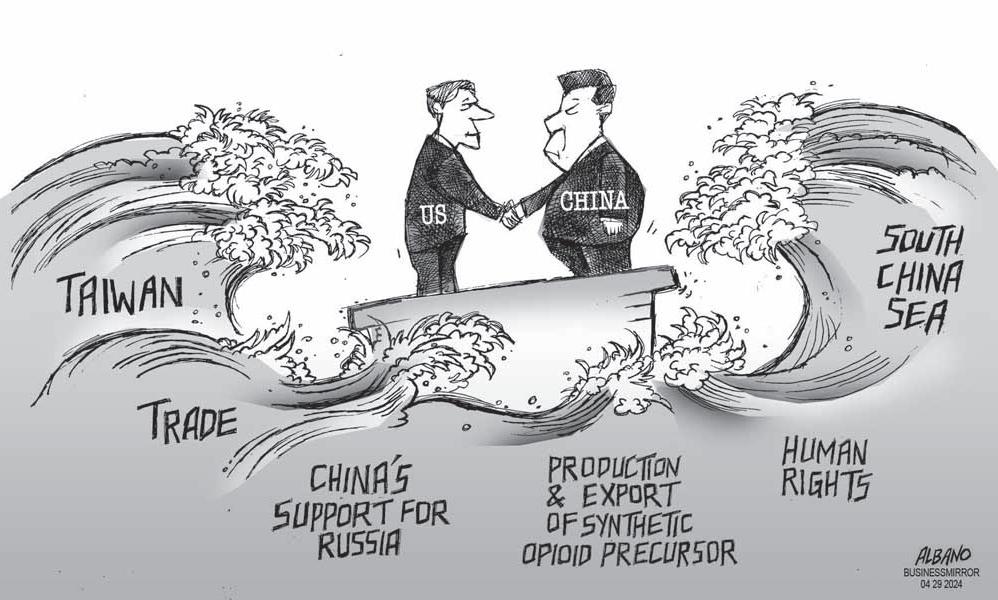
How to empower Pinoy authors and readers
 TAtty. Jose Ferdinand M. Rojas II
RISING SUN
he increasing number of book festivals and book fairs in the country indeed suggests a growing interest in reading among Filipinos. however, it’s crucial to delve deeper and look at the performance and literacy scores of our young students, which often reveal existing gaps in our reading culture. Despite commendable efforts by certain institutions and agencies to promote local literature, there remains significant room for improvement as far as nurturing a vibrant literary ecosystem is concerned.
To truly support the industry, we can start by offering comprehensive support for local authors, illustrators, and content creators. Initiatives such as publication grants, translation programs, writing workshops, mentorships, and residencies can provide the necessary resources, inspiration, and guidance for aspiring and established creators. It would be ideal to extend the same support to creators outside the big cities or those who belong to indigenous or marginalized groups.
Moreover, independent publishers and creators’ organizations also require support to effectively imple-
ment their campaigns and programs. This presents a unique opportunity for collaboration between creators and private businesses, non-profits, and government agencies.
An important aspect in promoting a stronger reading culture is the integration of Filipino works into the educational curricula at all levels. By exposing students to local creators and their works, educators could inspire students to have a deeper connection with our literature and culture, encourage critical thinking, and foster empathy. Active engagement with local content enables students to explore issues relevant to their
To truly support the industry, we can start by offering comprehensive support for local authors, illustrators, and content creators. Initiatives such as publication grants, translation programs, writing workshops, mentorships, and residencies can provide the necessary resources, inspiration, and guidance for aspiring and established creators. It would be ideal to extend the same support to creators outside the big cities or those who belong to indigenous or marginalized groups.
lives, sparking curiosity and igniting a lifelong love for reading.
The commendable efforts to promote local literature internationally deserve appreciation. We recognize these initiatives for their contribution to the global appreciation of Filipino literary talent. Through participation in global book festivals and other related activities, our local titles are able to reach readers worldwide, amplifying our cultural voice on the global stage.
While progress has been made in building and expanding library facilities across the country, particularly in underserved communities, there
remains a pressing need for further investment in this vital infrastructure. To put it simply, there are still many Filipinos living in far-flung areas that don’t have access to reading resources.
Additionally, the proliferation of pirated books on various online platforms poses a significant challenge to the rights of authors and publishers. Addressing this issue requires concerted efforts from relevant groups and government agencies to safeguard intellectual property rights and uphold ethical standards in the digital age. There is certainly an urgent need to address the gaps in this area because digital platforms and new technologies have an increasingly huge role to play in shaping reading behaviors and preferences.
Lastly, while enlisting influencers and role models to advocate for local literature may seem clichéd, their endorsement holds significant sway over public perception. Prominent literary figures, educators, and public personas can also leverage their platform to champion the importance of supporting Filipino books, culture, and creators. They may serve to inspire a new generation of readers and writers and foster the continued growth of our literary community.
Malampaya gas field seen providing energy security and economic growth for the Philippines

The Malampaya gas field, a discovery made in deep water that established Palawan as an oil and gas frontier, may yet provide the country with the much-sought energy security that could boost the country’s economic potential.
This welcome development arose from the move of Prime Energy, operator of Service Contract 38 where Malampaya is located, to drill two deepwater development wells in the Camago and Malampaya East fields that will result in additional supply of natural gas.


The consortium is also set to drill an exploratory well 15 kilometers north of Malampaya. Dubbed Bagong Pagasa, the drilling may lead to another gas discovery in the area that will supply natural gas to four gas-fired power plants in Batangas, Santa Rita, San Lorenzo, San Gabriel and Avion and the Ilijan plant.
Malampaya’s natural gas has ac-
counted for 20 percent of Luzon’s electricity requirements and the two additional wells are aimed to add more natural gas supplies for the power plants. Discovered in 2001 at 3,000 meters below sea level, the gas field has also resulted in the remittance of $12 billion in revenues to the government.
According to Prime Infra President and CEO Guillaume Lucci, “Malampaya is playing a critical role in ensuring power supply and avoiding volatility, stability of gas prices, [and] energy security,” adding that the consortium is spending about $750 million for the three development wells meant to tap additional
That marked “overproduction” in Malampaya’s operating wells to power additional megawatts of energy to cushion the impact of less available power supply that necessitated the alerts is enough reason for the Senate bill to be passed immediately for the good of the country.
natural gas supplies.
Prime Infra’s huge investment for the Malampaya gas field provides a positive vibe to the naysayers who are raising the white flag since the Malampaya gas deposits are said to be dwindling. What they conveniently turn a blind eye on is that the potential for more wells to yield natural gas is real and high.
In fact, it has to be noted that there is the so-called Camago-Malampaya Oil Leg beneath the gas field, which when tested for 150 days produced 25,000 barrels of oil per day with an API quality of 30 degrees. Thus, the prospects for another discovery looms, especially with the commissioning of a deepwater drillship named “Noble Viking” for the three wells set to be drilled.
With the huge investments needed for natural gas, it is just fitting and proper that a Senate bill filed by Senator Raffy Tulfo seeks to come up with a national policy that would require the Department of Energy (DOE) to lay down rules that make the use of natural gas found and developed in the Philippines as priority in the generation of electricity.
In essence, SB 2247 provides hope for the sought-for energy security for the country. Hopefully, lawmakers will be able to see the real potential of the Philippines having its own supply and system to deliver zeroimportation-cost natural gas to our energy grid.
Aside from energy security, natural gas provides the backdrop for the country’s push for clean energy. The bill is seen leading to further development of a natural gas industry, which means the creation of additional jobs. It is also seen providing the platform for the upskilling of our engineers.
“We are very proud of the milestones that the hard-working team of Filipinos in Prime Energy achieve month on month to ensure that we
www.news.businessmirror@gmail.com Monday, April 29, 2024 • Editor: Angel R. Calso Opinion BusinessMirror A12
A broader look at today’s business Publisher Editor in Chief Associate Editor News Editor Senior Editors Online Editor Creative Director Chief Photographer Chairman of the Board President Advertising Sales Manager Group Circulation Manager T. Anthony C. Cabangon Lourdes M. Fernandez Jennifer A. Ng Vittorio V. Vitug Lorenzo M. Lomibao Jr., Gerard S. Ramos Lyn B. Resurreccion, Dennis D. Estopace Angel R. Calso Ruben M. Cruz Jr. Eduardo A. Davad Nonilon G. Reyes D. Edgard A. Cabangon Benjamin V. Ramos Aldwin Maralit Tolosa Rolando M. Manangan BusinessMirror is published daily by the Philippine Business Daily Mirror Publishing, Inc., with offices on the 3rd floor of Dominga Building III 2113 Chino Roces Avenue corner De La Rosa Street, Makati City, Philippines. Tel. Nos. (Editorial) 817-9467; 813-0725. Fax line: 813-7025. (Advertising Sales) 893-2019; 817-1351, 817-2807. (Circulation) 893-1662; 814-0134 to 36. E-mail: news.businessmirror@gmail.com www.news.businessmirror@gmail.com Printed by brown madonna Press, Inc.–Sun Valley Drive KM-15, South Superhighway, Parañaque, Metro Manila Ambassador Antonio L. Cabangon Chua Founder Since 2005 ✝ MEMBER OF LITO GAGNI See “Gagni,” A13
Philippines attaining global tax leadership

IIronclad passport
 Joel L. Tan-Torres
DEBIT CREDIT
Part
RECENtly attended an Asian Development Bank (ADB) webinar on a tax topic that has far-reaching consequences for the country and its tax system, but surprisingly, I am not seeing in the Philippines the type of urgency that I expected for this development. I am referring to the Pillar II rules on the Global 15 percent Minimum ta x being led by the Organization for Economic Cooperation and Development (OECD), with the ADB-organized webinar held on April 17, 2024 focused on the rules on tax incentives and postPillar II ta x Incentives. there were about 80 attendees at the webinar, with only about two coming from the Philippines, the invited speaker from the Department of Finance (DOF), and myself.
I learned a lot of practical aspects of this Pillar II initiative. There were five speakers in the webinar, consisting of Sathi Mer Nandi and Professor Vikram Chand of the ADB, Melanie Dewi Astur of the Ministry of Finance of Indonesia, Vanessa Asivo Mamu from the Internal Revenue Commission of Papua New Guinea, and Josef Lacson, Deputy Executive Director of the Philippines Department of Finance.
The speakers dwelled on the impact of the Pillar II measures on the national income tax incentives of the three countries represented by the speakers. The Pillar II rules would hurt tax incentives offered to large Multinational Enterprises (MNEs). Under specific circumstances, countries that have tax incentive systems that result in these MNEs paying a lower Effective Tax Rate than the prescribed minimum 15 percent threshold will result in the payment of the Pillar II additional “top-up” tax by the MNEs.
As of this date, over 30 countries have already introduced legislation to address the impact of this Pillar II minimum global tax, including measures on the Qualified Domestic Minimum Top-up Tax and the Undertaxed Profits Rule. These essentially involve amending the corporate tax incentive measures to mitigate the adverse effects of the Pillar II rules.
The Philippines has a lot of catching up to do in this area. As mentioned by Director Lacson, the stakeholders are still learning about these Pillar II rules and how to effect administrative and legislative measures to cushion the adverse impact on the country’s tax and incentives system and the investors availing themselves of these incentives. These stakeholders include the Congress, DOF, Bureau of Internal Revenue (BIR), Board of Investments, Fiscals Incentives Review Board, taxpayers, tax practitioners, and several others.
It is to be noted that the Philippines has already committed to adopting these Pillar II rules. In October 2023, the Philippines joined the global efforts against tax avoidance when it became a member of the OECD/G20 Inclusive Framework on Base Erosion and Profit Shifting (BEPS). This BEPS is an international
continued from A12
are on track for the planned drilling,” said Prime Energy Managing Director and General Manager Donnabel Kuizon Cruz.
So far, the Malampaya Gas Field has come to the rescue of the country when there were yellow and red alerts that were issued by the National Grid Corporation of the Philippines, signaling the possibility of rotating brownouts due to less power supply especially with the non-operation of several power plants.
According to Cruz, “when needed by the grid Malampaya was able to reliably deliver even more than export capacity. Malampaya was able
As of this date, over 30 countries have already introduced legislation to address the impact of this Pillar II minimum global tax, including measures on the Qualified Domestic Minimum Top-up Tax and the Undertaxed Profits Rule. These essentially involve amending the corporate tax incentive measures to mitigate the adverse effects of the Pillar II rules.
collaboration with over 140 member countries and jurisdictions. Through its membership, the Philippines has committed to addressing the tax challenges arising from the digitalization of the economy by participating in the Two-Pillar Solution to reform the international taxation rules and ensure that MNEs pay a fair share of tax wherever they operate. The Philippines needs to participate in the implementation of the BEPS package of 15 measures to tackle tax avoidance, improve the coherence of international tax rules, and ensure a more transparent tax environment.
Thus, the die is cast. The Philippines, led by the Congress, DOF, and BIR, has to pursue several legislative and administrative measures to fulfill its OECD/G20 commitments and ensure that the country will not be left behind in all these developments. I believe that with the globalization mindset of BIR Commissioner Romeo Lumagui, Jr., it is possible that the Philippines can even be one of the global tax leaders in attaining the outcomes of these various developments and initiatives.
To be continued
Joel L. Tan-Torres was a former Commissioner of the Bureau of Internal Revenue. He has also held the various positions of Dean of the University of the Philippines Virata School of Business, Chairman of the Professional Regulatory Board of Accountancy, Tax partner of Reyes Tacandong & Co. and the SyCip Gorres and Velayo & Co., and director of various corporate boards. He is a Certified Public Accountant who garnered No. 1 in the CPA Board Examination of May 1979. He is now back to his tax and consultancy practice and can be contacted at joeltantorress@yahoo.com and his firm JL2T Consultancy.
to deliver on demand because all producing wells were available and there was sufficient reserve in the gas export pipeline.” Actually, the Malampaya gas field was able to deliver 290 million standard cubic feet per day when the red and yellow alerts were announced on April 16, according to Cruz. That total gas supplied is against the current maximum capacity of Malampaya wells at 262 million standard cubic feet per day. That marked “overproduction” in Malampaya’s operating wells to power additional megawatts of energy to cushion the impact of less available power supply that necessitated the alerts is enough reason for the Senate bill to be passed immediately for the good of the country.
Siegfred Bueno Mison, Esq.
THE PATRIOT
It’s MORE HOt in the Philippines!!! these past few days, the heat index, which is what the temperature feels like when relative humidity is combined with the air temperature, has been off the charts, according to Philippine Atmospheric Geophysical and Astronomical services Administration (PAGAsA). In a few localities, the heat indexes have reached the levels of 33°C to 41°C (Extreme Caution), and even 42°C to 51°C (Danger) wherein heat exhaustion is likely and heat stroke is probable with continued activity outdoors. Hence, some schools have suspended in-person classes, while offices allowed more remote work arrangements, and recreational activities outdoors were strongly discouraged. No wonder there were only a handful of golfers than usual when I played last week!
News reports said that Pasay City and Quezon City have logged on a dangerous heat index of 44 and 42 degrees Celsius, respectively, this past week. Being a farm owner, I see the vicious effects of the hot weather on my crops (calamansi, bananas, and pineapples) as cracked soil all over indicates a severe lack of moisture, which is necessary for a better harvest. With these punishing conditions, I have been hearing of complaints how unbearably hot our country can be to the point of some friends considering going to another “not so tropical” country, temporarily or permanently.
Yet even with these hot and humid conditions, several Filipinos who have gone elsewhere have already applied for the benefits of Republic Act 9225, more known as the Retention and Reacquisition of Citizenship Act. There’s no place like home, some say. When I was with the Bureau of Immigration, I can vividly remember signing around 500 “dual citizenship” certificates a month! My siblings who became naturalized US citizens many years ago, recently availed themselves of this privilege, making them dual citizens of both the Philippines and the United States last year.
In the 1987 Philippine Constitution, Article IV, Section 5 states that, “Dual allegiance of citizens is inimical to the national interest and shall
be dealt with by law.” Back then, the Commissioners in the 1987 Constitutional Convention deemed it necessary to distinguish allegiance and citizenship. For some Commissioners, one can be a citizen of another country without giving up allegiance to the Philippines. Since beneficiaries of RA 9225 are required to take an oath of allegiance to the Republic of the Philippines, it presupposes that they all renounced their allegiance to the country where they were naturalized; otherwise, these dual citizens will be violating the Constitution! Incidentally, only a few countries such as Japan allow dual citizenships. Germany used to have a restrictive citizenship law, but its legislature recently passed a new law, to take effect on June 2024, completely removing Germany’s prohibition against multiple citizenships.
Several Filipinos have opted to acquire citizenship in other countries for various reasons—greener pastures, for the most part, given the many challenges of living in a developing country like the Philippines. Some considered getting a “better passport” knowing that passport holders of some countries like Japan and the US can enter many other countries, visa-free! I too thought about getting a “better passport” many years ago, especially when faced with the many
trials, pun intended, in my chosen legal profession. Fortunately, I was reminded by some brothers in Christ that since believers are all pilgrims passing through, sojourning temporarily here on earth, we should not be mindful of earthly things. Matters like abnormal weather conditions in the Philippines, current wars in the Middle East and in Ukraine, tension in the West Philippine Sea, and fluctuations in the price of goods are all temporary.
Truth be told, it is mostly about proper mind-setting. The hottest weather conditions can trigger plans of migrating to a cooler country. Uncertainties in security and food provisions can invite proposals of working overseas. But almost always, we are treated as “secondclass citizens” in that other country of relocation. However which way we put it: be it as original citizen, dual citizen, second-class citizen, our stance should be cemented on right believing. That is, removing our thrust on what is physical and fixing our eyes on the spiritual.
With the former, there will always be a struggle, each day becomes another painstaking challenge to combat the heat, the effects of unemployment, the fear of war, name it. It is a never-ending cycle, and we will always be weary and jaded. But when we elevate our thinking into the heavenly realm, that despite our worldly conditions and suffering, we can actually rest and let go because we have an Abba Father who provides for us as He does the birds in the air ( Matt. 6:26-27 ); a Daddy God who knows us completely and is mindful of our every need as He even numbers the very hair in our heads (Luke 12:7 ) which is approximately 7.6 quadrillion on the average!
Right believing signifies that believers are dual citizens who should fix their hearts and minds on Jesus, since their ultimate citizenship is in Heaven. The Bible promises us in Philippians 3:20–21 that, “But we are citizens of heaven, where the Lord Jesus Christ lives. And we are eagerly waiting for him to return as our Savior.” Since Jesus is coming for us to take us to our heavenly “country,” we live like foreigners or tourists here on earth. Hence, the Bible in 1 Peter
2:11 reminds us that, as “temporary residents and foreigners,” we should “keep away from worldly desires that wage war against your very souls.” As such, believers are called to abstain from what this world prioritizes and to live our lives pleasing God above all else. Being in this world means we are subjected to the effects of the physical planet where we are in, hot climate included, as well as all the human-oriented activities like politics, economics, education, conflict, and wars. We may be IN this world, but we are not OF this world, simply because of our Heavenly citizenship. Unlike RA 9225 that requires further documentation, our citizenship with God merely requires our genuine acceptance of Jesus Christ as our Lord and Savior. Unlike RA 9225 that allows for dual citizenship, our Heavenly Father calls us to focus on Him alone, and not on other idols of this world. Believers IN this world must shun away from the love OF the world and fix their eyes on what’s eternal.
A pastor once said, “A Christian, being only a traveler through the world, must expect a traveler’s fare; bad roads sometimes, bad weather, and bad accommodations; but since his journey’s end and city are in heaven, all his actions, sufferings, prayers, trade, and conversation turn that way.” And so, believers ought to lead their lives fit for Heaven and aligned with their fellow Heavenly citizens. We can boldly enter any country (physical and mental situation) without fear, for our citizenship is far superior to any citizenship of this world. Let’s stay confident that our passport (Jesus Christ) to our ultimate Country of citizenship (Heaven above) is “ironclad” despite the trials that can come our way, hot weather included.
A former infantry and intelligence officer in the Army, Siegfred Mison showcased his servant leadership philosophy in organizations such as the Integrated Bar of the Philippines, Malcolm Law Offices, Infogix Inc., University of the East, Bureau of Immigration, and Philippine Airlines. He is a graduate of West Point in New York, Ateneo Law School, and University of Southern California. A corporate lawyer by profession, he is an inspirational teacher and a Spirit-filled writer with a mission. For questions and comments, please e-mail me at sbmison@gmail.com.
Hamas releases video of two hostages as it weighs ceasefire
By Henry Meyer, Fadwa Hodali & Fares Akram
HAMAs released a video on saturday showing two hostages alive as it studied Israel’s latest proposal for a ceasefire, in an apparent bid to increase pressure on Prime Minister Benjamin Netanyahu to call off a major offensive that would deepen the war in Gaza.
The Palestinian militant group’s military wing posted a video showing American-Israeli citizen Keith Siegel, 64, and Israeli Omri Miran, 47, who spoke briefly in the video.
Israel’s offer of a ceasefire in exchange for the release of hostages is in response to the group’s position delivered to mediators on April 13, senior Hamas official Khalil Al-Hayya said in a statement. The group will submit a response once it’s finished studying it, he said, offering no specific timeline.
Earlier this week, the US and 17 other nations pressed Hamas to release all hostages, including their own citizens being held in Gaza, in a bid to revive talks that have stalled in recent weeks, and to unlock more humanitarian aid for the coastal enclave. Hamas is designated a terrorist organization by the US, the EU and others.
Netanyahu has faced increasing calls to reach a truce with Hamas amid international concerns about his plans for an attack on the city of Rafah in southern Gaza, where a million refugees are sheltering.
Israel has long signaled an intention to launch a ground operation in Rafah to achieve its goal of destroying Hamas. Israeli military officials estimate 5,000 to 8,000 Hamas fighters are holed up there, along with some of its leaders, representing the last line of its defense.
Protests inside Israel over the fate of the hostages are also escalating, especially since Hamas released a recent video of a 23-yearold US-Israeli citizen whose mother has been the most prominent campaigner for efforts to secure the detainees’ release. That’s spurred calls for Netanyahu to step down, with many accusing the long-time prime minister of prolonging the war to hang onto office despite his failure in preventing Hamas’s Oct. 7 attack on southern Israel.
Thousands gathered in central Tel Aviv late Saturday including relatives of Gaza detainees demanding a hostage deal and early elections. “Netanyahu is blinded by power—he has to go,” one demonstrator, Evyatar Gol, told Bloomberg News.
Former prime minister and opposition leader Yair Lapid joined the rally. “Netanyahu you have a majority among the people of Israel for a deal,” he said on X, formerly Twitter.
Israel told a high-level Egyptian delegation which visited Friday that it’s made significant concessions and that the latest offer represents a “last-minute opportunity” for an agreement before it enters Rafah, Channel 12 reported, citing a senior Israeli official who wasn’t identified.
The US has been seeking a temporary cease-fire in Gaza that would see Hamas free female, wounded, elderly and sick hostages in exchange for the release of Palestinian prisoners and a surge of humanitarian aid. In subsequent phases, the remaining captives—including the bodies of those who’ve died—could be released under a process that US officials say should eventually end the fighting.
US President Joe Biden vowed Saturday he will “not rest” until every hostage is freed.
“They have my word. Their families have my word,” he wrote on X, where he posted a photograph of his meeting with four-year-old freed American-Israeli captive Abigail Idan earlier this week. Idan, whose parents were killed in the Hamas assault, was freed in November during a hostage swap.
The US has been seeking a temporary cease-fire in Gaza that would see Hamas free female, wounded, elderly and sick hostages in exchange for the release of Palestinian prisoners and a surge of humanitarian aid. In subsequent phases, the remaining captives—including the bodies of those who’ve died—could be released under a process that US officials say should eventually end the fighting.
Ongoing talks between Israel and Hamas have been mediated by the US, Egypt and Qatar. Netanyahu heads the most right-wing government in Israel’s
history and his hardline allies have condemned the renewed efforts to strike a deal with Hamas. One of them, Finance Minister Bezalel Smotrich, warned against what he d escribed as a “dangerous Israeli capitulation” in a post on X. Saudi Arabia plans to host highlevel talks on Monday to discuss Gaza’s future. US Secretary of State Antony Blinken is expected to attend and then visit Israel a day later. Al-Hayya told the Associated Press on Wednesday that Hamas would lay down its arms if a Palestinian state is established along pre-1967 borders. He insisted it wouldn’t back down from its demands for an end to the war in Gaza and the full withdrawal of Israeli forces, which Israel has refused. Israel’s offer doesn’t give a clear answer to Hamas’s demands for a troop pullout and comprehensive ceasefire, an unidentified senior Hamas official told the Al Mayadeen TV channel. Unless it makes major changes to the proposal, the prospects aren’t high that it can lead to an agreement, the official added.
Israel has been waging a devastating offensive in Gaza since Hamas fighters swarmed across the border almost seven months ago, killing about 1,200 people. The group abducted another 250, of whom more than 130 remain inside Gaza, some of them dead. More than 34,000 Palestinians have died, according to Hamasrun health authorities, which don’t distinguish between military and civilian casualties. With assistance from Galit Altstein and Shamim Adam/Bloomberg
Monday, April 29, 2024 Opinion A13 BusinessMirror www.news.businessmirror@gmail.com
21
Gagni . . .
46th CATHOLIC MASS MEDIA AWARDS
WHO CAN NOMINATE?
PROFESSIONAL LEVEL :
Entries may be submitted by any person or organization wishing to direct the attention of the CMMA to a meritorious program, series, article, material and the like. A person or a company may submit more than one entry in each category. Entries need not be Christian and nominees need not be Catholics. All entries must be those media works released from May 2023 to April 2024.
STUDENT LEVEL:
ADVERTISING
Best TV Ad-Branded
Best TV Ad-Public Service
Best Digital Ad-Branded
Best Digital Ad-Public Service
MUSIC
Best Inspirational Song-Religious
Best Inspirational Song-Secular
Best Music Video
PRINT / E-PUB
Best Children’s Magazine
Best Editorial Cartoon
Best Investigative Report
Best Local Community / Parish Newspaper
Best News Coverage
Best News Photograph
Best Opinion Column
Best Short Story
Best Special Feature
Best Comic Story
Best Children’s Short Story
Best Youth Magazine
Best Family-Oriented Magazine



All bona fide students enrolled in any of the participating schools, colleges and universities within the school year 2023-2024.
RADIO (AM OR FM) / PODCAST
Best Business News
Best Counseling Program
Best Public Service Program
Best Drama Program (Episodic or Serial)
Best Educational Program
Best Entertainment Program
Best News Commentary
Best News Program
Best News Feature
TELEVISION
Best Adult Educational / Cultural Program
Best Children and Youth Program
Best Comedy Program
Best Drama Series / Program
Best Entertainment Program
Best News Magazine
Best News Program
Best Public Service Program
Best Special Event Coverage
Best Talk Show
Best Tv Special (One-Time feature)
Best Station ID
FOR INQUIRIES PLEASE WRITE OR CALL:
SOCIAL MEDIA
Best Website
Best Vlog
STUDENT CMMA
Best Student Organ-Grade School
Best Student Organ-High School
Best Student Organ-College
Best Short Film (Documentary or Narrative)
Best TV Production (Documentary or Narrative)
Best Student Public Service-Radio Ad
Best Student Public Service-Print Ad
Best Student Public Service-TV Ad
Best Literary Publication
SERVIAM AWARD
Individual Corporate / Institutional
ST. JOHN PAUL
THE CMMA Secretariat Office: 5/f Dominga Building III , 2113 Chino Roces Ave. corner Dela Rosa Street, Makati City 0922-8568220 0922-8356147 thecatholicmassmediaawards@yahoo.com www.facebook.com/Official CMMA

SUBMISSION OF ENTRIES FOR CMMA:

Student—March 19–May 17, 2024 Professional—March 19–May 31, 2024
II
CATEGORIES Artificialintelligenceandwisdomoftheheart:Forafullyhumancommunication.
AWARD
Editor: Jennifer A. Ng
NexGen: Solar, wind farms to expand energy portfolio
 By Lenie Lectura @llectura
NexGeN energy Corp., a wholly owned subsidiary of Pure energy Holdings Corp. (PeHC), announced its intention to build a portfolio of over 2,350 megawatts (MW) over the next 10 years.
The power projects are mostly solar and wind, according to company president Eric Y. Roxas said. He said the cost to build solar power farms is around $750,000 per MW and around $1 million to $2 million per MW for wind.
“We are excited about NexGen’s role in helping to secure the country’s energy supply needs. We support the Department of Energy’s (DOE) goal of achieving a 35 percent

MPTC barrier-free tolls may cost ₧10B—exec
By Lorenz S. Marasigan @lorenzmarasigan
ETRO
renewable energy share by 2030,” said Roxas.
NexGen, which was established on June 7, 2017, is the wind, solar, and AgTec (agriculture technology) development arm of PEHC. It is also preparing for its initial public offering to raise funds for its renewable energy projects in the pipeline.
The company has three main subsidiaries, namely SPARC-Solar Powered Agri-rural Communities
Corp., which currently operates three solar farms in Zambales, Bataan, and Bulacan; 5Hour Peak Energy Corp., which has a pipeline of over 1,000 MWpeak of solar projects; and Airstream Renewables Corp., which has a pipeline of up to 1,330 MW of onshore and offshore wind projects.
NexGen currently has eight wind energy service contracts (WESC) under Airstream, with four more WESCs in the process of being consolidated into Airstream. It has also several solar projects in application with the DOE for the solar energy service contracts under 5hour Peak Energy, as well as big ticket unsolicited proposals currently being reviewed at several government agencies.
“NexGen currently has three operating solar farms with a total capacity of approximately 14MW,” Roxas said when asked for the company’s existing power capacity.
NexGen’s parent company, PEHC, is a conglomeration of hydropower, solar, wind, and geothermal assets, as well as bulk water and distribution facilities.
Its sister company, Repower Energy Development Corp. (REDC), the hydropower arm of PEHC, debuted at the Philippine Stock Exchange last July 2023.
Last month, REDC announced that it secured 500 MW of wind energy service contracts from the DOE.
These are the 100 MW Silang Onshore Wind Farm, 100 MW Mauban Offshore Wind Farm, and 200 MW Real Offshore Wind Farm. These onshore and offshore wind contracts, which are all valid for 25 years, would allow the company to build these wind farms in Real and Mauban, Quezon Province.
Moreover, REDC is pursuing the 100 MW Pandan Labayat Onshore Wind Farm in Quezon, which will cover 2,025 hectares of land.
Enex seeks oil exploration partners
Listed e nex e nergy Corp., which is majority owned by AC e N C orp., continues to scout for a joint partner to develop its oil and gas exploration contract, service contract (s C ) 55, in the West Philippine s e a.
s C 55 continues to be under force majeure given geopolitical issues associated with the disputed waters. d e spite that, e nex Chairman e r ic Francia said the e nexled consortium intends to bring in the right partner to undertake the exploration and development activities once it is possible to do so.
“We are actively looking for the right sponsor or partner to invest, to do gas exploration development under sC 55 which is still under force majeure,” said Francia during the company’s annual meeting last week.
t he d ep artment of e ner gy ( d O e ) granted the request of e nex subsidiary, Palawan55 e x ploration and Production Corp., to extend by 18 months the deadline to drill a well under s C 55.
“Given that s C 55 is currently still on force majeure, Palawan55 shall have a total of 23 months (the five months remaining plus the 18-month extension) from the lifting of force majeure to drill the committed well,” the d O e had said.
t h e force majeure is in effect until such time that a clearance to proceed with exploration activities in the West Philippine
STOCK-MARKET OUTLOOK
Last week sHAR e p rices bounced back last week as tensions in the Middle e a st eased, but a “high-for-longer” interest rates could dampen investors’ appetite.
t h e benchmark Philippine s t ock e xc hange index gained 185.75 points, or 2.88 percent, to close at 6,628.75 points.
t h e main index was up all week long, as investors were elated by the country’s economic managers’ pronouncement that the G d P m ay grow by as much as 7 percent this year.
tr ading, however, was anemic with average value reaching only P3.4 billion as most investors stayed on the sidelines.
Foreign investors, which cornered more than half of the trades, were net sellers at P2.8 billion.
All other sub-indices ended in the green. t h e broader All s ha res index gained 71.20 points to close at 3,492.75 points, the Financials index was up 14.14 to 2,050.70, the ndustrial index surged 508.19 to 8,883.76, Holding Firms index rose 184.21 to 6,136.57, the Property index climbed 93.49 to 2,511.72, the s e rvices index increased 14.19 to 1,836.25 and the Mining and Oil index soared 652.14 to 8,874.76. to p gainers were Roxas and Co. i nc., AB s - CBN Corp., Medco Holdings i nc., Global Ferronickel Holdings i n c., JG s umm it Holdings i nc., e a st Coast Vulcan Corp. and Mabuhay Vinyl Corp. to p losers were Cemex Holdings Philippines i n c., which was acquired by the
s e a has been issued by the government.
Palawan55 is 69.35-percent owned by e nex and 30.65-percent owned by AC e N. i t is the operator of s C 55 with a 75-percent share and the remaining 25 percent is held by Pryce Gases, i nc.
Francia had said that with the ongoing territorial dispute surrounding the West Philippine s e a, securing partnerships for the exploration has been “a major challenge.”
e nex is involved in exploration and production of crude oil and natural gas through interests in petroleum contracts and through holdings in resource development companies with interests in petroleum contracts.
Francia said e nex will focus on its two assets, namely s C 55 and Batangas Clean e nergy (BC e ). “We will look to unlock value at the opportune time,” he said. He said enex continues to make progress in the downstream sector. “Our investee company, Batangas Clean energy, continues to develop the 1100 megawatts (MW) combined cycle gas turbine project in Batangas province, which is awaiting a competitive selection process [C s P ] in order to secure a customer offtake contract.”
e n ex is also joining the liquefied natural gas (LNG) bandwagon through its investee company BC e , a j oint venture with U s -
Consunji Group for $305.6 million, Philippine tr ust Co., Concrete Aggregates Corp. B shares, Keppel Philippines Properties i nc., Grand Plaza Hotel Corp., Manila Bulletin Publishing Corp. and Philippine Bank of Communications.
This week sHAR e p rices may fall this week as investors were disappointed with the longer higher interest rate environment.
i t w ill be a four-day trading week as May 1 is a public holiday.
Broker 2 tr adeAsia said this week’s meeting of the United st ates Federal Reserve, while likely neutral, may be hyperanalyzed for any of its tonal change of indicators in the second half of the year.
t h e postponed midyear rate cut from the Fed has hampered outlook for late 2024; brace for the consequent postponement of major capex/weaker transaction market at least for the leverage sensitives,” it said.
e x pect tension between a disheartened market that originally expected rate cuts by the second quarter versus bargain hunters aiming for lower average cost plus higher dividend yield in the medium term.”
Japhet Louis O. tan tiangco, senior research analyst at Philstocks Financials i nc. said investors are expected to watch out for positive catalysts that could bring back the bullish sentiment.
“Last week, the market was able to close above its 200-day exponential mov -
b ased Blackstone i nc. portfolio company Gen X e nergy LLC.
Francia said B e C i s looking for investors while the gas plant awaits interest from possible offtakers. “ i n case of B e C, the gas plant is awaiting the C s P f or Meralco or other off takers and, meantime, also entertaining investors.”
He said, however, that reliance on imported LNG has put pressure on the cost of fuel and the cost of gas power. t h is is further exacerbated by the weakening of the Philippine peso. “ t h is underscores the need to develop indigenous energy resources in the country.”
Meanwhile, the i nstitute for e n ergy e c onomics and Financial Analysis ( i ee FA) said LNG prices could drop due to “sluggish demand growth” for global LNG.
i f rapid and sustained demand growth does not materialize, LNG producers and traders—particularly those with higher costs and significant uncontracted supplies—will likely face an extended period of low prices and slim profits,” said Clark Williams- d e rry, e nergy Finance Analyst and co-author of the report.
t h e Russia-Ukraine war has drove many markets to reduce the role of LNG in their development plans and accelerate the development of alternative energy sources.
ing average. Next week, the market may test the validity of its breach of the said line. i f i t is able to hold its position above its 200-day moving average, we may see more upward momentum moving forward. i f i t is unable to do so however, we may see the market decline again towards its support at 6,400. Major resistance is seen at 6,700,” he said.
Stock picks
P H i L s t OCK s re commended s e curity Bank Corp. as it is moving downwards with relatively low volatility, implying that a base could be formed.
“We recommend entering the stock at support levels or at P68.10,” the broker said. i t s et a target price on the stock at P81 per share.
s e curity Bank’s shares were last traded on Friday and closed at P69.55 apiece.
Meanwhile, Maybank s e curities said its top pick for the property sector is s M Prime Holdings nc. as its income will be led by its shopping malls portfolio, which now accounts for almost 60 percent of the company’s earnings.
“As mentioned, we expect policy rate cuts to start in the third quarter, which should be favorable for cyclicals, particularly for the residential segment.”
sM P rime continue to trade at a discount of 51 percent despite recording an earnings growth of 14 percent.
s M P rime shares closed last week at P28.35 apiece. VG Cabuag
i n s o utheast Asia, iee FA observed that “extensive development timelines, contract negotiations, and repeated project delays for LNG-related infrastructure” may continue to reduce demand amid “strengthening political incentives to pursue alternative energy sources.” Lenie Lectura
MPacific Tollways Corp. (MPTC)
plans to invest as much as P10 billion in new “barrier-free” technologies across all its expressways, a r anking official said.
In a recent roundtable discussion, MPTC President Rogelio Singson told reporters that the company e nvisions a “barrier-free” future for its expressways, citing benefits such as a 50-percent reduction in travel time, improved safety, a 150-percent projected growth in lane throughput, and drive decarbonization efforts.
We want to move into the internationally accepted standards o f tollway operations, barrierless and multi-road.”
When asked how much the investments required for this new t echnology, Singson said: “This one could range from P8billion to P10 billion—for all expressways.”
There are three major components to implementing this, he noted.
These are replacement of the toll booths with gantries equipped with contactless payments technology; the establishment of the information back office, which will house t he RFID data on vehicle classification and ownership; and the d evelopment of the commercial back office.
The company is looking at im -
plementing the initial stage of the p roject in November.
“By November we will start seeing some of the start but we are s tarting at the backroom—the account management system— so the integration from the old to the new system will be there,” Singson said.
The company is looking at the removal of the toll gates by mid-2025. S ingson said it will take “two full years” to fully implement this program.
“By 2025 or 2026, we will see the impact,” he said.
MPTC is the holding company for the operators of the following expressways: the North Luzon Expressway (Nlex), Nlex Connector, Su bic-Clark-Tarlac Expressway, the Manila-Cavite Toll Expressway, the Cavite-Laguna Expressway, and Cebu-Cordova Link Expressway.
C onglomerate Metro Pacific Investments Corp. announced last m onth that the revenues of its subsidiary MPTC rose by 19 percent to P27.2 billion due to a combination of toll rate increases and t raffic growth in the Philippines and Indonesia.
Core net income, however, increased by only 2 percent to P5.8 b illion as revenue growth was tempered by the higher concession amortization on newly opened r oads and financing cost of the acquisition of Cikampek Elevated Road or Japex, in Indonesia.

Companies B1 BusinessMirror
Monday, April 29, 2024

Perspectives
Cost transformation in risk
THE cost to maintain effective, regulatory-compliant programs is at an all-time high, with ever-evolving expectations that will only add to operational costs. In today’s uncertain economic environment, minimizing cost and improving an organization’s efficiency ratio are at the top of nearly every C-suite’s agenda.
The KPMG Global Risk and Compliance Benchmark reveals that while many banks intend to increase spending on personnel and operations in 2024, a significant number also aim to cut costs, indicating a need for efficiency in risk management expenditures.
Achieving significant cost reductions requires a strategic approach that goes beyond budget cuts. Organizations should identify factors driving expenses and develop targeted strategies to help streamline operations. d e monstrating incremental savings is crucial for maintaining momentum and carefully evaluating cost reduction levers, such as outsourcing and process simplification, is key. These initiatives should align with a detailed risk transformation strategy.
Ten levers for cost takeout in risk A M O d E RN approach to risk management lowers costs while maintaining or improving quality. For risk executives, there are ten primary cost-reduction levers to engage that can help individually reduce costs but collectively yield significant cost-saving opportunities:
Functional, organizational and legal entity rationalization. Rationalization of legal entity, functional and organizational risk accountabilities to eliminate redundancies while aligning appropriate experience and skillsets in execution and oversight of risk-taking.
Product and channel simplification. Rationalization of product offerings and channel delivery strategies to help reduce the variability in associated risk and oversight burdens, a decision that is typically led by the business. Location, geographic or global sourcing. Acquiring risk headcount from cost-advantageous locations.
Delivery model improvements. Enhanced or streamlined operating models to execute risk requirements in a cost-advantageous manner, including the use of centers of excellence, utility functions or other consolidated delivery approaches; in many cases, these changes can be paired with low-cost or global sourcing strategies.
Outsourcing risk as a service. Use of third-party vendors to execute select risk management oversight or execution activities on behalf of the first and second lines of defense.
Integrating risk technology. Common technology strategy to collect, maintain and facilitate risk-related data (i.e., single platform or linked systems, data repositories).
Digitization of risk (i.e., cloud, automation, advanced analytics). d i gitized risk processes, documentation and control environment, including the use of automation and advanced analytics to gain efficiencies.
Rationalizing foundational risk data and architecture. Creating a single, rationalized and clean source of truth of organization risk taxonomies, inventories and data in an optimized architecture strategy.
Risk simplification. Alignment and rationalization of risk processes, assessments and methodologies to streamline the annual burden of risk execution and oversight while still maintaining quality.
Other expense optimization. Rationalization of other risk oversight and execution-related osts not related to headcount, such as training programs and license fees.
Correct sequencing is key
THE sequencing of cost takeout efforts can be critically important to get maximum benefit in the shortest timeframe. To date, traditional efforts to alleviate costs in risk management have yielded marginal results. These conventional efforts typically lead with technology or rush to automation without addressing the root causes that drive duplication and inefficiencies.
These inefficiencies are then compounded as organizations establish centers of excellence to process high volumes of risk activities while still leveraging complex methodologies or including a push to offshore functions that still rely on heavy onshore oversight. Some of these efforts are being scrapped altogether, given the marginal yields and quality control issues to explore alternative delivery models, such as outsourcing to a third party, which often results in a loss of the upfront investment made.
Unplanned and potentially short-sighted cost-cutting efforts are ultimately frustrating given the volume of rework, time to market and multiyear investment required to yield marginal results or non-scalable solutions. Moreover, such efforts may fail to keep pace with changes in the marketplace, evolving strategy or modifications to regulatory expectations. The difference between strategic and thoughtful cost takeout transformation versus near-term costcutting can be dramatic. Sequencing cost takeout efforts through the lens of shortterm and long-term savings can position an organization to methodically and purposefully build with the end result in mind. An organization should focus initial efforts on planning and ideation to clearly define intended outcomes and a long-term target operating model. These are essential to enhancing cost savings with limited investment. Subsequently, organizations should then focus on enhancing root causes or foundational issues that result in higher costs before fully implementing the long-term vision.
Where do you start?
COST takeout efforts should be thoughtful, strategic and coordinated. While the long-term cost takeout opportunity is significant, it’s equally important to demonstrate incremental savings and quick wins to internal and external stakeholders.
Some organizations are pursuing a dual track of cost takeout initiatives that include utilizing short-term tactical solutions such as headcount or expense rationalization to help reduce costs in quarterly increments while also executing strategic initiatives to unlock maximum and sustainable savings. This approach has been successful in demonstrating immediate savings to investors, contributing to the strategic cost takeout vision and garnering internal support for further cost takeout investments.
This excerpt was taken from the KPMG Thought Leadership publication: https://kpmg. com/xx/en/home/insights/2024/04/costtransformation-in-risk.html.
© 2024 R.G. Manabat & Co., a Philippine partnership, is a member firm of a global organization of independent member firms affiliated with KPMG Int’l Ltd. All rights reserved. This article is for general information purposes only and should not be considered as professional advice to a specific issue or entity. The views and opinions expressed herein are those of the author and do not necessarily represent the BusinessMirror, KPMG International or KPMG in the Philippines.
‘Higher investment on water, sanitation to lead to big ROI’
By Reine Juvierre Alberto
AS the demand for water during El Niño increases, investments in water and sanitation have a “multiplier effect” which leads to higher economic returns, according to an international nonprofit organization.
Water.Org Regional d i rector
Griselda G. Santos underscored in a forum last Friday that for every P50 invested in the water sector, it will provide P300 in economic returns by minimizing health costs, more productivity, and fewer premature deaths in the country.
Citing the water and sanitation situation of the Philippines with an estimated 118 million population, Santos said over 60 million Filipinos lack access to safe water while 61 percent of school-aged children
don’t have access to safe water and sanitation.
“Eighteen Filipinos die daily due to water-borne diseases, and this translates to approximately P78 billion annual economic losses,” Santos said during the “Executive Forum on Local Finance Management and Natural Resources Governance” organized by the Philippine Tax Academy (PTA).
This situation is exacerbated by the “extreme danger” levels of heat indexes which continue to rise as
well as the depleting supply of energy and water in the country.
Last week, five dams recorded a decrease in water levels while the Luzon, Visayas and Mindanao power grids were placed on red and yellow alert status.
Food security is also threatened by El Niño causing about P4 billion in agricultural losses, according to Task Force El Niño spokesperson and Presidential Communications Office Assistant Secretary Joey Villarama.
“All these threaten our access to many basic needs with water as the most critical one. Water crisis is beyond a looming crisis, it is a reality,” Santos said.
Santos stressed that to achieve universal access to safe water and sanitation by 2030, the Philippines need P1 trillion put in place.
On average, the national government’s allocation is about P6 to P7 billion per year, which Santos said leaves a big gap that the state cannot fill in alone as financing remains a key challenge.
The fragmented situation of the
water resource management and governance remains a challenge in the country which affects the development and modernization of water infrastructure, Santos added.
“There’s no one cohesive path towards a sustainable solution for water and sanitation,” Santos said, adding that this situation is not unique but similar to neighboring countries like Cambodia.
“I’m hopeful that can help to have one entity supervising and providing oversight to water resources in the Philippines,” Santos added, appealing to government officials present in the forum to help in championing this effort.
“With water you are able to have gender empowerment and rural development, address food security and financial inclusion,” Santos said.
Water.Org is a global nongovernment organization pioneering in market-driven financial solutions to increase sustainable access to finance safe water and sanitation.
Electronic games boost Pagcor income to ₧25 billion
STATE- O WNE d Philippine Amusement and Gaming Corp. (Pagcor) announced its net income for the first quarter of the year reached P25.24 billion, expressing confidence that the casino operator is on track to reach its P100 billion annual income for the year.
Pagcor’s net income rose by 42.57 percent or P7.54 billion from January to March this year compared to the P17.70 billion posted in the same period in 2023.
A statement issued last Sunday quoted Pagcor Chairman and CEO Alejandro H. Tengco as saying that the P100-billion annual income target for the year would be the first in the 40-year history of the state gaming firm.
“We are happy to announce that Pagcor is able to sustain our growth trajectory in the first quarter of 2024 and this should help position us into achieving another record breaking year,” Tengco was quoted in the statement as saying.
For the period, the bulk of Pagcor’s revenue for the first quarter was accounted for by gaming operations at P22.29 billion.
Broken down, electronic games (e-games), such as eBingo, eGames and Bingo grantees, contributed the most at P9.69 billion or 43.46 percent. Licensed casinos or integrated resorts, meanwhile, brought in P8.04 billion or 36.06 percent.
Revenues from Pagcor-run casinos under the Casino Filipino brand remained to dip, contributing P3.7 billion or 16.62 percent for the first quarter of the year. In 2023, Casino Filipino contributed 20.68 percent to Pagcor’s revenue.
The remaining 3.86 percent was accounted for by offshore gaming operations, which contributed P860.89 million to Pagcor’s total gaming income for the January to March period.
Tengco earlier said he was keen on privatizing Casino Filipino branches after the brand recorded a P1.3-billion revenue loss in 2023. The casino licenses are targeted to be sold in the market in the second half of 2025. (See: https://businessmirror.com. ph/2024/02/16/pagcor-execkeen-on-selling-casinos/)
“ Hindi po nakapag-dudulot ito ng kapakinabangan sa Treasury at ganon din naman sa mamamayang Pilipino kasi nalugi po siya eh ,” the Pagcor official said during a hearing of the House Committee on Games and Amusements. [This set up brings no benefit to the Treasury as well as to the Filipino people because Casino Filipino lost money.]
With this, Tengco also said the booming e-gaming sector is seen to outpace Pagcor’s revenue sources and could possibly overcome landbased casinos for its gaming convenience. (See: https://businessmirror.com.ph/2024/01/16/egaming-may-outpace-otherpagcor-revenue-drivers/)
“As we said earlier, the Egames sector will be our major source of gaming revenues this year and in the next few years as innovation and technological integration allow the sector to offer more excitement and convenience to gamers,” Tengco said in the statement.
Pagcor’s net operating income after taxes hit P18.99 billion, higher by 54.22 percent than
the P12.32 billion recorded in the January to March period last year.
A total of P15.56 billion will go to Pagcor’s contributions to nation-building, which also includes the 5 percent franchise tax, 50 percent government share, shares for local government units hosting Pagcor casinos, and other socio-civic projects.
The Philippine Sports Commission will also receive 5 percent of the fund and will also go into the funding of the Sports and Incentives Benefits Act. A 1-percent share will also be received by the Board of Claims to compensate persons who are wrongfully convicted.
“Our robust earnings also bode well for the government’s various socio-civic programs including funding for the Universal Healthcare Program which provides health insurance to millions of poor Filipinos through Philhealth,” Tengco added.
In 2023, Pagcor’s revenue reached P79.37 billion, up by 34.63 percent year-on-year from P58.96 billion. Reine Juvierre Alberto
New payment system operator eyes tenth of market
By Lorenz S. Marasigan @lorenzmarasigan
ENTURE firm Talino Ven-
Vture Studios (TVS) and Chemonics International Inc. are gunning to capture a tenth of the payments traffic this year, as they launched last Thursday evening a payment system it calls “Higala.”
TVS Founder Winston d a marillo said the payment system will serve as a “financial superhighway that will connect thrift banks, rural banks and microfinance institutions.”
Currently, there are about 400 rural banks in the Philippines and only 18 are part of InstaPay. High on-ramp and switching costs have prevented them from offering modern banking tech to their Filipino account holders.
Higala offers “white-label” digital solutions that allows smaller financial players to build their own mobile apps— ”eliminating the need to invest millions.” d a marillo also noted that Higala aims to reduce the cost of
switching fees, which will help financial institutions to “reasonably price” their instant payments.
“At the end of the year, we want to be 10 percent of the InstaPay traffic and then obviously we’re going to scale up as fast as we can,” d a marillo said in an interview.
Vice Catudio, former chief of party of the United States Agency for International d e velopment “Strengthening Private Enterprises for the d i gital Economy” program, explained that Higala, the Visayan term for “friend,” will offer switching costs “below P1.”
“Higala will help modernize our country’s digital financial infrastructures and enable the participation of financial institutions through our network. Our goal is to make banking more inclusive, especially to the underserved segments of the population that have limited access to traditional banking services,” Catudio said.
Higala leverages the open payment platform of Mojaloop Foundation Inc., a nonprofit
dedicated to boosting financial inclusion through its eponymous open-source software.
With Mojaloop’s open payment framework, Higala facilitates seamless connectivity among various financial entities, including banks, institutions, payment gateways, merchants and the central bank, according to Mojaloop Foundation Executive d i rector Paula Hunter.
“With the pioneering deployment of Mojaloop open source software in Asia through our collaboration with Talino’s Higala, the Mojaloop Foundation reaffirms its commitment to breaking down barriers and empowering communities through financial inclusion. Together, we’re not just revolutionizing payment systems; we’re unlocking opportunities, fostering resilience and building a future where financial access knows no bounds,” Hunter added.
Talino and Chemonics invested an initial $1.5 million to build Higala.
“We are excited to embark on a new journey with Higala, a testament to our commitment to in-
novation and financial inclusion in the Philippines and other dynamic markets across the globe. d r awing from three decades of impactful partnerships and success in the economic growth space in the Philippines, Higala embodies our vision for affordable, real-time transactions accessible to all Filipino communities,” said Chemonics President and CEO Jamey Butcher. d u ring her speech, Bangko Sentral ng Pilipinas (BSP) d ir ector Bridget Rose M. MesinaRomero noted that the central bank supports digital solutions like Higala, as they have the potential to drive greater financial inclusion in the Philippines.
“We anticipate Higala’s significant contribution to enhancing financial inclusion particularly in the rural communities,” she said, noting that the startup will play a “pivotal role in enhancing efficiency.”
Aside from BSP, Higala’s partners and collaborators include the Rizal Commercial Banking Corp. (RCBC), Xendit, Fintech Alliance and the Rural Bankers Association of the Philippines.
BusinessMirror Editor: Dennis D. Estopace • Monday, April 29, 2024 B3 www.news.businessmirror@gmail.com Banking&Finance
The TikTok law kicks off a new showdown between Beijing and Washington. What’s coming next?
By Didi Tang & Haleluya Hadero The Associated Press
WASHINGTON—TikTok is gearing up for a legal fight against a US law that would force the social media platform to break ties with its China-based parent company, a move almost certainly backed by Chinese authorities as the bitter US-China rivalry threatens the future of a wildly popular way for young people in America to connect online.
Beijing has signaled TikTok should fight what it has called a “robbers” act by US lawmakers “to snatch from others all the good things that they have.” Should a legal challenge fail, observers say Chinese authorities are unlikely to allow a sale, a move that could be seen as surrendering to Washington.
Beijing may not want the US action against the popular short-form video platform to set a “bad precedent,” said Alex Capri, senior lecturer at the National University of Singapore and research fellow at Hinrich Foundation. “If Beijing capitulates to the US, where does it end?”
In its first official response to the new law, parent company ByteDance delivered a statement Thursday on Toutiao—a Chinese news app it owns—stating it “doesn’t have any plan to sell TikTok.” The Beijingbased firm was responding to media reports that said it was exploring scenarios for selling TikTok’s US business.
The legislation that US President Joe Biden signed this week could allow Washington to widen its scope to target other China-related apps, such as the popular ecommerce platform Temu, and embolden
US allies to follow suit, said Hu Xijin, a former editor-in-chief for the party-run newspaper Global Times.
With 170 million American users, TikTok should “have more guts to fight to the very end and refuse to surrender,” Hu, now a political commentator, said Wednesday on Chinese social media.
TikTok vowed to challenge the new US law, which requires ByteDance to divest its stakes within a year to avoid a ban. The company has characterized the law as an infringement on the free speech rights of its users, most of whom use the app for entertainment.
“We believe the facts and the law are clearly on our side, and we will ultimately prevail,” the company wrote on the social platform X.
The fight over TikTok has increased tensions between the US and China, with both vowing to protect their economic and national security interests. US lawmakers are concerned the Chinese ownership of the app could allow Beijing to exert unwanted influence in the US, especially on young minds. The law has followed a string of successes by Washington in curbing the

influence of Chinese companies through bans, export controls and forced divestitures, drawing protests from Beijing that the US is bent on suppressing China’s rise through economic coercion.
The US has forced other Chinese companies to divest before, including in 2020, when Beijing Kunlun, a Chinese mobile video game company, agreed to sell the gay dating app Grindr after receiving a federal order. But TikTok, created by a Chinese company only for the overseas market and evidence of the nation's tech powers on the global stage, is a high-profile case that Beijing does not want to lose.
National dignity is at stake and could “take precedence over the financial interests of ByteDance investors,” including global investors who own 60 percent of the company, said Gabriel Wildau, managing director of the New York-headquartered consulting and advisory firm Teneo.
These are the countries where TikTok
By Kelvin Chan AP Business Writer
LONDON—TikTok is in the crosshairs of authorities in the US, where new legislation threatens a nationwide ban unless its China-based parent ByteDance divests. It would be the biggest blow yet to the popular video-sharing app, which has faced various restrictions around the world.
TikTok is already banned in a handful of countries and from government-issued devices in a number of others, due to official worries that the app poses privacy and cybersecurity concerns.
Those fears are reflected in the US bill, which is the culmination of long-held bipartisan fears in Washington that China’s communist leaders could force ByteDance to hand over US user data, or influence Americans by suppressing or promoting certain content. TikTok has long maintained that it doesn’t share data with the Chinese government and its CEO has taken a defiant stance, vowing to fight back.
Here are the places that have partial or total bans on TikTok:
AFGHANISTAN
T I K T OK h as been banned since 2022, along with videogame PUBG, after the country's Taliban leadership decided to forbid access on the grounds of protecting young people from “being misled.”
AUSTRALIA
T I K T OK i s not allowed on devices issued by the Australian federal government. AttorneyGeneral Mark Dreyfus said he made the decision after getting advice from the country’s intelligence and security agencies.
BELGIUM
T HE N ational Security Council decided last month to indefinitely ban TikTok from devices owned or paid for by the federal government. The ban was issued on a temporary basis last year on worries about cybersecurity, privacy and misinformation. Prime Minister Alexander de Croo said it was based on warnings from the country’s state security
service and cybersecurity center.
CANADA
D E v I CES i ssued by the federal government are forbidden from using TikTok. Officials cited an “unacceptable” risk to privacy and security and said the app would be removed from devices and employees blocked from downloading it.
DENMARK
D ENMARK S D efense Ministry banned its employees from having TikTok on their work phones, ordering staffers who have installed it to remove the app from devices as soon as possible. The ministry said the reasons for the ban included both “weighty security considerations” as well as “very limited work-related need to use the app.”
EUROPEAN UNION
T HE European Parliament, European Commission and the EU Council, the 27-member bloc’s three main institutions, have imposed bans on TikTok on staff devices. Under the European Parliament’s ban, lawmakers and staff were also advised to remove the TikTok app from their personal devices.
FRANCE
“R E CREATIONAL” u se of TikTok and other social media apps like Twitter and Instagram on government employees’ phones has been banned because of worries about insufficient data security measures. The French government didn’t name specific apps but noted the decision came after other governments took measures targeting TikTok.
INDIA
I N DIA i mposed a nationwide ban on TikTok and dozens of other Chinese apps like messaging app WeChat in 2020 over privacy and security concerns. The ban came shortly after a clash between Indian and Chinese troops at a disputed Himalayan border killed 20 Indian soldiers and injured dozens. The companies were given a chance to respond to questions on privacy and security requirements but the ban was made permanent in 2021.
A legal challenge from the company is expected to lean on First Amendment concerns and could drag on for years. Beijing is betting on a legal win, analysts say.
What to do if TikTok doesn't prevail is likely still being debated with the Chinese leadership, said Dominic Chiu, an analyst with Eurasia Group. President Xi Jinping, who will have to sign off on whether to permit or prohibit the sale, probably has not made the final decision, Chiu said.
Luckily for Xi, there is no urgency for Beijing to decide, said Sun Yun, director of the China program at the Washingtonbased Stimson Center. “A lot of things could change," she said.
If lawmakers get their wish and a sale does occur, it’s likely to be a challenging and messy process for TikTok, which would have to disentangle its US operations from everything else.
For one, the price tag for TikTok’s US business—which is unknown—is expect -
is already banned

INDONESIA
T I K T OK i sn't entirely banned in the sprawling, populous Southeast Asian nation, only its online retail function, after the authorities clamped down on e-commerce transactions carried out on social media platforms in a bid to protect small businesses.
LATVIA
F O REIGN M inister Edgars Rinkevics tweeted that he deleted his TikTok account and that the app is also prohibited from official foreign ministry smartphones.
NETHERLANDS
T H E Dutch central government banned apps including TikTok from employee work phones citing data security concerns. A government statement did not name TikTok specifically but said civil servants are discouraged from having apps “from countries with an offensive cyber program against the Netherlands and/ or Dutch interests installed and used on their mobile work devices.”
NEPAL
T HE Himalayan country imposed a nationwide
ban on TikTok, saying it was disrupting “social harmony” and goodwill and blaming it for a “flow of indecent materials.” Authorities ordered the telecom company to block access to the app.
NEW ZEALAND
L AWMAKERS i n New Zealand and staff at the nation’s Parliament are prohibited from having the TikTok app on their work phones, following advice from government cybersecurity experts. The app was removed from all devices with access to the parliamentary network, although officials can make special arrangements for anybody who needs TikTok to perform their democratic duties.
NORWAY
T HE Norwegian parliament banned TikTok on work devices after the country’s Justice Ministry warned the app shouldn’t be installed on phones issued to government employees. The Parliament’s speaker said TikTok shouldn’t be on devices that have access to the assembly’s systems and should be removed as quickly as possible. The country’s capital Oslo and second largest city Bergen also urged municipal employees to remove
ed to be high enough to severely limit the pool of investors and companies who’d be able to afford it. Some investors—including former Treasury Secretary Steve Mnuchin—have already positioned themselves as potential buyers of a US version of TikTok. ByteDance, which is privately held, is valued at $220 billion, according to market tracker Pitchbook.
And there’s uncertainty about what would happen with the TikTok algorithm, the secret sauce that feeds users short videos based on their interests and has contributed to the platform’s status as a cultural juggernaut.
ByteDance would be barred from controlling the algorithm of a US spinoff of TikTok. Many experts believe Chinese authorities would block any sale of the technology that populates people's TikTok feeds under export regulations revised in 2020, when then-President Donald Trump unsuccessfully tried to ban TikTok through an executive order that was blocked in federal courts.
Some, including Mnuchin, have said TikTok would need to be rebuilt in the US using new technology. But it's unclear what that might look like, or how well it can reproduce the type of video recommendations users have grown accustomed to seeing.
Robin Burke, a professor of information science at the University of Colorado Boulder, says some aspects of the algorithm might be replicated by industry insiders. But he also noted there are areas where TikTok appears ahead of its competitors and duplication might prove challenging.
“TikTok has all the experience, they have all the data,” Burke said. “I think it’s unlikely that a US business—if they don’t inherit the technology from the parent company—would be able to build something equivalent. Certainly not right away.”
TikTok from their work phones.
PAKISTAN
P AKISTANI a uthorities have temporarily banned TikTok at least four times since 2020, citing concerns that the app promotes immoral content.
SOMALIA
T HE g overnment ordered telecom companies to block access to TikTok, along with messaging app Telegram and gambling platform 1XBET. Officials said they were concerned that the platforms could spread extremist content, nude images and other material seen as offensive to Somali culture and Islam.
TAIWAN
T A IWAN i mposed a public sector ban on TikTok after the FBI warned that the app posed a national security risk. Government devices, including mobile phones, tablets and desktop computers, are not allowed to use Chinese-made software, which includes apps like TikTok, its Chinese equivalent Douyin, or Xiaohongshu, a Chinese lifestyle content app.
UNITED KINGDOM
B RITISH a uthorities banned TikTok from mobile phones used by government ministers and civil servants. Officials said the ban was a “precautionary move” on security grounds and doesn’t apply to personal devices. The British Parliament followed up by banning TikTok from all official devices and the “wider parliamentary network.” The semi-autonomous Scottish government and London City Hall also banned TikTok from staff devices. The BBC urged staff to delete TikTok from corporate devices unless they’re using it for editorial and marketing reasons.
UNITED STATES
US authorities ordered government agencies to delete TikTok from federal devices and systems over data security concerns. More than half of the 50 US states also have banned the app from official devices, as have Congress and the US armed forces. Montana's efforts to b ring in a state-wide ban failed, as did a proposal in v i rginia to block kids from using it.
Explainer B4 BusinessMirror Monday, April 29, 2024 www.businessmirror.com.ph
A T IK TO K content creator speaks to reporters outside the US Capitol, April 23, 2024, in Washington, as senators prepare to consider legislation that would force TikTok’s China-based parent company to sell the social media platform under the threat of a ban, a contentious move by US lawmakers. AP/M A ri A M Z uh A ib A T IK TO K content creator sits outside the US Capitol, April 23, 2024, in Washington. AP/M A ri A M Z uh A ib

3 insider skincare hacks from your favorite beauty influencers
WE all love a great find, and in the world of skincare, this could mean a holy grail product that’s highly effective or a versatile multi-tasker that comes with many benefits and uses.
Cult fave J-beauty brand Hada Labo makes the cut. It offers Japan’s No. 1 face lotion from its Hydrating line that delivers intense hydration benefits of hyaluronic acid to deeply hydrate, replenish optimum moisture, prevent moisture loss, and enhance absorption of other skin-care products for that healthy-looking mochi-mochi glow.
The line has two kinds of face lotions to meet specific skin needs. The flagship Hada Labo Hydrating Rich Face Lotion is infused with five kinds of hyaluronic acid including the world’s first fermented hyaluronic acid to fully hydrate the skin from the surface up to the innermost layers, perfect for dry to normal skin. Hada Labo Hydrating Light Face Lotion promises the same benefits but with a lighter and non-greasy texture, something those with combination to oily skin will appreciate.
Both are best used right after cleansing (gently pat onto skin!), but some of your favorite beauty influencers like Farrah Espina and Aika Agustin have other creative ideas to make the most out of every bottle. Pro-tip: For a refreshing boost, place your Hada Labo face lotion in the fridge before use.
< EYE MASK. As seen on Farrah, Hada Labo face lotion can also be used as a nourishing eye mask. Simply dab an appropriate amount onto a cotton pad and place it on the under-eye area to boost your morning skincare, or just put it over the lids before bedtime. Packed with hyaluronic acid, the face lotion gives the delicate eye area extra hydration to reduce puffiness and minimize fine lines.
< FACE MASK. Who doesn’t love a rejuvenating face mask after a long day? Take a cue from Aika and create your own with Hada Labo. Pour face lotion onto a cotton facial mask sheet or cotton pads and enjoy! It’s a luxurious way to soak in all the benefits of hyaluronic acid, from its anti-aging properties like reducing wrinkles and making skin plump to achieving smooth complexion by reducing redness and speeding up wound healing.
< FACIAL MIST. Both Farrah and Aika swear by using Hada Labo face lotion on the go. By transferring the product into a spray bottle, you can bring the hydration power wherever you are. Spritz the mist generously over your face to revive and refresh the skin and give it that fresh-faced look.
Hada Labo Hydrating face lotions can be found at Watsons, or online via www.watsons.com.ph and the official Mentholatum store on Lazada and Shopee.

Kristine Soguilon-Lim: Artist, reservist, indigenous advocate

KRISTINE ANN SOGuILON-LIM is one remarkable woman. She’s a multidisciplinary artist, a Navy reservist, a missionary, and an advocate for indigenous arts and artisans.
Earlier this month, Kristine presented her portrait to a woman she admires. She gushed on her socials:
“[It was] indeed a day of blessings, answered prayers and miracles. To meet and have the privilege to pray over the Vice President of the Republic of the Philippines, Her Excellency ‘Inday’ Sara Zimmerman Duterte-Carpio, was another moment I will never forget.
“As Gawad Pilipino Ambassador for Culture, Arts and Indigenous People; as Philippine Navy Goodwill Ambassador for Culture and Arts (under the Armed Forces of the Philippines); as my Blaan Tribe’s Bai Mebe Kasbakas; as my Manuvu Tribe’s Bae Pinadajag; as a Missionary Visual Artist; as a mother, as a wife, and as a servant and soldier of Christ, I am honored and eternally grateful to our Lord for moments such as this.”
In between creating commissioned artworks for
Gabbi Garcia sets her own beauty standard

It’s difficult to imagine that Gabbi Garcia, an actress and spokesman and endorser of many brands, was insecure at some point in her life.
“It took time for me to accept who and what I was. I remember when I was younger, I was rejected in all my auditions because I didn’t fit the standard of what was beautiful before. It took time. By high school, I grew tired of being insecure. I started realizing that there’s nothing wrong with it [my skin color],” said Gabbi in an exclusive interview at the launch of Block & Glow at Watsons The Block, SM City North Edsa. Even before it became fashionable to be a proud morena, Gabbi was already an advocate for self-love
and body positivity.
I remember that in past, Gabbi responded to a fan who asked her if she wasn’t conscious of posting her bikini pictures showing her “tiger stripes” or stretch marks.
“Girl, you’re not alone,” Gabbi said. “Hindi kabawasan ng pagiging babae mo ang pagkakaroon ng stretch marks. So go wear that swimsuit and flaunt your body!”
In 2018, Gabbi posted a photo of herself in a swimsuit. The post garnered some comments about her body shape. Instead of backing down, the young actress posted another swimsuit photo.
“Whenever I post swimsuit photos, people would always bully me for my body,” she wrotd in the caption. “Yes, I have no boobs, I’m flat-chested, [and] I have my own fair share of stretch marks. And I don’t see anything wrong with them. If your definition of being ‘sexy’ doesn’t fit with my body type, well, then sorry but I LOVE MY BODY.”
“When I entered showbiz, I had culture shock. In my first year in the business, I was shocked at how people think about you. How they can easily say things about you,” said Gabbi. She credits her strong support system for her
government agencies and collectors, as well as for religious groups gratis et amore, Kristine is busy as one of the brains behind Bridging Horizons: Naval Cultural Exchange Thru Arts
This project, which will unfold for the next five years, also involves Major Jose Sixto Dantes III (a.k.a. actor Dingdong Dantes) as the Navy goodwill ambassador for humanitarian assistance and social welfare, and JO1 Joseph Francia PN(Res), Philippine Navy goodwill ambassador for international and local media relations, and first vice president and head of international operations, GMA Network.
In uncertain times over territorial disputes, this Naval Cultural Exchange “vows to exemplify the Philippine Navy’s dedication to connecting communities through cultural and artistic exchange. It stands as a beacon of our collective journey to share the rich tapestry of Filipino heritage and the valor of our maritime guardians.”
To be part of such a huge undertaking is natural for Kristine, who was an overachiever at an early age. Before she became known as the “Artist on a Mission,” she graduated cum laude from the university in the Philippines Diliman, College of Fine Arts, with a major in Visual Communications, and was a university scholar for four consecutive years. She’s into painting, drawing, graphic design, film and digital photography, and digital art “I learned how to paint well before I learned how to write well,” the prolific Kristine said over late lunch at The Manila Hotel one scorching afternoon. “I do mixed media paintings. I use materials that artists don’t really use. I don’t use oil paints. I use different kinds of plasters, different kinds of shimmer stones, resin and cobalt metallic pigments.”

For a time, she focused on photography: “I used to work for Pulp Magazine. I also did freelance work for Warner Music and Sony Music. I did shoots for the CD covers of singers and bands, like Rivermaya, Rico Blanco, Bamboo, and Wolfgang.”
After dealing with mental health issues and the death of a child, Kristine went back into painting, doing a sold-out show at The Manila Hotel after the pandemic.
“God showed me na hindi ko kailangan kahit sino. Na Siya lang, crisis and all. Siya ang manager ko, Siya ang curator ko. Siya ang lahat,” a grateful Kristine recalled. “It’s biblical. The reason why God gives us our talents and our skills is para gamitin natin for Him and for His glory, not for our own personal gain. As an artist, we have that social responsibility to do something that will change other people and create an impact.”
With her influence and her Ati, Ibajaynon, and Blaan indigenous roots, Kristine is finding ways for the Indigenous People “to be recognized through their distinct arts, music, dance, poetry, and other creative aspects of their identity.”
Every chance she gets, she wears native designs to events to showcase the beautiful creations of indigenous artisans.
She paid a glowing tribute to women and Indigenous People during Women’s Month. Part of her impassioned speech follows:
“Let’s take a moment to reflect on the significant role women play in uniting not just the Philippines but the entire world. Women have always been at the forefront of change, progress and unity, and this holds true especially when it comes to empowering and preserving the culture and arts of the indigenous people.” n
getting over these blues.
“Luckily, I have a support system who I can run to when I feel insecure. They are a big part of how secure I am with myself. I learned to love myself more and my skin color. Morena ako, it’s okay,” said Gabbi.
Block & Glow, a local favorite brand that evolved from Block & White, is an important part of Gabbi’s skincare routine. Block & Glow aligns perfectly with her philosophy of embracing one’s natural beauty while safeguarding it from the sun’s harmful rays.
Garcia’s approach to radiance goes beyond skincare routines. Rather, it encompasses a holistic mindset that is centered on positivity and self-care.
“Having a positive outlook in life is key to radiating beauty. Taking care of your skin is important, but taking care of your soul is equally vital,” said Gabbi.
Enriched with SPF, PA++, niacinamide, and natural elements, such as papaya and sakura, the latest offering from Block & Glow provides a holistic approach to achieving that radiant complexion inside and out. Its 5-in-1 sun protection ensures a daily radiance boost.
More information is available on Block & Glow’s official Facebook account and e-commerce sites such as Lazada and Shopee.
B5 Style Editor: Gerard S. Ramos • Monday, April 29, 2024 www.businessmirror.com.ph BusinessMirror CMO2 Kristine Soguilon Lim, a Navy reservist, on the cover of Art+magazine with her artwork, In HIS Name (37" diameter, pigments on amak); Kristine, a Blaan princess, wears her indigenous heritage with pride. PHOTOGRAPHED BY PASTOR ALEX RUELO GaBBi GarCia at the launch of Block & Glow at Watsons, The Block, SM City North Edsa. PHOTO FROM BLOCK & GLOW



MAYNILAD’S POBLACION WTP WINS ‘WATER PROJECT OF THE YEAR’ IN GLOBAL WATER AWARDS
WEST Zone concessionaire Maynilad Water Services, Inc. (Maynilad) bagged the “Water Project of the Year” award for its Poblacion Water Treatment Plant (WTP) during the Global Water Awards 2024 held recently in London, England. Maynilad was the sole awardee from the Philippines.
The Poblacion WTP is one of three Maynilad treatment plants that use Laguna Lake as raw water source. Besting other finalists for “Water Project of the Year” from reputable utilities in Australia, Israel and the United States, Maynilad’s Poblacion WTP was chosen for having the greatest innovation in terms of optimizing its physical or environmental footprint.
The Global Water Awards is held annually during the Global Water Summit, a

Radenta Brings Fun in Learning with Fable Robotics
RADENTA , one of the country’s leading solutions integrators, is showing teachers and students the most advanced and creative ways to teach and learn programming and robotics.
R adenta introduced the Fable Explore 2.5 Educational Modular Robot at the recent National Annual Convergence of the Federation of Association of Private Schools Administrators (FAPSA) held at the Waterfront Cebu City Hotel.
F able is a modular robotics kit for the classroom that makes it easy and fun for students to build and program their robots. Kids can quickly prototype, test, and improve their creations while learning real-world problem solving. Students can create a robot in seconds and start programming in minutes. They can encode Fable depending on their experience, from simple block programming to coding in the advanced Python language.
S everal types of robots can be assembled in seconds by snapping various Fable modules together.
T he kit has a Fable Hub that provides wireless communications between the PC, tablet, or smartphone and one or several modules. It is a required component for executing programs.
To use with a PC, the Hub must be connected to it via a USB cable. A driver must be installed for the Hub to work on Windows 7, Windows 8 or higher operating systems. The hub must always be plugged to a USB port on PC or Smart Screen. The tablet or smartphone can then connect via Bluetooth.

RADENTA introduced the Fable Explore 2.5 Educational Modular Robot to the delegates/ participants/attendees of the recent National Annual Convergence of the Federation of Association of Private Schools Administrators (FAPSA).
T he Fable Explore 2.5 kit includes a Fable Hub, joint module, Fable stand, 4xy module, flex phone holder, cables, throwing arm, ping-pong ball, ball stand, 2 accessory adapters, Fable Fork, and Maze plus 2 steel balls. Additional modules are available for more advanced learning and configurations.
F ull charging is approximately three hours that
translates to four to five hours of continuous use.
Fable Blocky is the official programming app for the Fable System. It comes free with the unit. Upgrades are automatic with no additional fee. It is compatible with any iOS or Windows operating system and can be used with either an iPhone or android mobile phone.
Fable Educational Modular Robot is recommended for elementary and high school levels. A two- to three-hour session twice a week is sufficient to maximize learning. In a classroom setting, it is advisable to have one unit for every 10 students. To preserve the integrity of the unit, it is best to use it on a low, flat surface.
Shape Robotics , the maker of Fable has headquarters in Denmark. It provides excellent classroom technology for STEAM Education - an approach to teaching and learning that combines science, technology, engineering, the arts, and mathematics to guide student inquiry, discussion, and problem solving. To date, more than 12,000 schools and institutions use Fable worldwide.
T he company also offers teaching materials developed by teachers for teachers. Their TeacherZone platform has ready-made materials for teachers’ use in classrooms. Be in step with the latest productivity tools for educational technology. Call Radenta at 0998-9816302, email info@radenta. com or log on to www.radenta.com.
Consumers, take note: Over P8M worth of prizes up for grabs
FOR the first time ever, GMA Network’s Kapuso Bigtime Panalo will give away the grand prize of P1 million to not one but two winners.
Starting April 27, 2024 consumers and sari-sari store owners nationwide can join the raffle. Participants will have a chance of winning the P1 million grand prize. GMA’s newest promo is also giving away daily (P1,000) and weekly (P7,000 and P70,000) cash prizes.
To participate in Kapuso Bigtime Panalo, consumers and sari-sari store owners only need to follow these easy-to-join mechanics: Buy any of the following participating products: AJI-NO-MOTO Umami Seasoning, Lady’s Choice, Surf, Vitakeratin, and

Bear Brand Fortified Powdered Milk Drink. Participants must then submit their entries to “KAPUSO BIGTIME PANALO” through designated dropboxes in participating Mercury Drug branches, select outlets of the promo’s newest dropbox partner, Puregold, and all GMA TV and radio
stations nationwide.
Winners of Kapuso Bigtime Panalo will be announced weekly through Facebook Live on the official GMA Promos Facebook Page.
Aside from bigger prizes and more chances of winning for loyal viewers, Kapuso Bigtime Panalo will also kick off with an energetic performance presented by a new batch of NCAA athletes from various sports, plus balladeer Garrett Bolden who sings the promo’s latest jingle.
Kapuso Bigtime Panalo runs from April 27 until July 5, 2024.
For more information, visit www.gmanetwork.com/GMAPromos.
Suntrust Properties Celebrates Milestone with Topping Off Ceremony
SUNTRUST Properties, Inc. (SPI), a wholly-owned subsidiary of Megaworld Corp., celebrated a significant milestone on April 19, 2024 with the topping off ceremony for The Sofia Terraces, its latest condominium development in Baguio City. The exclusive gathering symbolized the completion of the building’s structure.
“Following the success of 88 Gibraltar and The Mist Residences, we are proud to share with our investors that the construction of The Sofia Terraces is progressing as scheduled. In fact, it even surpassed our initial projections,” said Suntrust first vice president for Sales and Marketing Jerry Rubis as he addressed the esteemed gathering of brokers, investors, and partner contractors. Strategically located along the residential community of Sofia De Veyra Street, The Sofia Terraces stands as
a testament to modern living. This two-tower low-rise condominium offers 156 residential units accompanied by lifestyle amenities that include a jogging path, viewing deck, meditation area, function hall, game room, and a fitness gym- all tailored for the exclusive enjoyment of its future residents. Moreover, residents of The Sofia Terraces will relish the convenience and comfort afforded by its accessible commercial area, 24-hour security, security cameras in common areas, and professional property management services. Crafted with meticulous attention to detail, this development seamlessly integrates with the natural terrain, harmonizing with Baguio’s picturesque mountainside and serene ambiance. “With Sofia’s intricate architecture design, our investors will be enjoying the cool weather of Baguio and its misty
air. Within the development lies a landscaped open space with amenities made available for leisure and relaxation,” Rubis added. Established in 1997, SPI has emerged as a trailblazer in the real estate industry. Over the past two decades, it has significantly expanded its residential and commercial portfolio, spanning across North Luzon, Metro Manila, Cavite, Laguna, Batangas, Visayas, and Mindanao. Suntrust also successfully manages export processing zones and a prestigious golf development.
Today, with more than 50 developments and 26 years of excellence, Suntrust continues to expand its reach, setting new benchmarks for modern Filipino living. For more information, please visit www.suntrust.com.ph.
business conference participated in by major water industry players worldwide. The awards—established by the Global Water Intelligence—give recognition to the most important achievements in the international water industry, particularly those initiatives that move the industry forward through improved operating performance, innovative technology adoption and sustainable financial models.
Nominations are shortlisted by a panel of industry experts, and the winners are voted for by the international water community.
“We are honored to have been given this prestigious award for our water treatment plant in Poblacion, Muntinlupa. This recognition underscores our commitment to optimizing the environmental footprint of
our operations, ensuring sustainable solutions for the future of water management,” said Maynilad President and CEO Ramoncito S. Fernandez.
The Poblacion WTP is part of Maynilad’s service enhancement program, which aims to enhance water sustainability and climate resiliency. Commissioned in 2023, it can produce 150 million liters per day (MLD) of potable water at full capacity, serving around 1.7 million customers in the southern part of the West concession.
Maynilad tapped the consortium composed of Acciona and DMCI for the design, construction, operations, maintenance and commissioning of the Poblacion WTP. Meanwhile, global firm Arup served as consultant.

DragonFi makes investing easy with launch of new mobile app
DRAGONFI Securities Inc. recently launched its new mobile investing app, DragonFi 2.0, poised to become the investment super app of the Philippines. This innovative platform marks a significant leap forward in making investing easy and accessible for all Filipinos.
Key Highlights of the DragonFi Mobile App: All Your Investments in One Place: Manage a diverse portfolio ranging from Philippine stocks to global funds through a single, intuitive platform.
Creators Circle: A pioneering feature that connects users with leading financial literacy creators, providing content that demystifies investing and personal finance.
Stay Informed, Stay Ahead: From news to disclosures, to fundamental and technical data, the new DragonFi app is here to help you become a more informed investor.
Investing Club: Follow the DragonFi Research Team and learn as it manages a dividend growth portfolio.
Jon Carlo Lim, CEO and Co-Founder of DragonFi, articulates the purpose behind the new app: “The introduction of our new mobile investing app signifies a pivotal step forward in our quest to democratize investing in the Philippines. Our app is designed to bridge the gap between complex
investment concepts and the everyday investor, making the world of investing not just accessible but also enriching for all. This is our vision for the future of investing - making it as commonplace as having a smartphone in your pocket.”
Cathryn Ann Lao, CTO and Co-Founder of DragonFi, elaborates on the technological advancements integrated into the app: “Leveraging the latest in technology, we’ve reengineered our app to offer an unparalleled investing experience tailored to the preferences and behaviors of our users. From biometrics authentication to an intuitive design, our technology is what sets us apart. It’s what makes investing with DragonFi not just safer and smarter, but also a seamless part of the daily lives of our users.”
Edgar Injap Sia II, Co-Founder of DragonFi, shares his broader vision: “Introducing a new mobile app goes beyond business for us; it’s about contributing to a financially literate, empowered, and independent society. We believe that by making investing easy and accessible, we are paving the way for a brighter financial future for every Filipino. This is the essence of what we strive for at DragonFi - to be a catalyst for change and growth in our society.”
The DragonFi 2.0 is now available for download on the Apple App Store and Google Play Store.

B6 Monday, April 29, 2024 www.businessmirror.com.ph
MAYNILAD officials led by President and CEO Ramoncito S. Fernandez (third from left) receive from Global Water Intelligence publisher Christopher Gasson (leftmost) the “Water Project of the Year” award for the company’s Poblacion Water Treatment Plant (WTP) during the Global Water Awards 2024 held recently in London, England. Maynilad was the sole awardee from the Philippines. The Poblacion WTP was cited for having the greatest innovation in terms of optimizing its physical or environmental footprint.
IN the photo are, from left, DragonFi CEO and Co-Founder Jon Carlo Lim, CTO and Co-Founder Cathryn Ann Lao, and Co-Founder Edgar Sia II during the DragonFi Mobile 2.0 Event with DoubleDragon & MerryMart employees.
Faith Popcorn, the woman who colored outside the lines

WHAT
“A
“It
a fleeting, short-lived phase or passion. In other words, it’s not a fad.”
This definition of “trend” was taken from the website of Faith Popcorn. In 1991, Faith Popcorn published her first book, “The Popcorn Report—Revolutionary Trend Predictions for Marketing in the 90s”. From the time I got hold of that book, I have been an earnest follower of the work that she started as a futurist and trend-spotter because today, over 30 years later, some—if not all—of the stunning predictions she wrote about about have become our reality and I’m literally amazed by the process through which she was able to envision the future.
Faith Popcorn has written two other bestselling books since The Popcorn Report (1991): Clicking (1996) and EVEolution (2000). I still have my yellowed and dusty copy of her first book, which I happily revisited to write this column.
Who is Faith Popcorn?
BORN in New York City, Faith Popcorn was actually born Faith Plotkin but she legally changed her name to Faith Popcorn, which for me, was the first brilliant move she did towards establishing herself as a creative and trendsetting individual. Accepted into New York University Law School, Popcorn decided to go into advertising in the early 1970’s because she considered the field more glamorous.
I believe this is why I could easily and personally relate to her. I went into advertising myself after trying on diverse career paths—as a professor of communications, working with a family planning agency, and signing up at a government training center for career executives. I also had an option to take up law, having been accepted at Ateneo law school, but I eventually opted to join the more exciting world of advertising, marketing and public relations.
If there was one secret wish or dream that I nurtured when I first started my own agency in 1983, it was to organize a pool of creative experts, writers, dreamers, and all manner of unconventional but profound thinkers. These were the sort of individuals I seemed to have an affinity with, perhaps because we moved in the same circle and shared the same creative energy. At that point, I had already spent five years in an
advertising agency after graduating from a university considered radical during the ‘70s. My notion was, if I could pick people’s brains and go into endless discussions with them, I would also see the world (and the future) through their visions and predilections, and maybe, just maybe, we could help change the world together.
And then came Faith Popcorn. Following a successful eight-year career in advertising and marketing, Faith Popcorn founded her own marketing consultancy firm, BrainReserve, in 1974. They work with companies to offer new products, services, and policy recommendations and to identify future trends that will affect their businesses. Some of her top clients included Coca Cola, IBM, Procter and Gamble, A T& T, Campbell Soup and Polaroid.
BrainReserve was likewise said to have “created a talent bank of 10,000 experts who provide forecasts about trends across many topics. It also analyzes newspapers, magazines, and other sources, and conducts thousands of consumer interviews, to spot future trends.”
That’s when I realized that I could not even come close to persuading 50 such experts and harness their immense talent for my own purpose. If I were a billionaire, maybe. But I was just a dreamer with ambitions.
Undeterred by this, I went on to venture into my own public relations and communications agency. It was no reasonable facsimile of a Faith Popcorn company but I felt it aligned more realistically with the future I had in mind.
The trends that Popcorn predicted ONE of her most popular predictions that came to be is the importance of Cocooning (the stayat-home-syndrome).
Faith wrote: “We defined it as the impulse to stay inside or at home when the outside gets too tough or scary...Cocooning is about insulation and avoidance, peace and protection, coziness and control—a sort of hypernesting.
“Early indicators of the Cocooning trend that we had actually predicted were the skyrocketing of VCR purchases and tape rentals, the making of comfort food for the couch, takeout food in general, and the beginning of a new boom of baby-boom babies...
“Suddenly the shelter magazines were favoring ever-so-English cottage chintz fantasies, a cushy comfort to replace all that hard-edged glass and chrome. People were buying more and more dogs! Cocooning turned into a major preoccupation, as record numbers of people remodeled, redecorated, restored...”
That was in 1991. We all “sheltered in place” during the pandemic but even before the health crisis hit the planet, people were increasingly opting to work in the



safety of their own homes. People realized that hunkering down at home was not bad at all. They readily adapted to the mode: to eat, live, exercise, and eventually order everything—from food to groceries and even medicines—from home. Even to this day, the Work From Home (WFH) syndrome has struck a vast number of professionals as a better option than commuting and driving through horrendous traffic situations.
Another significant trend that Faith predicted was “Cashing Out.” This is when men and women choose to leave the corporate rat race to seek a better quality of life.
Overall, Popcorn and her pool of experts have identified a total of 17 most interesting trends that we can currently relate to and which continue to evolve. You may check them out here: https:// faithpopcorn.com/trendbank
In 2008, Los Angeles Times, following Popcorn's predictions over a period of five years, credited her with identifying trends such as “food coaches” and “transcouture.”
In 2014, she predicted to The Hollywood Reporter that films would become immersive events, taking place all around the viewer, who could choose their own avatar as characters. She also predicted fan films, similar to fan fiction.
In 2015, she revisited her 1991 prediction that "humanoid robots" would become companions and workers. At an IBM-sponsored conference, she predicted robots would replace one third of jobs in the developed world and that governments would initiate a “disemployment tax” as an incentive to keep people employed. She also forecasted virtual reality vacations and said that the average adult would work for several companies simultaneously.
Lessons from the life of a futurist and trendspotter REVIEWING and re-reading all
the things that Faith Popcorn did to become successful as a futurist and trendspotter, I have tried to identify some key lessons from her experiences that some of us in communications, marketing, and PR could adopt and practice in our own lines of work.
When Faith Popcorn started BrainReserve, she made it her business to study how consumers are feeling today and how they’ll be feeling tomorrow.
“We’ve been predicting consumer behavior for our Fortune 500 clients since 1974. Our predictions aren’t based on mystical psychic powers, but on a sound methodology we’ve developed and refined over the years.”
1. The Future is a collective effort. You can’t decide or create the future alone. Collaborate.
The whole foundation of BrainReserve is based on a belief in collaboration. “I had this incredibly simple idea: to gather the best brains we knew and we’d work together to solve problems. A thinking technique with no politics... Brainstorming with good minds, experts from various fields who wouldn’t ordinarily exchange ideas. Experts from different disciplines who can glimpse one or two parts of the puzzle that is coming. Bring those experts together and let the pieces fit together.”
2. You can create your own Talentbank or BrainReserve or resources for any business you have. Talk with and learn to listen to people’s ideas.
“Approach the eight or 10 smartest people you know and make them your own sounding board or Life Board. Find people from different worlds. If you’re in packaged goods, invite a neighbor who teaches psychology, a relative who’s into tech or computers. Mix ages, education levels, and person -
alities. Tell them what business problems you’re facing and have them write down ten changes they envision in the upcoming decade, then discuss how they think these changes will happen. Don’t be afraid to ask and don’t be afraid to listen.”
It seems like it’s a very easy tip to follow, but what Faith forgot to mention is that you must also be very sensitive, curious, and seriously interested in all the news and developments happening around you. It’s a trait that all communicators must have: a healthy sense of awareness and interest in everything around them. This must include talking to people who may have their own pieces of information that could complement yours.
3. Use your instincts and whatever experience you gained in your past, whether it’s from your formal education or from the School of Life.
Faith Popcorn recalls growing up in NY with her maternal grandparents who owned some tenement properties. Her grandfather’s maxim was: If you can’t watch it, don’t buy it. So Faith learned about marketing from her grandfather who had a haberdashery store and from her grandmother who kept the finances and collected the monthly rents. Faith said their business worked because it was “personal, handson, and incorporated family and an occasional friend. Everybody knew everything, and they all helped out where they could.”
Years later, when Faith started to formulate the blueprint for BrainReserve, she said she structured it instinctively around what she had learned from her family. She filled up the ranks of her company with her sister and her friends, and her own friends. In fact, she hired her best friend Lys Marigold, a journalist, who turned out to be a genius at generating Big Ideas and worked with her for 10 years.
4. Don’t be afraid to employ your own friends or even family. Inspire everyone to color outside the lines. It worked for her and BrainReserve. Even after Marigold left for Europe, her sister continued to manage BrainReserve (at least up to the time when the book was written) and her friend even helped write the book.
Today, Faith Popcorn, at 80, identifies herself as “she/her,” remains active, has an Instagram account, is a best-selling author, and is still CEO of BrainReserve. With a 95-percent accuracy rate in the trends she predicted, she must be doing something right!
PR Matters is a roundtable column by members of the local chapter of the United Kingdom-based International Public Relations Association (Ipra), the world’s premiere association for senior communications professionals around the world. Joy Lumawig-Buensalido is the President and CEO of Buensalido PR and Communications. She was past Chairman of the IPRA Philippine chapter for two terms.
PR Matters is devoting a special column each month to answer our readers’ questions about public relations. Please send your questions or comments to askipraphil@ gmail.com.
BusinessMirror Marketing www.businessmirror.com.ph Monday, April 29, 2024 B7
is a trend?
trend describes a deep social and cultural movement forward for at least a decade out.
cuts across multiple realms of the consumer’s life and a wide swath of societies and marketplaces. It expresses primal
needs and aspirations and
what their needs
be. What
not is almost as important
human
predicts
will
it’s
as what it is: It’s not
FaI T h Po PCo R n the trendspotter Po PCo R n S f irst book where she wrote about her beginnings and how shesuccessfully organized BrainReserve. Goo G le: https://faithpopcorn.com
Canossa, Kings’ Montessori bag bronze medals
CANOSSA Academy (Lipa City) needed four sets while Kings’ Montessori won in three frames to claim the boys and girls bronze medals, respectively, in the Philippine National Volleyball Federation (PNVF) Under-18 Championships on Sunday at the Rizal Memorial Coliseum.
C anossa Academy staved off Angatleta Orion (Bataan), 25-16, 25-23, 21-25, 25-20, and Kings’ Montessori b eat De La Salle-Lipa, 25-19, 25-18, 25-14, to make the podium of the championships organized by the PNVF headed by Ramon “Tats” Suzara.
K ings’ Montessori had a contrasting result on the other hand, crushing D e La Salle-Lipa, 25-19, 25-18, 25-14, to capture the girls’ bronze medal behind the hard-hitting performances of Kriska Gindap and Paula Palma played key roles for Kings’ Montessori which disposed of their opponents in only 87 minutes.
In Saturday’s classification matches, De La Salle-Lipa bagged fifth place after a 25-20, 26-24, 13-25, 25-20 win over Hermosa Volleyball Club while Philippine Christian University defeated Taytay, 2521, 27-25, 25-23, to finish in seventh spot. De La Salle-Zobel, on the other hand, scored a 23-25, 25-20, 23-25, 25-4, 15-12 win over Gracel Christian College to finish fifth and Canossa Academy trounced San Juan Institute of Technology-Batangas, 22-25, 25-18, 26-24, 25-17, to end up seventh in the women’s contest. The gold medal matches between University of Santo Tomas and National University in the girls’ division and VNS-Savouge and Umingan in the boys’ side were played late Sunday.
SBy Josef Ramos
AMANTHA KYLE CATANTAN went for the fun side of competing in what could be a once-in-alifetime opportunity that bore tremendous pressure and high expectations and the result was Godgiven—a ticket to the Paris Olympics.
Sports Samantha’s going to Paris!
With all the pressures and expectations coming not only from everyone else but also from myself, I tried to enjoy and have some fun,” Catantan told BusinessMirror on Sunday morning via internet call from the United Arab Emirates. Just a few hours ago, Catantan qualified for the Paris Olympics when she beat Kazakhstan’s Sofia Actayeva in the women’s foil final, 15-14.
T hat was all the Olympic Solidarity scholar needed to make it to Paris—the slimmest of victories for the gold medal that was her ticket to the Games.
“ Happiness and prayers are my ultimate weapons since I recovered from my injury last year,” said Catantan, who sustained an anterior cruciate ligament (ACL) injury that cost her the gold medal at the Cambodia Southeast Asian Games almost a year ago.
“ I didn’t expect to be here because I came from an injury, but I’m very grateful to be given a chance to represent the country in this Olympic qualifying tournament,” she said.
“I felt my leg hurt when I attacked
Running’s fun Participants in the fun category are flagged off just before sunrise during Sunday’s Manila leg of the
ROY DOMINGO
Sports Bra is a sports bar for women
PORTLAND, Oregon—On a recent weeknight at this bar in northeast Portland, fans downed pints and burgers as college women’s lacrosse and beach volleyball matches played on big-screen TVs.
Memorabilia autographed by female athletes covered the walls, with a painting of US soccer legend Abby Wambach mounted above the chalkboard beer menu.
The Sports Bra is a pub where women›s sports are celebrated—and the only thing on TV.
Packed and buzzing with activity, the bar has successfully tapped into a meteoric rise of interest in women’s sports, embodied most recently by the frenzy over University of Iowa basketball phenomenon Caitlin Clark’s records-smashing feats.
Just two years after opening, the bar announced plans this week to go nationwide through a franchise model.
Things have happened at light speed compared to what my forecast was,” founder and CEO Jenny Nguyen told The Associated Press. “This tiny
spot that I built for my friends and I to watch games and give female athletes their flowers means so much more. And not just to me, but to a lot of people.”
Under the plan, bars and entrepreneurs elsewhere will be able to apply to use The Sports Bra brand for their franchises. Nguyen is open to working with people who already have a physical space, as well as those who may only have a business plan.
W hat matters, she said, is that the potential future partners share The Sports Bra’s values.
O ne aspiring partner is Jackie Reau, who hopes to open a franchise in Cincinnati, where she works as the CEO of a media and marketing agency.
D uring an interview at The Sports Bra, where she happily watched her college women’s lacrosse team on one of the TV sets, she said such establishments “celebrate women’s sports and the champions and the athletes behind the story.”
It’s exciting to see it grow and gain such popularity,” Reau said of the bar. “It’s just such a moment right


because the brace was very tight, but everything’s okay.”
“ Talk about conquering tough odds and Samantha outperformed even herself,” said Philippine Olympic Committee (POC) president Abraham “Bambol” Tolentino, who cheered Catantan at the Zayed Sports Complex during the AsiaOceania Olympic Qualification Tournament in Fujairah on Saturday. Samantha rose beyond adversity and proved herself deserving of an Olympic spot,” Tolentino added.
C atantan became the 12th Filipino athlete to officially qualify for Paris and as importantly, the first Filipino fencer in 32 years to compete in the Olympics after Walter Torres, now a Philippine Sports Commission
commissioner, who saw action in Barcelona 1992.
“ She really fought for it to the end and I’m really happy to see her success just like the other Paris-
bound Filipino athletes before her,” Tolentino added.
C atantan joined pole vaulter EJ Obiena, boxers Eumir Felix Marcial, Nesthy Petecio and Aira Villegas, gymnasts Carlos Yulo, Aleah Finnegan and Levi Jung-Ruivivar, weightlifters Vanessa Sarno, Elreen Ann Ando and John Febuar Ceniza and rower Joanie Delgaco on Team Philippines to the Olympics set from July 26 to August 11.
The 22-year-old Catantan, who also competes for Pennsylvania State University while completing an Accounting degree, beat Oman’s

KYLE CATANTAN pours everything she had to qualify for Paris.
now for women’s sports.”
The expansion will be boosted by funding from a foundation created by Reddit co-founder Alexis Ohanian, who is married to tennis legend Serena Williams. Nguyen said she already has received hundreds of inquiries.
I nterest in women’s sports is at an all-time high, helped by Clark’s exploits this year, when she shattered all-time NCAA scoring records for women and men. The championship game between Iowa and South Carolina on April 7 drew 18.9 million viewers on average, surpassing the audience for the men’s title match for the first time.
A week later a record 2.45 million viewers on average tuned in to the Women’s National Basketball Association draft to watch as Clark went to the Indiana Fever as the No. 1 pick. This week it was reported that she was set to sign a $28 million deal with Nike that would be the richest sponsorship contract for a women’s basketball player. The rise in interest is not just for women’s basketball, but other sports as well. The 2023 Women’s World Cup reported record attendance with nearly 2 million fans. A University of Nebraska volleyball game played in a football stadium drew more than 92,000 people last August, a world record for largest attendance at a women’s sporting event. AP
To be the best you have to be the best
EVERYONE seems to wonder what is wrong with the Philippine Basketball Association (PBA). Why isn’t it as popular as it once was? Why has attendance dwindled?
T he league has faced numerous crises. From the recession of the early 1980s that saw the two most successful clubs—Toyota and Crispa—shutdown. To the retirement of its first batch of stars, to the Fil-Am and Fil-Sham invasion, to the power blocs in the league, and now, the exodus of college stars and current players to foreign leagues.
To be fair with the latter point, it isn’t only the PBA that is affected by the departure of colleague stars, even the University Athletic Association of the Philippines.
For all its challenges, the PBA is still here. I recall when Robert Jaworksi left, sports analysts wondered if the league would survive the absence of its biggest draw. Fortunately, that was also the time when the young guns of Purefoods and Shell had gone up to the pros and were not only winning titles but also establishing their own legends.
T he PBA also survived the threat of the Metropolitan Basketball Association that did hurt them in terms of attendance.
I r ecall the late Commissioner Jun Bernardino telling me that to alleviate the loss of attention and attendance, he would place Ginebra in the main game. When other teams complained that Ginebra was given prime time

preference, he placed the former in the opening game. By the time of the second game, much of the crowd left. It was damned if you do, damned if you don’t.
I n my opinion, in the early years of the new millennium, college basketball fans followed their heroes to the pro game, bringing in a new audience. That is why you saw the PBA capitalize on the “blue versus green” match.
A nd yet, even that affinity for college players dissipated over time. It’s still there, but not as pronounced.
I t hink the simple answer to the lack of interest by many of the PBA is this—there are other choices.
A s a young boy in the 1970s, we listened to the radio. We all watched the same shows on television whether it was Charlie’s Angels, Six Million Dollar

Israa Al Siyabi, 15-4, in the quarterfinals and upset top-seeded South Korean Sena Hong, 153, in the semifinals. Also extremely happy was national coach Amatov Canlas, who handled Catantan during her stint for University of the East in the University Athletic Association of the Philippines.
“I just knelt during the final match and left everything to God,” Canlas said. “I am really happy for Samantha, she really worked hard and we can now focus on the Olympics.”
C atantan trailed the Kazakh, 1214, but summoned all she got to turn the tide in her favor.
The other Filipino aspirant, Noelito Jose Jr., failed to qualify for Paris after losing in the round-of-16 of men’s epee to Singapore’s Sito Jian Tong, 13-15.

Nadal wins anew but still doubts body can hold up at French Open
MADRID—Rafael Nadal tore his headband off, thrust his arms in the air and soaked up the cheers.
It was only a second-round win but coming from where Nadal had been just a few weeks ago when he couldn’t even get on the court, he could have been savoring a trophy.
He had just beaten 11th-ranked Alex de Minaur, 7-6 (6), 6-3, at the Madrid Open on Saturday, avenging a straight-set loss to the Australian less than two weeks ago.
Nadal is no longer aiming to add to his 92 career titles after being decimated by injuries in recent years.
T he 37-year-old just wants to play like Rafael Nadal, or as close to that as he can so he is going forward game by game, measuring his efforts to avoid an injury that would likely force his definitive retirement, with the ultimate goal of being competitive one more time at next month’s French Open.
“ I have been through some very difficult months when there were moments when I didn’t see the reason to continue, but I had the dream of experiencing feelings like this again and above all at home,” Nadal said. “It was incredible.”
The 22-time Grand Slam champion was cheered on by Spanish King Felipe VI, soccer great Zinedine Zidane and a raucous crowd that packed the Caja Magica to see what will most likely be the tennis great’s last tournament in Spain.
Nadal was playing just his fourth competitive match since his latest
Man, The Man from Atlantis or Voltes V. As for the PBA...it was the only game in town.
There were fewer choices for entertainment.
Today, fans have more choices from live entertainment (music and theater), online streaming, more gimmicky places, and the challenge of other sports such as volleyball and football, and the foreign sports leagues.
L et’s tackle that laterally...why doesn’t the National Basketball Association (NBA) suffer from this? Not only has the NBA gotten the services of the big college stars, but they have the best players from the entire world.
I magine if the NBA disallowed Victor Wenbanyama or even Luka Doncic to participate.
T hey have their built in audience in spite of the presence of other major sports leagues such as Major League Baseball, the National Hockey League, and the National Football League. And Major League Soccer has certainly grown by leaps and bounds.
I f the PBA wants to compete with the times, they should be the best basketball league in Asia. As it is, it is not.
It should draw the best imports and coaches.
L ook at the UAAP, it drew former PBA players who won championships as coaches in the pros—Joel Banal, Norman Black, Eric Altamirano, Nash Racela, Leo Austria, and Bo Perasol to name a few. It has big name coaches in Tab Baldwin, Topex Robinson, now, Sean Chambers.
We should even allow foreign coaches to come in. Instead, BCAP howls in protest to protect their ranks. Such a selfish attitude. If the Pinoy is given a chance abroad, we welcome it, but if a foreigner comes in here,
injury layoff in his farewell season. De Minaur beat Nadal just 11 days before in Barcelona, where the Spaniard returned to the courts for the first time in more than three months. Nadal looked much better this time around.
But Nadal said being ready to play at Roland Garros, with its more demanding five-set format, is another matter, especially given the importance he has for the tournament he has won 14 times. Roland Garros is the most important tournament of my tennis career, and all the things that I lived there, enjoyed there, stay in my heart forever,” he said.
“ So if I am not able to go on court and dream, even if it’s the minimum, minimum percentage, [then] for me doesn’t make sense to go on court. I’d prefer to stay with all the amazing memories that I have. I want to be there, and even losing, but, you know, to go on court with the chance to dream about something important.”
Nadal got a straight-set win over American teenager Darwin Blanch on Thursday, but De Minaur was much stiffer competition and the tension in the stands of Manolo Santana Stadium was palpable.
The first set saw both players break serve twice. De Minaur then saved four set points before Nadal finished him off in the tiebreak to take the lead. Nadal pressed his advantage, broke De Minaur’s first service game of the second set and closed out the victory. AP
he is called out for taking a local’s slot.
L ook at what happened to the PBA. They had their chance when they allowed Asian players to compete, but they were frozen out to protect the local players. It fizzled out before it even gained traction.
N ow in Japan, Korea, Taiwan, and elsewhere, they have Asian reinforcements. While the influx of foreign talent will have naysayers saying that it limits the chances of the homegrown players, conversely, they should raise the level of their game. And it hasn’t even happened and they are already arguing against it.
A nd what these leagues are doing is globalization and diversity at its best.
A nd once more all those big corporate sister teams— yes, that really hurts. From disallowing competing brands to participate as a team or to even advertise. Furthermore, they want to hold on to even the rights of college players to ply their trade elsewhere.
Selfish is what they are.
I t hink that Golden State, Milwaukee, and Denver winning NBA titles in recent years really helped the league. It sure gives the smaller market teams hope against the big money market squads.
H ow often do the independent teams win in the PBA? Parity is a joke.
W hatever it is, at the end of the day, it is always about the product. If the product isn’t the best, then well, it suffers. M aybe it’s time the league steps off its high horse to consider how it adjusts in this ever changing and even more competitive world.
THE Sports Bra sports bar in Portland focuses on and shows only women’s athletics. AP
RAFAEL NADAL is no longer aiming to add to his 92 career titles after being decimated by injuries in recent years. AP
SAMANTHA
National Milo Marathon at the SM Mall of Asia Concert Grounds in Pasay City. The event veered from running sport’s norms by scheduling the 42.195-km main race at 1 a.m. and so are the competitive divisions— 21K, 10K, 5K and 3K.
