

840K deaths linked to work-related risks–ILO
By Justine Xyrah Garcia
ORK-RELATED psychosocial risks—including long hours, job insecurity, and workplace bullying—are linked to nearly a million deaths globally each year, according to the International Labour Organization (ILO).
In its latest global report, the ILO estimated that 840,088 deaths annually are attributable to these workplace stressors, primarily through their impact on cardiovascular diseases and mental disorders.
The bulk of deaths were tied to

ENERGY
Secretary Sharon Garin said Monday the ban on new coal-power projects stays.
“We have a moratorium on new coal projects. If a permit was issued by 2019, even if you haven’t done it yet, you can complete it. But if you want a new permit, you will apply now, it is not possible because we have a moratorium.
“And that moratorium is staying. There is no lifting of the moratorium. All the DOE is doing is to have them produce more electricity,” said Garin.
By Bless Aubrey Ogerio @blessogerio
THE Philippines is looking ahead to fresh negotiations in Geneva next month after global trade talks yielded only limited agreements, according to the Department of Trade and Industry (DTI).
Trade Undersecretary Allan Gepty said discussions at the World Trade Organization’s (WTO) 14th Ministerial Conference in Yaoundé, Cameroon in March resulted in three formal decisions, which leave most issues unresolved and set for fur-
She made this clarification amid talks that her office is “pushing” for the lifting of the 2019 moratorium on new coal power projects. “There is no lifting of the moratorium. All the DOE is doing is to have them produce more electricity. And second, we are now reviewing which ones with licenses they obtained before 2019 will not be able to continue. And if
ther negotiations.
“So those three. The rest, basically, no decision was arrived at,” Gepty told reporters on the sidelines of the Intellectual Property Office of the Philippines’ Gawad Yamang Isip in Pasay on Friday evening.
Among the agreements reached, Gepty pointed to the deal on fisheries subsidies as the most significant, describing it as a “milestone” in efforts to address overfishing and excess capacity.
“This is a milestone and important for us because that will

heart-related conditions, with 783,694 fatalities from ischemic heart disease and stroke. Meanwhile, 56,394 deaths were linked to mental disorders, including suicide.
The ILO said these risks stem from what it describes as the psychosocial working environment— how jobs are designed, organized and managed, as well as workplace policies and interactions that influence workers’ health, well-being and productivity.
When poorly managed, the Geneva-based body said these conditions can create harmful stressors that increase the risk
of serious illness.
“Work-related psychosocial risks represent a major and growing threat to workers’ safety and health, organizational productivity and broader economic performance,” the ILO said.
Regionally, Asia and the Pacific—where the Philippines belongs—recorded the highest number of psychosocial risk-related deaths at 463,313.
Of this total, 431,701 deaths were due to cardiovascular diseases, while 31,612 were linked to mental health conditions.
The report identified long working hours as a key driver, with
35 percent of workers globally working more than 48 hours per week—a level associated with increased risk of stroke and heart disease.
The burden is even higher in Asia and the Pacific, where 47 percent of workers exceed this threshold. By sector, long hours are most common in wholesale and retail trade (49 percent), transport and communications (45 percent), and manufacturing (45 percent). The ILO also noted that long working hours are more prevalent in informal employment, affecting




By Andrea E. San Juan @andreasanjuan
LAWYER Manases Carpio, husband of Vice President Sara Duterte, “vehemently” denied the “suspicious” transactions flagged by the Anti-Money Laundering Council (AMLC) last week.
Paul Peter Danao, the legal counsel of Carpio, revealed this after
he accompanied his client to file a criminal complaint against AMLC officers, Bangko Sentral ng Pilipinas (BSP) Governor Eli M. Remolona Jr., and some members of the House Committee on Justice before the Quezon City Prosecutor’s Office. Unang una, ang sinasabi ko nga, paano namin made -deny o ma-admit yung mga sinasabing transaction kung hindi naman kami binigyan ng
kopya nung AMLC at hindi naman kami binibigyan ng mga reports kung saan galing yung summary
By Lenie Lectura @llectura
LAGOON AND BEHOLD In Coron, Calachuchi Beach—once called Bulungan by the indigenous Tagbanua—anchors
See “ILO,” A2
Reversing environmental gains
THE permanent land connection will likely reverse the environmental gains
Boracay earned during its six-month rehabilitation in 2018. The island “has already experienced the consequences of exceeding its sustainable limits. Improved unrestricted access may lead to increased pressure on infrastructure, waste management systems, and natural resources…,” said the business group.
During its closure in 2018, the Department of Environment and Natural Resources determined the island’s carrying capacity to be 19,215 tourists at any given time, which has been exceeded every Holy Week break since 2022. (See, “Tourist numbers dip, but Boracay still packs beyond its limits,” in the BusinessMirror, April 9, 2026.)
The business group stressed that the construction and operation of a bridge pose “significant risks” to Boracay, which has a total land area of just 10.32 square kilometers. “Its fragile coastal and marine ecosystems may be adversely affected, including disruptions to water circulation, coral systems, and shoreline integrity.”
This includes possible damage to Boracay’s “world-renowned powdery white sand” among other risks which “outweigh any projected benefits” of the bridge.
Aside from the environmental risks, there are potential threats to livelihood as well “from boat operators to service providers. A bridge may significantly disrupt these sectors without clear, inclusive transition plans,” said PCCI-Boracay.
Diesel, kerosene prices down, but gas prices rising slightly
By Lenie Lectura
and kerosene prices are going down this week, the Department of Energy (DOE) announced Monday.
Starting April 28, diesel price will go down by P12.94 per liter while kerosene prices will be reduced by P15.71 per liter.
Gasoline prices, however, will increase by P0.53 per liter.
“There will be a rollback tomorrow at P12.94 per liter minimum,” DOE Secretary Sharon Garin said during an online news conference on Monday. She was referring to the diesel price rollback which will set diesel prices for the week anywhere from P75.93 per liter to as high as P107.06 per liter.
Kerosene prices, after the rollback, will range from P125.39 to P147.98 per liter.
The oil firms have yet to release their respective price adjustments as of press time.
In contrast, gasoline prices will go up by P0.53 per liter. This upward price movement will set gasoline prices anywhere from P72.53 per liter to as high as P104.93 per liter.
Oil firms have yet to announce their respective price adjustments. It can be recalled that the DOE said it would manage the impact of rising oil prices by setting a cap on fuel price increases and rollbacks while the country is under a state of a national energy emergency.
The issuance of EO 110 triggered additional powers for government to prescribe the price increase limitation.
During the briefing, Garin said gasoline supply remains adequate at 53 days; diesel, 54 days; kerosene, 168 days; jet fuel, 70 days; fuel oil, 67 days; and LPG, 38 days.
The agency also announced that all four diesel shipments secured under the government’s Emergency Energy Security Program have arrived, delivering a total of 178,331,781 liters.
Through the Philippine National Oil Company-Exploration Corporation (PNOC-EC), phased diesel deliv-


eries were secured to help maintain stable and sufficient supply in the domestic market.
The first shipment, consisting of 142,531.23 barrels or 22,660,613 liters of diesel from Japan, arrived in Batangas on March 26. The second shipment, consisting of 329,650 barrels or 52,410,065 liters, arrived in Subic. This was followed by the third shipment, consisting of 319,576 barrels or 50,808,430 liters, also delivered to Subic, and the fourth shipment, consisting of 329,918 barrels or 52,452,673 liters, which arrived in Davao City.
“The arrival of all four diesel
shipments shows that the government is acting with urgency to protect the country’s fuel supply,” Garin said. “As the Middle East conflict continues, our priority is to ensure that the Philippines remains prepared, adequately supplied, and able to respond swiftly to developments that may affect fuel availability and market stability.”
Timely fuel arrivals are critical not only to maintaining inventory levels, but also to supporting the uninterrupted operation of key sectors such as transport, logistics, power generation, agriculture, and industry, the department said.
alleges that Remolona Jr. and company “connived to illegally disclose and divulge classified confidential banking records protected under the RA 9160 or the Anti-Money Laundering Act [AMLA], as amended, Bank Secrecy Law [RA 1405] and Data Privacy Act [RA 10173].” The AMLC, through Executive Director Ronel Buenaventura revealed on Wednesday that bank accounts tied to Vice President Duterte and her husband had been repeatedly flagged for suspicious and covered transactions from 2006 to 2025, with transactions worth a total of P6.77 billion.
Testifying before the House of Representatives Committee on Justice, Buenaventura told the committee, “Yes, there are suspicious transactions and covered transactions in our system, database, or record.” He identified 313 covered transactions and 17 suspicious transactions in Duterte’s accounts, and 317 covered transactions and 16 suspicious transactions in those of her husband. The flagged transactions totaled P3.77 billion linked to Duterte’s accounts, and P2.99 billion to Carpio’s accounts. (See: https://businessmirror.com.ph/2026/04/22/amlcflags-%E2%82%B16-77-b-banktransactions-of-vp-sara-husband/) Absolute ban?
CITING Section 8A of the AntiMoney Laundering Act, Carpio’s lawyer asserted that the law prohibits AMLC from revealing, “in any manner, any information” known to them by reason of their office. Danao argued that there is no exception to that provision. As such, he pointed out: “So if they wanted an exception there, it’s Congress that should have said, ‘except number 1, except number 2.’ But no. Let’s read section 8A and the entire AMLA, there’s no exception.”
some can continue, they should continue immediately, they should hurry up. Because this is necessary to balance the cost of our electricity,” said Garin. Moreover, the DOE is closely monitoring which of the coal power plants are still fit to operate. “Many of these coal plants need to retire. Even though they are cheap, if they are constantly breaking down, they become more expensive for our consumers. Because there are many of them that have not yet been scheduled for maintenance, but are already under maintenance. The DOE is now reviewing which ones should transition to cleaner energy. So just to be clear on it, the moratorium stays. We have some
exceptions that are being given …But those are very, very special exemptions. But, as a general rule, we have enough permits issued to have additional coal power plants,” she said. The DOE earlier released a list of exceptions for coal power projects such as those for selfgeneration and critical national needs. These exemptions apply to industrial parks, such as those in the Philippine Economic Zone Authority (PEZA), that plan to use the power solely for their own operations; projects located in off-grid areas; facilities dedicated to the mining and processing of critical minerals for the energy transition; and on-grid facilities only when there is an imminent power crisis.
harm their career prospects, highlighting persistent stigma in workplaces.
A portion of Carpio’s complaint read: “It is undisputable that the AMLC reports involving my and my wife VP Sara’s banking transactions are sensitive information openly divulged...in a public hearing before the [House Committee on Justice] HCOJ.”
Remolona has no copy yet IN response to the Carpio camp’s allegations, the Bangko Sentral ng Pilipinas (BSP) said it takes note of recent reports regarding the filing of the case against the BSP Governor.
“The Governor has yet to receive a copy of the complaint and will respond appropriately upon receipt, before the proper forum,” the central bank said. However, the central bank emphasized that the BSP and the AntiMoney Laundering Council (AMLC) continue to perform their mandates in accordance with law, guided by “independence, professionalism, and due process.”
41 percent of workers compared to 28 percent in formal jobs.
Workplace violence and harassment remain another major concern, with 23 percent of workers globally reporting they have experienced such incidents, most commonly psychological violence at 18 percent.
“Research shows that moral injury can have serious mental health consequences, including depression, anxiety, [post-traumatic stress disorder], and suicidal ideation,” the ILO said.
While the report does not provide country-specific mortality estimates, it cited surveys showing the Philippines among those with high workplace mental health strain.
A 2023 survey by Aon and TELUS Health found that 60 percent of Filipino workers said their mental health negatively affected their productivity, one of the highest rates in the region.
The same survey showed that 75 percent believe disclosing mental health concerns could
Beyond deaths, the report showed that psychosocial risks result in nearly 45 million disability-adjusted life years (DALYs) lost annually—a measure of years of healthy life lost due to illness, disability or premature death.
The economic toll is also significant, with losses linked to these risks estimated at 1.37 percent of global gross domestic product (GDP) each year, reflecting reduced productivity associated with ill health and lost working time.
The report also warned that major shifts in the world of work— including digitalization, artificial intelligence, remote work and new employment arrangements—are reshaping workplace conditions and may intensify psychosocial risks if not properly managed.
“Improving the psychosocial working environment is essential not only for protecting workers’ mental and physical health, but also for strengthening productivity, organizational performance and sustainable economic development,” it also said.
trigger the negotiations for the Fisheries Subsidies Agreement,” he said, adding that the Philippines played a role in facilitating the discussions. Another decision focused on small economies, with member-countries agreeing to measures aimed at integrating micro, small and medium enterprises (MSMEs) into global value chains.
“The thrust of the decision is to integrate small economies, particularly micro, small and medium enterprises, to the global value chain,” Gepty said, adding that the goal is to “empower and capacitate” them to better use existing trade agreements.
A third outcome covered technical barriers to trade and sanitary and phytosanitary (SPS) measures, which set standards for food safety and agricultural trade.
Despite these developments, Gepty said most agenda items remain under negotiation, reflecting persistent divisions among WTO members on key trade issues. He said the upcoming Geneva meeting will be critical in advancing discussions and potentially narrowing gaps on unresolved matters, as member economies continue efforts to reach broader agreements.
CSOs file complaint against ‘top sachet polluter’
By Jonathan L. Mayuga | @jonlmayuga
MULTISECTORAL groups filed a landmark pollution complaint on Monday before the Pollution Adjudication Board of the Department of Environment and Natural Resources (DENR-PAB) against Unilever PLC and Unilever Philippines Inc., tagged as the top plastic polluter in several countries, including the Philippines.
T he complaint was filed by the Pagkakaisa ng Samahan ng mga Mangingisda-Pilipinas (Pangisda), Young Bataeños Environmental Advocacy Network (Youngbean), Kababaihang Bataeño para sa Kalikasan, Karapatan at Pagbabago (Kabaro), and the Philippine National Waste Workers Association (PNWWA), which represent a broad coalition of fisherfolk, coastal residents, women, youth, and waste workers, including environmental frontliners.
Dole: 154K openings in jobs fairs this week
By Justine Xyrah Garcia
SOME 154,000 employment opportunities will be available for jobseekers at the nationwide job fairs this week, the Department of Labor and Employment (Dole) said.
L abor Assistant Secretary and Spokesperson Lennard C. Serrano said over the weekend that simultaneous job fairs will be held in 89 sites nationwide as part of the 124th Labor Day celebration on May 1. “ We hope that through our Labor Day activity, many will be able to find jobs,” Serrano said in an interview.
B ased on Dole’s initial data, around 1,500 local employers will participate in the job fairs, offering positions across various industries.
T he agency said most vacancies will be in wholesale and retail trade, manufacturing, construction, business process outsourcing, and accommodation and food service activities.
A mong the in-demand roles, meanwhile, are stock clerks and sales associates for retail operations, as well as production operators and
workers for manufacturing.
A lso needed are carpenters, foremen, and steelmen for construction; customer service representatives for the business process outsourcing (BPO) sector; and service crew, line cooks, and baristas for hospitality.
The nationwide job fair comes as the Philippine Statistics Authority (PSA) earlier reported that some 724,000 new entrants to the labor force failed to find jobs in February, with only about 271,000 of the 994,000 entrants absorbed.
This brought total unemployment to 2.66 million, or 5.1 percent.
Serranosaidthelabordepartment hopes to increase the number of jobseekers who will be hired on the spot (HOTS) during the fair.
“ We hope the numbers will rise –that more people who go to the job fair will leave with jobs,” he said.
I n 2025, boosting the number of HOTS hires was one of the agency’s key challenges.
O f the 529,158 jobseekers who participated in more than 2,000 job fairs last year, only about 74,564 applicants, or roughly 14 percent, were hired on the spot.
Investors pause amid global uncertainty
By Bless Aubrey Ogerio
INVESTMENT decisions are seeing short-term delays amid global uncertainty, but sectors tied to energy transition are moving faster, a trade official said, as the government also commits to settling remaining obligations under its automotive support program this year.
A ccording to Trade Undersecretary Ceferino Rodolfo, external tensions have created a more cautious investment environment.
“ Yes, of course [the geopolitical tensions] have effects. Well, in general, the environment—not necessarily in the Middle East— because of these uncertainties, is pausing a bit,” Rodolfo said.
H e clarified, however, that the slowdown is not uniform across industries. Investments linked to renewable energy and electric vehicles are accelerating as companies position for longerterm resilience.
But the good thing…when it comes to sectors like renewable energy and electric vehicles—
The groups seek to hold Unilever accountable for the relentless production of non-recyclable plastic sachets and the company’s alleged double standard and greenwashing. The company is responsible for extremely large volumes of sachets, producing over 475 billion sachets from 2010-2020.
A ccording to the complainants, a 2023 brand audit in India, Indonesia, the Philippines, and Vietnam identified Unilever as the top sachet polluter in the region.
A s a dominant market leader, Unilever’s business model influences the pace of plastic proliferation in the Philippines, the complainants said.
The group said that billions of sachets have inundated Philippine waterways annually, causing floods, posing severe health risks, degrading mangrove ecosystems, and crippling the livelihoods of fisherfolk and waste workers.
B ecause of its multi-layer design—combining different
plastic types and aluminum film— these sachets are persistent, nonrecyclable, and inherently “nonenvironmentally acceptable.”
B ecause of their design, insignificant value in junk shops, and the toxic chemical additives, sachets are not suitable for integration into a circular economy. They are notoriously difficult to manage, clogging drainage systems and entangling collection equipment.
The complainants said the lack of a recovery pathway creates significant health and safety risks for waste workers, who must handle the waste without any support or accountability from the producers that profited from its creation.
T he complaint alleges that Unilever has violated three major environmental laws:
R epublic Act 9003 (Ecological Solid Waste Management Act): Section 48 prohibits the manufacturing and distribution of packaging that fails to meet the criteria for
“environmentally acceptable” materials.
The law mandates that products must be reusable, biodegradable, or recyclable, and free of toxicity.
R A 9275 (Clean Water Act):
Section 27 prohibits discharging pollutants into bodies of water. Because these sachets are designed for single use and are functionally impossible to recover, they inevitably accumulate in waterways, releasing microplastics and toxic additives as they degrade.
R A 8749 (Clean Air Act): Section 20 prohibits the open burning of solid waste. Due to their lack of economic value, the “end-of-life” for many sachets is open burning, which emits dangerous substances like dioxins and furans.
those transformative ones that would allow us in the future to be more prepared for these types of challenges—those are the ones accelerating,” he said, adding that many of these projects are already moving into the implementation stage.
S eparately, Rodolfo, who is also the Board of Investments (BOI) managing head, said the government is set to complete payments under the Comprehensive Automotive Resurgence Strategy (CARS) Program within the year, covering participating carmakers and parts manufacturers. For any obligations under the CARS program, we will pay them. That’s already finished. This year we will pay them—the total,” he said. “Even the auto parts—the brand owners, parts makers—we will pay them.”
H e also said the government plans to roll out the Electric Vehicle Incentive Strategy (Evis) before President Marcos’ State of the Nation Address by July, indicating a shift toward policies supporting electrification.
By Henry J. Schumacher
WITH quite a number of election winners worldwide who came to power on “populism,” Transparency International did an analysis comparing corruption and inequality, identifying how populists mislead people.
I found the connection between a “corrupt elite” interested to enriching themselves and their (rich) supporters and the marginalization of “working people” quite revealing and would like to share some of the findings with you.
Is there evidence to back this up?
Yes. Corruption and social inequality are indeed closely related and provide a source for popular discontent. Yet, the track record of populist leaders in tackling this problem is dismal; they use the corruption-inequality message to drum up support but have no intention of tackling the problem seriously.
There has long been a scholarly consensus that corruption and inequality are closely interrelated. The two phenomena interact in a vicious cycle: corruption leads to an unequal distribution of power in society which, in turn, translates into an unequal distribution of wealth and opportunity.
IPOPHL

CA n influential 2014 report by Oxfam, titled “Working for the Few” summarizes the main point: “Extreme economic inequality and political capture are too often interdependent. Left unchecked, political institutions become undermined and governments overwhelmingly serve the interests of economic elites to the detriment of ordinary people.” In other words, corruption can flourish when elites control the levers of power without any accountability.
Judging by the success of the populists at the ballot box, it is clear that they have been able to exploit the disenchantment of people with “the corrupt system” and present themselves as the only “way out” of the vicious cycle described above.
T he complaint further notes that Unilever’s continued supply of sachets contravenes various local government (LGU) ordinances banning single-use plastics (SUPs), thereby undermining the authority of local governments and overwhelming municipal waste systems.
Corruption and inequality: How populists mislead people
The question is: are these voters backing a real anti-corruption proponent or supporting con artists?
Populism
CITIZENS support popular candidates owing to their appeal to break the vicious cycle of a corrupt elite enriching itself.
Popular disenchantment
CITIZENS experience the system as rigged and do not think the state is able to address in equity and exclusion.
Social inequality
PUBLIC money is squandered and/or diverted to serve the interests of the rich.
Systemic corruption
THE privileged who benefit form the current status quo. Have the power and incentives to corrupt the system to maintain their privilege.
By and large, anti-establishment parties fail miserably to address—and often significantly increase—the very corruption they set out to get rid of.
When an anti-corruption party won elections in New Delhi, for example, hopes were high but schisms and fights stalled progress. There are other
T he petitioning groups are demanding reparations and calling on the DENR-PAB to impose administrative fines under RA 9275 and RA 8749. Crucially, they are seeking an immediate ceaseand-desist order to stop Unilever from manufacturing, importing, and distributing multi-layer plastic laminate packaging. Furthermore, they demand that the company contain, remove, and clean up the plastic pollution it has caused in affected bodies of water at its own exclusive expense. For too long, the “sachet economy” has generated massive profits for companies while offloading the environmental and health costs onto the Filipino people. By filing this complaint, these communities are demanding a fundamental shift: it is time for big plastic polluters to stop packaging their profits and pay up for the impacts of the plastic crisis that they made, the groups said.
examples in Italy (the 5 Star mayor of Rome), Slovakia and Hungary. As history shows, turning back the corruption tide is often as hard as preventing a phony corruption fighter from getting into office in the first place. To preempt this, mainstream governments need to get much more serious about breaking the vicious cycle between corruption and social inequality.
I n conclusion, let’s advocate: stopping the revolving door between business leaders and high-ranking government positions; holding the corrupt to account rather than letting corrupt officials hide behind political immunity; e nforcing greater controls on banks, luxury goods sellers, lawyers and real estate agents who help launder corrupt money; o utlawing the use of secret companies that hide the identity of the real owners.
T hese proposals require the investment of substantial political capital by government leaders to confront entrenched interests. It is in the interests of democratic governments to use that capital so they can again deliver on their central promise to provide equal opportunities for all.
These recommendation certainly need to be followed in the Philippines also: they have to see to it that populists do not mislead voters and live up to their election promises.
Comments are welcome; contact me at hjschumacher59@gmail.com
chief sees path forward in fight vs piracy
OUNTERFEITING is unlikely to disappear anytime soon, the new intellectual property protection chief said, but added that a mix of technology, enforcement and education could gradually curb its spread.
Newly appointed Director General Teodoro Pascua of the Intellectual Property Office of the Philippines (IPOPHL) said the agency will focus on closing enforcement gaps while addressing the demand that sustains the market for fake goods.
Copying is a pernicious thing. It will always be there. I’m not saying that we cannot take it out,” Pascua told reporters on the sidelines of IPOPHL’s
Gawad Yamang Isip in Pasay. “What is important [is that] we highlight the good, we protect it, and we minimize violations.”
Pascua said technology, particularly artificial intelligence, will play a bigger role in both internal processes and enforcement efforts.
We use technology, especially AI now—not only in our processes, but in the way that we do things outside, even enforcement,” he said, noting that innovation within the agency could help speed up case handling.
At the same time, he said the agency’s direction will be shaped through consultations with stakeholders, citing the
need to adapt to changing conditions.
“A lot of things have happened in the environment. I cannot just tell them, ‘okay, we go this way’—I want to listen to them,” he said.
B eyond enforcement, Pascua pointed to consumer behavior as a key c hallenge, particularly the demand for cheaper and more accessible goods that often drives counterfeit sales.
“ It’s a matter of educating the consumers, the buyers, starting from the k ids,” he said. “I don’t care about the old people like me… but the youth—that’s valuable.”
He added that collaboration with local government units will be critical to
improving enforcement on the ground. “You collaborate with the local government to have synergy,” he said. Pascua also underscored the need to make legitimate products more accessible, saying enforcement alone may fall short if consumers have limited alternatives.
D espite the persistence of counterfeiting, Pascua expressed optimism t hat sustained efforts, particularly among younger generations, can gradually shift behavior and strengthen r espect for intellectual property. I have never lost hope. The next generations will be able to invent something,” he said. Bless Aubrey Ogerio
Cameroon WTO talks yield limited deals, fisheries pact hailed
TRADE negotiations at the World Trade Organization’s (WTO) 14th Ministerial Conference in Yaoundé, Cameroon, concluded with only three formal decisions, according to the Department of Trade and Industry (DTI).
Trade Undersecretary Allan Gepty
said the most significant outcome on the March 26-30 meeting was the agreement on fisheries subsidies,
which he described as both a “milestone” and a key step in global efforts to address overfishing and excess fishing capacity.
This is a milestone and important for us because that will trigger t he negotiations for the Fisheries Subsidies Agreement,” Gepty told reporters on the sidelines of the Intellectual Property Office of the Philippines’ Gawad Yamang Isip.
He also credited the country with playing an active role in facilitating discussions. “And I would say t he Philippines was the one who facilitated the negotiations and discussion,” he added.
A nother decision reached during the ministerial meeting focused on small economies, with members agreeing on measures aimed at improving their integration into global t rade networks.
Gepty said the intent is to better position micro, small and medium enterprises (MSMEs) within international supply chains. The thrust of the decision is to integrate small economies, particularly m icro, small and medium enterprises to the global value chain,” he said.
Religious groups ask Sara to attend impeach hearings
By Samuel P. Medenilla | @sam_medenilla
SOME religious groups have joined calls by lawmakers for Vice President Sara Z. Duterte to attend the last impeachment hearing of the House Committee on Justice this week.
Bishop Alvin V. Valera of the Diocese of Northern Isabela of the Iglesia Filipina Independiente urged Duterte to respect the constitutional process and face her impeachment complaints. It noted the hearing will also give the Vice President the opportunity to address the allegations hurled against her.
“It is too unfortunate that Vice President Sara Duterte has chosen not to attend the proceedings, as her presence here would be an opportune time for her to demonstrate her respect for our constitutional processes,” Valera said in a statement. Valera’s statement was echoed by the Institute for Studies in Asian Church and Culture (Isacc),
which expressed concern on the grave allegations against Duterte including her alleged misuse of P612.5 million in confidential and intelligence funds, discrepancies in her Statements of Assets, Liabilities, and Net Worth (SALN), and her alleged threats to have President Marcos, First Lady Liza Marcos and then Speaker Ferdinand Martin Romualdez assassinated in case “something happens” to her.
“ These charges, and the supporting evidence for them, should not be allowed to pass without a comprehensive and thorough investigation,” Isacc said.
The Institute describes itself as a “research and training organization engaged in development, missiology and cross-cultural studies within Asian contexts aimed at social transformation.”
It said the Vice President should answer the allegations instead of resorting to technicalities.
The camp of Duterte earlier said it will not participate in the hearing of the House Committee of Justice. It noted that the appropriate venue for the Vice President to answer the said allegations against her is before the Senate impeachment trial.
Valera and the Isacc urged the members of Congress to push through with its impeachment hearing to hold the Vice President accountable despite her refusal to participate.
The House Committee on Justice is scheduled to hold its final impeachment hearing on April 29 to tackle the tax records as well as the supposed assassination threat issued by Duterte against the President and his family.
PNP beefs up community watch to counter rebels’ recruitment
By Rex Anthony Naval
THE National Police (PNP) chief, Gen. Jose Melencio
Nartatez Jr., on Monday said that the force has stepped up community watch efforts nationwide to curb evolving insurgent recruitment tactics following a deadly clash that left 19 individuals, including two Americans, in Toboso, Negros Occidental, on April 19.
Nartatez added that PNP units are now closely monitoring how recruitment methods have changed, especially among vulnerable sectors.
“ We’re seeing recruitment shifting online – social media [are the] primary platforms. Mas targeted ngayon sa kabataan [the youths are targeted] through ideological narratives and misinformation,” Nartatez said.
GBy Butch Fernandez @butchfBM
OVERNMENT agencies
linked to the flood-control project mess remain have markedly low public trust rating, reflecting sustained public concern over transparency, accountability, and overall government credibility. Th is is reflected in the latest Pahayag survey, which concluded that legislative institutions continue to face weak public sentiment. The Senate recorded 25 percent approval and 14 percent trust, while the House of Representatives posted 23 percent approval and 13 percent trust. Distrust toward both bodies remains high, with around one in two voters expressing skepticism—indicating deeply entrenched public doubt.
ABy Rizal Raoul Reyes
CONSURMER advocacy
group on Monday warned lawmakers that proposals seeking an encompassing ban on minors’ access to social media will be a huge challenge to enforce and vulnerable to circumvention.
I nstead, it urged Congress to pursue “balanced, proportionate regulation” that protects children while preserving access to the
The PNP chief also stressed that recruitment is becoming more subtle, and it includes “community immersion” and cause-oriented messaging. He also noted that these approaches make detection more difficult at the early stages.
To counter these tactics, Nartatez ordered the immediate deployment of community-focused police visibility in Negros and nearby high-risk provinces.
“ I have directed all local units in the Negros Island Region and even other areas to intensify their patrols,” he added.
Nartatez also emphasized that the PNP is also planning to launch an aggressive information campaign across schools and barangays to expose the specific recruitment tactics used on social media to prevent further radical-
ization in coordination with concerned government agencies.
“ The youth is the vulnerable sector in this case. Curiosity and idealism are being exploited so it is important for parents to monitor and ensure proper guidance while we in the PNP also help through awareness campaigns and other information drive-related interventions,” he added.
A s this developed, the Army (PA) said that it is more than willing to face a Commission on Human Rights (CHR) investigation over the clash in which resulted in the death of 19 New People’s Army (NPA) rebels in Toboso, Negros Occidental, last April 19 and being claimed by leftist militants as “civilian deaths.”
“ We are open to investigation and the evidence will speak for us,” the Army spokesperson, Col. Louie
Dema-ala, said.
He also emphasized that those who died in the encounter are “not just mere civilians but armed members of the CPP-NPA [Communist Party of the Philippines-New People’s Army].”
D ema-ala added that the Negros Occidental clash was a legitimate armed encounter against members of the NPA and carried out in accordance with established rules of engagement and with due regard for civilian safety.
“At the same time, we call for a fair, thorough, and impartial investigation into the reported deaths of civilians in Negros Occidental, including those allegedly involving the group of the late Roger Fabillar, also known as ‘Jhong,’ to ensure that all facts are established and accountability is upheld,” he stressed.
No legal basis for Carpio complaint–congressman
ACONGRESSMAN on Monday said the criminal complaints filed by Manases Carpio, husband of Vice President Sara Duterte, against the Bangko Sentral Pilipinas (BSP), the Anti-Money Laundering Council (AMLC) officials and four members the House of Representatives Committee on Justice for the allegedly illegal disclosure of his bank records, has no legal basis.
T he lawmaker issued the statement following the filing of the charges at the Quezon City Proscutor’s Office.
C arpio filed charges against Bangko Sentral Governor Eli M. Remolona Jr., AMLC Executive Director Ronel U. Buenaventura, as well as Batangas Rep. Gerville R. Luistro, chairman of the House Committee on Justice; Party-list Reps. Percival V. Cendaña and Jose Manuel I. Diokno of Akbayan, and Leila M. de Lima of Mamamayang Liberal, for allegedly violating the Anti-Money Laundering Act, bank secrecy laws, and the Data Privacy Act in an impeachment proceeding last week.
P arty-list Rep. James Mark Terry Ridon of Bicol Saro, who was present in the proceeding held on April 22, maintained that the disclosure of Carpio’s bank records was legal since it was part of an impeachment hearing.
I n that hearing, AMLC reported it flagged P6.77 billion as suspicious and covered transactions from the bank accounts of Duterte and Carpio from 2006 to 2025.
It also confirmed the validity of 18 of the alleged Duterte transactions that former senator Antonio Trillanes IV presented.
T rillanes accused the Vice President and her family of allegedly receiving regular cash payments from drug traffickers deposited in several bank accounts.
A mong implementing and oversight agencies, the Department of Public Works and Highways (DPWH) registered the lowest ratings, with 20 percent approval and 13 percnet trust. Although distrust slightly declined from the previous quarter, it remains elevated at 60 percent, signaling continued public concern over infrastructure management and project execution. F iscal agencies also show subdued confidence. The Department of Finance (DOF) recorded 28 percent approval and 19 percent trust, while the Department of Budget and Management (DBM) posted 25 percent approval and 17 percent trust. In both cases, about four in ten voters expressed distrust, highlighting
benefits of the digital economy. C itizenWatch Philippines coconvener, former congressman and lawyer Christopher Belmonte, said concerns over cyberbullying, online predators, addiction, and harmful content are valid and deserve urgent action, but cautioned that broad prohibitions may not fully address how young users behave online or how platforms operate across borders. Protecting minors online is an
concerns over budget allocation and financial stewardship.
A ccountability institutions similarly received modest ratings. The Commission on Audit (COA) posted 34 percent approval and 25 percent trust, with 30 percent distrust. The Department of Justice (DOJ) recorded 33 percent approval and 24 percent trust, alongside 39 percent distrust. The Office of the Ombudsman registered 28 percent approval and 19 percent trust, with comparable levels of distrust (38 percent), raising questions about the perceived effectiveness of anti-corruption and enforcement mechanisms.
Meanwhile, the Commission on Elections registered 30 percent approval and 21 percent trust, while 44 percent of voters expressed distrust.
important and legitimate policy goal. The challenge is ensuring that the solutions adopted are practical, effective, and sustainable,” Belmonte said.
S everal bills pending in Congress seek varying degrees of restrictions on minors’ use of social media, with some proposals requiring age verification and others imposing outright bans below certain age thresholds. B elmonte pointed out that
O verall, the results point to a broad pattern of low trust across institutions involved in legislation, budgeting, implementation, and oversight—underscoring the need for stronger transparency measures and credible accountability efforts to restore public confidence, said Pahayag.
T he first-quarter survey is an independent, non-commissioned nationwide purposive sampling survey conducted from March 21-24, 2026, comprising 1,509 respondents who are registered Filipino voters, randomly selected from the market research panel of PureSpectrum, a US-based panel marketplace with global operations and a regional office in Singapore. The national margin of error is +/- 3 percent.
minors may still find ways around blanket restrictions by using virtual private networks (VPNs), creating false adult identities, or shifting to private messaging apps, gaming chats, and offshore platforms that may have weaker safeguards or less transparent moderation systems.
Young users are highly adaptive in digital spaces. If access is restricted on mainstream platforms, some may simply migrate
The disclosures in question were made in the course of a valid impeachment inquiry, pursuant to the constitutional authority of the House of Representatives to determine probable cause against impeachable officers. The power to compel the production of evidence—including financial records—is inherent in this function,” Ridon said.
H e specifically mentioned Republic Act 1405 or the Bank Secrecy Law, which he said, exempts impeachment complaints from the disclosure of bank records.
R idon also said that the report of the AMLC disclosures are not considered prohibited bank inquiry under RA 1405.
T he bank records of Carpio, a lawyer in private practice and businessman, were mentioned in the impeachment proceeding held to determine if there is basis for the impeachment complaints against Duterte.
R idon concluded that the complaint filed by Carpio also “validates the AMLC findings.”
“ Nowhere in the complaint is there a categorical denial of the existence, accuracy, or magnitude of the financial records presented. It does not dispute the billions in transactions, the movements across accounts, or the overall volume of financial activity,” Ridon said.
M alacañang, meanwhile, distanced itself from the complaint, saying it is a matter to be settled by court.
“ Anyone has the right to file a case. The only question is whether it will prosper. So the Palace and the President no longer have control over what the court’s decision will be,” Palace Press Officer Claire Castro said in Filipino in a press briefing.
“Our courts, our judges, even justices are smart. So, they know what law should be used and how it can be dismissed or progress can be made [on a case],” she added. Samuel P. Medenilla
R idon, however, said the Anti-Money Laundering Act, the Bank Secrecy Law, or the Data Privacy Act cannot be invoked to “shield public officials from constitutional accountability, particularly where the issue involves possible unexplained wealth.”
Benitez files House resolution honoring Sophia Laforteza
THE House of Representives Special Committee on Creative Industries chairman, Negros Occidental Rep. Javier Miguel Benitez, has filed House Resolution 951, commending Filipina performer Sophia Laforteza, leader of global girl group KATSEYE, for her historic performance at the 2026 Coachella Valley Music and Arts Festival and her contributions to elevating Filipino talent on the global music stage on April 24.
T he resolution recognizes Laforteza’s milestone as among the first Filipinos to perform at the internationally renowned music festival.
It also highlights her role in showcasing Filipino excellence through KATSEYE’s growing international success, including the
to channels that are harder for parents, platforms, and regulators to monitor,” he said. “That may risk displacing harm rather than reducing it.”
B elmonte also raised questions about the country’s readiness to implement a nationwide ban. He said such a policy would require reliable identity verification systems, regular compliance audits, clear dispute resolution mechanisms, and the ability to
group’s Grammy nominations and rising global influence. Hence, the resolution underscores the need to recognize Filipino creatives who are expanding the country’s cultural footprint worldwide, noting that achievements such as Laforteza’s help open doors for more Filipino artists to compete and thrive on global platforms.
A s chairman of the House Special Committee on Creative Industries, Benitez continues to push for greater support and recognition for Filipino creatives as part of broader efforts to strengthen the country’s creative economy.
T he resolution seeks to formally commend Laforteza for bringing pride and honor to the Philippines and inspiring a new generation of Filipino artists.
compel foreign-based platforms with no physical presence in the Philippines.
“ How the government ensures compliance across global platforms is a serious implementation question that deserves careful study,” he said. “Any regulatory model must be workable not only in principle, but also in practice.”
‘Use more accurate descriptor for Chinese activities in WPS’
THE Armed Forces (AFP) Chief of Staff, Gen. Romeo Brawner Jr., called on the international community to scrap the term “gray zone” in favor of a more accurate descriptor for Chinese activities in the West Philippine Sea (WPS).
In his speech at the 17th International Conference on the West Philippine Sea, Brawner emphasized that the shift in terminology is essential to winning the war of perception and narrative.
B rawner argued that “gray zone” fails to capture the gravity of the maneuvers executed by Chinese vessels against Filipino fishermen and Philippine patrol missions.
I nstead, Brawner said the AFP has adopted the acronym illegal, coercive, aggressive and deceptive (Icad) to describe these actions.
A ccording to Brawner, it is ‘Illegal’ because Beijing keeps on violating the 2016 Arbitral Ruling and international law.
He said it is ‘Coercive’ because China is consistent in using force or threats to compel Philippine vessels to change course.
He said the Chinese militia have become the Aggressors by deploying water cannons and executing dangerous maneuvers that risk lives.
Brawner said the Chinese and their lackeys are Deceptive by utilizing misinformation and false narratives to cloud regional truths.
We have done away with calling these actions gray zone actions,” Brawner stated, noting that the term has already gained traction with international allies, including the US I ndo-Pacific Command.
To counter Icad tactics, Brawner outlined a three-pronged strategy currently being executed by the AFP to ensure that the West Philippine Sea remains “ours” in the eyes of the law and in physical reality.
He said it is important for the Philippines to maintain a constant physical footprint in the WPS. Brawner warned that “once we leave the area, whoever is there will have effective control.”
To cope with the challenges in the WPS, Brawner said the country needs to pursue the modernization of the AFP to operate across multiple domains – not just land, sea, and air, but also cyber, information, and space.
We also need to strengthen ties with like-minded nations to uphold a rulesbased international order,” he said.
Fu rther, Brawner highlighted the current edition of the Balikatan exercise as significant, highlighted by the massive contingent sent by the United States, over 10,000 personnel, as a clear signal of resolve despite competing global conflicts.
He said the military exercise has evolved from a bilateral drill into a multilateral powerhouse. This year, the Philippines and the US are joined by active participants such as Australia, Japan, Canada, France, and New Zealand.
A growing list of 17 nations, including the Netherlands and Finland for the first time, sent observers signaling a “growing interest” from European powers in Southeast Asian maritime security.
Brawner reminded the audience that the defense of the WPS is not a military task alone. He credited fisherfolk, scholars, and youth movements for their role i n “shaping public understanding.”
“The West Philippine Sea is not defined by assertion; it is defined by law,” Brawner concluded. “It is a measure of who we are as a people—a people who will stand their ground with dignity, discipline, and unity.” Rizal Raoul Reyes
Carpio to govt: Junk modern claims, use historical, legal narratives on WPS
By Rizal Raoul Reyes
RETIRED Supreme Court Senior
Associate Justice Antonio Carpio has issued an urgent appeal to the government to move beyond the “weak” modern claims of the 1940s and embrace an “ironclad” historical and legal narrative that dates back centuries on the West Philippine Sea.
Speaking at the 17th International Conference on the West Philippine Sea held in Manila, Carpio warned that the lack of a consistent “battle plan” regarding the country’s territorial history leaves the Philippines vulnerable as China moves to tighten its grip on Scarborough Shoal and the Kalayaan Island Group (KIG).
For many decades, Carpio noted that many Philippine officials and scholars have mistakenly identified the discovery of the Spratlys (KIG) with Tomas Cloma in the late 1940s.
All the legal foreign scholars... say the Philippines has the weakest claim because it relies on Tomas Cloma,” Carpio stated. He pointed out that France claimed the Spratlys
in 1933 and China in 1947. If the Philippines continues to rely on a claim starting in the 1950s, Carpio said it will legally lose the argument of “prior discovery.”
To counter this, Carpio presented a historical timeline proving that the Philippines’ title is the oldest in the region. He cited three critical official maps from the Spanish colonial regime such as the 1734 Murillo Velarde Map, the first official map of the Philippine territory, clearly showing “Panacot” (Scarborough Shoal) and the Spratlys; the 1808 Map which has reaffirmed the inclusion of Scarborough with depth sounding, and the 1875 Carta General del Archipielago Filipino, the final official Spanish map, which the Americans later adopted as the definitive map of the Philippine archipelago.
“ Tomas Cloma was born only in 1904,” Carpio remarked. “More than a quarter of a century before he was born, we already had the 1875 map showing the entire Spratlys with
names and depth soundings.”
Carpio clarified a common misconception regarding the Treaty of Paris (1898). While some argue that Scarborough and the KIG fall outside the treaty’s “lines,” Carpio pointed to the 1900 Treaty of Washington.
In this supplemental agreement, Spain categorically ceded to the US “any and all islands belonging to the Philippine archipelago lying outside the lines of the Treaty of Paris.” Because the 1875 Spanish map already included these features, they were legally transferred to the Philippines’ successor-in-interest, the United States, and subsequently to the independent Republic of the Philippines, Carpio said.
Carpio invoked a powerful international legal principle Uti possidetis juris a principle dictates that the boundaries established by colonial powers must be respected by all states once those colonies become independent.
He argued that since no country, including China, objected to the boundaries defined by the US-
PHL, US, Japan, Canada, Australia, send 10 warships in WPS exercise
By Malou Talosig-Bartolome @maloutalosig
TEN ships from the navies of the Philippines, US, Japan, Canada, and Australia, conducted a joint sail in the West Philippine Sea on April 24 as part of the ongoing Balikatan 2026 war games. The ships included the USS Ashland (LSD 48) with embarked Marines from the First Marine Expeditionary Force, the Navy’s (PN) BRP Tarlac (LD601), BRP Miguel Malvar (FFG6), and BRP Antonio Luna (FFG15), Japan’s JS Ise (DDH 182), JS Ikazuchi (DD 107), and JS Shimokita (LST 4002), Canada’s HMCS Charlottetown (FFG 339), and Australia’s HMAS Toowoomba (FFG 156).
The Multinational Maritime Exercise (MME) featured anti-submarine w arfare, gunnery drills, deck-landing qualifications, search-and-rescue, and medical evacuation operations.
A erial photos released by the Japan Self-Defense Forces (JSDF) showed the ten warships in formation during the the Field Training Exercise of the joint sail. The JSDF confirmed its participation in Balikatan 2026 had entered the f ull-scale phase during the joint sail.
I n a post on X, Japan’s Joint Staff noted the “deployment of equipment related to IAMD” or Integrated Air-and-
Missile Defense, without elaborating. “JSDF will keep strengthening cooperation with allies and partners while m aintaining and improving integrated and joint operational capabilities, in order to contribute to the creation of a security environment that does not tolerate unilateral changes to the status quo by force,” the statement read.
B alikatan 2026 is the largest iteration of the annual military exercise
Sandigan bars Escudero, Ngu from leaving PHL
TBy Joel R. San Juan @jrsanjuan1573
HE Sandiganbayan’s Sixth Division on Monday issued a precautionary hold departure (PHDO) against Sen. Francis Escudero and his alleged “bagman” Maynard Ngu to prevent him from leaving the country while they are under investigation for alleged involvement in the multi-billion anomalous flood-control projects of the government.
E scudero, along with former
Group...
Speaker Martin Romualdez, have been tagged as “master plunderers” by the Ombudsman for allegedly receiving kickbacks from flood-control projects allocations and other line items in the 2024 and 2025 national budgets.
T he Ombudsman is specifically investigating Escudero for possible plunder, graft, and bribery.
The anti-graft court directed the Bureau of Immigration “to hold the departure from the Philippines” of Escudero and Ngu.
On April 23, the Sandiganbayan’s
Continued from A4
He noted that social media platforms now serve multiple roles beyond entertainment, including communication, education, news access, skills development, e-commerce, and livelihood opportunities for millions of Filipinos.
For many families, these platforms are part of everyday economic
Maynilad braces for El Niño
By Jonathan L. Mayuga @jonlmayuga
AYNILAD Water Services
MInc. said it is strengthening its supply buffer and i mplementing system optimization measures in response to increased water demand amid El Niño. The private water concessionaire of the Metropolitan Waterworks Sewerage System (MWSS) for the West Zone said it is also enhancing water availability through a combination of network m anagement, supply augmentation, infrastructure development, and efficiency improvements to sustain stable
service across its concession area. Maynilad continues to maximize the output of its existing treatment facilities, including modular treatment plants and new water facilities, while optimizing operations at its south system plants to augment production and reduce dependence on Angat Dam. These efforts help reinforce supply availability, particularly during periods of h igher demand.
At the same time, the company is advancing key infrastructure projects that will further improve system resilience. These include the construction of a 20 0-million-liter (ML) raw water reservoir at the La Mesa Compound
life,” Belmonte said. “Any policy affecting access should carefully consider the broader implications for students, microentrepreneurs, creators, and ordinary consumers.”
C itizenWatch said the country should instead adopt a more targeted framework centered on platform
and a 40-ML treated water reservoir in Valenzuela, which will provide additional buffer storage to help stabilize supply and support more consistent water service.
Maynilad is also strengthening its groundwater resources by activating and rehabilitating deep wells to provide additional supply support in select areas.
Complementing these measures is the continued expansion of the company’s Non-Revenue Water (NRW) reduction program, which focuses on leak detection, pressure management, and network optimization to recover lost water and improve overall system efficiency. These initiatives help increase the
Seventh Division, issued a PHDO against Romualdez, who is being investigated for plunder, direct bribery, violations of Section 3 ( a ) and 3 (b) of the Anti-Graft and Corrupt Practices Act, indirect bribery, and money laundering.
T he Court of Appeals (CA) has also ordered the freezing of assets, including 25 bank accounts and insurance policies, of Romualdez based o n a petition filed by the Anti-Money Laundering Council (AMLC).
E scudero was tagged in the flood control scandal by former Public
accountability and child safety standards. These include safer default settings for minors, stronger parental controls, time management tools, transparent reporting systems, digital literacy education, and stricter enforcement of existing consumer protection and data privacy laws.
Belmonte said continued dialogue must be pursued among lawmakers, parents, educators, technology
volume of water that can be delivered to customers without the need for additional raw water sources.
Maynilad noted that preparing for the dry season is a regular part of its operational planning, with measures continuously refined each year to respond to evolving conditions and improve system resilience.
“O ur priority is to ensure that our customers continue to receive reliable water service, especially during periods of high demand,” Maynilad said. “We continuously implement and enhance our operational and infrastructure measures to strengthen the resilience of our system.”
T he company added that customers can also help by practicing r esponsible water use, particularly during the dry season.
Works Undersecretary Roberto Bernardo during his testimony before t he Senate Blue-Ribbon committee.
I n his sworn affidavit, Bernardo claimed that he delivered a 20 percent share or P160 million cut from t he P800 million worth of projects to Escudero’s friend and campaign contributor, Maynard Ngu.
I t was followed by another delivery of P120 million at the same location in 2025.
E scudero’s camp had denied Bernardo’s allegations.
platforms, and civil society would be essential in crafting measures that genuinely protect young users while remaining responsive to the realities of the digital age.
The shared objective is to keep minors safe online,” Belmonte said. “The most effective path is thoughtful regulation that protects children, empowers families, and implements responsibility.”
Spain treaties at the time, those boundaries remain sacrosanct under international law.
With reports of China potentially establishing a “nature reserve” at Scarborough Shoal, Carpio noted this is a precursor to permanent human occupation. Moreover, Carpio urged the National Historical Commission, the National Security Adviser, and the Department of Foreign Affairs to sit down and finalize a single, official narrative. We have the strongest title, but we have failed to articulate it properly,” Carpio concluded. “It is the duty of the government to articulate a clear and persistent historical and legal narrative... The road ahead will not be simple, but we remain firm in what we know is right.” I n the panel discussion, Carpio stressed that the DFA needs to enhance its diplomats in the “hard” science of arbitration. He warned of a deficiency that could prove fatal if the country returns to a pro-China presidency.
ever, bringing together more than 17,000 personnel from the Philippines, United States, Australia, Japan, Canada, France, and New Zealand.
A week before Balikatan officially opened, the US, Australia, and the Philippines staged a multilateral group sail in the Sulu Sea on April 13.
U S 7th Fleet flagship USS Blue Ridge (LCC 19), the Coast Guard (PCG) Boracay-class patrol boat BRP Boracay (FPB-2401), and USS Ashland participated in the transit alongside Royal Australian Navy’s HMAS Toowoomba (FFH 156) and the PCG Teresa Magbanua-class patrol vessel BRP Melchora Aquino (MRRV-9702). The exercise featured tactical maneuvers and joint patrols, reinforcing a llied cooperation in regional waters.
Cameroon...
Continued from A3
H e added that the goal is to “empower and capacitate” MSMEs so they can take advantage of existing trade agreements and participate more actively in global commerce.
A t hird decision covered technical barriers to trade and sanitary and phytosanitary (SPS) measures, which relate to food safety and agricultural standards.
G epty said these were the only areas where members were able to reach consensus, while the rest of the agenda items did not result in formal decisions.
“ So those three. The rest, basically, no decision was arrived at,” he said. “So the implication is, of course, we have to continue the discussion and negotiation in Geneva.” He added that further work is expected at the WTO General Council meeting scheduled on May 15, where unresolved issues will again be taken up.
Bless

Aubrey Ogerio
A6 Tuesday, April 28, 2026
Editor: Angel R. Calso
Iran proposes to reopen Strait of Hormuz without nuclear agreement, officials say
By The Associated Press
IRAN offered to end its chokehold on the Strait of Hormuz without addressing its nuclear program, officials with knowledge of the proposal said Monday.
Iran also wants the United States to ends its blockade of the country as part of its proposal, according to the two regional officials, who spoke on condition of anonymity to discuss the closeddoor negotiations.
Oil prices were up Monday as a standoff between the US and Iran in the Strait of Hormuz remained despite a ceasefire, while Pakistan leaders were seeking to revive stalled talks between the two countries.
Iran’s Foreign Minister Abbas Araghchi was in Russia Monday for a meeting with President Vladimir Putin as part of a trip that included two stops in Pakistan and a visit to Oman, which shares the strait with the Islamic Republic.
Pakistan-led mediators are working to bridge significant gaps between the US and Iran, according to a regional official involved in the mediation efforts who spoke on the condition of anonymity because they were not authorized to discuss the matter.
US President Donald Trump canceled plans for his top envoys to travel to Islamabad this weekend for negotiations after Iran insisted the US should end its blockade of Iranian ports before new talks can take place.
Early Monday, the US military’s
Central Command said it has so far turned around 38 ships during the blockade.
Since the war began, at least 3,375 people have been killed in Iran and at least 2,509 people in Lebanon, where the Israel-Hezbollah fighting resumed two days after the Iran war started.
Also, 23 people have been killed in Israel and more than a dozen in Gulf Arab states. Fifteen Israeli soldiers in Lebanon, 13 US service members in the region and six U.N. peacekeepers in southern Lebanon have been killed.
Here is the latest:
French airline Transavia cancels flights over fuel costs
TRANSAVIA France said late Sunday it is canceling some flights in May and June because of rising fuel costs.
The low-cost airline, part of the Air France-KLM group, said in a statement “the current geopolitical context in the Middle East and its repercussions on the price of aviation fuel” forced the cancellations.
French media reported the cancellations represented less than 2% of the company’s May and June flight program.
Transavia said affected passengers would be able to choose
between a voucher, full refund or free rebooking, which will be offered within 24 hours for the majority of canceled flights.
China opposes US sanction on oil refinery
CHINA said Monday it opposed a decision by the United States to sanction one of its refineries for purchasing Iranian crude oil shipments.
The US announced Friday it would sanction Hengli Petrochemicals in China’s northeastern port city of Dalian.
The measure blocks the company and others that transport Iranian oil from accessing the US financial system.
Hengli Petrochemicals is among dozens of Chinese buyers of Iran’s oil. China is Iran’s largest overall oil customer.
“China always opposes illegal unilateral sanctions that lack a basis in international law and urges the US to stop its wrong practices of abusing sanctions and exercising long-arm jurisdiction,” Ministry of Foreign Affairs spokesperson Lin Jian said.
“We will firmly safeguard the legitimate rights and interests of Chinese companies,” Lin said.
World’s largest condom company raising prices due to strait closure KAREX , the world’s largest manufacturer of condoms, said it has raised prices by up to 30% to cope with escalating costs due to the closure of the Strait of Hormuz, which is a vital channel for petrochemical supplies.
CEO Goh Miah Kiat said the company has little choice but to pass higher costs to customers for condoms, personal lubricants,

probe covers and catheters as raw materials, logistics and production expenses surge.
Karex produces 5 billion condoms annually, or about a fifth of global market share, with its biggest market in the United States, according to company data.
The Malaysian firm believes demand will rise at least 30% this year as “people use more condoms during periods of economic uncertainty,” Goh said.
Karex faces rising costs for nitrile latex, silicone oil and lubricant materials, natural rubber latex and aluminum foil packaging, Goh said, adding that freight costs and supplier delays have forced Karex to hold larger inventories of key materials.
Iran offers proposal to US to reopen Strait of Hormuz IRAN is offering to end its
chokehold on the Strait of Hormuz without addressing its nuclear program, two regional officials with knowledge of the proposal said Monday.
Iran also wants the United States to ends its blockade of the country as part of its proposal, according to the two officials, who spoke on condition of anonymity to discuss the closed-door negotiations.
The new proposal, passed onto the US by Pakistan, is not likely to receive the backing of US President Donald Trump, who wants to end Iran’s atomic program as part of an overall deal including the Strait of Hormuz to make the ceasefire permanent.
“We have all the cards. If they want to talk, they can come to us, or they can call us,”
Trump told Fox News Channel on Sunday.
Axios first reported Iran’s proposal.
Iran’s foreign minister says Russia trip an opportunity to coordinate after war
IRANIAN Foreign Minister Abbas Araghchi said Monday that his trip to Russia offered an opportunity to coordinate with Moscow after the war with Israel and the United States.
Araghchi made the comments in a pre-taped interview posted by the state-run IRNA news agency.
“It is a good opportunity for us to consult with our Russian friends about the developments that have occurred in relation to the war during this period and what is happening now,” he said.
Araghchi said it was America’s approach that “caused the negotiations to be delayed” that had been planned in Islamabad.
“The previous one, despite the progress that had been made, could not achieve its goals,” he said, blaming what he called Washington’s “excessive demands.”
Trump has questioned who is in charge in Iran at the moment and said confusion within its theocracy made it difficult to reach a deal.
Iran’s foreign minister arrives in Russia IRAN’S top diplomat arrived Monday in Russia ahead of a meeting with Russian President Vladimir Putin.
The state-run IRNA news agency said Abbas Araghchi landed in St. Petersburg for his meeting with Putin.
Araghchi has visited Islamabad twice and Muscat, Oman, on the foreign trip as negotiations with the US appear stalled over the Iran war.
World shares are mostly higher and oil gains $2.50 as Iran talks remain in flux
By Elaine Kurtenbach AP Business Writer
WORLD shares mostly gained and the price of Brent crude oil jumped $2.50 a barrel early Monday as talks on ending the war with Iran stayed snagged.
Tokyo’s Nikkei 225 index hit a fresh record Monday after US stocks ended last week with new highs.
Two Middle Eastern officials said Iran was offering to end its chokehold over the Strait of Hormuz without addressing its nuclear program, while requesting that the US end its blockade of Iran. Presi -
dent Donald Trump is unlikely to support the proposal, which was conveyed to the US through Pakistan, as he wants Iran’s nuclear program closed down as part of a broader deal to end the war.
Disruptions to shipping through the strait have pushed oil prices sharply higher since the war began.
The price for a barrel of Brent crude, to be delivered in July, rose $2.46 to $101.59. US benchmark crude oil added $2.20 to $96.60. This week will bring decisions on interest rates by top central banks, including the Federal Reserve, the European Central Bank,
the Bank of Japan and the Bank of England.
In early European trading, Germany’s DAX picked up 0.3% to 24,193.27, while the CAC 40 in Paris edged 0.1% higher, to 8,165.07. Britain’s FTSE 100 lost 0.1% to 10,374.51. The future for the S&P 500 lost 0.1% while that for the Dow Jones Industrial Average shed 0.2%.
In Asian trading, Tokyo’s Nikkei 225 surged 1.4% to 60,537.36 after touching a new intraday high of 60,903.95. The Kospi in South Korea jumped 2% to 6,615.03. Hong Kong’s Hang Seng index shed 0.1% to 25,964.27 and the Shanghai Composite index gained
0.2% to 4,086.34.
Australia’s S&P/ASX 200 slipped 0.2% to 8,766.40.
Taiwan’s Taiex rallied 1.8%, helped by a revival of buying of tech shares driven by the boom in artificial intelligence. India’s Sensex added 0.8%.
On Friday, the S&P 500 climbed 0.8% and topped its prior all-time high, which was set on Wednesday. It closed at 7,165.08.
The Dow Jones Industrial Average dipped 0.2% to 49,230.71, while the Nasdaq composite rallied 1.6% to its own record thanks to strong gains for the tech sector, closing at 24,836.60.
A survey by the University of

Michigan found consumer sentiment soured in April across political party, income, age, and education, though it improved a bit after the ceasefire in the war with Iran was announced earlier in the month.
The S&P 500 has leaped nearly 13% in a little under a month. Hopes have also built in financial markets that the United States and Iran can find a way to avoid a worst-case scenario for the global economy because of their war.
A tenuous ceasefire remains, but tensions between the US and Iran are keeping oil tankers from passing through the Strait of Hormuz to deliver crude from the Persian Gulf to customers worldwide. In Wall Street trading Friday, Intel roared past its peak in 2000 during the dot-com boom to an all-time high. It soared 23.6% for its best day since 1987 after reporting much stronger results for the first three months of the year than analysts expected. CEO Lip-Bu Tan said the next wave of artificial-intelligence technology is increasing the need for Intel’s chips and products, and the company’s forecast for profit in the spring topped analysts’ estimates. In other dealings early Monday, the dollar fell to 159.24 Japanese yen from 159.59. The euro climbed to $1.1741 from $1.1701.
IN this photo released by the Iranian Foreign Ministry, Iranian Foreign Minister Abbas Araghchi, right, shakes hands with Oman’s Sultan Haitham bin Tariq during their meeting, in Muscat, Oman, Sunday, April 26, 2026. IRANIAN FOREIGN MINISTRY VIA AP
World

IN this photo provided by the North Korean government, from front right to left, its leader
Jong Un, Russian parliament speaker Vyacheslav Volodin and Russian Defense Minister
Beloussov attend an inaugural ceremony of a memorial museum in Pyongyang, North Korea Sunday, April 26, 2026. Independent journalists were not given access to cover the event
North Korea opens memorial museum for troops killed in Russia-Ukraine war
By Hyung-Jin Kim The Associated Press
SEOUL, South Korea—North Korea has opened a memorial museum for its soldiers killed while fighting for Russia against Ukraine, with top leaders of North Korea and Russia pledging a push for greater cooperation.
In April 2025, North Korea and Russia announced that their soldiers fought together to repel a Ukraine incursion into Russia’s Kursk border region. The two countries haven’t disclosed exactly how many North Koreans soldiers were deployed, but South Korea’s intelligence service estimated last year that North Korea sent about 15,000 troops and 2,000 of them were killed.
The North’s Korean Central News Agency reported Monday the museum’s inaugural ceremony was held in Pyongyang on Sunday to mark the one-year anniversary of the end of an operation to liberate the Kursk region.
KCNA said leader Kim Jong Un attended the ceremony along with top visiting Russian officials including Vyacheslav Volodin, speaker of the State Duma, and Defense Minister Andrei Beloussov.
During the ceremony, Kim threw dirt over the remains of one dead soldier and laid flowers before others whose bodies were already placed in a mortuary, before he and Volodin and Beloussov left messages on the guest book, according to KCNA.
In a speech, Kim said the spirits of dead North Korean soldiers will remain as “a symbol of the Korean people’s heroism” and support “a victorious march by the Korean and Russian people.” He praised the North Korean and Russian forces for thwarting what he called a
US-led Western “hegemonic plot and military adventurism” on the Russian-Ukraine front.
Meeting with Beloussov separately, Kim said North Korea will fully support the Russian policy of defending its sovereignty and security interests, KCNA reported. Russia’s state news agency, Tass, cited Belousov as telling Kim that Russia was ready to sign a Russian-North Korean military cooperation plan for the 2027-2031 period.
In a letter to Kim read by Volodin during the ceremony, Russian President Vladimir Putin said the museum “will undoubtedly be a clear symbol of the friendship and solidarity” between the two countries. Putin said he was convinced that the two countries would continue to strengthen their comprehensive strategic partnership, according to KCNA.
Since Russia’s invasion of Ukraine, Kim has made Moscow the priority of his foreign policy by supplying troops and conventional weapons. In return, North Korea was believed to have received economic and other assistance from Russia. South Korea, the US and their partners worry Russia may transfer high-tech technologies that can enhance North Korea’s nuclear and missile programs.
Experts say North Korean troops sent to the war earlier became easy targets for drone and artillery attacks due to their lack of combat experience and unfamiliarity with the terrain. But Ukrainian military and intelligence officials have assessed that the North Koreans were gaining crucial battlefield experience and were key to Russia’s strategy of overwhelming Ukraine by throwing large numbers of soldiers into the battle for Kursk.
The Associated Press writer Kim Tonghyung contributed to this report.
US sanctions on China oil giant turn up heat for teapot refiners
By Bloomberg News
AUS move to sanction one of China’s largest private refiners over ties to Iran will hurt a vast and already embattled petrochemicals sector—but the collateral damage will extend far beyond oil.
The Treasury Department announced on Friday that it had blacklisted Hengli Petrochemical (Dalian) Refinery Co. The target is the most ambitious to date in China’s refining sector, and underscores US eagerness to push Iran to the negotiating table at all costs, even just weeks before an expected and long-awaited meeting between President Donald Trump and his counterpart Xi Jinping.
Listen to the Here’s Why podcast on Apple, Spotify or anywhere you listen.
“With Trump set to visit Beijing in May, this move looks more like a bargaining chip deployed by Washington, given the lack of progress on the Iran War and the Strait of Hormuz,” said Liao Na, founder of GL Consulting, which analyzes China’s energy and industrial sectors.
Widening sanctions on Iran’s trader partners is a tactic that will now ripple Asian and global supply chains. At least two of Hengli’s petrochemical clients in Asia have already rushed to cancel their orders, according to people with knowledge of the situation. They asked not to be named as the deals are not public.
Until now, wary of the economic and diplomatic fallout, Washington’s efforts to cut off Tehran’s oil revenue have targeted smaller Chinese companies and facilities.
Hengli, by contrast, is representative of the most modern
of China’s private refiners, with a sprawling oil-processing and chemicals complex in the northeastern province of Liaoning.
While the country does still have an army of small independent players—the original so-called teapots—larger entities like this one are now giant operations.
Altogether, the private sector accounts for as much as a third of refining capacity, in a country where energy security is an unchallenged priority.
“The sanctions on Hengli are an escalation,” said Erica Downs, senior research scholar at Columbia University’s Center on Global Energy Policy, who has spent years studying the sector. Hengli “is also the very type of integrated refining-petrochemical facility in which Beijing wants to concentrate on—and is an Aramco customer.”
China has long been the single largest buyer of Tehran’s oil shipments, many of them arriving indirectly and through private refiners, and then turned into gasoline, diesel and other oil products. Chinese customs data do not reflect that trade, with the last official shipment recorded several years ago.
Hengli said in an exchange filing on Sunday that US accusations were “baseless”, as it had never engaged in any trade with Iran and that all crude suppliers have committed to ensuring their cargoes are not sourced from jurisdictions under US sanctions.

It holds sufficient crude inventories to cover more than three months of processing needs and procurement operations have not been affected, it said, though in future, it will settle purchases in Chinese yuan.
The company has not immediately responded to further queries.
China on Monday reiterated its opposition to unilateral sanctions and said it would “firmly safeguard the lawful rights and interests of Chinese companies.”
“China urges the US to abandon the wrongful practice of sanctions abuse and long-arm jurisdiction,” Foreign Ministry spokesman Lin Jian told reporters during a regular press briefing in Beijing.
The US has vacillated on its stance on Iranian oil since the start of the war in the Persian Gulf, initially offering waivers on Tehran’s seaborne crude to cool prices. That has since expired and has not been renewed.
Hengli is among China’s top producers of purified terephthalic acid and one of world’s biggest petrochemical suppliers. Beijing’s ever-growing consumption of plastics products from textiles to toys has attracted investment interest worth billions of dollars from con -
glomerates from Saudi Arabian Oil Co. to Germany’s BASF SE. Aramco, which has a term crude deal with Hengli, has sought to take a minority stake, though talks have stalled. The Saudi oil major declined to comment. With Hengli out of the dollarbased payment system, hundreds of chemical, synthetic fiber and textile producers across East Asia face near-immediate disruption to vital supplies—potentially good news for competitors in China, Japan and South Korea, but a change that will lead to further inflationary pressures from an eight-week war in the Middle East. Hengli has a nameplate crude refining capacity of 400,000 barrels a day and ranks second in the private sector alongside Shandong’s Yulong Petrochemical Co., sanctioned by the European Union last year for the Russian oil trade. Together with Zhejiang Petrochemical Co. and Shenghong Group, the four are known as Chinese “mega” private refiners and account for about 10% of capacity. Shares in Hengli Petrochemical Co., which includes the Dalian operation, plunged by 10% on Monday, the daily limit. With assistance from Colum Murphy/Bloomberg
Elon Musk, OpenAI CEO Sam Altman head to court in high-stakes showdown over AI
By Barbara Ortutay & Michael Liedtke AP Technology Writers
OAKLAND, Calif. — Tech
nology tycoons Elon Musk and Sam Altman are poised to face off in a highstakes trial revolving around the alleged betrayal, deceit and unbridled ambition that blurred the bickering billionaires’ once-shared vision for the development of artificial intelligence.
The trial, which is scheduled to begin Monday with jury selection, centers on the 2015 birth of Chat
GPT maker OpenAI as a nonprofit startup primarily funded by Musk before evolving into a capitalistic venture now valued at $852 billion.
The trial’s outcome could sway the balance of power in AI — breakthrough technology that is increasingly being feared as a potential job killer and an existential threat to humanity’s survival.
Those perceived risks are among the reasons that Musk, the world’s richest person, cites for filing an August 2024 lawsuit that will now be decided by a jury and US District Judge Yvonne Gonzalez Rogers in Oakland, California.
The civil lawsuit accuses Altman, OpenAI’s CEO, and his top lieutenant, Greg Brockman, of double-crossing Musk by straying from the San Francisco company’s
founding mission to be an altruistic steward of a revolutionary technology. The lawsuit alleges they shifted into a moneymaking mode behind his back.
OpenAI has brushed off Musk’s allegations as an unfounded case of sour grapes that’s aimed at undercutting its rapid growth and bolstering Musk’s own xAI, which he launched in 2023 as a competitor.
Trial promises clashing testimony from two tech titans MUSK , who invested about $38 million in OpenAI from December 2015 through May 2017, initially was seeking more than $100 billion in damages.
But any damages now are likely to be much smaller after a series of pre-trial rulings that went against Musk. Musk has since abandoned a bid for damages for himself and instead is seeking an unspecified amount of money to be paid to fund the altruistic efforts of OpenAI’s charitable arm. The money would be paid primarily by OpenAI’s forprofit operations, and Microsoft, which became the company’s biggest investor after Musk cut off his funding.
Musk’s lawsuit also seeks Altman’s ouster from OpenAI’s board. Musk’s decision to stop funding the company contributed to a bitter falling out between the former
allies. Musk says he was responding to deceptive conduct that OpenAI’s board picked up on when it fired Altman as CEO in 2023 before he got his job back days later.
But the trial also carries risks for Musk, who last month was held liable by another jury for defrauding investors during his $44 billion takeover of Twitter in 2022. Any damaging details about Musk and his business tactics could be particularly hurtful now because his rocket ship maker, SpaceX, plans to go public this summer in an initial public offering that could make him the world’s first trillionaire.
However it turns out, the trial is expected to provide riveting theater, with contrasting testimony from two of technology’s most influential and polarizing figures in the 54-year-old Musk and the 41-year-old Altman.
“Part of this is about whether a jury believes the people who will testify and whether they are credible,” Gonzalez Rogers said during a court hearing earlier this year while explaining why she believe the case merited a trial. The judge will make the final decision on the case, with the jury serving in an advisory role.
Evidence has included glimpses of the AI race’s early days MUSK , whose estimated fortune
stands at about $780 billion, has long been hailed as a visionary for his roles creating digital payment pioneer PayPal, electric automaker Tesla and rocket ship maker SpaceX. But he has also provoked backlashes with his social media commentary, unfulfilled promises about Tesla’s self-driving technology and his cost-cutting role last year in President Donald Trump’s administration.
Some of Musk’s erratic behavior has been tied to allegations of taking hallucinogenic drugs, but Gonzalez Rogers ruled that he can’t be asked during the trial about his suspected use of ketamine. But the judge is allowing Musk to be questioned about his attendance at the 2017 Burning Man festival in Nevada, a free-wheeling celebration known for widespread drug use. The judge is also allowing Musk to be questioned about his relationship with former OpenAI board member Shivon Zilis, the mother of several of his children.
Altman, currently sitting on a roughly $3 billion fortune, didn’t emerge in the public consciousness until the late 2022 release of ChatGPT. The tech boom triggered by that conversational chatbot has led some to liken Altman to a 21stcentury version of the nuclear bomb inventor, J. Robert Oppenheimer. Although Altman was initially hailed as trailblazer he is now
facing blowback amid worries about AI’s potential dangers. Earlier this month, the New Yorker magazine published a profile that painted him as an unscrupulous executive. Days later, a 20-yearold man worried about AI’s effect on humanity was arrested on attempted murder charges after throwing a Molotov cocktail at Altman’s San Francisco home.
The dueling testimonies of Altman and Musk are expected
to open a window into some of the thinking that helped trigger the AI race, as well as the unraveling of their friendship. The kinship was forged in 2015 when they agreed to build AI in a more responsible and safer way than the profit-driven companies controlled by Google co-founders Larry Page and Sergey Brin and Facebook founder Mark Zuckerberg, according to evidence submitted ahead of the trial.
HENGLI
Clark second runway design moves forward, completion eyed by 2027
By Bless Aubrey Ogerio
THE Bases Conversion and Development Authority (BCDA) has commissioned the detailed engineering design for Clark International Airport’s planned second runway, a P206.9-million project aimed at expanding capacity and ensuring uninterrupted airport operations.
Senators tackle measures to boost CHED, TESDA, SUCs, LUCs and scholarships
By Butch Fernandez @butchfBM

SIX priority bills aimed at modernizing governance in higher and technical education, strengthening professional standards and quality assurance, and expanding scholarship opportunities are being deliberated on in the Senate.
The measures were tackled at a recent hearing presided over by Senator Loren Legarda, chair of the Committee on Higher, Technical and Vocational Education and co-chair of the Second Congressional Commission on Education (EDCOM II).
The committee agenda covered the Strengthening of the Commission on Higher Education (CHED) Charter (SB Nos. 1036 and 1427), the Technical Education and Skills Development Authority (TESDA) Modernization Act (SB Nos. 1413 and 1449), the Local Universities and Colleges (LUCs) Governance Act (SB Nos. 504, 623, 1402, and 1415), the Presidential Merit Scholarship Program Act (SB Nos. 1913, 1954 and HB No. 8477), the Strengthening State Universities and Colleges (SUCs) Governance Act (SB Nos. 706 and 1414), and the Philippine Professional Standards and Quality Assurance System Act (SB No. 1426).
Stressing that reforms are overdue, Legarda noted that the charters to CHED and TESDA were enacted more than three decades ago.
“The fundamental problem is institutional. CHED’s legal mandate has not kept pace with the sector’s growth, diversification, or the policy commitments the Philippine government has made in subsequent decades,” the senator said.
EDCOM II presented findings that highlighted structural challenges in local universities and colleges (LUCs), including disparities in faculty pay and a lack of compliance with CHED recognition. The Commission noted that poorer local government units struggle to recruit qualified faculty due to lower salary grades, perpetuating a cycle of poorquality education.
The proposed reforms also include differentiated autonomy for SUCs based on performance, mandatory certification for governing board members, and the establishment of a Philippine Higher Education Leadership Academy to strengthen succession planning. For TESDA, the modernization act seeks to replace its board with a board of
The design work was given to a joint venture of Schema Konsult Inc. and South Korea-based Yooshin Engineering Corp., marking the formal start of planning for the additional runway.
The second runway is intended to serve as a backup to Clark’s main runway during operational disruptions, while also supporting rising passenger traffic and increasing cargo and logistics activity.
BCDA said the detailed engineering design is targeted for completion by the second quarter of 2027. After this stage,
construction will undergo separate bidding, with the runway expected to be operational by the fourth quarter of 2029.
The project is central to strengthening Clark’s long-term aviation capacity, according to BCDA president and chief executive officer Joshua Bingcang.
“By building a second runway, we are taking a significant step toward strengthening CRK’s operational resilience and long-term capacity,” Bingcang said.
Further, he said the added runway will provide redundancy to avoid disruptions and support
Clark’s position as a growing logistics and aviation hub.
Clark International Airport handled 2.75 million passengers in 2025 and continues to expand as an alternative gateway to Metro Manila, with logistics firms United Parcel Service (UPS) and Federal Express (FedEx) also scaling up operations.
BCDA, together with the Department of Transportation, is also advancing other airside upgrades, including taxiways, aprons and utility systems to improve aircraft movement and turnaround efficiency.
Palace steps up El Niño preparedness, maps vulnerable farms to mitigate agricultural impact
By Samuel P. Medenilla @sam_medenilla
MALACAÑANG said the government is now bracing for the arrival of El Niño in the second half of the year by identifying agricultural areas, which may be hit by severe water shortages from prolonged dry spell caused by the global climate phenomenon.
Citing reports from the Department of Agriculture (DA), Palace Press Officer Claire Castro said the National Irrigation Administration (NIA) is now closely monitoring Magat River and the Upper Pampanga Integrate Irrigation System
(UPRIIS) other irrigation systems, which may require government support during the El Niño.
“Detailed mapping of rain-fed farms was also conducted by PhilRice [Philippine Rice Research Institute] in partnership with the Bureau of Soils and Water Management,” she said, partly in Filipino, in a press briefing last Monday.
“DA regional offices were also instructed to monitor closely vulnerable areas based on historical El Niño data so that interventions can be more accurate and localized. These are just a few of the activities being carried out by the regions,” she added.
Among the interventions being
considered by DA includes urging farmers to plant crops, which require less water and adjust planting calendars. It said it will also ask NIA to optimize water allocation
The National Oceanic and Atmospheric Administration (NOAA) for the El Niño-Southern Oscillation (ENSO) projected there is a 62 percent chance the country can be affected by El Niño as early as June, while the Philippine Atmospheric, Geophysical and Astronomical Services Administration (PAGASA) estimated there is a 92 percent chance the country will be affected by moderate to strong El Niño in the last quarter of the year.
DA earlier said El Niño will compound the effects of the the Middle East crisis, which caused a spike in global price of oil and fertilizers to significantly reduce the country’s rice production to 18.6 million metric tons (MMT) to 18.8 MMT.
Prior to the Middle East conflict, the government estimated the rice production this year will reach 20.28 MMT.
Castro said the government is ready to mitigate the effects of the El Niño.
“We regularly experience El Niño, it is nothing new that is why the DA is ready with concrete measures to address it,” she said.
Brazil gets OK to export fresh, chilled beef to PHL
nation without vaccination.
BNew Wescom chief named
THE Armed Forces of the Philippines (AFP) announced the appointment of Vice Admiral Alan Javier as the new head of the Puerto Princesa, Palawan-based Western Command (Wescom) which is tasked to defend the strategic waters of the West Philippine Sea (WPS). In a statement on Sunday night, the AFP said its chief, Gen. Romeo Brawner Jr., presided over the change-of-command ceremonies that took place at the headquarters, Tactical Operations Wing - West, Antonio Bautista Air Base, Puerto Princesa City.
“Vice Admiral Javier succeeds Commodore Charles Merric Villanueva, who served as acting commander and will continue to serve as Wescom’s deputy commander for external defense operations,” it added. Villanueva took command of Wescom in acting capacity following the retirement of then Vice Admiral Alfonso Torres Jr. last Feb. 16.
“The ceremony featured the symbolic handover of command and the awarding of Commodore Villanueva in recognition of his leadership and service,” the AFP said.
“Maritime and sovereignty patrols were carried out with discipline and purpose. Our domain awareness improved. Our posture remained firm—without escalation, without compromise. The work you have done has strengthened our position, not just operationally but institutionally,” the AFP chief said. Likewise, Brawner told the newlyappointed Wescom commander the importance of continuity and decisive leadership.
“To Vice Admiral Alan Javier, you come into this role with experience that is both operational and strategic. Your task is clear: sustain presence, strengthen deterrence, build capability, and lead your people well,” he said.
As this developed, Rear Admiral Roy Vincent Trinidad, retained his post as Philippine Navy (PN) AFP spokesperson for the WPS, despite formally retiring from the service this April 23 after reaching the mandatory retirement age of 57.
By Ada Pelonia @adapelonia
RAZIL can officially export fresh or chilled meat and edible fats of beef to the Philippines after being recognized as a country free of food-and-mouth disease (FMD) without vaccination.
Agriculture Secretary Francisco Tiu Laurel Jr. signed Department Order (DO) 9, which expanded the list of approved tariff codes that Brazil can export to the Philippines.
This followed a request from Brazil’s Ministry of Agriculture and Livestock (MAPA) to include certain Asean Harmonized Tariff Nomenclature (AHTN) codes specifically for beef after its recognition as an FMD-free
“Based on the Department of Agriculture’s review, the documentary requirements submitted by MAPA were found to be in order.”
With this, goods under AHTN codes 0201 and 1502 from Brazil can now be exported to the Philippines. These items include fresh or chilled meat of bovine animals and fats of bovine animals, other than those in heading 1503.
Previously, Brazil has only been allowed to export beef meat under AHTN codes 0202 and 0206, which include frozen meat and frozen edible offal of bovine animals.
FMD is a highly contagious viral infection that primarily affects livestock, particularly cattle. Other cloven-hoofed animals are also susceptible,
such as pigs, sheep, goats, and buffalo.
In 2025, Brazil was formally recognized by the World Organisation for Animal Health (WOAH) as an FMDfree country without the need for vaccination.
The organization noted that becoming FMD-free has been a “long and challenging process” for Brazil, given its size and large number of livestock, including over 234 million head of cattle.
WOAH Delegate of Brazil
Marcelo de Andrade Mota earlier said that achieving such a status was a “huge milestone” for Brazil.
“Livestock in South America is a critical part of the economy, and it’s not only important within the region but also for contributing to
global food security,” Mota said.
“Brazil is one of the largest producers and exporters of beef, and this status ensures that we continue to contribute to feeding people worldwide.”
Brazil mobilized its national, state, and municipal level veterinary system to ensure that veterinarians are present in more than 85 percent of its municipalities, including remote areas.
“The FMD-free status is extremely significant for Brazil because it represents the culmination of efforts we’ve been working toward for decades,” Mota said.
Brazil maintained its position as the country’s top supplier of beef shipments, as it exported 92,050 metric tons (MT) last year.
“While Rear Admiral Trinidad formally retires from active military service, he will continue to serve as AFP spokesperson for the WPS as a naval reservist, in recognition of the value of his continued voice and as a demonstration of his sustained service and credibility in communicating the Armed Forces’ position on maritime issues,” the PN said in a statement over the weekend.
Trinidad, who also served as the PN’s Naval Inspector General, was recognized for his service and key contributions to the organization and to national security efforts.
“By underscoring what is right and what is true, he has contributed to bolstering public faith in our actions, as well as fortifying our country’s diplomatic messaging on the global stage,” PN chief Vice Admiral Jose Ma. Ambrosio Ezpeleta said. Ezpeleta also cited Trinidad’s leadership, professionalism, and performance in carrying out his responsibilities in both oversight and public communication roles. Rex Anthony Naval
Doctors in Cebu provincial hospitals rise to 303, expands 24/7 health
By Carmel Pedroza
CEBU CITY — The Cebu Provincial Government has significantly boosted manpower across its public hospitals to address long-standing staffing gaps, a move seen as central to improving healthcare delivery and ensuring round-theclock services.
Data from the Provincial Capitol show a sharp increase in the number of doctors deployed across government-run hospitals, rising from 177 in June 2025 to 303 as of April 2026.
According to Dr. Elise Nicole Catalan, piso health consultant of the Cebu Provincial Capitol, recruitment efforts remain ongoing to further strengthen the workforce. Beyond physicians, hiring has expanded to include nurses, medical technologists, social workers, and administrative personnel.
This broader staffing push aims to stabilize operations and maintain consistent patient care across facilities.
One of the most notable improvements has been in laboratory services.
Fifteen out of 16 provincial hos -
pitals now offer 24/7 medical technology coverage—an increase from just 11 facilities less than a year ago—enhancing diagnostic capacity and response time for patients.
These developments form part of a wider health system expansion under the administration of Cebu Gov. Pamela Baricuatro.
Within a span of less than 10 months, the administration has rolled out reforms focused on both workforce augmentation and operational efficiency.
Among the measures introduced are digital dashboards, upgraded monitoring systems, and
efforts to standardize procedures across hospitals.
These changes are designed to improve transparency, streamline workflows, and strengthen accountability within the provincial health network.
Dr. Catalan described the initiative as a long-term rebuilding effort, noting that the hospital system had faced years of underinvestment.
The current strategy, she said, prioritizes foundational improvements to ensure sustainable and reliable healthcare delivery.
“Rebuilding a system takes
services
time,” she emphasized, appealing for public patience as reforms continue to take effect. Early results, however, are already evident. Increased staffing levels and expanded service coverage signal steady progress, with further gains expected as facility upgrades align with Department of Health standards. Under these classifications, higher-level hospitals are equipped to provide more specialized services, while infirmaries focus on primary care—allowing the entire system to function more efficiently as capacities grow.
Coconut, snacks and coffee drive $3M PHL food sales in Singapore
By Bless Aubrey Ogerio
PHILIPPINE food exporters
booked around $3 million in actual sales at a major food trade fair in Singapore, with coconut-based products, natural snacks, specialty coffee, and premium chocolate emerging as the strongest performers, according to the Department of Trade and Industry (DTI).
These product categories also anchored roughly $100 million in ongoing deal negotiations, as buyers from retail chains and distributors signaled interest in scaling up supply agreements following the Food & Hospitality Asia (FHA) event from April 21 to 24 at the
NAPOLCOM commends HPG team for rejecting ₧200K bribe in Pasay arrest
IN a strong affirmation of integrity in public service, the National Police Commission (NAPOLCOM) commended the Southern District Highway Patrol Team of the Regional Highway Patrol Unit-NCR, PNP-Highway Patrol Group, for refusing a P200,000 bribe during an anti-carnapping operation in Pasay City on April 16, 2026. The commendation was conferred during the flag ceremony held this morning at the NAPOLCOM Central Office in Quezon City.
The team, composed of Police Major Karl Subere, Patrolman John Jefferson Danga and Patrolman Emmanuel Tamayo, apprehended two foreign nationals along Roxas Boulevard after their vehicle was found using a fake license plate. During the operation, the suspects allegedly attempted to bribe the arresting officers in exchange for their release. The team stood firm, leading to the arrest of the suspects and the filing of appropriate charges.
NAPOLCOM Commissioner Rafael Vicente R. Calinisan commended the team for demonstrating the kind of integrity that strengthens public trust in law enforcement. “Sa harap ng tukso, pinilinilangpanindiganangtama.Ganitoang pulisnadapattularan:mayintegridad,maypaninindigan,atmaypusongtapatsapaglilingkod. Angganitongkatapatanangunti-untingmagbabalikngtiwalangtaumbayansakapulisan.”
He emphasized that acts of honesty, especially in difficult situations, define the true character of the police service. “Sabawatpulis natumatanggisasuhol,pinoprotektahanniya hindi lang ang sarili niyang pangalan, kundi angdangalngbuongkapulisan.Iyanangpulis namaymatatagnaprinsipyo,maymalasakit,at tunaynanaglilingkodsabayan.”
The NAPOLCOM underscored that while it remains firm in holding erring personnel accountable, it is equally committed to recognizing those who uphold integrity in the performance of their duties, thereby reinforcing a culture of honor, discipline, and public trust within the Philippine National Police.
Continued from A8
advisers, expand its Secretariat to cover enterprise-based and community skills development, and mandate impact evaluation for scholarship programs.
Meanwhile, the Professional Standards and Quality Assurance System Act aims to harmonize overlapping mandates among CHED, TESDA, and the Professional Regulation Commission, addressing outdated professional laws that restrict curriculum updates.
Legarda affirmed the committee’s commitment to refine the proposed reforms through technical working groups.
By anchoring the reforms on governance, accountability, and access, Legarda said education remains central to national development, ensuring that Filipino learners, especially those from= poor families, can pursue quality education and secure better opportunities for the future.
Singapore Expo.
The Export Marketing Bureau (EMB) and the Philippine Trade and Investment Centre (PTIC) in Singapore said coconut-derived ingredients led much of the confirmed transactions, alongside growing demand for healthy snack products and Philippine specialty coffee brands.
Chocolate and wellness-oriented food items with certifications also drew sustained interest from international buyers.
The Philippine pavilion attracted sourcing inquiries from Singapore-based firms, as well as buyers from South Korea, Hong Kong, India, Indonesia, Dubai, Europe, and the Americas.
DTI said demand was strongest among bulk buyers and distributors looking for consistent supply of certified, export-ready food products.
“FHA Singapore is not just about accessing the Singapore market. It serves as a gateway to regional and global buyers, and we are already seeing interest translating into opportunities beyond Singapore’s borders,” PTIC in Singapore commercial counsellor Carla Grepo.
For her part, EMB assistant director Maria Cecilia Labadan said the results reflect growing global demand for Philippine value-added food exports.
“More than a product show -
case, our participation is about building meaningful partnerships—connecting Philippine exporters with global buyers,” Labadan said.
Among participating firms were Cocoplus Aquarian Development Corporation, Fruits of Life Inc., Global Foodsolutions Inc., Jamla Corporation, KKK Food Corporation, Pasciolco Agri Ventures, Wellnesscare International Corp., Pili Crush and Verra Coffee.
Now on its 48th edition, FHA is one of Asia’s largest food and hospitality trade fairs, gathering over 2,750 exhibitors from more than 115 countries across the food, beverage and hospitality sectors.
₧3-B CCLEX interchange eyed to ease Cebu traffic
By Carmel Loise Pedroza
CEBU CITY, Philippines — Cebu City is set to get a major traffic boost as city officials and Cebu Cordova Link Expressway (CCLEX) management unveiled plans for a new interchange that will provide direct access to downtown and uptown areas.
Mayor Nestor Archival, in a press conference on Monday, April 27, 2026, said he formally wrote to CCLEX President Allan Alfon in March, raising concerns about potential congestion once the SM Arena opens later this year.
The venue is expected to draw up to 16,000 spectators per event, many of whom will arrive by private vehicles.
Archival noted that without additional access points, traffic along the South Road Properties (SRP) could worsen significantly.
In response, Alfon personally presented its plans before Archival and the members of the Cebu media.
He said CCLEX is now prioritizing the development of what will be called the CSCR/CCLEX Interchange, designed as an immediate and medium-term solution to ease traffic flow.
Under the plan, motorists coming from Mactan or the airport will no longer need to
travel as far as the Talisay boundary before looping back toward the city.
Instead, a new off-ramp will allow direct access to key areas in Cebu City, including downtown and uptown districts, M.J. Cuenco Avenue, Osmeña Boulevard, Plaza Independencia, and the Cebu port area.
An on-ramp will also be constructed along the Cebu South Coastal Road near Barangay Ermita, enabling vehicles from the city—such as those coming from Osmeña Boulevard or the Capitol area—to directly access CCLEX en route to the airport.
Alfon said the project is expected to significantly cut travel time and reduce fuel consumption, noting that current traffic conditions, particularly along SRP and Vestil, are already heavily congested during peak hours.
He added that CCLEX is also studying a future extension of the expressway directly to the airport, with detailed engineering designs for both the interchange and the extension currently in the works.
The project, estimated to cost between P3 billion and P4 billion, will be implemented through a public-private partnership involving the local government units of Cebu City and Cordova town, and Lapu-Lapu City for the extension to the airport.
Construction could begin by late 2026 after the completion of detailed designs, which are expected within five months.
Alfon said the project could be delivered in about a year and a half once construction starts.
Both the on- and off-ramps will feature a single four-meter-wide lane, along with dedicated motorcycle lanes for smallerengine vehicles.
However, biking and hiking will not be allowed on the new ramps, though these activities will remain permitted on the existing CCLEX structure.
The CCLEX chief emphasized that the project will be built offshore using barging methods to speed up construction and minimize disruption, while ensuring compliance with environmental regulations and protecting the livelihoods of fisherfolk.
Alfon also pointed out that the new interchange offers a more immediate solution than the originally proposed V. Rama ramp, which would require relocating around 300 to 400 families and widening already congested roads such as C. Padilla and Tres de Abril.
Archival acknowledged that the earlier plan would take more time and resources due to right-of-way and resettlement concerns.
NBI says Chicago case far from closed; vows to pursue criminal charges
THE National Bureau of Investigation
(NBI) vowed to pursue criminal charges against entities and other individuals, including customers who were earlier released from Chicago Family KTV in Pasig City following an anti-human trafficking operation last week.
In a statement, the NBI also maintained that the raid was conducted in full compliance with established legal procedures and in close inter agency coordination.”
“NBI operations are governed by the evidentiary standards our justice system demands,” it said.
The NBI’s statement came following Ombudsman Jesus Crispin Remulla’s statement that he would have the NBI investigated for not filing charges against the customers who were present at the establishment during the raid.
However, the NBI explained that indi -
vs customers
viduals found on the premises who initially appear to have no part in the criminal operation were released after proper identification and processing, without prejudice to filing of appropriate charges if evidence warrants.
“This is consistent with the constitutional right against warrantless detention absent probable cause,” the NBI said.
The NBI assured that the Chicago case “is far from closed” as the agency is set to file additional charges against other individuals and entities in coordination with the DOJ Inter-Agency Council Against Trafficking (DOJ-IACAT).
“We exercise prudence because we adhere to the standard of certainty of conviction — ensuring that cases filed in court are airtight and will not be dismissed on technical grounds that would ultimately prejudice the victims,” the NBI insisted.
The raid resulted in the filing of human
trafficking charges against the wife and son of former Rep. Mike Defensor, a known critic of the administration, and several other individuals before the Pasig City Prosecutor’s Office.
The NBI claimed that the respondents were involved in a suspected traffickingin-persons “network operating within a nightclub and hotel establishments identified as Chicago Nightclub and Bleu Hotel in Pasig City.”
The NBI said Bleu Hotel is owned by Zerrin Development Corporation, where Defensor’s wife Julie Rose and son Miguel Gabriel, were listed as president and treasurer, respectively.
Julie has issued a statement calling the accusations as “baseless” and “malicious.”
Julie also tagged as “political attack” the filing of a case against them which left 1,000 employees jobless. Joel R. San Juan
DOJ secures conviction of a BIR employee for money laundering
TBy Joel R. San Juan @jrsanjuan1573
HE Department of Justice (DOJ) has secured the conviction of a Bureau of Internal Revenue (BIR) employee in Zamboanga City for 12 counts of money laundering amounting to more than half a million pesos.
Found guilty of for violations of Sections 4(a) and 4(b) of RA 9160 or the Anti-Money Laundering Act (ALMA) of 2011 Graft was BIR Revenue Officer IV Flora Sarau Albao of Revenue District No. 93A of BIR Zamboanga City.
The guilty verdict was handed down by the Regional Trial Court (RTC) Branch 12 of Zamboanga City, which also imposed a prison term of seven to 13 years on Albao for the first six money laundering cases with a P3 million fine for each count; and four to six years of imprisonment for the remaining six money laundering cases with a P1.5 million fine for each count.
The case was successfully prosecuted by Senior Assistant State Prosecutor Mary Jane Sytat along with AMLC Legal Officers Atty. Charlemagne Tambo and Atty. Claudine Joy Gonzales.
Court records revealed that accused Albao was initially apprehended in an entrapment operation conducted by the National Bureau of Investigation (NBI) on May 27, 2022 for allegedly extorting P500,000.00 money from a certain individual.
This prompted the NBI to ask the AMLC to investigate the accused for possible money laundering activities.
AMLC investigations revealed Albao maintained 36 bank accounts across four banking institutions.
The complaint noted that as a Revenue Officer IV with an equivalent pay of Salary Grade 19, Albao’s monthly income was P49,835 per month with an annual income equivalent to P598,020.
However, it was discovered that she deposited an average of P93,000 from May to August 2022 which was more than double her salary during that period.
“Public office demands a higher standard of accountability and integrity. Those entrusted with the privilege to serve must not only perform with excellence, but also uphold the highest degree of candor in all their dealings…,” Justice Secretary Fredderick A. Vida said.
Community groups, DENR undertake rehab of Masinloc mangrove areas
By Henry Empeño
MASINLOC , Zambales — Volunteers from various stakeholder groups here joined Department of Environment and Natural Resources (DENR) personnel in rehabilitating degraded mangrove areas within the Masinloc and Oyon Bay Protected Landscape and Seascape (MOBPLS), the first and only marine protected area in Central Luzon.
Donaver Guevarra, chief of the Community Environment and Natural Resources Office (CENRO-Masinloc), said his office, along with local community organizations, planted a one-hectare area with more than 9,000 mangrove propagules in a series of rehabilitation activities at Barangay South Poblacion here.
Volunteers from the Barangay South Poblacion, Mother Rita Multi-Purpose Cooperative, Taltal National High School, and the DENR-Protected Area Management Office joined the rehabilitation project, he said.
The restoration of degraded mangrove areas is a critical initiative to stabilize shorelines and further provide habitat for marine species at the MOBPLS, according to CENRO-Masinloc.
“Initiatives like this are crucial in restoring our coastal ecosystems and ensuring that future generations continue to benefit from the protection and resources that mangroves provide,” Guevarra said.
“We are pleased to see the active participation of the community and our partners in this mangrove rehabilitation effort,” he added.
The 7,500-hectare marine protected area plays a vital role in biodiversity conservation and the sustainable management
of natural resources, as it is home to 33 mangrove species, mostly belonging to the families Rhizophoraceae, Avicenniaceae, and Sonneratiaceae.
The MOBPLS encompasses 86 hectares of mangrove forests, 800 hectares of seagrass beds, and 1,500 hectares of coral reef systems that support local fisheries and help protect shoreline communities, CENRO-Masinloc officials also said.
Guevarra said participants in the recent mangrove rehabilitation efforts specifically planted Rhizophora apiculata and Rhizophora stylosa propagules, as these species were more suited to the site’s zoning, soil type, and environmental conditions. Mangroves, which are natural nursery grounds for fishes, are an economically important resource in this town where 26 percent of the population depend on fishing, aquaculture, fish processing, and fish trading for their income.
Masinloc has a total coastal length of 42.2 kilometers and 11 out of its 13 barangays located along the coastline. However, local mangrove forests have increasingly become degraded over the years due to conversion of mangroves into fishponds, reclamation for development, pollution and siltation, overexploitation, as well as storms and sea level rise, the DENR said.
DENR Regional Executive Director Ralph Pablo stressed that mangrove rehabilitation is a key component of the agency’s strategy to protect coastal communities from climate-related risks while preserving biodiversity.
He said that through continued collaboration with local stakeholders, the DENR can strengthen its programs and achieve lasting environmental gains.
PHL logs weekly labor rights violations in 2025, report says
By Justine Xyrah Garcia
AT least one labor rights violation in the Philippines was recorded every week in 2025, according to a new Workers’ Rights Watch report released on Monday. The report, conducted by the Workers’ Rights Watch (WRW) network with support from the Federation of Free Workers (FFW) and the Danish Trade Union Development Agency (DTDA), documented a total of 105 labor rights violation cases during the year, affecting more than 14,000 workers. A majority of these—49 cases—involved red-tagging, threats, and intimidation, affecting around 11,275 individuals, including thousands of public school teachers.
“Notably, mass incidents involving nearly 900 teachers in Cebu and around 10,000 teachers in Masbate highlight the scale and institutional nature of these practices, often carried out through coordinated seminars and activities allegedly involving state security forces,” it added.
The report also recorded 21 cases of unfair labor practices affecting 1,609 workers; six cases of union busting involving 867 workers; and 11 cases of illegal dismissal affecting 377 employees.
It further documented seven cases of trumped-up charges involving nine workers, six cases of illegal arrest affecting eight individuals, four killings involving four workers, and one case of abduction involving one victim. These violations were recorded despite
the issuance of Executive Order No. 97, which adopted the Omnibus Guidelines on the Exercise of Freedom of Association and Civil Liberties in September 2025.
Under the EO, government agencies were directed to protect workers’ rights to organize, bargain collectively, and hold peaceful assemblies, following concerns raised by the International Labour Organization (ILO) over reported interference in union activities.
“While mechanisms, such as Executive Order No. 97, the FOA Roadmap, and various tripartite structures, have been established, they have not translated into meaningful protection, deterrence, or justice for workers facing violations,” the report stated.
“The persistence of killings, red-tag -
ging, surveillance, arbitrary arrests, union busting, precarious employment, and legal loopholes continues to expose workers and trade union leaders to grave risks.”
The report said the highest number of cases was recorded in Region IV-A (Calabarzon) with 24 cases, followed by the National Capital Region (NCR) with 17.
“Workers’ rights violations in 2025 show a clear pattern of geographic concentration and periodic surges, with the majority of cases clustered in key economic hubs in Luzon—particularly NCR and CALABARZON—where labor activity and organizing are most active,” the study noted.
It added that the lower number of cases recorded in parts of the Visayas and Mindanao may not necessarily indicate fewer violations, but could reflect gaps in
reporting and documentation, pointing to the need for stronger monitoring mechanisms in these regions. The report recommended strengthening documentation and monitoring systems across regions, improving coordination among agencies, and ensuring that violations are addressed through effective legal and institutional mechanisms. It also called for stronger accountability measures to hold perpetrators responsible.
“Genuine progress will require more than policy pronouncements or symbolic reforms; it demands decisive action to end impunity, dismantle anti-worker structures, expand legal protections, and ensure that all workers—without distinction—can organize, bargain, and assert their rights in safety and dignity,” it said.
Belated steel roadmap: Fortifying the backbone of national infrastructure editorial
THE government’s decision to update the roadmap for the iron and steel industry is, in a word, belated. Officials admit as much themselves. For an industry so central to industrialization and infrastructure, the fact that we are only now systematically addressing “longstanding issues”—high costs, financing constraints, and value chain gaps—is a quiet indictment of past policy neglect. (Read the BusinessMirror story: “Govt refining blueprint for expansion of steel industry,” April 20, 2026).
Board of Investments Executive Director Ma. Corazon Halili-Dichosa is right to call the sector a priority. But declaring a priority is not the same as treating it like one. The steel industry is the skeleton upon which the flesh of modern infrastructure is built. Without domestic capacity, every bridge, railway, and housing project becomes more expensive, more dependent on imports, and more vulnerable to global shocks.
The promise of the updated roadmap is welcome. A unified direction and shared commitment are necessary first steps. But as Dichosa herself cautions, the roadmap is only the beginning. The real test lies in implementation—and that is where past efforts have routinely failed. Fragmented efforts, limited resources, and a lack of coordination across agencies have long plagued Philippine industrial policy. There is no excuse for repeating those mistakes.
Technical adviser Rafaelita Aldaba cuts to the heart of the matter. Demand is not the problem. The Philippines has a large and growing market for steel products. The problem is that demand is “not sufficiently bankable.” Investors face punishing energy and logistics costs, scarce long-term finance, and missing segments in the value chain—particularly in flat steel production and mineral development. These are not mysterious forces of nature. They are policy failures.
High electricity rates and poor logistics infrastructure are perennial complaints across Philippine industries. That they remain binding constraints on steel—a sector that could anchor wider manufacturing growth—suggests a failure of cross-agency coordination. The roadmap cannot simply identify these gaps; it must compel action from the Department of Energy, the Department of Transportation, the Philippine Ports Authority, and financial regulators. Otherwise, it becomes just another document.
Then there is the issue of skills. As the industry moves toward greener and more advanced production, the demand for skilled workers will grow. Where is the parallel roadmap for technical education and workforce development? The Department of Labor and the Technical Education and Skills Development Authority (TESDA) should already be at the table.
This roadmap, when finalized, must be judged not by its prose but by its concrete outcomes: lower energy costs for steelmakers, streamlined financing mechanisms, and a clear timeline for closing value chain gaps. The government has said it will prioritize interventions given limited resources. That is sensible, but prioritization must be transparent and strategic—not an excuse for inaction.
Yes, this should have been done a long time ago. But since it wasn’t, the only unforgivable act now is to let the new roadmap gather dust. The steel industry does not need another study. It needs steel policy— focused, funded, and fiercely implemented.
Opinion

holds itself hostage

TOUTSIDE THE BOX
HE Roman Empire’s grain supply ran through a single corridor: the sea lanes from Egypt and North Africa to the port of Rome. For centuries that corridor was an asset. Then it became the measure of Roman vulnerability, because whoever controlled those lanes controlled Rome’s food supply. It took King Gaiseric and his Vandal fleet capturing Carthage in 439 AD to cut it. Iran handed the equivalent away without a single enemy boot on Persian soil.
For three decades, Iran treated the Strait of Hormuz as a geopolitical asset. The arithmetic looked convincing: roughly 20 percent of global seaborne oil threading through a passage 33 kilometers wide at its narrowest, and Tehran sitting astride it with mines, missiles, and a navy large enough to create chaos. Western wargame planners spent careers modeling any disruption. The threat was priced into every Brent oil futures contract. Iran never needed to close the Strait. It only needed the world to believe it could.
The belief was the weapon. The weapon was always pointed in the wrong direction.
Nearly 90 percent of Iranian crude exports, and approximately 80 percent of total exports, depend on Hormuz transit. Around 25 percent of Iranian GDP and 60 percent of government revenues require the
Antonio
Jet
A814-0134 to 36. E-mail: news.businessmirror@gmail.com www.businessmirror.com.ph


Strait to be open. Before the current conflict, Iran was shipping roughly 1.7 million barrels per day and collecting approximately $160 million in daily export revenue. The regime was not holding the world hostage. It was holding itself.
The fragility beneath that posture had been accumulating for a decade. Iranian inflation averaged above 30 percent annually for 10 years from 2013, by IMF estimates, peaking near 47 percent in 2022 and 2023. Real GDP growth over the same period was near zero. In dollar terms it was likely negative. Capital flight reached $15 billion in the first half of 2025 alone. The rial collapsed. The government allocated 51 percent of oil revenues to the Islamic Revolutionary Guard Corps, leaving the budget simultaneously dependent on a single export route and incapable of absorbing its loss.
Ninety-five percent of Iranian crude at sea went to a single buyer: China. That is not an export market. That is a captive supplier and Beijing could set the price at will. Discounts of $10 to $11 per barrel were standard. Tehran needed those sales badly enough to accept them. That is not leverage.
Then the context shifted entirely. US crude production hit a record 13.6 million barrels per day in 2025. American petroleum exports reached 5.2 million barrels of crude and 7.2 million barrels of petroleum products daily by March 2026, both global records. US LNG exports surpassed Qatar and Australia. The one country Iran’s deterrent was designed to punish through energy pain had become the world’s largest producer, largest exporter, and the supplier of last resort for every market Hormuz disruption was supposed to hold at risk.
Operation Economic Fury imposed a full naval blockade of Iranian ports. Iranian naval losses exceeded 150 vessels in the first 38 days. The ceasefire framework under negotiation requires Iranian dismantlement, not American concession. The United States clears the Strait now as a service to China, Japan, Korea, and Germany. Four percent of Hormuz traffic is American-bound, per S&P Global. President Trump said as much publicly in April 2026, and no one disputed the arithmetic.
When throughput at the Strait collapsed from roughly 20 million barrels per day to 3.8 million follow-
ing the outbreak of war, 80 percent of displaced volume was rerouted or replaced within 30 days. Iran’s crude shipments fell 94 percent. The regime tried levying a $2 million toll per vessel. The toll was ignored. The Philippine exposure is direct. The country imports all of its crude. Energy already consumed nearly 20 percent of total import spending before a single shot was fired. Three billion dollars in annual Gulf remittances now flow from an economy repricing its entire energy infrastructure. Brent above $90 passes through to fuel, power, and transport faster than monetary policy can follow. BSP Governor Eli Remolona Jr. admitted as much before he raised rates anyway. Rate hikes do not stop an oil shock. Iran built its grand strategy on a threat it could not survive executing. The Strait was a deterrent only as long as the deterrent was credible, the adversary was energy-dependent, and Iran’s own economy retained the durability to wait. None of those conditions survived 2018. Iran did not lose the Strait of Hormuz in April 2026. It lost it when the economic deterioration became irreversible and American energy production made the threat geography obsolete. The war only made the accounting visible.
A chokepoint is only as powerful as the party that can afford to use it.
E-mail me at mangun@gmail.com. Follow me on Twitter @mangunonmarkets. PSE stock-market information and technical analysis provided by AAA Southeast Equities Inc.
fuel’s surge and Trump’s meddling cloud airline outlook
By Sri Taylor, Allyson Versprille & Siddharth Philip
IRLINES around the world are raising prices for bags and seats, dialing back profit forecasts and openly discussing ways to link up with rivals as the chokehold from war-related fuel costs tightens.
Just in the past few days, United Airlines Holdings Inc. Chief Commercial Officer Andrew Nocella declared the industry in “uncharted territory,” while Alaska Air Group Inc. dispelled any hope that consumers might enjoy lower fares again anytime soon.
On the more upbeat end of the spectrum, Emirates President Tim Clark said that most people, after all, quickly move on, and that things will swing back to normal soon.
Whether the optimists or pessimists ultimately prevail, what’s certain is that this past week has brought into sharp focus the many challenges bearing down on the airline industry. That’s forcing executives to make some consequential decisions to stabilize their operations. Complicating matters further is a
US president openly tipping the scales of competition by touting a possible $500 million bailout of beleaguered Spirit Aviation Holdings Inc. while panning other potential transactions, including a discussed merger between United and American Airlines Group Inc. And not least, there’s the uncertainty stemming from Donald Trump’s vacillating pronouncements on the state of the Iran war. Taken together, the industry is heading into months of insecurity in what should have been a year of strong demand, with initial projections for a record $41 billion in earnings and 5.2 billion passengers. Airlines have invested heavily in their products, from cabin upgrades to lounges to in-flight connectivity as they bet that spending on the more luxurious air travel experience would persist.
But now, the exuberance that propelled airlines in the first few months of the year has given way to a sense that the industry has lost a clear sense of direction.
“It’s not possible to know with confidence all the ways the industry could be impacted,” Southwest Airlines Co. Chief Executive Officer Bob Jordan said, pointing to “significant economic and geopolitical uncertainty.”
“I can’t predict exactly where fuel is going, and so you can’t predict exactly where pricing and fares are going,” he said.
For the immediate future, they’re going up. Consumers are being counted on to absorb the extra billions of dollars in jet fuel costs, so airlines are levying new surcharges and raising fees to check bags and select seats.
“The airlines never let a good crisis go to waste,” said William McGee, a senior fellow for aviation and travel at the nonprofit American Economic Liberties Project.
American Airlines said it’s facing $4 billion in extra fuel-related costs until the end of the year, a charge that
it will try to pass on to the consumer as much as possible. Airfares are already about 15 percent to 20 percent higher now, and it’s unlikely they’ll retreat entirely when the war footing eases, United CEO Scott Kirby said Wednesday.
“The longer this lasts, the higher the probability goes that the pricing increases hold,” Kirby said. And once the rush of summer travel subsides, carriers will probably take another hard look at capacity and weed out more routes that have become unprofitable. Chicago-based United said it expects it can recapture as much as 100 percent of the higher fuel costs by the end of the year by increasing prices for customers.
Delta Air Lines Inc. CEO Ed Bastian said in a recent earnings call that the company would look at the degree to which it could “retain any of the pricing strength” even after fuel costs come down.
The saving grace for the moment is that bookings remain strong with peak summer travel
John Mangun
L. Cabangon Chua
Since 2005
The GINHAWA bill

OAtty. Mabel L. Buted
TAX LAW FOR BUSINESS
UR tax laws are significantly evolving. I had said this before and I would say this once again. Many tax laws have been passed in the previous years, and we expect further changes and developments in taxation, with a number of tax bills pending in Congress. One of these proposals is the GINHAWA Bill (S.B. 56), which was filed in July of 2025. The GINHAWA Bill is short for “Granting Increase in Take-Home Pay for All Working Filipinos Act.”
Among the features of this bill are mentioned here. The GINHAWA Bill proposes to increase the amount of income of individual taxpayers that is exempt from income tax, from the present P250,000 to P400,000, while still keeping the same graduated income tax rates of 0 percent to 35 percent. The amount of tax-exempt 13th month pay, bonuses and other benefits would also be increased from P90,000 to P150,000.
The proposed measure also intends to exclude as part of the taxable income any additional compensation required to be paid to employees under the Labor Code of the Philippines —such as holiday pay, overtime pay, night shift differential pay, hazard pay, and service charges. Exclusion of overtime pay shall, however, be limited to P100,000 only.
While the graduated income tax rates are kept, the tax rate on employee fringe benefits would no longer be fixed at 35 percent. Under the bill, fringe benefits would be subjected to the same graduated tax rates, depending on the amount of income of the taxpayer, regardless of the position of the employee. Life or health insurance and other non-life insurance premiums borne by the employer for its employees shall no longer be considered taxable fringe benefits. That means life and health insurance costs of employees borne by the employer shall not be considered taxable benefits.
In the GINHAWA Bill, minimum wage earners remain exempt from the payment of tax on their income. But, here, not only their basic pay, holiday pay, overtime pay, night shift differential pay, and hazard pay would be exempt, but also their share in service charges.
Other than the proposed changes for individual taxpayers, there are also proposed changes that may affect small businesses. There is a proposal to allow 50 percent additional deduction for the labor expenses paid to the employees of micro taxpayers. They will also be exempted from the coverage of creditable withholding tax obligations on their purchases. The threshold amount for the exemption from the payment of valueadded tax or VAT shall be increased from P 3,000,000 to P4,000,000. There is also proposal to change the business taxes applicable for persons doing business that is similar or akin to life and health insurance, such as pre-need companies and health maintenance organizations (HMOs).
Continued from A10
ing—though cracks are showing.
United said current demand is resilient, but that likely won’t hold as more expensive tickets discourage flying.
Like American Airlines a few days later, the carrier slashed its full-year profit forecast.
American CEO Robert Isom said demand remains robust for now and he expects double-digit revenue growth in the current quarter, even as the carrier trims marginal flying. Still, the company lowered its annual forecast and said it may end the year with a loss.
That U-turn comes as American and Alaska Air pursue potential revenue-sharing agreements and other strategic partnerships, Bloomberg News reported.
American also has been the subject of speculation about a potential
Opinion
Trump’s disdain for wind power creates political turbulence for Republicans in coastal Virginia
PIn the GINHAWA Bill, minimum wage earners remain exempt from the payment of tax on their income. But, here, not only their basic pay, holiday pay, overtime pay, night shift differential pay, and hazard pay would be exempt, but also their share in service charges.
Instead of the 12 percent VAT to which they are currently subject to, they shall be liable for the 2 percent premium tax on their gross premiums and plan payments. The treatment of the cost of discounts granted to persons with disabilities, senior citizens and solo parents had always been an issue. The bill seeks to clarify the tax treatment by allowing establishments granting the discounts as credits against their regular income taxes due in the same year the discount is granted. To recall, the present rule considers or allows the cost of discounts as part of the deductible cost or expenses of the seller, and not as income tax credits.
On the filing of income tax returns, the bill proposes to grant the Commissioner the power to extend the filing deadline in case of state of calamity or national emergency. Persons who are not subject to any internal revenue tax are no longer required to obtain a Tax Identification Number (TIN).
True to its name, the bill seeks to improve the level of disposable income and cost of living of individual taxpayers, especially employees, by enhancing deductions, exemptions and exclusions from their taxable income, and thereby lowering the total amount of taxes they need to pay. The bill likewise advances the benefits that may be indirectly enjoyed by them by cutting down on the passedon taxes. These provide the taxpayers sort of relief from the burden of taxation and the daily costs of living.
I hope Congress will consider this.
The author is a partner of Du-Baladad and Associates Law Offices (BDB Law) (www.bdblaw. com.ph).
The article is for general information only and is not intended, nor should be construed as a substitute for tax, legal, or financial advice on any specific matter. Applicability of this article to any actual or particular tax or legal issue should be supported, therefore, by a professional study or advice. If you have any comments or questions concerning the article, you may e-mail the author at mabel.buted@ bdblaw.com.ph or call 8403-2001 local 160.
merger with United. Kirby floated the idea during a February meeting with Trump, people familiar with the matter have said.
American and the usually business-friendly president swatted back the idea, saying it would reduce competition. Days later, Trump threw airline bosses another curveball, saying he’s weighing a government purchase of Spirit rather than letting it go under.
“The current administration doesn’t make long-term planning easy, and airline CEOs are being forced to think on their feet,” said Art Wheaton, director of labor studies at Cornell University’s School of Industrial and Labor Relations.
That includes C-suites around the world. There have been signs that Asian countries are hoarding jet fuel, and the International Energy Agency warned that Europe may deplete its supplies in weeks. With assistance from Leen Al-Rashdan/Bloomberg
By Matthew Daly | The Associated Press
ORTSMOUTH, Va.—When President Donald Trump tried to cancel five massive offshore wind projects under construction along the East Coast, it wasn’t just environmentalists who cried foul. Nine Republicans in the US House sent a letter to administration officials demanding an explanation.
“America’s energy policy should be grounded in facts, fiscal responsibility, and the national interest— not ideology or politics,” they wrote.
One of the lawmakers is Rep. Jen Kiggans, a former Navy helicopter pilot who represents a coastal district in Virginia where an $11.5 billion wind farm is expected to create 1,000 jobs. Her support for an initiative targeted by Trump shows the scrambled politics of clean energy in an election year where Republicans are at risk of losing the House.
Kiggans could be even more at risk after Virginia voters on Tuesday approved a new congressional map that makes her competitive district more Democratic than before.
Trump’s broader campaign against clean energy resulted in the cancellation of nearly $35 billion in US projects last year, according to a report by E2, a clean energy business group. Republican-held congressional districts lost nearly twice as much in investments than did Democratic districts, the report said.
For now, the Virginia project is back on track, along with the other four, because of federal court rulings. But Elaine Luria, a former congresswoman who is seeking the Democratic nomination in the 2nd Congressional District represented by Kiggans, said the incumbent’s efforts have been futile in the face of Trump’s onslaught.
“Her advocacy did nothing,” Luria said. Kiggans did not respond to
requests for comment.
A president who hates ‘windmills’ TRUMP HAS TREATED ENERGY ISSUES AS another front in the nation’s cultural clashes, referring to Democrats’ support for clean energy as the “Green New Scam.” He frequently talks about his hatred of “windmills,” which he described as “STUPID AND UGLY” on social media. He issued an executive order on the first day of his second term blocking wind projects and he has insisted that “smart countries” do not use wind power. Solar farms are not much better in his mind.
“You go around and you see all these things that are 3 miles long by 3 miles wide and you say what the hell is that,” Trump said at the White House last summer.
The administration even agreed to pay $1 billion to a French company to walk away from two US offshore wind leases and instead invest in oil and natural gas projects.
Kiggans voted in favor of Republican legislation to gut clean energy tax credits as part of Trump’s sweeping tax and spending bill even though she has long portrayed herself as a champion of renewable energy. Democrats have turned the issue into campaign advertisements, and Luria said it undermines Kiggans’ attempt to “sell herself as if she’s a moderate.”
Luria said Kiggans “voted for a
bill to make energy more expensive.”
In a Facebook post after the bill was passed in July, Kiggans said her vote “wasn’t about politics—it was about overall results.”
“I had ONE vote, and I voted YES on the One Big Beautiful Bill Act not because it was perfect but because it delivers permanent tax relief for families & small businesses, rebuilds our Navy & invests in national defense,” she wrote.
Stephen Farnsworth, a political science professor at the University of Mary Washington in Fredericksburg, Virginia, said front-line Republicans have been put in a difficult position.
“Kiggans is not the only Republican being squeezed” as Trump focuses on his own priorities and the country faces economic headwinds exacerbated by the war with Iran, he said. Although few want to risk upsetting the president, Farnsworth said, “in coastal Virginia politics, there’s not much upside to opposing wind.”
US Rep. Tom Kean Jr., R-N.J., has been caught up in a controversy over the Gateway Tunnel, which will add new rail tracks under the Hudson River to alleviate congestion between his state and New York City. Trump tried to block federal funding, a potential setback for commuters in towns that Kean represents. A judge ordered the administration to restore money for the project after Democratic leaders in New Jersey and New York went to court.
An opportunity to lead on offshore wind ALTHOUGH Trump has dismissed offshore wind turbines as ugly, the Coastal Virginia Offshore Wind project is about 27 miles (43 kilometers) out into the ocean, making it difficult
Solar panels and batteries are changing life in Brazil’s Amazon
By Fabiano Maisonnave
BRAZIL’S Amazon teems with plant and animal life and is critical to the health of the planet as a storehouse of carbon dioxide. The nation also has the cleanest national grid among G20 countries, thanks to abundant hydropower, much of it originating in the Amazon.
But many Amazonian communities aren’t connected to the grid. In remote areas with no roads, transmission lines are difficult to build and maintain. Instead, they depend on polluting diesel fuel for electricity.
Diesel, transported by boat, is burned by about 160 local thermal plants and thousands of generators scattered around the rainforest.
Brazil’s government spends roughly $2.4 billion in subsidies per year to support this system, according to the National Electric Energy Agency.
Now, solar panels and lithium batteries are beginning to transform the region, supplementing or replacing diesel altogether.
“We used to depend on diesel and lamps,” said Waldemir da Silva, a leader in the Três Unidos Indigenous community of about 40 families at the mouth of the Cuieiras River, located about 45 miles (72 kilometers) from Manaus, the capital of Amazonas state, and accessible only by boat. “Today we have electricity 24 hours a day, without noise or smoke.”
The shift is being driven by a mix of federal policy, falling technology costs and philanthropic initiatives to build microgrids.
Brazil’s Ministry of Mines and Energy plans to add solar and batteries to diesel plants around the Amazon.
Last year it approved an initial set of 29 projects, which together will serve 650,000 people and avoid 800,000 metric tons of greenhouse gas emissions by 2036, according to official estimates. Subsidy savings are projected to reach about $171 million.
The emissions gap between Brazil’s main grid and its isolated sys-
tems highlights how polluting electricity generation remains in the Amazon. While the country’s national grid emitted an average of about 0.04 tons of CO2 per megawatt-hour in 2025, emissions in isolated systems reached 0.67 tons per megawatt-hour —nearly 17 times higher, according to Vinicius Nunes, a São Paulo-based associate at BloombergNEF.
In Tefé, home to 74,000 people, energy technology company Aggreko is deploying one of the largest hybrid systems in the program, integrating solar generation and battery storage into an existing diesel plant. China’s Huawei is supplying the technology, including about 122 MWh of batteries. The project is expected to be operational within the next two years.
Brazilian battery manufacturer UCB Power in November installed a smaller hybrid system in Maués, a city of about 61,000 people. “When you combine solar with storage in a thermal plant, you can generate competitiveness, create value and deliver returns in line with what any investor would expect,” said Antonio Maldonado, the company’s chief operating officer.
Outside of the Amazon’s cities and towns, about 1.2 million people live in Indigenous and riverine communities deep in the rainforest. They turn to generators but run them only a few hours a day to save fuel, which has only gotten pricier amid global supply disruptions from the Iran war. Until recently, this was the case in Três Unidos, a community of the Kambeba people that supports itself through eco-cultural tourism.
to see from land. On a recent visit to the Portsmouth Marine Terminal, where construction is staged, the turbines were impossible to discern along the horizon.
Dominion Energy, which operates the wind farm, says it delivered its first power to the grid last month. The project, first announced in 2013, is expected to create 1,000 jobs and generate about $2 billion in economic activity, the company said.
Once finished, the 176-turbine project could deliver 2.6 gigawatts of power to the grid—enough to supply more than 660,000 homes—at a time when Virginia faces growing energy demand from an expanding hub of artificial intelligence data centers.
“There’s an opportunity here for Hampton Roads to be a national leader in offshore wind,’’ said Andrew Nissman, a spokesman for the Hampton Roads Workforce Council, which has trained maritime workers for the project.
Nissman declined to comment on the congressional race, saying, “as with any stop-and-start challenge, it’s important the project is moving forward.’’
While the wind farm is now partially online, “Kiggans nearly cost her constituents this project by standing with an administration dead set on dismantling the offshore wind industry and voting to repeal critical clean energy tax credits last year,’’ said Dan Taylor, Southeast regional field manager for the BlueGreen Alliance, which coordinates labor unions and environmental groups.
“Kiggans claims to prioritize jobs, lower energy costs for Virginians and reducing emissions,” Taylor added. “Yet she voted to kill jobs, skyrocket energy costs to families and increase the emissions driving climate change.”
Its electricity came from a diesel generator that ran intermittently.
A federal program called Luz Para Todos (Light for All) had supplied residents with solar kits and batteries, but these provided enough energy only for minimal lighting, and not enough for refrigeration.
Without the ability to store food, residents depended on costly ice. “All our profit went to buy ice,” said Neurilene Kambeba, who runs a restaurant and a guesthouse.
The solar kits met “social needs, but not productive ones,” said Valcléia Lima, deputy superintendent at the nonprofit Foundation for Amazon Sustainability, known as FAS. “Without adequate energy, communities are left without water, without food preservation and without the ability to generate income,” she said.
In December, Três Unidos got a new solar-battery microgrid system. Around-the-clock power enables refrigeration, and the community has cut back dramatically on diesel, burning roughly 475 gallons or 1,800 liters less per month. Occupancy at Neurilene Kambeba’s guesthouse has increased by 70 percent, now that tourists can use fans for the whole night. Visitors can also pay for handicrafts with credit cards, a consequence of both reliable energy and omnipresent Starlink dishes.
The Três Unidos microgrid was financed by Germany’s Federal Ministry for the Environment, in partnership with the German Society for International Cooperation, a federal development agency, and FAS. The system includes 320 solar panels and 120 batteries and is community-managed, with residents trained to operate and maintain the equipment. Households make monthly contributions to a shared fund to cover upkeep.
Três Unidos is the fifth community to benefit from FAS’s microgrid program. Nearby Santa Helena do Inglês has had a microgrid since 2021 and recently implemented a new system to power an ice production facility. That’s expected to reduce costs for local fishermen, who will no longer need to travel all the way to Manaus to buy ice, only to see half of the cargo melt on the way back. The microgrid in Tumbira powers village infrastructure, including the school, health center and water system. Like Santa Helena’s system, it was donated by and gets technical support from UCB Power. UCB, which has a plant in Manaus’ free trade zone, is testing sodium batteries alongside lithium ones in Tumbira to evaluate their performance in the Amazon’s hot and humid weather. Markus Vlasits, head of the Brazilian Association of Energy Storage Solutions, says the expansion of solar-battery microgrids is constrained by a lack of viable financing models. Large hybrid power systems in cities can attract public funding and private investment, while Luz Para Todos supplies small household solar kits. Microgrids fall in between, so depend on grants and pilot programs.
“We need to find ways to make this technology more accessible to smaller communities, as they typically lack the financial capacity to invest on their own,” said Vlasits, who is also managing director at NewCharge Energy, which participated in Tumbira’s microgrid system. Roberto de Mendonça, a former logger who is now a lodge owner in Tumbira, said the next step there should be extending solar power beyond public infrastructure to the community’s households, so residents don’t have to depend on an unstable grid or diesel as a backup. That would help the local economy, particularly tourism, grow, he said. “If all communities had solar energy, it would be a clean solution that strengthens sustainability,” he said. “Energy brings quality of life, progress, income and education—it brings everything.” Bloomberg
Tuesday, April 28, 2026
D.A. EYEING $500-M ADB LOAN TO BOOST BAMBOO PRODUCTION
By Ada Pelonia @adapelonia
THE Department of Agriculture
(DA) is seeking to secure up
to a $500-million loan from the Asian Development Bank (ADB) and other creditors to bolster the production of bamboo.
Agriculture Assistant Secretary Arnel de Mesa said the agency is looking at a $300- to $500-million loan, aiming to get the project approved for funding as early as 2027 and to run for around five years.
While the proposal is yet to be officially submitted, De Mesa said banks are keen to bankroll the bamboo project due to growing demand for the crop.
“The ADB and other banks are willing to finance [the project] because the potential, specifically of engineered bamboo, is significant,” he told reporters on the sidelines of the Hand-in-Hand National Investment Forum in Mandaluyong City on Monday.
“It’s not bamboo as food per se, but rather the potential of bamboo as replacement for construction purposes. It can also [prevent] soil erosion, so there’s a huge potential for investment and profit for our farmers.”
Engineered bamboo is produced from raw bamboo and can be used as construction materials for flooring, furniture, and landscaping, among others.
“Since it’s still in the conceptual preparation stage, we need a full-blown project feasibility study,” De Mesa said, adding that this usually takes five to six
months to be finalized.
Citing government estimates, the DA said the country’s potential area for bamboo stands at 1.5 million hectares. Of this, only 53,000 hectares have been utilized.
To establish a sustainable and profitable bamboo enterprise, the required investment over a 10-year period should be $4.7 million, according to the agency.
Among expected outputs are annual production of high-quality bamboo poles; revenue generation from bamboo products, carbon credits, and related industries; and increased market demand for bamboo in local and international markets, particularly in construction and eco-friendly materials.
Fertilizer plant
MEANWHILE , De Mesa also confirmed that the ADB has approved the $1-million grant that would bankroll a feasibility study for the technical and financial viability of constructing the fertilizer manufacturing plant in Semirara Island in Caluya, Antique.
“We already received the approval from ADB. So, we will start the mobilization of the team. We’ll be meeting with experts from the ADB team together with our team and the FPA [Fertilizer and Pesticide Authority],” he said. The manufacturing facility will process coal into urea, a critical farm imported by the Philippines, as the country continues to depend on foreign fertilizer suppliers, thus subject to global price volatility.
BusinessMirror
Ahead of May meeting, LEC is ramping up investments
By Bless Aubrey Ogerio
THELuzon Economic Corridor (LEC) is moving into a more action-oriented phase as the Philippines, the United States (US), and Japan prepare a series of high-level meetings and investment engagements aimed at translating earlier commitments into on-the-ground projects.
Finance Secretary Frederick Go met US Ambassador Heather Variava at the Philippine Embassy in Washington, D.C., on April 14 to discuss the next steps for the initiative, including coordination ahead of a steering committee meeting scheduled for May and a broader investor forum expected in the second half of the year.
Variava reiterated Washington’s support for keeping the initiative on track, stressing the importance of sustained coordination among all partners to deliver results.
She said closer alignment between governments and stakeholders would
be key to moving projects forward.
For his part, Go said the corridor continues to attract interest from both governments and the private sector, describing the current phase as one marked by growing alignment and stronger engagement.
“The Luzon Economic Corridor continues to gain strong traction, with increasing support from likeminded partners and the private sector,” Go said.
“We are encouraged by this growing momentum and remain committed to advancing concrete initiatives that will strengthen connectivity,
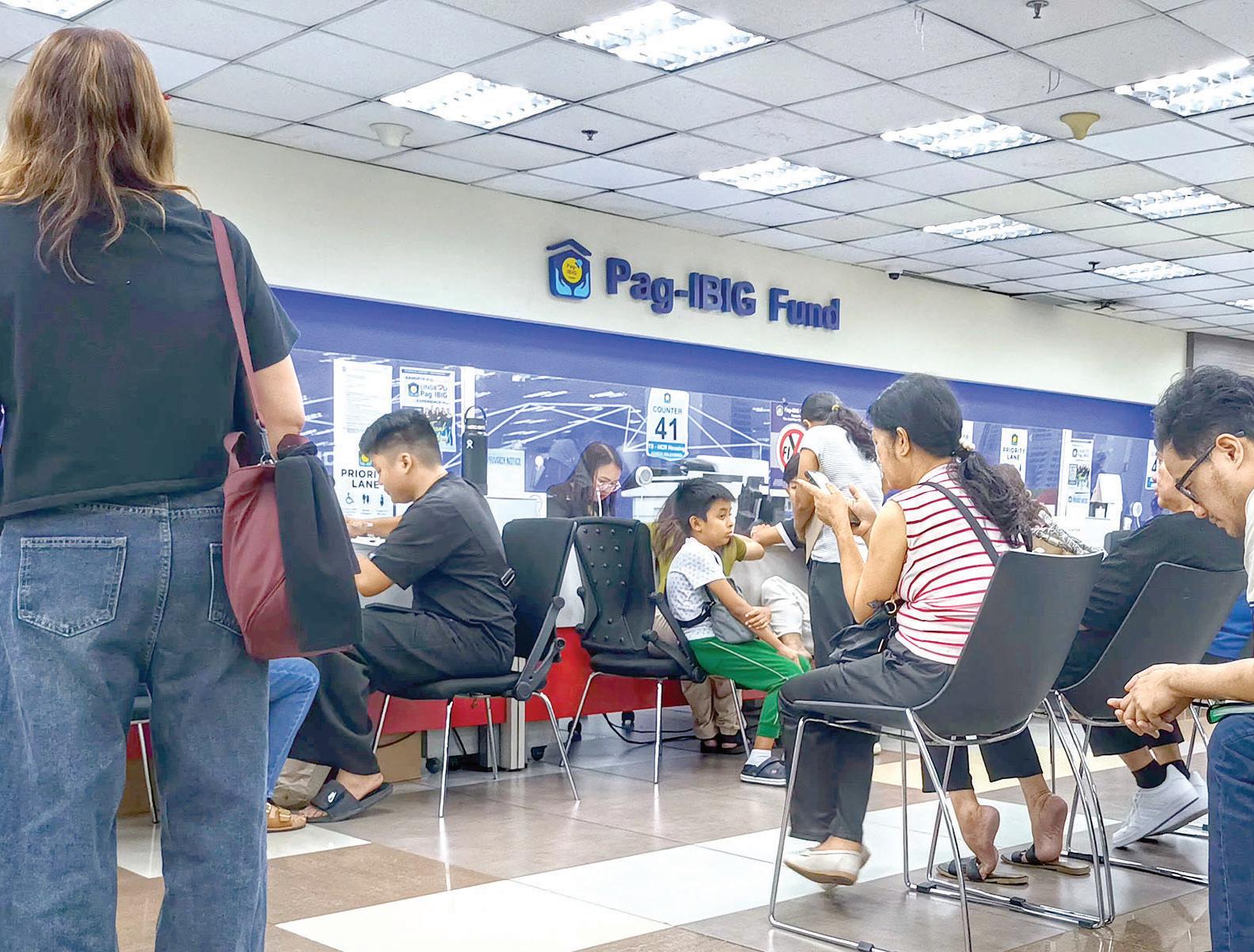
DHSUD, Pag-IBIG open SL housing fair
By Justine Xyrah Garcia
THE Department of Human Settlements and Urban Development (DHSUD) and Home Development Mutual Fund (Pag-IBIG) opened a housing fair in South Luzon aimed at addressing limited access to affordable home financing and high housing costs.
The two-day Pag-IBIG Housing Fair, which started on Monday at the Jose Rizal Coliseum in Calamba City, serves as a one-stop platform for prospective buyers to explore available housing units, connect
with accredited developers, and apply for housing loans with on-site assistance.
The DHSUD said the activity targets key barriers to homeownership, including financing constraints, information gaps among beneficiaries, and the cost of housing. Thousands of housing units are being offered during the fair by accredited developers, with PagIBIG Fund providing loan application support and promoting lower monthly amortization options. DHSUD Secretary Jose Ramon
P. Aliling said access to housing remains a key concern for many Filipino families.
“Having a home is not only about shelter. It is the foundation of a more stable and dignified life.
When a family has its own house, their future becomes more secure and they are given a better chance to rise out of poverty,” Aliling said, mostly in Filipino.
He added that bringing housing services closer to communities allows more families to access available programs.
“By bringing housing services
closer to our people, we are giving them a real opportunity to start and recover. This is the goal of our programs—to make the dream of owning a home within reach,” he said.
Moreover, the DHSUD said the housing fair supports efforts to enable families to transition from renting to homeownership through accessible financing schemes.
The agency added that the activity reflects coordination among government agencies and private developers to expand access to housing services.
attract high-quality investments, and create jobs across the region,” he added.
The 4th LEC Steering Committee Meeting in May will bring delegations from the Philippines, the US and Japan, continuing the trilateral format launched in 2024.
The meeting is expected to focus on priority infrastructure and investment projects, as well as coordination on implementation timelines.
A separate investors forum, targeted for the latter part of the year, is being positioned as a platform to connect global investors with pipeline projects under the corridor framework.
The country’s finance secretary said the event is intended to help convert identified opportunities into bankable investments.
US and Japanese delegations are also expected to visit Manila for a series of meetings with Philippine counterparts, along with site inspections in key areas covered by the corridor.
These include Subic, Clark, Manila and Batangas, zones identified as core nodes for transport, logistics and industrial development.
The LEC has received incremental funding and technical support from the US since its launch.
In 2025, Washington provided a
$3.8-million technical assistance grant through the US Trade and Development Agency for planning work on the Subic-Clark-Manila-Batangas Railway, which serves as the backbone project of the corridor.
The US government has also committed $15 million in additional support, coordinated with Congress, and intended to help stimulate privatesector participation and accelerate project preparation.
Launched in April 2024 under the G7 Partnership for Global Infrastructure and Investment, the LEC is a trilateral effort among the Philippines, the US and Japan aimed at improving connectivity and logistics across central Luzon.
The initiative focuses on developing integrated infrastructure linking Subic Bay, Clark, Manila, and Batangas, while also supporting related sectors such as ports modernization, clean energy, semiconductor supply chains, agribusiness, and transport upgrades.
Officials describe it as the first corridor-type initiative of its kind in the Indo-Pacific, designed to concentrate investments in high-impact infrastructure while aligning public and private financing for long-term development goals.
Boracay to DPWH: Skip the bridge, build us a hospital
By Ma. Stella F. Arnaldo Special to the BusinessMirror
“WE don’t need a bridge, we need a hospital.”
This was underscored by the Philippine Chamber of Commerce and Industry (PCCI)Boracay, as it expressed its opposition to the P7.8-billion bridge project connecting the island to the Aklan mainland, recently approved by the Department of Public Works and Highways (DPWH).
In a position paper issued on April 24, 2026, PCCI-Boracay said: “Instead of allocating nearly P8 billion to a single unsolicited project such as the Boracay Bridge, a more strategic approach would be to direct investment toward more practical and cost-effective public-private partnership [PPP] initiatives that address longstanding gaps, without risking irreversible damage to the island’s environment and marine ecosystem, while delivering meaningful improvements to critical infrastructure and systems that have repeatedly fallen short.”
The island, known as among the Best Beaches in Asia, needs for one, “at least a Level 2 hospital with select Level 3 capabilities, rapid emergency response systems, and strong disaster preparedness to ensure safety for both visitors and Boracay’s estimated 12,000 residents.” Last year, Boracay welcomed some 2.16 million tourists, of which 1.77 million were domestic travelers.
According to the Department of Health, a Level 2 hospital should have: full emergency hospital services, intensive care and trauma response, and advanced maternity/ neonatal care. Level 3 services may include: CT/MRI equipment, specialist surgery, and dialysis/trauma support. For another, to ensure the longterm viability of Boracay, there should be investments in an “Environmental Protection Infrastructure” focused on “coastal protection, mangrove and reef rehabilitation, and comprehensive management of beach erosion,” among others.
Better investments, more jobs INVESTMENTS toward improving the port and arrival experience of travelers, and sustainable waste management systems, are needed to elevate tourists’ impressions of Boracay and “maintain its cleanliness and global reputation,” respectively. These projects, instead of a 2.54-kilometer bridge system, will “generate jobs across sectors and deliver broader benefits to residents, local businesses, and visitors alike, by enhancing environmental quality, improving mobility and essential services, and preserving the distinct island experience that continues to attract tourists to Boracay.”
PCCI-Boracay is the latest among groups that have continuously opposed the Boracay bridge project. SMHC assures the project will allow safe and efficient access between Caticlan and Boracay, address waste management and disposal issues, improve response times during disasters and medical emergencies, to name a few.
(See, “Vince told of stakeholders’ opposition to Boracay bridge, but still OKs project,” in the BusinessMirror, April 20, 2026.) The business group pointed out, in the course of approving the controversial project, DPWH failed to follow Republic Act 11966 (Public-Private Partnership Code of the Philippines) and RA 7160 (Local Government Code of 1991). Provisions in these laws include the development of a “transparent, comprehensive, and independent Environmental Impact Assessment [and] meaningful consultation with local stakeholders, residents, businesses, and environmental groups.” Meanwhile, PCCI-Boracay noted that the bridge will only worsen vehicular traffic on the island, which is already congested, “despite strict vehicle limits including a ‘no private car’ system under municipal ordinances and BIATF (Boracay Inter-Agency Task Force) issuances.”
Editor: Jennifer A. Ng
Pharma hub in Aurora sets sights on major investors

By Bless Aubrey Ogerio @blessogerio
THE Aurora Pacific Economic Zone and Freeport Authority (Apeco) and the Philippine Pharmaceutical Procurement Inc. (PPPI) are in discussions to develop a pharmaceutical investment hub in Casiguran, Aurora.
Apeco said it has earmarked Parcel 1, covering 496 hectares within its 12,923-hectare jurisdiction, as a possible site for the proposed hub under Republic Act 10083.
According to Apeco President and CEO Gil Taway IV, the agency is positioning the ecozone as a long-term
investment site designed to meet the operational needs of industries requiring stable infrastructure and large-scale facilities.
“We are building Apeco as a complete, investment-ready ecosystem,” Taway said last Friday. “For industries like pharmaceuticals that de-
mand stability, efficiency, and scale, our ecozone provides the environment where they can operate and grow with confidence.”
The initiative is being discussed with PPPI, a government-owned and controlled corporation, following an initial meeting between Taway and PPPI President and CEO Maria Blanca Kim Bernardo-Lokin to identify possible areas of cooperation.
According to Apeco, early discussions centered on possible functions of the planned hub, including research and development (R&D) activities, clinical trials, and cold chain logistics and warehousing.
Taway said ongoing infrastructure upgrades in the economic zone, particularly in power supply, water systems, and transport connectivity, are key to attracting pharmaceutical locators that typically require strict
standards for storage, distribution and research operations.
“These components are critical for pharmaceutical operations, especially in R&D, cold chain storage, and distribution,” he said.
PPPI, for its part, said it is currently formulating a broader roadmap in coordination with the Supply Chain and Logistics Group of the Department of Trade and Industry, which includes plans to develop a network of pharmaceutical hubs nationwide.
Lokin said APECO is being considered as one of the potential sites under this framework. “We can position the Philippines as a competitive regional hub in Asia for global pharmaceutical firms, leveraging our strengths in R&D, clinical trials, and logistics.”
No timeline has been announced for the project, which remains in the exploratory stage.
‘Good governance caused Piki ouster’
By VG Cabuag @villygc

THE Lopez majority on Mon-
day said it was good governance, and not family feud, that drove them to remove Federico
“Piki” R. Lopez, as president.
“Good corporate governance requires transparency and timely disclosures on decisions that have a material financial and strategic impact on the Lopez group. Piki did not afford us such,” Lopez Inc. said.
The family faction allied with Eugenio L. Lopez III said the matter should have stayed private, “but Piki chose to make it public.”
“Over time, we’ve lost our trust
and confidence in our cousin, Piki Lopez.” Last November, Prime Infrastructure Capital Inc. bought 60 percent of the gas assets of First Gen for P50 billion. In February, First Gen bought 40 percent of Prime’s hydropower business for P75 billion but reduced this shortly after to 33 percent.
The Lopez majority said they were neither informed nor consulted on these two transactions.
“Excluding us from such significant decisions was a clear failure in Piki’s fiduciary responsibility and a circumvention of corporate governance.”
It added that Piki’s fiduciary duty mandated him to place the interests of the beneficial owners above his
own, ensuring he did not use his position for personal gain.
“This was not the case. Piki’s interests superseded those of his shareholders. It was only ethical that Piki should not have asked for or accepted the poison pill without consulting the majority shareholders.”
These events triggered the family decision that Piki should no longer serve as president of Lopez Inc.
Piki will still remain a board member, just not as president, the company added.
“Our only motive has been to do the right thing. It has never been to rob any one individual of their future or reputation. Each of us is confirming that we authorized our family’s representative on the board to vote
to remove Piki as president,” it said.
“This wasn’t an easy decision for us. And no, this wasn’t led by a single person or faction of the family. From the start, keeping our families intact and unscathed was of primary importance. It was never our intention to go down this path or to proceed as has unfolded.
“It is by taking this action that we will achieve our main goal to do what’s right, protect the shareholders, safeguard the company and its employees, and take care of the legacy entrusted to us. We’re committed to being responsible and doing what’s best for everyone involved, constantly looking for ways to keep this ongoing battle focused solely on verifiable facts,” the family said.
AI boom drowns out war fears to fuel Asia’s great market divide
ASIA’S markets are behaving as though two different worlds exist at once.
In South and Southeast Asia, higher oil prices are straining trade balances and sending stocks tumbling in India, Indonesia and the Philippines. In North Asia, enthusiasm for chipmakers and artificial intelligence companies is driving equity benchmarks in South Korea and Taiwan to repeated record highs with little regard for the war in the Middle East.
The divergence highlights two competing narratives in global markets, with investors punishing economies exposed to higher energy costs while looking past near-term geopolitical risks if they can gain exposure to industries seen as critical to future growth. With the US and Iran making little progress toward talks and control of the Strait of Hormuz unresolved, the risk of prolonged energy disruption is paving the way for further divergence in Asia’s markets.
“It’s mainly the lack of AI” that’s exacerbating South Asia’s underperformance compared to their North Asian tech-led peers, said Marvin Chen, a strategist at Bloomberg Intelligence. “On oil, Korea, Taiwan and Japan are just as dependent. It may be a structural issue that South Asia may need to proactively address by finding ways to fit in tighter with the regional tech supply chain.”
When the Iran conflict broke out late February, markets across Asia sold off in unison as higher oil prices hit the region’s import-dependent economies. But as it dragged on,
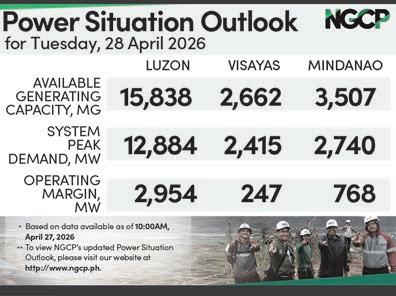
Cebu’s strengths will allow firms to prosper—CCCI

CBy Carmel Pedroza
EBU City—Cebu’s flagship business event, Cebu Business Month (CBM) 2026, was recently launched with a strong message of unity and forward action, even as global economic uncertainty continues due to rising fuel costs linked to the ongoing Middle East crisis.
Despite these headwinds, Cebu’s business leaders are pressing ahead—drawing from a deep well of resilience, collaboration, and long-term vision—to position the province as a future-ready hub for investment and innovation.
Cebu Chamber of Commerce and Industry (CCCI) President Regan Rex King described this year’s CBM not merely as a series of activities, but as a broader call for collective action.
“Today, we are not simply launching a calendar of events. We are launching a bigger invitation. An invitation for Cebu to come together… and for the world to see that Cebu is
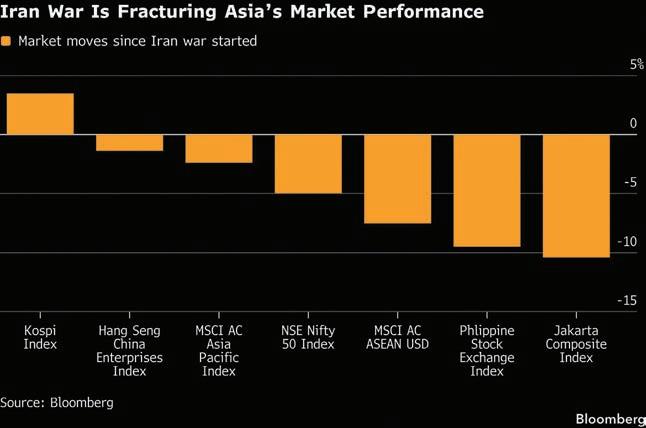
investors grew weary and shifted back to the pre-war trade of buying AI-linked stocks.
North Asia has mostly erased its losses since the conflict. Taiwan’s Taiex is up almost 10 percent since the war — the best performance among major markets — while South Korea’s Kospi has gained about 4 percent, China’s CSI 300 and Japan’s Nikkei 225 also edged higher. Elsewhere, the performance is weaker. India’s Nifty 50 has fallen about 5 percent, and the MSCI ASEAN Index is down around 7 percent, with benchmarks in the Philippines and Indonesia each dropping over 10 percent.
North Asia’s resilience rests in the fact that its markets are dominated by companies embedded in the global semiconductor supply chain, the backbone of the AI boom. Firms such as Taiwan Semiconductor Manufacturing Co., Samsung Electronics
Co. and SK Hynix Inc. are benefiting from a surge in demand that — for now—appears relatively insulated from geopolitical risks.
In contrast, South and Southeast Asia are grappling with higher crude prices feeding into inflation, eroding current-account balances and weakening currencies. Those pressures leave policymakers with less room to respond. Without a comparable technology-driven story to attract inflows, markets in those regions have lagged.
Currencies largely tell a similar story. The Chinese yuan and Taiwan dollar have been relatively stable, while those in India and parts of Southeast Asia have come under pressure.
Three factors are driving the divergence: greater exposure to the energy shock in India and Southeast Asia, which have fewer buffers than North Asia; stronger fiscal positions
in the north; and the AI boom, which is supporting growth and markets in North Asia but offering little lift to India and Southeast Asia, said Sonal Varma, Asia ex-Japan chief economist at Nomura Holdings Inc. There are, however, some nuances. In Southeast Asia, Malaysia has been partially shielded by its status as a net exporter of oil, helping its currency hold up better than its neighbors. Singapore bonds, currency and stocks have also weathered the Iran war better than peers, thanks to haven flows.
South Korea, despite strong equity performance, has seen weaker bond and currency trends because of its vulnerability to the energy shock. Seoul has already rolled out emergency measures including a fuel price cap — the first in almost three decades — along with expanded fuel tax cuts and financial support programs to curb inflationary pressures.
Nomura’s Varma said some of the brokerage’s favorite trades on the divergence include going long the euro against the rupee, long the Singapore dollar versus the Indonesian rupiah, and taking receive positions in Thailand and Korea.
China also stands out for its resilience to the Iran shock despite being the world’s biggest oil importer. The country’s dominance in renewable energy and its push toward electric vehicles should help cushion the impact of higher fuel prices. Chinese bonds have outperformed regional peers, while the yuan is now trading close to its strongest level since early 2023. Bloomberg News
ATOYOTA-ENDORSED vehicle dismantling facility in the Philippines has upgraded its capability to handle electrified vehicle batteries after completing a specialized training program in Japan.
En Tsumugi ELV Dismantler Corp., the first Toyota-recognized end-of-life vehicle dismantling facility in the country, joined Asia’s first electrified vehicle (xEV) battery dismantling training held in March at Toyota Metal Co., Ltd. in Aichi, Japan.
The program focused on improving hands-on capability in safely dismantling high-voltage batteries, including proper handling procedures, storage requirements, and emergency response protocols.
It also covered battery collection and recycling systems, along with technical discussions on material composition and emerging challenges in recovering components as electrified vehicles become more common.
Toyota said the training forms part of its Global 100 Dismantlers Project, which aims to establish a network of certified facilities that can handle end-of-life vehicles in a way that supports recycling and reduces environmental impact across the vehicle lifecycle.
En Tsumugi, located in Mexico, Pampanga, was endorsed by Toyota Motor Philippines Corp. in 2024 and
not only a beautiful place to visit—it is a powerful place to invest, build, and grow,” King said. At a time when rising fuel prices are impacting logistics, transportation, and overall business costs, King said CBM serves as “a platform to turn challenges into opportunities through collaboration.”
He said the initiative belongs to the entire Cebuano ecosystem—businesses, government, academe, and communities alike.
“CBM is not just by CCCI. It is for the whole of Cebu,” he said, underscoring that shared ownership is key to sustaining momentum. King also highlighted the long-term aspiration of elevating CBM into a globally recognized business and investment festival—one that mirrors the scale and anticipation of Cebu’s major cultural gatherings, but with a focus on enterprise, innovation, and opportunity.
Continued on B2
is one of two model dismantling facilities in the country. It is also the fourth Toyota-recognized dismantler in the Asean region.
Another facility in Cavite operated by Standard Insurance Co. Inc. also handles end-of-life vehicles, particularly from insured units.
“This proactive step reflects our ‘Beyond Zero’ commitment to ensure that as we advance electrified mobility in the country through Toyota and Lexus xEVs, we are equally prepared across the entire vehicle lifecycle,” Toyota Motor Philippines President Masando Hashimoto said. He added that building dismantling and recycling capacity is necessary as the industry shifts toward electrification.
Toyota’s environmental roadmap, the Toyota Environmental Challenge 2050, includes efforts to build a recycling-based system, where battery recovery and material reuse play a key role.
Electrified vehicle sales in the Philippines reached 11,800 units in the first quarter of 2026, accounting for about 11.2 percent of the market, based on data from the Chamber of Automotive Manufacturers of the Philippines, Inc.
Toyota and Lexus accounted for 5,252 units during the same period. Bless Aubrey Ogerio
THE Cebu Chamber of Commerce and Industry (CCCI) officially launched the Cebu Business Month (CBM) 2026 with the signing of agreement with different partners for its series of activities beginning next month led by CCCI President Regan Rex King and CBM Chair 2026
Bryan Yap. PHOTO BY CARMEL PEDROZA
Banking&Finance
T-bill yields up as BSP signals future rate hikes
By Andrea Louise San Juan
ALL tenors of short-term debt papers fetched higher yields after the central bank delivered a quarter-point hike in the key policy rate last Thursday.
According to the Bureau of the Treasury (BTr), results were mixed in Monday’s auction of Treasury bills (T-bills), with the auction committee fully awarding bids for the 91-day and 182-day T-bills, while partially awarding the 364-day security. For Rizal Commercial Banking Corp. (RCBC) Chief Economist Michael L. Ricafort, the average
Managing finances Amidst an oil crisis
WHEN oil prices rise, most people immediately think about gasoline. But in reality, the impact goes far beyond that. In the Philippines, higher oil prices affect transportation, food, utilities and almost every part of daily life. So the issue is not whether we are affected; we already are. The more important question is how we manage our finances wisely during this time. When fuel costs go up, transportation becomes more expensive. Businesses spend more to move goods and those costs are eventually passed on to consumers. This is why we start seeing higher prices in groceries, delivery fees and even electricity. For households, this translates to tighter budgets. For investors, it often means increased market volatility and changing opportunities across sectors.
Understanding this bigger picture helps you respond with clarity instead of reacting out of fear.
1. Return to the basics of budgeting. Budgeting becomes even more important during uncertain periods: not as a form of restriction but as a way of becoming more intentional. Budgeting is about making sure your money is aligned with your priorities. Essentials such as food, transportation, utilities and financial protection through insurance should always come first. These are the foundations of financial stability, especially when costs are rising across the board.
2. Be mindful of small increases in expenses. It is important to remain mindful of small increases in expenses. These may seem insignificant at first: a slight increase in fuel, a higher grocery bill or incremental adjustments in utility costs. But, over time, these expenses accumulate and begin to affect your overall cash flow. This is where flexibility in budgeting becomes valuable. Giving yourself some breathing room allows you to adjust when prices shift unexpectedly, without disrupting your entire financial plan. Preparation also plays a critical role in navigating uncertainty.
3. Build and protect your safety net. An oil crisis, like any economic disruption, reinforces the importance of having a strong financial safety net. Building an emergency fund provides a layer of security that allows you to manage unexpected expenses with greater confidence. For those who already have one, this may be a good time to reassess and strengthen it, especially in light of rising living costs. Alongside this, reviewing your insurance coverage ensures that you and your family remain protected. Financial risks do not pause during challenging times and having the right safeguards in place can prevent a difficult situation from becoming more severe. Equally important is exercising caution when it comes to taking on new debt. In a volatile environment, maintaining financial flexibility is often more valuable than expanding financial obligations. For investors, periods like this can bring heightened uncertainty.
4. Stay grounded in your investment strategy. Market movements
auction yields of the short-term debt papers “mostly corrected slightly higher (after mostly lower for 2 straight weeks), up from new 1-month lows but still among 3-year lows nevertheless.”
The uptick, Ricafort said, must be seen in the backdrop of a 0.25-basis point rate hike to 4.50 percent.
He also noted that signals of future rate hikes by the Bangko Sentral ng Pilipinas (BSP) if the Middle East conflict is prolonged also contributed to higher average auction yields.
The 91-day T-bill fetched an average yield of 4.558 percent, up by 1.6 basis points from 4.542 percent in last week’s auction. Accepted yields


may feel unsettling, particularly as oil prices influence inflation, interest rates and broader economic conditions. However, it is important not to lose sight of long-term investment principles. Staying grounded in your strategy remains essential. Diversification becomes even more relevant in this environment. Spreading investments across different asset classes and sectors helps manage risk and provides balance during market fluctuations. While there may be opportunities in sectors that benefit from rising oil prices, these should still align with your overall financial plan. More importantly, maintaining discipline is key. Attempting to predict short-term market movements often leads to missed opportunities rather than better outcomes. In moments of uncertainty, it is easy to be driven by fear.
5. Focus on purpose, not panic. It is important to focus on purpose, not panic. Financial decisions should be guided by long-term goals, whether it is retirement, education, or building sustainable wealth rather than reacting to daily headlines. When your financial strategy is anchored in purpose, short-term challenges become more manageable and less overwhelming. Beyond strategy and planning, mindset plays a defining role.
6. Keep the right mindset. Financial resilience is not only about numbers; it is also about behavior. While global oil prices and economic conditions are beyond our control, our responses are not. Choosing to spend wisely, staying disciplined in investments and maintaining a long-term perspective are decisions that remain within our control. Taking time to pause and reflect can also provide clarity. In uncertain times, stepping back allows for better decision-making. For many, this includes prayer—a moment to seek guidance, find peace and approach both financial and life decisions with greater wisdom. Ultimately, navigating an oil crisis is not about avoiding its impact, but about responding to it with discipline and intention. By managing your budget carefully, staying aware of changes in expenses, strengthening your safety net, remaining grounded in your investment strategy and anchoring your decisions in purpose, you position yourself to move through uncertainty with confidence.
Because in the end, financial strength is not built in stable environments alone it is shaped and proven in times of challenge.
Karlo Bigland Awa is a Registered Financial Planner of RFP Philippines. The views and opinions he expressed in this article do not necessarily represent the BusinessMirror. To learn more about personal financial planning, attend the 116th RFP program this May 2026. E-mail info@rfp.ph or visit rfp.ph to learn more about the program.
ranged from 4.500 percent to 4.635 percent.
For the 182-day debt papers, the average yield settled at 4.737 percent, higher than the previous 4.649 percent yield by 8.8 basis points. Yields were as low as 4.675 percent to as high as 4.849 percent.
Average yield of the 364-day securities increased by 1.32 basis points to 5.184 percent from 5.052 percent previously. The government awarded yields from 5.050 percent to 5.300 percent.
The T-bills auction was 2.4 times oversubscribed, attracting P73.5 billion in total tenders.
With its decision, the Treasury’s
auction committee raised P37.6 billion from the P30-billion initial program, according to the BTr.
Non-competitive bids
TENDERS for the 91-day securities reached P36.945 billion, prompting the Treasury to increase the bids it awarded to P16.8 billion as it doubled the non-competitive bids to P9.6 billion.
Bids for the 182-day T-bill also reached P23.15 billion, with the Treasury upsizing the awarded bids to P12.6 billion as it doubled the non-competitive bids to P7.2 billion. Meanwhile, acceptance of the 364-day T-bills was capped at P8.2
cent. Tenders amounted to P13.40 billion. For this month, the Treasury aims to raise as much as P248 billion, of which up to P108 billion will be through T-bills and another P140 billion from Treasury bonds. The government will borrow a total of P2.682 trillion this year, following a 77:23 financing mix in favor of domestic sources. As of end-February this year, the national government’s outstanding debt has soared to a new record-high of P18.15
Sumitomo Mitsui, RCBC to help BOI lure investors
By Bless Aubrey Ogerio
THE Board of Investments (BOI) announced it has entered into a tripartite agreement with Japan’s Sumitomo Mitsui Banking Corp. (SMBC) and the Rizal Commercial Banking Corp. (RCBC) to attract and facilitate investments into the Philippines.
Under the agreement, the three parties will coordinate on investment promotion activities, improve information sharing, and strength-
National
en support mechanisms for companies, particularly Japanese firms, looking to enter or scale up operations in the country.
According to the BOI, the partnership is intended to make investment facilitation more coordinated, especially in sectors that require closer engagement with financial institutions linked to foreign investors.
“We recognize that in Japan’s business environment, relationships and trust are foundational. In the same way, the BOI places strong
ID can now be used for a PNB account
By Justine Xyrah Garcia
AN agreement entered into by the Philippine Statistics Authority (PSA) with the Philippine National Bank (PNB) would allow holders of a National ID to open and use an account with the lender.
According to documents provided by the PSA, the bank will use the National ID Authentication Services (Nidas) for onboarding clients through its “PNB Digital” mobile platform. The system enables real-time identity verification using National ID credentials, reducing reliance on multiple IDs and manual verification.
The integration of the Nidas with PNB Digital supports the use of digital identity in financial transactions, PSA Assistant Secretary Rosalinda P. Bautista said.
“This integration [also] supports broader access to reliable identity verification and encourages greater adoption of digital identity in everyday financial transactions,” Bautista added.
She said that the agency is seeking wider adoption of the Nidas across financial institutions.
“Looking ahead, the vision of Nidas is clear: to establish a secure, efficient, and inclusive digital identity ecosystem that
empowers Filipinos and builds confidence across the financial sector. Through partnerships like this, we hope to encourage more banking institutions to adopt and trust the [NIDAS],” Bautista said.
PNB President and CEO Edwin R. Bautista said the bank recognizes “that initiatives like this may come with challenges, but they are worth pursuing because they create lasting value for the industry and the country.”
Bautista added that fraud and identity theft remain issues in the industry and cited the role of identity verification systems in addressing these concerns.
Meanwhile, the PSA also signed a separate agreement with the Philippine Health Insurance Corp. (PhilHealth) to integrate the National ID system into its member verification processes.
Under the partnership, the health insurer will use the Nidas for the “PhilHealth Check Utility,” a digital tool for identity verification that uses biometric authentication, including liveness detection and facial recognition.
The PSA said the system will be used to validate member identities and remove duplicate records in the database to reduce fraud.
importance on building long-term, collaborative partnerships,” BOI Investments Promotion Services (IPS) Executive Director Evariste M. Cagatan said.
“Hence, we see this partnership as a way to better support companies that are exploring or expanding their presence in the Philippines,” Cagatan added.
The BOI has previously worked with both institutions in investment promotion efforts such as business matching, investor briefings, and facilitation support for foreign com-
panies.
Japan remains one of the Philippines’s major sources of foreign investments. Last year, Japanese foreign direct investment inflows reached $904.15 million, while approved investments totaled P34.03 billion.
Japanese companies are present across several industries in the Philippines, including electronics, semiconductors, automotive manufacturing, infrastructure, construction, and IT-business process management.
Despite trading losses, Unionbank income up

By VG Cabuag @villygc
THE Aboitiz-led UnionBank of the Philippines disclosed last Monday of having posted a net income of P3.8 billion in the first three months of the year, more than double from the previous year’s P1.43 billion.
The bank said it was able to continue with the momentum that started in the second half last year, when it saw a significant earnings uptrend, despite some trading losses arising from market volatility associated with the Iran conflict.
Quarter-on-quarter net income grew by 8.7 percent, the bank said. This puts the lender on a sustainable path towards its goal to deliver improved profitability, driven by core recurring income, read the bank’s disclosure to the local bourse.
“First quarter results provide an early indication that the bank is continuing its path to improved performance. However, recent geopolitical developments introduced potential risks. In response, we took proactive measures to reinforce our portfolio and enhance credit risk management,” Manuel R. Lozano, the bank’s CFO, was quoted as saying in a statement.
“Our immediate focus is to ensure we effectively navigate the impact of recent developments. We are strongly positioned in terms of capital and liquidity, and we remain focused on protecting earnings to maintain
our good performance despite the heightened market volatility,” Lozano added.
Net revenues for the period reached P21.7 billion, up 11 percent year-on-year, driven by the solid performance of core business drivers.
Total customers rose to 18.9 million, up by 7 percent from the previous year. This provides a broader base to support lending and to further enable cross-sell and upsell, according to the country’s tenth-largest lender in terms of total assets.
Net interest income grew to P16.8 billion driven by loan growth. Consumer lending, which made up 60 percent of the bank’s total loan portfolio, remained strong, particularly in unsecured products, which grew 19 percent to P153.1 billion.
Institutional loans also expanded, increasing by 11 percent to P223.7 billion. Net interest margin increased by 34 basis points to 6 percent supported by current account, savings account CASA growth of 7 percent, driven by the continued deepening of transaction banking relationships established in 2025.
Fee income remained stable with a fee income-to-assets ratio of 1.3 percent, more than twice the industry average.
Growth continues to be driven by higher digital transaction volumes, alongside increased contributions from wealth management and bancassurance.
Manulife Philippines appoints new marketing officer
THE local arm of Manulife announced the appointment of Joy Ann Concepcion as the company’s chief marketing officer, effective Monday. Concepcion will be part of the executive committee of Manufacturers Life Insurance Co. (Phils.) Inc., according to the insurer.
In her new role, Concepcion will lead the firm’s marketing agenda. She will bring together brand and advertising, content and social media marketing, performance marketing, propositions, digital platforms, AI and growth
marketing, customer experience, digital transformation and corporate social responsibility, according to the company. She will also focus on strengthening brand positioning, delivering simpler and more connected customer experiences, and driving sustainable growth aligned to the company’s business priorities, the company added.
Since joining the company nearly a decade ago, Concepcion has held multiple leadership roles across the insurer’s marketing organization. She has helped strengthen the
brand, deliver commercial impact, and develop highperforming teams with a strong growth mindset.
“Working closely with our partners across the business, my focus is to sharpen how we deliver for our customers—strengthening the power of our brand, simplifying customer experiences, and turning our marketing priorities into real impact and meaningful growth—so we can better serve Filipinos with the protection, health, and wealth solutions they need,” Concepcion said.
Cabuag

Karlo Biglang-Awa
PHILIPPINE Arts Roundtable by the Cultural Center of the Philippines (CCP) Board of Trustees featured insights of experts across different segments of the local arts scene.
Art BusinessMirror
CCP Board opens the �loor on futureproofing PHL contemporary art

THE Cultural Center of the Philippines (CCP) Board of Trustees gathered experts in the local arts scene for an insightful talk on the current landscape and future directions of Philippine contemporary art.
Titled Philippine Arts Roundtable, the discussion organized by the country’s premier cultural institution centered on the question: “What is the most essential building block for the future of the CCP in the visual arts?” The outlooks ranged from institutional support to artistic practice and cultural direction, all to help sharpen the CCP’s role in shaping the country’s visual arts ecosystem.
Among the panelists were contemporary visual artists and cultural practitioners Alfredo and Isabel Aquilizan. The award-winning husband-and-wife duo identified education as an essential foundation for the future of Philippine visual arts, saying government institutions must maximize their capacities to develop and expand arts curricula, particularly at the high school level.
“We have the Philippine High School for the Arts as the educational arm of the CCP, and I believe this model should be replicated across the country, perhaps through the development of accessible educational modules and similar programs,” said Alfredo Aquilizan. The two also cited their experience in Australia, where they conduct art workshops in remote communities. They believe it’s an approach that could be effectively adapted in the Philippines to expand access to arts education.
“[These efforts] play an important role in expanding access to knowledge, and they raise the question of how the CCP can further extend its reach and share its resources more effectively with underserved communities,” Alfredo said. The Aquilizans also pointed out the importance of sustainable support systems for artists, including government-funded travel grants and mentorship programs.
Equally important is institutional support for curators, according to art historian, critic and curator Carlos Quijon Jr. As a Filipino curator working with international artists and large-scale exhibitions, he

noted that many Filipino curators pursue careers overseas due to limited local opportunities.
“That is what is at stake for me in this conversation,” said Quijon Jr., also the current C-MAP Fellow for Southeast and East Asia at the Museum of Modern Art in New York. “We have the talent, but how do we support that talent so they can stay here? So that we are the ones ‘ang makikinabang’ from the efforts of these curators, myself included.”
“One of the first things I thought of is ensuring that the local ecology is in place, that it works,” he added.
“It means local institutions function well and support one another. If that happens, we can begin to address these anxieties about participating in international and global conversations.”
Quijon Jr. also clarified the roles of the curator.
“I’m not an artist, and I’m not a gallerist. But we, as curators, position artists for galleries. I position artists for art historians, so that we can be part of regional and international conversations around art.”
Meanwhile, Isa Lorenzo, founder and co-director of Silverlens Galleries, offered her take in the discussion from the side of galleries. She believes that the CCP, as a national institution rich in assets, must position itself as the gold standard for exhibitionmaking, not only in the Philippines but across the region.
“Your collection is amazing,” Lorenzo said, “but how do you get people to see it? And how do you broadcast this information to the world? The CCP cannot afford to remain insular. It needs to be more
outward-looking.”
Lorenzo mentioned establishing a stronger presence on social media and the cultivation of diverse voices that can engage multiple generations.
“Whether it’s through TikTok, Instagram, or other platforms, there should be a significant investment in communicating who the CCP is, what it does, and what it holds. The only way to build an audience is to bring people in,” she said.
The CCP’s roundtable discussion also included Clarissa Chikiamco, curator at National Gallery Singapore and a PhD candidate at King’s College London; Dindin Araneta, co-founder of Art Fair Philippines and director of the Benilde Center for Campus Exhibitions (CCE) at De La Salle-College of Saint Benilde; and Tina Colayco, president of the Metropolitan Museum of Manila. Part of the fold as well were Sheila Ramos, business executive and art collector; and Ana Maria Ortega, business executive and arts management educator.
Also present at the roundtable discussion were the CCP Board of Trustees, including chairman Jaime C. Laya, co-chairmans Ma. Carissa O. Coscolluela and Maria Margarita Moran-Floirendo, with trustees Junie S. Del Mundo, Felix Monino S. Duque, Atty. Gizela Gonzalez, and Jonathan M. Velasco. In attendance as well were CCP president Kaye C. Tinga; vice president for administration and finance Jose Victor M. Gaite, and vice president and artistic director Dennis Marasigan, who served as moderator.
Where art meets impact: ‘Echoes of Light Through Time’ turns creativity into compassion in Ortigas
IN a time when audiences are increasingly drawn to stories with purpose, a new art exhibit in Ortigas is redefining the role of creativity—not merely as a form of expression, but as a catalyst for real-world impact.
On view from April 26 to May 10, 2026, Echoes of Light Through Time will be held at The Hangout Coworking Space in Ortigas, Pasig City. The exhibit features a collaborative showcase that unites works from GK Art Gallery and Events Place, the United Fine Artists of the Philippines, and independent Filipino creatives in a collaborative showcase rooted in both artistry and advocacy.
More than a visual experience, the exhibit transforms art into a platform for social impact.
A portion of the proceeds and partnerships generated from the event will directly support the programs of Operation Compassion Philippines (OCP), a nonprofit organization dedicated to holistic community transformation through child care and development, disaster response, sustainable livelihood, and advocacy for foster care and adoption.
By linking artistic expression with meaningful action, the initiative turns every artwork into more than a display—it becomes part of a broader


effort to uplift vulnerable communities.
As collaboration stands at the core of the exhibit, it demonstrates how creative spaces, organizations, and individuals can collectively bridge the gap between awareness and tangible support.
“Each piece holds more than meaning. It holds a mission,” said Cariz Peregrino, managing partner of The Hangout Coworking Space. “Through these canvases, emotion does not end in admiration. It continues with action, reaching far beyond the frame.”
Beyond the gallery walls, Echoes of Light Through Time expands into a series of activities designed to make art more
accessible and participatory: Artist’s Reception on April 28, 4 pm, which will provide an opportunity for guests, media, and partners to meet the artists and engage with the stories behind the works; Create Art in One Day (Workshop Series) on May 1 and May 10, 9 am to 12 noon, open to children, teens, and adults, encouraging creative exploration; and Ink in the City on May 9, a cultural experience that will feature traditional mambabatok tattooing led by the granddaughter of Apo Whang-Od, bringing heritage art into a contemporary setting.
For more information about Operation Compassion Philippines, contact 02-77171882 or www.operationcompassion.ph.
LEO (July 23-Aug. 22): Initiate your plans. Take control and see what transpires. Learn as you go, and master the skills you need to reach your objective. Reach out to those you care about most or who you want to get to know better. Suppress anger and ego, and focus on self-awareness, health and looking and doing your best. Romance is favored. ★★★★
VIRGO (Aug. 23-Sept. 22): Participate in events that address your concerns. If you aren’t part of the solution, you may be part of the problem. Share your ideas in detail and with passion, and you’ll gain the support you need to make a difference. Protect your reputation and physical well-being from those who don’t share your vision. Learn from experience, and know when to retreat. ★★★
LIBRA (Sept. 23-Oct. 22): Focus on work, getting ahead and abiding by the rules and regulations. Maintaining integrity will help you gain trust and respect from those you deal with. Look for partnerships that can match your input and add to your success. Don’t be eager to make a force play or push through a contract prematurely. Time is on your side.
SCORPIO (Oct. 23-Nov. 21): Be open to suggestions, but refuse to let anyone railroad you into something that doesn’t feel right. When in doubt, keep your thoughts to yourself, observe and make small but effective moves that position you for what’s to come. Create opportunities and take control of your destiny. A diversion that’s entertaining will be a reminder of what’s important. ★★★
SAGITTARIUS (Nov. 22-Dec. 21): Take time to get your space in order and to relax and enjoy what you accomplish. A change of heart will lead to better relationships and a positive attitude that spills over into all areas of your life. Channel more time into how you earn and handle cash, and you’ll feel relief and lower stress. ★★★★
CAPRICORN (Dec. 22-Jan. 19): Sit tight, and keep a close watch on what’s happening around you. Refuse to let your emotions take over or conversations take a negative turn. Listen, assimilate and choose to step away until you have time to make a helpful and thoughtful comeback. Your words matter, and anger isn’t going to help you resolve issues. Choose peace over discord. ★★★★★
AQUARIUS (Jan. 20-Feb. 18): Look for creative ways to deal with money management. Bartering, cutting your overhead and being meticulous with spending habits will help you maintain stability that puts your mind at ease. Don’t let anger bring out negativity when intellect is what’s necessary for survival. Pace yourself, work toward your objectives and do your best to get along with others. ★★★ PISCES (Feb. 19-March 20): Keep an open mind. Give yourself a chance to chill and to rethink your strategy. Times

Show
Alden Richards takes Fruitas brand to a different level

ENDORSEMENT is a channel of brand communication in which a celebrity acts as the brand’s image and spokesperson, certifying the brand’s claim and position by extending his personality, popularity, status in society or expertise in his chosen field to a brand. Especially in the beverage market with a very high proliferation of local, regional and international brands, celebrity endorsement was traditionally thought to provide a distinct differentiation. In recent years, many 100 percent Filipino owned brands, after achieving success, have jumped on to this celebrity endorsement bandwagon.
The most recent one is Fruitas and it has tapped Sparkle’s prized talent and GMA Network’s precious gem Alden Richards as its newest endorser.
The executives behind Fruitas know for sure that their multi-million advertising budget for this special endorsement is worth every cent. As the brand’s newest endorser, Alden’s enabling, enticing and enriching associations will in no time get transferred to the brand, which will eventually translate into bigger sales and huge profits.
“Alden represents everything that our brand stands for—he is relatable, resilient, respectful and these qualities resonate with the brand. His career as an artist is continuously on the rise as he evolves. He is also a credible advocate for healthy lifestyles and he has a good and kind heart,“ said Fruitas founder and chief executive officer Lester Yu.
There is no doubt that Alden is a good match with the Fruitas brand, and he is capable to strongly influence the thought processes of consumers thereby creating a more positive perception of the brand.
“I’d like to believe that we are a perfect match. I have reached a point in my career to be able to truly collaborate with the brands I choose to associate myself with, to participate in both the thought and creation processes of the marketing and advertising output to ensure the consumers will be the real beneficiaries,” explained Alden.
With years of experience in advertising when I was much younger, one thing has remained constant in the Philippine consumer setting: people are more likely to choose products that are endorsed by a
‘MICHAEL’ MOONWALKS TO $97 MILLION OPENING, SHATTERING RECORD FOR MUSIC BIOPICS
By Jake Coyle The Associated Press
NEW YORK—Michael, the big-budget Michael Jackson spectacle, shrugged off bad reviews and a troubled production to launch with $97 million in US and Canada theaters, according to studio estimates on Sunday, shattering a record debut for music biopics.
A highly authorized portrayal of the King of Pop, co-produced by the Jackson estate, Lionsgate’s Michael far surpassed previous biopic top performers like Straight Outta Compton (a $60.2 million debut in 2015) and Bohemian Rhapsody ($51 million in 2018). International sales were also strong. Michael collected $120.4 million overseas, to give it a $217.4 million global opening—a new high for a music biopic. Universal picked up distribution in most international markets.
A few weeks back, estimates for Michael were closer to $50 million. Going into the weekend, the studio estimated closer to $70 million. But it wildly overperformed.
“From the beginning, all of the signals were that something like this was possible,” said Adam Fogelson, Lionsgate chairman. “We were seeing massive engagement with every conceivable audience segment that you could identify.”
Even in the lucrative market of music biopics, Michael was an audacious bet by Lionsgate on an extraordinarily popular but controversial figure. The reputation of Jackson, who died in 2009 at the age of 50, has been repeatedly tarnished by allegations of sexual abuse of children.
Jackson and his estate have maintained his innocence, though the pop star acknowledged sharing a bedroom with other people’s children. He was acquitted in his sole criminal trial in 2005. Some Jackson family members opposed the film.


Janet Jackson was uninvolved and doesn’t appear in it. Jackson’s daughter, Paris, called it “fantasy land.”
But three years after Leaving Neverland the 2009 documentary about Jackson’s alleged sexual abuse of children, Bohemian Rhapsody producer Graham King announced plans for the biopic. Jackson’s nephew, Jaafar Jackson, was cast to star. Michael had an unusually rocky production. After shooting was completed, producers realized they had made a costly mistake. The third act focused on the accusations of Jordan Chandler, then 13 years old, whom Jackson paid $23 million to in a 1994 settlement. The terms of that settlement barred the Jackson estate from ever mentioning Chandler in a movie.
A huge chunk of the film had to be cut. Reshoots for as much as $50 million were done at the estate’s expense. Director Antoine Fuqua and screenwriter John Logan reworked the movie to conclude in 1988, before any accusations were made.
“I would take issue with the idea that we as a studio or as filmmakers were running around in a panic,” said Fogelson. “It was definitely a unique and challenging circumstance to figure out how to work through. But it created an opportunity to tell more story than any one film could possibly contain.”

‘BUBBLE GANG’ BRINGS THE HEAT WITH SUMMER SPECIAL; HEART EVANGELISTA CONTINUES TO GIVE BACK GET ready for a wave of laughter, as Bubble Gang delivers its much-awaited summer special on April 26 and May 3. Led by comedy genius Michael V., the comedy gang is set to entertain viewers with hilarious beachside antics, witty sketches, and relatable moments that perfectly capture the chaotic fun of summer.
Joining the powerhouse cast to bring more laughs and hotness are special guests: Bruce Roeland, Angelica Hart, Christine Samson, and Joy Barcoma.
Fans can look forward to a series of laugh-outloud segments, including “Aldik Araguy,” “Kulot en Kulet,” “Babatiin o Iiwasan: Lunod,” “Tawad Negotiator,” the ever-relatable “Kambyo,” and plus many more.
Don’t miss this fun-filled summer treat, with Bubble Gang turning up the heat with back-to-back comedy sketches every Sunday, 6 pm, on GMA Network and YouLOL YouTube channel.
Meanwhile, in line with the celebration of World Art Day this April, Sparkle artist Heart Evangelista, along with fellow Sparkle artists, carry forward the value of creativity while giving back.
For Heart, art has long been personal—and purposeful. A recent piece, “We Stand Together,” was created during a painting session with children from the Little Ark Foundation. It found a home with one of her supporters, with proceeds going back to the very children living with thalassemia—a genetic blood disorder that requires lifelong blood transfusions.
Heart expressed her gratitude to GMA for spending time with thalassemia patients. She said, “I am thankful to GMA for focusing on these beautiful angels here today. It’s very meaningful to me to be able to share my presence and help in any way I can. Nandito lang kami para sa inyo. Thank you again—I give all the credit to GMA for hosting this.”
Her involvement reflects a long-standing commitment. Since the age of 21, she has supported children with thalassemia, using her platform and her art to support the cause.
Fellow Sparkle artists Shuvee Etrata, John Rex, and Ericca Laude also supported the children’s artworks, with proceeds benefiting the foundation.
The initiative concluded with Shuvee leading the turnover of proceeds to support children with thalassemia and their families, assisted by the Little Ark Foundation. Sparkle kid Ericca Laude was also present. More information can be found at www.gmanetwork.com.
EU pulls $2.3 million from Venice Biennale over Russia’s return
Yet as bad as things once looked for Michael, the movie turned into a huge hit. The film’s total production cost came close to $200 million. To defray costs, Lionsgate sold international distribution rights to Universal. A sequel is in development. A third film after that, Fogelson said, is “not inconceivable.”
“The audience spoke loud and clear,” Fogelson said. “The portion of Michael’s life that this story tells couldn’t have gotten into those allegations because the allegations themselves hadn’t happened in the period this movie existed. I think the audience is judging it on those terms. We’ll see what happens as we move into the possibility of subsequent films.”
Critics slammed the film for glossing over some of the less convenient aspects of Jackson’s life. It scored a paltry 38 percent on Rotten Tomatoes. But audiences were far more enthusiastic. Michael earned an “A-” CinemaScore.
“It’s only human nature to enjoy yourself at the movie theater,” said Paul Dergarabedian, head of marketplace trends for Comscore. “The movie was perfectly positioned ahead of the start of the summer movie season which launches later this week with the The Devil Wears Prada 2 that is also poised to outpace even the most generous opening weekend projections.”
The opening for Michael added to a strong spring for Hollywood boosted by box-office hits like Amazon MGM’s Project Hail Mary and Universal’s The Super Mario Galaxy Movie
After three weeks atop the box office, the Mario sequel slid to second place, with $21.2 million. In four weeks, it’s collected $386.5 million domestically and $445 million internationally. Meanwhile, Project Hail Mary surged past $600 million worldwide in its sixth weekend of release. The film’s total haul for Amazon MGM stands at $305.3 million domestic and $613.3 million globally.
MILAN—The European Union is slashing a €2-million ($2.3-million) grant to the Venice Biennale over Russia’s participation in the 61st contemporary art show opening May 9, the commission announced Thursday.
The European Commission has informed the Biennale foundation of the funding cut over three years, and the Biennale has 30 days to defend its decision to include Russia for the first time since its 2022 invasion of Ukraine. spokesperson Thomas Regnier said Thursday. The commission had previously announced its intention to do so.
“We are strongly condemning the fact that the Fondazione di Biennale has allowed for the Russian Pavilion to open again,’’ Regnier said.
Russian artists withdrew their participation in 2022, and Russia did not present an exhibition in 2024 for its permanent pavilion, which it instead lent to Bolivia. Russia last participated in the International Art Exhibition in 2019. The Biennale said in a statement that it “does not have the authority to prevent a country from participating. Any country recognized by the Italian Republic may request to participate.’’
Since Russia owns the pavilion built in 1914 in the historic Giardini, it was required only to send notification of its request to participate, the Biennale said.
“La Biennale di Venezia rejects any form of exclusion or censorship of culture and art. The Biennale, like the city of Venice, continues to be a place of dialogue, openness and artistic freedom, encouraging connections between peoples and cultures, with the constant hope for an end to conflicts and suffering,’’ the Biennale said. The Biennale contemporary art exhibition is the world’s oldest and most important, comprising a main exhibition alongside national pavilions, which are curated separately by the participating nations. For this edition, 99 countries will present national pavilions, 29 of those in the Giardini and the rest spread through the Arsenale and across the city. The Biennale has in the past refused pressure to exclude countries, including Iran and Israel, from participating. AP
HEART EVANGELISTA with the children of Little Ark
Coins.ph pioneers Stablecoin Payment Utility in the PHL with first-of-its-kind QRPh Integration
Coins.ph, the Philippines’ leading crypto-native digital wallet and a pioneer in blockchain-backed financial services, announced the rollout of its game-changing QRPh Stablecoin Payment functionality. This landmark feature, which is available now, enables the platform’s millions of users to settle transactions using Philippine Pesos (PHP), supported stablecoins namely, USDT, and USDC, or a combination of both in a single, unified checkout flow.
QRPh is the Philippines’ national QR code standard, developed by the Bangko Sentral ng Pilipinas (BSP). It was designed to provide a safe, convenient, and interoperable payment system, allowing customers to pay for goods and services by scanning a single QR code, regardless of whether the merchant and the customer use different banks or e-wallets.
QRPh eliminates the need for merchants to display multiple QR codes for different providers, streamlining the digital payment experience across the country.
As the first e-wallet in the Philippines to integrate stablecoin payment capabilities with the national QRPh standard, Coins.ph has effectively bridged the gap between digital asset portfolios and daily commerce. This functionality is immediately compatible with nearly 700,000 QRPh-enabled merchants across the country, ranging from small local enterprises to major retail chains.

The scale of this innovation is underscored by Coins.ph’s dominant market presence. In December 2025 alone, the platform processed nearly P30 billion in QRPh transactions, highlighting the massive existing infrastructure now primed for crypto integration.
For the initial rollout, Coins.ph has prioritized the two most liquid and widely held stablecoins globally. While more tokens are slated for integration in the coming months, the first phase supports:
USDT ($USDT): The most widely used stablecoin, pegged 1:1 to the US Dollar. It offers the speed of crypto with the price stability of fiat, making it ideal for daily transactions.
USDC ($USDC): A highly regulated, transparent stablecoin also pegged to the US Dollar. It is favored by institutional and retail users alike for its security and reliability.
The launch of the QRPh Stablecoin Payment flow addresses a long-standing friction point: the need for manual pre-conversion. With an automated conversion process at the point of sale, Coins.ph provides a frictionless experience that allows users to leverage their diversified holdings without leaving the transaction interface.
“After a long but exciting development process, Coins.ph is proud to finally introduce its QRPh Stablecoin Payment Support, a new experience that allows eligible users to complete a QRPh transaction using PHP, supported stablecoins, or a combination of both within a single checkout flow. We
Winning moments with American Standard

O“American
showers. What we like about American Standard is that it offers a premium product and a much better price point than its competitors. They sell the same quality, if not better, at the best price. You can’t beat that.” shared Michael Kozak, Shiena’s husband who joined her in receiving their prize.
The husband-and-wife team have extensive experience in building homes, sharing that given the amount they’ve spent on American Standard products, they’ve actually won several other prizes under this promotion in the past few months.
expect this new feature to revolutionize how our users make payments, whether it’s for usual coffee runs or for weekend shopping at large retail chains,” said Wei Zhou, CEO of Coins.ph.
“This initiative is part of Coins’ broader effort to make crypto more usable in everyday scenarios and to simplify merchant QR transactions for users who hold funds across different asset types.”
The QRPh Stablecoin Payment system is engineered for maximum flexibility, supporting three distinct modes:
PHP-Only: Standard transactions using traditional currency.
Crypto-Funded Payment: Users can pay with $USDT or $USDC, which are converted into PHP as part of the checkout before completing the QRPh payment.
Hybrid Flow: A combination of PHP and either USDT or USDC to complete a transaction when a single balance is insufficient.
During the checkout process, the platform generates real-time conversion quotes, ensuring transparency. Once confirmed, the system executes the conversion and the merchant transaction as part of one continuous journey, eliminating the complexity typically associated with blockchain-based commerce.
Appropriate reversal handling is applied if the QRPh payment does not complete successfully. In case of refunds, all QRPh refunds are returned in PHP, regardless of whether the original payment used crypto conversion.
“By transforming crypto from a passive investment into a versatile tool for daily life, we are setting a new standard for national payments. As QRPh adoption in the Philippines surges, Coins.ph remains at the forefront, ensuring every Filipino has the power to choose how they store, grow, and now spend their digital assets,” Zhou said.
of Filipinos who trust American Standard to elevate their daily life. The prize pool consisted of items that are best suited for the modern Filipino lifestyle such as a BYD Hybrid Electric Sedan, Honda EM1 Electric Scooter and a Xiaomi Mi Smart Electric Bike, and 150 American Standard products, including the DuoSTiX Hygiene Spray, Smart Washer Manual Bidet, and the Neo Modern 3-Way Rain Shower.
Since its inception in 1875, American Standard has been synonymous with reliability. For Filipino homebuilders and large-scale construction firms, the brand is more than just a provider of fixtures; it is a partner in creating spaces that balance Life, Love, and Home.
ING Hubs Philippines turns sustainability into everyday action, empowering employees, communities
ACROSS its offices in Makati and Taguig and the communities it supports in Bulacan and Metro Manila, ING Hubs Philippines integrates sustainability into everyday work. Supporting ING’s global focus on climate action, responsible finance, and inclusive growth, the hub plays an important role in turning strategy into practice and advancing Environmental, Social, and Governance (ESG) commitments.
As society transitions to a low-carbon economy, so do ING and its clients. While ING continues to finance sustainable activities, it still finances more that are not, reflecting today’s global economic realities. ING Hubs Philippines contributes to this transition by embedding sustainability and ESG commitments into everyday operations and decision-making.
These efforts are supported by systems that encourage participation at scale. Through the internally developed Carbon Absorption and Reduction (CAR) Tool, employees tracked an estimated 1.17 million kilograms of carbon absorbed or emissions avoided in 2025. Recorded activities include sustainable commuting, energy-saving habits, tree planting, and digital clean-ups, practical actions that become meaningful when taken collectively. The figure represents estimated avoided or absorbed emissions based on standardized activity assumptions and are not used as offsets or in corporate emissions reporting.
In 2026, the CAR Tool is expanding into a broader ESG Tool, capturing not only environmental actions but also social and governance contributions. From volunteering and donations to circular practices, it helps employees see the tangible impact of their efforts. By making contributions visible and measurable, the hub supports accountability, continuous improvement, and collective responsibility.
Sustainability is also integrated into daily operations.
This month, onsite presence at Makati and Taguig offices is adjusted from 50 to 40 percent, reducing energy consumption while maintaining flexibility amid rising energy costs.
Through renewable electricity procurement arrangements, under which its lessors purchase renewable energy certificates equivalent to the non-renewable electricity consumed, the company reports 100 percent renewable electricity on a market-based basis, contributing to a full reduction in Scope 2 emissions. In parallel, mindful travel practices helped reduce air travel emissions by nearly 39 percent, surpassing internal targets. These initiatives are complemented by simple, day-to-day energy-saving practices adopted by employees to reduce overall energy consumption. Together, these measures reflect a practical approach to sustainability, embedding environmental considerations into everyday operational decisions while supporting people-centric ways of working.
The Filipino value of bayanihan, or collective effort, is at the heart of the hub’s community engagement. Structured programs and partnerships allow employees to turn their time, skills, and resources into measurable outcomes, supporting communities while reinforcing a shared sense of purpose.
In 2025, ING Hubs Philippines supported digital inclusion by donating brand new laptops to DepEd schools and

ING Hubs Philippines employees gather during Bayanihan Week 2026, reflecting the organization’s approach to embedding social impact into its broader ESG strategy.
expanding the ING Orange Corner at Dr. Artemio E. Natividad Elementary School, giving students greater access to reading and learning resources. The organization also partnered with Reztyle to divert nearly 9,000 kilograms of textiles from landfills, promoting recycling and upcycling while supporting local livelihoods.
In 2026, these efforts continue to grow. Solar panels have been installed in last-mile schools in Doña Remedios Trinidad, Bulacan, improving electricity access and learning opportunities for students. Employees have also supported Scholars of Sustenance Philippines’ Food Rescue program, helping deliver nutritious meals while reducing food waste, and contributed to a blood donation drive with Philippine Red Cross.
“Bayanihan gives our community engagement a shared direction,” said Hazel Zaide Delos Santos, Country Manager, ING Hubs Philippines. “It helps turn individual efforts into collective impact, ensuring that our colleagues’ contributions are purposeful, meaningful, and sustainable.” ING Hubs Philippines is also looking at how sustainability applies to the way it builds digital products. Through the A11yance initiative, the Retail Technology team is equipping engineers to design applications accessible to customers with disabilities. Since its launch in late 2025, the initiative has trained engineers in empathy-based design and is set to expand the training to nearly 1,000 individuals across web engineering teams.
Embedding accessibility into development ensures digital services are inclusive by design, making technology more usable for a wider range of people.
Across its operations, ING Hubs Philippines shows how sustainability can be integrated into both large-scale initiatives and everyday actions.
From reducing emissions and managing energy use, to enabling employee participation and supporting communities, the organization demonstrates how sustainability can be part of how work gets done—in ways that are measurable, scalable, and aligned with ING’s global ESG ambitions.
Learn more about ING Hubs Philippines and how it is putting sustainability into practice.
“Most of what we have purchased from American Standard have been shower toilets, basin faucets and Grand Prize Winner EJ Reyes takes home a brandnew BYD Hybrid Electric Sedan, the ultimate highlight of the American Standard 150th Anniversary Raffle at Wilcon Depot, marking a thrilling culmination of the milestone celebration.
Second prize winner Henderson Digon, who came all the way from Iloilo City to receive his prize shared that he likes American Standard because “they’re consistent and reliable”.
He added, “When I’m working on projects, I don’t want to worry about whether the fixtures will last or perform well over time.
It gives me peace of mind knowing the quality is trusted and proven. I also appreciate the design. It’s clean, practical, and fits well with different kinds of spaces. Over time, I’ve come to trust the brand because it delivers what it promises.”
Having won the Honda EM1 Electric Scooter, Digon happily said, “It feels really special and a bit surreal. There’s always that second of disbelief, and then it turns into happiness. It’s a nice reminder that unexpected good things can happen.” That “second of disbelief” is something that Reyes, the lucky winner of the grand prize can relate to, “This is honestly the first time that I’ve ever won in a raffle so I was very happy when it was confirmed that did win. We have been renovating our house that’s why we have been purchasing items from American Standard.”
major prizes at the Wilcon Depot Balintawak branch. EJ Reyes of Naga City was the grand winner of the BYD Hybrid Electric Sedan, Henderson Digon of Iloilo Province was the winner of the Honda EM1 Electric Scooter, and Shiena Kozak of Zambales was the winner of the Xiaomi Mi Smart Electric Bike. They were happy to receive their prizes and shared their personal experiences as American Standard and Wilcon Depot customers.
The “Celebrate Everyday Moments” campaign highlights how American Standard transforms ordinary daily routines into more meaningful experiences through thoughtfully designed bathroom solutions that support comfort, hygiene, and convenience. In partnership with Wilcon Depot, the Philippines’ leading home improvement and construction supply retailer, American Standard has launched the “American Standard 150 Raffle Promotion” in September last year.
This nationwide campaign is a tribute to the brand’s enduring legacy and a big thank-you to the generations
“American Standard is a brand that is customercentric. We understand the pain points and everyday needs of our customers and address them through purposeful innovation and reliable technology. Our commitment is to deliver thoughtfully designed high-quality products that help reduce stress and bring greater convenience to our customers’ everyday lives. said Emily Rose Besavilla, Marketing & Retail Leader, LIXIL Philippines.
The brand’s popularity in the Philippines is rooted in its ability to solve real-world problems. From HygieneClean technologies that ensure a germ-free bathroom to the WizFlo Hand Shower designed specifically to boost water pressure in Asian households, American Standard delivers value that goes beyond aesthetics. It is this dedication to quality and “purposeful design” that has made it the top choice for developers and DIY renovators alike.
As the construction industry in the Philippines continues to evolve, American Standard remains at the forefront by integrating smart and sustainable solutions into every product. This raffle promotion at Wilcon Depot serves as an invitation for more Filipinos to experience the comfort and care that 150 years of expertise can provide.
Whether you are building your dream home from scratch or simply upgrading your sanctuary, American Standard ensures that your “everyday moments” are nothing short of winning moments.
For more details on American Standard visit www. americanstandard.ph or follow American Standard Philippines on Facebook and Instagram.
Strawberry, Biscoff, cheese in new Mang Inasal Halo-Halo treat
LOOKING for something new and refreshing this summer? Try the new Mang Inasal Strawberry Cheesecake Halo-Halo!
Inspired by the demand for trending, dessert-style flavors, this latest take on the classic halo-halo arrives just in time for the strawberry season. It combines the fruity brightness of strawberry, the indulgence of cheesecake, and the crunch of Biscoff cookie crumbs— creating a premium, visually exciting treat perfect for the season.
This berry-creamy treat is made with Mang Inasal’s extra creamy milk, strawberry syrup with strawberry bits, strawberries and cream ice cream, and cheesecake cubes, finished with grated cheese and Biscoff cookie crumbs. Like the new and improved Mang Inasl Extra Creamy Halo-Halo, the Strawberry Cheesecake Halo-Halo also has milk dusting for that longer lasting creaminess that customers have come to expect from this treat.
“Taken as a dessert or snack, the new Mang Inasal Strawberry Cheesecake Halo-Halo is yet another effort of the brand to offer new and refreshing treats to its customers. Please try it now and let us know what you find refreshing and delightful in this limited time offer,” said Mang Inasal president Mike V. Castro.
The Strawberry Cheesecake Halo-Halo is part of

Try the refreshing Mang Inasal Strawberry Cheesecake Halo-Halo.
Mang Inasal’s Limited Time Offer lineup, bringing new and on-trend flavors that give customers more reasons to enjoy and elevate their eating experience. Available for dine-in, takeout, and delivery nationwide from April 15 to June 15, 2026, prices start at P90 for the small (12 oz) and P110 for the regular (16 oz). Join the Mang Inasal Nation Facebook Page to share your feedback.
Want to get more Mang Inasal exclusives NOW? Visit https://manginasal.ph for the latest news, https://manginasaldelivery.com.ph for delivery deals, and follow Mang Inasal on social media for more Ihaw-Sarap and Unli-Saya updates!

GOP midterm anxiety explodes: Trump’s redistricting setbacks, Iran war, and ‘Blairy-mandering’ blame game
By Courtney Subramanian, Nancy Cook & Hadriana Lowenkron
FOR Republicans, this was the week midterm anxiety went from a smolder to a wildfire.
A botched redistricting effort, coming amid the standoff in the war with Iran, has left Republican operatives and lawmakers casting around for blame and their ire has increasingly focused on President Donald Trump’s political operation.
There’s particular frustration with White House deputy chief of staff James Blair, who is soon departing to take over Trump’s outside political operation. The architect of the Republican redistricting play has come under renewed criticism after voters in Virginia approved a plan to redraw the state’s congressional districts to heavily favor Democrats, according to people familiar with the dynamics who requested anonymity to discuss private deliberations.
The Trump team set off the redistricting fight last year when it demanded that GOP-run states redraw their congressional maps to improve their midterm chances. Some Republicans who see the effort as counterproductive have sarcastically referred to it as “Blairymandering,” the people said.
The Virginia ballot initiative has only deepened Republicans’ sense of doom about the November elections. Trump’s inability to secure a peace deal with Iran – and the war’s corresponding energy shock — has made it all but impossible to run the playbook Republicans developed before the year began: to highlight the pocketbook effects of the president’s signature tax cuts.
Now, numerous party advisers have all but conceded they’ll lose the House in November, and have begun focusing on warding off Democrats’ longshot hopes of retaking the Senate.
White House aides describe the concern as overblown. The Virginia map may be struck down by
courts, and only passed by a narrow margin despite heavy Democratic spending. Negotiators are headed this weekend to Pakistan for another round of talks that may lead to a breakthrough in efforts to end the war.
“This story is embarrassing nonsense fueled by anonymous quotes from irrelevant people,” said Alex Pfeiffer, a spokesman for MAGA Inc., the president’s main super political action committee.
“Democrats started this and they’ll regret it. The GOP is going into the midterms with a massive money advantage and we’re poised to kick ass.”
Blair predicted on CNN this week that as redistricting continues, “there will be a narrow advantage for Republicans.”
“James Blair is one of the most shrewd operatives in politics, and he’s played an integral role in helping execute the most successful start to a presidency in modern American history,” White House Press Secretary Karoline Leavitt said in an emailed statement.
Yet the impact of the war is poised to continue reverberating through oil markets for months. And Trump has often appeared more interested in revenge, retribution and pet projects than helping his party succeed.
The president’s political allies appeared to devote as much – if not more – attention and money to punishing Republican state lawmakers in Indiana who bucked a redistricting effort there than winning the Virginia fight. The result has been millions of donor dollars diverted to a revenge tour that will have little impact on the balance of power in the US Congress.
“The White House and its congressional allies have to come to terms with the fact that the environment right now is creating a lot of headwinds,” said Kevin Madden,
a longtime Republican strategist.
“Six months is a lifetime in politics, but that means the clock is already ticking and there’s not really a whole lot of room for error.”
Even as some figures inside the White House concede they have a problem, escaping the political morass isn’t proving easy.
Reprimands, recriminations
THE president and his allies know any chance of a GOP victory in November is contingent on the war in Iran ending and the economy improving as a result, according to Republicans in touch with the White House who requested anonymity to discuss private conversations.
There have been signs frustration is building. When Blair, White House chief of staff Susie Wiles and Trump adviser Chris LaCivita held a meeting earlier this week at Washington’s Waldorf Astoria hotel with attendees linked to the president’s political operation, news of the gathering leaked to journalists ahead of time.
That prompted Blair and LaCivita to spend the first several minutes of their remarks berating attendees for leaking information. Then, they made them sign nondisclosure agreements, according to two Republicans briefed on the meeting.
Despite sounding pessimistic about his party’s chances, Trump has signaled that keeping control of Congress is a near-existential requirement for his presidency.
MAGA Inc. has amassed more than $300 million ahead of the midterms, helping the GOP gain a cash advantage over the Democrats.
But it’s unclear to what extent Trump will deploy its resources to help Republicans running in crucial races, and the uncertainty has angered some in the party, according to a GOP strategist.
Trump whiplash
THE president has paid lip service to voters’ economic anxieties in recent days, staging events designed to highlight the benefits of his signature tax law and a push to negotiate lower prescription drug prices.

On Friday, the Justice Department announced it was dropping a probe into construction spending at the Federal Reserve, which was largely seen as a bid to punish and pressure Chair Jerome Powell. Doing so could ease the path to confirmation for Trump’s nominee, Kevin Warsh, who is expected to pursue interest rate cuts.
In a bid to shore up some of the low-propensity voters who helped return Trump to the White House, he eased access to psychedelic drugs to treat mental illness and his administration reclassified state-regulated marijuana as a less-dangerous substance. The Oval Office ceremony on psychedelics was attended by Joe Rogan, the influential podcaster, who holds sway over young men but has been critical of the war in Iran.
Yet Trump has often swayed off topic. He devoted significant time at his drug-pricing event to briefing the press on plans to replace stone pavers outside the Oval Office with black granite – a flamefinished “charcoal” color imported from Africa and carved in Italy.
On Thursday, he explained to reporters that he had asked the pool contractor from one of his golf clubs to take a look at the Lincoln Memorial Reflecting Pool. The pair agreed to spray over the existing stonework with an “American flag blue” pool surface.
While Republicans fear the war in Iran has undercut the party’s af -
fordability message, as the conflict has spiked the cost of fuel, Trump has insisted publicly that oil and gasoline prices aren’t as high as he anticipated.
“I thought oil would go up to maybe $200 a barrel. And oil is at a very different number,” Trump said Thursday.
“Once the Iran conflict is fully resolved, gas prices will plummet back to the multi-year lows American drivers enjoyed before these short-term disruptions,” White House spokeswoman Olivia Wales said in an emailed statement.
“President Trump is the unequivocal leader of the Republican Party, and he is committed to maintaining Republicans’ majority in Congress to continue delivering wins for the American people.”
Trump has also made grandiose claims about his negotiating prowess, even with the war mired in a stalemate. He insisted Iran agreed not to execute eight women as a sign of respect to him, while officials in Tehran denied the executions had ever been planned. In a CNBC interview, Trump asserted that if he had been president, he “would have won Vietnam very quickly” — referring to the mid20th century war the US lost.
Republican officials speaking on the condition of anonymity say that behind closed doors, Trump largely wants to move on from the war he started alongside Israel. And it’s not only whom the White
House calls “panicans” within his party expressing alarm. Oil industry executives have been privately warning the administration that the disruption to energy supplies created by the Iran conflict is likely to lead to even higher prices for crude oil, gasoline, jet fuel and other vital products, and that the surge could last beyond the war’s end.
“People in the districts are tying the high cost of gas to what’s happening in the Middle East,” GOP strategist Lisa Camooso Miller said.
“The cost of gasoline alone is going to be the kind of thing that people point to and say, ‘we shouldn’t have gone to the Middle East because now my fuel prices are higher and now my grocery prices are higher.’”
A Quinnipiac University poll released earlier this month found two-thirds of voters blame Trump for the recent surge in gasoline prices.
The administration has sought to counter the supply disruptions and higher prices by temporarily waiving some domestic fuel specifications and sanctions for some waterborne Russian crude. As part of that effort, the administration extended a shipping waiver that allows foreign tankers to move fuel around the US.
But time is running out.
Some Republicans are concerned a midterm convention planned for mid-September is too late, giving the party too short of a window to make the case for their economic message, according to one GOP operative.
History may agree, according to Doug Sosnik, a former longtime adviser to President Bill Clinton. He said most Americans traditionally decide their vote by mid-summer.
“The summer has been historically about the time people settle on where they are economically, how they feel about the midterm election and who they’re going to vote for,” Sosnik said.
Early voting has accelerated that timeline, he added, since people begin casting ballots in September. “It’s a far shorter period of time now.” With assistance from John Harney/Bloomberg
Insider trading cases threaten reckoning for prediction markets
PBy Nicola M. White & Patricia Hurtado
REDICTION markets have quickly grown from a niche corner of finance to a multibillion-dollar industry with big Wall Street investment, but a growing list of insider trading allegations is bringing concerns about the platforms all the way to the White House.
T he most significant development came on Thursday afternoon, when prosecutors announced charges against Gannon Ken Van Dyke, a US soldier who allegedly took advantage of classified intelligence to win more than $400,000 betting on the capture of Nicolás Maduro in Venezuela. The indictment came not long after French authorities said that they were probing whether someone had tampered with a weather station that was used to settle prediction market bets on the temperature in Paris. Those bets, and the Venezuela trades both happened on Polymarket, the largest international prediction market. Earlier in the week, Polymarket’s main rival, Kalshi Inc., said that it suspended and fined three congressional candidates for betting on their own races.
P resident Donald Trump told reporters in the Oval Office, right after Van Dyke’s criminal charges were announced, that he didn’t like prediction markets “conceptually” and was “not happy” with them, calling the
world “somewhat of a casino.”
The comments marked a shift for an administration that had largely taken a supportive approach to the nascent industry. As recently as a few weeks ago, Trump spoke glowingly about the exchanges and their forecasts of his 2024 election win, saying that they were more reliable than “fake polls.” His son Donald Trump Jr. advises both Polymarket and Kalshi, while the president’s media company has announced plans to enter the industry.
Trump’s willingness to voice skepticism of the industry is the most visible sign of a fresh reckoning with the legal problems presented by prediction markets, which have exploded in popularity over the last year by making it possible to bet on almost anything, from movie awards ceremonies to geopolitical events. Democrats in Congress—and state lawmakers—have recently proposed several pieces of legislation aimed at cracking down on the industry.
“ There’s a huge amount of attention right now that somebody has to do something,” said Andrew Verstein, a law professor at UCLA who testified on the issue last week at a congressional hearing on fraud and exploitation in capital markets.
“Polymarket saw that this story was not going to go away, and the DOJ saw that this story was worth doing and was not going to go away.”
P rediction market companies have
emphasized they are cooperating with authorities in their efforts to root out wrongdoing.
After the soldier’s arrest, Polymarket’s founder, Shayne Coplan, said on social media that his company had gone to the Department of Justice immediately after spotting Van Dyke’s suspicious trades. The indictment says that Van Dyke asked Polymarket to delete his account after taking out his profits.
“ Noise aside, the reality is we work proactively with all relevant authorities on any suspicious activity on our marketplace,” Coplan said. “This happens constantly behind the scenes, despite what many are led to believe.”
When asked for comment on Friday, a Polymarket spokesperson pointed to Coplan’s post.
A fe w weeks before the indictment, Polymarket updated its rules to prohibit trading on the exchange based on stolen confidential information and illegal tips, or wagers by those in a position to influence outcomes. But Coplan has faced criticism because he has suggested, in the past, that people trading based on private information on prediction markets could be socially useful in helping to surface information to the public more quickly.
“What’s cool about Polymarket is that it creates this financial incentive for people to go and divulge the information to the
market and the market to change,” Coplan said in a public event with Axios last fall.
P olymarket has come under particular scrutiny, in part because of Coplan’s previous comments, and in part because its main business operates offshore, outside the oversight of US regulators. In 2022, the firm settled with the Commodity Futures Trading Commission over allegations that it illegally operated an unregistered derivatives exchange. It agreed to pay a $1.4 million penalty and to stop accepting business from traders in the US.
By 2024, the CFTC and Justice Department attorneys were investigating whether the firm violated that agreement and allowed US customers to place trades, probes that were dropped last year after Trump took office.
T he new indictment says that Van Dyke was able to access Polymarket in the US by using a virtual private network that made it look as though he was logging in from a foreign country.
P olymarket operates on a blockchainbased platform that allows customers to register without the identity checks required on US financial exchanges. The company has said that its blockchain records make it easier for investigators to track down wrongdoing. But the growing list of suspicious trades—many of them placed right before big market-moving announcements from Trump—has put
significant pressure on both the company and on the Trump administration to do more.
The amount of insider trading that’s been obviously and publicly occurring in connection with these event markets has been a black eye for this administration and their claims that they are actually policing anything,” said Joe Konizeski, a former chief trial attorney at the CFTC.
N o evidence has emerged that White House staff have profited off insider trading.
But officials recently sent a staff-wide email warning employees against using confidential information to place trades.
“All federal employees are subject to government ethics guidelines that prohibit the use of nonpublic information for financial benefit,” Davis Ingle, a White House spokesman, said in a statement on Thursday. “However, any implication that administration officials are engaged in such activity without evidence is baseless and irresponsible reporting. The CFTC will always uphold its duty to monitor fraud, manipulation, and illicit activity daily.”
Polymarket’s main rival, Kalshi, does come under CFTC oversight and it has looked to differentiate itself by publicly announcing that it has suspended traders who have broken the platform’s rules against trading on non-public information.
O ne of the political candidates it suspended this week had bet on his own candidacy on Kalshi right before
announcing his campaign. Earlier this year, Kalshi suspended another political candidate, as well as an employee of the popular YouTube streamer MrBeast, who allegedly made trades tied to what would happen on MrBeast videos.
Industr y supporters argue recent events show prediction markets growing into a regulated business, with the kind of enforcement and self-policing that mark the maturation of any new financial instrument. The CFTC also appears to be stepping up its oversight.
W hen the Maduro trades on Polymarket first received attention back in January, a CFTC spokesperson said the agency had “limited jurisdiction” over the trades because they were made on an offshore platform. Under Chairman Michael Selig, the agency has been broadly deferential to the platforms and supported them in their legal battles with states. But on Thursday, the CFTC filed its own civil case against Van Dyke—the first insider trading case the agency has brought in connection with prediction markets. The complaint said that while Polymarket’s international exchange is legally domiciled in Panama, activity on the exchange came under the CFTC’s jurisdiction because the company’s headquarters and many of its employees are in New York. With assistance from Emily Nicolle, Lydia Beyoud and Megan Howard/Bloomberg
VOTERS attend a Virginia redistricting vote watch party during a special election in Arlington, Virginia, on April 21. BLOOMBERG
B8 Tuesday, April 28, 2026 | Editor: Jun Lomibao
Sports
Gilas Women sweep way to quarterfinals
By Aldrin Quinto
ANYA, China—Gilas
SPilipinas Women completed a sweep of its group assignments, beating Kyrgyztan, 2115, on Monday in the Asian Beach Games 3x3 competition at Sanya Sports Centre Gymnasium.
R eynalyn Ferrer scored eight, including a big deuce, and Mikka Cacho added seven as the Philippines made it 3-0 in the preliminaries.
E lisha Gabriell Bade came up with five points and Kaye Pingol chipped in one.
Evelina Mazikina scored eight to lead Kyrgyzstan, while Kamila Urmambetova added five.
I n men’s play, the Philippines secured the No. 1 seed in its pool despite a 14-21 loss to Iran.
Mohammadmahdi Rahimi
scored eight, while Piter Girgoorian delivered seven for Iran. Jeff Manday led the Philippines with eight, while Nic Cabanero was the only other scorer for Gilas with five.
The Filipinos and Iranians each had two wins and one loss in pool play, with the former posting an 18.7 average and the latter registering 18.3. C hina beat Iran in pool play and also had a 2-1 record with a 17.7 average.
W ith the top spot secured, the Philippines avoided the preliminary knockout rounds.
‘See You in Cebu’ THE Philippine Olympic Committee on Monday signed a contract with the Olympic Council of Asia for the hosting rights of the 7th Asian Beach Games.
The ABG will be held in Cebu City in March 2028.
We would like to congratulate
MPTC Tour of Luzon 2026 officially opens in Calatagan
THE MPTC Tour of Luzon 2026 officially kicks off with the Opening Ceremony and Team Presentation on Tuesday afternoon at CaSoBe in Calatagan with 13 teams—six foreign and seven local—showcasing their imposing and shiny jerseys ahead of what is expected to be an action-packed and grueling 14-stage race dubbed “A Heritage in Motion.” Patrick “Pato” Gregorio, chairman of Tour co-presentor Philippine Sports Commission who’s now known as the “Father of the Tour of Luzon Revival,” and MPTC Tour of Luzon Chief Organizer and CEO Arrey Perez will address the 91 riders of various nationalities in the program that will culminate with an amazing fireworks display on the shore off Balayan Bay. A lso expected to grave the event is Ricky Vargas, member of the Board of Directors of the MPTC Tour of Luzon Organizing Committee and president and CEO of Mediaquest Holdings Inc. Philippine Olympic Committee (POC) president Abraham “Bambol” Tolentino will also relay his message in the program that will be opened by NLEX Corporation president and general manager Luis Reñon and graced by Games and Amusements Board chair -

man Atty. Francisco Rivera, Calatagan Mayor Rico Puno and Cardinal Santos Medical Center president and CEO Raul Pagdanganan.
MMDA General Manager Gen. Nicolas Torre III, who joined Sunday’s Heritage Race for cycling executives, and the family of the late cycling godfather Albert Lina—wife Sylvia and daughter Donna—are also among the distinguished guests.
the Philippines for hosting the 7th Asian Beach Games in 2028 in Cebu. Wishing you a pleasant stay in Sanya,”
OCA President Sheikh Joaan bin Hamad Al Thani of Qatar said.
P OC president Abraham “Bambol” Tolentino is pleased that the Philippines will finally be able to host a continental sports meet again after decades.
My colleagues in the OCA and across the Asian continent, it’s been a while since we have hosted an Asian event. Our last time hosting the Asian Games was in the 1950s and 1960s,” Tolentino said at the OCA assembly.
“ That’s why we are very excited for this next edition of the Asian Beach Games, as we can showcase our hospitality, friendship, culture, and the beauty of Cebu City. We are very, very excited because this is part of our sports tourism and overall tourism efforts.”





The ceremony—starting at 5 p.m.— will also be highlighted by the handover of the MPTC Tour of Luzon Perpetual Trophy from last year’s inaugural champion MPTC DriveHub back to the organizers—the Perpetual Trophy will go to the team which wins the race thrice with MPTC DriveHub getting a replica of the trophy.
Joo Dae Yeong will be back to defend his individual title for Gapyeong C ycling Team, the second of two South Korean squads—Seoul Cycling Team— from overseas in the race supported by the MVP Group and Philippine Amusement and Gaming Corp.and aligned w ith the National Sports Tourism Inter-Agency Committee. L CW UAE Cycle, Malaysia National Team, CCN Factory Racing from Hong
ARQUEE matchups banner the International Container Terminal Services Inc. John Hay Junior Philippine Golf Tour (JPGT) Championship with rivalries heating up across all three age groups when the third leg of the Luzon Series fires off Tuesday in Baguio City.
A t the forefront is the boys’ 1518 division where Shinichi Suzuki and David Charles Serdenia are set for a highly anticipated clash of contrasting styles.
But the demanding Camp John Hay layout, known for its tight fairways, rolling terrain and punishing angles, is expected to neutralize sheer power and reward those who can think their way around the course.
Born to shoot forever
THERE are scorers who fill up a box score, and then there was Oscar Schmidt who was a player whose entire basketball identity was built on repetition, fearlessness and an almost stubborn refusal to believe a shot was ever a bad idea.


Kong and Ponti Wijaya Racing Team from Indonesia will be racing alongside Philippine continental teams 7-Eleven Cliqq Roadbike Philippines and Go For Gold Philippines and defending champion MPTC DriveHub.
Joining them are elite local teams Standard Insurance Philippines, DReyna Orion Cement Pro Cycling Team, Excellent Noodles and Pangasinan Cycling Team in the race that features Hors Category climbs—including a first in the Tour from Candon City to Bessang Pass in Cervantes (Ilocos Norte) in Stage 10 on April 9 and the final Stage 14 from Lingayen to Johh Hay Hotels in Baguio City.
Alonzo stars as NU eases past Bethel Academy in GVIL
EFENDING champion
DNational University Nazareth School (NUNS) overpowered hapless Bethel Academy, 25-12, 25-12, to complete a sweep of Pool A in the Shakey’s Girls Volleyball Invitational League (SGVIL) Rising Stars Cup Division 1 Monday at the La Salle Green Hills Gym.
Raine Alonzo led the Lady Bullpups’ relentless charge for a 4-0 win-loss record as they built momentum heading into the knockout quarterfinals.
“We’re very happy we’re in the quarterfinals, we worked hard for this,” said Alonzo, who scored all of eight of her points from attacks.
B ella Cruz added six markers while Jhayna Bulandres and Diza Berayo scored five each for NUNS, who will face St. John’s Institute in the Last 8 action erupting on Wednesday.
Far Eastern University-Diliman also dominated Pool C with a perfect 4-0 record following a 25-16, 25-18, victory over San Felipe Neri Catholic School.
The Baby Lady Tamaraws battle Pool B second seed Immaculada Conception College in the quarters.
Suzuki, Serdenia banner field in Jr PGT John Hay
T hat dynamic opens the door for a loaded field—Jakob Taruc, Santi Asuncion, Tristan Padilla, Lujo Gomez and Andres Fabie loom as serious contenders in the 54hole tournament, each capable of capitalizing on the course’s premium on accuracy and discipline.
A dding intrigue are the Baguio City-based bets—Xian Robles, Jake Garcia, Von Raiden Tablac and Renzo Sagsago—who will lean on local knowledge of the tricky par-69 layout.
The girls’ 15-18 category shapes up to be just as unpredictable. Siblings Lisa and Mona Sarines lead the charge but face a stern challenge from Levonne Talion, Kendra Garingalao and hometown bet Zyrah de Leon in what

and international play. It is a number that doesn’t just signal longevity, it signals relentless offensive responsibility carried over decades. Perhaps the most fascinating subplot in Schmidt’s legacy is the one he never wrote: the NBA career.
D rafted in 1984 by the New Jersey Nets, Schmidt chose a different path, committing himself to international basketball and the Brazilian national team. In doing so, he sacrificed visibility but gained something rarer in that era, total offensive freedom.
promises to be a wide-open battle.
A nother rivalry continues to brew in the boys’ 11-14 division as Chan Ahn and Vito Sarines prepare for a rubber match of sorts.
The two split the first two legs of the six-stage series leading to the Elite Junior Finals—Ahn edging Sarines by one stroke at Mount Malarayat, before Sarines stormed back at Summit Point, overturning a five-shot deficit over the final nine holes to win by three.
Their looming 36-hole face-off, however, is far from a guaranteed two-player duel. Race Manhit, Javie Bautista, Jose Luis Espinosa, Isaac Dillera, Jacob Casuga and former 7-10 standout Ryuji Suzuki are all poised to disrupt the narrative.
SANYA, China—Synergy between sisters proved too much against a recently forged partnership. Japan’s Ren and Non Matsumoto were a class above, sweeping Sunnie Kalani Villapando and Gryzelle Joanice Matibag, 21-10, 21-13, on Monday to reach the women’s beach volleyball semifinals of the Asian Beach Games. The Philippines absorbed a double blow as Khylem Progella and Sofia Pagara’s promising run also came to an end, absorbing a 21-17-21-15 loss to Thailand’s Kongphopsarutawadee Worapeerachayakorn and Naraphornrapat Taravadee. The Matsumoto sisters put on a show of power and deft touch, staying in control throughout the high-noon showdown at the Tianya Haijiao centercourt. A lthough Villapando and Matibag came up with flashes of brilliance and prevented a blowout with timely 1-2 plays and big hits, the Japanese duo kept them at bay with superior court sense.

K ing’s Montessori claimed the last quarters seat in Pool A after eliminating inaugural champion California Academy, 25-17, 25-21, for a three-game winning run to close the pool stage.
S harina Lleses finished with 11 points for King’s Montessori, which rebounded from an opening day loss to NUNS and advanced to the knockout stage to face unbeaten University o f Santo Tomas, which completed a sweep of Pool D after escaping upsetconscious Emilio Aguinaldo College, 25-18, 20-25, 15-9.
R hose Almendralejo uncorked 14 points as last year’s runner-up Bacolod Tay Tung built momentum heading for the quarters with a 25-14, 25-13, win over erstwhile unbeaten Immaculada Conception College to emerge unscathed in Pool B after four starts.
D e La Salle-Lipa finished its stint with 25-16, 25-23, mastery over winless University of the Philippines Integrated School for an even 2-2 record in Pool C. I n Division 2, Corpus Christi School finished Pool E with a perfect 5-0 slate following a 25-22, 25-19, over Miriam College.
Matibag, who played in the 2023 Asian Games in Hangzhou but recalled to the national team only recently to team up with Villapando, was not too distraught with the result and stressed that it was a good run for a pairing that had only days to prepare. Looking back to where we came from, the eliminations, the Round of 16, no one expected that we’d get this far. Our plan was to do our best every single game,” Matibag said. It’s an amazing experience especially since I didn’t expect that I would play here,” added Matibag, a second year Biology student at Ateneo. Worapeerachayakorn and Naraphornrapat Taravadee, members of the Thai team that placed second behind the Philippine squad featuring Sisi Rondina and Bernadeth Pons in the Southeast Asian Games in December, next face home team Dong Jie and Jian Kaiyue, who edged out Sakura Ito and Miki Ishii, 28-26, 21-17. Progella and Pagara said it didn’t matter to them that they were facing Sea Games silver medalists, and the plan was to get past whoever is in front of them. Both Philippine teams entered the quarterfinals without dropping a set. Thailand, meanwhile, sustained its fine form and sent two teams into the semifinals. Salinda Mungkhon and Patcharaporn Seehawong edged out China’s Zhou Mingli and Kadeliye Halaiti, 15-21, 21-17, 15-11, and will next face the Matsumoto sisters. Aldrin Quinto

Had he entered the NBA, his career would have inevitably been shaped by structure: shot selection discipline, reduced usage, and role definition. Instead, he remained the primary offensive engine wherever he played. Th at decision has created a permanent tension in his legacy. Was he the greatest scorer outside the NBA system, or one of the most under-examined offensive talents of his generation? The truth likely sits between admiration and uncertainty. I n today’s NBA, Schmidt would not be a novelty, he would be a tactical weapon.
I n a modern system, coaches would almost certainly refine his shot diet. Fewer long twos, more threes, more structured movement shooting sets. But the core value would remain unchanged, Schmidt generated points without hesitation.
H e would likely function as a high-end secondary scorer or elite spacing threat, similar in offensive gravity to modern catch-and-shoot stars but with far greater willingness to self-create volume.
No honest evaluation of Schmidt can avoid the defensive reality. He was not a stopper, nor was he built for the switchheavy demands of today’s perimeter defense. Against elite athletic wings, he would have required system protection. But basketball history is not a checklist of two-way perfection. It is also a record of specialists who bent games in
one direction so consistently that the imbalance itself became a
THE impressive run ends for Sunnie Kalani Villapando and her partner Gryzelle Joanice Matibag. POC-PSC Media
REYNALYN FERRER takes charge as the Philippines defeats Kyrgyzstan. POC-PSC MEDIA
JOO DAE YEONG returns to defend his title. PHILCYCLING PHOTO
RAINE ALONZO leads the Lady Bullpups with eight points, all from attacks. SGVIL
SHINICHI SUZUKI trains his sights on the top prize in the premier division for boys. JPGT