
DOE cites 3 fuel price trajectories, all difficult
By Jovee Marie N. Dela Cruz @joveemarie

THE Department of Energy on Monday laid out three possible fuel price trajectories on Monday, warning that global pump prices remain highly sensitive to developments following a two-week ceasefire in a key Middle East conflict.
During a hearing of the Legislative Energy Action and Development (LEAD) Council, Energy Undersecretary Alessandro Sales said the temporary truce has already triggered modest relief in local fuel prices but stressed that

the adjustment is fragile and will depend on whether the ceasefire holds beyond the next two weeks.
“The only major intervening event since we last met was the agreement to a two-week ceasefire, and this is reflected in this week’s pump price adjustments,” Sales said. “There is some relief, but anything that happens until the end of the two weeks will definitely affect price movements in the coming weeks.”
He presented three forwardlooking scenarios based on possible geopolitical outcomes and their expected impact on global oil supply and Philippine pump prices.
In the first scenario, a ceasefire is maintained and extended, allowing negotiations to move forward. If key shipping routes are partially reopened, global supply conditions are expected to stabilize. Under this outlook, fuel prices would gradually ease, with diesel projected to fall to around P90 to P105 per liter over the next four to six weeks. Sales said this assumes steady diplomatic progress and no renewed disruption in oil transport corridors.
The second scenario assumes a breakdown of the ceasefire with no diplomatic resolution, leading to renewed hostilities and the pos-
sible re-closure of critical maritime routes. In this case, fuel prices could surge again, with diesel expected to rise to between P130 and P170 per liter, along with sharp increases in gasoline and kerosene. Sales warned that this remains a key risk if negotiations remain stalled. The third and most optimistic scenario involves the conclusion of a long-term peace agreement that fully ends hostilities and restores stability in global oil flows. In this case, diesel prices could eventually decline further to around P75 to P90 per liter, although Sales


VAT ON OIL STAYS, FUND
IN CRISIS RESPONSE

By Samuel P. Medenilla @sam_medenilla
CONCERNED over the potential impact of a suspension of Value Added Tax (VAT) on petroleum products on government response to the Middle East crisis, President Ferdinand Marcos Jr. said Monday he is not keen on the proposal made by several groups, including some lawmakers, to help reduce pump prices.
By Andrea E. San Juan @andreasanjuan
THE Philippine peso weakened for the second straight trading day on the back of renewed geopolitical risks after failed talks between the United States and Iran.
Data from the Bankers Association of the Philippines (BAP) showed that the local currency closed at P60.135 after opening at P60.25 to the greenback on Monday. The rate is weaker by 16 centavos than the peso’s previous finish of P59.97 on Friday.
Jonathan L. Ravelas, senior adviser at Reyes Tacandong & Co. attributed the depreciation of the peso to: “Renewed geopolitical risks after failed talks.”
Michael L. Ricafort, chief econo -

mist at Rizal Commercial Banking Corporation (RCBC) said this is “after the US and Iran did not reach an agreement during the talks in Islamabad, Pakistan on April 11,2026.”
Ricafort also noted that the US forces will begin the blockade at the Strait of Hormuz starting at 10 AM, New York time on April 13, 2026, something “that could potentially increase tensions with Iran and could potentially jeopardize/threaten the fragile 2-week ceasefire.”
Within the trading session, the peso hit its strongest level at P60.13 and its weakest at P60.5. The peso hit its weakest level on March 31 when it closed at P60.748 against the dollar.
The Philippine peso strengthened sharply last Wednesday, April
By Justine Xyrah Garcia
THE Philippines may avoid the worst of a Middle East-driven oil shock, but prolonged disruptions in global supply are expected to push up fuel costs and inflation, even as a temporary ceasefire between the United States and Iran holds.
BMI, a unit of Fitch Solutions, said tanker movements through the Strait of Hormuz remain disrupted despite the pause in hostilities, suggesting that energy price shocks are likely to persist in the near term. The international research firm noted that Asia-Pacific (APAC) faces heightened risks due to its heavy reliance on Middle East energy, with the shipping lane handling about a quarter of global seaborne oil and 20 percent of liquefied

Philippines falls in the middle of the pack, with projected impacts significantly smaller than those seen in highly exposed economies such as Singapore and Hong Kong, where GDP and inflation losses could exceed by as much as 2 percentage points under the worst case scenario.
“Singapore and Hong Kong would be at the highest risk of outright recession—the AI [capital expenditures] boom is unlikely to continue unimpeded in such a scenario,” the BMI noted.
Latest estimates from the Department of Economy, Planning, and Development (DepDev) show that Philippine inflation could accelerate to between 4 percent and 8.6 percent this year, depending on the average price of oil.
At the same time, higher fuel costs, weaker remittances and softer tourism could drag growth, with growth projected to slow to between 3.5 percent and 5.3 percent.
Marcos halts excise tax on LPG, cuts toll in fish ports
By Samuel P. Medenilla
WITHthe effects of the prolonged Middle East crisis now creeping into food prices, President Ferdinand Marcos Jr. announced measures to keep cooking gas affordable and reduce the operational costs of farmers and fisherfolks.
noted this adjustment would take several months to materialize.
He also cautioned that even under peace conditions, prices would likely remain above precrisis levels due to structural damage in Middle Eastern energy facilities and lasting disruptions in global logistics.
“But this will take a couple of months for the price to ease back to those levels. So, this will still be higher than our precrisis pricing, and this is primarily due to structural damage in the Middle East in terms of facilities and the moving around of logistics to bring crude oil to the market,” he added.
He made the announcement in a hastily called press conference in Malacañang on Monday amid rumors of his alleged poor health as well as criticisms on the government’s alleged slow response on the impact of the Middle East crisis.
It was the first time Marcos exercised his power under Republic Act 12316, which takes effect on April 14.
He said the suspension of excise tax on LPG will result in a savings of P3.36 per kilo or almost P37 per tank. As for kerosene, he said the suspension is expected to reduce its price by P5.65 per liter.
“This means that each family will have less expenses for cooking and
for their daily needs,” Marcos said in Filipino.
The President said they will also discuss the proposal to suspend excise tax on gasoline and diesel, which is used by public utility vehicles, during the Unified Package for Livelihoods, Industry, Food, and Transport (UPLIFT) Committee meeting on Tuesday.
Reduced operational cost
THE government is also implementing other measures to keep food prices stable after inflation accelerated to 4.1 percent last month from 1.8 percent year-on-year. Food and nonalcoholic beverages contributed to the

uptrend.
Marcos announced that the government is now “fixing systems” to reduce costs in the importation of food commodities.
“I have ordered the Department of Agriculture [DA] and then the Tariff Commission to lower tariffs on imported foods to help lower prices for our consumers,” he said.
“At the same time, the processing of permits such as SPSIC [Sanitary and Phytosanitary Import Clearance], Certificate of Necessity to Import will also be expedited so that the necessary food can enter faster and at a lower cost,” he added.
The government also initiated measures to reduce the expenses of local farmers and fisherfolks by removing the toll in fish ports and having DA buy the excess production of farmers.
“The government will take care of this so that the harvest is not wasted, our farmers do not lose money, and our consumers benefit,” Marcos said.
Proof of health BESIDES proving that the government is on top of the situa-
tion, Marcos’s decision to appear before reporters was also meant to end speculation related to his health, which includes being bedridden and afflicted with a colon cancer.
The President’s health has been the subject of rumors online, when he lost weight after he was hospitalized in January for diverticulitis.
“I haven’t been to the hospital for three months and even then it was just to have a CT [computed tomography] scan—to tell my doctors if the diverticulitis has been completely fixed. And it was and I’m done,” Marcos said.
“My diet is back to normal. My exercise is back to normal. I still exercise 3 to 4 times a week. I’m watching my food better than before,” he said.
Marcos demonstrated his physical fitness by executing some jumping jacks and sprinting before and after the press briefing to disprove the rumors of poor health.
“So from now on, those people who told you that I was sick, that I was disabled, huh? You know— now you know, those people are all liars,” he said.
Peso weakens after US-Iran talks collapse
8, after US President Donald Trump announced a cessation of attacks on Iran for two weeks. This prompted the local currency to slide back to its P59level, its strongest in nearly
a month after hitting fresh record lows in March. (See: https://businessmirror. com.ph/2026/04/08/pesostrengthened-sharply-afterceasefire-announced/)
“A stronger fiscal position in the Philippines would have allowed for more effective fiscal support, reducing reliance on monetary policy and improving the overall policy mix,” Tan underscored further.
ADB flags ‘tricky position’ DURING the Asian Development Outlook on Friday, officials of the multilateral lender Asian Development Bank (ADB) said the BSP is currently in a “very tricky position” as it gauges how monetary policy tools will effectively address inflation woes in the Philippines moving forward.
ADB Country Director for the Philippines Andrew Jeffries pointed out that raising rates because of the external shock is “not necessarily going to produce... It’s not as an effective tool to address inflation as when it’s a demanddriven domestic economy issue, so it puts the central bank in a very tricky position going forward on whether to raise rates, given what inflation may become going down the road.”
Teresa Mendoza, Senior Economics Officer at ADB Philippines Country Office, said the ADB projects the BSP would adopt a “neutral stance” for now as the central bank may watch out for signs of broader inflationary pressures. In an interview last Friday, BSP Governor Eli M. Remolona Jr. warned that second-round effects or the transmission of oil shock into local prices of goods may start to surface sooner than expected given how sharp the rise in oil prices has been.
He explained that monetary policy tools are “demand-side” tools which could not address inflation driven by supply shocks.
As such, he explained: “So for inflation, we usually weaken demand by tightening monetary policy. That would not have a lot of effect in the face of a supply shock.”
“So we’re waiting for spillover effects onto demand. When those effects appear, then we can do something with monetary policy. We kinda anticipate when they will appear. And so that’s how we’re making our decision,” added Remolona. (See: https://businessmirror.com.ph/2026/04/11/ bsp-on-wait-and-see-mode-fearsquick-spillover-effects-of-middleeast-war/)
the VAT for now, the President announced measures to keep cooking gas affordable and reduce the operational costs of farmers and fisherfolks.
In the first time he exercised his power under Republic Act 12316, he suspended the excise tax on LPG and said it will result in a savings of P3.36 per kilo or almost P37 per tank. As for kerosene, he said the suspension is expected to reduce its price by P5.65 per liter. Story on A2 News VAT suspension possible still THE chief executive, meanwhile, said, said he is open to suspending the VAT on petroleum products if the need for it arises.
“If the time comes, if the time will come when the VAT should be brought down for whatever products, then we will certainly study it very well. Right now, the balance—cost-benefit analysis between the VAT collections and the benefit to people, to ordinary people—still favors that we collect VAT and we use the extra funds [to help them],” he said.
Legislated measure
PALACE Press Officer Claire Castro issued a similar statement when asked why the proposal was not included in Republic Act (RA) No. 12316, which gives the President the power to suspend or reduce the excise tax on petroleum products.
Last month, Marcos Jr. finally signed RA 12316, which he certified as urgent, to help keep oil prices stable.
“VAT helps a lot to fund government projects. This is one of
the possible reasons why VAT was not included immediately [in RA 12316], because if the [government finances] is not balanced, it can affect many projects,” Castro explained in a press briefing Monday.
She added that a new law must be passed before the President can suspend VAT on petroleum products.
“This [VAT] was an imposition by legislation and it’s an imposition that can only be removed through legislation also. It will also require the amendment of the NIRC [National Internal Revenue Code] also,” she said.
UPLIFT meeting THE Makabayan bloc, small oil players, and transport groups have called for the suspension of VAT, saying it can result in faster reductions in pump prices compared to adjusting excise taxes.
RA 12316 will take some time before it is felt by consumers since it will not apply on existing inventory of oil firms.
Castro said they will make an announcement related to RA 12316 after the President and the members of the Unified Package for Livelihoods, Industry, Food, and Transport (UPLIFT) Committee have its third meeting on Tuesday.
“Tomorrow there will be another UPLIFT meeting, and after the meeting we will give you the latest update and we have something to announce,” she said.
Marcos created the UPLIFT Committee through his Executive Order No. 110 to “ensure the stability of domestic energy supply, the uninterrupted delivery of essential services, the continuity of economic activity, and the welfare of the citizens” amid the ongoing Middle East crisis.
Castro said other matters to be tackled in the next UPLIFT meeting are the proposed VAT suspension on petroleum products and fare hike for PUVs.
Untimely protest
MARCOS ordered the suspension of the approved fare hike for landbased PUVs last month to minimize the financial burden of commuters during the Middle East crisis.
Transport groups are scheduled to hold a nationwide transport strike from April 15 to 17 to protest the alleged slow-response of the government to their plight.
Castro urged the organizers of the event to reconsider such demonstration, which she called “untimely” since it will worsen the impact of the Middle East crisis on the public.
“This will not help [Filipinos who are] suffering from the crisis in the Middle East—what is really needed now is negotiation, conversation, and cooperation [between the government and stakeholders],” she said.
Affected response
GLOBAL oil prices soared after the United States and Israel attacked Iran last February 28, triggering retaliatory attacks and the restrictions in the Strait of Hormuz, where a fifth of the world’s energy supply transits. The spike in oil prices resulted in higher government VAT collection from petroleum products.
The Marcos administration is now bracing for the prolonged war in the Middle East and high prices of oil worldwide after the failed peace talks of the US and Iran during the weekend.
The Department of Finance (DOF) estimated the government will lose P136 billion if it suspends the VAT on petroleum products from May to December, while the Department of
Bottles containing cyanide found in Chinese sampans at Ayungin Shoal–NSC
By Rex Anthony Naval
ARANKING National Security Council (NSC) official on Monday said that intensive laboratory testing confirmed that yellow bottles recovered by the Navy (PN) from Chinese sampans operating near BRP Sierra Madre (LS-57) AT Ayungin Shoal in the West Philippine Sea (WPS) were “positive for the presence of cyanide.”
“The bottles containing cyanide were seized by the Navy from Chinese sampans in February 2025 and on October 24, 2025. Laboratory analysis conducted by the National Bureau of Investigation [NBI]’s Forensic and
Scientific Research Service has conclusively established that the yellow bottles seized from the sampans contain cyanide, a highly toxic chemical known to cause severe and irreversible damage to humans and marine ecosystems,” the NSC spokesperson, Assistant Director General Cornelio Valencia Jr., said in a statement.
NBI laboratory findings removed doubt regarding the danger and illegal nature of these activities.
Valencia also said that the deliberate use of cyanide raises serious concerns of illegal and destructive practices that threaten PN personnel in BRP Sierra Madre, the fragile marine environment of the WPS, and the livelihood of Filipino fishermen.
“Such actions, if proven intentional, constitute a blatant violation of Philippine environmental laws, international maritime norms, and the obligations of states under the United Nations Convention on the Law of the
Sea [Unclos],” the NSC official said. He also stressed that the use of cyanide in Ayungin Shoal is a form of sabotage that seeks to kill local fish populations and thus deprived PN personnel of a vital food source.
“Moreover, cyanide can damage the reef which can ultimately compromise LS-57’s structural foundations. If the reef is severely damaged, it not only threatens LS-57’s stability, it also allows Beijing to fabricate an environmental crisis which it can then blame on the Philippines. It has in the past accused LS-57 of polluting the shoal in an effort to distract attention from its own illegal activities,” Valencia noted.
With this development, Valencia said the NSC has directed the Armed Forces, the Coast Guard, and all relevant agencies to heighten maritime domain awareness, strengthen patrols, and take all necessary measures to prevent further environmental harm and safeguard national security interests in the area.
All systems go for Sara impeachment proceedings at House
By Jovee Marie N. Dela Cruz @joveemarie

WITH no temporary restraining order issued by the Supreme Court, lawmakers declared “all systems go” for the continuation of impeachment proceedings against Vice President Sara Duterte on Tuesday, as key witnesses prepare to testify before the House Committee on Justice.
Party-list Rep. Terry L. Ridon of Bicol Saro, a member of the Justice committee, said the hearings will proceed as scheduled, emphasizing that the process remains firmly anchored to the Constitution, prevailing jurisprudence, and House rules.
“The hearing [on Tuesday] is important. This is the day of receipts. This is the day of evidence. This is the day of truth,” Ridon said.
Ridon clarified that the ongoing proceedings are part of a constitutional preliminary investigation—not a trial.
“This is not yet a trial. The House is still determining whether there is sufficient basis to proceed with the impeachment in the Senate,” Ridon said.
He stressed that the House is simply
fulfilling its constitutional mandate to determine whether sufficient grounds exist to elevate the case for trial.
Among those expected to appear are alleged Duterte bagman Ramil L. Madriaga; notary public Cynthia ViñasPantonal; Securities and Exchange Commission Chairman Francis Edralin Lim; and Philippine Statistics Authority Director General Claire Dennis S. Mapa, along with officials from the Commission on Audit, Office of the Ombudsman, Bureau of Internal Revenue, and the National Bureau of Investigation. Ridon underscored that witnesses are expected to present sworn testimony and documentary evidence, noting that questions on credibility must be tested during the hearings.
He also reiterated that Duterte has been given full opportunity to respond to the allegations.
For his part, former Supreme Court Associate Justice Adolfo Azcuna said the High Court’s decision not to issue a TRO effectively allows the House to proceed with its scheduled hearings.
“The message here is that the Supreme Court does not want at this
stage to intervene,” Azcuna said in an interview, adding that the House remains within its constitutional duty to determine probable cause.
He described the proceedings as an effort to ensure accountability among high-ranking officials.
“The purpose of impeachment is to preserve the constitutional order… and remind officials of their duty to render accounting to the people,” he said.
Azcuna noted that since the proceedings have not yet reached the trial stage, the threshold for establishing probable cause is relatively low.
The House Committee on Justice has subpoenaed a range of documents, including Statements of Assets, Liabilities, and Net Worth (SALNs); Commission on Audit reports; and records from the Philippine Statistics Authority, as well as findings from the National Bureau of Investigation related to alleged threats against President Marcos and other officials.
Madriaga, who claims to have delivered confidential funds from the Office of the Vice President and the Department of Education in 2022 and 2023, is among the
DOJ, PCO, DICT up ante vs fake news
TBy Joel R. San Juan @jrsanjuan1573
HE Department of Justice, the Presidential Communications Office (PCO), the Department of Justice (DOJ), and the Department of Information and Communications Technology on Monday signed a memorandum of agreement (MOA) to strengthen the agencies’ coordination in combating the proliferation of fake news in social media platforms.
Justice Secretary Fredderick Vida said the MOA marks “a pivotal step in safeguarding our democracy from the shadows of digital disinformation.”
Vida said the MOA would lead to a unified whole-of-government response against the deliberate spread of online falsehoods, misinformation, disinformation, and digitally manufactured deepfakes, which could erode public trust.
“By coordinating our resources, we are building a deterrent against those who use technology to undermine our democratic processes and public safety. He assured that the fight against fake news would not trample upon the freedom of speech, of expression or of the press as guaranteed under the Constitution.
“Our commitment is clear: proactive defense, not overreach,” Vida stressed.
key witnesses expected to testify. Azcuna said allegations such as unexplained wealth could establish probable cause if discrepancies in Duterte’s SALN are found to be significant and beyond lawful income.
PH, Australia, US conduct MMCA in WPS
AS part of its efforts to modernize its maritime defense capabilities, the Armed Forces (AFP) and its counterparts in the Australian Defense Force (ADF) and the US Indo-Pacific Command (USIndopacom) conducted a multilateral maritime cooperative activity (MMCA) on April 9 to 12 in the West Philippine Sea (WPS).
The AFP, in a statement on Monday, said this MMCA marks the second for this year with the Philippines, the United States, and Australia, and the 16th overall conduct of the activity since these started some years back. This underscores the deepening defense cooperation among the three nations and their shared commitment to regional security.
“During the exercise, the AFP deployed the Navy’s [PN] BRP Rajah Sulayman [PS-20], while the Air Force sent FA-50 “Fighting Eagle” fighter jets, A-29B “Super Tucano,” C-208B “Caravan” maritime surveillance plane, and a PZL W-3 “Sokół” search and rescue helicopter. The Coast Guard (PCG) deployed BRP Melchora Aquino (MRRV-9702),” the AFP said.
Meanwhile, the ADF deployed HMAS Toowoomba (FFH-156) with an MH-60R “Seahawk” helicopter and a P-8A “Poseidon” maritime patrol aircraft while USIndopacom contributed USS Ashland (LSD-48), demonstrating a coordinated and whole-of-nation and allied approach to maritime security operations. “Exercise serials included replenishment at sea approach, rendezvous procedures, communications exercise, maritime domain awareness activities, division tactics/officer of the watch maneuvers, flyby exercise, photo exercise, night steaming in company, screen exercise, and farewell pass. The activity concluded with the official declaration of Finish Exercise,” the AFP said. Notably, this iteration of the MMCA featured the transport of four naval combat engineering brigade equipment assets which include one payloader, one telescopic crane, and two concrete mixers from Manila Bay to Puerto Princesa City, Palawan
Plight of remote Palawan islands residents worries visiting senator
By Butch Fernandez @butchfBM
SEN. Erwin Tulfo, the first-ever senator to personally visit various remote islandtowns in Palawan, has vowed to secure sufficient budget allocations for hospitals and critical infrastructure in the province.
Tulfo made the vow after an exhaustive, onground consultation tour of 13 remote towns— Aborlan, Narra, Quezon, Kalayaan, Busuanga, Coron, Linapacan, Agutaya, Magsaysay, Cuyo, Roxas, Araceli and Dumaran.
“We directly asked the local governments and the residents themselves. We prioritized the areas which are not being reached by government services,” said Tulfo, Senate Finance committee vice chairman.
“For instance, town leaders of Magsaysay, Cuyo, and Dumaran, told me that I was the
first-ever Senator of the Republic of the Philippines who visited them. How would we know the needs of the people if we do not see them eye to eye?” the senator added.
Among the pressing needs of the areas which Tulfo visited are acute lack of health facilities, roads, and sports and wellness amenities. Most critically, many island municipalities still lack basic ports—a deficiency that leaves residents helpless during medical emergencies and stifles local livelihood opportunities.
Tulfo said this extensive series of consultations in the province is part of his grassroots-based policymaking in the Senate.
“I wanted to see the actual areas first and really talk to the people, so we could push for budget allocations for projects and programs that they genuinely need, especially ahead of the 2027 National Budget deliberations,” the Palaweño lawmaker said.
Casino Plus Awards P271 Million Jackpot to Sole Winner, Reinforcing Responsible Gaming

Under the MOA, the said agencies vowed to promote media literacy, foster citizen resilience, and build critical thinking nationwide through coordinated awareness campaigns.
“With built-in oversight and redress mechanisms, this framework upholds accountability, reinforces trust in government institutions, and sets a standard for responsible conduct in the digital space, which remains a place for the free exchange of ideas,” the DOJ secretary stressed.
Meanwhile, Information and Communication Secretary Henry Aguda said the government has already communicated its efforts to fight fake news with social media platforms such as Meta, Youtube, and Tiktok.
Central Visayas birth rate drops by 16.5%
CEBU CITY—A sharp drop in live births in Central Visayas underscores a broader decline in fertility rates across the region, according to the latest government data. From January to October 2025, the number of registered live births fell by 16.5 percent, based on preliminary figures from the Philippine Statistics Authority (PSA). The region recorded 60,777 births during the period, significantly lower than the 72,797 births logged in the same months in 2024. This decline reflects a continuing downtrend in fertility.
Recent data show that the region’s total fertility rate dropped from 2.0 children per woman in 2022 to 1.7 in 2025, mirroring the national trend. All over the Philippines, fertility rates also fell to 1.7 children per woman in the 2023–2025 period, down from 1.9 in 2022. Nationwide, registered births decreased by 13.9 percent over the same ten-month period. The PSA data, which now cover Cebu and Bohol following the transfer of Negros Oriental and Siquijor to the Negros Island Region in 2024, indicate that Cebu province (excluding its highly urbanized cities) recorded the highest
number of births at 30,183. Among major urban areas, Cebu City posted 9,357 births, followed by LapuLapu City with 4,891 and Mandaue City with 3,293.
A sex breakdown showed slightly more male births than female births, with 31,774 male babies compared to 29,003 female babies. This decrease in births coincides with declines in other key demographic indicators.
The Commission on Population and Development (CPD) attributes the trend to a mix of economic pressures, wider access to family planning, and fewer marriages. Carmel Pedroza
CLARK, PAMPANGA, 10 April 2026 – Casino Plus, a trusted online casino platform in the Philippines and one of the country’s leading responsible gaming brands licensed by the Philippine Amusement and Gaming Corporation (PAGCOR), celebrated a record-breaking milestone with a single jackpot payout of P271,433,871.79. This life-changing prize, recognized as one of the largest individual online gaming payouts in the country this year, was won in the platform’s popular, uniquely Filipino-inspired Color Games.
In a simple yet meaningful awarding ceremony witnessed by officials from PAGCOR, Casino Plus CEO Evan Spytma formally handed over the check to the winner, who, for security and privacy reasons, goes by the name “Angel.”
“At CasinoPlus, we celebrate wins and take pride in creating life-changing experiences through our distinctively fun Filipinoinspired games. But more importantly, we stand for self-control, awareness, and smart decisions. This jackpot of over P271 million showcases the extraordinary possibilities on our platform, while reinforcing our steadfast commitment to offering these opportunities responsibly, with player safety and fair, transparent digital gaming at the forefront,” said Casino Plus CEO Evan Spytma.
Upholding transparency and full regulatory compliance
The jackpot payout was processed in full compliance with PAGCOR requirements, including mandatory Know Your Customer (KYC) verifi-

cation, anti-money laundering (AML) protocols, and robust encryption security measures.
Casino Plus strictly adheres to the regulatory body’s responsible gaming framework, upholding the highest standards of player protection and operational integrity.
“Integrity and transparency remain at the core of our mandate at PAGCOR, and big moments like this reinforce the trust placed in the country’s gaming industry. Let us continue playing safe by supporting PAGCOR-licensed gaming sites and responsible gaming partners”, said Senior Compliance and Monitoring Officer Cheryl Dyoco.
One Win, A Lifetime of Possibilities
Angel, a mother and sari-sari store owner from Central Luzon, was a registered Casino Plus online player at the time of her win.
“Hanggang ngayon, hindi pa rin ako makapaniwala na nanalo ako ng jackpot. Naglalaro lang ako ng Color Game sa Casino Plus during my free time—pampalipas oras lang,” Angel shared in an interview. “Maraming salamat sa Casino Plus for this opportunity. Napakadali at mabilis ang proseso ng pag-claim ng prize, at inalalayan nila ako
Legislator to govt: Include MSMEs in crisis priorities Economy
By Jovee Marie N. Dela Cruz | @joveemarie
THE chairman of the House Committee on Micro, Small, and Medium Enterprises Development is urging the government to include in its priorities an immediate, crisis-driven support for micro, small, and medium enterprises (MSMEs) as rising geopolitical tensions in the Middle East threaten to increase costs and disrupt local business operations.
percent of businesses in the country.
times of crisis, small entrepreneurs are the first to be hit. Their capital is often just enough to
PSA: Price of construction materials increased in March
RETAIL prices of construction materials in Metro Manila inched up in March, the Philippine Statistics Authority (PSA) said on Monday.
Data released by the PSA showed that the Construction Materials Retail Price Index (CMRPI) in the National Capital Region (NCR) rose by 1.3 percent year-on-year in March 2026, slightly faster than the 1.2 percent recorded in February.
This also marked a slight pickup from the 1.2 percent growth posted in March 2025 and brought the year-to-date expansion of the index to 1.3 percent.
The statistics office attributed the uptick largely to faster price increases in tinsmithry materials, which accelerated to 2.3 percent from 1.9 percent in the previous month.
Stronger gains were also seen in prices of masonry materials, which rose 1.5 percent from 1.1 percent; painting materials and related compounds, up 2 percent from 1.8 percent; and miscellaneous construction materials, which increased 1.3 percent from 1.1 percent.
In contrast, price growth eased for electrical materials to 2 percent from 2.1 percent and for plumbing materials to 0.4 percent from 0.8 percent.
Carpentry material prices, meanwhile, still recorded a 0.2 percent drop in March, unchanged from the previous month.
The CMRPI tracks the retail prices of construction materials typically purchased by households and smallscale builders, serving as a key indicator of trends in the residential construction sector. Justine Xyrah Garcia
sustain daily operations. Even slight fluctuations in the cost of inputs, such as transportation and fuel, can already pose serious problems,” said Tarriela.
Various government agencies— including the Department of Trade and Industry (DTI); Small Business Corporation under the DTI; the Department of Science and Technology (DOST); the Land Bank of the Philippines; and local governments (LGUs)—currently offer programs for MSMEs. Most of these initiatives focus on improving ease of doing business and extending loans.
“During times like this, we should recalibrate these programs toward helping MSMEs cope with the crisis. We must prioritize existing and operating small businesses and determine what they need to survive,” Tarriela said.
He noted that support measures may include additional capital, inventory, equipment, machinery, and facilities; zero-interest loans; a freeze on rental expenses; price support for inputs; tax breaks; priority in product placement; and access to government procurement.
“Two out of every three jobs are generated by MSMEs. If these businesses shut down, suspend operations, or reduce their workforce, it will not only affect enterprises but also the families who depend on them,” added Tarriela.
Tarriela also urged relevant government agencies to coordinate closely in delivering assistance to MSMEs during the crisis.
The House Committee on MSME Development is set to convene and call on these agencies to assess their current responses.
“It is also important to review the lessons from the Covid-19 pandemic. Among the many programs implemented then, which ones truly worked? Did they create long-term benefits? Were resources allocated effectively?” he said.
“At this point, what we need is a careful and coordinated assessment, combined with the swift rollout of responsive programs. With the number of crises our country faces, our government should already be well-equipped to respond,” Tarriela added.
Is Future Planning possible?
By Henry J. Schumacher
Life in 2026 and beyond
ECONOMIC headwinds coupled with super dangerous wars in the Middle East and beyond make future planning much more difficult.
But let’s be very clear that Future Planning in 2026 and beyond is not only possible, it is essential. It is not limited for business or government leaders. It is essential for all ages: from very old to very young. Let’s keep in mind, it’s OUR FUTURE! Allow me to start with business leaders because their future planning will affect all of us. Their plans affect employment opportunities of the young ones!
Business leaders must plan trends in employment and take adverse cost development because of energy requirement, logistics issues and survival in general into deep consideration.
Those who come out on top in 2026 will prioritize investments that maximize revenue growth, profitability, while cutting spending in areas prone to severe issues. But they also will maintain experiments with emerging technologies that show growing value as they move in 2026 and beyond.
As mentioned above, future planning in 2026 and beyond is not only possible, it is essential. The key is to shift from trying to predict the future exactly to preparing for multiple possible futures.
Visualizing the future
THE demand for natural and “clean” products is steadily growing; sustainability is becoming a key driver. Digital and social channels are becoming significantly more influential. Generative Artificial Intelligence (AI) is hitting us and makes us shiver. How much do we want to be dominated by AI in future? To what extent will AI drive job losses, changes in work from home? There are some trends revealed in latest global surveys on consumer attitudes towards health and wellness.
The future of wellness THE wellness market is booming. Con-


sumers intend to keep spending more on products that improve their health, fitness, nutrition, appearance, sleep, and mindfulness.
The future of your digital strategy
IT’S critical to think about your digital strategy in a broad sense. From a channel perspective, are you well set up to succeed especially in e-commerce. From a marketing perspective, are you leveraging the power of social media and influencers?
The future of data partnerships DATA is going to be the key. Having a way to tie these different data systems together is probably the best secret. Interconnectedness of data and data partnerships are going to be the real opportunities. Data security is playing a bigger role by the day. Personal security has to be focused on more and more.
The future of Integrity
THE future we are heading into—shortterm, mid-term, long-term—cannot be without Integrity. Integrity must be part of the learning process for young people, it must be part of the working process and business process for the private sector, and it must definitely be part of government’s processes—national and local.
Let’s all commit to contribute to the creation of a great future!
Let’s be aware of some major 2026 and beyond trends:
• AI and automation are reshaping
jobs operations
Climate and sustainability pressures
Digital transformation across
industries
Changing consumer expectations, speed, personalization.
And let’s keep Risk Management in mind:
Maintain cash reserves
• Manage debt carefully
• Insure against key risks Avoid overexpansion during uncertainty.
Now it’s high time to focus on the young ones: from Millennials to Gen Zers, from kids going to schools or colleagues, and from youngsters in apprenticeship or internship. This group has to consider how they will fit in this complex future. They will have to look at upskilling, with the mindset of future-proofing and improving communication skills, study the requirements of companies that will be successful in moving forward in business, in employment, in making use of AI, and seeing to it that AI is not forcing them out of jobs. They will have to use their improved skill set and human social interaction to be desired for employment by companies or entrepreneurs.
Key characteristics and trends in young employment: Tech-Driven Work Styles: As digital natives, they tend to adapt quickly to new tech and expect seamless digital experiences in their job roles.
• Purpose and Belonging: Young employees often seek purpose-driven work and feel more motivated by inclusion, diversity and, andmental health support rather than just pay. Quiet Quitting and Job Hopping: Due to high expectations for work-life balance and a desire for better career opportunities, they may change jobs more frequently than older generations.
• Demands for Change: Gen Zers frequently demand faster organizational change, demanding equality and authenticity in company culture. Let me end with a nice recommendation regarding future planning concerns: Life is not about waiting for the storm to pass, it’s about learning to dance in the rain.
I am aware that there are plenty other ideas regarding the future but I have space limits; if you have ideas regarding today’s subject, send it to me at hjschumacher59@gmail.com
Consumer group cautions lawmakers vs blanket ban on socmed for minors
By Rizal Raoul Reyes
ACONSUMER advocacy group on Monday cautioned lawmakers against a blanket ban on social media for minors, urging them instead to pursue “balanced, proportionate regulation” that protects children while respecting their rights.
On Friday, CitizenWatch Philippines co-convener and former Quezon City Rep. Christopher Belmonte warned that a total ban on minors’ access to social media was “not the right solution... [it] may overlook important nuances, create unintended consequences, and fail to address the real sources of harm.”
“Protecting minors online should not mean excluding them from the digital world. It means making that world safer, more accountable, and better designed for their needs,” he said in a statement. “The goal is not to shut young people out, but to ensure they can participate safely and responsibly in a digital environment that is now central to education, opportunity, and everyday life.”
Belmonte emphasized that this requires significant collaboration between platforms, parents, and educators as partners in digital safety. His statement comes amid a renewed push for such measures in Congress as lawmakers are observing and studying the bans imposed by Indonesia and Australia. There are currently 10 such bills in the House of Representatives and five in the Senate, all of which propose varying degrees of restrictions and age thresholds.
The Revilla clan filed several bills on the issue, with House Bill 4383 filed by Cavite Reps. Ramon Revilla III and Lani Mercado Revilla as the most restrictive, as well as Party-list Rep. Bryan Revilla of Agimate, which imposes a blanket ban on social media services on individuals below 18 and requires mandatory age verification through ID and facial recognition.
Global child-rights experts, including the UN Committee on the Rights of the Child, have repeatedly stressed that online safety measures must focus on reducing exposure
FIRST Philippine Industrial Park (FPIP), through its representative Ricky Carandang, was elected external vice president of the Philippine Chamber of Commerce and Industry (PCCI)—Tanauan City Chapter during its first official meeting held on March 26, 2026 at the Tanauan City Hall. Carandang is the vice president and head for Marketing, External Affairs and Communications of FPIP.
“Through the PCCI, we can raise the industry’s needs and work with the government on solutions that will help bring investments, grow businesses and generate jobs,” said Carandang.
The PCCI-Tanauan chapter serves as a platform for the private sector to engage with the local government on business concerns, local economic policies, and investment-related matters.
The meeting was organized by the Local Economic Development and Investment Promotion Office (Ledipo) of Tanauan City and attended by city officials and business leaders, with Mayor Nelson Perez Collantes represented by City Administrator Ferdinand Perez, alongside members
CDC boosts ease of doing business
LARK FIELD, Pampanga—Clark Development Corporation (CDC) launched the automatic renewal of business permits for qualified locators on April 8 at Teatro sa Nayon sa Clark, strengthening ease of doing business in the freeport and setting a national benchmark for business permit policy. CDC President and Chief Executive Officer Agnes VST Devanadera, who has led anti-red tape reforms here including the Business One-Stop Shop
(BOSS), said the auto-renewal will ease administrative burden and lower operational costs, making Clark a more investor-friendly environment. “CDC is within your reach. You can come straight to us. The best that we want to happen here for our locators is for you to be able to earn as much as you can,” Atty. Devanadera said. Under the new system, locators in good standing and with no violations are automatically included in a “green list,”
eliminating the need for manual renewal applications. The initiative replaces the previous three-year permit cycle with an annual automatic renewal mechanism. As of launch, 220 locators have qualified for auto-renewal. The measure is expected to save time, cut costs, and provide greater certainty for investors and employees. Secretary Ernesto Perez, Anti-Red Tape Authority (Arta) director general, who witnessed the ceremony, com-
to genuinely harmful content while preserving the benefits of digital engagement for children and minors.
While Belmonte acknowledged the bills’ authors’ concerns about online addiction, cyberbullying, and exposure to harmful content, “blanket bans treat all platforms and all forms of use as inherently harmful. This ignores the reality that social media today is also a space for learning, communication, creativity, and economic participation.”
Even in early adopters of such measures like Indonesia and Australia, evidence suggested that broad restrictions can reduce reach for small businesses and creators, increase compliance costs, and push young users toward private messaging apps, closed groups, gaming chats, and offshore platforms where safeguards are weaker or inconsistent.
These patterns, Belmonte said, “highlight a key risk: bans may displace harm rather than reduce it.” Instead, Belmonte urged lawmakers to pivot toward “balanced, proportionate regulation that combines protection with access.”
This includes shifting the onus toward social media platforms to make their spaces safer for children, including by imposing clear duties of care to prevent and respond to harm as well as requiring them to institutionalize child-appropriate design standards like safer default settings and robust parental controls and time management tools.
“Effective online safety requires empowering parents with the tools, transparency, and controls they need to guide their children’s digital experiences according to their family’s values and circumstances,” Belmonte added. At the same time, he also called for stronger enforcement of the country’s existing laws regulating advertising, e-commerce, and the use of personal data involving minors.
“There are clear rules against misleading content, unsafe products, and the misuse of children’s information. The challenge is not simply the absence of regulation, but the need to strengthen enforcement and ensure these protections keep pace with evolving technologies,” Belmonte said.
of the Sangguniang Panlungsod. Lawyer Cristine Collantes, elected president of the chapter, highlighted the initiatives of the mayor aimed at building a dynamic and inclusive business environment that nurtures entrepreneurship and attracts investments.
“In support of these efforts, PCCI–Tanauan City will work closely with the local government and key stakeholders to advance businessfriendly policies, strengthen MSME capabilities through capacitybuilding programs, and create opportunities for networking, trade, and investment,” she said.
Other officers include Marcial V. Goguanco Jr. as internal vice president, Janine Jimena-Perez as secretary, and Gloidan Mia Papas as treasurer, along with board members from various sectors. FPIP, which hosts over 150 worldclass locators in export and domestic industries and home to more than 80,000 employees, is one of the key industrial hubs in the city and a major source of employment for residents of Tanauan and nearby communities.
mended CDC for being the first agency to institutionalize automatic renewal under the Ease of Doing Business and Efficient Government Service Delivery Act of 2018 or Republic Act 11032.
“You are the first agency to have institutionalized our dream of adopting an automatic renewal policy as mandated under the Ease of Doing Business Law,” Perez said.
“This is really a milestone in attracting not only existing investors to expand, but even prospective investors, especially at this time of crisis, at this time of the energy emergency that is present here,” he added.
Occidental Mindoro Rep. Leody Tarriela, the panel chairperson, expressed concern over the potential negative impact of the crisis on MSMEs, which make up 99
“In
VP’s husband asks QC court for TRO, claims House subpoena for 18 years of tax records is privacy violation and ‘fishing expedition’
LBy Joel R. San Juan @jrsanjuan1573

AWYER Manases Carpio, husband
of Vice President Sara Duterte, has asked the Regional Trial Court of Quezon City to issue a 74-hour or a 20-day temporary restraining order (TRO) enjoining the House Committee on Justice from compelling the submission of their income tax returns (ITR) for the period 2007 to 2025 in connection with its ongoing impeaching proceedings against his wife.
In his petition filed by lawyers from Madrid Danao & Associations, Manases, said the subpoena issued by House committee justice last March 31 violates his right against illegal search through fishing expeditions, right to privacy, data privacy, and the provisions of the National Internal Revenue Code (NIRC).
The petition also sought to declare null and void “ab initio” or from the beginning the subpoena issued by the House committee on justice on the ground of lack of power, authority and jurisdiction.
The petition named House Speakers Faustino “Bojie” de Guzman Dy IIII House
committee on justice chairperson Rep. Gerville Reyes-Luistro and BIR Commissioner Charlito Martin Mendoza.
Manases argued that no agency of government has the authority and right to subpoena the records of a private person or entity without notice to nor prior approval of the subject taxpayer.
He said a TRO against the implementation of the subpoena issued by the House is necessary to prevent the petition from becoming moot and academic.
“The continued implementation, enforcement and/or compliance of the subject subpoena would render this petition moot and academic,” the petition read.
Without the TRO, Carpio said they stand to suffer grave and irreparable damage and injury consisting of: (1) public exposure of their confidential tax returns and all the private informations and data for Dy’s and Luistro’s political purposes; violation of their right against illegal search, right to privacy, the Data Privacy Act and the confidential nature of tax returns under the NIRC; besmirch their reputation as practicing lawyers before their clients, the Bench and the legal community; and public ridicule
₧500 million Cebu provincial govt rice and fuel subsidy targets transport sector, farmers, fisherfolk
By Carmel Pedroza
CEBU CITY—The Cebu Provincial Government has earmarked more than P500 million to roll out rice and fuel subsidies for sectors affected by rising fuel costs amid the ongoing Middle East crisis.
Of the total allocation, P250 million is set aside for a rice assistance program under a broader P316 million fund aimed at supporting vulnerable groups, including farmers and fisherfolk.
The program officially began on April 9, with an initial 2,120 public utility jeepney (PUJ) drivers receiving 10 kilograms of rice each.
Elizar Sabinay Jr. of the Provincial Planning and Development Office (PPDO) said the initial beneficiaries are part of 4,300 drivers identified in a list submitted by the Land Transportation Franchising and Regulatory Board (LTFRB).
Governor Pamela Baricuatro clarified that the list remains provisional as more names are expected from jeepney operators.
Additional beneficiaries may include other transport workers such as conductors and passenger assistance officers.
“We are doing our best to help sectors struggling in this crisis,” Baricuatro said. She added that the provincial initiative is meant to complement assistance already provided by national government agencies.
Sabinay noted that the total number of beneficiaries could reach around 5,000 drivers across Cebu.
Additional distribution schedules
FURTHER distribution schedules are planned in the coming days, including the province’s Caravan of Services, which will
visit several municipalities later this month.
To avail of the rice subsidy, drivers only need to present a valid driver’s license.
The Caravan of Services will kick off in Cordova on April 15, where habal-habal drivers will also be included in the program. In addition to rice, they will receive a P3,000 fuel subsidy.
To qualify, habal-habal drivers must present a valid driver’s license along with an endorsement from their drivers’ association.
So far, around 5,000 habal-habal drivers have been endorsed by their respective groups, with P150 million initially allocated for their assistance.
Baricuatro also assured the public of stable rice and fuel supplies in Cebu, citing guarantees from Energy Secretary Sharon Garin and Agriculture Secretary Francis Laurel Jr.
“I have been very blunt—we have sufficient rice and fuel supply here. There is no need to panic,” she said.
P20-per-kilo rice program
THE governor also highlighted the province’s P20-per-kilo rice initiative. Under the program, the provincial government is shouldering the transport cost of 20,000 sacks of rice sourced from Occidental Mindoro.
These will be sold at subsidized rates to vulnerable sectors.
Eligible beneficiaries may purchase up to 30 kilograms of rice per month, with a limit of 10 kilograms per transaction.
Rice farmers may buy up to 50 kilograms monthly, while fisherfolk are allowed up to 10 kilograms.
Qualified beneficiaries include indigent families, senior citizens, persons with disabilities (PWDs), solo parents, and registered rice farmers and fisherfolk.
and social humiliation, as it would project to the public that petitioners’ inability to protect their own constitutional and statutory right to privacy and confidentiality, personal data, informations.
Aside from Carpio, “Carpio Lawyers, GPP” are among the petitioners.
The House committee on justice has issued subpoenas also compelling the Office of the Ombudsman to submit the certified true copies of the Statement of Assets, Liabilities, and Net Worth (SALN) of the Vice President; orders the National Bureau of Investigation (NBI) to produce certified copies of all records from its investigation into Duterte’s public threats against President Ferdinand Marcos Jr., First Lady Liza Araneta-Marcos, and former Speaker Martin Romualdez; requires witnesses and documents from the Commission on Audit (COA), Philippine Statistics Authority (PSA) as well as the testimony of kidnap-for-ransom accused Ramil Madriaga.
Duterte and several other groups of lawyers have also filed a petition before the Supreme Court seeking to stop the House’ from conducting a “mini-trial” in connection with the impeachment complaints filed against the Vice President.
The petitioners said that the complaints
were based on “conclusions, hearsay, and unauthenticated materials instead of concrete allegations of impeachable acts.”
The petitioners also accused the committee of turning its proceedings into “case-building” and “fishing expedition” by approving the issuance of subpoenas addressed to individuals and entities requiring submission of documents and testimony of witnesses.
The SC has ordered Dy, Reyes-Luistro, Senate President Vicente Sotto III, and several other respondents to comment on the petitions.
Amid a pending court petition, a leader of the House of Representatives on Monday maintained that the House Committee on Justice has the authority to subpoena the tax records and financial documents of Vice President Duterte and her husband, Manases R. Carpio.
House Committee on Public Accounts Chair Terry L. Ridon made a statement after Carpio filed a petition before the Quezon City Regional Trial Court seeking a temporary restraining order on the justice panel’s March 31 subpoena, which directed the Bureau of Internal Revenue to testify
on his law firm’s annual income tax returns from 2007 to 2025.
Ridon said the couple cannot withhold information regarding their personal and business incomes, as reflected in their income tax returns and other documents submitted to the Bureau of Internal Revenue.
“The House Committee on Justice has the lawful authority to compel the production of documentary evidence relevant to its determination of whether probable cause exists to transmit Articles of Impeachment to the Senate,” Ridon added.
In his petition, Carpio argued that the justice committee has no jurisdiction or authority to issue a subpoena, stressing that as a private citizen, he should not be covered by the impeachment proceedings against the vice president.
Ridon, however, insisted that the requested tax records are crucial in determining whether Duterte may have committed impeachable offenses, including betrayal of public trust, particularly on the issue of possible unexplained or undeclared wealth.
“These tax records are relevant in determining whether the vice president may have amassed unexplained wealth and whether
such wealth was accurately reflected in her Statements of Assets, Liabilities, and Net Worth during her public service,” he said. He added that claims of privacy and confidentiality cannot override Congress’ constitutional powers when it acts as a factfinding body in an impeachment process. The justice panel has also issued subpoenas to the Securities and Exchange Commission for corporate records allegedly linked to the couple and requested the Office of the Ombudsman to provide certified copies of Duterte’s SALNs from 2007 to 2025, which complainants claim may reveal discrepancies between her declared and lawful income. The committee is scheduled to hold its first hearing on April 14, with representatives from the SEC, BIR, Commission on Audit, Ombudsman, National Bureau of Investigation, and Philippine Statistics Authority expected to attend and present evidence cited in the impeachment complaints.
“Enough with the excuses. The DuterteCarpio tax documents will see the light of day during the House impeachment hearings,” Ridon said. With Jovee Marie N. Dela Cruz
DepEd hikes public school MOOE in ‘26 budget, shifts to simpler funding formula
By Claudeth Mocon-Ciriaco @claudethmc3
TO help manage rising operational costs and enhance the quality of campus operations, Education
Secretary Juan Edgardo “Sonny” Angara has announced a substantial increase in the public school Maintenance and Other Operating Expenses (MOOE).
Under the 2026 budget, the Department of Education (DepEd) is prioritizing the direct delivery of funds to the grassroots level. Per learner MOOE spending for elementary public schools has climbed to P2,792—a significant increase from P2,140 in 2025 and P1,389 in 2024.
Junior High Schools saw their 2026 MOOE allocation per learner rise to P2,631, up from P2,201 in 2025 and P1,844 in 2024.
Meanwhile, Senior High School funding jumped to P3,264 per learner, compared to P2,784 in 2025 and P2,306 in 2024.
“Ang malaking dagdag-pondo na ito ay malinaw na mensahe ni Pangulong [Ferdinand] Bongbong Marcos [Jr.] na prayoridad natinangkapakananngatingmgapaaralan atangpagbibigayngsapatnaresourcespara sa ating mga mag-aaral. Sa pagbuhos natin ng pondo diretso sa ating mga eskwelahan, tinitiyak natin na may sapat na kagamitan at suporta ang ating mga guro at mag-aaral paramagtagumpayatmakamitangkanilang buongpotensyal,” Angara said.
The fiscal momentum will continue in 2027, with proposed per learner allocations reaching P2,982 for elementary schools, P2,744 for Junior High Schools, and P3,558 for Senior High Schools.
This funding shift officially ends the old, rigid formula which used fixed amounts based on factors like the number of students, teachers, classrooms and graduates. It is more detailed but also more complicated to compute.
In its place, DepEd is fully implementing the Simplified Normative Funding Formula
Three PNPA cadet officers arrested, charged for hazing
By Jonathan L. Mayuga @jonlmayuga
THREE third-class Philippine National Police Academy (PNPA)
cadets were arrested and charged for violation of Republic Act No. 11053, or the anti-hazing law, Department of the Interior and Local Government (DILG) Secretary Juan Victor Remulla said. Arrested were three 3rd Class cadets identified as Mhicco Legarda Escalante, Harold Locop Heje, and Lance Elroy Guinitaran Gayramon.
The suspects were accused of applying a mixture of Liquid Sosa, a harmful chemical used in declogging toilet drainage, and muriatic acid on the backs of the victims,
resulting in skin burns that required hospitalization.
Speaking at a press conference in Quezon City on Monday, Remulla said the incident occurred on April 3 inside one of the barracks, with 21 first-year cadets who suffered severe burns on their backs due to the application of a mixture of acid chemicals.
One of the victims also suffered burns that reached his private parts, Remulla said. “This is the worst I’ve seen,” Remulla said, saying the form of hazing was “inhumane” and “brutal.”
Because of this, Remulla said the three identified suspects were arrested and charged as of April 7, while -seven other cadet officers, including some police officials
assigned at the PNPA, are being investigated and are also facing criminal administrative charges for complicity in the crime.
“Their exact participations are still being determined,” he said.
According to Remulla, there was an apparent lapse on the part of the PNPA as well as the police officials assigned to manage the PNPA.
“We do not condone this kind of activity,” he said, adding that the culture of violence, torture and hazing in the PNPA must stop.
“If you can see the pictures, their backs and even private parts were burned. This is unacceptable,” he said.
PNP Chief Police General Jose MalencioC.
See “PNPA,” A9
(SNFF), which mainly uses enrollment and basic school data to give the minimum budget a school needs to meet minimum service standards.
DepEd said that it is more practical and
aims to make funding fairer and faster to distribute. Instead of focusing on per capita costs, the normative approach identifies the essential resources and services every school needs to function effectively.
DepEd said the increased allocation alongside the adoption of the SNFF is a long-term commitment to keeping learning spaces safe, functional, and well-equipped across the country.

A6 Tuesday, April 14, 2026
Editor: Angel R. Calso
US announces naval blockade of Iranian ports; ship traffic appears to halt in Strait of Hormuz
By Samy Magdy The Associated Press
CAIRO—The US military announced it will begin a blockade of all Iranian ports and coastal areas on Monday, tempering President Donald Trump ‘s earlier vow to entirely block the strategic Strait of Hormuz as early reports indicated that ships had stopped crossing the waterway.
The move came after marathon US-Iran ceasefire talks in Pakistan ended without an agreement, and it set the stage for a showdown. Iranian leaders vowed to counter the blockade.
US Central Command announced the blockade would begin on Monday at 10 a.m. EDT, or 5:30 p.m. in Iran, and would be “enforced impartially against vessels of all nations entering or departing Iranian ports and coastal areas, including all Iranian ports on the Arabian Gulf and Gulf of Oman.” CENTCOM said it would still allow ships traveling between non-Iranian ports to transit the strait, a step down from the president’s earlier threat to blockade the entire strait.
Trump later confirmed the timing in a post on his Truth Social website.
The announcement of the blockade halted the limited ship traffic that resumed in the strait since the ceasefire, said an early
report from Lloyd’s List intelligence. Marine trackers say over 40 commercial ships have crossed since the start of the ceasefire, down from roughly 100 to 135 vessel passages per day before the war.
Later Sunday, Trump extended his feud over the war with Pope Leo XIV, lashing out in a Truth Social post that called the Catholic leader “terrible on foreign policy.”
The extraordinary broadside came after Leo denounced the war and demanded that political leaders stop and negotiate peace.
The blockade could have farreaching effects
THE blockage is likely intended to add pressure on Iran, which has exported millions of barrels of oil since the war began, much of it likely carried by so-called “dark” transits that evade Western government sanctions and oversight.
Trump also hopes to undercut Iran’s control over the Strait of

Hormuz after demanding that it reopen the waterway where 20% of global oil transited before fighting began. A US blockade could further rattle global energy markets.
Oil prices rose in early market trading after the blockade announcement. The price of US crude rose 8% to $104.24 a barrel, and Brent crude oil, the international standard, rose 7% to $102.29. Brent crude cost roughly $70 per barrel before the war in late February.
Iran says ‘if you fight, we will fight’
A CHORUS of top-ranking Iranian officials threatened retaliation.
Mohsen Rezaei, a military adviser and a former Revolutionary Guard Commander, wrote on X that the country’s armed forces had “major untouched levers” to counter a Hormuz blockade. He said Iran would not be coerced by “tweets and imaginary plans.”
Iranian parliament speaker, Mohammad Bagher Qalibaf, who led Iran’s side in the talks, addressed Trump in a statement on his return to Iran: “If you fight, we will fight.”
Iran’s Revolutionary Guard later said the strait remained under Iran’s “full control” and was open for non-military vessels, but military ones would get a “forceful response,” two semi-official Iranian news agencies reported.
During the 21-hour talks this weekend in Pakistan, the US military said two destroyers had transited the strait ahead of mineclearing work, a first since the war began. Iran denied it.
No word on what happens after ceasefire expires THE face-to-face talks that ended early Sunday were the highest-level negotiations between the longtime rivals since the 1979 Islamic Revolution.
Trump said Tehran’s nuclear ambitions were the core reason for the talks’ failure. In comments to Fox News, he again threatened to strike civilian infrastructure if it didn’t give up its nuclear program.
“In one half of a day they wouldn’t have one bridge standing, they wouldn’t have one electric generating plant standing, and they’re back in the stone ages,” Trump said.

Vice President JD Vance, who led the US side in the talks, said Washington would need “an affirmative commitment that they will not seek a nuclear weapon.”
Iranian negotiators could not agree to all US “red lines,” said a US official who spoke on condition of anonymity because they were not authorized to describe positions on the record. Those red lines included Iran never obtaining a nuclear weapon, ending uranium enrichment, dismantling major enrichment facilities and allowing retrieval of its highly enriched uranium, along with opening the Strait of Hormuz and ending funding for Hamas, Hezbollah and Houthi rebels.
Iranian officials said talks fell apart over two or three key issues, blaming what they called US overreach. Qalibaf, who noted progress in negotiations, said it was time for the United States “to decide whether it can gain our trust or not.”
Iran’s foreign minister claimed that the US tanked the negotiations when they were within “inches” of an agreement, but did not provide evidence.
“We encountered maximalism, shifting goalposts, and blockade,” wrote Abbas Araghchi on X.
Neither Iran nor the US indicated what will happen after the ceasefire expires on April 22.
Pakistani Foreign Minister Ishaq Dar said his country will try to facilitate a new dialogue in the coming days. Iran said it was open to continuing dialogue, state-run IRNA news agency reported.
See “Hormuz,” A8
Pope Leo tells AP he does not fear Trump, citing Gospel as he pushes back in feud over Iran war
By Will Weissert, Josh Boak & Nicole Winfield
The Associated Press
WASHINGTON—US-born
Pope
Leo XIV pushed back Monday on President Donald Trump’s broadside against him over the US-Israel war in Iran, telling The Associated Press that the Vatican’s appeals for peace and reconciliation are rooted in the Gospel, and that he doesn’t fear the Trump administration.
“To put my message on the same plane as what the president has attempted to do here, I think is not understanding what the message of the Gospel is,” Leo told AP aboard the papal plane en route to Algeria. “And I’m sorry to hear that but I will continue on what I believe is the mission of the church in the world today.”
History’s first US-born pope stressed that he was not making a direct attack against Trump or anyone else with his general appeal for peace and criticisms of the “delusion of omnipotence” that is fueling the Iran wars and other conflicts around the world.
“I will not enter into debate. The things that I say are certainly not meant as attacks on anyone. The message of the Gospel is very clear: ‘Blessed are the peacemakers,’” Leo said.
See “Pope Leo,” A8

OIL tankers and cargo ships line up in the Strait of Hormuz as seen from Khor Fakkan, United Arab Emirates, Wednesday, March 11, 2026. AP/ALTAF QADRI
Iran war’s global energy crisis sharpens China’s advantage in clean technologies
By Chan Ho-Him, Aniruddha Ghosal & Anton L. Delgado
The Associated Press
HONG KONG—China is poised to benefit from the Iran war as global energy disruptions accelerate a shift away from fossil fuels and toward clean technologies and renewable power, industries that China dominates.
Most of the oil and gas from the now mostly shut Strait of Hormuz was Asia-bound. Asian nations are scrambling to conserve energy and bolster dwindling reserves. As a temporary ceasefire teeters, gasoline prices in the US and Europe are spiking.
While most of Asia is hit hard, China will likely benefit from the fossil fuel disruptions despite being the biggest purchaser of Iranian oil. China leads the world in battery, solar and electric vehicle exports, and its industries are forecast to face a rise in demand for renewable products.
Before the start of the Iran war in late February, China’s lead in clean technologies was lengthening. The US under President Donald Trump scaled back on renewable energy and leaned on its vast oil and gas resources, promoting energy exports to achieve what Trump described as “energy dominance.”
Now Chinese industry giants like vehicle-maker BYD and batteryproducer CATL are well-positioned to capitalize on growing interest in lowemissions energy products as the world confronts the fragility of fossil fuels.
“China’s approach to energy sector development and geopolitics has been completely validated by the Iran conflict,” said Sam Reynolds with the US-based Institute for Energy Economics and Financial Analysis. Dueling visions for energy future
OVER a decade ago, Chinese President Xi Jinping merged energy security with national security. China has since stepped up its focus on renewable energy, even though fossil fuels still dominate its domestic energy mix.
China makes over 70% of EV manufacturing and about 85% of battery cell production globally, according to the International Energy Agency. Its current five-year plan until 2030 continues to prioritize these industries.
“They are at the very forefront of this, more so than any other countries in the world, certainly more so than the United States,” said Li Shuo, director of the Asia Society Policy Institute’s China Climate Hub.
The US is the world’s top oil producer and has pushed liquefied natural gas. The American approach—summed up by Trump as “drill, baby, drill“— favors fossil fuels over renewables.
Markets were witnessing a “bifurcation” before the war, Reynolds said, with the superpowers pushing very different energy futures, leaving other countries with complex choices on which approach to back.
Investors bet on renewables’ growth
THE Iran war is driving demand for Chinese technology, whose exports of items such as solar panels, batteries and electric cars hit a record of almost $22.3 billion in December. That was up about 47% from the year before, with much going to Southeast Asia and Europe, according to the think tank Ember.
Investment in renewable power and battery storage—designed to save energy when the sun isn’t shining or the wind isn’t blowing—is expected to increase in nations heavily dependent on energy imports, including European countries, according to the credit rating firm Fitch Ratings.
Investors are betting the war will boost demand for renewables. In March, CATL and BYD’s Hong Kong traded shares rose roughly 24% and 11%, respectively.
Over the past few years, Chinese automakers were already expanding EV development and production while growing exports faster than American or European rivals, offering cheaper models and gaining ground in regions like Southeast Asia.
These trends are expected to accelerate.
The energy shock is “going to help the Chinese industry globally and hurt the American car industry globally,” said Amy Myers Jaffe of New York University’s Center for Global Affairs. Meanwhile, high US tariffs have largely shut Chinese EVs out of the American market.
Rising fuel prices also may boost BYD growth in China, said Chris Liu with the research and advisory firm Omdia.
Even the world’s largest coal exporter makes a shift HOUSEHOLDS facing higher energy costs are likely to move to clean power, said James Bowen of the Australia-based consultancy ReMap Research. Pakistan offers an early example. Its renewable rollout in 2017 led to more than 50 gigawatts of Chinese solar panels imported by December 2025.
Pakistan still imports a third of its energy. About 80% of its oil flowed through the Strait of Hormuz, and Qatar had been supplying a quarter of its LNG. But “the shock isn’t as big as it would have been without solar,” said Nabiya Imran of Renewables First.
If prices remain high, solar could save Pakistan $6.3 billion in fossil fuel imports over the next year, according to think tanks Renewables First and the Centre for Research on Energy and Clean Air.
In the United Kingdom, EV leasing demand jumped by more than a third in the first three weeks of March compared to a similar period in February before the war, according to Octopus Energy, a renewable group. Octopus also reported increases in rooftop solar sales and solar-related inquiries. In Southeast Asia, Vietnamese EV maker VinFast is offering discounts to offset fuel price shocks.
Prolonged fuel spikes may act as a future catalyst for EVs, but it will take time to see the trend reflected in purchases, partly because customers are likely waiting to see how the conflict plays out, said Patrick Tan, with
European leaders celebrate Péter Magyar’s victory in a stunning Hungarian election
By Sam Mcneil The Associated Press
BUDAPEST—European leaders heaped praise on Péter Magyar after his stunning election victory in Hungary, not just for what the vibrant campaigner and the country’s next premier might do but who he is not—long-serving Prime Minister Viktor Orbán, who many saw as a direct threat to the continent’s peace and prosperity.
The outpouring reflected a deep frustration with Orbán across the 27-nation European Union and its institutions.
“Today Europe wins and European values win,” said Spanish Prime Minister Pedro Sánchez in a post on X on Sunday night. Polish Prime Minister Donald Tusk exclaimed on social media: “Back together! Glorious victory, dear friends!”
Orbán’s 16-year grip on power has tested the EU system of governance meant to ensure peace through economic and political integration after the ravages of the world wars. Claiming he sought
Continued from A7 the energy consultancy Aurora Research.
Even Indonesia, the world’s largest coal exporter, is recalibrating in ways that could make it a bigger customer for China’s clean energy technology.
In March, Indonesian President Prabowo Subianto announced a push into EVs, including plans to produce electric cars and expand charging infrastructure.
The dream of electrified transportation is gaining renewed attention, said Putra Adhiguna of the Jakarta-based think tank Energy Shift Institute.
Chinese firms play a major role in Indonesia’s clean energy supply chain. They signed more than $54 billion dollars’ worth of deals with the state utility in 2023 and added a $10 billion pledge during Prabowo’s visit to Beijing in 2024.
“There will be direct financial benefits to Chinese companies,” said Reynolds of IEEFA.
Ghosal reported from Hanoi, Vietnam. Delgado reported from Bangkok. AP Business Writer Paul Wiseman contributed to this report.
to advance Hungarian’s national interests over strategy forged in Brussels, Orbán time and again vetoed collective action such as support for Ukraine following Russia’s all-out invasion. Recently, the far-right leader’s government outraged EU leaders and officials when it admitted to providing a backchannel to Russia during summits.
In a recent interview, Magyar told The Associated Press that if elected, he would repair Hungary’s relationship with the EU. However, he has carefully avoided taking firm positions on a number of divisive issues
during the election campaign— including Orbán’s anti-LGBTQ+ policies and whether Hungary should extend more support to Ukraine. “All Hungarians know that this is a shared victory. Our homeland made up its mind. It wants to live again. It wants to be a European country,” Magyar said during his victory speech from the banks of the Danube River in Budapest, the country’s capital.
After Orbán concedes, congratulations for Magyar pour in fast Magyar said he received calls on Sunday night—before he took the stage to announce his victory— from French President Emmanuel Macron, NATO SecretaryGeneral Mark Rutte, German Chancellor Friedrich Merz, and European Commission President Ursula von der Leyen.
Online, congratulations also flowed in from British Prime Minister Keir Starmer, Irish Prime Minister Micheál Martin, Swedish Prime Minister Ulf Kristersson and European Parliament Speaker Roberta Metsola. Danish Prime Minister Mette Frederiksen, Romanian President Nicușor Dan and European Council President António Costa also posted their well-wishes for Magyar.
“This is an historic moment, not only for Hungary, but for Eu -

ropean democracy,” Starmer said. “France welcomes the victory of democratic participation, the Hungarian people’s commitment to the values of the European Union, and Hungary’s commitment to Europe,” Macron said. Merz said, “Let’s join forces for a strong, secure and, above all, united Europe.”
Kristersson referenced both the EU and NATO in his congratulation note to Magyar: “I look forward to working closely with you—as Allies and EU Members. This marks a new chapter in the history of Hungary.”
Slovenia’s liberal Prime Minister Robert Golob congratulated Magyar, saying his “victory over right-wing populism is also a great
victory for the EU and its future.”
“Only a more united and more effective EU will be able to respond to the extremely serious challenges of the times ahead,” Golob said.
Israeli opposition figure Yair Lapid, himself a descendent of Hungarian Jews who survived the Holocaust, also congratulated Magyar.
And from some, kind words for Orbán ITALIAN Prime Minister Giorgia Meloni congratulated Magyar but also thanked Orbán for “intense collaboration for these years.”
Far-right French politician Jordan Bardella, seen as a nationally competitive politician in the upcoming 2027 French elections,
Despite increasing AI use at work, many employees still don’t use it: Gallup poll
By Matt O’brien & Linley Sanders The Associated Press
MORE American workers are experimenting with artificial intelligence in their jobs, but skepticism is still widespread.
New Gallup polling finds that while more employees are using AI frequently in their work, there’s been an uptick in alarm that new technologies will replace their jobs. Many workers who are not using AI say they prefer to work without it, have ethical oppositions to the technology or worry about data privacy.
The poll, conducted in February, points to a divergence in how AI is reshaping American workplaces. Some find it to be a gamechanger for productivity and efficiency, while others are concerned about its potentially negative impacts.
Social worker Scott Segal said he regularly uses AI to find information that will help connect his elderly and vulnerable patients to health care resources in northern Virginia. While he knows that the human connection and care he brings to that work is important, he also believes that AI could soon replace him.
“I’m planning ahead,” said Segal, 53. “I think

everyone who works in a replaceable field or trade should be planning ahead.”
Most workers using AI report productivity boosts
ROUGHLY 3 in 10 employees are frequent users of AI in their jobs, meaning they use it daily or a few times a week. About 2 in 10 are infrequent users, using AI tools at work a few times a month or a few times a year.
The Gallup poll found that about 4 in 10 workers say their organization has adopted AI tools or technology to improve organizational practices. About two-thirds of those workers say AI has had an “extremely” or “somewhat” positive impact on their individual productivity and efficiency at work.
Workers using AI in management roles are more likely to say the technology has been at least “somewhat” positive for their productivity, compared with individual contributors. About 7 in 10 leaders using AI at least a few times a year say AI has made them more efficient at work, compared with just over half of individual contributors.
Labor and employment attorney Elizabeth Bloch of Baton Rouge, Louisiana, said she uses ChatGPT to help “draft letters or emails in a diplomatic way because it’s a very adversarial
“I will not shy away from announcing the message of the Gospel and inviting all people to look for ways of building bridges of peace and reconciliation, and looking for ways to avoid war any time that’s possible”
Speaking to other reporters, he added: “I have no fear of the Trump administration.”
Trump delivered an extraordinary broadside against Leo on Sunday night, saying he didn’t think the US-born global leader of the Catholic Church is “doing a very good job” and that “he’s a very liberal person,” while also suggesting the pontiff should “stop catering to the Radical Left.”
Flying back to Washington from Florida, Trump used a lengthy social media post to sharply criticize Leo, then kept it up after deplaning, in comments on the tarmac to reporters.
“I’m not a fan of Pope Leo,” he said.
Trump’s comments came after Leo suggested over the weekend that a “delusion of omnipotence” is fueling the US-Israel war in Iran. While it’s not unusual
profession and sometimes you get heated.”
AI tools appear to have a greater benefit for workers in managerial, health care and technology roles than in service jobs. About 6 in 10 employees in those fields who are using AI say it’s boosted their productivity at least “somewhat,” compared with 45% of those using it in service jobs.
Why some employees don’t use AI
EVEN when companies make AI tools available, there’s no guarantee employees will adopt them. About half of US employees use AI only once a year or not at all, according to the Gallup study.
Bloch said she’s tried using AI for legal research but finds it is prone to hallucinations, or making up false information, even when using AI tools custom-built for legal work. She’s worried other lawyers who were already bad at finding and citing relevant case law are “going to be bad at using AI, because you’re not using the right prompts,” leading judges to sanction them for false citations.
Among workers who have AI tools available at their company and don’t use them, 46% say it’s because they prefer to keep doing their work the way they do it now. About 4 in 10 non-users who have AI available to them report that they
for popes and presidents to be at cross purposes, it’s exceedingly rare for the pope to directly criticize a US leader—and Trump’s stinging response is equally uncommon, if not more so.
“Pope Leo is WEAK on Crime, and terrible for Foreign Policy,” the president wrote in his post, adding, “I don’t want a Pope who thinks it’s OK for Iran to have a Nuclear Weapon.”
He repeated that sentiment in comments to reporters, saying, “We don’t like a pope who says it’s OK to have a nuclear weapon.”
Later, Trump posted a picture suggesting he had saint-like powers akin to those of Jesus Christ. Wearing a biblical-style robe, Trump is seen laying hands on a bedridden man as light emanates from his fingers, while a soldier, a nurse, a praying woman and a bearded man in a baseball cap all look on admiringly. The sky above is filled with eagles, an American flag and vaporous images.
All of that came after Leo presided over an evening prayer service in St. Peter’s Basilica on Saturday, the same day the United States and Iran began face-to-face negotiations in Pakistan during a fragile ceasefire. The pope didn’t mention
are ethically opposed to AI, are concerned about data privacy or don’t believe AI can be helpful for the work they do.
About one-quarter of these non-users who have AI tools available say they have used AI at work and don’t find it helpful, while about 2 in 10 say they do not feel prepared to use AI effectively.
Thuy Pisone, a contract administrator in Maryland for a company that works with the federal government, said she uses AI weekly for mundane tasks but has avoided it for things she already can do just fine.
“I have heard from my colleagues that we could use AI to put together our PowerPoint slides,” Pisone said. “I’m a little biased in that, well, I could put my own PowerPoints together. I don’t need help because it took me time to hone up my skill.”
Gallup’s quarterly workforce surveys were conducted with a random sample of adults age 18 and older who work full time and part time for organizations in the United States and are members of Gallup’s probability-based Gallup Panel. The most recent survey of 23,717 employed US adults was conducted Feb. 4-19, 2026. The margin of sampling error for all respondents is plus or minus 0.9 percentage points.
the United States or Trump by name, but his tone and message appeared directed at Trump and US officials, who have boasted of US military superiority and justified the war in religious terms. Leo, who is on an 11-day trip to Africa starting Monday—has previously said that God “does not listen to the prayers of those who wage war, but rejects them.” He’s also referenced an Old Testament passage from Isaiah, saying that “even though you make many prayers, I will not listen—your hands are full of blood.”
Before the ceasefire, when Trump warned of mass strikes against Iranian power plants and other infrastructure and that “an entire civilization will die tonight,” Leo described such sentiments as “truly unacceptable.”
In his social media post on Sunday night, however, Trump went far beyond the war in Iran in criticizing Leo. The president wrote, “I don’t want a Pope who thinks it’s terrible that America attacked Venezuela, a Country that was sending massive amounts of Drugs into the United States.” That was a reference to the Trump administration having ousted Venezuelan President Nicolás Maduro in January.
praised Orbán’s record on populist causes in a post on X. He made no mention of Magyar.
Von der Leyen, who had like many EU officials avoided any public position on the Hungarian election, posted on X that “Hungary has chosen Europe. Europe has always chosen Hungary. Together, we are stronger. A country returns to its European path. The Union grows stronger.”
Orbán had vilified the Brusselsbased EU executive and frequently stymied her agenda.
European People’s Party President Manfried Weber, also a frequent Orbán target, said on social media that “Hungary is back at the heart of Europe.”
German lawmaker Daniel Freund said that “Hungarians are sending a signal to the world”—and warned that Orbán’s election loss will reverberate among populist leaders the world over.
“The icon of illiberal anti-European forces has now failed— brought down by a disastrous economy, corruption, and his own unfair electoral system,” Freund said.
Ukraine’s posted congratulations to Magyar on its X account, referencing two historic rivers of Ukraine and Hungary.
“The Dnipro and the Tisza flow through a shared home—Europe,” it said.
Iran’s nuclear program is a key sticking point IRAN’S nuclear program was at the center of tensions long before the US and Israel launched the war on Feb. 28. The fighting has killed at least 3,000 people in Iran, 2,055 in Lebanon, 23 in Israel and more than a dozen in Gulf Arab states, and damaged infrastructure in half a dozen countries. Tehran has long denied seeking nuclear weapons but insists on its right to a civilian nuclear program. The landmark 2015 nuclear deal, which Trump later pulled the US out of, took well over a year of negotiations. Experts say Iran’s stockpile of enriched uranium, though not weapons-grade, is only a short technical step away.
Metz reported from Ramallah, West Bank, Boak from Miami and Magdy from Cairo. Associated Press writers E. Eduardo Castillo in Beijing; Collin Binkley and Ben Finley in Washington; Kareem Chehayeb in Beirut; Brian Melley in London; Ghaya Ben MBarek in Tunis; Hannah Schoenbaum in Salt Lake City and Julia Frankel and Mae Anderson in New York contributed to this report.
“I don’t want a Pope who criticizes the President of the United States because I’m doing exactly what I was elected, IN A LANDSLIDE, to do,” Trump added, referencing his 2024 election victory. He also suggested in the post that Leo only got his position “because he was an American, and they thought that would be the best way to deal with President Donald J. Trump.” “If I wasn’t in the White House, Leo wouldn’t be in the Vatican,” Trump wrote, adding, “Leo should get his act together as Pope, use Common Sense, stop catering to the Radical
think he’s doing a very good job. He likes crime I guess” and adding, “He’s a very liberal person.” Archbishop Paul S. Coakley, president of the US Conference of Catholic Bishops, issued a statement saying he was “disheartened”
PETER MAGYAR , leader of the opposition Tisza party, waves the Hungarian flag following the announcement of the partial results of the parliamentary election, in Budapest, Hungary, Sunday, April 12, 2026. AP/DENES ERDOS
DA pushes ₧10/kilo subsidy for fishers as fuel costs now eat 80% of production
TBy Ada Pelonia @adapelonia
HE Department of Agriculture (DA)
is set to launch a new subsidy program for fishers, as persistently rising fuel prices threaten to cripple the local fishing industry.
Agriculture Secretary Francisco Tiu Laurel Jr. said the DA is mulling over allocating P10 to commercial and municipal fishers for every kilo of landed catch on government fish ports, as pump prices already cornered up to 80 percent of their production cost.
”Our fishing sector will really suffer, especially the commercial ones [operating in General Santos] because fuel used to account for 40 to 50 percent of their production cost, but it’s now at 70 to 80 percent,” Tiu Laurel said in a Senate hearing on Monday.
“We’re thinking that if it can be funded, let’s say for commercial fishers and [those operating] large coastal fishing boats, they will receive P10 for every kilo of landed catch in government fish ports […] that will help.”
Tiu Laurel, however, acknowledged that while funding is a problem, the agency is trying to source the budget that will
Remulla apologizes for mistaken arrest of shirtless man
SECRERTARY of the Interior and Local Government Juanito Victor Remulla on Monday made a public apology to a resident of barangay Addition Hills in Mandaluyong City, who was wrongfully arrested by the Mandaluyong Police during the implementation of the DILG’s and National Police’s (PNP) Safer Cities Initiative.
The construction worker, identified only as the husband of one Norietta Lanquino, was arrested and issued a citation ticket on April 10, 2026, for being shirtless while mixing cement outside his home.
Lanquino, interviewed on national television during the police operation in their barangay, lamented that her husband removed his shirt because he was merely mixing cement in front of the house when arrested.
She also criticized the DILG and the police, saying the operation was done without warning or community information drive about the new policy.
At a news conference in Quezon City, Remulla said that while numerous citations were issued to violators of “offensive” acts such as drinking in public or merely going out in the street with no shirt on, he admitted there were lapses on his part that led to the wrongful arrest.
Netizens have called out Remulla for the incident, with some hitting back at the DILG chief for the alleged “overkill” of doing things.
Remulla said that so far, the total number of violators was 6,708. Of these, 2,584 were fined, 181 were charged,
PNPA. . .
Continued from A5
Nartaez Jr. said the Criminal Investigation and Detection Group (CIDG), which conducted the investigation, has already identified the 7 complicit cadets and several police officials with 2-star and 1-star ranks
“The investigation is continuing. The CIDG is conducting the investigation resulting in the identification of other victims, as well as suspects, who have direct or indirect participation,” he said.
“So far, about 7 cadets are involved, and soon, they will be charged in court as perpetrators also, he added.
He said that PNP personnel from the Director going down to the PNCO who are managing the cadets will also be held liable for the incident.
“That’s for the criminal aspect and the aspect for the filing of an administrative charge,” he said.
Last Friday, Nartaez said he approved the recommendation of the investigators as recommended by the Director of the Detection Management for a full-blown investigation and pre-charged evaluation of about 9 other PNPA officers.
“I have approved it. Of course, there are processes to be followed, including a reshuffling. One star and two stars are among the PNP officers who face the consequence of this incident,” he said.
Meanwhile, Remulla vowed to ensure to follow procedure in holding the cadets and police officers accountable.
“I will make sure that the procedures are followed, that the case build-up is done
bankroll the proposed subsidy scheme.
International oil prices surged after the United States and Iran launched airstrikes on Iran, which prompted Iran to restrict trade in the Strait of Hormuz, a crucial chokepoint in the global oil trade.
In response, the government has been ramping up its efforts to cushion the impact of rising fuel prices on the local farm sector, including the provision of fuel subsidy.
Earlier, the DA started to roll out the P100 million fuel assistance program, where 14,439 farmers and 15,669 farmers received P5,000 and P3,000 each, respectively. The agency is set to receive the P50 million
balance on its budget once the initial allocation was disbursed.
The agency’s P10-billion Presidential Assistance to Farmers and Fisherfolk Program (PAFFP) will also distribute P2,325 each for over 4 million in the sector starting April 15.
The Philippine Fisheries Development Authority (PFDA) has also temporarily suspended the collection of entrance fee in regional ports nationwide to “provide relief to fishermen, port users, and other stakeholders” amid the hike in fuel prices.
The militant fishers’ group Pambansang Lakas ng Kilusang Mamamalakaya ng
Pilipinas (Pamalakaya), meanwhile, said on Monday that it is opposing the planned construction of a US military oil depot in the Davao region, citing its “risk” to national security and violation of sovereignty.
In a statement, Pamalakaya said that a US military facility is always at risk of “retaliatory attacks” from rival countries in times of conflict, citing how people were put in grave danger during Iran’s retaliation against Middle East countries that are allegedly siding with the United States of America.
and 393 people were warned and later released.
Mostly, the violations were for drinking and smoking in public spaces.
“We have a few matters to discuss, first, the feedback, and one from barangay Additional Hills, who was just mixing cement. I apologize, and I will personally visit him in the next few days to apologize,” Remulla said.
“It was my fault that I did not give clearer instructions on how to do the Safer Cities Initiative. Nagkulangakodoon.Ang gusto ko lang po, ang tanging hangarin koaypatahimikinangmgakalye.Subalit dahilsakakulanganngakingpaliwanag aykahitsinonalangbastawalangt-shirt ay dinampot. Mali po iyon, nagkamali po kami, and I take full responsibility. I will make amends and I will make sure to clarify things,” he said.
Remulla, however, said that the Safer Cities Initiative will continue and progress to other forms to make the cities safer in the next few days.
“At the end of the month, focused crimes will be compared from 2026 to 2025. So far, based on reports of regional directors and district directors indicate that hate-focused crimes have gone down in Metro Manila and other areas. We expect to do more, and we expect to do better,” he said.
According to Remulla, to prevent a repeat of wrongful arrest in the future, there will be a command conference, where he will clarify and set limits on how the Safer Cities Initiative operations should be done. Jonathan L. Mayuga
well, and we will charge them accordingly,” he added.
Remulla said the culture of abuse must end and accountability must prevail, stressing that discipline cannot be built through cruelty.
Meanwhile, the National Police Commission (NAPOLCOM) has reiterated its strongest condemnation of the reported hazing incident at the PNPA, and announced decisive reforms to eliminate hazing within the institution.
Commissioner Rafael Vicente R. Calinisan disclosed that he has directed Commissioners Josephus G. Angan and Beatrice Aurora Vega-Cancio to implement sweeping institutional changes at PNPA.
“I have directed NAPOLCOM Commissioners Josephus G. Angan and Beatrice Aurora Vega-Cancio to come up with sweeping, bold and decisive institutional changes in the PNPA to root out and eliminate this culture of hazing. This is on top of other recruitment reforms for our officers and NCOs being done by NAPOLCOM. Hazing will stop under our watch,” Calinisan said. NAPOLCOM emphasized that hazing is a grave violation of the law and an affront to human dignity, stressing that the PNPA must uphold discipline anchored on respect for human rights and accountability.
The NAPOLCOM has previously constituted a Task Force to conduct a thorough and impartial investigation. All individuals found liable—including those who directly participated or failed to prevent the incident—will face administrative and criminal charges under Republic Act No. 8049, as amended by Republic Act No. 11053.
LTO-7 starts ‘Friendly Flag Down’ drive, offers on-the-spot plate issuance in Cebu City
By Carmel Pedroza
CEBU CITY—Motorists flagged down by the Land Transportation Office in Central Visayas may receive their long-awaited license plates immediately, as LTO Region 7 rolls out its “Friendly Flag Down” campaign starting tomorrow, April 15, 2026, in Cebu City. In a statement, the Land Transportation Office Region 7 (LTO-7) said the initiative will focus on vehicles still running without plate numbers, combining enforcement with on-the-spot assistance for drivers.
The program, carried out under the direction of Regional Director Atty. Wendel Dinglasan, is intended to strengthen compliance while helping vehicle owners locate and claim their motor vehicle (MV) plates more efficiently.
Motorists stopped during the operation will be approached in a courteous manner and briefed on the proper steps for claiming their plates.
They will be asked to present their Motor Vehicle Official Receipt (OR) and Certificate of Registration (CR), which will be checked by LTO personnel to confirm records and
THE Department of Agrarian Reform has turned over to around 200 Agrarian Reform Beneficiaries (ARBs) in Davao del Norte a total of 300 Certificates of Condonation with Release of Mortgage (CoCRoM) freeing them from more than P13.2 million in land amortization debts to the LandBank.
The debt relief was made possible through Republic Act No. 11953, also known as the New Agrarian Emancipation Act, which cancels the remaining land amortization of qualified ARBs.
The ARBs are farmers from lands previously owned by the Cornelio B. Reta Estate, Vicente Ang Cho Kok, Rufino Malonjao, and Aladino Blanco under the Comprehensive Agrarian Reform Program (CARP).
The distribution ceremony was held in Barangay Cogon, Kaputian District, Island Garden City of Samal (IGACOS), Davao del Norte.
One of the beneficiaries, Mayonito A. Bulasa, chairperson of the Cogon and Sta. Cruz Farmers Beneficiaries Association (COSTAFBA) expressed gratitude on behalf of the farmers.
“MaramingsalamatposaDARatsapamahalaan sa pagpapatawad ng aming utang sa lupa.Ngayon,ganapnangsaaminangaming lupangsinasakaatwalanakamingalalahanin sautang,” he said.
The activity was led by DAR Davao del Norte officials headed by Provincial Agrarian Reform Program Officer II Eduardo E. Suaybaguio, together with PARPO Josie V. Caquilala, CARPO

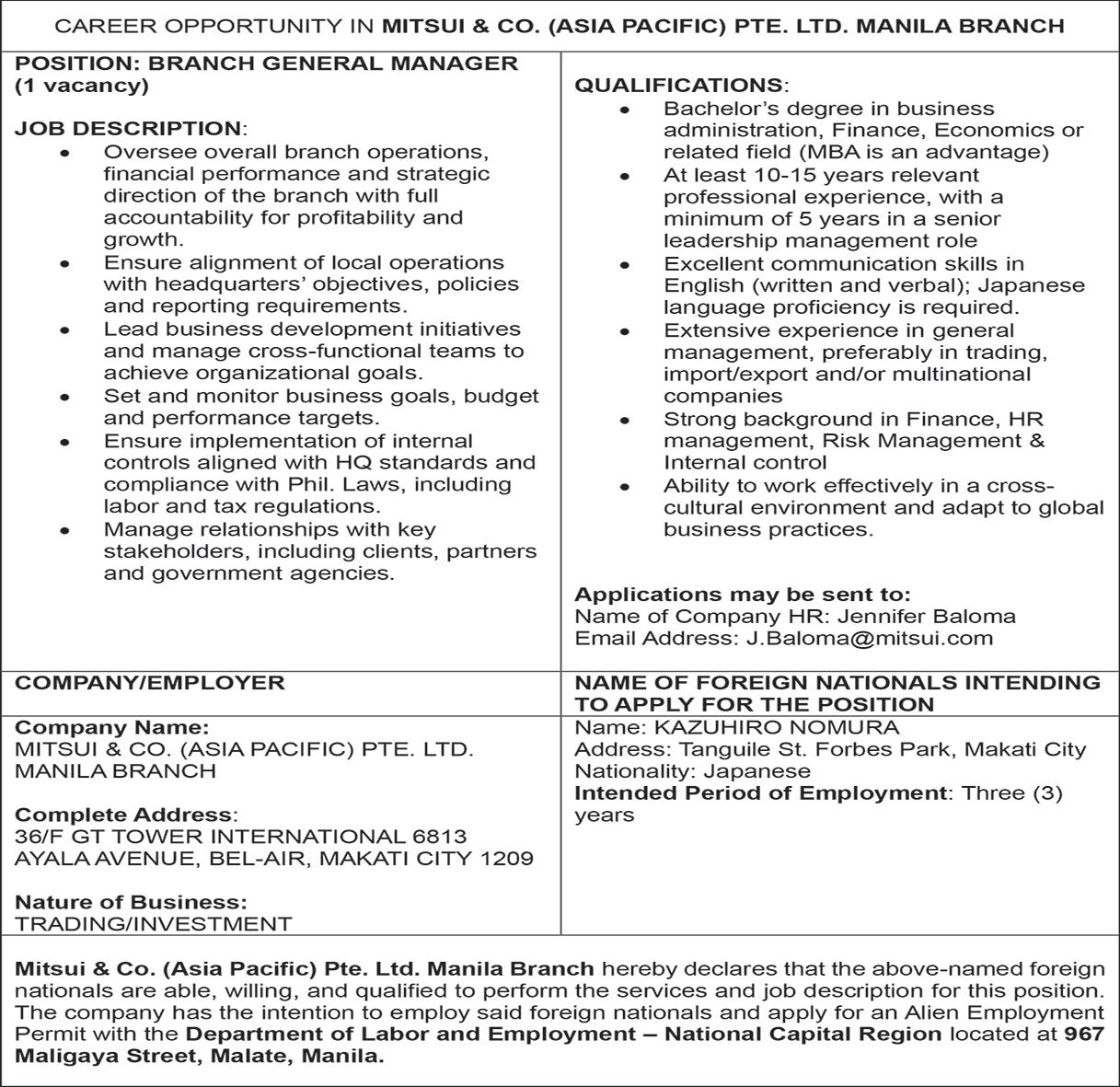
Fernando Hicap, national chairperson of Pamalakaya, said the Filipino people has no interest in the establishment of any military base in the Philippines. In contrast, he said it will only put the Filipino people at risk because of the nature of US Hicap issued the statement in response to reports that the Pentagon is planning to open the Defense Fuel Support Point (DFSP) in the Davao region. It is expected to store up to 41 million gallons of fuel products and lubricants to support US military operations in the Philippines.
verify plate availability. In cases where documents are complete and records are confirmed, drivers may be issued their physical plates right then and there.
LTO-7 underscored that the campaign is meant to prioritize public service, ensuring that motorists are not only monitored for compliance but also assisted in resolving plate-related concerns.
Drivers are encouraged to cooperate during the activity and to always carry their OR and CR to allow for quicker verification and assistance.
DAR empowers Davao del Norte ARBs with ₧13.2-M debt condonation
Floradelfa I. Mountains, MARPO Rosavilla L. Arrocena, and MARPO Madelen D. Apostle.
Also present were local officials, including IGACOS City Vice Mayor Richard A. Guindolman, Kaputian District Deputy Mayor Jeffrey S. Prieto, and representatives from the Presidential Agrarian Reform Coordinating Committee (PARCCOM) led by Chairperson Ronald E. Velencio. Suaybaguio said the condonation of land amortization is a major step in freeing ARBs from long-standing financial burdens.
“Through the New Agrarian Emancipation Act, farmers are finally relieved of their land debts, allowing them to focus on improving their farms and securing a better future for their families,” he said. Jonathan L. Mayuga
Pamalakaya also slammed the Marcos administration for not expressing any concern on the construction of a foreign military forward base.
With Jonathan L. Mayuga
BI arrests another Chinese national posing as a Filipino
THE Bureau of Immigration (BI) on Monday announced the arrest of another Chinese national found to have misrepresented himself as a Filipino.
BI Intelligence Division Chief Fortunato Manahan identified the suspect as Zhou Jianxiao, 35, who was arrested last Friday in Barangay Malainin, Ibaan, Batangas for alleged violation of Section 37(a)(7) of the Philippine Immigration Act of 1940, as amended, after allegedly using Philippine documents to pretend that he is a Filipino. The Chinese national reportedly used the alias Donny Flores Zhou in his Philippine driver’s license, which states that he is a Filipino national. The suspect was arrested by BI Regional Intelligence Operations Unit 4A, in coordination with the Batangas Police Provincial Office - Ibaan Municipal Police Station, Philippine National Police Ibaan Intelligence Unit, and the Armed Forces of the Philippines. He was found to be managing the operations of a warehouse in the area.
During the operation, authorities also arrested three more Chinese nationals, identified as Li Qican, Ji Jingui, and Chen Longlong for various immigration violations, including being overstaying, violations of the conditions of their stay, and for working without a proper visa or permit.
Joel R. San Juan


How the Middle East conflict is disrupting PHL’s growth engine
THE World Bank’s dramatic downgrade of the Philippines’s 2026 growth forecast to just 3.7 percent is not merely a statistical adjustment. It is a warning shot—one that reveals the country’s dangerously fragile economic architecture. (Read the BusinessMirror story: “World Bank cuts PHL growth outlook to just 3.76%,” April 8, 2026).
For years, the Philippine economy has been celebrated as one of Southeast Asia’s brightest stars. Yet the latest multilateral assessments paint a far more troubling picture. The World Bank now holds the bleakest outlook among its peers—lower than the IMF’s 5.6 percent, the OECD’s 5.1 percent, and even the ADB’s revised 4.4 percent. More alarmingly, all these projections fall below the government’s own already-reduced targets of 5 to 6 percent. The culprit is not domestic mismanagement alone, but a geopolitical fire the Philippines did not light. The Middle East conflict—thousands of kilometers away—is reaching Philippine shores through three devastating channels: energy imports, fertilizer costs, and remittances.
Consider this: 18 percent of our remittances in 2025 came from the Gulf. That is $6.5 billion out of $35.6 billion—money that sustains millions of Filipino families, fuels private consumption, and props up the country’s current account. A prolonged conflict does not just threaten that flow; it threatens the very consumption-driven model that has defined Philippine growth for decades.
The World Bank’s senior economist Ergys Islamaj put it plainly: the Philippines is exposed “not only through energy and fertilizer imports but also through remittances.” The ADB’s Teresa Mendoza added that while remittances have historically proven resilient, a protracted crisis would make them “highly vulnerable.”
The ADB now sees 2026 inflation at 4 percent, up from 3 percent but still within the government’s target. Yet rising fuel, transport, food, and fertilizer costs are widening price pressures, while a weakening peso—which touched P60.75 per dollar in late March—only magnifies the damage by raising import costs. For low-income households and transport workers, this is not an abstract statistic—it’s a daily loss of purchasing power. As ADB Country Director Andrew Jeffries said, the real concern isn’t GDP but “a much more pronounced negative effect for pockets of the population.” The crisis will be concentrated, not evenly distributed.
The Marcos administration is adjusting: it has trimmed medium-term growth assumptions to 3.5 percent to 5.3 percent, reassessed borrowing strategies, and is exploring more public-private partnerships.
These are reactive measures. The Philippines needs a fundamental rethink of its exposure profile—not prayers for ceasefires or temporary relief from truces like the US-Iran pause. Structural resilience is the only substitute.
To reduce economic vulnerability, the country must urgently diversify energy sources—moving from imported oil to renewables like geothermal, solar, and wind—as both an economic and security necessity. At the same time, it should expand remittance corridors beyond the Middle East by pursuing labor agreements with stable regions such as Eastern Europe, Latin America, and Southeast Asia. Finally, rebalancing domestic demand away from consumption-driven growth requires boosting agriculture, manufacturing, and digital services to create alternative engines less dependent on remittance-fueled spending.
The World Bank’s downgrade is not a forecast of doom—it’s a diagnosis of dependency. The Philippines has built a strong economy on overseas workers and global trade, but that openness can become a weakness during periods of instability. While the country can’t control external shocks such as conflicts in the Middle East, it retains full control over its own preparedness—an area where much improvement remains needed.
Opinion


TJohn Mangun
OUTSIDE THE BOX
HIS is not about AI. It is about the other “A”: Automation. In 1812, British soldiers shot Luddite textile workers on the moors of Nottinghamshire. The weavers had smashed the mechanized looms they believed were stealing their livelihoods. Parliament hanged a dozen of them and stationed more troops in the district. The looms kept running.
Two centuries later, a warehouse worker in Ontario, California filmed himself torching pallets of Kleenex tissue and toilet paper in an 110,000-square-meter distribution center. Chamel Abdulkarim, 29, an employee of a third-party logistics contractor, was arrested on suspicion of arson after a fire destroyed the facility. His words, captured on video before the flames took hold: “All you had to do was pay us enough to live.” Then, watching the burn: “There goes
your inventory.”
Third-party warehouse work in Southern California pays roughly what it paid a decade ago in real terms, while a one-bedroom apartment in the area has approximately doubled over the same period. Abdulkarim did not set fire to inventory. He set fire to the gap between those two numbers.
The moral clarity may be difficult to argue with, but the strategic logic is a disaster. The problem is that
capital has a response to this kind of argument, and it does not involve Abdulkarim getting a raise.
Kimberly-Clark will recover. Insurance will pay. But the internal risk models have already been rewritten. Every boardroom discussion on warehouse strategy will now include a line item for “labor-induced catastrophe”. Automation equipment vendors are reviewing their sales presentations with satisfaction.
The arsonist made the case for the robots.
The word “automation” was coined by a Ford Motor Company vice president after the largest labor strike wave in American history. It was not to describe a machine. It described an argument as management’s answer to organized labor.
Both the Luddites and Abdulkarim episodes reveal the same human reflex when economic pressure meets technological change: attack the machine rather than adapt to it. The Luddites delayed nothing. Their violence merely convinced mill owners that labor unrest was an unacceptable risk. Capital responded by
Tough earnings season beckons as Iran war hurts European growth
AT. Anthony C. Cabangon
Lourdes M. Fernandez
Jennifer A. Ng Vittorio V. Vitug
Lorenzo M. Lomibao Jr., Gerard S. Ramos Lyn B. Resurreccion, Dennis D. Estopace Angel R. Calso, Dionisio L. Pelayo Ruben M. Cruz Jr.
Eduardo A. Davad Nonilon G. Reyes
D. Edgard A. Cabangon Benjamin V. Ramos Aldwin Maralit Tolosa Rolando M. Manangan
BusinessMirror is published daily by the Philippine Business Daily Mirror Publishing, Inc., with offices on the 3rd floor of Dominga Building III 2113 Chino Roces Avenue corner De La Rosa Street, Makati City, Philippines. Tel. Nos. (Editorial) 817-9467; 813-0725. Fax line: 813-7025. (Advertising Sales) 893-2019; 817-1351, 817-2807. (Circulation) 893-1662; 814-0134 to 36. E-mail: news.businessmirror@gmail.com www.businessmirror.com.ph


accelerating investment in mechanization. The California arsonist has handed his employer documented proof that human labor carries unpredictability that no wage settlement can fully erase. When American fast food workers launched the ‘Fight for $15’ movement, the industry’s response was clear. McDonald’s deployed self-ordering kiosks at a rate of 1,000 locations per quarter. As a former McDonald’s USA chief once put it, the arithmetic is simple as a $35,000 robotic arm is cheaper than a worker making $15 an hour bagging French fries. California then set a $20 minimum wage for fast food workers in 2024. A study from University of California, Santa Cruz, found that automation adoption across 18 McDonald’s franchise locations in one area alone saw total labor hours decline nearly 12 percent over the following two years, equivalent to erasing 62 full-time positions. The kiosks did not appear because the technology improved. They appeared because the wage negotiatSee “Mangun,” A11
By Chloé Meley
S an earnings season clouded in geopolitical uncertainty gets underway, growth expectations for European companies might turn out to be far too ambitious.
Current estimates for 2026 earnings-per-share growth of 10.4 percent for the Stoxx 600 Europe index are too optimistic, Bloomberg Intelligence strategist Laurent Douillet said, citing tariff pressure, higher unemployment, weakening consumer sentiment and accelerating inflation.
As the Iran war continues to roil energy markets—with the Strait of Hormuz still largely blocked after a fragile ceasefire was agreed—the pan-European benchmark may achieve more moderate growth of 4 percent of 5 percent, according to BI calculations.
Estimate downgrades “are now seen as a matter of when, not if,” Barclays analysts led by Emmanuel Cau said, lowering European EPS growth expectations to 6 percent from 8 percent for 2026 if oil settles at about $85 to $90 a barrel. A major energy disruption, with oil at $100 a barrel or more, could result in low-singledigit growth at best, they added.
A significant commodity shock would push headline inflation in the euro area to 2.9 percent in 2026 from 2.1 percent in 2025, according to Bloomberg economists Simona Delle Chiaie and David Powell, compounding the existing tariff impact.
Although it’s still too early to call an earnings recession, European companies are unlikely to withstand this current bout of inflation as well as they did during the 2022 energy shock triggered by Russia’s invasion of Ukraine, according to BI.
“Slower nominal global growth, reduced pent-up demand, a softer labor market and thinner fiscal support leave companies with less pricing power and little room to defend margins,” BI’s Douillet and Simbarashe Gumbo said.
Muted luxury demand and growing competition in the auto industry from Chinese manufacturers contribute to the pessimism. European companies are also particularly vulnerable to energy shocks and supply chain disruptions.
Companies across sectors have already started tallying up the impact of the war on their operations and growth prospects.
VAT Group AG, a supplier to the chipmaking industry that counts ASML Holding NV as its biggest customer, cut its revenue guidance to the lowest in two years as the conflict in the Middle East disrupted its supply chain. In retail, Next Plc warned of higher freight and energy costs that could force it to lift prices, hurting
Estimate downgrades “are now seen as a matter of when, not if,” Barclays analysts led by Emmanuel Cau said, lowering European EPS growth expectations to 6 percent from 8 percent for 2026 if oil settles at about $85 to $90 a barrel.
shoppers with already squeezed wallets.
First-quarter profit growth looks “limited,” BI’s Douillet said, as strength in technology, financials and energy doesn’t fully offset weakness in utilities, health care and materials—which includes miners and chemical companies.
The conflict has “reset the narrative” for Europe’s chemicals industry and a ceasefire “does not guarantee a quick reset,” Barclays analyst Katie Richards said. BASF SE and Lanxess AG have already raised prices after input costs rose, with a knock-on effect on customers across household goods, automaking and pharmaceuticals.
Rising inflation is denting the outlook for consumer giants Nestle SA and Danone SA, soaring jet fuel prices will probably result in cuts to earnings expectations for airlines including Deutsche Lufthansa AG and IAG SA, and continued disruption in the Gulf region could delay a recovery at luxury labels like LVMH Moet Hennesy Louis Vuitton SE and Kering SA. Even banks—top performers that benefit from market volatility and the prospect of higher interest rates—are seeing the conflict dim their revenue momentum. Asset managers are also vulnerable to geopolitical turmoil, with Amundi SA’s first-quarter results threatened by cautious clients and muted markets, according to BI’s Sarah Jane Mahmud and Kevin Ryan. Banks still remain the most attractive sector in Europe, Citigroup strategist Beata Manthey said, with relatively low valuations and ongoing earnings strength. Cost and productivity improvements from artificial intelligence are positive for the industry, Citi analyst Andrew Coombs said, while excess capital will likely continue to be deployed for deals and investor returns. From a regional perspective, this bodes well for the financials-heavy FTSE100 index, which also benefits from its energy exposure. Oil major Shell Plc said its trading operation boosted earnings in the first quarter as the war drove up crude prices. Switzerland is in a tougher spot, with the 2026 energy shock coming on the heels of last year’s trade shock dealing a double blow to the country’s outlook, according to BI economist Jean Dalbard. The situation in the Middle East remains fluid, with the earnings impact still to be fully parsed. “The stronger the supply shock, the more non-linear the economic output and the magnitude of headwind to earnings,” Barclays’ Cau said. Bloomberg
Oil rallies as US blockade of Iran brings ‘dangerous’ escalation
OIL surged with natural gas as the US vowed to blockade all vessels passing through the Strait of Hormuz that called at Iran ports or were headed there, deepening an unprecedented global energy shock.
Brent rallied as much as 9.1 percent to near $104 a barrel, while European gas futures spiked almost 18 percent at one point. US forces will begin implementing the blockade—which doesn’t apply to other ships risking passage through the contested waterway—from 10 a.m. New York time Monday, the Central Command said.
“This is very dangerous because, now, we are transforming a regional fight into potentially a global fight,”
Onyx Capital Group Managing Director Jorge Montepeque told Bloomberg TV. Futures prices may not adequately reflect the risks, he said: “It really makes no sense—it should be $140, $150.”
Energy markets have been upended by the war in the Middle East, with higher prices threatening to stoke inflation while slowing economic growth. There’s now an urgent scramble among refiners and traders around the world for immediately available crude cargoes as physical supplies tighten. The US blockade followed the failure of peace talks with Tehran at the weekend.
President Donald Trump told reporters that the planned action would be very effective, while earlier threatening to retaliate in the event of resistance by Tehran. In addition to the blockade, the US leader and advisers were looking at resuming limited strikes, the Wall Street Journal reported.
Iran’s military adviser to the supreme leader, Mohsen Rezaee, said the nation “will not allow” such a US embargo and had leverage to counter it.
Hormuz, which links the Persian Gulf to global markets, has been effectively closed since US and Israeli strikes on Iran began in late February. Tehran has frustrated the White House by tightening its grip on the route, imposing fees on some vessels and keeping traffic at a fraction of pre-war levels.
On Monday, two fuel tankers were attempting to exit the Gulf via the Strait of Hormuz by sailing close to Iran’s coast, making them the first vessels to try to pass through since the US announced its blockade.
The US move injects “an enormous element of additional risk,” Michael Ratney, former US ambassador to Saudi Arabia, told Bloomberg TV. With some ships carrying oil bound for China, “is the US Navy going to blockade those, and thus set up a crisis in US-Chinese relations?” he added.
Mangun.
. . Continued from A10
ing environment changed. Just two fast food chains—Jollibee plus McDonald’s—has thousands of locations all of them candidates for the same kiosk deployment. With a direct workforce of around 200,000, the impact is significant.
For the Philippines, this is not an abstraction arriving from California on a slow boat. A substantial portion of 10 million Filipinos working abroad are in logistics, warehousing, and light manufacturing, the sectors where the automation investment is most aggressive.
Inside the country, the same automation curve is arriving at a workforce that has been systematically prepared for the wrong jobs.
TESDA’s (Technical Education and Skills Development Authority) most enrolled courses read like a list put together by someone who has not checked the automation deployment schedule. Cookery. Food and beverage service. Bread and pastry production. These courses are popular precisely because they lead to jobs
Iran was still shipping crude and condensate out of the Persian Gulf in March, with China the top destination, although flows fell from a month earlier, according to preliminary tracking estimates compiled by Bloomberg.
“It strikes me that that is quite an ambitious endeavor, and it doesn’t solve the problem of disruption,”
Mona Yacoubian, director of the Middle East Program at the Center for Strategic and International Studies, said of the US blockade plan. “It’s hard to make sense of it.”
If Iran did feel that its oil exports were threatened, it may push Houthi forces in Yemen to target transit through a chokepoint at Bab el-Mandeb, at the southern entrance to the Red Sea, Yacoubian said. The Houthis entered the war in late March, and have the capacity to disrupt shipping Oil flows via the Red Sea have become more important since the war erupted as Saudi Arabia boosted pipeline flows across the country to the port of Yanbu. On Sunday, Riyadh said it had restored full capacity through the East-West pipeline, as well as output from the Manifa field after Iranian strikes.
“The market got ahead of itself on de-escalation,” said Haris Khurshid, chief investment officer at Karobaar Capital LP in Chicago, adding that the US blockade threatens slower shipping, delayed cargoes and costlier insurance. “That’s what actually tightens the market and shows up in the price.”
Producer group OPEC—which has already warned that damage to Middle East energy assets will have a prolonged impact on supply even after the war ends—is due to publish its monthly market report later Monday, potentially offering fresh insight into the extent of the disruption.
The breakdown in the US-Iranian talks in Islamabad represents a significant setback after a ceasefire was agreed last week. Tehran characterized US demands as “excessive,” according to the semi-official Tasnim agency. US Vice President JD Vance said Washington’s core goal was a commitment from Iran not to seek a nuclear weapon, but returned home without it.
Speaking to reporters at Joint Base Andrews, President Trump said: “I don’t care if they come back or not,” when asked how long he would wait for Iran to come back to the negotiating table. Bloomberg
that currently exist in large numbers. They also map almost perfectly onto the jobs the kiosk cycle, the automated kitchen line, and the robot systems are actively eliminating.
The structural problem is not ignorance but misaligned objectives.
TESDA measures success by enrollment numbers and placement rates. High enrollment in food and beverage service produces good statistics as graduates find jobs quickly.
The agency trains for the labor market that exists today, not the one arriving. This makes sense at the program level and is catastrophic at the national level. By the time enrollment numbers for food and beverage service start falling because the jobs have disappeared, the training pipeline will be a decade behind the automation curve. Abdulkarim torched a warehouse in California. The more consequential fire burns slowly and quietly— and in Manila, no one seems concerned.
Opinion
Trump blockade of Iran ports risks widening war to high seas
By Eric Martin & Alastair Gale
US President Donald Trump’s threat to blockade the Strait of Hormuz after talks with Iran collapsed over the weekend risked widening a war now entering its seventh week, lifting oil prices and raising the prospect of further economic pain around the globe.
The US military said it would implement a blockade of all maritime traffic entering and exiting Iranian ports at 10 a.m. on Monday Washington time, adding that it would allow other vessels to transit the Strait of Hormuz if they’re not stopping in the Islamic Republic. Iran’s military adviser to the supreme leader, Mohsen Rezaee, has said the nation “will not allow” such an embargo and says it has “great untapped leverage to counter it.”
The fresh showdown came after the US and Iran failed to reach a deal in marathon talks in Pakistan, jeopardizing a ceasefire reached last week that raised hopes of a quick resolution to the war. The negotiations, led by US Vice President JD Vance and Iranian Parliament Speaker Mohammad Bagher Ghalibaf, broke down due to differences over the future of Iran’s nuclear program.
Trump told reporters on Sunday evening that he didn’t care if Iran returned to the negotiating table, arguing the US had already achieved its military objectives, including depleting the nation’s capability to manufacture missiles and drones.
“If they don’t come back, I’m fine,” he said.
Earlier on Sunday, Trump said the US was “LOCKED AND LOADED” and ready to “finish up the little that is left of Iran.” The US leader threatened to retaliate in the event of Iranian resistance to the blockade, posting on social media that “Any Iranian who fires at us, or at peaceful vessels, will be BLOWN TO HELL!”
The developments threatened to prolong and widen a war that has led to thousands of deaths and roiled global energy markets, with higher oil and gas prices threatening to stoke inflation while slowing economic
growth. Around the world, there’s now a desperate effort among refiners and traders to secure immediately available crude cargoes as physical supplies tighten.
The Strait of Hormuz is the world’s most important energy chokepoint, accounting for about a fifth of the world’s oil and liquefied natural gas. A full blockade would further pressure global oil markets by squelching the remaining trickle of shipments that have continued to move through the waterway. Oil and natural gas surged Monday morning, with Brent rallying as much as 9.1 percent to near $104 a barrel while European gas futures spiked up to 18 percent.
“The blockade is meant to increase economic pressure on Iran, but blockades are rarely quick in their effects though they can be decisive in the long run,” said Euan Graham, a senior fellow at the Australian Strategic Policy Institute. “And what Washington prizes above anything else is a quick result.”
The two-week ceasefire agreement is set to expire on April 22, if the blockade doesn’t lead to its collapse before then. Iran’s Islamic Revolutionary Guard Corps said that any military vessels attempting to approach the strait “under any pretext” would be considered a violation of the ceasefire, according to Iranian state TV.
While neither side has committed to a second round of diplomatic talks, Iran’s Foreign Ministry spokesman Esmail Baghaei said the nations reached an understanding on various issues but disagreements remained “on two or three key points.”
“It was natural that one should not have expected to reach an agreement in a single session from the outset,” he said on state television after the
talks. “Diplomacy never ends” and Iran will “continue to pursue national interests under all circumstances,” he added.
An American official, who requested anonymity, said on Sunday it was clear to the US team that the Iranian delegation didn’t understand the Trump administration’s main objective, which was to guarantee the Islamic Republic would never obtain a nuclear weapon.
Hormuz, which links the Persian Gulf to wider markets, has been effectively closed since US and Israeli strikes on Iran began at the end of February. Tehran has frustrated the White House by tightening its grip, imposing payments for some vessels and keeping traffic at a fraction of pre-war levels.
While the US is capable of enforcing a blockade, it would entail substantial costs and risks, Bloomberg Economics’ analysts including Jennifer Welch wrote in a note. US warships would be closer to Iranian drone and missile threats, leading to a dangerous escalation cycle if any of them are hit. The Houthis, who are allied with Iran, may also look to disrupt oil and gas flows in the Red Sea, the Bloomberg Economics’ analysts wrote.
“The risks and costs of a sustained blockade—and potential for pressure from other stakeholders like China—suggest Trump may not follow through or may not sustain a blockade,” they wrote, adding that Beijing may even use its leverage over the US with critical minerals in an effort to pressure Trump. “Still the threat itself increases the odds of miscalculation, reduces space for diplomacy and keeps downside risks to oil flows and markets elevated.”
The Trump administration used a similar approach against Venezuela earlier this year—effectively enforcing a blockade against its sanctioned crude on the open seas before its January capture of Nicolas Maduro. In his threat on Sunday, Trump said that “no one who pays an illegal toll will have safe passage on the high seas.”
P“Should the US begin boarding or interdicting ships suspected of having paid Iran tariffs or fees for the right of passage, the risk of more violent hostilities breaking out rises as well,” Fang said.
Trump has suggested that other countries would also be participating in the blockade, but has yet to name any specific nations that will be sending ships or other assets to the region to assist. Britain won’t be taking part in the blockade, people familiar with the government’s position said. The UK has autonomous mine-hunting drones in the region but will only deploy them to the strait if a viable plan emerges in conjunction with other allies to reopen it, they said.
Trump has repeatedly called on European and Asian allies to assist in the re-opening of the Strait of Hormuz, but has largely been rebuffed. Some allies, including the UK and Japan, have said they would assist in efforts only after fighting in the region has come to a halt. It’s not essential for the US to attack every ship, and just the threat alone can reduce the flows to and from Iranian ports, according to John Bradford, executive director at Yokosuka Council on Asia Pacific Studies and former US naval officer. Still, he said, it’s unclear if the tactic will work against Iran. “It’s particularly risky with Iran to seek de-escalation through escalation,” Bradford said. “The tactic works better with some actors than others, and Iran has shown it’s resilient to that tactic.” With assistance from Philip J. Heijmans and Soo-Hyang Choi/ Bloomberg
While many nations particularly in Southeast Asia will welcome US efforts to stop Iran from charging fees to use the strait, a widening of the conflict increases the risk that the Islamic Republic may look to target US embassies, bases and allies around the world, according to Nicholas Fang, a senior advisor at The Asia Group and managing director of the Singapore-based strategic consultancy Black Dot Pte. Ltd. Southeast Asian countries on Monday urged the US and Iran to continue peace talks.
Hungary’s new leader calls for sweeping change after Orban
By Zoltan Simon
ETER MAGYAR, Hungary’s next prime minister, outlined sweeping changes after ending Viktor Orban’s 16-year rule in a landslide election victory that will redefine the country’s ties with the European Union, Russia and the US administration of President Donald Trump.
Magyar, a 45-year-old former ruling party insider, said the overwhelming victory for his Tisza party—on track for a two-thirds parliamentary majority—gave him a mandate to dismantle Orban’s increasingly authoritarian system and bring Hungary back into the European fold.
He called on the country’s president, top justices and chief prosecutor to all hand in their resignations during his victory speech in front of a cheering crowd in Budapest on Sunday. Magyar said they had put their political allegiance to Orban’s authoritarian system above their office’s responsibilities.
“Those who betrayed the country must take responsibility,” he said with the Danube river and a lit-up parliament building behind him. Magyar said he would “liberate Hungary and take back our country.”
The result is a blow to Trump and Russian President Vladimir Putin, who sought to keep the EU’s longest serving prime minister in power. The outcome also marked a defeat for the nationalist camp in Europe for whom Orban had been a trailblazer and the driving force behind its Patriots party, now the third-largest inside the European Parliament.
It came as a big relief for the EU, which had struggled to overcome Orban’s obstructionism over the years. Putin had relied on the Hungarian leader to sow division in the bloc, obstruct crucial aid to Ukraine and dilute sanctions against Moscow.
The forint strengthened to a fouryear high against the euro.
“Hungary will once again be a strong ally in the European Union and in Nato,” Magyar said. “Hungary’s place is, will be and has been in Europe for a thousand years.”
Magyar is due to speak to reporters at 2 p.m. in Budapest.
Orban’s ouster is now likely to pave the way for the release of €90 billion ($106 billion) in assistance that Kyiv badly needs to stay in the fight after more than four years of Russia’s full-scale invasion.
“Hungary has chosen Europe,” European Commission President Ursula von der Leyen said on X. “Europe has always chosen Hungary. Together, we are stronger.”
Ukrainian President Volodymyr Zelenskyy said in a post on X that he was ready for “meetings and joint constructive work for the benefit of both nations, as well as peace, security, and stability in Europe.”
Poster child
BUT it’s in Hungary—once a poster child for the transition from communism to market democracy, where Orban is a larger than life political figure—where the impact of Sunday’s elections will be most keenly felt.
Orban has gone from a liberal, anti-communist student leader in the 1980s to become center-right, conservative prime minister for the first time in 1998 at the age of 34. After losing power in 2002, he returned to office in 2010 as a pro-
Kremlin nationalist on a mission to eradicate liberal democracy.
Magyar had galvanized the country over the past two years with his message of change in the face of Orban’s system. He also tapped into growing anger over cronyism, stagnant economy and rapidly deteriorating public services to challenge and eventually break the EU’s longest-serving head of government’s stranglehold on power.
Much of his momentum now rides on fulfilling that promise—and doing it just got more manageable with Tisza appearing to have surpassed the 133-seat threshold to give it a two-thirds parliamentary majority. Magyar said Tisza’s parliamentary dominance would make the planned changes “much more peaceful and smooth.”
But he’s also inheriting some of the economic challenges that contributed to Orban’s undoing and were only made worse by the prime minister’s pre-election spending spree, which included lifetime income tax exemptions for mothers and increases in pensions and wages.
The government ran up a cashflow based deficit of 3.4 trillion forint ($10.6 billion) in the first quarter, a year-to-date record. Magyar will have to take urgent steps to trim the budget to avert Hungary’s sovereign credit rating being cut to junk.
A two-thirds majority will also help a Magyar administration pass key legislation to unlock some of the more than $20 billion in EU funds that had been withheld from the Orban government on rule-of-law and corruption concerns—and which a cash-strapped budget badly needs. They include approving anti-graft laws, cooperation with the EU chief prosecutor’s office and restoring media and academic freedoms. Magyar has vowed to introduce a
two term limit for prime ministers to prevent Hungary from reverting to authoritarian rule. He’s said that would disqualify Orban, who has served four consecutive and five overall terms, from running in the future for the top government job.
Forint rally
THE prospect of easing tensions with the EU—and the potential for a Magyar administration to eventually embrace the adoption of the euro, something Orban has adamantly opposed—had fueled a currency and bond rally in Hungary months ahead of vote.
Orban himself had relied on a so-called supermajority since 2010 to pass a new constitution and election rules without opposition support and extend his influence over all walks of life, from court benches to boardrooms to classrooms. In the process, the prime minister had castigated minorities, notably the LGBTQ+ community and immigrants, targeted journalists and independent civil society in what were widely seen as tactics out of the Kremlin’s playbook.
Magyar, who describes himself as a center-right conservative, united liberals and disaffected Fidesz voters like himself under the Tisza umbrella.
He also did what other former opposition parties had failed to do: win over the countryside through relentless campaigning that took him to the smallest of villages, once Fidesz’s stronghold where Tisza made big gains on Sunday. Magyar had focused on addressing the economic concerns of Hungarians, including a cost-of-living, education and health-care crisis. With assistance from Marton Kasnyik, Thomas Escritt, Marton Eder and Andras Gergely/ Bloomberg
Tuesday, April 14, 2026
2nd Front Page
BusinessMirror
AGRI GROUPS OPPOSE FRESH BID TO CUT FARM ITEM TARIFFS
By Ada Pelonia
AGRICULTURE groups will oppose proposals to slash tariffs on key farm products, including pork, chicken, and corn amid the already heavy toll of pump price hikes on the agriculture sector.
In a press conference hosted by Sinag, five farm groups stressed that the focus should be on easing the impact of surging fuel costs on farmers, since every commodity is affected by its volatility.
“Oil prices are already high and the expenses of farmers and fisherfolk keep increasing. Why would [proposals to reduce tariffs] be pushed?” Sinag Executive Director Jayson Cainglet told reporters on Monday.
“[Any proposal to cut tariffs] would only be a burden and place additional weight on the agriculture sector,” he added.
For his part, National Federation of Hog Farmers Inc. (NatFed) Vice Chairman Alfred Ng pointed to the government’s previous move that slashed duties levied on pork due to the crimped local output brought by the African swine fever (ASF).
“The government previously reduced tariffs to allow the entry of more imports and plug the shortfall in local production
to bring down the retail price of pork, but that didn’t happen,” Ng said.
Joining the press conference were the United Broiler Raisers Association (UBRA), the Philippine Egg Board Association (PEBA), and the Philippine Maize Federation Inc. (PhilMaize).
The groups recently wrote to President Ferdinand Marcos Jr., calling on the government to stop using tariff reduction on farm imports to ease food prices, as this causes injury to farmers.
“Supporting food production during this oil price crisis is not just about helping farmers and the local agriculture industry. It is about protecting the entire economy and our food system— the lifeblood of the nation, when price shocks ripple through everything,” they said.
Since food imports mostly depend on oil, the groups said relying on imports at this time would destroy local food supply that could lead to elevated food prices.
“While it is tempting to assume that imports seem cheaper in the short term, relying on food imports during an energy shock is economically risky and strategically dangerous,” they said.
“Our resilience during these trying times of rising fuel and input costs has its limits.”
‘PHL weaker than its Asean peers vs oil-driven inflation’
By Andrea E. San Juan @andreasanjuan
EXPERTS warned against using monetary policy as the “main line of defense” against oil-price shocks.
Analysts brought to light the concern that the Philippines may not have the same capacity as its peers in Asean in managing energy-driven inflation.
One of the experts even pointed to having tight fiscal space and elevated debt as among the culprits while the country is fighting against energydriven inflation.
In an e-mail sent to the BusinessMirror, Moody’s Analytics economist Sarah Tan said: “The Philippines faces heightened exposure to energy shocks given its import dependence, compounded by tight fiscal space and elevated debt, which constrain its ability to cushion shocks relative to regional peers.”
“These structural limitations are further reinforced by ongoing fiscal consolidation, which is weighing on growth momentum,” added Tan.
In this context, Tan said the effectiveness of monetary policy by the Bangko Sentral ng Pilipinas (BSP) is “inherently limited” in addressing supply-driven inflation.
In a separate commentary, HSBC
Global Investment Research emphasized: “Outside of monetary policy, the Philippines may not have the same capacity as the other economies in Asean to manage energy inflation.”
For one, HSBC noted that Malaysia is a net exporter of energy while Vietnam has the fiscal space to respond more forcefully to higher energy prices.
Thailand, on the other hand, has the tools to stabilize energy prices via its Oil Fuel Fund, HSBC also noted.
Sharing the same sentiment with HSBC, Ruben Carlo Asuncion, UnionBank of the Philippines’ (UBP) chief economist told this newspaper: “In the case of the Philippines, it is risky to rely too heavily on monetary policy to fight energy-driven inflation, especially when the shock is clearly supplyside.”
“Higher interest rates cannot bring down global oil prices, but they can weaken consumption, investment, and growth,” Asuncion also told this paper.
If tightening is overused in an oil crisis, the UnionBank chief economist pointed out that the economy risks “drifting toward stagflation—slower growth alongside elevated inflation.”
Asuncion said monetary policy is still important to anchor inflation ex-

AmCham backs WFH for ecozone business
By Ada Pelonia
THE expanded work-from-home (WFH) arrangements in ecozone firms amid a national energy emergency crisis enables operational flexibility, according to the American Chamber of Commerce of the Philippines (AmCham).
AmCham made the pronouncement after the government, through the Fiscal Incentives Review Board (FIRB), allowed expanded WFH arrangements for registered business enterprises (RBEs) in ecozone firms in response to the ongoing energy emergency.
“The policy provides much-needed operational flexibility and helps sustain confidence
among US and other foreign investors across a wide range of industries.”
The group said it acknowledges that business needs and operating models vary across sectors, including manufacturing, logistics, services, and knowledge-based industries.
“In this context, policies that enable flexibility, rather than impose one-size-fits-all mandates, are critical. Empowering firms to determine the most appropriate work arrangements based on their operational realities supports continuity, productivity, and long-term competitiveness.”
As such, AmCham said this development allows firms to adjust to current conditions without disrupting existing investment ar-
rangements, thus reinforcing a stable and predictable business environment.
“At the same time, incentive-based approaches—particularly those that reward compliance, innovation, and investment—offer a constructive path forward that aligns policy objectives with business needs.”
Furthermore, AmCham noted that despite certain sectors being relatively “well-positioned” to maximize remote work arrangements, such as information technology-business process management (IT-BPM), shared services, and other digitally enabled industries, the broader framework should remain inclusive and adaptable to the requirements of all RBEs.
“Moving forward, AmCham looks to contin-
ued policy clarity and consistency, including early guidance on the duration of these measures and any transition arrangements,” the group said.
“Ongoing dialogue between government and the private sector will be essential to ensure effective, transparent, and predictable implementation.”
AmCham also said that it supports policies that protect investments, preserve jobs, and sustain the Philippines’ competitiveness.
“We remain ready to work closely with the government in refining these measures and advancing longer-term solutions to strengthen the country’s energy resilience and overall investment environment.”
pectations but pointed out: “It should not be the main line of defense against oil-price shocks.”
As such, Asuncion laid out other tools that should be used by the Philippine government in managing energy-driven inflation.
In the near term, he said the government should focus on targeted fiscal support for the most affected sectors such as transport workers, farmers, and lower-income households, rather than broad fuel subsidies.
“Temporary fuel tax adjustments, strong price monitoring, and better coordination on transport fares can help cushion pass-through,” Asuncion explained to this newspaper.
Over the medium term, he said reducing dependence on imported oil through energy diversification and renewables is crucial.
“In short, supply shocks require fiscal, administrative, and structural responses—monetary policy alone cannot do the job,” Asuncion underscored.
BSP’s ‘constrained’ policy space MOODY’S Analytics economist Sarah Tan underscored that higher interest rates cannot offset disruptions to energy and food supply, but pointed out: “They would weigh on already fragile growth.”
“The BSP faces constrained policy
space in both directions,” Tan emphasized, further noting that easing would risk fueling inflation expectations, while “aggressive” tightening would weaken growth without addressing the root cause of the shock.
While the Philippines has already implemented demand-side and administrative measures outside monetary policy, Tan underscored that the measures that have been rolled out are “limited.”
“Outside monetary policy, the Philippines has already implemented demand-side and administrative measures, including targeted fuel subsidies, cash transfers, fuel tax adjustments, and selective price controls,” Tan told this newspaper. She noted that these help ease nearterm pressures and are “steps in the right direction” but remain limited as such measures are “costly and can create distortions if sustained.”
“Further, they do not address the underlying supply shock, suggesting a painful adjustment is inevitable,” added Tan.
Over the long term, Tan said the priority is to strengthen energy security through diversification and a shift toward domestic renewables, alongside improvements in grid capacity to reduce import dependence.
5.5M—analyst
By Ma. Stella F. Arnaldo Special to the BusinessMirror
THE Philippines will be lucky to land 5.05.5 million foreign tourists this year, if the Middle East conflict continues.
This was the forecast of Leechiu Property Consultants (LPC) Director for Hotels, Tourism, and Leisure Alfred Lay in a recent news briefing. While the first quarter international arrivals recorded some growth, the lift came from a number of long-haul markets, which will likely be impacted by the rising cost of jet fuel in the following months, he said.
Lay’s prediction is much lower than the 5.87 million visitor arrivals last year, based on the etravel data, and significantly less than the 6.98 million arrivals he forecast in a hospitality event in February. As for the Department of Tourism (DOT), it is targeting 6.7-million arrivals this year, a figure cemented, however, before the outbreak of war in the Middle East.
With safety and cost among the “dominant drivers on decisions about where [tourists] want to go, we’re going to see...a reduction in travel coming from Europe across to the Philippines, and overall, to Asia, “ he noted.
Airfares double to 130K
ABOUT 75 percent of all Europeans travel to Asia via the Middle East. Since the crisis in that region, Asian carriers flying from Europe to Asia have now doubled their air fares.
“If you take a look on Skyscanner, you’ll see that fares on the Middle Eastern carriers are about US$50,000-$60,000 roughly from Europe into Asia. On Asian carriers, those flights are at least twice that price—$100,000-$120,000,” he said.
Lay added that the cost of jet fuel not only makes the trip from the source markets to the Philippines expensive, but also raises the cost of traveling within the country, an archipelago, as tourists now have to spend more on ferries, boats, and land transfers via vans.
US now tops visitor markets IN the first three months to March this year, there were some 1.89 million inbound tourists, up 1.6 percent from the same period last year, latest DOT data showed. Of the total, 1.76 million were foreign visitors, a 2.6-percent increase, year on year (yoy). Overseas Filipinos, defined as Philippine passport holders permanently residing abroad, are up by 1.88 percent to 126,091. For the first time, the United States topped the list of visitor markets, ranked by country of citizenship, which reached 393,137, an increase of 5.9 percent. South Korea came in second at 385,569, less 10.19 percent, yoy. Japan followed at 144,509 (+7.84 percent); Canada at 133,548 (+16.3 percent); Australia at 106,509 (+13.4 percent); and Taiwan at 66,818 (+26.3 percent). Other countries which made the list were: the United Kingdom
(-1.62 percent). Tourism stakeholders have urged Tourism Secretary-designate Ma. Bernadita “Dita” Angara-Mathay to take advantage of the visa-free privilege accorded to China and India by focusing promotions there and in other key markets. (See,
“All of those [fares] have increased by 20 or 30 percent in the last four weeks, and they will continue to [increase]. And if [tourists] are spending more to get to a particular hotel, they will have less spending power once they are at the property itself. That causes issues around employment for hotels and sustaining their operations during these elevated prices,” he stressed. LPC recently conducted a survey with the Philippine Hotel Owners Association with respondent-hotels indicating that most of them are already experience a decline in occupancy levels, since the Middle East turmoil. (See, “Opportunity in crisis: PHL hotels attract foreign capital,” in the BusinessMirror, April 8, 2026.)
Editor: Jennifer A. Ng
Local ride-hailing platforms reduce commission rates

By Lorenz S. Marasigan @lorenzmarasigan
RIDE-HAILING platforms have begun slashing their commission rates in response to the ongoing fuel price crisis, their representatives told a congressional hearing on Monday, as lawmakers pushed for mandatory cuts to protect the earnings of transport network vehicle service (TNVS) and motorcycle taxi drivers.
JoyRide, one of the country’s largest motorcycle taxi operators, said it reduced its commission from 20 percent to 15 percent for four-wheeled vehicles, and further cut the rate to 10 percent.
The platform also introduced a tiered incentive structure that
rewards more active drivers with lower commission rates.
“We realized that drivers are demotivated,” said JoyRide representative Jerico Meneses during the hearing.
Motorcycle taxi platform Angkas disclosed a similar structure,
lowering its baseline commission from 20 percent to 15 percent, with the rate graduating down to zero percent for its “super active riders.”
Move It’s Pearl Simbulan noted that the group began implementing a “graduated” commission scale starting in early March, with rates beginning at 15 percent.
Beyond the commission adjustment, Simbulan said the platform has also been distributing fuel vouchers to its riders to help cushion the impact of rising pump prices on their take-home earnings.
For four wheels, Grab representative Ira Cruz noted that the company has lowered its commission from a previous range of 20 to 21 percent to 18 percent.
The company has negotiated fuel discounts for its partner drivers, on top of rebates and additional incentives, he added, noting hat the platform is in active
discussions on migrating internal combustion engine vehicles to electric vehicles across its fleet.
InDrive, meanwhile, said its commission has been capped at 10 percent even before the current fuel crisis began, and noted that its rate can go as low as 1 percent.
Rep. Brian Poe-Llamanzares of FPJ Panday Bayanihan Partylist pressed for mandatory commission reductions during crisis periods similar to the energy emergency brought about by the war in the Middle East.
“If the ride-hailing platforms were to be mandated to lower their percentage even by a small bit-2 to 3 percent--mararamdaman yan ng drivers,” Poe-Llamanzares said, urging the Department of Transportation (DOTr) to convene a technical working group (TWG) to formalize the directive.
“We cannot survive on subsidies forever. We need to find more sustainable solutions.”
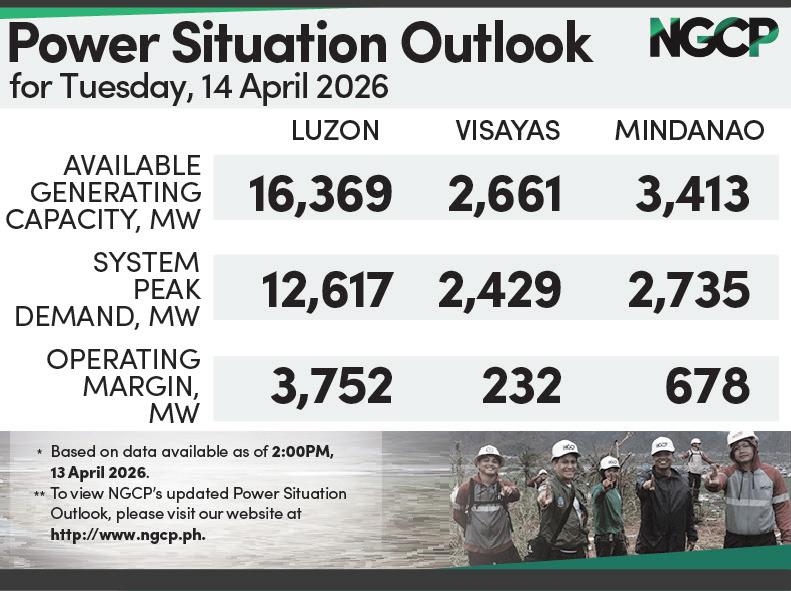
‘First Gen deal contains poison pill’ Emerging
THE majority owners of Lopez Inc. on Monday said First Gen Corp.’s P62-billion hydropower deal contains a “poison pill” that will penalize the Lopez group some P16 billion if Federico “Piki” R. Lopez and his designates are removed from the company for whatever reason.
Piki is First Gen’s chairman and CEO.
“This is self-dealing at the expense of all First Gen shareholders and for the exclusive benefit of Piki. We only learned about it and the whole transaction when it was presented at a board meeting that concealed the investment under ‘other matters’ and discussed in an execu-
tive session for only one hour,” the Lopez majority said in a statement. It added that up to now, the details of the “poison pill”—ordinarily used to block a hostile takeover—are kept from the majority and from the shareholders at large since it has never been disclosed to the stock exchange.
The Lopez Inc. board recently ousted Piki in a 5-2 majority vote for cause, and loss of trust and confidence as allowed by its by-laws. Piki, however, obtained a court order only days after, blocking his ouster and barring the majority from removing him from all other Lopez companies where Lopez Inc., the mother company, has shares.
First Gen originally bought 40 percent of the hydropower business for P75 billion but shortly after brought this down to 33 percent worth a little over P62 billion.
The decisions to invest and to reduce were never presented to the majority shareholders for approval until the board meeting where it was discussed in just an hour, the Lopez Inc. said.
“We do not know why he didn’t just go down to 33 percent plus one share to keep his veto power and whether (they’ve been) paid a premium for being handed full control. We are blind to everything,” it said.
First Gen still has to respond to the allegations.
Lopez Holdings Corp., the listed holding firm, said its attributable net income last year grew 90 percent to P12.05 billion from P6.34 billion during the previous year.
The company said in its disclosure that this was mainly driven by the performance of the group’s power generation and real estate segments, and the net one-off gains posted this year resulting from two strategic transactions.
The first was the divestment of First Gen’s 60-percent equity stake in the gas business, and second was Rockwell Land Corp.’s recent acquisition of a majority controlling stake in the Alabang Commercial Center. VG Cabuag
China’s clean tech firms signal windfall from Gulf energy shock
CHINESE clean - tech manufacturers are beginning to benefit from the supply crunch in the Persian Gulf, as rising oil and natural gas prices and a renewed emphasis on energy security boost demand for batteries and electric vehicles.
More than six weeks after US and Israeli strikes on Iran effectively shuttered the Strait of Hormuz, customers hoping to shield themselves from the extra costs are increasingly turning to greener solutions.
Ningbo Deye Technology Co., a major producer of energy storage systems and inverters, said last week it expects first-quarter profit to climb as much as 70 percent on a surge in overseas orders. Meanwhile, exports of Chinese-made electric vehicles and hybrids more than doubled in March to a record 349,000 units, as higher fuel prices renew the appetite for alternatives to gasoline-powered cars.
Deye attributed the jump in profit directly to geopolitical turmoil, with households and companies in Europe and Southeast Asia increasingly looking to battery storage. Automakers such as BYD Co. and Geely Automobile Holdings Ltd. are likewise benefiting, with industry observers noting parallels with the 1970s oil shock, when Japan gained global market share by offering fuel- efficient cars during a period of sustained turmoil.
Chinese firms are uniquely wellpositioned, given their dominance

of clean energy supply chains from solar panels to batteries and EVs. Years spent building up capacity, often at the expense of profitability, have allowed them to quickly scaleup distribution at competitive prices. But the export boom also masks continued weakness at home. Domestic EV and hybrid sales fell again in March, marking a third consecutive monthly decline.
China’s pivot to consumptionled growth has yet to materialize, leaving it overly reliant on foreign buyers. In the event of a prolonged war, the hit to the global economy could shrink overseas demand —
and sharply reverse the gains made in the first weeks of the conflict.
On the wire
n US President Donald Trump’s move to blockade the Strait of Hormuz risks deepening an unfolding economic crisis for Asia’s energydependent economies, including America’s allies in the region and China.
n China has cushions to damp the oil shock from the Iran war, according to Bloomberg Economics. But an extended conflict would present bigger threats — demand destruction in overseas markets and supply-chain
cities to drive ‘26 financial

By VG Cabuag @villygc

BOUTIQUE property developer
Italpinas Development Corp. (IDC) said it expects to post growth this year despite pressure on the real estate market due to the Middle East war as its investment in emerging cities is starting to pay off.
The company also said it intends to expand further in multiple new locations throughout the country, including in Palawan, Boracay, Bataan and Bukidnon.
IDC said it will bring its signature “eco-friendly, sustainable and innovative developments” to these prime locations.
The company’s net income last year fell 27 percent to P250.9 million from the previous year’s P345.4 million.
Non-operational activities, such as the increase in interest expense and lower gain on appraisal of the group’s investment properties recognized in 2024, resulted in a decline in the overall net income performance of the group, the company said.
The company said its financial results last year was also a due to combined efforts to scale the top line revenue and gross margin, effec-
CITICORE Renewable Energy Corp. (CREC) on Monday announced it has energized the 125-megawatt peak (MWp) Citicore Solar Pangasinan (CS Pangasinan).
Located in Sta. Barbara and Calasiao, Pangasinan, the solar project can generate an estimated 202 gigawatt hour (GWh) of clean energy, enough to power 90,000-100,000 Filipino homes, and cuts carbon emissions of close to 120,000 metric tons annually.
tively showing “good performance” in its operational activities during the year.
Sales rose by 30 percent to P784.7 million from the previous P604.2 million.
The company said this was due to the increase in sales of ongoing projects of the parent company Primavera City-Citta Bella in Cagayan De Oro and Miramonti in Sto. Tomas Batangas.
Last year, its units IDC Homes and IDC Primealso started to recognize revenue from their respective ongoing projects, namely Verona Green Residences for IDC Homes and Primavera City-Citta Grande for IDC Prime.
From inception, IDC said it has focused on being an early mover in emerging locations, foreseeing the current shift in real estate focus from Metro Manila to provinces, and this has paid off with the significant generated sales from these flagship projects during the year.
Positive performance was also noted in the group’s financial position, reflecting a significant improvement in its liquidity position compared to 2024, it said.
Total assets increased to P4.5 billion from P4.3 billion in 2024.
snags that could hurt exports.
n Cathay Pacific Airways Ltd. is cutting its passenger capacity following a surge in jet fuel costs.
n Shares in Chinese rare earth companies advanced after key producers announced a sharp increase in second-quarter product prices, signaling tighter supply conditions and stronger demand amid heightened geopolitical tensions.
n China has indicated it will halt exports of sulfuric acid from May, hitting metals and fertilizer industries already strained by raw material bottlenecks resulting from the Iran war. Bloomberg News
The CS Pangasinan project was awarded a long-term offtake contract under the Department of Energy’s Green Energy Auction ProgramRound 2 (GEAP-2). This follows the recent energization of the 69-MWp Citicore Solar Negros Occidental 2 in the Visayas, significantly contributing to the country’s energy security, especially during summer season, when power demand is at its highest.
The energization of Citicore Solar Pangasinan further strengthens Pangasinan’s position as a growing renewable energy hub in Northern Luzon.
“These developments show how national policy and private-sector execution can work together to create tangible local impact,” said CREC President Oliver Tan.
CREC has energized more than half of its GEAP-2 commitments and will energize the remaining five projects in the coming months.
The company’s ongoing projects are in Pangasinan, Batangas, and Quezon. CREC’s projects, contribute to CREC’s broader “5 GW in 5 Years” goal. Beyond energy generation, CREC will also expand its AgroSolar initiative across its projects, enabling the co-existence of agriculture and solar power on the same land. Under this program, areas beneath and between solar panels are used for crop production, supporting local farmers’ livelihoods and contributing to food security—while maintaining the primary use of the land for clean energy generation.
CREC reported last month that its net income in 2025 rose by 14 percent to P1.15 billion from the P1 billion posted in 2024 on the back of higher revenues.
Consolidated revenue stood at P5.32 billion, 3 percent more than P5.1 billion in 2024, driven by sustained electricity sales totaling P4.29 billion. This was a result of the fullyear realization of higher renewal rates of electricity retail customers. The increase in earnings was supported by a 34-percent surge in service fees to P325 million, and a 19-percent reduction in finance costs following successful refinancing initiatives. Service fees pertain to charges associated with the company’s retail electricity supply services to commercial and industrial businesses. Lenie Lectura
ARTIST'S perspective of Italpinas Development Corp.'s (IDC) Miramonti Green Residences in Sto. Tomas Batangas. PHOTO FROM THE FACEBOOK PAGE OF IDC.
A BYD Atto 2 EV in the showroom in the Mayfair district of London. PHOTOGRAPHER: JASON ALDEN/BLOOMBERG
Banking&Finance
DepDev chief flags funding gap if war drags on
By Justine Xyrah Garcia
THE government is facing a gap in funding support for sectors feeling the impact of the US and Israel’s war against Iran if that conflict tears into the second half of the year, warned the state’s Chief Economist Arsenio M. Balisacan.
Balisacan, who heads the Department of Economy, Planning, and Development (DepDev), told members of a Senate Committee last Monday that a narrow fiscal space means the government can only confidently
fund short-term interventions.
Based on DepDev estimates, the government would need from April to June alone around P146.8 billion.
The amount includes P47.5 billion for the transport sector, P44.1 billion for
food security, and P55.2 billion for social protection covering poor and near-poor households.
According to the Department of Budget and Management available resources from the 2025 and 2026 national budgets as government’s response to the crisis is about P238 billion, P125.2 billion of which has already been released as of April 1.
Such a buffer, however, may not hold if the crisis persists.
For the second half of the year, DepDev estimates show funding requirements could reach around P429 billion. This includes a P230.5 billion budget for the transport sector, P88.1 billion for food security, and P110.4 billion for social protection.
Speaking before members of the Senate Proactive Response and Oversight for Timely and Effective Crisis
Digital Transformation in Finance
IN the financial services industry, digital transformation has changed from a technology upgrade to a strategic makeover.
It’s no longer about adding digital channels to what already exists but about redesigning the whole value chain: from getting clients to providing advice and retaining them in the long term. Institutions that grasp this are positioning themselves to lead, not just adapt.
Five pillars define this transformation.
1. Digital capacity is now the base of competitiveness. It includes not only customer-facing applications but also the architecture that supports operations. Leading institutions are investing in systems that merge client data, automate compliance checks, and allow realtime portfolio monitoring.
For example, large banks in Asia have moved core systems to cloudbased infrastructure. This change allows for faster product launches and smooth integration with thirdparty platforms. It has cut onboarding time from days to minutes through digital-identity verification and automated risk profiling. Relationship managers now have dashboards that show client holdings across various asset classes. This helps them provide well-rounded advice instead of piecemeal product recommendations.
Digital capacity also improves governance. Automated audit trails, risk alerts, and suitability checks protect both the institution and the client. In a heavily regulated industry, the ability to grow while staying compliant is a big advantage.
2. Customer experience has turned into a strategic battlefield.


Clients do not just compare their bank with other banks anymore. They compare it to tech platforms that offer speed, personalization, and easy-to-use design.
In response, forward-thinking institutions are redesigning client journeys. Mobile apps now provide a complete view of investments, insurance, loans, and cash positions all in one place. Notifications are proactive, alerting clients to opportunities for rebalancing their portfolios or market movements that match their risk profiles.
Some institutions have created hybrid advisory models wherein digital tools manage routine transactions while human advisors handle more complex planning conversations. This approach boosts efficiency without losing trust. It acknowledges that technology can process data faster than people, but trust builds through relationships.
The most successful institutions know that experience is about emotions, not just functions. Clear reporting, simple fee structures, and open communication build confidence. In an industry built on trust, experience becomes the strategy.
3. Marketing evolution. Marketing in financial services has changed from product-focused campaigns to insight-driven engagement. Data analytics now al-
lows institutions to group clients by behavior, not just demographics. Campaigns are tailored to life stages, financial goals, and transaction history.
For example, digital campaigns aimed at young professionals often highlight goal-based investing and automated savings tools. These campaigns are delivered through social media and educational webinars. Meanwhile, affluent clients receive personalized market insights and portfolio strategies through tailored email briefings and exclusive online forums.
Content has turned into a key differentiator. Educational articles, video explainers, and interactive tools position institutions as trusted advisors instead of mere product sellers. Institutions that invest in thought leadership often see higher engagement rates and better conversion rates because they build credibility before making offers.
4. Strategic partnerships are reshaping the competitive landscape. Rather than building every capability in-house, institutions are working with fintech firms, payment platforms, and technology providers to speed up innovation.
A common example is the integration of investment platforms with digital wallets and payroll systems. This setup allows clients to invest directly from their salary accounts or mobile wallets, reducing friction and reaching segments that were previously underserved.
In the B2B space, financial institutions are teaming up with corporate employers to offer financial wellness programs. These programs give employees access to curated investment products and advisory
Strategy Committee, Balisacan said it was obvious that “the demand for resources will be much greater” if the Middle East conflict spills over into the July-to-December period. “We’ll have to figure out how to source it out,” the DepDev chief added.
Balisacan said one option is for government to realign funds from existing programs, activities and projects while another is for the Executive to seek additional appropriations from Congress.
Unfortunately, he said, the same fiscal flexibility the government had during the Covid-19 pandemic, like lower deficit and debt levels, are no longer present.
Data from the Bureau of the Treasury showed government’s budget deficit widened to P1.58 trillion last
services. Such partnerships create ecosystem benefits. By embedding financial services into broader platforms, institutions gain visibility and convenience. They also share development costs and reach new clients without a significant increase in capital spending.
The institutions that succeed are those that think beyond products and focus on building interconnected networks of value.
5. Digital scale has been completely redefined. In the past, growth required physical expansion and significant increases in staff. Today, digital platforms allow for rapid reach with manageable costs.
Automated onboarding systems can manage thousands of new accounts at once. Robo-advisory tools can handle diverse portfolios at scale while keeping asset allocation consistent. Data analytics enable cross-selling and upselling based on predictive models instead of manual prospecting.
Digital transformation is not just a tech issue but a leadership choice about how value will be created in the next decade. Institutions that integrate digital capacity, customer experience, marketing intelligence, partnerships, and scalable infrastructure into a unified strategy will not only deal with change but will set the industry standards.
The future of financial services belongs to those who see digital transformation as an ongoing commitment to relevance, trust, and sustainable growth.
Karlo Biglang-awa is a Registered Financial Planner of RFP Philippines. The views and opinions he expressed herein do not necessarily represent the BusinessMirror
Asia-Pacific insurers’ limited direct exposure to war seen fragile as uncertainties remain
INSURERS in the Asia-Pacific have limited direct exposure to the Middle East, but remain vulnerable to indirect pressures from financial market volatility, inflation and trade disruptions, according to Standard & Poor’s (S&P) Global Ratings.
In its latest report, S&P said insurers could face indirect impacts from prolonged supply-chain disruptions, which may dampen growth, fuel inflation and increase operating expenses.
The biggest indirect risk to Asia-Pacific insurers, S&P flagged, is the investment market volatility.
“If geopolitical tensions escalate, it could heighten capital market and foreign exchange volatility, leading to capital and earnings volatility,” it said.
Heightened market swings could also strain insurers’ balance sheets through mark-to-market valuation impacts, although some may see valuation gains in a risk-off environment, S&P added.
The worst case is that insurers with higher exposure to low-income net oilimporting economies could face greater balance sheet volatility due to their in-
vestments in government bonds and banks.
Banking systems in countries such as the Philippines are exposed to low-income households and small and mid-sized enterprises that operate with thin financial buffers, making them more susceptible to prolonged economic shocks.
Nonetheless, S&P said rated insurers in the region have sufficient capital buffers and only minimal investment exposure to the Middle East.
Asia-Pacific insurers are also indirectly vulnerable to prolonged disruptions in energy supply, which could drive up prices, raise costs and inflation, and erode purchasing power.
“While many economies maintain strategic crude oil stockpiles to manage short-term disruption, a prolonged conflict would ultimately disrupt economic activity and household income and exert pressure on credit profile of insurers,” S&P said.
Increasing energy costs are likewise expected to push interest rates higher.
For nonlife insurers, S&P said this could lead to compounding claims expenses in
motor, property and commercial lines, prompting premium increases.
At the same time, S&P expects weaker global trade and sustained supplychain disruptions to reduce premium volumes in marine, cargo, and trade credit lines, even as demand rises for political-risk and business interruption coverage.
Life insurers, meanwhile, may see a deterioration in morbidity and lapse experience amid weaker macroeconomic conditions and rising living costs.
“Over time, higher interest rates would support higher reinvestment yields and new business margins in protection and annuity products,” S&P added.
Meanwhile, global reinsurers and specialty insurers with broader international operations are likely to bear the brunt of insurance losses stemming from the conflict, S&P said.
This has already prompted some nonlife insurers and reinsurers to de-risk their portfolios by cancelling coverage in highrisk areas or increasing reinsurance and retrocession protection. Reine Juvierre S. Alberto
year, exceeding both the P1.56-trillion program set by the Development Budget Coordination Committee and the P1.51 trillion recorded in 2024.
The country’s total debt also rose to P17.71 trillion as of end-December, up 10.32 percent from P16.05 trillion the previous year.
Market sentiment also reflects this caution. Standard & Poor’s Global Ratings recently revised its outlook on the Philippines to “stable,” indicating that the country’s “BBB+” investmentgrade rating is unlikely to change over the next one to two years.
Given these constraints, Balisacan said he prefers working within the 2026 General Appropriations Act to avoid further straining public finances.
“We need to cut back on capital outlay, if necessary, just to fund
what’s most needed for the crisis,” the DepDev chief said adding he defers to the wisdom of the Committee Chairman Sen. Sherwin T. Gatchalian.
With fiscal space narrowing, a multilateral lender earlier said the government is shifting toward a more cautious approach to managing its finances.
Last week, the Asian Development Bank (ADB) said the Philippines is expected to adopt a more prudent fiscal strategy as pressures on public finances mount.
ADB Philippines Country Director Andrew Jeffries said the Marcos administration is reassessing its borrowing strategy, prioritizing spending, and exploring greater use of public-private partnerships to finance key projects.
Short-dated instruments beguile jittery investors
By Reine Juvierre Alberto @reine_alberto

YIELDS across all three tenors of Treasury bills (T-bills) dropped on Monday, after the United States and Iran concurred on a two-week ceasefire in the Middle East war.
The Bureau of the Treasury’s auction committee was swamped with bids, as total tenders reached P99.425 billion, or 3.3 times the P30 billion initial program.
“The auction was supported by reinvestment flows from recent maturity,” National Treasurer Sharon P. Almanza told the BusinessMirror.
“It also reflects market’s preference for short-dated securities amid uncertainty over the geopolitical tensions and inflation,” Almanza added.
Bids awarded for the 91-day Tbills were upsized to P16.8 billion, as the committee doubled the noncompetitive bids for the tenor to P7.2 billion.
Tenders for the 91-day tenor reached P50.825 billion, or 5.6 times the initial P9-billion offering.
The average yield declined for the second straight week to 4.750 percent, down by 23.5 basis points from the 4.985 percent recorded in the previous auction. Rates ranged from a low of 4.7 percent to a high of 4.798 percent.
Meanwhile, bids for the 182-day T-bill reached P34.715 billion, or 3.8 times the P9-billion offer, but were partially awarded. Still, the committee doubled the non-competitive bids for the tenor to P7.2 billion.
The average yield settled at 4.882 percent, posting a decline of 19.8 basis points, after rising for five straight weeks, from the previous auction rate of 5.080 percent. Awarded yields were between 4.810 percent and 4.995 percent. Moreover, the Treasury only accepted P4.550 billion out of the P9 billion it intended to borrow through the 364-day T-bills. Tenders for the securities reached P13.885 billion, still 1.5 times the offering. The securities fetched an average yield of 5.168 percent, down by 3.6 basis points, after a five-week streak of increases, from the previous week’s 5.204 percent. Accepted yields ranged from 5.138 percent to 5.190 percent.
Average yields of the 91- and 182-day tenors were lower than the secondary benchmark rates. The Philippine Bloomberg Valuation (PHP BVAL) rates for the comparable tenor were as follows: 4.760 percent for three-month, 4.914 percent for six-month and 5.159 percent for 1-year.
Michael L. Ricafort, chief economist at the Rizal Commercial Banking Corp., said he believes the T-bill yields declined after a cessation of hostilities between the US and Iran helped bring down global crude oil prices. That led to some rollback in fuel pump prices and could help ease inflationary pressures, Ricafort said. T-bill yields also fell on strong demand from investors, he added, especially since the attack on Iran began February 28.
Real GDP growth, inflation pulling down PHL’s high debt ratio—Amro
WHILE the Philippines’s debt ratio has been on a steady upward path, this is expected to decline over the medium term, according to Asean+3 Macroeconomic Research Office (Amro).
In its “Asean+3 Fiscal Policy Report (AFPR) 2026,” the Amro said the Philippines is among the economies where debt ratios are projected to ease over the medium term, alongside most peers in the region, except China and Korea.
The Philippine government’s debt, as a share of gross domestic product (GDP), climbed to a 10-year high of 63.2 percent at end2025.
“Primary deficits and higher effective interest rates were the main drivers of rising debt ratios, while real GDP growth and infla -
tion exerted downward contributions,” the report read.
The Philippines aims to bring its debt-to-GDP ratio to 56.3 percent by 2028, according to the Department of Finance.
Despite the expected stabilization or decline in debt ratios, the Amro said that gross financing needs will likely remain elevated in the medium term, driven by higher principal repayments on maturing debt across various tenors.
In a separate statement, the Amro said policymakers must prioritize fiscal sustainability and rebuild buffers as fiscal positions weaken and policy space narrows.
The Singapore-headquartered institution added that stronger fiscal management frameworks are needed, including improvements in
risk management, fiscal aggregates, strategic resource allocation, spending efficiency and revenue mobilization.
“Amid rising risks from tariff escalation and volatile global oil prices driven by ongoing geopolitical conflicts in the Middle East, fiscal policy must remain flexible to cushion adverse impacts and safeguard economic stability,” Amro Deputy Director for Functional Surveillance and Research Rahman Abdurohman said.
“As uncertainty persists, strengthening the systematic management of macroeconomic risks—through robust contingency planning, proactive stakeholder engagement, and clear and transparent communication—is increasingly critical,” Abdurohman added. Reine Juvierre S. Alberto
PERSONAL FINANCE
Karlo Biglang-Awa
Art BusinessMirror
SOMEWHERE IN BETWEEN
Gen Z artists re�lect on pandemic disruptions in ‘Ini-inin’

THE cataclysmic Covid-19 pandemic hit everyone differently. For Gen Zs, those born between the mid to late 1990s and early 2010s, it threw a critical formative period into disarray, turning what was supposed to be a time for exploration and self-discovery into uncertainty.
Visual artists from this age group reflect on their personal and shared experiences in an ongoing group exhibition at the National Commission for Culture and the Arts (NCCA) Gallery in Intramuros, Manila. Titled Ini-inin, the show presents a resonant exploration of the enduring impact of the pandemic on contemporary youth.
The exhibit title draws from the state of rice that is neither fully cooked nor raw, a state of inbetween-ness, of transition. For many Gen Zs, the ordeal left them confronting a reality that felt both overwhelming and unresolved.
The show presents artworks by Butil Collective, featuring artists Andree Tiongson, Angelica Jacoba, Asaliah, Chesca Hernandez, Carlos Villaluz, Galan Maigue, Georgina Pomarejos, Jea Gavina, Kalila Camilon, Sophia Sotolomba, and Rya Contreras. They created a diverse collection of artworks, from paintings in varying styles to stoneware pieces, sculptures, and didactic materials. While each reflects on personal narratives and evolving identities, the pieces, taken collectively, form a layered portrait of introspection, memory, and shared generational experience.
As audiences move through the exhibition, the works invite reflection and connection, bridging individual stories with broader social realities. Contreras, who also serves as the exhibition’s curator,


artists, particularly during the pandemic.
She noted that institutional support has been vital in providing platforms for creative expression during a time when many artists faced significant constraints.
According to the NCCA, more than a presentation of artworks, Ini-inin stands as a response to the disruptions that shaped an entire generation.
“With formative years spent in isolation and mediated through screens, many young people now find themselves negotiating the aftermath of lost time and interrupted growth. Through their art, the members of Butil Collective articulate this shared condition—grappling with absence, reclaiming agency, and making meaning from a period defined by uncertainty.”
Meanwhile, also on view at the NCCA Gallery is In-Sight. An exhibition by the SeekArt Collective, the show presents how artists transform observation and reflection into compelling “visual field notes” that invite viewers to see, think, and rethink the world.
The exhibition is anchored on the premise widely credited to Leonardo da Vinci that “art is never finished, only abandoned.” The featured artworks

A ROSTER of lauded international multidisciplinary artists from Japan, Indonesia, and the Philippines explored the interconnections of art and science in the recent exhibit Poets
of Physics. In 1964, the late Filipino international artist and political activist David Medalla, whose body of work ranged from kinetic art, to

directions.
John Merick Eupalao reflects on the shifting realities of rural life, drawing from his roots in Alabat, Quezon, to evoke questions of labor, sustenance, and cultural continuity. Flaviano Lucas Jr. engages with the presence of artificial intelligence, presenting it not as a substitute for human creativity but as a condition that artists actively negotiate and reshape. Meanwhile, John Michael P. Oarga turns to community narratives, presenting space as something formed through shared experience rather than fixed boundaries.
Eleanore Fern B. Pagaduan invites a slower, more deliberate act of seeing, where memory and personal histories unfold through layered encounters. Susanne Therese D. Tolentino situates her work within local cultural practice, demonstrating how design can articulate and strengthen collective identity. Finally, Jared Yokte examines endurance through the body, offering a reflection on time as something physically felt rather than simply measured.
In-Sight and Ini-inin are both on view at the NCCA Gallery until April 30. The space is open throughout the week from 9 am to 6 pm.
painting, sculpture, installation, and performance art, presented the first iconic bubble machine.
Dubbed Cloud Canyons, this autocreative instrument continuously generated foam and bubbles to produce ever-changing sculptural forms which temporarily exist before they dissolve then reform.
Medalla would later refer to himself as “a poet who celebrates physics.” After several iterations of the innovative art pieces, he expanded his exploration of these biokinetic creations using sand and mud as active materials.
Drawing its title from Medalla’s quote, Poets of Physics explored how contemporary artists have continued this radical proposition of art machines which examine natural conditions and their capacity for transcendence.
Produced by the Museum of Contemporary Art and Design (MCAD) of the De La Salle-College of Saint Benilde, it served as the anchor exhibition of the Benilde Open Design + Art themed Extension of Nature
The exhibit featured the compositions of David Medalla (Philippines), Aki Sasamoto (Japan), Bagus Pandega (Indonesia), Fischli and Weiss (Switzerland), and Ian Carlo Jaucian (Philippines).
Poets of Physics was on view April 12, 2026, at MCAD located at the De La Salle-College of Saint Benilde (DLSCSB) Design + Arts Campus along Dominga Street, Malate, Manila.
Museum days and hours are Tuesdays through Saturdays, from 10 am to 6 pm, and Sundays from 10 am to 2 pm except holidays.
More information can be found at tinyurl.com/sbktsv6c.

want in writing. ★★★★★
LEO (July 23-Aug. 22): Spice up your life. Engage in events and activities that bring out your competitive nature. You have plenty to gain if you absorb information and receive and incorporate it into your daily routine. Refuse to let the changes those close to you make deter you from following your heart and your dreams. ★★★
VIRGO (Aug. 23-Sept. 22): Communication followed by action is the best route forward. Live up to your expectations and be the one to initiate positive change. If you stay calm, make choices and offer kindness and understanding to those you encounter, you enhance your life as well as the lives of others. A partnership or romantic encounter looks promising. ★★★
LIBRA (Sept. 23-Oct. 22): Gravitate to what and who draws you in most. Socialize, participate, get active and pursue what makes you happy. Life is too short to waste time; engage in whatever feeds your soul. Let your creativity shine through, and what you discover will change how you live and who you align yourself with as you move forward.
SCORPIO (Oct. 23-Nov. 21): Verbalizing your thoughts, desires and pursuits will lead to interesting feedback from those with experience, intuition or insight. A partnership will give you the momentum to move full steam ahead. Mix and mingle with both friends and associates, and the information you receive will be wellrounded and encourage success.
SAGITTARIUS (Nov. 22-Dec. 21): Emotional flare-ups require more thought and discipline. Try to see all sides of a situation and to act out of kindness and understanding. Patience will help you bypass altercations that can damage meaningful relationships. Live up to your promises, and stick to the truth. Dedicate your time to nurturing relationships and making domestic improvements. ★★
CAPRICORN (Dec. 22-Jan. 19): Think twice before you make a commitment or share personal information. You’ll gain the most if you concentrate on how you look, feel and respond to others and

Big break for beautiful souls

MIGUEL TANFELIX MARKS FIRST SOLO HOSTING STINT IN ‘PLANET XP’
GMA heartthrob Miguel Tanfelix is now entering his solo hosting era, as he banners the magazine infotainment special Planet XP, beginning on May 2. The five-part program is produced via the partnership of GMA Network and the National Council for Children’s Television (NCCT), as a grantee under the 2024 National Endowment Fund for Children’s Television (NEFCTV).
In gaming, XP means Experience Points, or scores that a player earns in leveling up his or her skills and expertise. In Planet XP, Miguel takes viewers into immersive adventures and real-life encounters with nature. Through this show, the audiences get to see the beauty of the Philippines— its destinations, culture, and people.
Miguel goes on full adventure mode as he explores different parts of the country. Be it mountain climbing, sailing to the sea, or braving heavy rainfall, Miguel is all-out in enjoying the experience.
He also engages in meaningful conversations with communities, such as the Dumagat in Norzagaray, Bulacan; Women Weavers of Cavinti, Laguna; Ayta-Mag-Indi Farmers of Floridablanca, Pampanga; Mighty Mountaineers of San Jose, Tarlac; and Champion Grassroots Windsurfers of Mabini, Batangas.
Moreover, viewers should tune in to meet the cutest animated animal XPlorer, Tammy Tamaraw, who introduces her fellow amazing animals living in the Philippines.
From showing off wonderful landmarks to sharing knowledge about travel safety, food exploration, animal welfare, and other insightful topics, Planet XP is must-watch content that teaches every generation to enjoy adventures and take care of the world.
Planet XP has five episodes coming on GMA starting May 2, every Saturday at 6:30 pm after 24 Oras Weekend and before Pepito Manaloto.

THE Super Mario Galaxy Movie enjoyed otherworldly success at the box office in its second weekend in theaters. The Universal and Illumination sequel added $69 million from 4,284 theaters in the US and Canada, according to studio estimates on Sunday. That brings its running domestic total to $308.1 million and its global total to $629 million.
That’s a 48 percent drop from the film’s first weekend in theaters, a fairly modest decline for a blockbuster. But the chasm between this movie and the first continues to grow. By its second weekend in 2023, The Super Mario Bros. Movie—which was much better reviewed than its follow-up—had earned over $353 million domestically. Still, the sequel is an unabashed hit by any measure, having cost only $110 million to produce. Paul Dergarabedian, the head of marketplace trends for Comscore, said “it’s a very respectable” hold. “For the film to already be over $300 million is just astonishing,” Dergarabedian said,

ACTOR, host, and a regular fixture in many showbiz events, Toni Co is a friend to a lot of people in the entertainment industry.
I strongly believe that people who are able to make others happy feel part of that happiness themselves. And Toni is certainly one that effortlessly makes other people happy because of his good-natured personality and generous soul. Many of his friends attest that his jovial presence alone automatically switches on the happy mood of a room when he walks in.
Toni, who just celebrated his 50th birthday, is also an actor and has shared the big and small screens with both veterans and newbies. “Acting fascinates me, and being able to give life to different characters amazes me, whether I am the one playing a role or just watching other actors give life to their character assignments. I have long been a lover of film and I am glad that despite my regular job, I am able to spread my wings and dabble in acting.”
Not only a funnyman, Toni is also known in showbiz circles as a very giving and generous person.
One popular actress, who requested anonymity, told us sometime ago that Toni quietly helped her when she was at the lowest phase of her life.
“He didn’t have much too at the time, but he gave and shared whatever little he had to make sure I had something to get pass those dark days. I will never forget Toni’s generosity for the rest of my life.” The actress eventually bounced back and is living quite a comfortable life now, with regular projects for television and film, and she always makes sure that Toni is present when she celebrates her milestones.
Toni is one who does not put conditions in his willingness to help, love or give to others, especially his friends, many of whom he has developed deep

friendships with over the years.
Thats why when it was announced that he will be having his solo video podcast, it was not difficult to fill in his guest list.
The weekly digital talk show is titled Talk Express, to be aired every Saturday afternoon on Cignal TV and on the KMD Studios YouTube channel. This talk show fits him well since Toni has a natural gift of gab.
“I am happy that I was given this new show that will be aired on different social media platforms. I thank my producers for trusting me and my capabilities as a talk show host, something I quietly wished for all these years.”
The lineup for his first batch of guests include Mon Confiado, Carmi Martin, Dexter Doria, and Rita Avila—all revered and respected names in show business.
There are many people cheering for Toni Co, and the love and happiness that he so generously gives will surely return to him in many surprising ways.
Canada’s Artemis II astronaut gives thumbs-up to ‘Project Hail Mary’ starring Canadian Ryan Gosling
HOUSTON—The new space movie Project Hail Mary starring Ryan Gosling got rave reviews more than halfway to the moon. Canadian astronaut Jeremy Hansen said on Saturday that he and his Artemis II crewmates got to watch the film with their families before launching on the lunar fly-around. He said it was “a real treat” to view the movie while getting ready for his own space adventure Gosling, a fellow Canadian, sent best wishes to the four astronauts ahead of Wednesday’s liftoff.
“Art imitates science and vice versa,” Hansen said during a live televised event arranged by the Canadian Space Agency.
“I thought it was just such an inspirational example— somebody who goes out there and just gets what was done to save humanity. It’s a pretty extraordinary example that we can all follow.” Hansen is the first non-US citizen to fly to the moon. AP
noting that the majority of tickets were likely sold at lower prices for children. “To get to these box office milestones is all the more impressive.”
The movie is also helping power up box office momentum before the summer movie season begins in May. The weekend’s big new opener was also a Universal release: The travelogue romantic comedy You, Me & Tuscany, starring Halle Bailey and Regé-Jean Page of Bridgerton fame. It debuted in fourth place with an estimated $8 million from 3,151 screens against a reported production budget of $18 million. Women made up an overwhelming 80 percent of the audience. Directed by Kat Coiro, the movie arrived in theaters with mixed to positive reviews. According to a review by The Associated Press, it’s “a movie as frothy and insubstantial as the foam on a nice cappuccino.” It currently holds a 68 percent critic score on Rotten Tomatoes.
Audiences seemed to enjoy it a bit more. According to PostTrak exit polls, 77 percent of ticket buyers said they would “definitely recommend” it to friends. It also got an “A-” on CinemaScore. Jim Orr, Universal’s head of domestic distribution, said the audience reaction scores, “point to a very nice run at the box office.” Second place at the box office this week went to Amazon MGM Studios’ Project
CAPRICE CAYETANO IS READY FOR HER BIG LAUNCH AFTER her big win at the recent Pinoy Big Brother (PBB) Celebrity Edition, GMA homegrown talent Caprice Cayetano is all set to be the next big star of her mother studio. And she told us that she is more than grateful.
I learned that the word gratitude is derived from the Latin word gratia, which combines the meanings of grace, graciousness and gratefulness. Caprice believes that gratitude is strongly associated with greater happiness.
“I admit that there are times after I got out of PBB that I feel overwhelmed and I observe that things are happening very fast. That is why I always remind myself to be grateful, because gratitude helps me feel more positive emotions, recall and nurture good experiences, and help me build better relationships knowing that all these beautiful things happening to me are blessings.”
Caprice shared part of her P1 million cash prize recently to a group of pediatric patients, beneficiaries of The Little Ark Foundation, and she said she feels good doing so. “Most of the time, I’d like to do things quietly, especially when extending help to people or participating in charity. The joy the beneficiaries feel is priceless.” Turning 18 this year, Caprice realizes that she has to muster enough discipline and focus for the busy months ahead.

“I’ve been briefed on what the plans are for my young career, and I have been given an initial timetable. It’s scary but exciting at the same time. I have to prepare myself for me to live up to the expectations of many as I seize every opportunity.’
This early, she has already sealed an endorsement contract with Wendy’s Philippines, and she shared that her first lead role in a TV series for GMA Network is in the works.
“I guess I just have to take everything in stride, a day at a time, knowing that I am in good hands with GMA and Sparkle, and that there is no need to really rush because beautiful things take time to unfold,” she told us.

CAPRICE
(left) and Toni Co
MIGUEL TANFELIX
THE Artemis II astronauts with Canadian Jeremy Hansen (foreground), the first non-US citizen to fly to the moon.
SMX Convention Center Clark sustains winning streak at DOT Region 3 TRES Awards
SMX Convention Center Clark, a premiere convention center under the SM Hotels and Conventions Corporation (SMHCC) portfolio, emerged as a top awardee at the Tourism Recognition for Enterprises and Stakeholders (TRES) Awards 2025 organized by the Department of Tourism Region 3.
SMX Clark was recognized as the Grand Winner of the Tourism Quality Awards for MICE Event Venue and MICE Meeting Room, strengthening its role as a standard for quality in the MICE industry. In addition, it received a Special Citation for MICE Exhibition Venue, further enhancing its reputation as a preferred venue for large-scale gatherings in the region.
The TRES Awards celebrate outstanding enterprises and

The SMX Convention Center Clark team proudly holds their trophies in the property’s lobby, celebrating a defining moment for the venue.
stakeholders that elevate the standards of tourism and hospitality in Central Luzon.
This latest recognition marks the third consecutive year that SMX Convention Center Clark has been honored by the Department of Tourism Region 3, highlighting its sustained excellence and consistent delivery of high-quality event experiences. Over the years since its opening in 2022, the venue has continued to set benchmarks in service, facilities, and event execution, earning the trust of both local and international organizers.
“As Central Luzon strengthens its position as a key hub for business events, SMX Convention Center Clark
stands at the forefront, committed to providing world-class spaces and curated experiences that fuel progress and foster purposeful connections,” said Walid Wafik, SM Hotels & Conventions Corporation Senior Vice President for Operations.
“Further developing its regional presence, SMX is gearing up to launch SMX Trade Hall Cabanatuan in the fourth quarter of 2026, introducing a new venue to its expanding Central Luzon network alongside its established sites in Clark and Olongapo, while increasing its capability to stage more high-impact, large-scale events across the region,” Wafik added.
Crowne Plaza Manila Galleria, Holiday Inn & Suites Manila Galleria bring the flavors of India to Manila

the Indian Week Food Festival promises a memorable dining experience perfect for families, corporate gatherings, and food lovers seeking bold and exciting flavors.
Event Details: Saffron & Spice: Indian Week Food Festival April 12–20, 2026
Rate: PHP 3,200 nett per person Master Class: April 18, 2026
Fee: PHP 1,750 nett per person
4 Chefs. 8 Hands: April 19, 2026
Featuring Indian, Filipino, Chinese, and Italian chefs
Rate: PHP 3,200 nett per person
Venue: Seven Corners Restaurant, 3rd Level Crowne Plaza Manila Galleria
For reservations and inquiries: Email: fandb.reservations@ihg.com
Tel: +63 2 8790 3100 I Mobile: +63 920 965 9877 *Terms and conditions apply.
I’MPRINT Festival 2026 to gather inclusive entrepreneurs, advocates, communities
THE Spark Project, the Philippines’ community partner of Impact Hub, with support
and
to 6
is
the
of the
MICE
on
Program,
AsiaPacific initiative being implemented simultaneously across the Philippines, Indonesia, Cambodia, and Myanmar, to strengthen inclusive and accessible entrepreneurial ecosystems for persons with disabilities (PWDs). Bringing together entrepreneurs, advocates, organizations, and community members, the festival creates a shared space for connection, collaboration, and innovation. Inspired by the idea that “our fingerprints tell a story,” I’MPRINT Festival highlights the unique journeys, talents, and contributions of persons with disabilities.
At the heart of the event is an Inclusive Bazaar, featuring PWD-led and inclusive social enterprises offering products such as food, crafts, assistive devices, and sustainable goods.
The program also includes a series of interactive sessions, discussions, and a closing fireside chat, all designed in accessible, inclusive formats.
The festival is designed to guide participants from awareness to action through a mix of learning and engagement opportunities.
The key program highlights include: “A talk on Inclusion, Accessibility & Social Entrepreneurship,” which shares key findings from disability advocates on accessibility, community
inclusion, and social entrepreneurship. “A Digital Inclusion Sprint” that will tackle hands-on training on alt text, captions, readable design, and plain language.
Different breakout sessions covering key findings from disability advocates on accessibility, community inclusion, and social entrepreneurship, strengthening LGUs to serve people with disabilities in the community, and centering accessibility and event management with NGOs. And a fireside chat on inclusive entrepreneurship featuring stories from PWD entrepreneurs, ecosystem enablers, and partners driving inclusive growth.
Together, these sessions aim to equip participants with the tools, perspectives, and networks needed to build more inclusive communities and organizations.
The festival responds to a key challenge in the Philippines: while many organizations are working toward disability inclusion, efforts often remain fragmented.
“I’MPRINT Festival is about bringing communities together—entrepreneurs, enablers, and advocates into one shared space where collaboration can happen,” says Paola Betita, Director of Partnerships & Enterprise Development at The Spark Project.
Andie Dueñas, Partnerships

Samsung launches Smart Wash business solutions to support commercial laundry sector
IN its bid to support the development of more efficient, scalable and technology-driven commercial laundry operations in the Philippines, Samsung Electronics Philippines officially introduced its Commercial Laundry Washer and Dryer via Smart Wash Business Solutions, held last March 25, 2026, at the SMX Convention Center. Convening industry partners, entrepreneurs and other stakeholders, this was done in partnership with CYA Industries Inc, the company’s authorized distributor for its commercial laundry solutions in the Philippines. From concept development and financing to installation and supply chain management, this synergy provides a comprehensive and streamlined approach for business owners who want to enter the commercial laundry industry.
In his welcome remarks, Roman Han, President of Samsung Electronics Philippines, underscored Samsung’s continued leadership in innovation and its mission to enhance everyday life through intelligent and durable products.
“Our innovations’ core mission is to enhance daily life for everyone, whether at home or at work. We achieve this by designing technology that caters to the needs of the market while prioritizing customer experience and durability,” he said. He also highlighted the company’s focus on fostering strategic partnerships to help drive business opportunities in emerging sectors. To further emphasize the power of Samsung’s new innovations, Samsung
Electronics Philippines Strategic Business Head for Home Appliances Jayson Angeles detailed its capabilities in improving operational efficiency, reliability, and overall business performance. Powered by Samsung SmartThings, the system enables realtime monitoring, remote management, and performance tracking, allowing operators to optimize usage and streamline operations.
Designed to deliver consistent cleaning performance while optimizing water and energy consumption, Samsung’s Commercial Laundry Washer and Dryer are equipped with durable components and smart diagnostics, which helps minimize downtime, improve machine longevity, and support sustainable business operations.
Franklin Chan, President of CYA Industries Inc, emphasized the strength of the partnership with Samsung to the company’s capability to deliver end-toend support.
“With our 60 years of experience and our partnership with Samsung, we are here to offer you a full circle of solutions, from concept to financing and supply chain support,” he said, adding that this will enable entrepreneurs to start the laundry business with ease.
For more information on Samsung’s Commercial Laundry Washer and Dryer and Smart Wash Business Solutions, you may visit https://www. samsung.com/ph/washers-and-dryers/ commercial-laundry/ or connect with CYA Industries and other authorized partners nationwide.


Members of Climate Change Task Force take part in oath-taking ceremony
FOR a new Philippines, the newly appointed members of the Climate Change Task Force – Science and Technology for Environmental Progress (CCTF-STEP) took their oath to fulfill their vital role in protecting the environment through science and technology.
The Climate Change Task Force (CCTF) operates under the supervision of the Climate Change Commission (CCC). The CCC aims to strengthen the country’s preparedness and resilience against the impacts of climate change while promoting smart and innovative solutions to environmental challenges in the Philippines. The oath-taking of the new members and officers reflects the support of BauerTek Pharmaceutical Technologies, Kaibigan sa Kalusugan, and The GlobaLeader Inc. for initiatives aimed at combating climate change. Through tree-planting programs, BauerTek actively contributes to reducing carbon in the environment through carbon sequestration.
Led by Scientist/Inventor Richard Nixon Gomez, who has been designated as the National Commander of STEP, the task force will utilize innovative approaches and science-based solutions to address the challenges of climate change in the country. The ceremony was graced by Commissioner Albert P. Dela Cruz of the Climate Change Commission, who also serves as Director General of the Climate Change Task Force. May this serve as an inspiration for everyone to continue fulfilling our responsibilities with integrity, dedication, and genuine concern for the environment and the nation.
In the photo are, from left, Stephanie Chua-Go, Head Of Division Home Appliances; Roman Han, President of Samsung Electronics Philippines Corporation; Franklin Chan, President, CYA Industries Inc.; Mark Chan, Business Development Manager, CYA Industries Inc.; Jonathan Nazareth, Head, Samsung Commercial Laundry, CYA Industries Inc.,; Joseph Lee, Business Manager, Home Appliances; and Jayson Angeles Strategic Business Head, Home Appliances.
Mayor Mamdani’s tenant push meets the numbers: Rents, taxes, and a budget gap in the first 100 days
By Troi Santos
EW YORK CITY—Z ohran
NKwame Mamdani reaches his 100‑day mark as New York City’s 111th mayor carrying a rare mix of symbolism and expectation. He is the city’s first Muslim and first South Asian mayor, its youngest leader in more than a century, and a democratic socialist who campaigned on making the country’s most expensive big city meaningfully affordable for renters and workers, especially in immigrant neighborhoods of western Queens that have been reshaped since the 1990s by Filipino, Latino and South Asian families. For Filipino Americans in the Woodside–Elmhurst–Jackson Heights corridor—home to one of the largest Filipino concentrations in the city—his promises land in streets where nurses, hospital staff and small‑property owners have been absorbing rising costs for three decades. His November victory over Republican Curtis Sliwa and independent former governor Andrew Cuomo, in the highest‑turnout mayoral race since the 1990s, suggested that a coalition rooted in tenants, young voters and left‑of‑center activists could do more than protest: it could govern. The first 100 days are rarely decisive. But in a city staring at a multibillion‑dollar budget gap, a deep housing cost crisis and a newly reelected President Donald Trump in Washington, early choices already carry distributional consequences. What Mamdani has done so far—and what he has chosen to foreground—sketches an experiment in municipal political economy: use the levers of city government to push bargaining power toward tenants and low‑income residents, and ask more of landlords, high earners and, if necessary, homeowners. Mamdani’s win was historic in identity and ideology, but narrower in pure vote share. He cleared 50 percent in a three‑way race, even as turnout pushed past two million voters. That gave him a clear mandate to act on housing and inequality, but not a blank check in a city where small‑property owners, co‑op shareholders and business interests remain organized and vocal. His coalition is anchored in renters and younger New Yorkers, especially in western Queens and parts of Brooklyn, who responded to a platform that promised a rent freeze, stronger tenant protections, expanded public services and a shift in public safety away from punishment and toward support. The same platform, however, implied higher taxes on wealthy residents and corporations, a more aggressive stance toward landlords, and a willingness to expand city spending that fiscal watchdogs had already warned was running ahead of recurring revenue. That tension defines his first 100 days. Mamdani has set out to convert the moral clarity of a protest campaign into a governing program that can survive City Council negotiations, litigation, bond‑market scrutiny and four years of cohabitation with a hostile federal administration. The clearest through‑line so far is housing. On day one, Mamdani signed a set of executive orders framed explicitly as a break with the approach of his predecessor, Eric Adams. They
tightened protections for tenants facing eviction, signaled a more skeptical stance on rezonings that rely heavily on market‑rate development, and pointed city agencies toward using their existing authority more aggressively in favor of renters. These moves did not freeze rents, but they made clear that housing affordability would be the organizing principle of the new administration rather than one issue among many.
The more consequential decision arrived with his overhaul of the Rent Guidelines Board, the obscure but powerful panel that sets annual increases for roughly one million rent‑stabilized apartments—home to more than two million New Yorkers.
Mamdani moved quickly to appoint a new chair and enough public and tenant‑side members to secure a working majority aligned with his campaign promise of a rent freeze. The message was blunt: if the law makes the mayor the key gatekeeper to the board, he will use that power. The political‑economic logic is straightforward. A rent freeze for stabilized units acts like a targeted transfer to tenants whose incomes have not kept pace with rising costs. The “funding” comes not from a line in the city budget, but from landlords’ operating margins and, potentially, from lower assessed values and property‑tax receipts if investors conclude that regulated buildings are less attractive. For households already spending 30, 40 or 50 percent of their income on rent, a zero increase represents immediate breathing room. For owners, it represents a binding constraint in a period of rising expenses.
Predictably, landlord organizations and real estate groups have framed the move as a threat to maintenance and long‑term supply. They argue that operating costs—from insurance to energy—have risen sharply and that a 0 percent increase, layered on top of state‑level limits on rent hikes after renovations, will accelerate disinvestment, especially in older buildings outside gentrified neighborhoods. Lawsuits, they warn, are likely if the board enacts a freeze.
Tenant unions and legal services groups have responded that the emergency is on the renters’ side of the ledger. In their view, rents in regulated units have outpaced wages for years, and the city’s own homeless‑shelter and voucher spending reflect the cost of allowing housing burdens to spiral. The Rent Guidelines Board, designed to balance interests, is one of the few tools that can deliver near‑term relief without waiting for Albany. In that sense, the first 100 days already test a core question: how much redistribution can a city attempt through regulation before it triggers enough legal, political and market pushback to blunt its own efforts? Housing is only one front. The other is the budget. Mamdani inherited a city financial plan that projected a multibillion‑dollar gap, and a set of baseline numbers that independent monitors argued had consistently underestimated the cost of shelters, rental assistance, special education and other mandated services. Rather than pivot immediately to cuts, his administration took a different risk: it raised the apparent size of the problem.

His preliminary budget increased planned spending over the four‑year financial plan, in part by moving previously undercounted obligations fully onto the books. That choice allowed the mayor to argue that he was leveling with New Yorkers about the real cost of services—but it also pushed the projected gap higher and forced a sharper debate over who would pay. Inside City Hall, his budget team floated a potential 9‑plus‑percent property‑tax increase as a last‑resort tool if the city could not secure more money from Albany and if other measures fell short. City Council leaders responded with an unusually combative counter‑plan that, they said, could close the shortfall without raising property taxes, cutting services or draining reserves, by relying on debt‑service re estimates, audits of outside contracts and agency savings. Mamdani publicly dismissed those assumptions as optimistic. The council, for its part, cast the mayor’s stance as too willing to reach for homeowners’ wallets.
At the same time, the administration has doubled down on a revenue strategy that leans up the income scale. During the campaign, Mamdani endorsed higher taxes on New Yorkers earning more than $1 million and on large corporations. In office, he has pressed Governor Kathy Hochul for a package of state aid and revenue measures that would allow the city to avoid the worst of a property‑tax hike while still expanding services. A negotiated deal delivered additional state funds and some breathing room, but it did not erase the structural tension between his spending ambitions and the city’s limited taxing authority. To blunt accusations of unchecked growth, the mayor rolled out an agency savings program that directs departments to find efficiencies equivalent to a small percentage of their budgets over the next two years, with newly appointed “savings officers” tracking progress. Critics on the left argue that the targets are too modest to matter; critics on the right argue that they are more symbolism than substance against a backdrop of rising overall spending.
Beneath those arguments lies a basic divergence in diagnosis.
Mamdani and his allies cast prior underbudgeting of shelters, rental assistance and school services as a form of hidden austerity that produced visible social crisis and higher costs later. Their answer is to spend more now on what they see as core obligations, even at the price of higher near‑term
that locking in higher baselines during an era of volatile revenues and remote‑work‑driven shifts in commercial real estate is a gamble that could weaken the city’s finances if growth slows or federal support shrinks.
Within that contested budget frame, the administration has chosen to foreground certain social investments. On education, the mayor has committed to funding class‑size reductions and maintaining summer programs like Summer Rising, describing them as productivity investments that pay off over the long run in better educational outcomes and lower social costs.
Some restorative‑justice and school‑based support programs remain in search of stable funding sources, underscoring that even favored initiatives face trade‑offs. On homelessness and public health, City Hall points to targeted expansions in perinatal and early childhood mental‑health services, new shelter models that accept pets and create separate intake for women, and intensified outreach to unsheltered New Yorkers during the winter.
Officials say those efforts helped move thousands of people into shelter during cold‑weather operations, with expanded warming centers and mobile outreach. Those numbers will be scrutinized over time, but the underlying approach is clear: treat shelter and health spending less as an unavoidable drain and more as a way to reduce longer‑term costs in hospitals, jails and the broader social safety net.
Public safety has been reframed along similar lines.
The administration has created a deputy mayor and an Office of Community Safety, pledged to release body‑camera footage within tighter timelines after critical incidents, and continued the shift away from criminal enforcement of low‑level offenses involving cyclists, delivery workers and e‑bike riders. Pilot programs that route certain mental‑health calls to civilian teams rather than police officers build on trends begun before Mamdani took office, but he has embraced them as part of a broader argument: that safety is produced as much by housing stability, income and services as by arrests. All of these moves share a distributional logic. They tilt money and institutional attention toward New Yorkers who have historically borne the brunt of high housing costs, underfunded schools and aggressive policing— low‑income tenants, immigrant
workers, people with untreated mental‑health needs—even when it means new friction with landlords, segments of the NYPD or neighborhoods anxious about property values.
Those trade‑offs are especially visible in western Queens, where Mamdani first built his political base and where the city’s affordability crisis is not an abstraction. For long‑time Filipino, Latino and South Asian residents of City Council District 30—which takes in Elmhurst, Maspeth, Ridgewood and neighboring blocks—these debates land on top of three decades of visible change, from Little Manila’s growth along Roosevelt Avenue to rising rents and tax bills in formerly overlooked co‑ops and row houses. Rents along Queens Boulevard and in nearby Elmhurst and Jackson Heights have climbed steadily over three decades, eroding the cushion that once allowed working‑class families to absorb shocks. At the same time, homeowners who bought in the 1990s, often in modest row houses or co‑ops, now face tax bills that have crept up even as they age into fixed incomes or precarious work. In those blocks, the early fights over the Rent Guidelines Board and the shape of the budget are less about ideology than about whether City Hall can protect long‑term renters without pushing older, less mobile homeowners closer to the edge.
That is where Mamdani’s experiment runs into the hardest politics: not the clash between “tenants” and “landlords” as abstractions, but the reality that in neighborhoods like these, rent‑stabilized tenants and small‑property owners share the same bus stops, schools and parishes. A rent freeze that feels overdue to one set of households may look like a squeeze to another. A property‑tax increase calibrated to avoid Wall Street mansions will nonetheless show up in a Queens homeowner’s escrow statement.
Overlay all of this with Washington. During the campaign, President Trump attacked Mamdani by name, casting him as a radical whose election would turn New York into a “socialist disaster” and threatening to curb federal funding. The mayor’s victory forced both men into an awkward coexistence. In office, Mamdani has balanced sharp rhetorical opposition to the administration’s immigration and policing stances with a pragmatic need to keep federal money flowing to transit, housing and health programs. He has sought national allies among progressive mayors and lawmakers, but he has also tried to avoid the kind of high‑profile standoffs that could give Washington an excuse to target New York’s funding.
At home, he has leaned into visibility—packed press conferences, dense social‑media output, and what some of his own aides half‑jokingly call “the TikTok‑ification of city services,” where fixing potholes and clearing snow become content. That “star power,” as some national outlets have described it, helps keep his coalition energized and gives him leverage in public debates. It also raises the cost of compromise: a mayor who has promised a rent freeze and “no austerity” under Trump will find it harder to
explain partial rent hikes or trims to social programs if the numbers eventually force his hand. Polls taken around the 100‑day mark suggest a modest honeymoon: just under half of New Yorkers say they approve of the new mayor’s performance, with a sizable bloc undecided and a solid minority already opposed. Approval is higher among younger and lower‑income residents and weaker among older homeowners and some business groups. That pattern mirrors the distribution of perceived gains and risks in his early agenda. The politics of “delivery” will only grow sharper from here. If the Rent Guidelines Board ultimately approves a freeze, more than a million rent‑stabilized households will feel a direct, measurable benefit. Market‑rate tenants, who make up a growing share of renters, will not. If state money and savings plans are not enough, and the administration turns to the property‑tax lever, the signs will show up first in escrow accounts and quarterly bills, well before long‑run benefits from smaller class sizes or expanded mental‑health services are visible. From a strictly political‑economic vantage point, the Mamdani administration is attempting a front‑loaded redistribution: deliver early, concrete gains to tenants and public‑service users, and spread costs across landlords, higher‑income taxpayers and possibly the broader property‑owning class. The open question is whether voters who see themselves in both categories—rent‑burdened now, potential small‑landlord or retiree later—view that bargain as fair. One hundred days is too short to judge outcomes, but long enough to see the shape of the experiment. Mamdani has chosen to use the tools readily at a mayor’s disposal—appointments, executive orders, budget choices and messaging—to ask how far a city can push toward a more tenant‑centered, service‑heavy model of governance without undermining its own fiscal and physical foundations. The answers will turn on events still to come: the exact numbers the Rent Guidelines Board adopts, the final contours of the 2026–2027 budget, the response of bond markets and ratings agencies, the pace of commercial‑tax recovery, and how real the threat of federal retaliation proves to be. For now, his first 100 days show a city trying to move the weight of a $127 billion budget, a complex housing market and a polarized electorate toward a different equilibrium—while courts, councils, markets and the White House begin to push back. Whether that verdict comes in the form of quiet approval or sharp backlash will be written first in the rent bills, tax statements and school corridors of the immigrant streets in western Queens that helped send him to City Hall.
Note: This analysis is based on publicly available polling, budget documents, Rent Guidelines Board records and contemporaneous reporting on Mayor Zohran Mamdani’s first 100 days in office. Specific policy proposals, fiscal projections and political dynamics may shift as the administration, City Council, state officials and the Rent Guidelines Board continue their negotiations.
deficits and, potentially, taxes.
Fiscal hawks counter
‘El Presidente,’ Onyok lead
Hall of Fame Batch of 2026
By Josef Ramos
BASKETBALL great Ramon Fernandez and Olympic silver medalist boxer Monsueto “Onyok” Velasco lead a short list of seven distinguished athletes who will be enshrined to the Philippine Sports Hall of Fame on May 20.
Joining Philippine Basketball Association Legend Fernandez, also known in his prime as “El Presidente” and also a former commissioner of the Philippine Sports Commission (PSC), are the late Mr. Football and Mr. Basketball Eduardo Pacheco, athletics ace Isidro del Prado, gymnast and taekwondo icon Beatriz LuceroLhuillier, tennis star Cecil Mamiit and illustrious para weightlifter Adeline Dumapong Ancheta.
“There were 75 nominees who were deserving but we had to choose the brightest among them,” Philippine Olympic Committee (POC) president Abraham “Bambol” Tolentino told reporters during a news conference where he and PSC chairman Patrick Gregorio jointly announced the 2026 batch of Hall of Famers at the PSC Media Center on Monday.
“The Philippine Sports Hall of Fame is more than just an honor roll of medals—it is a living ledger of greatness to honor those who have defined what it means to be Filipino in sport,” Gregorio said. “They are the

PHILIPPINE Sports Commission (PSC) chairman Patrick Gregorio and Philippine Olympic Committee president Abraham “Bambol”Tolentino with PSC commissioners (rear, from
Fritz
Olivia “Bong” Coo, Walter Torres and Eduardo Hayco. ROY DOMINGO
pride and memory of a nation. This will be the fifth installment of the Hall of Fame which was established in 1999 under Republic Act No. 8757 that was signed into law on November 25, 1999 by then-President Joseph Estrada. It aims to “immortalize the Filipino Sports heritage”—athletes, trainers and coaches—which were meant to serve as an inspiration to Filipinos. “The search for new enshrinees has been difficult because there are many stories of greatness in sports,” Gregorio said. “Some are measured in medals. Many are not. And yet we undertake
this task, because a nation that remembers its champions is a nation that continues to produce them.”
This will be the fifth installment to the Hall of Fame after 2010, 2016, 2018 and 2021.
The new Hall of Famers will receive P500,000 each and a specially-crafted trophy by Leandro Baldemor. With Gregorio and Tolentiono in the Screening and Selection Committee were Games and Amusements
Board chairman Atty. Francisco Rivera, national sports association representatives Jarryd Belo (curling) and Jose Malonzo (vovinam), Ayala
Gilas Women gear up for Fiba 3x3 World Cup

THE Gilas Pilipinas 3x3 Women’s team-after picking up the country’s first ever medal in the FIBA 3x3 Asia Cup—returned to Singapore to claim one of three spots for the FIBA 3x3 World Cup in Warsaw this June.
Afril Bernardino sank two free throws to cap the Pilipinas 21-10 victory over Singapore in a winner-take-all match to snatch the ticket to Poland.
Joining Bernardino to the Poland trip are Gemma Miranda, Jack Animam and Janine Pontejos.
The Philippines last played at the 3x3 Women World Cup in 2018 as a privilege for the Samahang Basketbol ng Pilipinas (SBP) hosting of the event at the Philippine Arena in Bulacan.
trouble, 21-16, but they didn’t waste the second opportunity as they never allowed Singapore to get into a good groove on offense in their last game.
Dela Rosa had another 11-point explosion against the hosts.
“We could not do this without the support of our federation, the SBP, and the PSC [Philippine Sports Commission],” Bernardino added.

The Philippines, Hungary and Lithuania completed the cast of 20 in the World Cup that also includes Netherlands, Spain, China, France, Canada, Germany, USA, Poland, Czechia, Mongolia, Italy, Japan, Ukraine, Latvia, Australia, Azerbaijan and Madagascar.
Foundation representative Xavier Virata and MVP Sports Foundation president Al Panlilio.
The Review and Evaluation Committee was composed of sports journalists Jun Lomibao ( BusinessMirror), Dodo Catacutan (Spin), Ignacio Dee (Kyodo), Al Mendoza ( BusinessMirror) and Joaquin Henson (Philippine Star). Both Tolentino and Gregorio said they intend to call on Congress to amend the Hall of Fame law to include sports patrons, leaders and stakeholders.
“We need the help of the Congress for these amendments in time for the next batch of inductees in 2028,” Tolentino said.
Among the early inductees were Teofilo Yldefonso, Carlos Loyzaga, Miguel White, Mona Sulaiman, Felicisimo Ampon, Gabriel “Flash” Elorde, Pancho Villa, Robert Jaworski, Paeng Nepomuceno, Olivia “Bong” Coo, Lydia de Vega Mercado and Elma Muros Posadas.
Gilas started its campaign with a loss to Brazil which used their size to win, 16-13, but bounced back with a 21-19 win over Singapore behind Dela Rosa’s 11 points.
In the tournament’s biggest upset, Singapore defeated Brazil, 15-13, in overtime, which pushed Gilas to the top spot with a 1-1 won-lost card. In their first chance to book a ticket to Poland, the Filipinas gave Lithuania a good challenge but ultimately fell due to their foul
“Even at 30, I don’t feel old,” Bernardino said. “I thank my teammates for giving me the opportunity to play with them. It makes me feel young.” Six teams competed in the twoday tournament for the women’s side with Brazil joining the group of the Philippines and Singapore while Hungary, Lithuania and Egypt formed the other pool.
Chess rivalry goes nuclear

THE Beermen hope to salvage their campaign by bringing in Bennie Boatwright. PBA IMAGES


his
Editor: Jun Lomibao




Boatwright set to rejoin SMB as Patton goes AWOL
SAN MIGUEL Beer (SMB) tapped former import and naturalized player candidate Benny Boatwright as a replacement import for Justin Patton who’s gone AWOL at the height of the Beermen’s campaign in the Philippine Basketball Association Commissioner’s Cup.
“We already contacted Boatwright to come in and Patton is already incommunicado since last night,” said Gee Abanilla, team manager of San Miguel Beer which played all-Filipino and lost to Magnolia, 101-120, on Sunday night at the Smart Araneta Coliseum.
“He [Patton] is so unprofessional after not showing up and we really have no idea
Araw-Araw, 9, shines in JPGT debut with ace at Alta Vista
LUCAS REVILLEZA and Avery Go moved a step closer to redemption after carding 74 and 75, respectively, as they took control of the 7-10 division but it was Cebu’s nine-year-old Ashton Araw-Araw who made the most impact on Monday in the International Container Terminal Services Inc. (ICTSI) Alta Vista Junior Philippine Golf Tour (JPGT) Championship at Alta Vista Golf and Country Club in Cebu City on Monday.
Araw-Araw impressed in his JPGT debut by acing the 81-yard No. 13 using a Ping 7-iron and a Kirkland #2 ball.
However, a rough finish of bogeydouble bogey-bogey saw him slip to a 90 and drop to fourth place behind Darren Ong, who carded an 86 in the youngest boys’ category.
Revilleza relied on a blazing finish under sweltering conditions, birdieing the last two holes of the rolling, ravine-laden layout to salvage a two-over round.
His strong closing stretch gave him a two-stroke cushion over fellow Davaoeño Ethan Lago, who had earlier bested him in the opening leg of the Visayas-Mindanao Series in Mactan last week.
Lago also birdied the par-five 18th for a 76, keeping himself within striking distance heading into the final round of the 36-hole tournament organized by Pilipinas Golf Tournaments Inc.
“My driving clicked, but I still need to improve my short game,” said Revilleza, 9, from Rizal Memorial Colleges.
Like many of the other contenders,
why this happened,” Abanilla added.
“Boatwright is our main choice and he has no obligation now in the Korean Basketball League,” he said. “We are hoping he will arrive before our next game.
SMB plays NLEX on Sunday at the Ynares Sports Center in Antipolo Sunday.
Boatwright, who led SMB to the 2023 Commissioner Cup title, takes over the hole left by Patton, who only played two games also as a replacedment for the team’s original import, Marcus Lee. SMB coach Leo Austria expressed his frustration over Patton, who
almost uncanny positional understanding, endgame mastery, and psychological resilience. He squeezes wins out of equal positions and thrives in long battles.
Niemann, by contrast, represents a new wave of players who are aggressive, confident, and unafraid. His style leans toward dynamic, sharp positions, often embracing complexity where others might simplify.
He has described his approach as intuitive and fearless, a mindset that both excites fans and invites scrutiny. What truly defines this rivalry is the psychological tension. Carlsen’s stature gives weight to his suspicions, while Niemann’s defiance fuels the narrative of a young challenger unwilling to back down. Their subsequent encounters especially in online events have been loaded with subtext. Quick resignations, minimal engagement, and visible tension suggest that this is not just about chess moves, but about principle, pride, and perception. The fallout has forced the chess community, including governing bodies like FIDE, to confront difficult questions
he is playing the par 35-37 course for the first time and his strong finish largely made up for a costly four-putt on the par-three 13th, which resulted in a double bogey.
On the girls’ side, Go assembled a rollercoaster round highlighted by four birdies against two double bogeys and three bogeys for a 75, giving her a threeshot lead over Zoey Mascariñas, who settled for a 78 after a bogey-bogey finish. Mactan leg champion Akeisha Yocte, who edged Go by two previously, struggled with a birdie-less 80, while Bacolod’s Ana Marie Aguilar stayed within range with an 82 heading into the final round.
“This is my first time playing Alta Vista. It’s a tough course, though some holes are manageable. The most challenging part for me is putting, so I plan to improve on the greens in the final round tomorrow,” said 10-yearold Go, who is playing out of PAREF Southcrest School.
In the girls’ 11-14 division, Marqaela Dy surged at the finish, birdieing the final hole to card a 72 and edge past Zuri Bagaloyos, who shot a 73, setting up a compelling final-round duel between the rising Cebuana stars. Dy leaned on her local knowledge to fire four birdies against two bogeys and a double bogey, boosting her confidence for a possible back-to-back win after capturing the Mactan leg title.
“I know how to read the greens,” said Dy, 13, of Singapore School-Cebu. “Chipping was the strongest part of my game—whether from the bunker or the rough, I was able to get it close.”
skipp[ed team practice before the Magnolia game. Without an import,
about cheating detection, transparency and player conduct. It has also drawn mainstream attention to a game that rarely finds itself in global headlines. Online platforms such as Chess.com have tightened fairplay measures, while debates rage about due process versus protecting the integrity of competition.
Whether this rivalry becomes a defining chapter in chess history or fades as a moment of controversy depends on what happens next. For Carlsen, it is about preserving the integrity of the game he has dominated. For Niemann, it is about proving that over time and across tournaments that he belongs among the elite. What is certain is that the Niemann–Carlsen saga has already reshaped modern chess. It has exposed vulnerabilities, heightened scrutiny, and added a layer of drama rarely seen in the
left)
Gaston,
IT’S another major accomplishment for (from left) Afril Bernardino, Janine Pontejos, Gemma Miranda and Jack Animam. SBP PHOTO