



By John Eiron R. Francisco
THE Philippine contact center industry continues to post strong hiring demand, with around 100,000 jobs currently available, but industry leaders said persistent skills gaps and delays in government-backed upskilling programs are slowing workforce entry into higher-value roles.
According to Customer Xperience Association of the Philippines (CXAP) President and Microsourcing and Beepo Chief Executive Officer Haidee Enriquez, the sector continues to welcome government support for upskilling initiatives, but flagged delays in implementation that are slowing industry-led training programs.
Enriquez noted at a recent press conference in Makati City that although the industry received P5.5 million in support valid until December 2025 and had submitted more than 50 learning plans focused on digital upskilling, only three proposals have so far received notices to proceed from the government.
“This is a well-intentioned program, but implementation does not scale at the speed required by our industry,” she said, referring to the gap between proposal approval and execution.
She said the delay leaves more than 50 training programs pending government clearance, despite growing demand for digital and AIrelated skills in the sector.
Despite this, Enriquez emphasized that the industry has continued to invest in its own workforce development without waiting for public funding.
“If you ask every CXAP member, they will tell you they have implemented at least one AI upskilling initiative funded internally,” she said, adding that firms have relied on self-financed training programs to address skills gaps.
She added that the group’s rebranding, formerly known as the Contact Center Association of the Philippines (CCAP), reflects the sector’s broader direction toward resilience and self-reliance amid implementation challenges.
“We may not have all the support that we need. And all this support might not be coming, might
not be executed at the speed by which we need them as an industry. But we will move on, relying on the individual strengths and capability of our members guided by the championship of CXAP,” Enriquez emphasized.
AI drives higher-value BPO roles MEANWHILE , CXAP Board Director and Concentrix CVG Philippines Inc. Vice President Tonichi Achurra-Parekh said the Philippine workforce remains well-positioned to benefit from emerging opportunities created by artificial intelligence technologies.
“The Philippine workforce is best positioned to cater to these new jobs brought about by AI technology. It will be a missed opportunity for us if we don’t take advantage,” Achurra-Parekh said.
Enriquez acknowledged that AI has displaced some manual, repetitive, and script-based functions, but emphasized that the technology is also creating more advanced and specialized roles across the industry.
These include functions in marketing, procurement and supply chain, customer experience consulting, customer journey mapping, and AI-enabled business processes.
The adoption of AI has likewise opened new career opportunities such as GenAI Maintenance Officer, Prompt Engineer, AI Trainer or Supervisor, AI Content Strategist, CX AI Solutions Architect, and AI Ethicist.
Workforce growth seen through 2028
INDUSTRY data showed that the contact center-business process management (CC-BPM) sector grew by 6.94 percent to an estimated USD33.9 billion in 2025 from USD31.7 billion in 2024.
The sector is projected to ex-

Industry group CXAP sees skills mismatch, delayed govt agency approvals dragging progress despite 100,000 BPO job openings in PHL


pand by another 5.31 percent to USD35.7 billion in 2026, driven by the continued adoption of artificial intelligence technologies in business operations, particularly in healthcare and global capability centers, which are expected to register the strongest growth, even as it navigates economic headwinds from ongoing geopolitical tensions in the Middle East, political uncertainties, and shifting regulatory environments in Western markets. Despite these challenges, the industry remains optimistic about achieving its USD49-billion annual revenue target under the IT-BPM
roadmap by 2028, with a longerterm goal of reaching USD59 billion within the same period.
“The Philippines is ready to embrace the next phase of transformation in the industry,” Enriquez said, noting that the country is moving beyond its traditional identity as a contact center hub toward becoming a provider of more sophisticated, AI-enabled, multichannel customer experience solutions.
She said Filipino customer experience professionals are no longer focused solely on handling transactions but are increasingly
involved in problem-solving, relationship management, digital support, and value creation for global clients.
Enriquez also noted that the local industry has evolved beyond catering mainly to large multinational corporations, with startups as well as small and medium enterprises increasingly outsourcing operations to the Philippines to take advantage of the country’s value proposition.
“Value advantage, it’s no longer about cost, we’re becoming more expensive because of the evolving value that every FTE
[full-time employees] brings to our clients,” she noted.
Workforce expansion is also expected to continue, with the sector projected to employ around 2.3 million full-time employees by 2028, out of the 2.5 million target set under the broader IT-BPM industry roadmap.
The association said it is working closely with the Technical Education and Skills Development Authority (Tesda) to ensure that programs are implemented in a way that meets the industry’s needs in terms of scale and speed.
By Karoline Kan | Bloomberg
STUART LYE , 58, was living in New Zealand and on borrowed time — doctors had told him he had just three months to live in 2018, when he was diagnosed with high-risk myeloma. While years of treatment, including chemotherapy, stem cell transplants and drugs, had extended his life, his health was worsening and he’d run out of options at home.
He’d heard about CAR-T, a form of immunotherapy. But it’s not yet available commercially in New Zealand, and the clinical trials that are underway aren’t for his specific cancer. In the closest country where it’s accessible, Australia, the procedure could cost more than A$500,000 ($350,000).
Fortuitously, a fellow New Zealand patient who had received the treatment in China introduced Lye to a hospital in Shanghai and last year, after just 10 days of communication with the center, he and his wife decided to head abroad.
Following seven weeks undergoing a clinical trial, his cancer was brought under control. The entire process, including hospital care and airfare, cost Lye about $65,000.
“Looking outside of New Zealand for CAR-T was my only option,” he said. “China was an easy choice as they are at the forefront in research and development, and the treatment is near a 10th of the cost of other countries.”
Lye is one of a growing number of foreigners traveling to China for life-saving treatments as the easier availability of cutting-edge proce-

dures, offered far cheaper than patients can access at home, propels the country into a rising hub for medical tourism.
While traditional hotspots in the region such as Thailand, South Korea and Malaysia focus on services such as cosmetic surgery, IVF NURSES and doctors at a nursing station at the Shanghai
or physicals, China is trying to differentiate itself by providing some of the world’s most advanced procedures.
“There are two reasons why a patient travels for medical treatments: availability of advanced treatments and price,” said Victor Cao, operations director of Joyful Medical, an agency in Shanghai that connects international patients to advanced cancer therapies in China. “Chinese people used to travel overseas for treatments that were not available at home, but now tables have turned.”
As expanding visa-free policies eased travel in the past year or so, videos are proliferating on social media of foreigners recounting their positive experiences of treatment in China, usually for consumer procedures like acupuncture and tooth scaling. But one treatment that’s more quietly gaining traction is CAR-T, among the most promising breakthroughs in oncology but unavailable in most countries, or extremely costly.
The process sees doctors collect T cells from the patient’s blood then modify them in a lab to produce a special receptor, CAR, that can bind to a specific protein on cancer cells. These engineered cells are then multiplied into large numbers and infused back into the patient. The CAR-T cells seek out cancer cells carrying the target antigen and kill them.
In the US, one single infusion can cost between $300,000 and $475,000, according to the American Cancer Society. In China, the equivalent costs about $150,000 to $180,000, and it could get even cheaper—its drug regulator recently accepted a marketing application for a therapy aimed to be priced below 300,000 yuan ($44,000).
China’s medical tourism market remains in its infancy. Lecheng International Medical Tourism Pilot Zone in Hainan, which was designated as the country’s only special medical zone in 2013, treated just a few thousand foreign medical tourists last year, compared to hundreds of thousands of domestic patients who visited. There, patients can access advanced drugs,

devices, and therapies approved in other countries but not elsewhere in mainland China.
But China is pushing to upgrade its economy and reshape its global image from just a manufacturing hub into a provider of high-value services, and demand for medical tourism is surging. Globally, the market is estimated at around $34 billion and expected to reach $126 billion by 2035, according to San Francisco-based Grand View Research. Meanwhile, China’s sector is projected to grow from $1.3 billion in 2025 to $3.4 billion by 2035, according to New York-based firm Market Research Future.
Lye’s experience underscores how China’s longer-term strength may lie in advanced treatments, complex surgeries and even emerging technologies like brain implants. SinoUnited Health, a Shanghai-based healthcare provider, has already received about 30 foreign patients for CAR-T therapy since it treated the first in late 2024.
“The patients chose China for something they can’t get at home,” said Shi Haoying, the group’s founder and chief executive officer. “I think the growing attention to medical tourism to China is the inevitable result of long-term accumulation and development in many areas, such as growing medical technologies, quality of service and cost-effectiveness.”
It’s not only about cost, but also availability. Although its first CAR-T product was only approved in 2021, China now has seven approved commercial therapies, matching the US, where the treatment originated. China also leads the world in the number of CAR-T clinical trials, according to ClinicalTrials.gov, the world’s largest public registry database of clinical studies.
Foreign patients also come to China for faster access. Demand is lower at its hundreds of international hospitals, as such therapies are often not covered by China’s insurance system and remain too expensive for most local patients.
“Many new treatments, including in very advanced areas, are made in China but too advanced for the state of its healthcare system and the ability of its patients to pay for these things,” said Jeroen Groenewegen-Lau, an analyst at the Mercator Institute for China Studies. “It’s in China’s interest to integrate into the international system.”
China has rapidly emerged as an important player in global medical research and innovation. By 2024, it had reached parity with the US in the number of experi-
mental medicines entering clinical testing, and completed trials two to five times faster than the US and Europe, according to a McKinsey analysis.
In recent years, China has been first to test some complex treatments and clinical trials. Its doctors used a homegrown cell therapy in 2024 to treat children with lupus. In 2025 it carried out Asia’s first cross-species kidney transplant. And in March it became the world’s first country to approve a brain implant for commercial use in people with spinal cord injuries.
Allowing desperate patients to participate in clinical trials for a fee, however, raises concerns that hospitals could prioritize profit above safety. The field of cell therapy is still haunted by the death in 2016 of a student who spent over 200,000 yuan on an experimental cell therapy to treat a rare type of tissue cancer.
“Personally I would certainly have reservations about rushing off to get into a clinical trial in China,” said Jacob Becraft, cofounder and CEO of Strand Therapeutics Inc., a biotechnology company in Boston. “But China has incentivized many clinical trials and, for a lot of patients, that’s the only option.”
Last month, China started banning hospitals from charging patients fees related to clinical research. At the same time, it allowed qualified hospitals to commercialize some advanced procedures such as cell therapies, brain-computer interfaces and xenotransplantation—animal-to-human transplants—without requiring traditional drug registration. The new rules come after “years of concerns over a gray market of unapproved and insufficiently regulated cell therapies,” said Zhao Bing, a healthcare analyst at China Renaissance Securities. “The regulations are intended to shift China's emerging medical technologies from a period of rapid, loosely supervised expansion toward stronger oversight and regulatory compliance.”
Still, the gap with traditional competitors like Thailand and Singapore remains wide. China’s healthcare system has not historically been designed around foreign patients, leaving services fragmented. Access to information is also limited, and the country lacks a dedicated medical visa scheme allowing patients to stay longer. On Facebook, cancer patients gather on groups such as “CAR-T Cell Therapy Group” to ask about logistics issues such as visas, payment systems like Alipay and language barriers.
“Why has Thailand been able to develop medical tourism successfully? It had tourism first, and then medical tourism,” said Zhao. “Even foreigners who have lived in China for years still encounter many inconveniences in daily life, so traveling to China for serious treatments will unlikely become mainstream anytime soon.” Still, for patients like Lye, the decision has paid off.
Today, he lives quietly with his family in Hamilton on New Zealand’s North Island. Monthly blood tests have so far been showing stable results. He quit his police job and now works about 20 hours a week as a caretaker at a primary school, plays golf and has become a point of contact for other patients considering similar treatment in China.
“It is not a cure,” he said. “But if I need to and if there is the opportunity, I would go back to China to do it again.”
Editor: Angel R. Calso
Sunday, June 14, 2026
EUROPE is shaking itself awake. Ten years after Brexit, the European Union is finally, fitfully advancing fundamental changes meant to preserve its wealth and influence.
As the global order disintegrates and China drives deeper into Europe’s traditional markets, EU leaders say the bloc needs bigger everything to protect itself— bigger banks, bigger tech firms, bigger defense contractors, bigger investments. Startups need access to more money. Companies should merge across borders. Savers must invest across the continent and not at local banks. Countries should buy weapons together.
In short, Europe needs more Europe. A Bloomberg Economics’ analysis shows why: Without such steps, the EU could be relegated to a second-tier economy, falling €7 trillion ($8.1 trillion) behind US output by 2040— twice the bloc’s current shortfall. With them, the EU could roughly double its expected growth rate to 2% and keep pace with the US, potentially even closing the gap over time.
If economic power means global power, that’s the difference between setting the world agenda, and having it dictated to you.
“We will be forced to take the least bad option put forward by the superpowers,” said Mārtiņš Kazāks, governor of the Central Bank of Latvia and member of the European Central Bank’s Governing Council board.
Across the continent, there are signs of action. The EU is revising competition rules to spur consolidation and loaning billions to juice demand. The EU’s six largest economies have banded together to link the bloc’s markets—unilaterally if necessary. Officials are designing trade measures to combat China. Europe has started shedding its Donald Trump appeasement. Banking, telecom and defense executives are noticing, pursuing mergers that would have once seemed unlikely. European defense firms are going public with record valuations. Countries like France and Spain are touting tens of billions in AI data center investments. But these changes come at a cost and are far from guaranteed.
More Europe risks altering the continent’s core identity as a freetrading, budget-balancing, consensus-oriented, defense-averse peace project—and even making it more like a capitalist US or protectionist China. The continent is also weighed down by an aging population and generous pension systems becoming harder to fund.
“This is not a race to be more Chinese or more American,” said Margrethe Vestager, who policed competition as an EU commissioner from 2014-2024, in an interview with Bloomberg Radio. “This is a race for Europe to be a much better version of herself.”
The problem FOR years, Europe has avoided making the type of major decisions that would keep its economy—and militaries—running alongside the US and China. Fragmented markets, mismatched regulations and decentralized financing have all hampered European markets.
The International Monetary Fund estimated that the EU’s setup effectively creates internal tariffs of 44% for goods and 110% for services—higher than the Trump tariffs the bloc faces.
Trading is spread across several dozen stock exchanges—in the US, two dominate.
“We are standing in our own way,” said Helena Melnikov, managing director of the influential German Chamber of Commerce and Industry (DIHK). “A single market must function smoothly internally in order to have a powerful impact externally.”
The result is that EU output has now fallen behind China and is losing even more ground to the US.
Meanwhile, the US and China are racing ahead.
In the US, firms are simply more productive—they’re larger, have access to more investment cash and enjoy the resulting efficiencies. The difference mostly explains the widening chasm between US and EU economies, according to the Bloomberg analysis. The AI industry, where Europe already lags, could cause that figure to balloon even more.
“There’s already a big productivity gap and it will only worsen,” Portuguese Central Bank Governor Alvaro Santos Pereira said in an interview.
China presents its own challenge. The country controls 80% of the world’s critical minerals, giving it a stranglehold over the supplies needed for smartphones, weapons, artificial intelligence and climate-friendly energy. It’s also increasingly shunning EU products while flooding Europe with cheap exports, setting up a potential trade clash.
That’s left leaders speaking with increasing urgency about the need for more Europe to help save Europe.
Their guiding light is a report from Mario Draghi, a former European Central Bank president and one of the continent’s most respected economic voices. Draghi’s blueprint argues for both market integration and €1.2 trillion in annual investments to catch up on digital technologies, keep up on climate-friendly energy and make up for lost time on defense.
According to the Bloomberg analysis, if Europe finds the money and makes the suggested reforms, it would nearly halve its projected 2040 GDP gap with the US—taking it down to €3.8 trillion.
“What’s at stake is Europe’s ability to remain an economic and geopolitical power,” said Simona Delle Chiaie, the chief euro-area economist at Bloomberg Economics, who prepared the analysis. “Europe is losing ground because of weaker productivity and its inability to scale innovation.”
Cashing in CORPORATIONS are testing whether this time, the rhetoric is for real.
From Germany to Italy to France, unique mergers are sprouting up as the EU starts considering competition from US and China— not just from within Europe— when evaluating corporate tie-ups.
This week, France’s secondlargest telecommunications firm, SFR, agreed to sell to rival phone carriers, potentially taking the country down to three major telecoms carriers—one below regulators’ traditional threshold to suppress consumer bills. Leonardo SpA, the Italian defense contrac -
tor, has also said it expects regulatory approval for a pan-European space project with Airbus SE and Thales SA to help take on Elon Musk’s SpaceX juggernaut.
In banking, UniCredit, Italy’s second-largest bank, is closing in on a hostile takeover of Germany’s Commerzbank—a bid that would create the type of cross-border lender the EU wants but threaten a German institution. Berlin is vocally opposed, but market forces are taking over. Consolidation is triumphing over historic political wariness.
Within Italy, Banca Monte dei Paschi di Siena SpA also got two suitors in this week, including a bid from Intesa Sanpaolo SpA that would create one of Europe’s most valuable banks.
“If we don’t create European banks, it is going to be almost impossible to have a European capital market,” said Angel Ubide, an economist and European policy expert at the financial firm Citadel, in an interview with Bloomberg Radio.
While Europe’s banks and telecom firms seize the merger-friendly moment, defense contractors are seizing on governments wanting to buy more, together.
The EU is handing out €150 billion in loans to promote joint military purchases. And a €90 billion loan to Ukraine will be steered toward European firms.
“What I saw was that if you put up just a bit of incentive, you know, a small pile of money that maybe will cover the cost of coordinating and getting things in place, then you see members saying, ‘OK, if that’s the name of the game, we will actually buy a lot of stuff together,’” said Vestager, the former EU commissioner.
Growing pains remain. Germany and France finally killed a joint fighter-jet project this week, conceding that their aspirations for unity couldn’t overcome years of cross-border disputes, cost overruns and delays.
Still, companies are reaping the rewards of swelling budgets.
In January, weapons maker CSG NV scored the world’s largest-ever initial public offering by a defense firm, Tank maker KNDS NV could soon join with an IPO at roughly the same level. More niche firms are likely to follow.
“I definitely want us to be a long-term, recognized, and reliable NATO supplier to European armies,” CSG Chief Executive Officer Michal Strnad said in an interview. “This is our home market, and we will keep building on it.”
Fights ahead
EUROPE’S big powers say they’re committed to seeing these changes through after years of false starts. They’re even willing to try taboobreaking tactics.
Invigorated by Trump’s threats to take Greenland, the bloc’s six largest economies have formed a unified front to push reforms and break Europe from Washington’s whims—proclaiming that European integration should eclipse national squabbles in this critical moment.
“There is no lack of insight in Europe; there is a lack of implementation,” German Finance Minister Lars Klingbeil said in an interview.
But the route from rhetoric to reform is littered with roadblocks.
The six countries’ first priority is unifying Europe’s capital markets—a way to make investment funds more available across Europe and centralize oversight. They’re pushing for the EU to reach a deal by the year’s end, an aggressive timeline. Some countries re -

main wary, particularly of giving EU regulators more authority.
Then there’s the funding component. If the EU is going to find Draghi’s desired €1.2 trillion, governments will need money they don’t have.
Countries like France, with Draghi’s backing, want the EU to use billions in joint debt, or eurobonds, to get cash now at attractive interest rates. Without eurobonds, said Citadel’s Ubide, the European economy will be held “hostage to a foreign denominated asset.”
Historically, though, the EU has
eschewed debt-fueled spending. Germany also remains opposed. By later this year, the debate will become an identity-bending, anger-inducing fight as the EU negotiates its long-term budget for 2028 to 2034.
Artificial intelligence remains the wild card in all this. Thus far, Big Tech—which is amassing the wealth and influence to compete with nation states—is largely ignoring Europe. In 2025, the US drew roughly three quarters of the world’s AI venture capital funding. The EU got 6%.
“Europe is nowhere near the US—or China—when it comes to AI technology,” said Pereira, the Portuguese central banker. “I don’t find this acceptable.”
Yet the EU is starting to gain a toehold. In France, SoftBank Group Corp. has pledged €75 billion for data centers. In Spain, Amazon.com Inc., Microsoft Corp. and others have committed more than €80 billion.
The EU is adding to that smallbut-growing pile. A recently proposed AI package includes a €120 billion public-private project for semiconductors, and a jointly funded €30 billion AI chip foundry.
That’s not US-level funding, but it’s not nothing.
It’s all part of an attempt to preserve the economic heft needed to steer a new alliance of democracies—one based on rules instead of might and personal grievance. One that that works with the US and China, but doesn’t rely on them.
“The world order is being reshaped, new dynamics are emerging and we are forming new partnerships,” Klingbeil said. With assistance from Jana Randow, Michal Kubala, Jorge Valero, Alberto Nardelli, Donato Paolo Mancini, Michael Nienaber, Kirsi Heikel, Andrea Palasciano, Ania Nussbaum and Samuel Stolton/Bloomberg
By Colleen Barry & Niccolò Lupone The Associated Press
MILAN—Foreign workers
building a sprawling $350 million American Consulate in Milan were paid less than $2 an hour after being promised fair wages, according to Associated Press interviews with five former employees and a review of their employment letters and pay stubs.
Italian prosecutors are investigating Montgomery, Alabamabased Caddell Construction, a major builder of US diplomatic missions. Two of its managers in Italy were arrested this month on suspicion of labor exploitation, one while boarding a flight to leave the country and another planning to flee, prosecutors said.
The investigation is led by prosecutor Paolo Storari, who also has spearheaded probes into sweatshops supplying luxury brands. So far only Caddell has been named as a target, not any of its subcontractors.
The consulate probe was launched about six months ago and involves some 70 workers, mostly from India. Prosecutors allege Caddell illegally deducted room and board from wages and forced them to work 10-hour days, six days a week. Some were paid as little as 500 euros (less than $580) monthly after room and board were deducted, prosecutors said.
Caddell and the US State Department said they are investigating the allegations and cooperating with Italian authorities.
The consulate project is part of a construction boom in Milan over the past two decades that has modernized the skyline and raised the international profile of Italy’s fashion and finance capital.
Workers describe unpaid wages and threats
THE AP spoke to four workers from Kenya and one from India at a trade union center where officials were organizing assistance, including legal help and housing. The workers provided documentation and spoke on condition of anonymity out of fear of retaliation and to protect the ongoing investigation.
The Kenyan workers said they had been hired by Caddell after working on a multi-million-dollar extension of the US Embassy in Nairobi.
Two showed employment letters on Caddell stationery signed by a company representative promising annual salaries topping 25,000 euros (nearly $29,000).
They said they were not paid anything close to that and were threatened by human resources personnel at the job site after they
questioned management.
“When you go to the office to ask any question, you are being told, ‘Either you work or you will be returned to your country. That’s the amount you are supposed to be paid,’’’ one Kenyan electrician said. He added that he was paid just 800 euros ($925) a month after being promised 2,300 euros ($2,660).
Another Kenyan electrician said he was threatened with defamation after presenting an AI summary of Italian labor law and was told the 25,000 euros in the employment letter was “for visa purposes,” not a promise of payment.
US government and Caddell say they are investigating THE State Department said it is investigating the allegations made by prosecutors and that US law enforcement is working with Italian authorities.
“The US government does not tolerate labor exploitation,” the department said in a statement.
Caddell said it was “fully cooperating” with Italian authorities and conducting its own “comprehensive inquiry into this matter to ensure all our global subcontractors and consultancies are in compliance with all labor standards and legal requirements.”
“Caddell is committed (to) treating and paying workers fairly. We will continue to work with authorities in good faith to ensure the welfare of those who work on this important project,” the company said in a statement.
More than a decade ago, Caddell paid millions to the US government to settle allegations it made false claims to gain access to government incentives. Caddell did not reply to a request for comment on that case.
Fired workers seek help ALL five of the workers who spoke

to the AP, ranging in age from their late 20s to early 50s, said they were fired without cause this year. One of them said he returned from visiting family in Kenya to find that he no longer had a job or place to stay.
Four of the workers were trained electricians, including the Indian worker whose resume showed he had more than a decade of experience working for other companies in Persian Gulf countries.
The Indian worker said he was promised a monthly salary of 2,500 euros (nearly $3,000). Instead, he had a pay slip showing his actual pay amounted to around 500 euros (less than $580) per month. It listed an hourly wage of 1.55 euros ($1.80).
The Kenyans said they reached out to authorities after learning of the investigation.
“I believe in justice,” one said. “Also, the workers there should not be afraid. They should come and speak up.”
Two said they are currently sleeping in parks, while one is staying with a friend. One said he had been offered a job at a Caddell site
in another country but declined after his treatment in Milan.
Caddell is a major diplomatic contractor CADDELL became a leader in building US diplomatic missions when the State Department launched a major security upgrade after the 1998 bombings of US Embassies in Tanzania and Kenya killed more than 250 people.
“Very few contractors can meet the strict requirements to even bid on secure work necessary for diplomatic facility projects,” Caddell said on its website marking its 40th anniversary in 2023. At that point, the firm counted 39 projects in its embassy portfolio valued at $7.4 billion. It has added four projects since then.
The Milan consulate campus is being built on a 10-acre (40,000-square meter) site at a former shooting range. The current US Consulate is in a high-rise building designed by acclaimed Italian architect Gio Ponti.
Plans for the campus called for about 500 “locally employed workers,” according to the US State Department. The project includes res -
toration of a century-old building, along with a five-story consulate building, restored gardens, a reflecting pool and a large outdoor gathering area.
Work is continuing under court supervision. Workers no longer have their room and board deducted. They are limited to 45 hours and guaranteed two days off a week.
Pay records appear to bolster allegations
THE pay stubs presented by the workers listed apparent charges of 510 euros (around $590) a month for housing and more than 300 euros (around $350) monthly for food. But those deductions only account for a portion of the difference between the promised wages and actual pay.
Unions intend to seek damages for the workers to recover at least what they earned “through hard work and commitment,” said Laura Malguzzi, a labor representative at the Fillea Cgil union federation representing construction workers.
Malguzzi said she was surprised that the pay stubs presented by the workers appeared to document the alleged exploitation. Union experts are still studying the documents, which do not conform to Italian standards, and could not verify their origins.
“They probably had in their minds the absolute certainty that they were untouchable,’’ Malguzzi said.
The Kenyan workers said they begrudgingly accepted a $200 monthly salary in Nairobi, where unemployment is rampant. But they expected better from a US company operating in Europe.
“They can just hire you, and you just go running,” one worker said of the company. “Because you are poor you have nothing. And you have nothing you can do.”
AI may automate tasks—but experts say ‘durable skills’ can’t be displaced
By Cathy Bussewitz The Associated Press
NEW YORK—Many workers fear machines will supplant them as adoption of artificial intelligence accelerates.
But what if people have qualities both unmistakably human and essential to career success that AI could not easily replace them?
Some workplace experts argue that with more businesses adopting AI tools, soft skills such as empathy, critical thinking and ethical decision-making are worth cultivating to help employees become indispensable.
Across industries and occupations, “the skills that are most resistant to displacement by AI are the ones that are the most distinctly human,” Maria Flynn, president and CEO of Jobs for the Future, a nonprofit focused on workforce development, said. “Some of those things are relationship building, conflict resolution, the ability to guide and motivate other people and ethical judgment.”

Even in job listings for technical roles such as IT support, organizations say they’re looking for candidates who communicate well and take leadership initiative, Flynn said.
“We started to use the term ‘durable skills’ and think about them as capabilities that really are durable, in that they hold their value across economic shifts and technological change and labor market disruption,” she said. “And we think, especially now, in this time of AI advancement, that it’s the durable skills that really make a worker genuinely valuable at work, regardless of what tools and technology are available.”
Here are five skills to cultivate based on the areas where experts say humans still hold an edge over artificial intelligence.
Empathy
INTERPRETING body language and reading between the lines to decipher what wasn’t explicitly communicated are skills that many people find are best performed by humans. They


also inform the ability to show empathy, and being sensitive to the feelings of others is a sought-after trait in workers.
Marco Iansiti, a professor of business administration at Harvard Business School, said he saw that firsthand during a hospital stay.
“A nurse has incredibly human impacts. Feeling, relating to the patient, the type of care that is so important,” Iansiti said.
“I remember times when I was sick in the hospital and the nurse was like the godsend. Would I have let a robot do the same thing? No. There was a human connection there that I found very valuable.”
Where AI could be helpful in a hospital setting is by taking on mundane tasks such as paperwork, freeing up time for nurses to provide compassionate patient care, he said.
“There’s a lot of systems that are being deployed now that I think are very effective in doing this and essentially release healthcare workers to do the things that they should be doing and do best.”
BUILDING strong personal ties with colleagues, clients and stakeholders remains a prized skill that experts say artificial intelligence models have difficulty replicating. Salespeople, for example, have files or databases with information they’ve learned about their clients from interacting face-to-face.
“You have people that have trusted you and have bought products from you for the last 10 years. That has value and that’s hard to transfer to artificial intelligence,” Iansiti said.
Interpersonal skills also are invaluable
when conflicts arise. “Having that human in the loop to manage those expectations, to ease any ruffled feathers, to build the type of relationships that are needed, to expedite good work, is still going to be critical,” Flynn said.
Conflict resolution is a must-have quality for managers, said Colleen Adler, director analyst in the human resources practice at the Gartner consulting firm.
“People do still have managers, and managers and leaders impact the way they feel, and co-workers impact the ways we feel as well,” Adler said. “There is still a tone to AI that does not yet mimic human connection. That could change; I don’t think we’re there yet.”
Work environments are rapidly changing and many employees feel like they’re lurching from one difficult dynamic to another, Adler said. While AI agents can’t help workers feel better about that uncertainty, strong leaders can help their teams, she added.
thinking
ARTIFICIAL intelligence models collect information and produce responses but can generate inaccuracies, so it’s important to second-guess its output. Developing deep knowledge about your field can help you notice when the AI-generated results on topics from your industry are incorrect, said Amalia Kaufman, course developer and instructor at the University of California, Irvine Division of Continuing Education.
“You have to have the cognition and the critical thinking and the subject matter expertise to make sense of it, and to know
when it’s wrong,” Kaufman said. “You have to check your facts.”
In a study published in the journal Science, researchers at Stanford tested 11 popular AI systems and found that artificial intelligence chatbots were prone to flattering and validating the feelings of users, affirming a user’s actions 49% more often than humans did. Taking a step back and applying critical thinking skills when reading results generated by AI can help combat the tendency for it to be overly agreeable with its users.
Having a conscience
THE ability to distinguish right from wrong, or listen to one’s inner conscience, is a skill that is innately human, experts said.
Sometimes, people rely on sensations in their bodies to help guide their decisionmaking. “Gut feelings are something you feel in your gut,” Iansiti said. “It’s not just a pattern of information that’s going through your brain. It is actually an emotional reaction that is intrinsically different from the way that AI operates. At least this generation of AI.”
When life-or-death decisions have to be made, such as when to use lethal military force, “do you want something that does not have human emotion, it does not have a body attached with the intelligence?” Iansiti asked. “AI can fake having a conscience because it’s read about what a conscience is, but it doesn’t have a conscience.”
People can build parameters, or guardrails, into artificial intelligence models to help AI agents make ethical decisions, he said. But human input is still required. “It’s very hard to design a model that’s
ethical for everything. It’s much better to build it around a specific use case. Say hiring,” Iansiti said.
Judgement calls ETHICAL questions aren’t the only ones that AI is less equipped to handle for now. The capacity to come up with creative ideas and make decisions in ambiguous situations—while mapping out strategies or developing a brand identity, for example—is another important human skill, experts said.
“We don’t believe that’s something that’s going to be replicated by artificial intelligence,” said Heather Stefanski, chief learning and development officer at management consulting firm McKinsey. “If we’re all just using the AI answer to problem-solve, how are you really going to be distinctive?”
Humans make judgment calls based on a constellation of knowledge and lived experiences, Flynn said. Artificial intelligence draws from a lot of data but doesn’t necessarily work well in gray areas, Flynn said. For now, the ability to see all angles of an issue and add context remains a form of intelligence that people possess to a greater extent than AI, she said.
“The things that make us uniquely human to me are going to continue to be the things that help our society thrive in productive ways,” Flynn said. “And making sure that we are calling those things out, paying attention to them, making sure those are attributes that folks can name and articulate and feel good about, is going to be key as we all navigate a rapidly changing future.”

WASHINGTON—El Niño, Nature’s chaotic climate agent, has formed in a warmed-up Pacific Ocean and is expected to grow to historic strength, meteorologists announced Thursday.
Experts said the El Niño, a natural warming cycle, should further heat a globe already warming from fossil fuel pollution and will likely turbocharge extreme weather across the planet.
Meteorologists forecast it will rival—or exceed—a record El Niño that began in 1997 and helped trigger billions of dollars in damage from heat waves, floods, droughts, tornadoes and wildfires.
The US National Oceanic and Atmospheric Administration (NOAA) officially confirmed the existence of the El Niño, which is a warming of the Pacific near the equator that affects weather patterns across the globe.
NOAA’s announcement said there’s a 63 percent chance that the El Niño will get so intense this late fall and early winter that it “would rank among the largest El
Niño events in the historical record going back to 1950.”
The warm, deep waters of an El Niño affect weather patterns by bringing “a lot of extra heat to the surface, fueling a lot of extreme events for a lot of places around the world,” said Clark University climate scientist Abby Frazier.
She said, especially in the Pacific, “it can get dire very quickly.”
United Nations Secretary-General António Guterres described El Niño as an “urgent climate warning.”
“El Niño conditions will pour fuel on the fire of a warming world,” Guterres said in a video message.
El Niño’s impacts spawn winners and losers
THE weather pattern’s effects vary by region. El Niño often dampens—

A WOMAN uses a handheld mini fan amid the warm weather in the Brooklyn borough of New York, on May 19. AP/ADAM GRAY
but doesn’t eliminate—Atlantic hurricane season activity, but increases it in the Pacific.
So while the US East and Gulf coasts may get a break, Hawaii and other islands are more in danger, Frazier said.
The drought-stricken Middle East could benefit, climate scientists said.
Other places are looking at more danger. Parts of western South America—where the first El Niños were noticed decades ago—often get heavy rain and floods, along
with an extra warm summer.
India faces more intense heat waves, while drought, wildfires and heat threaten Australia.
Northeastern Africa is likely going to get weather whiplash from intense drought to dangerously heavy rains, said Columbia University climate scientist and El Niño expert Muhammad Azhar Ehsan.
In the US, El Niños can cause more intense storms with heavier rainfall in the South, but they also tend to generally benefit the US agriculture industry,
By Manuel T. Cayon
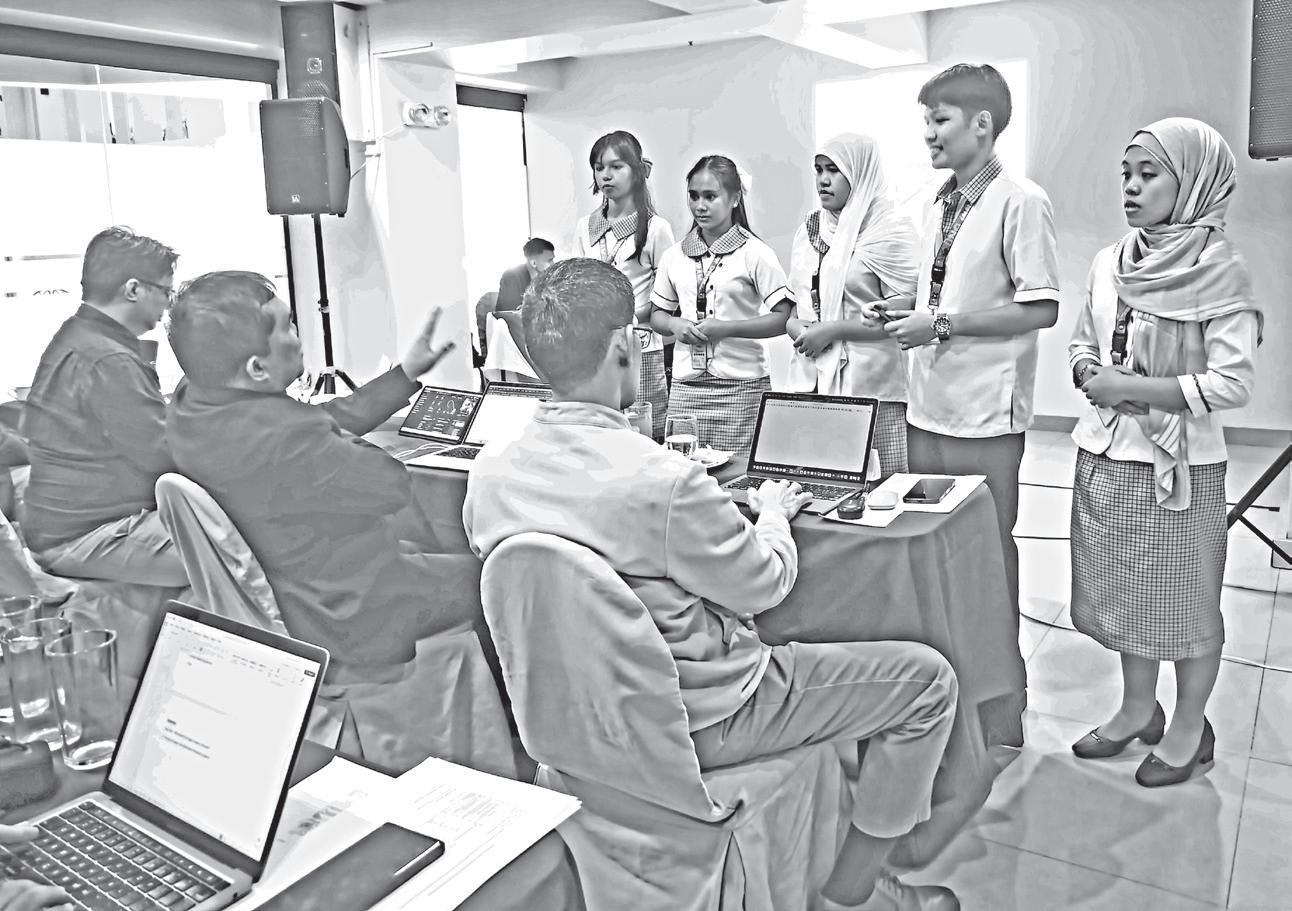
DAVAO CITY—From postearthquake damage detector in school buildings, a plastic waste segregator, to clean urban canals, young innovators from public high schools across Mindanao made it past first round scrutiny of science experts toward possible funding of their prototypes.
The industry agency of the Department of Science and Technology (DOST) said prototype funding could yield as much as P500,000 with 10 projects qualified for the next round after last week’s first round of judging here. Among the prototypes was a gadget to detect and classify postearthquake damage indicators in the structural component of school buildings. It was developed by Team Quakescan of Daniel R. Aguinaldo National High School in Davao City.
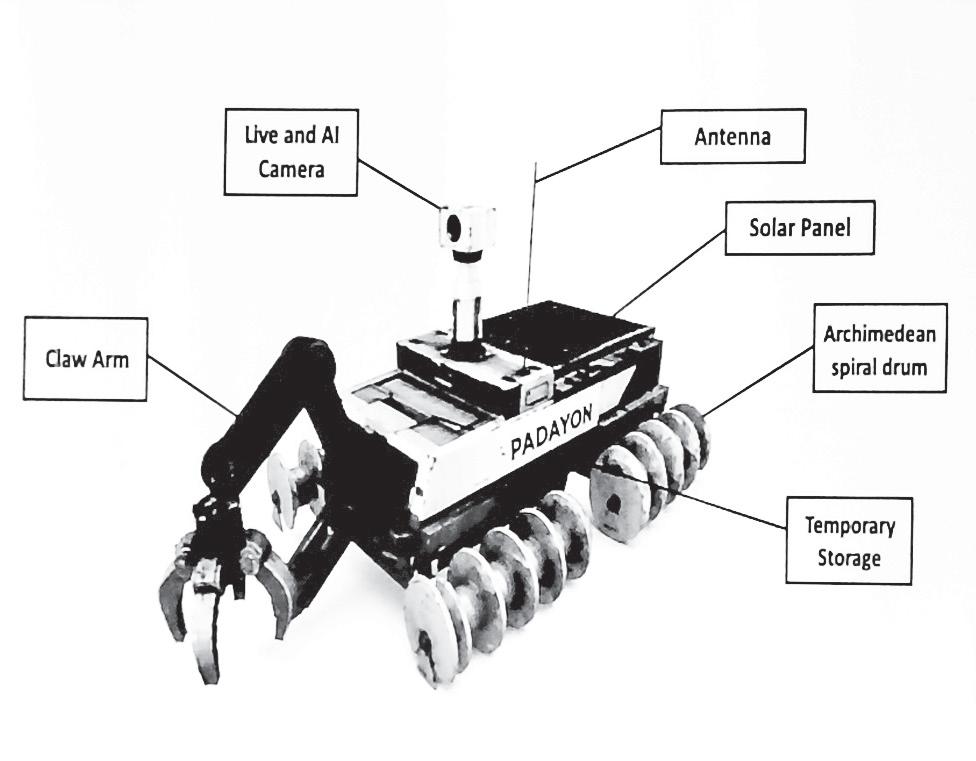
Another project was presented by Team Padayon of Iligan City National High School-Senior High School on the amphibious waste collection gadget with a claw-andcorral collector, which can detect and collect plastic from floating wastes in the canal and shoreline waters.
Iligan City coach Eileen J. Villaruz said the gadget is fitted with artificial intelligence to enable the smart detection and collection.
She told the BusinessMirror the waste segregation unit of the Iligan City Environment and Natural Resources Office (Cenro) was awaiting the final output of the prototype to be likely adapted by the Cenro to clean the canals, estuaries and coastal waters of the city.
The Misamis Occidental provincial office of the Department of Environment and Natural Resources (DENR) also wished the water pollution detector of Team AquaIntel of Jimenez National Comprehensive High School of the municipality of Jimenez to get through scrutiny from the DOST panel of experts.
“The DENR just wanted the prototype to be realized soon because it wanted to use them in the province,” said Team AquaIntel Coach Samuel D. Bugahod.
The prototype is designed to evaluate in real time the total suspended solids in the river systems in Misamis Occidental that can transmit water quality data to agencies like the DENR for timely environmental assessment and management.
Bugahod said a wireless internet connectivity is installed in the gadget to relay the data to a cloud system to be accessed by the concerned government agencies.
The Iligan prototype has asked for a support fund of P499,840 and the Jimenez prototype wanted a P480,000 financial.
Included in the top 10 qualifiers were:
n Team Sigbin of Santiago National High School of Caraga Region, with its AI-assised short messaging advisory to places in the region which might be affected by a projected calamity.
n Team Sagip of Salay National High School of Misamis Oriental has a smart AI-guided gadget that predicts early indicators of flooding through the analysis of hydrological signatures and visual precursors in riverside environments.
n A Smart Closed-Loop HTC System for efficient biomass-toenergy conversion was the entry of Team Bioignite of Esperanza National High School in the municipality of Esperanza, Agusan del Norte.
n A fabricated tethered pipe and confined-space inspection robot as alternate to human inspection in confined space in
small-scale mines and industrial processing facilities in the region is the prototype entry of Team Mineguard of Philippine Science High School-Caraga Region Campus.
n Team Scihigh of Agusan del Sur National Science High School, developed a robotic hand hygiene system engineered to promote proper handwashing.
n Team Santiago, also of Santiago National High School developed an AI-assisted photovoltaic enhancement system using recycled borosilicate glass as light magnifier as passive cooler to improve photovoltaic performance under actual sunlight conditions.
n Team Biochill, also from Daniel R. Aguinaldo National High School, has a gadget fitted with a microclimate regulation storage system and integrated with Internet of Things automated control system to reduce spoilage of Chinese cabbage.
The DOST-Philippine Council for Industry, Energy and Emerrging Technology Research and Development said the 10 passing projects will undergo further evaluation “and once approved by the [PCIEERD] Governing Council, will be granted funding to proceed with refinement and final prototype.”
said Jon Gottschalck, operational branch chief at NOAA’s Climate Prediction Center.
Michael Ferrari, meteorologist and head of research at the investment research firm Moby, said conditions for grains and seed, especially soybeans, look favorable in 18 major growing states, but are more mixed when it comes to dairy and cattle.
The northern Rockies and Southwest—where there’s an “off the charts” snow drought—could get some strong summer rains, Gottschalck said.
The biggest effect in the US is often in the winter, when the south can get wetter and the Pacific Northwest warmer and drier.
But overall, temperatures raised by the weather pattern can dampen American economic growth, said Stanford climate economist Marshall Burke.
Several climate scientists forecast that 2027 will be the hottest year on record because of lagging effects of this El Niño, which is expected to peak in the fall or winter.
“We have pretty clear evidence that the US economy grows more slowly when temps are above normal,” Burke said.
Strong early signs
THE weather extremes caused by
an El Niño also depend on when it develops.
Usually El Niños form in the summer, peak in the late fall or early winter, and peter out the next spring, scientists said.
However, Ehsan’s team forecasts that this El Niño will peak a month or two earlier based on strong early signs from recent weeks.
Princeton University climate scientist Gabriel Vecchi said large El Niños like these also tend to last longer. The early indications—including warmer water pushing toward the surface of the Pacific—have been so strong and noticeable that forecasters have all been predicting the same ultra strong El Niño, Vecchi said, adding that El Niño forecasts often are all over the place at this time of year.
Scientists predict stronger El Niños as the world warms from the burning of coal, oil and gas, Frazier and others said.
But she said it is too early to say if this El Niño is part of that.
Even before it officially formed, this El Niño has gotten nicknames ranging from “super” to “Godzilla.”
“Instead of scared, we can ask people to be prepared,” Columbia’s Ehsan said.
MOSQUITOES such as Aedes aegypti and Aedes albopictus, which are known to transmit diseases like dengue, Zika, and chikungunya, may carry more than just viruses that affect humans.
They also host insect-specific viruses that do not infect people, some of which may even inhibit the multiplication of disease-causing viruses, said the University of the Philippines Diliman College of Science (UPD-CS) Communications. This implies that mosquitoes can serve as valuable tools for detecting both known and emerging viruses that may impact public health.
Irish Coleen Asin, John Michael Egana, and Dr. Ma. Anita Bautista of the UPD-CS National Institute of Molecular Biology and Biotechnology, together with Dr. Richard Paul of Institut Pasteur, Université Paris Cité, collected mosquitoes from three areas in Los Baños, Laguna, that differ in topography and land use.
Using viral metagenomics—a method that identifies all viruses in a sample—they analyzed the virome inside the mosquitoes.
The research revealed that the mosquitoes carried viruses from 12 different taxon groups. Most of them were insectspecific viruses, which infect mosquitoes but not humans.
Both A. aegypti and A. albopictus also shared the majority of the identified viruses.
The molecular biologists collected mosquito samples from three barangays in Los Baños, Laguna: Bagong Silang, Lalakay, and Bayog. Bagong Silang is the upstream (mountain) site, located 305 meters to 331 meters above sea level, with a rolling landscape. Lalakay is the midstream site—characterized by rolling to slightly uneven terrain. Bayog, the lakeshore site, has a flat landscape.
“Based on the land cover maps, Bagong Silang retained its forest cover in the last four decades as of the study date. At the same time, both Lalakay and Bayog underwent conversion from agricultural to built-up areas during that period,” the biologists shared.
The study also showed that more types of viruses were found in areas
altered by human activity—such as urban or cleared land, like Barangays Lalakay and Bayog—compared to the forested area of Bagong Silang.
“[The] mosquitoes are usually disturbance-resilient and are more competent hosts for several viral isolates or strains,” the molecular biologists added. Notably, the team did not detect dengue, Zika, or chikungunya viruses in the samples.
Interestingly, mosquitoes from two barangays were found to harbor the Cell Fusing Agent Virus. CFAV has been thought to inhibit the proliferation of dengue and Zika viruses.
“The potential risk of emerging and possibly unknown arboviral threats calls for strengthened surveillance programs and advanced research on arboviral diseases—those transmitted by insects like mosquitoes,” they said. They emphasized that arbovirus surveillance programs are vital to public health, as they monitor the activity of both endemic and emerging viruses in real time to help manage outbreaks. Such monitoring can be enhanced through next-generation sequencing techniques, including virome sequencing.
The molecular biologists also noted that mosquitoes may serve as important biological targets for zoonotic and arboviral disease surveillance programs.
“Mosquitoes act like biological syringes, feeding on multiple kinds of hosts,” the team pointed out. “Because of this, they can provide valuable insights into viral diversity across space, time, and species.” The study, “Virome sequencing and analysis of Aedes aegypti and Aedes albopictus from ecologically different sites in the Philippines,” was published in Parasites & Vectors. The international journal focuses on all aspects of the biology of parasites, parasitic diseases, intermediate hosts, vectors, and vectorborne pathogens. Their work was supported by the Department of Science and TechnologyPhilippine Council for Health Research and Development, and the UPD Office of the Vice Chancellor for Research and Development.
A6 Sunday, June 14, 2026
Editor: Lyn Resurreccion • www.businessmirror.com.ph
BARCELONA, Spain—Pope Leo XIV celebrated the Sagrada Familia Basilica as a masterpiece of “stones, colors and light,” as he marked the centenary of the death of its architect, Antoni Gaudí, with a Mass on Wednesday to inaugurate its final soaring sandcastle spire.
Leo called Gaudí’s unfinished temple, one of the world’s most visited monuments, a “sign of unity and harmony for all of Spain,” an ongoing building project like the lifelong journey all Christians make to find God.
“We are all the living stones of this edifice,” Leo said from the altar of the basilica, with Spanish King Felipe VI and Queen Letizia sitting to his side and a hundredsstrong choir filling the basilica with song.
The service was the highlight of Leo’s weeklong visit to Spain, the first by a pope in 15 years to the once-staunchly Catholic European country that, like many others, has experienced secularizing trends.
The trip, though, has underscored how the country of 50 million people, which experienced a religious crisis after its 20th century dictatorship ended, still has plenty of faithful Catholics who have turned out in droves to welcome the American pope.
An estimated 120,000 people lined the streets around Sagrada Familia for the event, with streets closed to traffic and a heavy police presence, given the attendance of the royal couple and Prime Minister Pedro Sánchez.
The crowds remained after Mass to watch as Leo inaugurated the basilica’s final Tower of Jesus Christ that has made it the world’s tallest church.
Speaking in Catalan and Spanish, Leo blessed the tower and its illuminated ceramic cross from outside the basilica, surrounded by bishops craning their mitrecapped heads to look up.
An angelic boy’s choir sang as a spectacular light show lit up the basilica’s stained glass windows from the inside and fireworks shot off its facade.
TBy Soo Oh
HE second class with the Zion Christian Mission Center (ZCMC) teacher was a lesson about the Bible. The teacher first asked me to explain the Bible to him. I explained that the Bible was written by God through people, and I described the background and history of its writing, who wrote it and how, the number of books, and the general content. Then, the teacher explained the Bible (the Word of God).
The entire Bible is a book of covenant. The Old Testament is the Old Covenant, and the New Testament is the New Covenant. The Old Testament is the covenant between God and the chosen people, the Israelites.
The covenant consists of the Law of Moses that they must keep and God’s promise of a Messiah; keeping the covenant brings bless -
EARLIER Wednesday, Leo celebrated a more ancient sacred monument, traveling to Montserrat, a mountain complex outside the city that is dear to many Catalans.
The complex, which includes an 11th-century Benedictine abbey and a 16th-century basilica, is revered for its Black Madonna statue and is home to a boy’s choir that has existed since the 13th century and is Europe’s oldest.
Thousands of faithful arrived early at the monastery, with groups of nuns and schoolchildren singing and waving signs and photographs of the pope outside the basilica. Bells rang out over the spire-like rock formations that top Montserrat and the valley below as Leo arrived in a golf cart.
In recent years, the Montserrat abbey has faced numerous accusations from survivors of clergy sexual abuse and was included in the Spanish ombudsman’s 800page report on the crisis in 2023.
The report found 15 victims and three alleged perpetrators linked to the abbey.
“It’s very painful because there are members of the church who committed errors,” said the Rev. Cesario Escarda, a Toledo priest, as he waited for Leo at the abbey.
“What the pope wants to do is shine a light on the truth and ask forgiveness and bring in the victims and listen to them and accompany them,” Escarda added.
The Bible carved in stone
THE highlight of Leo’s visit, though, was his Mass at Sagrada Familia to commemorate the 100th anniversary of the death of its famed Catalan designer, Gaudí, who died at age 73, three days after he was hit by a tram. A century after construction
ings, while not keeping it brings a curse. The sign of the covenant is the blood of an animal without defect (the Lamb).
According to this Old Testament covenant, Jesus the Messiah, who is the reality of the Law of Moses, came to the chosen people of Israel. However, the Israelites did not accept Jesus, who is the fulfillment of the Old Testament. The reason was that although the Israelites had practically memorized the Bible, they were ignorant of its prophecies and fulfillment ( Acts 13:26-27 ). Jesus stated that this was because they had no room for the Word ( John 8:37 ). What does it mean that they lacked the Word when they had memorized the Old Testament by heart? Because they did not have the Word, God was not in them ( John 1:1); and because Satan and falsehood (man’s commandments and traditions)

began during the pontificate of Leo’s namesake, Pope Leo XIII, the basilica has become one of the world’s most visited but unfinished monuments, annually drawing upward of 5 million visitors a year.
Commemorating Gaudí’s death, Leo said he wanted to give thanks to all the supporters, artists and workers who “cooperated in the construction of an architectural masterpiece, which is also an eloquent catechesis made of stones, colors and light.”
Gaudí, who is on the path to possible sainthood, spent four decades designing and building the temple as the summary of the Christian faith carved in stone.
The most important stories of Jesus’ life, the Nativity and Passion, are etched into the basilica’s east and west façades. A third façade facing south, the Glory, will serve as the basilica’s main entrance when finished.
The temple is an architectural and geometrical masterpiece inside and out, an art nouveau cel -
ebration in form and symbol of Christianity and God’s creation through stone and light.
“Much more than a monument, the Basilica of the Sagrada Familia remains a work in progress today, reminding us that the Christian life is always a journey, because it is a project that God is carrying out,” Leo said in his homily.
A total of 18 sandcastle spires rise up from the top and pierce Barcelona’s skyline: 12 to symbolize Christ’s 12 apostles, four for each of the four Evangelists who recorded Christ’s life in the Gospels, one topped with a star over the apse honoring the Virgin Mary and, tallest among them, the Tower of Jesus Christ.
When the final Christ tower was finished at a height of 172.5 meters (564 feet) last year, it made Sagrada Familia the world’s tallest church. Construction is expected to be fully complete within a decade.
“The entire structure of the Sagrada Familia is striking,” said
had taken root within them ( John 8:44 ), they persecuted and hated Jesus and the disciples, who possessed the Word (truth), without reason ( John 15:25 ). Ultimately, faith and salvation are not merely a matter of possessing the Bible, memorizing it, or believing with one’s lips. Rather, it is about receiving the revelation regarding the covenant and its fulfillment—contents within the Bible—and realizing the truth (1 Timothy 2:4 ). The event of Jesus’ first coming has already become history of 2,000 years ago. The purpose of the history of the first coming, which we know and learn through the four Gospels, is to serve as a warning and example for us living in the last days: to realize the prophecies of Jesus in the New Testament, and to hear and believe when those prophecies are fulfilled and proclaimed ( 1 Corin -
thians 10:11).
If so, there are many Christians in the world today, and most of them possess the Bible, but do they know the Word of God? Are they interested in the New Testament—that is, the New Covenant—within the Word of God, the time when this New Covenant is fulfilled, and the fulfillment of this New Covenant?
How many true Christians in this generation know and believe the contents of Jesus’ New Covenant and await the second coming of Jesus? What is frightening is that Jesus said that when he comes again, it will be difficult to find faith ( Luke 18:8 ). The faith that Jesus seeks at his second coming is faith in Jesus’ New Covenant and the reality fulfilled according to the New Covenant ( John 14:29). We call this New Covenant of Jesus and the fulfillment that takes place according to this new
Laura Rincón, who was on hand outside along with two friends for the Mass, after she finished work in a nearby shop.
She said that she was sure the pope would be impressed by the church she marvels at every time she passes by.
“If you look at it just for its architecture, it is amazing,” she said. “Inside, its columns make you feel like you are inside a forest.”
An interior that looks like a forest
THE cross-shaped interior, with the altar at the apse, is an homage to light and nature. Treelike columns soar to the sky, colored by constantly changing light filtered through stained glass windows like the sun poking through leaves in a forest.
“Nature is my teacher,” Gaudí once said. “Everything comes from the great book of nature, always open that we must read.”
The colors of the window glass have meaning: The blues and greens of the eastern portal win -
prophecy the “Good News,” that is, the Gospel. We also refer to this Gospel as “Truth” ( John 8:45, John 17:17 ) or the revelation of Jesus Christ ( Revelation 1:1). On the other hand, when this prophecy fulfills, adding to or subtracting from the words of this prophecy according to one’s own thoughts ( Proverbs 30:6, Revelation 22:18-19 ) is called falsehood; it is also referred to as man’s commandments, false truth or tradition ( Mark 7:6-9 ). Since God is one and the truth is one, why are there tens of thousands of religions, and why have numerous denominations, churches, and different teachings emerged from within the one Jesus Christ?
It is because Satan, the enemy, has been sowing countless weeds (false teachings) at night for over 2,000 years ( Matthew 13:25 ). However, when the harvest
dows, where the façade depicts Christ’s birth, look more joyful and are most brilliant when the sun rises and light passes through. The coarser shades of red and orange, illuminated by the setting sun on the western portals, color the side of the basilica that depicts Christ’s Passion. Behind the altar and above the cross are yellows and gold that glimmer in the noonday sun.
Historian Mònica Santín, who leads tours of the basilica, said that in designing Sagrada Familia, Gaudí was guided by two books: the Gospels and nature.
“The way he lets in the natural light is also an invitation to the Christian mystery,” she said, citing the three facades depicting Christ’s birth, death and glory.
“And when you enter inside, it is all light,” Santín said. “What is that the symbol of? We can’t see God, but we perceive his light all around us. I think that is how you can read this message, and it is fascinating.” Joseph Wilson and Nicole Winfield/Associated Press
time, the last days arrive ( Matthew 13:39), true believers who accept the truth (the word of prophecy and fulfillment), which is the good seed, and have grown in that Word will enter the Kingdom of Heaven, which is God’s barn; and the children of falsehood who practice faith with falsehood, which is the weeds, will be judged. It is Jesus’ will that all believers who trust in God and Jesus come forth in truth, see the fulfilled truth, and believe in Jesus, who makes the covenant and fulfills it, so that they may obtain salva

Editor: Lyn Resurreccion

PEOPLE’S knee-jerk reaction to seeing death in nature is often not positive.
The burn scarleft by wildfire on a once-forested hillside, or aghostly white coral reef, may evoke tragedy and despair. But in nature, most plants and animals are recycled back into new life.
The fallen branches and leaves that crunch under your boots as you step on the forest floor are providing nutrients for new growth as they decompose. Empty shells can become the foundations for new sea life to grow. Dead organic matter left over after a harvest supports soils and the production of food that feeds people worldwide.
These remnants of life can set both the pace and outcome of ecosystem recovery, enabling life to persist and thrive,or preventing it from doing so.
Ecologists,like us, refer to this asecological memory, where remnants of the past influence how ecosystems look and behave in the present.
Similar to human memories, traumatic events can have the strongest influences in nature: Fires, storms, heat waves and outbreaks of pests or disease can cause widespread death of plants and animals, leaving behind abundant and lasting physical remains.
In a new paper published in Science Advances, working with colleagues around the country, we show howdeath plays nuanced and powerful roles in nature’s afterlife.
In some cases, dead organismsprevent life from returningafter an extreme event. In other cases, they make ecosystems more resilient byfueling regeneration of new lifeand hastening recovery.
Understanding this afterlife and its influence on ecosystems will be increasingly valuable for helping ecosystems recover in a changing climate.
AFoundation species—nature’s architects
OUR study focused on a set of ecologically important organisms, known asfoundation species.
These are abundant and iconic organisms— such as trees, grasses, oysters and corals—that create the natural infrastructure on which entire communities of organisms exist.
Foundation species can be found everywhere, from thedepths of the oceans to the summits of mountains. Because they are so abundant while alive, they can remain abundant after they die.
And their influence can carry on in an afterlife that shapes the trajectories of ecosystems, either supporting recovery to the ecosystem’s original structure or transforming it into a new one.
To investigate how the dead remains of foundation species affect the ability of their living counterparts to establish, grow and survive, we tapped into a US National Science Foundationnetwork of Long Term Ecological Research.
Scientists at these sites track populations of foundation species across a diversity of ecosystems that have experienced different extreme events.
We looked atcoral reefs, mangrove forests,salt marshes,kelp forests, oyster reefs, tropical rainforests, temperate rainforests, hemlock forests, tallgrass prairiesandboreal forests, ranging from the tropics to just shy of the Arctic Circle.
We found that, following extreme events, the dead affect the living more commonly than we expected.
The dead foundation species either significantly increased or decreased living foundation species innine out of the 10 ecosystemswe studied—the kelp forest was the only exception.
In roughly half of the cases, dead founda -
tion species hampered the ability of their living counterparts to reestablish, grow and survive after extreme events.
Take thetropical montane rainforest of Puerto Rico. This ecosystem is periodically walloped by hurricanes thatstrip its canopy and blanket the forest floorwith tree branches and leaves.
This layer of debris chokes off sunlight needed by the seedlings below and reduces the number that emerge to replace the trees lost during the storm, ultimately slowing the forest’s recovery.
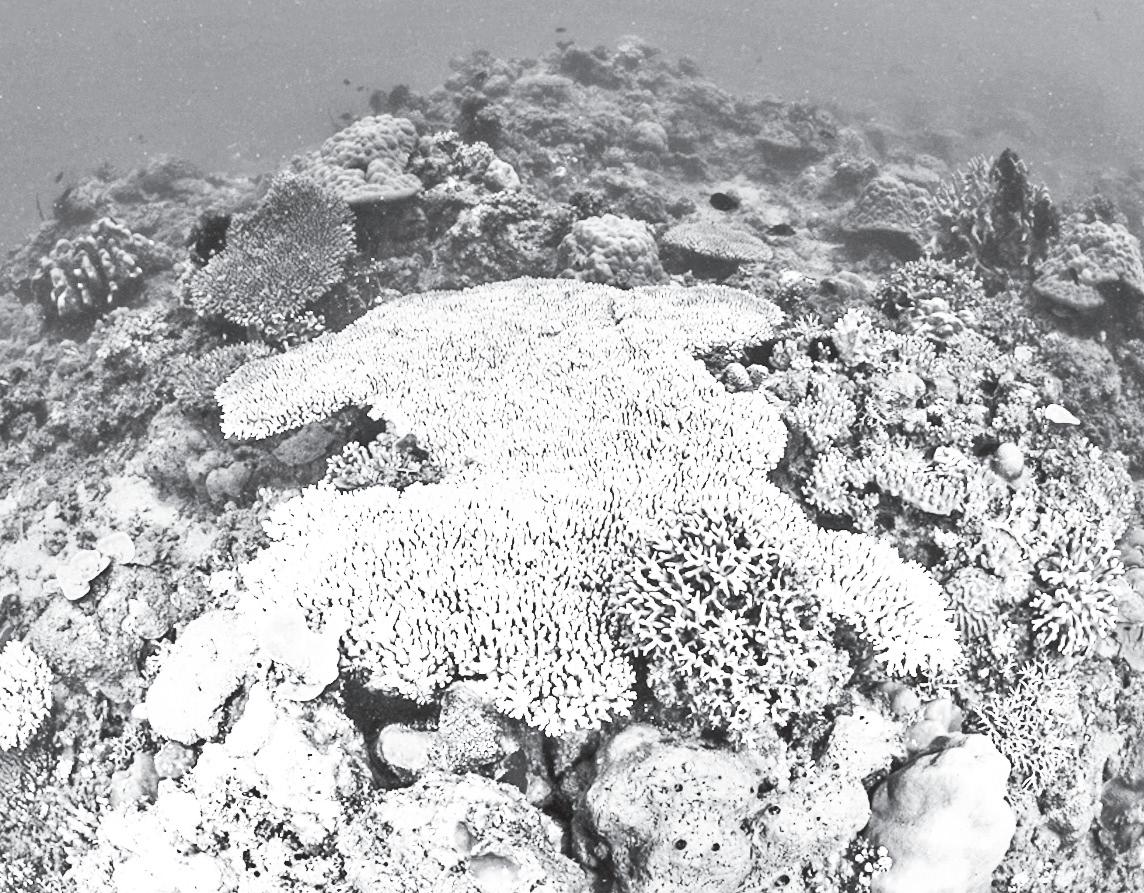
TheSouth Pacific coral reefs of Mooreapresent a more extreme example.
Marine heat waves that cause coral bleaching can transform these reefs into something fundamentally different:ghost towns of dead skeletons overgrown by seaweeds.
The nooks and crannies of the standing coral skeletons provide an opportunity for the seaweeds—which compete with coral for reef space—to proliferate and take over the reef, preventing the return of corals.
But in the other cases we studied, we found that dead organisms actually promote the regeneration of their living counterparts.
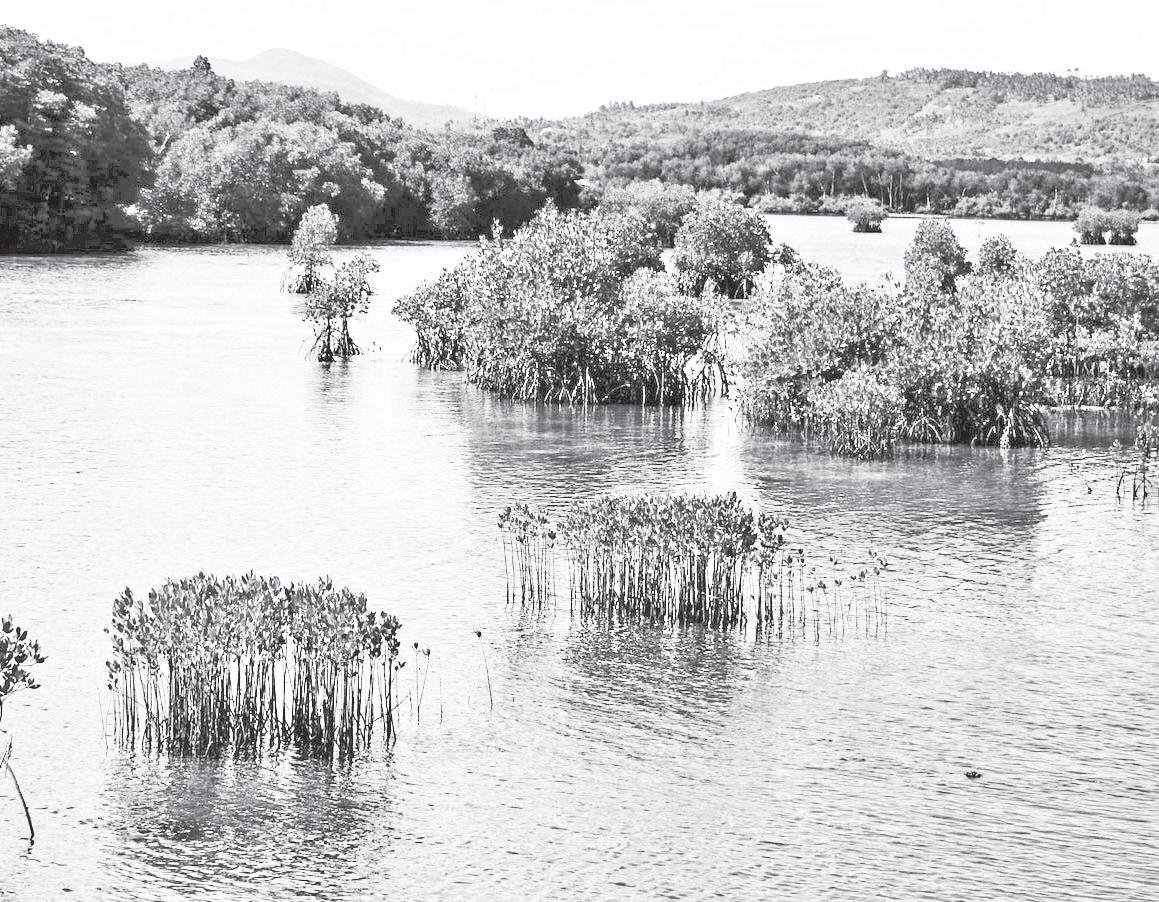
For example, themangrove forests of the Florida Everglades actually benefit from storm-generated debris.
During a hurricane, leaf litter blown or washed out of the canopy ended up in the complex network of roots below, providing a pulse of nutrients that enhanced the production of new roots and hastened mangrove recovery.
In the Eastern hemlock forests of New England, anoutbreak of a tree-killing pest—the woolly adelgid – left behind wide swaths of standing dead trees. But unlike the dead skeletons on a bleached reef, these dead trees often help new hemlock saplings grow by maintaining a favorable climate on the ground below.
The question now is, how can humanity use this information to fortify the resilience of ecosystems after extreme events?
How humans can help
AS humans, many of us rely on therapy to help manage how traumatic memories affect our lives. We can also help ecosystems manage the remnants of dead organisms after disasters in several ways.
On land, standing dead trees are sometimes felled to create “nurse logs,” which release nutrients that nourish living trees. Dead grass litter is removedusing prescribed burningto createbetter conditions for new grass to grow.
On the coasts,dead oyster shells are deposited onto mud flats, and the rubble of coral skeletons is eitherstabilizedorremovedto create more solid substrates where new oysters and corals can settle, grow and thrive.
As rising temperatures create more frequent extreme events and trigger more die-offs, dead foundation species will be useful to help guide ecosystem recoveries afterward.
Where there is life, there is death
WHEN you’re in nature—whether hiking in a forest or snorkeling on a tropical reef— your attention is typically drawn to the life that exists in these places. But if you take a closer look, you may notice that death is all around, too.
Death is an integral part of life. The quicker we all learn to embrace its capacity to be a transformative force, and find ways to use the remnants left in its wake, the better we will be able to help nature and ourselves thrive into the future. Kai Kopecky,University of Colorado Boulder, andJohn Kominoski,Florida International University, The Conversation (CC) via AP

NEW
YORK—A surprising gut feeling may help pigeons find their way home. Animals use various techniques to navigate including following the stars and remembering key landmarks. Birds, fish and turtles orient themselves using Earth’s magnetic field as a compass. But it’s not yet clear how exactly they do this. Pigeons are a well-known group of frequent flyers that can traverse hundreds of kilometers in a single day. For thousands of years, humans have used them to carry news, notes and military messages.
Scientists have long tried to untangle how pigeons travel without getting lost. Some think the birds detect magnetic cues using light-sensitive molecules in their eyes, while others suggest it happens in the beak or inner ear.
“The magnetic sense has been this mystery for almost 100 years,” said Martin Wikelski with the Max Planck Institute of Animal Behavior in Germany.
In a new study, Wikelski and other researchers decided to draw back the curtain on pigeons’ navigational secrets. They searched for magnetic clues in the birds’ organs and found a strong signal in an unexpected place: the liver.
Specialized immune cells in the pigeon’s liver break down red blood cells and store iron. When scientists temporarily stripped pigeons of those immune cells and let them fly, the birds “just couldn’t find their way,” said Christian Kurts with the University of Bonn in Germany. That suggested the iron-rich liver cells might play a role in their sense of direction.
The birds’ magnetic compasses only got scrambled on overcast days. That’s because they also use the sun as a navigational guide.
Scientists have previously wondered whether immune cells could be involved in magnetic sensing, but the new study published Thursday in the journal Science is the first to present a full-fledged theory.
“I would never have guessed it, but once it was explained to me, it makes sense,” said behavioral ecologist Albert Kao with the University of Massachusetts Boston, who had no role in the study.
The immune cells are located near nerve fibers in the liver. That might be how they transmit their “magnetic sense” to the brain “and help the pigeons to navigate,” said study co-author Clivia Lisowski with the University of Bonn.
The researchers think other birds and animals like mice could operate using a similar magnetic Global Positioning System.
But outside experts say more work is needed to verify the pigeons navigate this way and to firm up how these signals get to the brain.
While the researchers found the strongest magnetic signal in the pigeons’ livers, such immune cells have also been spotted in other areas including the beak and spleen.
It’s possible this magnetic puzzle doesn’t have a single answer, wrote veterinary pathologist Simon Spiro and biologist Hal Drakesmith in an accompanying editorial.
The birds could use different techniques to sense magnetic fields depending on the task, be it traveling long distances or finding a specific destination.
“Indeed, it could be prudent to have more than one way of getting home in the dark,” they wrote. Adithi Ramakrishnan, Ap Science Writer
Foundation, Japan’s Archeda partner for tech-driven forest carbon solutions
BOITIZ Foundation and Archeda
Inc., a Japan-based climate technology company specializing in satellite-powered environmental monitoring and carbon project development, have signed a memorandum of understanding to jointly explore and develop high-integrity forest carbon projects in the Philippines under CarbonPH.
The partnership aims to help unlock the country’s natural capital while advancing climate resilience, environmental protection, and sustainable development.
The collaboration brings together Aboitiz Foundation’s commitment to sustainable and inclusive development and Archeda’s expertise in satellite technology, artificial intelligence, monitoring, reporting, and verification systems, and carbon project structuring.
Through the partnership will assess opportunities to develop forest carbon projects under internationally recognized
frameworks, initially prioritizing the JapanPhilippines Joint Crediting Mechanism, which supports climate action aligned with Article 6 of the Paris Agreement.
The Philippines is home to some of the world’s most important forest ecosystems and biodiversity resources, yet remains underrepresented in global carbon markets.
As climate risks intensify and demand grows for credible climate solutions, the partnership seeks to help position the country as a meaningful participant in emerging low-carbon economies through projects grounded in scientific rigor, transparency, and measurable impact.
“The partnership with Archeda reflects a shared commitment to help shape the future of climate action in the Philippines through credible, high-integrity forest carbon development,” said Ginggay Hontiveros-Malvar, president of Aboitiz Foundation.
“Protecting forests is not only about addressing climate change. It is also about

safeguarding watersheds, strengthening water security, supporting local livelihoods, and building resilience for future generations,” she added.
Under the agreement, Aboitiz Foundation and Archeda will collaborate on feasibility studies, satellite-based environmental assessments, carbon project design, stake -
holder engagement, and the development of robust monitoring and verification systems.
The partnership also seeks to explore innovative financing and commercialization pathways that can help mobilize long-term investment toward forest conservation and restoration.
A key component of the collaboration is
the use of satellite technology and advanced data analytics to strengthen project transparency and accountability. By enabling continuous, objective monitoring of forest landscapes, these tools can support stronger environmental stewardship while helping establish the credibility increasingly required in global carbon markets.
“At Archeda, our mission is to unlock the hidden value of the Earth,” said Hiromasa Tsumura, Chief Executive Officer of Archeda.
“We believe satellite technology can play an important role in addressing climate challenges by improving transparency, strengthening trust, and enabling better decision-making. Through this partnership, we hope to demonstrate how technology can help create climate solutions that benefit both people and the planet,” Tsumura added.
The partnership also seeks to contribute to the evolution of compliance-grade carbon
markets by integrating advanced monitoring technologies with practical financing structures. Both organizations see the opportunity to establish a model for high-quality forest carbon development that can serve as a reference not only for the Philippines, but also for other countries pursuing credible climate action pathways.
“We believe the Philippines has the potential to become a leader in high-integrity forest carbon development,” Tsumura added. “By combining innovation, strong governance, and long-term commitment, we hope to create an example that demonstrates how environmental protection and sustainable development can move forward together.” As the Philippines navigates increasingly complex climate challenges, Aboitiz Foundation and Archeda aim to help build a future where forest conservation, community development, and economic opportunity reinforce one another—creating long-term value for both people and the planet.
By Troi Santos & Christopher Joseph
from the moored TAG Heuer yacht. In a few minutes, that walk turned the abstract language of “tire life cycles” and “Net Zero 2030” into something we could literally trace with our own steps. Watch those carts long enough and a pit stop or a stack of tyres stops being “just rubber.” Each movement becomes a line in a logistical script linking the Sunday show to the sport’s climate promises. The tires’ visible life starts well before they ever see a timing sector. Early in the morning, Pirelli’s corner of the harbor is already active. Behind the tent sit the racks—hards, mediums, softs, plus intermediates and wets stacked in neat columns, each barcoded and allocated.
Somewhere in a control system, every single tire has a digital twin and a plan.
Monaco’s lack of space forces everything into tight corridors. Pirelli staff and mechanics load sets onto low two or fourwheel carts—four tires stacked upright or laid flat, sometimes already on rims, sometimes bare. The carts peel off toward the pit lane one by one, sharing narrow paths with camera crews and guests.
From a spot across from the TAG Heuer yacht, there’s a constant trickle of these carts between the depot and the garages. They emerge from Pirelli’s corner, cross the service road opposite the yachts, and vanish into the shadows behind the pit buildings before reappearing in the full glare of the pit lane. It looks mundane, but it feeds every run plan up and down the grid. On Sunday, that choreography matters as much as any sector time.
Mandatory stops at Monaco turn tire life into track position, and every lap
JASMINE SOLIS capturing two singles titles and a doubles crown to lead the honor roll at the Dr. Pablo Olivarez Juniors Age-Group Tennis Championships at the Olivarez Sports Center and Parañaque Tennis Courts over the weekend. The rising star from the City of
a single cart of used tires from the pit lane to a quiet depot across from the harbor shows how much of Formula 1’s race day happens out of sight—and how that hidden Pirelli workflow now links directly to F1’s Net Zero 2030 goals. KIELAN SANTOS
the matching cart would trundle back from the garages with tyres that had just surrendered a place on track.
We started checking the timing screens to see if our hunches were right. Inside the garages, tires are mounted on rims if they aren’t already, slipped into warming blankets and wheeled to the front of the box.
On TV, this appears as “they bolted on the mediums.” In reality, that step depends on a supply chain that started at the harbor tent. When a car dives into the box, attention snaps to the crew: jacks, wheel guns, drivers nailing the marks.
Track the tires instead and each stop becomes a handoff between team and supplier.
The new set arrives on a small trolley. The mechanics mount them—the car fires back into the fast lane and the set that comes off immediately starts its journey in the other direction. Those four tires are stacked and rolled into the darker, less photogenic part of the garage.
After a midrace stop in Monaco, one of those used sets ended up on the cart we were shadowing—sidewalls streaked
with pickup, surfaces still giving off heat. A minute earlier they were part of a strategy call. Now they were material to be processed by the same company that had built them.
For the team, the stop ends when the car rejoins the track. For Pirelli, that’s when the second half of the tire’s life begins: logging, inspection and, eventually, disposal.
That strip of tarmac across from the TAG Heuer yacht might be one of the most revealing places at the circuit. On one side of the fence sits the branded yacht, VIPs on deck, cameras capturing the glamour. Along the same fence line, a white “Monaco Circuit—Boat Shuttle” sign with a bold red arrow points guests toward the launches.
Above the fencing, a tall black structure with a thin red border carries the F1 logo alongside Pirelli’s, “Global Tyre Partner of Formula 1” printed underneath so anyone walking the harbor path knows who occupies this patch of ground.
Following the cart,

Sta. Rosa City in Laguna routinely upset top-seeded rivals to share the tournament’s MVP honors with San Pedro City’s Tyrone Caro, who dominated the boys’ division. Solis fought back from a set down to stun No. 1 seed Amanda Barrido, 4-6, 6-3, 6-1, in the semifinals of the girls’ 14-and-
I FIRST need to explain why my list starts in 1993. That was the year I started playing golf. Apart from the 1992 Masters where Fred Couples won, I was never interested in watching any golf on TV, let alone wake up at an ungodly hour just to watch live. But somehow, I got to see Couples win his green jacket in 1992, probably curious why my dad was glued to the TV when it was still dark outside.
My golf journey started officially in the summer of 1993, at Wack Wack’s summer clinic for juniors. I was 14 then and was into tennis, joining age group and club tournaments but with little success.
On the insistence of a fellow 14-year-old family “friend” from Assumption, I reluctantly joined. It helped that my lolo was a member too, and my dad played his junior golf (Junior RPGA) days at Wack Wack so he knew all the coaches and staff. Coming from a golfing family, no one ever forced golf on me. My lolo Mauro played into his 70s and enjoyed his lunchtime scotch after a round. My dad played competitively since he was 11. When he unexpectedly passed away at 67, he was still playing off a 7-handicap. So golf was always there but I wasn’t even encouraged to pick it up. Fortunately,
under division and foiled Carolina Fandino, 6-4, 3-6, 6-1, to secure the crown. Solis duplicated her success in the 16-and-under category where she dismantled top seed Ava Banson, 6-3, 6-2, and completed a golden treble by teaming up with Christella Lamera to rout Barrido and Scarlett Kramer, 8-3,

for the girls’ 18-and-under doubles title. The victories boosted Solis’s chase for more ranking points in the upcoming legs of the Palawan Pawnshop junior tennis circuit presented by Dunlop and sanctioned by the Philippine Tennis Association and the Universal Tennis Ranking. Caro dominated the boys’ 14-andunder after overpowering Yuan Torrente, 6-1, 6-2, in the final to of the Group 2 tournament.

1995—Pavin edges Norman at Shinnecock Hills Corey Pavin was never known for length but that never stopped him from staring down The Shark and beating him down the stretch. The final round was memorable for Pavin’s fairway wood approach to the 72nd hole to about 5 feet. He
n 1999—Payne Stewart’s iconic
at
The late Payne Stewart made a clutch par putt on the 72nd hole at Pinehurst No. 2 to beat Phil Mickelson. That winning putt, now a famous statue, forever memorializes that day. Sadly, Payne Stewart died from a plane crash that very same year.
n 2000—Tiger Woods dominates at Pebble Beach
To this day, golfers still talk about how Tiger lapped the field at the 2000 US Open. It actually started the Tiger Slam, a calendar year when from that US Open, Tiger went on to win the next three majors. At Pebble Beach, Tiger won by 15 strokes, a margin unheard off previously, or since.
n 2006—Mickelson’s Meltdown at Winged Foot Phil Mickelson stepped on the tee of Winged Foot’s 18th with a one-stroke lead over Geoff Ogilvy. A few loose swings and wrong choices later, he makes double bogey and hands the win to Ogilvy. One of golf’s greats, Mickelson has won the Masters, The Open Championship, and is the oldest to win The PGA. It’s the US Open he lacks for a career slam, and he almost had one in 2006. n 2008—Tiger wins
are complete, stacks are wrapped and loaded into containers.

As FIFA entices a new generation of fans, a Brazil influencer’s platform will stream all 104 games
JUNE 14, 2026 | soundstrip.businessmirror@gmail.com
Story by Justine Xyrah Garcia
The internet made HRVY famous.
Now he's learning how to live with it.
For much of his career, British singersongwriter Harvey Leigh Cantwell—better known to fans around the world as HRVY—has existed in a world where visibility is currency. He signed his first record deal at 14, built a following through social media, and spent his teenage years growing up in front of an audience.
Today, at 27, HRVY finds himself in a different place—not just musically, but personally.
The years in between have brought more than charting singles and international tours. They have also brought experiences that changed the way he writes songs.
"When I write music, it comes from a place of being older and having more experience. A lot happens in your early 20s," he told BusinessMirror’s SoundStrip.

Publisher :
T. Anthony C. Cabangon
Editor-In-Chief :
Lourdes M. Fernandez
Aldwin M. Tolosa
Concept :
Y2Z Editor :
SoundStrip Editor : Group Creative Director : Graphic Designers :
Jt Nisay
Edwin P. Sallan
Eduardo A. Davad
Chow Jarlego
Niggel Figueroa
Contributing Writers :
Tony M. Maghirang
Rick Olivares
Jingo Zapata
Reine Juvierre S. Alberto
John Eiron R. Francisco
Patrick Villanueva
Ana Zoe V. Davad
Justine Xyrah Garcia
Ginger Franz S. Ocampo
Trixzy Leigh Bonotan
Bless Aubrey Ogerio
Photographers :
Bernard P. Testa
Nonie Reyes
Y2Z & SOUNDSTRIP are published and distributed free every Sunday by the Philippine Business Daily Mirror Publishing Inc. as a project of the
The Philippine Business Mirror Publishing, Inc., with offices on the 3rd Floor of Dominga Building III 2113 Chino Roces Avenue corner
Dela Rosa Street, Makati City, Philippines. Tel. Nos. (Editorial) 817-9467; 813-0725. Fax line: 813-7025
Advertising Sales: 893-2019; 817-1351,817-2807.
Circulation: 893-1662; 814-0134 to 36. www.businessmirror.com.ph
That shift is evident in his latest single, Lie To Me, which departs from the lighter, more carefree material that characterized much of his early work. Back then, he was writing from the perspective of a teenager still figuring things out. Now, he is drawing from personal experiences and real relationships.
The song's origins are surprisingly simple. While in Sweden, HRVY was listening to a friend talk about a complicated personal situation. After giving his honest assessment, the friend jokingly replied: "I wanted you to lie to me."
HRVY immediately recognized the potential.
"I said to him, 'That's such a good title for a song,' and then I applied it to my own story, my own kind of situation, and then Lie To Me was born."
The result is a song rooted in honesty, which is perhaps fitting for an artist increasingly focused on authenticity in an industry that often rewards the opposite.
The cost
For artists who came of age during the social media era, authenticity can be difficult to maintain, and HRVY knows that reality firsthand.
A significant part of his rise happened online, where platforms helped him connect with fans around the world long before traditional music industry gatekeepers took notice. But while social media helped launch his career, it also created expectations that can be difficult to escape.
Asked whether he feels pressure to shape his music around trends, his answer is immediate.
"I think if any artist said no, they'd be lying."
The challenge, he explained, is that modern platforms move at a relentless pace.
"Anything on social media is so fast-paced. With TikTok nowadays and Instagram or whatever, short-form content is just so quick. You have to try and keep up with sounds and trends,” he said.
Even as he enters a new chapter creatively, he admits that balancing music and online visibility remains complicated.
"In this new kind of era of mine, I've really been trying to focus on the music and maybe not so much thinking about the social media aspect," he said.
"But the thing is, if you don't have the social media with the music, then you don't have a platform or you don't have a way of getting your music out there."
It's a dilemma many artists face today: creating art while simultaneously feeding an algorithm.
"I love social media because it got me to where I am," he said. "I get to speak to fans and

I get to access people from around the world that you never would have been able to a long time ago. But also at the same time, that also makes it really hard."
Finding beauty in imperfection
If there is one lesson HRVY has taken from more than a decade in the spotlight, it is learning to stop worrying so much about what other people think.
"To not care as much," he said when asked about the biggest lessons he has learned.
"I think everyone is so busy trying to be cool all the time and I'm so guilty of that."
Looking back, he remembers putting pressure on himself to appear a certain way, whether through his music, photos or public image.
"Now as I've gotten older, I've realized you just need to not care as much because there's so much going on in the world,” he said.
The realization has allowed him to become more comfortable taking risks and making mistakes.
"When I was younger, I kind of put barriers up because I was nervous or I was scared and I didn't want to do things to get judged by other people. Now I'm like, who cares? Life's too short."
It is also the advice he would give younger musicians trying to find their place in an increasingly competitive industry.
He recalled spending hours recording countless takes of songs and videos, convinced nothing was ever good enough.
With time, he learned something that now informs both his music and outlook on life.
"Sometimes there's beauty in the imperfections so don’t be so hard on yourself,” he said.



Story by Zoe Davad
Though the word “jazzy” often brings to mind unrestraint, animation, or a certain loud flashiness, Thai artist VARITDA’s latest creative era stages an artsy, quiet contradiction to that connotation. Over the years, the singer has built a career navigating the fuzzy lines that define genres, gracefully transitioning from her childhood in classical music to a lush blend of classic jazz.
Her single “Slow Burner,” released under Melodic Corner, acts as a thesis statement for this evolutionary phase. Rather than leaning into the frantic animation or showy dynamics historically associated with the genre’s adjective, the track spurns modern urgency in favor of suspension, letting love and identity unfold at their own natural pace.
The album Champagne Cherry relies on a distinct metaphor: a cherry resting at the bottom of a glass of champagne. Over time, the fruit absorbs the flavor and tone of its environment. For VARITDA, this imagery represents a profound emotional transformation and a willingness to step into vulnerability.
“I enjoy experiencing moments while they happen instead of rushing too quickly to the next destination,” she notes, explaining how this mindset became the structural engine behind her new music. By allowing environments, memories, and people to shape her over time, she directly translates her personal lifestyle into the evolution of her work.
To bring this nuanced world to life, VARITDA traveled to London to record at the historic Abbey Road Studios—the iconic space where the eponymous album was produced by rock icons The Beatles. Working within a monument steeped in monumental music history pushed her outside of her traditional creative comfort zone. However, instead of inducing performance anxiety, the weight of the studio inspired an unexpected liberation. As VARITDA recalls, “It made me trust emotions and instinct more instead of overthinking everything.”
This organic process was deeply influenced by her collaboration with an international creative team, including British producer Nick Tsang, whose pop sensibilities have driven multi-platinum tracks for artists like Ed Sheeran and Charli XCX. Tsang, alongside mixing engineer Charlie Holmes and mastering engineer Simon Francis, introduced a sophisticated pop-R&B canvas that challenged the artist’s familiar frameworks.
VARITDA observed a distinct divergence in how her team approached composition, noting

that “the way they approached chords, melodies, song structure, and certain musical motifs felt very different” compared to producers she’d previously worked with in Asia. By deliberately leaving the instrumental layering relaxed and unhurried, the production team created a late-night acoustic tension that allowed the vocals to remain soft and close to the microphone, making the listener feel as though they are privy to an intimate confession.
Transitioning from traditional jazz standard covers—as seen in her previous Mood 1, Mood 2, and Mood 3 projects—into contemporary global pop required a delicate technical balance. While “Slow Burner” incorporates the laid-back grooves of modern R&B, VARITDA ensures that jazz remains the permanent core of her artistry. Her evolution is not an abandonment of her roots, but a hybridization.
The champagne of Champagne Cherry, in this context, represents the safe environment or the right company that coaxes the vulnerability out of the artist. As she describes it, under the right conditions, “you become softer, more honest, and more vulnerable over time. You start sharing emotions or stories that you normally keep hidden.”
The thematic commitment to patience and hidden emotions extends seamlessly into the visual layout of the era. Heavily involved in the mood-boarding and conceptual design of her visuals, VARITDA worked closely with her video team to translate the auditory warmth of “Slow Burner” into specific cinematic motifs. Rejecting the glossy perfection of standard pop clips, she opted for an artistic, cool, and fashion-film-inspired aesthetic that prioritizes

mood over linear storytelling.
When brainstorming the video’s direction, VARITDA found that the very concept of slowness dictated the technical framework of the shoot. “The word ‘slow’ immediately made me think of slow motion, blur, softness, and movements that feel dreamy and emotional,” she explains. To capture this physical sensation, the cinematography relies heavily on low shutter speeds, motion blur, silhouettes, and soft focus. Most of the shots are intentionally unsharp and obscured. This visual reticence is a deliberate choice to keep the emotional arc cloaked rather than completely exposed from the outset.
The synergy between VARITDA’s internal philosophy and her external output is seamless. The lyrical material of “Slow Burner” directly echoes the technical and aesthetic choices outlined by the artist. Lines such as “Testing your patience / bring the tempo down” and “Let’s live all it in slow motion” serve as both literal instructions for the track’s R&B groove and figurative manifestos for her lifestyle.
Ultimately, VARITDA’s goals for this era remain as grounded and unpretentious as her recording process. She avoids grand commercial expectations, hoping instead that CHAMPAGNE CHERRY functions as an immersive sonic environment that listeners can inhabit in their own way.


“I hope the music feels like a soundtrack to certain moments in life, whether people are reflecting on themselves, their memories, their emotions, or just life in general.”
As FIFA entices a new generation of fans, a Brazil influencer’s platform will stream all 104 games
about the exclusivity of traditional over-the-air networks: The World Cup will be watched differently this time.
Fans around the world will get to see parts of matches live on YouTube and TikTok for the first time. In Brazil, home of soccer-mad fans and the five-time world champions, the only way to watch all 104 games of the World Cup will be through a streaming platform anchored by an influencer.
As FIFA pushes to engage a new generation of fans, younger audiences will have more options to access soccer’s showcase event thanks to what soccer’s governing body describes as a record number of deals with broadcast partners that carry digitalonly platforms. Creators’ perspectives will be brought to the forefront and user experiences worldwide will be enhanced thanks to what FIFA is calling “game-changing” partnerships.
The goal is to grab viewers’ attention, effectively giving them an appetizer that will encourage them to go back and watch the games on traditional channels.
Co-hosted by the United States, Mexico and Canada, this year’s World Cup—the biggest ever, with 48 teams—kicked off on Friday and will run through July 19.
Brazil’s CazéTV has the rights to all games
BRAZIL historically has been one of the countries with the most engagement on social media and digital platforms.
FIFA took notice, and four years ago did a type of a test run with popular streamer Casimiro Miguel, now 32, who had shown success engaging with younger sports fans on his Twitch channel. For the 2022 Qatar World Cup, FIFA reached a deal with him—and his partner LiveMode—to broadcast 22 matches on the CazéTV YouTube channel.
With a more informal and conversational approach to the broadcast, along with increased fan engagement and the participation of content creators as commentators, the trial was considered a resounding success. It led to an expanded deal for the tournament this year, with CazéTV becoming the only channel—digital or traditional— with rights to all 104 games in Brazil. The network Globo, the home of soccer in Brazil for decades, will show 55 games.
“FIFA is always looking at innovative ways about how to enhance the broadcast coverage of our flagship competitions and the deal with CazéTV is an example of such,

which will ensure football fans in Brazil will be able to watch all 104 games, while also helping to reach new audiences and demographics,” the governing body told The Associated Press in a statement.
LIVEMODE , the Brazilian company that has CazéTV under its umbrella and broadcasts matches with content creators, announced last month that it had launched an international broadcast arm of the company and that Cristiano Ronaldo was one of its shareholders.
LiveMode’s channel in Portugal will broadcast one game per day during the World Cup, including all of Portugal’s matches and the final. The 41-year-old Ronaldo, one of soccer’s all-time greats, is making his sixth World Cup appearance with the national team.
“There is an audience that connects with digital first, and digital allows us to bring this new audience to follow major sporting events,” LiveMode co-founder Sergio Lopes told the AP. “Generally, this audience is younger and doesn’t just want to watch a match. They want to participate in the conversation, interact in real time, and feel like they are part of a community.”
YouTube and TikTok deals
FIFA earlier this year picked TikTok as the first “preferred platform” for video content on social media at the World Cup, giving creators access to content. World Cup broadcast rights holders can livestream parts of the 104 games at a dedicated hub
on the TikTok app. Then in March, FIFA reached a deal with YouTube to also allow rights-holding broadcasters to stream game action live on the video platform. Rights holders will be allowed to broadcast the first 10 minutes of games.
“YouTube is where global sports fans tune in before, during, and after the game. That is what makes our preferred partnership with FIFA for World Cup 2026 so unique,” said Angela Courtin, YouTube’s vice president of entertainment and sports
Qatar, with 2.7 billion coming through digital and streaming services, and 2.9 from linear television. Nearly 1.5 billion people watched the final won by Argentina, with 237 million of them being digital-only viewers, according to FIFA.
In the US, Fox holds the rights for the 2026 World Cup, and there were no exclusive deals by FIFA with digital platforms, though the network will have every match streaming live and on-demand within its apps. Streaming giant Netflix has secured
‘We are ushering in the next generation of soccer fans for years to come.’ –Angela Courtin, YouTube’s vice president of entertainment and sports marketing
marketing. “Between the incredible reach of our creator cohort and providing FIFA’s media partners with a pathway to upload more premium content to their YouTube channels, plus our live YouTube FIFA Creator Cup in New York City this July, we are ushering in the next generation of soccer fans for years to come.”
WITH the new deals, FIFA expects the 2026 World Cup to break all records related to digital and streaming audiences.
In 2022, FIFA reported 5 billion total engagements during the tournament in

the US broadcasting rights to the Women’s World Cup in 2027 and 2031, in the most significant deal FIFA has signed with a streaming service for a major tournament.
“We are seeing that sport needs to occupy all screens, engage with all audiences to grow,” LiveModeTV co-founder Lopes said. “New audiences expect authenticity, interaction and different ways to follow an event. The World Cup continues to be the greatest sporting spectacle on the planet, but the way to experience it is also becoming more social, more participatory, more accessible, and more connected to the digital habits of each generation.”