

Q1 EXTERNAL DEBT UP ON NEW BORROWINGS
By Andrea E. San Juan
NEW borrowings by the National Government and private sector led to a slight uptick in the country’s external debt in the first quarter of the year, according to the Bangko Sentral ng Pilipinas (BSP).
Based on the data, the country’s outstanding external debt increased by 0.42 percent to $147.35 billion as of the end of March 2026 compared to the end-March 2025 level of $146.74 billion.
External debt refers to borrowings owed by residents to nonresidents.
The Central Bank said the growth was driven mainly by new borrowings by the National Government and private sector, reflecting ongoing financing for development priorities and continued support for trade and business activity.

Meanwhile, compared to the previous quarter, the country’s external debt eased by 0.2 percent from the $147.65 billion as of endDecember 2025.
BSP said the slight quarteron-quarter decline in external debt was driven by lower non-resident holdings of Philippine debt securities, reflecting more cautious investor sentiment and tighter financing conditions for emerging markets during the quarter.
The Central Bank said key debt indicators remained “sound.”
For one, it noted that external debt as a share of gross domestic

product (GDP) improved slightly to 30 percent from 30.3 percent in the previous quarter, despite slower economic growth.
Moreover, the BSP said liquidity conditions also strengthened. “Short-term external debt based on the remaining maturity concept (STRM) declined to $25.50 billion, while gross international reserves remained ample at $106.64 billion,” the Central Bank noted.
This, the BSP said, is equiva lent to 4.18 times STRM, indicat ing a “strong capacity” to meet near-term external commitments and robust reserve adequacy position relative to emerging economy peers. STRM debt is composed of loans with original maturities of one year or less plus amortizations on medium- and long-term accounts falling due within the next 12 months.



CBy Carmel Pedroza
EBU CITY—As the global superyacht industry expands and luxury yacht owners increasingly seek highly trained crew, a growing number of Filipinos are finding opportunities in one of the world’s most exclusive maritime sectors.
Capt. Jead Advincula, founder and the president and CEO of Superyacht Academy in Asia and the Pacific Corp. (SAAP Corp.), revealed that the superyacht sector continues to experience sustained growth as more luxury yachts are commissioned and charter operations expand worldwide.
“A superyacht career is a career working onboard luxury yachts that operate in different parts of

pathway. We are already known worldwide for our hospitality, hard work, and professionalism, and those qualities are very important in the superyacht industry,” he told the BusinessMirror
According to Global Market Insights, it is estimated that the global yacht market is valued in the tens of billions of dollars and is projected to continue growing over the coming years, creating increased demand for qualified crew. (https://www.gminsights.com/ industry-analysis/yacht-market)
Based on a separate industry salary guide, entry-level deckhands and stewards can earn competitive tax-efficient salaries while benefiting from accommodation and meals provided onboard,





FOR the sixth time, the Rotary Club of Manila Journalism Awards has recognized the work of BusinessMirror bestowing on it the National Newspaper of the Year honors as it held its Pro Patria Awards coinciding with its Independence Day celebration. In simple but meaningful rites at Fairmont Hotel in Makati, the RCM Pro Patria Awards also bestowed honors on outstanding individuals and media outlets in broadcasting and digital: Bombo Radyo for Radio Station of the Year; GMA News as TV Station of the Year; Jarius Bondoc as Opinion Writer of the Year; Angelo Palmones as Radio Personality of the Year; Alfonso Tomas “Atom” Araullo as TV Journalist of the Year; and Christian Esguerra of “Facts First” as Online Individual Journalist of the Year.
RCM officers, led by club president Raoul Creencia and Pro Patria Awards chairman Amado Valdez, stressed the continuing relevance of efforts to hold up for appreciation the best examples of journalism in the country, at a time, they said, when digital “experts” untrained in the discipline and gatekeeping practices of journalism are quicker to seize the narrative by purveying “fake news” on raging public issues and developments.
By Reine Juvierre S. Alberto
HIGHLY financially resilient Filipino households fell to 19 percent this year from 33 percent a year ago, as inflation continued to strain budgets and erode financial buffers, according to a study by Sun Life Philippines.
In its Financial Resilience Index 2026, the insurance giant found that fewer Filipinos feel secure about their financial situation. Only 7 percent described themselves as very financially secure, down sharply from 20 percent in 2025. Likewise, the share of households that felt strongly positioned to withstand financial disruptions dropped to 36 percent from 66 percent. Among the approximately 6,000 respondents, 95 percent pointed to inflation as the main culprit, making it harder for them to cover

NEWSPAPER OF THE YEAR BusinessMirror EVP-General Manager Loida S. Virtudazo, Publisher T. Anthony C. Cabangon, and Editor in Chief Lourdes M. Fernandez proudly display the National Newspaper of the Year trophy awarded by the Rotary Club of Manila during its Pro Patria Journalism Awards in Makati. The honor marks the sixth Rotary Club journalism award received by the paper. ROY DOMINGO
Superyacht…
making the sector attractive to young professionals and experienced seafarers alike. (https://www. ypicrew.com/yacht-crew-salary-guide)
Advincula noted that employers are looking beyond technical competence.
“Yacht owners and captains are not only looking for people who can work onboard. They are looking for crew who are trained, professional, service-oriented, and ready to work in an international environment. This is a big opportunity for Filipinos because our attitude, service culture, and adaptability are already respected globally,” he said.
Cebu’s strategic advantages
ADVINCULA believes Cebu offers unique advantages as a training destination for future yacht professionals.
“Cebu is a very good place for yacht training. We have tourism, hospitality, skilled people, access to the sea, and an international airport. Cebu is also already connected to the superyacht industry because one of the leading superyacht crew recruitment agencies in the Philippines is also based here,” he said.
“For me, Cebu has the right environment to train future yacht professionals. It has the people, the location, and the growing industry connection,” he added.
The province’s coastal environment also provides ideal conditions for practical instruction.
“Cebu gives students a practical training environment. Around the island, we have protected coastal waters that are good for powerboat, jet ski, tender handling, docking, navigation, and
seamanship training. Students are not only learning in the classroom. They can also experience practical training in real coastal conditions, but still in a safer and controlled environment,” he explained.
“Cebu is also a strong hospitality and tourism destination, so students can easily understand the service culture needed in the yacht industry,” Advincula said.
Building a global workforce OVER the past nine years, SAAP Corp. has recorded more than 2,000 successful training completions across its Superyacht Deck Crew, Superyacht Hospitality, VHF-DSC, Jet Ski, Powerboat, and other yacht-related programs.
The academy currently trains approximately 15 to 20 deck crew students each month, along with at least 10 hospitality trainees monthly. Around 30 percent of participants are foreign nationals who travel to Cebu specifically for internationally recognized yacht training.
SAAP graduates now work aboard luxury yachts in destinations spanning the Mediterranean, Caribbean, Middle East, and other major yachting regions worldwide.
Founded in Cebu City in 2017 by Advincula, SAAP Corp. has become a key training hub for Filipinos seeking entry into the global yachting industry.
Beyond traditional maritime training UNLIKE conventional maritime training, superyacht education focuses heavily on luxury service standards and guest-facing responsibilities.
“Superyacht training is more specific to yachts. It is not only about safety and vessel operation. It also includes guest service, yacht detailing, tender handling, jet ski operation, watersports support, and proper presentation onboard,"
Advincula said.
“On yachts, crew are expected to be professional, discreet, clean, well-presented, and attentive to details. The standard is very high because you are dealing directly with owners, guests and charter clients.”
He emphasized that personal qualities remain among the most important requirements for aspiring crew.
Meeting international standards AS yachts routinely travel across international waters, crew members are expected to meet globally recognized standards.
“Yachts travel internationally, so crew must also meet international expectations. International certifications help show that a crew member has received training based on recognized standards,” Advincula said.
He noted that SAAP’s programs complement, rather than replace, mandatory maritime requirements.
Advincula sees increasing professionalism shaping the industry’s future.
Reflecting on the academy’s nine-year journey, Advincula highlighted its mission of helping Filipinos access global opportunities.
“Nine years ago, we had a dream to give Filipinos a direct pathway to global superyacht careers. Our goal at SAAP is simple: to help more Filipinos enter the global superyacht industry with the right training, proper attitude, and confidence,” Advincula said.
“Filipinos are already known around the world for hospitality, hard work, and dedication. What we want to do is support that natural advantage with yacht-specific training and international standards. I believe Cebu and the Philippines can become a strong source of professional yacht crew for the world,” he concluded.

Viral video reveals tree-cutting for Salex project has resumed
By Jonathan L. Mayuga
NETIZENS have condemned anew the Department of Environment and Natural Resources (DENR) and San Miguel Corporation (SMC), the proponent of a controversial Southern Access Link Expressway (SALEX) along Quirino Avenue, Manila, after a viral video showed treecutting activities have resumed on Thursday.
“What’s happening Department of Environment and Natural Resources (DENR) & San Miguel Corporation? Ang sabi “naka-VOLUNTARY STOP”? Pero bakit tuloy ang pagpuputol ng mga puno sa Roxas Boulevard... at sa gabi pa??? Bakit?,” the video post on FB Reel by Tahy Mesario asked.
“Kung ito ay earthballing para sa relocation, ang tanong...ganito ba talaga ang tamang proseso? Mabubuhay pa ba ang mga punong ito? NO! Hinihiling lang namin ang transparency at pagsunod sa tamang environmental standards. Pinagloloko niyo nalang kame!!!
The video, posted on Friday, has been viewed by 3.3 million and shared on Facebook by 21,000 users. 55,000 users reacted to the video.
The people conducting the tree-cutting activity were seen trying to unroot a tree. When asked, one of the men claimed they are a third party contracted by the proponent and directed the netizen taking the video to talk to San Miguel and DENR people.
A woman wearing a facemask said the men were earth-balling the tree, to transfer it to another location, but the netizen protested. “Bakit gabi kayo nagpuputol? It’s not earth-balling.”
Reporters covering the DENR beat have already sought comment from DENR Secretary Juan Miguel Cuna about the resumption of the treecutting activity.
To recall, Cuna announced that the DENR agreed with the decision of SMC to stop the tree-cutting activity on May 27, supposedly “for further study”.
A total of 225 trees of the more than 600 trees identified for treecutting or translocation were already cut down or transferred before the SMC, due to mounting public pressure and criticism, decided to suspend the tree-cutting activity.
DENR statement
THE DENR, in its official statement released Friday afternoon, said it is investigating the contractors involved in the “earthballing” activities.
However, it said the focus is on whether the methods violated established environmental protocols and the conditions of their permits.
“DENR Enforcement personnel have been deployed to conduct immediate site inspection and verify the circumstances surrounding the incident,” it said.
According to the DENR, if the earthballing is found to be unauthorized or improperly executed, the DENR will initiate legal, administrative, and permit-related actions against irresponsible parties, including contractors and permit holders,” the DENR added.
The DENR said urban trees are protected resources, and all project proponents are required to strictly follow environmental rules, secure proper clearances, and coordinate with the Department before any activity involving trees is undertaken.
NEWSPAPER OF THE YEAR…
Continued from A1
BusinessMirror publisher T. Anthony C. Cabangon received from Creencia and Valdez the trophy and plaque for Newspaper of the Year. He is the son of the paper’s late founder, businessman-philanthropist and former Philippine ambassador to Laos Antonio L. Cabangon Chua.
The citation in the RCM plaque hailed BusinessMirror “for its unwavering commitment to truthful, development-oriented and social relevant journalism, in comprehensive coverage of business, infrastructure, agriculture, energy, public policy and national development,” and efforts to foster an “informed and empowered . . . public and private sectors with clarity, integrity and purpose.” The paper, said the citation, “has distinguished itself as a real partner in nation building and a trusted voice in advancing economic understanding, civic awareness and responsible journalism” in the country.
For 20 years, BusinessMirror has remained committed to its mission of providing readers with “A Broader Look at Today’s Business.” Since publishing its first issue on October 3, 2005, the newspaper has grown from a fledgling business daily into one of the Philippines’ most respected and awardwinning news organizations, earning recognition for journalistic excellence, public service, economic reporting, innovation, and nation-building.
Through the years, BusinessMirror has received multiple honors from the Rotary Club of Manila Journalism
Awards: National Newspaper of the Year (2006, 2011), Business Newspaper of the Year (2013, 2017, 2019), and the Pro Patria Award (2021).
The Economic Journalists Association of the Philippines (EJAP) repeatedly recognized BusinessMirror as a premier source of business and economic reporting, naming it Business News Source of the Year for five consecutive years—2017, 2018, 2019, 2020, and 2021. The recognition underscored the newspaper’s role as a trusted source of information for policymakers, investors, entrepreneurs, academics, and the broader business community.
Beyond business journalism, BusinessMirror has also earned recognition for promoting data-driven reporting and science communication, earning, among others, the distinction of “Data Champion” in the inaugural awards organized by the Philippine Statistics Authority (PSA) for helping make official statistics more accessible and meaningful to the public. The Department of Science and Technology (DOST) conferred upon BusinessMirror the Bantog Media Award, for raising public awareness and understanding of science, technology, research, and innovation. It has been inducted into the Henry Ford Awards Hall of Fame (Best Motoring Section), highlighting excellence in automotive and mobility journalism.
Just two years after its founding, BusinessMirror’s special reports by Imelda V. Abano in riots-rocked Haiti in the 2008 financial and food crisis

Inflation…
About 64 percent said they lessened non-essential spending, while 22 percent dipped into their savings. Meanwhile, 30 percent reported cutting back on essential spending and 9 percent said they paused retirement savings.
The financial strain is also taking an emotional toll on consumers, as 52 percent said they experience financial stress at least weekly, while 20 percent feel stressed almost every day.
Long-term planning has taken a back seat, with 61 percent either having no financial plan or only planning up to one year ahead. Only 22 percent have financial plans that extend beyond five years.
Family obligations also add to financial pressure, with 88 percent saying they do not feel fully secure about their financial responsibilities toward others. Despite these challenges, respondents recognize the need to strengthen their finances.
Building savings was identified by 66 percent as one of the most effective ways to improve their financial situation, followed by increasing income (59 percent) and reducing expenses (55 percent).
Only 23 percent cited professional financial advice as an important action to improve finances, while 90 percent described their investment approach as moderate or conservative.
“This year’s Financial Resilience Index reveals a troubling trend: as rising living costs intensify, more households are sacrificing their long-term financial security to cope with immediate pressures,” Sun Life Philippines Country Head and Chief Executive Officer JJ Moreno said.
“Yet there is reason for optimism. We continue to see growing adoption of financial tools and resources, including generative AI,” Moreno said.
“More importantly, those with stronger financial literacy demonstrate significantly greater confidence, resilience, and preparedness—showing that financial capability can make a meaningful difference, even under severe cost pressures,” he added.
won the Gold Medal for Humanitarian reporting in the United Nations Correspondents Award in New York City. Over two decades, BusinessMirror has chronicled the events that shaped the Philippines and the world—from economic booms and financial crises to elections, policy reforms, natural disasters, global pandemics, and technological transformations. Through in-depth reporting, investigative journalism, expert analysis, and sector-focused coverage, it has become an indispensable source of information on business, economics, agriculture, trade, energy, infrastructure, tourism, environment, technology, and public policy.
The newspaper’s commitment to public service was tested during the Covid-19 pandemic. As lockdowns brought much of the country to a standstill, BusinessMirror rapidly transitioned to a work-from-home newsroom and production system, ensuring uninterrupted delivery of news and information at a time when reliable reporting was more critical than ever. The systems developed during the pandemic continue to support newsroom operations today, demonstrating the organization’s resilience and adaptability. Throughout the crisis, BusinessMirror embodied a simple but powerful principle: the business of living never stops. As audiences increasingly turned to digital platforms, BusinessMirror expanded far beyond the printed page. Today, it maintains a robust digital presence through its website, mobile platforms, social media channels, newsletters, videos, livestreams, podcasts, webinars, and multimedia storytelling initiatives. Its growing digital footprint allows the publication to reach readers not only across the Philippines but around the world. Among its most successful digital innovations was its early embrace of emerging social media platforms. Proving that business journalism can be engaging, accessible, and relevant to wider audiences, BusinessMirror launched its TikTok channel on May 18, 2021, amassing more than 300,000 followers
‘PHL must fix FDI gap; invest in infrastructure, agriculture’
By Carmel Pedroza
CEBU CITY—The Philippines continues to lag behind its Southeast Asian neighbors in attracting foreign direct investments (FDIs), a challenge that economist and University of Asia and the Pacific professor Bernardo Villegas says has deep historical roots and remains one of the country’s biggest obstacles to achieving faster economic growth.
Villegas said the Philippines only began attracting significant foreign investments in the last decade after shedding its reputation as the “sick man of Asia.”
However, even then, inflows remained far below those of regional competitors such as Vietnam.
“For many decades, we had an ultra-nationalist policy embedded in our Constitution that effectively told foreign investors we did not want them,” Villegas said. Under the Constitution’s foreign ownership restrictions, foreigners were generally limited to
PHL,
owning only 40 percent of enterprises in key sectors, discouraging multinational companies from making large investments in the country.
While the Philippines managed to attract around $10 billion to $11 billion in FDIs annually in recent years, Villegas noted that Vietnam has consistently drawn between $15 billion and $20 billion every year over the past decade and a half.
“Who wants to own only 40 percent of a company when they are putting up the capital and taking the risks?” he said, citing the country’s restrictive ownership rules as a major deterrent to foreign investors.
In contrast, Vietnam opened its economy more aggressively, allowing foreign investors to own up to 100 percent of many enterprises, including infrastructure projects.
According to Villegas, the enactment of the Public Service Act amendments in 2022, redefined what constitutes a public utility and opened sectors such as airports, railways, and telecom -
munications-related services to greater foreign ownership.
The policy change has already sparked interest from major investors from Japan, South Korea, Spain, and the United States, particularly in infrastructure development.
Despite this development, Villegas stressed that attracting more foreign capital will require a sustained commitment to infrastructure investment.
“If we want to catch up with countries like Vietnam, infrastructure, infrastructure, infrastructure must be the priority,” he said.
He noted that for many years, the Philippines invested only around 2 percent to 3 percent of gross domestic product (GDP) in infrastructure, far below the levels maintained by neighboring economies.
Villegas said only during the previous administration did infrastructure spending rise to around 6 percent of GDP, a level long maintained by countries such as Vietnam and Indonesia.
The economist argued that the
Japan advance cooperation on
By Jonathan L. Mayuga
THE Philippines is strength -
ening the systems that will enable more credible and comparable greenhouse gas (GHG) reporting across industries, with climate disclosure requirements increasingly influencing global trade, investment, and corporate competitiveness.
The Department of Environment and Natural Resources (DENR) reported that the agency, along with the Securities and Exchange Commission (SEC), and Japan’s Ministry of the Environment (MOEJ), signed a Letter of Intent (LOI) to advance cooperation on corporate GHG measurement and reporting.
“This Letter of Intent is a strategic step toward building a unified, data-driven system that strengthens both national policy and private sector readiness,” Environment Undersecretary for Finance, Information Systems, and Climate Change, Analiza Rebuelta-Teh said in a statement.
The partnership responds to growing global demand for
Caap
verifiable emissions data, as climate-related disclosures become central to investment decisions, sustainability reporting, and emerging carbon-related trade mechanisms.
“By collaborating on sustainability information disclosure systems, exchanging views to enhance the compatibility of these systems in accordance with the GHG Protocol will help reduce the burden on companies between Japan and the Philippines, having deep economic ties,” Vice Minister of Environmental Affairs of the Ministry of the Environment of Japan Kentaro said for his part. For the Philippines, the challenge is both environmental and economic: improving the quality of emissions data is essential for more accurate national inventories, stronger climate policy design, and maintaining the competitiveness of local industries in a tightening global landscape.
The LOI formalizes cooperation in three areas: refinement of greenhouse gas calculation tools, capacity-building for the private sector through nationwide semi -
aligns aviation roadmap with global best practices
Tcountry must continue attracting between $15 billion and $20 billion in annual FDIs, with a large portion directed toward roads, bridges, airports, railways, ports, and other critical infrastructure.
Improved infrastructure not only lowers business costs but also strengthens investor confidence and stimulates consumer spending, he said.
Beyond infrastructure, Villegas emphasized that agriculture must become a central pillar of the country’s development strategy.
He criticized decades of policy neglect that prioritized inward-looking industrialization while underinvesting in the countryside.
“Vietnam built the country. They improved agriculture,” he said.
The economist highlighted Vietnam’s success in developing high-value agricultural exports such as coffee, durian, and other agribusiness products, generating tens of billions of dollars in export revenues annually.
GHG measurement, reporting
nars, and development of a digital platform for emissions reporting.
The initiative builds on the Partnership to Strengthen Transparency for Co-Innovation (PaSTI), which began in 2020. Through this cooperation, the DENR developed a facility-level GHG calculation tool for the Waste and Industrial Processes and Product Use (IPPU) sectors, with technical support from Japan. The tool is intended to improve the quality of corporate reporting and strengthen data inputs for the national greenhouse gas inventory.
“This letter of intent, therefore, reflects our shared commitment to strengthening climate transparency and supporting institutions in companies as they navigate the transition toward more sustainable and accountable business practices,” said Commissioner McJill Bryant T. Fernandez of the Securities and Exchange Commission as he noted that closer alignment between systems for reporting greenhouse gas emissions and sustainability disclosure requirements can help improve consistency in corporate reporting.
The partnership also supports the transition toward a more structured greenhouse gas reporting environment as regulatory frameworks evolve.
Better emissions data are expected to strengthen the national greenhouse gas inventory, improve measurement and verification of mitigation actions, and support more targeted climate interventions.
It will also help prepare Philippine industries for emerging international requirements, including carbon-related trade measures and participation in global carbon markets.
The DENR is developing administrative measures to institutionalize the use of standardized tools for calculating greenhouse gas emissions within national reporting systems, alongside broader efforts to advance a more integrated climate governance framework.
“Together, we are transforming transparency into a foundation for global competitiveness, lowcarbon development, and climate resilience,” Rebuelta-Teh said.
Senate leader pushes adopt-a-school scheme
WITH this week’s opening of School Year 2026–2027, Senate President Pro Tempore Sherwin Gatchalian resurfaced his proposal to further encourage private sector participation in public education to help address persistent challenges in the education system.
Gatchalian made his proposal in the Adopt-A-School Act of 2025 (Senate Bill 54), which provides that private entities or individuals of good standing, whether foreign or local, can assist institutions offering early childhood education, basic education, technical-vocational education and training (Tvet), higher education, and the Alternative Learning System.
The measure seeks to prioritize fourth and fifth class local governments (LGUs), as well as other LGUs experiencing severe shortages, insufficient budget, or having numerous poor but high performing learners. The private sector can assist in teacher training, construction of school facilities, and upgrade of instructional materials, among others. Incentives for adopting individuals and entities shall include a 50-percent additional deduction on expenses incurred, 20-percent additional deduction for hiring of senior high school graduates, naming rights, and exemptions from import duties and taxes on donations, as may be applicable.
“Kapag nagtutulungan ang pamahalaan at pribadong sektor, mas mabilis nating maibibigaysabawatbataangoportunidadnamakatanggapngdekalidadnaedukasyon,” Gatchalian said.
[When the government and private sector cooperate, we can more quickly provide each child the opportunity to enjoy quality education]. Butch Fernandez
Pag-IBIG Fund Offers Payment Moratorium, Housing Loan Insurance Following Mindanao Earthquake
PAG-IBIG Fund is offering a one-month payment moratorium and reminding borrowers of their Housing Loan insurance coverage to help members recover from the devastation caused by the recent magnitude 7.8 earthquake in Mindanao, officials announced Thursday. Department of Human Settlements and Urban Development Secretary and Pag-IBIG Fund Board Chairman Jose Ramon P. Aliling said the measures reflect Pag-IBIG Fund’s continuing commitment to provide responsive support to Filipino workers affected by disasters, as the government accelerates assistance and recovery efforts in calamity-hit areas under the leadership of President Ferdinand R. Marcos Jr.
The Phase 2 focuses on assessing challenges and opportunities across aviation subsectors, aligning development plans with national and regional priorities and international safety and sustainability standards, upgrading aviation infrastructure, and improving operational efficiency, connectivity, and environmental performance to support growth and economic development.
HE Civil Aviation Authority of the Philippines (Caap) is strengthening efforts to align the country’s aviation development strategy with international standards and best practices through continued collaboration with the European Union Aviation Safety Agency (Easa), highlighted during the Civil Aviation Master Plan (CAMP) Phase 2 Kick-off Meeting. The meeting, held from June 9 to 11 in Pasay City, marked the launch of Phase 2 of the CAMP initiative with Easa, which aims to provide a long-term roadmap for the development and modernization of the Philippine aviation sector. Representatives from Caap, Easa, and aviation stakeholders gathered to review progress made during the project’s initial phase and identify priorities that will guide the implementation of CAMP moving forward.
DA to have border inspection capability
CRUCIAL infrastructure for the Agriculture department’s first border inspection capability and the Bureau of Customs’ (BOC) ability to condemn and destroy unsafe imported and smuggled items may soon be made possible through the 2027 national budget.
This, as the comebacking Senate Agriculture committee chairman, Sen.
Francis Pangilinan vowed to back funding for a dedicated condemnation facility for the BOC and the Department of Agriculture’s (DA) first border inspection sites in the 2027 budget. He emphasized the critical role these investments play in protecting the country’s domestic food production and supply, public

“President Marcos has called on government agencies to act with urgency and compassion in helping our fellow Filipinos affected by disasters,” Aliling said. “In response, Pag-IBIG Fund is offering a one-month payment moratorium to help ease the financial burden of Housing Loan borrowers affected by the Mindanao earthquake. At the same time, borrowers whose homes were damaged by the earthquake may file claims under the insurance coverage of their PagIBIG Housing Loan, which can help cover the cost of repairs.”
“We want our members to know that the government and Pag-IBIG Fund are here for them,” Aliling added. “Through the payment moratorium, they can prioritize the safety and recovery of their families, while the insurance coverage under their Pag-IBIG Housing Loan can help cover the cost of repairing their homes.”
Pag-IBIG Fund Chief Executive Officer Marilene C. Acosta said PagIBIG Fund is making the payment moratorium easier to apply for at any Pag-IBIG Fund branch or through Virtual Pag-IBIG, while also providing accessible channels for borrowers filing insurance claims under their Pag-IBIG Housing Loan.
Acosta said the moratorium will be made available to eligible Housing Loan borrowers and buyers whose place of work or business, mortgaged property, or property under installment sale is located in areas declared under a state of calamity due to the Mindanao earthquake. Meanwhile, claims under the insurance coverage of the Pag-IBIG Housing Loan may be filed at any Pag-IBIG Fund branch or through the agency’s official email address, contactus@pagibigfund.gov.ph. In addition to the insurance and moratorium, Pag-IBIG Fund is also offering its Calamity Loan and Home Improvement Loan at affordable rates.
Under the Pag-IBIG Calamity Loan, eligible members residing in areas declared under a state of calamity may borrow up to 90 percent of their total Pag-IBIG Regular Savings at a low interest rate of 5.95 percent per annum, the lowest among comparable programs. The loan is payable for up to three years, with an automatic three-month grace period before the first payment.
Through the Pag-IBIG Home Improvement Loan, qualified members can borrow up to P300,000 for repairs or home upgrades. The loan is payable within five years and is currently offered at a promotional rate of 3 percent per annum for the first 10,000 borrowers.
Acosta said Pag-IBIG Fund services also remain available through its online channels, operating branches, and Lingkod Pag-IBIG on Wheels, which may be deployed to bring frontline services closer to affected members.
“We know that recovering from a disaster takes time, resources, and support,” Acosta said. “In support of President Marcos’ call to bring assistance closer to our fellow Filipinos affected by calamities, Pag-IBIG Fund is making sure that our members have different forms of help they can turn to, from temporary payment relief and immediate cash assistance, to insurance support and affordable financing for home repairs. We are here to help make recovery easier, faster, and more affordable for them.”
“We understand that in the aftermath of calamities, families need time and support to attend first to what is most urgent: their safety, their homes, and their loved ones,” Acosta said. “This one-month payment moratorium is meant to give affected borrowers one less financial concern as they recover. To make the relief easier to access, they may conveniently apply at any Pag-IBIG Fund branch or through Virtual Pag-IBIG, at no cost and without penalties or added interest during the approved moratorium period. Their payment term will simply be extended accordingly.”
See
Teodoro on Chinese sanctions: They are acting true to form
By Rex Anthony Naaval
DEFENSE Secretary Gilberto Teodoro Jr. on Friday said being sanctioned by China is the price he has to pay for speaking out the truth against its deception.
“That is their right. That is truly what they do to those who speak the truth against their deception. Their own countrymen and the others under their control suffer far worse,” Teodoro said in a statement.
Earlier, China’s Foreign Ministry said that they are banning Teodoro, his wife Monica Louise “Nikki” Prieto-Teodoro—currently the Philippines’ special envoy to United Nations Children’s Fund (Unicef)—and their son from entering the Chinese mainland, Macau and Hong Kong aside from prohibiting Chinese entities from
conducting business with them. It added that it is imposing these sanctions against Teodoro for his “irresponsible remarks” which undetermined Chinese interests and sabotaged ChinaPhilippines relationship.
“I will just keep doing my duty and uphold our nation in the face of the wickedness they are committing here and even in our seas,” Teodoro said.
Teodoro is a vocal critic of China’s aggressive actions in the West Philippine Sea and has repeatedly condemned this in local and international forums.
Teodoro has been one of the most outspoken Philippine officials on China’s actions in the South China Sea. Over the past three years, he has issued a series of sharp statements:
n “The biggest fiction and lie”—In
March 2025, he dismissed China’s expansive 10-dash line claim as illegitimate, saying no Association of Southeast Asian Nations member-country accepts it.
n “Grabbing territory in disputed waters”—At a Singapore security forum in June 2025, he accused Beijing of seizing territory and repressing its own people.
n “Significant threat”—Just this month, he warned China poses a “significant threat” with no sign of long-term goodwill.
n “Deficit of trust and credibility”—In May 2025, he said Beijing must overcome a trust deficit to mend defense ties with Manila.
n “Schoolyard bully”—In 2023, he likened China’s behavior toward smaller nations to that of a bully.
Beyond these remarks, Teodoro has accused Chinese President Xi
Jinping of running a “small dictatorship and autocracy,” blamed Xi’s “clique” in the Communist Party for aggressive policies, and charged that China is forcing the Philippines into resource-sharing arrangements that undermine Filipino sovereignty.
The Department of Foreign Affairs said that imposition of the sanctions was a setback to efforts to manage the two countries’ disputes.
“While the imposition of sanctions is China’s sovereign prerogative, the Philippines views it as an unfriendly act that further complicates the bilateral relations.
“Such measures do not contribute to building mutual trust, managing differences responsibly, or creating the conditions necessary for constructive engagement between our two countries,” Analyn Ratonel, the DFA spokesperson said in statement. With Malou Talosig-Bartolome
Fatalities in Mindanao quake reach 55 mark
By Butch Fernandez & Jonathan L. Mayuga
THE National Disaster Risk Reduction and Management Council (NDRRMC) on Friday said the death toll in the magnitude 7.8 offshore earthquake near Maasim, Sarangani, has risen to 55 as search, rescue, and retrieval operations continue in affected areas.
As of 6:00 a.m., the number of injured persons stands at 1,120, the NDRRMC added.
Search and rescue operations in General Santos City and other areas in Sarangani and Davao Occidental continue for the 31 reported missing persons, the Office of Civil Defense (OCD) added.
Strong aftershocks, meanwhile, continued to rock Southern Mind -
anao on Friday as responders from the uniformed services, local governments, and private sector volunteers race against time to save the missing persons.
As of 9:00 a.m. Friday, the Philippine Institute of Volcanology and Seismology (Phivolcs) said monitoring stations in General Santos City and Don Marcelino, Davao Oriental, recorded a total of 3,860 aftershocks. Of these, 966 were plotted, and 64 were felt. The NDRRMC is still verifying reports of casualties as well as damage to infrastructure and residential buildings coming in from various local DRRMC and local governments.
Senate majority at quake area
SENATE President Pro Tempore
Sherwin Gatchalian was joined by fellow majority bloc senators in visiting earthquake-hit communities in Sarangani province and General Santos City to deliver food and cash assistance.
The senators—Erwin Tulfo, Joseph Victor Ejercito, and Miguel Zubiri—assessed the full extent of the damage caused by the recent magnitude 7.8 earthquake and ensured that immediate, targeted government intervention reach the hardest-hit communities.
Ang pangunahing layunin natin ngayon ay maihatid agad ang kinakailangang tulong sa mga apektadong komunidad. Nandito kami hindi lamang upang magdala ng ayuda kundi upang personal na alamin ang pangangailangan ng ating mga kababayan at matulungan si -
Freedom result of sacrifices of
AS the country celebrated its 128th Independence Day on Friday, the Armed Forces (AFP) chief of staff, Gen. Romeo Brawner Jr. reminded all Filipinos to remember the sacrifices of those who came before us as they enjoy their freedom.
“As we commemorate the 128th Philippine Independence Day, we join the entire nation in reflecting on the significance of this year’s theme, ‘Kalayaan, Kinabukasan, Kasaysayan.’
lang makabangon,” Gatchalian said. Gatchalian’s group turned over P2.5 million in cash assistance and sacks of rice to affected families in General Santos City and Sarangani, particularly in the towns of Alabel, Glan, Kiamba, Maasim, Maitum, Malapatan, and Malungon.
Earlier, the Senate majority bloc pledged to donate one month’s salary each to support relief and recovery efforts in communities devastated by the earthquake.
“The Senate majority bloc stands in solid commitment to ensure that national resources are mobilized swiftly to restore normalcy, repair vital infrastructure, and help every affected family recover as soon as possible,” Gatchalian also said.
Public approval for Gatchalian shown at Independence Day rites
AFTER gaining support from top government officials and institutions, Senate President Pro Tempore and acting Senate President Sherwin Gatchalian also won the public’s acceptance and approval, as shown in a public event on Friday, Sen. Panfilo M. Lacson said.
Lacson said public support for Gatchalian was evident when the crowd at the Independence Day rites at the Quirino Grandstand in Manila cheered after President Marcos acknowledged him as Senate President Pro Tempore.
“The cheering and applause this morning simply symbolized public acceptance and approval versus public disapproval and disgust. No need to mention here ‘who versus who,’” Lacson said on X.
Development
Gatchalian was elected Senate President Pro Tempore and acting Senate President on June 3, after Sen. Francis Escudero joined the then 11-member majority to form a quorum – and end the paralysis at the Senate caused by the boycott of the then majority headed by disgraced ex-Senate president Alan Peter Cayetano. Key government institutions including Malacañang, the House of Representatives and the Civil Service Commission, as well as the Integrated Bar of the Philippines and various organizations, have recognized Gatchalian as acting Senate leader. With this, Lacson said there should be no more confusion on whose leadership is to be recognized and followed, amid the minority’s continued insistence to the contrary. Butch Fernandez
of Davao City’s new sanitary landfill ‘on track’
THE Department of Environment and Natural Resources and the local government of Davao City, through its Office of the City Engineer, on Friday reported the ongoing concrete pouring at the unloading bay section and the installation of a geoliner at the New Sanitary Landfill, which is targeted to begin operations on June 16.
The DENR-Environment Management Bureau XI Team and their local government counterparts jointly conducted a site verification of the LGU’s progress report and compliance with the prescribed mitigating measures.
In a statement, the DENR reported that in the existing sanitary landfill no dumping activities were observed, in compliance with the Suspension Order.
The DENR also noted that the area has been cleared of waste pickers, and the settlers along the landfill have been fully evacuated.
Meanwhile, the site grading and slope stabilization are ongoing.
The DENR-EMB XI and the LGU of Davao City continue to work hand in hand to resolve the city’s waste collection and disposal challenges. Both parties have committed to reconvening to discuss the findings and determine the next steps forward.
EMB XI in a statement said that the DENR is committed to find solutions and provide alternatives to address the city’s waste collection and disposal concerns.
Landfill operations will resume once the site is declared safe and the facilities are verified to be fully compliant with environ -
mental and safety standards, EMB added.
To recall, on May 22, 2026, the Davao City Sanitary Landfill was issued a suspension order following the trash slide incident on May 20, which resulted in the death of two persons and the injury of two others. The incident was blamed on slope instability of the waste body, compounded by prolonged and intense rainfall in the region. The suspension order directed the local government to fast-track stabilization measures at the site, including halting the dumping of incoming waste and prohibiting waste-picking activities.
Since the onset of the incident, the DENR-EMB XI Technical Inspection and Assessment Team has been conducting daily site visits to enforce the suspension order, gather updates, and monitor the implementation of the LGU’s mitigating measures. On June 7, a comprehensive assessment was conducted to evaluate the feasibility of the LGU’s proposed interim measures, based on its submitted Appeal and First Progress Report dated June 5, 2026. Another assessment was carried out on June 8 to determine the presence of waste mass following the 7.8-magnitude earthquake.
The local governmentof Davao City is facing investigation for ordering the dumping of garbage in front of the DENR Region XI office to show indignation for the suspension of operations in its garbage dump, that the local officials said, was politically motivated. Jonathan L. Mayuga
Likewise, Brawner said the AFP stands at the intersection of the country’s history and future.
“We honor the courage of our heroes by remaining faithful to our sworn duty as defenders of our sovereignty, preserving democratic institutions, and safeguarding the welfare of the Filipino people. As our Commander-in-Chief has emphasized, ‘let the AFP embody the Filipino spirit—one that
It reminds us that the freedom we now enjoy was secured through the sacrifices of those who came before us, and that the future of our nation depends on how faithfully we uphold and protect that hard-earned independence,” Brawner said in a statement.
Continued from A3
stands firm against oppression, adapts to the demands of the times, and always places the welfare of the nation above all else’,” he added.
“As soldiers, airmen, sailors, marines, and civilian human resources of the AFP, we carry the responsibility to ensure that the freedom won by previous generations is preserved for those yet to come,” Brawner said.
He also called all Filipinos to become living examples of patriotism, reflected in discipline and integrity, inspiring every Filipino through our actions that help shape the future of our beloved nation.
In a statement also for Independence Day, the National Police (PNP) chief, Gen. Jose Melencio Nartatez Jr., said that freedom is not only a legacy of Filipino heroes’ sacrifice, but also a continuing responsibility to protect and uphold for future generations.
“The PNP stands in full commitment to safeguard the gains of our independence by ensuring peace, order, and security in every community we serve. We honor the courage of our forebears by remaining steadfast in our duty—firm, disciplined, and always in service of the Filipino people,” Nartatez said.
PHL, Canada boost defense ties
By Rex Anthony Naval
THE Philippines and Canada on Thursday (Canadian time) signed a Mutual Logistics Support Agreement (MLSA) which will allow the entry of logistics support to troops from both sides during military exercises to each other’s territory.
The Philippines and Canada signed a Sovfa in November last year. Teodoro said the Sovfa between Philippines and Canada “is an expression and an exercise of interoperability of building trust and confidence between our defense systems and our armed forces.”
“The activity that we’ve done in the past few days matters. Every insight shared, gap identified, and recommendation raised brings us closer to a plan that is not only comprehensive on paper, but practical in execution,” said Caap Director General Raul del Rosario.
Caap aims to complete CAMP by the end of the year to further strengthen aviation safety, enhance connectivity, and support economic growth through a modern, future-ready aviation sector, in line with the directives of President Marcos and Transportation Secretary Giovanni Lopez. Nonie Reyes

health, and agricultural biosecurity.
The senator made the commitment during a joint inspection with the DA, the BOC, and the Bureau of Plant Industry (BPI) at the Manila International Container Port (MICP) where authorities flagged 26 abandoned containers holding 650,000 kilograms of imported onions valued at P86.7 million. The unclaimed shipments exposed regulatory gaps that the senator is moving to close.
Without a dedicated condemnation facility, the BOC relies on private contractors for condemnation proceedings, creating opportunities for condemned goods to be illegally diverted and sold.
The senator, who recently returned as chairman of the Senate Committee on Agriculture, Food, and Agrarian Reform, vowed to fight for the necessary allocations and expand the DA’s border inspection capacity alongside it.
“You can be assured, Commissioner, that in the 2027 budget, we will champion that funding. And we will augment the first
border inspection facilities of the DA,” he said, addressing Customs Commissioner Ariel Nepomuceno. The latter had admitted that the bureau has no dedicated facility to destroy seized contraband, leaving operations exposed to illicit diversion.
Pangilinan’s commitment comes with a clear condition, however, citing a prior hearing where condemned meat was allegedly diverted and sold as fish feed.
“I will block approval of the budget of DA [Department of Agriculture] and the PSA [Philippine Statistics Authority] if they fail to develop a system to reconcile their supply numbers,” the senator said, referring to the budget deliberations later this year.
Despite the gaps, the senator acknowledged meaningful progress in enforcement, noting a significant increase in proper agricultural declarations and tariff collections under recent BOC operations.
“Congratulations sa ganoong usapin.
Ibig sabihin talagang nagbabayad na itong nagpapasok ng kanilang goods [Congratulations as far as that is concerned. That means those importing goods are really paying the right amounts to government],” he said. Butch Fernandez
Defense Secretary Gilberto Teodoro Jr. said the MLSA which he and Canadian Defense Minister David McGuinty signed along with the Statement of Intent strengthen defense cooperation between the two nations puts teeth to the Status of Visiting Forces Agreement (Sovfa) between the two countries.
By comparison, the Philippines failed to modernize its agricultural sector, leaving rural communities vulnerable and limiting the country’s export potential.
Villegas said the government should target annual agricultural growth of at least 2 to 3 percent, similar to the long-term performance of Thailand, Vietnam, and Malaysia.
He pointed to growing private-sector investments in agribusiness, including largescale projects involving corn, coconut, and palm oil production, as signs that the sector is becoming increasingly attractive to investors.
Villegas said the Philippines can eventually achieve sustained economic growth of 7 to 8 percent if future administrations focus on three key priorities: attracting significantly more foreign direct investments, accelerating
He noted the importance of Sovfa, saying “we need to underpin our strong and robust ties for more economic activities, for more secure people-to-people exchanges, for more interaction between both our countries.”
The DND chief said the agreement is needed to uphold the “all-ever important” United Nations Convention on the Law of the Sea (Unclos).
agricultural development, and reducing corruption-related leakages in public spending.
“If those three things are fulfilled by any President, we can grow at 8 percent,” he said.
While he expressed concern over the country’s near-term economic outlook, citing weak consumer confidence, poverty pressures, and the effects of El Niño on food production, Villegas remains optimistic about the medium-term prospects of the Philippine economy.
He said stronger infrastructure spending, rising foreign investments, continued growth in overseas Filipino remittances, and the upskilling of workers in the business process outsourcing sector could provide the foundation for higher growth in the coming years.
“The foundations are beginning to be laid. The challenge now is to sustain reforms and make the investments necessary for the Philippines to finally catch up with its neighbors,” Villegas said.
TimeOur
Every senior
you
meet is a walking history book

IHAD coffee with a few intimate friends sometime ago to reminisce about the good old times. There were many pregnant silences during our conversation but I could sense what we were all thinking. Our circle is getting smaller and smaller.
In the end, we start losing old friends but we still have our stories.
The American author, humorist, voice actor, and radio personality Garrison Keillor once said: “You get older and realize there are no answers, just stories. And how we love them.”
Who doesn’t love a story? Stories have been the air that we breathed and the ground upon which we have walked.
“Tell me a story” is the request of young and old alike.The truth is each of us has a treasure chest of personal stories that we keep in our minds. Anecdotes, sketches, narratives, short tales, yarns about great persons as well as nobodies whom we have encountered in our respective lifetimes.
I have a friend who has turned 90. He still has a prodigious memory. Many of his stories are very juicy and revealing and since we all crave a little gossip now and then, people easily become his captive listeners. I would even use them to spice up my think pieces.
We become specially interested when he regales us with his recollection of celebrities. As Gabriel Garcia Marquez wrote: “Everyone has three lives. The public, the private and the secret.” It is the unknown private side of celebrities and icons that people love to know.
To name just a few, he knew Ronnie Poe, Vic Silayan, Charito Solis, Leopoldo Salcedo, Nida Blanca, Marlene Dauden, Nick Joaquin, Levi Celerio, Edgar Reyes, just to name a few of our local luminaries. Abroad, he met Sir Laurence Olivier, Sir Paul Scofield, Ingrid Bergman in U.K, and Bernardo Bertolucci and Giuseppe Tornatore at the Cannes Film Festival.
To recall memories is like having a second chance at life. As someone said: “The past beats inside me like a second heart.”
A vivid imagination can still bring to life some past incidents and episodes in your life. It could be the sound of someone’s voice, the light of her face, the touch of her hand, all have a strong beneficial influence. French author Marcel Proust was able to write a novel in seven volumes based on his recollections of childhood and experiences, instances of involuntary memory, triggered by sensory experiences such as sights, sounds and smells, which conjure important memories for the writer-narrator.
Aged people like you and me should
tell stories because, in the words of the writer Joyce Carol Oates, they are “all we have left to pit against death and silence.”
Sometimes a person needs a story more than food to stay alive. It is our way of knowing that we the elders have been seen and heard.
When my wife tells our grandchildren that in her school days a dozen eggs cost only one peso, a jeepney ride fare was only 10 centavos, and the price of a cola drink was only 10 centavos, they would be incredulous and that would make them want to know more. She could vividly describe how Quiapo, Escolta and Avenida Rizal looked like as a naive provinciana encountering Manila for the first time. She held them all captive by making the past interesting for them to imagine.
This is why I keep telling my wife to preserve her juicy memories of her life and times in the province before I met her by putting them on paper or in digital format for our grandchildren to read when we would be no longer here. I say to her: it’s a waste to tell them to me over and over again, share them! Those memories are what’s keeping her mind alive and her heart pumping.
In reality every senior past 70 or 80 you talk to is a walking oral history book. Just as every life is an unwritten novel. Of course, not all of them are good storytellers or skilled communicators. What is important is the content of their memory banks.
Our National Historical Commission should deploy professional historical researchers to harvest as much memories as they can from their minds while still lucid.
We need dedicated people like Studs Terkel, an American writer and historian, who was acclaimed for his collection of oral histories of ordinary Americans, such as Hard Times: An Oral History of the Great Depression, American Dreams: Lost and Found, The Good War, and other books.
We should look for young scholars with passion for history in our universities who would be trained to listen, to chronicle, and to make sure the stories of Filipino octogenarians are remembered and documented. These would serve as a window into our nation’s past, which should be placed in a national repository or archive, digitally accessible to historians, writers, documentary filmmakers, period film production designers and so on.
Elie Wiesel, the Jewish author of 57 books, reminds us: “Without memory, there is no culture. Without memory, there would be no civilization, no society, no future.”

Editor: Angel R. Calso • Saturday, June 13, 2026
PHL proposes new Asean silver economy roadmap
By Joyce Ann L. Rocamora
THE National Commission of Senior Citizens (NCSC) is proposing a new regional framework to improve the well-being of the ageing population in the Association of Southeast Asian Nations (Asean) region.
At the Asean High-Level Forum on Unlocking the Silver Economy held on June 4, NCSC Commissioner Camilo Gudmalin said the Asean Framework on Unlocking the Silver Economy will help address the challenge of viewing ageing as a vulnerability and transform it into a “longevity asset” by ensuring that older persons can contribute productively to socioeconomic development.
“The Asean Framework on Unlocking the Silver Economy transforms ageing from a welfare problem into an economic and social opportunity,” an Asean statement quoted him as saying in a
statement released on Wednesday.
“Anchored on a vision of security, dignity, and purpose, guided by principles of equity, inclusion, and innovation, it delivers through six pillars,” Gudmalin added.
The six pillars of the proposal are social protection and income security; integrated health and care systems; lifelong learning and productive engagement; value creation and silver industries; enabling age-friendly communities; and regional cooperation.
“By 2035, this Framework promises no older person in poverty, ageing in place with dignity, productive engagement across the
lifespan, Asean global leadership in longevity, and intergenerational solidarity,” Gudmalin said.
The framework is designed through a “realistic, but ambitious” three-phase implementation approach, which includes foundation-building as the first phase from 2026 to 2028, he added.
During Phase 1, countries are ex pected to assess their nation al ageing situation, build data systems, and pilot agefriendly commu nities.
The second phase, which will run from 2028 to 2031, focuses on system strengthening, during which care workers will be certified, health financing will be expanded, and age-friendly infrastructure will be developed.
Asean-wide Age Tech ecosystems. We enable cross-border silver investments. We fully integrate ageing into Asean development planning. This is not a dream. This is a roadmap,” he said.

Gudmalin said Phase 3 will focus on innovation and integration and is expected to be implemented from 2031 to 2035.
“[Under this phase] we launch
Once the draft framework is refined and concurrence from the Asean Senior Officials’ Meeting on Social Welfare and Development (SOMSWD) is secured, it will be submitted for further deliberation, refinement, and consensusbuilding among Asean Member States before its full adoption.
The Asean High-Level Forum on Unlocking the Silver Economy was led by the Department of Social Welfare and Development in partnership with the United Nations Population Fund, the United Nations Economic and Social Commission for Asia and the Pacific, and the Economic Research Institute for Asean and East Asia. PNA
Inflammaging and the aging body: How to fight chronic inflammation without blocking immunity
IBy Jona C. Redondo
NFLAMMAGING, a portmanteau of “inflammation” and “aging,” refers to the chronic, low-grade, sterile (infection-free) systemic inflammation that develops with advancing age. Coined in 2000 by Italian immunologist Claudio Franceschi and colleagues, it describes a persistent elevation in pro-inflammatory markers—such as interleukin-6 (IL-6), tumor necrosis factor-alpha (TNF-α), and C-reactive protein (CRP)—even without obvious infection or injury.
Unlike acute inflammation, which is a protective response to injury or pathogens that resolves quickly, inflammaging is a smoldering, background process. It arises from the cumulative effects of cellular senescence, oxidative stress, mitochondrial dysfunction, gut microbiota dysbiosis, and lifelong exposure to stressors. From an evolutionary perspective, inflammation served us well in youth for fighting infections and healing wounds, but in later life— beyond our reproductive years—it becomes maladaptive.
In psychology, maladaptive behaviors are common reactions to stress, anxiety, or trauma. While they may provide short-term comfort or relief, they interfere with long-term well-being and daily functioning.
Mechanisms behind inflammaging KEY drivers include the accumulation of senescent cells that secrete the senescence-associated secretory phenotype (SASP), a cocktail of pro-inflammatory cytokines, chemokines, and proteases. These cells promote further inflammation and can induce senescence in neighboring healthy cells, creating a vicious cycle.
Other contributors are immunosenescence (age-related decline in immune function), leading to impaired clearance of damaged cells and persistent low-level activation of innate immunity. Damage-associated molecular patterns (DAMPs) from dying cells,
altered gut permeability (“leaky gut”) allowing bacterial products like lipopolysaccharides into circulation, and metabolic overload (metaflammation) all feed into this state. Genetic, environmental, and lifestyle factors modulate its intensity.
Effects on the elderly
INFLAMMAGING accelerates frailty, reduces resilience, and drives multimorbidity—the coexistence of multiple chronic conditions common in older adults. It contributes to sarcopenia (muscle loss), osteoporosis, and reduced mobility, increasing fall risk and dependency.
Cardiovascular effects are profound: chronic inflammation promotes endothelial dysfunction, atherosclerosis, and arterial stiffness, elevating risks of heart disease, stroke, and hypertension. In the brain, it exacerbates neuroinflammation, contributing to cognitive decline, Alzheimer’s disease, and other dementias by promoting amyloid-beta accumulation and tau pathology.
Metabolically, it fosters insulin resistance and type 2 diabetes. It is linked to higher cancer risk through DNA damage, promotion of tumor microenvironments, and impaired immune surveillance. Joints suffer from osteoarthritis, while overall immune function weakens, increasing susceptibility to infections and reducing vaccine efficacy.
Frailty syndrome—characterized by exhaustion, weakness, slow gait, and unintentional weight loss—is strongly associated with elevated inflammatory markers. Inflammaging reduces quality of life, increases hospitalization rates, and shortens health span (years lived in good health). Studies show it correlates with higher mortality independent of other risk factors.
Long-term, experts view inflammaging as a central pillar of aging and a driver of accelerated biological aging. Franceschi has emphasized that it represents the long-term result of chronic
stimulation of the innate immune system, which becomes damaging in old age—a period unpredicted by evolution. He and colleagues argue that inflammaging and age-related diseases form a bidirectional relationship: diseases accelerate aging, while aging fuels diseases.
In a 2014 paper, Franceschi and Judith Campisi noted that inflammaging is a highly significant risk factor for morbidity and mortality in older persons. Reducing it without compromising acute inflammatory responses is key to successful aging.
Luigi Ferrucci, a leading geriatrician, has described how most older individuals develop inflammaging, carrying high susceptibility to chronic diseases, disability, and death.
Recent research highlights its heterogeneity across populations, with industrialized lifestyles amplifying it compared to some nonindustrialized groups.
Strategies to avoid or fight inflammaging
THE good news is that inflammaging is modifiable through lifestyle interventions, potentially compressing morbidity and extending health span.
Diet is foundational. An antiinflammatory, Mediterraneanstyle diet rich in fruits, vegetables, leafy greens, berries, nuts, fatty fish (for omega-3s), olive oil, and whole grains helps. These provide polyphenols, antioxidants, and fiber that combat oxidative stress and support gut health. Limit or avoid processed foods, refined sugars, trans fats, red and processed meats, and excessive alcohol. Caloric restriction or intermittent fasting shows promise in reducing inflammatory markers in studies.
Exercise is highly effective. Regular moderate aerobic activity (150 minutes/week) combined with resistance training reduces visceral fat, improves insulin sensitivity, and lowers circulating cytokines. Even modest activity benefits older adults by modulating immune function and reduc-
ing SASP. Mind-body practices like yoga or tai chi add stress-reduction benefits.
Weight management is critical, as excess adipose tissue, especially visceral fat, acts as an inflammatory organ. Maintaining a healthy body weight prevents metaflammation.
Sleep, stress, and habits: Aim for 7-9 hours of quality sleep nightly. Chronic stress elevates cortisol and inflammation; practices like meditation help. Quit smoking, limit alcohol, and stay socially engaged — social isolation can worsen inflammation.
Emerging approaches include senolytics (drugs clearing senescent cells), anti-inflammatory nutraceuticals, and microbiome modulation via probiotics or diet, though these require more research for broad application. Precision strategies targeting individual inflammaging profiles are under discussion.
Expert perspectives on long- term effects FRANCESCHI’S work underscores that while inflammaging is adaptive early in life, its persistence drives “garb-aging” (accumulation of molecular garbage) and most age-related pathologies. He advocates for an “anti-inflammaging” perspective focused on longevity.
Other experts echo that tackling inflammaging could transform geriatric medicine from treating individual diseases to addressing root causes, potentially adding healthy years. However, complete elimination is unlikely and undesirable, as some inflammation remains necessary for defense. Balance is key. Inflammaging represents a pivotal target in the quest for healthy longevity. By adopting lifestyle changes early and consistently, individuals can mitigate its effects, preserving function and vitality into later decades. As research advances, integrating biomarkers of biological age (e.g., DNA methylation, inflammatory panels) with personalized interventions holds promise for a future where aging is less burdensome.
THE National Commission of Senior Citizens logo PNA














Zero-fee donations now possible for GMA Kapuso Foundation via PalawanPay

FILIPINOS are compassionate by nature. But these days, when most donations are done online, they balk at transaction fees. To them, those fees could have gone to the intended beneficiary instead of the bank.
The Palawan Group of Companies has partnered with GMA Kapuso Foundation to integrate PalawanPay as one of the foundation’s primary donation gateways. Powered by QR Ph and offered completely free of charge, the partnership marks a huge step forward in keeping up with how Filipinos can take part in humanitarian efforts.
The collaboration is grounded in Filipino values such as malasakit (compassion) and bayanihan (community spirit), which continue to live on.
Formally launched through a ceremonial signing ceremony attended by Palawan Group and GMA Kapuso Foundation officials, the collaboration allows QR-based donations with zero transaction fees. This
removes financial barriers that often discourage even the smallest contributions because imagine if every Filipino could donate Php5 to the efforts for the earthquake victims in Mindanao and there were no transaction fees.
With a simple scan using their smartphones, Filipinos can now extend help instantly, anytime and anywhere. Supporters who once relied on overthe-counter bank donations can now donate more conveniently through both digital and physical channels.
“We at the Palawan Group recognize the importance of trust, accountability and integrity. Funds disbursed for the programs of the GMA Kapuso Foundation are directed with purpose, ensuring that every contribution reaches the communities and individuals who need it most. Behind every peso is a story of resilience, recovery and hope. Behind every peso is our vow to remain matatag [steadfast], maaasahan [dependable], at mapagkakatiwalaan [trustworthy],” said Palawan Group of Companies cofounder and deputy chairman Angelita Castro.
For the GMA Kapuso Foundation (GMAKF), the partnership opens the door to a broader donor base while making the giving process simpler and more inclusive. By integrating PalawanPay into its donation channels, the foundation hopes to encourage more Filipinos to support underserved communities.
GMAKF executive vice president and chief operating officer Rikki Escudero-Catibog stressed the importance of partnering with organizations that
Apple to bring stricter child safety features
BY PATRICK VILLANUEVA
FOLLOWING guidance from online safety and health experts, Apple rolled out new child safety features to assist parents in keeping their kids away from danger and improve children’s digital experiences.
On June 8, 2026, Apple announced new initiatives, through their features, designed to let parents manage content, communication and apps that their children can use. These software updates will be coming by the fall season, roughly September to November.
“At Apple, our mission has always been to create technology that empowers people and enriches their lives, while helping keep them safe,” said Sumbul
Desai, M.D., Apple’s vice president of Health and Fitness. “Our approach to helping families create safer digital experiences is grounded in the belief that every child is unique. That’s why we build simple and intuitive tools, based on expert guidance, to let parents tailor their kids’ digital journey. Today, we’re introducing major updates to help families thoughtfully establish age-based protections and develop healthy digital habits.”
The most necessary step in their initiative is the creation of Child Accounts. Here, parents will set up a child account to enable “safeguards across the system, tailored to the child’s age, like limiting adult websites, only allowing age-appropriate media, and setting age-
can respond quickly to communities in need across the Philippines as many of these areas are effectively served by the Palawan Group of Companies. She also highlighted the alignment between GMAKF and the Palawan Group as they have a shared focus on education and their efforts to support students and schools nationwide.
Through this integration, PalawanPay users can now conveniently support programs focused on disaster response, healthcare missions, education, and livelihood initiatives, with a zero-fee system ensuring that the full amount of every donation goes directly to beneficiaries, maximizing its impact on the ground.
Grounded in the shared principle of “Serbisyong Totoong Maaasahan at may Malasakit,” which brings together the GMA Kapuso Foundation’s “Serbisyong Totoo” and the Palawan Group of Companies’ “Serbisyong Maaasahan at may Malasakit,” both organizations work together to deliver timely, accessible and meaningful assistance to communities across the country.
“At the Palawan Group of Companies, partnerships have always been at the heart of what we do. They are not formed merely to expand our reach or grow our business, but to serve a deeper purpose of uplifting our nation. This is why we collaborate with organizations that share the same values. Our partnership with the GMA Kapuso Foundation reflects that belief,” said Palawan Group chief business development officer Lisa Lou Castro-Sabado.
based restrictions in the App Store.” Children under the age of 16, with the setting available for up to 18, are required to get this.
With this step, parents can choose and curate which apps their children have access to. A child account will also make it so that they are required to have their parent’s approval before connecting with anyone new in messaging. Additionally, Communication Safety will blur detected nudity and block gore content in shared images and videos.
Child accounts will also let the parent set screen time for their kids, with the option to set daily schedules for apps, giving them restrictions on what apps they can access on specific times of the day.
ML, AI FINANCIALDRIVING INCLUSION FOR MSMES
BY RIZAL RAOUL REYES
intelligence (AI) are shifting from mere backend tools to the very engines driving financial inclusion for the country’s micro, small and medium enterprises (MSMEs).
This technological shift took center stage at the recently concluded Money 20/20 Asia in Bangkok, Thailand, where regional fintech leaders gathered to
Traditionally, micro-entrepreneurs have been excluded from the formal financial ecosystem due to a lack of collateral and virtually nonexistent legacy credit histories. However, the rise of real-time infrastructure, alternative data scoring and embedded finance models is rewriting the underwriting playbook.
“The speed and quality of Tala’s underwriting is attributed to its machine learning models that are trained on billions of data points from 12 years of customer relationships across multiple geographies,” Gastl explained.
Unlike traditional banking algorithms that rely on static, historical financial statements, modern ML models ingest massive streams of non-traditional data. This computational power translates into deep, proprietary insights that yield highly personalized credit offers and experiences that adapt and improve with every single transaction.
This hyper-efficiency is crucial for micro-entrepreneurs who operate on just-in-time logistics. “In many of our customer interviews, we found that people are already at a store where they need to purchase something [for their business] and only start the user journey then,” Gastl noted, emphasizing that speed is a core value proposition.
In the Philippines, where Tala serves 4.5 million customers, approximately a quarter utilized these alternative credit lines strictly for business growth as working capital. The macroeconomic impact is tangible: nine out of 10 of these business borrowers report that immediate access to capital has directly improved their business outlook.
Beyond risk assessment, fintech players are deploying machine learning to secure the digital ecosystem. Nextgeneration lending platforms now utilize 24/7 automated fraud monitoring fueled by advanced AI/ML risk management models to proactively detect, analyze and block predatory threats and evolving fraud patterns through intelligence sharing.
The ultimate goal of this technological deployment is to scale empathy and accessibility. Gastl shared that Tala is increasingly transforming into an embedded finance player, integrating its ML infrastructure and financial solutions directly into the daily digital platforms that merchants use. This blend of high-tech underwriting and human-centric financial design is already yielding life-changing results on the ground. Berla, a 34-year-old Tala customer from Baseco, Manila, utilized her alternative credit line to launch a sari-sari store to secure an independent source of income.
“These days, it’s really not easy to find a job. I told myself that if nobody will give me an opportunity, then I’ll make opportunities for myself,” she said.
By pairing predictive AI models with ethical repayment frameworks—such as Tala’s “Debt with Dignity” advocacy— the fintech sector is proving that machine learning can do more than mitigate risk; it can actively champion sustainable business practices and build long-term trust.
“The success stories of our customers are a testament to the powerful impact of providing access to MSMEs,” Gastl said. “We want to continue being part of their journeys by being their partner in growing their business and achieving their goals.”
Xbox ‘26 Showcase reveals new games, anniversary consoles, and more
WITH the gaming giant reaching their quarter-century anniversary this year, Xbox had a lot in store to celebrate, from new games to new hardware, as announced during its 2026 Xbox Showcase on June 8. During the showcase, Xbox revealed upcoming titles from its first-party studios.
Being one of their most established series, fans got the first look at “Call of Duty: Modern Warfare 4 DMZ,” an action-packed military first-person shooter. It is set right after the MW4
campaign, with the story revolving around a resource conflict breaking out between North and South Korea.
After a long break without games, another remarkable title from Xbox returns, with “Halo: Combat Evolved.”
This seemingly prequel story casts the iconic Master Chief and Sgt. Johnson taking part in Operation: Meteorite, infiltrating a mysterious Covenant ship.
This was well-received by fans, with comments about how hyped they are about its release.
Other first-party studio titles include
“Clockwork Revolution,” “DOOM: The Dark Ages | Revelations,” “Fable,” “Gears of War: E-Day—Emergence,” “Minecraft Dungeons II,” “Senua,” “Spyro” and “State of Decay 3.” Meanwhile, their partner studios also dropped their titles during the showcase. One of the most notable was the Persona franchise, revealing “Persona 6” and “Persona 4 Revival.” This role-playing game (RPG) will deliver a new standalone story that is “blending heartfelt daily life and new characters with pulse-pounding, supernatural adventure.”
Other titles coming to Xbox are “Bad Magpie,” “Castlevania: Belmont’s Curse,” “Crazy Taxi,” “Magicians: The Devil’s Deal,” “JOIN US,” “METRO 2039,” “Resonance: A Plague Tale Legacy,” “Valor Mortis,” “Vivarium,” “Where Winds Meet” and “Wo Long 2: Wings of Ember.” Live updates from the games “Age of Empires IV,” “The Elder Scrolls Online,” “Fallout 76,” “Microsoft Flight Simulator 2024” and “Sea of Thieves” were also shown during the showcase. Still, to celebrate their 25th year,
Xbox also revealed their anniversary hardware and accessories, the XBOX Series X25 Limited Edition and XBOX Wireless Controller X25 Special Edition. This console brings to the Xbox Series X a translucent design, inspired by the original Xbox, as well as boasting the translucent OG Green that the company was known for. Meanwhile, the controller will honor the original black-and-white buttons on the original “Duke” controller. This will be made available in select markets in November. PATRICK VILLANUEVA
www.businessmirror.com.ph



OPPO Find X9 Ultra changes the way we capture the world
THE best shots aren’t always within reach. From performers illuminated by stage lights to distant landmarks and sweeping landscapes, some of the most memorable moments happen far beyond the lens of an ordinary smartphone camera. Capturing them with true detail and clarity has long been one of mobile photography’s biggest challenges.
The Oppo Find X9 Ultra is built to change that. Powered by Oppo’s most advanced zoom system yet and a next-generation imaging platform co-developed with Hasselblad, the flagship combines precision telephoto optics with intelligent computational photography to deliver extraordinary reach without compromising image quality. The result is stunning detail, natural colors, and remarkable clarity even when your subject is far away.
The camera of the Oppo Find X9 Ultra is designed to give users more creative freedom across different focal lengths. Its 3x and 10x optical zoom capabilities allow users to move closer to the action without physically stepping forward, making it ideal for concerts, sports events, travel photography, wildlife, architecture, and everyday storytelling.
The device’s Quintuple Prism Reflection Periscope Structure further elevates its zoom performance, enabling long-range shooting while maintaining clarity and stability. This innovation allows the Find X9 Ultra to bring distant subjects into focus with remarkable detail, giving users the confidence to capture moments that would otherwise feel out of reach.
Beyond its impressive zoom capabilities, the Oppo Find X9 Ultra delivers a complete professional imaging experience through its camera system codeveloped with legendary camera brand Hasselblad. Renowned for its expertise in color science and photographic excellence, Hasselblad brings a more authentic and natural approach to image rendering, helping photos retain realistic tones, balanced contrast, and true-to-life colors.
At the heart of this collaboration is Hasselblad’s color calibration technology, which powers the Find X9 Ultra’s True Color Camera system. The results are images that more accurately reflect what users see with their own eyes so you see vibrant landscapes, detailed cityscapes, portraits with natural skin tones, or beautifully plated meals.
The Oppo Find X9 Ultra’s versatile camera system is designed to adapt to virtually any shooting scenario. Equipped with multiple focal lengths and specialized lenses, it gives users the flexibility to capture expansive landscapes, striking portraits, intricate close-ups, and distant subjects all without the need for additional equipment.
Powered by the Qualcomm Snapdragon 8 Elite Gen 5 Mobile Platform, the Find X9 Ultra delivers the speed and responsiveness needed for demanding everyday use. Whether capturing ultra-high resolution photos, recording video, editing content, multitasking between apps, or sharing creations on the go, the device is built to keep up seamlessly with modern creators. Complementing this performance is the massive 7050mAh Oppo Silicon-Carbon Battery, engineered to support long shooting days and intensive workloads.
Together, the powerful processor and long-lasting battery ensure creators can focus on capturing the perfect shot rather than worrying about slowdowns, interruptions, or running out of power.
Following strong demand, the Oppo Find X9 Ultra has been restocked in select Oppo Brand Stores nationwide with a new selling price of P129,999, inclusive of a free Enco X3s. Customers may also preorder the Oppo Find X9 Ultra at participating Oppo Brand Stores, with availability varying per location. More information about the Oppo Find X9 Ultra can be found at www.oppo.com/ph or Oppo Philippines’ official social media pages on Facebook, YouTube, and TikTok.
BusinessMirror
Realme 16 Pro 5G: One month a�ter

AFEW years ago, the realme number series earned a reputation for delivering some of the most compelling camera experiences in the midrange segment.
While the base models tended to lean more toward performance and gaming, the Pro and Pro+ variants carved out a reputation for punching well above their weight in photography. They were often among the easiest phones to recommend, delivering camera systems that could compete with devices costing significantly more while maintaining aggressive pricing even after the launch promos and freebies had ended.
That formula helped propel realme to the top of the local smartphone market and held on to the No. 1 position for more than a year.
But that was a different time—and, in many ways, a different realme.
The company entered 2026 with new faces leading the local team, navigating a market that has become far more competitive than it was during the number series’ rise. At the same time, smartphone prices across the industry have steadily crept upward, making it increasingly difficult for brands to deliver the kind of value that once defined the midrange segment.
I almost missed the opportunity to review the realme 16 Pro 5G altogether. My review unit arrived weeks after launch, long after the preorder campaigns had ended and the initial excitement had died down.
As it turned out, that delay may have been a blessing in disguise.
Instead of rushing to meet an embargo deadline, I was able to spend several weeks using the phone as my daily driver. No launch-week hype. No preorder incentives influencing the conversation. Just a month of real-world use to find out whether the realme 16 Pro 5G still carries the qualities that once made it such an easy recommendation.
The marketing campaign has run its course.
What remains is a simple question: after a month of everyday use, is the realme 16 Pro still one of the better smartphones you can buy at its price point?
RETURN OF THE PORTRAIT MASTER?
OVER the course of my review period, the phone accompanied me to multiple product launches, media briefings, mall activations, and press events. It ended up taking far more photos than I originally expected—not because I was conducting camera tests, but because it became one of the devices I regularly reached for whenever something needed to be documented quickly.
The realme 16 Pro is built around a 200MP Samsung HP5 sensor with optical image stabilization, and while the megapixel count is the headline feature, what I appreciated more was the flexibility that comes from having so much resolution available.
A typical event day can involve photographing speakers onstage, capturing product displays, taking group photos, shooting social media content, and documenting the venue itself. In many situations, especially during crowded launches, getting physically closer simply isn’t possible. I found myself relying heavily on the phone’s 4x zoom, and the results remained surprisingly usable for website articles, social media posts, and event galleries. The camera handles mixed lighting reasonably well. Faces retain detail, skin tones look natural, and highlights stay under control even when subjects are standing against bright LED walls and presentation screens.
Portrait photography is clearly where much of realme’s effort has gone. The combination of




the Portrait Lens Kit, ProDepth Bokeh Algorithm, and TÜV Rheinland-certified LumaColor imaging system delivers portraits with convincing subject separation and pleasing skin tones. During product demos, executive interviews, and quick event portraits, the camera consistently produced images that looked polished enough to publish without additional editing.







LumaColor imaging system delivers media spending time with it, I found it closer to a set of optimized color profiles. Different events often call for different moods. A


briefing. The various Vibe presets adjust color,
Another feature that surprised me more than expected was Vibe Master Mode. At first glance, it appears to be another collection of social media filters. After spending time with it, I found it closer to a set of optimized color profiles. Different events often call for different moods. A brightly lit mall activation feels very different from an evening launch or an indoor media briefing. The various Vibe presets adjust color, contrast, highlights, and shadows to create a specific look without requiring a separate editing app.





oversaturated territory that many AI camera features
The AI-powered landscape enhancements were similarly useful when documenting venues, stage setups, and event locations. The processing adds some extra depth and color without crossing into the oversaturated territory that many AI camera features tend to favor.

Video performance was equally dependable. The ability to shoot 4K HDR footage came in handy for quick reels, social clips, and behind-the-scenes coverage.
Motion Photo proved surprisingly useful during stage presentations and product demonstrations where timing can be difficult.
realme has also added a growing collection of AI-powered editing tools with AI Edit Genie 2.0. AI Instant Clip can automatically generate short videos using pre-built templates, while Pop Out can separate a subject from the background for quick social graphics and thumbnails. LightMe, StyleMe, and AI Framing Master round out the package with creative editing and composition tools.
The ultra-wide camera, meanwhile, is best described as serviceable. It gets the job done for venue shots, crowd photos, and group pictures, but it is clearly a step behind the excellent main camera.
THE BATTERY QUIETLY BECOMES THE STORY
BESIDES its cameras, the other main feature of the realme 16 Pro is its massive 7000mAh Titan Battery. What surprised me after a month wasn’t the battery life itself—it was how quickly I stopped thinking about it. The 7000mAh battery delivered exactly what it promised. Long event days, constant photography, social media uploads, navigation, messaging, and content consumption never pushed the phone into uncomfortable territory. I consistently ended most days with enough battery left to stop worrying about where the nearest charger might be.
In many ways, that’s the highest compliment I can give the battery. It quietly faded into the background and simply did its job.
The 80W charging also helps. Even when the battery eventually runs low, topping it up is quick enough that it never feels like an inconvenience.
FAST ENOUGH, SMOOTH MOST OF THE TIME
POWERED by the MediaTek Dimensity 7300 Max, the realme 16 Pro delivers competent performance without necessarily standing out.
Everyday tasks are handled comfortably. Social media, messaging, productivity work, streaming, and multitasking generally feel smooth and responsive. Where the limitations become apparent is under heavier workloads.
The phone never feels slow, but it also doesn’t feel particularly snappy compared to some of the stronger performers in the category. App launches are quick enough, but there are moments where you notice a slight hesitation when pushing the device harder. Gaming follows a similar pattern.
“Mobile Legends,” “Honor of Kings,” “Call of Duty Mobile,” and other popular competitive titles run without issue. Temperatures remain manageable, frame rates are stable, and the experience is enjoyable. More demanding titles such as “Wuthering
Waves,” “Genshin Impact” and “Zenless Zone Zero” expose the limits of the hardware more clearly. These games remain playable, but occasional frame drops, stutters, and loading delays remind you that this is not a gaming-first device.
URBAN WILD, SURPRISINGLY MATURE
REALME calls the design language “Urban Wild,” drawing inspiration from the balance between nature and modern city life.
The result is one of the more refined number series designs in recent memory. The matte-finished metal camera deco, flat frame, and soft-touch rear panel create a device that feels mature without becoming boring. More impressive is how realme managed to fit a 7000mAh battery inside a body that measures just 7.75mm thick.
I like both the Orchid Purple and Pebble Grey finishes, though I do wish there were more color options this time around.
Still, I have to admit I’m thankful realme avoided the industry’s current obsession with orange smartphones.
EXCELLENT DISPLAY, SURPRISINGLY GOOD AUDIO
THE 144Hz AMOLED display remains one of the phone’s strongest features. Colors are vibrant, brightness is excellent, and the high refresh rate helps make the entire device feel more responsive. Whether I was editing photos, reading articles, watching videos, or covering events outdoors, the display consistently delivered a pleasant experience.
Audio performance also deserves credit. The 300 percent Ultra Volume mode is genuinely useful when watching videos in noisy environments or sharing content with a small group. While it won’t replace a dedicated speaker, it provides more volume and clarity than I expected.
FINAL WORD: After a month of daily use, I found the realme 16 Pro a reliable workhorse that I could depend on for most of my workday. The cameras are good. The display is excellent. The battery quietly delivers day after day. The software remains practical, and the design feels more mature than previous generations.
Like I said at the start, the realme number series has a reputation of being easy to recommend, and despite the competition and growing number of options, I found myself appreciating it for a simple reason: It consistently gets the job done. And sometimes, that’s exactly what you want from a smartphone.
The realme 16 Pro 5G is priced at ₱31,999 for the 8GB + 256GB variant and ₱37,999 for the 12GB + 512GB model.
A8 Saturday, June 13, 2026
PHL in podium finish at global AI olympiad
THE Philippines placed among the three highest-ranking national delegations at the recent 2026 Northern Eurasia Olympiad in Artificial Intelligence (NEOAI), marking a major international showing for the country’s young artificial intelligence talent.
The Filipino delegation was selected through the International Olympiad in Artificial Intelligence Philippines, hosted by the Ateneo de Manila University’s Business Insights Laboratory for Development or BUILD of the John Gokongwei School of Management.
The Philippine team competed against 224 young computer scientists from national delegations and independent competitors from major technology education hubs, which included Russia, Romania, Iran, Malaysia, Serbia, Cyprus, and Mongolia.
All 12 members of the Philippine delegation earned official international certificates from Central University and the AI Alliance Russia after completing the rigorous two-day competition hosted by Central University and SberUniversity. The contest tested participants in advanced AI engineering tasks that covered ma -
chine learning, computer vision, and audio processing.
Global talents
JUAN MATEO J. DESUASIDO of Brent International School Manila led the Philippine team, as he placed 17th globally with 365.79 points. His performance positioned him in the equivalent gold tier and made him the highest-ranking competitor from
outside the Russian and Romanian delegations.
Daphne Eunice U. Acena of De La Salle University-Dasmariñas High School and Theo Lorenzo T. Bustamante of Philippine Science High School (PSHS)-CALABARZON Region Campus placed in the equivalent silver tier, as they ranked 51st and 56th globally, respectively.
Five other Filipino students finished within the equivalent bronze tier: Ryan James L. Alfaro of Philippine Science High SchoolCalabarzon Region Campus, Conrad Jeffrey C. Tan of Grace Christian College, Troy Dylan T. Serapio of Philippine Science High SchoolMain Campus, Tristan Japheth L. Marquez of Philippine Science High School-Central Luzon Campus, and Aretha Cai Faustine M. Sy of St. Scholastica’s Academy (Marikina).
Ellison Matthew S. Ang of Phil -

US luxury resorts and restaurants internship opportunities available for Filipino students
FILIPINO hospitality management and culinary arts students and graduates now have new opportunities to participate in internship and training programs at luxury hotels and restaurants in Hawaii, California, and Florida in the USA.
The initiative was made possible with the collaboration between Placement International (PI) and De La Salle-College of Saint Benilde (DLS-CSB) through their mutual pursuit of molding the next generation of globally competitive industry leaders.
PI is a global exchange organization that connects students and graduates from hospitality management and culinary universities with internship and training prospects at high-end hotels and restaurants. The alliance was formalized through the signing of a memorandum of understanding between PI represented by CEO Thomas Riveyran and Business and Partnership Development Sherrinah Cuenca, as well as DLS-CSB’s Vice Chancellor for Academics Angelo Marco Lacson and Dr. Maria Paz Castro, who serves as dean of the School of Hotel, Restaurant and Institution Management (SHRIM).
Among those present were Placement Specialist Day Ann Moreno of PI, alongside Director Sherlo Reyes of the Benilde Center for External Linkages, Linkages Specialist Jane Paula Roxas, Global Mobility Officer Gowri Nainani, Culinary Arts Management Chairperson Chef Jester Arellano, International Hospitality Management Chairperson Juan Paolo Sumera, and Assistant Professor Dr. Lhoree Valerio.
Partnership realized

ippine Science High School-Main Campus also earned an equivalent honorable mention, highlighted by a strong Day 2 performance that placed him 110th globally for that competition block.
Depth of talent
COMPLETING the national delegation were Almond Rose M. Obedoza of Stanford Online High School, Jhareign S. Solidum of University of Mindanao Ilang High School, and Noe Nathan Y. Arreza of Philippine Science High School-Calabarzon Region Campus—all of whom earned official certification.
Based on the average score of each nation’s top three competitors, the Philippines ranked third among national delegations, behind only Russia and Romania. Eight members of the Philippine team also placed in the global top 100 and achieved a 100 percent certification rate.
The team’s preparation and participation were supported by sponsors including Joy Nostalg, Times Paint, and the Tiu family, with support from community partners such as the Analytics and AI Association of the Philippines.
The results signal a strong emerging foothold for the Philippines in international AI education, underscoring the depth of the country’s young talent in artificial intelligence, data science, and mathematical computing.
UA&P students sweep top honors at Ateneo valuation competition
TEAMS from the University of Asia and the Pacific (UA&P) clinched all three top spots at the Ateneo de Manila University’s “National Students Investor’s Convention Stock Pitch.”
Steered by students from the Industrial Economics Program (IEPBusiness Economics), it marked their second consecutive year of dominance in the competition. The latest contest was held in March.
Editor: Mike Policarpio
Japan commits ₧134M for scholarship project

THE Philippines and Japan signed an exchange of notes that will support 19 young Filipino government officers’ master’s and doctoral studies at Japanese universities.
Secretary of Foreign Affairs Ma. Theresa P. Lazaro and Ambassador Kazuya Endo led the signing on May 28, during President Ferdinand R. Marcos Jr.’s recent state visit to the East Asian country. The grant, amounting to ¥356 million, or approximately P134 million, was provided under the Project for Human Resource Development Scholarship (JDS) which will cover the 2027
to 2028 academic year.
The JDS is part of Japan’s continuing support for the human resource development initiatives of the Philippines. It aims to strengthen the expertise of Filipino professionals in their respective fields, enabling them to contribute further to national development.
Since 2002, Japan has supported a total of 479 JDS Fellows from the Philippines, according to its embassy in the Philippines.
Further details about the JDS program may be viewed through the web pages of JDS Philippines and the Japan International Cooperation Agency.
TELUS volunteers transform century-old school ahead of the new academic year
MORE than 1,300 volunteers from TELUS Digital Philippines came together at Jacinto Zamora Elementary School in the City of Manila’s Pandacan district to support “Brigada Eskwela” efforts.
The volunteers helped prepare the 105-year-old campus for the new school year through large-scale refurbishment and improvement of learning spaces.
The initiative was part of the “TELUS Days of Giving” global volunteer movement and took place at the public school, which serves over 2,000 students. Volunteers—many of whom came straight from their shifts—repainted 71 classrooms, nine hallways, and eight staircases across three buildings, refurbished more than 1,120 student chairs, and completed a mural to revitalize shared spaces.
Preparatory repairs included roofing, windows, and classroom fixtures that improved the school’s overall condition.
bers around the world dedicate their time and energy to causes close to their hearts. Supporting Brigada Eskwela is a powerful example of that. Together with local communities, we’re helping ensure students return to classrooms that are safe, welcoming, and ready to inspire them to learn.”
“It has been many years since we wanted to have a partnership with Benilde,” Riveyran likewise shared. “It is such an honor to finally get to that point, and we assure that we will do everything in our power to do the best delivery possible.” With the collaboration, Benildeans will be granted access to placement opportunities at three high-end properties that will equip them with practical experience, as well as expose them to business practices in culturally diverse settings and the professional standards of other countries. The partner properties feature the world-class Ritz-Carlton Bacara in Santa Barbara, California. The interns will be immersed in high-level service standards in a globally recognized environment at an oceanfront resort known for its premium guest experience. Likewise included is the 1 Hotel Hanalei Bay in Kauai. Set in one of Hawaii’s most beautiful natural landscapes, this sustainable luxury destination offers participants unique training opportunities in eco-conscious hospitality and operations.
Completing the list is the Riviera Dining Group in Miami, Florida.
IN her opening remarks, Castro expressed her excitement to realize the discussions with PI: “It is finally happening…We are appreciative of your efforts to accommodate our special requests for our students.”
It is known for its roster of iconic dining destinations which offer elevated Mediterranean cuisine and premium guest experiences—ideal learning ground for those who wish to develop their skills in a fast-paced setting aligned with international standards.
Comprehensive support
APART from placement services, PI will also offer comprehensive support in securing appropriate visas, pre-departure orientation and counselling sessions, assistance in searching for suitable housing, guidance on tax refund procedures, and emergency support during the program, when applicable, to ensure a seamless global experience.
PI likewise aims to establish dedicated partnerships with the properties to enable the college to send larger groups of students.
Benilde’s SHRIM is the first and only hotel school in the Philippines to be awarded a Level IV accreditation by the Philippine Accrediting Association of Schools, Colleges, and Universities or PAASCU. It is also one of the few schools that has been conferred as a Center for Excellence in Hotel and Restaurant Management by the Commission on Higher Education or CHED.
The team of “Warren’s Buffet,” led by Jazmine Due, Prince MC Jairus Marasigan and Jan Abadicio of IEPBusiness Economics, as well as Randolf Mesa (Information Technology) and Jiro Cascolan (Entrepreneurial Management) paced the pack.
Placing second was team “Citadel 1” of Dei Fajardo (IEP-Business Economics), Andreas Punzalan (Business Administration), Josh Fernando (Data Science) and Hesaya Hernandez (Integrated Marketing).
Third place went to “Mine Ur Business” which featured Tyrese Martin (IEP-Business Economics), Marcus Dela Rosa (Business Administration), Michael Serica (Business Administration) and Sherlyn Candelaria (Pre-Law).
All teams conducted valuation and industry analysis on listed mining firm Apex Mining Co., culminating in stock recommendations of BUY, HOLD, or SELL.
According to a statement, the achievement highlighted the strength of UA&P’s IEP program, which is offered through the School of Economics, and the ability of UA&P students to work in teams. The program is known for its rigorous training in economic policy, business strategy and data-driven analysis, often pursued as integrated degrees in Bachelor of Science in Business Economics and Master of Science in IE.
The work helped support the Department of Education’s nationwide rollout of the Brigada Eskwela program that mobilized communities to help prepare public schools for the next academic year. It also marked TELUS Digital Philippines’ 12th year of participation, during which more than 21,000 team members have contributed over 100,000 hours of volunteer work to refurbish and improve 15 public schools.
“Many schools across the country continue to face infrastructure and classroom challenges, with a current shortage of an estimated 165,000 classrooms nationwide,” said Country Vice President Anne Muñoz of TELUS Digital Philippines. “Our teams are excited to play a part in creating better learning environments for the next generation.”
Muñoz added that through the company’s Days of Giving, “our team mem -
For TELUS Digital’s Global CX and Trust & Safety Operations Leader Rajiv M. Dhand, the strong turnout reflects the power of collective action and shared purpose: “This year is especially meaningful as we celebrate the International Year of Volunteers—a recognition of something we see firsthand in days like this: that volunteerism is not just service, but bayanihan.” Dhand furthered that true change does not come from programs or policies alone: “It comes from people choosing to show up for one another. We’re not just renovating classrooms—we’re reinforcing a message to every student here that their future matters, and that they have a community standing beside them.” He added that, for the students, “this is visible proof that their dreams deserve support. And for all of us, it’s a reminder that we are stronger when we come together with purpose, compassion, and action.”
According to TELUS Digital Philippines, the day’s activities at Jacinto Zamora Elementary School are expected to benefit students and faculty throughout the upcoming school year. The initiative demonstrates that collaboration between the private sector, government, and local communities can contribute to improved learning environments and support systems for students.
It is also preparing for another TELUS Days of Giving activity later this year in support of Brigada Eskwela in Iloilo City—home to two of the company’s sites.

PRESIDENT Ferdinand R. Marcos Jr. and Prime Minister of Japan Sanae Takaichi
Tourism Editor: Edwin P. Sallan
DISCOVERING ANDORRA EUROPE’S LITTLE KNOWN GEM

Photos by Kack Medina Umandap
WHEN Filipinos plan a Europe trip, the usual destinations come up: Paris, Rome, Barcelona, and London. But some of the most rewarding places are the ones people overlook.
That is how found myself in Andorra, a tiny principality tucked between Spain and France in the Pyrenees Mountains. Despite being a sovereign country and a member of the United Nations, most Filipinos have never heard of it. I visited in late May expecting a quick side trip from Barcelona. Instead, I discovered a country with spectacular mountain scenery, excellent food, fascinating history, thermal spas, cycling culture, and some of the best duty-free shopping in Europe.
Having now visited every UN member state in the world, it takes a lot for a destination to surprise me. Andorra did exactly that.
Getting there
ANDORRA has no airport and no train station. The easiest way to arrive is by road. From Barcelona, direct buses take about three hours, gradually climbing from the plains of Catalonia into the Pyrenees. From Toulouse in southern France, the journey is around two and a half hours by car. As the mountains close in around you, it becomes clear why this tiny country managed to remain independent for centuries.
A small country with a big story
FOR travelers who enjoy collecting countries, Andorra counts as a full UN member state. But it offers much more than another stamp in a passport.
Andorra is the world’s only co-principality, with two heads of state: the President of France and the Bishop of Urgell in Spain. This unusual arrangement dates back to 1278 and remains in place today.
A visit to Casa de la Vall, the country’s former parliament building, provides insight into Andorra’s unique political history. The medieval stone structure served as the seat of government for centuries and remains one of the country’s most important landmarks.
Unexpected museums in the mountains ONE thing I did not expect was Andorra’s surprisingly

good museum scene.
The highlight for me was Bici Lab Andorra, the country’s bicycle museum and innovation center. The exhibits trace the evolution of bicycles from early wooden designs to modern racing machines while explaining how cycling transformed transportation and sport.
The museum also helps explain why Andorra has become a favorite base for professional cyclists. With high-altitude roads, challenging climbs, and access to the Pyrenees, it is easy to see why elite riders choose to live and train here.
Art lovers should visit the Carmen Thyssen Andorra Museum, which hosts rotating exhibitions from one of Europe’s most respected private collections. The experience feels intimate and refreshingly uncrowded compared with larger museums elsewhere in Europe.
Together with Casa de la Vall, these museums reveal a side of Andorra that most visitors never expect.
The Pyrenean-Catalan Kitchen: Eat this, not what you know
THIS is where Andorra genuinely surprised me.
Andorran cuisine is Pyrenean-Catalan at its coremountain food developed for altitude, harsh winters, and centuries of self-sufficiency. It is very different from what most travelers associate with Spain.
The foundational dishes you need to know include trinxat, a pressed cake of cabbage and potato finished with cured pork and a crisp seared edge. It is the Andorran equivalent of comfort food.

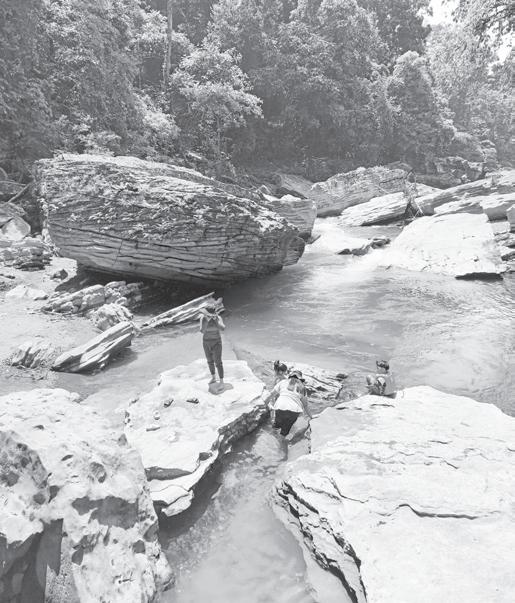

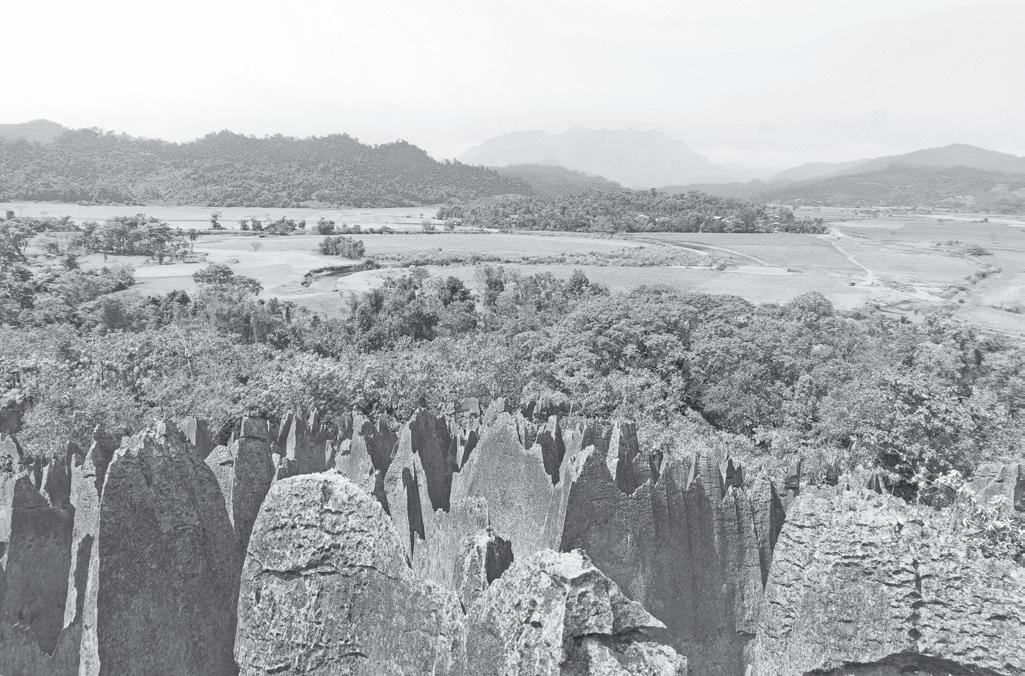





Escudella is a slow-cooked mountain broth packed with pork, veal, chickpeas, and seasonal vegetables. It is hearty, warming, and deeply satisfying.
Mountain charcuterie features house-cured meats from Pyrenean breeds, sliced thick and served with bread that has real texture and character.
My lunch at El Celler d’en Toni, one of Andorra’s most respected restaurants and an Andorra Selected gastronomy ambassador, showcased the region beautifully.
The menu that afternoon read like a celebration of spring: red tuna tartare with egg and fresh artichoke;


a chicory salad dressed in garlic oil with cured ham and toasted nuts; toast topped with Iberian pork belly and shaved summer truffle; veal cheek croquettes with a molten center; and a dessert called the Bomba de la Passió that ended the meal exactly as it should - with something unexpected.
The artichoke deserves special mention.
Carxofa in Catalan, it appears only during a narrow seasonal window after the mountain snow melts and the soil warms enough to support growth, usually in May and June. You cannot order it year-round. You cannot find it imported to Manila. It exists only in that moment, in that place, on that plate.
That is the kind of ingredient that reminds you why travel is ultimately about experiencing things that cannot be replicated elsewhere.
Caldea: Thermal luxury in the Pyrenees CALDEA is Andorra’s most recognizable landmark after the mountains themselves.
The glass complex in Escaldes-Engordany is fed by natural thermal springs and features thermal lagoons, hydrotherapy circuits, steam rooms, indoor and outdoor pools, and relaxation spaces overlooking the mountains.
I spent an afternoon there and left feeling completely reset. If you enjoy wellness travel, Caldea alone is worth adding Andorra to your itinerary.
Duty-free shopping that delivers ANDORRA’S reputation as a shopping destination is
IStory &
Berida
ONLY knew of Apayao as a province in the north and it used to be part of Kalinga-Apayao province until it became its own province in 1995. I was unaware of its tourist spots until recently. The popular destinations for any northward adventure are to Vigan, Pagudpud, Tuguegarao City and for some Palaui Island and Anguib Beach.
As a landlocked province, Apayao doesn’t fit the typical idea of a tourist destination in the Philippines such as powdery, white sand, azure waters, and/or limestone formations. However, I discovered that the province is home to a number of ecotourism attractions for those looking for something different.
Adventure in Apayao

I REALIZED Apayao was not really a province prioritized before because I didn’t know much about it other than a few historical facts, information on how to get there and around on my own was scarce, and I didn’t know anything about the things to do there. More and more details about Apayao came about the few years and months before I decided to visit. Reading about other people’s trips piqued my curiosity. took an overnight sleeper bus from GV Florida in Quezon City to Junction Luna. The trip took around 12 hours but it was a convenient way to visit Apayao. From the terminal, I arranged a pick up with the accommodation I stayed in. Dupag Rock is one of the top attractions in Apayao. It’s a combination of serrated limestone formations towering over the landscape. I have no experience in rock climbing, but I have tried wall climbing before this activity. Our group (consisting of me, the motorcycle driver, and the guide) slithered through tight walkways and clambered over jagged rocks and limestone. The climb was strenuous, despite the guide saying it was the easy route. I also had to be extra careful to avoid getting cut. My reward for the climb up was


well deserved.
With no VAT and lower import taxes than neighboring countries, the principality attracts shoppers looking for electronics, cosmetics, fragrances, outdoor gear, luxury watches, and spirits.
If you have been thinking about upgrading a camera, buying a special gift, or stocking up on European skincare, this is one of the best places to do it.
When to Visit LATE spring and summer are ideal.
ClassicAnd, the country’s classical music and opera festival, runs from late May to early June. On June 23, the Night of Sant Joan lights up the country with UNESCO-recognized fire celebrations. July brings an exclusive Cirque du Soleil production, while local festivals continue throughout the summer. September 8 marks Meritxell Day, Andorra’s national celebration. For me, late May offered the perfect combination of mountain scenery, seasonal cuisine, and cultural events.
The bottom line
ANDORRA is only three hours from Barcelona, yet it feels like a different world.
It offers history, museums, mountain cuisine, thermal spas, cycling culture, shopping, and stunning scenery packed into one of Europe’s smallest countries. Most Filipinos have never considered Andorra when planning a European trip. After visiting, I think they should.
photos by Joshua
up Dupag Rock Formation.
LUSSOK Cave is a highlight of a trip to Apayao.
MARVEL at the overlooking views after making your way up Dupag Rock Formation.
photo taken with the mouth of Lussok Cave.
HUTUNGAN Hidden Paradise has plenty of beautiful rock formations.
A10 Saturday, June 13, 2026
Editor: Angel R. Calso
Trump calls off latest threats to strike Iran, cites breakthrough in talks to end the war
By Jon Gambrell & Aamer Madhani The Associated Press
DUBAI, United Arab Emirates— US President Donald Trump said Thursday he had called off new military strikes on Iran, claiming a breakthrough in negotiations to end the war just hours after the American leader threatened to escalate the conflict by seizing control of Iran’s oil industry.
Trump has said multiple times in recent weeks that the warring parties have been on the cusp of a deal without anything coming to fruition. A spokesperson for Iran’s Foreign Ministry said in a live phone call on state television that mediators were active and nothing had been finalized to end the conflict that began Feb. 28 when the US and Israel jointly attacked Iran.
Trump opened an Oval Office event Thursday afternoon saying: “We just made a great settlement of the war with Iran.” He offered scant details, other than to say he expects an agreement to extend a fragile ceasefire that started in April to be finalized “over the next few days.”
Extending the terms of the ceasefire gives US leaders more time to negotiate over Iran’s nuclear program, the main reason Trump and Israeli Prime Minister Benjamin Netanyahu used to justify launching the war. Netanyahu’s office said Thursday that Israel is not a party to the
emerging agreement between the US and Iran.
The announcement came after two days of back-and-forth attacks between the US and Iran had pushed the Middle East closer to the resumption of a full-scale war.
Trump had threatened further escalation earlier Thursday, posting on social media that the US would hit Iran “VERY HARD TONIGHT” and take “total control” of its oil and gas industries. A few hours later, Trump posted on social media that significant points in the negotiations “have been brought to the highest level of Iranian leadership and approved.”
Esmail Baghaei, the spokesperson for Iran’s Foreign Ministry, said in his phone call on state television that text of a deal is “mostly finalized.”
“The problem is that the contradictions in America’s position has caused turbulence to this process,” he said Thursday night.
A major sticking point in negotiations has been Iran’s nuclear program, which the US and Israel
fear could lead to an atomic weapon, but which Tehran says is for peaceful purposes. Another key issue is Iran’s stranglehold on the Strait of Hormuz, a critical shipping lane for transporting oil and natural gas.
Trump again moves quickly from threats to negotiating TRUMP’S rapid shift Thursday from dire threats to promoting peace negotiations again underscored his whipsaw approach to the war. He suggested on Monday that a deal to end the conflict could be reached in a matter of days.
Then back-and-forth strikes rattled the Middle East this week. The first involved attacks between Iran and Israel, followed by the two rounds of fire between the US and Iran, which targeted countries where US troops are based. The US strikes began after Trump blamed Iran for downing an American attack helicopter near the Strait of Hormuz. Both pilots were rescued safely.
Iran’s Foreign Ministry said the US attacks had “effectively rendered the ceasefire ... meaningless,” without saying it was abandoning it.
After Trump threatened more attacks were to come on Thursday, Iran’s parliamentary speaker, Mohammad Bagher Qalibaf, responded on social media that “wrong strategies and impulsive decisions” would wreak havoc on energy markets and “create an endless quagmire that you will be stuck in for years.”
It wasn’t the first time Trump threatened escalation before giving negotiations another chance. In April, he warned Iran that “a whole civilization will die tonight, never to be brought back again” if it didn’t agree to his terms, before extending a ceasefire.
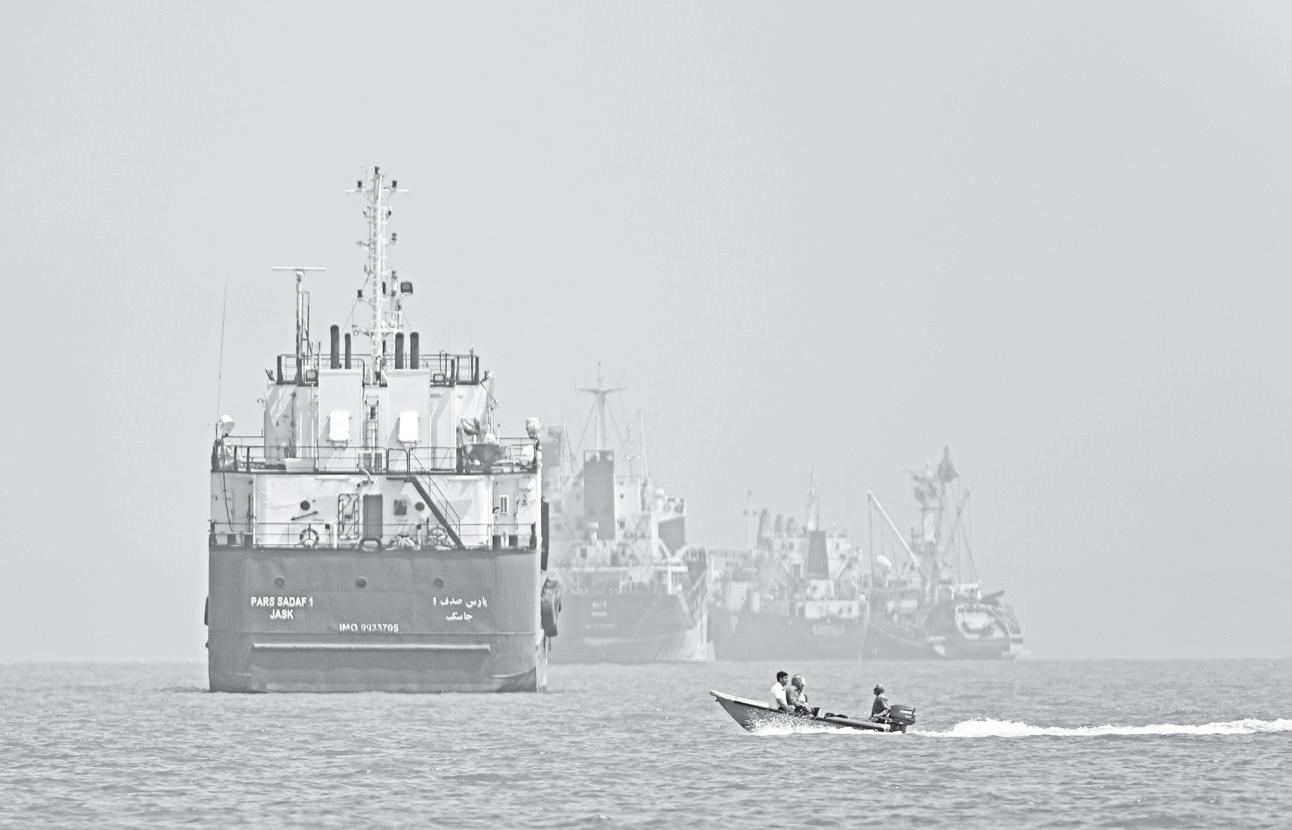
Trump threatened to seize Iran’s main oil terminal
IRAN’S monthslong disruption of shipping through the Strait of Hormuz has crimped global energy supplies, driven up fuel prices and made food and other basics more expensive well beyond the region.
Trump had threatened Thursday to seize Kharg Island, the heart of Iran’s oil industry, through which 90% of its exports pass.
But Trump himself soon voiced doubts about taking over the oil terminal, saying in an interview with Fox News: “I don’t know that America has the stomach for it, to be honest.”
“I don’t want to have boots on the ground,” Trump said. “But if I wanted to, we could put a small group of soldiers and take over the place.”
Tensions persist over Iran’s nuclear program, Strait of Hormuz
US Treasury Secretary Scott Bessent said in a social media post that the US would extract funds from frozen Iranian accounts to offset the costs of damage to
American allies and any tolls Iran imposes for ships to transit the Strait of Hormuz.
Beyond the deadlock over the strait, the two sides also remain at odds over Iran’s nuclear program. Tehran insists its nuclear efforts are peaceful. The U.S. and Israel fear Tehran’s stockpile of highly enriched uranium could be used to build an atomic weapon.
Iran has insisted that any deal to end the war must also end fighting in Lebanon between its ally militia Hezbollah and Israel. But Netanyahu appears intent on pursuing his goal of destroying the militant group.
Iranian student says hope dwindles as attacks escalate
A 25-year-old student in northern Iran says Iranians are fearing “chaos” amid the war with the US and Israel and multiplying crises at home.
The student, who lives in the city of Babol, said many Iranians are struggling to afford groceries in the face of mass job losses and triple-digit food inflation. He spoke on the condition of anonym -
ity out of security fears.
“Everything is going wrong and there is no hope among the people,” the student added.
The student first spoke to The Associated Press before the war when he participated in widespread anti-government protests. He now says his chief concern is that Iran “maintain territorial integrity and deterrence” in the face of attacks by the US and Israel.
US fires on another merchant ship to enforce blockade THE US military’s Central Command said Thursday that it struck a Guinea-Bissau-flagged tanker attempting to evade the American blockade on Iranian ports. It said the M/T Jalveer was transporting Iranian oil when it was disabled late Wednesday after its crew failed to obey US orders. It’s the ninth merchant vessel the US military says it disabled to enforce the blockade.
Three Indian sailors were killed when American forces struck the Palau-flagged M/T Settebello on Tuesday, India’s minister overseeing ports and shipping said Thursday on X.
US Central Command said American forces issued warnings before firing on the ship, which it accused of trying to evade the blockade.
The leader of the International Maritime Organization, a United Nations agency, condemned the attack.
Madhani reported from Washington. Associated Press writers Will Weissert, Collin Binkley, Michelle L. Price and Konstantin Toropin in Washington; Sheikh Saaliq in New Delhi; Munir Ahmed in Islamabad, Victoria Eastwood and Amir-Hussein Radjy in Cairo; Russ Bynum in Savannah, Georgia, and Hannah Schoenbaum in Salt Lake City contributed to this report.
Pope slams world’s indifference to migrants while visiting onetime ‘dock of shame’ in Canary Islands
By Nicole Winfield, Helena Alves & Renata Brito
The Associated Press
ARGUINEGUÍN, Spain—Pope Leo XIV traveled to a once-notorious epicenter of the European migration debate on Thursday, challenging countries to uphold migrants’ rights while shaming those leaders, including Christians, who turn them away with indifference.
Leo issued an impassioned plea to recognize the dignity of migrants from the port of Arguineguín, in the Canary Islands. In 2020, the port was dubbed “dock of shame” because of the squalid conditions migrants
were forced to live in for months during a spike in arrivals.
“Human dignity has no passport and does not lose its value when crossing a border,” Leo said, with rescue ships docked behind him and a simple wooden cross made from a shipwrecked migrant boat nearby.
Leo is spending the final two days of his weeklong trip to Spain in the Canary Islands, a Spanish archipelago closer to Africa than the Iberian Peninsula and a key point of entry for migrants who make the perilous Atlantic crossing from West Africa.
He is fulfilling a wish of Pope Francis to visit the islands to commemorate the thousands of lives lost at sea. With two migrants standing by him, Leo

threw a bouquet of flowers into the sea. The gesture recalled one Francis made in 2013, at the start of his pontificate, when he visited another migration flashpoint in Lampedusa, Sicily and denounced the “globalization of indifference” that the world showed migrants.
A visit to the ‘dock of shame’
THE Canary Islands have long been a stepping stone for migrants trying to reach Europe from West Africa and Morocco. Some experts consider the Atlantic route they take to get here more deadly than the more well-known central Mediterranean smuggling route from Libya and Tunisia to Italy.
Migrant arrivals in the Canary Islands peaked in 2024 at nearly 47,000. Following
pressure and deals between the European Union, Spain and the governments of several West African nations, arrivals have fallen dramatically, with just over 3,000 people landing there in the first five months of 2026.
Upon his arrival, Leo went straight to the port in Arguineguín, where in 2020 arrivals reached such numbers that migrants were forced to sleep on the dock in makeshift camps in the open air.
Many spent weeks just a blanket and no showers. Potential asylum seekers had no proper access to legal advice and some people were held for weeks, much longer than the three days that the law allowed. The ombudsman later forced the government to shutter the makeshift camp and relocate the
migrants in hotels that had been emptied by Covid-19.
A challenge to uphold dignity
AT the port on Thursday, Leo sat under a shaded platform while a fierce midday sun baked down on the migrants and aid workers. He heard testimonies from rescue workers, humanitarian workers and the personal story of a Nigerian victim of human trafficking. Nearby a banner, recalling the port’s former nickname, rebaptized it “Dock of Hope.”
“Dear migrants, before saying anything else to you, I want to bow before your dignity,” Leo said to them, bowing his head slightly.
Addressing the Nigerian woman and other women who have been trafficked and forced into prostitution, Leo assured them: “If others have put a price on your body, know that God has never ceased to recognize your inestimable worth,” he said.
He urged countries of origin to create the security and economic conditions so people are not forced to flee, and for transit countries to protect migrants so they don’t fall prey to smugglers. And he appealed to the “conscience of Europe, which cannot claim to uphold human dignity while growing accustomed to the Mediterranean and the Atlantic becoming unmarked graves.”
In one of the most powerful speeches of his pontificate, dedicated entirely to migration, Leo listed the rights of migrants to flee or remain.
But he didn’t mention the right of nations to control their borders or limit asylum requests as he has done in the past. And significantly, he insisted that if one is Christian, one cannot ignore the plight of migrants.
“May history not accuse us of turning the pain of those who suffer into a common sight along our shores,” he said. “Today, here by the sea, every individual that arrives asks us what
remains of our humanity. Sooner or later, it will be known whether we protected life or whether we yielded to indifference.”
Among the migrants waiting for Leo was Mame Amandou Neang, a 56-year-old who arrived in the Arguineguín port from Senegal earlier this year.
“This is a great honor,” said Neang. “We hope that if we see him, all our problems will stay behind us, we will forget our problems, because we have many things to forget for the moment.”
The International Organization of Migration’s Missing Migrants Project has recorded some 6,600 deaths on the Atlantic route from West Africa since it began keeping record in 2014. But it admits their estimate is a vast undercount due to the lack of information on the route and the phenomenon of “invisible shipwrecks.”
Since 2020, Spanish migrants rights group Walking Borders estimates more than 25,000 dead or missing trying to reach the Canary Islands.
Leo follows in Francis’ footsteps in prioritizing migrants FRANCIS had made the plight of refugees a hallmark of his papacy, following the Gospel mandate to “welcome the stranger.” Leo has followed suit, insisting especially on the dignity of migrants in his native United States amid the Trump administration’s crackdown and mass deportation program. Next month, on July 4, the American pope will spend US Independence Day on the island of Lampedusa, where Francis in 2013 first denounced the “globalization of indifference” the world shows migrants.
Winfield reported from Las Palmas de Gran Canaria, Spain. Brito contributed from Barcelona, Spain.
A MOTORBOAT passes anchored vessels in the Strait of Hormuz near Bandar Abbas, Iran, Thursday, June 11, 2026. AMIRHOSEIN KHORGOOI/ISNA VIA AP
Ukraine’s drone strikes trigger worst fuel crisis in Russia-annexed Crimea since 2014
By The Associated Press
UKRAINIAN drone strikes on refineries, depots and pipelines. Tanker trucks attacked and left ablaze along the land corridor from Russia to Crimea. Motorists waiting in long lines at gas stations.
In a new blow to the Kremlin’s narrative that Moscow is winning the 4-year-old war in Ukraine, Kyiv’s forces have targeted supplies to Crimea, triggering the worst fuel crisis on the Black Sea peninsula since it was illegally annexed by Russia in 2014.
The persistent attacks reflect the growing intensity and efficiency of Ukraine’s drone strikes and have caught Russia off-guard and struggling for a response.
As the country marks the Russia Day national holiday on Friday, signaling the start of summer vacations, the gas shortages are threatening to cause further disruptions to the tourism-dependent region with its beaches and resorts.
In a rare public acknowledgment, the Kremlin has recognized the scope of the problem and promised to address the issue quickly.
Ukraine’s successes have highlighted its ability to inflict painful damage to Russia and change the course of the conflict while Moscow’s advances recently have ground to a near halt. On Thursday, Russia’s full-scale invasion of Ukraine reached its 1,569th day, surpassing the duration of World War I.
Crimea’s importance to Russia CRIMEA has been a jewel in Russia’s
imperial crown since it was seized from Turkic-speaking Tatars in the 18th century after Moscow defeated the Ottoman Empire.
Soviet leader Nikita Khrushchev transferred Crimea from Russia to Ukraine in 1954 when both republics were part of the USSR. When the Soviet Union collapsed in 1991, the diamond-shaped peninsula became part of newly independent Ukraine. Russia kept a naval base in Sevastopol, and when a Moscowfriendly Ukrainian president was ousted by a popular uprising in February 2014, Russian President Vladimir Putin sent in troops to overtake Crimea. Weeks later, Moscow annexed the peninsula following a referendum that most of the world refuses to recognize.
Soon afterward, a Moscowbacked separatist insurgency erupted in eastern Ukraine, and fighting there raged with varying intensity until the February 2022 invasion. Russian troops concentrated in Crimea quickly seized large parts of southern Ukraine early in the war and secured the land route to the peninsula.
Since early in the war, Ukraine has fired missiles and drones to try to dislodge Moscow’s hold on the territory. The Ukrainian military
sank several Russian warships in the Black Sea and at their Crimean bases, crippling Moscow’s naval capability and forcing it to redeploy its fleet to Novorossiysk.
Ukraine also methodically targeted munitions depots, airfields and Putin’s prized asset, the Kerch Bridge linking Crimea to Russia. The span was struck by a truck bomb in October 2022 that killed five people, blew up two sections of the bridge and required months of repairs. More attacks on the bridge followed in 2023 and 2025.
Ukraine’s attacks on the land corridor to Crimea SINE the Kerch Bridge attacks, Russia has channeled most fuel and other supplies along the highway and railroad via the occupied territories along the Sea of Azov coast. Those shipments were interrupted last month, when Ukrainian drones hit fuel trucks on the highway that Moscow once deemed to be safe, leaving behind dozens of burning vehicles.
Other relentless Ukrainian strikes hit refineries, oil depots and pipelines deep inside Russia, hurting its oil exports and causing domestic fuel shortages.
The Washington-based Institute for the Study of War noted the synergy between the longerrange attacks and those disrupting supplies to Crimea and other occupied regions.
“The long-range strike campaign is therefore reducing Russia’s production capacity, while the midrange strike campaign is hurting Russia’s ability to transport the gasoline Russia is still able to produce,” it said in an analysis.
Making matters worse, Ukrainian drones this week repeatedly hit the Chonhar Bridge, which links mainland Ukraine and Crimea over a shallow strait.
Thai Princess Bajrakitiyabha,

Authorities deployed pontoon bridges.
The Ukrainian military said it struck the bridge to disrupt movement of troops, ammunition and fuel from Crimea.
Queues and gas rationing
IT’S not immediately clear how the fuel disruptions will affect Russian military operations, but residents of Crimea and other occupied territories are keenly feeling the blow.
The peninsula has had periodic fuel shortages from Ukrainian strikes before, but this crisis is the worst since its 2014 annexation.
At the end of May, authorities restricted the sale of gasoline to 20 liters (5 1/3 gallons) per vehicle owner per week using prepaid coupons. Those were snapped up immediately following their release on an official messaging app channel, and motorists lined up for hours, waiting to refuel.
Social networks have been abuzz with requests and advice on
who was
known for her legal work, dies at 47
By Grant Peck
The Associated Press
ANGKOK—Thailand’s Prin -
Bcess Bajrakitiyabha Mahidol, a lawyer and the eldest of King Maha Vajiralongkorn’s children, has died at 47, the Bureau of the Royal Household said. She died Thursday evening at a Bangkok hospital where she had been cared for since falling unconscious due to illness three years ago, according to the statement issued Friday.
Bajrakitiyabha was active in justice reform efforts and best known for her Kamlangjai, or “Inspire,” project to help rehabilitate incarcerated Thai women ahead of their release.
Bajrakitiyabha was hospitalized in December 2022 after falling unconscious while training dogs for an army exhibition. The palace said she had a mycoplasma infection, a bacterial infection usually associated with pneumonia.
Her father’s New Year’s greeting card for 2023 showed King Maha Vajiralongkorn and Queen Suthida garbed in somber black, which many Thais saw as confirmation of the gravity of her condition. The limited information released in subsequent years indicated a deterioration in her condition.
The princess was born on Dec. 7, 1978, to Vajiralongkorn, who was the crown prince at the time, and his then-wife, Princess Soamsawali. Vajiralongkorn has seven children by three of his four successive wives. Bajrakitiyabha was also known by the royal name Bajrakitiyabha Narendira Debyavati, used in formal state settings.
Prince Dipangkorn Rasmijoti, the youngest of the king’s children, is the presumptive heir because sons take precedence in Thailand’s line of succession. But Bajrakitiyabha’s experience in public service raised speculation she was set to hold an important
role in any future succession, perhaps as regent to a youthful monarch.
Bajrakitiyabha studied law at Thammasat University then went to Cornell University in New York state, where she earned a master’s degree in law in 2002. She earned a doctorate at Cornell in 2005 with a dissertation concerning the protection of the rights of the accused. Scholarships to Cornell Law School and a program for the exchange of legal scholars between Thailand and Cornell were later established in her name.
After working briefly at the Thai Mission to the U.N. in New

York City, she returned home and worked as a public prosecutor. She renewed her diplomatic career with an appointment as Thailand’s ambassador to Austria from 2012 to 2014 before returning to her homeland to concentrate on criminal justice issues. In 2017 she was appointed a goodwill ambassador for the U.N. Office on Drugs and Crime.
In addition to working for the rehabilitation of female convicts, she was involved in other projects including a campaign to enhance the living conditions of women prisoners and promoting efforts to stem violence against women as an honorary U.N. goodwill ambassador for women. Her efforts led to the U.N. General Assembly adopting the “Bangkok Rules” on care and conditions for female prisoners.
“Society cannot grow if there is instability and injustice,” Bajrakitiyabha said in a 2013 interview with The Associated Press.
“Without the rule of law, without a good justice system, it’s always chaos,” she said. “I think the rule of law is a very important pillar to development, to economic growth, and of course to human rights.”
Bajrakitiyabha is survived by her parents and siblings.
where to find fuel, and authorities launched a hotline for tourists who have found themselves trapped.
While fuel shipments over the Kerch Bridge long have been suspended for security reasons since the Ukrainian attacks, fuel also has been carried by ferries. Those shipments are expected to increase.
Some motorists bring their own gas over the bridge from the mainland, but they are restricted to carrying 100 liters (about 26 1/2 gallons) per vehicle. Some speculators are selling gas at double the market price.
Crimea attracted nearly 7 million tourists last year, and it had hoped to top that number this year.
The business daily Kommersant reported that nearly 80% of hotel bookings were canceled in late May and early June.
Some hotels offered gasoline as a bonus for new bookings, offers that were quickly snapped up.
Some travelers were unsettled by a Ukrainian drone attack
earlier this week on a passenger train traveling from Moscow to Crimea, injuring its driver and killing his assistant. That led to a brief suspension of service, with passengers taken by buses.
An earlier attack on a commuter train in Crimea killed one person and injured three others, forcing authorities to shift schedules to limit service during daytime hours.
Kremlin pledges action
KREMLIN spokesman Dmitry Peskov acknowledged the Crimean fuel shortages earlier this week and promised that “measures were being taken” to deal with them. The Russian Defense Ministry has been silent about the Ukrainian attacks on the land corridor, while some war bloggers have harshly criticized the military for failing to anticipate the strikes and its slow response.
Some suggested military escorts for fuel trucks while others urged stepping up strikes on Ukrainian bridges, fuel storage sites and other infrastructure. Amid the fuel crisis and the finger-pointing, Ukraine dealt another symbolic blow to Russia, striking a historic Sevastopol building that houses a huge panoramic painting that depicts the defense of the city during the 19th century Crimean War. The painting was effectively destroyed by fire during the attack, according to Mikhail Razvozhayev,, the Kremlin-appointed head of Crimea’s largest city.
Given Putin’s focus on Crimea, military blogger Valery Shiryayev said, the attack would certainly anger the Russian leader.
“It’s hard to find another work of art, another part of national heritage, whose destruction would be as painful for Putin,” he said.
UK defense secretary resigns, saying the govt isn’t willing to spend enough on the military
By Jill Lawless & Danica Kirka The Associated Press
LONDON—U.K. Defense Secretary John Healey unexpectedly quit on Thursday, saying the government is unwilling to spend enough on the military at a time of “rising threats.” The resignation dealt another blow to embattled Prime Minister Keir Starmer, who is already facing demands from Labour colleagues to step down.
Healey told Starmer in a letter that the government’s Defense Investment Plan falls “well short of what is required at this dangerous time.”
Publication of the plan has been delayed amid reports of disagreement between the Defense Ministry and the Treasury.
Healey was followed out the door several hours later by Al Carns, a decorated war veteran who served as a prominent junior minister in the defense ministry. He said he could not defend “a level of investment I know to be inadequate to the task.” Carns has been suggested as a possible contender in the anticipated contest to challenge Starmer’s leadership.
Starmer said in a letter to Healey that he was sorry to see him go, but insisted that the funding plan would provide “sustainable and fair” spending increases that would keep the U.K. safe. Late Thursday the prime minister appointed Dan Jarvis, formerly the security minister, to the defense secretary post.
Critics say too little, too late STARMER has pledged to boost U.K. defense spending to 2.5% of gross domestic product
by 2027 and 3% by 2035. But many in the military say that isn’t fast enough.
“You have been unable, and the Treasury has been unwilling, to commit the resources that the nation needs to defend the country at this time of rising threats,” Healey wrote in his resignation letter.
He said that the spending plan put forward by the Treasury, and presented to him on Monday, would see defense spending rise to just 2.68% in 2030, after hitting 2.6% next year.
Healey said that isn’t enough with growing demands on defense and British military commitments, citing the Iran war, Russia’s all-out invasion of Ukraine and threats from Moscow.
“I am now left with no other option than to submit my resignation,” he said. Gen. Richard Barrons, who helped lead a defense review that underpins the investment plan, said the government is “actively going backwards” by refusing to fund its own review.
“It diminishes the U.K.’s standing within NATO, weakens our credibility with allies, and increases our vulnerability to the realities of 21st-century conflict,” he said. “Allies and adversaries alike will be paying attention.” The government said that it was delivering “the largest sustained boost to defense spending since the Cold War.” “This country is safer because of the decisions Keir Starmer has made and we will continue to act in our national interest,” it said in a statement.
Mark Carlson in Brussels, and Pan Pylas and Brian Melley in London, contributed to this report.
June 10, 2026,
THAI Princess Bajrakitiyabha Mahidol shakes hands while meeting supporters in Bangkok, Thailand, Nov.
Coach Tab: We are in far too dire scenarios

By Josef Ramos
ATENEO de Manila head coach Tab Baldwin made his first public appearance since the tragedy in Aurora Province during a candle-lighting ceremony for fallen Blue Eagles Rene Baterbonia and Divine Adili on Thursday night at the school’s Katipunan campus.
Baldwin, widely criticized for keeping his silence on the drowning to death of his two wards, responded to BusinessMirror’s chat message—but only briefly.
“We are in far too dire scenarios and all I want to do is take care of my players and family and pray for my lost boys,” said Baldwin in his chat just hours before he attended the ceremony at Ateneo’s Zen Garden.
Blue Eagles team manager Epok Quimpo is currently in Guam—he wasn’t in Dipaculao during the tragic team building activity—and responded to BusinessMirror’s message—also briefly.
“The school is processing the transfer of the remains of Adili to Nigeria [day-to-day],” Quimpo said.
The remains of Baterbonia, 19, arrived in Barangay San Nicolas in his hometown Talogocon in Agusan del Sur accompanied by his parents on a private plane, while the wake for Adili, 21, begins Saturday at the Immaculate Conception Chapel in Quezon City.
Louie Alas, one of Baldwin’s deputy coaches, told the BusinessMirror that they have canceled all training activities of the team and that the players are undergoing counseling and debriefing sessions facilitated by the university from time to time.
“At this point, there’s no basketball activity because of the tragedy. All players are still feeling the trauma,” Alas said. “My son Kieffer [Alas] does not want to talk about it because he lost two brothers.”
“The pain of this incident will always be there. After I personally met Tab when they returned to the university, I hugged him for a few moment and he couldn’t even talk…he’s still in shock.”
Alas’s youngest son Kieffer was one of the 22 players and coaching staff who were in the training camp.
The team members are expected to appear before the Criminal Investigation Detection Group of the Philippine National Police and the National Bureau of Investigation starting on Monday.
Big step forward for Kazakhstan
By Aldrin Quinto
champion Vietnam. The Kazakhs completed a fivematch sweep of the eliminations with a nailbiting 18-25, 25-19, 23-25, 25-22, 15-13 victory on Friday at the Candon City Arena. But veteran Kristina Belova noted there’s still much work to be done after Kazakhstan ended its long run of futility against Vietnam.
“In previous games, we lost against Vietnam and this win was really important for us. We prepared for this and I think we did a great job,” Belova said. “We will improve our game more, and we will try our best on the court. From this moment we will start to prepare for the semifinal.”
The 6-foot outside hitter is a returning player from the 2024 Kazakhstan squad that lost twice to Vietnam in 2024, including the gold medal match in the AVC Women’s Challenge Cup in Manila. Kazakhstan also bowed to the Tran Thi Thanh Thuyled squad in the semifinals of the 2025 AVC Nations Cup in Hanoi. Now they’ve secured a moraleboosting win, while also ending Vietnam’s streak of 23 consecutive victories dating to 2023. Belova came out firing, as did Yuliya Fomenko, another veteran of previous editions of the AVC Cup.
The duo combined for nine points, eight from attacks, in the gripping fifth set, as the Kazakhs finished Pool B play unbeaten. Kazakhstan faces the No. 2 team from Pool A, while Vietnam (4-1) takes on the pool winner. South Korea and Chinese Taipei were set to battle for the top spot in Pool A. Belova put up 21 points on 19 attacks and two blocks as Kazakhstan made it five wins in as many matches in the
Huge field vying in Mayor’s Cup age group tennis championships

TMexico, South Korea make immediate statements
MEXICO CITY— Mexico made an immediate impression on the largest World Cup in history, giving the roaring home crowd at the iconic Azteca Stadium a huge jolt of excitement four years after a major disappointment. Mexico’s players understood the intense pressure and high expectations they were facing on Thursday in the opening match of the first 48-team World Cup tournament—but they embraced their role and got off to a winning start by beating South Africa, 2-0, in a match that also produced three red cards.
“I made an effort to explain to them what a World Cup and an opening match on home soil meant, but they are young and had to experience it for themselves,” said Mexico coach Javier Aguirre, who played for his team the last time Mexico hosted the

KAZAKHSTAN
tournament presented by the Philippine Sports Commission and the City of Candon headed by Mayor Eric D. Singson. Zhanna Syroyeshkina also scored 21, with 15 attack points and six aces, while Tatyana Yatskiv delivered 20 points on 17 attacks, two blocks and an ace.
Fomenko, a veteran of Kazakhstan’s previous two campaigns, had 13 points on nine attacks, three blocks and an ace. Vietnam star hitter T4 was her usual dominant self, finishing with 25 points, all on attacks, but only four of those came in the deciding set.
tournament in 1986. “I can no longer talk about having played in a home World Cup, because they already know what it’s like.”
Julián Quiñones and Raúl Jiménez scored the goals for Mexico, which is co-hosting the 2026 tournament with Canada and the United States.
In Guadalajara, Hwang In-beom scored a goal and set up another as South Korea rallied to defeat the Czech Republic, 2-1, in the second match of the 2026 World Cup also on Thursday.
After a lackluster first half in which both teams were jeered as they left the field, the Czech Republic took the lead in the 59th minute on a header by captain Ladislav Krejci after a long throw-in into the penalty area.
South Korea equalized in the 67th, when Hwang scored after faking a shot with a nifty move to clear two Czech players.
The midfielder who plays for Dutch club Feyenoord then made the cross from the right flank for Oh Hyeon-gyu’s decisive strike in the 80th in a match played in front of hundreds of empty seats at Guadalajara Stadium.
Shakira, Maná, Andrea Bocelli and a surprise appearance by Salma Hayek, meanwhile, lit up the World Cup




L“It was my debut at the full Ironman distance after grinding in 70.3 races for nine years,” said Ramo after the event organized by Sunrise Events Inc. “The preparation was brutal. You have to spread your power wisely just to survive until the finish line.” For Ramo, the weekend was never about collecting accolades or punching World Championship tickets—it was a deeply personal quest. “The goal for this race was simply to experience it, to see what it feels like to push against that wall,” she said. Khimberly Paquibot timed 12:31:21
SHAKIRA performs during the opening ceremony in Mexico City as a fan holds up a replica of the World Cup trophy during a fan festival at the Los Angeles Memorial Coliseum in Los Angeles. AP