
By Claudeth Mocon-Ciriaco & Butch Fernandez
THE recent indictment of a barangay tanod for the brutal killing of a Golden Retriever named Killua has shone light anew on current efforts to amend legislation on animal welfare, with a view to protecting both the animals and humans, amid an alarming surge in rabies cases.
“The barangay tanod who killed Killua has been indicted. This means the case is now People of the Philippines v. Anthony Solares and the trial will soon begin,” declared the advocacy group PAWS on its Facebook page. This announcement followed the finding by Prosecutor Wilhenry M. Villar of the Provincial Prosecution Service-Iriga City, who determined probable cause against Solares, allowing him to be charged with violating the Animal Welfare Act for killing the 3-year-old Labrador-Golden Retriever.
In the three-page resolution, the prosecutor, PAWS noted, had likened the Killua case to the 1855 case that US lawyer and politician George Vest argued for. He quoted: “when a neighbor killed his client’s dog, the neighbor took the life of more than just a pet—he killed an important family member.”
While the Office of the Prosecutor found no probable cause for charges of dog-meat trading under the Anti-Rabies Act, Solares will
be tried for his act of cruelty under the Animal Welfare Act, PAWS added.
The maximum penalty for violation of the Animal Welfare Act of the Philippines is up to 3 years imprisonment and/or P250,000 if the convicted offender is a public officer or employee like Solares, a barangay tanod of Barangay Tres Reyes, Bato, Camarines Sur.
“Improvement of our laws is ideal but no amount of lobbying for laws will lead to the prosecution of animal offenders if there is no criminal complaint filed by witnesses of animal abuse. PAWS is ready to support and stand by concerned citizens who take action and file these complaints,” the group said in its FB post.
Just last May, senators threw their support behind timely passage of an amendatory bill that will give more teeth to the Animal Welfare Act, by slapping stiffer penalties on those who abuse them, while also engendering a whole-ofsociety approach to ensuring com-
munities are safe for both animals and humans.
Also last month, Health Secretary Teodoro J. Herbosa raised the alarm over the 13-percent rise in rabies cases in the first five months of 2024. In the Senate hearing on the amendatory bill filed by three senators, panel chair Cynthia Villar drew attention to the mindboggling number of stray dogs and cats in the country, with a conservative estimate of 13 million. Such homeless animals pose a constant risk to humans, according to Sen. Grace Poe, a known animal welfare advocate, who drew attention to the Philippines’s dubious ranking as the sixth country with the highest rabies incidence.
95% case fatality rate IN flagging the 13-percent rise in human rabies cases from January to May this year, the DOH also reminded the public to get their pets vaccinated against rabies and to seek vaccination if they are bitten. This, after recording 169 human rabies cases from January to May this year, which is higher compared to the reported 150 cases in the same period in 2023.
As of May 11, 2024, Region XII (Soccsksargen) reported the highest number of cases, with 21.
This was followed by Regions IV-A (Calabarzon) and V (Bicol), with 18 cases each. Among the reported cases, 156 (92 percent) had a history of dog bites, 10 (6 percent) had a history of cat bites, and the remaining 3 cases involved bites from other animals.
Of the 169 reported cases, a total of 160 deaths have been reported, resulting in a case fatality rate of 94.67 percent. The status of

“With the help of all stakeholders, I am sure we can come up with a law enabling the creation of a society where we can coexist harmoniously with those beings which have provided us with much love and loyalty.”
the remaining 9 cases reported is still being verified.
“Rabies is a viral infection that can be transmitted to humans through animal bites or even scratches, most commonly by dogs and cats,” said Herbosa.
That rabies is preventable, and vaccination is the most effective measure to protect animals and humans, makes the dire situation even more tragic, DOH noted.
“Given the high percentage of cases involving dogs and cats, it is imperative that pet owners ensure their animals are vaccinated against rabies at 3 months old and every year thereafter. This not only protects the animals but also significantly reduces the risk of transmission to humans,” the DOH said.
“Death caused by rabies is inevitable once infection begins, that’s why we urge all pet owners to be responsible and get their pets vaccinated against rabies.
This not only protects the animals but also significantly reduces the risk of transmission to humans.
With this, we can eradicate rabies towards our journey to a Bagong Pilipinas kung saan Bawat Buhay ay Mahalaga,” Herbosa said.
In a press conference in April, Agriculture Secretary Francisco Tiu Laurel Jr. said around 22 million dogs and cats should be vaccinated against rabies in the country. He also stressed the need for a budget of at least P110 million.
The DOH said it supports this call for additional DA budget allocation for the widespread animal vaccination program, but it remains uncertain if such will be reflected in the proposed 2025 budget that the Executive will present to lawmakers after July’s opening of the third and last session of the 19th Congress.
Start in barangays—Poe
TO Senator Poe, everything should start with the barangays, which need to be equipped with animal welfare programs to allow them to act effectively against cruelty incidents.
“An important question to ask is whether we have sufficient animal welfare programs in place and whether our communities— especially in rural areas—have adequate access to quality veterinary healthcare services,” she said.
“As first responders to animals in need, it’s imperative that barangay personnel are guided by policies and have the wherewithal to act,” Poe said at the Villar-led hearing on her Senate Bill No. 2458 seeking to strengthen the Animal Welfare Act.
On the national level, Poe
said the responsibility of ensuring animal welfare falls under the purview of the Bureau of Animal Industry or BAI, a staff bureau of the Department of Agriculture (DA). Under Republic Act 7160 or the Local Government Code, she noted that the delivery of veterinary services to the communities has been devolved to local government units. However, the Local Government Code mandates that only provinces and cities should have their own veterinarian officer.
“Hence, there is a reported shortage of veterinary personnel in smaller municipalities. And even cities that have veterinarians have to contend with inadequate resources,” Poe said.
“Ideally, the Department of Agriculture should be able to train and deputize animal welfare enforcement officers from the communities, the police for law enforcement, and members of animal welfare organizations such as those present here today, so that issues can be immediately taken cared of at the barangay level, in an effective but humane manner,” she added.
Poe’s bill aims to strengthen the DA in addressing animal welfare issues through a bureau that will be given sufficient budget and permanent personnel.
The measure aims to establish standards geared towards engendering responsible pet ownership, as well as ethical behavior and accountability from all those who have control over or provide care to animals.
The measure to amend the Animal Welfare Act of 1998 (amended by Republic Act 10631)
THE Philippines has laid the groundwork to address employment issues, which can worsen if left unresolved. The National Employment Summit (NES) brought together partners and stakeholders to tackle labor market challenges and find solutions, noted the International Labour Organization (ILO) in a report Friday.
The summit inked an Employment Covenant and forged commitments for the 10-year Trabaho Para sa Bayan (TPB) or the Jobs for the Nation Plan to boost national and local economic growth, decent work and green jobs.
“Let us lay the groundwork to ensure a decade of meaningful employment and economic growth. The covenant and the TPB Plan will ensure the interagency and multipartite approach to achieving our objectives for productive,
remunerative, and decent employment generation,” said President Ferdinand Marcos Jr.
The summit, led by the Department of Labor and Employment (DOLE) in collaboration with the National Economic and Development Authority (Neda), the Department of Trade and Industry (DTI) and the ILO, was held on 2627 June 2024 in Manila.
President Marcos assured Filipinos that the administration is working double time to address
employment challenges. Sangheon Lee, Director of the ILO Employment Policy, Job Creation and Livelihoods Department, provided a comprehensive global overview of trends and policies impacting the labor market.
According to Lee, the unemployment rate is the most often used labor market indicator. However, lessons from the Covid-19 pandemic showed that often, it gives only a partial, sometimes misleading, picture of reality. During the pandemic, there was a massive exit from the labor force, especially among women and youth.
“Jobs gaps are broader than unemployment, covering those people who are inactive for various reasons. The numbers are sobering as expected. On average, jobs gaps are often twice larger than unemployment,” said Lee.
The jobs gap, an ILO-developed indicator, is relevant to assess difficulties that people face, mostly women and youth in finding a job. It also highlights job creation challenges. The jobs gap, which is not represented in unemployment


data, reveals real differences as Lee pointed out.
In the Philippines, the overall jobs gap is lower than the global average, but it is quite high among female workers. The Philippines continues to confront the issue of young people who are Not in Education, Employment, or Training (NEET). It makes it complex for youth to move between work, training and education.
At the summit, Lee stressed the importance of not losing focus on informal employment. “Clearly and quite often, informal employment could be a trap: once you get in there, it is hard to get out without effective policy support,” he added.
These challenges and insights will help rethink strategies and policies. However, Lee noted that the current trends and challenges highlight the strong need for social dialogue among government, workers and employers.
“Data, evidence and assessments are all crucial, but they always give you options, not a single, unique answer. They can help, but they cannot decide. It points to the critical importance of social dialogue, which brings together differ-
ent and complementary perspectives from workers and employers to find agreeable—and most realistic and reliable—solutions. Social dialogue is quite often the best science,” Lee emphasized.
Overall, the summit provided a venue to understand the impact of global trends and how to address them to establish guiding principles for the 10-year TPB Plan. It also forged commitments and pushed for an enabling environment to strengthen industries and create quality jobs.
“We must deliberately aim for the creation of employment opportunities of better quality, that are sustainable and more remunerative, and that provide decent working conditions for all workers, said DOLE Secretary Bienvenido Laguesma.
“We must also deliberately aim for work opportunities that fully respect the fundamental principles and rights at work and provide adequate and inclusive social protection, including facilitating just transitions,” Laguesma added.
Governments, employers, workers and sectoral representatives, regional tripartite industrial councils, civil society, and develop-
ment partners joined the summit. Gustavo González, the United Nations Resident Coordinator to the Philippines; Atty. Jose Sonny Matula and Sergio Ortiz-Luis Jr., representing workers and employers, respectively; and Senator Joel Villanueva, also expressed their commitment to support decent work and sustainable development.
The summit also reviewed key employment growth sectors, challenges in labor supply and demand, harmonized strategies, and emerging industries in the green, digital and care economy.
“We will continue to support the country in addressing employment challenges. The world of work is rapidly evolving, and it is crucial that we stay ahead of the curve through strong collaboration and social dialogue,” said Khalid Hassan, Director of the ILO Country Office for the Philippines. The Philippines also joined the Global Coalition for Social Justice and the Global Accelerator on Jobs and Social Protection for Just Transitions. In the coming months, regional consultations will be held to finalize the TPB Plan and turn commitments into actions.
is backed by Poe, and Senators Nancy Binay and Joel Villanueva. It seeks to fortify the animal provisions of the law and to create an Animal Welfare Bureau for the effective implementation and enforcement of the law.
It aims to strengthen the country’s animal welfare standards, policies, rules and regulations, implementation, and enforcement.
Senator Villar, whose committee conducted the last hearing, stressed that “the main problem that our country faces with regards to animals are stray, and neglect, with countless dogs and cats left to fend for themselves, often succumbing to hunger, disease, or accidents, overpopulation, the lack of education in terms of animal welfare, and responsible pet ownership.” She also pointed out “another issue is the trading and eating of dog meat.”
Stray animals, said Villar, are “mainly a human health hazard, because of the spread of diseases such as rabies, leptospirosis, and
other parasites,” she noted.
Poe: Homeless animals urgent problem
POE thanked Senator Villar for using her committee to hear the related concern about animal welfare, despite the pressing problems of the sector.
“Despite animals’ worth and value to human society, many animals are neglected, deliberately abandoned, starved to death in animal pounds, or fall victim to animal cruelty. On the other hand, some irresponsible pet owners have permitted their unvaccinated pets to cause nuisance, fear, or harm to their communities,” Poe said in her opening statement.
One major cause and effect of this maltreatment is the overpopulation of homeless animals, Poe said. According to the Mars Petcare Pet Homelessness Project report, there are a total of 13.11 million stray cats and dogs in the Philippines today.
Because strays lack proper care or vaccinations, rabies is most common in countries where stray dogs are present in large numbers. The
Philippines is, in fact, ranked 6th among countries with the highest rabies incidence in the world.
Tragedy in animal pounds
POE lamented that many animals are neglected, abandoned or starved to death in animal pounds, or fall victim to animal cruelty.
Reacting to the Petcare Pet Homelessness Project report that there are a total of 13.11 million stray cats and dogs in the Philippines today, Poe expressed hope that her bill “can spark a discussion whose time has come.”
Poe’s late father, Philippine action movie king and award-winning director Fernando Poe Jr., had often recalled the fate of his father, Fernando Poe Sr., who died of rabies at a relatively young age. The amendatory bill thus comes as a seeming circle completion of sorts for the Poes. “With the help of all stakeholders, I am sure we can come up with a law enabling the creation of a society where we can coexist harmoniously with those beings which have provided us with much love and loyalty,” Poe added.
Editor: Angel R. Calso

By Madison Muller, Ashleigh Furlong & Naomi Kresge
JENNIFER WITHERSPOON can’t stop
sharing photos of her new body.
After losing more than 100 pounds on a weight-loss drug, the 47-year-old in Austin got a tummy tuck and breast liftto get rid of theloose, sagging skin she was left with.Now, she’s flaunting washboard absinabikini for the first time in 20 years.
“I am literally living my best life,” she said.
Patients taking Wegovy, Zepbound and other new weight-loss drugs are finding that after losing 50 pounds, their skin sags over their stomachs, arms and buttocks.In the face and chest, the loss of elasticity can make someone look much older than they actually are or give a hollowed-out appearance that’s been dubbed “Ozempic face.”
This has turned into a gold mine for plastic surgeons.
From 2022 to 2023, there was an 8% increase in face-lifts,likelyfueled by people who have taken weight-loss shots,according to a report from the American Society of Plastic Surgeons published Tuesday.The group, which represents 92% ofboardcertified plastic surgeons in the US, also foundthat tummy tucks and lower body lifts increased 5%. Arm lifts, thigh lifts and breast lifts were also up, according toreport.
Following weight loss, “all of those people potentially are going to have issues with how they look afterwards,” said Steven Williams,president of the American Society of Plastic Surgeons who is based in Dublin, California.
And the number of weight-loss drug
users is only expected to rise as more options become available. Eli Lilly & Co.’s Zepbound, for example,only launched in December, so many of these patients may not have been captured in the ASPS report.
Asmore of the estimated millions of people taking GLP-1 weight-loss shots from Eli Lillyand Novo Nordisk A/S or copycat drugs sold by companieslike Hims & Hers Healthbegin to consider plastic surgery, doctors are now faced with ethical questions. What happens if these patients continue to lose weight — or gain itall back?
It’s clear that many of the people who laid outmore than $1,000 a month for weight-loss drugs are also prepared to spend fine-tuning their bodiesafter shedding the pounds.Few of these reshaping operations are covered by insurance, and a full-body makeover can cost upwards of $80,000, experts say.
“That’s a whole new category of patients,” said Michele Shermak, an ASPS member and plastic surgeon who specializes in body contouring. At her practice in Baltimore, about 20% of patients are on weight-loss drugs, she said, including herself. “We’re all just so excited to be able to fit into a size 8 again.”
The GLP-1 crazehasn’t only been a boon for plastic surgeons, it’s also driving business for medical spas that offer services like Botox and filler. Botox and similar injections were up 9% in 2023, according to the ASPS report, and fillers were up 8%.For some, these noninvasive options or exercise can help. But for patients who have shed a significant amount of their body weight, plastic surgery may be the only way to tighten the loose skin.
“You can’t put pants in the dryer to make

them shorter, the only way to do that is to hem them,” saidAlan Matarasso, a plastic surgeon based on New York City’s Upper East Side. It’s the same with excess skin, he said:“Plastic surgery is the only way to address that.”
That was the case for 45-year-old Allison Rhodeswho has now lost a total of 148 pounds on Ozempic and Mounjaro, diabetes drugs that are frequently used for weight loss. The Missouri resident was left with folds of sagging skin around her torso that were constantly getting infected. And despite losing almost a third of her body weight, Rhodes’ clothes still didn’t fit around her waist. The area was constantly sweaty and raw, she said, and had a foul odor no matter how many times a day she showered.
In March, she got skin removal surgery, called a panniculectomy, which was paid
for by her insurance. The surgeon ended up removing six pounds of skin and tissue, she said.
Insurers may be morewilling to cover panniculectomies, dubbed “apron tucks,” which remove loose skin fromthe lower abdomen. The procedure can be seen as medically necessaryif a patient’s skin hangs at or below the level of the pubis bone or if there’s evidence of a rash that has not gone away despite topical treatments. In contrast, insurance typically doesn’t cover the cost of a tummy tuck, aprocedure often marketed to women after pregnancy, since it’s seen as more aesthetic choice that can also include suctioning away fat and tighteningabdominal muscles.
Rhodes says all her surgeries—she also got a breast reduction and lift—have “absolutely” been worth it. “I don’t hurt all
the time now.”
In the last year, Matarasso hasseen a two-fold increase in the number of his patients whohave reported using weightloss shots. But it’s not the first time he’s seen a new weight-loss treatment bring in waves of new customers. Two decades agohenoted the rise in“bariatric plastic surgery” from patients who’d lost large amounts of weight loss after procedures that reduced stomach or intestine sizes to limit the amount of foodconsumed or absorbed.
Research from that earlier wave of weight-loss patients show that in general, health and confidence improves for weightloss patients after plastic surgery to remove excess skin. But some patients may have unrealistic expectations of the end results, said Jane Ogden, a professor of health psychology at the University of Surrey, who surveyed patients for astudy.
“The body at the end isn’t necessarily the body they thought they were going to get,” Ogden said. Scarring can be an issue, and self-esteem issues can be lingering, she said. And patients who regained weight after having the plastic surgery expressed regret and concerns of “being on the wrong journey,” she said.
It’s common for patients to gain back some weightafter body-contouring plastic surgery, according to a study published last year in the journal of the American Society of Plastic Surgeons. Researchers followed 121 patients who had surgery to remove skin folds and fat, and half had previously had bariatric surgery. Thelatter group saw their weight rise an average of nearly 12% from their thinnest points, compared with an average gain of 7.6% for thosewhohad
not had bariatric surgery.
Some of the regained weightmay end up at other parts of the body, at least in the case of patients whoalso get liposuction, researchers showed in a 2011study.Once fat cells are removed from one area, the body looks to store excess calories as fatelsewhere, so liposuction on thighs could lead to more fatty arms.
Because of these issues, some doctors are taking amore cautious approach with weight-loss drug patients. “We don’t have a crystal ball, and anyone we operate on could potentially gain or lose weight in the future,” said Nora Nugent, vice president of the British Association of Aesthetic Plastic Surgeons. “We would want to be reasonably certain that someone’s at a steady rate before undertaking this surgery.”
Beth Lazarus had bariatric surgery at just 19 and dropped about 200 pounds. She“had skin everywhere” that really affected her health, marriage and confidence, she said. Eventually, she got a tummy tuck, thigh lift and breast implants. She lost another 70 pounds on a copycat version of Mounjaro in the last year andher body changed again. Her breast implants had to be moved behindmuscle tissue, since her skin was no longer strong enough to hold the implants in place. She also got a revision on her thigh lift. Insurance didn’t pay for any of this. All in all, the 40-year-old Cincinnati mom said all the procedures, including the earlier ones,cost around $90,000. She’s incredibly happy with the results.
“It’s a completion of the journey,” Lazarus said. “You don’t run a marathon and stop halfway through.” Bloomberg News

By Rebecca Choong Wilkins & Shirley Zhao
FOUR years after Hong Kong began a sweeping crackdown against political dissent, the city is struggling to meet one of its own benchmarks in reassuring foreign investors that it remains a predictable place to do business.
Hong Kong’s top court, established in 1997 when the former British colony returned to Chinese rule, has seen about half of its 15 overseas judges step down from a 2019 peak. Eight of them either resigned or chose not to renew their threeyear terms after Beijing imposed a national security law on the city in 2020, data compiled by Bloomberg News show. Prior to this, there had been no early resignations.
The unprecedented number of departures over such a short period of time—including three announced this month—adds to
worries among foreign companies over the future of the rule of law in Hong Kong. With the court likely to decide on a number of key security law cases over the next year, scrutiny is set to increase on the seven remaining foreign judges—and Hong Kong’s status as a global financial hub that provides better protection for companies than across the border in the mainland. For investors, the worry is that the government’s preoccupation with national security could increasingly spill over into commercial interests. Alphabet Inc.’s YouTube
blocked videos of a Hong Kong protest song in the city last month after a local court approved an injunction order to ban the song, generating concerns that the city is creeping toward mainland-style censorship.
Members of the business community are increasingly cautious about speaking out on anything deemed political, even while privately expressing concerns about the departure of overseas judges and judicial independence. Although business disputes typically don’t touch on national security, the fear is that it will become harder to separate money and politics.
One top representative of an international chamber of commerce, who asked not to be identified due to the sensitivity of the issue, said companies still mostly retain faith in Hong Kong’s courts when it comes to business matters—but anxiety is growing that the city’s focus on politics could further blur the distinctions between Hong Kong and the mainland.
“The decision by two non-permanent judges to resign, and by a third to not renew her post, is a major black eye for the legal system, and

for the Hong Kong government,” said Thomas Kellogg, executive director of the Georgetown Center for Asian Law, who has lectured on Chinese law in China, Europe and the US.
“I worry that the national security legislation could be used in other areas as well,” he added. “Over time, I’m just not sure whether the Hong Kong government and Beijing will be willing to keep its hands off on other cases—including business and commercial cases—that affect Beijing’s interests.”
While Hong Kong’s ranking in the World Justice Project’s Rule of Law index has slipped for three consecutive years, it remains relatively high at 23—three notches above the US. Mainland China, by comparison, comes in at 97.
A Hong Kong government spokesperson said the national security laws, including a local version passed in March, are in line with international practices and will help create a safe and stable environment for businesses that sustains the city’s role as a global financial center. The government noted that many of the overseas judges who stepped down expressed confidence in the court, adding that two foreign judges were appointed since last year and more “suitable candidates” will continue to be appointed.
“Hong Kong’s ability to remain as an international financial center is largely attributed to its stable environment with strong rule of law consisting of a robust legal system and a pool of diversified legal talents,” the spokesperson said in a statement. The government “strongly supports the Judiciary in exercising its judicial power independently in accordance with the law, and protect and support judges, prosecutors and legal practitioners in discharging their duties in accordance with the law.”
Hong Kong officials have long touted the presence of foreign judges as a selling point for foreign companies. In 2018, a year before the
pro-democracy protests that led to Beijing’s crackdown, then justice minister Teresa Cheng told an audience in London that the city’s overseas judges were “like the canaries, which were brought into coal mines in the old days to detect poisonous gas.”
As recently as May, Hong Kong Justice Secretary Paul Lam praised the presence of 10 overseas judges on the Court of Final Appeal as “a very special feature” of the city’s judicial system. Speaking to an audience of Saudi businesses in Riyadh, he called them “a vote of confidence” in Hong Kong’s legal system and “a symbol and the indication of the quality of justice.”
Weeks later, one of the departing judges, Jonathan Sumption, claimed that “rule of law is profoundly compromised in any area about which the government feels strongly.” In an opinion piece published in the Financial Times, the former UK Supreme Court justice declared Hong Kong “is slowly becoming a totalitarian state” and said that “many judges have lost sight of their traditional role as defenders of the liberty of the subject, even when the law allows it.”
Alongside Sumption, fellow UK judge Lawrence Collins also stepped down, citing the “political situation” in the once-freewheeling Chinese territory. Days later, Beverley McLachlin said she planned to retire from the court next month because—according to Hong Kong’s leader—of her age. But just five months earlier, McLachlin extended her three-year term as an international judge for Singapore, lending her expertise as Canada’s longestserving chief justice to Hong Kong’s rival business hub.
“In terms of the foreign business community, it is of course something that’s going to make them sit up and take notice,” Richard Harris, chief executive officer of Port Shelter Investment Management, said about the exit of overseas judges. Even so, he said, it’s important to distinguish between commercial and criminal cases.


“If the international judges all left tomorrow, it wouldn’t actually change Hong Kong’s attractiveness as an international commercial center,” Harris said.
The dwindling number of foreign judges may lead to more cases being heard by only local judges, as opposed to a panel made up of four local judges and one overseas judge, according to a person familiar with the matter. The court would tap its four non-permanent local judges to be the fifth justice instead, the person said.
That would be a marked departure from the current practice. While not mandated, foreign judges have played a role in the overwhelming majority of final appeals in Hong Kong. Out of 76 appeal cases handled since 2020, only five were heard without an overseas justice, according to figures provided by the Judiciary.
A spokesperson for the Judiciary said the resignations won’t affect the operation of the Court of Final Appeal. The court “has all along been performing its constitutional role as the final appellate court,” the spokesperson said in response to questions from Bloomberg News. Seven overseas judges are set to remain on the top court including David Neuberger, former President of the UK Supreme Court. On Monday, he joined four local judges to hear an appeal from former media mogul Jimmy Lai and six former lawmakers seeking to overturn their conviction for joining an unlawful protest in August 2019.
The Hong Kong government published a lengthy rebuttal to Lord Sumption’s criticism noting “there is absolutely no truth” that the city’s courts are under any political pressure from Beijing or local authorities. In a response to questions from Bloomberg News, Sumption said he had “no desire to engage in a slanging match” with the city’s leader and that his views came from his study of court judgments and his direct experience in the city.
Judges in Hong Kong are facing a new type of pressure, with several local justices facing calls for sanctions by US lawmakers over their alleged role in helping Beijing suppress freedoms. In Canada, the UK and Australia, activists have pressed overseas judges to withdraw from Hong Kong’s top court to avoid giving legitimacy to a system used to silence dissent.
The potential reputation damage may further deter prominent common law jurists from coming to Hong Kong to replace those who left or are expected to retire.
Three judges’ contracts are set to expire this or next year. One of them, 90-year-old Leonard Hoffmann, said he may retire because of old age, Hong Kong’s Mingpao newspaper reported. The two others, William Gummow from Australia and Nicholas Phillips from the UK, have made no public comments on the matter and didn’t respond to a request for comment.
Although foreign judges help anchor Hong Kong’s laws to global norms, they still aren’t “going to come in and with a hard-hitting human rights decision that that rattles everybody’s cage, to put it crudely,” said Mark Daly, a human rights lawyer who has practiced in Hong Kong for 30 years.
“There are still very good judges in Hong Kong,” he said. “The system is certainly not the worst in the world, but I think it is going in the wrong direction.” Bloomberg News

By Candy P. Dalizon & Rory Visco
CELEBRATING its 54th
Anniversary, Capitol Medical Center (CMC) is undergoing a significant transformation. Upgraded facilities, renovated centers and units, and new offices reflect the hospital’s unwavering commitment to provide the “Right Care, Right Here” commitment to its patients.
“This 54th anniversary of CMC is significant because we have just come from a pandemic and we were able to overcome all the challenges that we faced. Having celebrated our 54th year shows CMC’s resilience and dedication to the healthcare industry,” according to Ms. Victoria Lorelie Tan, CMC President, during the hospital’s grand anniversary celebration held recently.
Dr. Jorge Logarta, CMC’s Medical Director, added, “We always strive to provide excellent patient care and throughout all challenges, as what our president said, we showed our resilience, our perseverance and our hard work in the medical industry.”
NEW EMERGENCY COMPLEX
CMC will soon open its doors for an expanded and renovated Emergency Complex located at Quezon Avenue corner Sct. Magbanua St. Barangay Paligsahan Quezon City. This state-of-the-art facility is dedicated to provide specialized care for trauma and all emergency cases.
The newly renovated Emergency Complex is a project of the new administration under Mt. Grace Hospitals, Inc.
Dr. Johnny Perez, head of the CMC Emergency Department said, “Here in CMC, our mission is to provide the highest quality emergency and urgent care for all our patients. This new facility will allow us to cater to more complex emergency cases. With our expanded capabilities, we hope to save
even more lives by offering the best possible emergency care.”
Spanning nearly 800 square meters, the new 30-bed Emergency Complex has resuscitation areas, a trauma section and an isolation unit for infectious cases. It also has a separate facility for pediatric care and for obstetrics and gyneco logical emergencies. The Emergency Department’s collaboration with the Cardiology Section allows for more immediate treatment of heart attacks.
“We made sure that we can also accommodate an overflow of patients especially when there is a multiple casualty incident or we have a disaster. We can accommodate up to 60 to 65 patients but we do not wish for that kind of scenario,” he added.
CMC also invested in its own advanced life support ambulance, ensuring a seamless transition of care. The ambulance team is composed of the same highly trained professionals who staff the ER.
“We actually trained them for pre-hospital trauma life support. These are people who will pick up patients from their homes or wherever they are and provide immediate care even before reaching the hospital,” Dr. Perez shared.
He also related that CMC is launching its new Residency Training Program in Emergency Medicine to augment the hospital’s manpower to meet the growing needs of the Emergency Department. This also will provide a valuable training ground for new





doctors in the field.
“Our new ER will catapult CMC to a level of excellence particularly in emergency care services,” Dr. Perez said.
TOelevate patient experience and provide the medical staff with an improved work environment, CMC opened the new Medical Service Offices on the 8th floor of CMC 1 Building. The office centralizes clinical departments, providing doctors with dedicated spaces for meetings and other tasks.
The CMC Eye Center and the Ear, Nose and Throat (ENT) Center will soon move to their new and improved location on the 2nd floor of CMC 2 Building.
The new Ambulatory Oncology Treatment Unit, also on the 2nd floor, was recently inaugurated. This dedicated unit provides a shift from traditional in-patient treatment, allowing stable cancer patients to receive



chemotherapy, biologic therapy or support treatment on an outpatient basis.
AS part of the celebration of the 54th anniversary, the CMC employees gathered again to recognize the 164 service awardees for this
year. The Employees’ Program with the theme “Modern Filipiniana” was held last June 14, 2024, at Elements Centris, Quezon City. The event honored employees who have reached service milestones with the hospital.
Our dear President, Ms. Victoria Lorelie Tan, welcomed and congratulated all the awardees by delivering her welcome remarks. “The hospital will not function without the doctors. It will not also function without our employees. Everyone is an integral part of the hospital.”
She also mentioned that the management is grateful to the doctors and employees who make a difference through exceptional patient care. Fortunately, the hospital has not been significantly affected by the nationwide nursing shortage. She continued, “We have enough nurses. We are hiring nurses as we need them. The reason is because we provide them not only with the compensation, they want but also the training they need.”




THE medical staff of CMC also celebrated the 54th anniversary on June 21 at Seda Vertis North, Diliman, Quezon City, with the same theme. It was a well-attended occasion, with the doctors dressed in Modern Filipiniana attire. The main event was the awarding of plaques to the medical staff for their loyalty and commitment to the institution for 25, 30, 35 and 40 years. Special awards and recognition were also given to outstanding doctors for their contributions to CMC. These doctors were Dr. Franklin P. Atencio, Dr. Lilia P. Luna, Dr. Maximino D. Elgar, Dr. Ma. Realiza G. Henson, Dr. Manuel C. Jorge, and Dr. Vergel A. Quiogue. In her message during the program, Ms. Victoria Lorelie M. Tan said that as CMC moves into the future, they are looking closely at healthcare trends and are making sure that the hospital will be able to


By The Associated Press
PRESIDENT Joe Biden and former President Donald Trump traded barbs and a variety of false and misleading information as they faced off in their first debate of the 2024 election.
Trump falsely represented the January 6 attack on the US Capitol as a relatively small number of people who were ushered in by police and misstated the strength of the economy during his administration.
Biden, who tends to lean more on exaggerations and embellishments rather than outright lies, misrepresented the cost of insulin and overstated what Trump said about using disinfectant to address Covid. Here’s a look at the false and misleading claims on Thursday night by the two candidates.
January 6
TRUMP: “They talk about a relatively small number of people that went to the Capitol and in many cases were ushered in by the police.”
THE FACTS: That’s false. The attack on the US Capitol was the deadliest assault on the seat of American power in over 200 years. As thoroughly documented by video, photographs and people who were there, thousands of people descended on Capitol Hill in what became a brutal scene of hand-tohand combat with police.
In an internal memo on March 7, 2023, US Capitol Police Chief J. Thomas Manger said that the allegation that “our officers helped the rioters and acted as ‘tour guides’” is “outrageous and false.” A Capitol Police spokesperson confirmed the memo’s authenticity to The Associated Press. More than 1,400 people have been charged with federal crimes stemming from the riot. More than 850 people have pleaded guilty to crimes, and 200 others have been convicted at trial. TRUMP, on then-House Speaker Nancy Pelosi’s actions on January 6: “Because I offered her 10,000 soldiers or National Guard and she turned them down.”
THE FACTS: Pelosi did not direct the National Guard. Further, as the Capitol came under attack, she and then-Senate Majority leader Mitch McConnell called for military assistance, including from the National Guard.
The Capitol Police Board makes the decision on whether to call National Guard troops to the Capitol. It is made up of the House Sergeant at Arms, the Senate Sergeant at Arms and the Architect of the Capitol. The board decided not to call the guard ahead of the insurrection but did eventually request assistance after the rioting had already begun, and the troops arrived several hours later.
The House Sergeant at Arms reported to Pelosi and the Senate Sergeant at Arms reported to McConnell. There is no evidence that either Pelosi or McConnell directed the security officials not to call the guard beforehand. Drew Hammill, a then-spokesperson for Pelosi, said after the insurrection that Pelosi was never informed of such a request.
TRUMP, on Biden: “He wants to raise your taxes by four times.”
THE FACTS: That’s not accurate.
Trump has used that line at rallies, but it has no basis in fact. Biden actually wants to prevent tax increases on anyone making less than $400,000, which is the vast majority of taxpayers.
More importantly, Biden’s budget proposal does not increase taxes as much as Trump claims, though the increases are focused on corporations and the wealthy. Trump’s 2017 tax cuts for individuals are set to expire after 2025, because they were not fully funded when they became law.
TRUMP, referring to January 6, 2021, the day a mob of his supporters stormed the Capitol in an effort to stop the certification of Biden’s victory: “On January 6th we had the lowest taxes ever. We had the lowest regulations ever on January 6th.”
THE FACTS: The current federal income tax was only instituted in 1913, and tax rates have fluctuated significantly in the decades since. Rates were lower in the 1920s, just prior to the Great Depression. Trump did cut taxes during his time in the White House, but the rates weren’t the lowest in history. Government regulations have also ebbed and flowed in the country’s history, but there’s been an overall increase in regulations as the country modernized and its population grew. There are now many more regulations covering the environment, employment, financial transactions and other aspects of daily life. While Trump slashed some regulations, he didn’t take the country back to the less regulated days of its past.
Insulin
BIDEN: “It’s $15 for an insulin shot, as opposed to $400.”
THE FACTS: No, that’s not exactly right. Out-of-pocket insulin costs for older Americans on Medicare were capped at $35 in the 2022 Inflation Reduction Act that President Joe Biden signed into law. The cap took effect last year, when many drugmakers announced they would lower the price of the drug to $35 for most users on private insurance. But Biden regularly overstates that many people used to pay up to $400 monthly. People with diabetes who have Medicare or private insurance paid about $450 yearly prior to the law, a Department of Health and Human Services study released in December 2022 found.
Climate change
TRUMP, touting his environmental record, said that “during my four years, I had the best environmental numbers ever” and that he supports “immaculate” air and water.
THE FACTS: That’s far from the whole story. During his presidency, Trump rolled back some

provisions of the Clean Water Act, eased regulations on coal, oil and gas companies and pulled the US out of the Paris climate accord. When wildfires struck California in 2020, Trump dismissed the scientific consensus that climate change had played a role. Trump also dismissed scientists’ warnings about climate change and routinely proposed deep cuts to the Environmental Protection Agency. Those reductions were blocked by Democratic and Republican lawmakers.
ABORTION
TRUMP: “The problem they have is they’re radical because they will take the life of a child in the eighth month, the ninth month, and even after birth, after birth.”
THE FACTS: Trump inaccurately referred to abortions after birth. Infanticide is criminalized in every state, and no state has passed a law that allows killing a baby after birth.
Abortion rights advocates say terms like this and “late-term abortions” attempt to stigmatize abortions later in pregnancy. Abortions later in pregnancy are exceedingly rare. In 2020, less than 1 percent of abortions in the United States were performed at or after 21 weeks, according to the Centers for Disease Control and Prevention.
Abortions later in pregnancy also are usually the result of serious complications, such as fetal anomalies, that put the life of the woman or fetus at risk, medical experts say. In most cases, these are also wanted pregnancies, experts say.
Russia
TRUMP on Wall Street Journal reporter Evan Gershkovich, who was detained in Russia: “He should have had him out a long time ago, but Putin’s probably asking for billions and billions of dollars because this guy pays it every time.”
THE FACTS: Trump is wrong to say that Biden pays any sort of fee “every time” to secure the release of hostages and wrongfully detained Americans. There’s also zero evidence that Putin is asking for any money in order to free Gershkovich. Just like in the Trump administration, the deals during the Biden administration that have brought home hostages and detainees involved prisoner swaps—not money transfers.
Trump’s reference to money appeared to be about the 2023 deal in which the US secured the release of five detained Americans in Iran after billions of dollars in frozen Iranian assets were transferred
from banks in South Korea to Qatar. The US has said that that the money would be held in restricted accounts and will only be able to be used for humanitarian goods, such as medicine and food.
COVID-19
BIDEN: Trump told Americans to “inject bleach” into their arms to treat Covid-19.
THE FACTS: That’s overstating it. Rather, Trump asked whether it would be possible to inject disinfectant into the lungs.
“And then I see the disinfectant, where it knocks it out in one minute,” he said at an April 2020 press conference. “And is there a way we can do something like that, by injection inside or almost a cleaning, because you see it gets in the lungs and it does a tremendous number on the lungs, so it’d be interesting to check that, so that you’re going to have to use medical doctors with, but it sounds interesting to me. So, we’ll see, but the whole concept of the light, the way it kills it in one minute. That’s pretty powerful.”
Super predators
TRUMP: “What he’s done to the Black population is horrible, including the fact that for 10 years he called them ‘super predators.’…We can’t forget that—super predators…And they’ve taken great offense at it.”
THE FACTS: This oft-repeated claim by Trump dating back to the 2020 campaign is untrue. It was Hillary Clinton, then the first lady, who used the term “super predator” to advocate for the 1994 crime bill that Biden co-authored more than 30 years ago. Biden did warn of “predators” in a floor speech in support of his bill.
Migrants
TRUMP, referring to Biden: “He’s the one that killed people with a bad border and flooding hundreds of thousands of people dying and also killing our citizens when they come in.”
THE FACTS: A mass influx of migrants coming into the US illegally across the southern border has led to a number of false and misleading claims by Trump. For example, he regularly claims other countries are emptying their prisons and mental institutions to send to the US. There is no evidence to support that.
Trump has also argued the influx of immigrants is causing a crime surge in the US, although statistics actually show violent crime is on the way down. There have been recent high
profile and heinous crimes allegedly committed by people in the country illegally. But FBI statistics do not separate out crimes by the immigration status of the assailant, nor is there any evidence of a spike in crime perpetrated by migrants, either along the US-Mexico border or in cities seeing the greatest influx of migrants, like New York. Studies have found that people living in the country illegally are less likely than native-born Americans to have been arrested for violent, drug and property crimes. For more than a century, critics of immigration have sought to link new arrivals to crime. In 1931, the Wickersham Commission did not find any evidence supporting a connection between immigration and increased crime, and many studies since then have reached similar conclusions.
Texas is the only state that tracks crimes by immigration status. A 2020 study published by the National Academy of Sciences found “considerably lower felony arrest rates” among people in the United States illegally than legal immigrants or native-born.
Some crime is expected given the large population of immigrants. There were an estimated 10.5 million people in the country illegally in 2021, according to the latest estimate by Pew Research Center, a figure that has almost certainly risen with large influxes at the border. In 2022, the Census Bureau estimated the foreignborn population at 46.2 million, or nearly 14 percent of the total, with most states seeing doubledigit percentage increases in the last dozen years.
Charlottesville
BIDEN, referring to Trump after the deadly white nationalist rally in Charlottesville, Virginia, in 2017: “The one who said I think they’re fine people on both sides.”
THE FACTS: Trump did use those words to describe attendees of the deadly rally, which was planned by white nationalists. But as Trump supporters have pointed out, he also said that day that he wasn’t talking about the neo-Nazis and white nationalists in attendance.
“You had some very bad people in that group,” Trump said during a news conference a few days after the rally, “But you also had people that were very fine people, on both sides.”
He then added that he wasn’t talking about “the neo-Nazis and the white nationalists, because they should be condemned totally.” Instead, he said, the press had been unfair in its treatment of protesters who were there to innocently and legally protest the removal of a statue of Confederate Gen. Robert E. Lee.
The gathering planned by white nationalists shocked the nation when it exploded into chaos: violent brawling in the streets, racist and antisemitic chants, smoke bombs, and finally, a car speeding into a crowd of counter-protesters, killing one and injuring dozens more.
Economy TRUMP: We had the greatest economy in history.”
THE FACTS: That’s not accurate. First of all, the pandemic triggered a massive recession during his presidency. The government borrowed $3.1 trillion in 2020 to stabilize the economy. Trump had
the ignominy of leaving the White House with fewer jobs than when he entered.
But even if you take out issues caused by the pandemic, economic growth averaged 2.67 percent during Trump’s first three years. That’s pretty solid. But it’s nowhere near the 4 percent averaged during Bill Clinton’s two terms from 1993 to 2001, according to the Bureau of Economic Analysis. In fact, growth has been stronger so far under Biden than under Trump.
Trump did have the unemployment rate get as low as 3.5 percent before the pandemic. But again, the labor force participation rate for people 25 to 54—the core of the US working population— was higher under Clinton. The participation rate has also been higher under Biden than Trump. Trump also likes to talk about how low inflation was under him. Gasoline fell as low as $1.77 a gallon. But, of course, that price dip happened during pandemic lockdowns when few people were driving. The low prices were due to a global health crisis, not Trump’s policies.
Similarly, average 30-year mortgage rates dipped to 2.65 percent during the pandemic. Those low rates were a byproduct of Federal Reserve efforts to prop up a weak economy, rather than the sign of strength that Trump now suggests it was.
Military deaths
BIDEN: “The truth is, I’m the only president this century that doesn’t have any—this decade— any troops dying anywhere in the world like he did.”
“THE FACTS: At least 16 service members have been killed in hostile action since Biden took office in January 2021. On Aug. 26, 2021, 13 died during a suicide bombing at Hamid Karzai International Airport in Kabul, Afghanistan, as US troops withdrew from the country. An enemy drone killed three US service members at a desert base in Jordan on January 28 of this year.
Presidential record
BIDEN: “159, or 58, don’t know an exact number, presidential historians, they’ve had meetings and they voted, who is the worst president in American history … They said he was the worst in all American history. That’s a fact. That’s not conjecture.”
THE FACTS: That’s almost right, but not quite. The survey in question, a project from professors at the University of Houston and Coastal Carolina University, included 154 usable responses, from 525 respondents invited to participate.
George Floyd protests TRUMP, on Minneapolis protests after the killing of George Floyd: “If I didn’t bring in the National Guard, that city would have been destroyed.”
THE FACTS: Trump didn’t call the National Guard into Minneapolis during the unrest following the death of George Floyd. Minnesota Gov. Tim Walz deployed the National Guard to the city.
TheAssociated Press writers Josh Boak, Elliot Spagat, Eric Tucker, Ali Swenson, Christina Cassidy, Amanda Seitz, Stephen Groves, David Klepper, Melissa Goldin and Hope Yen contributed to this report.
By Jill Lawless The Associated Press
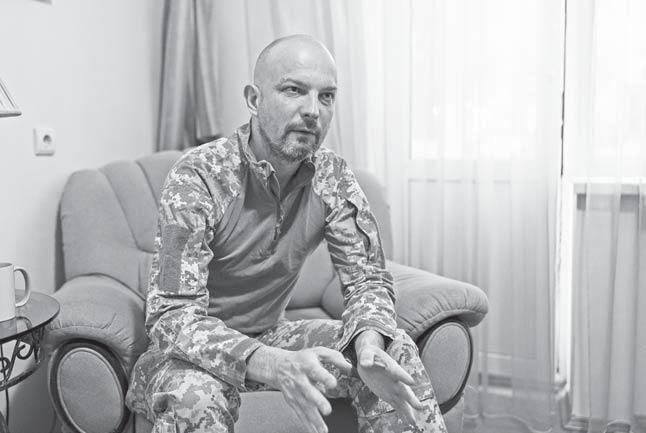
KYIV, Ukraine—As an investigative journalist, then an activist, and later a lawmaker, Yehor Soboliev sought to expose corruption in business and government as a way to defend Ukraine’s budding democracy.
Now, as a soldier battling Russia, he’s had to put those aims on hold as he fights alongside some of the people he once tried to bring down.
“Till the victory, we are on the same side,” said Soboliev, a lieutenant in a front-line drone unit.
“But maybe—definitely—after the victory, we should separate ourselves from each other. And we should continue that fight in making our country more honest, more responsible, more serving to its citizens.”
Ukraine has spent years trying to build a Western-style democracy, although not without some bumps along the way as it shed habits from its Soviet past. Russia’s full-scale invasion two years ago raised the stakes of these democracy-building efforts, which are fundamental to Ukraine’s goal of joining the European Union and NATO.
Soboliev’s feelings capture a paradox within Ukraine: To beat back Russia and remain a democracy it has felt compelled to temporarily suspend or restrict some democratic ideals.
Elections have been postponed, a once-robust media has been restrained, corruption fighting has slipped down the agenda, and freedoms of movement and assembly have been curbed by martial law. And as Russia pounds Ukraine’s cities and makes battlefield gains, the unity sparked by the invasion—and the sense of common purpose crucial to defending democracy—have come under growing strain.
Corruption ‘metastasized’ amid the war
WHEN comedian-turned-politician Volodymyr Zelenskyy was elected Ukraine’s president in 2019, he promised to crack down on corruption that had flourished for decades after the collapse of the Soviet Union.
War hasn’t made that any easier.
Corruption exists at a “frightening scale” in Ukraine, the pro-democracy organization Freedom House said in a February report, noting that it “metastasized within the army in 2023,” especially around defense contracts and men seeking exemptions from the draft.
The European Union says Ukraine must reduce corruption before it can join the 27-nation bloc and in November said the country had made “some progress” but needed to do more, especially on “high-level cases.” Ukraine’s defense minister, agriculture minister, top prosecutor, intelligence chief, and other senior officials have been pushed out over the past two years, and last year the head of the Supreme Court was arrested for allegedly taking bribes.
But Ukraine’s judiciary has been an obstacle. After Zelenskyy took office, Ukraine’s top court said officials no longer needed to declare their assets in an electronic register. That decision was overturned, in part due to public pressure—but it was just one of many that have undercut anti-corruption efforts.
Still, Olha Aivazovska, who chairs the pro-democracy charity OPORA, believes pressure to eliminate corruption will be maintained by Ukraine’s desire for EU membership.
“Ukrainian politicians will not win any elections after the end of the war if they will not be successful on the EU integration track,” she said.
‘A democracy even without elections’
ZELENSKYY indefinitely postponed the 2024 presidential election because of the war. With almost one-fifth of Ukraine occupied by Russia and millions of citizens displaced from their homes, Ukraine’s opposition leaders supported the decision, and opinion polls suggest most Ukrainians agree.
But some Ukrainians grumble
about the power Zelenskyy has accumulated. Criticism of him grew last year after Ukraine’s failed counter-offensive, and political rivals are testing the ground.
Kyiv Mayor Vitalii Klitschko has accused Zelenskyy of becoming increasingly autocratic, citing the replacement of some elected mayors with military officials. Zelenskyy’s immediate predecessor as president, the candy magnate Petro Poroshenko, says he is planning a postwar comeback. And in a possible sign of his desire to sideline rivals, Zelenskyy in February dismissed the country’s popular military chief, Gen. Valerii Zaluzhnyi.
Russian President Vladimir Putin has used the canceled elections to question Zelenskyy’s legitimacy. The idea of Zelenskyy as anti-democratic has been echoed in the US by some Republicans in Congress who oppose military support for Ukraine.
Aivazovska rejects that argument. “During wartime, Ukraine can be a democracy even without elections,” she said—as long as it strengthens its media, local government and civil society organizations.
“Russia formally had elections in March, but that doesn’t mean that Russia is a democratic state,” she said. “We need real democracy in Ukraine for development, not fake democracy as Russia has.”
Journalists come under pressure SOON after the invasion, a handful of Ukrainian TV networks combined resources to create one 24-7 channel, the “United News Telemarathon,” as a way to ensure continuity.
Public trust in the channel is low, and so are ratings, according to Reporters Without Borders, a
journalism advocacy group that has called for the arrangement to be broken up. The US State Department said the consolidation stifled competition and “enabled an unprecedented level of control” by the government by effectively establishing a single authorized broadcaster.
Ukraine has a vigorous online media that includes widely read investigative outlets, though some independent journalists say they have faced dirty tricks from the authorities.
The Committee to Protect Journalists in January called on the government to investigate threats against reporter Yuriy Nikolov, whose apartment door was plastered with notes calling him a traitor and a draft-dodger after he wrote about defense ministry corruption. That same month, the online investigative outfit Bihus. Info said its journalists had been wiretapped and filmed surreptitiously, after a video was published allegedly showing employees using drugs at a party.
In Reporters Without Borders’ 2024 press freedom index, Ukraine was ranked 61st out of 180 countries surveyed, up from 79th last year. The group said the situation is improving, citing a reduction in political interference, an outspoken media and the decision in May to readmit reporters to cover parliament.
Marichka Padalko, a TV anchor whose channel is part of the Telemarathon, said Ukrainian journalists know they must fight to ensure a free press.
“Every government is the press’ friend at first, and then they want to control it,” said Padalko, who is married to Soboliev, the former lawmaker now part of the front-line drone unit.
“There is a lot of self-censorship with Ukrainian journalists. So a lot depends on the individual decisions that you make.”
To serve or not? The draft divides society MARTIAL law, imposed on the day Russia launched its full-scale invasion, gave Ukraine’s government power to expropriate property, impose curfews, limit people’s movement, ban gatherings and more.
Men between 18 and 60 are barred from leaving the country without permission and must register with the military. Nonetheless, there has been an illicit exodus of fighting-age men.
With Ukraine’s outnumbered troops facing repeated attempts to push them back by Russia’s much larger army, the government in April lowered the conscription age and announced that it was suspending passport renewals and consular services for men of conscription age who are outside the country.
Some human rights groups criticized the move aimed at pressuring expatriates to register for the draft. But it met with broad support inside Ukraine, where the divide between those who stayed and those who left could become a fault line that threatens social unity in the future.
Aivazovska, the pro-democracy activist, said those in the military find it “difficult to accept that many others don’t want to serve.” And those who have left are scared that society “will not accept them” if they return when the war is over, she said.
Keeping the faith in democracy
DESPITE everything, research suggests war has not destroyed Ukrainians’ belief in democracy, and may have strengthened it.
Some 59 percent of Ukrainians surveyed by the Kyiv International Institute of Sociology said they felt democracy was more important than having a strong leader—up from 31 percent before the war.
In the latest survey, respondents conveyed that “Ukraine is a democratic state, but not a full democracy,” the institute’s executive director, Anton Grushetskyi, said.
Twice in the past two decades, Ukrainians have taken to the streets to defend democratic decisions. In 2004, mass protests against attempted election fraud ushered pro-Western President Viktor Yushchenko into office in what became known as the Orange Revolution.
In late 2013, Moscow-friendly President Viktor Yanukovych scrapped an agreement to bring Ukraine closer to the EU. Protesters flooded Kyiv’s Independence Square and were met by a brutal police crackdown. Yanukovych was ultimately ousted in what became known as the Revolution of Dignity.
Putin annexed Crimea soon afterwards, and then Moscowbacked separatists began an uprising in eastern Ukraine’s Donbas region that grew into a conflict that left thousands dead.
More than two years after Putin escalated with a full-scale invasion, many Ukrainians are tired and traumatized by a war in which victory feels remote. But, by and large, they do not feel powerless to influence events, something experts say is key to the country’s resilience.
Political scientist Olexiy Haran said Ukraine has retained an impressive level of democracy despite the war.
“And definitely it’s not only because of our government, but it’s also because of opposition, civil society, the expert community, media,” he said.
Soboliev, who joined the army on the day of the February 2022 invasion, was an organizer of the 2013 protests against Yanukovych, and sees the current war as an extension of that struggle for democracy.
“I wrote about democracy. I tried to build to improve democracy, and now I am fighting for it,” he said.
Sitting in the family’s Kyiv apartment as her husband prepared for a deployment to the front, Padalko conceded that democracy “is struggling during war.”
“But we need to bring a new democracy to Ukraine after the war is over,” she said.
Their son Misha, who was 7 when Russia seized Crimea and 15 when the full-scale invasion began, once dreamed of being a professional soccer player. Now 17, he focuses on his studies and, in time off from class, has built a drone to send to his father’s unit.
“But then I understand that the good food, the good other things— good friendships, relationships— could be only in a free state,” he said. “For me it’s motivation to work every day, hard, and to win this war for independence.”
The Associated Press journalists Illia Novikov and Alex Babenko in Kyiv contributed to this story.
By Sanne Wass
DANISH chef Rasmus Kofoed has no regrets about going mostly meat free at histhree-Michelin star restaurant, even if the decision spurred a wave of hate from across Denmark.
“We got a lot of angry e-mails from people who said they hoped we would go bankrupt and close,” Kofoed recalls in an interview in Geranium, his chic and bright restaurant located at the national football stadium in Copenhagen.
“It’s like people think you come and steal something from them,” says Kofoed, who wasundeterred by the uproar. The chefchanged the menu to largely plant-based fare in 2022 andearned a covetedworld’s best restaurant award that same year.
TodayGeranium has more customers
than ever, he says. Geranium is part of the Danish capital’s growing reputation as a revolutionary culinary destination, but the domestic furor over its menushows not everyone in Denmarkis ready for innovativeplant-based cuisine. Many Danes have been raised on bacon and butter, and feel passionately about their traditional pork sandwiches and meatballs.
This national identity with food is part of the challenge for Denmark as it undertakes an ambitious experiment to curb its 6 million people’s appetite for meat and dairy. In an effort to slash tons of agriculture emissions from its carbon footprint, the Nordic nation is rolling out what is the world’s first government-led action plan for plant-based foods. The 40-page strategy, which involves no bans or restrictions, embraces a number of unconventional initiatives to make
animal-free meals more enticing, tastier and accessible.
This weekend, dozens of food guideswill be deployed at a summer music festival to mingle with concertgoers and stage engaging plant-based cook-ups. A hospitality college in Copenhagen is developing a vegetarian chef degree, while business conferences are trying to nudgeattendees toward veggie options. These are just some of the first 36 ideas getting a boost from a$100 million Plant Fund that accompanies the plan.More grants will soon be handed out after a second funding round was flooded with applications.
Creative solutions are needed to address some of the biggest unsolved climate challenges. Livestock is estimated to make up some 14.5 percent of global greenhouse gas emissions and is a drag on land and water resources. Getting people in high-income
countries to eat less meat has been singled out as a key way to help the planet.Swapping out beef for a single meal can almost halve a person’s carbon footprint for that day. Yet, governments have typically stayed away from policies aimed at influencing consumer behavior, especially when it comes to everyday staples. Meat is an increasingly divisive topic embroiled in political culture wars. Governments in the Netherlands and New Zealand have backtracked on livestock policies amid protests from farmers.
So the plan from Denmark—a large pork and dairy exporter—makes it even more spectacular in the eyes of the international audience, says Rune-Christoffer Dragsdahl, secretary general of the Vegetarian Society of Denmark. It lacks concrete targets and as a result is not politically contentious, something that has helped win over both vegetarians and the country’s food lobby.
“It sends a signal to countries that are similarly deeply rooted in the meat tradition that it’s possible to create dialogue and start initiatives for change. It’s easy to copy-and-paste,” Dragsdahl says.Just this week Denmark also succeeded in negotiating a tax on farm emissions with key industry players.
Other European nations have been “asking curiously” about the details of Denmark’s action plan—which the government has now translated into English—and expressing interest in taking a similar approach, says Jacob Jensen, Denmark’s food minister.
What characterizes Denmark’s strategy and its Plant Fund projects is they steer clear of words like “vegetarian” or “vegan,” whichhelps to depolarize the topic.
Take business tourism groupMeetDenmark, which has received funding to
encourage people to choose plant-based foods at corporate events. One secret is to name dishes anything but vegan or vegetarian, says Sanne Holden Venlov, a green gastronomy consultant who will be training staff as part of the project. Caterers often default to these labels, she says, but they give little information about what you’re eating.
“It doesn’t have any positive sensual words that make you want to order this fantastic meal they’ve prepared,” Holden Venlov says. “Tell me what’s in the dish, the preparation method, or the vegetables you’ve used to create it.”
The project, like several others, builds on behavioral science and “nudges,” small, easy-to-dointerventions that don’t restrict people’s choices but can be a powerful lever for changing behavior. With assistance from Celia Bergin/Bloomberg
By Lucca De Paoli & Jess Shankleman
STEADY revenue. Little controversy. And institutional investors tripping over themselves to be involved. Water was supposed to be a boring business. Yet Macquarie Group’s decade as owner of Thames Water was anything but.
Funds managed by the Australian bank and asset manager made about £930 million ($1.2 billion) by selling off a 48 percent stake in the UK’s biggest water company before 2018, according to a person familiar with the deals and Bloomberg calculations. Those who bought that stake from Macquarie now regard it as virtually worthless, with one shareholder writing off almost £1 billion it invested.
On top of the profit Macquarie made on the sale of its equity in the firm, the utility also paid out about £1.1 billion through dividends and interest payments on shareholder loans, filings show. Macquarie’s investors made a return of around 2.5 times on their original investment in Thames Water over its 11 years in charge, according to the person— roughly £1.65 billion. No dividends have been paid to the utility’s ultimate shareholders since Macquarie exited the business in 2017.
The previously unreported figures show the extent to which Macquarie was able to take advantage of industry rules and leverage to supercharge a water company generating stable revenues, into one capable of producing cash to pay investors high dividends.
Interviews with several people familiar with the company and its regulator, Ofwat, during the period of Macquarie’s ownership paint a picture of an adroit financial operator.
One that was helped by a flawed Ofwat-managed pricing system, which encouraged water companies to take on ever greater levels of debt. That indebtedness has left parts of the industry struggling to survive.
None is more exposed than Thames, which is often seen as the embodiment of the failings in the UK water industry. Its future has become an issue in the July 4 general election with a new government facing the possibility of having to bring the water utility into special administration or temporary state control. It comes against a backdrop of untreated sewage pumped into rivers and seas, the prospect of a 56 percent increase in bills up to 2030, and creaking infrastructure that have sparked anger among the company’s 16 million customers and politicians.
The precarious finances at Thames pose an existential threat. Before Macquarie bought the utility in 2006 it had net debt of £2.4 billion at operating company level. By the time the Australian group sold up a decade later that had more than quadrupled to £11 billion. Debt in the operating company—the
part regulated by Ofwat—now stands at £14.7 billion.
Macquarie has said that debt raised at Thames helped fund necessary investments into the network. And while it acknowledged that debt as a proportion of earnings before interest, taxes, depreciation, and amortization did increase under its ownership, it said this was down to regulatory changes.
Yet that debt—at a time of higher interest rates— has crippled Thames and its parent company Thames Water Kemble Finance Plc, which Macquarie helped create before the 2006 purchase. In April Kemble told investors it would default on its debts, and its bonds due in 2026 are now virtually worthless.
Ofwat will make a draft ruling on whether Thames’s next fiveyear business plan is viable on July 11. Without the nod from the regulator Thames may find it impossible to raise the billions of pounds in equity needed to fund its turnaround plan to fix chronic leaks and the sewage spills. On Monday the UK’s main opposition Labour Party—which looks poised to take power after the election—said it wanted to avoid any kind of long-term state ownership of Thames and is searching for alternative solutions.
The Ofwat review—which will set consumer prices and determine how much it will cost water companies to borrow— will be the most consequential since privatization in 1989 because the political stakes are so high. For Ofwat, making the right assumption is critical. It needs to show that it’s protecting consumers and keeping bills down, while also helping to drive long-term investment in the industry. The final Ofwat decision is expected in December.
Thames has requested more favorable terms from the regulator in the hope of attracting investors. Chris Weston, the utility’s chief executive since January, has said that once Ofwat makes its decision he will go to the market again to find new investors. That hunt for new backers was made more difficult when one of the two investors who bought stakes in Thames from Macquarie in 2017—the Ontario Municipal Employees Retirement System—wrote off the entire value of its £990 million stake in Kemble. Other investors are expected to lose equally heavily. If Ofwat sets a low Weighted Average Cost of Capital or WACC — the regulator’s best guess of how much it will cost water companies to borrow money and invest in infrastructure over a fiveyear period—it could be all

but impossible for Thames to avoid insolvency. Weston has said that the company, which has enough money to operate until July 2025, has other options to explore before reaching that point.
“If the current owner is valuing at zero a company that’s not just a natural monopoly, but a statute monopoly and an essential service with a growing population, with no competitors, I would think it would take quite a lot to persuade any other investors to start buying this company,” said David Hall, visiting professor at London’s University of Greenwich who has written extensively on the water industry. “The alternative private sector owner option is now disappearing fast for all the companies, but I think it must have disappeared completely for Thames Water.”
Financial or structural engineering?
THE seeds of the crisis were sown 15 years ago in the depths of the financial crash, say company and industry insiders. Macquarie, and other water company owners, were encouraged to raise debt after Ofwat set an implied cost of borrowing—part of the WACC—at a level far higher than was needed for the firms to raise financing. It meant that every time a bond was issued Thames or other water companies made money from the difference between the theory and the reality.
In the first full year after the Macquarie-led 2006 takeover, the regulator allowed for an implied cost of borrowing of 4.3 percent while Thames Water issued a series of inflationlinked bonds totaling £1.1 billion, all with an interest rate of less than 2 percent. This financial arbitrage incentivized many water companies to raise
debt.
Part mathematical formula, part academic exercise, the WACC can only ever be an educated guess. But it has taken on totemic importance in an industry strapped for cash. In effect, the companies, all monopolies, are given permission by the regulator to make a certain level of return, but the process is more akin to a thought experiment than a functioning market price. Only since 2019 has Ofwat, which said it could not comment during the election campaign, indexed the cost of debt to a market benchmark that protects against changes in the cost of finance.
In the aftermath of the financial crisis, Ofwat officials were in a bind. They needed to set the WACC for 2010 to 2015 without any idea of which way interest rates were heading. So they set it at 3.6 percent.
They couldn’t have been more wrong as borrowing costs were forced ever lower by central bankers dealing with the fallout from the crash.
Officials acknowledge that they relied too heavily on credit ratings companies to prevent the utilities from taking on too much debt. Many water companies retained healthy ratings even as they became more and more indebted.
“When the great financial crisis happened and interest rates went to the floor, Ofwat never revised what the cost of capital was,” said Tim Whittaker, a research director at the EDHEC Infrastructure Institute. “For years, Macquarie got away with just gearing up the balance sheet adding as much debt as it could, and it allowed them to rip that cash out essentially without the investment in the business itself.”
Of the £11 billion Macquarie invested in Thames Water infrastructure during its ownership, more than 85 percent was funded by debt. The remaining 10 percent to 15 percent was equity generated by the business, also known as retained earnings. Macquarie said it ran Thames with a prudent level of leverage, and that the annual returns of 12 percent-13 percent were only a little higher than Ofwat’s baseline level of roughly 10 percent.

With Thames issuing cheap debt, money generated by the business could be returned to shareholders. Between 2010 and 2014, more than 70 percent of the cash available at Thames was sent to investors in the form of dividends and loan repayments, according to EDHEC analysis. Shareholders received nothing in 2007, and then more than £100 million in 2008. The payouts continued until 2017, totaling more than £1 billion in all, a large chunk of which would have gone to Macquarie.
A spokesperson for Macquarie said it could not comment on the EDHEC calculations. But said that “as a result of the stepchange in investment, Thames Water doubled in size during our 11 years of part-ownership. The total returns earned by our investors over that period were in line with listed UK utility companies. Thames Water fulfilled the license conditions set by the regulator during our period of investment and maintained an investment grade credit rating.”
After 2014 Ofwat made it harder for water companies to raise debt and investor returns were dramatically cut. But it took almost a decade for Ofwat to gain powers to stop water companies from paying dividends to service the debt of their parent companies as Thames had done with Kemble.
Officials speaking on condition of anonymity said that until 2021 they had to rely on coercion and embarrassment to achieve reductions in leverage. But in April 2023, Ofwat announced that poorly performing companies wouldn’t be allowed to pay dividends. Just seven months later, Thames paid Kemble £37.5 million to service its debt and Ofwat started the investigation that ultimately led to its shareholders cutting the company off from new equity.
Hall characterizes the current situation as a “belated political economy standoff” between the regulator and the companies over the question of whether shareholders are prepared to put in their own “capital to finance necessary investments for our public services.’”
Of the £11 billion Macquarie invested in Thames Water infrastructure during its ownership, more than 85 percent was funded by debt. The remaining 10 percent to 15 percent was equity generated by the business, also known as retained earnings.
Macquarie said it ran Thames with a prudent level of leverage, and that the annual returns of 12 percent-13 percent were only a little higher than Ofwat’s baseline level of roughly 10
percent.
“It’s disappointing that the UK media has chosen to have a very narrow narrative on this and make a big deal of the debt in Thames Water, trying to link it to us who didn’t own the asset for six years now.” Macquarie Chief Executive Officer Shemara Wikramanayake told the group’s annual general meeting in 2023.
“It was investmentgrade when we stopped owning the asset,” Wikramanayake added, referring to Thames Water’s credit rating.
The Macquarieaffair MACQUARIE’S affair with the British water industry began two decades ago when it spotted opportunities in the fragmented monopolies washed up by the 1980s privatization of the sector. It bought South East Water Ltd. for £386 million in 2003, before selling it three years later for £665 million and bidding for Thames, then owned by German energy company RWE AG. The Australian bank led a consortium that bought the firm for £4.6 billion in 2006, taking a 48 percent stake and responsibility for managing the company.
The new owner was hands on, according to people who worked there at the time and determined to cut costs and simplify the business. With prices set by the regulator, keeping costs low, along with leverage, was the best way to drive shareholder returns.
The gearing—a measure of debt relative to capital at a utility—ultimately reached more than 80 percent at Thames Water as Macquarie sold down its stake in the company in three tranches between 2011 and 2017. With low interest rates the debt load looked high, but manageable. Then one day it wasn’t. Almost two-thirds of the company’s debt was linked to inflation or carrying floating rates, keeping issuance costs low. That backfired when prices soared in 2023.
The debt that Macquarie loaded on to Thames has proved unsustainable. Kate Bayliss, an economics research associate at London’s School of Oriental and African Studies, likens Thames customers to renters of “their water system” who are having to pay “their landlord’s mortgage while the repairs are not being done.”
The landlord is now in arrears and the fight is on over whether the tenant’s rent needs to go up, or the lenders need to take some losses. The original landlord, Macquarie, is long gone. Instead it will be for a new UK government to determine what happens next. Bloomberg News


BACTERIAL infections in tilapia, a bane in the fish industry, may soon be a thing of the past, thanks to the research on fish oral vaccine.
The project, “Use of Fish Oral Vaccine in Tilapia Aquaculture System,” produced an oral vaccine to combat the problem of bacterial infection caused by Motile Aeromonad Septicemia (MAS) in fish, which continues to increase mortality rates in local species like tilapia.
The research was under the Department of Science and Technology’s Collaborative Research and Development to Leverage Philippine Economy (DOST-Cradle) Program, the Trinity University of Asia (TUA), in partnership with Santeh Feeds Corp.
The project noted that in Taal Lake alone, about 50 percent of approximately 600 million fingerlings stocked annually died of infection and other causes.
Fish mortalities are caused by various factors, including bacterial infections, such as highly fatal hemorrhagic septicemia, or MAS.
Around P150 million are lost yearly due to fingerling mortalities.
“Through R&D [research and development], we can support local industries by developing sciencebased solutions to address their concerns,” said Science Secretary Renato U. Solidum Jr.
“The fish oral vaccine through feeds will be able to support our tilapia industry, most especially our backyard farmers, since it is easy to administer and is a cost-effective solution in ensuring that the fish stock is less susceptible to diseases.”
This DOST Cradle Project implemented by TUA took the fish industry to a higher level by developing a fish oral vaccine that could be incorporated into fish feeds.
“This oral vaccine was initiated to increase fish production through better fish health management and possible prevention of the threat of zoonotic infection that might come from these pathogens,” said Dr. Anacleto M. Argayosa, the project leader from TUA.
The vaccine is developed by having tilapia microbial pathogens mass-cultivated and inactivated using applicable techniques.
The inactivated cells are protected through a naturally occurring nanomaterial as a carrier. The encapsulated bacterial cells carrying the antigens are mixed with the feeds and given as normal feeds during mass immunization.
“When we were offered to partner with Doctor Argayosa on this

THERE are scientists whose works are immediately appreciated by people—such as the molecular biologists and pharmaceutical scientists who develop medicines and vaccines and find cures for cancer; climatologists and environmental scientists who monitor the weather and fight climate change; engineers who invent thinner gadgets and faster electric cars.
And there are those like particle physicist Dr. André David, whose work veers into the more unfamiliar realms of science, the kinds that elicit unimpressed comments like “What for?” and “How will this help me in my everyday life?”.
David works at the European Organization for Nuclear Research, better known as CERN (Conseil Européen pour la Recherche Nucléaire), located on the border between Switzerland and France.
Last February, he was at University of the Philippines DilimanCollege of Science (UPD-CS) giving a talk to students of the Science, Technology and Society (STS) course about the very reason we do science.
Judging solely from his familiarity with the weather (he wore khaki shorts and a beige shirt to reflect the heat) and his almostnatural interjections of parang and ano between his sentences, he is not unaccustomed to the Philippines.
Back at CERN, he and thousands of researchers from across the




project, we were hopeful that the vaccine will solve the farmers’ long-running problem of low fish survival,” said Daniel V. Cabrera, national sales manager of Santeh

we are helping the farmers and the tilapia farming industry to become more sustainable,” Cabrera added.
Tilapia has been considered as one of the most affordable fishes in the country. Its annual sales volume of around P24 billion has contributed to the country’s economic growth and food security.
The Philippines is one of the top tilapia-producing countries in the world. However, due to bacterial infections, an increasing tilapia mortality rate has been observed.
Feeds Corp.
“We also hope that the cost of the vaccine that is added to the fish feed will not significantly impact the cost of the feed. If this happens,

globe are demystifying the fundamental particles that make up the universe, particles much smaller and more elusive than the familiar protons and electrons.
Using ring tunnels that span kilometers in diameter, called particle accelerators, they accelerate protons to near lightspeed and smash them together.
The particles that unfurl from the collisions are what they study, revealing not only the most fundamental building blocks of matter but also the interactions that govern them.
In 2012, CERN announced the discovery of the Higgs boson, a particle that had eluded scientists since Peter Higgs theorized its existence in 1964. Higgs sadly passed away on April 10, 2024. The Higgs boson gives particles their mass, allowing everything— stars, planets, life—to exist. Because of its significance, CERN’s discovery of the Higgs boson is considered one of the biggest scientific achievements in recent history.
But some still wonder why it’s even necessary to look for these particles, a sentiment that has only grown more prevalent after the discovery.
Beyond the mental calisthenics and existential what-ifs, what has the Higgs boson contributed to our daily lives? Did it make our coffee taste better, our days cooler, our sleep deeper?
One might even argue that there’s no discernible difference between their lives before and after
knowing the Higgs boson exists.
When I asked David if he has one-liners in response, developed from having been confronted with these questions countless times, he was quick to clarify he doesn’t.
“I’m no Richard Feynman,” he said.
But in his lecture at UPD-CS, he had passingly said something that I thought, in hindsight, summed up his points succinctly: “You won’t see if you don’t look.”
That is, discoveries come from exploring the unknown, not from working on what’s already known, and “should you not seek, you are guaranteed to not find,” he explained to this writer.
“The importance of new findings is that they can only be rendered useful if they are brought into the light of our collective knowledge. No amount of applied research on candles would have made the electric lightbulb possible,” he pointed out.
Indeed, when William Gilbert was investigating why amber attracts straws and chaff, he didn’t know he was laying the groundwork for what is now an essential component of the modern life.
He was examining how static electricity works and had devised the first electrical measuring instrument called the electroscope—a simple pivoted needle that revolves when drawn near a lightly rubbed amber.
During his time in the 16th century, the world was run by horsedrawn carriages and manual labor.
At the time, there were no apparent applications for the phenomenon that made amber sticky, nor would there be until 200 years later when Ewald Georg von Kleist and Pieter van Musschenbroek independently invented the Leyden jar, a device used to store electric charge.
Even then, Gilbert’s, Kleist’s, and Musschenbroek’s works would not be fully realized until the 19th century, when inventors—such as Alexander Graham Bell and Thomas Edison—developed the first practically usable electric devices such as the telephone and the incandescent light bulb.
Many scientists in the Renaissance were working on things that offered no immediate improvements to their quality of life, nor any apparent use until much later.
When Isaac Newton was investigating why apples fall to the ground, he didn’t know his law of gravitation would be used to shoot satellites into orbit.
When Robert Hooke and Antoni van Leeuwenhoek created the first microscope to observe the curious life of microorganisms, they didn’t know their work would become the backbone of modern medicine.
“What seems abstract now may become commonplace later,” David said.
And what type of world would we have without them?
Had Hooke and Leeuwenhoek not created the microscope, molecular biologists and pharmaceutical scientists today would not have any means of developing vaccines.
The DOST-funded project has successfully produced a fish oral vaccine called Fishvax Aero deployed in Laguna and Batangas.
As a major accomplishment, 50 percent relative survival (RPS) of the fingerlings tested in San Luis,
Had Newton not investigated gravity, climatologists and environmental scientists would not have spatial heat maps and typhoon images generated from space.
Had Gilbert not cared for amber, engineers would not have gadgets to make thinner or electric cars to make faster. One might even argue that virologists and climatologists and engineers wouldn’t exist.
Still, that’s not to say applied researchers are inferior to scientists like David.
“I equally respect those who prefer to exploit what is known and make it better instead of exploring the unknown,” he clarified. “I suspect that eventually, the best for humans as a whole is that both proclivities coexist.”
Humans have prospered precisely because both types of endeavors have existed since antiquity.
While at certain moments cavemen were hunting for food and fighting predators, at other times they investigated the glowing orb that appeared when lightning struck the ground, which gave succeeding humans the knowledge to control fire.
Our instinct to explore the unknown is hardwired into our nature in much the same way as caring for our well-being is, and it is inhuman to disregard one over the other.
Science, as we now know it, is the fulfillment of our human nature, achieving both goals of improving our lives and exploring the world simultaneously.
“I would say the scientific method is probably one of the least bad ways we’ve found to actually learn things about this reality,” David said.
Now, scientists like David are taking care of half the job. But just because their works may only be useful later doesn’t mean they are futile now.
For instance, in a cost-benefit analysis conducted by researchers at the University of Milan and the Centre for Industrial Studies in Milan, they estimated a 92 percent probability that the benefits of CERN exceed its cost, with an expected net present value of about €3 billion. And that’s not including
Batangas, showed promising results for further application of the Fishvax Aero for the second dose and subsequent grow-out. Survival rate through the RPS is the standard value to measure the vaccine’s efficacy. The vaccine tends to be more effective with higher RPS.
Continued application of Fishvax Aero in the succeeding cultures and phases minimized tilapia mortalities.
A policy on using fish oral vaccine technology is set to be recommended upon project completion. This technology is expected to benefit the tilapia fish farmers and would eventually contribute to the aquaculture industry in the country.
Rizza B. Ramoran/S&T Media Services
the unpredictable economic value of discoveries.
Beyond the numbers, the impact of CERN on its thousands of collaborators is priceless.
“Year in and year out, I can see the impact that passing through CERN has on people from all walks of life and stages,” David said. “That impact on their lives and careers is very tangible and one of the largest added values of projects like the ones that only a transnational organization like CERN can host.”
We don’t need to look any further than our scientists for examples.
Dr. Marvin Flores of UPDCS National Institute of Physics (NIP) and the High Energy Physics and Phenomenology (HEP-PH) subgroup have been collaborating with CERN scientists since 2021.
“Being part of the Atlas Collaboration at CERN is a surreal feeling,” he said. “It greatly skyrocketed my love and appreciation for fundamental science and curiosity-driven research.” For Flores, the collaboration is also a source of inspiration.
“Our first baby boy, who was born recently last April 15, is named Atlas partly because [of] it.” The Atlas collaboration at CERN, which involves 9,000 collaborators, transcends borders and brings people together.
“Here is a collaboration made of scientists from all around the world who have come together regardless of nationality, race, religion, political stance, and societal status, to ask the fundamental question: at the tiniest of scales, what is the universe made out of?” Flores said.
At the very least, these scientists who dedicate their whole lives to the pursuit of the unknown deserve the same level of respect as applied researchers.
On a personal note, David still finds it difficult to articulate why he does science.
“It is not easy to explain why I enjoy working on things that I may not be around to see the fruits of,” he said. “I am doing my best now with a common interest of learning more about what matter is made of, that may come only to fruition after I am gone.” Harvey Sapigao

A10 Sunday, June 30, 2024
VATICAN—Pope Francis called drug traffickers criminals, murderers, and “traffickers of death” during his general audience on Wednesday.
“We cannot ignore the evil intentions and actions of drug dealers and traffickers. They are murderers!” Pope Francis said in St. Peter’s Square on June 26.
“Drug traffickers are traffickers of death driven by the logic of power and money at any cost,” he added.
The pope dedicated the entirety of his last Wednesday audience before taking a break for the summer to mark the World Day against Drug Abuse and Illicit Trafficking.
The United Nations’ annual report on drug trafficking, released on June 26, reports that drug use worldwide has increased to 292 million people in the past decade, with cocaine production trafficking reaching an all-time high in 2022.
The UN report also details the increase in overdose deaths due to the emergence of nitazenes— a group of synthetic opioids it describes as “potentially more dangerous than fentanyl.”
Pope Francis lamented the “plague” of drug addiction in many countries, saying that “drugs trample on human dignity.”
“Having known many tragic stories of drug addicts and their families, I am convinced that it is morally necessary to put an end to the production and trafficking of these dangerous substances,” he said.
The pope underlined that “a reduction in drug addiction is not achieved by liberalizing their consumption,” calling the idea “a fantasy.”
Pope Francis also applauded efforts by Catholic ministries around the world who offer assistance and recovery programs to those struggling with addictions, as well as bishops’ conferences who have advocated “just legislation and policies.”
He highlighted the efforts of the Latin American Pastoral Accompaniment and Prevention of Addictions organization, known

AS the Catholic Church’s humanitarian and advocacy arm launches a major fundraising campaign, a top official emphasized that trust and accountability are basic principles for cooperation.
Caritas Philippines Executive Director Fr. Carmelo “Tito” Caluag said that accountability can turn donor funding into charitable impact.
“Let us make sure that the money entrusted to us is used properly,” Caluag said.
The priest is spearheading the organization’s “expanded” Alay Kapwa (AK) Lenten fund drive to year round, hoping to raise at least P500 million a year to sustain its projects.
The initiative aims to secure 1 million donors by 2025, each committing to contribute at least P500 annually for Caritas’ programs on disaster response, health, education, livelihood and food security, ecology, and capacity building.
Established in 1975 by the Catholic Bishops’ Conference of the Philippines, Alay Kapwa aims to raise awareness about the plight of the poor and foster
networks of compassion.
“There are many great programs, but when funds run out, they stop. That’s why sustainability is very important,” Caluag said.
But besides funding, he emphasized the need for “monitoring and evaluation” to ensure programs work as planned and stay effective.
“Let’s be prudent in laying the foundation of the [AK expanded] program,” he added.
The national Caritas has been touring the country to promote the fundraising campaign in various dioceses.
The detailed aspects of the program were also discussed during the 41st National Social Action Assembly held in Iloilo City last week.
The biennial gathering brought together over 250 directors and staff from social action centers across different dioceses in the country.
“It’s not just a fund raising, it’s a mission. We want them to pledge to a mission. The donation is simply a means of expressing their commitment to mission,” Caluag told the participants. Roy Lagarde/CBCP News




June 26. AP/ANDREW MEDICHINI
as Plapa, for its work to address alcoholism, drug abuse, and other forms of addiction, such as pornography.
“Let us remember…that every drug addict brings with him a different personal story, which must be listened to, understood, loved and, as far as possible, healed and purified.… They continue to have, more than ever, a dignity, as people who are children of God. Everyone has dignity,” Francis said.
The UN established the World Day against Drug Abuse and Illicit Trafficking in 1987. The theme for this year is “The Evidence Is Clear: Invest in Prevention.”
Quoting St. John Paul II’s 1987 speech against drug trafficking, Francis said: “‘Drug abuse impoverishes every community in which it is present. It diminishes human strength and moral fiber. It undermines estimated values. It destroys the desire to live and contribute to a better society.’”
After his strong words about how drug traffickers “sow violence and death,” Pope Francis offered a prayer for their conversion.
“Let us pray for these criminals who give drugs to young people. They are criminals, they are murderers. We pray for their conversion,” Francis said. Courtney Mares/ Catholic News Agency via AP
Editor: Lyn Resurreccion • www.businessmirror.com.ph
ACATHOLIC archdiocese is using a special weapon against China’s aggression in the West Philippine Sea: the rosary.
Archbishop Socrates Villegas of Lingayen-Dagupan, in a pastoral letter, urged Catholics to engage in a “Rosary Campaign” from June 27 to the Solemnity of the Assumption on August 15. He also encouraged acts of penance and supererogation “with particular intensity” during this period.
“May the power of the rosary preserve our nation’s faith and freedom. May the power of the rosary crush the serpent’s head! May the power of the rosary drive away Satan’s power from our shores,” Villegas said.
The archbishop invites Catholics not just in his archdiocese but throughout the country to join in the prayer activity.
“May God be honored by all that we do for our country, our people and their future; for our faith and our Church, for the freedom to believe and the freedom to worship as we believe,” Villegas added.
Calling China a “threat,” he voiced concern over its increasingly assertive actions in the disputed territories.
He said China shows no fear and no hesitation “in inching menacingly close to the Philippines.”
He lamented China’s encroachment on Philippine maritime zones, displacement of fishermen, and environmental degradation by building islands and militarized structures.
“There is evidence of insidious
attempts by a foreign power that governs by an ideology that recognizes no God and keeps all religion and the practice of faith under the heavy heel of its totalitarian boot to ‘trample our sacred shores,’” Villages said. He also expressed concern about government infiltration by individuals paid by Beijing or Filipinos benefiting from China, endangering the country’s sovereignty.
“It is not impossible for foreigners with malicious intent to acquire documentation allowing them not only entry but residence in the Philippines, perhaps even to pass themselves off as natural-born Filipino citizens and, thus, qualify for public office,” Villegas pointed ouy.
Amid these challenges, the archbishop urged various sectors to defend the country.
He called on lawmakers to conduct thorough investigation into Chinese infiltration in government and local institutions.
He also urged prosecutors and judges to uphold justice, stressing the need to prosecute anyone who has undermined legal and administrative processes, risking national security and interests.
The archbishop also urged the uniformed personnel patrolling Philippine waters to protect Filipino fishermen, uphold national sovereignty, and safeguard the country’s territory and seas.
Addressing the ordinary Filipinos, especially those in his archdiocese, he encouraged them “to stand proud and tall and not to cower in fear.” CBCP News
WHEN Pope Francis addressed a group of top international comedians on June 14, he called them “artists” and stressed the value of their talents.
To many Catholics, this meeting came as a surprise. Traditionally, the themes of detachment, sacrifice, humility and repentance appear far more frequently in religious writing and preaching than the spiritual benefits of a good laugh.
But as a specialist in medieval Christian history, I am aware that, since antiquity, many theologians, preachers, monastics and other Christians have embraced the role of humor as a valuable part of Christian spirituality. Some have even become popularly known as the patron saints of comedians or laughter.
Comedy is natural
MANY Catholic saints have considered laughter to be an integral part of nature itself.
For example, the 12th-century German nun St. Hildegard of Bingen, a mystic poet and musician, wrote in a poem on the power of God: “I am the rain coming from the dew That causes the grasses to laugh with the joy of life.”
In the 13th century, St. Francis of Assisi called himself the “Jongleur de Dieu”—troubador or jester of God—because of his ministry.
He probably used a French reference because his mother came from France and spoke French at home. Francis and his followers wandered from town to town, singing God’s praises and preaching joyfully in the streets. People laughed when he preached to birds in trees, and he once had to politely ask a large flock to stop chirping first.
The 16th-century nun and mystic St. Teresa of Avila wrote in a poem, alluding to the voice of Jesus Christ as love: “Love once said to me, ‘I know

a song, would you like to hear it?’ And laughter came from every brick in the street And from every pore in the sky.”
Humor and play are an important part of human nature. They provide opportunities for relaxation and relief, and offer a way to cope with the challenges of human life.
In the 13th century, Dominican scholastic theologian St. Thomas Aquinas composed a lengthy summary of theology that became one of the most important resources in the Catholic tradition: the Summa Theologica.
In it, he argued that humor and other kinds of joyful recreation offer the mind and soul the same kind of rest that the body needs. Aquinas cautioned, however, that these kinds of words or activities must not become hurtful or indecent.
Comedy can heal
THE shared experience of laughing can break down barriers across cultures and bring people together.
St. Ignatius of Loyola, the founder of the Jesuits in the 16th century, is said to have danced a jig to raise the spirits of a despondent man on retreat; he also praised a Jesuit novice for his healthy laughter.
In the same century, St. Philip Neri, who has been called the patron saint of humor and joy, was reputed to be a mystic and visionary. To put others at ease, he engaged in pranks and jokes, once attending a gathering with half of his beard shaved off.
Some famous Catholic saints even faced death with a smile, such as the second-century deacon St. Lawrence, one of the patron saints of comedians.
The legend goes that as he was executed by being roasted alive on a gridiron over a hot fire, he joked with his executioners, saying, “Turn me over…I’m done on this side!” This legend has carried over into the official story of his life.
The Carmelite nun St. Therese of Lisieux also lived a life marked by humor in the 19th century.
Even as she lay dying from tuberculosis at the age of 24, she is said to have joked with the other nuns and her doctor. Supposedly, when a priest was called to give her the last rites, he refused because she looked too healthy.
She replied that she would try to look sicker the next time he was called.
Popes and humor FRANCIS is far from the only
pope to stress the value of humor in Catholic and Christian life. Pope St. John XXIII, who in 1961 summoned the Second Vatican Council, calling all Catholic bishops worldwide to a series of formal meetings at the Vatican to update Catholicism, was known for his humor.
Famously, when asked once how many people worked at the Vatican, he replied, “About half of them.”
The next pope, St. Paul VI— elected in 1963—was an accomplished administrator known for his wit. One of his papal documents was on the importance of “Christian joy.”
Now on the path to sainthood as “blessed,” John Paul I, who reigned for only a month in 1978, was known as “the smiling pope” because of his cheerfulness.
Pope St. John Paul II, the first non-Italian elected pope in almost 500 years, was only 58 years old when elected in 1978, and he was well-known for his sense of humor.
The German cardinal who succeeded him in 2005, Pope Benedict XVI, also valued the role of humor in a balanced Christian life:
“Humor is in fact essential in the mirth of creation.” he said. And before this 2024 audience with comedians, Francis discussed the topic of humor more fully in his 2018 apostolic exhortation. In this important document, addressed to the whole Catholic Church, the pope stated that holiness is within the reach of every believer and is achieved through a joyful life. Humor has a section of its own within the exhortation.
In the audience with comedians on June 14, Francis, who took the name in honor of St. Francis of Assisi, the troubadour of God, has very publicly affirmed that for Catholics, humor is an important part of a faithful life.

Asean Champions of Biodiversity Media Category 2014
Editor: Lyn Resurreccion



By Jonathan L. Mayuga
HE Philippine Coral Bleach-
ing Watch recently shared an alarming trend of coral bleaching in the Philippines.
“We are seeing more areas in Northern, Central and Western Philippines in Alert Level 2 where significant bleaching is expected,” the group said on June 22 on its Facebook account, adding that coral mortality is “likely” to happen.
Areas in Alert Level 2 include Dasol Bay; parts of the Palawan region, including El Nido; Calabarzon, such as Tayabas Bay; Marinduque; parts of Negros; Sulu Sea; Moro Gulf; and Celebes Sea off the coast of Mindanao.
It added that bleaching is likely happening in areas with Alert Level 1—particularly parts of Southern Philippines, Zamboanga Peninsula, parts of Mindoro, Romblon, Sibuyan, Masbate and Samar.
Coral bleaching, which almost always leads to the death of corals, is caused by various factors.
Effect of climate change
CORAL bleaching is caused by prolonged high temperatures due to the warming of the oceans caused by climate change and other manmade factors, Danny Ocampo told the BusinessMirror via Messenger on June 18.
Ocampo has documented an alarming coral bleaching episode at the Tubbataha Reefs in Palawan early this month.
Among the man-made factors that warms the ocean water include the discharge of warm water from power plants.
“As individuals, we should do our best to help stop climate change by calling on our government to adhere to commitments to reduce our carbon footprints and stop single-use plastics since they are made from fossil fuel that leads to climate change,” said Ocampo, an ocean conservation advocate.
“We should also support real solutions that protect and rehabilitate coral reefs, such as the establishment of marine protected areas and stopping destructive land fill or reclamation projects that destroy our coastal habitats,” he added.

Diverse coral species
“OUR country is special because we are part of the Coral Triangle, an area that encompasses six nations. The region got its name because it hosts over 600 species of reef-building corals—the most anywhere,” explained Gregg Yan, executive director of Best Alternatives and a certified Reef Check Eco-Diver.
“Sadly, the world’s shallow-water coral reefs are quite literally, in hot water. The culprits are, of course, manmade climate change, spurred by greenhouse gas emissions from burning fossil fuels, coupled with intensive agriculture,” Yan told the BusinessMirror on Messenger on June 23. Citing various scientific studies, Yan said coral bleaching happens when the water temperature gets too hot, forcing corals to expel the symbiotic algae which give them both color and sustenance.
Beneficial species
YAN said corals are animals that ‘farm’ microscopic algae called zooxanthellae and zoochlorellae in their tissues. These tiny plants provide the majority of the coral’s food through photosynthesis.
“When the algae are expelled because water heats up for too long, corals die of starvation,” he explained.
Yan said scientists predict that unless climate change is stopped in this generation, most coral reefs might disappear by 2100.
“A study in Nature warns that by 2050 over 98 percent of the world’s shallow-water reefs will

Tin Barangay Buenavista I, highlighted the city’s celebration of Arbor Day on June 25. A total of 60 calamansi trees were planted around the village clubhouse. A simultaneous tree-planting activity was also held at KAIA Homes Phase 3 village in Barangay Pasong Kawayan. Arbor Day is a day of observance in which individuals and groups are encouraged to plant trees. In General Trias, popularly known as



be affected by massive coral bleaching episodes every year until they either adapt or die,” he pointed out.
Reports of massive bleaching happening in various parts of the country, he said, is a sobering news for those of us who love the sea.
Hope in ‘mesophotic’ reefs
Nonetheless, he said the “big blue” harbors many secrets, including a section of the ocean that people are only beginning to understand.
“Found at depths ranging from 100 to over 400 feet—beyond the reach of most scuba divers—these twilight reefs thrive under little illumination and great water pressure,” Yan said.
“Though we know that many types of deep-sea corals thrive under little light, these new reefs were teeming with almost the same kinds of life— corals, fish, and even seaweed—that live in shallow-water reefs like Tubbataha Reef or the Great Barrier Reef,” he said.
He explained that reefs called “mesophotic”—“meso” meaning middle, while ‘photic” referring to light—are found in the “middle zone” between the ocean’s brightly-lit surface and its darker depths.
Deepwater corals
“THE sprawling deep-water coral complexes lie all over the world, 100 feet to 400 feet beneath the blue. These areas are potential refuge for many types of life as the cool water shields many animals from warming temperatures,” he said.
Besides calamansi, rambutan and kasoy would also be planted.
The City Agriculture Office of General Trias said fruit-bearing trees are ideal in subdivisions, because of their benefits.
“Homeowners can also benefit from fruits during harvest. They can sell it or consume the fruits,” she said in Filipino.
During the program attended by faculty and staff of the Cavite State University General Trias Campus, officials and staff of the Bureau of Jail Management and Penology, General Trias Fisheries and Agriculture Council, and several village residents.
Atty. Donna Mae B. Tiongson-Jordan, who represented Mayor Jonjon Ferrer, said fruit-bearing trees also help provide shade and help cool the environment.
GenTri, fruit-bearing trees were planted, instead of native trees, saidCity Agriculturist Nerissa P. Marquez. The City Agriculture Office provided two sacks of vermicast. “We are eyeing to plant fruit-bearing trees initially in 33 subdivisions in General Trias to help combat climate change and promote food security,” Marquez told the B USINESS M IRROR in an interview. Marquez said the City Agriculture Office also provides free seedlings or planting materials “upon request,” and supports vegetable planting programs in villages to boost health and nutrition.
She also said “greening” subdivisions, such as Villaggio in General Trias, also help protect and conserve urban biodiversity.
Rogel R. Marges, City Agriculturist II, briefed the participants about the proper management of calamansi—from planting to harvesting fruit, and urged village residents to take care of the newly planted trees.
“This activity does not end after picturetaking.You must water these trees and ensure they survive,” he said in Filipino.
Barangay Buenavista I Chairman Rizalito Potante and Barangay Kagawad Roberto Bataclan said even outside gated villages, tree-planting is important for residents to help clean the air and provide shade in farms and along the roads like waiting sheds.
Arbor Day is observed every 25th of June throughout the Philippines by planting trees under Presidential Proclamation 643 and Republic Act 10176. Jonathan L. Mayuga
Yan said depth also protects them from coastal overfishing like blast fishing, and storm surges.
“Though still understudied, the world’s mesophotic reefs—including our very own Philippine Rise—are the last stands of wild corals, akin to a sunken Noah’s Ark, if the world’s shallow water reefs die out. It’s our duty as ‘citizens’ to make sure that we don’t drop the ball and let climate change wipe out the coral reefs ringing our islands,” he said.
Groups studying mesophotic reefs inclMaude University of the Philippines Marine Science Institute (UP MSI), UP Los Banos, Silliman University, and international organizations, he noted.
Coral bleaching: A global problem
CORAL bleaching is not unique to the Philippines. Asean Centre for Biodiversity (ACB) Executive Director Theresa Mundita S. Lim said during the intense heat in this year’s dry season, when coral bleaching has significantly impacted the Asean region.
“This bleaching event, part of the fourth global coral bleaching event, has been driven by a combination of climate change and an El Niño pattern, which has elevated sea surface temperatures across the globe,” Lim said that in the Southeast Asian region, severe coral bleaching has been observed in Indonesia, the Philippines, and Thailand.
Reports indicate that reefs off the western coast of Indonesia are among those suffering extensive damage, citing reports from the Unit-
ed States’ National Oceanic and Atmospheric Administration (NOAA) Coral Reef Watch.
“Thailand has also been experiencing extreme heat, exacerbating the stress on coral reefs and leading to noticeable bleaching events. These high temperatures not only stress the corals but can also result in direct mortality if prolonged,” says Lim.
Asean response
ACCORDING to Lim, to address this issue, some Asean member states focus on activities that address manmade pressures that directly aggravate climate impacts on the already stressed coral reefs.
“These include controlling marine pollution, closing down dive sites, reducing tourist influx in marine parks affected by coral bleaching, and coral restoration initiatives,” she said.
The widespread nature of these coral-bleaching events, however, requires large-scale actions to complement national efforts to mitigate local stressors on coral reefs.
“Regional efforts such as the Effectively Managing Networks of Marine Protected Areas [Enmaps] Project of the ACB and UNDP [United Nations Development Fund], launched a few weeks ago, aim to identify and design marine protected area networks to enhance the resilience of marine protected areas to climate change, support ecosystem-based adaptation, and enhance food security across the Asean region,” Lim explained. By strategically configuring Marine Protected Area networks based on the
OVER 45,000 species are now threatened with extinction—1,000 more thanlast year—according to an international conservation organization that blames pressures from climate change, invasive species and human activity, such as illicit trade and infrastructural expansion.
The International Union for Conservation of Nature (IUCN) released its latestRed List of Threatened Specieson Thursday.
Now in its 60th year, the list sounds the alarm about animals and plants at risk of extinction, but it also highlights conservation success stories such as theIberian lynx.
The list now includes 163,040 species, an increase of about 6,000 fromlast year.
Copiapoa cacti, native to Chile’s Atacama coastal desert, the Bornean elephant and the Gran Canaria giant lizard are among the threatened species, IUCN revealed.
Social media trend among extinction drivers
COPIAPOA cacti have long been coveted as decorative plants, driving an illegal trade that has been amplified by social media, where enthusiasts and traders showcase and sell the cacti.
A staggering 82 percent of the species is now at risk of extinction, a significant jump from 55 percent in 2013, the report said.
IUCN said that the decline is due to the surge in demand for the Chilean cacti in Europe and Asia as ornamental species.
The smugglers and poachers facilitating the trade, the organization said, have gained

increased accessibility to the plants’ habitat due to roads and housing expansion in the Atacama area.
“It is easy to distinguish if copiapoa cacti have been poached or grown in a greenhouse,” said Pablo Guerrero, a member of the IUCN’s group on the plants.
“Poached copiapoa have a grey tone and are coated in a dusty-looking bloom that protects the plants in one of the driest deserts on Earth, whereas cultivated plants appear greener,” Guerrero said.
The 2024 update also highlights the Asian elephant in Borneo as an endangered species.
It is estimated that only about 1,000 Bornean elephants remain in the wild, according to IUCN analysis.
The population has decreased over the past 75 years primarily due to extensive logging of Borneo’s forests, destroying much of the elephants’ habitat.
Conflicts with humans, habitat loss due to agriculture and timber plantations, mining and infrastructure development,
latest available science, Enmaps seeks to contribute to the long-term health and sustainability of coral reef ecosystems, in the face of existing climate-related stressors, such as coral bleaching.
HOWEVER, according to Lim, coral bleaching is reversible. A healthy, biodiversity-rich marine ecosystem is nature’s means to help the reefs revive and restore themselves.
“The oceans are more resilient to climate fluctuations than we think, but if exposed to other threats—such as marine pollution; unsustainable fishing practices that reduce marine species populations which keep algal growths on bleached corals in check; irresponsible tourism practices that further cause damage to coral reef areas; oil spills; and invasive species—the chances for recovery would be poor,” Lim said.
“THIS is the worst-case scenario for Asean—if we can no longer protect our marine biodiversity from these manmade pressures, then nature can also no longer protect us from climate-related impacts, such as storm surges, sea level rise, coral deaths, and fish mortalities,” she said.
She warned that failure to create the ideal conditions to reverse coral bleaching will permanently damage the valuable coral reefs and will have significant socio-economic impacts in the region.
Lim posits that there are possible solutions, including cooperation among Asean member states to identify and protect biodiversity-significant marine areas in the region, establish marine protected area networks based on the best available scientific data on interconnectivity, and continue to raise awareness on coral bleaching and what the public can do to help coral reefs recover quickly. The ACB head added that the Asean region may not be the biggest emitter of carbon and greenhouse gases, and is considered among those richest in marine biodiversity.
“We should learn and work together to protect and harness this wealth effectively and sustainably, and make it part of our solution to withstand the worst impacts of the global climate crisis,” Lim said.
poaching, exposure to agrochemicals, and vehicle collisions also threaten the species, the IUCN said.
The list also revealed the “staggering” decline of endemic reptiles—the giant lizard and skink—on the Canary Islands and Ibiza due to predation by invasive snakes.
One species’ ‘greatest recovery’ IN a contrasting tale, conservation efforts have revived the Iberian lynx from the brink of extinction, with the population increasing from 62 mature individuals in 2001 to 648 in 2022 and more than 2,000 now. Once considered one of the most endangered wild cat species in the world, their population declined by 87 percent and the number of breeding females dropped by more than 90 percent between 1985 and 2001, according to Canada-basedInternational Society for Endangered Cats.
The species was revived by restoring the Iberian lynx’s natural Mediterranean scrub and forest habitat as well as increasing the abundance of its primary prey, the European rabbit.
Conservation efforts have also involved increasing the lynx’s genetic diversity by relocating them to new areas and breeding them in controlled environments. Since 2010, more than 400 Iberian lynx have been reintroduced to parts of Portugal and Spain, IUCN said.
It is “the greatest recovery of a cat species ever achieved through conservation,” said Francisco Javier Salcedo Ortiz, who led the conservation action for the Iberian lynx. Taiwo Adebayo/Associated Press
By Will Graves The Associated Press
A revolving door at the top as CEOs incapable or unwilling to find a path forward came and went. Sponsorships vanished. And perhaps most damaging of all: the erosion of trust between the organization and its tens of thousands of members, from the men and women competing at this week’s Olympic trials to club owners to coaches to the parents of kids just starting out.
Before Li Li Leung took the job as president and CEO of the flailing national governing body in early 2019, the former Michigan gymnast turned National Basketball Association executive asked a longtime mentor for guidance.
“He said to me ‘You have the opportunity to be a part of potentially the greatest turnaround in sporting history, how can you not take it?’” Leung told The Associated Press. “And I’m like, ‘That’s pretty compelling.’” So is the progress.
Five-plus years after taking over, things are improving. Not perfect— fitting for a sport where perfection is essentially unattainable—but better. Legally, fiscally and Leung believes, culturally.
A packed Target Center will be awash this weekend with the logos of blue-blood corporate partners that fled in the wake of the Nassar revelations.
Underneath the rebranded USA Gymnastics logo, athletes eyeing a spot in Paris will compete in an environment they believe is in a far healthier place than it was between the 2016 and 2020 Olympics.
Few have watched this methodical evolution unfold more closely than seven-time Olympic medalist Simone Biles. The 27-yearold superstar publicly identified herself as a Nassar victim in early 2018 and has never shied away from taking those in power to task.
Asked recently where her relationship with USA Gymnastics stands as she aims for a third trip to the Games, Biles strikes a more conciliatory tone.
“I think it’s changed because a lot of the people in there have changed,” she said. “They have stepped up to the role. They’ve done the work. They put in the work.”
Running into a ‘burning building’ LI LI LEUNG wants to get something
HE HAGUE, Netherlands—A Dutch beach volleyball player convicted and imprisoned eight years ago for raping an underage girl in Britain has qualified for the Paris Olympics. Steven van de Velde and partner Matthew Immers were one of two men’s teams from the Netherlands that qualified for the beach volleyball competition at the Paris Games, which open on July 26 in the French capital. Most beach pairs qualify for the 24-team Olympic field by earning points on the international tour with Van de Velde and Immers at 11th on the points list.
“I understand that in the run-up to the biggest sporting event in the









straight. She didn’t intend to hire an executive leadership team comprised entirely of women— from Chief Operating Officer to the organization’s first-ever Chief of Athlete Wellness on down—to mirror the makeup of an organization whose membership is 85 percent female. It just sort of happened. There were specific qualities Leung was looking for as she tried to put together a group that could help lead USA Gymnastics out of the wilderness, and one she was trying to avoid.
“They couldn’t possess any ego at all,” Leung said. “I knew in order for us to do what we had to do...they had to realize it wasn’t about them as an individual, but it was about the wider mission, the wider purpose of what we’re trying to achieve.”
Enter people like Stefanie Korepin. A former member of the US rhythmic gymnastics national team in the late 1990s and early 2000s, Korepin admits she “wanted nothing to do with” the sport when she retired. Korepin earned her MBA and
went into the corporate world before realizing the sport was in her blood. She began moonlighting as a judge before eventually becoming an interim board member in 2018, a decision that eventually led Korepin to her current role as chief program director.
“It was a burning building, and if anyone had their eyes wide open, it was me,” she said. “I was on the board. I saw everything that was happening. I saw exactly what the organization was facing.”
Trust through transparency
STEFANIE KOREPIN remembers feeling “a bit disillusioned” as a national team member, a time when she felt decisions were made in the dark and never explained. The result was “a lot of distrust.”
One of her guiding principles has been trying to pull the veil back as much as possible. This weekend, when the selection committees meet to pick the men’s and women’s Olympic teams, there will be an independent observer in the room who will later submit a detailed
report on how the committee arrived on who’s in and who’s out.
It’s a process Korepin integrated before the 2020 Olympics, one the organization follows for major international assignments. After some initial pushback from what Korepin described as “PTSD because the organization was constantly in the spotlight for not the right reasons,” it has been embraced.
USA Gymnastics has also implemented a new athlete funding model, a tiered system based on performance that provides very specific guidelines for each discipline—from women’s artistic gymnastics down to non-Olympic sports like double mini-trampoline.
Gone is the mystery of how the money is divided. In its place is the kind of peace of mind Korepin didn’t have when she was competing.
“There can be a lot of mental stress to support yourself or for a family trying to support an elite athlete,” she said. “This helps with their mental health knowing they have funding. I think it plays a little
piece of the puzzle in helping the athletes stay in the sport longer because they know what to expect.”
The organization also divided the responsibilities at the top of the women’s elite program, creating a new paradigm that includes 2008 Olympians Chellsie Memmel and Alicia Sacramone Quinn working together to guide a five-woman team that will arrive in Paris as heavy gold-medal favorites.
Their presence works on multiple fronts. It does away with the optics of making it seem as if there is just one person in charge of the decision-making while giving the athletes leaders who understand what it takes to get to this moment better than anyone.
“They’ve been through exactly what we’ve been through, they’ve been to those world championships, they’ve been to those Olympic Games,” Biles said. “They have had their ups and they have had their downs so I think that their leadership has helped evolve (the senior program).”
world, this can attract the attention of international media,” Van de Velde said in a statement posted on the website of the Netherlands Volleyball Federation. “I cannot reverse it, so I will have to bear the consequences. It has been the biggest mistake of my life.” Van de Velde was sentenced to four years in prison in Britain after being convicted in 2016 of having sex with an underage girl he reportedly got to know online. He was transferred to the


Netherlands under a treaty between the countries, and resentenced according to Dutch law.
“After his release, Van de Velde sought and received professional counseling. He has demonstrated to those around him—privately and professionally—self-insight and reflection,” the federation said.
It added that both the federation and the Netherlands Olympic Committee “rely on the opinions of experts who consider the chance of recidivism nil.”
SafeSport seeks $10M more due to rising number of sex-abuse cases
THE US Center for SafeSport released its 2023 annual report Thursday, pointing to an evergrowing surge in abuse reports and the impact of inflation in claiming it needed a 40 percent increase in funding.
CEO Ju’Riese Colón said the center needed an additional $10 million each year on top of its $24.8 million in revenues from 2023. The center, which opened in 2017 to manage sex-abuse cases in Olympic sports, said it received 7,533 reports last year. That marked a 32 percent increase over 2022 and a 100 percent increase since 2020, while its spending power declined by 17 percent over the same 2020-23 timeline. In 2020, Congress drafted the law that forced the US Olympic and Paralympic Committee (USOPC) and its satellite sports organizations to fund the center to the tune of $20 million a year.
professionally supervised process.”
“Van de Velde now meets all the qualification requirements for the Olympic Games and is therefore part of the team,” the committee said.
The international volleyball federation said it “recognizes that this is a highly sensitive matter” but said team selection is the responsibility of the national Olympic committee “while respecting the eligibility criteria.”
World champ on course to Paris
THE 2022 world champion steeplechase runner Norah Jeruto is on course to race at the Paris Olympics after track and field’s world governing body failed in an attempt to have her banned in a doping case. AP Nethe
The Dutch Olympic committee said Van de Velde, now 29, met the conditions required to return after a conviction and resumed his career in 2017 “after an intensive

HE District Warriors Philippines of the First District of Quezon City fended off the ACBA Tigers Sydney (ATS), 75-71, to rule the Mutant 2024 Cahaya Lestari Surabaya (CLS) Cup International Invitational League Under-23 Senior Basketball Boys Division held over the weekend in Surabaya, Indonesia.
Backed by Rep. Juan Carlos “Arjo” Atayde, the Warriors withstood a late rally by ATS to run away with the crown.
“I salute this team for showing the world how Filipinos respond to pressure and adversity,” Atayde said. “They didn’t wilt, they didn’t give up, that’s the Filipino heart.”
The District Warriors, coached by Dale Lacorte and Vis Valencia, led 7465 lead with two minutes left in the game, but the Tigers countered to cut the deficit to 74-71.
The Aussies had a chance to tie the score after a Warriors turnover, but an inspired defense by the Filipinos forced their opponents to cough up the ball. Atayde, a member of the House Youth and Sports Development Committee, praised the players and the coaches for working as a unit to wind up with a 5-2 win-loss record in the single-round weeklong tournament on. Custodio Lastra Jr. had 13 points, Christopher Ang made 11 and Christian Jake Agoncillo and Warren Calara finished with 10 points each for the Warriors. The other members of the team are Ryan Arceo, Danren Nepomuceno, Joeben Loria, Patrick Buena and Andrei Diaz with team coordinator Carl Lorenz Eserjose. The players were culled from the Atayde’s D1 Basketball League.
“Regardless of whether additional funding continues to come through the USOPC as required by federal law, or directly from federal appropriations, Congressional action is needed to maintain existing funding,” Colón said in a statement that accompanied the annual report and asked for the additional $10 million.
The center has been under scrutiny for what some have portrayed as an opaque reporting and resolution process that leaves both victims and the accused in limbo for months, sometimes years. Earlier this year, the center responded to critics by reworking some of its reporting processes and increasing training of its employees.
The center has also greatly improved its education offerings. As one example of that, the report said more than 1.5 million people completed an online training course in 2023 compared to less than half that in 2020.
“Together, we are establishing a culture where people are compelled to throw open the curtains on abuse rather than sweep it under the rug,” Colon said.
One concrete idea proposed for funding the center came from a Congressionally appointed commission that has offered a complete rewrite of the law governing the Olympics in the US. As part of that rewrite, it proposed doing away with the USOPC’s $20 million contribution and placing the center on a year-to-year public funding model similar to how the US AntiDoping Agency receives its money. AP


Special-edition vinyl albums delight some fans, others suspect cynical marketing ploy
JUNE 30, 2024
By Bea Rollo
INCHING closer to knowing eaJ and introducing music in a new spectacle is the music of love and emotion.
Korean-American singer-songwriter Jae Park, most popularly known as eaJ takes on indie, alternative, and R&B’s perfect blend.
A friendly fire with eaJ
WELL known for his suave style in music— eaJ has been stellar in his journey as a member of the K-pop pop-rock band DAY6. Now 31, he has ventured into creating music of his own. Further into his discovery of his artistic journey in the music industry, the Argentine-born singer-songwriter shares how he embraces being a solo artist today.
Further into the future, eaJ shared how he overcame the fear of doing things solo. He shared how every bit of being an artist paved the way to where he is at present.
“Yeah, a hundred percent for sure

Publisher :
T. Anthony C. Cabangon
Lourdes M. Fernandez
Editor-In-Chief : Concept : Y2Z Editor : SoundStrip Editor : Group Creative Director : Graphic Designers :
Aldwin M. Tolosa
Jt Nisay
Edwin P. Sallan
Eduardo A. Davad
Niggel Figueroa
Anabelle O. Flores
Contributing Writers :
Tony M. Maghirang
Rick Olivares
Jill Tan Radovan
Reine Juvierre S. Alberto
John Eiron R. Francisco
Pocholo Concepcion
Francine Y. Medina
Rory Visco
Bea Rollo
Trixzy Leigh Bonotan
Photographers :
Bernard P. Testa
Nonie Reyes
Y2Z & SOUNDSTRIP are published and distributed free every Sunday by the Philippine Business Daily Mirror Publishing Inc. as a project of the
The Philippine Business Mirror Publishing, Inc., with offices on the 3rd Floor of Dominga Building III 2113 Chino Roces Avenue corner Dela Rosa Street, Makati City, Philippines.
Tel. Nos. (Editorial) 817-9467; 813-0725.
Fax line: 813-7025
Advertising Sales: 893-2019; 817-1351,817-2807.
Circulation: 893-1662; 814-0134 to 36. www.businessmirror.com.ph


there’s a lot of challenges because everything is kind of DIY. You kinda have to learn everything on your own—which includes backlining, for shows, all the way to sourcing your materials for merch drops, to uploading to your distributor a week or a month—was technically five weeks in advance so you could pitch your song,” eaJ shared in a recent interview with SoundStrip Moreover, for eaJ, all these hardships are reminders that he is doing his best for his craft.


eaJ’s passion for his craft FOR eaJ, learning is never-ending—he has put himself out on the verge of the unknown to expand and explore more of his skills. He mentions wanting to try other genres aside from Indie and R&B.
“I’ve definitely been experimenting a lot, especially in the alt world far left center I can take it. There are exciting things that are to come and I’ve been getting into glitch pop too, some elements of that for sure,” eaJ said.
Jumping over musical horizons eaJ has also worked with other talented artists to collaborate. He has been featured in songs such as MAX, DPR LIVE, and Crush. eaJ shared some of his upcoming and dream collaborations as well.
“These days there’s a rapper called Warren Hue. I think he is really talented. I think Warren Hue is someone I’m looking forward to collaborating with,” eaJ shared.
“I’m in the middle of working on something with a Filipino artist and I hope you enjoy that one when the time comes around for that,” he added.
The dream for eaJ
ASIDE from his global success, eaJ has intimately talked about the songs he has created and his plans. He has shared his sentiments about his recently released song “Friendly Fire” (2024) where he finds himself immersed in telling a story more than just singing it.

“I think the interesting part that’s catchy is that there’s a really loose melody that I was more like talking than singing,” eaJ said.

passion into every music he creates. Further calling his writing process comes about—and that it doesn’t matter if it was a song inspired by his or other people’s experiences, honesty is what he’d always incorporate his songs with.
“I think the most important [thing] for me at least as a singer, like yes I’m worried about pitch, I’m worried about stage presence—I’m worried about all of that but the most important thing I’m worried about is sounding honest,” eaJ said.
“There’s a lot of things to learn but I could say it is very rewarding because you know that you’ve literally done everything that you get back,” he added.
He also shared how he puts his
“I don’t think it matters whether you’re the person that wrote it or did it as long as you’re honest when you sing it I think it resonates to the people who listen—I don’t think it matters,” he said.
Furthermore, he shared a song he wishes people would listen to more—it is like the hidden gem of his albums. At the same time, we can call a personal recommendation from him.
Without hesitation, he mentions the song “Wallflower” (2023).
“Wallflower—the song is about being a wallflower and pretty much of a toxic relationship but you’re willing to be there because you have a love for the person and the line in that song that I think I resonate with is ‘give me company I’ll be what I need to be, keep me company I’ll be a wallflower ‘til you water’’,” he shared.
Wrapping up, eaJ welcomes a message he wanted to be reminded of as an artist, to his fans. For eaJ, being able to know that his music touched the hearts and souls of its listeners would be his greatest achievement—a dream come true.
“I think if they feel something when they listen to my songs then I’ve done my job so that’s just kind of all I’ve really wanted,” eaJ said.

ON its second season, Globe Hangouts GoJAM Talent Search—Band Edition continues to empower GenZ when it comes to owning their music and turning passions into professions. Once more, the pioneering talent search
proves it is home to the country’s top musical talents. The latest band edition of the GoJAM Talent Search follows its formula for success. The initial batch of band applicants was screened and then shortlisted to semifinalists who went through workshops and challenges to

I.O.D.
MEMBERS:
Mijesric James M. Turla, James R. Cruz, Xyan C. Bago, Kyle Vanro R. Ynion
I.O.D. (short for the cheesy “In Our Dreams”) got together in their senior high school year in 2020 to participate in an online event. They play alternative rock drawing from such varied influences as Red Hot Chili Peppers, Led Zeppelin, and Green Day as well as Rico Blanco, December Avenue, and Rivermaya. Their latest single titled Umiikot,” released last December, is out now on Spotify and other music streaming platforms. The band understands there’s a tough road up ahead but they will continue what they’ve started without any regrets for pursuing their dreams.

Members: Cezar Miguel Xander B. Pacheco, Rafael Enrico A. Woo, George Bryan S.G Villacarlos. Wyet Jerold S. Bautista
FORMED in in January 2023, the members of alternative pop-rockers Mine started communicating online in December 2022, bonding over their collective desire to express themselves musically. They say their music now blends a variety of genres, with each member bringing their own influences from unique personalities such as IV OF Spades, Harry Styles, and Boy Pablo. The group has released two singles, “Favourite Song” and “Feeling Lonely” according to a 23-day plan wherein they will constantly post and promote their music on all social media platforms, to include memes, reels, or any other content.


Talent Search Season 2 Band Edition Part 1
hone their craft. Eight bands came out unscathed and will show their prodigious wares in the GoJAM Talent Seach Second Season finals slated for next month.
Soundstrip gets up close and chummy with the 8 finalists. Here are the stories of the first four bands.

KIDZ
THESE DAYS
Members: John Paolo C. Alajas , Harold S. Nabua , Victor Alexis C.
HAILING from Cebu City. the Kidz These Days trio came together in November 2022 for a charity event. What finally pulled them together is a shared passion for infectious melodies and groovy tracks from their common musical idols such as the 1975, Red Hot Chili Peppers, IV Of Spades, Rex Orange County and Boy Pablo. Being part of the GoJAM Talent search has given them a platform to share their music to a wider audience and connect with talented fellow musicians. The group, the only finalist from outside Metro Manila, is currently working on new music for their debut album to be released later this year

MUFFIN & THE
MEMBERS: Gabrielle
Fernandez, Gab Alabanza, Carlo de Luna, Eugene De Jesus Nathan del Mundo. Ashley de Leon
EVERYTHING started for Muffin & The Blueberries when their cover of “Love” by Keyshia Cole took them to the finals of Animusika Battle of the Bands 2023. That unexpected break earned the new group invites to perform in various schools where they showcased their eclectic repertoire revolving around genres of jazz, funk, soul, and R&B. They are enjoying their current journey to the finals of GoJAM Talent Search, meeting mentors and different bands, and learning from weekly challenges. They hope to release their first original song titled “Another Girl” soon.
By Glenn Fosbraey University of Winchester
may still be the preferred method of music consumption for the vast majority of us in 2024, but vinyl, cassettes, and even the long-unloved CD format have shown resurgence in recent years.
In fact, physical sales are so healthy that entertainment retailer HMV has risen from the ashes and returned to its flagship store on Oxford Street in London last year Much of this can be attributed to pop star Taylor Swift, whose albums dominate the vinyl charts, including 1989 (Taylor’s Version), Speak Now (Taylor’s Version) and Midnights. According to Lawrence Montgomer y, managing director of Rough Trade record stores, Swift owes her success in part to appealing to a younger contingent of fans by turning her albums into collectables. She has done this through the release of multiple alternate albums covers or disc colors.
A recent trip to HMV made me realize just how true Montgomer y’s obser vation was. On a large vinyl display sat the album 1989 (Taylor’s Version) in three “special editions” of “ rose garden pink,” “aquamarine green” and “sunrise boulevard yellow,” plus a “Target Exclusive” LP Each on sale for a cool £39.99.
Further research led me to discover eight limited-edition colored variants of her 2020 album Folklore, and over 20 versions of Midnights (2022), which apparently made the

album “a collector’s dream.” And Swift shows no sign of stopping.
Soon after announcing the April 19 release of her new album, The Tortured Poet’s Department, multiple special editions of the new album had been made available for presale. With a suitably aggressive marketing strategy on social media, purchasers were invited to “complete their collections” by buying three separate vinyl releases within 72 hours via Swift’s online store. Each contains a different “bonus track.”
A few days later, another special edition, with a fourth bonus track, was made available. With no way to buy the bonus tracks separately, if fans wanted to get all the songs, they’d have to shell out over £135 for the privilege, all encouraged by Swift.
The special ones
IT’S not just Swift, of course. A riana Grande’s Eternal Sunshine album, released in March 2024 came in five CD and six vinyl variants, as well as a delu xe edition. Harr y Styles’ 2022 album Harr y’s House is available from his online store in standard vinyl, picture disc, exclusive yellow vinyl, as well as on CD and
limited-edition yellow cassette.
And K-pop boy band ATEEZ’s 2023 minialbum The World EP2: Outlaw is more extras than music, with posters, stickers, a photo book, stencil card, trading cards, and temporar y tattoo sheets accompanying the CD.
Perhaps the most troubling aspect of all this is how children are being targeted as consumers of these expensive products. Researchers have obser ved that Swift’s 2019 album, Lover, was focused on a “tween identity.” A 2022 report from Audiense identified that 18.80 percent of Swift fans are aged between 13-17, and The Sports Business Journal obser ved that a huge amount of Swift’s fans are teen and tween girls aged nine to 17.
A 2021 poll suggested that 67 percent of fans of ATEEZ were under the age of 17, Grande has a target market of 13- to 21-yearolds, and although Styles is more popular among millennial fans, his appearances on the cover of Teen Vogue, Today Teen, J14 and Seventeen magazines attest to his appeal to the tween audience.
collecting IT’S not only Gen Z audiences that are being
targeted, though Millennials like me are also being suckered in by the allure of special editions.
I’m a Beatles and Pink Floyd fan, and I’m not oblivious to the numerous re-releases both acts have been party to over the decades. I have three copies of Abbey Road, three W hite Albums, three versions of Let it Be, and more editions of McCartney than anyone rightfully needs. Just like those Swifties, I’ve bought them because each is slightly different to the others, be it remixed, remastered, different format, extra tracks, new artwork, out-takes, or a hundred other reasons.
Ju st i n t he last yea r fans l i ke me h ave been “t reated” to d iff e rent ve r s ions of The Beatles’ Red and Blu e comp i lat ions (now expanded and w it h add it ional sleeve notes) and Pi nk Floyd’s sem i nal Da r k Si de of The Moon (remaste red yet aga i n and w it h a nu mbe r of d iff e rent b u y i ng opt ions i nclu d i ng a l i m ited collecto r ’s ed it ion v i nyl p i ct ure d i sc). And yes, I’ve bo u g ht t hem, even t ho u g h I already own mo re t h an one copy of eac h I’ve been suckered in, and my worldweariness and cynicism know no bounds. So, what chance does a tweenager in that golden initial stage of fandom have? The loyalty of fans has been exploited ever since big business realized music could be commercialized. Do we really think the world needed 31 Elvis feature films? Twenty compilations of Frank Sinatra’s greatest hits? Or more and more anniversar y editions of Rumours, Thriller and Graceland? Well, supply equals demand, so yes, it seems it did. And that’s an even more disturbing thought than owning 20 different copies of the same Taylor Swift album—especially as they come in so many lovely colors. The Conversation Cover photo by Tima Miroshnichenko o
TOKI, t he first and only social commerce platfor m in t he Phi l ippines ded icated to collect ibles, recently del ighted hobby ists and ent husiasts at TOYCON, t he biggest annu al gat hering for collectors at SMX Mani la.
The platfor m hosted several l ivestream auct ions f rom its boot h at TOYCON, engaging t hose remotely nav igat ing t he platfor m and bring ing t he same v ibrant energy f rom t he convent ion to wherever t hey were. Wit h over 100,000 cer t ified aut hent ic collect ibles on its platfor m, Tok i showcased a w ide a rray of items at t he t hree-day event, includ ing exclusive A r t Toys, Funko, ra re Lego sets, and sneakers.
“As collectors ourselves, t he Tok i team knew just how impor tant t he TOYCON event is, espec ially for t hose who sei ze t he oppor t unity to ma inta in and enhance t heir collect ions,” sa id Frederic Levy, one
of Tok i ’s founders and t he social commerce platfor m’s CEO. “Even t hough we launc hed Tok i last November, we cou ldn’t resist making t his official debut at t he one and only TOYCON Phi l ippines. As Tok i cont inues to g row as t he lead ing ma rketplace for collectors, we a re beyond excited to ampl ify t he energy at TOYCON next yea r and in t he yea rs to come.”
One of t he ma in high l ights f rom Tok i was its da i ly g iveaway of P10,000 wor t h of vouc hers, awa rded to one lucky w inner on eac h day of TOYCON. To make a splash at t heir first appea rance at t his major collector event, Tok i encouraged attendees to join t he special g iveaway, where w inners cou ld use t heir pri zes to explore t he platfor m and acquire t heir favorite collect ibles t hrough Tok i ’s seamless end-to-end buy ing jour ney. In add it ion, t he actor, collector, and top buyer on Tok i, Kokoy de Santos, also v isited

t he boot h, joining in t he excitement and f un Tok i is bring ing to t he convent ion.
TOYCON has been t he premier convent ion for collectors for 20 yea rs, w it h t he 2024 event ma rk ing its 21st yea r Aside f rom t he premier event, Tok i, in pa r tnership w it h Secret Fresh, is also bring ing back t he weekend gat hering for collectors at “Beyond t he Block,” whic h takes place today, June 30, at Ronac Lifestyle Center in Magallanes, Makat i For more infor mat ion, v isit https:// www.facebook.com/tok iphilippines/.

With two years of his term over, the President is now bent on executing the plans that were crafted during the early years of his term.
By Samuel P. Medenilla
UNFAZED by the challenges during the first two years of his term including the pandemic and China’s growing aggression in the West Philippine Sea, President Ferdinand R. Marcos, Jr. has now set his eyes on transforming the country into his envisioned “Bagong Pilipinas (New Philippines).”
This as he tries to navigate through shifting politics ahead of the 2025 National and Local Elections.
With already two years of his term over, the President is now bent on executing the plans that were crafted during the early years of his term.
Something new from something old Officially launched last January, the Bagong Pilipinas (BP)
campaign aims to improve Philippine economy and governance by promoting positive Filipino traits as well as achieving much needed economic reforms.
The technical part of the BP, particularly its economic targets and priority infrastructures, is contained in the Philippine Development Plan (PDP) 2023-2028, while its social and cultural aspect focuses on
Continued on C


promoting nationalism and excellence.
As early as last year, the government has been preparing for the campaign with the creation of its logo. Earlier this month, Marcos decided to intensify its promotion by requiring national government agencies and instrumentalities to recite the BP hymn and pledge in their weekly flag ceremonies.
BP was, like many of the current administration's priorities, has been considered by some as the revival or continuation of the initiatives of the President's father, former President Ferdinand E. Marcos, Sr., who came out with his Bagong Lipunan (New Society) concept just before he declared Martial Law.
Ateneo de Manila University School of Government Philip Arnold P. Tuaño also noted that the Marcos administration should have gotten inputs at the grassroots level on the provisions of the BP, when it was still being conceptualized.
"Unfortunately, the Bagong Pilipinas campaign echoes the dark years of the martial law administration and there needs to be a better effort in undertaking a bottom-up approach to economic and social transformation in the country," Tuaño told BusinessMirror.
For his part, Ibon Foundation Executive Director Sonny Africa also criticized the lack of "traction" of the campaign since it is currently being forced into government agencies rather that being an actual campaign
with its implementing rules and regulations.
"The best way for it to get traction is to make it reflect a real campaign for more democratic governance, greater social equality, and fundamental economic reforms breaking from a continuing past. Absent these, it's just an obligatory branding campaign for the administration which will be forgotten when the next administration takes its turn," Africa said.
Agricultural roots
BP is not the only policy, which the President has taken inspiration from his father's administration.
It also extends to agriculture, which the Marcos family is fond of remembering to be one of the highlights of the elder Marcos' administration through his Masagana 99 initiative.
Launched in 1973, the program provided government-subsidized loans, which is supposed to have helped improve the productivity of farmers by allowing them to buy more farm inputs.
Former Finance Secretary Carlos G. Dominguez III, however, said the program failed not only to boost local rice production, but it also led to the bankruptcy of 800 rural banks.
Nevertheless, the President is still determined to make agriculture one of the priorities of his administration like what his father did. He even took up the agriculture portfolio in his Cabinet until
























November 2023, when he appointed Francisco P. Tiu Laurel, Jr. to be the new head of the Department Agriculture (DA).
While he was DA Secretary, Marcos revived his father's Kadiwa stores, wherein the government shouldered the transportation cost and provided venues to agricultural producers so they can directly sell their goods to consumers at cheaper prices compared to regular retailers.
In 2022, the President said he wants the Kadiwa program to be institutionalized. The AGRI Partylist filed a bill in Congress last year for the said purpose.
The completion of agrarian reform is also among his administration's priorities with his signing of Republic Act (RA) No. 11953 the New Agrarian Emancipation Law in July 2023. The law condones the unpaid amortizations worth P57.56 million of 610,054 agrarian reform beneficiaries.
The Department of Agrarian Reform (DAR) is aiming to complete the distribution of 1.3 million land titles by 2028. Marcos also committed to continue extending irrigation access and support to farmers especially this year after the dry spells and droughts caused P9.89 billion worth of agricultural damages affecting 183,455 farmers and fisherfolks this year.
Other legacy projects
Marcos likewise took a page from his father's policy book, when it comes housing, when he launched Pambansang Pabahay Para sa Pilipino Program (4PH), which he likened to his father's Bagong Lipunan Improvement Sites and Services (BLISS), which provided housing units to to the urban poor. Under the 4PH, the Department of Human Settlements and Urban Development (DHSUD) is aiming to construct 6.8 million housing units before the end of the Marcos administration. He already instructed an Interagency Coordinating Council to create the digital master list of government lands, which can be used for the said housing projects.
To continue the initiative of his father in constructing specialty hospitals such as the Philippine Heart Center, the
National Kidney and Transplant Institute, Lung Center of the Philippines, Marcos also signed into law RA No. 11959 or the Regional Specialty Centers Act.
The law requires the Department of Health (DOH) to establish specialty centers in its hospitals in every region and in state controlled hospitals. The centers should prioritize cancer care, cardiovascular care, lung care, renal care and kidney transplant, brain and spine care, trauma care and burn care.
And just like his father, who built the unused Bataan Nuclear Power Plant, Marcos has also expressed interest including nuclear power in the country's energy mix. He noted nuclear power together with the country's increasing sources of renewable energy will help meet the country's growing energy needs.
The President backed initiatives by the private sector to conduct pre-feasibility for the local use of micro-modular nuclear reactors.
Economic policies
Marcos, however, also made a mark for himself when it comes to his economic and foreign policies.
Tuaño attributed the country's economic recovery from the novel coronavirus disease (Covid-19) to the policies of the current administration.
"Prudent macroeconomic management has allowed us to recover economically after the pandemic years and return to our pre-COVID growth trajectory," he said.
Data from the Philippine Statistics Authority (PSA) showed that economic growth shrunk by 9.5 percent in 2020 during the height of the pandemic-related economic lockdowns, but it has since then recovered to 5.7 percent (2021), 7.6 percent (2022) and 5.5 percent (2023).
Among the initiatives initiated by the Marcos administration was to lift the remainder of its travel restrictions and the easing of the mask mandates, which helped in the normalization of business operations.
Africa noted slowing economy as the post-Covid rebound faded, which could be addressed through large emergency cash transfers to households, expanding public education, health and housing, and production support to domestic farmers and micro, small, and medium enterprises (MSME).
"The gains can be sustained

“The gains can be sustained and expanded with a national industrialization policy that protects, subsidizes and nurtures Filipino firms.”

and expanded with national industrialization policy that protects, subsidizes and nurtures Filipino firms," he said.
The President also has to contend with monthly high food inflation due to supply challenges. He issued
Administrative Order No. 20 (s. 2024) streamlines administrative processes and removes non-tariff barriers for agricultural products.
He also issued Executive Order No. 62 updated nomenclature nomenclature and rates of import duties of various
products, including rice. The brought down the tariff for the local food staple from 35 percent to 15 percent until 2028.
The IBON Foundation cautioned that food imports are only a stop-gap and food prices will only fall with more substantial agricultural investments.
World stage
The President also continues to draw attention in the global stage with his overseas travels and defiant statements against China's incursions in the West Philippine Sea (WPS).
Since the start of his term in July 2022, Marcos has travelled to 17 countries namely Belgium, Cambodia, China, Czech Republic, Germany, Malaysia, Kingdom of Saudi Arabia, Switzerland, Thailand, United Kingdom, Vietnam, Australia, Brunei, Japan, Indonesia, Singapore, and the United States.
Most of the said travels were for state visits and to attend multilateral events such as summits of the Association of Southeast Asian Nations (ASEAN) and the Asia Pacific Economic Cooperation (APEC).
Aside from forging new bilateral agreements with host countries, Marcos also makes use of the trips to meet with the Filipino communities abroad and to attract more foreign investments in the country.
As of June 2024, the Department of Trade and Industry (DTI) , the overseas trips of the President have resulted in US$19billion worth of projects.
While abroad, Marcos also regularly raises the country's concerns when it comes to food security, climate change and also China's activities in the WPS, the part of the South China Sea (SCS) within the country's Exclusive Economic Zone (EEZ).
He stressed the Philippines will not yield any of its territories to China, but he noted the country will do so through peaceful means in line with international laws. His strong position on the matter has earned him recognition both here and abroad.
"To some extent, the Marcos administration has ensured that the Philippine interests in the West Philippine Sea are better asserted than in the past administration," Tuaño said.
The efforts of the Marcos administration to secure peace include pursuing dialogue with Beijing over the issue and strengthening the country's defense cooperation with the US, Japan, and Australia.
Beijing appears to be undeterred by the said initiatives after Chinese Coast Guard personnel attacked a Philippine resupply mission to BRP Sierra Madre in the Ayungin Shoal on 17 June 2024.
Other advocacies Aside from what was stated in the PDP 2023-2028 and the BP, the President has also announced other advocacies, which he wants to be completed during his term.
This includes ending involuntary hunger by 2028 through the Department of Social Welfare and Development's Walang Gutom 2027: the Food Stamp Program (FSP) and eliminating Online Sexual Abuse or Exploitation of Children (OSAEC) and the Child Sexual Abuse or Exploitation Materials (CSAEM).
Tuaño said Marcos should consider including electoral reforms in his target legacy.
"The government can allow greater efforts to ensure sectors participate in decisionmaking in national government agencies and incentivize local governments as well. By fostering a more inclusive political environment, the government can ensure that the voices of all Filipinos, particularly marginalized communities, are heard and considered in decisionmaking processes," he said. No less than the Commission on Election (Comelec) has been appealing to an amendment of the Omnibus on Election Code, particularly on its provisions on poll substitution, and turncoatism among others.
Tuaño also urged the President to consider enhancing government transparency and accountability by strengthening institutions like the Office of the Ombudsman and the Commission on Audit, and even anti-corruption units in the Executive branch.
As for Africa, he said the President should consider progressive taxation to help finance its mass infrastructure projects.
"Development needs financing. Progressive taxation will relieve low income households and increase their
and
Africa said. There
By John Eiron R. Francisco
IN the wake of the COVID-19 pandemic that caused significant disruptions to economic operations worldwide, the importance of transitioning from a workforce heavily reliant on human labor to a digital platform has become increasingly apparent.
In January 2021, Filipinos aged 16 to 64 spent the highest average amount of time using the Internet globally, with the number of digital buyers in the Philippines growing by 16.7 percent annually from 2017 to 2022 which marked the second-highest growth rate in the Asia Pacific (APAC) region, behind Indonesia.
The pandemic has amplified the importance of digital transformation, accelerating the digital revolution worldwide by an estimated five years. This accelerated digital shift presents a significant opportunity for the country to ride the next digital wave, leveraging its tech-savvy population to drive economic recovery and future growth.

According to the Philippine Statistics Authority (PSA), the country's digital economy surged to approximately $36.5 billion in 2022, contributing 9.4 percent to the Gross Domestic Product (GDP). This represented an 11 percent increase from around $33 billion in 2021, encompassing digital transactions in areas such as digital-enabling infrastructure, e-commerce, and digital media/content. Digital-enabling infrastructure was the largest contributor, accounting for roughly $28 billion or 77.2 percent of the total. This figure marked a 7.5 percent increase from the $26 billion recorded in 2021, with telecommunications services and professional and business ser-
vices being the primary drivers.
Under Republic Act No. 11967, known as the Internet Transactions Act of 2023, signed into law by President Ferdinand R. Marcos Jr. on December 5, 2023, the state aims to foster and sustain a strong e-commerce environment in the Philippines by building trust between online merchants and consumers.
In a statement released by the Presidential Communications Office on June 26, 2024, the Marcos administration highlighted the positive economic impact of enhanced digital connectivity. The administration reported a 1.38-percent increase in the Philippines’ gross domestic product (GDP), attributing this growth to improved Internet infrastructure
that has facilitated a surge in ecommerce activity.
Moreover, in April 2024, executive officials from Google, the multinational internet service giant, praised the digital modernization agenda of the president and expressed the company's commitment to expanding its business operations in the Philippines.
President Marcos, in response, urged Google to enhance cybersecurity efforts in the Philippines, focusing on regulatory compliance and the development of a robust system to deliver efficient digital services nationwide.
The president emphasized the government's dedication to ensuring uninterrupted connectivity, particularly in maritime areas.
“I am trying to be concerned when we’re off the sea. So, as I said, will try to pick that up and go on your organization and help us with that,” Marcos said, seeking collaboration with Google to strengthen defenses and enhance digital safety across the country.
Google’s Global Vice President of Government Affairs and Public Policy, Karan Bhatia, stated that Google is capable of enhancing the Philippines' cybersecurity and expressed the company's eagerness to participate in the government's digital transformation initiatives.
On Tuesday, June 25, 2024, the president approved the flag-
ship Philippine Digital Infrastructure Project (PDIP) during the 18th National Economic and Development Authority (NEDA) Board Meeting. This project, with a budget of P16.1 billion financed through Official Development Assistance from the World Bank, aims to improve the country's broadband connectivity, extend high-speed internet to disadvantaged areas, enhance digital infrastructure, stimulate private sector investments, and strengthen cybersecurity and critical information infrastructure.
The PDIP, based on the Department of Information and Communications Technology's (DICT) National Broadband Program, includes the construction of a public broadband infrastructure network with five main components: backbone network, middle-mile network, access network (last-mile), network security, and project management support.
NEDA Secretary and NEDA Board Vice Chairperson, Arsenio M. Balisacan, emphasized the project's transformative potential, noting that broadband services have opened many opportunities for Filipinos, such as remote work and digital access to essential services. The project aims to connect more Filipinos to markets and networks, fostering economic development.

Initiatives aim to showcase the country’s natural beauty, cultural richness, and historical significance. Foundational steps focus on enhancing tourism infrastructure and promoting the Philippines as a premier tourist destination in Southeast Asia.

By John Eiron R. Francisco
“TOURISM is not only an important economic development tool but the abundance of opportunities that the sector creates in terms of regular employment and even job creation at the grassroots level is undeniable,” said President Ferdinand R. Marcos, Jr. on July 25, 2022.
Two years since he mentioned tourism as a priority in his first State of the Nation Address (SONA), the direction has been palpable through the Department of Tourism (DOT), which has been directing its efforts towards promoting the Filipino brand.
President Marcos likewise highlighted plans to expand the economy and bolster agriculture, while maintaining a positive outlook on tourism.
Central to these efforts are initiatives aimed at enhancing the country's infrastructure, including roads and airports, to strengthen the tourism industry and focused on developing remote areas to showcase undiscovered tourist destinations throughout the Philippines.
On March 18, 2024, President Marcos praised the signing of a P170.6-billion public-private partnership (PPP) agreement for the modernization of the Ninoy Aquino International Airport (NAIA), describing it as "an investment in our future."
The President emphasized that this modernization will not only increase government revenue but also enhance passenger convenience by boosting the airport's capacity from 35 million to 62 million passengers annually.
According to the Department of Transportation (DOTr), the modernization of NAIA will increase its runway capacity by at least 48 air traffic movements per
hour during peak times.
The project is expected to generate P900 billion in revenue for the national government, averaging P36 billion annually over its 25year concession period.
Currently managed by the Manila International Airport Authority (MIAA), NAIA's operations and maintenance will be transferred to the SMC-SAP & Co. Consortium in September.
Meanwhile, DOT Secretary Cristina Garcia Frasco attributed tourism's ascent as a leading driver of economic growth, ranking second in the first half of 2023, to the administration's prioritization of the industry.
Government data covering January to March 2024, international tourist arrivals to the Philippines reached 1,227,815 as of March 5.
Foreign tourists accounted for the majority with 1,160,129 arrivals, representing 94.49 percent. Overseas Filipinos (OFs) comprised 67,686 or 5.51 percent.
Tourism Secretary Frasco noted that this figure is 22.86 percent higher than the 999,390 arrivals recorded during the same period in 2023.
South Korea remained the top source of international visitors with 349,956 arrivals, or 28.50 percent of the total. The United States followed with 195,603 (15.93 percent), China with 85,876 (6.99 percent), Japan with 73,159 (5.96
percent), and Canada with 50,555 (4.12 percent).
Other notable sources included Australia with 50,488 arrivals (4.11 percent), Taiwan with 42,955 (3.50 percent), the United Kingdom with 30,507 (2.48 percent), Singapore with 25,253 (2.06 percent), and Germany with 20,816 (1.70 percent).
The DOT also reported an increase in estimated visitor receipts. Data from the Visitor Sample Survey indicated that estimated visitor receipts for January 2024 totaled USD 652.26 million, a 4.84 percent increase from the USD 622.14 million recorded in January 2023.
In 2023, the Philippines received over 5.45 million international visitor arrivals, surpassing the target of 4.8 million. This year, the country aims for 7.7 million arrivals.
“Philippine tourism is back and it’s back with a vengeance. The robust growth and recovery of Philippine tourism is consistent with what we have seen since the start of the Marcos administration,” DOT chief said in a statement.
Due to stringent border controls affecting Chinese and South Korean tourists, the Philippines is now turning its attention towards attracting more visitors from the Middle East, particularly Saudi Arabia, aiming to increase overall tourist arrivals from this region.
Moreover, reports indicated that President Marcos anticipates an increase in tourists visiting the Philippines with the addition of more 'Tourist Rest Areas' (TRAs). The construction of these TRAs is part of his infrastructure development program aimed at boosting tourism in rural areas.
During the president's first hundred days in office, a notable achievement by the DOT and the administration was the inauguration of the first Tourist Rest Area (TRA) in Saud, Pagudpud, Ilocos Norte. This TRA, the first of its kind in Northern Luzon, is expected to attract more visitors to the Ilocos Region.
Each TRA includes a tourist information and assistance center, restrooms, a breastfeeding station, a charging and work station with internet access, a rest area, an ATM, a dining area, and
a pasalubong center showcasing locally-made products.
As of April this year, eight TRAs have been completed, inaugurated, and handed over to local governments in Roxas, Palawan, Medellin, Cebu, Carmen, Cebu, Carcar, Cebu, Moalboal, Cebu, Dauis, Bohol, Manolo Fortich, Bukidnon, and the Island Garden City of Samal, Davao del Norte.
Previously, 22 additional TRAs were identified as already serving local and foreign tourists in Bulacan, Sultan Kudarat, Negros Occidental, Camarines Sur, Surigao del Norte, Palawan, Antique, Iloilo, Guimaras, Albay, Batangas, Leyte, Eastern Samar, Mountain Province, Pangasinan, Batanes, Bohol, Tawi-Tawi, Misamis Oriental, Sulu, and Zamboanga.
The chief executive stated that the TRAs are crucial for the Philippines' goal of becoming a leading tourism destination in Asia.
In addition to optimizing operations, the Philippines is broadening its range of tourism offerings. These encompass arts and film tourism, dive and marine sports tourism, education and health tourism, cruise tourism, culinary tourism, cultural and heritage tourism, MICE (Meetings, Incentives, Conferences, and Exhibitions) tourism, and halal tourism.
To achieve this, the government must develop infrastructure and facilities to ensure easy travel



and access to the country's top destinations.
The country’s president noted that the government aims to increase tourist arrivals tenfold from the original Balikbayan program, which was established in November 1989 to encourage overseas Filipinos to visit the country.
Introduced in late 2022, the "Bisita Be My Guest" Program encourages Filipinos, especially those living overseas, to promote their homeland as ambassadors. By inviting friends to visit, participants










THE pandemic tested the media industry, forcing newsrooms around the world to overhaul the way they do their job while following strict health protocols in order to survive a deadly infection.
The BusinessMirror, the country’s premier national business daily, was tested like everyone else, and survived, even continuing to live up to its promise to provide a broader look at today’s business.
In November 2021, the business broadsheet was recognized as the “Business News Source of the Year” for 2020 by the Economic Journalists Association of the Philippines (Ejap), the country’s premier organization of business reporters, editors and wire agencies. It was a 4-peat for BM, having gotten the same honors for the years 2017, 2018 and 2019.
And, as in the past Ejap awards, it also swept half of the individual categories, with its seasoned reporters adjudged as best in their respective coverages.
Earlier in 2021, the BusinessMirror was given the Pro Patria Award by the Rotary Club of Manila, for “its commitment of valuable resources for the protection of free expression and its resilience in disseminating fair and truthful information resulting in an informed and enlightened citizenry.”


Rotary journalism awards in its short 16-year existence.
The BusinessMirror has also consistently reaped top awards in the Brightleaf Journalism Awards for Agriculture and the Philippine Agricultural Journalists-San Miguel Corp. (PAJ-SMC) Binhi Awards, also for the best in agriculture journalism.
The BusinessMirror was also repeatedly adjudged the leading daily in biotechnology journalism, a recognition bestowed by the Jose G. Burgos Jr. Biotechnology Journalism Awards.
The “broader look” mantra also drew recognition from the Philippine Statistics Authority (PSA) which named the BusinessMirror, at its first awards rites in 2018, as the inaugural “Data Champion.”

In the first “Bantog Science for the People” awards for media from the Department of Science and Technology, the BusinessMirror got the top award for the Institution category for Print; and the grand prize in the individual category for science journalist Stephanie Tumampos.
In 2018, Environment Reporter Jonathan Mayuga received the Luntiang Aligato award from the Climate Reality Project, a nonprofit organization founded by Nobel Laureate and former US Vice President Al Gore.
The Broader Look at biodiversity was also recognized. It was named among the Asean Champions of
Biodiversity, for the Media Category, by the Asean Centre for Biodiversity. The Broader Look also extended to the paper’s corporate social responsibility. It organized and staged the first-ever recognition rites for the best of the Philippines’s friends in the world, with the “MISSION PHILIPPINES: The BusinessMirror Envoys & Expats Awards.” The initiative won a Gold Anvil in 2019. Distinguished institutions in government have also repeatedly recognized the BusinessMirror’s role in spreading the word about the work they do—information that shines a light on good governance and committed public service to uplift people’s hopes. Most notably, these are the Social Security System and Pag-IBIG Fund. Sixteen years, two of them in a pandemic, have tested the promise of a Broader Look. But they are also a measure of the unstinting support of friends—advertisers and news sources alike—and readers who continue to believe in that promise.
THANK YOU, EVERYONE. YOUR LOVE AND SUPPORT IS OUR MOST IMPORTANT TROPHY.
j f rom t he prestigious R which named
It was just the latest recognition from the prestigious Rotary Club, which named it “Business Newspaper of the Year” for 2018-2019, and again in 2020. In all, it has received six top






















METROPAC Water Investments Corporation (Metro Pacific Water), a leading developer and operator of water and wastewater infrastructure in the Philippines, and Suez, a global leader in environmental services, today signed a groundbreaking agreement
for the construction of a 66.5-million liters per day (MLD) desalination plant in Iloilo, Philippines.
The signing ceremony was held at Marina Bay Sand Convention, Singapore and witnessed by distinguished guest from both companies. Metro Pacific Water was represented by its
YBERSECURITYr emainsa major challenge
Cworldwide. Vigilance and the use of the latest iterations of hardware and software changes the game in favor of enterprise.
Security experts acknowledge that an In-House Security Operations Center is ideal in terms of control, oversight, and response capabilities.Nevertheless, it can be extremely expensive to set up andmaintain.An outsourced Security Operations Center as a Service (SOC as a Service) can provide the same level of security at a fraction of the cost.
This is whereRadenta’svery own GRIDS or Global Reconnaissance and Intelligent Defense System comes in.GRIDS is an SOC as a Service that has a dedicated team tomonitor, analyze and respond to security incidents.
It utilizes different security tools such as Endpoint Detection Response (EDR), Extended Detection Response (XDR), Security Information and Events Management (SIEM), Security Orchestration and Response (SOAR) to stop threats before they harm business operations.
GRIDS provides robust IT security in many ways.
Continuous Monitoring. SOC analysts continuously monitor security alerts and other security data to detect and respond to threats promptly.

Incident Investigation. It investigates alerts todeterminethe scope and impact of security incidents, thus, helping tocontainand mitigate them effectively.
Threat intelligence. Utilize threat intelligence feeds to stay informed about emerging threats and adjust security measures accordingly.
Radentaalso offers the following advice to further boost IT security.
Implement a Robust Security Policy. Establish clear policies for data protection, user access, password management, and incident response.
Conduct Regular Security Awareness Training. Educate employees about phishing attacks, social engineering, and best practices for handling sensitive information.
Administer Patch Management. Ensure all software, drivers, and firmware systems are updated to mitigate vulnerabilities.
Do Network Segmentation. A smaller subnet can act as its own network thus allowing security teams to have increased control of traffic that flows into their systems as well as limit the spread of malware.
Use Multi-factor Authentication (MFA). This multi-step log in process requiresadditional verification methods beyond username and password

President and Chief Executive Officer, Christopher Andrew B. Pangilinan, while Suez was represented by Farchad Kaviani, Managing Director for Southeast Asia.
Metro Iloilo is experiencing a period of rapid economic and population growth, fueled by factors such as increasing investment in business process outsourcing (BPO) and tourism industries. This growth is putting a strain on existing water resources, making the new desalination plant a critical project to ensure a reliable and sustainable water supply for the region in the immediate and medium term.
Pangilinan stated, “This partnership with Suez marks a significant step forward in our commitment to providing a sustainable and reliable water supply for the people of Metro Iloilo. The new desalination plant will ensure we can meet the rapidly growing demand of this dynamic metropolitan area for years to come.”
“We are proud to partner with Metro Pacific Water on this important project. Our expertise in desalination technology will contribute to a secure and sustainable water source for Iloilo.”, says Kaviani.
Metro Pacific Water operates water and wastewater concessions across the Philippines and in Vietnam. Its subsidiary in Iloilo, Metro Pacific Iloilo Water, a joint venture with Metro Iloilo Water District, serves Iloilo City and the Municipalities of Pavia, Leganes, Sta. Barbara, Cabatuan, Oton, San Miguel and Maasin.

to access critical systems.
Strengthen Backup and Disaster Recovery. Implement regular backups of critical data and systems, stored securely, with a tested disaster recovery plan.
“In today’s digital landscape, security is critical. GRIDS offers a Managed SOC and diverse security solutions to bolster IT defenses for businesses, ensuring data protection and system integrity,” says Radenta Security Operation Lead Sergio Louie Paez.
Beon top of your security. AskRadentaTechnologies how. Call 09688629096, email info@ radenta.com or log in to www.radenta.com

The Post Office, Museo Orlina partner for UPU 150th Anniversary stamp design contest
THE Philippine Postal Corporation (The Post Office) in collaboration with Museo Orlina, is inviting students, designers and Illustrators to join the nationwide stamp-design contest in celebration of the Universal Postal Union (UPU) 150th founding Anniversary.
The UPU is a specialized agency of the United Nations created on October 9, 2024 under the Treaty of Bern. It unites the postal networks of 192 member countries.
The competition is open to high school and college students, artists, designers,illustrators, and other interested individuals. The design must interpret the theme: “150 years of Enabling Communication and Empowering People Across Nations”.
The winning design will be featured in the official stamps to be issued and launched on 9 October 2024 by PHLPost for national and international circulation. Four winners will be awarded with P50,000.00 each plus a souvenir frame.
or 14 x 10
(Note the actual stamp size is 35 x50
or 50 x 35 mm in portrait or landscape format.) Artworks are not limited by color restrictions. Artists are free to use any colors they choose.
The artwork or design shall NOT incorporate the text of the theme, denomination of the stamp, year of issue and the word “PILIPINAS”. A printed version along with the brief narrative interpretation must accompany each entry and be placed in a brown envelope. It should be printed on letter-size bond paper (8”
Entries
Submissions of entries are ongoing and will last until July 15, 2024. All entries or artworks must be on canvas. A printed version of the artwork must be submitted as well. A limit of one painting from each artist is required and artworks may be in portrait or landscape format. The size of the artwork should be 10 x 14
AT the recent American Society of Cataract and Refractive Surgery Annual Meeting, Dr. Robert Ang of the Asian Eye Institute was awarded a prestigious Gold medal in the Cataract Olympics for his video presentation, titled “Cataract Technology Hurdles.”
Held in Boston, Massachusetts, USA, the annual meeting featured the participation of outstanding ophthalmologists and eye care professionals from around the globe. The Cataract Olympics symposium provided a platform for teams from leading cataract and refractive surgery organizations around the world to showcase their expertise and compete in various cataract categories, making Dr. Ang’s achievement even more remarkable.
Dr. Ang’s award-winning video focused on the critical aspect of astigmatism correction during cataract surgery and offered valuable insights into using Toric (astigmatism) intraocular lenses (IOLs). His impressive win coincides with Cataract Awareness Month this June, a time dedicated to raising awareness about cataracts and educating
the public about available treatment options. This video competition not only showcases the expertise and skills of specialists like Doctor Ang, but also provides a platform for sharing knowledge and exchanging ideas with doctors worldwide regarding new technologies and surgical techniques. By leveraging the power of visual media, these educational resources help advance the field of cataract surgery and benefit patients globally.
Cataracts are an age-related eye condition, where the normally clear lens of the eye becomes cloudy. Sometimes, it feels like looking at a fogged-up glass. If not treated, it can lead to blindness. Fortunately, surgery can be done to remove it. The ophthalmologist will remove the lens with cataract and replace it with an IOL. There are different kinds of IOLs available, all designed to improve vision.
Asian Eye takes great pride in the exceptional skills and expertise of their esteemed medical team, exemplified by the contributions of Doctor Ang. Dedicated to providing patients with the

By Anne Ruth Dela Cruz
EIGHT years ago, Luis Martinez, a native of Valencia, Spain and a veterinarian by training, came to the Philippines, specifically Siargao, for a vacation. He liked the place so much that a year later, he decided to pursue his dream of opening his own hotel.








AMERICAN doughnut food chain Duck Donuts made its grand debut in the Philippines, offering not only a flavorful mark on the Filipino culinary scene but also the potential to provide local employment, said a franchise official on June 23, 2024 in Makati City.


High school graduates
HE MENTIONED that one of the great things about their business is that even high school graduates can qualify to work there.
to many people.”
Based on the Philippine Statistics Authority (PSA) on their Preliminary Results of the Family Income and Expenditure Survey (FIES) in 2021, it is estimated that a family of five needs at least P8,379 per month to meet their basic food requirements.
“For every one person you employ, you're able to support a family of five,” Bravo said.
Duck Donuts Philippines, with 162 stores in the franchise and the largest in size, originated in Duck, North Carolina, USA in 2007. It now operates in 12 countries.
“I hope to come back many times and look forward to seeing this brand grow in Asia,” said Marcel Portmann, Global Development Head of Duck Donuts USA, during the grand opening in Makati City, marking the brand's second market in Asia following Thailand.
He said that through gradual expansion, they have excellent examples of how the brand can


continue to evolve and grow.
Meanwhile, United States Ambassador to the Philippines MaryKay Carlson, who was also present at the event, remarked that the brand aligns well with Filipino preferences, particularly their penchant for enjoying sweet treats during "merienda" or snack time.
“I know Duck Donuts will find an eager customer base here in Manila and elsewhere throughout the country as they expand,” she said.
Made-to-order donuts Duck Donuts is
Sunday, June 30, 2024
By Roderick L. Abad Contributor
EVERY Juan loves fried chicken. Who doesn't, especially if it's cooked to perfection with passion and dedication.
This penchant is undeniably imbibed by Filipinos with the constant mushrooming of chicken food businesses almost everywhere in the country, not to mention the invasion of many international brands into the local market.
Leveraging on this trend, Yenmarc Food Cart Inc. is set to launch another Filipino-designed business model and franchise, Chicky Wings.
No less than its mastermind, Chief Executive Officer Vivienne
Nicdao announced this exciting news that will surely spark interest among their customers and business partners.
“Since 2017, we have been studying and mastering the art of putting up franchise businesses and we are glad that Yenmarc Food Cart Inc. has given a lot of business opportunities among our business partners that has greatly improved their lives,” she said.
“Today, we are offering an-

other business opportunity to our customers, business partners and those individuals who want to put up their own food business through the newest addition of our rosters of franchise brands called Chicky Wings,” she added.
Not your ordinary chicken wings NICDAO personally crafted Chicky Wings’ homey-tasting original flavors. What makes it exceptional are its two flavors of chicken in a box.
Customers can choose flavors such as Spicy Korean Yangeyeon, Salted Egg, Original Flavor, Spicy Garlic Barbeque, Japanese Yakiniku, Buffalo, Creamy Garlic Parmesan and Gochujang.
Such variations serve as differentiating factors that separate Chicky Wings from the other similar food stores in the market.
Franchise package INCEPTED as a franchise brand, Chicky Wings offers an interesting acquisition price to potential franchisees. From its original franchise fee of P198,888, Chicky Wings Mini Cart Package is now available for only P128,888.
Inclusions are the use of the trade name and logo, notarized franchise agreement, high-end food cart, P5,000 worth of initial products, set of equipment, marketing support, comprehensive training and crew uniform. Also, it has no royalty fee, no renewal fee, and no sales quota.
Yenmarc Food Cart Inc. is the banner company of all-Filipino crafted franchise businesses, namely, Urbanitea, Samgyup On the Go, Yummie Pizza, Macho Litson Manok, Kuya Bao, among others.






By Anne Ruth Dela Cruz




By Anne Ruth Dela Cruz



By Roderick L. Abad Contributor
By Roderick L. Abad Contributor
of this lowfat cheese is made of seven different flower petals and has a nutty, floral taste.
“One of the things that I noticed about the cheeses from France is that they try to incorporate vegetable or flower ash. Another example of this is the Saint Maure Touraine and the Long Cendre which have vegetable ash as their rinds,” Munoz said.
Savory cheese
REPRE SENTING Switzerland is the Appenzeller Cheese which is more on the savory side. Then
on s weets,” Munoz explained. The Cheese Room has a mix of cheeses from France, Switzerland, Holland, Italy and even from Davao. The cheeses from Malagos Food Inc. in Davao are a must try. The company is involved in raising dairy animals for the purpose of dairy processing, particularly artisanal cheeses.
there is the Dutch selection of Gouda with olives and sundried tomatoes. A so in the lineup is the Wensleydale Cheese with Mango and ginger. It is a fresh young cheese with has a clean mi d slightly s weet flavor with a honey aftertaste.
From Italy there is the Asiago a semihard cow’s mi k cheese that is mild and creamy and the texture is gooey like mozzarella cheese. Also representing Italy is the Pecorino Partuko which is made from sheep’s milk. “The most expensive cheese in our collection is the Truffle Cheese. One block of this cheese is worth P30,000,” Munoz said. So what are you waiting for? Visit the Med ey Buffet at Okada Manila and get to enjoy the Cheese Room. Prices range from P2,700 nett to P3,4 88 nett for lunch and P3,4 88 nett to P3,788 nett for dinner. The price includes the Cheese Room which is open daily for lunch and dinner.
For more information, please contact RestaurantReser
vera l major cities nation w ide by inno v ating signature dishes that thoughtfu ll y pay homage to their traditiona counterparts. With a di v erse menu catering to discerning foodies and curious v isitors a l ike prepare yourse l f for a gastronomic experience that w i ll take you on a cu inary tour around the country. E xp ore the Phi l ippines one f l a v orfu l p l ate at a time. T he Cafe caters to a w ide range of pa l ates from L uzon to V isayas and a ll the w ay to Mindanao. I n L uzon , indu l ge in the Ca l a - maron Rebosado a Romana - sty e battered squid and shrimp dish w ith sa l sa fresca from Binondo. T hen sa v or the Osso Buco Kare - kare , a famous beef dish in peanut sauce and shrimp paste paired w ith an assortment of oca l v egetab l es from Pampanga.
Mo v ing to the V isayas region try the F resh L umpia a refreshing rice crepew rapped appetizer ser v ed w ith a specia pistachio carame l gar l ic sauce inf l uenced by N egros Occidenta l’s cuisine. Take a bite of Truff l e L engua E stofado a sa v ory oxtongue braised in mushroom gra v y infused w ith truff l es , inspired by Il oi l o. N ext , embark on a seafood ad v enture in Mindanao w ith the Kini l a w of Cagayan De Oro. Samp l
By Anne Ruth Dela Cruz
Photos by Roy Domingo
ARE you looking for a place to celebrate your birthday, engagement, graduation or to launch a new product? Look no further as this place in the heart of Bonifacio Global City (BGC) knows “the art of celebrating” as its tagline says.
Electric Garden offers guests with “an immersive environment inspired by the rainforest, adorned with lush greenery and natural materials.” In addition to this immersive environment, guests will also be able to “indulge in a culinary masterpiece, where flavors of modern European and Japanese cuisines blend seamlessly in an enchanting Asian setting.”
“We want to position Electric Garden as a high-end, fine dining restaurant and we want to offer this immersive experience to our guests. I want our guests to feel that they are valued here so that they would be excited to come back,” related Patrick Kyle Lagdamen, Electric Garden Manager. Multi-sensory room
FOR your private celebrations, Electric Garden offers a multi-sensory cum immersive room. An immersive room is an interactive virtual reality space where the walls, floor and ceiling act as projection screenings to create a highly immersive experience.
“In the immersive room, we can also project the different kinds of food as well, so we have a 10-course meal for that one. Every course has a different concept in the immersive room,” Lagdamen said, adding that Electric Garden is a futuristic restaurant with projects even in the dining area.
As for the food, he described it as a fusion of modern Japanese cuisine and European cuisine. In fact, Electric Garden happens to be the number one Japanese



restaurant in BGC.
“Our best sellers are the Turori Aburi Maki which a mixture of salmon, chutoro and eel mixed with cream cheese, teriyaki sauce and sesame. For the Nigiri, it’s the scallops. For the mains, it is mostly on the European side,” Lagdamen said.
Best seller THEIR best seller main dish is the Grilled Short Ribs which is cooked for 48 hours and is served with potato wedges and jalapeno. Electric Garden also serves Cajun Chicken as well as their selections of desserts, cocktails and mocktails.
“All the dishes here are unique thanks to our head chef Jeffrey


Reyes. You can’t see them elsewhere. We also make time for research and development of food and drinks. For the food, we have consultants from other countries as well to help us innovate the drinks, cocktails and mocktails,” he said.
“We also have healthy options for the mocktails. All ingredients are fresh, fresh from the farm onto the table. We want to serve food to our guests that is really fresh just like our lobsters and steaks. We can also do vegetarian, anything that

By John Eiron R. Francisco
Photos by John Angelo Ylag
THE Indonesian coffee chain, TOMORO Coffee, launched its first flagship store in the Philippines last June 13, 2024. Located in front of Far Eastern University in Sampaloc, Manila, the brand plans to reach 100 stores across the Southeast Asian nation by the year’s end.
The brand’s project manager stated that TOMORO Coffee, established in 2022, aims to expand across Southeast Asia and has rap-
idly grown to over 450 stores in Indonesia, with expansions into Shanghai, Singapore, and now the Philippines.
TOMORO Coffee made its Philippine debut in April 2024 at Wynn Plaza apartment complex in Manila. With their flagship store just within the University belt in Manila, it targets students, professionals and people from all walks of life as they offer affordable yet a topnotch quality of its coffee-based beverages.
During the grand opening of its flagship store, the brand served more than one thousand cups of

our guests would want to have,” Lagdamen added. He also makes sure that the Electric Garden staff take the opportunity to interact with the guests and to give them a little background about the food that is about to be served.
“We want our guests to interact on the basis of the food. We don’t like it that our staff just serves the food on the table. There will always be interaction between the staff and the guests. We feel that this will be a good experience not only for our clients but the staff as well,” Lagdamen added.
Going abroad AS for their future plans, Lagdamen said the owners do not have any plans of opening another Electric Garden branch in the Philippines. Instead, they would like to branch out into the other countries like Thailand, Hong Kong, London and Dubai.
“This will be the only Electric Garden restaurant in the Philippines, only one Electric Garden. So if you want a fine dining experience, you can have your dinner here from 6 pm to 9 pm. At 9 pm, this place transforms into a party place with performances by bands and a DJ,” he said.
Watch out for an even more immersive experience at Electric Garden later this year as they launch even more exciting event rooms at the restaurant.
“These rooms will appeal to all our guests’ senses. It’s going to be a lot of fun. Watch out for these rooms soon,” he said.



coffee in just one day.
Diverse beverage lineup ONE of TOMORO’s standout creations is the Aren Latte, a creamy delight available in regular and large sizes priced at P110 and P125, respectively. It’s a must-try for those who crave a balanced blend of coffee and sweetness. If you’re in

TBy Roderick L. Abad Contributor
HE heat is still on amid the onset of rainy season! Lemon-Dou, the Japanese-inspired chu-hai (lemon sour alcoholic drink), returns with an exciting new flavor that brings the summer vibe even in the middle of monsoon periods.
Introducing Lemon-Dou Peach Lemon, this new alcoholic readyto-drink (aRTD) beverage, craftily blends the juicy sweetness of peaches with the classic strong zest of whole crushed lemons of the Lemon-Dou Signature drink.
“In our tropical paradise, summer is pretty much our default setting here. However, with LemonDou Peach Lemon, we’re aiming to do more than just introduce a new flavor—we’re cultivating a summer mindset, turning our endless summers into an endless summer experience,” said Mark Dee, senior marketing director of Coca-Cola Philippines.
Best of both worlds WITH a seven percent alcohol by volume (ABV), this new variant boasts of a burst of a perfectly balanced flavor that’s both refreshing and sophisticated.
True to the Lemon-Dou legacy of crafting distinct beverages by blending conventional Japanese artistry and tastes with modern
flair, the Coca-Cola Philippines has successfully enabled the brand to win the hearts of Filipinos since its introduction to the country in 2021.
Whether basking under the sun by the beach or chitchatting with friends in vibrant gatherings, Lemon-Dou Peach Lemon is a perfect aRTD (alcoholic readyto-drink) choice that is now readily available in 7-Eleven stores nationwide, and in other convenience stores, supermarkets, and major ecommerce sites.
Alongside this latest flavor, Filipinos of legal age (18 years old and above) can also explore an expansive range of Lemon-Dou aRTDs in the local market to match every mood: Signature Lemon (five percent ABV), the OG citrus experience you crave; Honey Lemon (three percent ABV), with a hint of sweetness or a lighter touch; and Devil Lemon (nine percent ABV) considered as the bold choice for those seeking an extra kick.
“We at Coca-Cola Philippines go beyond delighting our loyal Lemon-Dou enthusiasts. We are thrilled to open the world of chuhai to newcomers of legal drinking age, expanding their horizons with our rich, flavorful offerings,” Dee said. Grab a can of Lemon-Dou Peach Lemon, raise a glass (or the can itself), and enjoy the taste of that Japan full-bodied lemon-sour (with a peach twist) chu-hai drink with every sip!
the mood to explore beyond, their lineup includes the indulgent Breve Latte, the rich Latte Bombon, classic Caffe Latte, frothy Cappuccino, and more.
For purists who prefer their coffee straightforward, TOMORO’s Caffe Americano is a steal at P70 for regular and P85 for large. Adventurous souls can opt for the aromatic Grapefruit Americano or the soothing Jasmine Tea Americano, each offering a unique twist on the traditional brew.
Elevating the oat milk trend, TOMORO presents a tantalizing array of Oat Lattes including the earthy Hojicha Oat Latte, decadent Choco Oat Latte, refreshing Matcha Oat Latte, and the ever-popular Aren Oat Latte. Perfect for those seeking a dairy-free alternative without sacrificing flavor. If coffee isn’t your cup of tea, the shop has you covered with an assortment of beverages priced from P70 to P125. Indulge in the smoothness of Matcha Latte, the richness of Chocolate, or the zest of Pink Pop Lemonade. Tea lovers can rejoice with options like Brew Tea Earl Grey, Peppermint, and Strawberry Black, ensuring there’s something for every palate.
When the sun beats down, TOMORO’s lineup of Frappe offers a cool respite. From the classic allure of Chocolate and Matcha to the invigorating kick of Coffee and the creamy Oat Aren Frappe, there’s a frosty treat waiting to quench your thirst. Beyond its delectable offerings, TOMORO Coffee prides itself on creating a welcoming atmosphere with its three-dining area. Whether you’re seeking a quiet corner to work or catching up with friends over a leisurely cup, the brand’s cozy interiors and friendly baristas ensure an experience that’s as comforting as their coffee.
A Vision for Tomorrow WHEN asked about the origin of the brand’s name, it was explained that “TOMORO” means “Tomorrow.” The brand stated that this symbolizes their pursuit of a better future and their aspiration for what tomorrow holds. The coffee they are using is 100 percent Arabica Coffee and claims to be freshly brewed and roasted. TOMORO Coffee’s flagship store in Manila is now open, inviting everyone to experience their exceptional offerings and warm hospitality.











By Pablo A. Tariman


2 Sunday, June 30, 2024

“O month when they who love must love and wed.”
HELEN HUNT JACKSON



The 1967 movie, Wedding Bells, translated into a real life Hong Kong wedding for movie star Amalia Fuentes and her leading man, popular actor Romeo Vasquez in 1967
WBy Pablo A. Tariman
HAT’S with the month of June that people want to get married at this time of the
year?
June this year saw the wedding of award-winning actors Carlo Aquino and Charlie Dizon who figured prominently in the recent edition of the Urian Awards.
The bride won the Urian Best Actress trophy in the film, Third World Romance Aquino didn’t hide the fact that his bride is already expecting a child and that he was father of another child from an earlier relationship.
Why June among other months?
The sixth month of the year is indeed associated with the Roman Goddess of marriage, Juno. Does marriage translate into lasting happiness if you get married in June? Weddings, grand or simple, are different from making marriage work. With a good budget and a professional planner, you can mount a wedding of the year.
Experience tells us a wedding planner
cannot predict how long the marriage will last.
Let’s take a look at the so-called weddings of the year and how the marriage endured the tests of time.
TWO FUTURE PRESIDENTS
IN 1954, two weddings of the year took place and chroniclers refer to them as the love story for the ages.
Let’s start with the 50s.
On May 1,1954, Ferdinand Edralin Marcos and Imelda Trinidad Romualdez tied the knot at the San Miguel Church in Manila. President Ramon Magsaysay was the principal wedding sponsor and the breakfast reception was held at Malacanang Palace. Society writers called it the Wedding of the Year.
On October 11, 1954, Maria Corazon Cojuangco and Benigno Simeon Aquino




Jr. exchanged marriage vows. They were blessed with five children namely Ballsy, Pinky, Viel, Noynoy and Kris
DRAMA AMONG THE VERY RICH WEDDINGS of the 60s involving prominent families were more dramatic.
In 1964, one of the touted weddings of the year unfolded when Joselito Pereyra Jacinto exchanged vows with Maria Victoria “Minnie” de la Rama Osmeña. Reception was at the Osmeña Residence at Fisher Avenue (now Cuneta Avenue) in Pasay City with Sulu Restaurant as caterer.
Here is the background story as recounted by Erlinda Enriquez Panlilio in her book, Makati’s Sulô, Where Taste Was Style : “An awesome challenge was the grand wedding reception of Minnie Osmeña to Joselito Jacinto in what was called ‘the wedding of the century’ in 1964. Joselito was the eldest son of steel magnate Fernando Jacinto, and Minnie was the daughter of Sergio Osmeña, Jr., one-time governor of Cebu, congressman, then Senator of the Philippines. Her grandfather, Sergio, Sr. was Vice President to President Manuel L. Quezon, later assuming the presidency when President Quezon passed away.”
With Sulu Restaurant as caterer, the wedding reception was held in the spacious grounds of the Osmeña residence which reportedly could accommodate 3,000 guests.
Minnie Osmena’s wedding gown was the first one done by Yves Saint-Laurent after he left the House of Dior. It was of Chantilly lace and had a five-meterlong train.
Enriquez recalled the pre-wedding drama of the 60s worthy of a teleserye: “We started setting up on the afternoon before the following day’s evening wedding. To our consternation, the bride told us that she was calling off the wedding. She had apparently quarreled with her groom Jo-
selito and had yanked off her five-carat, heart-shaped, diamond engagement ring, throwing this at him while our waiters were fixing the tables and chairs. We had already laid out the buffet tables for three kinds of cuisine (American, European, and Filipino) in the Osmeña gardens. The distressed groom’s mother, Mrs. Dina Pereyra Jacinto, was forced to intervene. She pleaded with Minnie to reconcile with her son so the wedding could take place. She argued that the invitations had been sent out and they had received some 1,000 confirmations. A last-minute cancellation would surely cause a big scandal and embarrassment to the two families.”
As it turned out, their marriage lasted only three years. The couple had two children. They remarried.
A RATHER low-key wedding in the 60s happened when actors Romeo Vasquez and Amalia Fuentes, a famous love team back then, had a real-life union which eventually led to a church wedding on January 6, 1967 at the Holy Rosary Church, Chatnam Road, Kowloon, Hong Kong.
Talk of art imitating life.
The true to life Hong Kong wedding and honeymoon found its way in the film Honey, Honeymoon produced by the bride’s film outfit. Their first and only child, Liezl Sumilang, was born on March 27, 1967.
After the 1967 Fuentes and Vasquez nuptials, the Susan Roces-Fernando Poe Jr. wedding followed on December 25, 1968.
Movie writer Baby K. Jimenez still gets misty-eyed recalling the year-end wedding of 1968. “It was dawn of the season’s first simbang gabi. As the church bells rang merrily to start the Misa de Gallo, Jesusa Levy Sonora officially became Mrs. Ronald Allan Poe in civil rites officiated by Mayor Gerry Angeles in Valenzuela, Bulacan.
It turned out that after their civil wedding in Bulacan, the newly weds motored to FPJ’s Beverly Hills home in Antipolo.
Yes, the erstwhile King and Queen of Philippine Movies had eloped first week of December and figured in a rush civil wedding. A church wedding took place in San Juan City on Christmas day of 1968.
A VOLCANO, A BEACH
IN the mid-70s, I lived for a while in Albay and once again fell in love with the Mayon’s perfect cone. At age 27, my Mayon fantasy went as far as getting married on the grounds of the ancient church in Cagsawa, which the erupting volcano buried in lahar and other debris in 1814.
An Albay historian noted that wedding thus: “1974 (December 14). For the first time in 160 years, a Catholic wedding was solemnized in the Cagsawa Ruins at 4 p.m. Pablo A. Tariman of Baras, Catanduanes, and a bride (from Daraga, Albay) were joined in marriage by the Daraga assistant curate, Fr. Eliakim Suela, OFM.”
(A year later, the author met then 14-year-old pianist Cecile Licad also at the Cagsawa Church ruins when she traveled to Bicol for the first time to perform at Legazpi City’s St. Agnes Academy.)
In 1975, it was the turn of actors Nora Aunor and Christopher de Leon to get married in a simple ceremony on a La Union beach owned by Kitchie Benedicto.
SPLENDOR IN SARRAT
IN the early 80s, nothing beats the wedding splendor of presidential daughter Irene Marcos and Greggy Araneta.
In June 1983, a grand wedding took place in Sarrat town in Ilocos Norte (birthplace of Josefa Edralin, the bride’s paternal grandmother).
For this wedding of the decade, the town of Sarrat was converted into a Spanish colonial town.
The wedding was a virtual music festival with the presence of the Philippine Philharmonic and the Philippine Madrigal Singers, among other music ensembles.
FAIRY-TALE WEDDING
IN the 90s, another June bride, ballerina Lisa Macuja, exchanged vows with Fred Elizalde on June 7, 1997 a f ter eight months o f whirlwind courtship.
A media person described the 1 997 wedding as f airy- tale-like and the stu ff o f headlines.
President Fidel V. Ramos was principal sponsor and at the reception in the Manila Hotel ballroom, Dom Perignon flowed in several toasts to the newlyweds.
A 10-member string ensemble rendered Broadway music. Blooms flown in from Holland decorated the hotel’s grand ballroom.
In addition, a Hans Brumann charm was embedded in the apple and walnut cake. The bride and groom, in Auggie Cordero finery, did an improvised pas de deux on the dance floor. This year, the couple observed their 24 th wedding anniversary. Indeed, they lived happily ever after.
EPILOGUE
Till death do as part happened years after the Cojuangco-Aquino wedding of 1954. The bride became the first female president of the Philippines and their son, Benigno Aquino III, became the second Philippine president in the family.
The Marcos-Romualdez union also produced a second Philippine president in the family in the person of Ferdinand R. Marcos, Jr.
The marriage of Christopher de Leon and Nora Aunor was annulled in 1996. He re-married this time with Sandy Andolong with whom he has five children. They will be celebrating their 44 th wedding anniversary this year.








With any SM Store purchase, holders of the SM Advantage Card (SMAC), BDO Rewards Card, MOM Card, and Love Your Body Card receive a f ree upsize on drinks at Coffee Bean & Tea Leaf branches located inside
Sip and shop at the Coffee Market
Kick off your adventure at the Coffee Market, where local coffee brands, Micro-, small and medium-sized enterprises (MSMEs), and farms showcase their finest brews and pastries. This is your chance to support local businesses while discovering new favorite drinks!
WHETHER you’re in the mood for Buy 1 Take 1 offers, exclusive discounts, or group bundles, there’s a deal brewing for everyone. Participating tenants have crafted special offers that make it easier than ever to enjoy more of what you love.
GATHER your squad or enjoy a solo retreat in SM’s coffee hangout spots. These areas are pet-friendly lounges equipped with comfy seating, water bowls, and leash hooks, making it an ideal place for coffee dates with your furry friends.
Brew beats at the Coffee + Music weekends
WHAT’S better than coffee and live music? Over two weekends, mall goers can enjoy a symphony of sounds with live performances from local musicians and bands. Let the melodies elevate your coffee experience, creating the perfect backdrop for the best time.
Stir your creativity at the Coffee + Art sesh
FIND your inner artist at the Coffee + Art sessions with activities like coffee art and drip art. Whether you’re a seasoned creative or just looking to try something new, these activities promise a fun and engaging experience.
From incredible deals and dynamic markets to cozy hangout spots and creative workshops, there’s something for everyone at SM! Tara kape tayo, let’s coffee at SM!
6 Sunday, June 30, 2024











TBy Seymour Sanchez
EN finalists to the Bacolod Film Festival have been named in a press conference at the Bacolod City Government Center.
Bacolod City Councilor Em Ang, Local Economic Development and Investment Promotions Officer Dr. Frances Mae Llamas, Executive Assistant to the City Mayor’s Office Atty. Marty Go, and BFF Director Seymour Sanchez led the announcement of the filmmakers who will get production grants from the BCGC.
The grantees will receive P300,000 each to fund and finish their films. They include: Chelsea Tasic, A Flower A Day ; Charlene Mead Tupas, Aninaw ; Juan Carlo Miguel Araullo, Blind Date ; Georgia Mari Elardo, Chicken Inasal ; Zack Verzosa, Glub ; Pau Ortaliz Santos Laragway sa Karon ; Banjo Hinolan, Manokan
Country ; Willbryan Garcia, Puli Na, Diche Lesly ; VinJo Entuna, Sa Pwesto ni Pistong ; and Oscar Villanueva, The Mansion.
In A Flower A Day, a young woman finds solace amid the faded charm of a quiet, rundown café. She returns to the café routinely, drawing the attention of an intrigued barista. Meanwhile, in Aninaw, three friends, in pursuit of finding the place where their deepest desires will come true, embark on a journey against the backdrop of an evolving city and their failing memory.
Two savvy social media stars get set up in Blind Date, and they struggle to meet up at all. Araullo will produce the short film to be directed by Victor Villanueva.
Chicken Inasal is set in 2222 in the cyberpunk city of Bacolod, where a teenager goes through her usual day with her father with no idea that the
best surprise of her life was going to happen.
In Glub, an outcast who wants to have someone who understands him, meets a person who he thinks would be the one.
An old man aims to win a photography contest to solve his financial challenges in Laragway sa Karon. There, he meets a young and spirited photographer, unveiling an unexpected friendship full of colors.
In Manokan Country, to be produced by Maria Althea Rose Mauricio, a determined restaurant owner in Bacolod City faces off against a ruthless real estate developer in a high-stakes Chicken Inasal cooking competition to save his family’s eatery and preserve the heart of his community.
Puli Na, Diche Lesly is a bittersweet story of family ties and the things we do for love. A successful Filipino-Chinese artist drives home to her hometown of
Bacolod for her father’s heart surgery.
In Sa Pwesto ni Pistong (The Barber’s Chair), a humble barber navigates a tumultuous era while serving a diverse array of customers including a prominent haciendero and an idealistic nephew.
Finally, in The Mansion , a young artist struggling to find inspiration, becomes obsessed with the local legend of the White Lady, leading them to a haunting encounter and a creative awakening.
The grantees are expected to shoot their projects until August and premiere the completed films in September at SM Bacolod and Ayala Capitol Central Cinemas.
The BFF Management Team, composed of Sanchez, Richard Legaspi, John Lanbert Rafols, Kristin Joy Bactad Jor, and Louise Sanchez, will also be conducting different activities such as workshops, film screenings, and talkback sessions to be held soon.