DESPITE the growing contribution of workers to the global economy, a study of the International Labour Organization (ILO) revealed that laborers are still taking home a shrinking share of the economic pie.
e recent World Employment and Social Outlook of ILO, published on Wednesday, showed a concerning trend: the global total income share of workers has been steadily declining over the past five years, with about $2.4 trillion less going to them annually. e labor income share, which
measures the proportion of an economy’s total income that is earned by employers, remained at 52.3 percent from 2022 to 2024. is is 0.6 percentage points below the prepandemic levels. e ILO’s data, spanning from 2019 to 2024, showed significant disparities among continents. Africa and the Americas both saw a 1.2-percent decline in labor income share, while the Middle East experienced a 0.2 percent decline.
In contrast, labor productivity continues to increase at a global level, with a 58-percent jump from 2004 to 2024.
“ is needs to be changed because it’s increasing inequality,
which will have a disproportionate effect on working people,” ILO
Deputy Director General Celeste Drake said.
According to ILO, technology is one of the key drivers to the widening gap between labor and capital income. Its study suggests that recent technological improvements have opposite effects on labor income share, depending on the nature of innovation.
For instance, data showed that advancements like automation push down the global labor income by 0.3 percent; while others pull it up by creating more labor-intensive tasks.
However, despite the potential
boost in output and productivity, ILO’s fi ndings still depict a growing imbalance in the distribution of economic gains.
e ILO underscored the importance of equipping each nation’s workforce with necessary education, training, and skills to adapt to the ongoing technological changes. Yet, this situation remains challenging as the number of young people not in employment, education, or training has remained stagnant, even as the global youth population has been increasing since 2015.
Given this concerning trend,
RATES FOR PHILHEALTH BENEFITS
Corporation (PhilHealth) will increase the
its
During the hearing for the 2025 P304 billion budget of the Department of Health and its attached agencies, PhilHealth President and Chief Executive Officer Emmanuel Ledesma Jr. gave assurances that more enhancements are on the way before the year ends. He said the case rates are likely to increase to a maximum of 30 percent across all cases. is is expected to lower out-of-pocket expenses of patients during hospitalization and in the availment of PhilHealth benefits for outpatient care.
“Last February 14, we implemented an almost across-theboard 30 percent increase for all the benefit packages of PhilHealth. Currently, we are in the process of studying another round of 30-percent increases, and I commit to this www.businessmirror.com.ph
Afront significant challenges that threaten tuna stocks such as climate change, overfi shing, and illegal fi shing practices.
According to the agriculture chief, climate change affects stock distribution and fi shing efficiency, while overfi shing, resource depletion, and illegal fi shing threaten the country’s tuna resources.
“ e success of the Philippine tuna industry is a testament to
HERE are now 115 projects approved under the Green Lane, amounting to P3.204 trillion, according to the Board of is, the investment promotion agency attached to the Department of Trade and Industry (DTI) revealed, after 13 new projects were issued with green lane certificates in the July to August 2024 period, amounting to P210.46 billion. All these 13 new projects are under the renewable energy sector, the document sent by BOI to reporters via Viber indicated.
Of these, four are solar power projects, amounting to P88.33 billion; eight are onshore wind proj-
ects worth P110.73 billion, and one is an offshore wind project worth P11.4 billion.
As to the location of these RE projects, the investment promotion agency said a 650-megawatt (MW) solar power plant project will be located in Pangasinan worth P27 billion.
Another solar power project (586.738 MWp/457.800 Mwac) will be located in Zambales with a P29.2-billion project cost.
A solar power project (304.056 MWdc/217.184 MWac) worth P13.97 billion is also expected to rise in Tarlac.
Cebu is also a recipient of a solar power project (421.968 MWdc/303.600 MWac) worth
the deputy director general called for nations to strengthen their policymaking to ensure that workers will receive a fairer share in the economic pie, and are better prepared to enter the workforce.
“Countries must take action to counter the risk of declining labor income share. We need policies that promote an equitable distribution of economic benefits, including freedom of association, collective bargaining and effective labor administration, to achieve inclusive growth, and build a path to sustainable development for all,” Drake said.
Lower generation cost seen cutting Sept Meralco rates
THE Manila Electric Company (Meralco) is expecting electricity rates this month to go down mainly because of lower generation rates.
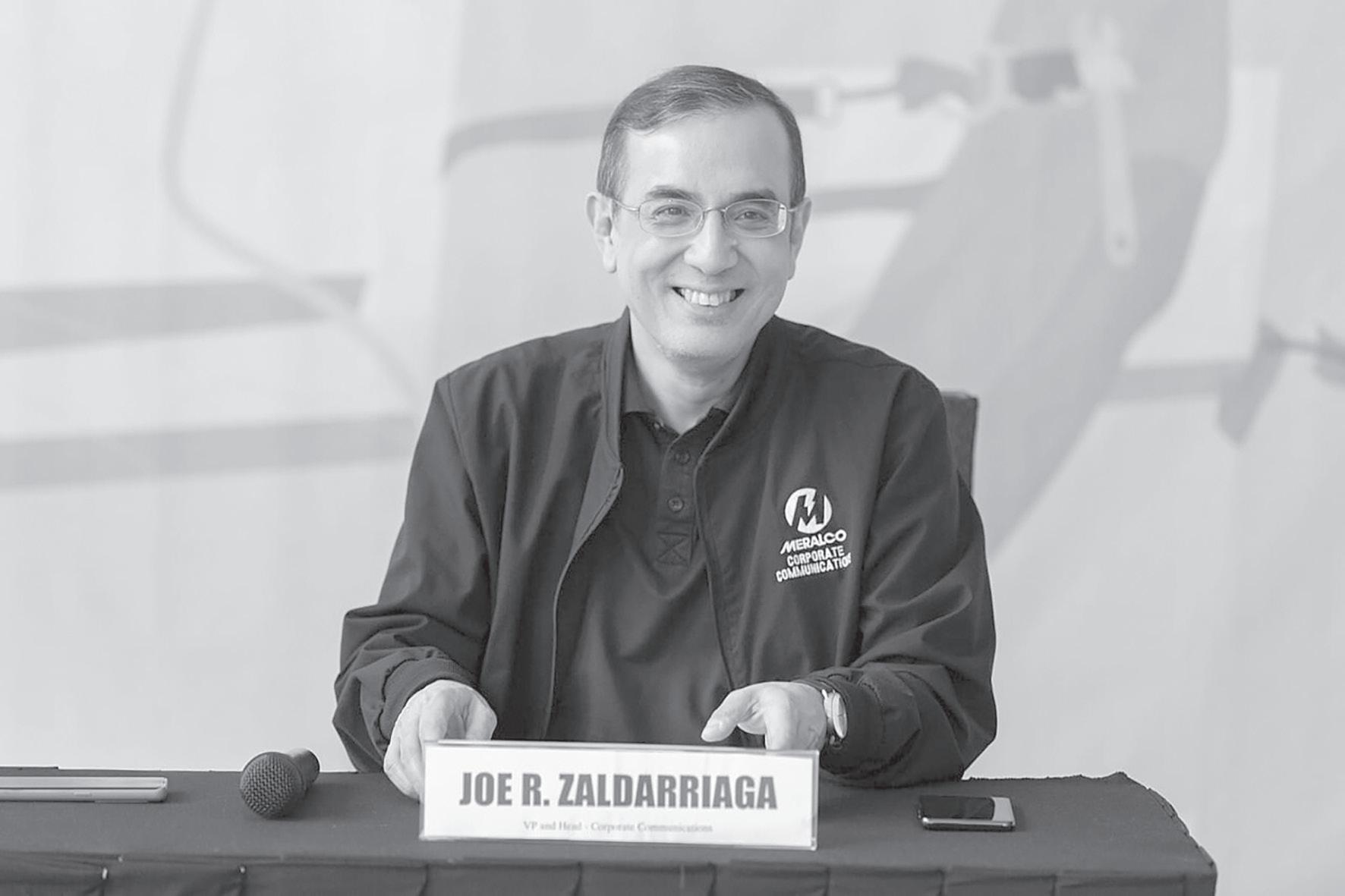
While the power distribution utility fi rm has yet to receive all the fi nal billings from its suppliers, Meralco expects a “possible decrease” in the generation charge this month, according to Meralco spokesperson Joe Zaldarriaga. is and the Peso appreciation,
for the Philippines’ electoral process. Currently, there are 1.18 million overseas Filipinos registered to vote. Comelec aims to increase this number to 1.4 million by the end of the September 30 registration deadline.
“Hopefully by next elections, we will double our efforts concerning our voters,” Garcia added.
which affects power suppliers’ costs that are mostly dollar-denominated, would mainly contribute to lower power rates this month.
“We’ve also seen reduced demand in the last supply month. We hope that these factors would be enough to bring down the overall
electricity rate for this month,” he Meralco will announce the fi nal
Last month’s overall power rates stood at P11.6339 per kilowatt hour (kWh) from the previous month’s P11.6012 per kWh. e slight upward adjustment was brought about by the P0.1086 per kWh increase in the transmission charge for residential customers due to higher charges of the grid operator for ancillary service, which covers reserves necessary to e transmission charge increase more than offset the P0.0503 per kWh reduction in the
RATES FOR PHILHEALTH BENEFITS UP BY YEAREND
honorable committee that it will happen on or before Christmas Day,” Ledesma said. “By the end of this year, members can expect a total increase of more than 50 percent across the board increase in benefits.”
Earlier this year, PhilHealth implemented a 30-percent increase in case rates for conditions such as breast cancer, neonatal sepsis, and bronchial asthma.
e capitation rate for the Konsulta Expansion increased, alongside enhancements in the hemodialysis package and the intro-
care services for severe acute malnutrition.
Moreover, Ledesma said PhilHealth members can still expect numerous increases in packages, including the implementation of a Covid-19 in-patient enhancement, further increases in the hemodialysis rate, and expanded services for physical and medical rehabilitation.
Other upcoming improvements include enhanced coverage for dengue treatment, chemotherapy, ischemic heart disease, ST-eleva-
gency care, cataract extraction, post-kidney transplant care, prostate cancer, cervical cancer, openheart surgeries, and peritoneal dialysis.
“We are committed to ensuring that our members receive the best possible healthcare coverage,” Ledesma said.
He vowed to continue to respond to Filipinos’ needs in line with President Marcos’s 10-point agenda, especially in the area of affordable and universal health care for all Filipinos.
115 projects now on Green Lane, worth P3.2T—BOI
P18.16 billion.
Meanwhile, the eight onshore wind projects are to be located in South Cotabato (105.000 MW), P11.4 billion; Guimaras (105.400 MW), P11.4 billion; Nueva Ecija (105.500 MW), P11.4 billion; Zambales (105.700MW), P11.993 billion; Rizal (218.000 MW), P19.8 billion.
Two of the onshore wind projects will be located in Agusan del Norte (105.500 MW and 105.400MW), worth P12.019 billion and P12.238 billion, respectively.
Meanwhile, Negros Oriental will also have its wind power project (193.750 MW) with a project cost of P20.475 billion.
BOI said an offshore wind power project worth P11.400 billion will be located in Iloilo (105.700 MW).
Of the 115 projects issued with green lane certificates, the BOI told the BM last month that 103 are RE projects while the 12 are spread across these sectors: Digital infrastructure, Food security and Manufacturing.
Established through Executive Order No. 18, the green lanes for strategic investments aim to streamline, simplify and automate the permit and license application processes for strategic investments, such as energy projects.
“ e BOI [One-Stop Action Center for Strategic Investments] OSAC-SI will expedite the approvals for these projects, ensuring the swift realization of energy investments in the country,” the BOI said in an earlier statement.
EO 18 was approved by the Office of the President on February 24, 2023.
our collective efforts and cooperation, our friendly and constructive competition,” Laurel said. “We must enhance our industry’s competitiveness and resilience to navigate these challenges,” he added. Laurel also underscored the important role played by the tuna industry in generating investments, creating jobs and ensuring the country’s food security at the start of the 24th National Tuna Congress and Trade Exhibit in General Santos City, hailed as the tuna capital of the Philippines.
Strengthening the industry MEANWHILE, Laurel detailed several key initiatives aimed at strengthening the industry. ese include the adoption of a National Tuna Management Plan on sustainable management and combating illegal fi shing activities which was introduced in 2018. It also includes the reconstitution of the Department of Agriculture (DA) and the Bureau of Fisheries and Aquatic Resources (BFAR) Technical Working Group on Tuna Fisheries to ensure the plan’s effective implementation.
He said the government’s strategy to support the industry also comprises the Fisheries Management Areas initiative, which is designed to improve fi sh stock distribution and address overfi shing. e National Payao Program and the Lambaklad Program would provide technical support and financial assistance to enhance fi shing practices and increase incomes for local fi sherfolk while the establishment of the Tuna Conservation and Management Zones would protect tuna resources by regulating fi shing and safeguarding spawning grounds.
Laurel also drew attention to the Philippine Rise Special Fisheries Management Area, an underexplored area awarded as Philippine territory that promises significant potential for future industry growth.
“ is region is seen as crucial for enhancing local fi shing and contributing to national food security,” the DA said.
International scene ACCORDING to the department, the Philippines is one of the top global tuna producers in the Western and Central Pacific Ocean.
Tuna is a top export commodity, accounting for an average of 479.7 million metric tons (MT), or 11 percent of the country’s total fi sheries production. e average tuna export of the country over the last five years stood at 107,608 MT. It also noted that the global tuna market was valued at around $42 billion in 2023.
Laurel wants to push capacity utilization of various tuna canneries in the country to create more jobs, entice new investments, and help ensure food security in the country.
International research and consulting fi rm 6Wresearch recently projected the Philippine tuna market size to grow by a compounded annual growth rate of 6.24 percent between this year and 2030 due to increasing global demand for seafood, heightened awareness of health benefits associated with fi sh consumption, and a thriving canned tuna industry.
“Market trends are shifting towards ecolabeled and sustainably sourced products as consumers become more environmentally conscious,” 6Wresearch noted.
“We must defend the gains from CREATE: time-bound, targeted and performance-based fi scal incentives. We must protect the sound governance of managing fi scal incentives and disallow the dismantling of the powers of FIRB,” it added.
direct assistance provided through the MOOE. With this, Castro questioned how the budget cuts align with President Ferdinand Marcos Jr.’s budget message, prioritizing the health of Filipinos.
e National Tuna Congress aims to provide a platform to share knowledge and experiences among stakeholders on advances in science and on addressing emerging challenges in tuna production. ese include the conservation and management of the highly migratory tuna stocks to ensure the sustainable growth of the Philippine tuna industry.
“ e DA remains committed to supporting innovation and investment to ensure the sector’s resilience and continued success,” the department quoted Laurel saying.
Marcos vows swift resolution of cases against Guo
PBy Joel San Juan, @jrsanjuan1573
Samuel P. Medenilla
@sam_medenilla
& Butch Fernandez
@butchfBM
RESIDENT Marcos on Wednesday vowed swift resolution of the multiple cases against the dismissed mayor of Bamban, Tarlac, Alice Guo, who was arrested by the Indonesian police in Jakarta shortly before midnight on Tuesday.
Guo is expected to arrive in Manila late Wednesday.
Marcos reiterated that the people responsible for Guo’s flight from the Philippines last June, will also be charged.
The Chief Executive said he wants Guo to be held accountable for the alleged crimes she committed, which includes human trafficking, material misrepresentation, and tax evasion.
Guo was involved in the illegal Philippine Offshore Gaming Operator (Pogo) hub in Bamban and was later proven to be a Chinese national, who acquired Philippine citizenship fraudulently.
“We will not prolong the resolution of the case, whose outcome will be a victory for the Filipino people,” Marcos said in a video message posted in his social media account. However, he assured, Guo will be
given due process and legal protection. Guo was arrested by Indonesian authorities in Tangerang City, Jakarta, Indonesia.
In a chance interview with Palace reporters in Camp Aguinaldo, Marcos authorities are coordinating with the Indonesian government to bring Guo back to the Philippines as soon as possible.
“We’re already finalizing the arrangements for the return of Alice Guo back to the Philippines some time today,” Marcos said.
He added that the people, who were responsible for the escape of Guo through the Southern backdoor will also face legal action.
“We will not only dismiss them, but we will also file cases against them for violating the law and going against all the interests of the Philippine judicial system,” he said.
“All of those who are implicated in assisting Alice Guo to leave the Philippines illegally as a fugitive from justice will certainly pay the price,” he added.
DOJ confirms Guo’s arrest THE Department of Justice (DOJ) confirmed on Wednesday morning the arrest of Guo.
The embattled former Bamban mayor fled the country in July following the filing of criminal and administrative cases against her including qualified human trafficking, money
laundering and graft in connection with her alleged involvement in the illegal Pogo hub in her town.
She is also a subject of a warrant of arrest for contempt for failure to attend Senate hearings in connection with illegal Pogo activities.
Guo managed to leave the country undetected despite an immigration lookout bulletin order (Ilbo) issued against her.
The issuance of an Ilbo would not necessarily prevent a person from leaving the country but only directs immigration authorities to be on the lookout for him or her and verify his or her destination.
Immigration Commissioner Norman Tansingco is currently coordinating with Indonesian immigration authorities for her swift return to the Philippines.
The DOJ said the information on Guo’s arrest was confirmed by Senior Superintendent Audie Latuheru of the Indonesian police.
Guo was arrested at exactly 11:58 p.m. on September 3, 2024.
“This development has been verified by our counterparts in Immigration, who have confirmed that Guo is currently in the custody of the Indonesian Police at Jatanras Mabes Polri,” the DOJ said.
Escape by boat
ON August 22, Indonesian authorities
were able to arrest Guo’s sister, Shiela (Zhang Mier), and Cassandra Li Ong, the official representative of Pogo operator Lucky South 99 in Pampanga, in Batam, Indonesia.
Shiela and Ong along with Guo’s brother Wesley reportedly accompanied Guo when she left the country in July.
During the continuation of the Senate investigation on illegal POGO activities, Shiela claimed that their group left the country using boats but could not determine their point of origin.
Shiela and Ong were arrested by Indonesian authorities on the basis of the arrest warrants for contempt issued by the Senate and the House of Representatives, respectively.
Following their arrest, Shiela Guo was charged before a trial court in Pasay City with violations of Article 150 of the Revised Penal Code (RPC) for Disobedience to Summons issued by the Senate and Section 22, paragraph (b)(2) of Republic Act (RA) No. 11983 for allegedly using a false Philippine passport.
Ong, on the other hand, was charged with violation of the Revised Penal Code for Disobedience to Summons issued by the House of Representatives and for obstruction of justice for harboring, concealing, or facilitating the escape of a criminal offender.
Thursday hearing
SOUGHT for comment on Guo’s ar -
rest, one of the senators who sought the former mayor’s arrest for snubbing congressional inquiries said she and her colleagues are hoping Guo can be flown back to Manila in time for Thursday’s hearing.
While saying “we are targeting that,” meaning, to bring Guo to the Senate, Deputy Minority Leader Risa Hontiveros conceded, “But we can only target so much. Because it’s also important for us to find out, through the Indonesian and Philippine authorities, when exactly she can return.”
She acknowledged that the mayor’s brother Wesley is still “missing in action.” However, she said she is fully confident that he is relentlessly being sought, in the same way that authorities in Indonesia continued to search for Alice Guo after arresting her sibling Shiela Guo and Cassandra Li Ong, the special representative of Pogo Operator Lucky South 99.
It remained uncertain how long Guo will be kept in custody by the Senate Sergeant at Arms assuming she is made to face the Senate investigating committees, or will be detained indefinitely by NBI.
As Hontiveros explained, if Guo can attend Thursday’s hearing of the Justice and Human-Rights subcommittee, since the source of her warrant is from Hontiveros’s Senate Committee on Women, Guo must still attend
the next hearing of the latter before the Senate probers can make a final disposition of her case. That means, “She will stay here at the Senate” for the meantime while the investigating panels are conducting hearings.
As with the case of Shiela Guo and Ong after they were arrested by Indonesian authorities, Hontiveros said they are coordinating with the Department of Foreign Affairs, the NBI and BI in order to ensure the timely appearance of the dismissed mayor at the Senate.
At the National Police general headquarters at Camp Crame, Quezon City, the force’s spokesperson, Col. Jean Fajardo attributed Guo’s speedy arrest to the memorandum of agreement signed by the Philippine National Police and the Kepolisian Negara Republik Indonesia (Polri) in 2017 where both services agree to exchange intelligence and cooperate in efforts in neutralizing transnational crimes.
As she expressed gratitude to Polri, Fajardo said the Department of the Interior and Local Government Secretary, Benhur Abalos, and the National Police chief, Gen. Rommel Francisco Marbilm are now coordinating with the relevant authorities in Indonesia to ensure Guo’s immediate return to the Philippines. With Rex Anthony Naval
Lawmakers to Sara: Account for billions given to you for socioeconomic programs
By Jovee Marie N. dela Cruz @joveemarie
AWMAKERS have demanded that
LVice President Sara Duterte account for billions of pesos allocated to her office for socioeconomic programs over the past two years.
In a privileged speech late Tuesday, House Committee on Metro Manila Development Chairman Rolando Valeriano expressed his concerns over the allocation and expenditure of these funds, particularly since the programs seem to have been concentrated in Metro Manila despite Duterte’s national mandate.
“I was surprised to learn that her 2023, 2024, and 2025 budgets focused solely on the National Capital Region. As the Chairman of the House Committee on Metro Manila Development, I am curious as to where exactly in Metro Manila these
billions for socioeconomic programs have been spent,” Valeriano said. “After all, she is the Vice President of the entire nation.”
Valeriano, who represents the Second District of Manila, questioned the veracity of the OVP’s claims regarding the number of beneficiaries and strategic partnerships.
He said 977,615 beneficiaries were to be served under the 2025 budget proposal, and 793 strategic partnerships were established in 2023.
“Where is the list of these strategic partnerships and agreements? Without proper documentation and verified lists of beneficiaries, the public might suspect that these funds were not used as intended,” he warned.
He lamented that instead of explaining her programs and where the funds were spent in last week’s hearing, the Vice President repeatedly refused to answer questions and showed hostility toward
House members.
Valeriano also criticized Vice President Duterte’s behavior during the House Committee on Appropriations hearing last week, where she refused to answer questions about her office’s 2025 budget of P2.037 billion, showing what he described as “hostility and disrespect” toward the lawmakers present.
“Instead of explaining her programs and how the funds were spent, the Vice President chose to be evasive and confrontational,” Valeriano lamented. “As a public official, especially one with aspirations for the presidency, she must be transparent about the use of public funds.”
He further questioned who Duterte truly serves, hinting at potential conflicts of interest. “Who is she really working for? Is it the Filipino people or those who block our fishermen or promote questionable enterprises like Pogo [Philppine Offshore
15 dead, 15 injured, 21 missing as Enteng leaves
TBy Jonathan L. Mayuga @jonlmayuga
HE number of casualties from Severe Tropical Storm Enteng has climbed to 30,the Office of Civil Defense (OCD) reported on Wednesday.
In a situation briefing for President Marcos at Camp Aguinaldo, Quezon City, OCD Director Ceasar M. Idio said: “On casualties, there are 15 dead, 15 injured, and 21 missing, but these are still subject to validation.”
Enteng affected 442,804 families or more than 1.72 million individuals. Of those affected, 88,077 people are staying in evacuation centers.
It also caused an estimated P350.85 million worth of damage to agriculture, which affected 13,623 farmers.
Marcos said he wants the concerned government agencies to be proactive in responding to the effects of Enteng and other severe weather caused by climate change.
Dams under close watch
MARCOS raised concern about the high water level in some dams, which can lead to water releases.
Dam operators, he said, should provide warning to the affected communities downstream before releasing water.
The President also wants the Department of Social Welfare and Development (DSWD) to have a sufficient stockpile of relief goods.
“We must assume that whatever we do for the immediate needs of the people in the areas that have been hit now. We should consider that there will be additional [typhoons]. So I think the procurement of the food packs and the non-food items should be continuous,” Marcos said.
As of Wednesday, DSWD said it was able to distribute 133,188 family food packs. Malacañang earlier said there is P65.56 million worth of stand-by funds, and P2.6 billion worth of food and non-food items, which can be used for relief in the areas devastated by the storm.
Bong Go aids Typhoon Enteng victims
AS the typhoon season intensifies,
Damage to infrastructure
THE Department of Public Works and Highways (DPWH) reported on Wednesday a total of P54.26 million in infrastructure damage in Northern Luzon due to Typhoon Enteng and the southwest monsoon.
The DPWH’s Bureau of Maintenance (DPWH-BOM) reported that the damage includes P35.58 million to roads, P11.63 million to bridges, and P7.02 million to flood control systems.
As a result of the typhoon, the CabaganSta. Maria Bridge in Isabela was rendered impassable owing to a high water elevation of 1.2 meters. This bridge connects barangay Casibarag Norte in Cabagan and barangay Mozzozzin in Sta. Maria.
In Mountain Province, the Cagayan via Tabuk-Enrile Road at Tabrak, Anabel, Sadanga, is only passable to light vehicles due to a rock and slope collapse.
Habagat-induced rain
ALTHOUGH STS Enteng has left the Phil -
Gaming Operator]?” he asked.
Valeriano reminded the Vice President that the budget for her office comes from taxpayers’ money and is subject to congressional oversight. “The budget of the Office of the Vice President for 2022, 2023, 2024, and 2025 is not her personal fund. It is the people’s money, and it is right that the public knows how it is spent.”
Demand
HOUSE Assistant Majority Leader Jil
Bongalon on Wednesday demanded that Duterte address the damning Commission on Audit (COA) findings from her tenure at the Department of Education (DepEd), rather than diverting attention with baseless accusations.
Bongalon, the nominee of the party-list group Ako Bicol, said that public service requires transparency and accountability, especially when faced with clear evidence
ippine Area of Responsibility (PAR) the continuous rain brought about by the Southwest monsoon or habagat threatens to cause floods and deadly landslides.
In its weather advisory issued at 11 a.m. on Wednesday, the Philippine Atmospheric Geophysical and Astronomical Services Administration (Pagasa) said the southwest monsoon will bring heavy to intense rains (100-200 mm) over Pangasinan, Zambales, Bataan, and Occidental Mindoro.
Moderate to heavy rains (50-100 mm) are also expected over northern Palawan including Calamian, Cuyo, and Cagayancillo Islands, Metro Manila, Cavite, Batangas, Rizal, Laguna, Bulacan, Pampanga, Tarlac, Nueva Ecija, La Union, and Benguet. Rains in these areas are expected to continue until Friday, September 6.
“Under these conditions, flooding and rain-induced landslides are likely, especially in areas that are highly or very highly susceptible to these hazards as identified in hazard maps and in areas with significant antecedent rainfall,” Pagasa said in its weather advisory. With Samuel P. Medenilla
On Tuesday, September 3, Go’s Malasakit Team, in collaboration with Gov. Nina Ynares, Mayor Sidney Soriano of Morong, and Mayor Jun Ynares of Antipolo City, distributed food packs to 1,250 families in Rizal province who were adversely affected by Typhoon Enteng. Being an adopted son of Calabarzon, Go committed to help typhoon victims recover as his team held relief distributions at sitio Pag-Asa Multipurpose Hall in Antipolo City, Tanay Municipal Gym, and Roman Tantiangco Memorial Elementary School in Morong. Go warned against leptospirosis, a bacterial infection spread through water contaminated by animal urine, poses a significant health threat during floods and heavy rainfall. Symptoms range from mild, flulike symptoms to severe conditions, including kidney damage and liver failure, which can be fatal if left untreated. With emerging viral diseases and other health threats, the lawmaker then underscored the importance of his twin bills, Senate Bills 195 and 196, that would establish the Centers for Disease Control and Prevention (CDC) and the Virology Science and the Technology Institute of the Philippines (VIP), respectively.
of underperformance.
“The COA report paints an alarming picture of DepEd’s failures under Vice President Duterte’s leadership. Completing only 192 out of 6,379 target classrooms is not just a minor oversight—it’s a gross neglect of duty,” Bongalon, a lawyer, pointed out.
He condemned the Vice President for playing the blame game and pointing fingers at an alleged “Makabayan-RomualdezMarcos alliance” instead of addressing the failures at DepEd under her watch.
“This is not about politics; it’s about the future of our children and the efficient use of public funds,” Bongalon stressed.
He further noted that while Duterte may have resigned from DepEd in July, she cannot simply walk away from the consequences of her leadership.
House Deputy Majority Leader Jude Acidre echoed these concerns, pressing the Vice President to confront the issues head-on.
“The COA’s findings on the minimal completion of Last Mile Schools and the inefficient use of the Basic Education Facilities Fund are not just numbers on a page—they represent broken promises to our most vulnerable students,” Acidre, a nominee of the party-list group Tingog, said. Echoing Bongalon, Acidre said that Duterte’s resignation from DepEd “does not absolve her of responsibility,” insisting that “stepping down and leaving these challenges to her successor is not enough.”
“These problems are now left to her successor, Secretary Sonny Angara, who is expected to clean up the mess she left behind,” Bongalon said. He added: “The COA findings are a call to action, not an opportunity for diversion. We need answers, and more importantly, we need solutions.”
‘Doublet’ earthquakes jolt Quezon
ARARE but naturally occurring “doublet” of twin earthquake jolted the town of Jomalig, Quezon, on Wednesday morning, the Philippine Institute of Volcanology and Seismology (Phivolcs) reported.
The “doublet,” was recorded about 30 minutes apart, within almost the same epicenter or area.
The first earthquake, a magnitude 5.3 temblor was recorded at exactly 7:16 a.m. This was followed by a magnitude 4.9 earthquake at exactly 7:55 a.m.
The magnitude 4.9 earthquake was not a mere aftershock of the first earthquake, according to Phivolcs.
A “doublet” happens when two earthquakes of nearly the same size occur close together in the same area.
The first earthquake generated Intensity V and was strongly felt in Jomalig and Polillo, Quezon.
Intensity IV was recorded in Burdeos and Panukulan, both in Quezon, as well as in Santa Elena, Vinzons, and Paracale towns in Camarines Norte.
Meanwhile, Intensity III was felt in Guinayangan, Alabat, Tagkawayan, Calauag, General Nakar, Real, and Mauban in Quezon as well as in Quezon City and Pateros in Metro Manila.
Intensity II was felt in Atimonan, Lopez, and Gumaca in Quezon, Basud, and Gallego in Camarines Norte. Intensity I was recorded in Caloocan City and Pasig City in Metro Manila.
The second earthquake generated Intensity IV and was felt in Polillo, Quezon. Intensity III was recorded in Guinayangan, Alabat, Tagkawayan, Calauag, and Panukulan in Quezon; and Makati and Quezon City in Metro Manila.
Intensity II was also felt in Lopez and Gumaca, Quezon.
Though they seem similar or a result of an earthquake and aftershock events, they are separate events, meaning not one is triggering the other. This happens when faults are quite complicated, causing the stress to trigger a sequence of events. Phivolcs Director Teresito C. Bacolcol explained that a doublet happens in quick succession. The second event was not an aftershock because aftershock by definition is always one or more degree lower. Not to worry, he said as a doublet is not deadlier than a single earthquake event occurring in an area.
“It depends on the magnitude. The magnitude is our basis in determining whether an earthquake is deadly,” said Bacolcol. He added that since the epicenter is at sea, and deep, it could not also generate strong waves or trigger a tsunami. A doublet happens naturally, citing the twin earthquakes that happened in Surigao in December.
An earthquake at sea that is stronger than 6.5 and is shallow, or not more that five kilometers in depth may trigger a tsunami, but not all the time, he explained. Jonathan L. Mayuga
DOE eyes 55 percent biofuel blend for diesel power plants
ABy Lenie Lectura @llectura
PLAN for diesel power plants to utilize 55-percent biofuels blend is strongly being considered by the Department of Energy (DOE).
“We are still studying the policy on it, including the possible mandate. We are looking at all diesel facilities. Of course, we can possibly use NPC’s [National Power
Corporation] facilities in conducting tests, if necessary,” Energy Assistant Secretary Mario Marasigan told reporters.
Marasigan was referring to NPC’s Small Power Utilities Group (SPUG) power plants which run on diesel. NPC supervises 281 SPUG power plants nationwide. These are mainly located in islands and communities that are not connected to the main transmission grid.
Marasigan said the proposed 55-percent biofuels blend for power generation is still in its early stages. He said the possible imposition of 55-percent biofuel blend will correspond to converting a diesel engine into a biodiesel engine, similar to a biomass power plant.
“If our studies will lead to that possibility, why not? We will consider all possibilities,” said Marasigan referring to diesel power
plants that are also owned and operated by the private sector.
“Using 55 percent biofuel blend will correspond to converting a diesel engine into a biodiesel engine, similar to a biomass power plant,” Marasigan added. This means that diesel power plants can prospectively run on biodiesel.
This proposal, added the DOE official, will lower carbon emissions and lessen reliance on imported fuel.
Study: Taglish eases Pinoy workplace communication
By Bless Aubrey Ogerio
EMPLOYEES who are interviewed in Taglish—a blend of Tagalog and English— tend to provide richer, more detailed responses compared to those interviewed in either pure English or Tagalog, a study by a research firm revealed. Research firm Fourth Wall links this trend to cultural perceptions of language in the Philippines. In their report, English is often seen as a marker of “higher social” or intellectual status, while Tagalog is closely associated with intellectualism and poetry.
“Taglish combines the accessibility of everyday language with the clarity of professional communication, making it easier for
employees to express themselves regardless of their social status,” Fourth Wall noted in its August 28 infographic.
The study, which involved approximately 3,200 respondents, used a combination of methods, including online surveys, interviews, Generative pre-trained performer (GPT) interviewer surveys (Wally), and direct observation. The researchers adhered to a standard margin of error of 5 percent with a 95 percent confidence level. Similar results were observed for respondents who spoke other Philippine languages, such as Bisaya, when Wally, the artificial intelligence interviewer, conducted the interview.
Potential challenges, howev -
er, were also highlighted in the study, particularly when Filipino employees need to communicate with non-Filipino colleagues.
“Filipino employees who frequently communicate in Taglish may find it more challenging to adjust when interacting with foreign colleagues unfamiliar with Filipino,” Fourth Wall Research Director Brylle L. Bae explained in an email to BusinessMirror
He added that this could increase language barriers, reinforce hierarchies and complicate workplace dynamics.
While the study looked into the use of Taglish within multinational teams, the sample size was too small to draw firm conclusions.
With the study’s findings suggesting that companies adopt -
ing Taglish in internal communications could create a more inclusive and productive workplace culture, the research firm stressed that understanding language preferences is crucial for better employee engagement and more accurate sentiment analysis.
The sentiment analysis was conducted across various industries, surveying a diverse group of employees to understand how communication preferences influence workplace dynamics.
Tagalog is a major language in the Philippines and forms the basis of Filipino, the national language. While often used interchangeably, Filipino officially includes elements from other Philippine languages.
Legislator cites need to develop poultry industry
ALEADER of the House of Representatives on Wednesday vowed to push for the approval of a bill that is aimed at improving and safeguarding the chicken and other poultry industries, which are currently grappling with serious problems.
In a statement after attending the 2024 Philippine Poultry Show & ILDEX Philippines event, Deputy Speaker Camille Villar underscored the need to support these vital sectors.
Villar said she will push for the approval of the House of Representatives’ counterpart measure of the livestock, poultry, and dairy development bill, which the Senate has already approved on the third and final reading.
“We have to support our chicken and poultry industries as they are faced with numerous challenges,” she said.
Villar represented her mother, Sen. Cynthia Villar, who is the chairperson of the Senate Committee on Agriculture and Food.
“Our poultry sector is faced with numerous challenges: the presence of Avian Flu, the high input cost of feeds, and disease treatments that significantly affect poultry meat and egg production,” she said.
Villar also cited importation problems affecting the whole chicken value chain, from poultry owners to street food venders.
“We have to support our chicken and poultry industries,” she stressed as she highlighted their contributions to the economy through the provision of employment and strengthening food security.
The poultry sector contributed
P68.76 billion in the first quarter of this year alone.
“Chicken delivers vital nutrients for all age groups, including potassium, vitamin D, iron, and calcium, while eggs are also a powerhouse of disease-fighting nutrients, high-quality protein, iron, vitamins, minerals, and carotenoids,” she added.
Villar also commended the United Broilers and Raisers Association (Ubra) and the Philippine Egg Board Association (Peba) for organizing the event. She noted that Ubra, which advocates for the Philippine broiler industry, and Peba, representing egg farmers, collectively manage a layer population of over 15 million birds nationwide.
“The Philippine Poultry Show & ILDEX Philippines, 2024, offered an unparalleled opportunity for professionals to connect, learn, and discover new ways to drive their businesses forward,” she said.
Villar said conference attendees learned, among others, solutions to threats to food security, strategies for building resilience in the face of global challenges to the industry, innovative fiber strategies that can significantly enhance poultry performance, and the latest green oxidative chemistries and their effectiveness in controlling major pathogens, ensuring safer food production and processing.
She also said attendees were also exposed to technologies and innovation from the USA, Germany, and Thailand that are now shaping the present and future of poultry and livestock production.
Jovee Marie N. dela Cruz
Economists seek Congress probe of national ID deal
By Cai U. Ordinario @caiordinario
AGROUP of economists has called for an investigation on the National ID at the Senate and the House of Representatives.
In a statement, the Foundation for Economic Freedom (FEF) said the investigation should aim to address procedural and administrative failures as well as hold persons accountable.
The FEF also said the investigation can also ask about a Public Private Partnership (PPP) proposal for the National ID system which they said was “overlooked in favor of an agency procurement.”
“This (overlooking a PPP proposal) has resulted in a failed and expensive National ID system. The PPP proposal would have resulted in a state-of-theart cardless National ID system, similar to the successful Aadhaar system in India,” FEF said.
The FEF also said the Bangko Sentral ng Pilipinas (BSP) should investigate the culpability of its officers regarding the National ID.
The economists said they expect the investigation to be similar to the one that was done by BSP on “ghost
employees,” which they said was “commendable.”
“We expect nothing less in this scenario. Every individual implicated in this mess must be thoroughly examined, and appropriate actions must be taken where necessary,” FEF said.
Earlier, the BSP had decided to terminate the services of the contractor for the National ID due to its failure to meet its deliverables for the project.
BSP Governor Eli M. Remolona Jr. initially told reporters that apart from the termination of the contracts, the central bank is also “negotiating for damages” while looking for a replacement.
In a statement sent to BusinessMirror on Thursday, National Statistician Claire Dennis S. Mapa said the Philippine Statistics Authority (PSA) supports the BSP decision to terminate the contract with its supplier for the national ID card production.
Mapa also assured the public that the PSA is taking the necessary measures to continue the issuance of National IDs, whether these be in physical formal or digital such as the ePhilID. (See: https://businessmirror. com.ph/2024/08/30/bsp-fires-national-id-supplier-eyes-damages/)
SC rules: Paoay properties belong to State, not FM kin
THE Supreme Court has declared that the Marcos family has no ownership right over a 57.68-hectare property in Barangay Suba, Paoay, Ilocos Norte as it is considered part of their ill-gotten wealth. Thus, in a 55-page ruling penned by Associate Justice Marvic Leonen, the Court en banc declared as void for being unconstitutional the 25-year lease contract signed on December 20, 1978 between the late strongman Ferdinand Marcos, Sr. and the Philippine Tourism Authority (PTA).
The SC ruling affirmed with modification the September 26, 2013 decision and May 20, 2014 resolution of the Court of Appeals which dismissed the Marcos estate’s action for unlawful detainer for lack of jurisdiction; and the April 21, 2014 Sandiganbayan decision declaring void the 1978 lease contract and the portions of land subject of the lease as properties of the State.
The property was leased by Marcos Sr. at a nominal rental fee of P1 per year to PTA for the purpose of developing the Paoay Lake area.
The contract provided that the PTA, using public funds, will shoulder the costs of construction of improvements and infrastructure on the property.
These improvements include the Malacañang of the North, Maharlika Hall, and the Paoay Sports Complex which houses an 18-hole golf course.
However, the SC held there was no evidence to prove that Marcos Sr. owned the land when the 1978 lease contract was executed.
Paoay Lake and all its extremities are considered a national park, the court held; thus, it is outside the commerce of man, being a public land.
“Being a national park, the lots were public lands and remained part of the inalienable land of the public domain, and thus incapable of private appropriation,” the SC said.
“Petitioner, in insisting otherwise, is a mere usurper of public property,” it added.
Despite the issuance of Presidential Decree No. 1554 converting the subject parcels of land and opening it to acquisition, the SC said there are no documents to prove that its ownership was transferred to Marcos Sr. before the 1978 lease contract.
“Contrary to petitioner’s assertions, different government agencies issued certifications confirming that Marcos, Sr. did not own the subject parcels of land.
“Seeing as Marcos, Sr. had no authority over the property, either as owner or possessor, he likewise had no authority to enter into the 1978 Lease Contract. Thus, the subject matter of the 1978 Lease Contract is wanting,” the SC declared.
The SC noted that the contract stipulated Marcos, Sr. as lessor and owner of the properties involved, and that ownership of all improvements made on the properties during the lease period would transfer to the lessor when the contract ends.
This, the Court said, gave Marcos, Sr. a financial interest in the contract which is prohibited in the 1973 Constitution, as adopted in the 1987 Constitution.
“The extremely low rental fee was but a scheme to circumvent the constitutional prohibition against the President holding any financial interest in any contract with a government agency,” the SC said.
The subject property should be returned to the State, except those that are now covered by free patents, it ruled.
The High Tribunal noted that of the 150 parcels of land listed in the 1978 lease contract, 58 parcels have been granted free patents by the Department of Environment and Natural Resources (DENR) either to the heirs of Marcos Sr. or other individuals.
It explained that free patents granted by the Department of Environment and Natural Resources (DENR) are presumed to have complied with all duly constituted legal requirements, unless proven otherwise.
“Once a free patent is issued, it is presumed that the applicant has met the burden of proof by clear, positive, and convincing evidence that their alleged possession and occupation were of the nature and duration required by law,” it added. Joel R. San Juan
Alice Guo’s return not that simple, says DOJ’s Remulla
JBy Joel R. San Juan @jrsanjuan1573
USTICE Secretary Jesus Crispin Remulla on Wednesday admitted that the Philippine government is facing some complications in its bid to bring back dismissed Bamban mayor Alice Guo following her arrest in Tangerang City, Indonesia.
Remulla made the statement after news reports in Jakarta said Indonesian authorities are seeking to swap Alice Guo with Australian national Gregor Johann Hass, an alleged member of the notorious Sinaloa drug cartel and considered one of Indonesia’s most-wanted drug suspects.
Indonesia’s Kumparannews, an online news website, reported that Indonesia’s head of the National Police’s Intermediary Division, Insp. Krishna Munti, had asked the Philippine government to exchange Haas with Guo.
Haas was arrested on May 15 in Bogo, Cebu, by operatives of the BI’s fugitive search unit (FSU) based on a standing red notice by the Interpol, stemming from a criminal case filed against him in Indonesia.
An arrest warrant against Haas was reportedly issued last January 29 by the national narcotics board of Indonesia, which filed a case for drug smuggling against him.
Indonesian authorities have accused Haas of being behind the attempt to smuggle into Indonesia on December 11, 2023 a shipment of floor ceramics filled with more than five kilograms of the illegal methamphetamine drug substance.
The drugs were seized by Indonesian authorities, who later discovered via testimonies elicited from arrested drug couriers that the packages were sent by Haas from Guadalajara, Mexico.
“We are still studying how we can secure Guo’s return because she is held by the police and not Immigration,” Remulla told reporters in a news conference.
Remulla admitted it would be easier to bring Guo back to the country if her arrest was due to immigration issues and not a police matter.
He noted that Guo was arrested based on the alert issued by the Department of Foreign Affairs (DFA) and the blue notice issued by Interpol due to her pending criminal cases.
Immigration in cahoots?
At the same time, Remulla said he is not discounting the possible involvement of some Immigration personnel in Guo’s escape from the Philippines.
Remulla said the investigation into Guo’s escape and the alleged involvement of immigration personnel is still ongoing.
“We have suspicions that some immigration people are involved,” Remulla told reporters as he recalled the so-called pastillas scam where several BI officers were criminally and administratively charged for accepting bribes to facilitate smooth entry of Chinese nationals into the country.
“That’s why we are aware that this kind of modus exists at the immigration offices. That’s what we’re looking into right now,” Remulla added. Remulla said he did not believe the
claim of Alice’s sibling Shiela Guo at the Senate that they left the country on board a small boat before transferring to a ship that brought them to Malaysia before they proceeded to Indonesia.
“I still can’t believe they sailed on a boat and then a ship. That is like a movie. What, they slept on the boat during three to four days of travelling by sea?” Remulla asked, incredulous.
Immigration Commissioner Norman Tansingco said earlier the BI has no record of Guo’s group leaving the country through the usual exit points.
Remulla said he has yet to talk to Tansingco about the possible involve -
ment of his men in Guo’s escape. But when asked if he had plans to talk to the BI chief, Remulla answered: “None.”
Remulla explained that he was offended by the BI’s chief failure to notify his office immediately about the escape of Guo’s group.
“When that happened he didn’t tell me right away. Maybe he already knew about it before we found out. That is why we no longer talk. It was wrong of him not to inform the Justice Secretary about what is going on in your office,” Remulla said.
The BI is one of the agencies attached to the DOJ.
Brief
the training curriculum.
Basic Qualification: Graduate/postgraduate in any specialization, preferably journalism/ mass communication/ English literature/ advertising/public relations. Years of experience: 8 plus years of experience in the areas of instructional design, learning delivery and learning technology.
Salary Range: Php 90,000 - Php 149,999
Brief
of renewal energy projects in the Philippines for development to achieve the company’s goals to add 6 GW of attributable renewal capacity in the Philippines by 2030.
11. LIN, XIANLI Bilingual Operations Officer
Brief Job Description: Planning and managing projects and contributing to product innovation.
AVANZADO OUTSOURCING SERVICES CORP. U-501 Prestige Tower Condominium, F. Ortigas Jr. Road, Ortigas Center, San Antonio, City Of Pasig
12. CAO, THI MY LE Production Supervisor
Brief Job Description: Creates and revises systems and procedures by analyzing operating practices, record-keeping systems, forms of control, and budgetary and personnel requirements, and implementing change.
13. SRENG, SOKKUN
Production Supervisor
Brief Job Description: Creates and revises systems and procedures by analyzing operating practices, record-keeping systems, forms of control, and budgetary and personnel requirements, and implementing change.
BLUE-CHIP CENTRAL
Brief
43.
Brief
44. SUNNY KUMAR
General
Brief
45.
Brief
46. CHEN, CHEN Project Manager
Brief Job Description: Planning and develop the project idea, monitor project progress and set deadlines. Project planning and execution.
47.
Brief
48. YANG, EUN JEONG Advisor I, Customer
Brief
49. CHAISURA, SURIYON Advisor I, Email Support
Brief Job Description: Ensure service delivered to our customers meets contractual Key Performance Indicator (‘KPIs’). Clarify customer requirements, probe for understanding, use decision-support tools and resources to appropriately provide resolution to the customer.
91.
Brief
BusinessMirror
92. ZHU, ZHIPENG Sales Consultant
Brief
Brief
94.
Brief
95. JIANG, WEI Marketing And Sales Agent
Brief
Basic
96. RUAN, HONGJU Marketing And Sales Agent
Brief
Salary
Basic
97. SHI, BEIBEI Marketing And Sales Agent
Brief
Salary Range: Php 30,000 - Php 59,999
Basic Qualification:
98. SHI, YUYU Marketing And Sales Agent
Brief Job Description: Researches and develops various marketing strategies for products and services and implements marketing plans and works to meet sales quotas.
Salary Range: Php 30,000 - Php 59,999
99. WU, ZHENRONG Marketing And Sales Agent
Brief Job Description: Researches and develops various marketing strategies for
100.
Brief
BusinessMirror
137. SHANGGUAN, XIUYING
174.
BusinessMirror
175.
Brief
176.
Brief
177.
178. XU, DONGYI Marketing Consultant
Brief
179. XU, ZHIWEI Marketing Consultant
Brief
180. ZHENG, DANNA Marketing Consultant
Brief
181. LE, THI LIEU Sales Consultant
Brief Job Description: Study company profile and conduct market research. Basic
182. LI, YANQING Sales Consultant
Brief Job Description: Study company profile and conduct market research. Basic
183. NGUYEN, VAN DUNG Sales Consultant
Brief Job Description: Study company profile and conduct market research. Basic
184. PAVANDEEP KAUR Sales Consultant
Brief Job Description: Study company profile and conduct market research.
185. ZHAN, YAOHUA Sales Consultant
Brief Job Description: Study company profile and conduct market research. Basic
Editor: Angel R. Calso
Russian missiles hit military academy and hospital in Ukraine, killing over 50
By Lori Hinnant & Illia Novikov The Associated Press
POLTAVA, Ukraine—Two ballistic missiles blasted a military academy and nearby hospital Tuesday in Ukraine, killing more than 50 people and wounding more than 200 others, Ukrainian officials said, in one of the deadliest Russian strikes since the war began.
The missiles tore into the heart of the Poltava Military Institute of Communication’s main building, causing several stories to collapse. It didn’t take long for the smell of smoke and word of the deadly strike to spread through the central-eastern town.
“People found themselves under the rubble. Many were saved,” Ukrainian President Volodymyr Zelenskyy said in a video posted on his Telegram channel. He ordered an investigation.
Shattered bricks were visible inside the closed gates of the institution, which was off-limits to the media, and small pools of blood could be seen just outside hours later. Field communications trucks were parked along the perimeter. Roads were covered in glass from shattered apartment windows.
“I heard explosions...I was at home at that time. When I left the house, I realized that it was something evil and something bad,” said Yevheniy Zemskyy, who arrived to volunteer his help. “I was worried about the children, the residents of Poltava. That’s why we are here today to help our city in any way we can.”
By Tuesday evening, the death toll stood at 51, according to the general prosecutor’s office.
Filip Pronin, governor of the region that bears Poltava’s name, announced on Telegram that 219 people were wounded.
Up to 18 people may be buried under the rubble, he said.
Ten apartment buildings were damaged, and more than 150 people donated blood, Pronin said.
He called it “a great tragedy” for the region and all of Ukraine, and announced three days of mourning starting Wednesday.
The academy trains officers in communications and electronics, as well as drone operators, honing some of the most valued skills in a war where both sides are fighting for control of the electronic battlefield.
“The enemy certainly must answer for all (its) crimes against humanity,” Pronin wrote on Telegram.
The Kremlin offered no immediate comment on the strike. It was not clear whether the dead and wounded were limited to Ukrainian military personnel, such as signal corps cadets, or if they included civilians.
Since it embarked on its full-scale invasion in early 2022, the Russian military has repeatedly used missiles to smash civilian targets, sometimes killing scores of people in a single attack.
Some of the deadliest such assaults included a 2022 airstrike on a theater in Mariupol that killed hundreds of civilians sheltering in the basement and a strike that same year on the train station
Pope urges Indonesia to champion harmony in diversity and combat religious intolerance
By Nicole Winfield & Edna Tarigan
The Associated Press
JAKARTA, Indonesia—Pope Francis urged Indonesia to live up to its promise of “harmony in diversity” and fight religious intolerance on Wednesday, as he set a rigorous pace for an 11-day, four-nation trip through tropical Southeast Asia and Oceania that will test his stamina and health. Francis had a packed first full day in Indonesia, meeting with outgoing President Joko Widodo and other Indonesian authorities at the presidential palace and then greeting Catholic priests, nuns and seminarians at Jakarta’s main cathedral in the afternoon.
Cannons boomed as Francis joined Widodo on the veranda of the palace along with President-elect Prabowo Subianto. A marching band, stiff-legged troops and children in traditional Indonesian dress welcomed the first pope to visit in 35 years.
In his remarks to the Indonesian authorities, Francis compared the country’s human diversity to the archipelago’s 17,000 islands. He said each one contributes something specific to form “a magnificent mosaic, in which each tile is an irreplaceable element in creating a great original and precious work.”
And yet, Francis warned that such diversity can also become a source of conflict. It was an apparent reference to episodes of intolerance that have flared in recent years in Indonesia as well as a broader concern about conflicts raging around the world.
“This wise and delicate balance, between the multiplicity of cultures and different ideological visions, and the ideals that cement unity, must be continuously defended against imbalances,” Francis said. Political leaders, he said, had a particular role to play but he also assured Widodo of the Catholic Church’s commitment to increasing interreligious
dialogue.
“This is indispensable for meeting common challenges, including that of countering extremism and intolerance, which through the distortion of religion attempt to impose their views by using deception and violence.”
Regionally, internal conflict in Myanmar has forced more than 700,000 Rohingya to flee to Bangladesh, where thousands have fled overcrowded, violent camps to countries including Indonesia. Francis met with at least one Rohingya refugee upon arrival Tuesday at the Vatican’s residence in a show of support for refugees to be welcomed, not rejected.
Farther afield, Indonesia has long been a strong supporter of Palestinians and the government has regularly condemned Israel’s war in Gaza. Widodo thanked Francis for the Vatican’s support of Palestinians since the start of the war.
“War will not benefit anyone, war will only bring suffering and misery to the common people,” Widodo said. “Therefore let us celebrate the differences that we have. Let us accept each other and strengthen tolerance to realize peace, to realize a better world for all humanity.”
Francis arrived in Jakarta on Tuesday to kick off the longest, farthest and most difficult trip of his pontificate given his myriad health problems. At 87, he uses a wheelchair, has regular bouts of bronchitis and has had multiple surgeries for intestinal problems.
By the trip’s end on Sept. 13, Francis will have flown 32,814 kilometers (20,390 miles) to visit Indonesia, Papua New Guinea, East Timor and Singapore, one of the longest papal trips ever in terms of days on the road and distances traveled.
Francis appeared in good form and spirit on Wednesday, even as he stood for a long period to greet the Indonesian government delegation and
in Kramatorsk that killed 61. Apartment buildings, markets and shopping centers have also been targeted.
Poltava is about 350 kilometers (200 miles) southeast of Kyiv, on the main highway and rail route between Kyiv and Ukraine’s second-largest city, Kharkiv, which is close to the Russian border.
The attack happened as Ukrainian forces sought to carve out their holdings in Russia’s Kursk border region after a surprise incursion that began Aug. 6 and as the Russian army hacks its way deeper into eastern Ukraine.
The missiles hit shortly after an airraid alert sounded, when many people were on their way to a bomb shelter, Ukraine’s Defense Ministry said, describing the strike as “barbaric.”
Rescue crews and medics saved 25 people, including 11 who were dug out of the rubble, a Defense Ministry statement said.
The strike came on the day that Russian President Vladimir Putin visited Mongolia. There was no indication that his hosts would heed demands to arrest him on an international warrant for alleged war crimes.
Zelenskyy repeated his appeal for Ukraine’s Western partners to ensure swift delivery of military aid. He has previously chided the US and European countries for being slow to make good on their pledges of help. He also wants them to ease restrictions on what Ukraine can target on Russian soil with the weapons they provide. Some countries fear that hitting Russia could escalate the war.
“Ukraine needs air defense systems and missiles now, not sitting in storage,” Zelenskyy wrote in English on Telegram.
“Long-range strikes that can protect us from Russian terror are needed now, not later. Every day of delay, unfortunately, means more lost lives,” he said.
Novikov reported from Kyiv, Ukraine. Associated Press journalist Alex Babenko also contributed to this report.
listen to the two nations’ anthems. He ad-libbed a joke during his official remarks that drew laughter from Widodo and the crowd, praising Indonesia’s relatively high birthrate while lamenting that in the West, “some prefer a cat or a little dog.”
That said, Francis’ prepared remarks were shorter than usual in a possible bid to spare him the strain of speaking for long periods.
In Indonesia, Francis is seeking to support the Catholic community, which only makes up 3% of the population of some 275 million, while hoping to encourage greater ties with the country that is home to the largest Muslim population.
The highlight of Francis’ first stop will be his participation Thursday in an interfaith meeting in Jakarta’s iconic Istiqlal Mosque with representatives of the six religions that are officially recognized in Indonesia: Islam, Buddhism, Confucianism, Hinduism, Catholicism and Protestantism.
While Francis wants to highlight Indonesia’s tradition of religious tolerance, the country’s image as a moderate Muslim nation has been undermined by flare-ups of intolerance. In 2021, a militant Islamic couple blew themselves up outside a packed Catholic cathedral on Indonesia’s Sulawesi Island during a Palm Sunday Mass, injuring at least 20 people.
Amnesty International said it hoped Francis’ visit would encourage an end to acts of intolerance and discrimination against minority groups and truly promote a respect for religious freedom that is enshrined in the country’s constitution.
In a statement, Amnesty noted that from January 2021 to July 2024, there were at least 123 cases of intolerance, including rejection, closure or destruction of places of worship and physical attacks. The perpetrators allegedly came from various backgrounds, including government officials, residents and community organizations.
“The pope’s visit has an important role to play in encouraging Indonesia to end intolerance and discrimination against all minority groups. Freedom of religion is a right protected by the Indonesian Constitution,” said Usman Hamid, executive director of Amnesty International Indonesia.
Asian stocks tumble after Wall Street drops on worries about the economy
By Zimo Zhong The Associated Press
HONG KONG—Asian stocks
tumbled Wednesday after Wall Street had its worst day since early August, with the heavyweight Nvidia falling 9.5 percent, leading to a global decline in chip-related stocks.
Japan’s benchmark Nikkei
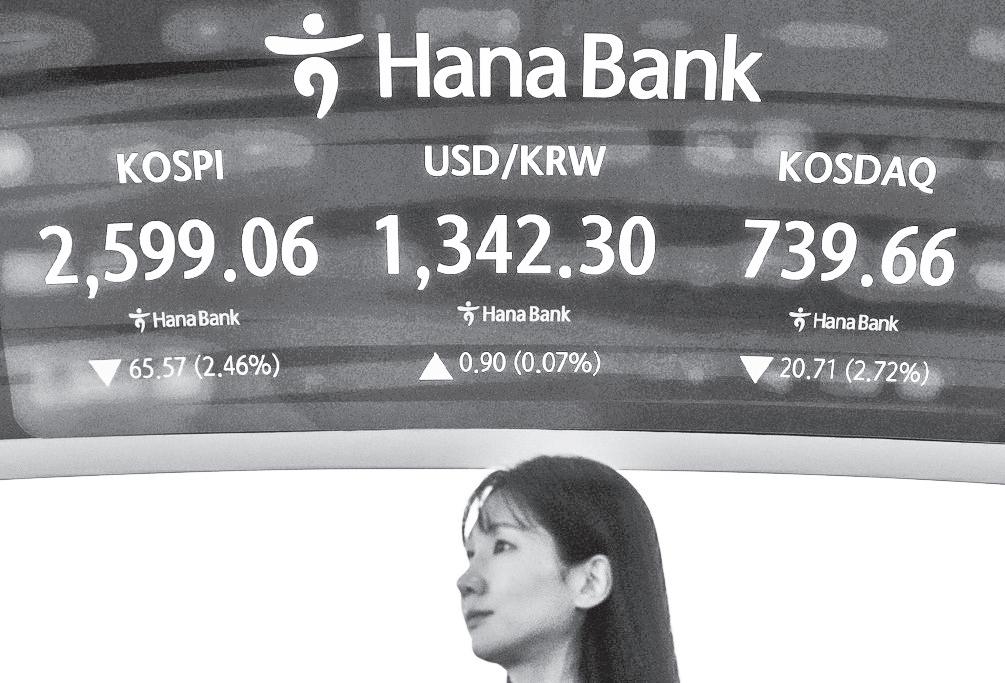
225 lost 4.2 percent and closed at 37,047.61, leading losses in Asia. Electronics and semiconductor company Tokyo Electron slumped 8.6 percent on Wednesday. South Korea’s Kospi was down 3.0 percent to 2,583.70, with tech giant Samsung Electronics dropping 3.2 percent. Taiwan’s Taiex lost 4.5 percent, dragged down by the heavyweight Taiwan Semiconductor Manufacturing Company, which was 5.4 percent lower.
Australia’s S&P/ASX 200 was down 1.9 percent and ended at
too high in Wall Street’s frenzy around artificial-intelligence technology. Global semiconductor-related stocks declined on Wednesday.
policy and election uncertainty,” said Timothy Fiore, chair of the Institute for Supply Management’s manufacturing business survey committee.
On Tuesday, the S&P 500 sank 2.1 percent to give back a chunk of the gains from a three-week winning streak that had carried it to the cusp of its all-time high. The Dow Jones Industrial Average dropped 626 points, or 1.5 percent, from its own record set on Friday before Monday’s Labor Day holiday. The Nasdaq composite fell 3.3 percent as Nvidia and other Big Tech stocks led the way lower.
SEOUL, South Korea—The leaders of South Korea and New Zealand strongly condemned the deepening military cooperation between North Korea and Russia as they met Wednesday for a summit meant to strengthen bilateral ties.
New Zealand Prime Minister Christopher Luxon arrived in Seoul, the South Korean capital, on his first trip to the Asian country since he took office last November.
Luxon and South Korean President Yoon Suk Yeol condemned “in the strongest possible terms” the expanding military ties between North Korea and Russia, including North Korea’s export of ballistic missiles to Russia in violation of UN Security Council resolutions, according to a joint statement released by Luxon’s office.
7,950.50 after Wednesday data showed the country’s GDP grew by 1 percent compared to the second quarter of 2023, slightly above experts’ forecast. Hong Kong’s Hang Seng index declined 1.3 percent to 17,429.30 and the Shanghai Composite index shed 0.6 percent to 2,787.20. US futures were lower. Rising oil supply was driving down prices, as Libya moved closer to resolving a conflict over control of the country’s oil revenue that meant its oil production may soon increase. Benchmark US crude fell 46 cents to $69.88 a barrel. Brent crude, the international standard, lost 31 cents to $73.44 a barrel.
weak consumption.
Growing worries about China’s economy—the world’s largest importer of crude oil—also amplified doubts about future oil demand, especially after the recent release of weak data, which was dragged down by a real estate slump and
The S&P 500’s heaviest weight, Nvidia, fell 9.5 percent on Tuesday. Its stock has been struggling even after the chip company topped high expectations for its latest profit report. The subdued performance could bolster criticism that Nvidia and other Big Tech stocks simply soared
Leaders of South Korea and New Zealand strongly condemn expanding N. Korea-Russia military ties
The two leaders denounced “in the most serious of terms” North Korea’s illegal nuclear and missile development programs. They also strongly condemned Russia’s war against Ukraine and pledged
Mongolia
to continue to support the sovereignty of Ukraine and its efforts to secure a just and lasting peace, according to the joint statement.
During the summit, Yoon and Luxon decided to launch a regular bilateral economic security dialogue to discuss challenges and opportunities. The two emphasized the importance of strengthening trade and economic connections, noting that the two-way trade volume between South Korea and New Zealand has approximately doubled in the past decade, according to the joint statement.
The US, South Korea and their partners have steadfastly accused North Korea of supplying much-needed conventional arms to Russia to support its invasion of Ukraine in return for military and economic assistance. Worries about the North Korean-Russia ties deepened in June, when North Korean leader Kim Jong Un and Russian President Vladimir Putin signed a pact stipulating mutual military assistance if either country is attacked. AP
defies international warrant for Putin’s arrest, brushes off pleas to hand him over to international court
ULAANBAATAR, Mongolia—Russian President Vladimir Putin received a red-carpet welcome to Mongolia on Tuesday, as the country ignored calls to arrest him on an international warrant for alleged war crimes stemming from Moscow’s invasion of Ukraine.
The trip, which concluded Tuesday night, was Putin’s first to a member nation of the International Criminal Court since it issued the warrant in March 2023. Ahead of his visit, Ukraine urged Mongolia to hand Putin over to the court in The Hague, and the European Union expressed concern that Mongolia might not execute the warrant. The warrant put the government in a difficult position. After decades under communism with close ties to the Soviet Union, it transitioned to democracy in the 1990s and built relations with the United States, Japan and other new partners. But the landlocked country remains economically dependent on its two much larger and more powerful neighbors, Russia and China.
The ICC has accused Putin of being responsible for the abductions of children from Ukraine. Member countries are required to detain suspects if a warrant has been issued, but Mongolia needs to maintain its ties with Russia and the court lacks a mechanism to enforce its warrants.
The United States doesn’t believe any country “should give Putin a platform to promote his war of aggression against Ukraine,” US State Department spokesperson Matthew Miller said.
“We understand that position that Mongolia is in, you know, sandwiched between two much larger neighbors, but we do think it’s important that they continue to support the rule of law around the world,” he told reporters in Washington.
The Russian leader was welcomed in the main square in Ulaanbaatar, the capital, by an honor guard dressed in vivid red and blue uniforms styled on those of the personal guard of 13th century ruler Genghis Khan,
the founder of the Mongol Empire.
A throng of people watched from behind barriers as Putin and Mongolian President Khurelsukh Ukhnaa walked up the redcarpeted steps of the Government Palace and bowed toward a statue of Genghis Khan.
A few protesters who tried to unfurl a Ukrainian flag were taken away by police. Five others who gathered a few blocks west of the square held up an anti-Putin banner and Ukrainian flag but disbanded after hearing about the arrests.
As Putin was welcomed in Mongolia, his forces struck a military training facility and nearby hospital in Poltava, Ukraine, killing at least 50 people, the country’s president said. The strike appeared to be one of the deadliest by Russian forces since the war began on Feb. 24, 2022.
The two governments signed agreements on a power plant upgrade in Ulaanbaatar and on the supply of Russian aviation fuel to Mongolia. They also agreed to carry out an environmental study of a river where
Mongolia wants to build a hydroelectric plant that Russia is concerned would pollute its Lake Baikal. Putin also outlined plans to develop the rail system between the countries.
He invited the Mongolian president to a summit of the BRICS nations—which include Russia and China among others—in the Russian city of Kazan in late October. Khurelsukh accepted, according to Russian state media.
After leaving Ulaanbaatar, Putin arrived early Wednesday in Russia’s major Pacific port of Vladivostok, where he is to take part in an economic forum.
On Monday, the EU said it had shared its concerns with Mongolian authorities.
“Mongolia, like all other countries, has the right to develop its international ties according to its own interests,” European Commission spokesperson Nabila Massrali said. But she added that Mongolia has been a party to the ICC since 2002, “with the legal obligations that it entails.”
Treasury yields also stumbled in the bond market after a report showed US manufacturing shrank again in August, sputtering under the weight of high interest rates. Manufacturing has been contracting for most of the past two years, and its performance for August was worse than economists expected.
“Demand remains subdued, as companies show an unwillingness to invest in capital and inventory due to current federal monetary
Other reports due later this week could show how much help the economy needs, including updates on the number of job openings US employers were advertising at the end of July and how much US services businesses grew last month. The week’s highlight will likely arrive on Friday, when a report will show how many jobs US employers created during August. All told, the S&P 500 fell 119.47 points to 5,528.93. The Dow dropped 626.15 to 40,936.93, and the Nasdaq composite sank 577.33 to 17,136.30. In the bond market, the yield on the 10-year Treasury fell to 3.84 percent from 3.91 percent late Friday. That’s down from 4.70 percent in late April, a significant move for the bond market. In currency dealing, the US dollar was trading at 145.11 Japanese yen from 145.47 yen. The euro cost $1.1054, up from $1.1043.
US envoy to Taiwan declares ties ‘rock solid’ amid growing military threats from China
By Christopher Bodeen The Associated Press
TAIPEI, Taiwan—The top US envoy to Taiwan on Wednesday said American support for the island is “rock-solid, principled, and bipartisan,” and said Washington will continue to follow through on its commitments to ensure the island can defend itself against threats from China.
Raymond F. Greene’s remarks Wednesday come at a time of uncertainty over China’s intentions toward the island it claims as its own territory—to be taken by force if necessary—and amid conflicts in Ukraine and the Middle East that threaten to draw the US in further.
Greene made clear Taiwan was a top priority, especially the security of shipping in the crucial Taiwan Strait that divides the island and China.
The US will “continue to maintain the capacity to resist any resort to force or other forms of coercion against Taiwan,” Greene said, referencing the Taiwan Relations Act that ensured such backing following the breaking of formal diplomatic relations with Taiwan in 1979, when Washington
Given Mongolia’s dependence on Russia and China for trade, energy and security, it was hardly possible to expect the government to arrest Putin, said Sam Greene, the director of democratic resilience at the Center for European Policy Analysis.
“The overriding reason for this trip will have been to show that Putin can travel right now,” he said.
But, Greene added, the warrant narrows the circle of possibilities for Putin, forcing “any government that’s going to think about hosting him to consider both the domestic and the international political consequences of that in a way they wouldn’t have had to before.”
Kenneth Roth, the former longtime director of Human Rights Watch, called Putin’s trip to Mongolia “a sign of weakness,” posting on X that the Russian leader “could manage a trip only to a country with a tiny population of 3.4 million that lives in Russia’s shadow.”
Kremlin spokesperson Dmitry Peskov said the trip wasn’t about “showing something to Western countries,” but rather about developing bilateral relations between two countries rooted in history and “wonderful glorious traditions.” His remarks were made to state TV reporter
normalized relations with the Communist government in Beijing.
Greene said the Executive Branch has notified Congress of approximately $38.4 billion in Foreign Military Sales to Taiwan since 2010, including over $6.4 billion under the Biden administration, along with the equivalent of $345 million in transfers of arms from existing US stocks. Upgraded and new F-16 jet fighters, Abrams tanks and other equipment have arrived or are in the pipeline, while Taiwan is expanding its production of domestic arms including submarines and anti-landing and ground to air missiles. A senior American diplomat, Greene arrived two months ago to serve as director of the American Institute in Taiwan, making him America’s de-facto ambassador on the island of 23.5 million people that has long retained strong commercial, cultural and political links with the US.
Taiwan was a main issue when US National Security Adviser Jake Sullivan visited China last week, aiming to keep communications open in a relationship that has become increasingly tense in recent years.
Pavel Zarubin, who posted them on his Telegram channel.
Dmitry Medvedev, the deputy secretary of Russia’s Security Council, denounced the warrant as “illegal” in an online statement Tuesday. Putin, on his first visit to Mongolia in five years, participated in a ceremony to mark the 85th anniversary of a joint Soviet and Mongolian victory over the Japanese army in deadly fighting over the border between then-Japan-controlled Manchuria and Mongolia.
“I am very delighted about Putin’s visit to Mongolia,” said Yansanjav Demdendorj, a retired economist, citing Russia’s role against Japan. “If we think of the ... battle, it’s Russians who helped free Mongolia.” Uyanga Tsoggerel, who supports the protests, said her country is a democracy that doesn’t tolerate dictatorship and accused Putin of “recklessly humiliating and shaming Mongolia in front of the world.” Putin has made a series of overseas trips to try to counter the international isolation he faces over the invasion of Ukraine. He visited China in May, made a trip to North Korea and Vietnam in June and went to Kazhakstan in July for a meeting of the Shanghai Cooperation Organization.
South Korean President Yoon Suk Yeol, right, shakes hands with New Zealand’s Prime Minister Christopher Luxon during a meeting at the Presidential Office in Seoul, South Korea on Wednesday, September 4, 2024. JIN SUNG-CHUL/YONHAP VIA
Editor: Jennifer A. Ng
PHL raw sugar output to fall by 7.29%–SRA
TBy Ada Pelonia @adapelonia
HE Sugar Regulatory Administration (SRA) expects raw sugar production in the current crop year to decline as El Niño scorched local farms.
Sugar Order (SO) 1 issued by the SRA Board indicated that raw sugar output in crop year (CY) 2024-2025 will drop by 7.29 percent to 1.78 million metric tons (MMT) from the previous year’s 1.92 MMT. CY 2024-2025 started last September 1. “[The projection] is based on the effect of El Niño on standing crops—those that were planted from October 2023 to May this year,” SRA Administrator Pablo Luis Azcona told reporters on Wednesday.
SO 1 said the production estimate for the current crop year was due to the anticipated negative effect of the prolonged dry spell, “unless the La Niña phenomenon brings about an increase in production.”
Raw sugar extends gains as Brazil fires deepen global deficit
RAW sugar futures extended last week’s gains as analysts raise deficit forecasts after fires in Brazil.
The most-active contract in New York rose as much as 2 percent Tuesday, after rallying more than 5 percent last week. Fires in Brazil that impacted cane crops amid the country’s worst drought in four decades put the world on track for a larger-than-expected shortfall.
Damages from the fires, as well as poorer quality cane due to heat and drought, mean the country’s key Center-South region is expected to produce less than expected, said Ana Zancaner, an analyst at Czarnikow. A heat wave hitting Brazil also adds to below-average rains that are damaging the cane and limiting mills’ ability to produce sugar, Zancaner added.
“The sugar mix has been very disappointing,” she said. “Brazilian mills added capacity to produce sugar, but the quality of the cane is not there. Mills are not able to use that additional crystalization capacity.”
Global sugar production could now fall short of consumption by 600,000 tons in the 2024/25 season—double an August forecast, said Claudiu Covrig, lead analyst at Covrig Analytics.
Meanwhile, robusta coffee rebounded in London, rising as much as 3.7 percent amid lingering concerns about tight supplies. Futures had hit a fresh intraday high of $5,180 a ton last Friday, before slumping on Monday when US markets were closed.
Robusta’s rally to the highest since the 1970s has also narrowed its discount to arabica, the type favored by chains like Starbucks Corp. The spread last week was at the smallest in data going back to 2008, according to figures compiled by Bloomberg.
Rapeseed probe
CHINA will start an anti-dumping probe into rapeseed imports from Canada, with trade tensions escalating after Justin Trudeau’s government imposed tariffs on Chinese-made electric vehicles, steel and aluminum.
The Asian nation is initiating measures following relevant restrictive actions taken by Canada, according to a statement from the Ministry of Commerce. China will take all necessary actions to safeguard the legitimate rights and interests of Chinese companies, the agency added.
Canada last month announced a 100-percent levy on electric cars and 25 percent on steel and aluminum, joining western allies to protect domestic manufacturers. Rapeseed is used to crush into oil for cooking and fuel and meal for feeding animals, and China is the world’s second-biggest importer of the commodity.
The most actively traded rapeseed meal and rapeseed oil futures on China’s Zhengzhou Commodity Exchange surged at least 6 percent on Tuesday. Canola futures in North America fell by the exchange limit in the biggest intraday loss since August 2022, on fears that lower Chinese demand could result in a glut at home.
Canola and oilseeds in general have been under pressure from world supplies that were expanding faster than demand. The move could halt Canada’s canola shipments to China just as farmers were harvesting their fields.
“Everybody is a bit overwhelmed this morning,” said Jerry Klassen, market analyst and commodity trader at Resilient Capital in Winnipeg, Manitoba, adding that the tariffs have yet to be confirmed. “When these things occur, it alters trade flows.”
More than 90 percent of China’s total rapeseed imports last year were from Canada, totaling 5.05 million tons, according to Chinese customs data. The variety of the crop grown in Canada is also known as canola. Bloomberg News
Azcona said the arrival of La Niña would “more or less” coincide with the period when sugarcane crops are expected to mature.
“It will increase tonnage and hopefully, this will result in longer canes because there is sufficient water.”
The sugar policy for CY 20242025 also mandated the classification of the entire output for the current crop year as “B” or for the domestic market. Domestic raw sugar withdrawal, according to SO 1, would reach 2.2 MMT.
Despite the bleak production outlook for the current crop year, the SRA made an assurance that the Philippines has enough supply of sugar until the second quarter of 2025.
“Based on our estimates, including the actual stock on hand and the imports that will arrive, we will have enough sugar possibly until the end of the milling season in May or June 2025,” said Azcona.
The SRA recently authorized the importation of 240,000 metric tons (MT) of refined sugar to beef up domestic supply. (See: https://businessmirror.com.ph/2024/08/12/sraclears-240k-mt-sugar-importsto-boost-local-supply/)
Under SO 5, eligible participants for the importation program have been split into two. A maximum volume of 176,500 MT of refined sugar would be eligible
for importers qualified under SO 2, while 63,500 MT would be eligible for those qualified under SO 3. Azcona said the majority of the import volume was based on SO 2, “which was the voluntary purchase of farmer sugar to be classified as reserve to avail of allocation for future import program.”
“This is the first time where possible importers had to support the local farmers first in order to be eligible to join the program,” Azcona told the BusinessMirror.
“In the past administrations, importers were chosen subjectively, whether first come first served, or others, with volumes based on the decision of the SRA admin and/or SRA board.”
The SRA chief said the remaining 63,500 volume import would be for the replenishment of the sugar exported to the United States.
Agricultural trade deficit widens in Q2, PSA data show
THE country’s farm trade deficit expanded by 13.8 percent in the second quarter, according to the latest data from the Philippine Statistics Authority (PSA).
PSA data showed that total value of agricultural exports in the April-to-June period reached $1.86 billion, accounting for 27.4 percent share to the total farm trade. The value of agricultural imports reached $4.94 billion or 72.6 percent of the total agricultural trade.
“The country’s total agricultural trade in the second quarter of 2024, which amounted to $6.80 billion, posted an annual increase of 14.3 percent. In the first quarter of 2024, the total agricultural trade recorded an annual increase of 2.6 percent, while an annual
decrease of 14.7 percent was registered in the second quarter of 2023,” PSA said.
“In the second quarter of 2024, the total balance of trade in agricultural goods was recorded at -$3.07 billion, which reflects a deficit with an annual increment of 13.8 percent. In the first quarter of 2024 and second quarter of 2023, the trade deficit registered annual declines of 6.5 percent and 0.04 percent, respectively.”
Cereals, including rice and wheat, were the country’s top food imports at $1.28 billion or 44.3 percent higher than the $888.26 million recorded last year. It accounted for 26 percent of the total value of agricultural imports in the second quarter.
The top five sources of cereals
for the Philippines were Vietnam, the United States, Australia, Brazil and Thailand.
The other major agricultural imports during the period were residues and waste from the food industries, miscellaneous edible preparations, and meat and edible meat offal.
Agricultural exports during the period were higher by 14.7 percent compared with the $1.62 billion recorded in 2023.
The top five farm exports were edible fruit and nuts; animal, vegetable, or microbial fats and oils and their cleavage products; preparations of vegetables, fruit, nuts or other parts of plants; preparations of meat, of fish, of crustaceans, mollusks; and tobacco and manufactured tobacco substitutes.
The PSA noted that of the commodity groups, edible fruit and nuts; peel of citrus fruit or melons, which was valued at $543.62 million, comprised the largest share of total agricultural exports in the second quarter.
“Among the Asean member countries, Malaysia was the top buyer of agricultural exports worth $95.22 million or a share of 41.9 percent to the total value of agricultural exports to Asean member countries in the second quarter of 2024,” PSA said.
“Among the EU member countries, Netherlands was the country’s top destination of agricultural commodities worth $179.77 million or 50.1 percent of the total agricultural exports to EU member countries for this quarter of 2024.” Ada Pelonia
Mati local govt issues tougher rules on hog transport
DBy Manuel T. Cayon @awimailbox
AVAO City—The local government of Mati City is imposing more stringent measures to prevent the entry of pork products that may be contaminated with African swine fever (ASF).
The recent outbreak that started outside of Metro Manila has already spread to 32 provinces in the country, with nine in Mindanao, of which two of them—Agusan del Sur and Surigao del Sur—are in the northern border of Davao Oriental. Mati City is the capital of Davao Oriental.
“To safeguard against the spread of African Swine Fever (ASF), the City Government of Mati has implemented stringent measures regulating the movement of live hogs, pork, pork-related products, and byproducts in and out of the city,” its information office has announced last Tuesday.
Mayor Michelle Nakpil Rabat issued Executive Order 94 last August 28 which strictly prohibits the entry and exit of all
ABy Bless Aubrey Ogerio
STUDY led by the Philippine Coconut Authority (PCA) and funded by the Department of Science and Technology (DOST) identified 35 candidate gene primers linked to the progression of the coconut cadang-cadang viroid disease (CCCVd).
In a program review by the Philippine Council for Agriculture, Aquatic and Natural Resources Research and Development (DOST-PCAARRD), Project Leader Maria Czet A. Fulleros presented the findings of the study titled “Transcriptomic Analysis of Healthy and Cadang-cadang-infected Coco -
“undocumented swine, pork, pork-related products, and by-products.”
The city government has instructed barangays with reported cases of animal morbidities or mortalities to enforce strict biosecurity protocols and swine movement outside affected areas “is heavily restricted.”
It has also ordered members of Barangay Peacekeeping Action Team members, along with designated barangay biosecurity officers from the City Veterinarian Services Office (CVSO) to monitor and prevent the sale of sick animals by viajeros or buyers, ambulatory meat vendors, and prohibit backyard slaughtering, even for personal use.
Private company technicians are required to coordinate with the CVSO before entering any farms in Mati City and are barred from visiting areas with reported ASF outbreaks to prevent cross-contamination between barangays, the information office added.
EO 94 was issued following reports of ASF outbreaks in several barangays in the city.
City Veterinarian Marites Erispe said,
nut Palms,” which will help pinpoint genes involved in CCCVd tolerance or resistance.
The cadang-cadang viroid—first identified in the Philippines and causing leaf yellowing, reduced nut production and eventual palm death—endangers the country’s coconut industry, a critical contributor to agricultural gross value added and a vital income source for over 2.5 million farmers.
A 2012–2013 survey by PCA revealed 691,068 infected coconut palms, with projections estimating that up to 3 million palms could be at risk by 2032 if no intervention is taken. The potential loss is valued at $300 million given the economic importance of each bearing palm.
however, that there are no confirmed ASF cases in Mati.
“We have submitted several samples for testing, and most have returned negative,” she said, adding officials are still awaiting the result of tests conducted on six remaining samples.
The executive order requires that any live hogs entering Mati from other areas must be accompanied by an ASF-free certificate, a shipping permit, and a Veterinary Health Certificate.
“For meat, meat products, and byproducts—including bacon, ham, pork tocino, longanisa, hotdogs, chorizo, chicharron, siopao, and siomai—documentation such as a Meat Inspection Certificate (MIC) for local products, a Certificate of Meat Inspection (COMI) for imported goods, an FDA License to Operate (FDA-LTO), a Certificate of Product Registration (FDA-CPR), and a shipping permit is required.”
It added that transporters of live animals must present all necessary documents and submit their vehicles for thorough disinfection
To combat this threat, DOST and PCA are also exploring advanced biotechnology. Dr. Cristeta A. Cueto, leading another project under the program, is investigating antisense technology, a genetic tool that could induce resistance in coconut palms against the viroid.
“The outputs of the program will aid in establishing a strong foundation for future coconut breeding initiatives and genetic analysis,” DOST Secretary Renato U. Solidum Jr. said.
“This may lead to more strategic methods, including the development of
CCCVd-tolerant/resistant coconut
materials to mitigate the risks of the
at Animal Quarantine Checkpoints located at the city’s entry and exit points. Those without proper documentation will be turned back to their place of origin. Any undocumented meat, meat products, or by-products discovered at these checkpoints will be confiscated by local government personnel and subjected to proper disinfection and disposal procedures.
Rabat has assigned the Incident Management Team (IMT) for ASF, H5N1 Bird Flu, and other emerging and re-emerging diseases to work closely with relevant national government agencies to ensure strict enforcement of the executive order.
The IMT will spearhead efforts to implement the order in accordance with existing laws and regulations concerning food security and quarantine.
Violators of the executive order will face penalties under Republic Act (RA) 10536 (Meat Inspection Code of the Philippines), RA 8485 (The Animal Welfare Act of 1998), and City Ordinance 464, Series of 2021 (Animal Code of the City of Mati).
and farmers’
DOST-PCAARRD’s
Upholding fairness: The fight for justice for Filipino fisherfolk
The challenges faced by our fisherfolk are not just limited to the perils of the sea; they extend to a complex web of issues that threaten their livelihoods and well-being on land as well. From declining fish catches to lack of access to vital resources, their struggles are deeply intertwined with systemic injustices that demand urgent attention and redress.
Recent developments surrounding the safety of fish caught in Manila Bay have shed light on a critical aspect of this multifaceted crisis: the exploitation of fisherfolk by unscrupulous traders. While the Bureau of Fisheries and Aquatic Resources (BFAR) has declared the fish safe for consumption, the Pambansang Lakas ng Kilusang Mamamalakaya ng Pilipinas (Pamalakaya) rightly emphasizes that this should translate into fair treatment for the fishermen who have long borne the brunt of market injustices. (Read the BusinessMirror story: “Manila Bay fish still unreasonably priced—group,” September 2, 2024).
Reports of plummeting farm gate prices in Cavite, Bataan, and Navotas following the recent oil spill not only underscore the vulnerability of fisherfolk to environmental disasters but also highlight the predatory practices of traders. Slashing prices by over 50 percent for key catches like halubaybay or isdang salinas and alimasag (blue crab) is an egregious abuse that perpetuates the poverty cycle for these vulnerable communities. It is an outrage that BFAR has had to explicitly state that fish from Manila Bay are now safe to eat, yet traders are still manipulating the market. This predatory behavior must be swiftly addressed through decisive government intervention.
Pamalakaya’s call for BFAR to intervene and ensure fair pricing for fisherfolk is not just a plea for economic justice; it is a demand for the recognition of the inherent dignity and rights of poor Filipinos. Our fishermen should not have to navigate treacherous waters only to find themselves ensnared in a cycle of poverty perpetuated by those who seek to profit off their labor and sacrifices.
It is imperative that BFAR, in light of the recent safety clearance for fish from Manila Bay, takes decisive action to safeguard the interests of our fisherfolk. Directives should be issued to fish ports to establish transparent and equitable pricing mechanisms that reflect the true value of the labor and resources invested by our fishermen. Fair prices are not just a matter of economic viability; they are a testament to our collective commitment to upholding fairness, dignity, and social justice for all.
As we welcome the good news that fish from Manila Bay are safe to eat, let’s not forget the ongoing struggle for justice faced by fisherfolk nationwide. Their struggles are not isolated incidents but symptomatic of wider systemic inequities that require systemic solutions. Let us stand in solidarity with those who brave the seas to feed us, and ensure that they are treated with the respect and fairness they rightfully deserve.
In the words of Pamalakaya’s Vice Chairman Ronnel Arambulo, now is the time for action. Let us heed this call and work towards a future where our fisherfolk are not just survivors of the sea, but thriving members of a society that values their contributions and upholds their rights with unwavering resolve. The future of Filipino fisherfolk can only be secured by addressing the systemic challenges they confront.
Risk taking
oOUTSIDE
THE BOX
ne thing every animal learns at an early age is “Risk”: Risk Avoidance and Risk Management. These are basic survival tools for all species and we carry these with us for a lifetime.
It is not a good idea to approach a dog that is a stranger. We still look both ways before crossing a street. Blowing on a spoon is a way to keep your mouth from being burned by hot food.
Yet we also know the Latin proverb “audentes Fortuna iuvat” (“Fortune favors the bold” and its variations). Fortuna refers to luck. Another version of the proverb is “fortes Fortuna adiuvat”—Fortune
Favors The Strong/Brave.
Democritus (460-c. 370 BC) wrote that “Boldness is the beginning of action, but fortune controls how it ends,” meaning that maybe a little luck now and then is necessary also. There is no question that risk
SPrinted by brown madonna
Inc.–Sun Valley Drive KM-15, South Superhighway, Parañaque, Metro Manila
taking is necessary and should be a positive. “He who is not courageous enough to take risks will accomplish nothing in life.”—Muhammad Ali. “It is better to be adventurous than cautious.”—The Prince, Niccolò Machiavelli.
Risk taking has been part of the human experience since we first crawled out of the safety of the cave and what has propelled civilization.
The 18th-century satirist Jonathan Swift wrote, “He was a bold man that first ate an oyster.” Every part of our 21st century life was built because of many taking a risk and not knowing if the outcome would be successful.
Airplanes travel the world because of Sir George Cayley (1773-1857) who
By Rita Nazareth
TockS posted their worst day since the August 5 market meltdown, with the S&P 500 falling more than 2 percent, as growth and monetary anxieties combined to torch risky assets much as they did a month earlier.
Just as in the August episode, big tech got hit the hardest, with Nvidia Corp. driving a plunge in chipmakers. And the parallels don’t stop there. The yen jumped, a closely watched manufacturing gauge again missed forecasts, and oil plummeted amid concerns about tepid global demand. Wall Street’s “fear gauge” —the VIX— soared. Treasury yields tumbled, with traders keeping their bets on an unusually large half-point Federal Reserve rate cut before the year is over. With inflation expectations fairly anchored, attention has shifted to the health of the economy as signs of weakness could speed up policy easing. Swap traders are anticipating the Fed will reduce rates by more than two full percentage points over the next 12 months, which would be the steepest drop outside of a downturn since the 1980s.
While rate cuts tend to bode well for equities, that’s not necessarily the case when the Fed is rushing to prevent a recession. The trepidation regarding the recent rise in unemployment will leave traders “on edge” until Friday’s payrolls data, said Ian Lyngen and Vail Hartman at BMO Capital Markets.
“This week’s jobs report, while not the sole determinant, will likely be a key factor in the Fed’s decision between a 25 or 50 basis-point cut,” said Jason Pride and Michael Reynolds at Glenmede. “Even modest signals in this week’s jobs report could be a key decision point as to whether the Fed takes a more cautious or aggressive approach.”
To Callie Cox at Ritholtz Wealth Management, aside from the macro picture, there’s also the fact that we’re entering what’s often a “miserable time” of the year for equities.
“While history isn’t gospel, it’s not crazy to think that this September could be especially volatile,” Cox noted. “But this isn’t the conclusion to draw from decades of seasonal market data. Instead, your attention should be on why this is a “buyable dip, because there are a lot of reasons to be optimistic here.”
Among those, she cited: earnings growth, the Fed about to start easing policy against the backdrop of controlled inflation and the fact that investors are sitting on a massive pile of cash “that could make its way back into stocks.”
The S&P 500 dropped 2.2 percent.
is recognized both as the inventor of the “aeroplane” and one of aviation’s most significant pioneers. Perhaps hundreds died trying to fly before the controlled-power flight of Wilbur and Orville Wright in 1903.
“If no one ever took risks, Michelangelo would have painted the Sistine floor.”—playwright Neil Simon.
However, risk avoidance should be entirely separate and different than “risk management,” the process of identifying, assessing and controlling threats. Risk management is having a fire extinguisher and smoke detectors in your house and buying fire insurance. Risk avoidance may be going back to the cave.
There are certain cultures that do not separate the two ideas. Germans are notorious risk avoiders. For an advanced economy, only 17 percent invest in the stock market. This compares to more than 50 percent in the US, 48 percent in Singapore, 32 percent in Thailand, and 24 percent in France. Yet these are high percentages when compared to Spain and Japan at 12 percent, eight percent in Belgium and Italy, and about five percent in China. Countries like the Philippines and Indonesia come in much lower. Nevertheless, the average annual
The index slipped below the 5,550 level, which has large open interest for September 20 expiry. The Nasdaq 100 slid 3.2 percent. The Dow Jones Industrial Average fell 1.6 percent. The Russell 2000 of small firms lost 3.1 percent. The $22 billion VanEck Semiconductor ETF was set for the biggest plunge since March 2020, with Nvidia down 9.5 percent. Boeing Co. sank 8 percent on an analyst downgrade. Treasury 10-year yields fell six basis points to 3.84 percent. A record number of blue-chip firms are swarming the corporate-bond market. The yen climbed as Bank of Japan Governor Kazuo Ueda reiterated the central bank will continue to raise rates if the economy and prices perform as expected.
The Morgan Stanley strategist who foresaw last month’s market correction says firms that have lagged the rally in US stocks could get a boost if Friday’s jobs data provide evidence of a resilient economy. A strongerthan-expected payrolls number would likely give investors “greater confidence that growth risks have subsided,” Michael Wilson wrote.
The equity-market rally may stall near record highs even if the Fed starts a highly anticipated ratecutting cycle, JPMorgan Chase & Co. strategists said earlier this week. The team led by Mislav Matejka noted that any policy easing would be in response to slowing growth, making it a “reactive” reduction.”
“We are not out of the woods yet,”
return of the global stock market over the past 25 years is around 9 percent. Of course, that number means nothing because in real life, no one invests in the mythical “global stock market.”
But the “risk-avoidance-at-allcost” mentality that keeps people out of the markets also keeps people from common sense risk taking to increase their wealth. How do we put more emphasis on risk management over risk avoidance? All successful risk-taking entrepreneurs have some common traits. They worked extremely hard at the beginning and they all started with “one.”
“Henry Sy opened his first shoe store in Quiapo in 1948.” “Potato Corner opened its first outlet in the Philippines in October 1992.” “Introduced to the market in April 1999, Zagu gave birth to a network of almost 300 outlets nationwide.”
“If you take no risks, you will suffer no defeats. But if you take no risks, you win no victories.”—Richard M. Nixon.
E-mail me at mangun@gmail.com. Follow me on Twitter @mangunonmarkets. PSE stock-market information and technical analysis provided by AAA Southeast Equities Inc.
Matejka wrote in a note, reiterating his preference for defensive sectors against the backdrop of a pullback in bond yields. “Sentiment and positioning indicators look far from attractive, political and geopolitical uncertainty is elevated, and seasonals are more challenging again in September.”
September has been the biggest percentage loser for the S&P 500 since 1950, according to the Stock Trader’s Almanac. A contrarian sentiment gauge from Bank of America Corp. rose to its highest level in nearly two and a half years last month— creeping closer to a “sell” signal for US stocks.
“For all years since World War II, August and September saw the S&P 500 endure a double-dose of declines,” said Sam Stovall at CFRA. “Yet history now advises investors to fasten their safety belts, since during election years, this sequential seasonal slippage has shifted to September and October.”
“A key lesson from the last few weeks is that big-tech stocks have not proven defensive during the recent market pullbacks,” said Philip Straehl at Morningstar Wealth. “While there is little evidence of a slowdown in AI spending, valuations have set a high bar for incoming corporate and macro data.”
Rich Ross at Evercore says the S&P 500 has had at least a 5 percent drawdown from the August/September highs in nine of the last 10 years. See “Markets,” A15
Ambassador Antonio L. Cabangon Chua
2005
John Mangun
Private credit managers help banks keep risky clients
By Natasha White
IN the market for private credit, managers are increasingly partnering with banks to help them maintain lucrative contracts with risky oil, gas and coal clients.
It’s a model that allows banks to continue doing deals in areas like commodity trade finance, where exposures might otherwise clash with European restrictions on fossil fuels and capital requirements. By sharing risky exposures with privatecredit managers, banks are figuring out how to stay on the right side of regulations without losing access to lucrative commodities markets.
The development is “creating new opportunities” for firms like Kimura Capital LLP, a commodity-focused private credit provider, says Sylvia Solomon, its chief sustainability officer. She cites “new minimum capital reserve requirement rules and pressure on banks to cut fossil fuel exposure” as key drivers behind the trend.
Banks that share balance-sheet risk with private credit managers may be more likely to maintain ties with clients in emerging markets like those in Africa, which have felt the fallout of strict European regulations particularly acutely. Solomon says Kimura considers social issues, including access to affordable energy, to be as important as environmental concerns when assessing the sustainability of deals.
“Several large merchant banks” have already exited Africa, Solomon said. Kimura estimates that there’s currently an $80 billion annual deficit in African trade finance that needs to be plugged, and it’s disproportionately hitting small and midsized firms.
Banks in Europe are adjusting to the region’s shifting regulatory landscape, which has brought stricter climate rules than exist in other jurisdictions. BNP Paribas SA, the European Union’s biggest bank, and ING Groep NV, the largest lender in the Netherlands, are among financial firms to have stepped up restrictions on fossil-fuel clients in lending and bond underwriting. ING has also announced its plans to cut back its oil and gas trade finance.
And while regulations are driving much of the banking industry’s retreat from fossil fuels, the threat of litigation and reputational damage also plays a role. Both BNP and ING, for example, are currently fighting ongoing lawsuits brought by climate activists targeting their fossil-fuel business.
As banks exit fossil fuels, it’s becoming “more expensive for oil
“This year should be no different after the late August squeeze into resistance at an all-time high,” Ross noted. “The S&P has a strong downside bias buttressed only by a bent towards ‘low volatility’ defensives and financials—which benefit from lower rates and steeper curves.”
As investors navigate through the historically weak September, Anthony Saglimbene at Ameriprise remarked the October-December period is the S&P 500’s strongest three-month stretch.
“In our view, investors should remain focused on using volatility to their advantage,” Saglimbene said. “Importantly, lean on time-tested dollar-cost averaging strategies and portfolio diversification to weather a potentially bumpier push into year end.”
Marking the start of a busy week for economic data, a report showed US manufacturing activity shrank in August for a fifth month.
This coming Friday, the August jobs report is expected to show payrolls in the world’s largest economy increased by about 165,000, based on the median estimate in a Bloomberg survey of economists.
producers and traders to get trade finance, and there’s less availability of it,” Solomon said. “That’s partly why we are able to achieve good margins.” It’s part of a larger trend whereby an ever greater share of fossil-fuel finance—and the associated emissions—are taking place out of public view. The aggregate value of oil and gas deals financed with private debt exceeded $9 billion in the 24 months through the end of 2023, compared with just $450 million in the preceding two years, according to data provided by Preqin, an analytics company that tracks the alternative investment industry. The data is based on the limited pool of deals reported publicly or disclosed directly to Preqin, and actual figures may be greater still.
Big commodity traders like Glencore Plc and Trafigura Group have also moved in as banks pull back. Jason Kerr, a partner in the energy group at law firm White & Case, says the scale of the shift is “dramatic” in Africa, where his work is focused. International oil traders “are going from fairly unsophisticated financing to quite complicated funding arrangements,” he said.
For private credit firms like Kimura, which is focused on trade finance, the development has coincided with growth in its core credit business in recent years, as the industry benefited from a cocktail of higher interest rates after the pandemic and stricter regulatory requirements curtailing bank lending. Kimura is now based in 15 countries, has 23 employees and lends about $500 million each month. Solomon, who joined the firm this year, is its first ever chief sustainability officer. She says private credit can ultimately help steer the transition toward greener energy.
Kimura mostly provides shortterm loans on a revolving basis, and can regularly revisit targets such as emissions cuts or cocoa-related waste limits. And its focus on midsized companies means Kimura has “a larger say and more influence,” Solomon said.
“Many companies that people might think of as pure-play fossil fuels are trying to turn their business around and need the capex to do that,” she said. “That’s where we can add value, and in our lending terms be very specific with key performance indicators.” Bloomberg
Post-SONA reality: Policy incoherence issues
lDr. Rene E. Ofreneo
LABOREM EXERCENS
Ike his predecessors, President Bongbong Marcos has declared the eradication of poverty through sustained economic development as the primary goal of the PBBM administration. This goal is acknowledged by Neda as the guidepost in the imagined transformation of the Philippines as a “middle-class” society on or before 2040.
Fulfilling this goal is, of course, easier said than done. As Shakespeare wrote: “Between the cup and the lip is many a slip.”
The reality is that there is no straight line to follow in achieving the declared development goal. In the first place, there are imponderables or unpredictable events that can block or alter the pathway to the fulfilment of the desired national goal. Look how the regression and CGE analyses by government economists in the past administrations had all missed their GDP growth forecasts and, consequently, development targets.
Reasons for the forecast deviations and missed development targets? Disruptions in the global market (global recession, Ukraine war, etc.), impact of climate change (El Niño-La Niña see-saw phenomena), weaknesses of the domestic market, political infightings among the national leaders, etc. Plus reliance by the government technocrats on questionable assumptions on growth processes (example: market liberalization assumed to automatically lead to more investments and job expansion), compounded by their poor reading of the economic situation on the ground, such as the country’s eroding industrial and agricultural base.
Secondly, making development ambitions happen requires the strong resolve of the national leadership to pursue a no-nonsense whole-of-government governance framework focused on the full implementation of policies and programs supportive of the fulfillment of these ambitions. This is not happening despite the brave efforts of some officials who are spouting the “whole-of-government” and “whole-of-society” rhetorics on governance.
There are also gaps between the
adoption of a development policy by the national government and its implementation by various agencies and LGUs. What accounts for these gaps? One obvious explanation is the failure of officials in concerned government agencies, at the local and national levels, to implement the needed implementation programs and projects. This means subversion of the development programs from within the bureaucracy. Projects meant to implement the government policies or programs are undermined by moral hazards (meaning corruption), political bickerings, ineptitude or sheer laziness of those tasked to implement the programs. Are these not the reasons for the failure of the DPWH to build up the nation’s flood control system despite the multi-billion budget allotted for this annually?
However, there is another explanation for the failure of a national development policy to take off: the inability of the executive and legislative branches to make a thorough analysis of the root causes of a development problem and formulating realistic solutions based on this analysis. The poor or weak understanding of the problem naturally leads to confusion on what is the right development direction to take. Worse, different agencies sometimes come up with differing views on how to translate the development goal announced by the national leadership into reality. No unity on policy implementation. No policy coherence.
In relation to PBBM’s SONA, policy incoherence is an apt description of how different government agencies are addressing some of the key socio-economic problems cited in the SONA. Foremost among these are the country’s twin problems of agricultural productivity and food security.
There are also gaps between the adoption of a development policy by the national government and its implementation by various agencies and LGUs. What accounts for these gaps? One obvious explanation is the failure of officials in concerned government agencies, at the local and national levels, to implement the needed implementation programs and projects. This means subversion of the development programs from within the bureaucracy.
The SONA devoted three pages (out of 27 pages) on these twin development challenges. The President raised the following points: First, the food and rice inflation was a result of the “puwersa ng merkado” at home and in the global market. Nevertheless, the President reported that domestic rice production has gone up although some importation is still needed. He maintained that the government thrust is food selfsufficiency through stronger agricultural production at home. Hence, the government has been giving the agricultural sector all kinds of assistance—seeds, seedlings, fertilizer, chicken growers, fingerlings, bancas and agricultural machinery. Further, the government is trying to upgrade fish ports, establish Kadiwa Centers and cold storage facilities in key areas, procure vaccines against swine fever, build farm-to-market roads (1,200 kilometers completed), repair and expand irrigation facilities and construct water impounding dams.
The government has also tightened the campaign against smuggling. Finally, the government is continuing the land distribution program; it has also condoned the debt of around 600,000 agrarian reform beneficiaries.
The foregoing shows the seriousness by which the President and his lieutenants in the Department of Agriculture are addressing the problems haunting the agricultural sector. The level of assistance being given to the farmers and fisherfolks under PBBM is much higher compared to the previous administrations.
The problem is that the above DA-led initiatives to help the farmers have been offset or negated by Neda’s open-sesame policy on the importation of agricultural prod-
ucts. In April or two months before the SONA, Neda sought the issuance by Malacanang of Administrative Order 20, which mandates the Bureau of Customs to facilitate the processing and releasing of all agricultural imports. This was followed in June with PBBM signing another Neda-instigated measure, Executive Order 62. This EO reduces rice tariff from 35 to15 percent, eliminates the so-called “non-tariff barriers” (NTBs) to agricultural imports, and extends indefinitely the lowering of tariffs on corn, pork and other agricultural products.
The different farmer groups in the country were stunned by the twin import liberalization measures. They denounced the non-consultative manner by which Neda pushed the issuance of AO 20 and EO 62. Some even went to the Supreme Court to file a TRO against EO 62. Why the collective anger of the organized farmers against the Nedainstigated measures? The answer is simple: the unrestricted flow of imports in the hands of big importers weakens the market position of the Filipino farmers. They cite how the Rice Tariffication Law (RTL) of 2019, christened by the angry farmer groups as the “Rice Import Liberalization Law,” led to the sharp reduction of palay prices even if there were no appreciable decline of rice prices for the consuming public. The RTL happens to be also a Neda-initiated measure.
The farmer groups also point out that the continuous decline of the agricultural sector from the 1980s to the present is partly due to onesided trade liberalization policy pushed by Neda and the World Bank. The collapse of Masagana 99, which succeeded in making the country self-sufficient in rice production in the mid-1970s, was due to the World Bank’s “policy conditionality” requiring the government of Marcos Sr. to remove the credit subsidy and other assistance to the M99 farmers. Incidentally, DA claims it was not informed or consulted on the above EO and AO. On the other hand, Neda, obsessed primarily in taming food inflation, has no explanation for its failure to coordinate with DA and consult with the angry farmer groups.
Dr. Rene E. Ofreneo is a Professor Emeritus of the University of the Philippines. For comments, please write to reneofreneo@ gmail.com.
World leaders must reboot global cooperation for today and tomorrow
By UN Secretary-General António Guterres
gain in July, average payrolls growth over the most recent three months would ease to a little more than 150,000—the smallest since the start of 2021. The jobless rate probably edged down in August, to 4.2 percent from 4.3 percent.
While the Fed is finally coming around to cutting rates, it does not feel like stringing out a bunch of 25 basis-point rate cuts will do the job, said Neil Dutta at Renaissance Macro Research. Under that scenario, it will take a long time to return the funds rate to neutral and in the process, you’ll keep policy restrictive, keeping open downside risks to growth.
“That muddling through scenario will probably risk further increases in the unemployment rate. So, if they aren’t going 50 in September, they are going to need to go 50 at some point later this year,” he concluded.
US interest-rate strategists predict a bigger market reaction if Friday’s August employment data is weaker than anticipated, according to the limited quantity of weekly research reports published around the holiday weekend.
“With the Fed likely to begin its rate cutting cycle in September, investors should consider extending duration now in high-quality fixed income to capture potential gains,” according to Principal Asset Management. Bloomberg Markets
While above the modest 114,000
FINal negotiations are underway in New York for this month’s Summit of the Future, where heads of state will agree on reforms to the building blocks of global cooperation.
The United Nations has convened this unique summit because of a stark fact: global problems are moving faster than the institutions designed to solve them.
We see this all around us. Ferocious conflicts and violence are inflicting terrible suffering; geopolitical divisions are rife; inequality and injustice are everywhere, corroding trust, compounding grievances, and feeding populism and extremism. The age-old challenges of poverty, hunger, discrimination, misogyny and racism are taking on new forms.
Meanwhile, we face new and existential threats, from runaway climate chaos and environmental degradation to technologies like Artificial Intelligence developing in an ethical and legal vacuum.
The Summit of the Future recognizes that the solutions to all these challenges are in our hands. But we need a systems update that only global leaders can deliver.
International decision-making is stuck in a time warp. Many global institutions and tools are a product of the 1940s—an era before globalization, before decolonization, before widespread recognition of universal human rights and gender equality,
before humanity travelled into space —never mind cyberspace.
The victors of World War II still have pre-eminence in the UN Security Council while the entire continent of Africa lacks a permanent seat. The global financial architecture is heavily weighted against developing countries and fails to provide a safety net when they face difficulties, leaving them drowning in debt, which drains money away from investments in their people.
And global institutions offer limited space for many of the major players in today’s world—from civil society to the private sector. Young people who will inherit the future are almost invisible, while the interests of future generations go unrepresented.
The message is clear: we cannot create a future fit for our grandchildren with a system built for our grandparents. The Summit of the Future will be an opportunity to reboot multilateral collaboration fit for the 21st century. The solutions we have proposed include a New Agenda for Peace focused on updating international institutions and tools to prevent and end conflicts, including the UN Security Council. The New Agenda for Peace calls for a renewed push
to rid our world of nuclear arms and other Weapons of Mass Destruction; and for broadening the definition of security to encompass gender-based violence and gang violence. It takes future security threats into account, recognizing the changing nature of warfare and the risks of weaponizing new technologies. For example, we need a global agreement to outlaw socalled Lethal Autonomous Weapons that can take life-or-death decisions without human input.
Global financial institutions must reflect today’s world and be equipped to lead a more powerful response to today’s challenges—debt, sustainable development, climate action. That means concrete steps to tackle debt distress, increase the lending capacity of multilateral development banks, and change their business model so that developing countries have far more access to private finance at affordable rates.
Without that finance, developing countries will not be able to tackle our greatest future threat: the climate crisis. They urgently need resources to transition from planet-wrecking fossil fuels to clean, renewable energy. And as leaders highlighted last year, reforming the global financial architecture is also key to jump-starting desperately needed progress on the Sustainable Development Goals.
The summit will also focus on new technologies with a global impact, seeking ways to close the digital divide and establish shared principles
for an open, free and secure digital future for all.
Artificial Intelligence is a revolutionary technology with applications and risks we are only beginning to understand. We have put forward specific proposals for governments, together with tech companies, academia and civil society, to work on risk management frameworks for AI and on monitoring and mitigating its harms, as well as sharing its benefits. The governance of AI cannot be left to the rich; it requires that all countries participate, and the UN is ready to provide a platform to bring people together.
Human rights and gender equality are a common thread linking all these proposals. Global decision-making cannot be reformed without respect for all human rights and for cultural diversity, ensuring the full participation and leadership of women and girls. We are demanding renewed efforts to remove the historic barriers—legal, social and economic—that exclude women from power.
The peacebuilders of the 1940s created institutions that helped prevent World War III and ushered many countries from colonization to independence. But they would not recognize today’s global landscape. The Summit of the Future is a chance to build more effective and inclusive institutions and tools for global cooperation, tuned to the 21st century and our multipolar world. I urge leaders to seize it.
Farm damage from El Niño, storms now at P23B—DA
THE damage sustained by the agriculture sector due to the combined effects of El Niño and the recent weather disturbances has reached P23 billion, according to the Department of Agriculture (DA).
Briefi ng reporters on Wednesday, Agriculture Assistant Secretary Arnel de Mesa listed the calamities that have visited the country as the “El Niño, shearline, northeast monsoon, LPA [lowpressure areas], Aghon, Carina, Enteng...since January until September.”
According to de Mesa, rice bore the brunt of these weather disturbances, with damage at 373,073 metric tons (MT), which was near the annual average losses of 500,000 to 600,00 MT.
He said this has not even factored in the “effects of La Niña,” so that, he explained, it is fair to presume that the “normal average annual losses because of typhoons
every year” will be breached.
De Mesa explained that this could affect the country’s unmilled rice output for 2024. May epekto ito dito sa attainment natin ng target for the year kasi September nasa [almost] 400,000 MT losses ka na [ is has an impact on our attaining our target for the year, because this September we already have nearly 400,000 MT losses],” he said.
“ is year, we have El Niño [and] we have La Niña. So, [it is] expected [that the] losses talaga medyo mataas [will really increase].”
Agriculture Secretary Francisco Tiu Laurel Jr. recently adjusted downward the country’s projected palay production for 2024 to 20.1
AER warns senators vs Create More: foregone revenue, instability
@reine_alberto
THE Corporate Recovery and Tax Incentives for Enterprises to Maximize Opportunities for Reinvigorating the Economy (Create More) bill awaiting enactment will only cost the government foregone revenues and macroeconomic instability, according to a nonprofit organization.
In a statement, Action for Economic Reform (AER) urged senators, who on Tuesday approved on second reading Senate Bill No. 2762, to reject provisions in the bill destroying the fundamental reforms in the Create Act.
“Create More is riddled with harmful provisions which undermine governance and erode revenues,” AER said.
Data from the Department of Budget and Management (DBM) showed Create More will generate P298 million in revenues in 2025 but would spell a P470 million in revenue loss in 2025 and P1.327 billion in 2027, the AER said.
AER said Create More will broaden the scope of existing incentives through enhanced deductions.
Under the Senate bill, the existing 25-percent income tax rate of domestic and foreign corporations will be reduced to 20 percent.
e bill’s Senate version also exempts domestic enterprises with a capital stock exceeding P20 billion from value-added tax (VAT) on imports and duty exemptions on the import of capital equipment, raw materials, spare parts and accessories.
e power to grant VAT refunds will be transferred to the Department of Finance (DOF) from the Bureau of Internal Revenue (BIR), and this AER said, “will loosen the criteria for giving incentives and emasculate the powers and functions of the Fiscal Incentives Review Board [FIRB].”
“Create More, by weakening the incentives criteria and granting more unnecessary incentives, jeopardizes the fi scal stability that the
country needs for its development plans,” AER stressed.
Barrier to investment, growth
MOREOVER, AER said Create More, expected to usher in more investments in the country, will only create a barrier to investment and economic growth due to insufficient incentives, limited fi scal space and unpredictable policies.
Citing global and local studies, AER added that excessive fi scal incentives do not drive investment inflow. “ e expansion of fi scal incentives fails to address the real hurdles which prevent investors from conducting business in the country.”
In turn, provisions in the Create More do not address investors’ concerns about price and fi scal stability, sound governance, policy certainty and reliable infrastructure.
As such, AER said the government must create cohesive economic policies with clear goals and improve the capability of its agencies to implement these policies to improve the country’s investment climate.
Human capital development must also be prioritized as the country prepares to increase its capacity to absorb the benefits of foreign and local investments, it added.
Data from the DOF showed that approved investments under the original Create Act generated P1.27 trillion in total investment capital and are expected to create 159,486 new jobs as of end-June 2024. Create Act was enacted into law on March 26, 2021, and took effect on April 11, 2021. It is now being amended three years into its implementation.
“Policy reversal is a risk that is inherent in passing a law borne purely from vested interests who benefit from a regime that awards them with near-perpetual fi scal incentives,” AER said. It argued that the Create Act is still in its infancy and prevents Filipinos from enjoying its true benefits.
tion card to verify their identity. “May guarantee po tayo mula Department of Foreign Affairs na lahat ng mag re-renew [of passport] dahil gustong maka, [even if they are an] undocumented alien, will not be an issue,” Garcia assured Congress during the budget hearing. (We have a guarantee from the Department of Foreign Affairs that anyone renewing their passport to vote, even if they are an undocumented alien, will not face any issues.)
In response to concerns about hacking and identity theft, the commission said that the internet voting will remain safe and secure—despite being new. Before voting, the vote must complete a three-step authentication process to ensure security. is verification process includes authentication through a valid government ID, and a personal password given by Comelec to the voter.
Aside from internet voting, 17 posts across a dozen countries will continue to implement the physical and in-mail voting system.
e commission explained that several countries, like Russia and China, declined to allow their posts’ internet to be used
Specialty hospitals face huge budget cuts in ’25
HUGE budget cuts for major specialty hospitals in the 2025 National Expenditure Program (NEP) will jeopardize the health and wellbeing of the Filipino people, a senior lawmaker said Wednesday. At the hearing for the 2025 P304 billion budget of the Department of Health and its attached agencies, ACT Teachers Party-list Representative France Castro said the Lung Center of the Philippines, the National Kidney and Transplant Institute, the Philippine Heart Center, and the Philippine Children’s Medical Center have a total Maintenance and Other Operating Expenses (MOOE) allocation of P6.78 billion under the 2024 General Appropriations Act (GAA).
However, deputy minority leader Castro said under the 2025 NEP, this figure has been drastically reduced to P5.81 billion, reflecting a sharp decrease of P975.2 million in the MOOE for these critical institutions.
From P791.1 million in 2024, Castro said the budget for the Lung Center of the Philippines is reduced to P711.3 million in 2025, a decrease of P79.8 million. She said the National Kidney and Transplant Institute has been allocated P1.63 billion in 2024, but this hospital’s budget has been slashed to P1.49 billion in 2025, a cut of P139.2 million.
Castro added that the budget for the Philippine Heart Center has been decreased by P197.9 million, from P2.41 billion in 2024 to P2.21 billion in 2025.
Suffering the largest cut, the lawmaker said, is Philippine
Children’s Medical Center’s budget, which has been reduced by P558.4 million, from P1.96 billion in 2024 to P1.40 billion in 2025.
Castro said these reductions could severely compromise the ability of these hospitals to deliver essential health services, particularly to the most vulnerable members of society.
“ ese hospitals play a critical role in providing specialized medical care to millions of Filipinos, and cutting their budget will directly impact the quality and availability of these services,” she said.
Castro also pointed out that the proposed budget cuts are particularly concerning given the already strained resources of these hospitals.
She called on Congress to reconsider the allocations and
restore the necessary funding to ensure that these institutions can continue to operate effectively.
In response, DOH Secretary Teodoro Herbosa assured lawmakers that the decrease in the budget would not affect services, as other resources, such as Medical Assistance for Indigent Patients, would be allocated to maintain service continuity. He assured that these GOCC hospitals would continue to operate effectively, using their revenue to support services for indigent patients.
Herbosa also explained that the reduction in the NEP is partly due to some infrastructure projects being completed. However, Castro countered that the issue is not about infrastructure but about the
AGRICULTURE Assistant Secretary Arnel de Mesa
Editor: Jennifer A. Ng
By VG Cabuag @villygc
Meralco PowerGen corp., a unit of power distributor Manila electric co. (Meralco), has purchased an additional 11.6-percent stake in SP New energy corp. (SPNec) worth P7.5 billion from the shares owned by leandro l. leviste.
s olar Philippines said MGen purchased 5.8 billion shares from Leviste’s solar Philippines Power Projects Holdings inc.
29.4 percent ownership,” MGen said in a statement.
terra solar, a wholly-owned subsidiary of sPNEC, is developing a solar project in Nueva Ecija and Bulacan with a planned capacity of 3,500 megawatts solar and 4,000 kilowatt hour battery storage.
Upon completion, this project will be the largest of its kind in the world, the company said.
“ t he terra solar project remains on track for key milestones, with significant progress anticipated in the coming months,” s PNEC President and CEO Emmanuel r ubio said.
MGen and s PNEC Chairman Manuel V. Pangilinan previously said MGen would be keen to increase its stake in sPNEC. if it’s open, why not? it’s a good project. it owns 100 percent of terra solar for now. it’s the largest singlesite solar facility in the world, and the Philippines should be proud of that,” Pangilinan said.
t his brings the total investment of MGen and its affiliates in sPNEC to P27.9 billion, representing a 50.5-percent economic stake. MGen’s wholly-owned subsidiary, MGen renewable Energy inc., paid solar Philippines P6.7 billion, with an additional P800 million to be paid upon the completion of a new investor’s entry into terra solar Philippines inc.
Previous to this transaction, Meralco and Metro Pacific investments Corp. owned 19.5 billion shares or a 38.9 percent economic share. i ncluding the 5.8 billion shares, it becomes 25.3 billion shares or 50.5 percent economic share.
Meralco had also previously acquired redeemable preferred shares that gave it majority voting power but no additional economic interest.
“Following the transactions, solar Philippines retains a 14.7billion share stake in sPNEC, representing
sPNEC’s share price closed at P1.29 on Wednesday.
Pangilinan’s remarks about increasing MGen’s stake in sPNEC followed his comment that “a very long list of investors” has expressed interest to invest in terra solar. “i think the actual bid date for the binding offer should be August 15. so by the end of August, the board will have to choose.”
‘DMCI to close Cemex deal by Nov’
ONsUNji-LED DMCi Hold-
Cings inc. said it expects to close the $305.6-million deal for the acquisition of cement firm Cemex Holdings Philippines inc. by end-November.
Herbert Consunji, the company’s CFO, said the group is still waiting for the fairness opinion that will anchor the acquisition. PWC Philippines (isla Lipana and Co.) was hired to do the said task, he said.
“At least we now have the PCC [Philippine Competition Commission] approval,” said Consunji, who is set to lead DMCi’s cement venture. Consunji said DMC i intends
FGEN seeks bids for LNG supply Watsons: More stores to go solar
By Andrea E. San Juan @andreasanjuan
WAtsONs Philippines said it is installing more solar panels and is increasing its sustainable product offerings in its stores nationwide.
According to Watsons Philippines’ 2023 sustainability report, the health and beauty retailer in the country is aiming to increase its stores with solar panels to 100 this year. in 2023, Watsons installed solar panels in 30 stores. t his year, we are excited to inform everyone that we are offering 100 more stores to add to our existing 30+ solar Panel projects. t his will be completed in the fourth quarter this year,” Ferdz Delos Lado, Group senior Manager, store Engineering at Watsons Philippines, said in the annual report. Delos Lado said this will contribute to 691 MWh of electricity and potentially save about 180,000 liters of fossil fuel.
Watsons reported a 16.2 monthly electricity intensity in 2023. it is targeting to cut this to 14.6 this year. As part of its greener retail practices, Watsons said it is keeping an eye on the overall sales participation of its sustainable choices product offerings. its annual report noted that it was able to bring up the sales participation of its sustainable choices category to 11.2 percent in 2023 from 10.2 percent in 2022. Watsons said
to keep Cemex listed even after it completes the acquisition. “We want them to stay (listed). it’s better that they are listed."
He said the group will keep most of Cemex’s employees as “we believe in local talent."
in April, DMCi offered to acquire the Philippines's fourth-largest cement manufacturer from its Mexicobased mother firm Cemex sAB de CV.
t he acquisition will require DMCi to issue a tender offer for the remaining 10.14 percent publicly-owned shares of Cemex.
Last month, DMCi said it is looking at issuing P10 billion worth of
preferred shares to its parent firm, Dacon Corp., to raise funds for the Cemex acquisition.
t he company said it is reclassifying 10 million of its shares of stock into Class B preferred shares which will be sold at P1,000 apiece.
DMC i told regulators the preferred shares will have a par value of P10 and will carry a dividend rate of 4 percent, paid out quarterly.
t he shares will be perpetual with DMCi reserving the option to redeem the shares at issue price starting on the 5th year of the share sale.
t he holders of the shares will have the option to convert their
holdings to common shares at a valuation of 30 percent premium over the volume weighted average price of the common shares over a 30-day trading period before the conversion date.
t he shares will then be sold to Dacon through a private placement, payable in one lump sum or in installments, provided that full payment will be made not later than the closing date for the purchase of shares in Cemex Asian south East Corp.
t he fund raising will be presented to shareholders in a special meeting set for October 15 for shareholders as of september 6. VG Cabuag
it has over 1,641 sustainable choices products available in its stores and online. For this year, it aims to increase sustainable choices sales participation to 13.2 percent. Watsons classify its sustainable choices offerings into four product categories: products with trusted ingredients and reduced environmental impact; products with packaging made with less virgin materials; products made with ingredients that help protect biodiversity and products packed with recycled packaging. in terms of sustainable packaging, the health and beauty retailer said it has recovered 20 percent of its
plastic footprint in compliance with the Extended Producer responsibility law in 2023. Watsons said it has also implemented a “full transition” from plastic to paper bags in 81 percent of all stores nationwide and 100 percent transition to recycled packaging for online deliveries last year. For this year, it is gunning for a 40-percent reduction in plastic footprint. in converting trash to perks, the retailer said it is working with sM on the trash to Cash recycling Market Program to collect 6,000 kilograms of waste and continue to encourage customers to make a habit out of dropping their recyclables in ex-
By Lenie Lectura @llectura
First Gen Corp. (FGEN) has issued a spot tender for one cargo of liquefied natural gas (LNG) which will be used by its gas plants in the First Gen Clean Energy Complex (FGCEC) in Batangas.
in a bid invite, the Lopez-led firm seeks to procure one LNG cargo for the supply of approximately 154,500 cubic meters on a delivered-ex-ship (DEs) basis to FGEN’s wholly-owned subsidiary, First Gen singapore Pte. Ltd (FGEN singapore) at subic Bay Freeport in Zambales.
t he LNG cargo’s delivery date could fall between October 14 and 18.
t his is First Gen’s seventh tender, according to the bid invite. t he award to the selected bidder is expected to be made on september 16.
FGen had deferred the delivery of one LNG cargo after it awarded a contract to tG Global trading Co. Ltd. ( tokyo Gas) for the supply of approximately 125,000 cubic meters.
FGEN president Francis Giles
Puno earlier said the company has enough gas supply for now.
“We're rethinking because there is still gas. Malampaya is still there and we still have residual gas,” said Puno. “We're producing as much as we can. in the meantime, Malampaya gas is being mixed with LNG. so basically, we have to defer.” t he LNG cargo that was supposed to be provided by tokyo Gas would be delivered by an LNG carrier which will be unloaded into the storage tanks of the BW Batangas floating storage and regasification unit (FsrU) that is currently berthed at the FGCEC.
FGEN had awarded similar contracts to shell Eastern LNG, trafigura, totalEnergies Gas and Power Asia Private Ltd., and CNOCC Gas and Power trading & Marketing Ltd.
FGEN has a portfolio of four existing gas-fired power plants with a combined capacity of 2,017 megawatts that have been supplied for many years with gas from the Malampaya field, an indigenous offshore gas field.
CEB expands domestic routes
By Lorenz S. Marasigan @lorenzmarasigan
BUDGEt carrier Cebu Pacific said on Wednesday it is set to expand its inter-island network with the resumption of flights between i loilo and tacloban and the launch of a new direct route from i loilo to Zamboanga.
starting October 27, Cebu Pacific will operate flights from i loilo to tacloban four times a week—on tuesdays, t hursdays, saturdays, and sundays.
t he following day, the airline will launch its new i loilo-Zamboanga route, with flights scheduled three times a week—on Mondays, Wednesdays, and Fridays.
“ t he addition of our new domestic routes from i loilo aligns with our mission of making air travel accessible to a wider range of passengers. We look forward to flying more juans across our growing inter-island net-
change for discounts.
For this year, Watsons said it is aiming to collect 6,700 kg of trash via its trash to Cash scheme.
For 2024, Watsons will continuously enhance and improve its sustainability practices by prioritizing eco-friendly products, ethical sources, and community engagement. For 2024, Watsons Philippines aims to top their 2023 achievements with even more sustainability aimed initiatives, paving a better path toward a sustainable future.
Watsons has over 1,000 stores in the Philippines. it has over 8,000 stores and 1,500 pharmacies in 15 Asian, European and Middle East markets.
work and better enabling them to discover the beautiful islands of the Philippines,” Cebu Pacific President Xander Lao said.
t he two new routes bring the total number of Cebu Pacific's direct flights from i loilo to 11, further enhancing the city’s connectivity to both domestic and international destinations.
to celebrate these new routes, Cebu Pacific has announced a Piso sale promotion. Passengers can book flights from i loilo to tacloban and Zamboanga for as low as P1 oneway base fare, exclusive of fees and surcharges.
t he booking period runs until september 15, for travel dates between October 27 and 28, and May 31.
Cebu Pacific currently operates in 35 domestic and 26 international destinations, connecting the Philippines to key locations across Asia, Australia, and the Middle East.
Photo from www.aswatsons.com
First Gen's natural gas-fired power plant in Batangas. Photo from www.firstgen.com.Ph
Groups: Rice tariffs not cause for price decline
ABy Ada Pelonia
GRICULTURAL
groups
weighed in on the expected decline of rice prices by October as traders exhaust the inventory of imported staple bought at higher tariffs.
The existing inventory of imported staple bought prior to lowering of tariffs was one of the reasons cited by Agriculture Secretary Francisco Tiu Laurel Jr. for rice prices to remain elevated. Laurel said rice imports from the January-to-June period that were still levied with the 35-percent tariff would run out by mid-October.
The agriculture secretary also pointed to high world prices as another reason for the elevated prices of the grain.
However, Philippine Chamber of Agriculture and Food Inc. (PCAFI) President Danilo V. Fausto told the BusinessMirror “it is possible that price of rice will go down around October.”
Fausto said that, for the most part, the easing of high rice prices would be due to the sector’s output.
“Principally this [decline in rice prices] is because this [period is] the peak of palay harvest for the wet season,” he added.
Likewise, Samahang Industriya ng Agrikultura (Sinag) Executive Director Jayson Cainglet said that rice prices would not significantly decline through tariff reduction and volume of rice imports.
Cainglet also noted that Vietnam’s rice export prices are now
higher than that of Thailand’s by $15 per metric ton (MT) for 5 percent broken and by $28 per MT for 25 percent broken.
The United States Department of Agriculture (USDA) adjusted downward its estimate of the Philippines’s rice imports this year on the back of slowing purchases of Vietnam rice.
The USDA earlier said that the country’s rice imports this year could reach 4.6 million metric tons (MMT), lower than its previous forecast of 4.7 million metric tons (MMT).
“With the price quote spread narrowing, Vietnam jumped $7 to $559 per ton, while Thai increased slightly by $2 to $573 per ton with only limited demand from Indonesia and the Philippines,” the USDA report read.
According to Cainglet, the efforts of the Department of Agriculture (DA) and its attached agencies to lower rice prices “validates our position that we do not need to reduce tariffs to decrease rice prices.”
“Pwede naman bumaba if strategic ang government intervention [in] production and post production and marketing,” Cainglet told the BusinessMirror.
The DA has launched programs that allowed the vulnerable sectors and local consumers to purchase cheaper rice at Kadiwa sites, such as the P29 and Rice-for-All program that sold well-milled rice at P45 per kilo.
Based on the DA’s latest price monitoring, the prevailing price of local well-milled and regular milled rice in Metro Manila markets was P50 per kilo and P48 per kilo, respectively.
The prevailing price of imported well-milled and regular milled rice was P49 per kilo and P46 per kilo, respectively.
Pru Life to entice youth to invest in tech stocks
By Reine Juvierre Alberto
THE Pru Life Insurance Corp. of UK
(Pru Life UK) is targeting young people with aggressive investment risk appetite to tap into the global technology stock industry through its various investment-link insurance policies (ILPs) products.
In a roundtable discussion last Wednesday, Pru Life UK Chief Product Officer Garen U. Dee introduced the firm’s Philippine peso-denominated “Global Tech Navigator Fund.” The fund (GTNF) enables its clients to invest in the Global Technology Feeder Fund (GTFF) by the Atram Trust Corp.
Dee explained that the feeder fund then invests in Fidelity International’s Fidelity Funds-Global Technology Fund, one of the world’s largest with $23.9 billion in assets as of July.
“The tech-savvy ones, the technatives who know all these brands and stocks, they can invest into this—those are our target market—which are usually the young ones,” said the Pru Life UK executive. Dee added the fund, however, is not only limited to the young demographic with aggressive investment risk appetite but also those who are seeking to grow their investment portfolio.
The GTNF, according to him, allows customers to invest in stocks of over a hundred tech-driven companies like Apple Inc. and Microsoft Corp. The fund allows Pru Life UK’s new and existing customers to invest in dollar-denominated equity assets while using the Philippine peso to leverage favorable foreign exchange rate movements for additional returns.
However, while there may be potential returns, there are currency risks and potential losses depending on the per-
formance of the Philippine peso against the US dollar.
“[Investors] have to understand that while there is a high return, the risk is also high. It’s really suitable for those who can accept that kind of volatility and able to be there long-term to hold on to it longer and can ride the wave or the volatility of the tech fund,” Dee stressed.
Since potential investors can tap into the fund through ILPs offered by Pru Life UK, they are also secured with insurance amid risks and volatilities.
“We are combining the growth potential from the investment component through the GTFF, but at the same time, our ILP product will be able to provide protection that would give them peace of mind,” Dee said. Despite the current short-term volatility in tech stocks, Dee highlighted that this is a “good time” to go in and capitalize on potential future returns now that tech stock prices are relatively low.
Atram Chief Marketing Officer Andrew Caw said the GTFF has an annual growth return of 21 percent as of July 2024. Year-on-year, the yields stood at 40.79 percent.
The feeder fund, Caw explained, could guarantee a 5-year return of around 183.59 percent on a cumulative basis. However, he was quick to add that these data are past performances and are not indicative of similar future performance.
“Tech should be part of your core in terms of your portfolio. We cannot quote the target return but the past returns show the fund has really been performing well,” Caw added.
Dee said Pru Life UK is looking at P30 million in assets under management for the GTNF in the first year of its implementation.
Nomura: Tariffs via Trump win to hurt PHL economy
By Cai U. Ordinario @caiordinario
A10-percent tariff on goods exported by the philippines to the United States looms if former US president Donald trump wins the presidential race in november 2024, according to a Japanese think tank.
In its latest “Nomura Global Economics Anchor Report,” Nomura Securities International Inc. said the Philippines is among the “most vulnerable” under a Trump 2.0 Presidency standing to lose some 0.2 percentage points off its expected GDP growth of 6.1 percent next year.
“We remain of the view that, similar to Trump’s first term, the Philippines will be among the most vulnerable through various channels,” Nomura stated in its report.
Nomura said a Trump Presidency could negatively impact the country through trade as the former President of the US (Potus) is proposing to impose tariffs on imported goods. A Trump presidency could also have a negative impact on remittance inflows to the Philippines, similar to what happened during the first term of the former Potus, the think tank said.
“Remittances growth also slowed during Trump 1.0, suggesting that a tightening in US immigration policy might affect workers’ remittances from the US, which are even more
EMPLOYEES of the Philippine Amusement and Gaming Corp. (Pagcor) provided timely relief goods to several communities affected by the combined effects of Tropical Storm Enteng and the southwest monsoon this week, a statement by the Pagcor read. According to the regulator, about 5,500 families received food and nonfood packs during Pagcor’s relief operations on September 2 and 3. The food packs contained rice, canned goods and grocery items while the non-food packs included mosquito nets and toiletries, according to Pagcor.
The state firm said Pagcor employees delivered relief items to the local governments of San Pedro, Laguna and Bacoor, Cavite, on September 2. Both cities experienced severe flooding due to continuous heavy rains.
The following day, the agency said
THE Islamic banking unit (IBU) of the first commercial bank in the Philippines to receive its license has begun its operations, according to the Bangko Sentral ng Pilipinas (BSP).
The BSP said it has already granted an IBU license to Maybank Philippines Inc., the second it has granted to any financial institution in the country. The central bank said Maybank received its IBU license in July and the bank has started IBU operations last month.
“The BSP will continue to work closely with industry players to ensure the robust and sustainable growth of the Islamic banking sector,”
BSP Managing Director Judith E. Sungsai said.
Under BSP regulations, an IBU is a division, department, office, or branch
sizeable (at) 3.1 percent of GDP,” Nomura said.
BPO, WPS
TRUMP is also expected to impose policies that could affect the country’s Business Process Outsourcing (BPO) sector.
Nomura noted that most of the country’s BPOs cater to US-based companies. This could change under a Trump presidency as the former Potus aims to focus on “bringing back jobs to America.”
This is not just lip service, Nomura said, since the first term of Trump led to the halving of the Philippines’s export growth to the US to 5.1 percent between 2017 and 2019.
Another indirect impact channel, Nomura said, is the possible escalation of geopolitical tensions in the West Philippine Sea (WPS) should the US decide to reduce its military presence in the disputed waters.
The reduction in the US’s regional security push as well as military presence in the WPS could lead to a more assertive Beijing in the area.
it extended assistance to affected residents in San Mateo, Rizal. Pagcor Chairman and CEO Alejandro H. Tengco was quoted in the statement as saying that “part of the agency’s nation-building commitment is the provision of timely relief goods to victims of natural disasters.”
“The typhoon season is here again. Unfortunately, many families who live in disaster-prone communities are in a very vulnerable situation,” Tengco said. “Part of our social responsibility commitment is to help ease their plight by providing them with immediate aid like food and other essentials.”
The Pagcor chief added that the agency’s relief efforts for areas affected by Tropical Storm Enteng will continue as more communities in Luzon and Metro Manila seek out the state gaming firm’s help.
of a conventional bank that operates in accordance with Shari’ah principles. Sungsai underscored that the integration of Islamic banking in Maybank’s operations is a significant milestone in the development of Islamic finance in the Philippines.
BSP said the first IBU licensed was granted to CARD Bank Inc., a Microfinance-Oriented Rural Bank, in June 2023.Maybank recently held a soft launch for its Islamic banking operations on 25 July 2024, weeks after receiving its license.
The BSP said it supports the entry of new players in the Islamic banking sector as part of its broader commitment to enhancing financial inclusion and fostering economic development.
To date, Nomura said, incidents in the WPS between China and the Philippines have been increasing in recent months.
“President [Ferdinand R.] Marcos [Jr.] has sought the support of President [Joe] Biden who in turn said the defense treaty with the Philippines is ‘iron clad’ and has made stronger remarks like ‘The Philippines cannot yield’ in his state of the nation address in July,” Nomura stated. “Rising tensions
might increase the risk of more serious confrontation, in our view.”
Degrees of impact ASIDE from the Philippines, other countries that could be negatively affected by a Trump presidency include Singapore, Thailand, Australia, the United Kingdom, the US itself, and Canada. However, Nomura said the impact on these countries are at a lesser degree compared to the Philippines. The Philippines is in the same negative degree of impact as China and the entire Euro area while Mexico and South Korea stand to suffer a larger negative impact. Based on Nomura’s estimates, the country that had the most to gain from a Trump Presidency is India followed by Malaysia and Japan. However, Indonesia would not be affected by a Trump 2.0 in the White House, according to the think tank.
The BSP has also introduced regulatory reforms to encourage greater participation in Islamic banking by both domestic and foreign banks.
Earlier, BSP Governor Eli M. Remolona Jr. said proof that Islamic banking is a worthwhile investment is the government’s recent effort to float $1 billion worth Sukuk bonds in the international debt market. It was considered a successful issuance given that the bonds were five times oversubscribed.
This, Remolona said, could be replicated at the local retail level and in smaller quantities. However, he said, the government still has no solid plans to have sukuk offerings at the local debt market.
BSP Assistant Governor Arifa A. Ala said when it comes to Islamic banking,
the underlying principle is the sharing of profits and losses. Ala said money is not considered a commodity such that profits and returns on financial investments should always be linked to productive underlying assets. The Philippines can now have more Islamic banks given the passage of
public Act (RA) 11439 or the
This photo courtesy of the Philippine Amusement and Gaming Corp. shows Pagcor representatives turn over to Rizal 3rd District Rep.
Health& Fitness
Digital MinDset CruCial for Patient safety, exPert says
By Candy P. Dalizon Contributor
AdigitA
l mindset is essential for understanding the evolving healthcare landscape and improving patient safety through digital technology.
“ e veryone should have a digital mindset. It will be a farce if we don’t have this mindset because technology and innovation have come so fast that we don’t even know if we’re talking to a real human,” said Dr. e nrique tayag, Infectious Disease expert from the Philippine Foundation for Vaccination. Dr. tayag is also a former official of the Department of Health.
Dr. tayag was one of the panelists during the second day of the Philippine Patients Congress held on a ugust 29 and 30, 2024 at the a sian Development Bank ( a DB) in
Mandaluyong City. t he event was organized by the Philippine a lliance of Patient Organizations (Pa PO) in collaboration with the Pharmaceutical and Healthcare a ssociation of the Philippines (PH a P), a DB, and Philippine Health Insurance Corporation (PhilHealth).
Struggling patient safety aMONG the topics discussed on Day two of the Congress was patient safety and innovation.
“Patient safety is struggling because of fake news. You don’t even
By Claudeth Mocon-Ciriaco
ealt H Secretary teodoro J.
HHerbosa said that it would be difficult to spread the symptoms associated with mpox where businesses work actively with health authorities.
On September 3, 2024, Herbosa and Quezon City a cting Health Officer Dr. Ramona a suncion DG. a barquez, together with DOH and Quezon City health officials and staff members visited two establishments to discuss mpox prevention as part of their preparedness and response measures.
Gruppo Barbero Manila and New York Spa along t imog avenue in Quezon City welcomed a surprise visit by Herbosa and the composite DOH-QC health team.
t he public health officers learned about the operational concerns of the barber shop and the spa, especially in light of the current WHO declaration of mpox as a public health emergency of international concern (PH e IC).
t he DOH is close to publishing its specific mpox guidelines for establishments and other settings.
t he DOH has been taking a consultative and participatory approach to formulating these guidelines, drawing upon its mandates under the Sanitation Code (Presidential Decree 856) and the Notifiable Diseases a ct (Republic a ct 11332).
Herbosa said that DOH recognizes and is thankful of the cooperation of establishments like barbershops, salons, and spas in their response efforts against mpox.
“a dherence to public health standards is best when there is a clear understanding of the science behind infection prevention and control,” added the Health Chief.
“Better and wider risk communi -
cation is working, and so is improved access to consultation and testing. a nyone can get mpox, but it is crystal clear that the mode of transmission here is close, intimate, and skin-toskin contact. Prevention is also clear: avoid intimate contact, especially anonymous ones with multiple sexual partners,” said Herbosa.
“We continue to be on guard for mpox clade Ib. Our health system is active,” assured the health chief.
Mpox symptoms
C OMMON symptoms of mpox are a skin rash or mucosal lesions, which can last for two to four weeks.
t he rashes are accompanied by fever, headache, muscle aches, back pain, low energy, and swollen lymph nodes. a nyone can get mpox.
Mpox can be transmitted to humans through close, intimate (including sexual) contact with someone who is infectious, with contaminated materials like used clothes or utensils, or with infected animals.
Soap and water can kill the virus. When washing contaminated materials, use gloves.
l aboratory confirmation of mpox is done by testing skin lesion material by PCR.
Current turnaround time at the DOH Research Institute for tropical Medicine (RI t M) is two to three days for testing.
Dermatologists and other physicians who entertain a high index of suspicion are reminded to record the name and contact information of their patients and guide them to the nearest major hospital.
Mpox is treated with supportive care. Patients with no other illnesses may stay at home after testing, until all scabs fall off and a new layer of skin forms, typically after two to four weeks.
have to get the results from a clinical trial because fake news can send you articles of clinical trials with dim results. a nd so therefore you will have a different idea about this.”
“ e veryone should have a digital mindset. We have to develop an approach that allows us to understand data and technology,” explained Dr. tayag.
a digital mindset is commonly defined as having a set of attitudes and behaviors towards the digital world. It means being open to new technologies, curious about their problemsolving potential, and comfortable using digital tools. In healthcare, a digital mindset is important to effectively leverage digital technologies to improve patient care, enhance efficiency, and drive innovation.
“Having a culture of patient safety will not be enough because we have to understand the technology. We should have a mindset,” said Dr. tayag.
Vaccine safety DR tayag was also asked about how
By Rory Visco Contributor
Overweight and obesity are on the rise in the Philippines, emerging as a significant public health concern. n 2022, the prevalence of these conditions among individuals aged 20 to 59 reached a staggering 44.4 percent.
Obesity is associated with significant comorbidities such as hypertension, type 2 diabetes mellitus, metabolic syndrome, venous thromboembolism, fatty liver disease and obstructive sleep apnea. Aside from that, obesity can also have an impact on an individual’s mental health, with depression observed among obese individuals.
t he condition is also very noticeable already in the workplace, where employed adult Filipinos are seen to spend about one-fourth of their time at work, majority of which are spent sitting down. w hen the employees get home, they pursue a sedentary lifestyle. t is believed that obesity can impact work opportunities and productivity.
What is Obesity?
D r . Mark saiah Co, a Fellow of the Philippine College of Physicians (PCP), training Officer, Department of i nternal Medicine of the Central Luzon Doctor’s h ospital in tarlac, and Diplomate of the Philippine College of e ndocrinology, Diabetes and Metabolism (PC eDM), said during the PCP online health forum titled “Preventing Obesity and weight g ain in the workplace” organized by the PCP’s Committee on Mass Communications, that obesity can be described using the t hree C’s. Obesity is now recognized as a Chronic disease and not just a condition due to lifestyle, Complex and h eterogenous, where the condition and the reason why it happens varies from per-
FUJ FiLM Philippines inc. (FFPh), a subsidiary of the globally renowned imaging and healthcare leader Fujifilm Corporation, proudly announced the official launch of the FD r Xair, an innovative and highly portable digital X-ray system, during a special event held at Makati City h all.
Masahiro Uehara, President of FUJ i F i LM Philippines, highlighted that this significant milestone comes after the company received the Food and Drug Administration (FDA) Certificate of Medical Device Notification, authorizing FFP h to commercially distribute the product for tuberculosis ( t B) screening. we are excited to introduce the FD r Xair to the Philippine market. Securing this certification is a major leap forward in our mission to enhance healthcare delivery across
patient groups can help support the cause towards addressing vaccine hesitancy. He emphasized the importance of conversations and communication to help parents understand the benefits of vaccination.
“For vaccine hesitancy, it’s not only important that we do surveys and know the reasons why there’s vaccine hesitancy, but there should be on the plate that vaccination saves lives.”
a nd we need to make sure that we win because the anti-vaxxers are multiplying in numbers out there. a nd they are providing fraudulent claims, fake news. a nd it will take a community of digital natives like us to understand what’s going on,” added Dr. tayag.
Bolstering patient advocacy movement
tH e Congress highlighted the patient advocacy movement in the Philippines and its impact on the country’s health ecosystem.
With the theme “Hand in Hand for Universal Health Care,” the event
brought together 300 patient advocates, caregivers, healthcare professionals, and representatives from the government, academe, and the private sector to elevate the dialogue on patient advocacy, as well as strengthen the united call to action to deliver on the promise of Universal Health Care (UHC).
“Our organization is an institution built by different working hands. With our hands, we have the power to help, heal, serve, and support. t he power of hands is the inspiration behind the key message of our Patients Congress, as we all come together, hand in hand, to elevate Universal Health Care in the Philippines,” said Karen a lparceVillanueva, President of Pa PO. a lso known as “Kalusugan Pangkalahatan” or “Health for a ll,” Universal Health Care (UHC) is a government mandate that aims to ensure every Filipino receives affordable and quality health benefits by providing adequate human resources, health facilities, and health financing. Despite this mandate, many patients still pay
son to person, and Catered to the individual, where treatment is “individualized” based on a person’s lifestyle.
Screening of obesity is done using the Body Mass i ndex (BM i) where the weight in kilograms is divided by the square of the height (height is multiplied by itself) in order to get BM i . “ i t’s not the gold standard or most accurate, but it’s the easiest one to do and most widely used as a screening tool to determine if a person is at risk for complications of obesity so that other tests can be done,” Dr. Co said.
t he Philippines has its own guidelines on the screening and diagnosis of overweight and obesity, Dr. Co pointed out, where there are different guidelines compared to what is used internationally because of the difference in body type between Asians and westerners.
For adult Filipinos, he said, the recommendation is to use the Asia-Pacific criteria rather than that of the world h ealth Organization ( wh O) global criteria. t he Asia-Pacific BMi has a lower cut-off (≥23 kg/m²) for overweight and (≥25 kg/m²) for obese compared to the international criteria.
i n addition to using BM i, Dr. Co pointed out that the waist circumference or waistto-hip ratio can be used to diagnose obesity. t he waist circumference cut-off for obese is ≥90 cm for males and ≥80 cm for females, while for the waist-to-hip ratio of ≥1.0 for male and ≥0.85 for female.
we have to remember that obesity has many roots, and it’s not just because one eats too much. Let’s try to remove that stigma. t here are other factors like genetics, biology, the type of food we eat, access to healthcare, mental health, lack of good sleep, even endocrine conditions. t here are a lot of things that need to be considered to prevent obesity,” Dr. Co emphasized.
the country. w ith the FD r Xair’s portability and superior imaging capabilities, we are confident it will open new avenues for t B screening, especially in remote and underserved areas,” Uehara stated.
t he product launch at Makati City h all is part of a broader initiative to improve healthcare accessibility in both urban and rural settings. FUJ i F i LM Philippines has been working closely with the Makati City government since April, offering free ultrasound services through the weekly Lingkod Bayan Caravan in various barangays.
t he FD r Xair addresses the need for portable, reliable, and cost-effective imaging solutions in the Philippines. we are eager to see how this product will enhance medical practice and patient care across the country,”
h e likewise cited a statement attributed to Dr. Nemencio Nicodemus, Jr., President of the Philippine Association for the Study of Overweight and Obesity (PASOO) i nc., which stated that “according to the wh O, the factors contributing to the increasing problem of obesity in the Philippines include poor diets, inadequate nutrition, failing food systems and limited physical activity. t hese problems need multi-sectoral and multi-disciplinary collaborations and solutions. e verybody needs to act!”
t here are many complications associated with obesity such as neurological, respiratory, urological, circulatory, psychological, nutritional, even reproductive. h owever, Dr. Co assured that when they make diagnoses on obesity, it is purely diagnostic and nonderogatory and done out of concern and not condescension.
Obesity at the workplace
O B e S ity does have an impact on where employees work. Dr. Co pointed out the effects of obesity which include lower levels of productivity, the risk of disease and disability, stress at work and sleep problems which in turn results in decreased quality of life. Lack of sleep may also pose problems like workplace errors or worse, increased workplace hazard risk. i ncreased risk and disability and workplace accidents may lead to elevated number of mortality rates.
Obesity has other risk factors in the workplace such as stress at work (conflict or harassment) leads to higher BM i and reduced physical activity. Social network may also lead to obesity in the workplace. An obese co-worker can lead to a 45-percent increase in the rate of obesity in an individual. “But this social network can also be harnessed for good where an employee can influence a co-
Uehara added. h e also expressed gratitude to Makati Mayor Abby Binay for her support in bringing advanced healthcare technology to the local community.
w e are thankful to Mayor Abby for allowing us to participate in the Makati Lingkod Bayan Caravan and for her dedication to improving healthcare access for both residents and non-residents of Makati.
w ith the FD r Xair, we aim to make highquality diagnostic services more accessible, ultimately enhancing the lives of Filipinos nationwide,” he said.
t he FD r Xair is designed to meet the growing demand for mobile healthcare solutions, especially in regions with limited access to medical facilities. its lightweight and compact
out-of-pocket for their hospital bills.
Keynote speaker Senator JV e jercito, principal author of the UHC law, kicked off discussions for the first day of the Congress, focusing on pathways for ensuring support throughout the patient’s continuum of care. Day One’s panel discussion featured health advocates and leaders led by Dr. e duardo Banzon, Director of the Health Practice team at a DB and e mmanuel l edesma, Jr., President and C e O of PhilHealth who shared perspectives and priorities in determining the role of private, public, and development partners in ensuring patient’s continuum of care. In December 2023, the a
worker who is obese to lose weight.” Long working hours, including a hostile working environment, were also associated with obesity, plus those who do night-shift work like call center employees, who have poor access to good food, lack of good sleep, and those who do sedentary work. w hile doing sedentary work is associated with obesity, this is still inconclusive, according to Dr. Co.
Preventing obesity in the workplace FO r the workers, they have the responsibility to improve their health through proper nutrition and regular or consistent moderate to high-intensity exercise. e mployers can help promote a healthy work environment by offering healthier food at the office canteen, vouchers for gym memberships, flexible working hours or longer breaks, even support for health insurance, and promoting active commuting options.
h owever, if lifestyle interventions are unsuccessful, other options would be medical, either oral or injectable therapy, like for those with diabetes, Dr. Co cited. Also to be considered are meal replacements or medical nutrition therapy, bariatric surgery for those who are severely obese. For these treatments, Dr. Co pointed out that it is important to consult with a doctor and a nutritionist for proper meal planning.
“Obesity is a major problem in the workplace that affects workers’ health and quality of life. i ncreasing awareness of obesity as a disease and making concrete steps to combat obesity will not only be beneficial for the employee but also for the employer, and such should be a priority. Since it’s Obesity Prevention week, the PCP wants to do its part in spreading awareness about the health risks of obesity in the workplace” Dr. Co concluded.
Editor: Anne Ruth Dela Cruz
Japanese foreign affairs state min. engages with compatriots, Phil. officials, personalities
JAPAN’S Foreign Affairs State Minister Yoshifumi Tsuge visited the Philippines late last month, as he met with several stakeholders who boost both countries’ ties.
On August 20, Tsuge paid a courtesy call on Secretary of Foreign Affairs Enrique A. Manalo, where he expressed his delight on the progress of concrete cooperation between their two countries across various fields. These include last month’s second Foreign and Defense Ministerial Meeting (“2+2”).
The minister expressed his desire to further strengthen bilateral ties prior to the 70th anniversary of the normalization of diplomatic relations between Japan and the Philippines in 2026.
Further, Tsuge also mentioned his attendance at the “Symposium Commemorating the 10th Anniversary of the Conclusion of the Bangsamoro Comprehensive Peace Agreement” held in Tokyo recently. He said he was deeply moved by the establishment of an autonomous government scheduled for next year, and reiterated
Japan’s commitment to supporting peace in Mindanao.
In response, Manalo appreciated the progress of the diplomatic linkages in a wide range of fields. He was also grateful for Japan’s long-standing support for Mindanao’s peace process, and expressed his desire to further strengthen bilateral relations in various fields in the future.
According to the Japanese Embassy, the two officials candidly discussed bilateral relations, as well as regional and international affairs. They affirmed that, as maritime nations sharing the same fundamental values and principles, their countries would strengthen collaborations upholding and promoting a free and open international rules-based order for peace and stability in the region.
That day, Tsuge also visited the Light Rapid Transit (LRT)-Line 1 rolling stock plant, which the Japanese
government supports through its official development assistance for expansion projects.
Sports + educational engagement
THE following day, Tsuge attended a send-off reception for Filipino MEXT scholarship students scheduled to depart for Japan in the coming weeks. In his speech, the minister expressed his heartfelt encouragement to the students, who are actively seeking to understand and experience contemporary Japan firsthand.
The Japanese official emphasized the importance of their success for the continued strong partnership between his government and the Philippines. Additionally, he highlighted the significant growth of people-to-
people exchanges between Japan and the Philippines through educational opportunities.
The state minister expressed his hopes that the exchanges would foster lasting personal connections among many people in both countries, especially those who have studied in Japan. He encouraged the scholars to cherish these ties, strengthen bonds with friends, and have a fulfilling study-abroad experience.
Tsuge also interacted with Domingo Go, who is the president of the Philippine Federation of Japan Alumni Inc. and Philip Sanvictores, who is the group’s former president, whom the minister interacted with in June 2024 at a symposium organized by the Asean Council of Former Stu-
Australia remains a key player in protecting PHL’s resources
By Rizal Raoul S. Reyes
THE Embassy of Australia has emphasized that collaboration is integral in protecting the Philippines’s resources.
One such is in the maritime domain In a West Philippine Sea (WPS) marine-conservation forum organized by the embassy and Stratbase ADR Institute, Political Second Secretary Alex Sodomaco stated that Australia has invested P328 million to the local civil maritime-security program to strengthen maritime-governance arrangements, institutional capacitybuilding, as well as discussions and analyses of maritime issues.
“As strategic partners, Australia and the Philippines will continue to seek opportunities to work together [in preserving] the marine environment, combat climate change, and build our disaster resilience,” Sodomaco said.
In the forum, marine science and geopolitical experts also urged the government, private sector, and international community to work together in protecting the WPS’ marine environment amid massive coral destruction due to China’s continuous illegal activities in the area.
During the forum, Stratbase ADR Institute president Prof. Victor Andres Manhit said that joint efforts among all sectors of society and the international community will uphold the rules-based international order, and also protect the Philippines’s seas.
“We believe that, in our collective pursuit of marine conservation, people are tasked not only to protect our marine resources, but ensure their sustainable and responsible use,” the professor explained. “As we fight to assert our rights and safeguard our marine environment, collaborating with key stakeholders in the government, private sector, and the international community is crucial.”
As for the institute, he said that it “calls on all sectors of society and the responsible members of the community of nations to stand together to preserve, conserve, and protect our seas and oceans. Our joint efforts serve as the hull that supports the rules-based order, and the mast that sustains the region’s peace, prosperity, security and stability, amid the un-
settling gusts by antagonistic actors.”
Asked about the coral destruction’s size, Armed Forces of the Philippines (AFP) spokesperson Col. Francel Padilla-Taborlupa cited the Center for Strategic and International Studies’ report: 21,000 acres of coral reefs were damaged.
“This is not just an AFP concern, but the whole international community—that’s why I believe that as like-minded nations, we are one in the same goal of having a free and open Indo-Pacific,” Padilla-Taborlupa stated.
Nonresident fellow Dr. Mary Kristerie Baleva insisted on the value of multilateral environmental accords like the “Biodiversity Beyond National Jurisdiction [BBNJ]” agreement, which aims to reverse destructive ocean trends and restore ocean health.
“If a critical mass of states become parties to the BBNJ…there will be an additional layer of legally binding obligations that would help conserve and sustainably use marine biodiversity,” Dr. Baleva said. “Policy definitely needs to be informed by science, and that is the ‘marriage’ we need to come up with in order to be effective stewards of marine biodiversity and ecosystems,” Baleva added.
Stronger cybersecurity connections
IN another security front, the two nations discussed ways to deepen their cooperation on cybersecurity, the Department of National Defense (DND) announced last week, as it received a delegation from Australia that discussed shared challenges, strengthen bilateral cooperation, and explore new avenues for cyber defense collaboration.
“The meeting was chaired by [Un-
dersecretary Angelito M. De Leon of DND’s Capability Assessment and Development], while the Australian side was led by Ambassador for Cyber Affairs and Critical Technology Brendan Dowling,” it added.
In the meeting, De Leon emphasized the importance of deepening cooperation and convergence in cyber defense between both countries.
The two sides highlighted areas of cooperation such as information sharing on policies and best practices, innovations in information and communication technology, as well as organizing joint cyber drills and tabletop exercises.
The discussions also covered possible defense technological cooperation such as building a skilled cyber-defense labor force through exchange programs and workshops, plus research and development, among others.
Meanwhile, DND Office for Cyber and Information System Management director Christine June Cariño gave an overview of the Philippines’s cybersecurity efforts. These include the crafting of the department’s Cyber Strategy and Policy.
The Defense Department also noted the proposed activation of a Cyber Command under the AFP, and pointed out the need for an adaptive and responsive cyber defense posture in the face of evolving threats.
Dowling also shared Australia’s approach to cybersecurity. It adopts a “whole-of-nation” strategy. It includes the private sector, especially in protecting critical assets.
Both sides also expressed concerns over the growing threats from state and non-state actors, particularly about cyber defense.
The Australian delegation reiterated its commitment to collaborat-
ing with the DND and the AFP to build enduring cyber resilience and strengthen technology security in the region, offering capacity-building opportunities to further boost bilateral interaction on cyber affairs and critical technology cooperation.
Aussie firms hold biz mission MEANWHILE, 14 Australian investment funds and corporations are in the country for the Australian Business Mission happening today and tomorrow in Makati City, said the Australian Embassy.
“Australia’s Business Champion for the Philippines and Macquarie Group’s managing director and CEO, Ms. Shemara Wikramanayake, is leading the influential delegation of Australian institutional investors and corporates from agribusiness, resources, infrastructure, and digital sectors,” the deputation said in an advisory.
Amb. Hae Kyong Yu PSM, Austrade CEO Xavier Simonet, and Export Finance Australia managing directorCEO John Hopkins will accompany the delegation.
It added that members will meet with senior government officials, local conglomerates, and Australian companies that have long-established and successful operations in the Philippines.
The Australian government announced last year that it would establish the Investment Deal Team in the Philippines to monitor the business climate and promote Australian investments in the country.
Yu also said the team will search for local opportunities to share with Australian firms who are actively looking for local partners, and to facilitate two-way investments. With reports from Priam Nepomuceno and Kris Crismundo/PNA
dents from Japan in Cambodia. They exchanged views on the further promotion of study-abroad exchanges with the Philippines, as well as the further revitalization of people-topeople exchange through exchanges with former scholars from the region, including the Philippines.
The state minister also had a cordial meeting with representatives of the incoming Japanese governmentsponsored students, as he listened to their expectations for studying in the “Land of the Rising Sun.” He encouraged them to cherish human connections during their time there, and to have a fulfilling study-abroad experience. Executives from the Philippine Association of Japanese Government Scholars, or PHILAJAMES, also attended the meeting. They exchanged opinions regarding sending excellent government-sponsored students to Japan.
On the date of his arrival on August 19, upon the Senate’s invitation, Tsuge attended the recognition event for the Philippine National Team at the Paris 2024 Olympic Games, where expressed his encouragement and support to the members. He had a brief conversation with two-time gold medalist Carlos Edriel Yulo, who previously trained in Japan for several years.
Tsuge also dialogued with Japanese-Filipino athlete Kiyomi Watanabe, who competed in the judo event, along with her family. He expressed his hopes for their continued success in the future.
Talks with various representatives STILL on August 20, Tsuge hosted a luncheon meeting and held discussions with officials of Japanese companies operating locally. During the meeting, he exchanged views on the measures necessary for further improving their business conditions.
In addition, the minister expressed his appreciation to compatriot-businessmen who have integrated into the local community in the Philippines, and who help support the steady progress of economic relations between Japan and the Philippines.
The next day, he met with members of the Japanese Nikkei organizations in the Philippines, where he listened to the experiences of Nikkeijin living in the country and expressed support for their welfare and their future. He also conveyed his appreciation and respect for them, as he stated that they have supported each other and maintained their Japanese identities amid the long period of postwar difficulties.
For exemplary service, PBBM fetes exiting EU ambassador
PRES. Ferdinand R. Marcos Jr. has conferred the Order of Sikatuna with the rank of Datu (Grand Cross) on outgoing European Union (EU) ambassador Luc Véron. The honor was bestowed in recognition of Véron’s key role in improving the international body’s relations with the Philippines. The diplomat accepted the award during his farewell call on Marcos Jr. at the Malacañan Palace.
According to the Chief Executive, ties between the country and the bloc have deepened with Véron at the helm.
“Since I’ve [assumed office]… we really have seen a much deeper interconnection between the Philippines and the EU,” the president told the outgoing emissary. “I don’t think we’ve had this close relationship…as we have now. And I’m happy that’s the case.”
Marcos Jr. noted the importance of having the EU as the Philippines’s “friend,” especially in times of crises. In a Facebook post, he conveyed his gratitude for the latter’s efforts in enhancing the EU’s commercial relations: “I’d like to thank the EU Ambassador HE Luc Véron for the invaluable partnership the Philippines has
built with the European Union through his leadership in the last three years.”
The Order of Sikatuna is awarded by a Philippine president to individuals who have rendered “conspicuous service in fostering, developing, and strengthening relations between their country and the Philippines.”
Véron, whose tenure began on February 10, 2021, was vital in promoting high-level exchanges and facilitating various cooperation agreements, particularly in development cooperation. The accords have supported the country’s priority areas like climate change, green economy, energy, digital connectivity, and maritime ties. The ambassador has also championed the rule of law and a rulesbased international order, which was contributory to Mindanao’s peace and development. His efforts have supported the peace process and the transition of the Bangsamoro Autonomous Region in Muslim Mindanao. He has likewise played a crucial role in providing humanitarian assistance to the Philippines during natural disasters and the Covid-19 pandemic. Ruth Abbey Gita-Carlos/PNA
STATE Minister Tsuge (left) with Secretary Manalo
OFFICIALS of the Department of National Defense led by Undersecretary Angelito De Leon (center) and a delegation from Australia led by Ambassador for Cyber Affairs and Critical Technology Brendan Dowling (fifth from left) highlighted areas of cybersecurity cooperation. DND/PNA
THE Chief Executive (left) thanks outgoing envoy Luc Véron for the latter’s key role in strengthening Philippine-European Union ties. FB: BONGBONG MARCOS/PNA
Popular, emerging destinations take centerstage at 35th PHL Travel Mart
THE Philippines’ longest running travel fair is back. Philippine Travel Mart will take place at the SMX Convention Center in Pasay from September 6 to 8, 2024, bringing you great travel packages, deals and discounts so you can have more adventures across the country and abroad.
It’s a celebration of the beauty and culture of the Philippines. Through the years, the fair became popular for showcasing diverse destinations in Luzon, Visayas and Mindanao with its grand regional pavilions.
Organized by the Philippine Tour Operators Association (PHILTOA), the 35th Philippine Travel Mart will bring together almost 300 tour operators, tourism offices, travel agencies, airlines, hotels, resorts in one event and they are ready to help make your travel dreams come true. The theme this year is “Love the NextGen Tourism,” signifying PHILTOA’s focus on the following tourism trends: Sustainability, Digitalization, Inclusivity, and Health and Wellness.
Last year, the Philippine Travel Mart drew approximately 60,000 travelers and visitors in search of their next adventures.
The three-day fair is your chance to
book highly popular destinations and perhaps your old favorites but it’s also a great opportunity to discover new corners of the country to fall in love with.
How much of the Philippines have you already explored? Last year, attendees got the chance to book tour packages from all corners of the Philippines, including the Spratly Islands and the Bangsamoro Autonomous Region in Muslim Mindanao. This year, a number of exhibitors will also sell packages to popular international destinations like Asia, the US, Europe and Australia as well.. UnionBank credit card holders will enjoy exclusive travel perks and privileges at the Philippine Travel Mart. Aside from waived entrance fees for cardholders, UnionBank’s PAYEASY facility allows greater flexibility with zero percent installment payment plans on exciting travel deals and packages from
participating travel agencies, airlines and related travel products and services.
The Philippine Travel Mart runs from September 6 to 8, 2024 at the SMX Convention Center Manila, Mall of Asia Complex, Pasay City. Tickets may be purchased online at www.philtravelmart. com/buyticket For more details, visit philtravelmart.com, email philtravelmart@ philtoa.com and follow @philtravelmart on Facebook and Instagram and get a chance to win gift certificates from hotels, resorts, and tour operators.
The Philippine Travel Mart is copresented by the Department of Tourism and the Tourism Promotions Board and sponsored by UnionBank, GCash, ITPI, and Philippine Airlines. Media partners: WhenInManila.com, SPOT.ph, BusinessMirror, Asian Journal/Balikbayan Magazine, Orange Magazine, and NEO Retro Radio FM.
DragonFi Lite Launches in Maya to Simplify Stock Trading for Filipinos
Investing Club and the country’s top financial influencers. DragonFi Lite is a streamlined version of the DragonFi 2.0 Mobile app, specifically tailored for Maya users keen on exploring stock trading. This strategic collaboration with Maya, a leader in digital financial services, ensures a smooth and efficient stock trading experience, making investing more accessible and user-friendly for everyone.
Cheers to Five: Belmont Hotel Boracay rolls out limited-time room package
IN celebration of the hotel’s fifth year of delivering unforgettable experiences, Belmont Hotel Boracay rolls out its exclusive anniversary room package titled “Cheers to Five.”
Available for a limited time only, this anniversary deal invites guests and patrons to mark this momentous milestone with a serene island getaway that combines relaxation and exciting perks.
With rates starting at P3,455 for deluxe rooms, this 442-room hotel treats guests to 100 percent savings when they avail this package – 50 percent off on Aqua Spa services from 2 pm to 6 pm, 20 percent off on food and non-alcoholic drinks, 15 percent off on laundry services, 10 percent off on in-room dining from 6 am to 10 pm, and five percent off on all alcoholic drinks from 5 pm onwards.
A portion of the proceeds will benefit Belmont Hotel Boracay’s partner charities including Ati Community Boracay, the island’s indigenous tribe, and the Boracay Animal Adoption and Rehabilitation Center.
In honor of this special celebration, patrons can now enjoy tailor-made experience that combines the beauty of the Boracay island with the unmatched comfort of Belmont Hotel Boracay.
“It has been an incredible journey for Belmont Hotel Boracay and we are excited to continue creating memorable experiences for our guests,” says Maia Israel, Area General Manager for Boracay Newcoast hotels. “We warmly invite you to visit us as we look forward to welcoming you with the same dedication and hospitality that has defined our service. Here’s to many more years of providing you with curated guest experiences!”
This 5th Anniversary Room Package is available for booking until September 30, 2024, with stay dates until December 23, 2024, offering a perfect opportunity for guests to escape the everyday and enjoy a memorable getaway. To take advantage of this exclusive room promotion, guests and patrons are encouraged to book early and join in the celebration.
Celebrate with Belmont Hotel Boracay and discover why this Megaworld Hotels & Resorts property has been a beloved destination for five remarkable years. For inquiries and reservations, please visit www.belmonthotelboracay.com or call (036) 286 2200 / +63 917 867 3019. Stay updated with their latest news and promotions by following them on their official Facebook and Instagram pages.
Dear Self Aesthetic and Wellness Center Unveils New Milestones at 4th Anniversary Celebration
Tproviding more opportunities to manage your investments. Learn with the Investing Club and Creators Circle. Gain exclusive investment ideas from the DragonFi
Jon Carlo Lim, DragonFi CEO and Co-Founder, emphasized the transformative impact of DragonFi Lite, stating, “DragonFi Lite is a game-changer for stock trading in the Philippines. Our mission is to make investing easy and accessible. By offering no minimum deposits and no fees for cash-ins, we’re opening up investment opportunities for all Filipinos. Partnering with Maya, the leading digital banking app with over 50 million users, underscores our dedication to providing a seamless investing experience. This initiative specifically targets Maya users who are new to investing, addressing the fact that only 1.8 percent of the total working population currently invests in Philippine stocks. We’re excited to help people grow their wealth.”
Edgar “Injap” Sia II, Co-Founder of DragonFi, stressed the strategic importance of DragonFi Lite, stating, “The launch of DragonFi Lite marks a pivotal moment in our mission to expand our user base through strategic partnerships. By collaborating with Maya, we are making investing accessible to a broader audience, solidifying our commitment to financial inclusion in the Philippines.” DragonFi Lite is set to change the way Filipinos invest in stocks, making it easier than ever to start and grow their investments.
4th
with a grand event titled “Love Above All 2024.” This milestone occasion marked the brand’s continued success and introduced new initiatives highlighting its unwavering commitment to love, self-care, and giving back to the community.
The evening was masterfully hosted by Ric Abasola and Allan Dale Alojipan, two of the industry’s most engaging emcees, who brought a mix of charm and enthusiasm to the event. Their dynamic presence ensured that the program flowed seamlessly, setting the perfect tone for an evening of celebration and reflection.
One of the evening’s most anticipated moments was the unveiling of the “Love Above All” TV commercial.
Kenneth Tecson, Chief Marketing Officer of Dear Self Aesthetic and Wellness Center, took the stage to share the story behind the commercial’s creation.
“This commercial is more than just an advertisement; it’s a reflection of our journey, our values, and the love that we pour into everything we do,” Kenneth explained. He emphasized the use of chiaroscuro, an artistic technique that plays with light and shadow, symbolizing the duality of challenges and triumphs that the brand and its clients experience. “‘Love Above All’ has evolved from a theme into a philosophy that guides our decisions and inspires our actions,” he added.
Following Kenneth’s insights, Chief Executive Officer Krystal Tecson-Garalde delivered a powerful speech that resonated deeply with the audience. Krystal spoke about the central role that love has played in the brand’s journey, from its inception to its present-day success.
“Love is the foundation of everything we do. It’s not just a word; it’s a daily commitment to living our values and spreading that love to everyone we touch,” Krystal shared. She reflected on how the love she shares with her family inspired the creation of Dear Self Aesthetic and Wellness Center and how this love has grown to encompass a broader community.
Krystal also took a moment to acknowledge the hard work and dedication of the marketing team, brand ambassadors, and all the staff members who have been instrumental in the brand’s growth. “Each of you plays a vital role in bringing our vision to life. Your passion and commitment are what makes Dear Self more than just a brand; they make it a movement,” she expressed.
The night was further enlivened by a series of captivating performances that brought the audience to their feet. Special guest Pinky Marquez graced the stage with a powerful musical number, while The BOB Band and Dad’s Circle delivered performances that were both energetic and heartfelt.
Adding to the evening’s sparkle were Dear Self’s brand ambassadors, who showcased their talents and celebrated the brand’s message of self-love and empowerment. Among the performers were Lucky Robles of Tanghalan ng Kampeon, Marty Linan of Tawag
KRYSTAL Tecson-Garalde, CEO, Dear Self Aesthetic and Wellness Center
ng Tanghalan and Sing-galing, Eden Faith Lucay Lucay and Rainner Acosta of WCOPA 2023, and Josh Nubla of Dream Maker. Each performance was a testament to the diverse talents that embody the spirit of Dear Self. A major highlight of the evening was the introduction of Feelicity Spa and Wellness Center, a new venture under the Dear Self umbrella. Michel Requilman, Chief Operations Officer of Feelicity, shared her vision for this exciting new chapter.
“Feelicity is more than just a spa; it’s a sanctuary for holistic wellness. Our goal is to provide an environment where our clients can achieve physical, mental, and emotional well-being,” Michel stated. She expressed her excitement about the future of Feelicity and how it complements Dear Self’s mission of promoting self-love and care.
As the evening drew to a close, Christian Tecson, Chief Financial Officer of Dear Self Aesthetic and Wellness Center, delivered the closing remarks. He thanked everyone who attended and contributed to making the event a success. “Tonight, we celebrate not just our past achievements, but the bright future that lies ahead. We are grateful for the love and support that have brought us this far, and we look forward to continuing this journey together,” Christian said, leaving the audience with a sense of unity and purpose.
MAFBeX plays host to Asian food and history workshop and seminar
MANILA Foods and Beverages Exposition (MAFBEx), an annual five-day event which gathered iconic pillars and outstanding newcomers in the industry to present their products and exchange insights, recently hosted Funtasia: Where the Fun Never Ends, a lecture on the unique fusion of Asian flavors and experiential dining.
Speakers included Calle Jose Restaurant owner and De La Salle-College of Saint Benilde (DLS-CSB) School of Hotel, Restaurant, and Institution Management (SHRIM) educator Victor Manuel, who introduced the participants to the history and influence of the precolonial trade of condiments and ingredients among Asian countries.
Manuel also shared his expertise on how to produce inventive dishes by combining the elements of Filipino cuisine with various Asian traditions. He likewise walked the audience through the diverse techniques and methods to develop sumptuous gourmet selections which appeal to a broad range of tastes. He was joined by Le Cordon Bleu Sydney Australia’s Alumni Chef and DLS-CSB SHRIM faculty member Giselle de la Cueva.
De la Cueva highlighted the importance of crafting innovative menus, thematic decorations, and resourceful locations and activities to create memorable occasions. She explained the theatrical elements, which include appropriate clothing and utensils placement on the table to incorporate the right ambience and presentation.
The initiative was organized in partnership with Worldbex Services International, an exhibitions and events management company, and Young Hoteliers’ Exposition, the logistical arm of the De La SalleCollege of Saint Benilde School of Hotel, Restaurant, and Institution Management.
‘Kong Kong’s’ special gift to Meagan
IRECENTLY brought my daughter Meagan to university overseas. As a parent, the feeling of seeing your child’s 8th grade dream come to life is truly indescribable. I felt joy, fear and a lot of gratitude rolled into one. I have always been a person who believed in transcendence. When I started this column in 2016, I have shared a lot of how my grandparents and grand aunt influenced my life and my outlook in life. Today, I am so glad that my daughter has found this same gift from my dad. As September is Grandparents’ Month, I thought it would be great to share part of Meagan’s essay in her college application, which helped her get accepted at an Ivy League university and fencing team. It shows how her “Kong Kong” (endearing Fukien term for grandfather) greatly influenced the person she is today; and how lucky I am as a mom to have a dad who made my parenting life easier by being the person that he is.
“Every Christmas, the crisp sound of clinking ceramic tiles marked the beginning of a rite of passage in my Chinese-Filipino household: the mahjong marathon. At a green felt table surrounded on four sides by the wise adults of my family, half-eaten chip bags and bowls of peeled mandarin oranges, a scrawny little girl agonized over her next move.
“‘What tile should I throw, Kong Kong?’ Through broken phrases in my tortured Hokkien, I sought guidance from my grandfather on every move. If I throw this tile, I lose my pair—but if I make this move I can wait for two other pieces to form a set. Seeing that I was always stuck between two tiles, eyebrows furrowed with indecision, he encouraged me to take as much time as needed to make a choice and resist pressure from the more experienced players at the table. He urged me to ask the right questions and carefully examine the varying potential outcomes. Kong Kong taught me to trust that any daunting situation could be unpacked with ceaseless inquiry.
“Through his strategies and anecdotes, my grandfather showed me the joy of deepening my knowledge with curiosity. I sought it in libraries, classrooms, and eventually the fencing hall. Fencing, and the split-second decisions it demanded, echoed the excitement I felt from my favorite game. My coach, like my Kong Kong, gave me the space to scrutinize my decisions. Instead of tiles, I now chose between attacks, defenses, different footwork. The overwhelming yet exciting realm of possibilities challenged my decision-making skills, exactly what my grandfather had been preparing me for.
“What I wasn’t prepared for was the oven-like heat of the training hall, where my seniors, the best fencers in the country, were fencing with outdated scoring machines and bent blades. This led to a different set of questions. Why were the nation’s finest fencers left to train in this environment? Why did we accept this as the norm?....
their responsibility to vote; we encouraged them to question the narratives, to dissect information, and to challenge even the most entrenched beliefs. Through mock elections, interactive lectures, and professionally designed learners’ modules, we explored the intricacies of fake news, teaching them to discern fact from fiction, in hopes of inspiring informed decision-making.
“As I stood before these eager faces, I saw reflections of my younger self, the Meagan who relentlessly sought answers. The joy in their eyes mirrored the curiosity that had led me from the mahjong table to the fencing hall, and, now, to the heart of a movement for change. Every question they asked, every doubt they voiced was a step toward a more informed electorate. In those moments, I thanked Kong Kong and my coach for igniting the insatiable curiosity they both grew in me. Now my questions are not just about winning a game, it’s about rebuilding truth in a nation.”
“In a climate of misinformation, I founded Vote4Youth, ignited by the belief that painstaking inquiry could empower better decisions for our country. In our elementary school voters’ education workshops, we didn’t just teach children about
A design space to experience, understand one’s home needs
By Jt Nisay
WHILE trends shift and the market matures, Living Innovations Corp. founder Ferdinand Ong notes that there has been one constant in his company’s experience these past 20 years, bringing high-end European furnishings, appliances, and kitchen solutions to the Philippines.
“The home will always be important,” Ong said. “It’s at least a 20-plus-year investment. You don’t build a home just because you want to, nor do you buy a sofa because you suddenly saw something on Instagram. You plan for it.” Ong reflected on the idea amid the celebration of Living Innovation’s latest milestone, the introduction of its new, spacious “Experience Hub.” Strategically located in Mandaluyong City’s Greenfield District, the grand showroom brings together the company’s distinguished portfolio of luxury home brands in one space, designed to deliver a unique and immersive client experience.
“Our ultimate goal is to provide customers with everything they could possibly need to create a beautiful home,” Ong said.
The Living Innovations Experience Hub measures around 18 times bigger than its original 67-sqm showroom two decades ago. At 1,200 sqm., the new space is pegged as a multi-brand destination for home lifestyle needs, providing both products and services to its customers. The Hub presents
My dad has been a great example to me and my sister Joan in many aspects of life. From business, community work and more importantly in character and relationships, we could not have been luckier to be recipients of his countless stories of hard work, courage, faith, love and, of course, fun! My kids are lucky that my dad is a natural teacher who would teach by doing, rather than just saying. He showed my kids how work can be fun, as well as educational; and how helping others is the best reward for all our hard work.
Thank you again, Dad, for guiding both Meagan and Marcus through your strong wisdom, example and love. They are so lucky to have a grandfather like you.
Happy Grandparents’ Month to all the grandparents, uncles and aunts out there. n
Olufsen, Bulthaup, Knoll, Casa Milano and Galotti&Radice, Dedon and Gandia Blasco, Tacchini, Knoll, and Lema.
Otom, Mangliwan aiming to perform better in Paris
ASports BusinessMirror
B8
Thursday, sepTemBer 5, 2024
mirror_sports@yahoo.com.ph Editor: Jun Lomibao
later in 44 seconds, her head in contact with the wall to register the clocking.
“There are several areas we need to work on, we need to improve on the finish,” national para swimming assistant coach Bryan Ong said. “She’s comfortable in training but she has to do it with consistency.”
Otom, a Human Kinerics junior University of the Philippines Diliman
Alas Pilipinas-Japan clubs friendlies kick off countdown to men’s worlds
BACK-TO-BACK Olympic champion France and world No. 1 Poland lead the 32-nation field for the 2025 FIVB Volleyball Men’s World Championship (MWCH) with solo host Philippines kicking off a year-to-go countdown with the Alas Pilipinas men and women engaging two top Japanese clubs in a weekend of friendlies at the PhilSports Arena in Pasig City.
“The ball is served!” said Ramon
“Tats” Suzara, head of the Philippine National Volleyball Federation on Wednesday fresh from his election as president of the Asian Volleyball Confederation last Friday in Bangkok.
September 12 to 28 next year.
The FIVB announced the roster for the world championships with 15 slots filled through the continental championships last year and the remaining 15 completed just before the start of the one-year countdown to the prestigious tournament.
It will be a busy week for the Local Organizing Committee (LOC) of the MWCH and first on the agenda will be the friendlies at the PhilSports Arena this Saturday pitting the Alas Pilipinas Women against the Saga Hisamitsu Springs at 3 p.m. and the Alas Pilipinas Men against the Osaka Bluteon at 6 p.m. All four teams return to the court following the same schedule also at the PhilSports Arena on Sunday to conclude the friendlies that precede the muchanticipated Draw on September 14 at the Solaire Resort Hotel.
Tickets to the friendlies are available through Ticketmax.ph.
“It’s all systems go for the preparations heading to the world championship that will be marked with year-long activities including a Trophy Tour that would bring the MWCH trophy to key cities in the country,” Suzara said. The Philippines, as host, is seeded along with reigning world champion Italy to the world championship set
World No. 4 Slovenia is the third team from Europe to earn a world championship slot through the continental competitions, while world No. 3 USA, 11th-ranked Canada and No. 12 Cuba qualified from the North, Central America and Caribbean confederations.
Advancing from South America were world No. 7 Brazil, ninth-ranked Argentina and No. 45 Colombia, while world No. 6 Japan, 15th-ranked Iran and No. 21 Qatar head the Asian teams.
World No. 20 Egypt, 44th-ranked Libya and No. 50 Algeria head the African squads.
The final 15 slots were filled entering September 2024, with 11 berths claimed by European teams Germany, Serbia, The Netherlands, Ukraine, Belgium, Türkiye, Czech Republic, Bulgaria, Portugal, Finland and Romania.
Asian powerhouse China (No. 25) and Korea (No. 28) also made the field, along with African squad Tunisia (No. 24) and South America’s Chile (No. 27).
Martin battles Salas in 1st overseas debut
IFUGAO pride Carl Jammes Martin debuts on the international stage when he collides with Mexico’s Anthony Jimenez Salas in a non-title super bantamweight fight on Saturday in Culican in Sinoloa, Mexico.
“I feel this is the right time to prove myself abroad,” the 25-year-old fighter from Lagawe said. “This is the time to show that I am ready.” Martin, unbeaten in 23 fights 18 of his win by knockout, trained for six months at the Knuckleheads Boxing Ranch in Las Vegas, Nevada.
“This is what I need to take me to the world title in 2025,” said Martin, who thanked boxing icon Manny Pacquiao and promoter Sean Gibbons for looking over his career in the US. Martin sparred with world-class fighters Bruce “Shushu” Carrington and
Filipino-American prospect DJ Zamora in preparation for the 28-year-old Salas, 28, is a tough brawler from Mazatlan in Mexico who sports an 18-9-1 win-lossdraw record with five knockouts.
“He has been sensational training and working with the best boxers coming at Knuckleheads,” Gibbons said. “By coming to the US, he’s improved his craft more to become a global star, a world champion.”
“Martin is a diamond in the rough, he has a great potential to be a world champion,” said Gibbons, a veteran international matchmaker and president of MP Promotions. “Just like the other Filipino boxers, he is a promising individual, has the talent, attitude and the skills to follow the footsteps of former Filipino world champions.” Martin is ranked No. 3 by the World Boxing Organization and No. 6 by the International Boxing Federation.
“Carl Martin will be carrying the tradition of a great rivalry between Philippines versus Mexico. He looks forward to carrying on that tradition,” Gibbons said. Josef Ramos
College of Human Kinetics, is prepping up for her final event—50m butterfly S5—on Friday.
Mangliwan aims to overachieve ACKNOWLEDGING that it’s not his forte, Jerrold Mangliwan vowed to give it his all and reach the finals of the men’s 100-meter T52 finals at the La Stade Arena on Thursday.
“It’s not my forte, but my basic target with my coaches Joel [Deriada] and Bernard [Buen] is to qualify for the finals,” said Mangliwan on the eve of his event scheduled at 9:01 p.m. Thursday (3:01 p.m. Friday in Manila) and the final at 11:32 a.m. (5:32 p.m.) the next day.
Mangliwan booked a personal best of 18.65 seconds in bagging the silver medal in the same event in last year’s Hangzhou Asian Para Games, a marked improvement from the 20.08 seconds in placing eighth in the finals in Tokyo 2020.
“We realize that Jerrold is the underdog in this event so our first goal is to qualify first to the finals then think of our next game plan later,” said Deriada, adding that they were better prepared in case it rains in the heats and finals.
Expecting sunny conditions, the Tabuk (Kalinga) pride was stymied by the downpour in the heats and finals of the men’s 400-meter T52 race last week, eventually winding up eighth among the finalists last week.
Nonetheless, the national team skipper, appearing in his third straight Paralympic Games, was determined to go the extra mile in making his country proud in the stint supported by the Philippine Sports Commission.
‘Win’ for sports schools
SENATOR Win Gatchalian expressed his support for the establishment of sports schools during the public hearing on various national and local bills pertaining to the declaration of National Education Support Personnel Day on Wednesday.
Gatchalian, chair of the Committee on Basic Education, said that sports schools would cultivate a new generation of athletes equipped with the necessary skills and discipline to compete in both national and international competitions.
“I support the setting up of this type of branches but with the understanding that once the policy has been promulgated [by the National Academy of Sports], it will form part of the system, because the system will ensure quality and uniform implementation,” Gatchalian said.
“NAS is also mandated to get world class top trainers that these branches could tap into,” he added.
‘Stronger,
Better, Together’ UAAP S87 up
By Josef Ramos
THE University Athletic Association of the Philippines (UAAP) launches its 87th season on Saturday at the Smart Araneta Coliseum with season host University of the Philippines (UP) taking on Ateneo de Manila in the first game after a 90-minute opening ceremony. UAAP Season 87 president, UP Diliman Chancellor Edgardo Carlo Vistan II, LLM, said an extraordinary ceremony will kick off the season that will see an expanded basketball tournament where the men, women and junior high school boys’ tournaments will be played in the first semester.
That makes a heavy schedule of six basketball games being played each game day on Wednesdays, Saturdays and Sundays.
The opening ceremony at the Big Dome is set at 11 a.m. but egress for the production set would take hours thus pegging the UP-Ateneo match at 6:30 p.m. Also for Season 87: A transferee from high school to college will still sit out one year with his new school but the rule—applicable to all collegiate sports—has been revised to deduct two years from his or her eligibility.
The collegiate men and women football tournaments will be played in the first semester when the weather is cooler.
The men and women basketball games will be aired live on free-toair via One Sports on Wednesdays,
Saturdays and Sundays and exclusively on the UAAP Varsity Channel and Pilipinas Live.
“Our opening ceremony is a celebration of the spirit of unity amid rivalry that defines the UAAP,” Vistan told the press launch in a hotel at the Araneta City in Cubao. “This year, we aim to celebrate not only the competitive edge of our universities but also the camaraderie and a shared passion that brings us together.”
The extraordinary opening ceremony, according to Vistan, features some of UP’s brightest talents, headlined by the legendary Eraserheads who will highlight the event ushering the season that champions the theme “Stronger, Better, Together.”
UAAP Executive Director Atty. Rebo Saguisag, meanwhile, said the new rule on eligibility will be effective this school year.
“The UAAP, as a collegial body, decided that any transfer made after the academic year 2023-2024 will not only incur the usual residency requirement but will now be charged with an additional eligibility year, making it a total of two years,” Saguisag said. “In simpler terms, the residency period will remain the same but only the playing years of the transferee will be affected.”
The change means that a freshman who transfers to a different member school will have only two remaining playing years in his or her new university while a sophomore will only have a year remaining to play for his or her new school if he or she decides to transfer.
Agustin rallies for 1st win at JPGT Malarayat
JOHN PAUL AGUSTIN JR. finally savored victory after three nearmisses as he captured the boys’ 13-15 crown in the International Container Terminal Services Inc. (ICTSI) Junior Philippine Gold Tour
(JPGT) Series 6 at Mount Malarayat Golf and Country Club in Lipa City on Wednesday.
The field, including participants in the 16-18 division, faced another grueling day as they navigated unpredictable weather conditions on the Mt. Lobo and Mt. Malipunyo courses.
Agustin made his triumph more remarkable by staging a stunning comeback from three strokes down with nine holes to play before going steady on the challenging Mt. Malipunyo nine for a gritty 37 and a 76 for a 155 overall.
Erstwhile leader John Majgen
Gomez faltered under pressure and finished with a disappointing back nine 44 for an 83.
“I knew I had a shot right from the start, being only three strokes behind the leader,” said Agustin, a 15-year-old student from Elizabeth Seton School, who topped the tournament, which was reduced to 36 holes after adverse weather led to the cancellation of Monday’s first round.
“I felt good about my game, especially after hitting well on the range before the final round. My chipping and putting had improved, so I went in with confidence,” added the Las Piñasbased shotmaker, who carded a 79 in the first round.
Agustin’s victory came at the expense of Gomez from Taguig, who
BASKETBALL coaches in the men, women and junior high school divisions and members of the league’s board launch heed a photo opportunity during Wednesday’s press launch.
JERROLD MANGLIWAN with Mexico’s Salvador Hernandez during a break in training.
PHILIPPINE PARALYMPIC COMMITTEE PHOTO
PARTICIPANTS in the Home Court Ayala Malls Manila Bay-Philippine Table Tennis Federation Intercollegiate and Interscholastic Challenge pose for a class picture.
PATRICK TAMBALQUE adds english to his putt. ROY DOMINGO