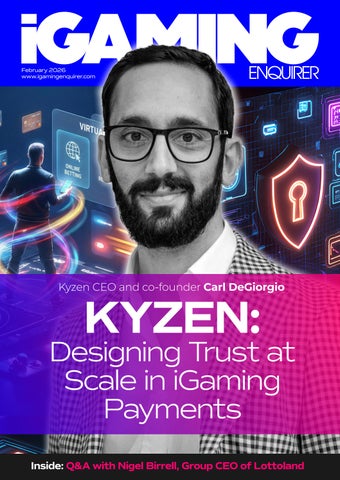

KYZEN: Designing Trust at Scale in iGaming Payments


Inside: Q&A with Nigel Birrell, Group CEO of Lottoland
Kyzen CEO and co-founder Carl DeGiorgio
Unveiling The Secrets of Roulette: A
Game-Changing Guide for Players
Unveiling The Secrets of Roulette: A Game-Changing Guide for Players
We are thrilled to announce the release of The Secrets of Roulette, the latest book by Harald Pia—renowned casino operator, strategist, and author of over 500 articles in the iGaming industry. This groundbreaking book challenges the notion that roulette is purely a game of chance and introduces a strategic approach that blends mathematics, psychology, and real-world casino insights.
We are thrilled to announce the release of The Secrets of Roulette, the latest book by Harald Pia—renowned casino operator, strategist, and author of over 500 articles in the iGaming industry. This groundbreaking book challenges the notion that roulette is purely a game of chance and introduces a strategic approach that blends mathematics, psychology, and real-world casino insights.
Based on extensive research conducted in over 100 European casinos, The Secrets of Roulette uncovers the hidden patterns behind the wheel. Harald Pia’s expert analysis highlights how croupier behavior, wheel tendencies, and calculated betting techniques can give players a competitive edge. Unlike traditional books that focus solely on mathematical theories, this guide provides a holistic approach—teaching players how to read the game, make smarter bets, and develop the mental discipline necessary for long-term success.
Based on extensive research conducted in over 100 European casinos, The Secrets of Roulette uncovers the hidden patterns behind the wheel. Harald Pia’s expert analysis highlights how croupier behavior, wheel tendencies, and calculated betting techniques can give players a competitive edge. Unlike traditional books that focus solely on mathematical theories, this guide provides a holistic approach—teaching players how to read the game, make smarter bets, and develop the mental discipline necessary for long-term success.
Whether you're a novice looking to understand the fundamentals or an experienced player seeking to refine your strategy, this book offers valuable tools to enhance your gameplay.
Whether you're a novice looking to understand the fundamentals or an experienced player seeking to refine your strategy, this book offers valuable tools to enhance your gameplay.
Now available online and in select bookstores, The Secrets of Roulette is set to revolutionize the way players approach the game. Don’t leave your bets to chance—discover the strategies that can transform your roulette experience today!
Now available online and in select bookstores, The Secrets of Roulette is set to revolutionize the way players approach the game. Don’t leave your bets to chance—discover the strategies that can transform your roulette experience today!
For more information or to get your copy, visit www.roulette-win.com
For more information or to get your copy, visit www.roulette-win.com

Mastering Roulette: Strategy, Psychology, and Winning Techniques
Roulette has long been considered a game of pure chance, but Harald Pia’s latest book, The Secrets of Roulette, challenges this notion. Drawing from his vast experience as a casino operator and strategist, Pia presents a structured approach to the game, incorporating probability, psychology, and disciplined betting strategies. His research, tested in over 100 European casinos, provides players with valuable insights into mastering the wheel.
Understanding the Fundamentals
The first step to mastering roulette is recognizing common mistakes. Many players fall into the trap of believing that past results influence future spins, a fallacy known as the Gambler’s Fallacy. Pia debunks this myth and instead introduces key mathematical principles:
The Law of Equilibrium and Deviation – Over time, numbers and colors tend to balance out, but short-term deviations occur.
The Laws of Figures and Series – Recognizing patterns in sequences can provide insight into betting strategies.
The Infinity of Permanence – Every spin is independent, but long-term data can highlight trends.
Understanding these principles sets the foundation for an informed approach to betting.
The Role of the Croupier
One of the most controversial yet compelling aspects of Pia’s strategy is the emphasis on croupier behavior. Contrary to the belief that the game is entirely random, Pia argues that croupiers develop subtle habits over time, influencing where the ball lands. Factors such as the spin's force, the wheel’s condition, and even subconscious tendencies can create exploitable patterns.
Observing a croupier’s habits, noting repeated landing zones, and analyzing their spin techniques can give a player a strategic edge. Pia provides practical guidance on recognizing these patterns and adjusting bets accordingly.
Sector and Transverse Betting Techniques
Pia introduces a structured betting method that relies on sectors of the wheel rather than random wagers.
Sector Betting: Instead of betting on scattered numbers, players target sections of the wheel where patterns emerge.
Transversale Simple: This technique involves betting on rows or groups of numbers based on statistical likelihood rather than gut feeling.
By focusing on these calculated bets, players can shift their approach from gambling to strategic play.
The Psychological Edge
Success in roulette is not just about numbers—it’s about psychology. Pia distinguishes between casual gamblers and strategists, emphasizing disciplined decision-making. Understanding the psychology of both the player and the croupier can provide advantages.
Avoiding Emotional Betting: Players must resist the temptation to chase losses or bet impulsively.
Reading the Croupier: Recognizing behavioral cues can help predict certain tendencies.
Developing a Winning Mindset: Confidence, patience, and focus are key elements of Pia’s philosophy.
The Importance of Mental Training
Roulette requires mental endurance, and Pia dedicates an entire section to cognitive and physical preparation. He advocates for:
Memory Training: Enhancing recall of previous numbers to detect patterns.
Relaxation Techniques: Meditation and controlled breathing to maintain focus.
Nutrition and Stamina: Proper diet and hydration to sustain long gaming sessions.
A well-prepared mind is just as crucial as a well-planned strategy.
Avoiding Common Pitfalls
Many players rely on popular betting systems like the Martingale or D’Alembert, which focus purely on mathematical progression. Pia cautions against these rigid systems, as they fail to account for real-world variables such as table limits and human factors. Instead, he advocates for a flexible, observational approach that combines data analysis with psychological insights.
Additionally, he warns against the dangers of overconfidence and impulsive betting, stressing the importance of money management and discipline.
Bridging Theory and Practice
Perhaps the most valuable aspect of Pia’s work is its practical application. His strategies have been tested extensively in real casino environments, offering actionable techniques that can be used immediately. Whether a novice learning the fundamentals or an experienced player refining their game, Pia’s insights provide a roadmap for success.
The Secrets of Roulette transforms the game from a random gamble into a calculated battle of skill, psychology, and strategy. By understanding mathematical principles, observing croupiers, utilizing structured betting techniques, and maintaining mental sharpness, players can improve their odds and approach roulette with confidence.
Harald Pia’s research-backed approach challenges conventional wisdom and offers a fresh perspective on how to master the wheel. For anyone serious about roulette, this book is an essential read.
Renowned casino operator, strategist, and author, Harald Pia

EXECUTIVE TEAM
Jamie Waite CEO, EMG | Enquirer Media Group jamie.waite@busenq.com
Roisin Brennand
Chief Operations Officer roisin.brennand@busenq.com
MEDIA
Gary Smith
Senior Project Director gary.smith@busenq.com
Rupert Kay
Commercial Director UK rupert.director@busenq.com
Adel Mhiri
Project Director adel.m@busenq.com
Paris Cressy
Branding & Marketing Executive paris.cressy@busenq.com
Verity Kay
Project Director verity.kay@busenq.com
Thomas Corcoran
Project Director thomas.cocoran@busenq.com
Stpehen Vivian
Global Director - Food & Beverage stephen.vivian@busenq.com
Claire Dunn Global Credit Controller claire.dunn@busenq.com
Bethany Waite Credit Controller bethany.waite@busenq.com
Tanya Rudd Head of Finance tanya.rudd@busenq.com
Natoya Rimmer Global Head of Accounts natoya.rimmer@busenq.com
DATA ANALYSIS
Dan Reeves Head of Data dan.reeves@busenq.com
Kumar Nil-Khan Senior Data Strategy kumar.nilkhan@busenq.com
Simon Ferrening Production Manager Commercial Performance Analysis
SOCIAL MEDIA TEAM
Anita Terrell Social Media Manager anita.terrell@busenq.com
Lee Dixon Social Media Manager lee.dixon@busenq.com
Susan Tumelty HR Partnered Company info@hrdept.co.uk
Laura Green Editor in Chief laura.green@busenq.com
Catherine Lafferty Business Editor catherine.lafferty@busenq.com
PRODUCTION
Remo Savino Production Assistant remo.savino@busenq.com
Jamie Bolton Head of Design jamie.bolton@busenq.com
Didie Nturo Head of Video & Content Creation didie.nturo@busenq.com
Matt Hardwick Online Website Manager matt.hardwick@busenq.com
DESIGN WEBSITE PHOTOGRAPHY
Didie Nturo Lead Photographer didie.nturo@busenq.com
Chloe Bird Birketts LLP Norwich LEGAL
www.igamingenquirer.com
igamingenquirer@busenq.com
a word from our team
The House Advantage: Your Edge in the iGaming Business World
A new year in iGaming rarely arrives quietly.
As 2026 begins, the industry finds itself in a more mature, more scrutinised and more demanding phase of its evolution. Growth remains essential, but it is no longer enough on its own. Advantage today is shaped by execution, trust and the ability to operate with control in an environment where regulatory, technological and player expectations continue to rise.
The first iGaming Enquirer Magazine of 2026 reflects that reality. This edition focuses on where advantage is now being built behind the scenes. It examines how payments and operational infrastructure have become central to trust and resilience, how modern gaming brands are evolving beyond novelty into credible long-term platforms, and how experienced leadership is redefining what sustainable success looks like in a global, regulated industry.
Payments, once viewed as a functional necessity, are now a strategic battleground. In this issue, KYZEN offers insight into why integrated payments, fraud and customer operations are no longer optional add-ons, but foundational to credibility and performance. As operators scale across jurisdictions, the ability to balance speed, compliance and player experience has become one of the industry’s most decisive differentiators.
Brand evolution is also under the spotlight. In a crowded market, attention alone does not build loyalty. 500 Casino represents a growing cohort of operators focused on earning trust through design, clarity and consistency. Its journey reflects a broader shift towards platforms that combine modern user experience with substance, discipline and player confidence, rather than relying on noise or novelty.
Leadership, meanwhile, remains one of the most powerful forces shaping the industry’s direction. Our in-depth Q&A with Lottoland Group CEO Nigel Birrell offers a rare perspective from one of iGaming’s most experienced executives. From early disruption and regulatory scepticism to diversification, global expansion and ESG responsibility, the conversation reflects the lessons learned from building a business designed to adapt, endure and remain credible under constant scrutiny.
Together, these perspectives capture the reality of iGaming in 2026. An industry no longer defined by how fast it can move, but by how well it can operate. An industry where trust is engineered, brands are refined, and leadership is measured by longevity as much as ambition.
The House Advantage has always been about understanding where the real edge lies. As this year begins, that edge is clearer than ever. Enjoy the read.
If you have a business story you wish to share in 2024/5, please contact our Head of Production via production@busenq.com

Laura Watling Editor in Chief

Roisin Brennand Chief Operations Officer

Jamie Bolton Head of Design
The editor and publishers do not guarantee the accuracy of statements made by contributers or advertisers, or accept responsibilty for any statement they express in this publication. The opinion of the contributors may not necessarily be the opinion of the editor or publishers.
The editor and publishers do not guarantee the accuracy of statements made by contributers or advertisers, or accept responsibilty for any statement they express in this publication. The opinion of the contributors may not necessarily be the opinion of the editor or publishers.
All content including the presentation therof in this magazine is the property of Enquirer Media Group and protected by internation al copyright laws.
You may not copy, reproduce, distribute, transmit, modify, create derivitave works, or in any other way exploit any part of copyrighted material without prior written permission from Enquirer Media Group ©EnquirerMediaGroup
All content including the presentation therof in this magazine is the property of Enquirer Media Group and protected by internation al copyright laws. You may not copy, reproduce, distribute, transmit, modify, create derivitave works, or in any other way exploit any part of copyrighted material without prior written permission from Enquirer Media Group ©EnquirerMediaGroup
008 012 016
News: 2026: The Year iGaming Stops Apologising for Scale
News: Regulation Has Entered Its Strategic Era
News: Why Product Simplicity Is Becoming a Competitive Advantage
020 024 028
News: The Quiet Re-Wiring of iGaming Infrastructure
News: Leadership in iGaming Is Being Redefined
Q&A: Nigel Birrell, Group CEO of Lottoland
046 048 056
Slotegrator: Evolve to lead: Slotegrator’s new brand identity reflects its evolution
Event: ICE Barcelona, the New Centre of Gravity for Global Gaming
Q&A Nigel Birrell, Group CEO of Lottoland
028

500 Casino: How 500 Casino is Redefining Modern Gaming

Designing Trust at Scale in iGaming Payments

Cover feature 036 ICE Barcelona and the New Centre of Gravity for Global Gaming
048

2026: The Year iGaming Stops Apologising for Scale
For much of its modern history, the iGaming industry has spoken about growth in careful, sometimes defensive terms. Expansion was frequently accompanied by caveats, qualifiers and reassurances, as though scale itself required justification. Growth happened, but it was rarely owned outright. In 2026, that tone is changing, and with good reason.
This year marks a clear inflection point. iGaming is no longer apologising for scale. It is beginning to define it.
This is not bravado, nor is it a return to the excesses that once characterised parts of the sector. It is something more measured and more significant: a signal of maturity. After more than a decade of regulatory tightening, market exits, public scrutiny and structural reform, the industry has reached a stage where scale is no longer an uncomfortable topic. It is an operational reality, and one that can be executed responsibly, visibly and with confidence.


To understand why this matters, it is worth revisiting what scale meant in earlier cycles. In the mid-2010s, scale was synonymous with speed. Speed to market, speed of acquisition, speed of geographic expansion. Competitive advantage was built on how quickly an operator could enter a jurisdiction, acquire users and monetise before conditions changed. Governance, while present, often lagged behind ambition.
That environment no longer exists.
In 2026, scale is not measured in headline user numbers or market entries alone. It is measured in operational depth, regulatory endurance and organisational coherence. The businesses setting the pace today are those that can operate calmly across multiple regulatory environments without disruption, controversy or sudden retreat. Their growth is quieter, more deliberate and far more resilient.
This shift has been driven in part by necessity. Regulatory frameworks across Europe and beyond have made it abundantly clear that growth without control is unsustainable. Licence withdrawals, advertising restrictions and enforcement actions have imposed real consequences on those unwilling or unable to adapt. But rather than stalling progress, this pressure has refined it.
Operators that invested early in compliance infrastructure, governance frameworks and long-term market strategy are now reaping the benefits. Their scale is not brittle. It absorbs scrutiny rather than collapsing under it. They can demonstrate consistency of standards across jurisdictions, something that regulators increasingly value and reward.
There is also a notable change in boardroom language. For several years, many leadership teams adopted a cautious public posture, emphasising restraint and responsibility almost to the point of self-effacement. In 2026, that defensiveness is receding. Not because responsibility matters less, but because it has been internalised.
Boards are once again speaking openly about market leadership, consolidation and long-term value creation. Importantly, this confidence is grounded in structure rather than sentiment. Scale is no longer something to be defended rhetorically. It is something to be evidenced operationally.
One of the most overlooked aspects of this evolution is the relationship between scale and player protection. For too long, these concepts were framed as being in tension. In reality, well-governed scale enables better outcomes. Larger, more mature operators can invest meaningfully in responsible gaming tooling, advanced analytics and specialist teams. They can monitor behaviour across markets, identify risk patterns earlier and intervene more effectively.
Smaller operators, while agile, often lack the resources to do this consistently. In that context, scale is not a threat to player welfare. Poorly governed scale is. The distinction matters, and in 2026 the industry is becoming more confident in articulating it.
Scale also underpins professionalisation. Larger organisations support clearer accountability, more robust internal controls and more sustainable employment structures. As iGaming increasingly competes for talent with other regulated digital industries, this matters. Scale enables career pathways, training investment and institutional knowledge that transient, opportunistic models cannot replicate.
Of course, confidence brings its own risks. Scale attracts scrutiny, and scrutiny intensifies expectations. The industry cannot afford complacency. Public tolerance for failure is limited, and regulatory patience even more so. Owning scale does not mean ignoring its responsibilities. It means accepting them without equivocation.
There is also a broader context to consider. Regulated iGaming is now a permanent feature of global entertainment markets. It contributes significant tax revenues,
supports tens of thousands of jobs and operates under some of the most stringent oversight regimes in the digital economy. Continuing to speak as though its legitimacy is provisional does a disservice not only to the industry, but to the regulators and policymakers who have worked to bring it into the mainstream.
That does not mean the industry should stop listening. It does mean it should stop whispering.
Front-of-book commentary exists to set tone. It signals what matters, what has changed and where attention should be focused. The tone for 2026 is clear. iGaming is no longer asking permission to exist. It is focused on demonstrating that its scale can be a stabilising force rather than a destabilising one.
The operators, suppliers and partners that will define the next phase of growth are those that understand this distinction. They are not chasing volume for its own sake. They are building systems, cultures and governance models that allow scale to be sustained without erosion of standards.
That is not an easy task. It requires capital discipline, strategic patience and an acceptance that some opportunities are better declined than pursued. But it is precisely this restraint that separates durable scale from temporary expansion.
As the industry enters 2026, the question is no longer whether iGaming can grow. That has been answered. The question is whether it can continue to grow without reverting to the behaviours that once undermined its credibility.
The early signs are encouraging. The language has changed. The priorities have shifted. The focus is moving from speed to substance.
This is not the end of scrutiny. It is the beginning of ownership.
And that is the mark of an industry coming of age.



Regulation Has Entered Its Strategic Era
There was a time when regulation in iGaming was treated primarily as an external force. Something imposed rather than integrated. Something to be managed at arm’s length by legal teams while the commercial engine continued to run elsewhere. That era has ended.
In 2026, regulation has entered its strategic era.
This is not a matter of increased enforcement alone, nor simply the cumulative effect of more rules. It is a deeper shift in how regulation functions within the industry. Regulation is no longer a constraint that sits outside strategy. It is a defining input into it.
For years, the industry framed regulation as reactive. New rules emerged, operators adjusted, and the cycle repeated. In mature markets, this led to incremental tightening. In newer jurisdictions, it often produced uncertainty and delay. What has changed is not just the volume of regulation, but its intent. Regulators are no longer merely responding to growth. They are actively shaping the markets they oversee.
This shift is visible across Europe, where enforcement has become more consistent and expectations clearer. It is equally evident in emerging markets across Latin America, Africa and parts of
Asia, where regulators are increasingly deliberate about sequencing, licensing design and long-term sustainability. Rather than rushing frameworks into place, many are now taking the time to observe, consult and calibrate.
The result is a regulatory environment that, while still complex, is more intelligible to those willing to engage with it seriously.
For operators, this has profound implications. Regulation can no longer be treated as a downstream consideration. It influences market selection, investment timing, product design, technology architecture and even corporate structure. Compliance is no longer simply about meeting minimum requirements. It is about aligning the business with the direction of travel in each jurisdiction.
This is why regulatory intelligence has become one of the most valuable strategic capabilities in the industry. Leading operators now invest heavily in understanding not just what the rules say, but why they exist and how they are likely to evolve. They track political sentiment, public health priorities and enforcement patterns alongside legal texts.
This intelligence informs decisions long before licences are applied for. Which markets justify long-term investment.


Which regulatory models align with an operator’s risk appetite. Which jurisdictions require local partnerships, bespoke products or altered commercial expectations. These are strategic questions, not legal ones.
As a result, compliance functions are being repositioned. They are no longer siloed advisory teams brought in to approve decisions after the fact. They are embedded in product development, technology planning and commercial strategy. In some organisations, senior compliance leaders now sit directly alongside CEOs and CFOs, shaping direction rather than reacting to it.
This integration has also changed how capital is deployed. Investment is increasingly directed towards systems that support regulatory adaptability. Automated reporting, real-time monitoring, advanced player protection tools and jurisdiction-specific controls are no longer optional enhancements. They are core infrastructure.
This has raised the barrier to entry, particularly in tightly regulated markets. But it has also created a clearer distinction between operators committed to long-term participation and those seeking short-term opportunity. In the strategic era of regulation, patience is rewarded. Opportunism is exposed.
There is another important dimension to this shift: the changing posture of regulators themselves. While enforcement remains firm, many regulators are now more open to dialogue than in previous cycles. Consultation processes are broader. Engagement with industry experts is more structured. There is a growing recognition that effective regulation requires understanding the operational realities of modern platforms.
This does not mean regulators are becoming lenient. It means they are becoming more informed. And that

creates an opportunity for operators that approach engagement with credibility and restraint. Input grounded in evidence and experience carries far more weight than lobbying rhetoric or public pressure.
However, this strategic relationship cuts both ways. Regulators now expect a higher standard of behaviour. Transparency, consistency and demonstrable commitment to consumer protection are no longer aspirational. They are prerequisites. Operators that fail to meet these expectations find themselves excluded not just through enforcement, but through policy design.
The strategic era of regulation also demands internal cultural change. Compliance cannot function effectively if it is seen as an obstacle internally. Organisations that continue to frame regulation as something to be worked around inevitably struggle. Those that treat it as a design constraint tend to build stronger, more coherent businesses.
This cultural alignment is particularly important as regulatory divergence increases. While global harmonisation remains limited, differences between jurisdictions are becoming more pronounced. Advertising rules, affordability checks, data requirements and product restrictions vary widely. Navigating this landscape requires more than legal interpretation. It requires operational discipline and organisational clarity.
The operators best positioned for this environment are those that have accepted a fundamental truth: regulatory certainty is rare, but regulatory direction is not. Understanding the direction allows businesses to plan, even when details remain fluid.
There is also a broader reputational dimension. As public scrutiny of gambling continues, operators are increasingly judged not just by compliance outcomes, but by intent.
How they respond to emerging concerns. How quickly they adapt to new expectations. How openly they communicate change. Regulation in its strategic era is as much about trust as it is about enforcement.
This has implications beyond individual markets. Global operators are now assessed on their behaviour across jurisdictions. Weakness in one market can undermine credibility in another. Consistency of standards is becoming a competitive advantage in its own right.
It is also reshaping consolidation. Mergers and acquisitions are now evaluated through a regulatory lens that extends far beyond licensing status. Cultural fit, compliance maturity and regulatory reputation matter as much as commercial synergy. Deals that once looked compelling on paper now falter under deeper scrutiny.
None of this suggests that regulation has become simple or benign. It remains demanding, resource-intensive and, at times, frustrating. But it has become legible. And that legibility allows strategy to form.
For an industry that once thrived on speed and improvisation, this represents a significant adjustment. But it also marks progress. Regulation, when understood strategically, provides a framework for sustainable growth rather than a ceiling on ambition.
As 2026 unfolds, the operators that succeed will be those that no longer ask how little regulation they can tolerate, but how well they can operate within it. They will not wait for perfect clarity, nor will they rush ahead blindly. They will read the landscape, invest accordingly and engage constructively.
Regulation has not softened. It has matured.
And in doing so, it has changed the rules of success.
Why Product Simplicity Is Becoming a Competitive Advantage
For much of the last decade, innovation in iGaming followed a familiar pattern. New mechanics were layered onto existing ones. Interfaces became denser. Feature sets expanded relentlessly. Complexity was often mistaken for sophistication, and novelty for progress. In 2026, that mindset is being quietly, but decisively, challenged.
The most competitive products in the market today are not the most complex. They are the most intelligible.
This shift represents more than a design preference. It reflects a structural change in how the industry understands value, risk and long-term engagement. Simplicity, once viewed as a compromise, is now emerging as a strategic advantage.
The reasons are both practical and philosophical. At a regulatory level, scrutiny of player journeys has intensified. Regulators are no longer focused solely on outcomes, but on how

those outcomes are reached. Confusing interfaces, opaque mechanics and layered inducements attract attention for the wrong reasons. Products that require explanation are increasingly viewed as products that invite misinterpretation.
At the same time, player demographics are broadening. iGaming is no longer the preserve of highly engaged, technically literate users willing to navigate complexity. New audiences arrive with different expectations, shaped by mainstream digital platforms that prioritise clarity, speed and predictability. Their tolerance for friction is low, and their sensitivity to perceived manipulation is high.
Against this backdrop, simplicity is not about doing less. It is about doing what matters with precision.
In practical terms, this means cleaner onboarding flows that explain rather than obscure. It means interfaces that foreground essential information rather
than burying it beneath animation or noise. It means mechanics that are transparent enough to be understood without instruction. In short, it means respecting the cognitive load of the player.
This respect has measurable commercial impact. Products that are easier to understand generate higher levels of trust. Trust supports retention. Retention, in turn, drives sustainable revenue. In an environment where acquisition costs remain high and regulatory scrutiny of marketing continues to increase, this dynamic matters more than ever.
There is also a direct operational benefit. Simpler products are easier to monitor, easier to regulate and easier to adapt across jurisdictions. As regulatory divergence grows, flexibility becomes a core requirement. Products built around clarity rather than complexity travel better. They can be modified without wholesale redesign and explained without legal contortion.

This is why many leading operators are reassessing long-standing assumptions about engagement. For years, the prevailing logic held that more features equalled more time spent, and more time spent equalled more value. In reality, this relationship is far from linear. Over-engineered products often lead to confusion, fatigue and disengagement.
The industry is beginning to recognise that engagement built on clarity is more durable than engagement built on stimulus. Players who understand what they are doing are more likely to feel in control. Feeling in control supports trust. Trust underpins longevity.
Mobile usage has accelerated this realisation. On smaller screens, clutter is unforgiving. Every unnecessary element competes for attention and erodes focus. Mobile-first design has forced product teams to confront hard choices about what truly matters. The result has been a gradual stripping back of excess.
This trend is also reshaping supplier

relationships. Platform providers are increasingly focused on modularity rather than monolithic solutions. Operators want the ability to deploy features selectively, tailored to specific markets and player segments. Flexibility has replaced breadth as the primary selling point.
Game studios, too, are responding. Rather than endlessly layering mechanics in pursuit of novelty, many are refining core gameplay. The emphasis has shifted from adding features to improving feel. Pacing, clarity and user feedback are taking precedence over complexity for its own sake.
There is a cultural dimension to this evolution that should not be overlooked. Simplicity requires confidence. It demands that product teams trust their core proposition rather than hiding behind embellishment. It requires saying no to features that add noise without value. In an industry long driven by competitive escalation, restraint can feel counterintuitive.
Yet restraint is precisely what regulation, players and investors increasingly reward.
From a regulatory perspective, simple products are easier to explain and defend. From a player perspective, they are easier to enjoy without anxiety. From an investor perspective, they signal maturity and risk awareness. These audiences may have different priorities, but simplicity speaks to all three.
There is also a growing recognition that complexity often masks underlying weaknesses. Over-engineered products can be used to compensate for unclear value propositions or short-term engagement challenges. Simplicity forces honesty. It exposes whether a product stands on its own merits.
This does not mean the industry is retreating from innovation. On the contrary, innovation is becoming more disciplined. The focus is shifting from feature accumulation to experience optimisation.

Innovation is being judged not by how much is added, but by how effectively each addition serves the player.
Artificial intelligence and data analytics are playing a role here as well. Rather than being used to increase complexity, they are increasingly deployed to personalise simplicity. Interfaces adapt to user behaviour. Features surface when relevant rather than all at once. Complexity is managed behind the scenes, not pushed onto the player.
This distinction is crucial. Sophistication does not disappear. It moves out of sight. The most advanced products in 2026 are often the ones that feel the simplest on the surface, precisely because complexity has been handled thoughtfully beneath it.
There is also a reputational element. As public narratives around gambling remain sensitive, product design sends a signal. Platforms that feel calm, measured and transparent are more defensible than those that feel frenetic or aggressive. In a climate where perception matters, this is not trivial.
Front-of-book commentary exists to challenge assumptions. One of the assumptions that deserves reconsideration is the idea that more is inherently better. The evidence increasingly suggests the opposite.
In 2026, simplicity is no longer a design trend. It is a strategic posture. It reflects confidence in product, respect for players and alignment with regulatory reality.
The operators and suppliers that embrace this shift are not retreating. They are refining. They are recognising that sustainable advantage comes not from overwhelming the user, but from serving them well.
Complexity once signalled ambition. Today, clarity signals control.
And in an industry under constant scrutiny, control is one of the most valuable assets of all.
The Quiet Re-Wiring of iGaming Infrastructure
Some of the most consequential changes taking place in iGaming today are happening far from the spotlight. They are not announced through press releases or celebrated at conferences. They do not lend themselves easily to headlines or marketing decks. Yet they will shape the industry’s trajectory more decisively than any single market launch or regulatory reform.
The industry is being re-wired.
Beneath the surface, iGaming’s infrastructure is undergoing a fundamental transformation. Legacy systems are being retired. Fragmented technology stacks are being consolidated. Data architectures are being rebuilt with a level of seriousness that was often absent during earlier growth cycles. This work is quiet, technical and at times uncomfortable, but it is essential.
For many operators, the infrastructure they rely on today was never designed for the environment they now operate in. Rapid expansion during earlier phases led to systems being bolted on rather than integrated. Platforms were acquired, markets added and compliance processes layered without a unifying architectural vision. For a

time, this patchwork approach delivered results.
In 2026, its limitations are impossible to ignore.
Regulatory complexity has increased. Real-time reporting requirements are more demanding. Expectations around player protection, data governance and operational transparency are higher. At the same time, businesses are operating across more jurisdictions, each with its own technical and legal requirements. The margin for error has narrowed.
This is why infrastructure has moved from being an operational concern to a strategic priority.
Operators that once treated technology as a support function are now recognising it as a determinant of competitive advantage. Clean, flexible infrastructure enables faster adaptation to regulatory change, smoother market entry and more credible engagement with regulators. Conversely, technical debt has become a material business risk.
The re-wiring underway is not simply about modernisation for its own sake. It is about resilience. Systems are being

redesigned to handle variability rather than stability, to respond dynamically rather than statically. This is a significant shift in mindset.
One of the most important changes is the move towards unified platforms. Data silos that once separated payments, risk, player behaviour and compliance are being dismantled. In their place, operators are building architectures that allow information to flow across functions in real time. This supports faster decisionmaking and more consistent oversight.
Real-time data is no longer a luxury. It is a regulatory expectation. Operators are increasingly required to demonstrate not just retrospective compliance, but ongoing monitoring and intervention. Infrastructure that cannot support this level of visibility becomes a liability.
Automation is another defining feature of this re-wiring. Manual processes that once formed the backbone of compliance and reporting are being phased out. Automated alerts, rulebased interventions and continuous monitoring systems are becoming standard. This reduces human error, improves consistency and frees specialist teams to focus on judgment rather than administration.
There is also a significant shift in how infrastructure supports player protection. Responsible gaming tools are no longer add-ons. They are being built into core systems, informed by behavioural data and designed to operate across products and markets. This integration is essential if interventions are to be timely and effective.
Payments infrastructure is undergoing similar scrutiny. As regulatory expectations around source of funds, affordability and transaction monitoring evolve, payment systems must be tightly integrated with risk and compliance functions. Fragmentation here is no longer tolerable.

What makes this transformation particularly challenging is that it must often be undertaken while businesses continue to operate at scale. Unlike a start-up building from scratch, established operators must re-engineer live systems without disruption. This requires careful planning, significant investment and a willingness to accept short-term friction for long-term gain.
The cultural implications are just as significant as the technical ones. Infrastructure projects demand collaboration across functions that have historically operated in silos. Technology, compliance, product and commercial teams must align around shared priorities. This can be uncomfortable, particularly in organisations accustomed to rapid, decentralised decisionmaking.
Yet this alignment is precisely what enables maturity.
Boards are increasingly involved in these discussions. Infrastructure is no longer viewed solely through the lens of cost. It is assessed in terms of strategic optionality. Can the business enter a new market without rebuilding systems? Can it respond quickly to regulatory change? Can it integrate acquisitions without months of disruption? These questions are now central to investment decisions.
There is also a growing awareness that infrastructure choices signal intent. Regulators are increasingly attuned to the technical capabilities of the operators they oversee. Robust systems communicate seriousness. Fragile ones invite scrutiny.
The re-wiring of infrastructure is also reshaping competitive dynamics. Operators that invest early gain an advantage that is difficult to replicate quickly. Clean architectures compound over time. They reduce marginal costs, increase flexibility and support consistency. In contrast, technical debt
compounds negatively, becoming harder and more expensive to address the longer it is ignored.
Suppliers play a critical role in this transition. Platform providers that offer modular, interoperable solutions are increasingly favoured over those pushing rigid, all-in-one systems. Operators want control over their architectures, not dependency. Flexibility is valued over breadth.
This has implications for consolidation as well. Mergers and acquisitions are now assessed as much on technical compatibility as on commercial logic. Incompatible systems can undermine the value of a deal, regardless of strategic rationale. Infrastructure has become a due diligence priority.
What makes this moment particularly important is that it coincides with a broader recalibration of the industry. Growth remains an ambition, but it is increasingly pursued with an eye to durability. Infrastructure is foundational to that durability.
Front-of-book commentary often focuses on visible change. But the most important shifts are not always the most visible. The quiet re-wiring of iGaming infrastructure is one such shift. It lacks glamour, but it determines who can adapt, who can scale responsibly and who can withstand pressure.
As 2026 unfolds, the operators best positioned for the future will not necessarily be those making the most noise. They will be those investing patiently in foundations that allow them to respond calmly to whatever comes next.
Infrastructure may never define a brand. But it will define survival.
And in an industry that has learned the cost of fragility, survival is no small achievement.

Every industry carries with it an implicit idea of what leadership looks like. In iGaming, that idea has changed repeatedly over the past two decades. The founders who shaped the early years were celebrated for speed, instinct and a willingness to take risks that others would not. The next generation of leaders earned credibility by professionalising operations and navigating an increasingly complex regulatory landscape. In 2026, a different model of leadership is emerging again. It is quieter. More deliberate. And far more consequential.
The leaders defining iGaming today are not those commanding the most attention, but those exerting the most control. They are less visible in public forums and more present in the systems, cultures and decisions that determine whether a business can endure sustained scrutiny. Leadership is no longer measured by expansion alone, but by coherence.
This shift reflects the industry’s broader evolution. As iGaming has moved from the margins into the regulated mainstream, the requirements placed on leadership have changed fundamentally. Speed remains valuable, but it is no longer sufficient. Ambition still matters, but it must be disciplined.

Leadership Is Being Redefined
Authority is increasingly derived from credibility rather than charisma.
In earlier cycles, leadership often meant pushing boundaries faster than regulators could respond. In 2026, it means understanding where boundaries are forming and shaping organisations to operate confidently within them. This requires a different skill set, and a different temperament.
Modern iGaming leaders are systems thinkers. They recognise that markets, technology, regulation, culture and reputation are interconnected forces rather than separate domains. Decisions made in one area inevitably reverberate through others. The ability to anticipate these interactions is now a core leadership competency.
This is particularly evident in how senior executives approach regulation. Where once compliance was delegated downward, it is now a central concern at the top of the organisation. Leaders are expected to understand regulatory direction, not just regulatory detail. They must be able to articulate to boards, investors and regulators alike how their businesses align with evolving expectations.
This demands fluency rather than defensiveness. Leaders who treat
Leadership in iGaming Redefined
regulation as an adversary quickly lose credibility. Those who treat it as an operating environment build trust, even when disagreements arise. In 2026, trust is a form of capital.
There is also a noticeable recalibration of what success looks like. Market share remains important, but it is no longer the sole indicator of leadership effectiveness. Sustainable revenue, regulatory relationships, employee retention and organisational resilience are increasingly weighted alongside growth metrics. Leaders are being judged on whether their businesses can withstand pressure, not just whether they can generate it.
This shift is reshaping internal cultures. The most effective leaders are fostering organisations that value clarity over urgency, accountability over improvisation and long-term thinking over short-term wins. This does not mean innovation has slowed. It means innovation is being channelled more purposefully.
One of the most significant changes is how leadership teams approach risk. In the past, risk-taking was often celebrated as a marker of entrepreneurial spirit. Today, risk is assessed more holistically. Leaders

are expected to understand not only the upside of decisions, but their second- and third-order consequences. Reputational risk, regulatory risk and operational risk are no longer abstract concepts. They are board-level concerns.
This has implications for how leaders communicate, both internally and externally. Public messaging has become more measured and precise. Internally, expectations around transparency and consistency have risen. Staff increasingly look to leadership for stability rather than spectacle.
There is also a growing emphasis on organisational depth. In earlier phases, iGaming businesses often revolved around a small number of key individuals. While this enabled speed, it created fragility. In 2026, effective leadership is characterised by delegation, succession planning and institutional memory. Businesses are being built to function beyond any one personality.
This matters not just for resilience, but for credibility. Regulators and partners alike assess whether an organisation is dependent on individuals or supported by systems. Leadership that prioritises structure over heroics signals maturity.
The changing nature of leadership is also evident in how executives engage with technology. Leaders are no longer expected to be technologists, but they are expected to understand technological implications. Infrastructure decisions, data governance and platform architecture have strategic consequences. Leaders who treat technology as a black box quickly find themselves constrained by it.
Similarly, responsible gaming is no longer a peripheral issue. It sits at the heart of leadership accountability. Decisions about product design, marketing strategy and player engagement carry ethical and regulatory weight. Leaders are increasingly judged on whether their

organisations act with foresight rather than reacting under pressure.
This is not about moral posturing. It is about recognising that public tolerance for failure is limited. The leaders who endure are those who build safeguards before they are demanded.
There is also a generational element to this transition. As the industry matures, leadership pipelines are diversifying. Executives with backgrounds in regulated financial services, technology and consumer protection are entering iGaming at senior levels. This crosspollination is influencing leadership style, bringing with it different assumptions about governance and accountability. The result is an industry that feels more
institutional, but also more stable. This stability supports investment, encourages regulatory confidence and attracts a broader talent base. Leadership, in this context, is as much about stewardship as it is about strategy.
Front-of-book commentary exists to frame where an industry is headed. The direction of travel is clear. iGaming leadership is no longer defined by who can move fastest or speak loudest. It is defined by who can align ambition with responsibility, innovation with restraint and growth with governance.
The leaders setting the tone for 2026 understand that longevity is the ultimate competitive advantage. They are building organisations designed

to adapt rather than react, to endure rather than simply expand.
This does not make them less ambitious. It makes their ambition more credible.
As iGaming continues to embed itself within regulated global markets, leadership will remain under scrutiny. Expectations will rise, and tolerance for missteps will narrow. The executives who succeed will be those who recognise that leadership is no longer about proving what is possible, but about demonstrating what is sustainable.
That is the redefinition underway.
And it may be the most important shift the industry has seen yet.
Q&A Nigel Birrell, Group CEO of Lottoland
AQCould you introduce yourself and your job title at Lottoland?
I’m Nigel Birrell, Group CEO of Lottoland – a position I have held since 2014.
Before joining Lottoland, I was on the Executive Board at bwin.party digital entertainment plc (now Entain), the then world’s largest online gaming company. There, I handled mergers, acquisitions, and business development, and played a key role in the historic £3 billion merger between PartyGaming and Bwin.
Earlier, I was a main board director at HIT Entertainment plc, where I led a $1.1 billion sale in 2005. I was involved in acquiring famous children's characters like Barney, Thomas the Tank Engine, and Pingu. I also managed investor relations and was the Chairman of Guinness World Records and the first Chairman of Fun Radio. I served as CEO of Gullane plc during its merger with HIT.
Before HIT, I worked in investment banking with Dresdner Kleinwort Benson and
Donaldson, Lufkin & Jenrette (now Credit Suisse).
Currently, I am the Non-Executive Chairman of Duke Royalty, Chairman of AA Insurance Underwriting Company Limited, Chairman of the Gibraltar Betting and Gaming Association, and Chairman of Southern Rock Insurance Company Limited.
QWhen you first pitched the idea of Lottoland, did people think it was too risky or even impossible to succeed?
ALottoland was founded in 2013 by David Von Rosen, and was often compared to the likes of Uber, Spotify and Netflix – all disrupters of their industries.
When Lottoland was first pitched, some people viewed it as risky, controversial and thought it may not succeed, due to several reasons:
Regulatory Challenges: Operating an online lottery platform involves

navigating complex legal and regulatory environments, which can be seen as a significant hurdle.
Market Competition: Entering a market dominated by established national lotteries was perceived as a daunting challenge.
Consumer Trust: Building trust with consumers in an online gambling environment is crucial and can be difficult for new entrants.
Technological Requirements: Ensuring a secure and reliable platform for online transactions was seen as a technical challenge.
However, despite these challenges, we (Lottoland) managed to establish ourselves successfully by addressing these concerns and leveraging innovative business strategies. Lottoland is now the world leading online Lotto betting company and has close to 21 million customers globally.
QDo you see Lottoland today more as a lottery company, a tech platform, or a disruptor in entertainment?
AI’d say we are a combination of all three. At our core we are a lotto betting and gaming company. We have our own tech platform that we leverage to provide a seamless online experience, ensuring secure transactions and user-friendly interfaces. By offering innovative betting options and challenging traditional lottery models, Lottoland disrupts the entertainment and gambling industries.
We embody elements of each category, making us a multifaceted player in the market.
AQWhat was the toughest part about breaking into a market traditionally dominated by state lotteries?
Breaking into a market traditionally dominated by state lotteries involved navigating several tough
challenges. Regulatory compliance was a major hurdle, as it required adhering to diverse legal frameworks across different jurisdictions.
Building consumer trust was also crucial; convincing customers to choose an online platform over well-established state lotteries demanded significant efforts in establishing credibility and ensuring security.
Market penetration posed another challenge, as competing against state lotteries with strong brand recognition and loyal customer bases required strategic marketing and differentiation.
Additionally, forming partnerships and obtaining necessary licenses in various regions involved complex logistical and strategic planning.
Lastly, overcoming public scepticism about the legitimacy and fairness of an online lottery betting platform was essential for gaining acceptance and success.
QLottoland has faced pushback from governments that say your model undermines public lottery revenues — how do you respond to that criticism?
AIn response to the criticism that Lottoland undermines public lottery revenues, I'd emphasize that this argument was more prevalent 5-10 years ago when we were gaining attention, but there was no evidence to support these claims. Some National Lotteries were already facing challenges and used us as a scapegoat. The figures have consistently shown that we have no impact on their returns to good causes. In fact, we have evidence in certain jurisdictions where we have commissioned a study, that we are additive to the market and help the local state lottery to drive traffic to its own site. This is evidenced by the increasing online sales of most of the state lotteries where we operate.
At Lottoland, giving back is a core part of who we are. Beyond financial


contributions, we believe in lending our time, resources, and creative expertise to causes that make a meaningful difference in people’s lives and in the world around us. In the UK and Ireland, we give back through our charity games and scratchcards, which combine fantastic prizes with real-world impact. With every stake, donations are made to organisations such as Blue Cross for Pets, Hospice UK, PWSA UK, and DSPCA, supporting both human and animal welfare.
Just some examples: Last year for instance we helped over 4,500 children annually by pledging $600,000 over five years to the Sydney Children’s Hospitals Foundation to fund a Child Life Therapist for the MOCK MRI Program at Westmead Hospital. We also committed $100,000 over five years to The Royal Children’s Hospital Foundation’s Music
Therapy Program, providing emotional and psychological support to children during treatment.
In 2025, we announced a major sponsorship of Malta’s top three water polo clubs - Sliema ASC, Neptunes WPSC, and San Ġiljan ASC - supporting training programs, facilities, and grassroots engagement.
AQHow do you stay ahead of regulatory changes in so many different jurisdictions?
I can confidently say that staying ahead of regulatory changes across various jurisdictions is a top priority for us. We have significantly invested in our compliance team, more than doubling their headcount to ensure we are wellequipped to handle the complexities of
the legal landscape. This dedicated team focuses on monitoring and interpreting regulatory developments in different regions, ensuring that we remain compliant and can swiftly adapt to any changes.
Local partnerships are also crucial to our strategy. By collaborating with partners on the ground, we gain valuable insights into specific regulatory environments, allowing us to adapt more effectively. Proactive engagement with regulators and participation in industry discussions are key to staying informed about potential policy developments and, where possible, influencing them.
We have implemented robust compliance frameworks that enable us to quickly adjust to new regulations, minimizing any disruption to our operations. Additionally, we prioritize continuous training for our staff to ensure they are aware of the latest legal requirements and best practices. This comprehensive approach allows us to navigate the complex regulatory landscape effectively and maintain our position as a leader in the industry.
QResponsible gambling is a hot topic — what measures does Lottoland take to ensure customers play safely?
ANotwithstanding that we see lottery betting at the softer end of online gaming, Lottoland takes responsible gambling very seriously and implements several measures to ensure customers play safely. One key initiative is the provision of self-exclusion options, allowing customers to set limits on their spending or exclude themselves from playing for a specific period. Additionally, players can set daily, weekly, or monthly deposit limits to manage their spending effectively.
To help players keep track of their time on the platform, Lottoland provides regular reality checks. Access to support services and resources is readily available for those who may need assistance with gambling-related issues. Strict age verification processes

are also in place to prevent underage gambling.
Furthermore, Lottoland has introduced Lopetto, an AI customer service tool designed to enhance user experience and provide timely support. Lopetto assists customers by answering queries and guiding them through responsible gambling features, ensuring they have the information and support needed to play safely. These measures reflect Lottoland's commitment to promoting a safe and responsible gambling environment.
AQHow is technology shaping the lottery experience for your players today?
Technology is significantly enhancing the lottery experience for Lottoland players by providing

convenience and accessibility through a user-friendly online platform, allowing access to lotteries worldwide without geographical barriers. It enables innovative features, introducing new betting options and game formats for a more engaging experience. Personalization through data analytics offers tailored recommendations and promotions, boosting player engagement. Advanced security measures ensure safe transactions and protect player information, fostering trust and confidence. Additionally, AI and automation, exemplified by Lopetto, Lottoland’s AI customer service tool, deliver instant support and guidance, improving customer service and satisfaction. Overall, technology is transforming the lottery experience by making it more accessible, engaging, and secure for players.
QYounger generations are less likely to buy traditional lottery tickets. How are you adapting Lottoland’s offering to capture their attention?
ATo capture the attention of younger generations, Lottoland is adapting its offerings in several ways. The company leverages technology to provide a seamless and engaging online experience, which appeals to techsavvy younger audiences. By introducing innovative game formats and diverse betting options, Lottoland offers a more dynamic and interactive experience compared to traditional lotteries.
Additionally, personalization through data analytics allows Lottoland to tailor promotions and recommendations to individual preferences, enhancing engagement. The platform also integrates social and mobile features, making it more accessible and appealing to younger users who prioritize convenience and connectivity.
Lottoland's focus on responsible gambling and providing educational resources aligns with the values of younger generations, who are increasingly conscious of ethical considerations. By continuously evolving its offerings and embracing digital trends, Lottoland effectively captures the interest of younger players.
QBeyond lotteries, you’ve expanded into casino and sports betting — how important is diversification to your long-term strategy?
ADiversification is crucial to Lottoland's long-term strategy. By expanding into casino and sports betting, Lottoland broadens its product offerings, attracting a wider audience and reducing reliance on a single revenue stream. This diversification enhances resilience against market fluctuations and regulatory changes specific to lotteries.
Offering a variety of gaming options also increases customer engagement and retention, as players can enjoy a comprehensive entertainment
experience on a single platform. Additionally, diversification allows Lottoland to tap into new markets and demographics, driving growth and innovation.
Overall, this strategic expansion strengthens Lottoland's position in the competitive online gaming industry and supports sustainable long-term growth.
AQWhich markets around the world are most exciting for Lottoland right now, and why?
Brazil stands out as a particularly exciting market for Lottoland due to recent regulatory developments and strategic partnerships. The Brazilian government has implemented new licensing regulations, creating a more structured and transparent environment for online gaming. In this context, Levante Brasil LTDA, a collaboration between Lottoland and Sorte Online, secured a permanent license to operate in Brazil's betting sector in February 2025. This license, valid until December 31, 2029, allows Levante to offer online fixedodds games and sports betting in a market generating between BRL 100 billion and BRL 120 billion annually.
Sorte Online, with over two decades of experience in Brazil's digital lottery brokerage market, has distributed more than R$250 million in prizes. Its integration with Lottoland's global expertise positions Levante as a formidable player in Brazil's regulated market.
Australia also stands out with the introduction of KenoGO. This innovative platform offers an unparalleled online Keno experience, featuring Australia's largest Keno jackpot of $40 million. With live draws every three minutes, KenoGO provides an exhilarating gaming environment for Keno enthusiasts across the country.
KenoGO brings the best of Keno to players' fingertips, offering a variety of engaging games. The KenoGO Jackpot allows players to compete for the impressive $40 million prize, while KenoGO Classic offers a modern twist on traditional Keno, with the potential to win up to $1 million. Players can also enhance their winnings with the KenoGO Bonus, multiplying their rewards by up to ten times.
The convenience of KenoGO is unmatched, with real-time draws available every three minutes and 24/7 access via mobile app or website. Players can enjoy fast and secure payouts, ensuring a seamless gaming experience. This dynamic and engaging platform makes Australia an exciting market for Lottoland, capturing the thrill of Keno in a new and innovative way.
Beyond Brazil and Australia Lottoland is actively expanding in other regions. In the UK, the company partnered with Incentive Games in September 2025 to enhance its real-money gaming portfolio, introducing mobile-focused games like Crash, Tower, and Arcade-style titles. Additionally, Lottoland has extended its reach in Europe through a partnership with Playson, offering popular titles such as Fire Coins: Hold and Win and Legend of Cleopatra Megaways™ to its extensive customer base.
These strategic initiatives underscore Lottoland's commitment to growth and innovation in key markets worldwide.
QIn five years, will Lottoland still be seen primarily as a lottery disruptor, or do you aim to become a broader online entertainment company?
AIn five years, Lottoland will be seen as a broader online entertainment company. This shift is evident in our diversification of offerings, expanding beyond traditional lotteries to include sports betting, casino games, and instant win games. Strategic partnerships with companies like Incentive Games and Playson are enhancing our gaming portfolio, allowing us to offer a variety of engaging experiences. By leveraging technology for improved user experience and entering new markets like Brazil, we (Lottoland) are positioning ourselves as a leader in online entertainment. As we continue to grow and diversify, our brand identity will naturally evolve to reflect this broader focus, appealing to a wider audience.
QIf you could re-invent the lottery industry from scratch today, what would it look like?


AIf I could re-invent the lottery industry today, I'd start with a digital-first approach, making it accessible via mobile apps and websites for seamless participation. I'd personalize the experience, allowing players to choose from various game types and themes tailored to their preferences. Using blockchain technology would ensure transparency and security, building trust with instant result verification.
I'd also incorporate interactive features, like gamification elements, to make the lottery more engaging. Social integration would be key, enabling players to form groups and participate in community-driven jackpots. A focus on sustainability and social impact would be important, dedicating a portion of proceeds to social causes with transparent reporting.
I'd leverage AI and data analytics to offer insights and recommendations based on player behavior, enhancing engagement and retention. This approach would make the lottery dynamic, inclusive, and aligned with modern digital lifestyles.
Finally, I would link some of the biggest lotteries to provide occasional mega prizes for instance a regular $1billion prize. That type of prize really does grab the attention!
AQWhat has been the single biggest lesson you’ve learned as CEO of Lottoland?
As CEO of Lottoland, the single biggest lesson I've learned is the importance of adaptability. The gaming industry is constantly evolving, with changes in technology, regulations, and consumer preferences. Being able to pivot quickly, embrace innovation, and respond to market demands has been crucial for staying competitive and driving growth. This adaptability ensures we continue to meet our customers' needs while exploring new opportunities.
AQLooking back, is there one decision you wish you had made differently?
Looking back, one decision I might reconsider is the approach we took in some of our marketing efforts. This
strategy led to challenges, particularly in the UK with Camelot and in Australia with Tatts. A more measured approach could have mitigated these issues and fostered better relationships with industry stakeholders. But we were new and had to make a splash –ultimately it is all a learning curve and you learn and adapt and we have no regrets.
AQWhat legacy do you want Lottoland to leave behind in the gambling industry?
I want Lottoland's legacy in the gambling industry to be one of innovation and responsibility. We aim to be recognized for transforming the lottery experience through technology and personalization, making it more engaging and accessible. Additionally, I hope we are remembered for our commitment to social responsibility, ensuring that our operations positively impact communities and contribute to meaningful causes.
QIs there anything else you would like to add?
At Lottoland, we are deeply committed to our Environmental, Social, and Governance (ESG) responsibilities. We take our environmental responsibilities seriously, supporting projects that restore ecosystems and protect biodiversity, especially in the communities that host us. For instance, in 2022, we partnered with the local NGO Saggar to plant 1,000 indigenous trees across Malta and Gozo. In 2023, we continued our partnership with Nature Trust – FEE Malta’s Wildlife Rescue Team, funding a dedicated staff member for their Rehab Centre.
In South Africa, our “Dankie Lottoland” and “Help ’n Dorp” campaigns focus on changing lives and inspiring generosity in communities nationwide.
Importantly, Lottoland is proud to be Carbon Neutral, reflecting our dedication to minimizing our environmental impact and promoting sustainability.
www.lottoland.co.uk
KYZEN: Designing Trust at Scale in iGaming Payments
In iGaming, where speed, reliability and trust shape player loyalty, payments have quietly become one of the industry’s most strategic battlegrounds. Every deposit flow, withdrawal journey and compliance decision now influences not just revenue, but reputation.
Operating in this complex landscape is KYZEN, an outsourced iGaming operations specialist across payments, customer support and fraud, helping operators bring structure, balance and clarity to an increasingly fragmented payments ecosystem.
Founded in late 2023, KYZEN is young, but the experience behind it is not. CEO and co-founder Carl DeGiorgio and the founding team bring more than a decade of industry experience, shaped by years spent working with

operator teams where payments, fraud, compliance and customer experience collide daily. From day one, their goal was to address the operational blind spots that repeatedly undermine otherwise strong businesses.
“When we launched, we started with three services,” DeGiorgio says. “That quickly grew to six because operators kept coming to us with interconnected problems that were all tied back to payments.”
Today, KYZEN delivers 24/7 multilingual customer support and an integrated risk, fraud and payments operation. This includes KYC, bonus abuse screening, deposit and withdrawal monitoring, AML and sanctions checks, PaymentIQ platform management and live payment method testing in real market conditions. Instead of treating these

KYZEN
Project directed by: Thomas Corcoran

functions as silos, KYZEN views payments as a single ecosystem where technology, regulation and player experience must operate in balance.
A core theme runs through their approach: fraud prevention isn’t about stopping the obvious anymore; it’s about recognising nuance, behavior, and unintended consequences.
Too often, operators focus on obvious risks such as chargebacks, while more subtle forms of leakage, such as affiliate fraud, continue to drain revenue unnoticed.
On the other side of the spectrum, overtightening controls can block legitimate players and create friction that silently erodes lifetime value. KYZEN frames this as ‘missed opportunity cost,’ revenue lost not to fraud, but to overprotection.
“There are two extremes,” DeGiorgio notes. “The challenge is finding the balance where you are protected without strangling your own revenue.”
Achieving that balance at scale requires automation. The sheer volume of transactions, registrations and customer interactions in iGaming means manual review alone is no longer feasible. KYZEN handles tens of thousands of customer contacts monthly, while continuously monitoring payments and player behavior. AI plays a critical role here, not as a replacement for human judgement, but as an accelerator of it.
AI-driven screening allows KYZEN to analyse thousands of datasets simultaneously, flagging anomalies, reducing false positives and prioritising cases that require closer inspection. The result: faster, more accurate decision-

CEO and co-founder Carl DeGiorgio Fraud prevention isn’t about stopping the obvious anymore; it’s about recognising nuance, behaviour and unintended consequences


Kyzen CEO and co-founder Carl DeGiorgio

CEO and co-founder Carl DeGiorgio
Operators arent coming to us with isolated issues
- they were coming with interconnected problems all tied back to payments

making, and earlier detection of emerging patterns before they evolve into systemic issues.
The payments ecosystem itself is shifting dramatically. Alternative payment methods, account-to-account solutions and crypto adoption continue to reshape player expectations. Players now prioritise speed, simplicity and familiarity, often showing little patience for outdated methods or mechanics.
For operators, the pace of change has made payments harder to navigate than ever. Choosing the right methods and implementing them well, has become a strategic advantage in itself.
KYZEN does not position itself as a payment provider. Instead it acts as a strategic guide, helping operators select and configure the right mix of solutions for their licence, geography and audience. This includes identifying highconverting methods in specific markets, navigating regulatory requirements, optimising routing, implementing intelligent fallbacks to reduce payment failures.
One recent engagement illustrates the impact of this approach clearly. An operator running on PaymentIQ had implemented only the basics, limiting coverage and visibility. KYZEN expanded the range of available payment

Launch. Expand. Conquer!
Your Seamless Bridge to All Payments
Ready to go from big idea to billion-dollar business? La Mecánica is where ambitious startups like yours scale up—all the way from a brilliant pre-seed concept to a massive post-IPO reality!
We make it super easy: you can incorporate your company, get paid instantly with zero-code tools, and let us handle the finance automation so you can just focus on crushing it






methods, introduced granular reporting, optimised routing logic and implemented intelligent fallbacks. Within the first month, conversion rates increased by up to twenty percent, delivering a tangible commercial uplift without altering the front-end experience.
Regulation remains a constant backdrop to all of this work. With new jurisdictions regulating at pace, compliance requirements differ significantly from market to market. KYZEN’s approach is deliberately consultative. Rather than dictating rules, the team works alongside operators to interpret regulations sensibly and embed them in ways that protect players without pushing them away.
DeGiorgio views regulation as necessary infrastructure rather than obstruction. The real differentiator lies in execution. Wellimplemented regulation builds trust and stability. Poorly implemented regulation erodes confidence and invites risk.
KYZEN’s role is to help operators navigate that line with precision.
The same philosophy applies to the company’s growing use of AI. While DeGiorgio is optimistic about its potential, he is equally vocal about responsibility. Transparency, accountability and data protection are foundational principles inside KYZEN. “AI may process information faster than any human ever could,” he says, “but accountability must always sit with people, not machines.”
Looking ahead, KYZEN expects continued growth in crypto and account-to-account payments, driven by consumer demand for faster and more efficient transactions. Longterm, the team is closely watching how AI reshapes interaction models, including possibilities such as voice-activated payments.
Internally, the company is already planning its next phase. Service expansion is underway, geographic reach is increasing, and work has begun on developing proprietary technology that will move the company beyond services alone. Adjacent industries such as Forex have revealed

strongoverlapinchallenges,creating naturalpathwaysforexpansion.
DespiteoperatinginoneofiGaming’s mosttechnicaldisciplines,KYZEN’s identityremainsgroundedinpragmatism. Payments,inDeGiorgio’sview,arenot aboutchasingtrends,butaboutgetting fundamentalsright, repeatedlyandreliably.
Inanindustrywherespeedoftendominates decision-making,KYZEN’sstrengthliesin itsrestraint.Byprioritisingbalanceover extremesandoptimisationoverquickfixes, thecompanyissteadilypositioningitselfas atrustedpartnerforoperatorsnavigating thenextphaseofiGaming’sevolution.
kyzen.services
CEO and
co-founder
Carl DeGiorgio
AI may process information faster than any human ever could... but accountability must always sit with people, not machines.

Evolve to lead: Slotegrator’s new brand identity reflects its evolution
Adaptability has long been one of the key success factors in iGaming. Slotegrator, a leading software and business solution provider for online casino and sportsbook operators, consistently emphasizes this principle in its educational initiatives, partnerships, and product strategy. Today, the company applies this philosophy to itself, announcing a comprehensive rebrand that marks a new stage in its evolution.
With 13 years of experience in the industry, Slotegrator has followed a path of steady and sustainable growth. Over the years, the company has expanded its product portfolio, enhanced the technological expertise, strengthened global partner network, and grown its team in both scale and competence. These changes were gradual and consistent, and today, Slotegrator is entering a phase of accelerated growth.
“We often speak about the need to adapt and to offer bold solutions

ABOUT THE COMPANY
Since 2012, Slotegrator has been one of the iGaming industry’s leading software and business solution providers for online casino and sportsbook operators.
The company’s main focus is software development and support for online casino platforms, as well as the integration of game content and payment systems.
The company works with licensed game developers and offers a vast portfolio of casino content: slots, live casino games, poker, virtual sports, table games, lotteries, casual games, and data feeds for betting.
Slotegrator also provides consulting services in gambling license acquisition and business incorporation.
especially in the iGaming industry that never stands still,” says Olga Ivanchik, COO of Slotegrator. “This rebranding is us putting our words into action. The scale of the company now requires a different approach. We are entering a new phase of growth, taking on a stronger role in the industry, and our visual identity needed to reflect this shift. Vivid colors, a confident design, and a new brand image are our way of saying: Slotegrator is ready to lead.”
The new brand identity reflects Slotegrator’s current momentum and future ambitions — dynamic, confident, and forward-looking. It reinforces the company’s position as a strategic technology partner capable of supporting operators across global

markets and stages of development, while remaining flexible in an everchanging environment.
The updated visual identity will be rolled out across all communication channels, products, and platforms. A full-scale presentation of the new brand experience is planned for ICE 2026, where Slotegrator will demonstrate how the renewed visual language integrates into its solutions, exhibition presence, and overall brand experience.
As the iGaming industry evolves, Slotegrator moves forward with a renewed commitment to adaptability, innovation, and leadership, expressed through a bold new brand identity. www.slotegrator.pro

ICE Barcelona and the New Centre
ICE Barcelona has always been more than a diary date. For much of the global industry, it is the week when momentum is set, budgets are unblocked, partnerships become real, and the conversations that shape the year move from speculation to commitment. That is why its evolution matters. When an event becomes the industry’s focal point, every decision, from where it is staged to how it is programmed, signals where the sector believes it is heading.
From 19 to 21 January 2026, ICE returns to Barcelona with a confidence that is notably different from the familiar comfort of its London era. Confidence, however, is not the same as complacency. If anything, the leadership team at Clarion Gaming speaks with the tone of people who understand that scale only earns its keep when it is matched by outcomes. Their message is consistent, whether it comes from portfolio direction, marketing, or the operational engine that makes the show function: ICE is being built as a platform for a changing industry, one that is more international, more technology-led, and more exposed to regulatory pressure and reputational scrutiny than at any point in the past decade.
Stuart Hunter, Managing Director of Clarion Gaming, frames the ambition in a way that is deliberately expansive.

of Gravity for Global Gaming
“We describe it as World Gaming Week… it is the greatest gathering of professionals in the world at any point,” he says. The language is intentional. It positions ICE not as a trade show with an attached conference, but as the annual convergence point for an entire ecosystem. The numbers are used not as boastful statistics, but as evidence of why the week carries influence. Hunter points to an anticipated audience of around 65,000, a figure that, if realised, places the event in a league of its own within gaming. For organisers, that scale brings prestige. For attendees, it brings a harder question: does being the biggest also mean being the most useful?
Clarion’s answer is to insist that the purpose of gathering is not spectacle but connectivity, the kind that turns into commercial advantage. “For me, connections, it’s all about bringing people together,” Hunter explains. This is the core premise behind the show’s current design. A three day format can feel brutally compressed when the industry is as broad as gaming, spanning land-based, online, sports betting, lotteries, affiliates, payments, compliance, platforms, content, and an increasingly complex vendor landscape shaped by AI. The strategy, as the team describes it, is to accept that not everything can be done in one arena in one format, then build layers of
programming and engagement that create smaller moments inside the larger event. In practice, that means the trade show floor and conference tracks, but also dozens of targeted roundtables, community meetups, regulator engagements, and hosted gatherings that allow niche conversations to happen without being drowned out by the noise of a vast exhibition.
If the show’s ambition is to function as an umbrella for the global industry, then the challenge is avoiding the trap that many large events fall into, where the headline attendance hides uneven value. Clarion’s leadership repeatedly returns to the principle of customer centricity, described not as a slogan but as a discipline. Investment decisions are framed as outcomes of listening rather than assumptions about what will sell. The team speaks about formal advisory boards and constant engagement with operators, suppliers, associations, and regulators, backed by the day-today reality that they see themselves as embedded in the sector rather than adjacent to it. That positioning matters because gaming is an industry where credibility cannot be performed once a year, it must be earned continuously.
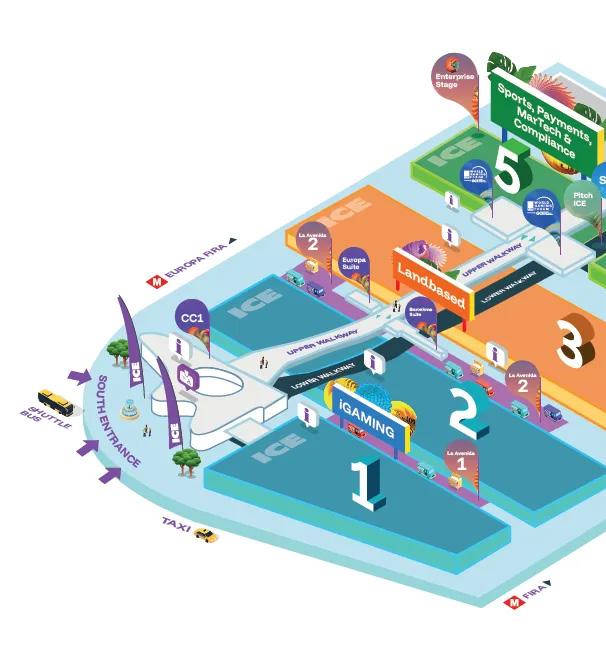
Margaret Dunn, Portfolio Director for ICE, describes the event with a simplicity that will resonate with anyone who has ever tried to time a major announcement to the industry calendar. “ICE is the place where business really happens,” she says. It is the bluntest summary of why the event retains its gravitational pull. Product launches, partnership discussions, policy signals, and strategic shifts all have a habit of clustering around the moment when the most influential people are physically in the same place. That clustering effect is not accidental, and it is not purely a product of scale. It is a consequence of expectation. When senior decisionmakers believe they will see everyone who matters in one week, they organise their year around it, and the ecosystem follows.
The 2026 edition is being shaped by three forces that, while often discussed separately, are increasingly inseparable in practice: regulation, technology, and market expansion. Naomi Barton, Portfolio Director for the iGB events portfolios, argues that the industry’s reality is not a choice between them, but the need to navigate all three at once. In her view, the role of ICE and the wider portfolio is to provide a platform where those issues can be debated with honesty and practical intent, rather than reduced to panel theatre. The through-line is guidance, not in a prescriptive sense, but in creating a setting where peers can learn from peers and where operators and suppliers can align on what is coming next.
On regulation, the team is unambiguous about the current pressure points.
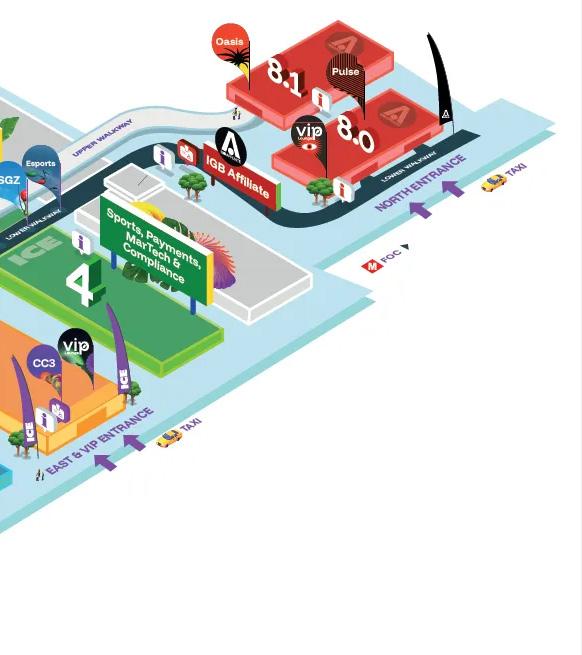
One of the most persistent themes in their description of 2026 is the scale of concern around illegal markets and the reputational damage, consumer harm, and commercial distortion that unregulated activity creates. Clarion’s response is not simply to host another compliance discussion, but to formalise how regulators and industry leaders engage at the event. Dunn references the creation of a regulatory advisory board and practical steps designed to encourage more regulators to participate. The intent is clear: bring authorities into the room, allow frank discussion, and elevate the quality of the regulatory conversation beyond headlines and soundbites.
The choices being made around how regulators participate reflect a broader shift in how ICE is trying to position itself, not just as a marketplace but as
a convening authority. That ambition is delicate. In an industry that is scrutinised by governments, media, and public opinion, convening authority comes with responsibility. It also requires an environment where sensitive issues can be discussed without creating risk for those who are tasked with enforcing rules. The event’s approach, including the use of Chatham House rules in certain settings, is a signal that Clarion understands the difference between visibility and value. Sometimes the most important progress happens away from the microphones.
Technology is the second pillar shaping the 2026 programme, and here the tone shifts from risk management to acceleration. The leadership team speaks about an industry that is increasingly “tech orientated” in how it operates, how it markets, and how it competes. The practical expression of that at ICE is not merely more booths featuring AI in bold type, but greater integration of big technology brands and a stronger narrative around enterprise-grade capability. Dunn points to the introduction of the Enterprise Stage and the presence of major names, including Microsoft and AWS, as markers of where the show is heading. “We have actually launched a new stage this year… and we’ve got some really big tech brands speaking on that stage,” she says.
That matters because it reflects a deeper repositioning. For years, parts of the gaming industry have wanted to be treated as a sophisticated, regulated entertainment and technology sector, while also battling the perception that it is defined by controversy. The presence of large enterprise technology partners does not solve that reputational challenge on its own, but it does indicate that the sector’s centre of gravity is moving. When big tech is willing to be publicly associated with gaming initiatives, particularly those linked to safer gambling, it suggests a more mature intersection between regulation, consumer protection, and innovation.
Market expansion, the third force, is where Barcelona becomes more than a change of venue. Clarion argues that the move has increased international reach and created a more accessible European hub for a wider range of geographies. The operational changes described, from multilingual support to Spanish language registration and signage, are practical responses to feedback rather than symbolic gestures. The introduction of targeted regional environments, such as dedicated lounges and networking spaces for specific markets, reflects a belief that global attendance only becomes valuable when regional needs are properly served.
The strategic logic is that growth is not simply about adding more attendees or square metres, but about increasing the density of relevant connections. Hunter’s now familiar analogy for the scale of the show, “about 22 football pitches,” is not used to impress, but to illustrate why navigation, segmentation, and community design are essential. If a venue is large enough to swallow people, then the organiser has an obligation to create structures that prevent participants from missing the conversations that matter.
This is where Clarion’s emphasis on data becomes significant. Modern events no longer compete solely on venue size, speaker line-up, or nightlife, they compete on the ability to show value to exhibitors and sponsors in a way that stands up in a boardroom. The team speaks about using registration data, objective setting, dashboards, and real-time insight to understand who is attending, what they want, and how engagement is evolving. There is also a clear awareness of the risks of overreliance on numbers. Barton offers the correction that many data-first organisations learn too late. “We have to use data in a really intelligent way… and then overlay that with our conversations that are genuinely people focused and human,” she says. It is a useful reminder that, even at the most technologically advanced events, the product is still human interaction.


The same philosophy applies to experience design. Hunter describes trials of heat mapping and engagement measurement to understand how people moved through the show and how effectively exhibitors were being discovered. The subtext is that Clarion sees the exhibitor relationship as more than floor space sales. If exhibiting is a major investment, then the organiser must help exhibitors demonstrate return on objectives, not just anecdotal success. That approach aligns with a wider shift in B2B events, where the metric is no longer attendance alone, but quality time, relevant meetings, and measurable influence.
If all of this sounds intensely strategic, it is. Yet the interview also reveals a team that sees the show as a living organism rather than a fixed product. One of the most telling moments is Hunter’s reference to a turning point in 2017, when media coverage exposed parts of the industry presentation that were difficult to defend. Clarion’s response, he says, was to set a professional benchmark through a code of conduct, and to push exhibitors and the event itself toward a more modern, credible identity. It is worth noting not because it is ancient history, but because it illustrates how seriously the organisers take the idea that an event reflects an industry. In a sector where legitimacy is continuously tested, professionalism is not cosmetic, it is strategic.
That seriousness also extends to sustainability and ESG, themes that can easily become performative at largescale exhibitions. The team’s language is more grounded. Dunn describes changes around safer gambling as a core pillar, and speaks about sustainability in terms of practical initiatives designed to shift exhibitor behaviour, including reusability assessments and recognition for more sustainable stand practices. The phrasing is cautious, acknowledging progress while conceding the size of the journey. That is likely the right tone for an industry that is increasingly expected to demonstrate responsibility, but is still working out how to do so without turning sustainability into a marketing prop.





The operational reality of delivering ICE at this scale is presented as a year-round undertaking, and the team’s description of colleagues spread across regions in the weeks leading up to the show is less a humblebrag than a portrait of how complex modern events have become. ICE is not simply built in a venue, it is built across travel partnerships, city infrastructure, content curation, exhibitor design approvals, security coordination, regulator engagement, and customer success. The logistical effort becomes part of the value proposition when it results in a frictionless experience for visitors and a reliable platform for exhibitors.
Barcelona itself is central to that proposition. Clarion describes a formal partnership with the Barcelona Convention Bureau and ongoing coordination with city authorities, transport, and venue partners. The ambition is not just to host an event in Barcelona, but to create an integrated citywide experience that supports the show’s “World Gaming Week” identity. In January, when many cities are quiet, a surge of 65,000 industry professionals becomes an economic and cultural event as well as a business one. The local enthusiasm that Hunter references is not incidental, it is part of the ecosystem ICE is now trying to build.
Looking ahead, Clarion’s leadership is careful not to claim they can predict the industry’s future. Their stance is that the industry will shape what ICE becomes, and the organiser’s role is to remain aligned, responsive, and ambitious. Yet they do outline a vision. It involves deeper convergence with big tech, stronger support for startups through programmes that help early-stage businesses move from concept to market, and continued
investment in safer gambling and the fight against illegal markets. It also hints at an eventual expansion of the event format, with the idea of a fourth trade day framed as a possibility driven by industry demand rather than organiser preference.
What should the gaming industry expect from ICE Barcelona in 2026? Expect an event that is leaning into its role as an international convening platform, while designing for regional nuance through dedicated spaces, language support, and targeted programming. Expect technology to be more embedded in the experience, not just showcased on stands, but integrated into how engagement is measured and value is demonstrated. Expect regulation to be treated as an arena for constructive action, with more intentional settings for frank dialogue. Expect sustainability and responsible gaming to be present as practical initiatives and core pillars, rather than superficial themes. Above all, expect Clarion to keep making the case that size is only meaningful when it enables something more important: the right people meeting the right people, in the right conversations, at the moment when the year’s decisions are being made.
As Dunn puts it, ICE is where the year begins in earnest. In 2026, it is also where the industry will test how well it can hold together its biggest contradictions, rapid innovation and heavy scrutiny, global opportunity and local complexity, growth and responsibility. Barcelona will not solve those tensions, but for three days in January, it will be the place where the industry decides how it intends to navigate them.
www.icegaming.com

Playing it Right: How 500 Casino is Redefining Modern Gaming with Trust, Style and Substance
500 Casino has grown into one of the most distinctive and progressive names in online gaming, offering an experience that is both engaging and modern without losing sight of what makes casino entertainment so enduring. Since its beginnings in 2016, the platform has evolved far beyond its origins to become a fully realised destination for players around the world. What began as a niche idea has matured into a sophisticated and trusted gaming environment, combining variety, innovation and player-focused service in a way that feels fresh and confident.
At the heart of 500 Casino’s success is its ability to adapt. The online casino world moves quickly, and only those who combine quality with foresight tend to thrive. 500 Casino has built a reputation for being one step ahead of expectation, introducing new features and expanding its offerings in ways that feel considered rather than rushed. Its journey from an esports inspired platform to a fully fledged

casino and sportsbook is testament to a clear understanding of what today’s players value most: entertainment that is secure, seamless and genuinely enjoyable.
The range of games available on 500 Casino is one of its strongest qualities. Players can choose from thousands of titles across slots, table games, live dealer experiences and instant win formats, all supported by some of the world’s leading developers. There is a balance between familiarity and novelty that keeps the experience engaging without overwhelming new users. Classic games such as blackjack, roulette and baccarat are presented in sleek, intuitive formats, while newer favourites such as crash games and Plinko offer faster, high energy play for those who prefer something more immediate. The result is a platform that feels both established and adventurous, capable of catering to every preference.
The user experience is another area where 500 Casino stands out. From the


moment players arrive, the interface feels clean, responsive and easy to navigate. Everything about the design encourages exploration, yet it remains uncluttered and accessible. The attention to detail in layout and performance demonstrates a level of care that reflects the company’s wider philosophy: creating an environment where players feel confident, respected and entertained. Whether accessed via desktop or mobile, the platform performs smoothly, proving that good design is as much about simplicity as it is about style.
A major factor behind 500 Casino’s growing popularity is its forward thinking approach to payments. By embracing cryptocurrencies alongside more traditional methods, the platform has ensured that players can deposit and withdraw funds quickly and securely. The inclusion of Bitcoin, Ethereum and other major digital currencies has positioned the casino as a favourite among those who value privacy and speed. Transactions are processed efficiently, and the experience feels streamlined from start to finish. In an era where flexibility is key, this focus on smooth, low friction payments helps the brand stand apart.

The rewards and loyalty system is equally thoughtful. Rather than relying solely on one off promotions, 500 Casino invests in ongoing engagement. Players progress through levels that unlock increasingly valuable benefits, from cashback and faster withdrawals to exclusive gifts for high tier members. The system encourages loyalty without feeling obligatory, offering genuine rewards for regular play. It is an approach that reflects a mature understanding of player relationships, recognising that trust and value are earned over time.
Security and fairness remain central to 500 Casino’s operations. The platform operates under a recognised gaming licence and employs advanced encryption to protect user data. It also offers provably fair games, allowing players to verify outcomes independently. These measures, though quietly implemented, create a sense of transparency that is essential in online gaming. Beyond the technical safeguards, the company also promotes responsible gaming, providing options for deposit limits, session reminders and temporary

account breaks. This balance between excitement and responsibility is a sign of a platform that understands the importance of integrity in entertainment.
500 Casino’s international outlook adds another dimension to its success. The platform supports multiple languages and welcomes a diverse global audience, ensuring that players from different regions can enjoy the same high standard of experience. This inclusive approach, supported by flexible payment systems
500 casino
and accessible design, gives 500 Casino a broad and sustainable reach. It is not confined to one market or one type of player; instead, it brings people together through a shared appreciation of well crafted entertainment.
What makes 500 Casino particularly noteworthy is its consistency. Many gaming platforms make bold promises but struggle to maintain quality as they grow. 500 Casino has taken the opposite route, expanding steadily while keeping its standards intact. Its growth feels measured, driven by refinement rather than hype. This disciplined approach suggests a company focused on longevity and credibility. Every new feature, partnership or game addition feels like part of a deliberate strategy rather than an impulsive reaction to trends.
Part of what makes the brand resonate so strongly with its community is the sense of personality it brings to the gaming experience. There is an energy to the way it presents itself, modern, confident and unpretentious. The casino manages to capture that fine balance between fun and professionalism, which is essential in an industry where trust is everything. Players are not just numbers; they are part of a community that the platform continuously invests in. Whether through social interactions, leaderboards, or community events, there is a sense of shared experience that keeps people returning.
Equally important is how 500 Casino integrates sport and gaming under one umbrella. The addition of a sportsbook has allowed the brand to appeal to a wider audience, offering a natural bridge between casino play and sports betting. It caters to football fans, esports enthusiasts and bettors across major international leagues. This multi vertical structure not only diversifies the experience but also enhances player engagement, as users can move effortlessly between different forms of entertainment within the same platform.


Customer support, often overlooked as a key differentiator, is another strength. 500 Casino provides responsive assistance through multiple channels, ensuring that users feel supported at every step. The tone of communication is friendly, efficient and professional, aligning with the platform’s broader ethos of transparency and care. Players consistently note the reliability of its service, which reinforces confidence in both the brand and its commitment to fairness.
There is also an understated sophistication in the way 500 Casino markets itself. The tone of its branding avoids the loud, over promotional approach common to many online casinos. Instead, it relies on authenticity and the quality of its offering to speak for itself. This sense of restraint and assurance gives the platform credibility. It feels built for the discerning player, someone who values both excitement and trust.
The company’s ongoing development strategy continues to focus on sustainability, user experience and technological progress. New games are introduced regularly, partnerships with leading providers continue to expand, and improvements in payment processing and interface design are frequent. Yet, what stands out most is the sense of control in how these updates are rolled out. The platform’s leadership appears to understand that meaningful progress depends on precision rather than speed.
For the broader gaming sector, 500 Casino represents a model of how to evolve responsibly. It demonstrates that success does not depend solely on novelty, but on execution, reliability and a deep understanding of the player experience. While the industry often celebrates technology, it is the human side of gaming, the anticipation, the
thrill, the satisfaction of fair play, that 500 Casino captures so effectively. Its success comes not from chasing attention, but from delivering consistent value to its community.
The casino’s trajectory also reflects a wider cultural shift in online entertainment, where authenticity and trust have become the true currency of loyalty. Players today seek connection and meaning behind their experiences, and 500 Casino has managed to combine the excitement of gaming with a genuine sense of integrity. It has shown that responsible growth and player satisfaction can go hand in hand, and that a well run platform can become a benchmark for the wider industry.
As online gaming continues to grow worldwide, platforms like 500 Casino highlight what progress can look like when built on a foundation of trust, innovation and attention to detail. It has created a space where entertainment feels genuine and where technology serves the player, not the other way around. The company’s evolution shows that it is possible to be both cutting edge and dependable, offering something that feels both modern and authentic.
Ultimately, 500 Casino stands as a reflection of how quality, transparency and player centric thinking can redefine online gaming for the better. Its journey from a focused niche concept to a major global destination is one built on insight, care and perseverance. The platform continues to attract players who value substance as much as style, and in doing so, it sets a positive example for the wider industry. 500 Casino has proven that growth and integrity can coexist, and that when entertainment is built on trust, the experience speaks for itself.
500.casino
www.igamingenquirer.com igamingenquirer@busenq.com