THE CASE FOR CHARGING THAT SIMPLY WORKS
Speaking with Daniel Feldman, Chief Technology Officer, the distinction is drawn with unusual clarity. “We are not really resolving connectivity as a problem. We are eliminating connectivity as a constraint.” It is a subtle but powerful shift in thinking, one that reframes the architecture of EV charging infrastructure. Rather than building systems that rely on networks, servers and constant communication, Xeal has engineered a self-reliant ecosystem where charging can take place regardless of signal strength, network outages or server failures.
Daniel Feldman, Chief Technology Officer
Eliminating Connectivity as a Constraint
The origins of this thinking were not theoretical. They emerged from realworld frustration. Early deployments, particularly in real estate environments, exposed a persistent challenge that continues to affect the wider industry. Underground car parks, dense urban developments and structurally complex buildings often struggle with connectivity. Attempts to solve the issue typically follow a predictable path. More Wi-Fi is installed. Cellular coverage is extended. Redundancies are layered in. Yet the result remains inconsistent.
Feldman describes a cycle familiar to many operators. Drivers themselves may have no signal at all. The system becomes increasingly complex without ever becoming truly dependable.
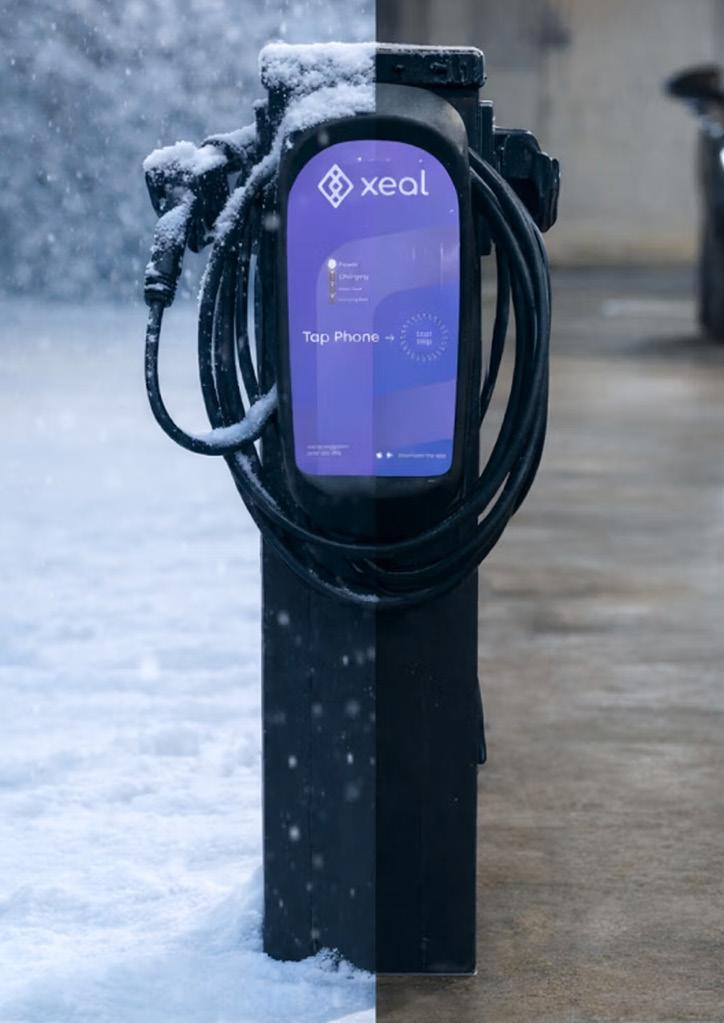
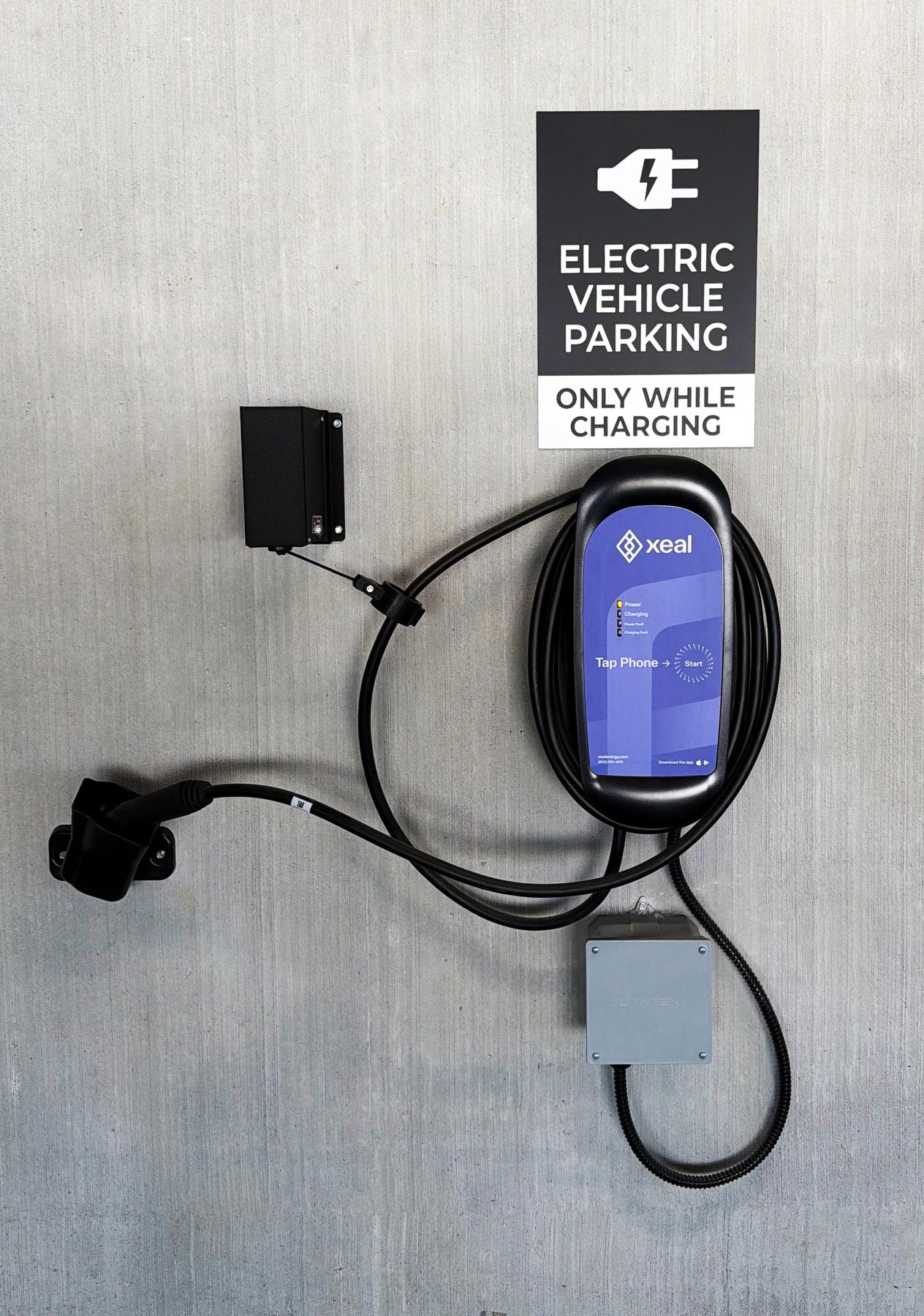
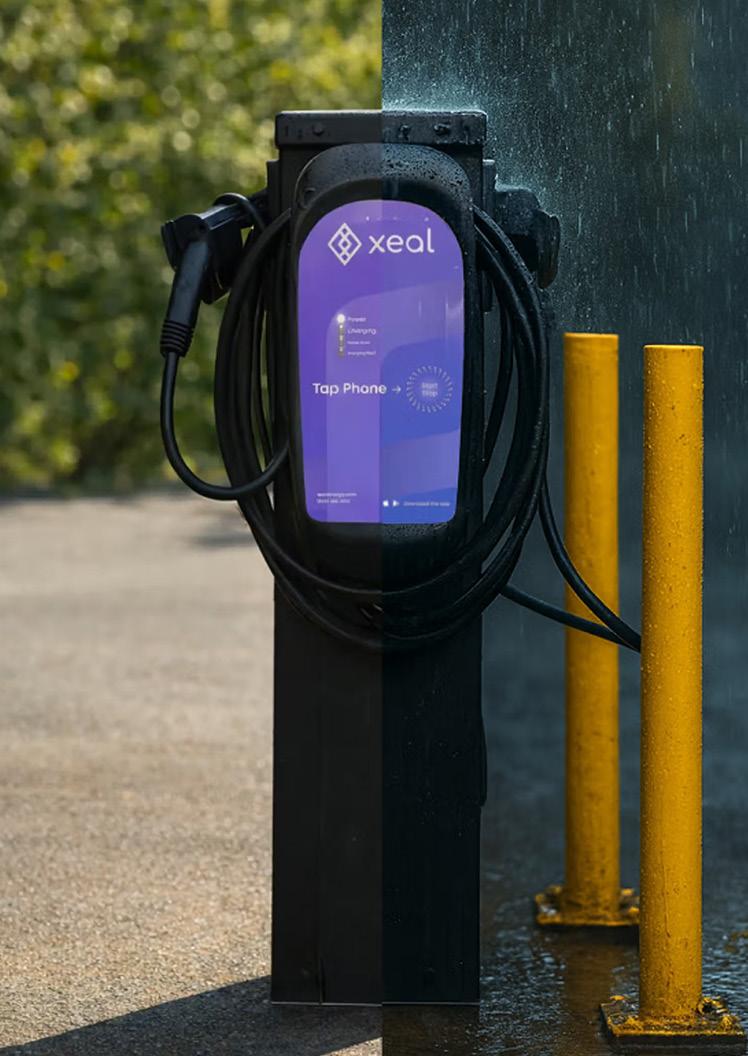
It was within this context that Xeal Protocol took shape. Operating as the underlying technology within the Helix Computing™ Platform, Xeal Protocol enables users to authenticate locally through their smartphone and begin charging even when connectivity is unavailable. Activity records are synchronised when a connection becomes available again, but the charging session itself does not depend on realtime communication. The result is a more resilient charging experience designed to keep operating when traditional connected systems may struggle.
Redefining Reliability in EV Charging
This redefinition of reliability sits at the heart of Xeal’s positioning. In much of the industry, reliability is measured through uptime metrics, remote monitoring dashboards and the ability to observe system performance in real time. Feldman takes a more grounded view. “Reliable charging means as a driver I get in front of the charger, I have my phone with me, and I can charge.” It is a deceptively simple
statement, yet it cuts through a layer of complexity that has arguably obscured the real user experience.
The contrast becomes particularly stark when considering the vulnerabilities of connected systems. Network outages, server downtime and carrier limitations are not theoretical risks. They are operational realities. Feldman recalls largescale outages across major providers, events that highlight the fragility of systems built on constant connectivity. In such scenarios, visibility may be maintained, but functionality is lost. For the driver standing in front of a charger, that distinction is irrelevant. What matters is whether the vehicle can be charged.
By removing reliance on external networks, Xeal addresses not only reliability but also deployment efficiency. For property owners, this has significant implications. Traditional installations often require detailed network planning, coverage assessments and infrastructure upgrades before a single charger is installed. Locations may be chosen based on signal strength rather than user convenience. The process introduces delays, costs and constraints that can limit scalability.
The Power of Partnerships: Why Elite Power Solutions is the Choice for EV Infrastructure
In the fast-evolving world of EV infrastructure, technology is only as strong as the expertise behind it. Elite Power Solutions (EPS) delivers more than electrical design and build services; we deliver the confidence that comes from proven expertise and reliable, ontime execution.
Built on the core values of communication and community, EPS has spent years proving that true reliability is rooted in trust. Our commitment to specialize in EV infrastructure has led over 70 properties to trust EPS to design and install more than 10,000 kWh in charging capacity. Our team coordinates every phase—from initial design to final completion—ensuring your site is prepared for the demands of both today and tomorrow.
Our reputation for excellence is bolstered by our premier partnership with Xeal, the leader in high-uptime
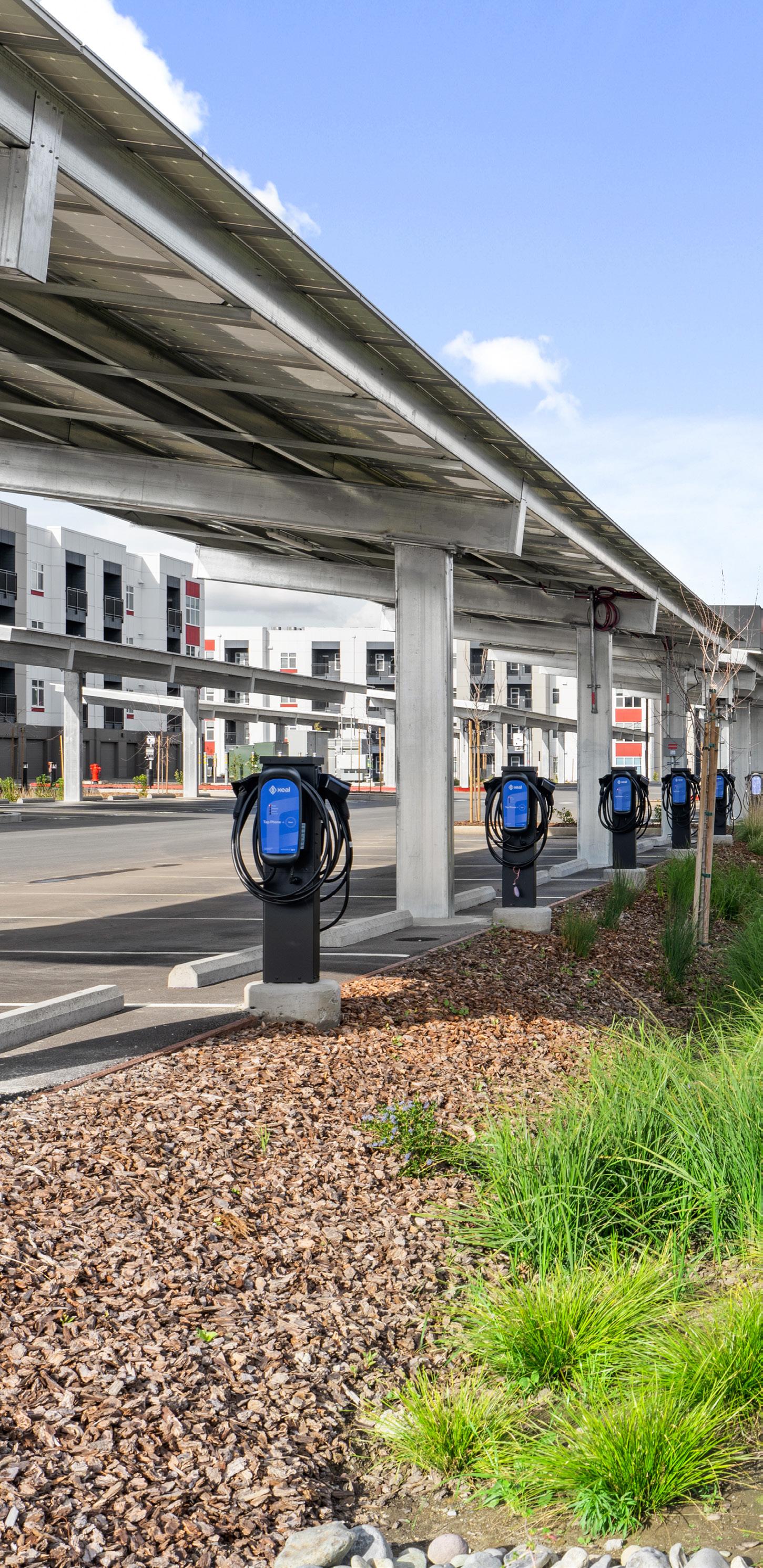
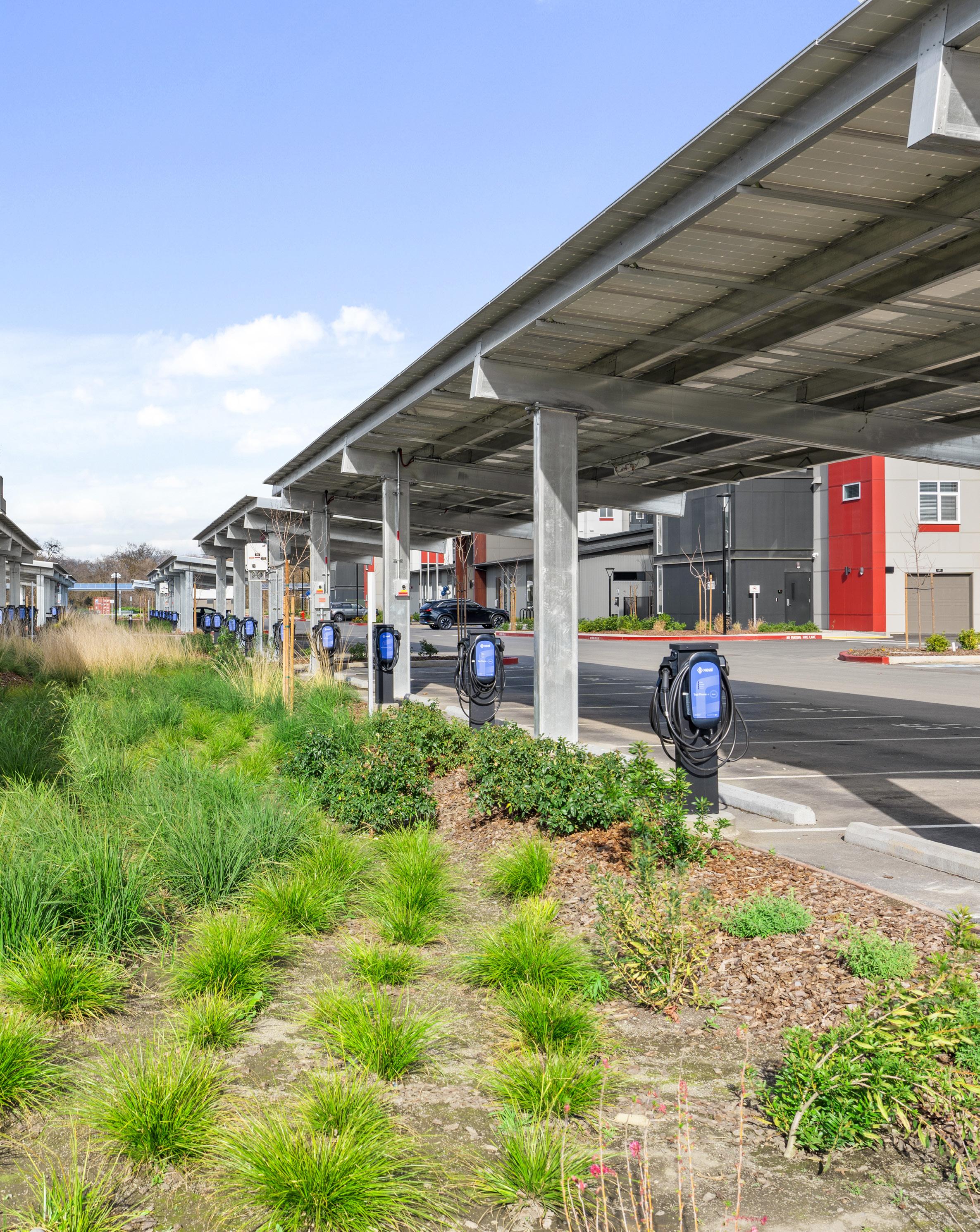
charging. Together, we have successfully deployed advanced solutions across 50+ sites, ensuring 100% reliability without the hassle of traditional IT infrastructure.
Our team at Elite Power Solutions runs on the philosophy of Empowering Connections. To us, this means connecting your business to new revenue and your tenants to modern amenities through honest, expert service. We don’t just complete projects; we build enduring partnerships.
Elite Power Solutions — Powering properties. Building relationships. Delivering results.
Ready to electrify your property? Contact Elite Power Solutions today for a comprehensive site assessment
www.theelitepowersolutions.com
www.theelitepowersolutions.com
Empowering Your Business Growth Together
Elite Power Solutions (EPS) provides end-to-end EV infrastructure, from design to installation, across 70+ properties, delivering over 10,000 kWh of charging capacity.
Built on strong communication, reliability, and specialist expertise, EPS delivers projects on time with long-term performance in mind. In partnership with Xeal, EPS has deployed high-uptime charging across 50+ sites, achieving 100% reliability without complex IT infrastructure.
Ready to electrify your property? Get in touch with Elite Power Solutions today.
Helix removes these barriers. Chargers can be installed where they are needed, not where connectivity allows. This reduces time to deployment and simplifies the decision-making process for developers and asset owners. Feldman highlights the commercial impact of this shift, noting that downtime should not be viewed solely in terms of lost charging sessions. It extends to missed opportunities, tenant dissatisfaction and reduced competitiveness. “It’s not just about the energy that is sold. It’s about whether you are going to lose tenants.”
As EV adoption grows, charging infrastructure is rapidly becoming a baseline expectation rather than a differentiator. In markets across Europe, including the United Kingdom, the presence of reliable charging is increasingly tied to property value and tenant attraction. Feldman describes this transition succinctly. “It’s going to become table stakes.” In other words, it is no longer enough to offer charging. It must work seamlessly, consistently and without friction.
Security Through Decentralisation
Cybersecurity introduces another dimension to this conversation. As more infrastructure becomes connected, the attack surface expands. Traditional chargers linked to networks and cloud systems can be accessed remotely, creating potential vulnerabilities. Xeal’s approach inherently reduces this exposure, with communication limited to encrypted, proximity-based interactions.
Feldman argues that reducing reliance on internet connectivity also reduces potential exposure to remote threats. While no system can ever be entirely immune from cybersecurity risks, limiting external access points changes the security equation significantly.
Despite growing awareness, cybersecurity remains an underappreciated factor among many property owners. The industry’s focus has often been directed toward deployment speed and cost
efficiency, with less attention given to long-term resilience. However, as infrastructure becomes more critical and more interconnected, this balance is likely to shift. The emergence of post-quantum cryptography and evolving regulatory standards further underscore the importance of future-proofing systems against emerging threats.
Scaling Infrastructure Without Scaling Complexity
Beyond reliability and security, energy capacity represents one of the most significant barriers to scaling EV infrastructure. The challenge is not simply about installing more chargers, but about
doing so without overwhelming existing electrical systems. Xeal addresses this through Dynamic Power Optimization, a localised approach to load management that allows chargers to share available capacity intelligently.
Unlike cloud-based systems that rely on continuous communication to manage power distribution, Xeal’s chargers communicate directly with one another via a local mesh network. This ensures that power allocation continues even in the absence of external connectivity. Feldman explains the practical benefit. “The chargers talk to each other and they allocate dynamically power based on the necessity of the vehicles.” It is a decentralised solution to a fundamentally distributed problem.
The implications for property owners are considerable. By optimising existing capacity, more chargers can be deployed without requiring major electrical upgrades. This reduces upfront investment and accelerates rollout timelines. It also transforms the financial equation. Charging infrastructure shifts from being a cost centre to a potential revenue-generating asset, particularly in high-demand environments where utilisation rates are high.
The broader question is whether this decentralised approach signals a wider shift in infrastructure design. Feldman offers a measured perspective. “Wherever you can decentralise, you’re better off decentralising.” Yet he also acknowledges that not all use cases can operate independently. Public fast charging, for example, requires real-time visibility for route planning and availability tracking. In such scenarios, a hybrid model may emerge, combining the benefits of decentralised operation with the insights of centralised systems.
Looking ahead, the challenges facing the EV industry remain substantial, but they are increasingly well defined. Reliability continues to be the most immediate concern, particularly in AC charging environments where connectivity issues are most pronounced. Range anxiety, while often cited, is gradually diminishing as users become more familiar with EV ownership patterns. Feldman is clear on this point. “People who don’t drive EVs are the people who have range anxiety.” Real-world usage tells a different story, one where most charging occurs close to home and within predictable routines.
The pace of adoption is also influenced by broader economic and political factors. Rising fuel costs, regulatory incentives and environmental pressures are accelerating the transition toward electrification. Markets such as Norway demonstrate what is possible when infrastructure, policy and consumer behaviour align. With EVs accounting for the vast majority of new car sales, the shift has moved beyond early adoption into mainstream reality.
For Xeal, the focus remains on refining and expanding its core technology while exploring new applications. Feldman outlines a dual strategy. The first is to enhance the Helix Computing™ Platform, improving user experience, load management and system capabilities. The second is to extend the underlying principles of Xeal Protocol into other domains. “We can take the technology
into everything, every connected application, every IoT application.” It is an ambitious vision, one that positions the company not just as an EV charging provider, but as a broader innovator in decentralised systems.
Partnerships and licensing may play a role in this expansion, particularly in areas where hybrid solutions are required. By integrating Xeal Protocol into other platforms, Xeal has the potential to influence industry standards beyond its immediate market. The goal is not simply to capture share, but to reshape expectations around how infrastructure should function.
At its core, the proposition is disarmingly simple. Charging should be as intuitive and dependable as any other utility. It should not require users to think about connectivity, network status or system performance. It should simply work. In an industry that has often prioritised visibility over functionality, that simplicity feels both refreshing and overdue.
Feldman’s closing reflection captures the essence of this approach. “It’s supposed to be forgetful. It’s supposed to be an appliance.”
Ultimately, that vision reflects Xeal’s broader ambition. Rather than making charging more connected, the company is focused on making connectivity irrelevant to the charging experience itself.
www.xealenergy.com