BUILDING TRUST THROUGH TRANSPARENCY



In pharmaceuticals, trust is not a marketing concept. It is operational. It is integral to business activity and service delivery. It sits in quality systems, regulatory filings, supplier audits and in the expectation that every product reaching a patient has been produced responsibly.
For STADA, sustainability follows the same logic. It is not positioned as a separate corporate initiative running alongside the business. It is being built directly into the mechanics of procurement, governance and executive oversight, so that transparency becomes structural rather than reactive.


With more than 25,000 SKUs spanning generics, consumer healthcare and specialty pharmaceuticals, STADA operates one of the broadest portfolios in European healthcare. Approximately 50 percent of its products are manufactured externally through more than 400 contract manufacturing organisations and several hundred raw-materialand packaging suppliers. That scale creates reach – and significant responsibility.
The guiding principle for how STADA handles that responsibility is simple: Sustainability must live where decisions are made.
“We did not want to build an ivory tower,” says Martin Hess, Head of Global Sustainability.. “We wanted to keep it in the responsibility of the related functions because, in the end, that is where you make the change.”
He has been instrumental in shaping the company’s direction over the past several years. Reporting directly to the CEO, he oversees the strategic integration of ESG across the business. Rather than centralising sustainability in a single team detached from operations, accountability sits within the global functions that already own the relevant topics. Compliance owns anti-corruption measures. Culture and people lead on workforce engagement and development. Procurement owns ESG risk in the supply chain.
This structure took shape around 2021, during a broader transformation period for the company. A sustainability steering committee, composed of members of the extended executive board, was established to anchor ESG considerations at senior level. From the outset, sustainability was treated as a business discipline.
STADA’s position as a three-segment company of CHC, Generics and Specialty, With 25,000 SKUs across multiple markets,
STADA relies on a large and diverse supply network, making sustainable procurement a powerful lever to shape and improve business practices across its value chain. For Rashi Munshi, who leads Responsible Procurement, this has resulted in a concrete operational shift: having joined STADA seven years ago to drive procurement transformation, she now manages responsible procurement across this extensive and multifaceted supplier landscape.Under her leadership, ESG topics are integrated and formalized, both in the onboarding of new suppliers and in existing partnerships: “We make sure that the suppliers are formally acknowledging our code of conduct before we are putting them into the system,” she says. “Then we do regular risk assessments. It is very much embedded in the process now.”
ESG criteria are built into supplier qualification from the start, rather than retrofitted later. For every new supplier, the same expectations apply – from environmental performance and climate impact to labour conditions, human rights and business ethics . Handling the complex and diverse portfolio across multiple markets requires a broad and intricate supplier network. To manage scale, STADA implemented EcoVadis in 2021 as the backbone for ESG assessments.
“We have thousands of suppliers,” Martin notes. “You need to have a partner someone who is managing this very professionally and where we you can leverage their scaling effect.”
At the same time, operational ownership remains with STADA. The model combines external standardised ratings with internal management and follow-up. It operates in layers. First, an abstract risk assessment screens the entire supplier base, using factors such as country and industry exposure, On that basis, STADA then performs through EcoVadis ESG concrete, in-depth risk assessments for prioritised suppliers – now covering more than 1,000 partners and representing roughly 90% of direct category spend,

See how SpendHQ enables companies like STADA to turn procurement data into measurable, business-wide impact.
We started using SpendHQ to track savings — but now we use it for much more. It helps me define strategy and turn it into action.
ADRIANA REIMER — SENIOR DIRECTOR GLOBAL INDIRECT PROCUREMENT, STADA
READ THE STADA CASE STUDY →

Strategy to execution in one platform
Single source of truth for spend data
Real-time visibility and value reporting built in
Procurement transformation at STADA has been defined by pace, ambition and an increasing demand for demonstrable value. Over the past several years, STADA’s indirect procurement function has undergone a deliberate evolution, moving from dispersed processes toward a more structured, insight-led operating model. Yet as maturity increases, so too does the pressure to convert insight into action, and activity into a clear, credible value narrative for the business.
As Adriana Reimer, Senior Director Global Indirect Procurement at STADA, explains, the early stages of transformation focused on building foundations and closing gaps. Heavy automation followed, delivering insight and visibility at scale. However, that progress introduced a new challenge. With information spread across multiple dashboards and tools, building a leadership-ready narrative required significant effort, making it difficult to consistently communicate priorities, progress and impact.
This is where SpendHQ plays a defining role. SpendHQ is a procurement performance platform built by procurement professionals, designed to unite spend data, initiative tracking and governance into a single source of truth. Through its Performance Management capability, SpendHQ provides the structure STADA needs to connect strategy to execution, giving procurement a clear control centre for initiatives, accountability and value reporting.
“Performance Management gives procurement leaders a single, trusted view of initiatives, ownership and value,” says LaureEva Staron, VP of Account Management at SpendHQ. “It allows teams to prioritise work, execute consistently, and communicate outcomes in the language of the business.”
For STADA’s indirect procurement function, this structure has proven critical in strengthening credibility during budget discussions.
SpendHQ enables initiatives to be captured in a disciplined, consistent way, linked directly to category strategies and quantified for impact. This clarity allows procurement to engage more confidently with finance and site leadership, shifting conversations away from isolated savings figures towards transparent, evidencebased value delivery.
“SpendHQ is really helping us in talking to the business related to the budgets,” Reimer notes. “It helps us drive the discussions with the business – to have a seat on the table when we are discussing the budgets.”

Importantly, SpendHQ is not positioned as a reporting tool alone. STADA uses Performance Management to define category strategies, translate them into structured initiatives and ensure execution remains aligned across teams and sites. Ownership, timelines and measurable outcomes are visible in one place, supporting consistency and accountability across the organisation.
“I was using this tool to track savings,” Reimer explains, “but in the meantime we are using this tool for much more than only tracking. We are using it to roll out strategies. The performance management solution is helping me to define the strategy, to turn the strategy into action.”
Looking ahead, STADA’s ambition is not to rely on a single system, but to reduce fragmentation through better integration. The next phase of the partnership is now underway, with STADA activating the Supplier module within SpendHQ
Performance Management. This integration with EcoVadis and D&B will create a centralised supplier intelligence view. This will combine supplier performance cockpit and sustainability data, including EcoVadis ESG scores, to support prioritisation and future-ready decision-making.
“Our role is to help teams translate category strategy into action, with clear accountability and reporting that stands up in budget discussions,” adds Staron.
Through close collaboration, adoption support and best-practice guidance, SpendHQ continues to support STADA’s evolution from fragmented execution to value-led procurement leadership, enabling clearer decisions today and stronger governance for the future.
www.spendhq.com
including suppliers of API raw materials, of inactive ingredient or excipients, and of packaging, as well as contract manufacturers and high-spend indirect suppliers. This two-step approach focuses resources where exposure is most material, while preserving visibility across the wider network. Crucially, the rating is not where the work stops. “We are not just using the EcoVadis scorecards to categorise our suppliers,” Rashi explains. “We are actually doing very collaborative follow-ups with our suppliers, really talking to them about these findings to proactively manage risks.”
That engagement is where trust is built. Procurement managers do not simply log a score. They engage suppliers in discussion, identify gaps, agree corrective actions and support improvement plans. ESG performance becomes part of the relationship rather than a compliance checklist. That is also why Repsonsible Procurement sits within global Procurement: The teams that negotiate contracts and manage supplier relationships are the same teams accountable for integrating ESG.
Collaboration and momentum in the supply chain
Industry collaboration reinforces this approach. Through initiatives such as the Pharmaceutical Supply Chain Initiative (PSCI), STADA participates in supplier webinars and forums focused on process safety, environmental standards, decarbonisation and digital transparency. Rashi is personally involved in leadership discussions within PSCI India, contributing to broader efforts to lift standards across the sector.
Martin Hess believes that simply initiating an independent ESG rating is the starting point for drives behavioural change across the supply chain. “That is really inducing a lot of change in the whole supply chain,” he says. “Once you have started, even as an API supplier, you probably will not stop because other customers will ask you.”
Over time, suppliers formalise policies,
document procedures and strengthen governance systems. Improvements made for one customer tend to carry over into other relationships, gradually raising the bar across the wider ecosystem.
Transparency in this context is driven not only by partnership, but also by capital markets and regulators. As a private equity-backed company, STADA operates under strict governance expectations. Financial institutions increasingly integrate ESG metrics into their risk frameworks, and regulatory requirements for disclosure continue to tighten.
While STADA had published in the past its annual sustainability report aligned with Global Reporting Initiative standards, the 2025 sustainability Report is based on the European Corporate Sustainability Reporting Directive which requires to report in details around ESG in the supply chain.
As a German-headquartered company, STADA is also subject to the German Supply Chain Due Diligence Act. Even as detailed reporting obligations evolve, companies must be able to demonstrate documented risk assessments, mitigation measures and monitoring systems. Preparation requires integrated data and close coordination between functions.
Digital tools therefore play a central role. Beyond EcoVadis, STADA uses platforms such as SpendHQ alongside internal dashboards to track supplier performance, spending patterns and ESG initiatives in real time. The long-term ambition is deeper, end-to-end product-level visibility, that reaches beyond tier-one suppliers and helps to map risk further upstream.
Resilience, risk mitigation and sustainability converge
Recent global disruptions have underlined why that kind of visibility matters. The pandemic and geopolitical tensions exposed vulnerabilities across
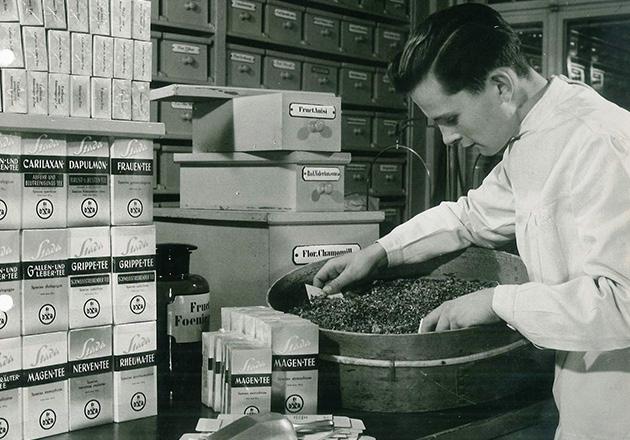


pharmaceutical supply chains worldwide. STADA’s response has included strengthened dual sourcing strategies and tightening supplier partnerships.
“We need to be more adaptable, more resilient, more future proof,” Rashi reflects. “This is where we are making sure that we can reduce the dependency on single suppliers.”
The traditional view that ESG and cost efficiency are in opposition is weakening. Rashi is clear that this trade-off has shifted. “That probably would have been a question five years ago, but I think not anymore,” she says. “Now we look at sustainability more as complementing the cost-efficiency side.”
In some Nordic markets, public tenders now give ESG criteria similar weight to price. Suppliers with strong environmental and social performance can gain a direct competitive advantage. Sustainability shapes market access and commercial outcomes.
Culturally, sustainability aligns with STADA’s purpose of caring for people’s health. Producing affordable, highquality medicines carries inherent social responsibility.
“We are dealing with patients,” Martin emphasizes. “We are producing medicines to help people’s lives and health.”
That sense of responsibility resonates internally. Employees are increasingly interested in how their company manages environmental and social topics. Not everyone will read the sustainability report cover to cover, but its existence – and the rigor behind it – helps build confidence.
Looking ahead: visibility, carbon and technology
Looking ahead, the direction of travel is clear. STADA plans to extend visibility deeper into lower-tier suppliers, strengthen long-term partnerships with key manufacturers and invest in technology, including AI-driven analytics, to further improve transparency.
Carbon reduction across the supply chain will grow in importance as expectations rise across Europe. Understanding sourcing origins, transport emissions and energy usage will be crucial to making credible progress.
What sets STADA’s approach apart is not a single initiative or metric. It is the fact that sustainability is treated as part of the company’s operating system. It is embedded in procurement, governance and executive leadership, and is measured, reviewed and reported with the same seriousness as cost and quality.
In pharmaceuticals, reliability is nonnegotiable because patients depend on it. By building transparency directly into its supply chain architecture, STADA is reinforcing that reliability at every stage. Trust, in this context, is not declared. It is engineered.
www.stada.com