



ENABLING SEAMLESS CONNECTIVITY ACROSS
MODERN ENTERPRISE SYSTEMS
The collaboration between TIBCO and Behaim ITS is focused on helping organisations modernise enterprise infrastructure through intelligent integration, automation, and real-time data connectivity. With more than 15 years of experience working with TIBCO technologies, Behaim ITS supports businesses across cloud integration, middleware architecture, API management, messaging systems, and operational automation.
The partnership enables organisations to connect applications, services, and data streams across increasingly complex digital environments. From enterprise-scale process automation to hybrid cloud integration and eventdriven systems, the collaboration is designed to improve operational efficiency, scalability, and visibility in real time.
A major focus area is innovation through AI-assisted integration and automated documentation. Behaim ITS has worked alongside TIBCO on solutions such as MakeDoc®, helping businesses accelerate development workflows and improve transparency across integration projects.
As Behaim ITS CEO Josef Fischer explains in, the company is helping customers “unlock greater value from the TIBCO Platform” through AI-driven innovation, CI/CD acceleration, and intelligent platform migration strategies.
Together, TIBCO and Behaim ITS are building connected enterprise ecosystems designed for speed, adaptability, and the future of real-time business operations.







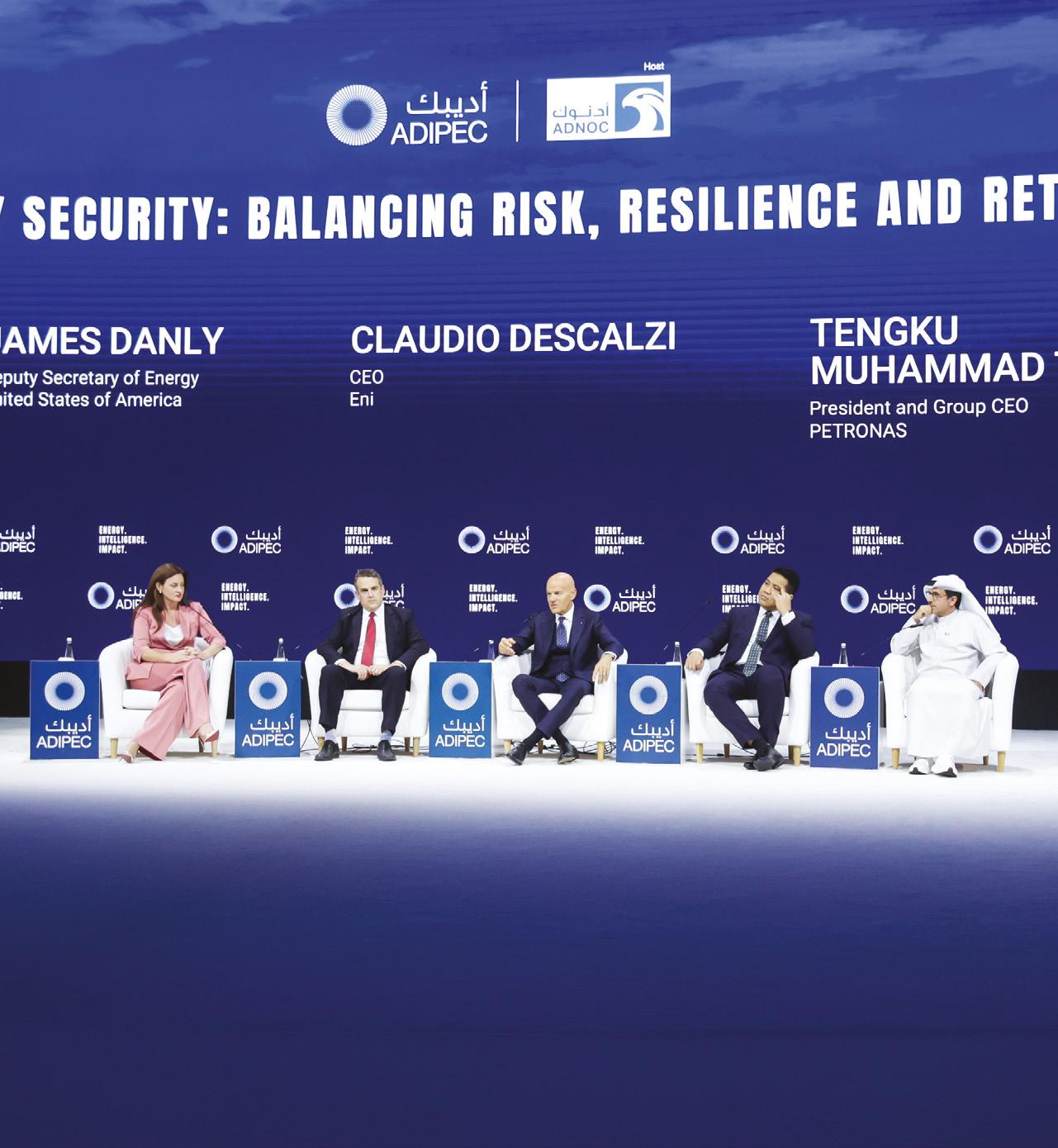
ADIPEC will convene leaders from across energy, technology, finance and policy to explore practical pathways for building shock-resistant, future-ready energy systems – systems capable of meeting rising demand, enabling digital and industrial growth, and supporting global development while advancing emissions management.
JOIN THE GLOBAL ENERGY COMMUNITY
Supported by
ADIPEC in numbers:
239,000+ Exhibition attendees
16,500+ Conference delegates
2,250+ Exhibiting companies
1,800+ Conference speakers
Jamie Waite
CEO, EMG | Enquirer Media Group jamie.waite@busenq.com
MEDIA
Gary Smith
Senior Project Director gary.smith@busenq.com
Leroy Thompson
Project Director leroy.thompson@busenq.com
Adel Mhiri
Project Director adel.m@busenq.com
Paris Cressy
Branding & Marketing Executive paris.cressy@busenq.com
Thomas Hardy
Project Director thomas.hardy@busenq.com
Marcus Laing
Project Director marcus.laing@busenq.com
Paul Roberts
Project Director paul.roberts@busenq.com
Nasa Raheem
Project Director nasa.raheem@busenq.com
Claire Dunn Global Credit Controller claire.dunn@busenq.com
Bethany Waite Credit Controller bethany.waite@busenq.com
Tanya Rudd Head of Finance tanya.rudd@busenq.com
Natoya Rimmer Global Head of Accounts natoya.rimmer@busenq.com
Dan Reeves Head of Data dan.reeves@busenq.com
Kumar Nil-Khan Senior Data Strategy kumar.nilkhan@busenq.com
Simon Ferrening Production Manager Commercial Performance Analysis
Anita Terrell
Social Media Manager anita.terrell@busenq.com
Lee Dixon Social Media Manager lee.dixon@busenq.com
HR
Susan Tumelty HR Partnered Company info@hrdept.co.uk

Laura Green Editor in Chief laura.green@busenq.com
Catherine Lafferty Business Editor catherine.lafferty@busenq.com
PRODUCTION
Remo Savino Production Assistant remo.savino@busenq.com
Jamie Bolton Head of Design jamie.bolton@busenq.com
Didie Nturo Head of Video & Content Creation didie.nturo@busenq.com
Matt Hardwick Online Website Manager matt.hardwick@busenq.com
DESIGN WEBSITE PHOTOGRAPHY
Didie Nturo Lead Photographer didie.nturo@busenq.com
LEGAL
Chloe Bird Birketts LLP Norwich


Welcome to the June Edition of Business Enquirer Magazine – Issue 149
There are moments when entire industries find themselves standing at a crossroads. Not because disruption is arriving, but because it has already arrived. The challenge is no longer predicting change. It is deciding how to respond to it. This edition is shaped by businesses, leaders and sectors navigating that reality, balancing innovation with execution and ambition with accountability.
At the centre of this issue sits our Health and Medical Special, a sector-wide exploration of one of the most consequential industries in the global economy. Through features with organisations including Curium Pharma, PlasmaGen, PharmaBlock, ZETA, GSK and Merck, alongside insights from industry leaders including Paul Smaldone and Tim Rath, we examine how innovation is moving from research environments into practical solutions reshaping healthcare delivery worldwide. As regulation, technology and patient expectations evolve simultaneously, the organisations succeeding are those combining scientific advancement with operational discipline.
That theme of adaptation extends well beyond healthcare. In Building Company Culture in 2026, we explore how organisations are redefining what work feels like in an era shaped by flexibility, generational change and evolving employee expectations. Alongside this, our feature on Digital Leadership Programmes to Watch in 2026 examines the skills and mindsets required to lead effectively when technological change continues to accelerate.
Technology remains a recurring thread throughout this edition. From HR technology platforms reshaping employee experience to global workforce dynamics redefining talent strategies, the question is no longer whether digital transformation matters. It is how organisations can implement it in ways that create genuine long-term value.
Among our company features, STADA explores the importance of trust and transparency within healthcare, while Xeal presents a compelling case for rethinking connectivity and charging infrastructure. TGI Group examines investment and engineering across West Africa, highlighting how infrastructure development continues to unlock growth opportunities across emerging markets. Meanwhile, Kwench by KFC offers a fascinating perspective on how beverage culture has become a strategic frontier for one of the world’s most recognisable consumer brands.
This month’s Top 10 feature focuses on Digital Leadership Experts, recognising the individuals helping to shape the future direction of technology, artificial intelligence and enterprise transformation. At a time when digital capability increasingly defines competitive advantage, their influence extends far beyond the organisations they lead.
Within Business Enquirer Lifestyle, we turn our attention to the changing nature of aspiration itself. From luxury sporting escapes and modern football retail to Wimbledoninspired fashion and evolving luxury essentials, these features reflect a broader shift in how consumers define value, experience and leisure.
Across every section of this edition, a common theme emerges. Success is becoming less about reacting to change and more about building organisations capable of thriving within it. Whether through scientific innovation, digital leadership, operational excellence or cultural reinvention, the businesses leading today are those creating structures that allow progress to be sustained rather than simply achieved.
Enjoy the read.
If you have a business story you wish to share, please contact our Head of Production via production@busenq.com

The editor and publishers do not guarantee the accuracy of statements made by contributers or advertisers, or accept responsibilty for any statement they express in this publication. The opinion of the contributors may not necessarily be the opinion of the editor or publishers.

All content including the presentation therof in this magazine is the property of BE Media and protected by internation al copyright laws. You may not copy, reproduce, distribute, transmit, modify, create derivitave works, or in any other way exploit any part of copyrighted material without prior written permission from BE Media ©BE Media
BUILDING COMPANY CULTURE IN 2026: THE BUSINESSES REDEFINING WHAT WORK FEELS LIKE
INTERNATIONAL HOTEL GROUP BUSINESS PARTNER UPDATES 010
IHG HOTELS & RESORTS BRINGS LUXURY CONVERSION BRAND VIGNETTE COLLECTION TO LONDON WITH CANARY WHARF SIGNING IYC
IYC AT MEDYS 2026: SHOWCASING THE STRENGTH OF GREECE’S CHARTER FLEET


ENQUIRER CONSULTING GROUP / CURIUM PHARMA
PLASMAGEN / PHARMABLOCK / ZETA / MERCK
GSK / HELBLING / 5FLOW / PAUL SMALDONE / TIM RATH

184 Retail
Why Pro:Direct Soccer Continues To Lead Modern Football Retail
Escape
The Rise of Sporting Escapes Luxury Travel’s New Obsession
Fashion
The Luxury Essentials Defining Wimbledon 2026

OUR JUNE COVER TAKEOVER
IHG one of the world’s leading hotel companies, announces the signing of Canary Riverside Plaza, Vignette Collection by IHG – the brand’s first property in London and second in the UK&I. Developed in partnership with Yianis Group, the signing also marks IHG’s debut in Canary Wharf, one of London’s most established and well-connected business districts.
Scheduled to open in summer 2026, Canary Riverside Plaza, Vignette Collection by IHG will offer 142 guestrooms and suites with views across the River Thames and the City, alongside a restaurant and bar, flexible meeting and events space for up to 200 guests, and access to an adjacent health club and spa. Located in Canary Wharf, one of London’s leading financial and professional services districts, the hotel is well positioned to serve corporate and leisure demand, benefiting from strong connectivity across the capital and to key international gateways in an area that continues to evolve as a dynamic commercial and lifestyle hub.
Willemijn Geels, Vice President, Development, Europe, IHG Hotels & Resorts, said: “We’re proud to be deepening our partnership with Yianis Group – a key contributor to the growth of our Luxury & Lifestyle portfolio in the UK&I. Building on our signing of
Canary Riverside Plaza, Vignette Collection by IHG marks the brand’s debut in the capital as it continues UK&I momentum
InterContinental Manchester, together we have a shared commitment to bring distinctive hotels to key locations and we are creating a strong pipeline of highquality developments. This latest project not only highlights IHG’s exciting growth of its Luxury & Lifestyle portfolio in the UK’s capital, but it also showcases the importance of this partnership.
“With Vignette Collection, we’re able to work with exceptional properties that retain their individuality and distinct style while benefiting from IHG’s global scale and enterprise platform, and London is a natural next step for the brand as we continue to expand in key gateway cities.”

John Christodoulou, Chairman, Yianis Group, added: “We are proud to be introducing Vignette Collection to London with Canary Riverside Plaza. The brand’s focus on individuality and character strongly aligns with our vision for the hotel, and we were particularly drawn to its ability to celebrate the unique identity of each property while benefiting from the strength of a

global brand. Canary Wharf provides a dynamic and well-established setting for this development, and we are excited to be creating a landmark destination within this important part of the city. We look forward to continuing our partnership with IHG Hotels & Resorts and delivering a distinctive experience for guests.”
Vignette Collection, IHG’s luxury conversion brand, brings together a family of one-of-a-kind properties in sought-after urban and resort locations. Each hotel retains its individual identity and story, while being united by a shared vision to offer a more authentic and considered way to travel. Through signature hallmarks such as ‘Memorable Rituals’ and ‘A Means


for Good’, Vignette Collection creates purposeful guest experiences that reflect the character and culture of each destination, connecting guests with the hotel’s cultural landscape.
The brand has gained strong momentum since launching in 2021, appealing to owners of world-class Luxury & Lifestyle hotels looking to benefit quickly from IHG’s industry-leading enterprise while retaining their property’s unique character, style and name. In just four years, the brand has surpassed the halfway point towards its goal of reaching 100 hotels within a decade, with 34* open and a further 45* in the pipeline globally. This signing builds on IHG’s continued strength in conversions, with 74%* of openings and 100%* of signings in the UK&I during the first quarter of 2026 coming from conversions.
Canary Riverside Plaza, Vignette Collection will join a growing global portfolio of Vignette Collection hotels in Europe, where the brand has six* open and 17* hotels in the pipeline, including the recently signed Hotel Schloss Reinhartshausen, Vignette Collection in Germany and The Venice Times, Vignette Collection in Italy.
The hotel will strengthen IHG’s presence in the UK&I, where it is the largest global hotel company, currently operating 384* hotels with an additional 28* in development.
*Numbers as of 31 March 2026
www.ihgplc.com

F
rom May 2–6, the 11th edition of the Mediterranean Yacht Show (MEDYS) transformed the historic port town of Nafplio into the epicentre of the global charter industry once again. Bringing together some of the finest yachts, crews, brokers, and industry professionals in the world, MEDYS continues to stand apart as one of the most important events on the charter calendar, and this year, IYC delivered one of its strongest presences to date.

With 18 yachts displayed across two piers, IYC’s Greek charter management fleet showcased not only an exceptional collection of yachts, but also the outstanding Captains and crew whose
dedication and creativity define the guest experience on board. Throughout the week, the fleet became a destination in itself, welcoming brokers from around the world to experience firsthand the individuality, hospitality, and atmosphere each yacht has to offer.
What makes MEDYS unique is that it goes far beyond static yacht displays. It is an opportunity for crews to bring their yachts to life, demonstrating the experiences guests can expect while chartering. Across the IYC fleet, crews curated an impressive programme of events and activations that highlighted wellness, gastronomy, entertainment, and creativity at sea.

Wellness emerged as a key theme throughout the show, reflecting the growing demand for holistic charter experiences. Guests enjoyed massages aboard OASIS and TALIA, pilates sessions on BLACK LION, and healthy wellness breakfasts hosted aboard NAIA, BLUE SYMPHONIE, WOMBAT, and NOEMA. RIANA II further elevated the concept with onboard facials and spa-inspired experiences that transformed the yacht into a floating wellness retreat.
Culinary experiences were equally memorable. A standout moment of the week was the “fish-to-tail” cooking class aboard RIANA II, where guests
experienced the preparation of an impressive 4kg fish in an interactive demonstration that celebrated both technique and sustainability. ALAYA hosted an elegant Japanese-style lunch, while GECO welcomed guests for a relaxed brunch experience that captured the social spirit of the show. Elegant lunches and dinners were also held on AELIA, RARE FIND, JO I, LADY G II, OAK, and GECO.
Elsewhere across the fleet, crews embraced entertainment and atmosphere in distinctive ways. TALIA’s now talked-about “Spritzeria” became one of the standout social moments of
the week, while KINTARO hosted a lively disco night that brought brokers and crew together well into the evening. On DALOLI, guests gathered for a Formula 1 viewing event, adding another layer of personality and lifestyle to the onboard experience.
The show also once again highlighted the remarkable talent found within the charter fleet through the renowned MEDYS Chef Competition. Covering categories including cuisine, tablescaping, and water design, the competition remains one of the most anticipated elements of the event each year. IYC was proud to see OASIS secure third place in the water design category, while the chef aboard WOMBAT earned third place in the culinary competition; achievements that reflect the exceptional standards maintained throughout the fleet.
Beyond the events themselves, MEDYS remains an invaluable working platform for charter professionals. IYC charter brokers from offices around the world attended the show to gain firsthand insight into both IYC and non-IYC yachts on display. Experiencing yachts in person, building relationships with captains and crew, and understanding the nuances of each onboard product allows brokers to provide clients with informed, authentic recommendations that cannot be replicated through brochures or specifications alone.
At the heart of MEDYS is the people who make the charter industry what it is, the Captains who lead, the chefs who create, the crews who anticipate every detail, and the brokers who connect clients with unforgettable experiences. Across every yacht, event, and interaction, the strength of IYC’s Greek charter fleet was on full display throughout the week in Nafplio.
As another successful edition of MEDYS comes to a close, the show once again reinforced why Greece continues to hold such an important place within the global charter market, not only for its cruising grounds, but for the calibre of yachts and professionals that call it home. www.iyc.com




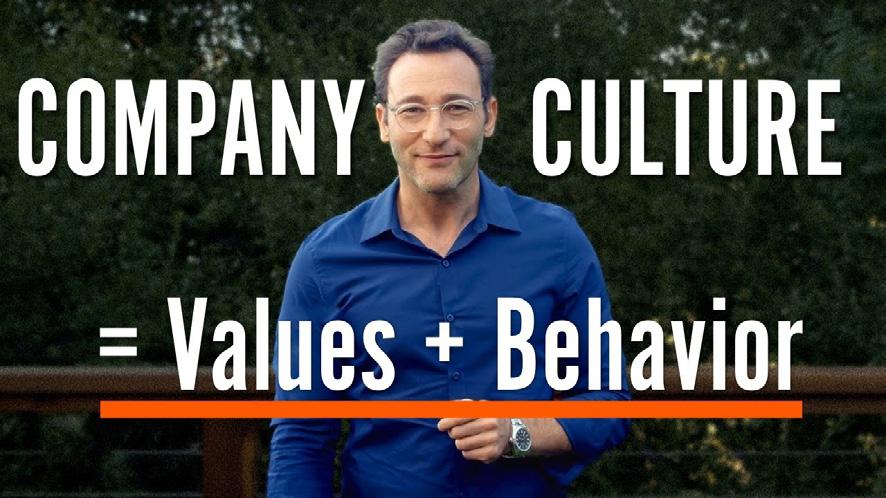
For years, company culture was treated as a secondary business conversation, often positioned somewhere between recruitment strategy and employee perks. In 2026, that perception has changed completely.
Culture is now viewed as core business infrastructure.
Across industries including technology, finance, healthcare and manufacturing, leadership teams increasingly recognise that workplace culture directly influences performance, retention, innovation and long term resilience. In many organisations, it now carries the same strategic weight as operational efficiency or financial planning.
This shift reflects changing workforce expectations. Employees are no longer evaluating roles based solely on salary or job title. Increasingly, they assess leadership behaviour, flexibility, communication, wellbeing and whether a company genuinely aligns with their values and lifestyle expectations.
The businesses attracting the strongest talent are often those creating environments where employees feel trusted, respected and connected to a wider purpose.
The post pandemic years accelerated conversations around burnout, work life balance and mental wellbeing, but 2026 is shaping up to be the year businesses move
beyond performative culture initiatives and toward structural change. Employees are becoming far more aware of the difference between companies that market culture externally and those that genuinely invest in it internally.
Authenticity has therefore become a defining feature of modern workplace culture.
Many successful organisations are focused on building environments that feel more human without sacrificing ambition or professionalism. Increasingly, businesses recognise that sustainable performance is built through trust, communication and emotional intelligence rather than pressure alone.
Leadership sits at the centre of that transformation.
The era of distant executive leadership is gradually fading across many sectors. Employees increasingly expect transparency, visibility and accessibility from senior management teams. Leaders are now expected to communicate clearly during uncertainty, involve teams in wider strategic conversations and demonstrate emotional awareness alongside commercial capability.
Hybrid and remote working models continue reshaping how businesses think about connection and belonging. Strong workplace culture in 2026 is rarely
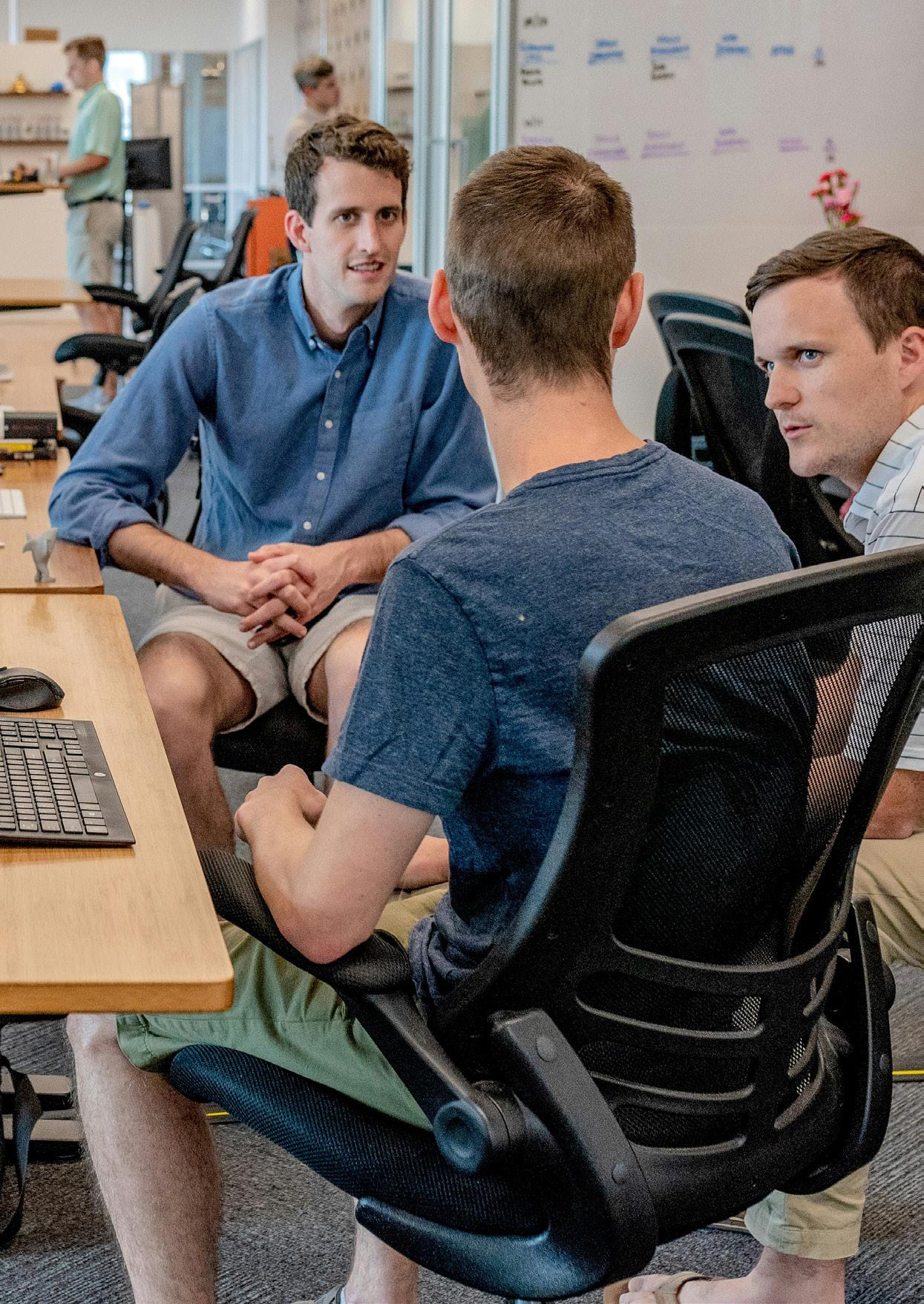
accidental. It is built intentionally through communication systems, leadership behaviour, onboarding experiences and shared values that extend beyond office walls.
Technology also plays an evolving role.
Workplace systems are increasingly being implemented not only to improve efficiency, but also to improve employee experience. Internal communication platforms, wellbeing tools, flexible scheduling software and AI driven workflow systems are helping reduce friction and support healthier working environments.
Artificial intelligence is beginning to influence workplace culture more directly too. As AI adoption accelerates, employees increasingly want reassurance that technology is being implemented to support people rather than replace them. Businesses managing this transition successfully are often those openly involving employees in discussions surrounding AI integration.
Recruitment and retention pressures are also elevating the importance of culture.
Candidates increasingly research leadership reputation, employee feedback and company values before accepting roles. Businesses with poorly managed cultures are finding it harder to attract skilled professionals, particularly within specialist sectors where talent shortages remain ongoing.
Retention has become equally important.
Replacing experienced employees is increasingly expensive financially and operationally, leading organisations to focus more heavily on engagement, progression and employee satisfaction. Career development, mentorship and internal mobility are becoming central parts of wider culture strategy.
Wellbeing is also moving from a human resources issue into a broader commercial priority.

Businesses increasingly recognise that exhausted teams are not sustainable teams. Flexible working, mental health support and healthier communication boundaries are becoming embedded within wider workplace strategy.
Importantly, this does not mean businesses are becoming less ambitious. In many cases, healthier workplace environments are producing stronger long term outcomes, with engaged employees more
likely to contribute creatively and remain committed to organisational growth.
Purpose is becoming another defining influence on company culture in 2026.
Employees increasingly want to understand not only what a company does, but why it exists beyond profitability alone. Businesses are responding by placing greater emphasis on sustainability, ethical leadership and social impact, although employees are becoming increasingly skilled at identifying superficial messaging.
This demand for authenticity is also influencing diversity and inclusion strategies. Employees increasingly expect diversity to be reflected not only within marketing campaigns, but also within leadership structures, recruitment processes and progression opportunities.
Physical workplace design is evolving alongside these wider cultural changes.
Offices are increasingly being redesigned around collaboration, flexibility and employee experience rather than rigid desk structures. As hybrid working remains
embedded across many sectors, workplace experience itself is becoming closely linked to culture perception.
Perhaps the biggest shift of all is that company culture is no longer viewed solely as a human resources responsibility.
In 2026, culture influences recruitment, leadership, productivity, customer experience and long term reputation simultaneously. Investors, clients and employees increasingly view internal culture as a reflection of operational quality itself.
The businesses thriving in this environment are rarely those attempting to manufacture culture artificially. Instead, they are organisations consistently investing in communication, leadership and trust over time.
Because ultimately, company culture is no longer about creating workplaces that simply function.
It is about creating environments where people genuinely want to stay, contribute and grow.
The relationship between leadership and technology is changing rapidly.
For years, digital transformation was viewed largely as a challenge for IT departments and technology specialists. In 2026, it has become a boardroom priority influencing operations, customer experience, workforce strategy and long term competitiveness.
The conversation is no longer simply about adopting technology. It is about developing leaders capable of navigating constant digital change while maintaining strong decision making, organisational culture and commercial awareness.
As a result, innovation focused leadership programmes are becoming increasingly influential across global business.
Organisations in sectors including healthcare, manufacturing, finance and logistics are investing heavily in leadership training designed to prepare executives for a future shaped by artificial intelligence, automation, data driven strategy and evolving workforce expectations.
Modern leadership now requires far more than operational management alone.
Executives are expected to balance innovation with stability, technology with ethics and rapid transformation

with long term sustainability. Many organisations have discovered that implementing advanced technology without preparing leadership teams often creates resistance, confusion and poor adoption internally.
Digital transformation succeeds most effectively when leaders understand not only the technology itself, but also the cultural and operational impact surrounding it.
This is why leadership development programmes are evolving beyond traditional executive education.
Earlier leadership training focused heavily on management theory and operational efficiency. In 2026, programmes increasingly prioritise adaptability, innovation thinking, digital literacy and strategic agility.
Businesses are no longer simply training managers. They are developing transformation leaders.
The rapid growth of artificial intelligence is accelerating this shift. Leaders are increasingly expected to understand how AI influences productivity, workforce structures, cybersecurity, customer behaviour and governance simultaneously.
At the same time, organisations continue navigating economic uncertainty, sustainability pressures and changing employee expectations, requiring leadership styles that are


broader and more interdisciplinary than in previous generations.
The strongest digital leadership programmes now combine strategic thinking with human centred leadership.
Emotional intelligence, communication and adaptability are increasingly being positioned alongside data analysis, AI awareness and digital strategy as equally valuable leadership skills. This reflects a growing recognition that technology alone rarely drives successful transformation. People do.
One of the defining features of modern leadership programmes is the growing emphasis on practical application rather than purely theoretical learning. Executives increasingly want training environments that reflect real business challenges, allowing participants to work through transformation scenarios, innovation strategy and cross functional problem solving. Many programmes are therefore becoming more immersive and collaborative through live case studies, mentorship networks, innovation labs and industry partnerships.
Artificial intelligence is also beginning to reshape leadership training itself.
AI powered coaching systems, personalised learning pathways and adaptive simulations are increasingly being used to tailor development programmes to individual participants. Organisations are moving away from identical training experiences toward more flexible learning models aligned with industry context and leadership style.
This reflects wider changes across professional education.
Executives increasingly expect learning experiences that feel directly relevant to immediate business challenges rather than generic management frameworks.
Hybrid and remote working environments are also influencing leadership priorities.
Leading distributed teams requires stronger communication, trust building and culture management than traditional office structures. Many programmes are therefore placing greater emphasis on digital collaboration, employee wellbeing and remote engagement alongside operational strategy. Importantly, the human side of leadership is becoming more valuable rather than less within increasingly digital organisations.
As automation expands, skills such as empathy, communication, creativity and ethical judgement are becoming critical differentiators. This shift is influencing how younger professionals view leadership itself.
Emerging generations increasingly expect leadership to feel collaborative, transparent and purpose driven rather than purely hierarchical. Innovation culture, flexibility and meaningful impact are becoming central leadership themes across many organisations.
As a result, sustainability, ethical innovation and social responsibility are becoming increasingly prominent within executive education.
Businesses are also facing growing scrutiny surrounding AI ethics, data privacy and workforce disruption. Leaders capable of navigating these conversations thoughtfully and transparently are likely to become increasingly valuable.
Partnerships between universities, technology companies and corporate organisations are expanding rapidly within this space.
Many programmes now combine academic research with commercial insight and emerging technology expertise, helping participants engage directly with evolving industry

challenges rather than outdated theoretical models. Global connectivity is shaping leadership development too.
Executives increasingly operate within internationally connected markets where digital disruption emerges simultaneously across multiple regions. Leadership programmes are therefore becoming more globally focused, exposing participants to international case studies and cross cultural collaboration.
Importantly, digital leadership development is no longer reserved solely for senior executives. Many organisations are investing earlier in leadership pipelines, recognising
that innovation culture depends on developing adaptable and digitally confident managers across multiple levels of the business.
This long term investment reflects a broader understanding that innovation culture cannot simply be introduced during periods of disruption. It must be built consistently over time.
Increasingly, the most valuable leaders are not necessarily those with the deepest technical expertise, but those capable of learning continuously, adapting quickly and guiding teams through uncertainty with clarity and confidence.
The global workforce is undergoing one of the most significant transformations in modern business history.
Organisations are no longer simply adapting to new technology or shifting consumer behaviour. They are navigating an entirely new relationship between people, work, leadership and economic change.
In 2026, workforce dynamics have become one of the defining strategic conversations shaping international business performance.
Traditional employment models are evolving into structures that are more flexible, digitally connected and globally distributed. Businesses are rethinking where talent comes from, how teams operate and what employees expect from modern workplaces.
Several major forces are driving this transformation simultaneously.
Artificial intelligence continues reshaping operational structures. Hybrid work remains embedded across many industries. Demographic changes are altering labour markets globally, while employees are placing greater emphasis on flexibility, wellbeing and career mobility. The result is a workforce environment that looks dramatically different from even a few years ago.
For many organisations, the challenge is no longer simply attracting talent. It is building sustainable workforce
strategies within a rapidly evolving global environment.
One of the clearest trends shaping workforce dynamics in 2026 is the continued normalisation of location flexible employment.
Although many businesses have encouraged employees back into offices, hybrid working structures remain deeply embedded across professional sectors. Employees increasingly expect flexibility within their working lives, particularly in industries where digital infrastructure supports remote collaboration. This has fundamentally changed recruitment itself.
Businesses are no longer restricted to hiring talent within commuting distance of a headquarters. Organisations can now access global talent pools more easily, allowing them to recruit specialists and technical professionals across international markets. This globalisation of talent is creating major opportunities while also increasing competition significantly.
Employees increasingly evaluate employers internationally rather than locally, particularly within technology, finance and digital services where remote collaboration has become highly sophisticated.
As a result, businesses are competing more aggressively on culture, flexibility and employee experience rather than salary alone. Workforce expectations have shifted considerably.
Employees increasingly prioritise autonomy, wellbeing and professional


fulfilment alongside financial compensation. Many workers are reassessing how work fits into their wider lifestyle rather than structuring their lives entirely around career progression.
Purpose is becoming increasingly influential within employment decisions.
Professionals increasingly seek organisations aligned with their views on sustainability, ethics and social impact. Businesses viewed as disconnected from modern workforce expectations often struggle to attract skilled talent.
Leadership styles are evolving alongside these cultural changes.
Traditional command and control management structures are gradually giving way to more collaborative and emotionally intelligent leadership models. Employees increasingly expect transparency, communication and accessibility from senior leadership teams.
Technology continues accelerating these changes rapidly. Artificial intelligence is influencing recruitment, productivity, communication and workforce planning across multiple industries. Businesses are increasingly automating repetitive tasks while focusing human talent on creativity, strategy and innovation.
This has created both opportunity and uncertainty within global labour markets.
Employees remain concerned about job security and the long term impact of automation, while businesses see enormous productivity potential through AI integration. The organisations navigating this transition most successfully are often those approaching technology adoption transparently.
Businesses investing in workforce upskilling, digital training and internal mobility are generally building stronger trust during periods of technological change.
Reskilling is becoming one of the defining

workforce themes of 2026. As technology evolves faster than traditional education systems can adapt, continuous professional development is becoming essential across industries. Businesses are investing heavily in digital literacy, leadership development and AI understanding.
The concept of a fixed career path is gradually disappearing. Modern workforce structures are becoming more fluid, project based and interdisciplinary. Adaptability is increasingly valued alongside technical expertise.
Cross functional collaboration is also becoming more common as innovation and digital transformation strategies require expertise from multiple departments simultaneously.
Demographic change is adding further complexity.
Many developed economies are facing aging populations and shrinking labour pools, particularly within sectors already
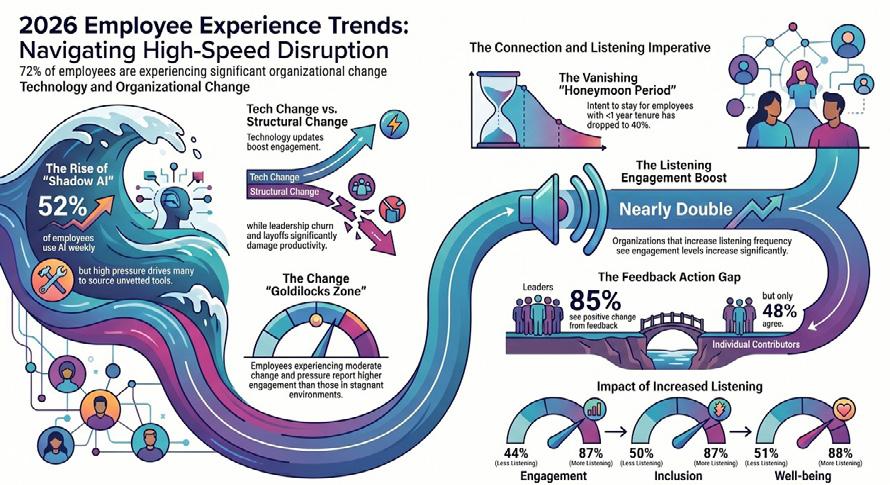
experiencing skills shortages such as healthcare and engineering. At the same time, younger generations entering the workforce often hold very different expectations surrounding flexibility, leadership and workplace culture.
Diversity and inclusion remain central workforce priorities in 2026. However, the conversation has evolved beyond representation alone. Employees increasingly expect businesses to demonstrate measurable structural commitment through leadership diversity, equitable progression opportunities and inclusive workplace environments.
Mental wellbeing also continues shaping workforce strategy globally. Burnout and digital overload remain major concerns across industries, particularly within highly connected environments where employees struggle to separate professional and personal time.
Businesses are increasingly recognising that workforce wellbeing directly impacts productivity, retention and long term resilience. The office itself is evolving too.
Physical workplaces are increasingly being redesigned around collaboration, creativity and interpersonal connection rather than individual task completion. As hybrid work becomes more established, offices are functioning less as mandatory daily environments and more as spaces designed to strengthen culture and innovation. Importantly, workforce dynamics are no longer viewed purely as human resources concerns.
In 2026, talent strategy influences innovation, operational performance, customer experience and competitiveness simultaneously.
The organisations most likely to thrive are not necessarily those with the largest workforces, but those capable of creating adaptable, skilled and engaged teams supported by strong leadership and meaningful flexibility.
Because ultimately, the future of work is no longer defined solely by where people work. It is defined by how organisations help people grow, adapt and contribute within a rapidly changing world.
For years, workplace technology was designed primarily around efficiency.
Human resources systems focused heavily on payroll management, recruitment administration and operational processes intended to simplify internal workflows. In 2026, however, that approach is changing rapidly.
The conversation surrounding HR technology is no longer simply about automation. It is about employee experience.
Across industries worldwide, businesses increasingly recognise that workforce satisfaction, engagement and wellbeing are directly connected to long term commercial performance. As a result, a new generation of HR technology and employee experience tools is emerging, designed not only to streamline operations, but also to reshape how employees experience work itself.
This reflects a broader transformation taking place across global business. Employees now expect far more from workplaces than previous generations. Flexibility, communication, wellbeing, career development and workplace culture are increasingly viewed as essential rather than optional. Organisations are therefore under growing pressure to create environments that feel more connected, responsive and human despite increasingly digital working models.
Technology has become central to that challenge.
The rise of hybrid and remote work has fundamentally altered how businesses interact with employees. Many organisations now manage distributed teams operating across multiple locations, time zones and communication platforms simultaneously. Maintaining engagement and workplace culture within these environments requires far more intentional systems than traditional office structures once demanded.
This is where employee experience platforms are becoming increasingly influential.
Modern HR technology now extends well beyond traditional administrative systems. Businesses are investing in tools designed to improve communication, collaboration, recognition, learning and workforce wellbeing alongside operational management. In many organisations, employee experience technology is becoming a strategic business priority rather than simply a human resources function.
One of the biggest drivers behind this shift is retention.
Global labour markets remain highly competitive across sectors including technology, healthcare, finance and professional services. Businesses

increasingly understand that attracting talent alone is not enough. Retaining experienced employees has become equally critical.
Replacing skilled staff is expensive financially, operationally and culturally. As a result, organisations are investing more heavily in systems capable of improving employee satisfaction and long term engagement. Digital feedback tools, wellbeing platforms, internal communication systems and personalised learning environments are becoming embedded within wider workforce strategies.
The employee experience itself is also being measured more closely than ever before.
Many businesses now use real time engagement analytics to monitor morale, communication quality and workplace sentiment continuously rather than relying solely on annual surveys or reactive management approaches. This allows organisations to identify cultural issues earlier and respond more proactively to workforce concerns.
Artificial intelligence is accelerating this evolution rapidly.
AI driven HR tools are increasingly being used to personalise employee experiences, automate repetitive tasks and improve workforce decision making. Recruitment systems can analyse candidate suitability more efficiently, learning platforms can recommend personalised development pathways and engagement tools can identify burnout or retention risks before they escalate. Importantly, this does not mean human leadership is becoming less valuable. In many ways, the opposite is happening.
As automation handles more administrative processes, communication, empathy and relationship management are becoming increasingly important within workplace culture. Technology is therefore being positioned less as a replacement for leadership and more as a
support system enabling leaders to focus more effectively on people.
This balance between technology and humanity is becoming one of the defining themes of HR strategy in 2026.
Businesses are increasingly aware that poorly implemented workplace systems can create disengagement rather than improve it. Employees do not simply want more platforms or notifications added into their working lives. They want tools that reduce friction, improve clarity and support healthier working environments.
Simplicity is therefore becoming a major design priority across employee experience platforms.
Many modern systems prioritise intuitive interfaces, integrated communication and seamless accessibility across devices. Employees increasingly expect workplace technology to feel as user friendly and responsive as the consumer applications they use outside work.
This consumer style expectation is influencing workplace culture itself. Employees now expect more immediate communication, clearer feedback and greater transparency from organisations. HR technology is evolving to support these expectations through continuous recognition systems, collaborative platforms and more visible internal communication structures.
Recognition tools are becoming particularly important within this shift.
Businesses are increasingly implementing digital recognition platforms that allow employees and managers to acknowledge contributions in real time, helping strengthen engagement and reinforce workplace culture across distributed teams.
Learning and development technology is also evolving rapidly. Employees increasingly expect career progression opportunities to be accessible,
personalised and continuous rather than limited to occasional training sessions. Many organisations are therefore investing in AI powered learning systems capable of tailoring development content to individual career goals and skills gaps.
This reflects a wider understanding that workforce development is becoming central to long term business resilience.
As artificial intelligence and automation continue reshaping industries, businesses increasingly recognise that continuous learning and adaptability are essential competitive advantages.
Wellbeing technology is becoming another major area of investment.
Mental health support platforms, flexible scheduling systems and workload management tools are increasingly being integrated into wider employee experience strategies. Organisations are recognising that workforce wellbeing
directly influences productivity, retention and operational performance.
Importantly, HR technology is no longer viewed purely as a support function.
In 2026, workforce experience influences recruitment, retention, culture, innovation and long term competitiveness simultaneously. Investors and leadership teams increasingly recognise that employee experience itself has become a measurable business asset.
The organisations gaining the strongest reputations are often those using technology to create more connected, supportive and adaptable working environments rather than simply increasing efficiency alone.
Because ultimately, the future of workplace technology is no longer defined solely by automation. It is defined by how effectively businesses use technology to improve the human experience of work.
As digital transformation continues to reshape industries, the role of leadership has never been more critical. From artificial intelligence and automation to digital trust, enterprise innovation and the future of work, today’s most influential technology leaders are helping define how organisations navigate an increasingly complex digital
landscape. We highlight ten of the world’s leading digital leadership experts whose ideas, research and strategic vision are influencing businesses, governments and industries across the globe. Their insights are not only shaping the technologies of tomorrow but also redefining what effective leadership looks like in the digital age.
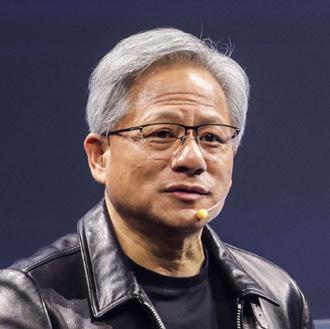
Founder and CEO of NVIDIA Jensen Huang continues to sit at the centre of the global AI revolution, leading NVIDIA’s rise from graphics chip manufacturer to one of the world’s most influential AI infrastructure companies. His leadership is shaping everything from enterprise automation and robotics to data centres and next generation computing.
President, Chief Product Officer and COO at ServiceNow
Amit Zavery plays a major role in shaping enterprise workflow automation and digital operations globally. His leadership at ServiceNow continues driving AI powered business transformation across industries seeking faster, more connected and more efficient digital infrastructure.
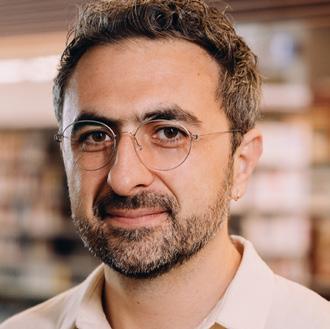
CEO of Microsoft AI
Known for his work in responsible artificial intelligence and advanced AI systems, Mustafa Suleyman has become one of the defining digital leadership voices of the decade. His role overseeing Microsoft AI places him at the forefront of how businesses integrate AI into everyday operations and long term strategy.
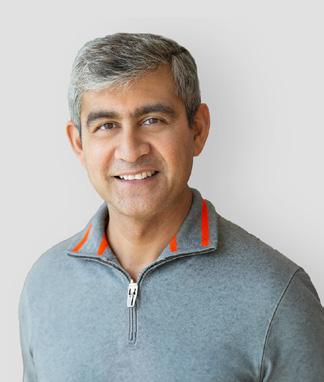

Co founder of Sierra and Chairman of OpenAI Bret Taylor has built a reputation as one of Silicon Valley’s most respected technology leaders, with leadership experience spanning Salesforce, Twitter and OpenAI. His work increasingly focuses on AI driven enterprise innovation and the future of digital business transformation.
Trust Expert, Author and Lecturer at University of Oxford
Rachel Botsman has become internationally recognised for her work surrounding digital trust, technology ethics and leadership in an increasingly connected world. Her research explores how trust influences modern business, artificial intelligence and digital decision making.


Futurist, Author and Digital Transformation Advisor
Bernard Marr remains one of the most influential commentators on AI, digital innovation and future business strategy. Through his books, research and advisory work, he continues helping organisations understand how emerging technologies are reshaping leadership and commercial performance.

Digital Leadership Expert and Founder of Altimeter
Charlene Li is widely respected for her expertise in disruptive leadership, innovation culture and digital transformation strategy. Her work focuses heavily on helping organisations adapt leadership structures to increasingly fast moving digital environments.

Director of the Stanford Digital Economy Lab
Erik Brynjolfsson is one of the world’s leading experts on the economic and workforce impact of artificial intelligence and digital transformation. His research continues shaping how businesses and governments approach automation, productivity and the future of work.
Principal Research Scientist at MIT Sloan School of Management
Jeanne Ross has spent years researching enterprise transformation, digital strategy and operational innovation. Her work remains highly influential among organisations navigating complex digital change and modern business reinvention.

Co Director of the Stanford Human Centered AI Institute
Fei-Fei Li is globally recognised for her leadership in human centred artificial intelligence and ethical technology development. Her work continues influencing how businesses approach responsible AI adoption while balancing innovation with human impact.


There is a particular moment in every technological cycle when the conversation shifts. It moves away from curiosity and into consequence. Artificial intelligence has reached that moment. What was once framed as possibility is now revealing itself as a dividing line, separating organisations that are structurally prepared to move at speed from those still experimenting at the edges, unsure how to translate ambition into action.
Across boardrooms, AI remains a strategic priority. Investment is increasing, pilot programmes are multiplying, and leadership language has adapted accordingly. Yet beneath that surface, something more revealing is taking shape. Many organisations are not struggling to understand AI. They are struggling to make it real.
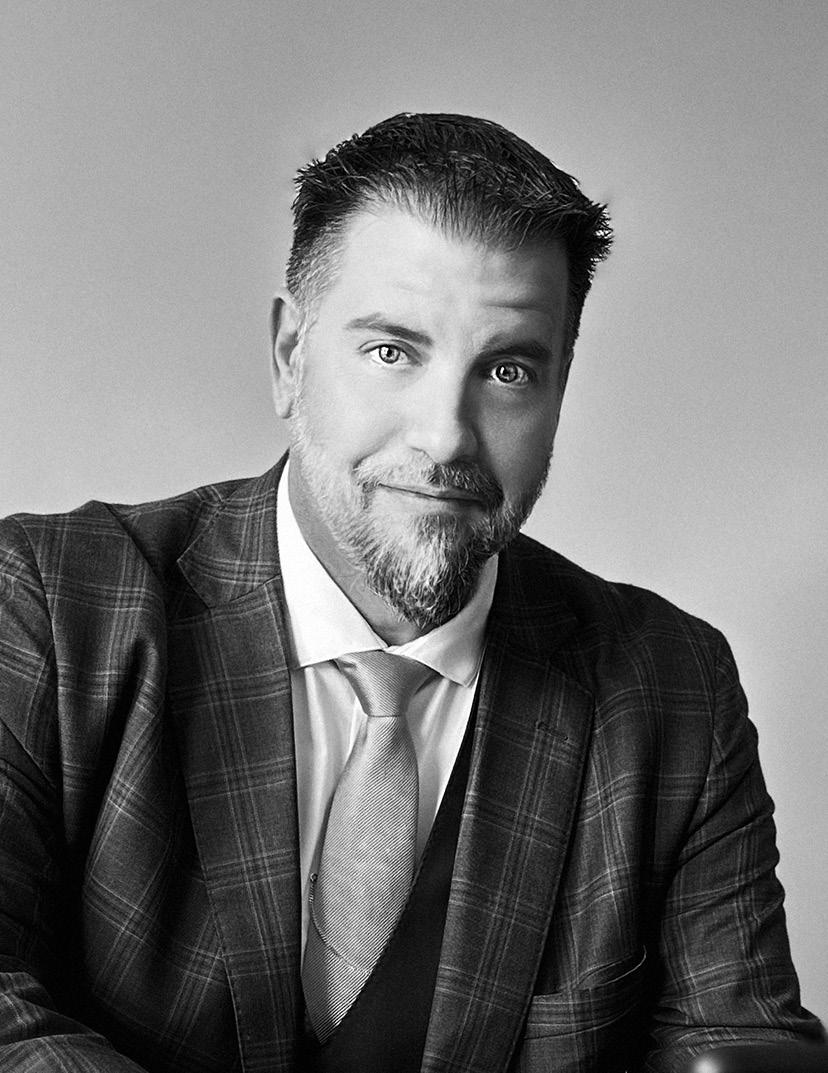
Few voices have been as consistent, or as clear, on this divide as Evan J. Schwartz. An Amazon best-selling author, Chair of the Computer Science and Cybersecurity Board of Advisors at Jacksonville University, and Adjunct Professor spanning project management, data science, AI model development, and software architecture, Schwartz operates at the intersection of academic rigour and enterprise execution. In his role as Chief Innovation Officer at AMCS Group,
he has become a leading voice on what it actually takes to move AI from ambition to operational reality.
This is the tension that defines the current landscape, and it is one that Schwartz has spent years dissecting. His argument is not that organisations lack vision. It is that they lack the systems required to execute against it.
“Most organizations don’t fail at innovation strategy. They fail at innovation execution,” he explains. “Strategy is about answering a very specific question. What should AI do in our business. Not what it can do. That distinction is critical.”
It is a subtle shift in language, but one that exposes a fundamental flaw in how many companies approach transformation. The temptation, particularly in a rapidly evolving market, is to begin with capability. What can the technology do. What tools are available. What competitors are deploying. The result is often an accumulation of disconnected solutions, impressive in isolation but incapable of producing sustained value.
Execution, as Schwartz sees it, is where those ambitions collide with reality. “AI is not a technology deployment. It is an operating model transformation,” he says. “We’re no longer solving a tech problem.
AMCS PROJECT DIRECTED BY: JAMIE WAITE

It’s a digital workforce challenge. If you don’t redesign how work gets done, how decisions are made, and who owns outcomes, the strategy never materializes.”
There is a quiet severity to that assessment. It reframes AI not as an enhancement layer, but as something far more structural. The implication is clear. Organisations that treat AI as an add-on will inevitably stall, not because the technology fails, but because the system around it remains unchanged.
This gap between intent and execution is visible across industries. Leadership teams speak confidently about AI as a strategic capability, yet within their organisations it often manifests as fragmented experimentation. Small teams build pilots, departments test isolated use cases, and pockets of progress emerge. But they rarely scale.
Schwartz describes this as the “lab success problem,” a phrase that captures the illusion of progress that can take hold when controlled experiments outperform expectations but fail to translate into operational environments. “Executives often ask what AI can do, but that’s the
wrong question,” he says. “The better question is what should AI do in our business. Without that clarity, teams chase use cases, deploy tools, and build pilots that never scale.”
The consequences of that misalignment are not neutral. AI systems, by design, execute instructions without context. They amplify whatever direction they are given. If leadership intent is vague, the outcome is not simply inefficiency, but scaled confusion. “AI does not understand business strategy, and strategy does not equal context,” Schwartz notes. “It will execute exactly what it’s told, without judgment. If leadership doesn’t define intent clearly, the system will amplify misalignment at scale.”
The organisations that are beginning to break through this barrier are doing something fundamentally different. They are not starting with tools. They are starting with structure. They are asking not how to deploy AI, but how to build an environment in which it can operate consistently and at scale.
Central to this is what Schwartz describes as three non-negotiable conditions
Schedule a strategy call today!


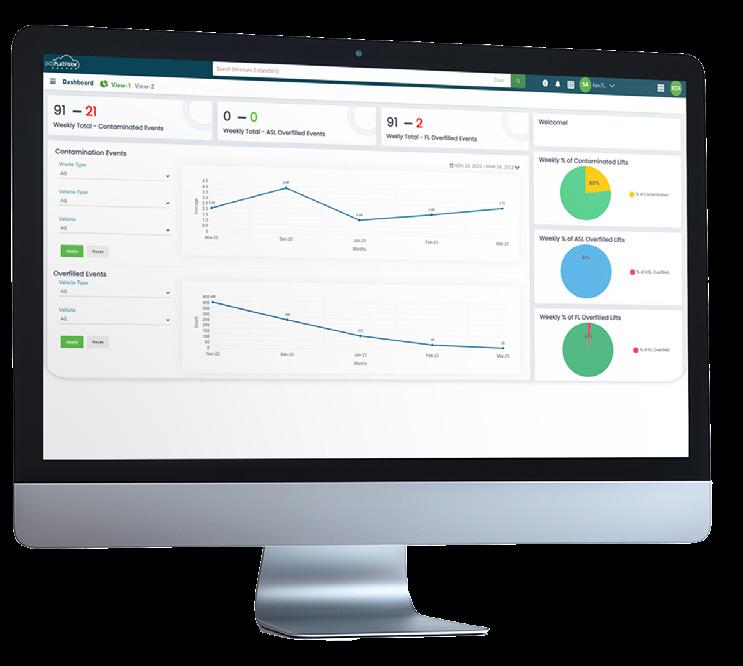
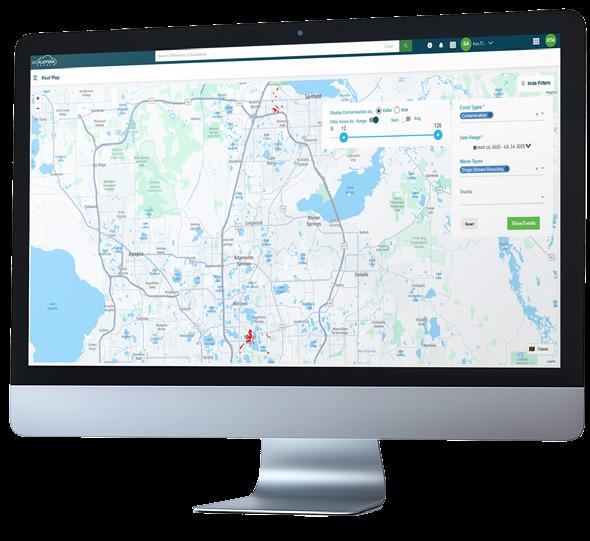
for moving from experimentation to repeatable value. Governance, use cases, and data. The sequence matters, but more importantly, the relationship between them defines whether AI becomes embedded or remains peripheral.
“Governance must come first,” he says. “Organizations need to define what AI should do, not just what it can do. That includes ethical boundaries, accountability, and the need for humans to remain in control. Without this, scaling AI introduces risk faster than value.”
It is a point that resonates deeply in an environment where regulatory scrutiny is increasing and public trust remains fragile. Governance is often perceived as a constraint, something that slows innovation. In practice, it is the opposite. It creates the conditions for safe acceleration.
From there, use cases provide direction. They anchor AI in business reality, ensuring that deployment is tied to outcomes rather than experimentation for its own sake. Only then does data come into play, not as a starting point, but as an enabler.
“Many organizations try to solve for data first,” Schwartz explains. “But in reality, use cases tell you what data you actually need. Data alone doesn’t drive success. It only supports it.”
What emerges from this is a model that is neither linear nor universal. The path to adoption varies depending on organisational culture, risk appetite, and operational maturity. A highly regulated enterprise may prioritise governance and data before moving into use cases. A more agile organisation may iterate rapidly, building governance alongside deployment. The critical factor is alignment.
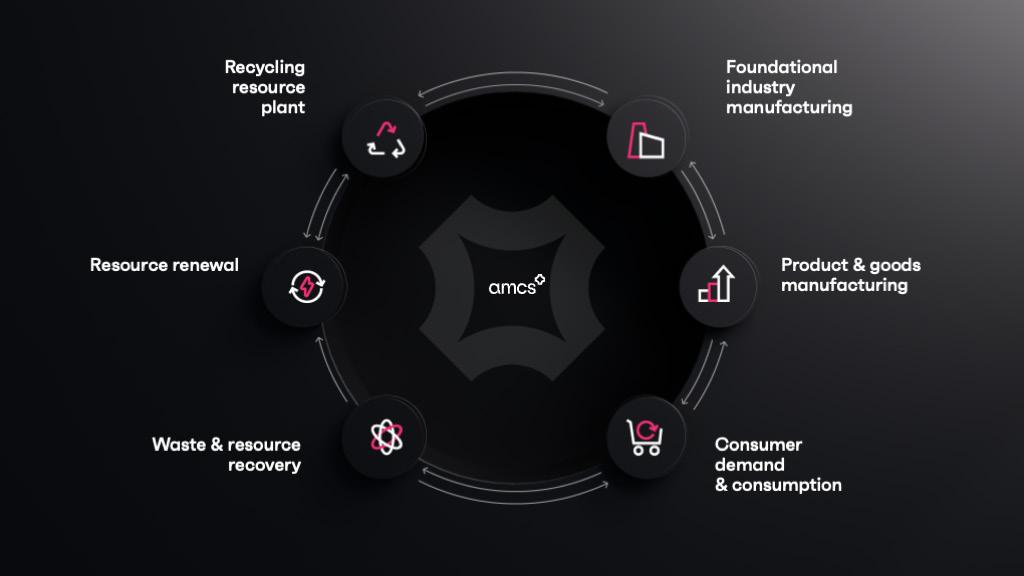
This emphasis on alignment extends into what Schwartz has formalised as his Successful AI Adoption Model, a framework that brings together three interdependent systems. Stewardship, operational design, and adoption.
These are not abstract concepts. They are practical levers that determine whether AI becomes embedded within the fabric of an organisation or remains an external layer. “These three elements are not
independent,” he says. “They are a tightly integrated system for building a digital workforce.”
The notion of a digital workforce is perhaps the most defining idea in Schwartz’s thinking. It moves the conversation beyond automation and into augmentation, beyond efficiency and into scale. It is not about replacing human effort, but about reconfiguring how work is performed.
Within this model, the adoption layer is shaped by culture. There is no single blueprint. Organisations must align their approach to their own behavioural reality. Misalignment here is one of the most common causes of failure.
The operational layer, meanwhile, defines how work is executed. It forces organisations to confront difficult questions. Are processes being fully automated, with AI agents operating under human supervision, or is the goal to augment human capability by offloading low-value tasks. The answer determines everything from organisational structure to performance metrics.
Yet it is the third layer, stewardship, that Schwartz identifies as the most overlooked and the most critical. “AI shouldn’t replace human judgment. It requires it at every level,” he says. “Stewards act as the managers of the digital workforce. They provide context, ensure data integrity, and validate outcomes.”
The emergence of this role signals a broader shift in how organisations must think about talent. AI adoption is not simply a technical challenge. It is a human one. It requires new capabilities, new forms of oversight, and a redefinition of accountability.
“Leadership is shifting from directing technology initiatives to designing operating systems for the business,” Schwartz explains. “Leaders now need to define what AI should do in the business, where humans remain accountable, and how value is measured and scaled.”
This reframing places a new responsibility on executive teams. It is no longer sufficient to sponsor innovation. They must architect it. They must design



systems that integrate human judgment with machine execution in a way that is both scalable and controllable.
The organisations that succeed in doing this are already demonstrating what that future looks like. They are embedding AI into core workflows, not isolating it in innovation labs. They are investing in governance as a strategic capability, not a compliance exercise. They are redefining roles, building stewardship functions, and measuring value in terms of outcomes rather than activity.
The impact is not incremental. It is exponential. “You’re not targeting efficiency percentages here,” Schwartz says. “You’re targeting four to eight times productivity.”
That level of acceleration changes the competitive landscape entirely. It compresses timelines, reshapes customer expectations, and redefines what constitutes responsiveness. In such an environment, hesitation carries a cost that is often underestimated.
Schwartz is unequivocal on this point. “The organizations that succeed over the next three to five years will be those that operationalize AI. They will start with governance, align adoption to culture, redesign their operating model, and embed AI into core workflows.”
The alternative is stagnation. Organisations that remain in pilot mode, treating AI as a tool rather than a structural transformation, will find themselves increasingly disconnected from the pace of the market.
“Time is running out,” he says. “If you think you can sit this one out and wait, by the time you see the need to catch up, your competition is so far out ahead of you, you’ll be out of business.”
It is a stark warning, but one grounded in observable reality. In industries where AI has already been operationalised, the gap between leaders and laggards is widening rapidly. Decisions are being made faster, services delivered sooner, and value captured earlier in the cycle.
Schwartz offers a simple but powerful illustration. While one company is preparing a response to a customer proposal, another has already responded in near real time, secured the business, and begun execution. The difference is not effort. It is structure.
This is the future that is taking shape. Not one defined by isolated innovation, but by integrated systems. Not one where AI sits alongside the business, but where it is woven into its core.
The question, then, is not whether organisations will adopt AI. It is how they will do so, and whether they will do it in time. The companies that understand this distinction, that recognise AI as an operating model transformation rather than a technological upgrade, will not simply keep pace. They will redefine it.
In that sense, the real story of AI is not about machines. It is about momentum. About which organisations can move with clarity, with structure, and with intent. And which, despite all their ambition, will find themselves watching the future arrive without them.
www.amcsgroup.com


DIRECTED BY: JAMIE WAITE
The New Language of Indulgence
There are very few brands in the world that exist beyond the category they were built in. Most companies sell products. Some sell convenience. Only a select few manage to embed themselves into culture in a way that feels instinctive, familiar and emotionally recognisable across generations. KFC belongs firmly within that rare group.
For decades, the brand has represented something bigger than fast food. Its identity has always lived in emotion rather than function alone. Comfort, indulgence, familiarity and joy have been central to its success across markets, demographics and generations. Yet even global icons face the same challenge confronting every major consumer business today: how do you remain culturally relevant in a world moving faster than ever before? PROJECT

That question sits at the centre of Kwench by KFC, a bold beverageled concept developed under the leadership of Dhiren Karnani, Global Director of New Concepts at KFC. What initially appears to be a drinks platform quickly reveals itself to be something far more strategically significant. Kwench is not simply about milkshakes, refreshers or iced coffees. It is about how legacy brands evolve their relationship with younger consumers, redefine occasionbased consumption and create entirely new entry points into their ecosystems.
The brilliance of Kwench lies in the fact that it understands modern consumer behaviour with unusual clarity. Drinks are no longer viewed simply as accompaniments to meals. They have become expressions of identity, mood and lifestyle. They are photographed, shared and consumed visually as much as physically. Younger audiences increasingly view beverages as affordable moments of indulgence within uncertain economic environments, small rituals that deliver comfort, status and escapism all at once.
As Karnani explains, “The next generation uses beverages as social currency. It is the perfect embodiment of treat culture, affordable little splurges bringing joy in an uncertain world.” It is an observation that says as much about modern culture as it does about hospitality. The traditional structure of dining has shifted dramatically over the past decade. Fixed mealtimes have blurred into continuous snacking, sipping and grazing. Consumers now expect experiences that are portable,
immediate, visually engaging and emotionally satisfying. Within that environment, beverages have emerged as an increasingly important growth area within the global food service industry.
KFC recognised this shift not as a temporary trend, but as a structural change in consumer behaviour. Kwench was therefore developed not as a shortterm campaign but as an entirely new brand platform with its own identity, tone and operational infrastructure.
What makes the concept especially intelligent is how carefully it balances modernity with familiarity. Nothing about Kwench feels disconnected from the DNA of KFC itself. Instead, it extends the brand’s longstanding understanding of indulgence into new formats and new moments throughout the day. Sparkling lemonades, bobainspired refreshers, iced coffees and milkshakes have been designed to complement the savoury nature of KFC’s food while simultaneously standing alone as destination products in their own right.



Many of you will have a touch point with Gen Alpha - be that children, grandchildren, or friends of your family. But they won’t be in your workforce, yet.
Generation Alpha, those born between 2010 and 2024 (placing them at two to sixteen years old at time of publishing), are the first cohort to be defined by the 21st Century. This is the first generation to be considered digital natives, where technology goes far beyond recreation and is integrated entirely into their learning - this generation are on course to be the most educated in history.
By 2029, Generation Alpha’s projected economic footprint is expected to reach an estimated $5.4 6 trillion, but in the meantime they are heavily informing the spending of their millennial parents.
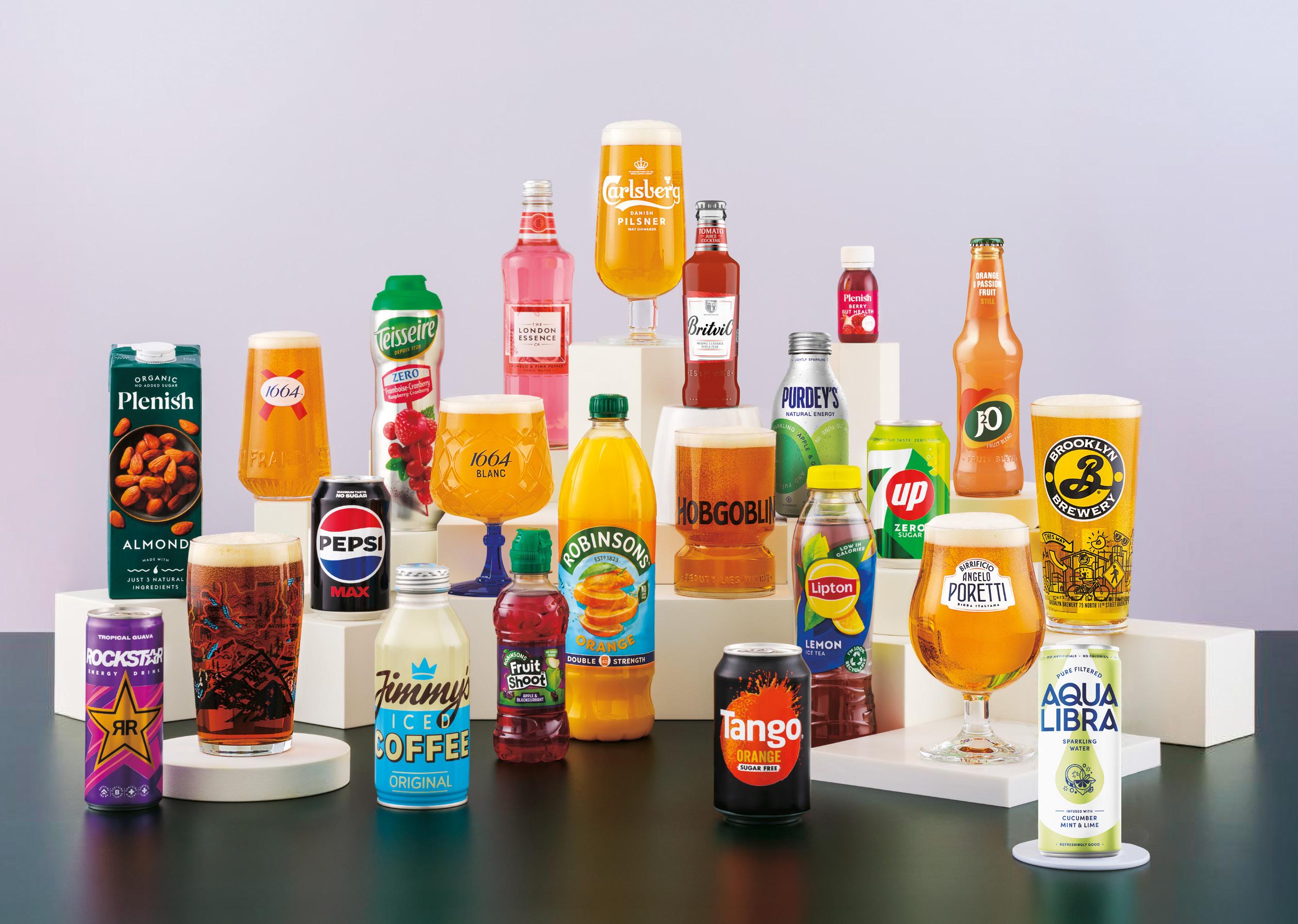
This has been recognised at the right time by Carlsberg Britivic, the newly merged (2025) multi-brand drinks innovator, which produces the likes of Pepsi, Mountain Dew, Robinsons, Kronenberg, and of course, its namesakes Carlsberg and Britvic.
“Generation Alpha is changing the way that brands bring products to market,” explained Carlsberg Britvic’s Head of
A collaboration between Carslberg Britvic and KFC is driving operational modernisation. By Laura Green.
Hospitality, Emma King, “these consumers are driven by experience, and this is the key strategy for our partnership with KFC”.
Working together for over 20 years, KFC is Carlsberg Britvic’s largest awayfrom-home customer, and the fast-food chicken restaurant is playing a pivotal role in recruiting new consumers from both Gen-Z and Gen-Alpha for the drinks business.
Whilst 2025 was a crucial year for Carlsberg Britvic, which saw two, centuries old manufacturers merge, it was also significant for KFC, which staged its “Kentucky Fried Comeback” - seeing the brand regenerate itself into an appealing prospect for the younger audience.
The collaborative launch of Kwench, a Carlsberg Britvic drink exclusively for KFC, has helped the brands to do just that.
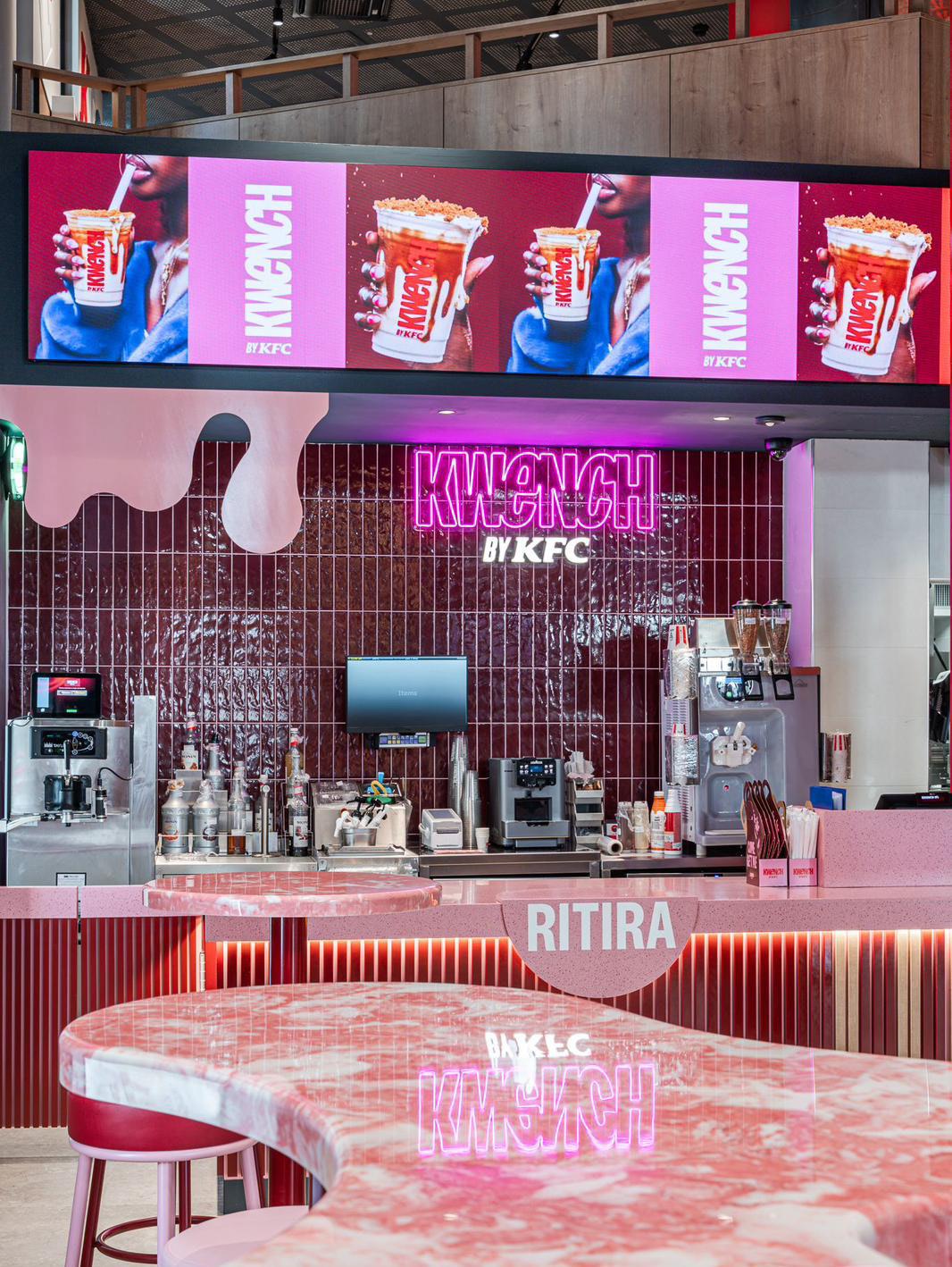

Kwench was designed not as a campaign, but as a platform, with its own voice, energy, and flexibility, reinforcing the essence of the master brand while creating new room to play. Every drink in the range is flavour-led, crafted with quality ingredients, and built to deliver the same satisfaction that made KFC’s chicken famous.
“For the roll-out of Kwench, we worked with KFC in New York where we undertook some research with them on the prospects, what it could look like, and then got to a place where KFC started the brand’s trial in the UK,” shared Emma.
Feedback from Kwench’s launch in Manchester, saw eight out of ten customers describe KFC as more modern and innovative after experiencing Kwench. That perceptual shift is as valuable as any sales metric.
“Kwench has since been rolled out across the UK and then globally, which is really exciting for them and us”, Emma continued.
Whilst Tik-Tok and Snapchat-worthy moments like Kwench are incredibly valuable to marketing to the upcoming generation, the partnership between Carlsberg Britvic is far more entrenched than what is seen by the consumer.
“We’ve been doing a lot of work with KFC to ensure that we've got the right equipment solutions in-restaurant for serving our drinks, and that is something that we continue to innovate,” shared Emma, “ultimately, if a consumer visits KFC and wants to experience one of our brands, it is crucial that its being served successfully”.
As Carlsberg Britvic’s premier client, Emma highlighted that the brand is at the heart of everything they do.
“When we're looking to develop new products or new activation, our team consider how we can put KFC at the very front of it,” she said, “And not only put KFC at the front of it, but its consumers too”.
This is a true partnership, where KFC is as valuable to Carlsberg Britvic as it is to them, even down to ensuring KFC’s restaurants remain open and functioning at its very best.
“We work with KFC to ensure that when customers arrive at outlets, that they have the right experience, for example, are the drinks the best quality for them? How do we make sure that the restaurants aren't closed down because of problems? So we're constantly working with them to make sure that they've got the best possible experience,” Emma continued.
So, how do two international powerhouse brands work together in the fast-paced, Gen Z and Gen Alpha driven markets?
Whilst traditionally it may have taken time to move things through the corporate framework, both businesses have had to adapt how they function to be on the cusp of the wave when trends (typically online) hit.
One solution is appropriately Gen ZWhatsapp.
“We have a WhatsApp group with KFC so we can instantly connect with them and say “Have you seen this? How do we get ahead of the game?”. We no longer need a formal set piece to make things happen,” explained Emma, “We have needed to adapt internally to be able to move with the times like that, which can sometimes be uncomfortable because it's an unconventional way of operating”.
Born online and backed by pop culture, Carlsberg Britvic’s recent launch of poppi
in the UK is a testament to its modernised operational approach.
The viral soft drink launched in the US three years ago, and has now arrived in Tesco and Pret in the UK. Now, Emma and her team are focussed on introducing poppi into KFC’s restaurants.
“We want to make sure that KFC has the same new product development innovation that you would see in the likes of Tesco. If it can go into a grocer, we need the product to be at the forefront of being accessible in KFC, too,” she said, “ultimately it comes back to having the right conversations. We need to have a transparent relationship so that if something does work we can celebrate it, but equally when something isn't working we can pivot quickly”.
Ensuring both Carlsberg Britvic and KFC are at the forefront of Gen Z and Gen Alpha touch points, the future of experiential engagement is exciting for both brands.
Emma foresees working alongside sporting events such as the Champion’s League and Formula 1, as well as live music events to be continued strategies of growth for the businesses.
“We’re developing in all the relevant areas that you'd expect for the younger generation to be wanting to work with and then making sure that they're touching KFC in the right touch points,” Emma explained, “We're not going to try and force something for the sake of it, but making sure that it's something that actually resonates with the both KFC and its consumers, and what the overall messaging is trying to achieve”.
Working in partnership, Carlsberg Britvic and KFC are ensuring that they establish themselves as a leading brand within the upcoming generations - who will ultimately ensure business success for the future.
www.carlsbergbritvic.co.uk


The Krunch Shake perhaps captures this philosophy most effectively.
Inspired by the signature texture associated with KFC’s famous crispy coating, the product translates tactile familiarity into beverage form, creating something playful, craveable and instantly recognisable. It demonstrates a sophisticated understanding of sensory branding that many companies struggle to achieve.
Importantly, KFC did not attempt to build this future alone.
One of the defining strengths behind Kwench is the calibre of partnerships supporting the concept. In many ways, the project represents a masterclass in collaborative innovation, bringing together expertise across flavour science, supply chain scalability, beverage development, equipment engineering and creative branding.
For MONIN, the partnership highlights the increasing overlap between café culture, premium beverage craftsmanship and mainstream quick-service hospitality. Traditionally associated with specialist cafés, cocktail bars and high-end beverage programmes, MONIN’s involvement immediately elevates the sophistication of the Kwench proposition. Its expertise in flavour development, rapid prototyping and scalable beverage systems allowed KFC to introduce drinks that feel genuinely crafted rather than artificially manufactured.
As Tihomir Gergov, Managing Director of MONIN UK & Ireland, explains, “KFC inspires us to raise the bar. As their flavour partner, MONIN brings futureready innovation, data-led insights, rapid prototyping and supply built for scale and compliance.”
For KFC, partnering with MONIN also sends a clear signal about the level of beverage credibility it wants Kwench to carry. MONIN’s association with premium cafés, hospitality groups and flavour-led beverage programmes helps elevate Kwench beyond the expectations traditionally associated with quick-service drinks. The partnership allows KFC to enter a far more design and flavour-conscious beverage space with genuine authority rather than imitation.
That relevance is hugely important within the broader hospitality industry. MONIN’s role demonstrates how flavour houses are no longer simply ingredient suppliers. They are innovation partners helping major brands translate emerging consumer behaviour into scalable commercial experiences. The ability to combine creativity with operational precision has become essential within modern food and beverage environments where consumers increasingly expect premium-level experiences across every category.

the bar. As their
flavour partner, MONIN brings future-ready innovation - data-led insights, rapid prototyping and supply built for scale and compliance.
Together we deliver drinks that delight guests and simplify operations, proving that smart partnership can move fast, stay rigorous and create lasting value across markets.
Tihomir Gergov, Managing Director - MONIN UK & Ireland
Carlsberg Britvic’s role within the project carries equal strategic importance, though from a different perspective entirely. If MONIN represents craft and flavour innovation, Carlsberg Britvic represents scale, infrastructure and distribution capability.
Following its formation in 2025, Carlsberg Britvic emerged as the UK’s largest multibeverage supplier, bringing together one of the most diverse beverage portfolios in the market. Its involvement with Kwench illustrates the growing convergence between traditional beverage companies and experiential hospitality brands.
KFC required a partner capable of delivering consistency, operational efficiency and local adaptability across a national quick-service rollout. Carlsberg Britvic’s expertise in large-scale beverage manufacturing allowed Kwench to transition from concept into commercially viable reality.
The company collaborated directly with KFC on the launch of its signature lemonade product in the UK market, combining beverage quality with operational scalability. This relationship highlights an increasingly important shift within the beverage industry itself. Soft drinks businesses are no longer competing solely through products on supermarket shelves. They are increasingly embedding themselves within hospitality ecosystems where branded beverages become part of wider consumer experiences.
Carlsberg Britvic’s relevance goes beyond supply capability alone. As one of the UK’s largest beverage businesses, its involvement gives KFC immediate operational confidence and category legitimacy within a highly competitive drinks market. For KFC, partnering with a company that already manages some of the country’s most recognisable beverage brands strengthens Kwench’s ability to scale while maintaining consistency across locations and customer experiences.
Together, MONIN and Carlsberg Britvic
represent two sides of the same ambition for KFC: premium beverage innovation supported by industrial-scale operational delivery.
For both MONIN and Carlsberg Britvic, Kwench represents far more than sponsorship visibility. It positions both companies directly within the evolution of quick-service hospitality. As restaurant brands diversify beyond traditional menu structures, beverage innovation is becoming an increasingly important commercial focus.
KFC understood that operational excellence would ultimately determine whether Kwench succeeded beyond its visual appeal. Launching a beverageled sub-brand across more than 30,000 restaurants globally requires extraordinary systems thinking.
This is where the wider network of collaborators became crucial. Middleby supported scalable equipment integration. Collider helped codify the strategic opportunity. Creative agency Mother developed a visual identity that feels energetic, culturally aware and unmistakably contemporary without abandoning the heritage consumers associate with KFC.
“We were late to the beverage game, so we surrounded ourselves with people who live and breathe flavour and craft,” Karnani explains. “Together we found a way to deliver café-level quality in a quick-service environment.”


That phrase perhaps captures the wider significance of Kwench more clearly than anything else. Consumers increasingly expect elevated experiences regardless of price point or setting. The distinction between premium café culture and mainstream quick-service environments continues to narrow as consumer expectations evolve.
Equally notable is how sustainability has been integrated quietly but deliberately into the concept. Recipes avoid unnecessary additives and artificial colouring, while operational decisions around sourcing and equipment were filtered through sustainability standards from the outset.
What makes this approach particularly effective is that KFC avoids turning sustainability into overt marketing rhetoric. Instead, it is positioned simply as part of how modern brands should operate. That subtlety feels increasingly aligned with consumer expectations, particularly among younger audiences who often respond more positively to authenticity than performative ESG messaging.
The visual identity of Kwench also deserves recognition. Hospitality branding has become increasingly immersive over recent years, particularly as social media transforms physical products into digital content assets. Kwench understands this intuitively. Every aspect of the experience, from the cups and carriers through to the product styling and colour palette, has been designed with shareability and cultural visibility in mind.
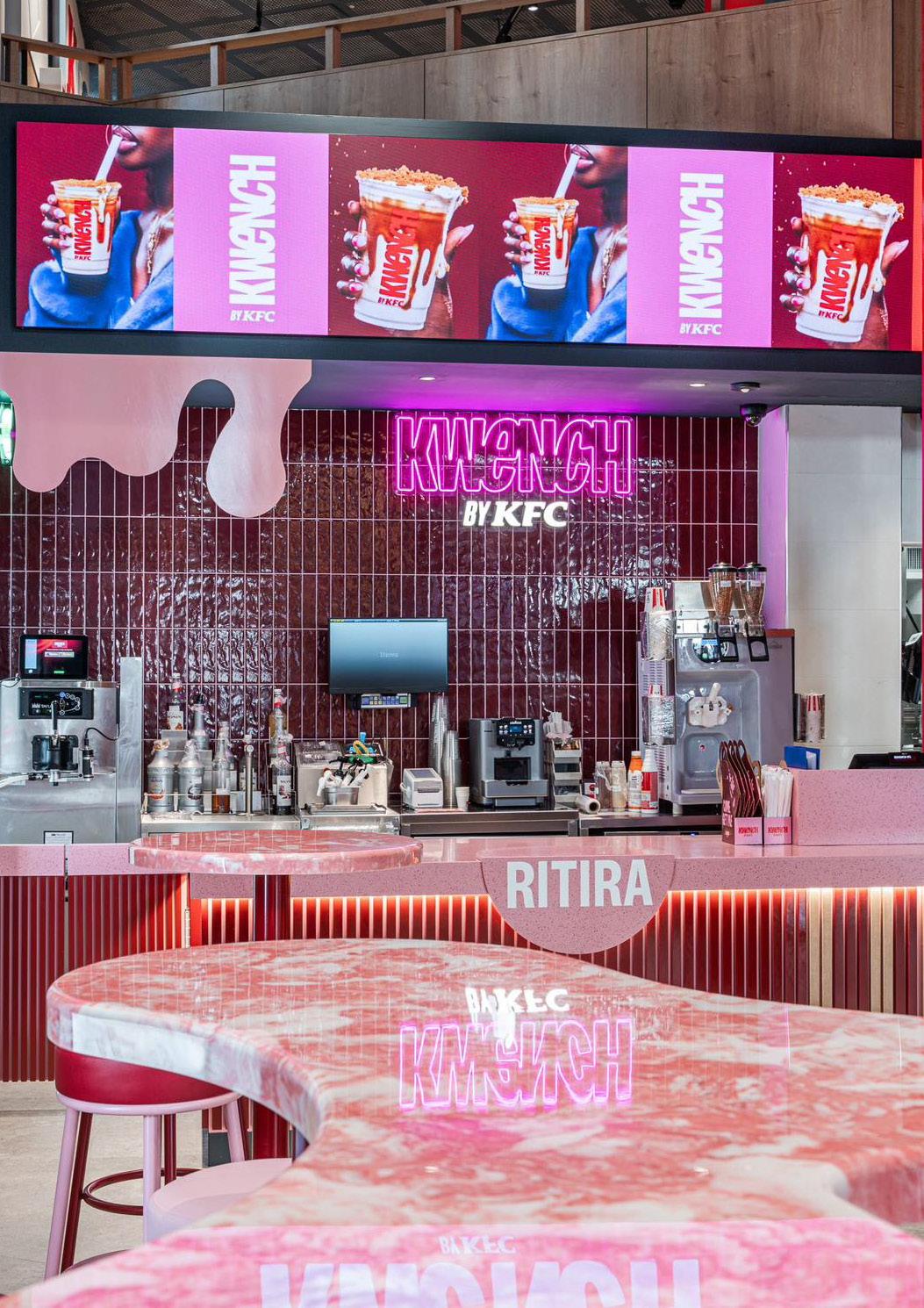
“Everything about Kwench is designed to make KFC feel alive,” Karnani says. “The best reaction we have had is people saying it looks fresh but still feels like us.”
That balance is exceptionally difficult to achieve. Many legacy brands attempting to modernise often alienate core audiences by abandoning the very qualities that made them successful. Kwench instead expands the emotional universe of KFC without disconnecting from its heritage.
The early response suggests the strategy is working. During the Manchester launch, eight out of ten customers described KFC as more modern and innovative after experiencing Kwench. In branding terms, that perceptual shift is enormously valuable. It demonstrates that transformation does not always require radical reinvention. Sometimes relevance comes through carefully evolving the way consumers experience a brand.
The wider commercial logic behind Kwench is equally compelling. Beverageled occasions create entirely new revenue opportunities beyond traditional meal periods. Iced coffees encourage habitual purchasing behaviour. Refreshers and shakes attract younger demographics who may not otherwise engage with KFC. Drinks also increase frequency and expand the brand’s presence across the day.
But perhaps the most important thing Kwench achieves is emotional renewal.
KFC remains one of the world’s most recognisable brands precisely because it understands emotional familiarity better than most businesses. Kwench does not abandon that understanding. It refreshes it. It speaks to a generation shaped by aesthetics, immediacy and digital expression while retaining the warmth, indulgence and comfort that made KFC globally iconic in the first place.
Reflecting on the journey, Karnani recalls a philosophy that has stayed with him throughout the project: “Aim for the absurd and accomplish the impossible.”
There is something fitting about that sentiment. In many ways, Kwench should not work as effectively as it does. Turning a fried chicken giant into a culturally relevant beverage platform could easily have felt forced or opportunistic. Instead, KFC has managed to create something that feels surprisingly intuitive.
And that may ultimately be the most impressive achievement of all.
In a marketplace crowded with new entrants trying to manufacture authenticity, KFC has accomplished something far more difficult. It has made one of the world’s most established brands feel genuinely alive again.
www.kfc.co.uk

There are companies that participate in markets, and then there are those that quietly build the systems those markets depend on.
TGI Group has long operated in the latter category. What began in 1981 as a single trading operation in Nigeria has evolved into a deeply embedded, multi-sector enterprise shaping how food is grown, processed, financed and consumed across emerging markets. In 2026, that story is less about scale alone and more about orchestration, the careful alignment of agriculture, manufacturing, finance and distribution into something that functions as a living, breathing economic ecosystem.

At the centre of this evolution is a simple but often misunderstood idea: inclusion is not a social add-on, it is infrastructure. Over the past year, TGI has doubled down on this philosophy, strengthening the connections between its upstream agricultural networks and downstream consumer brands while quietly expanding the systems that sit between them. The result is a model that does not just participate in growth markets, it actively constructs them.
Farouk Gumel, Group Executive Director and Executive Vice Chairman (Africa), described the business last year as a “Swiss Army knife.” A year on, the metaphor still holds, but it undersells the precision now at play. This is no longer just a diversified group; it is an integrated platform, one that connects over 100,000 farmers, industrial processing facilities, consumer goods brands and financial services into a continuous value loop.
That loop begins in the fields. TGI’s agribusiness operations continue to expand their reach across Nigeria and wider Africa, supplying farmers with inputs such as fertilisers, agrochemicals and technical support, before purchasing harvested crops at scale. What has sharpened in 2026 is the efficiency and intelligence of that system. Investments in processing capacity, particularly in rice and edible oils, have increased domestic production while reducing reliance on imports, reinforcing food security at a national level.
But the real story lies in what happens after harvest. Through brands such as Big Bull Rice and Terra Seasoning Cubes, TGI has built a direct relationship with millions of consumers, embedding itself into daily life. These are not aspirational products, they are essential ones, designed to be accessible without compromising quality. In a market where affordability often dictates compromise, that balance has become a defining competitive advantage.



For over 44 years, Vita Construction Ltd has been a trusted name delivering world-class civil and building projects across Nigeria. From high-rise buildings and hospitals to industrial facilities and terminal ports, our expert team brings innovation, integrity, and precision to every project. We partner with clients, governments, and communities to create sustainable, high-performing environments— transforming the built world for a better tomorrow.




We are proudly certified While



What distinguishes TGI in 2026 is how seamlessly it connects this consumer reach back to its supply base. Every purchase feeds back into the system, sustaining demand for locally sourced raw materials and reinforcing the livelihoods of the farmers who produce them. It is a closed-loop model, but one that remains open in its impact.
That same philosophy now extends more clearly into financial inclusion. Following its acquisition and ongoing transformation of Union Bank of Nigeria, TGI has continued to expand access to banking services in rural and underserved communities. The ambition is not simply to bank the unbanked, but to redesign how financial services interact with agricultural economies. Payments that once moved informally are increasingly digitised, giving farmers greater control
over their income while embedding them into the formal financial system.
The shift is subtle but significant. Financial inclusion, in this context, is not just about access to accounts, it is about stability, traceability and long-term economic participation. As more transactions move into formal channels, the broader ecosystem becomes more resilient, more transparent and ultimately more investable.
Alongside this, TGI’s industrial footprint continues to expand with intent. From new processing facilities to ongoing investments in fertiliser production and food manufacturing, the Group is steadily increasing its capacity to operate at scale while maintaining local relevance. Its recent collaboration with Reliance Consumer Products Limited signals a
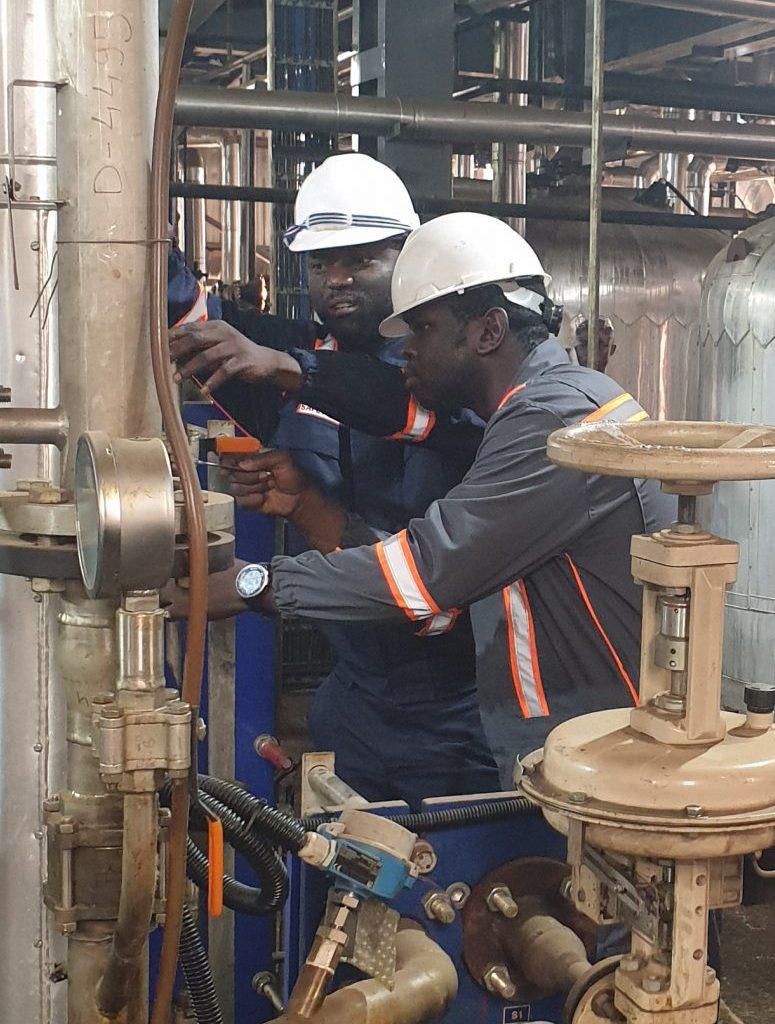
further step in this direction, bringing global product expertise into a locally anchored manufacturing and distribution network. It is a partnership that reflects TGI’s broader approach: combining international capability with domestic infrastructure to accelerate growth.
Beyond FMCG and agribusiness, TGI’s presence in real estate and industrial development continues to mature. Projects in Lagos and other key urban centres are not just symbols of expansion, they are physical extensions of the Group’s ecosystem, creating the environments in which its other businesses operate and scale. In this sense, construction is not a separate vertical, it is a supporting layer within a much larger system.
What remains consistent across all of this is a disciplined approach to expansion. Growth is not pursued for its own sake, but as a means of strengthening the connections between each part of the business. Whether through agriculture, manufacturing, finance or infrastructure, each investment is designed to reinforce the whole.
There is also a cultural dimension that underpins this strategy. TGI’s leadership continues to emphasise openness, collaboration and long-term thinking, principles that are increasingly rare in fastgrowth environments. Internal inclusion, the willingness to listen across generations and functions, has become a quiet driver of innovation within the Group. Initiatives such as venture funding for emerging entrepreneurs reflect a broader belief that the next phase of growth will come not just from within, but from enabling others to build alongside it.
As Africa’s economic landscape continues to evolve, the conversation around formal and informal markets remains central.

We are West Africa’s largest soy oil complex, working directly with farmers through our out-grower program to source the highestquality inputs.
From seed collection in key regions to processing, packaging, and shipment, we manage the entire soy value chain.

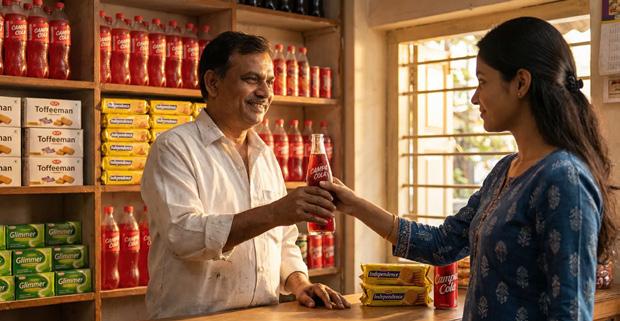
are on a mission to bring world-class,


The African Continental Free Trade Area has created new opportunities, but also new complexities. TGI’s position within this landscape is pragmatic. It recognises that true integration will require more than policy, it will require systems that can bridge the gap between informal production and formal distribution.
That is where TGI’s model feels particularly relevant. By operating across the entire value chain, from raw material sourcing to retail and finance, it is uniquely positioned to connect these worlds. It does not attempt to replace informal systems, but to gradually formalise them through participation, access and trust.
In 2026, TGI Group is not simply expanding, it is refining. Its role is becoming clearer, not just as a diversified business, but as an enabler of economic continuity. It sits between producers and consumers, between informal and formal markets, between local realities and global opportunity.
And in doing so, it continues to build something far more enduring than scale alone: a system that works.
www.clicktgi.net
In the race to build better EV charging infrastructure, most companies focus on improving connectivity. Xeal Energy has taken a different approach. Rather than making chargers more dependent on networks, servers and constant communication, the company’s Helix Computing™ Platform is designed to operate without them. At a time when reliability has become one of the industry’s biggest challenges, Xeal’s proposition is simple: charging should work regardless of signal strength, network outages or cloud availability.
Speaking with Daniel Feldman, Chief Technology Officer, the distinction is drawn with unusual clarity. “We are not really resolving connectivity as a problem. We are eliminating connectivity as a constraint.” It is a subtle but powerful shift in thinking, one that reframes the architecture of EV charging infrastructure. Rather than building systems that rely on networks, servers and constant communication, Xeal has engineered a self-reliant ecosystem where charging can take place regardless of signal strength, network outages or server failures.

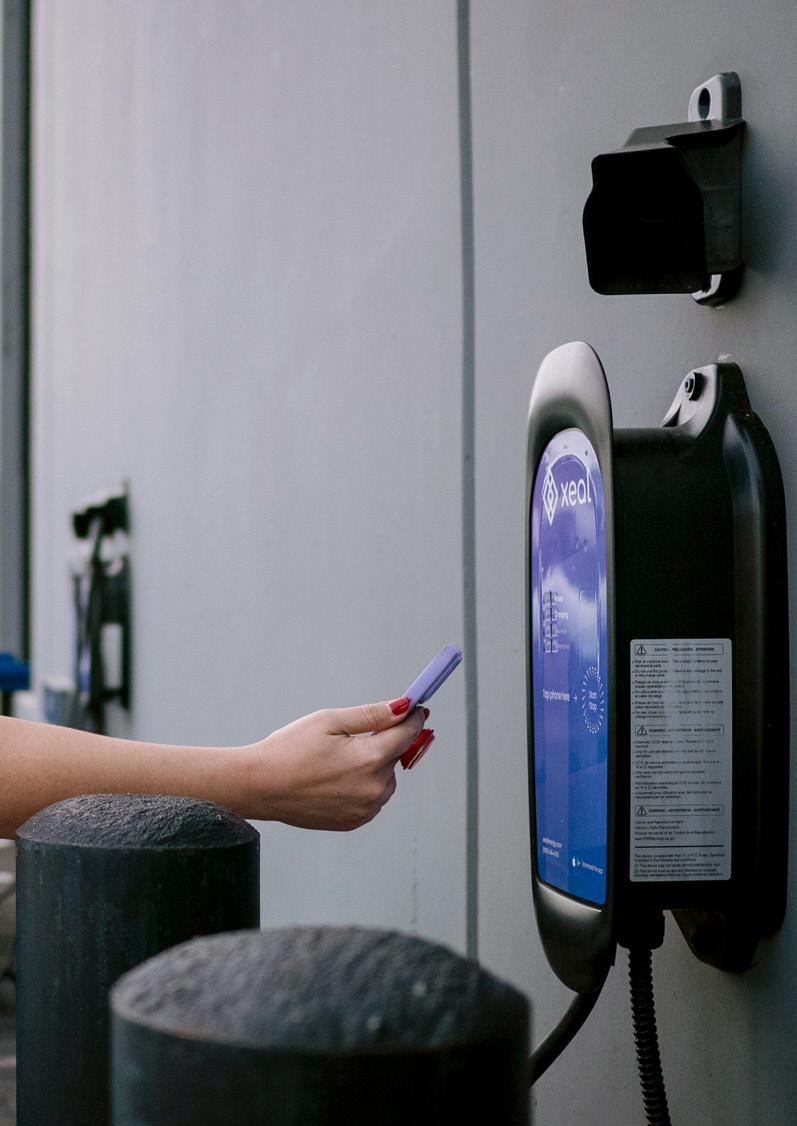

The origins of this thinking were not theoretical. They emerged from realworld frustration. Early deployments, particularly in real estate environments, exposed a persistent challenge that continues to affect the wider industry. Underground car parks, dense urban developments and structurally complex buildings often struggle with connectivity. Attempts to solve the issue typically follow a predictable path. More Wi-Fi is installed. Cellular coverage is extended. Redundancies are layered in. Yet the result remains inconsistent.
Feldman describes a cycle familiar to many operators. Drivers themselves may have no signal at all. The system becomes increasingly complex without ever becoming truly dependable.
It was within this context that Xeal Protocol took shape. Operating as the underlying technology within the Helix Computing™ Platform, Xeal Protocol enables users to authenticate locally through their smartphone and begin charging even when connectivity is unavailable. Activity records are synchronised when a connection becomes available again, but the charging session itself does not depend on realtime communication. The result is a more resilient charging experience designed to keep operating when traditional connected systems may struggle.
This redefinition of reliability sits at the heart of Xeal’s positioning. In much of the industry, reliability is measured through uptime metrics, remote monitoring dashboards and the ability to observe system performance in real time. Feldman takes a more grounded view. “Reliable charging means as a driver I get in front of the charger, I have my phone with me, and I can charge.” It is a deceptively simple
statement, yet it cuts through a layer of complexity that has arguably obscured the real user experience.
The contrast becomes particularly stark when considering the vulnerabilities of connected systems. Network outages, server downtime and carrier limitations are not theoretical risks. They are operational realities. Feldman recalls largescale outages across major providers, events that highlight the fragility of systems built on constant connectivity. In such scenarios, visibility may be maintained, but functionality is lost. For the driver standing in front of a charger, that distinction is irrelevant. What matters is whether the vehicle can be charged.
By removing reliance on external networks, Xeal addresses not only reliability but also deployment efficiency. For property owners, this has significant implications. Traditional installations often require detailed network planning, coverage assessments and infrastructure upgrades before a single charger is installed. Locations may be chosen based on signal strength rather than user convenience. The process introduces delays, costs and constraints that can limit scalability.

In the fast-evolving world of EV infrastructure, technology is only as strong as the expertise behind it. Elite Power Solutions (EPS) delivers more than electrical design and build services; we deliver the confidence that comes from proven expertise and reliable, ontime execution.
Built on the core values of communication and community, EPS has spent years proving that true reliability is rooted in trust. Our commitment to specialize in EV infrastructure has led over 70 properties to trust EPS to design and install more than 10,000 kWh in charging capacity. Our team coordinates every phase—from initial design to final completion—ensuring your site is prepared for the demands of both today and tomorrow.
Our reputation for excellence is bolstered by our premier partnership with Xeal, the leader in high-uptime

charging. Together, we have successfully deployed advanced solutions across 50+ sites, ensuring 100% reliability without the hassle of traditional IT infrastructure.
Our team at Elite Power Solutions runs on the philosophy of Empowering Connections. To us, this means connecting your business to new revenue and your tenants to modern amenities through honest, expert service. We don’t just complete projects; we build enduring partnerships.
Elite Power Solutions — Powering properties. Building relationships. Delivering results.
Ready to electrify your property? Contact Elite Power Solutions today for a comprehensive site assessment
www.theelitepowersolutions.com
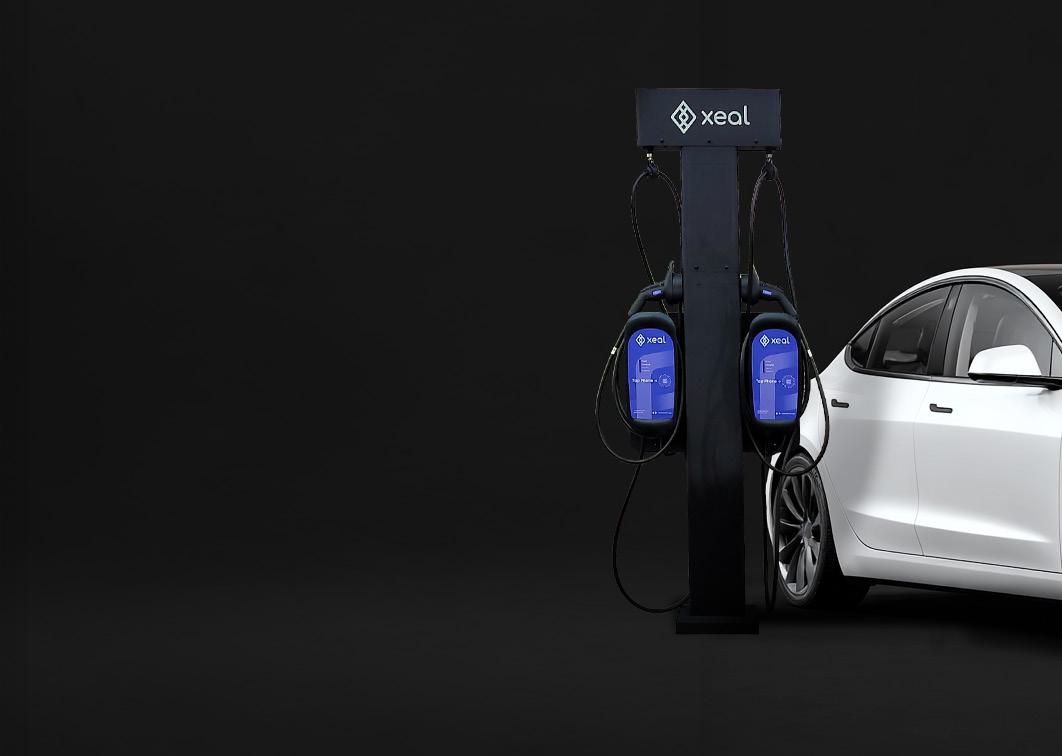
www.theelitepowersolutions.com
Elite Power Solutions (EPS) provides end-to-end EV infrastructure, from design to installation, across 70+ properties, delivering over 10,000 kWh of charging capacity.
Built on strong communication, reliability, and specialist expertise, EPS delivers projects on time with long-term performance in mind. In partnership with Xeal, EPS has deployed high-uptime charging across 50+ sites, achieving 100% reliability without complex IT infrastructure.
Ready to electrify your property? Get in touch with Elite Power Solutions today.
Helix removes these barriers. Chargers can be installed where they are needed, not where connectivity allows. This reduces time to deployment and simplifies the decision-making process for developers and asset owners. Feldman highlights the commercial impact of this shift, noting that downtime should not be viewed solely in terms of lost charging sessions. It extends to missed opportunities, tenant dissatisfaction and reduced competitiveness. “It’s not just about the energy that is sold. It’s about whether you are going to lose tenants.”
As EV adoption grows, charging infrastructure is rapidly becoming a baseline expectation rather than a differentiator. In markets across Europe, including the United Kingdom, the presence of reliable charging is increasingly tied to property value and tenant attraction. Feldman describes this transition succinctly. “It’s going to become table stakes.” In other words, it is no longer enough to offer charging. It must work seamlessly, consistently and without friction.
Cybersecurity introduces another dimension to this conversation. As more infrastructure becomes connected, the attack surface expands. Traditional chargers linked to networks and cloud systems can be accessed remotely, creating potential vulnerabilities. Xeal’s approach inherently reduces this exposure, with communication limited to encrypted, proximity-based interactions.
Feldman argues that reducing reliance on internet connectivity also reduces potential exposure to remote threats. While no system can ever be entirely immune from cybersecurity risks, limiting external access points changes the security equation significantly.
Despite growing awareness, cybersecurity remains an underappreciated factor among many property owners. The industry’s focus has often been directed toward deployment speed and cost

efficiency, with less attention given to long-term resilience. However, as infrastructure becomes more critical and more interconnected, this balance is likely to shift. The emergence of post-quantum cryptography and evolving regulatory standards further underscore the importance of future-proofing systems against emerging threats.
Beyond reliability and security, energy capacity represents one of the most significant barriers to scaling EV infrastructure. The challenge is not simply about installing more chargers, but about
doing so without overwhelming existing electrical systems. Xeal addresses this through Dynamic Power Optimization, a localised approach to load management that allows chargers to share available capacity intelligently.
Unlike cloud-based systems that rely on continuous communication to manage power distribution, Xeal’s chargers communicate directly with one another via a local mesh network. This ensures that power allocation continues even in the absence of external connectivity. Feldman explains the practical benefit. “The chargers talk to each other and they allocate dynamically power based on the necessity of the vehicles.” It is a decentralised solution to a fundamentally distributed problem.
The implications for property owners are considerable. By optimising existing capacity, more chargers can be deployed without requiring major electrical upgrades. This reduces upfront investment and accelerates rollout timelines. It also transforms the financial equation. Charging infrastructure shifts from being a cost centre to a potential revenue-generating asset, particularly in high-demand environments where utilisation rates are high.

The broader question is whether this decentralised approach signals a wider shift in infrastructure design. Feldman offers a measured perspective. “Wherever you can decentralise, you’re better off decentralising.” Yet he also acknowledges that not all use cases can operate independently. Public fast charging, for example, requires real-time visibility for route planning and availability tracking. In such scenarios, a hybrid model may emerge, combining the benefits of decentralised operation with the insights of centralised systems.
Looking ahead, the challenges facing the EV industry remain substantial, but they are increasingly well defined. Reliability continues to be the most immediate concern, particularly in AC charging environments where connectivity issues are most pronounced. Range anxiety, while often cited, is gradually diminishing as users become more familiar with EV ownership patterns. Feldman is clear on this point. “People who don’t drive EVs are the people who have range anxiety.” Real-world usage tells a different story, one where most charging occurs close to home and within predictable routines.
The pace of adoption is also influenced by broader economic and political factors. Rising fuel costs, regulatory incentives and environmental pressures are accelerating the transition toward electrification. Markets such as Norway demonstrate what is possible when infrastructure, policy and consumer behaviour align. With EVs accounting for the vast majority of new car sales, the shift has moved beyond early adoption into mainstream reality.
For Xeal, the focus remains on refining and expanding its core technology while exploring new applications. Feldman outlines a dual strategy. The first is to enhance the Helix Computing™ Platform, improving user experience, load management and system capabilities. The second is to extend the underlying principles of Xeal Protocol into other domains. “We can take the technology
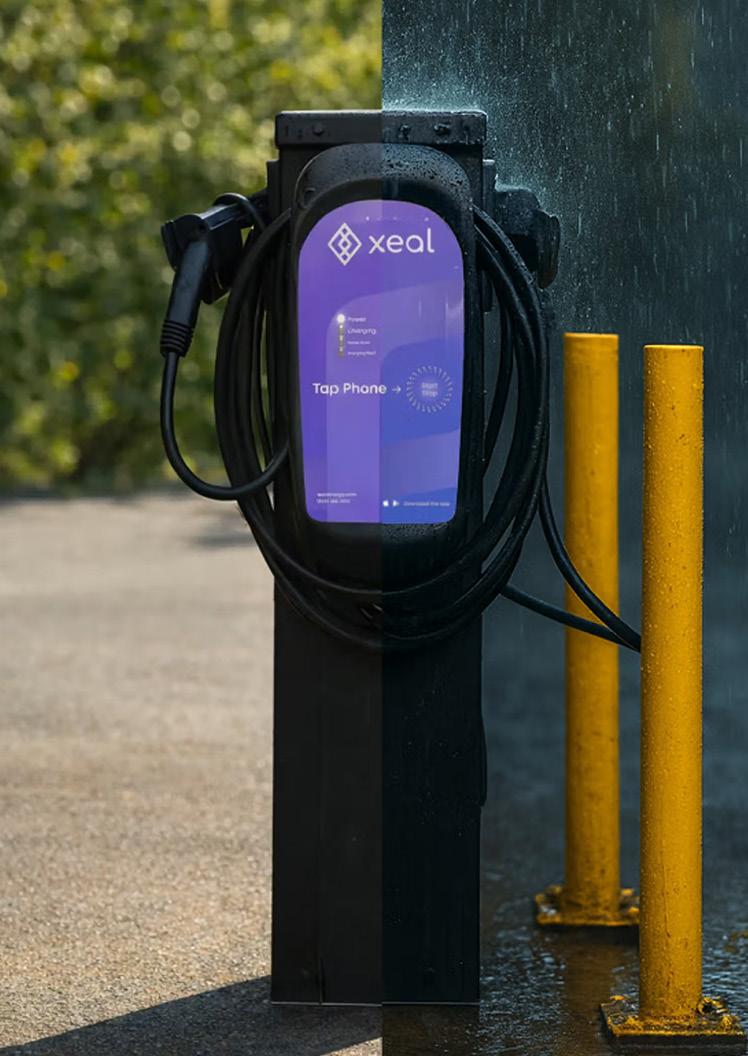
into everything, every connected application, every IoT application.” It is an ambitious vision, one that positions the company not just as an EV charging provider, but as a broader innovator in decentralised systems.
Partnerships and licensing may play a role in this expansion, particularly in areas where hybrid solutions are required. By integrating Xeal Protocol into other platforms, Xeal has the potential to influence industry standards beyond its immediate market. The goal is not simply to capture share, but to reshape expectations around how infrastructure should function.
At its core, the proposition is disarmingly simple. Charging should be as intuitive and dependable as any other utility. It should not require users to think about connectivity, network status or system performance. It should simply work. In an industry that has often prioritised visibility over functionality, that simplicity feels both refreshing and overdue.
Feldman’s closing reflection captures the essence of this approach. “It’s supposed to be forgetful. It’s supposed to be an appliance.”
Ultimately, that vision reflects Xeal’s broader ambition. Rather than making charging more connected, the company is focused on making connectivity irrelevant to the charging experience itself.
www.xealenergy.com


In pharmaceuticals, trust is not a marketing concept. It is operational. It is integral to business activity and service delivery. It sits in quality systems, regulatory filings, supplier audits and in the expectation that every product reaching a patient has been produced responsibly.
For STADA, sustainability follows the same logic. It is not positioned as a separate corporate initiative running alongside the business. It is being built directly into the mechanics of procurement, governance and executive oversight, so that transparency becomes structural rather than reactive.



With more than 25,000 SKUs spanning generics, consumer healthcare and specialty pharmaceuticals, STADA operates one of the broadest portfolios in European healthcare. Approximately 50 percent of its products are manufactured externally through more than 400 contract manufacturing organisations and several hundred raw-materialand packaging suppliers. That scale creates reach – and significant responsibility.
The guiding principle for how STADA handles that responsibility is simple: Sustainability must live where decisions are made.
“We did not want to build an ivory tower,” says Martin Hess, Head of Global Sustainability.. “We wanted to keep it in the responsibility of the related functions because, in the end, that is where you make the change.”
He has been instrumental in shaping the company’s direction over the past several years. Reporting directly to the CEO, he oversees the strategic integration of ESG across the business. Rather than centralising sustainability in a single team detached from operations, accountability sits within the global functions that already own the relevant topics. Compliance owns anti-corruption measures. Culture and people lead on workforce engagement and development. Procurement owns ESG risk in the supply chain.
This structure took shape around 2021, during a broader transformation period for the company. A sustainability steering committee, composed of members of the extended executive board, was established to anchor ESG considerations at senior level. From the outset, sustainability was treated as a business discipline.
STADA’s position as a three-segment company of CHC, Generics and Specialty, With 25,000 SKUs across multiple markets,
STADA relies on a large and diverse supply network, making sustainable procurement a powerful lever to shape and improve business practices across its value chain. For Rashi Munshi, who leads Responsible Procurement, this has resulted in a concrete operational shift: having joined STADA seven years ago to drive procurement transformation, she now manages responsible procurement across this extensive and multifaceted supplier landscape.Under her leadership, ESG topics are integrated and formalized, both in the onboarding of new suppliers and in existing partnerships: “We make sure that the suppliers are formally acknowledging our code of conduct before we are putting them into the system,” she says. “Then we do regular risk assessments. It is very much embedded in the process now.”
ESG criteria are built into supplier qualification from the start, rather than retrofitted later. For every new supplier, the same expectations apply – from environmental performance and climate impact to labour conditions, human rights and business ethics . Handling the complex and diverse portfolio across multiple markets requires a broad and intricate supplier network. To manage scale, STADA implemented EcoVadis in 2021 as the backbone for ESG assessments.
“We have thousands of suppliers,” Martin notes. “You need to have a partner someone who is managing this very professionally and where we you can leverage their scaling effect.”
At the same time, operational ownership remains with STADA. The model combines external standardised ratings with internal management and follow-up. It operates in layers. First, an abstract risk assessment screens the entire supplier base, using factors such as country and industry exposure, On that basis, STADA then performs through EcoVadis ESG concrete, in-depth risk assessments for prioritised suppliers – now covering more than 1,000 partners and representing roughly 90% of direct category spend,

See how SpendHQ enables companies like STADA to turn procurement data into measurable, business-wide impact.
We started using SpendHQ to track savings — but now we use it for much more. It helps me define strategy and turn it into action.
ADRIANA REIMER — SENIOR DIRECTOR GLOBAL INDIRECT PROCUREMENT, STADA
READ THE STADA CASE STUDY →

Strategy to execution in one platform
Single source of truth for spend data
Real-time visibility and value reporting built in
Procurement transformation at STADA has been defined by pace, ambition and an increasing demand for demonstrable value. Over the past several years, STADA’s indirect procurement function has undergone a deliberate evolution, moving from dispersed processes toward a more structured, insight-led operating model. Yet as maturity increases, so too does the pressure to convert insight into action, and activity into a clear, credible value narrative for the business.
As Adriana Reimer, Senior Director Global Indirect Procurement at STADA, explains, the early stages of transformation focused on building foundations and closing gaps. Heavy automation followed, delivering insight and visibility at scale. However, that progress introduced a new challenge. With information spread across multiple dashboards and tools, building a leadership-ready narrative required significant effort, making it difficult to consistently communicate priorities, progress and impact.
This is where SpendHQ plays a defining role. SpendHQ is a procurement performance platform built by procurement professionals, designed to unite spend data, initiative tracking and governance into a single source of truth. Through its Performance Management capability, SpendHQ provides the structure STADA needs to connect strategy to execution, giving procurement a clear control centre for initiatives, accountability and value reporting.
“Performance Management gives procurement leaders a single, trusted view of initiatives, ownership and value,” says LaureEva Staron, VP of Account Management at SpendHQ. “It allows teams to prioritise work, execute consistently, and communicate outcomes in the language of the business.”
For STADA’s indirect procurement function, this structure has proven critical in strengthening credibility during budget discussions.
SpendHQ enables initiatives to be captured in a disciplined, consistent way, linked directly to category strategies and quantified for impact. This clarity allows procurement to engage more confidently with finance and site leadership, shifting conversations away from isolated savings figures towards transparent, evidencebased value delivery.
“SpendHQ is really helping us in talking to the business related to the budgets,” Reimer notes. “It helps us drive the discussions with the business – to have a seat on the table when we are discussing the budgets.”


Importantly, SpendHQ is not positioned as a reporting tool alone. STADA uses Performance Management to define category strategies, translate them into structured initiatives and ensure execution remains aligned across teams and sites. Ownership, timelines and measurable outcomes are visible in one place, supporting consistency and accountability across the organisation.
“I was using this tool to track savings,” Reimer explains, “but in the meantime we are using this tool for much more than only tracking. We are using it to roll out strategies. The performance management solution is helping me to define the strategy, to turn the strategyinto action.”
Looking ahead, STADA’s ambition is not to rely on a single system, but to reduce fragmentation through better integration. The next phase of the partnership is now underway, with STADA activating the Supplier module within SpendHQ
Performance Management. This integration with EcoVadis and D&B will create a centralised supplier intelligence view. This will combine supplier performance cockpit and sustainability data, including EcoVadis ESG scores, to support prioritisation and future-ready decision-making.
“Our role is to help teams translate category strategy into action, with clear accountability and reporting that stands up in budget discussions,” adds Staron.
Through close collaboration, adoption support and best-practice guidance, SpendHQ continues to support STADA’s evolution from fragmented execution to value-led procurement leadership, enabling clearer decisions today and stronger governance for the future.
www.spendhq.com
including suppliers of API raw materials, of inactive ingredient or excipients, and of packaging, as well as contract manufacturers and high-spend indirect suppliers. This two-step approach focuses resources where exposure is most material, while preserving visibility across the wider network. Crucially, the rating is not where the work stops. “We are not just using the EcoVadis scorecards to categorise our suppliers,” Rashi explains. “We are actually doing very collaborative follow-ups with our suppliers, really talking to them about these findings to proactively manage risks.”
That engagement is where trust is built. Procurement managers do not simply log a score. They engage suppliers in discussion, identify gaps, agree corrective actions and support improvement plans. ESG performance becomes part of the relationship rather than a compliance checklist. That is also why Repsonsible Procurement sits within global Procurement: The teams that negotiate contracts and manage supplier relationships are the same teams accountable for integrating ESG.
Collaboration and momentum in the supply chain
Industry collaboration reinforces this approach. Through initiatives such as the Pharmaceutical Supply Chain Initiative (PSCI), STADA participates in supplier webinars and forums focused on process safety, environmental standards, decarbonisation and digital transparency. Rashi is personally involved in leadership discussions within PSCI India, contributing to broader efforts to lift standards across the sector.
Martin Hess believes that simply initiating an independent ESG rating is the starting point for drives behavioural change across the supply chain. “That is really inducing a lot of change in the whole supply chain,” he says. “Once you have started, even as an API supplier, you probably will not stop because other customers will ask you.”
Over time, suppliers formalise policies,
document procedures and strengthen governance systems. Improvements made for one customer tend to carry over into other relationships, gradually raising the bar across the wider ecosystem.
Transparency in this context is driven not only by partnership, but also by capital markets and regulators. As a private equity-backed company, STADA operates under strict governance expectations. Financial institutions increasingly integrate ESG metrics into their risk frameworks, and regulatory requirements for disclosure continue to tighten.
While STADA had published in the past its annual sustainability report aligned with Global Reporting Initiative standards, the 2025 sustainability Report is based on the European Corporate Sustainability Reporting Directive which requires to report in details around ESG in the supply chain.
As a German-headquartered company, STADA is also subject to the German Supply Chain Due Diligence Act. Even as detailed reporting obligations evolve, companies must be able to demonstrate documented risk assessments, mitigation measures and monitoring systems. Preparation requires integrated data and close coordination between functions.
Digital tools therefore play a central role. Beyond EcoVadis, STADA uses platforms such as SpendHQ alongside internal dashboards to track supplier performance, spending patterns and ESG initiatives in real time. The long-term ambition is deeper, end-to-end product-level visibility, that reaches beyond tier-one suppliers and helps to map risk further upstream.
Resilience, risk mitigation and sustainability converge
Recent global disruptions have underlined why that kind of visibility matters. The pandemic and geopolitical tensions exposed vulnerabilities across
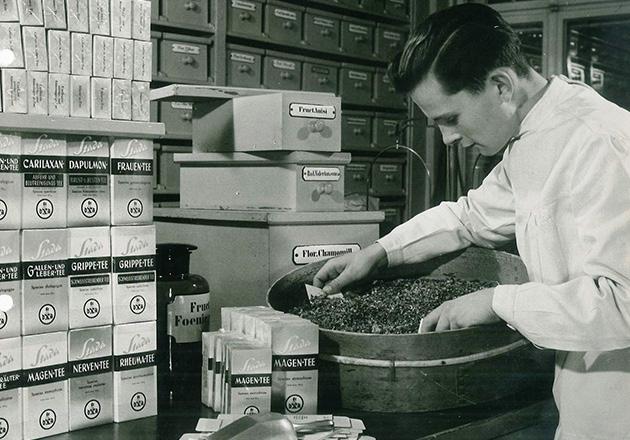


pharmaceutical supply chains worldwide. STADA’s response has included strengthened dual sourcing strategies and tightening supplier partnerships.
“We need to be more adaptable, more resilient, more future proof,” Rashi reflects. “This is where we are making sure that we can reduce the dependency on single suppliers.”
The traditional view that ESG and cost efficiency are in opposition is weakening. Rashi is clear that this trade-off has shifted. “That probably would have been a question five years ago, but I think not anymore,” she says. “Now we look at sustainability more as complementing the cost-efficiency side.”
In some Nordic markets, public tenders now give ESG criteria similar weight to price. Suppliers with strong environmental and social performance can gain a direct competitive advantage. Sustainability shapes market access and commercial outcomes.
Culturally, sustainability aligns with STADA’s purpose of caring for people’s health. Producing affordable, highquality medicines carries inherent social responsibility.
“We are dealing with patients,” Martin emphasizes. “We are producing medicines to help people’s lives and health.”
That sense of responsibility resonates internally. Employees are increasingly interested in how their company manages environmental and social topics. Not everyone will read the sustainability report cover to cover, but its existence – and the rigor behind it – helps build confidence.
Looking ahead: visibility, carbon and technology
Looking ahead, the direction of travel is clear. STADA plans to extend visibility deeper into lower-tier suppliers, strengthen long-term partnerships with key manufacturers and invest in technology, including AI-driven analytics, to further improve transparency.
Carbon reduction across the supply chain will grow in importance as expectations rise across Europe. Understanding sourcing origins, transport emissions and energy usage will be crucial to making credible progress.
What sets STADA’s approach apart is not a single initiative or metric. It is the fact that sustainability is treated as part of the company’s operating system. It is embedded in procurement, governance and executive leadership, and is measured, reviewed and reported with the same seriousness as cost and quality.
In pharmaceuticals, reliability is nonnegotiable because patients depend on it. By building transparency directly into its supply chain architecture, STADA is reinforcing that reliability at every stage. Trust, in this context, is not declared. It is engineered.
www.stada.com


ENQUIRER CONSULTING GROUP
CURIUM PHARMA
PLASMAGEN
PHARMABLOCK
ZETA MERCK
GSK
HELBLING 5FLOW
PAUL SMALDONE, INNOVATIVE MEDICAL
TIM RATH, INNOVATIVE RADIOLOGY


Healthcare has always been defined by innovation. Yet in 2026, innovation alone is no longer enough. Scientific breakthroughs remain essential, but increasingly the organisations shaping the future of pharmaceuticals are those capable of transforming discovery into delivery. The challenge is no longer simply developing the next generation of therapies. It is building the infrastructure, systems and expertise required to bring them to patients faster, more efficiently and at greater scale than ever before.
This special edition explores the businesses, technologies and leaders helping to redefine what modern pharmaceutical innovation looks like.
We focus on Curium and Chief Executive Officer Renaud Dehareng, whose vision for nuclear medicine reflects one of the most significant shifts currently taking place within oncology. As radiopharmaceuticals move from specialist treatment to mainstream cancer care, Curium has positioned itself at the centre of a rapidly evolving field. The company’s story is one of conviction, reinvestment and long-term thinking, demonstrating how scientific ambition must be supported by operational excellence if it is to create meaningful patient impact.
That balance between innovation and execution runs throughout this edition. At PlasmaGen, we examine how leadership, infrastructure and strategic investment are helping to strengthen access to plasma-derived therapies across India and beyond. What emerges is a powerful example of how healthcare resilience is built not only through scientific capability, but through the creation of sustainable ecosystems capable of delivering treatments reliably and affordably.
The growing role of digitalisation is another defining theme. Features on ZETA and Helbling explore how digital twins, connected data environments and intelligent manufacturing systems are transforming pharmaceutical development and production. In an industry where speed, compliance and quality must coexist, these technologies are becoming far more than operational tools. They are becoming strategic assets that reshape how organisations design, build and scale innovation.
Artificial intelligence also continues to move from promise to practical application. Our conversation with Merck examines how advanced retrosynthesis platforms are helping researchers accelerate drug discovery, while our news coverage explores the wider adoption of AI across laboratories, manufacturing facilities and regulatory environments. The common thread is clear. AI is no longer an emerging technology within pharmaceuticals. It is becoming part of the industry's operational foundation.
Alongside these transformations, we also explore the people shaping the sector. From leadership perspectives at PharmaBlock to the collaborative ecosystems supporting global pharmaceutical growth, this edition highlights the importance of culture, talent and shared purpose in driving long-term success.
Across every feature, a consistent pattern emerges. The future of pharmaceuticals will not be determined by scientific breakthroughs alone. It will be defined by the ability to connect research with manufacturing, technology with regulation, and innovation with patient outcomes. The organisations leading this transition understand that progress depends not simply on what can be discovered, but on what can be delivered.
If you have a business story you wish to share, please contact our Head of Production via production@busenq. com
Artificial intelligence is rapidly becoming one of the pharmaceutical industry’s most transformative technologies, with major drugmakers now integrating AI across research, manufacturing, regulatory processes and supply chain operations. In 2026, the conversation has moved far beyond experimentation, as companies increasingly use AI to accelerate drug development timelines, reduce costs and improve operational efficiency across global healthcare systems.
One of the clearest examples of this shift has come from Novo Nordisk, which recently revealed how AI is helping significantly reduce the time between clinical trials and regulatory submissions. According to company executives, AI tools are now being used to draft regulatory documents, analyse safety data and support commercial planning for new medicines.
The wider pharmaceutical sector is now following a similar direction. Companies across the industry are investing heavily in AI powered drug discovery platforms, predictive analytics, laboratory automation and digital manufacturing systems designed to speed up development while improving accuracy and scalability. Analysts increasingly believe AI could fundamentally reshape how medicines are researched, tested and brought to market over the next decade.
Importantly, AI is no longer being viewed solely as a research tool. Pharmaceutical businesses are increasingly applying automation and machine learning across manufacturing operations, supply chain optimisation and workforce training as pressure grows to improve efficiency while responding to rising global healthcare demand.
This shift reflects wider changes happening across global pharmaceuticals in 2026. Rising development costs, increasing regulatory complexity and growing demand for personalised treatments are pushing companies toward more data driven operating models. Industry reports suggest AI integration could dramatically shorten drug discovery cycles while helping improve clinical trial efficiency and manufacturing precision.
The growing role of AI is also accelerating collaboration between pharmaceutical firms and technology companies. Partnerships involving major AI developers and pharmaceutical manufacturers are becoming increasingly common as businesses race to build next generation digital research ecosystems. As pharmaceutical innovation continues evolving,
AI is rapidly moving from a future possibility into a central pillar of modern drug development itself.

How a PR and brand-visibility business rebuilt itself around measurable growth, an AI sales engine, and a sharper focus on the medical and health sector.
The story begins with Enquirer Media Group (EMG), a global media business built around public relations and brand visibility. For more than a decade, its work centred on a single proposition: helping organisations be seen. That work has reached deep into the medical and health sector. The group’s back catalogue includes a 2021 healthcare feature with GSK, an interview with the company’s then President of Global Supply Chain, Roger Connor, and more recent profiles of pharmaceutical and biotechnology businesses such as PlasmaGen BioSciences and PharmaBlock.
Over time, a pattern emerged in those conversations. Visibility, clients found, was only part of what they needed. Recognition raised a company’s profile, but it did not always translate into the outcomes executives were measured on: new enquiries, qualified conversations, and revenue. The brief was shifting from awareness to growth.
That shift prompted the group to build something new. Enquirer AI, the company’s two-word AI product, was developed as a response to a practical problem rather than as a technology showcase. It applies artificial intelligence to sales and outreach, running across time zones at a lower cost than a conventional outbound team. The intended result is a steadier, more predictable pipeline

of leads and a reduction in the cost of generating them. In the medical and health sector, that proposition met a particular need. Many organisations in the field have been slower than other industries to adopt digital approaches to sales and outreach, which left room for a partner that could combine sector knowledge with the operational discipline the work requires.
The next step is a change of identity to match the change of work. Enquirer Media Group is becoming Enquirer Consulting Group (ECG). The rebrand reflects a wider role: not only raising visibility and supporting sales, but acting as a strategic growth partner to clients in the medical and health sector. The foundation is the same combination of media reach, the Enquirer AI sales engine, and a record of working with organisations across pharmaceuticals, biotechnology and healthcare.
The ambition is specific rather than sweeping. ECG positions itself as a growth partner for a sector where reputation is hardwon and decisions are deliberate. The aim is to help medical and health organisations turn recognition into measurable commercial results, and to do so as a longterm partner rather than a one-off supplier.
More information is available at www..enquirerconsulting.com



CPROJECT DIRECTED BY: RUPERT KAY

ancer treatment is entering a new phase, and nuclear medicine is moving from the margins to the mainstream of that shift. While much of the pharmaceutical industry continues to debate precision, cost and access, radiopharmaceuticals are steadily redefining how cancer is diagnosed and treated. At the centre of that transformation stands Curium, a USheadquartered global leader in nuclear medicine that has, in little more than a decade, built one of the most formidable platforms in radiopharmaceutical diagnostics and therapeutics worldwide.
Leading that transformation is Renaud Dehareng, Chief Executive Officer and shareholder, whose relationship with Curium is not simply executive but entrepreneurial. He has been CEO since the company’s creation in its current form, but more significantly, he helped shape its strategy and fund its growth. When he speaks about Curium, it is not as a temporary steward but as a long-term architect.
Curium did not begin with an expansive manifesto about revolutionising cancer care. It emerged from the carve-out of a division from a Belgian listed company, backed by US private equity. In those early years, the objective was straightforward: stabilise operations, restore profitability and build a standalone entity capable of sustaining itself. Vision, in its grandest sense, came later.
“Between 2012 and 2015, it was about making it profitable without really a longterm vision.”
That discipline laid the groundwork for what followed. By 2015, a clearer opportunity had emerged. Nuclear medicine diagnostics in oncology were fragmented, geographically dispersed and ripe for consolidation. Curium raised approximately one billion dollars and embarked on an ambitious acquisition strategy, bringing 14 companies into the fold over a five-year period. The aim was not incremental growth but category leadership.
The scale of that consolidation was significant. Integrating scientific teams, harmonising regulatory systems and aligning commercial operations across multiple jurisdictions required both financial commitment and organisational resilience. Yet the result was a strengthened global infrastructure and a dominant position in diagnostic nuclear medicine.
It was during this consolidation phase that Curium’s ambition began to evolve. Nuclear medicine was not merely a diagnostic tool; it was increasingly revealing its therapeutic potential. By 2018 and 2019, Dehareng and his team recognised that radiopharmaceuticals could move beyond imaging and into targeted cancer treatment.
“From 2018 onward, every decision and investment that we have made was guided by this vision of developing nuclear medicine to become one of, if not the main technology used for treating cancer.”


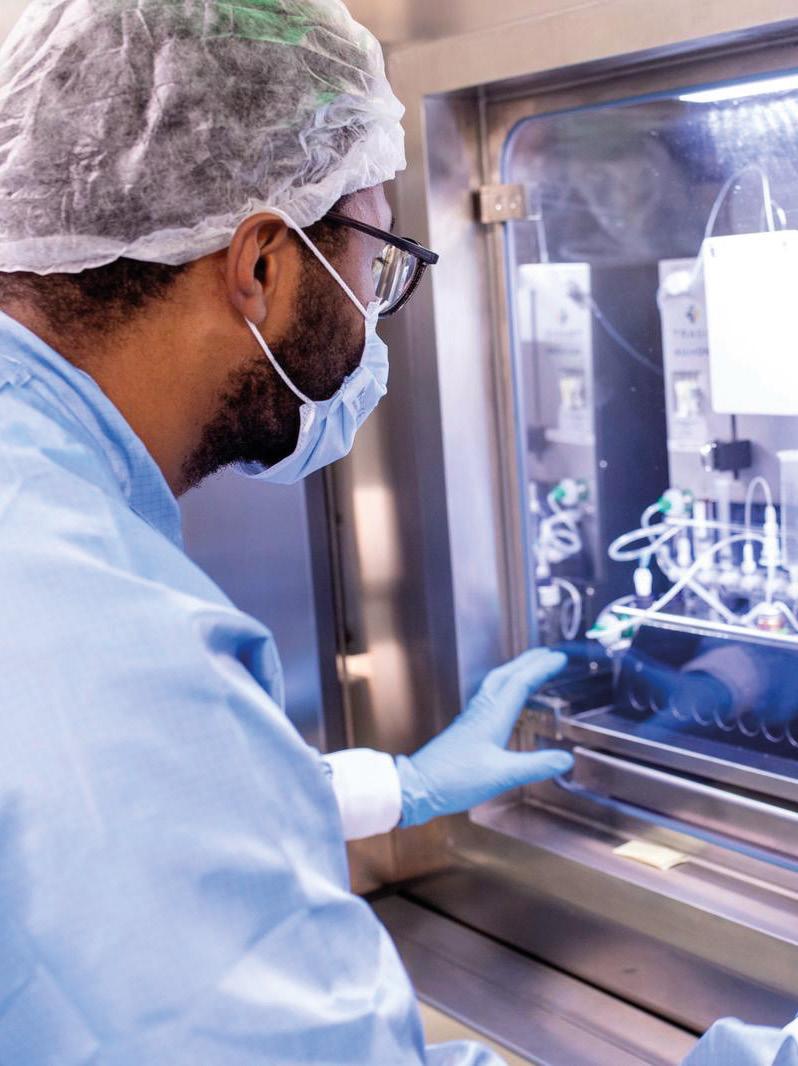
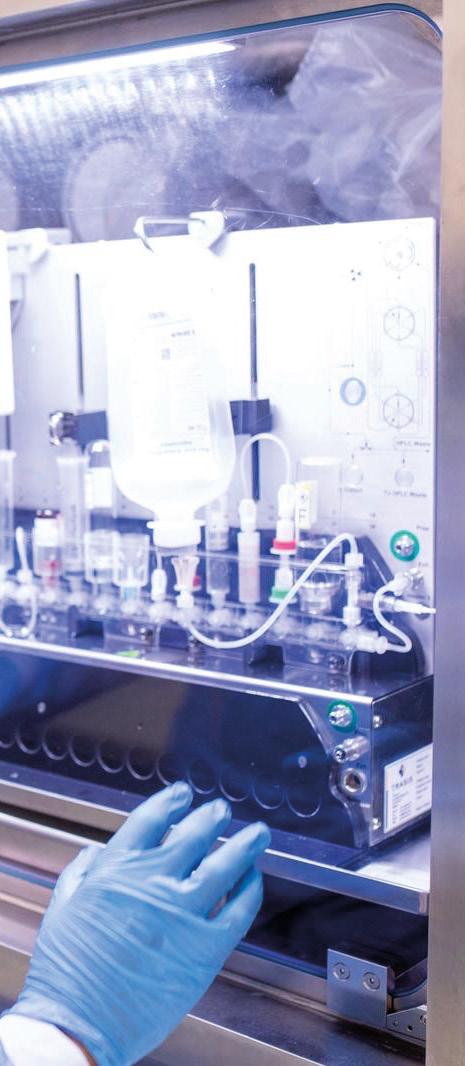
That statement marked a pivotal shift. Curium was no longer solely a consolidator of diagnostics; it was positioning itself as an innovation engine in therapeutics.
The boldness of that ambition was reflected in a defining capital allocation decision. In 2019, the company committed 100 per cent of its cash flow as reinvestment into its therapeutics R&D pipeline capabilities . Over time, this investment commitment ran into the hundreds of millions. It was a concentrated bet on itself, underpinned by alignment with its board and shareholders.
For Dehareng, such reinvestment is not extraordinary. It is essential. He believes the strongest growth companies reinvest fully into their future rather than distributing dividends. Today, one hundred per cent of Curium’s annual investment is directed towards innovation and expansion, from clinical development to manufacturing infrastructure and commercial capability.
The field Curium operates in has become intensely competitive. Hundreds of preclinical and clinical programmes in nuclear medicine are underway globally. Most will fail. Success depends not only on scientific promise but on operational and regulatory feasibility. Curium’s strategy is built on rigorous evaluation. Every potential project is examined across scientific viability, production scalability, regulatory pathway and commercial infrastructure.
“We know that between now and 2035 there will probably be 15 to 20 drugs that will be successful in nuclear medicine. The way you stay ahead is by developing a third or half of those.”
This combination of ambition and discipline defines Curium’s competitive positioning. The company does not merely pursue innovation; it pursues selective innovation, supported by infrastructure that few can replicate.
Operationally, nuclear medicine presents complexities rarely encountered in traditional pharmaceuticals. Production often begins in nuclear reactors, where materials are irradiated to produce medical isotopes. These isotopes are processed in specialised facilities and combined with targeting molecules in radiolabelling sites. Finished doses are then distributed globally.
The challenge is physics. Radioactive isotopes decay rapidly. Once production begins, time becomes the critical variable. Logistics, compliance and coordination must operate flawlessly.
“It’s kind of like shipping ice cubes across the globe – there is limited time before the ice melts. Radioisotopes can lose their activity very, very rapidly.”
Curium currently delivers doses for approximately 35,000 patients per day. That scale reflects a global supply chain built with precision, redundancy and deep technical expertise. It also highlights a core competitive advantage: the ability to produce and reliably deliver highly sensitive products worldwide, every single day.
When asked how he defines success, Dehareng does not refer to revenue targets or market share. Instead, he returns to impact on patients. Nuclear medicine’s appeal lies in its targeted mechanism of action, delivering radiation directly to tumour cells while limiting damage to surrounding healthy tissue.
“We will call success when we’ve reached a point where 80 per cent of cancers have a nuclear medicine solution and a hundred million patients’ lives are improved.”

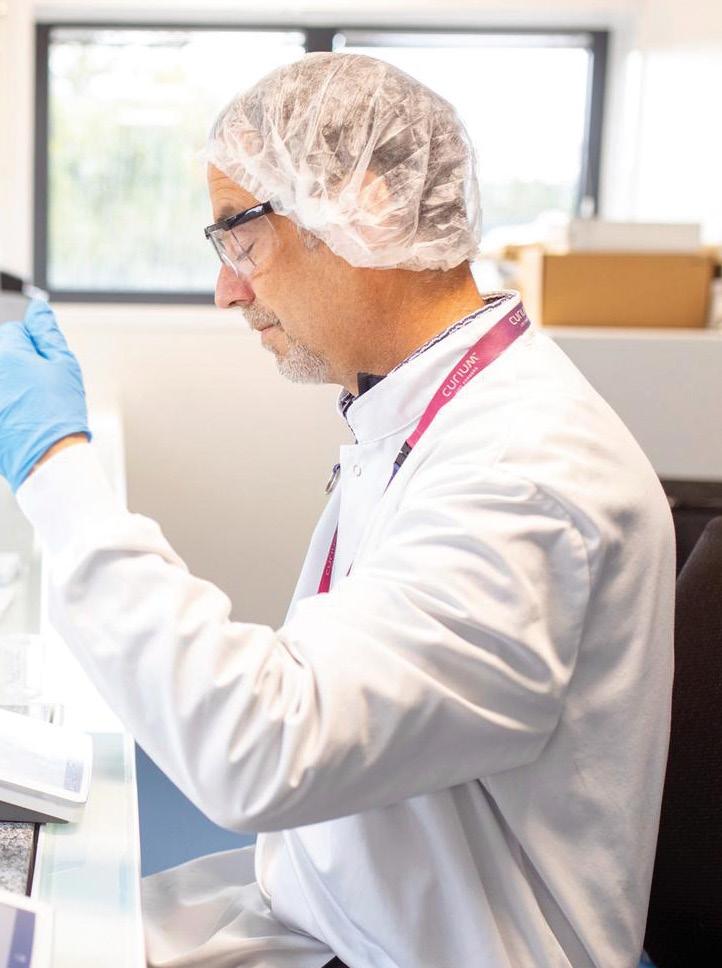


It is an audacious benchmark, one that may take a decade or more to approach. Yet it encapsulates the company’s long-term ambition and the belief that radiopharmaceuticals can become central to oncology.
The name Curium itself reflects this scientific conviction. It references the element named after Marie and Pierre Curie, pioneers in radioactivity research. The symbolism is deliberate. It signals respect for the scientific foundations of the field and an aspiration to extend that legacy into modern oncology.
Theranostics, the integration of diagnosing disease and targeted therapy using related molecular pathways, represents one of the most promising developments in cancer care. Curium’s role within this space is twofold. First, it operates as an innovation engine, employing approximately 5,000 people globally in 70 countries, including hundreds of highly specialised scientists across chemistry, translational research, regulatory affairs and clinical development. Second, it positions itself as a consolidator, providing the commercial and supply chain backbone that smaller biotech firms often lack.
While Curium operates across Europe and Asia, its headquarters and strategic base are firmly rooted in the United States. FDA approval typically serves as the first milestone for new products. From there, global teams extend processes and expertise into Europe, Japan and China, adapting to local regulatory frameworks while maintaining consistent quality and safety standards.
Adaptation and compliance sit at the core of its regulatory posture, complemented by active engagement with policymakers and regulators to help shape frameworks that expand patient access to targeted diagnostics and therapies.

Beyond strategy and infrastructure, culture underpins execution. Curium’s internal framework is built around commitment, collaboration and integrity. Commitment ensures that once strategic decisions are made, they are pursued relentlessly. Collaboration bridges disciplines in an environment where chemists, quality specialists and logistics teams must operate seamlessly. Integrity safeguards patient trust in a field where safety is non-negotiable.
Purpose binds those values together. Thousands of employees across continents are aligned behind a shared mission of transforming cancer treatment through nuclear medicine. For Dehareng, aligning people around that vision is perhaps the achievement he is most proud of. Financial growth matters, but cultural cohesion sustains momentum.
From a carved-out division focused on profitability to a US-headquartered global platform delivering tens of thousands of doses to patients daily, Curium’s trajectory reflects strategic clarity and disciplined execution. Its ambition to enable nuclear medicine solutions for 80% of cancers is bold, but not abstract. It is supported by capital, infrastructure and a workforce aligned around long-term scientific impact.
If the next decade unfolds as Dehareng intends, nuclear medicine will move from specialist niche to central pillar of oncology. And Curium, built through consolidation, conviction and reinvestment, intends not merely to participate in that future, but to define it.
www.curiumpharma.com

Technology is moving quickly through healthcare. Artificial in- telligence is being folded into administrative workflows, prospect- ing and analytics, and providers are under pressure to do more with less. Yet for the people who sell medical devices into clinics and hospitals, the work still rests on something older than any platform: credibility, educa- tion and the willingness of a clinician to take a meeting.
Few have watched that change from closer range than Paul Smaldone, Sales Director for the orthopaedic and durable medical equipment (D- ME) business channel at Innovative Medical. His career spans pharma- ceutical sales, diagnostics and
med- ical devices, and it has left him with a settled view of where AI helps and where it does not. Technology, in his telling, should give professionals more time for the human side of the job, not stand in for it.
Smaldone came to medical devices after earlier spells in pharmaceuticals and, briefly, in wine and spirits. What drew him back, he says, was “the ability to directly impact patients lives”, the chance to “sell a product or a solution that can change someone’s life”. That, he adds, matters in a trade defined by rejection: “It’s a difficult difficult life and there has to be something more than a monetary reward at the end of the day.”

That conviction crystallised early, around Inspire Medical’s implantable sleep apnoea device, a role that placed him across the whole patient journey. “We used to joke and say that the product we were saving mar- riages because we were allowing couples to sleep in the same room in the same bed together,” he recalls, “and that actually as much as we joked about it was the truth and I heard it right from spouses in the waiting room that they were so thankful for it.”
It also shaped a philosophy he has carried since. “Relationships are everything,” he says. “It’s why I enjoy sales is it’s a personto-person busi- ness, very interpersonal.” That governs what he is prepared to put in front of a clinician: “something that is of value to them and that it’s not just a metoo product, a commodity, but some- thing that’s interesting, innovative, and I believe that’s very important in maintaining credibility and trust at a high level.”
The principle has had a cost. Smal- done left pharmaceuticals after his employer declined to be transparent about the side effects of a particular medication.
“For eight or nine years I had been calling on these doctors and I just felt that I was going to very quickly lose their trust if I sort of walked the company line, and that for me was the last straw in that industry. So yeah, I walked away.”
The harder part of the job today is reaching clinicians at all. Physicians are busy and increasingly reluctant to be interrupted by emails, calls or un- solicited visits. That, Smaldone ar- gues, is where AI has changed his working week most, handling the re- search and prospecting that once swallowed his time and sharpening his business planning.
Among the tools he uses is Enquirer Consulting Group (ECG), which he came across through a piece of out- reach in his own LinkedIn inbox. “As a sales director I get targeted a lot in my inbox with lead generation pro- grams and a lot


of them I skip through,” he says. “There was some- thing about the message that I got from ECG that made me stop and that’s the secret sauce that they have that I responded to.” He cannot put a figure on the hours saved: “I can’ t even quantify the number of hours that it’s saved me. And the ROI is ab- solutely fantastic.”
The point, in his account, is not that the technology sells anything; it is that it clears away the groundwork. “If I don’t have to spend the hours that it takes to scrape the internet and search through LinkedIn based on titles and then read through some- body’s profile, those are hours that are saved that open up my calendar for the people that are interested and want to book a meeting with me.” Time, as he puts it, “is really our only true asset”.
Getting in front of a clinician is one thing; persuading one is another. Medical devices carry a heavy burden of education on safety, efficacy and, increasingly, economics. “It’s doing a great job of opening doors, which is a big part of the process,” Smaldone says of the technology. “And once that door is open, that human element is necessary.” His, he is can- did, is not the only device delivering a given therapy; what tips the balance is whether a physician or department chair respects the person across the table and values the wider service around the product. On that basis he is unworried: “I’m pretty confident that my job’s not going anywhere and that AI is truly going to just aug- ment what I do.”
That emphasis on usability runs through Innovative Medical’s Ther- mazone, a thermal therapy device for pain management. It delivers con- tinuous heating or cooling for up to 500 hours from a few ounces of dis- tilled water, replacing the mess and constant refilling of the traditional post-surgical ice bucket. The clinical case, in his view, turns less on novelty than on compliance: a patient who can set a temperature and leave it overnight is more likely to keep using it. As he puts it, “the providers could- n’t care
less if it’s a bag of peas or my device. They just want their patients to recover from the surgery as best they can and they get that from our device.”
Smaldone’s instinct for backing the right idea early has been tested be- fore. During the pandemic, working through a medical distributorship, he spotted a gap in rapid COVID testing across the Cleveland area, where pharmacies and hospital systems were burdened with long waits. The operation grew to five locations and formed direct relationships with local employers, competing with far larger systems on speed and convenience.
Nearly a decade earlier, in his first medical sales role, he introduced pa- tientspecific spinal rods to leading Cleveland institutions. Rather than have a surgeon bend metal rods by hand, the rods were pre-formed from scans so that, in his words, “a doc gets it and drops it right in without having to manipulate the rod.” Outcomes improved, and the operational gain was significant: “If they’re doing five surgeries in a day and they’re saving 30 minutes of surgery, that’s one more surgery that they can do in a day.” Adoption took time, but the clinical and operational case, he says, won physicians round in the end.
Working at the leading edge brings real pressure, he says, because every new product asks a clinician to change a behaviour built on decades of training. “25 years of education and that’s really what they’re relying on. And then you come in and say, here’s something new that you weren’t trained on in those 25 years. That’s the hardest part about it is changing be- haviour.” Patients, too, are arriving better informed and increasingly alert to cost. “There’s just so much inform- ation that’s out there at the patient’s fingertips, literally on their phones, that they can be a better ambassador for their own health,” he says, recall- ing earlier work with a diagnostic company that offered MRI and CT scans “at about a third of the cost as what you would have gotten at a ma- jor hospital system”.
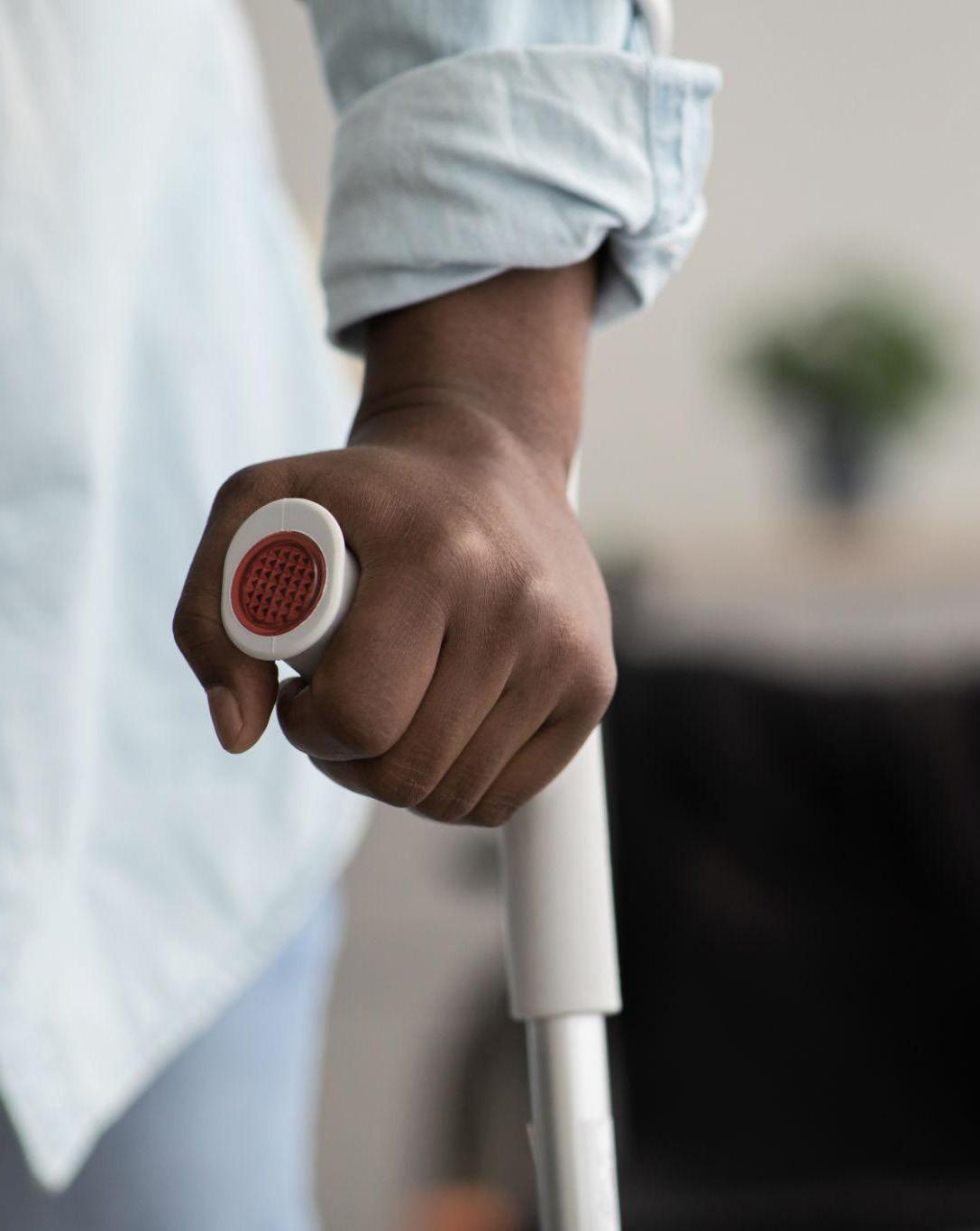

His advice to clinicians and practice owners is to direct attention and budget towards technology. “I would focus my attention and my budget in the AI space, the tech space,” he says, pointing to the many ways an institu- tion “can utilise and implement AI that can improve patient outcomes because that’s the most important thing in healthcare.” The remaining obstacle, he suggests, is one of un- derstanding. “Stay openminded to it because it’s not scary. It’s there to help and in the end your patient out- comes will improve.” Many people, he adds, “are nervous about patient information entering into this AI space”, when in fact “there are a lot of guard rails in place to keep that patient in- formation safe”.
The technology is changing the work, in other words, but it has not changed what the work is for. Devices still have to reach the patients who need them, and that still depends on people who are trusted to recom- mend them.
www.thermazone.com
There are few areas of modern healthcare where the distance between scientific capability and patient access is as stark as it is in plasmaderived therapies. These are not optional treatments or marginal interventions. They are essential, often life-saving, relied upon in critical care, immune deficiencies, trauma response and rare diseases. Yet in India, for decades, access to such therapies has been shaped not

by need, but by availability, with a heavy dependence on imports defining both supply and affordability.
It is this imbalance that sits at the heart of PlasmaGen’s story. Under the leadership of Vinod Nahar, Vivek Vasudev Kamath, and Sethumadhavan, the company has moved with clarity and intent to address what is, in essence, a systemic gap. Their work is not framed as disruption for its own sake, but as the deliberate construction of an ecosystem capable of delivering consistency, quality and access at scale.

PLASMAGEN
PROJECT DIRECTED BY: RUPERT KAY

Cemil Biosciences Private Limited is a Bangalorebased biotechnology company supporting India’s Life Sciences and Pharmaceutical industries with dependable, high-quality microbiology solutions. Established in 2019, the company strives to simplify and standardize microbiological testing while consistently supplying innovative and reliable products, enabling Microbiologists to concentrate more on their core areas.
Cemil operates a fully automated, GMP-compliant manufacturing facility, ensuring complete product traceability and eliminating the risk of contamination throughout the production process. Its operations follow a structured, ISO 9001:2015 Certified quality management system, ensuring disciplined processes, documentation, and continual improvement across manufacturing and supply. Comprehensive batch traceability and controlled production practices further strengthen product reliability and consistency.
The organization is led by a multidisciplinary team with extensive expertise in microbiology, biotechnology,
www.cemilbio.com

quality assurance, regulatory compliance, and engineering. Their collective experience allows Cemil to deliver solutions that are both compliant and operationally efficient.
Cemil Biosciences offers a wide range of ready-touse microbiology products, including pre-poured culture media plates, liquid media, and agar in bottles formulated for convenient melting and pouring. Its core range includes widely used selective and non-selective culture media, and lab consumables such as sterile swabs, filter funnels, sampling bottles, sterile IPA and sterile Petri Plates, available in standard and lockable formats. Their experienced R&D team works closely with clients to create bespoke solutions to meet unique customer requirements.
With a strong focus on customization, cost efficiency, and dependable supply, Cemil Biosciences continues to support laboratories across India with practical, Madein-India solutions that simplify microbiological testing and improve operational outcomes.


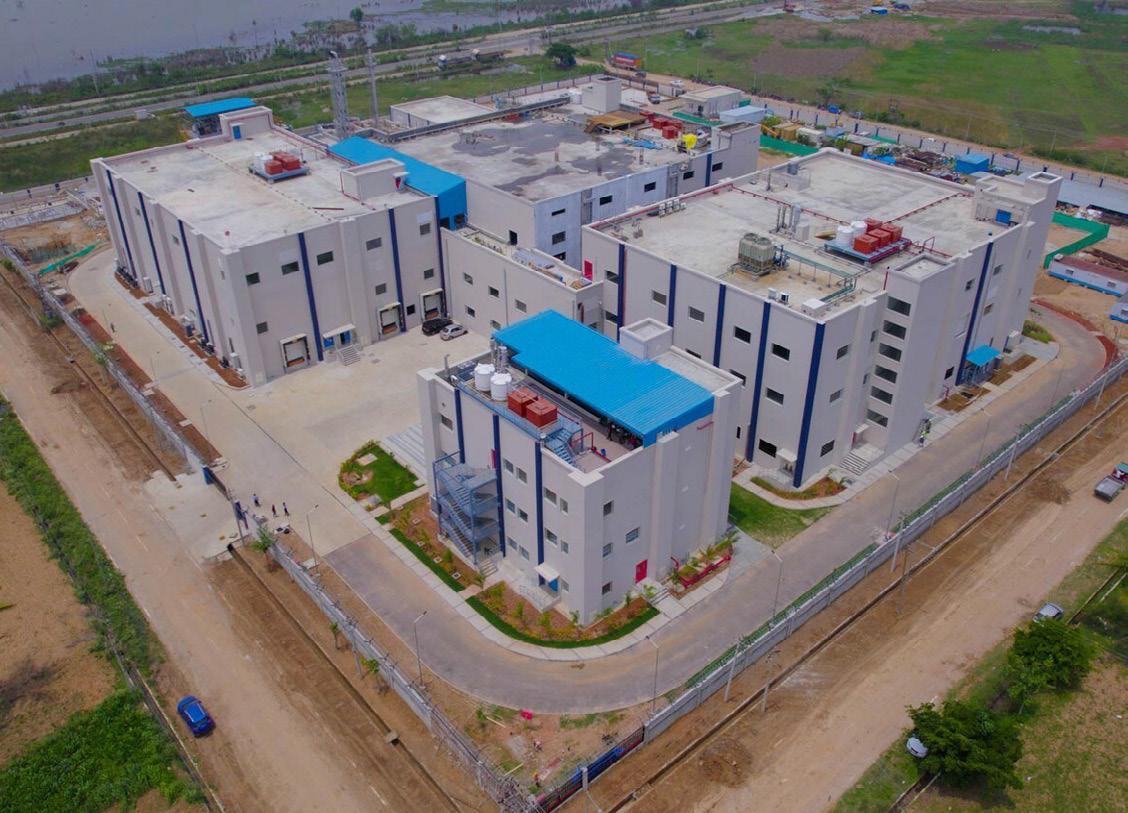
What emerges from conversations with the leadership team is a shared understanding that the challenge is not singular. It is layered, spanning science, infrastructure, regulation, logistics and trust. Plasma-derived therapies cannot be scaled through manufacturing alone. They require a fully integrated approach, one that begins with ethical plasma collection and extends through to advanced fractionation, rigorous quality control and reliable clinical delivery.
That thinking has shaped PlasmaGen from its earliest days. The original ambition to reduce India’s reliance on imported therapies has evolved into something far more comprehensive. Today, the organisation is focused on building a sustainable, end-to-end plasma ecosystem, one that aligns with global standards while remaining grounded in the realities of the Indian healthcare landscape.
The leadership dynamic behind that evolution is particularly instructive. Each brings a distinct perspective, whether rooted in scientific expertise, operational execution or commercial strategy. What is notable, however, is not the difference in backgrounds, but the cohesion in decision-making. In a sector defined by complexity and regulation, the ability to align across disciplines is not simply beneficial, it is essential. PlasmaGen’s progress reflects that alignment, with innovation, scale and patient impact consistently treated as interconnected priorities rather than competing interests.
Nowhere is this more evident than in the company’s approach to plasma fractionation. Widely regarded as one of the most demanding areas within biopharmaceutical manufacturing, fractionation requires precision at every stage. Plasma is not a uniform raw material. It is biologically variable,

sensitive and highly regulated. Converting it into safe, effective therapies demands advanced purification processes, robust viral inactivation systems and a level of process control that ensures reproducibility across batches.
PlasmaGen’s facilities have been developed with these demands in mind. Built to meet internationally recognised standards, they incorporate next-generation technologies and automated systems designed to optimise yield while maintaining uncompromising quality. Compliance with European and British pharmacopoeial benchmarks reflects a deliberate decision to operate at a global level, positioning the company not only as a domestic solution, but as a credible international player.
This focus on manufacturing excellence, however, is only one dimension of the broader strategy. If production represents the backbone of the business, then plasma












collection and supply chain management form its circulatory system. Historically, India’s plasma infrastructure has faced limitations, particularly in the availability of dedicated plasmapheresis centres. This has constrained the ability to build a consistent and scalable supply of plasma, reinforcing reliance on recovered sources and imported material.
Addressing this challenge requires more than capital investment. It requires behavioural change. Plasma donation is not widely understood, and building a culture of participation takes time.
PlasmaGen’s efforts in donor awareness and engagement reflect a long-term view, one that recognises trust as the foundation of any sustainable collection model. Education, transparency and ethical practices are central to that effort, ensuring that donors are not only informed, but confident in the impact of their contribution.








Modular design by the principle: Process first. Planning from the inside out.
Holistic plant engineering from the idea to production of:

Alongside collection, the logistical demands of plasma handling introduce another layer of complexity. Temperature control is critical at every stage, from collection through to processing and distribution. Cold-chain infrastructure must operate with precision across diverse geographies, often in environments where variability is the norm. PlasmaGen’s investment in this area underscores a broader operational philosophy: reliability is not an outcome, it is a system.
That system extends into the company’s distribution model, particularly within India’s fragmented healthcare landscape. Delivering therapies consistently across regions requires a combination of infrastructure, planning and clinical engagement. PlasmaGen has approached this challenge by pairing robust supply chain capabilities with structured medical education, ensuring that clinicians are equipped with both the knowledge and the confidence to utilise plasma-derived therapies effectively.
Trust, once again, is central. In a field where clinical outcomes are closely tied to product integrity, relationships between manufacturers, hospitals and physicians carry significant weight. PlasmaGen’s emphasis on transparency and long-term partnership reflects an understanding that trust is built incrementally, through consistent delivery and demonstrated quality.
Beyond the operational and clinical dimensions, the company’s work speaks to a broader shift in how healthcare systems approach resilience. Local manufacturing of plasma-derived therapies is not simply a commercial advantage. It is a strategic necessity. By reducing dependence on imports, India gains greater control over supply continuity, pricing stability and long-term planning. In a global environment where supply chains are increasingly scrutinised, this shift carries significant implications.
The economic impact is equally substantial. Building a domestic plasma ecosystem requires the development of
specialised capabilities across science, manufacturing and logistics. PlasmaGen’s growth has contributed to this capability building, creating skilled employment opportunities and strengthening India’s position within the global biopharmaceutical sector.
At the same time, the leadership team is clear in its positioning of commercial success. Growth, while important, is not pursued at the expense of accessibility. Quality, affordability and patient access are treated as fixed principles rather than variables to be adjusted. This approach reflects a disciplined governance model, supported by strong investor backing and a long-term perspective on value creation.
That balance becomes particularly relevant as PlasmaGen expands its global footprint. International markets present both opportunity and complexity, with diverse regulatory requirements shaping entry strategies. Rather than pursuing rapid expansion, the company has adopted a measured approach, focusing on regions where unmet clinical need is significant and where its capabilities can deliver meaningful impact.
Markets across South Asia and parts of Latin America have emerged as strategic priorities, reflecting similarities in healthcare challenges and access gaps. Expanding into these regions requires careful navigation of regulatory frameworks, including country-specific approvals and, in some cases, additional clinical data. Managing these complexities while maintaining consistent quality standards is a defining feature of the company’s international strategy.
Central to this expansion is the network of ecosystem partners that underpin PlasmaGen’s operations. From plasma collection organisations and logistics providers to manufacturing service partners and hospital networks, collaboration sits at the core of the business model. These partnerships are not transactional. They are structured around shared quality systems, governance frameworks and long-term





alignment, enabling the company to operate effectively at scale.
The importance of this ecosystem cannot be overstated. In a sector where each stage of the value chain is interdependent, the strength of partnerships directly influences the reliability of outcomes. PlasmaGen’s ability to manage this network reflects both operational discipline and strategic foresight, ensuring that growth is supported by a stable and scalable foundation.
Looking ahead, the leadership team’s vision is both ambitious and grounded. Over the next five years, PlasmaGen aims to establish itself as a globally credible plasma therapeutics company, one that serves domestic needs while expanding selectively into international markets. Success will be defined not by scale alone, but by the ability to deliver consistent quality, achieve global regulatory benchmarks and expand patient access in a meaningful way.
There is, within this vision, a clear sense of purpose. PlasmaGen is not positioning itself merely as a participant in the global biopharmaceutical industry, but as a contributor to a broader shift towards equitable access. In doing so, it reflects a wider recognition that healthcare innovation must ultimately be measured not by its sophistication, but by its reach.
For Vinod Nahar, Vivek Vasudev Kamath, and Sethumadhavan, that measure remains constant. The goal is not simply to build capacity, but to ensure that capacity translates into impact. To move, steadily and deliberately, from plasma to patients, closing the gap that has long defined this space.
And in that transition, PlasmaGen offers something more than a business success story. It offers a blueprint for how leadership, when aligned with purpose and executed with discipline, can reshape not only an industry, but the outcomes it delivers for those who depend on it most.
www.plasmagen.com
When it comes to business sustainability, our initial thoughts often revolve around improving organization efficiency, improving financial performance, and implementing a carbon reduction strategy.
However, in the UN’s SDGs (Sustainable Development Goals), the intergovernmental organization has recognized the need for gender parity within business.
“Gender is woven throughout the SDGs as it sits at the intersection of economic, social and environmental issues”, states the UN. “It has its own Goal, SDG 5—with the ambition of achieving gender equality and empowering all women and girls— and is mentioned explicitly in 10 of the other Goals”.
But, in 2023, are we close to achieving gender parity in leadership? A recent report by Forbes implies we have a long way to go - five generations, in fact.

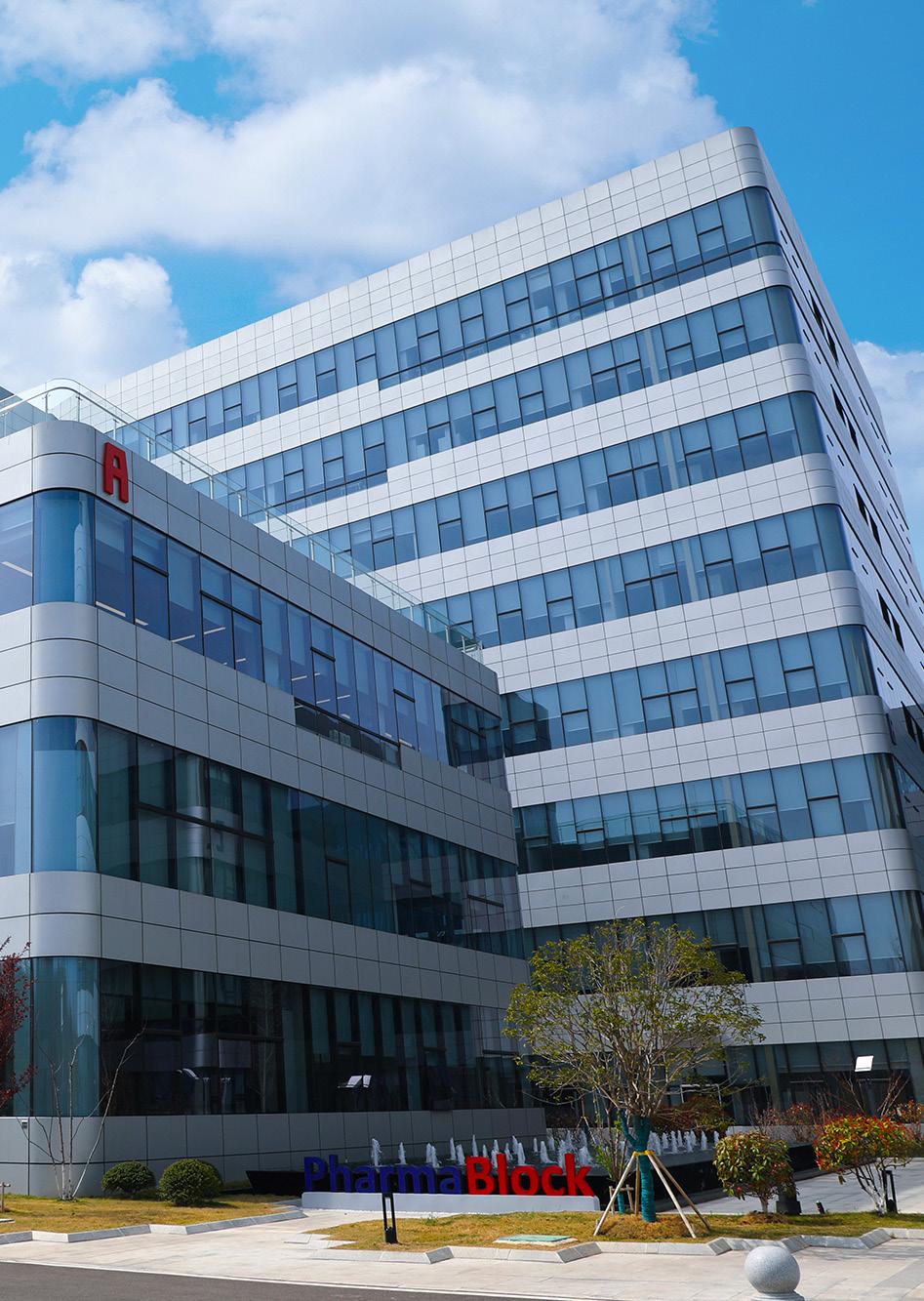
Cutting
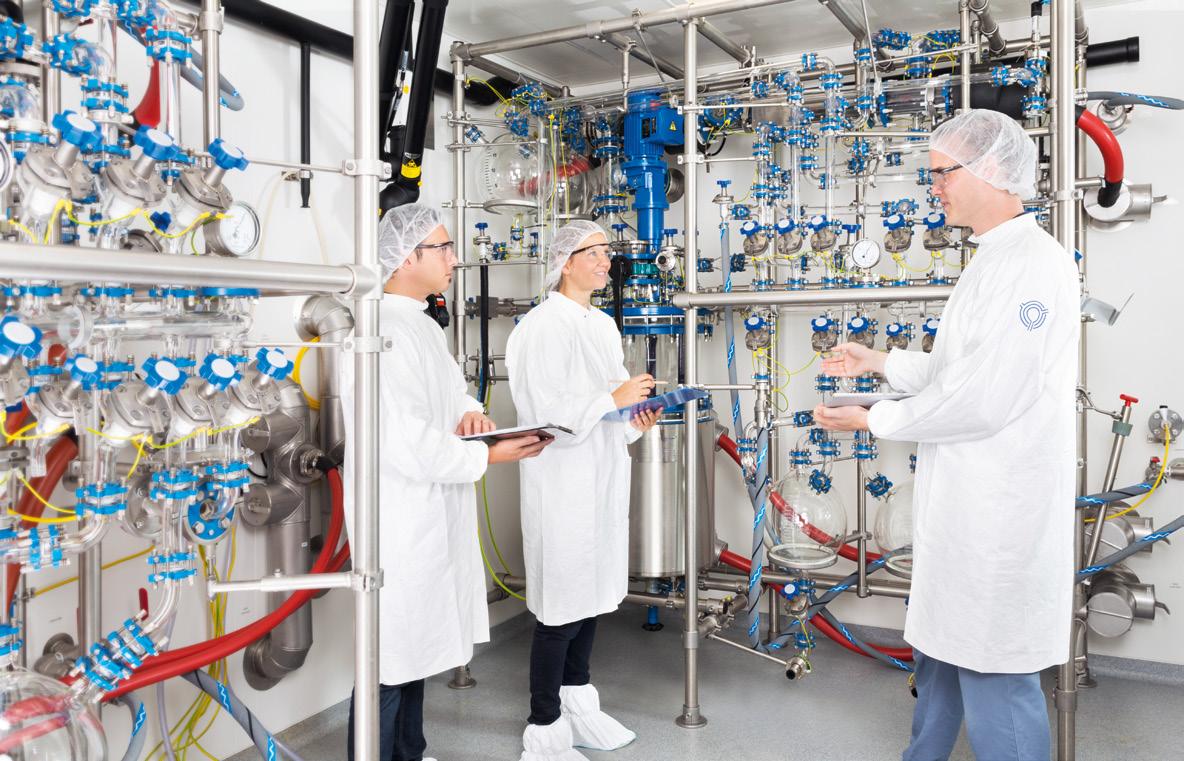
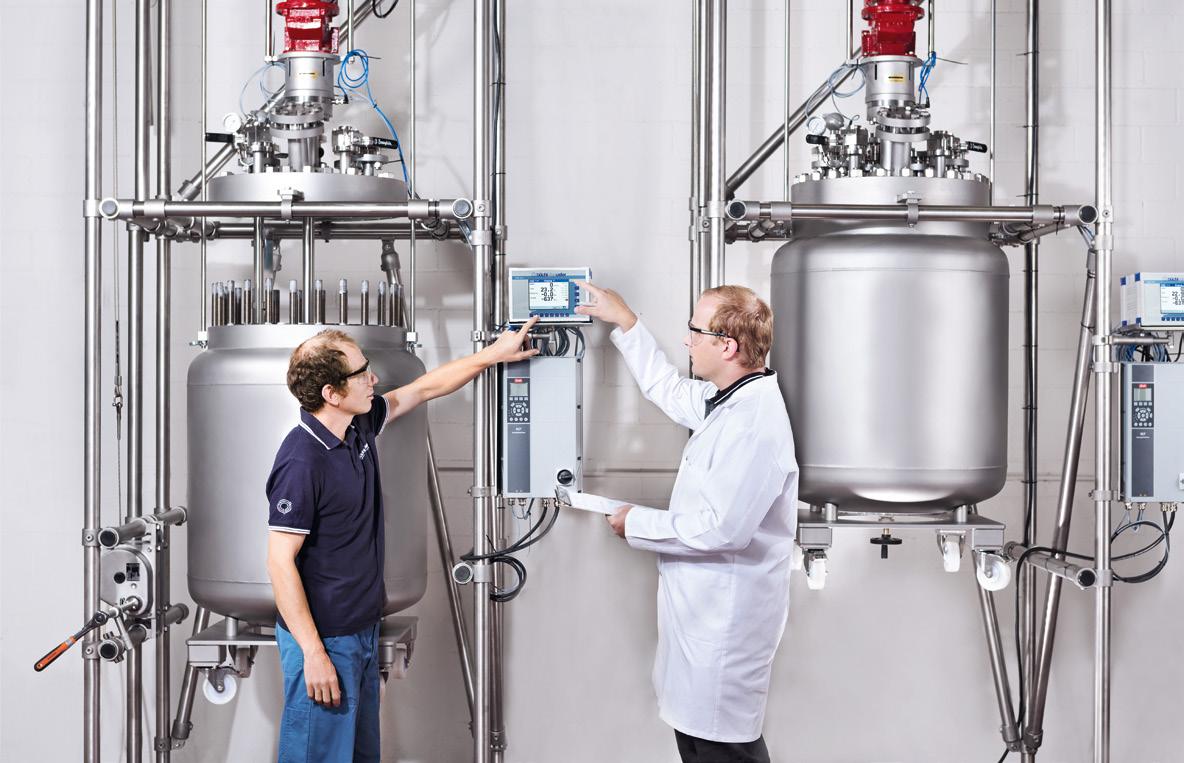
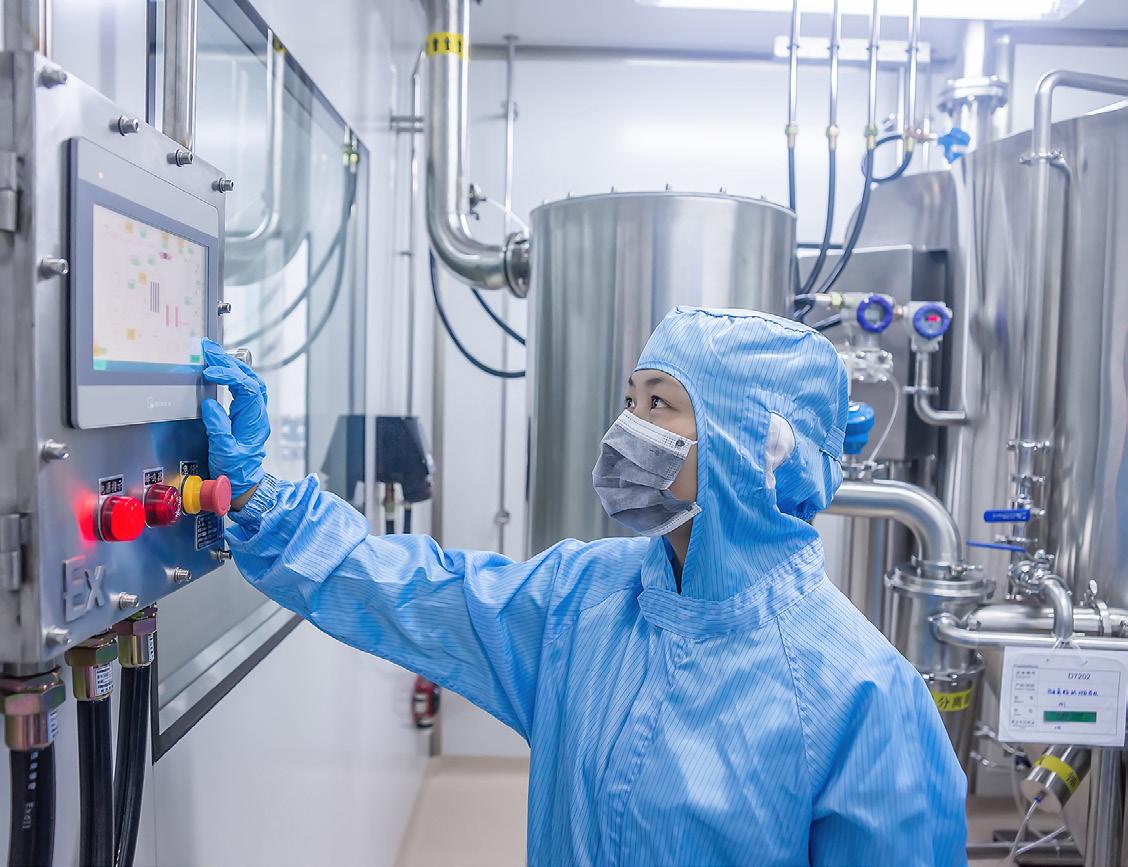
The Global Gender Gap report published by the World Economic Forum highlights that at the current rate of progress, the global economy won’t see gender parity for 131 years. It reports a further stark figure of 169 years to close the Economic Participation and Opportunity gender gap.
President of PharmaBlock (USA), Dr. Jing Li, spoke to Business Enquirer about her views on Women in Leadership.
“We need to encourage women to fearlessly embrace new opportunities, whether it’s the beginning of their career journey or taking on a c-suite role,” she said.
She herself is an example of what happens when you use fear as a motivator, rather than a deterrent.
Having spent eight and a half years as an Associate Principal Scientist at Merck, Jing was offered the opportunity to join PharmaBlock.
“Whilst it was a fantastic opportunity, I was happy at Merck so it felt like a big risk to move businesses. Speaking with my daughter, she said it sounded “exciting”. It was my responsibility to show my daughter that we mustn't let fear get in the way of opportunity,” shared Jing.
This teachable moment is something that Jing aims to instil in business as well as around the dinner table.
“The leadership traits that women naturally possess are undervalued by business world,” she said, “I believe the strengths we offer include softer skills which can help to create the
right environment for colleagues to be nurtured, motivated, and developed”.
Jing finds fulfilment in her role as President, USA, not only through PharmaBlock’s contribution to the pharmaceutical industry, but also by cultivating a work environment where colleagues can realise their full potential.
Speaking of PharmaBlock in the USA, Jing feels that she and her team have fostered an inclusive and collaborative culture where colleagues genuinely feel that they have ownership in both the business outputs and their roles.
“By ensuring that our vision is clearly communicated, colleagues understand their purpose and have a sense of meaning in what they do. The opportunities at PharmaBlock are unlimited,” she added.
PharmaBlock is now a fully integrated CRDMO (contracted research, development, and manufacturing organization) with clear vision: focus on innovative chemistry and low-carbon manufacturing, bring sustainable and efficient solutions to its clients, ultimately supporting partners in bringing medicines to those in need more quickly.
When the business was first established in China in 2008, it began by designing and synthesizing a large collection of rationally designed, high-quality, and structurally diversified chemicals, known as building blocks in the field of drug R & D.
These building blocks are increasingly adopted by global drug hunters to enrich structure diversity, improve compound performance, expand patent space, and eventually accelerate drug discovery projects.
Over the years, PharmaBlock has accumulated expertise and earned the trust of its customers, allowing it to expand its business scope beyond being a building block supplier. It now serves as a comprehensive service and solution partner, supporting global pharmaceutical


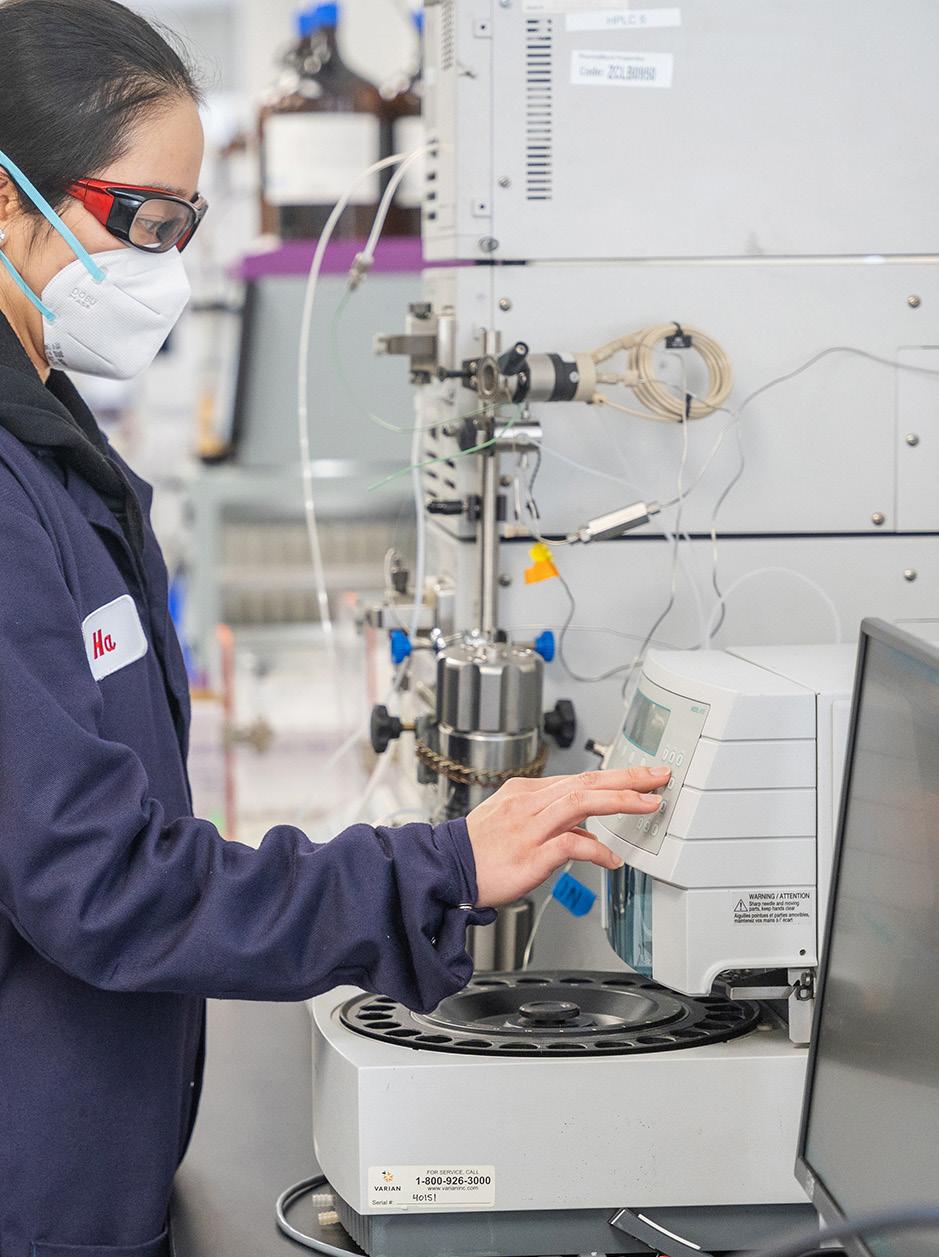
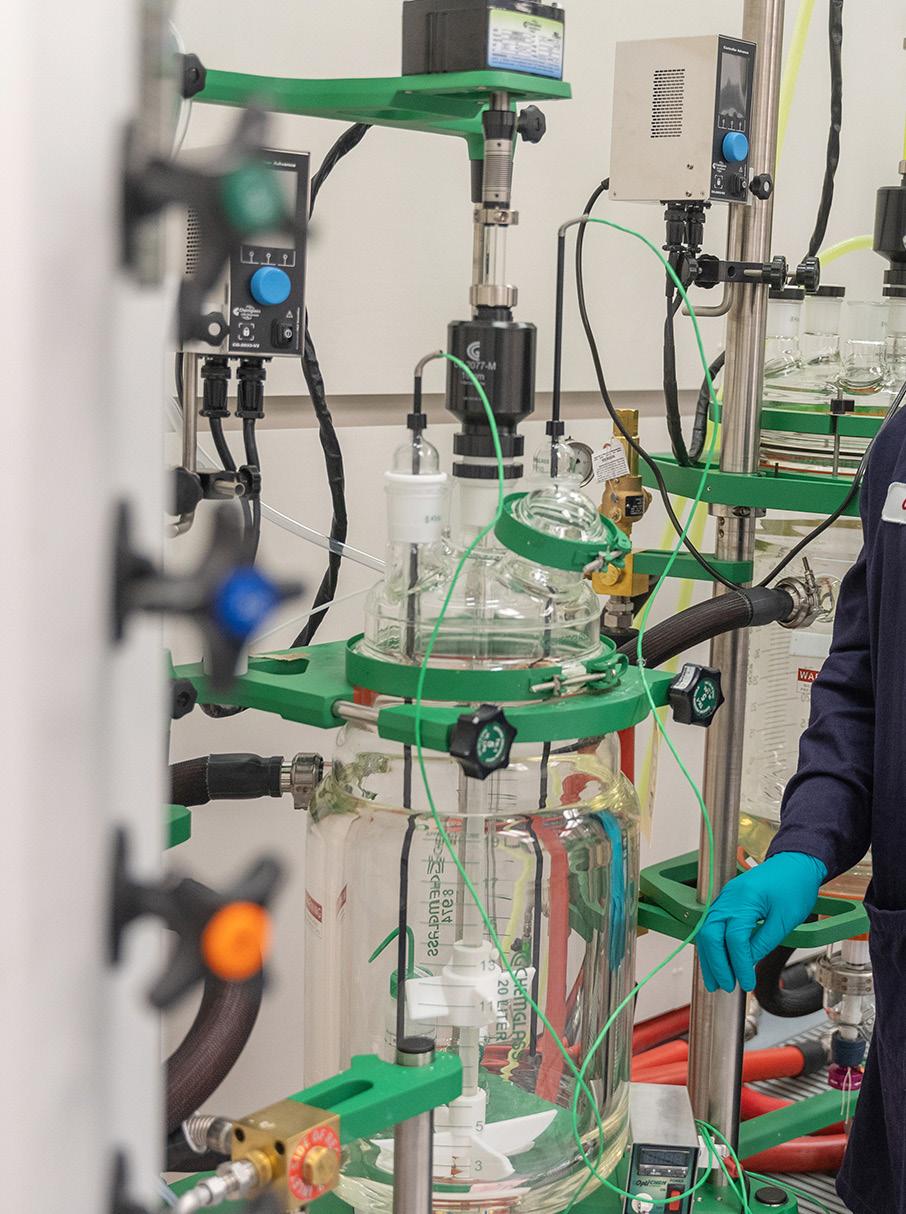
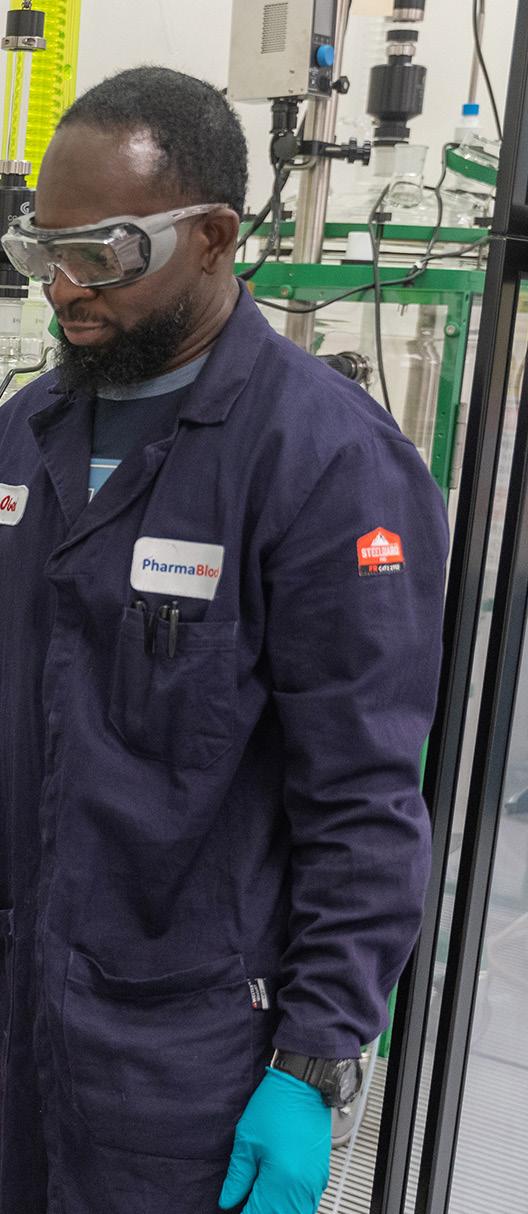
and biotech companies throughout the drug R&D and commercial processes.
Enabled by sustainable strategies, PharmaBlock has gained a reputation as a quality partner for the development and manufacturing of pharmaceutical intermediates, drug substances, and drug products, all the while achieving cost efficiency and a greener footprint.
PharmaBlock team in China and US are focusing on four key areas of sustainability, with of course, one of those being People.
“Supporting diversity and inclusivity is key to sustainability,” said Jing. “It creates a collaborative and innovative work environment and has profound impact on team motivation, productivity and longterm business success.”
Supply chain resilience is an integral part of its sustainability strategy, as PharmaBlock considers not only its own supply chain, but also the role it plays in its client’s supply chain. “We have identified the supply chain values we consider to be crucial and have developed a robust way of working. We implement a supplier development program to enhance sustainability awareness and operations.” explained Jing.
Another element to its sustainability strategy is geographic diversity, ensuring accessibility to its clients - which over time has included almost all of the top 20 pharmaceutical companies as well as hundreds of small to medium biotech companies across the globe.
As part of its geographic expansion efforts, PharmaBlock launched a new R&D facility in Pennsylvania, USA in March 2023. This brings the business footprint to five facilities, three in China and two in the USA. “We intend to further expand our presence in the USA as we see significant demand for drug development and manufacturing in the country,” shared Jing.
In addition, PharmaBlock is dedicated
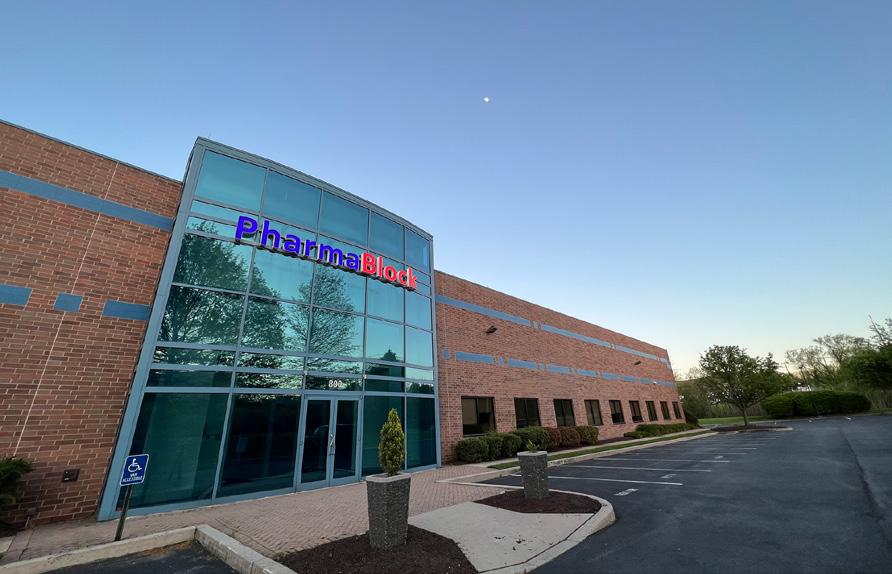
to fostering innovation. Its mission to “innovative chemistry for a better future” highlights that chemistry innovation can provide more effective, safer, easier to use, and more accessible products and services for the future; it is essential to do the right things at the very beginning, including addressing safety, environmental, and quality challenges, to enable greener and more efficient R&D and manufacturing processes.
With this mission at its core, PharmaBlock are pioneers in introducing continuous flow technology and biocatalysis into its manufacturing process. Whilst this concept has long been used in the petroleum industry, it is a new innovation for the pharma-chemical space. The new technologies are capable of overcoming the challenges that traditional chemistry processes typically struggle with.
“We are proud to have advanced innovative technologies like continuous flow manufacturing and biocatalysis for the pharmaceutical space. It brings many benefits to clients including scalability, safety, improved quality, reduced waste, cost saving and speed,” said Jing.
By designing and assembling manufacturing-scale equipment capable
of achieving yearly outputs of hundreds of metric tons, what used to take months to produce can now be accomplished in a matter of two to three weeks, with lower cost, reduced energy usage, and less waste. The company is even planning to expand its impact by commercializing some of its technologies and equipment, making their innovative technology accessible to the entire industry.
PharmaBlock’s commitment to innovation and sustainability has won several accolades recently, such as 2023 CMO Excellence in Green Chemistry Award by ACS and Top CDMOs by Pharma Tech Outlook. Additionally, PharmaBlock's sustainability practices and experiences have been documented in the recently released book "Sustainability Leaders" by DCAT (the Drug, Chemical & Associated Technologies Association), an association for companies involved in the Bio/ Pharmaceutical manufacturing value chain.
“When there is no solution available, we innovate,” shared Jing, “the innovation never stops as well as our never-ending pursuit for excellence.”.
www.pharmablock.com

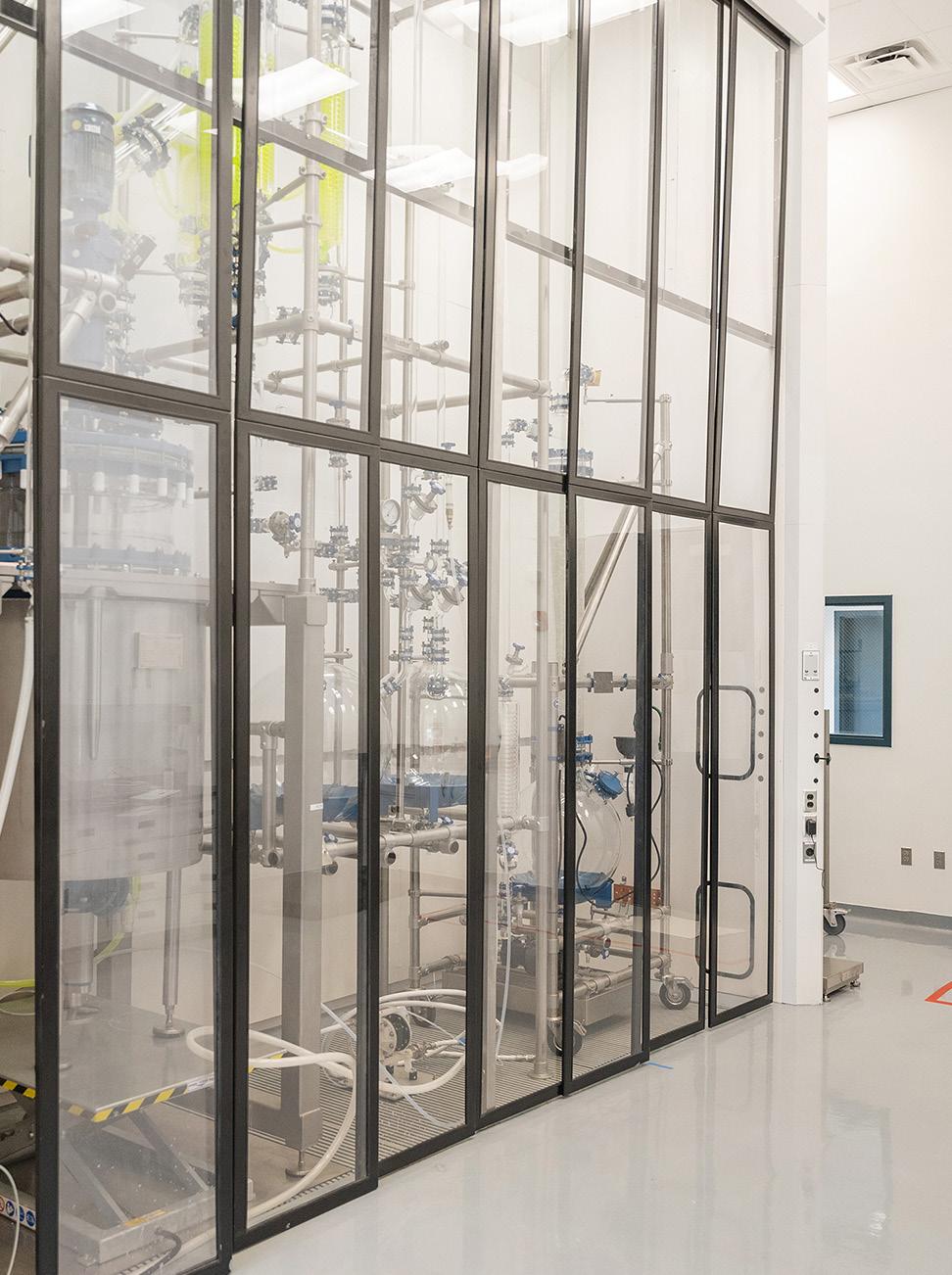
In the life sciences industry, the digital revolution has arrived not with fanfare, but with quiet precision. It is transforming the way pharmaceutical and biotech companies design, construct and operate their facilities. At the centre of this transformation is ZETA, a globally operating end-to-end solution provider. that has evolved from pipe fitting to developing fully digital, data-driven production ecosystems for some of the world’s most complex manufacturing environments.
The company’s trajectory is remarkable. Fifteen years ago, ZETA was a modest business of around one hundred employees, primarily focused on piping and mechanical installation. Today, it is a global player with more than two thousand people and a reputation for advancing the digitalisation of pharmaceutical engineering. Its evolution has been shaped by a simple but powerful principle: everything in engineering, from concept to operation, should one day be seamlessly connected through data.
That belief has guided ZETA’s expansion into what it calls Digital Solutions,
a business line that integrates all disciplines of engineering into a single digital environment. It reflects a shift in the company’s mindset from building equipment to building intelligence.
The company’s journey into digitalisation began when one of its long-standing clients asked for more than physical delivery. They wanted ZETA to handle the full engineering scope of a facility, from design to automation. What started as an expansion of service quickly became a transformation in philosophy. ZETA’s leadership recognised that the future of engineering would rely on software as much as steel.
As digital systems advanced, the company began to merge its engineering, automation and design processes into one connected toolchain. Each discipline could now collaborate within the same environment, sharing information in real time and reducing the inefficiencies that had long existed between mechanical design, electrical planning and process automation. This approach became the foundation of ZETA’s integrated digital framework, an ecosystem where every


stage of a project contributes to a shared, living dataset.
Central to this framework is the digital twin: a virtual representation of a plant that mirrors both its physical structure and its operational logic. ZETA’s model combines two key elements. The first is the physical twin, which represents the layout, materials and equipment. The second is the procedural twin, which defines how the plant operates, from recipes to process parameters. Together, they form a complete digital replica of the facility.
This twin is not a static model, but an evolving intelligence that grows alongside the project. It allows ZETA and its clients to test, validate and optimise designs long before construction begins. Engineers can simulate entire processes, identify risks, and train operators using virtual or augmented reality environments. When the physical facility comes online, the operational data feeds back into the digital model, creating a continuous feedback loop for improvement.
The impact on project timelines and efficiency has been significant. In one recent case, ZETA delivered a biotech manufacturing site for a client facing a critical shortage of a life-saving product. With only three years of supply remaining, the company needed a new production facility designed, built and validated in record time. Using ZETA’s digital methods, the entire project was completed in twenty-four months.
Every element of that plant, from design to training, was developed within the digital environment. Data generated during engineering was reused for automation, commissioning and even workforce onboarding. Virtual reality simulations enabled 150 new employees to familiarise themselves with the facility before it was physically completed. The project demonstrated how digital tools can bridge the traditional gap between strategy and execution.
For the pharmaceutical and biotech
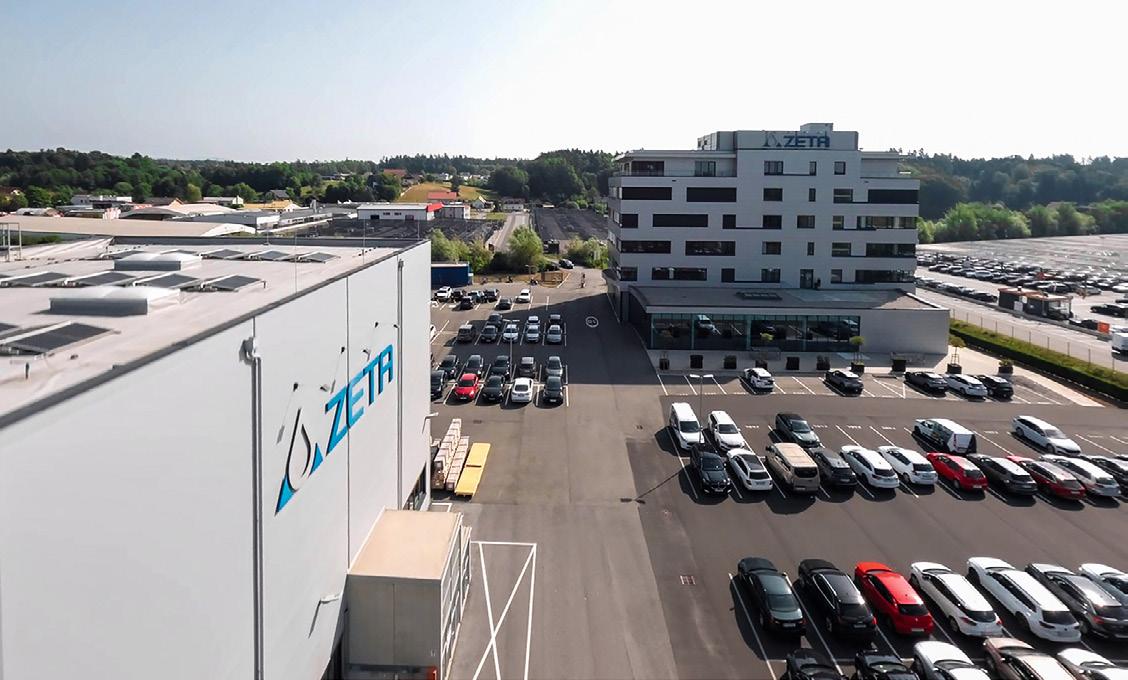
sectors, however, speed is only one side of the equation. Regulatory compliance remains an ever-present demand. ZETA’s systems are designed from the ground up to meet the stringent requirements of FDA and GMP environments, ensuring data integrity, traceability and validation. The company builds its solutions using proven industrial platforms such as Siemens COMOS and AVEVA E3D, which already incorporate features like audit trails, access controls and electronic signatures.
Yet Martin Mayer, Director Business Line Digital Solutions, and his team recognise that technology alone cannot deliver transformation. The real challenge lies in changing how people think and work. Within ZETA itself, the move toward digitalisation began with a major cultural shift. The company replaced isolated software tools with integrated workflows, introduced agile development methods, and encouraged engineers to think more like software designers. To complete the transformation, this toolchain was made available to the market as a service—independent of ZETA’s role as an
engineering partner in a project—marking a significant shift in its business model.
“Digital transformation starts with mindset,” Mayer has often said. Engineers needed to understand that their expertise remained vital, but that the tools for expressing it were changing. The company created a new internal division dedicated to software and IT, bringing together more than eighty specialists who now work on developing and refining its digital platforms. The result is a shared environment where process, mechanical and automation engineers can collaborate without barriers.
This integration has since extended to ZETA’s clients. Through secure cloudbased systems, project partners and suppliers can access a unified database, enabling true parallel engineering. Multiple disciplines can progress simultaneously while maintaining full visibility across design stages. This not only reduces delays but also enhances the overall quality of information, ensuring that data remains accurate and consistent throughout the project lifecycle.
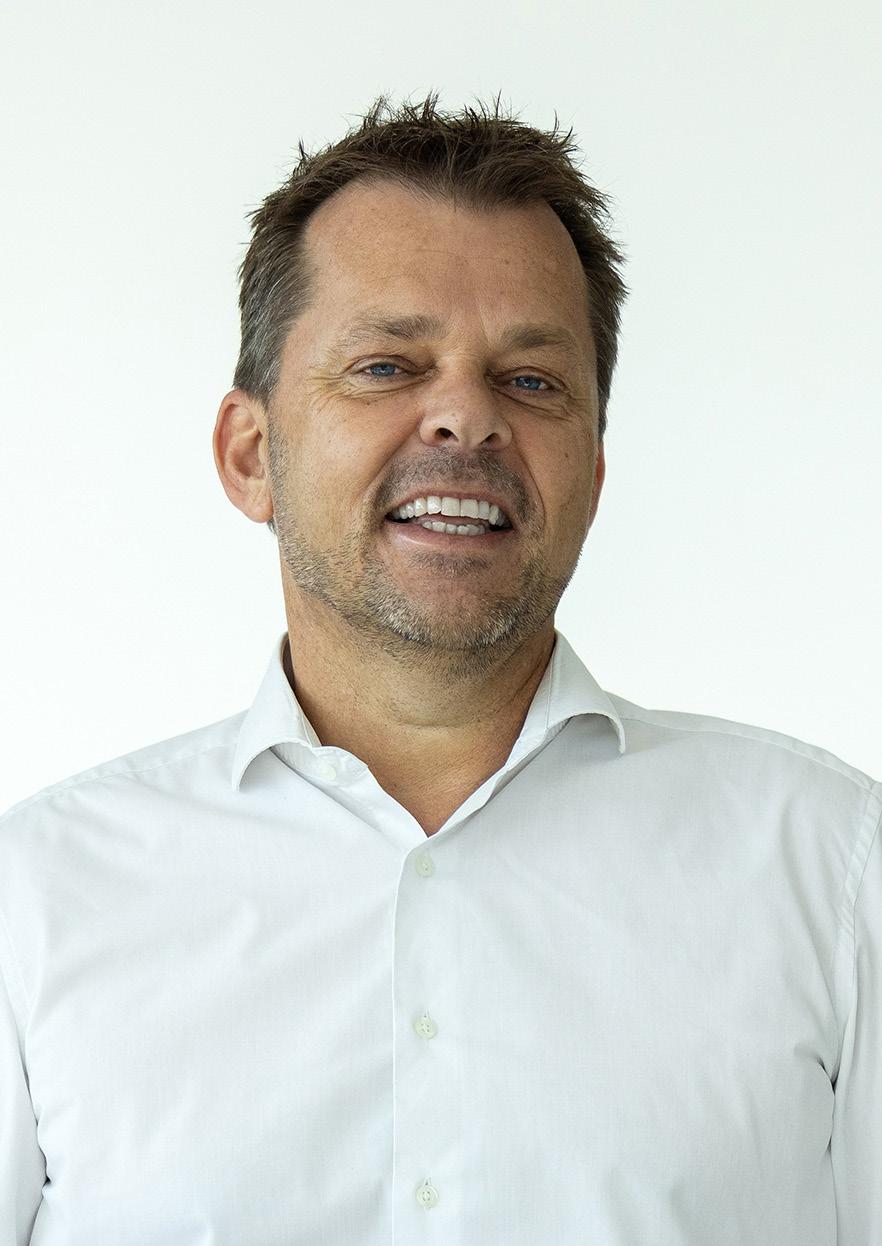
Martin Mayer Director Business Line
Modular production is reshaping life sciences manufacturing, and COPA-DATA’s zenon software platform stands at the forefront of this transformation. As drug development cycles shorten and regulatory demands increase, producers need scalable, repeatable processes that maintain quality across multiple sites. zenon’s flexible architecture enables modular production by standardizing control, visualization, and data handling into reusable building blocks via drag and drop.
By encapsulating recipes, equipment logic, and compliance checks into configurable modules, manufacturers can accelerate validation, reduce engineering effort, and deploy consistent production cells from bench to plant. For life sciences, where traceability and auditability are paramount, zenon integrates electronic batch records, alarm management, and secure historian functions to ensure data integrity while supporting rapid changeovers.
Beyond technical benefits, modularity improves organizational agility. Cross-functional teams can assemble validated modules without redesigning entire systems. COPA-DATA supports this shift with tools for versioning, role-based access, and standardized interfaces that simplify integration with 3rd party systems, such as PAS-X MES, classic MES, and building management systems.
Sustainability also gains from modular strategies: smaller, optimized units consume less energy and facilitate scalable capacity expansions without large capital expenditures. In a sector where responsiveness can dictate patient access, zenon’s approach helps manufacturers adapt to demand variability and regulatory updates more quickly.
The convergence of modular production and robust software platforms like COPA-DATA’s zenon creates a pragmatic path toward flexible, compliant, and efficient life sciences manufacturing. It’s not just about equipment – it’s about rethinking processes so innovation reaches patients faster and safer.

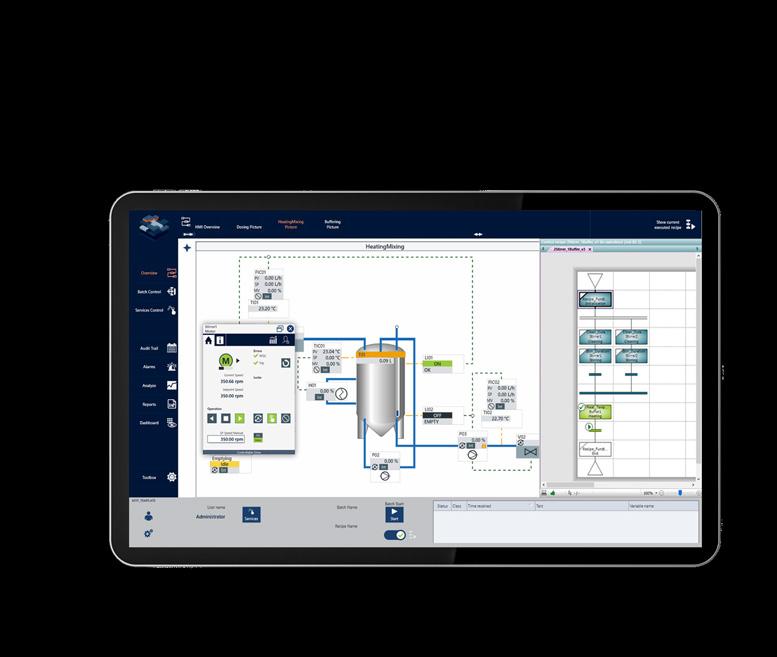
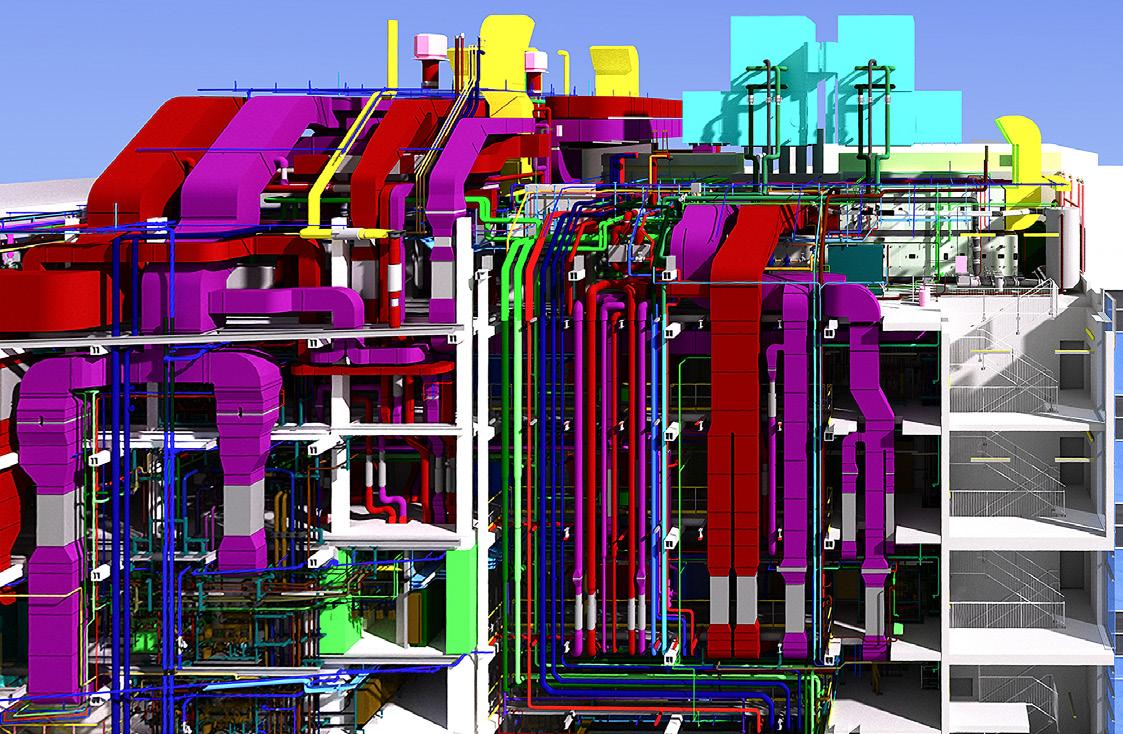
The advantages of this approach continue well beyond construction. All engineering data is harmonised and carried into the operational phase, forming the basis for predictive maintenance, performance analytics and continuous optimisation. The same digital twin that once served as a design tool becomes a living operational resource.
ZETA’s use of simulation and artificial intelligence further extends this capability. The company’s acquisition of the simulation specialist INOSIM has strengthened its ability to model complex production processes. These simulations allow teams to test different scenarios, from equipment configurations to energy efficiency strategies, supporting clients in balancing economic and environmental goals.
Artificial intelligence is also beginning to influence the way ZETA will design plants in the future. Instead of engineers manually drafting process diagrams and then extracting data from documents, AI
tools will soon enable the reverse: data will generate the documents automatically. This shift, currently being developed in partnership with Siemens, AVEVA and NVIDIA, represents a fundamental change in how engineering knowledge is captured and applied.
Mayer believes this transformation is essential if European industry is to remain globally competitive. The demand for efficiency, he argues, is growing faster than traditional methods can deliver. “We need to be at least fifty percent more efficient in the next five years,” he has remarked in other discussions. “Without embracing digital and AI, that will not be possible.”
The move toward modular and flexible manufacturing is another area where ZETA’s digital expertise is proving influential. By standardising design principles and creating reusable digital modules, the company is helping clients move away from one-off custom builds toward scalable, configurable systems.


This modular approach allows facilities to expand or adapt quickly, reducing costs and improving sustainability.
In practice, ZETA’s modular strategy is supported by automation standards such as MTP (Module Type Package), which enables different equipment units to communicate seamlessly within a common control system. The combination of standardisation, modularity and digitalisation has become the foundation of what Mayer calls “the smart building blocks of life sciences,” a system where digital design and physical flexibility meet.
Looking ahead, ZETA’s ambitions reach well beyond engineering. The company aims to position itself as a leading partner for digital transformation across the life sciences sector. In the short term, this means expanding from integrated engineering to integrated operations, with its digital platform evolving from a service into a product. The newly branded FrameWorks offering will serve as a scalable foundation for clients to manage their entire digital ecosystem.
In the longer term, ZETA’s focus lies in the emerging concept of Pharma 4.0, a fully connected, intelligent manufacturing landscape where AI, digital twins and modular production combine to create adaptable facilities capable of producing everything from niche therapies to largescale vaccines. Through partnerships with global technology leaders, ZETA is already developing AI-driven operational support tools that can assist human operators in real time.
Sustainability also plays a key role in this vision. By simulating energy use and material flow, ZETA’s digital systems allow clients to design processes that minimise waste and emissions. The company’s expertise in both engineering and software gives it a unique perspective on how digitalisation can accelerate decarbonisation across the sector.
Although ZETA’s digital reach is expanding globally, its strongest relationships remain in Europe, where its transformation story began. Many of its customers have witnessed its growth from traditional plant builder to digital pioneer. That trust, built over years of collaboration, is now helping the company lead a new era of partnership between physical and digital engineering.
The story of ZETA is, in many ways, a story about the future of the life sciences industry itself. It is a reminder that innovation does not always begin with disruption, but with evolution, the steady integration of technology, knowledge and purpose. As pharmaceutical manufacturing becomes more intelligent, sustainable and data-driven, ZETA stands as one of the organisations quietly shaping that transformation from within.
Digitalisation, in Mayer’s view, is not about replacing engineers, but empowering them. It is about using technology to extend human capability, connect disciplines and build smarter systems. The tools are changing, but the principle remains the same: excellence in engineering, guided by precision and imagination.
www.zeta.com
AQHow is SYNTHIA® reshaping the way chemists approach the earliest stages of drug discovery?
SYNTHIA® is fundamentally changing early drug discovery by empowering chemists to rapidly generate, visualize, and evaluate multiple synthetic routes for target molecules— even those never made before. By automating retrosynthetic analysis, we enable researchers to move from idea to actionable synthetic plans in minutes, not weeks. This accelerates hit-to-lead and lead optimization, reduces risk, and allows teams to focus their creativity on the most promising compounds.
QIn what ways do algorithms and machine learning give researchers an advantage over traditional retrosynthesis methods?
ASYNTHIA® combines expert-coded chemical rules with advanced algorithms and machine learning to scan vast chemical spaces and propose innovative, feasible pathways. Unlike traditional methods, which rely heavily on individual expertise and literature precedents, SYNTHIA® can uncover nonobvious disconnections, optimize for cost, step count, or green chemistry, and instantly access a catalog of over 12 million commercially available building blocks. This breadth and speed are simply not possible with manual planning.
QCould you share an example where SYNTHIA® directly influenced the success or speed of a synthesis project?
AAbsolutely. In a recent case, published in April this year, SYNTHIA®’s algorithms specified in planning shared synthetic pathway for multiple molecules, were connected to continuous flow chemistry. The study resulted in identifying and optimizing synthesis for multiple active pharmaceutical ingredients (APIs).
The results led to reduced resource use and improved operational conditions across multiple APIs. The integration of SYNTHIA® with continuous flow chemistry achieved a 95% isolated yield at optimized conditions, significantly enhancing productivity. The approach improved the overall environmental footprint, increasing the GreenMotion score by 25%, particularly in the 'Process' and 'Solvent' categories, indicating a more sustainable synthesis.
In summary, the combination of SYNTHIA® and flow chemistry allowed for greater flexibility and scalability in the production of multiple APIs, addressing challenges associated with traditional batch synthesis.

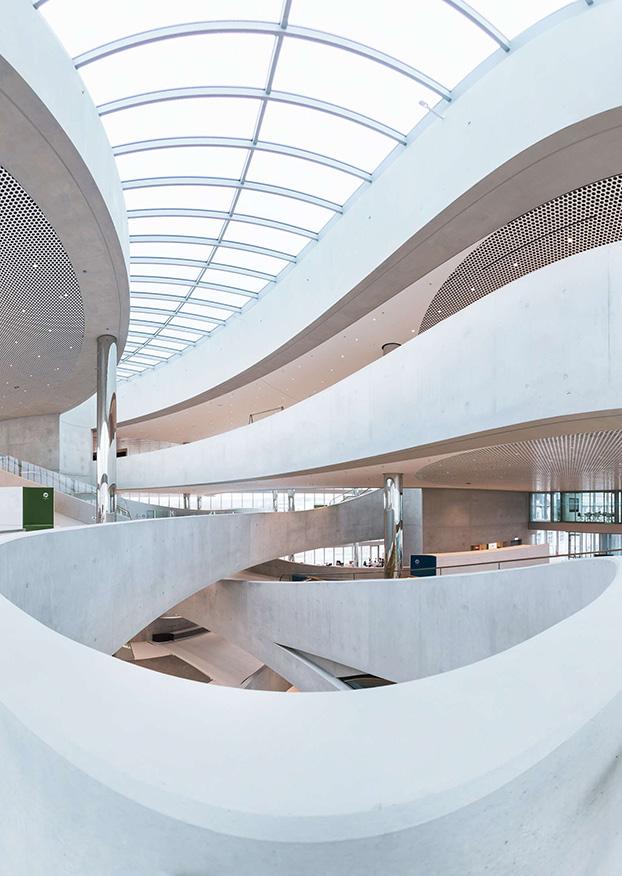


Dr. Ewa Gajewska is the Head of Product Management at Merck KGaA, Darmstadt, Germany, where she leads the development of SYNTHIA® Retrosynthesis Software – a groundbreaking software for computer-assisted synthetic planning. She graduated in biotechnology and chemistry from the Gdansk University of Technology and was a recipient of the Outstanding Achievements Award from Poland’s Minister of Science and Higher Education. In 2020 she received her PhD from the Institute of Organic Chemistry at the Polish Academy of Sciences. Her passion for tackling complex scientific challenges within commercial settings and the unique blend of her interdisciplinary skills drive the realization of innovative features of SYNTHIA Retrosynthesis Software.
QHow does the software encourage creativity in pathway design while ensuring the results are practical in the lab?
ASYNTHIA® acts as a creative partner, suggesting diverse, sometimes unconventional routes that chemists might not consider. At the same time, it grounds its suggestions in proven expert-coded reaction rules and published precedents, and allows users to filter by practicality—such as excluding hazardous reagents or requiring commercially available starting materials. This balance inspires new ideas while ensuring routes are realistic and executable.
QWhat impact can digital retrosynthesis tools have on cost efficiency and timelines in pharmaceutical R&D?
ADigital tools like SYNTHIA® can dramatically reduce both costs and timelines. By automating route scouting, minimizing failed experiments, and optimizing for cost-effective reagents, we’ve seen up to 90% reductions in manual planning time and significant savings in material and labor costs. This means faster progression from concept to candidate, and ultimately, to the clinic.
AQHow does SYNTHIA® support collaboration across research teams and disciplines?
SYNTHIA® is designed for collaboration. Users can share analyses, comment on pathways, and tag results for group projects. Our cloud-based platform ensures secure, realtime access for teams across locations and disciplines, making it easy for medicinal, process, and computation chemists to work together seamlessly.
QWhat are the biggest challenges you see in encouraging wider adoption of digital tools in chemical synthesis?
AThe main challenges are cultural and educational. Many chemists are used to traditional methods and may be skeptical of software predictions. We address this by demonstrating real-world successes, offering hands-on training, and emphasizing that SYNTHIA® is a tool to augment—not replace—human expertise. As more chemists experience the productivity gains, adoption is accelerating.
QAs drug targets grow more complex, how does SYNTHIA® help researchers navigate increasingly difficult synthesis routes?
ASYNTHIA® excels with complexity. Its algorithms can handle large, multifunctional molecules and propose routes that integrate both published and unpublished steps, predicted based on SYNTHIA®’s huge expert-coded rules database. For natural products and other challenging targets, SYNTHIA® has identified unique disconnections and strategies that have inspired successful syntheses, even when literature precedent is lacking.
AQWhat future developments or integrations do you see enhancing retrosynthesis software further?
We’re excited about deeper integration with AI-driven molecule design platforms, automated synthesis hardware, and green chemistry scoring tools. Our recent partnership with AIDDISON™ is a great example— combining generative AI for molecule design with SYNTHIA®’s synthesis planning creates an end-to-end digital workflow from virtual idea to real-world compound. We’re also expanding our API capabilities for seamless integration into enterprise R&D environments.
QDo you see digital intelligence as a supportive tool for chemists or something that could fundamentally transform how synthesis is carried out?
ADigital intelligence is both a supportive tool and a transformative force. It augments chemists’ intuition, accelerates routine tasks, and opens new creative possibilities. Ultimately, it’s not about replacing chemists, but empowering them to achieve more—faster, greener, and with greater confidence. The labs of the future will be defined by the synergy between human ingenuity and digital intelligence.
www.sigmaaldrich.com





In the rapidly evolving world of pharmaceutical and life sciences, the boundaries between research, development, and manufacturing are being redrawn. At the centre of this shift is Helbling, whose Closed Loop Manufacturing (CLM) model is changing how laboratories transition from experimentation to full-scale production. The concept introduces a new level of continuity, connecting every stage of product and process design through a single digital framework.
For Sébastien Martin, Head of Digital Transformation at Helbling, this evolution is not about adding technology for its own sake, but about creating meaningful integration. “We aim to position ourselves as the interface between senior management, business, and technology,” he explains. “Our goal is to provide end-to-end digital solutions that allow organisations to think holistically about how products are designed, developed, and ultimately produced.”
Helbling’s CLM model builds on the idea of the digital twin: a precise, data-driven replica of the laboratory that mirrors every process, parameter, and output in real time. In doing so, it bridges the historic divide between research and manufacturing, two areas that have often operated in isolation. While the use of digital twins in product development is well established, applying the same concept to process design and industrialisation marks a fundamental shift.
Sébastien points out that while many industries have used digital tools for product design since the 1990s, few have extended this thinking to the process itself. “What has changed in recent years,” he says, “is that companies are starting to use digital tools to design the process itself. CLM defines how to digitally design processes and link them directly to the product. This creates a seamless transition from development to operations.”
The model’s strength lies in its ability to provide a consistent data thread from laboratory research to full-scale production. It eliminates the traditional disconnect between departments and replaces fragmented documentation with a single, dynamic environment where every action is captured, verified, and shared. For the pharmaceutical sector, where delays and inefficiencies in tech transfer can be costly, this represents a step change in capability.
At the heart of CLM is the Bill of Process (BOP), described by Sébastien as the “missing link between formulation and manufacturing.” The BOP captures each stage of production, detailing machines, configurations, inspection plans, quality checks, and operational sequences in a structured, object-based format. “The Bill of Process starts by structuring the manufacturing process,” Sébastien explains. “It attaches all the additional supporting elements needed to execute those steps, from machine setups to quality processes. Built in an object-based way, it becomes the backbone of the digital twin of the process.”
Rather than existing as static documentation, the BOP serves as a living foundation for simulation, validation, and automation. It enables scientists and engineers to build digital workflows long before physical production begins. In early stages, the model remains production-site agnostic, allowing flexibility in design. As the process matures, it can be tailored to specific production lines, creating a prevalidated bridge between development and operations. The result is a digital ecosystem where every step can be tested, modified, and approved with full traceability.
This approach also tackles one of the industry’s most persistent challenges: the handover between process development and manufacturing. In many organisations, the transition between these two stages is prone to miscommunication and rework. Helbling’s model removes this friction by embedding manufacturing parameters,

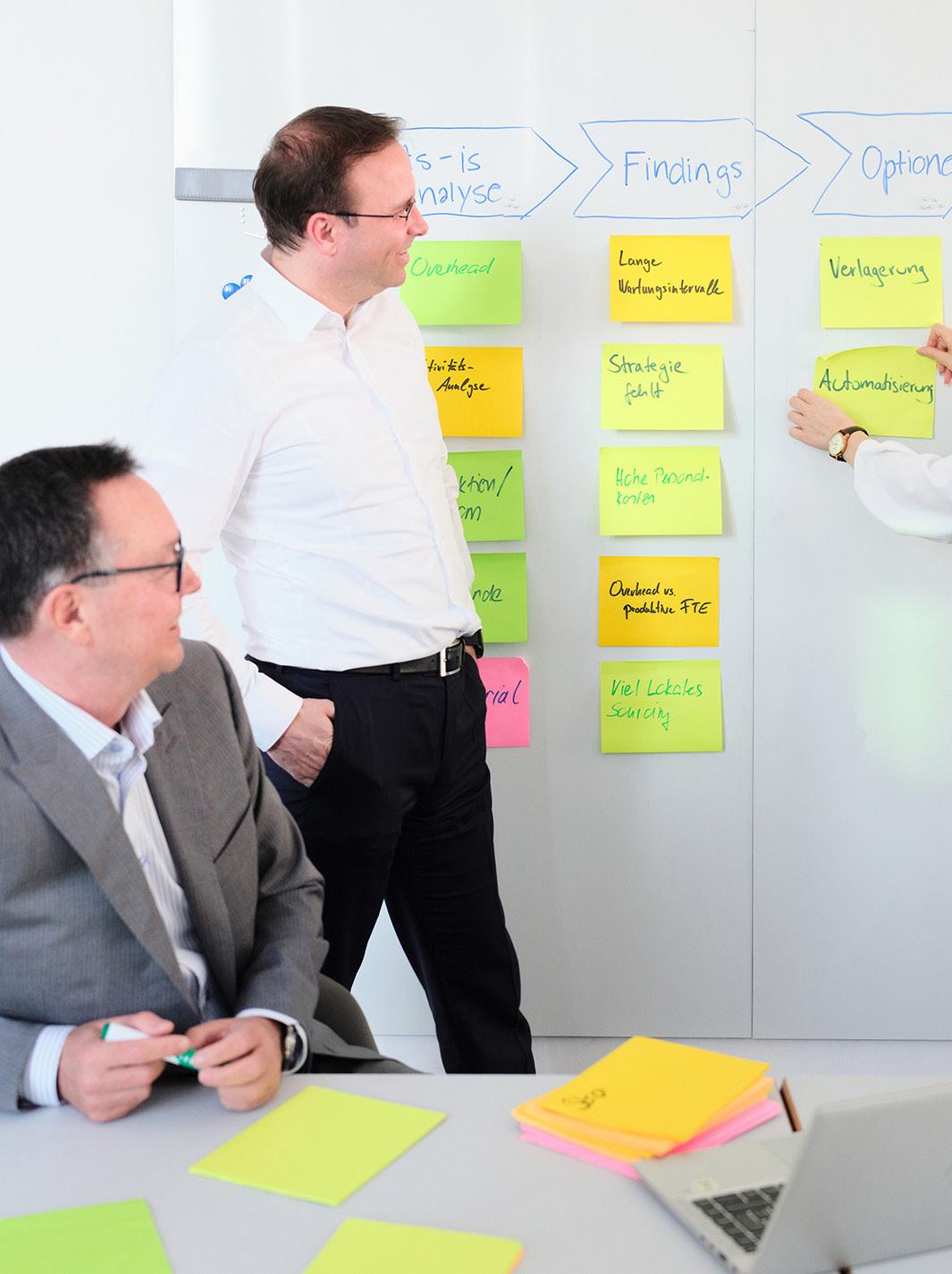

testing protocols, and machine recipes into the process design itself. “By preloading what operations need very early in the process, the handover becomes almost obsolete,” Sébastien says. “The process designer can already design the manufacturing process in a way operations need it. All the recipes, machine parameters, and test methods are predefined and digitally available.”
For companies adopting CLM, the benefits are clear. Time-to-market can be cut to a fraction of traditional timelines, with documentation and regulatory preparation automated along the way. Helbling has seen real-world cases where development cycles were reduced to around 30 percent of their original length, alongside significant cost savings in validation and review.
Compliance, one of the most demanding aspects of pharmaceutical manufacturing, is also transformed by this approach. With digital twins in place, laboratories gain full visibility of their operations and can maintain real-time oversight of every batch. Key regulatory documents such as the Master Production Record (MPR) and Master Batch Record (MBR) are digitised, allowing direct comparison between the planned and executed states. “The Bill of Process is almost a digital copy of the master production record,” Sébastien explains. “When both the MPR and MBR exist digitally, compliance checks can be automated, providing continuous traceability and ensuring production is always in line with defined parameters.”
Automated documentation not only reduces the administrative burden but also improves accuracy and reliability. Errors that might once have been discovered post-production can now be detected instantly. For auditors and regulatory bodies, the availability of real-time data and electronic records represents a new level of transparency and confidence.
The rise of artificial intelligence and connected technologies is expected to amplify these benefits further. “AI tools and machine learning require a digital
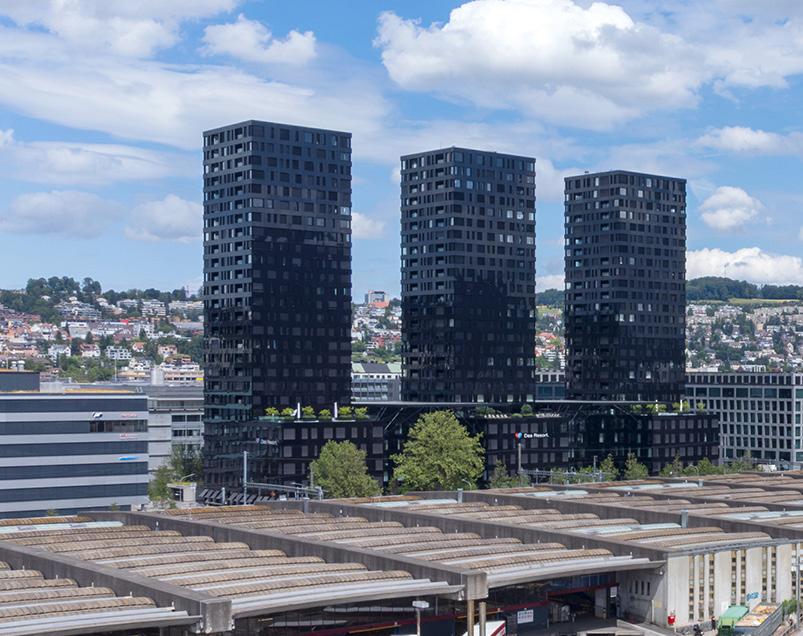
foundation,” says Sébastien. “Companies already on the path toward digital twins of their products and processes will see a massive boost. They can automate more, improve accuracy, and even generate regulatory documentation automatically based on configuration.”
Sébastien envisions a near future in which AI systems monitor and optimise processes continuously, fine-tuning production parameters as data flows in and supports validation activities. This would enable a level of operational precision that manual systems could never achieve. However, he also recognises that regulation must evolve alongside innovation. “The question is how fast regulation and notified bodies can evolve to keep pace with these advancements,” he says.
For Helbling, technology is only half of the equation. The other half is people.
“The technological part is often not the hardest,” Sébastien observes. “What is truly challenging is the change in how people work. Process Development and Production/Process Engineering are moving much closer together, and in some companies, they are even merging.”
The company has developed its own change-management methods to guide clients through this transformation, even employing psychologists to assess readiness and support cultural adaptation. “Sometimes it means more effort for one department,” Martin adds, “but it results in massive time savings for another. We show teams how early investment in process definition reduces time for scale-up and tech transfer later on.”
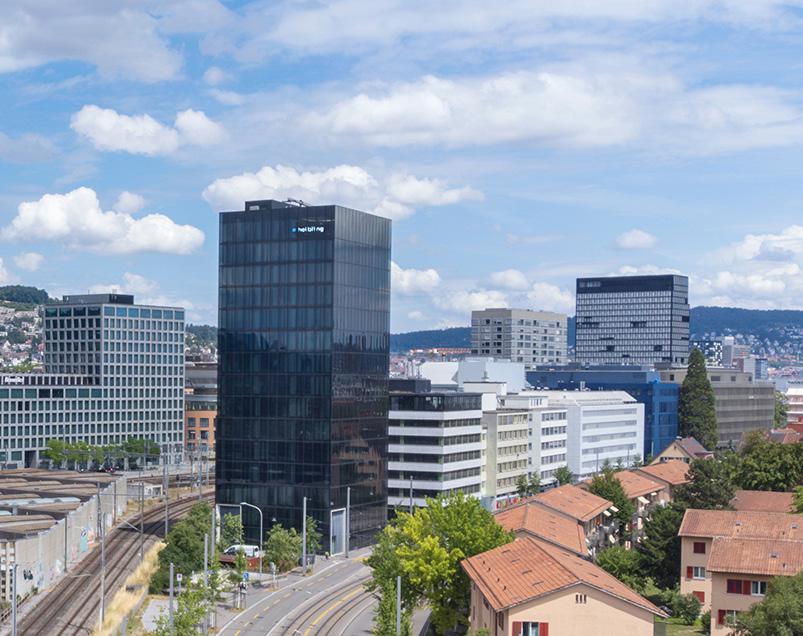
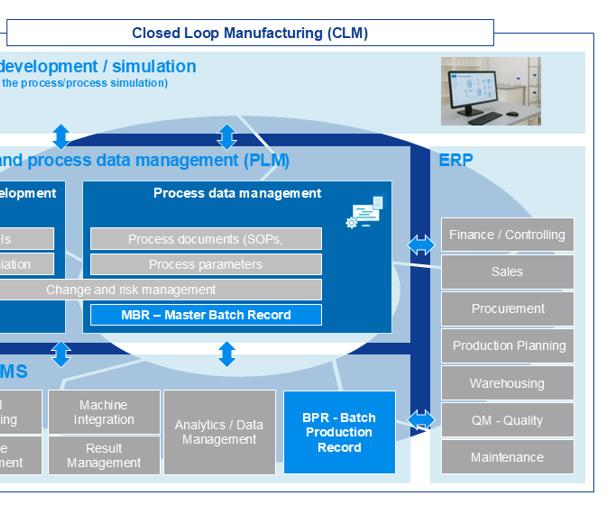
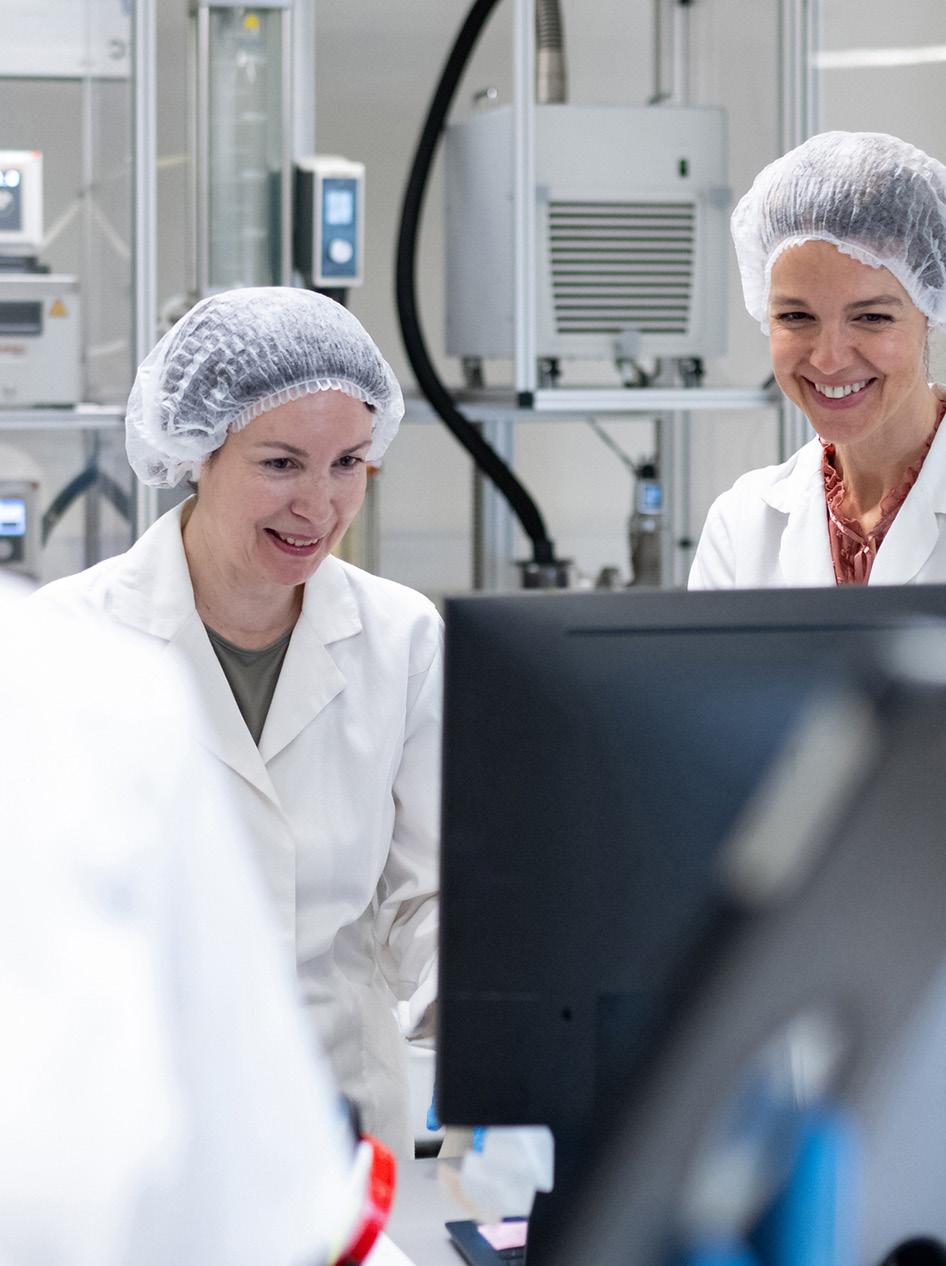

This cultural alignment is key to sustaining digital transformation. When departments share a common language and understand their interdependencies, collaboration improves naturally. In Helbling’s experience, these integrated teams not only work faster but also produce higher-quality results, with innovation cycles shortened and documentation standardised across functions.
Looking to the future, Helbling sees CLM as a foundational technology for emerging areas such as personalised medicine and small production batch in general. Production must adapt to unique or constantly changing requirements, something that manual systems struggle to achieve. “When you produce patientspecific treatments, every batch is unique,” Sébastien explains. “The only way to manage that efficiently is to have digital systems that can automatically generate regulatory documentation, adapt processes in real time, and transfer data directly to production lines.”
Helbling’s vision extends beyond technical innovation. The company views its role as that of an integrator, uniting strategy, operations, and technology into one cohesive system.
“We see ourselves as the connector between management, business, and technology,” says Sébastien.
“Our mission is to provide an end-to-end perspective - from product development through quality, regulatory and operations - that integrates all dimensions of the enterprise.”
This integration, he believes, is the future of laboratory and manufacturing environments. The CLM model creates an ecosystem where experimentation, validation, and execution coexist seamlessly. Every analysis step, equipment use, and recipe is captured digitally, forming a foundation for virtual prototyping, automated documentation, and full traceability.
From lab bench to batch record, Helbling’s Closed Loop Manufacturing model demonstrates what digital transformation looks like when applied with precision and purpose. It is not simply about digitising existing processes, but about redesigning them to work smarter, faster, and with built-in compliance. In Sébastien’s words, “The future of laboratory and production environments lies in digital modularisation. By structuring product and process development digitally, companies can seamlessly integrate automation, data integrity, and regulatory documentation.”
As industries continue their move toward fully digital, compliant-by-design systems, Helbling’s approach is setting a new benchmark. The company is showing how data can connect every stage of the product lifecycle, turning what was once a complex chain of handovers into a continuous, intelligent process. It is a vision that makes the laboratory not just a place of experimentation, but a central hub of innovation and production, where every insight is captured, validated, and ready for the next breakthrough. www.helbling.ch



In today’s fast-moving consumer world, brands are under increasing pressure to bring products to market more quickly while maintaining the highest standards of quality and compliance. Behind many of these global launches is 5FLOW, the digital backbone powering the Propelis Group. Its technology enables creative, operational and supply chain teams to work together seamlessly, reducing inefficiencies and accelerating every stage of the packaging and content process.
At its core, 5FLOW connects the multiple moving parts of modern product development into a single digital ecosystem. The platform provides complete visibility across creative, regulatory and production workflows, transforming fragmented communication into cohesive collaboration. For the teams that use it, the result is less time spent chasing approvals and more time spent delivering meaningful work.
For 5FLOW, the pursuit of speed has never been about cutting corners but about removing friction. Every aspect of the platform is designed to simplify what has historically been a complex, manual process. “Speed to market ultimately comes down to one thing, removing friction,” says Martin Sliwa, 5FLOW’s Head of Commercial Services



and a long-standing advocate for process simplification in global packaging operations. With more than a decade of experience in digital transformation and workflow optimisation, Martin brings both technical expertise and a deep understanding of client realities to his role. “Our platform automates repetitive steps, streamlines approvals and gives every stakeholder real-time visibility.” By enabling teams to work in parallel instead of in sequence, 5FLOW helps global brands reduce their time to market by weeks, freeing up resources for creativity and innovation.
Compliance is equally central to the company’s philosophy. Within highly regulated industries such as pharmaceuticals, food and cosmetics, speed is meaningless without control. 5FLOW has built compliance into the very fabric of its technology, ensuring that data security, version traceability and auditability are part of every project from the outset. As Alex Monich, who leads commercialisation for the Americas, explains, “Compliance is not an option for us. It’s built into everything we do. We operate within secure cloud environments, use role-based access controls and maintain detailed audit trails for every action.”
This integrated approach allows clients to move quickly without compromising on rigour. Rather than treating compliance as a final checkpoint, 5FLOW treats it as a continuous process woven throughout the workflow. That alignment of speed and security has helped position the company as a trusted partner to some of the world’s most recognisable brands. Artificial intelligence also plays an increasingly vital role in 5FLOW’s evolution.
Long before AI became an industry buzzword, the company was already applying it to simplify packaging and artwork processes. The platform’s machine learning models automatically extract text from artwork, run compliance checks and tag assets for easier retrieval. These tools help teams identify potential bottlenecks before they occur and reduce the need for manual oversight. One leading retailer reduced artwork lead times by 34% after implementing 5FLOW’s WAVE platform, achieving approval rates that now average 50% faster than before.
“AI turns data into foresight,” Martin says. “It allows our clients to anticipate challenges, optimise approvals and make better decisions with more confidence.” 5FLOW’s approach to AI is deliberately pragmatic, designed to complement human decisionmaking rather than replace it. By building what the team calls “assistive intelligence” into everyday workflows, the technology enhances efficiency while keeping human judgment firmly in control.


Want a fully custom solution? Challenge us
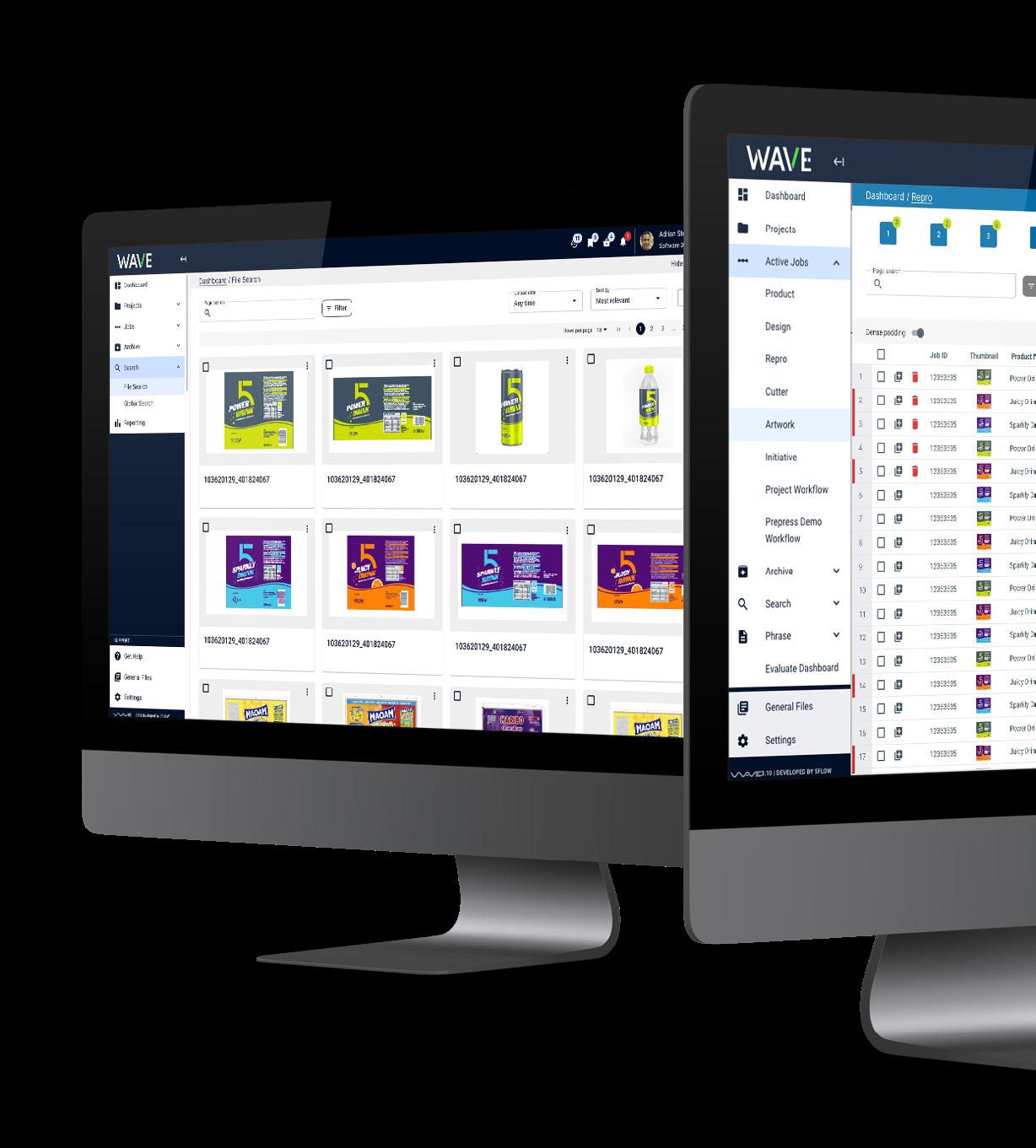

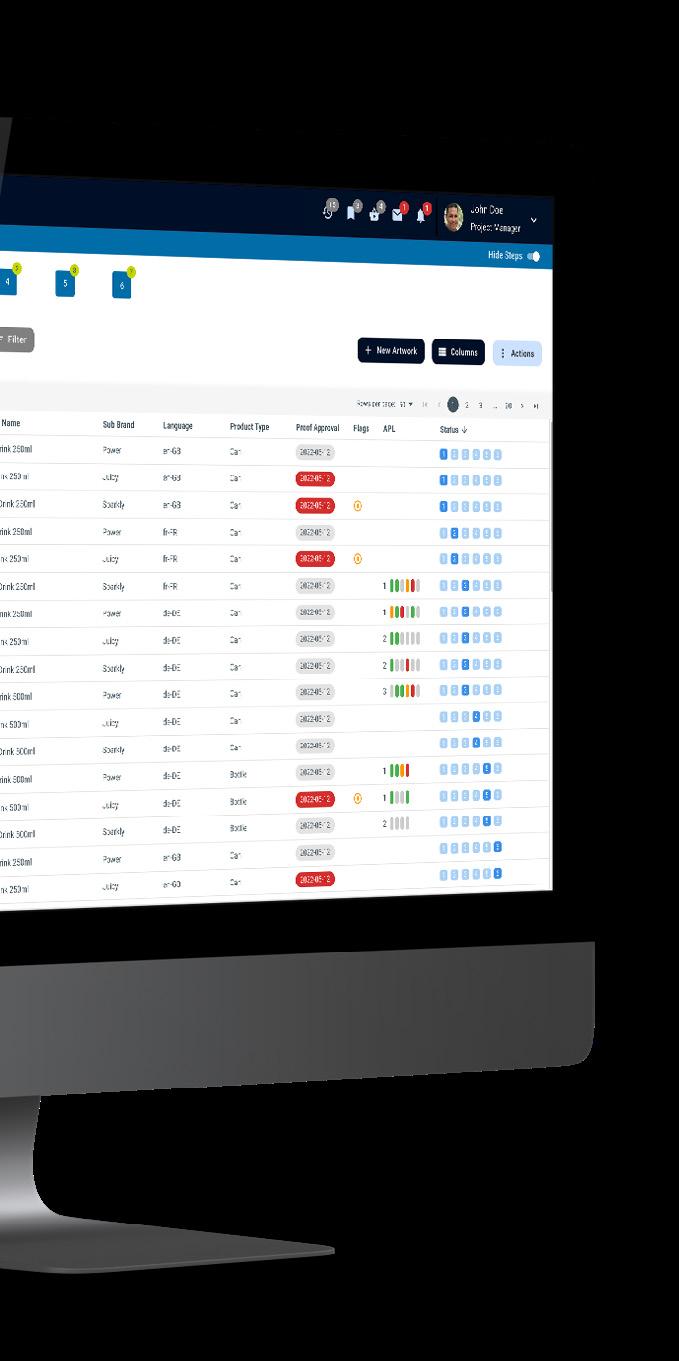
One of the company’s defining strengths is its ability to adapt its technology to suit each client’s level of digital maturity. Some businesses are ready to adopt 5FLOW’s standardised software-as-a-service platform, while others require bespoke integrations that connect with existing supply chain systems. “We always begin by understanding where an organisation is on its digital maturity curve,” says Alex Monich. “For some, a flexible SaaS model offers the best way forward. For others, a tailored platform ensures we deliver the right level of integration.” This flexibility has been key to 5FLOW’s success in diverse markets, allowing clients to modernise at a pace that suits their operations.
Creativity, compliance and consistency are often seen as opposing forces, yet 5FLOW has shown that they can coexist harmoniously. The platform quietly manages the complex regulatory aspects of packaging, giving branding teams the confidence to push their creative boundaries. Every version, claim and design change is tracked and verified in real time, ensuring both compliance and brand integrity. By balancing freedom with structure, the company enables marketing teams to focus on storytelling without losing control of quality.
Behind this operational precision is a culture of discipline. 5FLOW’s ISO 9001 and ISO 27001 certifications reflect not only its technical compliance but also its internal mindset. The company’s processes are designed for speed through structure, ensuring reliability without rigidity. This culture of organised innovation allows it to deliver consistent results even in the most demanding environments.
5FLOW operates as Propelis’ technology company, and it is entering a new era focused on what is known as “intelligent orchestration. This concept focuses on linking data, people and processes across the content supply chain to achieve complete transparency and control. The company’s Wave workflow management tool embodies this vision, connecting multiple systems within a single operational framework. It is a step towards a future where supply chains are not just faster, but inherently smarter.


“Innovation for us isn’t just about doing things quickly,” says Martin. “It’s about doing them intelligently. The next generation of workflow technology will make connections between teams, data and systems more seamless than ever before.” That pursuit of intelligent orchestration is what defines 5FLOW’s direction for the coming years, as it continues to evolve its platform around predictive insights and interconnected systems.
Beyond technology, the company’s leaders see partnership as the foundation of success. Many of 5FLOW’s client relationships have grown into long-term collaborations built on shared ambition. Alex Monich describes this as one of the most rewarding aspects of the job, explaining that the real transformation happens not just in processes, but in people’s confidence to embrace new ways of working. “The most exciting part for us is seeing how our clients evolve,” he says. “Once they see the impact - faster approvals, fewer errors, better alignment - they become advocates for change.”
As 5FLOW continues to expand within the Propelis Group, its influence on the global packaging and content management landscape is becoming increasingly apparent. The company’s technology has redefined what efficiency looks like in a world that demands constant innovation. By merging automation, compliance and creativity into a single, intelligent system, it has created a model for the modern enterprise, one where teams collaborate fluidly, decisions are made confidently and products reach consumers faster than ever before.
The story of 5FLOW is ultimately one of precision and partnership. It demonstrates that true progress lies not in automation alone, but in the thoughtful alignment of technology with human expertise. In doing so, the company has not only changed how brands work but set a new standard for how the creative supply chain of the future should flow.
To learn how 5FLOW is shaping the future of intelligent packaging management, visit www.5flowtech.com


In American healthcare, the economics of imaging rarely favour the buyer. Original equipment manufacturers build the machines, and in large part they control the parts that keep them running, at a cost that lands on hospitals and clinics already managing tight budgets. As replacement projects are deferred and existing fleets are pushed further past their planned service life, that imbalance has become harder to ignore. For Innovative Radiology, it is also the gap the company was built to fill.
The business supplies parts, service and equipment for imaging systems across the United States, from X-ray, CT and MRI through to mammography, ultrasound and bone densitometry. Much of its inventory is recovered from machines that have come out of service. “We provide the parts and service for those systems,” explains Tim Rath, the company’s Chief
Operating Officer. “And we do that through harvesting from machines or systems that have been taken out of the environment. We harvest the parts that frequently break and we refurbish those, or well, we test, mostly test and recondition, and then resell them back to those hospital systems.” The saving over manufacturer list prices is the point. “A company like ours can acquire refurbished parts and sell them back to these hospitals and clinics, medical facilities, and can save them a tremendous amount of money.”
The pressure Innovative Radiology sells into is real and specific. A clinical engineer with a system down is rarely working in calm conditions. “If you’re in the shoes of an imaging engineer in a hospital system who’s got a system down, there’s doctors that are screaming at them to get it back up and running,” Rath says.

“They’ve got patients backing up.” By the time that engineer is on the phone, he adds, “they’re frequently a very stressed individual.” In that environment, a part that arrives and does not work is not a minor inconvenience but another day or two of downtime.
Logistics underpin the offer. The company holds, or can quickly source, an unusually broad range of stock. “There’s almost no part that we can’ t get next day to the customer, next day air, if they’re looking for it,” Rath says. When a hospital has the component but not the time to fit it, the firm sends its own people. “We have our own field service engineers, so we can put them on a plane and get them going somewhere to help them out.”
Price is where the case for the secondary market is most easily made, though not uniformly so. Against a manufacturer’ s new part, Rath says, the comparison tends to flatter the aftermarket; against another reconditioner it is closer, and the argument shifts to quality. “When you look at what an OEM will charge for some of their new parts, it’s pretty easy for us to be competitive if it’s like for like,” he says. “It gets a little bit more tricky when we’re competing against somebody that is in our own space, and that’s where we have to sell the quality part of what we do, the innovative part of Innovative Radiology.”
That culture extends to how the company prices and deals. Rath describes an approach built on leaving room for everyone in the chain rather than squeezing the last dollar out of a stressed buyer. “We want everybody to make money,” he says. “Everybody can make money, save money, have a square deal.”
As COO, Rath’s remit runs across warehousing, inventory, shipping and receiving, sales, marketing and financial reporting. That vantage point has made the shift in how customers are reached hard to miss. Cold calling, he says, has become markedly less effective as engineers grow harder to reach and callscreening filters out unknown numbers.
“More and more we’re going away from the phone. It’s very hard to get anyone to pick up the phone,” he says. “Cell phone technology even has gotten good where it will filter out a number that it doesn’t recognise.” What survives the change is older than any channel. “What does remain is relationship. Relationship is still huge. And so we’ve had to really kind of find new ways to reach out. LinkedIn is definitely one of those.”
To work those channels at scale, the company turned to Enquirer Consulting Group (ECG) to identify and prioritise the right contacts. “That is definitely where ECG has come in and helped us identify the right people, identify people that are actively working, and that we can quickly boil it down to who we should talk to,” Rath says. “We’ve really leaned into that technology quite a bit, and we’ve seen a lot of good returns from it.” The contrast with the old method is sharp. “We were doing a lot of calling and email outreach prior to signing on, and it just didn’t seem very effective. It was only working really during working hours. ECG has really been able to help us get down to just a core group of people that we should be calling out to.”
The change has also altered when contact happens. “A lot of the interaction takes place after hours, which is kind of nice,” Rath says. “A lot of times we’ll get the responses from LinkedIn messages in the evening, which is really nice. Or on the weekends.” The early outreach is automated but, he is careful to note, written to read as conversation. “AI is kind of doing that heavy lifting for us, but in a very conversational tone, so that it doesn’t sound like it’s robotic or AI generated. But then as soon as we get that response back, that’s when our sales staff, or even myself, will take over and start to interact with that customer.” The handover can be smooth enough to cause confusion. “There’s a lot of times I start interacting with somebody, I’ll take over the conversation, and they’ll refer back to something the AI had said in one of the earlier outreaches, and I have to go

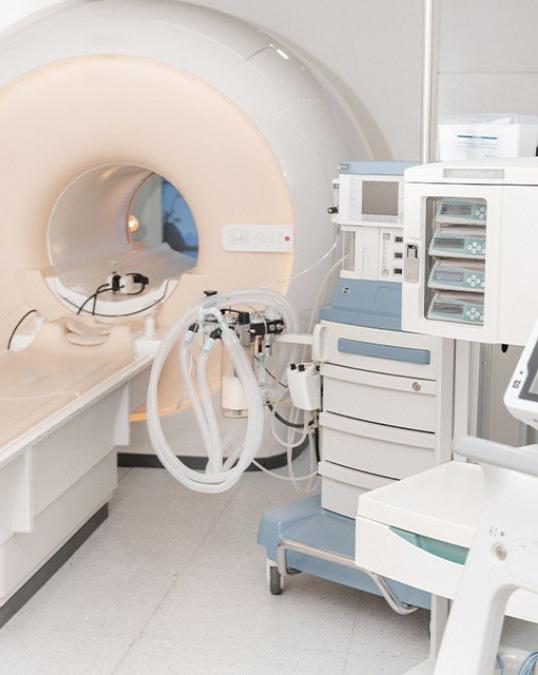

back and read exactly what the AI said sometimes, just to make sure I know what it said.”
The same outreach generates useful signal: patterns in who replies, and who never does, tell the team which titles are worth pursuing. “We know, based on how people have responded, if they’re the right person we should be reaching out to,” Rath says. “If someone with this title maybe just doesn’t ever respond to us, maybe this isn’t somebody we should actually be going after. And so we can pivot and go some other direction.” He is content to put recent growth partly down to the approach. “Last year was a record year for the company, and this year is another record year. We’re doing great. We have onboarded quite a few new customers this year, and some of that is through the LinkedIn outreach we’ve been doing through ECG. And Dan didn’t even pay me to say that.”
The wider policy question hanging over the sector is right to repair. As imaging systems become more softwaredependent, manufacturers are better placed to restrict access to the parts and tools independent providers need, and Rath sees the US debate as live and consequential. “That’s a big issue in the United States right now, the right to
repair,” he says. “It’s big in the medical side, where the government is trying to decide how far they have to go into making sure that companies like ours are able to offer the same type of parts at a lower cost than the OEM.” The lever, in his view, is the software. “As almost anything today has software behind it, that’s really where the OEMs have been able to control the parts and repair. We need more openness when it comes to this software.”
For now, the company’s plans are incremental rather than dramatic. Women’s health and mammography have been central to recent growth, Rath says, and CT is the area he expects to push into next. His advice to healthcare leaders weighing secondary-market suppliers is consistent with the case he makes for his own firm: qualify the vendor. Make sure whoever you buy from can stand behind the parts, and that they have done their due diligence “to give you a good tested part, and not accepting just substandard parts from somebody that’s just a junkyard.” It is an unglamorous proposition, but a durable one. Where manufacturer economics squeeze hospitals and downtime carries a clinical cost, a tested part delivered the next morning is worth more than any pitch.
www.innovative-radiology.com


There are few names within football retail as recognisable as Pro:Direct Soccer. Over the years, the brand has grown from a specialist football retailer into one of the most influential platforms within the modern football landscape, building a reputation based on product knowledge, cultural relevance and an ability to stay closely connected to the game itself.
In an increasingly competitive retail environment, where sportswear and football products are available almost

everywhere, Pro:Direct has managed to separate itself through expertise and identity rather than simply scale. While many retailers focus heavily on discounts and fast-moving trends, Pro:Direct has consistently positioned itself around quality, innovation and a genuine understanding of football culture.

That connection to football is a major reason why the brand continues to resonate so strongly with players and supporters across multiple generations. From grassroots footballers buying their first pair of boots to elite athletes searching for the latest performance technology, the retailer has built trust through consistency and credibility.




Football retail itself has changed dramatically over the last decade. What was once a fairly straightforward shopping experience has evolved into something much more influenced by fashion, digital culture and athlete driven marketing. Football boots are no longer viewed simply as equipment. They have become extensions of personality, identity and lifestyle.
Pro:Direct recognised this shift earlier than many competitors.
The brand helped elevate football boot culture through highly visual product launches, exclusive releases and campaigns that blended performance with aspiration. Rather than treating football products as generic sports inventory, the retailer positioned them within a wider cultural conversation surrounding the sport.
This approach proved particularly effective as social media transformed how younger audiences interacted with football. Platforms like Instagram, TikTok and YouTube changed the relationship between consumers and sportswear brands, creating demand for storytelling, exclusivity and visual identity alongside performance.
Pro:Direct adapted exceptionally well to that environment.
Its campaigns consistently feel modern and football focused without appearing forced or overly corporate. The company understands the emotional connection people have with the game and reflects that throughout its branding, content and partnerships.
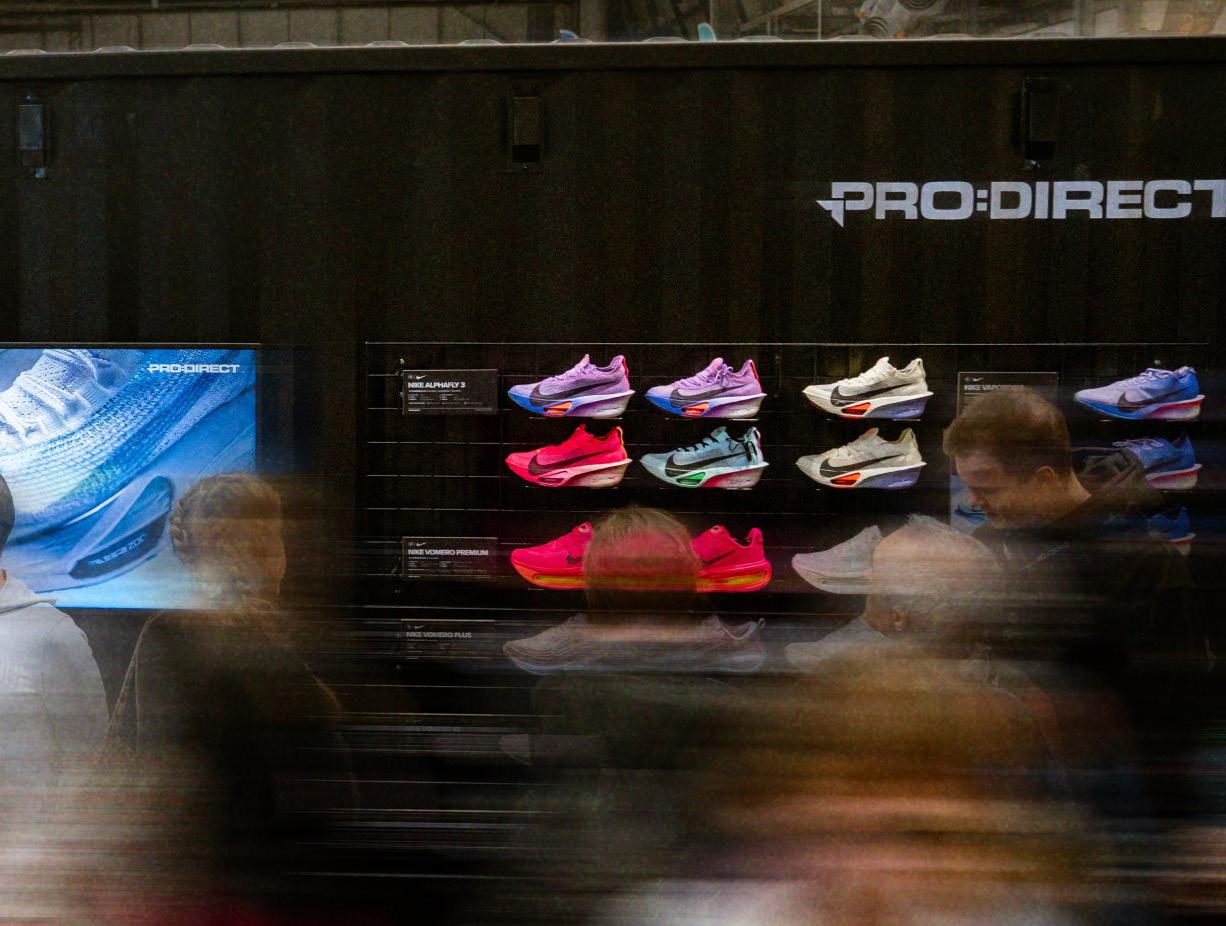
Brand awareness has become one of the company’s strongest assets. Among football audiences, Pro:Direct has built a level of recognition that few specialist retailers achieve. The brand has become closely associated with premium football products, elite boot launches and modern football culture itself.
Part of that success comes from how effectively the retailer balances performance and lifestyle.
Football culture today extends far beyond the pitch. It intersects heavily with fashion, music, streetwear and digital entertainment. Pro:Direct has embraced that reality while still maintaining strong credibility within football performance.
Its expansion across apparel, lifestyle collections and streetwear inspired football fashion has felt natural rather than commercially forced because the brand already held authentic cultural relevance within the sport.
The retailer has also remained highly focused on expertise. In an online environment where consumers are often overwhelmed with options, Pro:Direct continues to stand out through specialist product knowledge and a clear understanding of what footballers actually want from performance equipment.
Whether discussing fit profiles, boot technologies, surface compatibility or goalkeeper equipment, the company has consistently positioned itself as an authority within football retail rather than simply a reseller.
That expertise builds trust.
And trust is increasingly valuable within modern retail.
Consumers today are more selective about the brands they engage with. They want retailers that understand their interests, reflect their identity and feel genuinely connected to the culture surrounding the products they sell.
Pro:Direct achieves that particularly well because football remains central to everything the business does.
Even as ecommerce becomes more driven by algorithms and automation, the retailer has managed to retain a strong sense of personality. Its digital platforms feel modern and highly optimised, but they still carry the energy and emotion associated with football culture.
This balance between technology and identity has become increasingly important as the retail landscape evolves.
Modern consumers no longer separate content, commerce and entertainment in the same way previous generations once did. They expect brands to provide experiences alongside products. Pro:Direct has responded to this shift by creating an ecosystem that combines retail, storytelling, athlete partnerships and community engagement.
The company’s influence also reflects the growing importance of specialist retail in an era dominated by mass marketplaces.
While global ecommerce giants offer convenience, they rarely offer emotional connection or cultural understanding. Pro:Direct’s strength lies in its ability to feel genuinely embedded within football itself.
That positioning gives the retailer long term relevance.


As football culture continues evolving through digital media, creator influence and lifestyle driven branding, retailers capable of understanding both performance and culture will remain in the strongest position.
Pro:Direct already operates comfortably within both worlds.
The brand understands elite level football performance while also recognising the importance of visual identity, community and aspiration within modern sport.
Ultimately, what makes Pro:Direct stand out is not simply the products it sells, but the consistency of the brand behind them.
The retailer has spent years building credibility within football culture, and that authenticity continues to shape how audiences respond to the business today.
In a crowded retail market where many experiences feel increasingly interchangeable, Pro:Direct still feels distinct.
That ability to remain culturally relevant, performance focused and trusted by football audiences is exactly why the brand continues to lead modern football retail.
The company has managed to build something that goes far beyond ecommerce.
It has built a brand football people genuinely trust.
And within modern retail, that is becoming one of the rarest qualities a company can possess.
www.prodirectsport.com
Luxury travel is changing. For years, high end escapes centred around stillness. Long afternoons beside infinity pools, slow lunches overlooking the sea and private villas hidden away from the world became the defining image of aspirational travel. While that appetite for relaxation still exists, a growing number of luxury travellers are now searching for something more immersive, energising and experience led.
Sporting escapes have quietly become one of the fastest growing movements within luxury hospitality. Across Europe, the Middle East and Africa, hotels and resorts are increasingly designing entire experiences around movement, competition and outdoor adventure. Tennis retreats in the Mediterranean, desert horse riding experiences in the UAE, mountain cycling itineraries in the Alps and private padel clubs in Ibiza are all becoming central to the modern luxury travel landscape.


The shift reflects a wider change in how affluent travellers define indulgence. Today, luxury is no longer solely about switching off. Increasingly, it is about feeling better, moving more and returning home energised rather than simply rested. Wellness has naturally played a major role in this evolution, but sport is now becoming equally influential. For many travellers, physical activity is no longer viewed as separate from luxury. It has become part of it.
This can be seen clearly in the way resorts are evolving. Traditional hotel gyms once tucked away in basement levels are being replaced by open air training spaces, oceanfront yoga decks and beautifully designed wellness clubs that feel as visually curated as the rest of the property itself. Luxury hospitality brands understand that guests increasingly want experiences rather than amenities.
A morning paddleboarding session followed by breakfast overlooking the coast often feels more memorable than a formal dining room alone. Guided hiking trails, private surf lessons, championship golf experiences and professionally coached tennis sessions now sit alongside spas and fine dining as key parts of the luxury travel offering.
Padel has become one of the clearest symbols of this trend. The sport has exploded across luxury destinations over recent years, particularly within Europe and the Middle East. Hotels, private members clubs and beach resorts are increasingly incorporating courts into their wider design concepts, recognising the sport’s growing cultural appeal among affluent younger audiences.
Part of its popularity comes from its social nature. Unlike some traditional sports associated with exclusivity or technical barriers, padel feels modern, accessible and lifestyle driven. It blends fitness with atmosphere, often becoming as much about the social environment surrounding the court as the game itself. That combination works perfectly within luxury hospitality.
Guests are not necessarily travelling solely to compete. They are travelling for the wider feeling surrounding the experience. Sport within luxury travel has become intertwined with social connection, design, wellness and escapism. The aesthetics matter just as much as the activity itself. A private tennis court framed by olive groves in southern Italy or a horseback ride through the desert at sunset outside Marrakech offers something emotionally immersive in a way traditional luxury increasingly struggles to replicate.
This is also why outdoor adventure has become increasingly desirable within high end travel circles. Luxury safari operators across Africa are now offering far more than game drives alone. Walking safaris, guided trail running, horseback experiences and wilderness wellness retreats are becoming more prominent, particularly among travellers seeking deeper connections to landscapes and nature.
The appeal lies in authenticity. Modern luxury consumers are increasingly drawn towards experiences that feel personal and emotionally grounding rather than overtly performative. Sporting escapes naturally tap into that desire because they encourage presence, movement and interaction with surroundings in ways passive travel often does not.
The rise of sporting escapes also reflects changing attitudes toward health and lifestyle. Wellness is no longer viewed simply as a spa treatment or detox programme. Increasingly, it has become integrated into everyday luxury culture itself. Travellers want to maintain routines, prioritise movement and feel physically well even while away from home.
Hotels are responding quickly. Many luxury properties now offer personalised fitness programmes, recovery facilities, cold plunge pools, hiking itineraries and tailored nutrition experiences alongside traditional hospitality services. The line between luxury resort and wellness retreat continues becoming increasingly blurred.
Importantly, this movement is influencing design as much as experience. Architects and hospitality designers are now creating spaces specifically built around outdoor living and movement. Open air gyms, integrated cycling studios, rooftop training terraces and resort layouts designed to encourage exploration are all becoming more common across premium travel destinations.
This evolution can also be seen through the growing influence of major sporting events within luxury travel itself. Formula One weekends, elite tennis tournaments and international golf events are increasingly positioned not only as sporting occasions, but as luxury lifestyle
experiences tied to hospitality, fashion and social culture. Travel itineraries are increasingly being built around them. Monaco during Grand Prix season, Wimbledon in the summer and luxury ski resorts during alpine sporting events all demonstrate how closely luxury tourism and sport are becoming connected.
There is also a deeper emotional aspect driving the popularity of sporting escapes. In an increasingly digital world dominated by screens and constant connectivity, physical experiences feel more valuable than ever. Sport creates moments of presence. It encourages interaction with landscapes, people and environments in ways technology often cannot replicate.
Luxury travellers are responding to that feeling. The idea of returning from a holiday feeling stronger, healthier and mentally reset has become far more appealing than excessive indulgence alone. Sporting escapes therefore offer something modern luxury increasingly prioritises: balance. They combine wellness with adventure, movement with relaxation and sophistication with genuine experience.
As luxury travel continues evolving, the destinations likely to stand out are not simply those offering the most extravagant suites or largest infinity pools. Increasingly, it will be the places capable of creating experiences that feel immersive, energising and emotionally memorable.
And right now, sport is becoming one of the most powerful ways luxury hospitality is delivering exactly that.


Every summer, Wimbledon transforms London into something slightly different. For two weeks, the city takes on a softer elegance. Linen tailoring replaces structured office wear, terraces fill with chilled rosé and strawberries and cream once again become part of the social calendar. Wimbledon has always been about tennis, but in 2026 it feels more connected than ever to luxury lifestyle itself.
The tournament remains one of the few global sporting events where tradition and sophistication still sit entirely at the centre of the experience. While many modern sporting spectacles lean heavily into spectacle and excess, Wimbledon continues to thrive through refinement, understatement and atmosphere. That is precisely why it remains so influential within luxury culture.
Attending Wimbledon today is no longer simply about Centre Court tickets. It has become a carefully curated summer experience shaped by fashion, hospitality, travel and social rituals that extend far beyond the matches themselves. From the moment guests arrive in South West London, the event carries a distinctly polished energy that feels uniquely British.
Fashion naturally sits at the heart of Wimbledon’s visual identity. Unlike many global sporting events dominated by overt branding and trend driven dressing, Wimbledon style still leans towards timelessness. Crisp tailoring, relaxed elegance and neutral palettes continue to define the atmosphere both inside the grounds and across the city’s surrounding restaurants, hotels and private members clubs.
This season, lightweight linen suiting has become one of the defining looks for both men and women attending the championships. Soft cream tones, pale stone colours and subtle pinstripes feel particularly aligned with Wimbledon’s traditional aesthetic, especially when paired with understated accessories and classic leather footwear. For women, the move towards softer structured dressing continues to dominate, with flowing silk skirts, tailored waistcoats, oversized sunglasses and refined monochrome styling becoming increasingly visible throughout the hospitality areas and private terraces surrounding the tournament.
Jewellery is noticeably more restrained this year. Rather than statement pieces, luxury guests are leaning towards delicate gold detailing, tennis bracelets and vintage inspired watches that complement rather than overpower an outfit. Wimbledon has always rewarded quiet confidence over overt display and 2026 feels no different. Accessories are also becoming increasingly considered, with oversized leather totes, woven textures and soft suede helping shape the wider luxury summer aesthetic seen throughout the tournament.
Beauty and grooming have followed a similarly understated direction. The polished but effortless look dominates across both men’s and women’s styling. Fresh skin, minimal makeup and natural textures feel far more aligned with Wimbledon’s atmosphere than heavily curated glamour. Hair is softer, tailoring is looser and luxury itself feels increasingly effortless rather than performative.
Hospitality remains another defining pillar of the Wimbledon experience. Private suites, terrace dining and members enclosures continue attracting an international luxury audience seeking something more elevated than simply watching the matches from the stands. The atmosphere surrounding these spaces often feels closer to an exclusive garden party than a traditional sporting event.
Champagne houses, luxury watch brands and high end hospitality groups continue shaping much of the wider experience around the tournament. Yet unlike louder sporting environments, Wimbledon partnerships still feel relatively discreet and carefully integrated into the setting itself. Dining has become increasingly important too, with luxury guests building entire Wimbledon itineraries around reservations, terrace lunches and post match dinners across London.



Restaurants in Chelsea, Mayfair, Kensington and Notting Hill experience a noticeable shift throughout the championships as the city moves into full summer entertaining mode. Long lunches have become particularly central to the Wimbledon social calendar, with fresh seafood, chilled white wine, seasonal British produce and elegant outdoor dining all complementing the slower rhythm that defines the fortnight. Luxury during Wimbledon is less about extravagance and more about atmosphere.
Travel trends surrounding the tournament also continue evolving. International visitors are increasingly combining Wimbledon with wider luxury UK itineraries, often balancing London with countryside escapes in the Cotswolds or coastal stays further south. Private chauffeurs, boutique hotels and discreet members clubs remain highly sought after throughout the tournament period.
Within London itself, hotels continue refining their Wimbledon offerings. Luxury properties across Mayfair and Knightsbridge now regularly curate dedicated Wimbledon packages featuring private transfers, exclusive hospitality access and bespoke concierge experiences tailored around the championships. The influence of wellness can also be felt increasingly strongly around the tournament, with morning pilates classes, recovery focused treatments and wellness centred hospitality experiences becoming more integrated into the wider Wimbledon lifestyle.
This reflects a broader shift taking place across luxury culture itself. Today’s affluent consumer increasingly values balance, longevity and experience over overt excess. Wimbledon naturally aligns with that mindset because it already embodies a slower and more refined form of prestige. Even the pace of the event feels different from other
major sporting spectacles. There is an elegance to Wimbledon’s rituals that continues resonating globally. The neatly kept grass courts, all white dress code, afternoon sun across the grounds and restrained sophistication of the hospitality areas create an atmosphere that feels remarkably timeless despite the changing world around it.
Social media has inevitably amplified Wimbledon’s luxury appeal even further. Every summer, images of terrace lunches, tailored summer dressing and Centre Court moments circulate across fashion and lifestyle platforms, reinforcing Wimbledon’s position not simply as a tennis tournament, but as one of the defining luxury social events of the season.
Importantly, the tournament’s appeal lies in authenticity. Unlike many manufactured luxury experiences, Wimbledon’s prestige has been built slowly over generations through consistency, heritage and atmosphere. That sense of history remains central to why the event continues attracting luxury audiences year after year.
In 2026, the essentials defining Wimbledon are therefore less about trends and more about curation. Timeless tailoring, elegant hospitality, thoughtful travel, understated beauty and experience led luxury continue shaping the atmosphere surrounding the championships. The details matter, but subtlety matters even more.
Because ultimately, Wimbledon still represents something increasingly rare within modern luxury culture: an experience that feels sophisticated without trying too hard.