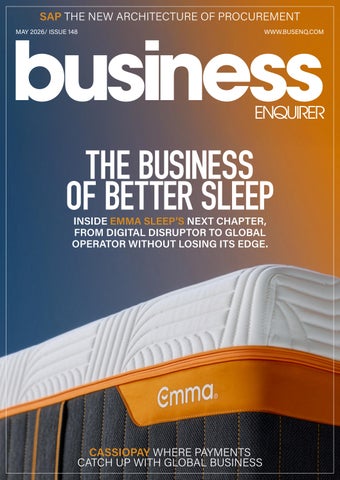
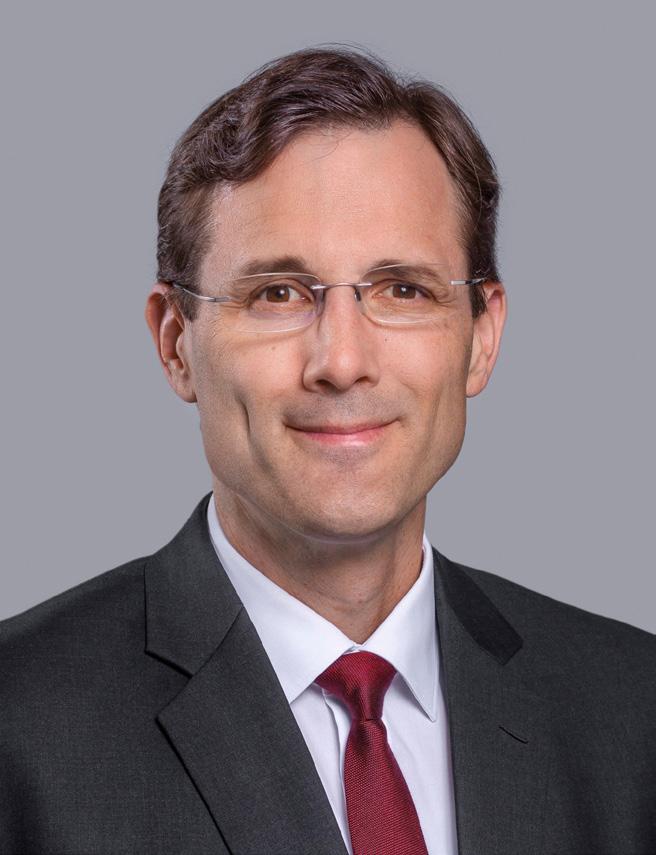
INSIDE EMMA SLEEP’S NEXT CHAPTER, FROM DIGITAL DISRUPTOR TO GLOBAL OPERATOR WITHOUT LOSING ITS EDGE.
CASSIOPAY WHERE PAYMENTS CATCH UP WITH GLOBAL BUSINESS
Hosted by
National Consortium Hosts
National Co-Host
National Supporter
A modern network must be able to respond easily, quickly and flexibly to the growing needs of today’s digital business. Must provide visibility & control of applications, users and devices on and off the network and Intelligently direct traffic across the WAN. Be scalable and automate the process to provide new innovative services. Support IoT devices and utilize state-of-the-art technologies such as real-time analytics, ML and AI. And all these must be provided with maximum security and minimum cost.
This is the power that brings the integration of two cloud managed platforms, Cisco Meraki and Cisco Umbrella. This integration is binding together the best of breed in cloud-managed networking and Security. cisco.com
EXECUTIVE TEAM
Jamie Waite CEO, EMG | Enquirer Media Group jamie.waite@busenq.com
Natoya Rimmer Global Head of Accounts natoya.rimmer@busenq.com
DATA ANALYSIS
Dan Reeves Head of Data dan.reeves@busenq.com
Kumar Nil-Khan Senior Data Strategy kumar.nilkhan@busenq.com
Simon Ferrening Production Manager Commercial Performance Analysis
SOCIAL MEDIA TEAM
Anita Terrell Social Media Manager anita.terrell@busenq.com
Lee Dixon Social Media Manager lee.dixon@busenq.com
HR
Susan Tumelty HR Partnered Company info@hrdept.co.uk
EDITORIAL
Laura Green Editor in Chief laura.green@busenq.com
Catherine Lafferty Business Editor catherine.lafferty@busenq.com
PRODUCTION
Remo Savino Production Assistant remo.savino@busenq.com
Jamie Bolton Head of Design jamie.bolton@busenq.com
Didie Nturo Head of Video & Content Creation didie.nturo@busenq.com
Matt Hardwick Online Website Manager matt.hardwick@busenq.com
DESIGN WEBSITE PHOTOGRAPHY
Didie Nturo Lead Photographer didie.nturo@busenq.com
LEGAL
Chloe Bird Birketts LLP Norwich
A WORD FROM OUR TEAM
Welcome to the May Edition of Business Enquirer Magazine – Issue 148
There is a point in every year where intention gives way to reality. Strategies drafted in January begin to show their strengths and their flaws, and the difference between momentum and direction becomes clear. This edition is shaped by that moment. Not by ambition alone, but by how well organisations are translating it into something that holds under pressure.
We begin with The Business of Better Sleep, a front cover feature on Emma Sleep and a business now entering a more complex phase of its evolution. Scaling a direct-toconsumer model across more than 30 markets is one challenge. Rewiring that model to accommodate physical retail without losing its core advantages is another entirely. Under the leadership of Stefan Hofer, the company is approaching that transition with a level of operational discipline that reflects a broader truth. At this stage, growth is less about acceleration and more about control. The systems behind the business must evolve at the same pace as the brand itself.
That idea of infrastructure quietly shaping outcomes runs through much of this issue. Our Top 10 Supply Chain Distributors to Watch in 2026 reflects the organisations that rarely dominate headlines, yet underpin global commerce. In a climate defined by disruption and cost pressure, their ability to maintain flow, resilience and consistency has become central to how business operates.
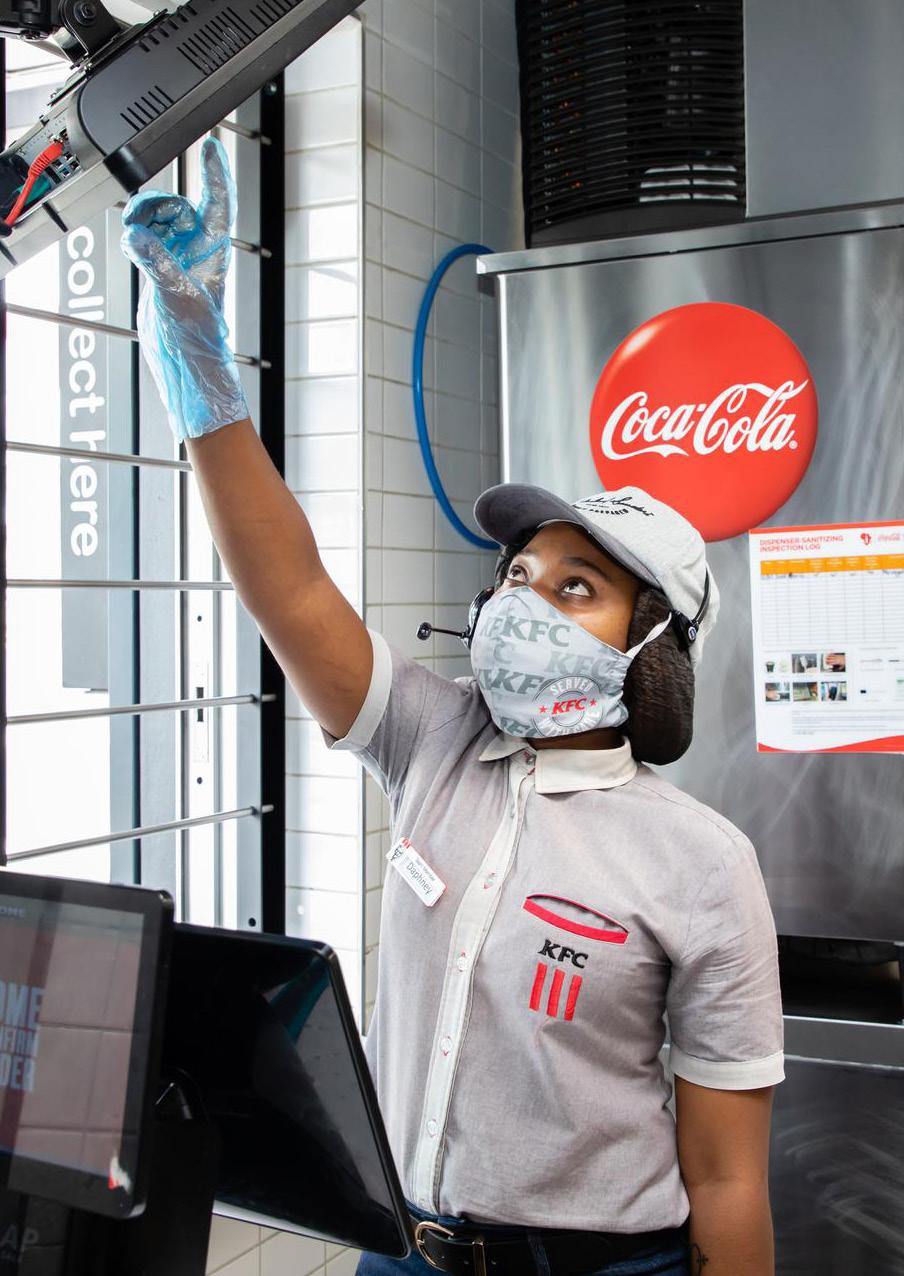
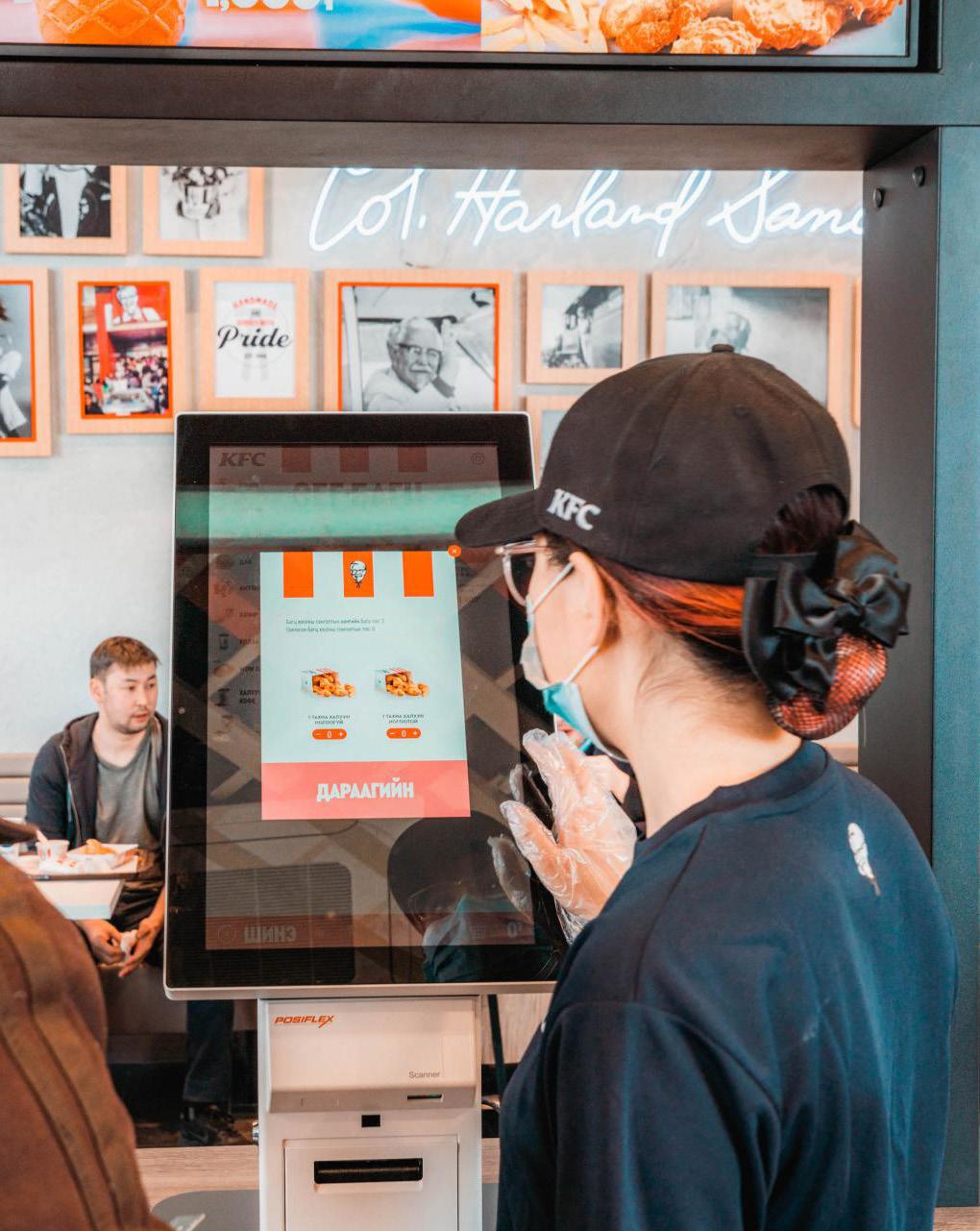
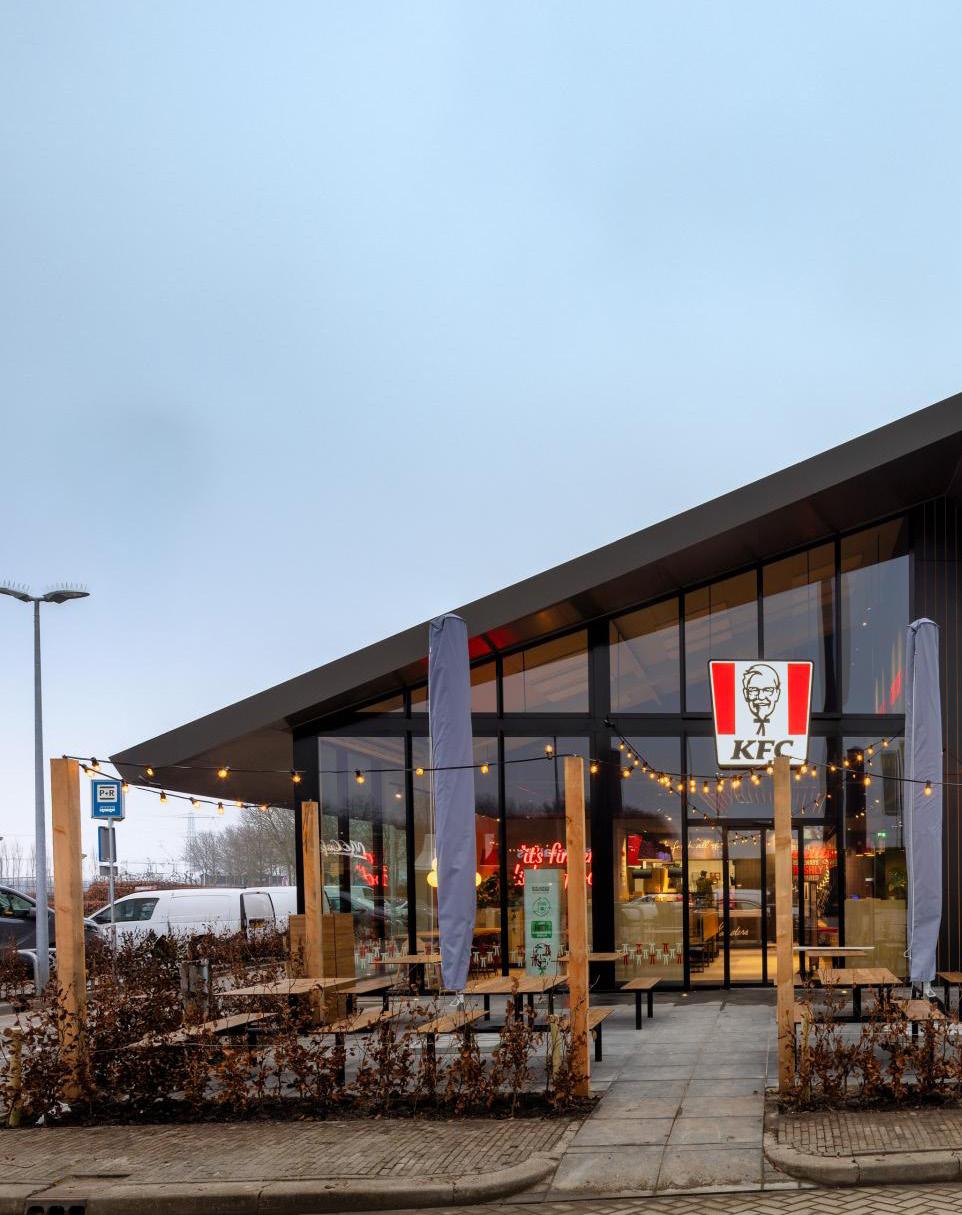
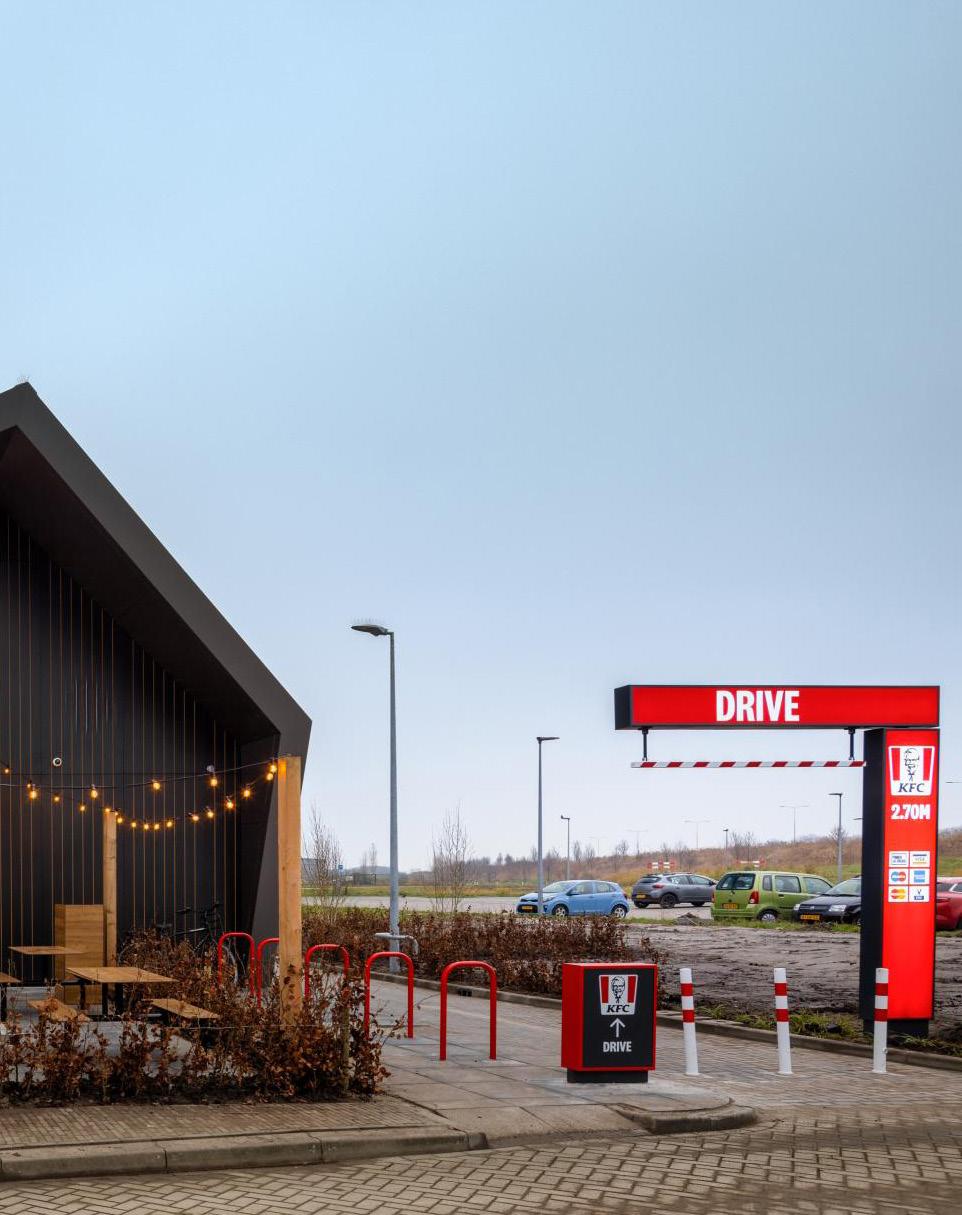
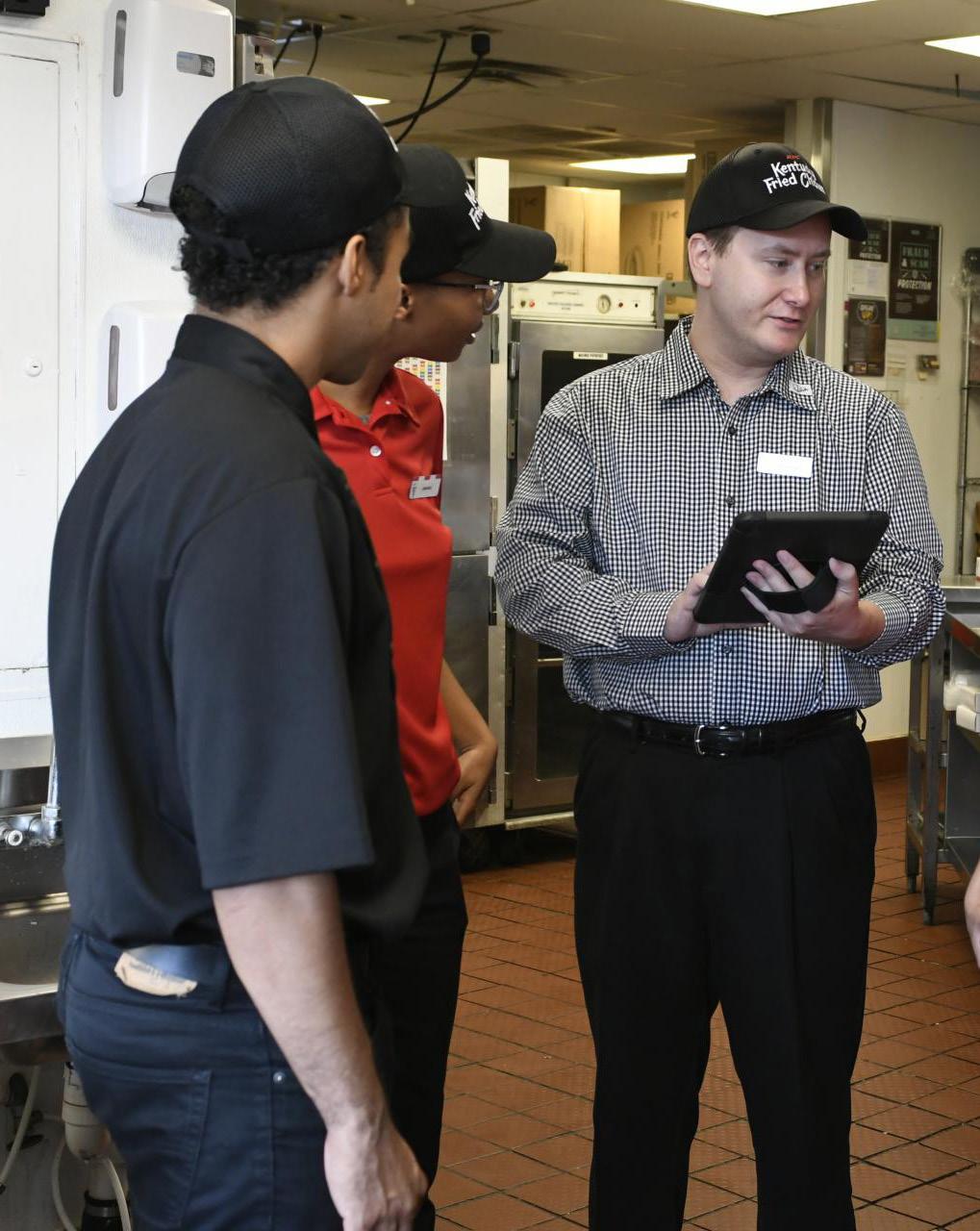
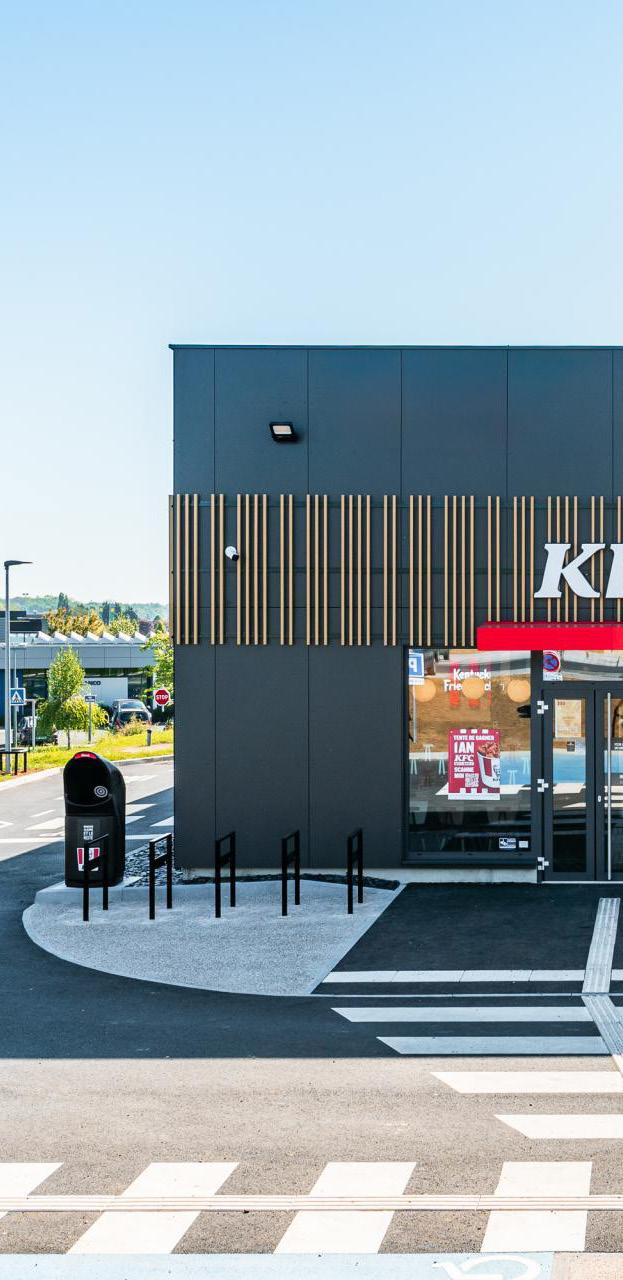
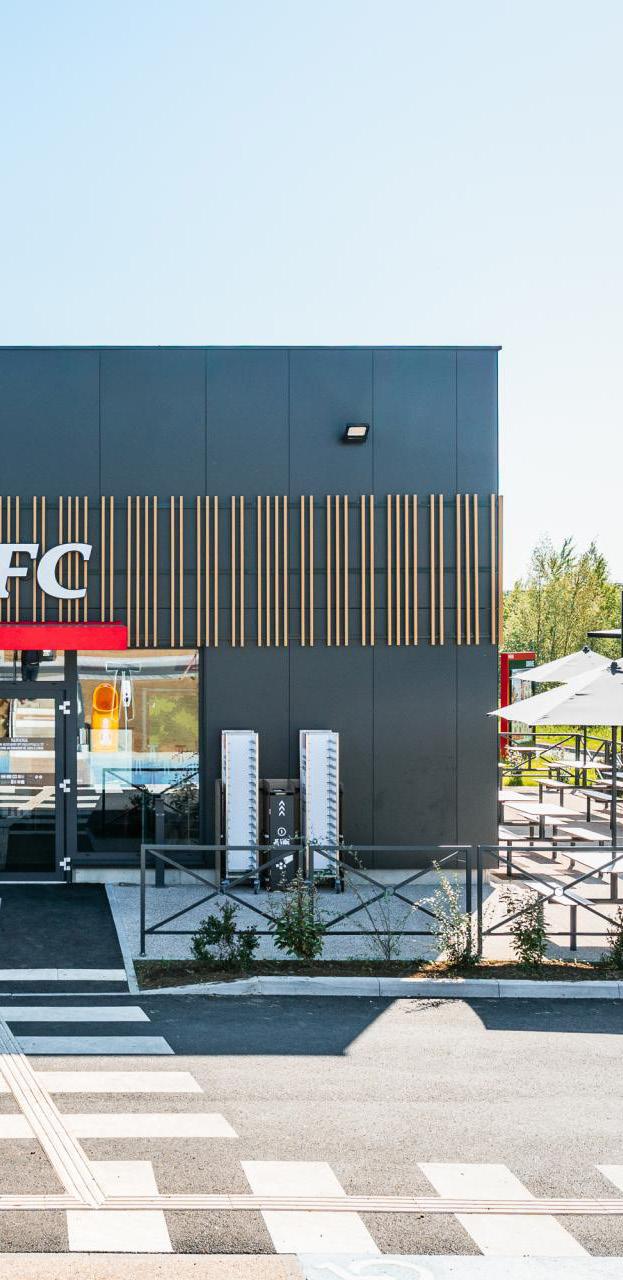
In The System Behind the Counter, the focus turns to KFC, where technology has moved from background support to operational backbone. Through the work of Max Irisov, digital capability has been embedded across a complex, franchise-led landscape without losing sight of the customer experience. The result is not transformation for visibility, but for reliability. A system that performs consistently, where the technology works best when it is barely noticed.
A similar recalibration is taking place within financial infrastructure. Where Payments Catch Up With Global Business explores how Cassiopay is responding to the gap between global ambition and outdated payment systems. Under Daniels Fleisers, the company is simplifying what has long been unnecessarily complex, building a model that allows businesses to operate across borders with greater clarity, speed and control.
Within the Business Enquirer Lifestyle section, the focus turns to how modern consumption is being redefined. What Luciente Reveals About Modern Fashion Consumption uses Luciente to explore the tension between perception and delivery in a digital-first luxury market. Alongside this, Zing Toothpaste reimagines everyday routines through design and performance, while IM8 Health reflects a broader shift towards simplified, results-driven approaches to health and longevity.
Across the edition, the pattern is clear. Whether in operations, technology, finance or lifestyle, the defining factor is no longer ambition. It is alignment. Between what is promised and what is delivered. Between how a business presents itself and how it performs in reality. Enjoy the read.
If you have a business story you wish to share, please contact our Head of Production via production@busenq.com
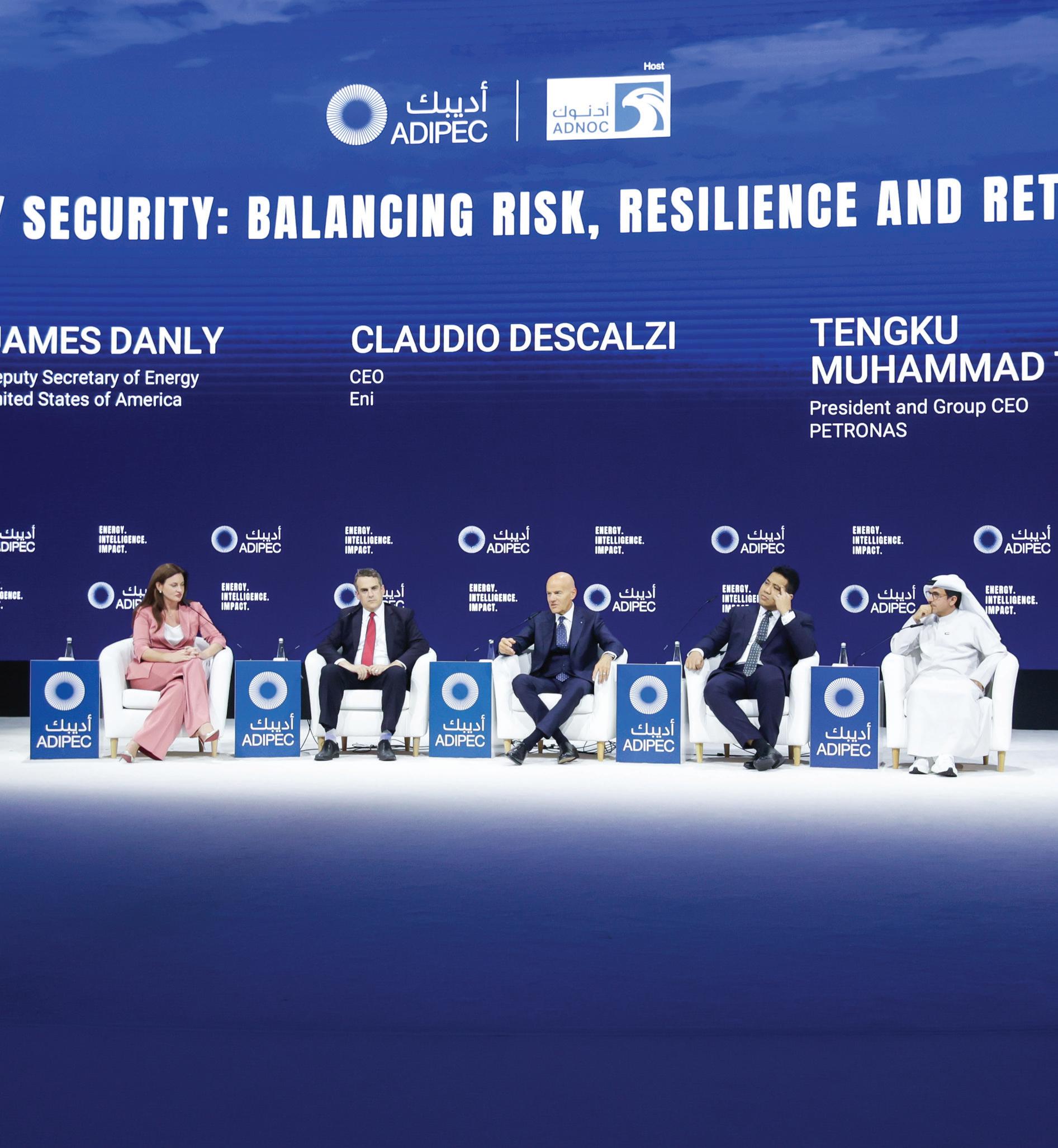
ADIPEC will convene leaders from across energy, technology, finance and policy to explore practical pathways for building shock-resistant, future-ready energy systems – systems capable of meeting rising demand, enabling digital and industrial growth, and supporting global development while advancing emissions management.
JOIN THE GLOBAL ENERGY COMMUNITY
ADIPEC in numbers:
239,000+ Exhibition attendees
16,500+ Conference delegates
2,250+ Exhibiting companies
1,800+ Conference speakers
Bosch Software and Digital Solutions (SDS)
Is established as the global powerhouse of technology.
Expert in software, sensors, and services, we are the tech partners of organizations from leading startups to legacy industry giants for delivering new-age digitalization.
We help enterprises reimagine the present and the future of businesses with #SmarterDigital.
# SmarterDigital
What does #SmarterDigital truly mean?
Everyone’s in a race to do more with digital. But such initiatives seldom yield the results that were envisioned. Not limiting to strategy or execution, we take a step back and look at the gaps in the bigger picture.
We rethink conventions, traditions, norms, and digital ‘as usual’.
The result is Smarter Digital. With it, we embed a sustainability mindset, create intelligent business models, and a data-led culture across the value chain.
Bosch Software and Digital Solutions
NA | UK | EU | ME | SE | JP
The promise of #SmarterDigital
We help enterprises achieve sustained business success with our flexible, detail-oriented, and resilient approach to digitalization.
PRC EUROPE 2026 WHERE DOWNSTREAM BUSINESS MEETS ITS NEXT OPPORTUNITY NEWS 016
WELLNESS AND MENTAL HEALTH LEADERSHIP TO WATCH IN 2026 NEWS 022
INTERNATIONAL HOTEL GROUP BUSINESS PARTNER UPDATES 010 KIMPTON ASHBEL NEW YORK – PARK AVENUE OPENS IN HISTORIC MANHATTAN LANDMARK
IYC
IYC RETURNS AS GOLD SPONSOR OF THE CYCLADES CUP 2026
030
BIOTECH MARKET OUTLOOK: INNOVATION AND INVESTMENT TO WATCH IN 2026 NEWS NEWS 026
AI ROBOTICS IN MEDICINE: INNOVATION TO WATCH IN 2026
PHARMACY INNOVATION LABS TO WATCH IN 2026 NEWS 034
038 THIS MONTH’S SUPPLY CHAIN DISTRIBUTORS TO WATCH IN 2026
MUNIR TRAD, SNR DIRECTOR SUPPLY CHAIN PLANNING AT PUMA Q&A 042
064
WHERE PAYMENTS CATCH UP WITH GLOBAL BUSINESS CASSIOPAY
070
PROCUREMENT AT THE FRONTLINE OF PROTECTION BBF SAFETY 080
AI ISN’T COMING FOR YOUR JOB. IT’S COMING FOR YOUR BROKEN WORK TOTALTEK 104
THE CARGO GAME STILL BELONGS TO THE PEOPLE WHO PICK UP THE PHONE SIMPLECARGO THE SYSTEM BEHIND THE COUNTER KFC 090
THE LEADERSHIP BEHIND HOW PLASMAGEN IS CLOSING INDIA’S THERAPEUTIC GAP PLASMAGEN 112
Where InvitedHome Redefine Luxury at Altitude
The Return of Discretion The Executive Edge
What Luciente Reveals About Modern Fashion Consumption
How ZingToothpaste Is Elevating A Forgotten Ritual
The New Discipline of Health
Evolution of Data
KIMPTON ASHBEL NEW YORK
– PARK AVENUE OPENS IN HISTORIC MIDTOWN MANHATTAN LANDMARK
A townhouse-inspired retreat introduces residential design, gathering spaces and a new neighborhood café in Midtown Manhattan
Kimpton Ashbel New York - Park Avenue, a boutique luxury hotel in Midtown Manhattan and part of IHG Hotels & Resorts’ luxury and lifestyle portfolio, is now open at 70 Park Avenue, welcoming guests to a reimagined BeauxArts landmark along one of Manhattan’s most storied avenues. Just steps from Grand Central Terminal and Bryant Park, the hotel brings new life to the historic building originally constructed in 1928 as the Doral Park Avenue Hotel, introducing a residential approach to hospitality inspired by the character and charm of a classic Manhattan townhouse.
The newly opened Park Avenue hotel features 205 guestrooms, including 14 family-friendly connecting rooms, each designed with tailored interiors, soft palettes and generous proportions that create a calm and comfortable place to unwind after a day in the heart of New York City.
Sofia L. Vandaele, Regional Director of Operations for Luxury & Lifestyle New York, IHG Hotels & Resorts said: “Kimpton Ashbel is the kind of hotel that feels like a secret key, a personal enclave for those who know where to look. Our intention
is for guests to feel as though they are stepping into the home of a stylish New Yorker. An elegant Manhattan socialite and a warm and inviting host.”
Designed to feel more like a private home than a traditional hotel, the experience replaces a conventional lobby with interconnected residential-style spaces, including a foyer, living room and family room framed by preserved architectural details that encourage guests to linger, gather or work throughout the day. Oversized wood portals frame original architectural columns and windows,
linking each space while preserving the building’s historic character.
Sofia adds: “Kimpton Ashbel is a haven for travelers who view luxury not by extravagance, but by the comfort of belonging, the beauty of serenity and the rare feeling of knowing the city before smartphones. Our location is special, for the city, our guests and Kimpton. It was here that Kimpton was first introduced in New York City. Today, still surrounded by storied museums, libraries and homes, we return to offer a timeless hideaway for work, wandering, connection and all
the moments in between. This is a place where guests can unwind with a laptop and coffee, gather with friends, or retreat to their room to relax and recharge.”
A dash of the unexpected
Every Kimpton creates sophisticated spaces that spark refreshingly unscripted moments, from the history, creators, locale, community and people, and Kimpton Ashbel New York-Park Avenue is no exception. Since 1928, 70 Park Avenue has offered a unique perspective on New York City, anchoring the hotel
within one of Midtown Manhattan’s most storied corridors. Originally built during the Beaux-Arts architectural movement, the hotel showcases a commitment to proportion, grace, craftsmanship and enduring elegance, evident in its limestone façade and soft, natural light throughout the interiors.
As fate would have it, after 22 years, 70 Park Avenue has returned to Kimpton, now transformed with a revived outlook to create authentic community and memorable moments, with a quintessentially Kimpton wink of curiosity around every corner. Warm woods, soft palettes and curated gold accents are layered with playful flushes of color and eclectic artwork through design concepts led by Busta Studio. Furnishings are custom designed for the hotel, combining refined metal accents with organic textures to give each space a distinct sense of character.
Kimpton Ashbel’s beautifully restored original limestone-clad façade anchors the hotel in its architectural past, while the interiors introduce a more intimate and residential flow. Upon entering, the ground floor unfolds a series of residential spaces; a foyer, living room and family room, seamlessly linked by oversized wood portals that incorporate preserved architectural columns, original steps and historic windows – creating a natural transition between past and present.
At the heart of the hotel, Kimpton Ashbel’s living room serves as a welcoming gathering space, a floating open-space banquette, and a library. Just beyond, Park & Bel, the hotel’s café concept, brings the energy of Park Avenue inside, offering a natural extension of the living room where guests can gather, work remotely or recharge throughout the day. A curated art program from Soho Art Gallery brings personality, featuring commissioned original mixed-media art pieces, while a collection of Assouline and Taschen books enriches the space, reinforcing the hotel’s sense of refined residential living.
Local hot spots
Complementing the Kimpton Ashbel experience is Park & Bel, serving as both a neighborhood café and a social gathering place, positioned to become a go-to spot along Park Avenue where guests can purchase expertly brewed coffee, reconnect with friends, or recharge in a cozy, thoughtfully appointed setting.
The menu transitions from artisanal baked goods, seasonal fruit and hearty sandwiches in the morning to a selection of small plates designed for evening enjoyment, offering a relaxed and social complement to the space during later hours. Additionally, Kimpton Ashbel also offers guests a curated bar cart featuring à la carte premium cocktails, craft beer and fine wine, adding a sense of occasion to every stay.
A community of connection
At Kimpton Ashbel New York-Park Avenue, meaningful connection begins with comfort and ease. Every space within the Midtown Manhattan hotel is intentionally designed to invite conversation, curiosity and serendipity, from chance meetings over morning coffee to travelers exchanging recommendations in the living room.
Mornings are energized by the signature Kimpton Kickstart program, featuring coffee and tea in the public space, intended to build a sense of community at the start of the day. In the evenings, the beloved Kimpton Social, the hotel’s nightly hosted social hour, brings guests together over beer and wine in a relaxed and inviting atmosphere. Both the Kimpton Kickstart program and Kimpton Social Hour are complimentary for hotel guests.
www.ihgplc.com
IYC RETURNS AS GOLD SPONSOR OF THE CYCLADES CUP 2026
A third consecutive year supporting sailing, community, and the spirit of the Aegean...
IYC has confirmed its return as Gold Sponsor of the Cyclades Cup 2026, marking the third consecutive year of partnership with the owner-led regatta in Antiparos.
Since the inaugural edition, IYC has supported the Cyclades Cup as it has grown into one of the Mediterranean’s most distinctive boutique regattas. With participation intentionally capped at 25 yachts, the event continues to prioritise competitive sailing, long-standing relationships, and a strong sense of place over scale.
IYC’s continued involvement reflects a shared appreciation for authentic yachting experiences and the community that forms around them. While the racing remains central to the week, the Cyclades Cup is equally defined by the atmosphere ashore, where owners, partners and guests gather in an environment that values connection, hospitality, and the unique character of the island.
The Cyclades themselves shape the rhythm of the regatta. Early summer conditions bring the steady Meltemi winds that have defined sailing in the Aegean for generations, while Antiparos provides a setting where the event can remain intimate and personal. Evenings unfold around shared tables, local culture, and moments that allow the fleet and wider community to come together beyond the racecourse.
For IYC, whose global team works closely with owners and sailing enthusiasts across the superyacht world, the Cyclades Cup offers a natural platform to connect with the sailing community in an environment that reflects the values of craftsmanship, performance and camaraderie.
Ilia Rigas, Founder of the Cyclades Cup, commented: “It is wonderful to welcome IYC back for a third year. From the beginning, they have understood the spirit of the Cyclades Cup - a regatta built around authentic sailing and a community that returns year after year. Their continued support plays an important role in helping the event grow while staying true to what makes it special.”
As the Cyclades Cup enters its third edition, the continued partnership with IYC reflects the strength of the community that has formed around the regatta - one shaped by shared passion for sailing, meaningful connections, and a deep appreciation for the Cyclades.
The Cyclades Cup is an owner-led superyacht regatta held annually in Antiparos, Greece. Designed to balance competitive racing with cultural and social experiences rooted in Cycladic identity, the event brings together owners, crews, and partners in an intimate setting that values connection, seamanship and respect for the sea and local community. www.iyc.com
Europe’s downstream industry is entering another period of adjustment. Refiners, petrochemical producers, EPC contractors, licensors and technology companies are all working against the same backdrop: shifting demand, rising pressure to decarbonise, tighter requirements around efficiency and competitiveness and a growing need to make investment decisions with greater precision. These pressures are no longer abstract. They are influencing project pipelines, asset strategies and partnership models across the sector.
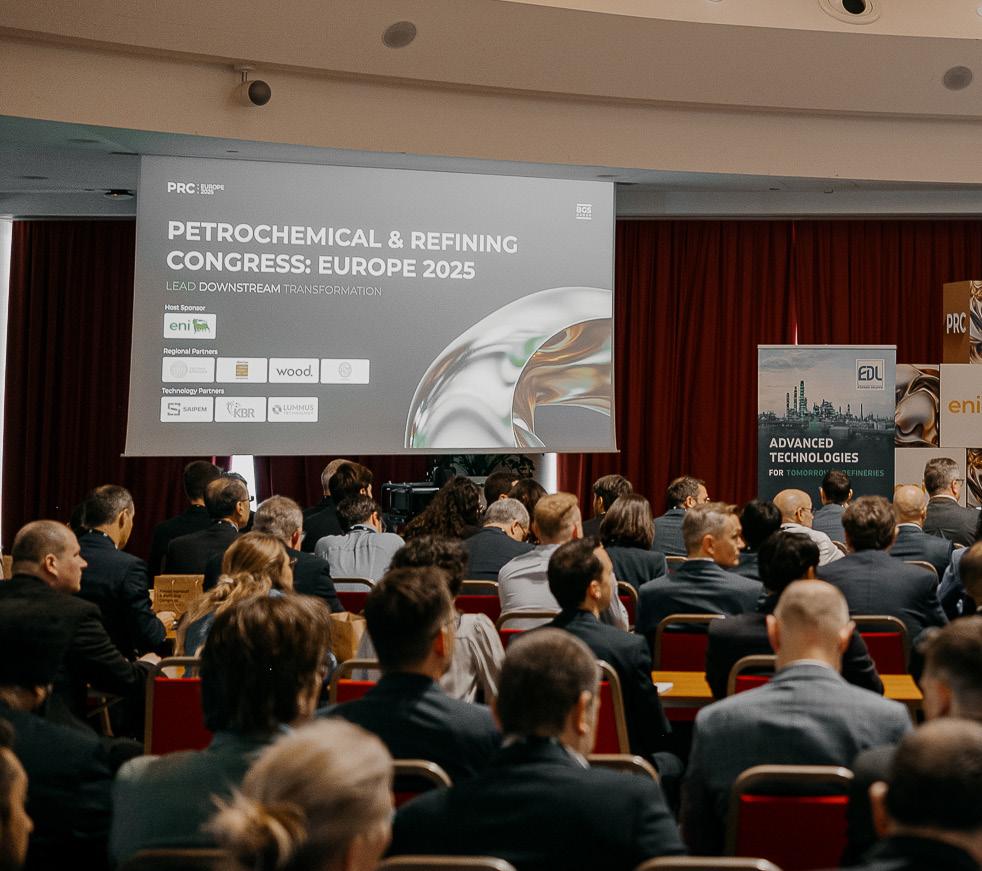
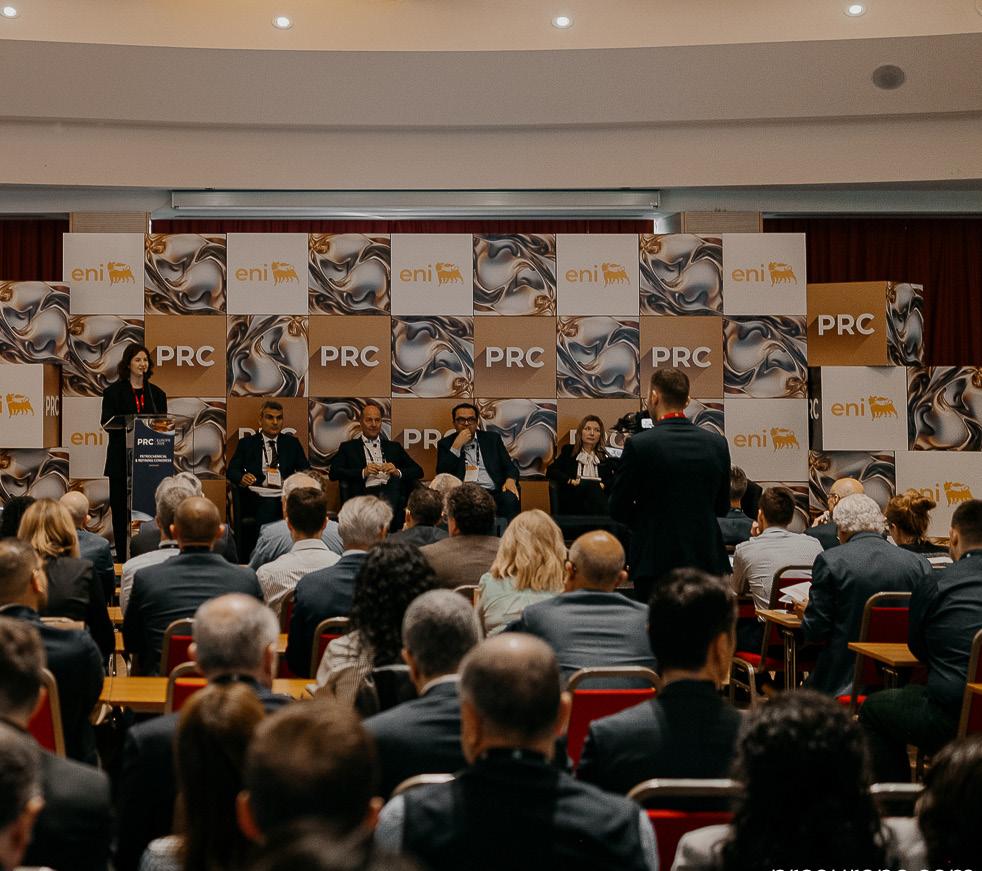
This is the setting in which the Petrochemical and Refining Congress (PRC): Europe 2026 returns to Amsterdam on 18-19 May for its 10th anniversary
edition. PRC Europe is not simply another industry event. It is built as a business platform for downstream professionals – a place where commercial dialogue, technical thinking and project-level discussion come together in one room.
A format designed for better conversations
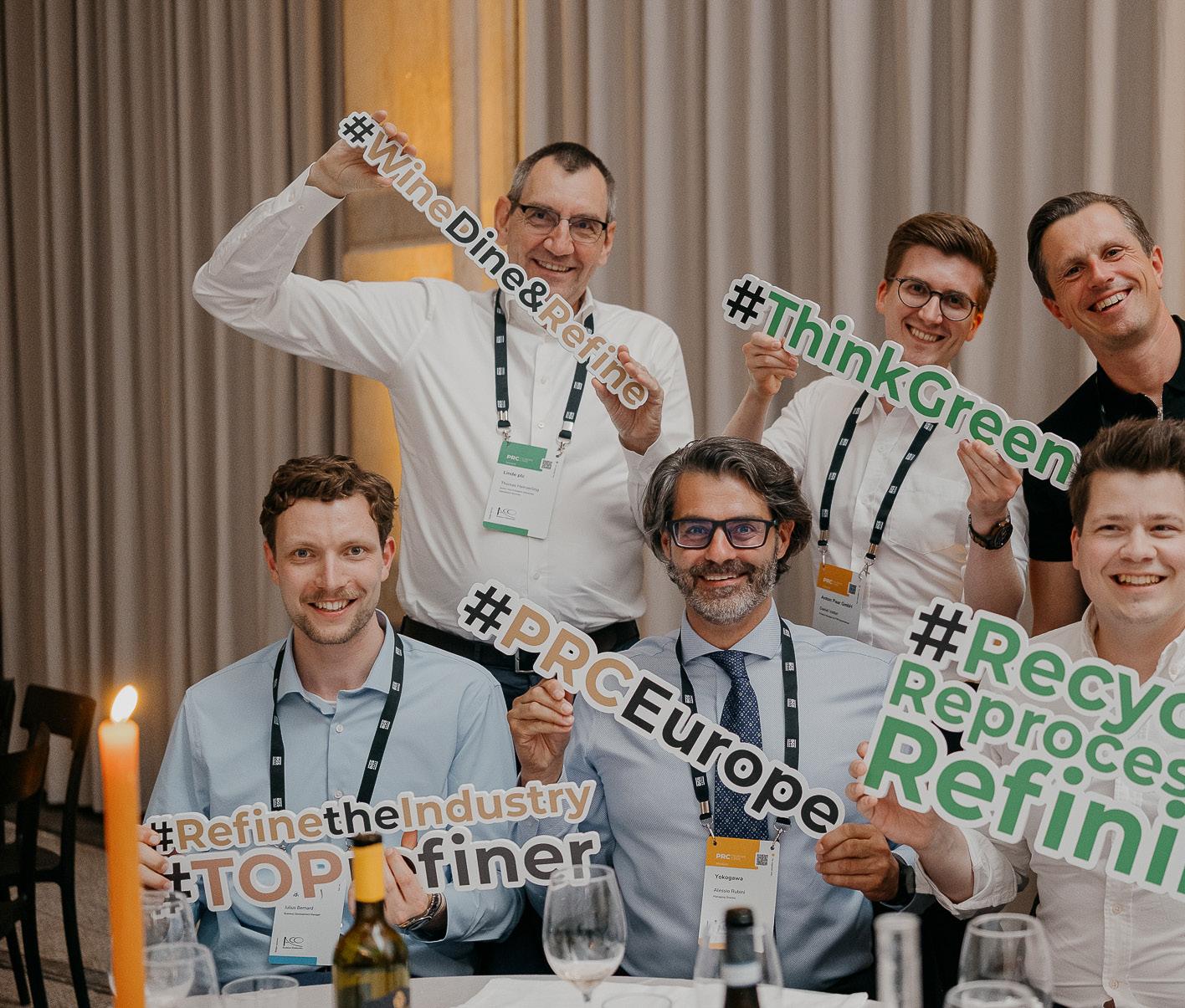
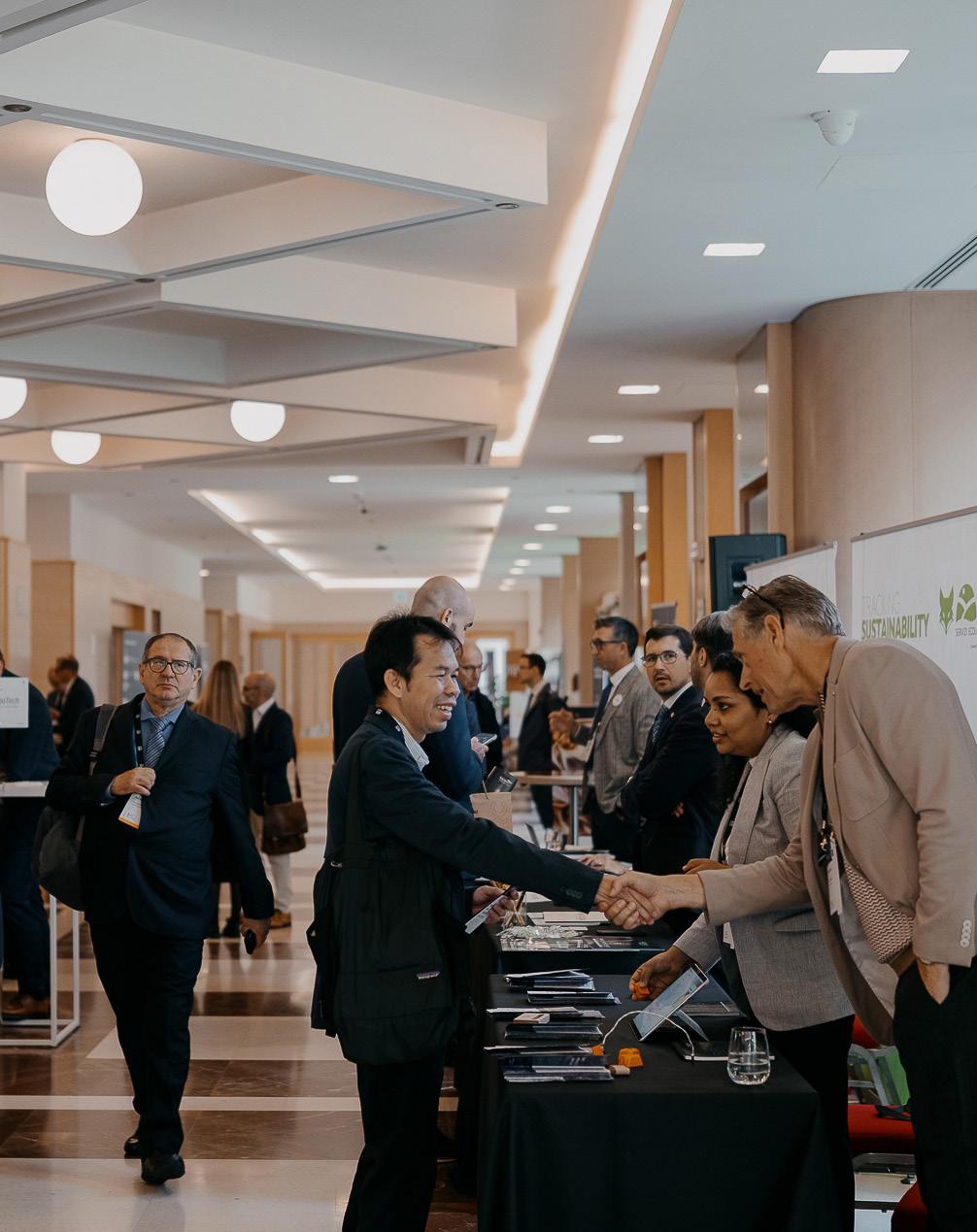
One of the defining features of PRC Europe is its closed-door format –this is not an open exhibition where traffic is mixed and attendance can be incidental. The audience is curated and the participants are there with a purpose to meet relevant counterparts, discuss live projects, test ideas and move conversations forward.
“At PRC, there are many operating companies and a lot of other companies that are of our interest. We can make good contacts with our clients and also with people that we work with. The organisation is very good, making sure that you can meet people that you want to meet, and all the presentations are very good as well”, - Mathijs van Es, Senior Director Business Development at Lummus Technology LLC.
The business programme is built around speakers who are directly involved in the projects, technologies and decisions shaping the sector. This year’s Congress
is hosted by Fluor and supported by Regional Partners: Lummus Technology, Sonatrach Raffineria Italiana, Wood and Repsol, together with Technology Partner – KBR, all of which are going to contribute to the programme.
Lummus Technology: the business case behind cleaner technologies
From Lummus Technology, Jose de Barros, Chief Decarbonization Officer, is going to present on sustainability and profit pathways in the energy transition era.
The speaker’s topic addresses a question many companies are now
asking: which technologies can support decarbonisation without undermining commercial logic? This presentation looks at biofuels and SAF production, hydrogen generation through Advanced Ionics’ low-temperature electrolysis, lowemissions hydrogen based on industrial waste heat, chemical recycling and PFAS treatment.
What makes the topic especially relevant is its framing. This is not innovation for its own sake. It is a discussion about where technology can create both environmental value and business value, and where the two can realistically reinforce each other.
Sonatrach Raffineria Italiana: what decarbonisation means at refinery level
For European refineries, decarbonisation is no longer a distant framework. It is already tied to operating reality, regulation, product mix and long-term viability. This is the perspective Rosario Pistorio, Managing Director at Sonatrach Raffineria Italiana S.r.l., is bringing in his speech on the challenge of decarbonisation for a European refinery.
Rather than approaching the topic at a purely strategic level, the presentation moves directly into the realities of refinery business. It looks at the impact of ETS, RED III, SAF requirements and Italy’s wider energy and climate planning, while focusing on two practical challenges in particular: reducing the carbon footprint of fossil-based fuels and introducing alternative fuels based on non-fossil raw materials.
The value of this topic lies in its operational focus – it connects policy, operations and long-term planning in a way that is highly relevant for companies trying to remain competitive while adapting to a rapidly changing environment.
Repsol: decarbonisation seen from the end-user side
Eduardo de la Rocha Camba, Primary Conversion Scientist at Repsol, is going to share end-user perspectives on industrial decarbonisation and energy efficiency and talk about the StreamSTEP Horizon Europe Project.
This contribution stands out because it brings an end-user perspective to an issue often discussed in abstract terms. The topic focuses on industrial decarbonisation in relation to Scope 1 and 2 emissions, with particular emphasis on thermal demand, waste heat recovery and high-temperature heat pumps in refinery and petrochemical operations.
The presentation is expected to show how these technologies move from technical potential to measurable impact.
In a business environment where energy efficiency is once again being treated as a strategic priority, rather than a side initiative, that perspective is likely to resonate widely.
Wood: why waste heat is drawing more attention
Waste heat is not always the headline topic in discussions about downstream transformation, but it is steadily moving up the agenda. The reason is straightforward: it sits close to operational performance, emissions reduction and cost discipline at the same time. That combination makes it especially attractive to operators looking for realistic, near-tomedium-term improvements.
Mark Cudmore, Executive Consultant at Wood, is going to speak on the downstream industry activity in emerging waste heat technologies. Wood’s contribution is therefore likely to add useful perspective to a part of the transition that is becoming harder to ignore.
KBR: taking a closer look at SAF pathways
SAF continues to attract significant attention across the sector, but interest alone does not move projects forward. The more difficult questions begin at the early development stage: which pathways are practical, how capital-intensive they are, what risks emerge before execution, and how scalable they really look once the engineering work begins.
These questions sit at the centre of the presentation on early-stage project experience to assess approved SAF production pathways from Dhirender Malik, Principal Consultant at KBR. Many companies are now moving from general interest in SAF to a closer evaluation of what specific pathways require in practice. This makes KBR’s perspective especially relevant for businesses trying to understand where the differences between approved pathways begin to matter commercially and operationally.
A programme shaped by real business questions
Taken together, these topics reflect that PRC Europe is built not around generic commentary, but around the questions companies are already working through: profitable transition pathways, refinery resilience, energy efficiency, low-carbon fuels and the role of technology in maintaining long-term competitiveness.
Just as importantly, those topics are not treated in isolation. They are discussed in a setting where operators, technology providers, engineering companies and strategic decision-makers can speak directly with one another. Often that is where the real value appears – not only in what is said on stage, but in the conversations that follow.
“This congress is very special because it covers both petrochemical and refining sectors that sometimes are connected, so it's important to cover both of these subjects. And also this is the occasion to meet a lot of other companies like us, but also vendors, or specialists, or licensors and so on. So we can speak more broadly about everything and discover if there are new things coming up”, - Raffaella Lucarno, Head of Biorefining & Supply at Enilive SpA.
For businesses active in refining, petrochemicals, industrial technology, engineering or services, PRC Europe 2026 offers more than visibility. It offers context, contact and a setting in which useful partnerships can begin: join the conversation.
sh.bgs.group/40o
WELLNESS AND MENTAL HEALTH LEADERSHIP TO WATCH IN 2026
Wellness and mental health have moved from the margins of corporate conversation to the centre of modern leadership. Across global industries, a new generation of executives is reshaping what it means to lead successfully, recognising that organisational performance and human wellbeing are no longer separate priorities but fundamentally connected.
The workplace has undergone a profound cultural reset. Rapid technological change, shifting employee expectations and the lasting psychological impact of recent global disruption have forced businesses to rethink traditional leadership models. Where authority, endurance and constant availability once defined professional success, empathy, adaptability and emotional intelligence are emerging as the defining traits of influential leaders.
In twenty twenty six, wellness leadership is not a trend. It is becoming a competitive advantage.
Modern employees expect more from leadership than operational direction. They seek authenticity, purpose and psychological safety. Leaders who understand this shift are creating environments where individuals feel supported as people rather than managed purely as performers. This transition reflects a deeper understanding of productivity itself. Sustainable success depends on mental clarity, resilience and engagement, all of which flourish in healthy organisational cultures.
Across boardrooms, mental health is increasingly discussed alongside strategy and financial performance. Senior leaders are recognising that wellbeing influences innovation, retention and long term stability. Businesses that fail to address stress, burnout and disengagement risk losing talent and diminishing performance. Those that prioritise wellness, however, are discovering stronger collaboration and greater organisational loyalty.
A defining feature of leadership to watch in the coming year is visibility. Executives are speaking more openly about mental health, challenging outdated expectations that leaders must appear invulnerable. When senior figures demonstrate balance, set boundaries and acknowledge personal challenges, they legitimise wellbeing across the organisation. Cultural change often begins with example rather than policy.
The evolution of work itself has accelerated this transformation. Hybrid structures and digital collaboration tools have reshaped how teams interact, offering flexibility while introducing new pressures. Constant connectivity can blur the distinction between professional and personal life, creating a need for leaders who understand digital wellbeing as much as operational efficiency.
Forward thinking organisations are redefining communication norms, encouraging focused work time and reducing unnecessary demands on attention. Leadership now requires the
YOUR MENTAL WELLNESS CHECKLIST FOR 2026 | THE WELLNESS CONVERSATION
ability to protect space for deep thinking and recovery, recognising that creativity and innovation depend on mental energy rather than relentless activity.
Technology continues to influence this landscape, yet the most effective leaders are those who balance innovation with humanity. Artificial intelligence, automation and advanced analytics may streamline operations, but they cannot replace trust, empathy or meaningful connection. Wellness leadership therefore lies in guiding technological progress without losing sight of human experience.
Another significant shift shaping leadership in twenty twenty six is generational change. Younger professionals entering the workforce bring different expectations around wellbeing, flexibility and social responsibility. They are more willing to prioritise mental health and more selective about organisational culture. For leaders, this represents both challenge and opportunity.
The leaders gaining attention are those who listen actively and respond authentically. Rather than imposing
rigid structures, they co create workplace cultures with their teams. Open dialogue, inclusive decision making and transparent communication foster a sense of belonging that directly strengthens engagement.
Wellness leadership also extends beyond internal operations. Businesses are increasingly expected to contribute positively to wider society. Corporate influence reaches communities, supply chains and industry ecosystems, placing mental health advocacy within a broader social context. Partnerships with wellbeing initiatives, community programmes and mental health organisations demonstrate that responsible leadership extends beyond commercial outcomes.
This wider perspective aligns with the growing integration of environmental, social and governance priorities. Stakeholders now evaluate organisations not only by financial performance but also by their social impact. Leaders who champion mental wellbeing are therefore strengthening both reputation and resilience.
LEADERSHIP NEWS
Central to this transformation is emotional intelligence. The ability to understand and respond to human emotion has become one of the most valuable executive capabilities. Leaders who cultivate empathy create psychologically safe environments where employees feel confident sharing ideas, raising concerns and challenging assumptions. Such environments support innovation because individuals are not constrained by fear.
Emotional intelligence also enhances decision making. Leaders who consider the human implications of strategic choices are better equipped to guide organisations through uncertainty. During periods of change, employees look for reassurance, clarity and authenticity. Leaders who communicate with transparency and compassion inspire confidence even in complex circumstances.
Burnout prevention has become another defining focus. High performance cultures historically rewarded overwork, often at the expense of wellbeing. Today, leading organisations are reframing success around sustainability. Rest, recovery and realistic expectations are increasingly recognised as essential elements of productivity.
Rather than responding to crises after they emerge, wellness focused leaders embed resilience into organisational design. Clear priorities, manageable workloads and supportive management practices reduce stress before it escalates. Resilient teams are not those shielded from pressure but those equipped to navigate it without sacrificing wellbeing.
Inclusion plays a vital role in this conversation. Mental health experiences vary across cultures, identities and personal circumstances, meaning effective leadership must account for diversity. Inclusive environments promote psychological safety, ensuring individuals feel respected and valued regardless of background.
Leaders shaping the future understand that diversity strengthens wellbeing. When employees feel able to express their authentic selves, collaboration improves and innovation expands. Inclusive leadership therefore becomes inseparable from mental health leadership.
Measurement is also evolving. Organisations are beginning to assess culture and wellbeing with greater sophistication, using employee feedback and engagement insights to inform strategy. While wellbeing cannot be reduced to simple metrics, leaders increasingly recognise the importance of listening carefully to workforce experience.
The most compelling leadership stories emerging in twenty twenty six share a common theme. They redefine success. Profit and growth remain essential, yet they are no longer viewed as the sole indicators of achievement. Sustainable organisations recognise that healthy cultures drive long term performance.
Wellness leadership reflects a broader reimagining of business itself. It suggests that leadership is not only about directing outcomes but about creating conditions in which people can thrive. Compassion, curiosity and adaptability are becoming hallmarks of executive excellence.
As economic and technological change continues to reshape the global landscape, organisations will look towards leaders capable of balancing ambition with care. The individuals to watch are those building cultures of trust, encouraging open conversation and placing mental wellbeing at the heart of strategy.
The future of leadership is neither purely operational nor purely visionary. It is deeply human, grounded in the understanding that when people feel supported, organisations perform at their best. Wellness and mental health leadership is therefore not simply influencing business in twenty twenty six. It is defining it.
Artificial intelligence and robotics are rapidly transforming the landscape of modern medicine, moving healthcare into an era defined not only by scientific discovery but by intelligent collaboration between humans and machines. What once belonged to the realm of research laboratories and experimental prototypes is now becoming embedded in everyday clinical practice. Hospitals, research centres and healthcare innovators are embracing AI driven robotics as a solution to some of medicine’s most pressing challenges, from workforce strain to the demand for faster, more precise patient care.
The significance of this shift lies not simply in technological advancement but in a broader redefinition of how healthcare operates. Medical systems around the world face increasing pressure from ageing populations, rising treatment complexity and growing expectations for personalised care. Leaders across healthcare are recognising that traditional models alone cannot meet future demand. Intelligent robotics is emerging as one of the most powerful tools available to reshape delivery, improve outcomes and support clinicians in ways previously unimaginable.
One of the most visible developments has been the evolution of robotic assisted surgery. Early surgical robots were valued primarily for mechanical precision, allowing surgeons to perform minimally invasive procedures with greater stability and control. Today, artificial intelligence is elevating these systems into active clinical partners capable of analysing surgical data in real time. By learning from extensive archives of previous procedures, AI enhanced robots can identify patterns, anticipate complications and assist surgeons with decision support during complex operations.
This transformation does not diminish the role of the surgeon. Instead, it enhances human capability. Surgeons remain responsible for judgement and strategy, while robotic systems offer unmatched accuracy and consistency. The result
AI ROBOTICS IN MEDICINE: INNOVATION TO WATCH IN 2026
INNOVATION
is often reduced trauma for patients, shorter recovery periods and improved surgical confidence. Healthcare leaders increasingly view these technologies as extensions of clinical expertise rather than replacements for it.
Beyond the operating theatre, AI robotics is reshaping the diagnostic process. Modern medicine generates enormous volumes of data through imaging, laboratory testing and patient monitoring. Interpreting this information quickly and accurately has long been a challenge. Intelligent robotic systems now analyse scans, tissue samples and medical
records simultaneously, identifying subtle abnormalities that might otherwise remain undetected.
The potential impact on early diagnosis is profound. Earlier identification of disease enables earlier treatment, improving long term outcomes while reducing healthcare costs. Clinicians supported by AI robotics are able to focus more deeply on patient communication and treatment planning, confident that advanced analytical systems are strengthening diagnostic accuracy behind the scenes.
Equally important is the role robotics is playing in addressing workforce pressures across healthcare systems. Hospitals worldwide face shortages of skilled staff alongside increasing patient demand. Rather than replacing professionals, AI powered robotics is helping redistribute workload. Automated systems transport equipment, manage logistics, assist with patient monitoring and perform repetitive administrative functions that historically consumed valuable clinical time.
This shift allows doctors, nurses and specialists to concentrate on areas where human skill is irreplaceable. Compassion, ethical judgement and complex problem solving remain at the heart of medicine. Robotics supports these strengths by removing operational burdens that contribute to fatigue and burnout. Leaders embracing this approach recognise that technological innovation can protect the wellbeing of healthcare professionals as much as it benefits patients.
Rehabilitation and long term care are also experiencing significant transformation. Intelligent robotic devices are being introduced to assist patients recovering from injury or managing chronic conditions. These systems adapt therapy programmes dynamically, responding to individual progress and providing continuous feedback. Patients gain greater independence while clinicians retain oversight, creating a balance between personalised care and scalable healthcare delivery.
Artificial intelligence further expands the promise of personalised medicine. By analysing genetic information, lifestyle factors and clinical history, AI integrated robotics supports treatment plans tailored to each individual. Medicine is gradually shifting from a reactive model towards preventative and predictive care. Intelligent monitoring technologies track patient health continuously, enabling early intervention before illness progresses.
Such developments are particularly significant in managing long term conditions. Continuous monitoring reduces hospital admissions and empowers patients to participate actively in their own wellbeing. Healthcare becomes less centred on episodic treatment and more focused on sustained health management.
Despite the rapid pace of innovation, the human dimension remains central to successful adoption. Trust plays a defining role in healthcare, and leaders understand that patients must feel confident in technologies influencing their care. Ethical governance therefore sits alongside technical development. Transparency in data usage, fairness in algorithm design and strong safeguards around privacy are essential components of responsible innovation.
Healthcare organisations leading the field are investing heavily in ethical oversight, interdisciplinary collaboration and regulatory engagement. They recognise that technological capability alone does not guarantee progress. Innovation must be guided by values that prioritise patient safety, equity and dignity.
Interestingly, the growth of AI robotics is also reshaping the patient experience itself. By automating routine processes, technology is creating space for more meaningful human interaction. Clinicians freed from administrative overload can spend more time listening, explaining and supporting patients emotionally. Far from depersonalising healthcare, intelligent robotics has the potential to
restore elements of compassion often lost in overstretched systems.
Patients are also becoming more comfortable with technology integrated into their care journey. Robotic assistance with mobility, medication management and recovery monitoring offers reassurance and independence. As familiarity grows, expectations around efficiency and responsiveness in healthcare continue to evolve.
The innovation landscape is being accelerated through collaboration between technology companies, healthcare providers, academic institutions and policymakers. Medical professionals increasingly work alongside engineers, data scientists and designers to ensure robotic systems address genuine clinical needs. This collaborative approach is essential because healthcare innovation demands both scientific rigour and practical understanding of patient care.
Investment in research and development continues to expand as governments and private organisations recognise the strategic importance of intelligent healthcare systems. Innovation hubs combining clinical practice with technological experimentation are emerging worldwide, creating environments where new solutions can move rapidly from concept to clinical application.
Preparing healthcare organisations for this future requires cultural transformation as much as technological infrastructure. Training programmes are evolving to equip clinicians with digital literacy alongside traditional medical expertise. Future healthcare professionals will be expected to understand how artificial intelligence supports decision making while maintaining responsibility for patient outcomes.
Leadership plays a critical role in guiding this transition. Successful adoption depends on clear communication, education and reassurance. Staff must
AI IN HEALTHCARE: 6 BREAKTHROUGH INNOVATIONS TRANSFORMING MEDICINE IN 2026
understand how robotics enhances their work rather than threatens it. Patients must feel included in conversations about technological change. Leaders who foster openness and curiosity are proving most effective in navigating this evolution.
What makes AI robotics in medicine particularly compelling is its potential to redefine the very meaning of healthcare delivery. Precision, accessibility and sustainability are becoming interconnected goals. Intelligent systems extend specialist expertise beyond geographical boundaries, supporting clinicians in remote locations and expanding access to quality care.
The innovations gaining momentum as twenty twenty six approaches share a unifying vision. They aim to create healthcare systems that are proactive rather than reactive, collaborative rather than hierarchical and deeply centred on human wellbeing. Robotics and artificial intelligence are enabling medicine to operate with unprecedented insight while preserving the essential human relationships at its core.
The organisations and leaders to watch are those embracing innovation with responsibility and imagination. They understand that technology alone cannot transform healthcare. Progress emerges when engineering excellence meets clinical wisdom and ethical leadership.
AI robotics now stands as one of the defining forces shaping the future of medicine. Its influence extends from surgical precision to predictive care, from operational efficiency to improved patient experience. As adoption continues to expand, healthcare is entering a new phase where intelligent machines and human expertise work together to achieve outcomes neither could accomplish alone.
The coming year will reveal how profoundly this partnership can reshape medicine. What is already clear is that AI robotics is not simply improving existing systems. It is creating an entirely new model of care, one that balances innovation with compassion and technological advancement with the enduring human purpose of healing.
BIOTECH MARKET OUTLOOK: INNOVATION AND INVESTMENT TO WATCH IN 2026
The global biotechnology sector enters twenty twenty six at a defining moment. After a period marked by rapid scientific breakthroughs, shifting investment sentiment and evolving regulatory landscapes, biotechnology is emerging as one of the most strategically important industries shaping the future of healthcare, sustainability and economic growth. For investors, policymakers and business leaders alike, the sector represents both extraordinary opportunity and increasing complexity.
Biotechnology has moved beyond its historical identity as a specialised scientific field. It now sits at the intersection of medicine, artificial intelligence, advanced manufacturing and environmental innovation. The companies leading this transformation are redefining how diseases are treated, how food is produced and how global challenges are addressed through science driven solutions. As the industry matures, the focus is shifting from rapid expansion towards sustainable commercialisation, scalable innovation and long term value creation.
Market confidence in biotechnology is gradually stabilising following periods of volatility that tested investor patience. The early surge of enthusiasm surrounding life sciences innovation has evolved into a more disciplined investment environment. Capital allocation is becoming increasingly selective, favouring companies with strong clinical data, clear regulatory pathways and credible commercial strategies. Investors are demonstrating renewed interest in organisations capable of translating scientific discovery into practical applications rather than speculative research alone.
This transition signals an important maturation of the biotech ecosystem. Innovation remains essential, yet financial resilience and operational execution are now equally important measures of success. Companies that combine scientific excellence with business discipline are attracting sustained attention, particularly those capable of navigating lengthy development timelines while maintaining strategic clarity.
INNOVATION NEWS
Healthcare innovation continues to anchor the sector’s growth narrative. Advances in gene therapy, cellular engineering and precision medicine are transforming the treatment landscape for previously untreatable conditions. Biotechnology firms are increasingly targeting rare diseases, oncology and chronic illnesses through highly personalised therapies designed to address underlying biological mechanisms rather than symptoms alone.
The promise of personalised medicine represents one of the most significant drivers of biotech investment. By integrating genomic data with advanced analytics, researchers are developing therapies tailored to individual patient profiles. This approach improves treatment efficacy while reducing adverse effects, signalling a broader shift towards patient specific healthcare solutions. Pharmaceutical partnerships with biotechnology companies are accelerating this progress, blending research expertise with global distribution capabilities. Artificial intelligence is becoming deeply embedded within biotech development processes. Machine learning platforms now assist researchers in drug discovery, analysing vast biological datasets to identify potential therapeutic targets at unprecedented speed. This integration is shortening early research timelines and reducing the cost of experimental failure, making innovation more efficient and commercially viable.
The convergence of biotechnology and digital technology is reshaping competitive dynamics. Organisations capable of combining biological research with data science expertise are gaining a decisive advantage. Innovation hubs bringing together biologists, engineers and software specialists are emerging as centres of excellence, reflecting the increasingly interdisciplinary nature of modern biotechnology.
Regulatory frameworks are also evolving in response to scientific progress. Governments and international health authorities are working to balance innovation with patient safety, creating pathways that support accelerated approval for breakthrough therapies while maintaining rigorous oversight. Collaboration between regulators and industry leaders is becoming more common, fostering an environment where innovation can advance responsibly.
Geographically, biotechnology growth is becoming more globally distributed. While established markets in North America and Europe remain influential, emerging innovation ecosystems across Asia and the Middle East are attracting investment, talent and research partnerships. Governments seeking to strengthen economic resilience are prioritising life sciences development, recognising biotechnology as a strategic industry capable of driving both healthcare advancement and economic diversification.
Manufacturing innovation represents another critical theme shaping the biotech outlook. Advances in bioprocessing, automation and synthetic biology are improving production efficiency and scalability. Flexible manufacturing facilities capable of adapting quickly to new therapies are becoming essential infrastructure. The lessons learned from recent global health challenges have reinforced the importance of resilient supply chains and local production capabilities.
Sustainability is increasingly intertwined with biotechnology’s future. Beyond healthcare, biotech innovation is addressing environmental challenges through bio based materials, alternative proteins and carbon reduction technologies. Companies developing sustainable agricultural solutions, biodegradable materials and bioengineered resources are attracting significant attention from investors
seeking alignment between profitability and environmental responsibility.
This expansion beyond traditional pharmaceuticals highlights biotechnology’s broader economic influence. The sector is no longer defined solely by medical breakthroughs but by its potential to reshape multiple industries through biological innovation.
Talent remains a decisive factor in determining which organisations will lead the next phase of growth. Competition for skilled scientists, data specialists and regulatory experts is intensifying as biotechnology expands globally. Companies that invest in interdisciplinary teams and collaborative cultures are better positioned to sustain innovation over the long term.
Leadership within biotechnology is also evolving. Executives are increasingly required to bridge scientific understanding with commercial strategy, investor communication and regulatory engagement. The leaders to watch in twenty twenty six are those capable of translating complex research into compelling business narratives while maintaining scientific integrity. Partnership models are becoming more sophisticated as well. Large pharmaceutical companies continue to rely on biotech innovators for early stage discovery, while smaller firms benefit from access to capital, manufacturing expertise and global distribution networks. Strategic alliances, licensing agreements and co development partnerships are enabling faster progress while sharing risk across the ecosystem.
Despite strong long term prospects, challenges remain. Development costs continue to rise, clinical trial complexity is increasing and regulatory scrutiny demands meticulous preparation. Market success depends not only on scientific achievement but also on pricing strategy, reimbursement
approval and patient accessibility. Companies must demonstrate clear value propositions to healthcare systems facing budgetary pressures.
Investor expectations are therefore shifting towards sustainable growth rather than rapid expansion alone. Transparent communication, realistic timelines and disciplined capital management are becoming essential components of market confidence. The biotech companies attracting attention are those balancing ambition with operational credibility.
Public perception also plays an important role in shaping the sector’s trajectory. Advances in genetic engineering and synthetic biology raise ethical questions that require careful engagement with society. Trust in biotechnology depends on responsible innovation, transparent governance and clear communication about both benefits and risks.
Education and public dialogue are increasingly recognised as strategic priorities. Organisations that engage openly with patients, regulators and communities are strengthening long term acceptance of emerging technologies. Ethical leadership is becoming a defining characteristic of successful biotech enterprises.
The outlook for biotechnology in twenty twenty six reflects a sector entering a phase of strategic maturity. Innovation remains the driving force, yet it is now supported by stronger infrastructure, deeper collaboration and more sophisticated investment frameworks. Biotechnology is transitioning from breakthrough science towards scalable impact.
The most compelling opportunities lie in convergence. The integration of biology, artificial intelligence, advanced manufacturing and sustainability innovation is creating entirely new categories of enterprise. Companies
WHY BIOTECH STOCKS ARE DEFYING MARKET VOLATILITY IN 2026
operating at these intersections are poised to shape the next generation of global industry.
For business leaders and investors observing the sector, biotechnology represents more than a market trend. It is a structural transformation influencing healthcare systems, supply chains and economic development worldwide. Organisations capable of navigating scientific complexity while delivering measurable outcomes will define the competitive landscape.
As twenty twenty six approaches, biotechnology stands at the forefront of global innovation. The industry’s evolution reflects a broader recognition
that biological science offers solutions to some of humanity’s most complex challenges. From personalised medicine to sustainable production systems, biotechnology is expanding the boundaries of what modern industry can achieve.
The market outlook therefore points towards sustained growth driven by innovation, collaboration and responsible leadership. Biotechnology is moving beyond experimentation into an era of practical application, commercial resilience and transformative impact. The leaders and companies to watch are those turning scientific possibility into real world progress, shaping not only the future of healthcare but the future of business itself.
PHARMACY INNOVATION LABS TO WATCH IN 2026
Pharmacy is undergoing one of the most significant transformations in its modern history. Long associated primarily with dispensing medicines and managing prescriptions, the profession is rapidly evolving into a centre of clinical innovation, digital healthcare delivery and patient centred research. At the heart of this evolution lies the rise of pharmacy innovation labs, collaborative environments where technology, science and patient care intersect to reshape how medicines are developed, delivered and managed.
As healthcare systems confront rising demand, workforce pressures and increasing treatment complexity, pharmacy innovation labs are emerging as powerful drivers of change. These hubs bring together pharmacists, clinicians, researchers, technology specialists and entrepreneurs to test new models of care, accelerate pharmaceutical research and redefine the role of pharmacy within the wider healthcare ecosystem.
The momentum behind pharmacy innovation reflects a broader recognition that pharmacists represent one of healthcare’s most accessible and
underutilised resources. Positioned at the intersection between patients, clinicians and medicines, pharmacists are uniquely placed to lead innovation that improves outcomes while easing pressure on primary and hospital care systems. Innovation labs are providing the structure and investment required to unlock this potential.
Across global healthcare markets, pharmacy innovation labs are exploring new approaches to medication management, digital health integration and personalised care. Rather than focusing solely on pharmaceutical products, these environments prioritise systems innovation, examining how medicines are prescribed, monitored and supported throughout the patient journey. This shift signals a transition from reactive dispensing towards proactive health management.
Digital technology is playing a central role in this transformation. Innovation labs are developing intelligent platforms that integrate electronic prescribing, remote consultation and real time patient monitoring. Pharmacists are increasingly supported by advanced analytics that
identify adherence patterns, flag potential medication interactions and provide insights that enable earlier clinical intervention.
The growth of telepharmacy represents one of the most visible outcomes of these developments. Patients are gaining access to professional pharmaceutical advice without geographic limitation, expanding healthcare access while improving efficiency. Pharmacy innovation labs are refining digital consultation models that combine convenience with clinical rigour, ensuring that virtual care maintains the same standards of safety and trust expected from traditional settings.
Artificial intelligence is further accelerating progress within pharmacy innovation environments. Machine learning systems assist pharmacists in reviewing medication histories, predicting adverse reactions and optimising treatment pathways. These tools enhance clinical decision making while allowing pharmacists to focus on patient communication and education. Innovation leaders emphasise that technology supports professional expertise rather than replacing it, reinforcing pharmacy’s growing clinical role.
Personalised medicine is another defining theme shaping pharmacy innovation labs in twenty twenty six. Advances in pharmacogenomics are enabling treatments tailored to individual genetic profiles, ensuring medications are both effective and safe for each patient. Innovation labs are working closely with research institutions to integrate genetic testing into everyday pharmacy practice, moving healthcare closer to truly individualised treatment.
This development represents a fundamental shift in pharmaceutical care. Instead of relying on standardised prescribing approaches, pharmacists are becoming active participants in precision medicine strategies. By interpreting genetic data alongside clinical information, pharmacy professionals can
help guide therapeutic decisions and improve long term health outcomes.
Innovation labs are also addressing longstanding challenges surrounding medication adherence. Many treatment failures occur not because medicines are ineffective but because patients struggle to follow complex regimens. Pharmacy innovation teams are developing smart packaging, digital reminders and behavioural support tools designed to improve engagement and understanding.
These solutions extend beyond technology alone. Innovation labs frequently incorporate behavioural science expertise to understand how patients interact with treatments in real world settings. By combining clinical knowledge with psychological insight, pharmacies are evolving into holistic care environments focused on sustained wellbeing rather than episodic treatment.
Another important area of innovation lies in community pharmacy transformation. Traditionally viewed as transactional environments, community pharmacies are increasingly becoming local health hubs offering preventative services, chronic disease management and health screening programmes. Innovation labs are testing new service models that expand pharmacists’ responsibilities while strengthening collaboration with general practitioners and hospital teams.
Such developments are particularly significant as healthcare systems seek to reduce pressure on primary care services. Pharmacists supported by innovation lab research are demonstrating their ability to manage routine clinical concerns, provide preventative guidance and monitor ongoing treatments effectively. This redistribution of care responsibilities supports more efficient healthcare delivery while maintaining high standards of patient safety.
Sustainability is also shaping the agenda of pharmacy innovation labs. Environmental concerns surrounding pharmaceutical production, packaging
TRANSFORMING PHARMACY’S FUTURE IN 2026
waste and medication disposal are prompting new approaches to responsible healthcare practice. Innovation teams are exploring biodegradable materials, greener manufacturing processes and circular supply chains that reduce environmental impact without compromising quality.
These initiatives reflect a growing understanding that healthcare innovation must align with environmental responsibility. Pharmacy innovation labs are uniquely positioned to influence sustainability because they operate at the intersection of manufacturing, distribution and patient use.
Collaboration remains a defining feature of successful innovation labs. Pharmaceutical companies, academic researchers, digital health startups and healthcare providers are increasingly working together within shared innovation ecosystems. These partnerships enable rapid experimentation while ensuring that new ideas are grounded in clinical reality.
in medicines optimisation, patient counselling and healthcare systems makes them ideal contributors to interdisciplinary teams. Innovation labs provide opportunities for pharmacists to expand beyond traditional roles and participate directly in research, technology development and service design.
Education and professional development are evolving alongside these changes. Training programmes are incorporating digital health, data analysis and innovation management skills, preparing pharmacists for leadership roles within modern healthcare systems. The profession is gradually redefining itself as both clinical and technological, reflecting the complexity of contemporary medicine.
Pharmacists themselves are emerging as innovation leaders. Their expertise
Investment interest in pharmacy innovation continues to grow as stakeholders recognise the economic and clinical value of improved medication management. Efficient pharmaceutical care reduces hospital admissions, minimises treatment complications and enhances patient satisfaction. Innovation labs demonstrating measurable impact are attracting support from healthcare
organisations, private investors and public health authorities alike.
Despite significant progress, challenges remain. Integrating new technologies into established healthcare systems requires careful planning, regulatory alignment and workforce engagement. Innovation leaders must balance experimentation with safety, ensuring that new models maintain patient trust while advancing practice.
Public perception also plays a role in shaping adoption. Patients must understand how innovation enhances their care rather than complicates it. Clear communication, transparency and education are essential to building confidence in new pharmacy services and digital tools.
What distinguishes the pharmacy innovation labs to watch in 2026 is their focus on practical impact. Rather than pursuing innovation for its own sake, these environments prioritise solutions that improve everyday healthcare experiences. Success is measured not only by technological advancement but by meaningful outcomes for patients and healthcare professionals alike.
INDUSTRIES
clinical excellence where research, technology and care delivery converge. As healthcare systems continue to evolve, pharmacists are stepping into roles that blend scientific expertise with community engagement and digital leadership.
Pharmacy innovation labs represent a quiet yet powerful revolution within healthcare. By redefining how medicines are managed and how pharmacists contribute to clinical care, they are reshaping expectations of what pharmacy can achieve. The organisations leading this movement are not merely adapting to change but actively designing the future of healthcare delivery.
Now, in April 2026, pharmacy innovation stands as a key indicator of broader transformation across the life sciences sector. Intelligent technologies, interdisciplinary collaboration and patient centred thinking are converging to create a more responsive and sustainable healthcare system.
The future of pharmacy is increasingly collaborative, data driven and patient focused. Innovation labs are transforming pharmacies into dynamic centres of
The labs to watch are those that recognise innovation as an ongoing process rather than a single breakthrough. Through experimentation, partnership and leadership, they are demonstrating how pharmacy can move beyond its traditional boundaries and become one of the most influential forces driving modern healthcare forward.
TOP 10 SUPPLY CHAIN DISTRIBUTORS TO WATCH IN 2026
Global supply chains are entering a new phase of transformation. After years defined by disruption, volatility and rapid technological change, distribution leadership has become one of the most strategically important forces shaping international commerce. The organisations succeeding today are those capable of balancing resilience with agility, digital innovation with operational reliability and global reach with local responsiveness.
Distribution is no longer viewed as a background function supporting commerce. It has become a central driver of competitive advantage. From ecommerce fulfilment and advanced logistics networks to pharmaceutical
distribution and industrial manufacturing supply chains, modern distributors influence how quickly products move, how efficiently markets operate and how businesses respond to shifting demand.
The leaders to watch in 2026 represent a new generation of supply chain thinkers. They combine operational expertise with technological vision, steering complex global networks through economic uncertainty while investing in automation, sustainability and data driven decision making.
Here are ten influential supply chain and distribution leaders whose strategies and organisations are shaping the future of global logistics.
TOP 10 SUPPLY CHAIN DISTRIBUTORS
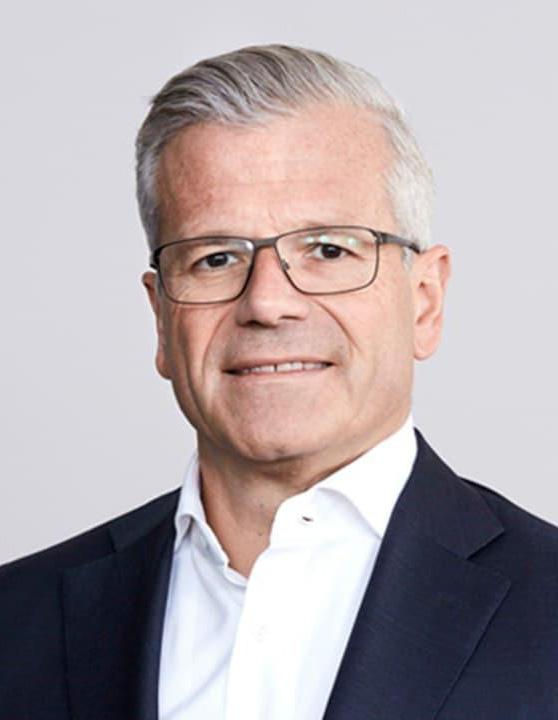
VINCENT CLERC
Chief Executive Officer, A.P.
Moller Maersk
Leads one of the world’s most influential integrated container logistics and end to end supply chain companies connecting global trade routes.
TOBIAS MEYER
Chief Executive Officer, DHL Group
Oversees a global logistics powerhouse spanning express delivery, freight forwarding, contract logistics and ecommerce distribution.
JOHN PEARSON
Chief Executive Officer, DHL Express
Heads the international courier and time critical delivery division operating across global aviation and parcel networks.
HENDRIK VENTER
Chief Executive Officer, DHL Supply Chain
Responsible for the largest contract logistics provider worldwide, managing warehousing, fulfilment and distribution operations for multinational clients.
CAROL TOMÉ
Chief Executive Officer, UPS
Leads one of the most advanced parcel distribution and last mile logistics organisations supporting worldwide commerce.
RAJ SUBRAMANIAM
President and Chief Executive Officer, FedEx Corporation
Directs an integrated global transportation and distribution network combining air cargo, ground logistics and ecommerce fulfilment.
JENS LUND
Group Chief Executive Officer, DSV
Leads a rapidly expanding freight forwarding and logistics distributor specialising in air, sea and road transport services.
PATRICK KELLEHER
Chief Executive Officer, GXO Logistics
Leads a major global contract logistics provider specialising in automated warehouses, fulfilment and supply chain outsourcing.
SØREN TOFT
Chief Executive Officer, MSC Mediterranean Shipping Company
Heads the largest container shipping company globally, central to international goods distribution and maritime logistics.
MATHIEU FRIEDBERG
Chief Executive Officer, CEVA Logistics
Leads a global logistics operator providing contract logistics, freight management and ecommerce distribution solutions.
DISTRIBUTORS TO WATCH IN 2026
Q&A MUNIR TRAD, SNR DIRECTOR SUPPLY CHAIN PLANNING AT PUMA
At a time when global supply chains are being reshaped by shifting demand patterns, geopolitical pressures and the need for greater responsiveness, the role of planning has become increasingly strategic. At PUMA, this evolution is being driven in part by a move towards more centralised decision making at Global Headquarters, alongside a renewed focus on inventory discipline, market proximity and cross-functional alignment. As Senior Director of Supply Chain Planning, Munir Trad sits at the centre of this transformation, helping to redefine how planning supports both global consistency and regional agility, while ensuring the business remains resilient, efficient and closely attuned to its key markets.
QPUMA has been evolving its planning model with a greater emphasis on centralised decision making at Global Headquarters. What has driven this shift, and how are you ensuring the balance between global consistency and the specific needs of regional markets is maintained?
AThe shift toward greater centralization at Global Headquarters has been primarily driven by a desire to create stronger alignment and consistency across product, brand, and merchandising strategies under the new leadership and Board. This ensures that PUMA presents a cohesive global identity and maximizes the impact of its key franchises across markets.
At the same time, this evolution has elevated the role of planning within the regions. As highlighted in recent earnings calls, regions—particularly North America— are playing a critical role in addressing elevated inventory levels and navigating market-specific dynamics.
Balancing global consistency with regional needs requires close collaboration between merchandising, demand planning, and inventory management teams. We focus on aligning stocking policies, managing product lifecycles effectively, and applying disciplined pricing and discount strategies where appropriate.
Ultimately, our objective is to ensure that inventory is optimized while maintaining a healthy marketplace—delivering the right product, at the right price, in the right place—fully aligned with global direction, yet responsive to the realities of each local market.
QWith more strategic direction coming from the centre, how has the role of regional planning teams changed in practice, and what capabilities are becoming more important at a local level as a result?
AAs strategic direction becomes more centralized, the role of regional planning teams has increasingly shifted toward disciplined execution and market-specific translation of global priorities. In practice, this means ensuring that centrally defined strategies are implemented in a way that reflects local demand patterns, inventory positions, and operational realities.
In the near to mid-term, a critical capability is the ability to address immediate challenges—particularly elevated inventory levels—while keeping a clear line of sight on future product flows and strategic objectives. This requires planning teams to make decisions today that not only resolve short-term pressures but also position the business effectively for upcoming assortments in 2027 and beyond.
As a result, capabilities in Inventory Management and Demand Planning have become even more essential, enabling better alignment between supply, demand, and commercial objectives. In parallel, Capacity Management is emerging as a key focus area, ensuring that our warehousing and distribution networks are appropriately sized and structured to support the business over the next three to five years.
Ultimately, regional teams are becoming more forward-looking, data-driven, and operationally integrated—playing a critical role in bridging global strategy with local execution.
QInventory normalisation has become a key focus across the industry, particularly around legacy or ageing products. How is PUMA approaching inventory clean-up, and what role does planning play in creating a more disciplined and responsive product lifecycle?
AInventory normalisation has long relied on a set of well-established levers within the industry—such as outlet channels, closeout wholesale partners, and targeted discounting—and those mechanisms remain relevant today. However, the approach is becoming more disciplined and forward-looking.
What is evolving—at PUMA and across the industry—is a greater emphasis on proactively managing the product lifecycle to reduce the build-up of ageing inventory in the first place. Where commercially viable, we are extending the lifecycle of key franchise and legacy products by maintaining them within the assortment for longer, supported by more sustained and consistent marketing. This allows us to maximize full-price sell-through and improve overall inventory productivity.
At the same time, there is a shift away from designing product specifically for secondary channels such as outlets. Instead, excess inventory from core ranges is being more strategically redirected, ensuring better alignment between primary and secondary markets while protecting brand positioning.
Planning plays a central role in this transformation. By improving demand forecasting, aligning buys more closely with true market needs, and actively managing lifecycle decisions—from launch to exit—we are able to create a more responsive and controlled flow of product. The objective is not only to clean up inventory more effectively, but to embed greater discipline upstream, ultimately reducing the need for reactive measures over time.
QLooking ahead, how do you ensure that lessons from past inventory challenges are embedded into future planning cycles, rather than treated as a one-off correction?
AWhile no advanced tool or model can fully anticipate the level of disruption the industry has faced over the past five to ten years—ranging from COVID and geopolitical tensions to tariffs and organizational shifts—there are clear patterns and lessons that can be systematically embedded into future planning cycles.
At PUMA, this starts with strengthening the feedback loop between past performance and future decisions. We continuously analyze what drove imbalances—whether in demand signals, buying decisions, or lifecycle management—and translate those insights into more disciplined planning assumptions and guardrails.
Equally important is the combination of data-driven decision-making with experience and judgment. Planning is not purely mathematical; it also relies on pattern recognition developed over time, as well as informed intuition. Bringing those elements together allows us to better stress-test scenarios and make more resilient decisions.
Another critical evolution is expanding the decision-making process to be more cross-functional. By involving teams beyond the traditional planning scope— such as merchandising, finance, and operations—we ensure that a broader set of perspectives is incorporated, leading to more balanced and sustainable outcomes.
Ultimately, embedding these lessons is about building a more adaptive and integrated planning capability—one that continuously learns, challenges assumptions, and evolves. That is what enables us to move from reactive corrections to more proactive and resilient decision-making, and is a key reason why our approach is increasingly seen as a benchmark within the industry.
QTariff uncertainty, particularly in the U.S. market, continues to create complexity for global brands. How is the Planning function working alongside Sourcing to mitigate risk while still protecting margin and maintaining a competitive product offering?
ATariff uncertainty—particularly in the U.S. market—requires a highly agile and coordinated approach between Planning and Sourcing. At its core, our response is built on speed, adaptability, and structured scenario planning.
We have developed the capability to rapidly build ad hoc, flexible tools to model different tariff scenarios and assess their impact on cost, margin, and flow of goods. This allows us to make informed decisions quickly and, where needed, influence sourcing strategies, supplier allocation, or logistics flows in near real time.
Equally important is how we operationalize these insights. We work in a highly crossfunctional manner, often bringing together Planning, Sourcing, Finance, and Logistics in focused, “war room” environments to evaluate trade-offs and align on the best course of action. This ensures that decisions are not made in silos, but reflect a balanced view of risk, profitability, and service.
While it is not always possible to fully protect margin in every scenario, our priority is to maintain continuity of supply and ensure that the right product remains available to our customers. By combining rapid scenario planning with cross-functional alignment, we are able to mitigate risk effectively while sustaining both commercial performance and a competitive product offering.
Q.To what extent does this closer alignment between Planning and Sourcing influence decisions around range architecture, product mix, and long-term cost strategy?
AThe alignment between Planning and Sourcing is one of the most critical drivers of success in our industry, particularly when it comes to shaping range architecture, product mix, and long-term cost strategy. Within PUMA, our partnership with sourcing is especially pivotal, as it directly influences both the speed to market and the cost structure of our products—two factors that can significantly impact overall financial performance.
What is often underestimated is the level of complexity behind buying and production decisions. These are not one-size-fitsall processes; they involve navigating constraints such as lead times, minimum order quantities, supplier capacities, and critical calendar milestones. In many cases, decisions are made six to twelve months ahead of execution, during which time market conditions can shift considerably.
This is where close alignment becomes essential. By maintaining a strong, continuous connection between Planning and Sourcing, we are able to dynamically adjust—whether scaling up or down, or responding to cost and demand fluctuations—while staying within operational constraints. This directly informs how we structure assortments, balance product mix, and manage cost over the long term.
Ultimately, this collaboration builds a more resilient and responsive operating model. It ensures that we can adapt to change without compromising the integrity of our plans, and consistently deliver a strong, competitive product offering despite an increasingly volatile environment.
Q.A key theme for PUMA is becoming ‘closer to market’ through improved timelines. How are you reshaping planning processes to give wholesale partners and key accounts more time and confidence in their buying decisions, without compromising speed, efficiency, or product relevance?
AWhile specific details are confidential, the overarching focus has been on critically reassessing our end-to-end timelines to ensure they truly add value—both internally and for our wholesale partners.
Our new global leadership brings experience from organizations that operate with more market-proximate calendars, which has helped challenge some of our legacy milestones. In certain cases, we identified steps in the process that added complexity without meaningfully improving decision quality or outcomes. Streamlining these has allowed us to simplify the planning cycle and create more effective timelines.
Equally important has been placing greater emphasis on the voice of our customers. Historically, feedback from wholesale partners on timing and decision windows was not always fully integrated into our processes. That is now changing. We are actively reshaping our planning approach to provide partners with earlier visibility, clearer direction, and greater confidence in their buying decisions.
The goal is to strike the right balance— giving our partners more time and clarity without slowing down the organization. By simplifying processes, improving crossfunctional alignment, and anchoring decisions closer to real market needs, we are creating a model that is both more responsive and more efficient for all stakeholders.
THE BUSINESS OF BETTER SLEEP
There is a quiet paradox at the heart of modern commerce. The faster companies move, the more fragile they often become. Speed, once a competitive advantage, can turn brittle under scale. Systems stretch. Processes fracture. Promises slip. And yet, in certain organisations, growth does not dilute precision. It sharpens it.
Emma Sleep sits firmly in that rarer category.
What began as a digital-first disruptor, built on the elegantly simple premise of delivering mattresses in a box, has matured into something far more complex. Operating across more than 30 markets, the company now finds itself navigating a transition that has undone many of its peers. Moving from a purely digital model into physical retail is not simply a channel expansion. It is a fundamental rewiring of how a business thinks, builds, and delivers.
At the centre of that evolution is Stefan Hofer, a leader shaped by decades of retail and supply chain transformation. His arrival marks a deliberate shift in how Emma understands its next phase. Not as a continuation of momentum, but as a recalibration of what growth should mean.
“I have this kind of saying for me that process is not the enemy of speed, it is a badly designed process that is the enemy of speed.”
It is a deceptively simple idea, but one that cuts to the core of Emma’s strategy. In the world of high-growth scale-ups, the process is often treated with suspicion. It is seen as the first step towards bureaucracy, the beginning of a slow drift away from entrepreneurial instinct. Hofer rejects that binary entirely. For him, process is not something to be resisted, but something to be designed with intent.
That distinction matters. Because Emma is no longer a start-up. It is a maturing global operator, one that must reconcile the agility that fuelled its rise with the structure required to sustain it.
The move into physical showrooms reflects that shift in thinking. On the surface, it is a logical extension of brand presence. A chance for customers to touch, feel, and experience a product that has, until now, lived primarily in digital space. But beneath that, it is a far more nuanced strategic decision.
For a company built on direct-toconsumer efficiency, introducing physical retail creates immediate tension. Inventory models change. Supply chains become more complex. Customer journeys fragment across channels. The simplicity that once defined the business begins to erode.
Emma Chief Operating Officer, Stefan Hofer.
Built Behind Great Sleep
Flex2000’s role in a changing industry
In a sleep industry being reshaped by higher expectations, faster innovation, and growing consumer awareness, Flex2000 has quietly become one of the most important forces behind the scenes. Based in Portugal and built as a family business, the company has spent more than three decades growing, evolving, and investing with purpose, establishing itself as one of Europe’s leading producers of flexible polyurethane foam and, more recently, pocket springs.
A FAMILY LEGACY
Today, Flex2000 is home to the largest foam production plant in Europe, a distinction that reflects far more than scale alone. It speaks to consistency, technical capability, industrial ambition, and a long-standing commitment to quality. In a market where brands are under pressure to deliver better products, faster and more reliably than ever, Flex2000 has built the kind of operation that makes that possible.
INDUSTRIAL STRENGTH, BUILT ON PRECISION
What makes the company stand out is not only what it produces, but how it thinks. Flex2000 combines manufacturing strength with technical depth, quality control, and a culture of continuous improvement. From the assessment of raw materials to process monitoring and final product validation, the company has developed a rigorous approach designed to deliver reliability, performance, and repeatability at the highest level.
“Great sleep products should be built on knowledge, not guesswork.”
THE SLEEP LAB
That mindset is reinforced by a strong investment in laboratory capabilities. Flex2000 has built an internal structure in which testing, development, and analysis play a central role in supporting both production excellence and product innovation. At the heart of this is its highly regarded, stateof-the-art Sleep Lab, where some of the market’s most advanced and demanding products are developed through studies, facts, analysis, and data. It reflects how seriously the company takes product performance and how firmly it believes that great sleep products should be built on knowledge, not guesswork.
TRUSTED BY DEMANDING BRANDS
Its collaboration with Emma is a strong example of this positioning in action. As one of the most recognised and influential sleep brands in Europe, Emma represents the kind of fastmoving, high-expectation environment that demands more from every industrial partner. Flex2000’s role in that context reflects its ability to combine scale with agility, technical expertise with operational consistency, and industrial excellence with the flexibility needed to support ambitious brands.
Built on knowledge Shaped by vision.
THE PRODUCT RANGE
Flex2000 produces a wide spectrum of flexible polyurethane foams, from standard densities to highly technical formulations developed for specific comfort, support, and durability requirements.
Every foam grade is developed with the end application in mind, whether it’s a premium mattress, a base layer, or a high-spec comfort system designed for a demanding customer.
POCKEE & THE FUTURE
The company’s expansion into pocket springs is a natural continuation of its journey, broadening its offer and reinforcing its position as a more complete and strategic partner to the bedding industry.
POCKEE® POCKET SPRINGS
A natural evolution, expanding from foam expertise into precision-engineered pocket spring systems. Pockee brings the same knowledge-first philosophy to a new product category.
It is an evolution shaped by investment and vision, the kind that only a company with deep industrial roots and long-term thinking can execute with confidence.
“As the industry continues to change, Flex2000 is helping to shape what comes next. Not loudly, but decisively.”
A FAMILY COMPANY,AT SCALE
For all its growth, Flex2000 has retained the character of a family business. That remains visible in its long-term mindset, its close relationships, its sense of responsibility, and it’s belief that trust is built over time.
It is this combination of scale, expertise, and commitment that continues to define the company, and that makes it one of the most reliable industrial partners in the European sleep industry.
WHY BRANDS CHOOSE FLEX2000
4,687 metres Flexible polyurethane foam and pocket springs.
Of PU foam produced in 24 hours.
2 core product worlds Manufactured in a single day.
1 integrated partner
6 specialised labs From materials expertise to complete sleep solutions.
75 foam blocks Including a dedicated Sleep Lab and a Combustibility lab.
Hofer is candid about the reality of that transition.
“When you start digital first and you are a D2C player, we have mattresses in a box. That was the concept of how Emma got successful. When you enter the retail space it is a completely different setup for the supply chain, specifically on the final mile and the warehousing part.”
It is here, in the operational detail, that Emma’s next chapter is being written. Not in marketing narratives or expansion headlines, but in the less visible work of redesigning systems that can support both digital and physical worlds without compromising either.
The challenge is not simply to build a retail presence. It is to do so without cannibalising the efficiency that made the company successful in the first place.
That requires a different kind of discipline. One that is less about adding capability and more about protecting coherence.
“We need to rethink how we distinguish the offline portfolio from the online portfolio and how we secure having a proper supply chain in all the flows without cannibalising the successful way of how Emma has been doing D2C.”
There is a quiet restraint in that thinking. A recognition that growth is not always
about expansion, but about balance. About knowing which elements of the business must evolve, and which must remain untouched.
Nowhere is that more evident than in Hofer’s reframing of the supply chain itself.
In many organisations, supply chain remains a functional discipline. A cost centre. A necessary infrastructure that sits behind the scenes, enabling the business but rarely shaping it. At Emma, that perspective is being fundamentally redefined.
“To me supply chain is more a consumer promise, a customer promise, a brand promise than it is a logistics function.”
It is a statement that shifts the entire conversation. If supply chain is a promise, then it is no longer peripheral. It becomes central to how the brand is experienced. Delivery times, product availability, consistency across markets. These are not operational metrics. They are expressions of trust.
That shift in mindset has practical consequences. It changes how decisions are made. It reframes priorities. It demands a level of cross-functional collaboration that many organisations struggle to achieve.
Hofer speaks of the need to challenge complexity at its source.
Kalinel
Kalinel EOOD was founded in 1994 as a small polyester wadding production company by eng. Marin Radevski in his hometown of Troyan, Bulgaria. Over the first few years the budding business remained quite small, until pillows were added to the production range, which diversified the company’s portfolio and gave us access to the finished goods market. Through sustained effort and dedication, our product portfolio and production capabilities have expanded to include duvets, mattress and pillow protectors, mattresses, and outdoor products, while remaining focused on bedroom textiles.
Nowadays, Kalinel is among the leading home textile producers in Europe while still being a family-owned company. We invest in the latest technology on the market and strive to run a sustainable and socially responsible business which contributes to the local area
and community. This, however, is only possible through long-term partnerships both with our suppliers and our clients.
While Kalinel has always been specialised in large volume production aimed at big retailers, we were excited to collaborate with an innovative partner bringing a different perspective on what contemporary customers are looking for. As soon as we met Emma, we recognised the potential for a long-term and productive cooperation! In our eyes, Emma have a flexible approach and a very creative R&D team, whose ideas give us the framework and inspiration we need to do what we are best at – the technical design and construction of the products, thus we combine the strongest aspects of both companies to produce the best possible articles for the final customer.
www. kalinel.com
We are a leading manufacurer of home textiles
For 30 years KALINEL has been working in the textile market as a leading manufacturer. Our product range and services have grown to support a wide number of customers.
“Where are we paying for complexity today, and where do we pay for complexity that the customer never sees?”
It is an uncomfortable question, precisely because it forces organisations to confront inefficiencies that have often been rationalised or overlooked. Complexity, in many cases, accumulates gradually. A workaround here, an additional process there. Over time, it becomes embedded.
At Emma, the effort is to reverse that drift. To strip back what does not add value, and to rebuild systems that are aligned with the customer experience rather than internal convenience.
This is not a one-time exercise. It is an ongoing discipline. One that requires constant interrogation of how the business operates.
That discipline extends into leadership itself.
Hofer’s approach is shaped by contrast. Moving from a large corporate environment into a high-growth scale-up demands a recalibration of style. Authority gives way to influence. Certainty gives way to curiosity.
“You need to adapt your leadership towards those teams. It is about being the expert where you are the expert, but not being the one that knows everything.”
There is humility in that stance, but also a clarity. Leadership, in this context, is not about control. It is about creating the conditions in which others can perform.
That philosophy is particularly evident in how autonomy is structured within the organisation. In many companies, autonomy is treated as an end in itself. Teams are given freedom, but without alignment, that freedom can quickly devolve into fragmentation.
SCALING SLEEP INNOVATION
Sleemon is a global leader in mattress manufacturing and sleep solutions, delivering scalable production, advanced innovation, and supply chain excellence to partners around the world.
Innovation remains at the heart of the business, with continued investment in sleep technology, including AI-powered solutions such as AISE, designed to enhance comfort and improve sleep health.
Trusted by global brands including IKEA, Walmart, Emma, WESTWING, Swiss Sense, Furniture Village, Koala, Luuna, Casper and NITORI, Sleemon is the partner of choice for companies seeking quality, reliability and forward-thinking sleep solutions.
www.sleemon.cn
With a robust international manufacturing network, Sleemon supports leading brands, including Emma in driving omnichannel growth across global markets.
From high-capacity production to seamless logistics, Sleemon enables partners to scale with confidence.
tina.hao@sleemon.com
+86 135 6716 8232
Powering Emma’s Global Growth
Powering Emma’s Global Growth
How Sleemon’s global manufacturing and sleep technology innovation support the rise of an omnichannel sleep brand.
How Sleemon’s global manufacturing and sleep technology innovation support the rise of an omnichannel sleep brand.
As the global sleep industry continues to evolve, resilient manufacturing capabilities and integrated supply chains have become essential for brands seeking sustainable growth at scale. Founded in 1984, Sleemon has grown into one of China’s leading mattress and sleep solution manufacturers, dedicated to improving human health through better sleep.
evolve, resilient manufacturing capabilities and integrated supply chains have become essential for brands seeking sustainable growth at scale. Founded in 1984, Xilinmen has grown into one of China’s leading mattress and sleep solution manufacturers, dedicated to improving human health through better sleep.
Today, Sleemon operates nine manufacturing sites worldwide: eight in mainland China and one in Thailand. A US production base is under strategic planning to further optimise and expand its global supply network.With an annual production capacity of approximately 15 million mattresses and 4 million upholstered beds, the company supports leading international brands and retailers across Europe, North America and Asia, including IKEA, Swiss Sense, Koala, Luuna, Casper, Ecosa, Furniture Village and WESTWING.
Today, Xilinmen operates ten manufacturing facilities worldwide — eight in mainland China, one in Thailand and one in Mississippi in the United States. With an annual production capacity of approximately 15 million mattresses and 4 million upholstered beds, the company supports leading international brands and retailers across Europe, North America and Asia, including IKEA, Swiss Sense, Koala, Luuna, Casper, Ecosa, Furniture Village and WESTWING.
Through its collaboration with Emma, Sleemon provides reliable production capacity, strict quality control and a flexible supply chain that supports Emma’s rapid global expansion. As Emma continues to evolve from a digitally native brand into a leading omnichannel sleep company with a growing physical retail presence, strong manufacturing partnerships have played a key role in enabling scalable growth while maintaining product quality and innovation.
Through its collaboration with Emma, Xilinmen provides reliable production capacity, strict quality control and a flexible supply chain that supports Emma’s rapid global expansion. As Emma continues to evolve from a digitally native brand into a leading omnichannel sleep company with a growing physical retail presence, strong manufacturing partnerships have played a key role in enabling scalable growth while maintaining product quality and innovation.
“Building a global omnichannel brand requires not only strong consumer insight but also highly capable manufacturing partners,” says Stefan von Natzmer. “Our collaboration with Xilinmen has been instrumental in supporting Emma’s expansion while maintaining the quality and reliability our customers expect.”
“Building a global omnichannel brand requires not only strong consumer insight but also highly capable manufacturing partners,” says Stefan Hofer.
“Our collaboration with Sleemon has been instrumental in supporting Emma’s expansion while maintaining the quality and reliability our customers expect.”
Beyond manufacturing, Sleemon continues to invest in sleep technology and product innovation. The company is actively exploring AI-powered sleep solutions designed to better understand and improve users’ sleep quality, including intelligent systems such as its AISE sleep technology platform.
Beyond manufacturing, Xilinmen continues to invest in sleep technology and product innovation. The company is actively exploring AI-powered sleep solutions designed to better understand and improve users’ sleep quality, including intelligent systems such as its AISE sleep technology platform.
“Sleep is fundamental to human health, and technology is opening new possibilities to improve how people rest,” says a spokesperson from Sleemon. “By combining advanced research, AI-driven innovation and large-scale manufacturing expertise, we aim to deliver the next generation of AI sleep products to consumers worldwide.”
“Sleep is fundamental to human health, and technology is opening new possibilities to improve how people rest,” says a spokesperson from Xilinmen. “By combining advanced research, AI-driven innovation and large-scale manufacturing expertise, we aim to deliver the next generation of AI sleep products to consumers worldwide.”
Looking ahead, Sleemon will continue to deepen its collaboration with Emma while strengthening global supply chain integration and innovation capabilities. Through long-term partnership and shared commitment to better sleep, both companies aim to deliver healthier and more comfortable sleep experiences to consumers around the world.
Looking ahead, Xilinmen will continue to deepen its collaboration with Emma while strengthening global supply chain integration and innovation capabilities. Through long-term partnership and shared commitment to better sleep, both companies aim to deliver healthier and more comfortable sleep experiences to consumers around the world.
Hofer is explicit about the risk.
“If you create autonomy without alignment, it is just pure chaos.”
The solution is not to restrict autonomy, but to anchor it. To define clear goals and guardrails, while allowing teams the space to determine how those goals are achieved.
It is a subtle but important distinction. One that requires trust, but also accountability.
The emphasis is not on constant oversight, but on shared ownership of outcomes. Teams are expected to act independently, but also to recognise when support is needed.
That balance is critical in an organisation operating across multiple regions, each with its own pace of development and market dynamics. Europe, as the most mature market, provides a foundation. The Americas and Asia Pacific regions represent opportunities for growth, but also require adaptation.
The challenge is to align these regions without imposing uniformity. To create a common operating framework that allows for local variation, while maintaining overall coherence.
It is, in many ways, a question of rhythm. Of ensuring that the organisation moves together, even as different parts operate at different speeds.
Looking ahead, Hofer’s vision for Emma is both ambitious and grounded. Success is not defined solely by growth metrics, but by the strength of the operational backbone that supports them.
“We want to create an operations backbone where we can really push on the throttle and be in full speed mode, whilst at the same time making sure our customer experience is getting better day by day.”
It is a dual ambition. To move faster, and to do so with greater consistency. To scale, without sacrificing the quality of experience that defines the brand.
Underpinning that ambition is a belief in people. In the capacity of teams to evolve, to learn, and to lead.
“I want to have smarter people around me and train them on leadership capabilities.”
It is a perspective that reflects a broader shift in how organisations think about talent. Experience remains valuable, but it is no longer sufficient on its own. The pace of change, particularly with the integration of new technologies and artificial intelligence, demands a different kind of adaptability.
For Hofer, the role of leadership is not to dominate that evolution, but to facilitate it. To create an environment in which new ideas can emerge, and where the next generation of leaders can develop.
There is, perhaps, a certain symmetry in that approach. A company built on rethinking how people sleep is now rethinking how it operates, how it grows, and how it leads.
In a market defined by noise and acceleration, Emma’s trajectory offers a quieter lesson. That sustainable growth is not about moving faster at all costs. It is about building systems that can carry that speed without breaking.
And in that sense, the real product is not just mattresses. It is trust. Delivered, consistently, at scale.
www.emma-sleep.co.uk
WHERE PAYMENTS CATCH UP WITH GLOBAL BUSINESS
PROJECT DIRECTED BY:
BERNIE BRENNAND
There is a quiet but decisive shift taking place in the mechanics of global business. International payments, once treated as a back office necessity, are becoming a defining factor in how companies expand, compete and operate across borders. As markets grow more interconnected, the ability to move money seamlessly is no longer a convenience. It is a strategic capability.
Cassiopay has emerged within this shift with a clear and focused proposition.
Under the leadership of CEO Daniels Fleisers, the company is addressing a longstanding imbalance between the global ambitions of modern businesses and the fragmented infrastructure that still underpins international payments. As Daniels puts it, “businesses are becoming increasingly more global, but the infrastructure that supports payments has not always kept pace with that reality.”
The founding of Cassiopay was driven by this disconnect. Businesses operating across multiple markets are often forced to manage a complex web of accounts, currencies and regulatory frameworks, with limited transparency over costs and timelines. Rather than refining this system incrementally, Cassiopay has taken a more fundamental approach, building a unified platform designed to simplify cross border
transactions from the ground up. At its core, the platform enables businesses to send and receive payments internationally while managing multiple currencies and jurisdictions within a single environment. The intention is straightforward but ambitious: to allow companies to operate across borders with the same ease as they would domestically. Daniels reflects that the vision was always to remove friction and create a system that mirrors the simplicity of local payments on a global scale.
This model has supported rapid expansion. From its Canadian base, Cassiopay now offers local accounts in more than 40 countries across three continents, with further growth into the Middle East and Asia already in motion. What distinguishes this expansion is not simply geographic reach, but the structure behind it. Through a network of regulated financial partners, the company enables businesses to maintain compliance while accessing local payment capabilities in each market.
The complexity of cross border payments extends far beyond the movement of funds. Businesses must navigate differing regulations, unfamiliar payment schemes, manage currency fluctuations and ensure that transactions are both reliable and transparent. Cassiopay’s platform is
CEO Daniels Fleisers.
designed to consolidate these challenges into a single system providing multiple local accounts across the world, reducing the need for maintaining multiple accounts with multiple providers and simplifying financial operations.
Trust remains central to this proposition. In financial services, credibility is built over time, and for newer entrants, establishing confidence is essential. Cassiopay approaches this through a combination of regulatory alignment, transparency and a strong emphasis on safeguarding client assets. As Daniels notes, “trust is fundamental, especially when businesses are moving money internationally.”
Operating within strict frameworks overseen by the Bank of Canada, the company has embedded compliance and security into its foundation. One notable differentiator is its approach to protecting client funds. Unlike many institutions that impose limits on coverage, Cassiopay ensures that all client funds are fully insured by top-tier international insurer. This provides an additional unique layer of reassurance that even banks struggle to offer, particularly important to businesses navigating international high value transactions where risk perception can be heightened.
Transparency is equally important. In an industry often associated with hidden fees and unclear processes, Cassiopay prioritises clarity in pricing and communication. Clients are given visibility over transaction status and costs, supported by accessible, human-led customer service. This balance between digital efficiency and personal support is a defining feature of the business.
While the platform offers a fully digital, self service experience, Daniels is clear that technology alone does not define value. Businesses operating across borders often require guidance, particularly when dealing with complex regulatory environments or unfamiliar payment structures. “There is so much innovation happening so fast that it is easy to lose that personalised approach,” he says, reflecting the company’s commitment to maintaining human interaction alongside automation.
This dual approach becomes particularly relevant when addressing the longstanding challenges of cost, speed and transparency. Traditional cross border payments are frequently slowed by intermediaries, burdened by hidden fees and difficult to track. Cassiopay’s infrastructure seeks to remove these
inefficiencies through optimised routing, intelligent automation and direct access to local payment networks. The result is a faster, more predictable and more cost effective experience.
Underlying this is a culture that prioritises adaptability and continuous improvement. Daniels describes leadership as an evolving process, one that requires both expertise and curiosity. Within Cassiopay, this has translated into an organisational mindset that encourages individuals to challenge existing systems and explore new solutions.
The company’s structure reflects this philosophy. Rather than relying on a traditional top down hierarchy, decision making is decentralised, empowering teams to act within their areas of expertise. This approach not only accelerates responsiveness but also fosters a sense of ownership across the organisation.
Partnerships are another critical component of the model. Cassiopay’s ability to offer local accounts across multiple markets is built on a carefully developed network of financial partners. These relationships enable the company to extend its reach and offer uniquely positioned solution that supports
“The vision was always to remove friction and create a system that mirrors the simplicity of local payments on a global scale.”
CEO Daniels Fleisers.
instant cross border payments. Foreign businesses can operate in countries supported by Cassiopay as any local business would.
In a crowded fintech landscape, differentiation is often framed in terms of technology. For Cassiopay, the distinction lies in its broader perspective. The company combines innovation with practical expertise, positioning itself not just as a platform, but as a partner to its clients. This emphasis on understanding and responding to real business needs gives it a more grounded approach to growth.
Looking ahead, the company’s ambitions are clear. Cassiopay is focused on expanding its global payment capabilities, enhancing its billing products and introducing new features that provide businesses with greater control over their financial operations. As Daniels states, “our goal is not only to compete, but to dominate in our area.”
These ambitions are set against a backdrop of increasing global complexity. Geopolitical tensions and shifting economic dynamics are creating new forms of fragmentation, even as
businesses continue to operate across borders. In this environment, the need for flexible and resilient payment infrastructure is more pronounced than ever.
Cassiopay’s model is well aligned with this reality. By enabling businesses to manage international payments seamlessly through local native accounts, it addresses one of the most persistent barriers to global expansion. The ability to send and receive funds quickly, reliably and transparently is no longer a competitive advantage. It is becoming a baseline expectation.
What Cassiopay offers is a rethinking of how that expectation is delivered. Payments are no longer confined to the background of business operations. They are becoming central to strategy, shaping how companies grow and engage with the global economy.
In positioning itself at the intersection of technology, trust and practical expertise, Cassiopay is not simply responding to this shift. It is helping to define it.
www.cassiopay.ca
“The intention is… to allow companies to operate across borders with the same ease as they would domestically.”
CEO Daniels Fleisers.
THE CARGO GAME STILL BELONGS TO THE PEOPLE WHO PICK UP THE PHONE
There is a quiet divide emerging in air cargo. On one side sit the large, increasingly consolidated players, building scale through systems, networks and standardisation. On the other, a smaller group of operators are choosing a different path entirely, resisting uniformity in favour of precision, proximity and control. They are not trying to outgrow the market. They are trying to outthink it.
Gert-Jan Lantrok has spent more than two decades navigating both worlds. Since entering the industry in 1999, he has seen cycles of expansion, contraction and reinvention, but the underlying mechanics of success, in his view, have remained remarkably consistent. Technology has evolved, expectations have sharpened, but trust still sits at the centre of every transaction.
“I think the most important thing in my entire career has always been to make sure that your suppliers are happy, your customers are happy, and that they fully trust you,” he says. “That is key to where we are today.”
It is a philosophy that now defines Simple Cargo, the business he joined just over two years ago and formally stepped into as a shareholder in 2023. What began as a small, pandemic-era brokerage has rapidly transformed into a high-performing, boutique GSA and cargo specialist with a growing European footprint. The pace of that growth has been striking, but more notable is the discipline behind it. At a time when many operators are chasing scale, Simple Cargo has been careful about what it chooses not to become.
PROJECT DIRECTED BY: THOMAS HARDY
Lantrok’s earlier experience building and exiting Aviation Plus provides important context. Having scaled a business successfully before selling to a larger group, he gained first-hand insight into the pressures that come with growth, particularly in a consolidating GSA landscape. It was not simply about expansion, but about preserving identity within that expansion. Culture, service quality and decision-making speed can all erode quickly when growth is pursued without clarity.
“The customer is king,” he reflects, recalling lessons that have stayed with him since that period. “You keep the good parts of what you’ve been taught.”
That mindset also explains a brief departure from the GSA space. His time at Norwegian Cargo offered a different perspective, moving into a more operational, airline-led environment with global oversight. It was, by most standards, a significant role. Yet it also highlighted where his strengths and instincts truly sit.
“I’m a sales guy,” he says. “As a GSA, no day is the same. That’s the big difference.”
That realisation ultimately brought him back to the sector, but with sharper intent. When he arrived at Simple Cargo, the business was still operating at a relatively modest scale, with a small team and limited infrastructure. Within months, that changed dramatically. The company expanded at a pace that would typically test even the most established organisations, yet managed to retain a sense of control and cohesion.
“Within a month we went ten times as big as we were before,” Lantrok notes. “Within three months we were twenty times bigger.”
Rapid growth often introduces complexity faster than businesses can absorb it. Service consistency becomes difficult, internal alignment weakens and relationships begin to feel transactional. Simple Cargo has approached that challenge differently, placing clear
SIMPLE CARGO
SIMPLE CARGO
boundaries around where and how it operates.
“We don’t work with every customer,” Lantrok explains. “It needs to be a fit.”
That selectivity is central to the company’s positioning. Rather than pursuing volume across every possible channel, it focuses on partnerships where it can add measurable value. The same principle applies across its supplier network. Longstanding relationships with airlines, handlers and trucking providers are maintained not because they are the cheapest option, but because they are the most reliable.
“I could save ten or twenty percent on trucking,” he says. “But I’d rather not, because my customers rely on my service.”
It is a deliberate trade-off, one that prioritises consistency over marginal gains. In an industry where delays, miscommunication and operational friction can quickly escalate, reliability becomes a defining differentiator.
That same principle extends into moments of disruption. During the pandemic, when global cargo flows were under unprecedented pressure, Simple Cargo found itself stepping into roles far beyond its traditional remit. In one instance, the team physically handled and relabelled hundreds of boxes each evening to support a customer struggling with warehouse capacity. It was not a strategic initiative or a contractual obligation, but a practical response to an immediate problem.
“We went there with the team and relabelled 600 boxes every day,” Lantrok recalls. “It helped the customer, and in the end it helped everyone involved.”
It is in these moments that the distinction between boutique and scaled operators becomes most visible. Where larger organisations rely on structure, smaller, more agile teams rely on ownership. Decisions are made quickly, responsibilities are shared and the line
between commercial and operational roles becomes fluid.
Internally, that approach is reinforced through culture. Air cargo is, by nature, a 24/7 business. It demands responsiveness, resilience and a willingness to engage outside conventional working patterns. For Simple Cargo, culture is not an accessory to performance, it is a prerequisite.
“If you want to work at Simple, you need to be addicted to your job,” Lantrok says. “But we make sure you will be.”
The environment is deliberately built around that expectation. Informal, energetic and collaborative, it is designed to attract individuals who are comfortable operating at pace and taking responsibility. Leadership is not removed from the day-to-day; it is embedded within it. The result is a team that functions with a high degree of alignment, even as the business continues to grow.
Technology, meanwhile, is being deployed with equal intent. In a sector where digital transformation is often framed as a costcutting exercise, Simple Cargo has taken a more measured view. The objective is not to reduce headcount, but to remove friction from processes that do not require human judgement.
The partnership with Freight Spark illustrates that thinking. What began as a tool to streamline email and quoting workflows has evolved into a broader operational system, designed in collaboration with GSAs themselves. The impact on efficiency is significant, compressing tasks that once took hours into minutes.
“With this new system, bookings will go from eight hours a day to one hour,” Lantrok explains. “Post-flighting will go from eight hours to twenty minutes.”
Crucially, those gains are not being used to shrink the team, but to refocus it. By reducing time spent on repetitive tasks, the company is able to invest more energy
into customer interaction, problemsolving and relationship management. In that sense, technology becomes an enabler rather than a replacement.
“We use the AI as our right hand,” he says. “It makes things simple so we can focus on our customers.”
This balance between digital capability and human engagement is likely to define the next phase of the GSA industry. As platforms become more sophisticated and processes more automated, the expectation from customers will shift towards speed and transparency. Yet the need for judgement, flexibility and accountability will remain.
Simple Cargo’s recent agreement with Jetack reflects a broader awareness of where those opportunities are emerging. By adding a time-critical, same-day
FreightSpark ONE
One platform. Every shipment.
FreightSpark ONE unifies Sales, Ops, and Finance all in one solution. No more scattered data. Quote faster, hand over seamlessly, track every shipment, get paid without delays, and finally have the insights to grow your business.
delivery capability to its portfolio, the company is positioning itself within a segment where speed and precision are paramount. It is not a move towards diversification for its own sake, but a targeted response to evolving customer needs.
Geographically, the business operates within one of the most complex and dynamic trade corridors in the world. With a significant proportion of its cargo flowing into and out of China, it is exposed to geopolitical tension, regulatory shifts and fluctuating demand patterns. Rather than viewing that as a risk to be mitigated, Simple Cargo treats it as an area of specialisation.
“If you send us a quote request, within seconds you will have three options,” Lantrok says. “There is almost nothing that we do not know about that market.”
That depth of knowledge is built through repetition and focus. By consistently operating within specific corridors, the team develops a level of familiarity that allows for faster, more confident decisionmaking. In a volatile environment, that capability becomes a significant advantage.
Operational stability, however, is not achieved through expertise alone. It is underpinned by relationships that have been built and maintained over many years. Partnerships with providers such as Wallenborn are not transactional, they are strategic. They ensure that when pressure points emerge, there is a shared commitment to resolving them.
“If you know the right people, you can make things happen,” Lantrok notes.
Looking ahead, the GSA landscape is likely to continue evolving along two parallel tracks. Larger groups will expand their reach, driven by scale, systems and global contracts. At the same time, a smaller number of independent operators will continue to carve out space through specialisation and service intensity.
SIMPLE CARGO
For Lantrok, the future is not about competing directly with scale, but about maintaining differentiation within it.
“I think companies like us will always have a place,” he says. “We just need to make sure we keep staying different.”
That difference is not defined by size, but by proximity. Knowing customers by name. Understanding their pressures. Being available when something goes wrong, not just when everything is running smoothly. It is a model that does not scale easily, but that is precisely its strength.
“The day comes that we have customers I don’t know the names of, that’s not good,” he adds.
It is a simple statement, but one that captures the essence of what Simple Cargo is building. In an industry that is becoming increasingly digital, increasingly automated and increasingly consolidated, the advantage may still belong to those who remain closest to the work itself.
And in air cargo, that often comes down to something remarkably straightforward. Who answers the phone, and what they do next.
www.simplecargo.aero
PROCUREMENT AT THE FRONTLINE OF PROTECTION
PROJECT DIRECTED BY: THOMAS HARDY
PROCUREMENT FRONTLINE PROTECTION
In manufacturing, protection is often measured in certifications, compliance standards and product durability. Yet long before a hard hat is worn on a construction site or a pair of safety boots step onto a factory floor, there is a far less visible discipline at work. Procurement determines the resilience of the supply chain, the integrity of raw materials and, ultimately, the performance of the finished product itself.
At BBF Safety Group, Africa’s largest head-to-toe personal protective equipment manufacturer, that
discipline is overseen by Lindokuhle Nhlapho, Group Procurement Manager. Responsible for procurement across four group production sites in Durban, Gqeberha, and Johannesburg, Nhlapho manages a spend of over half a billion rand. His remit is not confined to purchasing. It is strategic, financial and deeply embedded within the broader performance architecture of the business.
For too long, procurement has been narrowly framed as a cost-control function. In heavy manufacturing
environments especially, it is often perceived as an administrative necessity rather than a commercial driver. Nhlapho is unequivocal in challenging that perception. “Procurement impacts all three directly,” he says, referring to the income statement, balance sheet and cash flow statement. In a manufacturing context, where cost of sales can account for up to half of revenue and where material expenditure dominates that figure, procurement decisions shape gross margins, inventory exposure and working capital with immediate effect.
This financial fluency defines his approach. Reporting directly to the CEO, he aligns procurement KPIs with business-wide OKRs, ensuring that sourcing strategies are not developed in isolation but in lockstep with sales forecasts, operational capacity and cash flow objectives. Weekly cross-functional engagements between sales, logistics, operations, planning and finance create a rhythm of accountability and alignment. Procurement, in this structure, is not a siloed department. It operates across the entire value chain.
Nhlapho’s pathway into this role is distinctive. With a foundation in mechanical engineering followed by an MBA and progression into commercial leadership, he brings a process-driven, analytical mindset to procurement. Early exposure to lean principles and root cause analysis continues to shape his leadership style. He is as comfortable interrogating a production bottleneck as he is negotiating supplier contracts. That engineering discipline translates into a hands-on, systems-oriented approach, both internally and externally.
When he visits suppliers, he does not simply review performance metrics. He walks factory floors, engages operators and examines process flow. His objective is to unlock shared value. By identifying inefficiencies within supplier operations, he can drive cost savings and productivity gains that benefit both parties. This collaborative posture has allowed BBF Safety to meet aggressive cost-saving targets while strengthening long-term
Production of BBF safetywear.
supplier relationships. Procurement, in this context, becomes a platform for operational optimisation rather than a transactional checkpoint.
That philosophy was tested during the volatility that followed the pandemic. Supply chains were disrupted, lead times stretched and imports became unpredictable. Rather than defaulting to reactive measures, Nhlapho prioritised systemic stability. The first year in his role was marked by an intensive overhaul of the company’s ERP environment. Supplier lead times were validated, pricing data cleansed and inventory parameters recalibrated. Forecast accuracy and procurement signals were scrutinised line by line.
supplier development, cost optimisation and strategic sourcing. The shift from firefighting to forward planning was deliberate. It also required cultural change, reducing team size while increasing capability and accountability.
Digital systems now sit at the heart of BBF Safety’s procurement function, yet Nhlapho is clear that technology is an enabler, not a substitute for judgement. “You need the quantitative data that you mine out of your ERP systems, but it needs to be supported by a qualitative input,” he explains. Tracking macroeconomic indicators such as Brent crude prices and foreign exchange movements informs negotiation strategy, but numbers alone cannot interpret context. Trends must be studied, interrogated and translated into decisive action.
The result was a transformation in how the team operated. By strengthening data integrity and automating routine analytics, procurement resources were redeployed towards higher-value activities such as
In his view, the difference between organisations that merely collect data
Savanna Plains
Savanna Plastics Engineering transforms product ideas into real-world solutions through precision injection moulding.
We offer a complete development pipeline, from concept design and 3D modelling to full-scale production.
Our capabilities include manufacturing functional industrial components and custom-moulded parts, all designed for performance, durability, and costefficiency.
As a trusted engineering partner, we provide part design, material selection, rapid prototyping, tooling coordination, and Design for Manufacturability (DFM) to ensure scalable, high-quality results.
Manufacturing & Assembly for BBF
Savanna Plastics Engineering proudly supports BBF with reliable manufacturing and assembly solutions.
From precision-moulded components to fully assembled products, we ensure strict quality control, efficient turnaround times, and scalable production to meet BBF’s operational requirements.
We are proud to be ISO 9001 Accredited Factory , undergoing regular audits and re-certification to ensure consistent quality, compliance, and industry standards.
Lindokuhle Nhlapho, Group Procurement Manager.
BBF SAFETY
and those that derive value from it lies in agility. Data without decision is inertia. At BBF Safety, decision-making authority is distributed across the team within defined thresholds, accelerating response times and reinforcing ownership. Delayed action is understood to carry financial consequences. Agility, backed by accurate information, becomes a competitive advantage.
Internally, Nhlapho places equal emphasis on the flow of information as on the flow of product. In manufacturing, attention often centres on the physical journey of raw materials to finished goods. He argues that information must travel just as seamlessly. Sales forecasts, promotional campaigns, production schedules and supplier capacity must be synchronised continuously. Procurement acts as the connective tissue, ensuring that signals are transmitted clearly and acted upon promptly. This internal transparency fosters trust across departments and reinforces procurement’s centrality within the organisation.
Externally, relationships are structured with similar intentionality. BBF Safety’s top suppliers engage in regular meetings, some weekly, with shared visibility on demand forecasts and operational constraints. Nhlapho views these relationships as partnerships rather than transactions, a stance that supports his philosophy of total cost of ownership. “There’s always been a focus and a mindset that procurement is very cost focused. It’s all about cost. I disagree extremely because you get what you pay for largely,” he says.
The lowest price does not equate to the lowest cost. Inferior quality can trigger production stoppages, rejection rates and inefficiencies that ultimately erode margins far more severely than a marginally higher unit price. By evaluating reliability, quality consistency, delivery performance and operational impact alongside price, BBF Safety protects both profitability and productivity. The total cost lens also aligns naturally with the company’s sustainability ambitions.
BBF Safety’s core products, from leather safety boots to industrial gloves and head protection, are life-saving equipment. The leather used in manufacturing is sourced from abattoirs that primarily supply the meat industry, re purposing what would otherwise be waste into durable protective gear. This circularity forms part of a broader sustainability narrative that is increasingly central to procurement decision-making.
“Sustainability is not a binary decision,” Nhlapho observes. “You source responsibly and you get a good price, and you’re competitive and you meet production requirements.” In his view, environmental, social and governance considerations are not competing priorities but integrated criteria. European markets in particular are tightening compliance standards, and ESG performance is evolving from an order winner to a potential order qualifier.
Before onboarding new suppliers, Nhlapho visits facilities to assess energy usage, waste management practices and labour conditions. Questions around solar adoption, chemical handling
and employee welfare are embedded in supplier evaluations. These are not peripheral concerns; they are central to brand equity and long-term market access. As regulatory expectations intensify globally, procurement becomes the first line of defence in protecting both reputation and revenue.
Looking ahead, Nhlapho anticipates a continued shift towards localisation and resilience. Extended 180-day lead times and excessive inventory buffers are increasingly incompatible with capital discipline. African manufacturing markets, alongside global counterparts, are reassessing supply chain geography in response to geopolitical risk and transport volatility. At the same time, artificial intelligence and advanced analytics are accelerating the pace of decision-making, compressing the time between signal and action.
Yet amid digital acceleration and regulatory change, his perspective remains grounded in people and purpose. “Everything we do is about the people that we impact ultimately,” he reflects. For a company that manufactures personal protective equipment, that sentiment carries particular weight. Procurement decisions influence not only financial outcomes but also the safety, livelihoods and communities connected to BBF Safety’s products and partners.
In a volatile global environment, procurement leadership is evolving from operational support to strategic stewardship. At BBF Safety Group, it is shaping financial performance, supplier ecosystems and sustainability commitments in equal measure. Under Nhlapho’s guidance, procurement is not simply sourcing materials. It is safeguarding margins, strengthening resilience and reinforcing the ethical foundations of a business whose products protect lives every day.
www.bbfsafety.co.za
THE SYSTEM BEHIND THE COUNTER
TPROJECT DIRECTED BY: ADEL MHIRI
here was a time when technology in quick service dining sat quietly in the background, a supporting function rather than a defining force. Today, that distinction has collapsed. In a business where every second matters, where every queue, every order, every missed item and every labour hour has a measurable effect on margin and guest satisfaction, digital capability is no longer a side conversation. It is central to how growth is planned, how operations are run and how brands remain relevant in a market shaped by convenience, cost pressure and rising consumer expectation.
Few executives have had a clearer view of that shift than Max Irisov, who until recently served as Chief Technology and Data Officer for KFC in Europe. Over the course of five years with the business, following a 15-year career at Accenture, Irisov helped lead one of the most ambitious digital evolutions in the quick service space. His remit moved from building and stabilising technology capability inside one of KFC’s largest and most complex markets to shaping standards, strategy and digital maturity across 37 European countries and more than 150 franchise partners.
It is a journey that says as much about leadership as it does about platforms and systems. For Irisov, the story is not one of innovation for its own sake. It is about making technology meaningful within a business that has historically been judged on speed, consistency and the simple promise of a hot meal delivered well. What emerges from his reflections is a picture of transformation that is practical rather than theatrical, commercially sharp rather than abstract, and deeply aware that hospitality still begins and ends with people.
“I joined KFC from Accenture back at the end of 2020,” he says, recalling his entry into the business at a uniquely turbulent moment. In Eastern Europe, where he first operated within KFC’s regional structure, the pandemic had radically altered the operating model. Dining rooms were restricted, delivery and pick-up became essential, and a growing digital ecosystem was suddenly pushed from development into real scale. The problem was not a lack of ambition. It was that the underlying technology and operating model had not yet been built for the volume and reliability the moment demanded.
“The digital channels needed to grow rapidly, but the strong, scalable and reliable technological backbone did not exist, because technology was not a core capability of the company,” he explains.
That sentence captures the reality facing many legacy consumer brands. It is one thing to build digital products in a pilot
environment. It is something else entirely to deploy them across a network of more than a thousand restaurants and expect them to perform with the consistency of a mature technology company. In KFC’s case, kiosks, apps and web channels were no longer simply enhancements to the customer journey. They were becoming primary routes to revenue, and increasingly, the moments where the guest experience was defined.
The business could no longer afford the cultural divide that often exists between traditional operations and technical teams. It had to close the gap, fast.
The response was a two-year technology and data transformation programme that touched every level of the organisation. It involved rebuilding the kiosk application to improve availability and user experience, creating a monitoring dashboard that offered near real-
Everything Your Restaurant Needs In One System.
time visibility into the performance of thousands of kiosks, automating testing across the digital estate, and rapidly migrating data capabilities under extreme geopolitical pressure.
The achievements were substantial, but what makes them compelling is the clarity of the business logic behind them. Kiosk performance was not a niche technical metric. It was tied directly to customer satisfaction, throughput and sales. When kiosks function seamlessly, guests are able to move through the experience without friction, browsing at their own pace, customising orders without pressure and avoiding the uncertainty of queues. What appears to be a technical improvement is, in practice, a calmer, more controlled and more satisfying interaction.
Automated testing was not an engineering vanity project. It was a way of cutting release cycles from almost a
R-keeper
In today’s hospitality market, self-service is no longer a trend, it is a core part of scalable, high-performance restaurant operations. UCS rKeeper helps brands make that shift with confidence. With over 70,000 installed systems globally and operations in more than 50 countries, we support hospitality businesses worldwide, including leading brands like KFC.
Our self-service kiosk solution is designed for operators who want more than automation. It increases transaction speed, improves order accuracy, optimizes labor allocation, and unlocks upsell potential, while giving guests a fast, intuitive, modern ordering experience.
For decision-makers seeking practical digital transformation with measurable impact, UCS rKeeper delivers technology that strengthens both the customer journey and business performance, helping brands grow faster and operate more efficiently at scale.
Aliaksandr Shuhayou Business Development Director a.shugaev@restera.com
week to just a few hours, ensuring that improvements and fixes reach restaurants faster, with less disruption to the guest experience. Data platforms were not built to impress a boardroom slide deck. They were built because the business needed resilience, continuity and better decisionmaking under pressure, all of which ultimately shape how consistently guests are served.
Alongside this, KFC introduced a new generation of customer listening tools, creating a far more immediate connection between guest feedback and operational response. Rather than relying on fragmented or delayed insights, the business is now able to capture, analyse and act on feedback at scale. For customers, this shift is subtle but meaningful. Issues are resolved more quickly, recurring frustrations are addressed more systematically, and the experience evolves in closer alignment with real behaviour rather than assumption.
By the time Irisov transitioned into the wider European role, the numbers told their own story. Digital transactions had become a dominant part of the sales mix, while downtime had been compressed to an operational minimum. Yet the next chapter of his leadership required a fundamentally different mindset. Running technology inside a large market is one challenge. Influencing and aligning dozens of franchise-led businesses across Europe is another.
“The nature of the role has changed significantly though,” he says. “From hands-on operation of the digital, technology and data function in a sizeable country I have moved to a technology and digital brand standards supervision role.”
That distinction matters. In a franchise model, transformation cannot be imposed in the same way it can within a centrally controlled business. Adoption is inseparable from trust. Standardisation must coexist with local flexibility. Progress depends not just on systems, but on relationships. Europe, with its regulatory
Max Irisov, who until recently served as Chief Technology and Data Officer for KFC in Europe.
complexity, differing levels of digital maturity and long history of decentralised decisions, only sharpens that challenge.
Irisov’s answer has been to focus on standards that define outcomes rather than prescribing one-size-fits-all tools. Instead of insisting every market use identical systems overnight, KFC has worked to define the functional requirements those systems must meet. Point of sale, kitchen display systems, kiosks, apps and websites all need to support a core set of brand-standard
capabilities, while allowing room for franchisees to evolve at a practical pace.
Across that ecosystem, the impact on the customer journey is increasingly visible. Guests can order ahead through the web or app and skip queues entirely, or take their time at a kiosk, exploring menu options without pressure. That flexibility reduces queue anxiety, improves perceived speed of service and often leads to more considered purchases. Even in the drive-through, dynamic menu boards can adjust based on factors such as
FOOD & BEVERAGE KFC
weather, time of day or product availability, subtly guiding choices and making the interaction feel more intuitive.
Behind that model sits another critical layer of the transformation, one that is often less visible but equally important: collaboration with a broad network of technology and vendor partners. From point of sale and kiosk platforms to data infrastructure, cybersecurity and AI capabilities, much of the digital ecosystem is delivered through close partnerships. Managing those relationships as an
integrated extension of the business, rather than a collection of external suppliers, has become essential.
This is where Irisov’s thinking becomes especially relevant beyond foodservice. He sees digital transformation not as a one-off programme but as an operating discipline. It requires maturity frameworks, governance models, training pathways and shared accountability. KFC has built technology and data capability assessments for franchisees, identifying gaps in operating models and helping
Kiosks and digital menu boards have become the cornerstone of the customer journey. The real value lies not only in the hardware, however, but in what powers it.
At Acrelec, we help restaurants move beyond disconnected rolls to a fully integrated platform where every channel–kiosk, digital menu board, POS and mobile–works together in real time. The result is a smarter, more responsive in-store experiences that drive revenue and loyalty.
Too often, QSR technology operates in silos. We take a different approach.
Acrelec connects every touchpoint, ensuring menus, pricing, and promotions are synchronized across all channels, reducing complexity for operators and friction for guests.
And because everything runs through a single platform, the data becomes exponentially more powerful. Traditional recommendation engines rely on basic rules and anonymous behavior. We go further.
Great experiences aren’t static—they’re constantly evolving.
Our testing, BI and analytics capabilities allow QSR brands to continuously test and refine everything from menu layouts to pricing strategies and promotional placements. Kiosks become live testing environments, where different configurations can be evaluated and optimized based on real performance data.
Our software also adapts to user behavior to create faster, more intuitive ordering experiences over time.
By bringing together connected channels, real-time data, and advanced recommendation engines, Acrelec is helping QSR brands take the next step: toward a more autonomous, data-driven operation.
From personalized upselling to streamlined operations, our platform enables restaurants to make smarter decisions—automatically.
And in an industry where speed, consistency, and experience define success, that’s a powerful advantage.
FOOD & BEVERAGE
partners address them in a structured way. Cybersecurity, too, has become a growing priority, with standards developed to improve resilience across the network.
For all the complexity of this work, Irisov is notably unsentimental about what success looks like. He does not describe transformation in vague terms or default to fashionable language. He measures it by behaviour change, operational improvement, financial return and cultural readiness.
“If customers don’t shift behavior, the transformation isn’t real,” he says.
That clarity is reflected in KFC’s approach to kiosks. Across Europe, penetration is now close to 99%, but the focus has moved beyond deployment to utilisation. Once the hardware is in place, the priority becomes making each interaction more valuable, more intuitive and more personalised. That means understanding guest behaviour at the point of use, refining journeys through testing and unlocking richer insights through data.
Accuracy is another area where technology is delivering tangible improvements. With the introduction of machine vision, KFC has been testing order assembly across both in-store and delivery channels, significantly improving accuracy rates. For customers, this translates into fewer missing items, fewer frustrations and a more reliable experience. It also allows the business to pinpoint exactly where issues occur, enabling faster resolutions and more consistent handling of customer claims.
As data capability continues to mature, personalisation is becoming more meaningful. The ability to understand guest preferences and behaviour allows for more relevant offers and recommendations, creating an experience that feels less generic and more tailored. Whether through appbased engagement or smarter digital touchpoints, the journey becomes more aligned with individual expectations.
The commercial implications are profound. Digital does not just create convenience. It increases average check, reduces friction and supports better forecasting. Labour scheduling can become more intelligent by incorporating factors such as weather, sales patterns and local events, allowing restaurant teams to focus more on service and less on administration.
This is where hospitality technology starts to move from cost centre to profit engine. Margins across the sector remain under sustained pressure, and any serious strategy must address both sides of the equation: protecting profitability while elevating the experience. Irisov understands that balance intimately. One of the strongest themes in his reflections is that technology is most valuable when it removes friction from the system, not when it overwhelms it.
Guests, after all, rarely celebrate technology in itself. What they notice is that their order is quicker, the process feels smoother, the choice is clearer and the outcome is more accurate. They notice that digital channels allow them to browse without pressure, customise without hassle and collect without queuing. They notice when the experience feels seamless. In that sense, the best technology in hospitality often succeeds by becoming almost invisible.
That same principle informs Irisov’s thinking on artificial intelligence, which he approaches with refreshing candour. He sees immediate promise in areas such as demand forecasting, customer segmentation and personalised offers, where better data can directly improve both operational efficiency and guest experience. But he is equally clear about the limits of the current moment.
“While the application of AI here may seem obvious, the results across the food service industry so far have been somewhat mixed,” he says.
In practice, that means separating where AI genuinely enhances the experience
from where it still struggles with realworld complexity. More striking, however, is his broader philosophy about the future of AI in quick service.
“AI will not replace human experience, it will enhance it,” he says.
Irisov speaks about an internal KFC pilot with an almost fully automated restaurant during the pandemic era, and the lessons were revealing. The concept was expensive, context-dependent and more useful as a marketing statement than a commercially scalable model. More importantly, it failed to capture something essential about foodservice: eating is not merely functional. It is emotional, habitual, social and sensory.
The future, in his view, belongs not to the elimination of people, but to systems that free them to deliver hospitality better.
This is perhaps the deepest thread running through his leadership philosophy. For all the dashboards, frameworks and digital layers, Irisov consistently returns to the human side of change. He talks about the need for clarity because people resist confusion more than they resist transformation itself. He emphasises co-creation because people support what they help build. He values calm because uncertainty spreads quickly through teams and partners if leaders cannot absorb pressure. He insists on reliability and integrity because change efforts fail when promises outrun delivery.
And then there is perhaps the most revealing principle of all.
“Don’t forget to have fun,” he says.
It is not a throwaway line. It reflects a leadership style that understands progress is sustained not only through pressure and governance, but through momentum, confidence and shared belief.
That is why Irisov’s work at KFC stands out. It is not simply a case study in digital implementation. It is an example of how modern brands must build new muscles
without losing their identity. The challenge is not to become a technology company at the expense of hospitality. It is to become technologically capable enough that hospitality can thrive under modern commercial conditions.
KFC’s European story shows what that looks like in practice: a business moving towards common standards without crushing local reality, a franchise network learning to think more collectively about technology, data and cybersecurity, and an operating model in which digital channels are not adjuncts but strategic growth engines.
It also demonstrates that transformation is not won through grand pronouncements. It is won through uptime, accuracy, adoption, capability-building and consistent execution over time.
For Business Enquirer readers, there is a broader lesson here. Every sector is now confronting some version of the same question: how do you innovate without destabilising the core?
Irisov’s answer is both simple and hardearned. Stabilise what matters most. Innovate in controlled spaces. Treat innovation like a product, not a one-off project. Measure value honestly. Build with people, not around them.
In the end, perhaps that is the real story. The future of hospitality will certainly be more digital, more data-driven and more intelligent. But it will not be defined by technology alone. It will be defined by the organisations that know how to use technology to make business stronger, service better and human experience more memorable.
In that sense, KFC’s transformation under leaders like Max Irisov is about far more than fast food. It is about what modern operational leadership looks like when complexity is high, expectations are higher, and the guest still expects everything to feel effortless.
www.kfc.co.uk
AI ISN’T COMING FOR YOUR JOB. IT’S COMING FOR YOUR BROKEN WORK
Why AI is a force multiplier, and why the replacement narrative lets leaders avoid the harder question. By Brad
Nicolaisen,
SVP Strategic Growth & AI Innovation, TotalTek, Inc.
Most leaders are still asking the wrong question about AI.
They ask, "Will AI replace people?"
It is an understandable question. It is also too small.
The more important question is this: what happens when every broken process in your business gets a faster engine?
That question matters because AI will not simply replace jobs. It will expose operating models that rely on wasted time, undocumented exceptions, institutional knowledge, endless coordination, and decision avoidance.
That is why the replacement narrative is misleading. It turns AI into the villain and lets organizations off the hook.
The uncomfortable truth is sharper: AI will not primarily replace humans. It will replace an organization's tolerance for broken work.
Yes, some tasks will be automated. Some roles will shrink. Some jobs will disappear. Anyone pretending otherwise is selling comfort, not strategy.
But inside high-performing organizations, the real story is not replacement. It is multiplication. AI is becoming the turbocharger for human capability. It compresses time, expands reach, and gives strong teams more leverage than they have ever had.
But there is a catch: a turbocharger does not fix a bad engine. It just makes failure happen faster. That is where AI theater begins.
AI Theater Is Not Transformation
That gap between activity and impact is where many organizations get stuck.
They run a prompt workshop. Launch a lab. Announce pilots. Put "AI-forward" in the strategy deck. Add a chatbot to a workflow nobody trusts.
Then the same meetings continue. The same approvals drag on. The same spreadsheets sit between systems. The same managers ask for "just one more update" because decision rights were never clear.
That is not transformation. That is AI theater.
AI theater is expensive because it burns more than budget. It burns credibility. It teaches employees that AI is another executive trend to survive, not a capability to build.
A simple test cuts through the noise: if AI is not embedded where work actually happens, it is not changing the business. It is decorating it. And the first place to look is the work itself.
AI Replaces Fragments, Not Whole Humans
That distinction matters because jobs are not tidy task lists. They are messy combinations of judgment, context, coordination, accountability, relationships, and risk.
AI is very good at compressing fragments of work: finding and summarizing information
• drafting first versions translating between formats
• spotting patterns across large datasets routing and triaging exceptions reconciling inconsistencies
• creating options and scenarios
That is not "the whole job." It is often the slow, repetitive, low-value part of the job.
This is why AI creates such uneven outcomes. It can make a great employee look superhuman. It can make a weak process fail faster. It can make a manager look productive for a quarter, then exposed for the next year.
AI does not level the playing field. It tilts it.
The advantage goes to organizations that redesign work so people stop spending expensive talent on low-value friction. That redesign has three moving parts.
SOFTWARE & SERVICES TOTALTEK
The Real Force Multiplier: People, Process, Platforms
The companies that win with AI will not be the ones that collect the most tools. They will be the ones that connect AI to the real system of work: people, process, and platforms.
People: Judgment Is the New Bottleneck
Start with people, because AI does not eliminate the need for strong talent. It makes strong talent more scalable.
It moves people from compiling to interpreting, from drafting to deciding, from chasing updates to shaping outcomes.
But it also exposes a harder truth: if someone cannot frame the problem, evaluate quality, challenge an answer, spot risk, or make tradeoffs, AI will not save them. It will simply help them produce confident nonsense faster.
That means AI enablement cannot stop at prompt tips. Prompt tips teach people how to use a tool. Organizations need to teach people how to think with the tool.
The bar must rise for critical thinking, data literacy, domain judgment, communication, and ethical awareness.
The human part does not become less valuable. It becomes the premium. But people can only scale so far inside a broken process.
Process: AI Amplifies the System You Already Built
If a process is unclear, inconsistent, and dependent on tribal knowledge, AI will not magically clean it up.
AI is a microphone. If the singer is off-key, more volume is not the solution.
Bad processes create vague inputs, undocumented exceptions, handoffs without ownership, and decisions nobody can explain.
AI layered on top of that will produce inconsistent outputs, plausible errors, untraceable recommendations, and risk that scales faster than value.
Then leaders blame the technology, when the real culprit is process rot.
Before AI can multiply value, organizations need the operational discipline they should have had all along: clear decision rights, standardized inputs where possible, definitions of quality, exception handling, and feedback loops.
AI does not replace discipline. It demands it. Once that discipline exists, the next question is where AI should live.
Platforms: If AI Lives Outside the Workflow, It Stays Optional
That answer matters because optional tools become abandoned tools.
The largest gains come when AI is embedded inside the platforms where business already runs: ERP, CRM, finance, supply chain, service, engineering, HR, and knowledge systems.
That is where AI has context. That is where data can be governed. That is where recommendations can be traced. That is where adoption becomes part of the work, not extra work.
A chatbot sitting outside the system of record may be useful. It may even be impressive. But unless it is tied to decisions, data, and accountable workflows, it is usually a pilot looking for a purpose. It is also where leaders face the easiest trap.
The Cost-Cutting Trap
That trap starts with a dangerous translation error happening in many boardrooms.
Leaders hear "force multiplier" and translate it as "headcount reduction."
Sometimes efficiency gains are real. Sometimes reducing work should reduce cost. But if the AI strategy is primarily a labor-removal approach, the organization should not be surprised when employees protect themselves.
People do not enthusiastically adopt tools they believe are designed to erase them.
A better AI strategy is honest about workforce impact and disciplined about reinvestment.
It removes low-value work. It redesigns roles around higher-value contribution. It reinvests capacity into growth, quality, customer outcomes, speed, compliance, and risk reduction.
Cutting work without redesigning the operating model creates a vacuum. Bureaucracy will fill it.
The point is not to make people busier. The point is to make the business better. To do that at scale, speed needs structure.
Governance Is How You Move Fast Without Getting Burned
Responsible AI is not a legal footnote. It is the condition for scaling.
AI introduces real risks: confident errors, bias, data leakage, IP exposure, compliance failures, hallucinated explanations, and automation that collapses at the edge cases.
"Move fast and break things" was tolerable when the thing being broken was a user interface. It is a reckless strategy when the thing being broken is trust.
The winning play is speed with control.
Every serious AI program needs clear decision rights: when AI advises, when humans decide, and when automation is allowed to act.
It needs traceability: why a recommendation was made and what data informed it.
It needs guardrails: which data can be used, which data cannot, and where brand, legal, privacy, and compliance rules apply.
It needs feedback loops: a way to learn from corrections, measure outcomes, and improve.
And it needs ownership: business leaders accountable for value, not just IT leaders accountable for uptime.
Without that, AI is not innovation. It is gambling with better graphics. With it, leaders can ask a better question.
SOFTWARE & SERVICES TOTALTEK
Stop Asking, "Where Can We Use AI?"
That question sounds practical. It often creates a scavenger hunt for novelty.
The better questions are simpler and closer to how the business actually runs:
Where are our biggest time sinks?
Look for the repeatable work that drains capacity: report compilation, information retrieval, meeting summaries, reformatting, reconciliation, data cleanup, routine triage, manual status updates.
Use AI there for automation and measure cycle time, rework, hours returned, and service quality.
Then ask: where are our biggest judgment calls?
Look for decisions with messy inputs and meaningful consequences: prioritization, pricing exceptions, deal risk, forecasting, escalations, supplier risk, root-cause analysis, hiring screens, project tradeoffs.
Use AI there for augmentation and measure decision quality, speed, risk reduction, and outcomes.
Then do the part many companies avoid: redesign the role and workflow so returned capacity creates value instead of more meetings.
If AI saves 30 percent of the busywork and the organization reinvests none of it, the business has not transformed. It has simply created more room for noise. The better outcome is human judgment applied at greater scale.
Human Judgment at Machine Scale
That is the real destination: not human versus machine.
The future is human judgment at machine scale.
Machines will generate drafts, options, patterns, summaries, and simulations.
Humans will decide what matters, what is true, what is fair, what is risky, and what is worth doing.
Organizations that operationalize that pairing will compound advantage.
Organizations that treat AI as a bolt-on tool will stay busy running pilots while competitors redesign the work around them.
AI is not a silver bullet. It is a mirror and a multiplier.
It will reflect your clarity or your confusion.
It will amplify your discipline or your dysfunction.
It will increase your speed, but it will not choose your direction.
So the real question is not whether AI is coming for your job.
The real question is whether it is coming for the excuses your organization has been making for broken work.
And if that feels threatening, it is probably because you already know where the broken work is.
FROM PLASMA TO PATIENTS THE LEADERSHIP BEHIND HOW PLASMAGEN
IS CLOSING INDIA’S THERAPEUTIC GAP
There are few areas of modern healthcare where the distance between scientific capability and patient access is as stark as it is in plasmaderived therapies. These are not optional treatments or marginal interventions. They are essential, often life-saving, relied upon in critical care, immune deficiencies, trauma response and rare diseases. Yet in India, for decades, access to such therapies has been shaped not
by need, but by availability, with a heavy dependence on imports defining both supply and affordability.
It is this imbalance that sits at the heart of PlasmaGen’s story. Under the leadership of Vinod Nahar, Vivek Vasudev Kamath, and Sethumadhavan, the company has moved with clarity and intent to address what is, in essence, a systemic gap. Their work is not framed as disruption for its own sake, but as the deliberate construction of an ecosystem capable of delivering consistency, quality and access at scale.
Cemil Biosciences
Cemil Biosciences Private Limited is a Bangalorebased biotechnology company supporting India’s Life Sciences and Pharmaceutical industries with dependable, high-quality microbiology solutions. Established in 2019, the company strives to simplify and standardize microbiological testing while consistently supplying innovative and reliable products, enabling Microbiologists to concentrate more on their core areas.
Cemil operates a fully automated, GMP-compliant manufacturing facility, ensuring complete product traceability and eliminating the risk of contamination throughout the production process. Its operations follow a structured, ISO 9001:2015 Certified quality management system, ensuring disciplined processes, documentation, and continual improvement across manufacturing and supply. Comprehensive batch traceability and controlled production practices further strengthen product reliability and consistency.
The organization is led by a multidisciplinary team with extensive expertise in microbiology, biotechnology,
www.cemilbio.com
quality assurance, regulatory compliance, and engineering. Their collective experience allows Cemil to deliver solutions that are both compliant and operationally efficient.
Cemil Biosciences offers a wide range of ready-touse microbiology products, including pre-poured culture media plates, liquid media, and agar in bottles formulated for convenient melting and pouring. Its core range includes widely used selective and non-selective culture media, and lab consumables such as sterile swabs, filter funnels, sampling bottles, sterile IPA and sterile Petri Plates, available in standard and lockable formats. Their experienced R&D team works closely with clients to create bespoke solutions to meet unique customer requirements.
With a strong focus on customization, cost efficiency, and dependable supply, Cemil Biosciences continues to support laboratories across India with practical, Madein-India solutions that simplify microbiological testing and improve operational outcomes.
PLASMAGEN
What emerges from conversations with the leadership team is a shared understanding that the challenge is not singular. It is layered, spanning science, infrastructure, regulation, logistics and trust. Plasma-derived therapies cannot be scaled through manufacturing alone. They require a fully integrated approach, one that begins with ethical plasma collection and extends through to advanced fractionation, rigorous quality control and reliable clinical delivery.
That thinking has shaped PlasmaGen from its earliest days. The original ambition to reduce India’s reliance on imported therapies has evolved into something far more comprehensive. Today, the organisation is focused on building a sustainable, end-to-end plasma ecosystem, one that aligns with global standards while remaining grounded in the realities of the Indian healthcare landscape.
The leadership dynamic behind that evolution is particularly instructive. Each brings a distinct perspective, whether rooted in scientific expertise, operational execution or commercial strategy. What is notable, however, is not the difference in backgrounds, but the cohesion in decision-making. In a sector defined by complexity and regulation, the ability to align across disciplines is not simply beneficial, it is essential. PlasmaGen’s progress reflects that alignment, with innovation, scale and patient impact consistently treated as interconnected priorities rather than competing interests.
Nowhere is this more evident than in the company’s approach to plasma fractionation. Widely regarded as one of the most demanding areas within biopharmaceutical manufacturing, fractionation requires precision at every stage. Plasma is not a uniform raw material. It is biologically variable,
PLASMAGEN
sensitive and highly regulated. Converting it into safe, effective therapies demands advanced purification processes, robust viral inactivation systems and a level of process control that ensures reproducibility across batches.
PlasmaGen’s facilities have been developed with these demands in mind. Built to meet internationally recognised standards, they incorporate next-generation technologies and automated systems designed to optimise yield while maintaining uncompromising quality. Compliance with European and British pharmacopoeial benchmarks reflects a deliberate decision to operate at a global level, positioning the company not only as a domestic solution, but as a credible international player.
This focus on manufacturing excellence, however, is only one dimension of the broader strategy. If production represents the backbone of the business, then plasma
collection and supply chain management form its circulatory system. Historically, India’s plasma infrastructure has faced limitations, particularly in the availability of dedicated plasmapheresis centres. This has constrained the ability to build a consistent and scalable supply of plasma, reinforcing reliance on recovered sources and imported material.
Addressing this challenge requires more than capital investment. It requires behavioural change. Plasma donation is not widely understood, and building a culture of participation takes time.
PlasmaGen’s efforts in donor awareness and engagement reflect a long-term view, one that recognises trust as the foundation of any sustainable collection model. Education, transparency and ethical practices are central to that effort, ensuring that donors are not only informed, but confident in the impact of their contribution.
Modular design by the principle: Process first. Planning from the inside out.
Holistic plant engineering from the idea to production of:
Special Dosage Forms
Glatt Pharma+Biotech Process & Plant Engineering
Alongside collection, the logistical demands of plasma handling introduce another layer of complexity. Temperature control is critical at every stage, from collection through to processing and distribution. Cold-chain infrastructure must operate with precision across diverse geographies, often in environments where variability is the norm. PlasmaGen’s investment in this area underscores a broader operational philosophy: reliability is not an outcome, it is a system.
That system extends into the company’s distribution model, particularly within India’s fragmented healthcare landscape. Delivering therapies consistently across regions requires a combination of infrastructure, planning and clinical engagement. PlasmaGen has approached this challenge by pairing robust supply chain capabilities with structured medical education, ensuring that clinicians are equipped with both the knowledge and the confidence to utilise plasma-derived therapies effectively.
Trust, once again, is central. In a field where clinical outcomes are closely tied to product integrity, relationships between manufacturers, hospitals and physicians carry significant weight. PlasmaGen’s emphasis on transparency and long-term partnership reflects an understanding that trust is built incrementally, through consistent delivery and demonstrated quality.
Beyond the operational and clinical dimensions, the company’s work speaks to a broader shift in how healthcare systems approach resilience. Local manufacturing of plasma-derived therapies is not simply a commercial advantage. It is a strategic necessity. By reducing dependence on imports, India gains greater control over supply continuity, pricing stability and long-term planning. In a global environment where supply chains are increasingly scrutinised, this shift carries significant implications.
The economic impact is equally substantial. Building a domestic plasma ecosystem requires the development of
specialised capabilities across science, manufacturing and logistics. PlasmaGen’s growth has contributed to this capability building, creating skilled employment opportunities and strengthening India’s position within the global biopharmaceutical sector.
At the same time, the leadership team is clear in its positioning of commercial success. Growth, while important, is not pursued at the expense of accessibility. Quality, affordability and patient access are treated as fixed principles rather than variables to be adjusted. This approach reflects a disciplined governance model, supported by strong investor backing and a long-term perspective on value creation.
That balance becomes particularly relevant as PlasmaGen expands its global footprint. International markets present both opportunity and complexity, with diverse regulatory requirements shaping entry strategies. Rather than pursuing rapid expansion, the company has adopted a measured approach, focusing on regions where unmet clinical need is significant and where its capabilities can deliver meaningful impact.
Markets across South Asia and parts of Latin America have emerged as strategic priorities, reflecting similarities in healthcare challenges and access gaps. Expanding into these regions requires careful navigation of regulatory frameworks, including country-specific approvals and, in some cases, additional clinical data. Managing these complexities while maintaining consistent quality standards is a defining feature of the company’s international strategy.
Central to this expansion is the network of ecosystem partners that underpin PlasmaGen’s operations. From plasma collection organisations and logistics providers to manufacturing service partners and hospital networks, collaboration sits at the core of the business model. These partnerships are not transactional. They are structured around shared quality systems, governance frameworks and long-term
PLASMAGEN
alignment, enabling the company to operate effectively at scale.
The importance of this ecosystem cannot be overstated. In a sector where each stage of the value chain is interdependent, the strength of partnerships directly influences the reliability of outcomes. PlasmaGen’s ability to manage this network reflects both operational discipline and strategic foresight, ensuring that growth is supported by a stable and scalable foundation.
Looking ahead, the leadership team’s vision is both ambitious and grounded. Over the next five years, PlasmaGen aims to establish itself as a globally credible plasma therapeutics company, one that serves domestic needs while expanding selectively into international markets. Success will be defined not by scale alone, but by the ability to deliver consistent quality, achieve global regulatory benchmarks and expand patient access in a meaningful way.
There is, within this vision, a clear sense of purpose. PlasmaGen is not positioning itself merely as a participant in the global biopharmaceutical industry, but as a contributor to a broader shift towards equitable access. In doing so, it reflects a wider recognition that healthcare innovation must ultimately be measured not by its sophistication, but by its reach.
For Vinod Nahar, Vivek Vasudev Kamath, and Sethumadhavan, that measure remains constant. The goal is not simply to build capacity, but to ensure that capacity translates into impact. To move, steadily and deliberately, from plasma to patients, closing the gap that has long defined this space.
And in that transition, PlasmaGen offers something more than a business success story. It offers a blueprint for how leadership, when aligned with purpose and executed with discipline, can reshape not only an industry, but the outcomes it delivers for those who depend on it most.
www.plasmagen.com
BUILDING COMMUNITIES, NOT JUST STRUCTURES A CONVERSATION WITH DES O’NEILL, MANAGING DIRECTOR
As Interclass moves towards its 50th anniversary in 2026, its reputation as a trusted regional contractor has been built on more than delivery alone. At the heart of the business is a clear philosophy: buildings exist for people, and construction should leave a positive, lasting impact on the communities it serves.
We spoke with Managing Director Des O’Neill about how that principle shapes Interclass’s work, from heritage restoration and healthcare to skills development, transparency, and leadership.
Interclass often talks about “building communities, not just structures.” What does that really mean in practice?
For us, every project has a purpose, and it’s our job to understand what that purpose is as early as possible. We take time to listen, engage, and build relationships with the people and communities who
OF INTERCLASS
will be affected by what we’re building. That means open, honest conversations and involving all stakeholders wherever possible.
At the end of the day, buildings are for people. If we’ve created something that genuinely makes life better for the people who use it, and we’ve had a positive social, economic and environmental impact in the local community as well, then we’ve done our job.
Which recent projects best demonstrate how Interclass creates lasting social impact?
I like to think every project we work on leaves a positive legacy, but there are a few that really stand out.
The Guildhall in Walsall is a great example. It’s a beautiful Grade II* listed
Des
O’Neill, Managing Director of Interclass.
Willow End, ZX Lidars, Malvern.
Redevelopment of Thwaites, Leamington Spa, Warwickshire.
A CONVERSATION WITH DES O’NEILL
building that’s been empty since 2014, and we’re restoring it to become a Creative Industries Enterprise Centre for local artists, designers and small businesses. It’s going to be a real hub for the town. Alongside the physical restoration, we’ve delivered real social value during construction – hosting student site visits, running employability workshops, and working with local people and businesses wherever we can.
Another project we’re really proud of is the new indoor market at West Bromwich, which opened earlier this year. It’s going to play a big role in the future of the town centre and gives traders and shoppers a space they can genuinely feel proud of. Knowing the difference it will make to local people and businesses feels really special.
Harplands Hospital is also hugely important to us. It’s set a new standard for mental health care environments and really shows what true partnership working can achieve. Creating a safe, respectful space that protects the dignity and wellbeing of everyone who uses it is something we care deeply about.
Skills shortages are a major challenge for the sector. How is Interclass supporting the next generation?
Developing young talent has always been part of who we are. We’ve supported apprenticeships and training for decades, and we’re big believers in showing young people just how many opportunities construction has to offer.
We regularly visit schools and colleges to highlight the huge variety of career paths available and challenge some of the outdated stereotypes about what a career in construction looks like. More recently, we’ve also started hosting T Level placements, giving students the hands-on experience they need to complete their qualification.
It’s an exciting industry to be in, and there are so many roles that simply can’t be
replaced by AI. We want young people to see long-term, meaningful careers here.
Public trust is vital in regional construction. How do you ensure transparency and accountability?
Honest communication is everything. Clients trust us because we’re upfront. If something isn’t achievable, we’ll say so, and we’ll work together to find a solution that is.
One example is a current education project for Birmingham City Council, where we’re reroofing both a primary and SEND school while they remain operational. We were open from the very start about the challenges, costs and programme implications. By working collaboratively, we’ve been able to deliver a safe, efficient solution that meets the schools’ needs. That transparency builds lasting relationships and real long-term value.
How do you balance programme and budget pressures while ensuring buildings actually work for users?
From the very beginning, we spend time with the people who’ll actually use the space – teachers, nurses, students, community groups – to understand what really matters to them day to day. It’s about listening, asking the right questions, and designing based on real needs, not assumptions.
We work closely with clients and design teams to make sure functionality stays front and centre rather than becoming an afterthought. Harplands Hospital is a good example of that approach. The ward design was shaped around the wellbeing of both service users and healthcare professionals. Communal areas sit at the heart of the ward to encourage connection, with staff spaces located nearby to support safe, efficient care. Inclusivity and accessibility were considered throughout, from wheelchairfriendly rooms to carefully planned facilities that create a calm, supportive environment.
Interclass works across long-term partnerships. What sustains those relationships?
Relationships are everything in this industry. Construction is inherently collaborative, and because we operate regionally, we often work with the same consultants, design teams and supply chain partners time and again.
Our success over the past 50 years has been built on trust, reliability and being easy to work with. People know that when they work with Interclass, they’re working with a team that delivers and genuinely cares about doing the right thing.
How is sustainability shaping the way Interclass builds today?
We’re very conscious of the impact construction has, so we’re always looking at how we can do things better. On every project, we consider ways to
Omicron Electronics, Stafford.
CONSTRUCTION A CONVERSATION WITH DES O’NEILL
reduce environmental impact through efficient design, responsible sourcing, waste reduction and carbon-conscious construction methods.
We also focus heavily on long-term building performance. That means ensuring buildings are energy efficient, easy to maintain and built to last. Sustainability isn’t a bolt-on for us, it’s part of how we think from the outset.
As Managing Director, what leadership principles guide your approach?
My role is to support, empower and trust our team. They’re experts in their respective fields, and I employ people because I believe in their ability. I try to lead by example and be visible, approachable and fair.
At Interclass, we work as one team. We’ve built a culture where everyone has a voice and everyone shares responsibility for our success. When people feel valued, supported and that they belong, they deliver their best work.
Looking ahead to Interclass’s 50th year in 2026, what opportunities and challenges do you see?
There are definite challenges ahead – skills shortages, increasing risk being passed onto contractors, and ongoing pressures around delivery. But there’s also a lot to be positive about.
We have a real opportunity to attract new talent and continue proving that regional contractors can deliver high-quality projects with genuine social impact. For us, it’s about staying true to our values, building with purpose, and always putting people at the heart of what we do.
www.interclass.co.uk
FORGING THE FUTURE OF SUPPLY CHAINS – INSIDE GIS’S TRANSFORMATION OF ENERGY PROCUREMENT
GRAND ISLE SHIPYARD
PROJECT DIRECTED BY: ADEL MHIRI
In an industry defined by volatility, complexity and high operational stakes, procurement has become one of the most critical engines of resilience. At Grand Isle Shipyard, the procurement and supply chain function has evolved into a strategic pillar that underpins the company’s performance across construction, engineering, and fabrication operations . Today, the team is not only solving logistical problems but shaping how GIS competes, innovates and delivers value across the Gulf of America region and beyond.
The work they undertake is vital but often invisible. Materials appear on
time, schedules stay on track, and safety remains uncompromised. These outcomes do not happen by chance. They are the product of a highly coordinated procurement organisation that blends data-led thinking, local relationships, cross-functional expertise, and a culture that places people and safety at the centre of every decision.
Vice President of Procurement and Supply Chain, Jason Johnson, offers an articulate view into how this function has matured. While he plays a leadership role, he is clear that the strength of GIS procurement is the collective capability of the team. He describes procurement
not as a transactional unit but as a strategic partner embedded in every corner of the business. “We try to be a thought partner with the business,” he notes, explaining that the team’s focus is to anticipate needs, remove friction, and enable operational excellence in an environment that is often unpredictable.
That environment has never been more challenging. Steel remains one of GIS’s largest categories of spend, and the volatility of steel pricing has had a significant effect on project planning across the energy industry. Tariffs, supply shortages, and variable lead times require constant vigilance. The team must balance price, availability, and project requirements with speed and accuracy. This is not simply a purchasing task. It is a strategic discipline that requires foresight and agility.
The procurement group works to expand the supplier base while ensuring that every partner reflects the company’s values. Safety is central to that evaluation. For GIS, a supplier is not just a vendor but a steward of the same standards that keep workers safe offshore, in fabrication yards, or on renewable energy project sites. As Johnson explains, “It is super important for us that suppliers’ safety records reflect who we are as a company.” The team consistently audits safety performance, near misses, and regulatory compliance. If a subcontractor has significant safety incidents, the procurement team assesses whether they are the right partner, regardless of how attractive the commercial terms may appear.
Cost efficiency, reliability and safety must coexist, even if achieving all three is seldom straightforward. The team does not view procurement through the narrow lens of unit cost. It views it through the broader lens of project success, lifecycle optimisation and long-term relationships. Johnson describes procurement’s core balancing act through three central variables: price, speed and quality. Every project requires a different equilibrium, and it is the procurement group’s responsibility to work with internal stakeholders to determine which factors matter most for each scenario.
Vice President of Procurement and Supply Chain Jason Johnson
This approach has shaped GIS’s stocking strategies and sourcing frameworks. By maintaining a diverse inventory approach and creating contract structures that protect against tariff-driven cost escalations, the team shields the business from sudden shocks. Contract language is designed to manage risk and provide clarity for customers, suppliers and the business itself. Procurement’s work here is not back-office; it is frontline. It directly influences competitiveness and client trust.
Advanced use of data has played a central role in this evolution. Johnson brings a background in analytics, the entire procurement organisation is now increasingly built around data-led decision-making. Forecasting, spend visibility, lead-time tracking and supplier performance metrics have become core operational tools. Johnson uses the analogy of a boxing match to describe the power of analytics, explaining that data provides “the tale of the tape” that
GRAND ISLE SHIPYARD
ENERGY &
reveals the facts, the risks and the strategic choices that must be made. The team uses this information to guide decisions with confidence, but only when the data is accurate. Clean, reliable inputs remain the foundation of strong analysis, and the group has prioritised improvements in data quality across its systems and processes.
Those efforts have led to several major technological initiatives. The procurement team launched a new approved vendor list system that increases transparency, improves functional access and standardises supplier onboarding. They are also in the midst of a major ERP implementation that will reshape how procurement, supply chain and wider business operations are executed. Integrating supply chain modules into a large enterprise system is no simple task, yet the team has taken on the challenge with focus and discipline, understanding the long-term benefits for accuracy, visibility and efficiency.
The value of this capability was demonstrated clearly during a recent
disruption in the steel market. When domestic supply collapsed under the pressure of tariff-driven demand, lead times on steel piles for a major solar project doubled within days. The procurement team recognised immediately that they needed to act before schedule delays impacted liquidated damages and client commitments. Initial negotiations with a distributor progressed slowly, hindered by competing priorities and complex commercial requests. As lead times continued to deteriorate, the procurement team’s relationship-building efforts paid off. Through transparent conversations, they were placed directly in contact with the manufacturer, bypassing layers of cost and inefficiency.
What followed was an intense negotiation process that took place over several weeks. The procurement team collaborated closely with the renewables division, the contracts group and the category management team. They analysed requirements, revised terms, challenged assumptions and ultimately secured a contract that provided improved pricing,
Petroquip: Built for Urgency. Ready for Anything.
In critical infrastructure, downtime isn’t an option. Whether responding to an active pipeline leak or preventing one through planned maintenance, speed and precision define the outcome. Petroquip is built to deliver both.
As a trusted partner in pipeline integrity, Petroquip specializes in emergency pipeline repair and leak response—helping operators quickly restore safety and minimize costly disruptions. We provide industry-proven PLIDCO repair products along with specialty leak repair solutions, giving customers direct access to reliable, field-tested options from a single source.
Beyond emergency response, Petroquip is a true one-stop shop for pipe, fittings, valves, and general MRO supply. Available 24/7, our team is structured to move fast—sourcing critical
reduced lead times and full alignment with project specifications. The move saved approximately 600,000 dollars and protected the project schedule from further disruption. Johnson describes the outcome as a direct result of the team’s ability to apply analytical thinking, relationship management and crossfunctional coordination. The achievement underscored the quiet strength of the procurement function: decisive action, supported by expertise and collaboration. The team responsible for this work is substantial. Partnering with technology solutions for administrative repeatable tasks, their large team of professionals contribute to remaining strategic procurement and supply chain operations across GIS, with specialists in category
components, supporting maintenance events, and delivering solutions exactly when and where they’re needed.
That urgency extends into Petroquip’s in-house and sourcing capabilities. Precision machining and high-accuracy water jet cutting—capable of processing a wide range of materials to tight tolerances—enable rapid production of custom components without delay.
Serving upstream, midstream, downstream, and refining operations, Petroquip brings nearly 30 years of experience and a solution-driven, urgency-first approach. From urgent leak repair to planned turnarounds, Petroquip delivers reliability, responsiveness, and results—because when every minute matters, Petroquip is ready.
www.petroquipinc.net
management, contracts, renewables supply, operations support and strategic procurement analysis. Johnson’s direct reports each lead sub-teams and manage complex portfolios. It is a structure that has grown significantly over time. Their expansion has mirrored the company’s growth, particularly in renewables and construction services.
This growth has also allowed GIS to introduce a new service offering to the market. The procurement function now provides supply chain optimisation consultations to customers, drawing on the team’s accumulated expertise. They assess material management, inventory accuracy, data integrity, MRP performance and cycle-counting processes, helping
365 Pipe and Supply
365 Pipe and Supply provides the critical backbone that keeps the energy sector moving. Built around reliability, speed and scale, the company delivers high-performance pipeline and infrastructure supplies exactly when they are needed most—because in energy operations, downtime is not an option.
With a comprehensive and strategically stocked inventory, 365 Pipe and Supply supports the transportation, storage and processing of energy resources across the region. From essential pipeline components to infrastructure-critical materials, every product is selected to meet the demands of high-pressure, high-stakes environments where performance and durability matter.
What truly sets 365 Pipe and Supply apart is its commitment to availability. Operating on a 24/7, 365-day schedule, the company ensures operators have access to the materials they need, whenever challenges arise. This around-the-clock
model allows customers to respond quickly to operational demands, maintenance requirements and unexpected disruptions without compromising safety or efficiency.
Beyond products, 365 Pipe and Supply delivers confidence. Its experienced team understands the realities of day to day operations and works closely with customers to ensure timely delivery, consistent quality and dependable support. The result is a supply partner that operators can trust to keep projects on schedule and infrastructure performing as intended.
At 365 Pipe and Supply, the mission goes beyond supplying parts. It is about providing peace of mind—knowing that the systems powering critical energy networks are built to last, supported by a partner that never stops working.
For more information visit www.365pipeandsupply.com
GRAND ISLE SHIPYARD
ENERGY & INDUSTRIAL
clients reach best-in-class standards. This service is built on the same analytical approach that has strengthened GIS internally, reflecting the maturity of the procurement team’s capabilities.
Despite these advancements, Johnson stresses that the team remains focused on continuous improvement. Data visibility, accuracy and functionality still form major priorities. The ERP implementation is ongoing and transformative. New supplier partnerships are being established as GIS enters new markets and regions. The team’s mission for the year carries the theme of procurement transformation, with the goal of embedding value and visibility across every stage of the process. It is ambitious work, but the
team approaches it with a spirit of progression rather than perfection.
The future of procurement at GIS will increasingly involve artificial intelligence and automation. Johnson describes AI as both intimidating and exciting, reflecting a broader industry sentiment. The GIS philosophy, however, is rooted firmly in people-first values. “We want to understand how we can partner with AI tools to be better at our jobs,” he says, “but we are not going to use it as a justification to let people go.” The team is focused on retraining, upskilling and enabling employees to use AI as an amplifier of human capability rather than a replacement. This approach builds confidence and aligns with GIS’s
GRAND ISLE SHIPYARD
ENERGY & INDUSTRIAL
long-standing emphasis on integrity, performance and safety.
Local partnerships remain a defining characteristic of GIS’s procurement function. While the company operates across the Gulf region, many projects are anchored in specific communities. For procurement, this means identifying local suppliers who can deliver goods and services efficiently while supporting economic development in the region. Johnson explains that working with local vendors not only improves lead times and cost structures but strengthens community ties. He notes that a small operation in an overlooked part of the country may, through relationships and extended networks, be connected to critical distributors. “You never know where those relationships will lead,” he reflects. This mindset has helped GIS build a resilient network that supports both operational success and community investment.
Looking across the organisation, the procurement and supply chain team at GIS has become a foundational element of the company’s ability to deliver projects safely, efficiently and competitively. Their influence touches every department, project site and customer relationship. They anticipate risks, navigate disruption, protect margins and uphold the company’s values. Their integration of data, technology and human expertise positions GIS to compete effectively in a market where uncertainty has become the norm.
The picture that emerges is not simply one of a strong leader guiding a capable team, but of a collective discipline that defines the organisation’s strength. Through thoughtful planning, relentless relationship-building and a commitment to integrity and performance, the procurement team at GIS is helping the company chart its course through an evolving energy landscape. Their work does not seek the spotlight. It seeks results. And in every measure that matters, it continues to deliver.
www.gisy.com
THE NEW ARCHITECTURE OF PROCUREMENT
TPROJECT DIRECTED BY: JAMIE
WAITE
here is a moment in every transformation cycle where ambition gives way to accountability. By the end of 2025, procurement had reached that point. The language of strategy had largely been exhausted. What remained was execution, and more specifically, whether organisations could translate digital intent into systems that genuinely perform under pressure.
Across global markets, and particularly in regions moving with the urgency of national transformation agendas such as Saudi Arabia’s Vision 2030, procurement has become a proving ground. Not for technology in isolation, but for how effectively organisations can orchestrate data, decisions and relationships at scale. The question is no longer what platforms are capable of. It is whether they are connected, intelligent and responsive enough to operate in environments where complexity is the default.
SAP’s continued investment in sovereign infrastructure and unified procurement
architecture has already set a clear direction. By bringing applications, data and AI into a single operating environment, it has addressed one of the most persistent challenges in enterprise technology: fragmentation. Procurement, once distributed across disconnected tools and siloed datasets, is being reassembled into something more cohesive. Finance, supply chain, compliance and risk are no longer adjacent functions. They are part of the same conversation.
That shift matters because the pressures on procurement have fundamentally changed. Workloads continue to increase while budgets and headcount remain constrained. Expectations, however, have expanded. Procurement teams are now responsible not only for cost and efficiency, but for resilience, regulatory compliance, ESG performance and supplier accountability. The function has moved closer to the centre of organisational strategy, and with that comes a different standard of performance.
Yet even the most advanced platforms reveal a limitation when operating in isolation. Procurement does not exist within the boundaries of the enterprise. Its effectiveness is shaped by the quality, reliability and transparency of the supplier networks that sit beyond it. Historically, that external layer has been the least visible and the least integrated. Supplier qualification, compliance checks and risk assessments have often been managed through fragmented processes that introduce delay and uncertainty into what should be a continuous flow.
The consequence is not always immediately visible, but it is structural. Decisions are made on incomplete information. Risks are identified too late. Growth is constrained by the inability to scale supplier networks with confidence. In a global environment defined by disruption, that gap becomes harder to ignore.
What is emerging now is a more mature understanding of what connected procurement actually requires. Integration is no longer about linking systems at
a surface level. It is about embedding intelligence directly into workflows so that insight and action are inseparable. Procurement teams should not need to step outside their core environment to understand supplier risk or verify compliance. That context should exist within the decision itself.
This is where the strength of ecosystem thinking becomes evident. SAP’s platform strategy has increasingly moved towards enabling deeper collaboration with specialist providers that extend the reach of its core capabilities. The result is not a dilution of control, but an expansion of visibility. External intelligence can be brought into the same environment as transactional processes, creating a more complete and accurate view of the supply chain.
Within this evolving model, supplier risk and compliance intelligence have taken on a more central role. Organisations are placing greater emphasis on verified data, continuous monitoring and the ability to act on real time insights. This is where partners such as Avetta become increasingly relevant within the SAP ecosystem.
“The language of strategy has largely been exhausted. What remains is execution.”
EMBEDDING INTELLIGENCE INTO PROCUREMENT: THE SAP AND AVETTA PARTNERSHIP
STRATEGIC PARTNERSHIP
AQHow did the relationship between Avetta and SAP first develop, and why is it strategically important today?
The partnership between Avetta and SAP developed organically within SAP’s wider partner ecosystem, driven largely by mutual clients seeking deeper integration between procurement systems and supplier risk management.
As organisations increasingly relied on SAP platforms such as SAP Ariba, there was a clear demand to embed supplier compliance and risk intelligence directly into procurement workflows. This led to a formal integration between Avetta and SAP, enabling real-time visibility of supplier risk and compliance data within SAP environments.
Strategically, this partnership addresses a fundamental challenge in procurement. It allows organisations to move from managing suppliers through separate
AQTECHNOLOGY IMPACT
SAP is globally recognised for its enterprise platforms. How does Avetta leverage this environment to deliver measurable value?
Avetta enhances SAP’s procurement capabilities by embedding verified supplier data directly into core workflows. This removes the need for external checks, manual validation or disconnected systems.
Through this integration, organisations can automate supplier onboarding and qualification, continuously monitor risk, and maintain synchronised data across systems. Compliance, safety and ESG metrics are no longer static reports but live inputs into procurement decisions.
The impact is both operational and strategic. Teams reduce administrative effort while gaining a clearer, real-time view of supplier performance and exposure. At the same time, organisations benefit from improved reporting accuracy and stronger alignment with regulatory and sustainability requirements.
AQCLIENT BENEFITS
From a client perspective, what are the key advantages of using Avetta alongside SAP technologies?
QThe primary advantage lies in combining SAP’s transactional strength with Avetta’s risk and compliance intelligence within a single, connected environment.
Supplier onboarding, qualification and monitoring take place within the same workflow, significantly reducing friction and eliminating duplication. Processes that once took weeks can often be completed in a matter of days.
Beyond efficiency, the integration enables a more proactive approach to risk. Procurement teams gain access to real-time supplier data, including compliance status, safety records and risk indicators, allowing them to identify and address potential issues before they impact operations.
There are also clear gains in cost and scalability. Automation reduces administrative workload and allows teams to manage larger supplier bases without increasing headcount. At the same time, access to verified supplier data strengthens transparency, supports ESG reporting and improves audit readiness.
Taken together, these benefits enable organisations to operate faster, with greater confidence and far more visibility across their supply chain.
FUTURE VISION
How do you see the partnership evolving as organisations prioritise resilience and digital ecosystems?
AThe focus is shifting from supplier management to supplier intelligence.
As supply chains become more complex and exposed to external disruption, organisations need the ability to understand and anticipate risk at scale. The evolution of the Avetta and SAP partnership reflects this need, with a growing emphasis on real-time, decision-ready insight embedded directly into procurement processes.
Avetta’s global supplier network, combined with continuous data validation and monitoring, provides a dynamic layer of intelligence within SAP environments. This allows organisations to move beyond compliance and towards a more predictive, insight-driven model of procurement.
ENTERPRISE SCALE
How does the collaboration support organisations operating at global scale?
ADVICE FOR BUSINESSES
AQQ A
Scaling supplier networks introduces complexity, particularly when operating across multiple geographies, regulatory environments and risk profiles.
The integration between Avetta and SAP addresses this by embedding consistent standards of compliance and risk management directly into procurement workflows. Organisations gain real-time visibility across their entire supplier base, regardless of location, while maintaining control and consistency.
This enables faster onboarding, improved compliance oversight and a more proactive approach to managing supplier risk. Importantly, it allows organisations to scale their operations without introducing additional friction or exposure, turning supplier management into a connected, enterprise-wide capability.
What advice would you give to organisations earlier in their digital supply chain journey?
The most effective approach is to ensure that risk and compliance are built into procurement processes from the outset, rather than added later.
By integrating platforms such as SAP with solutions like Avetta, organisations can embed verified supplier data directly into sourcing and procurement workflows. This makes risk management part of everyday operations, not a separate exercise.
Access to a global, continuously monitored supplier network also accelerates onboarding and reduces exposure to high-risk suppliers. More broadly, it provides a foundation for building a supply chain that is not only efficient, but resilient and scalable.
Organisations that take this integrated approach early are better positioned to adapt, grow and respond to the increasing demands placed on procurement in today’s environment.
www.avetta.com
By integrating directly with SAP procurement environments, Avetta extends visibility beyond the enterprise and into the supply chain itself. Supplier onboarding, qualification and monitoring are no longer handled as separate, manual processes but become part of a connected workflow. Verified supplier data, including compliance, safety and ESG indicators, is surfaced in real time within the same systems where procurement decisions are made.
For procurement teams, the operational impact is immediate. Onboarding timelines compress from weeks to days. Administrative burden is reduced through automation and the removal of duplicate data entry. More importantly, decision making is strengthened. Instead of relying on static or self-reported information, organisations gain access to continuously updated, validated data that reflects actual supplier performance and risk exposure.
This becomes particularly critical in the context of regulatory scrutiny and ESG accountability. Integrated supplier intelligence supports stronger reporting, improved audit readiness and a more transparent approach to compliance across jurisdictions. It allows organisations to move beyond reactive governance and towards a model where risk is actively managed within day-to-day operations.
The broader implication is one of scale without compromise.
As organisations expand globally, the complexity of their supplier networks increases significantly. Managing that complexity requires both consistency and visibility. The combination of SAP’s unified platform and Avetta’s connected supplier network enables organisations to apply standardised risk and compliance frameworks across geographies while remaining responsive to local requirements. Procurement teams can manage larger and more diverse supplier bases without increasing overhead or exposure.
There is also a more structural benefit. Greater transparency and streamlined onboarding processes make it easier for a wider range of suppliers to participate. Smaller and emerging businesses, often excluded by administrative barriers, can be integrated more efficiently while still meeting the required standards. In this sense, connected procurement supports not only control, but resilience and inclusion across the supply chain.
The trajectory is clear. Procurement is moving towards an operating model defined by integration, intelligence and adaptability. Platforms provide the foundation, but it is the way those platforms interact with a wider ecosystem that determines their effectiveness. The distinction between internal systems and external networks is becoming less relevant. What matters is the continuity of information and the speed at which it can be translated into action.
SAP’s role in this evolution is both structural and strategic. Its investment in sovereign, AI enabled infrastructure aligns closely with the demands of markets that require both control and connectivity. Around that core, a network of partners is adding depth and specialisation. Within that ecosystem, Avetta represents a clear example of how embedded supplier intelligence is enhancing procurement’s ability to operate with confidence at scale.
For procurement leaders, the message is measured but unmistakable. The next phase of transformation will not be defined by individual technologies, but by how effectively they are brought together. Execution now depends on cohesion. Systems must operate as part of a unified whole, where data flows seamlessly and decisions are informed by a complete view of the landscape.
In that sense, procurement is no longer simply evolving. It is being re-architected.
“The question is no longer what platforms are capable of, but whether they are connected, intelligent and responsive.”
KAMOA COPPER AND THE SHAPE OF GLOBAL SUPPLY
KAMOA COPPER PROJECT DIRECTED BY: GARY SMITH
There is a shift underway in the global copper market. It is not being driven by speculation or discovery, but by execution at scale and the ability to deliver certainty in an increasingly constrained supply environment.
In the Democratic Republic of Congo, Kamoa Copper has moved beyond its identity as a high-grade asset and into a far more strategic role. The Kamoa Kakula Mining Complex now stands as one of the most important integrated copper operations in the world, positioned at the centre of a market defined by electrification, infrastructure expansion and long-term demand.
Copper is no longer a cyclical commodity. It is a structural requirement. Power networks, electric vehicles, renewable energy systems and data infrastructure all depend on reliable copper supply. The question facing governments and industry is not whether demand will increase, but whether supply systems are robust enough to meet it.
JB Switchgear Solutions South Africa: Empowering the Future of Electrical Infrastructure in Africa
In today’s rapidly evolving industrial landscape, reliable and safe electrical infrastructure is essential to meet the growing demands of mines, industries, utilities, and commercial sectors. JB Switchgear Solutions has positioned itself as a leader in the design and manufacture of advanced switchgear solutions, delivering high-quality electrical equipment, innovative technology, and customer-focused services to the low-voltage power distribution market.
Founded in 2012 and based in South Africa’s Gauteng province, JB Switchgear Solutions specializes in the design, manufacture, and supply of electrical switchgear and associated components. The company is widely recognized for its innovation, craftsmanship, and ability to deliver sustainable, efficient, and tailored engineering solutions. Its panels carry the prestigious South African Bureau of Standards (SABS) mark, reflecting a strong commitment to quality and compliance.
JB Switchgear Solutions is dedicated to local manufacturing, innovation, and sustainability. Under the leadership of Managing Director Sharad Hingorani (appointed September 2023), the company continues to expand its product offering while maintaining a strong focus on quality, safety, and performance. Its ISO 9001 certification from LRQA Limited further reinforces its commitment to excellence and continuous improvement.
“Our commitment to delivering reliable, highquality electrical solutions remains unwavering,” says Hingorani. “With a strong team, a focus on sustainability, and dedication to exceeding industry standards, we aim to empower surrounding businesses while ensuring safety, efficiency and performance.”
As part of its strategic growth, JB Switchgear Solutions expanded its footprint into Central Africa with the establishment of an office in the Democratic Republic of Congo (DRC) in 2025. This expansion strengthens the company’s ability to service a broader market and support clients across Southern and Central Africa with the same high standards of quality and technical expertise.
The company offers a diverse range of products and solutions, including Motor Control Centres (MCCs) in fixed, demountable, and withdrawable configurations, custom-designed switchgear with modular options and others tailored to specific client requirements. Its innovation is further demonstrated through patented products such as gulley boxes (up to 1000V) for underground and surface operations, and slide-type isolators that enhance electrical safety and efficiency.
In addition, JB Switchgear Solutions offers Uninterruptible Power Supplies (UPS) and inverters in various voltage configurations such as 110V, 230V and 380V, including modular and monolithic systems designed to customer specifications.
In 2022, JB Switchgear Solutions expanded its capabilities through the acquisition of ECP Sheet Metal. This subsidiary provides high-quality, precision sheet metal fabrication services, including laser cutting, punching, bending, welding, powder coating, and finishing. From prototyping to large-scale production, ECP Sheet Metal plays a vital role in supporting the group’s ability to deliver integrated, costeffective solutions across multiple industries.
With a strong reputation for innovation, quality, and service excellence, JB Switchgear Solutions continues to play a key role in shaping the future of electrical infrastructure across Africa. Its focus on customised solutions, combined with a customer-first approach, makes it a trusted partner for businesses seeking dependable and future-ready electrical systems.
For More Information visit www.jbswitchgear.co.za
or contact the team at info@jbswitchgear.co.za, sales@jbswitchgear.co.za, or +2711 027 5804.
Against this backdrop, Kamoa Copper is emerging as a defining asset. What distinguishes the operation is not only the quality of its orebody, but the way in which it has been developed. This is no longer a mine supported by infrastructure. It is an integrated industrial system designed to produce, process and refine copper within a single operational framework.
The commissioning of Africa’s largest and one of its most environmentally advanced direct-to-blister copper smelters marks a decisive moment in that evolution. By producing blister copper on site, Kamoa Copper has removed a critical dependency from its value chain. The traditional model of exporting concentrate for third-party processing has long exposed producers to logistical constraints, geopolitical risk and margin dilution. Kamoa Kakula has addressed this directly.
Lemon innovators, builders, drop sarl.
Products & Services
Hdpe and Geomembrane Welding.
Sulfuric Acid Transport.
Procurement of Construction Materials.
Procurement and Transport of Ready to use Concrete.
MINING KAMOA COPPER
The smelter anchors the operation as a self-contained production system. It strengthens supply chain control, reduces transport intensity and retains significantly more value within the Democratic Republic of Congo. It also signals a broader shift in how large-scale mining projects are being conceived across Africa. Integration is no longer an ambition. It is becoming the standard for long-term competitiveness.
This progression has been matched by a disciplined approach to growth. Production expansion at Kamoa Kakula is being delivered with a level of precision that reflects both geological strength and operational maturity. High grades continue to underpin strong margins, while infrastructure investment in power, logistics and processing capacity provides resilience against external disruption.
Few assets globally combine this level of grade, scale and infrastructure readiness. Fewer still are able to expand without compromising performance. In a market where supply risk is increasingly shaped by factors outside the mine itself, that distinction is significant.
Leadership has played a central role in shaping this trajectory. The appointment of Annebel Oosthuizen as Managing Director comes at a defining point in the operation’s development. Recognised among Mining Elites 2026 as an Outstanding Leader, her tenure reflects a broader evolution in how mining organisations are led.
The emphasis is clear. Operational accountability, workforce engagement and long-term capability building are treated as core components of performance. In an environment as complex as the DRC, execution depends as much on organisational strength as it does on engineering.
Kamoa Copper’s continued investment in Congolese talent reflects this understanding. Training programmes, leadership pathways and skills development initiatives are not positioned as peripheral. They are fundamental to
Soventix GmbH is a German company delivering large-scale renewable energy infrastructure globally, with a strategic focus on solving one of mining’s most critical operational challenges: reliable, cost-stable, and secure Base-Load power in remote environments.
In mining operations, energy instability is not theoretical — it manifests as halted crushers, delayed production, and constant exposure to diesel price volatility and fuel supply or electricity grid disruptions.
For many sites, heavy reliance on diesel power generation means that fuel logistics, supply availability, and generator performance directly determine production continuity and operating margins.
That dependency is precisely what Soventix is solving across Africa in a plethora of mining projects.
Soventix designs and delivers turnkey photovoltaic (PV) and battery energy storage systems (BESS) that provide reliable base load power and reduce reliance on diesel-based power generation, stabilize on-site power supply, and improve long-term energy cost predictability in mining environments.
Soventix is currently constructing numerous projects across the African continent, delivering tailored renewable baseload solutions for the mining sector— particularly the copper and broader metals industries—enabling reliable power supply in regions with challenging grid conditions.
Combining German engineering excellence with extensive international execution experience, local logistics and regulatorily knowledge, our integrated model spans engineering, procurement, construction, commissioning, and longterm operations and maintenance — ensuring single-point accountability and consistent performance across the full asset life cycle.
We deliver bankable energy solutions that de-risk investment, unlock financing, and provide mining operators with predictable, controllable energy costs. Mining is changing — and Soventix is one of the engineered pathways enabling that shift.
We welcome collaboration and project discussions. Contact us to explore further.
sustaining an operation of this scale. A project designed to operate over decades requires a workforce capable of growing with it.
Environmental performance is another defining dimension. The smelter has been developed with modern emissions controls and efficiency measures that align with international expectations. This is not simply a regulatory consideration. It is a strategic one.
Copper sits at the centre of the global energy transition, yet its production has often carried a significant environmental footprint. Operations that can demonstrate credible, lower-impact processing will increasingly differentiate themselves in the eyes of investors, partners and end users. Kamoa Copper is positioning itself accordingly.
The broader market context reinforces the importance of this approach.
Global copper supply is tightening. New discoveries are limited, permitting timelines are extending and capital requirements are rising. At the same time, demand continues to accelerate, driven by electrification and digital infrastructure. This imbalance places greater weight on existing tier one assets. Operations capable of delivering consistent, long-term supply will define the next phase of the market. Kamoa Kakula sits firmly within this category.
Its combination of grade, scale and integrated infrastructure positions it as a stabilising force in an increasingly volatile landscape. For manufacturers, utilities and governments, access to reliable copper supply is becoming a strategic priority. Assets that can provide that certainty will carry disproportionate influence.
The significance of Kamoa Copper extends beyond production. It reflects a
different model for resource development. Integration over fragmentation. Longterm infrastructure over short-term optimisation. Local value creation alongside global supply.
The impact of this model is already visible. Domestic processing capacity supports employment, skills development and industrial capability within the Democratic Republic of Congo. While mining alone does not define economic transformation, projects of this scale can act as anchors for broader development when aligned with national priorities.
What comes next is defined by execution. Scaling output further, optimising smelting performance and maintaining safety and environmental standards will test both systems and leadership. These are complex challenges, but they are consistent with the ambition that has defined the project to date.
Kamoa Kakula has progressed from discovery to development, from development to production and now to full industrial integration with a level of consistency that is rare at this scale. The underlying systems suggest an operation built not only for growth, but for endurance.
The copper market is entering a decade defined by constraint, competition and strategic importance. In that environment, the value of certainty increases.
Kamoa Copper is not simply producing copper. It is shaping how copper supply will be delivered.
www.kamoacopper.com
The Return of Discretion
The Executive Edge
Luciente Reveals
The New Discipline of Health
Evolution of Data
Where InvitedHome Redefine Luxury at Altitude
Where InvitedHome Redefines Luxury at Altitude
In the rarefied landscape of American luxury travel, where expectations climb as steeply as the mountains themselves, there are few companies that have managed to cultivate both discretion and distinctiveness. InvitedHome has done precisely that. The company, which quietly oversees more than one and a half billion dollars worth of some of the most coveted ski properties in the Rocky Mountains, has become synonymous with a style of hospitality that is intimate, intentional and unwaveringly curated.
James Smith, CEO and co-owner, speaks about the business with the calm confidence of someone who knows that
true luxury is never hurried. He describes InvitedHome not by reciting metrics, although the numbers are indeed striking, but by painting a picture of place and purpose. The brand operates exclusively in eight of the most celebrated mountain destinations in the United States, from Aspen and Vail to Deer Valley, Telluride and Park City. Yet it is not the list of resorts that defines the company. It is the philosophy behind them.
“We think about the home as the canvas,” James says. “We are in the memories business essentially.” It is a sentence that reveals more about InvitedHome’s identity than any brochure could. The company manages around one hundred and fifty extraordinary second homes, on average valued between eight and ten million dollars, with some reaching far beyond fifty million. These are properties that would never appear on the rental
InvitedHome
market were it not for absolute trust between owners and operators. That trust is not incidental. It has been earned slowly, consistently and through a deep understanding of what both guests and owners value most.
Luxury, in InvitedHome’s world, is not an aesthetic. It is a feeling. It is the quiet relief of arriving at a home where everything is already perfect, where the journey melts away, and time, that most finite of commodities, stretches out in front of you. James explains it with disarming clarity. “Your time is not refundable,” he says. “You cannot return a bad vacation..”
This philosophy shapes every element of the guest experience. In mountain towns where hotels are limited and private homes have long been the preferred retreat for discerning travelers, consistency has historically been elusive. Two houses in the same street might deliver entirely different standards. InvitedHome’s achievement has been establishing a brand-like presence in an environment that traditionally resisted standardisation. Guests know what to expect, regardless of which property they choose or which mountain they visit. As James puts it, “People stay in one of our homes in one of our locations and they know what they are going to get.”
What they get, above all, is peace of mind. The local teams, many of whom have been with the company for seven plus years, are the stewards of that tranquillity. Their knowledge is not theoretical. They are locals who know the restaurant owners, the ski patrol, the mountain guides and the small businesses that give each town its character. They understand the ebb and flow of resort life, the pressure points of peak season, the weather patterns that influence a perfect day on the slopes, and the art of anticipating a guest’s needs before that guest even articulates them.
James offers a story that captures their expertise. InvitedHome can secure first
tracks for their clients during the ski season, which is when the mountain is opened for these guests an hour before the public. The concierge team makes it happen with an ease that suggests this is simply how luxury should work. “If the guests can think it, we can make it happen,” he says, almost as though stating a principle rather than an aspiration.
Not all requests are dramatic. Many are simply designed to preserve the serenity of a family holiday. Daily housekeeping feels like a small detail, yet for families who live with full time staff, maintaining that standard is essential to relaxing properly. Ski rentals arrive at the home, sparing guests the logistical chaos of equipment shops. Children’s instructors collect them directly from the property each morning, smoothing out what is often the most taxing part of a ski trip. Chef services turn meals into occasions. Every service is designed to let the day unfold with softness and intention.
There is also a generosity to the way InvitedHome considers the shape of a family. Multigenerational travel has become one of the defining trends in luxury leisure, and the company has adapted to it with elegance. Many
properties are so expansive they resemble contemporary mountain estates, large enough to hold grandparents, parents, children, nannies and friends without anyone feeling constrained. The InvitedHome team has watched the children of returning families grow up over the years, transforming what could be transactions into long term relationships.
James is candid about the economics of ski travel too. “Skiing is not an inexpensive sport,” he says. It is often the baby boomer generation who underwrite the experience for the entire family, and they expect a level of service that respects the scale of their investment. Those expectations also extend to guests who do not ski. Mountain towns have matured significantly, now offering winter and summer programmes for those drawn more to cuisine, arts, nature or wellness than to the slopes. InvitedHome helps guests choose destinations that suit their interests, not simply the most famous name on the map. As James notes, “Alta is great if you want to be up to your waist in powder, but there is not a lot of retail there.” The advice might sound simple, but for travellers whose time is precious, the distinction is everything.
Travel advisers play a significant role in this dynamic. In a digital age where instant information is freely available, the value of personalised guidance remains powerful. High net worth travellers want assurance from someone they trust, and advisers increasingly depend on InvitedHome as a reliable partner in the ski space. James reflects on the misconception that technology would make these relationships obsolete. “So many people said travel advisers would be going away,” he says, “but these relationships are incredibly important.” Advisers appreciate that InvitedHome can guide them through the nuances of each mountain, ensuring guests are placed not simply in a beautiful home, but in the right home, in the right location, for the right experience.
Ninety percent of InvitedHome’s portfolio is ski in and ski out or just a short walk to the slopes, a fact James believes advisers should know instinctively. As he puts it, the company wants to be “the easy button” for agents booking winter escapes. The
sentiment captures the brand’s essence. Luxury, after all, is ease.
Operationally, the company functions on a principle of precision and accountability. Smith speaks of a single core value that guides the organisation. “Do what you say you are going to do,” he says. In an industry where promises often exceed performance, InvitedHome’s refusal to dilute its standards is refreshing. Maintaining quality across such a geographically spread portfolio is no small feat, and James credits the company’s long tenured staff, many of whom have deep roots in their communities. These are small towns where reputation is currency, and InvitedHome’s reputation is enviably solid.
Owners, too, benefit from this rigour. Luxury homes of this caliber cannot be left idle. Systems must run, roofs must be cleared, and maintenance must be meticulous. What owners want, above all, is to know their home is being cared for
InvitedHome
with the same attention they would give it themselves. James explains the balance succinctly. “Most of these owners do not need to rent,” he says. “A fifteen million dollar home is not something you buy hoping that the rent will help you make your mortgage payment.” Instead, they seek peace of mind, and InvitedHome provides it.
The company is highly selective about its homeowners, just as it is about its guests. This is not a volume business. There is no ambition to scale to thousands of properties. James sees InvitedHome as a boutique operator, one that grows only when the right home and the right owner come along. Technology, including AI, will undoubtedly support the company’s expansion, but James is definitive about its limitations. “You cannot technologise your way out of a people problem,” he says. Human judgment, empathy and service remain core to the experience.
Looking ahead, James anticipates a future in which luxury travellers become even more discerning. “The best things in life are free,” he says with a wry smile, “but the finer things in life are actually really expensive.” He believes demand at the upper end of the market will continue to intensify, accompanied by a rise in expectations around both property and service. InvitedHome’s strategy is to meet those expectations through a combination of meticulous hiring, thoughtful growth and a steadfast commitment to experience.
The company does not measure success by speed, but by depth. It wants to share its brand of hospitality with more guests, certainly, but not at the expense of intimacy or excellence. Smith puts it plainly. InvitedHome will grow, but “we are not in a hurry.”
It is a countercultural stance in a sector often dominated by scale and speed, yet it may be precisely what positions the company for long term leadership.
In a world saturated with choice, true luxury lies not in abundance but in certainty. Certainty that your holiday will be seamless, that your family will feel cared for, that your home will be immaculate, and that the experience will be quietly exceptional.
InvitedHome has built a brand on that certainty. It has cultivated a level of trust that feels increasingly rare. And as the landscape of luxury travel evolves, it is the companies rooted in purpose, patience and people who are likely to endure.
In the end, James’ opening words linger the longest. “We are in the memories business.” It is a simple declaration, but behind it lies a profound truth. Holidays shape our lives. They become the stories we tell, the moments we return to, the times our families feel whole. In the mountains of Colorado and Utah, InvitedHome has created the conditions for those moments to unfold with grace. It is an achievement worthy of attention and one that will no doubt continue to define the company for the decade ahead.
www.invitedhome.com
The Return of Discretion
There is a particular kind of confidence that does not announce itself. It does not need to. It exists in the choice rather than the display, in the detail rather than the declaration. For a growing segment of the global consumer, this is where luxury now resides.
The past decade trained us to recognise status at a glance. Logos became shorthand. Experiences became content. The more visible something was, the more value it appeared to hold. But visibility, over time, diluted distinction. When everything could be seen, shared and replicated, very little felt rare.
What is emerging now is not a rejection of luxury, but a recalibration of it. A return to discretion. A more composed, deliberate expression of taste that prioritises substance over signal. It is a shift being felt across fashion, travel, hospitality and design, and it is reshaping how brands position themselves in a market that has grown both saturated and sophisticated.
In fashion, the change is perhaps most visible. The dominance of overt branding has softened, giving way to a quieter, more assured aesthetic. Houses such as Loro Piana and Brunello Cucinelli have become reference points for this movement. Their appeal lies not in visibility, but in refinement. Fabrics sourced with obsessive care, silhouettes that prioritise comfort and longevity, and a palette that speaks in understatement rather than spectacle.
This is not minimalism in the traditional sense. It is not about stripping things back for effect. It is about precision. Knowing exactly what belongs and what does not. Even brands that built their reputation on more expressive identities are adapting. Bottega Veneta, under its recent creative direction, has leaned into craft and texture over logos, allowing the product itself to carry the narrative.
What is driving this is not simply a change in aesthetic preference, but a deeper cultural shift. Consumers are becoming more literate in luxury. They understand quality. They recognise construction. They are less interested in broadcasting wealth and more interested in experiencing it in a way that feels personal.
The Return of Discretion
image: Loro Piana
image: Bottega Veneta
The Return of Discretion
That same sensibility is shaping how and where people travel. The grand hotel still holds its place, but it is no longer the only expression of luxury. Increasingly, the focus is on environments that offer privacy, discretion and a sense of belonging. Properties like Aman Tokyo or Six Senses Zighy Bay do not rely on scale to impress. Their power lies in atmosphere. Space, silence, service that anticipates rather than responds.
There is a reason these kinds of destinations resonate. They offer something increasingly scarce. Not just exclusivity, but separation. A removal from the constant visibility of modern life. In a world that is always on, the ability to step away has become one of the most valuable luxuries available.
Even within more traditional hospitality groups, there is a noticeable shift towards this more intimate approach. Belmond continues to invest in experiences that feel deeply rooted in place, from restored trains to heritage properties, while Rosewood Hotels & Resorts has built its identity around a “sense of place” philosophy that prioritises cultural authenticity over uniformity.
This idea of authenticity is becoming central to luxury as a whole. It is no longer enough to offer something beautiful. It has to feel real. Considered. Grounded in a story that extends beyond the product itself.
Nowhere is this more evident than in the evolution of lifestyle services. The traditional concierge has been reimagined into something far more sophisticated. Companies like Quintessentially and John Paul Group are no longer simply facilitating reservations or access. They are curating lives. Managing time. Anticipating needs before they are articulated.
This is a response to a simple truth. Time has become the ultimate currency. The individuals engaging with these services are not looking for more options. They are looking for clarity. For efficiency. For the removal of friction in a world that increasingly demands attention.
Technology, interestingly, is playing both sides of this equation. It is responsible for much of the acceleration that defines modern life, yet it is also enabling the very solutions that counter it. Smart systems integrated into homes, travel and personal services are designed not to impress, but to disappear. To function seamlessly in the background, enhancing experience without interrupting it.
Brands like Bang & Olufsen or Vitra understand this balance well. Their products are not just functional objects, but pieces of design that integrate into a broader lifestyle. They do not demand attention, but they reward it.
Design itself has followed a similar trajectory. The era of highly stylised, almost performative interiors is giving way to spaces that feel more personal, more tactile. Materials are chosen for their longevity. Wood that ages, stone that carries texture, fabrics that soften over time. It is a more patient approach to luxury. One that values how something evolves, not just how it appears at the point of purchase.
This patience extends into the way people are consuming. There is a noticeable move away from volume towards curation. Fewer pieces, better chosen. Fewer experiences, more meaningful. It is not austerity. It is discernment.
Sustainability, once positioned as an external obligation, has become part of this conversation in a more integrated way. The modern luxury consumer is not necessarily looking for overt statements of responsibility. They expect it to be embedded. Quietly present in sourcing, in production, in distribution.
Brands that approach sustainability as an extension of quality rather than a separate narrative tend to resonate more strongly. Stella McCartney has long been associated with this philosophy, while others are beginning to incorporate similar principles without repositioning their entire identity around them.
What ties all of these threads together is a shift in mindset. Luxury is no longer about having more. It is about needing less, but choosing better. It is about creating a life that feels considered, rather than constructed.
For Business Enquirer’s audience, this evolution is particularly relevant. The individuals shaping industries, leading organisations and navigating complex global landscapes are also redefining what success looks like on a personal level. The markers have changed. The expectations have matured.
There is still ambition, still aspiration, but it is expressed differently. In the decision to invest in experiences that restore rather than exhaust. In the choice to align with brands that reflect values as well as taste. In the understanding that true luxury is not performative, but deeply personal.
This does not mean the end of statement pieces or iconic destinations. There will always be a place for them. But they are no longer the foundation. They are accents within a broader, more nuanced lifestyle.
The future of luxury will not be louder. It will be quieter. More intentional. More human.
And in that quietness, it will become far more powerful.
The Return of Discretion
image: Bang & Olufsen
THE EXECUTIVE EDGE Why Modern Leaders Are Rewriting Their Morning Rituals
There is a moment, often before the day properly begins, that quietly defines everything that follows.
For senior leaders, it is rarely dramatic. No grand decisions, no boardroom intensity. Just a cup in hand, a pause before the noise. Yet increasingly, it is here, in this overlooked window, that a new kind of performance advantage is being built.
The modern executive is no longer simply managing time. They are managing energy. Clarity. Focus. Longevity. And in that recalibration, the smallest rituals are becoming the most powerful.
It is within this context that brands like Feel Reformed are finding their place. Not as supplements in the traditional sense, but as part of a broader shift in how high performers approach daily life.
Because the reality is simple. The demands placed on senior leaders have never been higher. Decision velocity has increased. Attention is fragmented. The expectation to operate at a consistently high level, mentally and physically, is relentless. What has changed is how leaders are responding.
The old model relied on endurance. Long hours, high caffeine, constant output. It was effective, to a point. But it was not sustainable. And more importantly, it was not optimal.
Today’s most effective leaders are not chasing intensity. They are engineering consistency.
That shift begins with something deceptively straightforward. What you put into your body at the start of the day.
Feel Reformed positions itself around what it calls “foundational health”, a phrase that, at first glance, feels understated. But that is precisely the point. Rather than layering complexity, the brand simplifies. Its core offering blends coffee or matcha with collagen, adaptogens and essential nutrients, designed to support energy, focus and recovery in a single, integrated ritual.
It is not the concept itself that is new. Functional beverages have existed for years. What is different here is the framing. This is not positioned as a performance spike, but as a baseline upgrade.
For senior leaders, that distinction matters.
The difference between a short burst of energy and sustained cognitive clarity is the difference between reacting and leading. Between being busy and being effective. And increasingly, that gap is where competitive advantage lives.
There is also something more subtle at play. Simplicity.
Executives operate in environments defined by complexity. Decisions layered on decisions, systems on systems, demands from every direction. The last thing they need is another complicated routine.
The appeal of something like Feel Reformed is that it integrates effortlessly. One product, one habit, minimal friction. It replaces rather than adds. Coffee becomes more than coffee. A morning routine becomes an anchor.
That ease is not incidental. It is deliberate. The brand’s philosophy centres on wellness that is “effortless, impactful, and beautifully designed,” an approach that aligns closely with how modern luxury is evolving.
Because this is not just about health. It is about lifestyle.
Senior leaders today are curating their lives with the same precision they apply to their businesses. Every element is considered. From the spaces they inhabit to the brands they align with, there is a clear movement towards cohesion.
In that context, wellness is no longer a separate category. It is embedded.
The rise of brands like Athletic Greens, Huel and now Feel Reformed reflects a broader trend. A shift towards solutions that collapse multiple needs into a single, elegant format.
But what distinguishes the newer generation of these brands is their attention to experience.
Taste matters. Ritual matters. Design matters.
The product is not simply consumed. It is incorporated.
And that is where the connection to leadership becomes more interesting.
High performance, at its core, is about repeatability. The ability to show up, day after day, at a consistent level. Not reliant on mood, or circumstance, or external pressure. But built on systems that support it.
For many executives, the morning is the only part of the day they fully control. Once it begins, the demands take over. Meetings, calls, decisions, interruptions. The structure dissolves.
So the question becomes, how do you anchor it?
For some, it is exercise. For others, reading, or time with family. Increasingly, it is also nutrition. Not in the traditional sense of dieting or restriction, but in terms of optimisation.
Users of products like Feel Reformed frequently point to improvements in focus, sustained energy and reduced “brain fog,” suggesting that the impact is felt not just physically, but cognitively.
That cognitive element is critical.
Leadership is not a physical game. It is a mental one. The ability to process information, to prioritise, to make decisions under pressure. Anything that supports that process, even marginally, becomes valuable.
This is where the concept of marginal gains, often discussed in elite sport, begins to translate into business.
No single change transforms performance. But a series of small, consistent improvements compound over time.
A better morning routine. A more stable energy curve. Fewer distractions. Slightly clearer thinking.
Individually, they are subtle. Collectively, they are significant.
There is also a cultural shift underpinning all of this. A growing acceptance that looking after oneself is not indulgent, but essential.
For a long time, leadership culture rewarded sacrifice. Long hours, minimal rest, constant availability. The narrative was built around resilience.
But resilience without recovery is fragile.
The most effective leaders today are not those who push the hardest, but those who sustain the longest. And that requires a different approach.
It requires intention.
Brands like Feel Reformed sit neatly within this new paradigm. They are not selling an outcome. They are supporting a process.
A way of structuring the day. A way of thinking about input and output. A way of creating stability in environments that are anything but.
Of course, no product is a solution in itself. And there is a level of discernment required. As with any fast-growing wellness category, experiences vary. While many users highlight tangible benefits, others raise concerns around aspects such as subscription models or customer experience, a reminder that even within premium positioning, execution matters.
Feel Reformed
For a senior leader, that balance is familiar. Potential versus delivery. Promise versus performance.
But what is clear is that the direction of travel is set.
The future of leadership will not be defined solely by strategy or execution. It will also be shaped by how individuals manage themselves. Their energy. Their focus. Their wellbeing.
The lines between business performance and personal optimisation are becoming increasingly blurred.
And in that convergence, lifestyle becomes strategy.
The brands that succeed in this space will not be those that shout the loudest, but those that integrate the best. Those that understand the realities of modern leadership and design around them.
For the individual, the opportunity is quieter, but no less significant.
To step back. To reassess. To recognise that performance is not just built in meetings or metrics, but in moments.
A morning ritual. A small decision. A simple upgrade.
Not dramatic. Not visible. But over time, transformative.
Because in a world that demands everything, the leaders who last will be the ones who learn to manage what comes first.
What Luciente Reveals About Modern Fashion Consumption
Luxury, at its core, has always been an exercise in perception. For decades, its meaning was anchored in craftsmanship, heritage, rare materials, and the allure of scarcity. These elements formed a clear, almost unquestioned definition of what it meant to buy into
something “luxurious.” But in today’s digital-first economy, that definition is shifting. The distance between perception and reality has not just narrowed—it has, in many cases, collapsed entirely.
Few emerging brands illustrate this tension more clearly than Luciente. On the surface, it presents itself as a modern menswear label rooted in timeless elegance. The language it uses feels instantly recognisable: precision tailoring,
premium materials, elevated essentials. It promises a seamless blend of innovation and tradition, offering what appears to be high-end ready-to-wear without the traditional barriers of luxury pricing. It’s a compelling proposition—particularly for a new generation of consumers who want the aesthetic of luxury without its historic cost.
Yet beneath that polished proposition lies a more complex narrative, one that says less about a single brand and more about the evolution of the entire fashion landscape. Luciente is not simply a clothing label; it is a case study in how modern fashion operates.
At its core, the brand follows a nowfamiliar model. It is digitally native, globally distributed, and built around direct-toconsumer channels. Its collections lean into clean silhouettes, neutral palettes, and versatile pieces designed to transition effortlessly between work, travel, and leisure. Linen shirts, merino knits, structured outerwear—this is a wardrobe constructed to align with the growing appetite for understated, everyday luxury.
This contrast is significant—not because it discredits the brand outright, but because it highlights a fundamental shift in how fashion is consumed and evaluated. The traditional model of luxury relied on distance: distance between brand and consumer, between production and perception, and between reality and storytelling. That distance allowed narrative to dominate.
Today, that distance no longer exists.
There is nothing accidental about this positioning. Minimalism has become the dominant visual language of contemporary menswear, signalling confidence without excess and aligning neatly with the broader rise of “quiet luxury.” In this space, branding is subtle and quality is implied rather than overtly declared. Luciente understands this language well. Its branding, imagery, and product descriptions are carefully calibrated to reflect it. Everything feels considered. Everything feels elevated.
And yet, the most revealing aspect of Luciente is not what it shows, but what it exposes.
In the digital age, luxury is no longer validated solely by brands—it is validated by consumers. And those consumers are increasingly vocal. Across independent review platforms, feedback on Luciente is sharply divided. While some customers report positive experiences, highlighting comfortable materials and acceptable quality, a significant number express concerns around product consistency, delivery times, and customer service. Issues such as sizing discrepancies, delayed shipping, and difficult return processes appear repeatedly. Some go further, questioning whether the brand’s positioning aligns with the reality of the product, particularly in terms of materials and manufacturing.
Every purchase is followed by immediate, public feedback. Every inconsistency is documented. Every expectation is tested in real time. For brands like Luciente, this creates both opportunity and risk. The opportunity lies in accessibility. By removing the traditional gatekeeping of luxury, digital brands can reach global audiences instantly, offering aspirational aesthetics at more attainable price points and building momentum at unprecedented speed.
But the risk is equally clear. When a brand positions itself within the language of luxury, it is judged by its standards—and those standards are unforgiving.
This is where Luciente becomes particularly relevant from a business perspective. It sits at the intersection of brand, perception, and operational reality, raising a question that extends far beyond fashion: what does luxury actually mean in 2026? Is it defined by price, craftsmanship, and heritage? Or has it become something more fluid—something shaped by design, convenience, and accessibility?
Luciente suggests the answer is no longer singular. Instead, luxury has fragmented. For some, it remains rooted in history, in brands with decades or centuries of legacy, in ateliers and slow production cycles. For others, it is defined less by provenance and more by experience— how a product looks, feels, and fits into a modern lifestyle.
Luciente operates firmly within this second category. It is part of a broader wave of brands that prioritise speed, reach, and visual identity over traditional structures—brands built as much for the algorithm as for the wardrobe. This does not inherently make them inferior, but it does change the rules.
In this new model, trust becomes the most valuable currency. Not heritage. Not price. Not even design. Trust—built or lost in the details. Delivery timelines, product consistency, customer service responsiveness, and transparency around materials and sourcing are no longer peripheral concerns; they are central to the modern luxury experience.
Luciente’s mixed reception highlights what happens when those elements fail to align perfectly. Some customers are satisfied, even impressed. Others feel misled or disappointed. The gap between expectation and reality becomes the defining factor—and it is within that gap that modern brands either succeed or fail.
What makes this particularly compelling is that Luciente is far from alone. Across fashion, beauty, and wellness, a new generation of brands is emerging with similar models: digitally native, aesthetically refined, and positioned within the language of luxury, yet operating on entirely different supply chains and timelines. Some execute this model exceptionally well, while others struggle to maintain consistency as they scale.
For consumers, navigating this landscape has become increasingly complex. The cues that once signalled quality—a polished website, premium branding, a strong social presence—are no longer sufficient. Due diligence has become part of the purchasing process. For business leaders, the implications are even more significant, reflecting a broader transformation in how brands are built and perceived across industries.
The democratisation of luxury has created opportunity, but it has also diluted certainty. In this environment, the brands that succeed will not simply be those that look premium—they will be those that deliver consistently against that promise.
Luciente sits squarely at that crossroads. It has captured the aesthetic of modern menswear and tapped into the demand for accessible luxury, building a brand that feels culturally aligned and visually compelling. But its long-term trajectory will depend on something far less visible: execution.
Because today’s consumer is not just buying a product—they are buying an expectation. And expectations, once set, are difficult to renegotiate.
Ultimately, what Luciente reveals is not a flaw in the concept of accessible luxury, but a challenge in its delivery. It shows how quickly perception can be created, and how quickly it can be questioned. It underscores the importance of aligning brand narrative with operational reality.
Perhaps most importantly, it reflects a broader truth about modern consumption. We are no longer passive buyers; we are active evaluators. Every purchase is a test, every experience a data point, every brand under continuous review.
In that environment, there is no such thing as invisible performance. Everything is seen. Everything is shared. Everything matters.
Luciente, in many ways, is a mirror of that reality—a brand built for a new kind of consumer, operating within a new kind of market, and facing a new kind of scrutiny. Whether it evolves to meet that scrutiny will determine its place in the next chapter of modern fashion.
Because in today’s world, luxury is no longer defined by what a brand says. It is defined by what it delivers.
www.luciente-online.com
HOW ZING TOOTHPASTE IS ELEVATING A FORGOTTEN RITUAL
Some of the most essential products in our daily lives have a tendency to disappear in plain sight. Not because they lack importance, but because they have remained unchanged for so long that we stop noticing them altogether. Toothpaste is one of those products— functional, clinical, and largely uninspiring. For decades, oral care has existed quietly in the background, dominated by legacy brands and incremental innovation, with little suggestion that anything needed to change.
Until, gradually, it did.
Zing Toothpaste represents a different kind of disruption—one that is less about noise and more about intention. Rather than reinventing oral care through bold claims or dramatic marketing, it reframes something deeply routine through the lens of modern lifestyle, design, and performance. In doing so, it taps into a broader cultural shift: the re-evaluation of everyday habits. In today’s consumer landscape, even the smallest rituals are being asked to do more—and to mean more.
Zing Toothpaste
At the heart of Zing’s approach is a clear understanding that the future of consumer products lies in the collapse of categories. It is no longer enough for something to simply perform a single function. Increasingly, products are expected to clean, repair, protect, and integrate seamlessly into a wider narrative of health and wellbeing.
Zing’s formulation reflects this shift. Fluoride, long regarded as a cornerstone of cavity prevention, is paired with hydroxyapatite—a mineral that mirrors the natural structure of tooth enamel and supports remineralisation. This combination is not accidental. It moves beyond the binary debates that have historically defined oral care, offering instead a more holistic, integrated solution. Rather than choosing between traditional protection and modern alternatives, Zing positions itself as an evolution of both.
This sense of refinement extends to its approach to whitening. Instead of relying on harsh abrasives, the formula incorporates enzymes such as papain to gently dissolve surface stains caused by everyday habits like coffee, wine, and tea. The result is a quieter, more gradual form of effectiveness—less about immediate transformation and more about consistent, long-term improvement.
That philosophy runs throughout the product. With a low-abrasion formula designed for daily use, Zing avoids the dramatic “before and after” narrative that has long defined the category. Instead, it emphasises maintenance— subtle, cumulative, and ultimately more sustainable.
Just as important as what the product includes is what it leaves out. Zing’s formula is free from SLS, a common foaming agent that can irritate sensitive mouths, and excludes titanium dioxide, a pigment often used for cosmetic whitening rather than functional benefit. These decisions reflect
a broader shift in consumer expectations. Increasingly, people are not just interested in what a product does—they want to know what it contains, how it is made, and whether it aligns with their values.
Zing responds to this demand with clarity. The product is vegan-friendly, crueltyfree, and manufactured in the UK using recyclable packaging and a reduced carbon footprint compared to many mass-market alternatives. Yet notably, the brand does not overstate these credentials. Sustainability and transparency are not framed as moral differentiators, but as part of a baseline standard of quality. They are presented not as selling points, but as expectations.
This understated confidence carries through to the brand’s aesthetic. Clean, minimal, and slightly playful without veering into novelty, Zing feels designed to be seen. It is the kind of product that sits comfortably on a bathroom shelf rather than being tucked away in a cabinet. While that may seem like a small detail, it reflects a larger shift: design is no longer reserved for luxury categories. It has become an expectation, even in the most everyday items.
The flavour profile reinforces this sense of reimagination. Moving beyond the long-standing dominance of mint, Zing introduces options such as peach, lemon, and apple—subtle variations that transform brushing from a purely functional act into a more sensory experience. It is a small but telling change, one that speaks to a growing desire for personalisation and variety, even in the most routine moments.
Taken together, these elements allow Zing to transcend its category. What it offers is not simply toothpaste, but a reconsidered ritual—something more deliberate, more aligned with the values that shape decisions in areas like food, fitness, and lifestyle. Oral care, in this context, becomes part of a broader ecosystem of selfoptimisation.
From a business perspective, this positioning is particularly compelling. Zing sits within a new generation of brands redefining what “premium” means. It is no longer about exclusivity in the traditional sense, but about intentionality—paying more for products that feel better designed, more transparent, and more aligned with contemporary expectations.
Priced between £10 and £13, Zing occupies a carefully chosen middle ground. It sits above standard supermarket options, yet remains more accessible than specialist dental products. This positioning mirrors a wider trend seen across industries, from skincare to nutrition to apparel: the rise of the “premium everyday.” Products that justify their price through a combination of performance, design, and narrative, rather than branding alone.
Zing’s growth also reflects a broader shift in how consumers think about health. Oral care is no longer treated as an isolated category; it is increasingly connected to overall wellbeing, linked to everything from diet to long-term health outcomes. By focusing on enamel strength, sensitivity reduction, and lasting protection, Zing aligns itself with the language of modern wellness rather than traditional hygiene.
Of course, no contemporary brand operates without scrutiny. Zing has, at times, attracted regulatory attention, particularly around claims related to competitor ingredients. This highlights an important reality: as brands push boundaries and redefine categories, they must also navigate the demands of scientific accuracy and regulatory oversight. In a space as trust-dependent as health, credibility remains paramount.
For consumers, however, the broader takeaway is not controversy, but evolution. The fact that toothpaste is now part of a wider conversation about ingredients, sustainability, and performance is, in itself, a sign of how much the landscape has changed—and how unlikely it is to revert.
What makes Zing most interesting is not any single feature, but what it represents as a whole. It signals a move away from passive consumption towards active choice, a recognition that even the most routine products can be improved, refined, and reimagined. It speaks to a generation that is no longer satisfied with default options, and that expects more from the products it uses every day.
In that sense, Zing is less about disruption and more about alignment. It brings oral care into step with the expectations already established in adjacent industries, from skincare to nutrition to lifestyle design. And once that alignment happens, it becomes difficult to reverse.
Because the question is no longer whether a product works. It is whether it works well enough for the life you are trying to build.
Zing answers that question not through exaggerated promises, but through a considered balance of formulation, design, and positioning. It elevates the everyday without overcomplicating it—a subtle but powerful shift.
In doing so, it captures something many brands overlook: true innovation is not always about creating something entirely new. Sometimes, it begins with looking at something familiar and asking a better question.
Why does it have to stay this way?
For toothpaste, the answer is becoming increasingly clear.
It doesn’t.
www.zingtoothpaste.com
The New Discipline of Health
There is a quiet shift happening at the top of the performance economy. It is not louder workouts, harsher routines or more extreme optimisation habits. It is something far more refined. A recalibration. Health is no longer about doing more, but doing what works, with precision.
In this new era, the real luxury is simplicity backed by science.
That is where IM8 Health enters the conversation, not as another supplement brand, but as a reflection of how modern leaders, athletes and high-performers are redefining what it means to feel well. Because the future of health is not fragmented. It is integrated.
For years, the wellness industry has thrived on complexity. Shelves filled with capsules. Powders layered on powders. Morning routines that feel more like laboratory experiments than rituals. IM8 was built to challenge that.
Co-founded by David Beckham in collaboration with Prenetics, the brand was created out of frustration with an overly complicated supplement market. The premise is deceptively simple. Replace the noise with one intelligent system. Replace excess with efficiency.
At the core of IM8’s offering is a daily formula designed to deliver a broad spectrum of nutrients in a single serving, effectively replacing what could otherwise be a stack of multiple supplements. It is not just about convenience. It is about control. Because in a world where time is the most valuable asset, optimisation must be frictionless.
Modern wellness is no longer driven by trends. It is driven by data, longevity science and performance outcomes. IM8 positions itself at the intersection of these forces. Its formulations draw on research across nutrition, cellular biology and performance science, with input from medical and scientific experts. The brand speaks a language that resonates with today’s executive mindset. Not vague promises, but measurable impact.
Digestive support through prebiotics and enzymes. Cellular energy through targeted compounds. Joint and recovery support through carefully selected ingredients. This is not wellness as indulgence. It is wellness as infrastructure. Increasingly, that distinction matters. The leaders shaping global industries are no longer viewing health as a personal concern. They are treating it as a professional advantage.
Luxury has always evolved with culture. Once it was ownership. Then it became access. Today, it is performance. The ability to think clearly, recover quickly and sustain energy across long decision cycles has become a defining edge in leadership.
IM8 understands this shift. Its positioning is not about aesthetics or aspiration. It is about capability. The brand’s growing ecosystem of ambassadors reflects that. From elite athletes to high-performance individuals, the alignment is intentional. These are not passive endorsements. They are signals of credibility. Because performance at that level cannot be faked. It must be built.
Behind the branding, IM8 is also a case study in how the wellness industry is evolving commercially. This is not a traditional supplements business. It is a platform model. A single product designed to replace many. A subscriptionled approach that embeds itself into daily routines. A focus on lifetime value rather than one-off transactions.
Even the pricing reflects this positioning. IM8 sits firmly in the premium tier, but it reframes cost through consolidation. Instead of purchasing multiple products, the user invests in one system. That narrative resonates with a specific audience. Time-poor, results-driven individuals who are willing to pay for efficiency rather than experimentation. In that sense, IM8 is not just selling health. It is selling clarity.
One of the defining challenges in wellness has always been credibility. Consumers are more informed than ever, but also more sceptical. Claims are questioned. Ingredients are scrutinised. Transparency is expected. IM8 leans into this reality. Its products are positioned with an emphasis on testing, safety and compliance, reinforcing trust in a category that has often lacked it.
What makes the brand distinctive is not just the science, but how that science is translated into lifestyle. The experience is designed to be seamless. A single scoop. A daily ritual. No friction, no guesswork. This is where wellness becomes design. Not something you add to your life, but something that integrates into it effortlessly.
Perhaps the most important shift underpinning IM8’s rise is the growing focus on longevity. Not just living longer, but living better for longer. This has moved from niche biohacking circles into the mainstream business conversation. Executives are investing in health not as an afterthought, but as a long-term strategy.
IM8’s broader positioning reflects this. Alongside its core nutritional approach, it aligns itself with the idea of supporting energy, cognitive function and longterm physical resilience. The language here is deliberate. Not anti-ageing, but optimisation. Because the future of wellness is not about reversing time. It is about maximising it.
It would be easy to position IM8 as a flawless solution, but the reality, as with any supplement, is more nuanced. Experts continue to debate the effectiveness of multi-ingredient formulations. When a product contains a large number of nutrients, individual dosages may not always reach optimal levels for every user. Others point to the importance of personalisation. What works for one individual may not work for another.
IM8 does not eliminate these debates. It reframes them. It offers a baseline. A foundation. A simplified starting point for those who want to move away from fragmented routines. For many, that is enough. In a world saturated with options, clarity itself becomes valuable.
What makes IM8 particularly relevant to a Business Enquirer audience is that it sits beyond the traditional boundaries of its category. This is not just a health product. It is part of a broader cultural movement. A movement where success is no longer defined purely by output, but by sustainability. Where burnout is no longer worn as a badge of honour, but recognised as a liability.
In this context, brands like IM8 are not simply responding to demand. They are shaping it. They are helping redefine what it means to operate at a high level. The conversation is shifting from intensity to longevity, from effort to efficiency.
The most compelling aspect of IM8 is not what it promises, but what it represents. A shift away from excess. A move towards intelligent simplicity. A recognition that true performance is built quietly, consistently and deliberately.
In many ways, it mirrors the evolution of modern leadership itself. Less noise. More focus. Less reaction. More intention. Because the future will not belong to those who do the most. It will belong to those who sustain the highest level of performance over time.
And in that equation, health is no longer optional. It is foundational.
www.im8health.com
Evolution of Data
Aquiet evolution is reshaping the nature of leadership—one that has little to do with sharper strategy decks or more aggressive market positioning, and far more to do with the individual sitting behind them. For decades, senior leaders were judged primarily on output: deals closed, targets exceeded, growth delivered. Performance was external and visible, measured in familiar, quantifiable ways.
Today, that definition feels incomplete.
The demands of modern leadership have introduced a more nuanced metric— consistency at peak performance. It is no longer enough to deliver results intermittently; the expectation is sustained clarity, sound judgement, and high-level decision-making day after day. This shift has surfaced a more personal question. Not how hard are you working, but how well are you functioning?
It is within this context that platforms like WHOOP have moved beyond their origins in elite sport to find a place in executive life. What began as a performance tool for athletes has evolved into something more expansive: a system for understanding and managing human performance at the highest level.
At a glance, WHOOP’s proposition is understated. A screenless wearable that continuously monitors physiological signals—sleep quality, recovery, strain, and stress—translating them into a daily readiness score. Yet the real value lies not in the accumulation of data, but in the behavioural shift that data enables.
For senior leaders, the challenge has never been access to information. It has been knowing what matters, when it matters, and how to respond. WHOOP applies that same principle internally, offering a clearer picture of what is happening beneath the surface. It replaces assumption with insight.
The implications are significant because leadership, at its core, is a cognitive discipline. Each day is defined by decisions, prioritisation, and judgement under pressure. Unlike physical exertion, however, there is no obvious threshold where fatigue becomes failure. The decline is gradual, often imperceptible, until it begins to influence outcomes.
By tracking metrics such as heart rate variability, resting heart rate, and sleep performance, WHOOP introduces a level of visibility that many executives have never had into their own physiology. It captures the cumulative impact of late nights, travel schedules, stress, and lifestyle choices—not subjectively, but biologically.
This creates a different kind of accountability.
For the first time, leaders can see the direct relationship between how they live and how they perform. Patterns emerge. Trade-offs become clearer. And perhaps most importantly, the idea of recovery begins to carry the same weight as effort.
It is a principle long understood in elite sport, where marginal gains often separate the good from the exceptional. WHOOP’s recovery score—expressed as a daily percentage—captures this dynamic, guiding users on whether to push forward or recalibrate. When applied to leadership, the parallels are immediate.
Not every day should be optimised for output. Some are better suited to strategic thinking, others to execution. The difficulty has always been knowing which is which. WHOOP provides a framework for making that distinction with greater precision, reframing productivity as intelligent pacing rather than constant exertion.
This is particularly relevant in a leadership environment where the boundaries between work and recovery have largely disappeared. The pressure is continuous, the expectations unrelenting. Without deliberate management, the result is not a sudden collapse, but a slow erosion of clarity and effectiveness.
What WHOOP offers is structure within that ambiguity. It does not dictate decisions, but it informs them—enabling leaders to adjust not only how they work, but how they manage themselves.
There is also a deliberate restraint in the product’s design. Without a screen or constant notifications, it avoids adding to the noise that already defines executive life. Data is accessed through an app, allowing the device itself to remain unobtrusive. This reflects a broader shift in performance technology: the most effective tools are those that operate quietly in the background, enhancing rather than interrupting.
For leaders already navigating an overload of information, this distinction matters. The value lies not in adding more inputs, but in refining them.
The platform itself has evolved accordingly. Beyond core tracking, features such as stress monitoring and AI-driven coaching translate raw data into actionable insight. More recently, the integration of advanced health metrics, including blood biomarkers, signals a move towards a more holistic understanding of performance—one that extends beyond fitness into longevity and long-term resilience.
For executives operating at the highest levels, this is not peripheral. It is central. The cost of cognitive fatigue, burnout, or declining health is rarely immediate, but it is measurable over time—in missed opportunities, reduced clarity, and compromised decisions. Increasingly, leaders are recognising that maintaining their own performance is not an indulgence, but a strategic priority.
Culturally, this represents a notable shift. Leadership has long been associated with endurance—the ability to push through pressure and outlast competition. That model is being reconsidered. The new benchmark is not how much you can tolerate, but how well you can sustain.
WHOOP aligns closely with this philosophy. It does not reward excess; in many cases, it exposes the cost of it. Poor sleep, overtraining, and inconsistent routines are reflected immediately in declining recovery scores. The feedback loop is direct and difficult to ignore.
For many, that is precisely its value. It fosters a level of self-awareness that is otherwise hard to achieve—a daily checkpoint grounded in data rather than perception.
In leadership, self-awareness is a critical advantage. It shapes how decisions are made, how pressure is handled, and how teams are led. A leader operating below optimal capacity may not recognise the difference, but the outcomes often reflect it. WHOOP simply makes that gap visible.
There is also a subtle lifestyle dimension to its appeal. Positioned at the intersection of performance and discretion, the device is designed to blend seamlessly into daily life. It can be worn continuously, even integrated into clothing, reflecting a growing preference for tools that enhance performance without drawing attention to themselves.
This mirrors a broader evolution in executive lifestyle and modern luxury, where the emphasis is on precision, integration, and minimal disruption. Technology, in this context, is expected to support performance quietly, rather than compete for attention.
WHOOP’s subscription-based model reinforces this idea of continuity. It is not a one-off purchase, but an ongoing system—an evolving relationship with data, insight, and incremental improvement. That continuity is essential, because performance is not built in isolated moments, but through consistent behaviours over time.
Ultimately, WHOOP does not promise transformation in the dramatic sense. Its value lies in optimisation—small, repeatable adjustments that compound.
For a Business Enquirer audience, the relevance is clear. The complexity of leadership will only deepen, and the expectations placed on those at the top will continue to rise. The question is no longer whether individuals can keep pace, but how they choose to do so.
Increasingly, the answer lies in understanding—when to push, when to recover, when to step back, and when to accelerate. It lies in recognising that performance is finite, but manageable.
And perhaps most importantly, it lies in acknowledging that the most valuable asset in any organisation is not strategy, capital, or technology, but the individual responsible for making decisions.
WHOOP does not redefine that reality. It simply makes it measurable.
www.whoop.com
Future-Proof Your Business with AI-Powered Digital Engineering
At Nagarro, we harness AI and cutting-edge digital engineering to drive transformation, resilience, and growth.
With a forward-thinking and client-first mindset, we help businesses become digital-first, ensuring they stay ahead in an ever-evolving world.
With 18,000+ experts across 38 countries, we are trusted by 1,000+ global clients to deliver innovation at scale. Our deep expertise in AI, cloud, and modern engineering accelerates success—today and for the future.