Business Enquirer Magazine | Issue 144 | Dec 25/Jan 26
Hosted by
National Consortium Hosts
National Co-Host
National Supporter
A modern network must be able to respond easily, quickly and flexibly to the growing needs of today’s digital business. Must provide visibility & control of applications, users and devices on and off the network and Intelligently direct traffic across the WAN. Be scalable and automate the process to provide new innovative services. Support IoT devices and utilize state-of-the-art technologies such as real-time analytics, ML and AI. And all these must be provided with maximum security and minimum cost.
This is the power that brings the integration of two cloud managed platforms, Cisco Meraki and Cisco Umbrella. This integration is binding together the best of breed in cloud-managed networking and Security. cisco.com
EXECUTIVE TEAM
Jamie Waite
CEO, EMG | Enquirer Media Group jamie.waite@busenq.com
Natoya Rimmer Global Head of Accounts natoya.rimmer@busenq.com
DATA ANALYSIS
Dan Reeves Head of Data dan.reeves@busenq.com
Kumar Nil-Khan Senior Data Strategy kumar.nilkhan@busenq.com
Simon Ferrening Production Manager Commercial Performance Analysis
SOCIAL MEDIA TEAM
Anita Terrell Social Media Manager anita.terrell@busenq.com
Lee Dixon Social Media Manager lee.dixon@busenq.com
HR
Susan Tumelty HR Partnered Company info@hrdept.co.uk
EDITORIAL
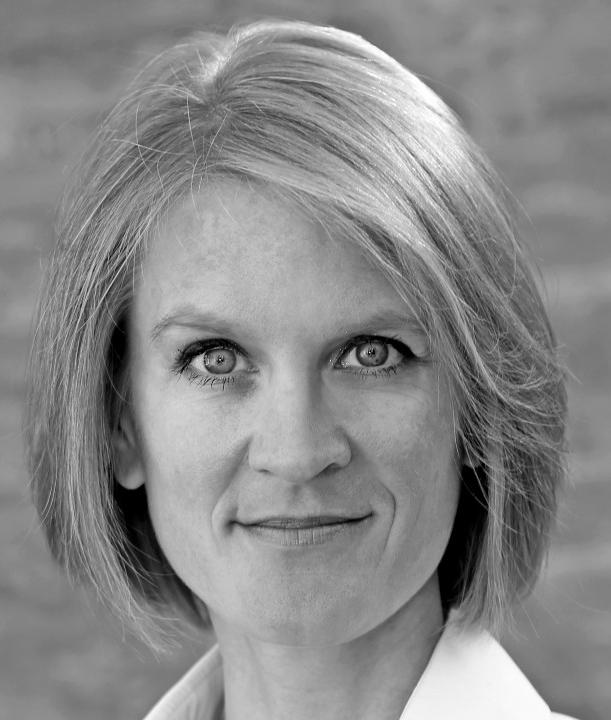
Laura Green Editor in Chief laura.green@busenq.com
Catherine Lafferty Business Editor catherine.lafferty@busenq.com
PRODUCTION
Remo Savino Production Assistant remo.savino@busenq.com
Jamie Bolton Head of Design jamie.bolton@busenq.com
Didie Nturo Head of Video & Content Creation didie.nturo@busenq.com
Matt Hardwick Online Website Manager matt.hardwick@busenq.com
DESIGN WEBSITE PHOTOGRAPHY
Didie Nturo Lead Photographer didie.nturo@busenq.com
LEGAL
Chloe Bird Birketts LLP Norwich
A WORD FROM OUR TEAM
Welcome to the December/January Edition of Business Enquirer Magazine, Issue 144
As we close one year and enter the next, industries across the world continue to move forward with purpose, innovation and resilience. The pace of change shows no sign of slowing, and the organisations shaping tomorrow are those investing in people, technology and long-term strength today. This edition highlights the companies and leaders pushing that progress forward, each contributing to a smarter, more connected and more ambitious global future.
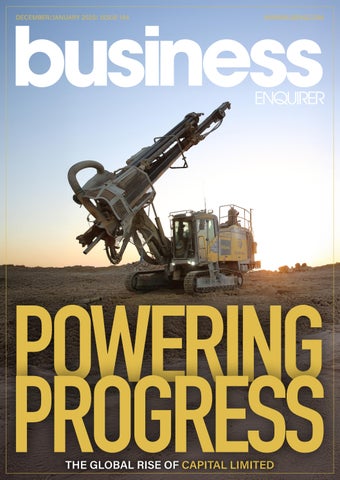
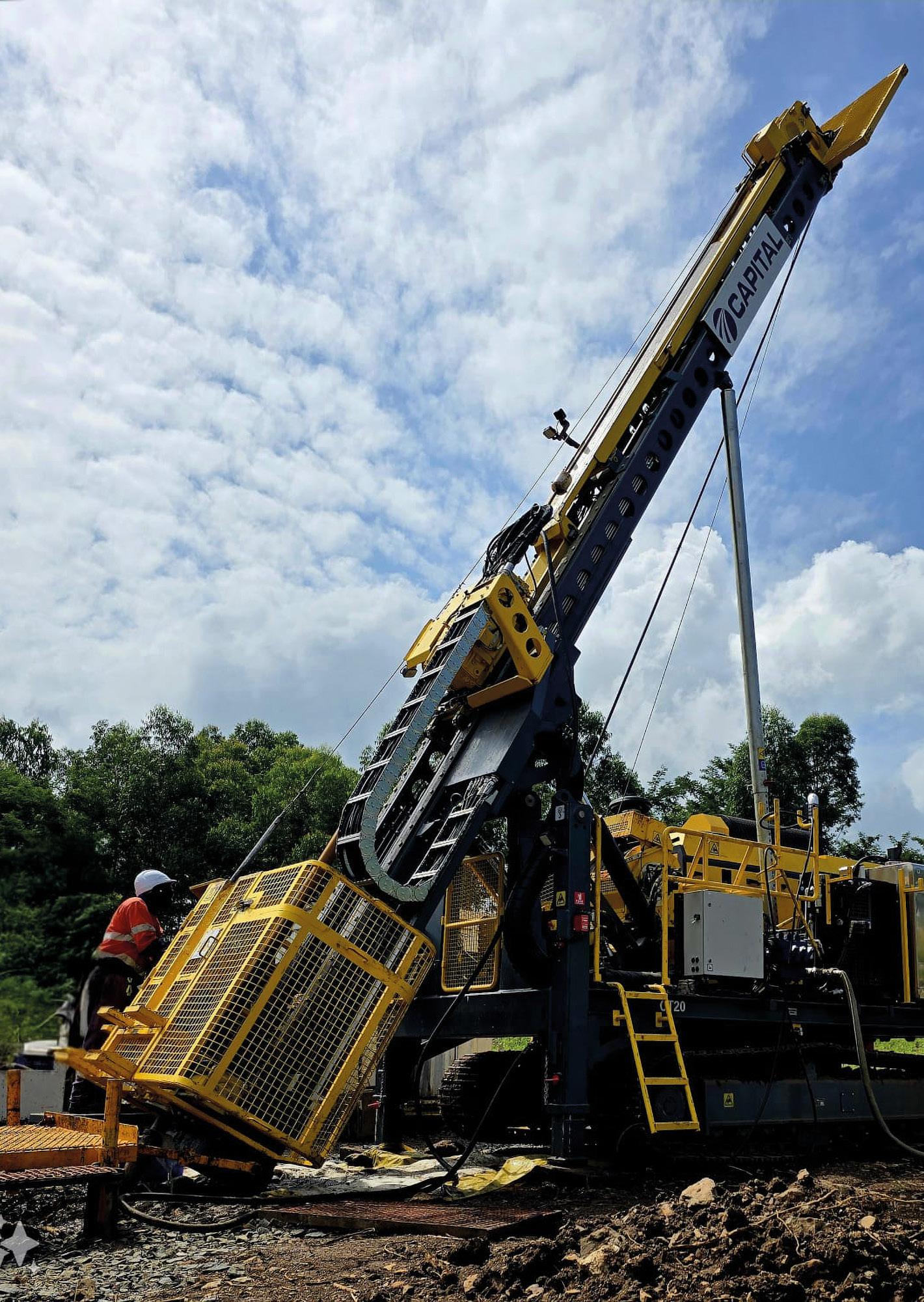
We open with Capital Limited, a remarkable success story in mining services. From beginning with two rigs at Tanzania’s Kabanga Nickel Project in 2005, the company now operates more than 140 rigs across over 20 countries. Its growth has been driven by strong leadership, long-term partnerships and an unwavering focus on quality. For Damien Valente, the newly appointed Business Development Manager, joining Capital was a natural step after following its journey since the start. His focus now is on strengthening established regions and exploring emerging markets, reinforcing the balanced growth strategy that defines Capital’s global momentum.
This issue also features our Top 10 Operational Leaders Driving Efficiency, recognising individuals who are redefining operational excellence through smarter systems, stronger processes and performance cultures that deliver meaningful impact.
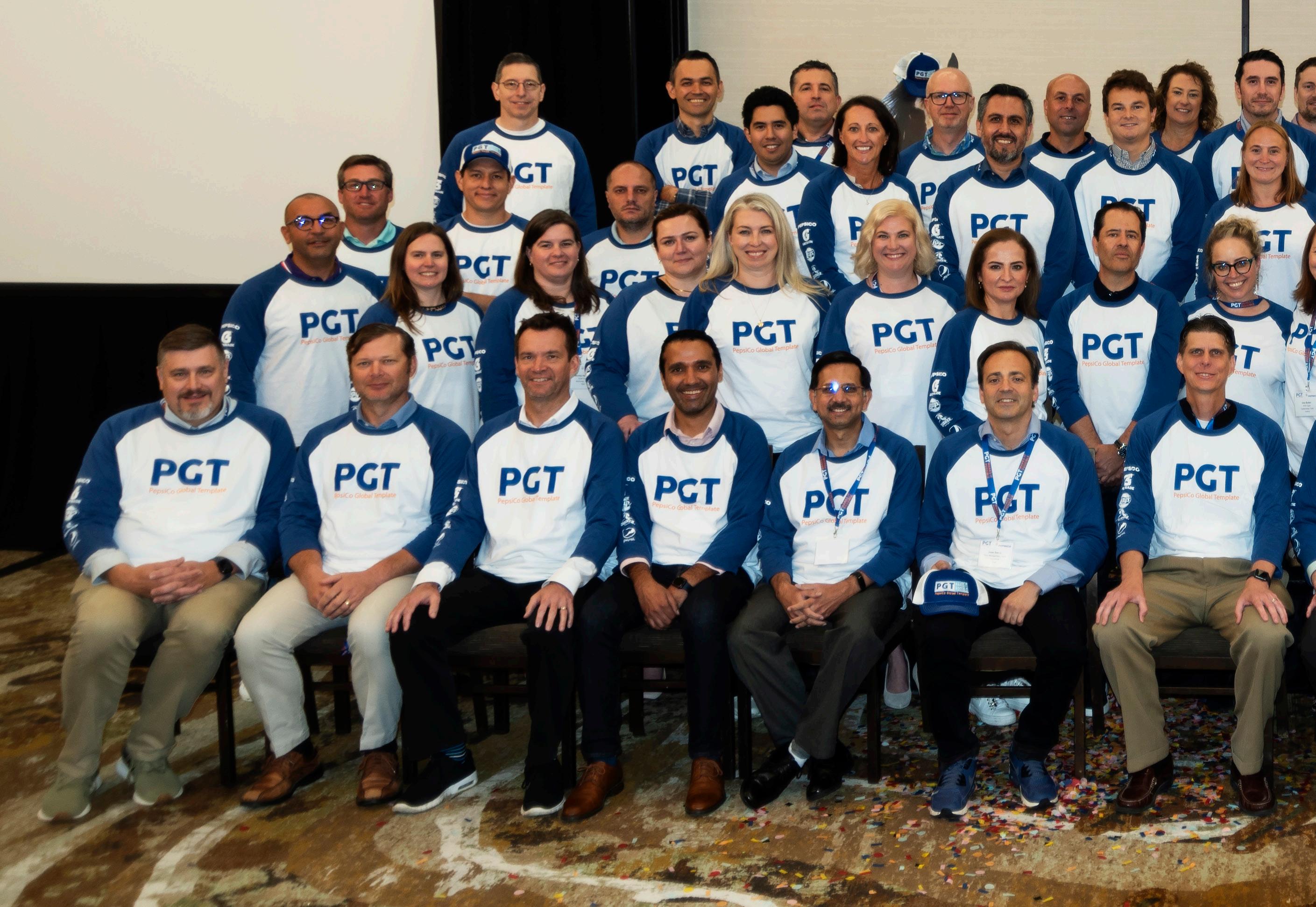
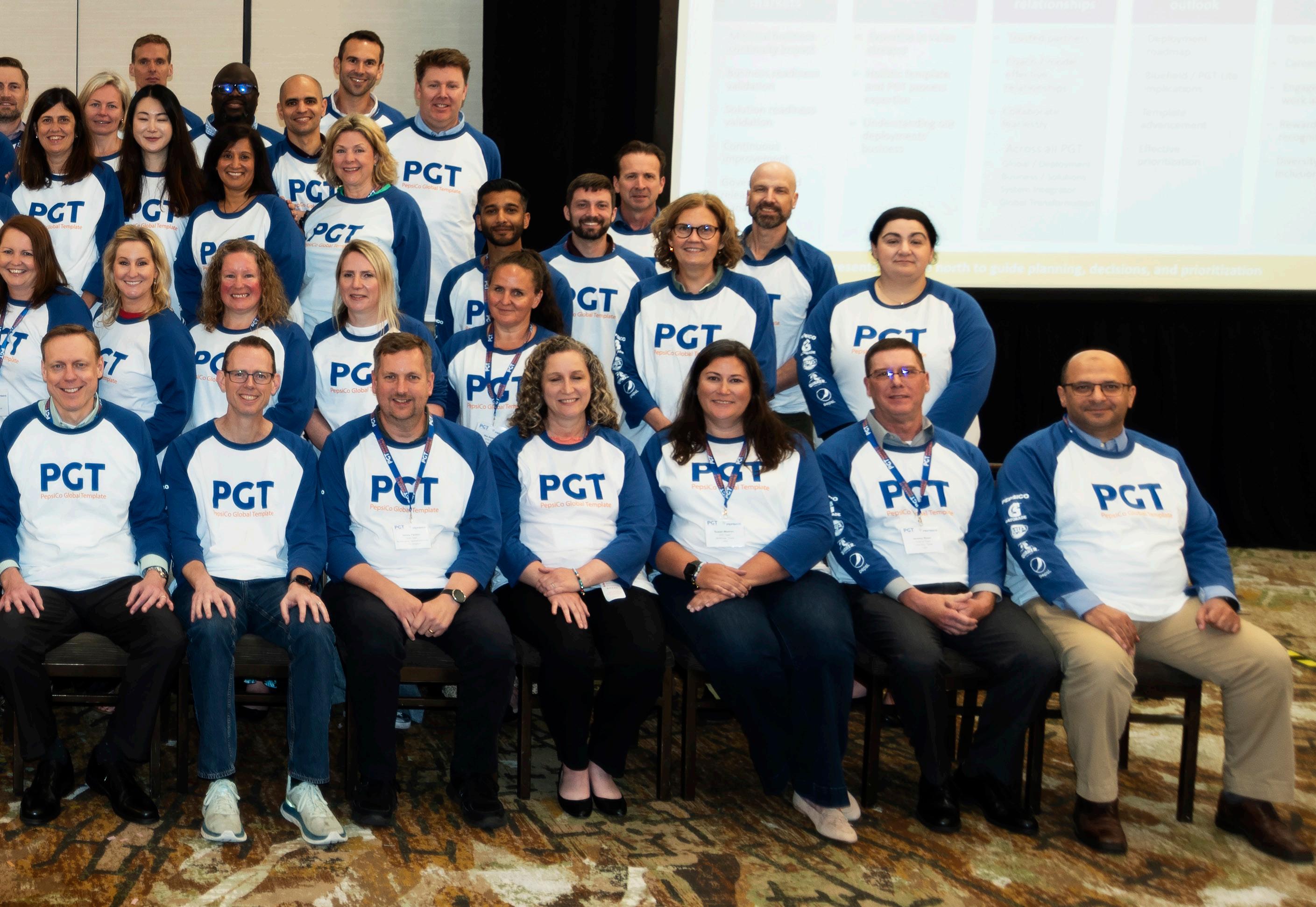
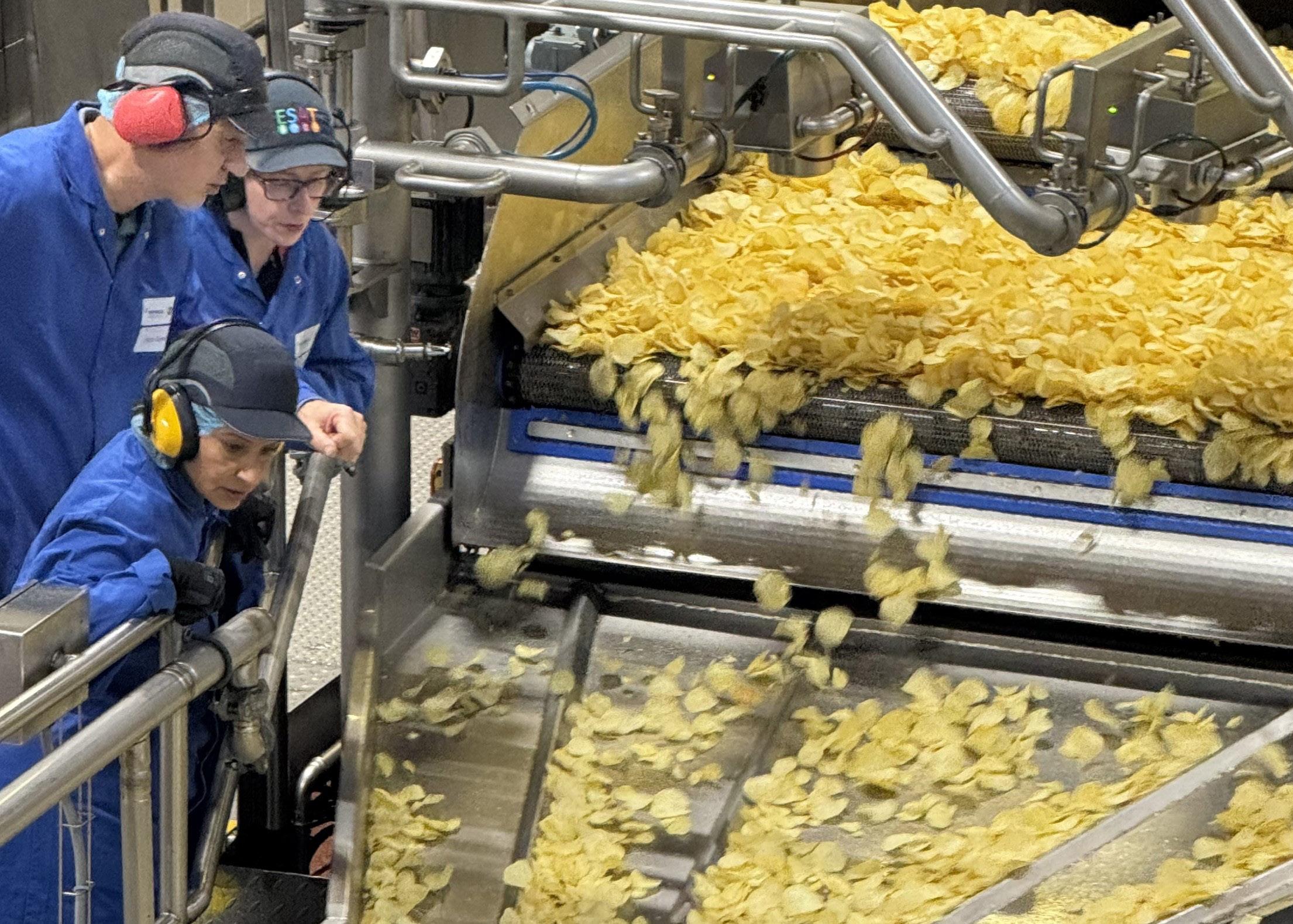
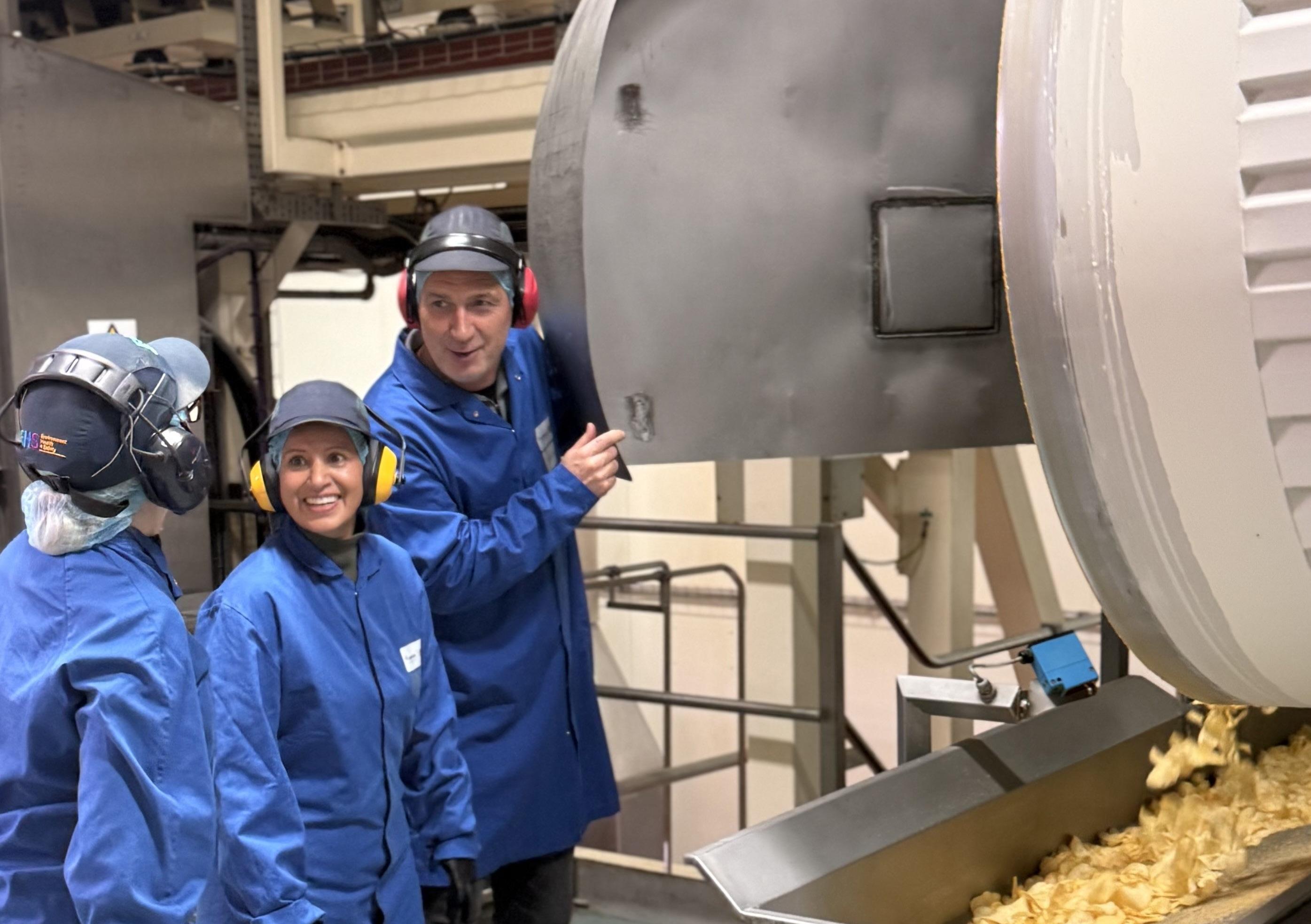
We explore PepsiCo’s global S/4HANA transformation programme, a change that goes far beyond technology. Krita Kataria, Transformation Director at PepsiCo, shares insights shaped by nearly three decades inside the business. Her experience across supply chain, procurement and now ERP transformation reflects what happens when scale, discipline and people are treated as equal priorities in a transformation of this magnitude.
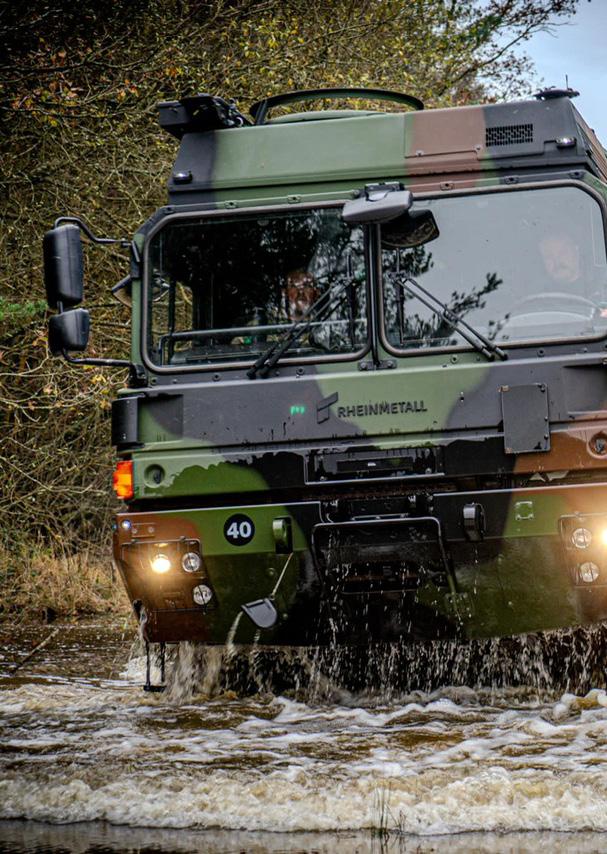
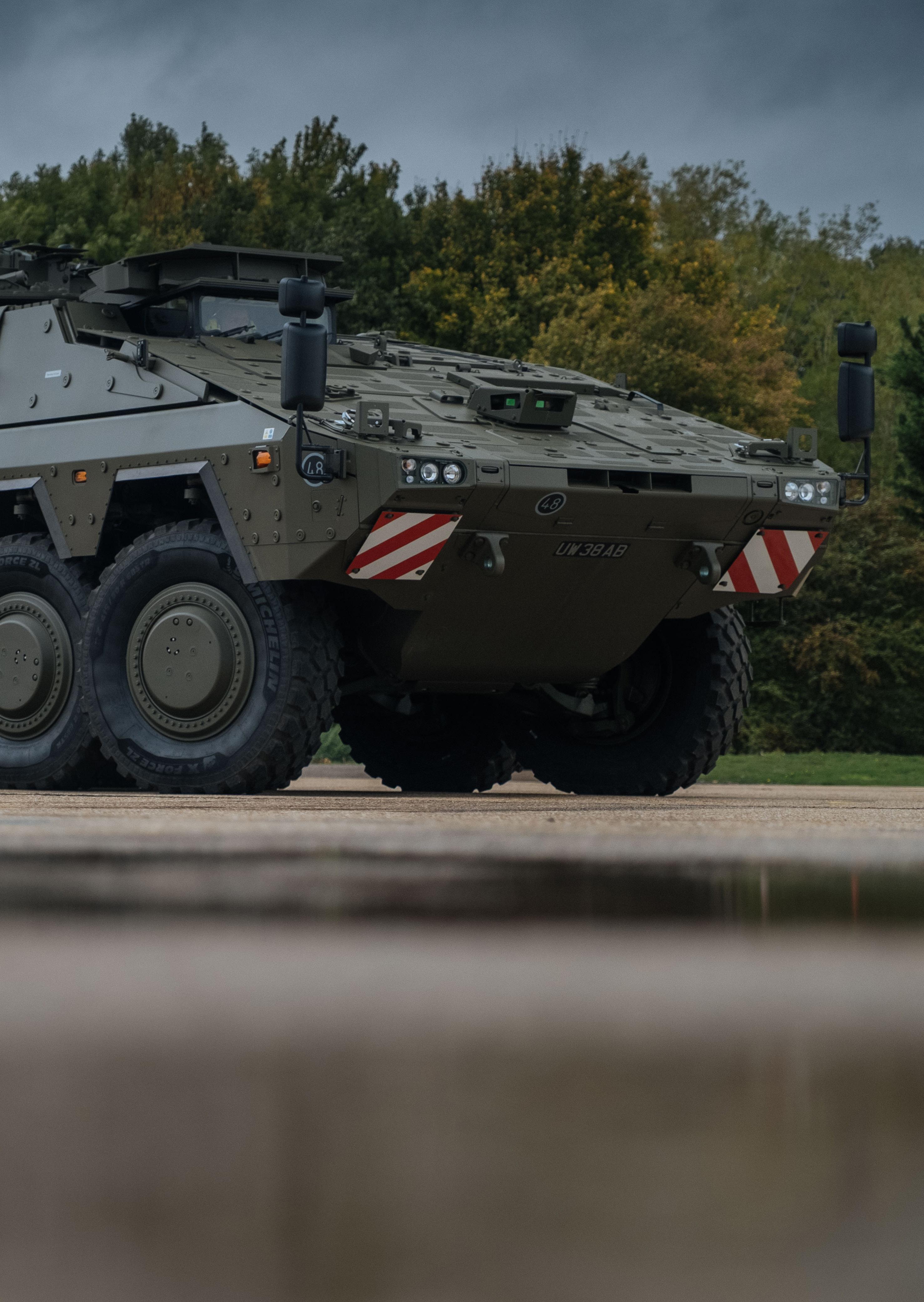
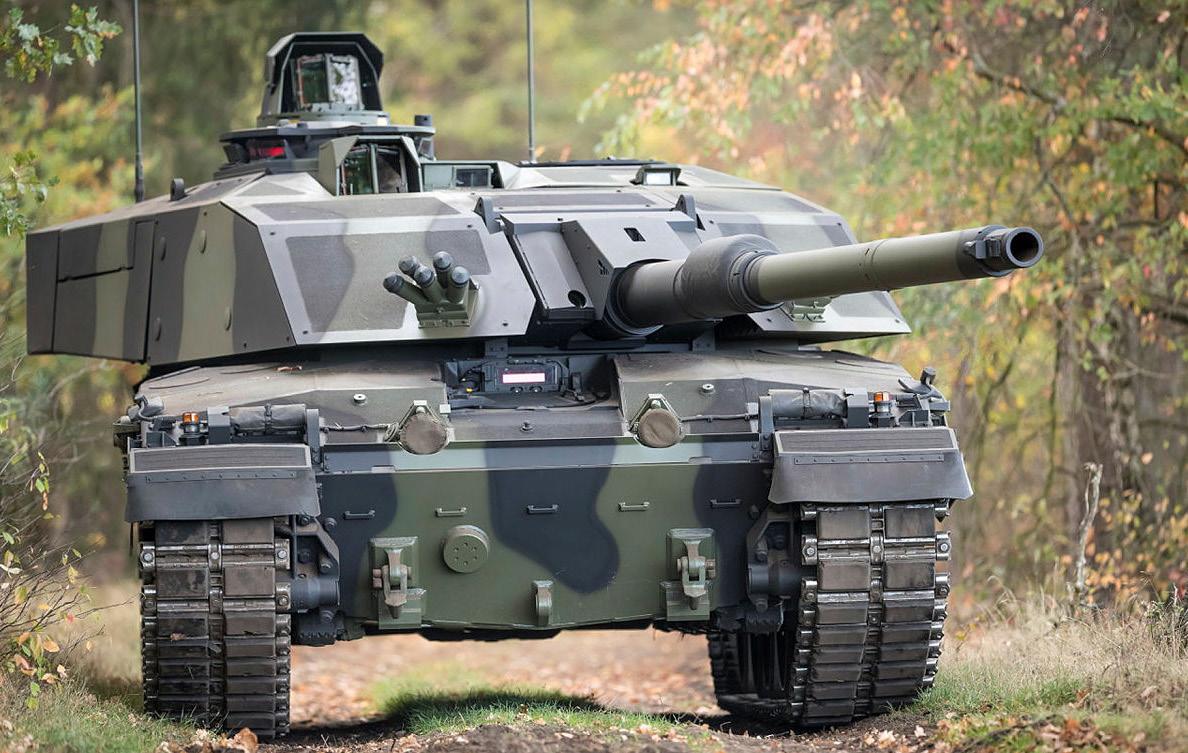
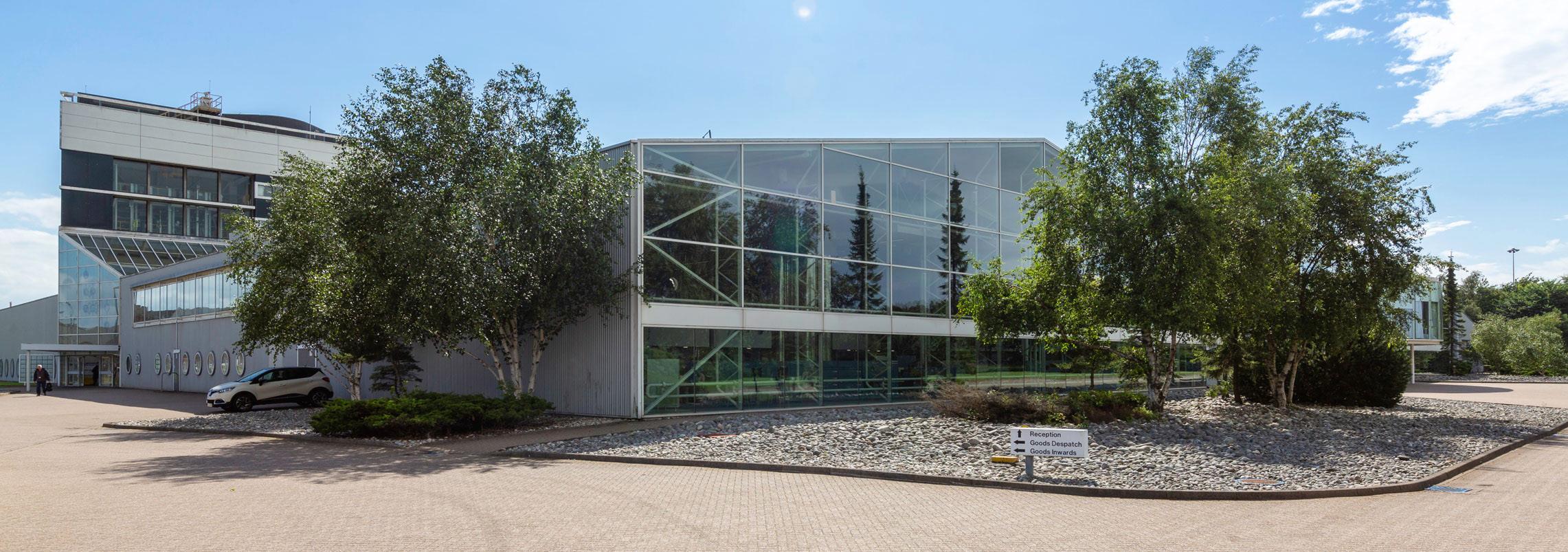
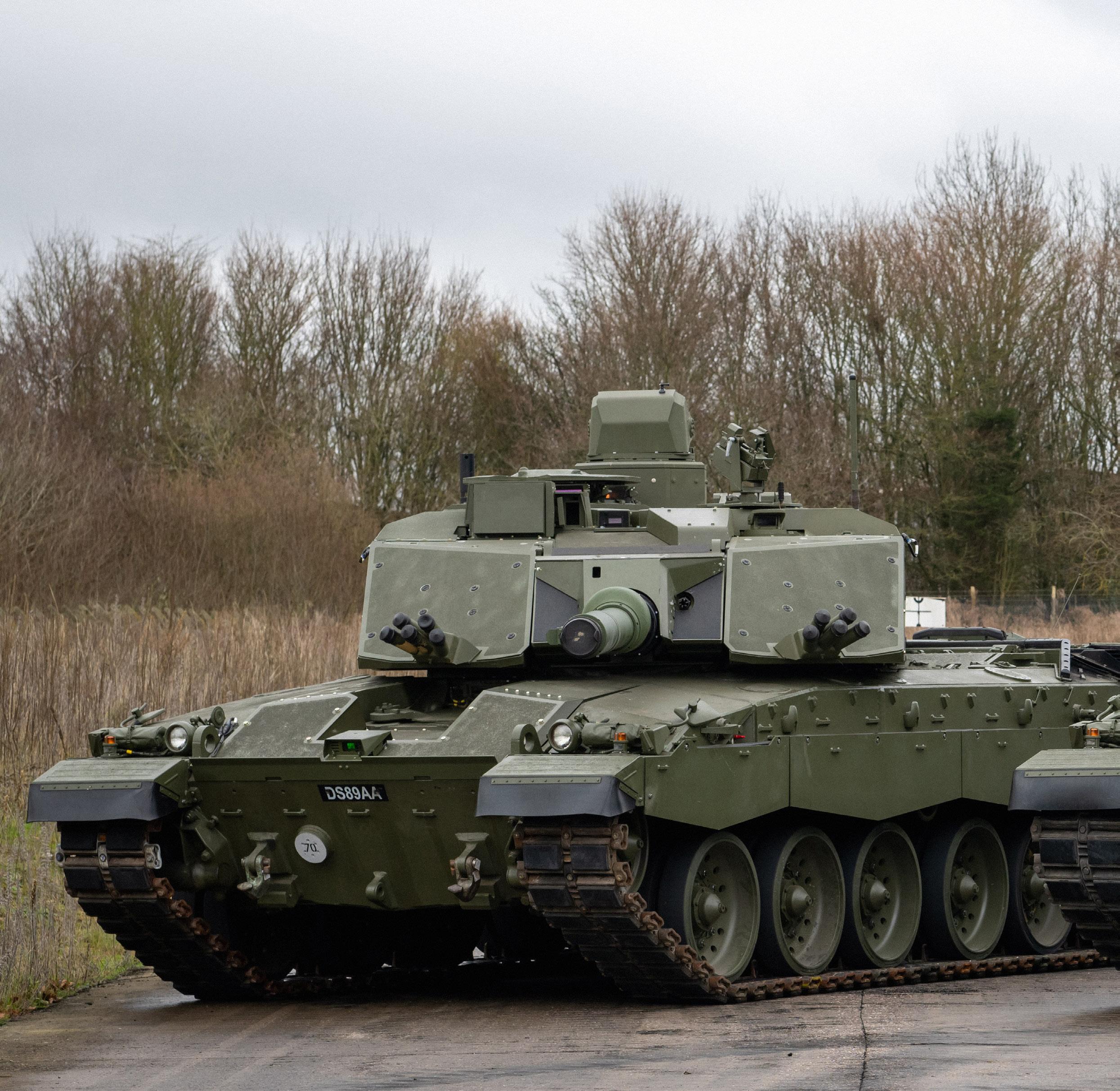
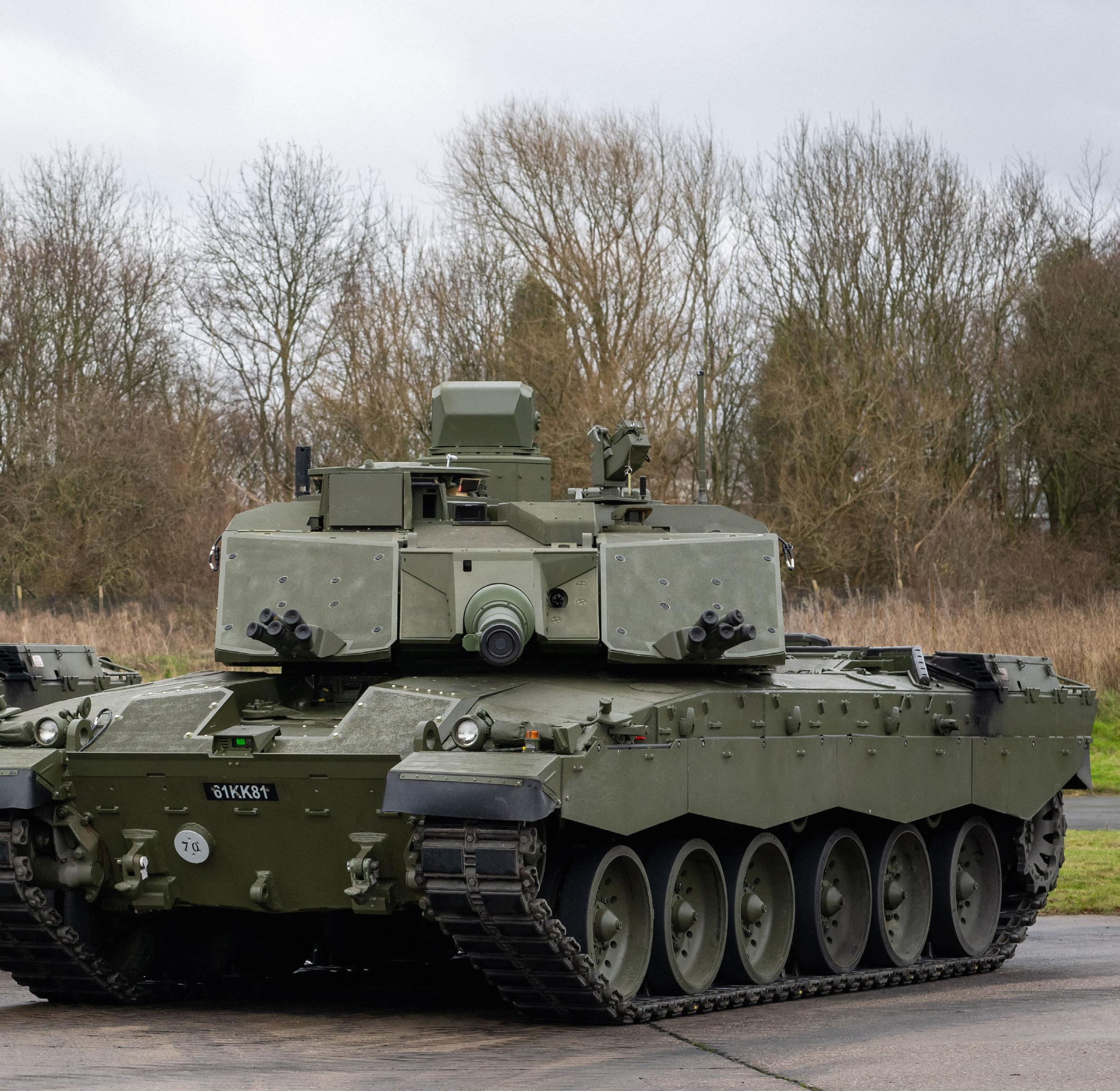
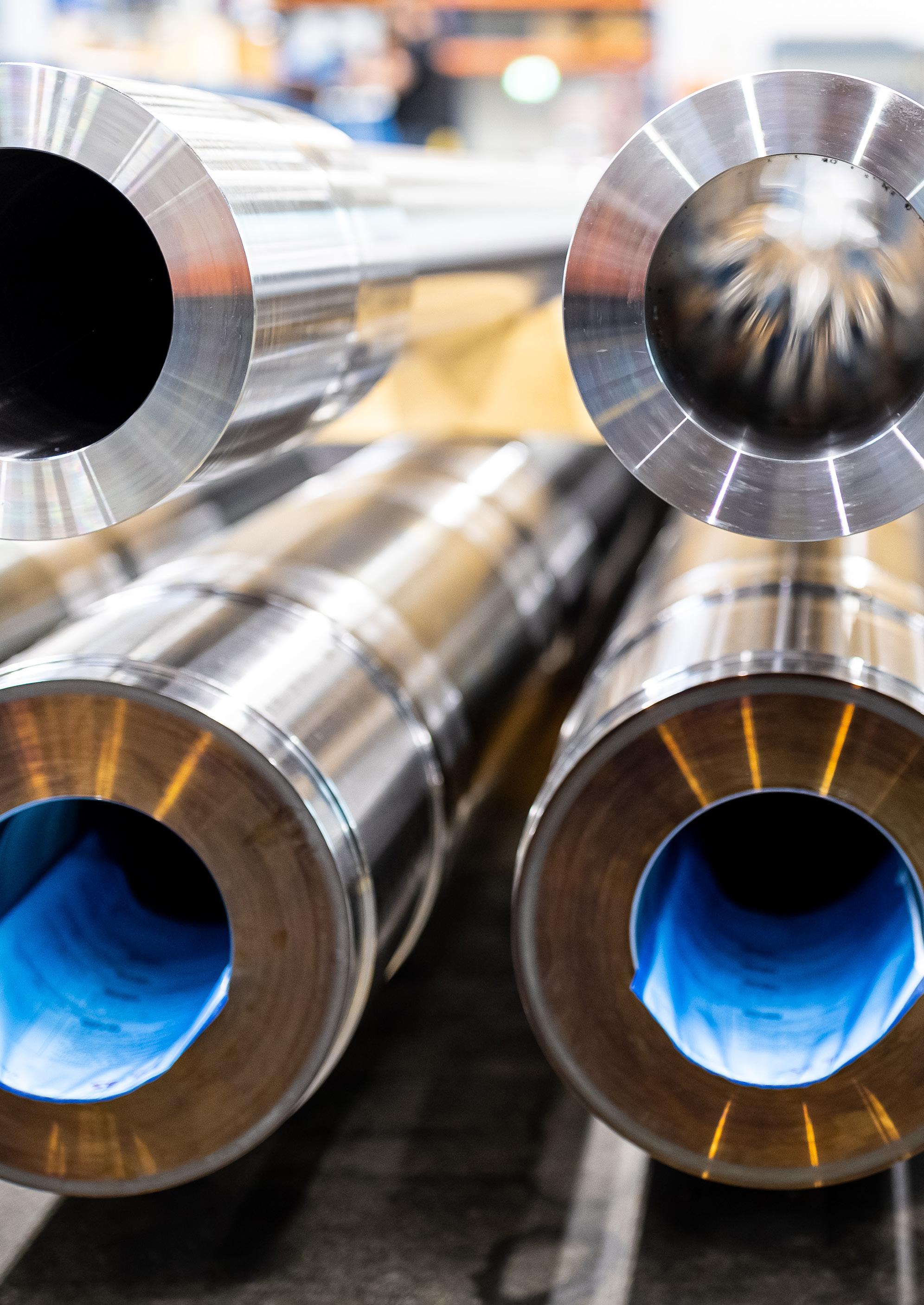
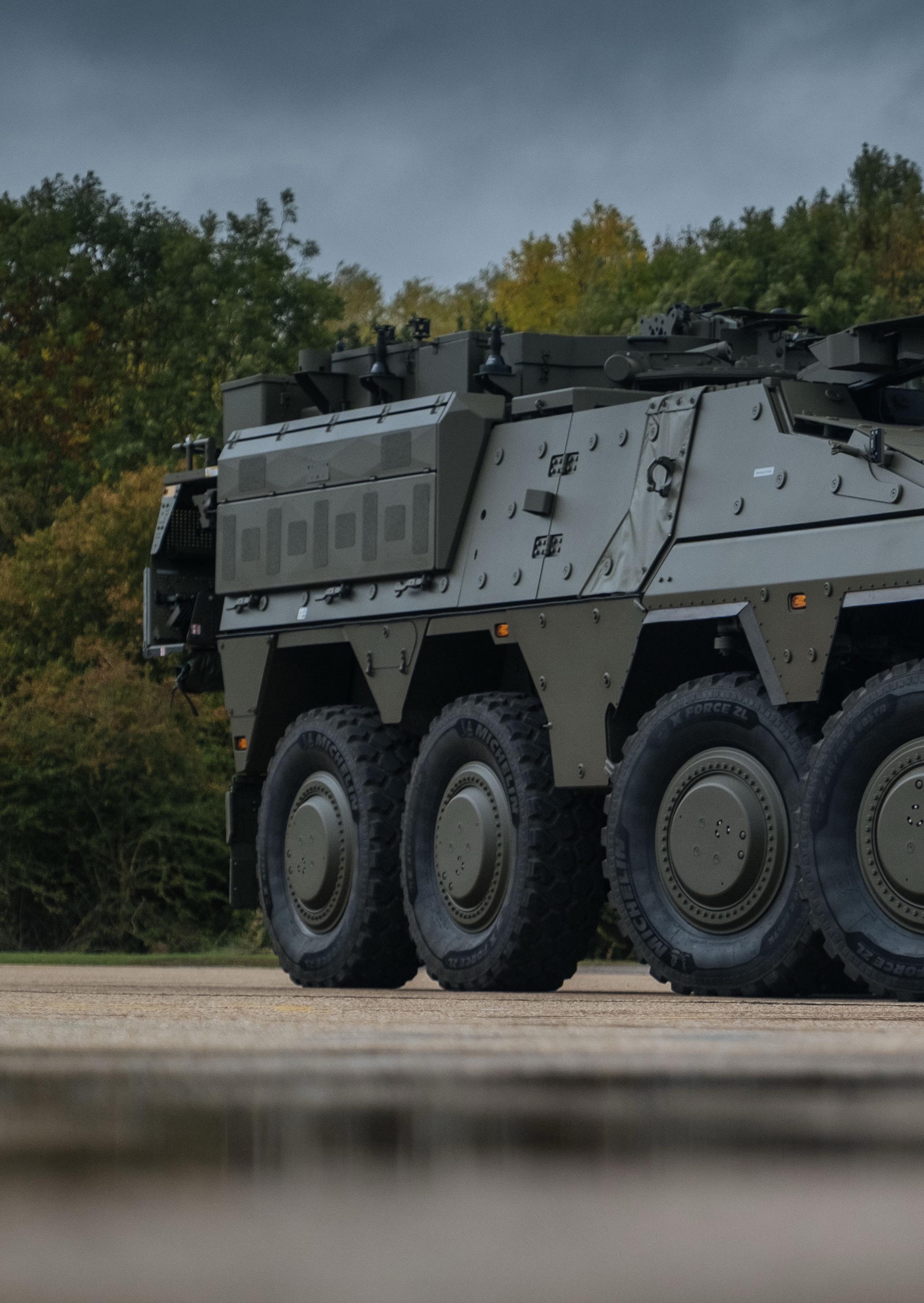
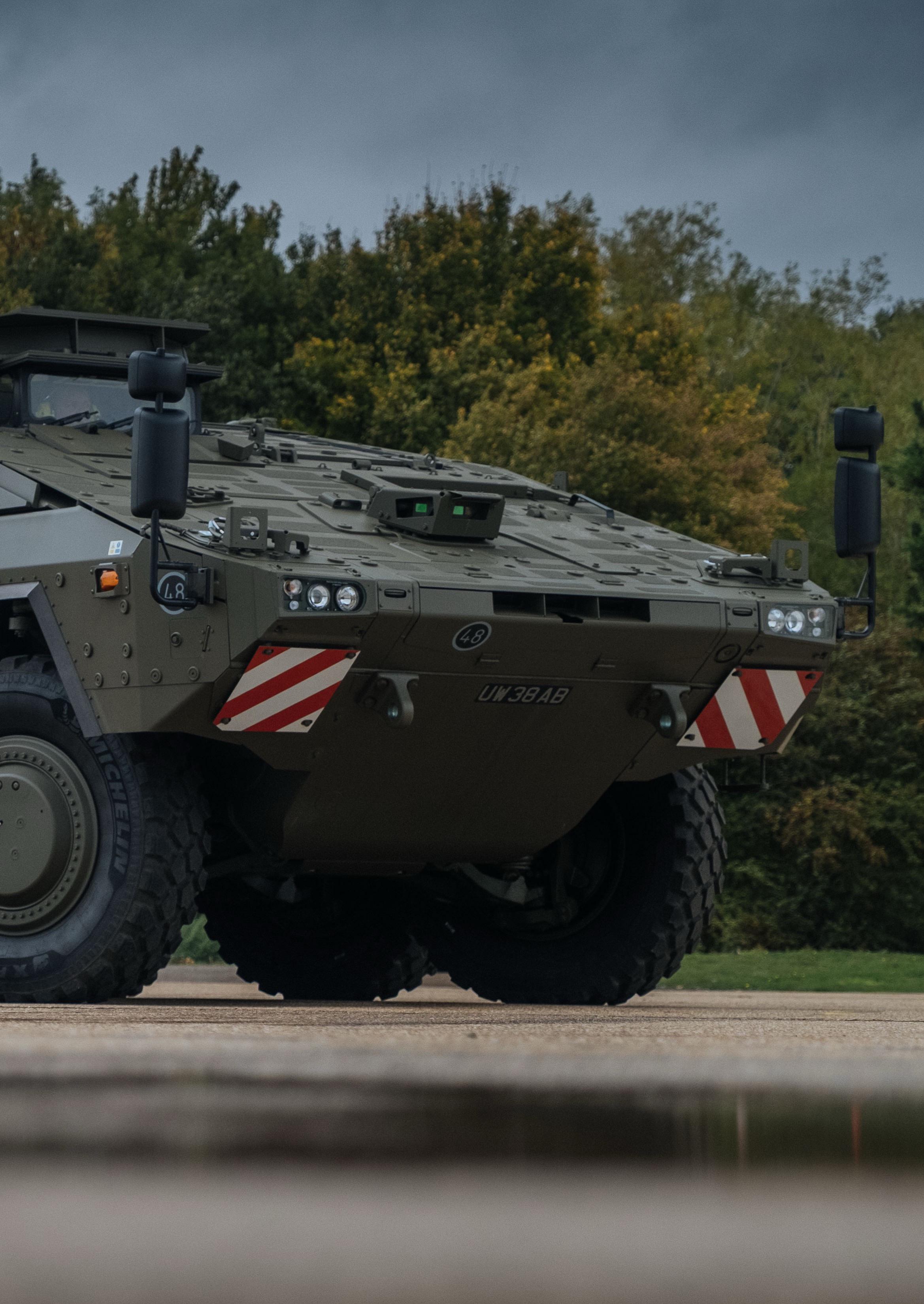
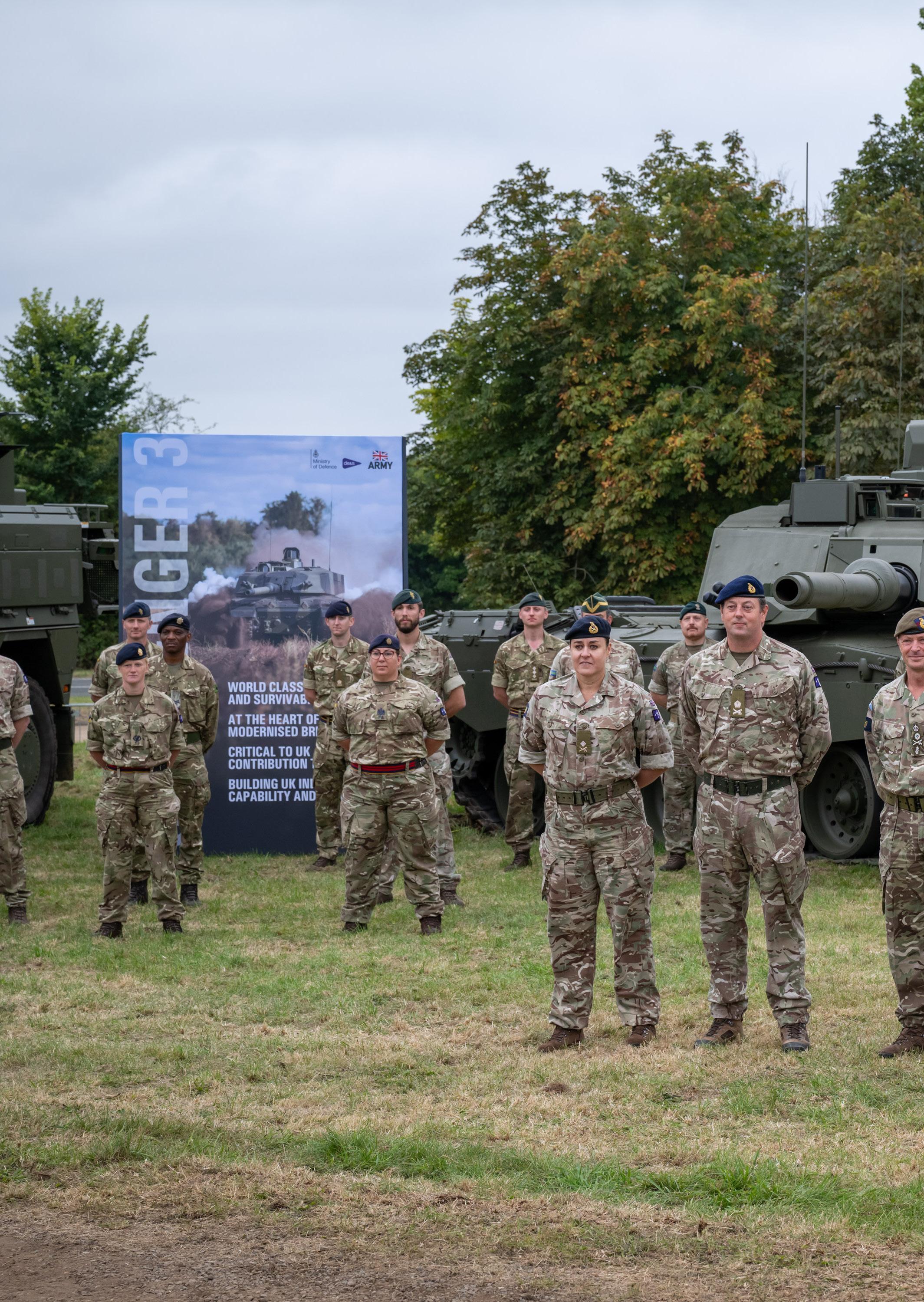
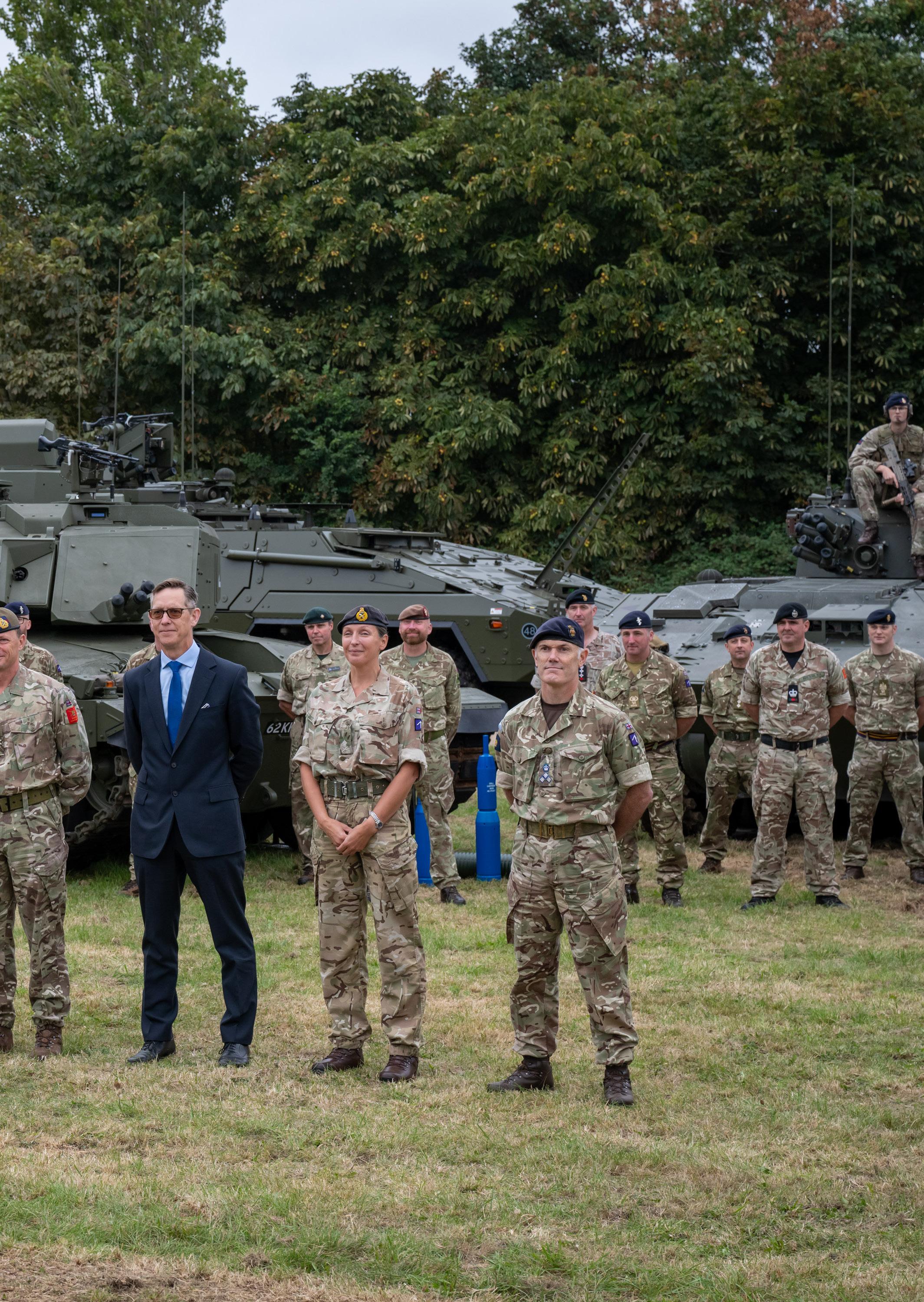
We also spotlight Rheinmetall UK, a company investing at scale to strengthen Britain’s sovereign defence capability and industrial resilience. From the new Gun Hall facility in Telford to next-generation autonomy and uncrewed systems, Rheinmetall UK is supporting the Ministry of Defence’s long-term vision while creating high-value jobs, revitalising supply chains and restoring critical manufacturing capability to the UK.
Alongside these headline features, this edition includes many more stories of leadership, innovation and purpose from across global industry. Enjoy the read.
If you have a business story you wish to share in 2026, please contact our Head of Production via production@busenq.com
POWERING A NEW ERA OF RESPONSIBLE RESOURCE DEVELOPMENT IN THE DRC KAMOTO COPPER COMPANY 068
AMAK’S EXPANDING HORIZON AND THE FUTURE OF MINERAL WEALTH AMAK 080 FROM POTENTIAL TO PERFORMANCE LUCA MINING 094 FORGING THE FUTURE OF SUPPLY CHAINS
INTERNATIONAL HOTEL GROUP BUSINESS PARTNER UPDATES 008
OPERATIONAL LEADERS DRIVING EFFICIENCY IN 2025
BRAD NICOLAISEN, SVP OF GROWTH& AI INNOVATION AT TOTALTEK
INTRODUCING INTERCONTINENTAL THE RED SEA RESORT IYC WOMEN SHAPING THE FUTURE OF YACHTING 030 034 042 048 THIS MONTH’S TOP 10 Q&A Q&A Q&A
JOHN WEI, CHIEF TECHNOLOGY OFFICER AND EXECUTIVE VICE PRESIDENT AT INTEGREON
EVGENI KOURIS, NEW MITTELSTAND
REIMAGINING TIME WITH THE ORB VANGUART 130 FROM NEWRY TO THE SEVEN SEAS MJM MARINE 136
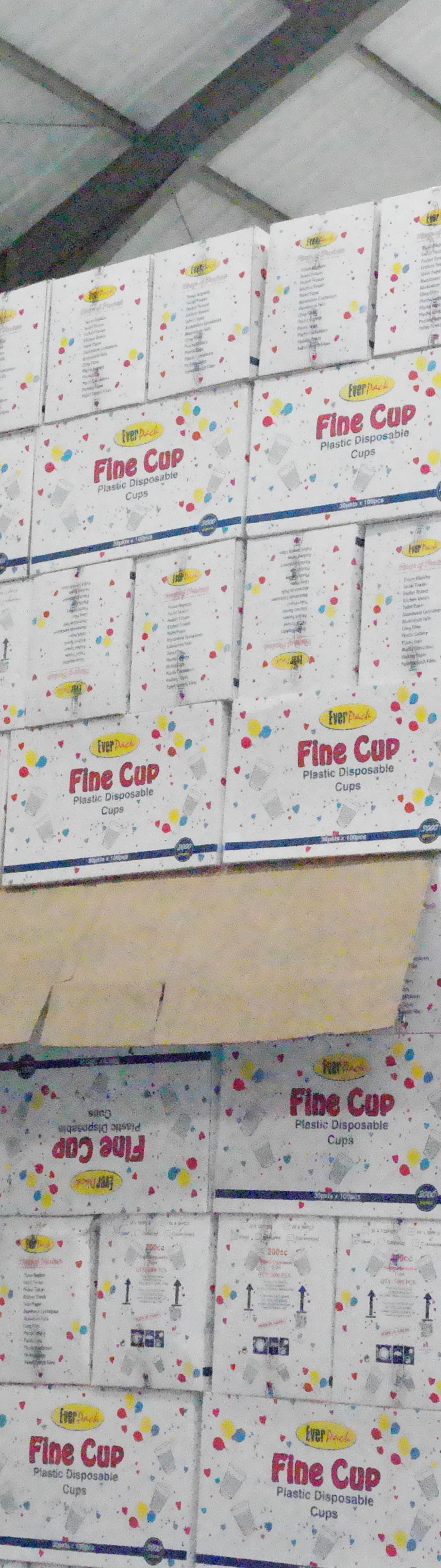
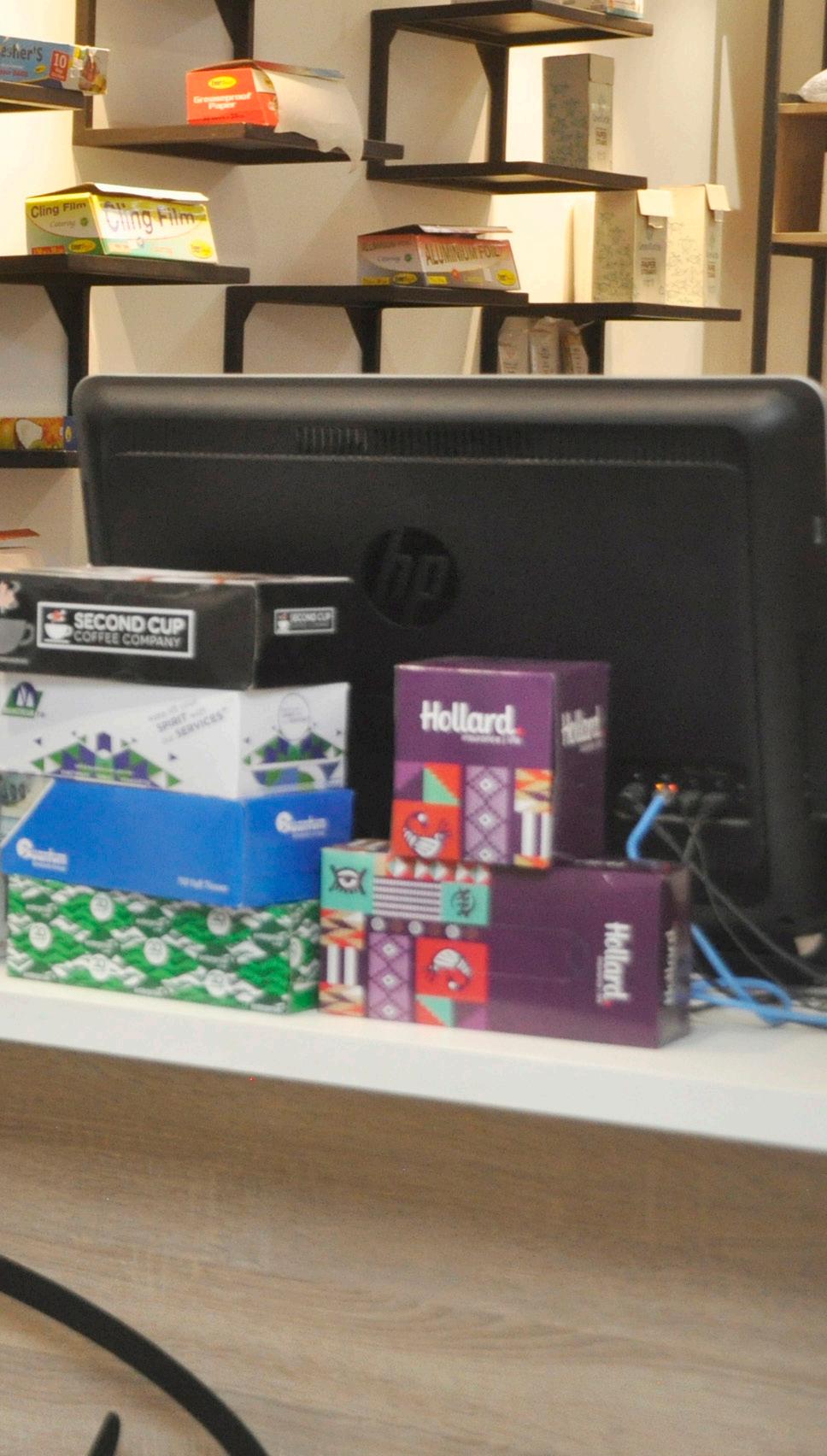
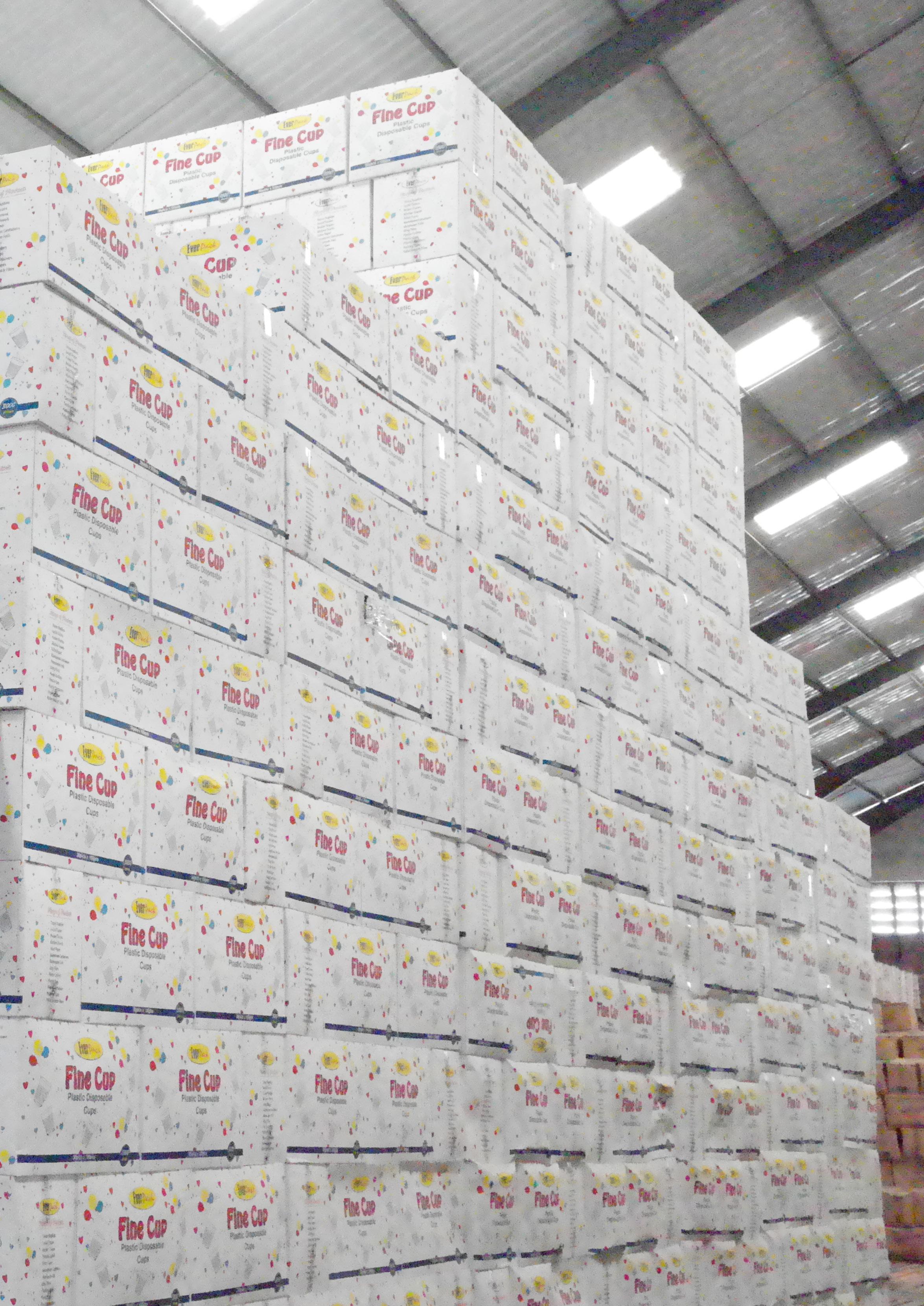
EVERPACK 144
BUILDING A LEGACY OF INNOVATION, COMMUNITY AND GROWTH IN WEST AFRICA
DELIVERING RELEVANCE, RELIABILITY AND RESILIENCE
THE INFRASTRUCTURE
POWERING AN ECONOMY OF THINGS
DETERMINED TO CURE THE INCURABLE
Bio-Luxury Reimagined
High-Tech Wellness for the Ultra-Affluent
Sustainable Sophistication How Luxury Brands Are Turning Ethical Where Africa Breathes Luxury
The Story of Hemingways Collection
INTRODUCING INTERCONTINENTAL THE RED SEA RESORT
InterContinental, the world’s first and largest luxury hotel brand, is opening new doors to a world of fascination on The Red Sea. Advancing the brand’s pioneering outlook and reinforcing IHG Hotels & Resorts’ global commitment to growing a leading luxury and lifestyle portfolio, InterContinental The Red Sea Resort is among the first to open on Shura Island – a destination which, in line with Saudi Vision 2030 ambitions, is setting a new global benchmark in luxury tourism.
The 210-room resort, set within pristine waters, vibrant coral reefs, and protected marine ecosystems, combines unmatched natural beauty with visionary, sustainable development. Offering guests an immersive sense of exclusivity and escapism, bold coral inspired architecture, cultural authenticity and intuitive service combine on Saudi Arabia’s compelling coastline.
“The opening of InterContinental The Red Sea Resort marks the beginning of a new chapter for guests to explore the Red Sea’s extraordinary beauty,” said Francesco Pantalone, General Manager. Reflecting on the milestone, Pantalone stated that through its refined design, bespoke experiences, and enduring spirit
Early opening on the visionary Shura Island reinforces IHG’s pioneering luxury outlook
of discovery, InterContinental The Red Sea Resort seeks to deliver extraordinary experiences and timeless memories for our guests.
Design Excellence and Sustainable Commitment
The resort’s LEED BD+C Platinum Certified design – conceived by Foster + Partners with interiors by Kristina Zanic Consultants – blends contemporary architecture with the island’s natural surroundings to demonstrate the highest global standard for sustainability. Curved facades, organic textures, and Saudi artworks fuse to create an atmosphere of quiet elegance that underscores the resort’s dedication to environmental stewardship from the ground up.
For the modern luxury traveller
InterContinental The Red Sea Resort is a testament to the global evolution of InterContinental, which is reimagining
PARTNER UPDATES
the luxury travel experience for today’s modern luxury traveler. Its aim is to strike a harmonious balance between freedom and familiarity.
Each one of the resort’s guest rooms and suites – ranging from 50 sqm King and Twin Rooms to the spacious Red Sea Three-Bedroom Suite – is designed to ensure every guest can find restoration and rest within rooms, but also rejuvenation and focus. Crafted in collaboration with neuroscience-based designer, Isabelle Sjövall, this new design direction for InterContinental recognizes key elements that influence the way we respond to environment, such as tones, textures, and lighting, as well as our connection to nature and biophilia.
Guests will also have complimentary access to the latest circadian science through the brand’s global partnership with Timeshifter – a NASA utilised app which provides guests with a personalised jet lag mitigation plan to reduce the physical and mental impacts of time zone changes. This means guests can arrive ready to experience all that InterContinental The Red Sea Resort has to offer.
Guests seeking an enhanced level of service can utilize Club InterContinental, which provides private check-in, and exclusive amenities. Whilst for younger
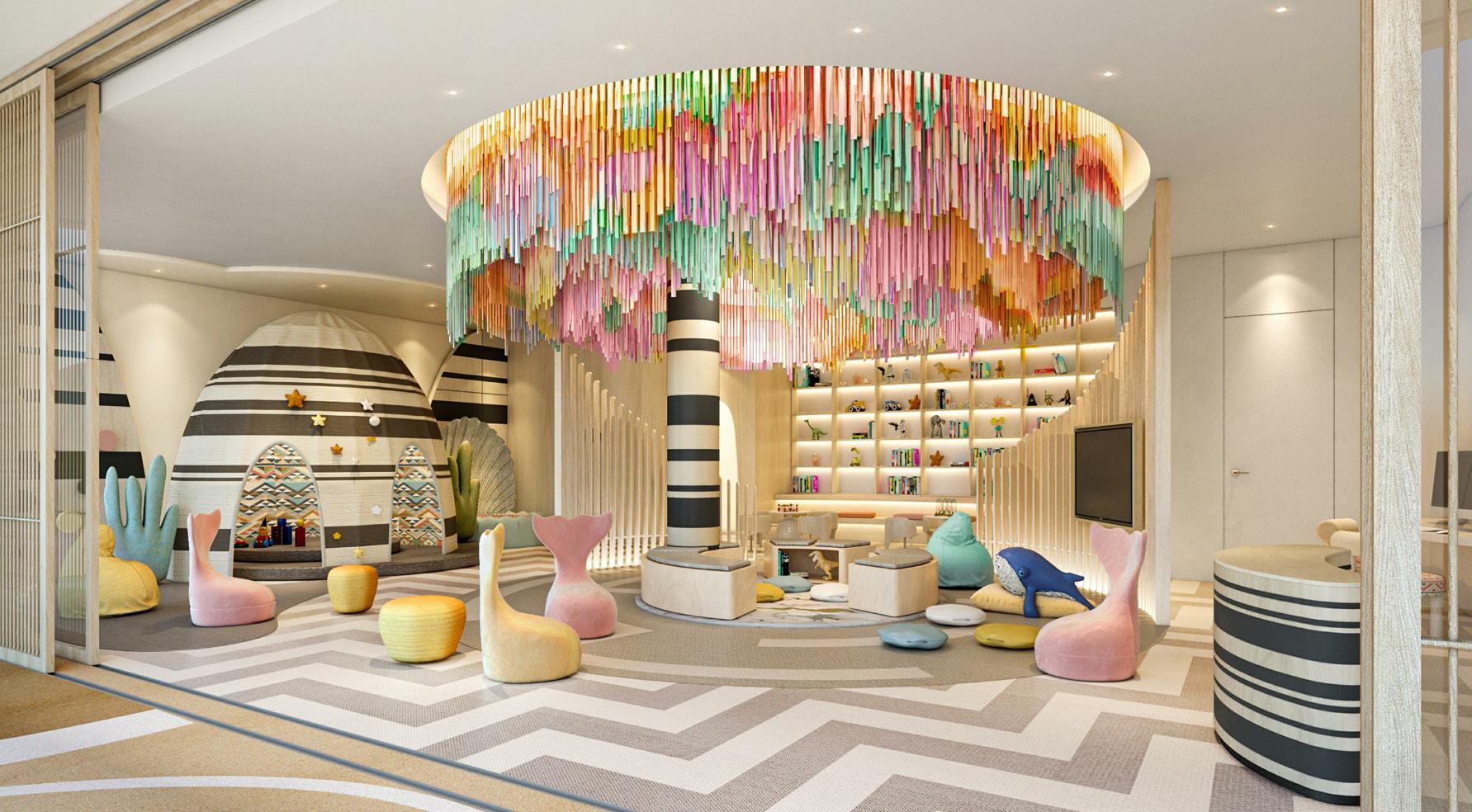
guests, InterContinental’s signature children’s and teens club, Planet Trekkers, offers marine-inspired activities and supervised outdoor adventures such as a climbing wall, energetic workshop & multilevel fun and a splash park.
Meanwhile, The SPA InterContinental offers adults a haven of stillness where beneath open-air wellbeing domes the sun energizes, the sea calms and the sand bring balance. Here, soothing rituals, hydrotherapy treatments, tailored massages and mindful yoga are designed to respond to and restore the modern luxury traveller.
Cultural Connections and Insider Access
Opening doors to a ‘world of fascination’, InterContinental is dedicated to those who appreciate travel and the cultured state of mind it brings, the wonder of fascinating places and fresh perspectives. The evolution of InterContinental is driven by the brand’s long held belief in the power of travel to expand the mind and connect cultures.
InterContinental colleagues serve as cultural connectors, helping guests embrace and explore cities and local neighbourhoods in over 70 countries where its hotels and resorts reside. Bringing to life the Insider Expertise of InterContinental The Red Sea Resort is The Concierge, on hand to facilitate cultural exploration
by introducing guests to in-the-know discoveries and bespoke experiences such as sailing, cycling expeditions, and diving among the world’s most vibrant coral reefs.
Global gastronomy, local flavour
InterContinental The Red Sea Resort offers a rich gastronomic journey blending global inspiration with deep local roots.
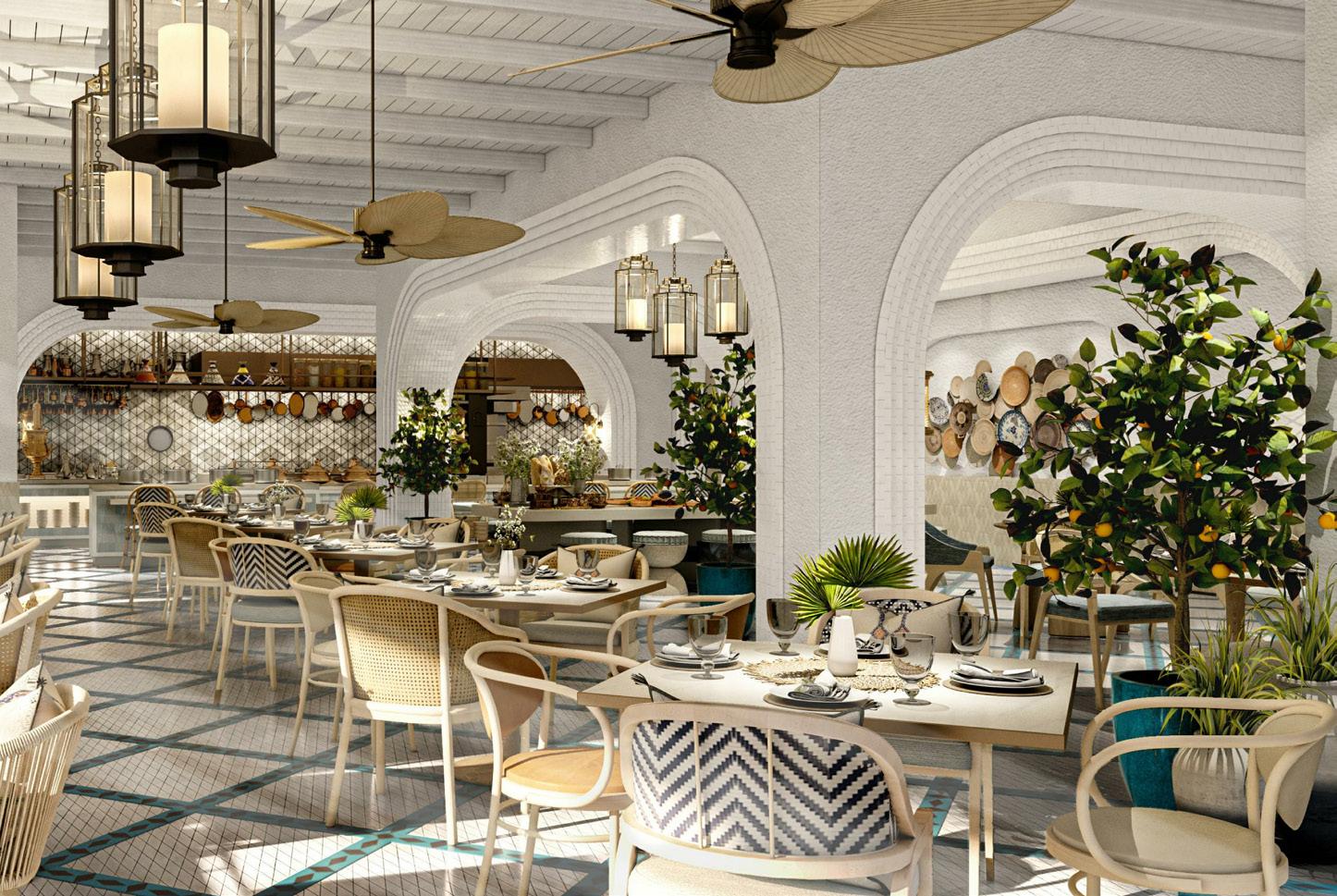
As a pioneer in modern Arabic cuisine, the acclaimed Chef Feras honors Levantine traditions and Phoenician heritage, through menus of seasonal, locally sourced ingredients served across three signature restaurants: Darein (Levantine-Moroccan spice routes), Ardo (South American fire and flair with bold sharing plates), and Chimes (sun-kissed Mediterranean tapas). Dishes are simultaneously nostalgic and refreshingly modern.
A centerpiece of the resort’s pastry program, led by Chef Raamin, is Murrma, a contemporary dessert parlor inspired by the surrounding mangroves, transforming nature and Chef’s personal memory into edible art. Drawing on his Levantine roots and Parisian experience, Chef Raamin presents modern multi-sensory interpretations of familiar childhood treats and classic pastries, exemplified by his signature Apple Cinnamon Vanilla Spiral Donut.
The resort’s dining collection will further expand in early 2026 with the additional Ardo, a South American eatery, and The 305, a Miami-inspired restaurant and cigar lounge.
InterContinental The Red Sea Resort joins a global portfolio of over 235 InterContinental hotels found in over 70 countries in every corner of the globe. The resort also represents IHG’s seventh luxury property in the western region. It joins Six Senses Southern Dunes and InterContinental Jeddah, and precedes Regent Jeddah and Six Senses Amaala, which in the coming years will also join IHG’s leading Luxury & Lifestyle portfolio, now one of the world’s largest.
www.ihg.com
WOMEN SHAPING THE FUTURE OF YACHTING
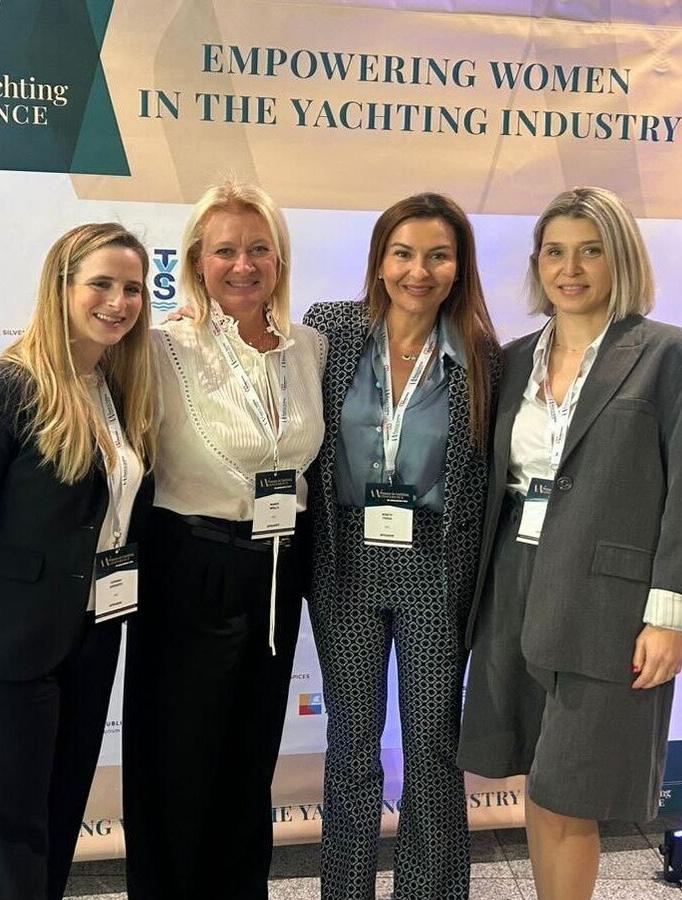
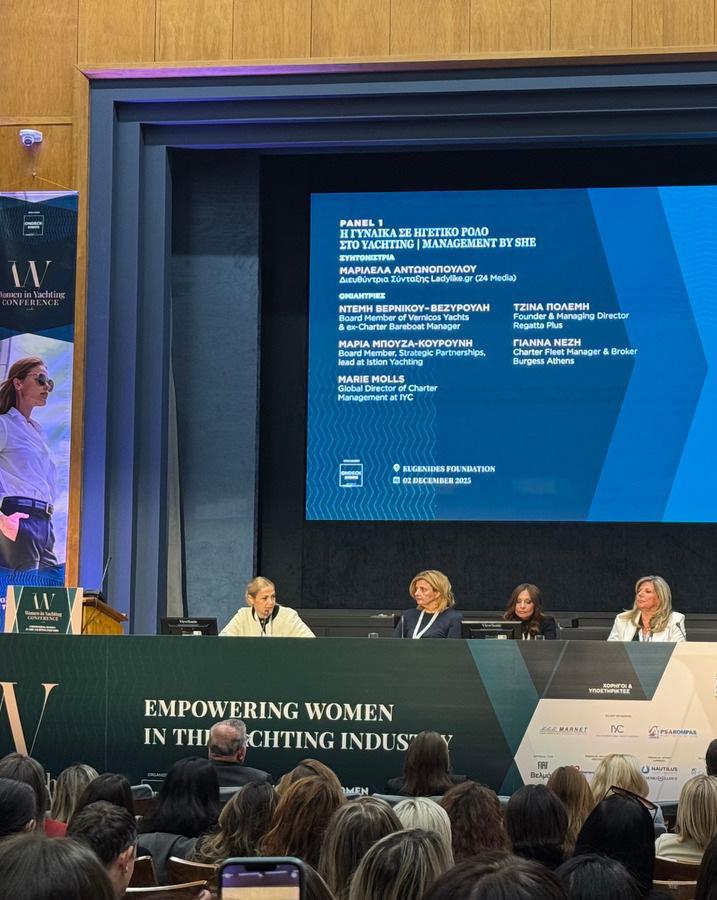
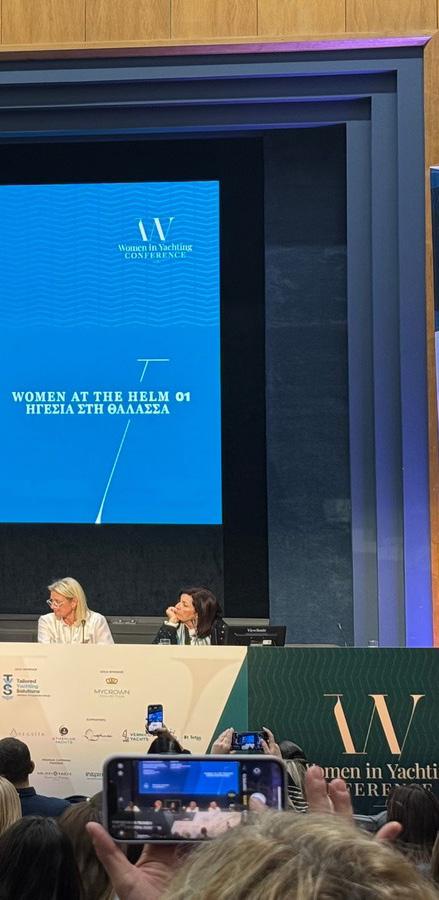
The Women in Yachting Conference, held on December 2nd 2025, at the Eugenides Foundation in Athens, brought together some of the most inspiring and influential female professionals shaping today’s maritime and luxury tourism landscape. The event is a reflection of how rapidly the industry is evolving and how essential women’s expertise has become across all sectors of yachting.
Across panels, presentations, and networking sessions, participants explored topics ranging from sustainability and compliance to digital transformation, charter trends, leadership, and industry growth. Greece, with its deep maritime heritage and thriving charter sector, provided a fitting backdrop for meaningful dialogue and a celebration of the women driving the industry forward. The atmosphere throughout the day underscored a shared commitment to collaboration, innovation, and an inclusive future for the global yachting community.
IYC’s Commitment to Leadership and Representation
For IYC, the event resonated strongly with values already embedded in our culture. As a company operating at the forefront of the global brokerage and charter market, we take pride in fostering leadership based on expertise, vision, and excellence; qualities embodied by many women in executive and operational roles across our international teams.
This year, we were especially proud to see four exceptional IYC leaders invited as speakers, each contributing her own perspective on the future of the industry. Their presence reflects not only their individual achievements, but also the broader reality that women are shaping strategy, technology, compliance, and client experience at the highest levels of our organization.
Spotlight on the IYC Women Who Took the Stage
Marie Molls – Global Director of Charter Management
As one of the industry’s most respected figures in charter, Marie Molls leads IYC’s extensive global charter management division with a focus on operational excellence and elevated client service. At the conference, she shared insights on evolving charter trends, the importance of proactive fleet strategy, and the role of strong leadership in an increasingly competitive market. Her perspective highlighted how innovation and consistency define the modern charter experience.
Irene Saranti – Chief Digital Officer
In a sector undergoing rapid digital transformation, Irene Saranti represents the forefront of technological evolution in yachting. As IYC’s Chief Digital Officer, she has been instrumental in developing platforms and tools that enhance client engagement, streamline
PARTNER UPDATES
internal processes, and improve datadriven decision-making. Her discussion at the conference centered on how digital ecosystems are rewriting the rules for efficiency, transparency, and customer experience within the luxury yachting market.
Betty Ghika – Senior Yacht Manager, Greece
With deep expertise in all facets of yacht operations, technical oversight, and owner support, Betty Ghika offered valuable insight into the tightly coordinated world of yacht management. Her intervention emphasized how a strong management framework not only protects owners’ assets but also ensures seamless operations for crew and charter guests. Her presence on stage underscored the essential leadership roles women play in complex, highresponsibility operational domains.
Areti Priovolou – Global Compliance Manager, DPA/CSO
Representing one of the most safetycritical areas of the industry, Areti Priovolou spoke on the importance of compliance, regulation, and risk mitigation in modern yachting. As IYC’s Global Compliance Manager and Designated Person Ashore, she plays a pivotal role in ensuring that our managed fleet adheres to the highest global standards. Her contribution highlighted how women are leading not only in client-facing positions but also in technical, regulatory, and security-focused fields fundamental to safe and responsible yachting.
A Meaningful Step Forward
The Women in Yachting Conference served as a powerful reminder of the depth of talent, expertise, and leadership that women bring to the yachting world. For IYC, it was an honour to see our team represented so prominently in conversations that will shape the future of our industry. As the sector continues to evolve, embracing sustainability, innovation, and new standards of excellence, the voices of these women will undoubtedly remain at the forefront.
www.iyc.com
ICONIC LEADERSHIP MOVEMENTS IN 2025
Leadership in the modern age is in constant flux. As global markets, cultural expectations, and technological landscapes continue to evolve, so too does the very definition of what makes a great leader. In 2025, the business world stands at a fascinating crossroads where traditional ideals of authority and vision are being challenged and reshaped by more inclusive, sustainable, and adaptive models of leadership. What emerges from this shift is a new set of movements that not only reflect the times but also shape the future of commerce and society.
The Rise of Purpose-Led Leadership
The corporate sphere has long celebrated leaders for their ability to deliver profits and growth, yet the current climate places equal, if not greater, emphasis on purpose. Companies are being asked to demonstrate that their goals extend beyond balance sheets and into social responsibility. Leaders who thrive in this environment are those who build strategies anchored in long-term value for communities, employees, and the
environment. This form of leadership is not mere branding but a genuine recalibration of priorities that fosters loyalty and trust. As more organisations align themselves with social impact, purpose-driven leadership becomes both a competitive advantage and a moral imperative.
Adaptive Leadership in a Volatile World
The modern world demands leaders who are agile in the face of uncertainty. From climate events to geopolitical shifts, disruption is no longer an exception but a rule. Adaptive leadership focuses on resilience, flexibility, and innovation in the face of rapid change. Those at the forefront are characterised by their openness to experimentation and their willingness to listen and learn. They manage ambiguity not by clinging to old models but by nurturing cultures of curiosity and problem solving. In a landscape where yesterday’s solutions quickly lose relevance, adaptive leaders ensure that organisations are not only responsive but also proactive in addressing evolving challenges.
LEADERSHIP
The Human-Centred Movement
Leadership in 2025 increasingly emphasises empathy and human connection. The pandemic years accelerated awareness of employee wellbeing, and leaders today are expected to maintain this momentum by fostering workplaces that prioritise mental health, flexibility, and inclusivity. Human-centred leadership is not about softening business goals but recognising that sustainable growth emerges when people are empowered and supported. Leaders embracing this movement value authenticity, compassion, and the acknowledgement of individual potential. It is a movement that redefines strength not as command and control, but as the capacity to elevate and inspire others.
Sustainability as a Core Strategy
Sustainability has shifted from a secondary concern to a central pillar of leadership. Businesses across industries are being scrutinised for their environmental impact, and those at the helm are required to make decisive commitments to sustainable practices. This movement goes beyond compliance and ventures into innovation, with leaders exploring regenerative models, green technologies, and circular economies. The leaders who stand out are those able to weave environmental stewardship into commercial strategy, showing that profitability and responsibility can coexist. In this era, iconic leadership is measured not only by shareholder value but by stewardship of the planet.
The Global Mindset
As the world becomes more interconnected, leadership is transcending borders. The global mindset movement recognises that success requires cultural intelligence, cross-border collaboration, and an appreciation of diverse perspectives. Leaders with this outlook actively seek to build international networks, embrace multicultural teams, and understand that ideas flourish when boundaries are porous. They operate with
awareness that local actions can have global consequences and view diversity as a source of innovation rather than a challenge. In 2025, leaders who thrive will be those who can balance global scale with local relevance, setting the tone for a truly interconnected economy.
Digital and AI-Enhanced Leadership
Technology continues to redefine the role of leaders. Artificial intelligence and digital transformation are no longer side projects but central forces driving industries forward. Leaders in 2025 are expected to harness these tools not only to improve efficiency but to redefine customer experience and organisational capability. The movement towards AI-enhanced leadership is characterised by the ability to integrate human creativity with technological power. Far from replacing leadership, digital tools amplify decision making, enable foresight, and expand the capacity to engage with stakeholders in innovative ways. Those who lead effectively in this space are digitally literate and capable of steering organisations through the ethical and social questions technology inevitably raises.
Collaborative Leadership
The heroic, solitary leader model is giving way to collaboration and shared influence. In complex and interconnected markets, no single individual can hold all the answers. Collaborative leadership is rooted in collective intelligence, where teams, partners, and even competitors co-create solutions. Leaders who embody this movement are facilitators rather than directors, creating environments where knowledge is shared openly and hierarchies are flattened. This approach encourages creativity and accelerates innovation by leveraging the full spectrum of human and organisational potential. It signals a significant cultural shift in how influence and authority are exercised in modern business.
LEADERSHIP NEWS
The Regenerative Leadership Movement
A new wave of leaders is focusing on regeneration rather than mere sustainability. Regenerative leadership looks at organisations as living systems that can give back more than they take. This involves redesigning business practices to restore ecosystems, communities, and even the individuals within organisations. The regenerative approach demands courage and vision, as it challenges leaders to think beyond quarterly results and consider intergenerational impact. It is a movement that resonates strongly with younger generations, who increasingly hold businesses accountable for holistic contributions to the world.
The Evolution of Iconic Leadership
As these movements converge, the image of the iconic leader evolves. It is no longer the figure at the top issuing directives, but the one who sets the stage for others to thrive. Iconic leadership in 2025 reflects a delicate balance of vision and humility, decisiveness and openness, tradition and innovation. It is about embodying principles that resonate across cultures and generations while staying responsive to the unique demands of the moment.
For readers of Business Enquirer, the leaders to watch this year will not only be those with impressive financial results but also those whose approaches capture the essence of these movements. Their influence will extend far beyond their organisations, shaping the way business is conducted and how society perceives corporate power. In observing their strategies and choices, we gain a glimpse into the future of leadership itself, one that is both more human and more ambitious in its capacity to transform the world.
THE INNOVATION MINDSET WORKING IN 2025
Innovation has become the lifeblood of modern business. In 2025, the companies and leaders who thrive are those who cultivate an innovation mindset, one that goes beyond surface-level creativity and embeds transformation into the DNA of the organisation. This way of working is no longer about a few departments experimenting with new ideas but about entire cultures designed to nurture ingenuity, agility, and forwardthinking strategies. The innovation mindset working to watch this year is defined by a blend of adaptability, inclusivity, sustainability, and technological fluency.
Historically, innovation was treated as a process confined to research and development, or as a luxury reserved for moments of stability. In today’s climate, however, it has become clear that innovation must be a culture, not a silo. The innovation mindset is about embedding curiosity, experimentation, and risk tolerance into everyday business practices. Organisations that embrace this ethos are shifting from a projectbased view of innovation to a systemic approach where ideas can emerge from any level and be nurtured into meaningful change.
The workforce is at the heart of this evolution. Employees are no longer seen simply as executors of tasks but
as key contributors to the future of the organisation. Companies are fostering environments where individuals are encouraged to think creatively and bring forward ideas without fear of failure. This people-first approach recognises that diversity of thought, background, and experience generates more resilient and inventive solutions. In 2025, organisations that are serious about innovation are prioritising collaboration, inclusivity, and psychological safety, creating conditions where creativity can flourish.
Technology is another powerful enabler, though the innovation mindset is less about chasing the latest tool and more about how digital transformation is integrated meaningfully into strategy. Artificial intelligence, machine learning, and automation are becoming part of the everyday toolkit, not as ends in themselves but as instruments to unlock human creativity and decision-making capacity. Leaders who excel in this space are deliberate, weaving technology into operations and customer engagement in ways that create value and sustainable growth. The innovation mindset is not dazzled by technology but purposeful in its application.
One of the most striking shifts is the way sustainability is moving from the periphery to the core. Innovation is no longer about faster, cheaper, or simply more efficient. It is about
creating systems and solutions that regenerate, restore, and endure. Businesses are reimagining supply chains, experimenting with circular models, and developing products with a lifecycle perspective. The leaders driving these changes are those who see environmental stewardship as inseparable from commercial success, proving that the pursuit of innovation and responsibility can go hand in hand.
The mindset is also characterised by collaboration beyond boundaries. Partnerships with start-ups, academic institutions, and NGOs are becoming the norm, as organisations recognise that the challenges of the modern world cannot be solved in isolation. By tapping into external expertise and sharing knowledge openly, businesses are able to accelerate progress and bring fresh perspectives into their work. This collaborative spirit represents a cultural change, moving from guarded competition to ecosystems of shared innovation.
Adaptability remains a defining trait. The pace of change has never been faster, and those embracing an innovation mindset view uncertainty not as a threat but as an opportunity. Companies that excel in this environment are willing to pivot quickly, test bold ideas, and learn from setbacks. They cultivate resilience
by building flexible structures that can shift with changing circumstances while maintaining focus on long-term vision. Adaptability in this sense is less about reacting to crises and more about proactively shaping the future.
Leadership plays a decisive role. Leaders in 2025 who embody the innovation mindset understand that their responsibility is not just to steer the ship but to empower others to innovate. They model curiosity, encourage experimentation, and build trust. Their success lies in setting the conditions for others to thrive rather than hoarding influence for themselves. In this way, leadership becomes less about command and more about stewardship, guiding organisations towards a future where creativity and responsibility are inseparable.
The innovation mindset working to watch in 2025 is not a single trend but a composite of cultural, technological, and strategic shifts that are redefining the way businesses operate. It is an approach that embraces complexity, fosters inclusivity, and seeks long-term impact. For readers of Business Enquirer, the organisations and leaders who embody these principles will be those that shape the coming era, showing that innovation is not simply an activity but a way of thinking and working that can transform the world.
MARKET SECTORS ON THE RISE IN 2025
The global economy is entering a period of transformation, marked by shifting priorities, emerging technologies, and changing consumer expectations. In this climate, certain market sectors are poised to stand out as engines of growth, innovation, and resilience. These areas are not only responding to immediate opportunities but are also laying the foundations for long-term impact. For businesses and investors alike, understanding where momentum is gathering in 2025 is essential.
One of the most dynamic areas shaping the year is green energy. The push towards sustainability is driving investment into renewable sources such as wind, solar, and hydro, as well as into technologies that enable storage and efficiency. The urgency of the climate agenda and the demand for cleaner alternatives mean that companies pioneering solutions in
this space are positioned at the centre of economic transformation. Energy is no longer viewed as simply a utility but as a strategic asset tied to the future health of the planet and the stability of markets.
Closely linked is the rise of sustainable consumer goods. Shoppers are increasingly discerning, favouring brands that demonstrate responsibility in sourcing, packaging, and lifecycle management. From fashion to food, businesses that combine creativity with accountability are flourishing. This shift is less about trend-driven consumption and more about aligning with values. Firms that succeed are those able to demonstrate genuine commitment to reducing environmental impact while delivering quality and style.
Health and wellbeing continue to grow as powerful drivers of economic activity. Beyond traditional healthcare, the sector
now encompasses preventative care, digital health platforms, and wellness technologies. The pandemic years reshaped how people view personal health, creating lasting demand for accessible and tech-enabled services. Start-ups and established players are investing in solutions that make care more efficient, personalised, and holistic, positioning the sector as a leader in both profitability and social value.
Technology itself remains a vital force. Artificial intelligence, quantum computing, and advanced automation are moving from abstract concepts into real-world deployment. The companies that can integrate these tools responsibly and effectively are reshaping industries ranging from logistics to financial services. The emphasis in 2025 is on ethical and human-centred use of technology, ensuring that progress enhances rather than displaces human potential.
Creative industries are another area of growth, fuelled by cultural diversity, digital platforms, and new ways of engaging audiences. Streaming, gaming, immersive experiences, and the blending of physical and digital art are reaching new levels of sophistication. These sectors are not only entertainment powerhouses but also catalysts for innovation in communication, branding, and global influence. Their strength lies in adaptability and their ability to capture the imagination of diverse generations.
Agriculture and food systems are experiencing renewal as innovation meets necessity. The challenges of climate change, resource management, and population growth are pushing investment into vertical farming, alternative proteins, and smarter supply chains. This is a sector where science and sustainability converge, and businesses that embrace experimentation are unlocking solutions to some of the world’s most pressing challenges. The companies taking bold steps here are defining how future generations will eat and how the planet can sustain that nourishment.
Financial services are also evolving. The rise of fintech has created space for agile, customer-focused businesses that challenge the dominance of traditional institutions. With new regulations shaping the sector and digital currencies moving closer to mainstream adoption, finance is at the forefront of structural change. In 2025, the firms that combine security with innovation are gaining traction, reflecting the public’s desire for both trust and transformation in managing money.
Education and skills development are becoming increasingly important as the nature of work changes. Lifelong learning, digital classrooms, and industry partnerships are forming the backbone of a sector that prepares individuals for jobs that are constantly being reshaped by technology. Companies that can bridge the gap between knowledge and application are vital, not only for individual growth but for broader economic resilience. In this sense, education is no longer a static phase of life but a continual process that underpins progress.
Another promising area is mobility. From electric vehicles to smart transport systems, the way people and goods move is being redefined. Urbanisation, environmental pressures, and advances in technology are converging to create opportunities for businesses that can make transport safer, cleaner, and more efficient. Mobility in 2025 is not just about cars but about entire ecosystems that rethink how society connects and commutes.
What unites these rising sectors is a focus on purpose, adaptability, and innovation. They represent areas where profit and progress intersect, where solving pressing challenges creates commercial opportunity. The companies that thrive are those that understand change not as disruption to be feared but as a force to be harnessed. For readers of Business Enquirer, these sectors offer a glimpse of where investment, talent, and ideas will converge in the months ahead, providing a roadmap to the industries that are not only on the rise but shaping the future of the global economy.
INDUSTRIES MANUFACTURING 4.0 IN 2025
Manufacturing is entering a new era, defined by intelligence, connectivity, and flexibility. In 2025, the concept of Industry Four Point Zero is no longer a distant vision but a practical reality for companies seeking efficiency, resilience, and competitiveness. The industries leading this transformation are not only adopting cutting-edge technologies but are also redefining traditional processes and organisational structures to fully exploit the potential of digitalisation.
At the heart of Manufacturing Four Point Zero is data. Smart factories and connected machinery generate vast streams of information, enabling predictive maintenance, optimised workflows, and greater visibility across production lines. Industries that embrace these capabilities are gaining an edge by reducing downtime, improving quality, and enhancing operational insight. Datadriven decision making allows companies to anticipate challenges and respond with agility rather than reactively.
Automation is another cornerstone of this new wave. Robotics, advanced sensors, and artificial intelligence are moving beyond repetitive tasks to perform complex, precise operations. Industries ranging from automotive to electronics are harnessing these tools to accelerate production while maintaining high standards. The focus is not on replacing human labour but on augmenting capabilities, enabling workers to focus on problem-solving, innovation, and process improvement.
Additive manufacturing, or threedimensional printing, is increasingly influencing sectors where customisation and rapid prototyping are critical. Aerospace, healthcare, and luxury goods are benefiting from the ability to produce intricate designs quickly and at scale. This approach reduces waste and shortens the time from concept to market, allowing companies to respond to changing consumer needs with unprecedented speed and flexibility.
Supply chains are also evolving under the Manufacturing Four Point Zero paradigm. Digital twins, real-time tracking, and blockchain integration are creating transparency and resilience in logistics. Industries are learning to anticipate disruptions, manage inventory with precision, and collaborate seamlessly across borders. The result is a more interconnected industrial ecosystem that enhances both efficiency and responsiveness.
Sustainability is increasingly central to manufacturing strategies. Companies are implementing circular economy principles, reducing carbon footprints, and developing materials and processes that minimise environmental impact. In 2025, industries that combine technological advancement with environmental responsibility are not only meeting regulatory requirements but also appealing to conscientious consumers and investors. Innovation in this space is proving that profitability and sustainability can advance hand in hand.
ups, technology providers, and research institutions are accelerating adoption of new tools and processes. Shared innovation ecosystems allow industries to experiment, test, and scale solutions more quickly than in isolation. This cooperative approach demonstrates that Manufacturing Four Point Zero is not just a technological shift but a cultural one, embracing openness and continuous improvement.
The industries leading the Manufacturing Four Point Zero revolution are also shaping customer experience. Personalised products, faster delivery times, and flexible production options are transforming expectations and creating competitive advantage. Businesses that can marry advanced
manufacturing capabilities with consumer insight are redefining the market and setting new benchmarks for service, quality, and responsiveness.
In 2025, the sectors to watch are those that combine technological sophistication, operational agility, and a forward-thinking approach to sustainability and workforce development. They exemplify the potential of Industry Four Point Zero to transform not just production, but entire business models. For readers of Business Enquirer, these industries offer a window into the future of manufacturing, showing that innovation, efficiency, and responsibility can coexist and drive lasting economic and societal value.
OPERATIONAL LEADERS DRIVING EFFICIENCY IN 2025
In an era defined by tightening markets, shifting regulation, and accelerated digital transformation, operational leadership has never mattered more. In 2025, the individuals driving efficiency across global organisations are not simply optimising processes—they are reshaping the mechanics of how modern businesses function. From private equity to retail,
these leaders combine strategic oversight with operational discipline, ensuring their organisations remain resilient, agile, and primed for sustainable growth. This year’s standout figures demonstrate that true operational excellence comes from those who balance insight, innovation, and execution at every level of the enterprise.
MICHAEL FIDDELKE
Chief Operating Officer, Target
Michael Fiddelke, a twentyyear veteran at Target, is set to become the company’s CEO in February 2026. As COO, he has been instrumental in modernising Target’s supply chain and expanding its digital operations. His leadership is pivotal as Target aims to revitalise its brand and operational efficiency amidst declining sales.
DIANA MEYEL
TOP 10 OPERATIONAL LEADERS
ALICE SPURLING
Chief Financial Officer, bdcapital
Alice Spurling brings over a decade of experience in private equity, having previously served as Financial Controller at Hg. At bd-capital, she oversees financial operations and investor relations, driving strategic growth and operational efficiency within the firm.
Diana Meyel, based in Munich, leads Cipio Partners’ operations and investor relations. Her role encompasses overseeing transaction structuring and representing the firm on the board of selected portfolio companies, driving operational excellence across the organisation.
ANDREW STEVENS
Partner & General Counsel, Inflexion
Andrew Stevens has been with Inflexion since 2017, leading the firm’s legal and compliance functions. His strategic oversight ensures that Inflexion’s operations align with regulatory standards, enabling efficient and compliant business practices.
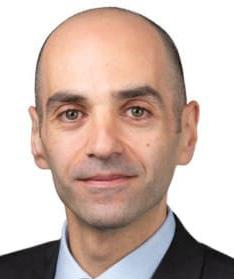
EMAD SHAHIN
Partner & General Counsel, 17Capital Emad Shahin serves as Partner and General Counsel at 17Capital, a private credit manager specialising in NAV finance for the private equity industry. He is responsible for all legal matters across the firm and overseeing the execution of investments, contributing to the firm’s operational efficiency.
JASON HOWARD
Chief Financial Officer & Chief Operating Officer, Headway Capital Partners
Jason Howard joined Headway Capital in 2018, bringing extensive experience from roles at EQT Services UK and Deutsche Bank. As CFO/COO and Partner, he plays a crucial role in driving operational efficiency and strategic growth within the firm.
JONATHAN HEWITSON
Chief Financial Officer, Kennet Partners
Jonathan Hewitson is responsible for finance, administration, and investor relations at Kennet Partners. His background includes roles at Manzanita Capital and Rothschild Capital Management, where he gained experience in private equity deal structuring and tax.
Karen Sands holds the position of Chief Operating Officer at Federated Hermes Private Equity. Her role involves overseeing operational strategies and ensuring that processes are streamlined to enhance efficiency and effectiveness within the firm.
KARAN DARROCH
Partner, Finance, MML Capital Partners
Karan Darroch, a Chartered Accountant, began her career at KPMG and later joined Dunedin as finance and operations manager. At MML Capital Partners, she oversees financial operations, driving efficiency and supporting the firm’s strategic initiatives in the private equity landscape.
KATIE PEARCEY
Finance Assistant, Endless
Katie Pearcey serves as a Finance Assistant at Endless.
Despite the junior nature of her role, Pearcey has been recognised for her contributions to operational efficiency within the firm’s financial operations.
OPERATIONAL LEADERS
Q&A BRAD NICOLAISEN, SVP OF GROWTH & AI INNOVATION AT TOTALTEK
DISCUSSING THE FORCE-MULTIPLYING EFFECT OF AI WITHIN THE SAP ECOSYSTEM.
QBrad, for people who don’t live in the SAP world every day, how do you explain the “force-multiplying” effect of AI?
AI’d explain it like this: SAP teams have the skills and data but often don’t have the time to make the most of both. That’s where AI steps in. AI takes care of repetitive analysis, spots patterns, cross-references data, and handles tasks that are too much for humans to do all the time. It learns from your tickets, changes, and processes, boosting the team’s productivity and accuracy. The change is instant. You go from fixing problems as they come up to preventing them altogether. This is the force-multiplying effect: the same team, the same SAP setup, but with a big boost in stability, speed, and overall impact.
AQWhere are you seeing the most immediate, practical AI use cases in the SAP ecosystem right now?
I see three areas where AI is delivering real impact today.
First are SAP projects and support.
This is where AI is sprinting ahead. We use it at TotalTek to reverse-engineer specification documents from existing code so our teams start in minutes instead of days. AI also rips through thousands of tickets and exposes the patterns, hotspots, and repeat failures humans never have time to see. My upcoming February feature in Business Enquirer goes deep on this because ticket history is the real MRI of an SAP system.
Second is AI inside core SAP business processes.
Invoice processing, accounts payable, order to cash, procure to pay. AI is classifying documents, spotting
BRAD NICOLAISEN,
anomalies, routing approvals, and flagging odd patterns before they become fires. The work moves faster and cleaner, and companies stop relying on institutional knowledge to keep the machine running.
Third is conversational AI and digital assistants.
Employees stop fighting SAP menus and just ask for what they need. Leave requests, purchase order status, basic IT help. Done in seconds. It removes friction and drops ticket volume immediately.
These three areas are producing fast ROI and quietly rewriting how SAP organizations operate.
QA lot of SAP leaders are skeptical because they’ve seen “transformation” buzzwords come and go. What’s different this time?
AThe skepticism is healthy. SAP teams have been sold every buzzword you can imagine: digital transformation, cloud journeys, intelligent enterprise, you name it. What’s different with AI is the speed from idea to proof.
You don’t need a 24-month program to see if AI is useful. If we can’t show a meaningful signal in your real ticket data, change history, or process logs in 3–6 weeks, then either the use case is wrong, the data is garbage, or the partner doesn’t know what they’re doing.
AI earns trust when it is applied to a very specific problem, measured with real KPIs (not slideware), and embedded into dayto-day work. If those three aren’t true, it’s just another buzzword.
AQYou often talk about “hidden costs” inside SAP AMS. How does AI help uncover them?
Most AMS scorecards lie by omission. They show SLAs: response time, resolution time, backlog levels. What they don’t show is
BRAD NICOLAISEN, TOTALTEK
how much productivity is being lost, how many times the same issue keeps coming back, or which changes silently destabilize the environment.
AI can analyze thousands of tickets, changes, notes, and logs and surface patterns humans rarely have time to see. For example, “These 12 incident types account for 48% of all user pain” or “these plants experience 3x more disruption after every change to this specific object.”
Once you see that, you stop arguing about whether to invest in root-cause work. The data makes it painfully obvious.
QMany organizations are nervous about AI from a risk, ethics, and data-privacy perspective. How should SAP leaders think about that?
A
SAP leaders should be cautious, not scared. The only people who get burned are the ones treating AI casually and tossing sensitive SAP data into whatever tool pops up online. You handle finance, operations, HR, sometimes regulated data, so you cannot improvise. But slowing down is its own risk. If you wait for perfect clarity, your competitors will lap you.
Set basic guardrails. Have real governance. Use the right tool for the right data. Know where your data lives. Make AI decisions traceable. Do those things well and AI reduces risk and exposes issues long before humans can. Do them poorly, or move too timidly, and you do not just fall behind. You fade into irrelevance.
Q
A
How do you separate “AI toys” from serious AI investments inside SAP landscapes?
At TotalTek, as part of our broader AI advisory approach, we tell clients to start with three brutally simple questions.
One, does this use case materially improve a KPI (Key Performance Indicator) the
business already cares about such as cost, stability, cycle time, user experience, revenue, or risk?
Two, would anyone miss it if we turned it off in 90 days? If the answer is no, it’s probably a novelty.
Three, does it integrate into the way people already work, or does it require a separate portal, workflow, or tool that no one has time to visit?
If the business value is vague, the impact of the loss is low, and the workflow sits off to the side, that’s an AI toy. It may be interesting, but it won’t survive real operations. When AI becomes part of the actual operating rhythm, not a side experiment, that’s when it starts paying off.
AQWhere does TotalTek fit into all of this? What’s your role in the AI + SAP story?
TotalTek’s primary goal is to deliver integrated services that effectively combine SAP solutions, PMO (Project Management Office) practices, and AI. By combining these three domains, we create a force multiplier that strengthens our ability to address complex business challenges.
Instead of trying to be some catch-all AI platform or a typical big systems integrator, we zero in on practical solutions like using AI for predictive maintenance on ships or automating workflows. These AI-enabled solutions make a difference across all our teams, including the Maritime Engineering & Design group.
What sets us apart is how we customize AI for every division’s real-world challenges, so our clients see better efficiency and more productivity instead of generic promises. And we never pretend AI alone is the hero. People, process, and platform still matter. Our job is to bring them together in a way that’s practical, measurable, and proven in real operations.
QYou lead an AI Innovation Lab. How do you keep that from becoming just a “cool lab” disconnected from SAP reality?
ADiscipline is what keeps us grounded. We run the Lab with a simple rule: every idea must tie directly to a real problem we’re seeing in SAP projects, SAP support, our PMO delivery work, or even in our Maritime Engineering and Design practice. If we can’t point to an actual customer pain point in one of those areas, we don’t build it. We’re not interested in clever demos that never see daylight. Everything we work on has to matter to someone who’s trying to deliver real outcomes.
The other piece is operationalization. Before we build anything, we already know where it will live in the workflow, who will own it, and how we’ll measure its impact. If we can’t answer those questions upfront, that’s a signal the idea isn’t ready. We park it.
That’s why the Lab works. It’s not a tech playground. It’s a production engine for AIenabled solutions that make SAP projects sharper, SAP support more proactive, PMO governance more predictable, and even our engineering teams more efficient.
AQWhat are the biggest mistakes you see SAP leaders making with AI right now?
I’m seeing a few consistent traps. The first is starting with the technology instead of the problem. A lot of leaders buy an AI platform and then go hunting for something useful to do with it. That’s backward. You have to start with the ugliest problems in your SAP landscape and work your way toward the right tool, not the other way around.
The second mistake is overlooking data readiness. If your ticket data is inconsistent, your change history is sloppy, and your processes aren’t documented, AI isn’t going to magically fix that. It’s just
going to reflect the chaos back to you in cleaner formatting. Leaders underestimate how much data hygiene matters.
And finally, governance. I see a lot of “shadow AI” experiments happening in different pockets of the organization with no common rules around data, risk, or accountability. That creates more cleanup work later than the AI ever saves upfront.
The organizations that get this right move with intention. They’re not chasing hype or speed; they’re making disciplined, informed decisions that move the SAP environment forward.
AQFor an SAP CIO or VP who wants to start, what’s a sane first step that doesn’t blow up their world?
Start with one business process and keep the scope tight. Pick something like invoice processing or purchase-order approvals where the steps are clear and the pain points are obvious. Define a couple of outcomes you want to improve—faster cycle times, fewer exceptions, cleaner data—and run a short pilot where AI handles tasks like document classification or anomaly detection.
You’ll know quickly whether it works because the process either moves faster or it doesn’t. If it shows value, scale it. If not, you’ve learned without creating chaos. The key is to avoid the giant “AI transformation” trap and start with a focused win you can measure in weeks.
BRAD NICOLAISEN, TOTALTEK
AQFast-forward three years. What does a mature AI-enabled SAP environment look like to you?
Three years from now, SAP will feel less like software and more like a business partner that thinks ahead. Issues will be flagged before anyone feels them, and changes won’t be gambles because AI will predict their impact with real accuracy. Core processes like invoice handling and purchasing will run with minimal human effort as AI classifies, routes, and validates the work automatically.
Process design itself will change. Instead of teams mapping every step, AI will observe how work flows, suggest improvements, and keep processes updated as the business evolves. Humans will define the intent; the system will handle the details.
Employees will talk to SAP in plain language instead of hunting for transaction codes. Leaders will see system health and risks in real time, not at the end of the month.
A mature AI-driven SAP landscape will be quieter, smarter, and largely selfmanaged. The business will move faster not because people work harder, but because the system finally pulls its weight.
QLast question. If you had to summarize your view in one sentence for SAP leaders, what would it be?
AAI is the leverage SAP teams have been missing; it surfaces the truths your dashboards can’t, eliminates the waste you’ve silently accepted, and unleashes a level of impact your people simply couldn’t reach without it.
Q&A
JOHN WEI, CHIEF TECHNOLOGY OFFICER AND EXECUTIVE VICE PRESIDENT AT INTEGREON
In today’s professional-services sector, technology has moved far beyond its traditional role as a support function. For Integreon, one of the world’s leading providers of legal, business, and research solutions, it sits at the very core of how services are designed, delivered, and scaled. At the centre of this transformation is John Wei, Chief Technology Officer and Executive Vice President at Integreon.
With a career spanning innovation, cloud transformation, and M&A integration across highly regulated industries, John is redefining how technology underpins client success and operational excellence. In this conversation, he shares how Integreon is building a technology-driven service model, where the CTO is not just a technologist, but the architect of the modern delivery ecosystem.
QYou joined Integreon in 2024 to align technology capabilities with strategic business objectives. How have you shifted the view of technology from a back-office enabler to a core service component in the professional-services model?
AAI is both a force multiplier and a disruptor for the Alternative Legal and Creative Services industry.
Integreon has approached AI not as “adding a few new tools,” but as a broader digital transformation that must be owned by the entire senior management team, not just the technologists. From the board to the CEO and across the executive team, we made a deliberate decision to lean into AI so we can lead the disruption rather than react to it.
Integreon started with an outside-in view, anchoring on what matters most to our customers: meaningful outcomes and solving challenging problems such as, integration, data quality, change management, and realizing ROI in AI adoption.
To make this tangible, we introduced A/B time-series productivity testing in our AI innovation lab and then post-deployment. That lets us track accuracy and productivity both in ideal lab conditions and in real production environments where data is more variable. Those insights often drive additional automation, targeted training, and iterative AI-agent improvements.
As a service provider, Integreon follow a build–partner–buy strategy to stay technologically agile. Platform decisions are made jointly with business unit leaders, with input from sales, marketing, and, most importantly, our delivery teams who
are closest to clients’ day-to-day activities, needs, and requirements.
At Integreon the CTO organization in which I lead, leans in on AI solutioning before, during, and after deals, and stays engaged throughout delivery to ensure our AI capabilities continuously create value for clients.
QIn your role as CTO and Executive VP, you’re effectively the architect of how services are delivered. Could you walk us through how you design a technology roadmap that underpins an entire professional-services organisation like Integreon, rather than simply supporting it?
AIt starts with a clear view on why clients choose Integreon for Legal Process Outsourcing (LPO) and Business Process Outsourcing (BPO) services. They partner with for project management discipline, process leadership, automation, agility, access to subject matter expertise and scalability.
What AI has changed is the way in which Integreon delivers that value. Instead of relying on rigid business rules that are hard coded into workflows, we can now use AI to process unstructured documents with far more intelligence and reasoning at machine speed.
As a result, we no longer view technology as just automating a set of legacy point solutions. Our technology-enabled services have evolved into a platform comprised of multiple AI agents and competencies. These agentic AI capabilities both orchestrate work and execute tasks. That platform lets Integreon create tailored solutions for specific client needs and, in particular, gives our larger corporate clients more flexibility to rethink the value hierarchy between external law firms, creative agencies, in-house teams, and external providers like Integreon.
Fundamentally, AI and cloud technologies have removed many of the previous capability constraints. That allows us to reimagine our service partnerships with clients from first principles and design solutions around the outcomes they care about most.
QYou have led cloud transformation, M&A integration and innovation initiatives in heavily-regulated sectors such as financial services and insurance. How do regulatory and compliance imperatives shape the way you build technology infrastructure for modern service delivery?
AIt helps Integreon avoid chasing the latest “shiny object” or making me-too driven decisions. Instead, we focus on building sustainable solutions that address not only the visible, “above the waterline” AI applications, but also the “below the waterline” core infrastructure and modernization work. That foundational layer typically has a longer transformation cycle, so we have to place our bets thoughtfully and strategically.
Integreon was invested early in an AIready infrastructure and operating model. Examples include hybrid cloud modernization, cybersecurity uplift, GPUas-a-Service, resiliency engineering, and independent audits and certifications. A lot of that work wasn’t especially glamorous or front-and-center in AI conversations back in 2024. But today, our ability to demonstrate and deliver secure, resilient, and scalable AI infrastructure and operations is a big part of our value proposition and a key reason we consistently win large corporate clients and can lead with our AI capabilities with confidence.
QYou collaborate with business units to identify enabling technology solutions. In practice, how do you embed technology thinking into professional-services teams so that tech becomes integral to how they operate and deliver, rather than being bolted on afterwards?
AIntegreon has invested heavily in both horizontal and vertical AI training. Horizontally, we’ve focused on skills like prompt engineering for a broad crosssection of our workforce. Vertically, we’ve gone deep with programs such as the “Leah Expert” training from ContractPodAI.
Integreon was one of the first in our industry to license AI tools at true enterprise scale, so
our people could get hands-on experience with AI in their day-to-day work. We also launched a Global Copilot User Group in early 2024 to give colleagues a forum to share best practices, use cases, and new ideas.
AI adoption is managed as a broader change program, jointly sponsored by HR, business unit leaders and led by the CTO organization. We regularly report on training completion, AI agent deployment, and usage, and we make sure our teams have the tools, support, and access they need to be successful on this journey.
Integreon’s highly collaborative culture has been a real advantage. Our people understand that the best job security comes from delivering the best outcomes for our clients. Increasingly, that means leveraging AI and technology to deliver the quality, agility, innovation, and cost profile our clients expect.
QAs you oversee global IT infrastructure, security and data management, how do you turn those traditional “IT” functions into differentiators for a professionalservices firm that competes on agility, insight and client outcomes?
AIt starts with making sure everyone in the CTO organization is aligned on why we matter. We are a key component as to why clients trust Integreon with their business and believe we will deliver consistently high-quality services. Service incidents are not just ITSM tickets to be closed; they translate directly into revenue, profitability, and customer satisfaction.
Today, our technology organization delivers industry-leading uptime SLAs, fast project staff onboarding cycle times, and strong vulnerability management while operating at a cost base that grows more slowly than revenue. That creates headroom for continued investment in automation and modernization. As we’ve modernized and delivered these results, we’ve built a culture of competence and confidence. We take pride in the work we do and in each other.
QClients in legal, compliance and outsourcing increasingly demand rapid, scalable, outcome-oriented
delivery. How do you ensure that technology architecture at Integreon is future-ready and responsive to that demand, rather than stuck in legacy modes of operation?
AIntegreon has developed a comprehensive global reference architecture to systematically manage the technology lifecycle and reduce operating complexity. As we modernize, we’re intentional about retiring legacy technologies. For example, we’ve completed a full CRM modernization and decommissioned the prior platform. As we introduce AI across the stack to drive automation and efficiency, it naturally strengthens the case to accelerate legacy retirement.
Integreon has also implemented a consistent global security envelope that we can quickly extend to individual client engagements. And we’ve leaned heavily into a hybrid cloud architecture to provide resiliency and scalability in a cost-effective way, which is especially important for our transactional businesses where volumes naturally spike and ebb.
QLooking five years ahead, what do you see as the major technological inflection points for professional services, and how are you preparing Integreon to be the architecture firm of that future ecosystem?
AMuch like what financial services companies experienced more than a decade ago, almost every professional services firm is becoming a technology business. Technology is increasingly embedded in how services are designed, sold, delivered, and managed on an ongoing basis. To win in professional services, in many ways, is to win the technology race.
That doesn’t mean chasing every new “shiny object” or looking for that one “silver bullet.” It means a disciplined, architected transformation and end-to-end digitization of the services value chain, with a relentless focus on customer value. Over the next decade, I see AI and cloud as the primary drivers of our core architecture. Our “AI trinity” strategy: AI applications, AI-upskilled workforce, and AIready infrastructure is how we intend to deliver innovation with intention for our clients.
Q&A
EVGENI KOURIS, NEW MITTELSTAND
FUTURE-PROOFING THE FAMILY BUSINESS
As industries worldwide grapple with the pace of digital transformation and sustainability imperatives, Germany’s family-run enterprises, the backbone of the nation’s economy, face a unique challenge: how to modernize without losing the essence of what makes them enduring. Evgeni Kouris, founder of New Mittelstand, helps companies navigate this balance through a pragmatic “both/and” approach: protect what works, renew what must change. In this conversation, he shares how ownermanaged firms can remain resilient, relevant, and responsible, whether continuity comes from within the family or via an external successor, by anchoring renewal in real co-creation with employees, customers, and partners.
system around it: governance structures, processes, data infrastructure, go-tomarket approaches.
During succession, this becomes even more critical. We run a structured handover with what we call joint “Principles of Ownership” document that both the outgoing and incoming owner sign off on. We pay attention to the cultural fit and vision alignment.
Then there’s a 100-day plan with weekly check-ins between old and new leadership. The key is keeping the narrative consistent for employees and customers: continuity in purpose, renewal in execution. People need to understand that while the methods might change, the fundamental promise remains intact.
1
You’ve often spoken about the need for traditional family-run businesses in Germany to evolve without losing their identity. What does that balance between heritage and innovation look like in practice - especially during leadership transitions or succession?
AEvgeni Kouris: Balance starts with clarity on what must not change and what must evolve. You need to protect the essence: the customer promise, product quality, longterm relationships, and those cultural norms that create trust. These are nonnegotiables. But then you modernize the
One inspiring example from our portfolio: during the handover, a successor found old catalogues from the 1990s and turned them into posters that now bring the company’s history to life on the walls of its headquarters. These symbolic gestures matter — they remind everyone that true innovation grows from strong roots.
2
. The “dual innovation strategy” or “both/and” approach is central to your work at New Mittelstand. How does this help companies future-proof
against rapid technological and societal change while staying true to responsible ownership?
AIt’s a sequence and a rhythm, not a revolution. First, you stabilize the core: cash flow, operational excellence, safety standards, service levels. Without this foundation, nothing else works. Then you improve that core through leaner processes, simple KPIs everyone can understand, and crystal-clear role definitions.
Only then do you select a few strategic bets with a clearly defined and communicated vision in mind. Not twenty initiatives, three at most. One digital initiative that pays back within 12 to 18 months. One sustainability upgrade that either reduces risk or cuts costs, ideally both. One startup partnership, a so-called “venture clienting” approach, that opens a new channel or capability. Responsible ownership means having the discipline to say no to distractions and aligning all incentives with long-term stewardship, not quarterly targets.
QMany family enterprises have strong legacies and deeply rooted cultures. What are the most common barriers you see when introducing new ways of working and how do you address them during a handover?
AThe biggest barrier is always identity fear, this deep concern that “we’ll lose what made us strong.” The antidote is a tangible “DoNot-Change” list that everyone can see and reference. Then you involve the key carriers of culture, usually the long-serving employees who embody the company’s values, in design sprints for new initiatives. They become co-creators, not resistors.
Change fatigue is another silent killer. Companies try to do too much at once. We reduce everything to three priorities with visible wins in 90 days. Small victories build momentum and trust. Then there are the informal power structures, the unwritten rules about who really makes decisions. During a handover, you need to clarify
decision rights explicitly and often create a light advisory board to support the new owner through this maze.
Finally, information gaps. Most family businesses run on institutional knowledge that lives in people’s heads. We make performance visible with a one-page dashboard that everyone from the shop floor to the boardroom can understand.
QHow do you encourage leadership teams to embrace digital transformation and sustainability as P&L-relevant topics - integral to reliability and margins - rather than external pressures?
AYou make it concrete and measurable. Every initiative must tie to a specific line item on the P&L. Digital transformation isn’t about having an app; it’s about lower scrap rates, faster throughput, reduced energy spend, lower working capital requirements, or higher on-time delivery rates.
We design everything for payback. Run pilots with clear baselines and review them monthly, just like you’d review sales figures. Build internal capability by appointing process owners, not project owners: people who will live with the results, not consultants who leave after implementation. And keep reporting simple: three to five metrics per initiative, reviewed in the same rhythm as your financial reviews. When sustainability reduces your energy bill by 15% or digital scheduling cuts inventory by two weeks, it stops being an external pressure and becomes competitive advantage.
QCollaboration seems to be a recurring theme in your philosophy. What does genuine co-creation look like in practice (between owners, employees, and external partners) and where do partnerships with start-ups or universities add real value?
AReal co-creation means shared problem-solving, not just consultation. Inside the firm, we set up cross-functional crews: people
EVGENI KOURIS, NEW
“Continuity in purpose, renewal in execution.
People need to understand
that while the methods might change, the fundamental promise remains intact.”
from operations, sales, and finance who solve one customer-relevant problem per quarter. But here’s the key: they need actual authority to change processes. Otherwise it’s just theatre.
With external partners, the rule is simple: they must bring a concrete asset you don’t have yet. Could be technology, could be market access, could be specialised talent. Universities are brilliant for applied R&D when you need to solve a specific technical problem but can’t justify a full research department. Start-ups bring speed and niche technology, but only partner when there’s a clear use case. Industry peers can be partners too, for shared procurement or opening export markets together.
The guardrails matter: joint objectives
that both sides commit to, clear IP rules decided upfront, and always an exit option. If an initiative doesn’t move a customer KPI or improve a cost line within 18 months, it’s a distraction, not innovation.
QIn your experience, what role does the next generation play in and beyond the family? How can non-family entrepreneurs stepping into ownership (via external succession) strengthen continuity and bring fresh energy?
ASuccession is about competence and commitment, not surname. When the next generation is involved from within the family, roles must be defined by capability, not birthright. They need real development paths,
external mentoring, and sometimes the hard message that their best contribution might be as an engaged shareholder, not an operator.
External successors, entrepreneurs who buy in with their own capital, often bring exactly what’s needed. They have skin in the game, which creates natural alignment. The best ones respect the legacy while bringing operational curiosity. They keep the customer promise intact while upgrading systems and culture. They ask “why do we do it this way?” without dismissing the answer.
The practical entry path matters. Phased handovers work better than cliff-edge transitions. Vendor loans or earn-outs align interests over time. A small advisory board of seasoned operators, people who’ve been through this before, helps navigate the inevitable surprises.
The growing momentum around Search Funds could become a real catalyst for solving succession the New Mittelstand way. These entrepreneur-investors don’t just acquire companies: they commit to their evolution. Combining the analytical discipline of startups with purposedriven ownership, they represent a new generation of stewards who think in decades, not quarters. With the right cultural match, Search Funds can turn succession from a risk into a renewal engine: empowering founders to hand over responsibly, enabling new leaders to grow with accountability, and keeping Mittelstand values alive while accelerating transformation exactly where it matters most.
QLooking to the future, what lessons from your work with New Mittelstand would you share with companies worldwide seeking to remain agile, relevant, and values-driven in a rapidly changing economy?
Aix principles that work whether you’re in Stuttgart, Shanghai, or San Francisco.
First, clarity beats complexity. Write down your ownership principles and stick to them. When markets shift or technologies emerge, these principles become your navigation system.
Second, sequence change properly. Safeguard the core before you extend into new territories. A stable base enables bold moves. Apply the Three Horizons approach to set realistic expectations for returns.
Third, measure what actually matters. Make reliability and cash flow visible every week, not just quarterly. What gets measured gets managed, but only if people understand the measures.
Fourth, put people first, and I mean genuinely. Co-create with your workforce because they know where value leaks out of your processes. They see the waste, the rework, the customer frustrations that management reports miss.
Fifth, choose responsible financing structures that protect resilience during transitions. Patient capital beats aggressive leverage every time when you’re managing generational change.
Finally, learn in public. Run small but bold pilots, gather quick feedback, hold honest retrospectives where failure is data, not blame. This is how firms stay agile, relevant, and values-driven without burning out their people or their balance sheet.
Ultimately, the New Mittelstand way is about continuity through renewal — proving that values and velocity don’t have to be opposites, but can be partners in building the next generation of enduring companies.
For more information about New Mittelstand and Evgeni Kouris’s work with family businesses, visit www.newmittelstand.org
POWERING PROGRESS: THE GLOBAL RISE OF CAPITAL LIMITED
CAPITAL LIMITED PROJECT
DIRECTED BY: ADEL MHIRI
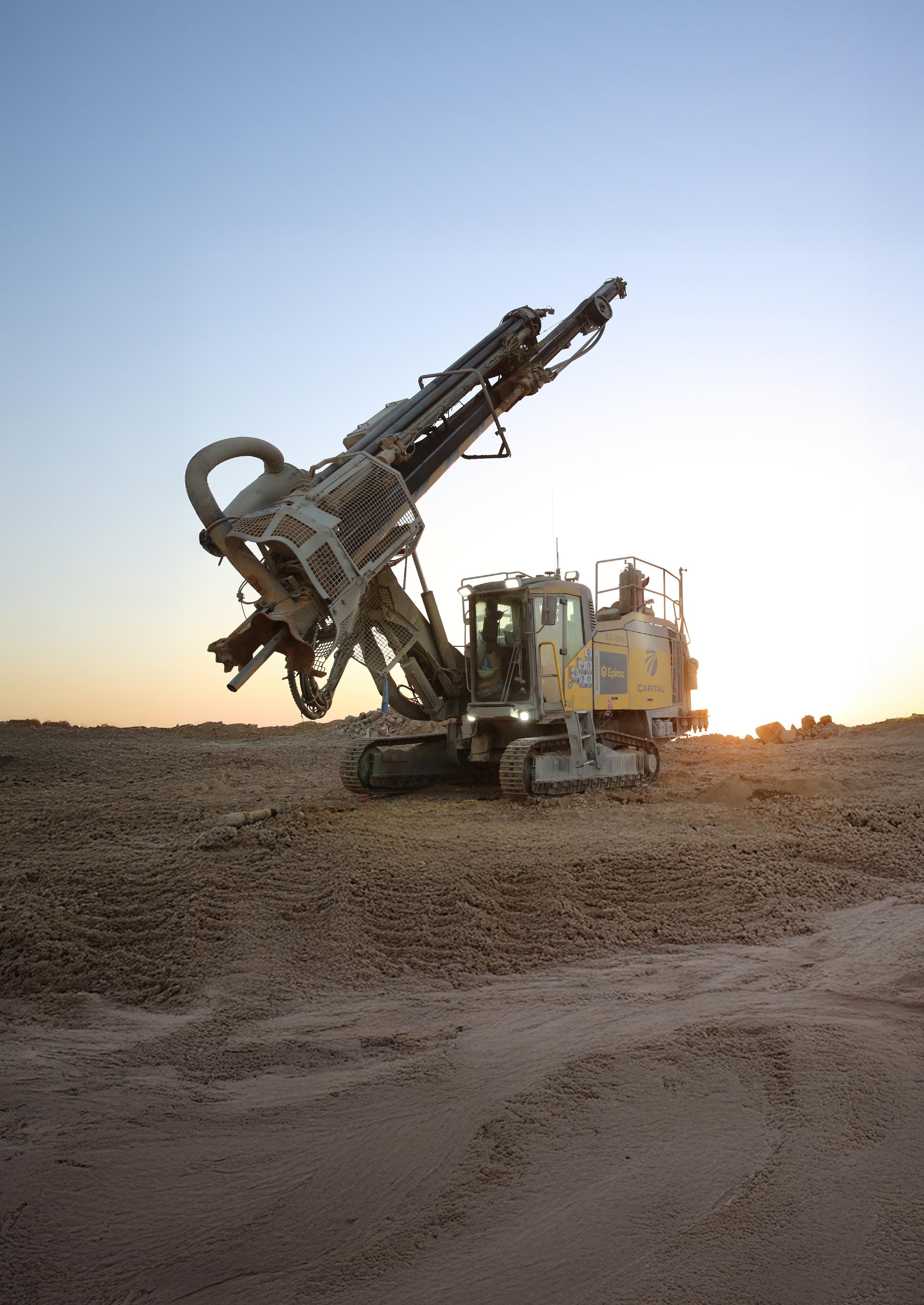
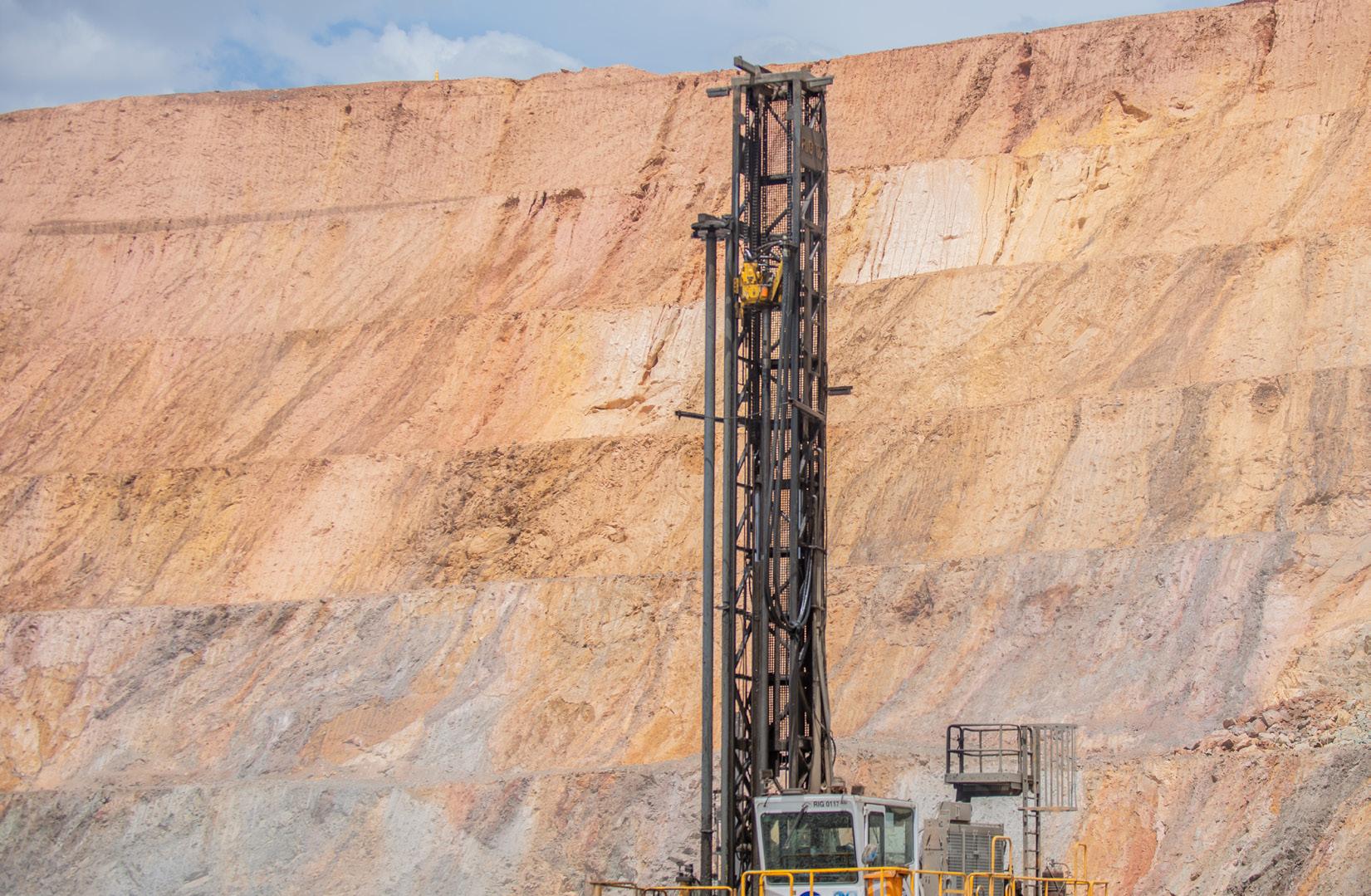
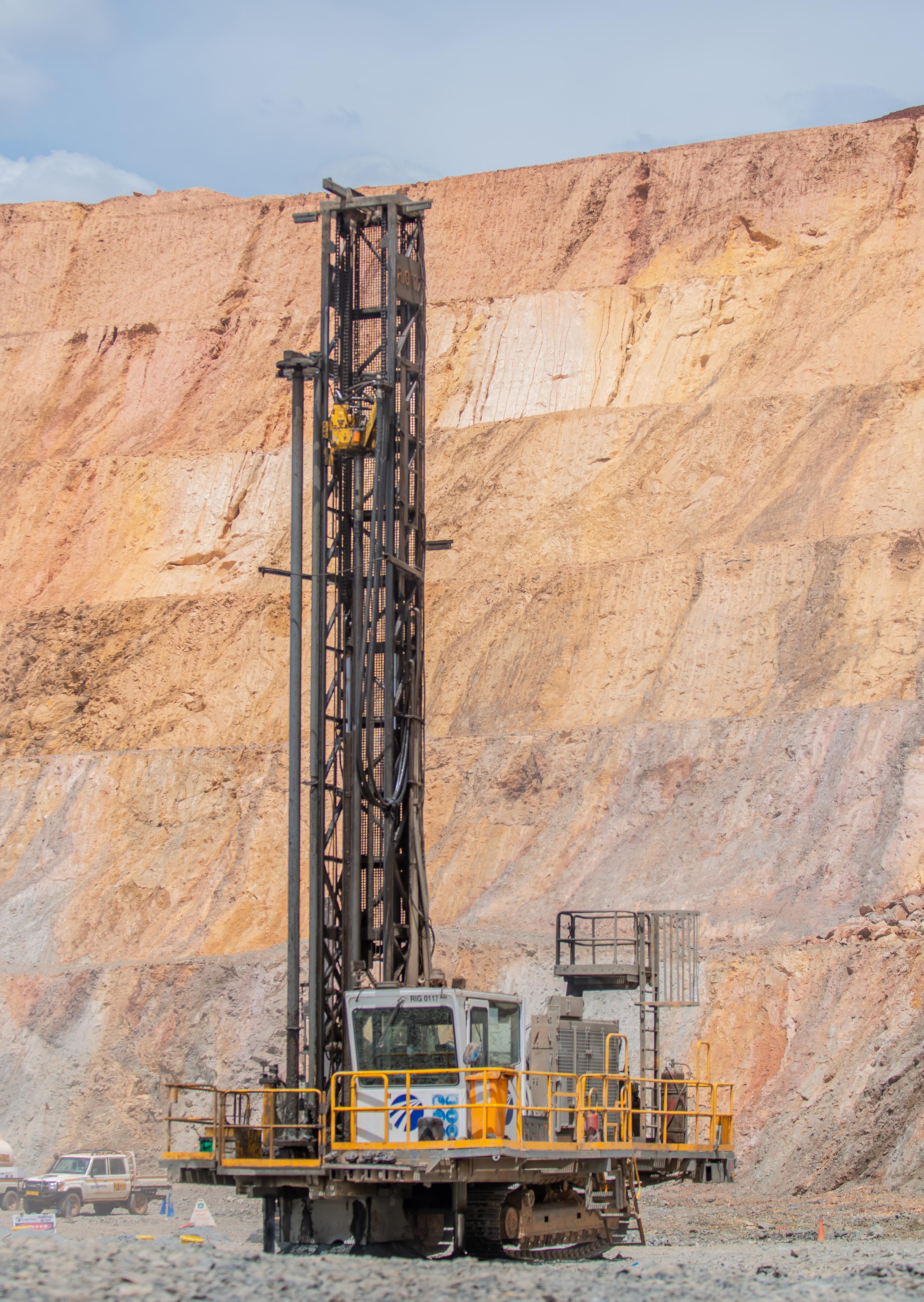
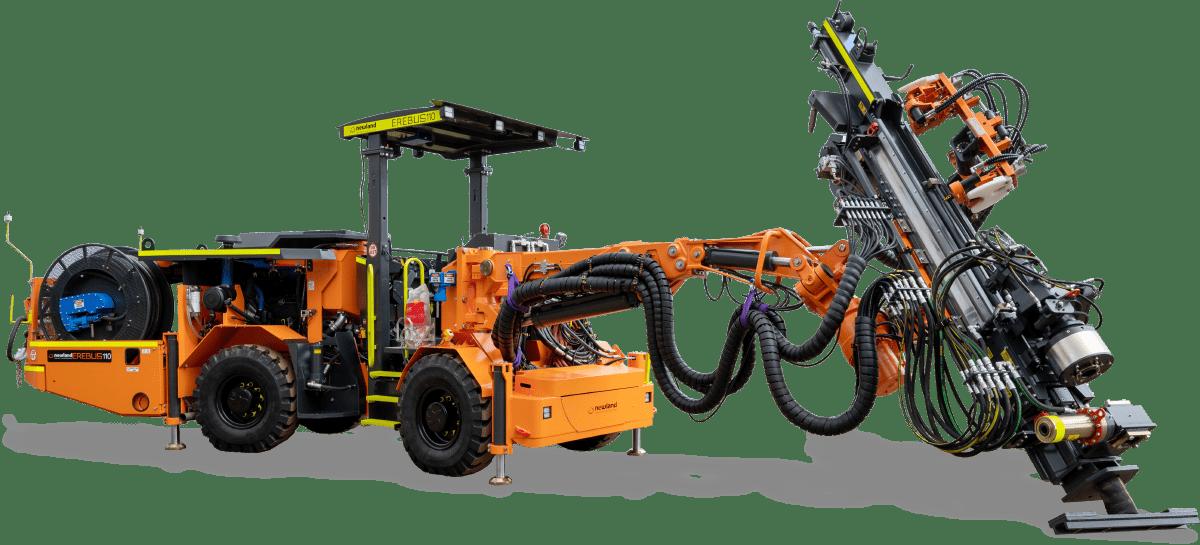
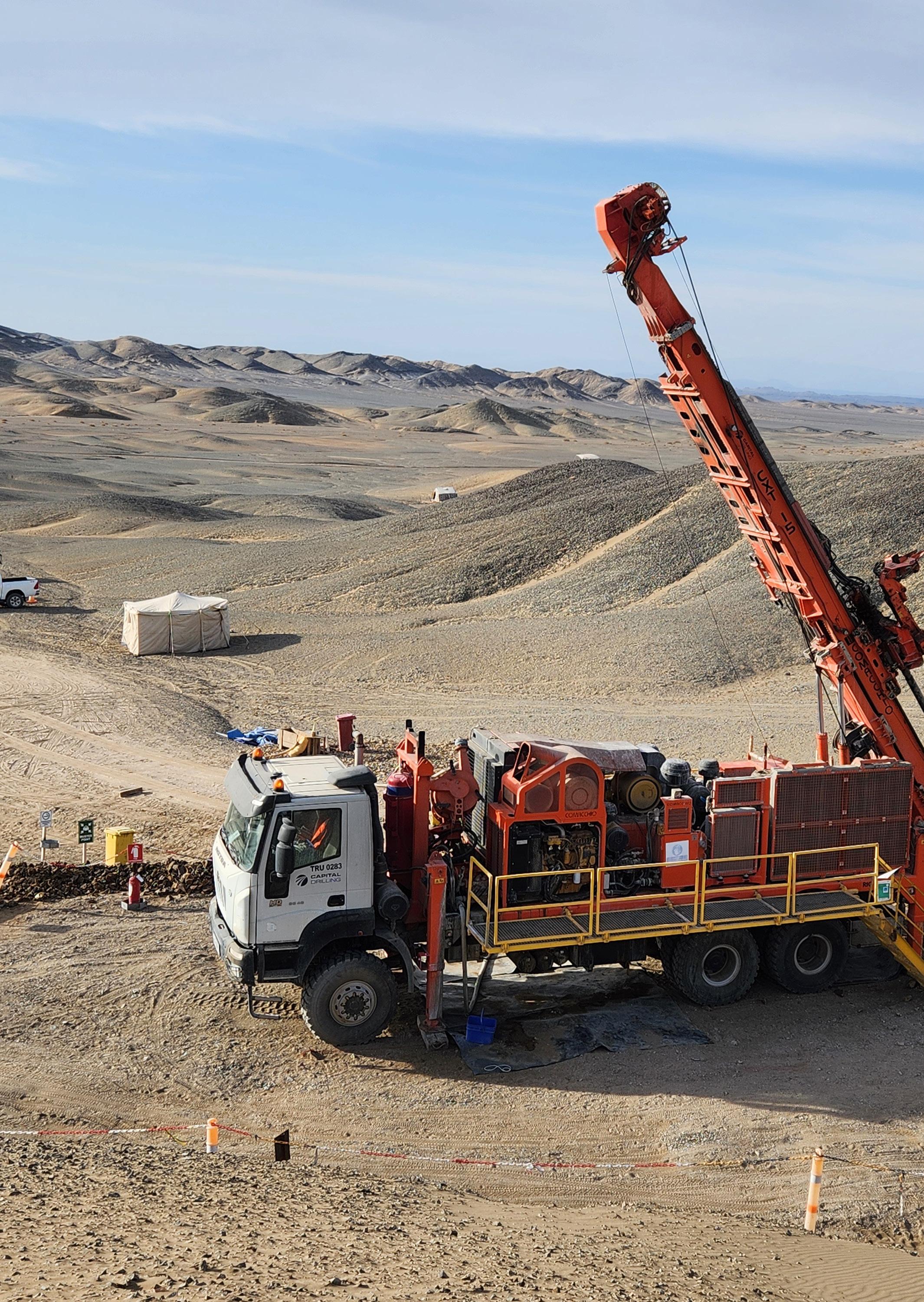
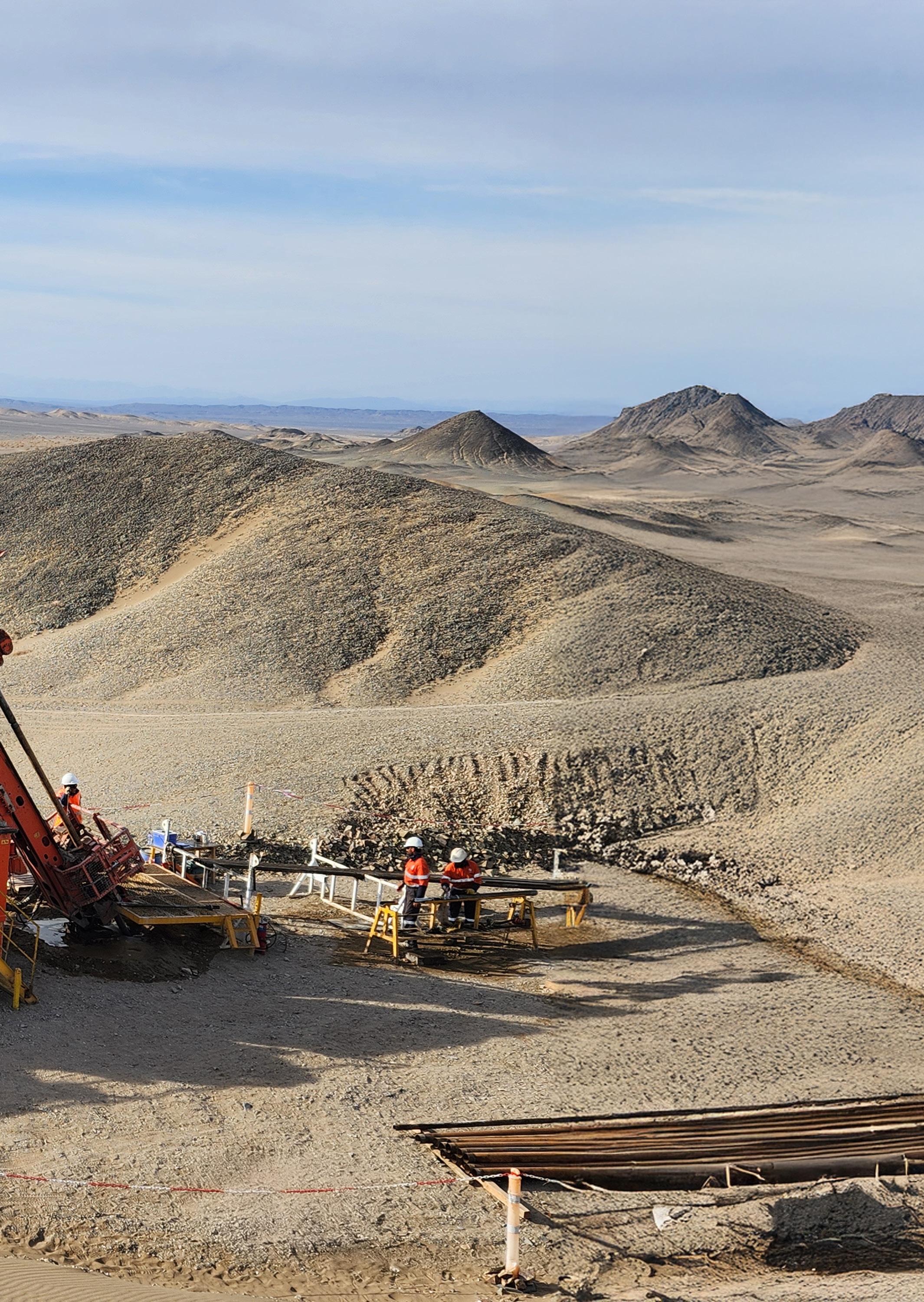
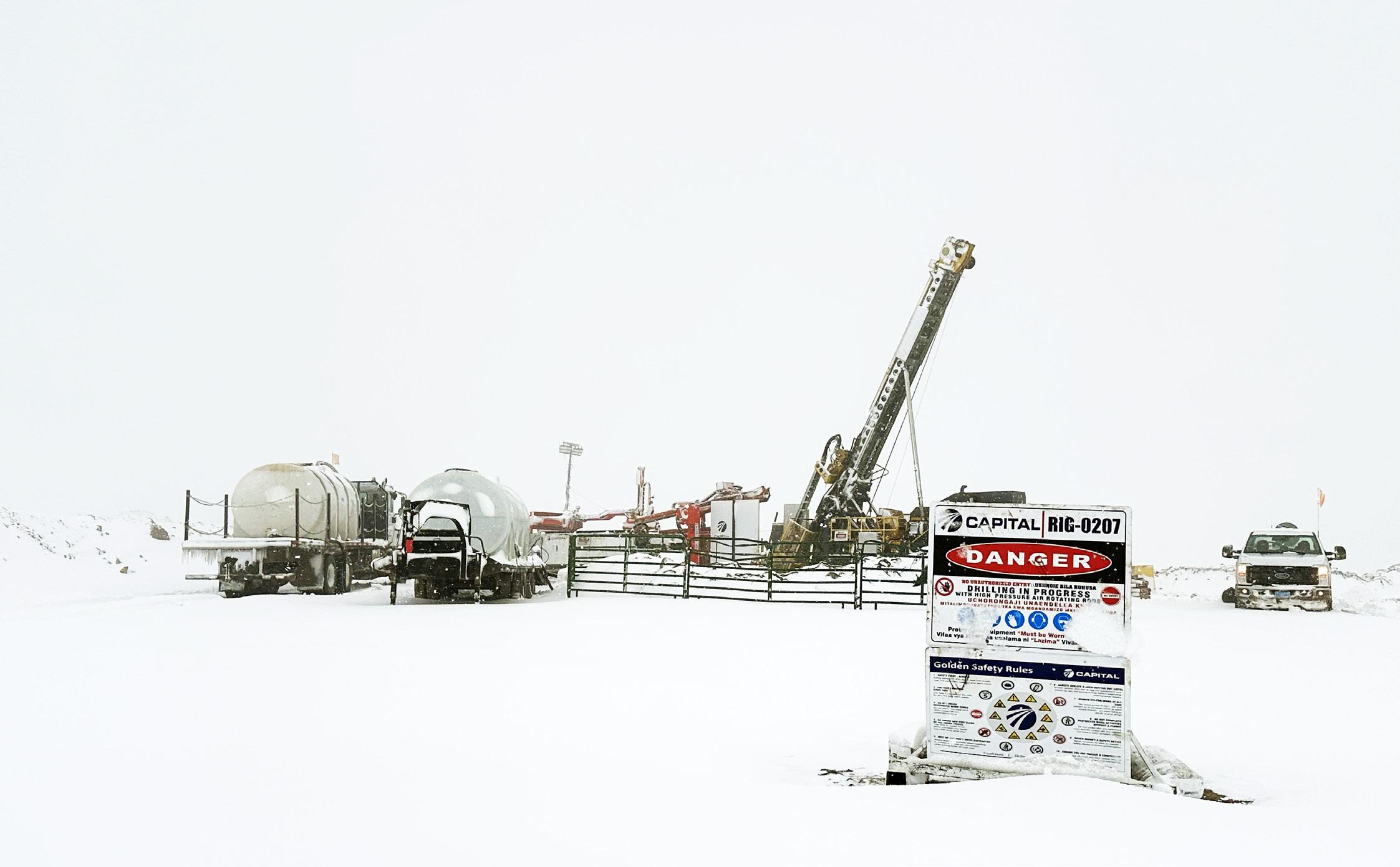
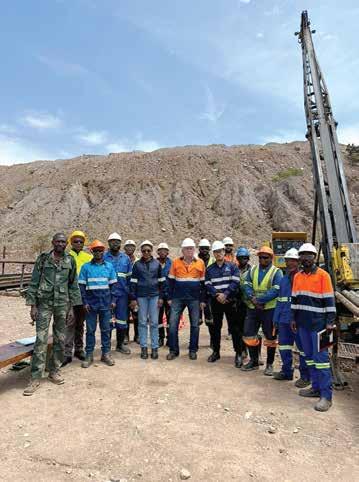
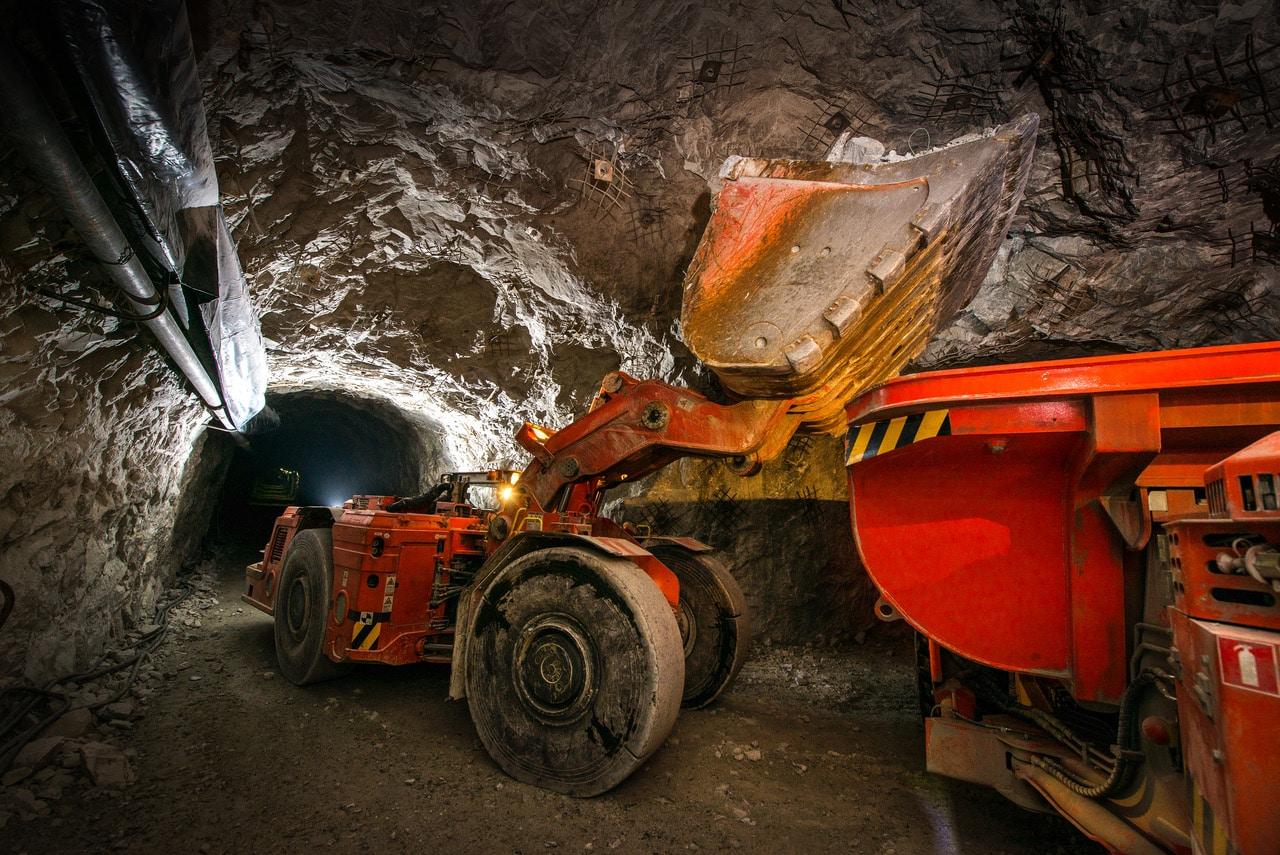
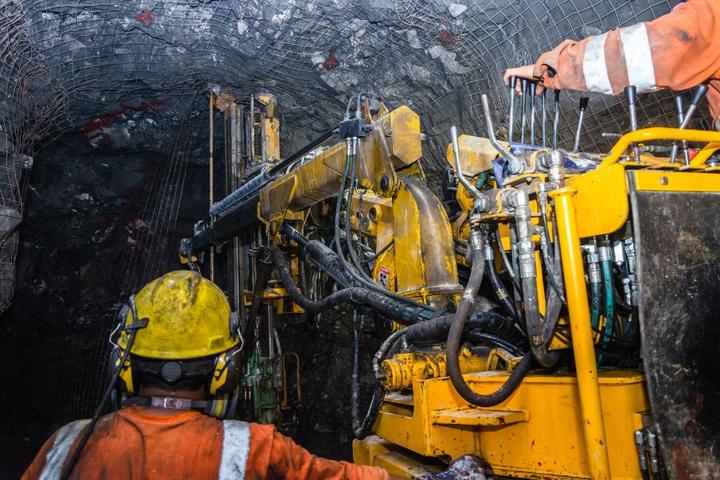
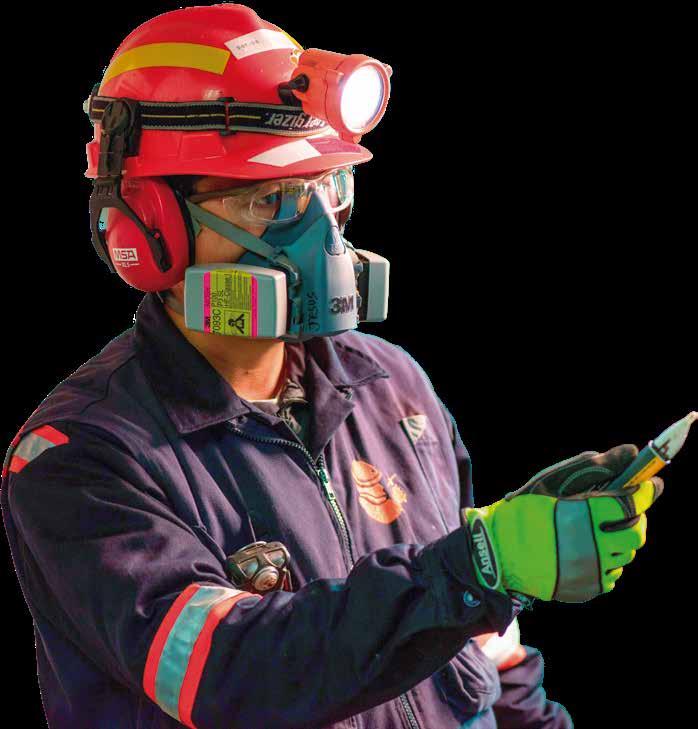
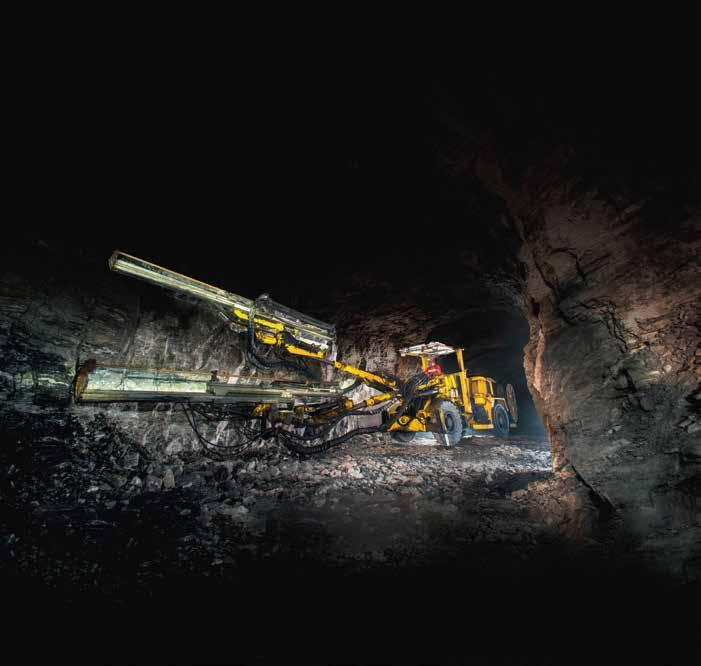
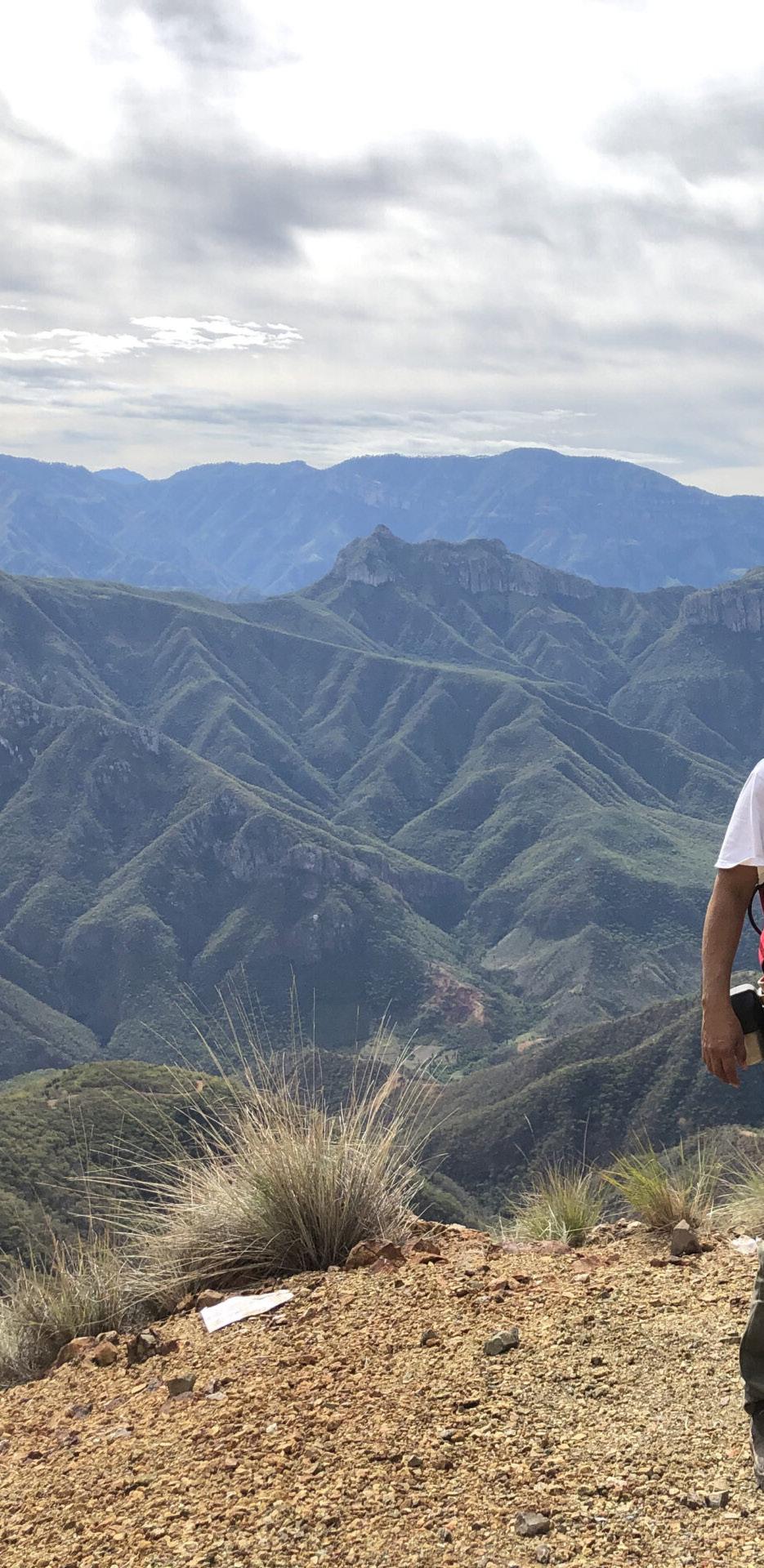
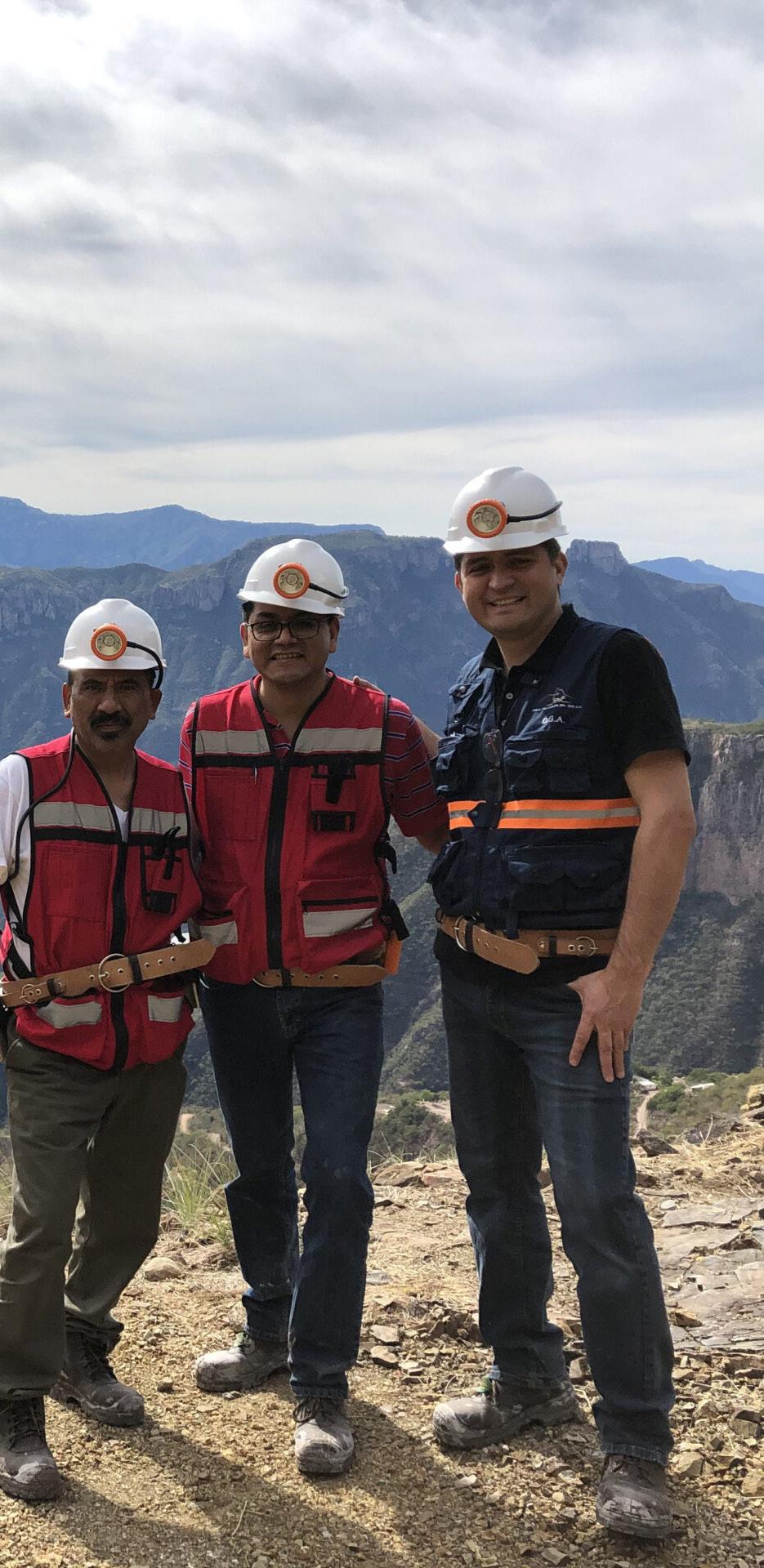
In the world of mining services, few companies have demonstrated the resilience, innovation, and integrity that define Capital Limited. From modest beginnings commencing with just two drilling rigs at Tanzania’s Kabanga Nickel Project in 2005, the company has expanded into a global powerhouse with more than 140 rigs and Group operations across more than 20 countries. This growth is the result of visionary leadership, a steadfast commitment to quality, and a culture built on long-term relationships and trust.
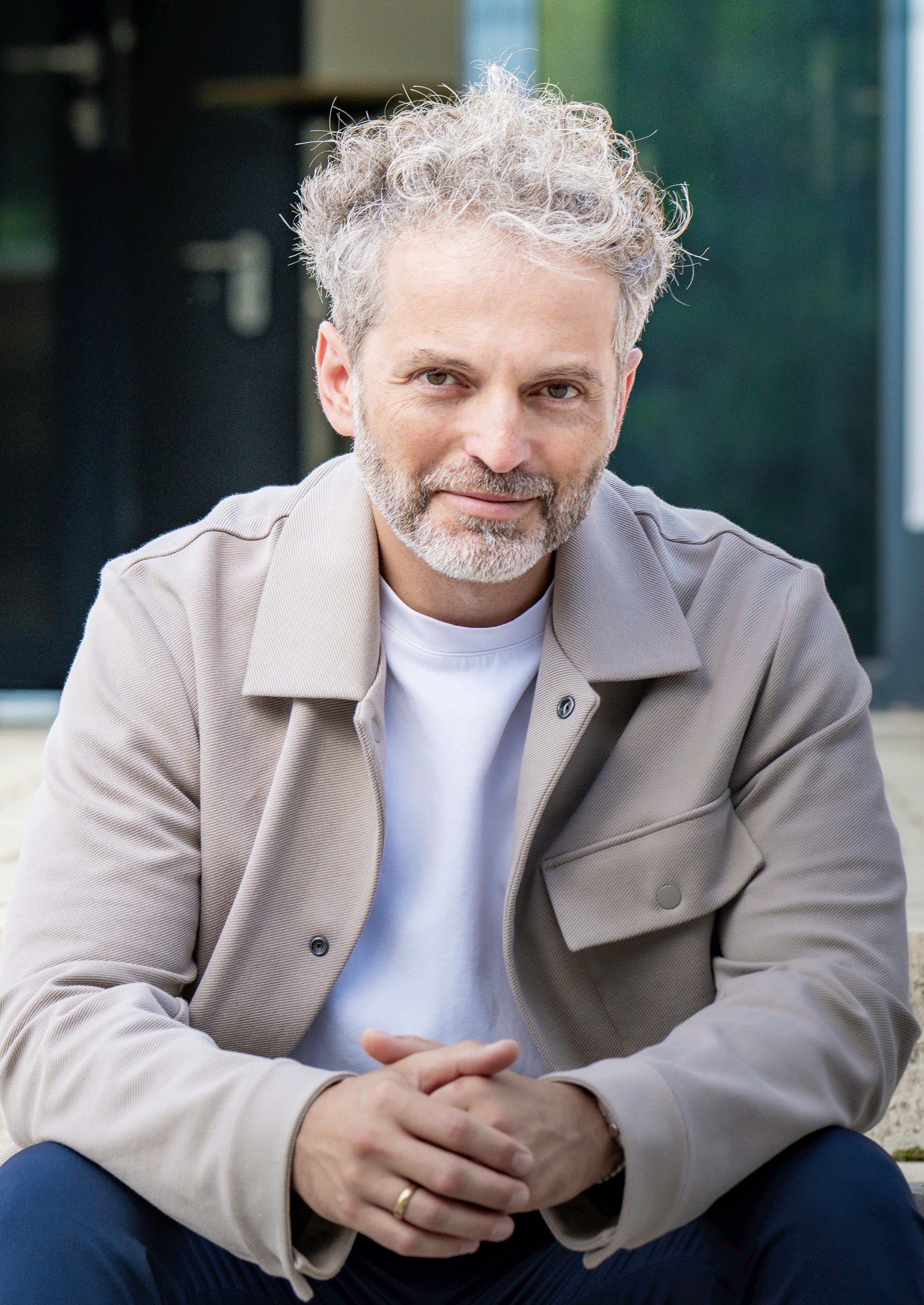
For Damien Valente, recently appointed as Business Development Manager, Capital Limited’s appeal was clear. Having followed the company’s journey since its inception, he recognised something exceptional in the way it operates. “I’ve known Capital Limited since it began,” he said, “and have always been impressed by their ability to continually grow through their commitment to providing a quality service to their clients.”
The company’s leadership has long been regarded as one of its greatest strengths,
a consistent source of inspiration and guidance that has shaped its trajectory. Damien’s decision to join Capital stemmed from that leadership ethos and the values embedded across the organisation. His role focuses on building upon the solid foundations already in place, expanding the company’s footprint both within established regions and emerging markets. As he explains, Capital’s strategy is as much about deepening existing partnerships as it is about exploring new frontiers.
“My primary remit is to build on the foundations laid by the leadership team and contribute to continued global growth,” he said. “We’re looking not only at existing markets, but also at emerging ones where there’s strong interest in the capabilities we can bring.” This balance between extension with current clients and selected expansion lies at the heart of Capital’s success.
Capital’s global growth over the past two years has been marked by a series of landmark projects, notably its contracts with Barrick Mining in Pakistan and the United States. This relationship
Protecting Industry with Precision: Fire Equipment Systems Leads the Way in Fire Safety
When it comes to protecting your most critical assets and operations, you need more than a fire alarm sticker; you need real expertise. At Fire Equipment Systems, we specialise in bespoke fire protection solutions for heavy duty industries. Founded by Australian fire protection professionals and operating a leading test facility in Australasia, the team brings unmatched experience and technical rigour.
Our services cover everything from mobile plant foam suppression and gaseous fire systems to dry gas, optical detection, deluge and kitchen hazards. Risk assessment, system
design and installation, through to certification and lifetime maintenance, Fire Equipment Systems handles it all.
Led by seasoned engineers with decades of experience, you are safeguarded by professionals who understand the consequences of downtime, damage and injury. When you are investing significant capital in heavy machinery or plant, do not leave fire risk to chance.
Choose the team that lives and breathes fire risk mitigation. Fire Equipment Systems, where expertise protects your business. www.fire-equipmentsystems.com
CAPITAL LIMITED
Power Your Operation with Newland Drill Rigs and Premium Replacement Parts
At Newland Engineering, we understand that downtime costs money, that’s why our Erebus- series drill rigs and premium replacement parts are engineered to perform, endure, and keep your operations moving.
Designed and manufactured in Australia, our rigs deliver exceptional reliability, safety, and productivity for underground drilling. Whether you’re upgrading your fleet or custom-specifying a new build, Newland rigs are built for precision, power, and performance in the harshest mining conditions.
We also supply a comprehensive range of OEM-grade replacement parts - from wear parts, hydraulic and electrical components, and sub-assemblies to consumables, ensuring fast turnaround and minimal disruption to your workflow.
With over 25 years of industry experience, Newland is your trusted partner for innovation, quality, and long-term support.
Newland Engineering — Built to Drill. Built to Last.
www.newland-pe.com.au
with Barrick spans more than 15 years, beginning with the North Mara Gold Mine in Tanzania in 2008. Since then, the partnership has expanded to include operations in Saudi Arabia at the Jabal Sayid copper project and in Tanzania at the Bulyanhulu Gold Mine. Such continuity speaks volumes about the trust and collaboration between the two organisations. For Damien, this enduring relationship illustrates how mutual confidence and consistent service delivery form the foundation for long-term business growth.
Capital’s entry into the US market through Nevada Gold Mines marked a defining step in its international evolution. Entering a new jurisdiction always presents challenges, particularly in a competitive and highly regulated environment like the United States. Yet through a combination of experience, technical knowledge, and adaptability, Capital not only established itself but is now preparing for an expansion of its operational scope in 2026. The company’s capacity to overcome challenges through competence and collaboration continues to strengthen its reputation among clients and partners.
As its geographic presence grows, Capital’s strategy remains anchored in integrating its diverse range of services. In existing markets, the company seeks to provide comprehensive support for clients, combining drilling and mining services as well as analytical services through its MSALABS business. In emerging opportunities, Capital targets tier-one, low-cost projects operated by leading international mining houses. This selective approach ensures that each expansion effort aligns with the company’s values of quality, safety, and sustainability.
Sustainability is not a slogan for Capital; it is an intrinsic part of its identity. The company’s leadership is deeply committed to reducing environmental impact while enhancing efficiency through technology. With a dedicated research and development department and a technology steering committee, innovation is embedded into every level of the organisation. Among the company’s most exciting initiatives is the development of a battery-electric surface drilling rig, created in partnership with equipment manufacturer Epiroc. The prototype, the first of its kind globally, will
Damien Valente, recently appointed as Business Development Manager
Rhino Corp FZC
Driving Excellence in Global Fleet Solutions
Delivering Mine Spec Vehicles, Buses, and HTVs Worldwide.
Rhino Corp FZC stands as a leading force in the international fleet solutions market, specializing in the provision of mine specification vehicles, buses, and heavy transport vehicles (HTVs) for a diverse global clientele. Their commitment to quality is evident in their meticulous procurement strategy, sourcing fleets exclusively from trusted vendors around the world. This approach ensures that every vehicle meets stringent safety and operational standards, which is especially critical in demanding environments like mining and industrial operations.
The company’s adaptability enables it to cater to the unique requirements of clients across multiple sectors and regions. Rhino Corp FZC’s global outlook, combined with a reputation for reliability and service excellence, positions it as a preferred partner for businesses seeking robust and compliant transportation solutions. As industries evolve and operational standards rise, Rhino Corp FZC remains at the forefront, delivering vehicles that drive productivity and safety worldwide.
THE RIGHT MACHINE. THE RIGHT DECISION.
HORIZON PLANT CE OPERATES ACROSS TWO CRITICAL FRONTS — HEAVY MINING EQUIPMENT AND EMERGING ELECTRIFICATION — HELPING CLIENTS MAKE SMARTER, PERFORMANCE-DRIVEN DECISIONS.
WITH MORE THAN 25 YEARS’ GLOBAL EXPERIENCE, WE WORK AS PART OF YOUR TEAM: SOLVING PROBLEMS, MATCHING THE RIGHT MACHINE TO THE RIGHT APPLICATION, AND JUSTIFYING COST–BENEFIT AS IF WE WERE SPENDING OUR OWN MONEY.
FROM SOURCING MAJOR MINING ASSETS TO FUTURE-PROOFING OPERATIONS WITH HYBRID AND BATTERY-BASED SYSTEMS, OUR FOCUS IS SIMPLE: BETTER OUTCOMES, NOT JUST EQUIPMENT.
Performance, Partnership and Practical Innovation.
Horizon Plant CE works across both sides of the modern mining landscape — heavy-equipment procurement and the emerging shift toward hybrid and electrified power systems. With more than 25 years of hands-on experience, the company brings a practical, solution-focused approach to some of the industry’s most demanding projects.
Horizon acts as an embedded partner rather than a supplier, helping clients analyse requirements, match the right equipment to the right application, and justify investment decisions through rigorous, real-world cost–benefit thinking. This mindset mirrors the industry’s wider focus on performance, safety and long-term value creation.
From supporting fleet expansion programmes to advising on future-power opportunities, Horizon Plant CE delivers clarity, operational insight and global reach. The goal is simple: to enable mining companies to make better decisions, reduce operational risk and improve outcomes in environments where precision and reliability matter most.
TMS Mining
Founded in Beirut in 2009, TMS has grown from a regional supplier into a global partner for heavy equipment spare parts—trusted by companies across construction, quarrying, mining, and transportation. With operations in Lebanon, the UAE, and the United Kingdom, and clients in more than 36 countries, we support businesses with an extensive inventory covering nearly 80% of the world’s leading equipment brands. The result: faster deliveries, fewer interruptions, and equipment that stays working when it matters most.
From day one, our philosophy has been simple—work directly with reliable manufacturers and suppliers worldwide. This approach ensures competitive pricing, consistent quality, and long-lasting value for every client who chooses TMS.
In 2018, we expanded into the mining sector across Eurasia and Africa, and in 2023 we strengthened our presence across the African continent. To elevate our service even further, we launched G&T Logistics in 2021, offering seamless, end-to-end logistics and shipment consolidation—making your supply chain smoother, faster, and more efficient.
TMS is your partner for heavy equipment spare parts—today, tomorrow, and for every challenge ahead.
Supplying Genuine and High Quality surface and underground mining machinery spare parts
TMS is the internationally recognized go-to company for quality branded spare parts currently supplying and distributing to over 36 countries worldwide.
sales@tmsmining.uk www.tmsminining.uk
PROUD TO BE WORKING WITH CAPITAL LIMITED
Cobra Projects
Cobra Projects is a leading South African manufacturer of specialised mining support equipment, recognised in Africa, Australia, and parts of Asia for its safety and reliability backed by Capital Limited’s operational efficiencies of the equipment. With over 40 years of experience, they provide engineered solutions to minimise downtime and boost productivity in tough environments.
Their product range includes the “SUPA LUBA” rigid, articulated, wide-body fuel and lube service trucks. The “SUPA TANKA” rigid, articulated, widebody water and fuel trucks. The “SUPA WASHA” water wash trucks, “SUPA LIFTA” crane trucks, and the “SUPA DRILLA” drill support trucks. Additionally, they offer rigid recovery systems, mining lowboy trailers ranging from 130t to 450t, stemming trucks, stemming buckets, MEWP, UWP, ROPS, and FOPS. They also hold licensed manufacturing rights in Africa for Loadquip and QMW
Their objective remains unchanged. The company continues to deliver reliable solutions that support safe and efficient mining operations worldwide.
MINING CAPITAL LIMITED
soon begin field testing at the Sukari Gold Mine in Egypt. The project represents not only a leap forward in clean technology but also a milestone for the future of sustainable mining operations.
It has also recently made a commitment to phase out plastic containers for drilling fluids across all its sites by 2027. In their place, the company will adopt the Enviro Pack Eco Drum™ and Eco Bucket™, innovative and environmentally friendly packaging solutions developed by drilling fluids supplier, Mudex. The Eco Drum™ and Eco Bucket™ represent the mining industry's first viable alternative to traditional plastic containers. These products reduce plastic usage by 95% and are made from FSC-certified and recycled cardboard.
The company’s MSALABS business continues to demonstrate leadership in laboratory innovation. Capital was one of the first mining service providers to bring PhotonAssay™ technology to market, a groundbreaking technology that allows for faster, safer, and more environmentally friendly analysis of gold, silver and copper. With 14 operational units worldwide, MSALABS is the largest user of this technology globally. Beyond efficiency, PhotonAssay™ technology reduces the need for toxic chemicals traditionally used in fire assay analysis, drastically lowering laboratory waste and environmental risk.
In 2024, Capital took another decisive step toward sustainable innovation with its investment in Eco Detection, an Australian company specialising in real-time water monitoring. The system remotely analyses chemical components in water, allowing for real-time detection of contaminants and facilitating immediate action. After over 50 successful monitoring installations across Australia, New Zealand and the UK in many applications, Eco Detection together with Capital and MSALABS is now bringing its proven technology to mining operations in Africa, North America and beyond.. Complementing these initiatives, the company’s workshops operate with solar
Western Australia’s water industry has long demanded solutions that balance durability, efficiency, and sustainability. APT Water has emerged as a leader in groundwater management, supplying engineered solutions across Australia and internationally. Since its founding in 2006, APT Water has combined technical expertise with strategic partnerships, including the recent merger with the AxFlow Group further enhancing its capacity to deliver large-scale and complex projects.
Based in Western Australia, APT Water serves sectors that rely on dependable water infrastructure. Its team provides an integrated approach with solutions from system design, manufacture and commissioning, offering clients a single point of contact from concept to installation. This approach is especially valued where corrosive water conditions and deep wells can challenge long-term performance.
At the heart of its offering is Permaglass, a range of fibre reinforced plastic bore casing and pump column. Permaglass delivers high collapse resistance and stability at depth, making it ideal
for mining, agriculture and municipal supply. Its corrosion resistance extends service life compared with steel or galvanised alternatives, while the lightweight material simplifies handling and transport.
APT Water’s integration of Permaglass into its portfolio underscores a commitment to innovation and operational excellence. By coupling advanced pumping technologies with robust FRP infrastructure, the company delivers turnkey solutions that optimize performance while minimizing lifecycle costs.
Permaglass is increasingly specified in international projects, reflecting its durability and cost-effectiveness. For operators balancing performance, longevity and maintenance, it provides a reliable solution supported by proven field results for over 40 years.
Through technical expertise and robust product design, APT Water continues to strengthen groundwater systems for clients in Australia and abroad.
www.aptwater.com.au
FRP BORE CASING & PUMP COLUMN PERMAGLASS
CAPITAL LIMITED
installations that supply over a third of their energy needs, including power for electric forklifts.
This year it has made a further strategic investment into Portable PPB, who have recently released a modular, field laboratory solution. The containerised lab integrates sample preparation and analysis into a compact, mobile format that can support drill programmes, providing near real-time gold and pXRF multi-element results, and gold leachability insights on site.
While sustainability is a key component of Capital’s strategy, digitisation and automation are another. The company is testing more than thirty different technologies across its operations, reflecting a deep commitment to datadriven performance and safety. “We’re really dedicated and focused on this part of our business,” Damien explained. “One of the most interesting projects we’ve implemented recently is the digitalisation of our blast hole drilling rigs at AngloGold Ashanti’s Geita Gold Mine in Tanzania. The digitised blast
hole drilling fleet incorporates a hole navigation system that precisely locates and measures drilling depth. This system not only increases accuracy and speed but also reduces rework, leading to lower diesel consumption and a smaller carbon footprint. The environmental benefit goes hand in hand with improved operational efficiency and transparency for clients, who gain real-time insights into rig performance.
Capital’s investment in training is equally forward-thinking. The company recently introduced the first Epiroc D65 drilling simulator in Africa, providing operators with advanced, risk-free training in both everyday and hazardous scenarios. This innovative approach to workforce development reinforces the company’s reputation for operational excellence and safety leadership.
The Middle East has become a key focus area for Capital’s long-term growth. The company has been present in Saudi Arabia since 2020 and was quick to recognise the opportunities emerging from Vision 2030, the Kingdom’s national
strategy for economic diversification. With mining identified as a central pillar of this vision, Saudi Arabia’s vast reserves, estimated at 2.5 trillion dollars and encompassing more than 45 minerals, offer significant potential. Capital’s first project in the Kingdom, the Jabal Sayid copper mine, operated through a joint venture between Barrick Mining and Ma’aden, marked the company’s entry into this dynamic region. The establishment of a new on-site MSALABS laboratory at Jabal Sayid represents a deeper commitment to supporting the Kingdom’s mining ambitions.
Such growth is guided by a disciplined approach to quality and safety. Capital’s safety performance consistently exceeds industry standards, a reflection of its rigorous training programmes and emphasis on employee competence. Its commitment to excellence has yielded an impressive record of contract renewals, including two decades of continuous operations at both the Geita Gold Mine and Egypt’s Sukari Gold Mine. These enduring relationships are testaments to the trust Capital builds with its clients and the consistency with which it delivers results.
Operating within a cyclical industry demands resilience, and Capital has proven itself adept at navigating market fluctuations. Since its founding, the company has successfully managed multiple commodity cycles, maintaining growth and profitability throughout. One reason for this stability is its focus on production-based contracts, which provide long-term visibility and security. Currently, only around 10 percent of Capital’s exposure lies in exploration contracts, ensuring that the company remains well positioned during market downturns. This same strategic structure applies to MSALABS, where many operations are located directly on mine sites and secured through long-term agreements. The result is a business model built for endurance, capable of sustaining performance through both boom and lean periods.
CAPITAL LIMITED
Looking ahead, the outlook for Capital Limited is exceptionally strong. With gold prices remaining high and clients enjoying healthy operating margins, the demand for drilling and laboratory services is expected to increase through 2026 and beyond. The company is already preparing to meet that demand, with fifteen additional rigs on order and a network of twenty-five laboratories globally, sixteen of which have been built in the past four years. The focus remains clear: to expand capacity without compromising on the quality and reliability that define Capital’s reputation.
For Damien Valente, the future is one of opportunity and excitement. “The demand for our services is as strong as we’ve ever seen it,” he said. “We’re ready and well established to ramp up and meet that demand, while always maintaining the quality of our delivery.” Having worked across Africa for more than two decades, he brings both experience and passion to his role. Now part of a team with global reach, he sees promising horizons in Central Asia, the Americas, and beyond. His enthusiasm mirrors that of the wider company, a group of professionals who share a collective belief in responsible growth, innovation, and partnership.
Capital Limited stands today as an organisation that has mastered the balance between ambition and discipline. It is driven by people who understand that the key to sustainable progress lies not in rapid expansion alone but in the quality of relationships built along the way. As the company continues to evolve, its legacy will remain rooted in the values that have defined it from the beginning: integrity, innovation, and an unwavering commitment to excellence.
www.capdrill.com
PROJECT DIRECTED BY: GARY
SMITH
KAMOTO COPPER COMPANY:
POWERING A NEW ERA OF RESPONSIBLE RESOURCE DEVELOPMENT IN THE DRC
In the heart of Africa’s Copperbelt, where the red earth of Lualaba meets the horizon and the air hums with industry, Kamoto Copper Company stands as one of the most significant mining operations on the continent. Based in Kolwezi, in the Democratic Republic of the Congo, the company plays a central role in producing two metals that have become essential to the world’s clean energy transition: copper and cobalt. These materials are more than industrial commodities. They are the foundation of the technologies driving electrification, renewable energy and digital connectivity, and their responsible production is a matter of global importance.
The name Kamoto comes from the Swahili word meaning “small fire.” It is an apt symbol of a company that began as a spark within the DRC’s vast Copperbelt and has since grown into a major force in international mining. From
its early operations to its present-day sophistication, Kamoto Copper Company has pursued a strategy of integration and long-term sustainability. Its portfolio includes two open-pit mines, KOV and Mashamba East, one underground mine known as KTO, the Kamoto concentrator (KTC), and the Luilu refinery, which together form a complete chain from extraction to refined product. Each facility contributes to a process designed for efficiency, safety and environmental responsibility, ensuring that every tonne of copper and cobalt hydroxide produced reflects not only operational excellence but also respect for the land and the people who work it.
Kolwezi, often referred to as the capital of the Copperbelt, has long been synonymous with natural wealth. Yet in recent years it has also become a symbol of transformation. Modernisation of mining techniques, investment in local
DRIVING MINING INNOVATION THROUGH TECHNOLOGY INTEGRATION
We specialize in field engineering and technology integration across the mining value chain. Our tailored solutions help mining companies bridge technology gaps, minimize disruptions, and achieve next-level optimization.
Our Expertise
Fleet Management
Payload & Maintenance Monitoring
Fatigue & Collision Avoidance Systems
Mesh & Point-to-Point Networks
Radio Communications
Analytics & Visualization Platforms
Why SYM Technologies?
Strong project & change management frameworks
OEM partnerships for sustainable technology rollouts
Tailored hardware maintenance & software support
Insights-driven analytics to empower decisionmaking
Proven Experience
20+ years’ combined expertise in mining technology deployment & maintenance
Projects delivered across DRC and Zambia with leading OEMs
Successful implementations for Glencore, Barrick, and others
COPPER COMPANY
SYM Technologies Group – Driving Smarter, Safer, More Efficient Mining
In modern mining, success depends on more than powerful machines and experienced crews. It’s about using data, insight, and connected technology to work smarter, safer, and more efficiently. That’s exactly what SYM Technologies Group helps its clients achieve.
Based in Kolwezi, Democratic Republic of Congo, SYM Technologies Group specialises in helping mining companies optimise operations through intelligent technology integration and data-driven decision-making. Their goal is clear – to help clients turn complex data into practical insight that improves performance on the ground.
What sets SYM apart is its understanding of how mining really works. The team doesn’t just install systems; they collaborate with clients to make sure every solution delivers genuine value in day-to-day operations. Their services cover the full process – from data structuring and analytics to hardware installation, commissioning, and ongoing support.
A key part of SYM’s offering is “Personalised Analytics.” This service replaces static spreadsheets with modern, visual dashboards that give managers instant clarity. The dashboards make it easy to identify trends, spot inefficiencies, and make informed decisions faster. It’s a smarter, more visual way to keep track of performance and productivity.
Behind the scenes, SYM’s “Integration and Data Structuring” service ensures that systems connect seamlessly. Mining sites often run multiple technologies that don’t naturally communicate with each other. SYM builds the framework that allows data to flow reliably
across platforms, giving clients a single, trustworthy source of information.
Project management is another area where SYM excels. The company supports clients throughout the entire implementation process – from selecting the right project methodology to training teams and managing change effectively. Installations follow strict OEM standards, with every piece of hardware tested and validated before going live.
At the heart of SYM Technologies’ approach are the values of safety, transparency, and quality. The company prides itself on building partnerships based on trust and collaboration. Every project begins with a detailed analysis of cost bases and performance drivers, ensuring the final solution delivers measurable results.
SYM has extensive experience working with technologies such as Fleet Management Systems, Machine Guidance, Asset Health Monitoring, Collision Avoidance Systems, Decision Support Systems, and Wi-Fi network infrastructure. This broad technical capability allows them to deliver integrated, reliable systems tailored to each client’s needs.
Ultimately, SYM Technologies Group is more than a technology provider. It’s a trusted partner helping mining operations become more connected, efficient, and future-ready. By combining technical expertise with a hands-on, people-first approach, SYM is setting a new standard for how mining businesses embrace digital transformation and achieve sustainable success.
www.symtechnologiesgroup.com
Powering Progress in Every Environment – The Elephant Trade Story
In a world where industry demands precision, safety and reliability, Elephant Trade has emerged as a trusted partner delivering world-class electrical, instrumentation and PLC automation services across the globe. With a heritage built on engineering excellence and hands-on expertise, the company continues to redefine how technical support is delivered in some of the most challenging industrial environments.
Headquartered in London and operating across mining, construction and energy sectors, Elephant Trade specialises in providing fully integrated technical solutions, from electrical construction and commissioning to ongoing maintenance and automation. The company’s dynamic teams, comprising both local and expatriate specialists, are known for their ability to mobilise rapidly and perform under pressure while maintaining the highest international standards of safety and compliance.
At the heart of Elephant Trade’s success is its commitment to people and precision. Skilled
technicians, control engineers and instrumentation experts work side by side to ensure seamless integration of complex systems, supporting clients through every stage of a project’s lifecycle. Each assignment is guided by the company’s hallmark approach: adaptability, accountability and absolute attention to detail.
Whether powering up a remote mining site, streamlining automation for an industrial plant or enhancing performance through smart instrumentation, Elephant Trade delivers more than just technical solutions, it delivers confidence.
As industries continue to evolve, Elephant Trade stands ready to support the next generation of progress, combining technical innovation with the reliability and integrity that have defined its name for over two decades.
Elephant Trade. Engineering excellence without boundaries.
KAMOTO COPPER COMPANY
infrastructure and a focus on community development have changed the landscape from one defined purely by extraction to one that embodies progress and possibility. Within this evolution, Kamoto Copper Company occupies a defining position. Its open-pit operations use advanced fleet management systems and precise monitoring to manage ore recovery with minimal waste, while the KTO underground mine relies on highly trained teams and advanced engineering to ensure production continuity under demanding conditions.
At the Luilu refinery, the process comes full circle. Copper cathodes and cobalt hydroxide are produced under strict quality control to meet international export standards. What emerges is not just refined metal but proof of an industrial system capable of consistency and transparency. The refinery’s integration with the concentrator and mine network enables a streamlined flow of material, reducing logistics costs and environmental impact while improving traceability.
Safety lies at the heart of the company’s culture. Mining is a demanding environment that tests both technology and human resilience, but Kamoto Copper Company treats safety as an essential value rather than a procedural requirement. Continuous training, predictive maintenance, and open communication underpin a working environment built on trust and accountability. Mechanical wear is tracked before it becomes failure, operations are monitored in real time, and environmental sensors ensure that activities remain within safe thresholds. By embedding these practices in daily operations, the company reinforces a mindset where responsibility and performance are inseparable.
Equally important is the development of local skills. The workforce at Kamoto Copper Company is primarily Congolese, and structured training programmes ensure that expertise remains within the country long after projects evolve. Employees receive instruction in engineering, technical operations, and environmental management, gaining access to career pathways that strengthen both individual
prospects and national capacity. This investment in people aligns with the wider ambition of transforming the DRC’s natural resources into sustainable economic empowerment.
The global conversation around mining has changed dramatically in the last decade. As demand for copper and cobalt has risen, so too have expectations around environmental stewardship and ethical sourcing. Kamoto Copper Company recognises this reality and integrates sustainability into every stage of production. Water use is managed through closed-loop systems to minimise discharge, tailings are treated and monitored carefully, and biodiversity programmes are underway to rehabilitate land as operations progress. Where land has been disturbed, replanting and soil restoration initiatives aim to return the terrain to a productive ecological state.
The company also invests directly in its surrounding communities. Education, healthcare and infrastructure projects are central to its social responsibility strategy, ensuring that the benefits of mining extend well beyond the site perimeter. Roads, schools and clinics supported by KCC help to anchor local growth, while partnerships with regional authorities strengthen governance and shared accountability. The result is a social framework that reflects mutual respect between enterprise and community.
Copper and cobalt occupy a special place in the story of modern technology. Copper’s unmatched conductivity makes it indispensable for renewable energy systems, electric vehicles and digital infrastructure, while cobalt remains crucial to the batteries that power everything from mobile devices to grid storage. Without these materials, the global transition to cleaner energy would stall. Kamoto Copper Company’s production contributes directly to this transformation. By providing responsibly sourced copper and cobalt, it supports manufacturers around the world in their shift toward sustainability. Analysts predict that demand for copper could double by 2035, with cobalt rising by more than 70 percent. For the DRC, which holds some of the largest reserves of both, this represents not only opportunity but responsibility.
KAMOTO COPPER COMPANY
Technology now drives much of that responsibility. Modern mining depends on data as much as on machinery. Kamoto Copper Company has embraced digital tools to enhance transparency, efficiency and accountability. Sensors and data analytics track production variables from ore quality to equipment performance, enabling managers to make informed decisions in real time. Predictive maintenance systems reduce downtime and improve safety, while digital documentation strengthens traceability across the supply chain. This digital integration ensures that customers and regulators can follow materials from mine to market with confidence in their ethical provenance.
The global cobalt market has been particularly sensitive to questions of traceability. Ethical sourcing has become a decisive factor for industries reliant on rechargeable batteries, and companies around the world are scrutinising their supply chains. Kamoto Copper Company’s adherence to international standards of transparency and responsible production provides reassurance that the cobalt entering global circuits supports, rather than undermines, sustainable development.
The company’s influence extends well beyond its gates. Through its procurement and contracting policies, it supports a wide ecosystem of local suppliers and service providers. This multiplier effect strengthens the regional economy, stimulating entrepreneurship and helping small businesses to flourish. In Kolwezi and the wider Lualaba Province, the infrastructure improvements and local spending associated with the company’s operations have tangible social and economic impact. By sourcing materials and services locally wherever possible, Kamoto Copper Company reinforces a cycle of reinvestment that benefits the entire region.
Like all major producers, KCC faces an increasingly complex global environment. Commodity prices fluctuate, export regulations evolve, and environmental scrutiny intensifies. The company’s response has been to focus on resilience. By aligning operational stability with sustainability
KAMOTO COPPER COMPANY
objectives, it maintains the flexibility to adapt to changing market conditions while continuing to deliver consistent output. Recent uncertainties in global cobalt exports have demonstrated how essential that adaptability can be, and KCC’s disciplined management has allowed it to maintain progress even amid shifting external pressures.
The long-term fundamentals remain strong. As the world races to decarbonise, the need for copper and cobalt will only deepen. Demand for clean energy technologies, electric vehicles and advanced electronics depends on a secure and responsible supply chain. Kamoto Copper Company, with its integrated model and commitment to sustainable practice, occupies a pivotal position in that chain. Its operations illustrate how resource extraction can coexist with innovation, environmental care and social progress.The story of Kamoto Copper Company is not just about the production
KAMOTO COPPER COMPANY
of metals. It is about the evolution of an entire industrial philosophy within the DRC. It reflects how a company, grounded in one of the world’s richest mineral regions, can redefine what responsible mining looks like. The “small fire” that gave the company its name has become a guiding light for a new era of African mining, one that values integrity and longterm vision as much as output.
As the energy transition accelerates, the demand for transparency and sustainability will continue to shape the global minerals industry. Kamoto Copper Company’s ongoing investment in technology, people and environmental stewardship shows that progress need not come at the expense of principle. Its operations in Kolwezi stand as evidence that the future of mining can be both productive and ethical, both profitable and respectful of the planet.
In the broader narrative of global development, the DRC’s mineral wealth is often described as both a blessing and a challenge. Companies like Kamoto Copper Company are proving that with the right balance of innovation, discipline and social responsibility, it can be far more of the former. Every shipment of copper and cobalt leaving Kolwezi represents not only a contribution to the world’s clean energy future but also a commitment to a model of progress that values sustainability as a measure of success.
From the mines that stretch across Lualaba’s copper-rich soil to the refinery that refines and ships its output to international markets, Kamoto Copper Company continues to shape the story of modern mining in Africa. It has built a foundation on technical mastery, environmental awareness and community engagement, showing that a “small fire” can illuminate a path toward global transformation.
www.kamotocoppercompany.com
AMAK’S EXPANDING HORIZON AND THE FUTURE OF MINERAL WEALTH
There are moments in the evolution of an industry when ambition, resolve, and national momentum converge. Saudi Arabia’s mining sector is in precisely that phase, and few companies embody the seriousness and scale of this new era quite like AMAK. Under the leadership of CEO Geoff Day, the company has spent the last year expanding its operational footprint, accelerating exploration and hardwiring itself into the long-term goals of Vision 2030, while demonstrating the discipline and transparency expected from a fully listed public company on Tadawul.
What emerges is the portrait of a miner that is not content with incremental progress. AMAK is intent on reshaping the national mining landscape with a strategy that is rooted in long-life assets, disciplined growth and a relentless focus on discovery. Speaking with Geoff, it is clear that the milestones of the last year are not isolated achievements. They are deliberate steps in a wider journey to turn AMAK into a regional mining champion.
The recent commissioning of the Moyeath processing plant in late 2024 stands out as a defining moment. Bringing this
Amak CEO Geoff Day.
facility into production lifted AMAK’s base metals processing capacity from 800,000 tonnes per year to 1.3 million tonnes. In mining terms, this is not just an expansion of throughput. It is a structural shift that allows AMAK to grow production, optimise unit costs and sustain a more diversified blend of metals at scale.
In parallel, the company has delivered significant gains at its Guyan gold leach plant. By lifting throughput from an original design of 56 tonnes per hour to 72 tonnes at minimal capital cost, AMAK has quietly improved the economics and longevity of one of its key assets. When coupled with full mine output and typical ore grades, the numbers tell a compelling story. The company is positioned to produce between 25,000 and 35,000 tonnes of copper concentrate annually, 60,000 to 80,000 tonnes of zinc concentrate, 30,000 to 40,000 ounces of gold doré and approximately 550,000 ounces of silver.
For Geoff, these are not simply production statistics. They are proof points that the strategy is working.
“We are moving from being a strong operator to being a truly scalable mining business,” he explains. “The additional capacity at Moyeath and the performance uplift at Guyan give us the backbone we need to support our next phase of exploration and development.”
Today, AMAK holds three active mining leases, in addition to one industrial minerals mining lease under application. In addition, AMAK’s exploration portfolio that has grown substantially over the part three years to include 25 licenses, reflecting the company’s accelerated strategic expansion. Among its most advanced projects is the Khutainah mine, located only 6 km from AMAK’s existing Guyan operations, allowing the company to leverage established processing infrastructure and operational experience for greater efficiency.
While Khutainah is expected to begin operations as an open-pit mine in the first quarter of 2026, the company is also evaluating the underground potential at the site, mirroring the successful transition from open-pit to underground
Arminsol
Arabian Mining Solutions Trading Est. (Arminsol) is a leading supplier of mining and drilling solutions supporting the rapid transformation of Saudi Arabia’s mining sector under Vision 2030. As the Kingdom positions mining as the third pillar of its economy, Arminsol plays a key role by delivering advanced technologies, reliable products, and high-quality services to operations nationwide.
Arminsol is the official distributor for Aramine and Technidrill in Saudi Arabia, recognized for their world-class underground mining equipment and precision-engineered drilling and exploration tools.
Arminsol provides a complete portfolio of mining and drilling products, including wireline systems, RC, Conventional, Top Hammer and full exploration tooling. Arminsol also supplies heavy equipment spare parts, hydraulic components, filtration systems, OTR tires, and a full range of mining safety equipment and accessories. Through global partnerships and strong technical support, Arminsol continues to enhance operational performance across Saudi Arabia—moving confidently toward achieving the goals of Vision 2030.
www.arminsol.com.sa
AMAK
mining that has already taken place at AMAK’s Guyan gold mine. This approach underscores AMAK’s ambitious vision to maximize the value of its resources and enhance long-term sustainability.
Alongside Khutainah, the Nuham iron ore project represents another important milestone. Also expected to be in operation in early 2026, Nuham will supply iron ore feedstock for Saudi cement plants. Strategically, it brings a new commodity into AMAK’s portfolio and strengthens the company’s role in supporting the Kingdom’s industrial growth.
All of this is underpinned by a deliberate push into exploration. In 2025, AMAK expanded its exploration lease portfolio to cover more than 1,800 square kilometres, increasing its exploration budget approximately four-fold compared to 2024 expenditure. This is not the behaviour of a company content to mine down existing reserves. It is the move of a miner that understands its future will be written by the drill bit.
Geoff sees exploration as central to AMAK’s identity.
“Exploration is not a side activity for us; it is the core engine of our future growth. We want internally generated discoveries to feed our resource base and support 15 to 20 years of future production.”
In line with this vision, AMAK announced on 25 November 2025 a major multi-metal discovery in the Najran region, including Copper, Zinc, Gold, and Silver, within one of its highly prospective exploration licenses. This significant discovery marks a key milestone in the company’s exploration journey and reinforces its ability to generate high-quality, valueaccretive resources.
Since acquiring the license in September 2024, AMAK has carried out an intensive exploration program, rapidly advancing to a core-drilling campaign in February 2025, with over 28,000 meters drilled to date. Initial internal estimates indicate a potential resource exceeding 11 million
tons of Cu-Zn-Au-Ag ore, even though drilling has covered less than 10% of the license area, highlighting substantial upside potential. The company is also conducting extensive geophysical surveys to identify additional high-priority targets, supported by a planned 30,000-meter drilling program in 2026.
Following a comprehensive review of its license portfolio, AMAK has launched additional drilling at its most advanced targets, delivering promising results. The company plans to publish JORCcompliant resource estimates by mid2026, alongside ongoing concept and prefeasibility studies aimed at shortening the timeline from discovery to development and accelerating the transition of promising assets into production.
AMAK’s exploration strategy is built on a structured, disciplined approach: early-stage work such as historical data review, geological mapping, and surface sampling serves as the first filter. Only when results justify further investment does the company advance to geophysical surveys and deeper drilling. This phased methodology enables AMAK to focus resources on the most prospective targets while relinquishing lower-priority locations.
Crucially, the company is in a strong financial position to support this strategy. Solid operating cash flow, low debt and a capable technical team give AMAK room to pursue growth without compromising stability. Government policy further enhances this position. Saudi Arabia’s Exploration Enablement Program (EEP), of which AMAK was one of the inaugural successful recipients, reimburses between 20 and 60 percent of approved greenfield exploration costs on selected leases, providing a powerful incentive for companies willing to explore at scale.
This combination of self-funded growth, risk sharing through mechanisms like the EEP, and disciplined capital allocation means that exploration remains a growth driver rather than a burden on the balance sheet.
Limited
Unique Company Limited
Unique Company Limited has established itself as a trusted leader in hospitality, facilities management, and soft services, consistently delivering solutions that balance operational precision with creative innovation. Its diverse portfolio spans VIP hospitality, corporate clients, mine sites, oil and gas, construction, education, and manufacturing sectors. Each service scope is compliance‑driven and underpinned by expertise in technical specification, and seamless service delivery, ensuring clients receive both reliability and excellence.
Strategic collaboration remains central to the company’s growth. The ongoing five‑year partnership with AMAK exemplifies Unique’s ability to align with forward‑thinking organisations, combining innovation with operational rigor to achieve high‑impact outcomes. This collaboration highlights the company’s commitment to transparency and client‑focused relationships that set new benchmarks in service delivery.
With a reputation for integrity, adaptability, and attention to detail, Unique continues to shape the future of facilities services, positioning itself as the partner of choice for organisations seeking excellence and long‑term value.
Aginco plays a pivotal role in advancing mining performance across Saudi Arabia, most notably through its position as AMAK and other drilling contractors’ leading supplier of diamond drilling bits. A key factor strengthening this partnership is Aginco’s delivery of Boart Longyear’s LONGYEAR™️ MATRIX technology, an advanced diamond drilling bit engineered for exceptional efficiency. Using a patented chemicalbonding process that fuses the diamond directly to the matrix, this technology enables up to 80% diamond exposure,compared to the roughly 40% limit achievable through traditional mechanical bonding. As a result, diamonds remain exposed longer, producing significantly more meters per bit.
Aginco is equally committed to improving safety and sustainability within SaudiArabia’s mining sector. The company promotes drilling rigs equipped with FREEDOM™️ Loader technology, a fully hands-free rodhandling system thatreduces operator exposure. Aginco also offers Normet’s SmartDrive®️ battery-electric vehicle technology, which supports cleaner operations through lower energy consumption and reduced ventilation requirements. Together, these innovations underscore Aginco’s dedication to fostering a safer, more sustainable future for mining in the Kingdom.
The direction of travel sits firmly within the broader context of Vision 2030, which places mining at the heart of Saudi Arabia’s economic diversification. As the largest fully publicly listed Saudi mining company, AMAK has an important signalling role. Its governance, disclosure and performance set expectations not only for investors, but also for an emerging generation of domestic operators.
AMAK’s strategy reflects this responsibility. The company is working to extend its mineral resource life to 15 to 20 years over the next two to three years. It sources roughly 75 to 80 percent of its operating costs from domestic suppliers, strengthening national supply chains and contributing to local economic development. At the same time, AMAK is investing heavily in people. Partnerships with Najran University and programmes run in collaboration with the Ministry of Human Resources and Social Development are designed to train and prepare Saudi youth for careers in the mining sector, with a particular focus on technical capability and leadership potential.
Environmental performance is another pillar of the strategy. AMAK is in the process of connecting its operations to the national electricity grid, displacing diesel power and r educing emissions by up to 80,000 tonnes of CO₂ equivalent each year. In parallel, the company has launched projects aimed at cutting raw water consumption by around 30 percent. In a country where water stewardship and emissions reduction are increasingly important, these are material improvements.
Socially, AMAK’s workforce now exceeds 700 employees, with 39 percent Saudi nationals and a growing number of women in technical and operational roles.
Governance completes the picture. A Board that blends local insight with international experience provides oversight, accountability and strategic direction. It is an essential framework for a company that aspires to be both high growth and investable on the global stage.
These themes will be prominent at the Future Minerals Forum in Riyadh, where AMAK intends to showcase its story to an international audience. Geoff sees the event as an important platform to communicate both the scale of Saudi Arabia’s mineral potential and AMAK’s role in unlocking it.
“Our message to investors and partners is that Saudi Arabia is one of the last great underexplored mining frontiers,” he says. “We are a growth focused, responsible and investable company with proven production, very low debt, consistent shareholder returns and a pipeline of opportunities across gold, copper, zinc, iron ore and industrial minerals. We want to work with partners, suppliers and the community alike who share that long-term view.”
Central to that long-term view is a commitment to local supply chains and technical capability. Through its exploration projects, AMAK is expanding opportunities for Saudi contractors, suppliers and specialists at every stage, from geological surveys and drilling services to field support and technical consulting. The company is also focused on building an integrated mining supply chain that relies more heavily on domestic capabilities, improving efficiency and service quality while retaining more value inside the Kingdom.
The outlook to 2026 and beyond reflects this blend of ambition and pragmatism. By that time, production from Khutainah is expected to be in full swing, leveraging existing infrastructure and adding to AMAK’s resource life. Underground operations at Guyan will be firmly in the production phase, extending the life of the company’s gold output. Nuham will be supplying iron ore to Saudi cement plants, giving AMAK a stronger foothold in industrial minerals and broadening its revenue base. The current suite of priority exploration licences will be better defined, with project development studies completed and a new wave of potential mining centres moving closer to reality.
Beyond the numbers, Geoff is most energised by the structural opportunity he sees in the Arabian Shield. This ancient
geological province, long recognised by geologists but underexplored in practice, is beginning to attract the level of investment and technical attention it deserves. For AMAK, operating at the centre of this region is both a privilege and a responsibility.
“What excites me is the scale of the opportunity,” he reflects. “We are operating in a world class geological province that is still early in its exploration journey. If we do this right, we can extend our resource life to 15 or 20 years within a short period of time, but we won’t stop there, diversify into new commodities such as iron ore and industrial minerals, and build a mining company that is not only profitable but genuinely sustainable as a business. That means lowering emissions, developing local talent, empowering women and strengthening communities while we deliver value for our shareholders and for Saudi Arabia.”
In a sector that is often judged on quarterly results and headline production figures, AMAK’s story is notable for its emphasis on longevity, local benefit and integrated growth. The company is building capacity, extending its resource pipeline and diversifying its commodity mix at a time when the Kingdom is opening its mining sector to the world. It is positioning itself not just as a beneficiary of Vision 2030, but as one of its active architects.
In the years ahead, the success of Saudi Arabia’s mining strategy will be measured in more than tonnes and revenues. It will be measured in jobs created, skills developed, technologies deployed and the resilience of local supply chains. With its combination of operational performance, exploration focus and national alignment, AMAK is already demonstrating how that future can be shaped.
The veins of opportunity running through the Arabian Shield are deep and extensive. With its expanding portfolio, disciplined approach and clear sense of purpose, AMAK is intent on ensuring that those opportunities are realised in a way that delivers lasting value for investors, communities and the Kingdom as a whole. www.amak.com.sa
LUCA MINING’S RISE FROM POTENTIAL TO PERFORMANCE
Luca Mining stands today as an increasingly recognised name among North America’s emerging mid-tier mining companies, combining Canadian leadership, Mexican operational depth and a clear commitment to unlocking long term value across two highly strategic assets. With full ownership of its Tahuehueto gold project in Durango and the Campo Morado base metals operation in Guerrero, the company has positioned itself at the intersection of precious and critical minerals at a time when both categories play a decisive role in global economic resilience. The organisation has undergone a meaningful evolution during the past eighteen months, marked by operational stabilisation, new partnerships and a refreshed executive leadership team that aims to build Luca Mining into a reliable and competitive supplier of gold, silver, zinc, copper and lead for years to come.
SMITH
LUCA MINING PROJECT DIRECTED BY: GARY
The cornerstone of the company’s story is its dual asset base in Mexico, a jurisdiction with a rich centuries old mining culture and a workforce whose expertise has supported some of the world’s most enduring extraction projects. Tahuehueto, Luca’s northern gold project, reflects the classic profile of a high potential deposit in an underexplored district. Situated in north western Durango, the site contains a corridor of structurally controlled mineralisation hosting gold with associated silver, lead and zinc. The company has been steadily advancing Tahuehueto toward more consistent production, investing in plant optimisation, underground development and the kind of incremental improvements that are fundamental to building a long life mine. The vision for Tahuehueto is one of disciplined progress, creating a site capable of operating at stable throughput levels while maintaining flexibility for future expansion and exploration. With gold continuing to hold global relevance both as a financial hedge and a strategic asset, this project forms a reliable foundation for Luca’s growth ambitions.
Complementing this is Campo Morado, Luca’s operating base metal mine located in Guerrero. Campo Morado has long been recognised for its polymetallic potential, with zinc as its primary revenue driver. Current estimates place it among Mexico’s six largest zinc producers, highlighting its significance within a sector increasingly shaped by the global shift to electrification. Zinc remains an essential component of galvanisation and battery technology, and its role in renewable energy infrastructure positions Campo Morado at the forefront of emerging supply chains. The mine’s underground workings, flotation plant and associated logistics network provide the company with the ability to generate sustained production volumes while refining operational efficiency with each passing quarter.
Campo Morado
With more than two decades of experience in the mining sector, CoMinVi has established itself as one of the leading underground mining contractors in Mexico. Its service portfolio includes the development, preparation, and exploitation of mineral deposits, as well as the construction of mining infrastructure. Guided by a corporate philosophy centered on safety and quality, the company has built a reputation grounded in results and professionalism.
Its participation in the Campo Morado Project— one of Luca Mining’s strategic assets in the state of Guerrero—represents a significant chapter in CoMinVi’s recent evolution. From the outset, the main objective was to support the reopening of the mine through the development, preparation, and exploitation of the existing mineral resources, substantially surpassing in 2025 the development, fortification, and production targets assigned to CoMinVi. Achieving these results has been key to strengthening the project’s operational stability and long-term growth.
Reopening an operation after a long period of shutdown involved major technical and logistical challenges, but also the opportunity to rebuild processes under high standards. For CoMinVi, this experience has translated into a client–contractor relationship based on continuous collaboration, where teamwork and a safe work environment have been essential to advancing efficiently. Among the strengths that have most contributed
of this is supported by a corporate vision focused on building long-term partnerships.
Developing Campo Morado requires short- and medium-term operational continuity, as well as the capacity to prepare and unlock the full potential of the deposit. CoMinVi has addressed these challenges through a highly committed workforce, state-of-theart equipment, and a management system focused on safety and results. This commitment is reflected in concrete technical solutions such as improved productivity and control in drilling and blasting through the use of long-hole drilling systems, as well as enhanced quality in development and preparation works.
Safety, a central pillar for CoMinVi, has been reinforced this year through the implementation of the Critical Risk Management System (CCRM). This model allows the company to evaluate, identify, and eliminate critical risks. By standardizing controls and promoting a preventive culture, the CCRM directly contributes to a safer and more sustainable work environment for all collaborators involved in the project.
Looking ahead, CoMinVi seeks to consolidate its role as a strategic ally to Luca Mining, supporting the evolution of the project with high productivity indicators, a solid safety culture, and a long-term vision focused on operational continuity. True to the conviction expressed in its slogan, “Our Strength is Our People,” the company will continue driving the project’s development through the commitment, expertise, and collaborative work of its teams, united
One of the most notable developments at Campo Morado in recent months has been Luca Mining’s engagement of Cominvi S.A. de C.V. as a strategic mining contractor. Cominvi is widely regarded as one of Latin America’s most respected underground mining specialists. Its portfolio includes decades of work across complex geological environments, where precision, safety and productivity are essential. Bringing Cominvi into Campo Morado signals a deliberate shift by Luca Mining toward operational excellence, tapping into a partner with deep technical capability to elevate development cycles, improve ground support, enhance stope sequencing and ensure equipment utilisation reaches best practice levels. The partnership underscores an understanding that growth is not only a matter of adding tonnes or drilling new zones but of embedding operational consistency and measurable performance improvements. The decision aligns with a broader industry trend that sees mining companies partnering with experienced contractors to optimise production and better manage cost structures.
The collaboration has already brought a renewed sense of momentum to Campo Morado. Cominvi’s extensive history in underground extraction across Mexico means the company brings both technical fluency and a strong culture of safety, aligning with Luca Mining’s long term plan to ensure employee wellbeing while steadily increasing productivity. In a period where operational volatility can erode investor confidence, Luca’s move to partner with a proven contractor sends a clear signal about its ambition to strengthen the reliability of its output. The approach emphasises thoughtful planning, integration of new technologies and an emphasis on continuous improvement throughout the site.
LUCA MINING
Alongside these operational enhancements, Luca Mining has introduced new executive leadership tasked with accelerating its transformation. The appointment of a new Chief Executive Officer in mid 2024 marked an important milestone for the company. Bringing in a CEO with experience in mine optimisation, financial discipline and stakeholder engagement reflects an organisational commitment to sharpen strategic execution. Leadership transitions of this nature often signal a company preparing for its next phase of development, combining renewed energy with a refined corporate direction. Under the new CEO, Luca Mining has emphasised clear communication with investors, transparent reporting of operational milestones and a steadfast focus on generating sustainable value from its assets. The leadership team has demonstrated awareness that the mining sector is judged not only by production figures but by the clarity and credibility of its long term plan.
The transformation of Luca Mining is also shaped by the wider context of mineral demand. The world is entering an era where metals such as zinc, copper and silver are fundamental to decarbonisation frameworks. Renewable energy installations, electric vehicle production, energy storage systems and grid modernisation all require dependable supplies of these materials. Campo Morado’s zinc and copper resources position Luca as part of this evolving economic architecture. Silver, found in both Tahuehueto and Campo Morado as a by-product, is an increasingly important component in solar technology and industrial electronics. Gold, meanwhile, maintains its relevance as an anchor of financial stability, particularly during periods of economic uncertainty. Luca Mining’s portfolio therefore captures a cross section of mineral categories aligned with the global economy’s most essential growth drivers.
The company’s leadership recognises that long term success in this sector depends on more than geological resources. Luca Mining has made clear commitments to building strong relationships with local communities, engaging openly with regulatory authorities and ensuring operations are conducted responsibly. Mexico’s mining sector is deeply integrated into local economies, and companies that demonstrate transparency, environmental stewardship and community partnership often enjoy more stable long term prospects. Luca has emphasised initiatives that support local employment, encourage skills development and ensure operations contribute positively to surrounding regions. These commitments help build trust and strengthen the social foundation upon which long life mines depend.
The future of Luca Mining will be defined by its ability to transform potential into performance. Tahuehueto’s continued ramp up offers the opportunity to deliver consistent gold production at a time when global supply remains constrained. The site’s geological setting provides room for future exploration that could extend mine life or increase throughput. With careful development planning and disciplined operational management, the project can mature into a strong, cash generating asset that anchors the company’s precious metals strategy.
Campo Morado, meanwhile, stands as Luca’s engine of steady production. With Cominvi now embedded into the site’s core operations, the company is targeting more efficient ore extraction, optimised plant performance and stronger metallurgical results. Improvements in recoveries, throughput and cost control can significantly strengthen the mine’s contribution to the company’s financial performance. The base metals produced at Campo Morado align strongly with industrial demand trends, providing Luca with an asset that has both present day value and long term strategic relevance.
From an investor perspective, Luca Mining represents a company in the midst of an important transition. It is moving from a phase defined by development challenges and operational variability to one centred on stability, optimisation and value creation. The company’s willingness to partner with experienced contractors, invest in leadership and communicate clearly with the market suggests an organisation seeking to build not only production volumes but credibility and consistency. Mining companies that successfully manage this transition often emerge as more mature and resilient entities, capable of delivering long term returns even amid industry cycles.
It is also clear that Luca Mining is aware of the importance of disciplined capital allocation. In an industry where timelines are long and operational costs can be unpredictable, the ability to manage financial resources with precision is essential. The company’s recent steps indicate that it aims to strike a balance between reinvestment in operations, prudent growth and maintaining a stable financial footing. This approach positions Luca to benefit from the upside of increasing metal prices without exposing itself to unnecessary risk.
MINING LUCA MINING
Looking ahead, the combination of a strong asset base, experienced partners and renewed leadership creates a compelling narrative for Luca Mining. The company is building a reputation as an organisation capable of executing on its plans, improving the operational performance of its mines and maintaining responsible practices as it grows. Its dual position within both precious and critical minerals markets provides a level of diversification that is increasingly valuable in an unpredictable global economy.
Investors, employees, communities and industry stakeholders will be watching closely as the company continues to strengthen Tahuehueto’s production profile and refine operations at Campo Morado. The fundamentals of the business are solid. The strategic direction is clear. The partnerships being formed are credible and aligned with international best practices. And the leadership is focused on ensuring Luca Mining develops into a well managed, competitive and respected contributor to the mining sector in Mexico and beyond.
Luca Mining’s story is one of potential being steadily converted into performance. It is a company committed to building long term value through operational excellence, responsible stewardship and strategic clarity. With two wholly owned Mexican assets, a dedicated workforce and a leadership team focused on disciplined growth, the organisation stands well positioned to deliver a strong and sustainable future. As global demand for both precious and industrial metals continues to rise, Luca Mining is taking the steps necessary to ensure it plays a meaningful role in meeting that demand, strengthening its position within the marketplace and creating lasting value for all those connected to its progress.
www.lucamining.com
FORGING THE FUTURE OF SUPPLY CHAINS – INSIDE GIS’S TRANSFORMATION OF ENERGY PROCUREMENT
GRAND ISLE SHIPYARD
PROJECT DIRECTED BY: ADEL MHIRI
In an industry defined by volatility, complexity and high operational stakes, procurement has become one of the most critical engines of resilience. At Grand Isle Shipyard, the procurement and supply chain function has evolved into a strategic pillar that underpins the company’s performance across construction, engineering, and fabrication operations . Today, the team is not only solving logistical problems but shaping how GIS competes, innovates and delivers value across the Gulf of America region and beyond.
The work they undertake is vital but often invisible. Materials appear on
time, schedules stay on track, and safety remains uncompromised. These outcomes do not happen by chance. They are the product of a highly coordinated procurement organisation that blends data-led thinking, local relationships, cross-functional expertise, and a culture that places people and safety at the centre of every decision.
Vice President of Procurement and Supply Chain, Jason Johnson, offers an articulate view into how this function has matured. While he plays a leadership role, he is clear that the strength of GIS procurement is the collective capability of the team. He describes procurement
not as a transactional unit but as a strategic partner embedded in every corner of the business. “We try to be a thought partner with the business,” he notes, explaining that the team’s focus is to anticipate needs, remove friction, and enable operational excellence in an environment that is often unpredictable.
That environment has never been more challenging. Steel remains one of GIS’s largest categories of spend, and the volatility of steel pricing has had a significant effect on project planning across the energy industry. Tariffs, supply shortages, and variable lead times require constant vigilance. The team must balance price, availability, and project requirements with speed and accuracy. This is not simply a purchasing task. It is a strategic discipline that requires foresight and agility.
The procurement group works to expand the supplier base while ensuring that every partner reflects the company’s values. Safety is central to that evaluation. For GIS, a supplier is not just a vendor but a steward of the same standards that keep workers safe offshore, in fabrication yards, or on renewable energy project sites. As Johnson explains, “It is super important for us that suppliers’ safety records reflect who we are as a company.” The team consistently audits safety performance, near misses, and regulatory compliance. If a subcontractor has significant safety incidents, the procurement team assesses whether they are the right partner, regardless of how attractive the commercial terms may appear.
Cost efficiency, reliability and safety must coexist, even if achieving all three is seldom straightforward. The team does not view procurement through the narrow lens of unit cost. It views it through the broader lens of project success, lifecycle optimisation and long-term relationships. Johnson describes procurement’s core balancing act through three central variables: price, speed and quality. Every project requires a different equilibrium, and it is the procurement group’s responsibility to work with internal stakeholders to determine which factors matter most for each scenario.
Vice President of Procurement and Supply Chain Jason Johnson
This approach has shaped GIS’s stocking strategies and sourcing frameworks. By maintaining a diverse inventory approach and creating contract structures that protect against tariff-driven cost escalations, the team shields the business from sudden shocks. Contract language is designed to manage risk and provide clarity for customers, suppliers and the business itself. Procurement’s work here is not back-office; it is frontline. It directly influences competitiveness and client trust.
Advanced use of data has played a central role in this evolution. Johnson brings a background in analytics, the entire procurement organisation is now increasingly built around data-led decision-making. Forecasting, spend visibility, lead-time tracking and supplier performance metrics have become core operational tools. Johnson uses the analogy of a boxing match to describe the power of analytics, explaining that data provides “the tale of the tape” that
GRAND ISLE SHIPYARD
ENERGY &
reveals the facts, the risks and the strategic choices that must be made. The team uses this information to guide decisions with confidence, but only when the data is accurate. Clean, reliable inputs remain the foundation of strong analysis, and the group has prioritised improvements in data quality across its systems and processes.
Those efforts have led to several major technological initiatives. The procurement team launched a new approved vendor list system that increases transparency, improves functional access and standardises supplier onboarding. They are also in the midst of a major ERP implementation that will reshape how procurement, supply chain and wider business operations are executed. Integrating supply chain modules into a large enterprise system is no simple task, yet the team has taken on the challenge with focus and discipline, understanding the long-term benefits for accuracy, visibility and efficiency.
The value of this capability was demonstrated clearly during a recent
disruption in the steel market. When domestic supply collapsed under the pressure of tariff-driven demand, lead times on steel piles for a major solar project doubled within days. The procurement team recognised immediately that they needed to act before schedule delays impacted liquidated damages and client commitments. Initial negotiations with a distributor progressed slowly, hindered by competing priorities and complex commercial requests. As lead times continued to deteriorate, the procurement team’s relationship-building efforts paid off. Through transparent conversations, they were placed directly in contact with the manufacturer, bypassing layers of cost and inefficiency.
What followed was an intense negotiation process that took place over several weeks. The procurement team collaborated closely with the renewables division, the contracts group and the category management team. They analysed requirements, revised terms, challenged assumptions and ultimately secured a contract that provided improved pricing,
reduced lead times and full alignment with project specifications. The move saved approximately 600,000 dollars and protected the project schedule from further disruption. Johnson describes the outcome as a direct result of the team’s ability to apply analytical thinking, relationship management and crossfunctional coordination. The achievement underscored the quiet strength of the procurement function: decisive action, supported by expertise and collaboration. The team responsible for this work is substantial. Partnering with technology solutions for administrative repeatable tasks, their large team of professionals contribute to remaining strategic procurement and supply chain operations across GIS, with specialists in category
management, contracts, renewables supply, operations support and strategic procurement analysis. Johnson’s direct reports each lead sub-teams and manage complex portfolios. It is a structure that has grown significantly over time. Their expansion has mirrored the company’s growth, particularly in renewables and construction services.
This growth has also allowed GIS to introduce a new service offering to the market. The procurement function now provides supply chain optimisation consultations to customers, drawing on the team’s accumulated expertise. They assess material management, inventory accuracy, data integrity, MRP performance and cycle-counting processes, helping
GRAND ISLE SHIPYARD
ENERGY & INDUSTRIAL
clients reach best-in-class standards. This service is built on the same analytical approach that has strengthened GIS internally, reflecting the maturity of the procurement team’s capabilities.
Despite these advancements, Johnson stresses that the team remains focused on continuous improvement. Data visibility, accuracy and functionality still form major priorities. The ERP implementation is ongoing and transformative. New supplier partnerships are being established as GIS enters new markets and regions. The team’s mission for the year carries the theme of procurement transformation, with the goal of embedding value and visibility across every stage of the process. It is ambitious work, but the
team approaches it with a spirit of progression rather than perfection.
The future of procurement at GIS will increasingly involve artificial intelligence and automation. Johnson describes AI as both intimidating and exciting, reflecting a broader industry sentiment. The GIS philosophy, however, is rooted firmly in people-first values. “We want to understand how we can partner with AI tools to be better at our jobs,” he says, “but we are not going to use it as a justification to let people go.” The team is focused on retraining, upskilling and enabling employees to use AI as an amplifier of human capability rather than a replacement. This approach builds confidence and aligns with GIS’s
GRAND ISLE SHIPYARD
ENERGY & INDUSTRIAL
PM International Suppliers
PM International Suppliers delivers pipe and fittings, tubing, valves, flanges and other forms in exotic materials such as Duplex, Super Duplex, 6% Molybdenum, Titanium, Copper Nickel and Nickel alloys.
PM delivers to the petrochemical segment, mining, ship building, geothermal, chemical manufacturing, aerospace, desalination, power plants, water treatment facilities and more. PM’s customers are worldwide, and they handle everything from one-off emergency deliveries to complex, longranging project installations.
ISO 9000 certified, PM has offices in Florida and Houston in USA; and in the United Kingdom and Norway. They have positioned themselves globally to provide international services at local levels. While addressing individual country needs, PM has developed a central network of intelligence on global sources and sophisticated logistic solutions
that enables them to provide competitive prices on quality products, and short lead times.
PM possesses superior technical knowledge of standards including ANSI, API, ASME, ASTM, MSS, NACE,NORSOK, PED, EEMUA, and Achilles. While there are many suppliers in the industry, what sets PM apart is the manner in which it shares its expertise, not only with customers but also manufacturers.
With close to 40 years in the industry, PM understands the need for excellent service and are well-versed in meeting critical needs and delivery challenges. Says founder Petter Madsen; “Our philosophy is to surpass expectations and provide a service level above anything customers have experienced elsewhere. We see ourselves as a connector between production and utilization, with the philosophy that shared knowledge is shared success for all parties involved.”
GRAND ISLE SHIPYARD
ENERGY & INDUSTRIAL SERVICES
long-standing emphasis on integrity, performance and safety.
Local partnerships remain a defining characteristic of GIS’s procurement function. While the company operates across the Gulf region, many projects are anchored in specific communities. For procurement, this means identifying local suppliers who can deliver goods and services efficiently while supporting economic development in the region. Johnson explains that working with local vendors not only improves lead times and cost structures but strengthens community ties. He notes that a small operation in an overlooked part of the country may, through relationships and extended networks, be connected to critical distributors. “You never know where those relationships will lead,” he reflects. This mindset has helped GIS build a resilient network that supports both operational success and community investment.
Looking across the organisation, the procurement and supply chain team at GIS has become a foundational element of the company’s ability to deliver projects safely, efficiently and competitively. Their influence touches every department, project site and customer relationship. They anticipate risks, navigate disruption, protect margins and uphold the company’s values. Their integration of data, technology and human expertise positions GIS to compete effectively in a market where uncertainty has become the norm.
The picture that emerges is not simply one of a strong leader guiding a capable team, but of a collective discipline that defines the organisation’s strength. Through thoughtful planning, relentless relationship-building and a commitment to integrity and performance, the procurement team at GIS is helping the company chart its course through an evolving energy landscape. Their work does not seek the spotlight. It seeks results. And in every measure that matters, it continues to deliver.
www.gisy.com
BUILDING PEPSICO’S DIGITAL BACKBONE
When organisations the size of PepsiCo make the decision to overhaul the systems that sit at the heart of their operations, the implications are far reaching. For a business defined by its global reach, complex supply chains and some of the most recognisable consumer brands in the world, digital transformation cannot be reduced to a technology upgrade. It is a statement of intent about how the organisation wants to operate, compete and grow in the decades ahead.
That philosophy defines PepsiCo’s global S/4HANA transformation programme and framed Business Enquirer Magazine’s interview with Krita Kataria, Transformation Director at PepsiCo. Calm, candid and deeply grounded in lived experience, Krita spoke not in abstract future visions, but in practical realities shaped by years spent inside the business. Her insight reflects what transformation looks like when scale, discipline and people are treated as equal priorities.
PEPSICO PROJECT DIRECTED BY: STEPHEN VIVIAN
With nearly three decades at PepsiCo, Krita’s perspective has been shaped from the operational frontline upwards. She began her career in supply chain roles, spending over fifteen years embedded in day-to-day operations before moving into procurement. In 2019, she stepped into what was advertised as a finance aligned role within the organisation’s ERP transformation. In reality, it marked a pivotal shift that brought her operational expertise into one of PepsiCo’s most strategically important initiatives.
“I am not a technical person… I’m business ops and process through and through,” Krita says. That distinction matters. In transformation programmes of this scale, success rarely hinges on deep technical expertise alone. It relies on the ability to translate technology into business outcomes, to align systems with how people actually work and to challenge established processes without undermining the organisation’s culture.
The catalyst for PepsiCo’s transformation was clear. Legacy SAP platforms across multiple geographies were approaching mandated retirement timelines, triggering the need for action. Yet urgency alone does not explain the scale or structure of
the programme that followed. Over time, PepsiCo’s ERP environment had evolved into a patchwork of customisations, local variations and workarounds. The result was complexity that constrained efficiency and limited the organisation’s ability to unlock value from emerging digital capabilities.
“As a global organisation, we had so many different capabilities within our ERP,” Krita explains. “The majority are heavily customised and a few totally bespoke.” The challenge was not simply replacing systems, but restoring coherence. Before PepsiCo could accelerate its digital ambitions, it needed consistency at its core.
The response was a globally designed S/4HANA programme anchored in end-toend supply chain processes. Rather than framing the transformation in technical terms, the programme was deliberately expressed in business language. Plan, Buy, Make, Move, Sell and Report were treated as interconnected elements of a single value chain, not isolated functions supported by separate systems.
Krita joined after the global template had been established, initially leading
Krita Kataria, Transformation Director at PepsiCo
one of the procurement value streams during the UK and Poland deployments. At that stage, the template itself was still evolving, requiring significant design work alongside deployment. This dual focus demanded both operational credibility and the ability to influence stakeholders across geographies with different priorities and levels of readiness.
Her subsequent move into the global team supporting markets across Southern Africa added another dimension. It gave her visibility across the full lifecycle of the programme, from preparing the business case, to local business continuity pressures into global governance and landing the all important long term sustainment of the solution. Few leaders experience transformation simultaneously from these vantage points, and fewer still can translate that experience into practical leadership insight.
Governance emerged as a defining feature of the programme. Clear rules were established from the outset around what could and could not be customised, supported by formal decision making processes that escalated requests through local, regional and global forums. This discipline was not designed to restrict innovation, but to protect consistency and long term value.
In an organisation of PepsiCo’s scale, individual market decisions have enterprise wide implications. Governance ensured that enhancements delivering global benefit could be deployed once and leveraged everywhere, while preventing unnecessary complexity from creeping back into the system. It also introduced a level of transparency that built trust, even when the answer to a request was no.
As more markets transitioned onto the same platform, the logic of standardisation became increasingly visible. The conversation shifted away from local exceptions toward global opportunity. Teams began to understand that while brand differentiation is essential to PepsiCo’s commercial success, operational differentiation often erodes efficiency without delivering meaningful value.
Powering the Future by Example
IBM unlocked $3.5B in productivity gains by harnessing SAP Business Suite - proving how a clean, AI-embedded digital core accelerates growth.
In a world where disruption is constant, IBM leads by acting as its own “Client Zero”. Our journey to SAP S/4HANA in 18 months, accelerated with partners and infused with AI, is a blueprint for leaders seeking measurable value, agility, and sustainable growth.
Rethink. Reshape. Reimagine.
IBM’s CEO, Arvind Krishna, challenged us to become the world’s most productive company. This has driven a relentless focus on eliminating operational complexity, simplifying workflows, automating manual tasks, and embedding AI with purpose. We’ve created a self-reinforcing flywheel: productivity drives growth, which enables further investment, which accelerates transformation. With over 150 generative AI use cases in production, IBM’s watsonx™ accelerates time-to-value, delivering 2x faster ROI than traditional AI approaches.
The Outcomes
$3.5B+
Platform for Continuous Innovation
IBM’s use of SAP S/4HANA as its digital core and hybrid cloud North Star Architecture empower businesses to:
•Enter new markets and channels at speed
•Make smarter, data-driven decisions with simplified operations
•Build resilient, future-ready supply chains
•Smoothly integrate AI assistants and agents across every function
HR queries resolved by AI, freeing talent for highervalue work, 40% savings in HR Operating Budget
IT automation with watsonx Code Assistant
The pace of business has changed - time-to-value is now measured in weeks, not years. IBM’s Client Zero approach is a proven, repeatable model, stress-tested at global scale, delivering real ROI. Ready to rethink and reshape your organisation? Contact IBM today to discover how we can help you to become your own Client Zero.
Read more
Change management quickly proved to be as critical as system design. Transformations of this scale do not fail because platforms are poorly configured. They fail because people do not understand, trust or adopt them. Krita is unequivocal on this point.
“Change management absolutely makes or breaks a transformation of this size,” she says.
At PepsiCo, this recognition shaped a deliberate approach built on both top down and bottom up engagement. Senior leaders played an active role clarifying that automation is designed to support employees and improve processes. At the same time, the programme invested heavily in bringing operational voices into the design and deployment process early.
Subject matter experts and super users were embedded from the outset. These individuals helped map existing processes, participated in testing cycles and delivered training within their own teams. Over time, they transitioned into ownership roles, becoming long term custodians of the platform rather than temporary project contributors.
This approach served two purposes. It ensured that the solution reflected operational reality, and it created a network of trusted advocates who could promote the change to their peers. By the time deployments moved into steady state, capability and confidence already sat within the business.
Sustainment was treated as a leadership responsibility, not an afterthought. Large scale programmes often lose momentum once initial milestones are reached, with expertise dissipating as project teams disband. PepsiCo sought to avoid this by building resilience and ownership throughout the journey, recognising that deployment is only the beginning of value creation.
Partnerships also shaped the programme’s effectiveness. While SAP was the natural platform choice
selection and management of system integrators focused on depth of business understanding rather than technical delivery alone. The expectation was that partners would engage with PepsiCo’s processes, challenge assumptions constructively and bring lessons learned from other industries and deployments.
This approach was formalised through a “three in the box” delivery model, bringing together business leadership, internal IT and systems integrator leadership within each value stream. When these relationships functioned effectively, decision making accelerated and accountability became shared rather than distributed.
Leadership agility was tested in unexpected ways during the early stages of deployment. The COVID 19 pandemic triggered a sudden shift from a highly colocated programme environment to fully
remote delivery. What could have stalled progress instead became a catalyst for innovation in how teams collaborated.
Rather than relying solely on basic video conferencing, the programme created a structured virtual office environment with defined spaces for delivery, informal interaction and onboarding. This maintained accessibility and visibility across a geographically dispersed team and enabled leaders to move fluidly between sessions in ways that were sometimes more efficient than physical colocation.
The experience challenged long held assumptions about how complex programmes must be delivered. While in person collaboration remains valuable, the ability to adapt working models quickly became a demonstration of the programme’s resilience and leadership maturity.
As deployments progressed, tangible business outcomes began to emerge. PepsiCo’s largest net revenue market in North America is now largely live on S/4HANA, alongside major European markets such as the UK and Poland and several African geographies. With scale established, the programme has transitioned into a continuous improvement phase.
This shift marks a critical milestone. Enhancements and change requests are now evaluated through a global lens, prioritised based on enterprise wide value rather than local preference. Where benefits can be scaled, solutions are developed once and deployed across markets. Where they cannot, the organisation has the clarity and confidence to decline.
The result is a more disciplined operating environment, one that supports agility without sacrificing consistency. It also reinforces a strategic distinction that underpins much of Krita’s thinking. Differentiation belongs in brand and consumer engagement. Harmonisation belongs in the processes that support them.
Looking ahead, advanced analytics and AI feature prominently in PepsiCo’s longer term digital ambitions. Yet Krita approaches these technologies with pragmatism rather than hype. For AI to deliver value, foundational work must come first.
“My belief is that until you have robust processes and every individual understands the importance of accurate and clean data, AI can hinder rather than accelerate,” she says.
That sentiment is reinforced by an observation that has become central to her leadership philosophy. “Before you can do artificial intelligence, you have to do authentic intelligence.” In practice, this means ensuring that decisions, data and processes are reliable, understood and aligned before automation is layered on top.
The same principle underpins PepsiCo’s approach to sustainability. The transformation programme has enabled the organisation to remove non value adding activity, reduce duplication and unlock real time insight across operations. Crucially, this is framed as a fundamental shift in how time and capability are used to drive efficiency.
“I see digital transformation as a vehicle and enabler for diligent review of business processes and optimisation to give time back for the real value add activities,” Krita says.
By freeing teams from manual reporting and inefficient processes, the organisation can redirect effort toward analysis, decision making and innovation. Sustainability, in this sense, is operational as much as environmental, grounded in smarter use of resources and talent.
As the conversation turns to leadership and reflection, Krita’s advice to future transformation leaders, particularly women, is rooted in confidence and curiosity. ERP and digital transformation programmes often sit within finance or technology domains, which can feel inaccessible to those without traditional backgrounds in those areas. Her own journey challenges that assumption directly.
Despite limited experience with ERP systems earlier in her career, her operational credibility proved decisive. Exposure to a global transformation reshaped her professional horizons, placing her at the intersection of strategy, technology and long term value creation.
For Krita, the defining lesson is not technical mastery but mindset. Large scale transformation demands a willingness to learn, to be uncomfortable and to engage with ambiguity. It offers exposure that few other roles can match, connecting leaders with functions, markets and perspectives they might otherwise never encounter.
Her message is simple and quietly powerful. Have belief and confidence in what you bring, be open to learning what you do not yet know, and recognise that growth often sits on the other side of uncertainty. In organisations operating at scale, that mindset can be as transformative as any platform or system.
www.pepsico.com
VANGUART: REIMAGINING TIME WITH THE ORB
Independent watchmaking has always thrived at the edge of invention, where craft, vision, and technical daring meet. Few contemporary maisons capture that spirit quite as vividly as Vanguart, a brand that in less than a decade has carved a path into Haute Horlogerie with a rare combination of pedigree, precision, and imagination.
Founded in 2017 by an exceptional quartet: Chairman Mehmet Koruturk (private equity and F1), CEO Axel Leuenberger (formerly APRP R&D), Chief Technical Officer Jérémy Freléchox (an APRP veteran of 15 years), and Creative Director Thierry Fischer (renowned watch designer), Vanguart is the sum of extraordinary parts. Together, the team brings decades of experience shaping the most complicated movements for Audemars Piguet, Richard Mille, Chanel, and others, coupled with an appetite to chart an independent course.
Their first creation, the Vanguart Blackhole launched in 2019, immediately signalled that this was not another start-up seeking to echo the icons of the past. It was a daring, technically complex piece that sought to bend time, quite literally, around an experiential vision. In 2024, the maison unveiled the Orb, a piece that represents not only the next chapter in their journey but also a statement of intent about the future of independent watchmaking.
A Team with Gravitas
Independent watch brands often rise or fall on the credibility of their founding members. Vanguart stands apart in that respect. Both Leuenberger and Freléchox honed their craft at Audemars Piguet Renaud et Papi (APRP) under the guidance of Giulio Papi, the very crucible where some of the most significant contemporary complications of the last three decades were born. Fischer, with an eye for aesthetics honed across multiple leading maisons, brings the creative balance between engineering brilliance and poetic design.
As Leuenberger explains, “For the Vanguart Orb we consciously took the time to refine every detail, seeking ideal symmetry and proportions throughout each element of the case, movement and dial display. Our ambition was to merge futuristic aspects with traditional finishes and techniques into a harmonious, coherent design.”
That duality, tradition fused with futurism, is not only a design ethos but also a business philosophy. The brand’s team, now 20+ full-time members supported by a close community of collaborators and suppliers, has grown carefully, building what Koruturk calls “a strong foundation for a long-term vision.”
The Orb: Where Symmetry Meets Spectacle
The Vanguart Orb, introduced in 2024, is both a technical marvel and a philosophical statement. At its heart lies a newly developed hand-finished
FASHION VANGUART
flying tourbillon movement, itself a feat of miniaturisation and mastery. What makes the Orb unique is its ability to shift between manual and automatic modes at the command of the crown.
This duality is expressed through one of the watch’s most beguiling features: a diamond-set orbital oscillating mass that appears to float inside the case. In manual mode, the mass is locked. In automatic mode, it springs to life, revolving gracefully around its track, a performance as much as a mechanism, engaging the wearer in a dialogue with time.
Creative Director Fischer describes the Orb as “a harmonious shape that evokes relics of the past and visions of the future.” Its design language is rooted in symmetry and balance, expressed through an extensively hand-decorated case, openworked dial, and layers of visual depth that reward discovery. Sandblasting, satin-finishing, and mirror polishing techniques intermingle, blurring the line between case and movement in a seamless architecture of light and shadow.
At just 10.5mm thick, including the crystal, the Orb maximises its internal volume with theatrical depth. Superluminovacoated hands and hour markers are framed by the PVD-coated titanium inner bezel, while the flying tourbillon at six o’clock balances the winding barrel at twelve. The result is a watch that is not only an object of precision but also an aesthetic sculpture, an invitation to engage.
A Philosophy of Craft
Unlike many young independents eager to outsource, Vanguart is adamant about in-house creation. The brand designs, develops, and decorates every element internally, turning only to select suppliers for industrial processes like CNC machining, all under stringent quality control. This approach limits production capacity but elevates authenticity and ensures that every watch is hand-finished, hand-decorated, and deeply personal.
Their watches come with an industryleading nine-year guarantee (3+3+3), extendable through regular servicing. Beyond mechanics, this guarantee embodies Vanguart’s philosophy of longevity and serviceability, with movements that are highly complex yet robust, and light polishing included at the owner’s request.
“Our movements are highly complicated and extensively hand-finished, yet strong and readily serviceable,” the team explains. “Owners will always have direct contact with us or our partners to ensure an easy and efficient process should their watch ever need attention.”
Distribution and Exclusivity
Vanguart’s distribution mirrors its philosophy: measured, selective, personal. Watches can be discovered directly at the brand’s headquarters in La Chaux-de-
Fonds, through Ahmed Seddiqi & Sons in the Middle East, or via Material Goods in the United States. Delivery times typically run 6 months to 1 year, underlining both the artisanal nature of production and the demand for exclusivity.
Occasionally, Vanguart creates unique editions for its closest clients, underscoring the maison’s willingness to merge technical creativity with personal storytelling. Trade-in programmes are not yet offered, production numbers are simply too limited, but the founders recognise that such a model may be explored as the brand matures.
The Road Ahead
For a brand established only seven years ago, Vanguart’s trajectory has been nothing short of remarkable. Its two models, the Blackhole (2019) and the Orb (2024), have already secured its place
FASHION VANGUART
among the independents to watch. Yet what is perhaps most striking is the clarity of vision.
As Koruturk notes, “The Orb is an expression of our long-term vision and our commitment to develop exceptional creations that broaden the appreciation of modern watchmaking by introducing new possibilities.”
Future releases are already in development, promising both evolutions of existing models and entirely new horizons. The brand will continue to make appearances at major watch fairs and events.
Independent Spirit, Lasting Legacy
Independent watchmaking today is a crowded field, with countless microbrands and ateliers vying for attention. What separates the enduring names from the ephemeral is not simply technical novelty but the ability to marry heritage
craft with forward-thinking vision. Vanguart exemplifies this rare synthesis.
By grounding itself in the traditions of finishing, decoration, and serviceability, while daring to experiment with orbital oscillators and tactile user engagement, Vanguart has created a vocabulary all its own. The Blackhole was the opening sentence. The Orb is the punctuation mark that underscores the seriousness of their ambition.
For collectors and enthusiasts alike, Vanguart represents more than a watch. It represents a philosophy: that time should not only be measured but experienced. That in the delicate balance between innovation and craft lies the future of Haute Horlogerie.
And in that balance, Vanguart has found its orbit.
www.vanguart.com
FROM NEWRY TO THE SEVEN SEAS: HOW MJM GROUP BUILT A GLOBAL LEGACY OF CRAFTSMANSHIP
From the shores of Northern Ireland to the shipyards of the world, MJM Group stands as a symbol of what dedication, craftsmanship, and visionary leadership can achieve. Based in Newry, County Down, this family-founded company has grown from a small joinery business into one of the world’s most respected marine and interior outfitting specialists. Under the guidance of CEO Gary Annett, MJM has expanded its reach across continents while remaining deeply rooted in the values that shaped its beginnings.
MJM MARINE
PROJECT DIRECTED BY: JAMIE
WAITE
Established over four decades ago, MJM’s evolution has been marked by an unyielding commitment to quality. What began as a local joinery operation has transformed into a multi-disciplinary enterprise capable of delivering largescale, high-value projects to some of the biggest names in the cruise, ferry, yacht, and hospitality sectors. Its capabilities span every stage of the outfitting process, from design and manufacturing to logistics, installation, and project management. Each project reflects the company’s philosophy that precision, reliability, and attention to detail are as vital as creativity and innovation.
At the heart of MJM’s operations lies its 100,000-square-foot headquarters in Newry, a hub of technical excellence where craftsmanship meets cuttingedge technology. The facility houses advanced joinery, metalwork, and finishing workshops alongside design and engineering teams who collaborate closely on each stage of a project. The result is a seamless integration of design intent and manufacturing precision, enabling the company to deliver interiors of exceptional quality and durability.
The company’s reputation for excellence is founded on its ability to provide truly turnkey solutions. Every element of an interior refit or new build can be managed in-house, ensuring consistency and accountability from concept to completion. This approach has positioned MJM as a trusted partner to global cruise operators and shipbuilders who depend on timely delivery, efficient execution, and uncompromising standards.
Gary Annett’s leadership has been instrumental in steering the company through both opportunity and challenge. Having begun his career with MJM as an apprentice, his ascent to the position of CEO is a reflection of the company’s belief in cultivating talent from within. His experience across multiple levels of the organisation has given him a deep understanding of the business, its people, and its purpose. Since taking the helm, he has led the company through a
MJM MARINE
period of expansion and diversification, introducing new technologies, expanding facilities, and strengthening MJM’s global partnerships.
This evolution has been underpinned by a consistent focus on innovation. In an industry where precision and timing are everything, MJM has invested in research and development to stay ahead of client needs. From exploring sustainable materials and smarter design methods to implementing digital modelling and advanced fabrication systems, the company continues to refine how it delivers value. The integration of technology has not diluted its craft-based heritage but instead enhanced it, enabling greater efficiency and creative freedom.
Sustainability has become another defining pillar of MJM’s growth strategy. The company recognises that environmental responsibility is no longer optional in modern manufacturing. Its approach involves reducing waste, sourcing responsibly, and designing with longevity in mind. Materials are carefully selected for durability and recyclability, and processes are continually assessed to improve energy efficiency and reduce environmental impact. The company’s commitment to sustainable operations reflects a wider vision of responsible growth, ensuring that progress never comes at the expense of the planet.
While MJM’s work takes it to ports across the world, its roots remain firmly in Northern Ireland. The company’s connection to its local community runs deep, and its success is seen as a source of pride for the region. It continues to invest in developing local skills and employment opportunities, championing initiatives that encourage young people to pursue careers in manufacturing, design, and engineering. Partnerships with schools, colleges, and training providers are helping to build a pipeline of talent for the future.
The company’s long-standing commitment to people development is reflected in the loyalty of its workforce.
Many employees have grown their careers within MJM, benefitting from continuous training and opportunities to work on international projects. This emphasis on people has helped create a strong internal culture built on teamwork, trust, and shared ambition. The result is a business that not only delivers excellence but does so through a team that genuinely believes in its mission.
MJM’s influence extends far beyond ship interiors. The skills and expertise developed in the marine sector have allowed it to expand into land-based projects, including hotels, residential developments, and commercial interiors. Each new venture is approached with the same level of precision and care that defines its marine work. The company’s adaptability and technical breadth have made it a partner of choice for clients seeking quality craftsmanship and seamless delivery, whether at sea or on land.
The past few years have tested the resilience of many in the global marine industry, particularly during the pandemic. For MJM, it was a period of reflection and renewal. The company used the time to strengthen its operations, invest in digital processes, and prepare for the eventual recovery of the cruise market. When travel resumed and demand returned, MJM was ready. Its ability to respond quickly and efficiently to renewed market needs reinforced its position as an agile, futureready business.
In the wider context of Northern Ireland’s manufacturing and export economy, MJM represents a model of what can be achieved through strategic leadership and local expertise. Its success story demonstrates how a business grounded in regional skill and heritage can compete and excel on the global stage. The company’s continued investment in innovation, people, and sustainability ensures it remains at the forefront of a sector that demands both precision and creativity.
Today, MJM’s order book reflects the scale
of its ambition. The company continues to deliver major refits and interior projects for leading international clients, consolidating its position as a world-class outfitter. Yet despite its global footprint, it has maintained the integrity and work ethic that defined its early years. The same craftsmanship that once served local customers in Newry now shapes luxury interiors aboard some of the world’s most recognisable cruise vessels.
Gary Annett’s vision for MJM is one of continuous evolution. He has consistently advocated for a balance between growth and authenticity, believing that the company’s success lies in never losing sight of its roots. Under his leadership, MJM remains both forward-looking and grounded, a business that embraces modern technology without abandoning the human touch that sets it apart.
As MJM looks toward the future, its trajectory remains defined by purpose, partnership, and pride in craftsmanship. Its work is not just about creating beautiful interiors but about shaping environments that enhance experience and endure over time. Every project is a reflection of the
company’s dedication to quality and its understanding that true success lies in details often unseen but always felt.
MJM’s story is, ultimately, one of transformation. From a small joinery business in County Down to an internationally recognised outfitter, it embodies the power of vision, leadership, and relentless pursuit of excellence. The company’s journey under Gary Annett’s guidance demonstrates how innovation can coexist with tradition, how growth can remain responsible, and how a business built on craftsmanship can achieve global impact without losing its soul.
With an established reputation and an ambitious path ahead, MJM Group continues to define the standard for marine outfitting worldwide. It is a business that represents not only the best of Northern Ireland’s industry but also the universal values of skill, integrity, and imagination. And as it continues to expand its reach, MJM stands as proof that when expertise is combined with passion, there are no boundaries to what can be achieved. www.mjm-group.com
Global Expertise in Marine Electrical Engineering.
Marine Teknik is an international engineering company specializing in the design, installation, and commissioning of electrical systems for the maritime industry.
With offices in Poland and the United States, the company delivers projects for cruise ships, ferries, offshore units, and port facilities worldwide.
Marine Teknik provides comprehensive electrical solutions – from concept and technical design to prefabrication, installation, testing, and commissioning. Its expertise covers power distribution, automation, lighting, and energy management systems, ensuring reliability, precision, and efficiency throughout every project stage.
Backed by experience, innovation, and a team of highly skilled engineers, Marine Teknik supports the growth and modernization of the global maritime sector.
From ports to open seas – professional service and precision where the sea meets technology.
EVERPACK BUILDING A LEGACY OF INNOVATION, COMMUNITY AND GROWTH IN WEST AFRICA
When CEO Jean Paul Aschkar speaks about Everpack, there is a warmth and clarity in his words that immediately signals pride, pride not only in the company’s achievements, but in the community and country that have shaped its journey. Sitting in his office in Accra, he reflects on the company’s history with an ease that comes only from years of persistence, resilience, and belief in a vision that has steadily transformed Ghana’s packaging landscape.
Everpack was founded in 1998 by Jean Paul and his brother Karim, who serves as the company’s Managing Director. The story begins decades earlier with their grandfather’s migration from Lebanon to Ghana, where the family first entered the textile business. When the textile industry began to decline under global competition, Jean Paul saw an opportunity in an entirely
different sector, one that would ultimately redefine everyday life for millions across the region.
“When we started, tissue paper products were not made in Ghana at all,” Jean Paul recalls. “Everything was imported. We were the first to establish a tissue paper factory here.” That decision would prove to be pivotal. Not only did Everpack open new industrial doors, but it also initiated a cultural shift in how Ghanaians and West Africans approached hygiene and safety in food packaging and paperware. “We created a market in a way,” Jean Paul explains. “It wasn’t easy in the beginning. People weren’t used to these kinds of products, but through awareness and availability, we changed habits. We showed the benefits of hygienic tissue and packaging products, and the market began to grow.”
EVERPACK PROJECT DIRECTED BY: THOMAS CORCORAN
What began as a small factory operation has since evolved into one of West Africa’s leading packaging producers. Everpack today manufactures a wide range of tissue paper, paper food containers, paper cups, plastic cups, plates and containers, aluminum foil, cling film, and many others, businesses, restaurants, and major franchises. The company’s impact reaches beyond Ghana, with trade networks spanning the ECOWAS region. “We’re very proud of how far we’ve come,” Jean Paul says. “It’s been a long journey, but every challenge has pushed us to grow, evolve, and expand.”
Expansion is indeed at the heart of Everpack’s success story. Over the past few years, the company has made significant investments in new machinery and facilities to boost capacity. “Manufacturing is not easy,” Karim admits. “You always need to upgrade your machines, expand your space, and increase your capacity to stay competitive.” Land, warehousing, and raw materials all come with logistical challenges, but Jean Paul views them as signs of progress. “When we expand, everything runs more smoothly,” he says. “It’s the only way to move forward.”
That forward momentum is matched by Everpack’s focus on quality and design. Jean Paul’s belief in the power of presentation is both practical and visionary. “We really focus on packaging. Nice packaging attracts people. It helps them trust and try the product. So we invest heavily in our designs and quality,” he explains. Much of this creative work happens in-house, thanks to a team of graphic designers who oversee every element from concept to final production. “We work from A to Z,” he smiles. “It’s something we’re very proud of.”
Yet innovation at Everpack extends well beyond aesthetics. Sustainability has become a core pillar of its strategy, both in paper and plastics. “We have two divisions,” Jean Paul says. “Our paper division and our plastic division. In plastics, we buy and use recycled materials. Paper is growing fast, but it’s also more expensive, which can be difficult for
Mr. Karim, Managing Director
some customers.” It is a delicate balance, especially in regions where affordability shapes purchasing decisions. “The shift to paper will happen over time,” Jean Paul explains. “We’re working in parallel because we know it’s important to support both sides, people’s needs and the planet’s needs.”
Ghana’s recycling industry is thriving, and Everpack is helping to drive that momentum. “There’s a lot happening here now. Recycling has become a big business. Factories are collecting and processing PET bottles and even exporting to Europe,” Jean Paul says. “We also recycle internally. All our paper waste goes to a partner factory that turns it into cardboard, which we buy back for our packaging. It’s a good cycle. It keeps the value local.”
This emphasis on local value creation runs deep through Everpack’s philosophy. Beyond its economic contributions, the company plays an active role in community development and environmental awareness. “We do cleanup campaigns around the city with public figures and ambassadors,” Jean Paul shares. “We teach people how to separate their waste, plastic from paper, and not to dispose of things carelessly. It’s all about awareness and helping people understand that recycling starts with how you throw things away.”
Such efforts reflect Jean Paul’s broader view of corporate responsibility. To him, growth and social impact are inseparable. “We’ve been here for many years, and
Plastic team.
Ghana has given us so much,” he says. “It’s only right that we give back.”
Everpack’s community commitment also extends to education and employment. “We recruit a lot of young graduates,” Jean Paul says proudly. “We take on interns, provide training, and many of our staff have been with us since the very beginning. They’ve grown with us.” Some employees are even sent abroad for training, returning to Ghana with new knowledge and skills to share. “We rely a lot on the young people here. They’re full of potential. Supporting them is an investment in the future.”
That future, in Jean Paul’s eyes, is bright but competitive. “It’s an open market now,
so we always have to be innovative,” he says. “We travel a lot to exhibitions to stay updated on the latest technologies and raw materials. We do research constantly to keep improving and to make our products more affordable.” The global packaging industry is moving quickly, and Everpack is determined to remain at the forefront.
But while the company continues to modernise and expand, Jean Paul is careful to stay true to the values that defined Everpack’s beginnings. “Our vision is simple,” he says. “We want to keep growing without losing sight of how we started. Everpack was built to provide essential products for everyday life, products that make people’s lives better. That has always been our purpose.”
There is something deeply grounded about that statement. In a world where businesses often chase growth for growth’s sake, Jean Paul’s approach is refreshingly human. He sees Everpack not just as a commercial success, but as a bridge connecting Ghana to global standards while maintaining the local heart that made it all possible. “We want Everpack to be remembered as a company that cared,” he says. “A company that helped people live better, that supported communities, and that always looked ahead.”
It is an inspiring perspective from a leader who has seen first-hand how industry can drive transformation. From a small family business to a regional powerhouse, Everpack’s journey is one of vision, perseverance, and purpose. It is also a testament to Ghana’s growing manufacturing sector, which continues to show the world that African industry can be innovative, sustainable, and world-class.
Cups team.
Warehouse
PACKAGING
Chief Executive Officer (CEO)
As the conversation ends, Jean Paul shares one last reflection that captures the spirit of Everpack perfectly. “We’re optimistic about the future,” he says with a smile. “We’ll keep improving, keep investing, and keep believing in what we do. Because when you love what you do, and you do it with integrity, growth is only a matter of time.”
In many ways, Everpack’s story mirrors Ghana’s own evolution, ambitious, adaptive, and driven by people who see possibility where others see obstacles. It is a company that doesn’t just package products; it packages progress. And in doing so, it continues to shape not only the market it created, but the future of a continent that is learning, through stories like Jean Paul’s, that sustainability, innovation, and community can truly go hand in hand.
www.everpack.net
Mr. Jean Paul,
Tissue team.
Headquartered in Belgium, Manuchar is a leading global distributor of chemicals, specializing in supply chain solutions and valueadded services for high growth markets, such as Africa, South America, Middle East and Asia, as well as Europe.
Next to this, the company also focuses on international trade in steel, polymers, paper/pulp, and other essential raw materials. With a strong local presence,
www.manuchar.com Manuchar
Manuchar provides end-to-end chemical distribution services tailored to industries such as home & personal care, human and animal nutrition, crop nutrition, CASC and mining & energy.
By combining logistics expertise with in-depth market knowledge, Manuchar ensures reliable and efficient supply to its customers worldwide.
Rheinmetall UK is investing at an unprecedented scale to strengthen Britain’s sovereign defence capability, industrial resilience, and technological edge. With a total investment of around £200 million – covering initiatives from the new Gun Hall facility in Telford to advanced AI-driven autonomy, next-generation uncrewed systems, and delivery of platforms like Challenger 3, Boxer, and logistic vehicles - the company is directly aligned with the UK Ministry of Defence’s Strategic Defence Review 2025 priorities.
Through a deliberate strategy of bringing intellectual property, manufacturing, and high-value jobs into the UK, Rheinmetall UK is enabling a force structure built around the 20-40-40 vision and an “always-on” production capacity for critical equipment and munitions. Partnerships with British SMEs, universities, and technology innovators are creating a future-ready defence workforce, while integration with NATO-aligned supply chains ensures interoperability and export growth.
The message is clear: Rheinmetall UK is a committed, long-term partner in Britain’s defence ecosystem, delivering relevance, reliability, and readiness for the challenges ahead.
That message is now being realised most visibly in Telford, where the construction of the Gun Hall is reshaping Britain’s industrial landscape. The facility restores a sovereign capability not seen for generations: the production of largecalibre barrels for artillery and armoured platforms. This is not simply an investment in metal and machinery, but in strategic assurance. The United Kingdom will no longer be reliant on external sources for a fundamental component of its warfare capability. Over the coming decade, the project will generate around 100 direct skilled jobs, revitalise regional supply chains, and reinforce the MOD’s ambition under SDR 2025 to mobilise industry at pace when demand surges. It is both a safeguard for sovereignty and a catalyst for economic renewal.
Seeing First, Acting First. The Rheinmetall–Thales Partnership and the Future of Armoured Vehicle Survivability
At the core of Thales’ Glasgow operations is a philosophy of empowering crews to ‘see first and act first’. This approach has shaped the technology company’s solutions for decades, from the periscopes of the First World War to the state-of-the-art sighting systems on Challenger 3, Thales’ Glasgow site has been synonymous with precision optics and sighting systems that have shaped the battlefield. These technologies are not only about precision; they are fundamentally about survivability, giving operators the tools to complete missions while protecting lives. This same ethos drives Thales’ contributions to two of the British Army’s most significant modernisation programmes, both delivered in partnership with Rheinmetall: the Boxer Mechanised Infantry Vehicle (MIV) and the Challenger 3 Main Battle Tank.
In partnership with Kongsberg, Thales supplies the Protector RS4 Remote Weapon Station (RWS) for the Boxer MIV. The RS4 is the most widely fielded RWS in the world, with over 20,000 units deployed globally. For the British Army variant, Thales has integrated its high-performance thermal imager and laser rangefinder modules, pairing them with a heavy machine gun and optional Javelin antitank guided missiles. The system also incorporates Thales’ acoustic shot detection and multi-barrel smoke grenade launcher, offering crews both offensive reach and defensive protection.
Meanwhile, the Challenger 3 programme benefits from Thales’ TrueHunter commander and gunner sighting systems. Unlike the Challenger 2, both sights are dual-axis stabilised, day-night capable, and able to fire the main
weapon. This enables the commander to identify and hand off targets to the gunner in seconds. When combined with Thales’ DigitalCrew® AI application, the system provides advanced image processing, automated target tracking, and dramatically shortens the Observe, Orient, Decide, Act (OODA) loop. In practice, this means crews can detect threats at long range, act more decisively, and deny the enemy the chance to respond.
Beyond technology, the partnership between Rheinmetall and Thales exemplifies the importance of industrial and supply chain resilience. By producing advanced systems domestically, sustaining skilled employment, and embedding innovation in the UK’s defence economy, Thales ensures that the armed forces are not dependent on fragile global supply chains. This is a defence industrial strategy in practice, securing both capability and sovereignty.
Historically, sensors and sights have been designed to be viewed by the human eye and processed by the brain. But as modern armoured vehicles carry ever more sensors, the cognitive burden on crews has grown. Thales’ answer is DigitalCrew, an AI-driven virtual operator that processes sensor outputs in parallel to the human team.
DigitalCrew uses machine learning to monitor multiple inputs, detect and identify threats, and assist in prioritisation and engagement decisions. By reducing the OODA loop, it enhances survivability in complex, asymmetric
Challenger 3. Copyright @ Thales.
environments. In essence, it gives vehicle crews a digital teammate, one capable of relentless observation and instantaneous data processing.
Looking ahead, this approach will evolve rapidly. Within the next decade, vehicles will rely on edge processing to convert raw sensor data into actionable insights in real time. Sensor fusion will become the norm, drawing on lidar, radar, electrooptical/infrared, acoustic and even hyperspectral imaging. Vehicles will operate as nodes within a networked grid, sharing data with drones, satellites, headquarters and other assets to generate a comprehensive picture of the battlefield. Importantly, these advances will not be confined to new builds. With large stockpiles of legacy armoured vehicles, upgrading existing platforms remains essential. Thales has ensured that certain DigitalCrew capabilities can be integrated into current systems without demanding bespoke hardware, delivering future capability without abandoning proven assets.
Nowhere is the need for rapid innovation clearer than in countering the growing threat of small drones. The war in Ukraine has demonstrated how inexpensive, weaponised uncrewed systems
can devastate armoured formations. Fast, agile, and increasingly guided by AI, drones are difficult to detect and neutralise. Thales is applying its expertise in sensors to develop counter-UAS solutions capable of detecting small drones across wide fields of view at ranges that allow time for effective countermeasures. By adapting its heritage in land platform optics to meet this new challenge, Thales is working to ensure that armoured vehicles remain viable even as the nature of threats evolves.
Another frontier lies in the integration of autonomous systems. Thales is developing technology which enables autonomous platforms to team with crewed vehicles, extending their sensing range and exposing robotic scouts to risk instead of human operators. These humanmachine teams enhance survivability by allowing vehicles to manoeuvre more safely and detect hidden or distant threats. Thales has demonstrated this technology in its recent research and development project with Dstl, called L-DRIC (Land Digital Robotics and Autonomous Systems Integration Capability). The development of these systems is accelerated by digital twin technology, virtual models that allow engineers to test software,
Glasgow
integration, and operational concepts in a simulated environment. Digital twins reduce cost and time, de-risk real-world deployment, and continuously improve as real-world data refines the model. In an era where speed of adaptation is crucial, this capability offers a decisive advantage.
Over the next decade, advances in autonomy, AI, and sensor technology will enable drones and uncrewed platforms to undertake increasingly complex missions. At the same time, counterUAS measures will evolve in response, creating a dynamic cycle of measure and countermeasure. For Thales and its partners, the challenge will be to stay one step ahead.
Cutting-edge solutions aren’t new to Thales; they’ve been pioneering them in Glasgow for over 100 years. Originally founded as Barr & Stroud Ltd in 1888, the site has been integral to the defence of the United Kingdom, supplying periscopes to the Royal Navy since the First World War and providing advanced sights for every British main battle tank over the past 50 years. Today, it remains the oldest part of Thales’ UK operations, anchoring both heritage and innovation in the nation’s defence industry.
This legacy is more than history; it represents a direct and continuing contribution to the local economy. With 7,800 employees across the UK, including 1,000 within the Optronics and Missile Electronics Business Line headquartered in Glasgow, Thales sustains thousands more jobs through its supply chain. The company’s role in high-end manufacturing and technological development reinforces Britain’s industrial resilience at a time when sovereign capability is more critical than ever.
As threats evolve, from drones to asymmetric engagements, so too must the technologies designed to meet them. Through DigitalCrew, counter-UAS solutions, autonomous teaming, and digital twins, Thales is reshaping the future of armoured warfare. Ultimately, the mission remains constant: to give crews the ability to see first, act first, and survive. In doing so, Thales is not just supporting the British Army; it is reinforcing the UK’s sovereign capability, protecting lives, and pulling the future into the present.
www.thalesgroup.com
The logic underpinning this approach is clear. Sovereign capability is best preserved by combining international collaboration with strong domestic industrial foundations. The Boxer programme illustrates the balance. While Boxer is the product of multinational cooperation, more than 60 per cent of each British Army vehicle’s value is generated in the UK. The transfer of intellectual property allows Rheinmetall UK not only to build vehicles domestically, but also to adapt them for specific British requirements and evolve them for future needs. At the same time, the programme sustains thousands of jobs in British engineering and manufacturing,
while maintaining NATO interoperability. Equally important is Rheinmetall’s push into AI and autonomy. These are not distant concepts, but capabilities being trialled and refined today. Mission Master uncrewed ground vehicles are already demonstrating advanced sensor and mobility functions. Battlesuite software is giving commanders the benefit of AI-driven decision support, compressing the time between sensing and acting. Rheinmetall MAN Military Vehicles have successfully tested leader-follower autonomy, allowing convoys of supply trucks to operate with reduced manpower in hazardous environments. In Britain,
the newly formed Autonomous Systems Centre of Excellence is accelerating these developments. The centre is not only focused on technology, but also on the frameworks that will allow autonomy to be deployed responsibly: data assurance, ethical oversight, and seamless integration with existing equipment. Rheinmetall is making sure the UK shapes the future of autonomy rather than merely adopting solutions developed elsewhere.
This determination to lead extends to its partnership with Anduril, where platforms such as Barracuda and Fury are being advanced to meet the challenges of
contested, GPS-denied environments. These uncrewed systems bring scalable, cost-effective intelligence, surveillance, reconnaissance, and precision-strike capabilities, which will be central to the MOD’s Recce-Strike and 20-40-40 models. When integrated into broader command networks and paired with crewed assets, they deliver commanders more tactical options while reducing risk to soldiers. The result is a more flexible and survivable force structure.
Rheinmetall’s credibility rests not only on long-term investment and nextgeneration programmes, but also on its
ability to deliver when the Army needs capability now. Its delivery of 500 HX tactical trucks in only seven months is a compelling example of responsiveness. Meanwhile, the Challenger 3 programme represents one of the most ambitious upgrades in British armoured history, equipping the platform with advanced protection systems, digital architecture, and active defensive measures to guarantee relevance through to the 2040s. Boxer, likewise, is being built with modularity in mind, enabling rapid upgrades as new technologies mature. In every case, Rheinmetall underscores that its success is not measured in technical brochures, but in operational relevance on the battlefield.
That operational relevance depends in no small part on supply chain resilience. Global shocks have underscored how vulnerable fragmented networks can be. Rheinmetall UK’s answer is a layered
Products and systems for high reliability and safety critical environments
strategy. At its foundation is sovereign production, exemplified by the Gun Hall. Around this are long-term relationships with British SMEs, which provide agility and rapid response. Finally, integration with NATO-aligned supply networks gives the flexibility and redundancy needed in a crisis. This threefold approach ensures the British Army can be supported both in steady-state conditions and during periods of intense operational tempo.
Exports provide another dimension of resilience. The UK–Germany Defence Export Treaty has unlocked smoother pathways for joint sales abroad. Rheinmetall sees strong opportunities for Challenger 3 derivatives, Mission Master UGVs, the Skynex and Skyranger air defence systems, and its munitions portfolio. Boxer and HX trucks, proven in British service, also offer credibility for allied adoption. Export-led growth is more than a commercial goal; it sustains
Atec Engineering Solutions have been providing design, manufacture and through life support to safety critical environments for more than 80 years and our strategic partnership with RBSL aligns perfectly with our commitment to provide support to the UK MoD and its operators.
Atec’s position on both BOXER (MIV) and Challenger 3 are critical to us as a UK based SME.
domestic R&D, supports thousands of jobs, and ensures the UK maintains a globally competitive defence industrial base.
Rheinmetall is also ensuring that environmental responsibility is not sidelined. Across its UK operations the company is embedding cleaner production methods, investing in energy-efficient machinery, and sourcing more sustainable materials. Its modular approach to vehicle and weapon system design extends service life, simplifies upgrades, and reduces waste. These choices align with the MOD’s net zero targets and highlight the reality that sustainability is not at odds with defence capability. In fact, designing for longevity and efficiency enhances resilience, ensuring platforms remain effective for decades with lower environmental cost.
Another area where Rheinmetall is making decisive investment is in munitions. The renewed focus on ammunition stockpiles, driven by surging global demand and the lessons of recent conflicts, has transformed this once-overlooked sector into a strategic priority. Rheinmetall’s joint venture in Romania highlights efforts to allied capacity, ensuring an “always-on” supply of munitions that meets SDR 2025’s call for permanent readiness.
None of this is possible without people. Rheinmetall UK recognises that sovereign capability depends on sovereign skills. It is investing heavily in workforce development, creating hundreds of new roles and expanding apprenticeships, technical training, and partnerships with universities. STEM outreach programmes are inspiring young people to pursue careers in defence engineering and digital technology, while upskilling initiatives ensure today’s employees stay at the forefront of manufacturing and autonomy. The result is not just a stronger company, but a stronger national skills base that will support Britain’s defence industry for decades.
Platforms such as Challenger and Boxer are treated as living systems, continuously upgraded to remain relevant in changing threat environments. At the same time, Rheinmetall is investing in entirely new domains, from AI-enabled decisionmaking to uncrewed platforms and integrated networks, often through partnerships with agile British SMEs. This blend of proven engineering and cutting-edge development reflects exactly what SDR 2025 calls for: fast, relevant, and resilient innovation grounded in operational need.
Looking towards 2030, Rheinmetall UK defines success not merely as scale or contract wins, but as trust and embeddedness. By then, it expects to be leading platforms like Challenger 3 and Boxer through their full lifecycle, expanding the UK’s intellectual property base, growing exports, and sustaining a resilient industrial foundation. Above all, it seeks to embody the three attributes that now define its mission: relevance, reliability, and resilience.
“Rheinmetall UK is investing in Britain’s future defence strength - bringing worldclass IP, manufacturing, and jobs into the UK, restoring critical sovereign capabilities, and delivering cutting-edge systems for the British Army and our NATO allies. Our focus is simple: relevance, reliability, and resilience for the challenges ahead.”
In the end, Rheinmetall UK’s story is not simply about investment or technology. It is about commitment. The company is embedding intellectual property, creating sovereign capability, and aligning itself with Britain’s long-term defence needs. It is revitalising supply chains, advancing autonomy and AI, supporting sustainability, and nurturing the workforce of the future. It is doing so at a scale that sets a new benchmark for what partnership between industry and government can achieve. In an age when resilience has become the true measure of strength, Rheinmetall UK is ensuring that Britain’s defence future is sovereign, sustainable, and strategically assured. www.rheinmetall.com
THE INFRASTRUCTURE POWERING AN ECONOMY OF THINGS
At a time when businesses are grappling with the practical realities of artificial intelligence, automation and data sovereignty, a quieter but far more consequential shift is taking shape beneath the surface. Connected machines are no longer simply feeding dashboards or optimising processes. They are beginning to act, decide and transact. This evolution marks the emergence of what many now describe as the economy of things, a new digital paradigm in which machines participate as economic actors rather than passive tools.
At the centre of this shift sits Pairpoint by Vodafone, a platform designed to give connected devices the attributes they need to operate autonomously and securely within commercial ecosystems.
Speaking with Business Enquirer Magazine, David Palmer, Chief Innovation Officer at Pairpoint by Vodafone, frames the opportunity in practical terms. “A thing is just a connected device or machine, but more and more of the business process now involves connected machines that
are producing data and actively updating the process itself.”
What distinguishes the current moment is not connectivity alone, but interoperability. While connected devices have been embedded in industrial systems for years, they have largely remained confined within proprietary environments, sharing data internally but rarely across organisational boundaries. Palmer points to familiar enterprise software environments such as SAP as an example, noting that while these platforms operate exceptionally well within individual organisations, sharing trusted data across multiple companies and value chains remains difficult. The economy of things seeks to address this limitation by enabling devices owned by different organisations to interact, exchange data and execute transactions with confidence.
Trust is the cornerstone of this shift. As machines begin to transact independently, the question becomes not whether they can connect but whether they can be trusted. Palmer describes
trust as multifaceted, encompassing authentication, data provenance, regulatory compliance and protection against malicious behaviour. “Can you trust the data? Do you know where it has come from? Can you authenticate it and ensure it sits within regulation and privacy frameworks?” he asks. Without these assurances, the promise of machine to machine commerce quickly unravels.
Artificial intelligence both accelerates and complicates this transformation. AI is rapidly becoming embedded at the heart of modern business models, and its effectiveness is determined almost entirely by the quality, reliability and relevance of data. Palmer is clear that the next phase of AI innovation will rely far less on public data and far more on sector specific, operational data generated directly by machines. Public data sources have largely been exploited, and they are of limited value when AI is applied to core business processes. The future lies in real time and time series data produced by billions of connected devices operating across industries.
Yet as AI systems grow in influence, the risks associated with security, misuse and regulation increase in parallel. Palmer highlights the growing threat from deep fakes, the potential manipulation of data, and regulatory frameworks that are still evolving in response to rapid innovation. In this environment, Pairpoint by Vodafone’s emphasis on authentication and cryptographic assurance becomes foundational rather than optional. “You have got to be able to trust the data that is going into your AI models and trust the ecosystems they operate within,” Palmer explains.
Pairpoint by Vodafone’s origins within Vodafone give it a distinctive position
in addressing these challenges. Global connectivity infrastructure underpins some of the most critical sectors of the economy, from banking and utilities to logistics and telecommunications, all of which operate under stringent security and reliability requirements. Palmer views Pairpoint by Vodafone as an extension of this heritage, building a new layer of digital infrastructure suited to a world of autonomous systems, embedded payments and decentralised data exchange.
This infrastructure brings together managed connectivity, cloud platforms, web3 technologies and AI management capabilities. Palmer describes it as the foundation upon which companies, and even national economies, will increasingly compete. In this context, the role of telecommunications and trusted networks expands well beyond bandwidth, becoming central to the governance and operation of intelligent systems.
A defining capability of Pairpoint by Vodafone is digital identity for machines. In the economy of things, devices require far more than a network connection. They need a verifiable identity, the ability to hold credentials, and the authority to act on behalf of individuals or organisations. Palmer explains that machines must be able to operate within delegated frameworks, with defined permissions and accountability. This enables them not only to share data, but to participate in economic activity.
This capability becomes particularly compelling when applied to autonomous mobility. Palmer frequently returns to robo taxis as a practical example. Unlike conventional vehicles, autonomous systems cannot rely on a human driver
Driving Innovation Through Partnership
How IDPP and Vodafone Pairpoint are shaping the Future of Technology Delivery
In today’s fast-moving digital landscape, the strength of a business is often defined by the partnerships it forges. For IDPP, a leading provider of technology talent and consultancy services across the UK, Europe and EMEA, collaboration has long been at the heart of its success. Now, through a deepening partnership with Vodafone Pairpoint, IDPP is helping to shape a new era of scalable, intelligent, and people-centred technology delivery.
At the forefront of this relationship is Mandy Sunner, Board Director at IDPP, whose leadership and strategic vision have played a crucial role in aligning the two organisations. Known for her ability to anticipate client needs, build long-standing commercial relationships, and understand the challenges of enterprise-scale transformation, Mandy has helped position IDPP as a trusted partner to Vodafone and its wider ecosystem.
A Partnership Built on Trust, Agility, and Delivery
IDPP’s involvement with Vodafone Pairpoint centres on delivering highly specialised talent and programme capability across complex transformation projects. With telecommunications and digital infrastructure evolving at unprecedented speed, Vodafone Pairpoint has increased its focus on operational excellence, network innovation, and customer-centric digital services.
IDPP’s unique strength lies in its ability to deliver blended support models, including:
Specialist technology contractors
• Work package-based delivery teams
Permanent talent acquisition and onboarding
Strategic consultancy to support technology transformation
Mandy Sunner explains,
“Our approach has always been to work as an extension of our client’s business. We don’t simply fill roles; we solve problems, anticipate challenges, and create value by supplying the right expertise at the right time. With Vodafone Pairpoint, that means supporting them through fast-paced change while ensuring high-quality delivery.” Board Director at IDPP
to manage payments or transactional decisions via a mobile phone. Instead, the vehicle itself must be capable of charging passengers, paying for services, settling tolls and interacting with infrastructure.
“That robo taxi can essentially take money from me for a ride, but pay a service provider based on different conditions and permissions,” Palmer explains. This concept of an intelligent point of sale transforms machines into active economic participants within cities and transport networks.
Underpinning this vision is a security architecture designed for long term resilience. Pairpoint by Vodafone places a strong emphasis on encryption, digital signing and what Palmer describes as quantum ready security. As computing power evolves, traditional security models will face increasing pressure. Securing data at the edge, where it is generated and acted upon, is therefore critical to
protecting systems before vulnerabilities can propagate.
Partnerships are central to scaling these capabilities. Palmer is clear that no single organisation can build the economy of things alone. Pairpoint by Vodafone has adopted an ecosystem approach, working with partners that bring complementary expertise across payments, systems integration and application development. One of the most prominent of these partnerships is with Mastercard, selected for its leadership in embedded and automated payments. Together, the organisations are aligning trusted connectivity with authenticated payments, enabling machines to transact securely at scale.
Beyond payments, collaboration with systems integrators and technology partners allows Pairpoint by Vodafone to accelerate deployment while maintaining
DIGITAL INFRASTRUCTURE PAIRPOINT
high standards of security and reliability. Palmer points to IDPP as a key contributor during the development phase, providing specialist resources and delivery capability aligned to the platform’s long-term ambitions. He views this partnership driven approach as pragmatic and outcomes focused. The objective is to assemble the strongest possible platform to deliver real value to customers, not to own every component of the stack.
Despite the evident potential, Palmer is candid about the pace of adoption. Enterprise transformation, particularly in regulated and safety critical sectors, takes time. Pilots demonstrate what is possible, but widespread deployment depends on organisations committing to structured transformation journeys. Pairpoint by Vodafone’s approach is therefore grounded in delivering practical value today while preparing customers for more autonomous systems in the future.
Interoperability remains one of the most important factors in achieving industry wide adoption. Pairpoint by Vodafone operates as a separate, multi telco entity, ensuring customers are not locked into a single connectivity provider. This approach builds confidence and reflects the realities of global, multi network operations. Engagement with standards bodies across telecommunications, payments and industry verticals also plays a role, balancing openness with the need to demonstrate commercial value.
Security, however, remains the defining concern. Palmer does not underestimate the risks inherent in machine driven commerce. The ability for devices to transact autonomously introduces new attack surfaces and new incentives for bad actors. Protecting against fraud, data manipulation and regulatory breaches requires an end to end security model that combines encryption, authentication
DIGITAL INFRASTRUCTURE PAIRPOINT
and governance. For Pairpoint by Vodafone, these considerations are central to platform design. “We know the technology works,” Palmer says. “The real challenge is how you do it securely and in line with regulation.”
Looking ahead, the next two years are set to be decisive. Palmer highlights the transition from pilots to live customer deployments as a key milestone, alongside the expansion of the ecosystem itself. With Vodafone’s wider IoT estate already supporting hundreds of millions of connected devices globally, Pairpoint by Vodafone has set ambitious targets for the number of machines actively transacting on its platform. Success will ultimately be measured in customer adoption, revenue generation and ecosystem scale.
For Palmer, the moment is defined by convergence. Cloud computing, AI, digital identity, fintech and autonomous systems are coming together in ways that were not previously possible. “What a time to lead innovation,” he reflects. Importantly, Pairpoint by Vodafone is not positioned as an experimental innovation lab, but as a live
commercial platform delivering value in the market today.
When considering where the platform can have the greatest long term impact, Palmer returns to the relationship between connected devices and artificial intelligence. If Pairpoint by Vodafone can serve as a trusted bridge, enabling machines to provide high quality, authenticated data into AI models, the implications are profound. “That will fuel the next generation of business AI,” he says, enabling companies to drive deeper automation and more intelligent decision making across their operations.
In this vision, the economy of things is not a distant abstraction but an emerging operational reality. Machines are already embedded in the core of modern business. Giving them identity, trust and economic agency allows organisations to unlock entirely new forms of value. For leaders navigating the next phase of digital transformation, the message is clear. The future will be defined not simply by intelligent machines, but by the trusted systems that allow them to operate safely, securely and at scale. www.pairpoint.io
INSIDE THE BLUMBERG INSTITUTE: DETERMINED TO CURE THE INCURABLE
THE BARUCH
S. BLUMBERG INSTITUTE
PROJECT
DIRECTED BY: VERITY KAY
Some scientific missions arrive quietly and then never let go. They take root in the daily rhythm of a laboratory, in the conversations between researchers, in the decisions made behind closed doors. Over time they become part of the identity of a place. At the Baruch S. Blumberg Institute, the ambition to cure Hepatitis B is one of those missions. It is patient, determined and deeply human, carried by people who believe that even the most difficult diseases can be overcome when the right science, leadership and community come together.
Robert Christmas, Chief Operating Officer of the Hepatitis B Foundation, the Blumberg Institute and the Pennsylvania Biotechnology Center (PABC), speaks about this mission with a grounded sense of purpose. His world spans advocacy, research and a thriving incubator of early stage biotech companies. It is a complex ecosystem, but one shaped by a shared intention to push science forward in ways that genuinely matter.
For Robert, the journey begins with clarity about who does what. The Hepatitis B Foundation raises global awareness and supports people living with the disease. The Blumberg Institute leads the scientific work, including antiviral research, immune based approaches, and studies in areas such as yellow fever and liver cancer. Alongside them, the PABC houses nearly 60 independent companies pursuing their own breakthroughs. These organisations are interconnected and their collective strength gives the mission its momentum.
Curing Hepatitis B is one of the most challenging goals in modern virology. The virus has an extraordinary ability to hide in the body, resisting attempts to eliminate it entirely. Yet despite the difficulty, Robert carries a steady confidence that progress is possible. It comes not from wishful thinking, but from the calibre of the science taking place inside the organisation. “We have world class scientists with incredible momentum,” he says. It is a simple statement, but it captures the belief that guides everything that follows.
Withum: Your Partner in Life Sciences Success
Success in life sciences requires more than technical expertise. It demands a trusted partner who understands your world. At Withum, we work alongside you to navigate the complexities of this fast-paced industry, allowing you to focus on the science, while we take care of everything else.
Our team brings deep industry insight and a collaborative approach to every engagement. We help you anticipate challenges, strengthen investor confidence and build a foundation for sustainable success. Whether you’re navigating milestone-based revenue, managing grants or preparing for funding rounds, we’re here to guide you every step of the way.
Withum is not just a service provider. We are an extension of your team, delivering advisory, tax and accounting expertise that supports your long-term goals.
Explore our comprehensive solutions designed for life sciences companies:
• Accounting & Audit
• Tax Compliance & Strategy
• Outsourced Accounting
• Cybersecurity
• M&A
• Valuation Advisory
• and more!
Add Withum to your equation.
Your mission is breakthroughs that change lives. Ours is assisting you in building investor confidence through strategic guidance, robust financial reporting, tax compliance and collaborative solutions that support life sciences companies from startup to IPO and beyond. Add Withum to your equation.
BARUCH S. BLUMBERG INSTITUTE
Robert Christmas, Chief Operating Officer of the Hepatitis B Foundation, the Blumberg Institute and the Pennsylvania Biotechnology Center (PABC)
Supporting those scientists requires more than curiosity and ambition. It requires a foundation of operational excellence that allows research to move without friction. Robert speaks often about what it means to remove obstacles rather than create them. His job is to ensure that the laboratories have the equipment they need, that facilities run smoothly, that the right people are hired at the right time,
and that the scientists who are driving discovery never lack the tools to do their best work.
Much of this comes down to systems that keep a complex organisation aligned. With dozens of projects unfolding at once, structure becomes essential. Robert has brought in digital platforms, such as Monday, to manage everything from equipment issues to multi team coordination. He describes these tools with genuine enthusiasm, not because they are remarkable pieces of technology but because they protect the time and focus of the people doing the scientific work. “Staying organised is a massive challenge and Monday has been game changing for us,” he explains. That sentence, spoken plainly, reflects how carefully operations must be built so that progress happens.
The Institute’s work does not happen in isolation. Collaboration sits at the heart of its model. Funding for early stage research is unpredictable and often undervalued, especially when the science does not yet promise immediate commercial returns. To address this, the Institute partners with research and academic institutions including the Wistar Institute and major research universities across Pennsylvania. These relationships allow teams to share knowledge, resources and early findings, creating an environment where foundational research can move forward even before it becomes attractive to industry. The goal is not only to explore new ideas but to ensure that promising discoveries are nurtured long enough to demonstrate their potential.
The transition from laboratory discovery to real-world impact is one of the most difficult phases in biomedical research. Many breakthroughs fail long before reaching patients because the commercial pathway is unclear. Robert approaches this challenge with a blend of realism and resolve. He recently hired an entrepreneur in residence to help teams evaluate whether a scientific concept can ultimately make it into the hands of people who need it. “You have to
understand the target product profile and who would eventually buy it,” he says. It is not a sentiment often heard in research environments, but it is essential to ensuring that science does not stall once it leaves the laboratory.
Throughout our conversation, Robert speaks with a quiet conviction about the human impact of the Institute’s work. Scientists rarely meet the people whose lives may one day depend on their efforts, yet the mission remains grounded in empathy. He reflects on this openly. “You have to remind yourself who we are doing this for,” he says. It is a guiding principle rather than a slogan. Decisions are weighed not only on scientific merit but on the difference they could eventually make to those living with the disease.
Leadership in this environment requires patience and humility. Robert describes his own approach as one built around clarity, consistency and respect. He listens closely to the scientists and encourages them to explain their work in simple terms so that operational decisions can be made with understanding rather than assumption. “Tell me what you need,” he often says to teams. It is an expression of service as much as leadership, reflecting his belief that his role exists to support their expertise, not to direct it.
Innovation brings uncertainty, and uncertainty requires resilience. The Institute navigates this by maintaining strong oversight while still giving researchers freedom to explore new ideas. One example of this balance is a new platform called BioLaunch 360. It is designed to support early stage companies that often lose valuable time figuring out where to find resources or how to structure their operational processes. By giving them a single, reliable place to access guidance and tools, the Institute is helping to accelerate their progress and reduce the friction that so often holds young scientific ventures back.
Perhaps the most distinctive part of the PABC is the sense of community that runs through it. Many research campuses
BARUCH S. BLUMBERG INSTITUTE
operate like traditional real estate, providing space but little else. Here the dynamic is different. Teams help each other, share insights and offer support when experiments fail. Robert describes it vividly when he says, “The scientists want to help each other. It is never a selfish endeavour.” That environment is powerful. It fuels resilience, encourages creativity and reduces the sense of isolation that often accompanies scientific setbacks.
Looking to the future, Robert’s vision of success is both ambitious and grounded. He wants to see more breakthroughs, more partnerships and more impact for patients. He wants the organisation to become a recognised force nationally, not for prestige but to attract the resources and talent needed to advance its mission. He speaks about expanding into new states, strengthening the organisation’s presence within Pennsylvania and raising the profile of a region that is often overlooked in discussions about major research hubs. The goal is to ensure that the scientists who work there receive the recognition they deserve and that their discoveries are fully realised.
The work of the Baruch S. Blumberg Institute is not defined by dramatic moments. It is defined by persistence, collaboration and the belief that cures are not miracles but outcomes of disciplined effort sustained over time. It is defined by people who care about strangers they may never meet, by leaders who understand that progress requires both structure and compassion, and by a community that sees science not as competition but as collective purpose.
Science here is not loud. It is steady. It is focused. It is hopeful. And in that hope lies the possibility of changing countless lives.
www.blumberginstitute.org
Bio-Luxury Reimagined
High-Tech Wellness for the Ultra-Affluent
Sustainable Sophistication
How Luxury Brands Are Turning Ethical
Where Africa Breathes Luxury
The Story of Hemingways Collection
Hemingways Collection
Bio-Luxury Reimagined
In 2025, wellness has ascended from a lifestyle choice to a status symbol a defining marker of how the ultra-affluent live, travel, and invest in their long-term vitality. What once meant spa weekends, deep-tissue massages and a dip in a heated pool has evolved into something far more advanced, more personalised, and more deeply ingrained in the luxury experience. Today, elite clients expect wellness environments that marry cutting-edge science with the sanctuarylike serenity of private, meticulously curated spaces. This new category increasingly referred to as bio-luxury is reshaping high-end hospitality, premium health services and the future of personal optimisation.
At the heart of this transformation is the sophisticated fusion of technology and tradition. Cryotherapy chambers, for example, have become standard in many exclusive retreats, replacing the classic sauna as the pinnacle of rejuvenation. These state-of-the-art chambers immerse the user in subzero temperatures, sometimes as low as −140°C, triggering physiological responses that have been shown to accelerate muscle repair, reduce inflammation, and
boost metabolic performance. What was once an experimental treatment used predominantly by athletes has been reinterpreted for a clientele that views wellness as both a luxury and a long-term investment. For the affluent, every tool — whether a cryo session or a biofeedback scan — becomes part of a broader strategy to live longer, feel younger and perform at their best in every area of life.
High-end retreats are also integrating performance and recovery suites, specialised rooms that combine multiple advanced modalities in one seamless environment. Think infrared saunas paired with red-light therapy, lymphatic drainage systems, hyperbaric oxygen chambers, and neuromuscular electrical stimulation all designed to boost cellular regeneration. These are spaces built with purpose: to transform the body’s ability to heal, rejuvenate and maintain peak function. A guest might spend their morning in breathwork guided by biometric data, pass into a personalised cryotherapy programme, then end with a 3D-mapped movement session tailored to correct individual muscular imbalances.
This shift in wellness is not only about treatments but about the experience wrapped around them. Privacy is no longer merely an add-on but a fundamental part of the luxury wellness equation. Affluent travellers want
High-Tech Wellness for the Ultra-Affluent
sanctuaries where they can detach from the outside world, removing the pressures of public spaces or shared facilities. As a result, many of the world’s most elite wellness resorts are now offering entire-suite wellness ecosystems, where clients have exclusive access to their own cryo unit, their own recovery room and their own tech-enabled fitness space. Personalisation extends far beyond treatment plans it shapes the architecture, ambience and rhythm of their stay.
This desire for privacy is matched only by the demand for scientific credibility. Wealthy consumers no longer accept vague promises of rejuvenation or generic spa experiences. Instead, they expect data-driven intelligence. The rise of continuous biometric monitoring, DNAbased nutrition programmes, epigenetic testing and AI-assisted health forecasting has placed quantifiable progress at the centre of luxury wellness. Guests want to see improvement not just feel it. Elite retreats now offer highly detailed health dossiers, providing personalised insights that help shape future programmes, from optimising circadian rhythms to enhancing cellular repair.
What makes this era of luxury wellness truly distinct is the way it harmonises these complex technologies with deeply human experiences. Sophistication does not erase serenity; it enhances it. Cryotherapy rooms overlook private mountain landscapes. Hyper-personalised nutrition plans are created by Michelinlevel chefs, transforming data-backed dietary science into an art form. Meditation pods use sound architecture and lighting design to create spaces that feel sacred yet modern. This blending of technological precision with sensory indulgence is the hallmark of bio-luxury: science elevated into an experience.
Bio-Luxury Reimagined
The rise of this sector also reflects a broader cultural shift among affluent consumers. Wealth is no longer displayed solely through material acquisitions cars, jewellery, property but through optimised living. Bio-luxury represents a new form of status, one rooted in performance, longevity and personal transformation. Wellness is now an identity, a lifestyle philosophy and, increasingly, a form of cultural capital.
Looking forward, the global demand for high-tech luxury wellness is only set to grow. As innovations such as AI-driven health mapping, regenerative therapies, quantum-inspired diagnostic tools and wearable micro-tech become more sophisticated, the ultra-affluent will continue to seek experiences that allow them to merge the best of nature and science in the pursuit of extended vitality. Already, architects are designing wellnessfirst estates where recovery suites, circadian lighting systems and integrated biometric monitoring are as essential as a pool or cinema room.
In this new era, bio-luxury isn’t simply a trend it is a redefinition of what premium living looks like. A world where rejuvenation is personalised, privacy is sacred, and the body is treated with the same precision and care as a priceless investment. The affluent no longer ask how can I relax? but how can I optimise? And the answer lies in these futuristic sanctuaries where wellness becomes an art form, a science and a luxury all at once.
Sustainable Sophistication: How Luxury Brands Are Turning Ethical
The meaning of luxury has always evolved with the times, reflecting the aspirations and values of each generation. In 2025, a profound transformation is taking place as the world’s leading fashion houses, jewellery ateliers and lifestyle brands embrace a new era of sustainable sophistication. No longer defined solely by rarity, exclusivity or craftsmanship, luxury is now merging seamlessly with responsibility, environmental awareness and ethical innovation. For many affluent consumers, true indulgence lies not in accumulation, but in conscious curation. As a result, sustainability has shifted from a niche idea to a defining pillar of luxury culture.
This movement has been shaped by a powerful change in global mindset. The ultra-affluent are increasingly welleducated, well-travelled and deeply attuned to their environmental impact. They want their lifestyle choices to align with their values. As a result, luxury brands are reframing sustainability as an expression of intelligence, modernity and cultural leadership. High-end labels are now asking: What does it mean to create something beautiful if it harms the world it draws inspiration from? The answer is clear. Today’s luxury is no longer just about how a product looks or feels, but about how responsibly it was made, how long it will last and what impact it leaves behind.
The Material Revolution
At the forefront of this shift is the rise of next-generation sustainable materials. These are not the coarse, compromised fabrics once associated with eco-fashion; instead, they are cutting-edge, exquisitely refined and technologically advanced. Mushroom leather, for instance, has emerged as one of the most exciting materials of 2025. Crafted from mycelium the delicate root structure of fungi – this leather alternative offers a buttery softness and durability that rival traditional hides. Luxury houses are now integrating it into handbags, footwear and accessories, celebrating both its aesthetic beauty and its environmental credentials. Production requires minimal water, no livestock and a fraction of the energy used in traditional leather tanning, making it an environmentally sound choice that does not sacrifice luxury appeal. A bag made from MYLOTM, mycelium, a mushroom based leather.
Organic silks are also gaining momentum.
Produced through more ethical sericulture processes that protect biodiversity and reduce chemical usage, these silks are woven with exceptional craftsmanship. They maintain the luxurious drape and luminous quality long associated with haute couture, while respecting the ecosystems they come from. Similarly, recycled metals are reshaping the world of high jewellery. Gold, silver and platinum reclaimed from electronic waste or repurposed vintage pieces are now crafted into new heirlooms, reducing the need for disruptive mining. For modern jewellery connoisseurs, the romantic story behind these pieces – the idea of renewal and reinvention – adds depth and meaning to their beauty.
An organic peace silk pillowcase from Ethical Kind. Image: www.ethicalkind.com
Craftsmanship with a Conscience
Though materials are evolving, craftsmanship remains at the heart of luxury. The difference today is that artisan skill is now paired with ethical responsibility. Fashion houses are investing heavily in responsible workshops, transparent sourcing and circular design. This includes everything from ensuring fair wages and safe working environments to supporting generational artisan communities whose techniques are threatened by fast fashion and mechanisation.
Luxury ateliers in Europe, India and Japan are experiencing a revival as brands emphasise the human touch behind each piece. Clients are increasingly drawn to the story of the maker the weaver who spent months crafting a single fabric, the jeweller who shaped a recycled gold ring entirely by hand, or the leather artisan who stitched a handbag using centuriesold methods. The authenticity of these stories is becoming a form of prestige in itself. Consumers with means are willing to invest in fewer, higher-quality pieces that carry cultural value, emotional resonance and a traceable history.
This shift has also given rise to bespoke repair services and lifetime care programmes. Leading brands are now encouraging clients to extend the lifespan of their luxury purchases, offering in-house restoration, re-tailoring and refurbishment. This emphasis on longevity is a direct challenge to the disposable culture that once defined seasonal fashion cycles. In 2025, the most sophisticated wardrobes are curated thoughtfully and maintained meticulously, rather than replaced constantly.
Kintsugi is the traditional Japanese art and philosophy of repairing broken pottery by mending the areas of breakage with urushi lacquer dusted or mixed with powdered gold, silver, or platinum.
The Rise of Eco-Ateliers and ClosedLoop Design
Sustainable luxury is also being driven by the adoption of closed-loop manufacturing systems. These innovative processes ensure that materials are reused, regenerated or repurposed to eliminate waste. In practice, this can mean recycling fabric offcuts from ateliers into new textiles, melting down unsold jewellery to create fresh pieces or transforming returned garments into redyed or redesigned items.
Eco-ateliers purpose-built workshops designed with sustainability at their core are emerging across the world’s fashion capitals. Powered by renewable energy and supported by advanced water purification systems, these ateliers redefine what a luxury production space looks like. Here, master artisans collaborate with scientists, engineers and material innovators to create products that fuse tradition with environmental intelligence. The result is a new generation of luxury goods that are as technically impressive as they are beautiful.
This approach extends beyond clothing and accessories. High-end homeware brands are experimenting with regenerative wood sourcing, plant-based resins and recycled glass. Even luxury fragrance houses are transitioning to ethically grown botanicals and refillable packaging, ensuring each scent balances indulgence with environmental care.
The Consumer Mindset: Purpose as Prestige
The transformation in luxury is ultimately driven by consumer behaviour. Today’s affluent buyers want to express their identity through conscious choices. Wearing sustainably crafted luxury items signals a deeper awareness of global issues and a respect for craftsmanship, culture and nature. It reflects an understanding that the world is interconnected, and that beauty should not come at the expense of the planet.
For many, ethical luxury provides emotional satisfaction. A handbag made from sustainable materials or a necklace crafted from recycled gold becomes more than an accessory; it becomes a meaningful object with a story that aligns with the wearer’s values. This shift in mindset is influencing everything from shopping habits to gifting traditions. Increasingly, people are choosing pieces that reflect long-term worth rather than seasonal trends, investing in items designed to become cherished heirlooms.
Luxury’s New Purpose
In 2025, sustainable sophistication is not a trend; it is a cultural evolution. Luxury brands that once focused primarily on aesthetics are now championing environmental innovation, artisan empowerment and product longevity. They are recognising that true luxury is defined by intention – the intention to create beautifully, ethically and responsibly.
This new era of ethical luxury offers a powerful vision of the future: one where craftsmanship, creativity and sustainability work hand in hand to create objects of beauty that endure. It is a world where the finest things in life are celebrated not only for how they look, but for the positive impact they represent.
Where Africa Breathes Luxury
Sunset Dhow Cruise, Hemingways Watamu
In the heart of East Africa, a legacy of timeless hospitality continues to evolve. Hemingways Collection, renowned for its refined style and authentic African experiences, stands today as one of the region’s most admired names in luxury travel. Its philosophy blends heritage with modern purpose, combining understated elegance with a deep respect for people, place and the environment. Under the guidance of Chief Operating Officer Mike Vroom, the group is entering a transformative phase that balances expansion with sustainability and authenticity.
Vroom joined Hemingways Collection six months ago, bringing more than two decades of international experience from leading hotel portfolios in South Africa and the Middle East. His early career, spent at celebrated establishments such as the Saxon in Johannesburg and Cape Grace in Cape Town, shaped his appreciation for craftsmanship and service excellence. Today, those values are embedded in every part of the Hemingways Collection, inspiring the people, defining the service, and ensuring the Hemingways Collection continues to champion African hospitality with pride..
The Story of Hemingways Collection
“The collection has a beautiful balance,” says Vroom. “Rooted in the legacy of our founder, Sir Dicky Evans, and now carried forward by his son Ross Evans, Group CEO for Hemingways Hospitality, Hemingways Collection remains a familyrun brand built on integrity, heart, and purpose. The story is one of timeless luxury and truly authentic experiences, yet also of responsibility to grow our people, to nurture talent from within Africa, and to elevate the hospitality of this continent for generations to come.”
Hemingways Collection forms part of the wider Hemingways Hospitality Group, comprising three divisions: Hemingways Collection, Hemingways Expeditions, and Hemingways Travel. Together, they create a fully integrated ecosystem that delivers the complete spectrum of East African hospitality, from bespoke itineraries to iconic stays across Kenya and beyond.
With Hemingways Travel standing as East Africa’s largest and most trusted travel agency, we are able to curate seamless, end-to-end journeys defined by authenticity, excellence, and heart.
Recent years have seen the brand enter an exciting new era. The acquisition of River Camp, formerly Richard’s Camp, marked a second property in the Maasai Mara, while the move into Rwanda through Hemingways Retreat Kigali, previously The Retreat by Heaven, signalled the company’s first expansion beyond Kenya. These developments have been accompanied by a creative refresh centred on a simple but powerful concept: Every Stay, A Story.
Chief Operating Officer Mike Vroom
Blixen Suite Bedroom, Hemingways Nairobi
Hemingways Collection
Rather than replicating a formula, the Hemingways team set out to celebrate individuality. Each property, from the coastal calm of Watamu to the urban sophistication of Nairobi and the wild beauty of the Mara, has its own rhythm and character. The golden thread that unites them all is consistency in quality and experience, yet each location retains the freedom to express its personality and sense of place.
For Vroom, true luxury is no longer defined by excess. It is measured by connection, experience and the ability to make a stay unforgettable. “Luxury is more than the bed you sleep in, it’s the feeling you wake up with.,” he reflects. “It’s the sound of the Mara at dawn, the story you take home, and the feeling that what you experienced mattered.”
This approach defines Hemingways’ philosophy of hospitality. From coral reef conservation in Watamu to community partnerships in the Maasai Mara, the company’s environmental and social initiatives form the foundation of its identity. At Watamu, Hemingways supports coral reef monitoring, mangrove replanting and sea marine mammal research, while in the Mara it works with the The Maa Trust, who empowers local Maasai communities and links their wellbeing to wildlife conservation through education, livelihoods, and sustainable development project.
Hemingways Collection
Vroom views these partnerships as vital to the future of the region. “If the Mara doesn’t exist tomorrow, what does that mean for hospitality?” he asks. “We’re working closely with local communities to ensure there’s a sustainable component to everything we do. Our responsibility is regeneration through tourism..”
That same ethos extends to the company’s role within the communities it serves. Across the group, at least 95 percent of staff are employed locally, and the majority of produce is sourced from nearby farmers, fishers and suppliers. The group’s supply chain reflects its belief that luxury should contribute directly to the environment it inhabits. In the Mara, milk is bought from local dairies, while in Watamu fresh fish is sourced straight from the shoreline.
Guests, too, are invited to engage in this vision of sustainability. Many properties offer opportunities for visitors to participate in conservation activities, from visiting turtle sanctuaries and mangrove projects to spending time with the teams at the Maa Trust. Vroom believes this interaction is key to creating a deeper and more rewarding travel experience.
“Once guests understand what we stand for, they don’t just visit, they become part of our story,” he says. “And that shared connection is far richer than material luxury.”
Hemingways
Retreat Kigali
The group’s growth remains intentional. With River Camp and the Kigali properties scheduled for upgrades in 2026, further prospects in Rwanda, Zanzibar, and Tanzania are being carefully explored. Each decision is rooted in authenticity, conservation, and respect for place, and Vroom is clear that only opportunities aligned to the brand’s ethos and strategic vision will be pursued.
“As we’re a developer, operator and brand, it’s never about simply adding a name to a door,” he explains. “A project has to align with our values and what we believe as a brand. And when the right one comes, at the right time, that’s when we move.”
This measured approach has positioned Hemingways Collection at the forefront of sustainable luxury in Africa. Across the continent, the hospitality industry is experiencing a renaissance, driven by a renewed appreciation for conservation-led travel and culturally rooted experiences. Yet what sets Hemingways apart is its authenticity, its African ownership and leadership, and its investment in local talent. Of the group’s thousand-strong workforce, nearly every employee is from Africa, creating a genuine sense of ownership and pride that filters through every guest experience.
Vroom notes that many international hotel groups struggle to adapt their models to Africa’s realities. While global brands often rely on rigid systems, Hemingways thrives by empowering its teams to make real-time decisions and personalise service with instinct and care. The result is hospitality that feels natural, intuitive and deeply human.
As the luxury travel landscape continues to evolve, Vroom sees immense potential for Africa’s tourism market. The continent, he believes, holds the world’s greatest opportunity for growth, particularly in experiential travel. He points to Rwanda’s model of limited gorilla trekking permits as an example of how Africa can balance exclusivity with sustainability, ensuring that conservation remains at the heart of tourism development.
He also highlights a growing shift in traveller demographics. Where once African safaris were the preserve of older tourists, a new generation of guests is emerging. “We’re seeing a younger generation coming into Africa to do these bucket-list experiences,” Vroom observes. “It used to be a 50 to 60-year-old market. Now it’s 30 to 40, and it’s exciting because they’ll come back again and again.”
Pool area, Hemingways Retreat Kigali
Hemingways Collection
This new wave of travellers is more conscious, curious and connected, seeking meaningful experiences that combine nature, culture and purpose. Hemingways’ blend of heritage, sustainability and storytelling makes it ideally placed to serve this growing audience.
The company’s success, however, is not measured solely in expansion or accolades. Its true achievement lies in its relationships, with its employees, its guests and the communities that sustain its operations. In each property, from the plains of the Mara to the shores of Watamu, the Hemingways name stands for more than comfort. It stands for continuity, care and connection.
Vroom’s vision for the brand reflects that same sentiment. “Africa has the biggest opportunity for growth worldwide,” he says. “It’s about keeping that growth sustainable and ensuring that what makes Africa special, its people, its landscapes, its spirit - is preserved. There is an energy in the soil of Africa that is found nowhere else.”
For Hemingways Collection, that belief is not a marketing promise but a living philosophy. Each property tells a story of belonging, each stay leaves an imprint, and every guest becomes part of something greater than a journey. The brand continues to prove that true luxury does not reside in excess, but in essence - in authenticity, in humanity and in the timeless beauty of Africa itself.