INNOVATION
ON A PLATE AT 30,000 FEET




ON A PLATE AT 30,000 FEET
30,000


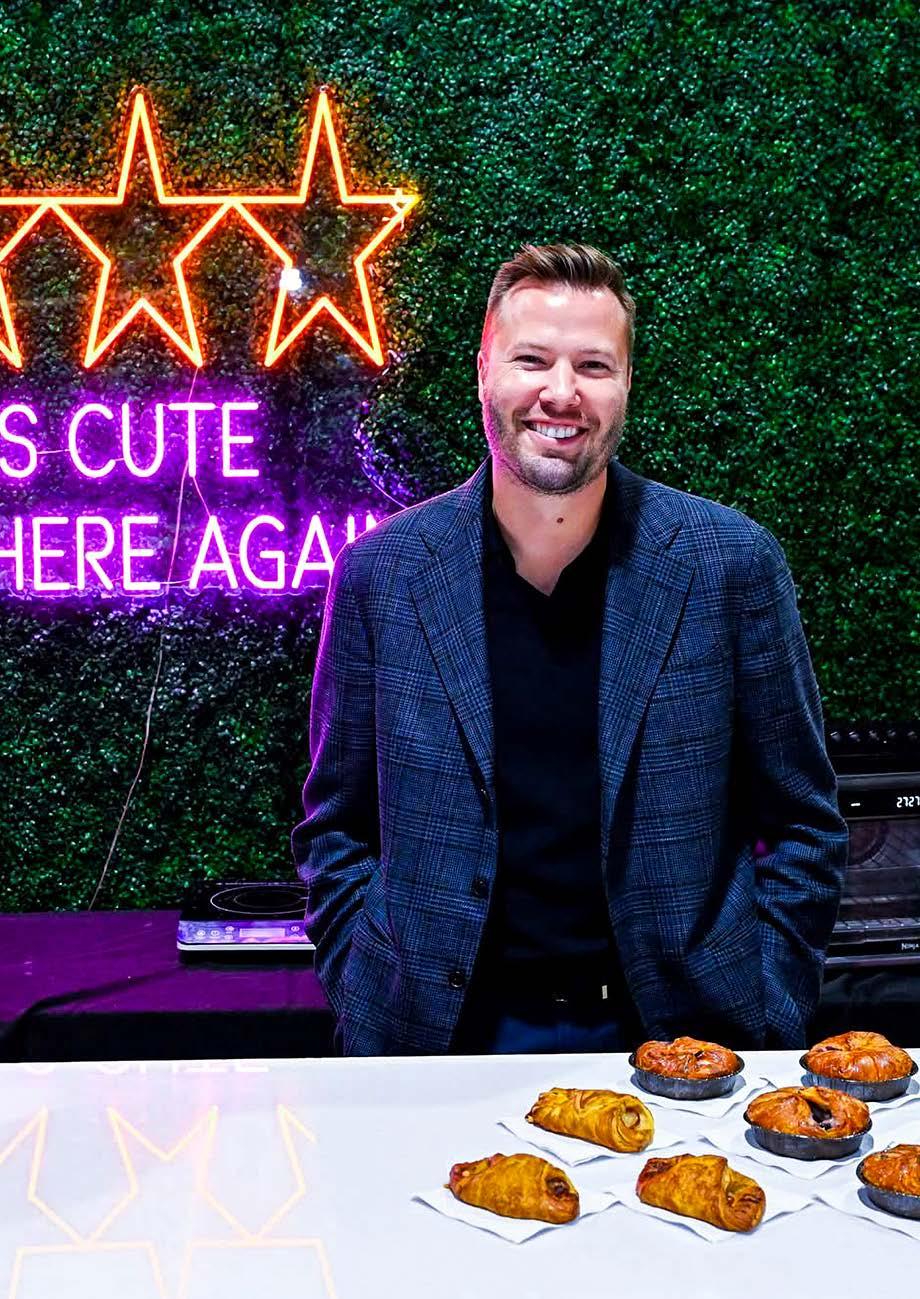
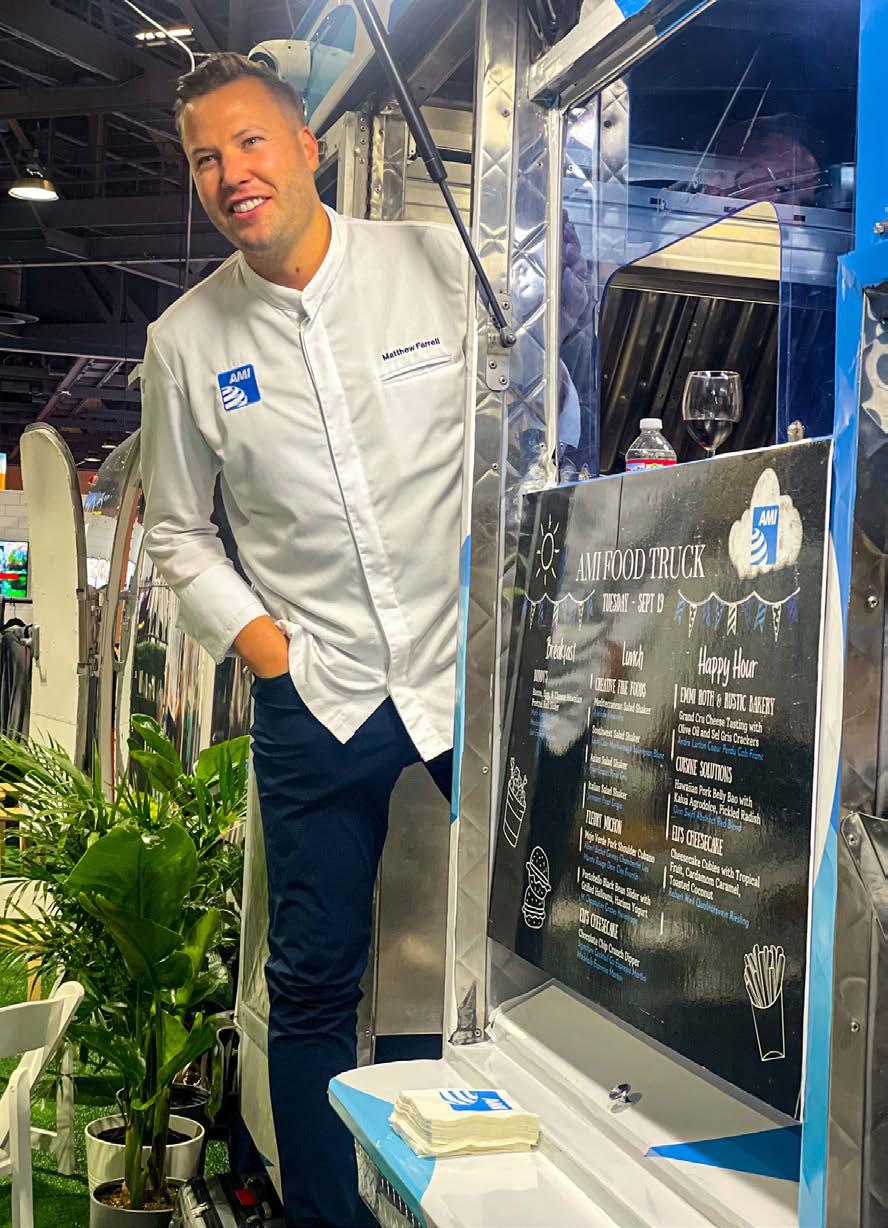
Airline food has long been the butt of jokes, often perceived as an afterthought rather than a defining part of the journey. Yet in 2025, with global carriers locked in competition for passenger loyalty, the dining experience at 30,000 feet has become a vital differentiator. At the centre of this transformation is AMI Group, the global travel solutions company redefining what in-flight cuisine can be. Business Enquirer sat down with Matt Farrell, Vice President of Culinary Innovation and Development at AMI Group, to explore the craft, complexity and creativity behind the meals that shape how we experience travel.
Matt’s story is as compelling as the food he designs. Raised in the Midwest of the United States, his earliest memories are of his family’s bakery. His father was a baker, his mother ran the business, and food was embedded in daily life. “Food was sort of always innately in my life,” he reflects. A degree in food science and human nutrition gave him the technical grounding, but it was at the Culinary Institute of America where Matt discovered his true calling. Graduating top of his class, he went on to work at three Michelin-starred restaurants, including the acclaimed Inn at Little Washington. There, he built the discipline and relentless standards that would later define his career.
By the age of 27, Matt had swapped Michelin dining rooms for a very different environment: airline catering. “We were producing around 10,000 meals a day. I didn’t even know this
was a career path for a chef,” he recalls. “No one really talks about airline food, only usually in a negative connotation. For me it became about fixing what people think about airline cuisine.” Within a few years he was the dedicated chef to American Airlines’ global menu design, travelling to more than 40 countries and weaving together food science, cultural discovery and large-scale innovation. His work caught the attention of CNN, National Geographic and other media outlets, raising awareness that airline food could be more than functional, it could be inspiring.
That reputation eventually led him to AMI Group, who two years ago invited Matt to build a culinary design division within their wider travel solutions portfolio. Headquartered in Santa Monica , with offices in Atlanta, Barcelona and Dublin , AMI is known for being disruptive, nimble and unafraid to rethink established norms. Matt now oversees a team of chefs, food sourcing specialists, marketers and event planners.. Together, they deliver cohesive culinary programs for airlines around the world, including AMI’s new role as culinary design partner for one of the world’s largest carriers.
When asked about leadership lessons from such a varied journey, Matt points to a philosophy that underpins much of his work: fail fast. “Since a lot of my background has been focused on design and innovation, my biggest thing is to fail fast. I love to push limits. There’s nothing I love more than hearing that something didn’t work in the past and therefore we shouldn’t try it again. If it doesn’t work, move on. Don’t waste time trying to force something that delays your team’s ability to find the next innovation.”
That restless energy is evident in how AMI approaches culinary design. Rather than imposing a one-size-fits-all model, the company listens carefully to each airline and creates tailored solutions. Menus are designed to elevate the onboard experience in a way that is operationally sound, brand-aligned and sensitive to the realities of global supply


chains. Matt’s team brings together chefs with backgrounds in Michelin dining, airline catering and large-scale food manufacturing, ensuring that bold ideas can be executed at scale without compromising safety or consistency. The inclusion of a wine team ensures food and beverage experiences are conceived holistically, not as separate components.
The balance between luxury and logistics is one of the industry’s defining challenges. “It’s extremely complicated,” Matt admits. “The supply chain is very long. When you have to think about trends, what’s happening now in restaurants may not be the trend eight months later when it goes on board. So we balance innovation with familiarity. Something must be interesting but also understood. Unlike a restaurant with a long menu, on board you have three or four choices. Each has to work for different walks of life.”
One example he shares illustrates this approach perfectly. A roasted butternut squash and apple soup served in first class came with a parmesan and black pepper marshmallow, added by flight attendants so that it melted into the broth. “To me it was quintessential fall,” Matt says with a smile. “It was like a big chunky sweater and a good hug. It was familiar flavours but done in an interesting way you’d never normally see on an aircraft.”
Behind such ideas lies a rigorous development process. Sometimes the team proactively develops concepts they believe the industry is missing and takes them to airlines, offering exclusivity to early adopters. Other times, airlines issue briefs, perhaps to refresh menus on all transatlantic routes. From there the AMI team conducts research, develops recipes, refines them through tasting sessions and final approvals, and then manages the supply chain to get meals onto flights. The process can take three to six months, though smaller changes can be made in weeks.

Maintaining quality is as important as creating it. AMI produces training videos flight attendants can access on their phones, showing how to plate dishes correctly. Menu guides provide descriptions to help crew present meals confidently, and passenger feedback, whether through surveys or anecdotal reports from crew, is analysed to refine dishes in future. If a recipe is underperforming, the team tweaks it rather than discarding it outright, identifying whether it is the protein, the sauce, or another element that needs attention.
Consumer preferences and cultural diversity add another layer of complexity. Allergens, dietary requirements and religious restrictions are addressed through carefully designed “special meals” to ensure passengers are not left without options. Generational expectations shape menus too. “Millennials and Gen Z are looking for more global cuisine, more fusion, more adventurous flavours,” Matt explains. “Older generations may prefer more classic dishes. When you only have a handful of options to satisfy an entire aircraft, rotation becomes essential.” Business class and domestic first-class

menus often change monthly, while long-haul rotations vary from one to two months. The frequency is higher than most passengers realise, reflecting how important novelty has become.
Sustainability is equally critical. AMI works with plant-based and alternative protein suppliers such as Impossible, integrates more sustainable packaging, and helps airlines implement recycling and pre-order programs that reduce waste. Signature hub dishes, unique to departure cities, add excitement while streamlining demand forecasting. “It’s about making the
experience better while also being smarter with resources,” Matt notes.
Partnerships are central to this ecosystem. AMI’s food sourcing teams in Atlanta and Barcelona are constantly scouting new products, from high-profile brands to niche startups. “We have a thorough vetting process through QA and food safety before anything reaches an airline,” Matt says. “We look for strategic partnerships to upgrade the experience, whether that’s with a global name or a small brand with just a few stores. Part of the excitement is
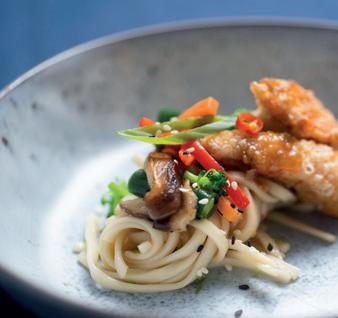
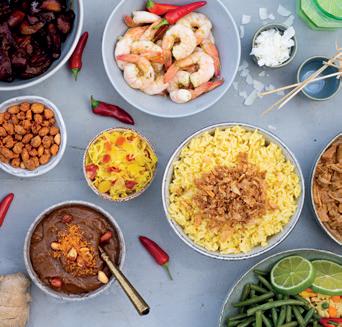
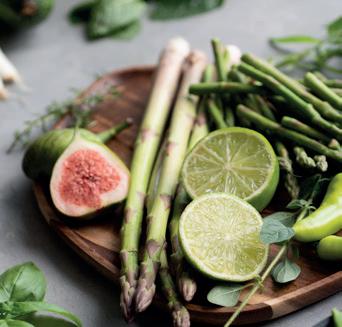
In the competitive world of inflight catering, Marfo FMA has emerged as a leading innovator, crafting bespoke meal solutions that reflect the cultural nuances and culinary expectations of passengers across North America, Europe and Asia.
With decades of expertise in premium and economy cabin dining, the company has mastered the art of balancing authenticity, luxury, and operational efficiency — transforming how airlines serve their most discerning customers. By
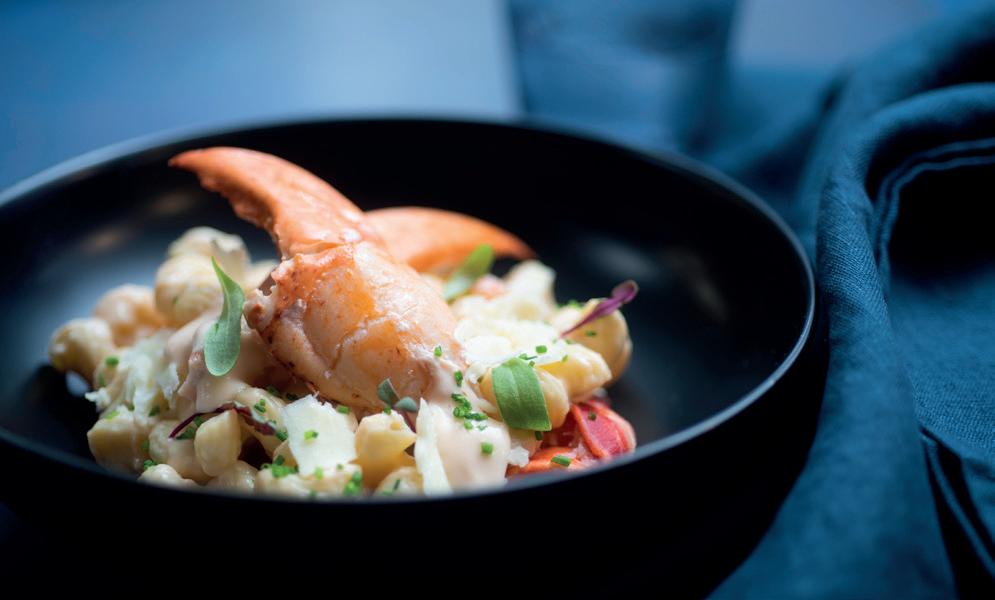
blending authentic regional flavors with advanced production systems, it ensures consistency, reliability, and sustainability.
Through its culturally attuned, premium meal solutions, Marfo FMA continues to set a new benchmark for inflight dining. The result is not only elevated passenger satisfaction but also stronger brand distinction for airlines striving to deliver an unforgettable culinary journey above the clouds.
www.marfofma.com


helping those smaller players scale to 30,000 feet.” The challenge, of course, is production capacity. Some AMI suppliers manufacture items in volumes of up to eight million a month. Not every boutique brand is ready for that leap, but AMI mentors them through the process when possible.
So what sets AMI apart in a competitive market? Matt believes it is their willingness to listen. “We don’t just say, ‘Here’s what we have, take it or leave it.’ We listen to what the airline wants and then create the solution. Our culinary team, our procurement, QA, operations, logistics management, co-packing and wine teams all work together as a one-stop shop. That’s why airlines choose us.”
Looking ahead, Matt is particularly energised by trends shaping culinary innovation more broadly. “In the past the trend was eat less. Now it’s about eat smart. Food doubling as functional, collagen, protein, all of that. Convenience and ready-to-eat options are exploding, especially with Gen Z. Social media chaos is another driver. You see something viral and brands immediately create products around it. Unexpected partnerships are another big one, like Magnolia Bakery teaming up with a lip brand for banana pudding lip gloss. And of course globalised cuisines, greater cultural fusion as travel expands.”
Even virtue signalling, he notes, is playing a role. “People express their choices as a reflection of character, saying they only eat farm-raised for instance, as a way to signal values. It’s part of the cultural dialogue now, and food innovation has to acknowledge it.” For emerging chefs and innovators, Matt’s advice is to embrace constraints. “Sometimes the best innovation happens in the most restricted situations. Don’t be afraid of industries with rules and guidelines. That’s where creativity can shine.”
As for AMI’s future, the focus is on international growth. The Barcelona office will play a central role in supporting European, Middle Eastern, Asian and South American carriers. The company’s track record in North America provides a strong foundation, but Matt sees the greatest opportunities in expanding globally. Team growth, cross-border partnerships and continued investment in design processes will be key.
At the heart of it all lies what Matt calls “safe experimentation,” a balance of familiarity and innovation. “Take something nostalgic, like braised beef, which almost every culture recognises. Add a touch of gochujang or another unexpected flavour. Passengers understand enough of the dish to try it, but they’re also introduced to something new. That’s how we innovate successfully, by mixing the familiar with the surprising.”
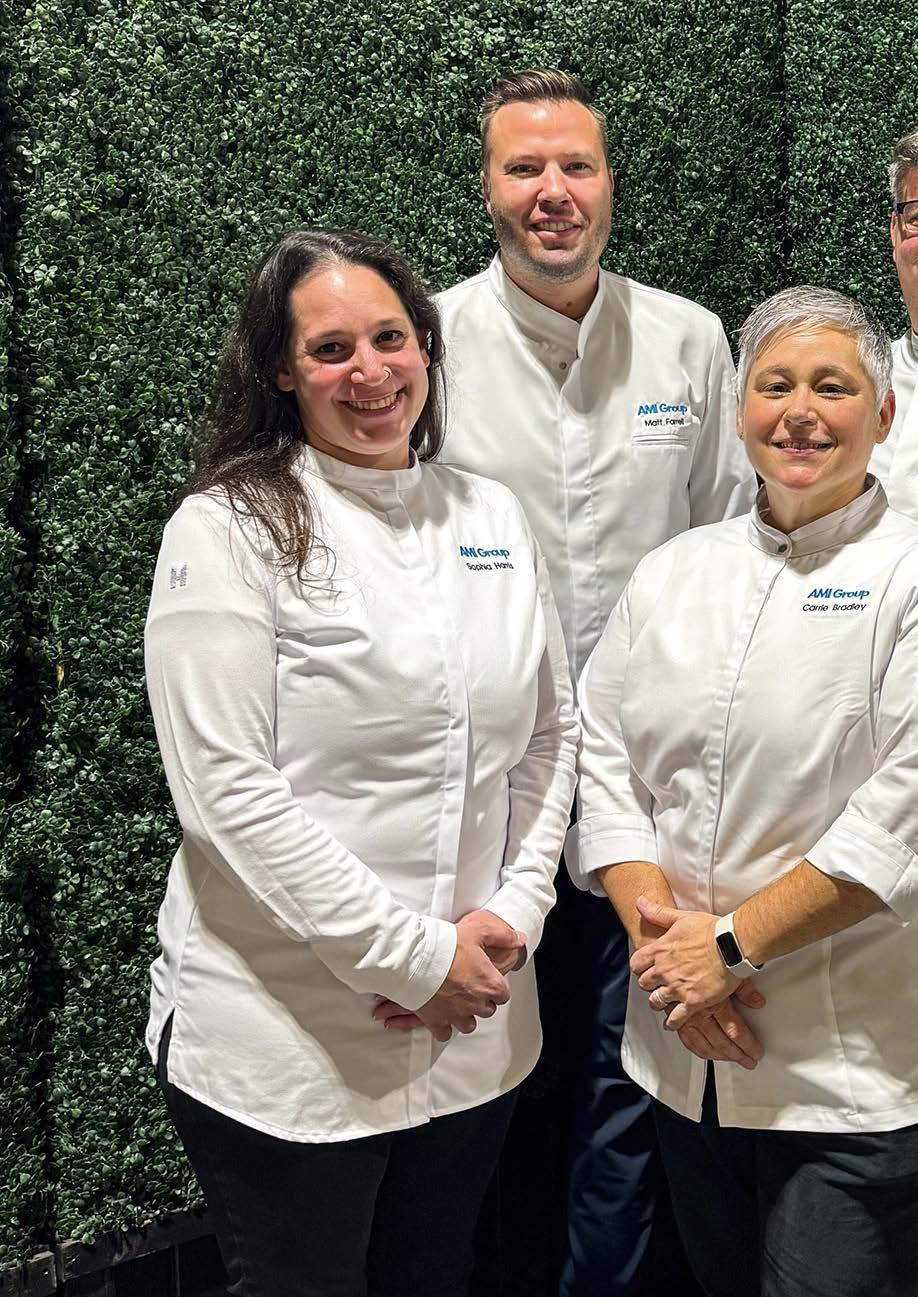
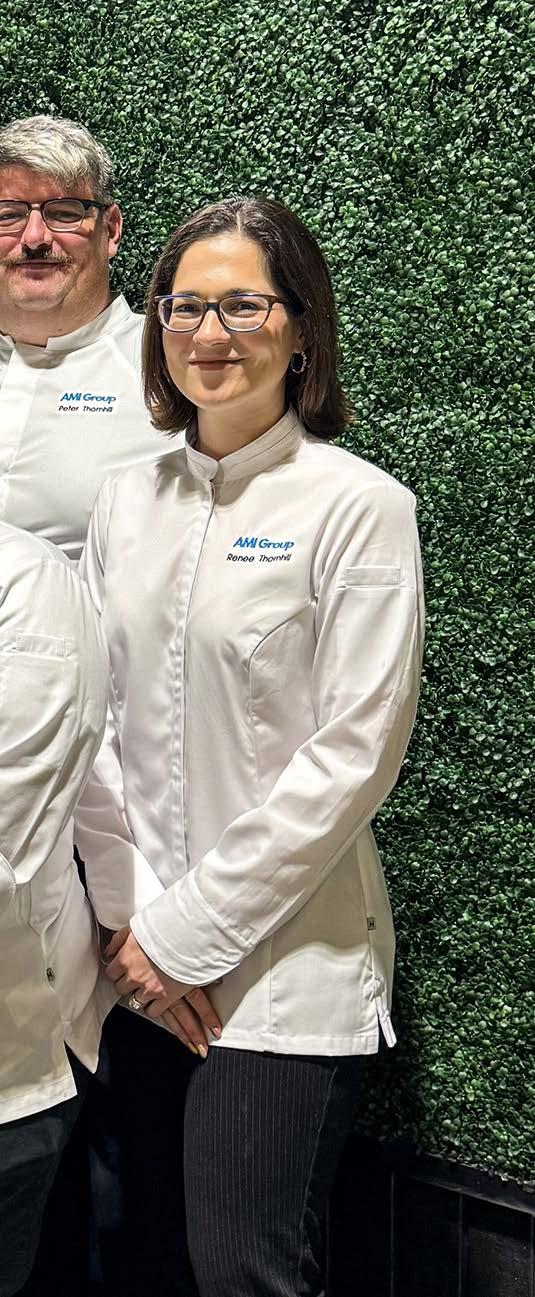
The process is highly collaborative. Matt and his team constantly exchange ideas, whether sparked by a social media post, a dinner out, or a passing trend. Ideas are mapped on whiteboards, refined through debate, and filtered through the lens of execution. What can be plated on board, what flight attendants can manage without disruption, what works at scale. The energy is contagious. “I’m always sending recipes and ideas to the team. They sometimes tell me to calm down,” he laughs. “But that’s the fun of it. The challenge is what makes it exciting.”
Airline food may never escape every joke, but under Matt’s guidance, it has become something far more interesting than a punchline. It is a canvas for cultural exchange, a test of operational ingenuity, and increasingly, a defining part of the passenger journey. With AMI Group at the helm of culinary innovation for the one of the world’s largest airlines and an eye firmly set on global expansion, the era of the in-flight meal as an afterthought is over.
For Matt, it is simply the next chapter in a career defined by turning constraints into creativity. “This industry is challenging,” he admits. “But in its challenge, it’s incredibly exciting. That’s where the best ideas are born.”
www.amigrp.com