THE INVISIBLE ENGINE KEEPING GLOBAL CARGO MOVING



PROJECT DIRECTED BY: THOMAS HARDY
In air cargo, reliability is rarely decided by what happens at cruising altitude.
It is shaped on the ground, in the margins of operations that most people never see, where seconds matter and small failures can escalate into networkwide disruption. For MNG Airlines, this reality has informed a business model built around integration, control and operational discipline rather than scale for its own sake.
At the centre of this approach is Serkan Eren, Ground Operations Director at MNG Airlines. With more than 25 years in aviation and around 30 years in logistics, Eren oversees ground operations across the airline’s global network, covering cargo, customs, catering, ground handling, ramp
operations and service agreements stretching from the US to Asia.
Alongside this, MNG operates its own warehousing and self-handling facilities at Istanbul Airport, placing a significant portion of the value chain under direct control.
Eren’s philosophy is straightforward. “We manage them as one integrated operational ecosystem,” he says. That mindset underpins how MNG structures its organisation, invests in systems and measures performance. Rather than dividing responsibilities into isolated departments, the airline treats aircraft operations, ground handling, warehousing and data management as interconnected components of a single system.

Some legacies are written in history books. Others are written in the skies.
The story begins with General Aly El Talawy, whose distinguished 30-year career in the Egyptian Air Force from 1956 to 1978 shaped more than his own path, it defined the values that would guide an entire family enterprise. In military aviation, precision is non-negotiable, discipline is instinctive, and responsibility is absolute. These were not simply professional standards; they became personal principles. When his service concluded, the mindset of excellence and accountability did not retire with him. It evolved into entrepreneurial ambition.
Several ventures followed, each contributing experience, resilience, and perspective. But it was under the direct leadership of his son, Hussam Aly El Talawy, that the vision crystallized into what would become Tiger Aviation Services. With tireless dedication over more than a decade, Hussam transformed a bold idea into one of Egypt’s leading ground handling companies. Growth was not pursued recklessly; it was built methodically, airport by airport, contract by contract, reputation by reputation.
Today, the company operates across Egyptian airports, delivering comprehensive ramp and passenger services across commercial, cargo, VIP, and private aviation sectors. Expansion into Dubai marked a pivotal evolution, introducing a 24/7 global chartering capability designed to serve a refined international clientele who demand discretion, precision, and seamless execution.
Yet no great enterprise is built by leadership alone.
Both General Aly El Talawy and Hussam Aly El Talawy understood a fundamental truth: people are the true engine behind
any aviation operation. From ramp agents working under pressure on the tarmac to operations teams coordinating movements around the clock, the employees have been the backbone of every milestone achieved. Their loyalty, discipline, and belief in the vision transformed strategy into reality.
The growth from a modest team into a large operational workforce reflects not just expansion but shared commitment. The family often emphasizes that without the dedication and hard work of their employees, none of this would have been possible. It is a culture rooted in mutual respect, opportunity, and long-term belonging.
Alongside operational leadership stands Amany El Talawy, whose enduring role as Chief Financial Officer has ensured stability and strategic financial discipline. In industries where margins and risk management define survival, her resilience and stewardship have safeguarded sustainable growth, providing the structure behind expansion.
As the group evolved, so did its ambitions. A private jet catering company was launched to elevate inflight dining into a refined culinary experience, reflecting a belief that aviation is not simply transportation, it is a lifestyle. TAS Travel further completed the ecosystem, bridging crew accommodation services with luxury tourism and golf destination management in Egypt.
Today, the third generation steps forward, each leading strategic sectors that modernize and expand the enterprise. They are not merely inheriting a business; they are advancing a vision shaped by service, strengthened by resilience, and sustained by people.
Because true legacy is never built alone, it is built together, across generations, united by purpose and carried forward with pride.
In cargo aviation, fragmentation is costly. Each handover introduces risk, delay and ambiguity. At scale, those inefficiencies compound quickly. MNG’s answer has been to simplify decision-making by standardising how performance is defined and how accountability is enforced across its stations worldwide. Shared KPIs, common operating procedures and a unified performance language ensure that teams in very different cultural and regulatory environments are still working towards the same outcomes.
This consistency does not mean ignoring local realities. Operational cultures differ widely across regions, and Eren is pragmatic about that. The key, he explains,
is ensuring that local execution flexibility sits within a centrally aligned framework. Clear escalation protocols and data-driven oversight allow issues to be surfaced early and addressed before they spread. Resilience, in this model, is not reactive. It is embedded by design.
MNG’s vertically integrated structure is central to this resilience. The airline operates not only as a carrier but also as a ground handling provider and warehouse operator, including services delivered to other major airlines and integrators. At its Istanbul hub, the company runs a large, purpose-built facility and performs extensive self-handling. This breadth of capability means MNG wears multiple
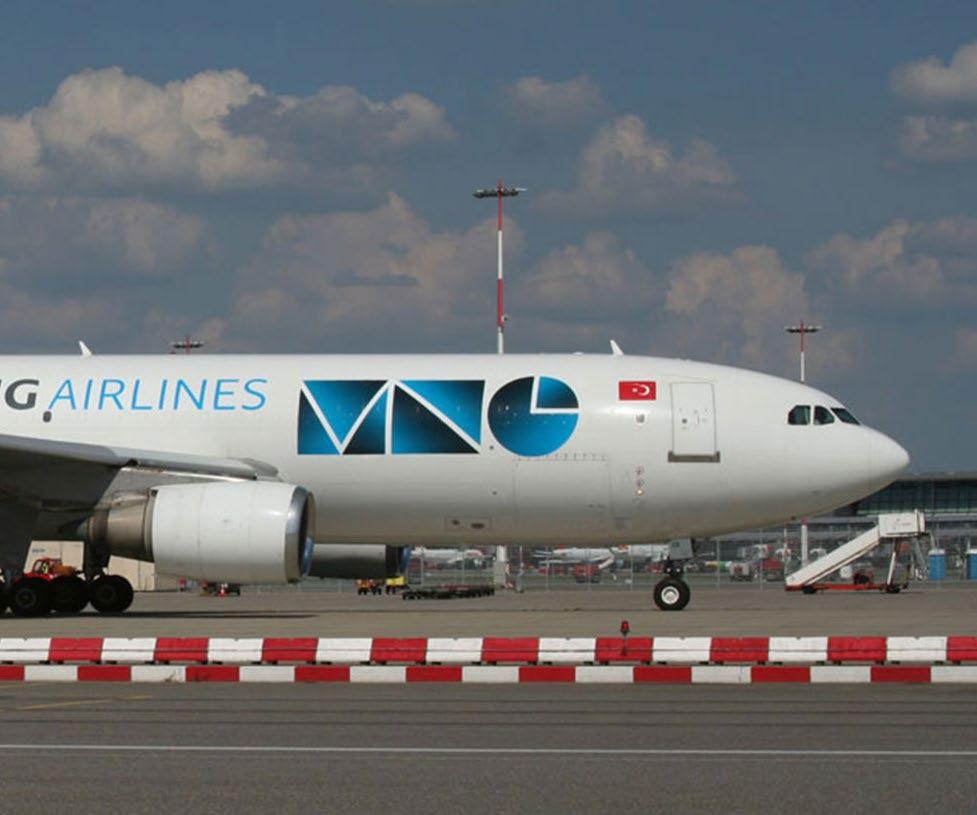
operational “hats” within the same ecosystem, a complexity that many traditional aviation systems are not designed to support.
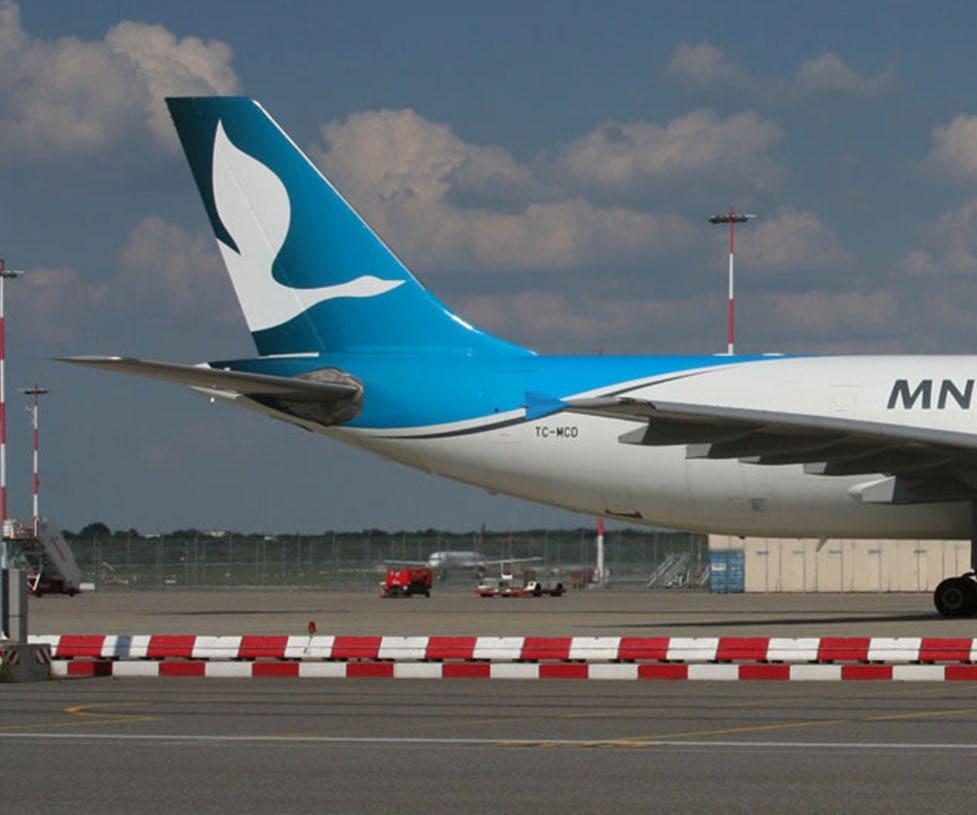
This integrated operating philosophy extends beyond MNG’s owned facilities and into carefully selected international partnerships. In Cairo, for example, MNG Airlines works closely with Tiger Aviation Services (TAS) as a contracted partner for cargo handling and dispatch operations. Supporting scheduled freighter services, including the Istanbul–Cairo route launched in 2017, TAS facilitates full cargo flight handling in coordination with stakeholders such as EgyptAir for ground equipment and CACC for
warehouse services. The long-standing renewal of this contract reflects a shared commitment to operational discipline, reliability and structured coordination. By embedding trusted partners like TAS within its wider performance framework, MNG ensures that even where operations are not directly self-handled, they are governed by the same principles of accountability, responsiveness and integrated e xecution.
For MNG, disruption is not an exception but an assumption. Weather events, equipment issues, slot constraints and regulatory complexities are part of daily operations. What determines success is






how quickly the organisation responds and how effectively it contains the impact. Minor delays, if unmanaged, can trigger a domino effect across crew duty limits, aircraft utilisation and downstream connections. Preventing that escalation requires clarity, speed and authority at every operational layer.
Off-the-shelf software typically treats airlines, handlers and warehouses as separate entities. For an organisation that combines all three, that separation becomes a constraint. MNG’s response was to develop its own in-house operational platforms, giving it full ownership of its data and decision logic. Rather than adopting technology for its own sake, the focus has been on turning operational data into a real-time decision asset.
Digitalisation, in this context, is about trust and immediacy. Data is captured where the activity actually happens, validated through standardised inputs and automated controls, and made available instantly to those responsible for keeping the operation moving. Data quality, protection and system stability are treated as operational imperatives, not back-office concerns. Role-based access, disciplined change management and built-in redundancy are designed to protect both performance and decision speed, particularly during peak or disrupted periods.
This digital backbone reinforces MNG’s integrated model. By bringing airline operations, ground handling and warehousing under one organisational umbrella, and aligning external partners within the same framework, the company reduces handover friction and eliminates many of the contractual fault lines that slow decision-making elsewhere in the industry. When something goes wrong, responsibility is clear and action is immediate.
Operational reliability and cost discipline are inseparable in this framework. Aircraft that do not depart on time erode customer confidence and profitability simultaneously. Shared resources, from equipment to manpower
to space, allow MNG to optimise across functions rather than duplicating assets. Greater transparency makes inefficiencies visible early, before they scale into systemic problems. When performance, quality and cost are managed together, misalignment has nowhere to hide.
This integrated thinking extends to MNG’s logistics offering. While e-commerce growth has reshaped cargo demand, the airline remains firmly focused on B2B logistics rather than consumer parcel delivery. Airport-to-door, in MNG’s case, typically means delivery to a customer or freight forwarder warehouse. This distinction allows the business to tailor its operating model to different customer segments instead of forcing all traffic into a single service profile.
Stable production flows prioritise schedule discipline, cut-off management and cost efficiency. Commerce-driven volumes demand greater speed, flexibility and tighter coordination between air capacity and trucking. MNG operates both models within the same ecosystem, aligning closely with freight forwarders, integrators and logistics partners through standardised handovers and shared performance metrics. As Eren puts it, “We try to sell everything under one umbrella mentality.”


Route structure is another lever for flexibility. Alongside point-to-point flying, MNG makes strategic use of triangle operations, enabling a single aircraft rotation to serve multiple demand points. This approach improves load factors, balances uneven volumes across regions and increases overall network efficiency without adding unnecessary capacity. For integrators, charter customers and sector-specific flows such as automotive, these routes provide reliability while accommodating shifting demand patterns.
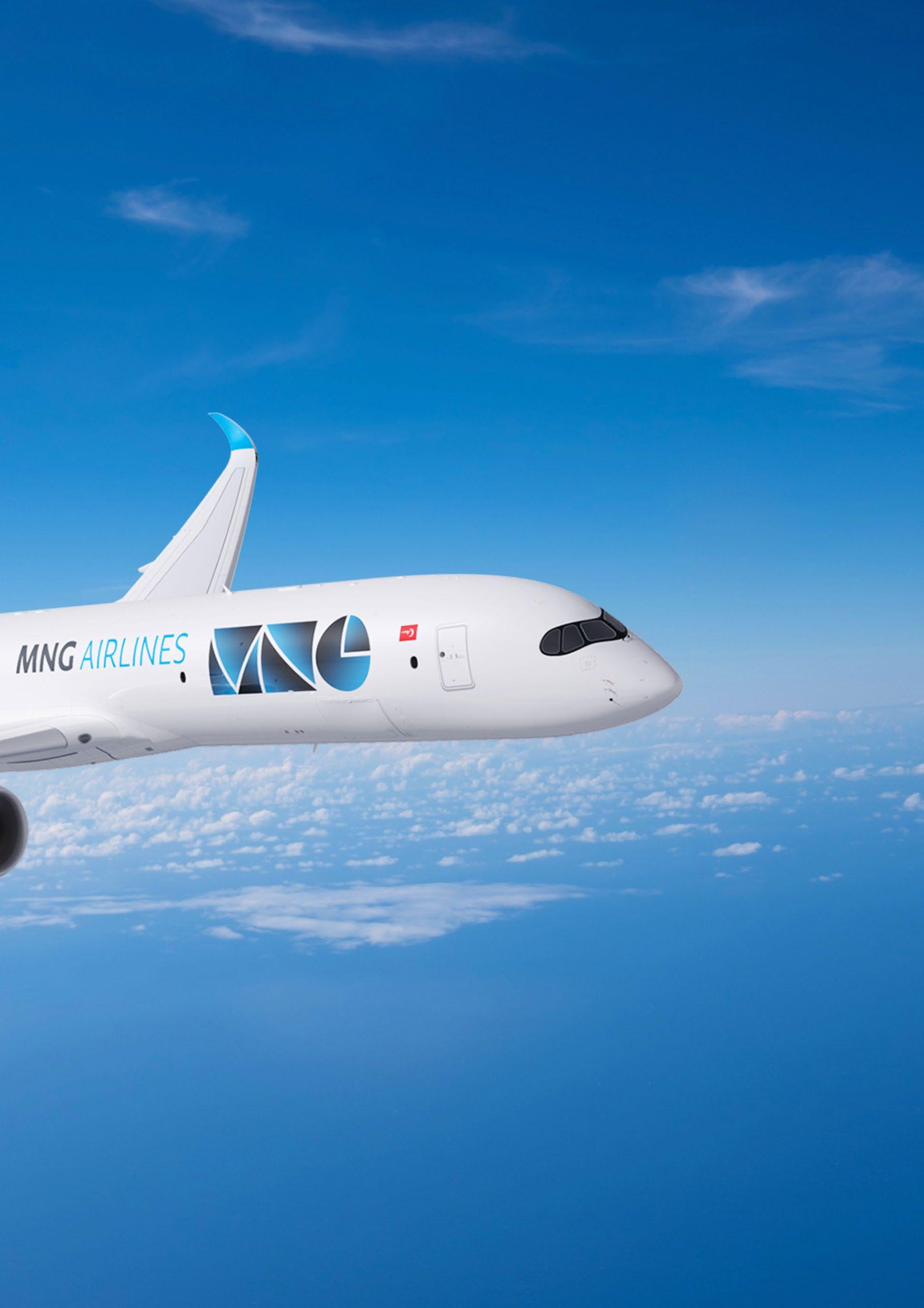
Fleet strategy underpins the entire operation. Eren is clear that sustainable growth in cargo aviation requires continuous investment. New-generation freighters such as the Airbus A350 bring higher payloads, extended range and improved fuel efficiency, supporting dense commerce flows while aligning with ESG expectations. The A330 fleet complements this capability, offering flexibility for medium- and long-haul operations with reliable turnaround performance. The objective is balance rather than scale, ensuring capacity can flex with demand without overexposure.
Sustainability considerations also influence ground operations, though pragmatism remains essential. Electrification of certain ground support equipment is progressing, but heavy cargo handling presents technical and economic challenges that cannot be ignored. Reliability remains non-negotiable. In cargo aviation, experimental failure carries too high a cost, and transitions must be proven before they are scaled.
Ground support equipment itself is a recurring theme in Eren’s thinking. Often overlooked, assets such as stairs, pushbacks and loaders can determine whether an aircraft departs on time. Failures here have immediate consequences, increasing ground time, pressuring crew duty limits and triggering cascading delays. For MNG, equipment reliability is not simply a maintenance issue but a frontline operational risk management priority. “In cargo operations
aircraft do not depart late because of a strategy but they depart late because something small on the ground failed,” Eren notes.
Beyond MNG’s own operation, Eren remains actively engaged with the wider industry through freight forwarding associations, international bodies and academia. As he puts it, “If rules are being written, you need to be sitting at the table.” Being involved early allows operators to influence regulations rather than react to them after the fact.
This engagement exposes MNG to the full spectrum of the logistics ecosystem, from shippers and forwarders to regulators and infrastructure providers. It challenges assumptions and encourages integrated solutions over fragmented fixes. It also informs how future talent is developed, ensuring that education reflects operational reality rather than theory alone.
For Eren, future-proofing air cargo is about alignment. Decisions made today must reflect where the industry is realistically heading, not where it has been. That requires operational discipline, data-driven leadership and a willingness to engage beyond organisational boundaries. “We manage them as one integrated operational ecosystem,” he reiterates, a principle that shapes everything from ground handling to digital strategy.
MNG Airlines’ approach offers a clear lesson for the wider sector. Reliability is not achieved through isolated initiatives or headline investments alone. It is built through deliberate design, consistent execution and an uncompromising focus on the details that keep cargo moving. In an industry defined by complexity, the organisations that succeed will be those that simplify where it matters most.
Because in air cargo, the most important work rarely happens in the air. It happens on the ground, long before the wheels leave the runway.
www.mngairlines.com