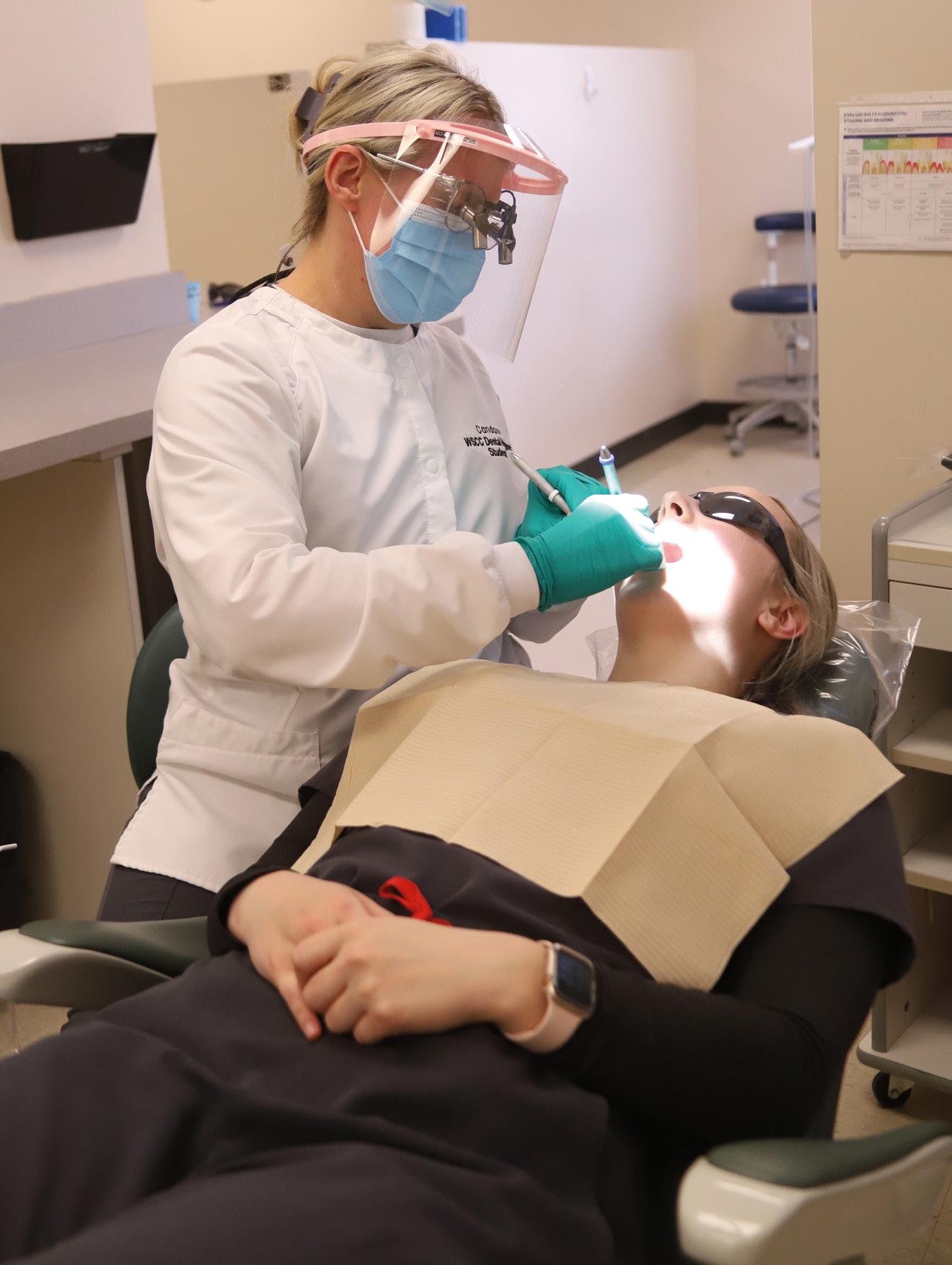
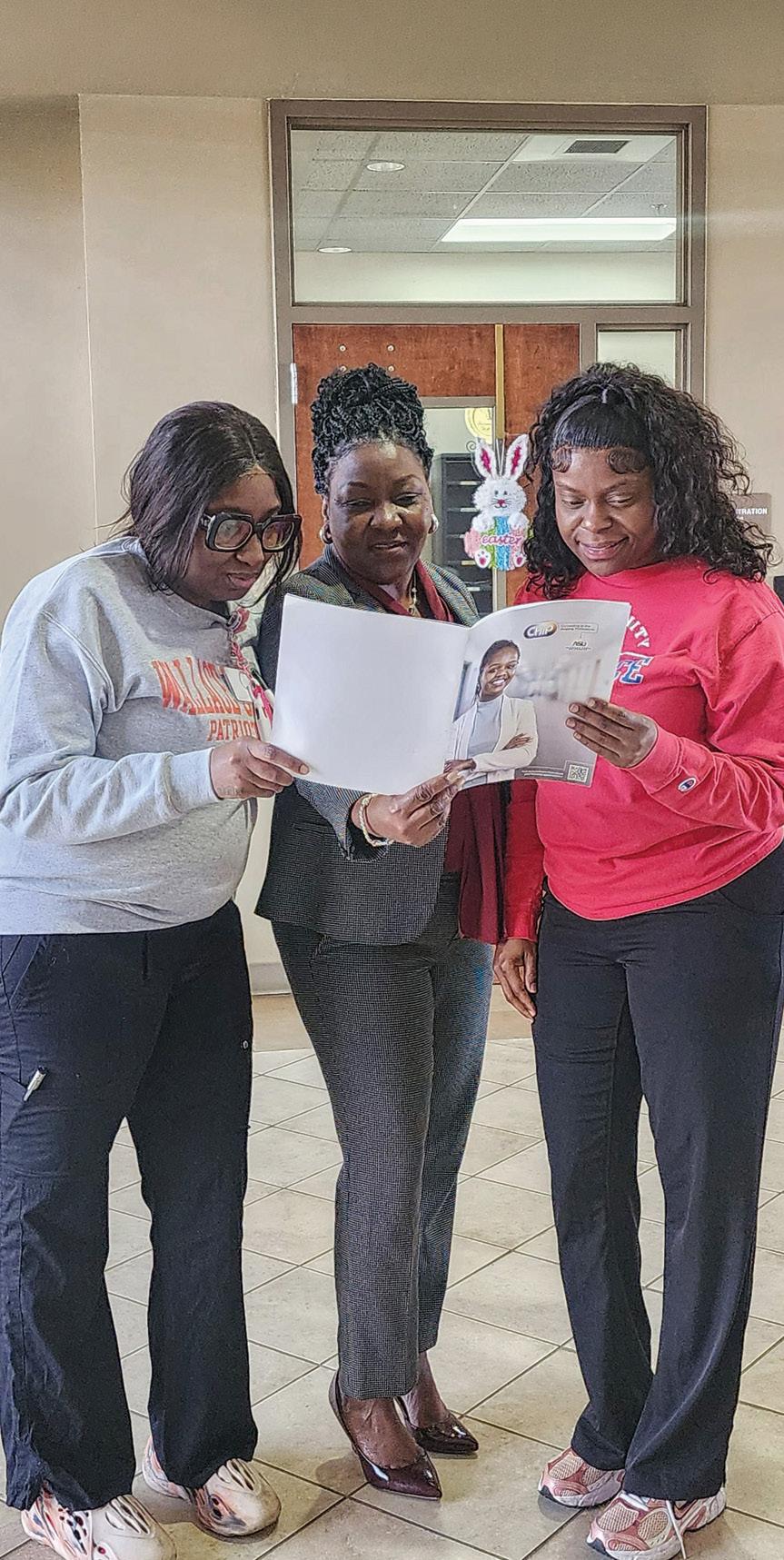
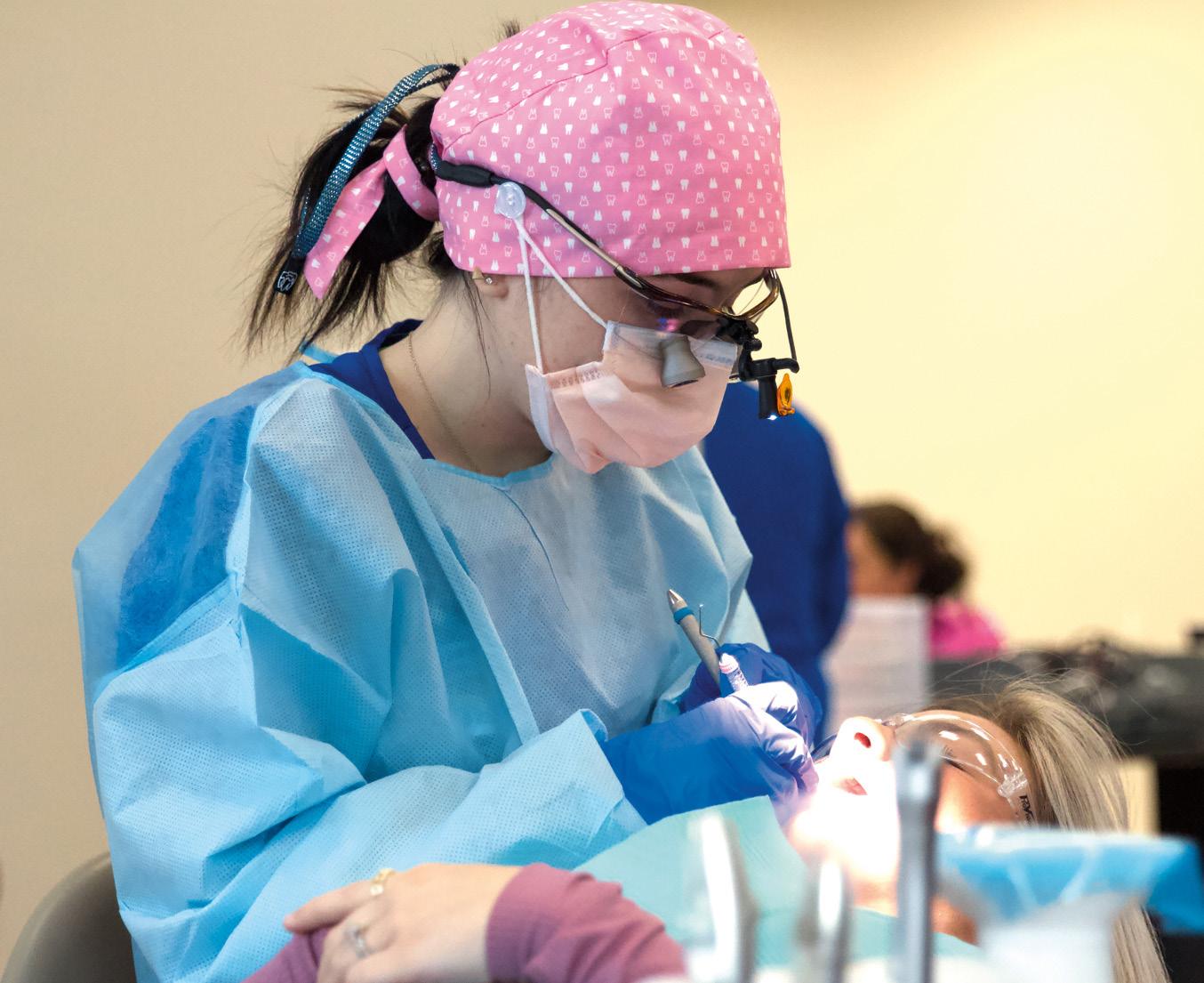
Candace Peppers provides preventative dental hygiene to Jackie Foster. Both of them are second year hygiene students at Wallace State Community College. Photo courtesy of Wallace State Community College.
On the Cover:
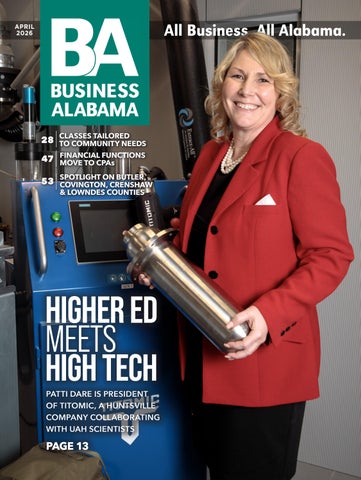
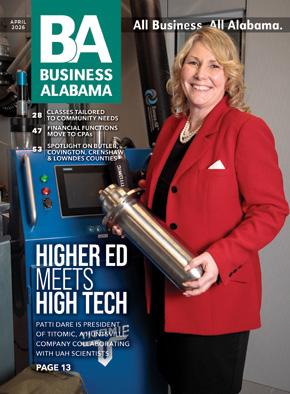
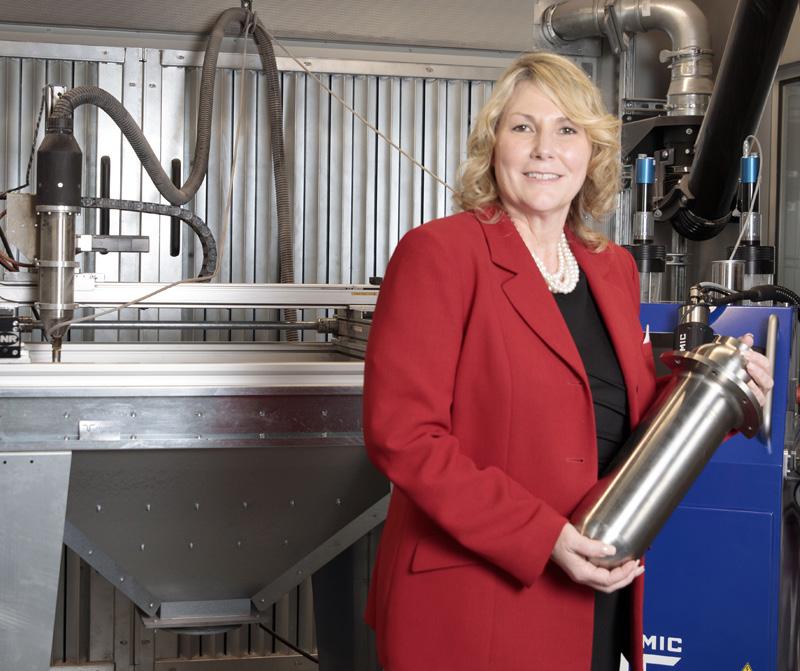
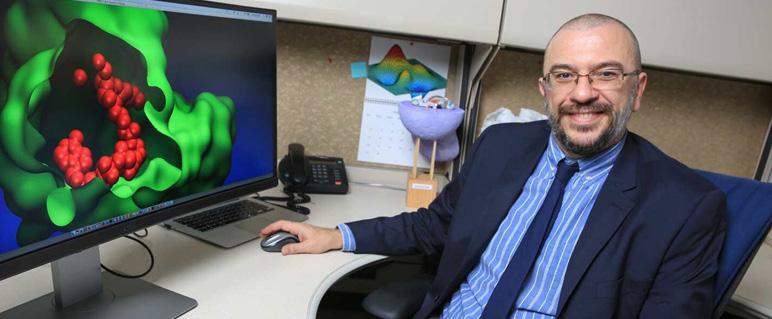
Patti Dare is president of Titomic, a Huntsville company collaborating with the University of Alabama in Huntsville.
by Dennis Keim.
Photo
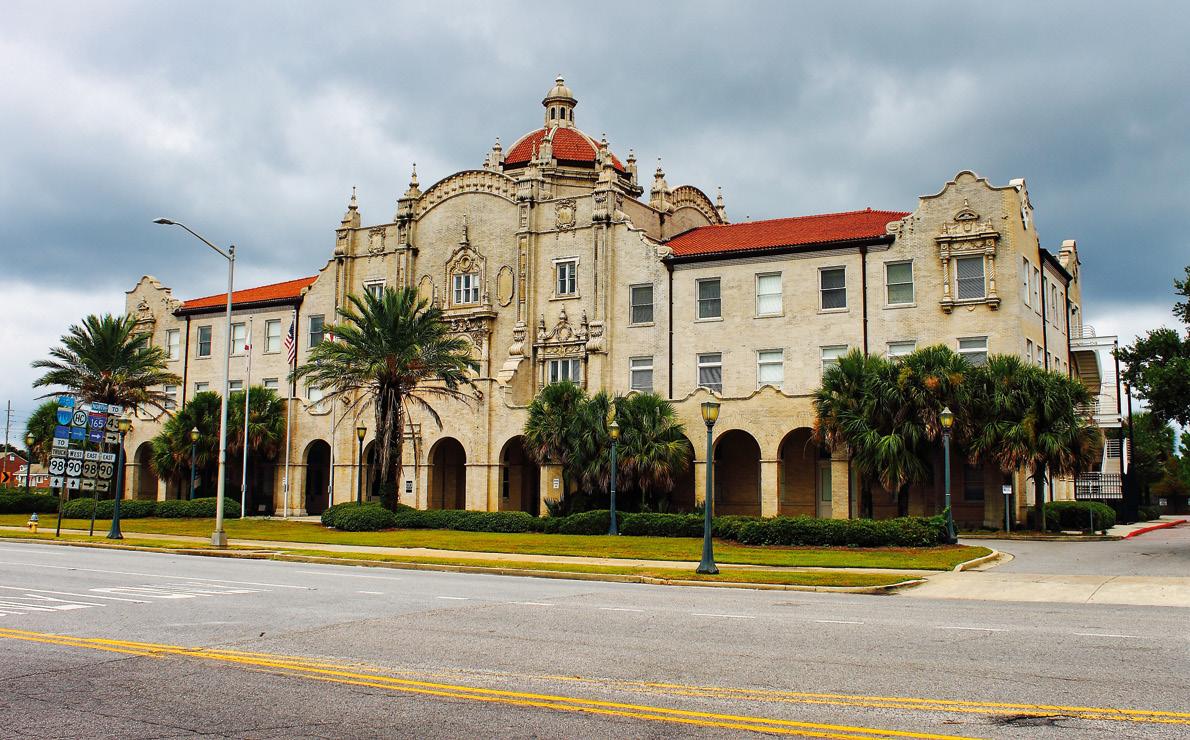
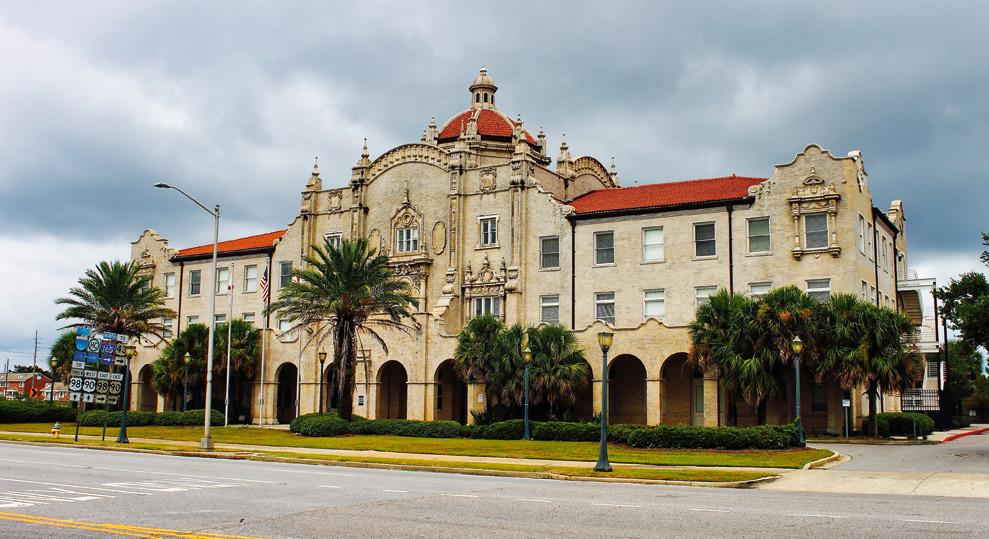
74: Built in the golden age of America’s railroads, this grand structure was home to the southern end of the Mobile & Ohio Railroad.
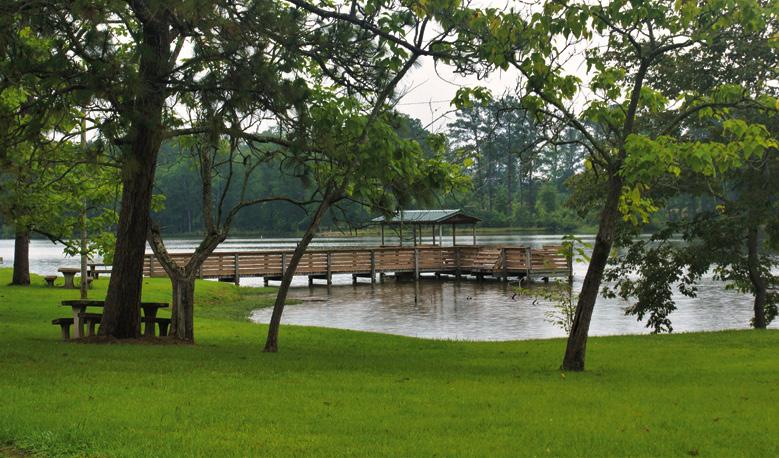
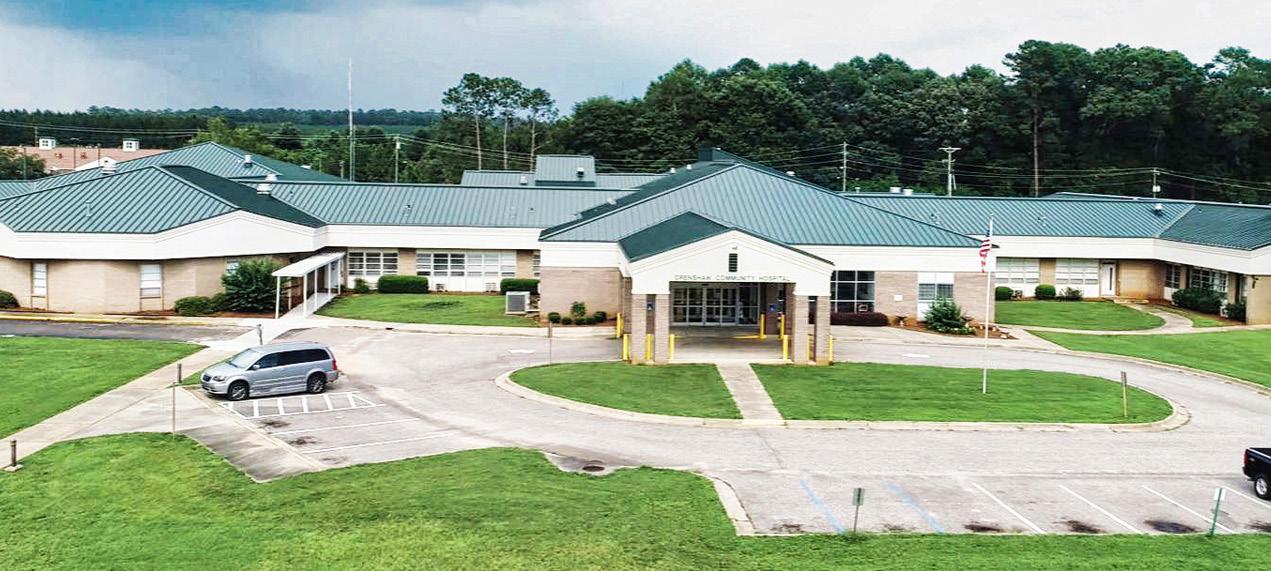
53: Crenshaw County State Public Fishing Lake is located five miles south of Luverne.
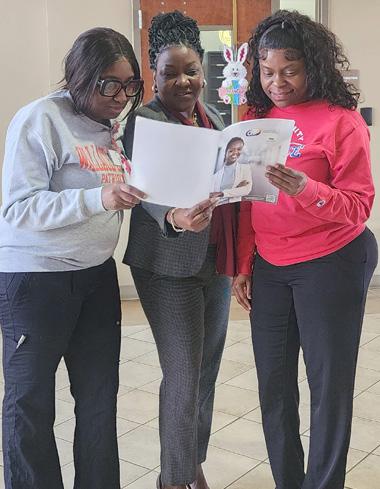
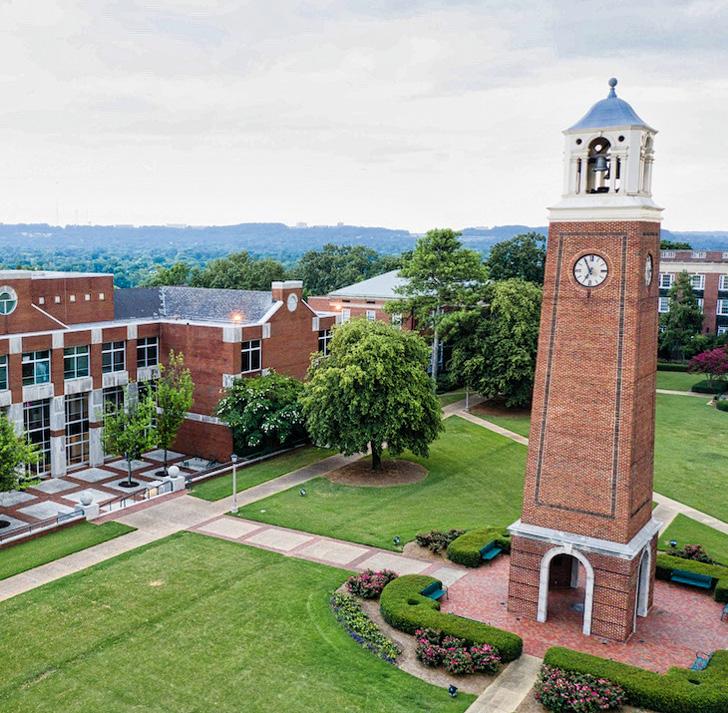
19: Donitha Griffin (center) is now president of Wallace Community College Selma, where she took the first steps of her academic career as a student.
BIRMINGHAM OFFICE 3324 Independence Drive / Homewood, AL 35209 205-802-6363
MOBILE OFFICE 166 Government Street / Mobile, AL 36602 251-473-6269
CORPORATE
T.J. Potts, President & CEO
Thomas E. McMillan, Partner & Director
Business Alabama is published monthly by PMT Publishing Co., Inc. Copyright 2026 by PMT Publishing Co., Inc. All rights reserved. Reproduction in whole or in part without written permission prohibited.
Letters to the editor are welcome.
Moving? Please note US Postal Service will not forward magazines mailed through its Bulk Mail unit. Four to six weeks before moving, please send old mailing label and new address to Business Alabama, P.O. Box 43, Congers, NY 109209922 or call 1-833-454-5060.
Benchmarks
Minth Group invests $430M to repurpose former Gadsden steel mill as auto supplier plant
MINTH GROUP LIMITED, a global automotive supplier based in Taiwan, plans to invest $430 million to transform a former steelmaking site in Gadsden into its largest plant.
The project is slated for the 400-acre brownfield site previously occupied by Republic Steel and Gulf States Steel, according to the Gadsden-Etowah Industrial Development Authority.
At the new facility, Minth will produce plastic and aluminum components for U.S. automotive plants, including Hyundai in Montgomery and Kia in West Point, Georgia.
“Alabama is a worldwide leader in automotive innovation, and Minth Group Limited’s plans to build an advanced manufacturing hub in Gadsden is another successful chapter for our state industry,” said Ellen McNair, secretary of Alabama’s Department of Commerce.
Minth’s U.S. operations are part of Minth North America Inc., with regional headquarters in Wixom, Michigan, and two other locations in Michigan and Tennessee. The Gadsden site will have almost 1 million square feet of manufacturing space.
BUSINESS BRIEFS
APPEALING ALABAMA
Alabama is ranked 9th on U.S. News and World Report’s list of desirable states to move to. In addition, Baldwin and Madison counties ranked on the list of the most desirable counties to move to.
SKY HIGH
The U.S. Space & Rocket Center’s Intuitive Planetarium in Huntsville has been ranked tops in the nation, according to USA Today’s 10Best readers’ choice list.
BEACH BUCKS
CONSTRUCTION KUDOS
Minth’s investment is expected to create hundreds of jobs initially with the potential to reach up to 1,325 positions as operations grow in a community that has seen departures of Goodyear, Gulf States Steel and other employers.
“From rubble to renewal, from depression to prosperity — this site, once a reminder of jobs that moved overseas, now represents a bright future,” said William Chin, the son of Minth’s founder and the company’s chief strategy officer. “It’s not rubber and steel anymore; it’s plastic and aluminum. We see tremendous opportunity here to serve the evolving needs of the automotive industry.”
David Hooks, chief executive of the Gadsden-Etowah Industrial Development Authority, called Minth’s plans a “transformational moment.”
“The new investment not only impacts the property itself, but will impact the broader economies of Gadsden, Etowah County and all of Northeast Alabama,” Hooks said. “We are honored that Minth Group has chosen Gadsden as the location to expand its North American presence.”
Birmingham-based BL Harbert International ranked second on the Associated Builders and Contractors’ overall top-performers list for 2026. Harbert also was named the top performer in the government, hospitality and sports complex sectors, while Robins & Morton and Brasfield & Gorrie, both Birmingham companies, topped the health care and office sectors respectively.
ROCKET ARTEMIS
United Launch Alliance, which operates a facility in Decatur, has been chosen to build the upper
Gulf Shores and Orange Beach Tourism says about $2 billion was spent on lodging rentals and retail sales at Gulf Shores, Orange Beach and Fort Morgan in 2025. A record $923 million was spent on lodging, according to the group.
stage rocket for Artemis IV and V. Artemis is NASA’s project to take astronauts back to the moon.
MANAGEMENT CHANGE
Austal USA President Michelle Kruger has announced plans to retire June 1, serving as president emeritus until then.
Gene Miller, COO of the Mobile shipbuilder, will serve as interim president. Conrad W. Rafield III is retiring as chairman of the Coca-Cola United board, after 47 years with the Birminghambased company.
SPACE BONUS
U.S. Space Command is offering “significant” bonuses to civilian employees who will make the move from its
Colorado Springs headquarters to its new headquarters in Huntsville. The command will be located at Redstone Arsenal.
HOME IN HUNTSVILLE
Alabama’s first IKEA store opened in late February in Huntsville.
BIRTHDAY GOODS
1818 Farms in Mooresville has developed a line of products — teas, plants, ornaments and more — to celebrate the country’s 250th birthday.
PARK PLANS
Bayfront Park in Daphne is undergoing a $16 million renovation that includes a new amphitheater, splashpad and bathrooms.
A crowd turned out to welcome news of the new auto supplier plant. Photo: Minth Group
Hyundai Power Transformers, GE Aerospace announce major expansions
HYUNDAI POWER TRANSFORMERS USA announced plans in March to invest $200 million to expand its Montgomery manufacturing operations, creating 200 new jobs and increasing domestic production capacity for larger power transformers critical to the nation’s electric grid.
The next day, GE AEROSPACE announced plans to invest $100 million in its Alabama operations in Huntsville and Auburn.
The new HPT facility, slated to open in 2027, will allow the company to build even larger transformers. The upgrade increases the company’s total investment in Montgomery to $277 million, with 600 jobs.
“This expansion reflects our long-term confidence in Montgomery and the state of Alabama,” said Jinho Kang, president of HD Hyundai Power Transformers USA.”
HPT says that 70% of the nation’s large power transformers are currently in need of replacement. HD-HPT now supplies more than 15% of U.S. large core-type transformers — helping strengthen the nation’s power grid.
“Hyundai Power Transformer’s $200 million expansion reinforces Montgomery’s growing role in strengthening America’s power grid and securing critical energy infrastructure. Investments like this create quality jobs for our residents and position Montgomery as a key contributor to the nation’s long-term economic and energy security,” said Montgomery Mayor Steven
BUSINESS BRIEFS
NEW LIFE FOR BIG PLANT
A mile-long industrial plant in Barton, built to manufacture rail cars and working through several subsequent purposes, will soon become a defense industrial facility, driven by AI and employing between 750 and 1,500 people, officials announced at a ribbon cutting in March.
KEEL OK
Birdon, a shipbuilder based in Colorado, recently celebrated a triple keel authentication for three Waterway Commerce
Cutters it is building at its facility in Bayou La Batre. They are the first ships in a new class of vessels, kicking off Birdon’s $1.1 billion contract to build 27 of the vessels.
Local and state leaders joined Hyundai Power Transformers executives at the company’s expansion announcement in March. Photo courtesy of the Montgomery Regional Chamber of Commerce.
The company highlighted the importance of logistics and rail infrastructure, specifically CSX, in supporting its continued operations, as well as AIDT’s development and sustainment of HPT’s five-year associate apprenticeship training program.
GE Aerospace plans a $55 million investment in upgraded equipment and building improvements at its Huntsville facility and a $45 million investment in its additive manufacturing and metal production equipment in Auburn.
The two investments are part of a $1 billion upgrade at GE Aerospace’s 30 sites in 17 states.
“Maintaining U.S. aerospace leadership requires sustained investment in our people, our facilities and the technologies that will define the future of flight,” said H. Lawrence Culp Jr., chairman and CEO of GE Aerospace.
Bethany Shockney, president and CEO of the Limestone County Economic Development Association, said, “This facility is producing cutting-edge materials that are literally changing how aircraft are built, and we’re proud Huntsville and Limestone County is at the center of that innovation.”
LATHE IT ON
The Tennessee Valley Authority celebrated the ribbon-cutting and dedication of a PietroCarnaghi Vertical Turning Lathe at its Power Service Shops in Muscle Shoals. The lathe is one of only five of its model and size in the U.S.
DATA FREEZE
The Birmingham City Council has voted to put a freeze on new data centers in the city. The council unanimously approved a 180-day freeze as the city works to draft regulations for the data centers.
NAME RECOGNITION
The University of Alabama in Huntsville has announced plans to name its softball field
for founding head coach Les Stuedeman, who started the program in 1996 and retired in 2025. The new arboretum at Huntsville’s John Hunt Park will be named the Joy McKee Arboretum. McKee, now retired, was the director of landscape management in Huntsville for 22 years.
CONTRACTS
Talladega’s Alabama Institute for Deaf and Blind has been awarded a U.S. Air Force contract worth up to $15 million to handle procurement of tools, parts, materials and equipment through the AbilityOne Procurement List. Work will be performed at Robins Air Force Base in Georgia. Alabama Department of Rehabilitation
Services, in Montgomery, has been awarded a $12.2 million contract to operate dining facilities at the Fort McClellan Training Center. The contract goes through Jan. 31, 2031. L3Harris Technologies, which has a major operation in Huntsville, has been awarded a nearly $400 million contract to produce additional solid rocket boost motors and other systems as a supplier to the Missile Defense Agency’s prime contractor for the Terminal High Altitude Area Defense system. BAE Systems has won a $500 million contract to produce M109A7 Paladin SelfPropelled Howitzers for the U.S. Army. The M109A7 is produced in Anniston, Pennsylvania and
Reed.
Four major corporate projects bring $259M in investments
Four companies — Faith Technologies, DAS North America, Shinhwa and Brasfield & Gorrie — announced major investments in Alabama during late winter. The investments come in Opelika, Montgomery, Auburn and Birmingham.
FAITH TECHNOLOGIES is planning a $79 million investment to transform an existing building in Opelika into an advanced manufacturing facility.
The Wisconsin-based company plans to convert the former JoAnn Stores distribution center in the Northeast Opelika Industrial Park. The project is expected to create about 200 new full-time jobs, according to Faith Technologies.
FTI manufactures engineered electrical assemblies and modular solutions through its Excellerate brand. The company has facilities in Wisconsin and Kansas and has another planned in Texas.
DAS NORTH AMERICA, an auto supplier that came to Montgomery in 2012, has announced a $77.6 million expansion of its Montgomery plant. The expansion brings total investment in Montgomery to about $235.8 million, according to the Montgomery Regional Chamber of Commerce.
DAS North America currently employs about 500 people, and the expansion is expected to bring 100 new jobs to Montgomery. Construction is scheduled for completion by early 2027, with phased operations beginning in late 2027 and full operations expected by 2028.
Based in South Korea, DAS manufactures car seat frames for
BUSINESS BRIEFS
Oklahoma. Iron Mountain Solutions LLC, in Huntsville, was awarded a nearly $19 million modification to a contract for support for the Utility Helicopters Project Office of the U.S. Army.
J&M PICKS DOTHAN
Louisiana-based J&M Industries, which manufactures protective covers, custom tarps and packaging supplies, will build a 70,000-square-foot production and distribution facility at the Houston County Distribution Park in Dothan. Construction is expected to begin later this year.
LAYOFF WOES
Bedding company Serta Simmons will close its plant
Hyundai and Kia.
SHINHWA, which makes aluminum die cast automotive parts, is planning a $37 million expansion of its plant in Auburn. The investment incorporates Italian toolmaker SAPP S.p.A. into Shinhwa’s Auburn operations.
“The investment is a good indicator of the continued growth opportunities that companies find in Alabama’s auto sector,” said Ellen McNair, secretary of the Alabama Department of Commerce. “Bringing the tooling capacity to Auburn should further strengthen the manufacturing ecosystem of die casting companies in Alabama.”
Shinhwa began operating in Auburn in 2020 and has expanded multiple times since then.
“This expansion is an important milestone that allows us to create a vertically integrated U.S.-based company,” said Kwi Hyun Lee, chairman of Shinhwa Group. “Leveraging SAPP’s advanced engineering knowledge will further enhance our technical capabilities as manufacturer of complex and integrated aluminum car systems and will enhance our capabilities to service our customers quickly and efficiently.”
And in March, Birmingham-based general contractor BRASFIELD & GORRIE announced plans for a $64.5 million expansion of its headquarters, with plans to add some 80 employees.
in Good Hope in Cullman County in April. The plant employs 130-150 people. Saks Fifth Avenue will close its lone Alabama location, at the Summit in Birmingham, at the end of April. The parent company filed for bankruptcy protection in January. Southern Parallel Forest Products Corp has filed notice that it plans to close its Albertville facility by April. The closing will affect more than 60 workers. Floridabased Saddle Creek Logistics Services is laying off more than 150 workers from its Bessemer plant. The layoffs, according to a notice filed with the state, will take place April 30.
SPACE STATION
Birmingham-based Microflex,
which rents flexible workspace, has opened locations in Madison and Hoover, where the company will offer flexible workspace for rent. The firm already has two sites in the Auburn-Opelika area.
COLD NEWS
Envision Cold is building a $67 million cold storage facility in Boaz. The 209,000-squarefoot facility is expected to create more than 80 jobs.
OPEN COURT
A new United States Courthouse has opened in Huntsville after four years of construction. Some tenants moved in as early as 2024, but the official grand opening of the facility took place Feb. 13.
STEEL UPDATE
The city of Birmingham is using a $2 million SEEDS grant to explore ways to redevelop the 500-acre U.S. Steel Ensley Works site. The plan also will look at ways to improve the 105-year-old Birmingport facility.
ROAD FUNDS
Novelis’ $4 billion plant under construction in Baldwin County will help support a plan to build a $300 million stretch of the Baldwin Beach Express II. The county commission has approved a $3.2 million contract for Volkert to oversee design of the highway project.
Shinhwa is expanding its Auburn facility. Photo courtesy of the Alabama Department of Commerce.
Coast Guard acquires Birmingham-Southern campus for training facility
BUSINESS BRIEFS
NEW OWNERS
Arizona-based Sun Auto Tire & Service has acquired two Alabama companies — Mobile’s Bay City Tire & Wheel and Black’s Tire & Auto Save, with three locations across northeast and central Alabama. Birmingham-based Sanders Capital Partners has acquired Positive Steps Fertility Clinic in Madison, Mississippi. Sanders bought the 10,135-square-foot facility for $4.25 million.
ON CAMPUS
The University of West Alabama broke ground in midFebruary on a $23.4 million student union building on the campus in Livingston. Lathan McKee Architects is project architect and Hall Taylor
Construction is construction manager. The University of Alabama System board of trustees has approved a $15.4 million renovation of Bartow Arena at the University of Alabama at Birmingham
The University of South Alabama unveiled the new $13 million Jaguar Marching Band complex, which includes indoor and outdoor practice facilities, including a lighted outdoor practice area the size of a football field. The field is named for Geri and Gordon Moulton, USA’s second president.
BUILDING SHUFFLE
An investment group has purchased a historic building in downtown Birmingham, most
Two years after Birmingham-Southern College shut its doors, the U.S. COAST GUARD is purchasing the 192-acre campus on Birmingham’s west side to create a training center for USCG officers and enlisted personnel.
“Although we will always grieve the closing of our beloved college in 2024, we believe the sale of our campus to the Coast Guard for this purpose — supporting the training, education and ongoing development of the people who serve in our nation’s premier maritime protection force — is a terrific outcome for our city, our state and the neighborhood we called home for more than 100 years,” said the Rev. Keith D. Thompson, chair of the BSC board of trustees.
Thompson called the school’s closure a “long, sad and challenging journey for everyone who loves Birmingham-Southern.”
“The board of trustees is confident that this is the right decision,” he said. “We welcome the Coast Guard to the Hilltop knowing they will bring significant value, vibrancy and security to our community.”
Daniel Coleman, BSC’s 16th and final president, praised the work of officials who helped ease the transition. “This outcome is truly a remarkable win for Birmingham and for Alabama,” Coleman said. Details of the sale, including purchase price, were not announced.
recently used by the University of Alabama at Birmingham, for $2.2 million. Once the home of Liberty Motors, the building now houses UAB art studios.
GREENER HUNTSVILLE
Two projects that will expand the city’s greenway system have been approved by the Huntsville City Council. The projects are a 2.4-mile path in south Huntsville and a 1.6-mile expansion of the Miller Branch Greenway in west Huntsville.
CHANGE FOR TIFFIN
Former Alabama place kicker Leigh Tiffin has resigned as president of his family’s Red Bay-based Tiffin Motorhomes He’s resigning to pursue an opportunity with National Indoor
RV Centers, according to Tiffin Motorhomes.
CUTTS FAREWELL
Cutts Restaurant, a fixture in the Wiregrass for 60 years, has closed. The restaurant opened as a country store in Level Plains before opening as a restaurant in Enterprise. Four generations of the Cutts family worked at the restaurant.
FIRST TENANT
Advantage Consulting and Solutions, a service-disabled veteran-owned IT firm, is the first tenant announced for the $30 million Wiregrass Innovation Center. The center is expected to open in the spring.
The U.S. Coast Guard is purchasing the former BirminghamSouthern College campus. Photo courtesy BirminghamSouthern College/Cameron Carnes.
Historic cabins updated at Monte Sano State Park
Fourteen historic cabins have been renovated at MONTE SANO STATE PARK in Huntsville.
The bluff-side cabins, built in the 1930s by the Civilian Conservation Corps, now have updated kitchens and bathrooms, new furniture and fixtures, and refreshed interiors.
“Several of these cabins boast stunning views of the valley surrounding Monte Sano Mountain, and we’re thrilled to have upgraded the interiors to create an experience as beautiful as the setting,” said Chris Blankenship, commissioner of the Alabama Department of Conservation and Natural Resources.
“Our mission is to provide exceptional amenities at Alabama’s state parks and ensure every guest enjoys a truly first-class stay. We’ve preserved the charm of a historic mountain retreat while elevating comfort and relaxation so visitors can unwind and make unforgettable memories.”
Funding for the
upgrades at the park came from the $85 million bond issue for parks approved by voters in 2022. Slated for completion this year are three other major bond-funded projects: a new lodge at Cheaha State Park, a renovation of Lake Lurleen State Park and the expansion of the campground at Gulf State Park.
BUSINESS BRIEFS
EXPANSION PLANS
SanPeggio’s Pizza, with six locations in the Birmingham metro area, plans to open 30 locations by 2028, including in Pelham and Alabaster.
ROAD WORK
Major road projects have been announced for 2027 along US 280 in Trussville, Mountain Brook and Homewood.
HEALTHIER LAWRENCE
Huntsville Hospital Health System is planning to build a $14 million medical center in Moulton in Lawrence County, to provide outpatient services and primary care.
VETERANS CENTER
The Alabama Department of
Veterans Affairs has opened a new resource center on Dexter Avenue in Montgomery, near the State Capitol.
NURSING BOOST
The University of Montevallo has received $1 million for its College of Health Professions with passage of the 2026 fiscal budget for the Department of Labor, Health and Human Services.
FINANCE BOOST
Birmingham-based Gridco has received a strategic growth investment from BayHawk Capital. Gridco is a provider of maintenance, upgrade and construction services to electric utilities.
VINTAGE BRIDE
A historic home in Hueytown will be the home of Estelle Amore, a vintage bridal boutique. The shop is expected to open in May.
AI MAKES HOME
Nebius, an AI infrastructure provider based in the Netherlands, plans a twobuilding complex on about 75 acres on Birmingham’s Lakeshore Parkway. The multibillion-dollar project could start construction later this year.
NEW OWNERS
Canadian rail company Cando Rail & Terminals will acquire Utah-based Savage Rail, which has operations in Alabama. The combined company will
include 36 railcars for storage, staging and transload terminals; three short-line railways; and 80 first and last mile rail service operations.
NEW DESTINATIONS
The BirminghamShuttlesworth International Airport, beginning Fourth of July weekend, will have a new airline, Breeze Airways, offering flights to Fort Lauderdale, Florida, and Raleigh, North Carolina.
SADLY MISSED
George Barber, dairyman turned motorsports promoter, died in mid-February. He was former owner of Barber’s Dairy and founder of the Barber Motorsports Park near Leeds.
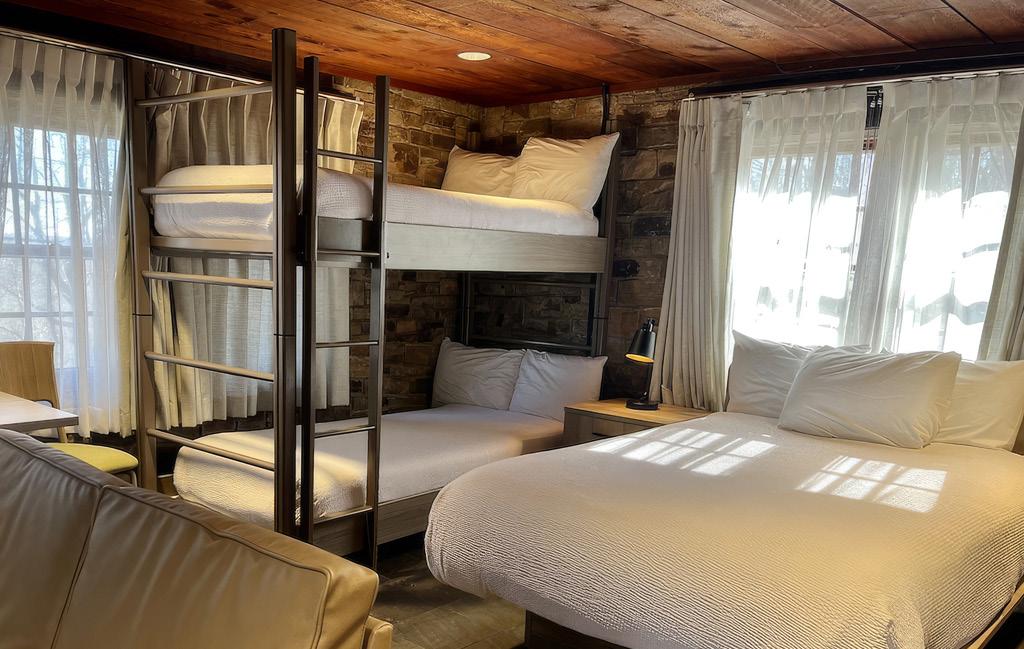
All of the 14 historic cabins at Monte Sano State Park in Huntsville have been modernized with updated kitchens and bathrooms, new furniture and fixtures, and refreshed interiors. Photo by Josh Bean/Alabama State Parks.
MACH-SPEED MANUFACTURING
Titomic and UAH collaborate on cold-spray technology that can repair parts without heat or welding
By DEBORAH STOREY
Making 3-D metal parts isn’t as novel as it used to be, but the process of fixing them continues to evolve with help from north Alabama university researchers.
Titomic Ltd. has awarded a grant to researchers at the University of Alabama in Huntsville to develop an improved cold-spray gun for repairing damaged hardware parts by spraying high-speed metallic particles.
The company’s customers use the device to repair damaged surfaces without welding or blowtorches.
Dr. Sarma Rani and Dr. Judith Schneider, of the UAH Department of Mechanical and Aerospace Engineering, are developing a computational model and spray-gun design under the one-year grant.
Initially, Titomic was just looking to improve the design of their existing commercial cold-spray gun system.
“A cold-spray gun is cheaper and much safer to operate when compared to welding,” Rani explains. “As our discussions with Titomic evolved and matured, they were interested in not just improved designs but also fabrication of actual spray guns based on the new designs.”
The university is primarily working on advancing the science of cold spray rather than fabricating actual hardware, Schneider says.
“UAH is conducting fundamental research into the physics governing supersonic particle deposition,” says Schneider, director of the college’s material sciences program. “Our work focuses on first-principles modeling of gas dynamics, particle acceleration and material adhesion behavior.”
Cold-spray guns play a key role in repairing engineering hardware, especially in aerospace and defense products. The process uses finely powdered, solid-state materials like metals, alloys and some ceramics, or intermetallics, to create coat-
ings and build structures by driving the particles to high speeds. Titomic works with materials like titanium, tantalum, copper and ultra-expensive rhenium to make propellant tanks, pressure vessels, thrust chambers, nozzles and warheads.
“Cold spray” means without external heat or combustion, an obvious advantage. A supersonic flow speeds the particles through a nozzle. When particles hit a damaged surface, they form a protective layer.
“At its core, the system consists of a converging-diverging nozzle for accelerating gas flow to high supersonic speeds” and reaching numbers greater than Mach 5, says Rani. “Titomic is fundamentally interested in improving the design of their system to achieve optimal surface deposition of the particles,” Rani says.
Converging-diverging nozzles are used in technology like rocket engines. The narrow throat converts thermal and potential energy into kinetic energy.
The grant-funded work “develops
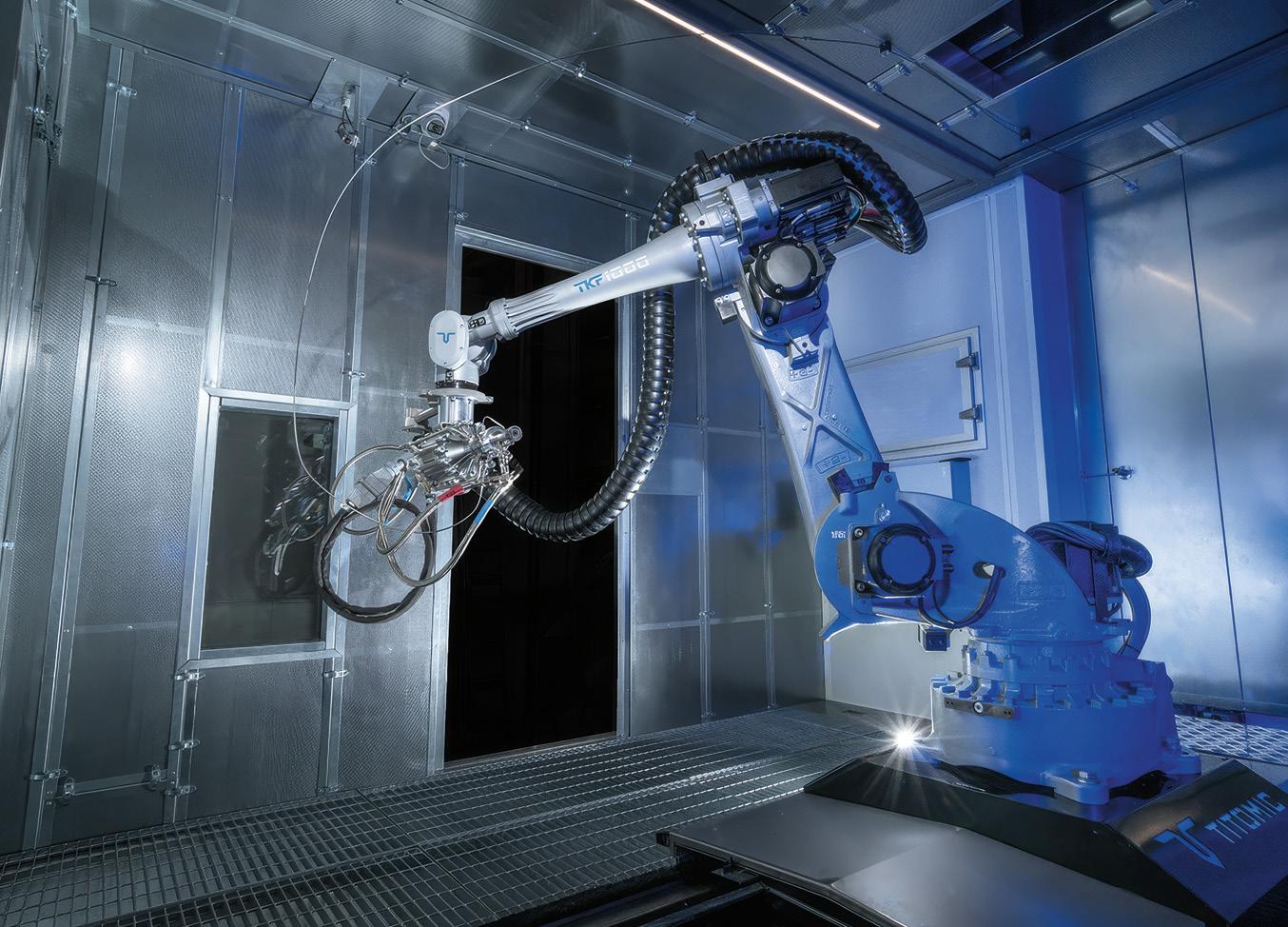
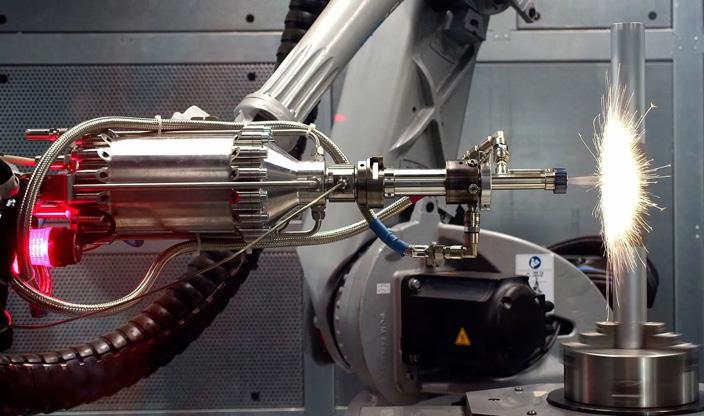
The TKF1000 at the heart of Titomic’s additive manufacturing system. Photo courtesy of Titomic.
process predictability and manufacturing consistency across future Titomic technologies,” Schneider says.
Dr. Patti Dare is president of Titomic USA in Huntsville.
“What we do is we take fine metal powders, and we can do coatings, repairs or actually build parts,” Dare explains.
predictive models describing how thermodynamics, flow expansion, particle properties and geometric scaling influence deposition efficiency,” Schneider says. “This research is system-agnostic and not derived from any specific cold spray hardware configuration.”
The modeling framework can be scaled for multiple deployment sizes, from handheld to large manufacturing platforms, she says.
“The objective is to predict performance requirements for different operating environments using general physical relationships rather than hardware-specific tuning,” Schneider adds.
The research aims to establish validated predictive models for stability and repeatability in supersonic particle deposition. Experimental testing will validate predictions and define models.
“The expected outcome is improved
With a staff of approximately 80, Titomic is based in Australia and has locations in the Netherlands and United Kingdom.
Titomic opened a manufacturing facility in Huntsville in 2025 to serve as the global headquarters for its commercial and defense work. The company’s kinetic fusion cold-spray additive technology is used in the oil, gas, defense and aerospace industries.
The Alabama location produces components like titanium pressure vessels, domes, launcher coatings and space-grade shielding.
The demand for these parts is growing. Defense organizations and armed forces around the world are looking for new approaches to overcome slow manufacturing cycles, fragile supply chains and increasing demand for metal components, company leaders say.
Titomic has one partnership with Vel-
ta, a Ukrainian titanium producer.
Leading up to the initial grant award, Titomic CEO Jim Simpson explained the goal to UAH researchers in the spring of 2025, Rani recalls.
“I responded to that request with a white paper, a two-page document explaining the physics of the problem and what are some potential solution approaches,” says Rani.
“We got a contract for three and a half months during summer 2025 with some very specific and rather ambitious goals.”
The work showed enough early promise that Simpson “was positively inclined to extend the contract come fall 2025,” Rani says.
“The scope of the project was to optimize the existing cold-spray system,” says Rani. That can mean achieving higher gas velocities and supersonic speeds for the gas, and as a result higher particle velocities.
Rani joined the UAH faculty in 2011 after working six years at CFD Research in Huntsville. His degrees are in engineering but his research is in applied mathematics. In the work for Titomic, the professor spent many hours thinking about suggestions for better spraying tech-
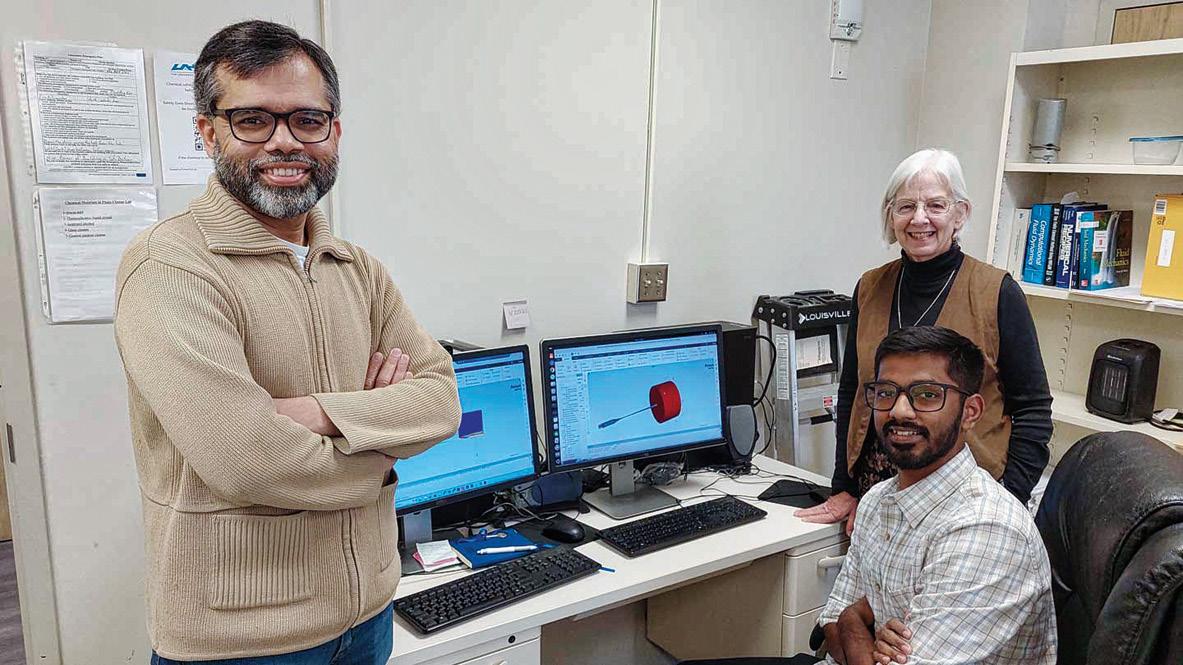
The UAH team assisting Titomic includes (clockwise from left) Professors Sarma Rani and Judith Schneider, from the Department of Mechanical and Aerospace Engineering (MAE), and Aditya Iyer, a graduate student of aerospace engineering. Photo courtesy of UAH.
niques and designs.
“I began discussing solution approaches with some very informed people because I had multiple solution approaches and I needed to zero in very quickly on the most efficient way of solving the problem,” he says.
First, the researchers have to fully understand the physics of the current cold-spray gun process before offering ideas to make deposits essentially “thicker and faster,” Rani explains.
“We are trying to understand exactly the physics of the gas flow, the physics of the particle transport by the gas flow, the deposition velocities, things of that nature,” says Rani.
The partnership is a way for students to learn, too. Working with Rani, UAH graduate student Aditya Iyer is performing simulations and providing data to Scheider and her own students. Schneider will be designing hardware for an improved
“Right now, we have nine of our units in Ukraine that are on the battlefield and the front lines. They get a part that’s damaged and they can quickly spray it in metal so they can use it again to get back to wherever they need to go.”
— Dr. Patti Dare, Titomic USA
Photo by Dennis Keim.
spray gun.
The UAH research team already has delivered suggested nozzle improvements. Titomic will do experiments on the final proposals. The grant partnership ends Aug. 31. The amount of the grant award is undisclosed.
Just as additive manufacturing is
evolving, materials used can change, too.
Dare explains that a submarine dome on display in their Huntsville area manufacturing facility was made with just fine powders.
“We’re going to more refractory metals, tantalum and rhenium,” says Dare, “those rare kinds of metals that we have to optimize for – stuff that’s never been done in cold spray.”
Coatings and repairs from a portable spray device can have lifesaving applications for a warfighter in the field. Ultimately, the equipment to repair bullet holes, for example, may be carried in
something as small as a backpack.
“Right now, we have nine of our units in Ukraine that are on the battlefield and the front lines,” says Dare. “They get a part that’s damaged and they can quickly spray it in metal so they can use it again to get back to wherever they need to go.”
Better cold-spray repair will be useful on oil rigs, too.
“Because we’re not heating up the material and melting it, we don’t have to have the hot permits and they don’t have to shut down the oil rig,” Dare says. “We have equipment out on oil rigs actually doing corrosion repair” in Australia.
That method could expand to America soon, she suggested. If so, rigs near Alabama’s Gulf coast someday could be using better spray guns designed by Alabama professors and students.
Deborah Storey and Dennis Keim are Huntsville-based freelance contributors to Business Alabama.
A titanium spray gun in action.
Photo courtesy of Titomic.
FULL-CIRCLE LEADERSHIP
Two new presidents chart the future of their community colleges
By JOSHUA GIVENS
On any given morning, Dr. Donitha Griffin can walk the campus of Wallace Community College Selma, homemade no-sugar caramel frappe in hand, and point to the places where her own journey began. The memories and nostalgia run deeper and thicker than the fertile soil on which the region itself is located; the soil on which her own feet now find themselves every day.
She once sat in those same classrooms as a first-generation college student from Selma, arriving on a music scholarship after faculty visited her high school and invited her to audition. Wallace, she recalls fondly, was “foundational in things that I needed and didn’t even know I needed.”
After earning her associate degree, she transferred to the University of Alabama and completed her bachelor’s degree in social work — graduating ahead of some of her peers because of the credits she carried with her.
Today, she walks those same grounds as president. Sacred grounds. Hallowed grounds.
“I am literally a living testimony,” Griffin says. “The buildings may be different, it may have expanded, but the feel of home and the feel of community is still the same. I’ve sat in these same seats. I know the concerns of the community. And I can say to students, ‘You can do the same.’”
Dr. Donitha Griffin (center) has come full circle at Wallace Community College Selma, where her own higher education journey began.
Nearly 200 miles northeast, Dr. Alan Smith is shaping a similar message at Gadsden State Community College — though in a very different regional context.
Smith’s connection to the college also is personal. As a young student, he enrolled when, as he puts it, “I didn’t have the confidence I needed.”
Gadsden State provided an affordable option at a time when finances were tight and offered night classes that allowed him to continue his education.
Years later, after careers in K–12 education, construction and light manufacturing — including growing a cabinet shop into a small production business — Smith returned as an adjunct instructor. In 2019, he became dean of workforce development, leading major expansion, including spearheading progress on an advanced manufacturing workforce training center that dramatically reshaped one of the college’s campuses.
“Being in business and industry gave me a different perspective into what our partners need from us as a community college,” he says. “I understood their needs and their frustrations and their wins and losses. That allows me to see things from their side. Having that allowed me to become a better workforce dean.”
Now in his first full year as permanent president, Smith describes himself as “mission driven and purpose driven.” At its core, he says, the college’s mission is simple: “to help people.”
That mission translates into clear
‘‘
Being in business and industry gave me a different perspective into what our partners need from us as a community college. I understood their needs and their frustrations and their wins and losses. That allows me to see things from their side. Having that allowed me to become a better workforce dean.”
— DR. ALAN SMITH, GADSDEN
career pathways — whether for students pursuing transfer degrees, health sciences, career technical programs or short-term workforce credentials. Smith approaches that work much like the trades he once practiced. Workforce development, in his view, is less guesswork and more like craftsmanship — aligning materials, timelines and talent so that the structure holds. Precision matters. So does listening to the people who will ultimately use what you build.
“We are Gadsden State, a college for the community,” Smith says. “We have something here for everyone — and it’s something at which everyone can be successful.”
Responsiveness to employers is central to that vision. Smith meets regularly with industry leaders, hosts advisory meetings and brings business partners onto campus to ensure programs evolve with market demand.
“I personally visit and interact with hundreds of industry leaders,” he says. “We’re constantly engaging in dialogue to see how we can better serve them.”
For Smith, workforce development is not just about filling positions. “When our college succeeds,” he says, “the communities we serve thrive and grow.”
While Smith emphasizes scale and regional industry alignment, Griffin’s leadership at Wallace is deeply rooted in place.
Serving much of Alabama’s Black Belt — a region long defined in public data
STATE COMMUNITY COLLEGE
by lower educational attainment and a myriad of economic, social and cultural challenges — Griffin speaks openly, unabashedly and proudly about changing the historical patterns.
“We reject the narrative that defines us by the numbers,” she says. “Results matter.”
Her strategy starts early — long before students ever complete a college application.
Wallace is building what Griffin describes as a comprehensive workforce development pipeline that begins with career awareness as early as third grade, reinforced again in sixth and eighth grades. The goal is to help students connect education to tangible career opportunities well before high school graduation.
“Doctors’ kids become doctors. Lawyers’ kids become lawyers,” she says. “But what if you’ve never seen any of that? We have to introduce students to those pathways early.”
In high school, Wallace is expanding partnerships to offer career-focused coursework and short-term credential opportunities — including for students who may not yet meet traditional dual enrollment requirements. Those early successes, Griffin says, build confidence and momentum.
From there, students can move into multiple pathways: short-term, noncredit programs leading to industry-recognized credentials; for-credit career and tech-
nical programs aligned with workforce demand; or transfer programs for those seeking advanced degrees.
But Griffin’s background in social work shapes her leadership as much as any workforce initiative.
“I know none of us made it by ourselves,” she says. “We all had help. We all had support. It was the people who saw us and knew that we needed help to be able to move forward.”
Under her leadership, Wallace has expanded support systems designed to remove barriers that often derail firstgeneration and low-income students.
‘‘I am literally a living testimony. The buildings may be different, it may have expanded, but the feel of home and the feel of community is still the same. I’ve sat in these same seats. I know the concerns of the community. And I can say to students, ‘You can do the same.’”
— DR. DONITHA GRIFFIN, WALLACE COMMUNITY COLLEGE SELMA
Different campuses. Different regional dynamics. Shared conviction: when education and employment are intentionally aligned, the impact extends far beyond the classroom — and into the future of Alabama’s communities.
Every student is assigned a coach who monitors progress and intervenes early. The college partners with outside providers to offer 24/7 mental health resources and operates a campus food bank. Griffin also is exploring expanded clothing resources to help students prepare for job interviews.
In some cases, access means bringing the college to the student. Wallace is working with area high schools to offer coursework in local career tech centers, reducing travel distances that can otherwise discourage enrollment.
“We can’t just talk about access and opportunity,” Griffin says. “We have to provide it — and then look at the results.”
Both presidents stress collaboration with business and industry, economic development authorities and chambers of commerce. For Smith, that collaboration ensures programs evolve with employer demand. For Griffin, it is part of serving as a catalyst for transformation across eight counties.
Their leadership styles may differ in tone, but they converge in purpose.
Community colleges, they argue, are no longer simply stepping stones. They are regional engines — institutions capable of strengthening families, stabilizing communities and driving economic growth.
Griffin hopes that years from now, former students will say Wallace “opened
the door” to a better quality of life — not just for them, but for the generations that follow.
Smith envisions a college fully integrated into its region’s economic strategy, with thriving enrollment and deep community engagement.
Different campuses. Different regional dynamics. Shared conviction: when education and employment are intentionally aligned, the impact extends far beyond the classroom — and into the future of Alabama’s communities.
Joshua Givens is a Mobile-based freelance contributor to Business Alabama.
Alabama Public Two-Year Colleges
Ranked by student enrollment for Fall 2025.
Source: Alabama Commission on Higher Education and Alabama Community College System
1 Jefferson State Community College 2601 Carson Rd. Birmingham, AL 35215
2 Calhoun Community College P.O. Box 2216 Decatur, AL 35609
205-853-1200 jeffersonstate.edu
256-306-2500 calhoun.edu
3 Coastal Alabama Community College 1900 Hwy. 31 S. Bay Minette, AL 36507 800-381-3722 coastalalabama.edu
4 Wallace State Community CollegeHanceville 801 Main St. NW Hanceville, AL 35077
5 Gadsden State Community College 1001 George Wallace Dr. Gadsden, AL 35903
256-352-8000 wallacestate.edu
256-549-8222 gadsdenstate.edu
6 Southern Union State Community College
750 Roberts St. Wadley, AL 36276
256-395-2211 suscc.edu
7 Northwest Shoals Community College 800 George Wallace Blvd. Muscle Shoals, AL 35661 256-331-5200 nwscc.edu
8 Shelton State Community College 9500 Old Greensboro Rd. Tuscaloosa, AL 35405
9 Bevill State Community College 1411 Indiana Ave. Jasper, AL 35501
205-391-2211 sheltonstate.edu
800-648-3271 bscc.edu
10 Bishop State Community College
351 N. Broad St. Mobile, AL 36603-5898
251-405-7000 bishop.edu
11 Wallace Community College - Dothan
1141 Wallace Dr. Dothan, AL 36303 334-983-3521 wallace.edu
compiled by ERICA JOINER WEST
Keith Brown 10,195 Nursing, respiratory therapy, surgical technology, welding, radiologic technology
Dr. Jimmy Hodges 10,012 Systems engineering technology, 3D modeling and animation, respiratory therapy, biotechnology, aerospace
Dr. Aaron Milner 8,736 Pipefitting, respiratory therapy, aviation - powerplant & airframe, culinary arts, 3D animation
Dr. Vicki Karolewics 6,986 Radiation therapy, early childhood educator (apprenticeship), occupational therapy assistant, cybersecurity, precision machining
Alan Smith 5,507 Consortium of Machining Education Training (CoMeT), Alabama FAME (Federation for Advanced Manufacturing Education), surgical technology, nursing apprentiecship program, HVAC
Dr. Jeff Goodwin 5,025 HVAC, industrial systems, health sciences programs, salon & spa with barbering
Dr. Jonathan Koh 4,785 Quality engineering technology, medical laboratory technology, data science/ analytics, health information technology, computer science
Dr. Joel Hagood 4,575 General education, nursing, liberal arts, welding, truck driving
Olivier Charles 4,445 Physical therapy assistant, machine tool technology, aviation manufacturing, computer-aided drafting and design, process and maintenance technology
Dr. Kathy Murphy 4,311 Academic transfer, associate degree nursing, welding technology, business technologies, cosmetology
12 Lawson State Community College 3060 Wilson Rd. SW Birmingham, AL 35221 205-925-2515 lawsonstate.edu
13 Northeast Alabama Community College 138 Alabama Hwy. 35 W. Rainsville, AL 35986 256-638-4418 nacc.edu
14 Snead State Community College 220 N. Walnut St. Boaz, AL 35957 256-593-5120 snead.edu
Dr. Cynthia Anthony 3,531 Diagnostic medical sonography, radiologic technology, robotics, logistics and supply chain management, automotive specialty training for Mercedes, Toyota, Ford and GM
Dr. David Campbell 3,527 Nursing, business administration, salon & spa management - cosmetology, medical assisting, industrial systems technologywelding
Dr. Joe Whitmore 3,359 Aviation, machine tool technology, industrial systems technology, HVACrefrigeration, welding technology
15 Enterprise State Community College 600 Plaza Dr. Enterprise, AL 36330 334-347-2623 escc.edu Daniel Long 2,860 Nursing, mechatronics, aviation maintenance technician, welding, digital multimedia
16 Central Alabama Community College 1675 Cherokee Rd. Alexander City, AL 35011 256-234-6346 cacc.edu Jeff Lynn 2,333 Associate in Science - general studies transfer pathway, nursing, welding, general business, computer information systems
17 Trenholm State Community College 1225 Air Base Blvd. Montgomery, AL 36108 334-420-4200 trenholmstate.edu
18 Lurleen B. Wallace Community College 1000 Dannelly Blvd. Andalusia, AL 36420 334-222-6591 lbwcc.edu
19 G.C. Wallace Community College - Selma 3000 Earl Goodwin Pkwy. Selma, AL 36702 334-876-9227 wccs.edu
20 Chattahoochee Valley Community College 2602 College Dr. Phenix City, AL 36869 334-291-4900 cv.edu
Dr. Kemba Chambers 2,305 Engineering technologies, LPN Immediate Impact Program - Baptist Health, respiratory therapy, line worker training, computer information systems
Dr. Brock Kelley 2,199 Forestry & wildlife sciences (only two-year degree in state), physical therapy assistant, building construction, salon & spa management, automotive technology
Dr. Donitha Griffin 2,150 Associate in Science, welding, licensed practical nursing, associate degree nursing, business administration
Annette Funderburk (interim) 1,861 Health sciences, business, welding, HVAC, computer science 21 Drake State Community and Technical College 3421 Meridian St. N. Huntsville, AL 35811 256-539-8161 drakestate.edu
Dr. Patricia Sims 1,401 Salon & spa management, general studies, welding, computer information systems technology, nursing
22 Ingram State Technical College 5375 Ingram Rd. Deatsville, AL 36022 334-285-5177 istc.edu
23 Reid State Community College P.O. Box 588 Evergreen, AL 36401
rstc.edu
24 Marion Military Institute 1101 Washington St. Marion, AL 36756 800-664-1842 marionmilitary.edu
Dr. David Walters (interim) 1,092 Welding, HVAC, electrical, carpentry, barbering
Dr. Coretta Boykin 668 Associate degree (AA/AS), diesel technology, child care education & development, computer information systems, truck driving (CDL)
Col. David Mollahan 313 Civilian leadership education, Army ROTC early commissioning, service academy program, FAA-certified flight training, first responder career prep
SERVING THEIR COMMUNITIES
Hands-on training is a valuable key to success for certain Alabama industries
By JJIM HANNAFORD
Preparing tomorrow’s foresters is just one of many hands-on training programs offered by
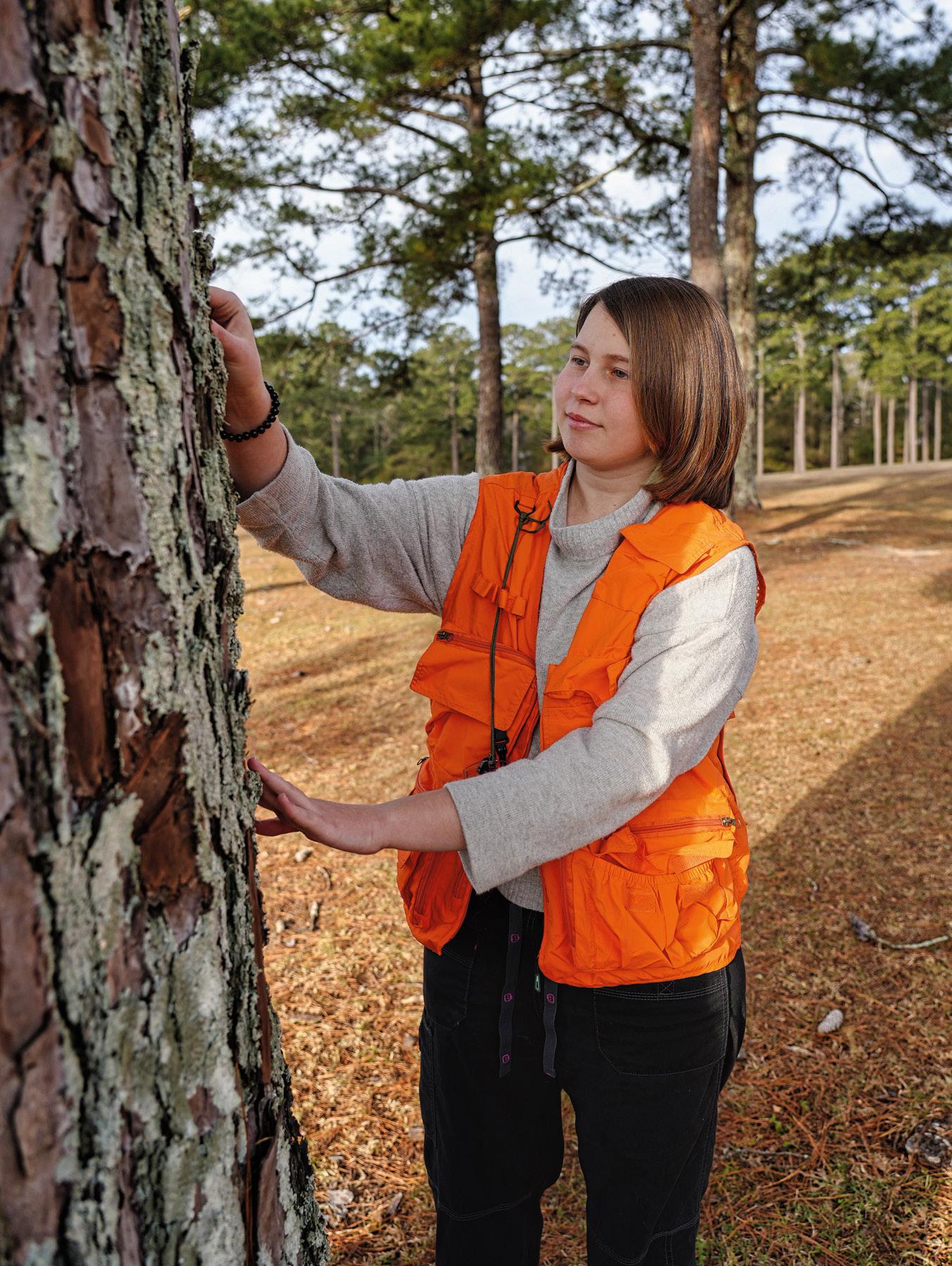
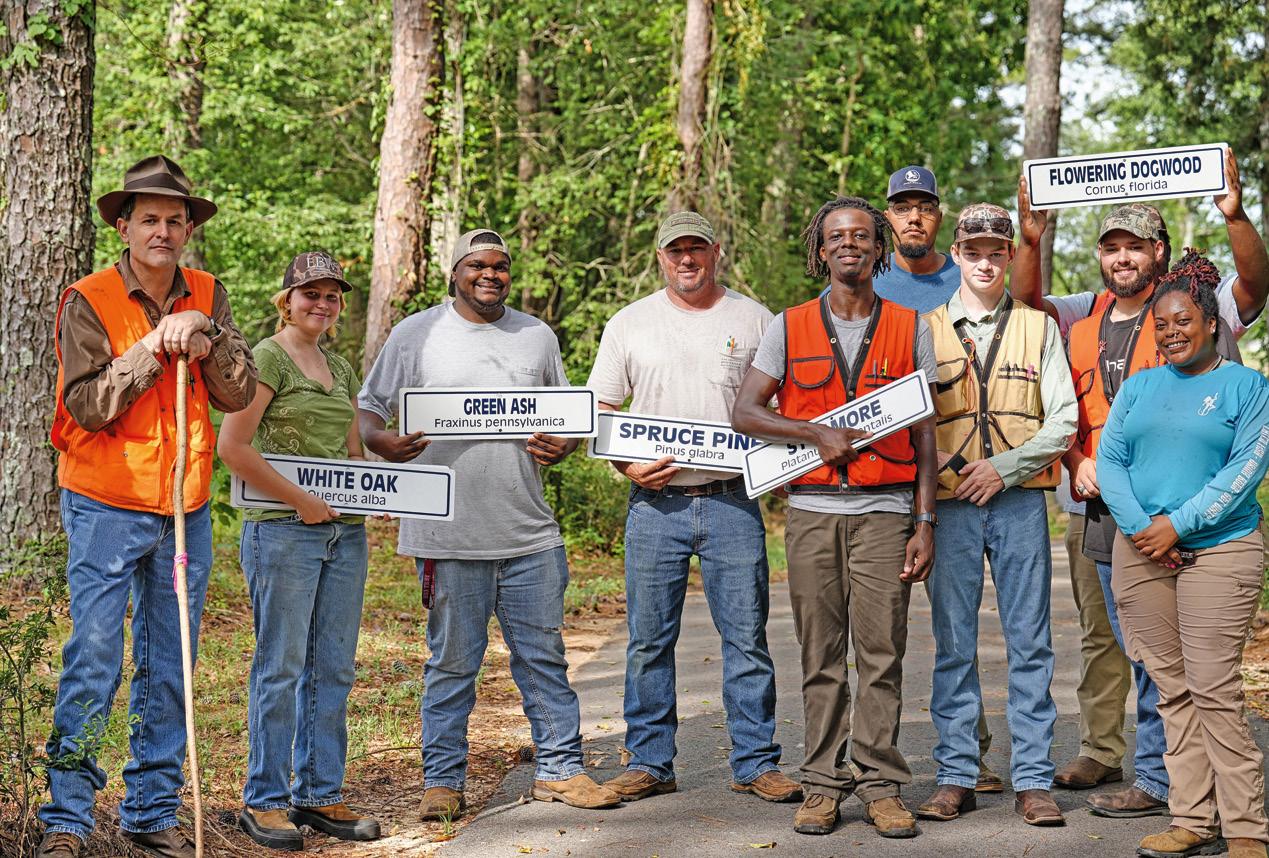
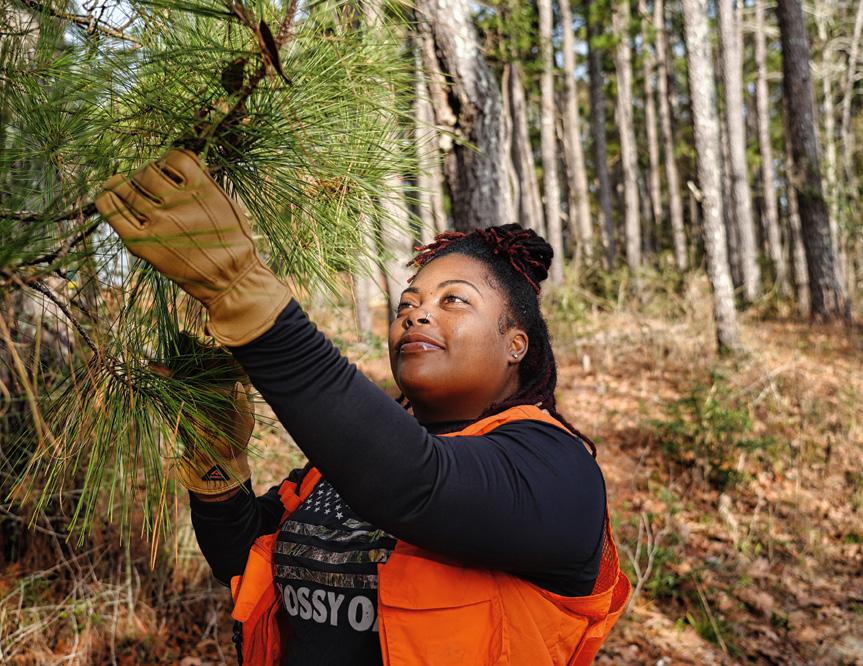
Alabama’s community colleges. Photo courtesy of Lurleen B. Wallace Community College.
Community colleges, by definition, serve the communities where they are located.
One of the effective ways they do it in Alabama is through programs that offer lots of handson training to prepare students for specific jobs in their areas that need workers.
To get their feet in the door, so to speak, basic skills and practical knowledge will give them a leg up on other applicants. Judging from their extremely high placement rates, some of the workforce training programs are doing quite a commendable job of preparing students for important industries across the state. We’ll take a close look at three programs — forestry, marine technology and the culinary arts — in which students develop real-world experience rather than relying solely on books, lectures and online resources.
Students learn to manage
FORESTRY AND WILDLIFE SCIENCES
Lurleen B. Wallace Community College in Andalusia offers the system’s only forestry program, and there’s a certain kind of person that’s drawn to it. Their instructor, Russell Stringer, could easily be describing himself when he relates their traits. “It’s people who could not stand to work in a cubicle or an office building 40 hours a week, day in and day out,” he says. “They would claw the walls down if
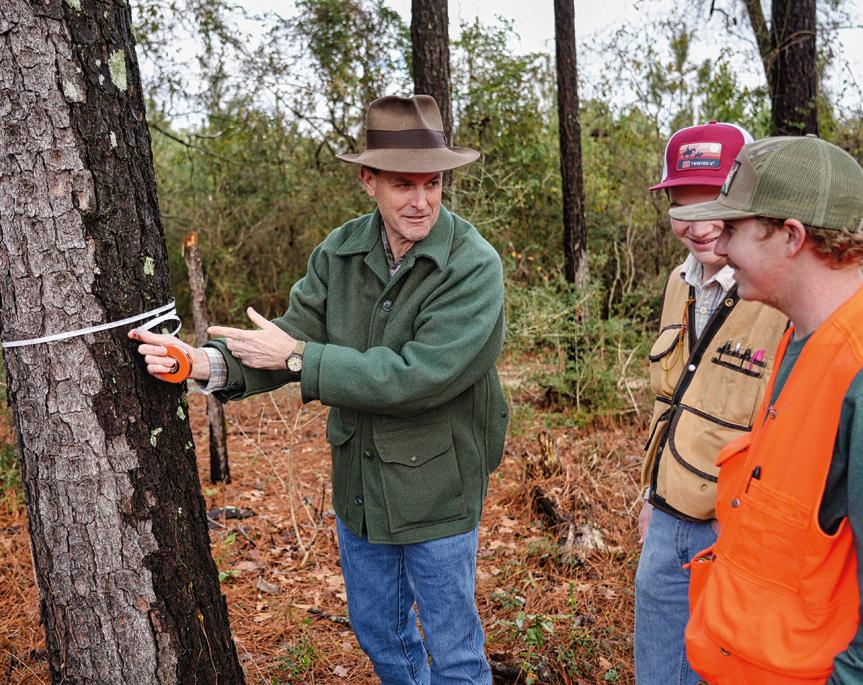
Russell Stringer, left, shows students how to assess trees. Photo courtesy of Lurleen B. Wallace Community College.
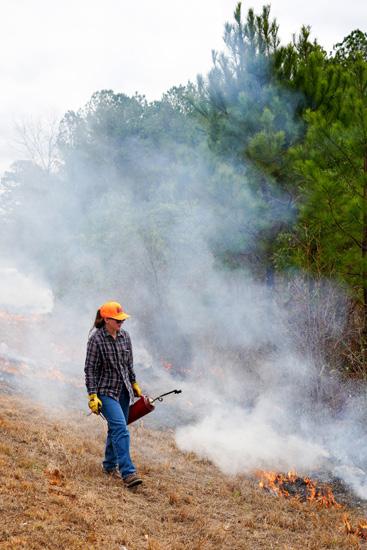
a controlled burn. Photo courtesy of Lurleen B. Wallace Community College.
you tried to shut them inside all day.”
Having grown up in the same forestrich area, he’s been around trees all of his life and was intrigued by them enough to make them a career. He came to teaching less than three years ago after 30 years in the industry, including many years as the urban forester for the city of Montgomery. “It’s time for the younger folks to take over,” he says, “and I thought it might be a good idea to teach them what I know.”
The students who are following in his footsteps are on a path toward associate’s degrees to become forest technicians. Over five semesters they learn about growing and managing trees and identifying, measuring and evaluating timber. They also work with heavy equipment and earn certification in prescribed burns,
Identifying trees is a primary skill for would-be foresters. Photos courtesy of Lurleen B. Wallace Community College.
logging and firefighting. Many focus on a growing sector of the industry, which is managing properties to attract certain wildlife to make hunting more productive.
The students spend about half their time in the classrooms before heading outside, where they feel more comfortable. “There is a national forest within 15 minutes of us, there’s a state park within
10 minutes of us, there’s the Solon Dixon Forestry Education Center within 20 minutes of us,” Stringer says, “and there are innumerable landowners who support the program and allow access for educational purposes.”
Advisory committees at LBW Community College help to guide the curricula for technical programs such as this one, and Stringer notes that some of the
“There is a national forest within 15 minutes of us, there’s a state park within 10 minutes of us, there’s the Solon Dixon Forestry Education Center within 20 minutes of us, and there are innumerable landowners who support the program and allow access for educational purposes.”
—
Russell Stringer, Lurleen B. Wallace Community College in Andalusia
industry professionals involved are also the ones who are regularly looking for employees.
He has a dependable measure of the program’s success: “I go by how many times my phone rings and it’s somebody in the forestry industry asking, ‘Do you have anybody good that’s about to graduate?’ I’ve got more people calling me than I’ve got students,” Stringer says. “A student that’s willing to work can go to work in just a couple of weeks somewhere doing something forestry related. And really and truly,” he adds, “a student that’s in the forestry program is not afraid to work. Most of them, by the time they graduate, have interned somewhere, and the companies they’ve interned with are just waiting for them to graduate so they can put them on full time.”
MARINE TECHNOLOGY
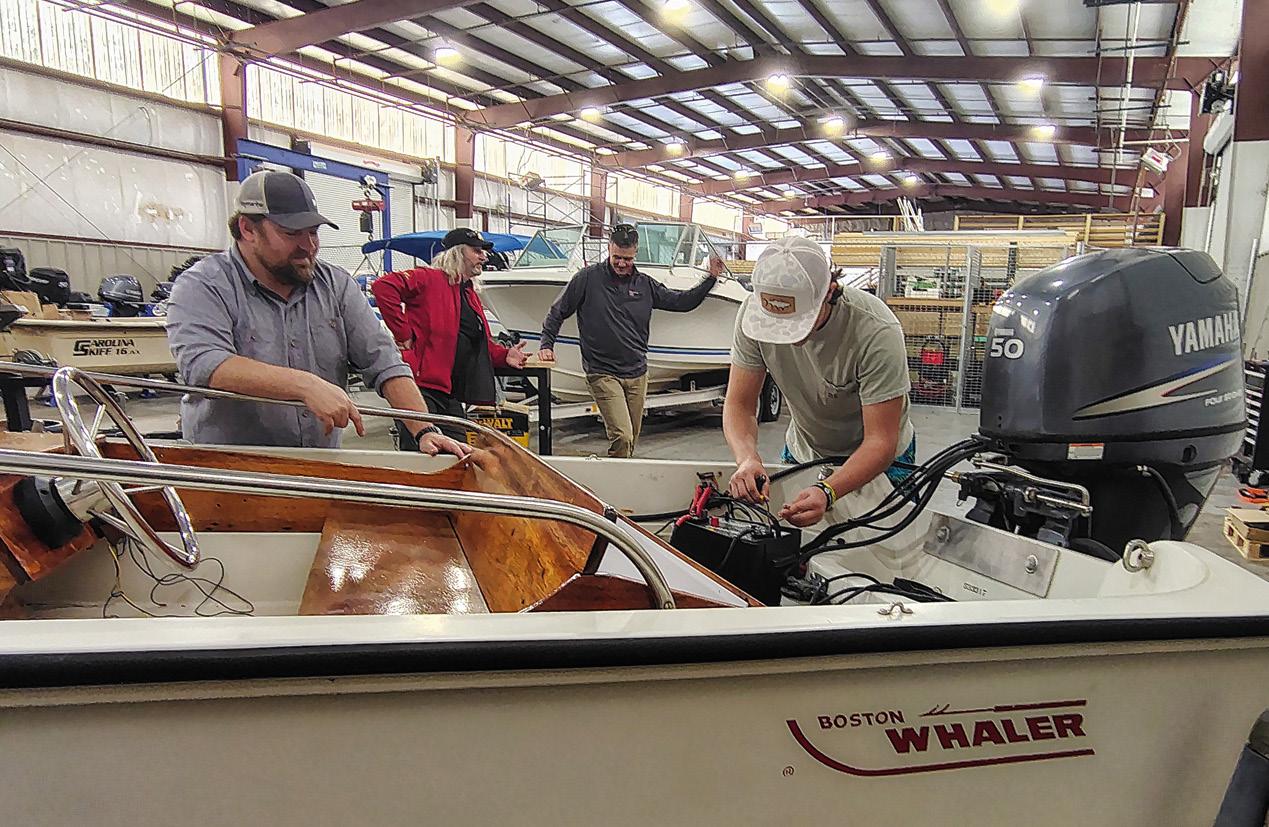
The closer you get to the Gulf waters, the more boats you’ll see, and someone has to keep them running. Many of these marine technicians are learning the ropes at Coastal Alabama Community College, which operates out of 12 locations in Alabama’s southernmost counties.
Rather than a two-year degree, students earn a short-term certificate by attending classes that are held in a warehouse-style building in Foley that’s owned by Baldwin County Public Schools. Inside is a small classroom and a nicely equipped shop that contains the numerous boats, motors and accessories they use for training.
Most of the students, but not all, are juniors and seniors at area high schools who attend under the Alabama Community College System’s dual enrollment provisions. “We knew when we started the program in 2002 that there were probably a limited number of adults who were looking to do this in a change-ofcareer scenario,” says Josh Duplantis, Coastal Alabama’s dean of workforce and economic development. “We kind of grow our own with this program, and they earn college credits for these courses while they’re still in high school.”
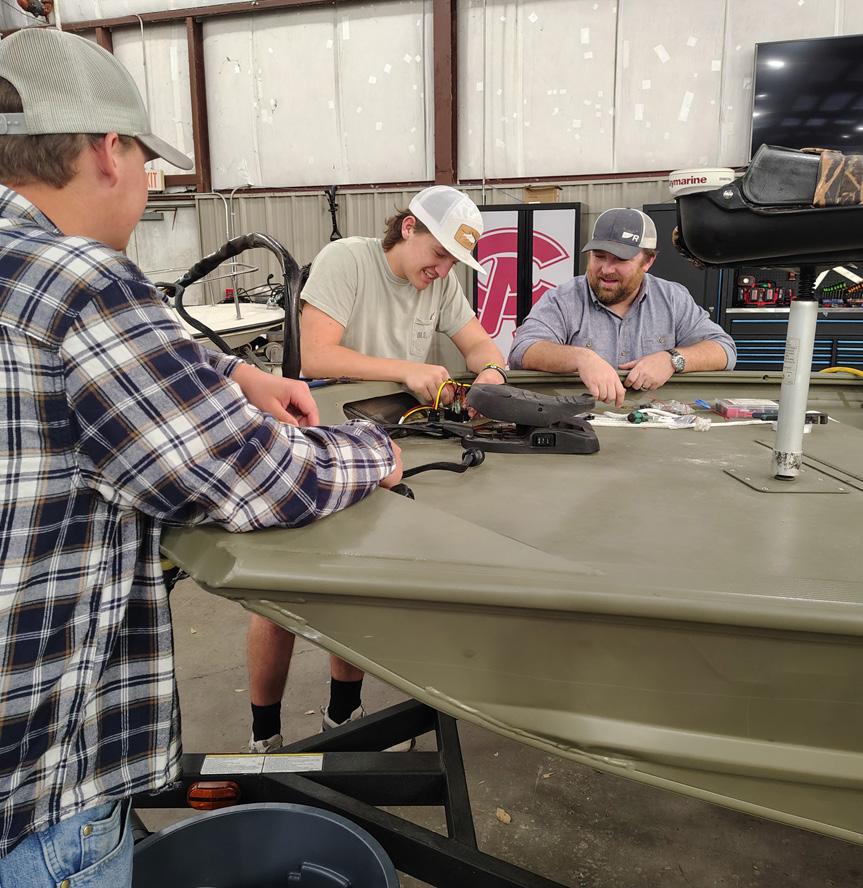
Close to the Gulf, there’s a high demand for workers who can maintain boats — Coastal Alabama helps train those workers.
Photo by Jim Hannaford.
Most of the students in Coastal Alabama’s marine technician program are earning college credits while still in high school.
Photo by Jim Hannaford.
Grants helped to launch the course, and an early assist from Yamaha Motor Company put it in motion. “They really stepped up,” says Duplantis. “They advised us on what equipment we needed to get this thing started and they offered us a curriculum. We have the same arrangement with Mercury, but that came later.”
Instructor William Montgomery is a Birmingham native with a lifetime love of boats. He sees the program as a stepping stone into the same field that lured him from his earlier background in marine biology about 15 years ago.
“It’s an entry-level program, so we’re teaching the basic hands-on theories on how to do maintenance on an outboard — changing oil, water pumps and spark plugs, how to do simple diagnostics,” he says. They also learn to install electronic devices such as GPS units, fishfinders and chartplotters. He stresses to his students the importance of “thinking in a problemsolving way, so that when something isn’t working, they can learn how to troubleshoot it.”
“For us, it’s a boutique program. We want to meet the market demand by training just enough of them that all of the jobs are filled.”
— Josh Duplantis, Coastal Alabama Community College
The basic concepts are the same regardless of the size of a vessel, but field trips to supportive businesses such as Grander Marine in Orange Beach, Saunders Yacht Works in Gulf Shores and Sportsman’s Marine in Fairhope help students get a better feel for what they’ll encounter beyond their basic training.
“Boats have gotten exponentially bigger and more complicated,” says Montgomery. “It’s going to be very common for them to be at a marina and have a 35foot boat with triple engines and cabins and air conditioning and generators and a huge amount of systems and electronics, lithium battery banks and converters, radars and all sorts of other stuff that goes along with having big engines.”
While the need for marine techs is rising along with the population in coastal areas, Duplantis says they don’t want to expand the program too much. “For us, it’s a boutique program,” he says. “We want to meet the market demand by training just enough of them that all of the jobs are filled.”
CULINARY ARTS
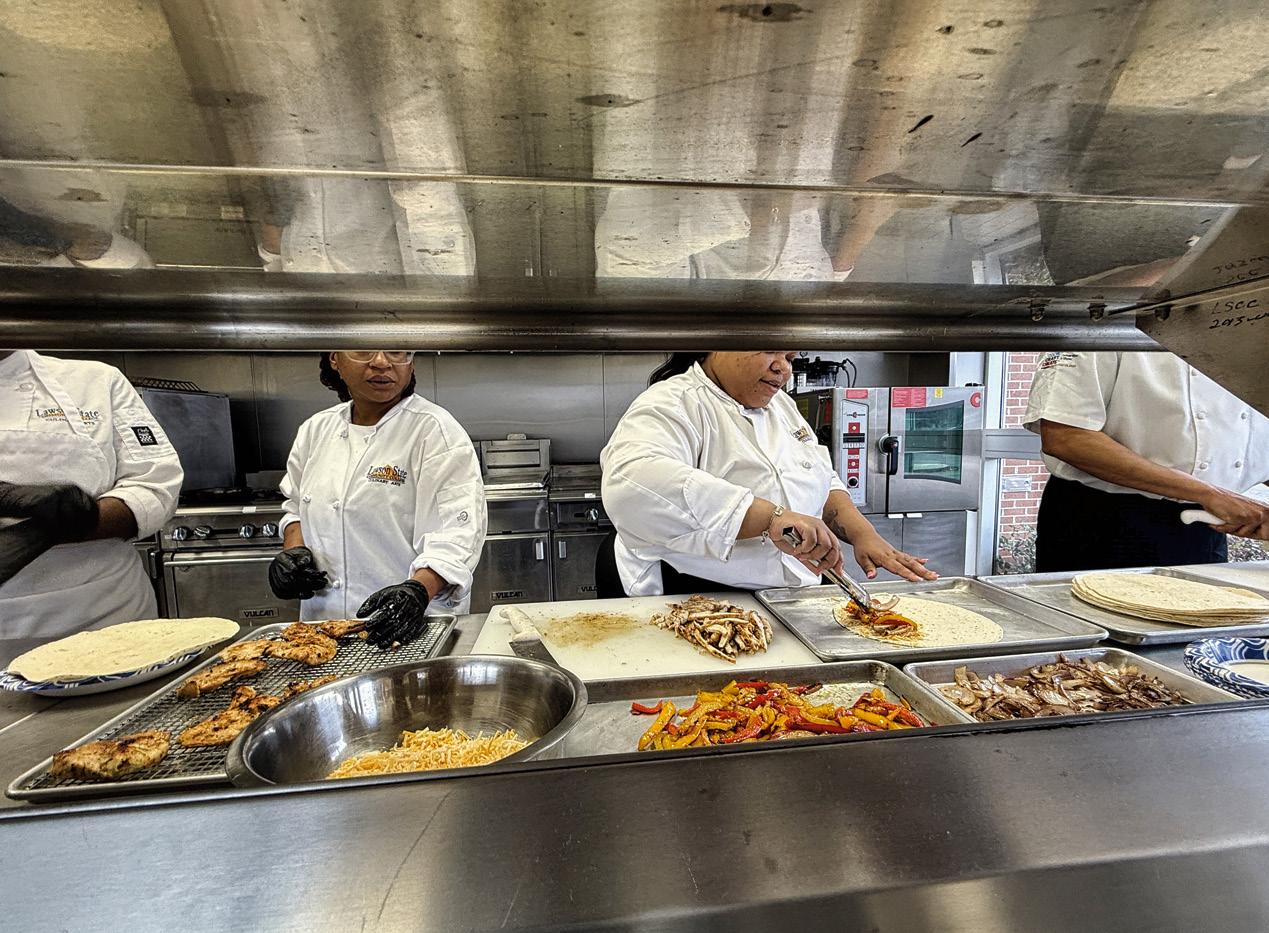
Many cooks would envy the amount of kitchen space and all the tools that culinary students have to work with at Lawson State Community College’s main campus in Birmingham.
The culinary arts program has three separate commercial kitchens, one of them set up specifically for baking and another for prep work. The third one has the equipment they need to cook the big quantities of food they regularly provide for luncheons and other special events in the college’s formal dining room. That’s where guests can taste for themselves what the students have learned under the skilled direction of instructors Adam Elliott and Darvin McDaniel.
The students, Elliott says, are a mix of young people with a new interest in cooking and others who are more
Students in the culinary program at Lawson State cook large quantities of food for luncheons and other special events. Photo by Tiffany Garner.
Lawson State has three commercial kitchens where students get hands-on experience. Photo by Tiffany Garner.
seasoned cooks looking to expand their knowledge, perhaps wanting to move into management. They can learn a lot from Elliott, who is a graduate of the Culinary Institute of America in Hyde Park, New York; worked for years in a variety of restaurants; and operated a successful catering business in Atlanta.
“They leave here and go to hotels, restaurants and catering,” says Elliott. “Some of our students are at Ross Bridge Marriott, which is one of the hotels owned by the Retirement Systems of Alabama, and some are at places such as Applebee’s, Logan’s Roadhouse, O. Henry’s Coffee, Saltgrass Steak House and Waffle House.”
Others have ventured into business for themselves with food trucks, which require additional abilities. “It’s similar to a restaurant but it’s on a smaller scale, and it’s kind of like running your own business,” says Elliott. “So, we do have courses in food purchasing and cost control along with the other culinary courses, and those are very beneficial.”
Along with pro tips on slicing and
“It feels great training our students for the industry. They are excited to start a career in food service and contribute their own skills and techniques for the job.”
— Adam Elliott, Lawson State Community College
dicing and expert guidance on topics ranging from menu planning to butchery, students also learn valuable lessons that arguably rank higher than flavors and presentation. “One thing that’s especially important in terms of classroom instruction is food safety and sanitation,” Elliott says. “That includes proper food storage and temperature controls and cross-contamination prevention, which is teaching them about harmful bacteria and contaminants. Then they get their ServSafe certification, which is good for five years.”
While the forestry program and the marine tech program both report 100% job placement rates, Elliott is proud to say that between 75 and 85% of his graduates have been employed at the time of graduation since he started with the program in 2014. “It feels great training our students for the industry,” he says. “They are excited to start a career in food service and contribute their own skills and techniques for the job.”
Jim
Hannaford is a Foley-based freelance contributor to Business Alabama.
A SERVICE WITH A SMILE
Degrees in dental hygiene are available at Wallace State and Calhoun community colleges
By CARY ESTES
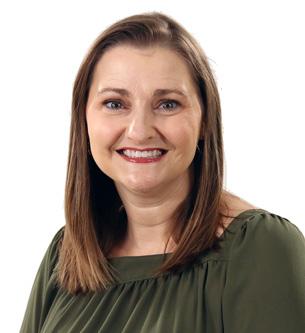
Asmile, Sunnie McWhorter likes to say, is the universal hello. That is one of the reasons why she was excited to become director of the dental hygiene program at Calhoun Community College, which began offering the degree in 2021.
“You often judge friendliness and approachability based on the smile,” McWhorter says. “For some people, their smile can be a source of selfconfidence. So with dental hygiene, you can improve someone’s health and also help them feel better about themselves. That’s a big win.”
Within the Alabama Community College System, Calhoun recently joined Wallace State in offering a dental hygiene degree. Wallace State’s program has been in operation since 1994 and has grown from an initial class of 12 students to a current annual enrollment of 30 (Calhoun has a 14-student annual class).
“As with all health fields right now, dental hygienists are in very high demand,” Wallace State Program Director Susan Brewer says. “So, once you graduate and have your license, pretty much anyone who wants a job as a dental hygienist can have one.”
It is a job that increasingly is recognized as being a vital component to overall good health care. Proper dental care — especially involving the gums — has been linked to a reduction in the risk of such health issues as cardiovascular disease, diabetes and respiratory infections.
“A lot of people think that all a dental hygienist does is clean teeth and fuss because
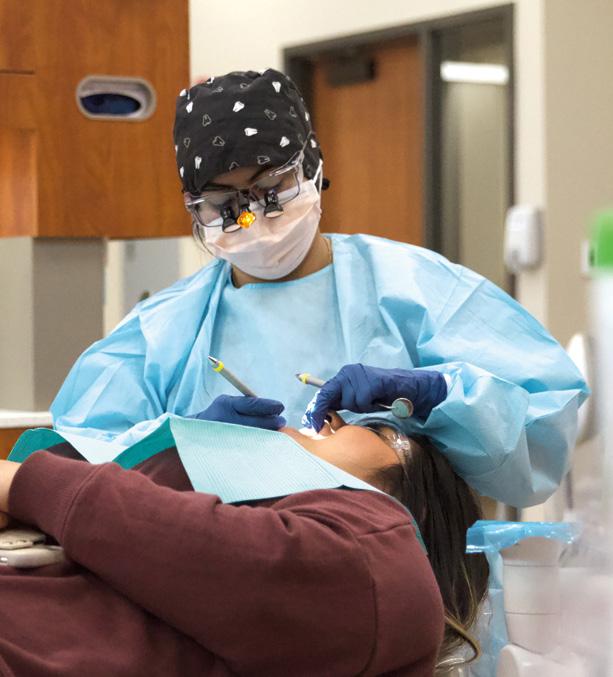
Dental hygiene student Claire Barley performs a cleaning at Calhoun Community College’s clinic.
courtesy of Calhoun Community College.
“For some people, their smile can be a source of self-confidence. So with dental hygiene, you can improve someone’s health and also help them feel better about themselves. That’s a big win.”
— Sunnie McWhorter, Calhoun Community College
Photo
you didn’t floss,” Brewer says. “But the reality is that it’s much more about being preventive. We do a full assessment of the patient, including the mouth, gums and lymph nodes around the head and neck.
“So, it’s not just about getting the teeth clean. It’s also about making the patient as healthy as possible. We might see conditions in the mouth that — while we might not know exactly what it is — we can tell you what it could be and that you should get it looked at. We can help patients identify potential problems and get them on the road to a healthier lifestyle.”
As a result, dental hygiene classes involve much more than just learning how to scrape and polish teeth. In fact, before students ever look inside an open mouth, they must crack open books and study such subjects as microbiology, chemistry and anatomy. “There is a very strong science base to dental hygiene,” McWhorter says.
That type of study takes up most of the first semester for students, with some simulated dental work being done on mannequins. But by the second semester, students are venturing into the clinic, where they receive hands-on experience in every sense of the phrase.
Both Wallace State and Calhoun provide dental clinics that are open to the general public. Brewer says students start slowly, usually by working on each other as well as on the new first-semester students.
“We’ll also bring in family members and friends of the students, because they’re usually more understanding and forgiving,” Brewer says. “Then they start seeing patients from the public. We are a community college, and our clinic is open to the community.”
“As with all health fields right now, dental hygienists are in very high demand. So, once you graduate and have your license, pretty much anyone who wants a job as a dental hygienist can have one.”
— Susan Brewer, Wallace State
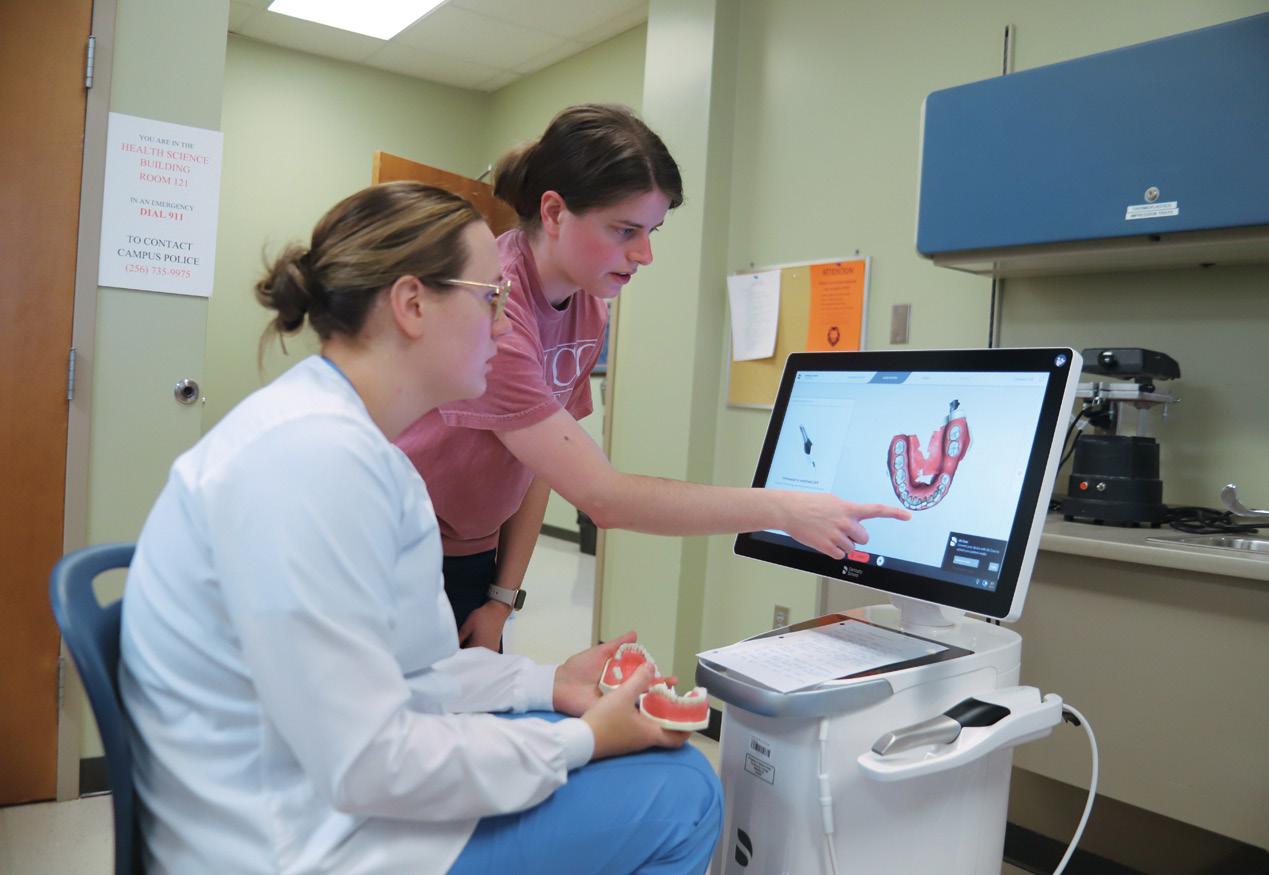
Alesha Anderson (standing) is providing instruction to Kendall Summerville, a first year hygiene student at Wallace State Community College, on the use of intraoral digital scanning, the latest technology in dental impressions. Photo courtesy of Wallace State Community College.
The students work under the supervision of a faculty member who is also a licensed dentist. The clinics are capable of offering most basic dental services, including fluoride treatment, sealants, teeth whitening, radiographs and X-rays.
“It runs just like a dental office, but with a whole lot of hygienists,” McWhorter says. “Anything that a hygienist can do, we can offer here to our patients. So, the students receive extensive hands-on learning, which is one of the things that translates to their success once they graduate.
“Our students probably get tired of hearing me say it, but there is no substitution for experience. Because every mouth is a little bit different. So until you experience enough of them, you’re still just a novice. You can read about something all you want. But until you get your hands in there and actually do it, the learning is not complete.”
Brewer agrees. “In the classroom, we teach all the theory behind how you do things and why, which is important,” Brewer says. “But when you’re in the clinic and you’re actually treating patients, that’s when the didactic information comes to life, and you’re able to apply all the things that you’ve learned.”
Students at both colleges are able to work on a wide variety of patient types in the clinics. These include infants as young as 1 year old, elderly patients, special needs patients, and even
Stephanie Catalan performs dental hygiene in the clinic offered by Calhoun Community College.
Photo courtesy of Calhoun Community College.
patients with Stage 4 periodontal (gum) disease.
In addition, Brewer says Wallace State has entered into a partnership with the Alabama Department of Public Health that allows children to get their teeth cleaned for free at the school’s dental clinic.
“That has opened up an amazing opportunity for us to really have an impact on the community,” Brewer says. “We speak to guidance counselors, principals and school nurses to try to make sure that every parent knows this opportunity is here. It’s important for all ages, but if we can help children have healthy teeth, we’re setting them up for having healthier teeth as adults.”
The dental hygiene programs also are helping establish career opportunities for students in a field that consistently needs new workers. According to the U.S. Bureau of Labor Statistics, the field is expected to see an average annual growth rate of 7% through the year 2034.
“We have dental offices contacting us regularly asking about our students,” McWhorter says. “Every one of our graduates who wants to be employed, is employed.”
And what those graduates find is a career involving health care that in most cases is not nearly as demanding as nursing or most other medical professions.
“The nice thing about dental hygiene is the pay is good (average starting salaries of more than $60,000), and you have a really good schedule,” Brewer says. “Most dental offices are open Monday through Thursday. Very few are open nights or weekends. And it’s a meaningful way to work in health care and have an impact on people’s health.”
Plus, as McWhorter points out, “You usually see your patients at least twice a year, so you develop lasting relationships. You watch kids grow up and go to college. You see young adults get married and become parents. You don’t always get to do that in other health care professionals. That’s a beautiful aspect of dentistry.”
And it is yet another reason to smile.
Cary Estes is a Birmingham-based freelance contributor to Business Alabama.
NEW EQUATION FOR EXTENDED WARRANTIES
Birmingham firm rethinks warranty accounting
By DEBORAH STOREY
Car buyers like the certainty that comes with a service contract for their shiny new vehicles. Companies that sell those warranties don’t like the uncertainty of how much that contract might cost them down the road.
An Alabama firm is perfecting a new accounting method that anticipates the real cost of service contracts by using millions of data points and proprietary algorithms.
Kerper and Bowron LLC is an actuarial, accounting and insurance consulting
Their namesake Kerper Bowron Method is, they say, “a breakthrough in service contract and extended warranty accounting that fundamentally changes how the global service contract industry recognizes revenue, manages reserves and unlocks billions in lending capital in the United States.”
The methodology replaces industry standard aggregate earning curves with precise, month-by-month likely cash-flow projections for every individual service contract.
Using point-of-sale data — term, mileage, coverage, deductible, vehicle profile, price and more — the formula spits out auditable, contract-specific accounting that aligns with actual experiences rather than past averages.
As a result, it should reduce the unknowns in the overall service contract industry — on vehicles in particular — by using a cash-flow projection instead of outdated earning curves.
Actuaries John Kerper and Lee Bowron hope the KB Method becomes the new standard for service contract estimation and accounting.
“The new process automates alignment with modern accounting standards, reducing audit risks and administrative burdens while providing real-time insights into claims and cancellations,” Bowron explains.
Adopting the KB Method “could transform the vehicle service contract market by injecting transparency, efficiency and capital,” he says, and “save billions in inefficiencies.”
The creators say it is the first method to mathematically satisfy the European Union’s “ideal equation” for finite, predictable risks — previously considered unsolvable for insurance exposure.
The patent-pending process can apply to virtually all service contracts covering repair, maintenance or accidental damage, from vehicles to phones, appliances and home systems.
“For decades, the service contract industry has relied on aggregate methods that couldn’t provide contract-level precision or adapt quickly to changing conditions,” says Bowron. “The Kerper
“
For decades, the service contract industry has relied on aggregate methods that couldn’t provide contract-level precision or adapt quickly to changing conditions. The Kerper Bowron Method changes that fundamentally, giving companies the ability to project losses and recognize revenue with actuarial accuracy for every individual contract.”
—Lee Bowron, Kerper and Bowron LLC
Bowron Method changes that fundamentally, giving companies the ability to project losses and recognize revenue with actuarial accuracy for every individual contract.”
“This method offers financial institutions and service-contract providers a rare opportunity to turn rigorous accounting into a competitive advantage through superior, data-driven decision-making,”
adds Kerper. “The contract-level visibility enables everything from better pricing and product development to more efficient capital deployment and regulatory compliance.”
The approach is basically a more modern, scientific take on anticipating risk and projecting costs of service contracts.
“What we’re doing is we’re kind of getting out of the ’80s and we’re moving to more of an algorithm,” Bowron explains. “Now what we have is the ability to take a service contract and say, ‘OK, now we’re going to look at it and we’re going to actually figure out where the exposure is during that 60 months because you need to account for that.’”
Some vehicle contracts, for example, cover 84 months or 84,000 miles.
“Some people will drive more than 84,000 miles,” he says. “So, at the end of the service contract, you have a little bit less exposure. So, you’re able to map out those exposures.”
When you bake in factors like the type of vehicle and deductibles, the new resulting data will be statistically more significant, they say.
“What we’re doing is with the algorithm, we’re able to project out what we think the costs are going to be for that service contract every month,” Bowron says. “Now that we have those costs for every month, we’ll recognize the revenue on that pattern.”
Bowron says he’s not aware of anything similar in the marketplace. Existing products needed better accounting and legal frameworks, he says.
“There’s definitely some people that obviously have some good statistical backgrounds out there, but I think it’s more the kind of marrying up of that to the accounting standards, which really hasn’t happened.”
The expectation is that a client would “send us their information about their contracts and their claims,” Bowron says, “and then what we would return is this sort of expected cash flow for each service contract.”
Ultimately, the process could be sold through a license but right now “we’re trying to get this methodology accepted by the industry,” he says.
“
Seeking peer input, the firm submitted a paper titled “The Kerper-Bowron Method: A Foundational Change for Service Contract Claim Estimation and Accounting” to the journal Risks. It was accepted for publication in February.
Its assertion is that the new process “revolutionizes service contract loss estimation and accounting by introducing a precise, contract-level approach to forecasting expected losses and cancellations.”
As a result, it should offer better accuracy, automation and compliance, which redefines actuarial and financial practices for vehicle and other service contracts.
Lag time now between when contracts are sold and when claims roll in creates some uncertainty. With the KB Method, accurate financial statements will be available earlier for pricing and evaluation — perhaps leading to changes in future contract details.
“They might get rid of certain offerings or hopefully they would feel more comfortable about maybe even expanding offerings or new types of coverage,” Bowron says.
KB Method pilot programs are under way in the U.S. and Canada. The partners are researching its applicability to capital markets such as derivatives or options on defined service-contract exposure.
Service contracts, or extended warranties, are a huge part of the global insurance and consumer protection market.
This method offers financial institutions and service-contract providers a rare opportunity to turn rigorous accounting into a competitive advantage through superior, data-driven decisionmaking. The contract-level visibility enables everything from better pricing and product development to more efficient capital deployment and regulatory compliance.”
— John Kerper, Kerper and Bowron LLC
Sales are projected to reach $250 billion by 2031. The value of the U.S. vehicle service contract industry alone is currently estimated at more than $30 billion annually.
Plans typically cover repair, maintenance and damage to appliances, vehicles, electronics and more. Estimating losses and revenue is crucial for insurers, admin-
istrators and retailers, experts say.
Traditional actuarial practice relies on data and methods “which date back over 40 years,” Kerper and Bowron say in their article. That leads to “inefficiencies in reserving, compliance and capital management.”
As a practical matter, service contract administrators, reinsurers and financial
The heart of the KB Method is the stream of expected cash flows for the entire length of the contract. These expected cash flows drive the entire balance sheet by providing contract level estimates of all relevant liabilities.”
institutions would have less manual reserving work, better real-time equity visibility and compliance.
“The heart of the KB Method is the stream of expected cash flows for the entire length of the contract,” they say in Risks. “These expected cash flows drive the entire balance sheet by providing contract level estimates of all relevant liabilities.”
Accurate contract-level projections reveal true equity value, enabling dealers to secure loans against unearned premiums, too — potentially unlocking up to 30% more capital for inventory or expansions, Bowron says. As a result, accurate cancellation forecasts allow for better budgeting by auto dealerships.
Using Microsoft Access, Kerper and Bowron began developing the process in 2003 by focusing on two main components: exposure development and loss projection.
The firm has done similar consulting work for years. Bowron says, “I think this thing would be potentially a lot bigger than any of those and would probably be, by far, the largest part of the practice.”
Kerper Bowron began in 2003 upstairs from a dental office. Both founders had experience in the insurance industry. The company employs 11 and also has offices in Chicago and Berthoud, Colorado. The affiliated company, Irish Trinity LLC, formed in 2024 to develop their intellectual property.
Deborah Storey is a Huntsville-based freelance contributor to Business Alabama.
OUTSOURCING PAYROLL
Financial functions move to CPA firms amid talent crunch, other changes
By NANCY RANDALL
Accounting software changes, a need for accounting expertise and labor shortages are driving some businesses to outsource their payroll functions to accounting firms.
Outsourced payroll functions fall under the general label of “client advisory services” or similarly named operations — CAS, for short. This has been a growth area nationwide and for some Alabama accounting firms.
CAS has been the fastest growing area in accounting over the last three to five years, says Brandi Morgan, partner at Wilkins Miller and leader of the firm’s outsourced accounting services group. “It’s just growing tremendously,” she says, pointing to CPA.com’s abundant CAS resources for accounting firms.
Firms with CAS functions reported a median growth rate of 17% in the 2024 CAS benchmark survey report, according to CPA.com. Data was gleaned from more than 200 survey respons-
es and continued an upward spiral from previous surveys.
“Here at Wilkins Miller, we are seeing that trend ourselves with the number of proposals we are receiving for outsourcing [financial] back office [work],” Morgan explains. “[Companies] are not wanting to hire internally anymore [for this work]. They are wanting an accounting firm to handle that for them.”
In the six or so years that Thornton Jamison has worked in JamisonMoneyFarmer’s client accounting services area, he has seen steady growth in this segment, especially the last two years. The area covers sales tax, bookkeeping and payroll, he notes.
Nonprofits have contributed “a good bit” to the rise in the firm’s payroll business, Jamison says. His six-person team assists clients with roughly 10 to 50 employees.
A big driver for outsourcing payroll, Jamison says, has been Intuit’s push to move its users to the cloud-based version of QuickBooks, a popular accounting software. Intuit develops and
We are seeing that trend ourselves with the number of proposals we are receiving for outsourcing [financial] back office [work]. [Companies] are not wanting to hire internally anymore [for this work]. They are wanting an accounting firm to handle that for them.”
So, it’s not just about an employer’s need. It’s also about the employee’s need. And the more an employer can offer their employees, the more efficient they become.”
— Dawn Elliott, Paywerx
markets the product. Some accounting firms are helping clients with the transition to the online version.
With the QuickBooks desktop subscription, users must manually file and pay all the payroll taxes, Jamison explains, whereas QuickBooks Online automates this process. “That comes with its little share of challenges. But if it’s all set up right on the front end on QuickBooks Online, it’s really nice to have,” Jamison says, noting that his team monitors the client’s progress for needed corrections in the system and also helps with technical glitches. “We’ve seen a lot of people moving from desktop- to cloud-based software.”
Paywerx also has seen growth in its outsourced payroll business, says CEO Dawn Elliott, more than doubling its number of clients the past five years. Paywerx is part of Carr, Riggs & Ingram and has clients in about 45 states, Elliott says. The division was formed in 2019 to meet the expanding payroll needs of CRI’s clients, she explains.
Paywerx’s system provides more than payroll technology, offering features for an employee’s entire life cycle, Elliott says. This includes workforce management solutions including recruitment, onboarding, direct deposit, time and attendance, annual performance reviews and retirement processes, she says.
With Paywerx, employees can have electronic access to some of their information. For instance, an employee is car shopping on the weekend and needs a pay stub as proof of employment for a car loan. With electronic access to Paywerx, the employee can retrieve that pay stub without having to rely on someone in human resources or an office manager, Elliott notes.
“So, it’s not just about an employer’s need. It’s also about the employee’s need. And the more an employer can offer their employees, the more efficient they become,” she says.
Of course, the employer benefits, too, from having a system like Paywerx. “It’s giving the employer the opportunity to run their day-to-day business and not get tied up in payroll and tax filing functions,” Elliott explains.
At Jackson Thornton, payroll makes up a small part of the client advisory and accounting services — CAAS — offered to clients, according to Jeremy Moreland, leader of Jackson Thornton’s outsourced client accounting practice. But generally, the firm is focused on growing CAAS, he notes.
To that end, in 2024, Jackson Thornton acquired the CAAS company that Moreland and his business partner, Michael Shaw, founded.
The accounting function has gone beyond a single focus on compliance, Moreland says. “It’s become essential to decisionmaking, risk management and long-term growth. For many businesses, outsourcing these responsibilities to a CPA firm means getting access to expertise, stability and structure that’s really hard to build internally.”
“
[It’s become] a highly competitive labor market where businesses struggle to recruit and retain qualified accounting staff, especially outside major cities, where most of our clients are located.”
— Jeremy Moreland, Jackson Thornton
In tandem with this shift is the shortage of accounting professionals in the United States, Moreland explains. Fewer CPAs are joining the profession while longtime CPAs are eyeing retirement. “[It’s become] a highly competitive labor market where businesses struggle to recruit and retain qualified accounting staff, especially outside major cities, where most of our clients are located,” he adds.
The CPA shortage particularly impacts small- and mid-sized companies, notes Moreland, due to salary constraints and staying abreast of shifting regulations and new technology.
Increasingly, Jackson Thornton’s clients note that outsourcing accounting and payroll is more of a strategic decision vs. a cost-cutting move, Moreland says, although cost is still a factor. “Businesses want
insight, reliability and advisory support — not just someone to process transactions.”
Aimee Risser, CEO of Big Brothers Big Sisters of the Central Gulf Coast, points to the efficiencies that can be gained by outsourcing accounting and payroll. The nonprofit has been a client of firm Wilkins Miller for a decade, Risser says.
Before that, the organization was not using an accounting firm as it was part of another organization and handling a lot of its own accounting needs, she explains. “We realized we needed professional help and support and reached out to them. We have partnered with them ever since.”
Wilkins Miller assists with the nonprofit’s payroll function but also handles all of its bookkeeping services, Risser says, and both areas have become more streamlined due to the accounting firm’s suggestions.
“
I
just love [Wilkins Miller] because they’re constantly thinking of ways that can positively affect my efficiency and the efficiency of our organization. At least once a year, they [say], ‘We’ve heard about this software that might help save time here or there.’ And I’m always game for trying anything because I feel like they are great about doing their research.”
—
Aimee Risser, Big Brothers Big Sisters of the Central Gulf Coast
“I just love them because they’re constantly thinking of ways that can positively affect my efficiency and the efficiency of our organization. At least once a year, they [say], ‘We’ve heard about this software that might help save time here or there.’ And I’m always game for trying anything because I feel like they are great about doing their research,” Risser explains.
After moving to a web-based payroll platform suggested by Wilkins Miller, Big Brothers Big Sisters transitioned from scanning and printing traditional timesheets to submitting them electronically to the accounting firm. This resulted in time savings for the nonprofit, Risser notes, providing her with more fundraising time, critical for the donor-supported organization.
The nonprofit’s services are free to the families and communities that it serves. “Thankfully, we’re able to do that because of other people’s generosity,” Risser explains. “We always want to be able to show that we’re good stewards [of that money]. Being on
“
As
board with Wilkins Miller definitely helps us do that.”
Botts Innovative Research, an open-source software development firm for sensors and geospatial data in Huntsville, relies on Amber Stout for her expertise in government contracting, according to Mary Lynn Botts. Stout leads the CAS area for accounting firm Warren Averett.
Botts’ husband started the small government contractor. As one, the firm must adhere to many regulations and requirements, Botts explains. To get DCAA approval – Defense Contract Audit Agency – from the federal government, the firm had to undergo an “intense audit” of its accounting setup. The company was required to move from cash to accrual accounting, Botts says.
“We shopped a couple of different firms in town looking for someone who had that expertise. Not only did they [Stout and Warren Averett] have that expertise, they provided us with some information that no one had bothered to mention to us,” Botts notes.
For one, Stout told Botts about the Innovate Alabama grant and helped with the process. Upon receiving the grant, Botts’ firm was able to hire new people.
“As a small business, [you are] wearing many hats. You don’t have time to find out about these things,” Botts says. “[Warren Averett] looked beyond just providing traditional accounting for us. They were looking to invest with us in building and growing our business.”
Nancy
Randall is a Tuscaloosa-based freelance contributor to Business Alabama
a small business, [you are] wearing many hats. You don’t
have time
to find out about these things. [Warren Averett] looked beyond just providing traditional accounting for us. They were looking to invest with us in building and growing our business.”
— Mary Lynn Botts, Botts Innovative Research
Alabama's Largest Accounting Firms
Alabama’s Incubators
Listed in alphabetical order. Sources: Business Alabama surveys and incubator websites.
B.C.
Decatur-Morgan County Entrepreneurial Center Inc. John Joseph IV, Executive Director
The Edge - Alabama Entrepreneurship Institute
Theresa Welbourne, Executive Director
Enterprise Business Incubator
Jesse Quillen, Executive Director
The Generator Student Incubator at the University of North Alabama Mitch Hamm, Director of Innovation and Entrepreneurship
Nestled in the heart of South Alabama, Butler, Covington, Crenshaw and Lowndes counties form a region defined by industrial strength, community ambition and a steady eye to the future. Located close to major automotive manufacturers, key transportation routes and the Gulf, these four counties occupy a strategic position that continues to attract investment and opportunity.
Butler County anchors the region with a robust manufacturing base rooted in the automotive supply chain. The automotive sector is the county’s largest employer, with approximately 1,100 workers. Automotive suppliers that locate in Butler County tend to find a ready workforce to help them meet their goals: For example, Hwashin America, a Tier 1 supplier, already has expanded since arriving in Butler County and recently announced another $60 million expansion scheduled to be ready in 2027. Beyond auto suppliers, the county’s landscape is shaped by timber. Timberland accounts for more than 80% of Butler County’s land use,
Crenshaw County State Public Fishing Lake, located five miles south of Luverne, is currently undergoing renovations at the dam and a restocking initiative, according to Alabama Department of Conservation and Natural Resources.
and wood products are another major industry for the county.
Covington County stands out as a regional hub for both commerce and aviation. After a national location search, Conecuh Sausage recently opened a new, $58 million production facility in Andalusia, creating 110 jobs. The county’s aerospace sector adds another dimension to and providing training for future aircraft mechanics through a partnership with Enterprise State Community College.
Crenshaw County continues to work on the largest project in its history, a
$15 million sports complex in Luverne, featuring eight baseball and softball fields, two soccer fields, a track and field area, an RV park and a lake, and is becoming a regional destination.
Lowndes County is leveraging its geography and infrastructure for longterm growth. Gov. Kay Ivey recently announced that Fort Deposit Industrial Park was awarded a Site Evaluation and Economic Development Strategy (SEEDS) grant through the Alabama Department of Commerce and the State Industrial Development Authority. The
County
Covington County
John Crum Sessions, president of his family-owned Conecuh Sausage. The company recently opened a production facility in Andalusia. Photo by Stew Milne.
MEDIAN HOUSEHOLD INCOME
Madison County: $78,058
Baldwin County: $71,039
Jefferson County: $63,595
Coffee County: $62,1990
Montgomery County: $56,707
Mobile County: $55,352
Covington County: $48,772
Crenshaw County: $48,557
Butler County: $44,429
Pike County: $42,616
Conecuh County: $39,888
Wilcox County: $38,208
Dallas County: $37,180
Lowndes County: $33,125 Source: U.S.
grant funds, along with local matching funds, totaling $127,500, will be used for a wide-ranging site assessment of the park to help recruit new business and industry.
Binding all four counties together is a
Jefferson County: 664,744
Madison County: 423,355
Mobile County: 412,339
Baldwin County: 261,608
Montgomery County: 225,894
Coffee County: 56,358
Covington County: 37,748
Dallas County: 36,858
Pike County: 32,987
Butler County: 18,630
Crenshaw County: 13,114
Conecuh County: 11,109
Wilcox County: 9,865
Lowndes County: 9,485
shared investment in workforce and education. Lurleen B. Wallace Community College serves the region with campuses in Andalusia, Greenville, Luverne and Opp, offering career technical programs in nursing, automotive, construction,
forestry and more, along with expanded apprenticeship programs in welding, mechatronics and diesel technology.
Nancy Mann Jackson is a Madison-based freelance contributor to Business Alabama.
Economic Engines
BUTLER COUNTY
AUTOMOTIVE
The automotive sector is the largest industry in Butler County, employing more than 1,100 workers. The county is home to three companies in the supply chain for Hyundai and Kia — Hwashin America Corp., Hyundai Steel and DL/A. Hwashin America, a Tier 1 automotive chassis and body parts supplier, has undergone several expansions at its Greenville facility in recent years, adding jobs and investing millions of dollars. In November 2025, the company announced it will create 40 more jobs. The expansion is slated to open in October 2027.
WOOD PRODUCTS
Timberland covers much of Butler County, and the forests provide the backbone of the county’s second-largest industry. Wood products companies such as Boise Cascade and Structural Wood Systems employ more than 500 people in Butler County.
MACHINED METAL PARTS
Connector Manufacturing Co., a Hubbell brand, is a manufacturer of machined metal parts in Greenville. After a recent expansion, Hubbell Corp. is now the third largest employer in Butler County, with approximately 280 employees, says David Hutchison, executive director
BUSINESS BRIEFS
NOVEMBER 2025: ITAC Alabama, an automotive supplier located in Crenshaw County, announced a 37,000-square-foot expansion at its current facility. When complete, expansion is expected to create 100 new jobs.
NOVEMBER 2025: Hwashin America Corp., an automotive supplier currently operating in Butler County, announced that it will begin construction of a new manufacturing facility in the area that will involve an investment of more than $60 million. The
expansion is expected to create 40 new jobs and is slated to open in October 2027.
NOVEMBER 2025: Aquatic Leisure Technologies Group, an Australian manufacturer of fiberglass swimming pools, announced plans to establish its first U.S. production facility in Covington County after a twoyear site search across the United States. The company plans to construct a 56,000-square-foot facility on a 22-acre site in Opp, where it will manufacture its
of the Butler County Commission for Economic Development. Over the past two years, the company has invested more than $25 million in the Greenville community.
TRANSPORTATION & LOGISTICS
Butler County benefits from its location along Interstate 65 and the CSX rail line, making it attractive for industrial and logistics businesses, says Tracy Salter, executive director of the Greenville Area Chamber of Commerce. “Freight and trucking businesses benefit from major transportation routes,” she says.
As an example, in April 2025, Four Star Freightliner opened a new location in Georgiana, marking the company’s eighth dealership. The new facility, strategically located off I-65, provides drivers and fleet owners with a convenient, full-service location for repairs, maintenance and parts. To open the location, Four Star Freightliner invested $200,000 in the community and added 10 new jobs.
COVINGTON COUNTY TEXTILES
In Covington County, the manufacturing industry employs 14% of the workforce (2,136 people), and the largest companies manufacture textiles.
For example, Shaw Industries, a carpet yarn manufacturer and Berkshire Hathaway subsidiary, is the largest manufacturer in the county, employing 1,050 people. The company recently completed a $300 million upgrade and renovation project. Shaw was recently named to Newsweek’s 2026 list of America’s
Aqua Technics Pools line. The project is expected to create 15 to 20 jobs initially.
SEPTEMBER 2025: Longtime Alabama company Conecuh Sausage opened its new $58 million facility in Andalusia, adding 110 new jobs. Just 26 miles away from the company’s original location in Evergreen, the new facility in Covington County features updated technology and a 76-acre campus to process and ship Alabama-made sausages to 49
states and U.S. military bases around the world.
AUGUST 2025: The Busy Ant Travel Center broke ground on an $8 million facility in Georgiana, just off Interstate 65. The facility will include a 12,000-square-foot truck stop featuring several stores including Subway, an electric vehicle charging station and fueling stations. The project is estimated to bring 30 new jobs to the community.
Boise Cascade, in Chapman, makes plywood and wood products. It employs 440 people.
Greatest Workplaces for Culture, Belonging & Community, an honor that celebrates organizations delivering exceptional workplace culture, fostering belonging and building strong communities.
Another major textile employer in the area is American Apparel, which makes military uniforms and employs 200.
MEAT PROCESSING
In September 2025, longtime Alabama company Conecuh Sausage opened its new $58 million facility in Andalusia, adding 110 new jobs and bringing a new industry to Covington County. Just 26 miles away from the company’s original location in Evergreen, the new facility features modern, updated technology and a 76-acre campus to process and ship Alabama-made sausages to 49 states and U.S. military bases around the world.
AVIATION
The South Alabama Regional Airport in Andalusia provides maintenance, repair and overhaul facilities. It’s also home to a branch of the Alabama Aviation College, a program provided in partnership with Enterprise State Community College. The airport has a heliport that offers hot and cold refueling to military and civilian helicopters. A major Australian helicopter firm, McDermott Aviation, and its longtime U.S.-based business partner, Isolair Inc., recently opened operations at the airport and have hired approximately 30 people.
HEALTH CARE
About 20% of the Covington County workforce, or 1,950 people, work in the
health care and social assistance industry, says Jacob Morgan, president and CEO of the Covington County Economic Development Commission. Many of these workers are employed in local hospitals, rehab centers and clinics.
EDUCATION
Lurleen B. Wallace Community College is one of the area’s key employers, with 216 employees. The college also supports 716 additional jobs through operations, construction projects and student spending. According to an independent economic impact study, students and alumni of LBW contribute a total of $60.8 million to the local economy, an amount equal to one out of every 64 jobs.
CRENSHAW COUNTY
AUTOMOTIVE SUPPLIERS
The two largest manufacturers in Crenshaw County, both in Luverne, are ITAC Alabama, which makes automotive frames for Hyundai vehicles, and Dongwon Autopart Technology Alabama, which makes automotive door parts, inner assemblies and more.
In late 2025, ITAC Alabama, formerly known as SMART, announced a 37,000-square-foot expansion at its current facility. When complete, the expansion is expected to create 100 jobs.
DISTRIBUTION/MANUFACTURING
Distribution is another major sector for the county’s economy. Sister Schubert’s Homemade Rolls Inc., which makes and ships goods throughout the country, is the third-largest manufacturing employer.
The fourth is Pepsi Bottling Company of Luverne, which recently opened a new, expanded distribution center, featuring 14 loading docks, 400 products, and increased capacity. The new distribution center, built with a grant from the state, spans 75,000 square feet and will allow the company to employ about 90 work-
TAXES
PROPERTY TAX
AUGUST 2025: The PepsiCola Bottling Company of Luverne opened a new, expanded distribution center, featuring 14 loading docks, 400 products and increased capacity. The new distribution center, built with a grant from the state, spans 75,000 square feet and will allow the company to employ about 90 workers, an increase from the 79 employed at its former historic facility.
AUGUST 2024: Pigeon Creek Manufacturing, also known as Yellowhammer Ammunition Co., opened in Greenville. The facility produces 9-millimeter range and defensive hollowpoint ammunition for commercial and government contracts, with a goal of international distribution. With a $4 million capital investment in Butler County, the company employs 76 people.
FEBRUARY 2025: Sims Bark, a major supplier of mulch to big-box stores, announced the development of a new plant in Florala, in Covington County. The multi-milliondollar project is expected to open in early 2027 and bring 10 jobs initially, eventually growing to about 40 workers.
2.5%
2%
2.5%
4%
2.5%
2.5%
STATE OF ALABAMA: 4%
ers, an increase from the 79 employed at its former historic facility.
HEALTH CARE
Another leading economic engine is health care. Crenshaw Community Hospital employs 130 workers, and Luverne Health & Rehab, a local nursing and rehabilitation facility, employs 164.
LOWNDES COUNTY
AUTOMOTIVE SUPPLIERS
Two automotive suppliers are among
the largest manufacturing employers in Lowndes County. Daehan Solutions Alabama makes interior sound solutions components and employs almost 300 workers. Sejong Alabama LLC, located in Fort Deposit, makes mufflers and exhaust systems. Many of the products are headed for the Hyundai plant in Montgomery.
PLASTICS
The largest manufacturing employer in Lowndes County is Saudi Basic Industries Corp., located in Burkville. Saudi Basic
makes engineered, high-performance plastics used in office equipment, electronics and computers, and employs more than 300 workers.
AGRICULTURE
Agriculture also is a leading sector for the county, with employers like Priester Pecans, Koch Foods and Bates Turkey Farm among the largest employers. In Letohatchee, American Colloid Co. makes bentonite clay, which is used in animal feed supplements.
Largest Industrial Employers
BUTLER COUNTY
Hwashin America Corp.
GREENVILLE Automotive parts • 1,000 employees
Boise Cascade CHAPMAN
Plywood and wood products 440 employees
Hubbell Inc.
GREENVILLE
Machined metal parts • 273 employees
Shoreline Transportation GREENVILLE
Trucking and warehousing • 250 employees
Hyundai Steel GREENVILLE Automotive metal stamping 104 employees
Priester’s Pecans | FORT DEPOSIT Pecans, candies and baked goods 80 employees
American Colloid Co. | LETOHATCHEE Bentonite clay • 36 employees
Higher Education
LURLEEN B. WALLACE COMMUNITY COLLEGE
Lurleen B. Wallace Community College (LBW) continues to play a central role in workforce development and economic growth across south Alabama, providing academic transfer pathways, technical education and industry-driven training that support both students and regional employers.
LBW has campuses in Andalusia, Greenville and Opp, and draws students from Butler, Covington, Crenshaw, Coffee and Geneva counties, as well as neighboring areas of Florida.
Many students attending LBW are the first in their families to pursue education beyond high school, says Marketing Director Maggie Mash. That student profile reinforces the college’s mission of expanding access to opportunity while strengthening the regional workforce pipeline.
The college has experienced continued momentum in recent years, including record-breaking enrollment in fall 2025. A recent economic impact study found that LBW generates $60.8 million annually for the regional economy through institutional operations, workforce training and graduate earnings, underscoring its importance as an economic driver for the communities it serves.
In 2025, the Great Colleges Program recognized LBW as a Great College to Work For, highlighting the institution’s commitment to employee engagement and organizational culture.
Recent campus investments reflect a strong emphasis on workforce readiness and community engagement. The college completed renovations to the Solon & Martha Dixon Administration Building, creating updated spaces for student services. LBW also unveiled its building construction program facility that provides hands-on training environments that mirror real-world job sites. At the MacArthur Campus in Opp, LBW recently celebrated the opening of a renovated industrial electronics facility, expanding opportunities for students in a high-demand field with a 100% job placement rate.
Additional improvements across campus recreation and athletic spaces, along with ongoing gymnasium renovations, continue to enhance the student experience while expanding opportunities for community use, Mash says.
Construction also is underway on a new field to support the women’s flag football program, one of the newest additions to LBW Athletics. The college is the first institution in the Alabama Community College System to introduce women’s beach volleyball, which will begin in the 2026–27 academic year.
Workforce innovation remains a defining focus for LBW. In June 2025, the college opened its new POWER Center in downtown Andalusia, focused on adult education and workforce development programs. The center “strengthens partnerships between education and industry by delivering targeted training aligned with
regional employment needs,” Mash says.
Similarly, LBW’s Skills for Success initiative provides short-term credential opportunities that allow participants to earn workforce certifications in as little as one week.
Apprenticeship opportunities continue to expand in high-demand fields including nursing and mechatronics. LBW’s Career Cruiser, a mobile technology and career exploration initiative, extends these opportunities directly into schools and communities, helping students explore career pathways earlier.
LBW offers 15 career technical and health programs ranging from nursing and EMS to building construction, automotive technology and salon and spa management. The college also is home to Alabama’s only two-year forestry and wildlife sciences program, preparing students for careers that support one of the state’s most significant natural resource industries. Through strategic investments in facilities, workforce programming and partnerships, LBW Community College continues aligning education with economic needs, preparing graduates for in-demand careers while supporting longterm growth throughout south Alabama.
ALABAMA AVIATION
COLLEGE AT ANDALUSIA
The Alabama Aviation College at Andalusia (AAC) is a program of Enterprise State Community College. The AAC is located in the New Business Incubator Building at the Andalusia-Opp Airport in Andalusia. The facility includes about 6,000 square feet of instructional and administrative space, two large classrooms, a welding lab, a composites lab, a large sheet metal and woodworking lab, which has space for housing an aircraft suitable for instruction.
Classes offered at the AAC are part of Enterprise State’s aviation maintenance technician program, also called airframe & powerplant (A&P), and some are available as dual-enrollment classes for local high school students. The program length is six semesters, which usually takes two years to complete. Program classes are offered at the aviation campuses in both Andalusia and Ozark.
Lurleen B. Wallace Community College’s Administration Building on its Andalusia campus.
Movers & Shapers
JED BLACKWELL is executive director of the Southeast Alabama Regional Airport (SARA) and was selected as 2025 Alabama Airport Manager of the Year by the Aviation Council of Alabama. Blackwell joined SARA in 2002 and worked in each department before joining the management team in 2008. Under his leadership, the airport has grown significantly, with annual averages of more than 80,000 aircraft operations and more than 1 million gallons of fuel sold. The airport also has secured more than $36 million in grant funds for airport improvements, attracted three aviation businesses, added hangars, a café and hosted two air shows. Blackwell is a graduate of Faulkner University in Montgomery.
LINDA BODY is a retired social worker from the Lowndes County Department of Human Resources who has built a second career as a community volunteer. After a town hall meeting revealed that litter and town cleanup was one of the top community concerns in Fort Deposit, Body led a group of concerned citizens to pick up litter around the city. Friends describe her as “a one-woman beautification machine,” as she takes daily walks to pick up litter. Body has deep roots in the Fort Deposit community, as her mother and aunt were local civil rights activists, and she says she hears the echo of their voices about improving her community.
JAE’QUES BROWN is the new mayor of Greenville, elected in September 2025. He is the city’s first new mayor in 25 years and its first Black mayor. A graduate of Greenville High School and a lifelong resident of the city, Brown’s goals as mayor, as stated on the city’s website, include open communication, responsible budgeting, transparency and ensuring the
city’s finances remain healthy and strong. Prior to his new post as mayor, Brown served on the city council for five years.
DEBBIE FRANKLIN is the chief executive officer of Mizell Memorial Hospital in Opp. She has more than 45 years of health care experience. She holds a
bachelor’s degree in nursing and a master’s degree in health education from Troy University. She began her career as a new graduate registered nurse at Mizell and has held various positions there including chief quality and risk officer for 12 years. She also served as a risk consultant for an insurance company for nine years before taking on her current CEO role at the hospital.
GREG HENDERSON is president and CEO of Southeast Gas, serving in that role since 2006. He also serves as president and CEO of Southeast Gas’s sister companies, Southeast Energy Authority and Southeast Gas Supply. An Auburn University graduate and a Certified Public Accountant, he serves on the Auburn School of Accountancy Alumni Advisory Board. He has led the American Public Gas Association, the Alabama Natural Gas Association and Easter Seals Alabama and several local organizations. Currently, he serves on the boards of the Covington County Economic Development Commission, American Public Gas Association, Economic Development Partnership of Alabama and CCB Community Bank, and is an active member of C12 Business Forums.
DONNA HOOD is the founder and owner of BDR Equipment Service, a diesel repair and equipment shop in Fort Deposit. A native of Montgomery, Hood graduated from John Patterson
State Technical College, now known as Trenholm State Community College, and has worked as a diesel mechanic for more than 30 years. She launched BDR Equipment Service more than 10 years ago and opened her company’s first storefront in September 2025. She recently purchased the former Chevrolet dealership across the street from her shop and is working to renovate it to be used as a parts supply house. Hood and her staff also travel for on-site diesel equipment repairs for customers throughout Autauga, Butler, Lowndes and Montgomery counties.
BROCK KELLEY is president of Lurleen B. Wallace Community College in Andalusia. Previously, Kelley served as director of workforce development for the Alabama Department of Education, principal of Charles Henderson High School and behavior specialist with Enterprise City Schools. He is a graduate of and former baseball player at Lurleen B. Wallace Community College and Troy University. He earned a Ph.D. in adult education from Auburn University in 2018 and was recognized in 2024 as one of Auburn University’s Top 20 Alumni under the age of 40.
MAEGAN FAULK MARSHALL owns Maggie’s Coffee House in downtown Luverne. She received a bachelor’s degree and a master’s degree at Troy University and worked as an adjunct instructor of marketing at Troy before moving to Florida for 10 years with her family. After returning to Luverne, Marshall opened the city’s first coffee shop in October 2024. She expanded the business to open Maggie’s To Go, an app-based curbside coffee pickup location, in February 2026. In addition to running Maggie’s Coffee House, Marshall is deeply involved in the
redevelopment of downtown Luverne. Through DF Investments, Marshall and her mother, Donna Faulk, have renovated seven downtown buildings and brought seven businesses to the area.
CHANCE McCURLEY was elected mayor of Opp in September 2025. A lifelong resident of the city, McCurley is the owner of CTM Transportation Services LLC, a freight broker and logistics consulting company, and Small Town Donuts. Prior to starting his businesses, he worked in sales in the automotive dealership industry. Since becoming mayor, he has prioritized attracting new business to the city.
MADELENE MEANS is the mayor of Fort Deposit and a retired Navy captain. She graduated from the University of
Michigan and received her commission through its Naval Reserve Officers Training Corps. Means became an intelligence officer in 1998 and commanded the Navy’s largest cryptologic enterprise as Commander Task Force 1070 and Commander of Navy Information Operations Command in Hawaii from 2018 to 2020. She completed her 30-year career as chief of staff at the Naval Information Warfighting Development Center. She holds master’s degrees from University of San Diego and the Air War College. After retiring from the Navy in 2023, Means returned home to Fort Deposit and was elected mayor in January 2026.
MARK PARKER is president and CEO at Covington Electric Cooperative. A graduate of Troy University in Dothan,
Parker has worked at Covington Electric Cooperative (CEC) for 39 years. Over the years, he has attended Economic Development Institutes at both Georgia Tech and Auburn University and has worked with a number of CEC businesses on USDA Rural Economic Development Loan and Grant programs. Currently, Parker serves as chairman of the Covington County Economic Development Commission board and is a member of the Wiregrass Economic Development Commission board. He is a member of the Kiwanis Club of Andalusia and serves on the board of the Kiwanis Club Fair. He also serves on the boards of PowerSouth Energy Cooperative and the Alabama Rural Electric Association of Cooperatives.
Health Care
REGIONAL MEDICAL CENTER OF CENTRAL ALABAMA
The Regional Medical Center of Central Alabama in Greenville is a full-service, 72-bed health care facility. The hospital has more than 200 employees and offers inpatient, outpatient, medical and surgical care, as well as affiliated clinics and specialty services. It also operates a sleep disorders center and provides diagnostic imaging services. Through a partnership with UAB, Regional Medical Center of Central Alabama offers surgical and telemedicine services.
In January 2026, Frey Medical Management signed a letter of intent to acquire the Regional Medical Center of Central Alabama. The company aims to improve operational efficiency, support daily operations and facilitate long-term growth, continuing to provide full-service health care to the people of Greenville and Butler County.
ANDALUSIA HEALTH
Since 1966, Andalusia Health has served Covington County and South Alabama. An 88-bed acute care facility, Andalusia Health provides high-quality, full-service care including birthing care, diagnostic imaging, digital mammography, emergency room, heart care, lung health, orthopedics, pediatrics, physical therapy, sleep studies, surgical services, urology and a walk-in clinic.
Andalusia Health employs more than 200 people and is part of the Scion Health network of health care facilities.
MIZELL MEMORIAL HOSPITAL
Mizell Memorial Hospital in Opp has been meeting the health care needs of Covington County and neighboring residents since 1949. Licensed as a 99-bed acute care hospital, Mizell Memorial remains a private, not-for-profit entity governed by a local volunteer board of
directors.
The hospital has more than 200 employees and its active medical staff includes physicians in family practice, pediatrics, radiology, gynecology and general surgery. It provides full-service health care, including occupational therapy, outpatient services, sleep disorders, cardiopulmonary services, outpatient infusion, imaging, physical therapy, home health care, senior behavioral health and four off-site medical clinics.
CRENSHAW COMMUNITY HOSPITAL
Located in Luverne, Crenshaw Community Hospital has 65 licensed beds and more than 150 employees. In addition to the acute-care facility, the hospital operates an off-site health care clinic with an option for walk-in services.
The hospital offers a range of diagnostic, therapeutic, emergency and surgical services, along with inpatient substance abuse stabilization and detox services. It also operates a 20-bed behavioral health unit.
Frey Medical Management acquired Crenshaw Community Hospital in January 2026. The new owner plans to introduce new specialties and expand both inpatient and outpatient clinic services. Among the new or expanded services are an infusion clinic, a diabetic clinic, dialysis services and expanded psychiatric services.
Mizell Memorial Hospital.
Crenshaw Community Hospital.
Community Development
BUTLER COUNTY
Over the past few years, manufacturing and logistics employers in Butler County have maintained and grown capacity, reinforcing the county’s position in the regional supply chain, says Tracy Salter, executive director of the Greenville Area Chamber of Commerce.
“Community planning efforts in Greenville include infrastructure readiness for future industrial growth and housing development to support workforce needs,” Salter says. “These developments reflect both private investment and
collaborative growth planning with local economic development partners.”
As economic developers work to boost infrastructure and workforce development, improvements continue to enhance the quality of life in the area.
For example, drivers heading south on Interstate 65 now have a bigger, better place to stop and stretch their legs. The new I-65 rest stop near Greenville reopened in November 2025, six months ahead of schedule. The previous, outdated facility was demolished in 2024 and has been replaced with an
ADA-compliant rest area, which includes increased parking for trucks, buses and passenger vehicles. Additional road, water system and infrastructure improvements have been announced, including a $1.2 million plan for county road improvements passed in 2025. Currently, a highway resurfacing project is underway on I-65 near Georgiana.
In Greenville, a new Chick-fil-A is under construction right off Exit 130 on I-65. And after The Edge movie theater closed, the city of Greenville undertook a $640,000 acquisition of the facility and reopened it in late 2024. The city-owned entertainment venue offers hit movies as well as event space for private parties and gatherings.
COVINGTON COUNTY
In July 2025, the new Twin Hangar complex opened at the South Alabama Regional Airport in Andalusia. The 70,000-square-foot facility supports fixed and rotary aircraft original equipment manufacturers, maintenance, modification, repair and overhaul. The hangar complex includes a five-ton DeShazo Crane in each hangar and a foam fire suppression system. In addition to two hangars, the center includes shop space and a separate engineering and administrative building. The complex is available for rent and can accommodate Lockheed C-30 or Boeing 737 fixed wing aircraft and also is suitable for smaller fixed or rotary wing configurations.
With a recent announcement that Aquatic Leisure Technologies Group will open its first U.S. manufacturing facility in Opp, Covington County is preparing to welcome the new employer with open
Fort Deposit Mayor Madelene Means and LaBarron Boone, owner of LLB Venture Capitalists, which owns Fort Deposit Industrial Park, representing a key public-private partnership for the town..
arms. The 56,000-square-foot facility on 22 acres is expected to bring 15 to 20 new jobs initially, with more to come in the future.
The Opp City Schools Board of Education is overhauling the HVAC systems at Opp Middle School and Opp High School. The $6.6 million project, which has been in the planning stages since 2023, will replace the schools’ original, aging HVAC systems and allow for comfortable temperatures for student learning.
A new and improved playground is under construction at Andalusia’s Robinson Park, scheduled to open in spring 2026. With a price tag of almost $600,000, the new Robinson Park playground is mostly funded by a Community Development Block Grant.
CRENSHAW COUNTY
The Crenshaw County Sports Complex in Luverne is on track to be completed by Fall 2026. Located on Highway 331, the sprawling, $15 million complex will include baseball fields, softball fields, soccer fields, a running track, an RV park and a lake. The complex is expected to boost local tourism and community recreation and will allow the community to host large tournaments and local events.
To accommodate an influx in visitors, several roadway projects are in the works in Crenshaw County. A $2 million resurfacing project on State Route 106 began in early 2026, covering 7.7 miles near Brantley. Completion is expected in summer 2026.
In addition, construction of a new, wider fourlane bridge over Patsaliga Creek is underway on U.S. Highway 331. The bridge project will replace the existing structure
to reduce traffic issues, using a phased approach.
LOWNDES COUNTY
In February 2026, Fort Deposit in Lowndes County was awarded a $102,000 Site Evaluation and Economic Development Strategy (SEEDS) grant through the Alabama Department of Commerce and the State Industrial Development Authority. The city will use the grant and additional matching funds of $25,500 provided by local business LLB Inc. to undertake an assessment of the town’s 52-acre industrial park.
The site assessment will include a boundary survey and report, title search, topographical survey and report, wetland assessment, water and sewage system design, and environmental risk assessment. When complete in late 2026, the site assessment will provide necessary information for companies interested in locating at Fort Deposit Industrial Park.
“We were one of 12 locations in
the state that were awarded this type of grant, and hundreds applied,” says Mayor Madelene Means of Fort Deposit. “An updated assessment will allow any potential investors to know that our industrial park is up to code and ready to go. Our park is unique because it already has ready water, gas and sewer all the way to the interstate.”
The industrial park and the site assessment work demonstrate the value of the public-private partnership between LLB Inc. and the town of Fort Deposit.
A $4.3 million highway resurfacing project along U.S. Highway 31 in Lowndes County helps ensure the necessary infrastructure is in place for future industrial investment. Two Alabama Power solar farms, producing a combined 350 megawatts of electricity, became fully operational in Lowndes County in 2024. Not only does the Letohatchee Solar Project provide innovative energy solutions for local business and industry, but it is expected to contribute more than $9 million in tax revenue to Lowndes County.
Lowndes County is home to two Alabama Power solar farms, which combined produce 350 megawatts of electricity. Photo courtesy of Alabama Power.
Culture & Recreation
GET OUTSIDE
Outdoor recreation is a big part of the culture in this area. “ We have parks, pools, lakes, trails and playgrounds for safe, family-friendly fun,” says Jacob Morgan, president and CEO of the Covington County Economic Development Commission. “Our landscape is varied and forested and our recreation treasures — both land and water — provide endless opportunities to fish, hunt, swim, ski, boat, camp, canoe and hike.”
For outdoor adventures, check out Sherling Lake Campground and Park in Butler County, Robert F. Henry Lock and Dam in Lowndes County, Cypress Landing RV Park on Gantt Lake, The Oaks Family RV Park and Campground in Andalusia, Lake Jackson at Florala City Park, Frank Jackson State Park near Opp, Crenshaw County Public Fishing Lake, Prairie Creek in Lowndesboro and Conecuh National Forest
HIT THE LINKS
Greenville is home to Cambrian Ridge
Golf Course, part of the award-winning Robert Trent Jones Golf Trail. In Andalusia, golfers can visit the public municipal course, Evans Barnes Golf Course.
LEARN FROM THE PAST
This part of Alabama is rich in history, and offers opportunities to walk in the footsteps of previous residents. Lowndes County is part of the Selma to Montgomery National Historic Trail At the Lowndes Interpretive Center in White Hall, visitors can learn about the 1965 Voting Rights March.
In Covington County, take the selfguided Andalusia Art and History Walking Tour to view seven murals depicting local historic events, the spot where Hank Williams and Audrey Sheppard were married at a Texaco station in 1944, and other historic locations. Each October, the Butler County Historical and Genealogical Society offers tours of historic homes, churches, cemeteries and other landmarks.
festivities and events:
CAMELLIA GRAS
February | Greenville
OPP RATTLESNAKE RODEO
March | Opp
HANK WILLIAMS FESTIVAL
June | Georgiana
WORLD CHAMPIONSHIP DOMINO TOURNAMENT – July | Andalusia
CRENSHAW COUNTY RODEO
August | Luverne
CAMELLIA CITY FESTIVAL
September | Greenville
WORLD’S LARGEST PEANUT BOIL
September | Luverne
GEORGIANA CITYFEST
October | Georgiana
OPP FEST – October | Opp
LITTLE BIG HORN MARCHING BAND COMPETITION – October | Opp
HOLIDAY STREET FEST
December | Georgiana
SEE A SHOW
Several historic theaters have been renovated and refurbished to their original grandeur and host concerts, movies and other events. Consider visiting the Georgiana Opry House, the Ritz Theatre in Greenville and the Clark Theatre in Andalusia.
The Andalusia Ballet presents four master productions each year at the Dixon Center for Performing Arts.
HIT THE TRAIL
For off-road enthusiasts, the Boggs & Boulders Off Road Park and Campground in Brooklyn offers a wide variety of terrain.
ALL ABOARD
The cities of Andalusia, Greenville and Opp each have historic railroad depots that have been restored and are open for tours and events.
Play space in Crenshaw County.
Career Notes
ACCOUNTING
Andrea Armstrong, Reed Lightsey and Todd Turner have been admitted as shareholders of JamisonMoneyFarmer PC.
Rachelle M. North has been promoted to shareholder, TracyAnn Massey to supervisor and Catherine Robertson to senior at Kassouf & Co. Inc. Also, Stevie Jones has joined the firm.
Benjamin Ellis has been appointed chief information officer of Mauldin & Jenkins
ARCHITECTURE
John McDaniel, AIA, has been named managing principal of TRO Jung|Brannen
AUTOMOTIVE
Taylor Bentley Conner, of Howard Bentley Buick GMC in Albertville, has been appointed to the Buick GMC National Dealer Council.
BANKING
Scott Barrow has been named senior vice president for Renasant.
ServisFirst Bank named Hal Clemmer chief banking officer, Jim Holtkamp regional CEO for Huntsville and EVP, Harrison Morris regional CEO for South Alabama and Bart McBride sales manager.
SmartBank announced the retirement of Donna Cooper, market president in Montgomery.
by ERICA JOINER WEST
ECONOMIC DEVELOPMENT
McCall Lugo has been named director of economic development and Christina Hellmich director of workforce development at Baldwin County Economic Development Alliance. Ryan Brown was hired as project manager.
EDUCATION
Arne Croell, a researcher with the University of Alabama in Huntsville Rotorcraft Systems Engineering & Simulation Center, has been awarded NASA’s Exceptional Scientific Achievement Medal.
Martin Hebel, with the Department of Music at the University of North Alabama, has been awarded two American Prizes for his recent composition, “Defiance.”
ENGINEERING
Waggoner Engineering Director of Strategic Water Initiatives Eddie Belk has received the 2026 Waterways Counsel Award.
Neel-Shaffer has named Jason Leggett, PE, engineer manager in its Huntsville office.
EQUIPMENT
Ingram Equipment Co. has promoted Travis Pardue to Mobile service division supervisor.
FINANCIAL PLANNERS
Michelle G. Pike and Shannon J. Pike have been named members of Kassouf Wealth Advisors LLC.
HEALTH CARE
L. Keith Granger, executive adviser to Community Health Systems, has been inducted into the Alabama Healthcare Hall of Fame.
LEGAL
Johnstone Adams LLC has added Mark E. Harris to the firm.
Steve McPheeters and Zac Goozee have rejoined Maynard Nexsen in its mergers & acquisitions group.
Cunningham Bounds has named Joseph McGowin partner in the firm.
Bradley Partner Tripp Haston has been selected as a Fellow of the Alabama Law Foundation.
Ashley W. Siebert and J. Chad Floyd have been named circuit judges, Siebert in Baldwin County and Floyd in Cullman County.
PROMOTIONAL PRODUCTS
LogoBranders, of Montgomery, has promoted Morgan Symons to vice president and general manager.
REAL ESTATE
Tommy Gleason, of CRE Mobile, has achieved the SIOR designation from the Society of Industrial and Office Realtors.
NAI Chase Commercial has hired Chrissy Callahan and PJ Shackelford.
Josh Randolph has joined Cushman & Wakefield/EGS Commercial Real Estate as senior vice president.
SECURITY
Alan Clark, vice chairman of DSI Security Services, has been honored by the National Association of Security Companies.
RACHELLE M. NORTH
ARNE CROELL
CHRISSY CALLAHAN PJ SHACKELFORD
JOHN MCDANIEL
REED LIGHTSEY TAYLOR BENTLEY CONNER SCOTT BARROW MCCALL LUGO
SHANNON J. PIKE MARK E. HARRIS JOSEPH MCGOWIN
ANDREA ARMSTRONG
CHRISTINA HELLMICH
MICHELLE G. PIKE
TODD TURNER
RYAN BROWN
MORGAN SYMONS TOMMY GLEASON
EDDIE BELK
JOSH RANDOLPH
TRACYANN MASSEY STEVIE JONES
MARTIN HEBEL TRAVIS PARDUE
ALAN CLARK
The Great Train Shed
Opening the Mobile & Ohio Terminal
By SCOTTY E. KIRKLAND
It’shardtomissthegrandoldbuildingoffBeauregardStreet, nearInterstate165indowntownMobile.Amidstaseaof modernconstructionandtheindustrialmachineryofthe Port City’s waterfront, it cuts an impressive figure.
More than a century ago, railroad titans envisioned the building as the city’s great entryway. It was a commercial and cultural hub of a growing city.
In the 1830s, while Mobile was still adjusting to being an American city, some hoped it might one day serve as the waterfront terminus for a great northsouth railroad. One of the men, M. J. D. Baldwyn, knew that the system of smaller upstream rivers that combined to flow into Mobile Bay could never match New Orleans and its mighty Mississippi. A combination of water and rail, however, could ensure Mobile’s future prosperity.
Officials in Alabama, Mississippi, Tennessee and Kentucky were ultimately persuaded by the plan
and chartered the Mobile & Ohio Railroad in 1848, so named because it would span the distance between the Mobile and Ohio rivers. The fastest way to success, Baldwyn and the other executives knew, was with federal land grants, which they received in 1850 thanks to a rather unlikely partnership between U.S. senators Stephen A. Douglas of Illinois (who labored on behalf of the mighty Illinois Central Railroad) and Alabama’s William Rufus King. In Alabama alone, the land grant included nearly 420 million acres. The assayers did their work and the route was set, selecting Columbus, Kentucky, as the initial northern terminus. Construction commenced in February 1852. In less than a decade, the completed M&O was the longest railroad chartered to a single company in the country. The destruction of the Civil War did not spare the new railroad. Much of it would have to
A scan of a Mobile & Ohio stock certificate from 1886. From Wikimedia Commons.
The New Terminal Station opened in Mobile on April 18, 1907. Postcard courtesy of the Alabama Department of Archives and History.
be rebuilt in the early days of Reconstruction. The railroad fell into receivership in 1875. But it emerged eight years later and continued on, becoming the first in Alabama to switch to the new national standard-sized track gauge.
In 1901, M&O executives entered into a stock exchange plan with the extensive Southern Railway. With their financial footing assured, the Southern and M&O announced plans to build a proper railway terminal in Mobile, one befitting the city’s rising status as a commercial rail hub and to better accommodate passenger rail service there. A site near the waterfront ensured the building’s prominence.
The man chosen to design and construct the terminal was architect Philip Thornton Marye. Born and educated in Virginia, he served in Cuba during the Spanish-American War in 1898. After a brief stint at a respected architectural firm in Washington, D.C., Marye relocated to Atlanta to oversee construction of the city’s railroad terminal.
For Mobile’s new station, Marye chose the Spanish Colonial Revival style. No doubt influenced by his time in Cuba a few years earlier, the selection also was befitting Mobile’s long colonial history as a Spanish territory from 1780 until 1813. Along the Mobile waterfront, the new building’s sand-colored exterior, punctuated with red terracotta roof tiles and figural pieces would make quite the statement.
Eight sets of railroad tracks filled “the great train shed,” reaching more than 600 feet long and 157 feet wide. Concrete platforms separated the lines, giving passengers a safe place to await boarding. Above them were large arched trusses of steel construction, from which hung modern electric lights. The second and third floors boasted some 32,000 square feet of office space, including the new headquarters for the M&O.
Opening ceremonies for the terminal took place on the afternoon of April 18, 1907. M&O Railroad President Edward L. Russell delivered a welcome before an estimated crowd of 1,500. Russell proclaimed the half-a-million-dollar terminal to be a gift from the Southern Railway and the M&O “to afford the greatest possible amount of comfort to the traveling public into and out of Mobile.”
Service began the next morning before dawn. A journalist on hand reported that departures “were conducted with clock-like regularity” and that employees in new, crisp uniforms all “wore smiles of satisfaction.” At 8 o’clock, a train from Citronelle lumbered in, becoming the first to arrive at the new station.
Architect Marye went on to design several other Alabama
buildings, including Five Points Methodist Church (known today as Highlands UMC) and the Birmingham Terminal Station, which stood until 1969. Marye chose a Beaux-Arts design with Byzantine elements for this terminal, giving it a much different look than his earlier Mobile project.
The M&O Railroad enjoyed a long era of prosperity after the opening of the Mobile terminal. But it could not weather the struggles of the Great Depression and again went into receivership in 1932. The remedy for the Southern Railway was a sale of all M&O stock to the Gulf, Mobile & Northern Railroad, which had been chartered in the 1910s to run from New Orleans to Chicago. Officials finalized the merger in 1940 and the Gulf, Mobile & Ohio Railroad was born. Soon, the new name graced the front of Mobile’s terminal, a proverbial setting in stone of the new arrangement.
In 1958, after more than a half century of operations, passenger service at the terminal ended. Thereafter, the building served different functions. It was listed on the National Register of Historic Places in 1975. A year later, the GM&O merged into the vast Illinois Central Railroad system. The last of the GM&O offices vacated the building in 1986. Then followed years of vacant neglect for one of twentieth-century Mobile’s crown jewels. In 2001, the City of Mobile invested $18 million to save the structure, turning to historic preservation specialists at the Lathan Company to complete the work. In recent years, it has served as the offices of Mobile’s public transportation system, The Wave.
The palatial first floor waiting area was long ago parceled out for offices and storage rooms. Few original internal design elements remain. And although the terminal serves a different purpose today than its builders envisioned, it still stands, still within sight of passing trains.
Historian Scotty E. Kirkland is a freelance contributor to Business Alabama. He lives in Wetumpka.
SmartBank/Smart Financial Inc. 73 Smith, Alan 19 Society of Industrial and Office Realtors 73 Sonoco Products Co. 57
South Alabama Regional Airport .......... 55, 62, 66 Southeast Energy Authority
MAY
Community Banks Mind Their Community Needs
Small Business Makes a Big Difference
Financial Planning For a More Secure Future
Women in Tech
Company Kudos
by ERICA JOINER WEST
The University of Alabama in Huntsville Department of Biological Sciences has landed a Defense Advanced Research Projects Agency contract in support of the Microsystems Induced Catalysis program. Professor Jerome Baudry (pictured) earned the contract in partnership with CFD Research Corp. The award marks the first DARPA contract ever granted to the department at UAH. Photo by Michael Mercer/UAH.
American Family Care, of Birmingham, has been included in the top 500 franchises in Entrepreneur’s Franchise 500 list. The company was ranked at No. 60.
Geographic Spotlight: Baldwin County JUNE Manufacturing Makes Good
Keeping Goods Moving
Alabama AGC Directory
Geographic Spotlight: Sumter, Hale, Greene and Marengo Counties
Chester’s Chicken has been included once again in the top 500 franchises in Entrepreneur’s Franchise 500 list. Chester’s Chicken ranked No. 290, marking its 18th consecutive year on the list. The company was founded in Montgomery.
Clyde May’s 6-Year Bourbon has been ranked No. 40 in the Top 100 American Whiskeys of 2025, compiled by Fred Minnick, a columnist for Whiskey Advocate. Clyde May Whiskey is based in Troy at Conecuh Ridge Distillery
Carr, Riggs & Ingram, Jackson Howard & Whatley, Jackson Thornton and Warren Averett have been named to America’s Best Tax & Accounting Firms for 2026 by USA Today.
Pinnacle Financial Partners and Synovus have earned a combined 50 Coalition Greenwich 2026 Best Bank Awards for service provided by Pinnacle and Synovus. The two financial firms joined forces in 2026, with both having offices in Alabama.
Porter Capital, a financial services company headquartered in Birmingham, is celebrating its 35th year in business, marking three decades of steady growth. In 2026, its relationship-driven growth
is propelling the company toward a $15 billion funding milestone. Porter Capital also is the parent company of Porter Freight Funding, a transportationfocused factoring company.
Montgomery-based Stamp Idea Group took home 19 awards — 11 gold, six silver, two bronze — from the Service Industry Advertising Awards.
Thompson Wealth Management and Life Planning, of Mobile, has been recognized by Forbes as a Best-In-State Wealth Management Team Alabama for 2026.
The University of Alabama at Birmingham has received a 2025-26 research grant from the Mike Slive Foundation for prostate cancer research conducted by Runhau Liu, M.D., Ph.D. and Jia Xu, Ph.D. Their research is on the combinatory inhibition of Aurora Kinases and EZH2, leading to a synergistic antitumor effect in advanced prostate cancer.
Kilby Laboratory School on the University of North Alabama campus has been recognized as a 2025 National Blue Ribbon School by the Alabama State Department of Education. In addition, UNA’s Lights & Shadows, the student literary magazine, has been recognized as Superior by the National Council of Teachers of English, as part of the Recognizing Excellence in Art and Literary Magazines Contest.
Historic Alabama
YOUNG WORKERS
In 1911, photographer Lewis Wickes Hine documented young workers at the Alabama Canning Company for the National Child Labor Committee. The small boy on the floor, according to the Library of Congress, is 8-year-old Johnnie Schraker, who was earning 45 cents a day and had been working at the cannery for three years.
Alabiz Quiz
April 2026:
Q: Taiwanese firm Minth has announced plans to invest $430 million to create an auto supplier plant in Gadsden. What type of business used to be on the plant site??
A) Airport
B) Auto dealership
C) College
D) Steel plant
March 2026 (one month ago):
Q: Two firms announced plans for new Alabama plants. In Huntsville, SPX Technologies will make air handling equipment. What will KettenWolf make in Auburn?
A) Carburetors
B) Chains
C) Cheese
D) Cryogenic tanks
Challenge yourself with these puzzlers from past issues of Business Alabama magazine. Beginning April 20, work the quiz online and check your answers at businessalabama.com.
April 2025 (one year ago):
Q: Alabama exports claimed all-time second place in 2024 with $26.8 billion worth of goods shipped abroad. Here are the top four destinations; which of them topped the list, importing $4.3 billion?
A) Canada
B) China
C) Germany
D) Mexico
April 2021 (five years ago):
Q: Huntsville International Airport was one of four airports in the country chosen to participate in a Federal Aviation Administration study. What is the topic of that study?
A) International trade issues
B) Noise pollution
C) Space craft landings
D) Unmanned craft
April 2016 (10 years ago):
Q: Airbus in Mobile moved ever closer to sending its first-ever A321 aircraft skyward, when the first assembled there exited the on-site paint shop operated by Irish firm MAAS Aviation in the colors of its soon to be operators. What airline took that first plane?
A) American
B) Delta
C) JetBlue
D) United
April 2001 (25 years ago):
Q: East Alabama Medical Center was ranked among the 100 best companies to work for by Fortune, the first public-sector agency ever to make the list. Where is East Alabama Medical Center?