



Business Advantage International has produced this annual snapshot of Papua New Guinea’s business and investment prospects each year since 2006.
It is the longest-standing and most respected guide of its kind, and has a genuine worldwide readership.
As well as Business Advantage PNG, we offer a range of resources designed to help you do business in PNG successfully.
This publication’s companion website is businessadvantagepng.com, PNG’s top-ranked online business magazine. The site has recently been completely upgraded and redesigned. You can sign up there for our regular free PNG business updates, as well as research the market using our comprehensive Doing Business in PNG guide.
In 2024, we launched the first edition of Mining & Energy – a standalone magazine focused on PNG’s most important export sectors. Its third annual edition will be published in October 2026.
Business Advantage PNG also convenes the premier annual investment conference on PNG. In 2026, this will take place










at the Brisbane Convention and Exhibition Centre on 10 and 11 August (for more, visit pnginvestmentconference.com).
PNG’s Prime Minister James Marape has described 2026 as the “year of the reset” as his government charts a course to deliver a balanced budget and a K200 billion economy by 2030.
This will be the last full financial year before PNG’s National Elections in July 2027 and the pressure is on both government and investors alike to deliver on some major resources projects, including TotalEnergies’ long-awaited US$14 billion-plus Papua LNG, the smaller Pasca A offshore gas project and the Wafi-Golpu copper-gold project.
With businesses tooling up in preparation for a decade of resources development, PNG is set for a step change in economic activity.
At the same time, geopolitical interest in the Pacific, which had led to significant infrastructure investment and increased digitisation, suggests that PNG is in the right place at the right time.
Andrew Wilkins Publishing Director Business Advantage International













12 Perspectives
Senior business leaders
share their insights on PNG’s economy.
14 Investing in PNG
We look at five factors that will influence investment in 2026 and beyond.
18 PNG 100 CEO Survey
The results of PNG’s annual business confidence survey, with analysis from Westpac economist Justin Smirk.
22 Hospitality
With the country primed to receive more international visitors, we look at how PNG’s hotels are preparing.
26 Petroleum & gas
The key milestones left for the long-awaited Papua LNG project and why there’s excitement about offshore oil and gas.
30 Energy
We talk to the executives responsible for turning around PNG Power, and look at how PNG is solving its fuel security issues.
34 Economic map of PNG
40 Mining
Soaring metals prices are driving interest in M&A, including in PNG.
Key corporate executives speak exclusively with Business Advantage PNG about current business conditions and their expectations for 2026.

The CEOs of all of PNG’s banks disclose their digital plans, plus we have an in-depth conversation with the CEO of the Pacific‘s largest bank: BSP’s Mark Robinson.
Business Advantage PNG 2026 is published by Business Advantage International Pty Ltd
Level 20, 31 Queen Street, Melbourne VIC, 3000 Australia Tel +61 3 8330 6081
Experts in publishing and marketing www.businessadvantageinternational.com
A digital edition of this publication is available free online at businessadvantagepng.com. Additional printed copies can be purchased for A$50 (incl. GST and postage) from the above address or by emailing info@businessadvantageinternational.com.
© Copyright 2026 Business Advantage International Pty Ltd and contributors
ISSN 1836-7895 (print)/1836-7909 (online)
Printed in Australia. Both printer and paper manufacturer for this publication are accredited to ISO14001, the internationally recognised standard for environmental management. This publication is printed using vegetable inks and the stock is elemental chlorine free and manufactured using sustainable forestry practices.
42 ICT
While PNG’s digital government plans are gaining momentum, the CEOs of Vodafone PNG and PNG DataCo share what’s to come in connectivity.
46 SEZs
Special Economic Zones are moving from concept to reality. What’s the state of play?
48 Infrastructure & transport
The key players in PNG’s logistics sector lay out how they are investing ahead of the curve.
53 Property
A closer look at Steamships’ long-term development strategy.
59 Manufacturing
Leading manufacturers share their views on growth prospects.
62 Retail
PNG’s retail sector is on the rebound. Top retailers outline their investment and innovation plans.
64 Services
Corporate healthcare is a growing opportunity for Aspen Medical.
65 Directory
Key contacts for doing business in PNG.
Advertising: Robert Milne (rm@businessadvantageinternational. com), Charles Saldanha, Kate Hammond
Commercial Director: Robert Hamilton-Jones (rhj@businessadvantageinternational.com)
Publishing Director: Andrew Wilkins (aw@businessadvantageinternational.com)
Senior Business Editor: Nadav Shemer Shlezinger (ns@businessadvantageinternational.com)
Editorial: Charlotte Armstrong, Paul Chai, Justin Smirk
Design: Alicia Freile
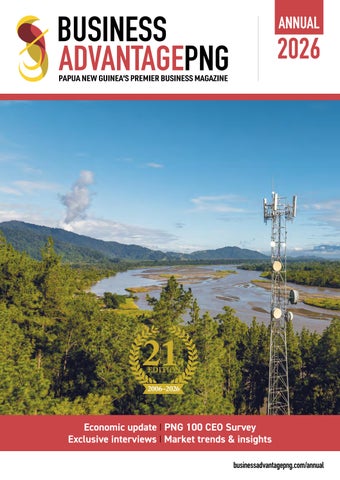
Cover image: Telecommunications tower over the Markham River, Morobe Province. Credit: Vodafone PNG
With improved export receipts and the prospect of major resources projects starting in 2026, PNG’s economy is set for a sustained period of growth. Andrew Wilkins speaks with business leaders in PNG about their expectations for the year ahead.
Papua New Guinea’s economy is expected to grow by 4.0 per cent in 2026, according to the PNG Government’s National Budget. The International Monetary Fund’s own growth expectations align with those of the budget, while the Asian Development Bank is forecasting 3.6 per cent GDP growth in 2026.
Underpinning this growth will be strong prices of key export commodities – and not just gold and copper, which both hit all-time highs in early 2026.
Cocoa and coffee have also been trading at historically high prices these past two years, delivering increased revenues to the agriculture sector, which supports the bulk of PNG’s largely rural population.
Indeed, Bank of Papua New Guinea figures reveal that deposits into PNG’s banks from businesses in the agriculture, forestry and fisheries sectors almost doubled between June 2023 and June 2025.
Both cocoa and coffee are expected to remain above historical averages this year, while the price of PNG’s largest single agricultural export, palm oil, is expected to remain steady.
However, growth in the economy is not uniform. Many businesses focused on serving the domestic market, such as retailers and manufacturers, are reporting patchy trading conditions, with their margins challenged by a depreciation in the kina (which increases the costs of imports) and a higher minimum wage (introduced in January this year).
“Growth in 2025 has been a commodity price story rather than about the expansion of the economy per se, reinforcing the opportunity to build on this foundation,” Andrew Betteridge, Country Head of ANZ in PNG, tells Business Advantage PNG.
The GDP growth predictions above do not factor in the anticipated economic boost that would follow final investment decisions (FIDs) for the TotalEnergies-led Papua LNG project and Twinza’s smaller Pasca A offshore gas project. Both gas projects are expected to reach FIDs this year.
In the case of Papua LNG – potentially the second-largest foreign direct investment ever made in PNG – ANZ’s Pacific Economic Outlook suggests that GDP growth this year could jump by an additional one to two percentage points should FID occur.
Businesses will be anticipating the successful completion of the government-organised development forum, expected in the first half of this year (see page 26). This critical milestone, once achieved, could trigger an investment by TotalEnergies and its partners in excess of US$14 billion,

spread over the project’s four-year construction period.
In its first 12 to 18 months, most of the project activity is expected to take place offshore.
However, Rio Fiocco, President of the Port Moresby Chamber of Commerce & Industry, tells Business Advantage PNG that should FID go ahead this year, he would expect local business activity to start picking up soon after, with hotels, airlines, machinery suppliers and financial institutions likely to be busier.
BSP Financial Group’s CEO Mark Robinson predicts the biggest immediate effect will be on overall business confidence.
“Businesspeople will foresee a healthier position for the currency, for the economy as a whole, for GDP growth, for government finances, and so forth,” he says. “It will give them the confidence to make their own investments.”
The improvement in the availability of forex has been a big positive in the past year.
Forex shortages have plagued businesses in PNG for the past decade, slowing payments, constraining investment and – for international investors – delaying the repatriation of profits.
As Kina Bank CEO Ivan Vidovich observes, the improvement in forex supply has been “a very healthy and well appreciated development.”
The progress has been largely due to more regular and larger interventions by PNG’s central bank, supported by an International Monetary Fund program, as well as the improved export receipts.
While some fluctuations in forex supply can still be expected, Vidovich suggests that PNG may be entering a phase in which PNG’s forex system relies “less on central bank interventions and more on the inter-bank market –which we’re now set up for.”
The forex improvement has also helped the country’s superannuation funds.
“Between last year and this year, we’ve been able to invest more money out of the country because of the relaxation of
forex,” says Rajeev Sharma, CEO of Nasfund. “That, allied to better returns on our portfolio, has been a great help.”
Despite the improvement in forex availability, the purchasing power of PNG’s currency is weakening.
During 2025, the kina fell by 5.1 per cent in value against the US dollar, 12.28 per cent against the Australian dollar and 16.54 per cent against the euro. The prevailing view is that it may have further to fall.
“Strong price prospects for key mineral exports such as gold, copper and silver are likely to continue supporting forex market activity in 2026,” BSP’s Mark Robinson tells Business Advantage PNG.
“Ongoing geopolitical uncertainty has also boosted demand for safe-haven assets, underpinning export receipts for PNG’s gold sector.”
Although forex shortages have declined, businesses in PNG still face many other constraints.
“Many of the challenges reported by our provincial chambers remain persistent,” notes Ian Tarutia, President of peak industry body the PNG Chamber of Commerce & Industry.
“The high cost of doing business is primarily due to unreliable utilities such as power, water and telecommunications connectivity.
“Additionally, currency depreciation, slow GST refunds, and security and law and order issues are significant concerns.”
John Byrne, President of the Lae Chamber of Commerce and Industry, argues that power is the most pressing issue overall, adding that “it affects the whole community.”
He notes that state utility PNG Power Ltd’s turnaround plan (see page 30) will require significant government support to be delivered.
These concerns expressed by Tarutia and Byrne are confirmed by the 2026 results of the annual PNG 100 CEO Survey run by Business Advantage PNG in partnership with Westpac (see page 18).
Access exclusive experience, personal services and opportunities that match your ambitions.
Unlock a world of indulgence with a BSP First account that offers:
Platinum Debit Card
Global Airport Lounges and Privileges
Higher Account Interest Rates
Dedicated Customer Support
And much more…

www.bsp.com.pg

While electricity remains a challenge, progress has undoubtedly been made in telecommunications, with telcos Digicel PNG, Vodafone PNG and Telikom PNG all expanding their networks.
While PNG is yet to license Starlink’s Low Earth Orbit satellite service, wholesaler PNG DataCo continues to build out PNG’s connectivity backbone, the National Transmission Network (see page 44).
And, in late 2025, it was announced that Google will play a role in constructing three domestic undersea cable networks, to be funded by Australia under the 2025 Pukpuk mutual defence treaty with PNG.
As Zanie Theron, Partner-in-Charge of KPMG’s South Pacific Practice, observes, the long-term impact of the Pukpuk Treaty is likely to be positive and far-reaching.
“With its construction projects needing to meet Australian standards and its requirement for specialist service providers,
Population 10.2 million (National Statistical Office, 2024)
Capital Port Moresby
Surface area 463,000 sq km
People Melanesian, Papuan, Negrito, Micronesian, Polynesian
Time zone GMT +10
Business language English
Political status Parliamentary democracy
Nominal GDP US$32.71 billion (2025, IMF)
GDP growth 4.0 per cent (2026 forecast, IMF)
Inflation 4.2 per cent (2026 forecast, IMF)
Currency PNG kina (PGK)
Major industrial sectors Mining, gas/energy, crude oil, palm oil, forestry, coffee, tourism, construction, manufacturing
Exports LNG, gold, palm oil, cocoa, coffee, copper, nickel, marine products, crude oil
Major export markets Australia, Japan, Singapore, China, Taiwan
Imports Manufactured goods, machinery and transport equipment, refined petroleum, food, crude petroleum
Major import markets Australia, United States, China, Singapore, Taiwan
it will provide an additional stimulus to the economy,” she tells Business Advantage PNG.
Infrastructure
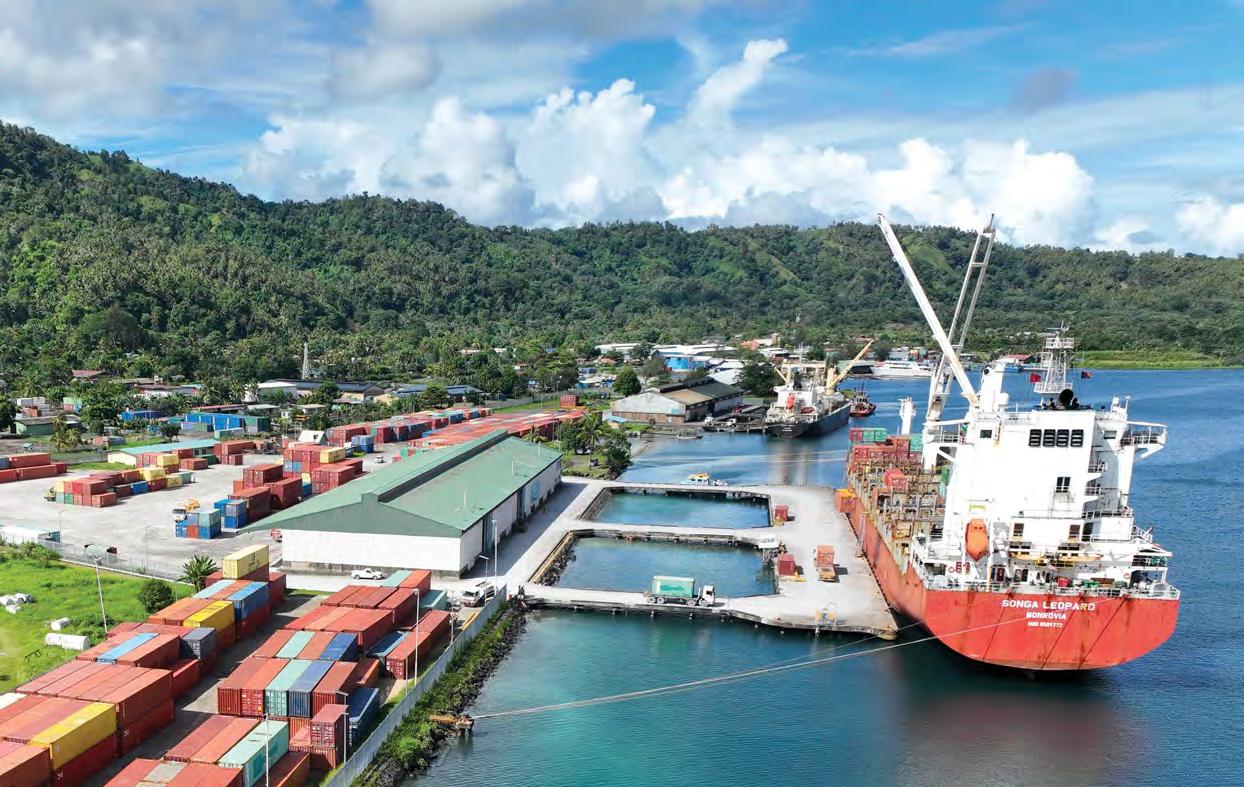
Meanwhile, capacity at the nation’s ports continues to improve, thanks to ongoing investments in capacity by both PNG Ports Corporation, the state entity that manages the country’s 15 key ports (see page 50), and international port operator ICTSI (see page 48).
“The country is in far better shape for the projects going forward, given that so much of this infrastructure has been built in response to the PNG LNG construction boom of 2010 to 2014,” says PNG Ports Corporation’s CEO Neil Papenfus, who experienced the last boom first hand in a stevedoring business. “We’re ready to take these opportunities on board.”
One government initiative aimed at increasing capacity further, and encouraging downstream processing, is the development of Special Economic Zones across the country. Five SEZs have already been licensed (see page 46), providing tax incentives to both their developers and their future tenants, with many more in preparation, including PNG Ports’ planned Lae Industrial Park.
While PNG’s physical infrastructure is undoubtedly in better shape to accommodate major projects, there is one piece of economic infrastructure still missing: the long-awaited Sovereign Wealth Fund (SWF). This fund would receive and invest surplus funds from PNG’s resources projects to provide greater long-term economic and currency stability.
With the debt recently repaid on PNG’s first gas project, PNG LNG, and Papua LNG looking imminent, work on an SWF that meets international standards is moving ahead.
“The government has shown a strong commitment to making the SWF operational, and we are working diligently to achieve this goal by the end of the year,” Ian Tarutia, who leads the government’s technical advisory team on the fund, tells Business Advantage PNG. “Our mission is to ensure that the legislative, institutional, administrative and governance structures for the SWF are effectively established before it becomes operational.”
While many business leaders are looking forward to news of new greenfield resources projects this year, CreditBank PNG’s CEO Danny Robinson points out that there is already a rising baseline of economic activity from the sector’s existing projects.
“The Porgera gold mine has had record first half results. We know that Kainantu and Lihir are spending an enormous amount of money in upgrading and increasing their production. All of those things are good for the economy and create employment,” he says.
POMCCI’s Rio Fiocco also observes an increase in economic activity, pointing to the “construction activity and the work towards PNG entering Australia’s National Rugby League competition in 2028, as well as the developments related to Special Economic Zones.”
By Nadav Shemer Shlezinger
A flurry of activity is anticipated on the PNGX in 2026, with one of the country’s two licensed stockbrokers predicting this could be the “breakout year” for the national stock exchange.
“If all goes to plan, the coming year will also see at least one, perhaps more, Initial Public Offerings (IPOs) by new companies on PNGX,” says Lars Mortensen, Co-Founder and Managing Director of JMP Securities Limited.
Additionally, “several companies are contemplating secondary listings on the exchange and PNG Air is looking to exit its suspension from trading.”
Last year saw Pacific Lime & Cement (PLC) become the 12th company listed on the PNGX by way of a compliance listing, complementing its existing listing on the Australian Securities Exchange.
PLC made a final investment decision on its phaseone Central Lime Project last August and is targeting an FID on its phase-two cement project in the middle of 2026. Its Managing Director Paul Mulder says listing on the PNGX will make it easier for Papua New Guineans to invest in its project.
“Having a dual listing gives easy access to super funds, mums and dads and other parties [in PNG] who would like exposure to this nation-building opportunity,” he tells Business Advantage PNG
Intention to list
Fledgling bank National Banking Corporation (NBC) has made known its intention to list on the PNGX, as has the Pacific Balanced Fund, one of PNG’s longest-running investment funds.

One of the conditions of the banking licence granted to NBC in 2024 was that the State (through the National Development Bank and Kumul Consolidated Holdings) dilute its ownership in the company. This will likely occur in the first quarter of 2027, according to outgoing CEO Paul Thornton.
NBC completed a private placement last September, selling off 48 per cent of its equity for K100 million. A second private placement was underway at time of writing, which was expected to reduce the State’s equity to around 35 per cent.
The IPO will see the government stake fall to around 20 per cent, Thornton tells Business Advantage PNG
“We are anticipating at least one corporate bond this year and have hopes of also attracting our first green bond to the market,” PNGX Group David Lawrence tells Business Advantage PNG
One bond issuer may be Kina Bank. Flagging his intent to a business gathering in February 2025, Kina Bank CEO Ivan Vidovich said a bond would aim to establish a benchmark for local currency funding, while supporting institutional growth and expanding domestic investment opportunities.
Discover the KPMG difference. Our expert team offers a comprehensive range of services designed to transform your business:




Business and government leaders provide their personal takes on Papua New Guinea’s economy time.
The adoption of digital technology in the country is happening, and it’s happening rapidly. The uptake of smartphones in particular across the country is happening and we’re seeing the growth in our customer base. economy.
Danny Robinson CEO, CreditBank PNG
We are one of the only investors in PNG actually in tourism. We’re in hospitality,

In the past, there’s been one sector at a time which has been firing. What I’m excited about now are the opportunities across multiple sectors.




We’re seeing more conversations seeing a rise in telecommunications there’s the opportunity to do large-

and business hub, Port Moresby, unlocking a major boost in internet capacity.
This surge in volume drove a rapid increase in national internet uptake and forced a reduction in consumer prices.
Paul Komboi CEO, PNG DataCo

to do that in the last 10 years, so it tells you a story in terms of the turnaround.
Herbert Maguma Managing Partner, Deloitte PNG

invested ahead of the curve. Across logistics, we’ve made substantial investments in our fleet and we’ll continue to do so as demand grows. Our major investment in the Portside Business Park at Motukea is well positioned to service Papua LNG and other resources projects. At the same time, we’re upgrading our hotels and broadening our capabilities to support rising economic activity.
Chris Daniells Managing Director, Steamships Trading Company

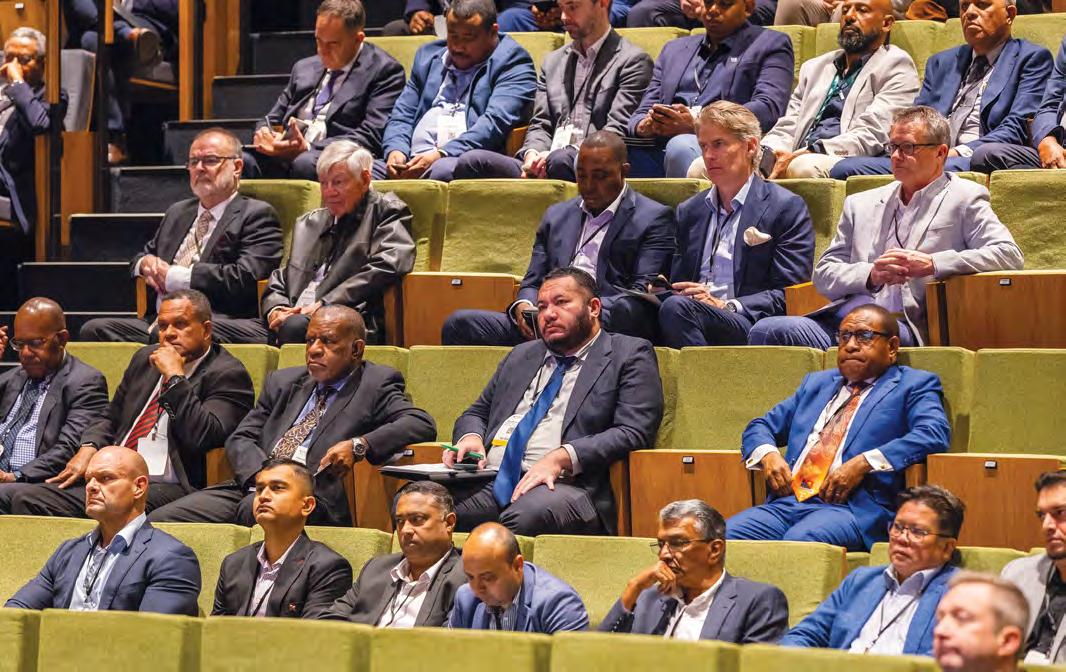
Andrew Wilkins lists five trends of particular relevance to domestic and international investors in PNG.
High metals prices and an increased appetite from stateowned entities are driving M&A activity in PNG’s mining sector (see page 40).
Elsewhere in the economy, established PNG businesses have also been changing hands.
In retail, Australia’s Taylor Pacific last year acquired the Stop & Shop supermarket chain from the CPL Group (see page 62), its second major PNG acquisition in two years.
Meanwhile, landowner company Trans Wonderland Ltd has reached a deal to acquire Avenell Engineering
Systems, a family-owned logistics business with a 70-year history in PNG.
With more financial institutions obtaining banking licences in PNG and future consolidation likely, M&A activity in the finance sector looks likely to increase. Arguably the most interesting recent investment is Kina Bank’s US$5 million (K21 million) acquisition of 17 per cent of fintech business NiuPay – the largest fintech investment so far in PNG and a harbinger of greater competition in the hotly contested digital banking space.
In the longer term, the planned privatisation of state-owned entities such as PNG Power, Telikom PNG and Air Niugini remains an area to watch.
PNG’s government sees the development of Special
Economic Zones as one of the key drivers of future economic growth and jobs creation. Focused on encouraging downstream processing and valueadding, the zones offer significant long-term tax concessions to both the investors who develop the zones and businesses that subsequently locate in them.
More than 20 potential zones have been identified across the country, an independent Special Economic Zone Authority (SEZA) has been created and enabling legislation has been passed to facilitate and assess potential zone developments (see page 46).
Four zones have so far been fully licensed, but there is a significant pipeline of applications, several of which have already received in-principle approval from PNG’s National Executive Council.



PNG’s location at the intersection of Asian and Pacific markets means it continues to receive significant interest from the region’s key powers.
Former colonial power Australia in particular continues to play an important role, supporting investments in telecommunications and port infrastructure (see page 50). It is also providing A$600 million over ten years to support PNG’s 2028 entry into Australia’s National Rugby League competition.
In 2025, PNG’s relationship with Australia undertook a step change with the signing of the Pukpuk mutual defence treaty, which will trigger significant investments in military and supporting infrastructure in PNG in coming years.
PNG has recently adopted a new arbitration framework to resolve business disputes, enabling investors to sidestep potentially costly
and lengthy legal disputes.
Wavie Kendino Leki, Managing Partner with the Dentons law firm in PNG, explains the benefits.
“In our experience, investors are primarily concerned with two main things when they’re investing in a country: the return on investment and, if any issues arise, how their disputes will be dealt with,” she says.
“The enactment of the arbitration legislation is a game changer for PNG. It offers reassurance to investors of a more efficient and confidential dispute resolution framework.”
THE ARBITRATION LEGISLATION IS A GAME CHANGER.
Wavie Kendino Leki, Managing Partner, Dentons PNG

In September 2025, the International Finance Corporation announced a US$10.2 million (K43.6 million) investment in PNG-owned Total Waste Management to develop the first integrated waste facility in the country to meet international standards.
The Bank of PNG has launched the Green Finance Centre in partnership with the Global Green Growth Institute to mobilise new sources of finance for sustainable projects, which looks set to include green bonds and a renewable energy facility. It has already identified a K270 million pipeline of potential green investments.

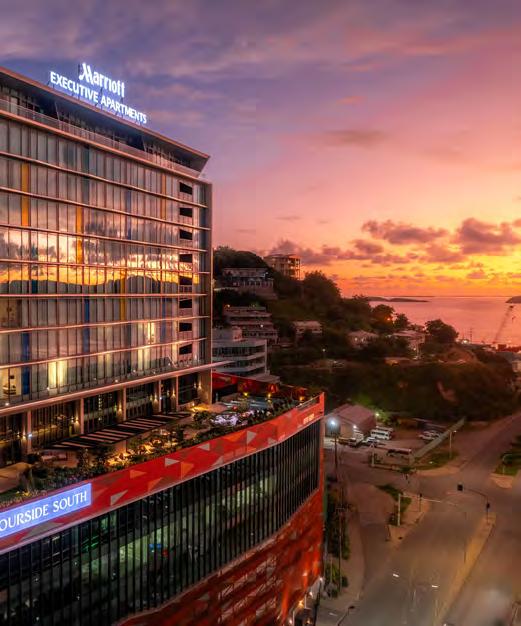

We are Papua New Guinea’s pioneering business conglomerate. We have established partnerships in hotels, logistics and properties that directly contribute to building our nation. Our investment, community engagement and sustainability has endured since 1918, laying the solid, secure foundations we need to sustain another 100 years of growth.
We don’t just do business in PNG. It’s our home.
Since 2012, the data collected by the PNG 100 CEO Survey has revealed trends in business confidence among business leaders. So, how confident are businesses about 2026?
The PNG 100 CEO Survey asked CEOs how their profits performed in 2025 compared to their expectations.
Businesses performed exceptionally well in 2025, with 55 per cent saying that their profits exceeded expectations and an additional 30 per cent saying they met expectations. Only 15 per cent of CEOs said profits fell short of expectations.
This was an even better result than last year’s survey, when 40 per cent of CEOs said profits beat expectations and 30 per cent said they met expectations.
The survey asked how profits are likely to perform in 2026, compared to 2025.
Most CEOs expressed optimism heading into 2026, with 72 per cent expecting profits to exceed 2025, and an additional 22 per cent expecting profits to be about the same. Less than six per cent of CEOs expected profits to fall in 2026.
Again, this pointed to an even-greater level of optimism than the previous year, when 65 per cent of CEOs expected profits to rise and 25 per cent expected profits to be stable.
The survey asked respondents for their capex plans in 2026.
In another bullish signal, 72 per cent of CEOs forecast an increase in investment in 2026, with a majority (52 per cent) forecasting a “substantial” increase. An additional 13 per cent said capex would be around the same in 2026 as it was in 2025, while 15 per cent flagged lower capex in 2026.
In last year’s survey, 67 per cent of CEOs said their businesses were planning greater capex, while 22 per cent said they were planning the same level of capex.
The survey asked respondents to indicate their recruitment intentions for 2026, compared to 2025.
The responses were positive overall, with 57 per cent of CEOs expecting to increase their head count and 37 per cent saying they would maintain current staffing levels. Less than six per cent of CEOs said they would reduce head count.
Last year’s survey was similarly positive for job seekers, when 56 per cent of CEOs expected to increase staff levels and 43 per cent expected to maintain their head count.
Each year, we ask CEOs to rank the key impediments facing their business, from 5 for “mission critical” to 1 for “not relevant.”
The big story this year is foreign exchange, which has fallen from first to 12th in the rankings. Unreliable utilities rose to first this, after ranking third in the previous two years.
Notably, the average score across the 20 impediments was 2.92, down from 3.11 in the 2025 survey and 3.38 in 2024.
Only six of the impediments worsened: unreliable utilities (up from 4.04 to 4.17), lack of market research/ intelligence (3.04 to 3.17), high employment costs (2.98 to 3.09), competition (2.62 to 2.79), lack of available office/ warehouse space (1.70 to 1.91) and lack of available land (1.63 to 1.71).
Many previously major impediments eased substantially, led by forex (down from 4.24 to 2.94), regulatory uncertainty (4.00 to 3.25), logistics (3.37 to 2.96), supply chain constraints (2.98 to 2.57) and work permits and visas (2.76 to 2.30).
The 2026 PNG 100 CEO Survey was conducted by Business Advantage International between November 2025 and January 2026. The survey included senior executives from a representative sample of PNG’s largest companies, across all sectors of the economy. For the full survey report, visit businessadvantagepng.com.
What are the critical impediments facing your business right now?

FORECAST AN INCREASE IN INVESTMENT IN 2026, WITH A MAJORITY (52 PER CENT) FORECASTING A “SUBSTANTIAL” INCREASE.
Looking back on your business’s performance in 2025, did your profits…
Substantially fall short of expectations?
Fall slightly short of expectations?
Meet expectations?
How much investment (e.g. in plant, equipment, land or other assets) are you planning in 2026?
Substantially less than 2025
Slightly less than 2025
Be slightly less than 2025?
Substantially exceed 2025? Be about the same as 2025?
In 2026, do you anticipate your profits will… Somewhat exceed 2025?
What level of recruitment are you planning in 2026, compared to 2025?
This year’s Business Advantage PNG/Westpac survey shows positive business sentiment, continuing the momentum from last year.

1
By Justin Smirk, Senior Economist, Westpac
The
2026 PNG 100 CEO
Survey provides an optimistic outlook for the Papua New Guinean economy.
Here are the four key highlights Westpac has identified from the survey:
PNG business conditions are better than average
Westpac combines the survey’s various indicators of business conditions into the Business Conditions Index, where 50 represents the long-run average.
In 2026, the Business Conditions Index rose to 62.5, the highest level since 63.5 in 2023, which also remains the alltime high for the index.
During the COVID-19 period of 2020 to 2021, Business Conditions fell below 50. More troubling, however, was the decline to 44.7 in 2024, following a worse-than-expected profit outcome for 2023. It is therefore encouraging to see reported Business Conditions continue to improve entering 2026.
If policy, fiscal and regulatory reform continues, there is potential for economic growth in 2026 to exceed expectations.
2 Reliability of utilities is the most critical issue
In our analysis of last year’s survey, Westpac noted the rising concern about the reliability of utilities. At that time, only foreign exchange availability ranked higher as a critical issue.
In 2026, with forex no longer a major concern, unreliable utilities have surged to become the biggest issue facing PNG businesses.
Average concern about utilities is higher than in 2025, though still below the peak reached in 2024. This should not be interpreted as evidence that utilities have become more reliable. Rather, the share of firms identifying utilities as a mission-critical issue has risen sharply to 56 per cent, up from 46 per cent in 2025 and well above the all-time low of 3 per cent in 2018.
We suspect that the lower overall concern reflects PNG businesses adapting to ongoing constraints, rather than any meaningful improvement in service reliability.
While business resilience in the face of adversity is encouraging, unreliable utilities remain a major constraint on both current economic activity and longer-term economic development. Unlocking PNG’s full economic potential will require meaningful improvements in utility reliability, making this a critical policy priority.
Actual profit outcomes in 2025 exceeded expectations by a significant margin, a look at the previous year’s survey shows. Against this backdrop, it is unsurprising that profit expectations strengthened further in 2026. While profit expectations last year were only marginally above average, they are now around 10 per cent higher than the long-run average.
Improving profit expectations have been accompanied by stronger investment intentions, with the Investment Expectations Index rising 6 per cent over the year to sit almost 20 per cent above its long-run average. In contrast, recruitment intentions declined by 6 per cent, which is disappointing given the more favourable business environment.
Nevertheless, at 56, the Recruitment Expectations Index remains more than 7 per cent above its long-run average, suggesting non-mineral employment can continue to grow in 2026, albeit at a slower pace than in 2025.
Westpac combines profit, investment and recruitment expectations into the Business Expectations Index, where 50 represents the long-run average.
In 2026, the Business Expectations Index rose to 68, up from 59 in 2025, marking the highest reading since 69 in 2023 and standing 25 per cent above the long-run average. When combined with the improvement in the Business Conditions Index, the 2026 survey suggests that PNG CEOs broadly share Westpac’s expectation that economic growth will strengthen in 2026.
WITH FOREX NO LONGER A MAJOR CONCERN, UNRELIABLE UTILITIES HAVE SURGED TO BECOME THE BIGGEST ISSUE FACING PNG BUSINESSES.
Justin Smirk, Senior Economist, Westpac
Our current forecast is for GDP growth of 4.3 per cent in 2026. We are in the process of upgrading PNG’s growth outlook, as a final investment decision on Papua LNG appears closer. Should the project proceed as expected, we anticipate GDP growth to exceed 5 per cent, driven primarily by forex inflows, infrastructure development and construction activity, alongside an optimistic production outlook from resources companies amid favourable global prices.
Let’s shape the next 50 years for PNG’s resource sector together.
Papua New Guinea’s mining, petroleum and energy sector stands at a pivotal crossroads. Global market volatility, evolving regulatory environments and sustainability pressures present significant challenges for industry leaders. Deloitte is recognised as a trusted advisor within PNG, bringing global experience and local insight to help navigate complexities and deliver results.
Our approach is rooted in actionable insights and robust frameworks tailored for PNG’s resource sector. We have guided major extractive clients in risk management, operational transformation, ESG compliance, and tax and legal strategy. By integrating tax and legal frameworks, we help clients navigate complex regulatory requirements, optimise tax efficiency and mitigate legal risks, ensuring operational decisions align with both compliance standards and commercial objectives. This holistic support enables sector leaders to maintain integrity, drive sustainable growth, and respond confidently to PNG’s evolving landscape.

In the petroleum sector, our advisory on regulatory compliance helped a client secure critical project approvals and improve stakeholder engagement.
Looking ahead, PNG is poised for transformation. Sectors like mining, agriculture, and fintech show strong growth potential, while ESG and sustainability are becoming central to business strategy. Our forecasts indicate increasing demand for digital solutions to address infrastructure gaps and regulatory changes.
Deloitte’s commentary highlights the importance of agility—organisations that embrace innovation and robust risk frameworks will lead PNG’s future. From humble beginnings, PNG has emerged as a dynamic player in the regional economy, driven by its resourcefulness and entrepreneurial spirit. Against the odd at independence, PNG has remained steadfast in its vision for growth. The next 50 years hold even greater promise and Deloitte is proud to be part of that future.
Connect with our sector specialists

Herbert Maguma
Office Managing Partner
hmaguma@deloitte.com.pg


“ Deloitte remains committed to supporting the nation’s prosperity and unlocking new opportunities as PNG marks its 50th year.”
PNG is poised for transformation in
Mining Agriculture Fintech
Becoming central to business strategy
ESG Sustainability
Arrivals into Port Moresby are expected to grow substantially in the coming years. Paul Chai provides a roundup of the big investments being made by PNG’s hotel operators in anticipation of this growth.
Excitement is in the air in PNG, as the country prepares to join Australia’s National Rugby League in 2028 and host major international events such as APEC in 2033. Moreover, there is growing optimism around TotalEnergies reaching a final investment decision on its Papua LNG project in 2026.
With all this activity on the horizon, it is no surprise that Port Moresby’s major hotel operators are all investing in upgrades.
PNG’s largest hotel operator, Coral Sea Hotels (Steamships Hospitality) is in the process of upgrading six of its eight properties.
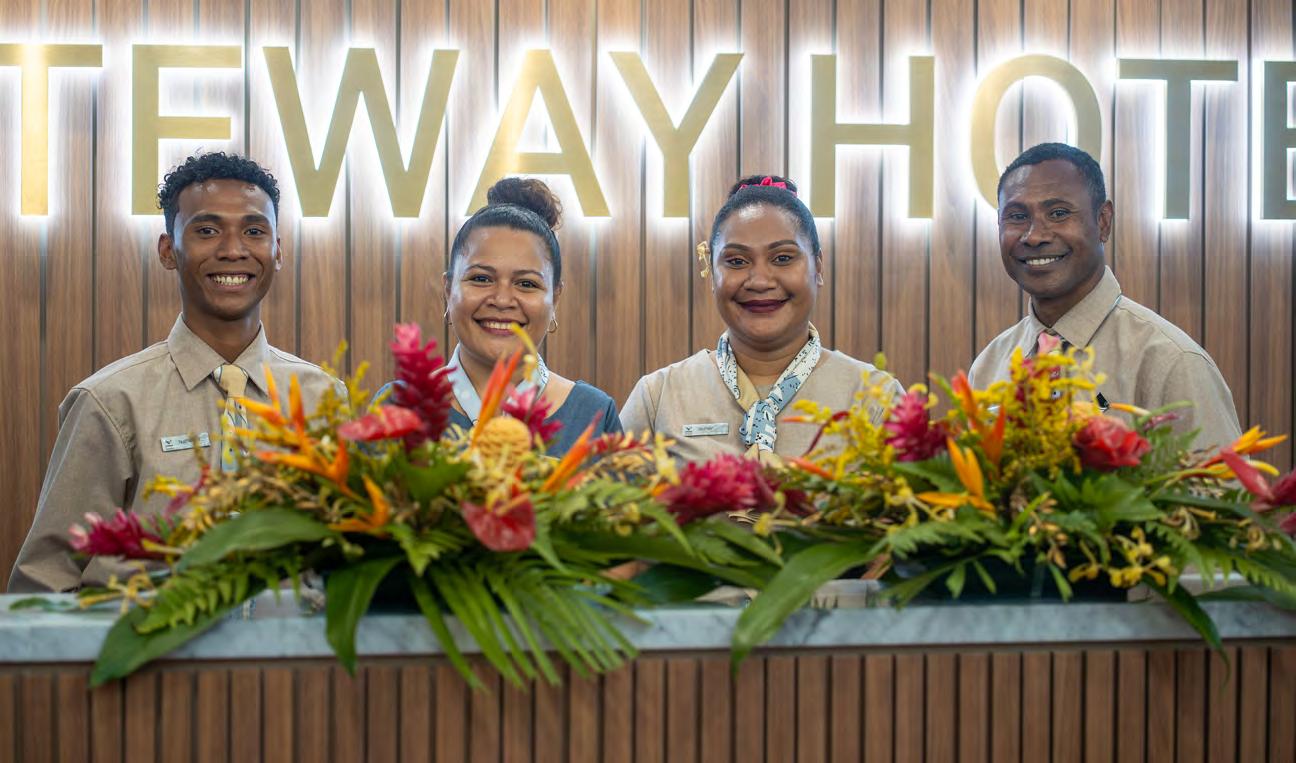
“The renovation program for most of our hotels is on the track to success, as we all witnessed with the reopening of the Gateway lobby, which is simply stunning,” Simon Martin, Chief Operating Officer of Coral Sea Hotels, tells Business Advantage PNG.
“We are very confident that the designs, which value Papua New Guinea, will please our business travellers and a developing leisure market including lots of PNG residents and nationals.”
Coral Sea Hotels is also modernising the Grand Papua Hotel in Port Moresby with a two-year project which includes a redesigned lobby, bar, a show kitchen concept restaurant, upgraded guest rooms and a reimagined 15th floor featuring an executive lounge, sky bar and presidential boardrooms. Down the road, it is refurbishing the Ela Beach Hotel & Apartments.
Outside of the capital, Coral Sea Hotels is planning upgrades to the

Highlander Hotel (Mount Hagen), Bird of Paradise Hotel (Goroka) and Huon Gulf Hotel (Lae) this year.
The Mineral Resources Development Company’s (MRDC) Star Mountain Plaza is home of the Hilton Hotel & Residences, with additional phases planned.
“I want to make Star Mountain Plaza a destination, so that everybody, when they come to Port Moresby, it’s the first place they want to see. Because you’ve
WE ARE VERY CONFIDENT THAT THE DESIGNS, WHICH VALUE PAPUA NEW GUINEA, WILL PLEASE OUR BUSINESS TRAVELLERS.
Simon
Martin, Chief Operating Officer, Coral Sea Hotels (Steamships Hospitality)
got everything: hotels, office facilities, a cinema, apartment buildings,” MRDC Managing Director Augustine Mano tells Business Advantage PNG
“We’re also planning a big shopping mall and a green zone with a water park for families.”
Ryan Mikkelson, General Manager at Hilton Port Moresby Hotel & Residences, says the Hilton had a positive year in 2025, assisted by a jump in traffic from Kokoda trekking groups and international sporting groups. He expects the upcoming NRL inclusion will further ramp things up.
“You will have those die-hard fans that travel for every game; what that number looks like will vary between clubs but there will be a lot of people coming from media and officials as well,” he says.
Anne Busfield, portfolio manager at IHG, operator of Port Moresby’s Holiday Inn, Holiday Inn Express and Crowne Plaza, is also excited for the impending NRL influx.
“Our focus as a business is unlocking the potential of each asset, and for Holiday Inn we’ve got the beer garden,
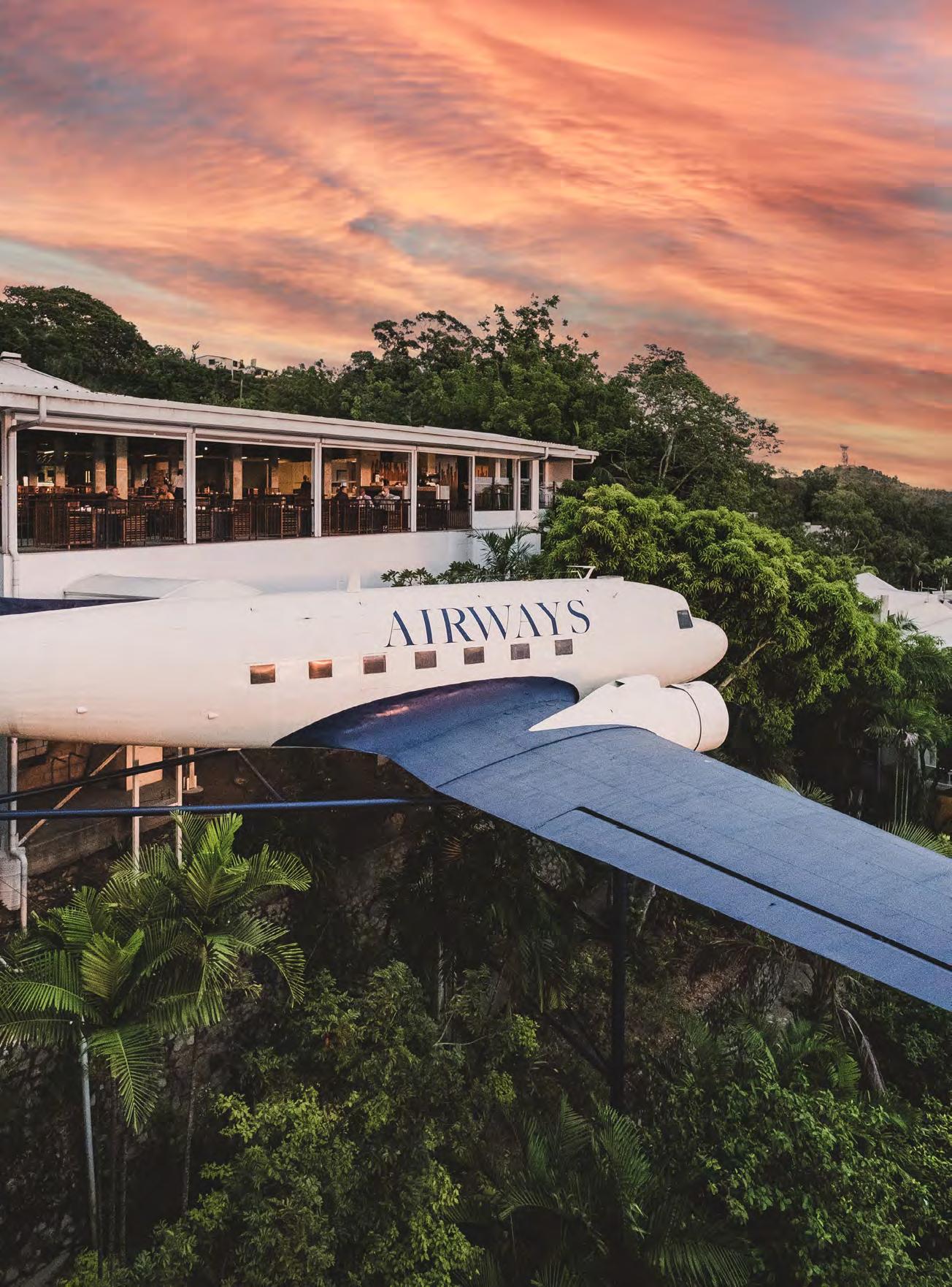
Nestled in its own botanical gardens, Airways offers understated luxury accommodation in one of the Pacific’s most striking settings.
From well-appointed rooms and elegant dining to personalised service and lush green spaces, every detail is designed for a seamless experience.
After flying into Jackson’s International Airport, there’s only one place you’ll want to land.
we’ve got the Gecko Bar,” she tells Business Advantage PNG. “There’s a lot of outdoor spaces there and from a strategy point of view we want those to be NRL-ready by 2028.”
Other wins at IHG include the recent refurbishment of the Faya Haus restaurant at the Holiday Inn and the ongoing success of Port Terrace at the Crowne Plaza, as well as the company’s external catering service at APEC Haus.
‘The growth for us as a company is very much linked to our credibility and reputation in the local market,” Busfield says. “We also have very distinct brands here, so we have the ability to meet the demands and the needs of different market segments, which I think is quite unusual.”
Meanwhile, IHG has announced a partnership with Gulf Province


Properties Limited to open PNG’s first InterContinental hotel in Port Moresby in 2028.
At the time of writing, the Stanley Hotel & Suites in Port Moresby was scheduled to start trading as the Sheraton Port Moresby Stanley Hotel & Suites in August 2026 under a deal with Sheraton parent company Marriott International.
The hotel is in the middle of a K30 million upgrade that will see it have 378 rooms, two restaurants, a bar and cafe, an infinity swimming pool, and a 2,500 square-metre conference facility upon completion.
The renovation of the lobby area and the Rainforest Bar began last November, but the hotel says that “normal hotel operations will continue as usual.”
Meanwhile, Port Moresby’s Airways Hotel is also undergoing a huge renovation of the existing rooms,

beginning with the Dakota Wing, starting in the next year.
The hotel’s owner, the Constantinou Group of Companies, is also focusing on the Jacksons Heights development next door, where it intends to construct more than 2,000 residential lots and a new shopping mall.
Airways is also doing something innovative with its classic Douglas propeller plane – part of PNG’s aviation history – by turning it into a special hotel room.
“The Airways plane is a local icon for Papua New Guinea and one of the many features that makes our hotel unique,” George Constantinou, Group Chairman and Governing Director of the Constantinou Group, tells Business Advantage PNG
“We’re pleased to be able to turn our plane into a unique guest experience in Papua New Guinea.”
Staying overnight in a historic airplane is not only a good business idea but might serve as a metaphor for PNG’s hotel sector as a whole, which looks set to take off in 2026.

For over 70 years, TE (PNG) has been the trusted name behind Papua New Guinea’s progress, supplying and supporting the nation’s industries with world-class technology and local expertise.

From Communications and IT infrastructure to Hospitality Equipment, Security, Audio and Professional Broadcasting, and Electrical and Hardware Solutions, we bring together six specialist divisions, all under one roof, to help PNG businesses perform smarter, faster, and more sustainable.
Whether outfitting a hotel kitchen, securing families and businesses, or connecting remote communities, TE (PNG) delivers excellence backed by international partnerships and in-country technical support you can rely on.
Proudly PNG-owned. Globally connected. Trusted for generations.
Visit our showrooms in Port Moresby or Lae and chat with our friendly team to find the right solution for you.

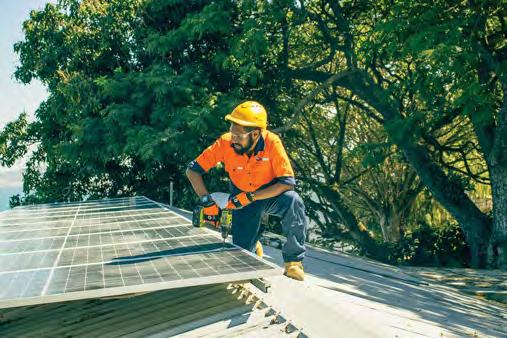


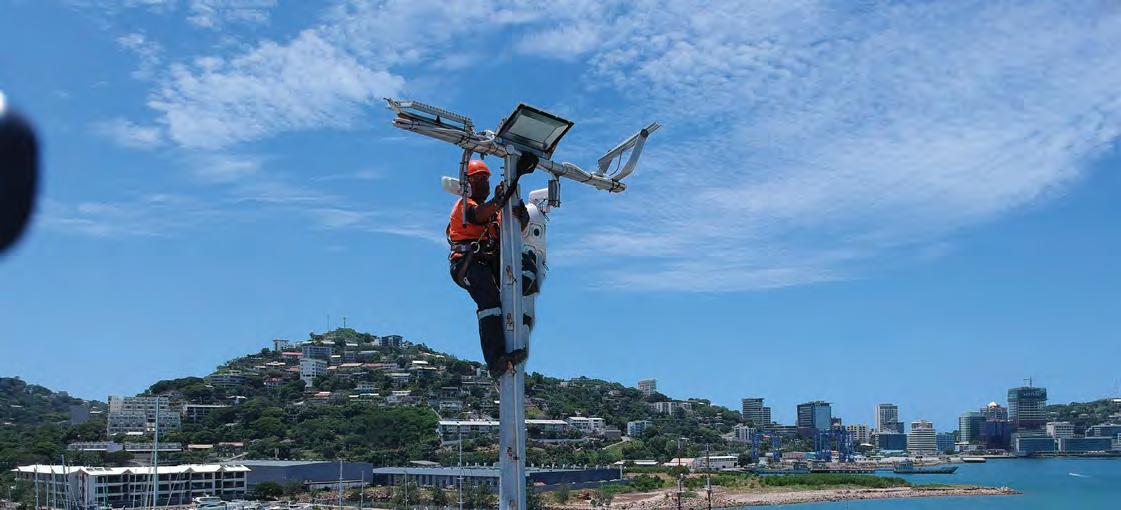
Celebrating 70 years of Providing Turnkey Solutions in PNG
The Papua LNG project is progressing towards a final investment decision. Business Advantage PNG covers off the key milestones that TotalEnergies and its partners must hit before reaching an FID.
By Nadav Shemer Shlezinger
While the Papua LNG project has progressed more slowly than many in the business community were hoping, a final investment decision (FID) was still expected in 2026 as this publication went to print.
A number of milestones remain before TotalEnergies and joint venture partners ExxonMobil, Santos and ENEOS Xplora (formerly JX Nippon)
can greenlight the project.
The main sticking point is capital expenditure. An FID had been expected in early 2024, but it was postponed after the first round of bidding saw the costs blow out to US$18 billion – well above
WE ARE BUILDING THE CONDITIONS FOR FID, WHICH IS NOW IN LINE OF SIGHT.
Arnaud Berthet, Managing Director, TotalEnergies EP PNG
the initial US$14 billion estimate.
The JV partners subsequently reopened bidding to a larger group of contractors in 2025, which has brought costs “back to a more acceptable figure,” Arnaud Berthet, Managing Director of TotalEnergies EP PNG, said in an interview late last year with Business Advantage PNG.
Prime Minister James Marape backed up Berthet’s comments in late January following a meeting with Patrick Pouyanné, Chairman and CEO of TotalEnergies.
“I was pleased to receive Mr Pouyanné’s full assurance that Papua LNG is continuing to move forward,” Marape said. “They have worked extremely hard and managed to reduce close to US$4 billion in projected cost increases,” he said.
Darren Woods, Chairman and
CEO of ExxonMobil, provided further confirmation of reduced capex in a lateJanuary earnings call, saying that recent work on the project’s design had led to it being “very cost competitive.”
Several key regulatory steps must also be completed before an FID can be made. Chief among them is the development forum, to be organised by the National Petroleum Authority, which will bring together the project participants, the State, landowners and local-level governments (LLGs) to agree on benefit-sharing arrangements.
The forum was originally scheduled for the fourth quarter of 2025 but was delayed to avoid a clash with LLG elections in October, according to Berthet.
“Without the development forum, we cannot take the FID, as per the law,” Berthet tells Business Advantage PNG, “so this is clearly one of the fundamental bricks on our way to FID.”
In a major milestone for the venture, the Conservation and Environment Protection Authority (CEPA) recently granted Level 3 environmental permits for both the upstream and downstream components of the project.
The permit is one of four elements required before Papua LNG can obtain a petroleum development licence, alongside the development forum, the project’s development scheme (which requires approval from the Ministry of Petroleum) and a national content plan, which has already been submitted to regulators.
Although the permit marks a watershed moment, Berthet says engagement with CEPA will remain ongoing.
“The environmental permit is a living thing,” he says. “You can amend it, depending on the variation of your concept. But it’s easier to amend an existing permit than to get it [in the first place].”
Beyond regulatory approvals, TotalEnergies is advancing what Berthet calls the “quite complex” financing arrangements for the project.
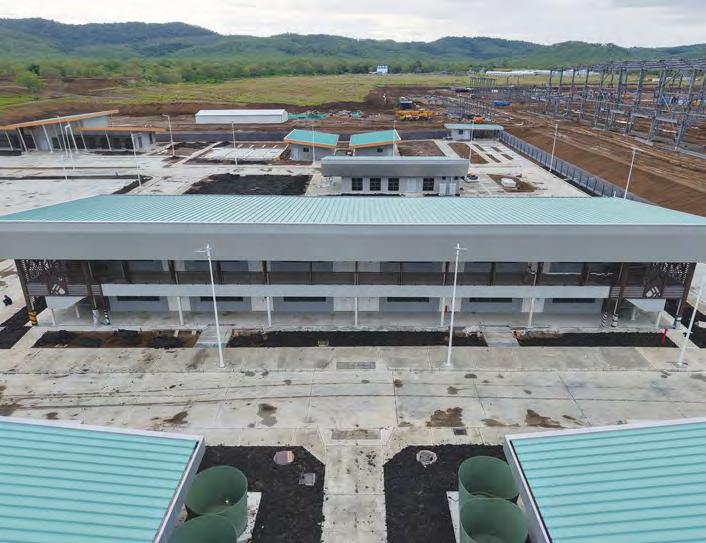
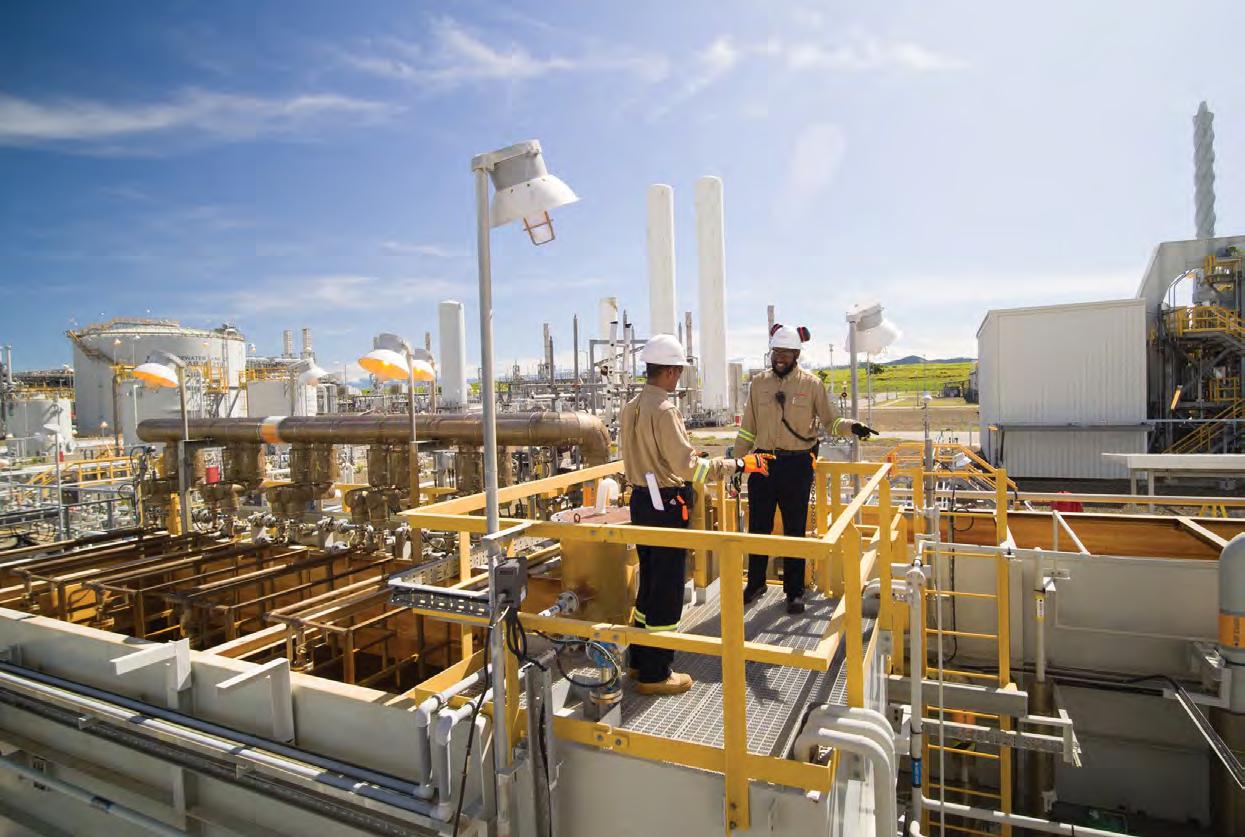
State-owned Kumul Petroleum Holdings Limited (KPHL) is constructing a steel fabrication facility and technical training facility at Caution Bay northwest of Port Moresby, adjacent to the ExxonMobil-operated PNG LNG liquefaction plant.
The training facility (pictured) will produce technically skilled Papua New Guineans capable of participating in fabrication of a range of steel piping and other modules. The training facility is expected to be completed during 2026, while the fabrication facility is expected to be ready the following year.
“We are meeting very regularly with the banks and the export credit agencies,” he says. “In the weeks or months to come, we are concluding the necessary due diligences for the lenders to be comfortable enough to go in front of their boards and ask for money for the project.”
At the same time, the company is finalising long-term sales agreements with prospective Asian LNG buyers.
“There’s still appetite for gas coming from PNG, which is perfectly located to serve the Asian markets,” Berthet says. “The buyers are still interested.
A key aim of the facility is to increase national content in future large-scale projects, including Papua LNG.
A 294-person camp was also recently completed on the same site. The camp will house the initial Papua LNG construction crews, and will probably be managed by local landowner company Laba Holdings Ltd.
Next door, the Papua LNG partners are planning to build four new LNG trains with a total capacity of 4 million tonnes per annum (Mtpa) within the existing PNG LNG liquefaction plant. Additionally, they have secured the use of up to 2 Mtpa of the plant’s current 8.3 Mtpa capacity.
Gas is the energy of transition.”
After years of preparation, Berthet says all major workstreams – technical, financial and regulatory – are beginning to align.
“All the pieces of the puzzle are assembling today,” he says. “We are building the conditions for FID, which is now in line of sight.”
For full coverage of Papua LNG and other resources projects, see our annual Mining & Energy magazine. The next edition will be published in October 2026.
Arnaud Berthet, Managing Director of TotalEnergies EP PNG, details the timeline for exploration of the Mailu-1 offshore oil prospect and shares why the Papua LNG developer is so excited by this new venture, in this exclusive interview with Business Advantage PNG.
By Nadav Shemer Shlezinger
While the big question this year is whether TotalEnergies will reach a final investment decision on Papua LNG, the French multinational is also advancing a second project in Papua New Guinea: Mailu-1.
TotalEnergies and Malaysia’s Petronas share 50:50 ownership over the Mailu-1 exploration prospect, located at a depth of around 2,000 metres in the Torres Basin southeast of Port Moresby at Petroleum Prospecting Licence 576. They are preparing to commence drilling in the first half of 2026, when Mailu-1 will become the first deepwater well in PNG waters.
Noble, a leading offshore drilling company, has been contracted for the approximately 50-day program.
Unlike Papua LNG, which is a gas project, the Mailu-1 prospect will be explored for its oil potential, with gas likely to only be a byproduct.
“It’s not only the first of its kind, it’s also a potential play opener,” Arnaud Berthet, Managing Director of TotalEnergies EP PNG, tells Business Advantage PNG.
“If we find [oil], then it could unlock a fairly big amount of resources.”
Several parties are interested in offshore oil and gas in PNG, with Twinza’s Pasca A project currently in its front-end engineering and design phase ahead of a planned final investment decision in 2026, and Kumul Petroleum and Larus Energy also conducting or planning exploration work in Papua New Guinean waters.
Large discoveries with a strong business case can advance very quickly, Berthet says, giving the example of TotalEnergies projects in Angola and Suriname.
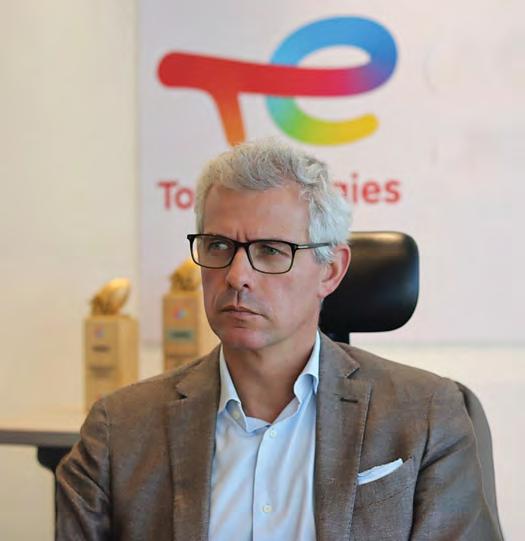
to build up the experience, the knowledge of the country and our stakeholders.”
IF WE FIND [OIL], THEN IT COULD UNLOCK A FAIRLY BIG AMOUNT OF RESOURCES.
Arnaud
Berthet, Managing Director, TotalEnergies EP PNG
However, he warns that “you cannot just take what you know from onshore and copy and paste for offshore,” pointing out that the offshore environment has many differences – including having to spend up to 10 times more for an offshore drill rig than for an onshore equivalent.
Given the novelty of drilling a deepwater well in PNG, Berthet says, “it’s our responsibility as an operator
Mailu-1 is also novel for an additional reason: the participation of Petronas, Malaysia’s state-owned oil and gas company.
While the other participants in the Papua LNG project – ExxonMobil, Santos and ENEOS Xplora – have all been involved in the country for a long time through their involvement in PNG LNG, Papua New Guinea’s first LNG project, this will be Petronas’ first venture in the country.
Berthet says TotalEnergies is “very pleased” to have Petronas involved, noting that the two companies are partners in various projects around the world, including in Malaysia.
“It was also an opportunity for the authorities to welcome another top-class oil and gas player, which is good for the country,” he adds.
Lead
Lead
Lead progressive transformation across our porfolio of State-Owned Enterprises to generate strong economic and social returns for the
Empower
Empower
Empower our State-Owned Enterprises with the guidance, capabilities, and resources needed to sustainably grow and deliver high quality services to the people of Papua New Guinea
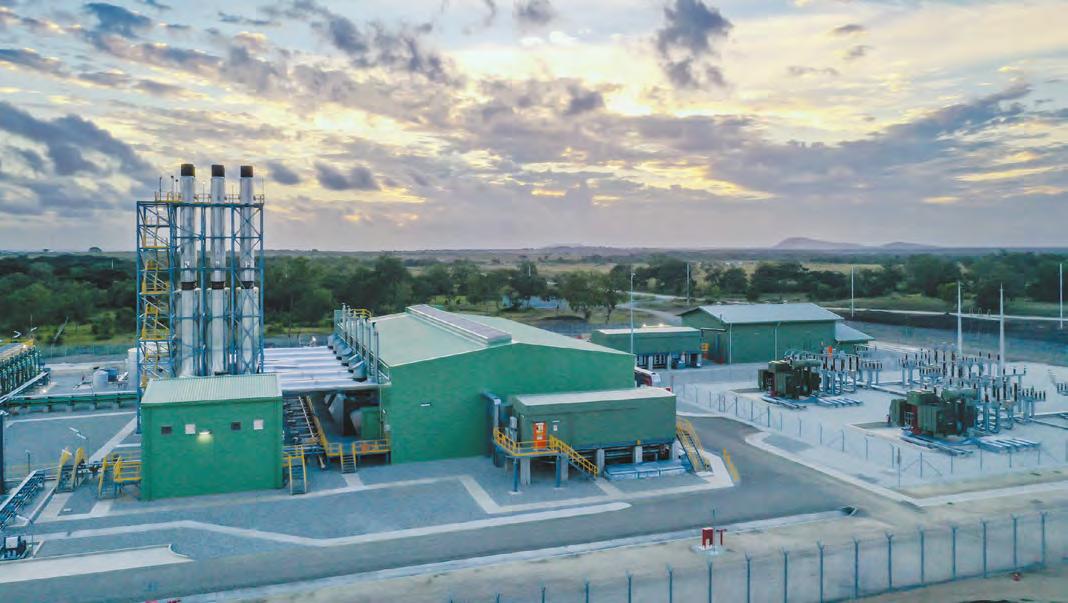
Business Advantage PNG talks to the senior executives responsible for stabilising, turning around and preparing the ground for the potential sale of the country’s troubled state power utility.
By Nadav Shemer Shlezinger
PNG Power Ltd’s (PPL) turnaround plan has been boosted by financing packages from the Asian Development Bank.
The ADB has agreed to provide a US$100 million loan to create an enabling policy framework to restore the sustainability of the power sector, turn around PPL’s performance and enable more efficient private sector participation.
Paul Bayly was appointed as PPL chief executive in March 2025, and he presented his turnaround plan for the embattled stateowned utility at the Business Advantage PNG Investment Conference in August. At the time, he listed his first priority as bringing in the right people.
“Those that we’ve brought in have great experience. Some are from outside of the industry who bring new insights and energy and others are people that have left the company who we’ve brought back and who know the systems and the networks very well. And that’s expedited the process of turning this [organisation] around.”
Bayly tells Business Advantage PNG that the ongoing support from long-time donors such as the ADB, the World Bank and the Australian Government is also crucial to building up PPL’s in-house capabilities.
“We have many donors that come in and provide technical expertise,” he says.
Another priority of the turnaround plan is the repair of PPL’s balance sheet.
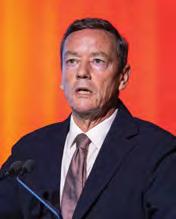
“Cabinet has approved the privatisation process for PNG Power,” says Professor David Kavanamur, Managing Director of Kumul Consolidated Holdings (KCH), which manages most of PNG’s state-owned enterprises, including PPL.
Producers (IPPs) are paid and fuel costs are met.”
Bayly’s plan also includes projects aimed at addressing various points of failure in PNG’s electricity grid and increasing generation, transmission, distribution and reliability.
Priority projects, which include “opportunities for would-be investors,” according to the PPL CEO, have already been scoped out.
These projects should result in a return to profitability, says Bayly.
Bayly says he and his team have been in regular communication with key stakeholders – including KCH, the government and IPPs – since first presenting the plan.
“We are seeing a great deal of goodwill and support from all of PNG Power’s stakeholders to make sure we turn this thing around as quickly as we can,” he says.
PPL has since filled several key roles, and Bayly says it is paying dividends:
“In preparation for privatisation, we’re expecting some capital injection to ensure that the Independent Power
“They’ve seen years of neglect and broken infrastructure, so they’re very receptive … Technically, we’ve had some challenges, but we are making progress around restructuring the three grids,” he adds, referring to the Gazelle, Port Moresby and Ramu grids, which PPL manages.
“We’re already seeing the results financially,” he says.


Live access to vital logistics data in Papua New Guinea’s international terminals — South Pacific International Container Terminal (SPICT) in Lae and Motukea International Terminal (MIT) in Port Moresby.







Dirio’s rural electrification projects are tracking well as we move into 2026.
Aside from our major asset, our 45 MW gas-fired power station in Port Moresby, we’ve recently closed tender on a mini-grid in Kikori in Gulf Province, which we’re hoping to break ground on in the coming months.
This grid will comprised over one megawatt of solar, two megawatt-hours of battery and a small diesel engine. We’ll be generating, transmitting, distributing and retailing the electricity, similar to how PNG Power operates. We’ve got licences to do all of those activities and are legally allowed to operate in the Kikori District as the sole retailer, as well as Kerema, Kairuku and Kagua-Erave Districts and Kutubu-Bosavi LLG.
Bringing electricity to rural areas aligns with the PNG Government’s objectives. These objectives, and the existing regulatory framework, provides
us lots of opportunities to engage customers across the country in various electrification projects.
We’ve been exploring rural electrification through mini-grids, as well as supporting customers within PNG Power’s grids to explore improved reliability and sustainability through rooftop solar and battery storage projects.
We’re also in the early stages of developing a community power project in the Hides region in Hela Province. ExxonMobil has constructed mini gas turbines within their Hides Gas Conditioning Plant which we will use to connect villages in the region.
It’s a substantial geographic area to develop, but we’re hopeful to begin construction by the end of 2026.





PNG’s recent challenges with fuel supply are leading to the creation of a new, more robust supply chain, thanks to some new partnerships and investments. Business Advantage PNG takes a closer look.
By Nadav Shemer Shlezinger
While PNG has plenty of gas for both export and domestic use, its critical diesel and aviation fuel needs are predominantly met by imports –and at a considerable cost.
Bank of Papua New Guinea figures suggest mineral fuel represents about 13 per cent of all the country’s imports by value, costing the country some K2.5 billion annually.
This heavy reliance on fuel imports was severely tested in 2022 and 2023 when the country’s then-largest fuel importer, Puma Energy, found itself unable to maintain supply, particularly of Jet A-1 aviation fuel.
This led the government to declare a brief state of emergency in July 2023. It saw other key players in PNG’s resources sector – including state-owned Ok Tedi Mining Limited (OTML) and Kumul Petroleum Holdings Limited (KPHL), as well as super-major ExxonMobil – take extraordinary measures to ensure continued supply, including emergency shipments of fuel into the country.
More than two years on, PNG’s fuel supply issues are largely under control, and investments are being made to ensure the country doesn’t face such supply issues again.
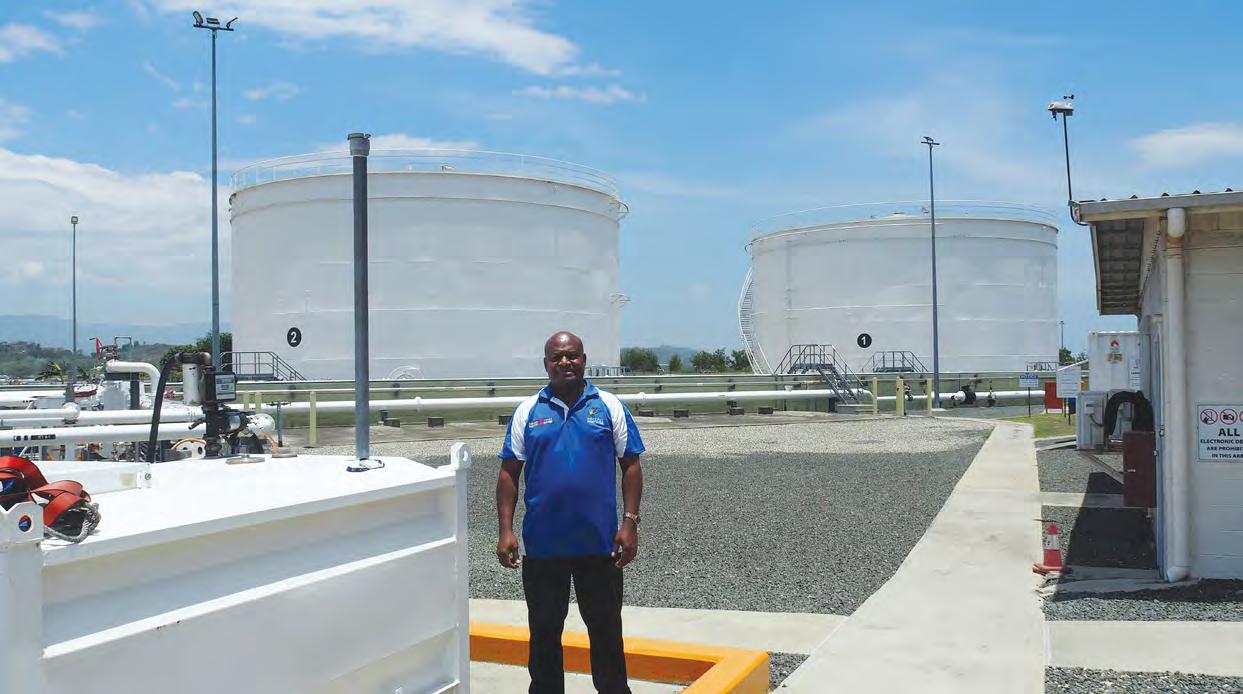
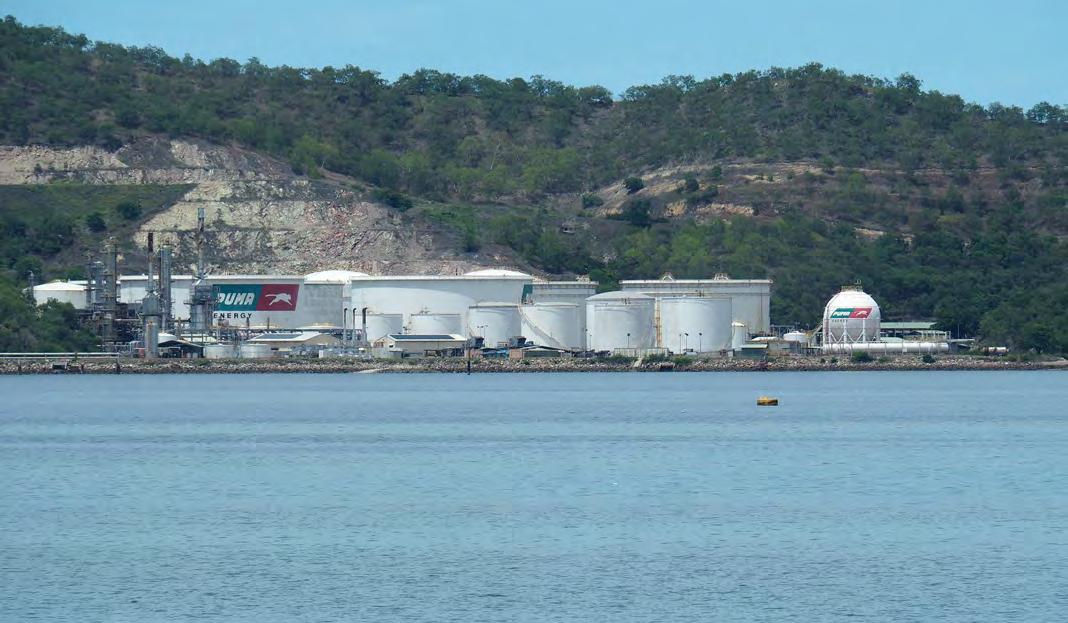
Notably, both OTML and KPHL have commenced construction of fuel
import and storage facilities adjacent to Port Moresby’s international port at Motukea.
“It won’t be a bad thing having two [new] suppliers for the country, compared to the previous situation when Puma [Energy] was the only supplier,” Henry Elias, General Manager for aviation fuel distributor Pacific Energy Aviation (PEA) in PNG, tells Business Advantage PNG.
KPHL’s 12,000 litre-capacity Jet A-1 storage facility is the more advanced of the two permanent bulk storage facilities being built. KPHL expects to have the facility completed in early 2026, Acting Managing Director Luke Liria said in December 2025.
OTML’s bulk storage facility next door will store both Jet A-1 and diesel fuel and is expected to be completed by mid-2026, according to comments
made by its Managing Director and CEO Kedi Ilimbit to local media.
Additionally, US defence contractor DGCI Corporation broke ground on a 264 million litre-capacity fuel storage facility outside of Port Moresby in September 2025. The US$498 million project is being funded by the United States Government following a request from the PNG Government to support fuel storage needs.
Filling the gap
OTML’s decision to establish its own fuel supply chain in mid-2024 saw it arrange for fuel supplier IOR to ship Jet A-1 in mobile containers to Motukea. However, OTML did not have the expertise, facilities or Civil Aviation Safety Authority licence needed to operate at Port Moresby International Airport.
Enter Pacific Energy Aviation (PEA), the licenced distributor of Shell fuels and lubricants in PNG.
The two parties came to an arrangement for PEA to receive the Jet A-1 fuel from OTML and then supply it to Air Niugini and other customers, including Qantas, Philippine Airlines and the Royal Australian Air Force.
“Ok Tedi has got two dedicated charter vessels. One brings in 130 fuel
containers on a vessel every week from Brisbane to Motukea; the other vessel brings the empties back,” Elias explains.
“From Motukea, Ok Tedi engages TWL [Trans Wonderland Group] and they bring their containers here [to Port Moresby International Airport]. They move something like 250,000 to 300,000 litres a day to the airport. To maintain a stock level, we have to keep the containers coming in.”
In mid-2025, PEA and OTML set up a joint venture to supply Jet A-1 fuel into regional airports, beginning with Lae (Nadzab Tomodachi International Airport), Mount Hagen (Kagamuga Airport), Kiunga in Western Province,
WHEN WE MOVED INTO CONTAINERS, IT WAS A BAND-AID FIX FOR THE COUNTRY.
Henry
Rabaul (Tokua Airport) and Vanimo. There are plans to expand into six additional regional airports by the third quarter of this year.
When OTML stepped in to supply Jet A-1 fuel in 2024, it signed two-year supply agreements with the airlines to ease any concerns about continuity of fuel supply.
According to Elias, the plan is now for its new bulk storage facility at Motukea to take over once these contracts expire.
“When we moved into containers, it was a band-aid fix for the country. There was no other option at that time, and we bit the bullet to go into fuel,” Elias explains.
The new bulk facility will see fuel pumped straight from the ships to the tanks, making costs more competitive than before, he observes.
“Fuel costs with containers can run at about 10 per cent more than the cost of bulk,” he says.
“But at the time, when you had no other option [of supplying Jet A-1 to the market], that’s what you do.”









Rising gold and copper prices are fuelling consolidation across the global mining industry –and Papua New Guinea is no exception. Business Advantage PNG looks at the deals that have been done, and those that may yet happen.
By Nadav Shemer Shlezinger
Soaring prices for gold, copper and other metals are driving mergers and acquisitions (M&A) activity across the global mining sector, including in PNG.
The total value of M&A activity in the sector reached US$93.7 billion in 2025, the highest since 2012, according to an analysis of Mergermarket data by international law firm White & Case. This corresponded with a 70 per cent rise in the price of gold, a 145 per cent rise in silver and a 38 per cent rise in copper last year.
The momentum is set to continue, with metals prices still climbing as this publication went to print and
with several major deals reportedly on the cards. Newmont Corporation’s reported interest in purchasing Barrick Gold’s Nevada gold-copper assets is particularly noteworthy from a Papua New Guinean perspective, given that both firms have operations in PNG.
M&A momentum in PNG
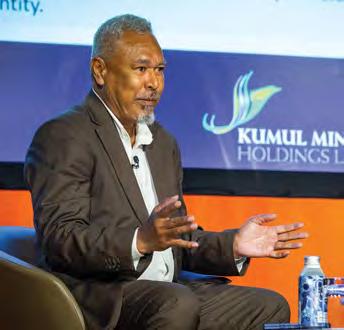
In PNG, St Barbara recently announced two separate transactions which will transform its wholly owned Simberi gold mine in New Ireland Province into a joint venture (JV) with Papua New Guinea’s state-owned Kumul Minerals Holdings (KMHL) and Chinese stateowned Lingbao Gold Group.
KMHL will acquire a 20 per cent share in the new Simberi JV for consideration of A$100 million (K300 million), while Lingbao will pay A$370 million to acquire 50 per cent of St Barbara Mining Pty Ltd (previously a wholly owned subsidiary of St Barbara), which will own the remaining 80 per cent in the Simberi JV.
KMHL now has stakes in three of PNG’s seven commercial-scale mines, including a 67 per cent share in the Ok Tedi copper mine-gold mine and a 36
Its Managing Director Sarimu Kanu spoke recently with our sister publication Mining & Energy about his firm’s “aggressive” acquisition strategy. This program is “drawing to a conclusion,” he tells Business Advantage PNG, with stakes in two other producing mines being discussed.
KMHL is also looking at a stranded gold project in Milne Bay Province, according to Kanu. This would follow subsidiary Ok Tedi Mining Limited’s (OTML) acquisition in 2025 of the Misima gold project from Kingston Resources, where OTML now has a fiveyear plan to recommence production.
A stake in the Ramu nickel-cobalt mine would be one obvious target for KMHL, given its plans to build a nickel smelter-refinery in Madang Province in a joint venture with Metallurgical Corp of China, the mine’s majority owner.
Craig Lennon, Head of Asia-Pacific for Nickel 28, which holds an 8.56 per cent interest in the Ramu Nickel JV which owns the mine, says his organisation is “happy to talk” to any interested parties.
“If that means we would look at divesting our asset in Ramu or even divesting our royalty portfolio, then that is something the board would want us to explore,” he tells Business Advantage PNG.
While he would not comment specifically on any interest from KMHL, Lennon says he understands the business case.
“There are limited assets [in PNG] that Kumul can buy into that are producing assets,” he says. “If they were to purchase into Ramu, they would be purchasing cash flow. I would think that’s a very good investment for them.”
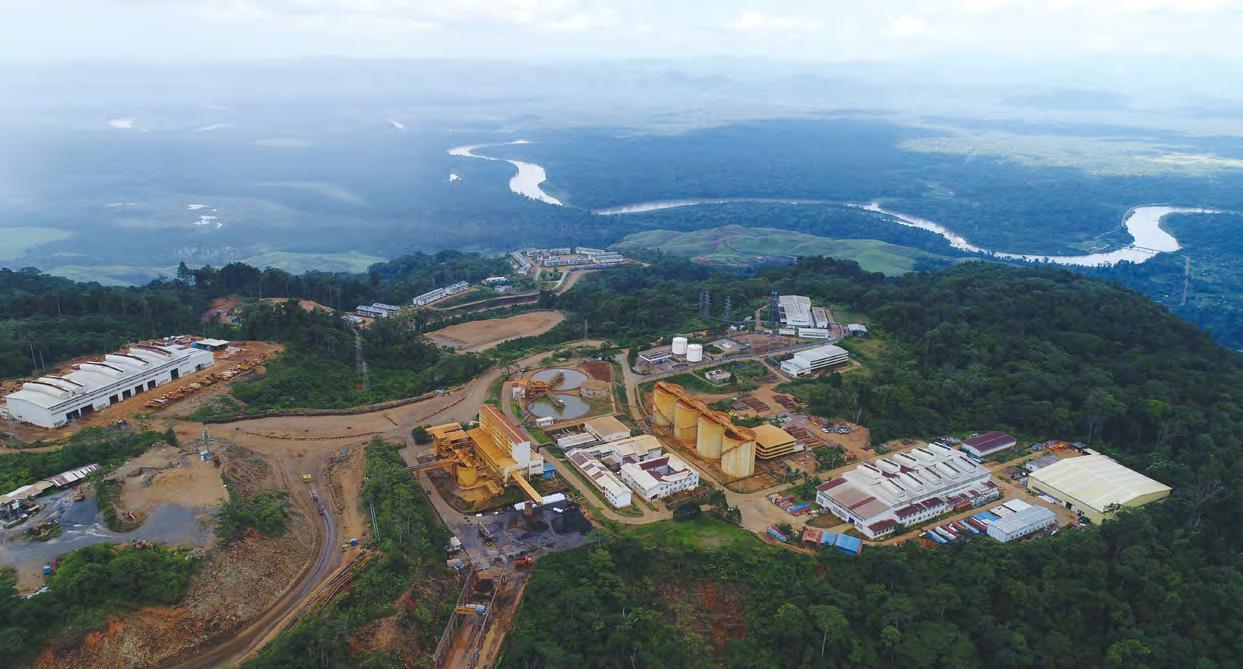
Two new mines have been in the pipeline for some time, with Prime Minister James Marape recently reaffirming the state’s commitment to bringing the Wafi-Golpu copper-gold project in Morobe Province to a final investment decision.
The US$5.4 billion project is owned by a 50/50 joint venture between Newmont and South Africa’s Harmony Gold Mining Company. Under PNG law, the state may acquire up to a 30 per cent participating interest in Wafi-Golpu, with 20 per cent held by state nominee KMHL and 10 per cent by the Morobe provincial government and landowners.
Negotiations between the State and the JV partners are ongoing, and an independent peer review process addressing outstanding technical matters is nearing completion, Marape confirmed in January.
Meanwhile, PanAust’s US$2.8 billion Frieda River copper-gold project in East Sepik Province hit a key milestone in December when it was granted six environmental permits. The developer “has been working closely with the government,” Project Director Phil McCormack told us recently
While final investment decisions could take some time, growth is expected to keep coming from PNG’s existing mines. St Barbara’s application for a 10-year extension of the Simberi mining lease to 2038 was approved in January, meeting a condition of its transactions with KMHL and Lingbao. The extension will enable St Barbara to continue with plans to extend mine life to at least 2036 and more than triple annual production to 200,000 ounces (oz) per annum. These plans will see it process ore from sulphide mineralisation contained below the oxide pits that are currently being mined.
Elsewhere:
• K92 Mining is forecasting 190,000 to 225,000 oz of gold-equivalent (AuEq) production at its Kainantu gold mine in Eastern Highlands in 2026, an increase from the record 2025 production of 174,134 oz AuEq, driven by a progressive rampup in tonnes mined and processed from two new mining fronts.
• Barrick Gold is forecasting 326,000 to 408,000 oz of production in 2026 at the Porgera gold mine, which it
operates in a JV with Zijin Mining and PNG stakeholders, including KMHL. The mine produced 375,000 oz of gold in 2025, double the previous year’s 188,000 oz. The JV partners are planning to ramp up production until at least 2028.
• Newmont’s Lihir gold mine in New Ireland is continuing on with its US$296 million Phase14A project, where it is applying steep-wall mining technologies to open up additional high-grade reserve ounces – with the aim of achieving a 30 per cent increase in production from around 2028.
KMHL NOW HAS STAKES IN THREE OF PNG’S SEVEN COMMERCIALSCALE MINES.

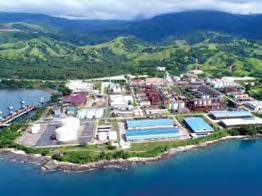
Meanwhile, the Ok Tedi mine, PNG’s third-largest gold producer (after Lihir and Porgera) and its only significant copper producer, is running a US$100 drilling program to unlock further resources and extend mine life past 2050, according to KMHL’s Kanu. Artificial intelligence is being used to process the results, Kanu says, adding, “We have the data to model production out to 2084.”
Ramu NiCo operates a world-class nickel and cobalt mining and processing operation in Madang Province, backed by total capital investment of USD 2.041 billion. The project includes the Kurumbukari Mine, the Basamuk Refinery, and a 135 km slurry pipeline connecting the two sites.
Ramu NiCo maintains a strong focus on safe, compliant and sustainable operations, and supports local employment and training, with national staff comprising around 70% of its workforce.
Guided by its “One Ramu NiCo, One Community” approach, the company continues to support development initiatives across the project corridor, including education, health and community programs.
3,000 nationals. Currently, over 1,000 national employees work directly for the company, accounting for approximately 70% of its workforce. www.ramunico.com
The launch of SevisPass, a new national digital ID, in late 2025, was the latest milestone reached in the country’s journey towards digital government.
By Andrew Wilkins
Managed by PNG’s Department of Information and Communications Technology (DICT), SevisPass is a secure, government-verified digital identity card that enables citizens to access government services online, from their computer or smartphone.
Once created, a person’s digital ID can be downloaded into a digital wallet and used for a variety of purposes, including access to the government’s Sevis portal.
The portal launched in 2024 with a digital process for applying for police checks.
A range of other government services are in the pipeline, according to Steven Matainaho, DICT’s Secretary. These
include the payment of water and power bills, obtaining school certificates and, potentially, electronic voting.
“Digital ID will unlock business growth and enable true digital transformation,” Matainaho told the Innovation PNG tech conference in Port Moresby last year.
SevisPass is just one project in PNG’s Digital Government Plan 2023–27, which DICT is now implementing.
Other projects include the digitisation of important government processes such as cabinet submissions, government tenders, payroll and financial management.
Another multi-year project, led by the PNG Customs Service, aims to provide a single window into as many as 15 regulatory agency processes commonly used by businesses.
Behind the scenes,
DICT has developed a governmentwide “landing zone,” hosted by Amazon Web Services, for government agencies to deploy their online services and websites. Nearly 150 government agencies had been onboarded by 2025.
Meanwhile, DICT’s National Cyber Security Centre, created in 2023, is currently monitoring threats across government networks.
While DICT’s internal development team has worked on some of these early projects, including SevisPass, the growth of digital government in PNG will inevitably provide increasing opportunities for the private sector –and local developers in particular.
Early in 2025, the government’s Immigration and Citizenship Services Authority launched an AI solution to streamline assessments of visa applications.
“It was the first use of generative AI for government workload in the Pacific, but not the last,” James Inglis, founder of NiuPay, the Port Moresby firm that developed the solution, tells Business Advantage PNG
Meanwhile, local software developer KumulSoft recently launched a version of its asset management platform for government with DICT endorsement.
The PNG Digital ICT Cluster, created to encourage local tech expertise, recently announced a partnership with the National Information and Communications Technology Authority to roll out and support three pilot digital business hubs for micro-, small- and medium-sized enterprises in PNG.

For Priscilla Kevin, co-founder of the Cluster, these hubs are as much about connecting entrepreneurs with each other as they are about skills and training.
“When you create hubs, then the conversations get bigger and louder because there’s more activities happening in those spaces,” she Business Advantage PNG
This has been a standout year for Vodafone PNG. We now carry 55 per cent of the country’s total data on our network, and 93 per cent per cent of our 2 million subscribers are smartphone users.
Our 2026 strategy focuses on expanding reach and enhancing user experience, ensuring we serve local communities wherever they are across PNG. This includes strengthening terrestrial connectivity into regions like the Highlands, while also exploring complementary technologies such as Low Earth Orbit satellite solutions, including Starlink, to extend coverage into harder-to-reach areas.

Despite significant strides, the mobile penetration of the country remains relatively low at 46 per cent. We are hoping to take it to 70-80 per cent over the next 18 to 24 months.
Globally, research data shows that every 10 per cent increase in mobile penetration delivers a corresponding 2 to 3 per cent uplift in GDP, with broad ripple effects across the various industries and economy at large. This benefits not only large enterprises but also SMEs and especially the micro business and entrepreneurship space.
Our mobile money product has been licensed and approved for market use in PNG. We are excited about its potential, after its proven success in other Pacific markets, including Fiji, where the mobile money platform processed more than K15 billion in transaction value in 2025 alone. We are working hard to have pilot trials by the end of this year.
I believe connectivity is one of the greatest equalisers, especially in emerging markets, and digitalisation presents a powerful opportunity to drive transparency, reduce institutional corruption and improve efficiency across the economy, delivering lasting benefits for the entire nation.

State-owned PNG DataCo owns and operates the National Transmission Network. In this exclusive interview, CEO Paul Komboi speaks about the continued expansion of the NTN, DataCo’s growing partnership with Oracle, and AI.
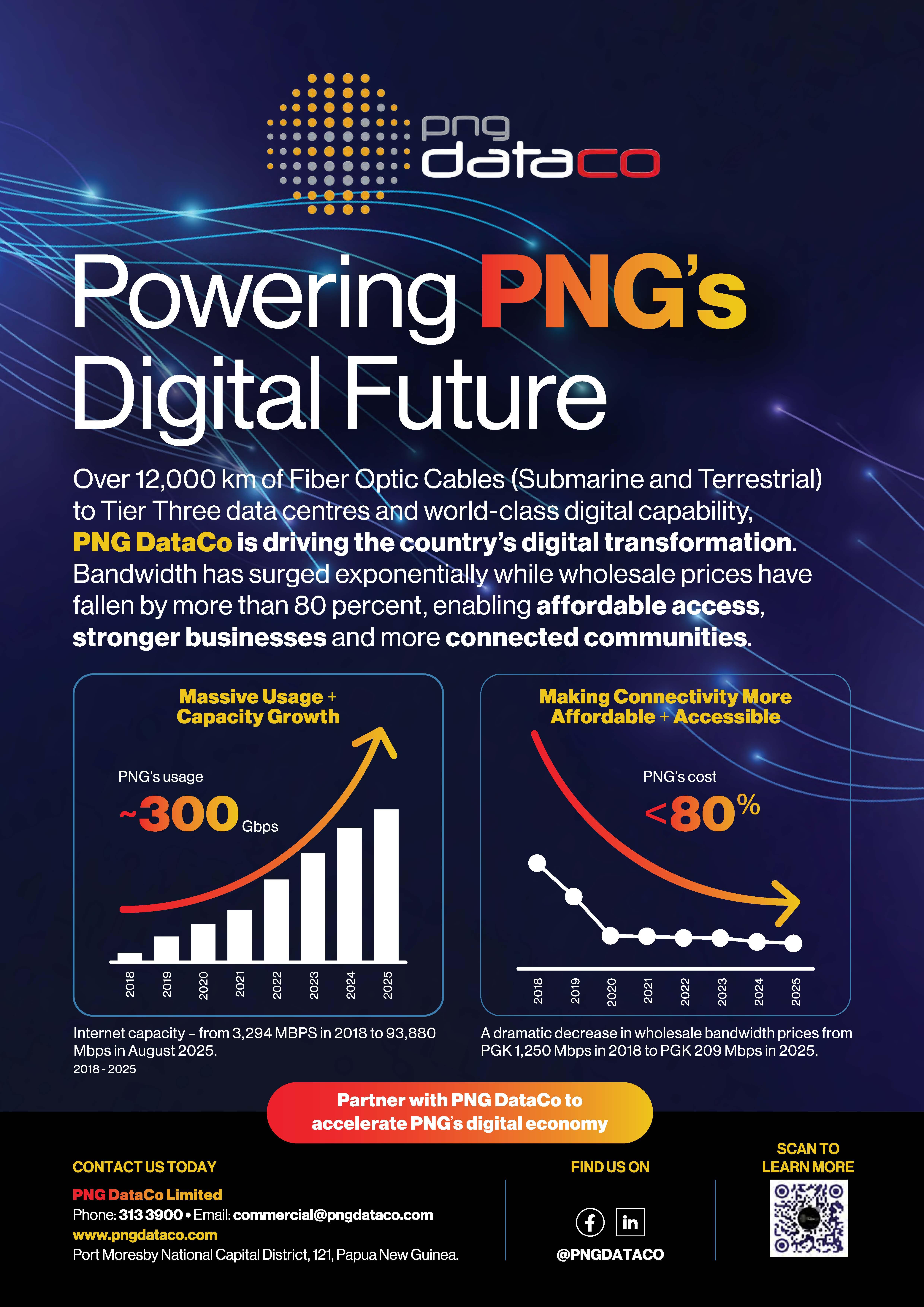
Business Advantage PNG (BAPNG): Wholesale internet costs have fallen from K1,250/Mbps in 2018 to K209/ Mbps in 2025. Aside from your investment in the Coral Sea Cable, what do you see as the main drivers?
Paul Komboi (PK): The [Coral Sea] cable primarily serves the major telecom companies – Digicel, Vodafone, Telikom – which consume about 70 per cent of the bandwidth, with the remainder distributed to ISPs [internet service providers] and corporate entities.
We invested a lot initially in terrestrial cables too. As we connected the population, we realised that connectivity was needed in even more remote locations. Hence, we extended connectivity further, into the districts. Today there is fibre connectivity in all the provinces.
Enhanced internet penetration is estimated to have contributed close to 1 per cent to the country’s GDP growth.
BAPNG: Can you share plans to extend the National Transmission Network?
PK: Over the next one to two years, our plan for the NTN focuses on enhancing resilience and expanding reach.
Given PNG’s vulnerability to disasters, we are building redundancy into our submarine cable systems and creating terrestrial loop networks, especially in the economically critical Highlands region.
A key pillar is partnering with Low Earth Orbit satellite providers like Oneworld and Starlink. This will deliver vital redundancy and connect the remote 70-80 per cent of the population beyond fibre’s reach.
Concurrently, in urban centres, we will deploy advanced fixed broadband technologies to connect buildings and

residents, complementing the existing 4G mobile networks. This dual strategy ensures both reliable core infrastructure and expanded national coverage.
Apart from connectivity, we are looking at cloud computing and data centres. We want to provide the latest in the market for our consumers.
We plan to build another data centre at Kumul Petroleum’s special economic zone [SEZ] in Caution Bay. We’re looking at an SEZ zone in Lae to maintain the data centres because technology is evolving very fast. We’re also looking at the Islands and Highlands regions for data centres.
BAPNG: Oracle and PNG DataCo recently agreed to a partnership to provide Oracle Cloud Infrastructure to the PNG government and businesses. Can you provide insights into this relationship?
PK: We were approached by Oracle, who wanted a partner in PNG. Oracle provides all the infrastructure – software and hardware – which it manages under the DataCo logo. Oracle has approval to localise campaigns for PNG, making sure everything is up to date for our [local] context.
Our collaboration with Oracle is prominent in education, where we jointly developed a learning management system with Samsung devices. We manage the content and platform for students and lecturers while connecting universities with necessary infrastructure.
Oracle is spending, but we see [this partnership] as a foreign direct
investment. The load that we consume will be the one that will repay the investment in the country.
We also see Oracle assisting us with digitalisation plans being developed by other SOEs [state-owned enterprises] owned by our parent company, Kumul Consolidated Holdings. We are about to put pen to paper for five SOEs to initiate the project.
BAPNG: How are you using artificial intelligence internally, and what role do you see it playing more broadly in PNG? PK: We only started with AI early in 2025, but I feel like I’ve been using it for years. It’s very intuitive. I’m encouraging our staff to use it as a tool. Now we’re looking at setting policies for AI usage for all of our 140 employees, enabling them to work with AI gadgets on our network. We’re trying to use technology to enable us to perform better.
Traditional ERP [Enterprise Resource Planning] software is automated in a way, but it doesn’t have those additional features that make you more efficient, [whereas] AI features are really amazing. You don’t need to have an assistant anymore, which cuts down on labour numbers. It also can cut down human errors and flaws.
I think latency will be a key factor in supporting technologies like AI.
We already know the advantage of AI. And most of our government have set targets to utilise technology to help growth and development.
We want to create an environment to make that possible.
For half a century, Consort has proudly supported a diverse range of clients across Papua New Guinea's energy and resources, construction, wholesale and transport sectors.
As PNG's leading coastal shipping provider, we remain committed to delivering consistent and reliable services to all our customers.
Liner Shipping Cargo Consolidation
Project Charters Door-to-Door Delivery
Weekly Sailings
Lae, Port Moresby, Lorengau, Madang, Rabaul
10-day Sailings
Kimbe, Kiunga
Fortnightly Sailings
Alotau, Buka, Kavieng, Kieta, Oro Bay, Vanimo, Wewak
The creation of Special Economic Zones is one of the PNG government’s key strategies for encouraging economic growth. We talk to the acting head of PNG’s Special Economic Zones Authority to understand the opportunity they could represent to investors.
By Andrew Wilkins
Special Economic Zones (SEZs) will be PNG’s “main vehicle” for economic transformation over the next 20 years, Richard Maru, Minister for International Trade and Investment, told the 2025 PNG Investment Conference in Brisbane last August.
Noting the success of SEZs in the Philippines and other neighbouring countries, Maru said PNG’s SEZs would aim to meet long-held aspirations such as unlocking more land for development, promoting value-adding (especially for export) and reducing reliance on imports.
While all SEZ applications must first receive in-principle concept approval from the National Executive Council (PNG’s Cabinet), final licences for zone developers and users are issued by the Special Economic Zones Authority (SEZA), an independent government agency.
“After the concept approval, the investors or proponents can apply to the Special Economic Zones Authority with their plans, feasibility studies and all other requirements that are contained in the SEZA Act 2019,” Kikila Yavase, Acting Chief Executive of the SEZA, explains to Business Advantage PNG.
“If they meet all of these 37 requirements fully, then the licence will be issued.”
Five zones have been licensed for development so far, all of them located in or just outside PNG’s capital city.
The first licensed site is at Paga Hill in downtown Port Moresby, and is set to host PNG’s first Radisson Blu resort and a casino.
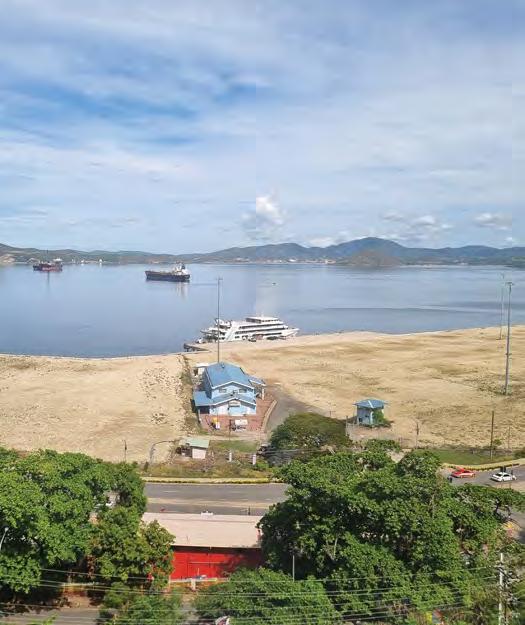
WE HAVE ABOUT 21 OR 22 PROPOSED SITES – THOSE ARE SITES THAT WE THINK ARE BANKABLE FOR INVESTORS TO COME IN AND INVEST.
Kikila Yavase, Acting Managing Director, Special Economic Zones Authority
Adjacent to Paga Hill is the K2.2 billion Sea Park Development Project, an integrated residential, office and recreation development. Phase one is set for completion in late 2027, with a total of three phases of development planned.
Pacific Lime and Cement’s Central Lime Project is due to commence quicklime production in early 2027, supplying
both local and export markets.
Baosen International Holdings Limited has received a licence for its PNG Trade Centre integrated retail and cultural development at Five Mile – part of the ambitious Chinatown project.
Kumul Petroleum Holdings’ Petroleum Park at Caution Bay, near ExxonMobil’s LNG plant, was issued with a provisional 12-month licence in August 2025 for a steel fabrication and training facility.
“If they can meet all the requirements within one year, a full license can be issued,” says Yavase.
Beyond these five, a pipeline of other potential zones across PNG is being put together by a combination of private developers, government enterprises and local authorities.
“We have about 21 or 22 proposed sites – those are sites that we think are bankable for investors to come in and invest,” says Yavase. “But first, we have to get utilities like
water supply and power, as well as road access and port facilities, at those proposed sites.”
Yavase’s comments indicate the challenge of developing what are often greenfield sites.
Therefore, he says, the SEZA is not just providing licence approvals but is also playing an active role in helping to facilitate future SEZs.
Helping to secure land is just one example of this: “If a proposed site is on customary land, we are now converting those for the landowners into state leases so that they can be equity participants in the projects as well.”
The government is banking on generous incentives to attract both developers of SEZs and tenants once the zones are built. Depending on the project, these include corporate tax holidays of up to 15 years, duty-free importation of capital goods, lower withholding taxes on dividends and relief on other taxes.
Local and international investors are “subject to the same treatment and the same tax incentives,” Yavase says.
It is still early days for PNG’s SEZ strategy, and some refinements to its regulatory framework can be expected. Nevertheless, Yavase says the strategy is already working.
“We have already attracted some K10 billion in investments and have created around 30,000-plus jobs for Papua New Guineans,” he says.
PNG’S SEZ PIPELINE
LICENSED FOR DEVELOPMENT PROPOSED*
• Paga Hill Tourism SEZ (NCD)
• Sea Park Development (NCD)
• Pacific Lime & Cement (Central Province)
• PNG Trade Centre, Chinatown (NCD) Central
PROVISIONALLY LICENSED
• KPHL Petroleum Park, Caution Bay (Central)
APPROVED BY NEC
• Lae Port (Morobe)
• Portside Gardens (NCD)
• Finschhafen Integrated SEZ (Morobe)
• Central Rice
• Rauna Kalana Rice
• Vanapa Rice
East New Britain
• Kokopo Tourism Zone
• Tokua Airport City
• Gazelle Integrated Zone
East Sepik
• Sepik Plains Agricultural Zone
Gulf
• Ihu SEZ
Madang
• Madang Integrated SEZ
• Middle Ramu Industrial
• Siar Industrial Zone
• Usino Bundi Agricutural Zone
Manus
• Manus Free Trade Zone Morobe
• Nadzab Airport City
Sandaun
• Vanimo Free Trade Zone
Western Highlands
• Baiyer Agricultural Zone
Western
• Western Agricultural Zone









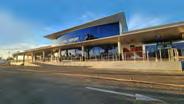





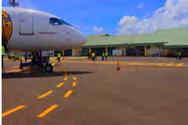

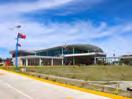


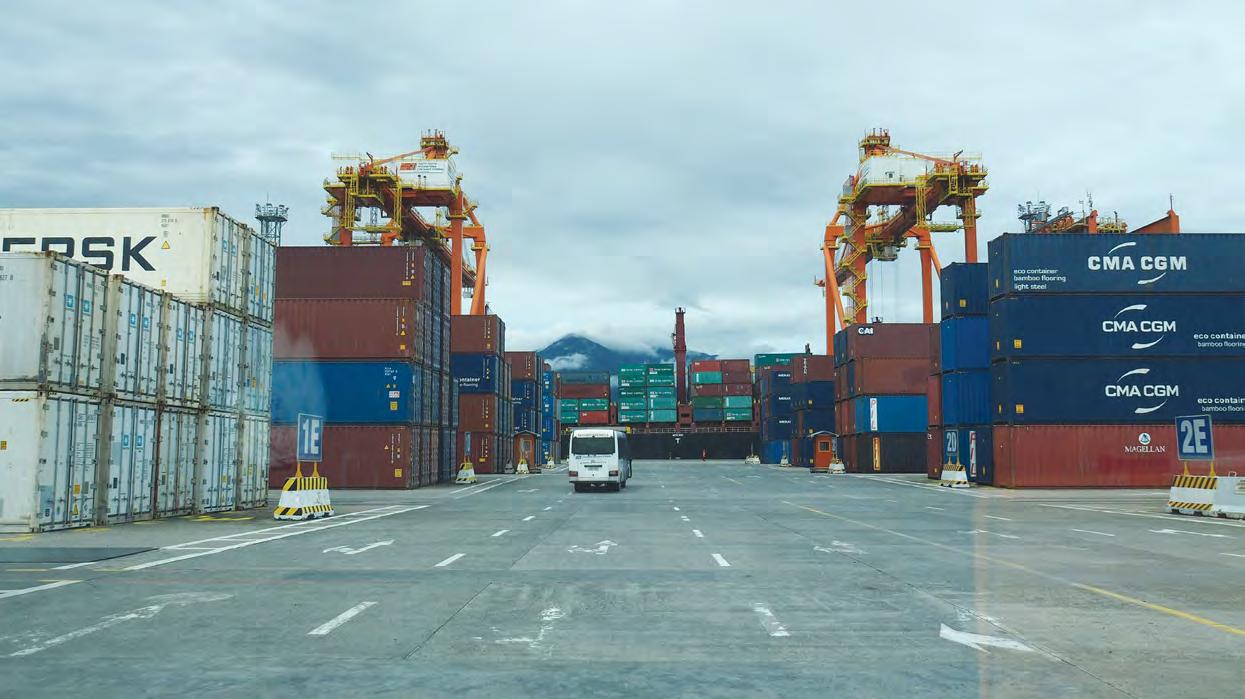
PNG’s two main international ports enjoyed a strong year in 2025. Capital spending programs are focused on adding capacity in order to prepare for further economic growth, sector leaders tell Business Advantage PNG.
By Nadav Shemer Shlezinger
Traffic through PNG’s two busiest international ports rose sharply in 2025, fuelled by higher production of coffee, cocoa and other agricultural commodities.
Exports laden from the South Pacific International Container Terminal in Lae and the Motukea International Terminal near Port Moresby increased 14.6 per cent for the year, according to the operator of both ports, ICTSI South Pacific. Imports laden also climbed 11.3 per cent, supported by a doubling in ammonium nitrate fertiliser used in the agriculture sector.
The increase in ships calling into PNG in the second half of 2025 reflects the increase in demand, ICTSI South Pacific CEO Robert Maxwell tells Business Advantage PNG
In August, Swire Shipping increased the frequency of its North Asia Express service from fortnightly to weekly.
In October, ANL launched its APR2
service, connecting Lae and Motukea to ports in China, South Korea and Queensland, Australia.
ICTSI South Pacific is continuing to invest to keep pace with the growth, according to Maxwell.
WE SEE THE OPPORTUNITY NOW TO TAKE THE NEXT STEP AND START TO INTEGRATE ALL OF OUR DIFFERENT LOGISTICS UNITS.
Chris Daniells, Managing Director, Steamships Trading Company
In Lae, it recently added one mobile harbour crane. At Motukea, it has also added a mobile harbour crane, bringing the total number of cranes to three. It is also working on ‘Project Jupiter’, a battery energy storage system that will protect against power surges and outages from the grid, translating to improved vessel productivity with its electric ship-to-shore cranes.
Similarly, Steamships Logistics is investing in the Joint Venture Port Services business to help ease the movement of products at PNG’s domestic ports.
“We’ve upgraded our capacity, particularly in Lae,” Nick Fisher, Steamships Logistics’ Executive Advisor – Marine Fleet & Investments, tells Business Advantage PNG.
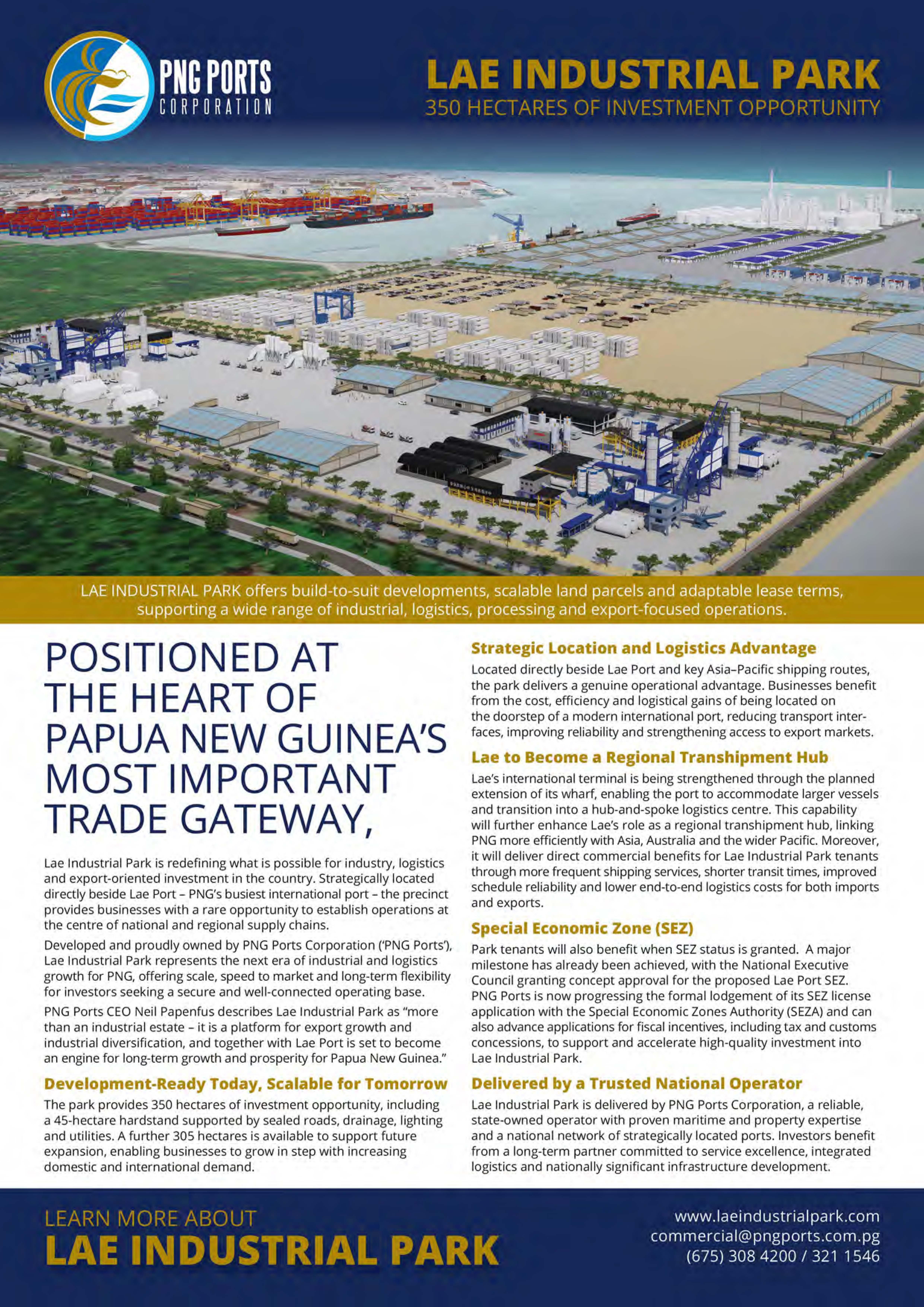
Lae Industrial Park is redefining what is possible for industry, logistics and export-oriented investment in the country. Strategically located directly beside Lae Port- PNG'sbusiest international port - the precinct provides businesses with a rare opportunity to establish operations at the centre of national and regional supply chains.
Developed and proudly owned by PNG Ports Corporation ('PNG Ports). Lae Industrial Park represents the next era of industrial and logistics growth for PNG,offering scale, speed to market and long-term flexibility for investors seeking a secure and well-connected operating base. PNG Ports CEO Neil Papenfus describes Lae Industrial Park as "more than an industrial estate - it is a platform for export growth and industrial diversification, and together with Lae Port is setto become an engine for long-term growth and prosperity for Papua New Guinea."
The park provides 350 hectares of investment opportunity, including a 45-hectare hardstand supported by sealed roads, drainage, lighting and utilities. A further 305 hectares is available to support future expansion, enabling businesses to grow in step with increasing domestic and international demand.
Located directly beside Lae Port and key Asia-Pacific shipping routes, the park delivers a genuine operational advantage. Businesses benefit from the cost, efficiency and logistical gains of being located on the doorstep of a modern international port, reducing transport interfaces, improving reliability and strengthening accessto export markets.
Lae's international terminal is being strengthened through the planned extension of its wharf, enabling the port to accommodate larger vessels and transition into a hub-and-spoke logistics centre. This capability will further enhance Lae's role as a regional transhipment hub, linking PNG more efficiently with Asia, Australia and the wider Pacific. Moreover, it will deliver direct commercial benefits for Lae Industrial Park tenants through more frequent shipping services,shorter transit times, improved schedule reliability and lower end-to-end logistics costs for both imports and exports.
Park tenants will also benefit when SEZstatus is granted. A major milestone has already been achieved, with the National Executive Council granting concept approval for the proposed Lae Port SEZ. PNG Ports is now progressing the formal lodgement of its SEZlicense application with the Special Economic Zones Authority (SEZA)and can also advance applications for fiscal incentives, including tax and customs concessions, to support and accelerate high-quality investment into Lae Industrial Park.
Lae Industrial Park is delivered by PNG Ports Corporation, a reliable, state-owned operator with proven maritime and property expertise and a national network of strategically located ports. Investors benefit from a long-term partner committed to service excellence, integrated logistics and nationally significant infrastructure development.
“We’ve added additional cranage on the shoreside, which allows us to be more productive and turn things around faster.”
Investing in tonnage
Steamships is also spending on refleeting and growth projects across its shipping businesses, with a particular focus on Pacific Towing, which provides marine services nationwide and specialised support to the oil and gas sector.
“There’s some fairly incremental growth capex, on the back of increasing volumes,” Fisher says. He adds that a final investment decision (FID) on Papua LNG or other major resources projects would “necessarily trigger additional growth capex.”
In anticipation of that demand, Steamships is looking to rejuvenate its fleet. “We’re looking to bring in fit-forpurpose tonnage that will be suitable for all the future [resources] projects.”
If Papua LNG does reach an FID this year, then Fisher is confident the domestic shipping sector can meet the demands of the project.
“If you look across ourselves and our competition, that tonnage is generally available in the country,” he says, adding that any additional capacity requirements can be met “fairly
quickly” by chartering ships from the international market.
As for the engineering, procurement and construction firms that will be selected by TotalEnergies and its Papua LNG joint venture partners to build the project, Fisher says discussions are already taking place around “who might be able to support that in-country.”
Steamships Logistics has made substantial investments in both its landside and marine fleets, and it will continue to invest in new assets over the next five years, Chris Daniells, Managing Director of parent Steamships Trading Company, tells Business Advantage PNG
“We see the opportunity now to take the next step and start to integrate all of our different logistics units. So, every time we ship something, we’d like to add a truck to it as well. Warehousing is becoming a much bigger part of what we do,” he says.
“We’re connecting all the dots, so our customers can get everything done in one place, ship it, truck it and store it. PNG has many daily logistics challenges, but we believe that making things easier for our customers is the key to success.”
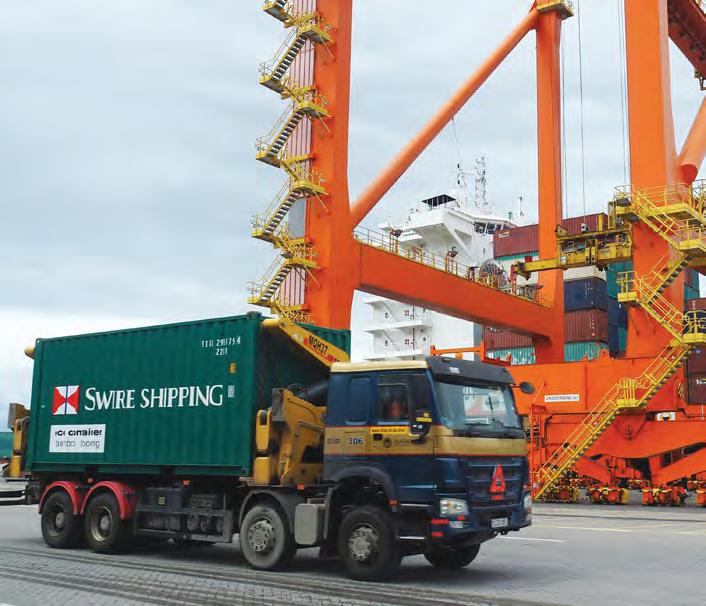
With a major program of port upgrades underway, and a new focus on investing in facilities that support business growth, PNG’s key ports look set to become drivers of greater prosperity. Neil Papenfus, CEO of PNG Ports Corporation, shares the plan with Business Advantage PNG.
By Nadav Shemer Shlezinger
Work is already underway on the first of five key port redevelopments that Neil Papenfus, Chief Executive Officer of state-owned PNG Ports Corporation Ltd (PNGPCL), says will deliver essential infrastructure “suitable for the next 50 to 100 years.”
Kimbe Port in West New Britain, which handles around 75 per cent of PNG’s palm oil exports, is being upgraded with the help of a K260 million concession loan from the Australian Infrastructure Financing Facility for the Pacific (AIFFP), in close partnership with the Papua New Guinea Government through PNG Ports. The 18-month project began in August 2025 and is focusing on two key areas: marine and land works.
“It’s no secret that a lot of our port infrastructure has deteriorated, so consequently we’ve got a huge program [at Kimbe],” Papenfus tells Business Advantage PNG.
In further good news for the people of West New Britain, Papenfus notes that Pacific Marine Group and Global Construction, the contractors carrying out the work, are currently employing around 70 PNG workers,
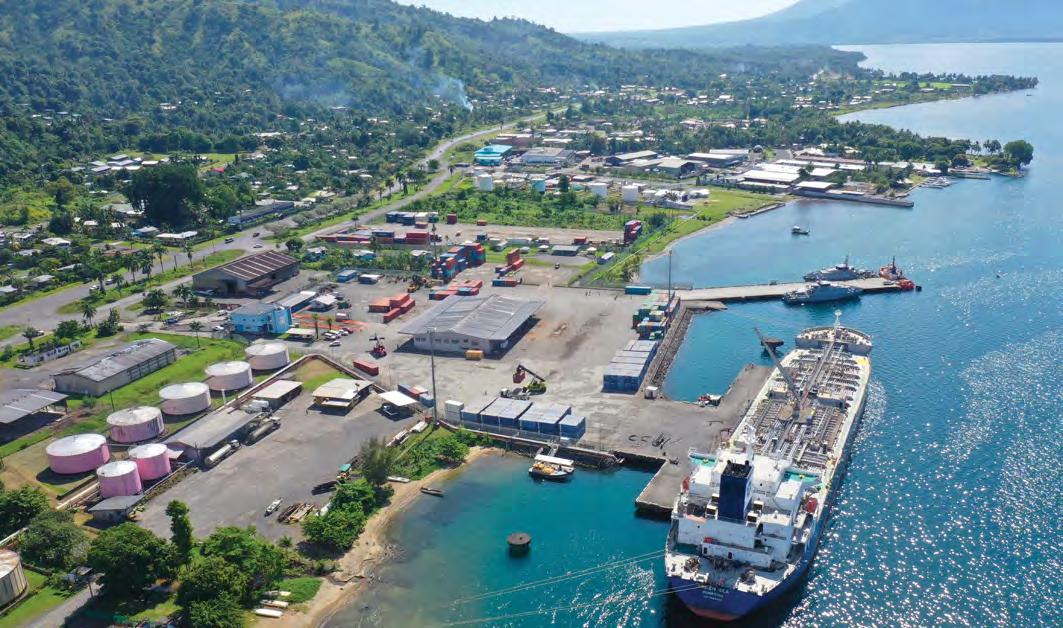
THE
with up to another 150 to be employed once onshore works commence. The companies are also engaging directly with local technical schools.
“It’s a pretty exciting economic boost for the region,” he says.
This year will be “really busy” for PNG Ports, Papenfus notes, with a focus on completing planning and approvals and enabling the works required to commence construction of four additional AIFFP-funded projects in 2027.
In Lae, PNG’s busiest and largest port, work will begin on the extension of the international terminal’s wharf, adding considerably greater capacity and enabling it to accommodate some of the largest vessels in the world.
Upgrades will also commence at Daru, Oro and Kavieng ports, all financial loss-making ports connecting rural and maritime communities that PNG Ports operates under its community service obligation (CSO).
“Kavieng Port will actually move to a new location, south of the existing one, which is really not a suitable port.
This offers huge opportunity in terms of cruise vessels and other bigger vessels being able to come, it’s a deeper and safer approach,” Papenfus says.
Additionally, PNG Ports has secured €63 million (K322 million) from the European Investment Bank and the French Development Agency to upgrade the port at Rabaul, with a focus on improving environmental standards, water quality and waste management, and on integrating renewable energy.
“A lot of focus will also be on supporting cruise vessels and local industry and tourism,” Papenfus adds.
Finally, PNG Ports will self-fund upgrades to two other CSO ports, with a K38 million program at Lorengau on Manus Island and an additional program at a small wharf just off its Madang port.
In a move designed to drive great economic activity, PNG Ports is also investing heavily in the new 350-hectare Lae Industrial Park, situated adjacent to Lae Port at the Lae Tidal Basin.
The park, which Papenfus hopes “will be operational in 18 to 24 months,” will be aimed at businesses in downstream processing, particularly
related to agriculture, fisheries and manufacturing. The park’s application for Special Economic Zone status recently received ‘concept approval’ from the National Executive Council.
“We genuinely believe this is the future for Morobe and for PNGPCL,” Papenfus says. “It’s an example as well of us investing directly in economic activity, and we hope to consequently drive the activity through the ports.”
Papenfus, whose involvement with PNG’s maritime sector dates back to the construction phase of PNG’s first major gas project, PNG LNG (completed in 2014), believes the heavy investments made over the past decade leave him confident the country is ready for the next wave of resources projects.
“Nobody was ready for PNG LNG at the time. We struggled on the wharves … It was a tremendous learning experience in a very short period of time,” he recalls.
Now, he says, “the country is in far better shape for the projects going forward, given that so much of this infrastructure has been built in response to the original boom. Port Moresby’s international port at Motukea didn’t exist at the time, the Lae Tidal Basin didn’t exist at the time – all this has been built since.”
In December 2025, Air Niugini received two new Airbus A220-300 planes, part of its ongoing refleeting program.
The planes are currently operating on key domestic routes serving Port Moresby, Lae, Rabaul, Kavieng, Manus Island and Alotau. Air Niugini plans to introduce the planes to additional destinations, such as Mount Hagen, Wewak, and Kimbe, once runway upgrades are complete.
“The planes represent not only a major modernisation program for the airline, but now we’ve also got to upgrade the airports,” Professor David Kavanamur, Managing Director of Air Niugini parent company Kumul Consolidated Holdings (KCH), tells Business Advantage PNG.
“As such, that single new plane is acting as a major pull factor for the modernisation of the aviation industry in Papua New Guinea.”
In addition to domestic routes, the A220s will also be deployed on selected international services in the region, including routes to Australia, once all regulatory requirements are complete.
The aircraft will first operate flights to and from Cairns before expansion into the Australian network more broadly. This aligns with Air Niugini’s plans to
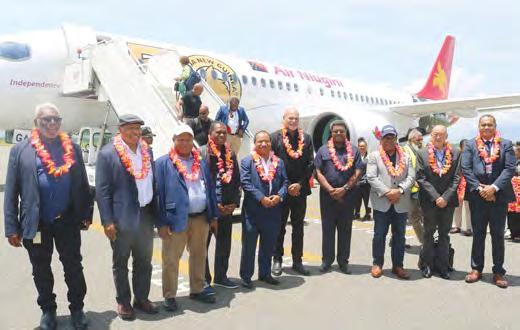
improve the frequency of the Port Moresby-Sydney route, which it is looking to increase from two to three times a week beginning on 29 March.
Air Niugini now has three A220-300 aircraft in its fleet. It is expecting to receive an additional eight A220100 aircraft as part of the re-fleeting program, allowing it to gradually phase out its existing Fokker fleet and its leased Boeing 737 aircraft.
Meanwhile, Alan Milne has been announced as Air Niugini’s new CEO. This will be Milne’s second stint as CEO, after serving in the role from 2018 to 2020.

Steamships continues to invest heavily in the Portside Business Park development, while also eyeing opportunities in areas such as Mount Hagen and Lae, as the head of its property division, Alan Heyns, tells Business Advantage PNG.
By Charlotte Armstrong
The head of Steamships Trading Company’s property division says the company is “bullish” about the investment opportunities in PNG in 2026 and beyond. Steamships funds Pacific Palms Property to the tune of about K200 million per year on average, enabling it to invest in multiple projects at a time.
“We have a significant pipeline of work coming up with multiple developments of different sizes,” says Alan Heyns, CEO of Steamships Property Division.
Portside ready to kick off
The Portside Business Park development, located in Motukea in the National Capital District, is the largest current investment, with more than K100 million spent to date on infrastructure, including water, power and security systems.
It was a busy end to last year, with construction of the first four warehouses completed and a tender signed for a wharf with barge access.
However, “2026 is the year Portside will really kick off,” according to Heyns.
The next stage is retail development, which was set to go to tender as this publication went to print. Twenty luxury camp accommodation units are also being planned.
According to Heyns, Portside’s “master plan” is projected to take up to 10 years to fully develop.
“It’s a strong and resilient business model, and we’re confident it will perform exceptionally well. Our focus is firmly on long-term value creation rather than short-term gains,” he says.
A major consideration is “what local businesses will need.”
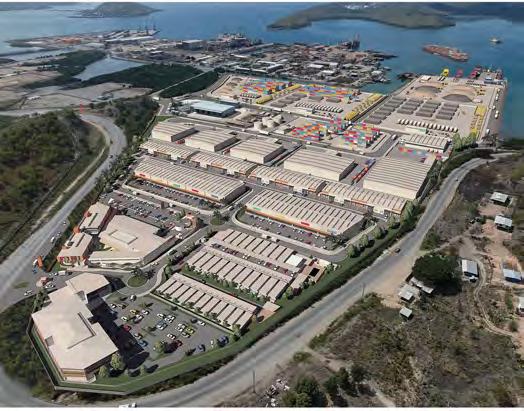
Another major project for Pacific Palms (and joint venture partner Tininga) is Dobel Central in Mount Hagen, the first large shopping complex in the Highlands Region.
The Western Highlands capital was chosen in part for its strong non-resources cash economy and urban sprawl, which make it prime real estate for retail developments.
Retail spending in the country overall has been up, and Heyns says Pacific Palms will continue to invest in the sector.
“We have been a little Port Moresby-centric in the last five years, and now we’re opening up to other centres, starting with Mount Hagen and Lae,” he says.
WE’RE NOT LOOKING AT JUST MEETING THE NEEDS OF BIG RESOURCE PLAYERS. WE’RE LOOKING AT CREATING A WHOLE ECONOMIC ECOSYSTEM.
Alan Heyns, CEO of Steamships Property Division
Current clients of Portside include fellow Steamships’ subsidiary Pacific Towing, as well as other companies servicing PNG’s resources sector.
“We’re not looking at just meeting the needs of big resource players. We’re looking at creating a complete economic ecosystem,” Heyns says.
“Portside Business Park sets up second- and third-tier contractor support companies to service resource projects.”
The company is also reviewing a number of projects to greenlight in Lae, including new industrial, retail, residential and smaller hotel opportunities in the area.
Looking to the future, Heyns says the property market is anticipating largescale investments once a potential final investment decision is made on Papua LNG.
“Even waiting for these resources projects, the economy has been very buoyant. There’s cash in people’s hands, which triggers fast-moving consumer goods,” he adds.
He does flag the prospect of shortages in residential properties, where Pacific Palms is hoping to continue making investments.
“Property development is long-term planning. You can’t just click your fingers and get a good result.”
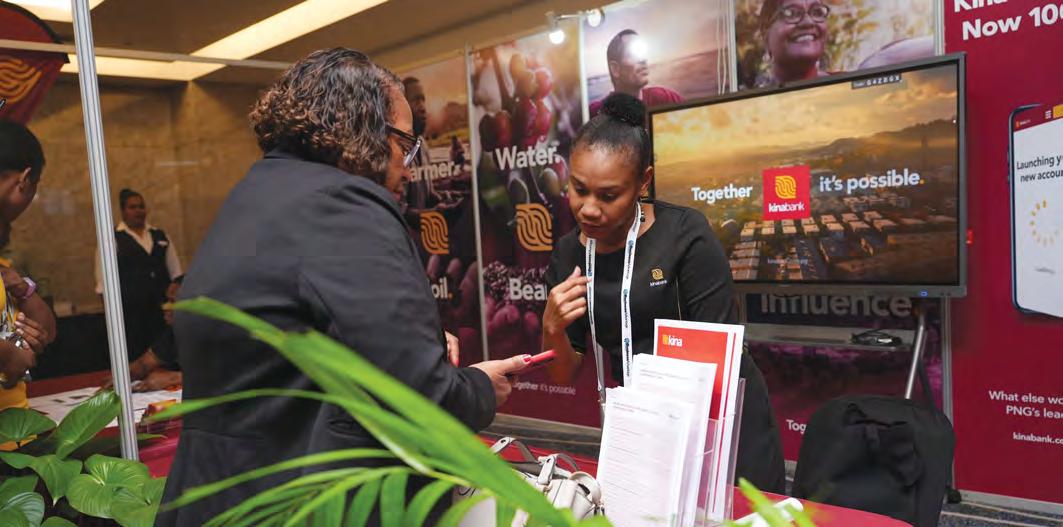
PNG’s banks are scaling up digital platforms to fuel growth and advance financial inclusion, as CEOs in the sector tell Business Advantage PNG.
By Nadav Shemer Shlezinger
The era of digital banking has well and truly arrived in PNG, with further investment in digitalisation at the centre of virtually every bank’s growth strategy.
As Andrew Cairns, CEO of Westpac PNG, explains to Business Advantage PNG, digitalisation is not just about offering Papua New Guineans another way to bank, but also about shaping how they engage with the financial system.
“It [digitalisation] gives us the ability to be able to address some of the issues associated with a cash-based society … By having a safe, reliable, consistent e-banking experience, you can change people’s behaviours,” he says.
“The second thing it enables is financial inclusion. Those who are underbanked or non-banked: we have the opportunity to be able to bring them into the system and provide them with access to funds and capabilities which are safe.”
In a country with a large and widely dispersed rural population, digital
banking is already transforming access. There is no better illustration than the case of CreditBank PNG, which received a full commercial banking licence in 2024.
CEO Danny Robinson tells Business Advantage PNG that its digital platform has been the key to its successful launch: “Our customers have been able to open accounts right across the country using our digital app. We’ve opened accounts in all 22 provinces.”
Digital onboarding has become the standard at CreditBank, where 70 per cent of new customers open their accounts online “without ever having to come into the branch,” according to Robinson.
It is also critical to the strategy of another new bank, TISA Bank, which is targeting the estimated 75 per cent of Papua New Guineans who are unbanked.
“We want to make it convenient, accessible and affordable,” says TISA Group CEO Michael Koisen, explaining that a bank account is not a requirement to use TISA Bank’s mobile wallet.
Digitising Know Your Customer (KYC) processes is an important part of onboarding.
Ivan Vidovich, CEO of Kina Bank, says his bank worked closely with the Bank of PNG to demonstrate that fully automated digital onboarding reduces risks compared to traditional manual processes.
“We found that the regulator was very accommodating and willing to work with us on those innovation opportunities,” he says.
In addition to building digital platforms, PNG’s banks are finding innovative ways to reach customers who have limited access to technology.
BSP’s USSD-enabled Wantok Wallet enables users to text instructions without a smartphone, internet access or a bank account.
Kina Bank’s WhatsApp Banking allows users to text instructions through

Kina Bank marked its 40th year with strong performance, delivering 37 per cent year-on-year growth in the first half of 2025, and achieving consistent momentum across our diversified financial services portfolio.
Looking ahead, the market is likely to open further, and we may see additional commercial banking licences issued in the coming years. In preparation for new opportunities, we are investing in key leadership and specialist roles to support our growth ambitions. We already have a strong and diverse product and services portfolio, enabling Kina to punch above its weight in the market.
We are also pursuing strategic growth opportunities, with a focus on income diversification, including the expansion of wealth
the popular messaging platform, and in 2025 it introduced Kina Pei, allowing customers to digitise their visa debit card to tap and pay using their smartphone.
CreditBank also allows users to add a digital version of their credit card or debit card to their mobile banking app.
“Giving customers access to their account without having to take cash or foreign currency has been a big winner for us,” CreditBank’s Robinson says.
TISA Bank offers a variety of digital banking options, including a mobile app and USSD and WhatsApp banking. According to Koisen, the plan is to eventually build a “super app” that allows users to manage all their financial transactions, including paying bills.
Notably, PNG’s telcos are also actively involved in providing financial services, with Digicel’s CellMoni boasting around 1.6 million individual users, or around 53 per cent of its customer base.
Its main competitor, Vodafone PNG, is now playing catch-up. Its own digital banking product, M-PAiSA, already proven in Fiji, has also been licensed and approved for use in PNG, its Regional CEO Pradeep Lal confirms to Business Advantage PNG
Balancing act
PNG’s digital banking journey can be traced back to 2008, when the central
management services. Over the past 18 months, our non-superannuation funds management business has grown steadily, with funds under management increasing from around K100 million to over K800 million.

As a full service bank with a comparatively modest market share relative to PNG’s largest bank, Kina Bank is well positioned to grow alongside the broader economy and to play an increasingly important role in PNG’s financial sector.
bank published a strategy to reduce the country’s reliance on cash “through the use of modern electronic forms of payment.”
However, it is still too early to dismiss the cash economy, according to ANZ PNG Country Head Andrew Betteridge.
“While ANZ customers are largely digital now and our ongoing investments in technology and platforms are helping to make banking more secure, there’s still a lot of cash out there,” he tells Business Advantage
PNG, adding that the bank is supporting digitalisation to reduce risk and speed up payments.
National Banking Corporation’s outgoing CEO, Paul Thornton, offers a similar picture.
“Electronic banking will also be an important channel for us but we’re still of the view that you must have a physical branch presence as well,” he says.
“It’s still a cash economy; it’s going to be for the foreseeable future.”
Nevertheless, it appears investments in digitalisation will only increase in the finance sector – and not only among the licensed banks.
DIGITALISATION ENABLES FINANCIAL INCLUSION. THOSE WHO ARE UNDERBANKED OR NONBANKED: WE HAVE THE OPPORTUNITY TO BE ABLE TO BRING THEM INTO THE SYSTEM.
Andrew Cairns, CEO, Westpac PNG
Moni Plus, a financial institution with ambitions to become a commercial bank, recently acquired a new core banking system, which should begin handling all back-end operations by the middle of this year.
The new technology could precede an eventual rollout of digital banking, Moni Plus CEO Aho Baliki says.
“We need to make sure that our [core] technology supports us in bringing new technologies on board, such as digital banking platforms,” he tells Business Advantage PNG, adding that any investments must serve his organisation’s eventual goal of being able to compete with the other banks.
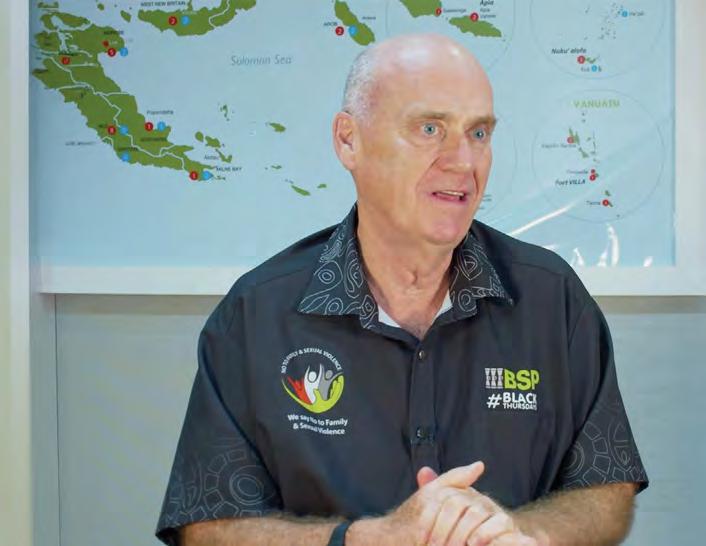
In this exclusive interview, CEO Mark Robinson reflects on BSP Financial Group’s impressive results. He also provides details of growth plans, including investments in digital channels and a major upgrade of the bank’s ATM network.
Business Advantage PNG (BAPNG): How was business for BSP in 2025?
Mark Robinson (MR): The year went well for BSP across all seven of our operating countries. In PNG, revenue was up 15 per cent, interest income was up about 13 per cent, fee income was up 12 per cent, and foreign exchange turnover was up about 24 per cent in the first nine months of the year.
In some countries, we are benefiting as the formal sector increases in size, and we use innovation to expand financial inclusion. Digital channel volumes are growing at over 20 per cent per annum. A large part of that is driven here in
PNG. Branch volumes are still high but, depending on the market, they’re either flat or trending down.
We delivered these financial results while continuing to invest through our “modernisation-for-growth” strategy. Recent examples include beginning the replacement of our entire ATM fleet, remodelling branches, and a number of other investments that we think will make a direct impact on the customer experience. We bring tried and tested skills to the cash economy.
One real modernising factor in the banking space is the rise in technology investments, by the likes of ourselves and the Bank of Papua New Guinea. Considerations around the introduction of biometrics and e-identification are making it easier for customers to open accounts. I think that’s extremely positive for improving access to banking.
BAPNG: What is your forecast for the next year and beyond?
MR: The country is very lucky that the financial sector is actually quite
healthy. There are new competitors in the domestic bank market, and we welcome competition. We have some very healthy superannuation funds as well. These financial institutions need to continue to expand the role that they play in the economy, which will bring wider benefits to the community.
We see little domestic risk over the next 12 months. While major resource projects boost confidence, their initial spending occurs overseas, limiting direct inflationary pressure.
Our key concern is that these projects must not weaken policymakers’ resolve to make other vital reforms: achieving a market-clearing kina exchange rate, implementing FATF [Financial Action Task Force] recommendations to improve investor confidence, and investing in critical infrastructure like power, transport and public services. These contribute to not just a healthier economy, but a healthier society.
BAPNG: What do you feel are the major opportunities from opening up digital channels?
MR: In PNG, it’s hard not to focus on the efficiency element. It’s not a secret that we still have queues at our branches. That’s a pretty visible measure of inefficiency. The more transactions that we can get on digital channels and away from cash, such as 24hour deposit-taking ATMs, the more productivity potential there is and the more upside for our customers.
Internet banking, for us, is growing at over 50 per cent per annum. Next year, we’ll introduce some very new customer-facing functionality that’ll have quite meaningful benefits for large and medium-sized corporates.
We also introduced the Wantok Wallet, targeted at the underbanked, in February 2025. We’ve just passed over 100,000 users. For many of the folks who signed up, this has the potential to
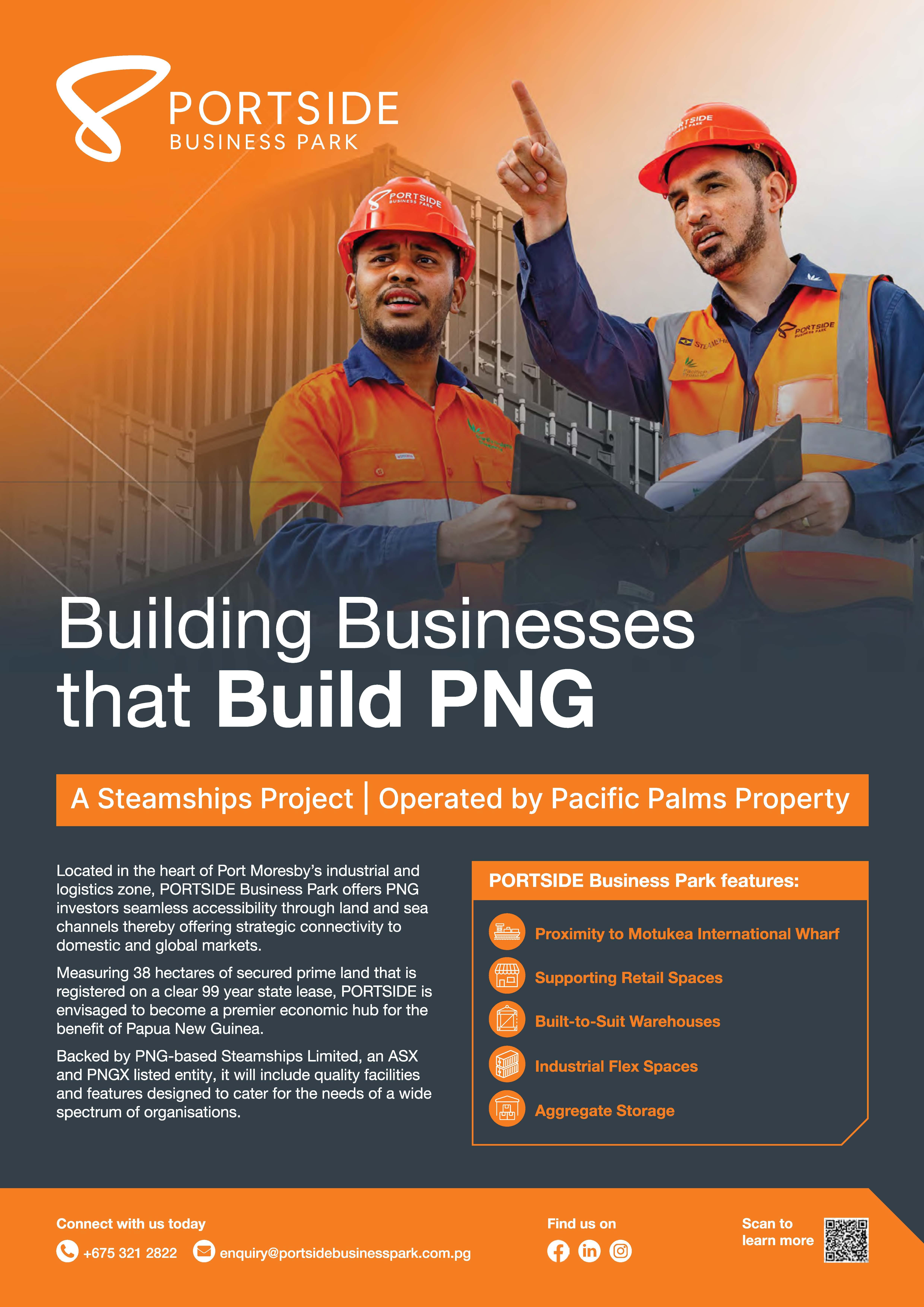
replace a traditional bank account. For us, it frees up capacity for our people to spend more time with customers, adding real value. I think it’s also meaningful at a personal level that we’re giving our customers time back for their lives.
BAPNG: How is BSP performing throughout the rest of its Pacific network?
MR: We’re the largest bank in every country in which we operate, except for Vanuatu, where I think we’re about number three based on the size of our balance sheet. We take our size with a great sense of humility and responsibility. We know our scale enables us to have a genuine impact on improving the efficiency of the financial system and national prosperity.
We’re a PNG-based bank, and we play an important role in providing financial services to fellow citizens of the Pacific across both retail and corporate banking.
Our second biggest market is Fiji, where we celebrate 150 years of
operations this year. It’s also the second biggest economy in which we operate and accounts for approximately 20 per cent of BSP’s top and bottom line. Fiji has had a good year and obviously benefits immensely from the trade flows through the country. Tourism is a very big part of the economy, but it’s quite a diversified economy with a strong export market and a major airline. Our third-biggest [market] is Samoa, which had a great year as well.
MY KEY CONCERN IS THAT THESE [MAJOR RESOURCES] PROJECTS MUST NOT WEAKEN POLICYMAKERS’ RESOLVE TO MAKE OTHER VITAL REFORMS.
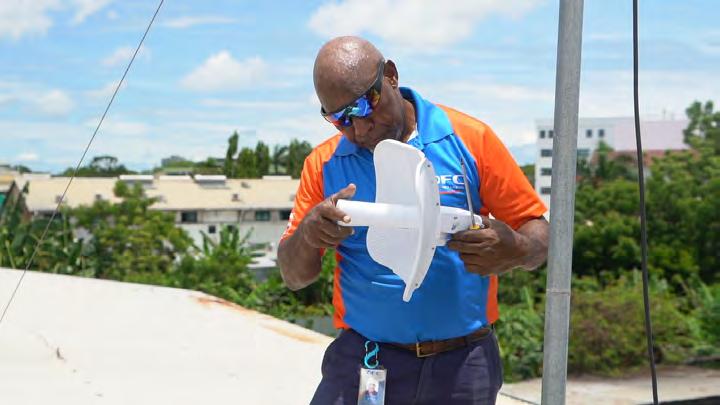


After that, we have Solomon Islands, Vanuatu, Tonga, and the Cook Islands. All had good years, all are profitable, and all are playing a very important role in their respective markets.
BAPNG: Given the success of BSP Life in Fiji, is there any chance of implementing a similar model in PNG? MR: We have had a life insurance company here in PNG for just over seven years, and we just launched Wantok Sumatin, a life insurance policy-and-savings product that enables families to accumulate money to pay school fees.
We’re taking inspiration from Fiji and, over the long term, absolutely envision playing a similar economic role, but they have 150 years of history supporting them. These things are a slow burn, but we are making progress.
We know that in this country, you’ve got a very strong wantok culture where there’s a certain amount of family selfinsurance that takes place. But even with that, our life insurance business is doing quite well.
























SP Brewery’s beers have been sold in PNG since 1952, almost a quarter-century before independence. Now the company is looking to invest in social change alongside business growth opportunities, its Managing Director Ed Weggemans tells Business Advantage PNG.
By Charlotte Armstrong
As a subsidiary of the Heineken Group, South Pacific Brewery is signed up to its parent company’s goal of achieving net zero carbon emissions by 2030.
In 2026, SP Brewery completed upgrades to its Lae production facility, including installation of solar panels on the roof and expansion of warehouse capacity, according to Managing Director Ed Weggemans.
Lae is the larger of SP Brewery’s two production facilities, with the other being situated in Port Moresby.
In addition to helping meet netzero commitments, Weggemans says the upgrades will give the business the ability to meet any future increase in demand – including any flow-on boost from a final investment decision on the Papua LNG project.
There is certainly room for the market to grow, with the average Papua New Guinean consuming only 5 litres of beer per year, according to a study commissioned by SP Brewery.
In comparison, the average Australian adult consumes about 88 litres of beer each year, according to the most recent available data.
“With the current demand [in PNG], we could probably produce all the beer we require in one brewery,” Weggemans says. “Between the two breweries we have more than enough capacity.”
Working against any growth plans is the continued depreciation of the kina, which has fallen about 17 per cent against the US dollar since early 2023.
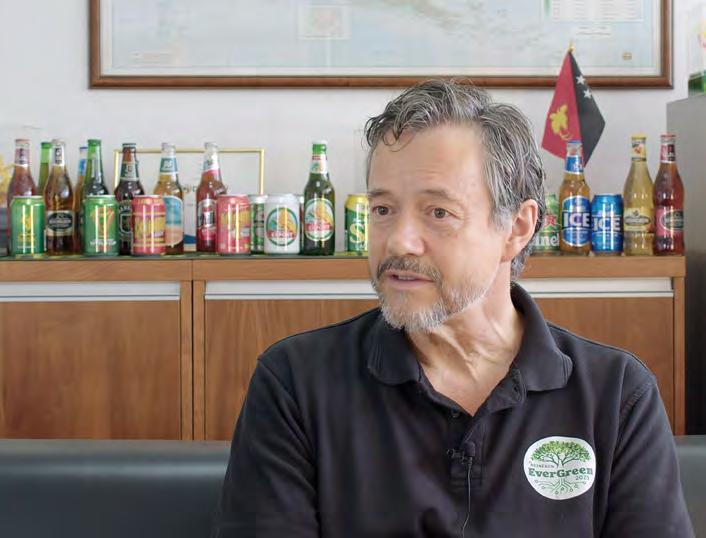
SP Brewery’s Ed Weggemans.
“Many of our raw materials are not available in Papua New Guinea, which means imports have to be paid for in foreign currency, which is raising the cost of production,” says Weggemans. “It creates a crunch.”
Another concern expressed by Weggemans is competition from producers of cheap spirits that appear to be avoiding the excise duty on alcohol.
SP Brewery presented research to Prime Minister James Marape that showed products being sold on
supermarket shelves at a lower price than the applicable excise duty.
To its credit, he says, the government has begun to scrutinise these manufacturers.
In addition to its business goals, SP Brewery is investing in its social impact through a campaign against genderbased violence.
The campaign, which was launched in early February, will reach television and radio broadcasts as well as billboards and limited-edition beer packaging.
Ultimately, the goal is to create a “generation of change,” in Weggemans’ words.
WE’VE BEEN PART OF THE COUNTRY GROWING UP AND WE PLAN TO BE HERE TO CELEBRATE THE NATION’S 100TH ANNIVERSARY OF INDEPENDENCE.
Ed Weggemans, Managing Director, SP Brewery
“As a national iconic brand, we are in a unique position to contribute. We’re communicating a different way to deal with these situations, choosing to react differently. It’s about engaging with the young people,” he says.
Looking forward, Weggemans says the brewer is also planning innovations for products such as SP Lager, a brand that has existed since before PNG’s independence in 1975.
“We’ve been part of the country growing up and we plan to be here to celebrate the nation’s 100th anniversary of independence,” he says.
The general manager of Lae-based Barlow Industries shares his firm’s expansion plans with Business Advantage PNG.
By Charlotte Armstrong
In preparation for the anticipated resources boom, building materials supplier Barlow Industries has increased its available inventory from K25 million to K40 million, according to its General Manager Josahia Pip.
Barlow wants to prove “we are capable of supplying, regardless of the magnitude of the project,” Pip tells Business Advantage PNG
Established in 1972, Barlow has a long history of supplying fabricated steel and other building materials to the agriculture and mining sectors, in addition to distributing to retailers such as Hardware Haus.
Recent projects, including the Kennedy Estate near Port Moresby International Airport and involvement with the planned extension of the Lae wharf, demonstrate the company’s “diverse capability”, according to Pip.
The company also has supply chains extending from Lae through to the Highlands and Islands regions.
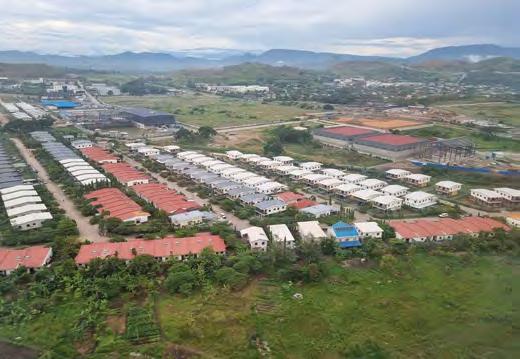
As the exclusive importer of BlueScope Steel products in PNG, Pip says Barlow adheres to Australian and New Zealand manufacturing standards across its three fabrication facilities in Port Moresby, Lae, and Rabaul.
He argues that education is key to helping customers distinguish between high quality imported products and what he says are lower-quality imitations.
While these products may look the same as the genuine article, according to Pip, the difference in quality becomes clear over the longer term.
“We’re trying to advise and educate people about what a difference quality makes.”

The improvement in the forex situation has contributed to a good year for manufacturing.
There are a number of companies looking for import replacements due to supply chain issues, which has increased our membership as companies start investing and manufacturing locally. Poultry producers have made significant investments due to protein shortages. They are all building capacity to meet demand.
There have been challenges with the sector, particularly as most manufacturers are providing for local production rather than export, which does not necessarily qualify them for Special Economic Zone benefits.
The other major change was the rise in the minimum wage, which rose 43 per cent. This will have a cascading impact beyond just those employers paying the minimum wage.
Currently, the Manufacturers Council has a strong base in food but would love to see more uptake in downstream processing of natural resources and import substitution.
Extractive industry projects are becoming more open about working with local suppliers to defend against supply chain issues. We’re hoping that, with major projects like Papua LNG, there will be benefit all the way through to the manufacturing industry.


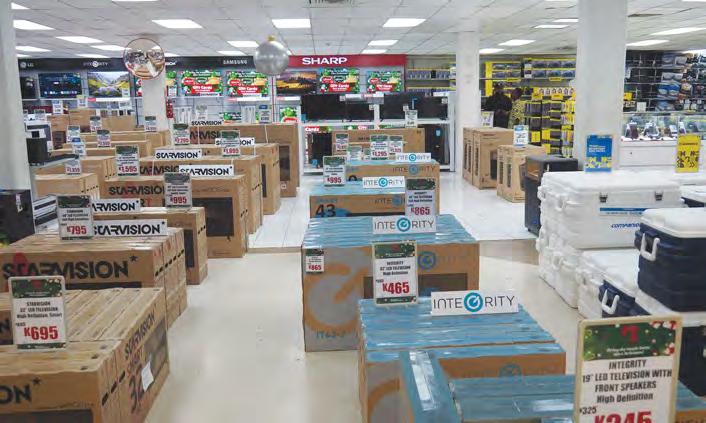
Papua New Guinea’s leading retailers anticipate strong growth in 2026 and beyond, and they are investing accordingly, as Business Advantage PNG learns.
By Nadav Shemer Shlezinger
Two years on from the 10 January Port Moresby riots, Papua New Guinea’s leading retailers say business is back and better than ever.
Brian Bell Group’s Homecentre and Trade Electrical stores were impacted through all of 2024, but the business returned to growth in 2025, according to Chief Executive Cameron Mackellar.
“We are well and truly beyond that now,” Mackellar tells Business Advantage PNG, adding that Trade Electrical led last year’s resurgence with its “best year on record by a long way.”
Retailer and business solutions provider Remington Group also rebounded strongly last year after experiencing a downturn in the 12 months following the riots, according to CEO Justin Kieseker.
“Our core business – which is our print business – was up about 28 per
cent [in 2025] on the previous year. It had the best year it’s ever had,” Kieseker tells Business Advantage PNG.
Further growth is anticipated in 2026, with Theodist CEO Kumar Baliah expecting economic activity to accelerate late in the year if major resources projects reach final investment decisions.

PNG
Kumar Baliah, CEO, Theodist
“PNG is moving in a positive direction,” he tells Business Advantage PNG
Similarly, Kieseker says that “on the back of last year being so successful, we’re looking for at least 10 per cent growth year-on-year.”
Major investments planned This confidence is being backed up by capital expenditure.
A key focus area for Theodist is the expansion of its Mount Hagen store, Baliah says, “as it’s the hub into the Highlands region.”
Strong sales of technology products have led it to invest in expansion of its ICT range – with a particular focus on enterprise customers. It is also developing end-to-end furniture solutions for corporate customers, such as business premises fit-outs.
The company is forging a partnership with one of the largest furniture manufacturers in the world to support its growth plans, according to Baliah.
Meanwhile, Remington opened its first two Hi-Tek consumer electronics stores in Port Moresby and Lae in late 2025 and is planning two additional stores in Mount Hagen and Kokopo this year.
“We’ve got the power banks, EarPods, phones, laptops – all of the tech that people want to buy,” Kieseker explains.
The group launched its e-commerce site for its Hi-Tek brand as this publication went to print.
“You’ll be able to order, pay, track through DHL and have your purchase delivered to you in Port Moresby and Lae,” Kieseker says.
“If you order somewhere we have a branch, it will ship to the branch and you can click and collect from there.”
Brian Bell’s capex program has centred on two warehouses: a new 12,000 square metre facility which it opened at Lae’s 12 Mile late last year; and a 15,000 square metre facility in Gerehu in Port Moresby, which will open in mid-2026, replacing the one burnt down in the riots.
Mackellar says the Lae facility was planned before the riots, with the reasoning that it would be cheaper
to distribute from there to the Highlands and Islands regions than it would be to trans-ship products from Port Moresby.
However, it now offers the additional benefit of future-proofing the business, because, as Mackellar notes, “if you ever lose one [warehouse], you’ve got a fallback position with the other.”
In the case of CPL Group, the riots triggered the decision to sell its Stop & Shop chain of supermarkets and double down on its core business of pharmacy and healthcare.
“After the 10 January riots, we had a board meeting to say, which brand should we really invest the limited funds we had?” Sir Mahesh Patel, founder and a non-executive director of CPL, tells
because for us to keep developing and keep being competitive in the supermarket [business], we would have had to keep investing investing large amounts in the supermarket business,

and depriving funds for the healthcare segment.”
CPL opened its first medical centre in Port Moresby’s Vision City mall last year, offering primary healthcare
outlets the group has around the country.
“We’re not going to compete with the current private operators; they’re super premium,” Patel says.
As for the decision to divest from Stop & Shop, this provided an opportunity for investor group Taylor Pacific to broaden its portfolio.
Jeremy Fry, Chief Executive of Taylor Pacific, says the supermarkets complement the group’s two other business: Hugo Canning, manufacturer of the Ox & Palm and Ocean Blue canned food brands, and Sepik Fresh Poultry.
“When the Stop & Shop came up, I said, ‘Seven supermarkets with a butcher offering? That kind of makes

“When you include the fact that this is supported by Hugo Canning and the circular economy going on where we’re





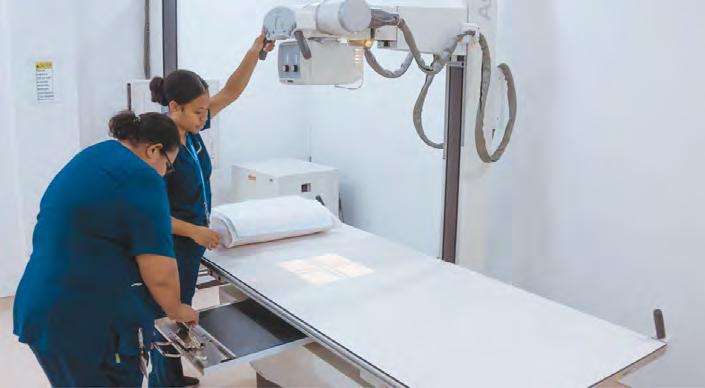
Aspen Medical PNG has grown exponentially in recent years on demand from corporate clients, particularly in the resources sector. It expects further growth in the nearterm, its Senior Medical Officer, Dr Moses Lester, tells Business Advantage PNG.
By Charlotte Armstrong
Aspen Medical’s Papua New Guinea operation enjoyed a watershed year last year, landing a contract to provide healthcare services to the approximately 3,000-strong workforce at Newmont’s Lihir gold mine.
In the past five years, increased demand from corporate clients has seen the Australia-headquartered firm grow its PNG headcount from 20 to 155 employees.
Dr Moses Lester, Senior Medical Officer for Aspen Medical in PNG, foresees further growth, particularly if TotalEnergies’ Papua LNG project reaches a final investment decision.
Aspen has already begun providing services – such as pre-employment
medical assessments – to businesses aiming to be indirectly involved with Papua LNG.
“If you are unable to get inside the fence, that’s not the end,” Lester tells Business Advantage PNG. “Think laterally: there are many ways to be able to engage in those major projects in PNG.”
Papua LNG aside, expansion is on the cards for Aspen Medical PNG, which is currently reviewing four new contracts for its services.
This could include further involvement in the resources sector,
where Aspen has experience working with both onshore and offshore projects.
“We’ve been doing [contract work] over the past eight years and it wasn’t until [the Newmont deal] that we were fortunate enough to win a big investment,” Lester says.
Additionally, Aspen is hoping to announce a new partnership this year to fill the gap left by the ending of its sixyear partnership with Paradise Private Hospital in 2024. Aspen continues to provide healthcare services to Papua New Guineans and foreign nationals through the clinic it established in Port Moresby in 2014.
However, Lester acknowledges that certain impediments, particularly supply chain bottlenecks, could get in the way of its plans.
“Newmont, for example, is running a local hospital, a mining clinic and a camp, which is effectively three health sites,” Lester says.
“This leads to increased demand on consumables due to the large volume, and PNG’s supply chain can make it challenging to meet that demand, which leads to a majority of the products being imported from overseas.”
In order to prepare for the expected growth, Aspen is targeting an additional 10 to 15 per cent growth in headcount in 2026 – although Lester admits there are challenges to achieving this goal.
“The retention of staff can be a bit difficult, with people looking for greener pastures out there as competition heats up,” he says.
To help achieve its target, Aspen is trialling new performance incentives and professional development opportunities for all staff.
THINK LATERALLY: THERE ARE MANY WAYS TO BE ABLE TO ENGAGE IN THOSE MAJOR PROJECTS IN PNG.
Dr Moses Lester, Senior Medical Officer, Aspen Medical PNG
Lester hopes this also translates to increased business: “A good word out there carries a long way. Our footprint still needs to be made.”
Fortunately for Aspen, being an international firm not only means it has to be compatible with global healthcare standards – but also that it has a wealth of expertise that it can draw on internally.
“We have an international standard to maintain,” Lester notes.
Useful business contacts and information sources on PNG.
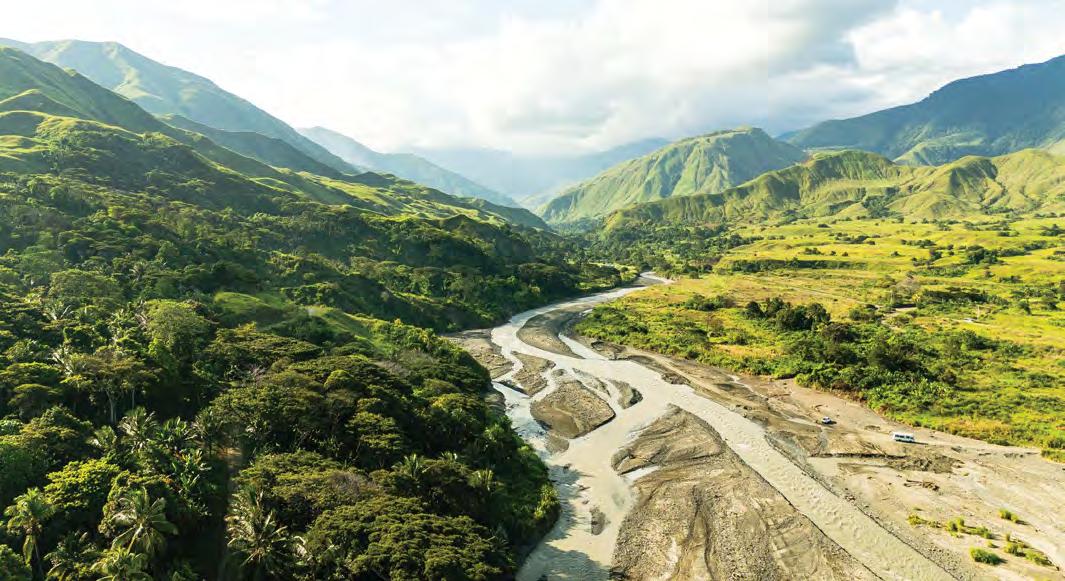
The
Valley (and
have been identified by the International Finance Corporation as the potential “breadbasket” of PNG. Various efforts are being made to unlock the land for third-party agricultural investments, including streamlining of landowner title recognition.
BUSINESS ORGANISATIONS
American Chamber of Commerce (AMCHAM) Coral Sea amchamcoralsea.org
Australia–Papua New Guinea Business Council apngbc.org.au
Business Coalition for Women pngbcfw.org
Business Council of PNG bcpng.org.pg (675) 320 0700
Employers Federation of PNG efpng.org.pg (675) 325 8266
PNG ICT Cluster
Private sector tech and developer group ictcluster.org.pg
PNG Institute of National Affairs Industry-funded think-tank inapng.com (675) 321 1044/45
Lae Chamber of Commerce & Industry lcci.org.pg (675) 472 2340

Manufacturers Council of PNG pngmade.com (675) 323 8465
PNG Chamber of Commerce and Industry (675) 323 2113
PNG Chamber of Resources and Energy pngcore.org
PNG Institute of Directors pngid.org.pg (675) 320 2493
Port Moresby Chamber of Commerce & Industry pomcci.org.pg (675) 7200 0000
Asian Development Bank (ADB) adb.org/where-we-work/papua-newguinea (675) 321 0400
Australian Trade Commission (Austrade) austrade.gov.au (675) 325 9150

Business Advantage PNG Business Advantage International’s online business magazine for PNG and the region. Sign up on the site for free email updates. businessadvantagepng.com
PNG’s two daily newspapers, The National and the Post-Courier. thenational.com.pg postcourier.com.pg
EMTV
PNG’s largest TV broadcaster. emtv.com.pg
The inflight magazine of national carrier Air Niugini, currently published quarterly. airniuginiparadise.com
The ultimate guide to doing business in PNG, produced by Business Advantage International and its content partners. Includes industry sector profiles, legal and tax guides, business guides to PNG’s provinces and more. businessadvantagepng.com/doingbusiness-in-papua-new-guinea
International Finance Corporation (IFC) ifc.org
International Monetary Fund (IMF) imf.org
World Bank worldbank.org/en/country/png (675) 7818 0702
Bank of Papua New Guinea (central bank)
Publishes up-to-date economic data. bankpng.gov.pg (675) 322 7200
Investment Promotion Authority (IPA) ipa.gov.pg (675) 308 4400
Internal Revenue Commission (IRC) irc.gov.pg
Kumul Consolidated Holdings (KCH) KCH is the holding company for PNG’s state-owned enterprises. kch.com.pg (675) 321 2977
Ministry of International Trade and Investment miti-gov-pg.site (675) 7411 6070
National Information and Communications Technology Authority (NICTA)
nicta.gov.pg (675) 303 3200
National Trade Portal
A new ‘one-stop shop’ for business. nto.gov.pg (675) 301 6600
Special Economic Zone Authority (SEZA)
pngseza.gov.pg (675) 7411 2180
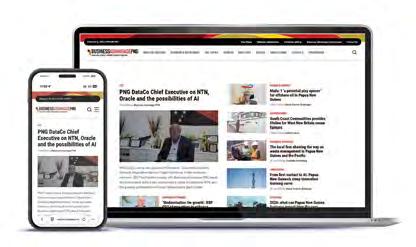
Fully redesigned, www.businessadvantagepng.com now offers a cleaner, faster, and mobile-first design It’s never been easier to keep up to date with business in Papua New Guinea through credible, independent business journalism

Revenue Stream Amount since 2014 *(start of production through December 2025)
17.1 Billion


Distributions to Kumul Petroleum
Distributions to MRDC (Landowners)
Royalty
Development Levy

Total Benefits to the State
12.0 Billion
2.4 Billion
1.7 Billion
1.5 Billion
34.7 Billion
In its first 11 years of Production, the PNG LNG Project has contributed over 34 billion kina in total benefits to the State of Papua New Guinea.
This infographic shows the amount of revenues paid by the PNG LNG Project to the Government and people of PNG since LNG production started in 2014. All figures shown are for amounts paid or payable through December 2025.
The PNG LNG Project generates five primary revenue streams. These include equity distributions paid to Kumul Petroleum Holdings Limited (KPHL) and Mineral Resource Development Company (MRDC), which is based on the amount of equity in the PNG LNG Project held by each (KPHL –19.4% and MRDC – 2.8%). Different types of tax including company tax are paid to the Internal Revenue Commission. In 2024, Tax payments alone to the State were over PGK 4 billion, the largest in the PNG LNG Project’s history. Development Levy and Royalties are paid to the National Petroleum Authority in line with the Oil and Gas Act for the benefit of respective Project areas, provincial and local level governments plus landowner beneficiaries.
PNG LNG is operated by a subsidary of ExxonMobil in co-venture with