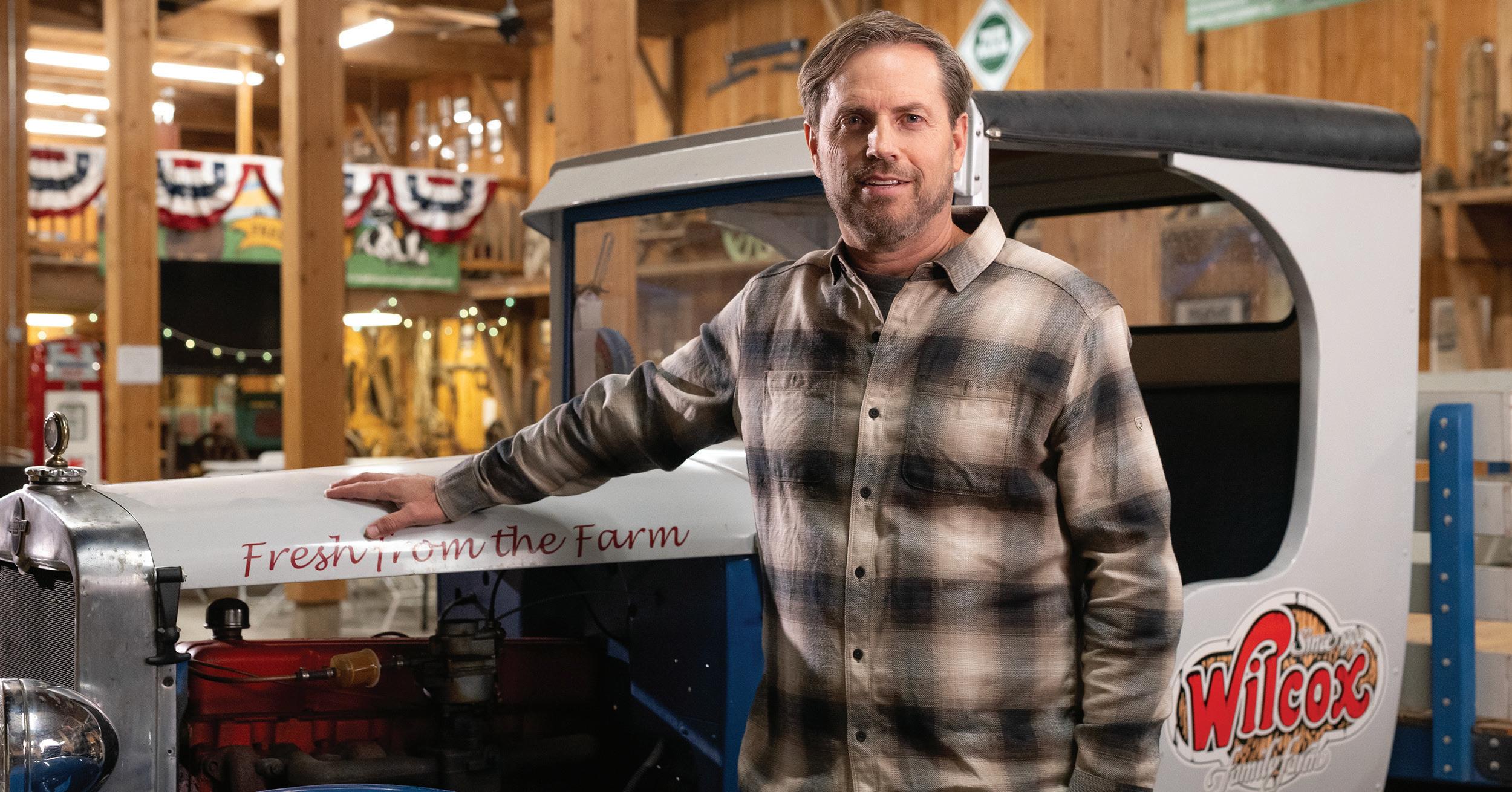
— Brent Wilcox Fourth Generation Owner Wilcox Family Farms
VOL. 51 | NO. 3
PUBLISHER
Whatcom Business Alliance
EXECUTIVE DIRECTOR
Barbara Chase
CONTRIBUTING WRITERS
Matt Benoit
Tamara Loucks
Tony Moceri
Cheryl Stritzel McCarthy
Mary Louise Van Dyke
GUEST COLUMNISTS
Kris Freeberg
Dann Mead Smith
Todd Myers
Dana Rozier
Evan Steinhilb
Ben Tindall
COMMUNICATIONS DIRECTOR
Tara Gilligan Reimer
PHOTOGRAPHY
Sattva Photo
COPY EDITOR
Matthew Anderson
Bellingham PR & Communications
WBA BOARD OF DIRECTORS
BOARD CHAIR: Josh Wright, Partner, Acrisure
EXECUTIVE COMMITTEE: Jon Ensch, Regional Commercial Director, Peoples Bank; John Huntley, President/CEO, Mills Electric Inc.; Doug Thomas, Senior Advisor, Lineage; Josh Turrell, Partner, Larson Gross PLLC
BOARD OF DIRECTORS: Tamera Lienhart, Government Affairs Manager, bp Cherry Point Refinery; Jane Carten, President, Saturna Capital; Bryant Engebretson, Managing Principal, Tradewinds Capital; Mitch Faber, Partner, Faber Fairchild McCurdy LLP; Sandy Keathley, Former Owner, K & K Industries; Sarah Rothenbuhler, Owner/CEO, Birch Equipment; Billy VanZanten, COO, Western Refinery Services; Tony Larson, WBA Founder Emeritus
An official publication of Whatcom Business Alliance • May-June 2026
County berry growers lead global production
ALSO: Farmers worried about surge in ICE arrests. 18
Northwest Diesel Power/ Cardinal Yacht Sales
Owner Matt Hardin used to keep boats running — now he keeps a business afloat
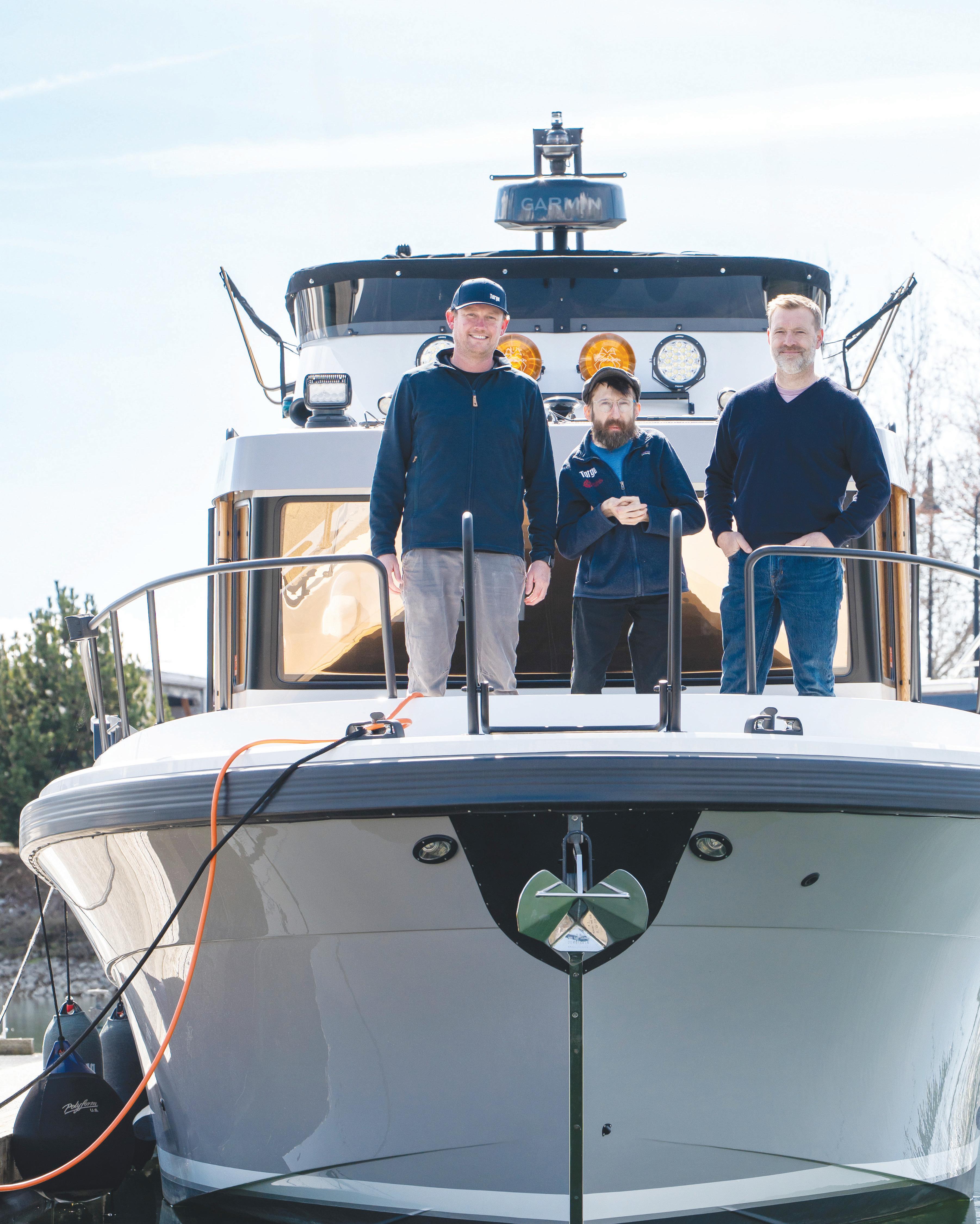
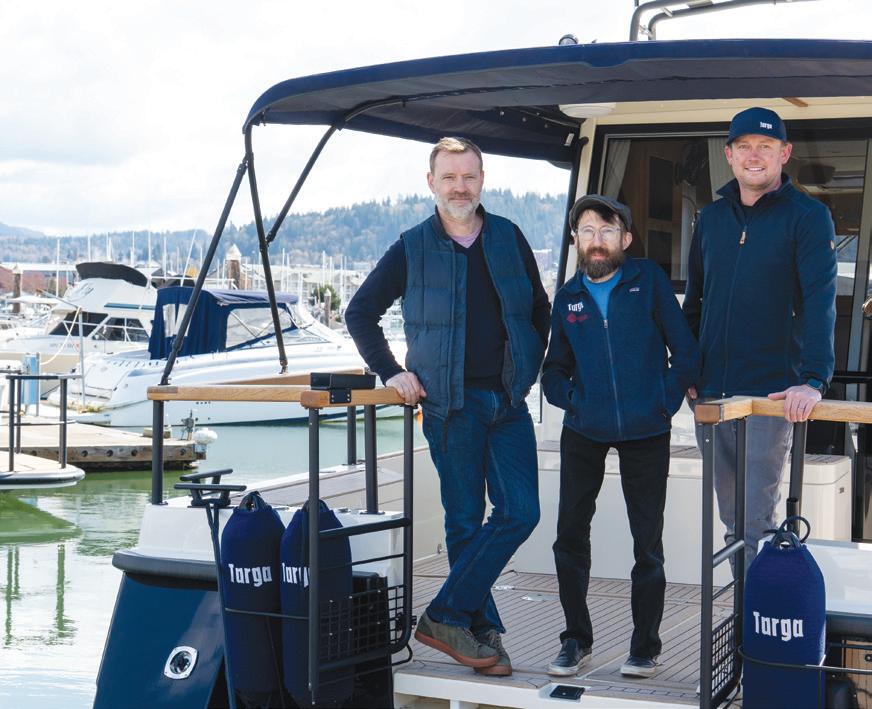
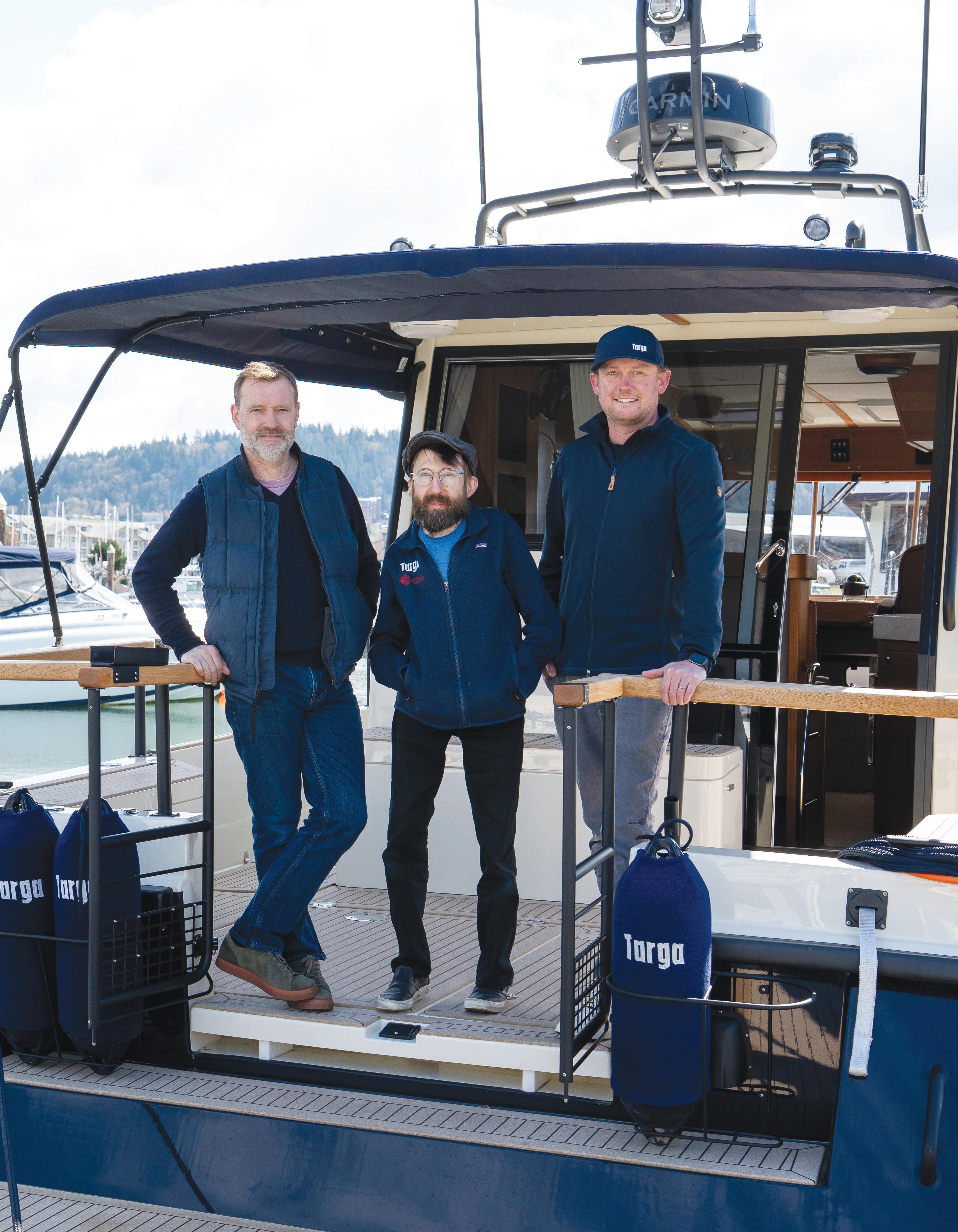
Cover photo (from left) — Tyson Laurabee, Steve Hardin, Matt Hardin — by Sattva Photo
6 Up Front Business success on full display at the 39th annual Whatcom Business Awards
45 Government What bills passed, and how did our local legislators vote?
48 Policy The growing gap between public voice and political power
53 AI 5 things AI can do for your business this week
55 Technology Workflow: Focus on your business needs
57 Workplace Platform fatigue and the cost of free
Newsmakers 26 GOAL! Summer tourism gets world stage
Business success on full display at the 39th annual Whatcom Business Awards
Barbara Chase is the executive director of Whatcom Business Alliance.
Spring inspires renewal, offering a natural moment to reassess workplace culture. It encourages business leaders to address harmful behaviors, reset expectations, and prioritize healthy collaboration. “Right People, Right Seats” is the notion that team members who align with an organization’s core values, fit the role, and genuinely want the responsibilities that come with the job are essential for a cohesive, successful workplace.
UP NEXT
WBA BUSINESS CONFERENCE
7-9 a.m. Tuesday, June 9, Bellingham
Golf & Country Club
Purchase your tickets today at whatcom business alliance.com/ events
A refreshed team environment supports clarity, accountability and long-term success. I have been very fortunate to collaborate with Mark Treas, an implementer with EOS Worldwide, who guides leadership teams in applying their tools and principles. I appreciate Mark’s straightforward approach and would like to take a moment to thank him for his contributions to our business community and his work with the WBA.
At a time when economic pressures continue to weigh heavily on our community with rising inflation, increasing fuel costs, escalating housing prices and the growing strain on household budgets, it is more important than ever to recognize and celebrate the resilience of our local business community. These challenges are not abstract; they are felt daily by employers, employees and families across Whatcom County.
In the year ahead, the Whatcom Business Alliance remains committed to advocating for policies that support economic vitality and reduce unnecessary regulatory burdens. Our focus is clear: championing common-sense legislation that prioritizes small businesses, working families and individuals. In a region where businesses already operate under significant regulatory and tax pressures, thoughtful governance is essential. Whatcom County deserves leadership that places the needs of its local economy front and center.
Despite these headwinds, Whatcom County continues to stand out as one of the most desirable places to live and work in the nation. That strength is no accident! It is driven by the ingenuity, determination and leadership of the businesses and individuals who call this community home.
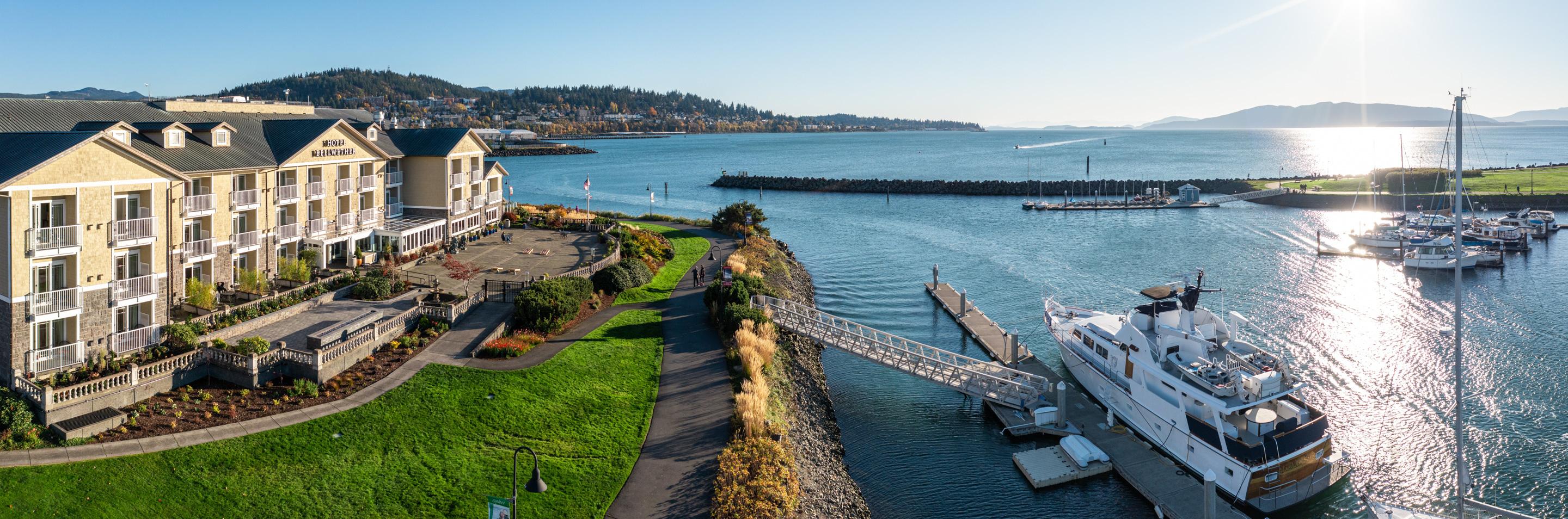
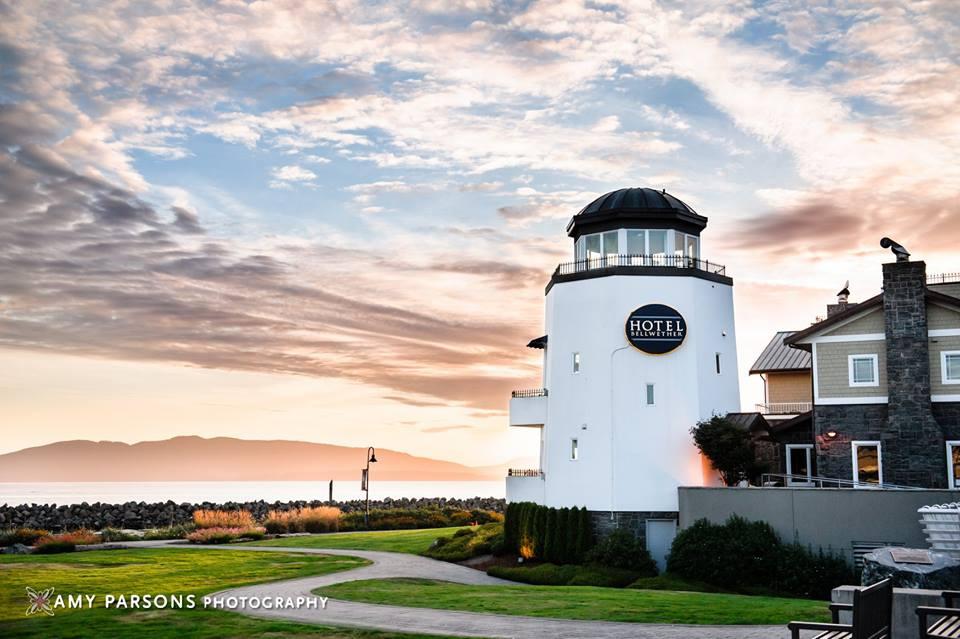
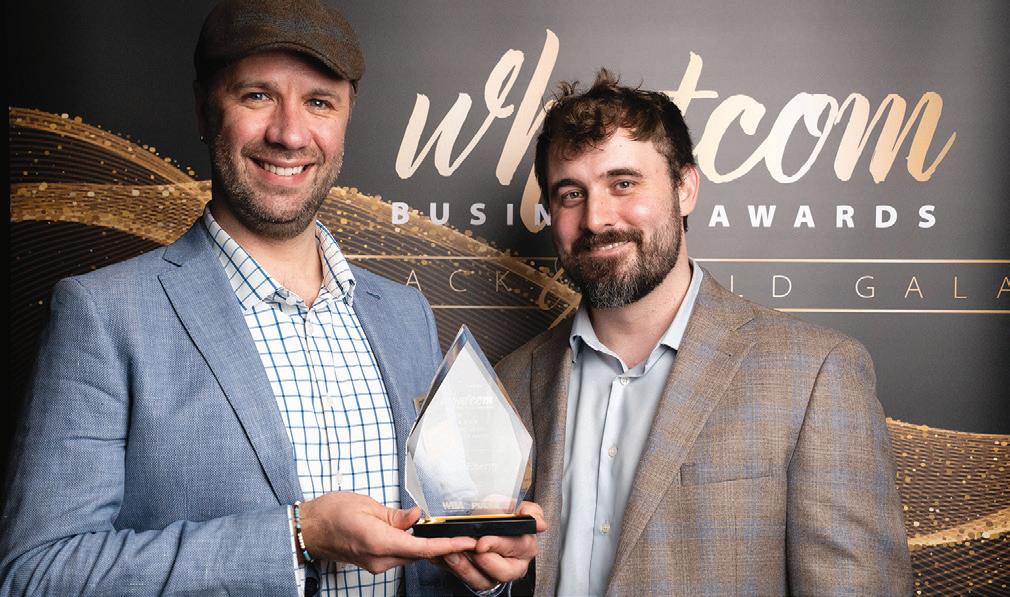
Nowhere was that spirit more evident than at the 39th annual Whatcom Business Awards Black & Gold Gala, presented on March 26 at the elegant Hotel Bellwether in Bellingham. The sold-out event brought together leaders from across the region for an evening of celebration, connection and recognition. Guests enjoyed a memorable dining experience as we honored outstanding achievements in categories including Business Person of the Year, Small Business of the Year, Start-up of the Year, Lifetime Achievement, Employee of the Year and Public Service. A special tribute was also presented, in memoriam, to the family of Gary VanLoo, co-founder of Andgar Corporation.
In the pages that follow, we are proud to highlight this year’s award recipients:
Campaign begins to expand hospice services in north Whatcom County
Christian Health Care Center — a nonprofit, skilled health care center and rehabilitation facility founded in 1956 and based in Lynden — has initiated a fundraising campaign to expand hospice services, at the center.
In north Whatcom County, families facing end-of-life care often have limited options. Hospice at home can be meaningful, but it is not always safe or sustainable. Medical needs do not pause overnight, symptoms can escalate quickly and families can be left managing complex care without 24/7 clinical support.
Ferris wheels, funnel cakes and entertainment: fair tickets on sale
The Northwest Washington Fair’s ticket blitz returns 8 a.m. – 6 p.m. Friday, May 8. During this one-day, online-only event, the public can purchase discounted gate admission tickets, allday carnival wristbands and 10-day admission passes at one of the lowest prices of the season.
Brantley Gilbert
around 50 minutes, one way. Critically, with a departure from Bellingham, the drive to the Anacortes Ferry Terminal, a Washington State Department of Transportation hub, would be eliminated. From Bellingham there is no regular passenger-only ferry service though specialized vessels for walk-on customers.
Allegiant Air to close Bellingham crew base
Tonja Myers, Christian Health Care Center executive director
The Hospice Suites at CHCC will provide compassionate, Christian faith-based hospice care. Families will have peace of mind knowing their loved ones are being attended to by skilled caregivers day and night in a calm, supportive environment that is designed for dignity, comfort and privacy. For plans about the suites — private rooms and welcoming spaces where loved ones can gather, rest and spend time together — or donation information, go to chcclynden.org/called-to-care.
Country star Brantley Gilbert will perform at this year’s grandstand entertainment event. He will take the stage at 7 p.m. on Friday, August 21. Gilbert is an award-winning performer and songrwriter who entered the music scene in 2009 with his charttopping debut album "A Modern-day Prodigal Son."
Visit nwwafair.com/tickets.
Passenger-only ferry proposed for Bellingham to the San Juan Islands
A passenger-only ferry is under study for Bellingham to the San Juan Islands, as part of House Bill 1923, which intends to create a fleet of smaller boats. The proposed service would connect Bellingham directly to Friday Harbor on San Juan Island during summer months, seven days a week.
The Bellingham-Friday Harbor ferry travel time is estimated at
Bellingham International Airport has been informed by Allegiant Air that it will close its crew base in Bellingham in November 2026. Importantly, Allegiant has confirmed it will continue operating all existing routes and maintaining its current flight schedule at BLI. An airline crew base is a location where pilots and flight attendants are permanently assigned and where their work rotations begin and end. While the closure of a base changes crew scheduling, it does not affect the flights available to passengers. Allegiant will transition to a “turnbased” model, where crews and aircraft operate routes from other bases without overnight stays in Bellingham.
“This decision is related to how Allegiant organizes its internal operations, not its commitment to the traveling public of Whatcom County,” said Matt Rodriguez, director of aviation at Bellingham International Airport. “Allegiant will continue to serve BLI, and passengers will see no change to routes or service.”
The Port of Bellingham acknowledged the change while reinforcing its continued partnership
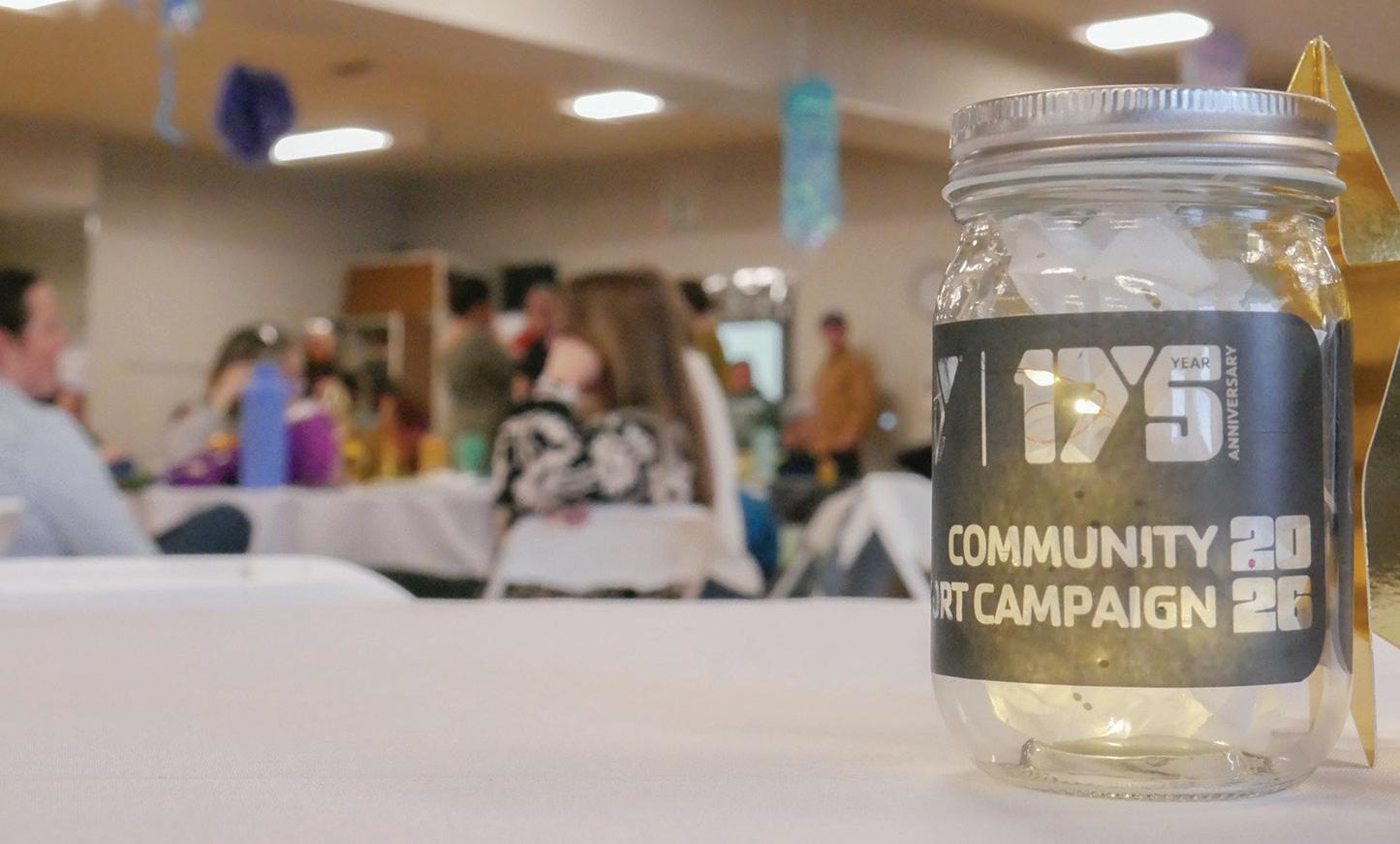
Whatcom Family YMCA launches 2026 Community Support Campaign
The Whatcom Family YMCA launched its annual Community Support Campaign to deliver on its commitment to ensuring every person in Whatcom County has access to the programs, support, and connections they need to thrive.
This spring, the Y will engage 75 campaigners — including board members and volunteers — to raise $100,000 by May 18. This campaign is part of the Y’s broader, community-driven effort to generate more than $650,000 by the end of the year. These funds will expand access to critical programs that strengthen families, support youth development and working parents, and create opportunities for people of all ages.
Each year, the Y provides financial assistance to help remove barriers to participation, making it possible for individuals and families to access child care, swim lessons, youth sports, teen programs and wellness initiatives regardless of ability to pay. In 2025 alone, the Y awarded $615,000 in scholarships, supporting approximately one in every 10 program participants and members.
with the airline. “We’ve been informed of Allegiant’s decision to close its base. While we’re disappointed to see this change, we value the partnership we’ve had and the contributions their team members have made to our airport
community. Allegiant will maintain a station at BLI, and our focus will be on supporting passengers and our airline partner.”
The decision reflects broader economic and industry factors affecting airlines nationwide,
including fluctuating fuel costs, shifts in passenger demand, and regional cost pressures. These types of adjustments are not uncommon in the aviation industry as carriers continually optimize their networks.
Changes in cross-border travel demand, especially among Canadian passengers, have contributed to a more challenging operating environment for airlines serving the region.
Business travelers: What are your flight patterns?
Given ongoing changes in flight patterns, the Port of Bellingham wants to know how business travelers use, and have preferences for service at Bellingham International Airport. A new Business Air Service Survey has been launched in cooperation with the Bellingham Regional Chamber of Commerce, asking the business community a dozen questions, from number of business trips taken per year and preferred departure airport to most frequent business destinations.
Port officials said they’re interested in input from business owners, executives, travel managers and employees who regularly travel for work in Whatcom, Skagit, Island, San Juan and Snohomish counties. The port’s Mike Hogan said the results will help them better understand business travel patterns, “critical when working with airlines because it demonstrates the local market demand for new routes and additional service.”
Find the survey at surveymonkey. com/r/BLIBusinessTravelSurvey. ▶ ▶
Whatcom Family YMCA
WBA Business Conference tickets available
Register now for the WBA Business Conference, slated to take place from 7 to 9:30 a.m. Tuesday, June 9, at the Bellingham Golf & Country Club. Tickets include a breakfast buffet and can be found at whatcombusinessalliance.com/ events.
Washington Trust Bank Chief Economist Steve Scranton will deliver an economic forecast. Audience favorite, Todd Myers, Washington Policy Center’s vice president for research, will present
a legislative update. Also, a small business education session will be included.
Whatcom Business Alliance promotes three-year employee
Tara Gilligan Reimer has been promoted to communications director for the Whatcom Business Alliance. The WBA publishes Business Pulse magazine bi-monthly, and the alliance is proud to release a redesigned and updated magazine.
Having written feature stories for Pulse, published social media for both
companies, and coordinated WBA events during the past three years, Gilligan Reimer brings to her role a high regard for serving the membership. She said, “I am grateful to work for WBA Executive Director and Pulse Publisher Barbara Chase, to support her talented leadership and efforts to make Whatcom County a better place for business.” n
Tara Gilligan Reimer
WHATCOM TOPS WHEN IT COMES TO BERRY GROWING
| By Mary Louise Van Dyke
Berry season — a time when farm fields yield millions of pounds of delicious raspberries, blueberries, strawberries and blackberries — is approaching fast in Whatcom County.
Whatcom County is tops when it comes to berries. It produces more blueberries than any other county in the U.S., for example, and almost all of the state’s raspberry crop comes from Whatcom.
These berries will be sold frozen or available fresh for sale at local markets and fruit stands. Residents also have the option of harvesting fruit for their own use at Whatcom’s u-pick farms.
The sale of Whatcom berries, grown on 16,000plus acres, is a major contributor to the county’s $510 million agricultural market value, according to Whatcom County 2022 Census of Agriculture profile from the U.S. Department of Agriculture/National Agricultural Statistics Service.
A look at blueberries
About 45% of blueberries produced in Washington state come from Whatcom County, and the county has about half of the state’s blueberry farms, said Alan Schreiber, executive director for the Washington Blueberry Commission.
He estimated that 105 million pounds of blueberries were produced in Whatcom County in 2024 and 101 million pounds in 2025.
“That means Whatcom is the leading blueberry producing county in the U.S.,” Schreiber said. “If Whatcom County was a state, it would be the thirdlargest blueberry producing state. It produced more blueberries than California.”
The commission serves as a touchstone for grower advocacy, research, best practices and marketing for
“ If Whatcom County was a state, it would be the third-largest blueberry producing state. It produced more blueberries than California.
“
Alan Schreiber
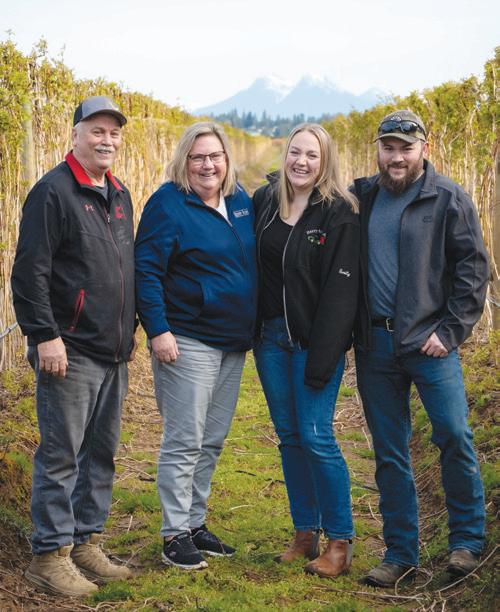
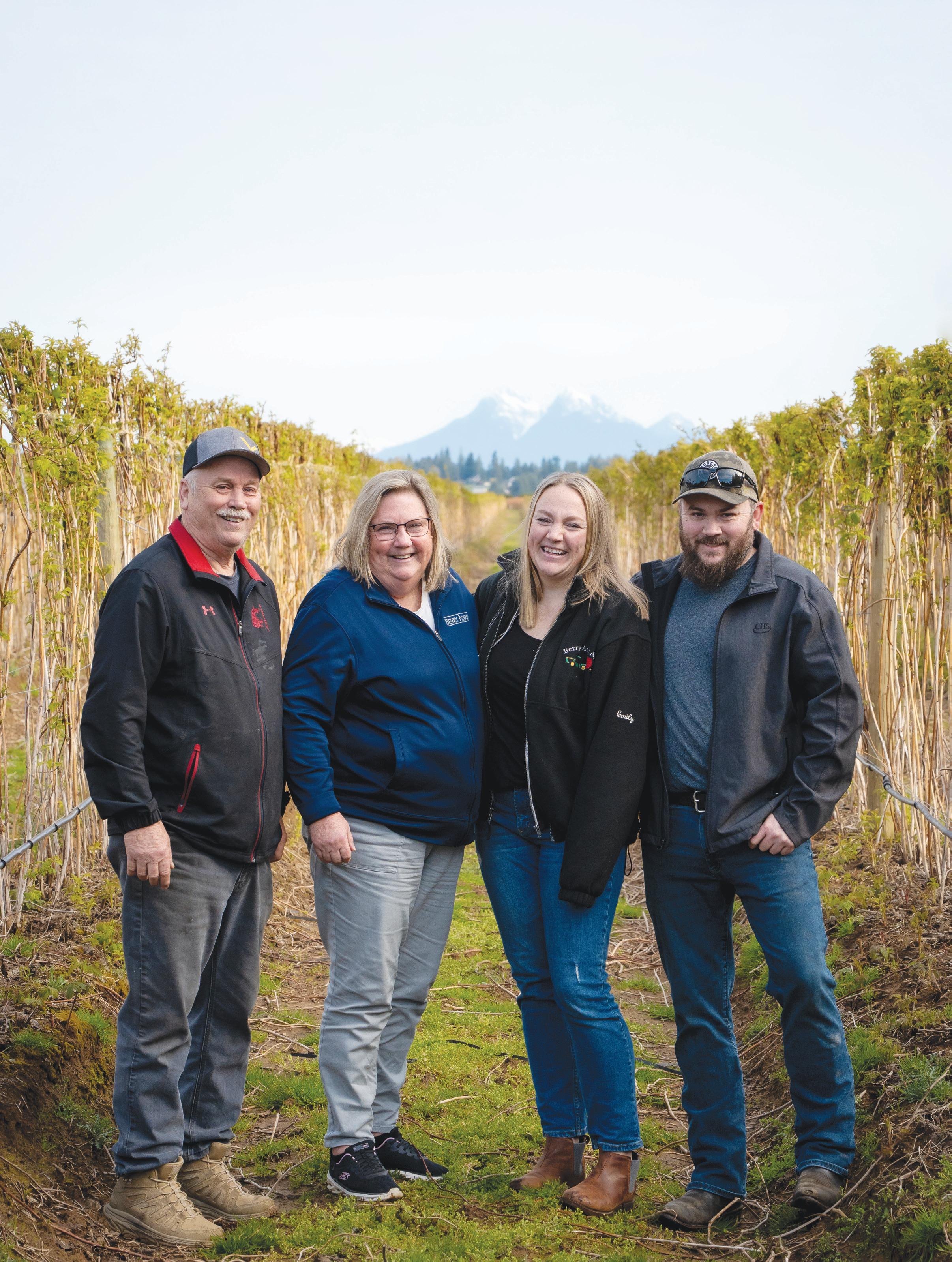
The family behind Berry Acres, from left: Frank DeVries, Marilyn DeVries, Emily Laverman and Dan DeVries. Credit: Sattva Photo
Emily Laverman of Berry Acres.
Dan DeVries' family-owned Berry Acres farm will grow about 150 acres of raspberries for the 2026 season and about 17 acres of blueberries as well.
hardworking growers and their 18,000-plus planted acres across the state.
Growing raspberries
Washington state produces about 90% of the American-grown frozen red raspberries crop. Because the fruit has a short shelf life, most red raspberries grown around Lynden are processed for the frozen food market. Some are sold as whole or berry crumbles or turned into purees.
Whatcom County is especially well suited for growing raspberries, said Gavin Willis, executive director of Washington Red Raspberry Commission in Lynden. Whatcom’s location, with its mild
summers and winters, helps create ideal growing conditions.
“Raspberries as a fruit are pretty sensitive, fairly fragile,” he said. “Significant, really high heat can damage the fruit.”
Conversely, he added, a really deep freeze can damage the plants.
The red fruit requires a sandy loam and well-drained soil to thrive and be productive.
The statewide commission was founded in 1976. Among its board members are representatives of raspberry growers and the Washington State Department of Agriculture. Statewide, there are
a little fewer than 60 growers, and 95 percent of those hail from Whatcom County.
Raspberry growers can access a variety of support programs, including those that help encourage the consumption of frozen raspberries and provide advocacy at the state and federal levels, in addition to other grower support.
“The raspberries grown here in Whatcom County are machineharvestable canes that hold up well to machine harvesting and berries that have good color and flavor and sugar levels,” Willis said.
The commission also focuses on ways to develop new varieties that meet those standards while being resistant to pests, mold and fungal diseases. It also works on ways to keep soil healthy.
This past year was a great one for local raspberries, with over 68 million pounds grown and harvested in Washington state, the highest number since 2018.
Growing challenges
However, local raspberry farmers can’t automatically count on 2026’s harvest matching or exceeding that record.
“I think generally you have to be an optimist to be a farmer,” Willis said.
Farmers are concerned about the current Nooksack River Basin water adjudication legal process, with water rights for Whatcom County users yet to be determined. Berry farmers — like all farmers — require water to grow their crops.
“How do you plan for the future of
your farm without guaranteed access to water?” he asked.
Raspberry and blueberry farmers make significant investments to get their fields planted and set up to keep producing year after year, and they can’t afford to lose water rights.
Whatcom farmers wrestle with trying to stay competitive with raspberry growers in Chile, Eastern Europe and Mexico who have lower costs, especially for labor.
BY
THE NUMBERS
45% of blueberries produced in Washington state come from Whatcom County.
“What we’re seeing come out of Mexico, that’s concerning,” Willis said.
Mexico’s raspberry crop is primarily grown for the fresh market. However, Mexican growers will take fresh fruit that doesn’t meet their standards for quality and turn those into a puree priced lower than the purees offered by Whatcom and Washington red raspberry growers.
The commission plans to discuss this situation with the federal government and ensure Whatcom’s growers are protected in the domestic market from underpriced imports, especially from Mexico, Willis said.
206 MILLION POUNDS of blueberries were produced in Whatcom County in 2024 and 2025. 95% of raspberry farmers in Washington state are in Whatcom County.
Northwest Berry Co-Op of Everson
That competition impacts local berry growers, including those who process and market their raspberry and blueberry crops at Northwest Berry Co-Op in Everson.
Founded in 2007, the co-op originally concentrated on preparing raspberries for the frozen food market, according to Rolf Haugen, general manager ▶ ▶
68
MILLION POUNDS of local raspberries were grown and harvested in 2025 in Washington state, the highest number since 2018.
and local farmer. After adding blueberries, the split was about 95% raspberries and 5% blueberries.
In 2025, the co-op processed equal shares of both types, but Haugen anticipates those percentages could shift to 60% blueberries and 40% raspberries during this year’s season.
“Most of the raspberry growing is starting to move out of the county,” Haugen said. “Labor costs in Mexico are so much cheaper than they are here, and raspberries are fairly labor intensive.”
The co-op features a state-of-the-art fruit processing facility with a freezer facility and an onsite tunnel system for individual quick freezing. The workforce handles 7 million to 11 million pounds of berries on an annual basis.
Blueberries are easier to grow than raspberries.
“The advantages are higher yield and we make money,” Haugen said. “You can grow anything, but if you can’t make money at it, you can’t stay in business.”
Customers can purchase IQF raspberries and blueberries and triple berry pies from the co-op’s online store or in person during open hours.
Purees are used as jam and fruit bases and for making raspberry and blueberry yogurts. The bulk of the co-op’s IQF blueberries are sold to the bakery industry, he said.
Berry Acres prepares for the upcoming season
Every day is a busy one for Emily Laverman at Berry Acres agricultural farm in Lynden as she and her brother,
SAVE THE DATE
The annual 2026 Northwest Raspberry Festival is 10 a.m.-8 p.m. Friday, July 17, and 9 a.m.5 p.m. Saturday, July 18, in downtown Lynden.
Courtesy photo
FARMING
Guest columnist Ben Tindall explains how a surge in ICE arrests is worrying local farmers.
PAGE 18
Dan DeVries, prepare to transition into second-generation ownership of the family-owned and -operated enterprise.
Berry Acres officially started out in 1981 with 45 acres of red raspberries grown by their dad, Frank DeVries. Frank and his brother Ivan DeVries gradually increased the acreage and added a wet pack processing plant where newly picked berries are turned into puree and straight pack products. As the market for those products has shrunk, Frank installed an IQF processing plant (Active Berry Packers) that quickly freezes berries to retain freshness for the frozen food market.
The farm will grow about 150 acres of raspberries for the 2026 season and about 17 acres of blueberries as well.
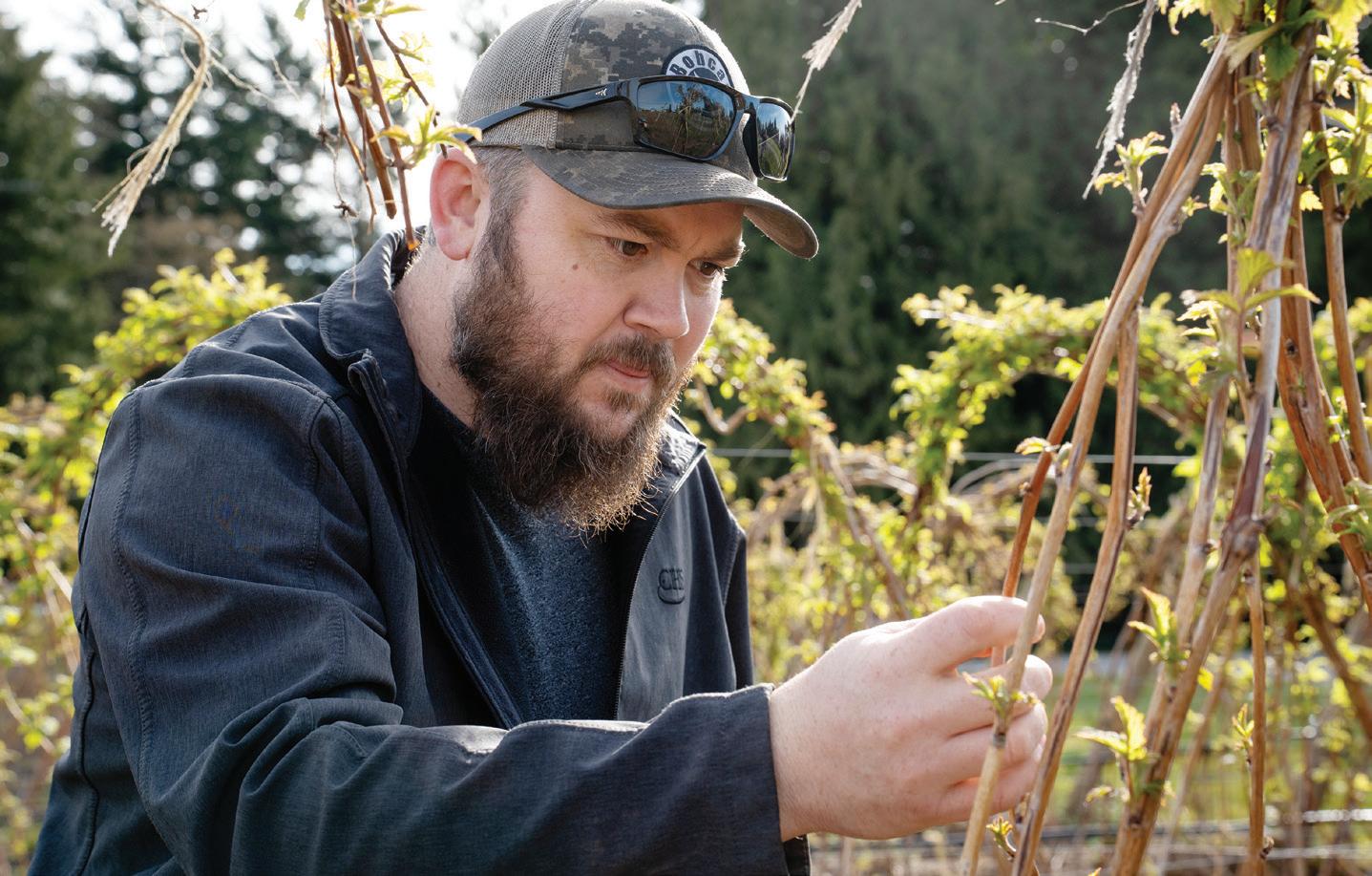
Raspberries are quite a bit more labor intensive than blueberries, Laverman said, as they require pruning and tying each year to help ensure a healthy harvest for the next growing season. Blueberry bushes don’t require that same level of care for successful growth. Also, raspberries need to be pulled and replaced more frequently than do their blueberry field counterparts.
“There’s been a lot of farmers putting blueberries in around the county,” she said. “That’s good, but we felt like sticking primarily to raspberries as what we started with and what we know best.”
Laverman’s core childhood memories center around being on the farm, she said. As an adult, she’s part of a community working toward a common goal and raising her own kids as part of that community.
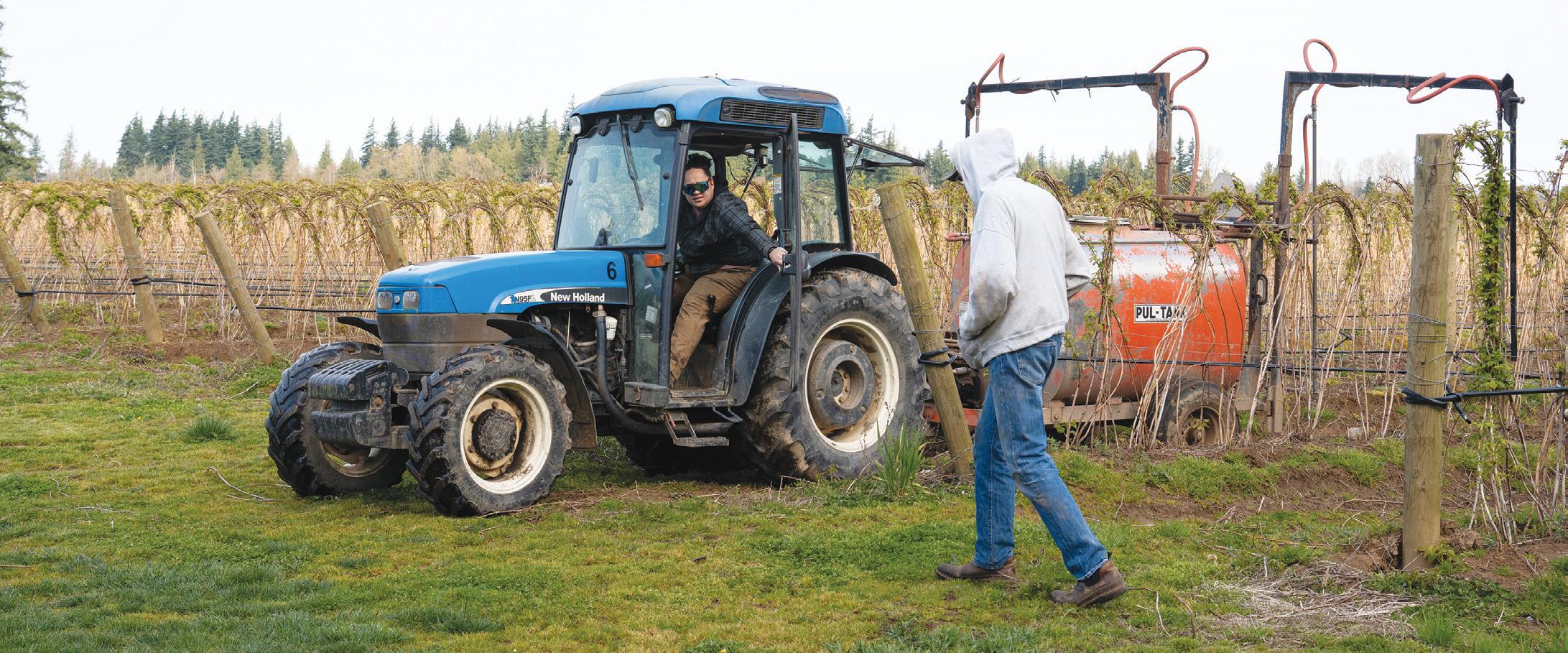
Berry Acres uses about 140 workers during the picking and processing season, and that number includes a lot of high school-age youth.
“I think that is so important, too,” she said, “because it’s a wonderful place for them to learn the value of hard work and quality, doing their work efficiently and doing it right.”
Workers are expected to do a lot of hard work, but Berry Acres also features fun days such as Spirit Week and an end-of-the-year barbecue celebration.
“Their help is needed to make the harvest successful,” Laverman said. “We are really proud of what we
are able to produce. We can stand behind our products and what we’re sending out for people to eat.”
Celebrating raspberries, Lynden style
The annual 2026 Northwest Raspberry Festival takes place July 17 and 18 in downtown Lynden. Started in 1997, the festival has expanded to include basketball tournaments, a car show, music, vendors and more, said Gary Vis, executive director of Lynden Chamber of Commerce.
“The interesting thing about the raspberry festival is we never have
any raspberry farmers or growers or workers, because they’re all busy harvesting,” he said.
At the 2025 festival, 25,000 to 30,000 visitors were offered individual-sized portions of berries and ice cream, thanks to 1,800 pounds of raspberries from Curt Maberry Farm and 330 gallons of ice cream from Edaleen Dairy.
The festival brings the community together.
“We are very blessed to have as many raspberry growers as we do in the region who put out the highest quality fruit in the nation,” Vis said. “That’s a big thing.” n
Surge in ICE arrests of farmworkers worries local farmers as busy season approaches
Ben Tindall is the executive director of Save Family Farming, a statewide organization with deep roots in Whatcom County He issued the following statement regarding a notable increase in federal agents’ enforcement activity impacting farmworkers and the farming community.
State farmers fear the surge in federal immigration enforcement arrests could spell disaster for the upcoming growing season, as many of the state’s family farms already teeter on the brink of survival thanks to skyrocketing cost pressures.
Farmers in some areas report a troubling uptick in detentions of farmworkers in recent weeks, including people with proper documentation and no criminal records. From the beginning of this crackdown, farmers here have been clear: This approach doesn’t solve the deep dysfunction in America’s broken immigration system.
While the Trump administration initially indicated the immigration crackdown would target undocumented people committing crimes, its track record shows a different story. Many with no criminal past, and even some with the correct immigration documents, have been swept up in the federal government’s campaign.
Not only does the ongoing enforcement activity fail to provide meaningful reform, it threatens the future of our farms and our entire food system. Farm families, regardless of immigration status, are plunged into a dangerous atmosphere of fear and uncertainty. The government’s approach is silencing voices and stripping away the dignity of those who contribute daily to our nation’s food supply.
Last year, the crackdown led to significant harm to the state’s cherry harvest, as workers both with and without legal documents
at times stayed away from jobs, fearing workplace immigration raids and arrests. As immigration arrests surge here in 2026, the risk is even greater. Farming in the state is currently experiencing unprecedented losses, with skyrocketing labor costs and an acute labor shortage leading the list of factors pushing many farmers deeper into the red.
Continuing to increase enforcement activity against farmworkers in the state could spell disaster for the upcoming harvest seasons. Already prior to the crackdown, federal data showed the state losing an average of two farms every day. If the administration continues to increase pressure on farmworkers, farms will shut down and the consequences will ripple across our food supply.
Let us repeat what we said over a year ago: Justice demands a fair and orderly immigration process — one that does not rely on fear or intimidation to control the lives of those who simply seek to work and provide for their families. It is time for leaders on all sides to recognize that farmworkers are not political pawns. They and their families are essential members of our communities. We call on federal leaders to immediately pursue real solutions to fix America’s broken immigration system.
The federal government has a responsibility to protect Americans from criminal noncitizens without jeopardizing the future of our nation’s farms, our food system, and the people who sustain it. This too is a paramount issue of national security. n
2026 EVENTS
WBA Business Conference
Tuesday, June 9 | 7-9 a.m. Bellingham Golf & Country Club
Featuring an expert economist and local business leaders sharing timely insights and expertise.
WBA Member Networking Cruise
Thursday, September 10 | Bellingham Bay
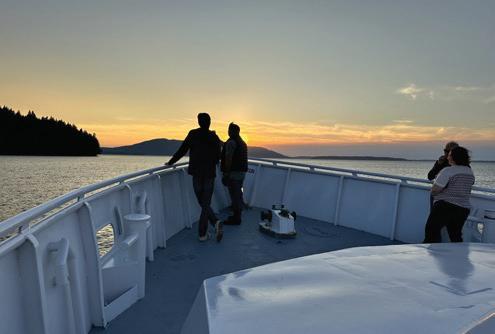
All aboard! WBA members are invited to set sail on a members-only cruise through Bellingham Bay. Enjoy networking, great conversation, hearty appetizers and a cash bar aboard the Salish Express. Bonus: whale sightings possible!
Leaders of Industry Issues Forum
Thursday, October 15 | Hotel Bellwether
A panel of local and state experts will explore the top policy issues influencing business in Whatcom County today.
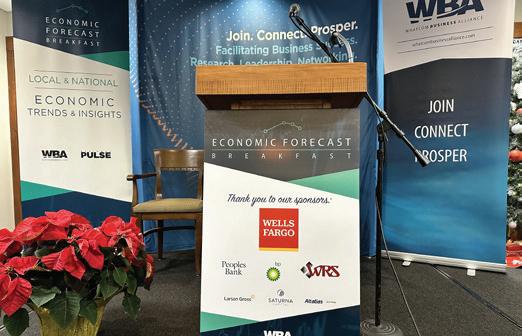
Economic Forecast Breakfast
Wednesday, December 2 | Bellingham Golf & Country Club
Gain valuable perspective on 2027 from leading economists as they present local and national economic forecasts for the year ahead.
WEDNESDAY LUNCH & LEARN EVEN TS
Lunch & Learn events are educational online meetings over the lunch hour, usually involving topics of discussion centered around AI. Meeting times and registration links are posted in our eNews and on our website.
Dates
May 21 | Fall dates coming soon!
*Dates and/or locations may change. For the most up -to- date information on WBA events, please visit whatcombusinessalliance.com/events.
WHERE WE ARE NOW ELECTRICITY AND NATURAL GAS COSTS:
| By Cheryl Stritzel McCarthy
We have a common response when asked about our romantic relationships: “It’s complicated.” The same could be said of the workings of government bodies such as the Washington Utilities and Transportation Commission, the outfit that oversees Puget Sound Energy, and its relationships with rate-paying customers throughout the state.
At least in part due to Washington state’s ambitious climate goals, Puget Sound Energy consumers are expecting electricity and natural gas costs to rise for homes and businesses throughout the region. What does PSE say? Here to help sort out this complicated relationship is PSE public relations manager Melanie Coon, answering questions from Business Pulse.*
BP PSE has filed a three-year rate plan request with the Washington Utilities and Transportation Commission. If approved by the UTC, new rates would be effective in early 2027. PSE requests authority from the UTC to raise customer rates due to capital investments; ensuring capacity for increasing demand; and progress toward Washington state’s clean energy requirements. When is approval expected?
PSE: This is a filing with our regulators, the Washington Utilities and Transportation Commission. The filing starts the review process, which can take up to 11 months. Nothing has been approved — the UTC sets rates that may differ from PSE’s requests based on the results of its review.
BP By state law, PSE must, by 2030-2033, provide 80% of electricity from renewable or non-emitting resources. What percent is supplied by those resources now?
Since (former) Gov. Jay Inslee signed the Clean Energy Transformation Act into law in 2019, our portion of clean energy has grown from 26% to more than 57% in 2025.
*PSE responses have been lightly edited
UP NEXT
How do local businesses feel about these costs? A few weigh in. PAGE 23
BP Initiative 2066 changed state building codes so that they will now require substantial changes in energy use by new commercial and residential buildings. It also limited the ways gas could be used in new construction. Expand on this?
Your question is not quite accurate. Initiative 2066 would have rolled back energy building codes put in place by the State Building Code Council. Those building codes made it more complicated to use natural gas for heating new buildings. I2066 was overturned in Superior Court last year, and the state Supreme Court is currently (as of press time for this magazine) reviewing the Superior Court’s decision. No matter whether I2066 is in force or not, we are seeing declining use of natural gas by our residential customers. ▶ ▶
Part of what drives the increase we are seeking on the gas side is the need to recover the cost of the existing natural gas infrastructure that customers continue to use even as they consume less gas.
BP What points would you make to business owners and managers about the coming increases?
First, we understand that any rate increase is hard on our business customers. We take that seriously and are committed to keeping costs as low as possible. You can see more specifics on how we do that on our general rate case webpage at pse.com/en/pages/rates/pendingutc-filings/2026-general-rate-case.
Our core purpose is the safe and reliable delivery of energy to our customers. This rate plan includes significant capital expenses associated with the safe operation of the gas and electric system. At the same time, we are working to meet growing energy demand and to comply with some of the most ambitious climate laws in the country. We’re doing all of this in a more inflationary environment, too. The cost of goods and the cost to procure power on behalf of our customers has risen significantly. For additional context:
• Power costs are a substantial portion of rates. PSE owns resources that we operate on behalf of customers, and we buy power when we need more to serve customers. In the last five to 10 years, wholesale power market prices have approximately doubled for a variety of reasons: inflation, tariffs, scarcity as loads grow, increased costs of goods, premium on clean energy resources, competition with data centers for power supply.
• Costs to maintain and upgrade infrastructure have increased substantially in the last 10 years. Transformers are up 135%, wood poles up 86%, cable up 56% and wire up 39%.
BP Over the next three years, PSE needs to invest $3.2 billion in gas and electric: 70% to electric and 30% to maintain current infrastructure for PSE’s 900,000 natural gas customers. Is most of that a result of the state’s push toward renewable or nonemitting resources?
CAPITAL INVESTMENTS TO PROVIDE SAFE, RELIABLE AND CLEANER ENERGY (2027-2029)
Source: Puget Sound Energy
• None of that $3.2 billion is tied to investments in energy generation. Those dollars are funding investments in the electric system focused on system safety and reliability, to meet growing customer demand, and to harden PSE’s infrastructure against more severe weather and wildfire risks. The investment also preserves system safety and maintains current infrastructure for PSE’s nearly 900,000 natural gas customers.
• For this rate proposal, we are proposing $3.6 billion for all-new generation resources being built to meet customer demand and comply with clean energy targets. There is a significant investment in new Clean Energy Transformation Act eligible resources; there are 11 new projects included in the case. However, because we also need energy to meet customer demand, it would not be accurate to assign the full cost of those resources to policy choices. Our case also includes the costs of new natural gas-fired capacity resources to meet peak demands when energy from the renewables is not available. Approximately 40% of the total rate proposal is tied acquiring all of these resources — you can see this via the graphic (above or the GRC page). n
Courtesy
Yet another challenge
| By Cheryl Stritzel McCarthy
How do local businesses feel about this? A few weigh in. *
BP Puget Sound Energy is requesting authority from the UTC to raise customer rates, effective early 2027, due to capital investments, capacity for increasing demand, and progress toward Washington state’s clean energy requirements. How will this affect your business?
Bobbi Kreider, president and chief financial officer, LSM Heating, Plumbing, Electric (formerly Lynden Sheet Metal): “It may have some customers looking for more efficient options or make them hold off on purchasing because their monthly expense is too high. I don’t expect this to affect business or pricing, as these will affect the end user the most.”
Michael Millison, production manager and owner, Northwest Marine Industries: “It’s another challenge in doing business in Washington state.”
Scott Isenhart, president, Tiger Construction, Everson: “It will reduce profits and increase pricing, though the market’s pretty hungry now, so I don’t know that there’ll be room to increase pricing and stay competitive; it will probably come out of profits in the near future.”
BP By state law, PSE must, by 2030-2033, provide 80% of electricity from renewable or non-emitting resources. Comment?
Kreider: “This is an ambitious goal. With increased energy demands from electric cars, swapping from gas heating/ water heating/cooking, AI data centers, etc., and trying to reduce use from fossil fuels, I am not sure if they can meet the deadline and satisfy the demands. But I will leave that for people who know way more than I do.”
Millison: “It’d be nice to see the plan and see if it’s a possibility. Just raising our rates isn’t going to magically make that happen.” ▶ ▶
*Answers have been edited for space
Bobbi Kreider
Michael Millison
Scott Isenhart
photos
Isenhart: “Market forces create unavoidable pressure on prices for all kinds of resources used in construction. To the extent the state law increases the cost for power, it’s a choice we’ve made that adds another layer to the challenge of building affordable housing.”
BP Initiative 2066 changed state building codes so that they will now require substantial changes in energy use by new commercial and residential buildings. It also limited the ways gas could be used in new construction. How will this affect your business?
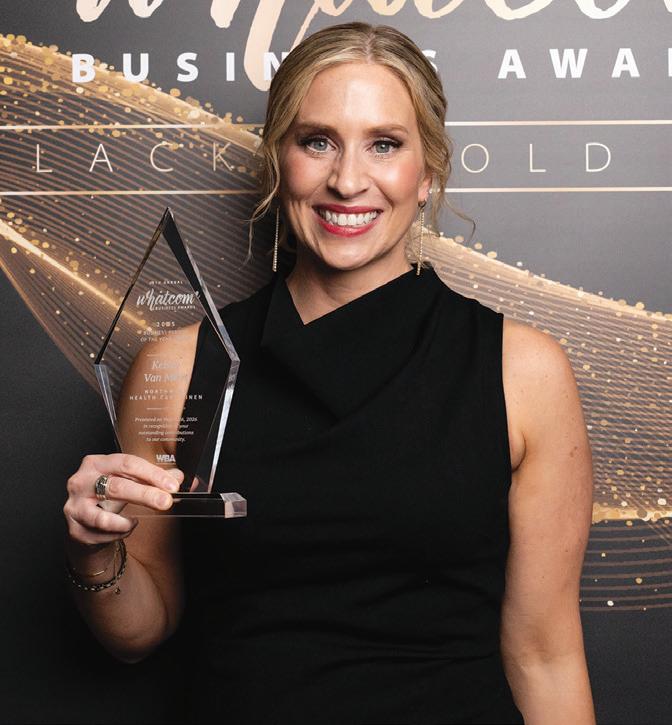
Kelsey Van Miert, CEO, Northwest Health Care Linen: “The equipment in our building runs on natural gas, and without the ability to use natural gas we would effectively be shut down. Commercial laundry equipment does not run on electricity — we cannot operate without natural gas. The initiative as it is right now has stifled our growth to expand our footprint and open additional facilities because we cannot run on electricity alone. If the cost of natural gas goes up to the point that it’s not a viable resource (because they are pushing people to electric) it impacts more than just our company.
“We serve more than 520 medical facilities, including hospitals, behavioral health facilities, surgery centers, imaging centers, primary care clinics, etc. Laws and regulations that disrupt our ability to produce hygienically clean linen affect every single one of our customers and the thousands of people for whom they provide care.”
Kreider: “All new construction requires a certain amount of ‘energy credits,’ items that will make the building more efficient. Each energy-efficient item is given a point value, and you have to get so many points to get the building permit. Gas equipment does not get you the energy points needed, so contractors are moving to electric heat pumps or rooftop units. For new construction, we see the change from mostly gas equipment to mostly heat pumps or electric heat.”
Millison: “That would limit our ability to build a larger manufacturing facility. That’s a goal, and a possibility
Laws and regulations that disrupt our ability to produce hygienically clean linen affect every single one of our customers and the thousands of people for whom they provide care.
for us, to build our own facility. Meanwhile, I feel lucky to have a good relationship with the port and be able to lease the building we’re in.”
Isenhart: “The building codes dictate certain building methods. Customers design their buildings around those codes, then we build what’s on the plans. I’m neither here nor there on whether the project utilizes electricity or natural gas, but it does reduce the choices the customers have, whether residential or commercial. So, from that perspective, I don’t like it. I want our customers to have as many choices as possible.”
BP As electric rates rise, businesses’ increased costs will likely be passed onto consumers. Comment?
Kelsey Van Miert
Courtesy photo
Kreider: “We are getting hit with price increases from every direction and can only absorb so much. As our costs increase, we have to pass those increases on.”
Millison: “For sure, business costs will have to be passed on to consumers, just like tariffs and B&O taxes.”
Isenhart: “Yes, as power costs increase, eventually those will get to the consumer. To the extent that they get passed on to the consumer, depends on how competitive the construction industry is. Right now, it’s very competitive. Eventually, however, it will reach owners/managers or your customers about the
your home or replacing windows are options; adding solar is an option to lower monthly power bills. For now, natural gas is still an option in existing residential homes, and that remains cost efficient. Both PSE and Cascade Natural Gas have rebates to upgrade to more efficient equipment. We also work with financing options to help with the initial costs of upgrades. If you aren’t on a budget plan already, contact your utility company. A budget plan averages your bill over 12 months, so you pay the same amount monthly.”
Millison: “We’ll do everything in our power to keep increases to a minimum.”
Isenhart: “From the beginning of time, all costs have increased; everything is always going up all the time. If they raise power rates, that’s another example. To
At Neeter House of Luxury, custom design is more than a service it’s collaborative artistry where your personal story becomes a timeless piece of fine jewelry. Our expert designers work with you one-on-one, in person or through virtual consultations, to listen to your vision and bring it to life with precision, creativity, and the highest standards of craftsmanship that match the world-class jewelry brands we carry
Call today to schedule a consultation with a member of our fully in-house team, who blend traditional techniques with modern design tools, ensuring each custom creation reflects your style, sentiment, and legacy for years to come! 360-778-1613
40 Bellwether Way, Suite 101 Bellingham, WA 98225 neeterhouseofluxury.com CUSTOM
Summer's world stage
FIFA 2026, festivals and a season unlike any other in Whatcom County
| By Tony Moceri
Summer in Whatcom County means tourists arriving to hike in Mount BakerSnoqualmie National Forest, paddle on Bellingham Bay and bike on Galbraith Mountain. They travel to the area for regular summer events that bring visitors and locals together.
This year, an additional event will attract people from all over the world. Every four years, soccer descends on a location with the arrival of the FIFA World Cup. This year’s matches will be played in 16 cities, from Canada to Mexico, and Whatcom County is smack dab
in the middle of two of them. With Vancouver, British Columbia, and Seattle both playing host to games, people will be traveling through and staying in the area for easy access to both locations.
In fact, Bellingham has been designated by SeattleFWC26 as one of nine Fan Zones in Washington, with planned watch parties and events tied to the World Cup.
When people envision hanging out on a sunny summer day in Whatcom County — or even a drizzly one, for that matter — images of sipping a pint at their favorite brewery come to mind. While that is still a big part of the social scene in Whatcom County, there is now so much more. Whether people are outdoor sports enthusiasts, music lovers or foodies, Bellingham has something to offer. In 2024, people who reside outside the county spent approximately $775 million in Whatcom County.
“We typically, year in and year out, have about the fifth-highest county for visitor spend in the state of Washington,” said Dylan Deane-Boyle, president and CEO of Bellingham Whatcom County Tourism. “What I think is interesting about that is that our population is much smaller than those that are above us. We are talking about King, Pierce, Spokane and Snohomish counties. It’s always such an integral part of our economy in two ways: through domestic travel from the northwest cities, particularly for outdoor recreation, and for our arts and culture. The second is our neighbors to the north, where we did see a decrease in our Canadian visitors last year.”
It can be hard to determine when summer begins in Whatcom County. Is it with the summer solstice — or maybe July 5, when the sunshine is more predictable? While people debate it, it feels comfortable to say the summer tourism season starts with Ski to Sea on Memorial Day weekend. With athletes arriving from all over the world to have their teams traverse our county, it feels like tourism is rolling after this point. With another sold-out race, it will
LEFT: Bellingham has been designated by SeattleFWC26 as one of nine Fan Zones in Washington.
RIGHT: Ski to Sea, a multisport relay race from Mount Baker to Bellingham Bay, returns May 24.
CHECK OUT THESE EVENTS
World Cup matches in Vancouver and Seattle
June 13 through July 7
Downtown Sounds
Wednesdays, July 8 through Aug. 5
Ragnar race July 10
Everson Summer Festival July 10 and 11
Northwest Tune-Up July 10-12
Old Settlers Picnic & Parade at Pioneer Park in Ferndale July 25 and 26
SeaFeast Sept. 26 and 27
inevitably be a busy weekend for visitors and locals alike. While we will still be a couple of weeks away from the first World Cup games, people may already be arriving to the area.
The first game in Vancouver is on June 13, and the first game in Seattle is on June 15. While it’s difficult to determine exactly when people will be arriving and where they will be staying, this could be the onset of some arrivals. Lance Calloway, who is the vice president of Washington Adult Soccer and was on the Whatcom County Tourism Board for 10 years, has been to a World Cup and expects people will be buying packages that include multiple games, so they will be coming to the area and not only staying for a while but will have time between matches to get out and explore the region. ▶ ▶
Courtesy
BP TOURISM
“It’s going to be a great atmosphere,” he said. “You’re going to get people that are really passionate about the game, and hopefully a lot of younger kids get to experience that. I think it’s going to be really positive for our community. Putting the tourism hat back on, people are going to be coming into the areas from outlying communities where there’s not a Fan Zone.”
The SeattleFWC26 Fan Zone designation means that Bellingham has been chosen as a place to gather for World Cup viewing and celebrations. People will be directed to the city as a place to visit and cheer on their favorite teams or to watch games between the ones for which they have tickets. In addition to a long list of venues across Bellingham having free screenings of matches throughout the World Cup, there will be viewing parties at Kulshan’s Trackside Beer Garden and the Commercial Street Block Watch Party, which will feature what is sure to be one of the most anticipated matches in our region on June 19, when the U.S. will face off against Australia in Seattle. A full list of World Cup-related events and places to watch World Cup games in Bellingham can be found at bellingham.org/fan-zone.
“I’m really excited to see what this current version of the U.S. men’s national team is going to produce,” Calloway said. “I don’t believe the U.S. has ever put forward as quality of a roster with players with international experience playing overseas in the top leagues in the world. If we have everybody
healthy, I think the U.S. has a great potential in advancing further than we ever have.”
The best result the U.S. men’s team has achieved was third place at the first World Cup, in 1930. More recently, its best result was reaching the quarterfinals in 2002.
There will be World Cup matches played in either Vancouver or Seattle
from June 13 through July 7, and the impact of visitors could be felt from weeks before to weeks after. During that period, we may not only see an influx of visitors but also people looking to stay in the area.
“Airbnb commissioned Deloitte to do a study, and it was looking at the lodging capacity of all of the host cities and what those areas could expect,” Deane-Boyle said. “And what it showed was that, for Vancouver in particular, they were going to be significantly deficient in the number of lodging rooms compared to what they are projecting for the number of visitors coming for the games in Vancouver. So, we are hopeful that we might see some lodging compression here in Whatcom County. Obviously, we don’t know to what degree, but an interesting analogy that I can give you, and something that we talk about a lot, is the Taylor Swift effect that happened here. That was when she had concerts in December of 2024, and it was a two-night concert up in Vancouver, and during that concert weekend, lodging occupancy here in Whatcom County increased almost 50% compared to that same two-day time period the year before.”
During this time, other events will be happening that will attract people to our area. The Bellingham Farmers Market will be in full swing on Saturdays, the Bellingham Bells will be in season, the Lake Padden Triathlon will be happening on June 27, and Fourth of July events will be happening all over the county. This
means that, in addition to it likely being busy, Whatcom County will have an opportunity to show the world all it has to offer visitors.
Once the World Cup games in our region end, we will move into the thick of other events that draw people to the area. Downtown Sounds begins Wednesday, July 8, and runs each Wednesday until Aug. 5. The Ragnar race will pass through the county on July 10; Everson’s summer festival will take place July 10 and 11; and Northwest Tune-Up, which has grown quickly in popularity, is July 10-12. The next weekend is the Northwest Raspberry Festival, on July 17 and 18 in Lynden.
and reinvested in the community.
“Through seed money from grants and marketing to raise awareness, the overnight lodging stays help create these great experiences that benefit both our visitors when they’re here and also community members who take part in the event for the experience and from an economic vitality perspective too,” Deane-Boyle said.
So, while you may find yourself in a little more traffic than normal this summer, and waits at your favorite restaurants may be a little longer, keep in mind the economic impact these visitors will have on
This impact shows up in dollars spent at local businesses and in lodging tax dollars received and reinvested in the community.
On July 25 and 26, the old Settlers Picnic & Parade will be taking place in Pioneer Park in Ferndale. The summer tourism season will wrap up with the foodies’ favorite, SeaFeast, on Sept. 26 and 27.
With too many events to name, Whatcom County has turned itself into a destination where people can come all summer long to explore the natural elements, in addition to the festivals and shows the community puts on. This impact shows up in dollars spent at local businesses and in lodging tax dollars received
our economy this summer and in the future, as they may decide to return for years to come.
“Tourism and travel in general are about the experiences,” Deane-Boyle said. “So much of the experience is having communication with the people who live there. It’s about meeting people, having conversations with those who live in a different area from you, and learning about their area through their eyes. There’s a human component to the travel experience.” n
WHATCOM BUSINESS GALA HONORS LOCAL LEADERS
Runway moments. Big-screen stories. Elegant celebrations. A GALA TO REMEMBER.
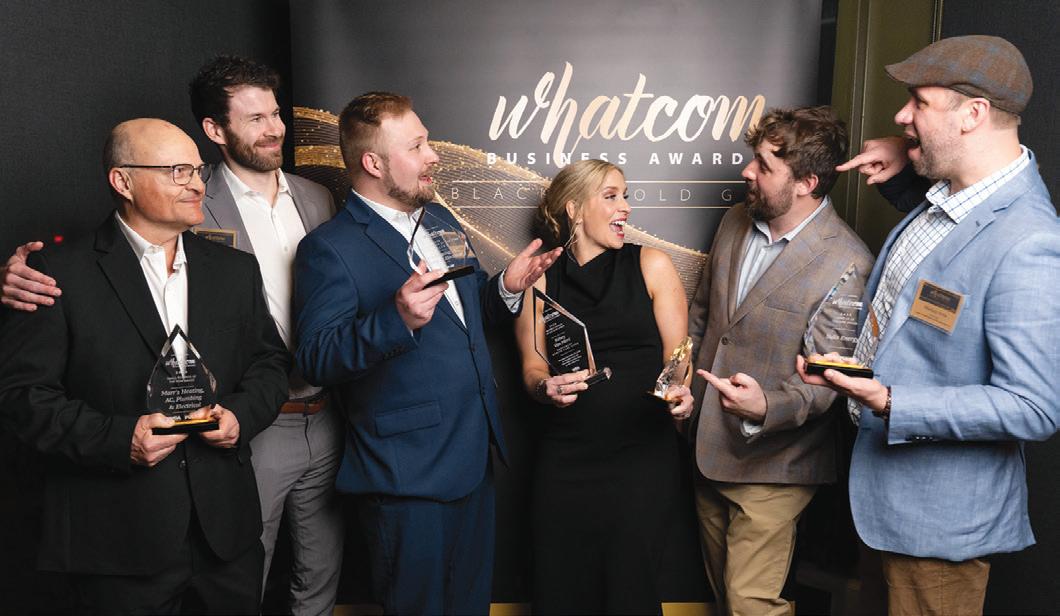
In March, the Whatcom Business Alliance hosted the year’s most prestigious business event, the 39th Annual Whatcom Business Awards Black & Gold Gala.
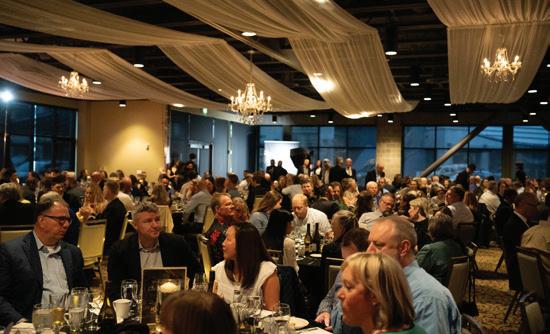
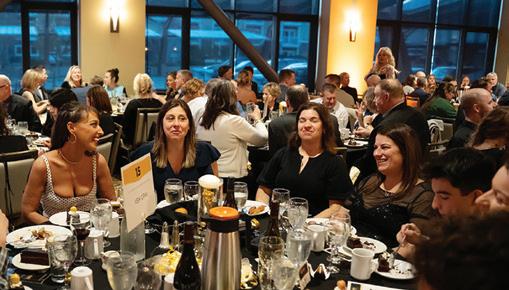
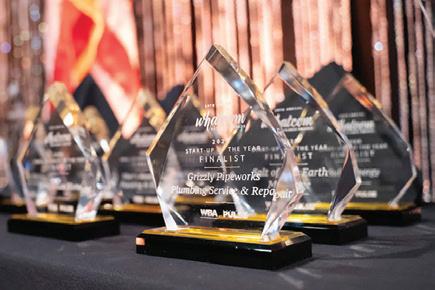
The sold-out event of 350 guests began with an elegant cocktail reception at the Hotel Bellwether followed by a seated gourmet dinner in the ballroom. The awards show included video stories of the nominees on the big screens, roaring recognition for honorees as they took to the stage via a lighted runway and customized music selections, heartwarming tributes and thank-you speeches — and a lot of love in the room for the mayor.
Here are the award winners →
[ Complete feature articles on all finalists are at businesspulse.com.]
Credit: Sattva Photo
START-UP BUSINESS OF THE YEAR
Sulis Energy
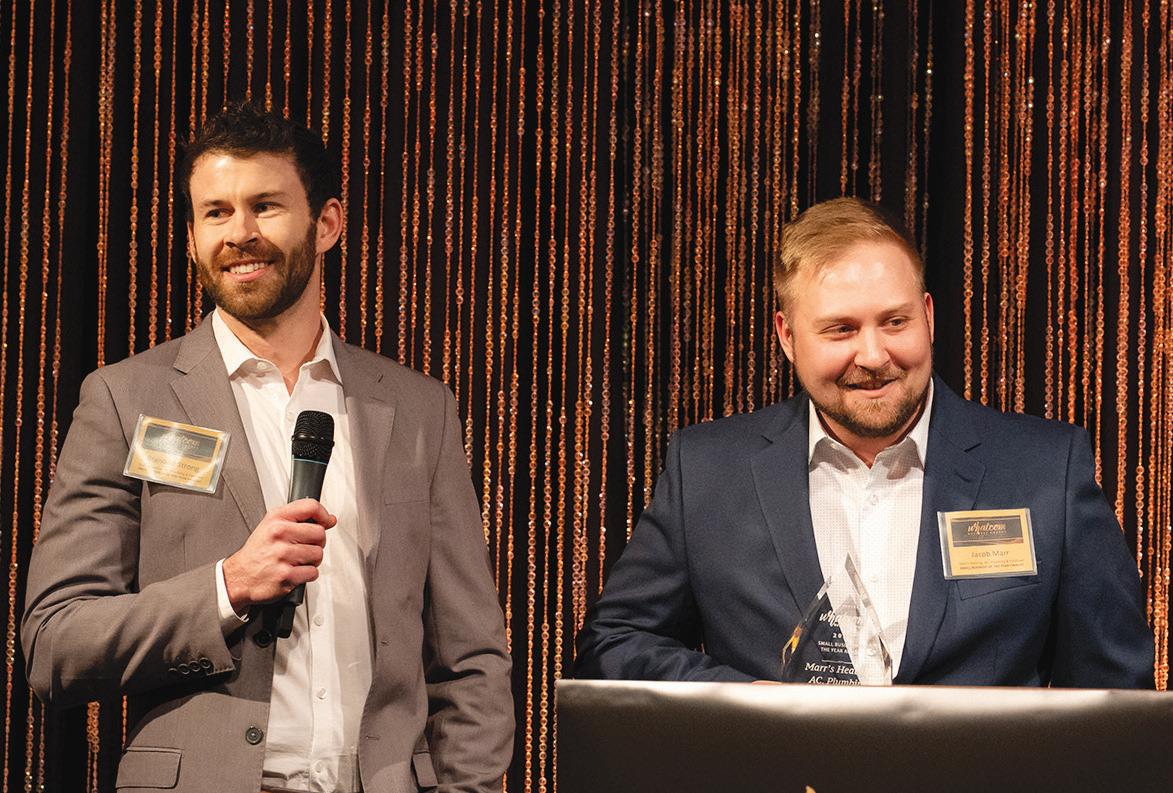
SMALL BUSINESS OF THE YEAR
Marr’s Heating, AC, Plumbing & Electrical
BUSINESS
PERSON OF THE YEAR
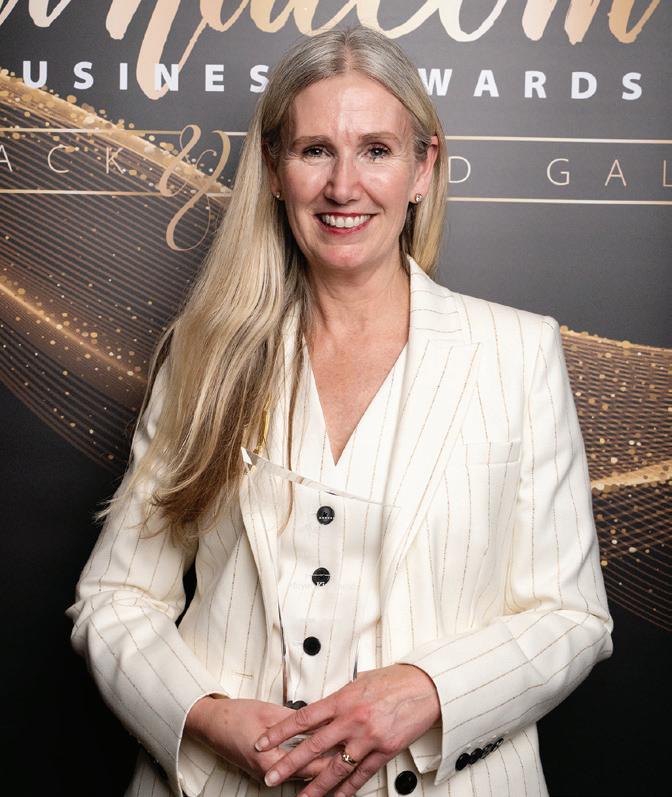
EMPLOYEE OF THE YEAR AWARD
Sherry Scoggins
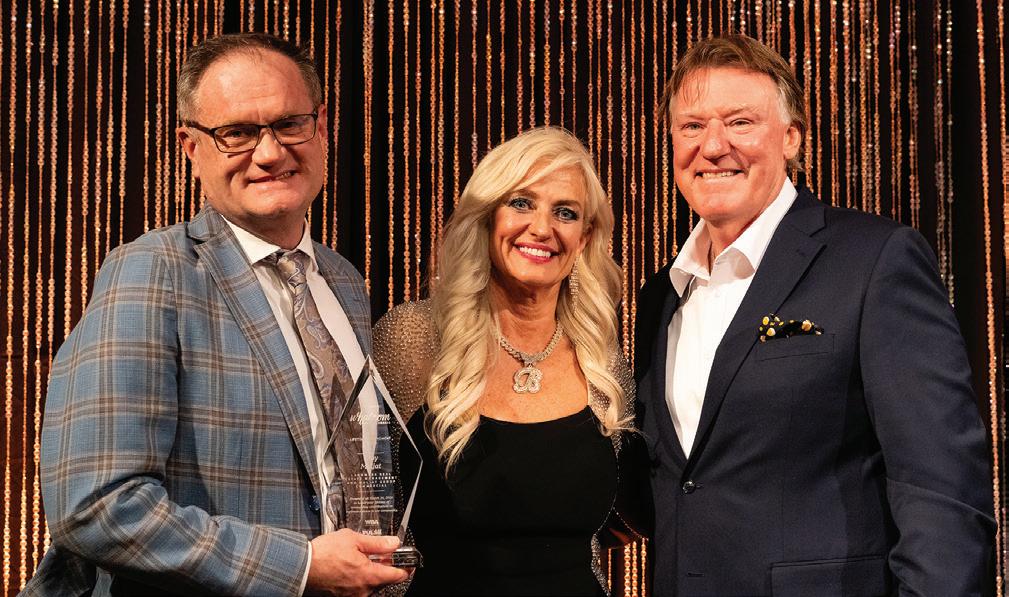
LIFETIME ACHIEVEMENT AWARD
Troy Muljat
Landmark Real Estate Management and Muljat Group Commercial
PUBLIC SERVICE AWARD
Kim Lund
Mayor of Bellingham
EPIC!
Here is what people are saying about our recent and biggest event of the year, the Whatcom Business Awards:
“[This event] had us FEELING like we were movie stars for a bit! It was the closest to Hollywood Bellingham has ever felt!”
Pure Bliss Desserts, Small Business of the Year finalist
“Congratulations on another OUTSTANDING Gala! Our table had a wonderful time, and our guests from Seattle were very impressed with how seamlessly the entire evening came together.”
Kevin Bedlington, Washington Trust Bank
“HUGE congratulations to all of the winners!
Barbara [Chase] and team, each year you keep outdoing yourselves! Already looking forward to next year‘s event!”
Erika Lacio, KeyBank
Justin Pike seeks to extend service ethic to Washington House of Representatives
| By Business Pulse staff
Justin Pike is a candidate for Washington House of Representatives, Position 2, in the 42nd Legislative District. He is a longtime Whatcom County resident, small business owner and detective with the Whatcom County Sheriff’s Office. He served 23 years in the U.S. Army and Washington Army National Guard, including deployments overseas and leadership roles at the company and battalion level. Justin and his wife are active in the community, raising their family in Whatcom County and supporting local schools, youth programs and service organizations.
You are a Whatcom County Sheriff’s Office detective. Describe your background and what inspired you to serve in law enforcement?
Pike: For me, law enforcement has always been about commitment to service. Every day, you deal with real people and real problems, and you see what is working and what is not. That perspective is a part of why I decided to step forward and run.
I have spent most of my adult life in service. I served 23 years in the U.S. Army, starting on active duty as a 19D Cavalry Scout, including a deployment to Iraq in 2005 and time stationed in South Korea. I
later served on active duty in the Washington National Guard.
In Whatcom County, I built my career, starting with Lummi Nation as a patrol officer, then serving with the Ferndale Police Department in patrol and as a detective. I was selected as the first member from an outside agency to serve on the Whatcom County Sheriff’s Office SWAT team.
Over the years, I have held leadership positions in military service. Those roles give me a broad perspective on leadership, accountability and how decisions impact people across an organization.
What prompted you to run for the Washington House of Representatives?
I decided to run because what we are seeing right now in Whatcom County is not sustainable.
People who have lived here their
Justin and Holly Pike, center, with their family.
“ My goal is to make sure that Whatcom County is a place where people can stay, succeed and be part of a strong community.
“
entire lives are leaving because they cannot afford to stay. These are families who built this community. When they start leaving, this is a sign something is wrong.
At the same time, I see pressure on local business. Policies coming out of Olympia are increasing costs and making growth harder. Business owners deal with higher expenses, more regulations and less certainty, and that directly impacts jobs.
What is your candidacy about?
My campaign has three pillars: affordability in Whatcom County, public safety and behavioral health, and government accountability. Every issue ties back to one of those pillars.
Affordability is at the center. If people cannot afford to live here and businesses cannot afford to grow, everything else starts to break down.
Community members asked me to consider running, and after talking it through with my family, we (family) made the decision to step forward.
We need people in the House who understand what is happening on the ground and are willing to focus on real solutions.
Regarding affordability, you told a story about your high schooler applying for college. Can you relay that conversation?
As my daughter started looking at colleges, she talked about options here in Washington. She is a longterm thinker — about her career, supporting herself, and raising a family. She stated that she wants a career that can support her here. Her chosen career pays similarly across the country. Yet in other places, with
lower costs, that same job affords her a home and a future.
My 20-year-old son was able to buy his first home, on his own, in Texas. I have another son here with a goodpaying job who is struggling just to keep up with rent.
My kids’ decisions make it clear to me that this is not just about policy or numbers but about whether our kids can build futures here. If they feel they must leave to make that happen, then we have a bigger problem.
We need to increase housing supply to meet demand. We also need to focus on creating strong workforce pathways. n
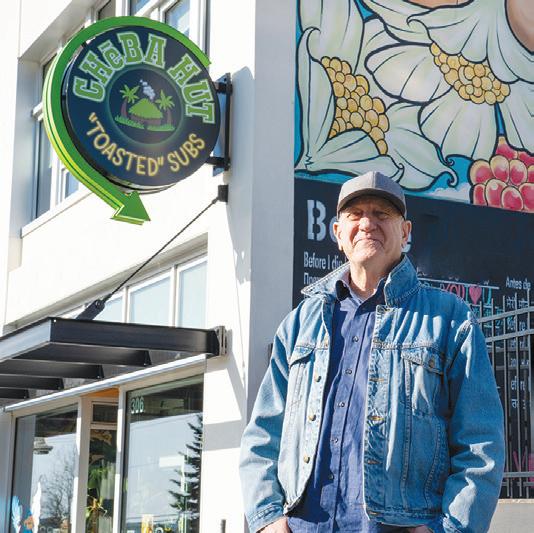
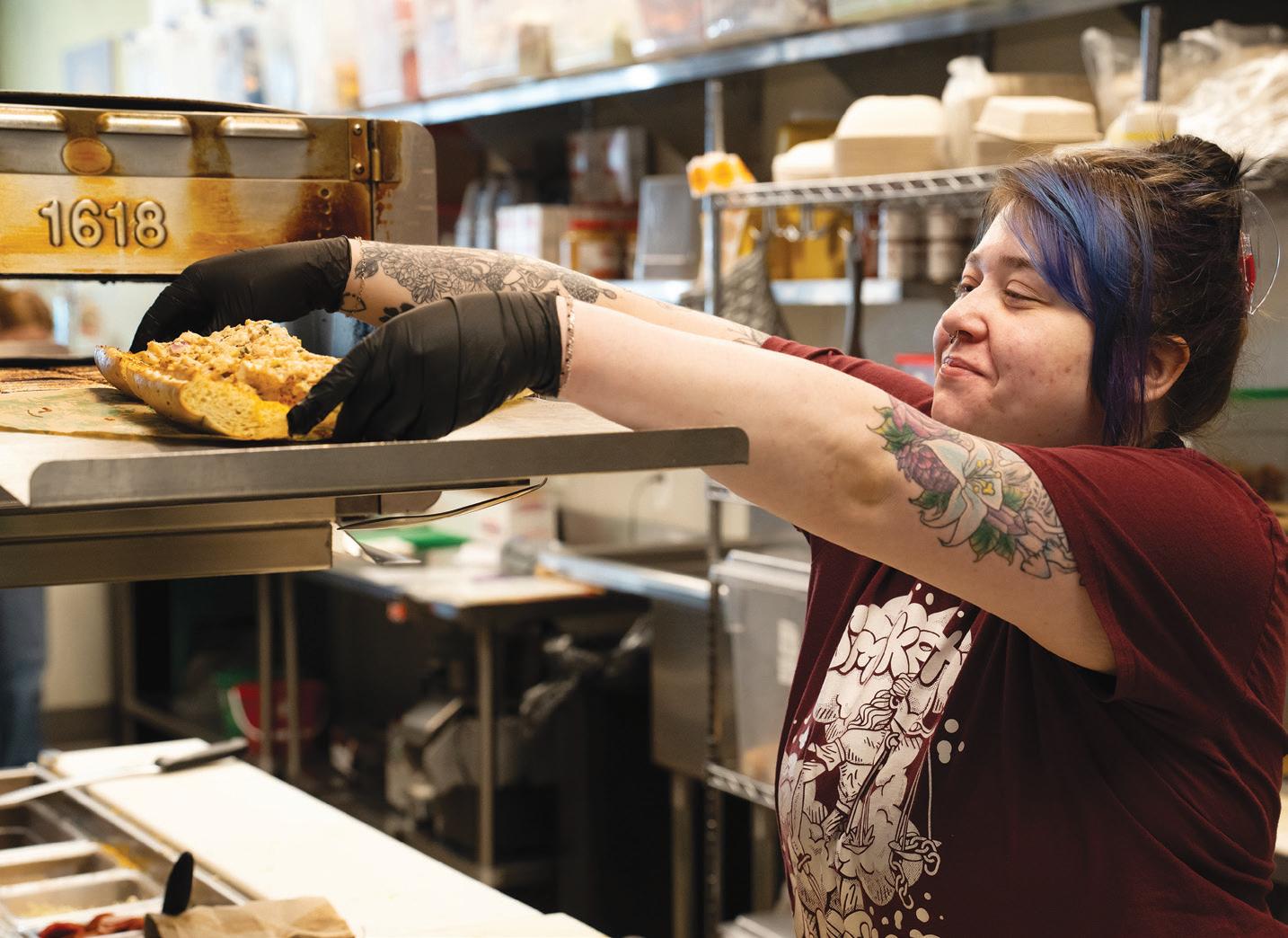
Doug Engerman owns a Cheba Hut franchise located in the former Rocket Donuts spot, at 306 W. Holly St. in Bellingham’s Old Town district.
TOASTED
TREASURES
Locally owned Cheba Hut serves up subs and smiles
| By Matt Benoit
Credit: Sattva
Photo
It’s rare that a submarine sandwich changes the course of someone’s life.
But in a sense, that’s what happened to Doug Engerman. The longtime Blaine resident is the owner of a Cheba Hut franchise, located in the former Rocket Donuts spot at the corner of Bay and Holly streets in Bellingham’s Old Town district.
Engerman never planned to enter the restaurant business, much less in his mid-60s. But after dining at a Cheba Hut restaurant in Colorado about 10 years ago, his wife Kristin remarked that it seemed like a business that would be a perfect fit for Bellingham, a place they’d come to love after moving from Chicago in 1999.
The move was precipitated after Doug’s software company sold to a competitor based in Surrey, British Columbia.
“Part of the deal was that I move up here and then help them run the combined operation,” he said. “I’d only actually been up here a few times before our competitor came to Chicago and expressed interest in buying the company.”
While they were temporarily living in Colorado for a project in 2015, Cheba Hut — a national fast-casual sandwich eatery founded in Tempe, Arizona, in 1998 — became a frequent dining spot for the Engermans. The restaurant gets its name from a slang word for marijuana (cheeba), and its fun, laidback vibe revolves around cheeky nods to cannabis: among others, ▶ ▶
their subs are “toasted,” desserts are “munchies,” and fountain drinks are “cotton mouth cures.”
Engerman, though, was mostly attracted to the quality of the food at a decent price point. He describes the eatery as having the “best damn toasted sub sandwiches in the navigable universe.”
His favorite, noted on his business card, is the “White Widow” — a chicken, bacon and ranch sub.
Other popular picks include the “Kali Mist” (a spicy club sub) and “Sensi Kush” (a spruced-up BLT). In total there are nearly 30 sandwiches on the menu, including several veggie options. Engerman said he’s tried them all. Salads are also well regarded, and gluten-free options will soon join the menu, he added.
“I still eat every time I come here,” he said. “I can’t resist! It never gets old.”
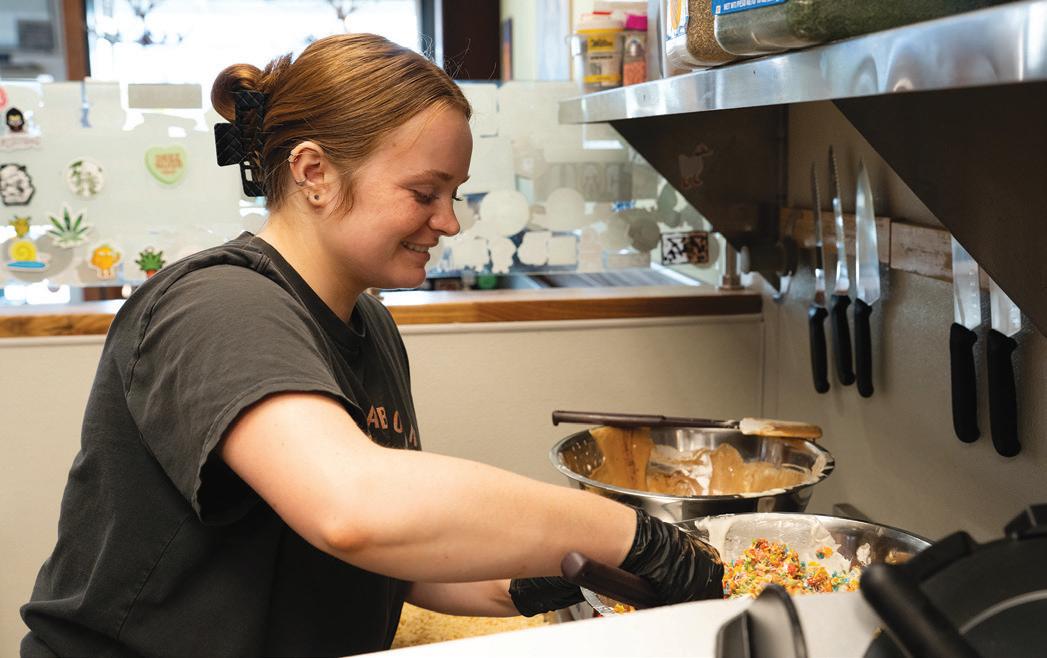
The restaurant’s bread is proprietary, Engerman said, and sandwich sauces and desserts are made fresh in-house each day. Nothing comes out of a plastic bag only to be microwaved and served right to a customer, he added.
Currently, there are 83 Cheba Hut locations in the United States, Engerman said, with about 70 of them congregated in Arizona, New Mexico, Texas and Colorado. The Bellingham shop, opened in July 2022, was the first in Washington state. It’s since been joined by a location — also owned by Engerman — in Seattle’s University District. That one opened in July 2023.
Engerman has licenses for another
four franchises, having obtained six of them in late 2019. But the COVID-19 pandemic quickly pumped the brakes on opening a sitdown restaurant in a world suddenly forced to confront takeout-only, limited capacities and mask wearing.
Once things moved back in the direction of normal in 2022, Engerman began his Cheba Hut journey in earnest. He worked with building owner Mike Hammes, who purchased it from former Rocket Donuts owner Jim Swift, to fully renovate the interior for a sandwich-based future.
Aside from some exposed historic brick, similar front windows and
the iconic rocket in the parking lot next door, there’s little trace of what used to be a beloved downtown donut shop.
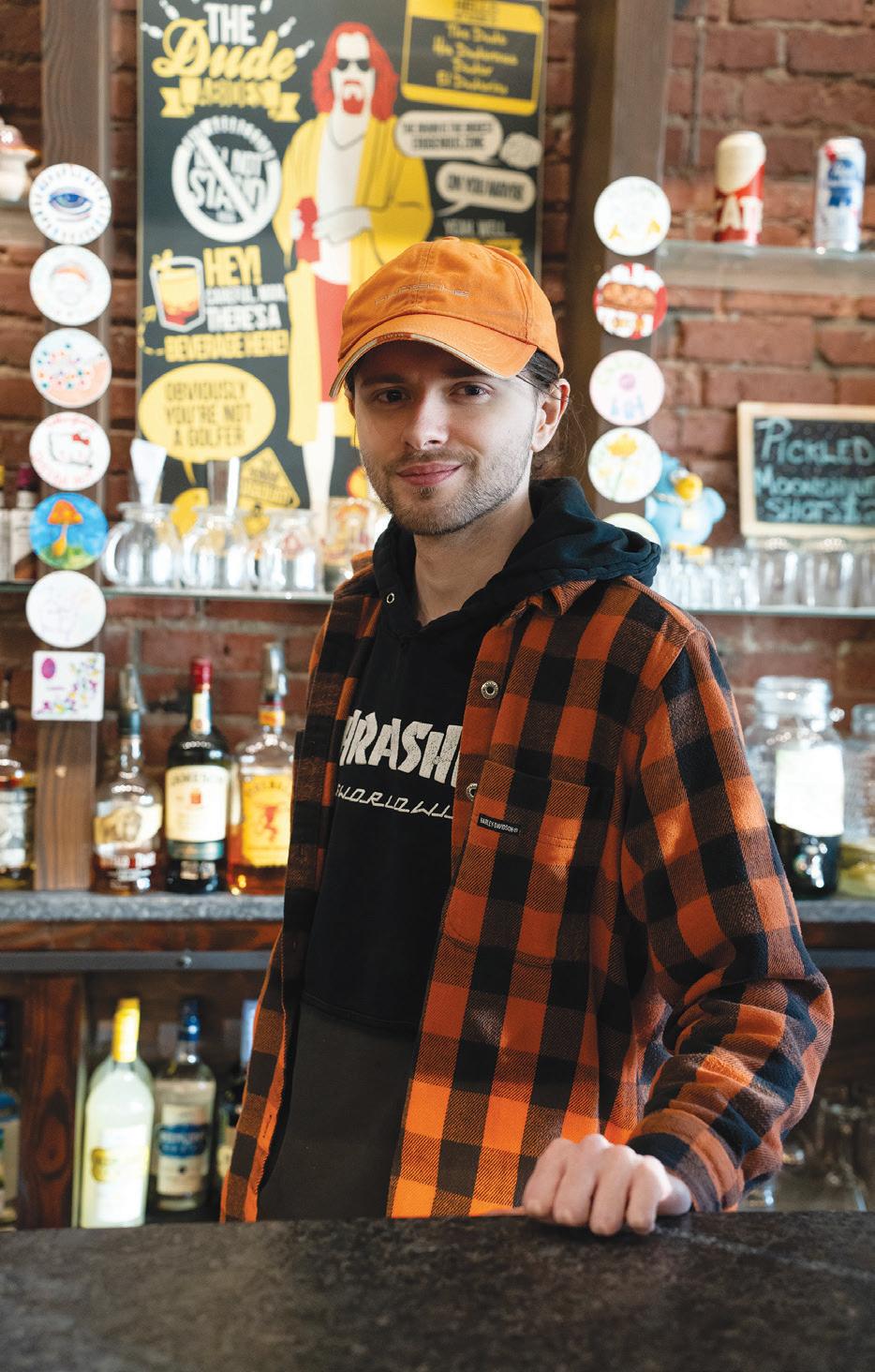
Inside, Cheba Hut is decorated with plenty of fun, artistic flourishes. Its bar — which serves a variety of locally based ciders, beers and even mead — features several nods to The Dude, Jeff Bridges’ iconic character from The Big Lebowski. The bar is decorated with patron-designed coasters; Engerman said customers are encouraged to show off their inner artist by grabbing a pen and a blank coaster.
The walls feature imagery of Bob Marley, and reggae music plays
often. Two murals, designed by local artists Shawn “Pickles” Cass and Matt French, also highlight the cool vibe. Engerman said he enjoys helping support the local arts scene and is working to further embed the restaurant in community events through food support and catering. Last fall, Cheba Hut provided catering boxes for the Laughing Hamster Comedy Festival’s finale at the Blue Room.
While the shop does good lunchtime business, Engerman said its late hours (open until 1 a.m. on Fridays and Saturdays and 10 p.m. most other days) encourage dinner and late-night business as well.
In fact, four years after opening, the Bellingham Cheba Hut location has become the No. 1-rated franchise in the company’s system. That doesn’t refer to sales volume, Engerman said, but rather the meeting of operational standards.
“That’s a tribute to our general manager and the crew here,” he said. “Many of our employees have been with us since we opened. And in this industry, that’s pretty hard to do. There’s a lot of movement,
Employee Chloe Palmer, left.
Four years after opening, the Bellingham Cheba Hut location has become the No. 1-rated franchise in the company’s system.
typically, in the food service industry. So, the idea that we still have a number of our people who’ve been with us since the day we opened the front door speaks to the quality of the crew overall.”
In addition to fostering a tight-knit team of employees, Cheba Hut’s Bellingham success also can be attributed to the family operation of the business. Either Doug or his wife — married for 37 years in 2026 — stops by the shop almost every day.
“I couldn’t do this without her,” Doug said of his wife. “She’s a jack of all trades: incredible problem solver, fantastic people person. She’s the shop mom.”
Their son Max, 30, is also the shop’s smiling, ponytail-wearing general manager.
While things are certainly going well at the Bellingham Cheba Hut, Engerman said the biggest challenge of business remains controlling labor costs and food expenses during a time of economic volatility.
“It’s really an expense-control game right now as a restaurant owner,” he said. “The easy thing to do would be
to just adjust our menu prices, but that’s a last resort for us.”
Being efficient, with highly productive employees and corporate help with ingredient suppliers, makes a difference in allowing Cheba Hut to keep its prices reasonable and avoid passing those costs along to customers, he added.
“That’s the name of the game for us,” Engerman said. “We also don’t want to do anything that’s going to impact the quality of the food product; that’s very much a sacred space. We just don’t go there, and Cheba Hut headquarters would never allow that.”
So, might there be another Whatcom County Cheba Hut in the near future?
Engerman said the company has a careful, refined formula for identifying its next expansions, and he hasn’t talked to the company about another local location — outside of casually proposing one near the Canadian border last year. A decrease in Canadian-based border traffic under the present federal administration, however, likely renders that a tabled discussion.
For now, Engerman said he is content operating his present locations, grateful for the support that Bellingham and Whatcom County have shown his business so far.
“The community’s support for our business has been just spectacular,” he said. “We’re thankful for the way the community has embraced the brand and our food. It’s been fantastic, and we don’t take it for granted, even for a second.” n
FROM
MARINE MECHANIC TO ENTREPRENEUR
How Matt Hardin turned a desire for more opportunity into a thriving, full-service marine dealership
| By Tamara Loucks
In the early days of his career as a marine diesel mechanic in Seattle, Matt Hardin never imagined himself becoming an entrepreneur. But as his family grew, so did the pressure to build a more sustainable future. In 2004, he and his wife, Stephanie, packed up their young family and headed north to Bellingham. Stepping outside his comfort zone, he opened Northwest Diesel Power — a choice that would ultimately redefine his professional career.
Over the next two decades, that practical decision evolved into something much bigger. Hardin steadily expanded the business, which eventually led to the launch of Cardinal Yacht Sales, transforming what had begun as a simple repair operation into a full-service marine dealership recognized for its quality products and exceptional service.
“I never saw myself as the entrepreneurial type,” Hardin said. “But I reached journeyman lead mechanic and was somewhat limited in career growth opportunities. Between that and industry pay scales at that time, I realized I needed to either try opening my own business or return to college and pursue a new field.”
People want to work with businesses they know and trust. If something goes wrong, they want to be able to make a call and have it handled. Service is our core product. Everything else builds from that.
Matt Hardin
“ “
In its early years, the company serviced a wide range of commercial and recreational marine diesel engines. Over time, the work became more specialized, focusing more on Volvo Penta systems, and Northwest Diesel Power became a designated Volvo Penta parts and service center. ▶ ▶
Previous page: From left, Matt Hardin, Steve Hardin and Tyson Laurabee.
Credit: Sattva Photo
During the first year and a half, Hardin worked the business independently. He soon realized that while he provided an essential service as a highly skilled diesel mechanic, his customers also needed support for a much broader range of specialized systems. So, he expanded services and added a team focused on marine electronics, vessel systems and other complex repairs.
Today, Northwest Diesel Power employs 15 team members and offers a wide range of services, including marine diesel engine repair and maintenance, marine electronics, vessel systems, mechanical surveys, winterizing and storage, and part sales. While Volvo Penta remains a core specialty, the team continues to service a variety of other brands.
Northwest Diesel Power first operated out of a home shop and then relocated after two years to the Port of Bellingham in 2006. The move improved operational efficiency and positioned the company for long-term growth.
“We primarily serve the 30- to 75-foot powerboat market, so being close to the water is important,” Hardin said. “Moving large boats away from the harbor for service isn’t efficient for us or our clients. Our technicians go to where the boats are.”
Beyond location and technical capability, Hardin believes much of the company’s growth can be traced to a “service first” philosophy. The team focuses on delivering an exceptional customer experience from the initial quote through project completion, building trust that leads to long-term relationships.
“People want to work with businesses they know and trust,” he said. “If something goes wrong, they want to be able to make a call and have it handled. Service is our core product. Everything else builds from that.”
While the company’s technicians travel as far as Alaska and California, most customers are located in the Puget Sound. Bellingham’s coastal location
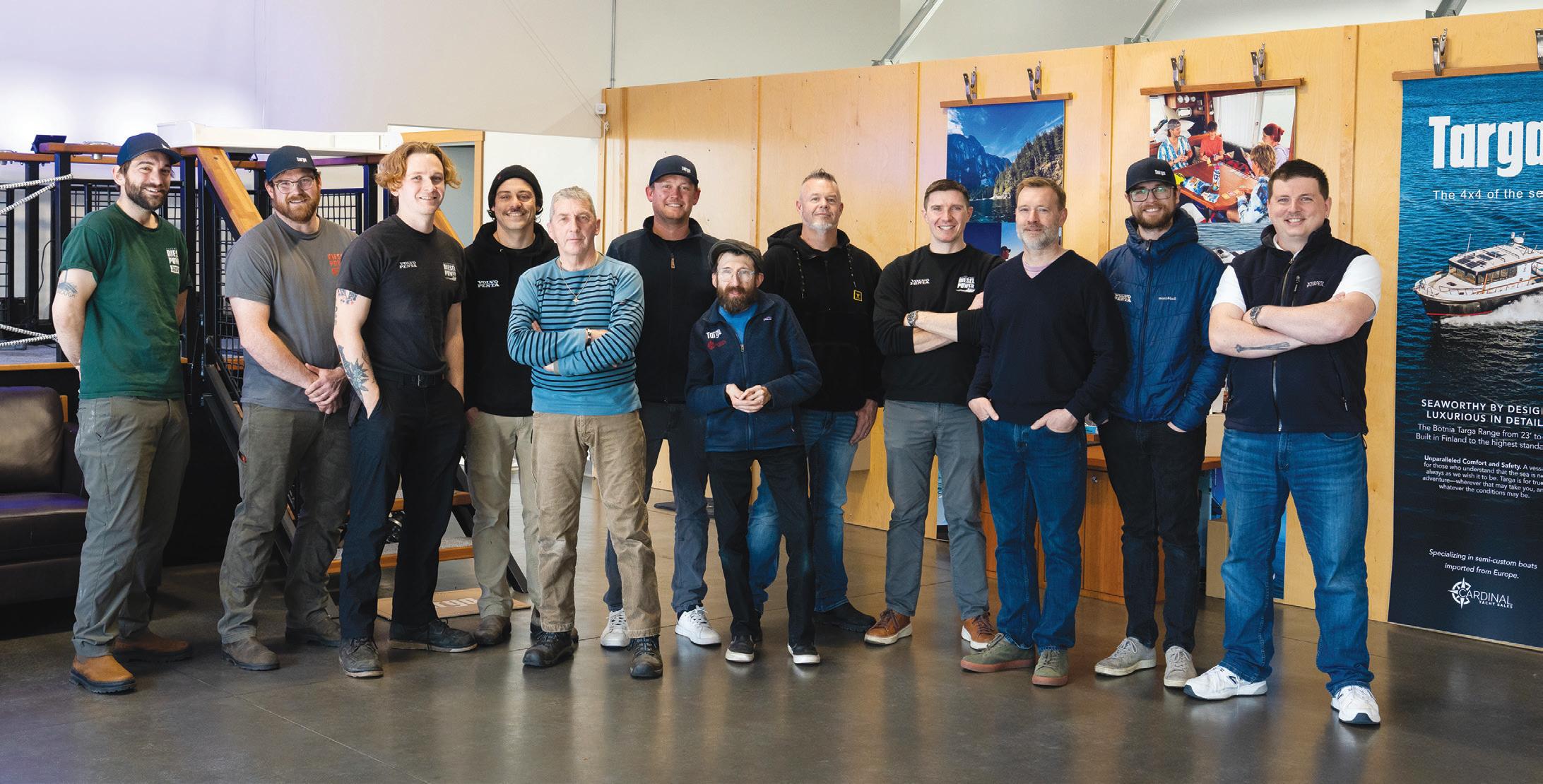
The team at Northwest Diesel Power/Cardinal Yacht Sales, from left: Mark Springer, James Fish, Andrew Parks, Nick Lerma, Herve Burnel, Tyson Laurabee, Steve Hardin, Travis Thomas, Casey Ohms, Matt Hardin, Bruce Morey and Brandon Robertson.
“ “
Bellingham is uniquely positioned as a gateway to the San Juan Islands.
and its proximity to the San Juan Islands make it an important hub for boaters and an inherent customer base from which to draw. Yet growth in the marine service industry is challenging.
Hardin believes there is significant opportunity for continued investment and development within the Port of Bellingham. As the waterfront evolves, enhancements to marina infrastructure and amenities could further strengthen the area’s appeal to active boaters and contribute to broader economic activity in the region.
“Bellingham is uniquely positioned as a gateway to the San Juan Islands,” Hardin said. “There’s a lot of potential here as the harbor continues to improve and attract more engaged boaters.”
While marina development plays a role in the broader ecosystem, growth in the marine service industry is dependent on the availability of skilled labor. As in many trades, the industry currently faces a shortage of trained technicians,
which limits the pace of expansion. In the meantime, Northwest Diesel Power remains consistently busy, supported by repeat customers and word-of-mouth referrals.
Another challenge Hardin faces, though one he also appreciates, is the hardship of running the business itself. While service and maintenance work remain steady, he still needs to stay alert to shifts in the market, adapting as needed. Some problems require out-of-the-box thinking to find creative solutions — which, he admitted, isn’t always easy.
“I enjoy the work because it has purpose,” he said. “I also like mentoring. We have a great team, and it’s rewarding to see people grow their skills, take ownership of what they do, and want to stay at our company long term.”
Hardin’s willingness to adapt and pursue new opportunities led to the launch of his next business venture in 2016 — Cardinal Yacht Sales, a brokerage focused on preowned vessels. The move into boat sales was a natural extension of the existing service business. Northwest Diesel Power customers
ABOUT NORTHWEST DIESEL POWER/ CARDINAL YACHT SALES
1325 Roeder Ave., Suite 103, Bellingham (360) 734-2502
Schedule an appointment for service: nwdieselpower.com
Browse boat inventory: cardinalyachtsales.com
already were asking for help navigating boat sales, particularly those customers who preferred to work locally rather than through a Seattle broker. Hardin partnered with a local broker, and a successful sale helped lay the groundwork for what became a fully integrated sales operation.
As the business evolved, the next step was to become a dealer ▶ ▶
of a reputable boat brand. After he evaluated U.S.-based manufacturers, it become apparent that opportunities weren’t available to represent vessels suited to cruising Pacific Northwest waters. So, Hardin turned his focus to Europebuilt boats and discovered Finnish manufacturer Targa at a boat show. A factory visit proved Targa to be a well-built vessel designed for rugged offshore use and ideally suited to our local waters. In 2017, just a year after launch, Cardinal Yacht Sales became the first West Coast dealer in the U.S. for Targa offshore motorboats.
“We’d love to represent a U.S.built boat, but the builders
available to us weren’t producing something that fit in this market,” Hardin explained. “Importing adds complexity, but the product performs exceptionally well here, and our customers recognize that.”
Cardinal Yacht Sales consistently sold 10 to 12 new Targas annually; however, tariffs and economic volatility slowed sales in 2025. After attending the Seattle Boat Show, Hardin said the industry anticipates 2026 to be a good year, with increased sales due to pentup demand for new boats.
On the brokerage side, business continues to grow, supported in
part by trade-ins from customers purchasing new Targas. Expanding that segment of the business is a key focus going forward.
From journeyman diesel mechanic to successful business owner, Hardin’s career path took an unconventional turn. What began as a practical decision developed into a longterm, sustainable enterprise built on technical expertise, relationships and steady growth.
“It wasn’t something I originally set out to do.” Hardin said. “But looking back over the past 20 years, it’s been very rewarding, and I truly enjoy it.” n
2026 LEGISLATIVE SESSION RECAP AND WHATCOM COUNTY LEGISLATOR SCORECARD
What bills passed, and how did our local legislators vote?
Dann Mead Smith is co-founder and co-leader of Future 42.
Many bills that were introduced during the 2026 legislative session have the potential to impact businesses and their employees in Whatcom County. The list below includes several business-related bills that were passed by the Washington Legislature and signed by Gov. Bob Ferguson that will become law later this year. Also on this list are bills that are still in the process.
The most high-profile bill that passed was Senate Bill 6346, the so-called “millionaires income tax” that will enact an income tax on individuals and some small businesses starting in 2028 (tax payment due in 2029). We will examine this new tax and its implications in a future column, but the vote is, of course, included in the list of bills.
Finally, we take a look at some Whatcomspecific issues and new capital project funding funded by the Legislature.
On pages 46-47 are nine bills, with information on how legislators in the 40th and 42nd districts voted, followed by some thoughts from Rep. Alex Ramel, a Democrat from the 40th District, and Rep. Alicia Rule, a Democrat from the 42nd District, on what was passed that specifically impacts Whatcom County.
WHATCOM COUNTY
PROJECTS THAT RECEIVED FUNDING FROM THE 2026 CAPITAL BUDGET
Rep. Rule said this was “an extraordinary year for the 42nd District when it comes to the capital budget. I’ve been serving on this committee since I was elected, and this really was an incredible year, as many of these projects have been locked up for some time."
City of Lynden Wastewater Treatment Plant Renovation and Expansion: $515,000
Nooksack Integrated Floodplain Early Actions (Everson): $13,050,000
Engedi Refuge Counseling Center Expansion (Lynden): $103,000
Setting Sun Circle — Community & Arts Center (Bellingham): $515,000
Whatcom County Crisis and Treatment Center (Bellingham): $11,350,000
TOTAL: $25,533,000
HOW EACH VOTED
Sen. Liz Lovelett (D-40th)
Sen. Sharon Shewmake (D-42nd)
SUPPLEMENTAL 2026 STATE BUDGET
SB 5998
Rep. Debra Lekanoff (D-40th)
Passed the Senate 28-21 and the House 54-43. The Legislature increased the current the state budget for the 2025-27 biennium to $80 billion. This is an 11.3% increase from the 2023-25 biennial budget and includes $2.3 billion in new spending that was added during this session.
HB 2266
Passed the Senate 29-20 and the House 56-39. Overrides local zoning and ordinances and mandates that cities and counties allow the development of public housing projects (“transitional and permanent supportive housing”) in any residential zone and requires the allowance of “emergency shelters and emergency housing” in any zone in which hotels are allowed.
Rep. Alex Ramel (D-40th)
HB 2442
Passed the Senate 26-22 and the House 51-45. Expands the authorized uses of local governments to increase taxes: real estate excise tax, local sales and use tax revenues for housing and related services, county rental car sales tax revenue, and flood control zone district funds. It also authorizes a new local sales and use tax of 0.01% to fund services for children and families and a new county property tax levy for public health clinics.
SB 5360
Passed the Senate 27-22 and was not brought to the House for a floor vote. This bill would establish new criminal penalties for environmental violations, creating three degrees of offenses for violations related to water pollution, air pollution and hazardous waste management, which would be paid by businesses.
Rep. Alicia Rule (D-42nd)
Rep. Joe Timmons (D-42nd)
Courtesy photos
SB 5974
Passed the Senate 30-19 and the House 54-42. Changes the eligibility criteria for becoming a police chief, marshal or sheriff and creates new background investigation processes for police chief, marshal and sheriff candidates.
SB 6346
Passed the Senate 27-21 and the House 51-46. Imposes a 9.90% tax on individuals on the receipt of income exceeding $1 million beginning in calendar year 2028 by exempting the income tax from a statutory prohibition on state and local income taxes (Initiative 2111, passed by the Legislature in 2024). It also expands eligibility for the Working Families Tax Credit to include people who are at least 18 years of age and meet other eligibility requirements and increases the business and occupation tax credit for small businesses.
SB 6347
Passed the Senate 39-10 and the House 85-8. Modifies the state’s estate/death tax rates to a range of 10% to 20% for taxable estates of decedents dying on or after July 1, 2026, by reducing the rate from 35% that was passed by the Legislature in 2025. Washington will still have the highest tax rate in the country.
Legislation that specifically impacts Whatcom County
SB 5981
Passed the Senate 30-19 and the House 67-30. Reps. Lekanoff and Ramel co-sponsored the House Companion bill. Rep. Ramel said the bill “will ensure that Saint Joe’s Hospital (among many others) will be able to fully benefit from discounted pharmaceutical prices under the federal 340B program. This is a benefit intended to help ensure that critical access hospitals outside of rural areas are able to provide a fuller range of health care services and will keep costs down for residents.”
SB 6355
Passed the Senate 30-19 and the House 66-27. Rep. Ramel sponsored an earlier version of this bill, and Sen. Shewmake cosponsored this version. From Rep. Ramel: “It creates a Transmission Development Authority to reduce the risk and cost for utilities to build electricity infrastructure. Much of the cost of electricity is actually in transmission, and our fragmented grid, with dozens of electric utilities across Washington, is hard to build transmission in. This new partner for utilities is a model that works well in many other states and will help bring energy costs down over time for consumers. Whatcom electricity consumers will see real benefits in energy cost reductions over time from this bill.”
The growing gap between public voice
and political power
Todd Myers is the
vice president for research at the Washington Policy Center.
On the day of the No Kings protest, I went into town to get tacos from my favorite food truck.
As I was waiting for my tacos to be made, I walked over to the nearby group of protesters (who were very nice) and asked them what they hoped to accomplish. The best answer was that they felt good to be around others who agree with them and oppose Donald Trump.
That is fine as a personal motivation. As a political strategy, it is a pretty weak rationale given the massive amount of time and effort expended by people across the country.
While I think those efforts would be better spent doing something that has a direct benefit to the community, like giving blood or cleaning a park, I can’t really
blame the protesters for trying to oppose government policies they disagree with.
There is an enormous gap between the apparent importance of public policy and the public’s ability to impact the decisions being made by politicians and bureaucrats. People sense that the state and nation are moving in the wrong direction but are unclear as to how they can influence the decisions that have contributed to that trend.
People want to do something, but they don’t know what. What do you do when you don’t know what to do?
They grasp. People try whatever they can think of that might change the course of politics, even if they can’t say exactly how.
Whether it is the 2014 People’s Climate March that promised to “change everything,” (it didn’t) or conservatives
gathering on the Capitol steps in Olympia to support parental rights, or the No Kings March, people hope that rallying together will force politicians to listen.
Protesting isn’t the only approach, of course. People contact their elected officials, either through phone calls or emails. In the most recent legislative session, more than 110,000 people signed in to oppose the state’s new income tax. For busy people who aren’t used to engaging with the Legislature, it was an opportunity to express their opposition.
But do these things actually make a difference? It doesn’t seem like it.
The response from Donald Trump and his supporters to No Kings protests has been to taunt them.
In Olympia, legislators claimed the more than 100,000 people who signed in to oppose the income tax were just “bots,” and ignored them. State Sen. Manka Dhingra laughed off the huge number of people, telling the public and her colleagues to take these numbers with a “grain of salt.”
Some of those same legislators are actively working to block citizens from having their say on decisions made in Olympia. For example, the income tax includes a “necessity clause” whose only purpose is to make it more difficult to put the
income tax before the voters.
It isn’t only the Legislature that seems to view the public as a nuisance. Bureaucracies regularly make it difficult for the public to engage meaningfully.
When I was at the Department of Natural Resources, we released a very thick Environmental Impact Statement about the state’s plan for timber harvests in Western Washington. We held a series of town meetings and accepted public comment. The thickness of the EIS was supposed to demonstrate that we had considered every potential issue relating to the harvests.
In reality, that EIS was a public relations document, designed to intimidate the public with its size. Who are you to question our decision — look at everything we’ve considered! That doesn’t mean the decision was wrong. The foresters who helped write it were extremely smart, and thousands of pages more could have been added explaining a range of various considerations. But the purpose of the EIS wasn’t to assimilate public comment, it was to dismiss it.
After working at a state agency and around government for a quartercentury, my perception is that politicians don’t see themselves as public servants, and they don’t see the public as sovereign.
At a basic level, members of the public understand that politicians and bureaucrats are patronizing them, treating them as an annoyance. They understand that ▶ ▶
politicians brazenly lie to them to shut them up and tell them their opinions don’t count.
Over the past decade in Washington state, political decisions have routinely made life more difficult, and government is failing to do its most basic job. Meanwhile, politicians and bureaucrats tell those whose lives are harmed by government failure that their input isn’t wanted.
So, frustration grows and people lash out, doing whatever they can to get attention. Often that means becoming louder and more strident. Former CIA analyst and author Martin Gurri writes in his book, “The Revolt of the Public,” that the need to get attention encourages people to become louder and more extreme. “Stridency will infect every mode of communication, but will be most disruptive of political rhetoric. Just to keep an audience, politicians and commentators will have to scream louder and take more aggressive positions than the competition.” He wrote that in 2014.
That approach — which we see every day — is unlikely to make things better.
First, politicians don’t want to hear it. They gaslight the public with lies, and when the public gets angry, those same politicians condescendingly dismiss them.
More important is the reality that it will be hard for some bureaucrats and politicians to change government without undermining the rationale of the system and their own value within it. Who wants to be a servant of the
It isn’t only the Legislature that seems to view the public as a nuisance. Bureaucracies regularly make it difficult for the public to engage meaningfully.
public when you can be their savior?
Too many politicians and bureaucrats believe they are societal saviors, and bowing to public pressure — like a lowly servant — is inherently at odds with their self-perception.
To be sure, there are many politicians of all stripes who do want to make the world a better place and are not motivated by self-aggrandizement. I worked with many agency staff who were committed to doing the best they could without glory or attention. I do worry that those people are not the ones making decisions, but there are many like them.
However, even assuming that politicians and agency leaders are willing to change the system to make it more responsive, could they? Most
of the errors made by politicians and bureaucrats aren’t a result of corruption or nefarious intent. As hard as it can be to believe, most politicians actually believe the things they say. The failures we see every day in Washington state are primarily a result of incompetence and political blindness. Fixing the system isn’t a matter of simply replacing corrupt politicians or self-serving bureaucrats with a new batch who are more civic-minded. The problem is that politicians and government are trying to do something that is simply not possible, like guiding extremely complex systems — the economy or health care or the global environment. The result is that they fail again and again even as they get more power and funding.
For the public to have a meaningful say in the policies that impact them, government needs to be closer to the people.
How do we move away from the cycle that Gurri highlights, where the more the public feels dismissed, the more strident they become? He writes, “The most effective alternative to the steep pyramid of industrialized democracy isn't direct democracy . . . It's the personal sphere,” where decisions are made locally, using “local knowledge, as part of an observable series of trial and error.”
Acting locally doesn’t mean we won’t make mistakes. It simply means that
the avenues of political change are more obvious and manageable and direct feedback can be acted on more quickly and effectively.
History demonstrates that this can be effective. Even the civil rights marches, to which some people point as evidence that protests work, started locally. Rosa Parks’ protest, and the protests that supported her, were about a local bus issue. The Memphis garbage strike, with its powerful protest signs held by black workers that read simply “I am a man,” was about a local issue.
This culminated with The March on Washington and Dr. Martin Luther King Jr.'s powerful and moving
speech. I don’t discount the power of that protest. But the foundation was local.
For the public to have meaningful input and impact, there needs to be a diversity of approaches, and local efforts are the most likely to be meaningful. Protests can be part of that, but we must be honest about what works and what doesn’t, using trial and error to find ways to engage and influence policy. The best place to do that is in our communities. There is no easy path to get to a place where public involvement is more meaningful and government is more accountable. Politicians and bureaucrats have many incentives to protect the existing system. As long as our primary form of engagement is focused on influencing politicians, we are tacitly acknowledging that they have the power, not us.
Your Vision to Life With Custom Printing
The first step toward changing that dynamic must come from the public, and that requires acknowledging that the social benefits of protesting are clouding our perception of effectiveness. Perhaps the first step is to simply start looking for new opportunities to take power back. Anyone who has purchased a new car has experienced the feeling that suddenly that car is everywhere. The same can be true of opportunities for the public to find new ways to change our communities and government. But we have to start looking rather than hoping that screaming louder will make a difference. The public’s voice can make a difference, but the burden is on us to make it meaningful. n
The Northwest’s Specialty Contractor
Since 1982
WRS proudly offers a wide range of services led by a trusted team of experts in their fields.
Asphalt paving & maintenance, civil construction, demolition, land-leveling scrapers, and so much more - WRS is equipped to handle your commercial and residential needs.
things AI can do for your business this week
If you’ve been meaning to try artificial intelligence but haven’t gotten around to it, here’s your nudge. Not a lecture, not a warning about falling behind. Just five practical things you can do this week, using free tools, that might genuinely surprise you.
Every one of these takes less than 10 minutes. Pick one. Try it today.
1
Turn messy handwritten notes into something usable
Got a notebook full of scribbles from your last meeting? Snap a photo with your phone and upload it to your favorite AI tool, such as ChatGPT or Claude. Ask it to organize your notes into a clean summary with action items. It handles terrible handwriting better than you’d expect. This one feels like a magic trick the first time you try it.
2
Create a social media image
Most business owners I talk to don’t know that Google’s AI chatbot, Gemini, has a builtin image generator called Nano Banana. It’s free, shockingly good and perfect for creating quick social media graphics. Type something like “Create a photorealistic image of a cozy Pacific NW coffee shop with a ‘Now Hiring’ sign in the window” and see
what happens. You’ll have a custom image in seconds instead of spending 30 minutes searching stock photo sites.
3
Make a podcast from a long document
You know that 30-page industry report you’ve had on your desktop and know you should read but haven’t quite found the time? What if you could listen to the key points of the report via a podcast? You can. Upload your document into Google NotebookLM, select “audio overview” and within minutes, you’ll have a podcast of two very realistic AI voices discussing the report.
4
Build a spreadsheet that actually works
If your spreadsheet skills stop at bolding headers and maybe being able to “sum” a row of numbers, you’re not alone. Try asking Claude to build one for you. Say something like, “Create a budget tracker with separate tabs for each quarter, formulas that calculate totals automatically, and color-coding for different expense categories.” It builds the whole thing, complete with working formulas, multiple tabs and formatting that actually helps you understand your data. You’ll wonder why you ever tried to do ▶ ▶
Dana Rozier is founder of Nova Consulting AI.
this yourself. Claude is my go-to AI for this, though ChatGPT can do it, too.
Talk instead of type
Here’s an AI tool most people haven’t heard of. Wispr Flow is a voice-totext tool that is more accurate than any dictation tool I’ve used. You talk naturally, and the AI turns your words into clean, polished text with proper punctuation and no filler words. Most people type around 40 words per minute. You talk at three to four times that speed. I rarely type AI prompts anymore. I talk them instead. So much faster!
The point
None of these requires a paid subscription or technical skills. They’re just small ways to see how AI can actually help in the kind of
work you already do.
So, Whatcom leaders, pick one from the list. And if it saves you even 20 minutes, imagine what happens when you start using AI regularly. n
Bryant J. Engebretson, CFP®, CLU®, AIF®
Kyle B. Jackson, CFP®, CLU®, AIF®
Chris W. Lang, CFA®
Justin S. Slagle
Workflow: Focus on your business needs
Evan Steinhilb is co-founder of OpSprocket.
If you feel like you are drowning in news about artificial intelligence, you are not alone. The first quarter of 2026 was a relentless firehose of new models, tools and platforms. For business owners, the pressure to keep up with the latest hype can be disorienting, leading to a sense of “AI fatigue” where chasing every new trend feels both mandatory and impossible. In February alone, the industry saw seven major frontier model releases in just 28 days, a pace that is difficult for even the most dedicated technologist to follow.
What with Meta’s $2 billion acquisition of the AI agent startup Manus, Google’s release of its
powerful Gemini 3.1 Pro model, the hype and acquisition of OpenClaw and a surge of major open-source models from China, the landscape shifts almost daily. This constant churn creates a paradox of choice. When every platform claims to be the next revolution, how do you decide which tools are worth your time and investment? The answer is to stop chasing the hype and start focusing on your unique business needs.
Finding the best AI workflow is a personal journey. A tool that transforms a marketing agency’s content creation process may be entirely useless for a local retail shop managing inventory. The most effective approach is one that is as unique as your own ▶ ▶
operations, tailored to solve your specific challenges. Experimenting now already puts you ahead of the crowd.
I’ve navigated this landscape myself, and my workflow has settled into a powerful combination: a generalist agent for broad, multi-step tasks and a specialist for structured, repeatable processes. For me, this means pairing the autonomous capabilities of Manus with the focused power of Anthropic’s Claude.
For general agentic work, Manus is a beast. It operates as a true autonomous assistant. You can provide it a high-level goal, and it will use its suite of tools to achieve it. For example, I can ask it to research the top three competitors for a new service I plan to offer. Manus will browse the web, analyze their pricing, read customer reviews, summarize their marketing strategies and compile a full report with actionable insights. It can perform these actions while logged into my accounts, handing control back to me only when it encounters a security checkpoint like a CAPTCHA. This ability to orchestrate different models and tools behind the scenes removes the cognitive load of choosing the right AI for every micro-task.
While a generalist agent is perfect for exploration and complex, one-off projects, the backbone of any business is its repeatable processes. This is where a specialist tool shines. For more structured AI workflows, Anthropic’s tools provide the necessary power and control. Claude Cowork offers an excellent middle ground for those who prefer to manage their workflows within a familiar chat window. It allows you to create reliable, repeatable systems without needing deep technical knowledge. For instance, every Monday morning I can upload a spreadsheet of weekly sales data and ask Claude Cowork to generate a summary report, identify the top-performing products and draft customer outreach emails based on those trends. It is a predictable, highvalue task that is now fully automated.
For businesses with access to technical resources, you can take this a step further. Tools that operate from the command line, which is the text-based interface for a computer, offer limitless possibilities for creating custom, AI-baked systems. This is the path for building proprietary AI that fits your business like a glove. Imagine an inventory management system that does not just track stock but uses an AI to analyze sales trends, predict future demand and automatically reorder products. While this requires more initial setup, the result is a powerful, automated system that runs in the background, becoming a core part of your operational infrastructure. It is a beast worth taming for those who want to build a lasting competitive advantage.
So how do you start this journey without getting lost in the hype? The first step is to simply audit your own work. For one week, pay close attention to the tasks you perform repeatedly. Which activities are rules based and time consuming? Is it answering the same five customer questions every day? Is it compiling a weekly social media performance report? Write these down.
Next, start with a generalist tool to get a feel for what is possible. Delegate one of your smaller, exploratory tasks to an agent and see what it can do. Once you are comfortable, pick one highvalue, structured task from your audit and try to automate it with a specialist tool. The goal is not perfection on day one but achieving a small, tangible win that you can measure and build on.
Ultimately, the key to navigating the current AI landscape is not to try everything but to find what truly works for you. The relentless pace of innovation is not going to slow down, but you do not have to let it lead to fatigue. By focusing on your own needs and building a personalized and sustainable workflow, you can turn the overwhelming noise of the hype cycle into a genuine, measurable advantage for your business. The software revolution is here, and it is more personal than you think. n
Platform fatigue and the cost of free
Google “Browser Tab Humor.” Do I need to elaborate? You know how it is.
It’s the morning computer routine: You open your computer and launch your browser. Then it begins. Before you know it, you have 15 tabs open — and just as many logins to juggle — to begin your day.
You haven’t done any actual work yet. You’ve just logged into the places where work might happen.
And already, you’re tired. Not physically tired, but mentally tired. Decision tired. Login tired. Notification tired. Update
Kris Freeberg is a local microeconomist who builds bespoke operational hub applications on the QuickBase platform.
tired. Password reset tired. Recollection tired. Tech support tired. Demo tired. Integration broke again tired.
This is what I call “platform fatigue.”
The Frankenstack. There’s a term for what many businesses are now running: The “Frankenstack” is a stack of technologies built piece by piece over time until it becomes a clumsy monster.
It usually doesn’t start that way. It starts innocently. You add one app to solve one problem. Then another. Then another. Each one is helpful on its own. Each one solves a real problem. Each one is built by smart people trying to make businesses more efficient. ▶ ▶
iStock
BP WORKPLACE
But the whole becomes exhausting, even if the individual parts are useful. Eventually, instead of the software serving the business, the business starts serving the software. The “toggle tax” adds up.
No wonder so many business owners feel like they are running faster while accomplishing less. It’s agonizing thrash.
The cost of free. Many of these tools start out cheap or free. That’s how they get in the door. “Freemium” pricing makes it so easy.
But software needs revenue to be sustainable. Nothing can remain free indefinitely. So, in time come upgrades, premium tiers, add-ons and price increases. Multiply that by several systems and employees, and suddenly you have a significant software cost and still no real operational clarity.
All of this leads to fragmentation, inefficiency and hidden costs that are far larger than the subscription price. This is what I call “the cost of free.”
But the real cost of the Frankenstack is not the subscription fees. The real cost is operational drag and mental fatigue.
Here are some of the hidden costs most businesses never calculate: Onboarding, learning curves, training costs, difficulty getting the right reports, research thrash and decision fatigue, vendor risk (changing pricing or features, or going out of business), fragile integrations and automations to
tend, constant notifications and interruptions, rummaging — and I’m sure you can think of your own examples.
These are real costs. They rarely show up on a financial statement, but you feel them every day. They’re also known as “grey work.”
Pareto. There’s another issue that rarely gets discussed: the Pareto Principle. You know, the old 80/20 rule. In most software systems, businesses use 20% of the features 80% of the time. The remaining 80% of features are clutter: menus, options, automations and settings that add complexity but deliver little value. Every additional feature adds training time, confusion, extra clicks, more decisions and more chances for mistakes. Feature bloat is one of the biggest hidden costs in modern business software.
Certain companies such as Google, Zoom and Microsoft try to provide all-in-one solutions. But they’re so big that they’re designing for the world. No one individual or business needs all the world’s features. In any given instance, they need just a fraction.
This raises an interesting question: What if you could have a system that contains just the 20% that you actually use? What if your operational hub was on one tab?
The discipline of subtraction. Antoine de Saint-Exupéry wrote, “Perfection is achieved not when there is nothing more to add, but when there is nothing left to take away.” Clarity almost always comes
from subtraction, not addition.
The operational hub alternative. Instead of building a Frankenstack, I’m suggesting having an operational hub — an organization’s central nervous system, a center of gravity where operations, contacts, projects, time tracking and reporting link directly with accounting.
Suggested principles. If not the Frankenstack, then what? Here are some principles I’d suggest for building your own bespoke operational hub:
1. Start with operations, not software.
2. Favor fewer systems over many.
3. Respect the Pareto Principle.
4. Avoid feature bloat.
5. Create an operational center of gravity.
6. Periodically subtract.
7. Keep operations connected tightly to accounting.
In the final analysis, we all are converting time into money. Build a system that models and manages that process, with time as the input and contribution margin as the output.
This is why I’m suggesting that we do what we can to assume command of our own lives and businesses, using operational tools that we can tailor optimally to our own needs and situations — thereby enjoying simplicity, efficiency, freedom and peace of mind.