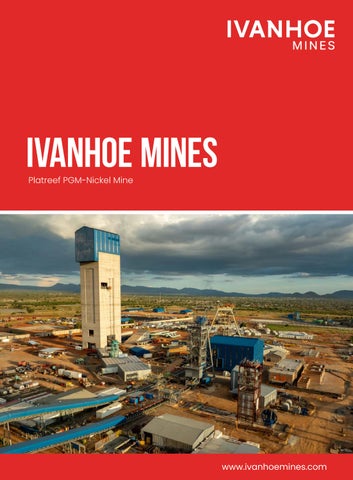

Ivanhoe Mines
Platreef PGM-Nickel Mine
Second
Ivanhoe
PLATREEF PGM-NICKEL
Second Beginning
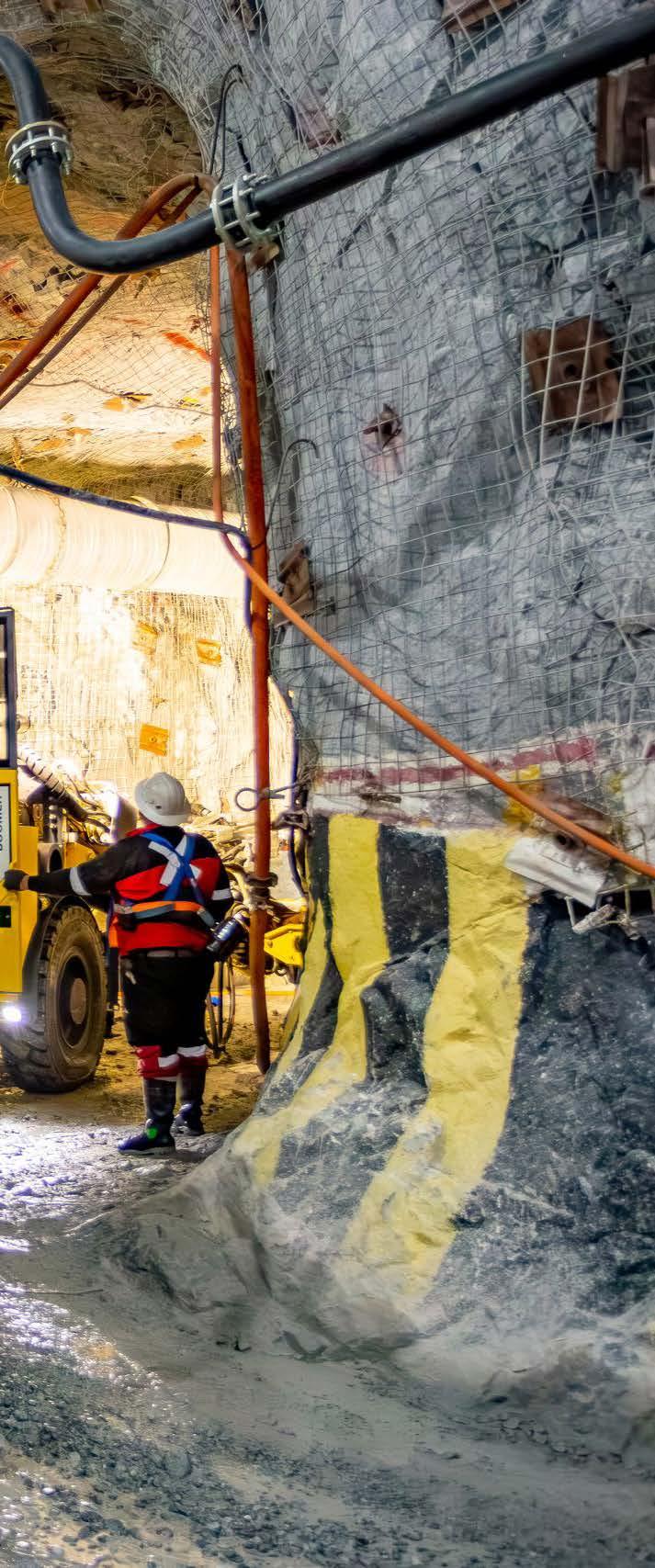
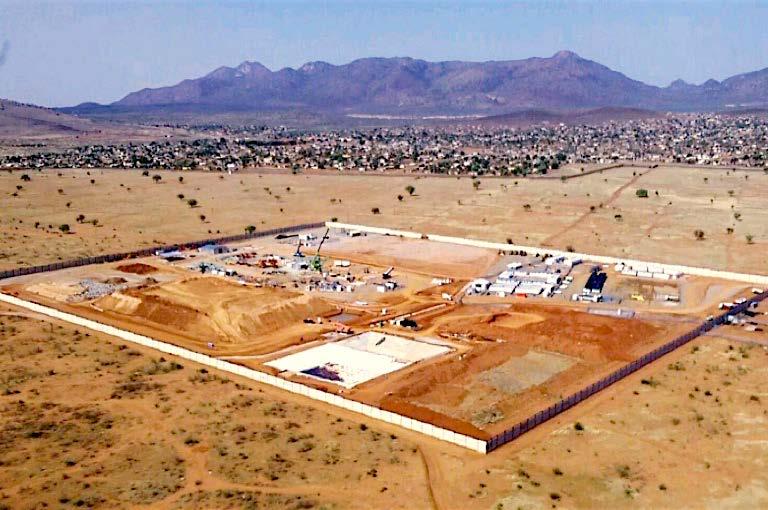
ear Mokopane, Ivanhoe Mines is no longer asking whether it can build a platinum mine. It is proving what kind of mine this will be, and the answer is being written in rock, in shafts, in community ownership structures, and in the daily arithmetic of ore movement underground.
By the time President Cyril Ramaphosa arrived at the Platreef site on 18 November 2025, the ceremonial threshold had already been crossed in the most literal sense possible: first concentrate, pressed into existence during the opening itself, visible and real, photographed and distributed and cited in the press release that went out the same afternoon. More than 2,000 people were there. The speeches were made. The future was declared. Then the crowds left, and the real work resumed.
That is the story mining executives will recognise and the one this magazine is more interested in. Official openings are, by design, moments of maximum clarity, the project becomes legible, the achievement is clean, the future can be stated in a single sentence. But mines do not become consequential because they produce first concentrate. They become consequential when the infrastructure behind that concentrate starts to behave like a system. The ore has to move. The shafts have to hoist. The plant has to feed on something better than development rock. The phase behind the current phase has to begin while the current phase is still finding its rhythm. At Platreef, all of that is now in motion at once, and the question is no longer whether the project will exist. It is whether it can translate extraordinary geological advantage into an operating template that actually changes the sector's expectations.
What the Rock Demands
To understand why Platreef commands the kind of attention it does, not just from
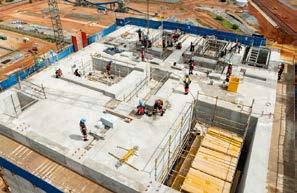
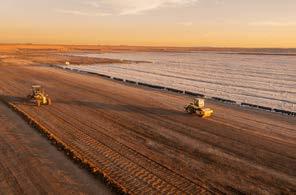
Stefanutti Stocks Multidisciplinary Construction
investors but from engineers who spend their careers thinking about the physical limits of how platinum-group metals can be mined, you have to leave the ceremony behind and go underground.
The Flatreef orebody, which gives the project its distinctive character, is not simply large. Ivanhoe describes it as one of the world's largest undeveloped precious-metals deposits, with major nickel sulphide content alongside platinum, palladium, rhodium and gold. But size alone does not explain the engineering argument. What does is geometry. The mineralisation averages approximately 26 metres in thickness, around twenty-five times the width of the narrow reef seams that have governed the design and economics of conventional South African platinum mining for more than a century. Twenty-five times. That is not an incremental difference. It is the
Multidisciplinary construction group
Stefanutti Stocks (a listed B-BBEE Level 1 contributor) has the capability to deliver a range of projects of any scale to a multitude of clients in diverse markets. As an ambitious and well-respected construction group we boast technical proficiency across all our disciplines.
Our strength as a contractor lies in our diversity, our niche and conventional construction skills and our ability to offer a single point accountability for mega project delivery.

basis of an entirely different mine design.
Thick ore means scale. Scale permits mechanisation. Mechanisation changes labour intensity, safety conditions, mining method and the shape of the cost curve in ways that narrowreef extraction simply cannot replicate. Robert Friedland, Ivanhoe's executive co-chairman, called it a 'once-in-a-generation orebody' and a 'geological wonder' in the company's January 2026 update. Those phrases would be easy to dismiss as promotional language if the operational logic behind them were not so clear: Platreef's February 2025 feasibility study and preliminary economic assessment project life-of-mine total cash costs of $599 per ounce of 3PE+Au, net of nickel and copper credits, and the company's argument is that the orebody itself is the primary reason. The geology is writing the cost curve.
Inland Region
Twenty-five times the width of conventional South African reef seams. That is not a geological curiosity. It is the basis of an entirely different mine design
Twenty-five times the width of conventional South African reef seams. That is not a geological curiosity. It is the basis of an entirely different mine design.
The nickel and copper credits are not incidental. They are structural. Ivanhoe's Phase 2 study projects approximately 9,000 tonnes of nickel and 6,000 tonnes of copper annually alongside more than 460,000 ounces of 3PE+Au. In a market where platinum-groupmetals margins are always under pressure, those by-products are part of the mine's resilience architecture.
Hoisting Is Destiny
Everything at Platreef, in the end, comes back to what can move and when. Underground mines are governed not only by orebody
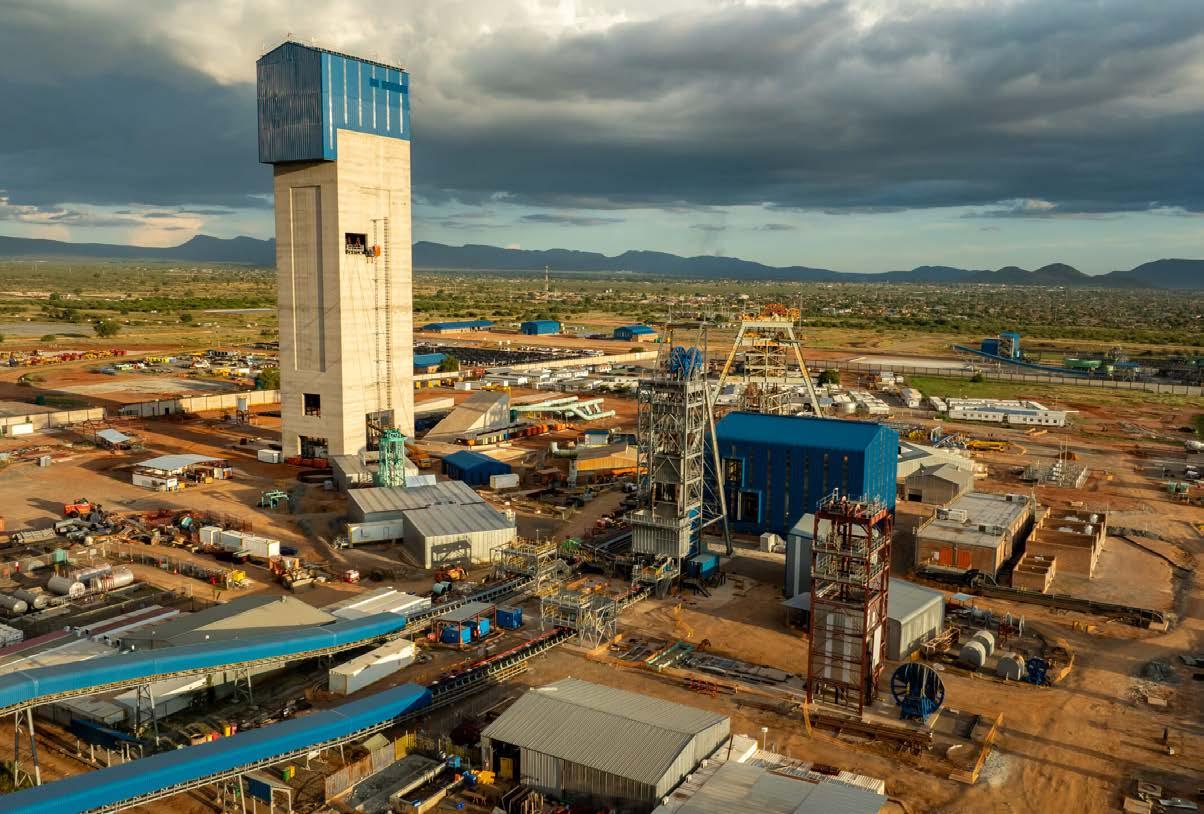
size or plant capacity, but by access, by how many tonnes of ore and waste can be lifted to surface in a shift, and what has to wait while something else moves first. Shaft #1 was enough to get Platreef to Phase 1 startup. It was never enough to carry the full logic of the operation on its own. For a mine with Platreef's ambitions, a Phase 2 concentrator expansion
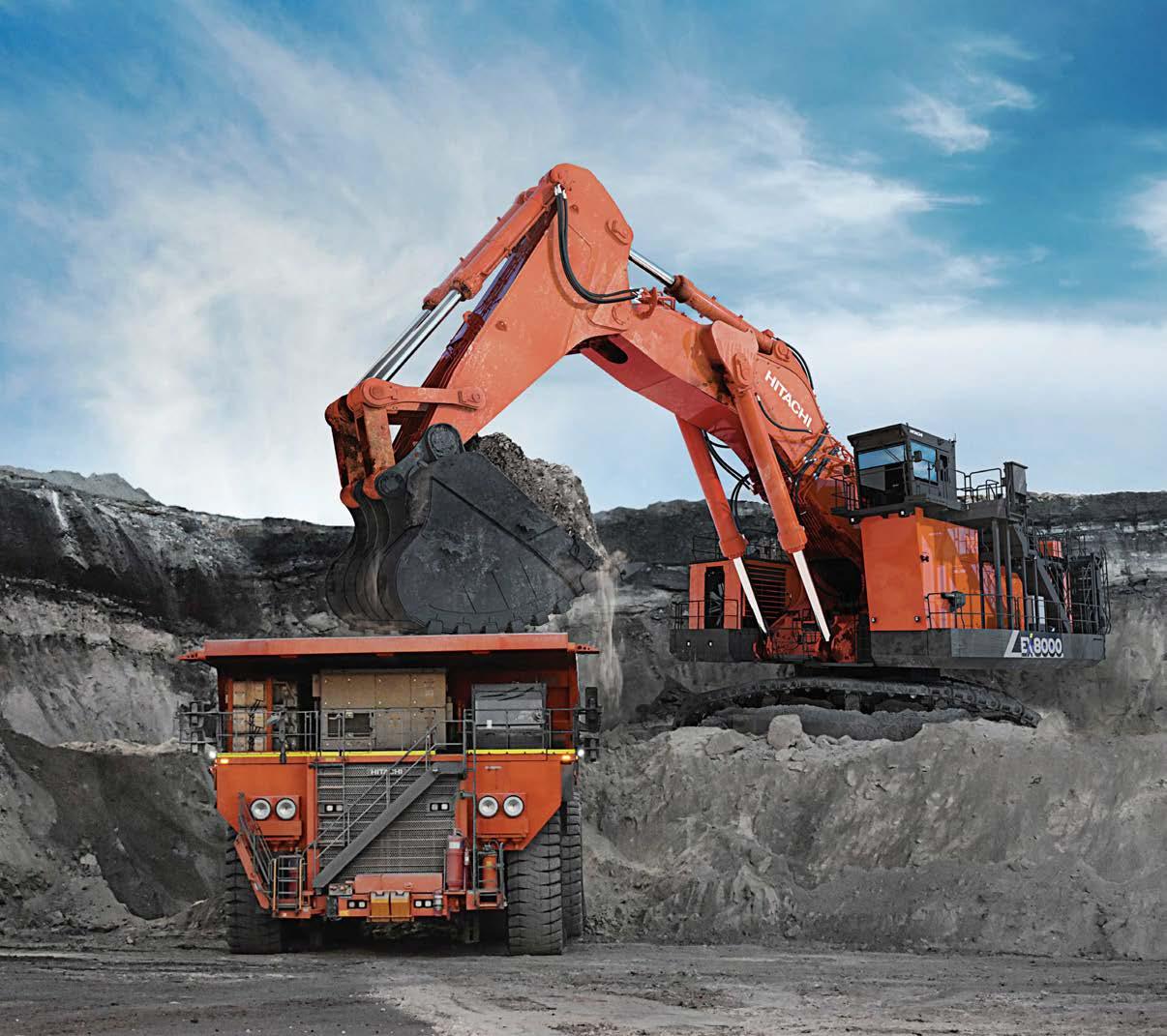
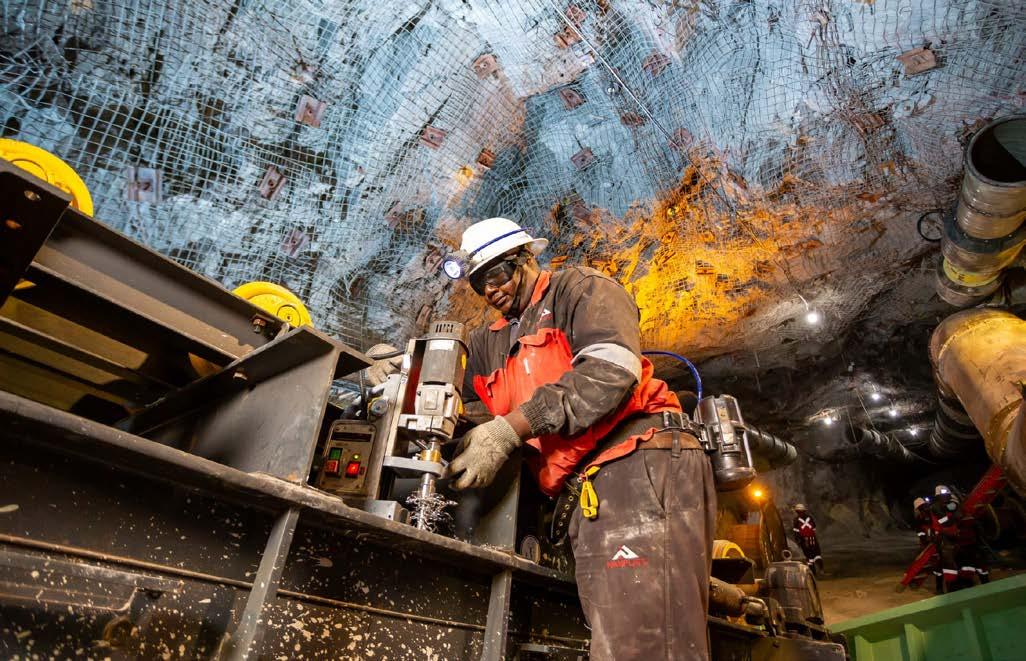
Shaft #3 unlocks the near term. Shaft #2 stabilises the long term. A fivefold increase in hoisting capacity changes everything downstream.
to 4.1 Mtpa already under construction, a Phase 3 case at 10.7 Mtpa that Friedland said in January 2026 the company was already beginning to accelerate, a single shaft is a bottleneck with a very short lifespan.
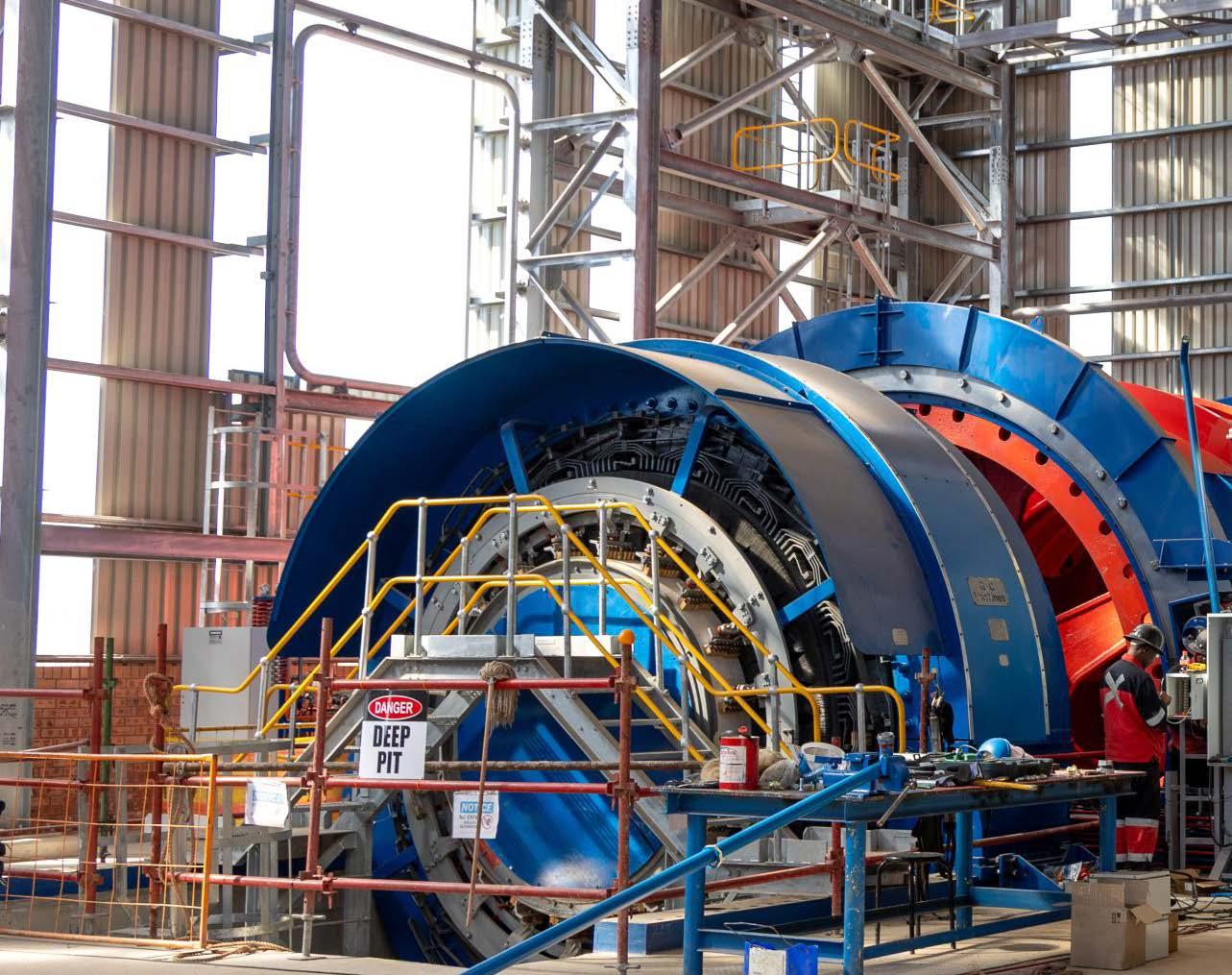
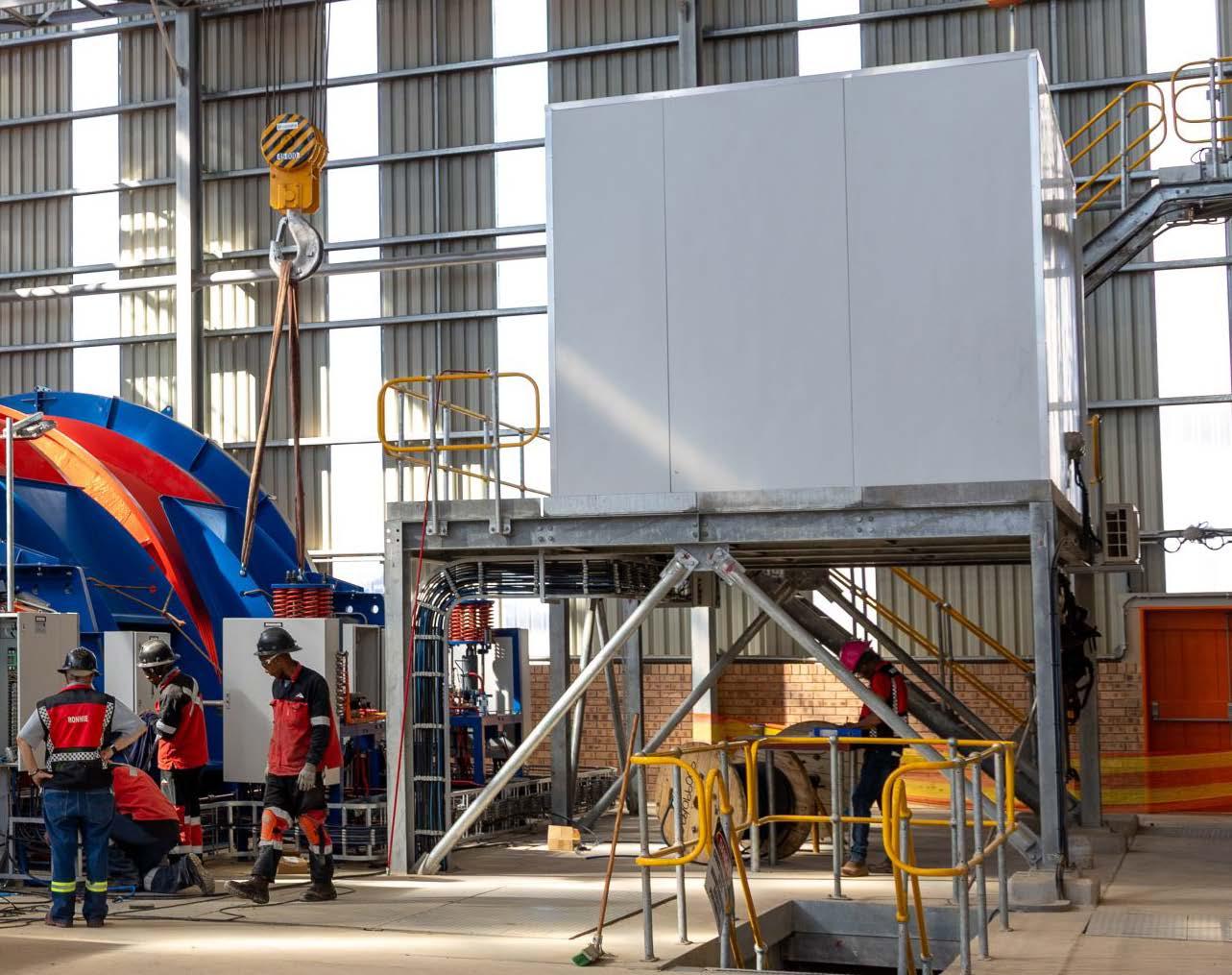
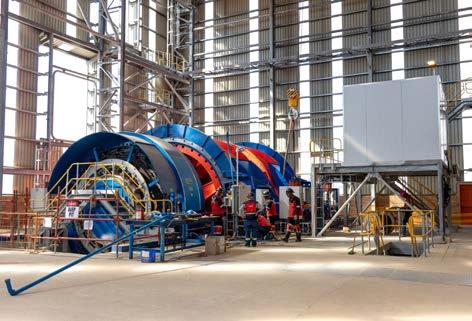
Shaft #3 changes that. Ivanhoe's January and April 2026 updates describe the shaft as delivering a roughly fivefold increase in available hoisting capacity to 5 Mtpa, with ore and waste able to be hoisted concurrently in a way that was not possible before. The shaft was completed and licensed for commercial
use in late 2025, and by April 2026 the company confirmed that first hoisting from it was directly linked to expected performance improvement in the Phase 1 operation.
The more consequential line in Ivanhoe's April 2026 update, though, is a logistical one. The company said that waste from the widening of Shaft #2, and development waste required for Phase 2 preparation, could now be hoisted concurrently with ore destined for the Phase 1 concentrator. That means Platreef has acquired the logistical flexibility to feed one


That is the definition of a mine that is no longer trapped inside a single phase.
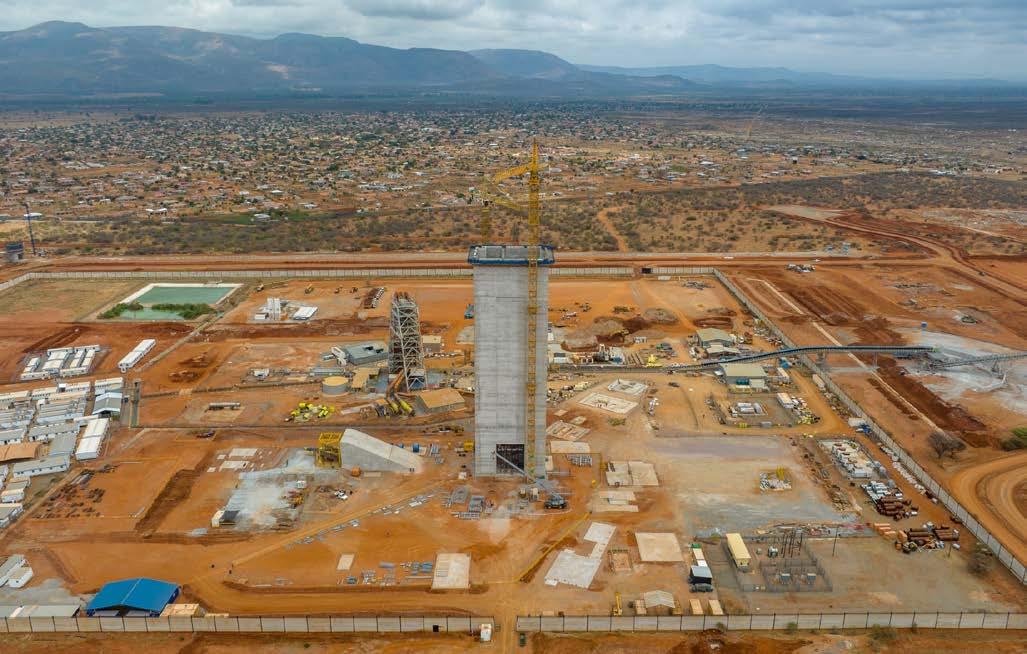
Shaft #2 is a longer-horizon story, but it belongs in the same sentence. Its concrete headgear was complete by late 2025, the widening contractor was appointed in Q4 2025, and widening from 3.1 metres to 10 metres commenced in early Q2 2026. The April 2026 update confirmed the first slipe blast had taken place on schedule. A slipe blast at depth, the initial charge that begins the long process of reshaping a shaft lining, is a specific moment, the kind that tends not to appear in investor presentations but matters enormously to the people doing the work. Shaft #3 unlocks the near term. Shaft #2 stabilises the long term.
Shaft #3 unlocks the near term. Shaft #2 stabilises the long term. A fivefold increase in hoisting capacity changes everything downstream.

There is a discipline to phased mining development that looks obvious on a flowchart and is genuinely difficult to execute in the field. The Phase 1 concentrator at Platreef, rated at 770 ktpa and delivered by DRA Global on schedule in June 2024, is currently ramping on development ore while higher-grade stoping ore from the 850-metre level works its way closer to the plant feed. The first sale of concentrate to Northam Platinum took place in late Q4 2025. Commercial production remained targeted for mid-2026 as of the April 2026 update.
That ramp is real. It is also, in strategic terms, primarily proof of operability. The larger claim Platreef is making to the sector rests on Phase 2, on whether a mine still consolidating its first phase can simultaneously build the second without losing coherence in either direction.
So far, the evidence is encouraging. Ivanhoe
appointed DRA as EPCM contractor for the Phase 2 underground infrastructure and the 3.3-Mtpa concentrator expansion. That decision was deliberate. DRA delivered Phase 1 on schedule. The institutional knowledge of the site, the ground conditions, the comminution requirements, the integration between surface infrastructure and underground logistics, stays inside the project rather than being handed to a new team at the moment complexity increases.
Marna Cloete, Ivanhoe's chief executive, said in February 2025 that the company intended to build an 'industry-leading tierone asset' while emphasising that the commitment extended 'beyond production.' The appointment of the same contractor into the next phase is what that sentence looks like in practice: not ambition declared once, but ambition sustained across handovers. Phase 2 construction began on 9 April 2026,
ahead of the previously stated schedule. The concentrator expansion is targeted for completion in Q4 2027. Ivanhoe's February
tax NPV8 of $1.4 billion and an IRR of 20%.
The Contracts That Make It Real
Projects of this scale are sometimes discussed as though they exist in a self-contained world of corporate decisions and geological reports. They do not. They exist inside supply chains, contractor relationships and offtake agreements, and those are where the mine's operating assumptions either hold or they do not.
187 local companies. 333 individual shareholders. The ownership structure was built before it was needed — and that timing is the point.
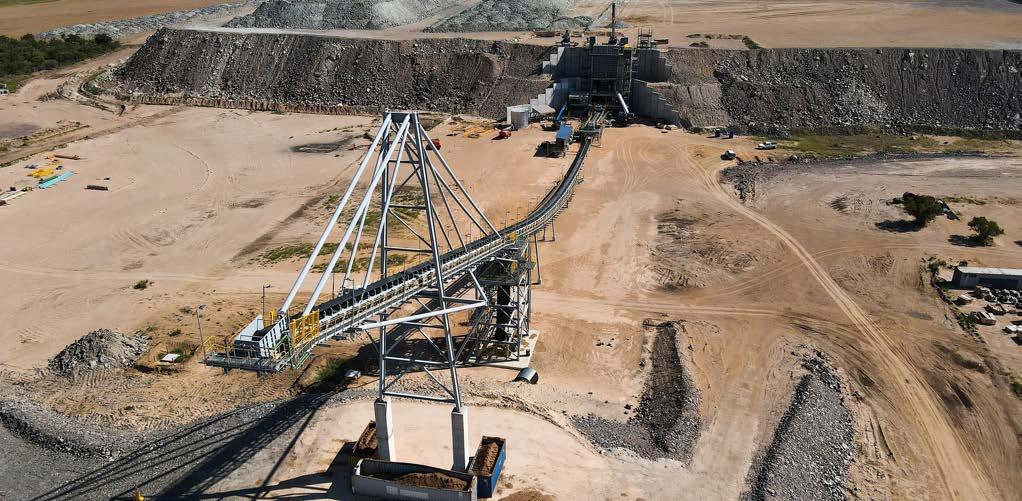
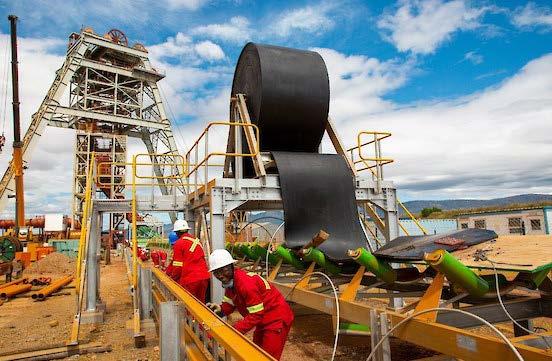
Start with the steel and concrete that preceded the ore. Stefanutti Stocks built the Phase 1 headgear for Shaft #2, the above-ground infrastructure that will anchor Platreef's primary hoisting architecture for Phase 2 and beyond. Below surface, AECI Mining Explosives supplies the initiating systems and bulk emulsion that keep underground development advancing. Every metre of development, every stoping round that brings higher-grade ore closer to the plant feed, depends on that chain running without interruption.
The widening of Shaft #2, from its raise-bored 3.1-metre diameter to the 10-metre production shaft that Phase 2 and Phase 3 require,
belongs to UMS Group, Johannesburg-based specialists who have sunk more than 170,000 metres of vertical shafts globally. UMS was appointed in late Q4 2025 and confirmed its first slipe blast on schedule in April 2026. For a mine whose hoisting architecture is its destiny, that is not a contractor detail. It is a critical path relationship.
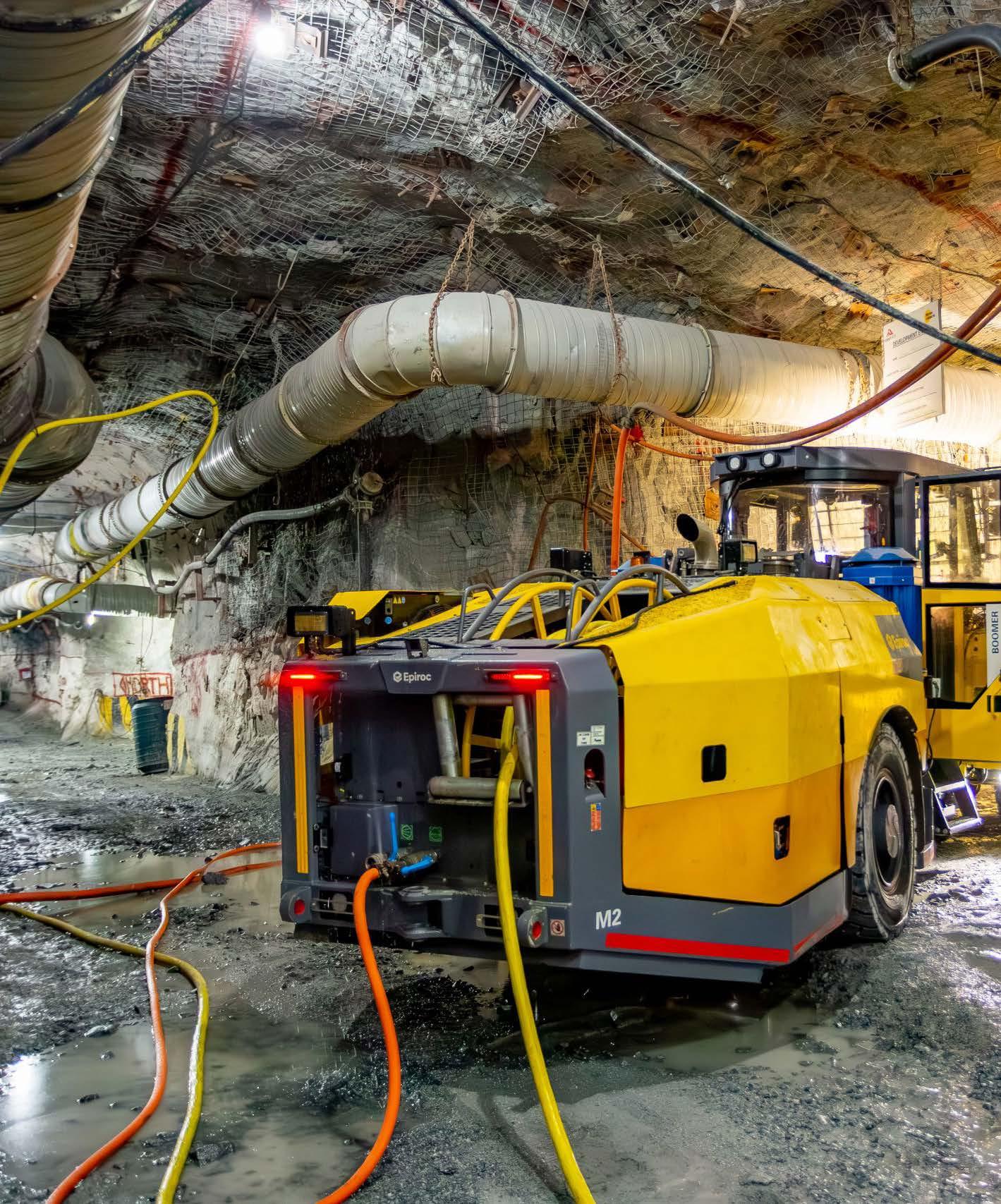
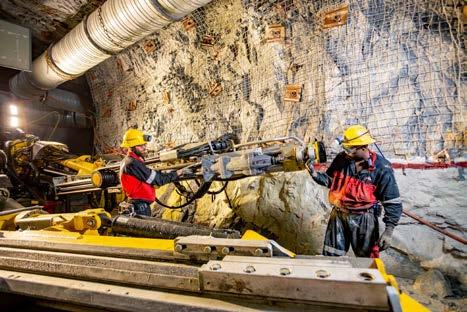
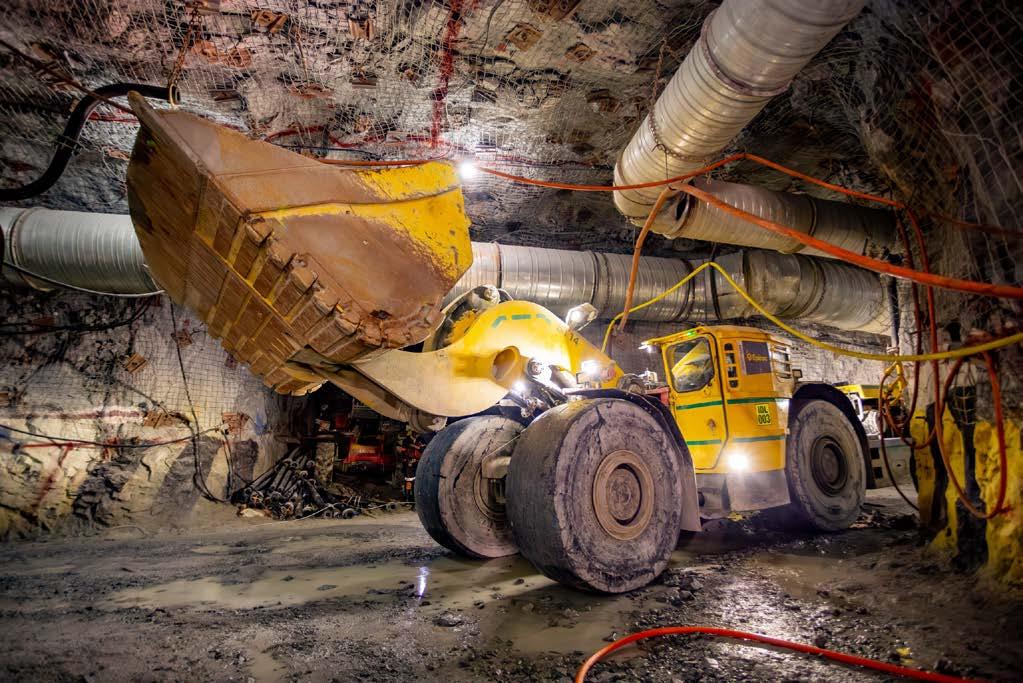
Underground, Epiroc's battery-electric equipment fleet is doing the physical work of mechanised mining, drilling, loading and hauling in an environment where the decision to go electric was made at the design stage rather than retrofitted. That choice expresses itself in noise levels, emissions and operating
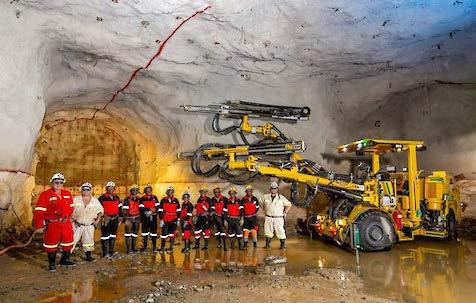
costs in ways that compound over decades.
DRA Global threads through all of it. DRA delivered the Phase 1 concentrator on schedule in June 2024 and is now EPCM contractor for the Phase 2 underground infrastructure and 3.3-Mtpa concentrator expansion, with ground broken on 9 April 2026, ahead of schedule. The institutional knowledge DRA carries, ground conditions, comminution requirements, the integration of surface and underground logistics, stays inside the project because Ivanhoe did not replace the team at the moment complexity increased. In a sequenced mine build, that continuity is risk management in its most practical form.
Then there is the layer that rarely appears in international press releases but matters structurally. Bhubezi Projects, Stucky Motors Group and Daphney Business are among
the local and community-linked enterprises engaged through Platreef's B-BBEE supplier framework. The Maru a Mokopane portal exists to give firms like these a real channel into the project. Whether those relationships grow from peripheral services into technically meaningful supply roles across Phase 2 and Phase 3 is the true measure of whether Platreef's local economic model is durable or merely declared.
The offtake side closes the loop. Northam Platinum took the first Phase 1 concentrate in late Q4 2025. For Phase 2, Western Platinum, a Sibanye-Stillwater subsidiary, is contracted to buy approximately 60,000 tonnes per year, around half of planned Phase 2 output, for eight years from first production. That converts a projected number into a contracted revenue stream. Which is a different kind of confirmation entirely.
Water, Power and the Mine Plan
Platreef's ESG profile is most credible where it stops sounding like a values statement and starts sounding like engineering. The Masodi Wastewater Treatment Works, officially opened in November 2025, is the clearest example. Described by Ivanhoe as a publicprivate partnership with Mogalakwena Local Municipality, it provides the mine with treated municipal effluent, up to 10 million litres per day, under an offtake arrangement running for 32 years from first production. In a water-scarce operating environment in Limpopo, that is not a corporate responsibility initiative. It is a primary water-security solution embedded in the mine plan. The municipality gets upgraded treatment infrastructure. The mine gets a reliable, long-term water supply. The partnership has a structure, a duration and a number attached to it, which is what
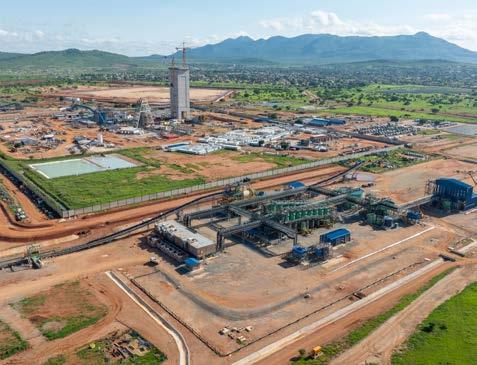
distinguishes infrastructure from intention.
Energy points in the same direction. Ivanhoe's 2024 sustainability report states that construction of a 5-MW solar facility at Platreef was completed in early 2025 to support development and operations. Combined with the battery-electric underground fleet, the
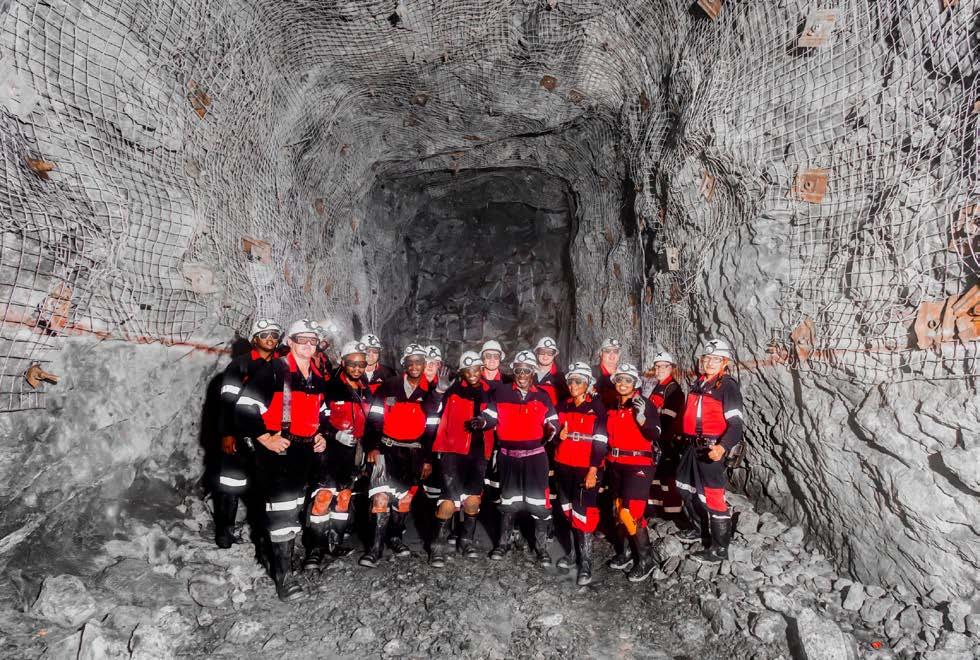
message is not that Platreef has resolved decarbonisation at mine scale. It is that the operating model is being designed from the outset around a lower-emissions architecture rather than retrofitting one later, a more serious commitment, and one that expresses itself in capital allocation decisions that are harder to reverse once made.
Who Owns the Future
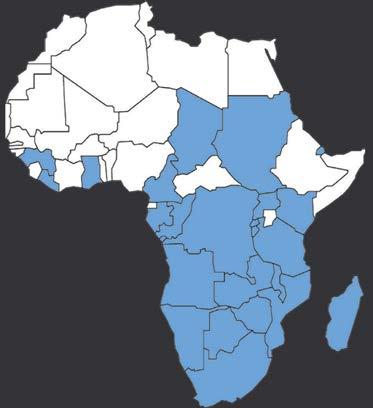
Platreef's broad-based black economic empowerment structure has been described in percentage terms often enough that the numbers risk becoming abstract. Twenty-six percent of the project allocated to historically disadvantaged South African stakeholders. Twenty host communities, representing approximately 150,000 people. Employees. Local entrepreneurs. One hundred and eighty-seven local companies. Three hundred and thirty-three individual shareholders.
The percentages matter. The individual shareholders behind them matter more.
What the ownership structure represents, in operational terms, is a decision to connect the surrounding economy to the project before first concentrate rather than after. Community equity participation is not uncommon in South African mining. A structure that reaches 187 local companies and 333 individual shareholders before the mine reaches commercial production is less common. The Maru a Mokopane portal, through which community members register for employment and development opportunities, and through which procurement opportunities and supplier information are communicated, is the mechanism through which that structure finds people rather than waiting for people to find it.
187 local companies. 333 individual
shareholders. The ownership structure was built before it was needed, and that timing is the point.
The more important question is what Phase 2 and Phase 3 create in the regional business ecosystem relative to what Phase 1 inherited. If more local firms move from peripheral service roles into technically meaningful supply relationships, into comminution, into shaft services, into instrumentation, the ownership structure will start to look as serious as the engineering model. If they do not, the percentages will remain impressive without becoming consequential.
Cloete's line that Ivanhoe's commitment extends 'beyond production' lands most convincingly when paired with structures rather than sentiment: water security, community equity, supplier access channels, and a workforce profile, more than 70% locally
based, 26% female, disclosed at the opening ceremony as a current reality rather than a future aspiration.
The Proofs Still Required
Friedland, who does not tend to undersell a geological argument, said in January 2026 that the company was beginning discussions to bring forward Phase 3, the 10.7-Mtpa scenario that would produce over 1 million ounces of 3PE+Au annually alongside approximately 22,000 tonnes of nickel and 13,000 tonnes of copper. He ended with a short challenge: 'Watch this space.'
The more disciplined response is to stay with the near-term proofs, because those are the ones the sector will actually judge the project on. Shaft #3 must now perform as designed over a sustained operating period,

not just a commissioning window. Highergrade stoping ore from the 850-metre level must begin displacing development ore in the Phase 1 plant feed, which is what commercial production actually means in practice. The Shaft #2 widening must proceed without losing months to ground conditions that always reveal themselves differently in execution than in planning. Phase 2 construction must advance without the Phase 1 operation losing coherence, a sequencing challenge that is straightforward on a Gantt chart and genuinely demanding in the field.
And beyond the mechanics, Platreef must prove that its ownership structure is more than a compliance achievement, that the 187 local companies and 333 individual shareholders represent the beginning of a regional capability story rather than the end of one.
There is a shaft being widened near Mokopane
right now. There are first blasts being measured. There is ore being weighed on its way to a concentrator that was not there three years ago. There is a community shareholder somewhere in the villages around the mine who watched a groundbreaking on 9 April and is calculating what Phase 2 means for a contract she has been trying to grow into. Platreef has already proved it can begin. What it is proving now is harder, and more important, and will take longer to see clearly. The sector is watching. So is the rock.
Email: info@ivanhoemines.com www.ivanhoemines.com
IVANHOE MINES

Platreef PGM-Nickel Mine
South Africa
82 Maude Street, Second Floor Sandton, South Africa, 2146
Tel: +27-11-088-4300
Fax: +27-86-675-1836
Email: info@ivanhoemines.com www.ivanhoemines.com