Three Scholars Showcased Academic Excellence at the Outstanding Research Output Awards 2024/25
Every Household Matters: Business Power Lunch Talks Future Sustainability
Michael J. Shaw Best Paper at WeB 2025: Driving AI-Business Transformation
Snatching the Innovation Paper Award at the China Digital Economy and Management Academic Annual Conference 2025
Make Exports Great Again? Not So Fast 16 Research EXCELLENCE
Research INSIGHT
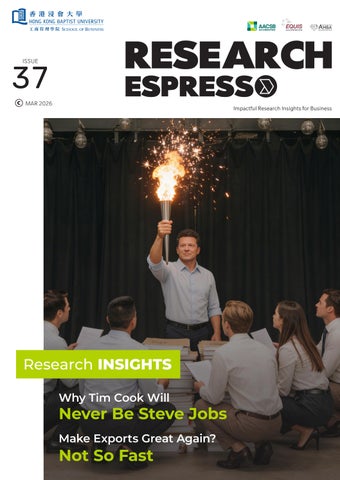
Why Tim Cook Will Never Be Steve Jobs
Pan, J., Hmieleski, K. M., Ma, B., Lysova, E. I., Tang, Z., & Huang, X. (2025). The power of calling: How founder CEOs drive ambidexterity and innovation in firms. Journal of Management Studies, 62(7), 2898–2937. https://doi.org/10.1111/joms.13144
RESEARCH INSIGHT
Steve Jobs and John Sculley. Bill Gates and Steve Ballmer. Jack Ma and Daniel Zhang. Business history keeps returning to the same pattern: when founders step aside, something changes. Innovation slows, instincts fade, the magic dulls, and the so-called founder advantage disappears. Why do founder CEOs so often drive outsized creativity and risk-taking compared with their professional counterparts? Shouldn’t innovation come easier to those who inherit resources, teams, and momentum?
A recent paper offers an interesting answer, suggesting that founder CEOs aren’t driven purely by profits or performance metrics, but by something harder to quantify—a sense of calling. They see their work as a mission, not a mandate. Thus, founder CEOs are typically propelled by a strong vision, rooted in a personal desire to alter the status quo in ways that leave a lasting mark. And that conviction, more than any business strategy, may be what keeps their companies inventing instead of merely operating.
Building on what management scholars call upper echelons theory—the idea that companies reflect the values and mindsets of their leaders—the researchers studied 200 high-tech firms in China. Their conclusion? Companies led by founder CEOs simply innovate more. Able to balance bold experimentation with operational control due to their unique status, these leaders tend to be driven by something even harder to measure: a personal sense of calling that keeps the company pushing forward.
Going beyond outcomes, the researchers found that founder CEOs are better at what management theorists call ambidexterity, or the ability to run a company that can explore new ideas while still exploiting what already works. That balance between curiosity and control is rare, and it’s amplified when founders see their work as a calling. Their sense of purpose helps them sustain the tension between vision and execution that fuels innovation.
The founder effect doesn’t apply to everyone with a title. It’s only founder CEOs who view their mission as a calling
who are likely to keep their firms agile and balance exploration with execution. Driven by purpose, they tend to act as stewards, while professional managers behave more like agents focused on efficiency and control.
The findings offer some practical takeaways. Boards should strive to keep founders involved, even in nonexecutive roles, in order to preserve the sense of vision that’s crucial to sustain innovation. Meanwhile investors should weight a founder’s sense of calling as an asset in itself—one that helps leaders stay focused on innovation under pressure and balance risk with discipline over
time. Finally, educators should point to the value of teaching purpose alongside strategy, helping future founders define why they do what they do.
The research confirms what many in business already sense from watching the careers of iconic founders: a founder’s calling may be a company’s most enduring advantage, and the hardest to replicate. In the end, no one will ever mistake Tim Cook for Steve Jobs!
Chair Professor Department of Management, Marketing and Information Systems (MMIS)
Professor Xu HUANG
Qiu, Q., Qiu, L. D., & Zhan, C. (2024). FDI inflows and export quality: Domestic competition and within-firm adjustment. Journal of Development Economics, 167, 103293. https://doi.org/10.1016/j.jdeveco.2024.103293
As Donald Trump’s tariff policy sends shockwaves through global markets, the role of foreign direct investment (FDI) is back under scrutiny. For decades, economists have argued that innovation drives growth, and that improving product quality is often the most powerful form of innovation. After all, in competitive markets, quality is what separates leaders from laggards. Surely, then, FDI inflows should be an unmitigated blessing for host economies. Not so fast, say the authors of a new paper, as they suggest that, in some cases, an influx of foreign capital can actually lower product quality. The question is: how, and why?
Examining the effects of horizontal FDI liberalization— that is, the entry of foreign firms competing directly within the same industries—on the quality of Chinese exports between 2000 and 2006, a period when China’s WTO accession unleashed a wave of foreign investment and intense domestic competition, the authors trace how companies adjusted their product mix and quality in response to rising foreign presence within their industries.
Their results challenge a long-held assumption. While FDI often brings technology transfers and managerial know-how, it also intensifies competition, forcing domestic firms to reallocate resources in ways that don’t always favor quality.
In sectors with significant FDI inflows, intensified competition and reduced market shares increase survival pressures, ultimately incentivizing the production of lower-cost, lower-quality goods.”
Strikingly, the study finds that the quality of new products introduced after FDI liberalization is often lower than that of those produced before. This “withinfirm adjustment” effect accounts for most of the decline in export quality. The magnitude is not trivial: the paper estimates an overall quality drop of nearly 11% between 2000 and 2006, based on a novel integration of firmlevel production data, sectoral FDI liberalization, and customs information on export prices and destinations.
The findings point to a clear mechanism. As competitive pressures intensify, the expected returns
to technology investment decline, leading firms to reduce investments in product quality. The impact of China’s 2002 FDI policy reform is predominantly observed among newly introduced products, while the quality of continuing and dropped products remains unchanged. Notably, product scope stays constant, as firms replace discontinued lines with new, lowerquality ones. In other words, the overall decline in export quality stems not from firms abandoning highquality lines but from introducing new, lower-quality ones. The authors note that this pattern is robust across different measures of product quality and FDI intensity.
Thus, the evidence suggests that FDI inflows do not automatically raise the technological frontier. Under intense competition, firms may shift from creative upgrading to defensive cost-cutting, resulting in a measurable decline in export quality. For policymakers aiming to lift export performance, the lesson may well be that FDI alone does not guarantee a move up the value chain.
Dr. Chaoqun ZHAN Research Assistant Professor Department of Accountancy, Economics and Finance
NEWS
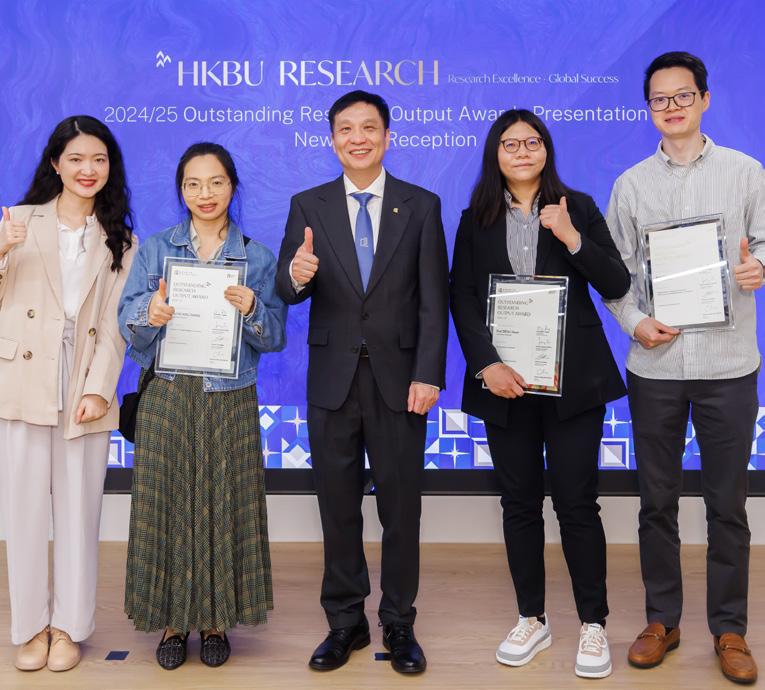
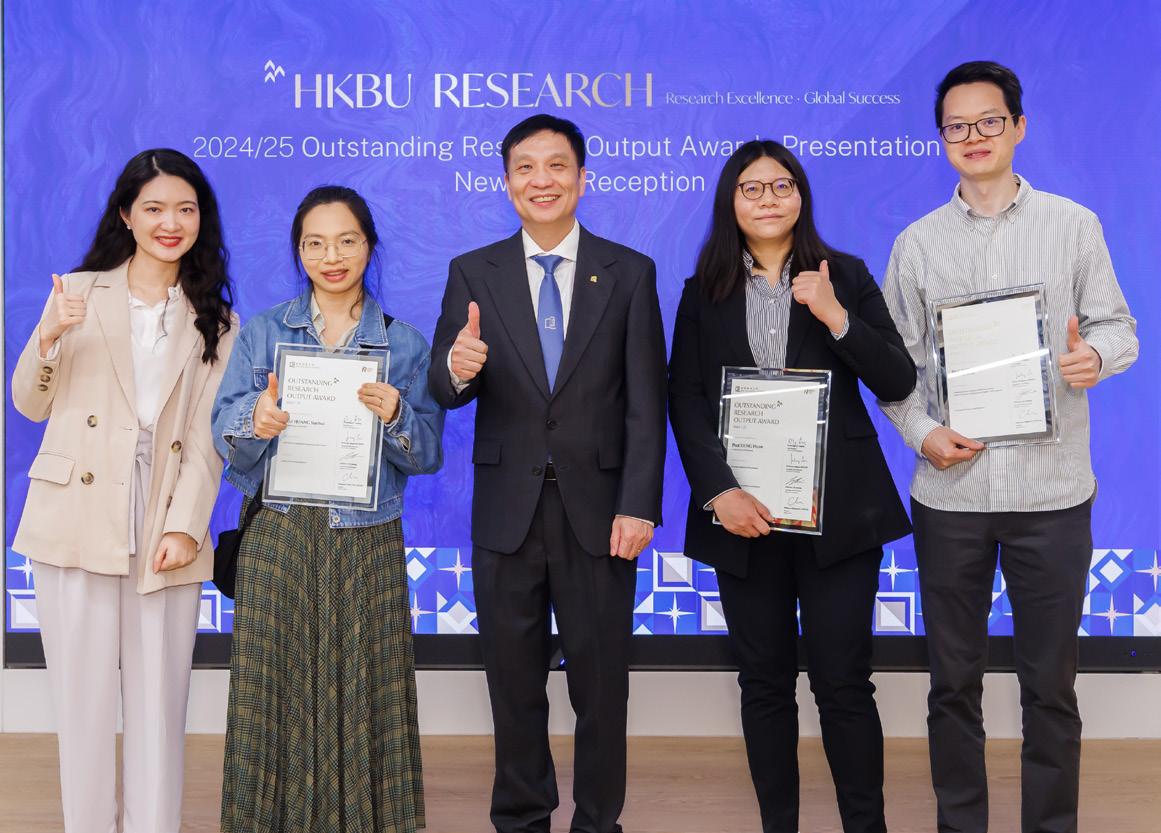
Three Scholars Showcased Academic Excellence at the Outstanding Research Output Awards 2024/25
Three distinguished members from the School of Business were celebrated for their exceptional interdisciplinary research at the Outstanding Research Output Awards 24/25, held during the Awards Presentation and New Year Reception organised by the Research Office on 19 January 2026.
The awards recognise not only the originality and significance of research but also its academic rigour. The awardees are among 17 esteemed individuals in the HKBU research community honoured for their impactful contributions that shape the contemporary business landscape regarding social sentiments, consumer behaviour, and financial innovation.
In recognition of their achievements, each awardee received a certificate and a monetary prize of HK$50,000. The three award-winning research papers from the School exemplify the mission to advancing knowledge and enhancing academic reputation.
The awardees from the School, with their winning research papers, are:
Awardee: Professor Deng Huan, Assistant Professor, Department of Accountancy, Economics and Finance (AEF) Research paper title: Structural Analysis of Xenophobia
Abstract: Addressing the surge in anti-Chinese xenophobia in the U.S. during the COVID-19 pandemic, this research applies a novel two-motivation framework to distinguish between the drivers of hostile behavior: intrinsic prejudice versus social-image concerns. By leveraging advanced data analytics and simulation modeling on a comprehensive survey of U.S. adults, the study uncovers a pivotal finding: the pressure to maintain a positive social reputation significantly outweighs private animus in curbing xenophobic actions. These results offer a transformative perspective for policy, demonstrating that establishing strong social norms against prejudice yields a far greater impact than interventions aiming solely to alter private attitudes.
Awardee: Professor Huang Yunhui, Assistant Professor, Department of Management, Marketing and Information Systems (MMIS) Research paper title: Fast Fashion Consumption Signals Low Self‐Control
Abstract: The study argues that the fast fashion business model is defined by high trendiness, disposability, and unsustainable practices, leading to a perception of consumers as lacking self-control due to their short-term focus. A ChatGPT study and six experiments provide evidence of this relationship, revealing that fast fashion consumption negatively affects perceived self-control, mediated by the belief in a short-term focus. Serious fast fashion consumers are viewed as having lower self-control than casual consumers and compared to those of luxury and supermarket brands. This perception diminishes when sustainability cues suggest long-term thinking. The findings offer valuable
insights for consumers and marketers regarding compatibility with self-control-related products and activities.
Awardee: Professor Zhang Jian, Associate Professor, Department of Accountancy, Economics and Finance (AEF) Research paper title: Credit Information Sharing and Firm Innovation: Evidence from the Establishment of Public Credit Registries
Abstract: Public credit registries (PCRs) significantly enhance financing for innovative firms by facilitating credit information sharing, which reduces adverse selection and moral hazard. The study shows that the establishment of PCRs positively impacts firm innovation, particularly when it leads to increased bank debt financing and competition. This effect is stronger for opaque firms and those in innovation-intensive industries. Additionally, firms’ efficiency in converting innovation inputs into outputs improves post-PCR establishment. Overall, the findings suggest that investing in credit information infrastructure like PCRs can accelerate economic growth and promote sustainable innovation, providing valuable insights for policymakers and lenders.
Professor Lyu Aiping, Vice-President (Research and Development), and Professor Zhang Han, Dean of School of Business, congratulated the awardees and look forward to reaching new heights in research excellence.
Every Household Matters: Business Power Lunch Talks Future Sustainability
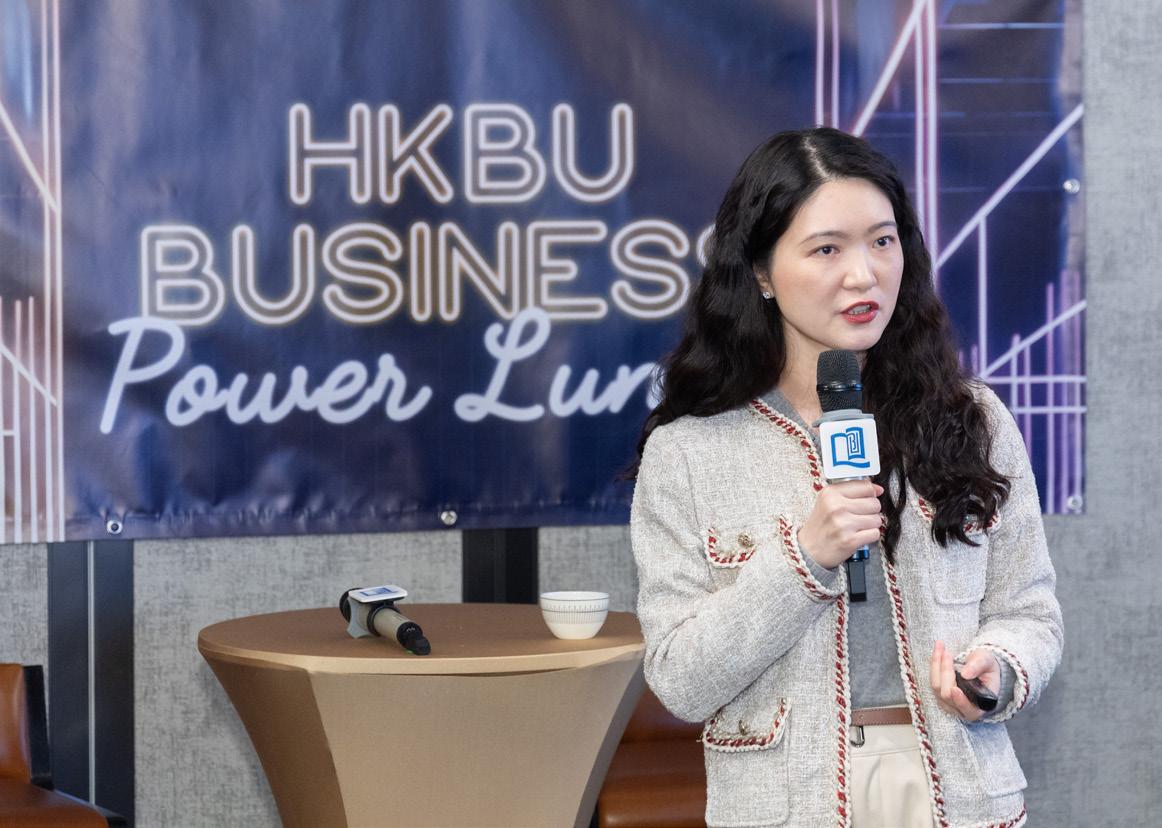
Household decisions may seem small, but their impact is vast. Every decision made at home—what we buy, how we live, how we plan—ripples outward, influencing our environment, our communities, and our economy. This powerful insight took centre stage at the School of Business Power Lunch on 28 January 2026.
The event brought together an energetic mix of scholars, business leaders, entrepreneurs, and alumni. Professor ZHANG Han, Dean of the School of Business, commenced the event with a warm toast, inviting guests to uncover new research insights and partnerships.
Over lunch, Professor Shirley ZOU, Associate Professor of the Department of Accountancy, Economics and Finance (AEF), delivered an energising talk titled “Household Sustainability.” She illustrated how households play a crucial role in shaping environmental quality, social well-being, and financial resilience, and how they respond to initiatives that encourage more sustainable behaviour. She also emphasised that households can enhance their quality of life today while safeguarding the well-being of future generations.
A lively Q&A session, moderated by Professor Byron SONG, Head of the Department of Accountancy, Economics and Finance (AEF), invited guests to explore real-world applications and new opportunities for collaboration across sectors.
The Business Power Lunch once again proved to be a dynamic bridge between the academia and industry—a space where fresh ideas spark, networks strengthen, and visions for a more sustainable future take shape.
NEWS
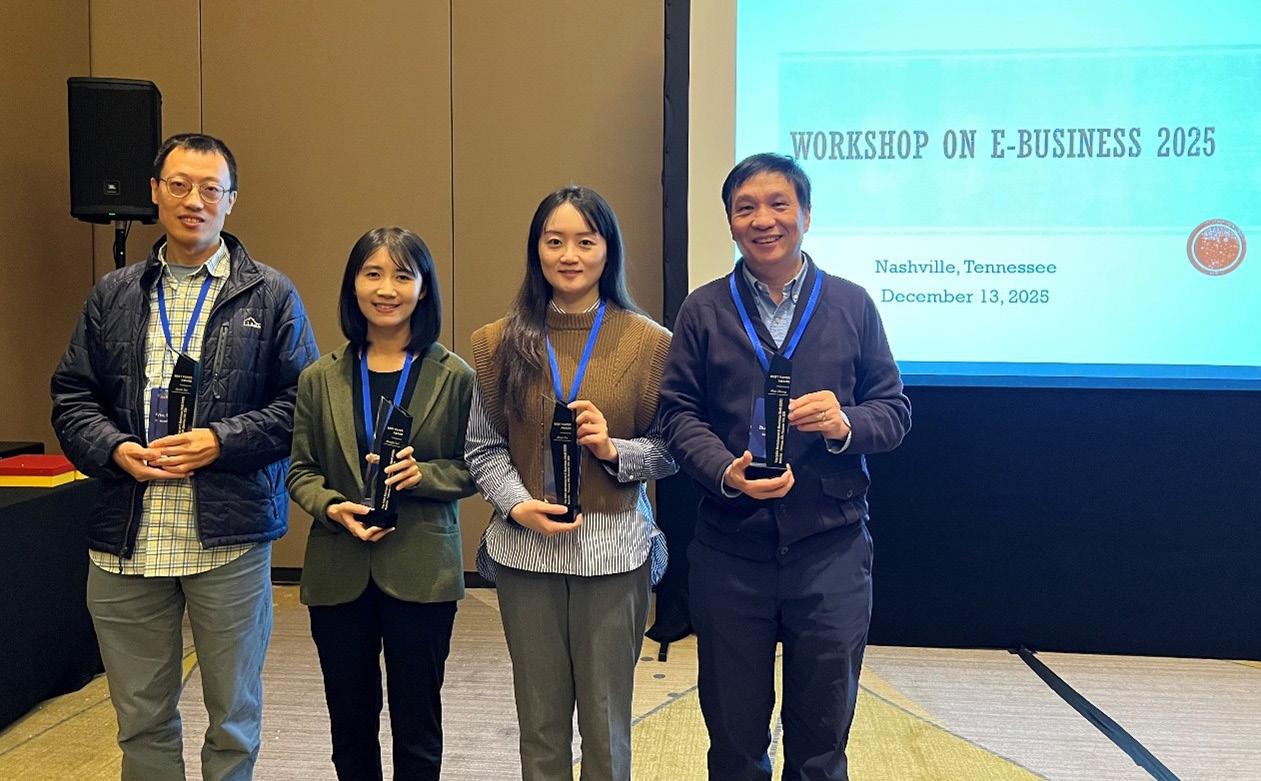
Michael J. Shaw Best Paper at WeB 2025: Driving AI-Business Transformation
Professor Zhang Han, Dean and Chair Professor at the Hong Kong Baptist University School of Business, alongside Dr Xu Zheyi of Auburn University, Dr Lei Zhanfei from the University of Massachusetts Amherst, and Dr Yin Dezhi of the University of South Florida, received the Michael J. Shaw Best Paper Award for their research paper titled “Navigating Reviews: How AI Summaries Shape Consumer Information Seeking” at the Workshop on e-Business (WeB), conducted on 13 December 2025 in Nashville. The paper explores how AI-generated summaries enhance the efficiency of information retrieval and decision-making, ultimately shaping purchasing behaviour and preferences in digital marketplaces.
The WeB workshop, established in 2022, is a meaningful annual event dedicated to advancing the fields of e-Business and e-Commerce. The 2025 workshop focused on the theme “E-business Transformation Facing AIinduced Uncertainties,” addressing the pressing challenges and opportunities that artificial intelligence presents to contemporary business practices. Organised in collaboration with the International Conference on Information Systems (ICIS) and the Association for Information Systems (AIS), the event aims to foster meaningful dialogue and collaboration between academic researchers and industry leaders. This acknowledgement not only underscores the participants’ contributions to information systems research but also enhances the ongoing discourse regarding the strategic integration of AI within business frameworks, vital for navigating the complexities of a rapidly evolving digital landscape.
Snatching the Innovation Paper Award at the China Digital Economy and Management Academic Annual Conference 2025
From 21 to 23 November 2025, the China Information Economics Society hosted the China Digital Economy and Management Academic Annual Conference in Lingshui, Hainan. This prominent event featured the announcement of the Innovation Paper Award winners, a highly regarded honour that recognises outstanding contributions to the fields of information economics and information management. In 2025, seven exemplary papers, selected from leading global journals, were each presented across two distinct categories.
In the information management category, Professor Zeng Jicheng from Hong Kong Baptist University School of Business, along with Professor Fang Yulin from The University of Hong Kong, Professor Li Huifang from University of Science and Technology of China, Professor Wang Youwei from Fudan University, and Professor Kai H. Lim from The Hong Kong Polytechnic University, received accolades for their research paper titled “Untangling the Performance Impact of E-Marketplace Sellers’ Deployment of Platform-Based Functions: A Configurational Perspective.” Their research not only enhances understanding in information systems but also offers valuable insights that can inform future practices within the digital economy.
The award recipients were presented with their certificates by distinguished professors known for their stellar contributions to the research. This recognition not only highlights their achievements but also serves as an inspiration for emerging scholars, encouraging them to explore new frontiers in their respective fields.
Founded in March 1989, the China Information Economics Society seeks to establish itself as a leading academic group within information economics and management, committed to fostering interdisciplinary theoretical innovation and advancing research practices in these dynamic areas.
Research EXCELLENCE
Professor Jian ZHANG
Assistant Professor Department of Accountancy, Economics and Finance (AEF)
Superstition, Risk Aversion, and Audit
Quality: Evidence from China
A Journal of Practice & Theory
https://doi.org/10.2308/AJPT-2022-140
Professor Kimmy CHAN
Professor Department of Management, Marketing and Information Systems (MMIS)
Pairing Up with Anthropomorphized Artificial Agents: Leveraging Employee Creativity in Service Encounters
Journal of the Academy of Marketing Science
https://doi.org/10.1007/s11747-024-01017-w
Subscribe
The Research Espresso, a bimonthly e-publication covering everything you need to know about the latest research developments at the HKBU School of Business, focuses on four key areas: Research Insights (the main research topic of the month), Research Excellence (recognition of faculty members’ research achievements), News (research-related updates), and Seminars (sharing research skills and knowledge).
The idea is to provide business practitioners with the most recent research findings from the School‘s faculty members. We want to build links between research and practice and to ensure that the School's research has business and societal impact.
Enjoy reading, and your feedback and input are always welcome!