DIABLO DAYS
Everything You Need to Know About Diablo Canyon
About Diablo

The Diablo Canyon Power Plant is a nuclear power plant near Avila Beach in San Luis Obispo County, California. Following the permanent shutdown of the San Onofre Nuclear Generating Station in 2013, Diablo Canyon is now the only operational nuclear plant in California, as well as the state's largest single power station. It was the subject of controversy and protests during its construction, with nearly two thousand civil disobedience arrests in a two-week period in 1981.
The plant has two Westinghousedesigned 4-loop pressurized-water nuclear reactors operated by Pacific Gas & Electric (PG&E). Together, the twin 1100 MWe reactors produce about 18,000 GW·h of electricity annually (8.6% of total California generation and 23% of carbon-free generation), supplying the electrical needs of more than 3 million people. The plant produces electricity for about 6 cents per kWh, less than the average cost of 10.1 cents per kWh that PG&E paid for electricity from other suppliers in 2014.
Though it was built less than a mile from the Shoreline Fault line, which was not known to exist at the time of construction, and is located less than three miles (4.8 km) from the Hosgri fault, a 2016 NRC probabilistic risk assessment of the plant, taking into account seismic risk, estimated the frequency of core damage at one instance per 7.6 million reactor years. The plant is located in Nuclear Regulatory Commission Region IV.
In 2016, PG&E announced that it plans to close the two Diablo Canyon reactors in 2024 and 2025, stating that because California's energy regulations give renewables priority over nuclear, the plant would likely only run halftime, making it uneconomical.
In 2020, experts at the California Independent System Operator (CAISO) warned that when the plant closes the state will reach a "critical inflection point", which will create a significant challenge to ensure reliability of the grid without resorting to more fossil fuel usage, and could jeopardize California's greenhouse gas reduction targets. In
2021 the California Energy Commission and CAISO warned that the state may have summer blackouts in future years as a result of Diablo's closure coinciding with the shutdown of four natural gas plants of 3.7GW total capacity, and the inability to rely on imported electricity during West-wide heat waves due to reduced hydroelectric capacity (from the decades-long drought) and the closure of coal plants.
A 2021 report from researchers at MIT and Stanford states that keeping Diablo Canyon running until 2035 would reduce the state's carbon emissions from electricity generation by 11% every year, save the state a cumulative $2.6 billion (rising to $21 billion if kept open until 2045), and improve the reliability of the grid. Full decommissioning of the plant is estimated to take decades and cost nearly $4 billion.
2021-22 Senate Bill 846 (Dodd) extended the plant's operations through 2030.[17]
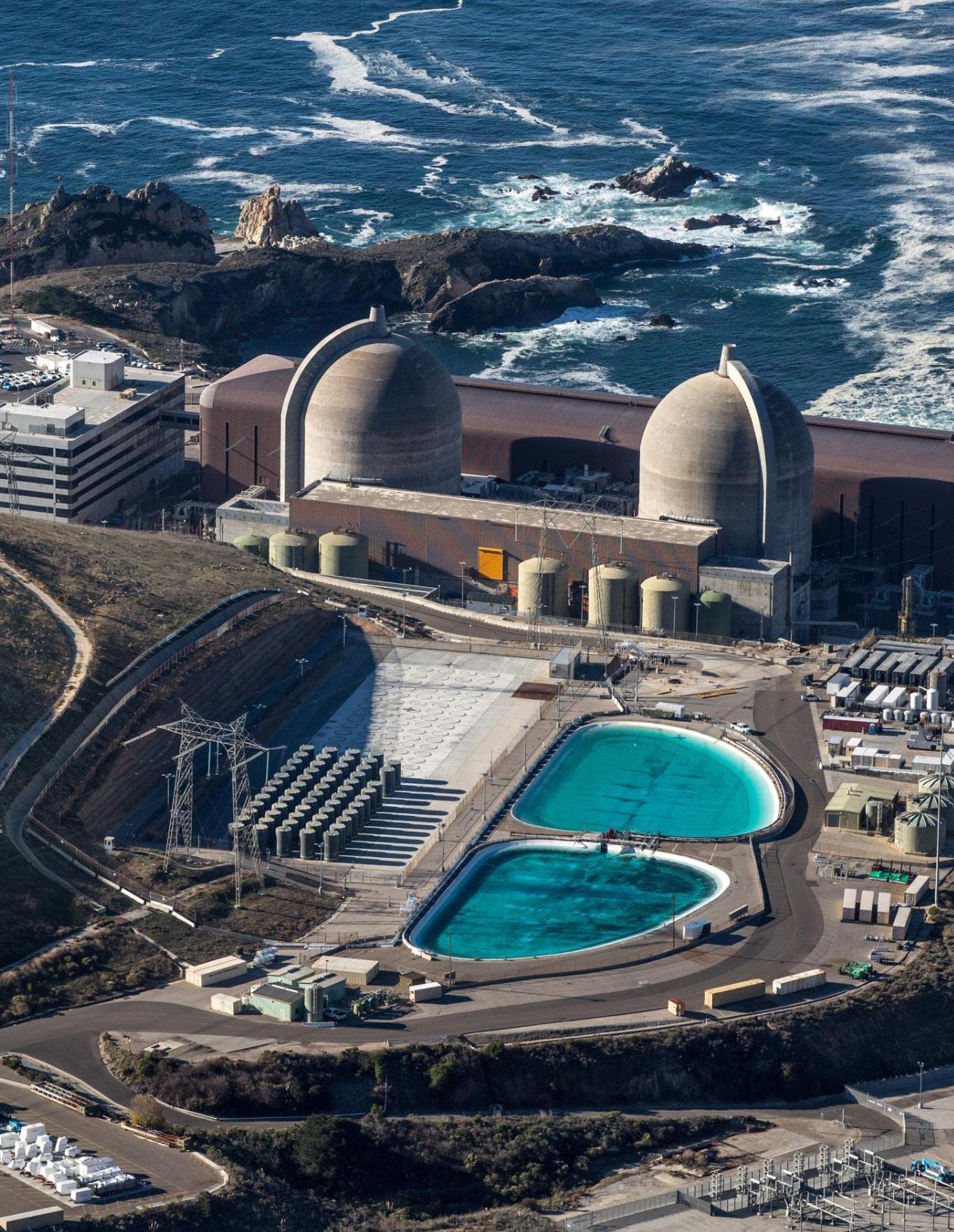
Diablo Canyon Power Plant, on the coast of California. Photo by Doc Searles via Flickr.
All text courtesy of Wikipedia
PG&E electricity rate increases in California between 2009 and 2019.

"A 2021 report from researchers at MIT and Stanford states that keeping Diablo Canyon running until 2035 would reduce the state's carbon emissions from electricity generation by 11% every year, save the state a cumulative $2.6 billion (rising to $21 billion if kept open until 2045), and improve the reliability of the grid."
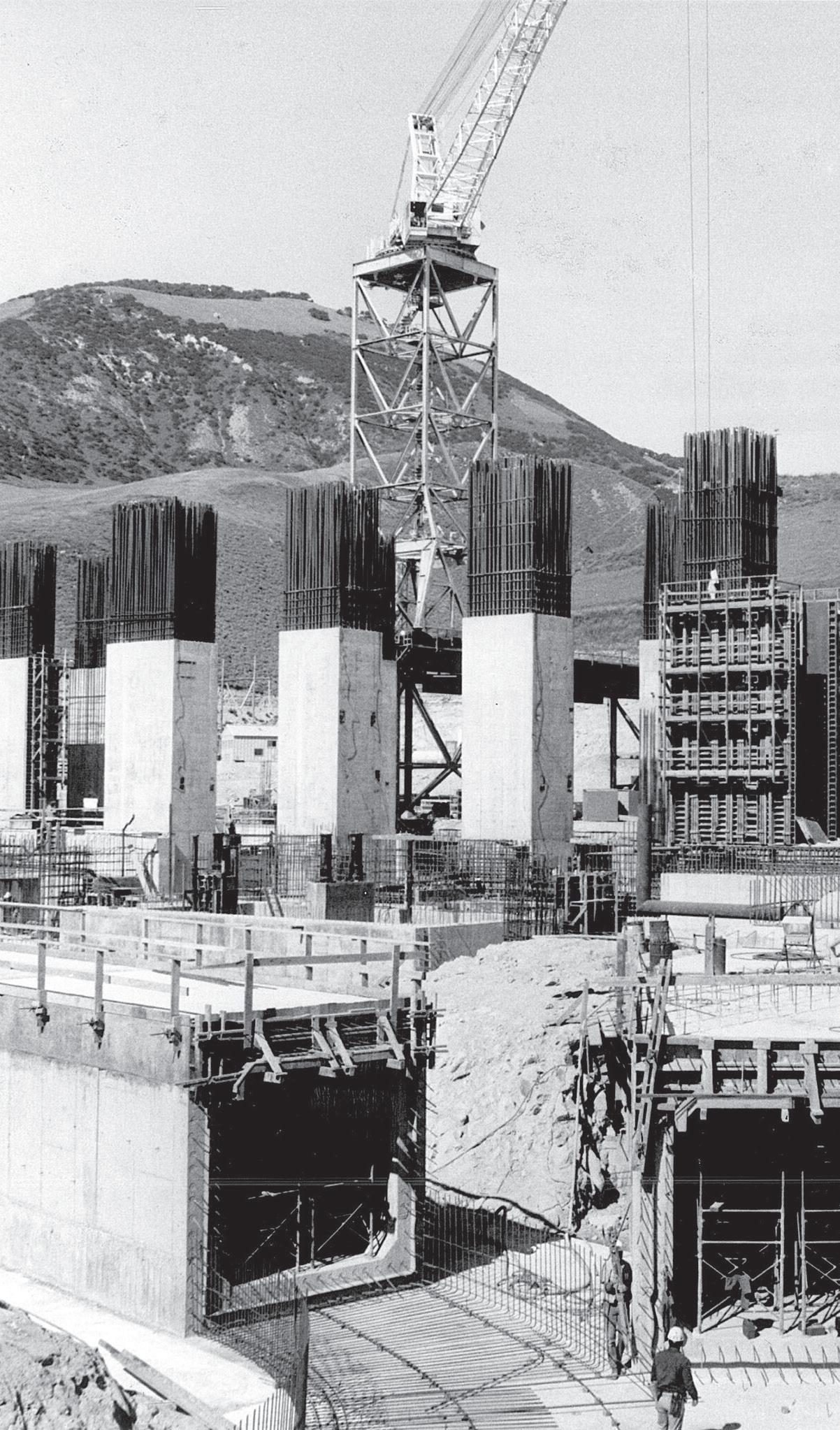

Diablo under construction
Diablo under construction. Taken from Energy.Gov
The circular structure rising in the center of the photograph is the reactor containment, c. 1970. Taken from Energy.Gov
Diablo History
Pacific Gas & Electric Company went through six years of hearings, referendums and litigation to have the Diablo Canyon plant approved. A principal concern about the plant is whether it can be sufficiently earthquakeproof; the site was deemed safe when construction began in 1968, but a seismic fault (the Hosgri fault) had been discovered several miles offshore by the time the plant was completed in 1973.
This fault experienced a 7.1 magnitude quake 10 miles offshore on November 4, 1927, and thus is capable of generating forces equivalent to approximately 1⁄16 of those felt in the 1906 San Francisco earthquake.
The company updated its plans and added structural supports designed to reinforce stability in case of earthquake. In September 1981, PG&E discovered that a single set of blueprints was used for these structural supports; workers were supposed to have reversed the plans when switching to the second
reactor, but did not. Nonetheless, on March 19, 1982, the Nuclear Regulatory Commission (NRC) decided not to review its 1978 decision approving the plant's safety, despite these and other design errors.
In response to concern that ground acceleration, or shaking, could cause spillage of submerged fuel rod assemblies which could ignite upon exposure to air, PG&E and NRC regulators insist that the foregoing scenario is anticipated and controlled for, and that there is no basis to anticipate spillage. The launch of additional seismic studies did not delay re-issuance of the operating licenses for the two onsite units.
The NRC estimate of the risk each year of an earthquake intense enough to cause core damage to the reactor at Diablo Canyon was 1 in 23,810, according to an NRC study published in August 2010.
Diablo Canyon was built and entered service in the midst of legal challenges and civil disobedience from the anti-
nuclear protesters of the Abalone Alliance. Over a two-week period in 1981, 1,900 activists were arrested and sent to jail for protesting at Diablo Canyon Power Plant, including musician/ activist Jackson Browne. It was the largest arrest total in the history of the U.S. anti-nuclear movement.
In spring of 2011, State Senator Sam Blakeslee and US Representative Lois Capps both expressed concern for a renewed safety review. Speaking before the Senate Committee on Environment and Public Works, Representative Capps stated that she believed the "Nuclear Regulatory Commission should stay the license renewal process until the completion of independent, peer reviewed, advanced seismic studies of all faults in the area." The Alliance for Nuclear Responsibility began circulating a petition to similar effect, going further and calling for an outright halt to relicensing. An array of San Luis Obispo-based anti-nuclear groups including Mothers for Peace also called for closure of the plant.
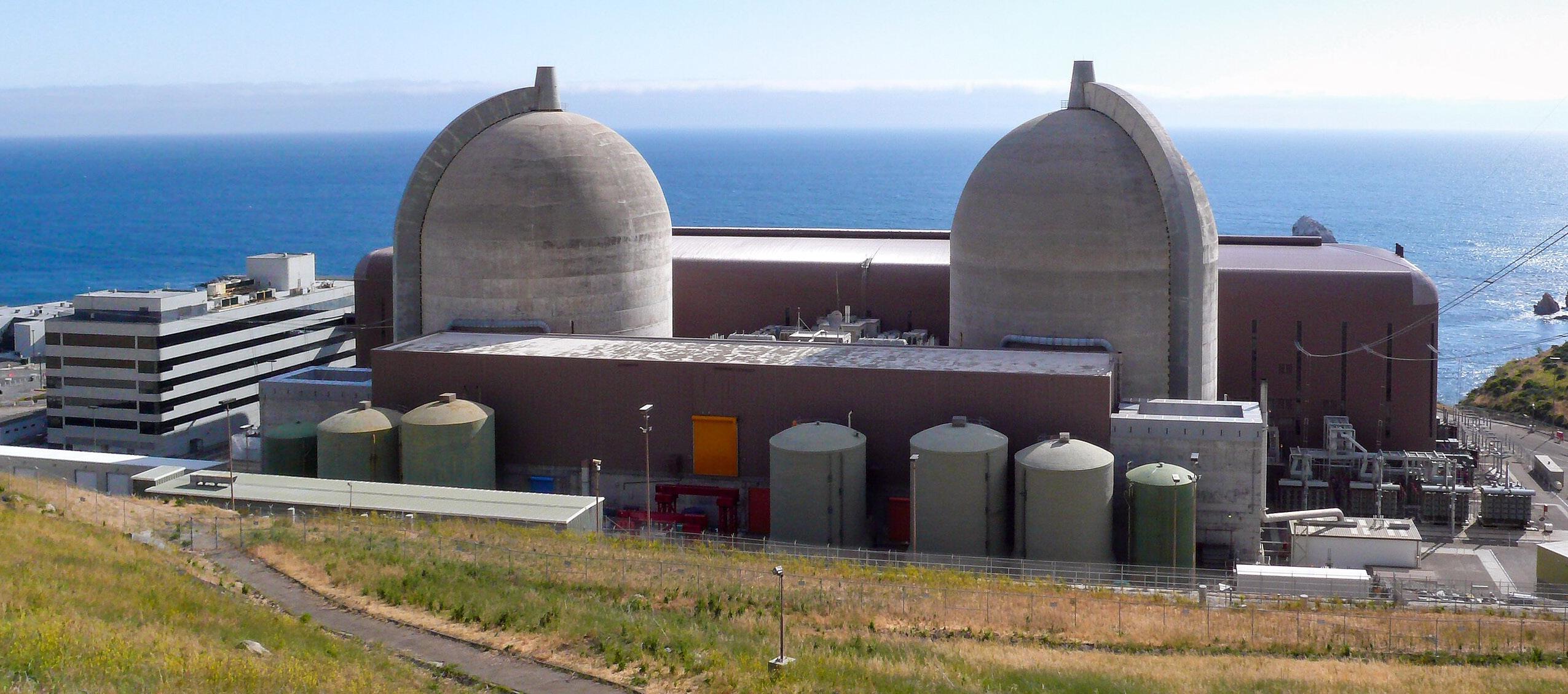
Diablo Canyon Power Plant, 2008. The light beige domes are the containment structures for Unit 1 and 2 reactors. Photo by Tracey Adams via Flickr
Project 4 write-up
Oh, InDesign, if only you were 20% better and more intuitive, you really could have been my favorite of the Adobe programs. I used InDesign a lot back at Santa Monica College (SMC), so in a way this felt like coming back home, but then also remembering why I left home.
When starting this project, I decided that I wanted to follow as many of the design principles and styles we used back at SMC as possible. We liked to keep it sleek, professional, with as few frills as possible, and I always thought it looked better than trying to do anything crazy, certainly better than when I try to do anything crazy.
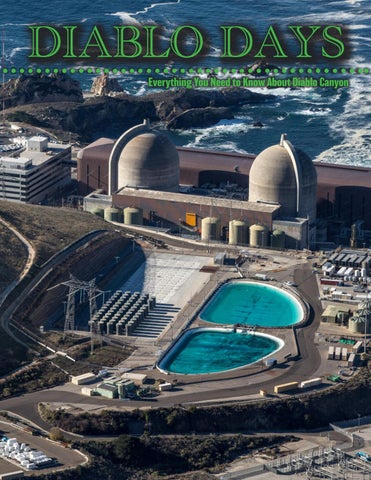
First thing I built was the cover page. Deviating slightly from the visual language we used at SMC, I decided to use a cheesy but 'fancy' font to give it a local magazine feel, something like a special issue of a free paper you'd find in a gas station. An aerial shot of Diablo felt like a no-brainer. I had to learn how to use a drop shadow to overlay the text over that gorgeous overview of Diablo, and once I did I fiddled with settings until I thought the text looked decent. I decided to go with a dark green in an attempt to keep everything 'on theme' with nuclear energy. To make it, you just go to the line tool and adjust what kind of line it will make. I made sure each line on the next pages was on the same x-coordinates as the previous and future pages to complete the 'repeating' element.
Next, I built out the columns of text on the first page. I am well familiar at this point with the tricks to make the first letter of a paragraph big (you can do the whole word as well, but I think that's a bit gauche) and indenting only the following paragraphs, so that was nothing special. Using another aerial shot of Diablo felt cheap, but it also felt right.
Next, I built the second double-spread. I knew that in order to fill out the rest of the text I needed I would have to dip into the historical aspect of Diablo, so I went on Flickr to find some historical photos of Diablo under construction to fit the theme of that page. Black-and-white photos also fit the sparse, 'boring professional' vibe I'm going for, so I thought it worked well. I also decided to include a photo of the 'completed' Diablo Canyon on the opposite page for space, visual balance, and to make sure the second spread wasn't 'too' text heavy.
" Unfortunately, I decided to pack 10 years of data into the bar graph like an idiot"
For a repeating element, I like these ridiculous green dots. I think they do a good job of segmenting everything into pieces while helping guide the eye over the bulky, boring text. Let's be honest, nobody actually cares about the Wiki article for Diablo Canyon except me, look at the graphs I make and move on.
Finally, I went back to Illustrator to make the graph. I decided to keep it simple, but I really wouldn't have minded making each bar a nuclear reactor pillar. Unfortunately, I decided to pack 10 years of data into the bar graph like an idiot, so there's a lot of clutter in it. I decided to add a 'nuclear' symbol to each bar that would fit it because I think it's funny and it's my bar graph let me do what I want. I made sure to match the color of the bars to the colors of the dots down to the hexcode for color and design cohesion. Under the bar graph about electric rates I included a giant pull-quote about how Diablo is expected to cut rates because I thought it was relevant to the data in the graph, and also because I needed to fill the space and I hadn't utilized pull-quotes in the process yet. I made the pull-quote large and in Recoleta Black instead of Regular so that people knew to look at the giant text.