
Executive Board
Executive Editor
Hannah Murray
Managing Editor
Zoe Yurman
Business Director
Christina Schleifer
Finance Officer
Armaan Pardhan
Operations Director
Avrel ZimmermanFestinger
Photography Director
Lysette Umwali
Business Unit
Sales Managers
Katharine van
Steenburgh
Diksha Sharma
Leila Ghanem
Aman Rosha
Eugene Kim
Thomas Soumakis
Alexandra Girlovan
Sales Coordinator
Sarah Abou-Zahr
Community Networking Manager
Jacob Lloyd
Internal Event
Coordinators
Colman Jokitalo
Daniela Gomez
Andrew Lopez
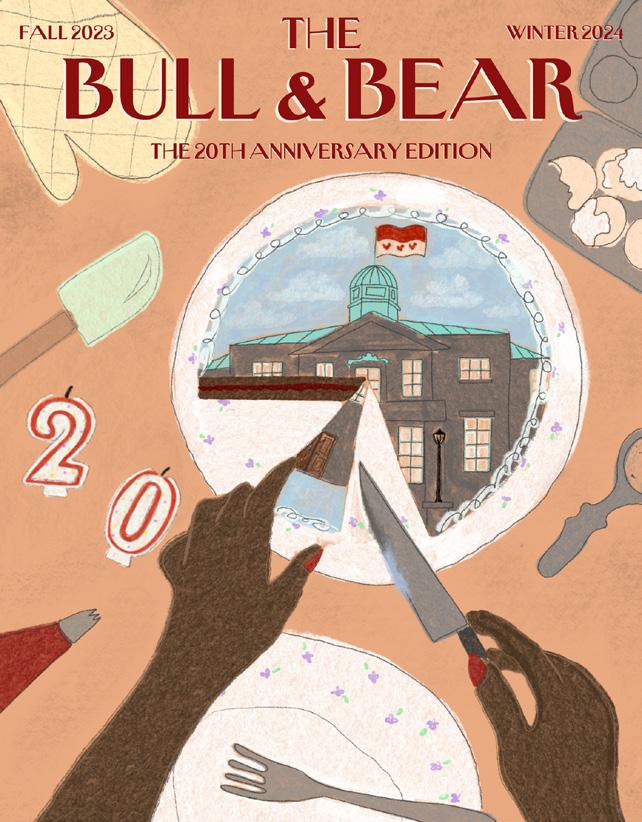
The 20th Anniversary Edition


For the past twenty years, the Bull & Bear has left its mark on the McGill campus. Founded in 2003 as a small newspaper that aimed to serve as the voice of the students of McGill’s Desautels Faculty of Management, the Bull & Bear eventually rebranded in 2012, expanding into its current form as a magazine publication covering campuswide news and events. With a staff of nearly seventy-five student volunteers from across McGill, our mission is to deliver knowledge, insight, and inspiration to the whole of the McGill community. This year, our print issue celebrates a major milestone for the Bull & Bear as we mark our twentieth anniversary. The overarching theme for this commemorative edition revolves around celebrating endings and new beginnings, as well as everything that happened along the way. We hope you enjoy!
Editorial Board
News Editor
Lydia Atkinson
Opinion Editors
Berengere Fouqueray
Emily Meyran
Arts & Culture Editor
Andrew Goldberg
Business & Economy Editors
Rishi Kohli
Vishwa Srinivasan
Design Team
Annette Archaeni
Christina Kuzma-Wells
Yuna Ruel
Katharine Schmidt
Nikhila Shanker
Operations Team
Georgia Fishteyn
Colman Jokitalo
Alessandra
Madlangbayan
Nick Tarmossin
Copy Editors
Aya Amer
Charlotte Bauer
Raffaella Cerenzia
Genevieve Downing
Lily Hanson-Parry
Madeleine O’Brien
Anna Roberts
Serena Sethi
Photographers
Oceane Holliday
Emma Zgonena
By Lydia Atkinson
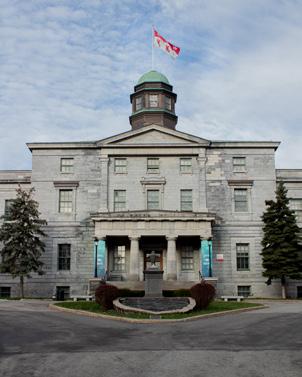
In the bustling corridors of McGill University, a dynamic and diverse community thrives, shaped by the voices and visions of its students. There is a hub of creativity, advocacy, and spirited discussion fostered by student newspapers and magazines. These publications, spanning from literary journals to campus news outlets, are more than just ink on paper: they are vibrant reflections of our campus community, echoing the diverse voices, passions, and concerns of our student body. Studentrun publications have long been an integral part of campus life.
McGill experience, preserving memories and stories for future generations of students to discover and explore. But while these publications play a crucial role in documenting campus history and culture, they are far from being relics of the past. Instead, they are living archives that capture the spirit of student life and adapt to the changing landscape of media consumption by making social media pages and increasing online publications. “They’re not just about looking back,” remarked a U3 history major. “They’re about keeping us informed, engaged, and connected to what’s happening right now.”
TheAccording to a U3 history major and a U2 geography major, they provide a platform for students to “share their thoughts and experiences,” “showcase their talents,” and “engage with pressing social, political, and cultural issues.” As one U2 biology student put it, “They’re like our campus bulletin board, but with a lot more personality.”
Rangingfrom their coverage of student-led protests and social movements to their documentation of campus traditions and events, student news outlets chronicle the
to our campus community, providing a platform for students to share their stories, express their opinions, and hold authorities accountable.
TwoBull & Bear, The Tribune, and The McGill Daily have been mainstays on campus for decades, chronicling campus life and driving important conversations. But they are not immune to criticism or controversy. Like any media outlet, they are subject to scrutiny, and their coverage can be divisive, prompting discussions about journalistic integrity and inclusivity. However, student publications’ commitment to amplifying student voices, promoting social justice, and fostering inclusivity cannot be overstated.
In interviews conducted by the Bull & Bear, students expressed a range of opinions about student-run publications. Some praised them for their advocacy and transparency, while others criticized them for their biases and sensationalism. Despite these differences, one thing was clear: these publications are essential
current McGill students, introduced earlier in this article, explained to the Bull & Bear that they find studentrun publications necessary to maintain student engagement and activism on campus. The U3 history major and U2 geography major both believe that these publications help advocate for student interests and concerns by holding McGill accountable and ensuring its transparency, particularly by publicizing new projects McGill is undertaking, alerting students of referendums passed by the SSMU, and chiming in on ethical debates about professors and free speech. By amplifying student voices that promote social justice, these publications spark important conversations and contribute to a more socially conscious campus.
These publications, however, have faced numerous challenges in their quest to maintain their operations and editorial independence. In an era of news dominated by headlines and social media, McGill student publications have faced mounting pressures and financial uncertainties. The rise of online news platforms and social media has fundamentally altered the media landscape, forcing student magazines to adapt or risk obsolescence. Student news outlets have expanded their online presence, increasing digital publications and utilizing social media platforms to reach
a wider audience. This year, the Bull & Bear has restarted a new Instagram account and created a TikTok account, incorporating student-made short videos alongside the promotion of articles posted on the Bull & Bear website. Social media has become a central element of news publications’ outreach strategy, and the Bull & Bear has embraced new forms of media beyond print publications as a way to grow a bigger audience and stay engaged with the McGill community.
These newspapers have also faced an ongoing struggle for funding and support. In 2008, the SSMU moved The McGill Daily to a model that required it get a minimum number of student votes every year during SSMU referendums to maintain funding, while The Tribune lost funding completely. Although these decisions were eventually retracted, they underscored the ongoing challenges faced by student newspapers in securing sustained funding and maintaining their editorial independence, threatening to impact everything from staffing to publication frequency. The absence of student support or funding can result in a silencing effect, limiting the ability of student publications to serve as voices for the student body and advocate for positive change on campus.
Whilestudent activism and protests can still occur and be documented without student publications, the ability of newspapers and magazines to disseminate student voices should not be underestimated. These publications serve
as vital channels for sharing information, raising awareness, and mobilizing support for various student-led initiatives and campaigns through their ability to publish interviews with student advocates who help organize these events, as shown recently through the coverage of the multiple departmental strikes protesting tuition hikes at McGill and other Montreal universities. Without the support of student publications, student activists may struggle to effectively communicate their message and galvanize action on campus.
Aswe celebrate the twentieth anniversary of the Bull & Bear, it is a fitting time to acknowledge the significant role that student newspapers and magazines play in shaping McGill University’s community. Student-run news publications serve as important platforms for student expression, advocacy, and accountability. They have documented our campus’s highs and lows, amplified our voices, and sparked meaningful discussions. As we look ahead, let us continue to support these vital outlets, ensuring they remain essential parts of our campus experience for years to come. Here’s to the Bull & Bear, and all other studentrun publications at McGill. May they continue to inform, inspire, and challenge us.

By Carly Rabie
If you are a McGill student or alumnus, you are likely familiar with the name Gert’s: McGill’s iconic student bar, a non-profit, on-campus organization run by the SSMU. This year, Gert’s marks a milestone as it celebrates its fiftieth anniversary. Over the past fifty years, Gert’s has become a staple for McGillians, providing a safe and affordable place for students to gather, meet new people, participate in events, and grab a drink after a long day of classes.
Gert’s opened in 1974 as a student-run bar and hangout spot on campus. According to a 1991 article from The McGill Daily, it was founded by a group of gay men, namely Kirk Kelly, who was an active member of Gay McGill, the precursor organization to Queer McGill. The bar was originally opened under the name ‘Gertrude’s,’ after Gertrude Stein, an American writer and lesbian icon. At the time of its opening, and for the decades that followed, Gert’s served as a key safe space for McGill’s queer student community. Gert’s originally called the first floor of the SSMU building home. In 1982, the SSMU opened an additional bar located in the basement of the SSMU building, which was known as Gertrude’s II, or The Alley. According to an SSMU history pamphlet published in 2010, The Alley was a “plush carpeted wood-paneled bar and cafe aimed at the daytime crowd of sophisticated jazz-loving students.” While the upstairs
Gert’s played “loud top 40s music,” The Alley offered a more chill alternative, often featuring live performances from student bands. Some McGill jazz classes even required musicians to play a set at The Alley as part of their course requirements. An article from McGill Alumni News reported that the informal performance space cultivated at The Alley made McGill stand apart from other music schools, where such spaces allowing music students to practice performing in casual and informal settings did not exist.

During the renovations of the SSMU’s Shatner building in 1999, the upstairs Gert’s and The Alley merged into one bar under the name of Gert’s, in the building’s basement. Along with this move, in 2000, Gert’s terminated their partnership with the McGill Redmen football team, which had historically provided Gert’s with football players as security personnel starting in the 1980s in response to violence at the bar. According to the 2010 SSMU history pamphlet, the
residence dining halls, aiming to be a more affordable option by offering a student discount of 20% off on all food and drinks.
combination of “the move of Gert’s to the basement and later the elimination of a security partnership with the football team saw a dramatic decline in sales.”
In an interview with Hassanatou Koulibaly the SSMU VP of Sustainability and Operations who oversees operations at Gert’s, Koulibaly stated that throughout the “SSMU’s history, there’s always been a lot of initiatives and effort to have food and beverage-type programs within the building” that are “owned and managed by SSMU.” Koulibaly explained that of these initiatives, Gert’s has been “the longest lasting”; it celebrates its fiftieth anniversary this year. Throughout Gert’s operation, the SSMU has helped support efforts to bring both affordable and student-run food options to McGill. In 2004, the SSMU opened a food kiosk in Gert’s to help bring a new studentrun food initiative to campus; however, unable to turn a profit, the initiative quickly failed and shut down in 2005. In 2021, Gert’s opened a cafe offering beverages, snacks, and meals. According to the student advocacy group Let’s Eat McGill, there is a serious issue on campus regarding “unaffordable cafeteria prices, rampant food insecurity and inaccessibility, lack of student consultation, and the near absence of cooperative student-led food providers on McGill campuses.” Gert’s Cafe offers students an alternative to McGill cafeterias and
Throughout most of its history, Gert’s has been in a precarious financial situation. At some points during its operation, Gert’s has been able to break even. At other times, it has been a significant expense for the SSMU. The SSMU’s Koulibaly also shared with the Bull & Bear that with their limited funds, the SSMU has to frequently consider whether Gert’s is worthwhile to keep open as it is “such a drain on [SSMU funds].” The most recent risk of Gert’s shutting down was when the building temporarily closed for construction, which meant Gert’s was not in operation from 2018 to 2021. Koulibaly explained that “a business like Gert’s very much relies on its reputation and building clientele,” so closing for three years was highly significant, especially when students typically complete their undergraduate degrees in three to four years. Due to this time out of operation, Koulibaly shared that “we see a strong Gert’s culture in the older students” while younger students “are only just now starting to go to Gert’s again.” However, time and time again, the benefits that Gert’s brings to the student community have “won out over financial considerations.”
Onthe Gert’s website, they describe themselves as a “safe and accessible space for the McGill community to gather and host events, and promote McGill on-campus culture.”
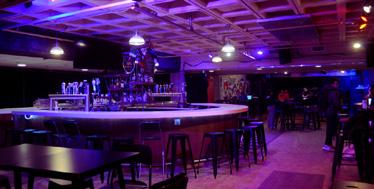
Today, Gert’s hosts student organization events, Trivia Night, and cultural nights, among other events. Gert’s Cultural Nights are one of the more recent initiatives, beginning in January 2023. During these nights, Gert’s cooperates with different McGill culture clubs to showcase and celebrate various cultural groups on campus.
In addition to bringing students together through events, Gert’s helps foster and promote homegrown talent at McGill, just as The Alley once did. One example of this is through the frequent student musical performances that take place at Gert’s. Another example of student creativity at Gert’s is the recent mural painted by current McGill students Ariel Weinbaum and Samantha Batson in September 2023, covering an entire wall inside the bar. In an interview with the Bull & Bear, Weinbaum shared that this project was “so much fun to do,” and that through their work they “hope [they] can keep Gert’s beautiful for the next fifty years.”
Ona campus as large as McGill’s, community spaces are particularly essential. In an
interview with the Bull & Bear, Gert’s bartender Holly Steepe shared that “McGill can be a bit isolating, so Gert’s is a nice way to bring people together.” In conversations with students at Gert’s, they described it as “fun, especially after class,” “chill and the food’s pretty cheap,” and a “social outlet.” While asking people about Gert’s, a clear theme emerged: people see Gert’s as a critical space on campus for building community. One student at Gert’s captured this sentiment by explaining that it “serves to bring people together and it’s really valuable... because it’s outside of an academic context so it fosters a community.” Another theme that came up in interviews with students was their appreciation for the history of Gert’s, with one Gert’s-goer even sharing that they “found out about Gert’s through [their] mom who went to McGill.” Throughout its five decades as a staple in the McGill community, Steepe described that it has “developed a lot over time” with each new evolution “represent[ing] that point in time in student culture.” Over its fifty-year operation, Gert’s has both built and represented the McGill student community.
By Andrew Goldberg

Graphic by Annette Archaeni
We often hear the dismayed woes of social media users struggling to come to terms with the addictive nature of the platforms that rule the world, specifically Instagram (Reels) and TikTok. We simply accept that in contemporary society,
social media has immense power over our free time, serving as a black hole that consumes hours of our days in cyclical fashion. At this point, the “I’m addicted to social media” talking point has become cliche and over-played, and though there exist apps to
curb our screen time and limits we can set on our devices, there is a widespread epidemic of social media addiction that we are slowly but surely accepting. As Instagram tightens its grip on our free time, our data, and perhaps our sanity, it takes
an even more disastrous toll on contemporary artistic expression, rewarding content theft, encouraging harassment, and minimizing the benefits of putting effort into one’s art.
In order to properly assess Instagram’s impact on artistic expression, we must first understand the “reel” as an art form. Instagram Reels, similar to TikToks, utilize short-form video bites and offer a seemingly infinite arsenal of “sounds” that allow users to play audio clips over their own recorded video. Reels users can also record their own audio or voiceovers, making the feature an easy-touse tool that appears to offer high potential for quick and easy artistic expression. However, in embracing the benefits of the Reel format, Instagram users fall victim to the many pitfalls of the feature and the algorithm behind it. There are inherent problems with an art form that revolves around such short-form content, the two most prominent of which are the natural encouragement of lazy content and the contribution to society’s everdecreasing attention span.
Ontop of the issues with the content form it promotes, Instagram is a business. They are not using Reels to further global artistic expression, and no one is claiming that they have to do that, but to suggest that the current state of Instagram does not impact the institution of art is rather naive. When an organization has as much power as Instagram, or Meta as a whole, it wreaks havoc on our cultural norms. Global standards for artistic expression and integrity
decline, and social media users see the platform as what it really is: an opportunity to reach a wide audience. Other art forms can include some level of advertisement, but not to the degree that Reels do. Companies would be remiss not to advertise on Instagram, and creators see opportunities to make money as well. Content creators small and large face a perpetual dilemma of balancing content and advertising; posting a sponsored reel can come off as inauthentic and corny, but passing on a sponsorship offer is money lost. There is no innate issue with artists being able to profit off of their work, and artistic expression should absolutely be rewarded financially. The core of this dilemma is that Reels provides very little room for creators to actually focus on the artistic elements of their craft. To succeed on Instagram, one needs to focus entirely on how to crack the algorithm and how to reach as many people as possible as quickly as possible.
Oneof the most problematic aspects of Instagram is that its content recommendation algorithm is cryptic, but obvious in what it promotes at the same time. Though the exact code Instagram uses for content recommendation is not public information, it clearly rewards content that earns engagement from users, which is not something Instagram attempts to hide. The algorithm is also scarily accurate in providing users with the exact content they want to see. For every throwaway remark about the mysterious “algorithm” working its dark magic to curate a perfect feed of video shorts,
there is an unsettling pattern of Instagram, TikTok, or any other “Reels” platform providing a social media user with content that is almost too well-suited to their interests. Though this does allow small creators to “make it big” on the platform and quickly grow in size, it also allows big creators to profit off of half-baked content and for any user to gain likes, views, saves, and followers through the laziest means possible.
Reels often plays host to content that is either plagiaristic in form or completely effortless and lazy. Many popular Reels rely on the straightforward formula of users recording their “reactions” to pre-existing memes, videos, or comments, and the level to which Instagram rewards these posts is deeply harmful to our cultural artistic standards. Already-huge content creators can rip content from smaller users in a consequence-free environment and profit off of it, with Instagram empowering this behavior, curating an algorithm that caters to these lazy, integrity-lacking posts. There are thousands of accounts that have gained a sizable following from this style of content, but some especially glaring examples are @bentellect, @ mattrandon, and @ceoreact, all of whom rely heavily on stealing content under the guise of a “reaction” video.
Many Instagram creators have figured out the keys to becoming popular, and nearly all of them involve unsavory tactics or baiting Reels users into interacting with their posts — and Instagram loves this.
The engagement cycle pushes mindless posts to the top of our feeds and keeps people coming back for more as time goes on. Instagram undeniably rewards halfhearted work in content creation, and the integrity of art on the platform has been compromised in the process of the app shifting towards a “Reels” format. Commentary on the rapidly decreasing global attention span is warranted, however, it risks minimizing another important discussion surrounding the large-scale issues created by Instagram’s impact on artistic integrity and the type of art we consume.
Whatwas once an app intended for a form of photo-sharing that highlighted artistry and creativity has now amalgamated into a breeding ground for problematic forms of art, and the algorithm that allows for this is also responsible for spreading hatred, conspiracy theories, and bullying. One glance at the comments on any popular Instagram Reel will reveal a disturbing set of hateful responses to even the most mundane and neutral posts. Even if the responses to the post itself are mostly positive, there are frequently intense disagreements between commenters over trivial topics. On Instagram, racial slurs become normalized, jokes about pedophilia desecrate the comments sections of posts featuring children, and users verbally attack one another at the drop of a hat. Most of these comments are not even legitimate attempts at humor; they simply roll with the wildly inappropriate punches of whatever type of
humor is popular on Instagram at the moment, lazily recycling the same “jokes” that appear on every other similar Reel.
Of
course, Instagram did not create online bullying and hateful pseudo-criticism, but it does cultivate an environment where these thrive. Over time, Instagram has undergone a drastic transformation, and so has the art within the platform. There will always be users who work hard at their respective crafts and maintain social media accounts dedicated to impressive, original pieces of artistic content, but unfortunately, there are far more users who continue to take the easy way out. They cannot necessarily take full blame for Instagram’s downfall as an art medium; the app itself, or perhaps more accurately, the company behind the app, is truly responsible for its own artistic demise. Meta has turned Instagram into a competition to see who can most accurately crack an algorithmic code, limiting their organizational liability with a lackadaisical anti-bullying policy and forgoing the drive for unique artistic expression in favor of cheap and easy profitability.

If Instagram is indeed crushing modern artistic expression within the confines of the app, then what does this mean for the greater societal artistic landscape? Movies and television shows will continue to be made, paintings will be painted, drawings will be drawn, and articles will be written. Questioning the direction of art as a whole, or even attempting to categorize society’s various ideas of “art,” would be opening a tempting, but ultimately tangential can of worms. In reality, Instagram’s (and TikTok’s) impact on other forms of art, as legitimate and tangible as it may be, is mostly irrelevant in picking apart the clear problems present within the app. Reels are a prominent art form in the modern world. They have captured the attention spans of 2.35 billion active users, according to an article by Rohit Shewale on the website DemandSage, making Instagram a self-contained echo chamber of dystopian artistic expression. Instagram allows and rewards harassment, and as users spread hate, racism, and bullying to every corner of the world, there is no realistic endpoint in sight. The app has created a culture in which every inappropriate action can be written off as humor and every harmful piece of content can find a perfect target audience of minds to influence or embolden. A platform that once sought to create and promote thriving artistic communities while eliminating bullying and harassment has amalgamated into a dystopian social media wasteland, transforming into the very platform it swore (and continues to swear) to destroy.
By Katerina Ntregkas

Once upon a time, monoculture reigned supreme. Everybody tuned in to watch the same TV shows, sported similar haircuts, and collectively hummed the same catchy tunes. But hold onto your hats (or, you know, snap them backwards for that trendier look), because the times have changed. The idea of monoculture is best understood in the context of the nineties: a vaguely defined era of universality, encompassing everything from the Tonight Show to iconic sitcoms such as Friends and Seinfeld, and chart-topping music hits such as Nirvana’s “Smells Like Teen Spirit” and Britney Spears’ “Baby One More Time.” Even fashion trends reflected this cultural homogeneity, with the rise of grunge styles and the ubiquitous influence of supermodels like Kate Moss. This era of popular culture (characterized predominantly by middlebrow American entertainment featuring white American stars) coincided with the utmost dominance of broadcast media. During this period, industry gatekeepers wielded top-down authority, determining both the content to be produced and the scheduled times for its broadcast.
While I am not advocating for the return of content scarcity in media and pop culture that is dictated by an editorial executive, we must consider the genuine human connection it fostered: a phenomenon that appears to be increasingly lost amongst Generation Z. One notable example of this form of kinship occurred in 1998, when mass
audiences gathered to watch the Seinfeld finale in Times Square, with total viewership coming to 76.3 million people, according to Rolling Stone in 2023. Such tangible uniformity will likely never be experienced by society again – and no, as entertaining as they are, artists gathering a mass viewership on Roblox or Fortnite during their digital concerts does not count. However, popular shows on streaming services, like Netflix’s Stranger Things, have amassed millions of viewers and sparked fervent discussions, illustrating that shared cultural experiences still thrive in the digital era, albeit in vastly different forms. What distinguishes this digital landscape, however, is the sheer abundance and diversity of content available in a rather fragmented online context.
While it would be simplistic to boil the demise of monoculture down to the decline of the Y2K media industry, we must give proper recognition to the shift of power from central authorities to a myriad of micro-communities in shaping our culture. For instance, the rise of niche online forums dedicated to specific interests has challenged the hegemony of mainstream media. Similarly, the flourishing of independent content creators on platforms like YouTube and Twitch has democratized content production. Before the internet age, central authorities in culture, such as major television networks like ABC, NBC, and CBS, publishing houses like Random House and Penguin Books, and record labels such as Sony Music Entertainment and Universal Music Group,
held significant sway over what content reached mass audiences, shaping mainstream cultural trends and narratives.
the current cultural zeitgeist is a cacophony of diverse voices and interests that ultimately drown out the oncedominant cultural monolith.
No longer do we gather around the same television screen for a universally beloved show or rally around a single iconic album. Instead, we retreat into our minuscule, personalized echo chambers, where algorithms cater to specific and individual preferences, reinforcing our own beliefs. While platforms like Netflix can still afford us the luxury of watching weekly episode premieres and artists such as Taylor Swift command vast audiences for album releases, the essence of cultural anticipation has waned amidst the abundance of content and artists vying for attention. Our contemporary milieu has fostered a culture of insatiable appetite for novelty and grandeur. What once held profound significance now risks being overshadowed by the ceaseless quest for the next big thing. Thus, while we may engage with these cultural phenomena, the depth of meaning and emotional resonance they once held is increasingly elusive in an era defined by the perpetual pursuit of spectacle and freshness.
Society has overcome the seemingly futile desire of striving for some idealistic notion of broader cultural uniformity by questioning the appeal of monoculture and acknowledging its imperfect
implementation in the past, even at its supposed height in the nineties. Perhaps, this is because the ability to find likeminded groups is now readily available at the touch of a button. Our globalized, interconnected world has given birth to a vast spectrum of decentralized influences, each a thriving subculture in itself. However, while these communities have provided a space for those once marginalized in society to find belonging, they also collectively foster a hive mentality and reverberate into the individual’s offline life – more specifically, into their bank account.
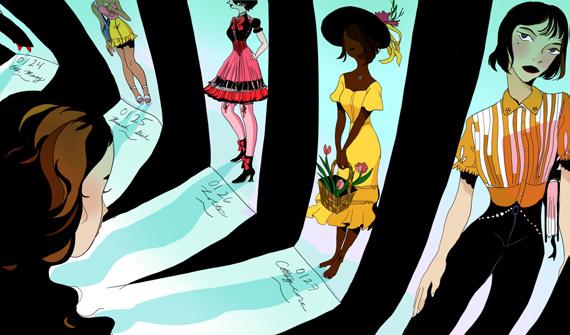
Perhapsthis is best explained through an examination of a time when our lives stood still: the Covid era. Some may recall the struggle of social distancing and lockdowns, but TikTok users may instead recall a bucolic escape to rural living that took the internet by storm, commonly known as ‘Cottagecore.’ Trapped within our monotonous homes, we sought the simplistic and natural beauty of pastoral fields, sundresses, and potted plants. However, as we stopped frothing our coffee and rolled up our yoga mats after a brutal Chloe Ting workout, many of us came to realize that these trends reflected less about our actual lifestyle (a rather bleak reality at the time) and more about what we could buy to emulate an ideal lifestyle. With the aid of TikTok, the notion of an “aesthetic” was transformed into an almost metaphysical, and perhaps more importantly, buyable, experience. What was once a casual style descriptor now holds the weight of philosophical
ponderings and Instagram likes, blurring the lines between art and influence. In this case, the decentralization of culture is pervasive, acting as the modern mechanism that forces the average consumer to purchase more in an effort to match the abundance of industry output.
Thisitching inclination to categorize and label various aspects of our lives, including our identities, physical attributes, and aesthetic choices, has now become an intrinsic feature of the online experience. Since the dawn of the digital age, people have demonstrated a proclivity to label elusive digital phenomena; however, TikTok has expedited this proliferation of charming, often whimsical, terms for aesthetics. Driven by the voracious appetite of the consumer market, the app
craves novelty, with anything and everything having the potential to be a trend, no matter how fleeting. It seems that anything with a hint of online popularity is destined to be meticulously defined and ultimately distilled into a marketable bundle of “vibes” adorned with a catchy label.
Arecentexample of this is the “Coconut Girl” trend, characterized by a tropical aesthetic with an emphasis on beachy colors and natural textures. Similarly, the “Old Money” aesthetic emphasizes luxury and sophistication, with a focus on vintage and classic styles. These trends, whiplash-inducing in their differing characteristics, exist simultaneously with hundreds of other trends as opposed to the comfort of a streamlined culture.
The notion of one particular thing being ‘‘in’’ or ‘‘out’’ is gone; which would probably come as a shock to the entire E! News archive from the early 2000’s. The complexity of these aesthetics for consumers lies in their perpetual coexistence. It is extremely difficult to group them all into one homogenous cultural category, allowing for continuous customer indecisiveness on what to adhere to. This feeds into a never-ending cycle of searching for the ‘‘right’’ aesthetic and the material possessions that will best exemplify it.
However, although it may sound obvious now, the very aesthetics that supposedly encompass one’s own identity lack a critical element: actual personality characteristics. These aesthetics often orbit
solely around external symbols, fleeting appearances, and voguish trends. While they can craftily construct a veneer of identity, it is imperative to recognize their limitations; they seldom delve into the profound, nuanced facets of an individual’s character, values, or beliefs. When individuals allow external influences to dictate their sense of identity, they inadvertently relinquish autonomy over their own thoughts and preferences as they passively adopt cultural norms or trends as a simplistic means of fitting in or finding belonging. The distinction between personal identity and commercial consumption has been inextricably blurred, allowing a beast of consumerism to infringe on our sense of self.
In a generation marked by concerns such as climate anxiety, market uncertainty, and the pandemic, aesthetics and individuality combine to make the perfect dystopian cocktail for a world that promotes escapism and a denial of true eccentricity. These latter ideals infringe on the thoughts of already self-conscious teenagers, and we stand witness to a generation-wide identity crisis. A defining characteristic of ‘‘teenagehood’’ is the very formation of an individual identity. Previously, within the context of monoculture, despite the broader culture being more streamlined, individuals were capable of unearthing their own strains of individualism within the seemingly uniform landscape. The uniformity of culture acted as a canvas upon which individuals painted their unique strokes, carving out niches that reflected their
distinct tastes, perspectives, and, ultimately, what they deemed “cool.” Paradoxically, monoculture both set the stage for shared experiences and provided the backdrop against which individuals showcased their own identity. While experimentation is a natural part of the self-identity process, today’s emphasis on curated images, social media validation, and external standards of beauty intensify this insatiable pressure to conform to aesthetic ideals.
Presently, the concept of “cool” lies merely in the endlessly conceivable version of your online persona. Unlike the constraints of real-life interactions, where one’s persona is often bound by physical factors such as appearance and behavior, the digital realm offers a boundless and unprecedented platform for self-expression and reinvention – it is not fixed or static but rather fluid and adaptable, ready to be changed as the circumstances see fit. How unique is the specifically curated “blank-core” you express? In what multitude of ways does this manifest on your Instagram feed, your clothes, and your Spotify playlist?
In the contemporary landscape, there exists a palpable and constant awareness of how we are perceived, a phenomenon that becomes particularly potent during adolescence, a stage where the perception of others can feel like the ultimate Achilles’ heel. This heightened awareness is exacerbated by the omnipresence of social media, where every image, caption, and interaction becomes a
digital footprint, etched into the public consciousness. For teenagers navigating this era, social media not only demands experimentation via repetitive cycles of trends and mass-consumption, but it also establishes a culture of relentless scrutiny. While there may no longer be a strictly defined monoculture (as it would be simply impossible to categorize the plethora of “ins” and “outs” that exist today), our immortal online presence remains in a constant state of metamorphosis and we are quick to change it as we see fit, as if it were a metaphysical extension of ourselves in digital space.
Aswe bid farewell to the days of trends dictated by central authorities, we step into a realm where individualism is instead expressed through mass-curated online aesthetics produced by TikTok and other social media apps. The onceprescribed notions of what is “in” or “out” dissolve into a supposed “celebration” of the unique, the quirky, and the individual. So, let the funeral pyre of monoculture illuminate the birth of a generation unshackled by the confines of uniformity, navigating the boundless landscape of their own distinctive “blank-core” identities, imprisoned instead by consumerist culture. On your way out, don’t forget to wave goodbye to “The Plastics” and “The Heathers,” because as monoculture dies, the only remaining rule is to revel in the freedom to be authentically, unmistakably, and unapologetically you. Oh, and, of course, the hundreds of others buying your aesthetic.
Goodbye “Now & Then” : The Cultural Phenomenon of the Beatles & Their Swan Song
By Gilad Maianski

Aswe commemorate the Bull & Bear’s twentieth anniversary, it is vital for the Arts & Culture section to reflect on the multitude of events that have occurred over the past two decades. Over twenty years, the writers of the Arts & Culture section have shared their musings and opinions on various artistic expressions and events. How better to celebrate the team’s consistent dedication then by discussing one of this year’s biggest formal closures – a true and definitive end of the most influential and popular music group of all time. In November of 2023, the world officially said goodbye to The Beatles.
In August of 1960, four young men joined forces and from then on, music was never the same. When a sixteen-yearold John Lennon established a progenitor band, known as the Quarrymen, in 1956, there would have been no way to know that the eventual addition of members Paul McCartney, George Harrison,and Ringo Starr, and a subsequent name change, would create one of music’s most formative bands. From
their early debut, Please Please Me (1963), The Beatles managed to establish success in their native England, both critically and commercially, leading to the social phenomenon of “Beatlemania.” With increased touring and performances, The Beatles soon managed to crossover from the U.K. charts to the tops of the U.S. charts. Their iconic performance on The Ed Sullivan Show is cited as a definitive moment in the American Pop Ethos and the time from which the “British Invasion” truly began. Their rise to fame quickly led to the success of other British bands in the U.S. and beyond, such as The Kinks, The Rolling Stones, and The Who. Further albums, such as Rubber Soul (1965) and Revolver (1966) also highlighted The Beatles’ innate talent in Rock & Roll, going beyond consumer demands and displaying the band’s true artistic capacities that culminated in what is often considered their discography’s piece de resistance, Srgt. Pepper’s Lonely Heart Club Band (1967). This album, widely regarded as the first ever concept album, transformed the field of Rock & Roll
from the sound of youthful rebellion to a conceptual genre revered by the intellectuals of society. The Beatles have had an undeniable influence on the music industry, as seen by the immense popularity attributed to them at the time.
Inevery sense of the phrase, The Beatles are a cultural phenomenon. Yet, despite their enduring legacy, the place of the band in the cultural zeitgeist has lessened throughout the years, calling into question what it truly means to be a cultural phenomenon. Rather than their music, in the past few years, the main discussion surrounding The Beatles revolved around the endless jokes about how pretentious, awful, and insufferable John Lennon truly was. With Baby Boomers and Millennials no longer defining the majority of pop culture, the more questionable characteristics of The Beatles, especially certain controversies surrounding Lennon, have been brought to the forefront, leading to increased negative fanfare on the internet. With time, the fanatics of The Beatles have been replaced by the
fanaticism of the Swifties and cries that the band itself is rather overrated. Thus, where does the band truly stand within the pantheon of music today?
To answer this question, one needs to look no further than the reception received by the band’s final reunion on November 2nd, 2023 when they released the song “Now & Then.” Prior to the release of this final single, the original song was only a demo tape that consisted of a few piano bars, Lennon’s lyrics, and his unfiltered vocals. Having lost Lennon in 1980 and Harrison in 2001, these minimal components were unable to be pieced together for many years. However, through an innovative reconstruction process that
recently utilized A.I. to fill in multiple musical patterns and voices from the missing members of the band, all four members were able to be featured in this song. Music fans rejoiced over this song, as the YouTube video for it garnered over eight million views in twelve hours, becoming the band’s first number-one single in the U.K. since 1969. As the lyrics of the song celebrate the eternal nature of love despite the passing of time, there seems to be no more fitting way to pay tribute to the band’s endless contributions to the field of music. Even now, with half the band gone, The Beatles still found a way to innovate, cementing their status as one of music’s most influential groups
and closing out a chapter in human history defined by their contributions to the arts.
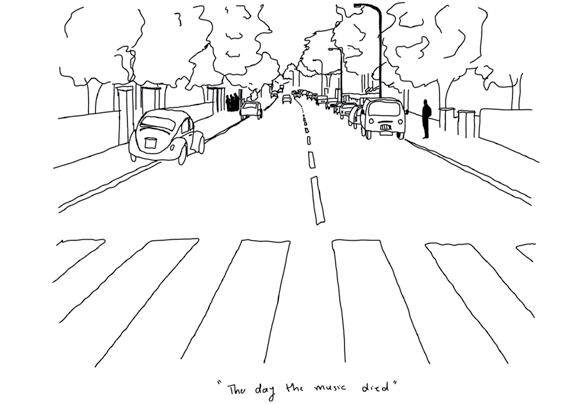
The phrase,“The Day the Music Died,” refers to February 3rd, 1963, a date when some of the earliest pioneers of Rock, such as Buddy Holly, Elvis Presley, Chuck Berry, and Little Richard, either passed away or stepped away from the music scene. Now, in light of The Beatles’ final release, I believe November 2nd, 2023 can hold this title as well. In celebration of the Bull & Bear twentieth anniversary, and in the hopes that you, the readers, will still remember us when we are sixty-four, we say goodbye to the ever-creative, maestros of music. Farewell to Srgt. Pepper’s Lonely Heart Club Band.
Graphic by Christina
By Rishi Kohli & Vishwa Srinivasan

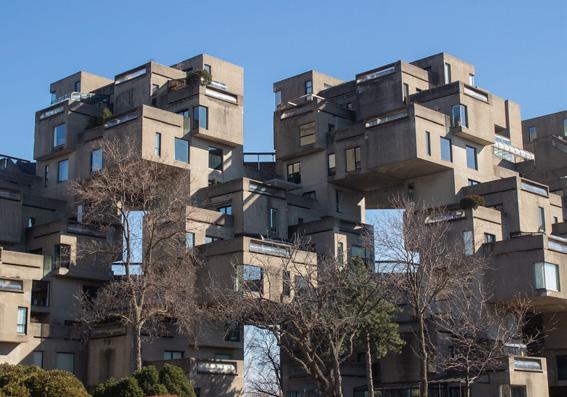
Imagine this: the year is 1967, and you are walking along the promenades of Montreal’s Expo 67. The International and Universal Exposition was a defining moment in the history of Montreal, showcasing the city as a vibrant, forwardlooking metropolis. Coupled with Montreal’s booming economic and technological development, including the city’s recent opening of its first-ever metro line, Expo 67 symbolized the optimism and technological ambition of the era, attracting over fifty million visitors, an astounding number given the time. Located on both the mainland and on two entirely man-made islands in the St. Lawrence River, the very site of Montreal’s Expo was an attraction in itself. Featuring sixty-two pavilions, presenting a mix of cultural displays, technological innovations, and futuristic architecture, the Expo was made out to be a spectacle of global dimensions. The US Pavilion’s geodesic dome, designed by Buckminster Fuller, and the Habitat 67 housing
complex, an experiment in urban living by architect Moshe Safdie, were among the architectural masterpieces that left a lasting impression.
67 celebrated global cultures and achievements, while also boosting Montreal’s international profile, leaving a notable legacy of architectural innovation and civic pride. This extraordinary level of innovation was not limited to Expo 67, but would be seen across Montreal over the next decade as well.
The opening of Mirabel Airport in 1975, then intended to be one of the world’s largest airports and equipped with advanced technologies for aircraft and passenger handling, was a significant leap in the city’s aviation infrastructure. And of course, we cannot forget the skyline-altering construction of the Olympic Stadium for the 1976 Summer Olympics, which was a major technological feat. The unique and ultramodern design of the Stadium, especially the retractable roof, was an architectural marvel. The
stadium showcased advanced engineering techniques and represented Montreal’s capacity for large-scale, innovative construction projects that bolstered the city’s economy.
Needless to say, the rapid technological development of the city that was most successful in the seventies, brought with it huge economic success: hundreds of thousands of jobs were created, millions of tourists visited, and most of Canada’s largest companies came to call the city home. As a financial hub containing the headquarters of most major banks, Montreal was Canada’s largest and most economically important urban centre. These numerous innovations and developments placed Montreal as a leader in various sectors, from technology and finance to architecture and culture. However, the end of this decade also marked the beginning of significant shifts in the city’s economic and linguistic landscape, notably through the introduction
of the French language laws that would reshape its future. Passed in 1977, Bill 101 made French the official language of government and business in Quebec. While laudably intended to preserve FrenchCanadian culture and language, this move had significant implications for Montreal’s English-speaking community, and consequently, for the city’s chances of successful economic development. In response to these language laws, many businesses and their anglophone employees departed Montreal for other Canadian cities, notably Toronto. This exodus included several large corporations moving their headquarters, including the Bank of Montreal, further eroding Montreal’s position as the economic heart of Canada.
While the French language laws aimed to preserve French culture, it is evident
they also resulted in economic challenges and a stagnation of Montreal’s development, arguably keeping the city stuck in time. This period in Montreal’s history illustrates the complex interplay between cultural preservation and economic progress in a globalized world. Jumping forward to today, it is unfortunate to see that Quebec’s current government has once again failed to understand the tradeoff of linguistic preservation. Instead of learning from the mistakes of his predecessors, Quebec Premier Francois Legault seems intent on doubling down on them. Since his election in 2018, Legault has cracked down on English-speaking institutions in the province by passing sweeping legislation, the most prominent of which is the nowinfamous Bill 96. This bill reduces access to English language services across the province and puts quotas on businesses’

linguistic makeup. According to an article published in June 2023 by CityNews Montreal discussing the impacts of Quebec’s Bill 96 on the province’s small to mediumsized businesses, businesses with a staff of five to forty-nine employees now need to disclose the number of employees who are not proficient in French and are required to implement French learning services.
Thisfall, it became clear that Legault’s government would not stop at Bill 96, when it abruptly announced the halting of tuition subsidies to Canadians from outside of Quebec at English-speaking universities, thus doubling the tuition of new out-of-province students. While the government later rolled back the scale of this legislation, its impacts are still felt within our community; on its February 1st, 2024 application deadline, McGill announced a twenty-two percent decrease in applications from Canadian students outside of Quebec, an effect that will surely reduce enrollment numbers and change the demographics of the country’s premier university.
OnDecember 1st of 2023, the McGill administration announced a hiring freeze on new faculty and staff. The economics department, which was looking for two tenure-track professors to fill roles vacated by retirement, was forced to halt the process and leave the vacant positions unfilled. The economists that McGill could not hire are undoubtedly the first of many world-class academics who will not be able to call this institution and province home.
If this continues, who is to say that McGill will continue to call Quebec its home? After all, the institution and the brand it represents do not have to remain within the geographical limits of what we call the McGill campus. McGill Principal Deep Saini recently revealed, according to the Montreal Gazette, that the university is exploring “all options,” including relocation. When faced with a choice between being destroyed or being displaced, why would McGill not explore relocating its activities to a more welcoming province? We are sure that all of Canada’s nine other provinces would love to be the home of such a world-renowned educational
institution and host to both the academic and economic activity of approximately thirtysix thousand university students.
Thecrackdown on Englishlanguage institutions in Quebec is a misguided attempt

to preserve a revisionist version of Quebecois culture. The reality is that the cultural history of Quebec has always involved the successful coexistence and collaboration of Anglophone and Francophone institutions. As time moves forward, the Quebec government has chosen to stay stuck in the past: a past that never existed. We love McGill and we love Montreal, a city known around the world for its beautiful culture and bilingual institutions. We hope that twenty years from now, the Bull & Bear’s business section editors will still be writing this from McGill’s gorgeous downtown Montreal campus, in a forward-thinking, innovative, thriving, and inclusive Quebec.
By Archie Wyles

Graphic by Nikhila Shanker
Some things at McGill never change, despite classes graduating and professors departing. Whether it is Frosh, Carnival, or late nights at McLennan, there are certain quintessential elements of the McGill experience that continue to connect alumni and current students alike. The pubs, clubs, and shops that surround campus shape our day-to-day lives at university, and while some come and go, many remain staples of the McGill student experience. Unfortunately, however, the same cannot be said about the prices at these establishments. Let’s take some time to examine how spending has changed for the average McGill student over the last twenty years.
University is, for many, the first time we experience legitimate economic pressures. From shopping for your own groceries to paying a utilities bill for the first time, suddenly inflation and the job market are
no longer just headlines: they exert real influence on your day-to-day life. Twenty years ago, China was just starting its meteoric economic rise and inflation held steady at around two percent. Today, these two headlines would look wholly unfamiliar to the class of 2024.
Thebiggest expense for students, especially those from outside of Quebec, is undoubtedly their education, and with the recently proposed tuition hikes, this has never been more relevant. In 2004, out-of-province students paid approximately $4,401 for a year’s worth of courses, while Quebec students paid $1,668, though this amount varied for different programs. Today, tuition has increased in line with broader trends throughout the Western world. In 2024, out-of-province Faculty of Arts students, making up a significant portion of the student body, are expected to shell out nearly $9,000 per
life, form new friendships, and create life-long memories. But besides the cost, as McGill’s residences are some of the most expensive in Canada, as Jordan Sinder explored in a Tribune article from 2015, many of the university’s current residences did not exist when the Bull & Bear published its first issue in 2003. Nowadays, La Citadelle, opening in 2012, will set students back over $1,500 per month for the privilege of a shared room, with meal plan fees adding for a total of over $18,000 for the year.
Oneyear for tuition. Additionally, the Quebec government announced earlier this year that out-of-province tuition is set to increase to at least $12,000, allegedly to boost ‘la francophonie a Quebec.’ This increase will drastically change the student experience at McGill and curtail the offerings of Canada’s premier university, as outlined by McGill’s Principal, Deep Saini, in a statement released on November 2nd, 2023 (see “Update on impact of tuition measures affecting university enrolment and finances”). We can thus see how political pressures are tangibly influencing students, acting as far more than just headlines.
Ontop of tuition, of course, students need somewhere to live. Student residence life at McGill is considered by many to be an integral first-year experience, providing students with a space and community to aid their adjustment to university
But what about the less serious aspects of student life?
inflation has been almost double what it was twenty years ago.
Gert’s has remained the faithful watering hole on campus, having served the McGill community since the seventies, but there have been plenty of new additions to our social spending since 2004. Bar des Arts, with its ultra-low drink prices and deceptively early closing time, opened its doors in 2007, flying in the face of rising beer prices and acting as the final outpost of genuinely cheap drinks.
aspect of McGill student life that has definitely not changed is the student appetite; a Red Bull in the library only goes so far in fuelling our studies. As inflation has dominated headlines in the last few years, students have understandably been complaining about their weekly grocery spend, leading to movements in support of controlling the price of food on campus. In 2024, the Metro on Prince Arthur and Parc continues to be the primary source of groceries near campus, with Provigo hot on its heels just a block away. A recent study outlining student expenses in Canada provided by GoStudy estimates that students in the 2020s are spending between $200 and $600 per month on groceries. What could that get you in 2004?
According to a CMHC Rental Market Survey examining the average historical rents by bedroom type in Montreal, you could enjoy a one-bedroom studio for that price (note that these are city-wide averages). It is safe to say, students were getting significantly more per dollar twenty years ago!
Our spending has also been shaped by wider cultural movements, made even more rapid by the advent of social media. Students in 2004 would

doubtless be shocked that twenty years later, we are flocking to thrift stores to dress just like they did, with low-rise jeans and a disdain for fast fashion both very much onbrand for Gen-Z. Students now flock to the Plateau in search of something “vintage,” even if that means buying a t-shirt roughly as old as them. Research by thredUP is showing that this trend is expected to grow by 127% into 2026 (ThredUP Newsroom, 2022). Students are finding fashion niches aligned with a demand for socially conscious business, and are looking for more value from each dollar as year-on-year
There is still some good news for students, despite inflation having increased. Our remote-first approach has made many things significantly cheaper, with the average McGill student equipped with lightningfast laptops and fresh memories of online learning. Students now spend significantly less on physical textbooks, with research showing that textbook spending declined every year in the 2010s, as textbooks are being replaced with a myriad of online resources. This is part of a trend supported by a more widespread movement aiming to make learning more affordable and accessible for the masses, as Nick Hazelrigg reported in a 2019 Inside Higher Ed article. Students in 2024 are now well adapted to platforms like Quizlet and Chegg, which make their learning more affordable and effective. Students are more willing to spend money on subscriptions for technologies like ChatGPT and Quizlet Premium than empty their wallets for a full-price textbook.
These two eras, when they are compared, prove that the student experience has changed dramatically over time. While the essence of the McGill experience remains, the financial landscape for students has transformed significantly over the past twenty years. The value of the student dollar may have diminished in certain areas, but the enduring spirit of connection among McGill’s community persists, bridging generational divides and adapting to the changing times.
By Berengere Fouqueray & Emily Meyran
With the tuition hikes looming, the cost of living skyrocketing, and Legault waging war on Anglophones in Quebec, it’s easy to feel like McGill is entering its “has been” era. In honour of The Bull & Bear’s twentieth anniversary, we have decided to look back
at past articles to answer the question: is McGill really facing an unfettered decline, or are we all being dramatic? The short answer is that we are, in fact, being dramatic, and the proof is in the old articles. Students have been complaining about McGill since it was first established
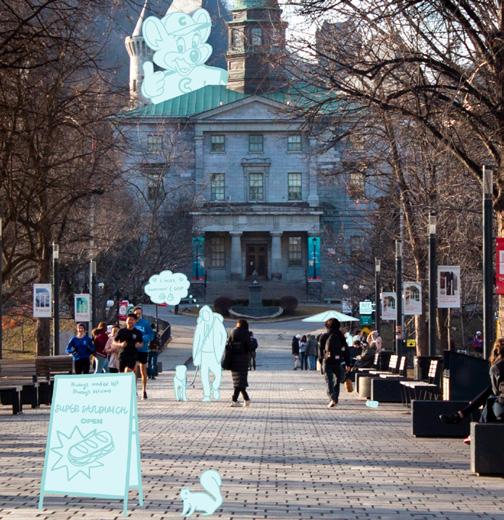
(probably, don’t quote us on that...). McGillians ten years ago were concerned about remarkably similar issues to McGill students today: from the lack of good food options around campus (RIP Super Sandwich), to the slew of inane, albeit entertaining, SSMU scandals, to
the exasperating inaccessibility of campus health services. We found that articles from 2013 were not so different from articles today. Take the following quote for example: “The Premier, it would seem, does not like anglophones or their language,” (see “An Anglophone in Marois’ Quebec”). While this statement was published in February of 2013, it would not be out of place in an article on Legault’s current policies surrounding tuition hikes. So sit back and relax while we explain why McGill and its students will most definitely survive to complain another day.
The tragic closing of your favorite affordable oncampus food spot is something many McGill students have been unlucky enough to experience. Prices in dining halls and on-campus cafeterias are unreasonably expensive and incompatible with most student budgets, quickly making these alternative affordable options staples of McGill life. But, as all good things do, they come to an end. In 2014, the Tim Hortons located in the Redpath Cafeteria shut down, prompting outrage from its loyal patrons. Transitioning from Tim’s to the current cafe was part of a larger plan to promote locally sourced food and sustainable business practices on campus (see “Tim Hortons Leaves Redpath Library”, 2013). A health inspector in 2019 put an abrupt end to Burnside’s beloved $1 samosas, citing the methods used to handle and store samosas as justification for a hefty fine and immediate stop to sales (see “Samosas Back in Season”, 2020). Just last year, Super Sandwich, located
a couple minutes walking distance from the McLennan Library, shut down after an increase in rent prices. The small, family-run depanneur was famous for its $4 sandwiches and warm service. But, ultimately, it was destined to close with no replacement in sight.
Whileit takes time for new places to meet the demand for affordable food, other organizations at McGill have stepped up. Midnight Kitchen, for example, provides free vegan and nut-free meals in the SSMU Ballroom every week. Yellow Door on Aylmer serves healthy, $3 lunches on Fridays. While currently the most reliable and affordable options, these organizations only serve meals once a week and have a reputation for long lines. Though we may have lost many beloved food options on and around campus, at least we still have McGill’s very own Punxsutawney Phil: the Hot Dog Man. The only sure sign that spring is around the corner is the hot dog cart’s red umbrella standing proudly at the Y intersection. In addition to being a reliable barometer, he also serves as McGill’s very
own inflation index: since 2020, hot dog prices have climbed fifty cents. If an extra fifty cents is what it takes to keep him on campus, we are willing to pay.
Besides affordable food, many other on-campus resources have a long history of being inaccessible to students. Health services, ranging from psychological support to STI testing, are extremely limited; the Wellness Hub’s limited staff and resources struggle to keep up with the demand for availabilities. Securing a coveted appointment at the McGill Student Wellness Hub is about as likely as finding a positive review on Nunez’s Rate My Professor. In 2014, the Bull & Bear reported a minimum wait time of two to three weeks for a one-hour appointment (see “State of Affairs: Treating Mental Illness at McGill”, 2014). Whether it is waiting two weeks for a fifteen minute appointment to get your blood drawn or four weeks for an STI test, the Wellness Hub really is the gift that keeps on giving. If you do, by some miracle, manage to get an appointment, keep in mind that the Wellness Hub does not test for strep and mono, which is basically the equivalent of a McDonald’s drive thru not selling burgers and fries.
According to Radio-Canada, between 2013 and 2018 the number of appointment requests for psychological help increased by 25%, adding even more pressure to an already overstretched system. When confronted with these issues, students have banded together to vocalize their discontent with the university’s discouraging
lack of comprehensive health solutions. Among hundreds of Reddit threads that document ten years’ worth of complaints, McGill students circulated petitions and shared insider tips on the optimal walk-in time (another thing Covid-19 took away from us) or most responsive email address; in times of crisis, McGillians turn to each other. Offering a comprehensive range of health services to almost thirty-six thousand students is quite the undertaking, and the university has clearly made steps to improve accessibility. If looking back on recent McGill history can teach us anything, it may be that calling the Wellness Hub at 8:30 AM sharp only to discover the next available appointment is six short weeks away has become a hallmark of the McGill experience.
There is certainly no shortage of endless lines on campus. If you are in the mood to wait and it happens to be early September or late April, head down to Lower Field to attend “the greatest place on earth”: our very own Open Air Pub, or OAP. Before even applying, most prospective McGill students are familiar with OAP’s cheap drinks, food, and live music. It is one of the many ridiculously long-lined drinking events that serves as a foundation of our student community. After all, nothing screams “relatable experience” like almost peeing yourself in the OAP bathroom line. The OAP line is a test of survival, where only those brave enough to endure two painful hours of waiting and a minor sunburn are victorious. This is not a new phenomenon: in 2013, an EUS
representative told the Bull & Bear that the event quickly reaches capacity and always garners a long line (see “OAP Lites Up The Night”, 2013). It might be hard to see the appeal of being displayed like a zoo animal on the Lower Field, but where else would you have the opportunity to run into all your past Tinder matches, hookups, and classroom crushes within the same night? OAP is a great representation of the duality of McGill’s “work hard, play hard” culture. For every student celebrating their last final at OAP with a $2 burger, there is a poor soul getting a front-row seat to all the fun from behind the Redpath windows. As former Bull & Bear writer Adam Banks laments in his piece, “A ConflictRidden Campus”, OAP is the one event universally supported and loved by all McGill students. So if we are wrong and McGill has entered its final flop era, at least we can commiserate over a $4 beer at the best place on earth.
Another defining feature of attending McGill is experiencing at least one major SSMU scandal and, be assured, the past twenty years have provided their fair share. The 2014 Fall general assembly was such a mess, that it gave rise to the Chuck E. Cheese Motion: a motion that called for the disbanding of the SSMU to turn the University Centre into a Chuck E. Cheese’s (see “Rekindling Student Democracy is Not a Cheesy Idea”). 2014 also saw the infamous Farnangate (see Letter: “Brian Farnan’s Email Offends Me” for more details), while 2015 was marred by the Karaldigate election scandal. Given that the SSMU
has recently settled a lawsuit and is currently embroiled in two more, it’s safe to say that their affinity for scandals has not waned in the past decade.
Whileit’s easy to make fun of the SSMU and its numerous faux-pas, it’s important to note that SSMU elections have continually struggled with low voter turnout; in the four years we have been at McGill, the average voter turnout for SSMU elections and referendums has been 19.1%. In these four years, we have seen some of the lowest and highest voter turnout of any SSMU election; the Winter 2021 executive election experienced a woeful 12.9% turnout while the Fall 2023 Referendum saw a record-breaking 35.1% voter turnout. While it’s fun (and, let’s face it, relatively easy) to make fun of the SSMU, it’s hard to efficiently represent your constituents when your turnout averages less than a quarter of the student body. Though many things at McGill have managed to stay in fashion over the past twenty years, let’s hope low voter participation isn’t one of them.
McGillstudents are much more tenacious than we give ourselves credit for. We have not let the continuously changing landscape, from budget cuts to Covid-19, stop us from doing what we do best: complain. A common criticism of McGill is its lack of flashy school spirit but looking back through the Bull & Bear archives has made us realize that our sense of community shines most in times of adversity. Maybe it is the French influence, but complaining really is the glue that binds us.
By Marcus Kelly
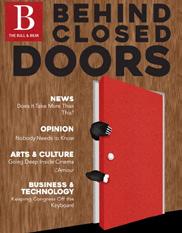
In the 2019 print issue, Behind Closed Doors, the Bull & Bear published an article titled “Nobody Needs to Know.” The opinion piece shared experiences from other Bull & Bear writers about little moments in their day that were not posted on social media. I believe our affinity for an online presence has adapted rapidly beyond social media alone. Constant location sharing is a facet of larger social media trends, seen even in 2019, that do a disservice to humanity.
Consider the following scene: you’re currently sitting in bed, scrolling through TikTok or flipping through a book when your phone buzzes: your best friend texted, and it reads “are u in ur room?” You’re having a quiet, boring day with nothing much going on. You may do some homework later, or watch an episode (or a few) of The Office. You imagined doing these things alone because that’s the type of day it’s been. You write back, “nah im not.” Your innocent white lie is quickly rebuffed with a screenshot of your location icon, hovering over your building; the jig is up, you have been caught. The screenshot is accompanied with a forward “wym?? Im coming over.” It’s not a burden – after all, they are your best friend, and you don’t have a burning desire to be alone either. Rather, being alone was a small preference, how you thought your day would end up.

Location tracking of peers is a peculiar phenomenon. Increasingly, humans are staying emotionally interconnected via location sharing services like Find My, SnapMaps, and Life360. At any moment you can know the whereabouts – the gym, grocery store, class, or work – of a friend. You can draw conclusions about them and their day, conclusions that may be wrong, right, or worrying. Live location tracking acts as a constant, big red GPS pin on someone’s head, which can result in subtle judgments from friends who casually view, or stalk, that individual. Spending too much time at home may label you as a recluse, while prolonged stays at McGill libraries might pigeonhole you as the perpetual scholar. Two Bitmojis standing in the same location can lead to a forgone conclusion about what two people are doing: have they excluded you or is there friendly gossip to come? Whatever the case may be, location knowledge prevents any white lies or surprises because you already know the events of your friend’s day.
You may also never quite feel alone or unchaperoned. Your private existence can feel tracked, documented, or owned by someone other than you. A society gripped by the Covid-19 pandemic-mandated isolation and seclusion from the outside world, prompting a global rise in depression and anxiety. However, in a post-pandemic
world where humans have returned to packed restaurants, sold-out concert venues, and crowded tourist attractions, anxiety is still increased among young adults and teenagers. Why is this? Have the Covid-era online means of connection outlasted the pandemic and made their way into our physical world in the form of intense scrolling, posting, and, most importantly, tracking?
Itooam no stranger to location sharing and tracking. Between Snapchat and Find My, I have access to upwards of fifty people’s locations. Every time I go on Snapchat, thirty-five people can see my location, but only eight have advanced to the next level and can see my live location at all times of day. This tight-knit group comprises my parents, boyfriend, best friends, and a few individuals whom I rarely see but am worried the cessation of my constant whereabouts will send an irreparable message about our friendship.
We have seen how location sharing changes the way friends communicate with one another, blurring lines of privacy and the sanctity of being behind closed doors. Friends now, sometimes obsessively, check one another’s locations and bypass whole conversations when socializing. Despite this, I will admit, there are undeniable benefits to sharing one’s location with another person. Friends can make sure their loved ones are safe or briefly check where a friend is to harmoniously sync an arrival at a restaurant. However, there is beauty in the unknown.
Being late or discoordinated is annoying on its face and a friend will likely make a conclusion about your tardiness based on your whereabouts. But the journey that made you late, whether it was through taking a different route or staying in bed too long, comes with your own reasoning and explanation: an explanation that no Bitmoji or initialed icon can tell you.
try to create a network of people I knew knowing how much time I spent at home. The constant location sharing often left many, including me, feeling left out, however it got to a point where not sharing it meant you were constantly hiding something. Once I had close friends I shared it with them, in a way for security reasons. These are people I know well and keep up with almost on a daily basis. Their location wouldn’t reveal to me something I didn’t know. I guess in a way that’s my criteria for location sharing, the people who have my location are the people who even without it would know what I’m doing if we live in the same city – aka my closest friends. I feel like in college I’ve fallen victim to the location sharing epidemic more than ever before”
-M
Iinterviewed several students on McGill’s downtown campus, asking them to reflect on their use and experience with location sharing. Here’s what they said:
“For a long time I was very against location sharing. I didn’t have Snapchat until my freshman year of high school and when I did finally get it I refused to turn mine on. I believe I opposed it so strongly because I knew how much my friends constantly looked at where other people were, even if they weren’t close to them. In reality, what I feared wasn’t my friends knowing where I was, but these strangers I had added on Snapchat to
know that I am an adult living on my own having to explain every place I go to my mom. I can’t turn my location off because then she’ll think I’m hiding something even if I’m not, but the whole principle of it seems a bit weird.”
-H
“I matched with a boy on Tinder. It was my first month living on my own and I wanted to experience meeting up with a guy for the first time. We ended up back at his place. It was late, so consequently I fell asleep. I woke up a few hours later to the buzzing of my phone accompanied by twelve missed calls from mom, three missed calls from dad, and an email from my floor fellow checking in on me.
I get it, my mom saw my location overnight in a random location and she was worried like she always is, but I wanted to have a night to myself and not have to explain everything I do to my mom. I felt really bad that she was up all night worrying, thinking I was dead on the side of the road, but it also annoyed me to
“I share my location with all of the important people in my life. My parents asked me to download Life360 and share my location with them throughout high school. A few of my friends also had to share their location with their parents. This was occasionally annoying and my friends and I would have to scheme about how to lie and leave our phones at each other’s houses and then sneak off to parties or who knows what, and then sometimes we’d get caught in a lie. We all figured out hacks to turn off cellular data to interrupt the location signal to Life360, and we’d gaslight our parents into believing there was something wrong with the technology.
Now that I am off at university it is weird to think about how much freedom I have, and even if my parents have my location it’s not like they can punish me for going out late or not telling them what I’m doing. I guess it’s nice to know they have it now in case of an emergency, but it doesn’t really affect much anymore.
All my friends also have my location, and I have theirs. In high school, this would sometimes cause tension when some of my friends would turn it off if they were doing something they didn’t want the rest of us to know. Now it’s just fun to check up on them every once in a while and
see what they’re up to. I have my new friends’ locations at college as well. I have all my close friends on Find My iPhone, which I think is smart for safety reasons in case we lose each other when we’re out or something. I also have the Snapchat locations of a bunch of people, which can sometimes be annoying.
I find myself checking them more often than I should, and it can put a damper on what would otherwise be a fun night with friends to see that everyone else is together at a different bar or club. It’s so stupid but having a bunch of people’s locations that are in different social groups can definitely give people a feeling of missing out or wanting to be somewhere else.” -V
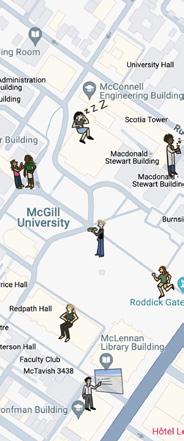
“I was talking to my mom on the phone, pacing back and forth in the Douglass tunnels. I was ranting to her about a friend and apartment options for next year. I was not near my room in Douglass. The day passed and at dinner my friend asked why I was in D house today (the house that is above the tunnel I was pacing back and forth in). I was so confused but quickly gathered that he had looked at my location and saw that, yes, I was in the Douglas building, but, no I was not in fact at my room. This caught me off guard and forever left an odd feeling about how accurate and precise location sharing can be. You might get found out if you are miles away from your building, but you will also get caught even if you are in your building.” -G
“For me in the United Kingdom, location sharing is not really a thing that people use. Most times, people have Snap Maps but my friend group did not use it. Mostly we just asked where each other were. I only ever shared my location with my parents for safety reasons like if I was in an Uber. When I got to McGill, everyone wanted to share each other’s instant location. At first, I thought it was just a cute little thing that everyone did. I do not think it’s the worst thing. It is a nice show of trust, that you can share your location with someone. But I do find myself obsessively stalking if no one is answering, it’s a little fun.”
-Z
By Lydia Hamouda

I remember turning thirteen years old, feeling like I had finally graduated from my childhood and entered the “teenage club.” Being a teenager meant romance, parties, driving, and fun. Sure, there was still school and stress but, despite the growing autonomy, being a teenager ultimately meant not needing to worry about the future and little responsibility. At least that’s what the movies I watched told me...
But these movies, shows, and books rarely reflected the
reality of life after nineteen. Teenagers are often fed a lie that tells them that as soon as they enter their twenties, life will just figure itself out, that they will immediately know what they want, and be able to carry every burden seamlessly. I hate to break it to all the teenagers out there, but entering your twenties feels more like being handed the keys to an awesome car but having to drive it while blindfolded and sleep-deprived. Our twenties are filled with overwhelming feelings of anxiety, pressure,
job, or romance. While these concerns are important and a pivotal part of growing up, being an adult introduces life-altering decisions in the fields of education, career choice, and even marriage. The choices you make in your twenties often hold higher stakes, constituting steps into a future that you are actively carving out. Except, there are no more boxes to check off to feel like you are on the right path. Suddenly we are told we are completely free to choose what steps we want to take, and how we want to take them.
Tand uncertainty. This is why many people in their twenties feel less like young adults entering the “real world” and more like unprepared teenagers thrust into the deep end without warning.
The twenties are daunting for many reasons. While being a teenager is a transition away from being a young child, the twenties bring a much more difficult transformation into young adulthood. Teenagers worry about getting good grades, finding a summer
his freedom is just as nauseating as it is liberating. Consequently, every decision we make, from the jobs we apply for, to who we date, and what we spend money on, is filled with doubt and pressure. Not to mention, social media places additional pressure on us to have it all figured out as soon as possible. Sure, it’s always been known that people move at different paces and aim for different goals, but it’s so much easier to feel like a failure when constantly comparing yourself to a peer with their life seemingly figured out. Some twenty-year-olds are starting their careers at their dream companies, some are starting families, some are traveling the world, and some are still trying to figure out who they are and what they want in life (I’m the latter).
Feeling like a “twenty-yearold teenager” is not alien to this generation of young adults. Rather, it appears that most of us newer twenty-year-olds feel younger than the age we are
turning. One of the reasons for this is the Covid-19 pandemic that began when some of us were in our mid-to-late teens and ended with us about to enter or just entering our twenties. While three years may not seem very long, this pandemic has frozen us at the ages we were when it began. The “pandemic skip,” as the Newport Institute explains on their website, left us feeling much younger because it robbed us of many core developmental experiences that prepare us for adult life. We went from experiencing little independence, social interaction, and professional and academic experience to suddenly reaching an age where society expects us to take full responsibility and behave as fully functioning adults. Going through such a change while being robbed of a transition period is why many twentyyear-olds in this generation are struggling mentally and emotionally as young adults.
Feeling unprepared for the expectations that come with your twenties, of course, cannot solely be accredited to the pandemic. Another reason why many twentyyear-olds are feeling anxious and overwhelmed is that they often hold themselves to an impossible standard, especially considering the difficult world they are entering. While our parents may have graduated by twenty-two, found secure jobs by twenty-three, bought a house and started a family by twentyseven, these accomplishments are no longer as easily attained in 2024. As jobs become increasingly competitive, years spent in university become

& Bear,
longer. Getting a Master’s or a Doctorate is less of a luxury and more of a requirement to get a decent-paying job. Even jobs that previously did not require university degrees now expect it from their prospective employees. Not to mention, the incredibly high cost of living, as sources such as the Global News have reported, makes home ownership and starting a family increasingly unsustainable for young adults. This changing world is making it impossible to live our twenties the same way our parents did, and yet the burden we carry in trying to achieve this still exists. And when we cannot, we consider ourselves failures.
As university students, the pressure of entering our twenties hits us so much harder as graduation nears. Up until this point, calling ourselves “students” seems like a convenient way of holding onto our childhood. Sure, we spend most of the year living away from home, cooking our own
meals, and we are responsible for our studies. But then this facade of adulthood fades and we return to our parents and childhood homes for the summer. Unlike full-fledged adulthood, the academic environment at McGill and other universities provides us with clear steps for our future. Our “grown-up” duties consist of laundry, feeding ourselves, and going to class. While we are becoming more independent, this university “bubble” permits us to ignore the scariness of impending adulthood and focus on much more attainable goals like getting a degree or finding summer internships. Because being a student often feels like a way to avoid the reality of growing up, many of us want to continue pursuing our studies for much longer. While university is certainly exhausting and often stressful, the idea of pursuing a Master’s or PhD allows us to delay many of the obligations and the complete autonomy that comes with adulthood.
When someone asks me how it feels to be twenty, it is hard to describe. I’m sure to those not experiencing it, it feels a lot like complaining for no reason. After all, most people see the twenties as the prime years of life. You are still youthful and energetic and have the addition of extra freedom. Complaining about stress and money instead of enjoying this time in our lives seems pretty juvenile to many. But honestly, entering your twenties doesn’t mean that feeling like a teenager just evaporates and BOOM, you’re an adult. On one hand, you can feel the maturity,
confidence, and independence that was lacking in your teens. On the other, turning twenty and suddenly having to make countless decisions about your future leads to an unparalleled type of insecurity, anxiety, and pressure. You are constantly comparing yourself to others, always fearful for your future, and almost definitely feeling like whatever you are doing is wrong. But accepting that this is what the twenties will bring allows us to be more kind and accepting of ourselves during this time. Sure, at some point people in their twenties had figured out their life plan. But that no longer is and doesn’t need to be the case.
Instead, turning twenty just means we are entering a new stage in discovering ourselves and navigating our lives. For some, this may be a very clear path, and for others like me, we’re still figuring it out. Sure, I’m twenty, but that doesn’t have to mean I’m done growing up.

By Philip He
The sports world has had many memorable moments over the past twenty years. Here, Sports and Opinion writer Philip He recounts the most memorable sporting moment each year, beginning in the Bull & Bear’s founding year of 2003 up until 2023.
2003: Tennis star Serena Williams completes her first ‘Serena Slam’, a non-calendar Grand Slam. 2004: The Detroit Piston ‘Bad Boys’ upset Kobe Bryant and Shaquille O’Neal’s Lakers in the NBA Finals. 2005: Liverpool’s comeback against AC Milan in the Champions League final after being 3-0 down at halftime. 2006: Roger Federer wins three out of four Grand Slams in a single year, not losing a match to any other player ranked in the top ten. 2007: The New England Patriots complete a perfect 16-0 regular season in the NFL, but end up losing in the Super Bowl to the New York Giants in a monumental upset. 2008: Michael Phelps wins eight gold medals at the Beijing Olympics, setting the record for the most medals won at a single Olympic Games. 2009: Usain Bolt breaks his own 100m world record, finishing in 9.58 seconds. 2010: Freestyle skier Alexandre Bildeau becomes the first Canadian to win an Olympic gold medal on home soil. 2011: The New Zealand All Blacks win the Rugby World Cup for the second time since 1987. 2012: Michael Phelps wins his


22nd Olympic medal, the most in history. 2013: Andy Murray defeats Novak Djokovic to win Wimbledon, becoming the first Scottish man to win Wimbledon since Harold Mahony in 1896. 2014: Germany defeats Brazil 7-1 in the 2014 World Cup on Brazilian soil, cementing the match as potentially the most humiliating defeat in World Cup history. 2015: American Pharoah wins the Triple Crown, becoming the first horse to do so since 1978. 2016: Leicester City win the Premier League for the first time in their history, completing one of the greatest sporting stories ever. 2017: Alex Honnold becomes the first to free solo climb El Capitan in Yosemite Valley, conquering the impossible climb. 2018: Tessa Virtue and Scott Moir win gold at the PyeongChang Winter Olympics, becoming the most decorated Olympic figure skaters of all time. 2019: Simone Biles breaks the record for most World Championship medals in gymnastics, winning her 24th and 25th medals. 2020: The Lakers win the 2020 NBA Finals in the bubble, honoring Kobe Bryant’s memory with a title victory. 2021: Max Verstappen beats Lewis Hamilton to become the 2021 Formula 1 World Driving Champion. 2022: Argentina wins the World Cup. Lionel Messi finally lifts the trophy he has wanted the most. 2023: Kelvin Kiptum runs a 2:00:35 marathon in Chicago, the fastest official marathon in recorded history.