REDWOOD • WESTERN RED CEDAR
REGIONAL WOODS SPECIAL ISSUE • JAPANESE CEDAR
March 2026
THE VOICE OF LUMBER MERCHANTS AND BUILDING MATERIAL DEALERS & DISTRIBUTORS IN THE WEST — SINCE 1922


Like the foods we buy, when it comes to decking, we want natural and real. Redwood is always available in abundance of options. So stock the shelves! Unlike mass-produced and inferior products, Redwood is strong, reliable and possesses many qualities not found in artificial products. They maintain temperatures that are comfortable in all climates.
Redwood Empire stocks several grades and sizing options of Redwood.



2,600 dedicated employees, and one of the most extensive product offerings of value-added treated lumber, we can deliver in ways few others can.

PRESIDENT/PUBLISHER
Patrick Adams padams@526mediagroup.com
VICE PRESIDENT
Shelly Smith Adams sadams@526mediagroup.com
PUBLISHER EMERITUS
Alan Oakes
MANAGING EDITOR
David Koenig dkoenig@526mediagroup.com
SENIOR EDITOR
Sara Graves • sgraves@526mediagroup.com
COLUMNISTS
James Olsen, Claudia St. John, Dave Kahle
CONTRIBUTORS
Travis Arthur, Jessica Hewitt, Brad Kirkbride, Paige McAllister, Paul D. Owen, Katie Webb
ADVERTISING SALES
(714) 486-2735
Chuck Casey • ccasey@526mediagroup.com
John Haugh • jhaugh@526mediagroup.com
Nick Kosan • nkosan@526mediagroup.com
DIGITAL SUPPORT
Katherine Williams kwilliams@526mediagroup.com
CIRCULATION/SUPPORT info@526mediagroup.com
151 Kalmus Dr., Ste. J3, Costa Mesa, CA 92626 Phone (714) 486-2735
CHANGE OF ADDRESS Send address label from recent issue, new address, and 9-digit zip to address below.
POSTMASTER Send address changes to The Merchant Magazine, 151 Kalmus Dr., Ste. J3, Costa Mesa, CA 92626. The Merchant Magazine (ISSN 7399723) (USPS 796-560) is published monthly at 151 Kalmus Dr., Ste. J3, Costa Mesa, CA 92626 by 526 Media Group, Inc. Periodicals Postage paid at Santa Ana, CA, and additional post offices. It is an independently-owned publication for the retail, wholesale and distribution levels of the lumber and building products markets in 13 western states. Copyright®2026 by 526 Media Group, Inc. Cover and entire contents are fully protected and must not be reproduced in any manner without written permission. All Rights Reserved. We reserve the right to accept or reject any editorial or advertising matter, and assumes no liability for materials furnished to it. Opinions expressed are those of the authors or persons quoted and not necessarily those of 526 Media Group, Inc. Articles are intended for informational purposes only and should not be construed as legal, financial or business management advice, nor an endorsement of any company, product, service or individual referenced.
Volume 105 • Number 3








REGIONAL
Humboldt Sawmill Co. names Redwood Ambassador for Southern California
REGIONAL WOODS: REDWOOD
For 80 years, Big Creek Lumber has grown with the redwoods
Japanese cedar ready to make its
Technology steps in as demand heats up for dark windows
EVENT RECAPS
Hoo-Hoo Trifecta runs gauntlet of Sacramento, Black Bart and Humboldt club events








------------ BY PATRICK ADAMS
SOME OF THE MOST meaningful journeys in history began without a clear map. Explorers set out not knowing exactly what they would find, only that standing still was not an option. They crossed unfamiliar terrain, faced unpredictable conditions, and learned as they went. Progress came not from certainty, but from conviction—a belief that the destination was worth the risk and that adaptability would be required along the way. Improvise, Adapt, Overcome.
Lately, that idea has been on my mind. We are navigating a season where clarity can feel elusive. Markets shift quickly. Conditions change faster than plans can be written. The familiar landmarks we once relied on don’t always offer the same reassurance they used to. For many, the instinct is to wait for certainty before moving forward. But history—and experience—tells us that certainty rarely arrives in advance.
This is where leadership reveals itself. True leaders are not those who only move when conditions are perfect. They are the ones willing to step forward when the path isn’t fully visible, guided not by comfort but by values. They understand that momentum matters, that learning happens in motion, and that standing still often carries greater risk than moving carefully ahead.
Every great discovery required perseverance through challenging environments. Storms were encountered. Wrong turns were taken. Adjustments were made. Yet those journeys reshaped what was possible, not just for the individuals who took them, but for everyone who followed.
Our industry knows this well. Those of you who have built businesses, grown teams, and weathered multiple cycles understand that success is rarely linear. You’ve made decisions with incomplete information. You’ve trusted experience when data lagged behind reality. You’ve leaned on principles—integrity, stewardship, responsibility—when short-term answers were unclear.
A guiding value system becomes the compass when the map is unfinished.
Values don’t eliminate obstacles, but they clarify decisions. They help determine which opportunities align with who you are and which distractions to pass by. They anchor perseverance when conditions test resolve. Paired with a clear long-term goal, values create direction even when the route itself must evolve.
I’ve learned that perseverance isn’t blind persistence. It’s informed endurance and discipline. It’s the willingness to adapt without abandoning purpose. To adjust tactics while protecting principles. To accept uncertainty without surrendering momentum.
Uncharted paths demand patience and humility. They demand courage. They demand discipline—doing what you sometimes hate to do, but doing it like you love it.
The leaders who inspire me most are not those who claim to have all the answers, but those who remain steady when answers are still forming. They listen, learn and move forward with intention. They create confidence not by predicting the future, but by demonstrating consistency in how they respond to it.
That steadiness matters now.
For those feeling the weight of uncertainty, know this: navigating without a map does not mean navigating without direction. If your values are clear and your goal remains intact, the path will reveal itself step by step. Progress may be slower at times, but it will be meaningful.
I continue to be encouraged by this industry—by its resilience, its work ethic, and its willingness to move forward even when conditions are less than ideal. You remind me that the most rewarding journeys are rarely the easiest, but they are always the ones that shape us the most.
Thank you for the trust you place in us, and for the leadership you demonstrate every day by choosing progress over paralysis. It is an honor to serve you as we continue navigating what lies ahead—together.
PATRICK S. ADAMS, Publisher/President padams@526mediagroup.com


THREE GENERATIONS STRONG: SWANSON GROUP CELEBRATES 75 YEARS
THREE GENERATIONS STRONG: SWANSON GROUP CELEBRATES 75 YEARS
SWANSON GROUP HAS BEEN FAMILY-OWNED SINCE 1951, WHEN STEVE SWANSON’S FATHER AND UNCLE OPENED THEIR FIRST MILL IN GLENDALE, OREGON TO MEET POST-WAR LUMBER DEMAND. THE COMPANY GREW QUICKLY, SUPPORTED BY ITS PROXIMITY TO THE CALIFORNIA MARKET, AND EXPANDED THROUGH THE NEXT GENERATION IN THE 1970S. TODAY, CHRIS SWANSON SERVES AS PRESIDENT, CONTINUING THE FAMILY LEGACY. BASED IN DOUGLAS COUNTY—ONE OF THE WORLD’S MOST PRODUCTIVE TIMBER REGIONS—
SWANSON GROUP HAS BEEN FAMILY-OWNED SINCE 1951, WHEN STEVE SWANSON’S FATHER AND UNCLE OPENED THEIR FIRST MILL IN GLENDALE, OREGON TO MEET POST-WAR LUMBER DEMAND. THE COMPANY GREW QUICKLY, SUPPORTED BY ITS PROXIMITY TO THE CALIFORNIA MARKET, AND EXPANDED THROUGH THE NEXT GENERATION IN THE 1970S. TODAY, CHRIS SWANSON SERVES AS PRESIDENT, CONTINUING THE FAMILY LEGACY. BASED IN DOUGLAS COUNTY—ONE OF THE WORLD’S MOST PRODUCTIVE TIMBER REGIONS— SWANSON GROUP REMAINS COMMITTED TO SECURING RELIABLE LOG SUPPLY AND PRODUCING HIGH-QUALITY LUMBER AND PLYWOOD. ITS DIVERSIFIED PRODUCT RANGE HAS SUPPORTED GROWTH INTO NEW MARKETS AND INDUSTRIES, EARNING A STRONG REPUTATION NATIONWIDE AND ABROAD.
NEW VENTURE: PELLET PRODUCTION IN FALL 2025, SWANSON GROUP LAUNCHED DEAN RESOURCES, A WOOD FUEL PELLET MILL IN OAKLAND, OREGON, TO ADDRESS RESIDUAL UTILIZATION AFTER A NEARBY PARTICLEBOARD PLANT CLOSURE. IN PARTNERSHIP WITH SOUTHPORT LUMBER, SWANSON ALSO FORMED OREGON PELLET MILLS, A NEW EXPORT FACILITY AT THE PORT OF COOS BAY. THE INITIATIVE ADDRESSES RESIDUAL CHALLENGES AND POSITIONS THE COMPANY FOR GROWTH IN ASIAN MARKETS AND FUTURE FUEL-REDUCTION POLICIES. LOOKING AHEAD, CEO AND CHAIRMAN STEVE SWANSON SAYS THE COMPANY IS “IN GREAT SHAPE COMPANY-WIDE” AND CREDITS THE FOUNDERS’ LONG-TERM VISION. “MY FATHER AND HIS BROTHER WANTED THIS COMPANY TO LAST FOR AS MANY GENERATIONS AS POSSIBLE—AND THAT TAKES BEING PROACTIVE.”
HUMBOLDT SAWMILL COMPANY recently hired a Redwood Ambassador, a newly created position, to promote the use of redwood products in Los Angeles and throughout the greater Southern California region.
Tom Kotiranta has extensive experience representing product manufacturers through direct engagement with architects, builders, contractors, developers, landscape architects, and other specifiers. According to director of marketing Jessica Hewitt, the Redwood Ambassador will help to strengthen and expand the specification of and preference for Humboldt Sawmill’s full line of high-quality redwood products with a particular focus on uppers and timbers.
environmental benefits of redwood, including Forest Stewardship Council (FSC C013133) certification and carbon storage, use of redwood timbers, proper specifications of redwood, unique properties, grades and uses, as well as illustrative case studies.

In addition to specifier education and relationship development, Tom will attend regional trade shows and contractor luncheon events at local retail lumberyards. The focus of architect and specifier education will be Humbolt Sawmill’s well-established American Institute of Architects-accredited Continuing Education Unit (CEU) lunch-and-learn programs. These presentations, which provide architects with required CEU units, focus on the
As architects begin specifying more redwood for high-end residential and commercial applications, Humboldt Sawmills expects this to translate to increased sales. These sales can be easily fulfilled by the company’s distribution center, which is centrally located in Fontana, Ca., noted Adam Steinbuck, executive VP of sales.
For nearly two decades Kotiranta has successfully represented manufacturers of architectural products, custom millwork, casework, and other building materials throughout Southern California and the West Coast, increasing both sales and distribution. The presence of Kotiranta in the new Redwood Ambassador role, combined with other marketing programs designed specifically for the Southern California market, point to a positive future for redwood.
For more information, visit www.getredwood.com. MM


DMSi Frameworks 100% web-based, AI-enabled inventory & point-of-sale system

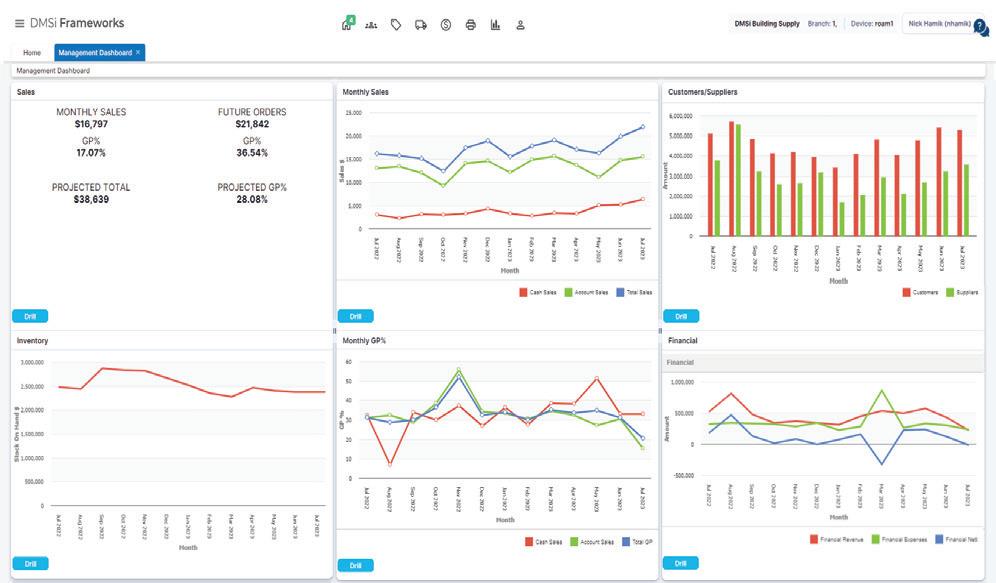

DMSi is an independent, family-owned software company providing inventory and accounting software backed by exceptional service. That's the DMSi difference.

------------ BY KATIE WEBB
WHEN MANY PEOPLE think of redwoods, words like resilient, steadfast and enduring often come to mind. As Big Creek Lumber enters its 80th year of business in 2026, we’ve long identified with those same qualities. Redwood has been the foundation of our company since the beginning, and over eight decades we’ve learned that longevity like forestry itself requires patience, adaptability, and long-term thinking.
That said, endurance alone is not enough. Like any business, we are shaped by forces beyond our control. In the forest products industry, market conditions, interest rates, and housing starts can shift quickly and unpredictably. Over time, we’ve learned to complement the steadiness we associate with redwoods with a willingness to be nimble, creative and forward-thinking. Few moments tested that balance more clearly than the events of 2020.
The CZU Lightning Fire Complex was the largest recorded wildfire in Central Coast history, burning approximately 86,000 acres across Santa Cruz and San Mateo counties. Much of that acreage was forestland, including significant stretches of dense coastal redwood. As a sawmill primarily focused on redwood and with wholesale and retail operations dependent on that supply the fire created immediate operational and strategic challenges.
While coastal redwood is well known for its resistance to fire, experience has shown that severely burned trees
are vulnerable to rot and insect infestation over time. With that knowledge, it became imperative to act quickly. We leveraged a special permitting process within California’s Forest Practice Rules that allows harvesting of severely burned stands, enabling us to recover usable material before it became unmerchantable while also beginning the process of transitioning the landscape back to a healthy forest.
To support that effort, we reorganized our harvest plans, prioritizing fire-affected areas and postponing harvests on unburned forestlands. This approach allowed us to respond to the immediate impacts of the wildfire, while staying true to our long-term forest stewardship goals.
Beyond the logistical challenges of processing fireaffected redwood, the CZU fires also accelerated broader conversations about fire safety particularly for homes built within the Wildland Urban Interface (WUI). As catastrophic wildfires become more common, homeowners, insurers, and builders are understandably reexamining material choices. For many, that raises an important question: can redwood, a natural material prized for its beauty and durability, still play a role in fire conscious construction?
Based on both firsthand experience and certified testing, we believe the answer is yes. Redwood carries recognized WUI fire ratings from the American Society for Testing and Materials (ASTM), and when
properly specified and installed, it can be part of a safe and resilient building approach. In response to shifting perceptions, we have invested significant resources into education and outreach developing materials and refining our sales communications to help architects, contractors and homeowners better understand where and how redwood can be used responsibly in WUI environments.
Adaptation at Big Creek Lumber extends beyond forestry and product education. From the beginning, we have been a family-owned business deeply rooted in our community, and our customers are an extension of that family. When their businesses are healthy, so is ours. With that in mind, we’ve focused on investing in tools and resources that support their long-term success.
Recently, we launched an industry-first mobile app available in both English and Spanish. The app provides practical tools designed to help customers run their businesses more efficiently, including online invoice payment and tracking, quote submissions, access to installation guides, and the ability to check pricing and inventory outside of normal business hours. These investments reflect our belief that being a supplier today also means being a partner.
For 80 years, our guiding motto has been “Growing Redwoods for the Future.” Along the way, external forces from market cycles to wildfires have tested that commitment and taught us what it takes to remain viable in a changing physical and economic landscape.
As we look ahead, our goal is to continue balancing the enduring qualities we associate with redwoods; resilience, steadiness, and longevity with the adaptability required to meet the challenges of the next generation. In doing so, we intend to keep growing redwoods for many decades to come. MM
– Katie Webb is the special projects manager at Big Creek Lumber, Davenport, Ca. (www.bigcreeklumber.com). She is passionate about family businesses and carrying on the legacy of her grandfather, Big Creek Lumber co-founder Lud McCrary. Katie lives on a ranch and is an avid hiker and runner in the redwood forests of the Santa Cruz Mountains.





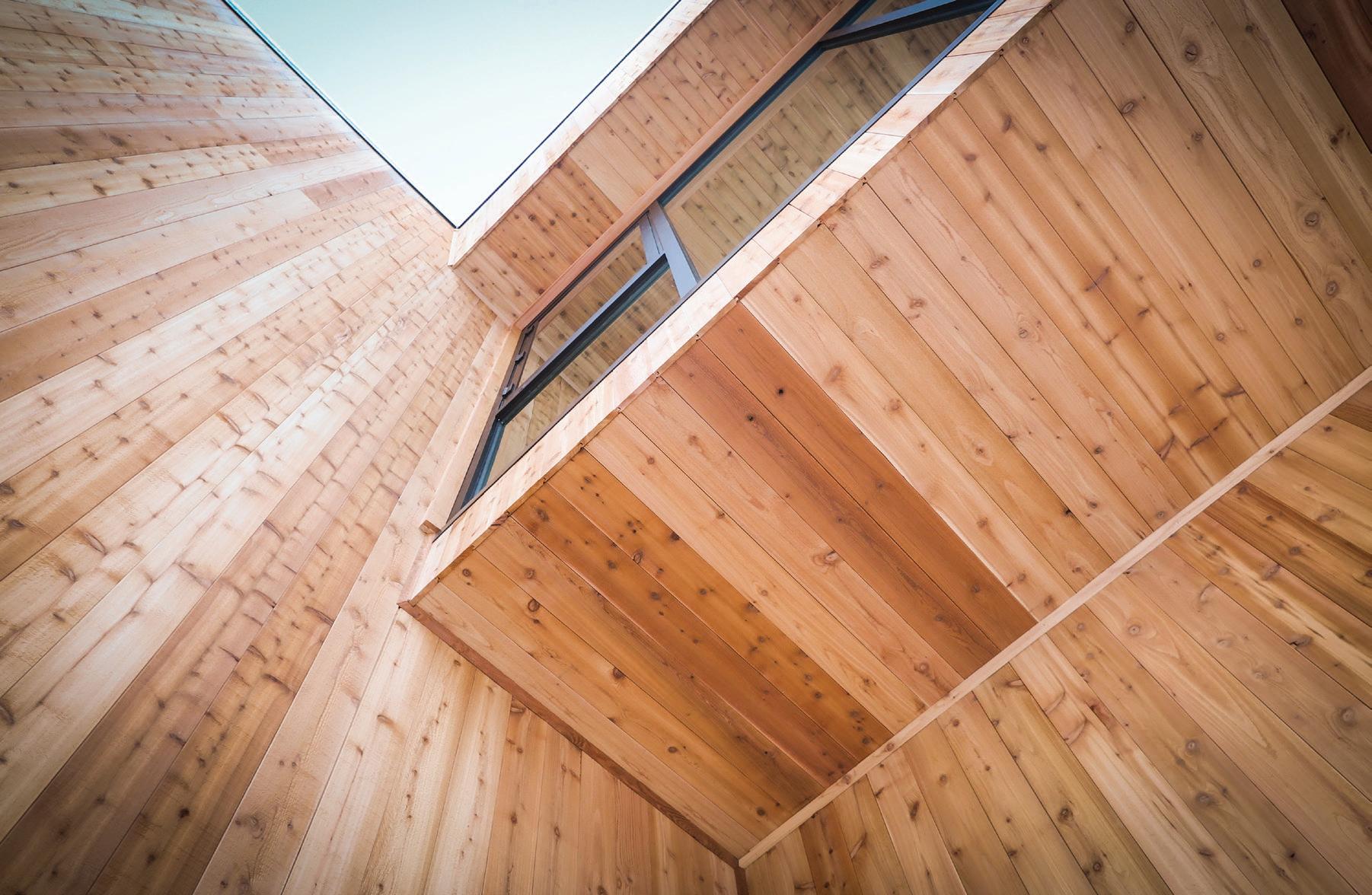
AS CONSUMERS, we’re accustomed to seeing comparative metaphors like “the Porsche of toasters” or “the Michael Jordan of ping pong.” They’re colorful descriptors that help advertise products and position them as the premium in their class.
At the Western Red Cedar Lumber Association, we’re both amused and quite honestly flattered when we see other building materials reference or compare themselves to western red cedar, as Western Woods Inc. recently did in a redwood product ad. While calling out western red cedar in the ad certainly helps position Real Cedar as the “Porsche” of building materials, it also underscores a simple truth: there is only one original. For decades, Real Cedar has set the standard against which durability, stability, appearance and versatility are
------------ BY BRAD KIRKBRIDE
measured. Its continued relevance across exterior, interior and outdoor applications is not an accident of tradition, but the result of a rare combination of performance attributes that remain unmatched.
It’s the combination of these attributes that make the species ideal for certain applications and the reason specifiers are still choosing Real Cedar.
While softwoods and other building materials face competitive and economic challenges in the market, there is a growing resurgence in the use of natural materials like WRC across commercial, institutional and high-end residential construction. This return to original materials is more than just nostalgia—architects, builders and homeowners value it not only for its aesthetic appeal, but
for its dimensional stability, natural resistance to decay, and longevity. Its low density, straight grain, and consistent workability make it easy to mill, install, and finish; advantages that matter just as much to manufacturers and retailers as they do to designers and contractors.
Aesthetically, western red cedar offers a range that few species can match. Its natural color spectrum, from pale straw and honey tones to rich reddish browns, provides designers with flexibility across contemporary and traditional styles. Available in a full range of appearance grades, from clear vertical to architect knotty, Real Cedar allows projects to dial in everything from refined minimalism to expressive, rustic character. The wood’s fine texture and grain also add visual interest without overwhelming
a space, making it equally effective as a focal material or as a complementary surface.
While market research shows that looks are still the most popular reason for choosing western red cedar, sustainability is now becoming an important driver of material selection, and WRC performs exceptionally well in this regard. It is a renewable resource harvested under rigorous forest management standards, with widespread third-party certification.
From a carbon perspective, WRC requires relatively little energy to process and stores carbon throughout its service life, contributing to lower embodied carbon profiles for buildings. At end of life, it can be reclaimed, reused, or allowed to biodegrade naturally. Unlike many composite products, it won’t end up in our landfills.
Of equal growing importance is Real Cedar’s role in biophilic design. Research continues to show that natural wood environments support occupant well-being, productivity, and comfort across offices, schools, healthcare facilities, and retail spaces. Western red cedar’s warm color, visible grain, tactile softness, and subtle aroma engage the senses in ways synthetic materials cannot replicate. These qualities are not merely aesthetic; they have been linked to reduced stress responses, improved cognitive performance, and increased user satisfaction, all of which are benefits that directly support the value proposition of wood-forward design.
One of the main claims the redwood ad makes in its comparison to Real Cedar is its performance as an outdoor product. The comparison is telling as this is so foundational to
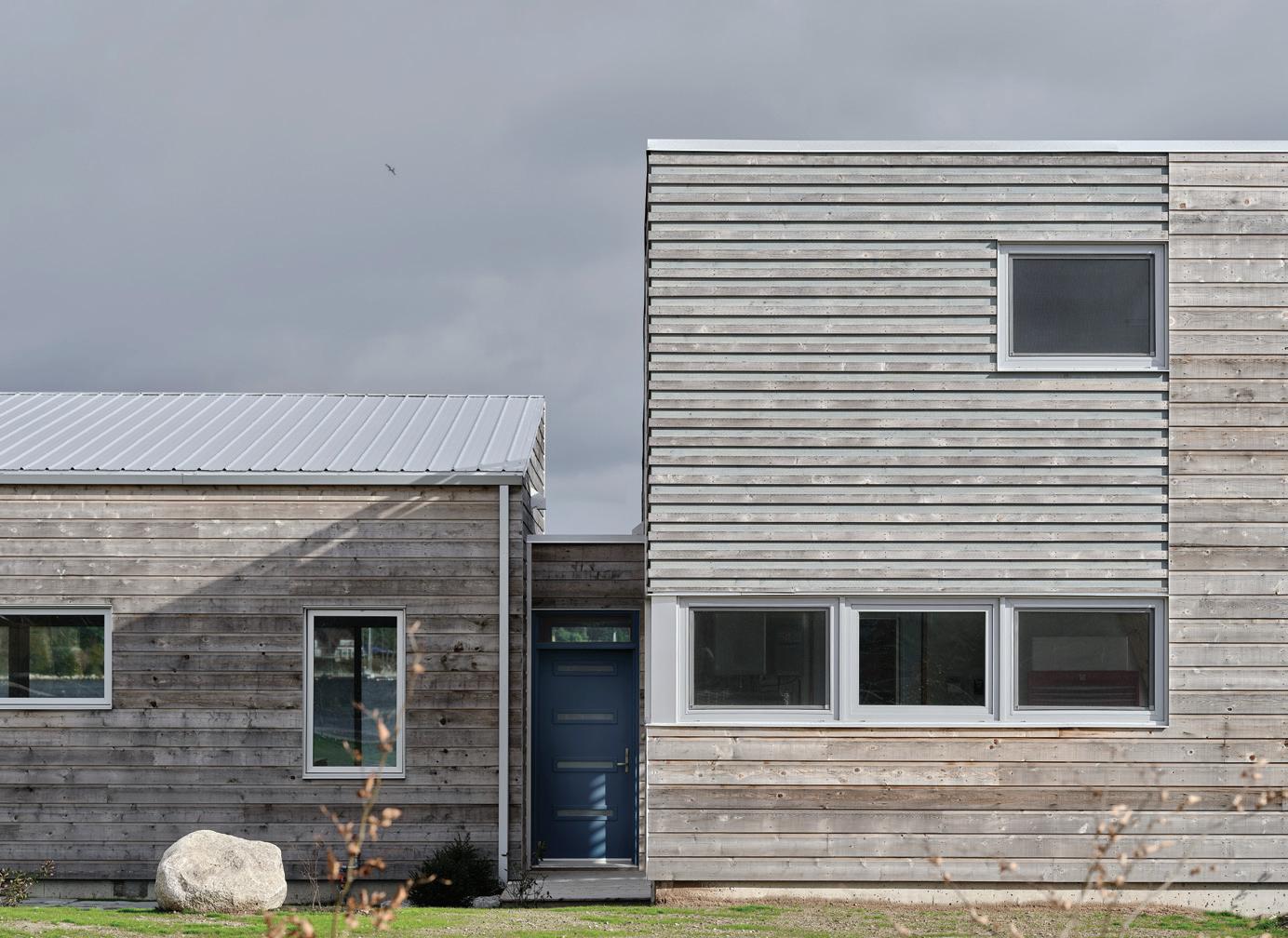
western red cedar’s reputation. Naturally resistant to rot, decay, and insect attack, WRC performs exceptionally well in demanding exterior environments without the need for chemical treatment. This inherent durability translates directly into longevity and reduced maintenance. What’s more, WRC weathers gracefully, developing an attractive silvery grey patina that is difficult to replicate.
Stability is another defining characteristic. Compared to many other softwoods, western red cedar exhibits low shrinkage and excellent dimensional stability, reducing the risk of warping, cupping or splitting over time. For manufacturers, this predictability supports tighter tolerances and higher-value profiles. For retailers and builders, it means fewer call backs and more reliable outcomes in the field.
By definition, western red cedar is the original in the market. It has centuries of proven use, deep cultural significance, and a performance record that continues to meet modern demands. New products and substitutes will continue to enter the market, and some will continue to compare themselves to WRC. That’s fine. Western red cedar will continue to be the original; the reference point; the Porsche of Building Materials. And if you want to find the one true western red cedar, just look for the Real Cedar brand and a WRCLA member retailer. MM
– Brad Kirkbride is managing director of the Western Red Cedar Lumber Association (www.wrcla.org). Established in 1954, WRCLA is the voice of the cedar industry and has 132 members in various locations throughout North America.

BY PAUL D. OWEN
THERE IS GOOD NEWS for U.S. cedar buyers as the supply for structural grade cedar has grown with the American Lumber Stand Committee (ALSC) Evaluation Board approving the design values for Japanese cedar (sugi) 2x4 dimension lumber last April.
Efforts by the Japanese government to expand their lumber exports are starting to pay off as this follows the approval of hinoki (Japanese cypress) design values in April 2024, further expanding the supply of quality wood products to the U.S. market. Not only is Japanese cedar now certified, but with the plentiful supply of mature trees available for logging there is open opportunity for those that want to add it to their product mix.
What are design values? According to the MSR Lumber Producers Council, “lumber design values are assigned to lumber grades to provide a means for using this material in structural applications. The six design values are bending (Fb), shear parallel to grain (Fv), compression perpendicular to grain (Fc⊥), compression parallel to grain (Fc), tension parallel to grain (Ft), and modulus of elasticity (E).”
Japanese cedar design value was certified as No. 2 grade, meaning Japan now has the opportunity to offer Japanese cedar 2x4 in structural applications in the U.S. market for the first time. While Japanese cedar products are currently imported for fencing, decking, and other non-structural applications in the U.S., this approval broadens the scope of how Japanese cedar can be sold. The U.S. market may see even more options in the future as other Japanese cedar products undergo structural testing.
So, what is Japanese cedar and how is it different? Japanese cedar is a softwood lumber species native to Japan, where it has been cultivated for hundreds if
not thousands of years. Common names for this evergreen tree include “Japanese cedar,” “sugi,” and “cedar.” Japanese cedar refers specifically to sugi and its many cultivars and is imported under the scientific name Cryptomeria Japonica
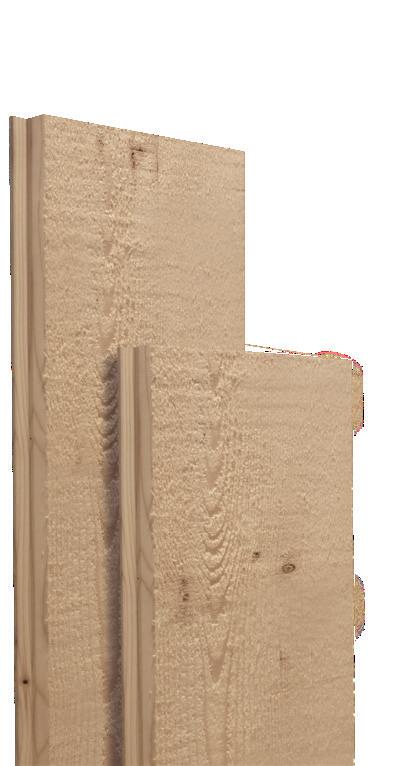
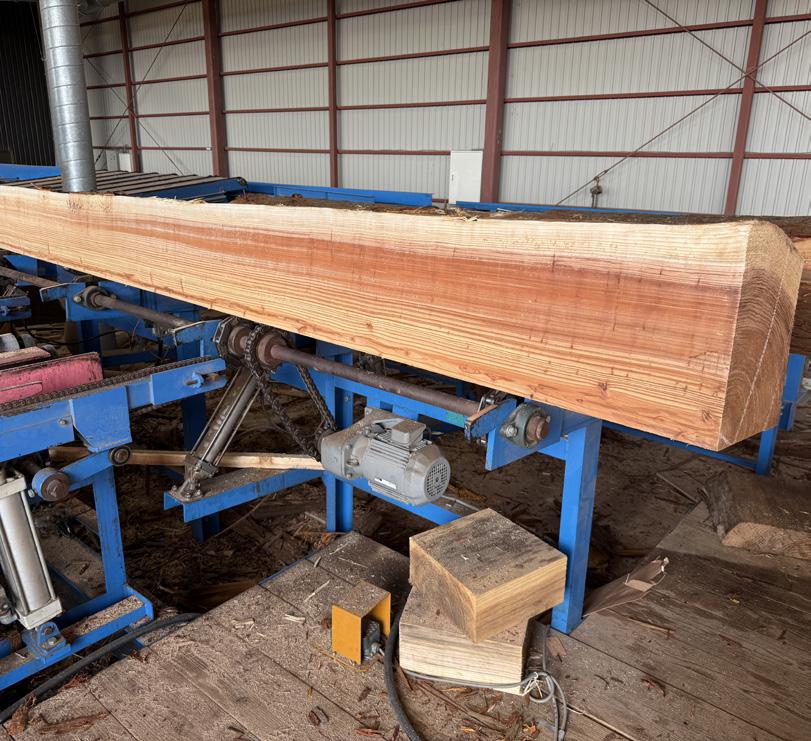
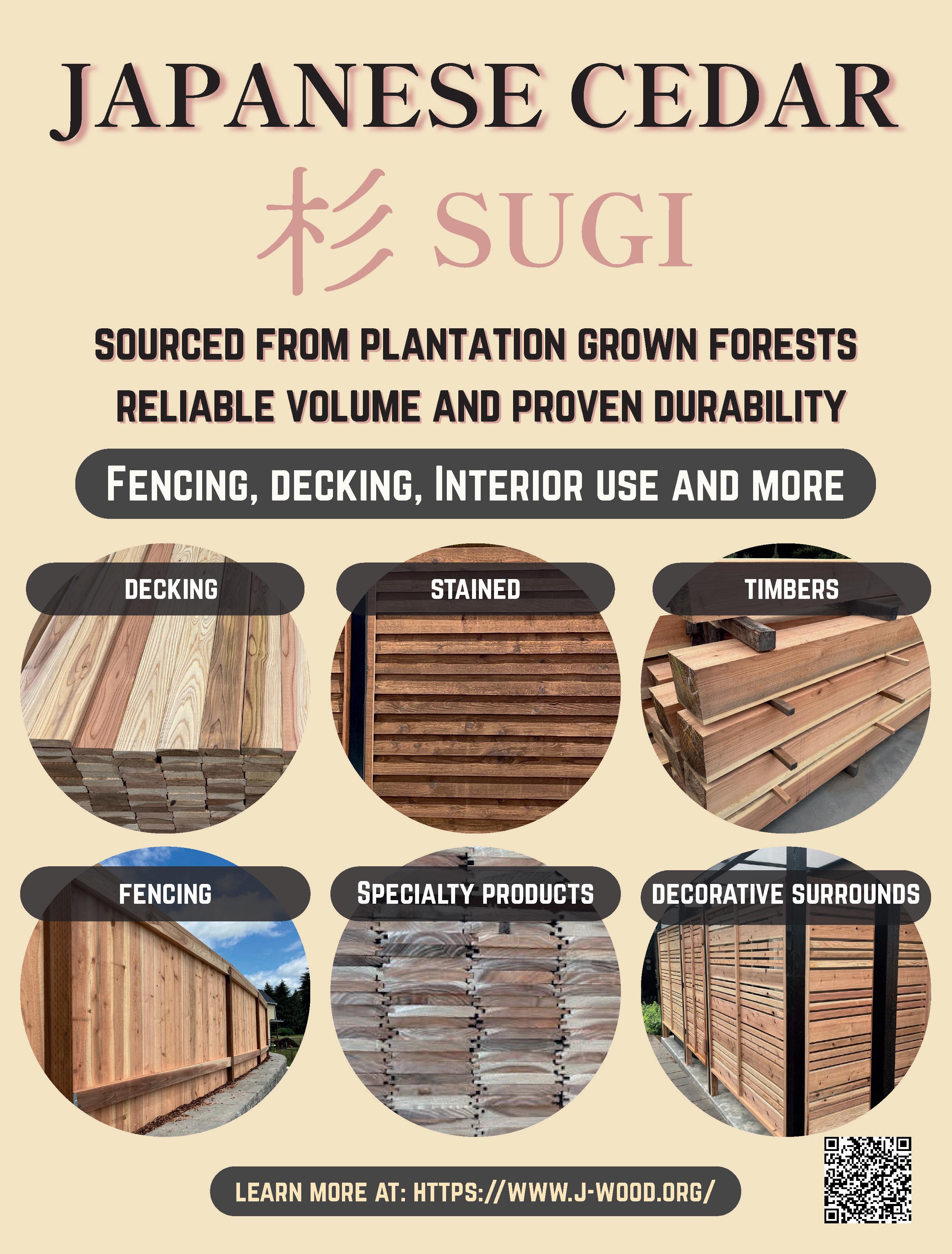
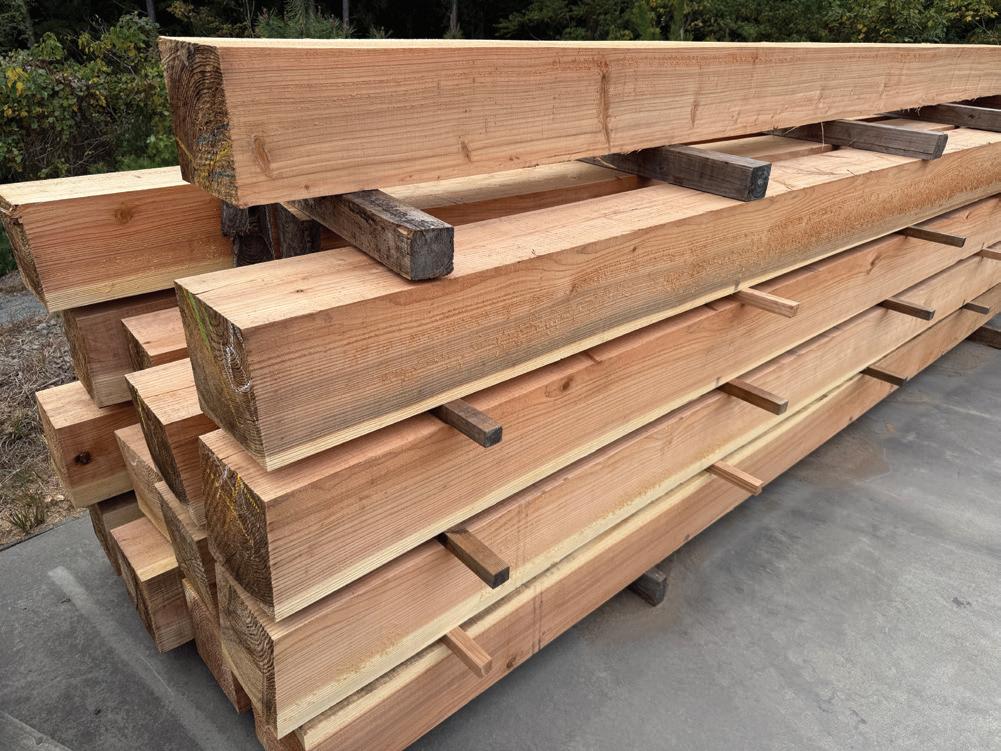
Japanese cedar is a soft, lightweight, easy-to-work material that is highly versatile, from construction materials to household goods. It is also ready for outdoor use and is both UV and insect resistant. That is why it works so well as fencing, decking and exterior siding. Stain, sealant or paint is recommended to increase the wear time outdoors. Japanese cedar arrives stain ready to the U.S. as imported lumber must either be KD (kiln dried) or HT (heat treated). Renowned for its beautiful color and grain pattern, Japanese cedar is known for its pleasing aesthetics and is widely used in Japan. The lumber milled from the tree has a range of color variation. The sapwood tends to be blonder with white and yellow whereas the heartwood has more pink and brown tones.
In the U.S., Japanese cedar is most commonly compared to its North American grown cousin, western red cedar. Both tree species are members of the Cupressaceae family. As close relatives they share many of the same characteristics making Japanese cedar an excellent alternative to using western red cedar. Much of the Japanese cedar currently coming into the U.S. marketplace is similar in grade to second growth western red cedar. Japanese cedar has already had a strong foothold in the U.S. market for years with non-structural application products, including fencing, decking, fascia and siding. But that begs the question, why have more people not heard of Japanese cedar in the U.S.? Japanese cedar is often labeled
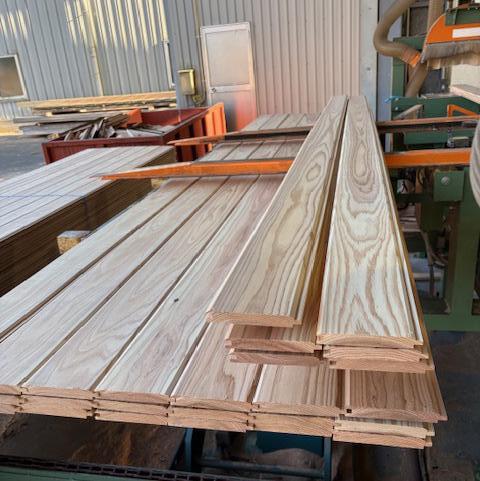
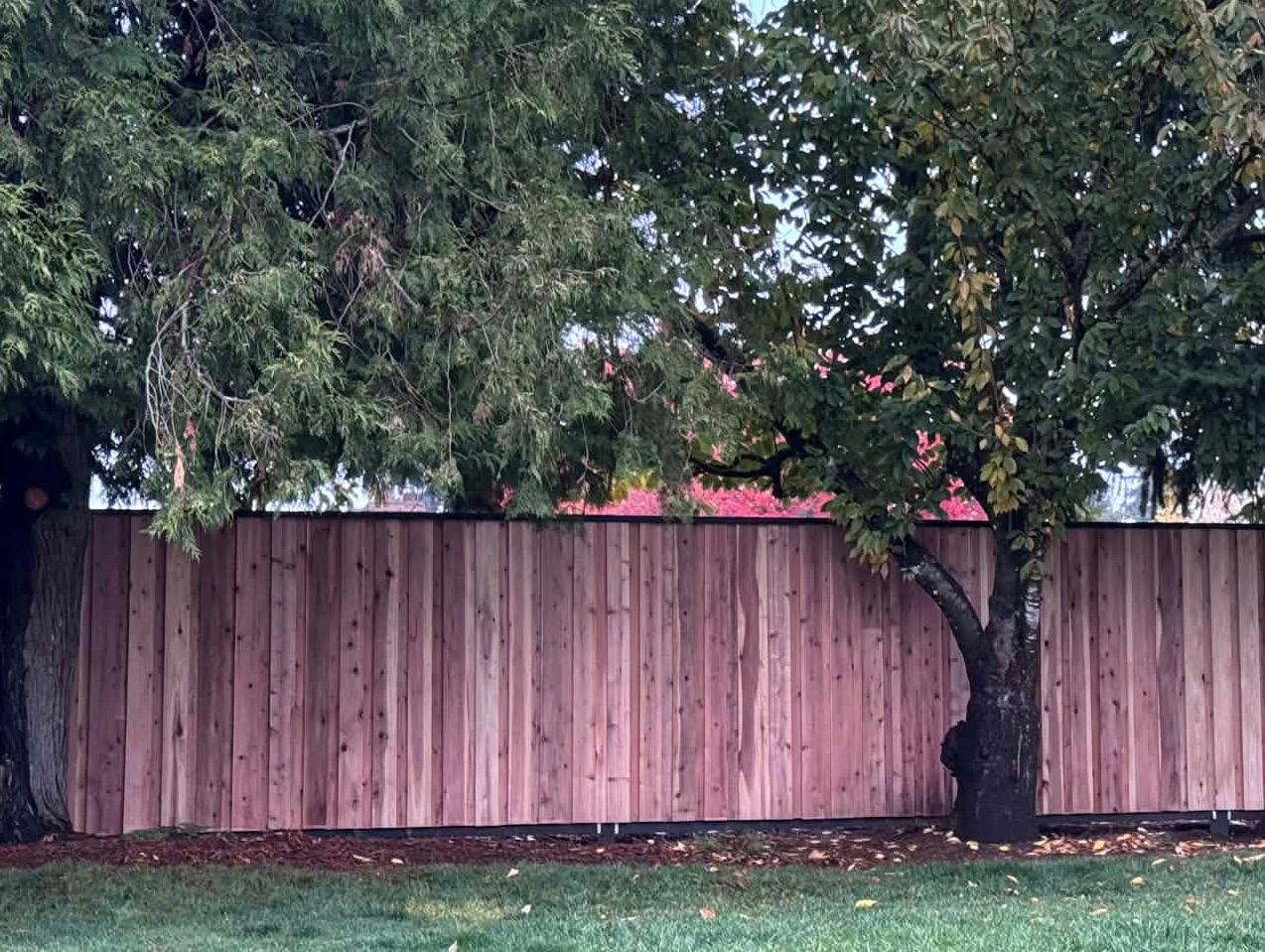
as generic “cedar” in the retail space. This leads to many consumers unknowingly using Japanese cedar products, with no idea of the specific species or where it came from. If you contrast this to U.S. native western red with high name recognition and distinct coloration, it is easy to see where Japanese cedar struggles to make a name for itself in this market. But just as western red cedar is well known in the U.S., the same can be said for the significance of Japanese cedar in Japan.
Japanese cedar has long been a valued part of Japanese culture, with a rich history of use in Japan in products ranging from buildings to chopsticks. In the modern era, it is widely used in 2x4 construction and other building methods in Japan and is one of the main building materials for Japanese wooden houses. The trees can live over 500 years with some Japanese cedar trees on Yakushima Island living over 1,000 years. It has been introduced outside Japan often as ornamental cultivars.
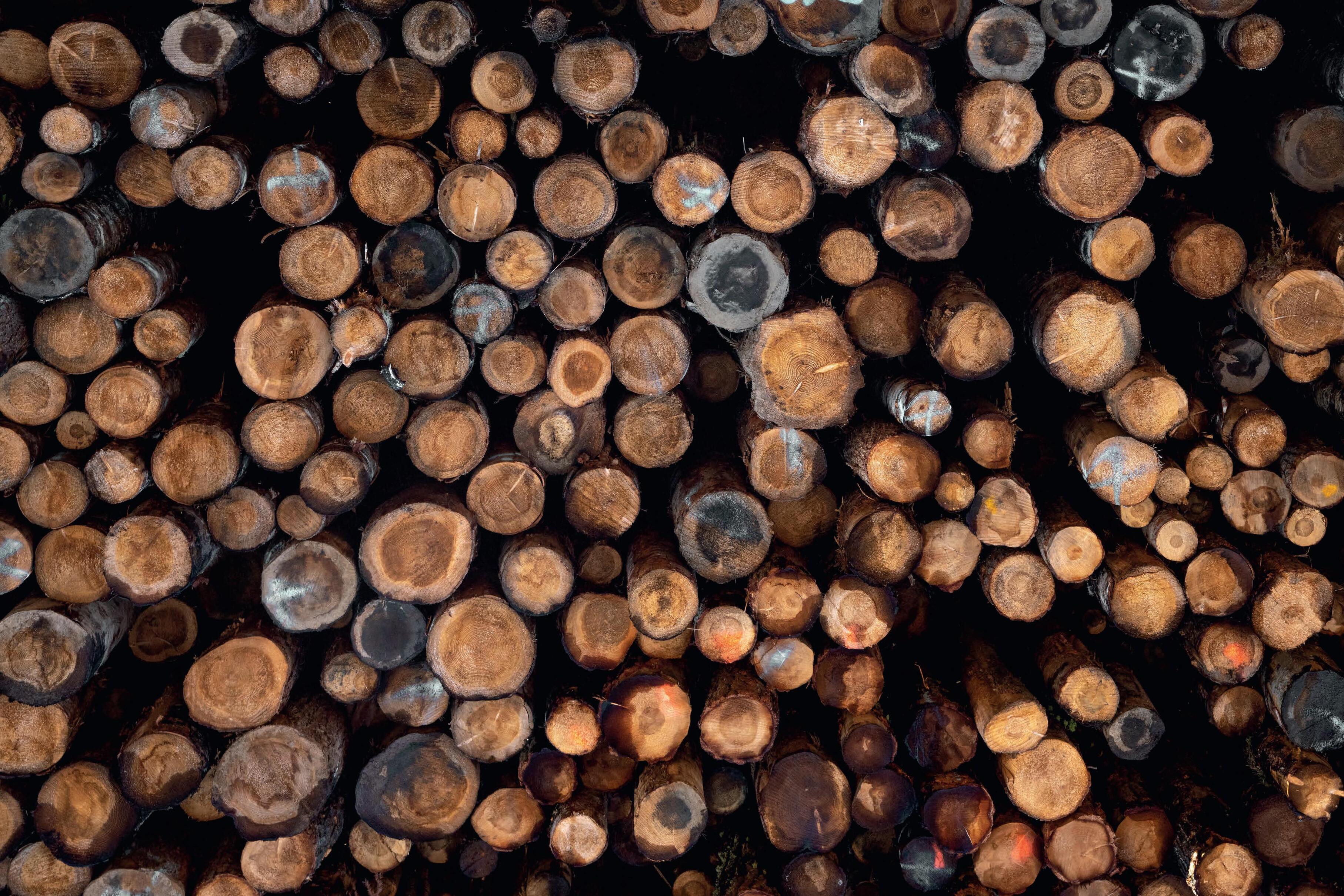
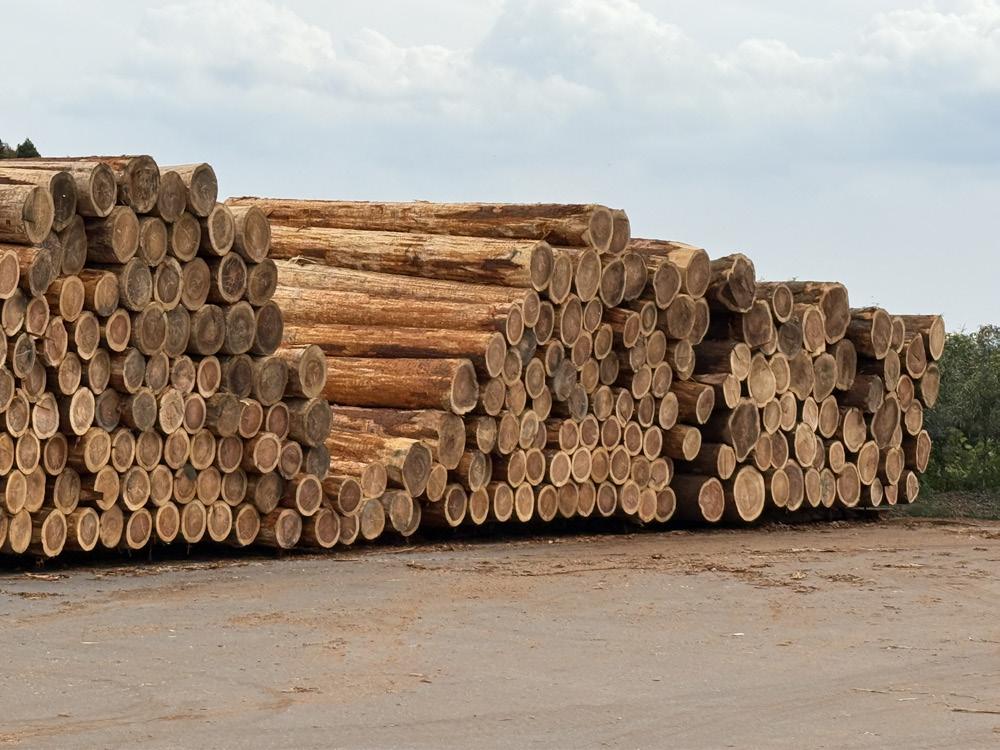
Japan’s land area is about 85% of the combined area of Washington and Oregon states in the U.S., but 67% of its land is forested, including 10 million hectares of plantation forests, 4.4 million hectares of which are Japanese cedar plantations, and 2.6 million hectares of hinoki plantations. How does Japanese cedar fit into this specifically? Of planted forests in Japan, Japanese cedar makes up 44%. Even more impressive, 18% of Japan’s total forest land is exclusively plantation grown cedar.
We can see the difference to western red cedar, which is almost all harvested from natural forests. The current western red supply cannot compare with Japanese cedar. With the decreased demand in Japan’s domestic market due to depopulation and other factors, coupled with the approval by ALSC of Japanese cedar 2x4 design values, the U.S. market has a prime opportunity to secure a steady supply of graded structural lumber products.
Japan uses a systematic approach of incentives, regulations, and strategizing at different levels of government to manage their forest lands. Now the Japanese govern-
ment is pursuing outlets and trying to expand usage of their timber products abroad. One of the major reasons for the Japanese government to push for credentials like the design values in the U.S. is that the supply of Japanese cedar is so much more than what Japan can consume. Thus, there is strong economic pressure to export both logs and finished goods. More supply will help to ensure access to higher quality grades. Japanese cedar may become the next big thing for the consumer looking for consistency of product and supply. And because it is plantation grown, it is generally an economical option that does not fall short on quality. If we were to compare western red and Japanese cedar products that are already traded in the U.S. market, Japanese cedar tends to be cheaper overall.
In simple terms, where does Japanese cedar stand now? Trees from plantations that were planted 50 years ago are now ready and are actively being harvested. Thanks to succession planting efforts in these plantations there are trees ranging from samplings to 100 years old with the vast majority currently aged 45-70 years. For reference, Japanese cedar can be harvested as early as 30 years old. Japan is sitting on a proverbial stockpile of timber and, with current management and renewability efforts, we should see a high level of supply for years to come.
But what is the real challenge in all of this? Waiting to see if the U.S. market is accepting of structural grade Japanese cedar. Building recognition and trust takes time. Japanese cedar should be an interesting lumber species to watch over the next few years. MM

PAUL D. OWEN
Born and raised in Japan, Paul D. Owen has over 37 years of lumber experience working with U.S. lumber imports and exports focused heavily on Japan. He has been importing Japanese cedar lumber from Japan since 2016. He serves as director of international sales for Bowers International, a division of Bowers Forest Products, Beavercreek, Or. (www.bowersforestproducts.com).
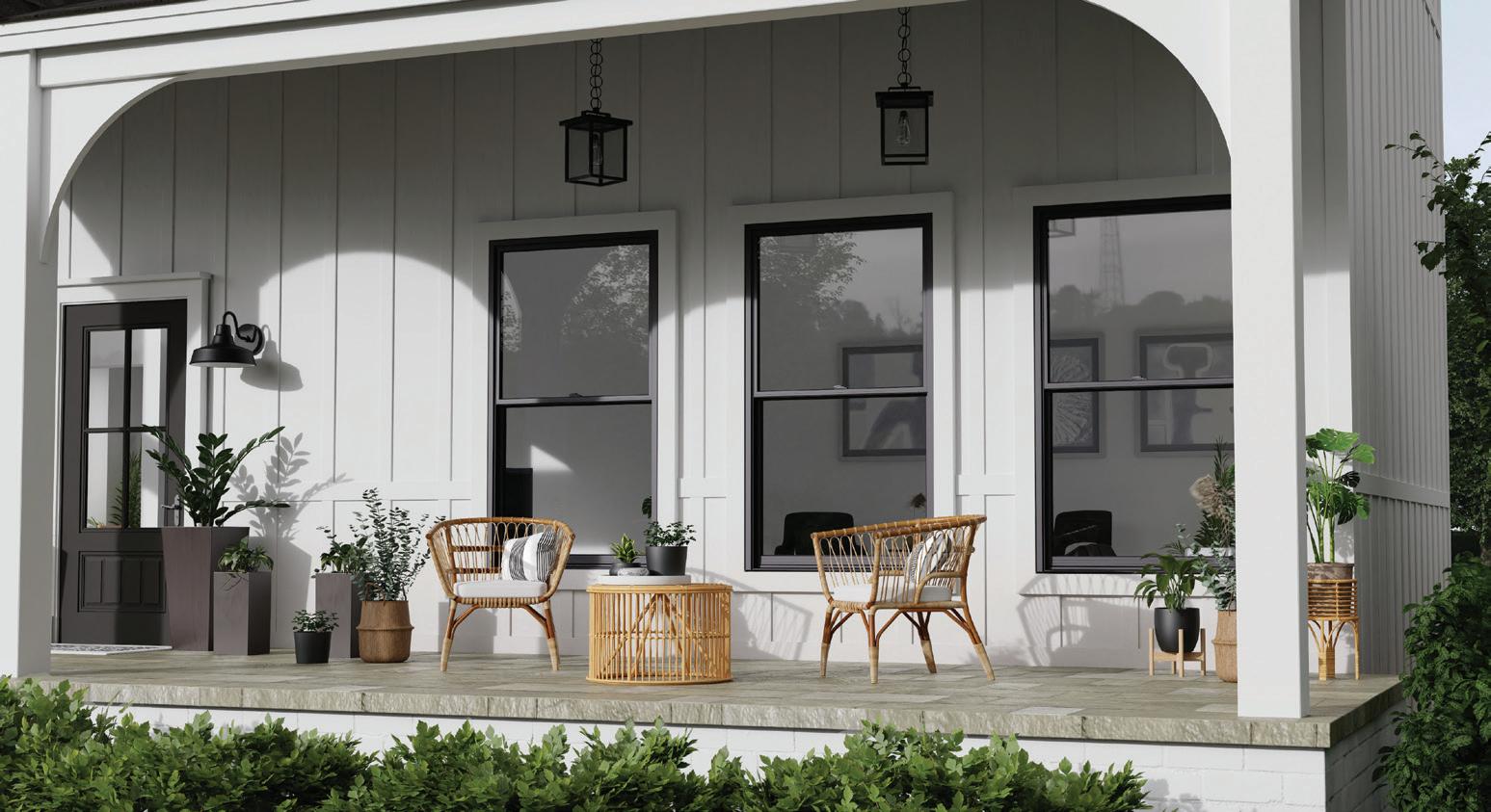
WALK DOWN ANY STREET in a new development and you’ll see them. Black and bronze windows are everywhere. Homeowners love the sleek, modern look, and the demand for dark finishes continues to grow year after year.
But for dealers and builders, offering these finishes requires more consideration than just a trending aesthetic. It’s about ensuring the product delivers the same long-term performance as traditional white windows. And the ability to do that depends on having the right manufacturing technology.
The industry would love to make dark-colored windows the same way we make white ones, but dark finishes introduce unique performance challenges.
• Scratching: Painted finishes are designed to adhere to vinyl but are susceptible to chipping or scratching, exposing the white substrate beneath. This can lead to homeowner complaints, callbacks, and warranty claims.
• UV and Fading: Without the right development and composition, black and bronze colors fade under prolonged exposure to sun and weather, losing their rich look and producing a gray tone no one asked for.
• Overheating: Dark surfaces absorb heat. On a hot day, a black profile can reach temperatures 50–60°F hotter than the surrounding air. If unmanaged, this heat buildup can stress the material and compromise performance.
To solve these challenges, the industry has evolved to include technologies designed for durability. The most reliable answers are lamination and coextrusion. Both are advanced manufacturing methods that blend style with performance, giving homeowners the bold colors they want, while giving dealers the products they can trust to last.
Lamination is the process of producing vinyl extrusions and then covering them with a bonded multi-layer acrylic film that delivers the desired color and serves as a protective surface. This acrylic layer is engineered to resist scratching, fading, and heat buildup, helping finishes stay vibrant without the need for repainting while adding durability in tough climates.
Coextrusion is a process where two materials are extruded together, fusing a thin outer layer of colored vinyl to a white substrate during manufacturing. Advanced pigments are built into the outer layer to reflect heat and resist UV, creating a finish that is part of the profile itself. Because the color isn’t applied afterward, it resists chipping, peeling, or revealing a white layer underneath. The thin exterior layer also manages heat buildup, protecting structural stability.
In both cases, the end benefits are clear for everyone: homeowners get long-lasting beauty; builders get easyto-install vinyl windows, with no added steps; and dealers get to sell durable, vibrant products with confidence.
When it comes to dark finishes, proof matters. It’s important to partner with brands that back up their products with rigorous lab and field testing, ensuring windows perform in real-world conditions as well as in theory. Here are the tests that demonstrate true durability.
• Small-scale testing (ASTM D4803): Measures heat buildup in colored vinyl samples under controlled conditions.
• Full-scale testing (AAMA 1506): Exposes entire windows to cycles of infrared heat to monitor for warping, deformation, or excessive heat buildup.
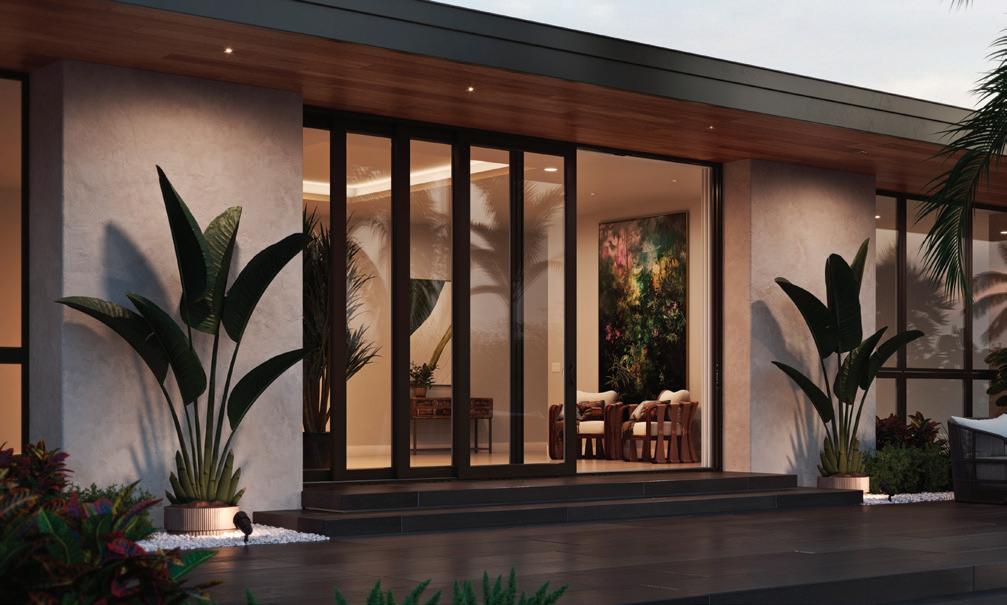
COEXTRUDED BLACK vinyl exteriors, such as MaxView Multi-Side Patio Doors from Simonton, are produced by fusing a thin, colored vinyl layer with a white substrate during the extrusion process. Pigments are built in to resist UV and heat.
• Field testing: Products are installed in harsh climates—like the Arizona desert—to track real-world performance, color fastness, and durability in direct sun, high heat and fluctuating temperatures.
These tests ensure that black and bronze finishes not only look good on day one but hold their appearance and structural integrity for years.
For dealers, builders and contractors alike, advanced finishes deliver more than just the sleek black and bronze designs homeowners want. They provide durability that reduces warranty claims, minimizes callbacks, and installs with the same ease as standard vinyl.
By choosing technologies that have been proven through rigorous testing, you can offer customers lasting style and performance, while protecting your business from unnecessary risks. Black and bronze windows aren’t just a trend; they can be an opportunity to build trust, deliver value, and stay ahead of the market. MM

Travis Arthur is the corporate test and compliance manager for Simonton Windows & Doors at Cornerstone Building Brands, where he oversees regulatory standards, product compliance, and building code integration across product lines (simonton.com).


------------
BY JAMES OLSEN
WE CANNOT BEAT the computer at information dispensing. We do have an advantage—if we choose to use it—in the inspiration business. We must first accept that we are in the inspiration business, and then we will have to commit to more inspirational speech.
If a young man is being paid to make pizza and he spends his whole shift cleaning up the parking lot, he may be working hard, but he is working hard on the wrong thing. Many sellers are working hard at information dispensing while ignoring the persuasive and inspirational arts.
I'm happy with my current supplier
Goals: (1) Get the customer to relax. (2) Keep the conversation going—“uh, uh, well, uh” won’t get it done. (3) Get permission to continue calling.
The secondary supplier strategy. We don’t challenge the customer. Any kind of “I-can-do-it-better-or-cheaperthan-who-you-are-buying-from-now” direct challenge will raise our potential customer’s defenses and will make it difficult do get permission to continue calling.
“John, I don’t want to get in the way of the business you are already doing. What I would like is to find out more about you and your business and become a secondary supplier to you. That way, you can get to know the quality of my service and products and if anything does happen with your current supply, we will already have a working relationship and we will continue to supply you without interrupting the smooth running of your business.”
The Challenge Strategy. To get some customers out of their current habits (buying from others) we will have to challenge their view of the world. This is delicate; it can backfire and blow up, so use with care.
Customer: “I’ve been buying from Susie Smithers for 20 years. She has been with me through thick and thin, so I owe her. In our current market, I can barely keep her happy, much less take on a new supplier.”
Bold Seller: “It’s great that you are loyal. But changing times call for changing strategies. In shifting times only the crafty, flexible and the open minded survive. I bring new and different ideas to my customers that help them make money in these dynamic times, why don’t we open a dialogue?”
W.S.I.B.F.U.?
The real objection behind all objections is, “Why Should I Buy from You?” About 95% of the sellers you compete against every day cannot answer this question in an inspi-
rational way; 95% wing it so they all sound the same. Here’s how to write a great W.S.I.B.F.U.?:
1. No more than four sentences.
2. What’s in it for the customer? Saying you are the biggest and baddest and you have been in business for 1,000 years means nothing to the customer. They do not care. Telling them you are currently helping people just like them to make money and buy better products, etc., will resonate.
3. Something about ourselves. If we go to the psychologist and she says, “Tell me about your family,” and we spend the hour talking about everyone but our father, the psychologist surmises issues with our father, by omission. The seller who only talks about how great their company is without mentioning something about themselves—the thing they most want to communicate (“I am a man you can trust,” “I make a great partner,” “I treat your needs as mine,” “I am passionate about creating profit for my customers,” “I’m fun to do business with”)—sends by omission the message that they don’t believe in themselves. Our customers want to buy from people who are confident. Say something good about yourself; don’t go overboard, but we must say something about the value we bring.
4. Tailor to personality. Everyone is different. Communicate with customers in their language. We approach the aggressive buyer differently than the laid back buyer.
The most important thing is to have a well-planned, inspirational answer you believe in. “You should buy from me because I will bring you value. There are all kinds of suppliers in this market. Direct suppliers, wholesale suppliers, distribution suppliers. I am a customer needs supplier. What my customers need, I supply them. I am a profitmaking partner. That’s why my customers buy from me and that’s why you will love doing business with me also.”
W.S.I.B.F.U.? MM

James Olsen is principal of Reality Sales Training, Portland, Or., and creator of SellingLumber.com. Call him at (503) 544-3572 or email james@realitysalestraining.com.

Re Reddwwood i ood is
thrives in some of the most productive timberlands in the world. Redwood is known for its timeless durability without the use of chemicals. Due to its flawless formation, there has never been a Redwood recall. There is a grade of Redwood for every application, every budget, and every customer.
“Growing beyond measure.”
Call or visit us today. Our family of Redwood timberland owners will continue to be your reputable and reliable source of Redwood.

BY PAIGE McALLISTER
FIRST, A QUICK disclaimer: I am an HR professional, not an IT expert. When it comes to the technical aspects of your computer infrastructure, including integrating AI, please consult with people knowledgeable with that technology and who you trust to help you determine what is right for you.
Artificial Intelligence (AI) is everywhere whether you want it to be or not. In the short time AI has been part of the public domain, its uses and access have increased exponentially. A large number of software programs and platforms automatically offer their users some sort of AI assistance. During the course of writing this article, my email offered to draft my reply to the request to write it, my internet browser summarized its findings from my search inquiry before listing some of the links for me to read myself, and my word processing program offered to draft the whole article for me based on whatever prompts I entered in (good news, bad news—I opted to write it all myself). All of this was available to me without my downloading or accessing any AI-specific programs; these functions are just part of the programs I have been using for years.
Since the issue is no longer if you want AI to be part of your day, you need to assess when and how the people in your company will use it. In most cases, AI does not replace people. Instead, when done right, AI allows employees to work smarter by eliminating mindless, repetitive tasks and improving their performance by supporting them with their job tasks.
AI can be used in management, operations, finance, IT, HR, marketing, administration, research, etc. There are very few jobs that could not recognize a benefit from using AI. Therefore, I recommend every company include an initiative in their 2026 planning to explore AI implementation and usage.
However, it is critical to realize AI’s limitations and know it is just one tool in your toolbox. For example, we have researched and experimented with how AI can help with various HR functions, including drafting a handbook, doing research, and screening candidates with the following results:
• Handbooks – After entering specific criteria we use to develop handbooks, the AI-developed handbook did not include all recommended policies or required state laws and was written in a way that would be hard for many employees to understand.
• Research – While gathering information on a topic, the AI-generated summary conflicted with the actual state law even though it provided it as a reference.
• Screening – After inputting a job description, the results of the AI-based screening of applicants eliminated some very qualified candidates and included some that did not meet the basic criteria. Additionally, when used to select candidates, any AI tool must be properly vetted and tested to ensure it is not generating discriminatory results.
How to use AI: Here are just a few of the unlimited examples of how AI can help your employees (and therefore your company) perform better.
Productivity: Help employees use their work time more constructively, freeing them up to focus on more strategic and profitable responsibilities.
• Task management – Pull action items from emails, virtual meetings and recorded meetings and track their progress.
• Time management – Plan the time it takes to complete tasks or projects while planning an optimized workday to get everything done.
• Team coordination – Develop team boards for better collaboration and communication.
Caution: Every employee has different ways they work so make sure all tools support, not restrict, how they work best.
Writing: Help employees, especially those having issues, draft better communication.
• Save time – Create an initial draft using basic information and parameters.
• Improve readability – Polish up an employee’s first draft and make it suitable for the target audience.
• Correct grammar – Clean up tricky formatting such
as citations to avoid plagiarism.
Caution: Be sure to review and refine any AI-drafted communication to ensure it is accurate, on message, and has a personal tone and style.
Research: Help employees find improved topics and sources and to better understand the content.
• Brainstorming – Generate new ideas and refine topics from broad concepts to determine your next course of action.
• Find more sources – Find different and more ontarget resources for material.
• Analysis – Have complex documents summarized or specific information extracted to match topic.
Caution: Verify all sources before relying on the information and be sure all references are properly cited.
How to get started: Regardless of how you plan to use AI in your company, you should include the following steps in your implementation plan.
• Determine how you want or may want AI used to meet the needs of applicable departments, positions, and/or employees.
• Designate a person or, preferably, a team with IT, operational, legal, and financial responsibilities to investigate valid options which will perform the tasks needed at the budgeted price without compromising network security.
• Research the laws and regulations in your state, if applicable, to ensure you are using AI properly and compliantly. More states are passing such legislation so stay up-to-date on any changes.
Q. We have an employee who regularly needs to be reminded to do certain tasks. They manage most of their workload well, but there are one or two monthly responsibilities we need to remind them to do almost every month. What can and should we do?
A. Holding an employee accountable to performing their job duties is an important part of every supervisor’s and manager’s job. However, what that will look like will depend on factors such as the critical nature of the task, other employees being able to perform the task, the employee’s ability to do the task correctly, and/or their time availability to perform the task when needed.
The more important a task is or the more critical that a particular employee performs that task escalates the reaction. That may be a written warning or two before eventually a final warning and possibly termination for failing to perform the job duties. A truly critical task should have a backup employee trained and ready to step in as part of a smart contingency plan.
However, if the task is minor or can be done by someone else or if the employee doesn’t have the time or capability to perform the task, disciplinary action may not help. Instead consider reevaluating the task (timing, technique, need, etc.) or assigning it to someone else. Or perhaps find ways to remind the employee of the deadline by sending an email each month or putting a reminder on their calendar so they don’t forget.
• Ensure your options protect the confidentiality of private and proprietary information.
• Assess the skill and aptitude of the individuals who will be using AI to ensure they can use the selected tools. DO NOT make assumptions based on protected groups (i.e., age, gender, national origin, disability) as to who will and will not be able to use AI effectively.
• Explain what AI is meant to do (i.e., save time by reducing repetitive tasks) and not do (i.e., replace your human capital).
• Find opportunities to train employees in how they can and are expected to use AI in their jobs and then have them relay what they learn to others.
• Encourage employees to safely experiment with AI to find other ways to improve productivity, clarity, profitability, etc.
How to protect yourself: When implementing a new structure in the workplace, especially an emerging technology, it is critical to create a solid foundation which includes the following:
• Until you have a defined company-approved usage, issue a clear policy to all employees prohibiting them to use AI without specific management approval.
• Set guidelines for what tools can and cannot be used and who can use them for what tasks.
• Draft and publish policies and procedures covering tools that are and are not selected by the company.
• Monitor employee use and consistently enforce your policies to ensure proper usage but, more importantly, to ensure confidentiality is not violated.
• Experiment safely using a well-trained group to determine what works before rolling out to everyone.
• Keep communication open so employees know they can ask questions.
• Reassure employees that AI is being used as a tool to enhance their performance, not to replace them.
• Keep your other protocols since AI is not perfect— check for mistakes, do your own research, proofread the document, and ensure the message is what you want and the tone is personal/not artificial.
While AI can seem intimidating, every company needs to accept that AI is impacting every aspect of our lives in some way. Companies that refuse to address how AI can help them will be outpaced by their competitors who do.
The Workplace Advisors can help you move from AI curiosity to AI clarity. We offer a customizable “Use of AI” policy template to help you set guardrails, protect your organization, and give employees clear guidance. Email us at hello@theworkplaceadvisors.com to request a copy. MM


------------ BY DAVE KAHLE
“HOW MANY OF YOU have too much to do and not enough time in which to do it?”
I’ve asked that question in almost every one of my seminars. You can guess the answers. Almost every hand goes up. The only ones who don’t raise their hands are the people who are a few months away from retirement and are starting to check out. It doesn’t matter what the job title is—salesperson, customer service rep, manager, CEO, entrepreneur. Geography doesn’t matter either. I have seen the same response in Zimbabwe, Ghana, Mexico and Colombia as I do in the U.S. and Canada.
It is not just your job, it’s not your company, it’s not your industry, and it’s not your country. It is almost everyone and everywhere. It is one of the defining characteristics of the 21st century.
Because of the pace of change, the proliferation of media and the speed of communication technology, almost everyone is overwhelmed, stressed and distracted. Chaos reigns all around us. I like to call it the Age of Turmoil.
All this elevates time management to the top of the list of essential survival habits. Not only do we need to master it, but we also need to get it right. Our ability to function in our chaotic environment depends in a large way on the decisions we make about how we use our time.
And that’s the rub for many people, who view successful time management as jamming more tasks into the course of the day. Their view revolves around the concept of efficiency. That’s what gives rise to the practice of multi-tasking—working on multiple projects or tasks at the same time in the pursuit of efficiency. Under this view, if you are able to jam more tasks into the day, you are good at time management. That is a bit of a shadow accomplishment. Efficiency can help you use your time better, but it is limited. The business-
person in pursuit of efficiency often finds himself/herself successfully completing that which should not have been done in the first place.
John Maxwell said: “Efficiency is the foundation for survival. Effectiveness is the foundation of success.”
And Peter Drucker once reflected: “There is nothing so useless as doing efficiently that which should not be done at all.”
A better approach is to focus on effectiveness. Whereas efficiency focuses on accomplishing more, effectiveness focuses on accomplishing that which is more important.
Here’s an example: Let’s say you’ve decided to make your living as a housepainter. You invest in all the latest equipment. The big day comes, and you paint your first house. You’re very proud of the fact that you have been incredibly efficient—it took you 35 hours to paint the house, while most painters would have taken 50. As you sit in your truck feeling pretty good about yourself, you begin to create the invoice, you look at the contract, and then back at the house, and a sick feeling crawls through your gut. You realize that you painted the wrong house!
You were incredibly efficient, and horribly ineffective.
So, what does it mean to focus on being more effective? The specific applications vary from time to time and situation to situation. And effectiveness is relative to the other things you could do. For example, what might be the most effective thing to do on Monday, may not rank that high on Tuesday.
However, there are some general guidelines. Effectiveness speaks to the importance of the task. Something is important because it supports your higher values and/or moves you closer to your goals. These two issues can be easily translated into criteria to judge
and rank every task. You can express the criteria as questions. So, in sorting through a list of tasks you ask these two questions of the list:
(1) Which of these items most supports my core values?
(2) Which of these items moves me closer to attaining my goals?
The answers will bubble up to the top the one or two things that are most effective.
As you can see, before you can determine that something is effective, you must have done some prior work. You can’t, for example, determine if some task brings you closer to your goals if you have no goals.
That’s one of the reasons I recommend a system of creating goals that includes annual goals, monthly increments, and weekly and daily priority lists. You can dig deeper into that here.
The same is true for your core values. You can’t determine if something supports your core values if you don’t know what they are. Taking some dedicated time to identify that which is most important to you is a valuable use of time. It’s always wise to create a written statement that articulates your core values. Putting it on paper forces you to be specific and implies commitment. It then allows you to review it and refine it every few years.
With those two pieces in place, you are able to move from efficiency to effectiveness, turning chaos into control. Apply them with discipline and you’ll have mastered one of the key success strategies of this turbulent world. MM

Dave Kahle is a leading sales authority, having presented in 47 states and 11 countries and written 12 books including How to Sell Anything to Anyone Anytime and The Good Book on Business. For more information, visit davekahle.com.
The remodeling market is poised for growth in the coming years as many structural tailwinds will not be changing quickly, according to industry experts at a panel hosted by the NAHB during the recent IBS in Orlando. Factors contributing to the continued growth of the remodeling market include:
• The aging housing stock, with the typical age of a home increasing from 31 years old in 2006 to 41 years old in 2023.
• The mortgage rate lock-in effect, where homeowners with low mortgage rates choose to stay in their current homes instead of moving and taking on a higher rate.
• The trend for older homeowners to age-in-place. Looking ahead, residential remodeling activity is expected to increase 3% in 2026 and an additional 2% in 2027 in inflation-adjusted terms.


Hi-bor® brand treated wood is a borate treated wood product designed for interior house framing in Hawaii. Hi-bor treated wood resists attack by Formosan and subterranean termites and numerous household insects and pests, as well as fungal decay. Hi-bor borate treated wood is also backed by a 20 year limited warranty*.


FirePro® brand re retardant treated wood is treated with a patented formulation that contains no phosphates and has been shown to exhibit exceptional re performance properties without compromising other critical engineering properties such as strength, durability, corrosivity, and hygroscopicity. FirePro treated wood is also backed by a 50 year limited warranty*.
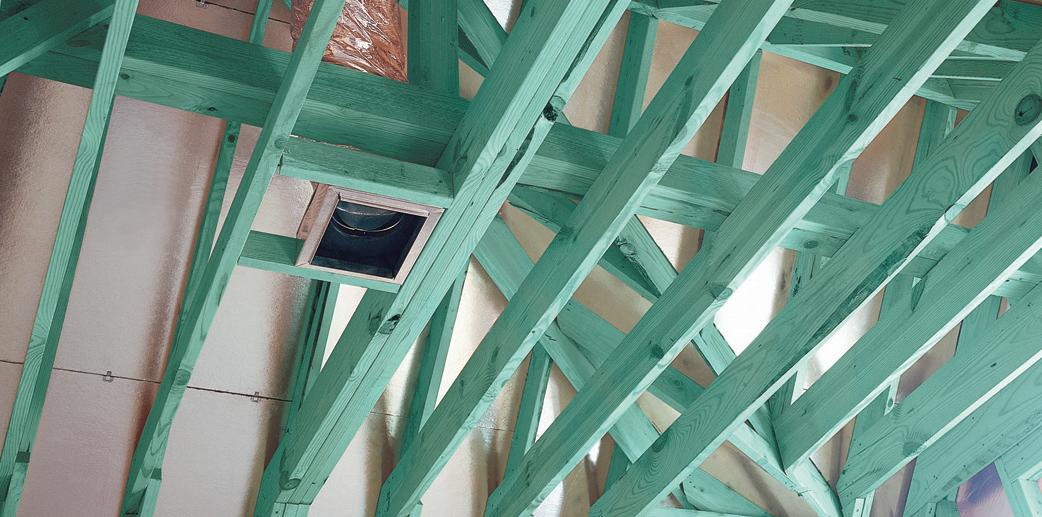

Advance Guard® borate pressure treated lumber is recommended for sill plate, furring strips, joists, studs, roof trusses, blocking, rafters, beams, and other framing applications. Advance Guard is also recommended for fascia, trim, wall sheathing, roof sheathing, and sub- oors. Advance Guard borate pressure treated lumber is also backed by a lifetime limited warranty*.
QXO, Inc., Greenwich, Ct., has entered into a definitive agreement to acquire Kodiak Building Partners, Englewood, Co., from Court Square Capital Partners for approximately $2.25 billion.
Kodiak operates 110 locations in 26 states from coast to coast, locally led and branded.
Their 43 facilities in the West include Barton Supply, Direct Lumber & Door of Colorado, Jones Heartz/Drywall Material Sales, Liberty Doors & Windows, and Western Interior Supply in Colorado; Albeni Falls Building Supply, Mandere Construction, Northwest Building Components, Ponderosa Building Supply, and Valley Lumber & Rental in Idaho; Diamond Home Improvement, Medallion Windows & Doors, and Miller Lumber Co. in Oregon; Builders Alliance, Carl’s Building Supply, Frontier Building Supply, and Thomas Building Center in Washington; Jenkins Lumber & Hardware in Wyoming; and Sun Mountain Doors in Colorado, Montana, Nevada, Utah, New Mexico, California and Arizona.
Other operations include 11-unit American Builders Supply in Florida, nine-unit Simonson Lumber in Minnesota, seven-unit Zarsky Lumber in Texas, and three-unit Christensen Lumber in Nebraska.
The purchase price includes $2.0 billion in cash and 13.2 million shares, with QXO retaining the right to repurchase these shares at $40 per share. The deal is expected to close early in the second quarter of 2026.
Kodiak generated approximately $2.4 billion of revenues in 2025 as a U.S. distributor of lumber, trusses, windows and doors, construction supplies, waterproofing, roofing, and complementary exterior products, as well as value-added assembly, fabrication and installation services, with concentrations in the Sunbelt and Mountain states. About 40% of Kodiak’s 2025 revenues were generated in Florida and Texas, where building market growth has consistently outpaced national market growth over the last decade.
Brad Jacobs, chairman and CEO of QXO, said, “The acquisition of Kodiak is highly complementary to
our existing business. We’ll be able to deliver more value to customers across our combined base by cross-selling products and support services, and with a greater presence in key markets. And we expect the integration to accelerate margin expansion through scaled procurement, network optimization, AI-powered inventory management, and other tech-enabled operating efficiencies. Our acquisition pipeline remains very active, with plenty of dry powder from our recently announced equity financings led by Apollo and Temasek.”
The integration of Kodiak’s structural and exterior construction product offerings with QXO’s existing range will better position QXO to grow market share and wallet share with large homebuilders. This aligns with its strategy to become a preferred supplier serving the full project lifecycle of large, multi-site developments and master-planned communities.
Formed with last year’s acquisition of Beacon Building Products, QXO is the fastest growing publicly traded distributor of building products in North America. It expects to achieve its target of $50 billion in annual revenues within the next decade through accretive acquisitions and organic growth.
Founded in 2011, Kodiak has approximately 5,500 employees who serve over 10,000 customers, including contractors, subcontractors, remodelers and residential, commercial and industrial builders.
After more than 50 years, Blossom True Value Hardware, Mountain View, Ca., plans to close when its lease expires this summer.
Longtime owner Paul Zeitman said business has been falling since customers began increasingly shopping online post-pandemic. Other contributing factors are regular customers moving out of the area, the opening of more Ace Hardware stores in the region, and rising tariffs, which has made their imported merchandise less profitable.
Zeitman has worked at the store ever since his father opened it 53 years ago in Los Altos, Ca. It has been in Mountain View since 2006.
Ace Retail Group opened Ace Hardware of Mission Hills, Mission Hills, Ca., on Jan. 30, its 23rd location in the state. Headed by general manager Armando Casilla, the 15,000-sq. ft. store will hold a grand opening celebration on March 13-15.
ABC Supply opened a new branch in San Juan Capistrano, Ca., managed by Jeron Mazurk.
Western Forest Products announced that the temporary closure of its Chemainus, B.C., sawmill will be extended through the end of 2026.
WFP also agreed to sell its Stillwater Forest tree farm near Powell River, B.C., to the Tla'amin Nation for $58.5 million.
Valley Steel & Wire, Fort Collins, Co., has been formally approved for membership in the Associated Building Material Distributors of America.
AZEK TimberTech has launched a new “The Future of Decking” marketing campaign.
Accoya Color wood siding achieved Wildland-Urban Interface (WUI) certification.
Ace Hardware’s retail support centers are now stocking 60 core SKUs from QuickFitting’s SurePress line of plumbing and HVAC solutions.
Holt of California, Pleasant Grove, Ca.; Quinn Lift, City of Industry, Ca.; and Wyoming Machinery Co., Casper, Wy., were recognized as 2026 Dealers of Excellence by Mitsubishi Logisnext Americas.
PrimeSource Building Products has introduced the Wolf Outdoor Living brand, bringing together its Wolf Home Products, CityPost, Keylink and Fortress Railing businesses.
Ace Hardware added 180 new domestic stores in 2025 and cancelled 74 stores, increasing its total U.S. store count to 5,250.
Milgard Windows & Doors, Tacoma, Wa., was selected as the window and door brand of choice for the recently revealed 2025 Northwest Idea House in Gig Harbor, Wa.

Butch Bernhardt plans to retire later this year as executive director for the Western Wood Preservers Institute, Vancouver, Wa. A search is underway for a replacement, hoping to be installed by June 1.
Chelsea Zuccato has been promoted to vice president of sales & marketing for Patrick Lumber Co., Portland, Or. Lena Jacobson is now controller.
Brian Bunt, ex-WindsorONE, has been appointed director of sales & marketing for Belco Forest Products, Shelton, Wa.
D.J. Fahey has been named mgr. of Knecht Home Center, Canon City, Co., which this month will be rebranded as Mead Lumber and Ace Hardware. He succeeds longtime store mgr. Ron Woolsey, who retired at the end of 2025.
Eric Matute, ex-Bear Forest Products, is now a product mgr. with Ganahl Lumber, Corona, Ca.
Austin Tillotson, ex-Carlson Forest Products, is a new Ogden, Ut.-based SPF lumber trader for Langevin Forest Products, Sterling, Ma.
Steve Stone, ex-Hardwoods, has joined LBM Advantage, as member sales mgr. for the West, based in Southern California.
Sean Mobley, ex-Bridgewell Resources, is a new lumber trader in Portland, Or., for Idaho Pacific Lumber Co., Meridian, Id.
Brandon Austin has been named paint department mgr. for Koverage Building Supply, Bonners Ferry, Id.
Issac Espinoza is store mgr. of the new 84 Lumber in La Mirada, Ca.
Joshua Householder, ex-Simpson Strong-Tie, has moved to Weyerhaeuser, Santa Clarita, Ca., as sales mgr. for Southern California. Katy Woodworth has been appointed senior mgr.-payroll & workforce management in Seattle, Wa.
Eric Baranda, ex-Building Industry Association of Hawaii, has moved to Honsador Lumber, Honolulu, Hi., as a marketing lead.
Kyle Durkin, outside sales, HPM Building Supply, KailuaKona, Hi., moved from paint to custom luxury windows & doors.
Bryce Simmons, ex-Pelican Bay Forest Products, is a new Madras, Or.-based lumber trader for Utah Lumber, Harrisville, Ut.
Sterling Jackson is a new account mgr. with HD Supply, Denver, Co.
Tim Romero has joined the contractor sales team at Gold Beach Lumber, Gold Beach, Or.
Dave Rumbaugh has been promoted to vice president of purchasing for 84 Lumber, Eighty Four, Pa. He succeeds Mitch Wagner, who has retired after 42 years with the company.


Angella Broesch has been promoted to senior vice president of human resources and Christopher Forrey to senior VP of finance & investor relations for Boise Cascade, Boise, Id. Will Pearson is now commodity product mgr. for Maltby, Wa.
Scott Kinsman, ex-Cascade Lumber, is now in building material sales with Western Building Center, Kalispell, Mt.
Jocelyn Guzman has joined Panda Windows & Doors, Las Vegas, Nv., as regional sales mgr.-California residential.
Ernie Pruneda is now with Builders FirstSource, Los Angeles, Ca., as a seismic & framing hardware sales specialist. Megan Chambers, ex-Merchants Metals, has joined BFS in Sacramento, Ca., as a product sales specialist.
James Code is set to retire April 7 as CFO of Doman Building Materials Group Ltd., Vancouver, B.C. He will be succeeded by Darren Gwozd, ex-Western Forest Products.
Chad Ruth, director of business development & integrations, Do it Best, Fort Wayne, In., has retired. He owned Lyndale Garden & Hardware for 10 years before joining United Hardware Distributing Co. in 2007 and was president & CEO when Do it Best acquired United in 2024.
Kathy Abusow is retiring this year after 19 years as president and CEO of SFI. Her responsibilities will be split among new SFI president Jason Metnick, new PLT Canada president Christine Leduc, and a new CEO.
F. Nicholas Grasberger III has been elected independent chairperson of the board of Louisiana-Pacific Corp., Nashville, Tn. He takes the mantle from Brad Southern, who retired from the board and as CEO of LP. New CEO and president Jason P. Ringblom has joined the board. Ozey K. Horton Jr. and Dustan E. McCoy will retire from the board effective May 1.
Irene Tasi, chief transformation officer, PPG, has been appointed to the board of directors of Trex Co., Winchester, Va.
Amit Banati was appointed the next CEO of Fortune Brands Innovations, effective May 13. He will succeed Nicholas Fink, who departs April 1 for another opportunity.
Geoff Hesselton has been promoted to director of technology delivery for LMC, Wayne, Pa.
Chris Fearn has been appointed vice president, transformation at Metrie, Vancouver, B.C. He succeeds Ian Banks, who is retiring later this year after a 35-year career.
Chris Olmstead, general mgr., 84 Lumber, Boise, Id., was named the chain’s Manager of the Year.
Steve Swanson, Swanson Group, Glendale, Or., has for the second time assumed the role of Chairman of the U.S. Lumber Coalition. He succeeds Andrew Miller, Stimson Lumber Co., Portland, Or.
Tammy Flue was promoted to mgr. of employee medical benefits at Mungus-Fungus Forest Products, Climax, Nv., report co-owners Hugh Mungus and Freddy Fungus.



At the end of December, longtime owners Jim and Erin Wilson shuttered 100-year-old Cathlamet Building Materials, Cathlamet, Wa.—but the business didn’t stay closed for long.
David and Sandi Hendrickson stepped in as new owners, and reopened the business on Feb. 17.
They will be assisted by their daughter and son-inlaw, Megan and Tracy Elliott. David will handle purchasing. Megan, who will serve as manager, plans to keep the existing inventory, but will expand into new lines, such as pet and livestock feed and supplies, that locals are looking for.
Megan shared, “We all are focusing on rebranding CBM to better meet the needs of all Wahkiakum County residents, from contractors to do it yourselfers, crafters, gardeners, and weekend warriors, our ideas are endless—and exhausting! We want to give back to Cathlamet as our town has given so much to us over the years.”
Tracy Elliott is a machine operator for C&C Logging, Kelso, Wa., and previously spent 30 years at Jerry Debriae Logging Co.
Former owner Jim Wilson joined Cathlamet Building Materials as a manager in 1991 and purchased the business in 1998.
CHS Northwest plans to divest its final hardware store, Fairway True Value in Lynden, Wa. The company has been looking for a buyer since the fall.
In case the new owner does not intend to retain all employees, the company filed a WARN notice with the Washington State Employment Security Department on Jan. 28, which would permit the business to lay off some or all of its 11 employees. The notice revealed that sales of other CHS-owned locations may be forthcoming. Several properties are currently for sale in commercial real estate listings.
Contrary to several press reports, CHS has no intention of closing the hardware store. According to Eric Ellis, senior director of operations for CHS Northwest, “CHS filed a WARN notice after updating our employees at the Lynden True Value store of our progress on securing a buyer for the business. As our employees learned about in November 2025, CHS is actively marketing the location for sale. Since that time, we have been working with a potential buyer for the Lynden True Value store. We value our employees and are supporting them through this time. It is not our intention to close this location, but rather to find an owner who is more directly focused on continuing and enhancing the retail experience. CHS will continue to operate in the area, with a focus on providing customers and owners with energy and agronomy solutions.”
Although Fairway was its last hardware store, CHS Northwest continues to operate six farm and home locations and eight fuel and express locations throughout western Washington.
CHS Northwest’s predecessor, Whatcom Farmers Co-op, purchased Fairway True Value in 2013 with the retirement of longtime owner Irv Timmermans. At the time, Whatcom operated two other hardware stores— Blaine Ace Hardware, Blaine, Wa., which it closed in 2017, and Fairhaven True Value, Fairhaven, Wa., which it closed in 2018.
Boise Cascade is expanding its millwork operations in Vancouver, Wa.
The company added a door line in a secondary location near its Building Material Distribution facility in Vancouver, where it will begin prehanging doors for customers in the market. Currently, the bulk of its Vancouver door/millwork business is drop-ship and nonmachined slabs.
According to Boise Cascade, the new Vancouver Millwork facility strengthens “our focus on doors and keeps them top of mind for our dealer partners. With increased inventory and a growing team, we’re ready to support this market with reliable door supply and consistent execution.”
Ambara thermally modified ayous cladding from Nova USA Wood, Forest Grove, Or., has received an official California State Fire Marshal (CSFM) Building Materials Listing (Listing No. 8140-2377-0003) for use in Wildland-Urban Interface (WUI) applications.
Ambara has been tested and certified to CSFM 127A-1 and is compliant with Chapter 7A of the California Building Code for exterior wall siding in designated Fire Hazard Severity Zones.
Ambara’s listing can be verified in the California State Fire Marshal Building Materials Listing database by searching “Ambara” or “Nova USA Wood Products” at calfire.govmotus.org/bmlsearch.
The certification applies to horizontal siding installations in nominal 1x6 and wider dimensions using approved profiles from WWPA Standard Patterns and Redwood Lumber Patterns No. 17.
While the BML listing is specific to California, the underlying CSFM 12-7A-1 test data may support fire-performance evaluations in other jurisdictions. Some states and local authorities reference California Chapter 7A standards or accept comparable testing. Verification with local building officials is recommended.
Roseburg Forest Products, Springfield, Or., has announced a strategic realignment of production at two Oregon mills, moving specialty plywood production from Riddle to Coquille.
The company says the moves build on multi-year investments to modernize operations and strengthen its long-term competitive position.
With these investments, Roseburg has expanded veneer production at its Riddle Plywood facility to better support its nearby engineered wood facility for the production of LVL and I-joist products.
At the same time, enhancements at the Coquille Plywood facility have positioned it as the company’s primary specialty plywood operation. Going forward, specialty plywood production previously split between Riddle and Coquille is being consolidated at Coquille, while Riddle will continue producing plywood sheathing and underlayment.
As specialty plywood production shifts to Coquille, Roseburg’s Riddle Plywood facility reduced staffing by approximately 146 positions, effective Feb. 4. Impacted team members received 60 days of compensation and
continued healthcare coverage. They were encouraged to apply for open positions at other Roseburg facilities and will offered dedicated support and resources during the transition.
“We recognize that decisions like this are difficult for our team members and their families and are not made lightly,” said Stuart Gray, president and CEO of Roseburg. “This production realignment improves how our veneer and fiber resources flow into our core product segments and is essential to Roseburg remaining a competitive, reliable producer and long-term partner in the communities where we operate.”
Since 2023, Roseburg has invested hundreds of millions of dollars across its western operations to modernize its mill network and further enhance operational performance, quality and reliability of its core product lines. Roseburg said these investments, along with the company’s recent exit from the hardwood plywood market and the consolidation of veneer production in Oregon, support a disciplined focus on the products best positioned to carry it into the future including engineered wood, specialty plywood, MDF and lumber.
Founded in 1936, Roseburg Forest Products is a leading producer of high-performance wood products, including engineered wood, exterior trim, plywood, lumber and medium density fiberboard, and one of America’s largest private forest owners.


OrePac Building Products, Wilsonville, Or., is introducing a new brand of customizable specialty wood products, ideal for modern applications of exterior siding, trim, fascia, soffits, feature walls, and contemporary interiors.
Haven by OrePac comes in the cleaner, more refined Haven Modern Collection and the more natural, rusticlooking Haven Heritage Collection. Each collection has five species that can be customized with texture, profile, prefinish color, and, in some cases, fire-retardant treatment through its Class-A Saferwood collection.
The Modern collection features clear grain, contemporary profiles, clean lines, and versatile finishes that align with modern architectural styles. Species are western red cedar and ThermoWood thermally modified VG hemlock, MG hemlock, radiata pine, and ayous. Textures are wirebrush, resawn, circle sawn, 120- or 24grit sanded.
The Heritage collection is richly textured and knotty for an authentic, rustic aesthetic. Species are western red cedar and ThermoWood thermally modified Nordic spruce, Douglas fir, ESLP pine, and blue stain pine. Textures are wirebrush, resawn, circle sawn, 120 or 24 grit sanded.
They can be prefinished in Golden Mesa, Coastal Drift, Summit Ridge, Canyon Ember, or Midnight Slate, with a smooth or textured surface.
The Haven Class-A SaferWood Collection is engineered for Class-A fire-rated custom exteriors, architectural accents, and interior paneling. Species are tight knot Douglas fir, tight knot or VG clear western red cedar, ThermoWood ayous, Nordic pine, and VG hemlock.
Founded in 1977, OrePac operates 10 distribution centers and three manufacturing facilities throughout the West.
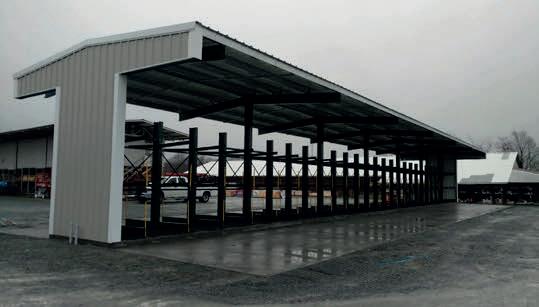
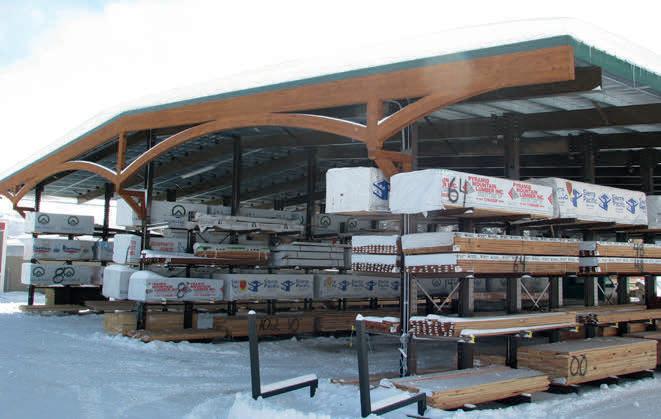
Lowe’s continues to strengthen its offering for small-to-medium professionals by expanding product access through its Pro Extended Aisle, enhancing digital tools that simplify quoting and purchasing, and delivering immediate value through MyLowe’s Pro Rewards. Together, these enhancements make it faster and easier for contractors to shop, source materials, and manage their businesses whether in store, online or on the jobsite.
“Pros are managing tight timelines and multiple jobs at once,” said Quonta Vance, executive vice president of Pro and Home Services at Lowe’s. “Our focus is on helping them get what they need quickly, quote work competitively, and keep their business running smoothly. From expanded product access and deeper inventory quantities through our Pro Extended Aisle to digital tools that simplify purchasing and tracking spend, we’re building an experience that supports how pros actually work.”
Pro Extended Aisle gives builders access to job lot quantities, helping builders source complete projects in one place.
• Expanded digital catalog with real-time inventory and pricing
• Fast quotes for job lot and bulk orders
• Direct-to-jobsite delivery from participating suppliers
• Growing network of suppliers and expanded geographic coverage
Using Lowes.com and the Lowe’s app, pros can build and submit quotes, track orders, review purchase history and access spend reports by job or client, helping them manage purchasing and back-office tasks from the jobsite or in store:
• Online quoting from the jobsite
• Order tracking and full purchase history
• Spend reports and itemized billing by job or client
• “Buy It Again” reordering tool
• Purchase authorization for crews
• QuickBooks and Quicken integration
• Digital wallet with multiple payment methods
MyLowe’s Pro Rewards delivers value starting with the first purchase and helps pros earn rewards faster.
With Gold Pro, Platinum Pro, and Titanium Pro tiers structured more favorably than competitor programs, small-to-medium pros can reach status and begin unlocking meaningful benefits sooner, including:
• Points earned on every qualifying dollar spent
• Points redeemable for MyLowe’s Money, exclusive products and more
• Free shipping for all MyLowe’s Pro Rewards members
• 5% savings every day with the Pro Rewards Credit Card
• 20% member paint discount after $3,000 in annual qualifying paint spend
Lowe’s also continues to expand value for pros through strategic industry relationships. As NAHB’s Exclusive Member Savings Program Home Improvement Retailer, Lowe’s gives eligible pros access to preferred pricing, bulk discounts, and customized quotes on large orders, when they link their Lowe’s Pro account with their NAHB membership. By expanding product access, partnerships and strengthening its
digital tools, Lowe’s aims to give builders and contractors more ways to source materials, manage purchases and keep jobs moving.
Weyerhaeuser Co. has opened a new distribution center in Billings, Mt., as part of an Inland Northwest expansion that started last year with the acquisition of a DC in Spokane, Wa. The new locations enable the company to provide improved service across the West.
Situated in a high-visibility location parallel to I-90, the Billings warehouse and yard were renovated to meet Weyerhaeuser’s safety and operational practices. It is designed to support sales growth, improve logistical efficiency and deliver a seamless customer experience.
Last year, the Distribution Division finalized the acquisition of Wausau Supply Co.’s Spokane facility. Operations in Spokane began last July, serving customers throughout Eastern Washington and Northern Idaho.

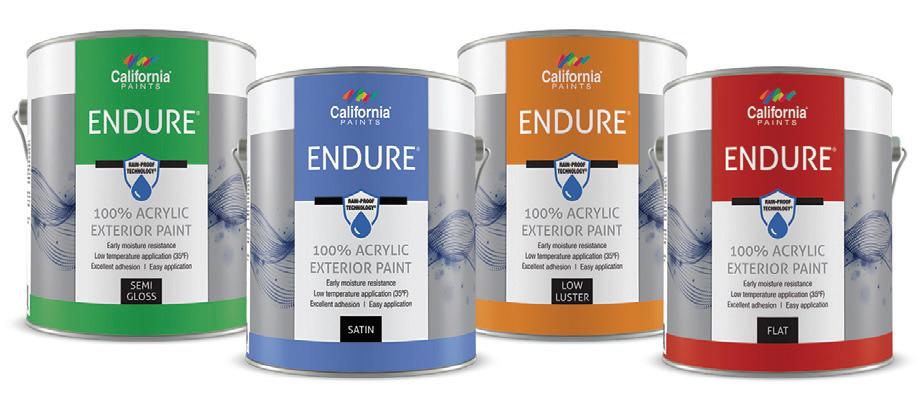
Unlike other conventional exterior paints that require long dry times to avoid peeling, California Paints’ new Endure 100% acrylic exterior paint system is rain-ready in just one hour.
Endure can be applied in temperatures ranging from 35˚F to 100˚F, while offering exceptional adhesion and premium UV and moisture resistance.
CALIFORNIAPAINTS.COM (800) 225-1141
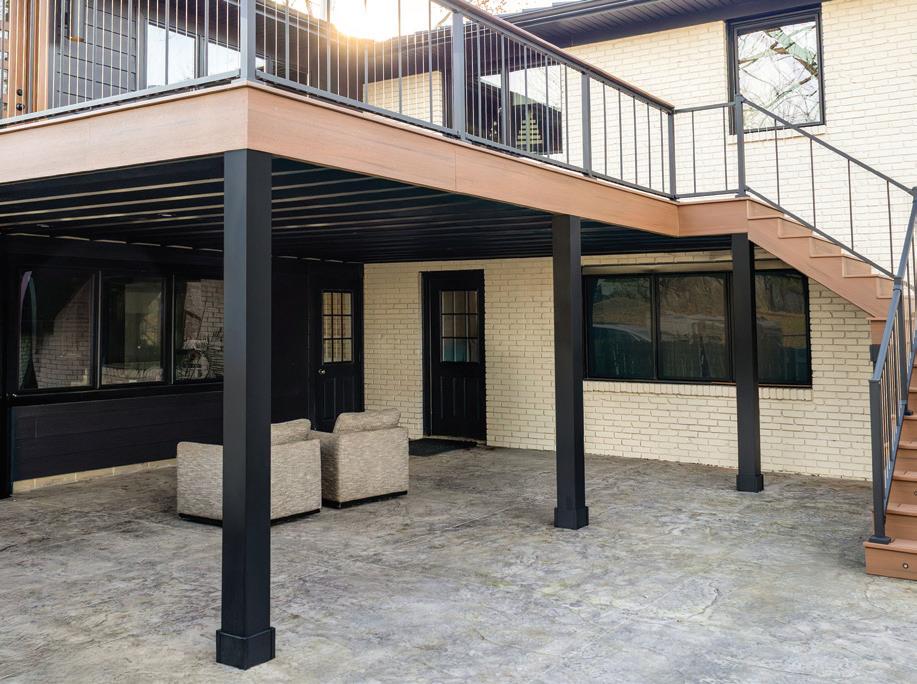
Digger Specialties Inc. has introduced Westbury aluminum post wraps, ideal for upgrading new or existing support columns or posts with the strength of aluminum and the lasting beauty of powder-coated surfaces.
The wraps transform traditional post materials that are subject to weathering and deterioration into aesthetically pleasing columns and posts that never need to be stained or painted. They are dimensionally stable and produced with the industry’s most stringent proprietary 10-step AAMA 2604 powder coating process. They come in 12 standard colors in textured and non-textured surfaces.
Wraps are easy and fast to install over existing posts due to their engineered interlocking design, which provides a seamless appearance. The interlocking staves fit over square and round posts and come in 4”, 6”, and 8” widths and heights of 8-1/2’, 10’, and 16’.
DIGGERSPECIALTIES.COM (800) 446-7659
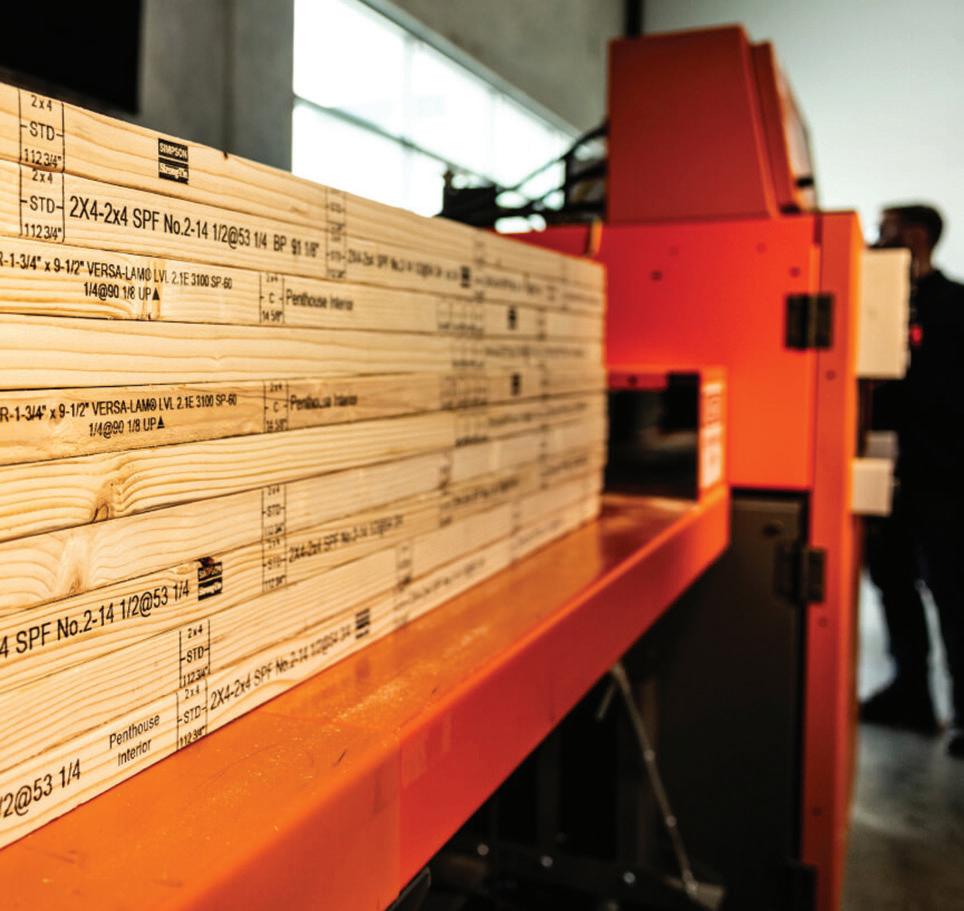
Simpson Strong-Tie’s EasyFrame automated marking and cutting system for wall panels has the unique ability to print layouts for a structure directly onto the framing members.
By using automation to optimize materials efficiency and increase cutting accuracy, EasyFrame reduces construction timelines and addresses labor shortages, which have become increasingly challenging problems in the industry.
STRONGTIE.COM (833) 327-9376
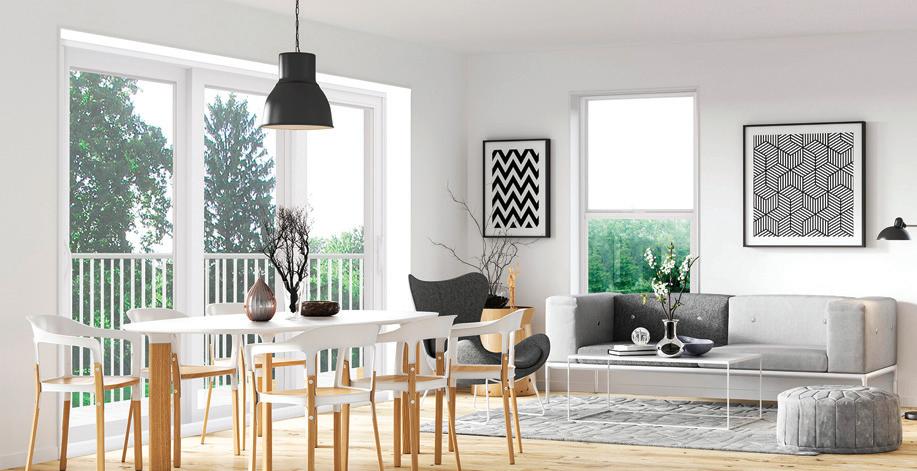
PGT Custom Windows & Doors has introduced two new aluminum French doors.
Designed for strength, security and ease of operation, the FD450 Estate French Door delivers long-lasting performance. It is available with impact-resistant glass and a range of energy-efficient glazing options.
The FD160 Impact-Resistant French Door combines high-performance hurricane protection with refined design. Ideal for patios, garages and side entrances, it is engineered to meet strict building code requirements.
PGT is also now offering its Scout and Sparta aluminum window and doors—previously part of its CGI portfolio—under the PGT brand.
PGTWINDOWS.COM (800) 282-6019

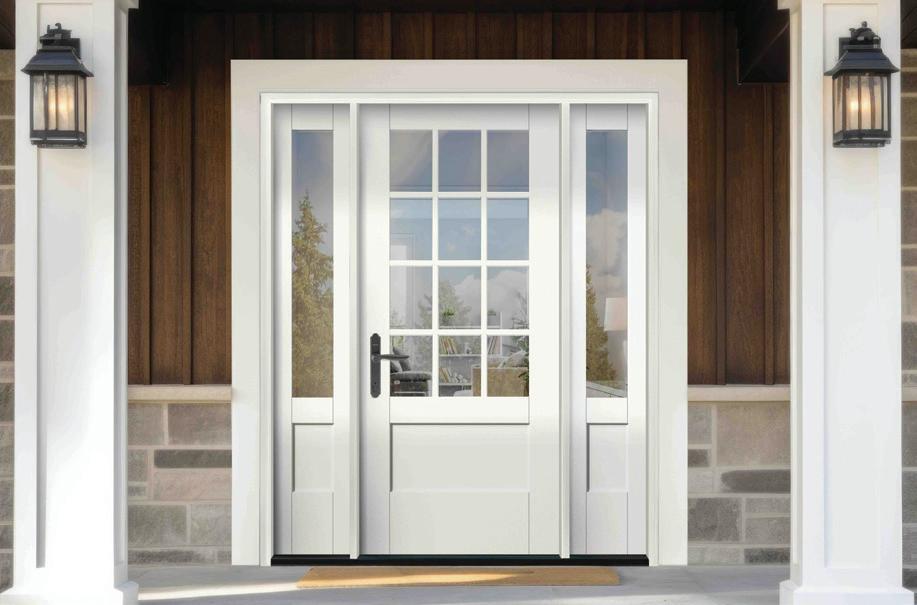
Therma-Tru's new 3/4-lite flush-glazed Shaker-style doors and sidelites capture the clean lines homeowners favor, while allowing in more sunlight.
Offered in Fiber-Classic and Smooth-Star one-panel doors, they complement a variety of architectural and decorative elements. Privacy and textured, energy-efficient Low-E glass, along with divided lite styles, round out the selection.
Doors and sidelites come in 6'8" and 8' sizes and feature composite top and bottom rails and edge stiles with Tru-Guard composite technology, providing advanced protection from water absorption, mold and woodingesting insects on all six sides of the door.
THERMATRU.COM (800) 843-7628
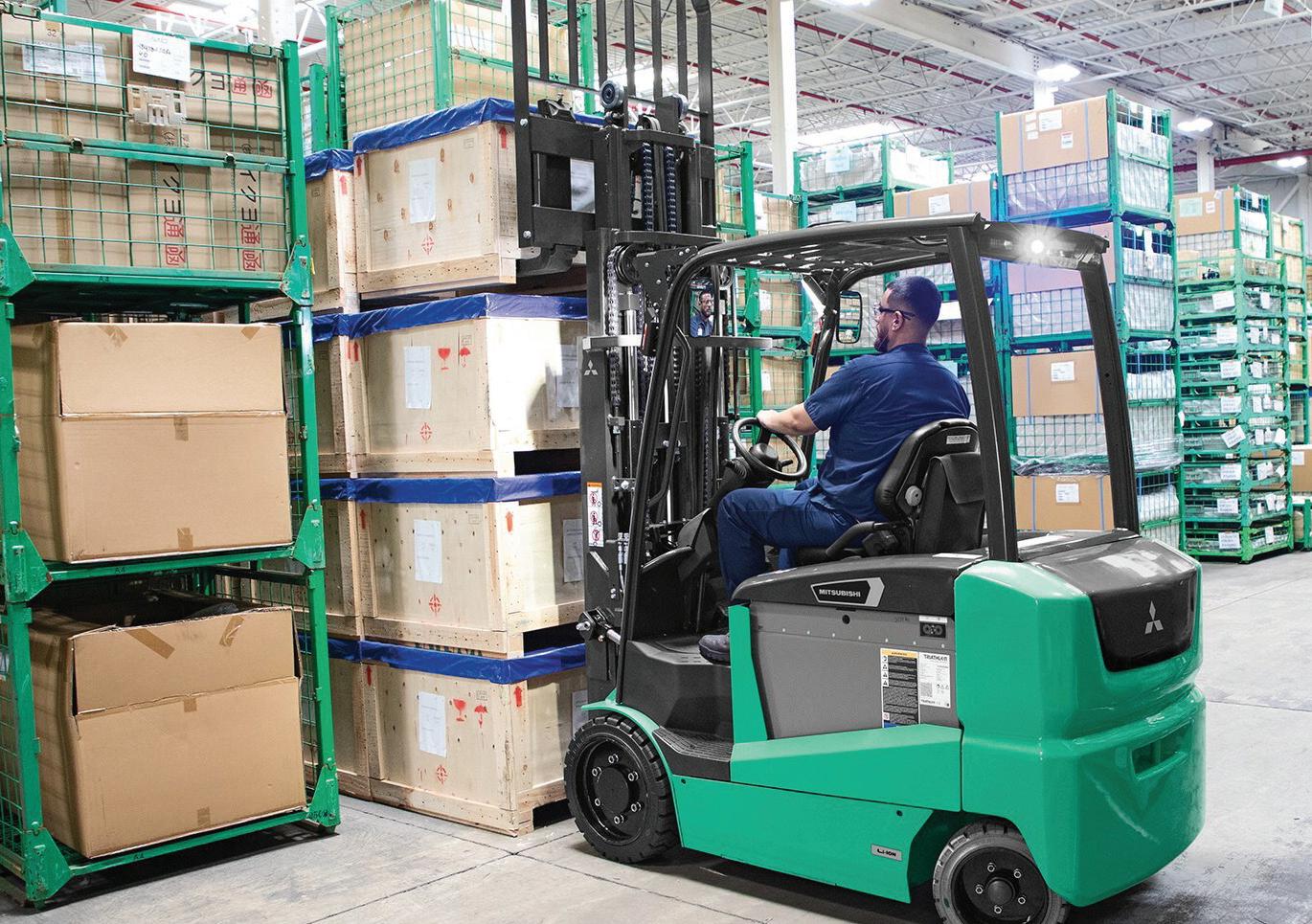
Mitsubishi Logisnext Americas unveiled its FBC20QFBC40Q Series of Mitsubishi Forklift Trucks. Designed for consistent uptime, reduced maintenance, and affordability, the new series allows operators to tackle demanding applications with precision.
From advanced AC motors to integrated assistance systems, the energy-efficient electric forklifts are built to match the performance of traditional IC models. It has 4,000 to 8,000 lbs. lift capacity, lift heights up to 26 ft., 100° turning radius with up to 14” shorter turns, maximum travel speed of 12.5 mph unloaded, and large, ultra-comfortable operating compartment.
LOGISNEXTAMERICAS.COM (800) 228-5438
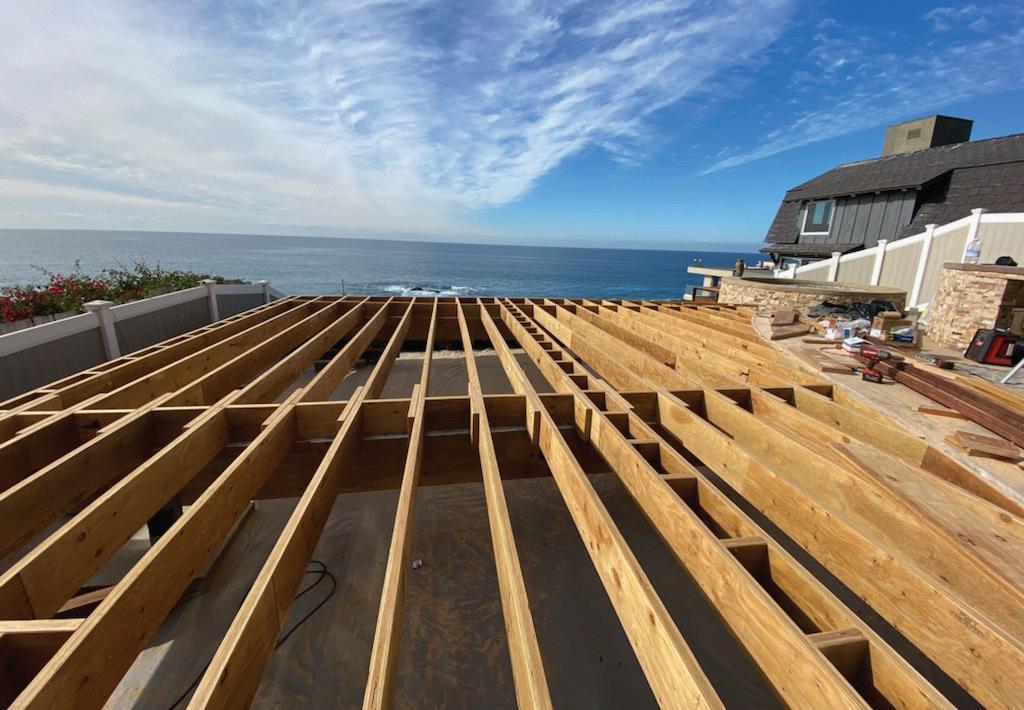
WHOLESALE
















LP BurnGuard FRT OSB from LP Building Solutions is an OSB solution with the fire-retardant blended with the strands for protection through the thickness of the panel for consistent performance.
The code-compliant FRT panel is manufactured in a one-step process, to meet extended (30-minute) ASTM E84 requirements. It installs like regular OSB.
LPCORP.COM (888) 820-0325
Designed for professional carpenters, remodelers and general contractors, the M18 Fuel 7-1/4" Rear Handle Circular Saw with One-Key from Milwaukee Tool delivers class-leading performance and cut speed for the most demanding applications.
Its PowerState Brushless Motor provides this worm drive-style saw with 6,000 RPM under load, providing users the ability to complete their most demanding applications efficiently. Advanced RedLink Plus ensures maximum performance and protection from overload, overheating, and over-discharge. Paired with the M18 RedLithium Forge HD12.0 battery, the saw provides up to 700 cuts per charge.
AutoStop Advanced Kickback Protection shuts off the power when a severe kickback event is detected. One-Key is a free app to track and manage all your tools via Bluetooth connectivity.
MILWAUKEETOOL.COM (800) 729-3878
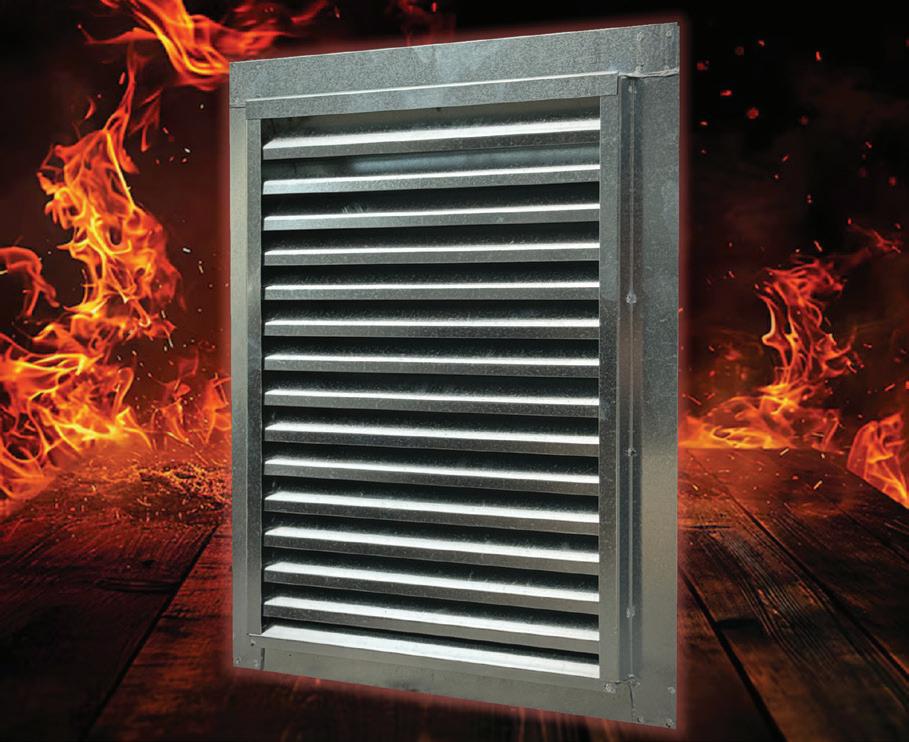
The Multi-Guard Vent (MGV) line is Able Sheet Metal’s latest invention in protecting homes from the dangers of embers and fires.
Using a combination of a unique louver design, 1/16" metal mesh, and intumescent tape, the vent forms a robust and heavy-duty design that has passed testing for fire and ember resistance, and was approved by Cal Fire for use in WUI designated areas.
The design is available in various forms, from standard gable louvers and foundation vents to retrofits for dormer vents (half-round and low profile) and sub-flashings for gravity vents and rotary vents.
ABLEMETAL.COM (800) 699-2253

Simpson Strong-Tie is expanding its line of structural injection epoxies with a new kit that allows contractors and advanced DIYers to make commercial-grade structural concrete repairs.
CI-LV low-viscosity structural injection epoxy is a two-component, high-modulus, high-solids, moisture-tolerant epoxy designed for filling concrete cracks and increasing the bond between freshly placed repair mortars or concrete mixes and existing concrete. The epoxy chemically bonds with the concrete to seal the crack from moisture and protect rebar in the concrete from corrosion. It comes in side-by-side cartridges dispensed through a static mixing nozzle.
Each package offers enough adhesive and accessories to repair about 30 ft. of concrete.
STRONGTIE.COM (800) 999-5099






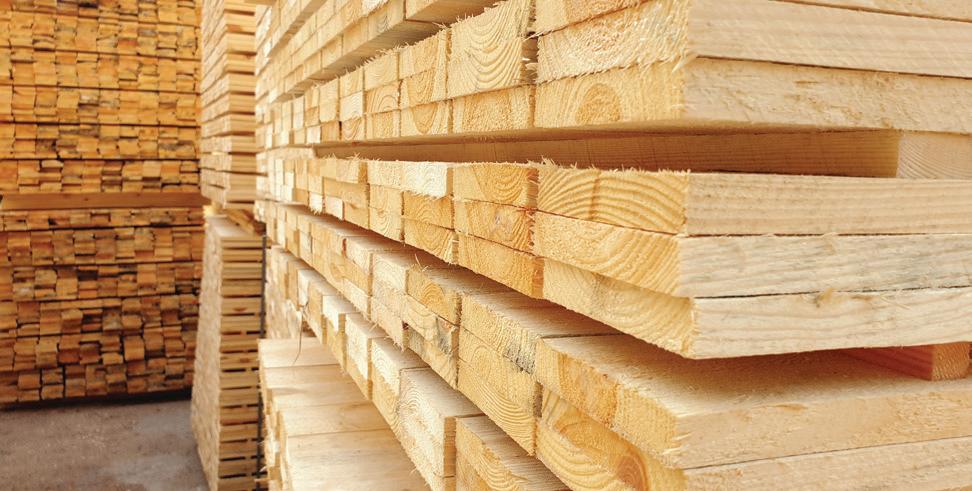


the most complete lumber-specific credit and business information in the world. Manage your business with insights from 250,000 credit references and business profiles
Manage your business with insights from 250,000 credit references and business pro les
Limit your nancial risk with $25 billion of A/R captured Accelerate your growth with access to over 20,000 industry contacts and key decision makers
Limit your financial risk with $25 billion of A/R captured Accelerate your growth with access to over 20,000 industry contacts and key decision makers

THOUSANDS OF HOME improvement retailers converged in Orlando as Orgill kicked off its 2026 Dealer Market with a singular focus: supporting customers’ unique needs and helping them identify practical pathways to growth and long-term success.
Held from Feb. 5-7, the market spanned nearly 1 million sq. ft. at the Orange County Convention Center. Over the three days, retailers browsed thousands of promotional buying opportunities, attended timely educational sessions, engaged with Orgill’s retail services teams, and experienced innovation in action through fully merchandised model stores that bring proven concepts to life.
“We have seen a few years of headwinds in the industry, and sales growth has become much harder to achieve,” said Boyden Moore, president and CEO of Orgill. “The Dealer Market gives us a unique opportunity to showcase the tools we have to help customers take control of their own growth. It allows us to work face to face with retailers to build a plan for achieving their goals—and to demonstrate how we can support them every step of the way.”
The distributor’s Dealer Market is its largest annual live event and serves as a critical launching pad for retailers looking to build momentum as the new year gets underway. Orgill also holds quarterly online buying events throughout the year—extending customer access to key assortments, deals and insights in a flexible, digital format. Now, with the opening of its new Innovation Center, Orgill has expanded its ability to add a range of additional sea-
sonal, topic-focused events to its schedule, creating even more opportunities to collaborate with customers across live, online and hybrid formats.
The robust show floor provided dealers with access to key vendors, strong promotional opportunities, and exposure to new products and trends across the home improvement industry.
“Buying opportunities are always central to our events, and retailers looking for deals will not be disappointed,” noted Clay Jackson, executive vice president and chief operating officer. “Our merchandising teams and our vendor partners understand how hard retailers are working to drive traffic, sales and profitable growth. They take that to heart and attendees will see strong promotions with compelling value throughout the show delivering a direct return on investment.”
Buying opportunities included a variety of “Power Buys” on pallets, departmental showcases, special deals on Orgill private-label products that bring value and differentiation to assortments, and for the first-time ever Orgill introduced an “Overstock Market” area showcasing deeply discounted, warehouse-backed items.
The event also offered attendees a front-row seat to the retail innovations that are helping drive profitability, overcome challenges and enhance operations in all aspects
of home improvement retailing. Central to that experience are a pair of model stores located at the heart of the show floor. This year’s lineup included Pinehaven Lumber, a 3,600-sq. ft. contractor-focused concept showcasing pro-oriented assortments, optimized merchandising and signage designed for modern lumberyards.
“Orgill’s market is unique because we dedicate significant space to showing how products, assortments, technology and services come together in a real-world environment,” Jackson said. “Our model stores generate ideas, highlight innovation in action and show retailers what’s truly possible.”
Debuting alongside Pinehaven was Orgill’s newest concept, Homestead Hardware & Tools—a model designed to reflect the real-life operating conditions many independents face. Unlike idealized showroom concepts, Homestead was built within a second-use strip-mall footprint, complete with irregular walls, challenging sightlines, and limited space.
“Most independents aren’t building new stores from scratch,” Jackson said. “They’re adapting existing spaces. Homestead reflects that reality and shows how a wellassorted, well-merchandised store can succeed without forcing a rigid template.”
Homestead also demonstrated how retailers can respond to evolving consumer behavior in an omnichannel environment. Categories increasingly shifting online are intentionally scaled back, while space is reallocated to project-critical products where local retailers maintain a clear advantage.
“Homestead reinforces the dealer’s role as the first stop for urgent and essential needs—while also showing how assortments can be extended digitally.” Jackson said.
The concept also highlighted the strategic use of outdoor space, illustrating how parking lots and exterior areas can function as extensions of the salesfloor for seasonal categories.
“Many retailers already do this well,” Jackson said. “Homestead shows how to maximize those opportunities
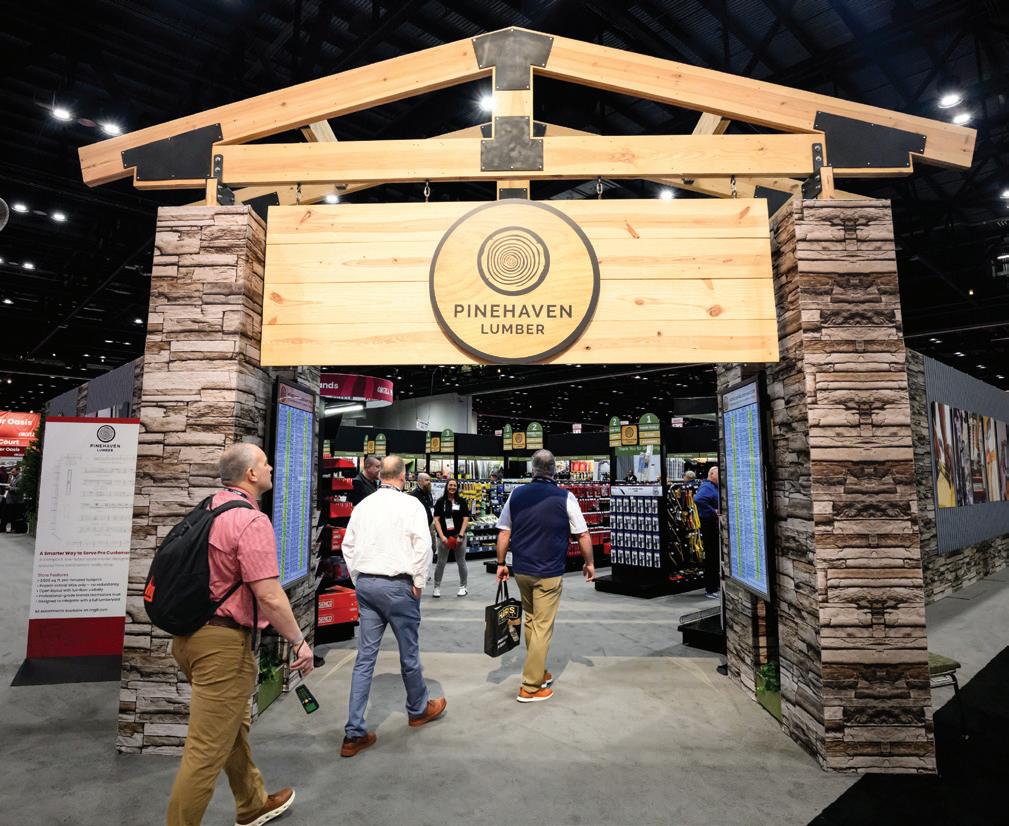
to drive impulse purchases and larger-ticket sales.”
Both model stores featured digitized planograms, POS integration, a working sample of Orgill’s FanBuilder loyalty program, and electronic shelf labels.
Customization remained a defining theme throughout the market. According to David Mobley, executive vice president of sales and services, Orgill’s goal is straightforward: to help every retailer leave Orlando better positioned to grow sales and improve profitability on their own terms.
“How retailers get there is never the same,” Mobley said. “That’s why customization is central to everything we do—from assortments and services to merchandising and planning and I think that is clear from what you will see throughout this event.”
To ensure that each attendee got the most out of their time at this week’s Market, Mobley said Orgill’s team of sales consultants worked closely with attendees ahead of the event to custom build a plan for them once they arrived at the show.
“We want retailers focused on the categories, promotions and assortments that will have the greatest impact when seasonal demand hits,” Mobley said. “That level of pre-market preparation translates directly into better inventory decisions and stronger results and it’s one of the reasons we place so much emphasis on our consultants working with retailers one on one.”
The Orgill Services area provided a hub where retailers could connect with experts across six core disciplines, including: e-commerce and technology, branding and marketing, products and pricing, store operations, leadership and strategy, and retail services. The area features interactive stages, private meeting rooms and hands-on demonstrations focused on actionable strategies retailers can implement immediately.
“This is where retailers can spend time working on their businesses and not just in them,” said Mobley. “Whether it is learning more about our FanBuilder loyalty program, our Impact eCommerce offering or gaining a better understanding about how our pricing strategy works or how we handle conversions, this is the area where that all takes place. It’s where we provide thoughtful, customizable solutions to retailers’ everyday challenges.”
In addition to hosting the learning stations, the services area was also home to live presentations on topical retail issues, ranging from the best pricing strategies for volatile economic environments to building a more productive team, and delivered by top industry professionals.
Market attendees departed Orlando with clearer seasonal plans, stronger merchandising ideas, improved strategies for serving pro customers, more efficient inventory approaches, and practical digital tools.
“In a challenging market, independents don’t need hype,” Moore said. “They need clarity, confidence and a partner who understands their business. That’s what our Dealer Market is all about.” MM
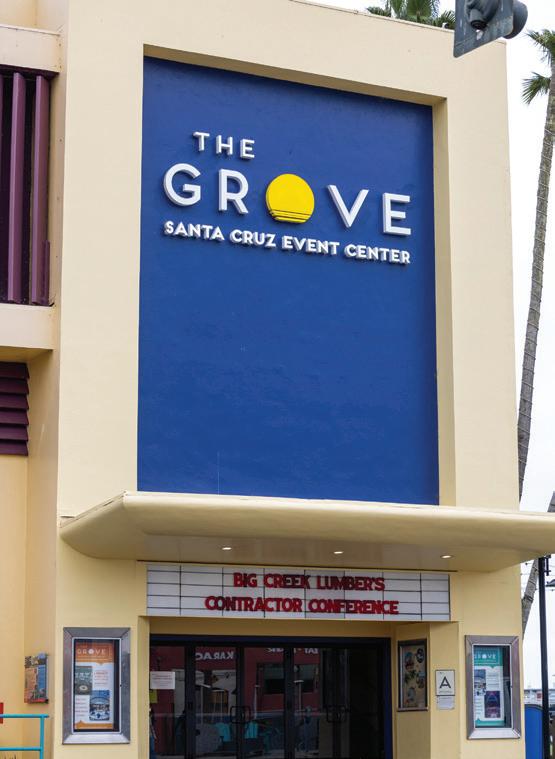
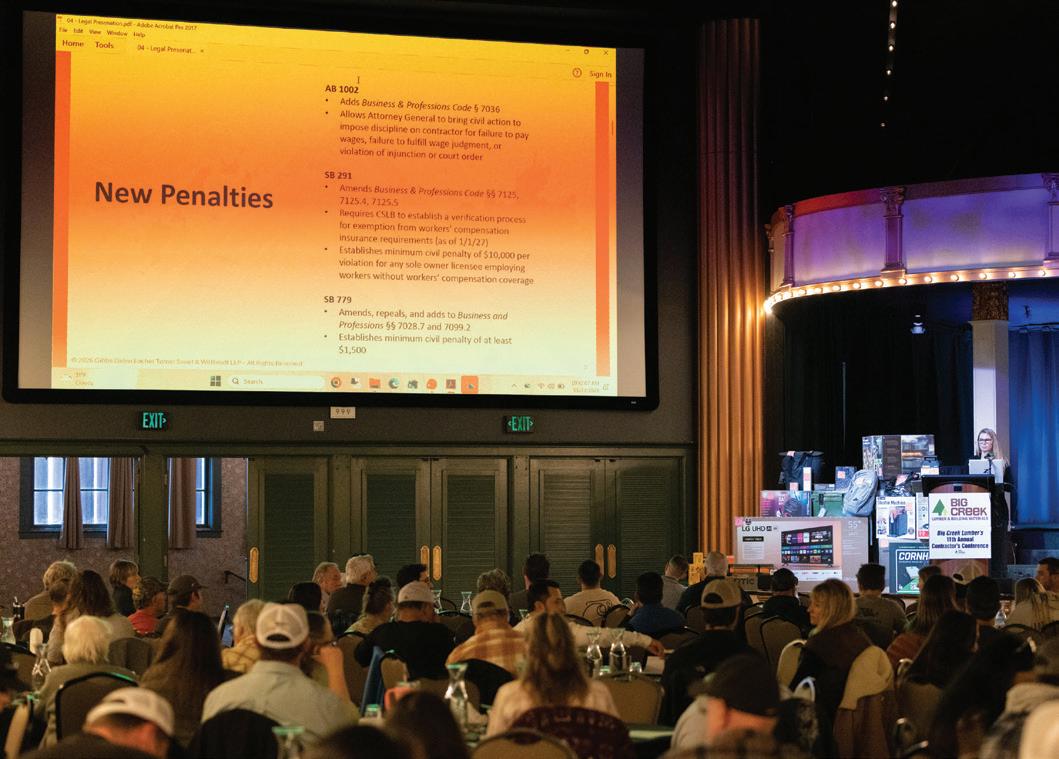

BIG CREEK Lumber, Davenport, Ca., hosted its 11th annual Contractor Conference, bringing together over 200 attendees including contractors, construction industry professionals, vendor representatives, and Big Creek employees from across Central California. The event coincided with Big Creek Lumber’s 80th year in business and highlighted the company’s long standing commitment to education, innovation and partnership within the construction and building materials industry.
Held Jan. 23 at The Grove at the Santa Cruz Beach Boardwalk in Santa Cruz, Ca., the conference delivered timely education, product insights, and practical guidance for today’s contractors. The event programming focused on regulatory updates, risk management, business planning, technology adoption, wildfire-resilient construction and structural innovation. The one-day format allowed for questions and commentary from the audience.
The event featured a lively vendor fair, fantastic prizes, plenty of food, giveaways and lots of fun. The grand prize, a $1,000 Big Creek Lumber gift card, was awarded to a longtime customer. Participating vendors included Acre, Allweather Wood, AZEK TimberTech, Big Creek Redwood, BMD, Boise Cascade, Capital, DAP, Diablo/Freud, Doman, Eva-Last, Fortress, International Wood Products/IWP, Kelleher, Midwest Fasteners, NewTech Wood, OrePac, Orgill, Simpson Strong-Tie, Stanley Black & Decker, Taiga, Trex, Western Woods, Weyerhaeuser, Woodgrain and Woodtone.
Big Creek owner and VP of human resources Ellen Rinde and Watsonville, Ca., sales manager Mandy Russell served as emcees.
The event reinforced Big Creek’s role as a resource beyond lumber and building materials, supporting contractors through education, tools and long-term industry investment. Presentations addressed key issues impacting contractors and construction professionals, including:
• Architect Bill Kempf shared insights from his career designing thoughtful, sustainable residential and commercial spaces. Bill was inspired early on by his architect grandfather, which sparked a lifelong passion for design and construction, including a stint doing construction prior to his career as an architect. Bill respects the contractor and architect relationship, and his projects reflect his commitment to flow, functionality and environmental responsibility.
• Missy Griffin, a partner at Gibbs Giden, provided an overview of 2026 changes in construction regulations, including retention caps, dispute resolution requirements, contractor liability, labor compliance, and emerging legal considerations related to AI in construction.
• Patrick J. Bormann and Pat Wilkie, partners at ClearPath Business Advisors, addressed succession planning, valuation, employee ownership structures, and long-term approaches to building resilient, transferable contracting businesses.
• Ryan Ayers, co-founder of Suppli, spoke on digital platforms supporting contractors, including customer portals, mobile tools, and streamlined financial workflows tailored to the lumber and building materials sector.
• Roy Kozina, systems administrator at Big Creek, discussed cybersecurity, urging business owners to keep their companies safe by being proactive. Topics included business email compromise, AI-driven fraud, and evolving cyber threats, emphasizing prevention strategies, verification protocols, and employee awareness.
• Product knowledge seminars by Mike Jorgenson, Simpson Strong-Tie, and Lex Cash, Trex, covered structural hardware, WUI and fire-resistant building materials.
Big Creek Lumber Co. currently operates a sawmill, wholesale sales department, six pro lumberyards, a forestry department, and a logging operation. MM























cally reject such an offer. As a result, the buyers face ‘adverse selection’—the only sellers who will accept $750 are those unloading lemons.
Sierra Pacific Industries, Anderson, Ca., has agreed to acquire Seneca, Eugene, Or., and affiliates, combining two complementary, family-owned forest products businesses with strong historical roots on the West Coast.

“Smart buyers foresee this problem. Knowing they could be buying a lemon, they offer only $500. Sellers of the lemons end up with the same price they would have received were there no ambiguity. But the peaches all stay in the garage. “Information asymmetry” kills the market for good cars.”
Founded in 1953, Seneca operates a 175,000-acre sustainably-managed tree farm, sawmills, and a biomass plant in Oregon. SPI, a leading lumber producer that manages over 2.1 million acres of timberland in California and Washington, as well as manufactures millwork, windows, and renewable energy. The combination of two highly complementary businesses with deep expertise in forest products will result in increased efficiency and significant benefits to employees and customers.

Structural wood panel buyers rely upon qualified inspection and testing agencies like the APA to routinely test and certify the quality of the products they buy. This creates an incentive for individual panel producers to “push” the standard. A passage from Ackerloff’s famous paper:
“Aaron Jones and Red Emmerson are both icons of the wood products industry. They were also friends and had a deep mutual respect for each other as industry leaders,” said Seneca CEO Todd Payne. “This proposed transfer makes so much sense given the companies provide complementary products, and have shared family values and company culture.”
long, frigid winter climate, coupled with a short summer season, produces hardwoods with very tight growth rings. This creates lumber with outstanding color and fine texture, which is ideal for applications ranging from furniture, cabinetry and doors to flooring, paneling and more.
“There are many markets in which buyers use some market statistic to judge the quality of prospective purchases. In this case there is an incentive for sellers to market poor quality merchandise, since the returns for good quality accrue mainly to the entire group whose statistic is affected rather than to the individual seller. As a result there tends to be a reduction in the average quality of goods and also the size of the market.”

This region supplies nine primary, widely used species, including: ash, basswood, cherry, hickory, hard maple, red oak, soft maple, white oak and walnut.
Both SPI and Seneca have a strong focus on sustainable tree management, also managing their timberland for thriving wildlife, healthy watersheds and soils, and world-class recreation. As Payne explained, “At Seneca, we grow more than we harvest annually. We have 92% more timber on our land today than we had 25 years ago. SPI also grows more than they harvest. Under their forest management plan they expect to have more large trees on their timberlands 100 years from now than they have today.”
Spanning several states, including Ohio, Pennsylvania, North Carolina, Virginia and West Virginia, the Appalachian region produces a wide range of hardwoods species—all with one thing in common: superior quality.
gives back by being dedicated to education and administering scholarship programs.
supplies of small-knot, dense, Douglas fir veneers). The “market for lemons” is likely having a major effect on the size of this market today.
and fall seasons with cold winters, which allow that growth to be gradual—hardwoods from the Appalachian region feature tight growth rings, strong fibers, and consistent colors and grain textures. This leads to strength, durability and beauty in the lumber, in addition to excellent width and long length characteristics.

How can individual panel producers overcome this “lemons market” problem, their industry’s “race to the bottom,” and depressed industry sales levels? They can offer company-specific product performance guarantees
Primary species include ash, cherry, hard maple, red oak, soft maple, white oak, basswood, beech, birch, walnut, poplar and hickory, which are great for high-end furniture, millwork, cabinetry, doors, flooring and paneling, and more.
“Seneca is known for its commitment to its people and communities, sustainable forest management, innovation in manufacturing and quality wood products,” said SPI president George Emmerson. “As a family-owned forest products company with similar values, SPI appreciates the opportunity to continue the legacy started by Aaron Jones and carried on by the Jones sisters. Seneca’s culture and operations are a natural complement to Sierra Pacific. We look forward to bringing together our shared expertise which will result in increased efficiency and benefits to employees and customers.”
The transaction is expected to finalized by the end of the third quarter.
No matter the region they come from, there are many North American hardwoods species to choose from. The decision as to which one to use comes down to the application and overall quality and look of the project.
Another approach is to more aggressively brand products. In either case, the mill’s products need to be clearly differentiated from their competitors’; as we discovered earlier, industry-wide, third-party quality certification is important but not sufficient. Like car buyers, panel buyers won’t chance paying peach prices when they may actually be buying a “dressed up” lemon.
– Don Barton is vice president of sales and marketing for Northwest Hardwoods, Tacoma, Wa. (northwesthardwoods.com).


Ganahl Lumber Co., Anaheim, Ca., expected to begin construction in August on a new hardware store and lumberyard in San Juan Capistrano, Ca. The facility will replace its nearby Capistrano Beach location.
For some structural panel producers, product differentiation requires a major change in company culture. For instance, it is very difficult to produce innovative, differentiated products for the end use market if the company doesn’t also adapt a different supplier-buyer mindset. Supplierpartners are often critical to the structural wood panel producer’s differentiation.
Escrow on the 17-acre Lower Rosan Ranch property, which Ganahl Lumber purchased from the city for $5 million, closed in late spring, following more than four years of planning, negotiations and applications. Ganahl portion will use about nine acres of the site for its new store and yard.
As industry competition comes to focus more and more upon only one of the “4P’s of marketing”—price— “lemons” tend to proliferate and industry sales volume tends to decline.

General manager Alex Uniack said the journey has been “a challenging and complex process to get to this point, and we are excited to move the project into the construction phase.”
Thanks to the region’s climate conditions—warm summers that assist with tree growth, and cooler spring
CHARITY AUCTION at Industry Night (continued) [18] saw Mike Finck as high bidder for a cardboard cut-out of former All-Coast owner Kent Bond outfitted as Superman. Zip-O-Logs created the standee years ago to honor Bond and All-Coast for their sales prowess. [ 19 ] Chris Glass, Brandon Chelini, Tony
When the industry is young, industry production technologies vary little and raw materials are relatively homogeneous (e.g., OSB), this isn’t a major problem. But it is a serious problem when the inspection and testing agencies find it difficult or impossible to keep up with a very rapidly changing industry. An example would be today’s overlaid Douglas fir plywood industry. There are rapid changes underway on both the demand side (e.g., much higher alkalinity concrete mixes are now essentially “pulping” conform panels) and on the supply side (e.g., much reduced
The companies also share a company culture that recognizes employees as their most valuable asset, values the support of the communities they operate in and serve, and
Home Depot, among others, had spent nearly 15 years attempting to purchase the property before the city zeroed in on Ganahl in 2017.
–Roy Nott is president of Surfactor Americas LLC, Aberdeen, Wa., a German-owned producer of overlays, glue films, and press cleaning films for the global wood panel industry, with manufacturing operations in Finland, Germany and Malaysia. Reach him at roy.nott@surfactor.com.
is among the major hardwoods of the Appalachian Region.

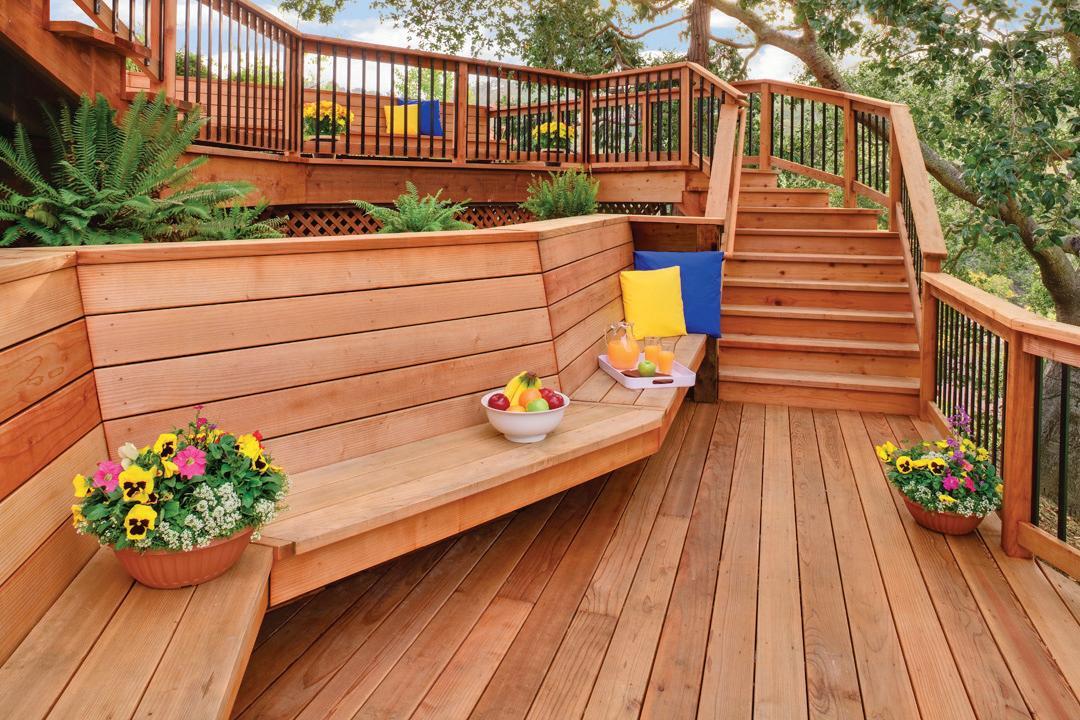
Big Creek Lumber’s sawmill, in Davenport, CA, produces a wide variety of redwood lumber products to independent wholesalers, stocking distributors, and remanufacturing facilities. Big Creek is well known for producing high quality redwood products and providing an outstanding level of personalized service.


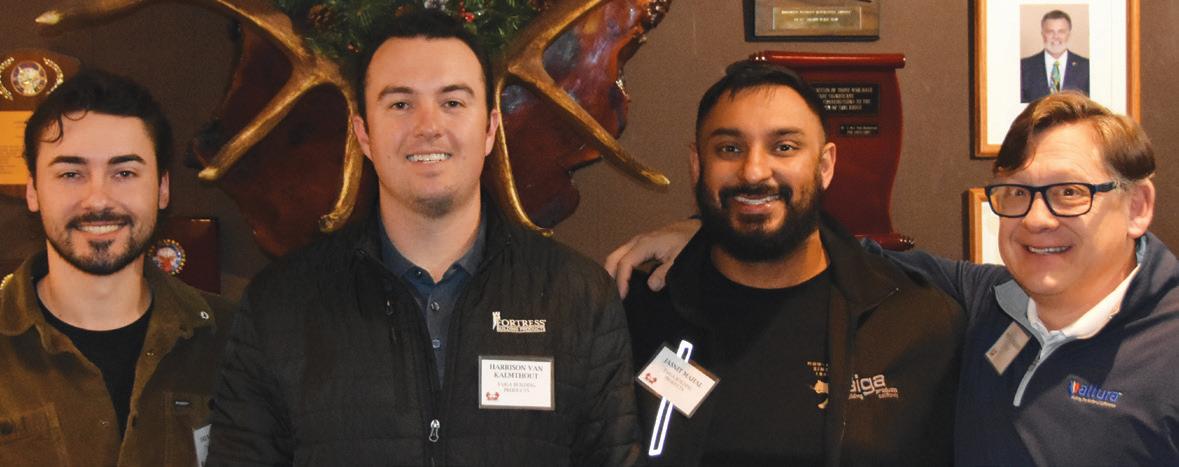
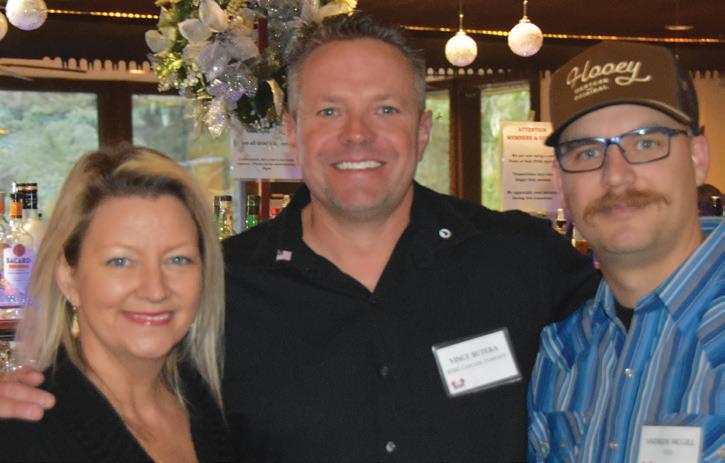



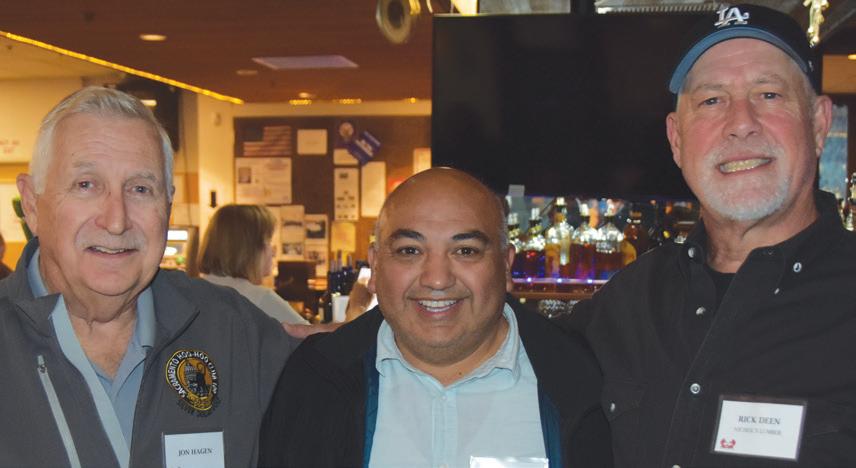









CRAB FEED (continued from previous page): [15] Mark Swinth, Julie Wright, Jason Faulkner. [16] Todd Murphy, Tom Von Moos, Max Corning. [17] Amy & Robert Moore. [18] Harold Dodero, Celeste Aponte, Eric Pitner. [19] Bethany Cummings, Claudia Montey, Annie Montey. [ 20 ] Steve Pankowski, Chris
Fraternity & Fellowship
Goodwill towards others Service to the industry
Relationship building Networking opportunities
Educating




Freeman. [21] Dean & Sally Kerstetter, Adam Steinbuck. [22] Doug Willis, Matt Slack. [23] Chris Taylor-Born, Rich Giacone, Roxanne Celentano. [24] Angie Dundas, Alex Cousins. [25] Eric Pitner, Annie Montey. [26] KelCee Hallstrom, Raegan Stratton. [27] Tom Armstrong, Kent Bond. (More photos on next page)

What is a Hoo-Hoo?
An organization founded in 1892 on the belief that fellowship builds trust and goodwill between people in all parts of the forest products industry. We believe in the concept that competitors are better thought of as colleagues and friends where your word is your bond, your handshake is a promise, and faceto-face meetings have deep value.
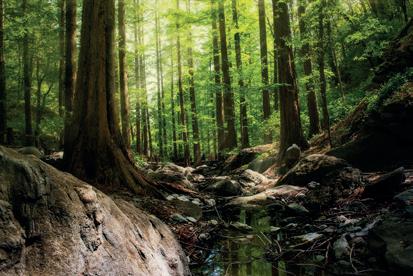
If you support the forest products industry, are at least 18 years of age, enjoy socializing with great people, live life with a code of ethics, and have a desire to give back to your community, Hoo-Hoo is for you! We invite you to learn more about Hoo-Hoo International and your local chapter, how you can become a member. Who is a Hoo-Hoo?

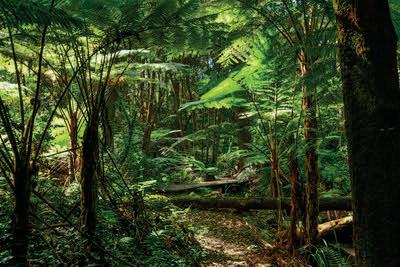
Its programs offer members information about worthwhile matters both in and out of the industry. Together with other professionals, you have an opportunity to grow and learn. Hoo-Hoo broadens your mind and forges friendships that will last a lifetime. Besides social events, many focus on community service. Why Hoo-Hoo?









James W.B. Riffenburgh, former owner of the old Riffenburgh Lumber Co., Big Bear Lake, Ca., passed away on Jan. 18 at the age of 91.
A graduate of the University of Southern California, Jim operated a warranty servicing business before relocating to Big Bear Lake in 1968 and purchasing Minder Lumber Co., which he later renamed.
Deckorators released its 2026 Outdoor Living Report, an annual forecast that draws on insights from leading contractors and industry experts to surface the most significant trends reshaping outdoor living—and how they reflect evolving homeowner lifestyles.
The report identifies a notable shift in homeowner priorities: Outdoor living is moving beyond the backyard. Contractors across the country report increased demand for front-of-home outdoor spaces designed for everyday use—enhancing connection, curb appeal, and long-term home value.
“Homeowners are no longer limiting outdoor living to the backyard,” said Michelle Hendricks, director of marketing at Deckorators. “We’re seeing a deliberate reallocation of investment toward spaces that are visible, functional, and emotionally meaningful. Many are thinking beyond the backyard to areas like the front porch or entryway that can become true extensions of daily life.”
Building on these evolving homeowner priorities, the report draws on contractor interviews, industry research, and market analysis to highlight key trends shaping outdoor living in 2026, including:
• High-Contrast Elements: Moving from millennial gray to bold, darker palettes for stronger visual appeal
• Multi-Zone Layouts: Creating unique spaces designed for dining, relaxing, and wellness
• Industry-Leading Materials: Using safe, low-maintenance materials that last
• Waterfront Demand: Personalizing waterfront features that add lifestyle and resale value
• Pet-Conscious Design: Incorporating pet-friendly materials in decking, railing and fencing
• Maximized ROI: Designing to ensure a return on investment without sacrificing personal style
“Outdoor living continues to be one of the smartest investments homeowners can make,” said Randy Steyert, owner of South Fork Decking, a premier decking company in The Hamptons on Long Island, N.Y. “We’re seeing clients eager to create durable, beautiful spaces that not only enhance daily life but also add significant value to their homes.”
Jim retired from day-to-day operations of the business in 1990. Riffenburgh Lumber shut down in 2012.
Wayne Joseph Hiett, owner of Missoula Forest Products, Missoula, Mt., died on Jan. 21. He was 98.
He attended Montana State University before entering the U.S. Navy during World War II, serving aboard LST-743 and the USS Indiana. Following the war, Wayne returned to Montana and attended the University of Montana until being recalled to duty in 1950 by the U.S. Army Corps of Engineers, 32nd Combat Battalion, during the Korean War.
Jeffrey Ross “Jeff” Smyth, 71, recently retired outside salesman for Alpine Lumber Co., Montrose, Co., died on Jan. 30.
Thomas A. Ellway, owner of Island Wood Door, Kahului, Hi., passed away on Jan. 26 at the age of 74.
After earning a degree in industrial arts from Kent State University, Tom worked as a Los Angeles area carpenter before joining Signature Woodworks, Westlake, Ca., as manager in 1988. He relocated to Hawaii in 1991 and opened his own millwork, door and window manufacturing business, Hawaiian Building Specialties, Wailuku. He founded Island Wood Door in 1996
Alpine Lumber, the 21-unit Colorado and Mexico chain that was acquired last year by Builders FirstSource, is alerting employees of a data security breach involving illegally viewed personnel files.
On Dec. 22, 2025, Alpine Lumber determined that certain devices in its network were encrypted with ransomware. Upon learning of the incident, the company immediately implemented response protocols, took measures to contain the activity, launched an investigation with the support of third-party cybersecurity professionals, and notified law enforcement.
The evidence showed that between Dec. 14 and Dec. 22, an unauthorized person viewed and obtained files stored on a server in its network. A review confirmed that one or more of the files contained information maintained for employment purposes, including individuals’ names, addresses, Social Security numbers, birth dates, and health insurance plan enrollment information. The files also may have contained health insurance policy numbers, medical information, driver’s license numbers, passport numbers, other government-issued identification numbers, financial account information, and payment card information.
Alpine filed a breach notification letter with the Attorney General of Vermont and mailed copies of the letter to the individuals involved. The company also arranged for eligible individuals to receive a complimentary membership in a credit monitoring and identity protection service.
To ensure affected individuals did not miss the notice, Alpine posted the text to its website on Feb. 18. Within a day of the notice going live online, a raft of legal firms began disseminating the news in an effort to solicit clients for a potential class-action lawsuit.
Builders FirstSource has approximately 585 distribution and manufacturing locations in 43 states. The former Alpine Lumber locations now operate under the Builders FirstSource banner.













you’ll pay no more, but get extra. We guarantee it.









Listings are often submitted months in advance. Always verify dates and locations with sponsor before making plans to attend.
Do it Best/True Value – March 6-8, spring market, Denver, Co.; www. doitbestmarket.com.
Tacoma Remodeling Expo – March 6-8, Greater Tacoma Convention Center, Tacoma, Wa.; www.homeshowcenter.com.
Cameron Ashley Building Products – March 8-12, dealer show, Dolphin Hotel, Lake Buena Vista, Fl.; www.cameronashleybp.com.
Inspired Home Show – March 10-12, McCormick Place, Chicago, Il.; www.theinspiredhomeshow.com.
LMC – March 10-12, annual meeting, Chicago, Il.; www.lmc.net.
Forest Economic Advisors – March 11-12, Global Softwood Log & Lumber Conference, Vancouver, B.C.; www.getfea.com.
Patrick Lumber Co.– March 13, St. Patrick’s Day open house, Patrick Lumber Timber Hall, Philomath, Or.; www.patlbr.com.
Colorado Springs Remodeling Expo – March 13-15, Norris-Penrose Event Center, Colorado Springs, Co.; www.homeshowcenter.com.
North American Wholesale Lumber Association – March 16-18, T-100 conference, Ritz Carlton Laguna Niguel, Dana Point, Ca.; nawla.org.
University of Innovative Distribution – March 16-19, Indianapolis, In.; www.univid.org.
National Lumber & Building Material Dealers Assn. – March 17-18, spring meeting & legislative conference, Washington, D.C.; dealer.org.
International Wood Products Assn. – March 17-19, World of Wood annual convention, Broadmoor, Colorado Springs, Co.; www.iwpawood.org.
Redwood Region Logging Conference – March 19-21, Eureka, Ca.; www.rrlc.net.
Portland House & Outdoor Living Show – March 20-22, Oregon Convention Center, Portland, Or.; www.homeshowcenter.com.
Pasadena Home Show – March 21-22, Pasadena Convention Center, Pasadena, Ca.; www.pasadenahomeshow.com.
Pacific Northwest Association of Rail Shippers – March 23-25, spring meeting, Vancouver, B.C.; www.pnrailshippers.com.
Window & Door Manufacturers Association – March 24-25, spring meeting & legislative conference, Washington, D.C.; www.wdma.com.
Hardwood Manufacturers Association – March 25-27, national conference & expo, Jacksonville, Fl.; www.hmamembers.org.
National Wooden Pallet & Container Association – March 25-27, annual leadership conference & expo, Marriott Harbor Beach, Fort Lauderdale, Fl.; www.palletcentral.com.
Coverings – March 30-April 2, Las Vegas, Nv.; www.coverings.com.
International Mass Timber Conference – March 31-April 2, Oregon Convention Center, Portland, Or.; www.masstimberconference.com.
NHS Concept to Commerce (National Hardware Show) – March 31-April 2, Las Vegas Convention Center, Las Vegas, Nv.; www. nationalhardwareshow.com.
Western Building Material Association – April 7, introduction to building material sales; April 8-9, estimating workshop, Seattle, Wa.; www.wbma.org.
West Coast LBMA – April 9, Southern California golf tournament, Strawberry Farms Golf Club, Irvine, Ca.; www.lumberassociation.org.
Western Wood Products Association – April 12-14, annual meeting, Hotel Indigo, Vancouver, Wa.; www.wwpa.org.
Composite Panel Assn. – April 12-15, spring meeting, Hyatt Regency Coconut Point, Bonita Springs, Fl.; www.compositepanel.org.
Associated Building Material Distributors – April 16-19, annual distributors & suppliers meeting, Hyatt Regency Coconut Point Resort & Spa, Bonita Springs, Fl.; www.abmda.com.
BY COINCIDENCE (one admittedly of less than elephantine proportions), the March 1980 issue of The Merchant Magazine celebrated a pair of pachyderms in otherwise unrelated announcements.
The front cover spotlighted a stunt by Louisiana-Pacific, in which they had TV news anchorman John Cameron Swayze commentating as a 9,000-lb. elephant traipsed across sheets of Redex exterior plywood laid on top of a standard floor system comprised of 2x12" joists 16". Swayze was an ideal choice as spokesman, since on the side he had become a frequent product pitch man, most famously subjecting Timex watches to ridiculously punishing tests (“It takes a licking and keeps on ticking.”)
The bull elephant’s story was even more fascinating. Tunga was born in the wilds of Asia in 1964, captured and then sold to Seattle elephant trainer Morgan Berry. In 1979, the 67-year-old Berry disappeared. Authorities searched his massive animal farm, Elephant Mountain, and found Tunga alternately tossing about and standing guard over his keeper’s lifeless body. Tunga lunged at men trying to recover the body, creating a standoff that lasted several hours. An autopsy was unable to conclusively determine whether Berry, who had a bad heart, had suffered a fatal heart attack before Tunga started tossing his body or if he died due to his injuries.


The elephant was relocated to the Oregon Zoo, three miles away from L-P’s former headquarters in Portland. The zoo sold Tunga to Ringling Brothers Circus in 1991, to sire calves. He died in 1996.
The other article, written by MacBeath Hardwood’s Gage McKinney, focused on a life-sized wooden elephant hand-carved from 600 bd. ft. of African shedua.
“I saw the elephant in a dream,” said 29-year-old artist Chris Schambacher. He began the project while an art student at Central Washington University and hand-selected each piece of the dark African walnut. He employed everything from a chainsaw to dental picks and disk sanders to shape the 9'6" long, 7-ft. high, 1,000-lb. elephant. To add functionality, he built a roll-top desk, complete with desk lamp, into the belly. For the tusks, drawers and writing surface of the desk, he used birdseye maple. It took four years.
He displayed the finished work on the sales floor of Beverly Hills clothing retailer Abercrombie & Fitch with one last accessory—a $55,000 price tag.
In other news from 46 years ago this month:
• Weyerhaeuser opened a new Customer Service Center in Phoenix, Az., promising six more western distribution centers were in the works.
• Capital Lumber unveiled plans for a new distribution yard in Chino, Ca., to replace its Southern California facility in Orange.
• Pacific Lumber Co. broke ground on a new corporate headquarters in San Francisco’s Jackson Square historical district.
• Northern California veterans Dave Damon, Dave LeBeck, and Ron Lewman launched a new wholesale company, North Bay Forest Products, Healdsburg, Ca.
• Fremont Forest Products’ Pete Speek announced a fresh new trader joined his staff: Steve Killgore. MM