

Sonoma
JAPANESE CEDAR

Sonoma

YellaWood® brand pressure treated pine stands unrivaled in providing the best available protection against rot, fungal decay and termite attack. Enjoy the uncompromising beauty of a backyard made with high quality natural wood products from YellaWood® brand pressure treated pine. Visit yellawood.com for more information.



PRESIDENT/PUBLISHER
Patrick Adams padams@526mediagroup.com
VICE PRESIDENT
Shelly Smith Adams sadams@526mediagroup.com
PUBLISHER EMERITUS
Alan Oakes
MANAGING EDITOR
David Koenig • dkoenig@526mediagroup.com
SENIOR EDITOR
Sara Graves • sgraves@526mediagroup.com
COLUMNISTS
James Olsen, Kim Drew, Dave Kahle
CONTRIBUTORS
Travis Arthur, Jeff Easterling, Ian Faight, Brad Kirkbride, Paige McAllister, Paul D. Owen
ADVERTISING SALES
(714) 486-2735
Chuck Casey • ccasey@526mediagroup.com
Nick Kosan • nkosan@526mediagroup.com
John Haugh • jhaugh@526mediagroup.com
DIGITAL SUPPORT
Katherine Williams kwilliams@526mediagroup.com
CIRCULATION/SUPPORT info@526mediagroup.com
151 Kalmus Dr., Ste. J3, Costa Mesa, CA 92626 Phone (714) 486-2735
CHANGE OF ADDRESS Send address label from recent issue, new address, and 9-digit zip to address below. POSTMASTER Send address changes to Building Products Digest, 151 Kalmus Dr., Ste. J3, Costa Mesa, CA 92626. Building Products Digest (USPS 225) is published monthly at 151 Kalmus Dr., Ste. J3, Costa Mesa, CA 92626 by 526 Media Group, Inc. Periodicals Postage paid at Santa Ana, CA, and additional post offices. It is an independently-owned publication for building products retailers and wholesale distributors in 37 states East of the Rockies. Copyright®2026 by 526 Media Group, Inc. Cover and entire contents are fully protected and must not be reproduced in any manner without written permission. All Rights Reserved. We reserve the right to accept or reject any editorial or advertising matter, and assumes no liability for materials furnished to it. Opinions expressed are those of the authors or persons quoted and not necessarily those of 526 Media Group, Inc. Articles are intended for informational purposes only and should not be construed as legal, financial or business management advice, nor an endorsement of any company, product, service or individual referenced. Volume 45 • Number 3

Update your subscription




Like the foods we buy, when it comes to decking, we want natural and real. Redwood is always available in abundance of options. So stock the shelves! Unlike mass-produced and inferior products, Redwood is strong, reliable and possesses many qualities not found in artificial products. They maintain temperatures that are comfortable in all climates.
Redwood Empire stocks several grades and sizing options of Redwood.

Japanese cedar ready to make mark in U.S.
Now
Why eastern white pine was the right choice for historic firehouse rebuild















------------
BY PATRICK ADAMS
SOME OF THE MOST meaningful journeys in history began without a clear map. Explorers set out not knowing exactly what they would find, only that standing still was not an option. They crossed unfamiliar terrain, faced unpredictable conditions, and learned as they went. Progress came not from certainty, but from conviction—a belief that the destination was worth the risk and that adaptability would be required along the way. Improvise, Adapt, Overcome.
Lately, that idea has been on my mind. We are navigating a season where clarity can feel elusive. Markets shift quickly. Conditions change faster than plans can be written. The familiar landmarks we once relied on don’t always offer the same reassurance they used to. For many, the instinct is to wait for certainty before moving forward. But history—and experience—tells us that certainty rarely arrives in advance.
This is where leadership reveals itself. True leaders are not those who only move when conditions are perfect. They are the ones willing to step forward when the path isn’t fully visible, guided not by comfort but by values. They understand that momentum matters, that learning happens in motion, and that standing still often carries greater risk than moving carefully ahead.
Every great discovery required perseverance through challenging environments. Storms were encountered. Wrong turns were taken. Adjustments were made. Yet those journeys reshaped what was possible, not just for the individuals who took them, but for everyone who followed.
Our industry knows this well. Those of you who have built businesses, grown teams, and weathered multiple cycles understand that success is rarely linear. You’ve made decisions with incomplete information. You’ve trusted experience when data lagged behind reality. You’ve leaned on principles—integrity, stewardship, responsibility—when short-term answers were unclear.
A guiding value system becomes the compass when the map is unfinished.
Values don’t eliminate obstacles, but they clarify decisions. They help determine which opportunities align with who you are and which distractions to pass by. They anchor perseverance when conditions test resolve. Paired with a clear long-term goal, values create direction even when the route itself must evolve.
I’ve learned that perseverance isn’t blind persistence. It’s informed endurance and discipline. It’s the willingness to adapt without abandoning purpose. To adjust tactics while protecting principles. To accept uncertainty without surrendering momentum.
Uncharted paths demand patience and humility. They demand courage. They demand discipline—doing what you sometimes hate to do, but doing it like you love it.
The leaders who inspire me most are not those who claim to have all the answers, but those who remain steady when answers are still forming. They listen, learn and move forward with intention. They create confidence not by predicting the future, but by demonstrating consistency in how they respond to it.
That steadiness matters now.
For those feeling the weight of uncertainty, know this: navigating without a map does not mean navigating without direction. If your values are clear and your goal remains intact, the path will reveal itself step by step. Progress may be slower at times, but it will be meaningful.
I continue to be encouraged by this industry—by its resilience, its work ethic, and its willingness to move forward even when conditions are less than ideal. You remind me that the most rewarding journeys are rarely the easiest, but they are always the ones that shape us the most.
Thank you for the trust you place in us, and for the leadership you demonstrate every day by choosing progress over paralysis. It is an honor to serve you as we continue navigating what lies ahead—together.
PATRICK S. ADAMS, Publisher/President padams@526mediagroup.com


THREE GENERATIONS STRONG: SWANSON GROUP CELEBRATES 75 YEARS
THREE GENERATIONS STRONG: SWANSON GROUP CELEBRATES 75 YEARS
SWANSON GROUP HAS BEEN FAMILY-OWNED SINCE 1951, WHEN STEVE SWANSON’S FATHER AND UNCLE OPENED THEIR FIRST MILL IN GLENDALE, OREGON TO MEET POST-WAR LUMBER DEMAND. THE COMPANY GREW QUICKLY, SUPPORTED BY ITS PROXIMITY TO THE CALIFORNIA MARKET, AND EXPANDED THROUGH THE NEXT GENERATION IN THE 1970S. TODAY, CHRIS SWANSON SERVES AS PRESIDENT, CONTINUING THE FAMILY LEGACY. BASED IN DOUGLAS COUNTY—ONE OF THE WORLD’S MOST PRODUCTIVE TIMBER REGIONS—
SWANSON GROUP HAS BEEN FAMILY-OWNED SINCE 1951, WHEN STEVE SWANSON’S FATHER AND UNCLE OPENED THEIR FIRST MILL IN GLENDALE, OREGON TO MEET POST-WAR LUMBER DEMAND. THE COMPANY GREW QUICKLY, SUPPORTED BY ITS PROXIMITY TO THE CALIFORNIA MARKET, AND EXPANDED THROUGH THE NEXT GENERATION IN THE 1970S. TODAY, CHRIS SWANSON SERVES AS PRESIDENT, CONTINUING THE FAMILY LEGACY. BASED IN DOUGLAS COUNTY—ONE OF THE WORLD’S MOST PRODUCTIVE TIMBER REGIONS— SWANSON GROUP REMAINS COMMITTED TO SECURING RELIABLE LOG SUPPLY AND PRODUCING HIGH-QUALITY LUMBER AND PLYWOOD. ITS DIVERSIFIED PRODUCT RANGE HAS SUPPORTED GROWTH INTO NEW MARKETS AND INDUSTRIES, EARNING A STRONG REPUTATION NATIONWIDE AND ABROAD.
NEW VENTURE: PELLET PRODUCTION IN FALL 2025, SWANSON GROUP LAUNCHED DEAN RESOURCES, A WOOD FUEL PELLET MILL IN OAKLAND, OREGON, TO ADDRESS RESIDUAL UTILIZATION AFTER A NEARBY PARTICLEBOARD PLANT CLOSURE. IN PARTNERSHIP WITH SOUTHPORT LUMBER, SWANSON ALSO FORMED OREGON PELLET MILLS, A NEW EXPORT FACILITY AT THE PORT OF COOS BAY. THE INITIATIVE ADDRESSES RESIDUAL CHALLENGES AND POSITIONS THE COMPANY FOR GROWTH IN ASIAN MARKETS AND FUTURE FUEL-REDUCTION POLICIES. LOOKING AHEAD, CEO AND CHAIRMAN STEVE SWANSON SAYS THE COMPANY IS “IN GREAT SHAPE COMPANY-WIDE” AND CREDITS THE FOUNDERS’ LONG-TERM VISION. “MY FATHER AND HIS BROTHER WANTED THIS COMPANY TO LAST FOR AS MANY GENERATIONS AS POSSIBLE—AND THAT TAKES BEING PROACTIVE.”

------------
BY PAUL D. OWEN
THERE IS GOOD NEWS for U.S. cedar buyers as the supply for structural grade cedar has grown with the American Lumber Stand Committee (ALSC) Evaluation Board approving the design values for Japanese cedar (sugi) 2x4 dimension lumber last April.
Efforts by the Japanese government to expand their lumber exports are starting to pay off as this follows the approval of hinoki (Japanese cypress) design values in April 2024, further expanding the supply of quality wood products to the U.S. market. Not only is Japanese cedar now certified, but with the plentiful supply of mature trees available for logging there is open opportunity for those that want to add it to their product mix.
What are design values? According to the MSR Lumber Producers Council, “lumber design values are assigned to lumber grades to provide a means for using this material in structural applications. The six design values are bending (Fb), shear parallel to grain (Fv), compression perpendicular to grain (Fc⊥), compression parallel to grain (Fc), tension parallel to grain (Ft), and modulus of elasticity (E).”
Japanese cedar design value was certified as No. 2 grade, meaning Japan now has the opportunity to offer Japanese cedar 2x4 in structural applications in the U.S. market for the first time. While Japanese cedar products are currently imported for fencing, decking, and other non-structural applications in the U.S., this approval broadens the scope of how Japanese cedar can be sold. The U.S. market may see even more options in the future as other Japanese cedar products undergo structural testing.
So, what is Japanese cedar and how is it different? Japanese cedar is a softwood lumber species native to Japan, where it has been cultivated for hundreds if
not thousands of years. Common names for this evergreen tree include “Japanese cedar,” “sugi,” and “cedar.” Japanese cedar refers specifically to sugi and its many cultivars and is imported under the scientific name Cryptomeria Japonica
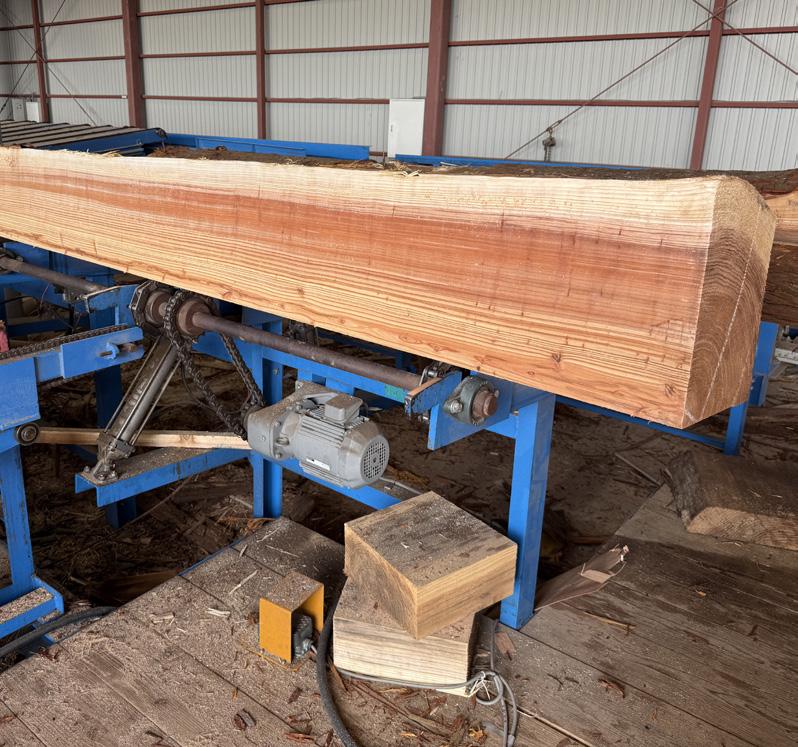
Japanese cedar is a soft, lightweight, easy-to-work material that is highly versatile, from construction materials to household goods. It is also ready for outdoor use and is both UV and insect resistant. That is why it works so well as fencing, decking and exterior siding. Stain, sealant or paint is recommended to increase the wear time outdoors. Japanese cedar arrives stain ready to the U.S. as imported lumber must either be KD (kiln dried) or HT (heat treated). Renowned for its beautiful color and grain pattern, Japanese cedar is known for its pleasing aesthetics and is widely used in Japan. The lumber milled from the tree has a range of color variation. The sapwood tends to be blonder with white and yellow whereas the heartwood has more pink and brown tones.
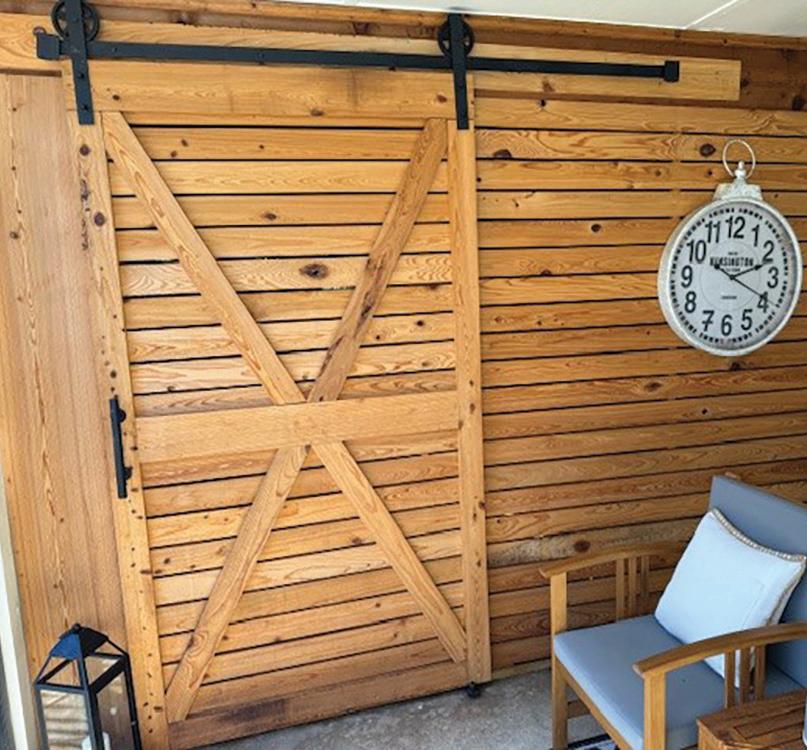
In the U.S., Japanese cedar is most commonly compared to its North American grown cousin, western red cedar. Both tree species are members of the Cupressaceae family. As close relatives they share many of the same characteristics making Japanese cedar an excellent alternative to using western red cedar. Much of the Japanese cedar currently coming into the U.S. marketplace is similar in grade to second growth western red cedar. Japanese cedar has already had a strong foothold in the U.S. market for years with non-structural application products, including fencing, decking, fascia and siding. But that begs the question, why have more people not heard of Japanese cedar in the U.S.? Japanese cedar is often labeled
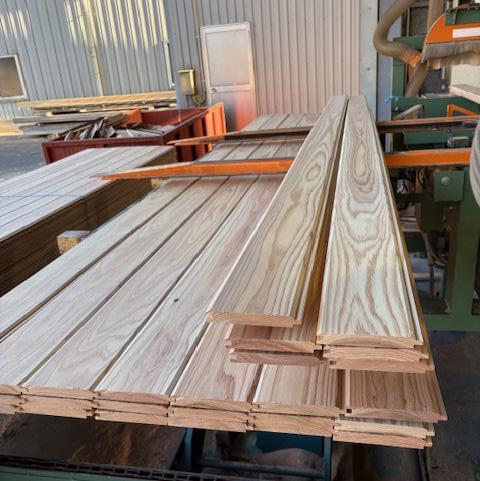
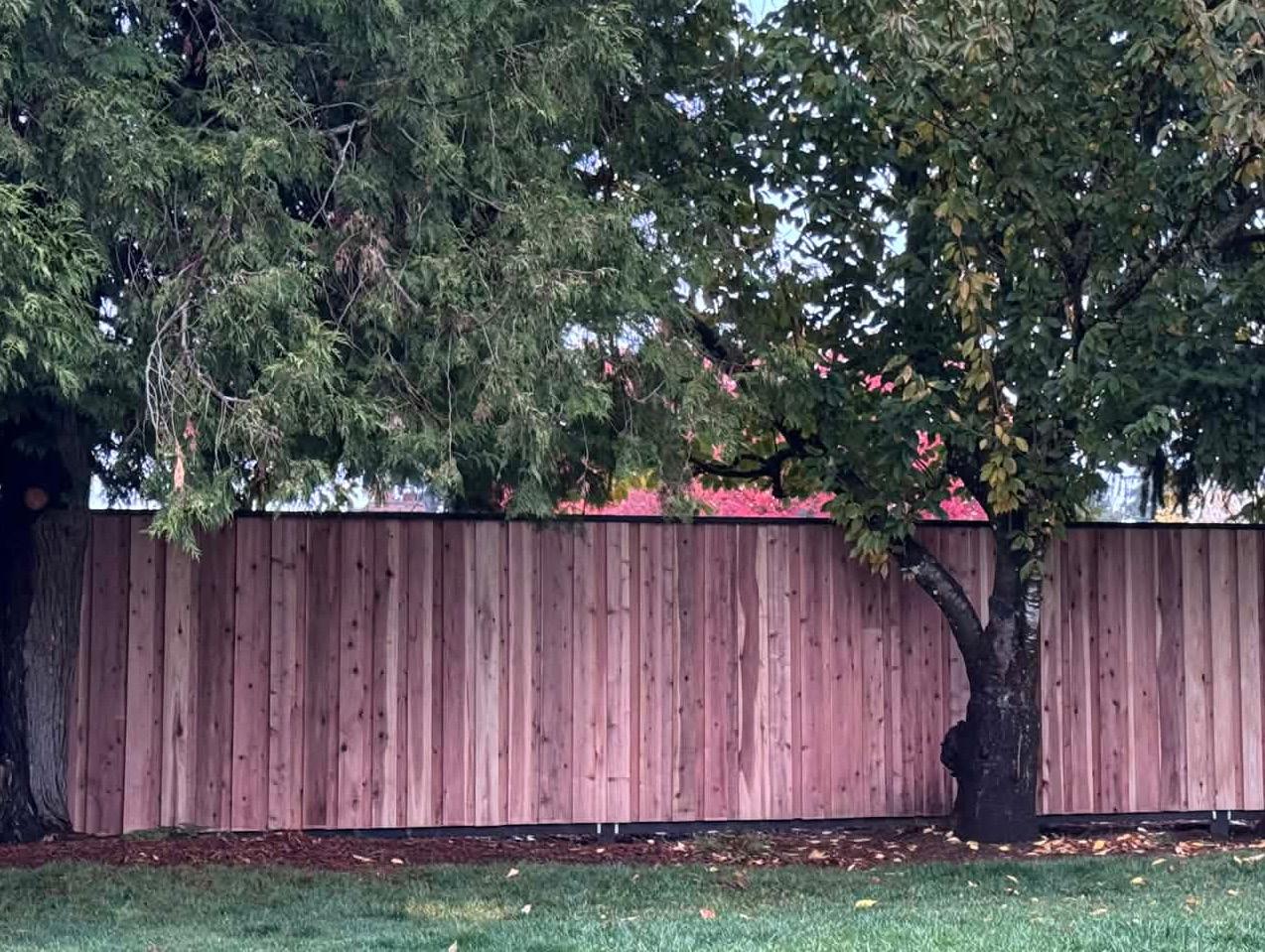
as generic “cedar” in the retail space. This leads to many consumers unknowingly using Japanese cedar products, with no idea of the specific species or where it came from. If you contrast this to U.S. native western red with high name recognition and distinct coloration, it is easy to see where Japanese cedar struggles to make a name for itself in this market. But just as western red cedar is well known in the U.S., the same can be said for the significance of Japanese cedar in Japan.
Japanese cedar has long been a valued part of Japanese culture, with a rich history of use in Japan in products ranging from buildings to chopsticks. In the modern era, it is widely used in 2x4 construction and other building methods in Japan and is one of the main building materials for Japanese wooden houses. The trees can live over 500 years with some Japanese cedar trees on Yakushima Island living over 1,000 years. It has been introduced outside Japan often as ornamental cultivars.
Japan’s land area is about 85% of the combined area of Washington and Oregon states in the U.S., but 67% of its land is forested, including 10 million hectares of plantation forests, 4.4 million hectares of which are Japanese cedar plantations, and 2.6 million hectares of hinoki plantations. How does Japanese cedar fit into this specifically? Of planted forests in Japan, Japanese cedar makes up 44%. Even more impressive, 18% of Japan’s total forest land is exclusively plantation grown cedar.
We can see the difference to western red cedar, which is almost all harvested from natural forests. The current western red supply cannot compare with Japanese cedar. With the decreased demand in Japan’s domestic market due to depopulation and other factors, coupled with the approval by ALSC of Japanese cedar 2x4 design values, the U.S. market has a prime opportunity to secure a steady supply of graded structural lumber products.
Japan uses a systematic approach of incentives, regulations, and strategizing at different levels of government to manage their forest lands. Now the Japanese govern-
ment is pursuing outlets and trying to expand usage of their timber products abroad. One of the major reasons for the Japanese government to push for credentials like the design values in the U.S. is that the supply of Japanese cedar is so much more than what Japan can consume. Thus, there is strong economic pressure to export both logs and finished goods. More supply will help to ensure access to higher quality grades. Japanese cedar may become the next big thing for the consumer looking for consistency of product and supply. And because it is plantation grown, it is generally an economical option that does not fall short on quality. If we were to compare western red and Japanese cedar products that are already traded in the U.S. market, Japanese cedar tends to be cheaper overall.
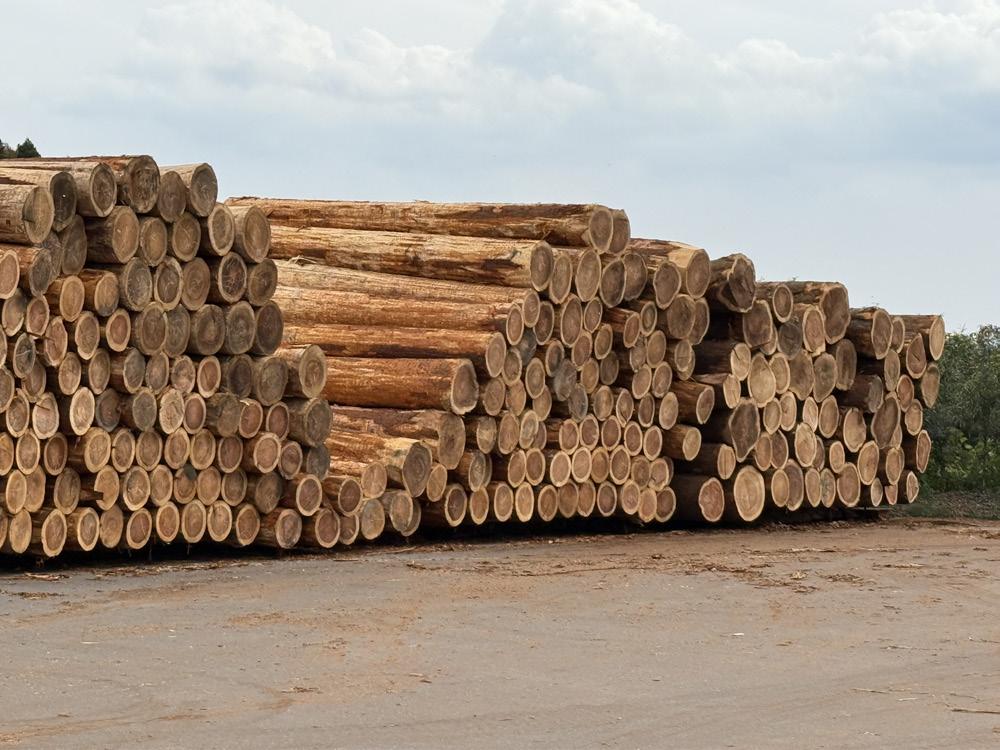
In simple terms, where does Japanese cedar stand now? Trees from plantations that were planted 50 years ago are now ready and are actively being harvested. Thanks to succession planting efforts in these plantations there are trees ranging from samplings to 100 years old with the vast majority currently aged 45-70 years. For reference, Japanese cedar can be harvested as early as 30 years old. Japan is sitting on a proverbial stockpile of timber and, with current management and renewability efforts, we should see a high level of supply for years to come.
But what is the real challenge in all of this? Waiting to see if the U.S. market is accepting of structural grade Japanese cedar. Building recognition and trust takes time. Japanese cedar should be an interesting lumber species to watch over the next few years. BPD

PAUL D. OWEN
Born and raised in Japan, Paul D. Owen has over 37 years of lumber experience working with U.S. lumber imports and exports focused heavily on Japan. He has been importing Japanese cedar lumber from Japan since 2016. He serves as director of international sales for Bowers International, a division of Bowers Forest Products, Beavercreek, Or. (www.bowersforestproducts.com).
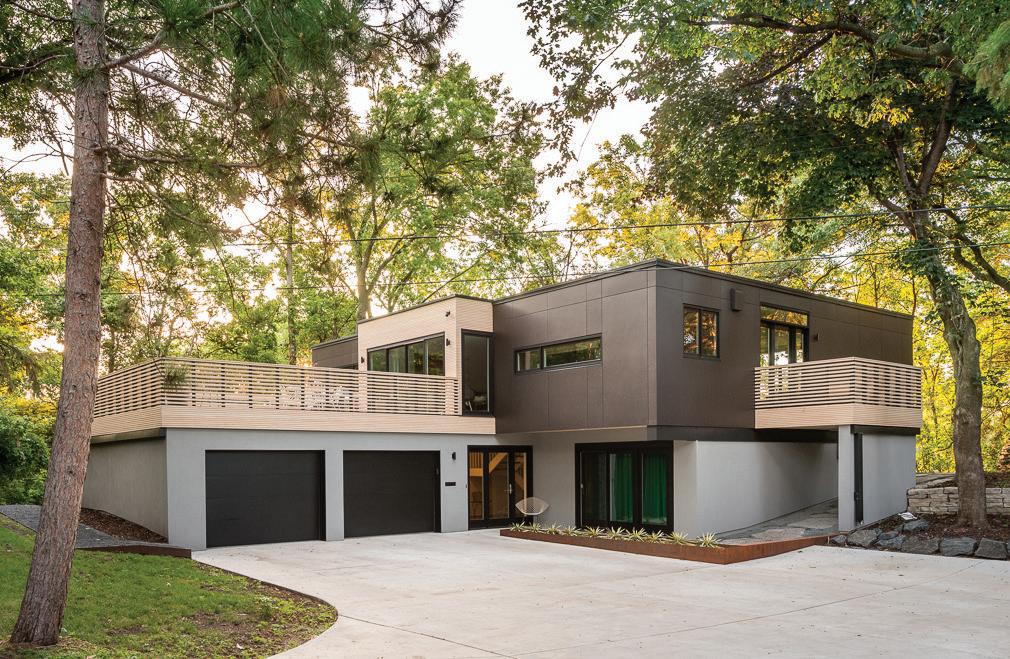
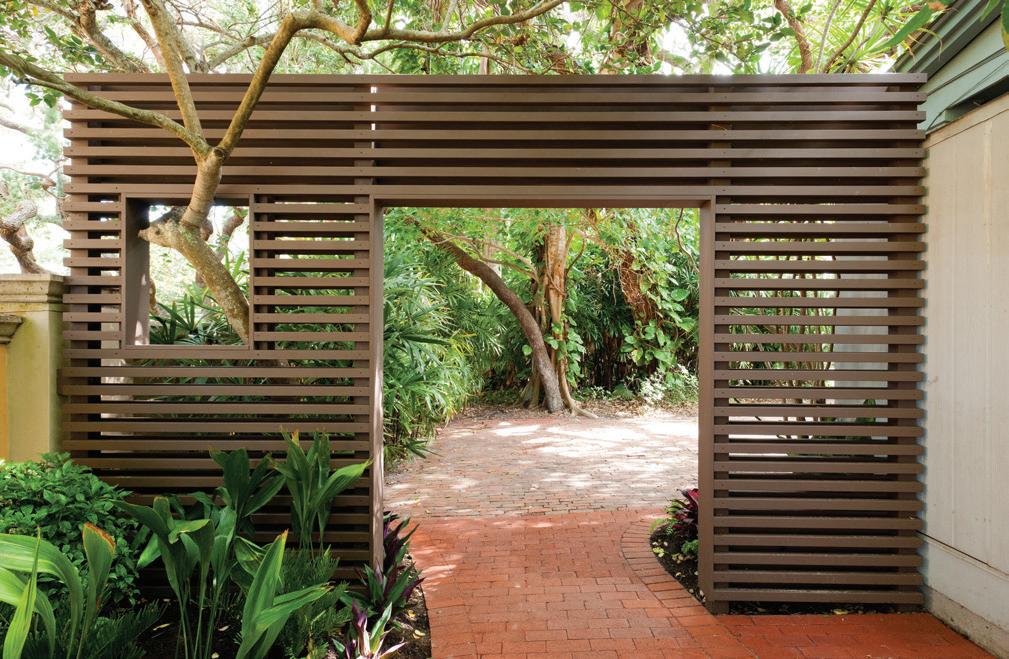
TODAY’S HOMEOWNERS are increasingly looking for ways to transform their home’s exterior from ordinary to extraordinary. One way they’re achieving this is by reimagining traditional residential design elements with modern flair. And the good news for lumber dealers and wholesalers is these outdoor projects present new opportunities for durable, beautiful, and real wood products, like cypress slats that can drastically improve a home’s curb appeal.
“There are a number of attributes to consider when selecting a material for exterior applications,” says Truss Beasley of Beasley Forest Products, Hazlehurst, Ga. “First and foremost is a product’s appearance and durability.”
Consumers tend to gravitate toward the look and feel of wood. That’s why there are so many wood-look alternatives flooding the marketplace. And while the look can be imitated to an extent, the natural charm and character of real wood can never be truly duplicated with plastic or other faux materials. Of course, purchase decisions often come down to availability and cost.
“Cypress offers an attractive appearance, it’s naturally resistant to decay and insects, and it withstands the test of time in the elements with proper care and maintenance,” Beasley explains. “And most importantly, cypress is readily available and competitively priced compared to alternative species, like western red cedar and pressure treated wood.”
Those characteristics are what have made—and continue to make—cypress a prominent architectural fixture on homes along the East Coast, throughout the South, and across the country. They’re also why cypress is an ideal wood species to use for modern outdoor projects, like installing horizontal or vertical slats with narrow gaps between boards. Design and construction professionals are using slats to give a new, fresh look to porch and deck railings, fencing, gates, lattice and other landscape design elements.
When it comes to remodeling projects and new builds, 2026 has been off to a slow start, according to Mike Shook of Norcross Supply Co., Norcross, Ga. “Weather issues have impacted our area and much of the East
Coast early on this year,” he says. “Business has been slower than anticipated, but as the weather normalizes, all indications show that remodeling activity will pick up in the months ahead.
“It also seems that consumers took a year off from major remodeling projects, and for good reason. There are a great deal of uncertainties and uneasiness due to ongoing trade wars and tariffs. Once things settle, I expect interest rates to hover around the 6% range, and unfortunately, that doesn’t offer much help in terms of new home construction. However, with ongoing tariffs on Canadian softwoods showing no signs of reduction, both select and No. 2 common grade cypress are well positioned to garner more attention in the marketplace. That’s encouraging for everyone in the supply chain, from mills and secondary manufacturers to dealers and distributors.” BPD
– For more information on cypress building products and how they’re being used in today’s homes and commercial spaces, visit the Southern Cypress Manufacturers Association’s website at www.cypressinfo.org.
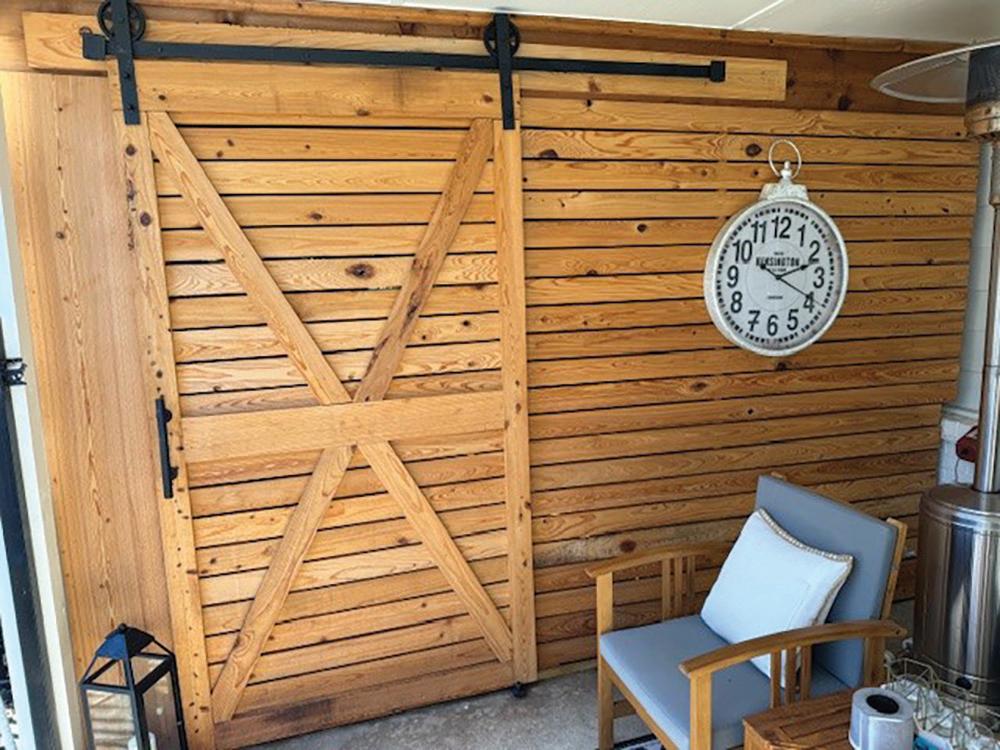

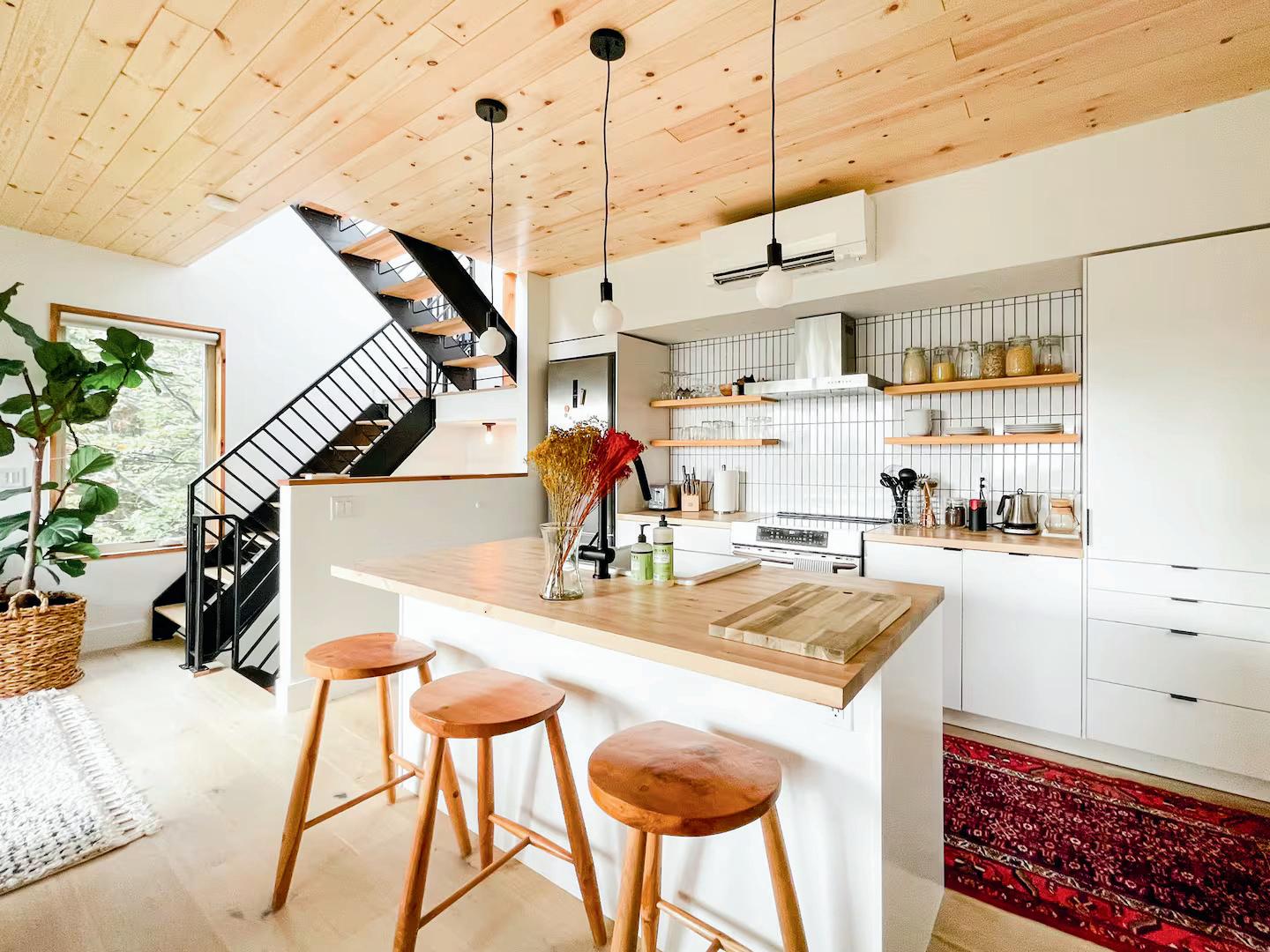
Pre-Finished & Unfinished Eastern White Pine
EZ-Lock End-Matching WP4, Nickel Gap, ECB
Consistent Grading & Packaging
12 Signature Colors Matching S4S Trim Available
Johnson Pine is a multi-generation, family-owned mill specializing in Eastern White Pine products. From log to finished board, we control every step - ensuring consistent quality, reliable supply, and finishes that perform.
Family-Owned. American-made. Trusted nationwide.
Milled, finished & shipped from Carthage, New York
BY KIM DREW
MONMOUTH, ME., located between the state capital of Augusta and the Lewiston/Auburn area, is an easy drive to Portland, the gorgeous coastline, and all things skiing. With a population of just over 4,000, the area is a popular summer resort filled with charming lakeside cottages scattered throughout the Winthrop Lakes Region.
Settled as Freetown in 1776-1777 by families from Brunswick, Monmouth was part of the Plymouth Patent and was known as Bloomingborough and Wales before being incorporated in 1792 as Monmouth.
Once considered one of the best agricultural towns in the state, Monmouth was known for producing hay, apples, potatoes, beef cattle, and dairy products. By the mid-1800s, the town supported mills, factories, and workshops tied closely to wood and agriculture, industries that helped define the town’s identity. In 1849, the Androscoggin and Kennebec Railroad opened to the town.
The 1800s were most unkind to Monmouth, as the town experienced multiple devastating fires. In 1841,
fire struck the industrial area of town, wiping out a shingle mill, a sawmill, and a webbing mill. In 1888, the entire business section of Monmouth was burned to the ground when fire started in the basement of three-story commercial building that housed the post office, a drug/dry goods store, living spaces, and an entertainment hall. When it was finally extinguished, 18 families were left homeless and more than 12 businesses were destroyed.
The creation of the Monmouth Fire Department in 1903 couldn’t come soon enough.
Daniel Roy is the current volunteer fire chief of Monmouth, and he’s recently overseen the complete renovation of one of the town’s most loved buildings, the original firehouse. Just a few years ago, he was driving by and noticed demolition in progress. Feeling drawn to speak to the owner and save the property, Roy asked the current owner to gift the building to the town to be used as a museum.
The current owner felt it would be better to take the buildings down—they were in poor condition









































and advanced disrepair—and rebuild something else on the site, but Roy was undeterred. An attempt to involve the town in the process was also unsuccessful, so he turned to his volunteer firefighters. The owner was willing to sell the property at a discount in order to preserve the building, so the firefighters went to work. A 501c3 nonprofit was established to initiate fundraising in order for the firefighters to purchase the structure.
Well into the process, Roy had an idea: reach out to his new neighbors, the Maine Cabin Masters (Magnolia Network). The Maine Cabin Masters are stewards of Maine craftsmanship and builders who restore and reimagine old structures while maintaining a deep respect for history, materials and place.
With the philosophy of preserve first, replace second, and a long-held preference for choosing local

THE MONMOUTH FIRE DEPARTMENT was given a piece of steel from the World Trade Center. The firefighters fundraised to build a memorial park honoring 9/11; this park includes the steel beam, a flagpole, and a monument, and is located just to the side of the Firehouse Museum. Each year on or around 9/11, the firefighters will lead a service of remembrance in the park.
materials whenever possible, who better to bring the Monmouth Firehouse back to life? And, as you would expect, the one key element used throughout the entire rebuild: eastern white pine.
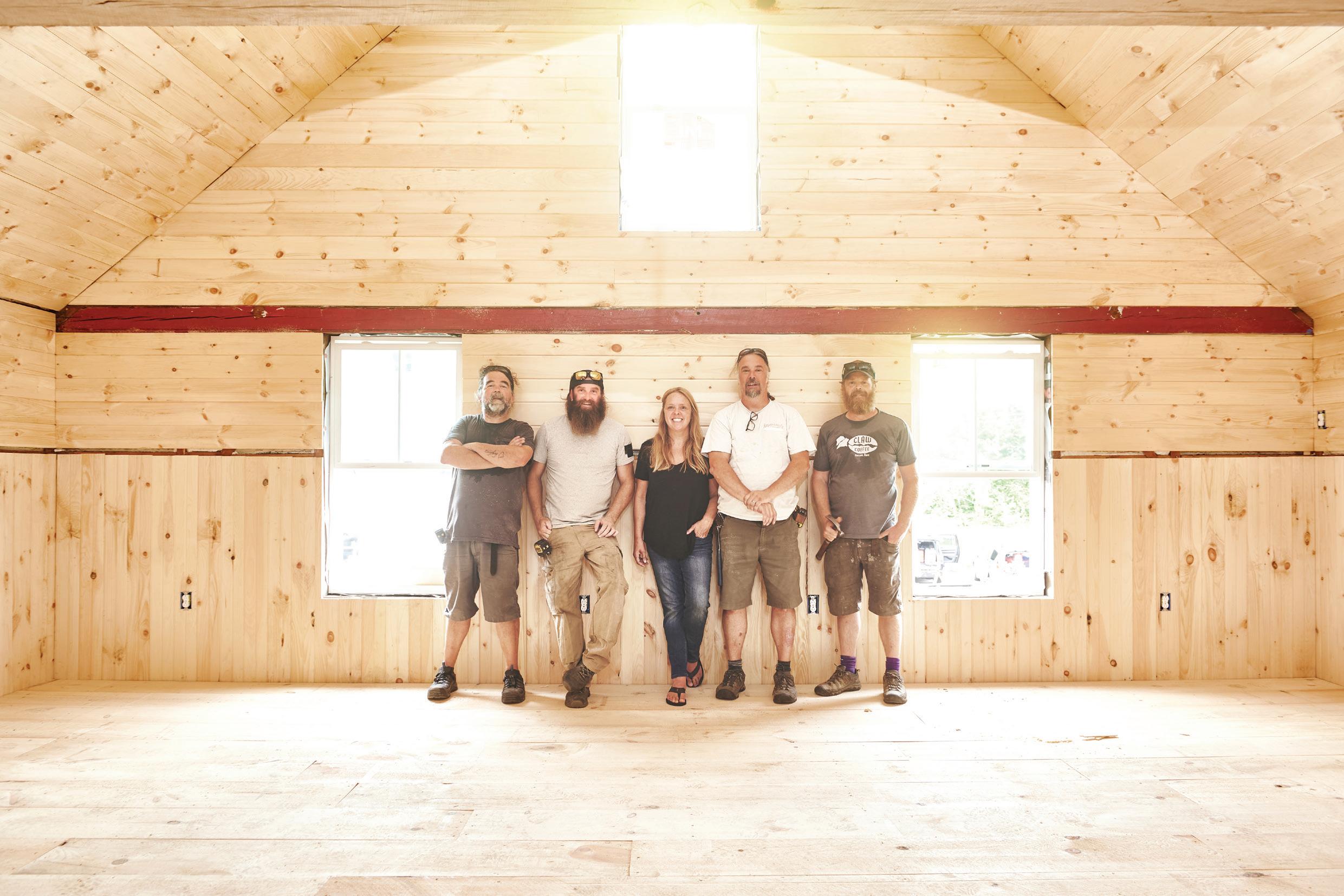
Roy made a cold call to Chase Morrill, one of the Maine Cabin Masters, at Kennebec Cabin Company, their Manchester, Me.-based headquarters complex. Roy told his story to Chase and Ryan Eldridge: they fell in love with the story and the community project involvement was exactly what they were looking for.
Roy and his firefighters completed a quick three-minute video to present to the producers of the TV show, highlighting the pervasive rot and overall terrible state of the building. He shared his vision of turning the structure into a working firehouse for the Monmouth Volunteer firefighters with a fireman’s hall on the second floor, and a museum on the first floor.
Production agreed, and the process began. The firefighters spent a year raising the needed funds through raffles, golf tournaments, and more.
First step was to pick up the structure and move it, then dig down to add new concrete footers, a stronger foundation, and all of the earthwork and prep work. Then it was time for the Maine Cabin Masters to work their magic. The firefighters pitched in when they could as plumbers, electricians, etc.
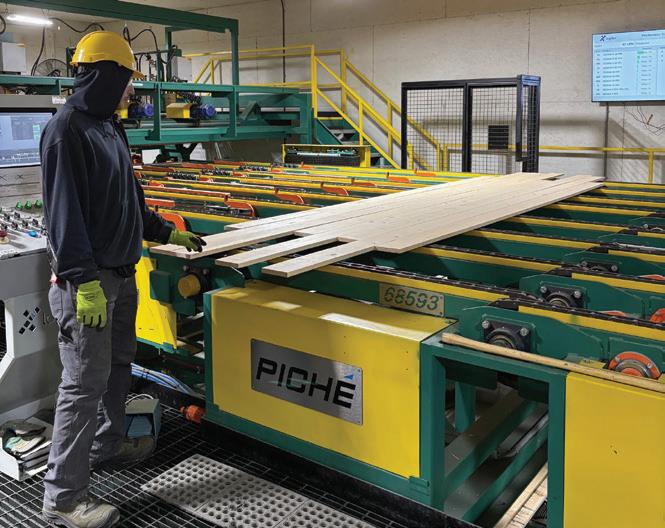
Thanks to a huge, well-timed eastern white pine lumber donation from Robbins Lumber in Searsmont, Me., the Cabin Masters had the eastern white pine on hand they needed to return the Monmouth Firehouse to its original glory.
Eastern white pine is a species with a history in New England so deep and rich that it appeared on early flags just before the American Revolution. Eastern white pine is known for its tall, straight growth, which made it perfect for British Navy ship masts hundreds of years ago. Maine itself is known as the Pine Tree State, and the lumber is still planted, harvested, and manufactured throughout the region (and even over into the Great Lakes area).
Eastern white pine saw widespread use, as local lumber often does, when building and camps were built as Maine was being developed and settled.
To those interested in preserving history and representing original products accurately, the regionally

sourced species is a favorite for accenting homes and camps with beautiful focus walls, sun-reflecting flooring, and siding. Especially when homeowners are looking for beauty, strength, and authenticity.
In fact, if you’ve ever watched the Maine Cabin Masters on the Magnolia Network and admired a beautiful pine wall in a redone camp, there’s a 100% chance that wood is eastern white pine.
The Cabin Masters have chosen eastern white pine for virtually every camp they’ve upgraded since the show began. Thanks to an eight-year partnership with the Northeastern Lumber Manufacturers Association (NELMA), their access to beautiful eastern white pine has increased, as has the presence of the species in the camps they rebuild each season.
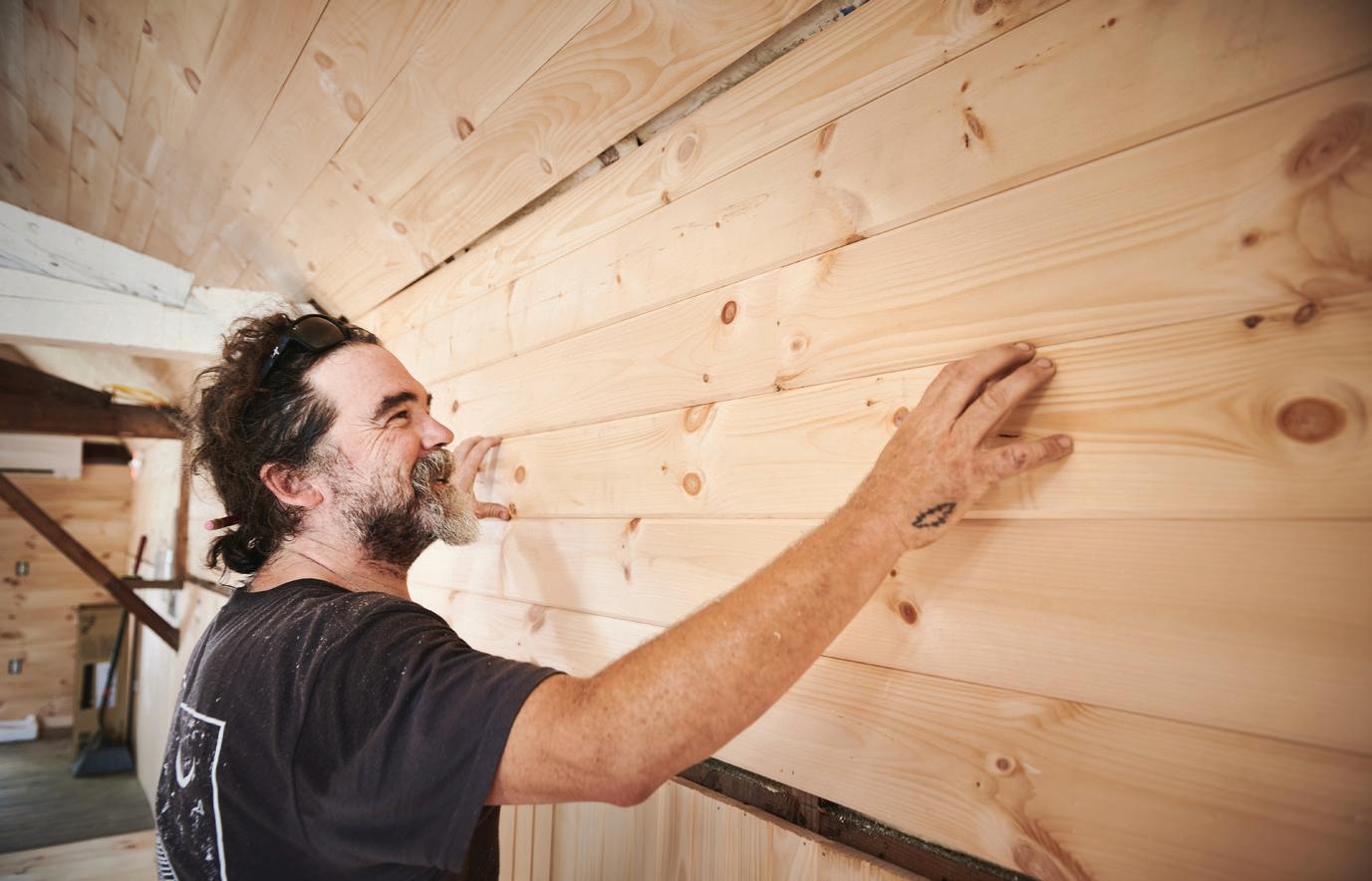
When people visit the Firehouse Museum, the wood is the first thing they see, and almost everyone has a comment to share. The first floor, a one-room space which is open to the public and ties into other historic buildings throughout downtown Monmouth, features eastern white pine on the walls.
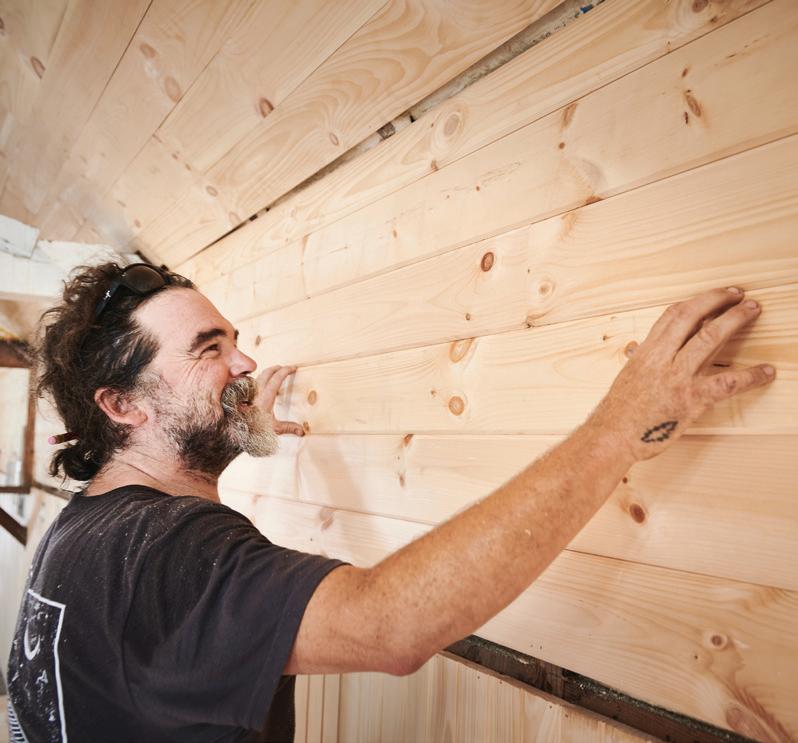
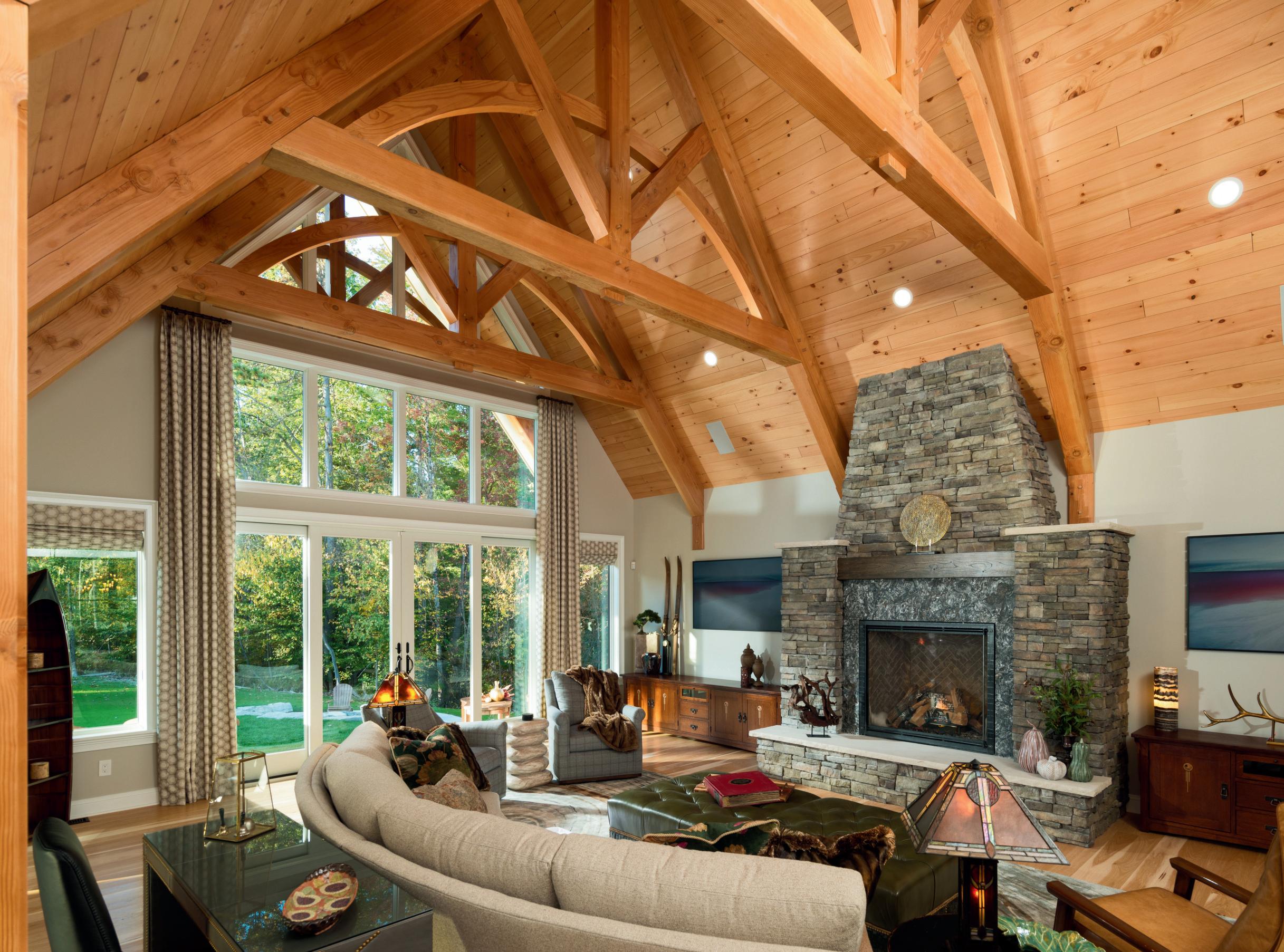
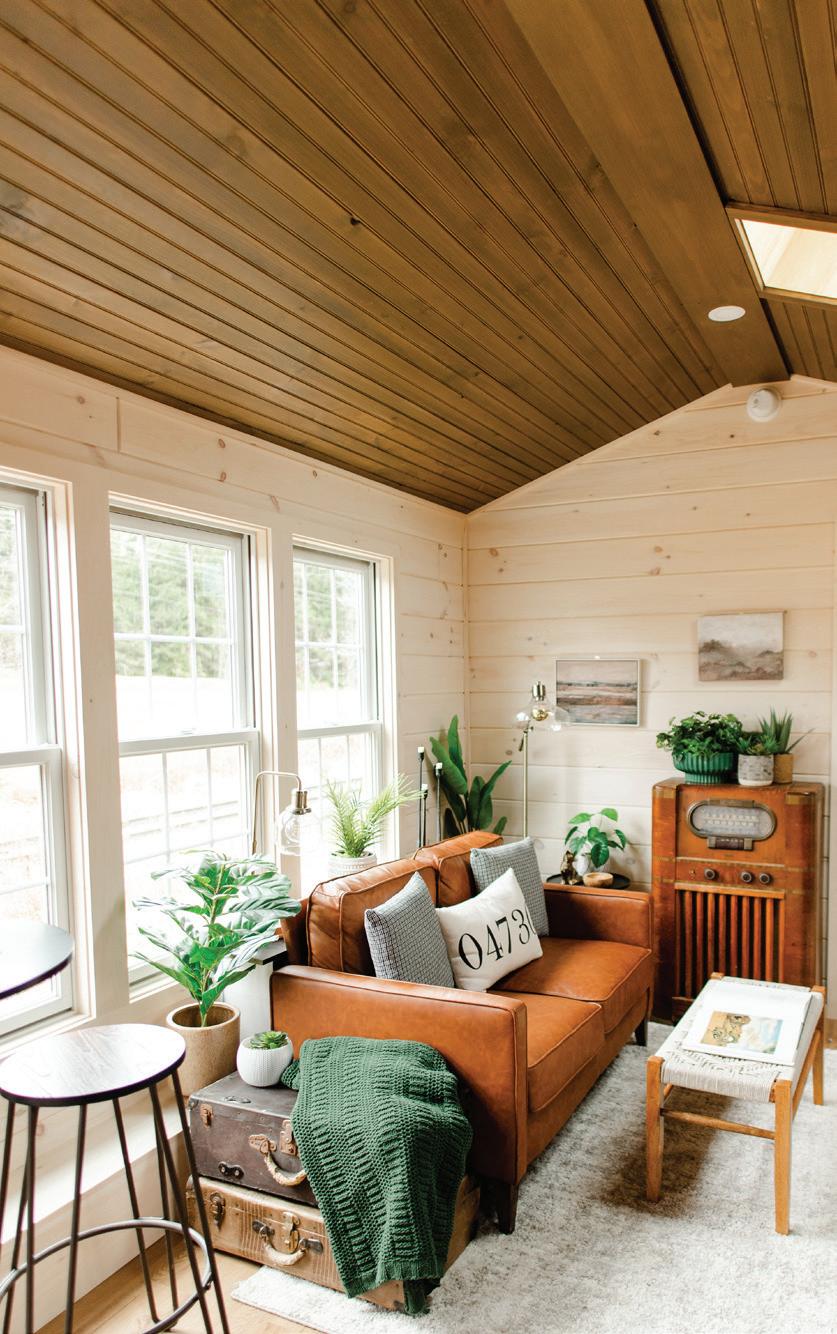
But it’s the second floor, the space saved for firefighters to meet, that is jaw-dropping in its design. Where once a flat ceiling made the room feel small and cramped, the ceiling was opened up into a vaulted area with windows at each end to let in the light. The ceiling is covered in gorgeous eastern white pine with recessed lighting, creating the dramatic impact of being inside a cabin, just like on the TV show.
Rough pine floors complete the all-natural look and feel, and the increased space allowed for the original hose
tower to be integrated into the room.
In 1904, the fire station was positioned over a stream. A trap
door in the floor could be opened, the hose lowered into the stream and rinsed off, then the hose retrieved and hung back up. This

hose tower is now surrounded by beautiful eastern white pine and showcased with interior lighting.
“The impact is impressive,” said Chief Roy. “You can still smell the white pine—everyone loves the real smell of it. We were able to bring in the sunlight through the two windows which reflects off the wood and is just gorgeous.”
Eastern white pine is regionally sourced and geographically relevant, meaning less carbon footprint is created when using it, as opposed to shipping products across the county (or across an ocean). The species is easy to work with and typically elicits a strong emotional response from people when they see it—biophilia!—and it’s a species customers know and trust.
An antique fire engine once used at the firehouse was returned in time for the grand opening of the revitalized property: the 1941 Buffalo Pumper even enjoyed a push-in ceremony to welcome the engine back home.
While the renovation was in progress, Roy said it was quite difficult to avoid the area to preserve the magic of the reveal. He did everything he could to not look at it as he drove by and didn’t set foot inside the building until the unveiling.
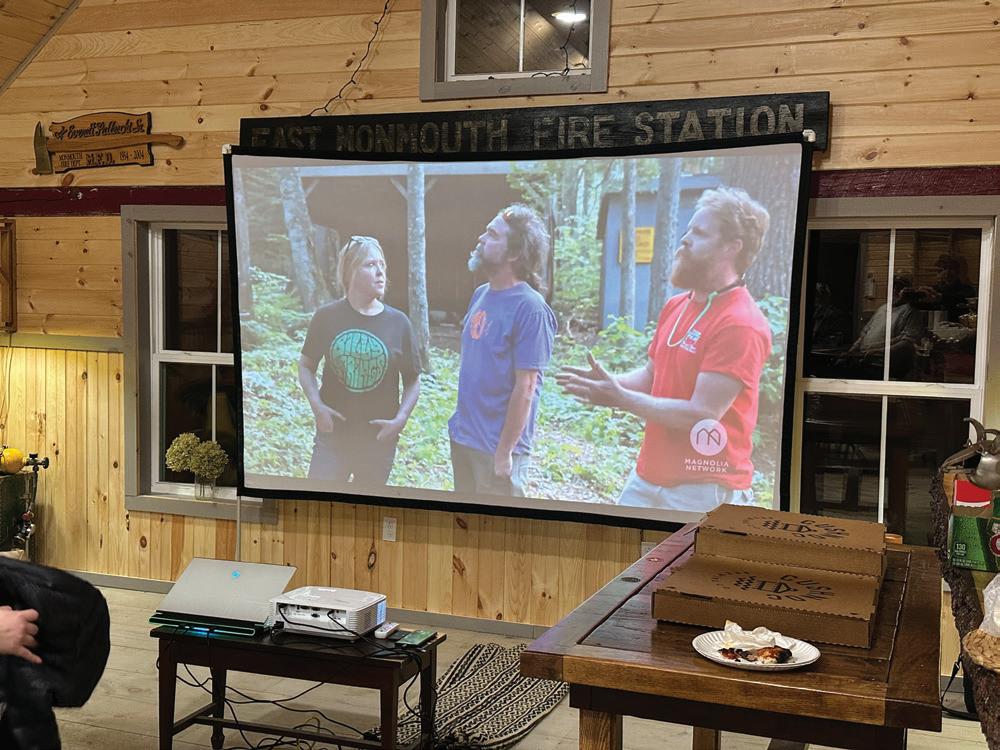
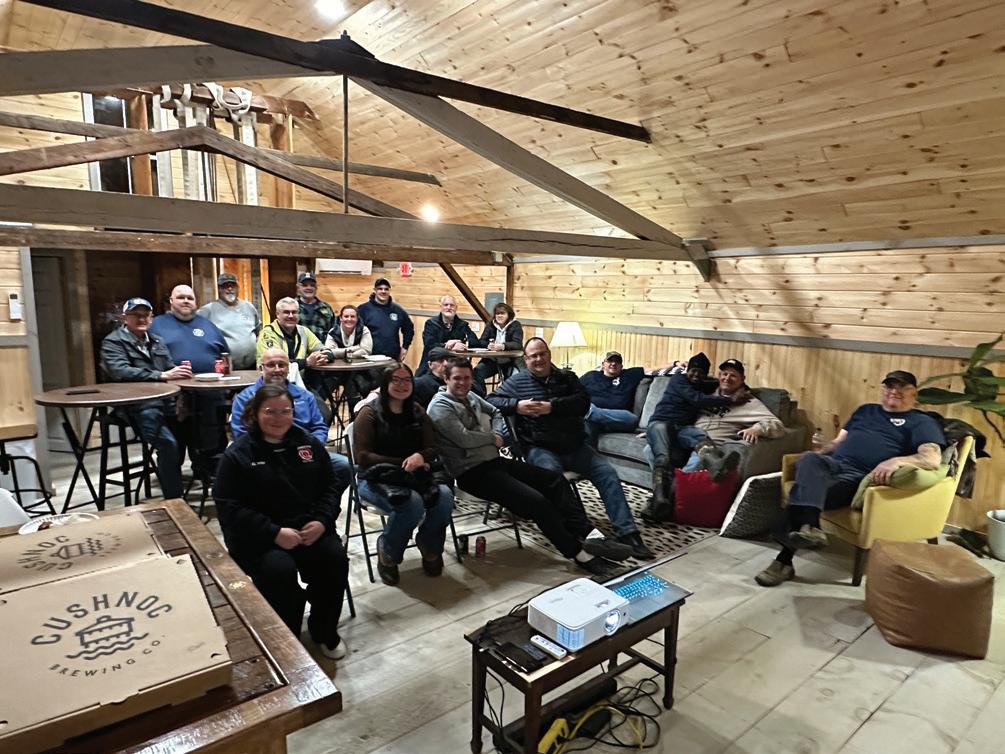
The Monmouth Fire House, supported by a membership of about 40 volunteer firefighters, is the shining star of the community in its new life. Historical interpreters, dressed in clothes from centuries ago, offer tours of the historical parts of Monmouth, and the Firehouse Museum is now one of their stops. The firefighters also meet monthly on the second floor dedicated to them. They even held a special meeting to watch their Maine Cabin Masters episode and cheered for the reveal all over again.
“The Monmouth Firehouse was the perfect partnership and project for us,” said Chase Morrill. “Preserving history is so important to us; the chance to make a real difference for Monmouth and create something that will stand the test of time was a real treat. The fact that we were able to rebuild this gorgeous structure using an original material—thanks to
Robbins Lumber and our partnership with NELMA— was the icing on the cake.”
Roy agrees that the partnership was meant to be. “We loved working with the entire team and all of their connections along the way. So many people jumped in to help and donate to make this project happen, and we’re so grateful. Together, we built a lasting monument for Monmouth, something that will be here for people to enjoy for a very long time.” BPD
1903 Monmouth Fire Department (MFD) incorporated
1904 Town of Monmouth purchased the Center Fire Station located at 756 Main St.
1962 The MFD moved to its current Center Fire Station location at 771 Main St. and sold the property
Oct. 2020 MFD acquired a piece of steel from the World Trade Center from a member of the Bethpage Fire Department, Bethpage, N.Y.
May 2023 Chief Roy pitched the idea to Chase Morrill of Maine Cabin Masters to assist with renovation of the old center fire station property once the property is acquired
July 2023 Monmouth Firefighters created a 501c3 nonprofit called the Monmouth Firehouse Museum (MFM)
Aug. 2023 The MFM purchased the property at 756 Main St.
Dec. 2023 The earth work was completed to move the building and to demo the old foundation
Apr. 2024 Footers poured for new foundation/slab and moved building back over new foundation
June 2024 Maine Cabin Masters renovated the museum property at the same time the 9/11 Memorial Park was being completed
Aug. 2024 Completion of project and the Maine Cabin Masters official reveal
Sept. 2024 Dedication of the 9/11 Memorial Park during the 9/11 Ceremony

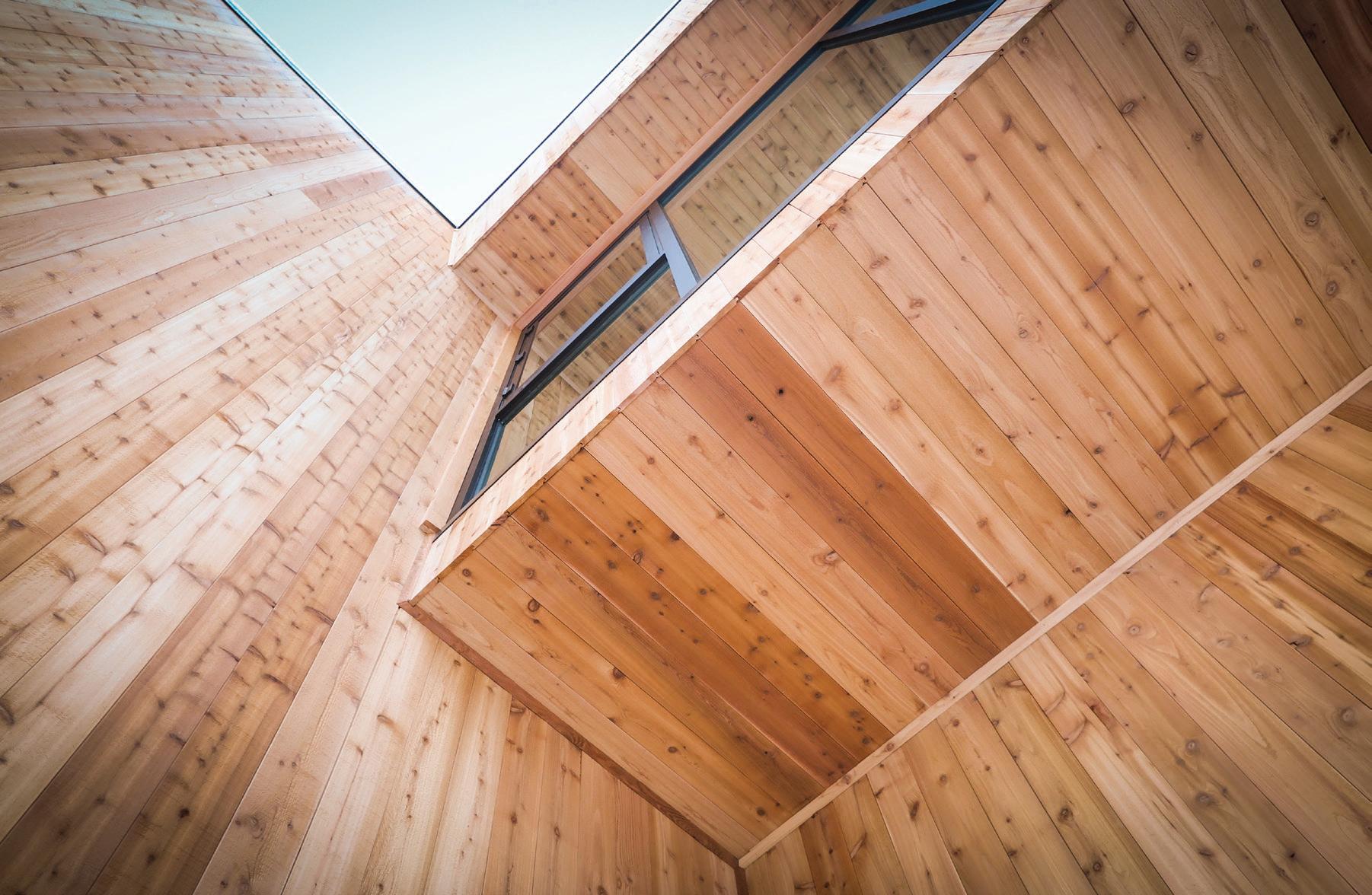
AS CONSUMERS, we’re accustomed to seeing comparative metaphors like “the Porsche of toasters” or “the Michael Jordan of ping pong.” They’re colorful descriptors that help advertise products and position them as the premium in their class.
At the Western Red Cedar Lumber Association, we’re both amused and quite honestly flattered when we see other building materials reference or compare themselves to western red cedar, as Western Woods Inc. recently did in a redwood product ad. While calling out western red cedar in the ad certainly helps position Real Cedar as the “Porsche” of building materials, it also underscores a simple truth: there is only one original. For decades, Real Cedar has set the standard against which durability, stability, appearance and versatility are
------------ BY BRAD KIRKBRIDE
measured. Its continued relevance across exterior, interior and outdoor applications is not an accident of tradition, but the result of a rare combination of performance attributes that remain unmatched.
It’s the combination of these attributes that make the species ideal for certain applications and the reason specifiers are still choosing Real Cedar.
While softwoods and other building materials face competitive and economic challenges in the market, there is a growing resurgence in the use of natural materials like WRC across commercial, institutional and high-end residential construction. This return to original materials is more than just nostalgia—architects, builders and homeowners value it not only for its aesthetic appeal, but
for its dimensional stability, natural resistance to decay, and longevity. Its low density, straight grain, and consistent workability make it easy to mill, install, and finish; advantages that matter just as much to manufacturers and retailers as they do to designers and contractors.
Aesthetically, western red cedar offers a range that few species can match. Its natural color spectrum, from pale straw and honey tones to rich reddish browns, provides designers with flexibility across contemporary and traditional styles. Available in a full range of appearance grades, from clear vertical to architect knotty, Real Cedar allows projects to dial in everything from refined minimalism to expressive, rustic character. The wood’s fine texture and grain also add visual interest without overwhelming
a space, making it equally effective as a focal material or as a complementary surface.
While market research shows that looks are still the most popular reason for choosing western red cedar, sustainability is now becoming an important driver of material selection, and WRC performs exceptionally well in this regard. It is a renewable resource harvested under rigorous forest management standards, with widespread third-party certification.
From a carbon perspective, WRC requires relatively little energy to process and stores carbon throughout its service life, contributing to lower embodied carbon profiles for buildings. At end of life, it can be reclaimed, reused, or allowed to biodegrade naturally. Unlike many composite products, it won’t end up in our landfills.
Of equal growing importance is Real Cedar’s role in biophilic design. Research continues to show that natural wood environments support occupant well-being, productivity, and comfort across offices, schools, healthcare facilities, and retail spaces. Western red cedar’s warm color, visible grain, tactile softness, and subtle aroma engage the senses in ways synthetic materials cannot replicate. These qualities are not merely aesthetic; they have been linked to reduced stress responses, improved cognitive performance, and increased user satisfaction, all of which are benefits that directly support the value proposition of wood-forward design.
One of the main claims the redwood ad makes in its comparison to Real Cedar is its performance as an outdoor product. The comparison is telling as this is so foundational to western red cedar’s reputation. Naturally resistant to rot, decay, and insect attack, WRC performs exceptionally well in demanding exterior environments without the need for chemical treatment. This inherent durability translates directly into longevity and reduced maintenance. What’s more, WRC weathers gracefully, developing an attractive silvery grey patina that is difficult to replicate.
Stability is another defining characteristic. Compared to many other softwoods, western red cedar exhibits low shrinkage and excellent dimensional stability, reducing the risk of warping, cupping or splitting over
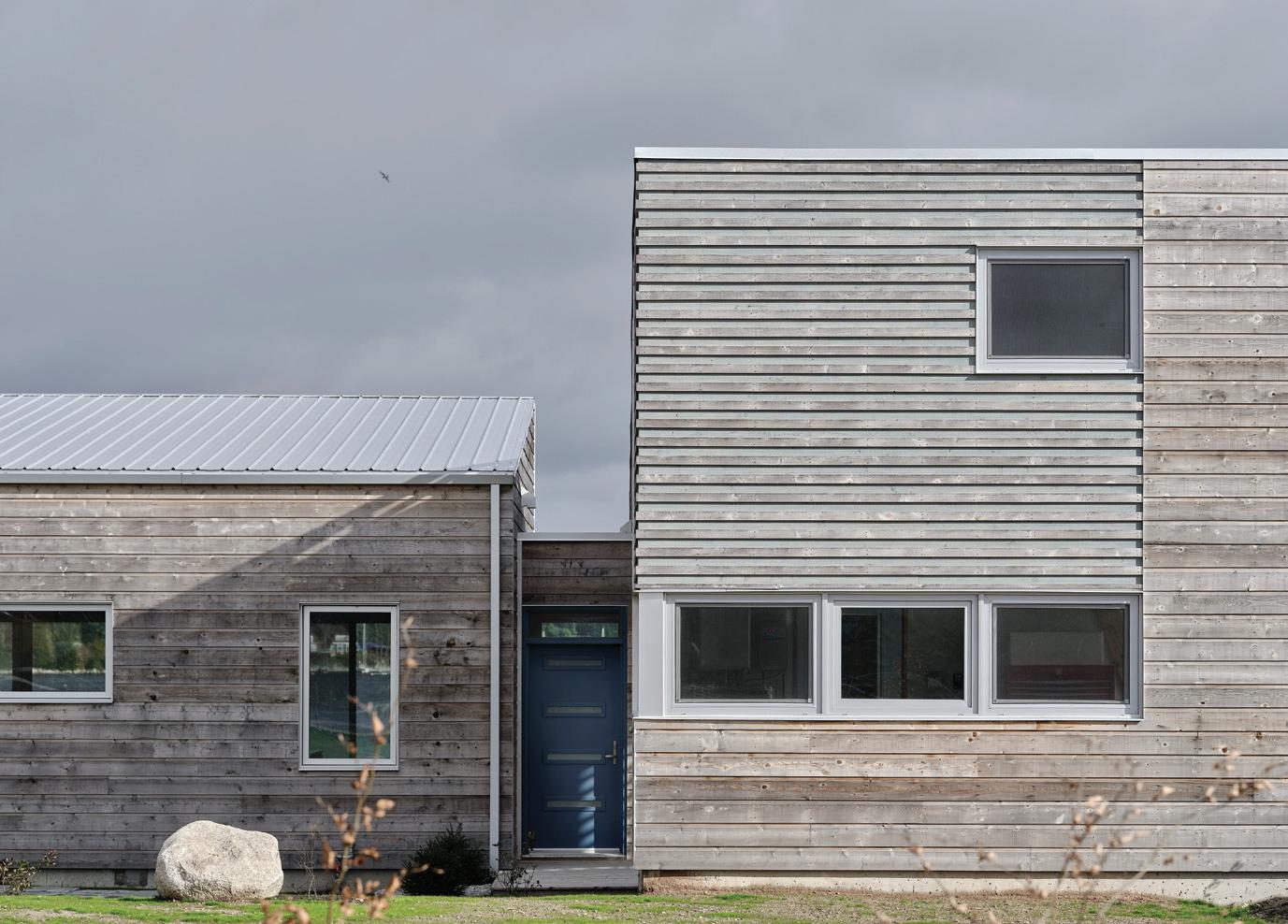
time. For manufacturers, this predictability supports tighter tolerances and higher-value profiles. For retailers and builders, it means fewer call backs and more reliable outcomes in the field.
By definition, western red cedar is the original in the market. It has centuries of proven use, deep cultural significance, and a performance record that continues to meet modern demands. New products and substitutes will continue to enter the market, and some will continue to
compare themselves to WRC. That’s fine. Western red cedar will continue to be the original; the reference point; the Porsche of Building Materials. And if you want to find the one true western red cedar, just look for the Real Cedar brand and a WRCLA member retailer. BPD
– Brad Kirkbride is managing director of the Western Red Cedar Lumber Association (www.wrcla.org). Established in 1954, WRCLA is the voice of the cedar industry and has 132 members in various locations throughout North America.


------------
BY JAMES OLSEN
WE CANNOT BEAT the computer at information dispensing. We do have an advantage—if we choose to use it—in the inspiration business. We must first accept that we are in the inspiration business, and then we will have to commit to more inspirational speech.
If a young man is being paid to make pizza and he spends his whole shift cleaning up the parking lot, he may be working hard, but he is working hard on the wrong thing. Many sellers are working hard at information dispensing while ignoring the persuasive and inspirational arts.
I'm happy with my current supplier
Goals: (1) Get the customer to relax. (2) Keep the conversation going—“uh, uh, well, uh” won’t get it done. (3) Get permission to continue calling.
The secondary supplier strategy. We don’t challenge the customer. Any kind of “I-can-do-it-better-or-cheaperthan-who-you-are-buying-from-now” direct challenge will raise our potential customer’s defenses and will make it difficult do get permission to continue calling.
“John, I don’t want to get in the way of the business you are already doing. What I would like is to find out more about you and your business and become a secondary supplier to you. That way, you can get to know the quality of my service and products and if anything does happen with your current supply, we will already have a working relationship and we will continue to supply you without interrupting the smooth running of your business.”
The Challenge Strategy. To get some customers out of their current habits (buying from others) we will have to challenge their view of the world. This is delicate; it can backfire and blow up, so use with care.
Customer: “I’ve been buying from Susie Smithers for 20 years. She has been with me through thick and thin, so I owe her. In our current market, I can barely keep her happy, much less take on a new supplier.”
Bold Seller: “It’s great that you are loyal. But changing times call for changing strategies. In shifting times only the crafty, flexible and the open minded survive. I bring new and different ideas to my customers that help them make money in these dynamic times, why don’t we open a dialogue?”
W.S.I.B.F.U.?
The real objection behind all objections is, “Why Should I Buy from You?” About 95% of the sellers you compete against every day cannot answer this question in an inspi-
rational way; 95% wing it so they all sound the same. Here’s how to write a great W.S.I.B.F.U.?:
1. No more than four sentences.
2. What’s in it for the customer? Saying you are the biggest and baddest and you have been in business for 1,000 years means nothing to the customer. They do not care. Telling them you are currently helping people just like them to make money and buy better products, etc., will resonate.
3. Something about ourselves. If we go to the psychologist and she says, “Tell me about your family,” and we spend the hour talking about everyone but our father, the psychologist surmises issues with our father, by omission. The seller who only talks about how great their company is without mentioning something about themselves—the thing they most want to communicate (“I am a man you can trust,” “I make a great partner,” “I treat your needs as mine,” “I am passionate about creating profit for my customers,” “I’m fun to do business with”)—sends by omission the message that they don’t believe in themselves. Our customers want to buy from people who are confident. Say something good about yourself; don’t go overboard, but we must say something about the value we bring.
4. Tailor to personality. Everyone is different. Communicate with customers in their language. We approach the aggressive buyer differently than the laid back buyer.
The most important thing is to have a well-planned, inspirational answer you believe in. “You should buy from me because I will bring you value. There are all kinds of suppliers in this market. Direct suppliers, wholesale suppliers, distribution suppliers. I am a customer needs supplier. What my customers need, I supply them. I am a profitmaking partner. That’s why my customers buy from me and that’s why you will love doing business with me also.”
W.S.I.B.F.U.? BPD

Olsen is principal of Reality Sales Training, Portland, Or., and creator of SellingLumber.com. Call him at (503) 544-3572 or email james@realitysalestraining.com.





------------
BY PAIGE McALLISTER
FIRST, A QUICK disclaimer: I am an HR professional, not an IT expert. When it comes to the technical aspects of your computer infrastructure, including integrating AI, please consult with people knowledgeable with that technology and who you trust to help you determine what is right for you.
Artificial Intelligence (AI) is everywhere whether you want it to be or not. In the short time AI has been part of the public domain, its uses and access have increased exponentially. A large number of software programs and platforms automatically offer their users some sort of AI assistance. During the course of writing this article, my email offered to draft my reply to the request to write it, my internet browser summarized its findings from my search inquiry before listing some of the links for me to read myself, and my word processing program offered to draft the whole article for me based on whatever prompts I entered in (good news, bad news—I opted to write it all myself). All of this was available to me without my downloading or accessing any AI-specific programs; these functions are just part of the programs I have been using for years.
Since the issue is no longer if you want AI to be part of your day, you need to assess when and how the people in your company will use it. In most cases, AI does not replace people. Instead, when done right, AI allows employees to work smarter by eliminating mindless, repetitive tasks and improving their performance by supporting them with their job tasks.
AI can be used in management, operations, finance, IT, HR, marketing, administration, research, etc. There are very few jobs that could not recognize a benefit from using AI. Therefore, I recommend every company include an initiative in their 2026 planning to explore AI implementation and usage.
However, it is critical to realize AI’s limitations and know it is just one tool in your toolbox. For example, we have researched and experimented with how AI can help with various HR functions, including drafting a handbook, doing research, and screening candidates with the following results:
• Handbooks – After entering specific criteria we use to develop handbooks, the AI-developed handbook did not include all recommended policies or required state laws and was written in a way that would be hard for many employees to understand.
• Research – While gathering information on a topic, the AI-generated summary conflicted with the actual state law even though it provided it as a reference.
• Screening – After inputting a job description, the results of the AI-based screening of applicants eliminated some very qualified candidates and included some that did not meet the basic criteria. Additionally, when used to select candidates, any AI tool must be properly vetted and tested to ensure it is not generating discriminatory results.
How to use AI: Here are just a few of the unlimited examples of how AI can help your employees (and therefore your company) perform better.
Productivity: Help employees use their work time more constructively, freeing them up to focus on more strategic and profitable responsibilities.
• Task management – Pull action items from emails, virtual meetings and recorded meetings and track their progress.
• Time management – Plan the time it takes to complete tasks or projects while planning an optimized workday to get everything done.
• Team coordination – Develop team boards for better collaboration and communication.
Caution: Every employee has different ways they work so make sure all tools support, not restrict, how they work best.
Writing: Help employees, especially those having issues, draft better communication.
• Save time – Create an initial draft using basic information and parameters.
• Improve readability – Polish up an employee’s first draft and make it suitable for the target audience.
• Correct grammar – Clean up tricky formatting such
as citations to avoid plagiarism.
Caution: Be sure to review and refine any AI-drafted communication to ensure it is accurate, on message, and has a personal tone and style.
Research: Help employees find improved topics and sources and to better understand the content.
• Brainstorming – Generate new ideas and refine topics from broad concepts to determine your next course of action.
• Find more sources – Find different and more ontarget resources for material.
• Analysis – Have complex documents summarized or specific information extracted to match topic.
Caution: Verify all sources before relying on the information and be sure all references are properly cited.
How to get started: Regardless of how you plan to use AI in your company, you should include the following steps in your implementation plan.
• Determine how you want or may want AI used to meet the needs of applicable departments, positions, and/or employees.
• Designate a person or, preferably, a team with IT, operational, legal, and financial responsibilities to investigate valid options which will perform the tasks needed at the budgeted price without compromising network security.
• Research the laws and regulations in your state, if applicable, to ensure you are using AI properly and compliantly. More states are passing such legislation so stay up-to-date on any changes.
Q. We have an employee who regularly needs to be reminded to do certain tasks. They manage most of their workload well, but there are one or two monthly responsibilities we need to remind them to do almost every month. What can and should we do?
A. Holding an employee accountable to performing their job duties is an important part of every supervisor’s and manager’s job. However, what that will look like will depend on factors such as the critical nature of the task, other employees being able to perform the task, the employee’s ability to do the task correctly, and/or their time availability to perform the task when needed.
The more important a task is or the more critical that a particular employee performs that task escalates the reaction. That may be a written warning or two before eventually a final warning and possibly termination for failing to perform the job duties. A truly critical task should have a backup employee trained and ready to step in as part of a smart contingency plan.
However, if the task is minor or can be done by someone else or if the employee doesn’t have the time or capability to perform the task, disciplinary action may not help. Instead consider reevaluating the task (timing, technique, need, etc.) or assigning it to someone else. Or perhaps find ways to remind the employee of the deadline by sending an email each month or putting a reminder on their calendar so they don’t forget.
• Ensure your options protect the confidentiality of private and proprietary information.
• Assess the skill and aptitude of the individuals who will be using AI to ensure they can use the selected tools. DO NOT make assumptions based on protected groups (i.e., age, gender, national origin, disability) as to who will and will not be able to use AI effectively.
• Explain what AI is meant to do (i.e., save time by reducing repetitive tasks) and not do (i.e., replace your human capital).
• Find opportunities to train employees in how they can and are expected to use AI in their jobs and then have them relay what they learn to others.
• Encourage employees to safely experiment with AI to find other ways to improve productivity, clarity, profitability, etc.
How to protect yourself: When implementing a new structure in the workplace, especially an emerging technology, it is critical to create a solid foundation which includes the following:
• Until you have a defined company-approved usage, issue a clear policy to all employees prohibiting them to use AI without specific management approval.
• Set guidelines for what tools can and cannot be used and who can use them for what tasks.
• Draft and publish policies and procedures covering tools that are and are not selected by the company.
• Monitor employee use and consistently enforce your policies to ensure proper usage but, more importantly, to ensure confidentiality is not violated.
• Experiment safely using a well-trained group to determine what works before rolling out to everyone.
• Keep communication open so employees know they can ask questions.
• Reassure employees that AI is being used as a tool to enhance their performance, not to replace them.
• Keep your other protocols since AI is not perfect— check for mistakes, do your own research, proofread the document, and ensure the message is what you want and the tone is personal/not artificial.
While AI can seem intimidating, every company needs to accept that AI is impacting every aspect of our lives in some way. Companies that refuse to address how AI can help them will be outpaced by their competitors who do.
The Workplace Advisors can help you move from AI curiosity to AI clarity. We offer a customizable “Use of AI” policy template to help you set guardrails, protect your organization, and give employees clear guidance. Email us at hello@theworkplaceadvisors.com to request a copy. BPD

at

BY NELMA
are you and what do you do?
My name is Gary Striegler, and I’ve worked in residential construction for more than 50 years as a partner in other companies and as owner of my own company, Striegler and Associates. My longtime business model has been to manage and supervise the jobs my company handles while allowing myself the opportunity to act as carpenter on site.
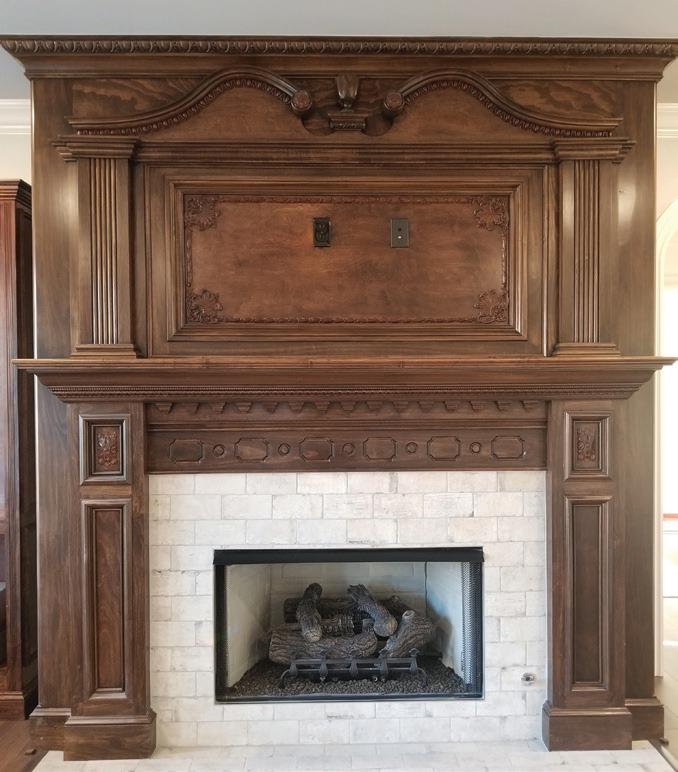
Most of the work we do is high-end trim work and custom millwork, projects like fireplace mantels, curved trim and moulding, curved stairs, and custom doors. We’ve also done a lot of unique cabinet and furniture projects.

print from shipping it from somewhere far away?
(2) Much stronger focus on sustainability. Luckily, the lumber industry is good with this one: real wood is the greenest product on the market as it’s 100% renewable.
(3) Customer service is taking a hit right now. With the digitalization of so much—ordering, sales, delivery—it’s easy to get lazy as long as the job is completed. But people still want interaction, they still want you to respond to their questions in a timely manner.
What trends are you seeing on the residential construction side of things?
Along the way, I had the opportunity to publish an article here and there in trade magazines focused on DIY and home improvement projects from the professional and technical level.
What is the number one thing retailers need to keep in mind when working with customers?
When taking a look at lumber dealers today, I see that many retailers are focused on commodity level moulding and millwork. While this is an important part of the market, my experience has taught me that many homeowners and do-it-yourselfers would gladly pay more for higher quality materials if given the option to do so.
Here’s an example to make the point: the auto industry. Very few people out there drive the cheapest car available to them. Most car buyers are willing to pay for added features, better performance, better aesthetics, etc.
Educating customers about the quality products available to them is a key element of customer service for lumber retailer employees.
What trends are you seeing in the lumber industry?
Having been in this industry for almost half a century, here are three quick trends that stand out for me.
(1) The emphasis is growing on transparency in the supply chain. Meaning: is this wood I’m buying geographically relevant? Or does it have a massive carbon foot-
Around two decades ago, I started noticing a trend toward minimalism in residential millwork: no trim at the windows, door openings wrapped only in drywall, very minimal or absolutely no ceiling trim, plain cabinetry, etc. There were jobs where I even saw no casing trim or baseboard at the bottom of the walls! All of this, while perhaps achieving a certain look, is a very bad idea, and here’s why. Drywall has its purpose in a home, but it’s simply not as durable as wood. Drywall cannot offer any design options to improve the overall look of the home.
Thankfully, I’ve started to see more of a return in the demand for more traditional trim and millwork throughout home building projects. We’re even seeing a little more stain grade trim, which adds something new.
An unfortunate trend: many skilled carpenters have retired, and the next generation hasn’t yet stepped up to the plate. As the demand for this beautiful traditional trim work increases, there will be opportunities for anyone and everyone with trim carpentry skills to step up and take more and more jobs. On the same side of the coin, the wood industry needs to support education. Combining these two things—education and knowledge of trim products—can be nothing but beneficial across the industry. People will not buy a product for which they can’t find an installer. The time is now for people across the industry to step up the levels of education out there in order to provide skilled workers for the jobs that are coming. BPD

Sample the variety and versatility of eastern white pine.
USE ALL YOUR SENSES. Visit nelma.org for all things eastern white pine, spruce-pinefir and other softwood species grown in the Northeast and Great Lakes region.

Scan here to see gorgeous 3D tours of some of our favorite residential and commercial projects. Simply hold the camera on your smartphone over this image.
@NortheasternLumberMfg
@WoodInspiration
@wood_inspiration1933


------------ BY DAVE KAHLE
WE’VE ALL HEARD the numbers. Consumer confidence is down, retail sales are dismal, unemployment is up. The housing market is iffy. And for many of us, the markets we serve are down as well.
There is an important relationship to note here. Confidence—an attitude—is down, so sales are down. When confidence is up, sales follow. The principle at work here is this: Our actions follow our attitudes. The relationship between actions and attitudes is so close, that the two go hand-in-hand, and our actions can be seen as outward expressions of our attitudes.
For example, let’s say that you got up this morning in a great mood. You bound down the steps, give your spouse a passionate kiss, announce to the kids that it is going to be a great day, and with effervescent energy dance out the door to the car. It doesn’t take a psychologist to see that your attitude—your great mood—influenced your actions.
While it is easy to connect the two in this example, the principle that it unveils—that our attitudes influence our actions—extends to every aspect of our lives, and particularly to our jobs, in even the slightest and most mundane portions of our work lives. I was in a particularly pensive mood yesterday afternoon, for example, and, as a result, chose not to answer a couple of emails, but, instead, left them for this morning. An action as simple and mundane as responding to an email was dependent on my attitude.
And that leads us to one of the greatest principles of self-improvement: You can choose your attitudes. You can choose to be happy, you can choose to be sad, you can choose to be confident, and you can choose to be cautious.
Don’t believe it? Take this little test. Tomorrow, as you are eating breakfast, tell yourself these things over and over: “It’s going to be a rotten day. Everybody’s afraid to buy. Most people probably won’t even see me. I’ll probably be laid off soon anyway.” Now, having repeated that litany of dreariness to yourself, pay attention to what kind of attitude you exhibit during the course of the
day. You are probably not going to be effervescent and overwhelmingly positive. Instead, you’ll be depressed and discouraged, and you’ll spread it to the people around you like the plague.
You could, on the other hand, dramatically change your attitude for the day if you were to get up in the morning and repeat this kind of dialogue with yourself: “It’s going to be a good day. I can’t wait to see what good things are going to happen. I know there are some good things I can do for my customers. I’m going to make a difference in their businesses and their lives.” The result of that train of thought is confidence and positive energy.
Look at the mechanics in these simple illustrations. You started out thinking a thought, then expressed that thought, and that action created an attitude, which in turn influenced future actions. In other words, your thoughts eventually and directly influenced your actions. And that brings us to the key to self improvement: you can choose your thoughts!
You can choose what you think. And when you do that, it influences everything up the chain—your attitudes, your actions, and your results. It starts with how you think. That is a piece of wisdom that is ageless.
Two thousand years ago, the Apostle Paul wrote in Romans 12:2: “Do not conform to the pattern of this world, but be transformed by the renewing of your mind.”
So, here we are, in a time of rapid change and growing turmoil, with all sorts of negative attitudes populating the menu of the day. Choose to be discouraged about this or depressed about that. It seems as if everyone we meet has a worry, anxiety or tough luck story to tell.
What do we do? We don’t look outside of ourselves—at the federal government, for example, to borrow and spend our way to better times. Instead, we look inward, accept responsibility for our own actions, attitudes and thoughts, and start to change who we are, by changing what we think. We change ourselves, one thought at a time, to influence our attitudes, to shape our actions, to produce better results.
I believe we have a responsibility to do so. We are responsible not only to ourselves and our families, but to the companies that employ us, the industries we serve, and the communities in which we live.
Attitudes are contagious. You know that if you spend a lot of time with negative people, you begin to see what’s wrong with everything and everyone. Hang around a lot with depressed people, and you become depressed. On the other hand, if you are with energetic and optimistic people, it rubs off on you as well.
Here’s the point. You can choose to be part of the problem or part of the solution. You can choose to be influenced by the negativity around you. You can reflect that cautiousness and lack of confidence. You can contribute to that downward spiral in attitude. In that case, you have chosen to be part of the problem.
On the other hand, you can choose to be part of the solution. You can choose an attitude of confidence and optimism. By so doing, you influence those around you. You do your small part to contribute to the solution. Of course, you are not single-handedly going to change world attitudes. But you can positively influence those in your spheres of contact.
You are a professional. You contact more individuals in the course of the day than most people do. Your customers, prospects, colleagues; your friends and family; the people you work with and supervise; even your managers—all of them can be influenced via your attitude. Because of your position of great potential influence, you have a greater responsibility to be proactive, and to lead others.
It’s time for you to step up to the plate and to become a positive leader for those around you. Here are a couple guidelines to help you:
(1) Start with yourself. Make sure you are nurturing your own personal attitude. Now is the time to revitalize your faith in God. Hang around positive people. Make a point to read uplifting books and articles. Get some additional training. Create a set of strong affirmations and read them to yourself at the start of every day.
(2) Assume that you are the leader for which people around you are looking. Be sensitive to opportunities that come up in the course of the day to influence the attitudes of those
around you. If you are a manager, do something positive for your people. Invest in them someway. Enlist their input and involvement in a new initiative. Don’t just talk the talk; show your attitude by your actions.
It is time that we, American salespeople and businesspeople, step up. It is the combination of applied energy, knowledge and wisdom of American businesspeople that has brought freedom of choice, dignity and financial opportunity to our own people, and has been a model for billions of people around the world.
American businesspeople need
to step up and accept our leadership opportunities. It’s time for each of us to contribute to the solution, not to be part of the problem. BPD

Dave Kahle is a leading sales authority, having presented in 47 states and 11 countries and written 12 books including The Good Book on Business. For more information, visit davekahle.com.

QXO, Inc., Greenwich, Ct., has entered into a definitive agreement to acquire Kodiak Building Partners, Englewood, Co., from Court Square Capital Partners for approximately $2.25 billion.
Kodiak operates 110 locations in 26 states from coast to coast, locally led and branded.
Among their operations are 11-unit American Builders Supply in Florida, 10-unit Sun Mountain Doors, nine-unit Simonson Lumber in Minnesota, seven-unit Zarsky Lumber in Texas, five-unit Barnsco in Michigan and Texas, five-unit Carpenter Contractors of America, four-unit Shepley Wood Products in Massachusetts, three-unit Builders Millwork in Minnesota and Wisconsin, three-unit Christensen Lumber Co. in Nebraska, and threeunit New River Building Supply & Lumber Co. in North Carolina.
The purchase price includes $2.0 billion in cash and 13.2 million shares, with QXO retaining the right to repurchase these shares at $40 per share. The deal is expected to close early in the second quarter of 2026.
Kodiak generated approximately $2.4 billion of revenues in 2025 as a U.S. distributor of lumber, trusses, windows and doors, construction supplies, waterproofing, roofing, and complementary exterior products, as well as value-added assembly, fabrication and installation services, with concentrations in the Sunbelt and Mountain states. About 40% of Kodiak’s 2025 revenues were generated in Florida and Texas, where building market growth has consistently outpaced national market growth over the last decade.
Brad Jacobs, chairman and CEO of QXO, said, “The acquisition of Kodiak is highly complementary to our existing business. We’ll be able to deliver more value to customers across our combined base by cross-selling products and support services, and with a greater presence in key markets. And we expect the integration to accelerate margin expansion through scaled procurement, network optimization, AI-powered inventory management, and other tech-enabled operating efficiencies. Our acquisi-
tion pipeline remains very active, with plenty of dry powder from our recently announced equity financings led by Apollo and Temasek.”
The integration of Kodiak’s structural and exterior construction product offerings with QXO’s existing range will better position QXO to grow market share and wallet share with large homebuilders. This aligns with its strategy to become a preferred supplier serving the full project lifecycle of large, multisite developments and master-planned communities.
Formed with last year’s acquisition of Beacon Building Products, QXO is the fastest growing publicly traded distributor of building products in North America. It expects to achieve its target of $50 billion in annual revenues within the next decade through accretive acquisitions and organic growth.
Founded in 2011, Kodiak has approximately 5,500 employees who serve over 10,000 customers, including contractors, subcontractors, remodelers and residential, commercial and industrial builders.
Do it Best Group is implementing its distribution center optimization plan, a strategic initiative designed to strengthen its supply chain, support long-term growth, and enhance service for all members and retailers. The plan includes a series of phased distribution center transitions across the network and is moving forward ahead of schedule.
As part of the plan, Do it Best is relocating its Montgomery, N.Y., distribution center operations into underutilized distribution center space it already has in WilkesBarre, Pa. A new operation, known as Hanover, is being established at that location to support long-term capacity needs and provide greater flexibility as the business grows.
In addition, True Value operations will transition out of the Atlanta distribution center earlier than originally planned, with operations moving into other locations within the network that are positioned to support dealer service and efficiency.
Finley Lumber & Supply, Finley, N.D., has closed after nearly 30 years and is liquidating its stock. Any remaining inventory will be auctioned off in the spring or summer.
ABC Supply opened new locations in Shelby, N.C. (Justin Harris, branch mgr.), and Fremont, Oh. (Jim Schultz, branch mgr.).
Ace Hardware of Lewistown, Pa., is closing after four years.
Sunshine Ace Hardware held a grand opening celebration Jan. 24-25 at its new store in Pelican Bay (Naples), Fl.—#16 for the chain.
Gerrity’s Ace Hardware has set an April 6 opening for a new 16,000-sq. ft. branch (its 7th) at the Hanover Mall in Hanover, Pa.
St. James Ace Hardware has opened in St. James, Mo., managed by Meagan Conn.
Bernau Capital Management will open its first Ace Hardware store late this spring in Webster City, Ia., overseen by operations manager Kim Drautz. It takes over the recently vacated home of Webster City True Value.
Aubuchon Co. is acquiring 40-year-old Depault’s Ace Hardware, Cumberland, R.I., from the Depault and Gonsalves families.
Lowe’s held grand opening celebrations Jan. 30 in Manvel, Tx., and Feb. 14 in Celina, Tx.—the latter delayed by three weeks due to winter storms.
The Home Depot has shuttered its six-year-old Design Center in Rockville, Md.
Tri-County Lumber Co., Clearwater, Mn., is celebrating its 25th anniversary.
“This work builds the supply chain our store owners will need for the future,” said CEO Dan Starr. “We took the time to study our network carefully, and we’re confident in the plan we’re executing.”
Do it Best noted the transitions are being phased intentionally to protect service continuity, maintain strong fill rates, and ensure clear communication with dealers and vendors throughout execution.
Discover what 9,000 locations already know. Our support goes beyond the initial sale. Learn how we’re better for your business.
Scan the QR code to see how much better it can get.
Britton Lumber Co., Fairlee, Vt., a distributor of building materials throughout New England and Upstate New York and a manufacturer of eastern white pine boards, agreed to purchase Billerica, Ma.-based building materials distributor Denison-Cannon Co.
Founded in 1920, Denison-Cannon serves packaging and pallet manufacturers and lumber dealers throughout the New England region. Denison-Cannon offers a wide range of forest products and building materials from its strategically located facility with an experienced team of both sales and transportation professionals. The company has been led by Peter Hyatt and Carmen Mattuchio for 40+ years, and both will join the Britton Lumber team together with their colleagues.
The acquisition further diversifies Britton Lumber’s customer base and product mix while at the same time expands Britton’s presence in Massachusetts and opens new markets in Rhode Island and Connecticut, currently served by Denison-Cannon.
“We are thrilled to add the experienced team of professionals at Denison-Cannon to our wholesale division and to add a location in Massachusetts to better serve our customers in southern New England,” said Brian Moses, general manager of Britton Lumber’s Wholesale Division. “The packaging business that Peter and Carmen have grown over the years adds a different mix to our customer base which was an important factor in our purchase. I look forward to welcoming the Denison-Cannon team to Britton Lumber.”
“Britton Lumber has been a vendor of Denison-Cannon for decades providing us with high-quality eastern white pine boards for our customers,” said Peter Hyatt, VP of Denison-Cannon Co.
Founded in 1946, Britton Lumber Co. currently operates two divisions: manufacturing, which produces eastern white pine boards in Bath, N.H., and wholesale distribution, which sells building materials from existing warehouses in Fairlee, Vt., and Gray, Me. In 2014, Robert Moses acquired ownership of the company and in 2018, his sons, John and Brian, both joined the family business.
Wausau Supply Co., Schofield, Wi., is expanding into New England with the opening of a new distribution center in Chicopee, Ma.
The new Drop & Hook distribution center will allow Wausau to serve dealers in Rhode Island, Connecticut, Massachusetts, Vermont, New Hampshire, and Maine, ensuring consistent distribution of its proprietary brands, including Diamond Kote Siding System, Taylor Entrance Systems, ChamClad architectural cladding systems, and Waudena Doors.
Established in 1947, Wausau now operates 22 locations, primarily clustered in the Midwest but extending as far west as Montana and Utah, as far south as Tennessee, and now all the way to the East Coast. Six of its locations also encompass manufacturing operations.
Winnwood Forest Products, Natchez, Ms., received county board of supervisors approval to purchase 17 additional acres to expand its sawmill for increased capacity.
JB Sawmill & Land Clearing, Hopkinton, Ma., lost its 2,000-sq. ft. sawmill in a Jan. 29 blaze. Authorities suspect the fire started in an engine used to power some of the machinery.
James Hardie is shuttering its fiber cement products manufacturing plant in Summerville, S.C.
Hinton Lumber Products has opened a new pallet manufacturing operation in Summerville, S.C.
Annandale Millwork & Allied Systems Corp., Winchester, Va., will build an $11.5-million facility in Newport News, Va., to manufacture trusses, wall panels, millwork and doors.
TJ Hale, Menomonee Falls, Wi., abruptly closed its architectural millwork shop on Feb. 5, leaving 64 employees out of work.
Robbins Lumber, Searsmont, Me., is adding fingerjointed lumber to its product line-up.
McElroy Metal, Bossier City, La., has acquired metal roofing and cladding manufacturer Fabral, Scottsdale, Az. Fabral will continue to operate independently under president Dennis Merino and the existing leadership team.
Boston Valley Terra Cotta, Orchard Park, N.Y., has been sold by NewSpring Capital and Spring Capital Partners to RAF Equity.
Wallace Distribution Co., Morristown, Tn., is now distributing Envision Outdoor Living Products’ Designer Aluminum Railing to dealers in West Virginia, northern Alabama, northern Georgia, and most of Tennessee, Kentucky, Virginia and the Carolinas.
Parksite, Batavia, Il., is now offering Silvermine Stone mortarless stone veneer throughout Illinois.
Wahoo Building Products, Dahlonega, Ga., announced a new enhancement to its flagship AridDek Waterproof Deck System: Quiet Step Technology. This upgrade reduces the noise often associated with walking on aluminum decking, offering a more comfortable and quiet outdoor experience for residential, marine, and multifamily spaces.
Accoya Color wood siding acheived Wildland-Urban Interface (WUI) certification.
Nova USA Wood has received certification for its Ambara thermally modified wood cladding for use in Wildland-Urban Interface (WUI) applications.
Palmer-Donavin named TimberTech its 2025 Manufacturer Partner of the Year.
AZEK TimberTech has launched a new "The Future of Decking" marketing campaign.
Cornerstone Building Brands has recruited multiplatinum award-winning country music artist Jordan Davis as its 2026 Home for Good project ambassador.
Anniversaries: Kolbe Windows & Doors, Wausau, Wi., 80th ... Swanson Group, Glendale, Or., 75th ... Simpson Strong-Tie, 70th. ... Trex Co., Winchester, Va., 30th.

Dave Rumbaugh has been promoted to vice president of purchasing for 84 Lumber, Eighty Four, Pa. He succeeds Mitch Wagner, who has retired after 42 years with the company.
Pat Graham has retired after 50 years in the building materials industry, the last 12 as national product mgr. with Weyerhaeuser, Marietta, Ga.
Rebecca McCrohan, ex-Home Depot, has been appointed general mgr. of Hancock Lumber, Damariscotta, Me.
Don Magruder has retired after 28 years as CEO of RoMac Building Supply, Leesburg, Va. He will stay on as a senior advisor to the executive team. He is succeeded as CEO by Dan Robuck III. Jake Trapp is the new president, assuming Magruder’s responsibility for the day-to-day operations of the company.
Garrett Davison, ex-Metrie, has joined BlueLinx, Goose Creek, S.C., as a product sales mgr.
Samuel Damiani, ex-Mason’s Mill & Lumber, is new to OHC/ Overseas Hardwood Co., Lufkin, Tx., as VP of millwork & outdoor living sales.
Wade Dickert, ex-Boise Cascade, and Mack Murphy, ex-Tri-Supply, are new forest products traders at LBM Advantage, Conroe, Tx.
Ginny Michael has retired after 30 years in the lumber business, the last 19 as an accounts mgr. with Grassy Creek Lumber, Ashland, Va.
Conner Graves has been promoted to store mgr. at Cole Lumber, Portland, Tn.
Brent Prevatte, ex-Professional Builders Supply, is a new account mgr. with Goldsboro Builders Supply, Wendell, N.C.
Matthew Price has joined Dealers Choice, Prairieville, La., as a business development specialist.
Beth Blount, ex-Allied Building Stores, is a new Charlotte, N.C.-based national account mgr. for NewTechWood.
Geoff Hesselton has been promoted to director of technology delivery for LMC, Wayne, Pa.
Ben Rivera has been appointed director of commercial millwork sales for Building Products Inc., Watertown, S.D.

Elizabeth Hall, Elkhart, In.-based independent manufacturers representative, is now repping for Atlantic Forest Products.
Michael Triana, ex-Brand Vaughan Lumber, is new to Contract Lumber, Statesville, N.C., in EWP design and outside sales. He is based in Hendersonville, N.C.
Michael Landon has joined the sales team at Big L Lumber, Stanwood, Mi.
Anthony Maye, general mgr., Builders FirstSource, Lubbock, Tx., has been promoted to area sales mgr. Brydan Blachura, ex-Henson Building Materials, is now general mgr. for BFS in Charlotte, N.C.
Barb Fabitz has retired after 33 years in sales and merchandising with Tennies Ace Hardware, Jackson, Wi.
Troy Price has been named regional sales mgr. for Selva Builders Supply, Austin, Tx.
Dustin Fritz, ex-Zeeland Lumber, is new to outside sales for Big C Lumber, Mishawaka, In.
Jenipher Skaggs is a new outside sales rep for Liberty Landscape & Building Supply, Powell, Oh.
Chad Ruth, director of business development & integrations, Do it Best, Fort Wayne, In., has retired. He owned Lyndale Garden & Hardware for 10 years before joining United Hardware Distributing Co. in 2007 and was president & CEO when Do it Best acquired United in 2024.
Alexi Garcia Zelaya has been promoted to store mgr. of Outdoor Living Supply, Ashburn, Va.
Kathy Abusow is retiring this year after 19 years as president and CEO of SFI. Her responsibilities will be split among new SFI president Jason Metnick, new PLT Canada president Christine Leduc, and a new CEO.
F. Nicholas Grasberger III has been elected independent chairperson of the board of Louisiana-Pacific Corp., Nashville, Tn. He takes the mantle from Brad Southern, who retired from the board and as CEO of LP. New CEO and president Jason P. Ringblom has joined the board. Ozey K. Horton Jr. and Dustan E. McCoy will retire from the board effective May 1.
Irene Tasi, chief transformation officer, PPG, has been appointed to the board of directors of Trex Co., Winchester, Va.
Amit Banati was appointed the next CEO of Fortune Brands Innovations, effective May 13. He will succeed Nicholas Fink, who departs April 1 for another opportunity.
Chris Fearn has been appointed vice president, transformation at Metrie, Vancouver, B.C.
Peter Perera is a new account mgr. with LBM industry executive search and consulting firm Misura Group LLC, Hudson, Wi.
Kay Schimmel, Still Lumber, Conyers, Ga., was named the Spahn & Rose Family of Companies Employee of the Year.
Steve Swanson, Swanson Group, Glendale, Or., has for the second time assumed the role of Chairman of the U.S. Lumber Coalition. He succeeds Andrew Miller, Stimson Lumber Co., Portland, Or.
Tammy Flue was promoted to mgr. of employee medical benefits at Mungus-Fungus Forest Products, Climax, Nv., report co-owners Hugh Mungus and Freddy Fungus.

Re Reddwwood i ood is o
It thrives in some of the most productive timberlands in the world. Redwood is known for its timeless durability without the use of chemicals. Due to its flawless formation, there has never been a Redwood recall. There is a grade of Redwood for every application, every budget, and every customer.
“Growing beyond measure.”
Call or visit us today. Our family of Redwood timberland owners will continue to be your reputable and reliable source of Redwood.
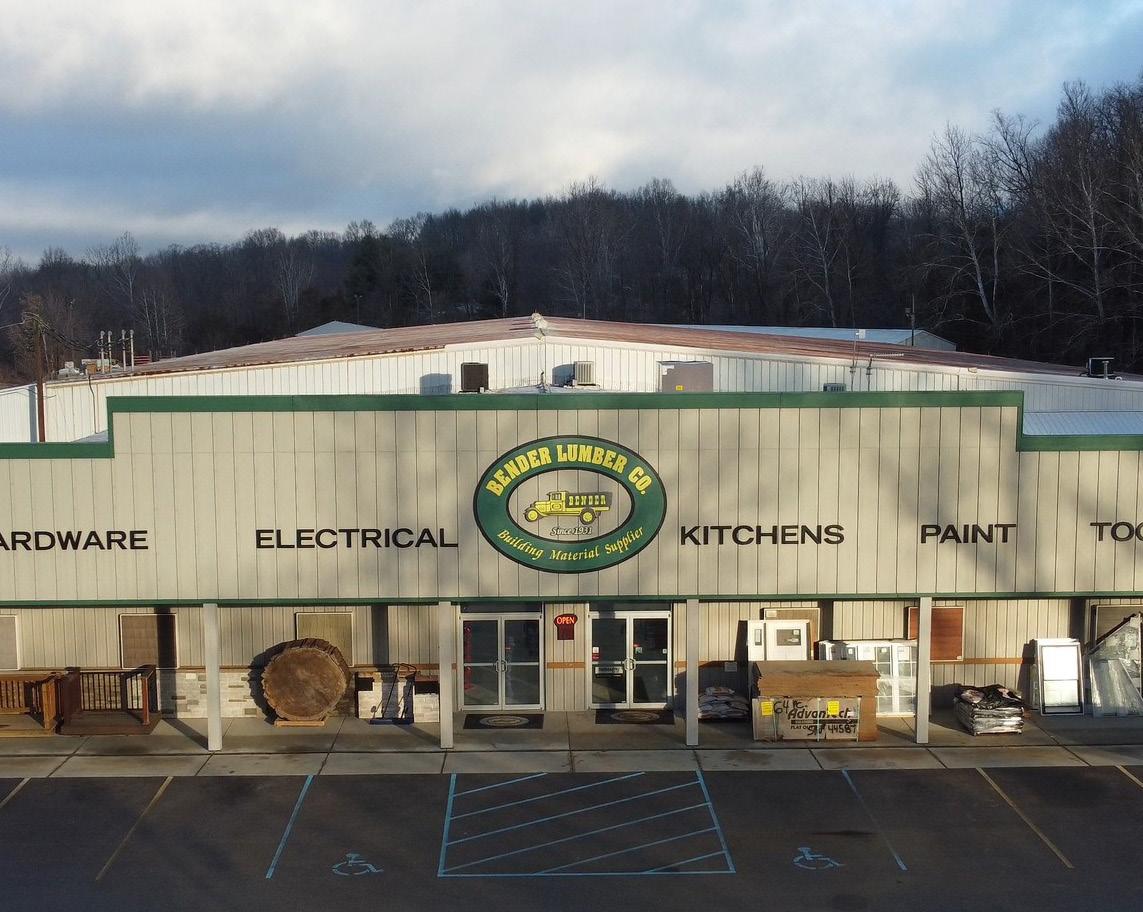
R.P. Lumber Co., Edwardsville, Il., has acquired eight-unit Bender Lumber, a respected and longstanding name in Indiana’s building supply industry.
The acquisition of Bender Lumber, which closed on Feb. 13, marks a major milestone for R.P. Lumber, bringing its total store count to 99 across seven states. It also joins together two well-established companies in neighboring geographies that share a common culture and set of business values.
Founded in 1931 and later purchased by Harold Bender and his son John Bender in 1963, Bender Lumber has served generations of builders, remodelers and homeowners across Southern Indiana. With eight locations in Bedford, Bloomington, Columbus, Linton, Madison, Martinsville, Paoli and Washington, Bender has more than 100 employees companywide, serving professional builders, remodelers and a growing number of DIYers.
“Bender Lumber is more than a business—it’s a legacy,” said Robert Plummer, CEO of R.P. Lumber. “John Bender, his brother Paul Bender, and their entire team have built something truly special. Their commitment to honesty, customer service, and community involvement aligns well with our values at R.P. Lumber. We’re honored to sustain that vision.”
John Bender, who also played a pivotal role in the founding of Pizza Hut, is widely known not only for his entrepreneurial spirit but also for his integrity. “I’m proud that we are selling Bender Lumber to R.P. Lumber. I have been friends with Jason Plummer and his father for a number of years. I believe they operate their business very much like we try to operate our business,” he said.
“Mr. Bender is the kind of person you hope to meet in business—honest, humble, and deeply principled, with a great sense of humor to boot,” said Jason Plummer, president of R.P. Lumber. “His approach to leadership and his respect for employees and customers have made Bender Lumber a cornerstone of the Indiana building community. We have long respected the entire Bender Lumber team, and we are grateful
for the opportunity to build on the foundation laid by Mr. Bender, his brother Paul, and their father.”
Each Bender location is a full-service lumberyard offering building materials, hardware, and contractor support. While store size varies by location, each is designed to meet the needs of both residential and commercial projects in their respective markets and is staffed with experienced teams who understand the realities of construction and remodeling.
The companies are working closely to ensure a seamless transition, with no disruption to customer service or product availability. Existing employees will remain in place, the companies already share many of the same vendors and technology, and R.P. Lumber will invest in additional technology, equipment and inventory to enhance the customer experience.
“I believe this transaction will benefit our employees, customers, and the communities where our stores are located. As a family business, we wanted it to continue with a similar culture. We think R.P. Lumber is the right choice,” added Bender.
With 99 retail locations across Illinois, Missouri, Wyoming, South Dakota, Iowa, Wisconsin, and Indiana, R.P. Lumber continues to expand its footprint while staying true to its small-town roots. The purchase of Bender Lumber follows R.P. Lumber’s October 2025 acquisition of the two-location Dye Lumber operation in Indiana, now bringing the company’s footprint in the Hoosier State to 10 locations.
An intense blaze has destroyed A.J. Anich Lumber/ Pal Steel Co., Palmyra, Wi.
Firefighters responded to a call of a purported shed fire just after 11 p.m. Jan. 19. They discovered the entire yard engulfed in flames and were forced to battle the blaze, as well as freezing temperatures, for hours. Thirty fire trucks from four neighboring counties assisted.
“Went from the steel shed all the way through the lumber shed to the office. It’s a complete loss,” manager Jesse Grenier told WMTV15 News.
The business served the local community for more than 50 years.
Cameron Ashley Building Products has opened new distribution centers in Greensboro, N.C., and Fort Worth, Tx. The locations will stock fiberglass insulation, spray foam, cellulose insulation, Canopy housewrap, and all necessary accessories to support customers across the central North Carolina and the Dallas–Fort Worth market, respectively.
In North Carolina, according to regional VP John Gambone, “With established locations in Charlotte and Rocky Mount, the addition of Greensboro further strengthens our North Carolina network and allows us to keep inventory close to our customer. This expanded footprint helps us deliver faster, more reliable service across the state.”
As for Texas, according to regional VP Danny Glover, “The Dallas–Fort Worth area continues to
experience strong growth across both residential and commercial construction. Opening a Fort Worth distribution center provides a convenient second pick-up point and service location to better support customers across the metro.”
Together, the Fort Worth and Dallas distribution centers provide customers with convenient access to inventory through Cameron Ashley’s CONNECT platform, enabling fast delivery and quick customer pickups to support customers with projects on tight schedules.
Cameron Ashley now operates more than 70 distribution centers nationwide.
Joe and Zack Martin have purchased Brocious Lumber, Ringgold, Pa., where the brothers have worked for the last 11 years.
The purchase from Brett Shaffer and Kevin Kunselman, grandsons of the original owners, became official on Jan. 2. Don and Jean Brocious founded the lumberyard in the late 1960s.
As part of the deal, former owner Shaffer agreed to continue working at the business for at least the next two years.
The new owners do not anticipate many changes and intend to retain the well-established Brocious name.
The business has nine employees and a fleet of seven delivery trucks able to serving the entire state.
Louisiana-Pacific Corp., Nashville, Tn., has proposed building a $157-million plant in North Branch, Mn., to prefinish its lines of OSB siding.
LP wants to construct the 250,000- to 350,000-sq. ft. facility on a 120-acre site. The project would be eligible for up to $10 million in grants and loans from the Minnesota Department of Employment and Economic Development‘s Minnesota Forward Fund, which could be forgiven if certain goals are met.
The project is expected to create 100 jobs within five years.
LP manufactures OSB-based siding and trim about 135 miles away in Two Harbors, Mn. Unpainted products could be shipped by trucks or
rail to the North Branch facility for prefinishing, creating finished Smartside and ExpertFinish products.
The Minnesota Department of Employment and Economic Development referred to the operation as a new “flagship site” for LP.
Pending approvals, construction could begin next year or as early as late this year.
WorldBids is launching a new digital bidding platform designed to simplify how buyers and sellers connect across industries—starting with the lumber sector.
Built to eliminate inefficiencies, protect buyer privacy, and surface better pricing, WorldBids aims to modernize the quote process across traditionally analog industries. The platform allows buyers to anonymously submit detailed bid requests. Registered vendors can then respond with pricing, while all submissions remain confidential until the buyer selects a bid.
By skipping the traditional back-
and-forth and reducing unnecessary phone calls, emails and sales pressure, the system claims to give both sides a faster, more transparent way to transact.
“We built WorldBids because we kept hearing the same frustration: ‘Getting accurate bids takes too long, and I never know if I’m overpaying,’” said Sam Rivinius, the founder of WorldBids. “This platform puts control back in the hands of the buyer, while giving sellers access to opportunities they would have never seen otherwise. It’s about unlocking efficiency without adding complexity.”
Following its initial rollout in the lumber industry, WorldBids will expand into other categories in which a bid-to-purchase process is standard—including agriculture, construction materials, manufacturing, and logistics.
In addition, Rivinius heads a construction, excavation, grading and paving company, GradeTech, Inc., which—like WorldBids—is based in Livermore, Ca.

Forest Products Machinery & Equipment Exposition, hosted by the Southern Forest Products Association, is headed to the Savannah Convention Center in Savannah, Ga., from Aug. 18-20, 2027.
“EXPO flourished in Nashville at the Music City Center in 2023 and 2025, exceeding expectations and showcasing the strength of the longest-running forest products show in the industry,” said Eric Gee, SFPA’s executive director. “In mid-2025, SFPA began working to secure dates for the 2027 EXPO. Due to the increased popularity of Nashville as an event destination, traditional summer dates with the Music City Center were not available.”
SFPA staff then conducted a site selection process and, after careful review, identified Savannah as the most suitable location. “Savannah places EXPO in the heart of the Southern Pine lumber community, while preserving our commitment to a high-quality, accessible, and costconscious event for exhibitors and attendees,” Gee said.
Booth sales for the 39th Forest Products Machinery & Equipment Exposition are scheduled to open in May 2026.
Since 1950, the show has provided a place for hardwood and softwood sawmillers to gather, celebrate new technology, network, and learn about the industry’s latest machinery and equipment. It offers attendees solutions spanning nearly every stage of the manufacturing process—from raw material handling and crane operations to metal detection, scanning technologies, log optimization, drying, grading, sorting, packaging and distribution.
Shoreline Products, Inc., a leading wholesale distributor of specialty building materials and cut-to-size panel products based in Gulf Shores, Al., has opened a new
manufacturing partners and customers nationwide. The new office will house a team of experienced building products industry experts led by new national sales manager Kevin Cochran.
According to president and CEO Jody Craig, while the company has experienced growth across all product segments, its success in three new areas of focus has been particularly explosive. “We have particularly huge demand right now in flooring products, cut-tosize panels, and sustainability initiatives, we have with our partner manufacturers,” he said.
Cochran will oversee the firm’s continued growth in flooring products and its planned expansion into additional product categories. Tasked with developing and maintaining the company’s relationships with partner manufacturers and customers, Cochran will rely on his more than 14 years of experience in the flooring and building products industry.
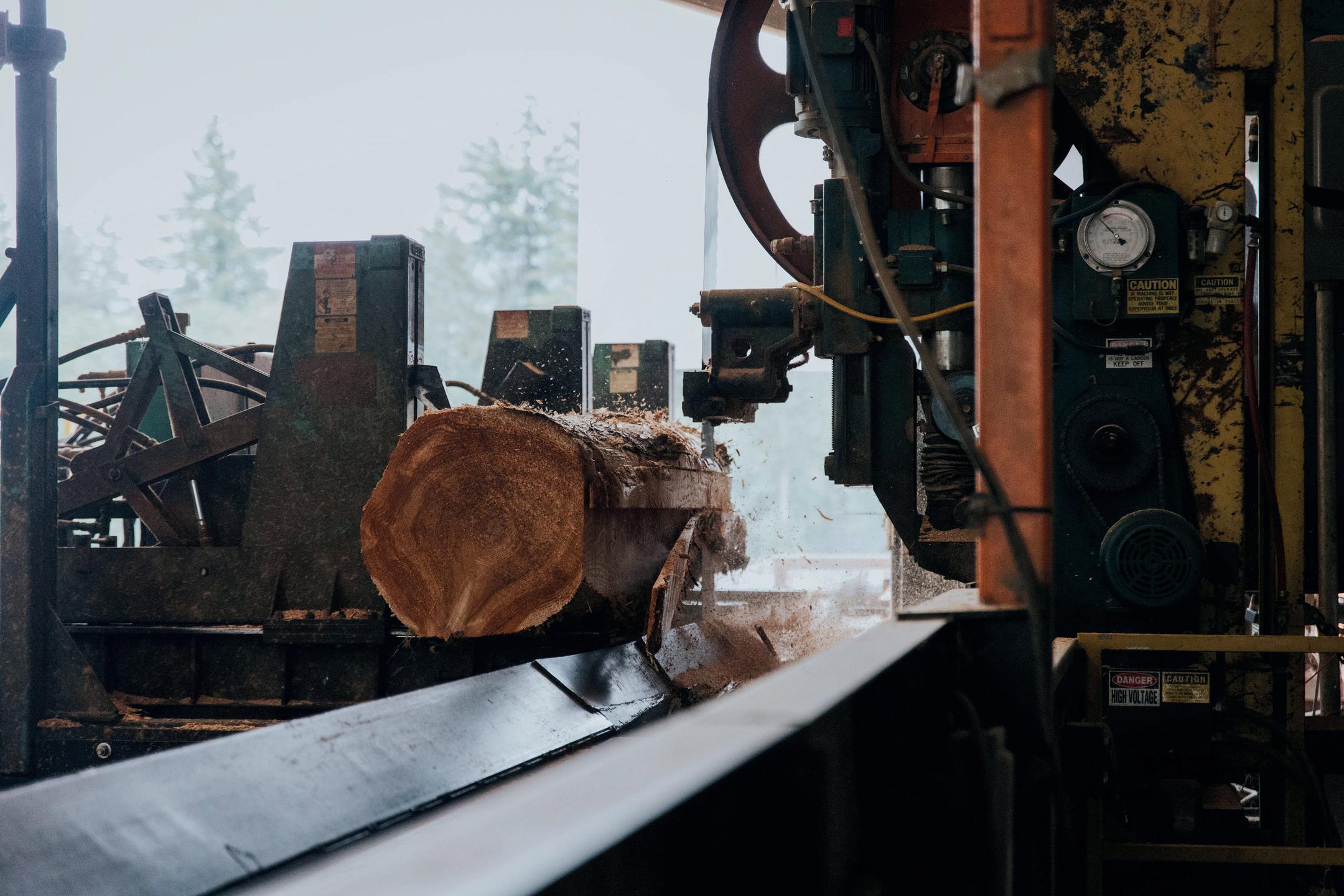

The Home Depot has introduced Material List Builder AI, designed to help professionals create actionable project material lists within minutes. It leverages AI technology to interpret the project intent and generate an accurate, grouped material list.
Previously, creating a product list might take hours of searching for the right SKUs, comparing prices and manually rebuilding lists across spreadsheets or multiple project management platforms.
Pros can:
• Write up project details using natural language.
• Voice-to-text for hands-free list creation on the jobsite or the road.
• Paste an existing list from spreadsheets, texts, emails, notes apps, or other documents.
• Leverage a starter template for common projects, like kitchen/bath renovations or deck installations.
Pros will receive a draft material list organized by each project phase, which they can edit before accepting. Once accepted, product recommendations populate beneath each section, complete with pricing and inventory availability. Pros can then select and order what they need.
It is available for free to all Pro Xtra members within The Home Depot’s Project Planning tool.
Fast-growing Gleckler and Sons Building Supplies, Jacksonville, Fl., has opened a new lumberyard and component plant in Ocala, Fl.
The 60,000+-sq. ft. facility, formerly operated by Southern Structures, will supply lumber and building materials throughout the greater Ocala market, as well as manufacture millwork.
Gleckler and Sons now operates eight total locations across Florida. Seven have truss manufacturing operations, five produce millwork, and five function as full-service lumberyards.
Founded in 2016 as a single truss plant in Jacksonville, Gleckler and Sons added a construction division in 2018 and has been on an acquisitions tear since the pandemic. It bought Truss Systems, Bunnell, in 2020; Accu-Span Truss in Ormond Beach, Mascotte and Long-wood in 2021; Buck Lumber & Supply, Longwood, in 2022; LLT’s Building Supplies, Tampa, in 2024; and last year took over the former Raymond Building Supply in Lakeland, which Raymond vacated at the completion of its lease.
Deckorators released its 2026 Outdoor Living Report, an annual forecast that draws on insights from leading contractors and industry experts to surface the most significant trends reshaping outdoor living— and how they reflect evolving homeowner lifestyles.
The report identifies a notable shift in homeowner priorities: Outdoor living is moving beyond the backyard. Contractors across the country report increased demand for front-of-home outdoor spaces designed for everyday use—enhancing connection, curb appeal, and long-term home value.
“Homeowners are no longer limiting outdoor living to the backyard,” said Michelle Hendricks, director of marketing at Deckorators. “We’re seeing a deliberate reallocation of investment toward spaces that are visible, functional, and emotionally meaningful. Many are thinking beyond the backyard to areas like the front porch or entryway that can become true extensions of daily life.”
Building on these evolving homeowner priorities, the report draws on contractor interviews, industry research, and market analysis to highlight key trends shaping outdoor living in 2026, including:
• High-Contrast Elements: Moving from millennial gray to bold, darker palettes for stronger visual appeal
• Multi-Zone Layouts: Creating unique spaces designed for dining, relaxing, and wellness
• Industry-Leading Materials: Using safe, low-maintenance materials that last
• Waterfront Demand: Personalizing waterfront features that add lifestyle and resale value
• Pet-Conscious Design: Incorporating pet-friendly materials in decking, railing, and fencing
• Maximized ROI: Designing to ensure a return on investment without sacrificing personal style
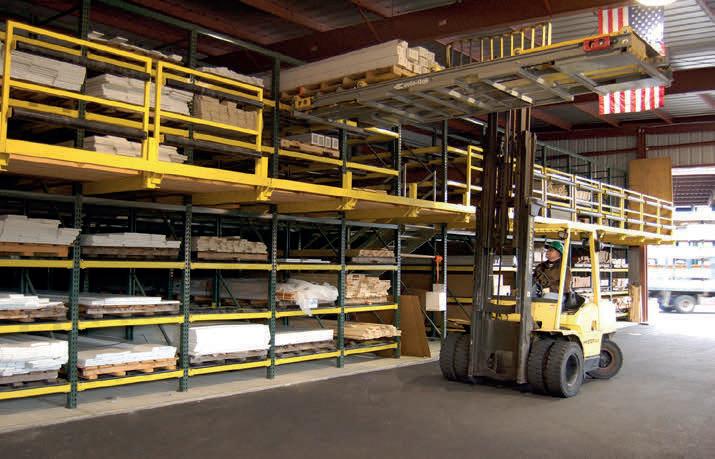
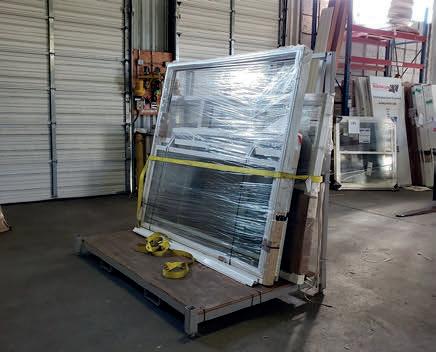
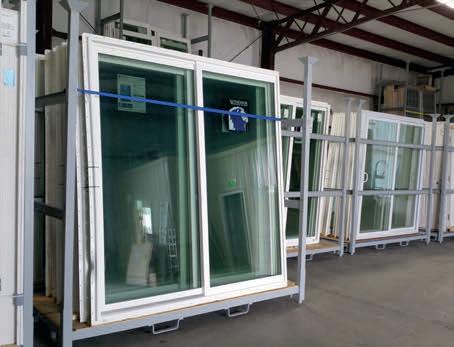
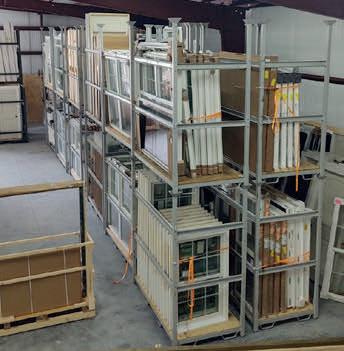
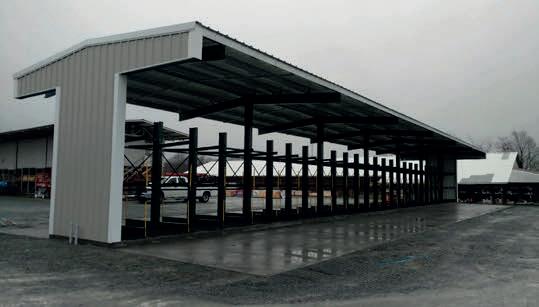
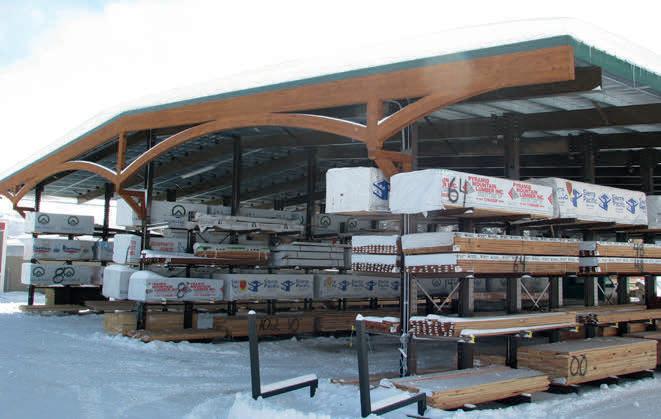
WALK DOWN ANY STREET in a new development and you’ll see them. Black and bronze windows are everywhere. Homeowners love the sleek, modern look, and the demand for dark finishes continues to grow year after year.
But for dealers and builders, offering these finishes requires more consideration than just a trending aesthetic. It’s about ensuring the product delivers the same long-term performance as traditional white windows. And the ability to do that depends on having the right manufacturing technology.
The industry would love to make dark-colored windows the same way we make white ones, but dark finishes introduce unique performance challenges.
• Scratching: Painted finishes are designed to adhere to vinyl but are susceptible to chipping or scratching, exposing the white substrate beneath. This can lead to homeowner complaints, callbacks, and warranty claims.
• UV and Fading: Without the right development and composition, black and bronze colors fade under prolonged exposure to sun and weather, losing their rich look and producing a gray tone no one asked for.
• Overheating: Dark surfaces absorb heat. On a hot day, a black profile can reach temperatures 50–60°F hotter than the surrounding air. If unmanaged, this heat buildup can stress the material and compromise performance.
To solve these challenges, the industry has evolved to include technologies designed for durability. The most reliable answers are lamination and coextrusion. Both are advanced manufacturing methods that blend style with performance, giving homeowners the bold colors they want, while giving dealers the products they can trust to last.
Lamination is the process of producing vinyl extrusions and then covering them with a bonded multi-layer acrylic film that delivers the desired color and serves as a protective surface. This acrylic layer is engineered to resist scratching, fading, and heat buildup, helping finishes stay vibrant without the need for repainting while adding durability in tough climates.
Coextrusion is a process where two materials are extruded together, fusing a thin outer layer of colored vinyl to a white substrate during manufacturing. Advanced pigments are built into the outer layer to reflect heat and resist UV, creating a finish that is part of the profile itself. Because the color isn’t applied afterward, it resists chipping, peeling, or revealing a white layer underneath. The thin exterior layer also manages heat buildup, protecting structural stability.
In both cases, the end benefits are clear for everyone: homeowners get long-lasting beauty; builders get easyto-install vinyl windows, with no added steps; and dealers get to sell durable, vibrant products with confidence.
Beacon opened five new locations during the final weeks of last year, bringing to 26 the number of branches it added in 2023. Beacon also made nine acquisitions during the year.
Listings are often submitted months in advance. Always verify dates and locations with sponsor before making plans to attend.
Little, and its senior leadership team will continue to lead the business under the Kamco brand.
When it comes to dark finishes, proof matters. It’s important to partner with brands that back up their products with rigorous lab and field testing, ensuring windows perform in real-world conditions as well as in theory. Here are the tests that demonstrate true durability.
National Hardwood Lumber Association – Sept. 6-8, intro to hardwood grading course, Memphis, Tn.; www.nhla.com.
BC Wood – Sept. 7-9, Global Buyers Mission, Whistler, B.C.; bcwood.com.
• Small-scale testing (ASTM D4803): Measures heat buildup in colored vinyl samples under controlled conditions.
New locations are in Austell, Ga.; Marquette Heights, Il.; Des Moines, Ia.; North Charleston, S.C.; and Bastrop, Tx.
Do it Best – Sept. 8-11, fall market, Indianapolis, In.; www.doitbest.com.
GMS expects to capitalize on cross-selling opportunities with Kamco and GMS’s other operations in the region, including the recently acquired Tanner Bolt and Nut, Inc. business.
Hoo-Hoo International – Sept. 8-11, international convention, hosted by Cowichan Valley Club, Vancouver, B.C.; www.hoohoo.org.
• Full-scale testing (AAMA 1506): Exposes entire windows to cycles of infrared heat to monitor for warping, deformation, or excessive heat buildup.
North American Wholesale Lumber Association – Sept. 11-15, Fall Wood Basics Course, Peachtree City, Ga.; www.nawla.org.
GMS Inc., Tucker, Ga., has agreed to acquire Kamco Supply Corp., Brooklyn, N.Y., and affiliates. The deal is expected to close this spring.
Northwestern Lumber Association – Sept. 12-13, Legacy Group 2 roundtable, Jordan, Mn.; www.nlassn.org.
True Value – Sept. 13-16, Fall Reunion show, George R. Brown Convention Center, Houston, Tx.; www.truevaluecompany.com.

Founded in 1939 by the Swerdlick family, Kamco is a leading supplier of ceilings, wallboard, steel, lumber, and other related construction products. The company operates five distribution facilities in the Greater New York City area and services the New York metro and tri-state area. During the last fiscal year, Kamco recorded revenues of approximately $245 million.
Blish-Mize – Sept. 15-16, fall market, Overland Park, Ks.; blishmize.com.
Kentucky Wood Expo – Sept. 15-16, Lexington, Ky.; www.kfia.org.
American Wood Protection Association – Sept. 17-21, fall technical committee meetings, Le Meridien Downtown, Denver, Co.; awpa.com.
Northeast Lumber Manufacturers Association – Sept. 20-22, annual meeting, Samoset Resort, Rockport, Me.; www.nelma.org.
Southern Pine Inspection Bureau – Sept. 26-27, planer operator course, Hilton, Pensacola Beach, Fl.; www.spib.org.
• Field testing: Products are installed in harsh climates—like the Arizona desert—to track real-world performance, color fastness, and durability in direct sun, high heat and fluctuating temperatures.
Serenity Porch, Wolf Perspective Decking, Fiberon Decking & Railing, Benjamin Obdyke, UFP-Edge, KeyLink, and fasteners.
These tests ensure that black and bronze finishes not only look good on day one but hold their appearance and structural integrity for years.
Wallace Distribution Co. – Sept. 26-27, fall market, Sevierville Convention Center, Sevierville, Tn.; www.wallacedist.com.
Construction Suppliers Association – Sept. 27-29, annual conference & show, Lodge at Gulf State Park, Gulf Shores, Al.; www.gocsa.com.
Founded in 1971, GMS operates a network of over 300 distribution centers with extensive product offerings of wallboard, ceilings, steel framing and complementary products, plus more than 100 tool sales, rental and service centers.
Florida Building Material Alliance – Sept. 27-29, annual convention, Rosen Shingle Creek Resort, Orlando, Fl.; www.fbma.org.
For dealers, builders and contractors alike, advanced finishes deliver more than just the sleek black and bronze designs homeowners want. They provide durability that reduces warranty claims, minimizes callbacks, and installs with the same ease as standard vinyl.
United Hardware – Sept. 27-29, fall buying market, Mayo Civic Center, Rochester, Mn.; www.unitedhardware.com.
Midwest Building Suppliers Association – Sept. 28, annual MBSA Connect, Electric Works, Fort Wayne, In.; www.thembsa.org.
“We’re thrilled to expand our geographical reach to service dealers in Michigan, empowering building professionals with access to our exceptional products and support,” said Jeremy Sellers, senior VP of sales at Wolf Home Products, “This expansion provides dealers a wider range of product choices with a streamlined ordering and delivery process to facilitate business growth.”
Southern Pine Inspection Bureau – Oct. 3-4, intro to lumber grading, Hilton, Pensacola Beach, Fl.; www.spib.org.
Wolf Home Products, York, Pa., is expanding its distribution reach to service building product dealers in Michigan.
Lumbermen’s Association of Texas – Sept. 18-20, annual convention & expo, Live! By Lowe’s, Arlington, Tx.; www.lat.org.
North American Wholesale Lumber Association – Sept. 18, Texas regional meeting, Arlington, Tx.; Sept. 20, Northeast regional meeting, Samoset Resort, Rockport, Me.; www.nawla.org.
By choosing technologies that have been proven through rigorous testing, you can offer customers lasting style and performance, while protecting your business from unnecessary risks. Black and bronze windows aren’t just a trend; they can be an opportunity to build trust, deliver value, and stay ahead of the market. BPD
Window & Door Manufacturers Association – Oct. 4-5, executive management conference, Cambridge, Ma.; www.wdma.com.

National Hardwood Lumber Association – Oct. 4-6, annual convention & show, Omni Hotel, Louisville, Ky.; www.nhla.com.
Michigan dealers will be serviced out of Wolf’s state-of-the-art, 1 million-sq. ft. distribution center in Wilmington, Il.
Kentucky Building Materials Assn. – Sept. 19-20, blueprint reading & material take-off class, Belterra Resort, Florence, In.; www.kbma.net.
Following the close of the deal, Kamco’s current president, Scott
COEXTRUDED BLACK vinyl exteriors, such as MaxView Multi-Side Patio Doors from Simonton, are produced by fusing a thin, colored vinyl layer with a white substrate during the extrusion process. Pigments are built in to resist UV and heat.
Ace Hardware – Sept. 19-21, fall convention, Orange County Convention Center, Orlando, Fl.; www.acehardware.com.
• Stain, scratch and fade resistant
• made of 95% recycled materials
• capped all 4 sides for maximum protection
• decking is dual-sided unlike most composites
• 25 year transferrable warranty
Construction Suppliers Association – Oct. 8-10, roundtables, Jesup, Ga.; Oct. 15-17, Andover, N.J.; www.gocsa.com.
In addition to its comprehensive portfolio, Wolf Home Products also brings a team of experienced, knowledgeable professionals who are dedicated to providing continued support and reliable service to the Michigan market.
World Millwork Alliance – Oct. 8-12, convention & show, Indianapolis, In.; www.worldmillworkalliance.com.
Dealers in the Michigan market now have access to Wolf’s expansive portfolio, including: Wolf Trim, Wolf Mouldings, Wolf Railing, Wolf
Southern Pine Inspection Bureau – Oct. 12-13, quality control course; Oct. 17-18, dry kiln operator course, Hilton, Pensacola Beach, Fl.; www.spib.org.
Travis Arthur is the corporate test and compliance manager for Simonton Windows & Doors at Cornerstone Building Brands, where he oversees regulatory standards, product compliance, and building code integration across product lines (simonton.com).
U.S. demand for wood millwork is forecast to increase 1.9% yearly through 2027, according to a new Freedonia report.
Processing Technologies for the Forest & Biobased Products Industries Conference – Oct. 30-Nov. 1, King & Prince Bach & Golf Resort, St. Simons Island, Ga.; www.ptfbpi.com.


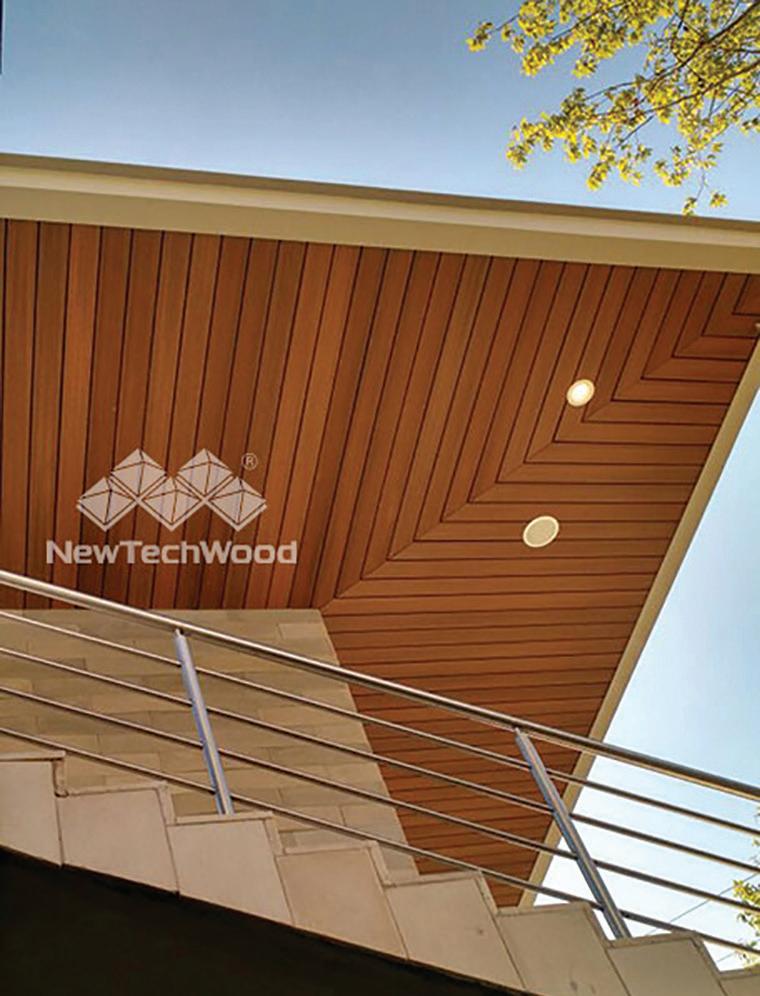
Lee Roy Jordan Lumber
Lee Roy Jordan Lumber
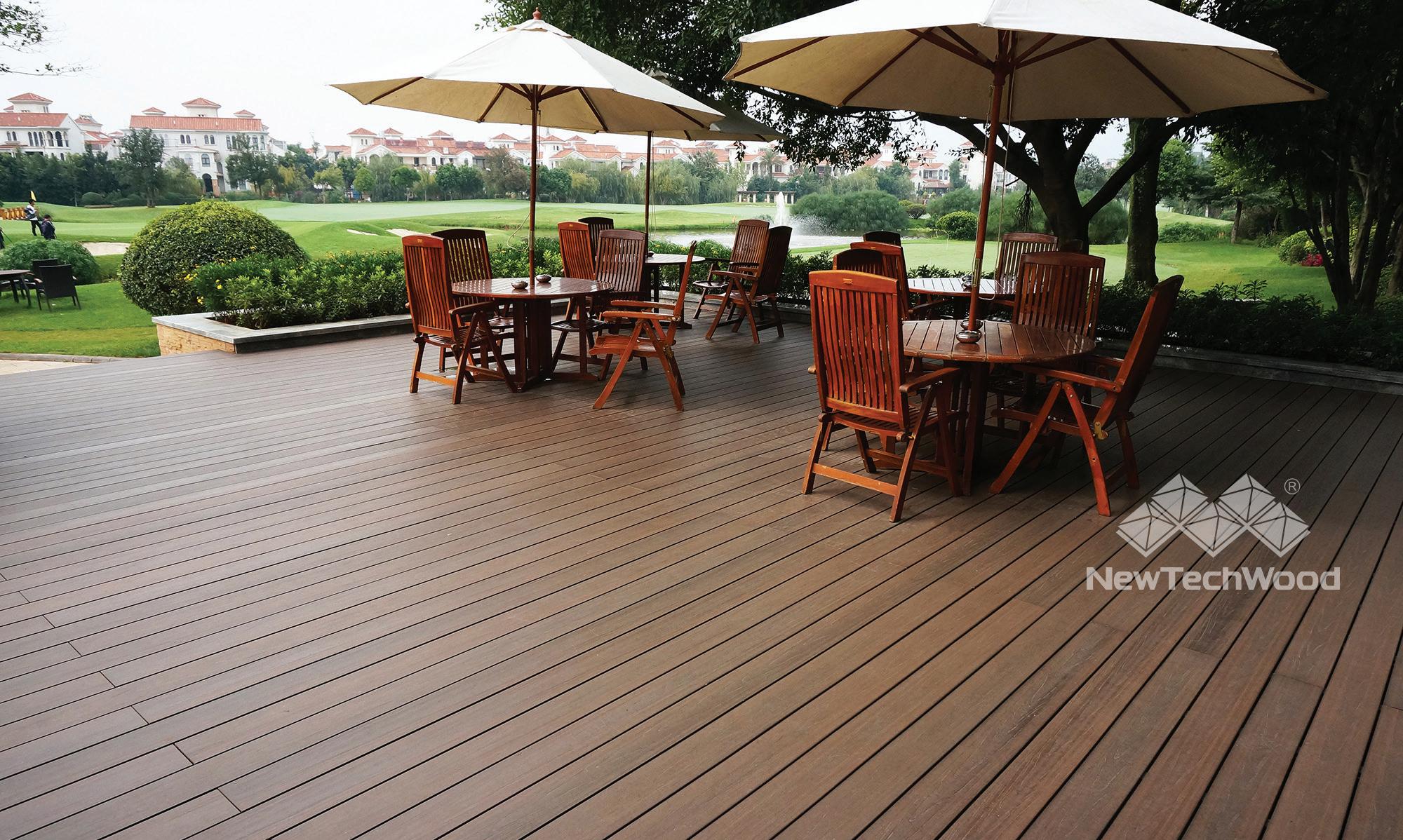

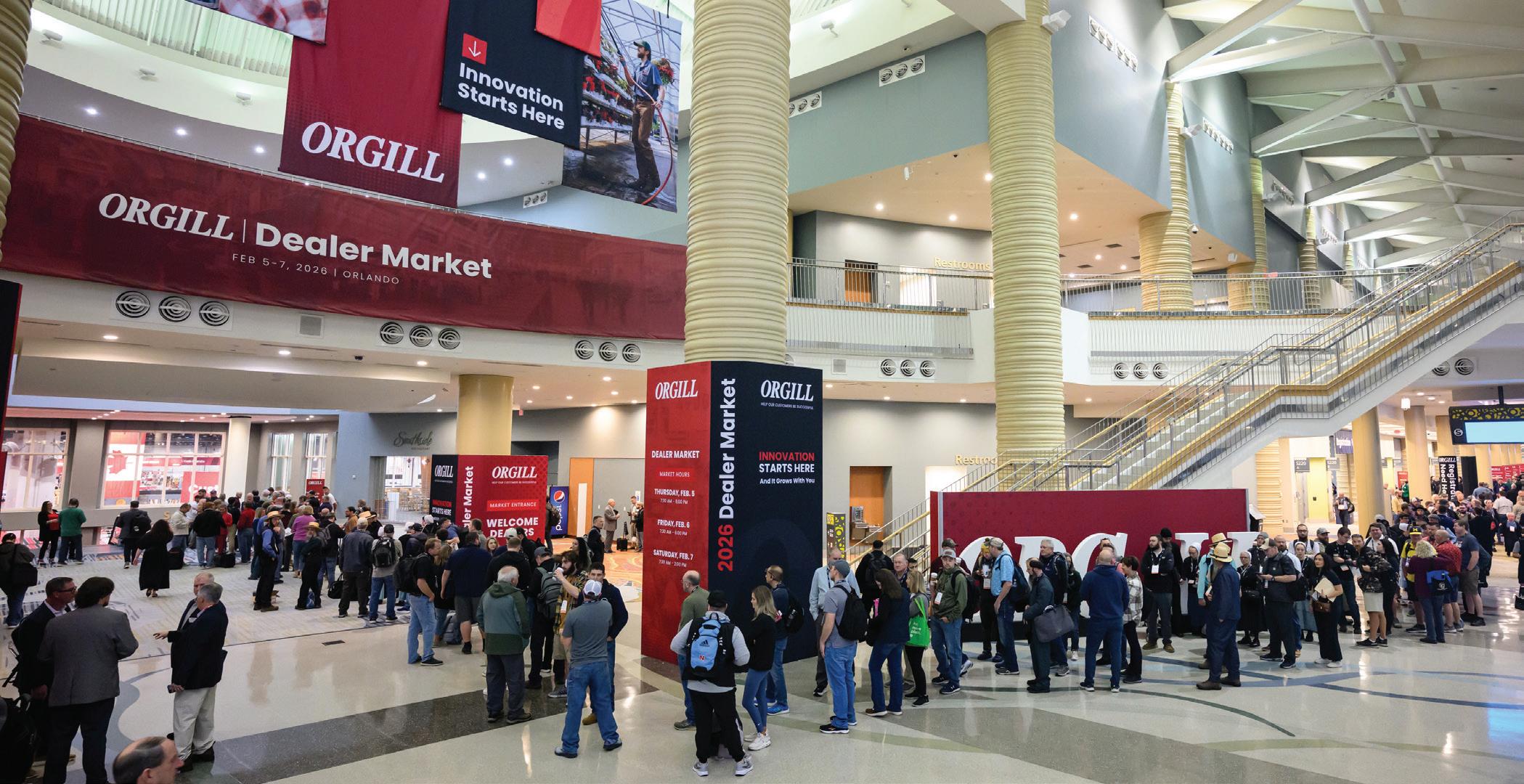
THOUSANDS OF HOME improvement retailers converged in Orlando as Orgill kicked off its 2026 Dealer Market with a singular focus: supporting customers’ unique needs and helping them identify practical pathways to growth and long-term success.
Held from Feb. 5-7, the market spanned nearly 1 million sq. ft. at the Orange County Convention Center. Over the three days, retailers browsed thousands of promotional buying opportunities, attended timely educational sessions, engaged with Orgill’s retail services teams, and experienced innovation in action through fully merchandised model stores that bring proven concepts to life.
“We have seen a few years of headwinds in the industry, and sales growth has become much harder to achieve,” said Boyden Moore, president and CEO of Orgill. “The Dealer Market gives us a unique opportunity to showcase the tools we have to help customers take control of their own growth. It allows us to work face to face with retailers to build a plan for achieving their goals—and to demonstrate how we can support them every step of the way.”
The distributor’s Dealer Market is its largest annual live event and serves as a critical launching pad for retailers looking to build momentum as the new year gets underway. Orgill also holds quarterly online buying events throughout the year—extending customer access to key assortments, deals and insights in a flexible, digital format. Now, with the opening of its new Innovation Center, Orgill has expanded its ability to add a range of additional sea-
sonal, topic-focused events to its schedule, creating even more opportunities to collaborate with customers across live, online and hybrid formats.
The robust show floor provided dealers with access to key vendors, strong promotional opportunities, and exposure to new products and trends across the home improvement industry.
“Buying opportunities are always central to our events, and retailers looking for deals will not be disappointed,” noted Clay Jackson, executive vice president and chief operating officer. “Our merchandising teams and our vendor partners understand how hard retailers are working to drive traffic, sales and profitable growth. They take that to heart and attendees will see strong promotions with compelling value throughout the show delivering a direct return on investment.”
Buying opportunities included a variety of “Power Buys” on pallets, departmental showcases, special deals on Orgill private-label products that bring value and differentiation to assortments, and for the first-time ever Orgill introduced an “Overstock Market” area showcasing deeply discounted, warehouse-backed items.
The event also offered attendees a front-row seat to the retail innovations that are helping drive profitability, overcome challenges and enhance operations in all aspects
of home improvement retailing. Central to that experience are a pair of model stores located at the heart of the show floor. This year’s lineup included Pinehaven Lumber, a 3,600-sq. ft. contractor-focused concept showcasing pro-oriented assortments, optimized merchandising and signage designed for modern lumberyards.
“Orgill’s market is unique because we dedicate significant space to showing how products, assortments, technology and services come together in a real-world environment,” Jackson said. “Our model stores generate ideas, highlight innovation in action and show retailers what’s truly possible.”
Debuting alongside Pinehaven was Orgill’s newest concept, Homestead Hardware & Tools—a model designed to reflect the real-life operating conditions many independents face. Unlike idealized showroom concepts, Homestead was built within a second-use strip-mall footprint, complete with irregular walls, challenging sightlines, and limited space.
“Most independents aren’t building new stores from scratch,” Jackson said. “They’re adapting existing spaces. Homestead reflects that reality and shows how a wellassorted, well-merchandised store can succeed without forcing a rigid template.”
Homestead also demonstrated how retailers can respond to evolving consumer behavior in an omnichannel environment. Categories increasingly shifting online are intentionally scaled back, while space is reallocated to project-critical products where local retailers maintain a clear advantage.
“Homestead reinforces the dealer’s role as the first stop for urgent and essential needs—while also showing how assortments can be extended digitally.” Jackson said.
The concept also highlighted the strategic use of outdoor space, illustrating how parking lots and exterior areas can function as extensions of the salesfloor for seasonal categories.
“Many retailers already do this well,” Jackson said. “Homestead shows how to maximize those opportunities
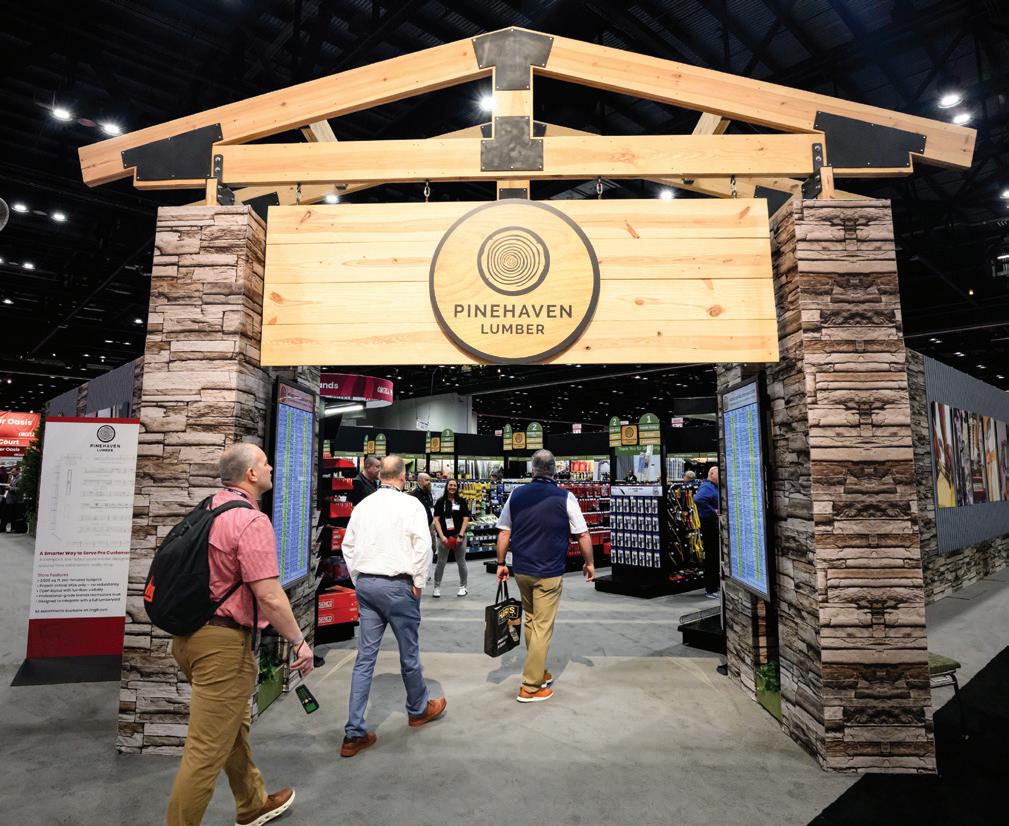
to drive impulse purchases and larger-ticket sales.”
Both model stores featured digitized planograms, POS integration, a working sample of Orgill’s FanBuilder loyalty program, and electronic shelf labels.
Customization remained a defining theme throughout the market. According to David Mobley, executive vice president of sales and services, Orgill’s goal is straightforward: to help every retailer leave Orlando better positioned to grow sales and improve profitability on their own terms.
“How retailers get there is never the same,” Mobley said. “That’s why customization is central to everything we do—from assortments and services to merchandising and planning and I think that is clear from what you will see throughout this event.”
To ensure that each attendee got the most out of their time at this week’s Market, Mobley said Orgill’s team of sales consultants worked closely with attendees ahead of the event to custom build a plan for them once they arrived at the show.
“We want retailers focused on the categories, promotions and assortments that will have the greatest impact when seasonal demand hits,” Mobley said. “That level of pre-market preparation translates directly into better inventory decisions and stronger results and it’s one of the reasons we place so much emphasis on our consultants working with retailers one on one.”
The Orgill Services area provided a hub where retailers could connect with experts across six core disciplines, including: e-commerce and technology, branding and marketing, products and pricing, store operations, leadership and strategy, and retail services. The area features interactive stages, private meeting rooms and hands-on demonstrations focused on actionable strategies retailers can implement immediately.
“This is where retailers can spend time working on their businesses and not just in them,” said Mobley. “Whether it is learning more about our FanBuilder loyalty program, our Impact eCommerce offering or gaining a better understanding about how our pricing strategy works or how we handle conversions, this is the area where that all takes place. It’s where we provide thoughtful, customizable solutions to retailers’ everyday challenges.”
In addition to hosting the learning stations, the services area was also home to live presentations on topical retail issues, ranging from the best pricing strategies for volatile economic environments to building a more productive team, and delivered by top industry professionals.
Market attendees departed Orlando with clearer seasonal plans, stronger merchandising ideas, improved strategies for serving pro customers, more efficient inventory approaches, and practical digital tools.
“In a challenging market, independents don’t need hype,” Moore said. “They need clarity, confidence and a partner who understands their business. That’s what our Dealer Market is all about.” BPD
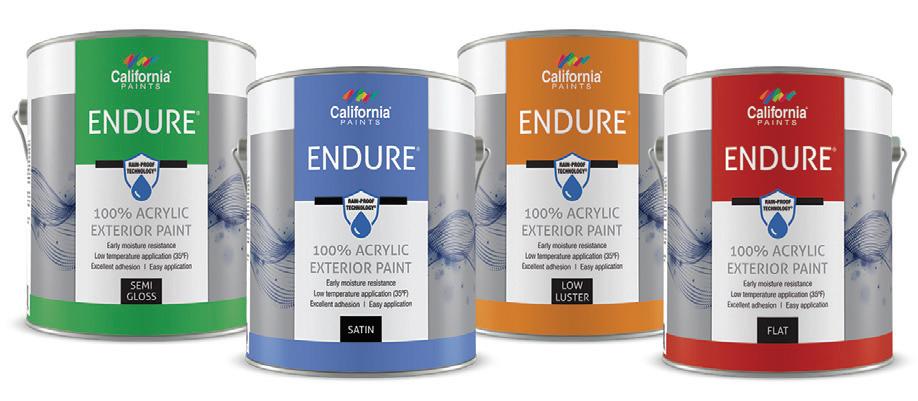
Unlike other conventional exterior paints that require long dry times to avoid peeling, California Paints’ new Endure 100% acrylic exterior paint system is rain-ready in just one hour.
Endure can be applied in temperatures ranging from 35˚F to 100˚F, while offering exceptional adhesion and premium UV and moisture resistance.
CALIFORNIAPAINTS.COM (800) 225-1141
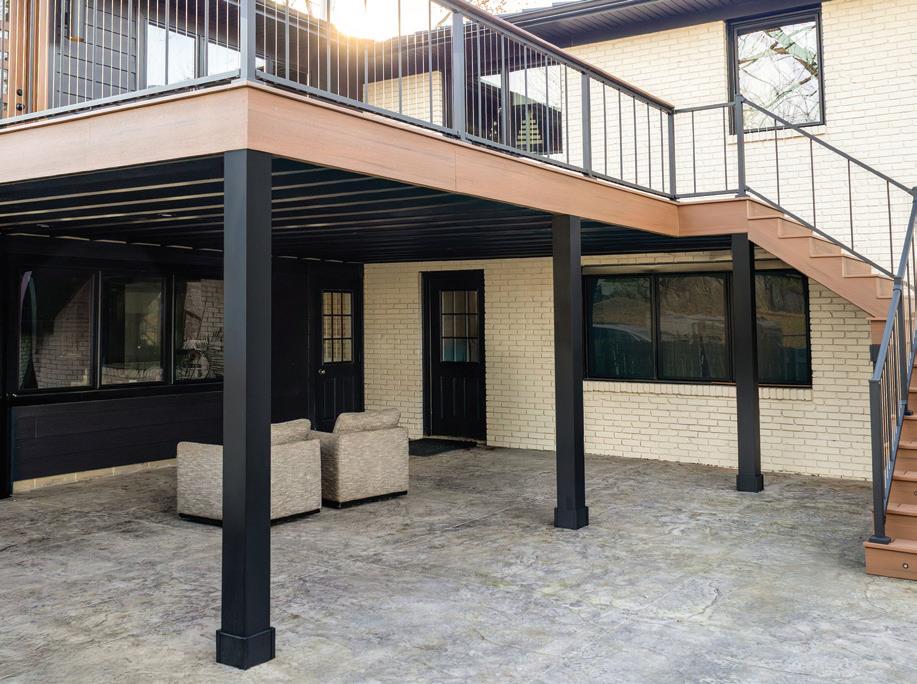
Digger Specialties Inc. has introduced Westbury aluminum post wraps, ideal for upgrading new or existing support columns or posts with the strength of aluminum and the lasting beauty of powder-coated surfaces.
The wraps transform traditional post materials that are subject to weathering and deterioration into aesthetically pleasing columns and posts that never need to be stained or painted. They are dimensionally stable and produced with the industry’s most stringent proprietary 10-step AAMA 2604 powder coating process. They come in 12 standard colors in textured and non-textured surfaces.
Wraps are easy and fast to install over existing posts due to their engineered interlocking design, which provides a seamless appearance. The interlocking staves fit over square and round posts and come in 4”, 6”, and 8” widths and heights of 8-1/2’, 10’, and 16’.
DIGGERSPECIALTIES.COM (800) 446-7659
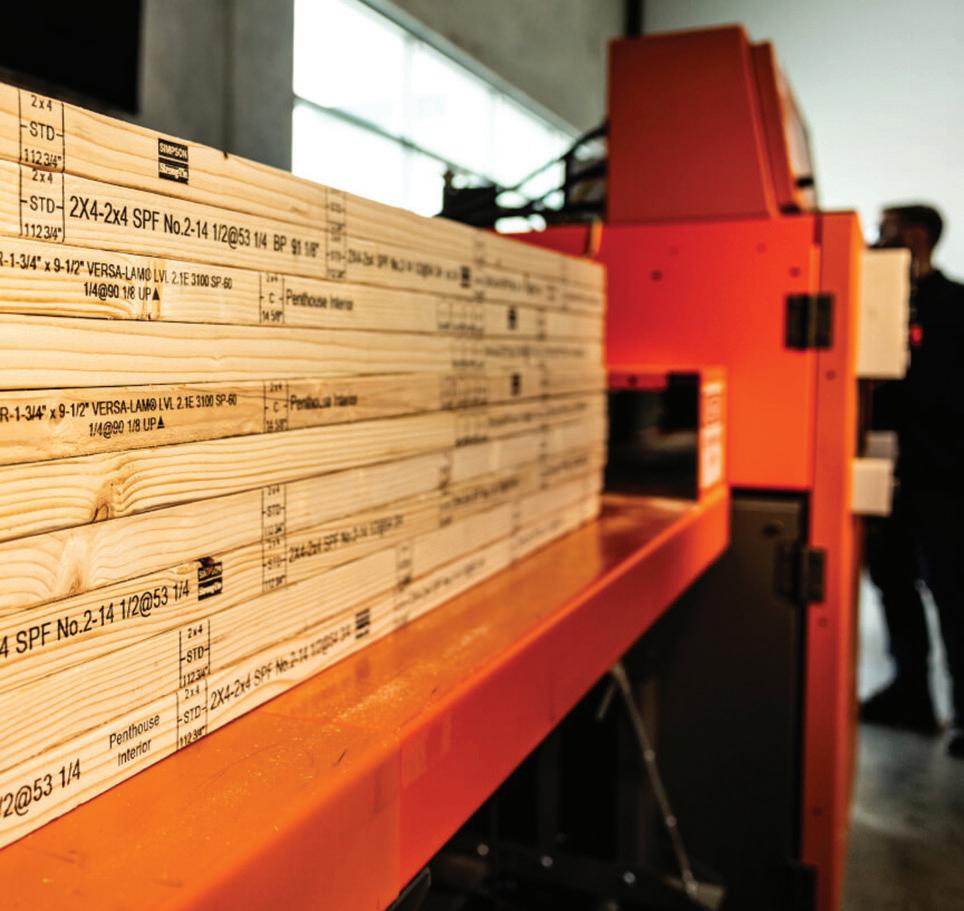
Simpson Strong-Tie’s EasyFrame automated marking and cutting system for wall panels has the unique ability to print layouts for a structure directly onto the framing members.
By using automation to optimize materials efficiency and increase cutting accuracy, EasyFrame reduces construction timelines and addresses labor shortages, which have become increasingly challenging problems in the industry.
STRONGTIE.COM (833) 327-9376
PGT Custom Windows & Doors has introduced two new aluminum French doors.
Designed for strength, security and ease of operation, the FD450 Estate French Door delivers long-lasting performance. It is available with impact-resistant glass and a range of energy-efficient glazing options.
The FD160 Impact-Resistant French Door combines high-performance hurricane protection with refined design. Ideal for patios, garages and side entrances, it is engineered to meet strict building code requirements.
PGT is also now offering its Scout and Sparta aluminum window and doors—previously part of its CGI portfolio—under the PGT brand.
PGTWINDOWS.COM (800) 282-6019
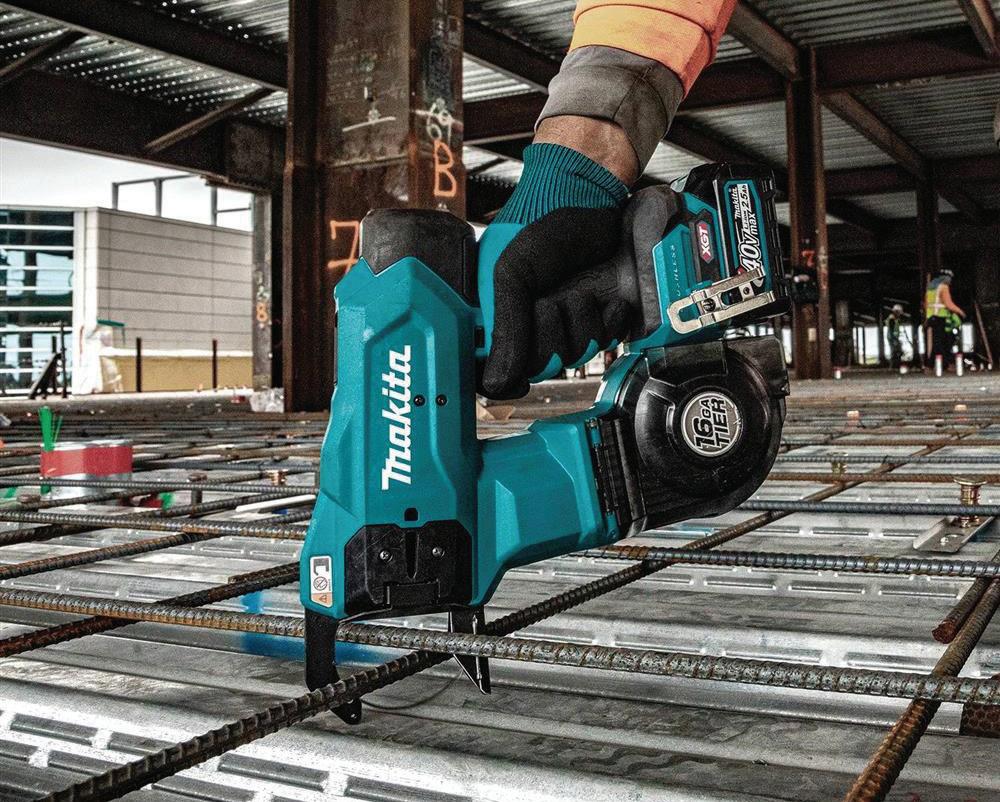
Makita U.S.A. has released the 40V max XGT 16 Gauge Rebar Tying Tool, the first of its kind. It’s engineered for stronger ties, deep tying capacity, and greater efficiency as it dispenses the exact amount of wire each tie needs which cuts production costs with more cost savings per tie.
The tool is ideal for a range of trades and applications, from commercial buildings, road and bridge, and tilt-up construction to pool and residential building, electrical conduit installation, pre-cast and more.
MAKITATOOLS.COM (800) 462-5482
Mitsubishi Logisnext Americas unveiled its FBC20QFBC40Q Series of Mitsubishi Forklift Trucks. Designed for consistent uptime, reduced maintenance, and affordability, the new series allows operators to tackle demanding applications with precision.
From advanced AC motors to integrated assistance systems, the energy-efficient electric forklifts are built to match the performance of traditional IC models. It has 4,000 to 8,000 lbs. lift capacity, lift heights up to 26 ft., 100° turning radius with up to 14” shorter turns, maximum travel speed of 12.5 mph unloaded, and large, ultra-comfortable operating compartment.
LOGISNEXTAMERICAS.COM (800) 228-5438



LP BurnGuard FRT OSB from LP Building Solutions is an OSB solution with the fire-retardant blended with the strands for protection through the thickness of the panel for consistent performance.
The code-compliant FRT panel is manufactured in a one-step process, to meet extended (30-minute) ASTM E84 requirements. It installs like regular OSB.
LPCORP.COM (888) 820-0325
Designed for professional carpenters, remodelers and general contractors, the M18 Fuel 7-1/4" Rear Handle Circular Saw with One-Key from Milwaukee Tool delivers class-leading performance and cut speed for the most demanding applications.
Its PowerState Brushless Motor provides this worm drive-style saw with 6,000 RPM under load, providing users the ability to complete their most demanding applications efficiently. Advanced RedLink Plus ensures maximum performance and protection from overload, overheating, and over-discharge. Paired with the M18 RedLithium Forge HD12.0 battery, the saw provides up to 700 cuts per charge.
AutoStop Advanced Kickback Protection shuts off the power when a severe kickback event is detected. One-Key is a free app to track and manage all your tools via Bluetooth connectivity.
MILWAUKEETOOL.COM (800) 729-3878

The Multi-Guard Vent (MGV) line is Able Sheet Metal’s latest invention in protecting homes from the dangers of embers and fires.
Using a combination of a unique louver design, 1/16" metal mesh, and intumescent tape, the vent forms a robust and heavy-duty design that has passed testing for fire and ember resistance, and was approved by Cal Fire for use in WUI designated areas.
The design is available in various forms, from standard gable louvers and foundation vents to retrofits for dormer vents (half-round and low profile) and sub-flashings for gravity vents and rotary vents.
ABLEMETAL.COM (800) 699-2253

Simpson Strong-Tie is expanding its line of structural injection epoxies with a new kit that allows contractors and advanced DIYers to make commercial-grade structural concrete repairs.
CI-LV low-viscosity structural injection epoxy is a two-component, high-modulus, high-solids, moisture-tolerant epoxy designed for filling concrete cracks and increasing the bond between freshly placed repair mortars or concrete mixes and existing concrete. The epoxy chemically bonds with the concrete to seal the crack from moisture and protect rebar in the concrete from corrosion. It comes in side-by-side cartridges dispensed through a static mixing nozzle.
Each package offers enough adhesive and accessories to repair about 30 ft. of concrete.
STRONGTIE.COM (800) 999-5099









the most complete lumber-specific credit and business information in the world.
your business with insights from 250,000 credit references and business profiles Limit your financial risk with $25 billion of A/R captured
Rates : $1.20 per word (25 word minimum).
Column inch rate: $65 per inch. Deadline: 10th of previous month. Questions? Call (714) 486-2735.
• Norfolk Southern Mainline Served
• Easy Access to I-85, I-77 & I-40
• Company Owned Truck Fleet
• Outdoor and Indoor Storage
• 12 Acres Fenced with Security Lighting
• 25+ years Reload Experience (704) 872-3148 • Fax (704) 872-3146
Email Tom Lakeman shavers.reload@gmail.com

High Quality Protection • PP or PE Printed Logo or Plain • Ships in Days
Reduce exposure to tariffs and supply chain volatility www.MidwestCanvas.com
Lloyd Pullen • (704) 433-5831 manurep@bellsouth.net


Dale Allen Stark, 85, longtime Tennessee lumber salesman, died on Jan. 16.
Paul LeNoble, founder of LeNoble Lumber, Long Island, N.Y., passed away on Jan. 25 at the age of 93.
In 1965, Paul started the firm in Hells Kitchen, N.Y., with just a station wagon and a borrowed desk, building it into one of the leading suppliers in the New York metro area. Since 2006, it has been led by his son, Peter.
Charles Andrus, 84, longtime sales manager for Ray White Lumber Co., Sparkman, Ar., passed away on Jan. 13.
He was a graduate of the University of Arkansas at Fayetteville, Ar., and served in the U.S. Air Force during the Vietnam War. Charles then spent 28 years in lumber sales with Potlatch Lumber, Warren, Ar., followed by 20 years with Ray White Lumber.
James Richard “Rick” Green, 75, executive vice president and chief financial officer for Anthony Timberlands, Bearden, Ar., and president of Anthony Wood Treating, Hope, Ar., died on Jan. 1.
After earning a degree in management and marketing from Henderson State University, Rick began working for the Bank of Bearden as VP of operations. He joined Anthony in 1985, while continuing to serve as president and chairman of the board of the Bank of Bearden.
Frank L. Panna III, 80, former owner of J.E. Mitchell Lumber Co., Glenolden, Pa., died on Feb. 5.
His father acquired the lumberyard in 1958. It closed in about 2002.
Danny L. Bishop, 69, owner of R&D Timber Co., Bluffton, S.C., died on Jan. 16.
Hailing from the area’s iconic Bishop Logging family, Danny started his own company in 1998.
A U.S. military veteran of the Vietnam War, Dale spent 32 years with Paty Lumber Co., Piney Flats, Tn., before finishing his career with Lowe’s, Bristol, Tn.
James L. Boprey, 88, former sales manager for Dwyers Building Supply, Canton, N.Y., died on Jan. 18.
Jim served in the U.S. Army from 1954 to 1957. He retired in 1995.
Robert Arnold Godwin, retired owner of Godwin Building Supply, Walterboro, S.C., died on Jan. 27 at the age of 98.
He graduated from The Citadel in 1949, after his discharge from the U.S. Navy following World War II. He spent most of his adult years running Godwin Building Supply until his retirement.
Don Orr, former retail and wholesale salesman for J.H. Findorff & Sons Lumber & Supply, Madison, Wi., passed away on Jan. 28. He was 97. Don was a graduate of Wisconsin State College–Whitewater.
Larry Ernest McCurley, 77, former builders representative for Adams Building Supply, Hartwell, Ga., died on Feb. 1.
Giles Nathaniel Replogle, 88, former owner of Replogle Enterprises and Replogle Hardwood Flooring, Henry, Tn., died on Jan. 9 after a brief illness.
Nathan operated the planing mill and hardwood flooring showroom for decades until filing bankruptcy in 2017. The mill was acquired by Fox Hardwood Lumber, but closed a year later. Nathan’s other holdings were sold at auction in 2019.
Listings are often submitted months in advance. Always verify dates and locations with sponsor before making plans to attend.
BLD Connection – March 4-5, blueprint reading & material takeoff, Little Rock, Ar.; www.members.bldconnection.org.
Appalachian Hardwood Manufacturers – March 4-8, annual meeting, Naples Grande Resort, Naples, Fl.; www.appalachianhardwood.org.
Do it Best/True Value – March 6-8, spring market, Denver, Co.; www. doitbestmarket.com.
Cameron Ashley Building Products – March 8-12, dealer show, Walt Disney World Dolphin, Lake Buena Vista, Fl.; cameronashleybp.com.
Appalachian Lumbermen’s Club – March 10, meeting, Hotel Roanoke, Roanoke, Va.; www.lumberclub.org.
LMC – March 10-12, annual meeting, Chicago, Il.; www.lmc.net.
Northeast Retail Lumber Association – March 11, IDEAS show, Valley Forge Casino Resort, King of Prussia, Pa.; www.nrla.org.
Forest Economic Advisors – March 11-12, Global Softwood Log & Lumber Conference, Vancouver, B.C.; www.getfea.com.
Peak Auctions – March 14, LBM auction, Kane County Fairgrounds, St. Charles, Il.; www.peakauction.com.
North American Wholesale Lumber Association – March 16-18, T-100 conference, Ritz Carlton Laguna Niguel, Dana Point, Ca.; nawla.org.
University of Innovative Distribution – March 16-19, Indianapolis, In.; www.univid.org.
National Lumber & Building Material Dealers Assn. – March 17-18, spring meeting & legislative conference, Washington, D.C.; dealer.org.
International Wood Products Assn. – March 17-19, World of Wood annual convention, Broadmoor, Colorado Springs, Co.; iwpawood.org.
Southeastern Lumber Manufacturers Association/Southern Forest Products Association – March 18-20, spring meeting & expo, Sandestin Golf & Beach Resort, Miramar Beach, Fl.; www.slma.org.
Blish-Mize – March 19-21, buying market, Overland Park Convention Center, Overland Park, Ks.; www.blishmize.com.
BLD Connection – March 24-25, yard & delivery operations workshop, St. Cloud, Mn.; March 24-26, Estimating 1-2-3, Madison, Wi.; www. members.bldconnection.org.
Window & Door Manufacturers Association – March 24-25, spring meeting & legislative conference, Washington, D.C.; www.wdma.com.
Timber Products Inspection – March 24-26, lumber grading course, Conyers, Ga.; www.tpinspection.com.
Southern Cypress Manufacturers Assn. – March 25, annual meeting, Hyatt Regency Riverfront, Jacksonville, Fl.; www.cypressinfo.org.
Hardwood Manufacturers Assn. – March 25-27, national conference & expo, Hyatt Regency Riverfront, Jacksonville, Fl.; hmamembers.org.
National Hardwood Lumber Association – March 25-27, intro to grading hardwood lumber, Memphis, Tn.; www.nhla.com.
National Wooden Pallet & Container Assn. – March 25-27, annual leadership conference & expo, Fort Lauderdale, Fl.; palletcentral.com.
JLC Live – March 27-28, Providence, R.I.; www.jlclive.com.
Construction Suppliers Association – March 29-31, roundtable, Florida Keys; www.gocsa.com.
International Mass Timber Conference – March 31-April 2, Oregon Convention Center, Portland, Or.; www.masstimberconference.com.
NHS Concept to Commerce (National Hardware Show) – March 31-April 2, Las Vegas, Nv.; www.nationalhardwareshow.com.
Wallace Distribution Co. – April 1-2, spring dealer market, Sevierville, Tn.; www.wallacedistribution.com.
Peak Auctions – April 4, LBM auction, Washtenaw County Fairgrounds, Saline, Mi.; www.peakauction.com.
























BY COINCIDENCE (one admittedly of less than elephantine proportions), the March 1980 issue of BPD sister publication The California Lumber Merchant celebrated a pair of pachyderms in otherwise unrelated announcements.
The front cover spotlighted a stunt by Louisiana-Pacific, in which they had TV news anchorman John Cameron Swayze commentating as a 9,000-lb. elephant traipsed across sheets of Redex exterior plywood laid on top of a standard floor system comprised of 2x12" joists 16". Swayze was an ideal choice as spokesman, since on the side he had become a frequent product pitch man, most famously subjecting Timex watches to ridiculously punishing tests (“It takes a licking and keeps on ticking.”)
The bull elephant’s story was even more fascinating. Tunga was born in the wilds of Asia in 1964, captured and then sold to Seattle elephant trainer Morgan Berry. In 1979, the 67-year-old Berry disappeared. Authorities searched his massive animal farm, Elephant Mountain, and found Tunga alternately tossing about and standing guard over his keeper’s lifeless body. Tunga lunged at men trying to recover the body, creating a standoff that lasted several hours. An autopsy was unable to conclusively determine whether Berry, who had a bad heart, had suffered a fatal heart attack before Tunga started tossing his body or if he died due to his injuries.


The elephant was relocated to the Oregon Zoo, three miles away from L-P’s former headquarters in Portland. The zoo sold Tunga to Ringling Brothers Circus in 1991, to sire calves. He died in 1996.
The other article, written by MacBeath Hardwood’s Gage McKinney, focused on a life-sized wooden elephant hand-carved from 600 bd. ft. of African shedua.
“I saw the elephant in a dream,” said 29-year-old artist Chris Schambacher. He began the project while an art student at Central Washington University and hand-selected each piece of the dark African walnut. He employed everything from a chainsaw to dental picks and disk sanders to shape the 9'6" long, 7-ft. high, 1,000-lb. elephant. To add functionality, he built a roll-top desk, complete with desk lamp, into the belly. For the tusks, drawers and writing surface of the desk, he used birdseye maple. It took four years.
He displayed the finished work on the sales floor of Beverly Hills clothing retailer Abercrombie & Fitch with one last accessory—a $55,000 price tag.
In other news from 46 years ago this month:
• Weyerhaeuser opened a new Customer Service Center in Phoenix, Az., promising six more western distribution centers were in the works.
• Capital Lumber unveiled plans for a new distribution yard in Chino, Ca., to replace its Southern California facility in Orange.
• Pacific Lumber Co. broke ground on a new corporate headquarters in San Francisco’s Jackson Square historical district.
• Northern California veterans Dave Damon, Dave LeBeck, and Ron Lewman launched a new wholesale company, North Bay Forest Products, Healdsburg, Ca.
• Fremont Forest Products’ Pete Speek announced a fresh new trader joined his staff: Steve Killgore. BPD

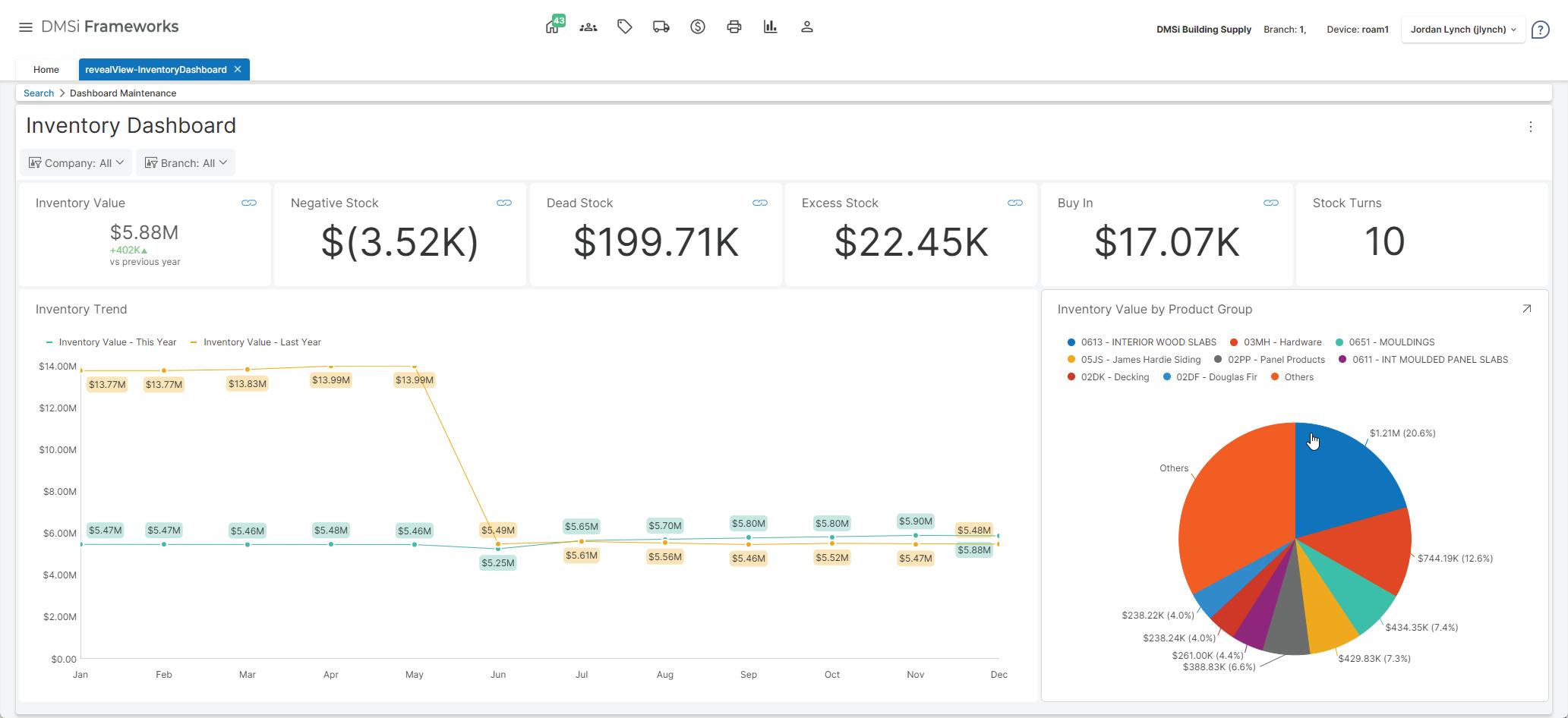
DMSi Frameworks 100% web-based, AI-enabled inventory & point-of-sale system

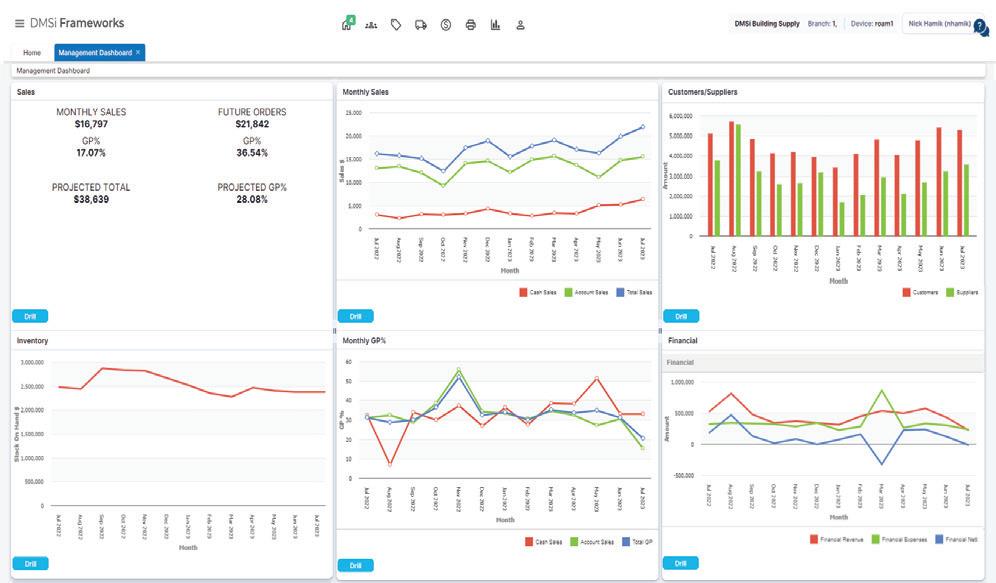

DMSi is an independent, family-owned software company providing inventory and accounting software backed by exceptional service. That's the DMSi difference.