



YellaWood® brand pressure treated pine stands unrivaled in providing the best available protection against rot, fungal decay and termite attack. Enjoy the uncompromising beauty of a backyard made with high quality natural wood products from YellaWood ® brand pressure treated pine. Visit yellawood.com for more information.



































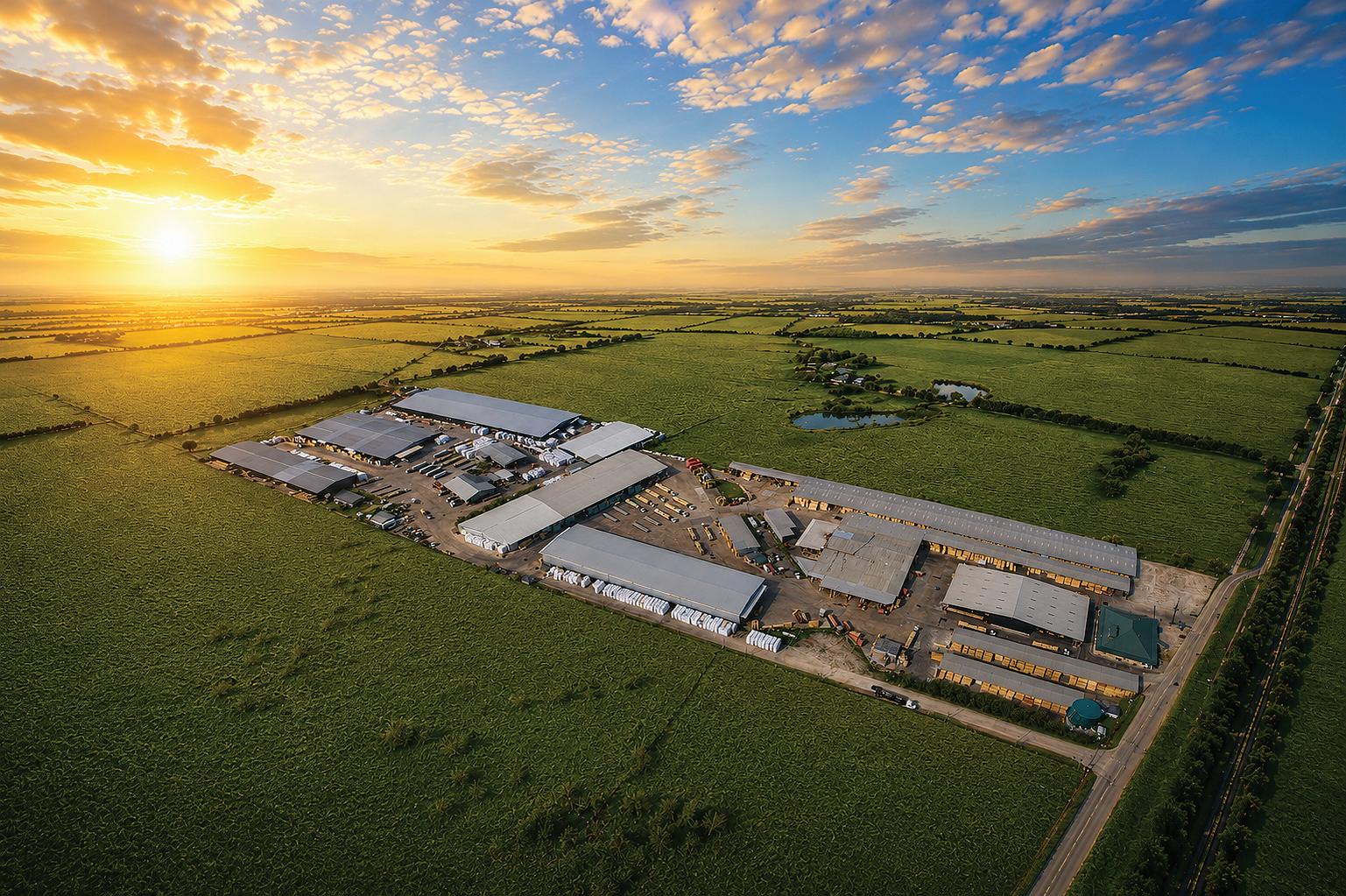
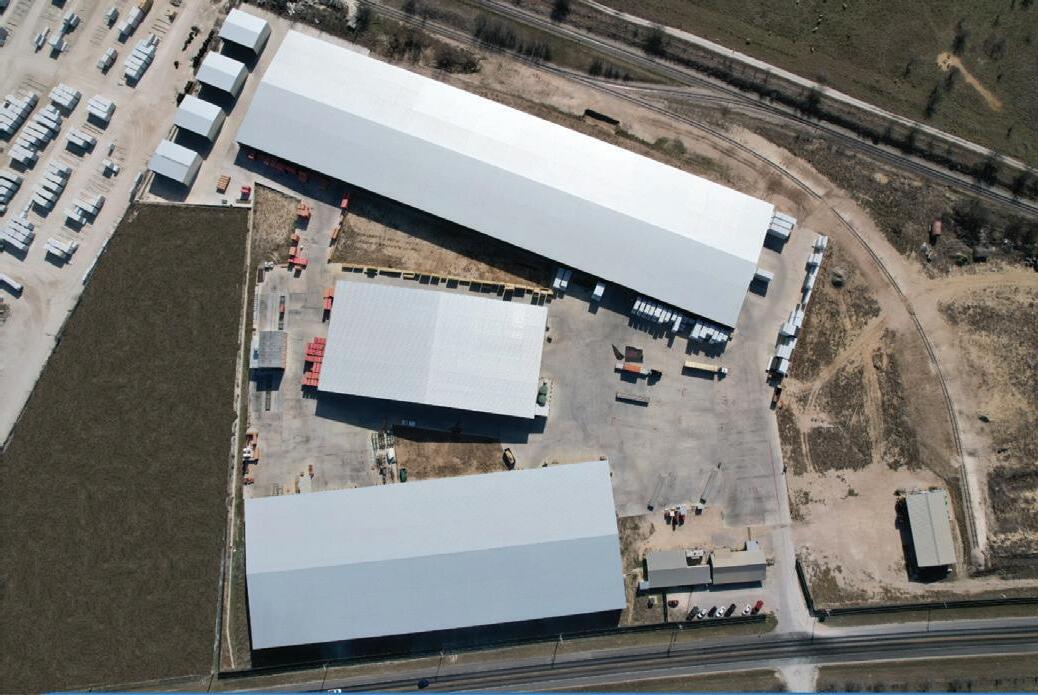
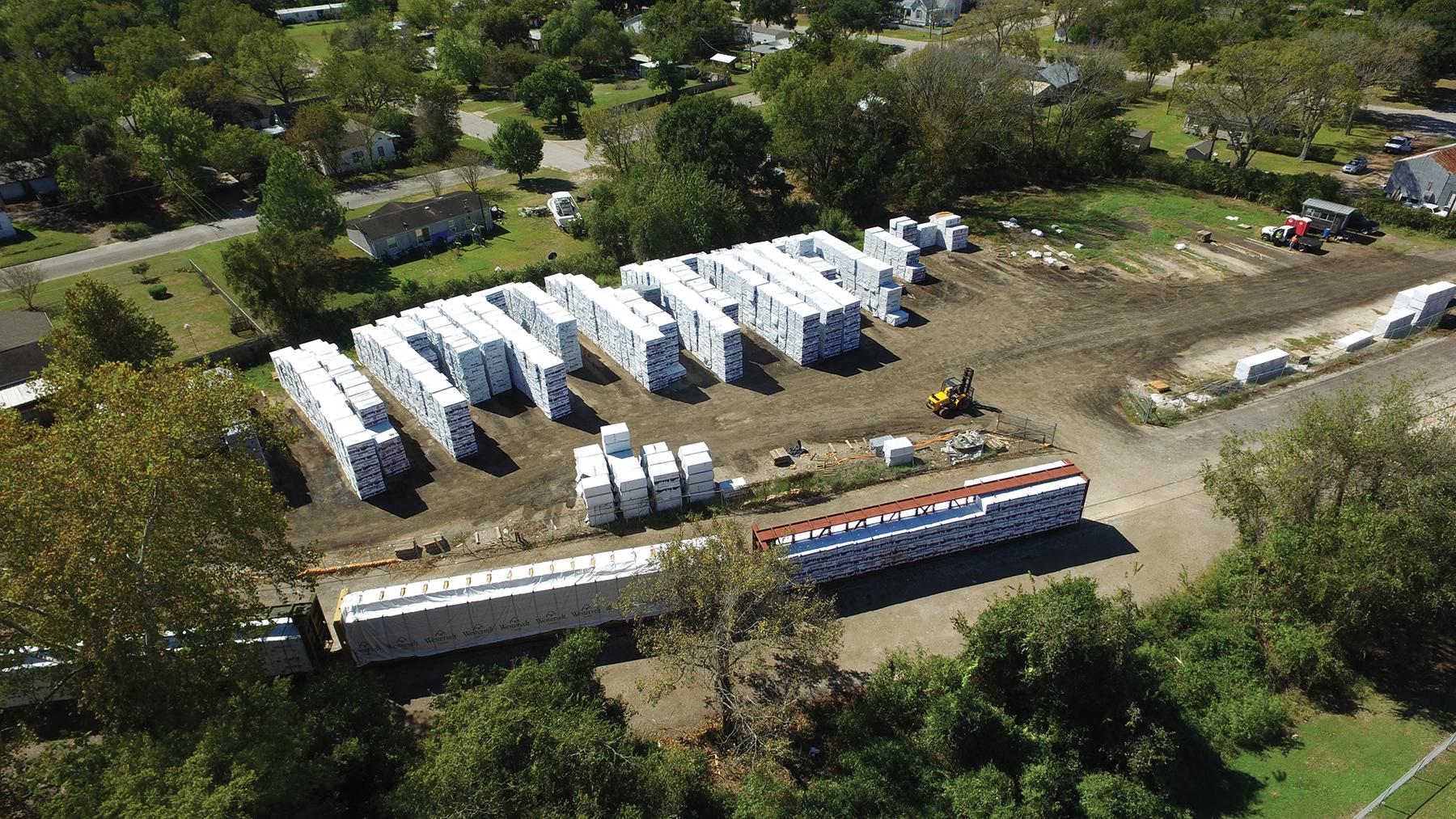
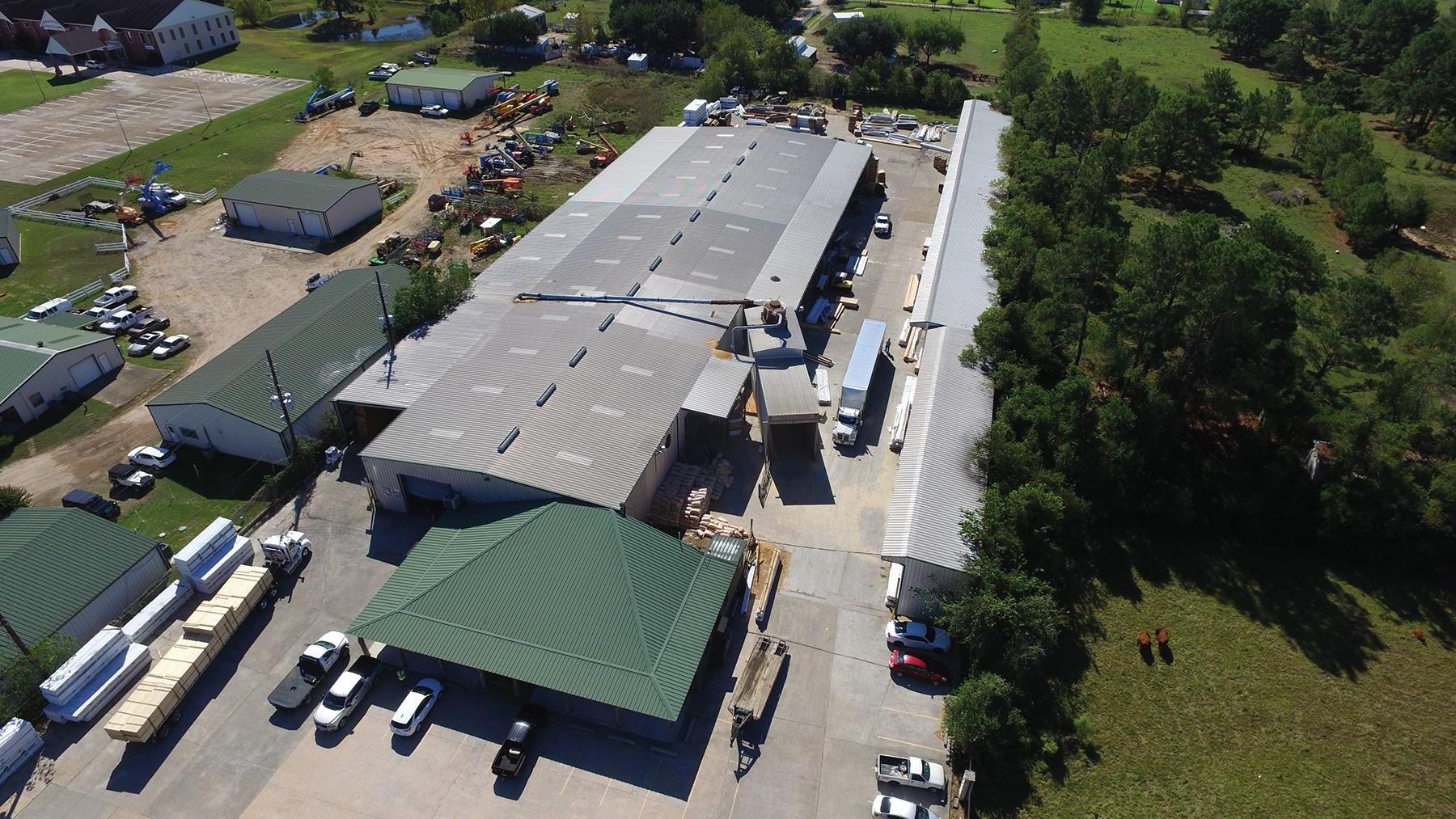
One of Texas’ leading independently owned manufacturers, wood preservers, and full-line lumber distributors.


PRESIDENT/PUBLISHER
Patrick Adams padams@526mediagroup.com
VICE PRESIDENT
Shelly Smith Adams sadams@526mediagroup.com
PUBLISHER EMERITUS
Alan Oakes
MANAGING EDITOR
David Koenig • dkoenig@526mediagroup.com
SENIOR EDITOR
Sara Graves • sgraves@526mediagroup.com
COLUMNISTS
James Olsen, Kim Drew, Dave Kahle
CONTRIBUTORS
Eric Gee, Jason Niemi, Nicholas Ritchie, Adam Rose, Maria Sanchez, Mike Seiwert
ADVERTISING SALES
(714) 486-2735
Chuck Casey • ccasey@526mediagroup.com
Nick Kosan • nkosan@526mediagroup.com
John Haugh • jhaugh@526mediagroup.com
DIGITAL SUPPORT
Katherine Williams kwilliams@526mediagroup.com
CIRCULATION/SUPPORT info@526mediagroup.com
151 Kalmus Dr., Ste. J3, Costa Mesa, CA 92626 Phone (714) 486-2735
CHANGE OF ADDRESS Send address label from recent issue, new address, and 9-digit zip to address below. POSTMASTER Send address changes to Building Products Digest, 151 Kalmus Dr., Ste. J3, Costa Mesa, CA 92626. Building Products Digest (USPS 225) is published monthly at 151 Kalmus Dr., Ste. J3, Costa Mesa, CA 92626 by 526 Media Group, Inc. Periodicals Postage paid at Santa Ana, CA, and additional post offices. It is an independently-owned publication for building products retailers and wholesale distributors in 37 states East of the Rockies. Copyright®2026 by 526 Media Group, Inc. Cover and entire contents are fully protected and must not be reproduced in any manner without written permission. All Rights Reserved. We reserve the right to accept or reject any editorial or advertising matter, and assumes no liability for materials furnished to it. Opinions expressed are those of the authors or persons quoted and not necessarily those of 526 Media Group, Inc. Articles are intended for informational purposes only and should not be construed as legal, financial or business management advice, nor an endorsement of any company, product, service or individual referenced.
Volume 45 • Number 6











































































































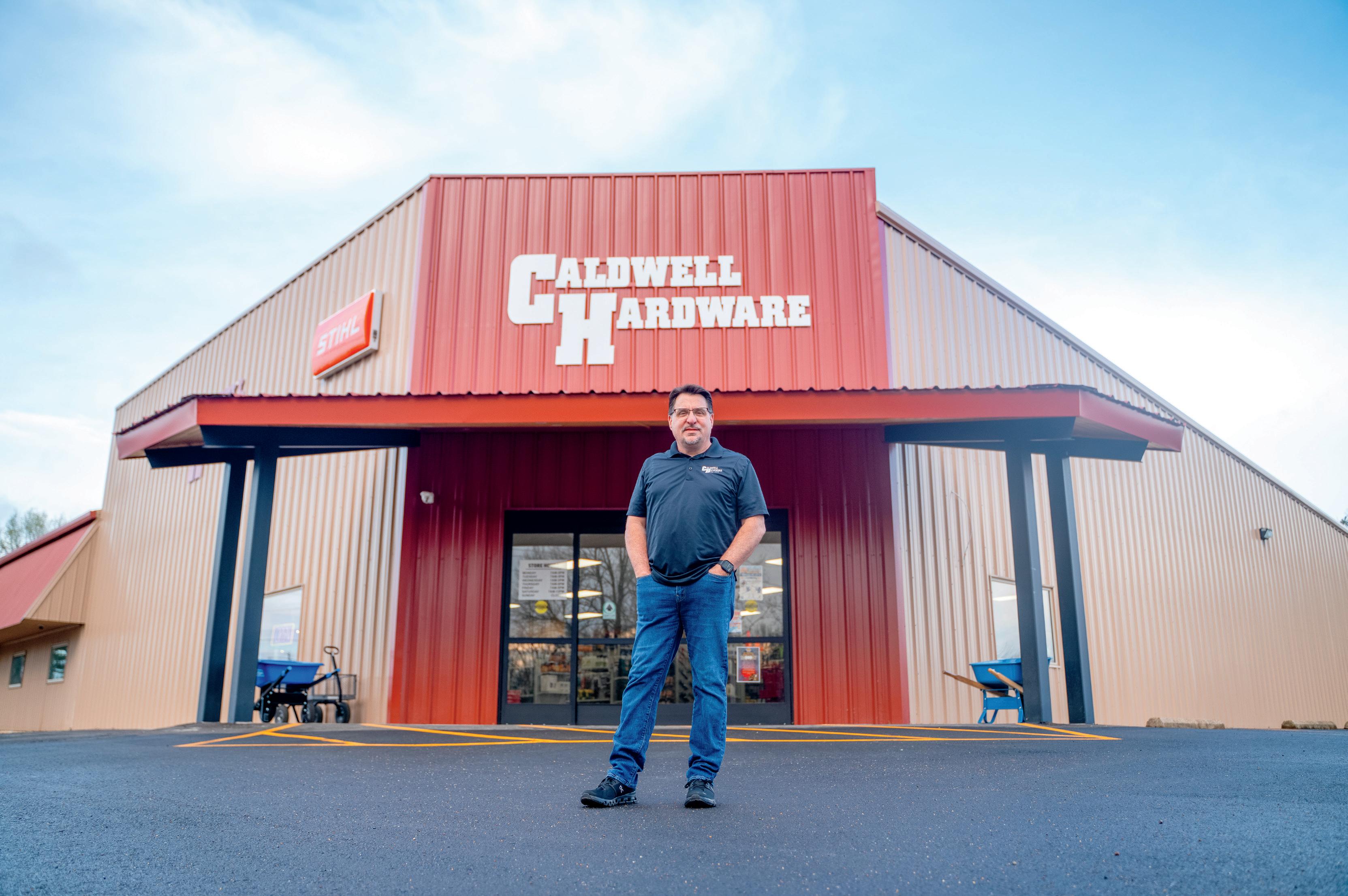
My dad was an electrician when our family bought Caldwell Hardware in 1979. At the time, it was just an 800-square-foot store, and he saw it as a way to support his electrical business while also serving the community. I was just 10 years old then but I grew up in the aisles. Dad continued wiring houses while my mom ran the store, learning the business and building relationships in the community.
As Hot Springs expanded, we worked hard to expand with it. I took on more responsibility as a teenager, and over the years we’ve continually looked for ways to better serve our customers— whether retirees moving into the area, weekend DIYers or contractors who depend on us. Today, Caldwell Hardware is about 22,000 square feet. Recently, we added 6,500 square feet, completed major resets and invested in modernizing the operation. Those efforts have resulted in double-digit sales growth and renewed energy throughout the business.
Our long-standing relationship with Orgill has played a meaningful role in that success. Since the early 1980s, they’ve provided not just products, but tools to help us grow. Smart Start assortments allow us to fine-tune categories for our market. Their competitive pricing helps us maintain our margins. The FanBuilder loyalty program helps us connect with customers in new ways. And having a dedicated sales partner who understands our business gives us clarity and confidence.
With that foundation—and partners who share our commitment—we’re well positioned to keep building on 40+ years of steady growth.


Phillip Taylor Owner | Caldwell Hardware | Grayson, Kentucky

------------
BY PATRICK ADAMS
I’VE FOUND MYSELF asking that question a lot lately. Not in some dramatic, end-of-the-world kind of way, but in a very practical sense. What is real anymore? What can we actually trust? What should we believe when so much around us feels disconnected from what we once accepted as common sense?
Recently, I watched artificial intelligence create things in seconds that would have seemed impossible just a few years ago. Entire presentations, videos, voices, images, even conversations that are nearly indistinguishable from reality. Some of it is genuinely exciting. Some of it is incredibly useful. And some of it, if I’m being honest, is a little unsettling.
At the same time, we watch markets continue to climb while many families and businesses still feel financial pressure every single day. We see political leaders and institutions make decisions that, not long ago, would have been considered completely unacceptable by almost everyone regardless of ideology. We are flooded constantly with headlines, opinions, outrage, predictions and “facts” that often seem to contradict each other within hours. It can feel like the world is moving so fast that nobody has enough time to stop and ask whether any of it still makes sense.
And yet, in the middle of all that uncertainty, I’ve noticed something interesting. The things that are most real today are often the same things that have always been real. A handshake still matters. Your word still matters. Showing up still matters. Character still matters.
I was thinking about this recently while walking through a lumberyard speaking with a longtime industry leader. No cameras. No social media clips. No polished branding strategy. Just two people talking honestly about business, family, challenges, and the future. It struck me how refreshing that felt in a world increasingly filled with manufactured versions of reality.
Our industry has always had a unique way of cutting through noise. At the end of the day, the work we do is tangible. You either delivered. Or you didn’t. The house got built or it didn’t. The truck showed up or it didn’t. The customer trusts you or they don’t. There’s something grounding about working in an industry where reality still has a way of revealing itself.
That doesn’t mean we reject innovation. Far from it. I believe AI and many emerging technologies will transform
industries, improve efficiency, and create opportunities we cannot yet fully imagine. Every generation experiences advancements that reshape the world around them. Progress itself is not the problem. The challenge is making sure we don’t lose ourselves while chasing it.
Technology can accelerate communication, but it cannot replace wisdom. Algorithms can provide information, but they cannot create values. Artificial intelligence may eventually replicate conversation, strategy, or even creativity—but it cannot replicate genuine human character, integrity, empathy or faith. At least I hope not.
Maybe that’s why I’ve come to appreciate simple things more as I get older. Time with family. Honest conversations. People who do what they say they’re going to do. Leaders willing to stand on principles instead of constantly adjusting themselves to whatever is popular in the moment.
In many ways, I think the future will belong to people who remain grounded while everything around them becomes increasingly artificial. The companies that endure will likely be the ones that continue building real relationships. The leaders who earn trust will be those who remain authentic and steady when others are chasing attention. And the people who navigate this changing world best may simply be those who refuse to compromise the values that made them successful in the first place.
Maybe that’s what is real today. Not the noise. Not the headlines. Not the endless performance of modern life. Maybe what’s real is still found in the same places it always has been—in faith, family, purpose, integrity, hard work, and the relationships we build along the way.
I know this industry is filled with people who still believe in those things. People who build tangible products, lead real teams, solve real problems, and care deeply about the legacy they leave behind.
And honestly, in today’s world, that feels more valuable than ever. Now the only question to ask yourself is: did I write this, or did AI?
As always, it is a privilege to serve you and this great industry.
PATRICK S. ADAMS, Publisher/President padams@526mediagroup.com

Like the foods we buy, when it comes to decking, we want natural and real. Redwood is always available in abundance of options. So stock the shelves! Unlike mass-produced and inferior products, Redwood is strong, reliable and possesses many qualities not found in artificial products. They maintain temperatures that are comfortable in all climates.
Redwood Empire stocks several grades and sizing options of Redwood.

------------ BY JASON NIEMI
ARTIFICIAL INTELLIGENCE is everywhere right now. It’s in the headlines, in your inbox, and in conversations across every industry. The technology is evolving so fast that it’s hard to know where to begin without feeling like you’re already behind.
The good news is that you don’t need a dedicated AI team or a massive budget to start seeing real value. You just need a practical place to start. This playbook gives you exactly that.
Before you explore tools or use cases, it’s important to establish governance around how your team uses AI. Governance covers the full picture: who can use AI, which tools are approved, what they can be used for, how your data is protected, and who is accountable when something goes wrong. It also requires those rules to be communicated clearly across your organization.
To start the governance conversation at your business, consider these questions:
• Who in our organization is allowed to use AI tools and for what purposes?
• Which tools are approved for business use and which aren’t?
• What types of information are off-limits to enter into any AI tool?
After your AI governance is established, your team needs to understand the rules and the reasoning behind
them. Consider building a simple AI use policy and walking your team through it directly. A quick training session or a one-page reference guide can go a long way. Reinforce it when new employees join and revisit it as your tools evolve. The goal is to build habits that protect your business and make AI adoption sustainable from day one.
There are two types to consider for getting started: native and standalone.
Native or embedded tools live inside a specific software program, such as Copilot in Microsoft 365. They are built for that ecosystem. For example, Copilot can help manage your calendar and prioritize your inbox. Zoom’s AI feature provides meeting summaries with action items and owners.
Standalone tools like Claude or ChatGPT work differently. They’re suited for open-ended tasks: brainstorming ideas, researching a topic, or analyzing documents you drop in. For example, a buyer preparing for a supplier negotiation can paste in a price increase document and ask AI to summarize the impact and suggest talking points.
Just a note: Some standalone tools have both a free version and enterprise licensing options. The enterprise options include privacy protections that free versions don’t. Make sure you’re using an enterprise version with appropriate privacy protections before putting any sensitive business information in.
After you’ve established your governance and tools, you can start to identify where AI can solve a real problem or remove a bottleneck in your business. Here are three places to start.
Organize Your Thinking. One of the simplest wins is using AI to organize your thoughts. Put your bullet points into AI and ask it to structure and draft them, then step in to refine. On mobile, you can dictate your thoughts instead of typing. For example, an operations manager can talk through a new warehouse process and have AI turn it into a structured outline for the next meeting.
Analyze Your Data. Most organizations have dense reports that someone must review and decide what to act on. Instead, hand the data to AI and ask for insights and actionable items. Consider an operations manager who feeds AI a monthly inventory report and asks it to flag slow-moving SKUs or unusual purchasing patterns that might otherwise go unnoticed until they become a problem.
Turn Chaos into Actionable Steps. How often do you receive a PDF from a customer, a photo of a handwritten note, or a letter listing items for a quote? Drop those into AI and ask it to extract the information. You can even train it to output a specific format, like a CSV that matches your system’s import structure.
Leverage Your Software Partners
You don’t have to figure this out alone. Your technology partners are a valuable resource as you explore how
AI can work for your business. Consult with them on how to combine the power of AI with your existing processes. Reach out to their service teams to ask about where AI can make an impact.
One more thing to remember: AI makes mistakes. It can misinterpret data, miss context, or return information that sounds confident but isn’t accurate. Keep a human in the loop. Trust your team’s judgment to validate what it produces and make the final call. The goal isn’t to hand over the wheel. It’s to have a smarter co-pilot.
Getting started with AI doesn’t require a massive investment or a technology overhaul. It requires intention. To maximize your value from AI, know why you’re using it, protect your business while you do, and find the places where it genuinely removes friction. Start small, build confidence, and expand from there. The organizations that will get the most out of AI aren’t necessarily the ones that move the fastest—they’re the ones that move thoughtfully. BPD


------------ BY DAVID KOENIG
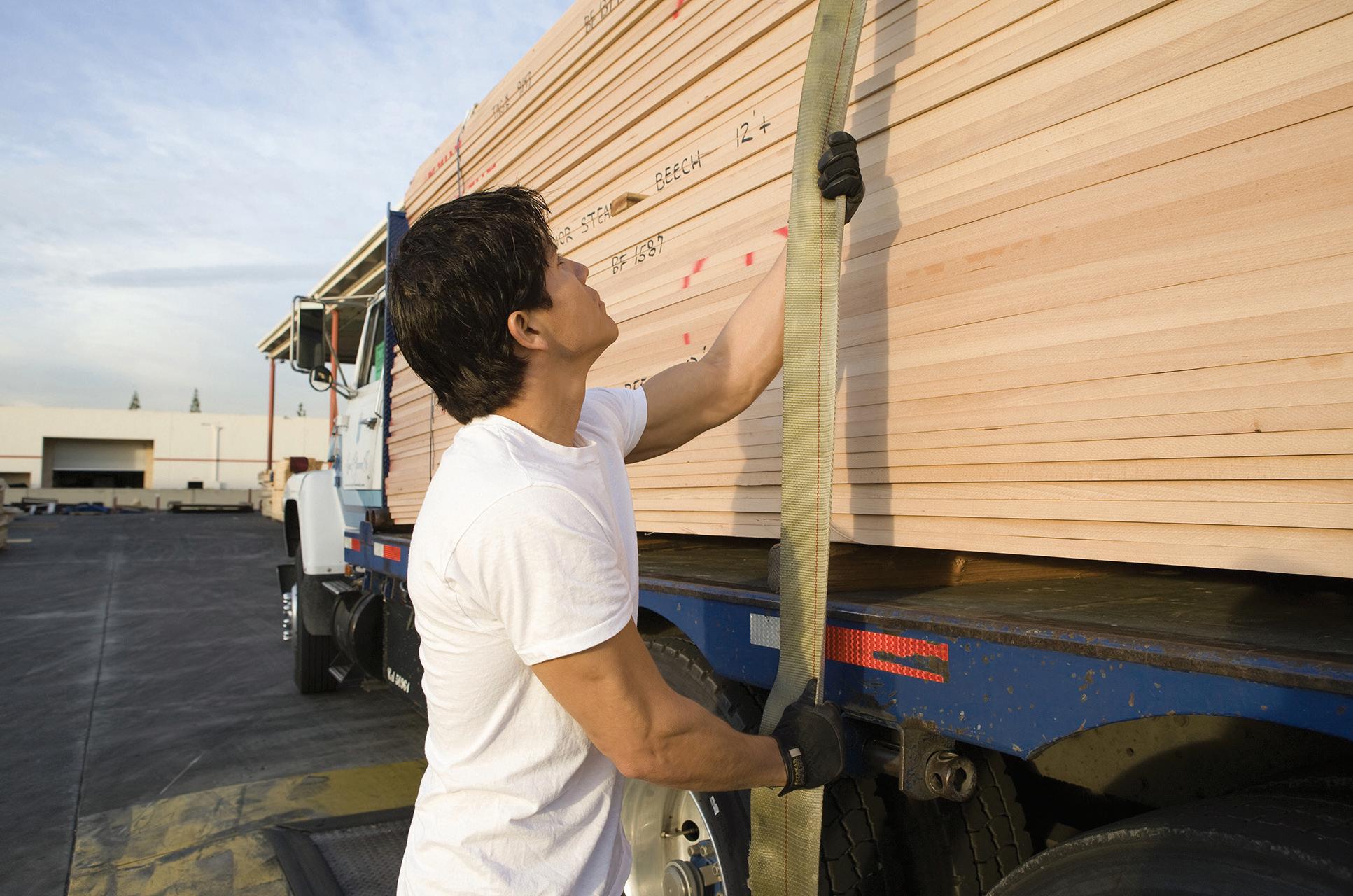
THE LUMBER INDUSTRY has always been defined by distance. Timber is harvested on specific lands in certain regions, processed in mills often miles—or states—away, and ultimately shipped to ports, reloads, distribution centers, dealers, even direct to construction sites. That makes transportation not just a cost center, but the connective tissue of the entire wood products supply chain.
Today, however, that system is under mounting strain. A volatile fuel environment, tightening trucking capacity, aging infrastructure, and persistent labor shortages are converging to create one of the most challenging transportation climates the lumber sector has faced in decades.
As Dave Abts, general manager of ST Freight, LLC, Manitowoc, Wi., related, “Fuel costs have gone up substantially across all commodities, not just any one in particular. You now have fewer drivers on the road, tighter DOT scrutiny, tighter capacity, and more (types of) freight for carriers to choose from, which created a perfect firestorm for rates to climb.
“While lumber is typically a less desirable item to move by drivers, it still needs to move around the country. The ball is in the carrier’s court right now. We shippers have to pay to play or sit on the bench.”
No single factor has more immediate impact on lumber transportation than diesel fuel. Trucks move the over-
whelming majority of timber and finished wood products in North America, making the industry acutely sensitive to fuel price swings.
Diesel prices have surged dramatically, with recent spikes pushing national averages above $5 per gallon and even higher in states like California. For lumber haulers— many of whom operate on thin margins—fuel is often the single largest operating expense. Even modest increases can erase profitability on a load.
The challenge isn’t just high prices, but volatility. Geopolitical disruptions, particularly in global oil supply routes, have created unpredictable swings that make it difficult for shippers to plan or price freight effectively. Many end up adding surcharges.
Costs have been rising just as quickly for rail and even waterborne shippers, although there may be some slight relief. Steve Zambo, CEO, The AGL Group, Jacksonville, Fl., noted, “In April alone we had upwards of 99 different (fuelrelated rate) increases from steamship lines. Given the initial volatility for April, we are seeing the rate levels start to stabilize in May, and I suspect that we will see rates stay flat and/or decrease due to fuel come June.
“Typically the summer months of June through August are sluggish for steamship lines, and the broader lumber industry. During that timeframe, carriers will compete with one another for lower freight volumes, and I expect rates during that time to either hold or take a slight decrease. All
of this is predicated on nothing changing with the macro and geopolitical landscape.”
Compounding the fuel issue is a persistent shortage of qualified truck drivers. This problem is particularly acute in the lumber sector, where hauling logs requires specialized skills and often involves navigating rural roads, steep grades, and unpaved terrain.
The workforce is aging rapidly, with a significant portion of log truck drivers nearing retirement age. At the same time, recruiting younger drivers has proven difficult due to regulatory barriers, lifestyle challenges, and competition from other sectors of trucking that offer better pay or working conditions.
Recent regulatory changes may further tighten the labor pool by restricting certain categories of commercial drivers, potentially removing tens of thousands from the workforce.
For lumber producers, this means longer wait times for trucks, increased freight rates, and the prospect of reducing production because logs simply cannot be moved efficiently.
Despite these challenges, the industry is actively exploring ways to adapt. Technology is playing an increasingly important role in improving transportation efficiency and mitigating fuel-related pressures.
Route optimization software, telematics, and load-planning tools are helping shippers to reduce empty miles and improve fuel economy. Some fleets are experimenting with aerodynamic modifications and speed governors to enhance efficiency.
For lumber and building material producers, distributors and dealers, this is not the time to treat transportation as a background function. It should be a strategic priority—integrated into pricing, procurement and operational planning—to navigate the continuing turbulence. BPD
RedBook Lumber Data is partnering with CarrierSource to highlight the top-rated trucking companies located near primary lumber shipping hubs.
Every Friday a different key location will be highlighted on redbooklumberdata.com. That week’s data remains on the site until a new region is analyzed on the following Friday.
Results are sorted based on real broker and shipper reviews that
have been moderated and verified by CarrierSource to ensure the highest level of integrity.
In addition to reviews, you’ll find fleet, insurance, safety and contact information sourced from the FMCSA, and equipment information submitted by the carrier or gathered through reviews.
CarrierSource functions as a “Yelp for frieght.”
For more info on the reports, email sales@526mediagroup.com.

------------ BY MIKE SEIWERT
JUST LAST YEAR, a delivery company driver chose to take a shorter path while operating an off-road forklift. The operator drove forward with limited visibility when he struck and killed a pedestrian who was walking nearby. If the operator had simply taken an extra step to reverse and ensure full visibility of the environment around him, the pedestrian would have been in full view.
This case is one of a growing number of tragic, preventable accidents occurring across lumber operations. From driving with obstructed views and low visibility to poorly maintained equipment, many of these accidents would be completely preventable with the proper protocols and oversight in place. According to OSHA statistics, 70% of the estimated 34,900 industrial accidents each year could have been prevented with better training and closer adherence to safety standards.
The lumber and building materials industry has encountered an uptick in operational costs, with many lumber business owners forced to achieve more with fewer resources. As such, safety standards may slacken to account for higher production costs and shorter turnaround time. But as large machinery and fleet-related claims rise in severity and frequency, ignoring safety protocols could not only cause harm to team members or bystanders, but also lead to even greater financial strain on businesses, making it more critical for lumber business owners to embrace risk mitigation.
In addition to the loss of life and serious injuries incurred by these accidents, insurance needs related to trucks, forklifts and loader claims are shifting. Supply chain shortages, greater production demand and high driver turnover are driving up the loss severity behind these claims as lumber businesses struggle to maintain safety standards under these pressures. Lumber
business owners need to understand the environmental factors behind these claims to identify their risk exposures and what can be done to mitigate them.
Claims that would not have previously gone to court are now not only proceeding to trial, but are also under threat of nuclear verdict these days, due in part to third-party litigation. In these instances, investment groups will fund attorneys pursuing claims at trial and receive part of any potential settlement, placing the financial burden on insurers and lumber businesses. These steep financial settlements can strain insurance rates and can add to existing operational pressures, especially for small businesses lacking the proper insurance coverage.
Further, medical costs related to high-severity claims have seen a significant increase. For example, treatment costs for a crushed foot, which can be fairly common in our industry, are reaching up to $600,000. Tragically, the severe nature of these injuries can potentially limit mobility and increase the likelihood for long-term rehabilitation for the worker, but it can also further contribute to existing staffing shortages and long-tailed insurance considerations for the business owner.
Finally, supply chain shortages and inflation have driven up replacement costs for damaged equipment. In one instance, a pre-owned, 10-year-old semi-truck purchased to replace a truck destroyed in an accident, was purchased for considerably more than its $100,000 original price. Headlights, which would have only been a few hundred dollars to replace 30 years ago, can now reach $1,500 to $3,000 as additional features like turn signals and side markers are built into the component. As the claims related to equipment replacements increase, insurance rates must also increase to account for the higher financial coverage needed.
For equipment-intensive industries like lumber, creating a culture of safety is an important risk mitigation technique. As lumber business owners face staffing shortages and increased production quotas, consider the following safety tips to prevent these incidents from occurring:
• Utilize the Right Technology: Lumber business owners should ensure all vehicles are equipped with both active and passive safety systems. Safety features such as blindside monitoring, adaptive cruise control and emergency braking can not only boost protection for drivers and pedestrians but also lighten the load for future maintenance upkeep.
Telematics can also serve as a great training, monitoring and claim defense tool by providing lumber business owners with real-time, comprehensive insights on driver behavior. Telematics and GPS monitoring record data for speeding, hard braking, fast turns, and even record video footage of drivers. These systems can allow fleet managers to reward drivers for safety, identify
in the incidence of a claim. Hard data can also provide a more tangible way for supervisors and fleet managers to measure driver performance and clearly identify areas of feedback.
• Strengthen Driver Screening and Training: It’s critical for lumber business owners to maintain regular motor vehicle record (MVR) monitoring to ensure drivers are still qualified to drive commercial vehicles. Lumber business owners should also carefully screen drivers to ensure they have both the experience and understanding of safety protocols to operate forklifts and loaders. Require annual retraining for drivers to keep safety protocols fresh and skills sharp. Additionally, consider creating a system of accountability for supervisors to ensure they intervene to address and prevent unsafe practices.
• Separate People from Machinery: For work areas where heavy machinery is operating, enforce a pedestrian-free zone. Create physical boundaries and checkpoints to limit the potential obstacles in loading zones. Consider creating processes around what to do when obstacles
need to cross into active loading areas by prioritizing explicit confirmation over assumptions. Loaders should communicate clearly about potential obstacles in the work zone, whether over the radio or through hand signals.
Lumber businesses have been hit hard, with economic pressures and shifting market needs continuing to restrict operations and increase workloads. The frequency of large machinery and fleet-related claims will continue to rise unless proactive steps are taken. By seeking coverage for developing risk exposures and following safety protocols, lumber business owners can keep employees safe and maintain their organization’s long-term health. BPD


------------ BY ADAM ROSE
in the building materials space, one of the most underutilized assets on the balance sheet is often the real estate underneath the daily operations. The current economic environment is accelerating national interest in sale-leasebacks.
Sale-leaseback transactions have been a staple of corporate finance for decades, but they’re gaining meaningful traction among LBM operators as a practical tool for staying competitive in a consolidating market. At the very least, it’s worth understanding how these deals work and when they make sense.
The concept is straightforward: a business sells its real estate to an investor and simultaneously signs a long-term lease to continue operating from the same locations. Nothing about day-to-day operations changes. The trucks still roll. The yard still runs. The only difference is that the capital locked up in real estate can now fund M&A growth, debt paydown, fleet upgrades, inventory expansion, or simply working capital during lean periods.
Here’s why today’s market has accelerated the interest in exploring the strategy:
First, traditional lending has become more expensive and more restrictive. Banks have tightened underwriting standards, and revolving credit facilities often come with covenants that limit flexibility at exactly the wrong moment. By contrast, sale-leasebacks don’t come with financial covenants. They can be viewed as a 100% LTV interest-only loan, with the real estate often valued at a premium with a long-term lease in place.
Second, LBM consolidation creates both pressure and opportunity. Regional operators competing against larger, better-capitalized acquirers need flexible access to capital to invest in their businesses and retain talent. Sale-leasebacks are one of the few tools that can generate meaningful liquidity without diluting ownership or taking on a financial partner.
Third, investor appetite for net-leased LBM assets remains strong, as the asset class is viewed as resistant to e-commerce. That demand creates favorable conditions for sellers, particularly operators with multiple locations, long operating histories, and stable revenue.
Not every property qualifies, and understanding investor criteria helps set realistic expectations.
Sale-leaseback investors are essentially underwriting two things simultaneously: the real estate and the tenant. On the real estate side, they want functional properties that are mission-critical to operations. On the tenant side, they want an operator with a track record, stable cash flow, and the demonstrated ability to service a long-term lease.
Lease structure matters too. Investors typically want initial terms of 10–20 years with renewal options, and they'll carefully underwrite the rent coverage ratio: essentially, whether the business generates enough cash flow to comfortably cover the lease payments. Operators should model this carefully before entering a process.
The most common misconception is that a sale-leaseback is a sign of financial distress. Many of the world’s
best-capitalized companies, including retail, distribution, manufacturing and fast-food operators, use this structure proactively rather than reactively.
That said, there are several real pitfalls to avoid. Underestimating the lease obligation is the most consequential one. Once the transaction closes, the lease becomes a fixed operating cost. Operators need to stress-test their ability to cover that obligation in a down cycle, not just in a strong year.
Finally, not all advisors are created equal. This is a niche at the intersection of commercial real estate and corporate finance, and working with someone who has closed these deals in the LBM or distribution space specifically can make a meaningful difference in both execution and outcome.
A sale-leaseback isn’t the right tool for every operator, and it shouldn’t be approached without careful analysis. For multi-location dealers who own their facilities, have stable operations, and are looking for a non-dilutive way to access capital, it deserves serious consideration. It can even be explored simultaneously with an M&A transaction to help reduce the equity check required. This is especially true in an environment where traditional financing is increasingly unpredictable. Or it can be part of an exit strategy before a retirement or sale to maximize value on both the real estate and business.
The best time to explore it is before you need it. BPD

Adam Rose is part of the corporate advisory team at Matthews, specializing in sale-leaseback transactions and investment sales for private equitybacked, family-owned, and founder-led businesses across North America. He can be reached at adam.rose@matthews.com or at www.matthews.com.
ProWood has upgraded its online dealer portal to simplify the ordering process for dealers.
The enhancements, which can be found at prowooddealer.com, make it easier to order ProWood products like TrueFrame Joist, as well as products from Deckorators, Edge and other ProWood-distributed brands.
New are a refreshed menu for easier navigation, updated naming and classifications to make prod-
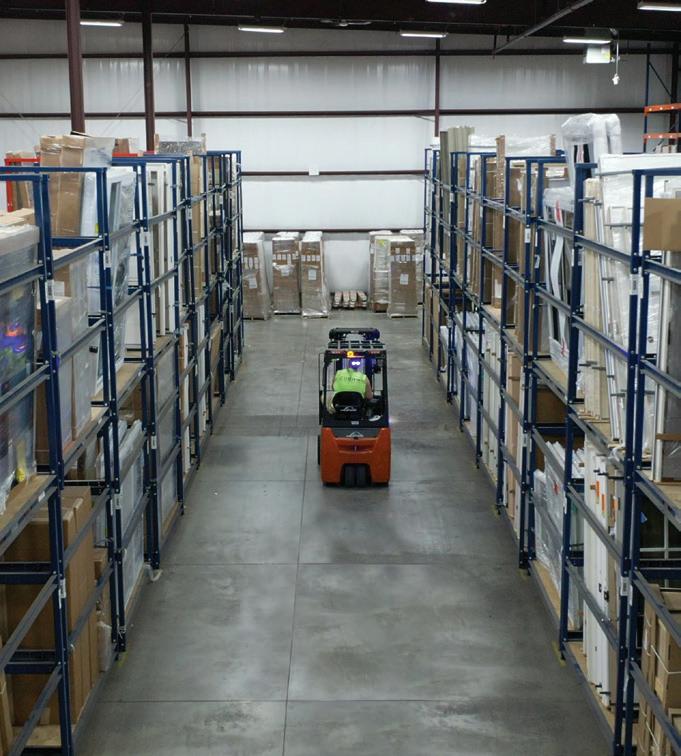




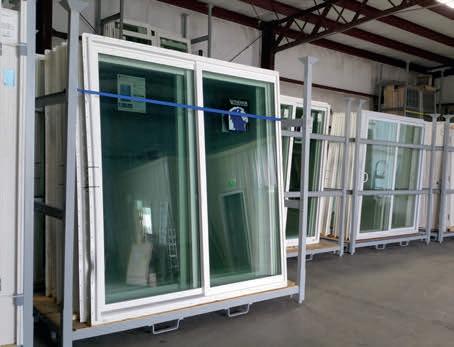
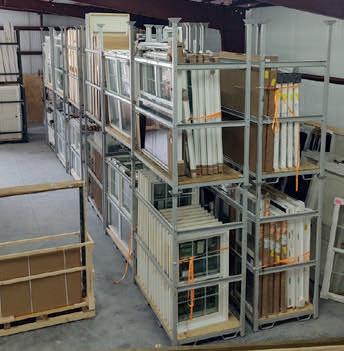
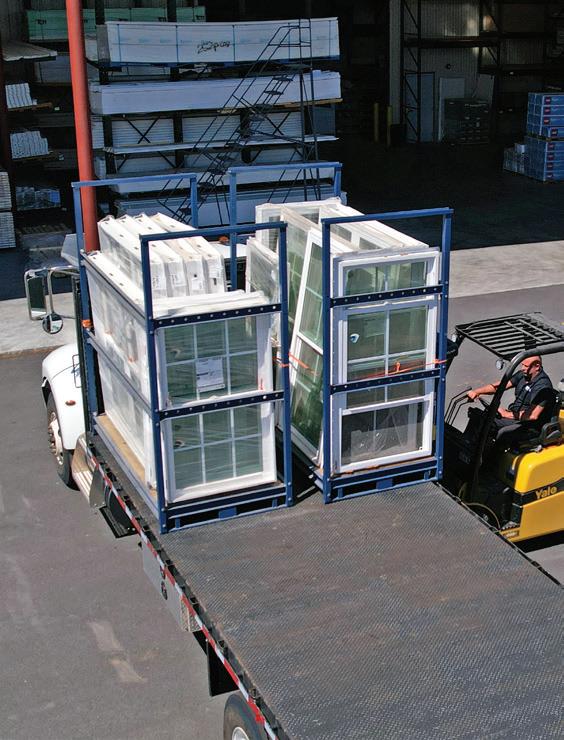
Free up valuable space with our durable steel millwork stack racks—built for doors, windows, and more. Easy to assemble, simple to move, and designed to triple your storage capacity.



ucts easier to find, and improved product descriptions and images. Through the portal, dealers can view invoices, order history, and proof of delivery. They can also print order confirmations, build product lists and quotes, and view frequently ordered products.
“Dealers are working hard to keep their customers happy,” said Jeff Crisp, VP of operations. “They need streamlined processes that are quick and repeatable.”
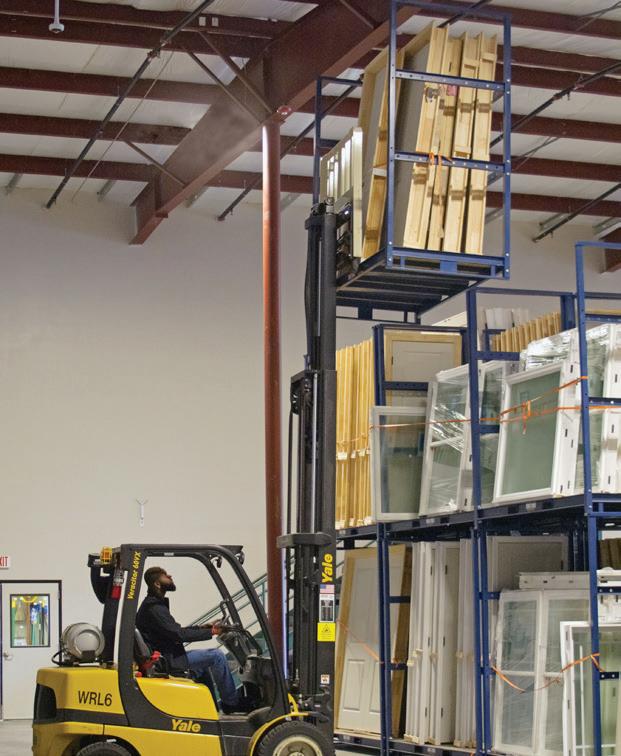

• Truck-Ready: Load directly for faster handling
• D amage-Reducing: Minimize product loss



• S tack-Friendly: Securely stack up to three high



• C ost-Effective: Maximize storage without expanding


------------
BY MARIA SANCHEZ
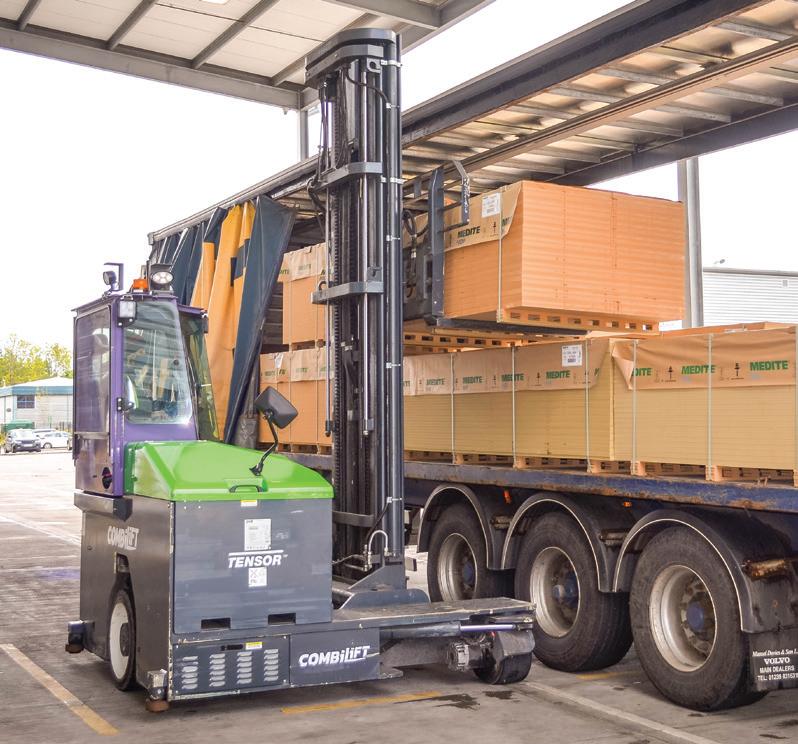
ENGINEERED WOOD, panels and trusses vary significantly in size, shape and weight. Their bulk, heaviness and long lengths make them particularly challenging to handle efficiently and safely throughout lumberyards, warehouses and mills. To navigate tight corners or narrow aisles, operators may need to reposition the load, which increases the risk of damage to these loads and potential collisions. This also adds valuable handling time.
These handling challenges highlight the importance of selecting material handling equipment that not only improves efficiency and space utilization, but also prioritizes operator and site safety.
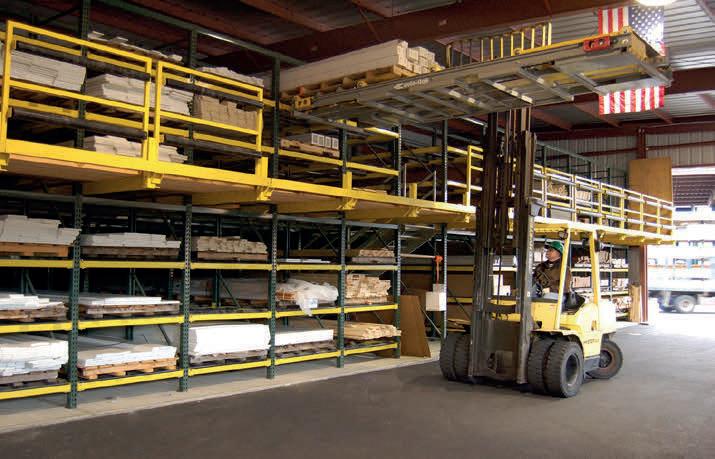
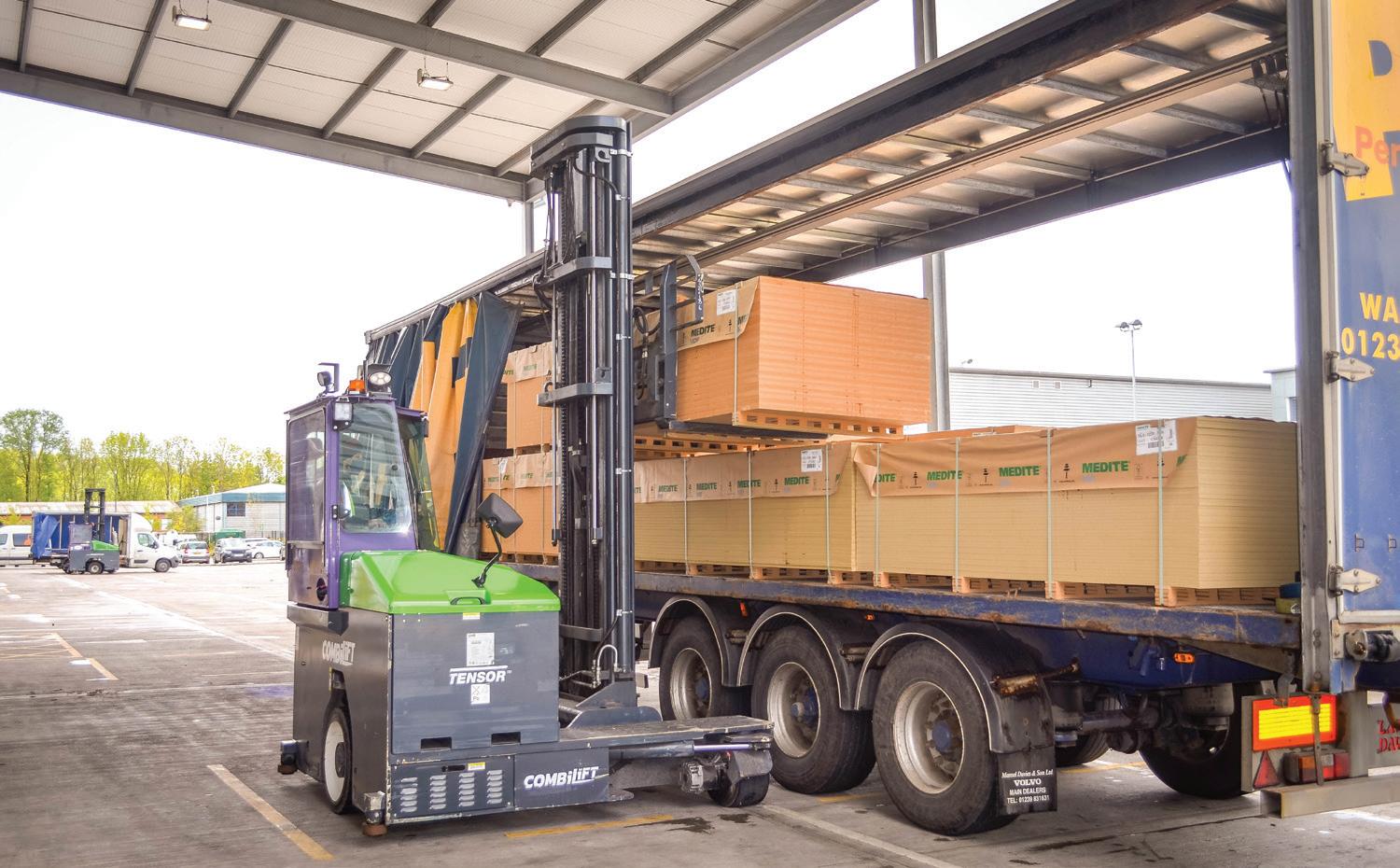
Multi-directional forklifts are specifically engineered to address the unique challenges of handling long and bulky loads. They can travel sideways, allowing operators to maneuver long loads through narrow aisles without the need for overhead carrying. This reduces the risk of accidents and damage, while improving workflow efficiency. Their low center of gravity further enhances stability by keeping loads close to the ground during transport.
Combilift’s C-Series models feature an integrated platform, providing a secure resting point for loads and improving overall handling safety.
Clear visibility is critical in busy lumberyards and warehouses. Operators must maintain a constant line of sight
to the load, forks and surrounding environment to ensure the safety of nearby personnel.
Elevated cab position and expansive glazing help ensure that even when transporting large loads, the operator’s view remains unobstructed. Such design features reduce blind spots and enhances situational awareness.
Pedestrian-operated stacker trucks offer a practical and safer alternative to ride-on equipment. Operating at lower speeds, they naturally improve operator awareness and control. Because the operator remains physically close to both the load and the machine—and always faces the direction of travel—there is greater visibility and responsiveness in confined or high-traffic areas.
Combilift’s pedestrian range incorporates a unique patented tiller arm that significantly improves safety in narrow aisles. The tiller arm can be rotated left or right, allowing the rear wheel to pivot parallel to the chassis at the touch of a button. This enables operators to work from the side of the truck rather than the rear, reducing the risk of becoming trapped between the machine and racking. It also ensures clear visibility of both the load and surrounding workspace at all times.
These solutions can help optimize your existing footprint while enhancing efficiency and safety. BPD
– Maria Sanchez is in marketing with Combilift, designer of customized multi-directional forklifts (www.combilift.com).

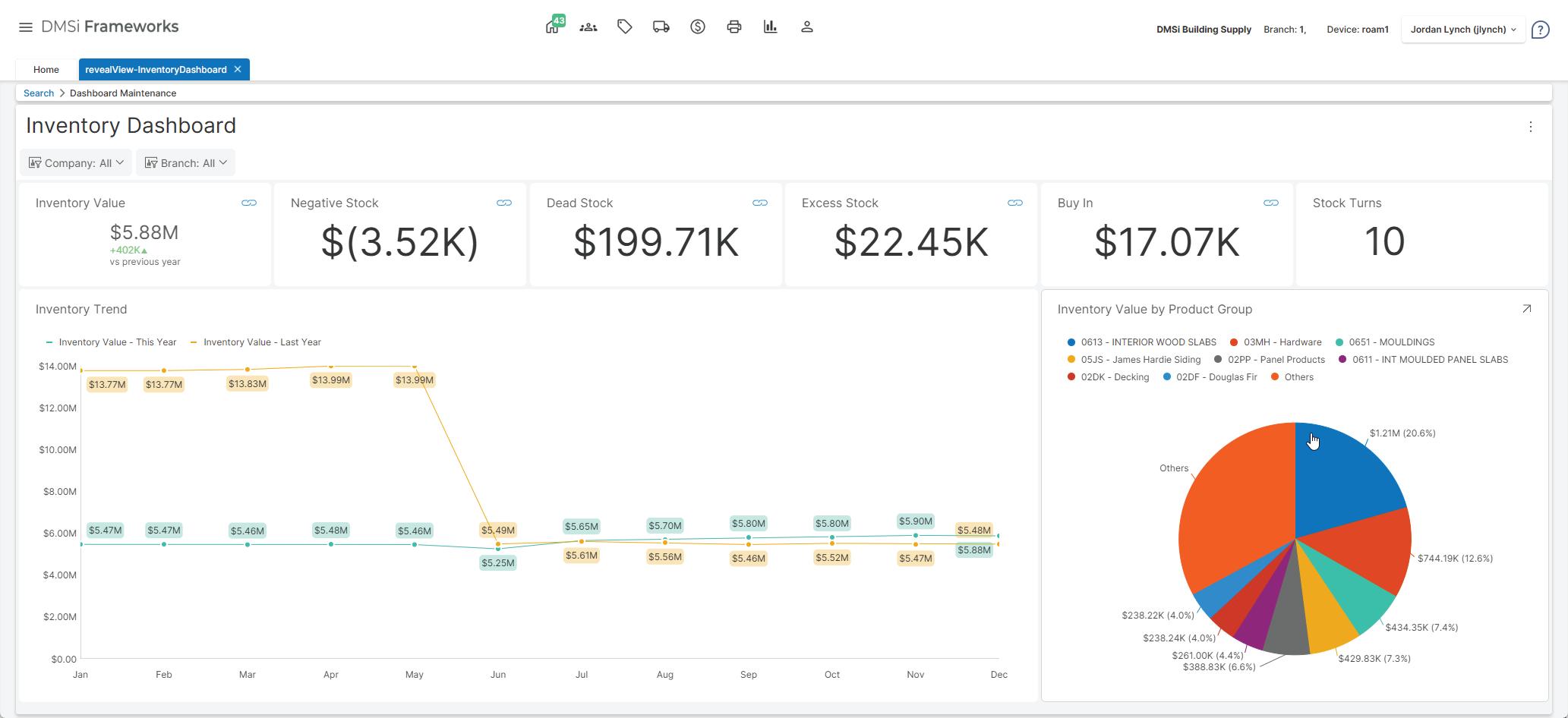
DMSi Frameworks 100% web-based, AI-enabled inventory & point-of-sale system

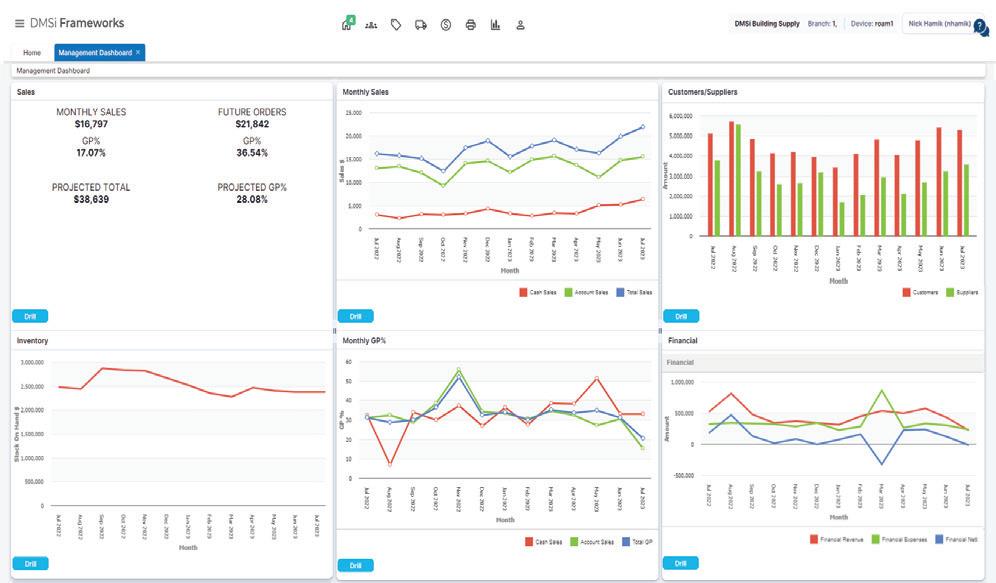

DMSi is an independent, family-owned software company providing inventory and accounting software backed by exceptional service. That's the DMSi difference.

------------ BY JAMES OLSEN
I WORKED WITH a group of young salespeople last week. I listened to their calls and what struck me about them was their passive approach. The Master Seller is in a partnership relationship with their customers. They find value, present it, and ask for the order. They are not passive. They are an active participant. Although it sounds simple, it can be difficult in tough markets or when we are new or on a cold streak.
Our job as salespeople is to bring value to our customers. We are not their servants. We are their money-making partners. We give great service, but we are not their butlers or shoe-shiners. Many salespeople are so afraid of being pushy that they don’t do their job.
Before we start our sales call we must ask ourselves, why is this a good deal for my customer? The answer is not complicated. Why is something a good deal?
(1) Good stock
(2) Good tally
(3) The market is moving (up)
(4) Good price
(5) Good shipment
Humans like the rhythm of threes. It is the smallest number that creates a pattern—beginning, middle and end—so we pick three of the above items and present them to our customer.
Master Seller: “Susan, we picked up 10 trucks of 2x4 9’ studs this morning. (1) They are out of a mill that you like. (2) They are priced very competitively, and (3) The market is moving on 9’s so I recommend that we pick up three of these for May.”
Susan: “Do you really think the market is moving?”
Master Seller: “Absolutely. Spring is here and summer is just around the corner. Oh. One of my co-workers just sold five of those so we only have five left and the only other 9’s we see are $20 higher, so again, I think we should pick up at least three. Do you want to pick those up?”
Susan: “OK. Push the shipment as far out as you can. Put them on 565, 566 and 567.”
Master Seller: “Thanks for these. Do you want to put on one more for insurance? The market is moving.”
Susan: “Thanks for the offer, but three will be fine.”
Master Sellers set the tone of their sales calls from the beginning of the call. It’s not complicated.
“Good morning, Jason. I’ve got a great deal for you on…”
“Good morning, Jessica. A great deal just came across my desk, and it made me think of you. This will fit you perfectly…”
“Good morning, John. I hope you’re sitting down because this deal is going to knock you off your feet…”
The following are the approaches of lazy, passive salespeople. They may work, but not as well as an active approach. In fact, they are not sales calls at all. They are what I call “The servant approach.”
Quotron: “Hey, John, I was just reaching out today to see if there is anything you are needing.” (We already know what they use—offer them something!)
Quotron: “Good morning, Rebecca. I’ve got a 2x4 20’ I can get into you at $675/MBF. Whadya think?” (Don’t ask what they think. We called because we know it’s a good deal. Tell them why and ask for the order. They will tell us what they think! We must believe in what we are presenting or we shouldn’t present it in the first place.)
Quotron: “Good morning, Samantha. I’ve got a 2x10 straight 16’ I can get into you at $550/MBF.” Then silence, waiting for the customer to buy.
This again is weak and subservient. Customers want partners, not servants. There are some bully buyers, but they’re the minority and don’t get the best deals because strong salespeople won’t put up with that kind of relationship.
Becoming a Master Seller isn’t quantum physics. It is creating a partnership relationship based on a simple, honest approach. We find value for customers (hustle), present that value, and ask directly for the order. BPD

James Olsen is principal of Reality Sales Training, Portland, Or., and creator of SellingLumber.com. Call him at (503) 544-3572 or email james@realitysalestraining.com.

BY NICHOLAS RITCHIE
THE INTERVIEW may seem like an informal chat, a way to get to know each candidate beyond their résumé. And to some extent, it is. But it is also one of the most high-risk, compliance-sensitive phases of the hiring process. A single poorly worded question can create significant legal exposure for the organization.
Often, these questions arise from good intentions in an attempt to build rapport, keep the conversation relaxed, or ease a candidate’s nervousness. But when casual conversation drifts into personal territory, it can quickly touch on characteristics that are legally protected and unrelated to the role.
A wide range of federal, state and local laws dictate what employers may ask during the hiring process. Taken together, they protect candidates from questions that could reveal, or that appear designed to reveal personal characteristics unrelated to job performance. At the federal level, protected categories include race, color, religion, sex, gender identity, national origin, age, disability, genetic information, and military or veteran status, among others. State and local laws often expand these protections, covering areas such as criminal history, salary history, and additional categories that vary by jurisdiction.
Interview questions must never directly or indirectly probe into these areas. Even questions that seem casual or well intentioned—those about a candidate’s family, hometown or personal beliefs—can overlap with protected categories and be interpreted as evidence of discriminatory intent.
The clearest rule: if a question does not directly relate to a candidate’s ability to perform the essential functions of the role, it should not be asked.
Disability and Medical Inquiries: Prior to a conditional offer, employers may not ask about a candidate’s disability or medical history, even when a condition is visible. Interviewers should describe the essential functions of the job and ask whether the candidate can perform them, with or without reasonable accommodation. After a conditional offer has been made, disabilityrelated questions and medical exams are permitted, provided they are applied consistently to all candidates in the same job category. Once employment begins, such inquiries are permitted only when job-related and consistent with business necessity. Employers are also prohibited from asking about genetic information or family medical history, including mental health history or genetic testing. If the question is not relevant to the job, it isn’t a question that belongs in the interview.
Most compliance violations in interviews don’t come from bad intent. Instead, they come from bad habits and patterns that create risk. These include:
• Rapport-building that goes too far. Asking “Where are you from originally?” or “Do you have kids?” feels friendly, but both questions touch protected categories.
• Assumptions based on appearance. Commenting on or asking about a visible condition, accent, apparent age, or physical trait, even with good intentions, can be interpreted as discriminatory.
• Engaging with volunteered personal information. When a candidate shares personal details unprompted, interviewers sometimes ask follow-up questions that can compound the exposure. You should acknowledge and redirect.
• Off-script small talk. Unstructured time before or after the formal interview is where many violations oc-
cur. Legal exposure doesn’t pause because the formal interview hasn’t yet started.
Any question that could reveal a protected characteristic, directly or indirectly, should not be asked. The most common problem categories and permitted alternatives follow.
Avoid:
• Age, year of graduation, or retirement plans
• Marital status, family plans, or living arrangements
• National origin, ancestry, race or anything that implies where someone’s family is from
• Religion, gender identity, or sexual orientation
• Physical traits, medical history, disability status, or workers’ compensation
• Substance use habits, union membership, or military veteran status/discharge type
When presented appropriately, you can ask:
• What is your name?
• What is your address?
• Are there any factors that would make it difficult for you to work the required schedule?
• What educational institutions did you attend, and what degrees or certifications did you earn? (Avoid asking for dates of completion.)
• Are you legally authorized to work in the U.S.?
• What languages are you fluent in (speaking, reading, and writing)?
• Are you able to perform the essential functions of the position, with or without reasonable accommodation?
• Are you over 18 years of age?
• Are you a military veteran?
• What military skills or experience are you able to bring to this position?
• This position requires a security clearance and/or a clean criminal background. Do you anticipate any issues meeting this requirement?
Q. I saw there’s been new guidance released on Form I-9 errors—do we really need to change anything if we’ve been completing them the same way for years?
A. If your process has been on autopilot, now is a good time to take a fresh look. ICE recently updated its audit guidance to reclassify several common Form I-9 errors from "technical," which gives employers 10 days to correct after an inspection, to "substantive," which means fines with no chance to fix them first.
Things like a missing date of birth, date of hire, or a representative’s signature, which might have felt minor before, can now trigger immediate penalties. And with audits projected to be 10 times more frequent this year than last, the chances of flying under the radar are shrinking. A quick review of your process and a refresher for anyone who touches these forms can go a long way right now.
Start with structure: A structured interview, one where every candidate is asked the same predetermined, job-relevant questions in the same order, is an extremely effective tool for keeping the process both compliant and defensible. When interviewers go off script, risk and exposure go up. When they follow a consistent format, it becomes much easier to compare candidates fairly, support hiring decisions, and demonstrate that the process was free from bias.
Use Behavioral Questions: Behavioral questions anchor the conversation to job performance rather than personal characteristics. Past behavior is the best available predictor of future performance. Possible behavioral prompts include:
• “Tell me about a time you had to manage competing deadlines.”
• “Describe a situation where you had to resolve a difficult customer issue.”
• “Give an example of how you handled a challenge while working as part of a team.”
This approach also reduces unconscious bias: when every candidate answers the same questions, evaluators are comparing performance on a level playing field rather than reacting to personal impressions.
The Rule of Thirds: This candidate evaluation framework weighs three inputs equally: experience and background, behavioral assessment data, and soft skills; how the candidate communicates, fits within the team, and shows up in the room.
The Role of Assessments: Behavioral assessments are not a replacement for an interview; they are a validation tool. When used alongside structured interviews, assessments help confirm what you’re observing in conversation, surface patterns that a single conversation might miss, and reduce the risk of decisions driven by first impressions. The interview is one data point; the assessment is another. Together, they provide a more thorough and more defensible picture of the candidate.
Compliance and candidate quality are not mutually exclusive; they reinforce each other. An interview process built on consistent, job-relevant questions, behavioral prompts, and objective evaluation tools is not just legally defensible. It is also more likely to uncover the right candidate.
The organizations that get this right don’t simply avoid bad questions. They build a process so clear and well-structured that good questions are the only ones anyone thinks to ask. BPD


BY NELMA
WHEN
walks into your store and asks, “What will this actually look like?”—what’s your go-to move? A sample board helps. A photo helps more. But today’s customer expects something closer to reality.
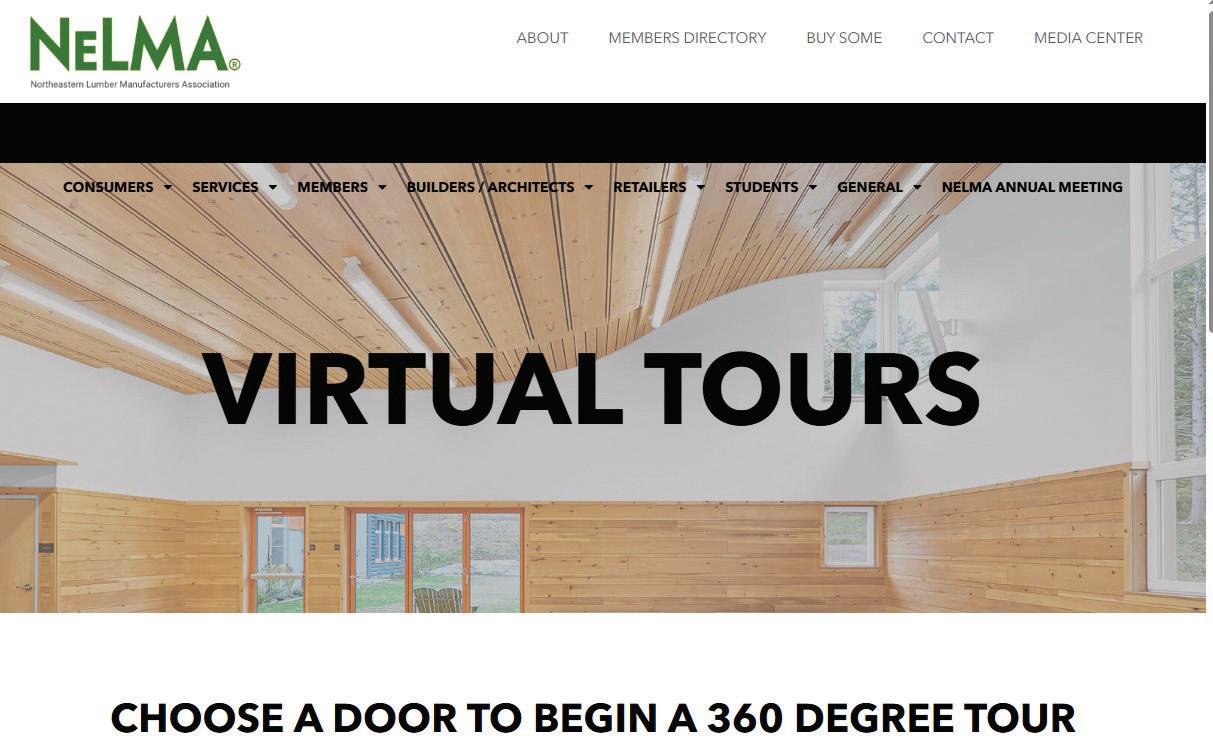
That’s where the Northeastern Lumber Manufacturers Association Virtual Tours step in—and for dealers, they’re more than just eye candy. They’re a practical, ready-touse sales tool that brings eastern white pine to life across real-world commercial applications.
Available on the nelma.org website, these immersive 360˚ experiences allow users to “walk through” finished projects, exploring how wood is actually used—room by room, surface by surface. And while residential applications often get the spotlight, the commercial projects in the Virtual Tour may be the most valuable assets a dealer has when it comes to broadening customer thinking.
Let’s take a deeper look at the commercial Virtual Tours available to dealers.
Let’s start with the unexpected: a therapeutic horse barn. At first glance, it’s not your typical selling scenario—but that’s exactly the point. This project uses more than 12,000 bd. ft. of eastern white pine to create a warm, inviting environment for riders and visitors alike.
The takeaway for dealers? Wood isn’t just structural—it’s experiential. In this setting, eastern white pine helps create a calming, natural atmosphere that supports the purpose of the space. That’s a compelling conversation starter for customers working on wellness spaces, agritourism projects, or even high-end hobby buildings.
Next stop: a country bar in Manchester, N.H. Here, eastern white pine is used extensively throughout the interior, with vertical tongue-and-groove boards delivering both durability and unmistakable character.
For dealers, this is where the commercial conversation gets practical. Restaurants, bars and hospitality spaces demand materials that can take a beating but also create a memorable experience. This project shows how eastern
white pine delivers on both fronts, combining strength with a warm, authentic aesthetic that synthetic materials wish they could replicate.
It’s a powerful example to share with customers who may default to alternatives simply because they haven’t seen wood perform in these environments.
Finally, the Friends School project offers something even deeper: a story customers can connect with.
In this case, eastern white pine wasn’t just specified: it was sourced directly from trees on the property, milled, and incorporated into the building itself. The result includes dramatic vaulted ceilings with wide planks and carefully finished interior applications that highlight the wood’s natural beauty.
For dealers, this taps into two major trends: local sourcing and authenticity. Customers, especially in institutional and community projects, are increasingly interested in materials that carry meaning. This project demonstrates how eastern pine can anchor a narrative, not just a structure.
The real value of virtual tours isn’t just inspiration, it’s translation. Each tour pairs high-res visuals with clickable product information, helping users understand the specific grades, patterns and finishes used throughout the project. That means dealers can move seamlessly from “look at this” to “here’s exactly what you need.” In other words, it shortens the distance between interest and purchase.
Eastern white pine has long been known for its versatility and showing that versatility has never been easier than it is with the NELMA Virtual Tours. They give dealers a way to demonstrate how wood performs across a range of commercial applications, from barns to bars to schools. In a market where customers are making faster, more visual decisions, that kind of tool isn’t just helpful—it’s essential.
Next time a customer asks what’s possible, don’t just tell them. Show them. BPD









------------ BY DAVE KAHLE
IT IS
true that most of the policies and procedures that dictate our activities on a day-to-day basis are vestiges of days gone by, designed to be effective in a world that no longer exists. In other words, most business systems teeter on being obsolete.
For example, I am often called on to review a company’s sales compensation plan. Whenever I ask why they have the plan they have, the answer is typically “Because it’s the plan we have.” In other words, the only reason for the plan is history. At some point in the past, someone designed the plan to accomplish something. The rationale has been lost, the situation it was designed for has long since faded away, but the plan remains. Since then, it has been easier to deal with day-to-day issues than to redesign a piece of the company’s infrastructure.
When I look at other fundamental infrastructure elements in a business (policies and procedures that dictate daily activity) almost all of them have the same history: they were created at some time in the past by other people for a long-gone situation. As such, they can rarely be defended as effective. They just are. And, since these are the tracks upon which much of the company’s efforts run, their effectiveness is crucial to the organization’s success.
Test yourself. When was the last time you questioned the design of the basic policies and procedures in your business? Here are some of the most common: The way prospects are created and qualified. The way new customers are created. The way customers are encouraged to become repeat buyers. The way partners are nurtured. The way orders are processed and invoices are created. The way people report to their supervisors, and supervisors manage their teams. The way bills are paid. The way new products are developed.
The Problem:
Since much of the infrastructure was created for a different time and a different situation, and since the infrastructure dictates the behavior of the folks who work within it, much of the company’s efforts are not nearly as effective as they could be. Left untouched, this will eventually render the organization obsolete.
A Solution:
1. Identify the key components. Create a list of the important elements in your systems. I call my list my “punch list of key systems components.” This list exists on two levels:
a. Fundamental activities the organization must be successful at if it is to continue. In my business, one of the six key activities is to expose people to the sales content. Nudge them to pursue excellence and influence so that they can sell better and lead better. We primarily do this by creating and publishing our content as broadly as possible.
b. The second level is composed of the key practices, policies and tools that support the first level. So, in my example, we have a list that contains, among other things, our list of potential publishers/distributors of our content and our processes for posting to our blogs, distributing content through our newsletters, and submitting content to other publishers.
2. Examine the items on the list on a regular basis. I keep a date as to when we last examined that item. While I have no definitive schedule, I keep the dates and items on a spreadsheet and note when it has been a while since we last examined that item.
3. Examine means to look critically at the items and ask these questions:
• Are we doing this as effectively as we could be?
• What are the best practices for this process?
• What can we change, add to, or subtract from in order to be more effective?
Sometimes we do this as a team, sometimes I do it, and sometimes I delegate it to one of my associates. This process keeps us constantly improving the key pieces of infrastructure in our business, ensures that our systems are working as effectively as they can be, and prevents us from being rendered obsolete or irrelevant by depending on decisions made in the past for a different situation.
As such, this regular “system component” review is one of the disciplines that will help us to change with the pace of change around us. BPD

DAVE KAHLE









A firefighter was killed and 12 other emergency responders and mill employees injured after a massive explosion and fire tore through Robbins Lumber’s sawmill complex in Searsmont, Me.
Co-owners Jim Robbins and Alden Robbins, along with family member Lily Robbins, an EMS worker, were among those being treated for burns at the Massachusetts General Hospital’s burn center. Alden and Lily were injured while assisting an injured firefighter.
Two other mill employees— Thomas Wolf and James Ward— were also injured, in addition to six other firefighters and the Searsmont EMS chief.
The blaze was first reported at a silo on the Robbins site on Friday
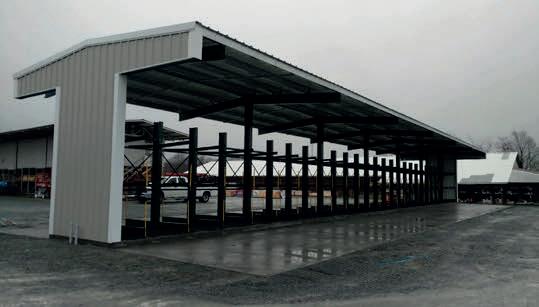
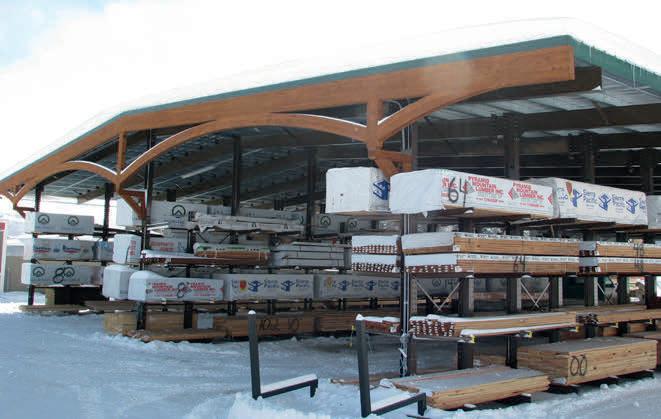
Having outgrown its current facility and off-site storage, Builder’s Choice Lumber Co., Auburn, N.Y., will relocate to a large new lumberyard it will build about two miles northeast.
The company received planning board approval to build a 3,500sq. ft. office and showroom along with three open-air lumber storage sheds on property it purchased in 2024 for $295,000.
morning May 15. According to the Midcoast Villager, authorities suspect the blaze started in a section of the mill complex where wood shavings are bagged for retail sale. The area is adjacent to a large silo used to store shavings. Workers unsuccessfully attempted to douse the fire themselves, as a call went out to the fire department.
The bagging area and silo were next to a fuel depot for Robbins’ trucks and a lumber warehouse. According to the Midcoast Villager, while fire crews were battling the fire, the silo exploded, shooting up into the air and crashing back down on the warehouse.
The Office of State Fire Marshal is jointly investigating the incident with special agents from ATF.
Annandale Millwork & Allied Systems Corp., Winchester, Va., has expanded to Hampton Roads with the April 7 grand opening of Frogale Lumber Supply, a new full-service facility in Newport News, Va.
The company traces its roots to 1952, when William C. Frogale founded what has grown into a seven-decade legacy in lumber, millwork and building materials.
US LBM has purchased 118year-old Builders Supply Co., Lancaster, S.C. Builders Supply president Greg Gregory will continue to run day-to-day operations.
Forge & Build has acquired White Creek Lumber & Hardware, Cedar Springs, Mi.
McCoy’s Building Supply added a new location April 20 in New Caney, Tx. Managed by Matt Daughrity, it features 15,000 sq. ft. of inside retail space and a paved, drive-thru lumberyard.
The Building Center, Pineville, N.C., has acquired Willingham & Sons Building Supply & Septic Tank, Newberry, S.C.
Axe Building Supply has added 10,000 sq. ft. to its warehouse in Holmdel, N.J.
Fitch Lumber & Hardware Co. held a grand opening May 7 at its new building product showroom in Raleigh, N.C.
Westlake Ace Hardware recently opened new stores in Shawnee, Ks. (Melissa Minter, general mgr.); Papillion, Ne. (Jeffrey Schendt, GM); and Charlotte, N.C. (Joel Taylor II, GM)
Ace Hardware is planning a new store in Jefferson, Ga.
Adam’s True Value Hardware, Scranton, Pa., has been opened by Justin and Chris Taffera and named in honor of their late brother, Adam.
Ace Hardware franchisee Matt Borre opened store #4 in Bridgman, Mi.
Rocky’s Ace Hardware opened a new store in Manchester, Ct., on April 17, followed by a May 15 board-cutting celebration.
Home Depot opened its new store in Leander, Tx., on April 23.
ABC Supply, Exton, Pa., added an in-store decking showroom.
American Cedar & Millwork, Lewes, De., which last year began marketing IG Railing to its pro customers, has taken a stocking position in the frameless glass railing systems, hardware, lighting and IG Armor glass treatment.
Stewart Builder Supply, Dickson, Tn., is celebrating 105 years in business.
RoMac Building Supply, Leesburg, Fl., acquired Residential Building Supply, a privately-held, DeBary, Fl.-based provider of doors, trim, and custom millwork serving luxury homebuilders across Central Florida.
The deal strengthens Romac’s ability to serve contractors and customers by expanding its capabilities in custom millwork, deepening relationships within the high-end residential building market, and extending its geographic footprint into Volusia County.
Over the last 41 years, Residential Building Supply has built a strong reputation in the region, supported by a team of 48 employees and long-standing relationships with leading builders. The business will be fully integrated into RoMac Building Supply.
“This is a natural extension of what we do,” said Dan Robuck III, CEO of RoMac Building Supply. “It allows us to better support the builders we serve and continue growing alongside them.”
As part of the deal, Residential Building Supply’s leadership team will remain in place, with their president, Dan Pugh, taking on the role of director of custom millwork for RoMac, where he will lead its custom millwork operations.
RoMac is an 80-year-old family-owned company with seven locations serving Central Florida.
Siwek Lumber, Jordan, Mn., purchased the inventory, equipment and property of Generation Building Center, Lonsdale, Mn., expanding its inventory, market presence, and delivery footprint across southern Minnesota and the Twin Cities metro area.
Generations Building Center ceased retail operations on May 7; the location will no longer function as a lumberyard. Its assets are being integrated into Siwek’s Jordan and Le Sueur, Mn., locations.
Siwek will retain the Lonsdale property for future expansion and, in the interim, is offering it for lease.
Southeast Building Supply Interests, Cullman, Al., acquired century-old Builders Supply Co., further expanding its footprint in Tennessee beyond its existing presence in the state with Wallace Building Supply.
The acquisition adds three Builders Supply locations to SBSI’s growing network, bringing the company’s total footprint to 14 locations throughout the Carolinas, Georgia, Alabama and Tennessee.
Anchored in Tullahoma, Tn., with a location in nearby Monteagle, Builders Supply serves contractors, homebuilders and remodelers across the mid-state region. Former owners Bubba Ingleburger and Carl Dixon will continue in advisory roles.
QXO, Inc. entered into a definitive agreement to acquire TopBuild Corp. for approximately $17 billion.
Headquartered in Daytona Beach, Fl., TopBuild is the largest distributor and installer of insulation and related building products in North America. The combination will bring together QXO’s leading positions in roofing, waterproofing, lumber-related building materials, and associated products with
TopBuild’s insulation capabilities, creating a highermargin business with expansive value-added offerings for customers.
The transaction was unanimously approved by the boards of directors of both companies and is subject to customary closing conditions, including approval by the shareholders of TopBuild and QXO. The deal is expected to close in the third quarter of 2026.
On April 1, QXO completed its previously announced acquisition of Kodiak Building Partners, a leading distributor of lumber, trusses, and other building materials, for approximately $2.25 billion.
Upon completion of the TopBuild transaction, QXO will operate in an addressable market of more than $300 billion and hold leadership positions in key building product verticals in North America: #1 in insulation, #2 in roofing, #1 in waterproofing, and #1 or #2 in the lumber and building materials sector, in key geographies served.
Brad Jacobs, chairman and CEO, said, “The TopBuild transaction will give us critical mass in the insulation sector and expand our exposure to large, complex projects like data centers, where scale matters. TopBuild has a deep bench of best-in-class operators, reflected in its industry-leading adjusted EBITDA margin of approximately 18%. We plan to replicate their best practices across QXO, including deploying their ‘special OPS’ teams to continuously improve operational excellence and customer service.”
Following the acquisition of TopBuild, QXO will have approximately 28,000 employees, 1,150 locations across 50 U.S. states and seven Canadian provinces, and a fleet size of more than 10,000 vehicles.

Call toll-free or e-mail us today for all your material handling needs.
Boise Cascade Co., Boise, Id., pleaded guilty and was sentenced for a felony violation of the Lacey Act for its role in a timber trafficking scheme to evade countervailing and anti-dumping duties.
Boise Cascade was sentenced to pay a fine of $6,382,000, representing twice the gross profits it derived from the illegal wood at issue in this case, and implement a compliance plan. Boise Cascade is the third federal criminal enforcement action to come out of this large-scale duty evasion scheme.
Boise Cascade’s distribution center in Pompano, Fl., purchased wood from Horizon Plywood, whose principals, Noel and Kelsy Quintana, were sentenced in February 2024 for conspiracy and Lacey Act violations based on their illegal importation of hardwood plywood. Horizon employee Marta Angelbello was also sentenced after pleading guilty to making a false statement in a declaration related to her role in the scheme.
According to court filings, during the sales years of 2018 through 2021, Boise Cascade’s Pompano location purchased hardwood plywood from Horizon, totaling more than $30 million. Beginning in approximately 2019, Boise Cascade purchased, received, sold and transported hardwood plywood from Horizon knowing (including actions manifesting willful blindness) that hardwood plywood was illegally imported from China. The importation was illegal because Horizon smuggled the wood and violated the Lacey Act by falsifying import declarations for hardwood and softwood plywood. Boise Cascade knew that Horizon had previously tried to hide the origin of the wood that it imported. For example, Horizon transshipped products from China to Malaysia, where it moved product into new containers, and then from Malaysia to the United States. Boise Cascade allegedly knew or should have known the plywood purchased from Horizon was sourced from China.
Boise Cascade reportedly was also aware the United States executed a search warrant at Horizon’s warehouse in South Florida in January 2021, and despite knowing that Horizon was under federal investigation, Boise Cascade still placed at least 10 new orders for birch plywood in the two weeks following the search warrant and received the orders.
“Boise Cascade either knew about or was willfully blind to the illegal importation of the plywood they were purchasing from Horizon Plywood,” said Principal Deputy Assistant Attorney General Adam Gustafson of the Justice Department’s Environment and Natural Resources Division. “This scheme defrauded taxpayers of import duties and undercut law-abiding competitors by importing and selling between $25 million and $65 million worth of plywood products. By purchasing these illegal imports, Boise Cascade helped perpetuate the scheme.”
“Trade fraud is not a paperwork violation. It is theft from the American taxpayer and an attack on lawful American commerce,” said U.S. Attorney Jason A. Reding Quiñones for the Southern District of Florida. “Boise Cascade knowingly profited from illegally imported timber and helped sustain a scheme designed to evade millions in duties owed to the United States.
UFP Industries has purchased the operating assets of pallet manufacturer John Rock, Inc., including plants in Coatesville and Mifflintown, Pa., and Bowling Green, Va., for $48 million to add to its PalletOne division. Former owner Kamps Pallets is retaining its Dilwyn, Va., sawmill.
UFP separately bought the operating assets of Berry Pallets, Waseca, Mn., for $20 million.
Wausau Supply Co. has opened a new distribution center in Greensboro, N.C.
Wholesale Builder Supply, Wixom, Mi., has been sold by Lachhman Jindal to Three Thirteen Capital, Bloomfield Hills, Mi.
Paneling Sales is relocating after 59 years at its current location in Gordonville, Pa., to a larger facility in Paradise, Pa.
White Cap has acquired Concrete Systems, Inc., with locations in El Paso, Tx., and Albuquerque, N.M.
Fairfield County Millwork, Bethany, Ct., has been purchased from New England Capital Partners by private holding company Ashford Sato.
Hartland Planing Mill, Clarksburg, W.V., which closed last year after 113 years, auctioned off its remaining assets in April.
Palm City Millwork opened a new showroom in Bonita Springs, Fl.
Warren Trask Co., Lakeville, Ma., has been appointed official regional distributor for Eva-Last’s Pioneer decking line throughout New England, New York, eastern Pennsylvania and New Jersey.
WS Building Materials expanded its distribution of Ready Pine prefinished wall and ceiling panels to its branches in Green Bay and Jackson, Wi.; Riverdale, Il.; and Sioux Falls, S.D. WS has sold Ready Pine from Comstock Park, Mi. (formerly Weekes Forest Products), since 2023.
General Woodcraft Inc., New London, Ct., is now distributing Arbor Wood Co.’s line of domestically produced ThermoWood products.
BlueLinx is now offering TruExterior poly-ash siding and trim by Westlake Royal Building Products from 12 locations: Denville, N.J.; Pittsburgh, Pa.; Frederick, Md.; Richmond, Va.; Raleigh, Charlotte and Statesville, N.C.; Charleston, S.C.; Atlanta, Ga.; Tampa and Jacksonville, Fl.; and Nashville, Tn.
Weatherization Partners, Ltd., Dallas, Tx., is now distributing HydroBlok exterior wall systems across the South and Southwest U.S.
Russin, Montgomery, N.Y., is now distributing Norx composite cladding in the Northeast and mid-Atlantic.
Dealers Choice has expanded its distribution of Envision Outdoor Living Products’ composite decking lines and Fairway Railings to its Tyler and Sequin, Tx. The distributor now offers the full line of Envision products at 14 locations, covering the Midwest, mid-Atlantic and Southeast.
rk Miles, a fourth-generation, family-owned lumber and building materials chain based in Manchester Center, Vt., has acquired Varney & Smith Lumber Co., a long-standing LBM supplier in Lisbon, N.H. It becomes rk Miles’ 10th location— and first in New Hampshire.
“This is a good fit for both companies,” said Joe Miles, CEO of rk Miles. “Varney & Smith has deep roots in its community and a well-earned reputation for service. Our intent is to build on that foundation, support the existing team, and continue serving customers in a way that respects how business is done locally.”
rk Miles is familiar with supplying builders in ski and mountain communities and understands the products, logistics and service expectations required to support that type of construction environ-
Carter Lumber has purchased Gaster Lumber & Hardware, a three-location building materials supplier serving the Savannah, Ga., metro area. This deal expands Carter Lumber’s footprint in the Southeast, giving it full coverage across Georgia and adding the area from Hilton Head to northern Florida to its coastal service presence.
Gaster Lumber was founded in 1985 and remained a Gaster family-owned and operated business until its acquisition by Carter. It has yards in Savannah and Bloomingdale, Ga., and Hardeeville, S.C.
“Gaster Lumber is exactly the kind of company we look to partner with: a strong, family-run business that shares our values around people, hard work, service, and long-term relationships,” said Jeff Donley, president and COO of Carter Lumber. “We’re proud to continue the legacy Ray and the Gaster team have built and look forward to building on that foundation as we grow in the Savannah market.”
The Gaster Lumber locations mark Carter Lumber’s entry into the Savannah metro area and will operate as part of the Coastal Carolinas market under the direction of market VP Brian Sento. With
ment. As part of the transition, the company plans to introduce Marvin windows and doors to the northern New Hampshire market. rk Miles also operates a dedicated window and door service department, providing technical support and post-sale service to builders and homeowners, and expects those capabilities to support customers as the business continues.
The previous owner of Varney & Smith Lumber, Ed Carbonneau, will remain involved during the transition period to support employees and customers and to help ensure continuity of relationships he has built over the years. All existing employees are expected to remain.
rk Miles was founded in 1940 and operates lumber and building materials locations across Vermont, western Massachusetts and northern New Hampshire.
this addition, the Coastal Carolinas team will serve professional builders from Wilmington, N.C., through northern Florida.
Gaster Lumber will operate as part of Carter Lumber effective immediately, with no disruption to customers. Carter Lumber plans to invest significantly in expanding reach, capacity and capabilities to better serve builders across all segments of the Savannah market.
Schockman Lumber, St. Henry, Oh., has acquired Hellmann Lumber, Walton, Ky.
Schockman Lumber, a familyowned LBM supplier with locations throughout Ohio, Indiana and Michigan, continues seeking to expand through acquisitions and enter new geographic markets.
Hellmann is a nearly 150-yearold lumber, hardware and home improvement supplier serving contractors, builders and DIYers in northern Kentucky and the Cincinnati metropolitan area.
Last year, Schockman bought 165-year-old Requarth Co., Dayton, Oh., and in 2023 added 75-year-old Iverson’s Lumber, Highland Township and Montrose, Mi.
Manthei Wood Products, Petoskey, Mi., has acquired fellow hardwood veneer manufacturer Cahaba Veneer, Centreville, Al.
Cahaba Veneer, founded in 1995, has long been known for its high-quality hardwood veneer and ability to serve specialized markets—including engineered flooring, custom plywood, and niche applications such as skateboard veneer.
Now in its third generation of family leadership, Manthei Wood Products’ legacy dates back to the 1940s, when the Manthei family began producing veneer in Michigan.

Ian Crabtree, ex-Foley Products, has been named chief financial officer of Great Southern Wood Preserving, Abbeville, Al. Justin Wright is now executive vice president and chief operations officer.
Jeremy Hoon, ex-Metrie Moulding, has joined Madison Wood Preservers, Madison, Va., as Central territory mgr.
Tom Stapelfeldt, ex-Bliffert Lumber, is new to commercial window sales at Brunsell Lumber & Millwork, Hartland, Wi.
Jay Dickens, CEO, has been elected board chairman of The Lester Group, Martinsville, Va. He succeeds James A. O’Brien, who has retired from the board after 16 years of service to the company.
Kevin Smith has rejoined the outside sales team at 84 Lumber, Rockaway, N.J., after 20 years with Blue Ridge Lumber. Matt Williams is now in outside sales with 84 in Williston, Fl.
Chad Christian, ex-ABC Supply, has joined the outside sales team at Tibbetts Lumber, Elkton, Fl.
Dean Miller, ex-AHC Hardwood Group, joined Viking Forest Products, as a hardwood trader based in Milton, Fl.
Kari Crilow has been promoted to VP of customer experience for ProVia, Sugarcreek, Oh. She succeeds Lonnie Hershberger, who retired after 30 years with the firm.
Costello’s Ace Hardware, Deer Park, N.Y., is continuing its multi-state growth with a renewed focus on new store development, highlighted by a new flagship location in Cedar Knolls, N.J., and a new store currently under construction in Abington, Pa.
As the company works toward its 2030 plan of 100 locations, Costello’s is evolving how it grows. While the business has expanded significantly through acquisitions in recent years, including the addition of the 11-store Rommell’s Ace Home Center group in 2025, the current environment has created new opportunities for ground-up and redevelopment projects in high-quality markets.
Leading this next phase is a flagship store in Cedar Knolls. At more than 23,000 sq. ft., it is one of the largest and most advanced stores in the company’s portfolio. Opened May 8, the location was designed around Ace Hardware’s Elevate3 (E3) store model, offering a highly experiential, brand-driven environment with expanded assortments and deeper product lines across key categories, such as “The Knolls Thoughtful Finds,” a curated assortment of gifts, home accents, and everyday essentials.
Costello’s also set a late May unveiling of a new 12,000-sq. ft. store in Abington, Pa., also built around the E3 format.
The company also has plans for additional stores in East Goshen, Pa., and Henrico, Va.
David Hoff, ex-Builders FirstSource, is now in sales with Boise Cascade, Nashville, Tn.
Matthew Parrish is stepping down at the end of June after seven years as CEO of Knauf Insulation North America, Shelbyville, In., to become CEO/president of Spahn & Rose, Dubuque, Ia., succeeding Dave Davis, who is retiring after nine years at the post. Knauf CFO Bill Matthias will serve as interim CEO at the insulation firm.
Courtney Kaptur has been appointed general mgr. of Big C Lumber, Three Oaks, Mi.
Fernando Villaneda is new to inside sales at BlueLinx, El Paso, Tx.
Nick Talarico has been named chief operating officer of Do it Best Group, Fort Wayne, In.
Steven LaValley was promoted to senior vice president of sales & marketing for Interfor, Peachtree City, Ga.
Brian Nelson is the new general mgr. of Williams Hardware & Building Supply, Arley, Al.
Kyle Cox has been named store mgr. of Jordan’s Ace Hardware/The Helpful Hardware Co., Union, S.C
Benjamin Gremel, ex-Mead Lumber, has joined the outside sales team at Millard Lumber, Waverly, Ne.
Jordan Niehaus is new to outside sales at Carter Lumber, Cincinnati, Oh.
Sergio Ortega, ex-TSH Siding & Decks, has moved to outside sales at McPherson Lumber Co., McPherson, Ks.
Jimmy Mason, ex-American Woodmark, has been named president of USG Gypsum, Chicago, Il.
Ryan Morgan has been promoted to mgr. of ABC Supply’s South Central District, overseeing 20 locations across Illinois and Missouri.
Zachary C. Lauer has been promoted to senior VP, chief operations officer for Trex Co., Winchester, Va.
Jamie A. Beggs has been named senior vice president and chief financial officer for PPG, Pittsburgh, Pa., effective July 6. He replaces Vincent J. Morales as CFO, who is retiring after 41 years with PPG.
Rosanna Martinez, Epicor, Austin, Tx., has been promoted to VP-customer support for the distribution and building supply industries.
Mike Hiller has been appointed chief operating officer-designate for Builders FirstSource, Irving, Tx., in line to succeed COO Steve Herron, who will retire on Dec. 31, 2026, after more than 40 years in the industry. Coley O’Brien succeeds Hiller as chief human resources officer. Alena Brenner was appointed executive VP, chief legal officer, and corporate secretary. Christopher Crouse, ex-Van Metre, is new to outside sales with BFS in Winchester, Va.
Patrick Benton was appointed executive vice president of operations integration for UFP Industries, Grand Rapids, Mi., effective July 1. He is tasked with maximizing the value of newly acquired businesses and strengthening the performance of existing operations. Mike Ellerbrook will succeed Benton as president of UFP Construction.
Kori Austin is new to Henry Poor Lumber Co., Lafayette, In., as a cabinet/countertop design & sales specialist.
Jake Hoffer, business mgr. of the LBM division of Bennett Supply, Cheswick, Pa., has been elected to the board of directors of ABMDA, Inc.
Kristy Huffman, Ritter Lumber, has been promoted to the Triple R Brothers corporate office in Nederland, Tx., as a purchasing specialist. Robert Stringer is the new assistant store mgr. at Ritter Lumber in Nederland.
Jordan Graves, ex-Versatex, is now an outside sales/ territory mgr. for Coastal Forest Products, Bow, N.H.
Gregory Griffing, ex-Riverhead Building Supply, has joined the outside sales team at 84 Lumber, Riverhead, N.Y.
Ethan Couture is a new mgr. trainee in Gulfport, Ms.
John Mulcahy has been named senior vice president of communications, public affairs & stewardship for Georgia-Pacific Corp. Atlanta, Ga. He succeeds Sheila Weidman, who is retiring June 5 after 38 years with GP.
Chris Curwood, plant mgr. of MITER Brands’ Fort Myers, Fl., facility, was appointed to the Southwest Regional Manufacturers Association board.
Steve Firko was promoted to president of Pennsylvania Lumbermens Mutual Insurance Co., Philadelphia, Pa. He succeeds John K. Smith, who will continue as CEO. Lindsey N. DiGangi replaces Firko as senior VP and COO. BJ Gardner is now assistant VP of information technology, and Ray Rogers, assistant VP of claims.
Cody Harman has been promoted to VP, product & operations for panel lamination & profile wrapping at Genesis Products, Elkhart, In.
David Lezzer, president of Lezzer Lumber, Curwensville, Pa., has joined the LMC board of directors. He succeeds Harley E. Yoder, Yoder’s Building Supply, Fair Play, S.C., who completed his board term.
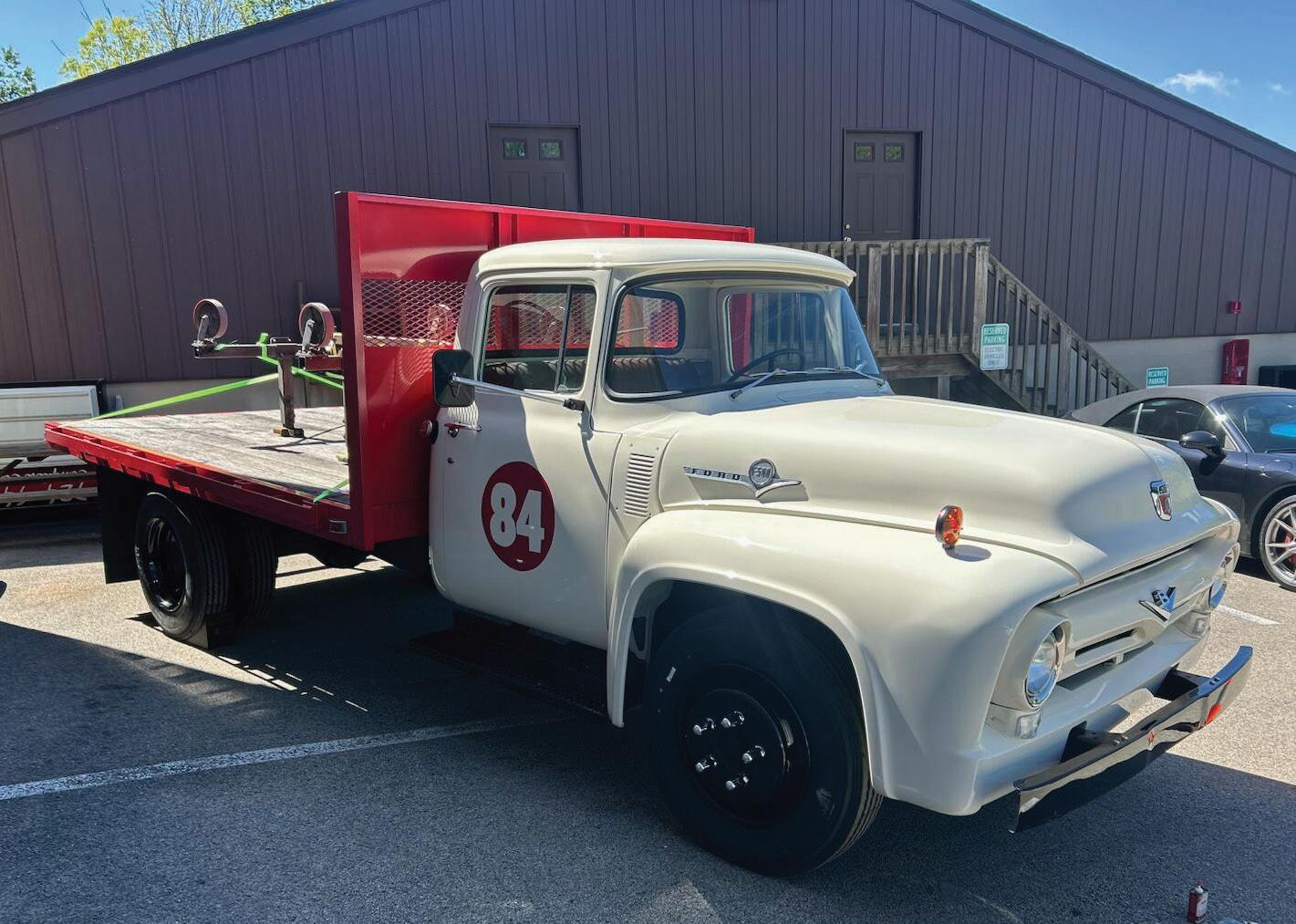
Nick Cox, Raleigh-Durham Central region mgr. at Professional Builders Supply, a division of US LBM, received the US LBM Foundation’s Humanitarian Award for his decades-long leadership in youth mentorship at The Boys & Girls Clubs of Wake and Johnston County, N.C.
Bea Minor and Dee Major are collaborating in their flat on a sharp new advertising jingle for Mungus-Fungus Forest Products, Climax, Nv., according to co-owners Hugh Mungus and Freddy Fungus.
For almost 3 decades, Combilift has been revolutionising the way companies handle and store goods.
Our pioneering product range of multidirectional, articulated and pedestrian forklifts, straddle carriers and container loaders allows you to manoeuvre long loads safely, reduce aisle widths and increase the amount of space available for storage.
To find out how Combilift can help you unlock every inch of your storage space.
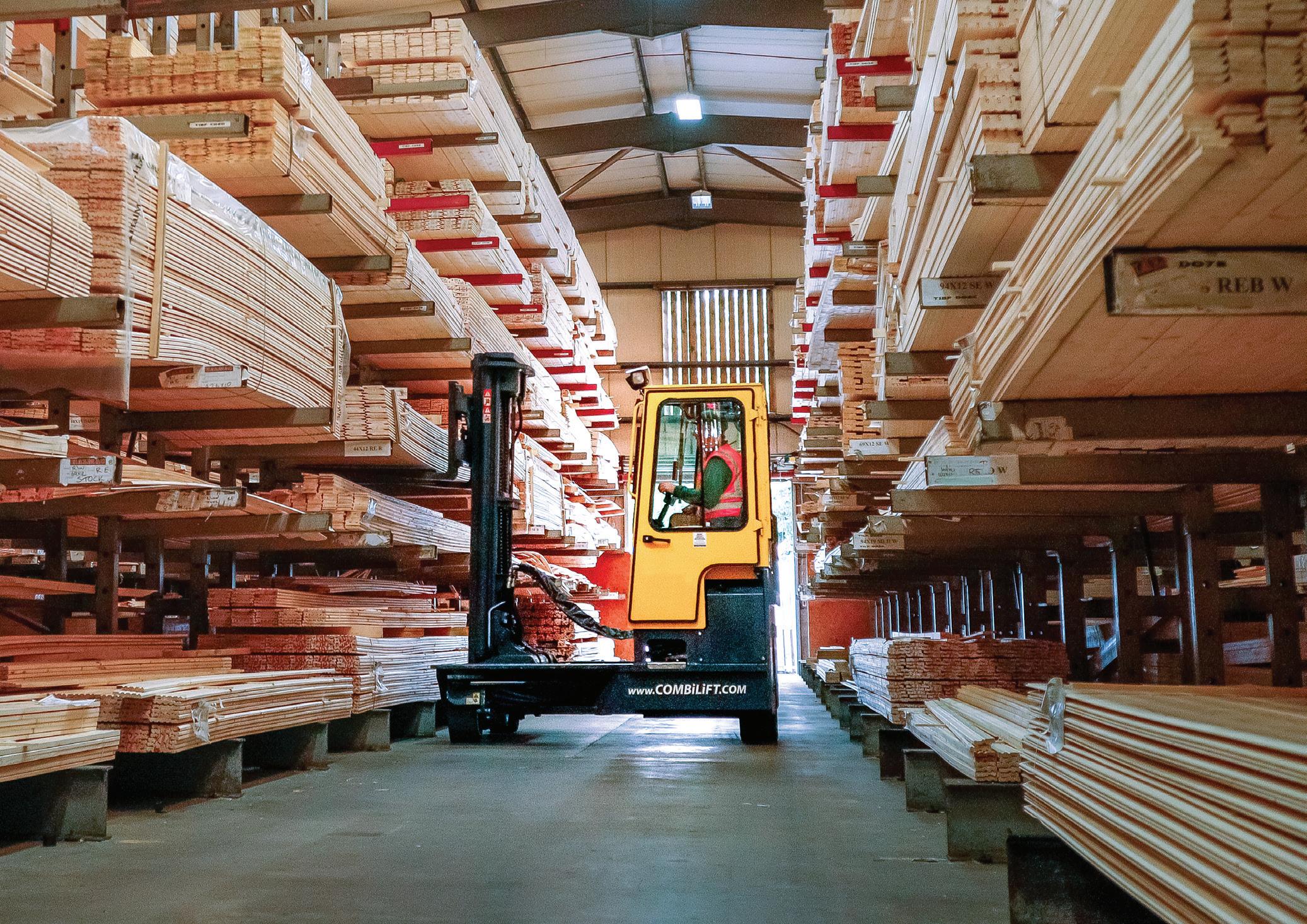

MIGHTY BISON that read the landscape, sense dangers and opportunities, quickly change course, and charge forward in a new direction—that’s the image the SFPA uses to describe today’s southern pine lumber industry.
------------ BY ERIC GEE
BACKED BY AN abundant resource that produced 22.7 billion bd. ft. of sawtimber in 2025, the Southern Forest Products Association is championing the most trusted structural lumber in America and taking it global.
Picture this: it’s 20˚ below zero in Yellowstone’s Hayden Valley. A small herd of bison crests a hill blanketed in snow, retreating from a wolf pack. Then, without warning, the herd pivots 180˚ and begins charging straight toward you. You move on instinct.
That’s the image SFPA’s leadership uses to describe the southern pine lumber industry today: not paralyzed by the forces bearing down on it, but reading the landscape, staying alert, and moving with purpose at exactly the right moment. And if the past decade is any indicator, that kind of confidence is well earned.
Southern pine lumber has been a cornerstone of American construction since colonial times. Today, it remains the preferred choice among design and build professionals for everything from backyard decks to residential complexes. The reasons are straightforward: it’s strong, it’s beautiful, it’s abundant, and it’s competitively priced. But keeping that position while expanding global reach takes a coordinated, tireless effort. That’s where the Southern Forest Products Association comes in.
Ask any structural engineer or framing contractor why they keep coming back to southern pine, and the conversation usually starts with density. Southern pine has the highest specific gravity of all common structural species, which translates directly into superior fastener-holding power and load-bearing capacity. When a building has to perform under pressure, the species matters.
But strength is just the beginning. Southern pine’s unique cellular structure makes it the most receptive to pressure treatment, allowing for deep, uniform preservative penetration. That’s not a minor distinction—approximately 85% of all pressure-treated wood produced in the United States is southern pine. When you see a deck, a dock, a boardwalk, or a playground structure built to last in the elements, there’s a high chance southern pine is doing the heavy lifting.
Dimension lumber measuring 2" or less in thickness is dried to a maximum moisture content of 19%, minimizing shrinkage and ensuring lasting dimensional stability. Add to that a distinct grain pattern, a warm golden color, and proven design values, and the material’s appeal extends well beyond the job site. It’s as at home in an architecturally exposed ceiling as it is in a structural wall.
promotion programs, despite travel disruptions. A successful pivot toward virtual events ensured that the association was able to reach a record number of timber traders and construction professionals worldwide and to safely meet their needs effectively.
Let’s break down the activities and successes and take a closer look at each.
Finally, there’s the economics. Southern pine grows across a vast band of the South, stretching from East Texas to Virginia, with hundreds of manufacturing facilities operating throughout that range. That abundant, renewable resource and consistent supply, combined with close proximity to market, support efficient delivery without sacrificing quality.
As a gold sponsor of this online or virtual event, SFPA was able to provide member access to information, which helped each better define their international goals moving forward.
Worldwide Conference on Timber Engineering
Founded in 1915 during the golden age of American sawmilling, the Southern Forest Products Association was built on a single founding principle: Service. More than 110 years later, that word still anchors everything SFPA does. The nonprofit trade association has evolved into a full-spectrum organization that connects sawmill operators, exporters, design professionals, builders, and policymakers across the globe.
SFPA’s participation bolstered the Association’s seminar programs across the globe to enrich international outreach and education. With international advertising and messaging support in multiple global markets, southern pine information was showcased internationally through a variety of channels.
including floors, ceilings, roof joists, beams, porches, raised and permanent wood foundations, maritime structures, bridges, noise barriers, post-frame construction, and more.
• Resources compiles span tables, specification guidelines, sizing and seasoning requirements, and a comprehensive grading guide.
• A technical Lumber Library rivals anything in the structural lumber industry. More than 40 publications are available in 12 languages, covering raised wood floor systems, outdoor living, marine construction, timber bridge plans, green building and sustainability, permanent wood foundations, and specialty products. SFPA’s flagship Southern Pine Use Guide alone is considered essential reading in architectural and engineering programs across the country.
INTERNATIONAL MARKETS have become an important focus for the southern pine industry.
In partnership with American Softwoods, SFPA and the Southern Pine Inspection Bureau banded together to jointly present information on the southern pine resource and clarify the grading procedures for dense vs. non-dense grades.
Outreach: Caribbean
SFPA’s core mission is elegantly simple: advocate for the use of southern pine lumber. Everything else flows from that central objective—the technical publications, the international trade missions, the industry standards committees, and the biennial machinery exposition. The organization approaches advocacy from multiple angles simultaneously, because the challenge of keeping a building material relevant and competitive across 21st-century markets requires comprehensive commitment.
What’s especially notable about SFPA’s technical education work is its intentional accessibility. Many technical standards and model codes can be dense and difficult to navigate. Part of SFPA’s role is translating complex technical language into clear, practical guidance that architects, engineers, and contractors can use on the job. The goal is not just code compliance, but confidence.
While many lumber industry trade shows across Europe, India, the Middle East, and Asia were cancelled or postponed in 2021, plans are well underway for a full slate of in-person trade shows in 2022. Members are keen to take advantage of these face-to-face opportunities, and SFPA stands ready to serve member needs.
SouthernPine.com:
Throughout the southern pine-loving Caribbean, virtual seminars targeted hundreds of key buyers in both traditional markets and new markets—some of which SFPA reached for the first time.
Outreach:
Multiple southern pine lumber events were held in Guatemala, with brand-new outreach activities expanding into the Panamanian building market.
Outreach: South America
One of SFPA’s most significant recent investments has been strengthening its digital resources to better serve builders, specifiers and designers. The updated SouthernPine.com site is a genuine time-saver for professionals who have historically had to track down technical guidance across a fragmented landscape.
The site pages are organized around how professionals actually use the material:
Targeting potential southern pine lumber buyers across the continent, a first-ever virtual education seminar was held and pulled in excellent results.
Outreach: Latin America
• Why Southern Pine covers species properties, pressure treatment, design values, versatility and sustainability.
Enhanced with upgraded discussions focusing on using southern pine lumber to build for high winds and in seismic zones, SFPA targeted audiences throughout Latin America with these solutions to these key discussion points.
• Using Southern Pine dives into specific applications,
Export numbers calculated throughout the majority of 2021 are roaring back to pre-pandemic levels, an encouraging sign as plans are underway for 2022.
Southern pine lumber shipments surged 57% through September of 2021 to a whopping $222 million, and exports of pressure-treated lumber—almost all of which is southern pine—jumped an incredible 31% to $93 million.
Brand new for the southern pine international outreach in 2021: SFPA launched informational newsletters in the Caribbean and Latin American markets aimed at maximizing engagement with a growing in-house database of traders and specifiers.
Stand in a lumberyard in South America, Southeast Asia, or Europe, and you might notice something familiar: the stamp on the boards. American-made southern pine travels. For over 35 years, SFPA has facilitated international trade by connecting exporters with builders, architects, importers, and developers through a network that spans continents. That work is backed by USDA funding through the Foreign Agricultural Service’s market development programs, which support commercial export markets for U.S. commodity products. SFPA leverages those resources to host reverse trade missions, sponsor trade shows, organize seminars, and conduct market research in regions where southern pine is gaining traction. In 2026 alone, SFPA and its members are scheduled to attend more than 13 international events under the American Softwoods brand.
The species’ international push is about more than sales
– For more information on all the activities managed by the Southern Forest Products Association, to access our numerous pieces of free educational information, or to become an SFPA member, please visit www.sfpa.org.

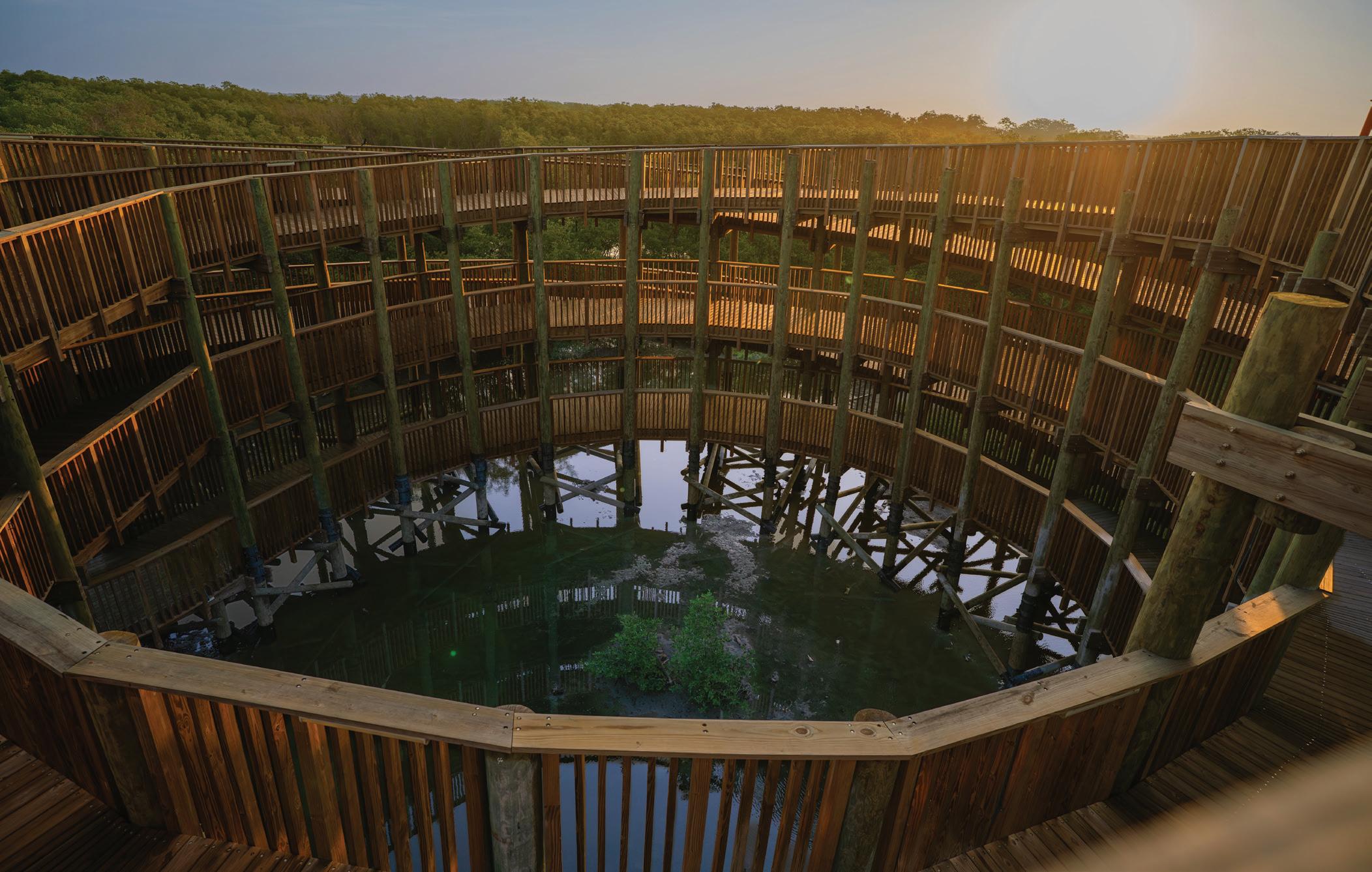
volume. It’s about making the case, in different languages, to different building cultures, and under different regulatory regimes, that southern pine is a reliable, sustainable, and superior building material. That means addressing nontariff barriers just as aggressively as tariffs. Inconsistent standards, unclear regulations, and certification hurdles can be just as disruptive to trade as import duties, and SFPA works to remove those obstacles one market at a time.
One project illustrates the global reach of southern pine in vivid terms. The Ciénaga de Mallorquín Ecopark in Barranquilla, Colombia, is one of the region’s most significant environmental restoration efforts. Once heavily degraded, the lagoon and surrounding mangrove forest have been carefully restored into an educational and recreational space emphasizing conservation, biodiversity, and public access. Today, it supports more than 140 bird species, along with fish, reptiles, and other wildlife.
Southern pine lumber was specifically chosen for the elevated boardwalks, platforms and viewing areas that allow visitors to move safely through sensitive wetland areas without disturbing the ecosystem. The material’s strength, durability and proven performance in wet coastal conditions made it the clear choice, and its warm, natural appearance blends seamlessly into the landscape, reinforcing the park’s conservation mission rather than overpowering it. When you see a familiar southern pine board half a world away, doing exactly what it was designed to do, it’s a powerful reminder of what this industry produces and why it matters.
Every two years since 1950, sawmilling professionals have gathered for the Forest Products Machinery & Equipment Exposition, known throughout the industry simply as EXPO. It is the premier forum for discovering new lumber manufacturing technology, forging supplier relationships, and getting a firsthand view of where the industry is heading. The 39th edition will be held Aug. 18–20, 2027, at the Savannah Convention Center in Savannah, Ga., a fitting venue for an industry with deep roots in the American South.
SFPA also shows up consistently at broader industry events, contributing knowledgeable team members and technical reference materials to Softwood Lumber Board-sponsored gatherings, including the AIA Conference on Architecture, International Builder’s Show, and JLC Live. These active engagement opportunities offer a chance to answer questions directly, hear firsthand what challenges professionals are navigating, and position southern pine as the solution.
SFPA’s influence extends well beyond promotion and education. As a voting member of the American Wood Council’s Wood Design Standards Committee, SFPA reviews each ballot, contributing technical expertise to the standards that shape how wood frame construction is designed and built across the country. Those standards include the National Design Specification for Wood Construction, the Wood Frame Construction Manual, the
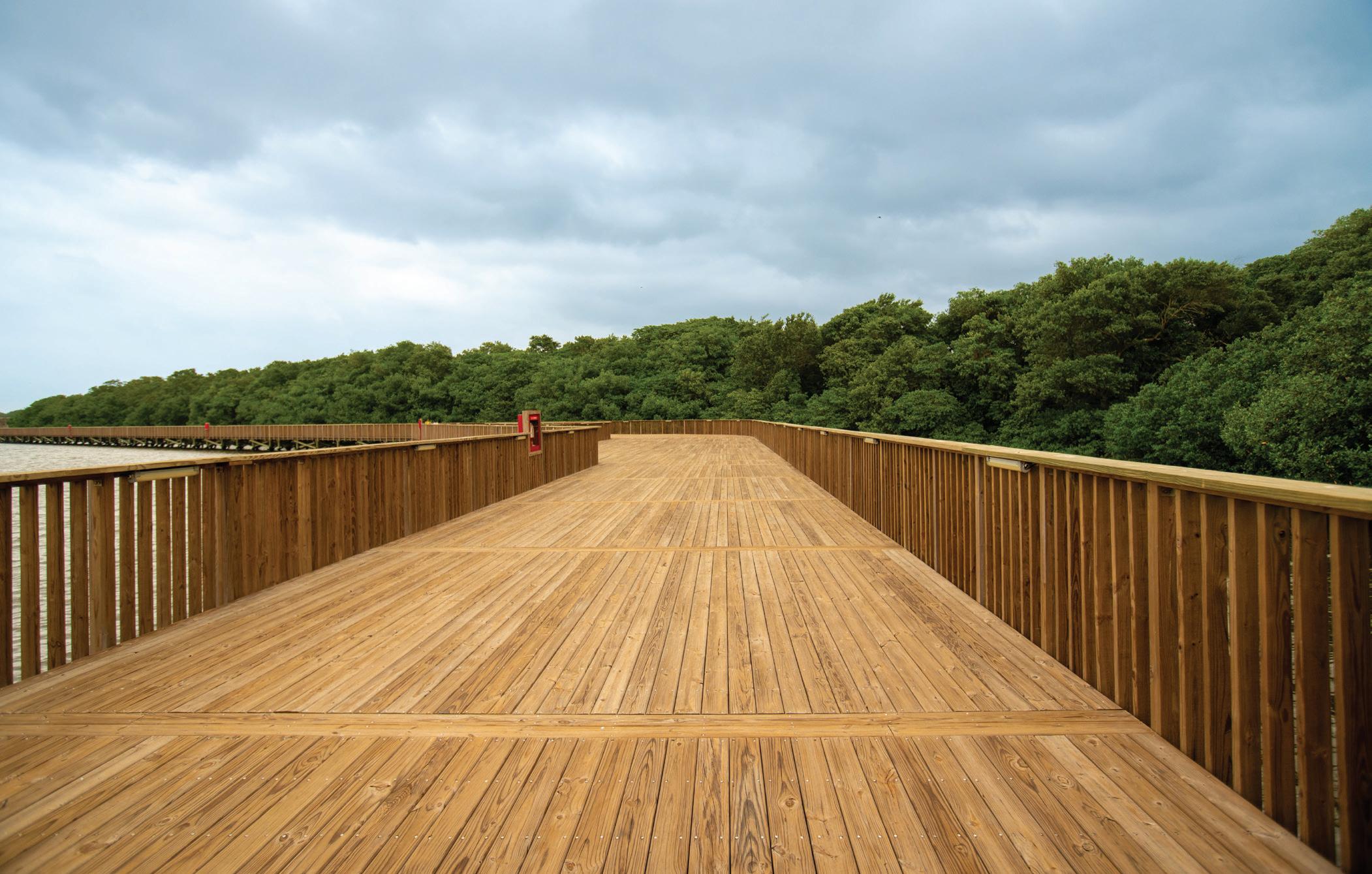
Fire Design Specification for Wood Construction, and the Permanent Wood Foundation Design Specification.
SFPA is also an active voting member of the American Wood Protection Association’s technical committee, shaping the preservation standards that govern how southern pine is treated, certified and used in demanding applications. These engagements, along with the organization’s collaborative relationships with allied groups such as the American Forest & Paper Association, state forestry associations, and the Softwood Lumber Board show the full scope and impact of SFPA’s policy footprint.
None of this happens in a vacuum. SFPA’s members, who collectively produce approximately 50% of southern pine lumber manufactured each year, are the foundation on which the entire enterprise rests. They are, as the organization describes them, “visionary industry leaders who understand the power of community.”
SFPA membership spans the full supply chain. Sawmill members are the experts in production. Exporters, dealers and distributors extend that supply into global markets. Machinery and equipment manufacturers drive the mechanical efficiencies that keep southern pine competitive on price and quality. Pressure treaters ensure that treated southern pine remains the dominant choice for outdoor and demanding applications. Remanufacturers, truss fabricators, and component producers supply the specialty products that modern construction increasingly demands. And service providers across insurance, finance, technolo-
gy and other fields support every link in the chain.
Together, SFPA members don’t just produce lumber. They build markets, develop standards, open trade routes, and make the case—in boardrooms, at trade shows, and on construction sites around the world—that southern pine is worth choosing.
Back in Yellowstone, the bison herd changed its course. The key to survival in that moment wasn’t speed or strength alone. It was awareness. Knowing where you are. Understanding what’s coming. Responding at the right time and in the right direction.
The southern pine lumber industry faces its own shifting forces: tariff pressures, evolving building codes, sustainability expectations, and international competition. SFPA’s response is not to hope those forces slow down. It’s to stay informed, stay adaptable, and stay aligned with the members and end-users who depend on this material every day.
From the forests of the American South to a restored mangrove park in Colombia, from the creative minds of architects to the sawmill floors of SFPA’s member producers, southern pine lumber connects people, places and purpose. That’s been true for more than a century. If SFPA and its members have anything to say about it, and they do, it will remain true for a century more. BPD
– Eric Gee is executive director of the Southern Forest Products Association (southernpine.com).
From April 20–23, LMC dealers gathered on the University of Pennsylvania campus for an executive education experience. Together, they invested in the knowledge, perspective, and leadership skills that drive long-term success. LMC’s relationship with the Wharton School of Business offers members an exclusive opportunity to grow as business professionals and individuals while expanding their insights and perspectives.
The LMC Wharton Executive Education Program featured sessions designed to strengthen dealer organizations. Over four days, participants explored essential business disciplines, including finance, strategy, negotiations, and leadership. The shared learning environment encouraged collaboration and knowledge exchange across the dealer network.
Paul Thorne, LMC’s VP of stockholder relations, noted, “The continued success of the LMC Wharton Program reflects LMC’s commitment to investing in the future of its members and the next generation of industry leaders.”
One of the defining elements of the program was the Case Study developed by LMC staff, dealers,
and Wharton faculty. The case study examined a real-world business scenario specific to the forest products and building materials industry. Participants worked in teams to evaluate strategic, financial, and operational considerations. Each team then presented its recommendations for group discussion, reinforcing applied learning and shared insights.
A standout addition to the curriculum was the Wharton Leadership Navigation Challenge, an interactive component that enhanced the overall program. This immersive, team-based exercise required participants to navigate a complex scenario across the campus while applying collaboration, communication, and adaptable leadership under pressure. The experience reflected authentic workplace conditions and reinforced guiding teams through change.
Junior Worley of Tindell’s Inc. in Knoxville, Tn., said, “LMC created such an incredible event. The perspectives and education were career changing. It was excellent to be alongside a dynamic and influential group of leaders. I am grateful for the opportunity to attend.”
MITER Brands, a family of leading window and door brands, has unveiled its refreshed brand identity and vision for PGT Windows and Doors, a moment that signifies the brand’s progress and success.
PGT Windows and Doors launched in 1987 and has undergone subtle changes to its logo, visual identity, and overall brand positioning over its history. With the recent rebrand, PGT is leveraging the power of MITER Brands to deliver an unmatched experience to residential remodeling and new construction customers in Florida and the coastal Southeast. This includes local service with the strength of a national company; an investment in manufacturing capacity, product quality, and operational excellence; a comprehensive product portfolio that serves everything from high-end remodels to production homes; and positive community impacts through the MITER Foundation.
PGT will continue to emphasize its high-performance glass technology, which has helped the brand stand out for over 30 years. This includes offering impact-rated products engineered to meet the architectural and code requirements of coastal communities.
The company’s new core purpose, “Framing home in a new light,” reflects how PGT products offer freedom from the worries of Florida living, framing all of life’s little moments with beautiful, effortless protection. The brand’s windows and doors are engineered and assembled in Florida by a team that understands the region and its homeowners’ needs. PGT products protect against storms while refining homes, creating spaces that are strong, comfortable, and quiet. PGT also provides dedicated service and in-depth local expertise, with a promise to help seamlessly connect homeowners to what they need most: protection, comfort, and the joys of brighter living.
The new branding for PGT Windows and Doors is now seen across all media, including the brand’s website, brochures, print and digital ads, and commercials.
LBM Advantage proudly hosted its 7th annual NextGen Leadership Conference in Montana, bringing together emerging leaders from across their membership for a sold-out event focused on job knowledge, professional leadership development, and industry collaboration.
Held April 26-29 at the Lodge at Whitefish Lake, the event provided attendees with a well-rounded agenda that combined educational sessions, networking, industry tours, and outdoor experiences throughout Montana’s Flathead Valley and Glacier National Park region. Participants visited fellow co-op member Western Building Center’s truss plant for a behindthe-scenes look at its operations and dedication to supporting local communities.
The group also toured Weyerhaeuser’s MDF, lumber and plywood manufacturing facilities, gaining valuable insight into mod-
ern wood products production and supply chain processes.
Beyond the conference sessions, attendees explored the region through UTV excursions, hiking adventures, and scenic tours of Glacier National Park, providing additional opportunities to strengthen relationships and connect with peers in a memorable setting.
LBM Advantage CEO Dave DeJoy presented on the future vision of the co-op and the organization’s continued commitment to supporting independent dealers and developing the next generation of industry leaders.
Educational sessions included sales and business strategy presentations by Lynne Jensen-Nelson, founder of Conversion-omics, and renowned author and motivational speaker Meridith Elliott Powell. Human resources-focused sessions were led by LBM Advantage HR director Kellianne Lundgren, while peer panel discussions highlighting
member successes and challenges were facilitated by NextGen chairman Alex Moyer, A.D. Moyer Lumber. Additional panel discussions focused on purchasing strategies.
“The energy and engagement at this year’s conference were outstanding,” said DeJoy. “Our investment in NextGen reflects our long-term commitment to the future leaders of our co-op organizations and the independent dealer channel as a whole.”
The continued growth and sell-out success of the conference demonstrates the strong demand for leadership development, peer networking, and collaborative learning opportunities within the LBM Advantage membership.
LBM Advantage is a member-owned cooperative comprised of the industry’s premier independent LBM dealers. The cooperative operates locations in New Windsor, N.Y.; Grand Rapids, Mi.; Smithfield, N.C.; and Conroe, Tx.
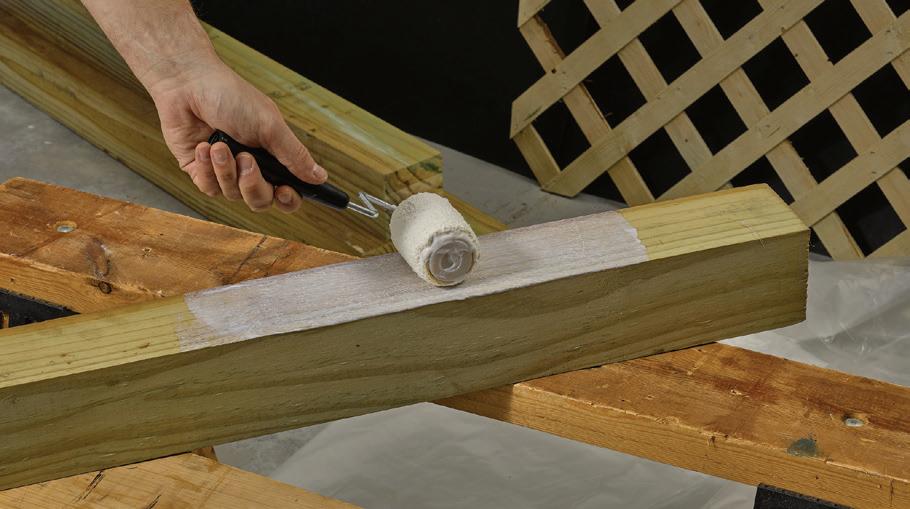
FastenMaster has introduced Ground Contact Coating to extend the life of pressure-treated lumber used in deck and fence posts, and other outdoor applications by protecting against ground rot.
The unique formula goes on white so pros can see what’s been coated and dries clear to preserve the original color and texture of the wood, allowing natural patterns and characteristics to remain visible.
Formulated with 1% disodium octaborate tetrahydrate (DOT) to resist insects and fungus, FastenMaster Ground Contact Coating is a long-lasting water-based acrylic membrane that repels the elements that cause ground rot. It comes in 1/2-gallon buckets, which covers 40 sq. ft., equal to 14 6x6 wood posts. The coating is applied with a standard bristle paint brush or a 3/8" nap roller. Prior to curing, the coating can be easily cleaned up with soap and warm water.
FASTENMASTER.COM (800) 518-3569
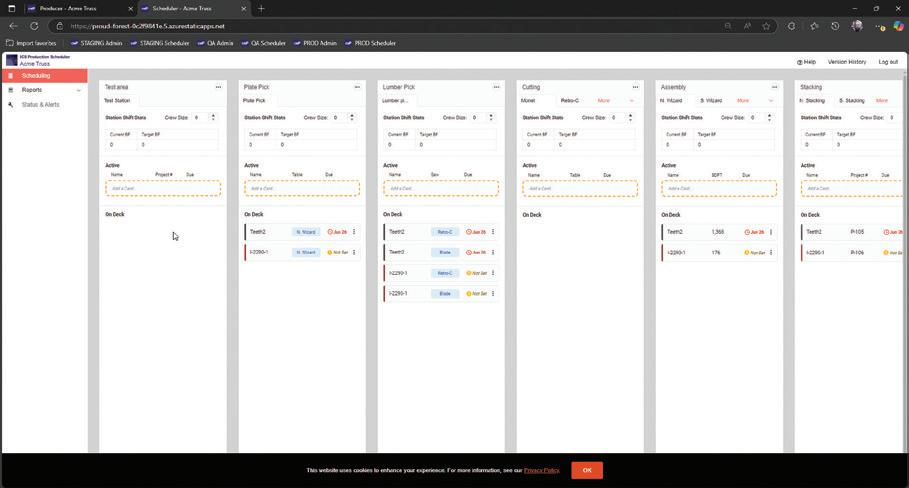
As the newest member of Simpson Strong-Tie’s Component Solutions software suite, CS Producer gives floor and roof truss manufacturers powerful ways to schedule and manage daily operations.
Working in tandem with CS Director, the software can be used to stage projects, schedule batches, set due dates, adjust stations and workflow, monitor saw and table utilization, view reports on material usage, labor hours, and more. It is backed by Strong-Tie’s expert service and support.
STRONGTIE.COM
(800) 999-5099
Dynaflex Ultimate is the latest DAP innovation in advanced latex sealants. Developed with professional performance in mind, it boasts remarkable flexibility, adhesion, and all-weather durability in residential and commercial sealing applications.
Available in white and clear 10.1-fl. oz. cartridges, it is designed specifically for window, door, siding, and trim applications. With its Triple Action Advantage, the sealant offers Class 50 and 35 performance, cold-weather application, and wet-surface adhesion.
DAP.COM
(800) 220–0375
Milwaukee Tool’s M18 FUEL 165mm Deep Cut
Circular Saw is engineered to deliver the fastest, most controlled cutting performance in its class.
Designed for end-users who require deeper cuts without compromising power or portability, the saw delivers cutting capacity with a maximum depth of 66mm at 90°, enabling users to cut through engineered timber, thick sheet materials, composites, and construction-grade hardwoods with ease.
Engineered with an upper and lower guard, it offers jobsite-ready durability without unnecessary weight. A redesigned integrated dust port improves extraction efficiency, keeping cut lines visible and reducing rework. Bevel capacity from 0° to 45°—with the option to go to –5°—covers a wider range of applications.
MILWAUKEETOOL.COM (800) 729-3878
IKO has launched Blackstone, a new color in its performance shingle range within the IKO Dynasty collection.
Dynasty shingles have a Class 3 impact rating, ArmourZone technology with a 1-1/4" nailing surface for greater fastening strength, tear-resistant tape backing to help prevent nail pull-through and blow-off, and FastLock sealant that activates under sunlight to form a strong bond against water infiltration.
IKO.COM/NA (800) 433-2811
FLEX introduced a new Rotary Drywall Sander series designed to reduce fatigue, improve visibility, and enhance productivity.
Featuring an industry-first carbon fiber shaft, the sanders offer an ultra-lightweight design, starting at just 6.2 lbs. This design and an ergonomic T-handle enable comfortable, all-day use whether sanding walls or ceilings.
A 160˚ pivoting head enhances maneuverability. An optimized head design delivers superior dust control to reduce airborne particles and maintain a cleaner jobsite. The brushless motor, housed in the handle, improves balance, increases efficiency, and eliminates routine maintenance.
FLEXPOWERTOOLS.COM (833) 353-9496

Digger Specialties Inc.’s newly released Reference Guide to Railing for Outdoor Living Spaces provides an informative overview of the considerations involved when choosing the best and most functional railing system.
Topics include: key factors for choosing a railing system, understanding your options, planning your selection, and selecting a contractor. An important section features descriptions and a chart that compares wood, vinyl, composite, aluminum, steel/iron, and stainless-steel railing materials.
The guide can be viewed or downloaded as a digital flip book or ordered as a printed copy at DSI’s website.
DIGGERSPECIALTIES.COM (800) 446-7659

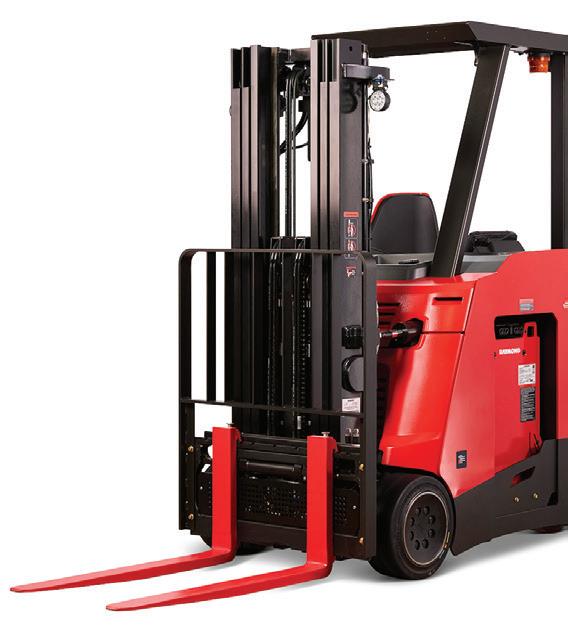
The Raymond 4260 Stand-up Counterbalanced Truck offers advanced performance, operator-focused design, and integrated intelligence to create a smart, scalable solution that evolves with business needs.
With a 3,000- to 5,000-lb. capacity, the truck delivers exceptional speed, acceleration and maneuverability with intuitive features that enhance comfort, control and confidence.
Industry-leading lift and travel speeds keep pace with highdemand operations; standard electric power steering and revised regenerative braking extend run-times; and toolfree covers plus touch-screen diagnostics help speed up most maintenance procedures.
RAYMONDCORP.COM (800) 235-7200
Sto Corp. has enhanced its High Velocity Hurricane Zone Systems to now feature a Level E impactrated wall assembly designed to meet the highest performance demands for critical building applications exposed to extreme weather and multi-hazard conditions.
Sto HVHZ Systems are fully engineered to meet the stringent requirements of the Florida Building Code, with systems carrying MiamiDade County Notice of Acceptance and/or Florida Statewide Product Approval. They are evaluated for wind load, impact resistance, air leakage, and water resistance.
STOCORP.COM (800) 221-2397
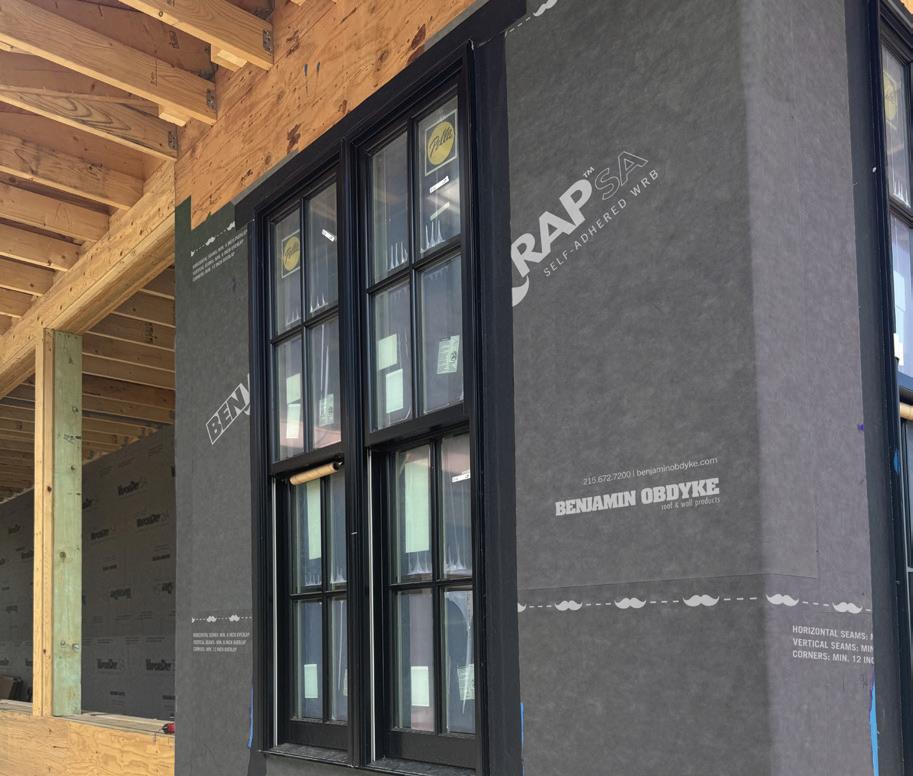
Benjamin Obdyke now offers BenWrap SA, a selfadhered version of its traditional flat wrap, BenWrap (previously known as FlatWrap HP). It features 100% continuous breathable acrylic adhesive technology that self-seals around every fastener and penetration, allowing the housewrap to act as both an air control layer and a moisture control layer.
The adhesive is repositionable, enabling faster installation, improved accuracy, optimal labor efficiency, fewer mistakes, and less waste. A split-release liner with finger lift further speeds installation and ensures better alignment at overlaps, minimizing rework. BenWrap SA’s tri-laminate structure is highly resistant to damage and won’t easily rip or tear during installation.
BENJAMINOBDYKE.COM (800) 523-5261
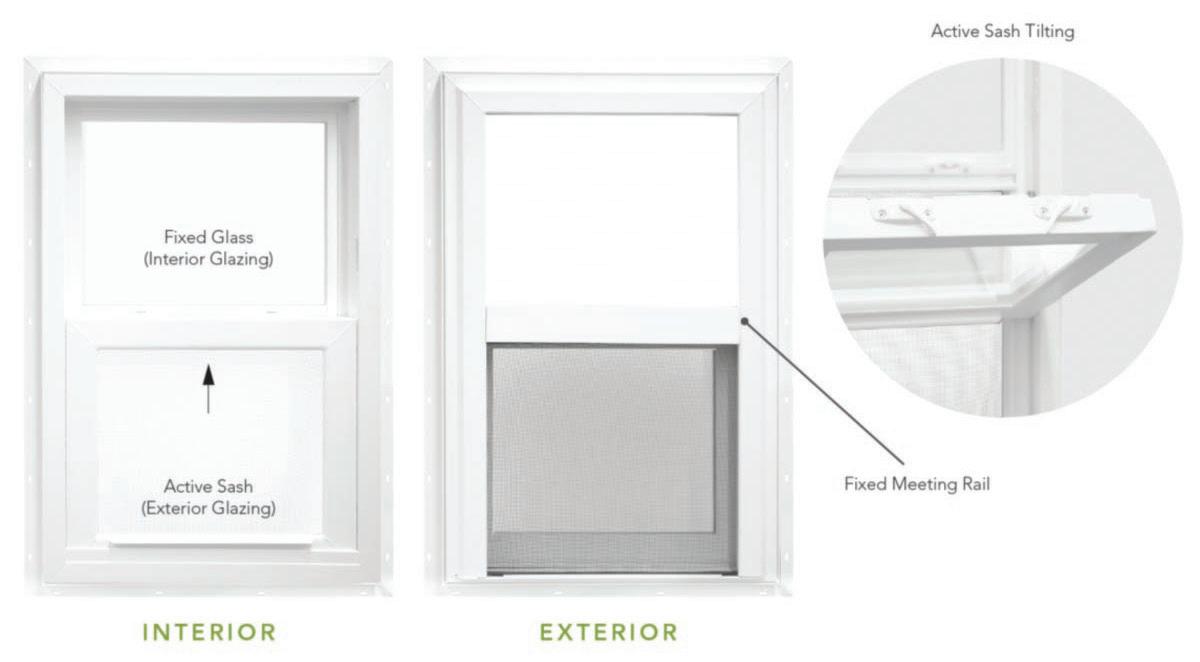
ProVia has added true Single Hung and Single Slider configurations to its Endure window lineup.
Built for durability and ease of use, the windows include a welded frame and sash, fixed meeting rail, exterior glazing on the active glass unit, and a half FlexScreen. Profile DA hardware locks, unlocks and tilts the active sash in a single, smooth motion. The windows come with various nail fin options and an integrated stucco flange to make installations more efficient.
PROVIA.COM (800) 669-4711
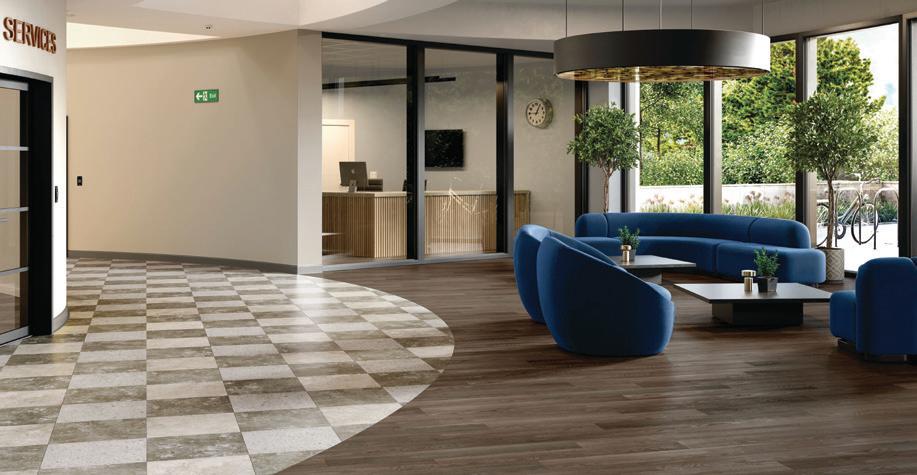
AHF Products has introduced the next generation of Armstrong Flooring Natural Creations, a luxury vinyl tile collection that meets the performance demands of today’s commercial interiors while offering designers an expanded palette of nature inspired visuals.
Featuring 51 SKUs with a 3.2mm LVT construction, the updated collection reflects the latest design trends through visually compelling interpretations of wood, stone, concrete, and textile surfaces. At its core is Diamond 10 Technology, a coating that leverages the hardness of diamonds to deliver exceptional long-term resistance to scratches, stains and scuffs.
ARMSTRONGFLOORING.COM (855) 243-2521
Postsaver has introduced a new rot protection wrap developed specifically for the American decking trade. Designed to protect decking foundation posts from ground-line rot, DeckPRO provides a unique dual-layer barrier system that protects the critical ground-line section of timber posts, the area most vulnerable to moisture and fungal attack, and the leading cause of structural post failure.
The product has been independently tested in longterm field trials and is backed by a limited lifetime warranty of 40 years, giving contractors, specifiers, and distributors confidence in long-term performance.
POSTSAVER.COM/DECKPRO (866) 868 3030




NAWLA held its Southeast regional meeting on April 23 at TopGolf, Birmingham, Al. [ 1 ] Jackson Teubert, Bep Czarniak, Matthew Henson. [2] Tyler Damrau, Joe Brumfield, Chris Pace. [3] Robert Andre, Brad Chalker, Wil Stewart. [4] Matthew Voors, Ian Reilly. [5] Warren Reeves, Curt Stuckey, Henry Delesandro. [ 6 ] Luke Mohney, Dorian Carpenter, Curt Stuckey, Garrison Pitts. [7] Bill Price, Joe Flemming. [8] Antonio Posella, Alex Manoogian, Anthony Sazera.




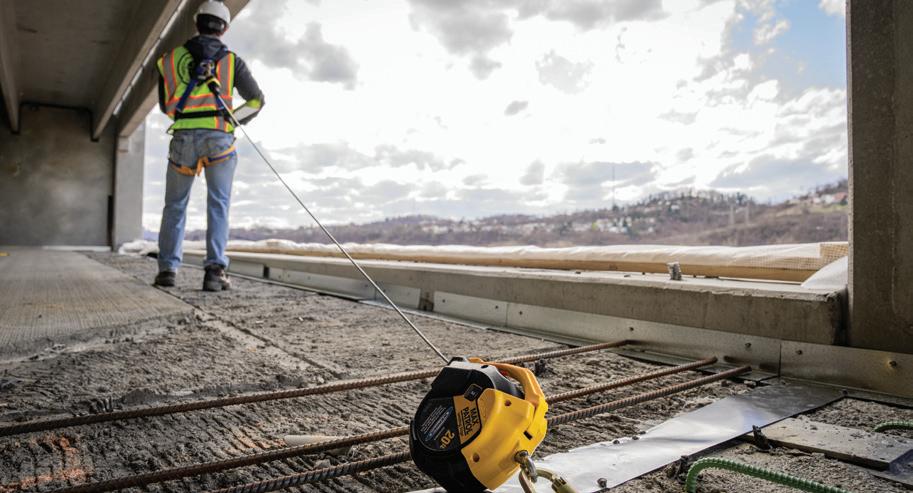
Werner redesigned its fall protection harness portfolio, simplifying inspection, improving harness identification, and enhancing all-day comfort across the jobsite. The updated lineup spans Werner’s Blue Armor, ProForm and LiteFit harness families and introduces a unified visual safety system, upgraded materials, and patented technologies to help professionals inspect, adjust and wear their equipment correctly every day.
523-3370
VELUX introduces a new line of Residential Polycarbonate Dome Skylights for select Southern states, providing a solution for areas with severe weather or consistent high heat, such as Florida, Mississippi, Alabama, Louisiana and Texas.
The new skylights are built to protect against 2" size hail and have a Class A Fire Resistance Rating. They have been tested to endure heavy wind gusts, rain and wind-borne debris associated with hurricanes.
The polycarbonate has a coextruded UV guard cap to prevent discoloration and maintain impact strength.
(800) 888-3589
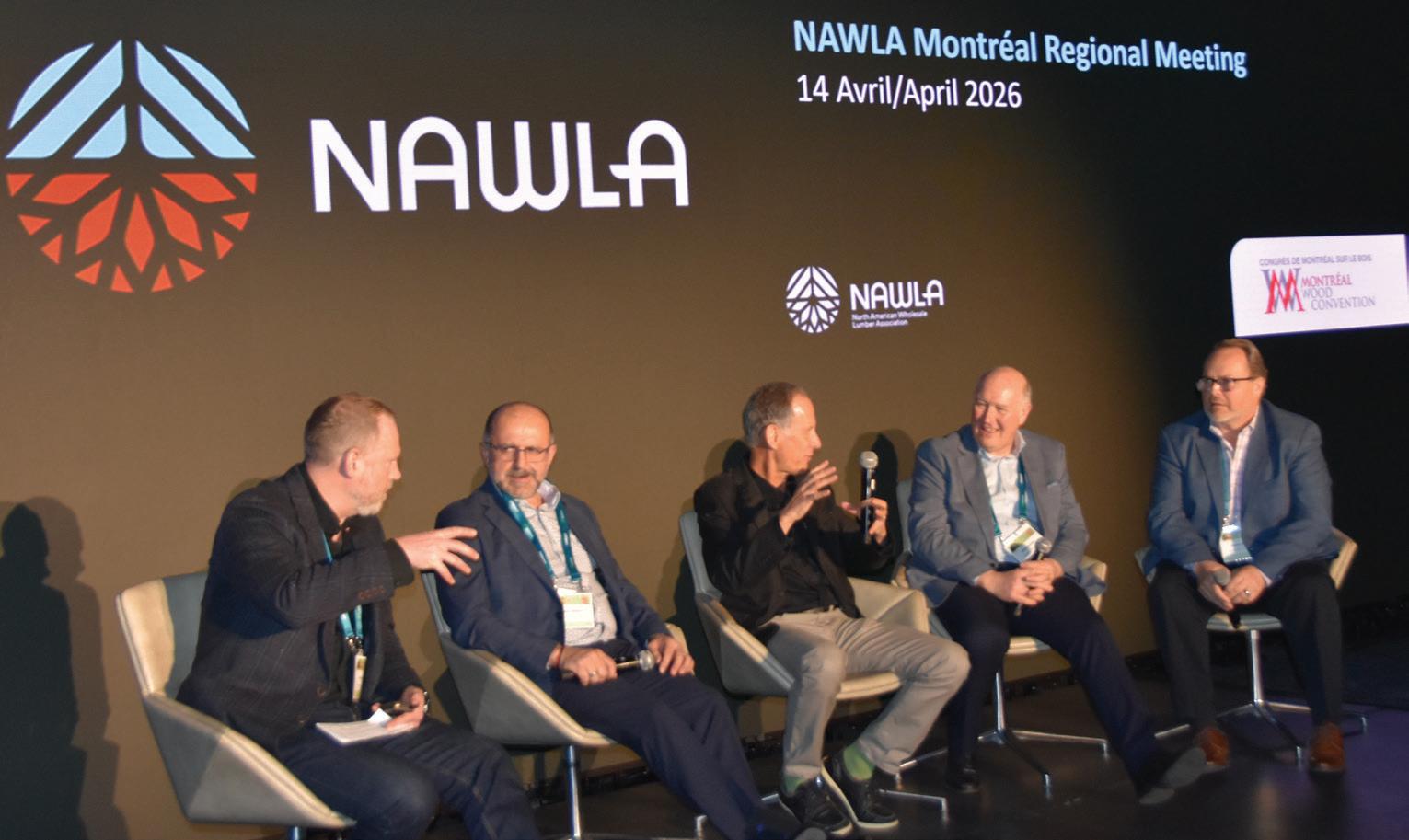







MONTREAL regional meeting on April
Montreal Wood
served as a prelude to
The
draw
panel discussion on prefabricated housing featuring [1] moderator Dustin Wood, Mario Ribeiro, Alain Boulet, Nick Bolton, and Dennis Bott. [ 2 ] Jonathan Coallier, Jim McGillvray. [3] Bhavya Takkar, Parm Binning. [4] Robert Jette, Evan Rustja, Steven Rustja, Matt Bruno. [5] Anne-Frederic Cousneau, Thomas Schauerte,


[ 6 ]
& Valerie
Patrick
[ 7 ]
Caroline Vaillancourt, Michael Sullo. [8] Thomas Owens, Austin Chhabra. [9] Goran Carlquist, Magnus Wahlberg, Christoffer Eldskott, Alexander Harald. [10] Dan Edwards, Jason Hatfield, Greg Fitz.








NORTH AMERICAN Wholesale Lumber Association regional meeting attendees in Montreal (continued from previous page): [11] Thomas Poulin, Romain Liebel, Alex Breton. [ 12 ] Nicolo Bianchi, Andreas Dyngeland. [ 13 ] Rhoda Voth, Sig Foyn. [ 14 ] Dan Edwards, Matt Duprey, Chris Baumgarten. [ 15 ] Alden Robbins, Anthony Muck. [ 16 ] Risto Rebane, Rainar Laes. [ 17 ] Abhi



Nick Boulton, Dustin Wood, Aditya Agarwal. [ 18 ] Jeroen Hinnen, Ville Rantanen, Matt McManus. [19] Doug Colson, Dan Semsak, Todd Lindsey. [20] Alex Fortin, Jade Banville. [21] Louis Hoy, Sam Bath, Randy Neyndorff. [22] Shanie Cuccioletta, Dustin Jalbert, Joe Pruski, Mary Hansen. [23] Dave Tremblay, Terry Miller, John Jennings.
THE MONTREAL Wood Convention 2026, the premier event for the wood industry in Canada, welcomed a full house of 1,200 participants from across the globe April 1416 at the Queen Elizabeth Hotel in Montreal.
Following four consecutive sold-out editions, this year’s edition once again brought together the industry’s most important players for three days of business, insights, and high-level networking. With more than 110 exhibitors on site, the trade show highlighted the depth, diversity, and momentum of the wood industry, showcasing both established leaders and emerging players shaping its future.
A defining moment of this year’s program was the Luncheon with Keynote Speaker, featuring renowned astronaut and former commander of the International Space Station, Chris Hadfield. His conference was met with overwhelming enthusiasm, earning praise from attendees across the

board. His perspective on leadership, resilience, and navigating uncertainty resonated strongly, making his presence one of the most memorable highlights of the event.
Complementing the trade show, a series of targeted sessions and discussions brought industry voices together to address key challenges and opportunities, with a special focus on market trends, evolving trade dynamics, and operational realities.
Sven Gustavsson, Montreal Wood Convention event director, said, “The strong turnout and engagement we saw throughout the event confirms how important it is for our industry to come together. The quality of discussions, the connections made, and the energy on site truly made this edition a success. We are especially proud of the response to Chris Hadfield’s conference, which left a lasting impression on participants.”








(More photos on next page)




































































Rates : $1.20 per word (25 word minimum).
Column inch rate: $65 per inch. Deadline: 10th of previous month. Questions? Call (714) 486-2735.
• Norfolk Southern Mainline Served
• Easy Access to I-85, I-77 & I-40
• Company Owned Truck Fleet
• Outdoor and Indoor Storage
• 12 Acres Fenced with Security Lighting
• 25+ years Reload Experience (704) 872-3148 • Fax (704) 872-3146
Email Tom Lakeman shavers.reload@gmail.com
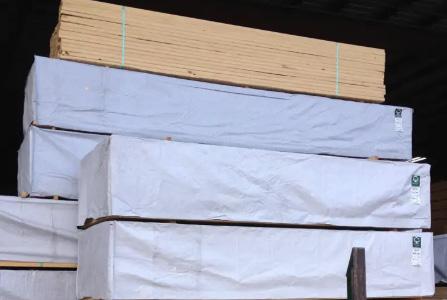
Lumber Wrap & Covers made in the usa High Quality Protection • PP or PE Printed Logo or Plain • Ships in Days Domestic Production Fast, Consistent Supply www.MidwestCanvas.com
Lloyd Pullen • (704) 433-5831
manurep@bellsouth.net


Larry A. Burchard, 78, owner of Burchard Lumber, Greenville, Mo., for 37 years, died on May 4.
Leland “Wendell” Ames, former CEO and owner of Brandon Lumber Co., Brandon, S.D., passed away on May 3 at the age of 98.
Wendell worked at Peavey Lumber, Redfield, S.D., before joining the U.S. Army in 1952. After his discharge in 1954, he returned to manage Peavey/Co-op Lumber in Alpena, S.D. In 1967, he purchased Brandon Lumber. The company is still owned and operated by his son, Ron, and grandson, Marcus.
He received a Lifetime Achievement Award from the South Dakota Retail Lumberman’s Association in 1992 and was honored as its Lumberman of the Year in 1995.
LeRoy Marvin Ketelhut, 94, longtime manager with Sutherland Lumber Co., died on May 1 after complications from a stroke.
After serving in the U.S. Army Medical Corps, LeRoy joined Sutherland Lumber in 1958, working at yards in Custer, S.D.; Omaha, Ne.; Rockford, Il.; Madison, Wi.; Kansas City, Ks.; Dallas, Tx.; Pueblo, Co.; and several other locations. He retired in the early 1990s.
Baxter Giles Garner, 84, owner of Citizens Hardware & Building Supply, Notasulga, Al., died on May 9.
He was a veteran of the U.S. Army.
Gerald Henry “Jerry” Novak, 83, founder of Park Rapids Building Supply, Park Rapids, Mn., died May 5.
After graduating from Rice Lake Technical College in 1963, Jerry began his 27-year career with Lampert Lumber, Detroit Lakes, Mn. He transferred to the Ely, Mn., location in 1967, rising to manager. He left when the yard was sold and started his own building supply in 1989. He retired in 2002.
Dr. Daniel L. Cassens, 79, professor emeritus of Purdue University, West Lafayette, In., died May 3.
Dan obtained degrees related to wood and wood manufacturing, including a B.S. from the University of Illinois, M.S. from UC-Berkeley, and a Ph.D. from the University of Wisconsin–Madison. While attending college, he worked summers at a hardwood sawmill.
He spent 40 years a professor and wood products specialist in the Department of Forestry and Natural Resources at Purdue, starting in 1977. Previously he had been with Louisiana State University, the U.S. Forest Products Laboratory in Madison, Wi., and the California Forest Products Laboratory in Berkeley, Ca.
At Purdue, Dan worked closely with hardwood lumber and veneer manufacturers and such associations as the National Hardwood Lumber Association, American Hardwood Export Council, Indiana Hardwood Lumbermens Association, and Forest Products Society.
In 1995, he bought his first Wood-Mizer band sawmill and, after retiring in 2017, used it as the basis of Cassens Lumber, West Lafayette, milling and selling hardwood lumber and slabs.
Tony Ray Middleton, part owner of Middleton Lumber Co., Puryear, Tn., died on May 9 at the age of 72.
Bernard D. “Bernie” Kane Jr., 85, former owner of Oakley’s Building Supply, Watertown, Tn., died on May 11.
Tommy Jay Reynolds, 70, owner of Reynolds Lumber Co., Olive Hill, Ky., passed away on April 30 while hauling a load. He started driving a truck for a living at 15 and founded Reynolds Lumber in 1983.
Listings are often submitted months in advance. Always verify dates and locations with sponsor before making plans to attend.
Society of Wood Science & Technology – June 7-12, annual convention, Seoul, South Korea; www.swst.org.
BLD Connection – June 10, golf outings, Tiburon Golf Club, Omaha, Ne.; June 11, Toad Valley Golf Course, Pleasant Hill, Ia.; members. bldconnection.org.
Building Material Suppliers Assn./Construction Suppliers Assn. –June 10-11, yard & delivery playbook workshop, Birmingham, Al.; www.gocsa.com.
House Hasson Hardware – June 11-13, summer market, Sevierville, Tn.; www.househasson.com.
Peak Auctions – June 13, LBM auction, Kane County Fairgrounds, St. Charles, Il.; www.peakauction.com.
National Lawn & Garden Show – June 15-17, Westgate Hotel & Casino, Las Vegas, Nv.; www.nlgshow.com.
Federated Insurance – June 16-18, Risk Management Academy, Owatonna, Mn.; members.bldconnection.org.
Eastern New York Lumber Dealers Association – June 19, golf outing, Stadium Golf Club, Schenectady, N.Y.; www.nrla.org.
Western New York Lumber Dealers Association – June 19, fishing tournament, Buffalo Harbor, Buffalo, N.Y.; www.nrla.org.
Retail Lumber Dealers Association of Maine – June 23, annual golf outing, Natanis Golf Course, Vassalboro, Me; www.nrla.org.
Construction Suppliers Association – June 24, Lunch & Learn, Georgia Wildlife Federation, Covington, Ga.; www.gocsa.com.
Mississippi Lumber Manufacturers Association – June 25-28, convention & trade show, Beau Rivage Resort & Casino, Biloxi, Ms.; www.mlmalumber.com.
Window & Door Manufacturers Assn. – June 29-July 2, technical & manufacturing conference, Minneapolis, Mn.; www.wdma.com.
Construction Suppliers Association – July 14, DOT compliance workshops, Tyrone, Ga.; July 16, Jackson, Ms.; www.gocsa.com.
Forest Products Society – July 14-17, international conference, Eugene, Or.; www.forestprod.org.
Missouri Forest Products Association – July 17-18, summer meeting, Lake of the Ozarks, Mo.; www.moforest.org.
Southeastern Lumber Manufacturers Assn. – July 22-26, annual conference, Grand Hotel Golf Resort & Spa, Fairhope, Al.; slma.org.
Building Material Suppliers Association – July 23-26, summer conference, Hilton, Virginia Beach, Va.; www.mybmsa.org.
BLD Connection – July 28, Wisconsin golf outing, Trappers Turn Golf Club, Wisconsin Dells, Wi.; members.bldconnection.org.
Construction Suppliers Association – July 28-29, HR roundtable, CSA office, Tyrone, Ga.; www.gocsa.com.
Southeast Building Conference – July 29-30, Orange County Convention Center, Orlando, Fl.; www.sebcshow.com.
New Jersey Building Material Dealers Assn. – July 30, Summer Social Somerset Patriots baseball outing, Bridgewater, N.J.; www.nrla.org.
Midwest Building Suppliers Association – Aug. 6, Sycamore Scramble Golf Outing, Anderson Country Club, Anderson, In.; thembsa.org.
BLD Connection – Aug. 11-12, Links & Lures, Izatys Resort, Onamia, Mn.; members.bldconnection.org.
Fastmarkets – Aug. 11-12, Forest Products Latin America Conference, Sao Paulo, Brazil; www.fastmarkets.com.
Mid-States Distributing – Aug. 11-12, Fall Rendezvous, Phoenix Convention Center, Phoenix, Az.; www.msdist.com.
Florida Hardware Co. – Aug. 14-15, fall dealer market, Orlando, Fl.; www.floridahardware.com.
















BPD is delighted to welcome a new advertiser: Solidwood Forest Ltd., one of Texas’ leading independently owned manufacturers, wood preservers, and full-line lumber distributors. Keep them in mind when you’re looking for such products!
NINETY-SEVEN YEARS AGO this month, BPD
sister publication The California Lumber Merchant spotlighted a blaze of new strategies being rolled out to protect against forest fires, which had been raging rampant through the 1920s.
As reported by The Merchant, the U.S. Forest Service’s California District acquired a battery of machinery, including 60-hp tractors, 5-ton blade-graders, and heavy V-type drags, to construct fire lines and fire-control roads in national forests.
The U.S. Forest Service also outlawed smoking in all of its 18 national forests until the end of the fire season, except in established camps, at places of habitation, and in certain remote, high-mountain areas in the Sierra Nevadas.
The order further mandated that each automobile or pack train party camping in the national forests must be equipped with a shovel and an axe suitable for fire-fighting purposes. Shovels must have a blade at least 8" wide, either round or square point, and a minimum
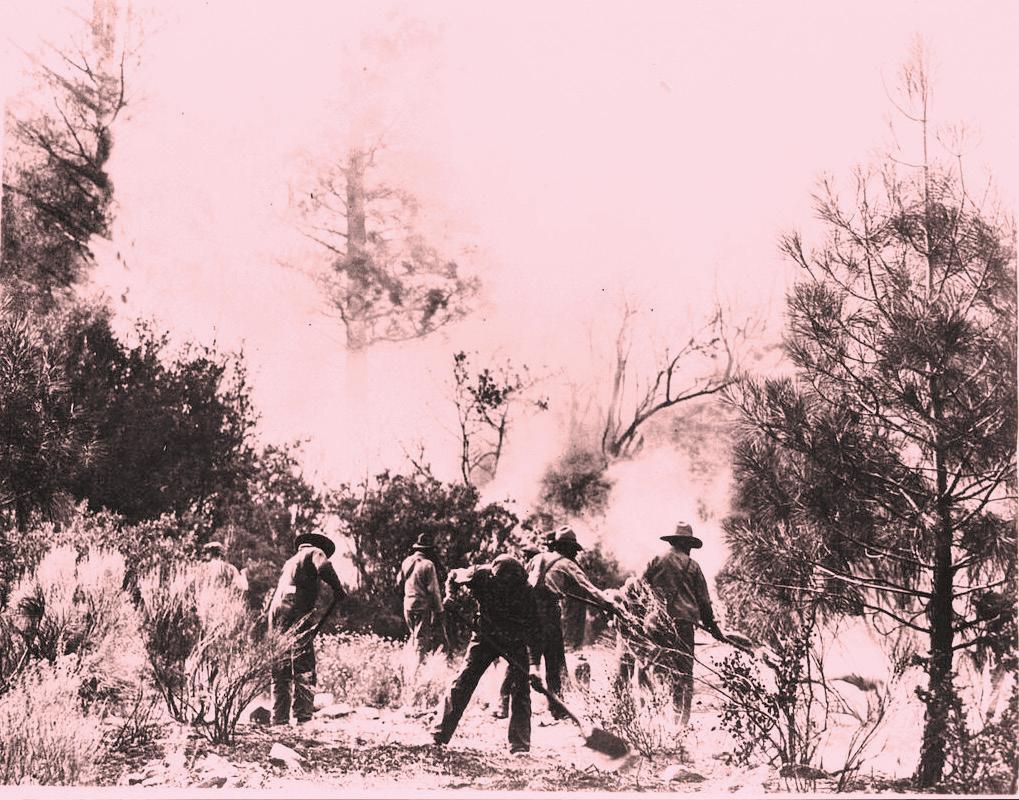
overall length of 36". Axes had to weigh at least 2 lbs. and have an overall length of 26" to 28".
Campers were required to obtain a camp fire permit before building any fires on national forest land. The permits were free, but applicants were required to show their shovel and axe before being given one.
The Service had also just completed construction of the highest off-the-ground forest fire lookout station in the world. Located in the Quinault Indian Reservation in the southwest corner of Washington’s Olympic Peninsula, the station was built 176-ft. high, near the top of a massive fir. The trunk ran through the middle of the 7-ft.-by-7-ft. wooden cottage office.
A ranger reached the office by climbing a rod and rope ladder at sunrise, then descending at sundown. From the station, the lookout could “spot fires almost as far as he can telephone.”
In other news of June 1929...
• Weyerhaeuser received the first logs for its new mill in Longview, Wa.—what at the time was the world’s largest sawmill. It continues operating to this day.
• Francis Dionne, the only brother of Merchant publisher Jack Dionne, died in New Orleans on June 6, 1929, at the age of 45. He was owner and manager of an ad agency of his own name, which handled lumber accounts exclusively—the only one of its kind in existence. At the time of his death, Francis was handling 10 of the biggest lumber accounts in the South.
• A new study showed that despite increased rail traffic, railroads were purchasing fewer crossties per mile thanks to rising use of preservative-treated ties. Over the previous 20 years, the need for new ties had fallen by nearly 25%—a benefit of treatments that extended the average life of crossties two to 10 times their natural life. BPD

Re Reddwwood i ood is o
It thrives in some of the most productive timberlands in the world. Redwood is known for its timeless durability without the use of chemicals. Due to its flawless formation, there has never been a Redwood recall. There is a grade of Redwood for every application, every budget, and every customer.
“Growing beyond measure.”
Call or visit us today. Our family of Redwood timberland owners will continue to be your reputable and reliable source of Redwood.