


“All things are intertwined with each other and their common bond is sacred and almost none is foreign to the other, because all are coordinated and contribute to the order of the same world.”
“luck”
“The bullfight, life itself, is the process through which death dispels the illusion of life, using the principle that your desires are my weapon”
José María Sánchez Barrio
“The bull has always been the symbol of bravery.”
José Ortega y Gasset
Everything that begins ends; that is the law. The “non-end” is not an option; it is the consequence of there having been a beginning. Beginning and end are complementary opposites; thus, we can say, “in the end, as in the beginning, but in a complementary opposite.” If we celebrate the beginnings of life, we naturally mourn its end. However, we know that every end is followed by a new and different beginning. For humans, as the sages tell us, leaving this world is the prelude to another distinct existence, in the form of energy.
There are cycles in life in which we are bulls and others in which we are bullfighters. The cycles of birth and death are beyond our control; just as for the bull, with its “moves,” the timing is set, and only its endurance, strength, and bravery will make the difference. For the other cycles—those in between—we can become bullfighters, provided we know how to face the charges of life and change.
In bullfighting terminology, the final thrust to kill the bull is called “the supreme move,” and it determines, if executed well, the triumph or failure of the performance; no matter how well it was performed, without a good kill there is no recognition or reward. In life, knowing how to finish things is just as important—if not more so—than knowing how to start them. The momentum with which one naturally tends to tackle beginnings usually comes as standard; true courage and mastery, however, are revealed in their opposite; that is why it is said that what matters is not how we enter into things, but how we exit them.
As creatures of habit, we find it difficult to execute the supreme stroke and adorn it with the virtues that the great masters employ: truth, determination, precision, composure, detachment, and integrity. Recognizing that something has ended and knowing how to bring it to a close prevents the natural decay that accompanies death—whether real or figurative—from contaminating our path. Thus, closing cycles in this way—before they close on you—means staying ahead of change, accompanying transitions with awareness, stealing the prize from death, and taking ownership of time. Carlos Castaneda says that everything touched by death holds power. And the fact is, being a passive protagonist of change is not the same as being an active one. Whoever, aware of the dark presence, knows how to end a cycle, obtains a treasure, a prize; by taking fate by the hand, they demonstrate the implicit triumph that accompanies every inevitable end. Some bullfighters say that when the moment comes, “the bull asks for death,” once it has given everything it has inside.
Trying to prolong processes that have already ended creates real and virtual zombies that consume and diminish us. Sometimes it is places that are no longer part of our story; other times, people who have already fulfilled their role in the interplay that was meant for them in this life with us; still others, our own creations, which, when the time comes, can turn into our masters, enslaving us. Without freedom, there is no free will, and without free will, fate takes over everything— which is nothing, because it imposes itself on something powerless.
Every wave has its breaking point; every cycle entails its natural decline; only death brings life, for in order for something to live, something must die—such is the law. Clinging to forms, to things, when the end knocks at the door, does not avert the pain of change, for this pain feeds on our blindness—the very blindness that prevents us from seeing all the good that an ending can bring.
To know how to live, one must recognize the presence of death at the end of every phase, and before opening the door to enter a new room, leave everything well finished and in order in the one we were in, give thanks for all that has been received, and set out with light luggage… the adventure always continues.
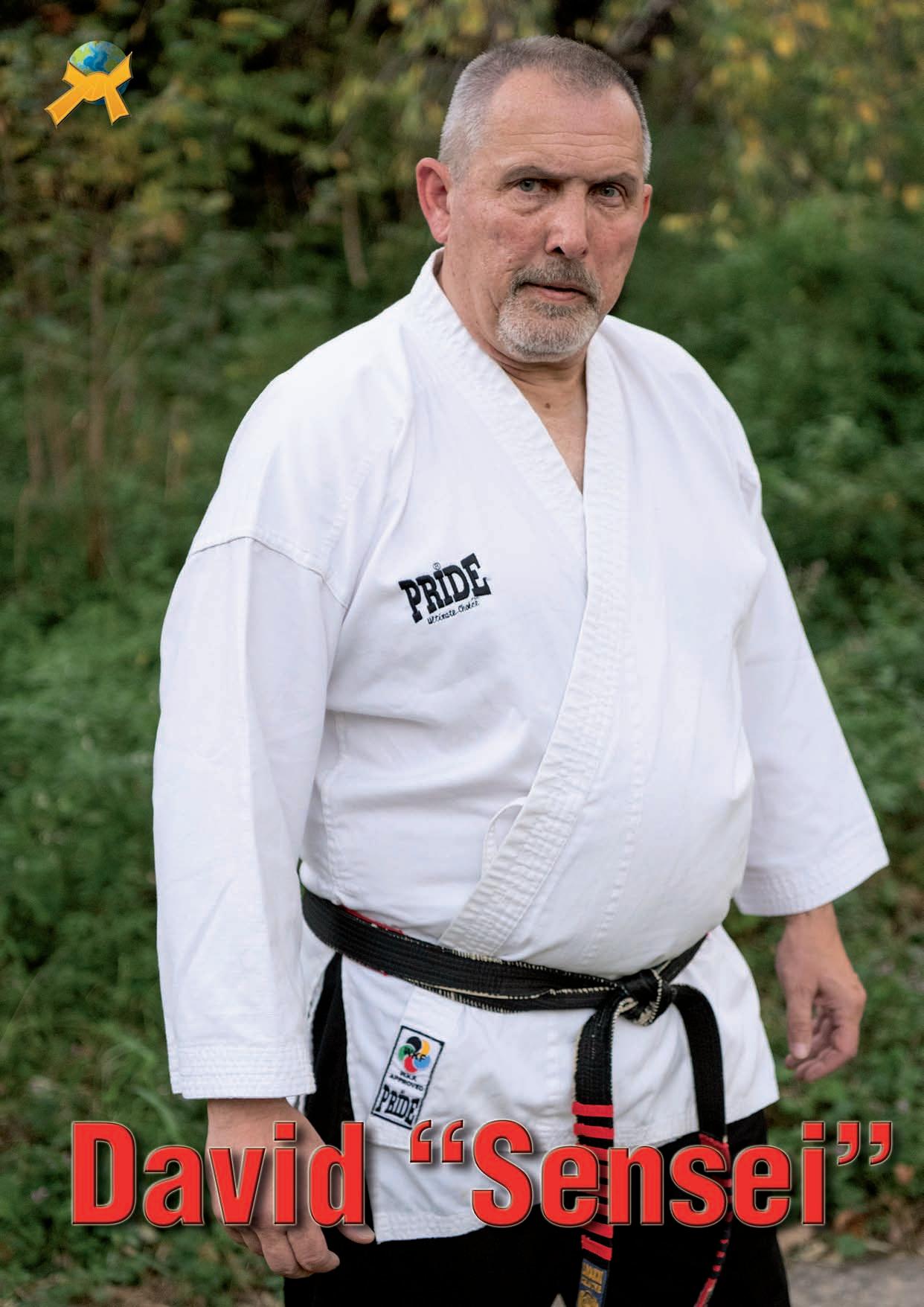
Los mas mayores vivimos un mundo marcial distinto; luchamos por obtener un conocimiento escaso que hoy es fácilmente entregado y que en su abundancia, mezcla frecuentemente lo real con lo falso, sin haber dado a los que lo reciben condiciones y criterio para navegar en esta agua procelosas. La única manera de afrontar esta situación, es mirar a través de los ojos de los que, mas experimentados en el camino, pueden iluminar con la luz de su experiencia, los confusos, revueltos y sobresaturados tiempos que vivimos.
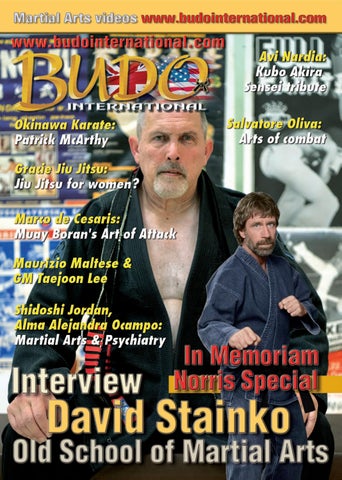
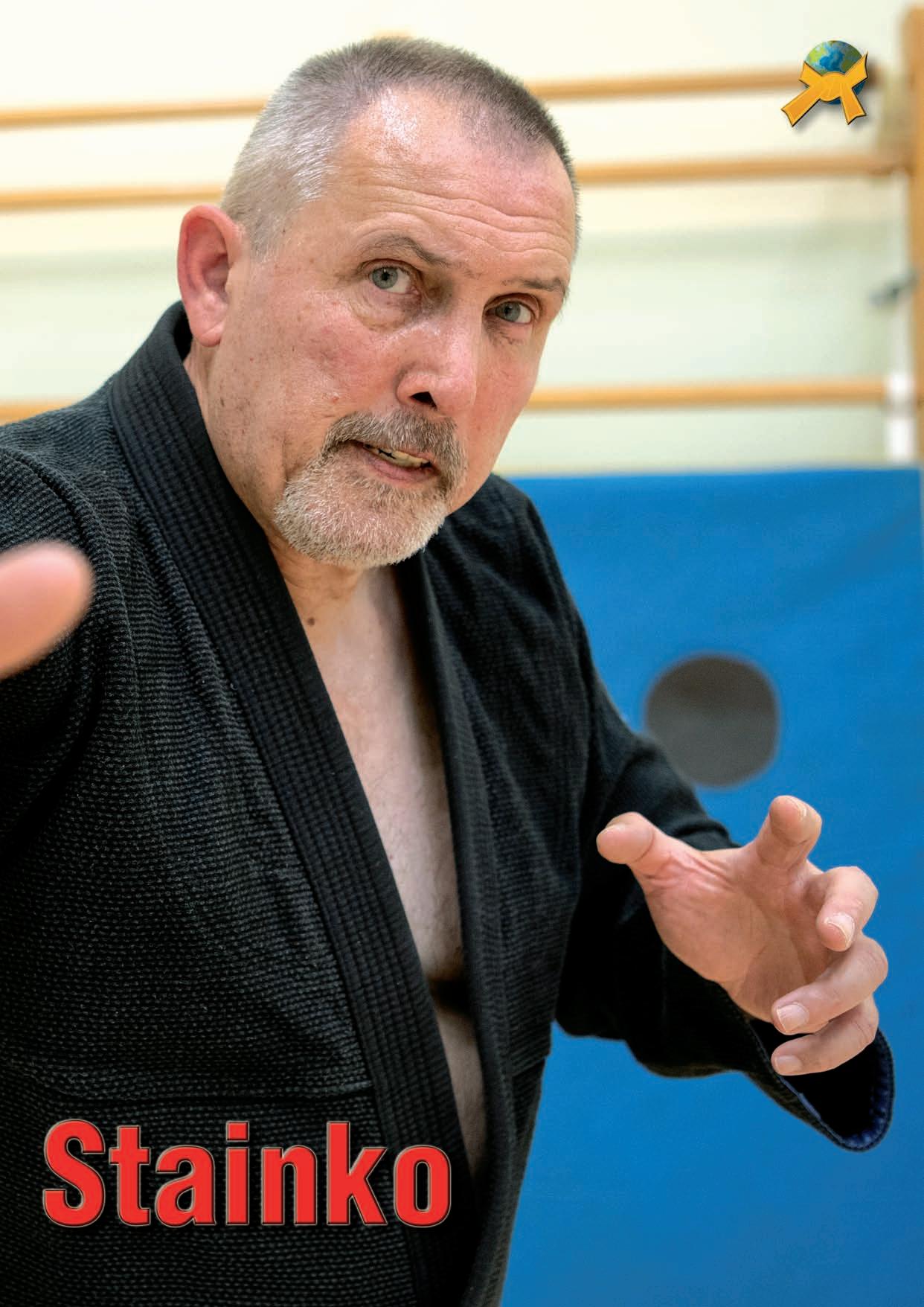
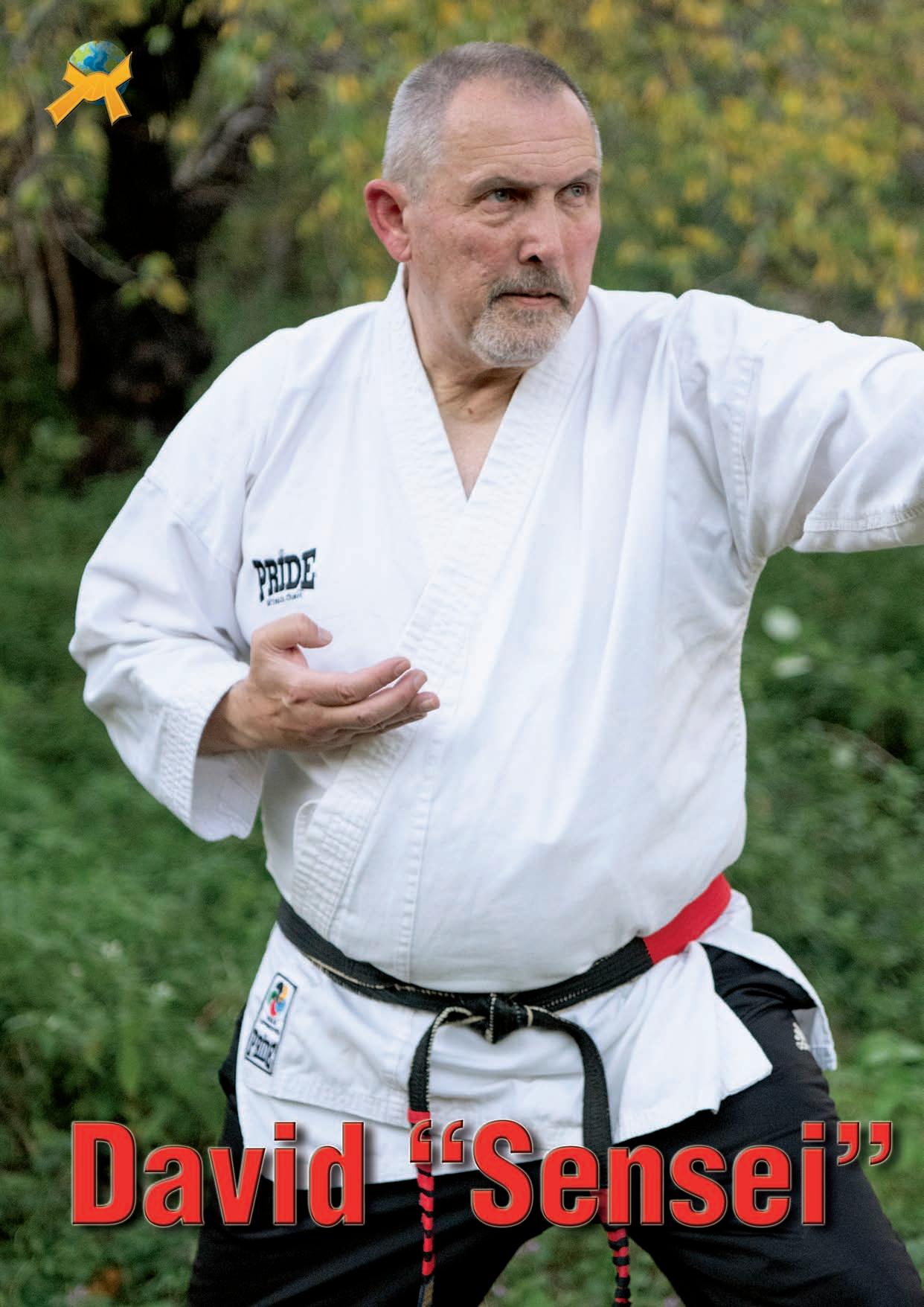
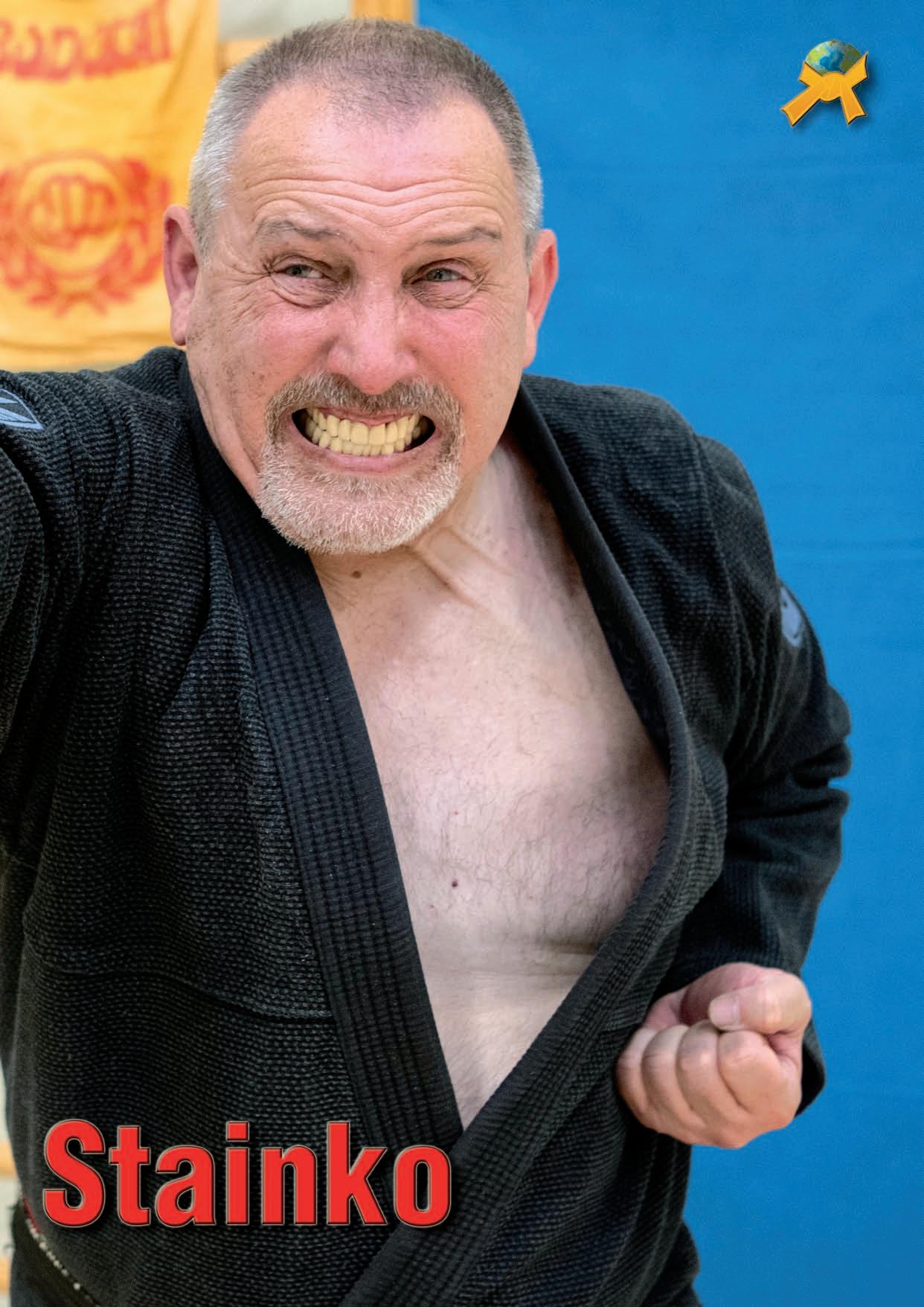
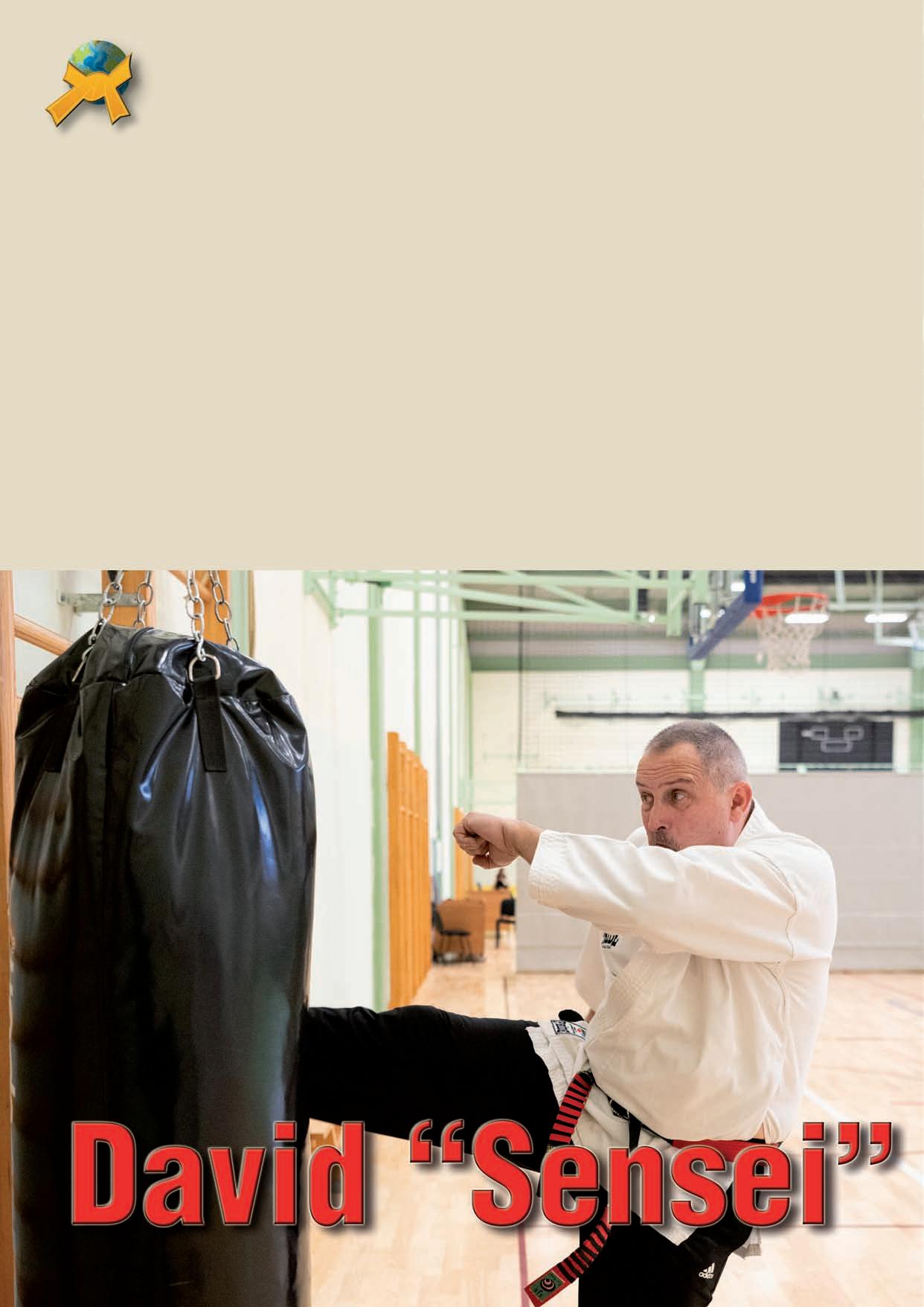
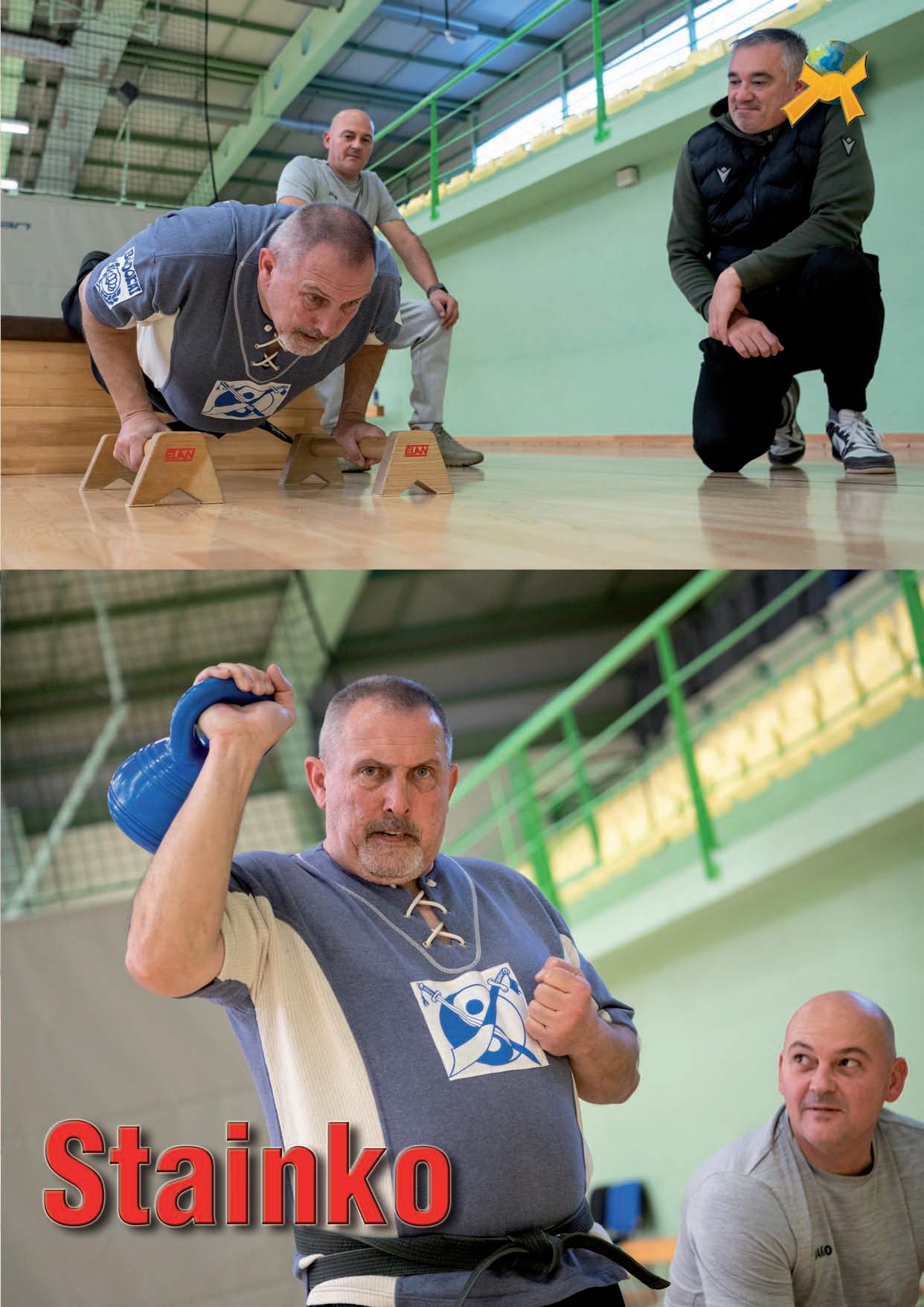
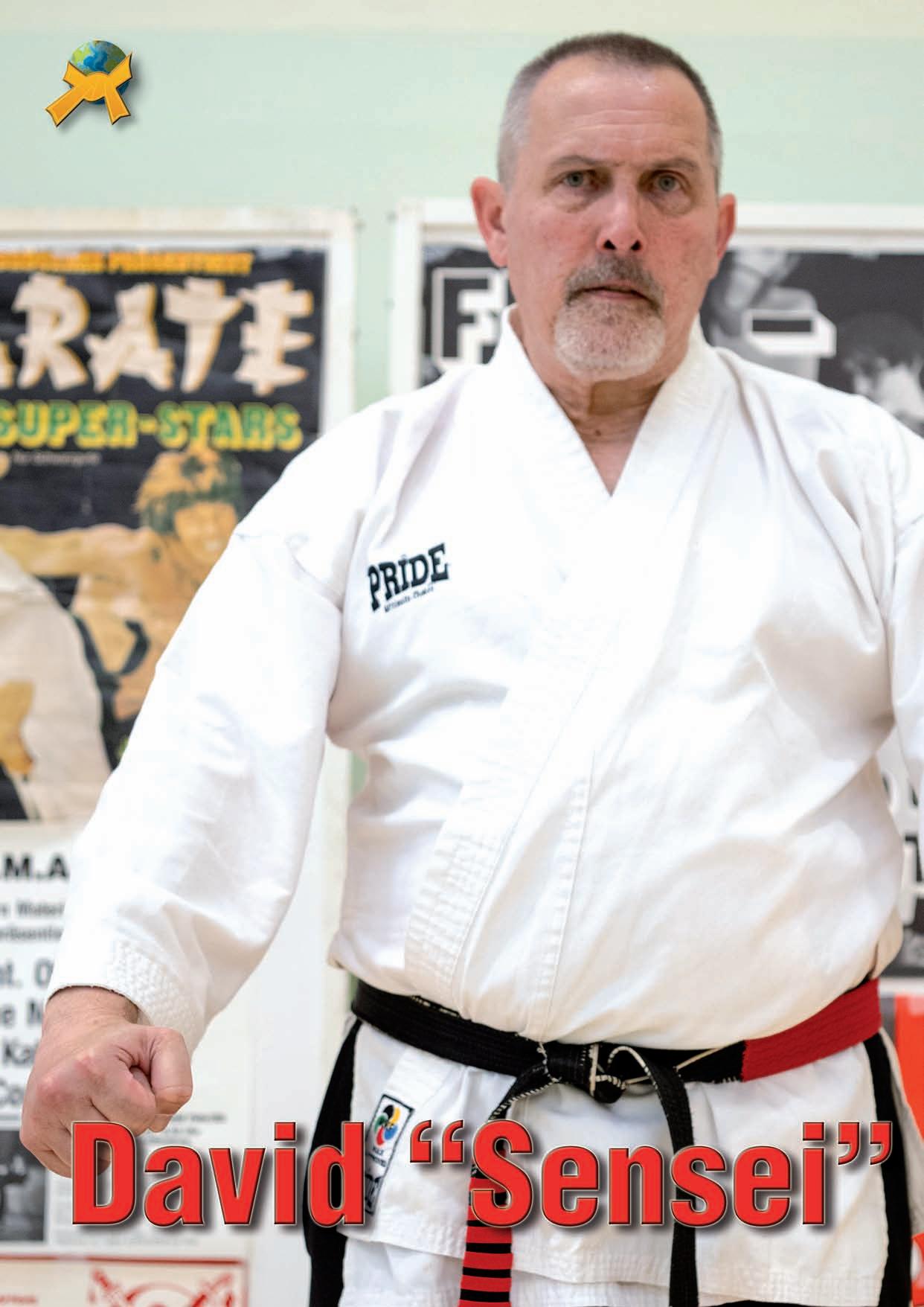
Sensei David Stainko durante muchos años con sus artículos, sobre diferentes ángulos y materias que conforman el mundo de las Artes Marciales, ha iluminado nuestras páginas, trayendo una necesaria visión ordenada y coherente sobre la materia en tiempos de ruido y confusión. Una voz sensata y experimentada sólo podía venir de alguien de “la vieja guardia”, que habiendo vivido los grandes cambios de estas ultimas décadas en el sector, las ha acompañado sin levantar los pies del suelo, con el pragmatismo y la perspectiva de quien, habiendo vivido mucho, no ha perdido la curiosidad y el espíritu de aquella vieja frase, “¡A veces maestros, siempre estudiantes!”.
Nunca ha buscado el protagonismo, brindando su experiencia con la generosidad que solo tienen los grandes; llega hoy pues su sobradamente merecida portada con esta entrevista, con el objeto de acercar a nuestros lectores el maestro que hay detrás de tantos excelentes artículos de fondo, artículos que sin duda, han puesto los puntos sobre las íes, informado, organizado, y aclarado muchas cosas, especialmente a los mas jóvenes lectores, que desconociendo el pasado, frecuentemente tienden a juzgar mal el presente.
Alfredo Tucci
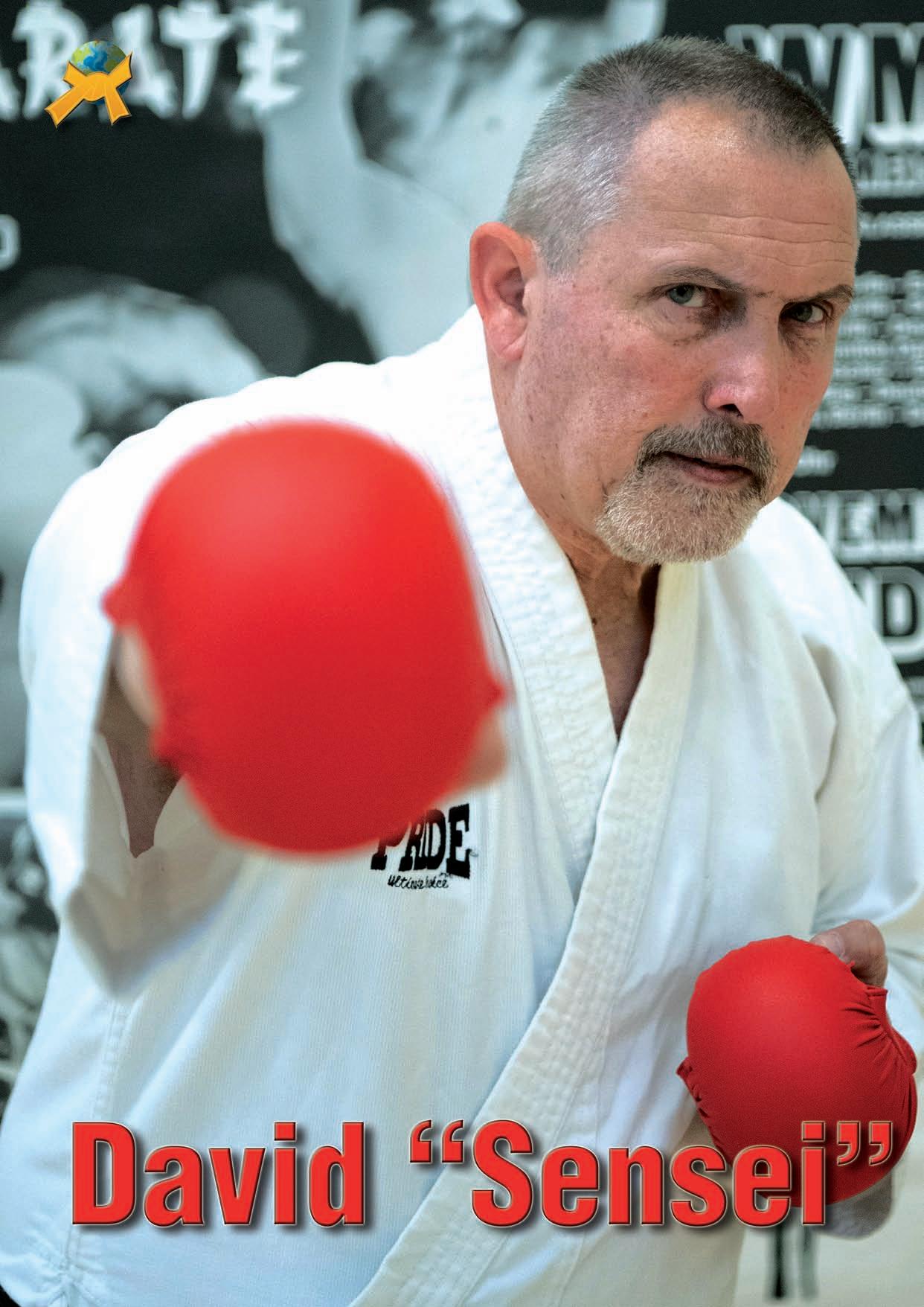
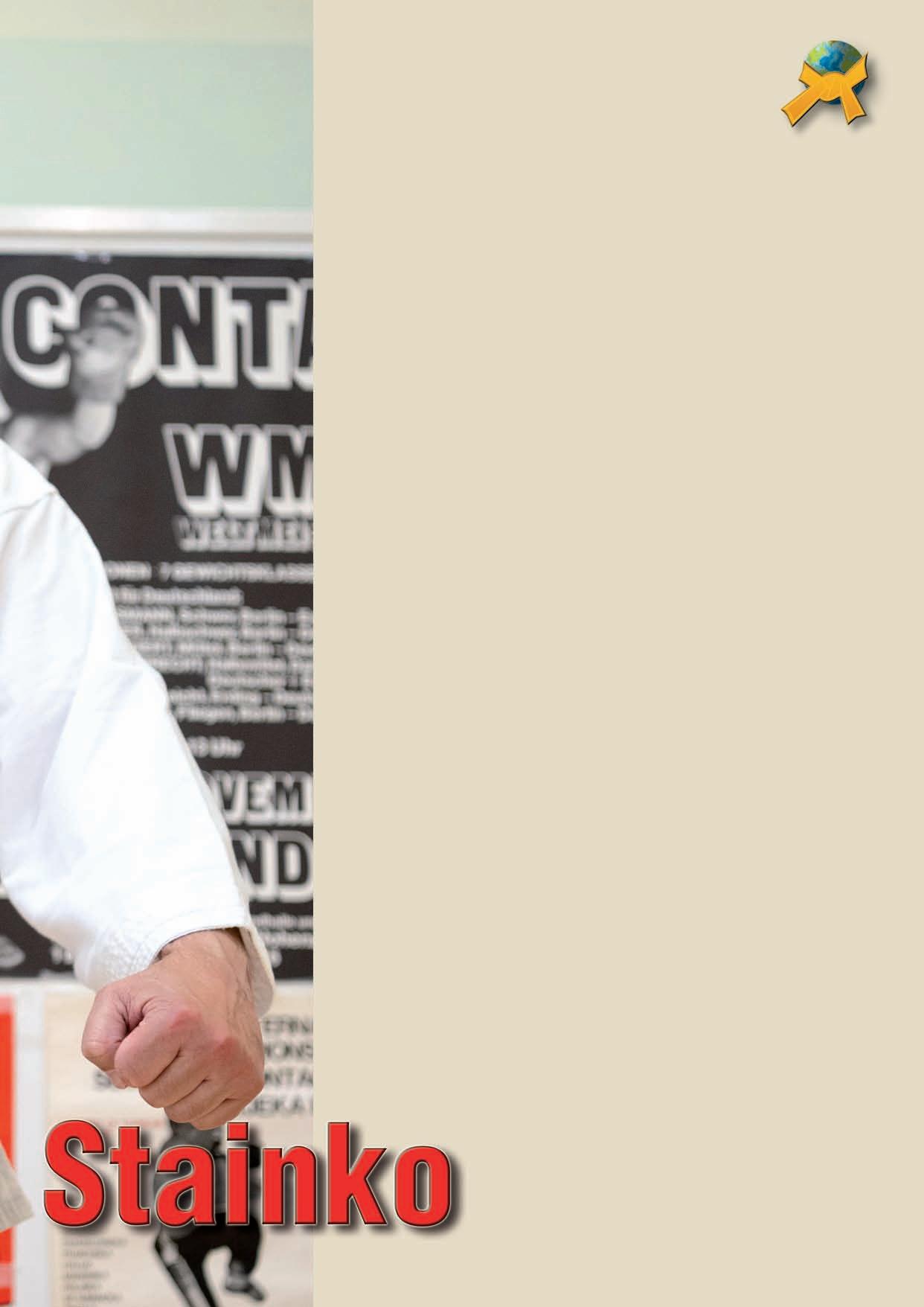
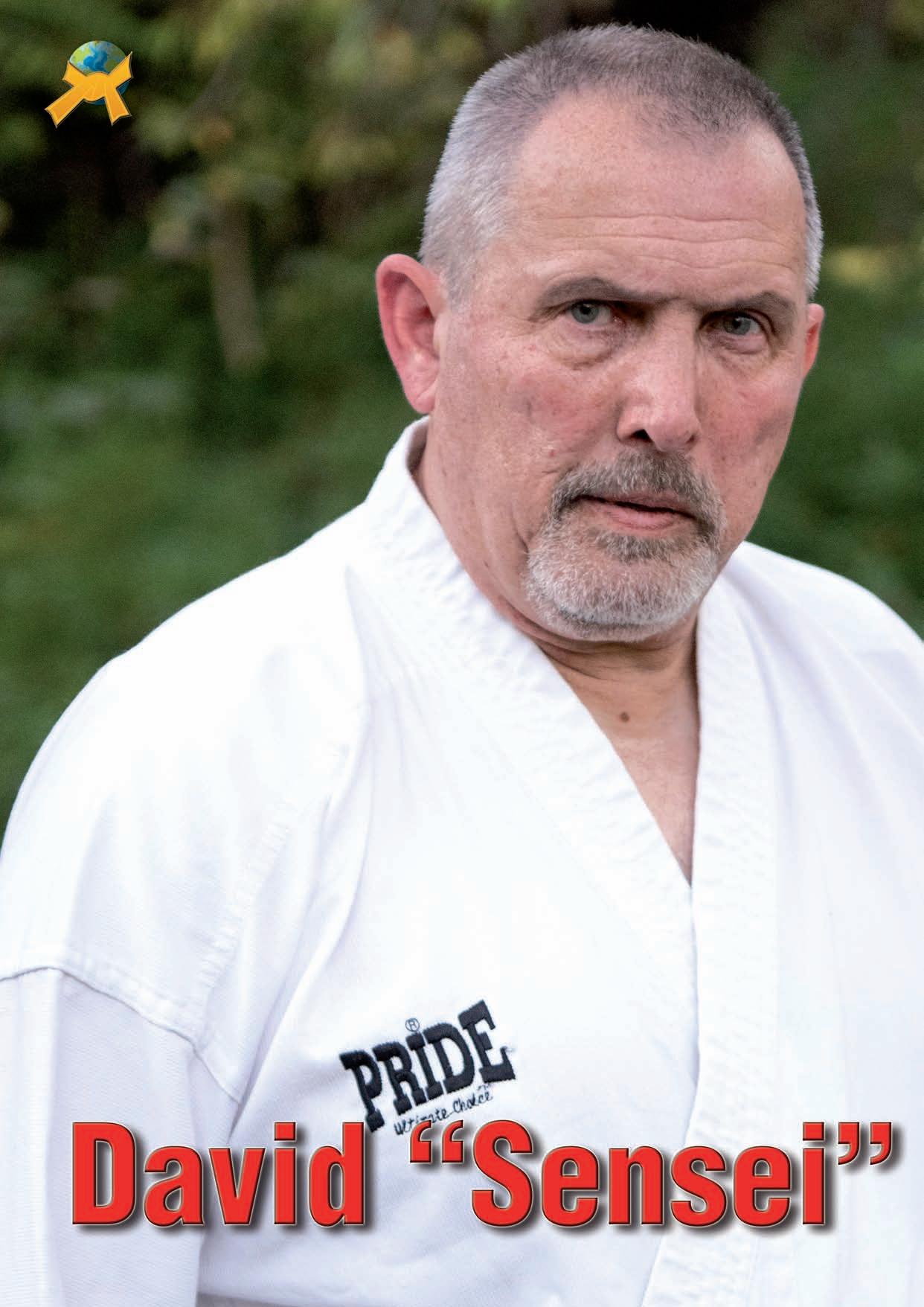
“Sensei” Stainko – A leading
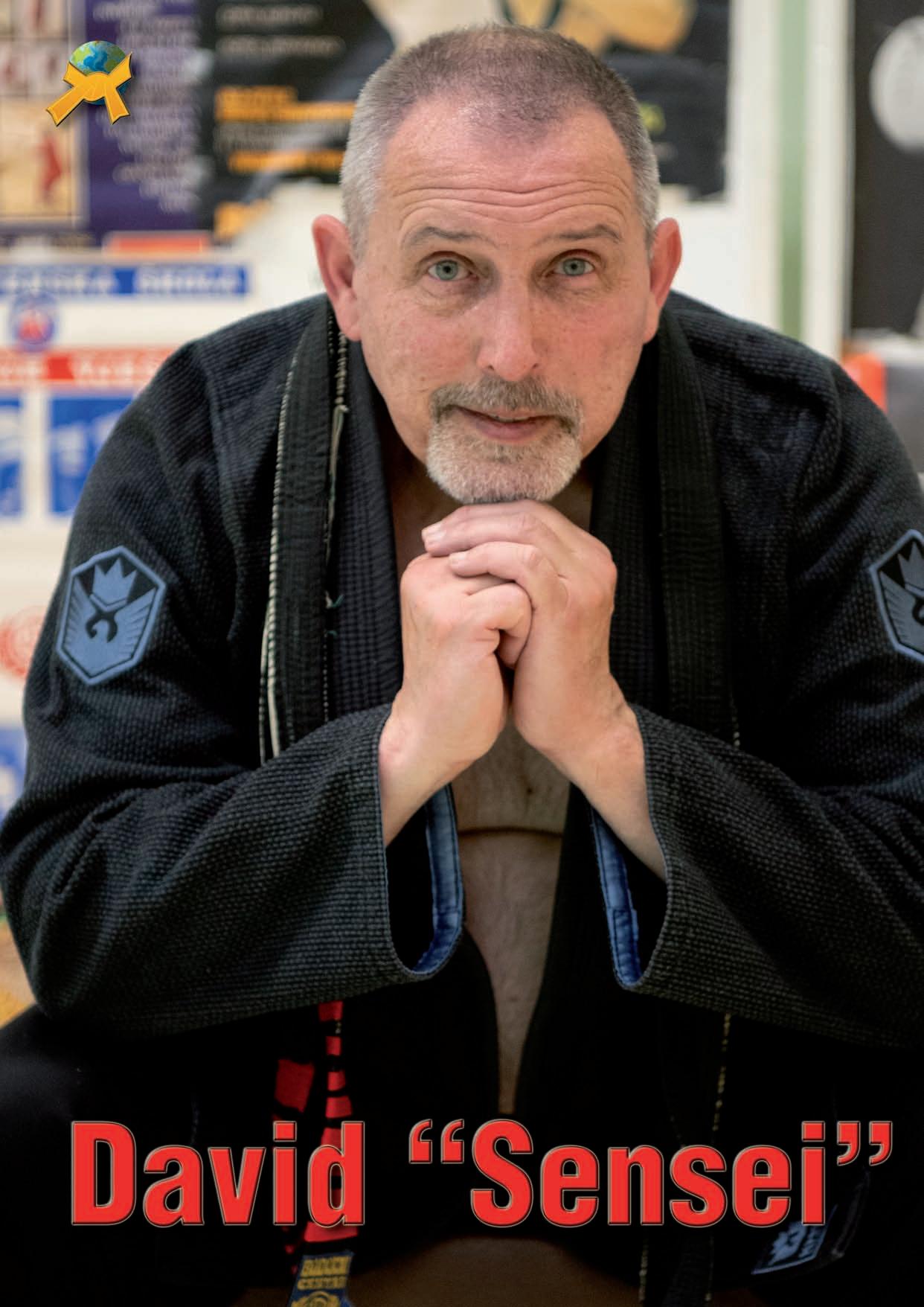
We present to you Mr. David Stainko from Croatia, a respected instructor and internationally recognized expert in martial arts. David “Sensei” Stainko has dedicated 53 years of his life to learning, practicing, researching, and later teaching various martial arts. Within the martial arts community, Instructor David Stainko is known as someone whose knowledge stands out in particular. Discover who Instructor and Professor David “Sensei” Stainko is — a master of martial arts, an expert in martial science, and one of the leading figures of the old school of martial arts.
B.I: Your first encounter with martial arts happened in 1972?
David “Sensei” Stainko: Yes, that’s right. That year I received a small but fascinating little book called Karate Made Easy by Moy Rone, in English. I started leafing through it, looking at the pictures, and trying to imitate the exercises as best as I could understand them. But that wasn’t enough for me, so in October I enrolled in the Budokai Karate Club in Rijeka. I received my club membership card at the beginning of 1973, and that’s when my “journey” into the world of martial arts officially began.
B.I: Tell us something about the Budokai style of karate — relatively little is known about it.
David “Sensei” Stainko: Budokai is a style of karate that originated in London, England. Its roots go back to 1918 and it was built on the foundations of the first judo club in Europe, called Budokwai, which was run by the Japanese master Gunji Koizumi. About twenty years later, several of his students off and began practicing what was then a new Japanese art to them — karate.
The name Budokai consists of two words: Budo, meaning “the way of martial arts,” and kai, meaning “school." In the wider world, the Budokai karate style is also known under the names Budokwai, Budokwan, and Budokan, the latter having developed in Malaysia but also based on the foundations of the Budokai style. Budokai is a very effective style of karate, distinguished by its unique blend of traditional judo, jiu-jitsu, and karate techniques. Weapons training, as part of the broader ko budo discipline, began to be more intensively incorporated into the Budokai karate style in the mid-1960s. A leading
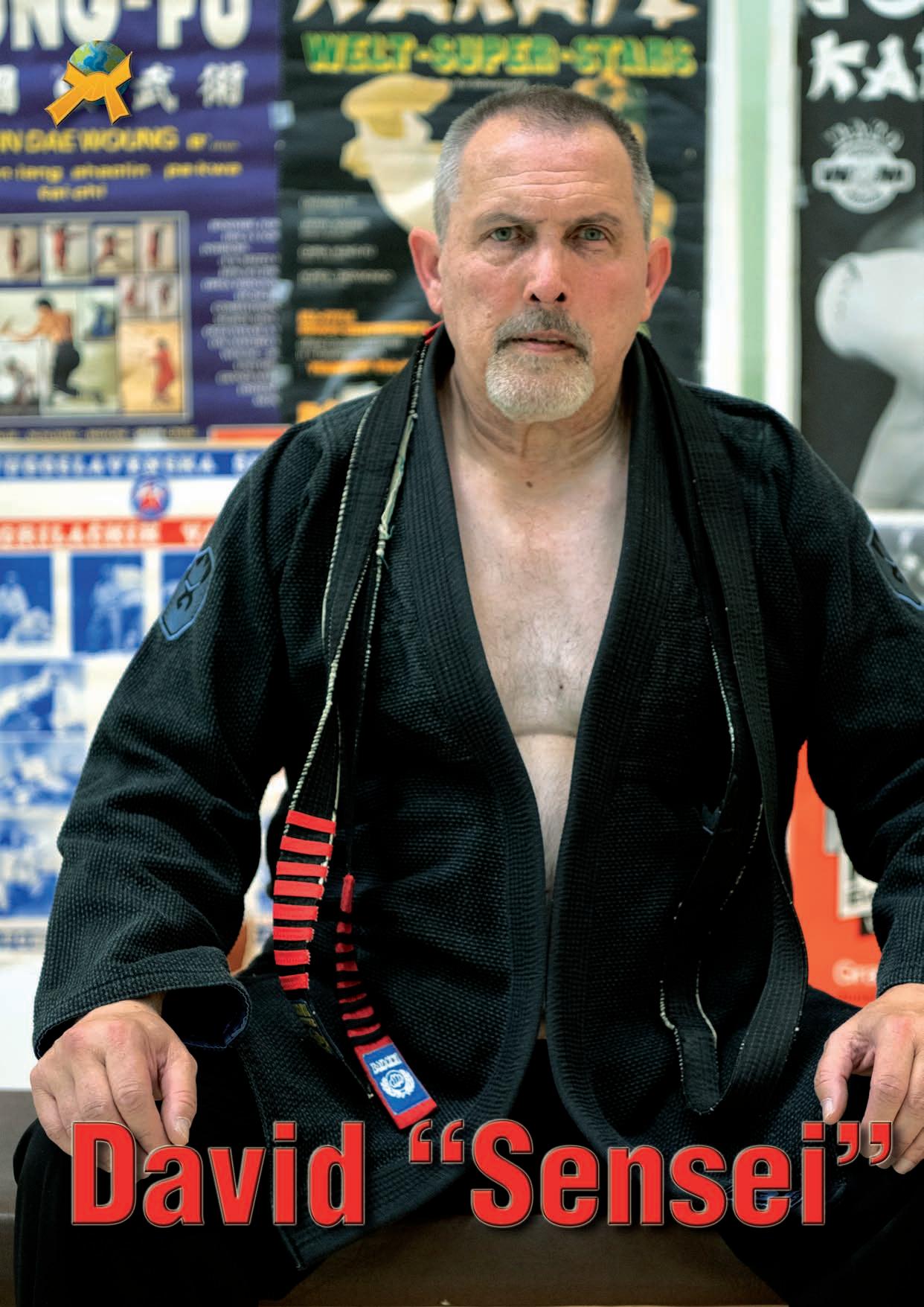
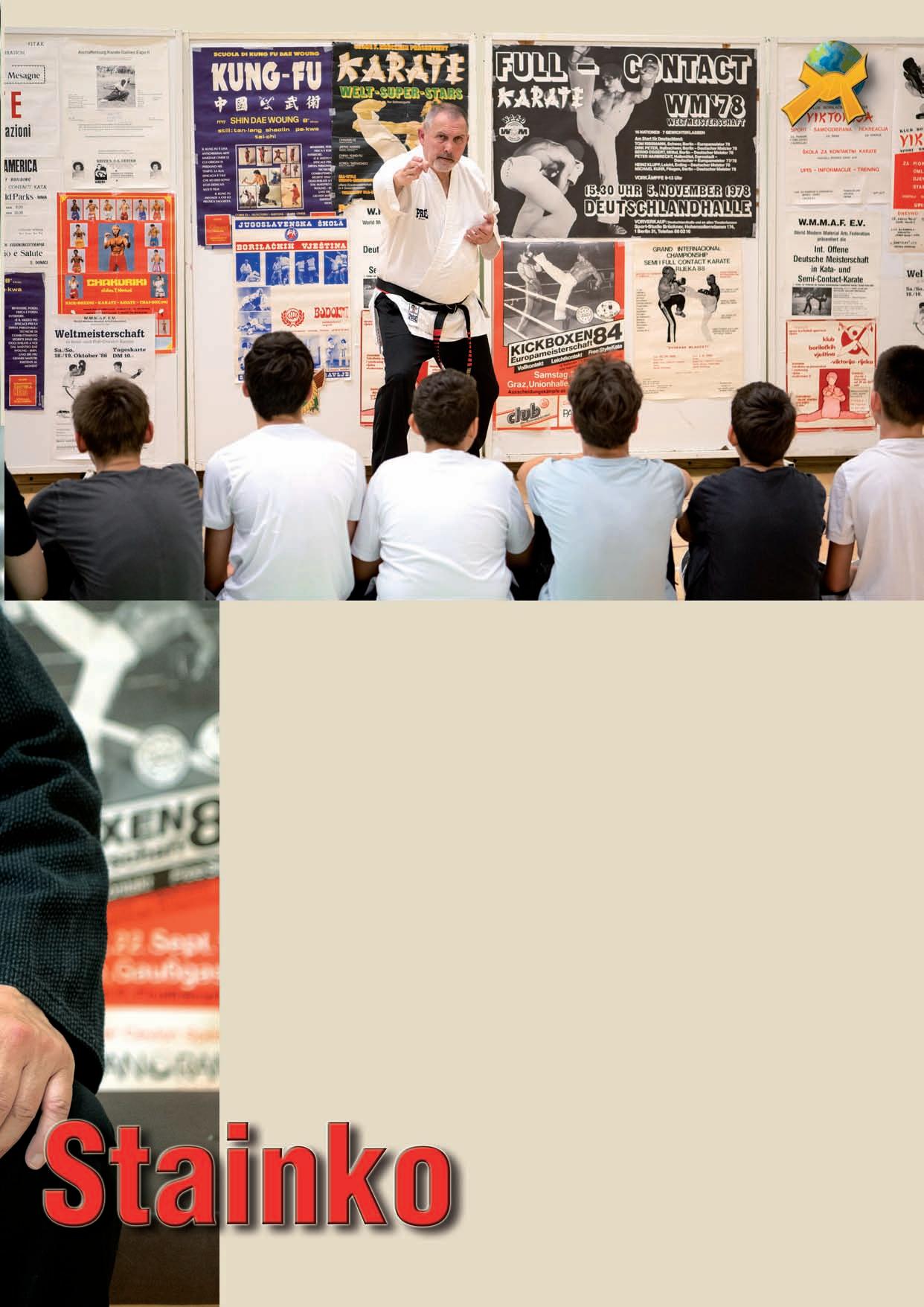
B.I: You trained and studied other karate styles as well. Tell us something about those. David “Sensei” Stainko: That’s right. I had the opportunity as early as 1973 to attend a seminar led by the well-known Shotokan master Taiji Kase. Later, I learned from other Shotokan masters as well, among whom I would especially highlight Hirokazu Kanazawa, Hidetaka Nishiyama, Shiroshi Shirai, and Dr. Ilija Jorga. I studied the Budokai style under Dr. Emin Topić, the Uechi-ryu style under Mario Topolšek, and the Sankukai style under Yoshinao Nanbu. Today, I hold the rank of 8th Dan in the Budokai karate-do style, and I am one of the rare original representatives of that style. I also hold a 3rd Dan in Shotokan, a 2nd Dan in Uechi-ryu, and a 2nd Dan in Kyokushinkai, a style I helped introduce in Croatia. I am also well-acquainted with the Goju-ryu and Wado-ryu styles, which I practiced as well, and later on I went on to study other karate styles, too.
B.I: Today you prefer not to join any karate organization. Why is that?
David “Sensei” Stainko: These days it has become common for any somewhat well-known master to establish his own karate organization. As a result, there are now more than 15 Shotokan organizations worldwide, and the situation is the same with the Kyokushinkai karate organizations. Other karate styles are in a slightly better position, but even there it’s far from ideal. Among the many different karate organizations that exist today, almost all of them claim to be the authentic one. I cannot agree with those claims, because I see many changes that have been introduced into certain karate styles compared to the original forms I learned.

Besides, when you go to karate clubs today, most of them practice sport karate with gloves. That isn’t karate — it’s purely a sport. They aren’t very interested in the traditional karate styles. Their instructors are karate coaches, not teachers — not sensei. Karate as an art of the “empty hand” doesn’t really exist for them anymore, so for many people today, karate-do has essentially become just karate sport. The same is true for modern judo, and even taekwon-do. Martial arts are not sports; they are far more than that.
B.I: You are also an expert in the martial art of kung fu. Tell us something about that.
David “Sensei” Stainko: I first encountered the kung fu martial art in 1974 in Germany, at a seminar taught by Master Al Dacascos. Later I studied in Italy under Master Shin Dae Wong, an expert in Tan Lang styles, as well as a variation of the Shaolin style and the Pa Kwa style. I began studying the Tai Chi Chuan style in Croatia and Italy, and continued my training in Switzerland and England.
A
In 1982, I began learning Wing Chun from instructors who had been students of the now-famous teacher Ip Man. I first trained in Hungary under Master Leung Ting and a bit later in Serbia under Master William Cheung. Building on that foundation, and influenced by Bruce Lee’s films, I later studied the Jeet Kune Do system.
B.I: You hold the title of kung fu instructor and the status of sifu master.
David “Sensei” Stainko: Yes, I have held that status in the kung fu art since 1985. I must say that kung fu today is different compared to the past and the way I learned it. In many styles it’s evident that changes have taken place. Today, alongside Tai Chi, people around the world mainly talk about the Sanda and Wushu kung fu styles. Jeet Kune Do as a fighting system is particularly interesting to me, though many promote it today while actually knowing very little about it. Many modern Jeet Kune Do instructors simply imitate Bruce Lee’s movements, and that is completely wrong. Bruce always said that in martial arts you need to express yourself, and that Jeet Kune Do as a fighting system must be adapted exclusively to yourself and your own abilities. Furthermore, many people do not understand that this system is not fully effective unless you are a master—that is, you must have knowledge, speed, and fighting experience. After all, the name tells you everything: ‘intercepting fist,’ meaning the ability to anticipate the opponent’s attack and intercept it before it happens. Only a good, experienced, and skilled fighter can intercept an opponent’s attack - for everyone else, it is mostly just an ‘illusion.’
B.I: We know that you are also a boxing coach. Tell us something about that.
David “Sensei” Stainko: In Rijeka, my hometown, boxing as a martial art is especially respected. You can be a world champion in wrestling, fencing, judo, karate, or taekwondo, but if you haven’t practiced boxing and if you haven’t been to a boxing club to spar there, it’s as if you never existed as a fighter or as someone who trains martial arts seriously. That’s how I started, too—I fell in love with boxing and stayed with it. In 1987 I became a boxing coach. Around that time I also began studying savate— French boxing, and later earned the title of Silver Glove instructor.
B.I: You are also familiar with Korean martial arts, and you even led a Tang Soo Do club.
David “Sensei” Stainko: In 1974 in Germany I watched a demonstration by Master Jhoon Rhee and was introduced to TKD. As a martial arts enthusiast, my colleagues at the Faculty of Kinesiology rekindled my interest in taekwon-do, so I started training with them. In 1982 I began practicing TKD in the ITF system. The main instructor for Croatia at the time was the Korean TKD master Park Sun Yae, who then held the rank of 5th Dan. I also met General Choi Hong Hi, though the seminar that left the strongest impression on me was the one in England led by Hee Il Cho. In 1988 I was offered the opportunity to lead the first Tang Soo Do club in Croatia, and I accepted it as a kind of a challenge. They mostly asked me to base the training on the Tang Soo Do approach presented by Chuck Norris. I was a witness to the time when many TKD instructors switched from the ITF system to the then more ‘profitable and popular’ WTF system for political reasons.
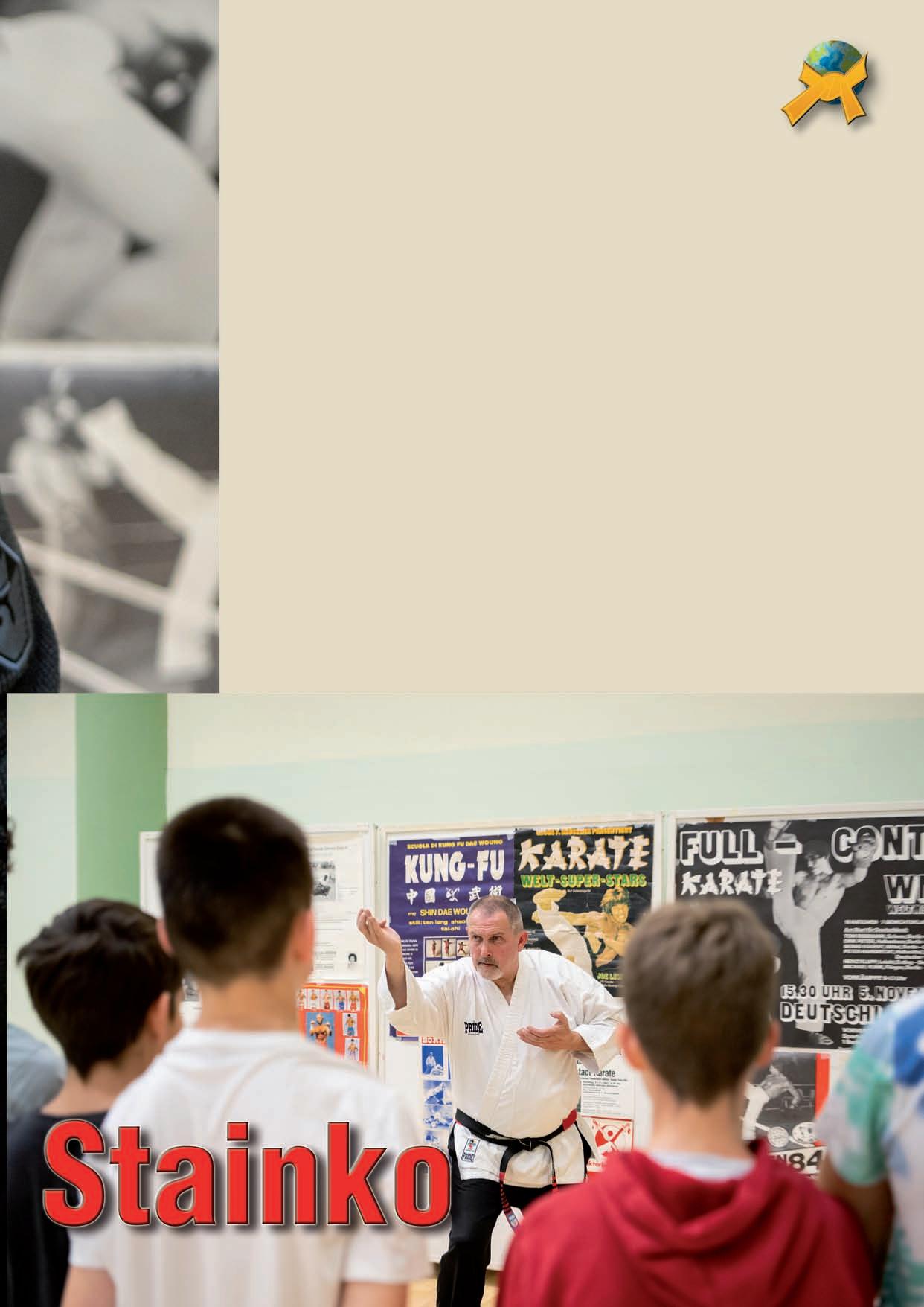
B.I: You were a successful competitor in several different martial arts. Can you tell us about your sports career?
David “Sensei” Stainko: Yes, I had around 200 fights in total, with about 17 defeats, though I’m not familiar with the complete and precise statistics. Back then, they didn’t keep as accurate records as they do today, and I competed in various martial arts. I started competing in kung fu, where I was the junior champion of Yugoslavia for two consecutive years. Later, I competed in traditional karate, as well as in budokai karate, where I was the team leader of the team that won the Yugoslav national championship in 1982 and 1983. After that, I competed in semi-contact and full-contact karate, then transitioned to kickboxing, where I participated in 4 European and 4 World Championships. I was the youngest competitor at the first WAKO World Championship in 1978 in Berlin. I represented Yugoslavia, and later Croatia, but also Italy and Germany, and I even competed in England for a kung fu club from Oxford. I fought in kung fu, karate, semi-contact and full-contact karate, kickboxing, boxing, wrestling, judo, taekwondo, and even had fights in savate, kyokushin karate, and a few matches in the Yugoslav army. I won various competitions in former Yugoslavia, but also elsewhere, such as the Open Italian and German Championships. I was a European champion and a member of the European team in kickboxing, as well as the World runner-up in 1988. In 1991, when I was 29, the Croatian War of Independence began, and there was no more time for sports.
B.I: You were also a military instructor in martial arts in the Yugoslav Army?
David “Sensei” Stainko: Yes, in 1981, while serving my mandatory military service in the Yugoslav Army, they proposed that I become one of the martial arts instructors. I was tested along with five other instructors, and then I was selected as the lead instructor. I had about 400 soldiers under my command, along with 5 instructors and 3 officers, and I received orders directly from the major who was the commanding officer. It was he who was responsible for me undergoing special military training in knife combat, combat with a military entrenching tool, as well as knife throwing and survival training in nature. The training was primarily based on the Russian system.

B.I: Today you have the status of a veteran of the Homeland War.
David “Sensei” Stainko: Yes, in 1991, I was called into the Croatian Army due to the war that broke out in the former Yugoslavia, when Croatia was fighting for its independence. I was on the front lines with only a few short breaks from 1991 to 1994. I first served in the infantry, then as a tank commander and gunner, and later, at my own request, I was transferred from the tank unit to the military police. I left the army with the rank of military police officer and marksman.
B.I: You also worked as a bouncer in nightclubs and in security companies.
David “Sensei” Stainko: Yes, during my first year of college, when there was a freshman dance, they offered me to stand at the entrance and keep order and discipline. Later, I was invited to work at the student nightclub. In 1984, I was invited to work at the nightclub Tropicana, where I was well paid. After that, I worked as a bouncer in Italy and in various security companies as the head of security teams. I provided security for many well-known and famous individuals, and I was even part of the security team for Pope John Paul II.
B.I: It’s less well known that you founded the first officially registered MMA club.
David “Sensei” Stainko: Yes, in 1978, we re-registered the former Youth Budokai Club Viktorija, but under a new name: Viktorija Martial Arts Club. In the former Yugoslavia, we faced many difficulties with the registration process. At that time in Europe, all clubs had names like boxing, wrestling, judo, kung fu, karate, taekwondo—each specialized in one martial art. There wasn’t a single club that combined all martial arts in its name. This was certainly the first club of its kind in Europe, and perhaps even in the world. I had the idea that if you practice one martial art, it’s hard to avoid contact, in one way or another, with other martial arts. I simply didn’t want to limit myself. At that time, at 16 years old, I became the youngest verified WAKO chief instructor of any martial arts center in Europe.
B.I: You are one of the few instructors today of the almost forgotten martial arts system Bartitsu, which is also called the martial art of Sherlock Holmes.
David “Sensei” Stainko: Bartitsu is a martial arts system that originated in London, England, and was developed by the Englishman Edward William Barton-Wright. He taught this combat system from 1901 until early 1904. He was the first to devise a circular training system, where groups of practitioners rotated between different instructors. Today, it’s a forgotten combat system.Bartitsu, as a self-defense system, is extremely effective and has advantages over many of the more well-known and popular systems or styles practiced today. The problem with this system, however, is that to truly master it, it takes about 7 years of training. Bartitsu is a blend of different martial arts, including boxing, savate (French boxing), wrestling, judo, jiu-jitsu, cane fighting (La Canne), and the old art of sword fighting with a sword in one hand and a knife in the other.
A leading Figure of the Old School of Martial Arts A leading Figure of the Old School of Martial Arts
A leading Figure of the Old School of Martial Arts A leading Figure of the Old School of Martial Arts
B.I: Today, you have the status of an expert in martial arts sciences, although many simplify it and call you an expert in martial arts.
David “Sensei” Stainko: Yes, I have a master's degree in kinesiology and am a senior organizer of kinesiology recreation, and I graduated from the University of Zagreb. I’ve been continuously involved in martial arts since 1972. In 1995, I began writing professional articles, which were very well received. In 2004, I finished writing my book "The History of Martial Arts". I published the book as an e-edition in Croatia, and it has been very successful and widely read. I say I’m an expert in martial arts sciences, but often instructors simplify it and say I’m an expert in martial arts. Some instructors are often surprised by this. They don’t understand how someone can be an expert coming from Europe, specifically from Croatia. For those people, you can’t be an expert unless you come from Japan, China, Korea, or at least from America. Well, let those so-called experts teach about martial arts originating in Europe, such as folk wrestling styles, Greek or Roman combat, boxing and savate, various forms of stick fighting, self-defense, knife combat, and sword fighting with a sword or a dagger. As for martial arts from China, Japan, Korea, America, or the rest of the world, all the best instructors were in Europe as far back as 1900. So, we’ve had 125 years to learn something, for those who actually wanted to.
B.I: You recently stated that you are not satisfied with the way martial arts are developing. Do you think the development is going in the wrong direction, and what exactly do you criticize?
David “Sensei” Stainko: There’s a lot to mention, it’s hard to cover it all. For example, karate is a discipline of the empty hand, but today, in various karate competitions, gloves are frequently used. In today’s karate, they have become inevitable. Many styles of karate are now marginalized and neglected, and the very essence of karate has almost been forgotten. Many karate techniques are now neglected and rarely applied, such as certain hand strikes and many throws. In judo, many techniques have been eliminated simply to make it a sport. In taekwondo, as well as in some forms of jiu-jitsu, competitors no longer wear the traditional gi or dobok, but instead wear uniforms. In some competitions, they perform so-called creative katas, which are a mix of dance and acrobatic gymnastics exercises that have nothing to do with martial arts. There are also strange sports rules. For example, the Olympic gold medal in karate was awarded to someone who didn’t know how to properly protect themselves and ended up getting a clean kick to the head. Furthermore, in American kenpo karate, there are more instructors holding a 10th Dan black belt than in all other karate styles combined. Today, there are many titles and ranks in martial arts, but the real knowledge in reality is much less.
B.I: You rarely hold seminars. Why is that?
David “Sensei” Stainko: Today, times are different, and there are certain things about seminars that I really don’t like. In seminars, you always have to start with the basics because you’re not sure of the participants' level of knowledge. And then, before you even get started, today’s instructors immediately jump in with things like, "Oh, we already know this, we’re familiar with that." They simply lack the patience to let you progress to more advanced techniques. Sometimes, you also come across individuals who can’t control their egos. These people can be so unpleasant that you have to “take them down” to put them in their place. There’s also the issue of money. I don’t charge for my seminars, I just ask to be reimbursed for travel expenses. And that’s when the problem arises, because many instructors think that only what they’ve paid a lot of money for is valuable. These people don’t realize that no amount of money can pay for the lessons and knowledge I’ve gained over the years. Furthermore, some individuals think that if they’ve paid for something, they automatically deserve a title or status in return. Some even go as far as to push different diplomas at me for a signature. These diplomas and titles are essentially bought, not earned through hard work.
B.I: What do you mean by the term “Old School”?
David “Sensei” Stainko: It refers to the old way of training. Back then, strikes were delivered with more force, and there were a lot more bruises. It wasn’t rare for someone to be knocked out by choking. There were bloody noses, split lips, and other injuries. Training was approached with greater seriousness and complete dedication. Each individual martial art was treated with respect. For us, boxing was still the "noble art," fencing was the "highest skill," karate was the "art of the empty hand," wrestling was the "self-defense for gentlemen," judo and jiu-jitsu were the "art of gentleness," and so on. Today, when I go to karate clubs to hold a training session, their kimonos tear as if they were made of paper, and in taekwondo centers, a third of the students leave limping after class with broken toes. In some martial arts schools, they don’t even use mouthguards, and some practitioners can’t even do ten push-ups. Today, everything is reduced to sport. Sport has its own set of rules, but sometimes these lack the proper codes of honor and the ways of conduct that have existed in martial arts for centuries. Just look at today’s UFC competitions. The foundation of martial arts is respect. You cannot practice certain martial arts without a partner. The better your partner, the more likely you are to improve as well. That’s why you must respect your training partner as well as your opponent in competition.
B.I: You have the nickname "Sensei." Can you tell us something about that?
David “Sensei” Stainko: That’s what my students started calling me back in early 1988, as a form of respect for my dedicated work in martial arts. At the time, they found it interesting, and I didn’t mind it. So, the nickname has stuck with me to this day. Nowadays, some individuals also call me Hanshi, Sifu, Master, or Grand Master. The title by which someone addresses me isn’t important as long as they have a genuine desire to learn. Whenever I teach others, I also learn something from them. The more knowledge you gain, the more you realize how much you still don’t know. In martial arts, if you have knowledge and skill, diplomas and titles aren’t necessary. On the other hand, if you boast about your titles or diplomas without possessing true knowledge and skill, they are worthless.
B.I: Mr. Stainko, thank you for the conversation and for so many f¡great articles you have submited to Budo during all these years.
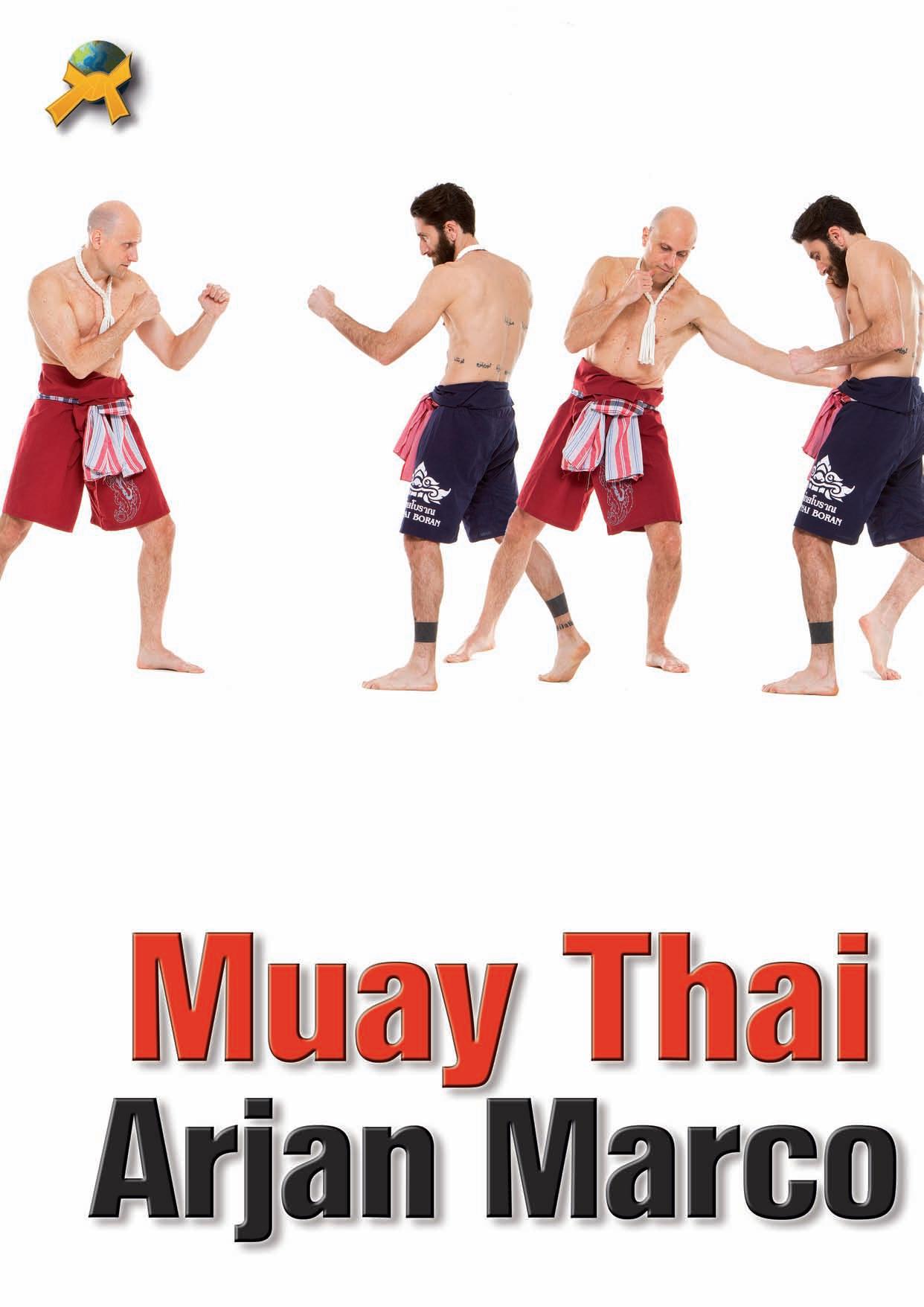
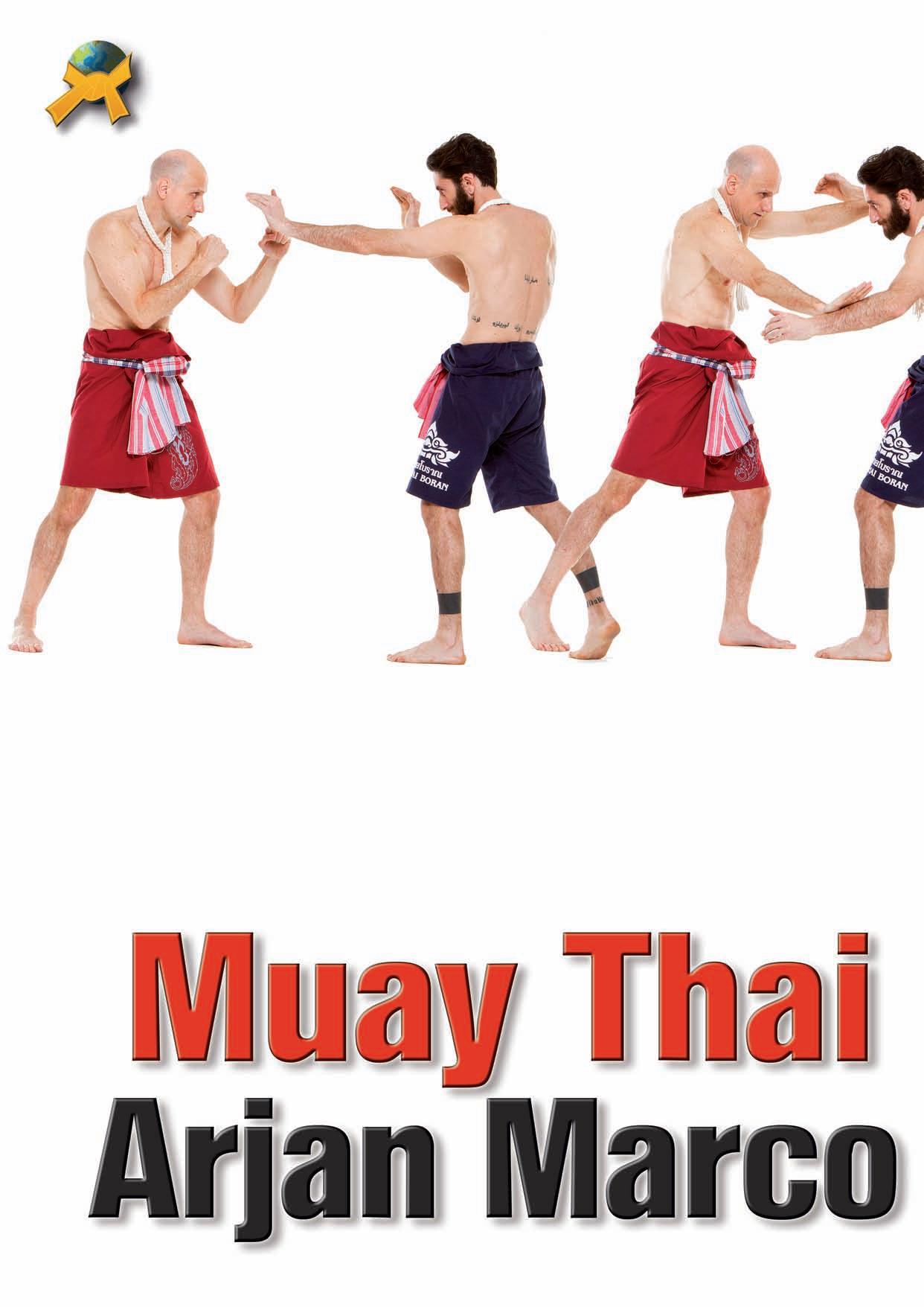
Muay Boran IMBA: the Art of Attack.
Like any traditional style, Muay Boran IMBA is based on general concepts that make up the bedrock of this fighting system. Once the founding concepts have been clearly understood and thoroughly analysed, the student will possess a sound knowledge that allows him to delve into the advanced technical elements with greater ease. The 7 doors that lead to a proper comprehension of Muay Boran IMBA fighting system should be unlocked by the Nak Muay (student of Muay) with the help of an expert Khru Muay (teacher of Muay). In order to know more about the keys to unlock the 7 doors of Muay Boran IMBA, the interested readers can refer to the PDF book: Muay Boran IMBA –Arjarn Marco De Cesaris’ philosophy of fighting. Volume 1 http://www.muaythai.it/muay-boran-imba-pdf-book/ (free download).
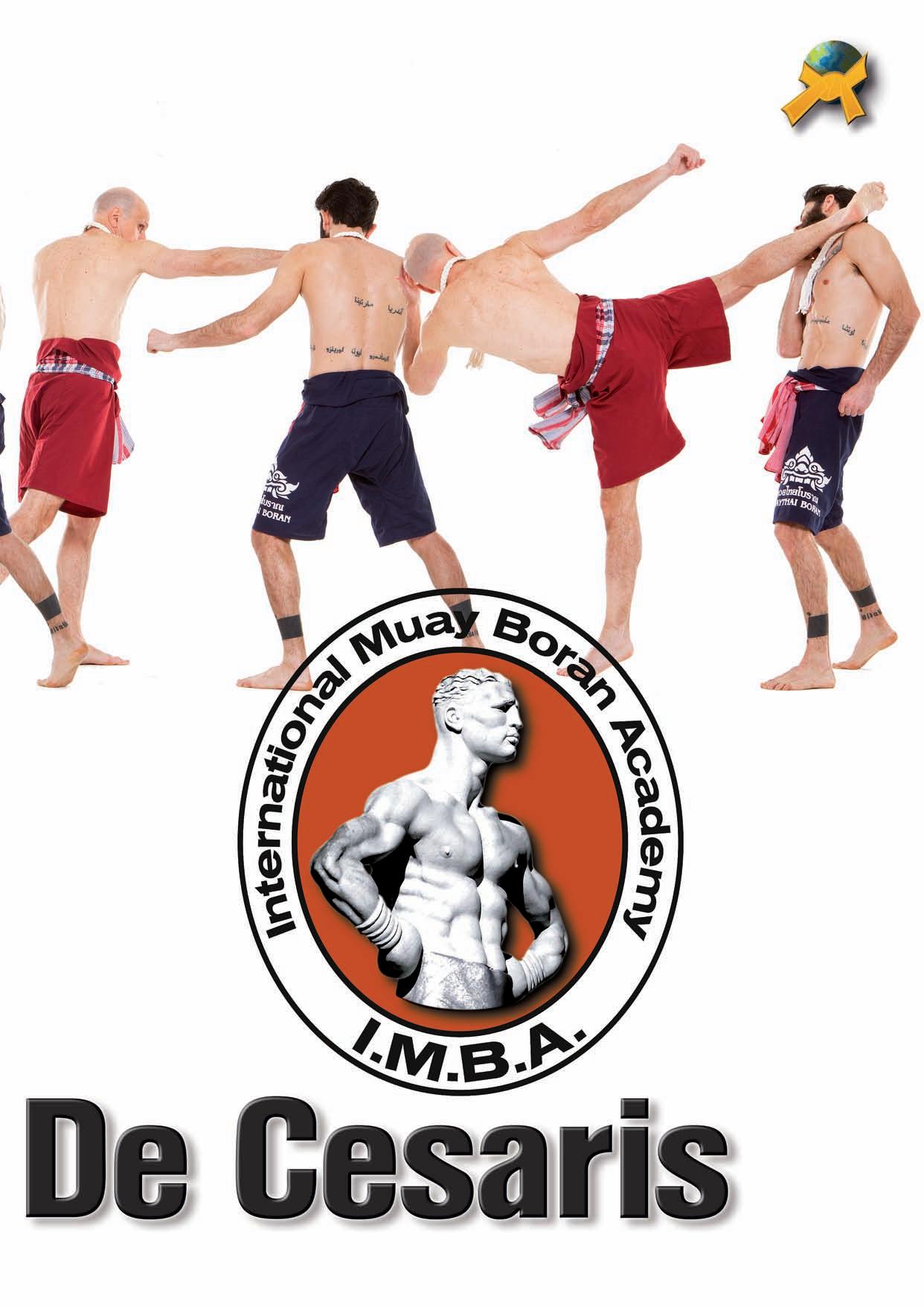
The door number 5 refers to the strategic approach to fighting: basically, a Muay Boran stylist must learn how to properly attack (Mai Rook), defend (Mai Rab) and counterattack (Mai Kae) in order to implement his/her own body weapons in the best possible way. Doing this could sound rather easy but in this case, as it often happens in combat-related matters, it is hard to put theory into practice. In fact, the true skill level of a fighter is based on his ability to correctly apply these 3 fundamental strategic approaches in countless variations and combinations. Only when he attains this level of skill a Nak Muay can consider himself an expert. Let’s start our analysis by examining the offensive strategy of Muay Boran IMBA.
Sillapha Kan Rook or the Art of Attack is one of the most
intriguing elements of the whole Muay Boran technical background. A seemingly elementary brick in the wall of fighting tactics that all ancient Muay stylists learn to apply in combat. In reality, the Offensive Strategy of most traditional styles of Muay is complex and rich in details. Muay Boran IMBA syllabus combines the offensive principles of several ancient styles of Siamese unarmed combat. The result is an articulated ensemble of offensive patterns that can boost the fighting efficiency of its practitioners in a relatively short time.
The first training step consists in learning to use the main body weapons or Gayawoot in classic Thai style. The basic exercises are executed on the spot, Ta Yu Kap Ti in Muay jargon. The basic ways of using punches, kicks, knees and
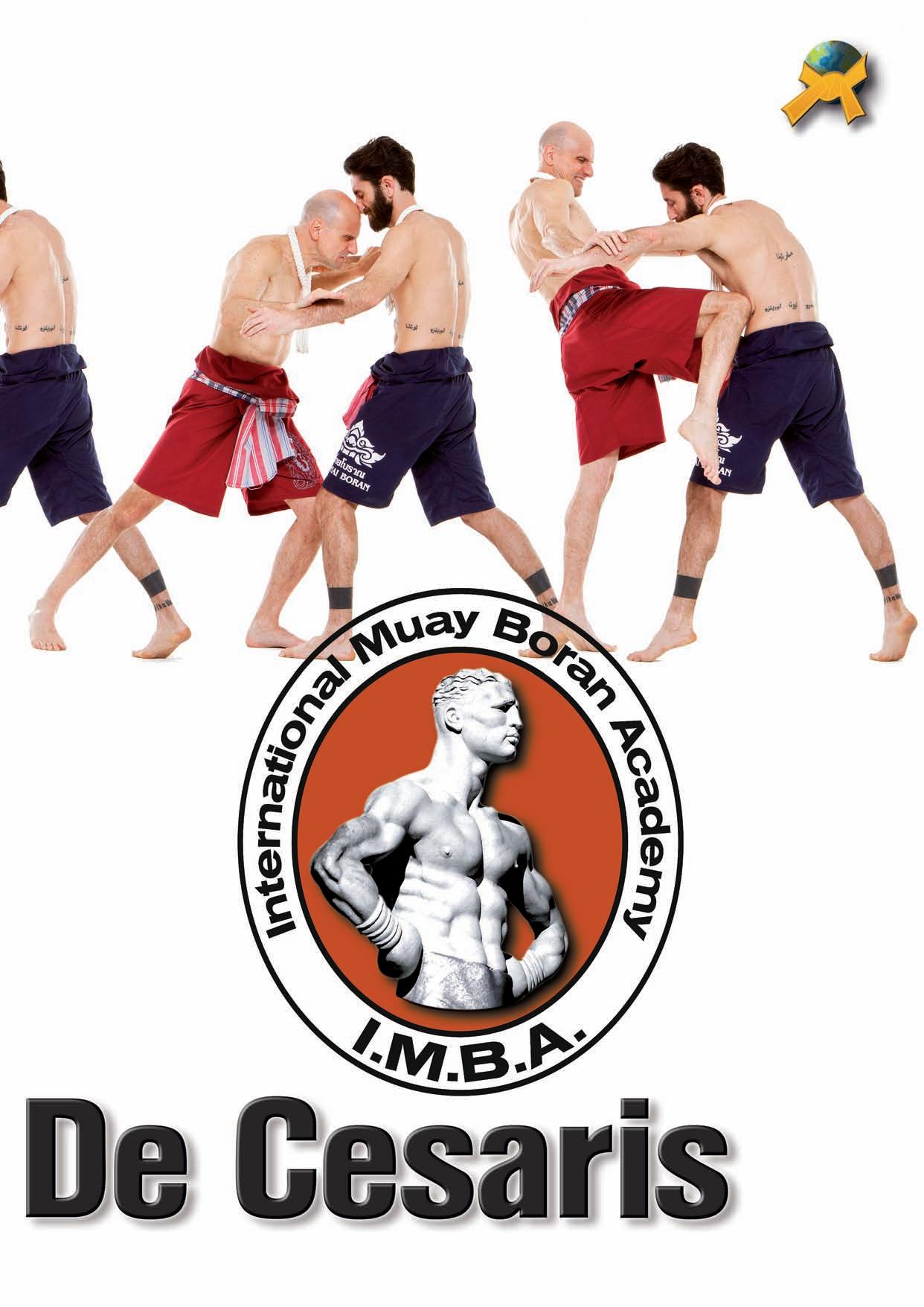
elbows to attack are first trained in a two-point position shoulder width with parallel feet, in order to get the feeling of the turning of one’s hips and shoulders in every strike. The next step consists in switching to a three-point position: the same attacks are executed from a different base and the difference between lead and rear leg and arm is introduced. Many hours should be spent rehearsing all the basic attacks while standing in these two static positions before progressing to stepping mode. Once the 4 basic footwork patterns have been introduced and sufficiently absorbed by the trainee, the combinations of steps and strikes should be trained. Stepping forward, backward and sideward, the Nak Muay should throw punches, kicks, knee and elbow strikes according to the various traditional types of timing. This advanced training is called Ta Kleun Ti in Muay Boran jargon.
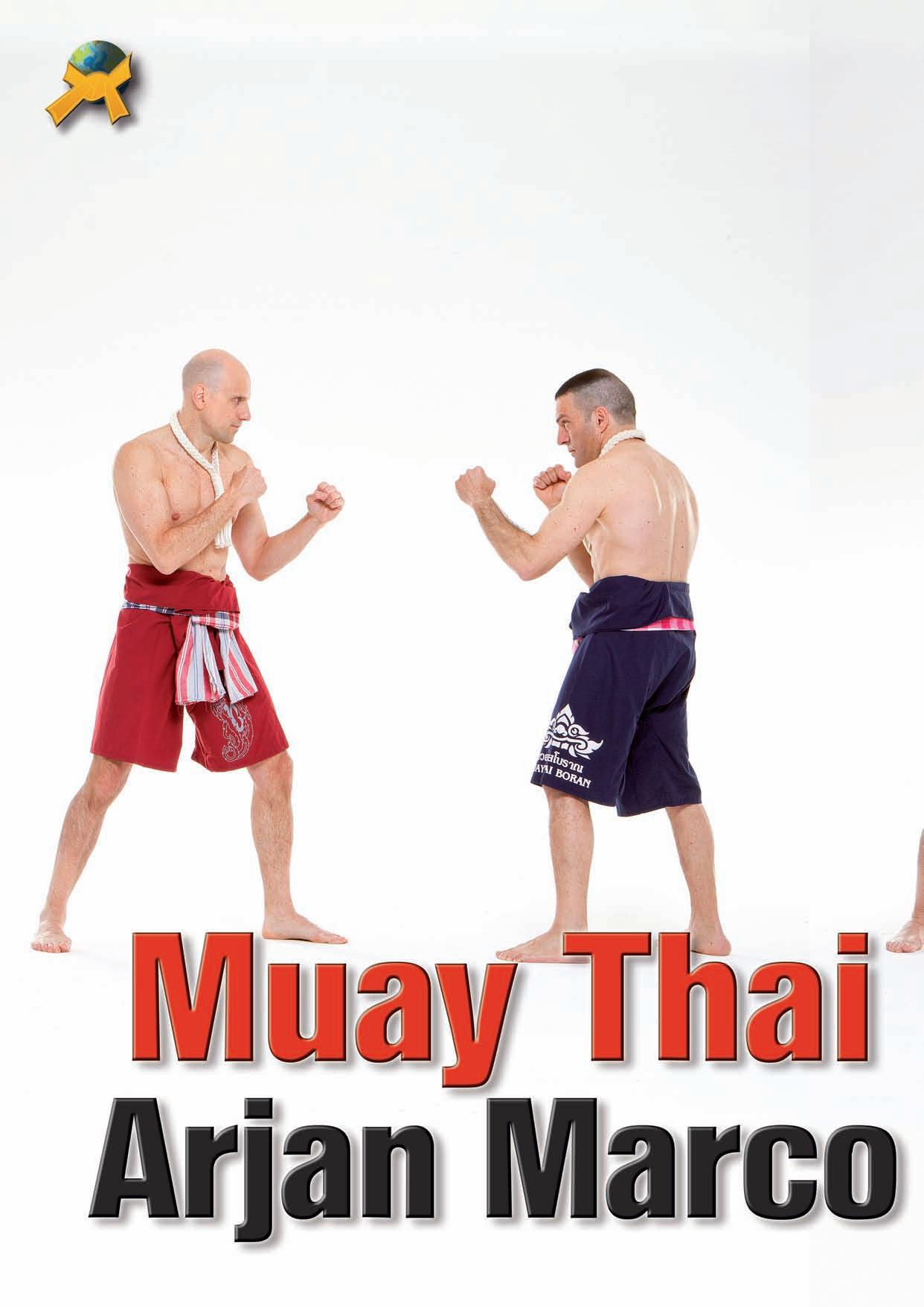
After a sufficient time, the Khru Muay should introduce the advanced attack patterns into his students’ daily training. Every teacher of Muay holds the secret to the ancient offensive strategies of his style. In Muay Boran IMBA five elements are considered fundamental for developing a student’s offensive efficiency. These elements are as follows.
1.Number of strokes
2.Power of strokes
3.Category of body weapon
4.Leading weapon
5.Special attacks
1.The first element deals with the concept of combination of attacks or Phasom Muay. There are 4 basic types of offensive
combinations in Muay as far as the number of strokes is concerned. In fact, a boxer can strike with one, two, three or four blows with good results, if he knows how to properly combine the strikes with correct timing and good footwork. In traditional Muay, all teachers divide the rhythm of attacks into these 4 categories:
•Mai Rook Neung Chawa (offensive techniques based on a single strike)
•Mai Rook Song Chawa (offensive techniques based on a combination of two strikes)
•Mai Rook Saam Chawa (offensive techniques based on a combination of three strikes)
•Mai Rook Si Chawa (offensive techniques based on a combination of four strikes).
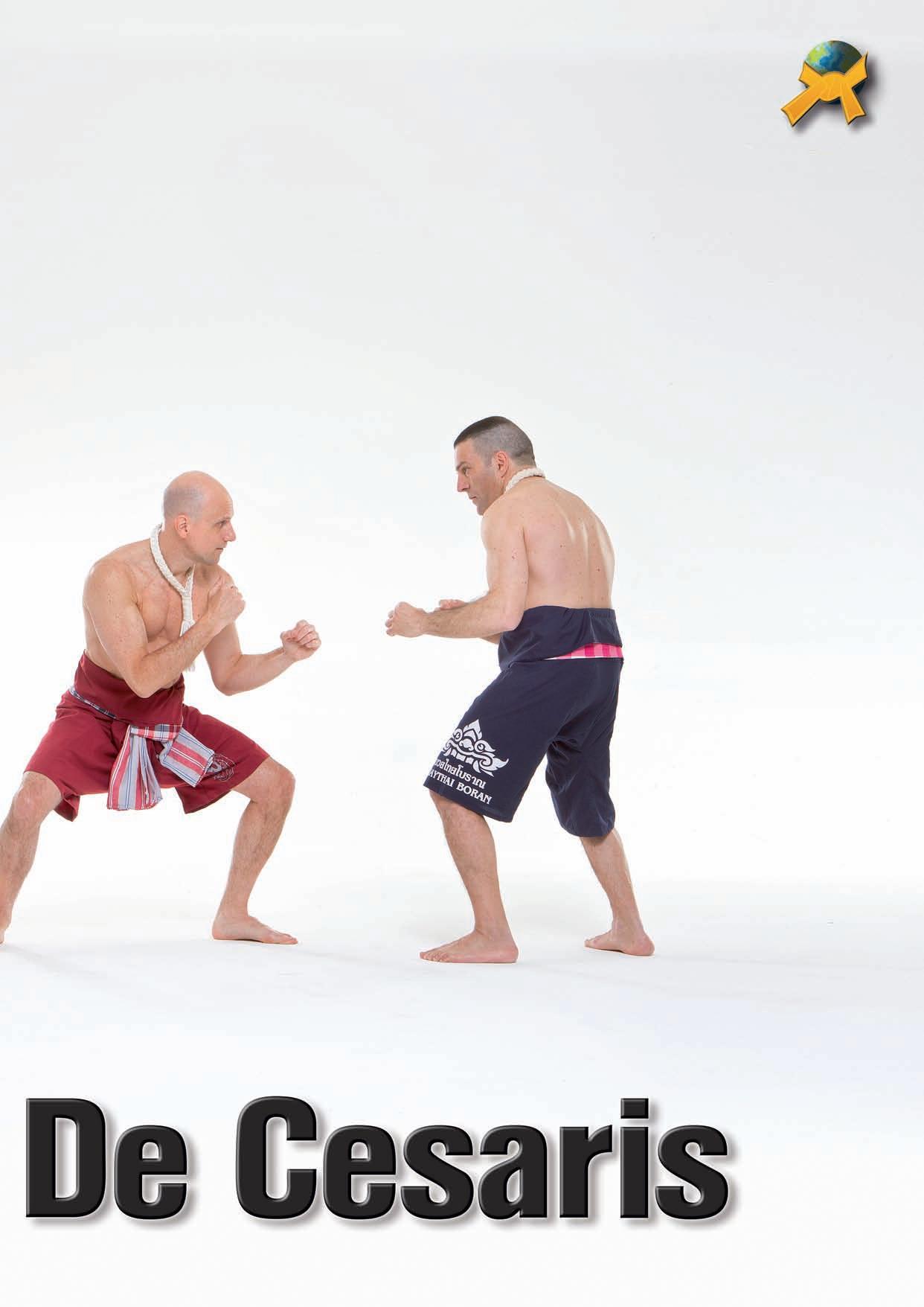
Generally speaking, even if series of five, six or even more strikes are theoretically possible, most thai boxers tend to attack with combinations of no more than four blows in order to be effective while keeping safe from a possible counter attack.
2.Once the four schemes of offensive combinations are fully understood, the element of striking power should be included in the equation. In fact, every good thai boxer knows that not all attacks are meant to hurt. On the contrary, in a series of 3 blows, for example, the “real” attack could be only the last one while the first two strikes play the role of a camouflage. In order to work as a camouflage a strike should be executed with great speed and little power.
In other words, the boxer’s body mass should not come into play and the attacking limb should hit and come back in the shortest possible time. These light and quick blows are meant to tease and distract, opening gaps into the opponent’s defense. The final attack should instead be executed with all the boxer’s body mass behind the blow, aiming at inflicting maximum damage.
3.The third element pertains to the use of the various body weapons to attack according to the first two schemes analysed above. Series of one to four strikes can be executed with the hands, feet, shins, knees, elbows and head. Obviously, the right weapon should be used at the right distance. For example, kicking at long range then closing the
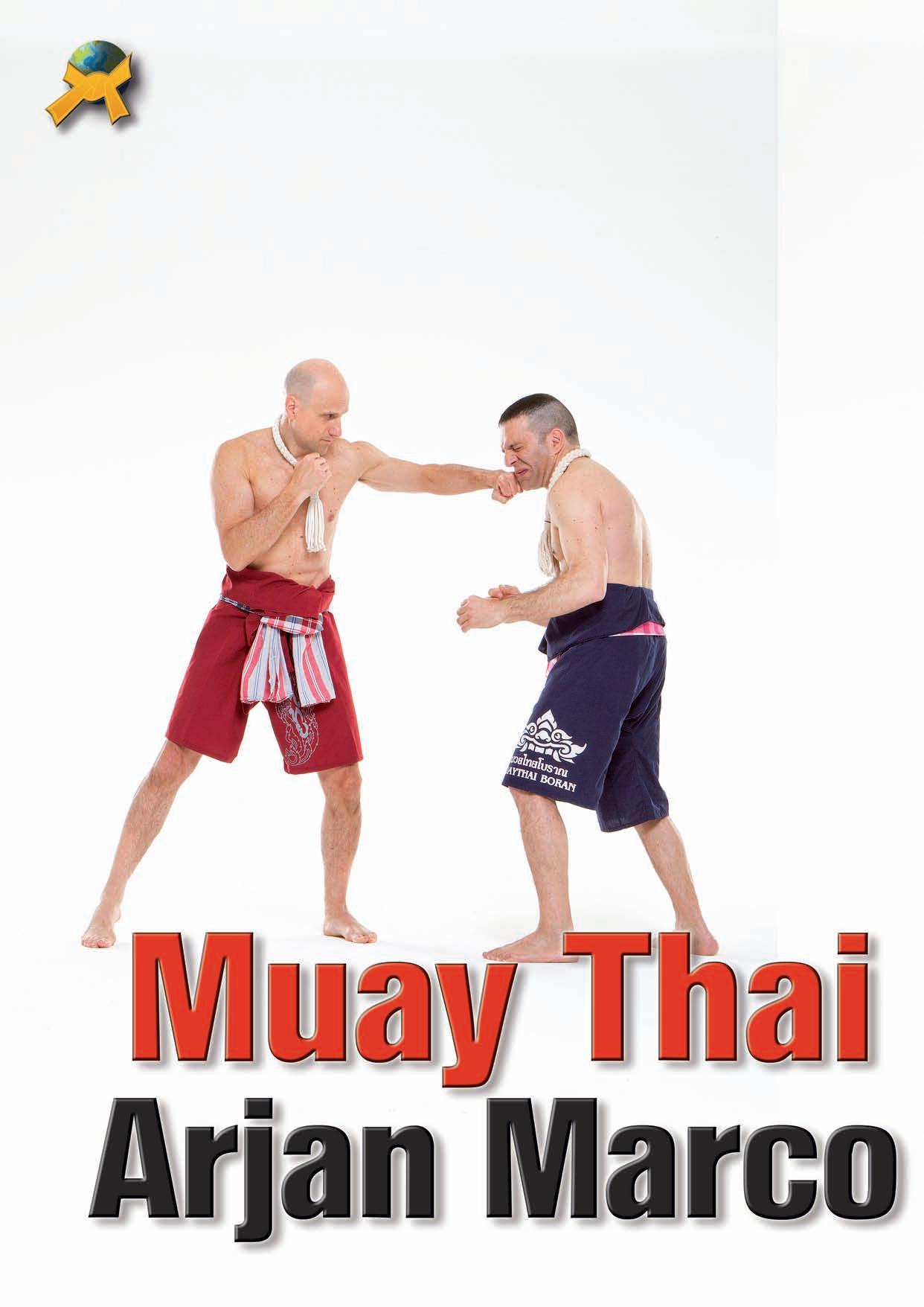
gap to punch at middle range and finally throwing an elbow at short range is a correct way to combine one’s body weapons. On the contrary, using a body weapon at the wrong distance can easily lead to defeat. A common example of this misbehaviour is trying to attack with the weapon that most beginners consider the deadliest of all, the elbow, from a long distance. This behaviour usually doesn’t bring any noteworthy results and potentially exposes the boxer to a hard counterattack.
4.The fourth element of Muay Boran IMBA’s Art of Attack deals with the choice of the best leading weapon for a given fighting situation. Choosing the best body weapon to start an offensive combination seems obvious but none-
theless is a skill that must be thoroughly understood and properly trained. Most of the times the strike that is used to start a combination is the most important of the series. In fact, it can help us to get to the desired distance from the opponent, put a stopper in his footwork, open gaps in his defence and pave the way to the following attacks. All this, without leaving ourselves open to possible stop-hits. The Jab (Mahd Trong Nam) and the lead Front Kick (Tiip Trong Nam) are considered the best lead weapons in Muay Boran IMBA. In other modern-traditional styles such as Muay Chaisawat, the vertical swing kick (Poed Tawan), the straight knee (Gratung Kampang) and the upward elbow (Soil Ga Sa) are also considered excellent lead weapons.
5.The fifth category refers to the so-called “special attacks”. In ancient times, Siamese warriors trained for hand to hand combat, no holds barred. Together with the use of swords, spears, axes and knifes the soldiers had to be trained in unarmed fighting techniques that could save their lives, once deprived of their weapons. Training for combat on the battlefield included strikes with the various body parts and close range tactics aimed at dislocating the enemy’s joints or taking them to the ground to finish them with kicks or knee drops. The grappling techniques used by those ancient warriors are still considered as a brutal yet extremely effective way to attack an opponent and are included in Muay Boran IMBA’s five offensive strategies. Tum (throw), Tap (overlay), Chap (seize), Hak (break) are the four special systems of attack of traditional Siamese Martial Arts that should be included in every Muay Boran syllabus and carefully studied by all serious practitioners of this fascinating Martial Art.
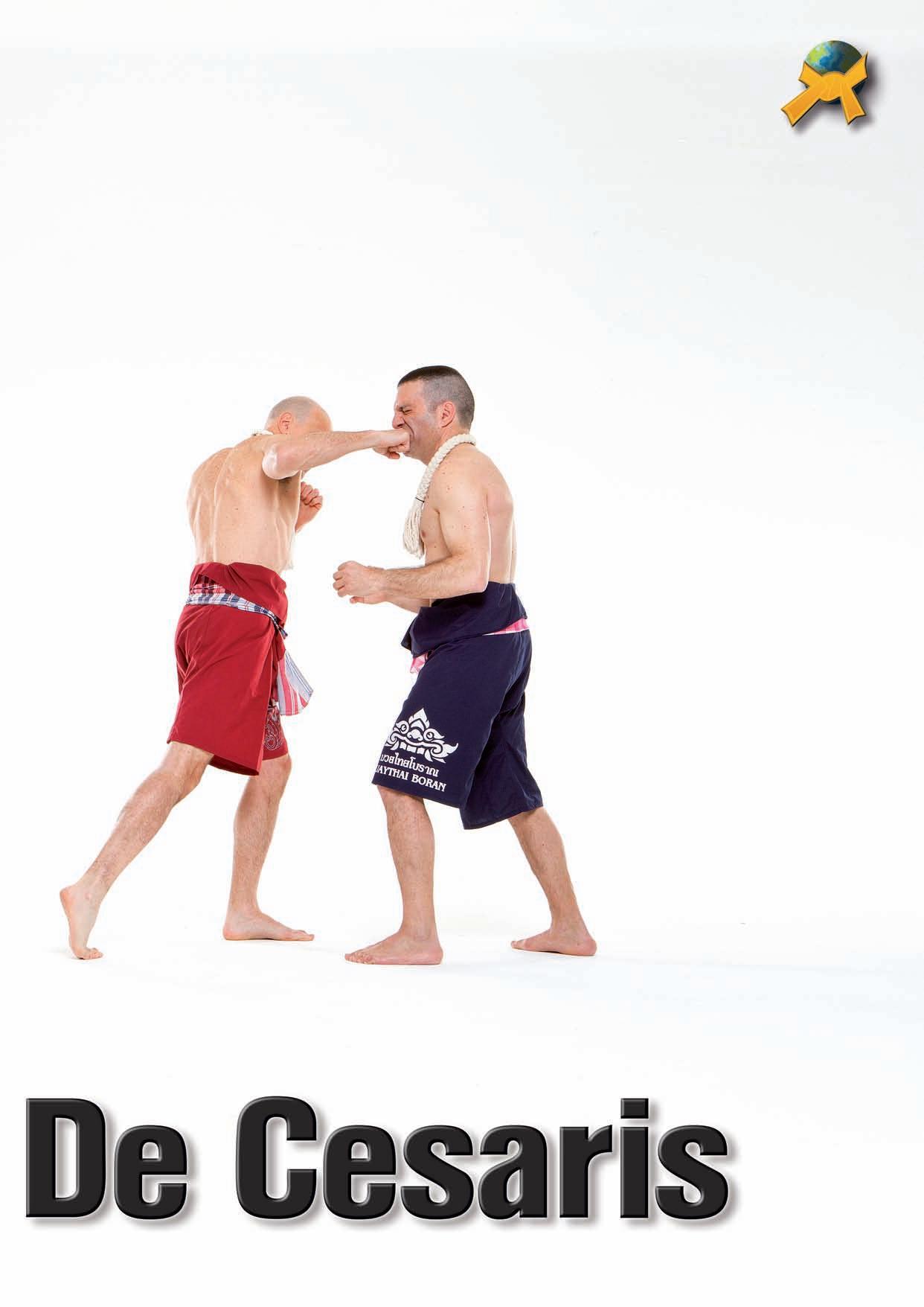
For more information about Muay Boran IMBA:
IMBA Official website: www.muaythai.it
• Europe: Dani Warnicki (IMBA Finland) dani.warnicki@imbafinland.com
• South America: Juan Carlos Duran (IMBA Colombia) imbacolombia@gmail.com
• Oceania: Maria Quaglia (IMBA Australia) imbaaust@gmail.com
• General Secretary: Marika Vallone (IMBA Italia) imbageneralsecretary@gmail.com
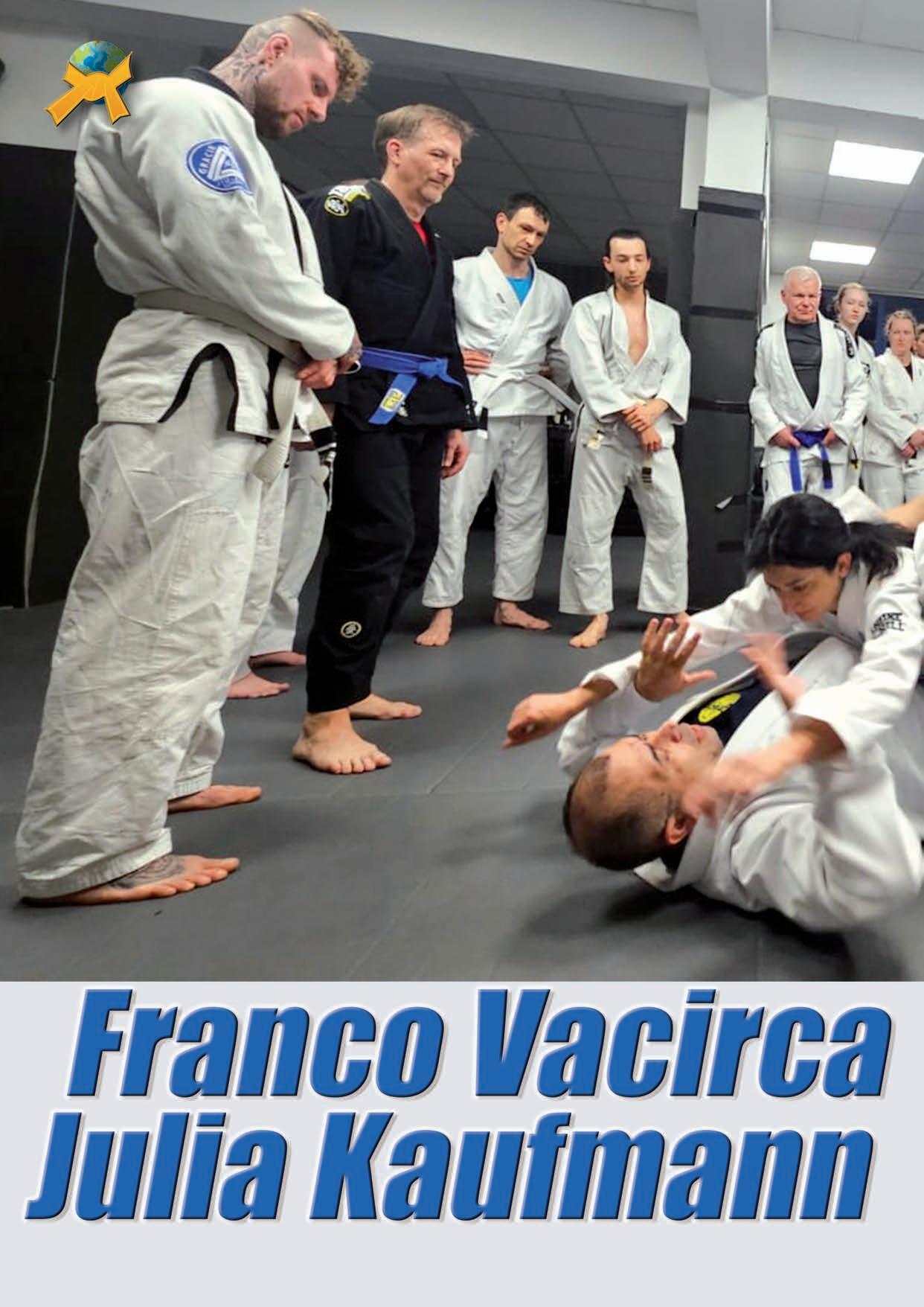
How good can Women be at Brazilian Jiu-Jitsu?
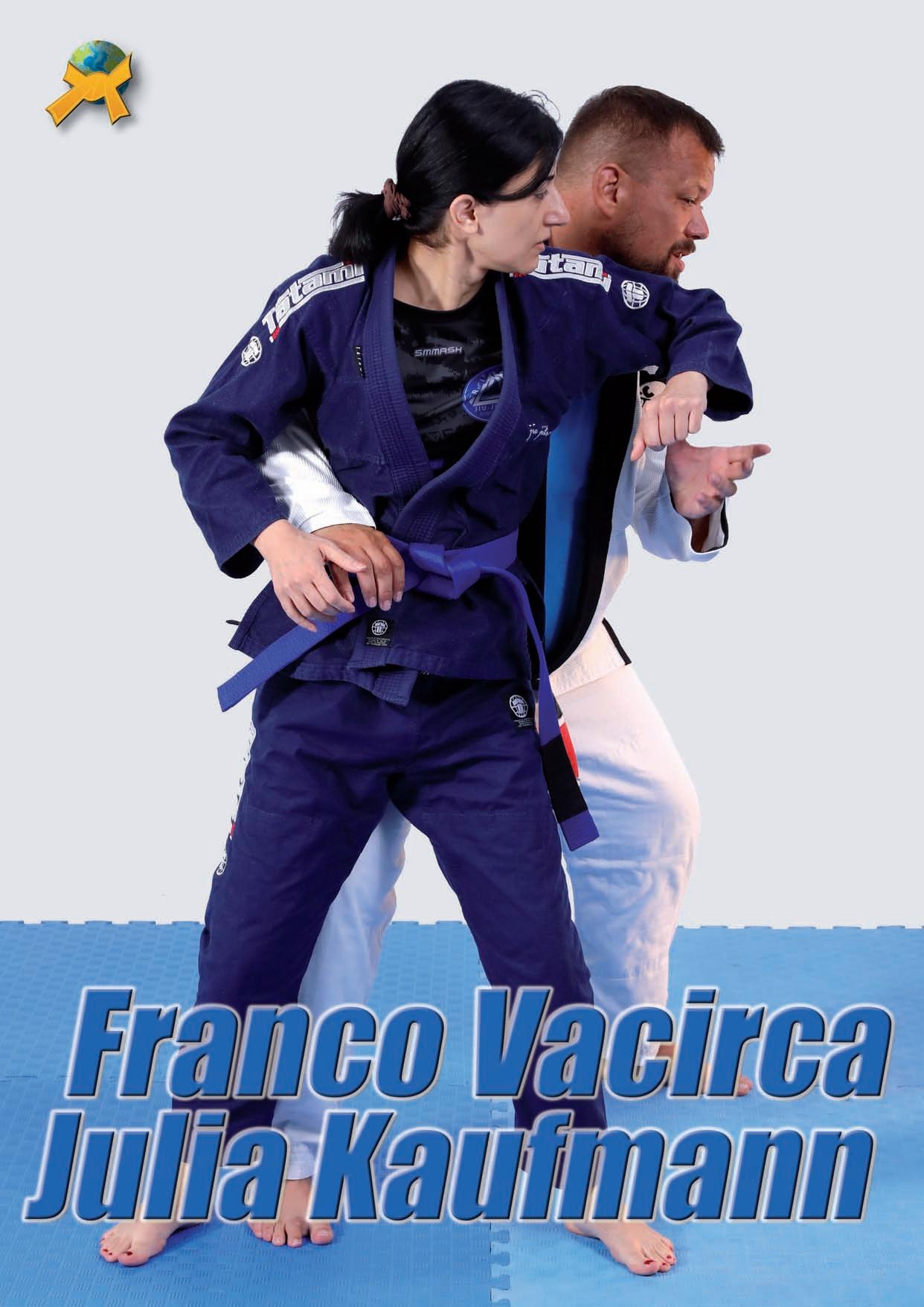
Why do most people still believe that the world of martial arts belongs only to men? While the numbers still show that this is the case today, women are making great strides. In Brazilian JiuJitsu (BJJ) in particular, many female and male athletes are already training, so it won’t be long before this changes. This is also thanks to our female athletes, who are not only successful in competition but are also taking the important step of working as coaches. Not all women feel comfortable training with men. That’s why I want to say a big thank you right now to all the Julias, Sandras, Maryams, and so on. I’m proud that you’re all supporting this and showing other women and girls that BJJ is a path you can take without any ifs or buts.
For several years now, I’ve been talking about a “boom,” a wave, in Brazilian Jiu-Jitsu. More girls and women of all ages are joining our training sessions. It’s the same across Europe! They all recognize that BJJ is one of the best workouts and that it offers an added benefit: you also learn a few essential self-defense techniques. BJJ benefits both body and mind equally and builds self-confidence.
It’s no secret that yoga, Pilates, and other traditional fitness options remain popular. However, those who find their way onto the training mat—often because they’ve taken a self-defense class, heard about BJJ, or because a coworker, friend, or family member is already at a BJJ school—learn about the benefits of BJJ and want to give it a try.
Women and men are looking for new ways to boost their self-esteem, find a better balance in life, and focus much more on health and nutrition. I know it’s a challenge for everyone, but once you understand the benefits you can gain from it, you’ll enjoy it even more and feel great. We need to find balance and follow our own path in life to feel great and fulfilled. BJJ can be a truly valuable tool if the instructor is also a positive and approachable person who supports students on this journey.

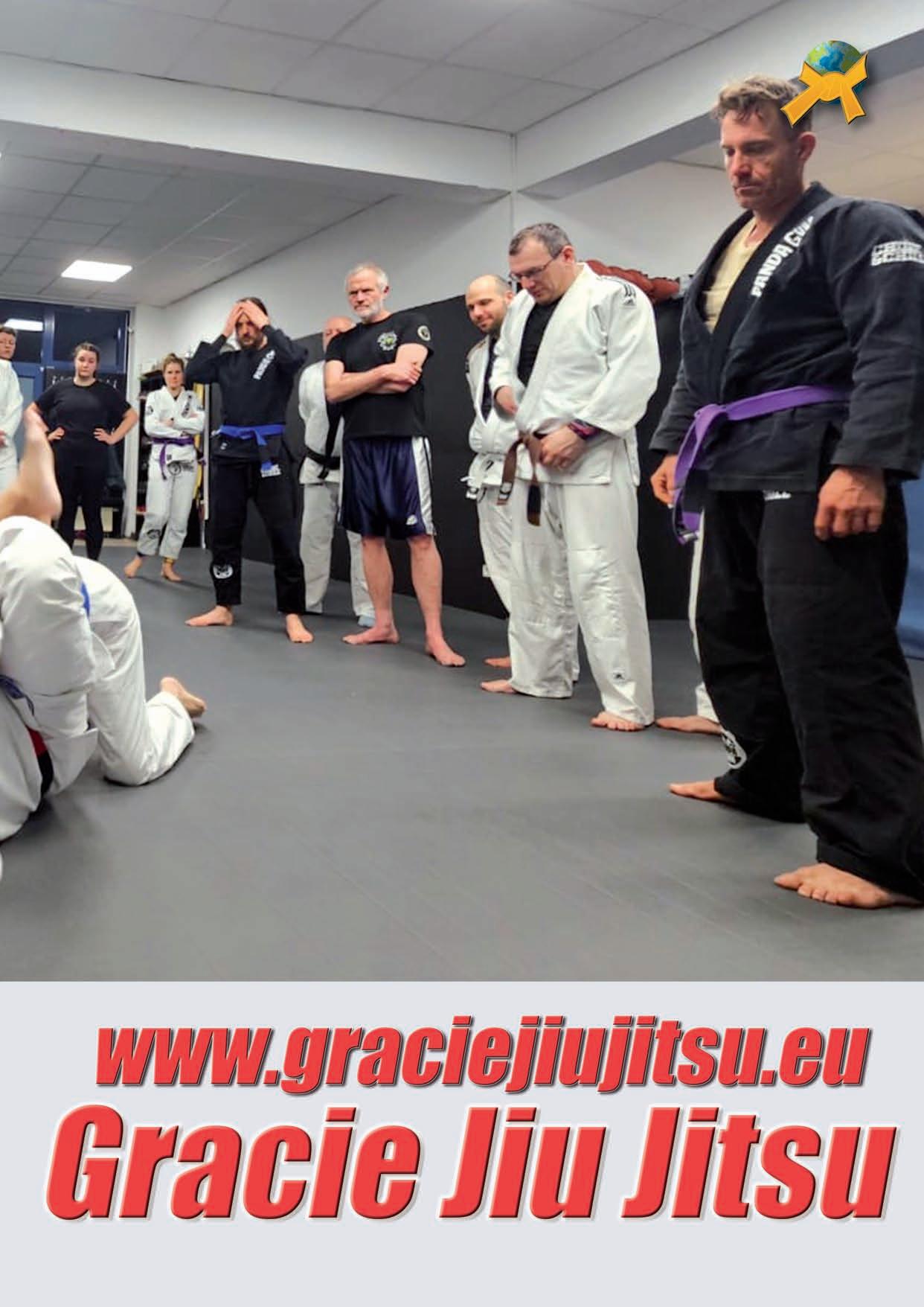
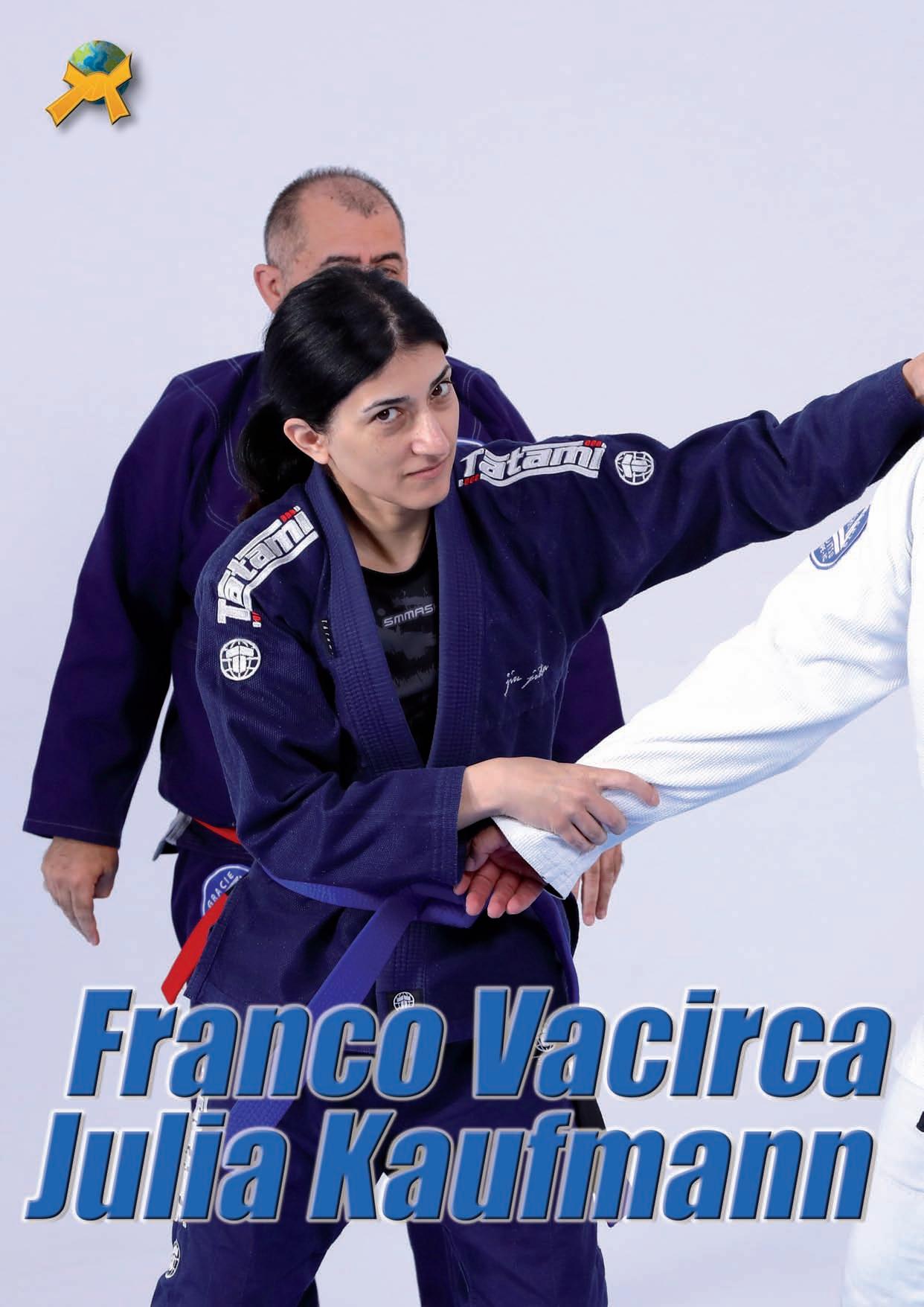
We all know that martial arts training generally offers some basic elements for self-protection. But the self-defense aspect alone won’t fully satisfy you in the long run. If you choose BJJ, there are many other aspects that will make a difference sooner or later— where and with whom you train. Over time, the community also plays a role, as you spend a lot of time with your BJJ peers.
The BJJ taught by us (Gracie Concepts® Network), based on the teachings of Grandmaster Hélio Gracie, was developed for weaker, smaller individuals to defend themselves against larger and stronger opponents. It utilizes leverage, tactics, and intelligence. In modern (competitive) BJJ, different rules apply, as it involves athletes. As in all other sports, athleticism is certainly very important.
In the early days in Brazil (around 1908), when traditional Japanese jiu-jitsu was introduced—which later became “Gracie Jiu-Jitsu”—Brazilian masters and their followers engaged in real combat not to boost their egos, but to test the effectiveness of the Gracie style. This is how the new training methods and improved techniques we know today came about.
There were no katas, no rituals, and no unnecessary techniques—this is how authentic Brazilian Jiu-Jitsu came into being. During this time, Gracie Jiu-Jitsu emerged by using these sparring matches, also known as “ValeTudo,” as a testing ground and establishing ground fighting as the focal point of this style. As my BJJ mentor, Grandmaster Pedro Hemetério (Carlos Gracie’s first black belt and Hélio Gracie’s first red belt), always reminded me, the Vale-Tudo fights were used as a “filter” to test what worked and what didn’t. Based on this hard-hitting combat experience, our Gracie Jiu-Jitsu today includes techniques and tactics such as the “closed guard” (a leg lock with the back on the ground), defense against striking techniques (“Punch Prove”), arm and shoulder locks, as well as a variety of chokeholds.
Standing throw techniques are an important part of GJJ combat, though the goal is different from that in judo or wrestling, as the fight must end not with points but with submission!
In self-defense, it can be effective to use a kick to the groin or a finger jabbing to the eyes if the situation allows it. But let’s be honest: if you think it’s that simple, you’re living in a fantasy world. If you want to defend yourself successfully, you must also be prepared to fight for it in a real-life situation. BJJ offers all the elements and training options to learn and practice this very “fighting spirit” and to survive against an opponent’s pressure.
Sexual assaults are always unexpected and, unfortunately, often come from people in your immediate circle. Gracie Jiu-Jitsu also teaches how to use body language to keep an attacker at a distance. But at the very latest when physical aggression occurs, you also need the right tools to stop your opponent.
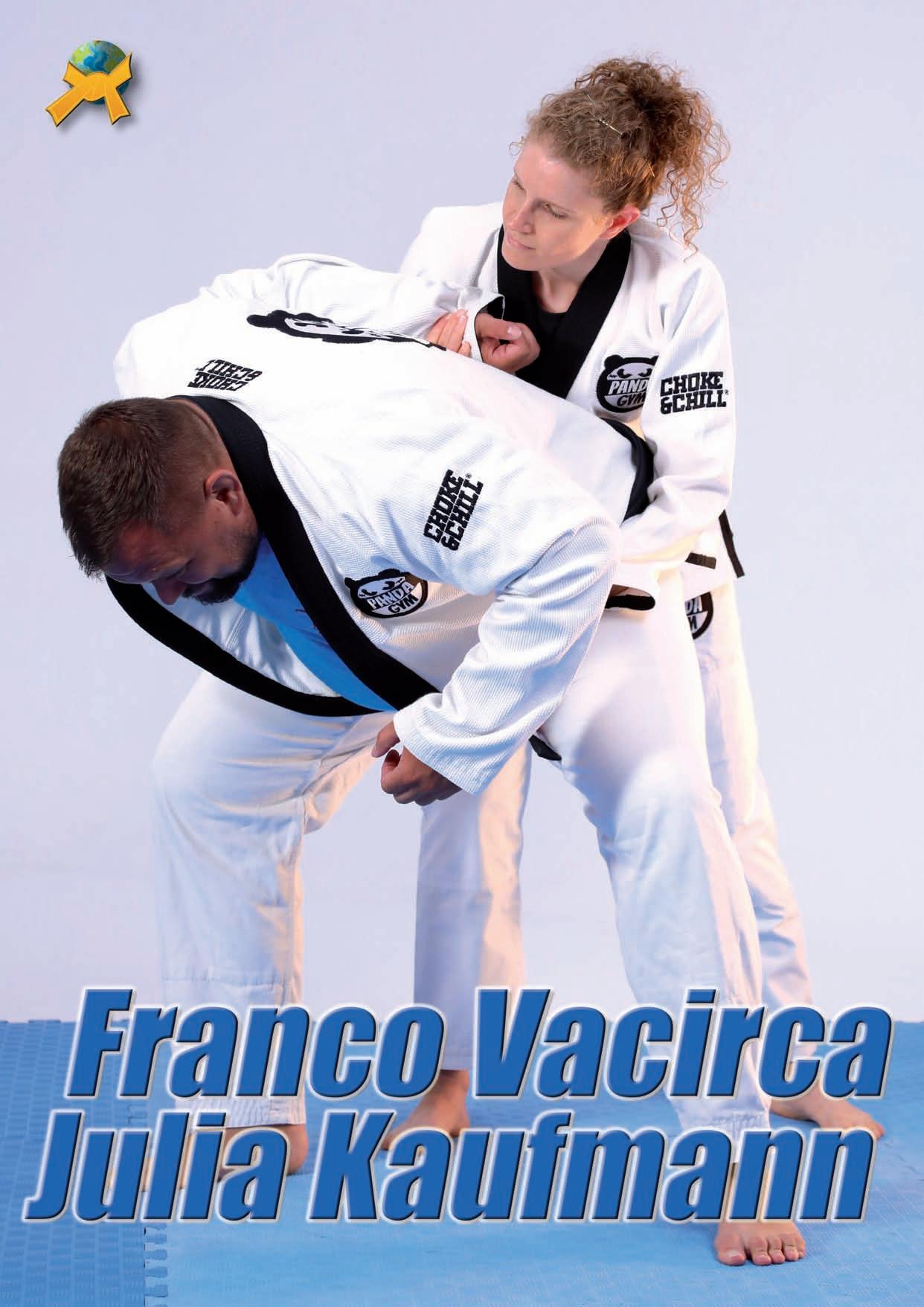

I know that women (as well as men) often find it difficult to start BJJ, and that it’s always easy to find excuses. That’s why I’ve already mentioned that, in the long run, starting BJJ “just” for self-defense isn’t the right motivation.
However, I promise you that after just a few lessons, you’ll be able to overcome your insecurities and achieve amazing things. Don’t try to imitate your male BJJ peers. Be yourself! Ask your instructor for support so that you feel comfortable in training right from the start.
Don’t try to eat the whole pizza at once; instead, cut it into small pieces and savor it. The same goes for Gracie Jiu-Jitsu: if you don’t want to end up with indigestion, you should enjoy it in small bites too! Taking it one step at a time is easier and more effective.
We don’t focus on BJJ competition, but it could be a great experience. At Gracie Concepts®, we focus on “BJJ for everyone.” The combination of physical contact, trusting relationships, and playful interaction creates an environment where lasting friendships can form. In my humble opinion, the real goal in Gracie Jiu-Jitsu is a healthy and balanced life. The strength we need for life, family, work, and achieving personal goals is based on strength, balance, and positivity.
BJJ is a great way to achieve this. It has motivated me for over 35 years, and I am very grateful to all my teachers, colleagues, students, and friends for that. Brazilian Jiu-Jitsu has some of the most useful surprises in store for you. You’ll feel the benefits right away, you’ll love sport, and you’ll realize you should have started ten years ago!
– Franco Vacirca
As far back as I can remember, I’ve always been very active, and sports have always played a central role in my life. I’ve been practicing contact sports for 14 years. I started with boxing and kickboxing. That’s when I first felt like I’d finally found a sport that truly resonated with me, because everything I’d previously only found in isolated aspects of various athletic activities was finally accessible here in combination: strength, endurance, and both physical and mental challenges.
During the pandemic, our training group broke up and, unfortunately, never really came back together. However, through some former training partners and coaches, I ended up at Dino Team Magdeburg—a club that primarily identifies with BJJ. The welcome here was warm from the start, and I turned to BJJ— albeit somewhat hesitantly at first, but then with growing enthusiasm. Here I realized that while I still had a passion for stand-up fighting, I was missing new challenges. The numerous and extensive techniques, the fluid movements, and the efficiency achievable simply by changing the smallest details left a lasting impression on me. Soon, my focus shifted more toward ground fighting. I realized that in BJJ I had found something where one can constantly continue to grow and is repeatedly confronted with challenges that I seek with my athletic ambition. Furthermore, if one trains mindfully and takes care of one’s body, BJJ can be practiced even in later years.
It didn’t take long before the question arose: what about competing? I must admit that I was initially reluctant. I had used my age as an excuse (I was almost 40 at the time) and thought I was out of the running. In fact, however, the question really got me thinking: somehow, I wanted to know what I would do? And the realization that, at the end of your life, you only truly regret the things you didn’t do ultimately led me to approach one of our coaches and ask if he could help me develop a competition strategy. He did so very willingly and with great attention to detail. This sparked my ambition, and I made immense technical progress in a short time.
Now it was time to put these skills to the test in a tournament. More people joined us for this upcoming international tournament, and so we began a great time together preparing intensively for the competition with extra training sessions, technique drills, and lots of fun. We then traveled to the tournament together. It was an incredibly exciting day, and very successful. I competed in a total of five matches that day, some of which I lost, but others I won. So, at my very first tournament, I was able to take home a silver medal. That emotionally charged day, which we all enjoyed together, will remain in my memory forever.
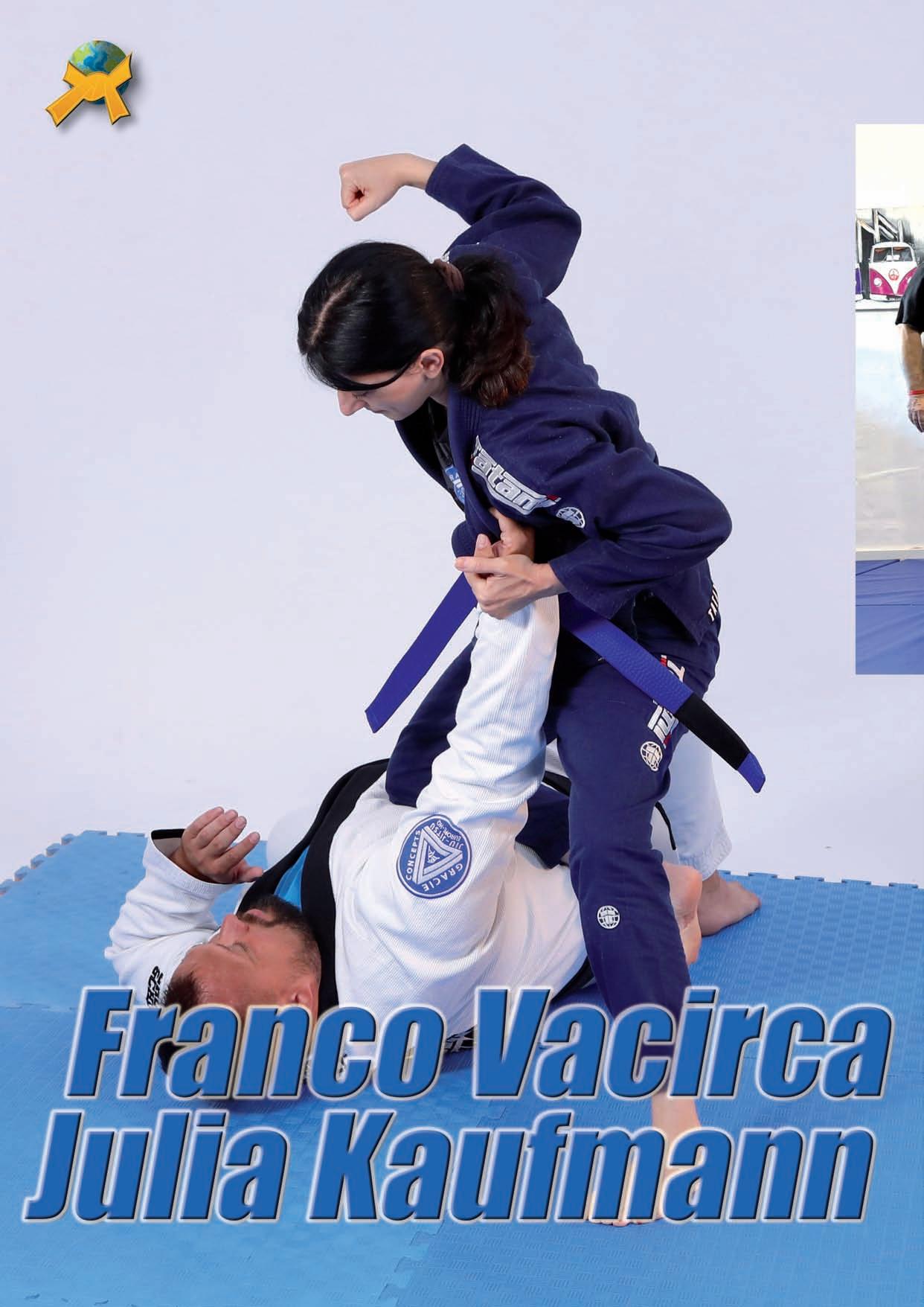
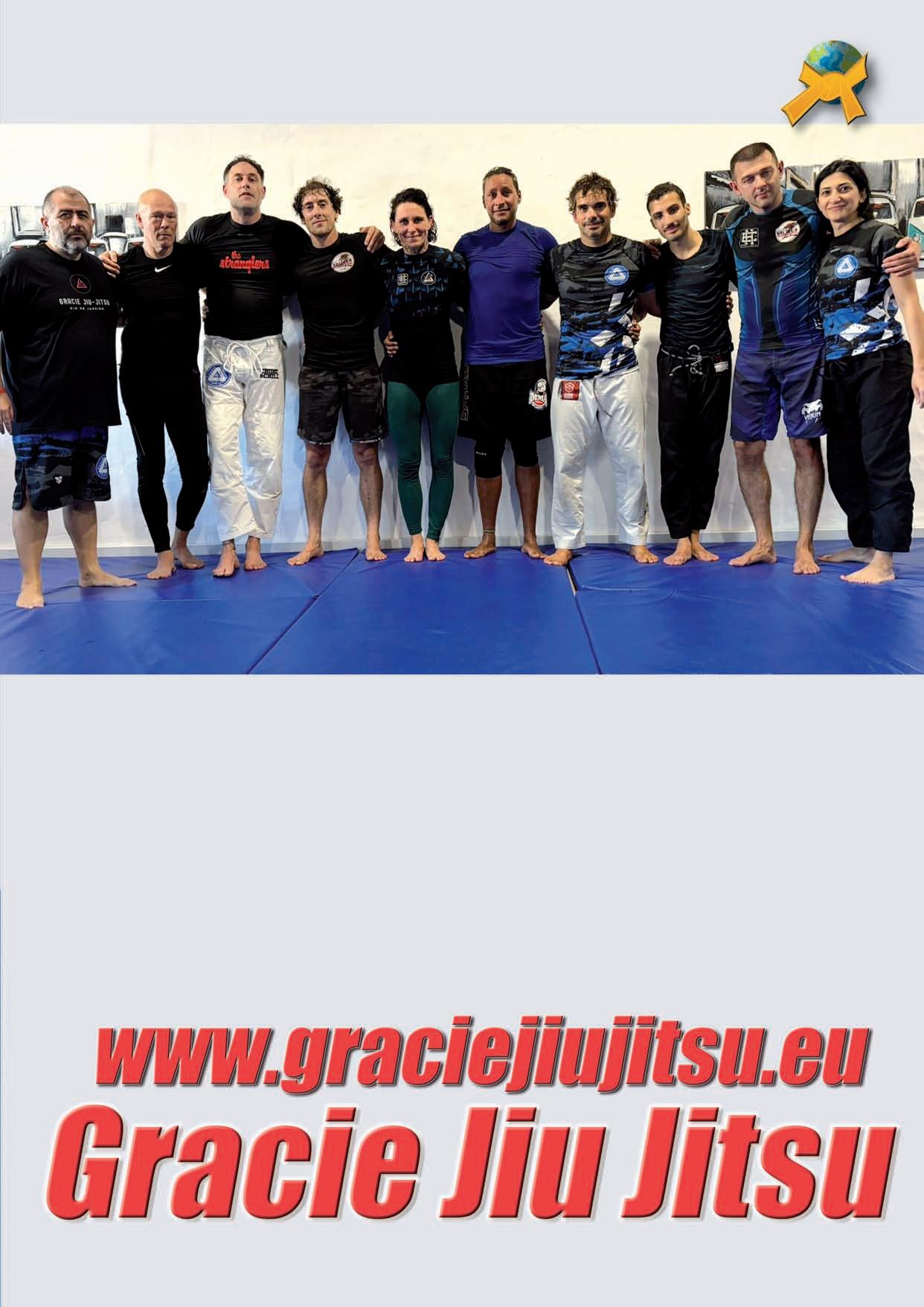
But it didn’t stop there, the ice had been broken. More tournaments followed, all of which I competed in very successfully. Unfortunately, at most of these subsequent events, I haven’t yet had the opportunity to face five or more opponents to apply the skills I’ve acquired. It’s particularly noticeable at tournaments that women are still very underrepresented, even though BJJ has become very popular among many girls and women. It would be wonderful if more of you could get excited about competitions, regardless of age, of course. In fact, I once had the experience of facing a woman on the mat at a tournament who shared not only the same belt rank but also the same age group as me. I also have extremely positive memories of this experience, as fighting style and focus can vary greatly depending on age. Another new experience, simply fantastic!
In my immediate circle, I always try to be a motivating influence on those around me, and apparently, I often manage to inspire others with my enthusiasm. As a result, more girls and women are gathering around me who are getting excited about stand-up fighting, BJJ, and participating in competitions. I support and encourage this as best I can and am excited to see where the journey takes us.
But regardless of gender, age, or life circumstances, at all the competitions, open mat events, training camps, and open training sessions I’ve been able to participate in, a thoroughly respectful atmosphere has always been at the heart of our interactions. This has left a lasting impression on me and inspired me deeply. These are experiences I look back on with gratitude and that, at the same time, motivate me to look forward to the future.
www.graciejiujitsu.eu
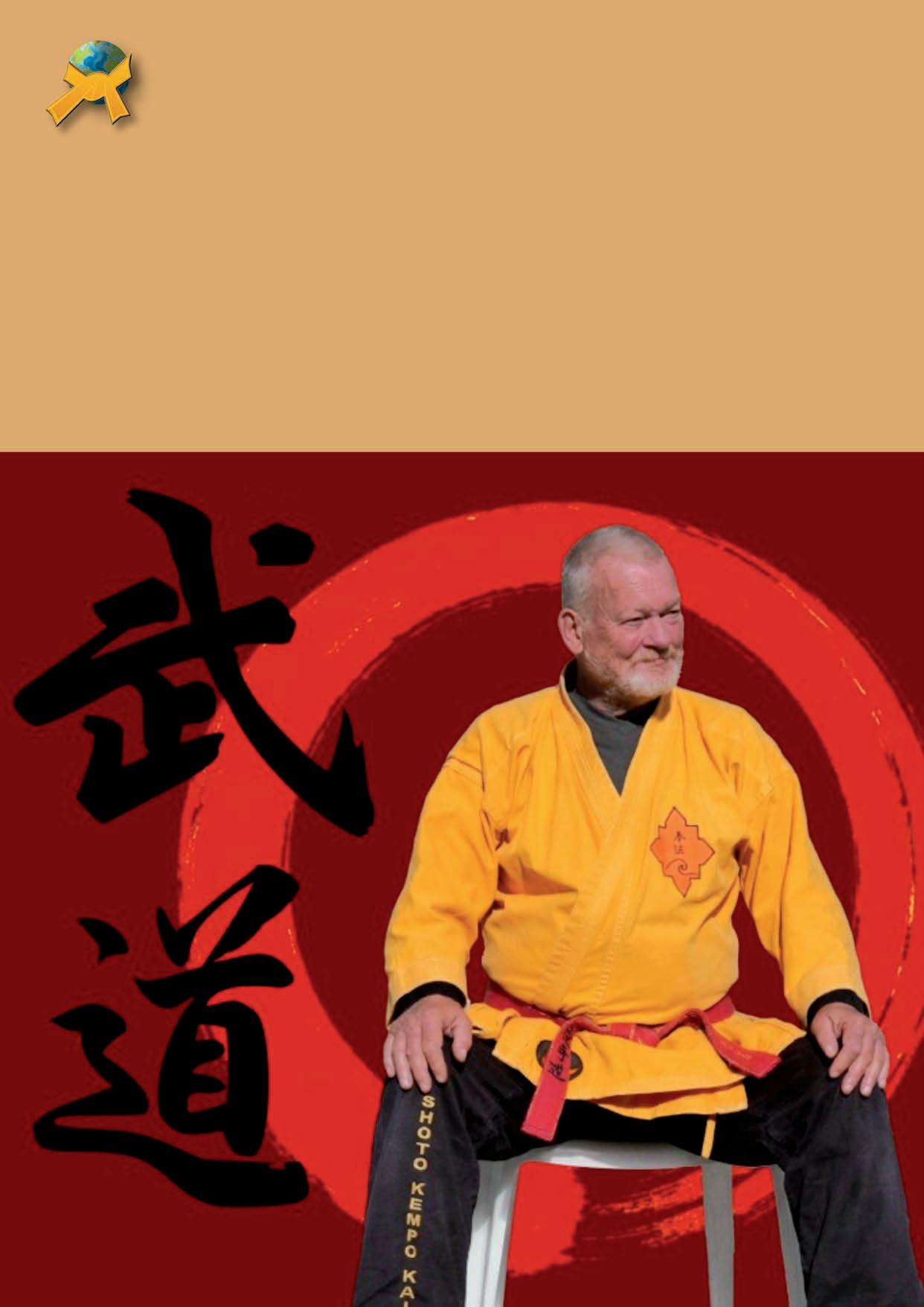
Harnessing the Positive Power of Martial Arts in Education, T herapy, and Coaching
Educational scientist, body psychotherapist, and budo master Dr. phil. JörgM. Wolters is regarded as a “pioneer of karate in Germany” and the founder of one of the “most important styles bearing the name ‘Kempo’” (W. Lind, Budo Lexicon, Berlin 1997). Based on his many years of practical experience and scholarly work, he developed Budo Pedagogy in the 1990s—a method that specifically applies the principles of Budo to education, therapy, and coaching.
The focus here is not on martial arts as an end in itself, but on their targeted use as a tool for concrete projects with a defined timeframe and specific objectives. Budopädagogik combines the depth of traditional Budo principles with the demands of modern educational and therapeutic practice, thereby opening up new approaches for working with people in general and, in particular, for working with people with special needs.
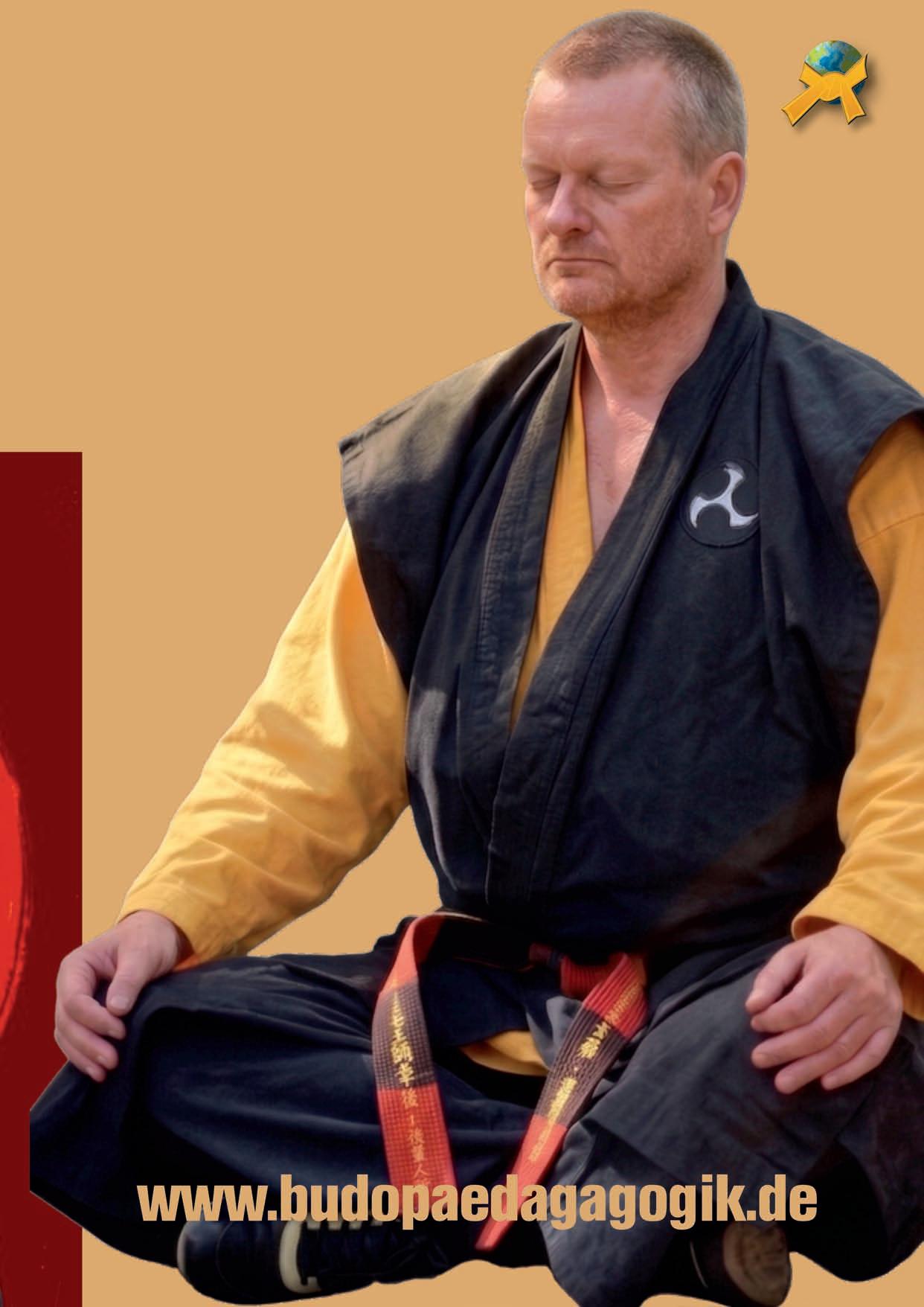
Dr. Jörg Wolters, Gründer der Budopädagogik
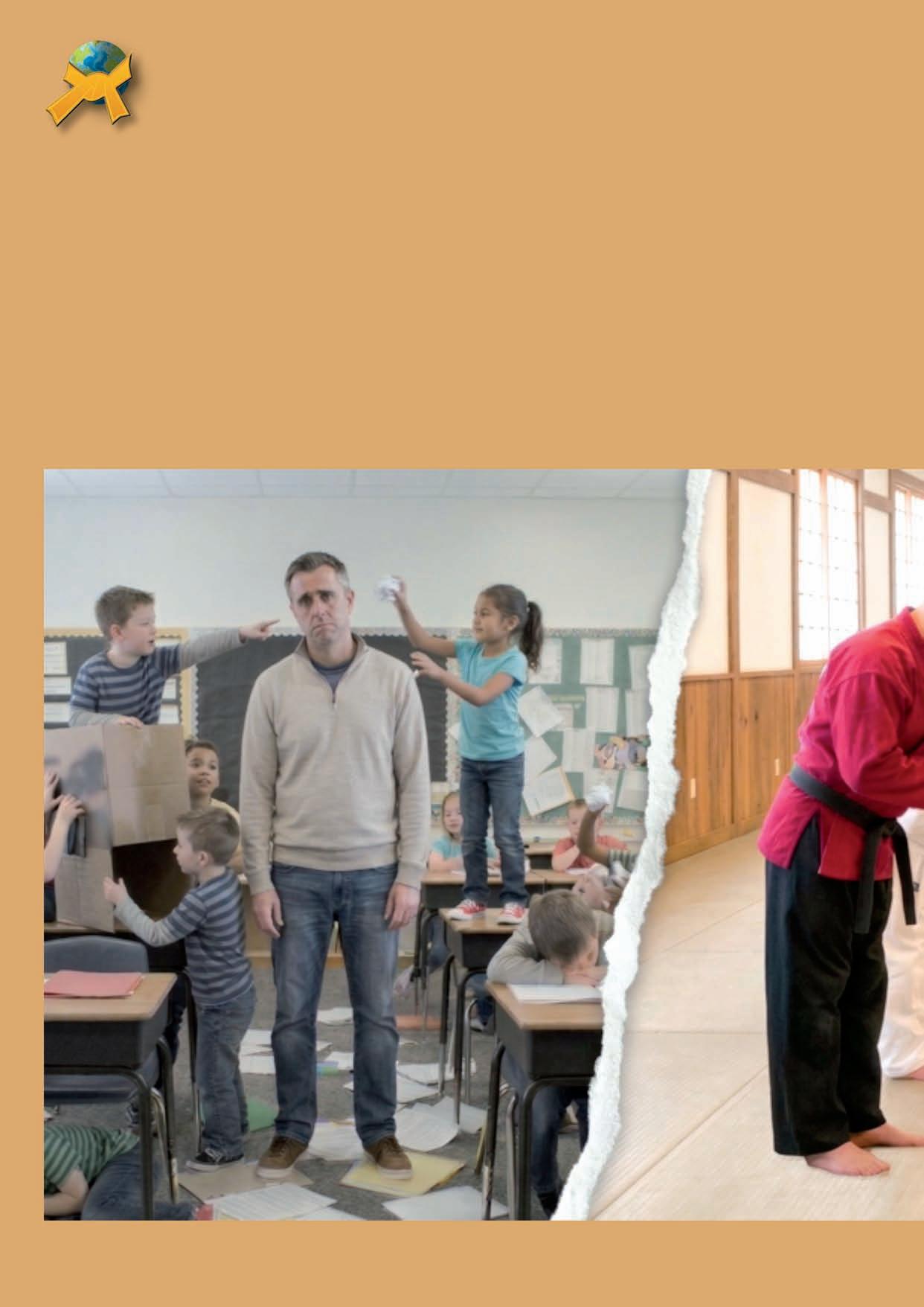
Traditional Far Eastern martial arts (Budo) provide a unique and proven theory and practice of body-mind training for both physical and mental self-mastery. Taught as authentic Budo, they serve as a means to shape one’s character. Those who understand the violence within themselves can, as peaceful warriors, use it as a conscious and regulated source of energy—or choose to forgo it. Budo is a way of life, a “practical philosophy” for overcoming one’s own limitations and suffering. The dojo is more than just a training space. It is a space for teaching and learning—indeed, much more a space for experience—where a community can grow that is committed to a shared, values-oriented way of life. The special etiquette, the rules, roles, and rituals, as well as the close “heart-to-heart” teacherstudent relationship, are a valuable method for personal development. Since time immemorial, the martial arts have viewed the human being as a whole; body and mind are inseparably connected—those who practice Budo train both body and mind equally.
In budo pedagogy, the tools and methods of budo are specifically applied to support children, adolescents, and adults in their personal development. In doing so, the unique values conveyed by the martial arts create an alternative, “exotic” framework with diverse and effective learning arrangements.
Suddenly, restless children become attentive, and adolescents develop goals. Many teachers trained in budo pedagogy have a positive influence on the social behavior and personality development of their students. Budo pedagogy helps children and adolescents, as well as educators and teachers, to reconnect with one another through movement, interaction, and reflection.
Budo pedagogy is not limited to children and adolescents. Budō pedagogy also offers valuable insights for adults: leaders learn new approaches to motivate teams physically and emotionally, founders can develop new concepts, and coaches gain effective tools for professional and personal guidance.
The foundation of Budo pedagogy is formed by the essential elements and principles of Budo. Budo pedagogy is not limited to a single martial arts style or discipline:
• Striking and kicking disciplines, such as Karate, Shaolin Kung Fu, Taekwondo, Wing Tsun, and
• Weapon-based disciplines, such as Escrima, Iaido
are just as suitable for Budo pedagogy as
• throwing disciplines, such as Aikido, JiuJitsu, Judo
• disciplines for training inner energy, such as Tai Chi Chuan.
Depending on the target group, the Budo educator selects exercises specifically. For example, exercises focusing on cooperation, self-esteem, or emotional control may be emphasized.
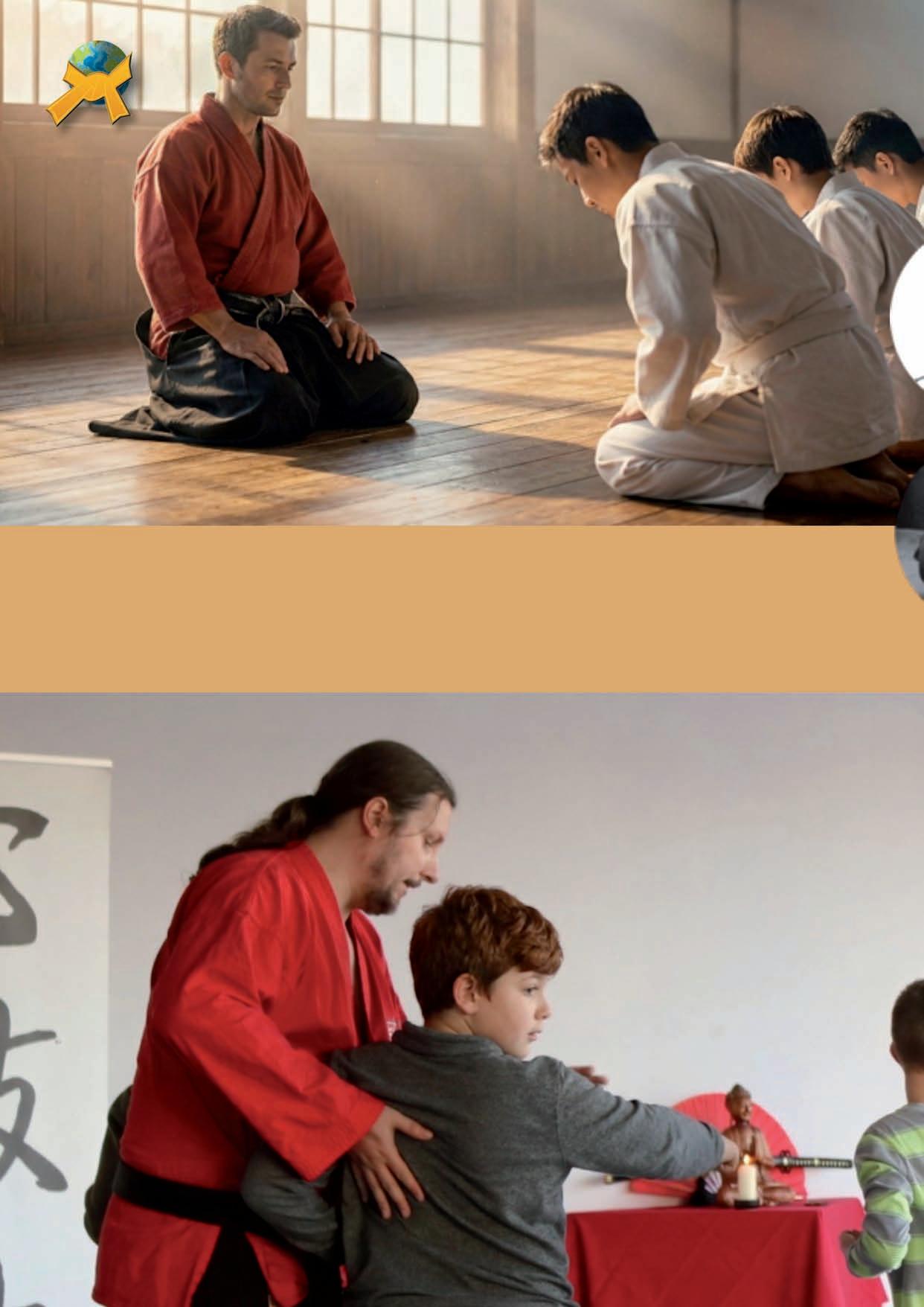
In addition to the selection of exercises, the design of the practice space and the learning atmosphere are important. The martial arts educator acts as a mentor, a mirror, and a catalyst for personal development. Their authority arises naturally from a recognizable advantage in knowledge and skill. Their authenticity opens the door to a relationship with their clients.
While budo pedagogy is frequently used with children and adolescents to foster the development of values and social skills, coaching places greater emphasis on applying budo principles in professional and everyday life. The ways of thinking and working inherent in budo pedagogy complement modern concepts and enrich the methodology of the “budo coach.”
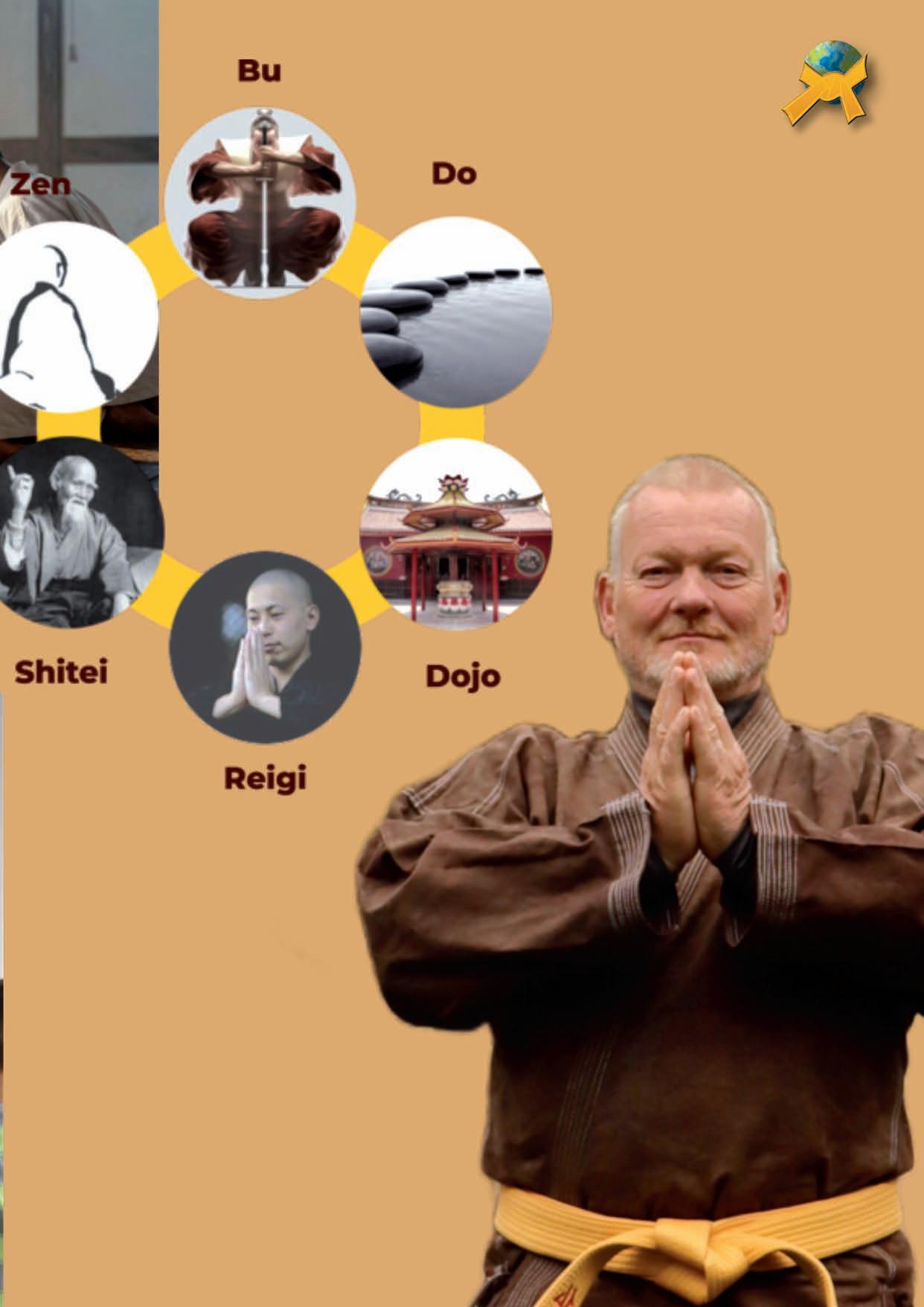
Over 30 years ago, Dr. Wolters, a Kempo and Karatedo master instructor (Hanshi, 7th Dan), developed budo pedagogy. The starting point was “Social Sports Therapy” (Prof. Dr. Rieder, University of Heidelberg) in conjunction with classical, philosophically grounded budo teachings rooted in Taoism and Buddhism.
An early project, the outpatient care of juvenile offenders (“Karate Instead of Jail”), led to an anti-violence program within the juvenile correctional system. This initiative formed the practical core of Dr. Wolters’ dissertation “Martial Arts as Therapy – The Social-Pedagogical Relevance of Asian Martial Arts,” which scientifically demonstrated the effectiveness of his program. Building on this, he developed budo pedagogy into an independent field of study that continues to expand and has proven itself in practice (Budo International reported on it as early as 1991 and repeatedly in the years that followed).
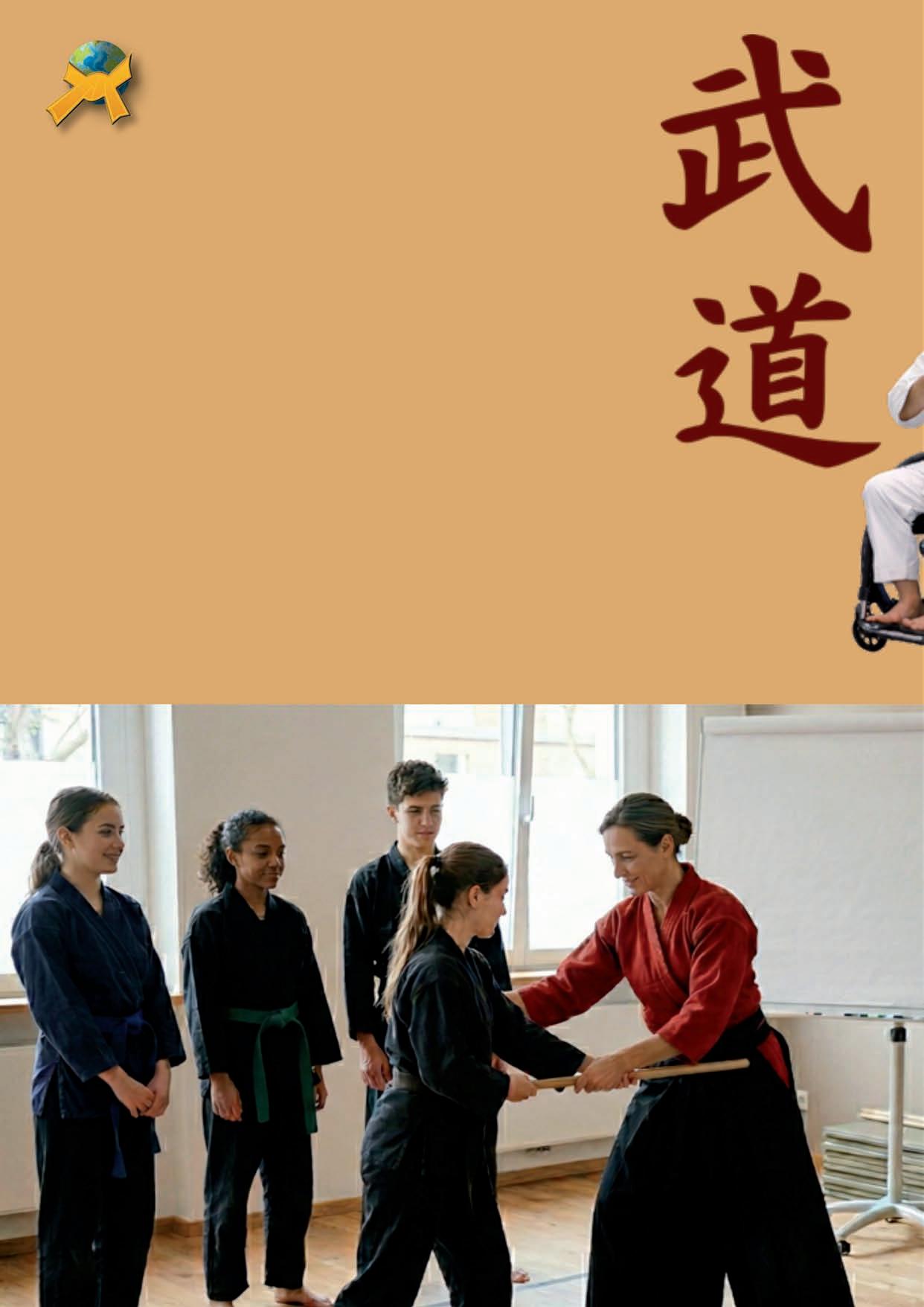
Today, Budopedagogy is primarily promoted by the Institute for Budopedagogy and Therapy (IfBP) (www.budopaedagogik.de) under the leadership of its guiding spirit, Dr. Wolters. A well-founded, professionally qualifying continuing education program was designed in accordance with the standards of recognized and publicly funded initiatives, which has been successfully conducted in various course series since 1999 in Germany, Austria, and Switzerland. Building on this foundation, advanced programs (Master of Budopedagogy and Budopedagogy Instructor) and specializations (Clinical Budopedagogue, Budotherapist) are offered.
Trained and certified Budopädagogen work full-time or part-time in various educational fields, run their martial arts schools with greater expertise, serve as coaches, or are employed by an institution where they lead Budopädagogik programs.
These budopedagogical programs reach many different target groups, ranging from preschoolers in kindergarten and first-graders to high school students, college students, and even corporate executives. The list of examples is long, so only a few are listed here:
- In kindergartens and schools, projects focused on values development and healthy selfesteem have been successfully implemented.
Budo pedagogy can be particularly helpful during the transition from elementary school to secondary school.
- For children and adolescents with behavioral challenges, learning disabilities such as dyslexia, or body image issues and obesity, budo pedagogy can help improve self-perception and how others perceive them. Various projects in this area have already been successfully implemented by different budo educators.
- In the field of Budo coaching, several programs for conflict resolution in management and for the development of startups have been developed and successfully implemented.
- In particular, people with disabilities and those with mental and physical ailments can be effectively reached through the physical approach of “Movement – Encounter – Reflection.” For example, budo pedagogy has been successfully applied in child and adolescent psychiatry in Lower Saxony for many years.
Professional networking and collaboration opportunities for budo educators are primarily facilitated through the International Professional Association of Budo Educators (BudoPädagogen e.V.), at professional conferences, expert meetings, and regularly offered continuing education courses.
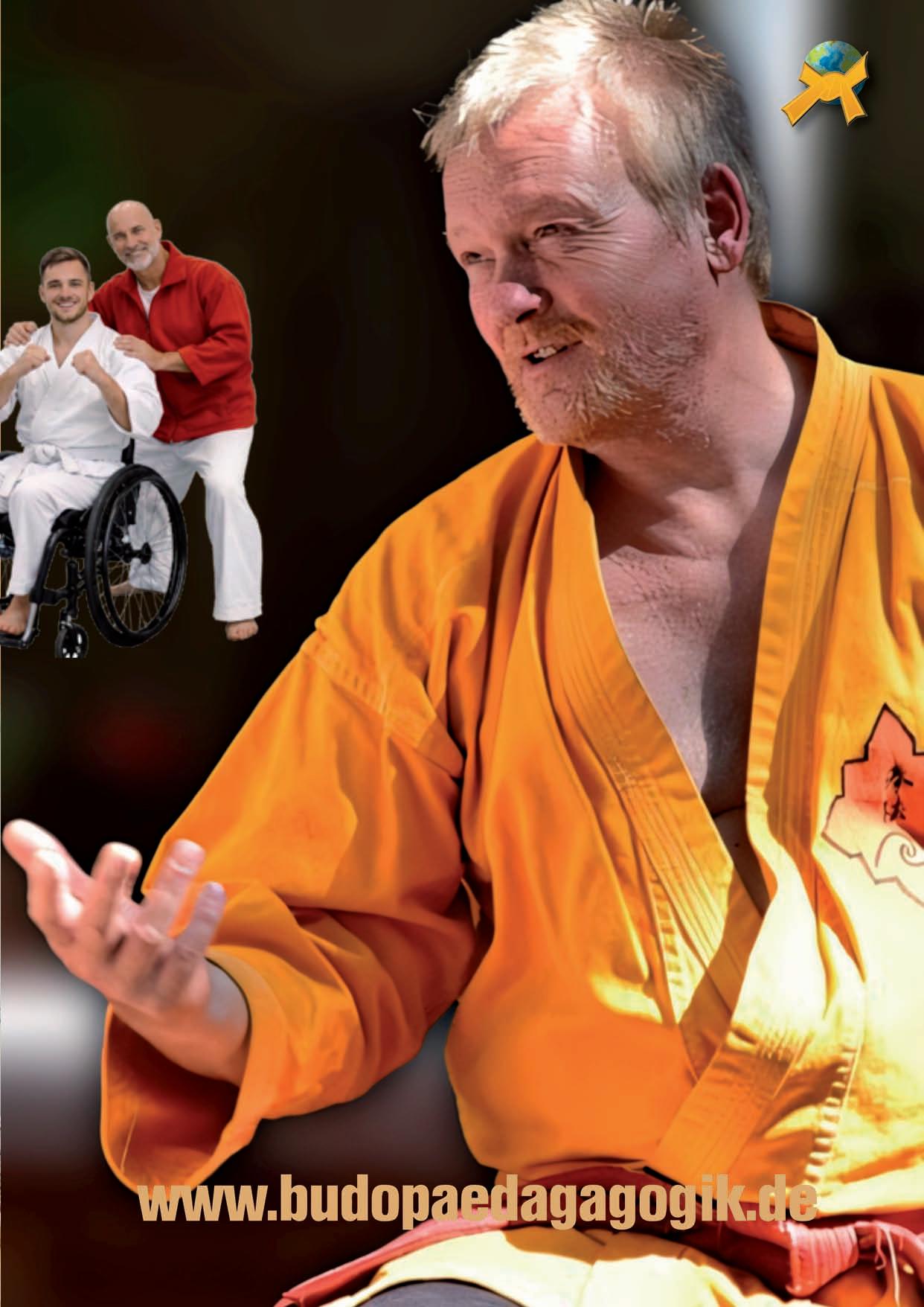
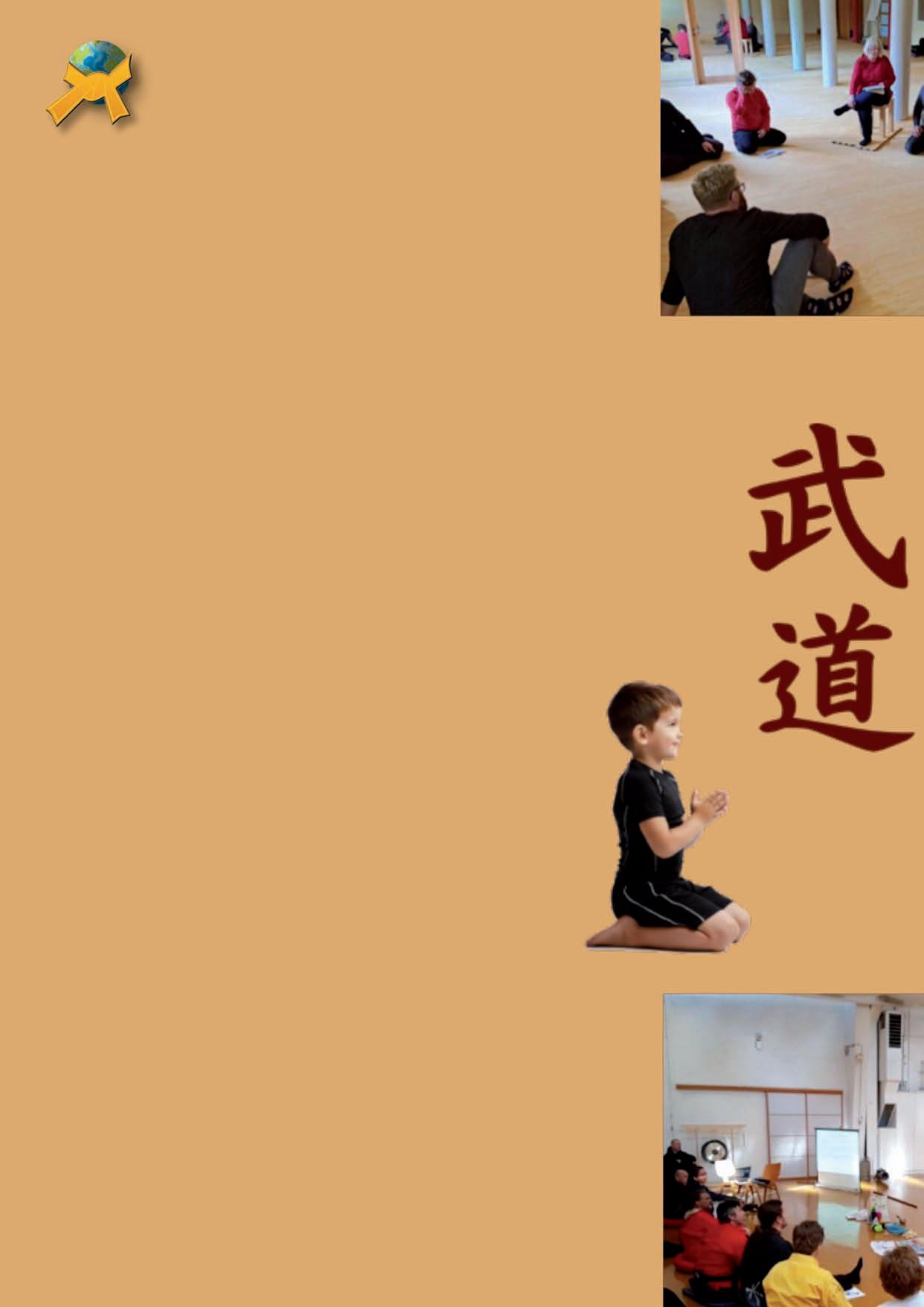
The professional qualification program to become a Budopedagogue© enables trained educators with experience in a martial art or combat sport, as well as martial arts and combat sports instructors, to professionally apply the personality-developing aspects of Budo.
The training takes place in small groups and through specialized learning arrangements to provide individualized support for each participant. Instructors include founder Dr. Wolters and experienced Budopedagogues who share their practical knowledge (www.weiterbildungen-budopaedagogik.de).
Budopedagogy combines the methods and effects of traditional martial arts with professional pedagogical, therapeutic, and coaching approaches. It opens up new paths for personal development, strengthens social skills, and creates practical learning environments for all age groups.
Further information:
Dr. phil. Jörg-M. Wolters (Director) Tilsiter Str. 11, D-21680 Stade www.budopaedagagogik.de
About Dr. Wolters:
“Dr. Wolters’ work has played a decisive pioneering role.”
(Prof. Dr. D. Rössner, MARTIN LUTHER UNIVERSITY HALLEWITTENBERG)
“Dr. Wolters’ work is pioneering in multiple respects. His concept is a remarkable achievement in sports methodology. Wolters convincingly demonstrates his expertise.”
(Prof. Dr. H. Rieder, UNIVERSITY OF HEIDELBERG, Institute for Sport and Sports Sciences)
“Wolters is an outstanding scholar and practical expert”
(Prof. Dr. W. Ramb, UNIVERSITY OF LÜNEBURG, Department of Psychiatry-Related Social Pedagogy, Medical Director of the Lower Saxony Specialist Clinic for Child and Adolescent Psychiatry, Lüneburg)
“Social pedagogy would have every reason to wish for more representatives of their field in the mold of a JÖRG-MICHAEL WOLTERS, who is among those working on the front lines of youth welfare with particularly difficult young people. WOLTERS distinguishes himself as an educator with courage and passion who, in his demanding work with highly aggressive adolescents in psychiatry and the correctional system, deserves the full support of his professional colleagues.”
(Prof. Dr. W. Tischner, NUREMBERG UNIVERSITY OF APPLIED SCIENCES, Faculty of Social Sciences)
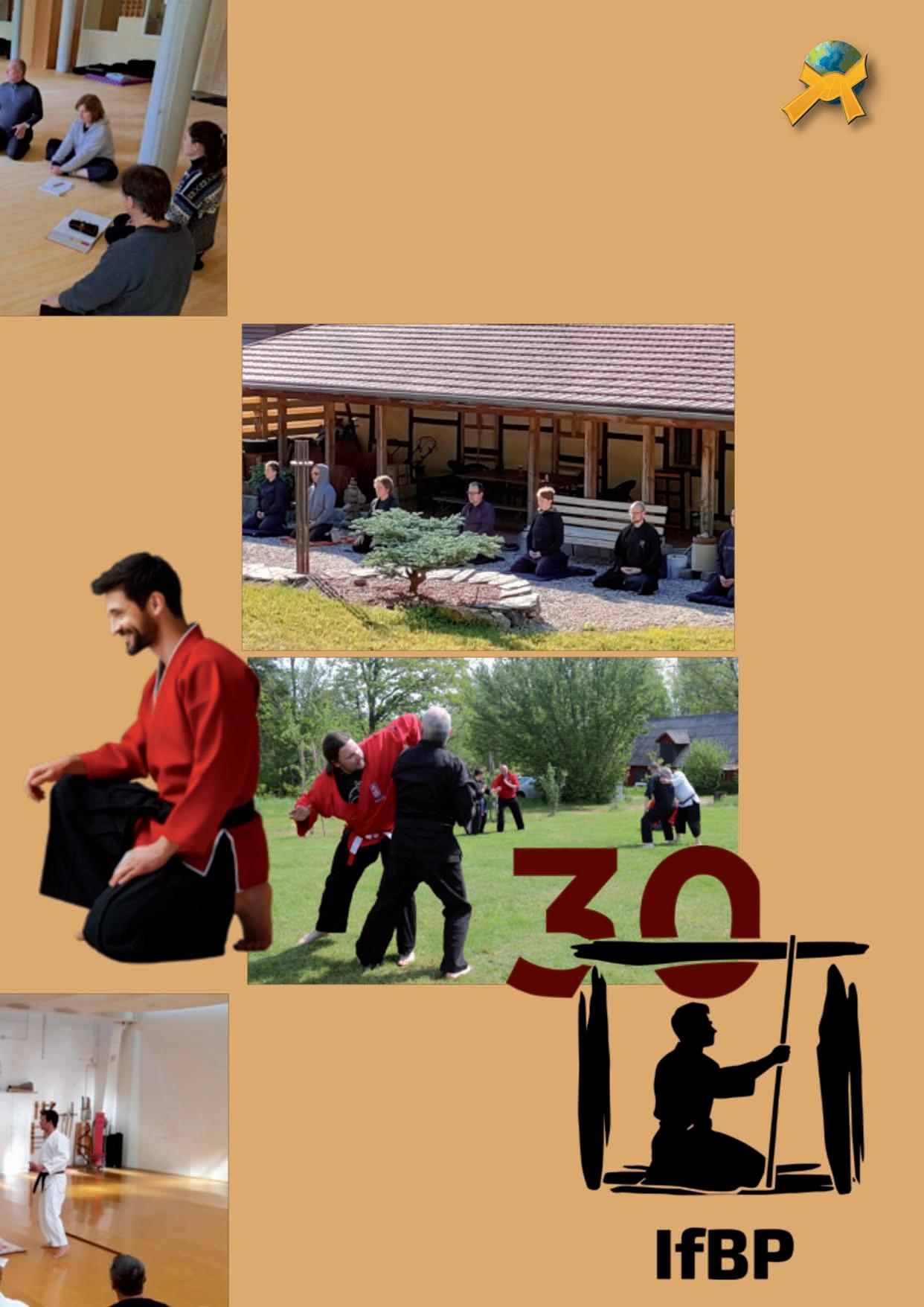
“Budopedagogy combines the methods and effects of traditional martial arts with professional pedagogical, therapeutic, and coaching approaches”
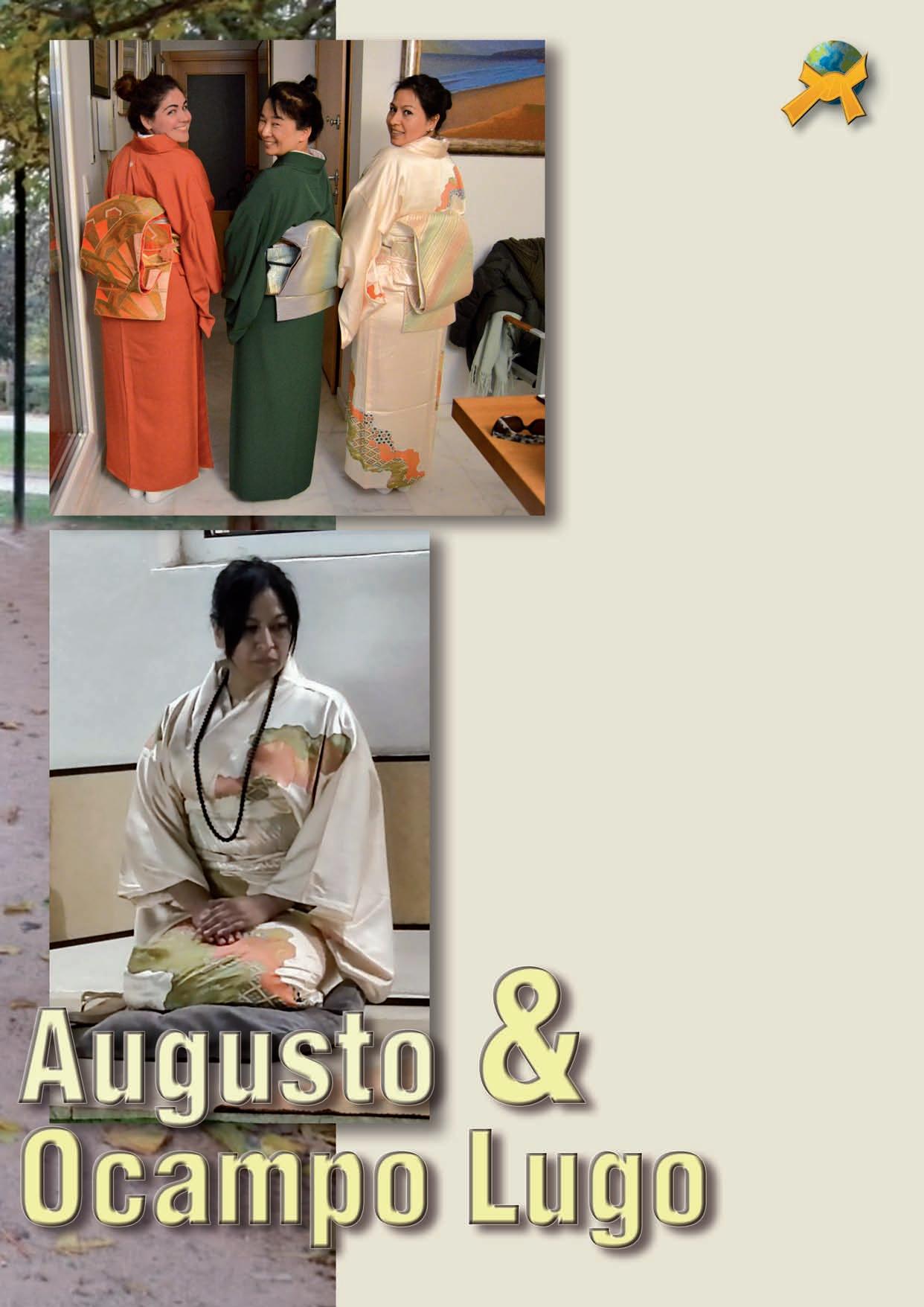
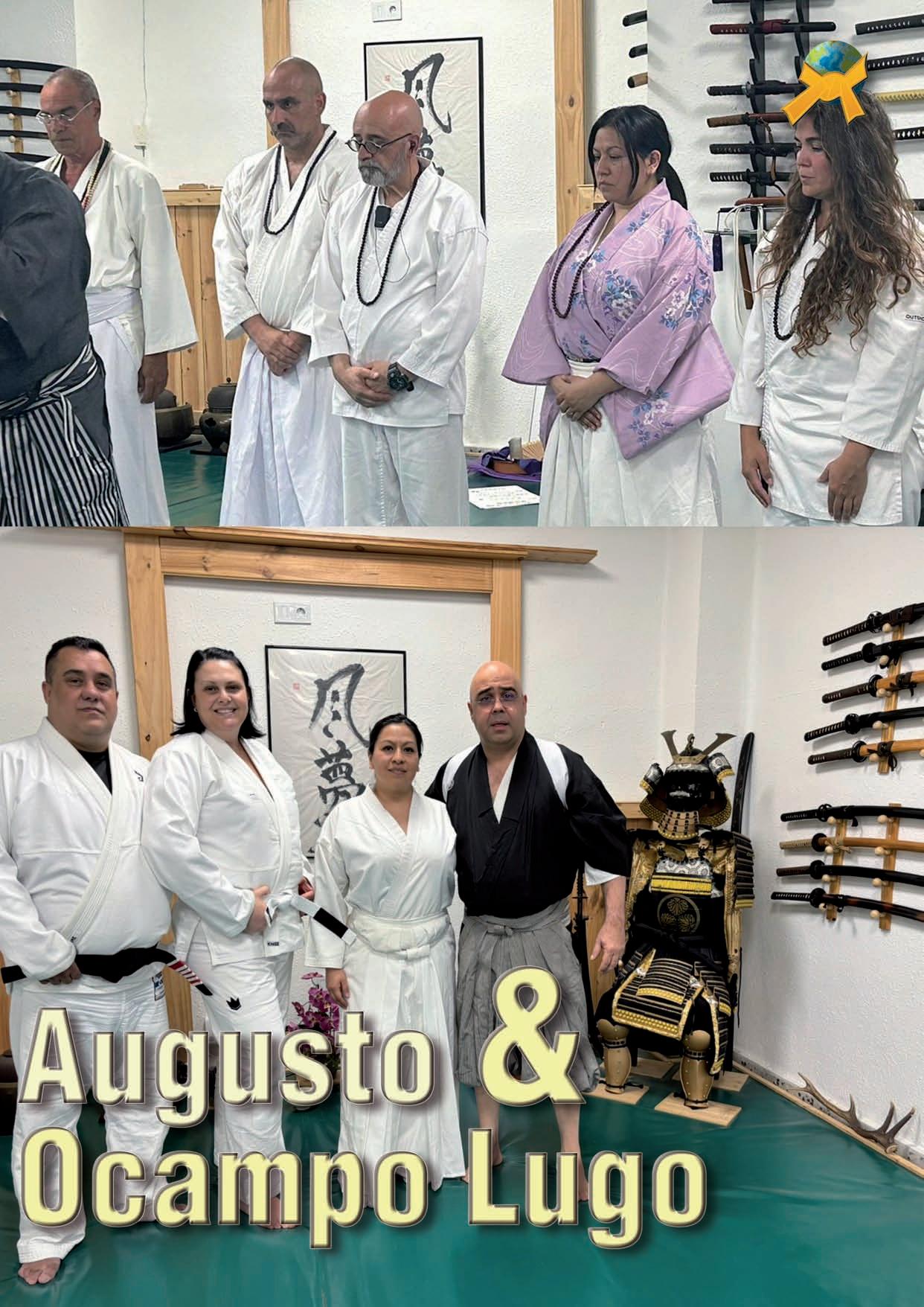
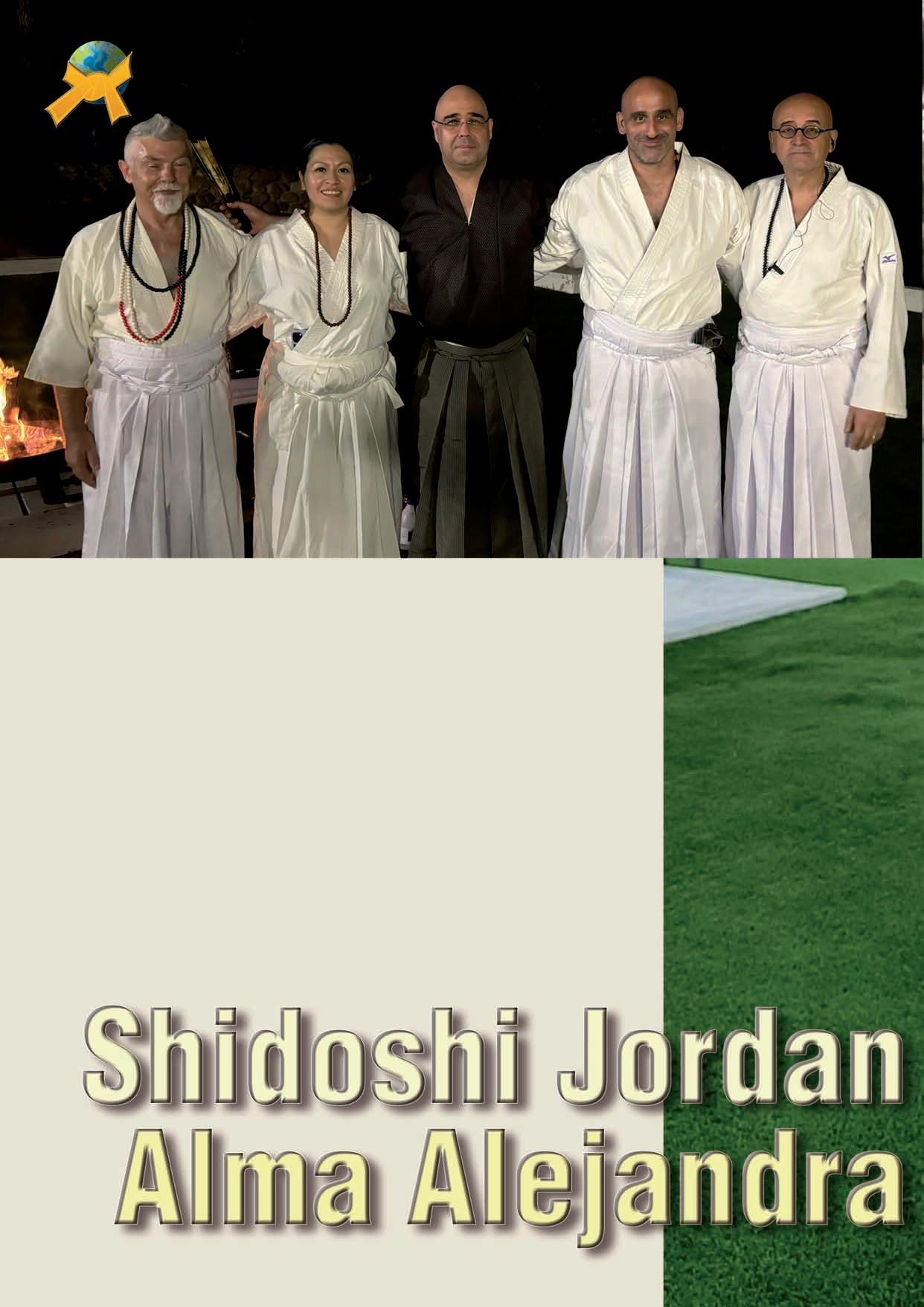
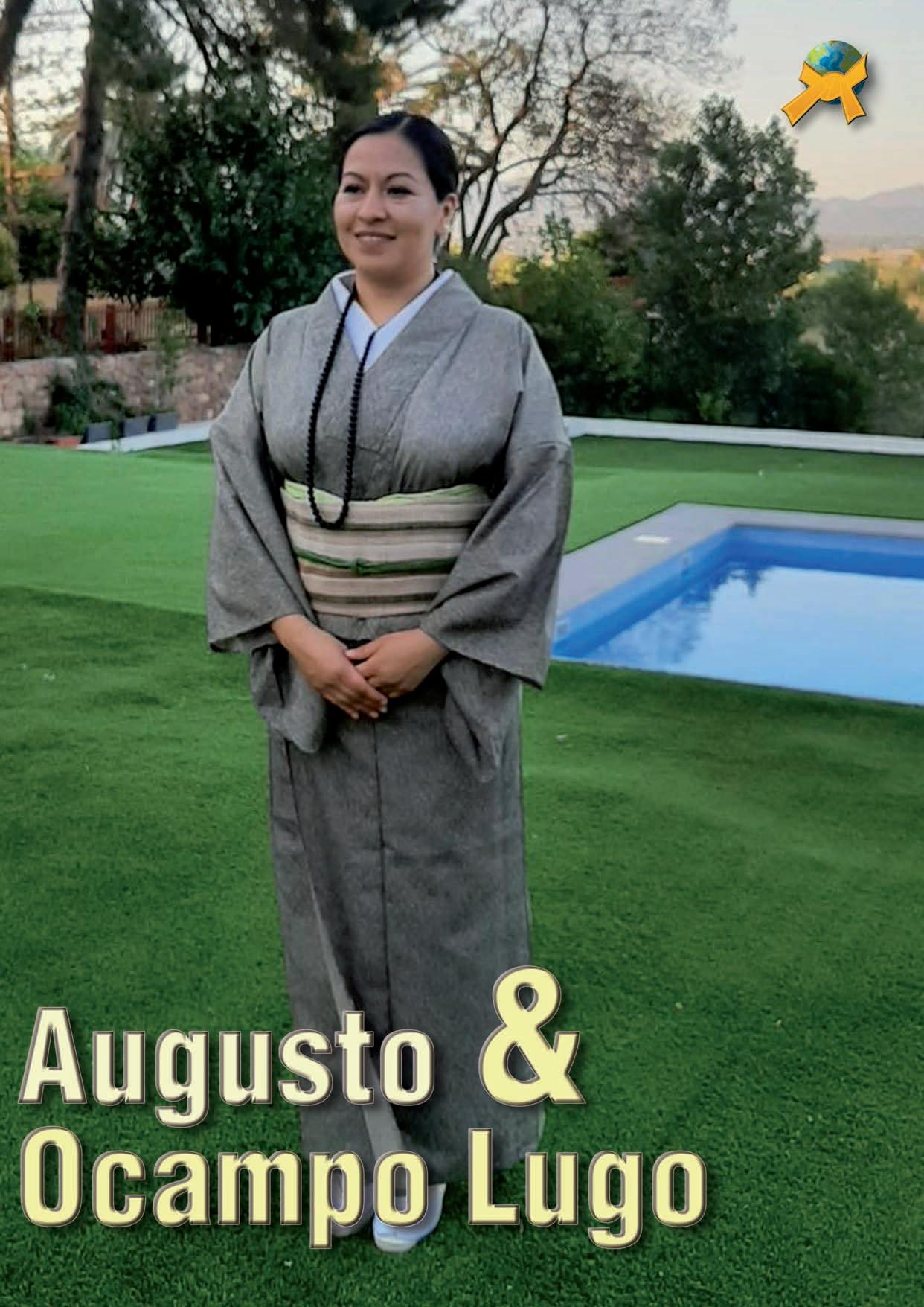
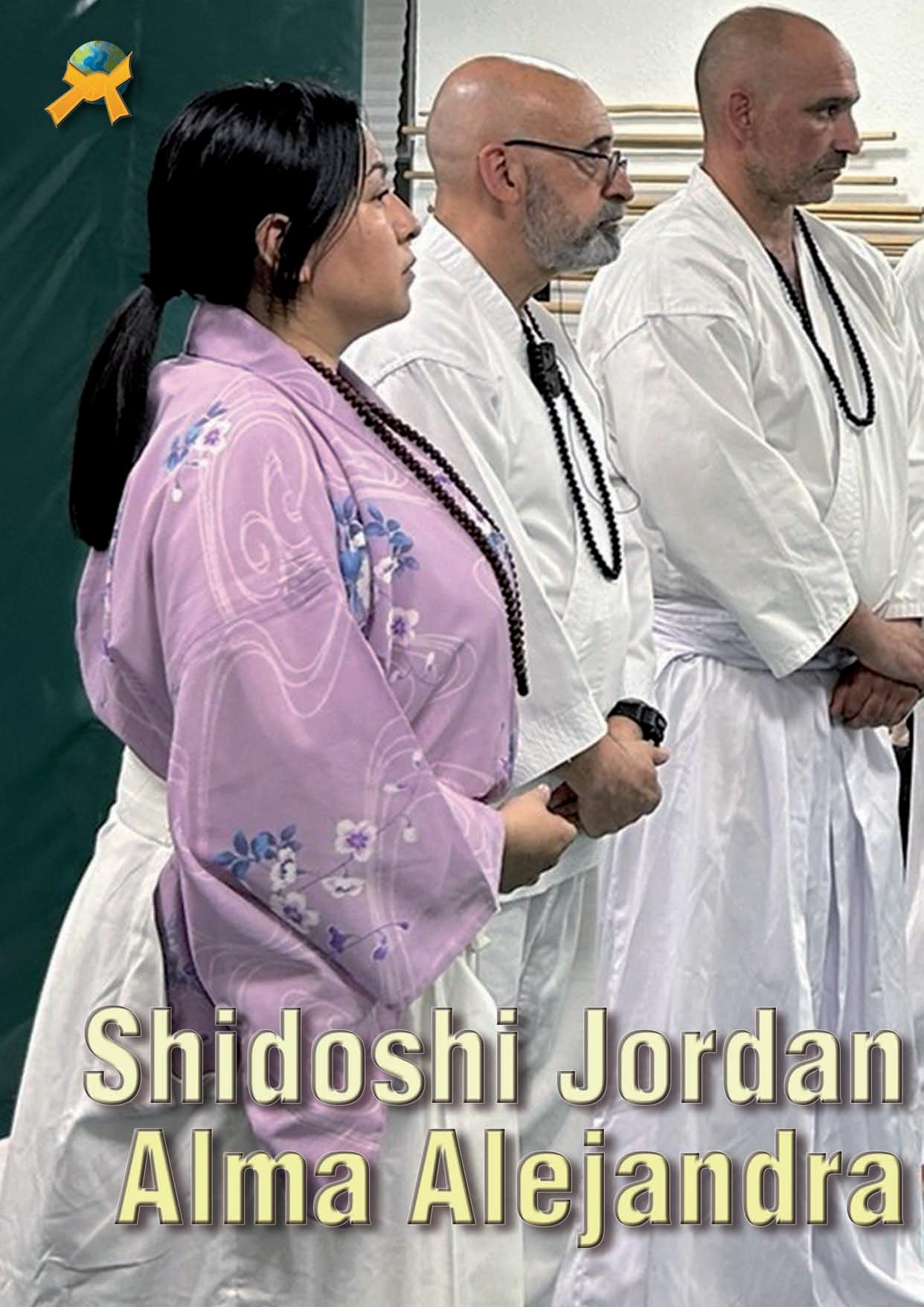
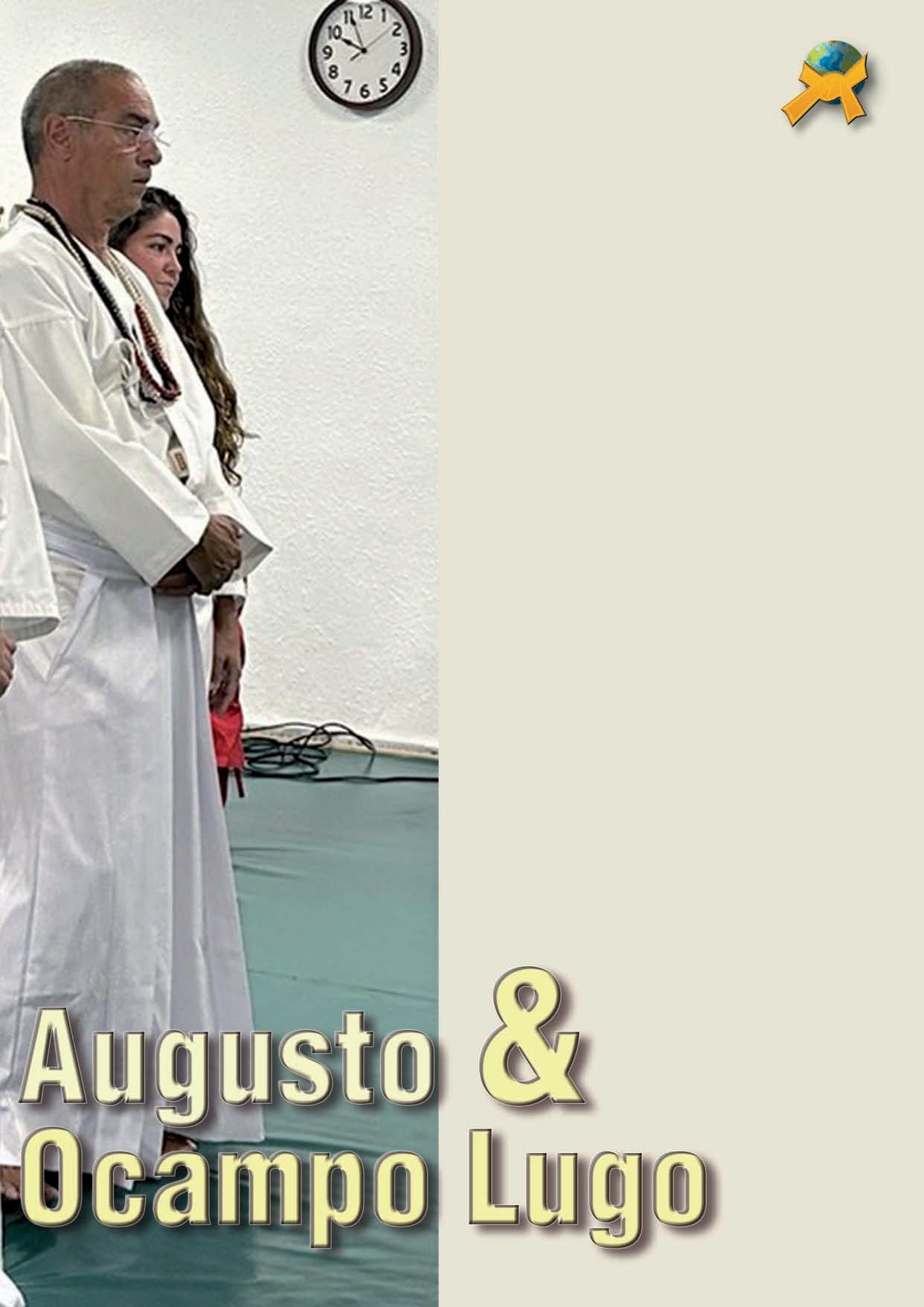
In this modern world, it is not easy to establish evaluation criteria, given that we are constantly faced with changes that, from one moment to the next, force us to reevaluate the standards by which we identify and form value judgments. Just when we think we understand the answers, life comes along and changes the questions. In this article, our guest, Alma Alejandra Ocampo Lugo, wife of Shidoshi Jordan Augusto, will explain to us—as she always does, in depth—the darkest corners of the human mind, which contemplates attacking, harming, or, conversely, elevating and improving itself through the practice of martial arts.

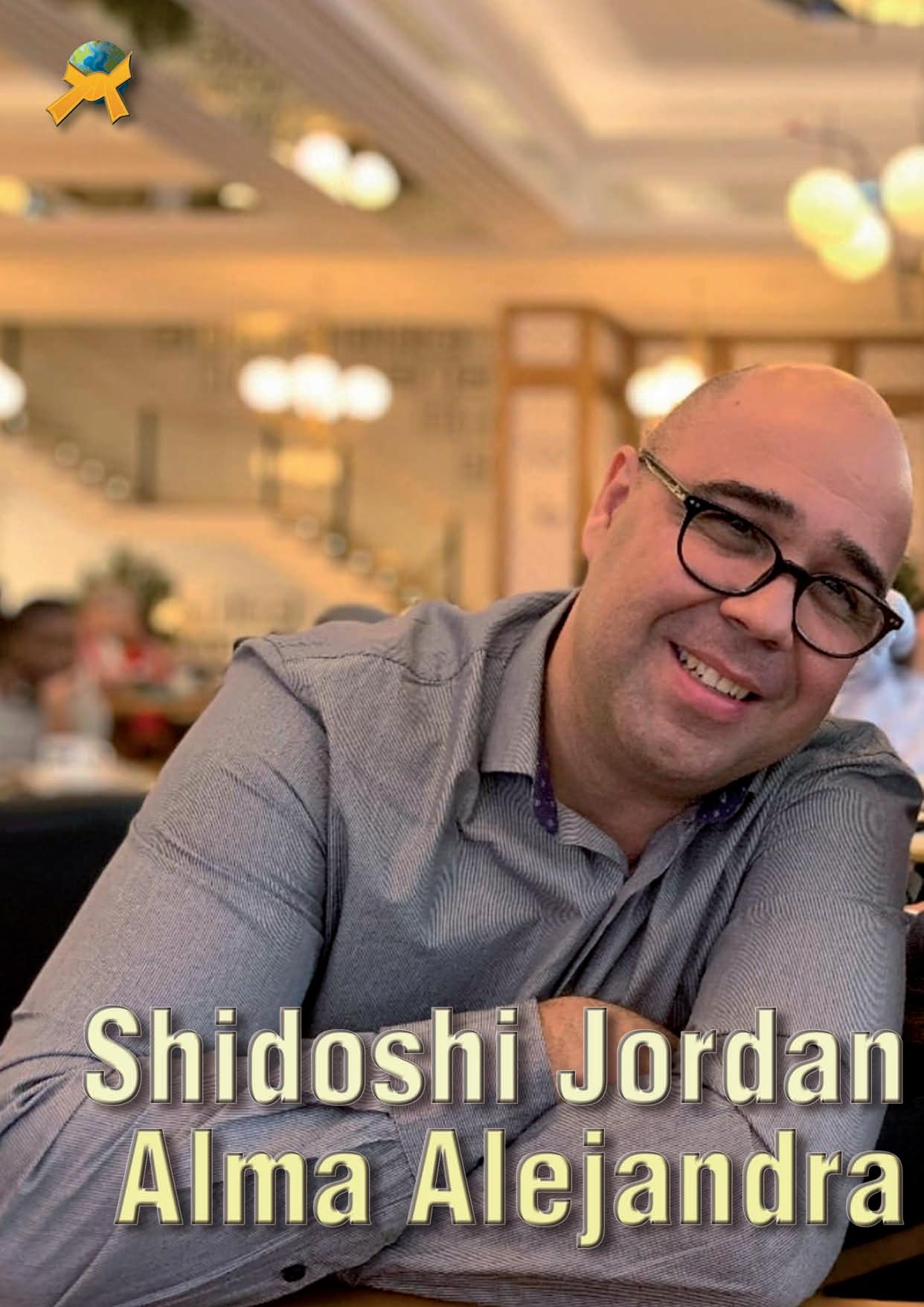
If we travel back a bit into the past, we will see that ever since the first borders were established—that is, when the first peoples began to fight for their territories and, through them, establish their kingdoms—the art of war has always been present in the human mind as a way to subjugate those who stood in their way. Perhaps, here, Sun Tzu was right when he said: Be prepared for the worst and hope for the best. In other words, the mind of a martial artist thinks the same way: Weep on the tatami and laugh in war. To explain all these variables and systematic compositions of the human mind from a conscious and progressive perspective—especially in an era of liquid modernity with vertical social ties—we present the renowned forensic psychologist, Alma Alejandra.


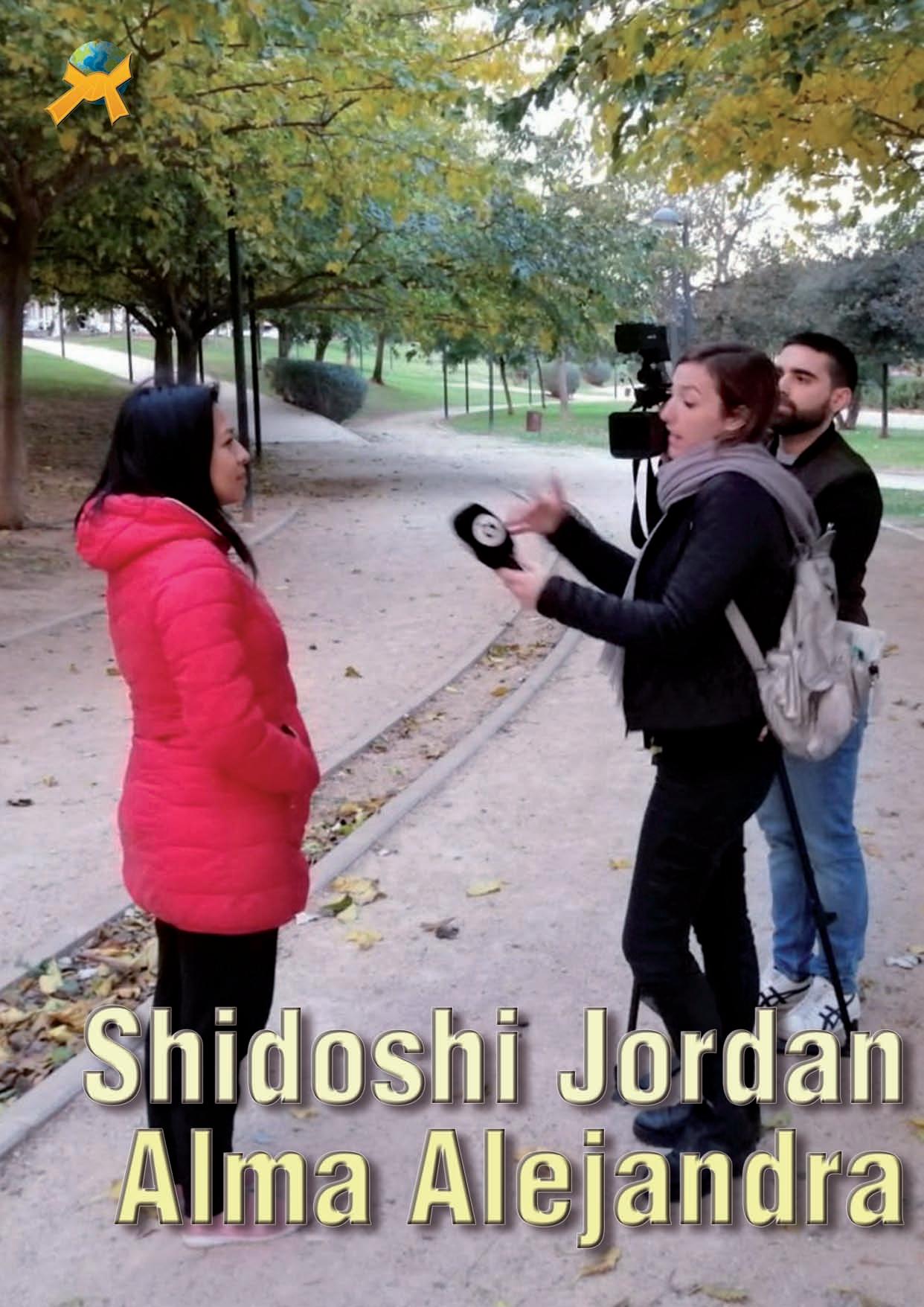
Doctor, what does scientific evidence tell us about the typical psychological profile of those who regularly practice a traditional martial art?
Answer: Various studies show that, on average, practitioners of traditional martial arts exhibit a more balanced and adaptive personality profile than the general population.
In terms of the “Big Five” personality factors, they tend to score:
- Higher on openness to experience: Interest in learning, mental flexibility.
- Higher on conscientiousness: Greater responsibility, organization, persistence, and discipline in training.
- Higher on extraversion: Greater sociability, willingness to interact with the training group, and to participate in collective activities.
- Higher on agreeableness: Greater willingness to cooperate, respect teammates, avoid unnecessary conflicts, and accept hierarchy without unhealthy competitiveness.
- Lower on neuroticism: Less tendency toward anxiety, depression, emotional instability, and excessive self-criticism.
In other words, they tend to be more autonomous, resilient, and better able to self-regulate. This manifests in behaviors such as staying calm in the face of frustration, accepting the instructor’s correction, and persevering in the face of technical failure.
We could say, adapting a famous phrase from martial philosophy:
“The person who masters the martial art does not master others, but themselves.”
This internal mastery aligns very well with what, in psychology, we call “internal locus of control”: the sense that one is responsible for one’s own responses and behaviors, rather than a victim of external circumstances.
Does that imply that martial artists are less aggressive people, or rather, simply “stronger”?
Answer: This is a delicate issue, because there is a widespread belief that learning to strike or subdue another person increases aggression. However, the evidence points to the opposite: Structured martial arts training tends to reduce aggression and increase self-control.
In studies comparing martial arts practitioners with nonpractitioners, it is observed that martial artists:
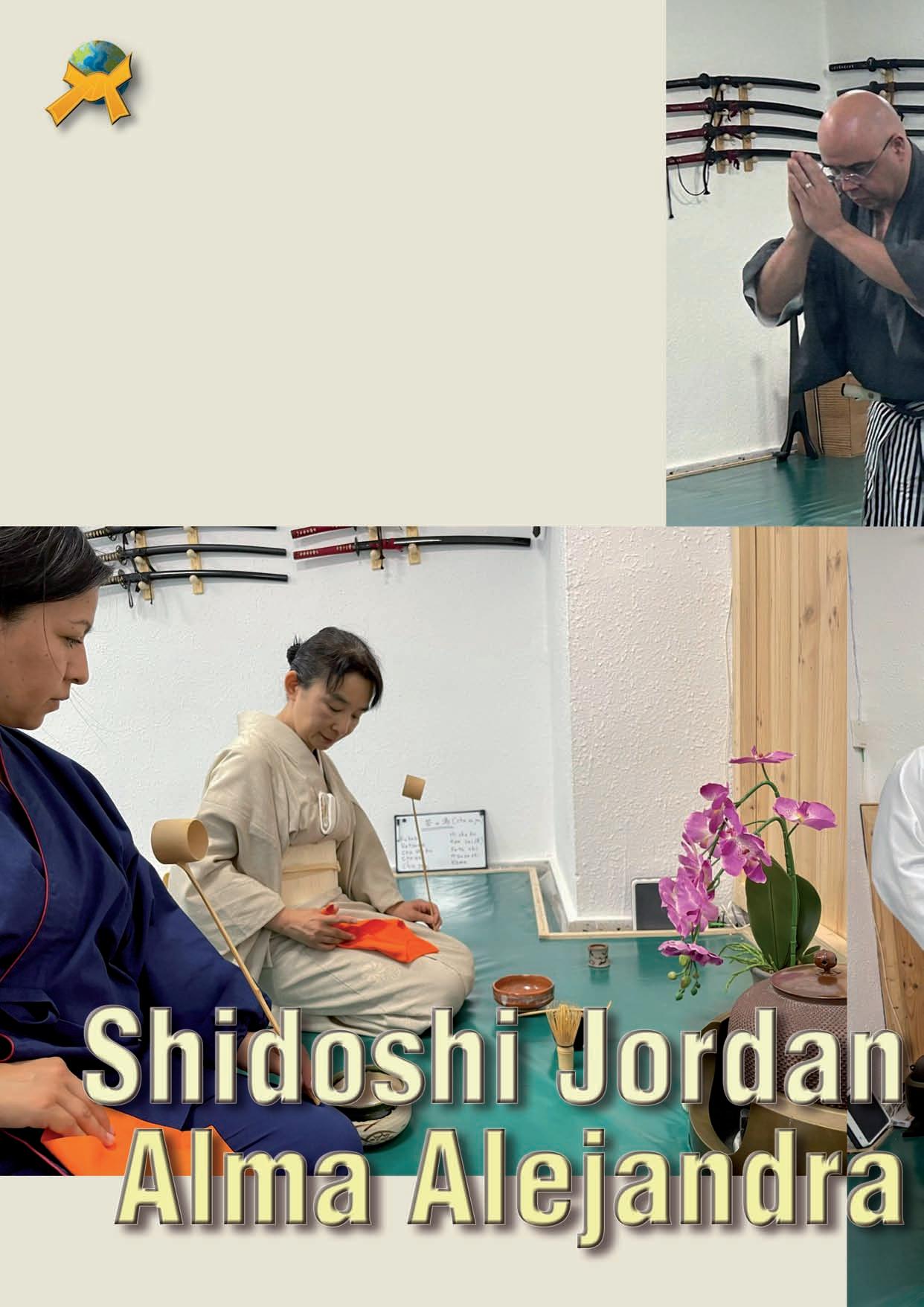
- Report lower levels of overall anger and anger-hostility
- Employ more active coping strategies (anticipation, planning, seeking support) in response to anger, rather than explosive outbursts.
- Develop a higher level of emotional self-regulation, which allows them to contain impulsive responses even when provoked.
Even in arts where contact is intense, such as in this Traditional School of Ogawa Sensei and his family, it has been found that self-control functions as a “brake” on aggression: the person may feel internal tension, but learns to channel it into techniques, movements, and decisions, not into diffuse violence.
From a psychological perspective, this translates into a central idea:
“Restraint is not weakness, but the source of true strength.”
In forensic psychology, these types of profiles are of particular interest, because it is known that impulsive violence is often associated with low emotional regulation, high irritability, and low frustration tolerance. That a group of people, exposed to training in strikes and physical contact, develops precisely more self-control and less anger is a highly relevant finding for the prevention of violence.
From the perspective of forensic psychology, what is the point of analyzing these people? Isn’t this more the domain of sports psychology?
Answer: In my personal career, I have worked in sports psychology; the distinction between “sports psychology” and “forensic psychology” is not as rigid as one might think. Forensic psychology studies risk behavior, self-control, decision-making under stress, and the relationship between physical training and emotional regulation.
If we consider that many of the behaviors that end up in court (domestic violence, public assaults, abuse of force, impulsive crimes) are driven by poor emotional regulation and high impulsivity (not to mention family history, psychological makeup, living environment, etc.), then martial artists represent an interesting “control” group.
Studies show that:
- Those who train in martial arts consistently exhibit lower levels of anxiety and depression than the general population, which reduces the risk of symptoms that can lead to maladaptive behaviors.
- They develop greater stress resilience, better concentration, and greater decisionmaking ability under pressure—skills that are highly valuable not only in sports but also in contexts of security and public order.
In this sense, a traditional martial arts instructor can be understood as a “self-control coach”: They teach not only techniques but also standards of conduct, respect, nonviolent hierarchy, and anger management.
A few years ago, I began my traditional martial arts practice at this school; previously, I had practiced martial arts competitively for 12 years. In this case, speaking from my own experience—my experience in sports psychology and forensic psychology—I can say that there is no single “typical martial artist.” Various studies have identified distinct psychological groups within the population of practitioners, based on resilience, motivation, coping strategies, and life context.
A recent study analyzing psychological and sociodemographic profiles among martial artists indicates that the same martial arts practice can have different effects depending on who practices it and in what context.
A young person with no family responsibilities, who is socially isolated, and receives poor-quality instruction may derive fewer psychological benefits and remain vulnerable to anger and impulsivity.
From a forensic psychology perspective, this indicates that it is not enough to know “whether they practice martial arts”; rather, it is necessary to analyze:
- The type of school (an atmosphere of respect, clear rules, a non-humiliating hierarchy).
- Motivation (seeking self-control, self-defense, health vs. the need to dominate others).
- The practitioner’s social and family environment.
When internalized, this type of ethical standard becomes a protective factor against violent behavior—something forensic psychology particularly values in risk assessments.
I would like to conclude this interview with a famous quote by D.T. Suzuki on martial discipline:
“The discipline of the champion is not only physical, but the discipline of not succumbing to anger.”
“Those who train in martial arts consistently exhibit lower levels of anxiety and depression than the general population, which reduces the risk of symptoms that can lead to maladaptive behaviors”


The philosophy of Martial Arts is far more than simply learning techniques for self-defense or defeating an opponent. It is a path of personal development that shapes the body, mind, and character in equal measure. In many cultures, particularly in East Asia, Martial Arts is understood not merely as a physical discipline, but as a philosophy of life deeply rooted in ethical and spiritual principles.
A central element of martial arts philosophy is selfcontrol. Those who practice martial arts quickly learn that raw strength alone is not enough. Rather, it is about mastering emotions such as anger, fear, or pride.
A true martial artist does not act impulsively, but consciously and deliberately. This ability to exercise selfcontrol also carries over into everyday life: conflicts are not escalated, but resolved with calm and clarity.
Closely linked to self-control is the principle of respect. In nearly all martial arts, training begins and ends with a bow. This gesture symbolizes respect for the teacher, training partners, and the art itself. Respect also means recognizing one’s own limits and acknowledging the abilities of others. Without respect, training would quickly descend into chaos or even danger.
Another important aspect is discipline. Martial arts require continuous practice, patience, and perseverance. Progress does not happen overnight, but through years of dedication. This discipline shapes not only the body but also the mind. It teaches one to consistently pursue goals and to accept setbacks as part of the learning process. Those who follow this path develop an inner strength that extends far beyond training.
The philosophy of martial arts also emphasizes the balance between hardness and yielding. Many systems teach not to directly fight the opponent’s force, but to redirect it. This principle shows that flexibility is often more effective than rigid strength. It is a lesson that can also be applied to life: Not every resistance must be overcome head-on; sometimes it is wiser to adapt and wait for the right moment.
A profound concept within martial arts is the pursuit of inner harmony. Combat is seen not only as an external conflict but also as a mirror of one’s inner state. Those who are restless within will act in a disjointed and uncertain manner in combat as well. Therefore, many martial arts place great emphasis on meditation and breathing techniques. These help to calm the mind and develop clear perception.
Furthermore, responsibility plays a crucial role. Martial artists possess skills that can be potentially dangerous. Therefore, they are taught to use these powers only in an emergency. The true master is not the one who fights constantly, but the one who avoids conflict. This attitude fosters an ethical awareness and a sense of the consequences of one’s own actions.
An often underestimated aspect is humility. The more a person learns, the more they realize how much there is still to discover. This realization protects against arrogance and fosters an open attitude toward new experiences. In martial arts, there is no final goal, but only an ongoing path of improvement.
Ultimately, martial arts is also a journey of self-discovery. Through intensive training, one not only learns techniques but also gets to know oneself better. Strengths and weaknesses become apparent, fears are overcome, and self-confidence grows. This personal development is often the most valuable benefit that martial arts offers.
In summary, it can be said that the philosophy of martial arts extends far beyond physical combat. It instills values such as respect, discipline, self-control, and responsibility. At the same time, it offers a path to inner balance and personal growth. Those who seriously engage with martial arts discover not only a method of self-defense but a way of life that leads to greater awareness, strength, and harmony.
“In summary, it can be said that the philosophy of martial arts extends far beyond physical combat”
Over the past century, Eastern cultures have spread throughout the world. Within Chinese martial arts, there has been increasing discussion of the 5 elements, which represent the fundamental building blocks of the culture of the Celestial Empire. These principles stem from simple observations made by the sages of the past: water gushes from mountain springs; as it flows, it nourishes vegetation—and thus wood— which is used to make fire; the ashes from this fire nourish the earth, beneath which lies metal. And, to close the circle, metal is used to make tools that collect water. In fact, early in the morning, farmers always find their metal tools wet and even dripping. This simple observation of nature is the foundation of all Chinese thought: medicine, acupuncture, massage, moxibustion, spatial organization, and even martial arts such as Tai Chi Chuan, Hsing I Chuan, and Pa Kua.
And in the West, none of this?
Are we Westerners merely materialists devoted to technology and the economy?
As usual, that’s not the case!
A quick glance at any philosophy text will reveal striking analogies between East and West. The common ground between the two hemispheres lies precisely in the 5 elements. As we shall see, the Western ones differ very little from the Chinese ones.

In the West.
As we know, ancient Greece, especially around the 6th century B.C., was dotted with thriving city-states. Greek culture was enriched by constant sea voyages that drove them to explore distant lands. The Greeks learned geometry from the Egyptians, astronomy and the calendar from the peoples of Asia Minor. They also created a precise language capable of describing the world and events.
The intellectuals of that period began to conceive the idea that creation was not the result of chance but that there was a hidden order and, above all, an original principle.
The philosopher Anaximander (546 B.C.) hypothesized that the earth was suspended in space and that all creatures originated from water, with humans having evolved from fish. For him, water was therefore the primordial substance.
Around 500 B.C., Heraclitus identified fire as the origin of things and of life. The philosopher conceived of existence as a continuous flow; his famous saying is: “You cannot step into the same river twice.”
Anaximenes, on the other hand, chose air as the fundamental principle (arche). He argued that the rarefaction of air gave rise to fire, while condensation generated clouds and rain—and thus water—as well as solid substances such as earth and stone.
Empedocles believed there was not a single basic element but four: air, water, earth, and fire. These immutable elements, interacting with one another in different ways and proportions, gave rise to creation.
The giant of Greek thought, Aristotle, added a fifth element to the four, one that remained a topic of discussion until the discovery of quantum mechanics: the ether.
Aristotle also created a sort of scale from the densest to the most “ethereal” (precisely).
Earth, the heaviest and densest element, occupies the center of the universe
Water, a less dense fluid capable of following its natural course
Air, even lighter than the previous two (earth and water) Fire, the lightest element of all, with a tendency to rise upward.
Ether is the famous quintessence, the most perfect of the elements, and, according to Aristotle, governs the celestial bodies.
It is interesting to note how the ideas of these Greek philosophers closely resemble Eastern thought, which sees the origin of things in the identification and combination of elements.
Let’s compare what we’ve just said: in China, we have the five elements—water, wood, fire, metal, and earth— and as we can see, three out of five coincide with the Western elements.
In India, on the other hand, we find: Earth (Prithvi), Water (Jala), Fire (Agni), Air (Vaju), and Space or Ether (Akasha). To understand the practical application of the five elements in the Western world, we must look to the medicine of the past.

In Hippocratic medicine, this theory was studied and developed by Galen of Pergamon. Galen was the physician to Marcus Aurelius and other Roman emperors. Today, when we see “Galenic preparation” in a pharmacy, we are referring to this physician, philosopher, and scientist born in Asia Minor (129–216 AD). His name became synonymous with custom-made preparations, but it is his work on the temperaments that interests us here. He developed the theory of the four humors, and, as in Chinese medicine, health is linked to the concept of balance. The humors are: blood, phlegm (lymph), yellow bile, and black bile. If an imbalance occurs among these four elements, physical or mental illness—or both—arises. Each of these humors is closely connected to one of the primordial elements:
The choleric temperament derives from the element of fire
The sanguine temperament from the element of air
The melancholic temperament from the element of water
The phlegmatic temperament from the element of earth.
The theory was later abandoned only to be rediscovered later by Rudolf Steiner (the founder of anthroposophy and eurythmy). Today, the theory of the five elements is making a comeback with the rediscovery of systemic theories that increasingly take into account the relationships between body, mind, spirit, and environment…
A human being is in psychophysical health when the elements are balanced within their energetic body. If we refer to Eastern tradition, water represents yin, fire represents yang, and air is the balancing or neutral principle. The earth element contains and anchors them, while the space element (or ether) allows for vision and otherworldly intuition.
Personal temperament, lifestyle, and numerous external influences disrupt the balance of the elements, causing one to dominate the others. Certain movement sequences, such as the forms of the “Take 5” system, restore this balance by focusing greater attention on the deficient element without neglecting the others. In other words, you always work on all the elements, but you increase the time and attention devoted to the element you are lacking. Your intuition will guide you on how much is needed. The fifth element (space, ether, or the universe), however, requires special treatment—a separate consideration that can only be addressed after you have gained sufficient awareness of the four fundamental elements.
Indian tradition, especially that of yoga, identifies the qualities of each element (the 5 tattwas):
Earth: it is the symbol of stability, strength, and self-confidence. Poses that express power, solidity, and grounding help develop this element in those who lack it. The earth element is the last element created by the ether in its process of solidification. The earth element involves all three other elements (fire, water, air). Its negative polarity leads people to be impatient, lazy, irresponsible, and pedantic. The positive polarity of the element, on the other hand, provides stability, the ability to engage in rational and strategic reasoning (“keeping one’s feet on the ground”), and firmness in decision-making.
Water: It is the symbol of fluidity but also of purification and the ability to adapt to any situation. People who are rigid in body and mind should practice movements that aid in the development and harmonization of this element. Its fundamental attributes are cold and contraction. In its active polarity, the water element is a generator of life; in its passive polarity, however, the attributes are negative, such as decomposition, fermentation, division, and dispersion. A personality with an excess of the water element expresses indifference, apathy, coldness, shyness, insolence, and instability. The positive polarity, on the other hand, brings fluidity to thought and body, composure in facing difficult situations, and the ability to adapt to any situation.
Air: It is the symbol of free breathing, lightness, and delicate yet precise movement. People who take themselves too seriously, who never let their guard down, who tend to make a tragedy out of every event, need to balance and develop the air element. It acts as a mediator between the two contrasting elements, water and fire. In its negative form, air expresses a frivolous, presumptuous personality that leads to gossip and wastefulness. In its positive polarity, the air element expresses lightness and the ability to avoid getting too involved, especially in the expression of emotions; it helps one face life without emotional burdens.
“A human being is in good physical and mental health when the elements are balanced within their energy body. If we refer to Eastern tradition, water represents Yin, fire represents Yang, and air is the balancing or neutral principle.”
Fire: It is the first element generated by Akasha (ether); fire also represents light. The well-known “Fiat lux” was the expression of the fire element that generated light. This elemental principle symbolizes warmth, the energy of change, dynamic action, and power without heaviness. People who need to be more decisive, energetic, proactive, and strongwilled need to develop and balance the fire element. The positive aspect of the fire element allows one to seek warmth in human relationships, to engage people, and to ignite spirits. In its positive polarity, it also represents expansion and the ability to generate energy for the development of projects. In its negative polarity, however, fire expresses irrationality, destruction, and disintegration. Jealousy, anger, and the inability to control oneself are also negative aspects.
Space or Ether. According to Indian wisdom, this is the element that generates the other four. It is also the element that connects us to the collective unconscious, to the metamorphic field, to the afterlife; it is best cultivated through both static and moving meditation. The development of this element is particularly useful for overly materialistic people, for those who care solely and exclusively about their possessions, who are too attached to money, work, and social status. It is the element of universal knowledge.
“The Earth element is represented by the North The Water element by the West The Fire element by the South The Air element by the East”
Let us now return to the West where, as we know, there was a repressive campaign that involved torture and death by burning at the stake for all those who strayed from the “true faith.” Some religious denominations could not tolerate competition and, by allying themselves with the powerful figures of the day (kings, emperors, dictators, heads of state) and exploiting the ignorance and fears of the people, they made facile accusations of witchcraft or heresy. These accusations very easily led to a death sentence and the destruction of any educational materials such as books, symbols, statues, amulets, etc.
Books were the first to be placed on the Index, easy to discover, difficult to hide. There are, however, notable exceptions, such as the Dead Sea Scrolls and the Nag Hammadi texts, which were likely hidden to prevent their destruction (though various theories exist on this matter). In other places, ancient knowledge was preserved within symbols. These could take the form we imagine—drawings or engravings—or be even more invisible, hidden within paintings or sculptures, and even in the blueprints upon which sumptuous cathedrals were built. Being able to hide things well served not only to pass down occult knowledge (so called because it was hidden) but also to save one’s own skin.
“The Earth element is represented by Winter The Water element by Autumn
The Fire element by Summer The Air element by Spring”

Just consider that people were burned at the stake for far less, and the example of Giordano Bruno, burned alive in the square on February 17, 1600, should give a clear idea of the difficult times faced by any form of dissenting or alternative thought. We can also mention Galileo, who was forced to recant his scientific hypotheses to avoid the same fate. Sometimes, however, to hide something better, you have to bring it all into the open. That is what some people did. During my youth, armed with scientific knowledge and steeped in Enlightenment philosophy, I mocked those who had their tarot cards read. I thought that those cards, aside from their undeniable aesthetic appeal, had absolutely nothing interesting about them; in fact, they were a game for the simpleminded. Obviously, I was wrong because the tarot was a book!
A text that could only be read by those who understood its language. Illustrious figures in the art world have been fascinated by the Tarot and have made it the subject of their studies: the renowned psychologist Carl Gustav Jung, the Flemish painter Hieronymus Bosch, the Nobel laureate Dario Fo, the writer and scholar René Guénon, the artist and director Alejandro Jodorowsky…
Equally interesting are ordinary playing cards, whose four suits represent the four elements. Let’s look at their meanings:
The Earth element is represented by Pentacles
The Water element by Cups
The Fire element by Wands
The Air element by Swords
The elements are also represented as angelic figures; in tradition, each element is visualized as an archangel:
The Earth element is represented by Uriel

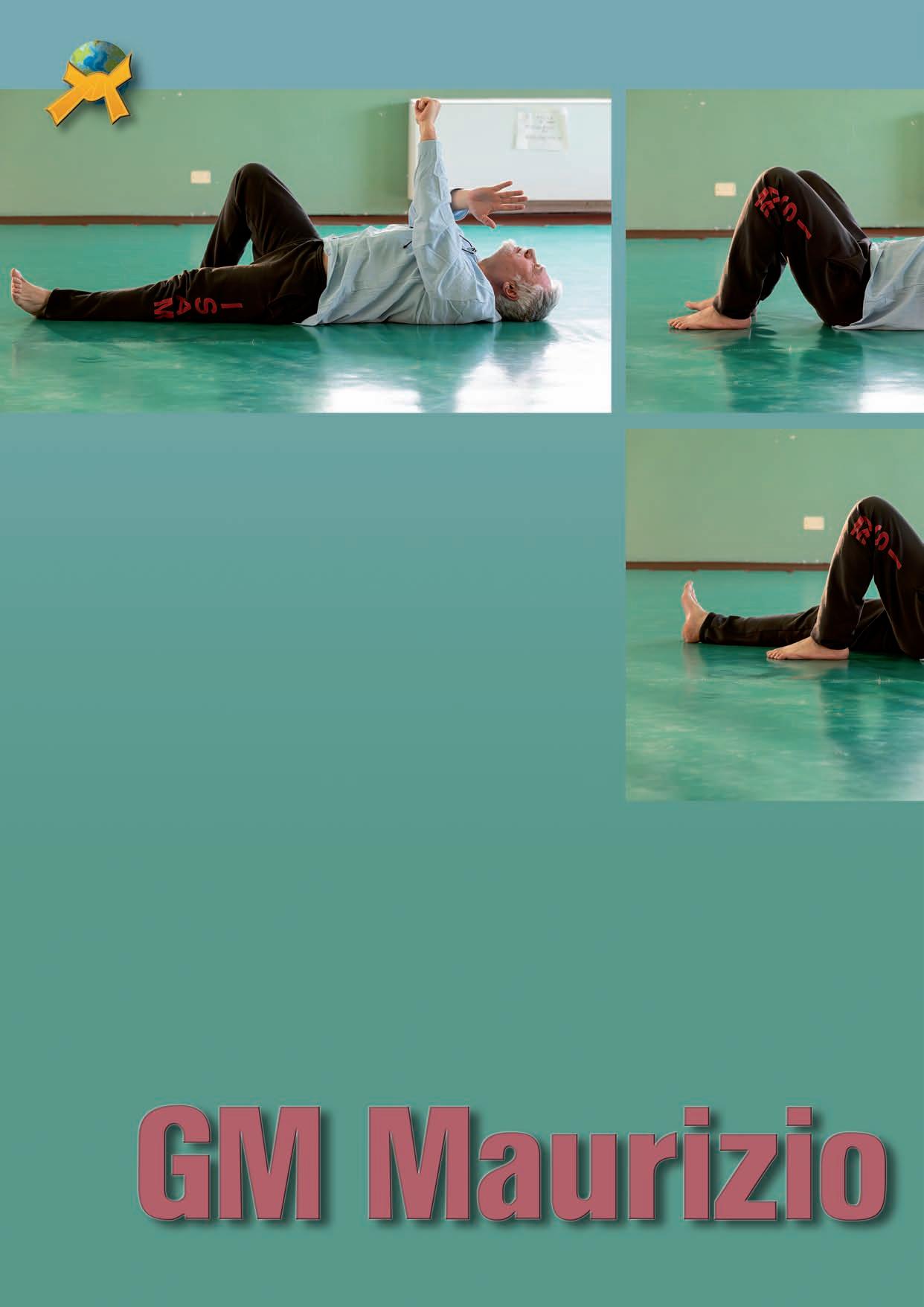
The Water element by Gabriel
The Fire element by Michael
The Air element by Raphael
The four elements also correspond to the four seasons
The Earth element is represented by Winter
The Water element by Autumn
The Fire element by Summer
The Air element by Spring
And even to the four cardinal directions:
The Earth element is represented by the North
The Water element by the West
The Fire element by the South
The Air element by the East
It is interesting to note that there are also positions and movements that can be associated with the 5 elements (in this case, we also include the quintessence, namely ether/Space); Eastern tradition, especially that of Southeast Asia, has managed to preserve this aspect better than Western tradition. Eastern cultures have used movement to preserve knowledge; thus, within movement sequences such as dances or “forms,” ancient knowledge is preserved, allowing one to tap into the primordial energies represented by the five elements. Some yoga poses, for example, serve the same function: bringing the individual into contact with the original energy sources.
The system consists of just 5 sessions, each lasting 10 hours, in which one element is addressed at a time. We begin with the water element, learning:
1. Philosophy. An exploration of the water element, its positive and negative qualities, along with related water meditation
2. Postures. Postures associated with the water element, also known as Water Yoga
3. Movement. The movement sequences of the water element, or the forms of water
4. Breath. Water breathing
5. Therapy. Energy contact based on the water element is a partner practice aimed at using the energy of the water element to help improve the other person’s psychophysical condition.
The same pattern repeats for each of the elements up to the last one, namely ether (or space), which enables the development of a state of awareness.
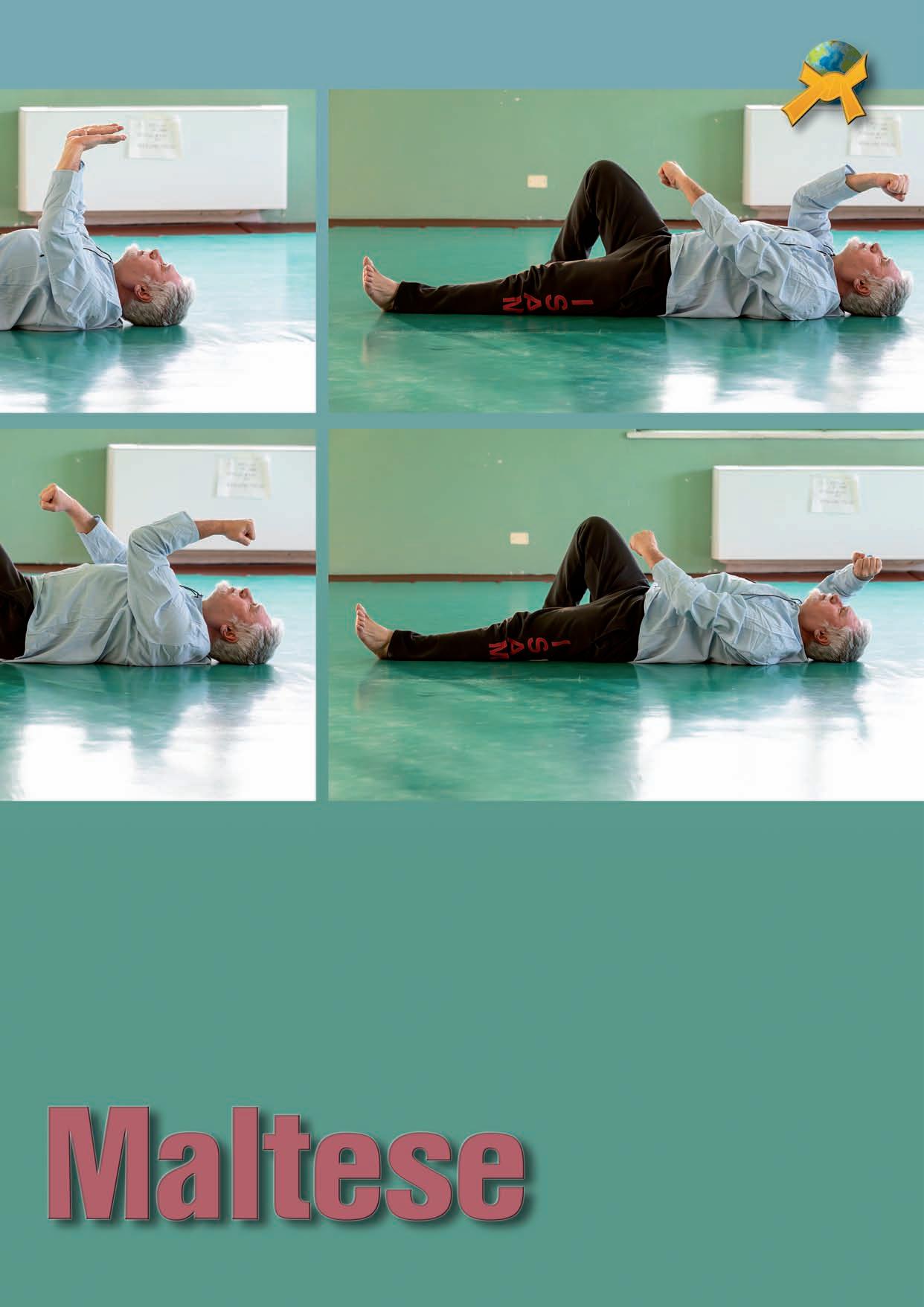
Once they have learned how to draw upon the resources of each of the 5 elements, like a modern alchemist, the Take 5 practitioner will know how to apply an appropriate blend of the 5 primordial factors to themselves and others, helping to shape character, movement, emotions, patterns of reasoning, relationships with others, and even health.
By studying the elements, one returns to a holistic rather than a sectoral approach, where meditation, breathing, yoga, form practice, philosophy, and therapy all contribute together to restoring balance in modern humans, who are increasingly estranged from themselves.
The movement sequences in the Take 5 system are inspired by the five elements and their skillful rebalancing.
The abstract which lies before you represents my understanding of how empty-handed civil and domestic self-protection skills were cradled, subsequently evolved, and ultimately formed the foundation upon which Karate was developed. While the explanation may be brief and completely void of those pioneers most responsible for having shaped its direction, I am confident it is compelling and loses nothing in its brevity.
The art of Karate represents the perfect fusion of science and art coming together to create a transformative magic. This time-honoured tradition offers a pathway on which the journey of self-discovery can lead to a healthy, happy, and meaningful life. Highly challenging and deeply pensive, Karate-do can be a bridge between self-acceptance and self-protection — a unique method of conditioning the body, cultivating the mind, and nurturing the spirit. It is Okinawa's gift to world peace.
Yet, in spite of its importance, a seemingly straightforward lesson about the nature of tradition is too often misunderstood, suspiciously neglected, or purposely avoided. Cloaked in a veil of cultural ambiguity, distorted by time, misunderstanding, and self-serving propaganda, the true nature of tradition remains one of its most important teachings. A thorough exploration into its early and eclectic evolution reveals the inescapable process early pioneers used in their pursuit of functional competency. Such discovery can serve to inspire each of us to reach beyond our grasp, break free of the chains of conformity, and embrace the wonderfully innovative nature of tradition.
In the beginning, there was nothing — then came people. Vast numbers of people. Early humans evolved from couples to clans to larger communities, and ultimately to societies, because of safety in numbers. Survival of the fittest created an inherent struggle — a struggle to survive. Physical violence evolved alongside humanity as an adaptive mechanism for survival, safety, and control. Fear gave way to necessity, and necessity became the mother of invention.
Necessity cradles discovery, and early civilisations began to develop methods of understanding, cataloguing, and dealing with both armed and unarmed acts of physical violence, regarded as habitual in human nature. One theory suggests that sport originally evolved as a means of learning to hunt, fight, and protect oneself. Across an untold history of civil brutality, empirical observation allowed the most innovative minds to continually improve upon embryonic fighting practices.
Monastic sanctuaries proved to be among the most successful testing grounds in which highly functional fighting methods evolved in relative secrecy. As coveted teachings, such methods ultimately became highly sought after — and then, sadly, fell quietly dormant after the rise and popularity of firearms among commoners during the mid-19th century. With little or no formal training of any kind, a weapon-wielding adversary no longer feared even the most formidable fighter. A single bullet was enough.
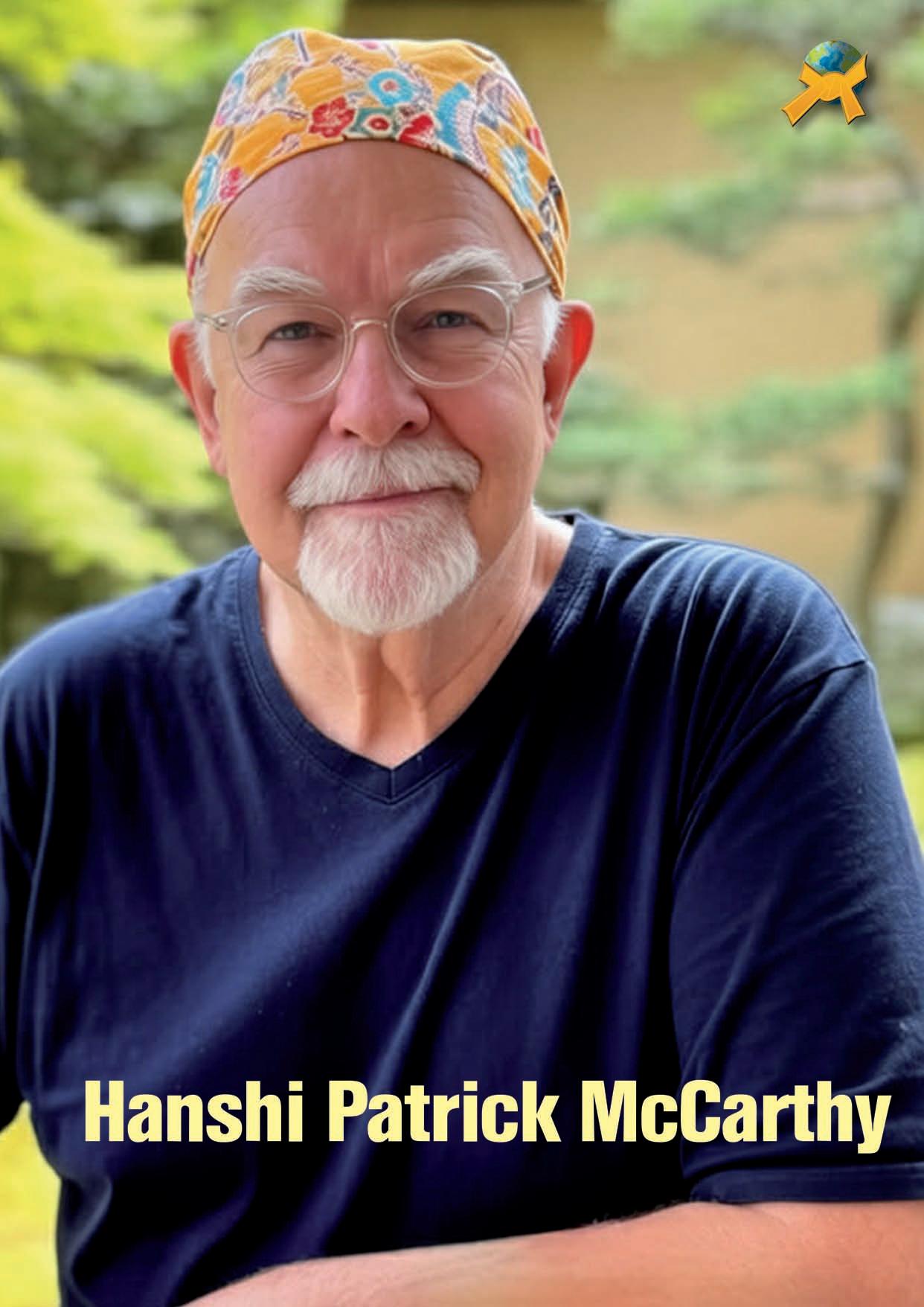
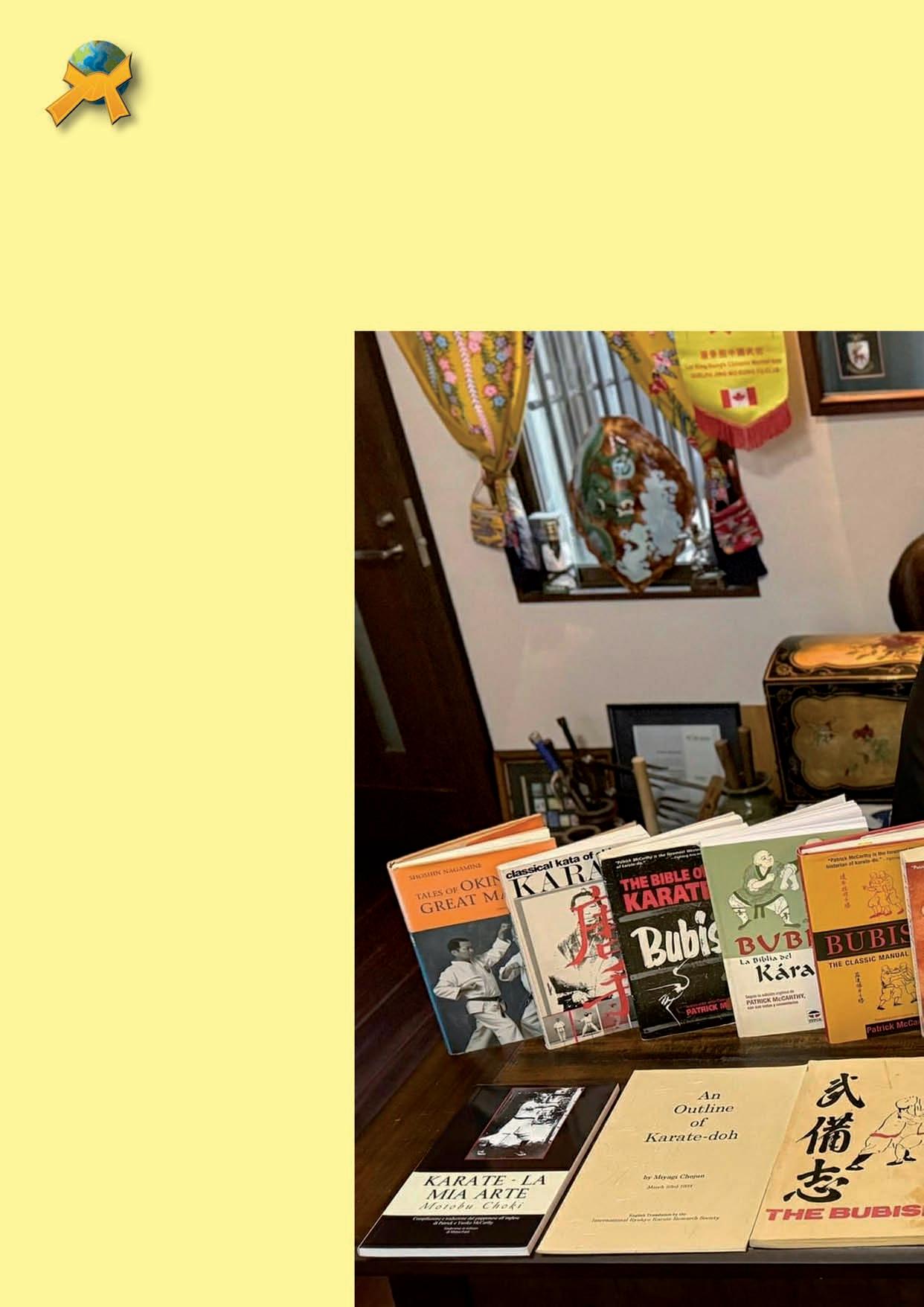
“The art of Karate represents the perfect fusion of science and art coming together to create a transformative magic.”
Yet, in spite of being considered inferior, empty-handed fighting practices did not disappear altogether. Prevailing minds foresaw an alternative benefit in maintaining such longstanding traditions. With calculated modifications, kata became an effective adjunct supporting Japan's war machine — employed as structured calisthenic routines to foster physical fitness, social conformity, and a fighting spirit amongst large groups of school students in preparation for military conscription. No longer embraced for its once highly functional empty-handed fighting practices, such timeless teaching became lost in the sands of time.
As a cultural recreation, the popularity of this modified practice grew exponentially. The embryonic practice took on new characteristics, shaped in the image of the Japanese Budo traditions most responsible for having influenced its growth and direction — namely Kendo and Judo. Having evolved into a fascinating cultural recreation and a highly challenging, rule-bound sport, the tradition is now practiced by enthusiasts in every corner of the world.
Now, in the very same way that necessity once cradled the birth of a contemporary interpretation out from the belly of classical tradition, nature has come full circle. A groundswell movement has given rise to a new generation of learners — practitioners bent upon rediscovering the original art and its timeless teachings. Coveted two-person application practices, long buried beneath layers of performance and conformity, have kicked open the floodgates of critical thinking and are forcing conformity to gradually drown in the depths of its own ignorance.
This is tradition. This is the KU Way.
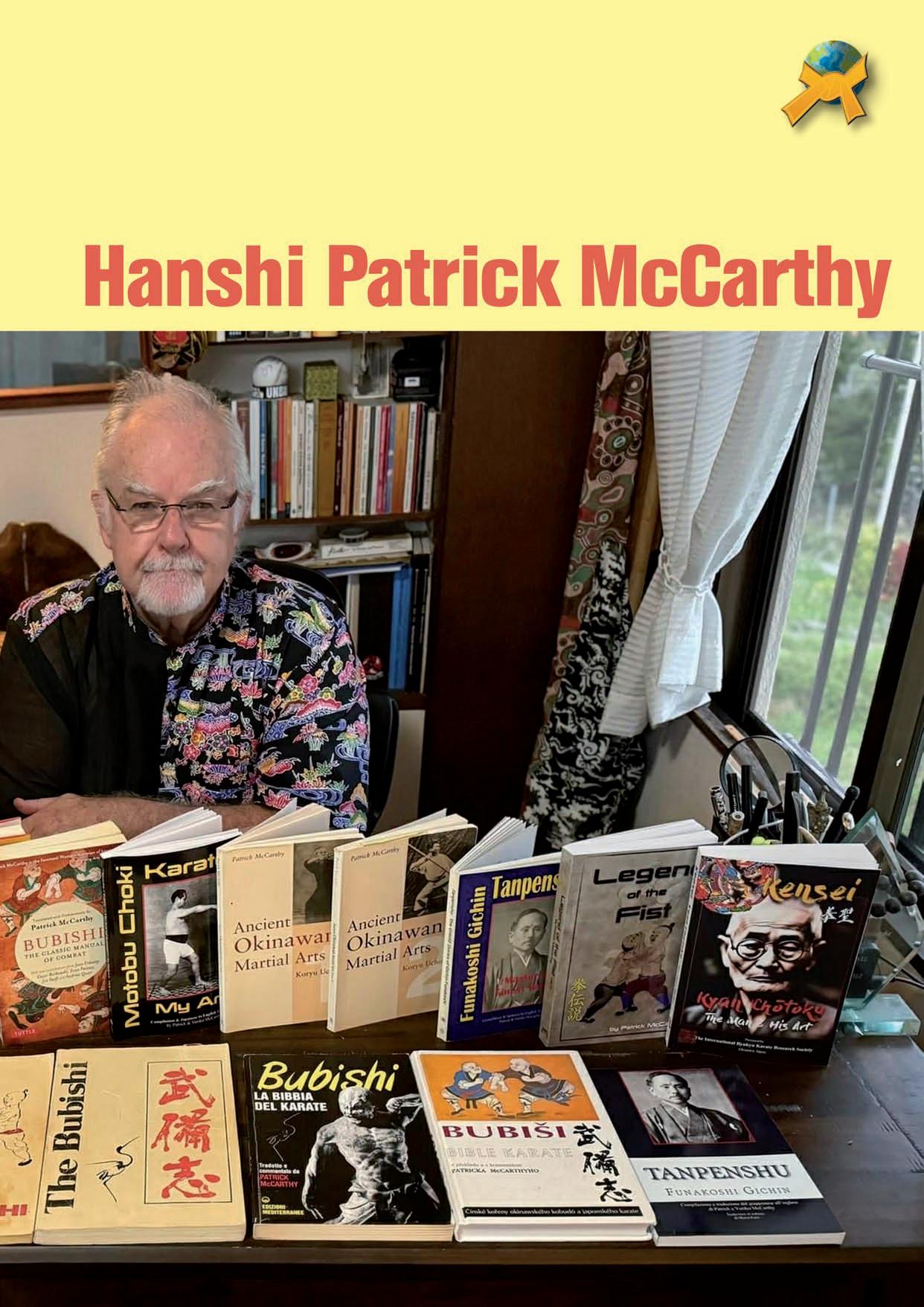
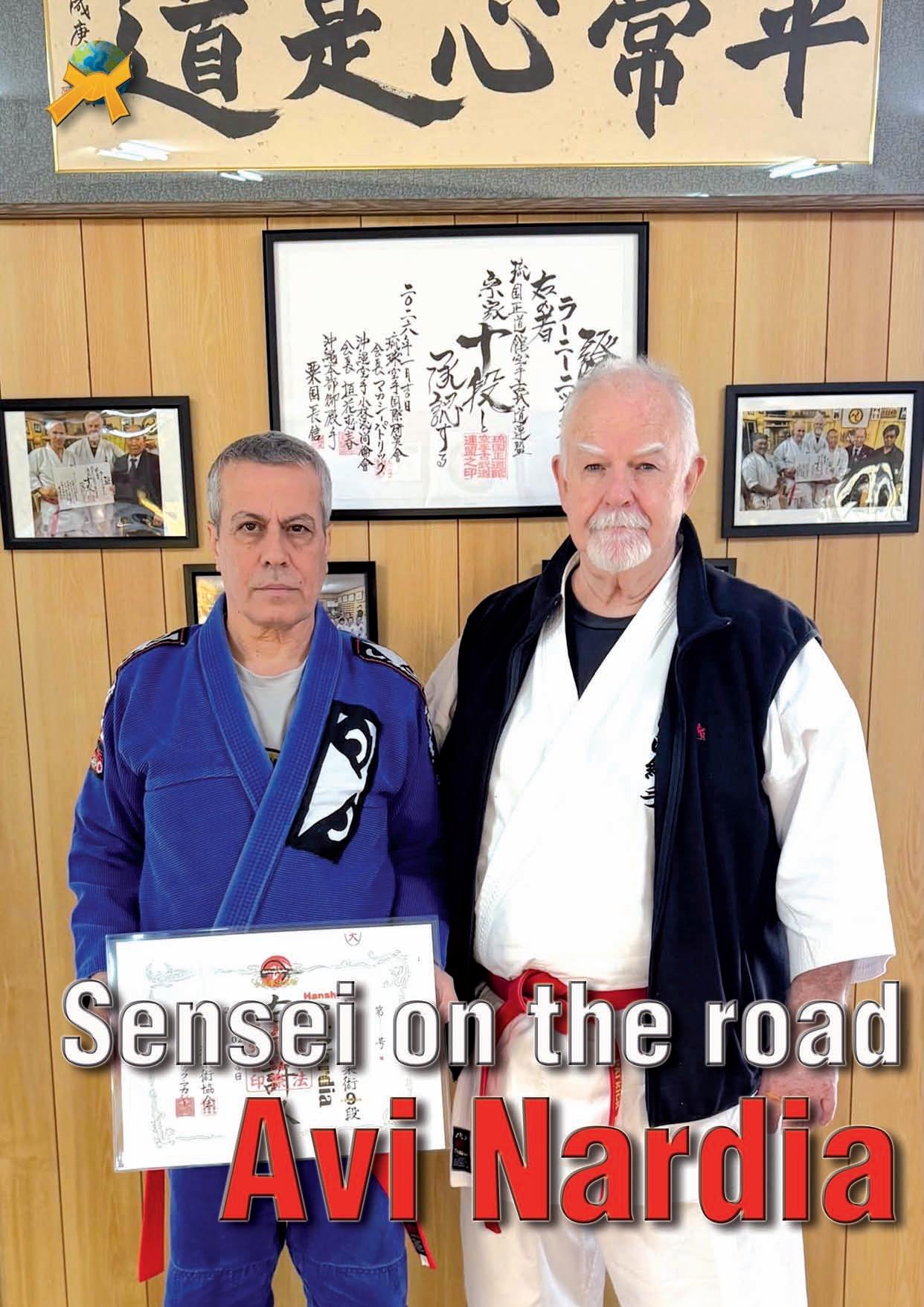
Patrick McCarthy Hanshi and the Open Circle
A Journey to Okinawa and the Living Tradition of Martial Arts
“Tradition is not the worship of ashes, but the preservation of fire.”
Patrick McCarthy Hanshi
My recent journey to Japan was more than travel—it was a return to the roots of martial arts, a reconnection with history, and a deeply personal milestone.
At its centre was Okinawa… and a reunion with Patrick McCarthy Hanshi.
I first met him in 1985 as a young practitioner in Japan. From that very first encounter, we shared a common understanding—that traditional martial arts must be more than ritual; they must speak to the reality of human conflict. That idea has stayed with me ever since.
This time, I had the privilege of staying with Patrick McCarthy Hanshi and his wife, Yuriko, in Okinawa. Their hospitality was generous and sincere, but more than that—it offered something rare: time. Time to train, to exchange ideas, and to connect with senior Okinawan teachers in the birthplace of Karate.
One of the most humbling moments of my visit was being awarded the title of Hanshi and the rank of 9th Dan. I accept this not as an arrival, but as a responsibility—to continue learning, teaching, and evolving.
Patrick McCarthy Hanshi stands as one of the foremost authorities on classical fighting arts. Born in Canada, and shaped by decades in Australia, the United States, and Japan, he now resides in Okinawa. Once among the most sought-after seminar instructors in the world, he has spent over thirty years travelling internationally, teaching hundreds of seminars across more than thirty countries.
As the founding director of the International Ryukyu Karate Research Society (IRKRS) and the creator of Koryu Uchinadi, his work bridges past and present—preserving the functional principles of traditional Okinawan Karate while making them accessible to modern practitioners.
His studies trace back through influential figures such as Kinjo Hiroshi, Hanashiro Chōmo, Itosu Ankō, and Matsumura Sōkon. Yet what defines his work is not lineage alone—but the ability to question, analyse, and bring meaning to what was often left unexplained.
As a competitive athlete, he excelled across multiple disciplines—kata, kumite, weapons, and beyond. His experience spans karate, jujutsu, judo, kobudō, and Japanese sword traditions, reflecting a lifetime of immersion in the arts.
“As a competitive athlete, he excelled across multiple disciplines—kata, kumite, weapons, and beyond. His experience spans karate, jujutsu, judo, kobudo, and Japanese sword traditions, reflecting a lifetime of immersion in the arts.”
His translation of The Bubishi remains one of the most important contributions to modern Karate scholarship, opening a once obscure text to the wider world.
Through decades of travel and research across Okinawa, mainland Japan, China, Southeast Asia, and the Philippines, Patrick McCarthy Hanshi has explored not only technique, but the cultural and historical fabric from which these traditions emerged.
Among his most influential contributions is the concept of Habitual Acts of Physical Violence (HAPV)—a framework that reconnects kata to the reality of how violence actually occurs. It is here that tradition stops being abstract… and becomes functional again.
But perhaps his greatest contribution lies in how he teaches. He challenges practitioners to think. To question. To move beyond imitation and seek understanding. His approach adapts to the individual—acknowledging that no two people walk the same path.
Okinawa gives all of this deeper meaning. It is not just a place—it is a living archive, where history is not preserved behind glass, but carried forward through practice.
This journey reminded me of something simple, yet easily forgotten:
Martial arts is not a choice between tradition and modernity. It is the bridge between them.
And through teachers like Patrick McCarthy Hanshi… the circle remains open
“Martial arts is not a choice between tradition and modernity. It is the bridge between them. And through teachers like Patrick McCarthy Hanshi… the circle remains open”
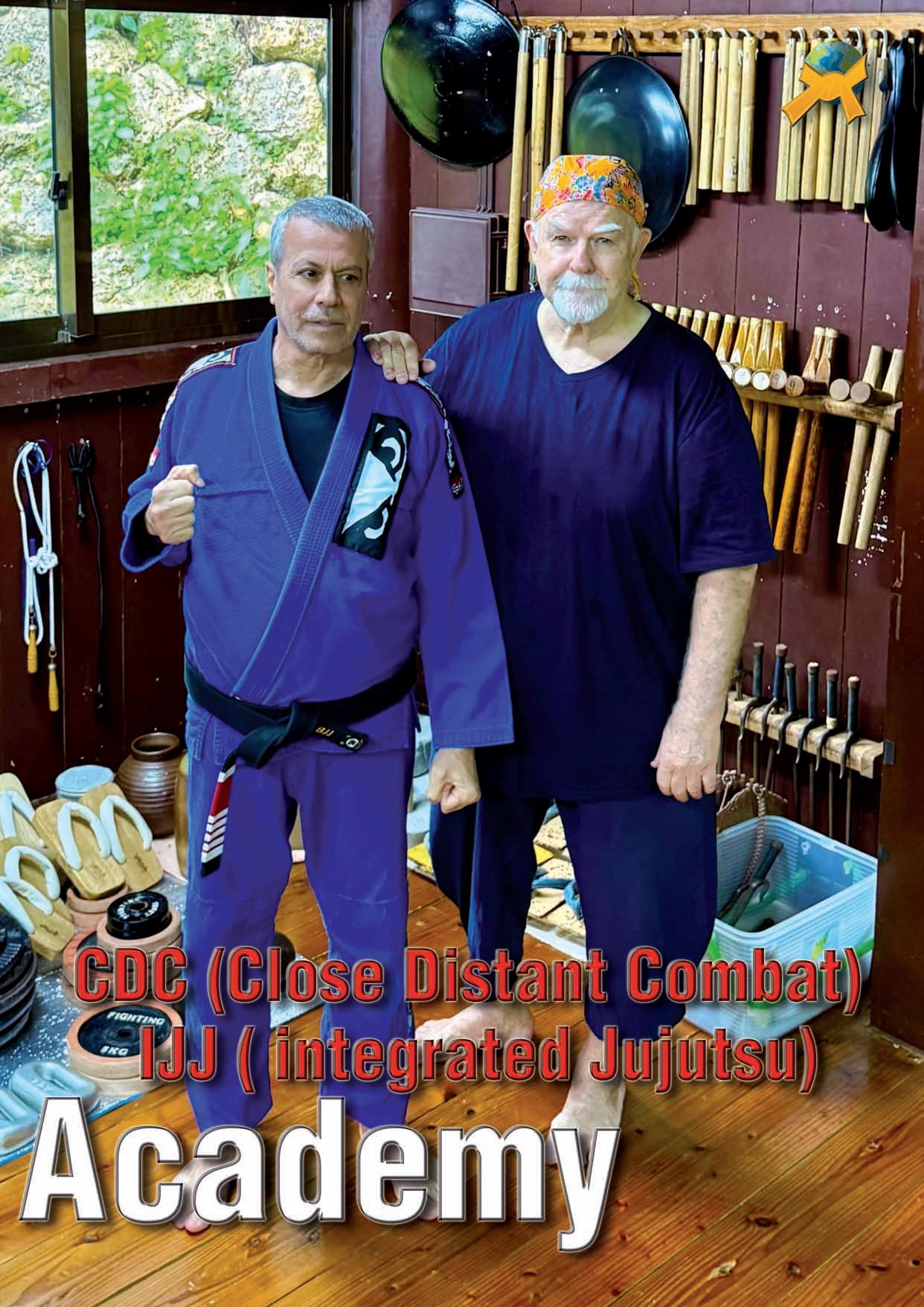
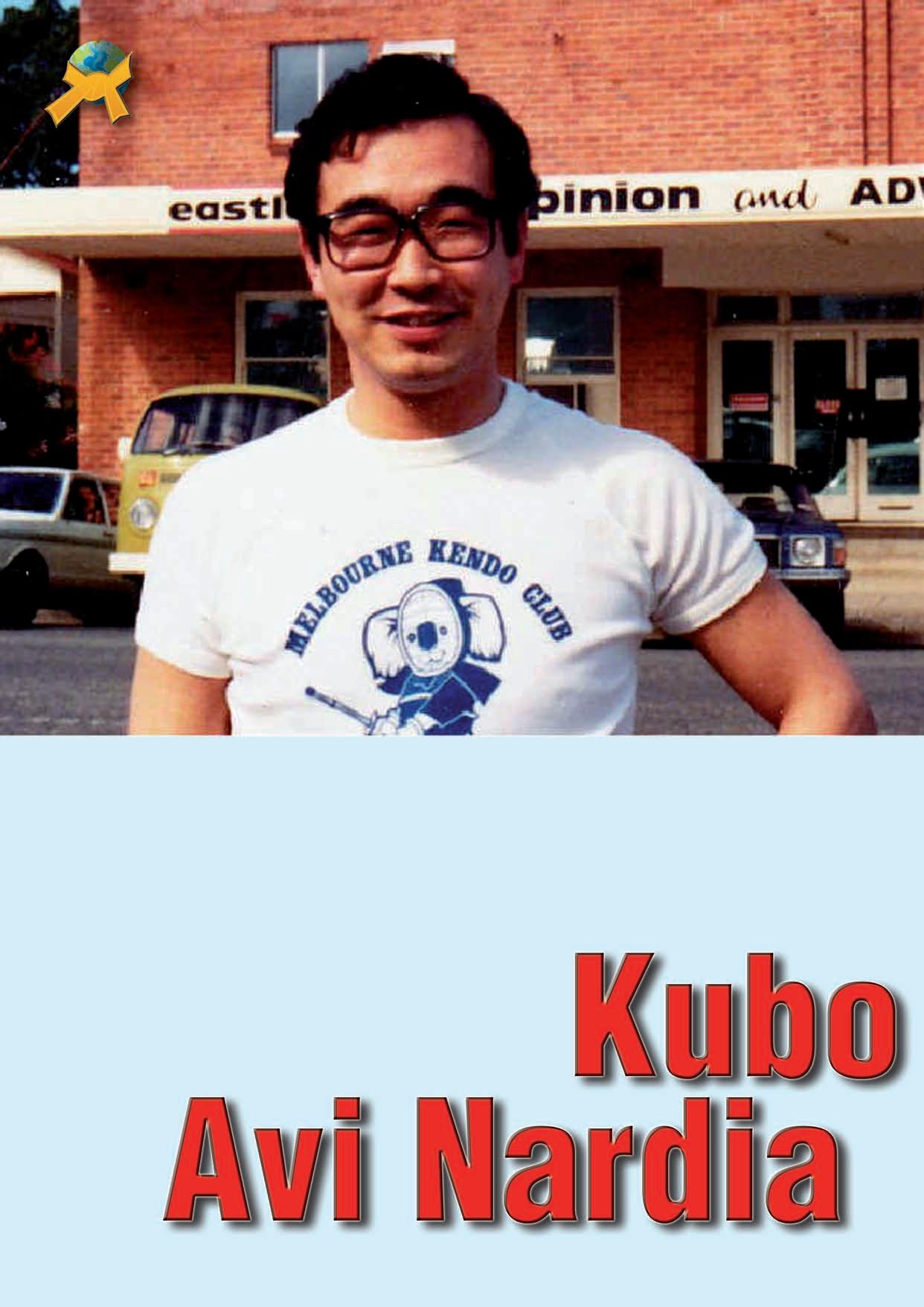
In Memory of Kubo Akira Sensei — A Tribute by Avi Nardia, Hanshi 9th Dan
In martial arts, we often say that many people climb the same mountain by different roads. But over the years I have come to notice something troubling: too many people merely walk around the mountain, convincing themselves they are ascending. That distinction — between the genuine climb and the comfortable stroll at the base — is the very heart of what separates martial arts as a path of self-preservation and self-defense from martial arts practiced purely as a hobby or recreational pursuit. One road demands everything of you. The other asks nothing.
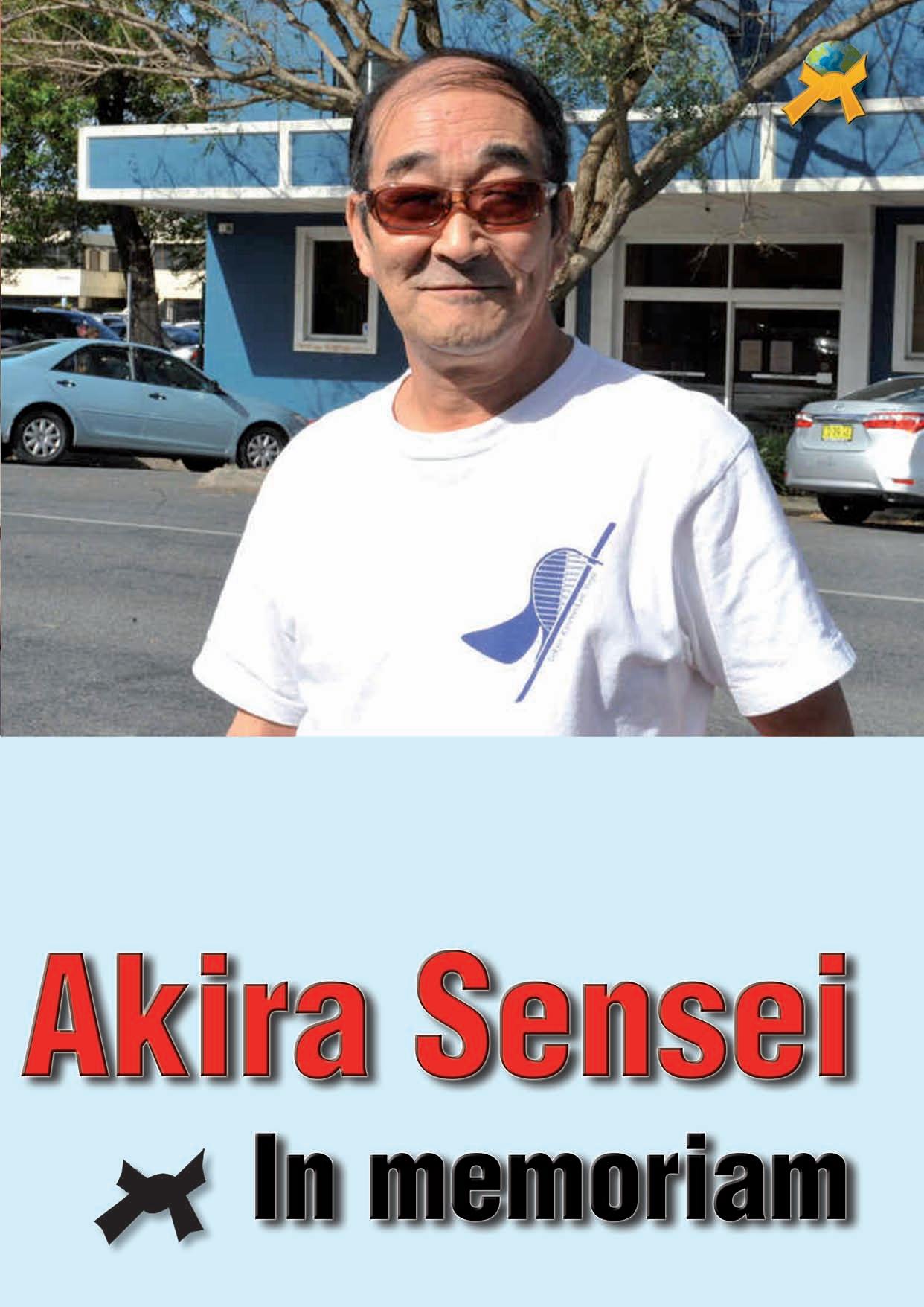
It was with these thoughts in mind that I made my last visit to Kyumeikan Dojo in Tokyo — the storied training hall founded in 1957 by Kubo Kahei Sensei and carried forward for decades by his son, Kubo Akira Sensei, who passed away on October 23rd, 2023. Akira Sensei was not there. He will never be there again. But the moment I stepped through that door, I could feel his spirit in every worn floorboard, every brushstroke on the calligraphy hanging from the walls, every echo in that sacred space. It was both the most peaceful and the most sorrowful visit I have ever made to a dojo.
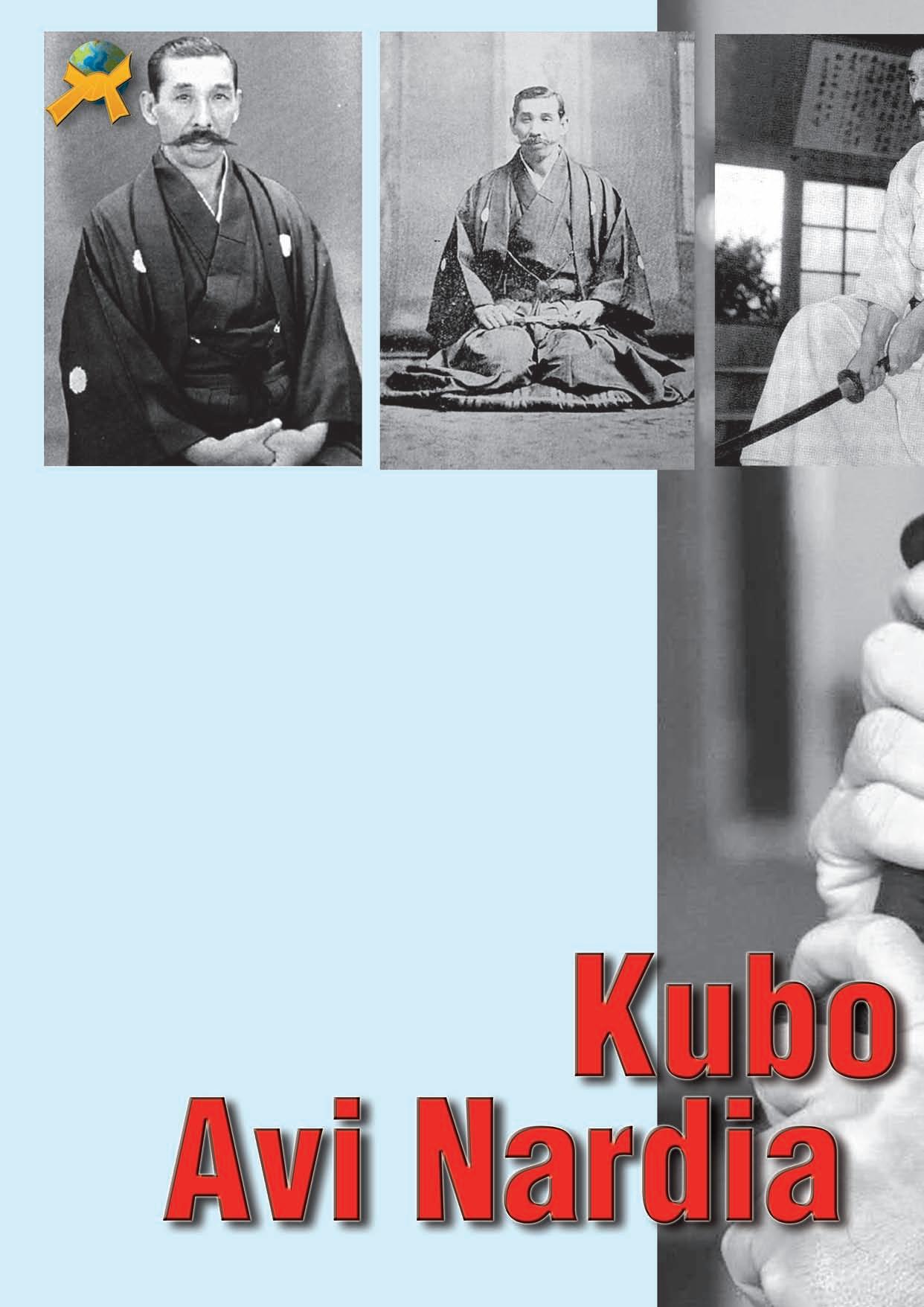
My thoughts in that dojo drifted back to a Zen story I have carried with me for many years — one that speaks directly to the difference between martial arts as self-defense and martial arts as self-indulgence.
A young samurai stood with a bow and several arrows, carefully measuring the distance to his target. A passing monk paused and said: "You will never learn to shoot well if you allow yourself the comfort of correcting a missed shot. In battle, there is no second chance. Learn to hit your target the first time — always remember, you have only one arrow. In life, too, you must do everything with full commitment from the very first moment, for there may be no opportunity to repair what has been done carelessly."
This is the philosophy captured in the Japanese concept of ichi-go ichi-e (一期一会) — "one time, one meeting." Born from the culture of the tea ceremony, it teaches that every encounter, every moment, is utterly unique and will never come again. To treat any moment carelessly is to waste something that can never be recovered.
I remember my first Kyudo lesson vividly. The teacher looked at us and said, with absolute seriousness: "The target is not to hit the target." I was baffled. I am, by nature and by training, a deeply practical person. I have spent my life studying martial arts through the lens of real-world application — Kendo, Iaido, Jodo, Kenjutsu, and modern practical combatives. When someone tells me the goal is not to achieve the goal, I want answers. But over time I understood. In Kyudo, as in life, the perfection of the process — the stillness of mind, the correctness of posture, the purity of intent — produces the result. The arrow finds its mark not because you are aiming at it, but because everything else is right.
This principle is why serious martial arts must always hold self-preservation and selfdefense as unified goals, not separate ones. To practice technique without the pressure of real consequence is to walk around the mountain. The moment you internalize that there is only one arrow — that every technique, every decision, every encounter may be the only one you get — the quality of your training is transformed entirely.
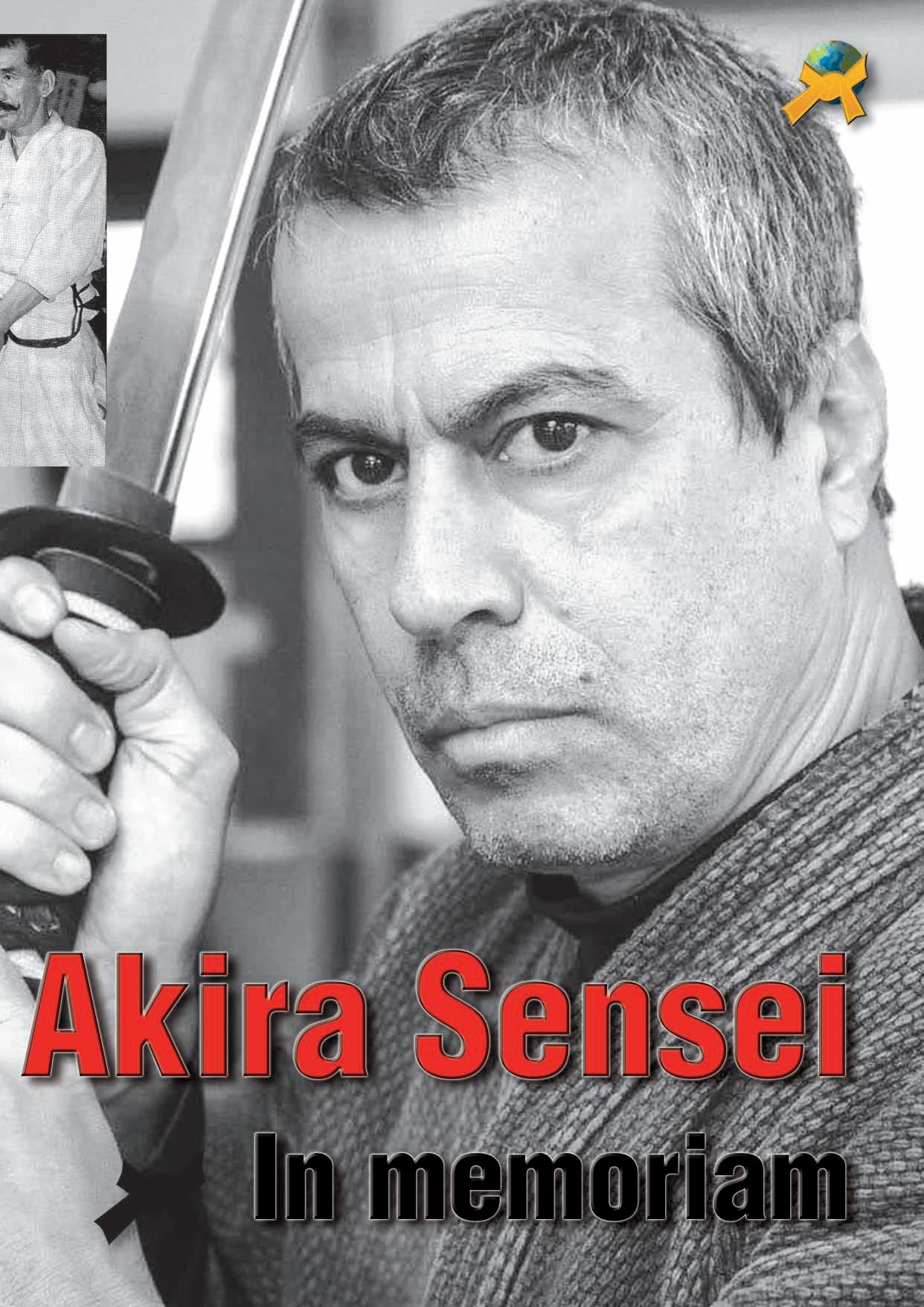
It was Kubo Akira Sensei who first helped me understand that Kendo, for all its rigour and discipline, is a gateway — not a destination. Wearing armour and striking with the shinai is, by design, safe. That safety is what allows beginners to develop, what allows practitioners to push hard without fear of injury. But it carries a hidden danger: the danger of forgetting what the sword actually is.
Kubo Sensei would remind us that in reality, you would not play out long exchanges of blade-on-blade. A real sword, meeting another real sword, breaks. The physics of actual combat bear almost no resemblance to the flowing exchanges we practice in the dojo. Every "missed" strike in Kendo might mean death with a real blade. This understanding is precisely why Kubo Sensei insisted that his adult students pursue not only Kendo but also Iaido and Jodo. "After receiving your shodan in Kendo," he would say, "you must begin to study Iaido. You must understand the katana — how it is both different from and similar to the bamboo shinai you swing so freely." And then Jodo, with its one-millimetre precision and unforgiving timing, to restore in the practitioner a visceral sense of the seriousness that ancient training demanded.
What made Kubo Sensei's Kendo so distinctive was its depth and physicality — and much of that came from a source that might surprise those who knew him only as a swordsman. Kubo Sensei was also an amateur Sumo wrestler, and that background left an unmistakable imprint on his entire approach to martial arts. Sumo is not merely about size or strength; it is about rooting, about reading the body, about explosive full-contact engagement with no protective equipment and no margin for error. That sensibility flowed directly into his Kendo. His footwork was heavier and more committed, his entries more decisive, his sense of distance informed by the raw physical intelligence that only full-contact grappling develops.
Moreover, Kubo Sensei practiced and preserved what is often called pre-war Kendo — a far more aggressive, combative, and complete expression of the art than what most people encounter today. Modern Kendo, shaped by post-war reforms and its evolution as a competitive sport, tends toward refinement and points-scoring. Pre-war Kendo was something else entirely: more direct, more brutal in its intent, willing to incorporate throwing techniques, body contact, and a broader range of tactics that reflected its roots in actual swordsmanship. Kubo Sensei never allowed Kendo to become merely a sport under his roof. He kept it as Budo — as Bushido — alive with the spirit and the seriousness of the warrior tradition from which it came. To train under him was to feel the difference between a game played with bamboo swords and a discipline built upon the understanding that the sword is a weapon and the warrior is responsible for his life and the lives of others.
I was fortunate to train not only at Kyumeikan but, through Kubo Sensei's extraordinary generosity and connections, at the highest levels of the Japanese swordsmanship world. I studied at Kokushikan University under the legendary Kiyoshi Nakakura Sensei — a man who had been both the top student of Nakayama Hakudo and a representative sent to train with Morihei Ueshiba at the Aikido dojo. I trained at Shin Kiba, the police headquarters dojo, and at the Imperial Palace dojo under Sato Sensei. Each of these teachers brought a different philosophy, a different interpretation of the Way of the Sword. Together, they formed a mosaic that no single teacher alone could have provided.
I carry 6th Dan in Kendo, and I hold rankings in Iaido, Jodo, and Kenjutsu alongside my modern and practical combative arts. This breadth was not accidental — it was by design, Kubo Sensei's design. He sent me to more than one hundred different teachers and schools. I studied across styles, philosophies, and traditions. His philosophy was always: "Open the mind — but watch that it does not fall open." An open mind is one of the great gifts of martial study, but what you allow into that open mind must always be carefully considered.
Kubo Akira Sensei was not always destined to be what he became. He was, in many ways, a dreamer — a man who wanted to live freely in America as a professional photographer and to savour the open air of Australia. He had done both. He had lived in America for seven years, earned his green card, and had even been drafted for Vietnam before fate intervened. He was studying life on his own terms.
Then his father, Kubo Kahei Sensei, died suddenly. Akira was the eldest of three sons. There was no deliberation, no prolonged decision — only giri, the Japanese concept of duty, obligation, and commitment that runs deeper than personal desire. He returned to Japan, gave up his green card, gave up America, and took the weight of Kyumeikan on his shoulders. He became, at that moment, the youngest kancho — dojo director — in Japan. His mother died not long after, and he was left alone, without guidance, without a manual, learning everything by experience and will.
This is the story that I think of when people romanticise the martial arts teacher's life. The dojo was not a comfortable legacy handed down with clear instructions. It was a burden accepted with grace, a fire that had to be carried forward so that it would not die. As it is said in the tradition: carry the fire, not the ash. To carry the ash is to preserve the form without the spirit — to maintain the appearance of a tradition while its essence fades. Kubo Sensei carried the fire.
Under his direction, Kyumeikan became something extraordinary. From a single dojo in Itabashi-ku, it grew into an institution that touched more than five thousand students in Japan and over three thousand international practitioners from fifty countries. Kubo Sensei organised fifty-two international trips to thirty countries, personally spreading kendo, iaido, and jodo across the globe. His motto — wa to shinrai, friendship and trust — was not a slogan. It was the operating philosophy of everything he built.
He once wrote: "We are only a weed in the field — not beautiful like a rose, but one of many small efforts toward global peace and understanding." That humility was genuine. And yet, in its quiet way, what Kyumeikan achieved was anything but small.
I was one of Kubo Sensei's uchi-deshi — a live-in student, immersed in the dojo's life day and night. The uchideshi relationship is among the most intimate in martial arts. You do not merely attend classes; you inhabit the teacher's world. You absorb not only technique but manner, philosophy, and the daily rhythm of a life devoted to Budo.
Through Kubo Sensei, doors opened that I could never have reached on my own. He introduced me to teachers whose knowledge and lineages spanned the full breadth of Japanese martial tradition. He navigated those introductions with care — he knew which teacher would challenge me in which way, which school would correct a gap in my understanding, which philosophy would stretch my thinking. He was not simply a teacher. He was an architect of a martial education.
Much of who I am as a martial artist — as a Hanshi, as an instructor, as someone who has developed and taught practical combative systems across the world — flows directly from those years at Kyumeikan and the network of knowledge that Kubo Sensei built around me. You cannot quantify what that means. You can only carry it forward.
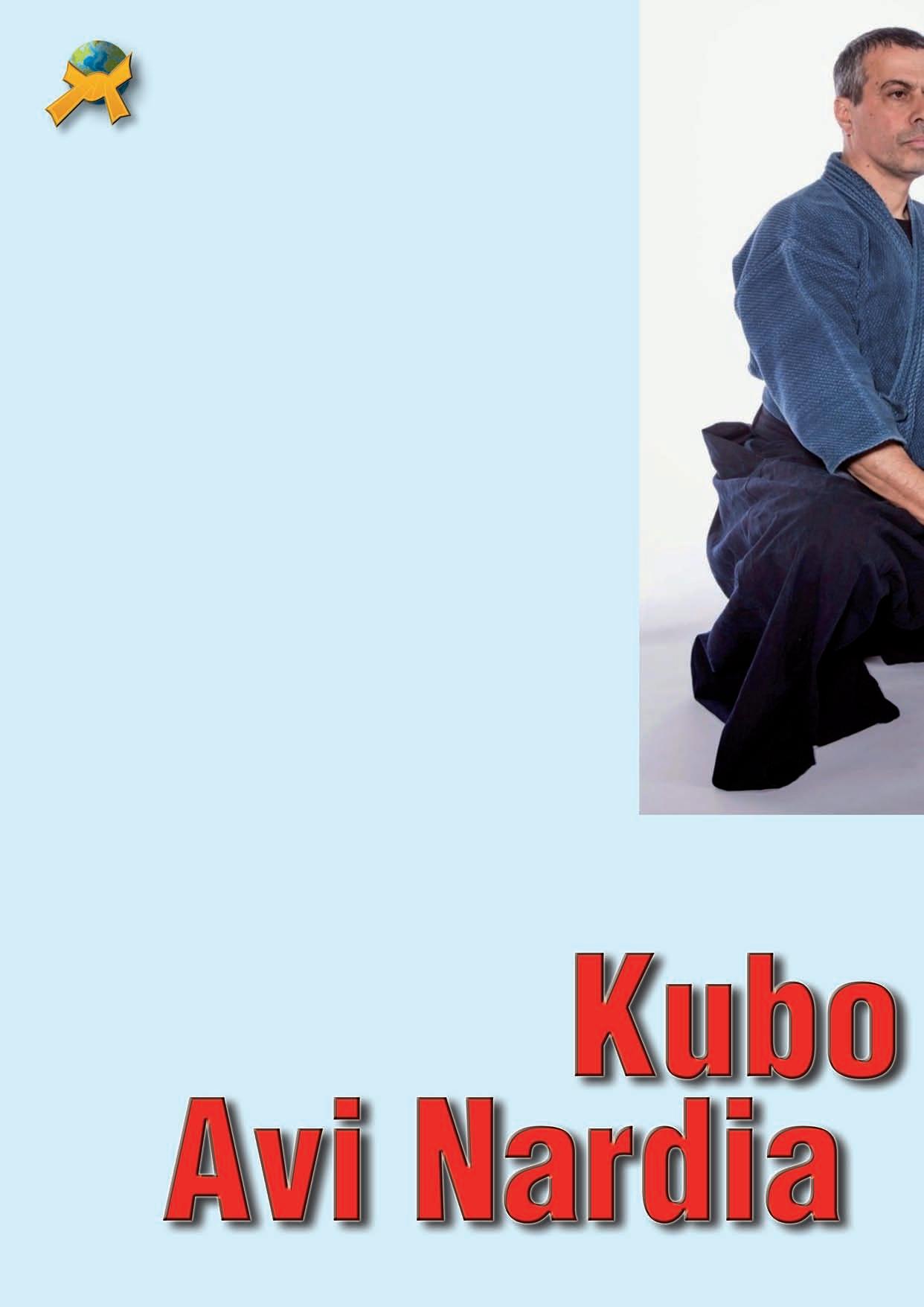
Kubo Sensei often spoke of Shu-Ha-Ri — the three stages of mastery. Shu: follow the rules absolutely, build the foundation, allow no deviation. Ha: begin to question, to exchange, to test the principles against other ideas. Ri: transcend the rules, having internalised them so completely that they no longer need to be consciously followed.
This framework mirrors my own belief, hardened by decades of training across many disciplines: to understand the new, you must first master the old. The classical arts — Kenjutsu, Iaido, Jodo — are not museum pieces. They are the foundation upon which all practical understanding of the sword is built. Without that foundation, modern or sport-oriented practice floats without roots. With it, everything becomes more meaningful, more precise, more honest.
This is why I have always insisted, both in my own study and in my teaching, that self-preservation and self-defense must be studied as one. They are not separate tracks. The internal cultivation demanded by classical practice — the stillness, the discipline, the ethics — is inseparable from its external applications. You cannot develop one while neglecting the other and still call yourself a martial artist in the full sense.
Among the many things I owe to Kubo Sensei is one that carries a particular personal weight: it was he who helped me establish the first Kendo dojo in Israel and, together with Sato Sensei of the Imperial Palace dojo, supported the founding of the Israel Kendo Federation in 1985 — affiliated from its inception with the International Kendo Federation. This was not a small thing. To plant a martial art in new soil requires not just enthusiasm but credibility, connections, and the backing of those who are recognised within the international community of that art. Kubo Sensei provided all of that.
The founding of the Israel Kendo Federation is, in its own way, a story of carrying the fire. Kendo had no natural home in Israel. There was no tradition, no infrastructure, no established community of practitioners. What there was, was the conviction that Budo — real Budo, with its ethical foundations and its demand for genuine commitment — had something to offer that transcended culture and geography. Kubo Sensei believed this absolutely, and he acted on that belief by supporting the effort to make it real. Sato Sensei, whose own standing within the Japanese martial arts world gave the federation its legitimacy in the eyes of the International Kendo Federation, lent his name and his influence at a critical moment.
That federation, born in 1985 from the vision of two Japanese masters and one Israeli student, still stands. It is one of the quieter monuments to what Kubo Sensei built — not through grand gestures but through personal trust, specific introductions, and the patient work of spreading Kendo not as a Japanese export but as a human inheritance.
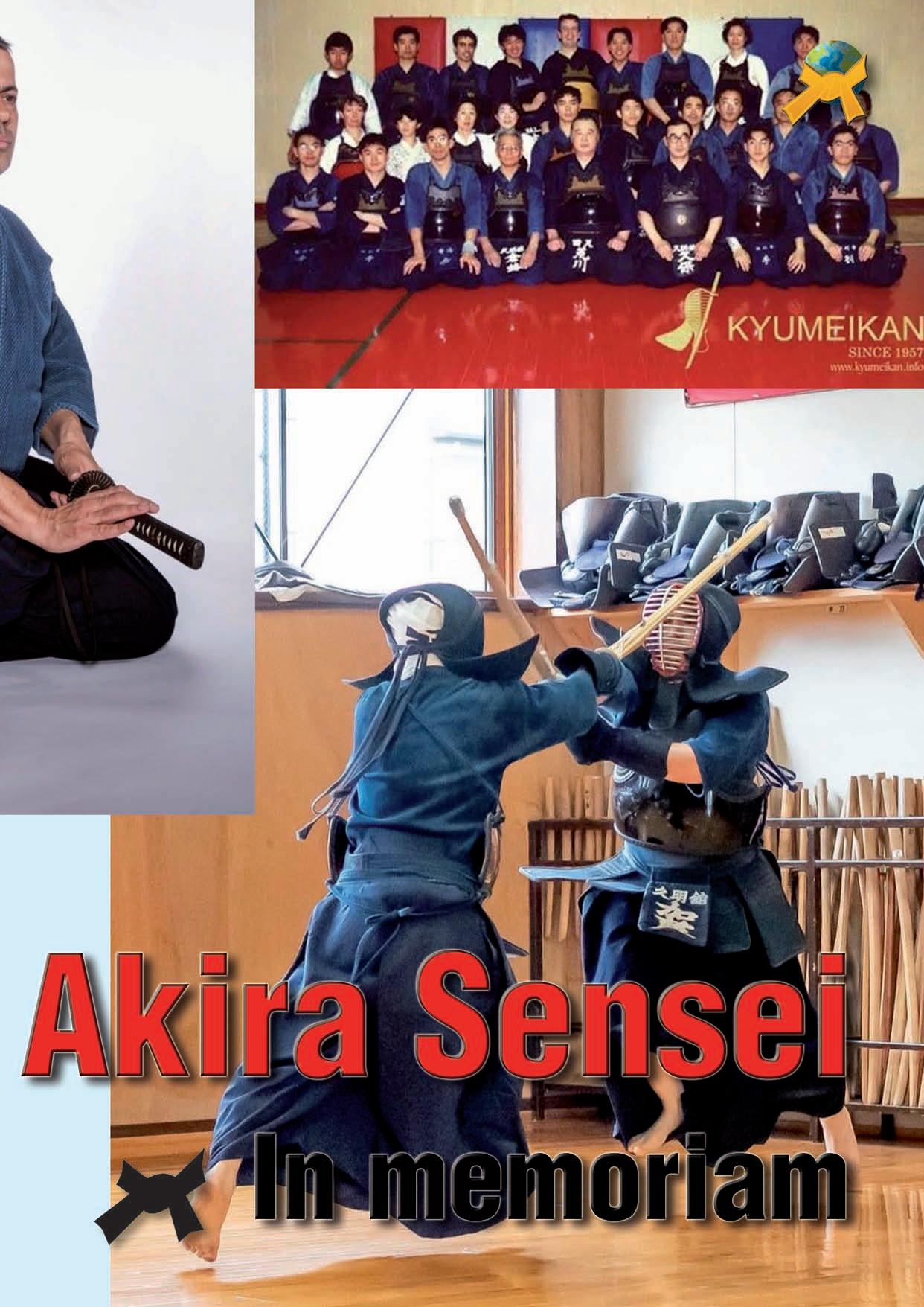
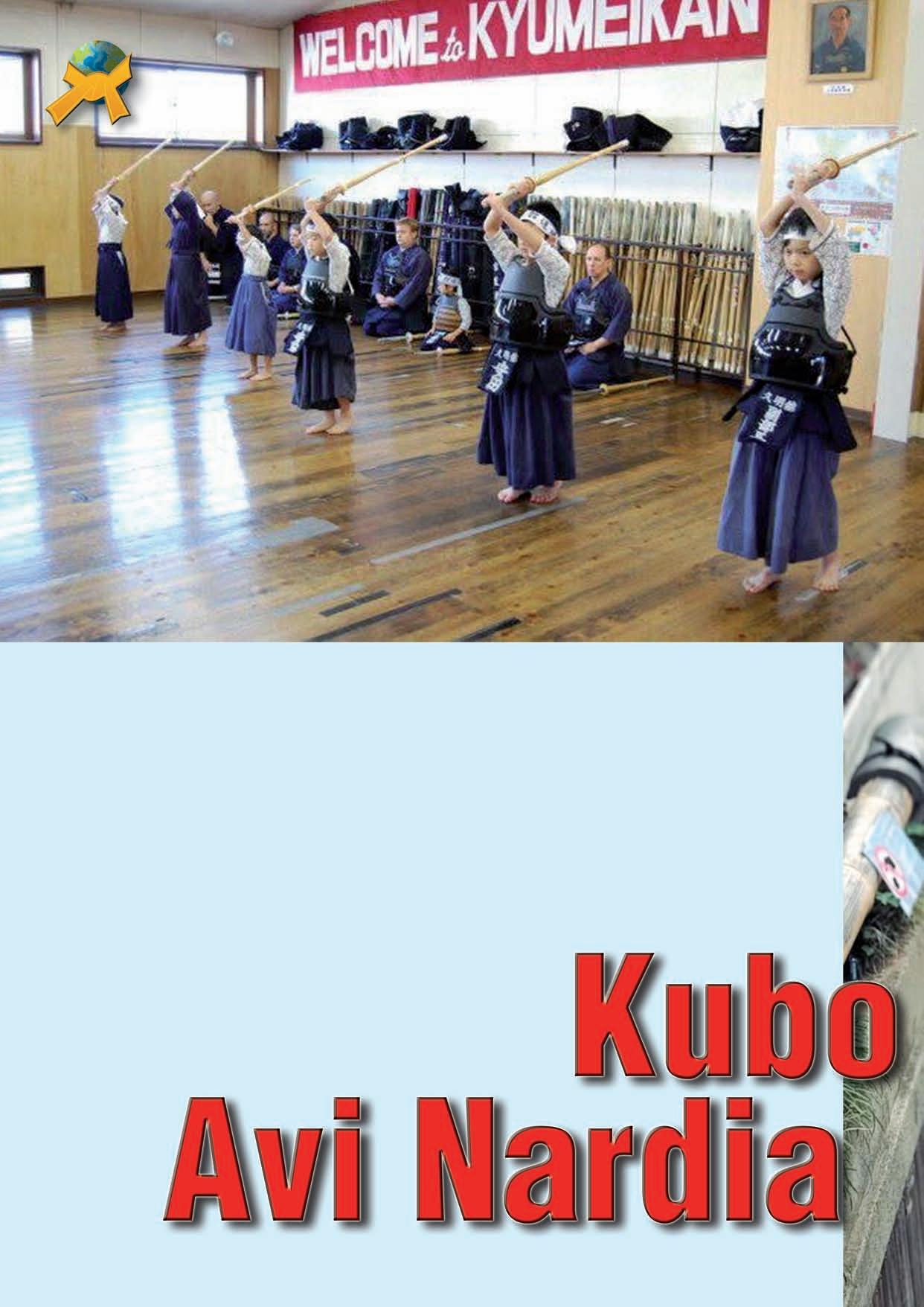
When I stood in Kyumeikan on my last visit, the dojo was quiet. The tatami, the weapons on the walls, the worn practice equipment — all of it was exactly as I remembered. Kubo Sensei was gone, but the space still held the shape of everything he had poured into it over a lifetime.
I thought of the monk's words to the young samurai. You only have one arrow. Kubo Sensei spent his arrow — his one life — on something that mattered. He gave up the photographer's dream, the American adventure, the easy path. He carried the fire when it would have been so much simpler to set it down. Because of that choice, thousands of people across fifty countries carry something of that fire in their own hands today.
I left the dojo with the same feeling I carry from every real martial arts encounter: grateful, humbled, and more resolved than ever to honour what was given to me by climbing — truly climbing — and not simply walking around the mountain.
Kubo Akira Sensei — Kyumeikan Dojo Director, 1957–2023.
"Carry the fire, not the ash."
Avi Nardia holds the rank of Hanshi 9th Dan and is a recognised authority in both classical and modern martial arts. He holds 6th Dan in Kendo and advanced rankings in Iaido, Jodo, and Kenjutsu, alongside extensive credentials in modern and practical combative systems. A former uchi-deshi at Kyumeikan Dojo, he trained under Kubo Akira Sensei, Kiyoshi Nakakura Sensei, and many of Japan's foremost martial arts masters. He continues to teach and transmit the traditions he received with the conviction that understanding the old is the surest path to mastering the new.
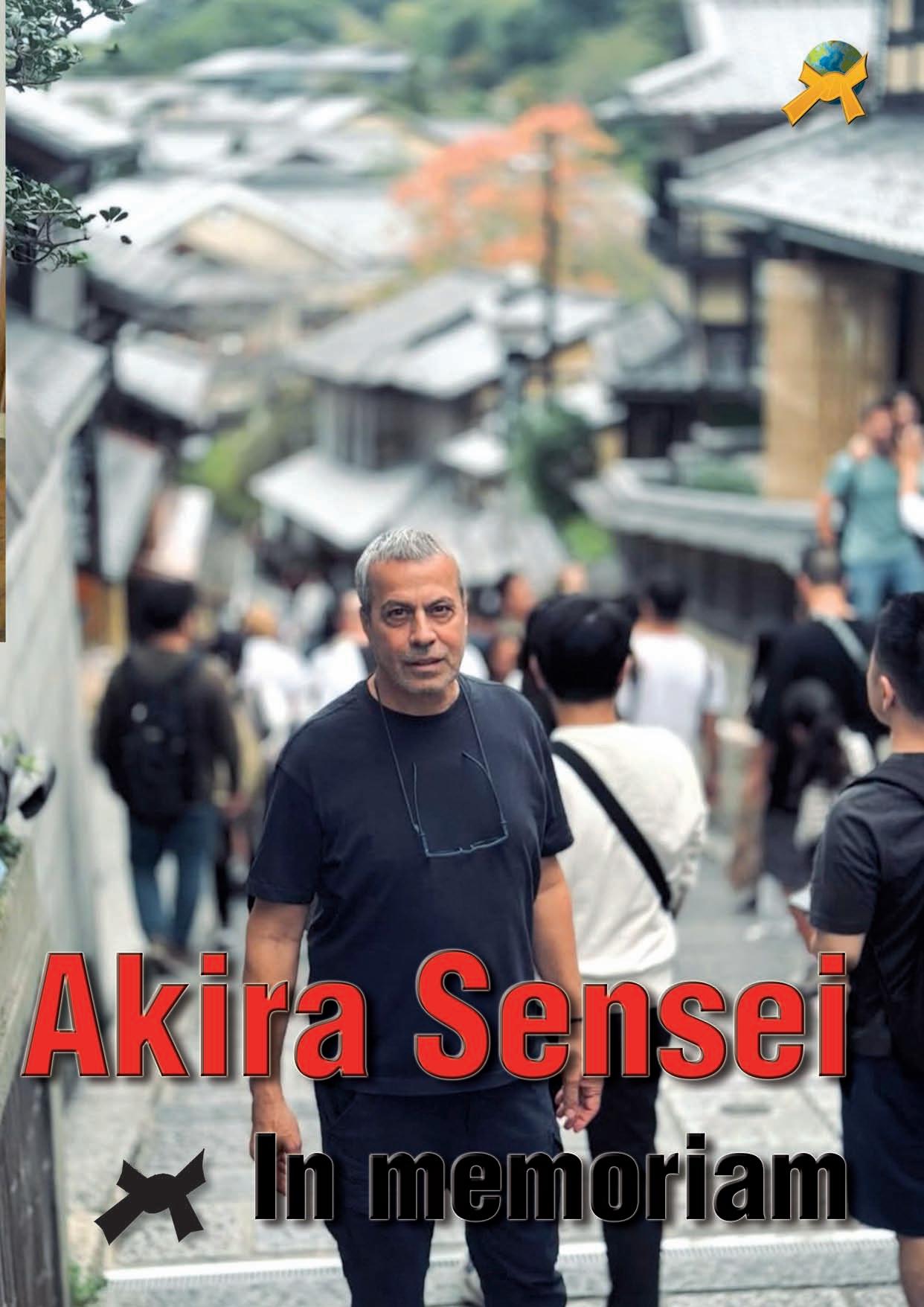
Memories of our brand new CEO and Director with his friend Chuck Norris
My journey with the late actor and martial artist Chuck Norris began in mid-1976 during GM S. Henry Cho's championship, where I first met Chuck through my instructor, the late Joe Hays—World Champion and a student of my Grandmaster, Dr. Richard Chun. It was an honor to showcase our martial arts skills before a massive audience at Madison Square Garden in New York City. I was especially thrilled to connect with Chuck, who was then actively honing his craft and gaining recognition within the global martial arts community. Our paths crossed again later, and he welcomed me warmly, embracing me like family.
Chuck was a close friend of Great Grandmaster Aaron Banks, the world's top martial arts promoter who, alongside Bruce Lee, played a pivotal role in introducing martial arts to mainstream audiences. Mr. Banks remained a leading promoter for decades. Over the years, Chuck and I stayed in contact. I took great pride in watching him launch his acting career, inspired by guidance from his student, actor Steve McQueen, at his martial arts school. Chuck earned worldwide recognition as a martial artist, excelling in Tang Soo Do, Taekwondo, and Brazilian Jujitsu.
On April 26, 2000, I was honored to return to Madison Square Garden to defend my title, "World Martial Arts Daredevil." To my delight, Chuck attended the event dressed in his Walker, Texas Ranger attire, joining an elite gathering of martial arts greats—including S. Henry Cho, Dr. Richard Chun, Great Grandmaster Aaron Banks, Hanshi Steven Kaufman, Lou Neglia, Rick Lenchus, and others. The atmosphere ignited as the audience witnessed an electrifying display of mixed martial arts. I closed the competition as the final fighter, successfully defending my title for the fifth time—an exhilarating triumph. Following the match, I delivered a dare devil demonstration: breaking a stack of glass with a knife-hand strike, executing double flying kicks to shatter five 1-inch-thick boards in one motion, and performing head and thumb strikes to split two additional thick boards.
Farewell my friend!

At the finale, very impressed by my performance, Chuck entered the ring, placed the world championship belt around my waist, and declared, "You are a Great Champion." That moment stands as the pinnacle of my martial arts journey—a tribute I will always cherish. We continued to cross paths at events over the years, such as the Ocean State Grand National Championships in Rhode Island where he endorsed several of my martial arts books. I am happy we had a lasting friendship that included his wonderful wife, Gina. They were a remarkable couple, and I've always admired Chuck's accomplishments. Rest in peace, dear friend. Thank you for your lifelong dedication to advancing martial arts and for supporting countless individuals in need through your inspiring initiative, Kick Start America. God bless.
He is beyond doubt one of the brightest stars in the martial firmament and has left a definite mark on the sector films, a type of cinema in which he's always been in the right place at the right time, from his encounter with the Little dragon in the memorable fight at the Roman Colosseum, to a brilliant personal career that has been riddled with successes in film and television. But Chuck Norris is much more. Behind the character there is a whole lengthy story, it’s the story of someone touched by fate that we all want to know. For this reason, we asked Master Pedro Conde, our super skilled reporter, to deepen into the biography of the most famous Ranger of history, and he has prepared this fantastic article, entertaining and complete indeed, that certainly will turn into a reference from today for collectors.
Carlos Ray Norris, better known as Chuck Norris, was born in Oklahoma on March 10, 1940. Norris was brought up in the bosom of a modest and very religious family; in fact, he was named Carlos after Reverend Carlos Berry, as a tribute to the spiritual minister of the family during those years. Norris has Irish ancestry on his paternal grandfather and his maternal grandmother, and Cherokee ancestry from his paternal grandmother and his maternal grandfather. As a competitor he used to joke about his origins, telling his opponents: “If you can beat the combativeness of my half Irish, my half Cherokee will rip your scalp”. Now seriously, he's always considered that his energy and vitality come from his Irish blood, and his determination and stoicism from his Indian blood.
When Norris says that nothing has ever been given to him for free and that he has always been a fighter, he's surely right, his own birth having been a struggle with life; after a long and difficult delivery, he was born with severe breathing problems and needed five days of attentive medical care to be declared out of danger.
His childhood was not easy. On the one hand he developed an immense shyness due to the fact, among other things, that from the beginning it was impossible for him to get lasting friends: his family was constantly moving house. Before 15 he had gone through thirteen different cities. The economic situation of the family was never too good, they used to rent small apartments in which they had to sleep huddled up together. Another big problem of his childhood was his father's alcoholism: Ray Norris returned from fighting in World War II with severe drinking problems.
This resulted in many tense situations with his wife and children. "Fortunately he never got to spank us - recalls Norris -, he was a peaceful man and when he was not drunk he was nice. But when he was under the influence of alcohol (most of the day) he was very bleak and unpredictable. Sometimes he screamed at us and threatened us, and that affected me a lot because I was a very sensitive and vulnerable child. Sometimes he disappeared for days and even weeks". The situation became untenable and when Norris was 16 and his brothers Wieland and Aaron were 12 and 4 respectively, their parents divorced. Shortly after, his mother remarried and his stepfather managed to stabilize the family situation, a period during which he met Dianne Norris, who he would marry years later.
"Carlos
Ray Norris,
better
known as Chuck Norris was born in Oklahoma on March 10, 1940"
After graduation, Norris decided he wanted to join the Air Force in seeking to get later a position within the military police. He enlisted in August 1958 and was assigned to the military base in Lackland, Texas. It was there that the other recruits, given the difficulty of pronouncing his name, "Carlos", started to call him Chuck.
Soon after, in late 1959, he was sent to Osan Air Base, South Korea. This move, very problematic in principle for he couldn't bring Dianne (who he had recently married) with him, proved to be decisive for the life and
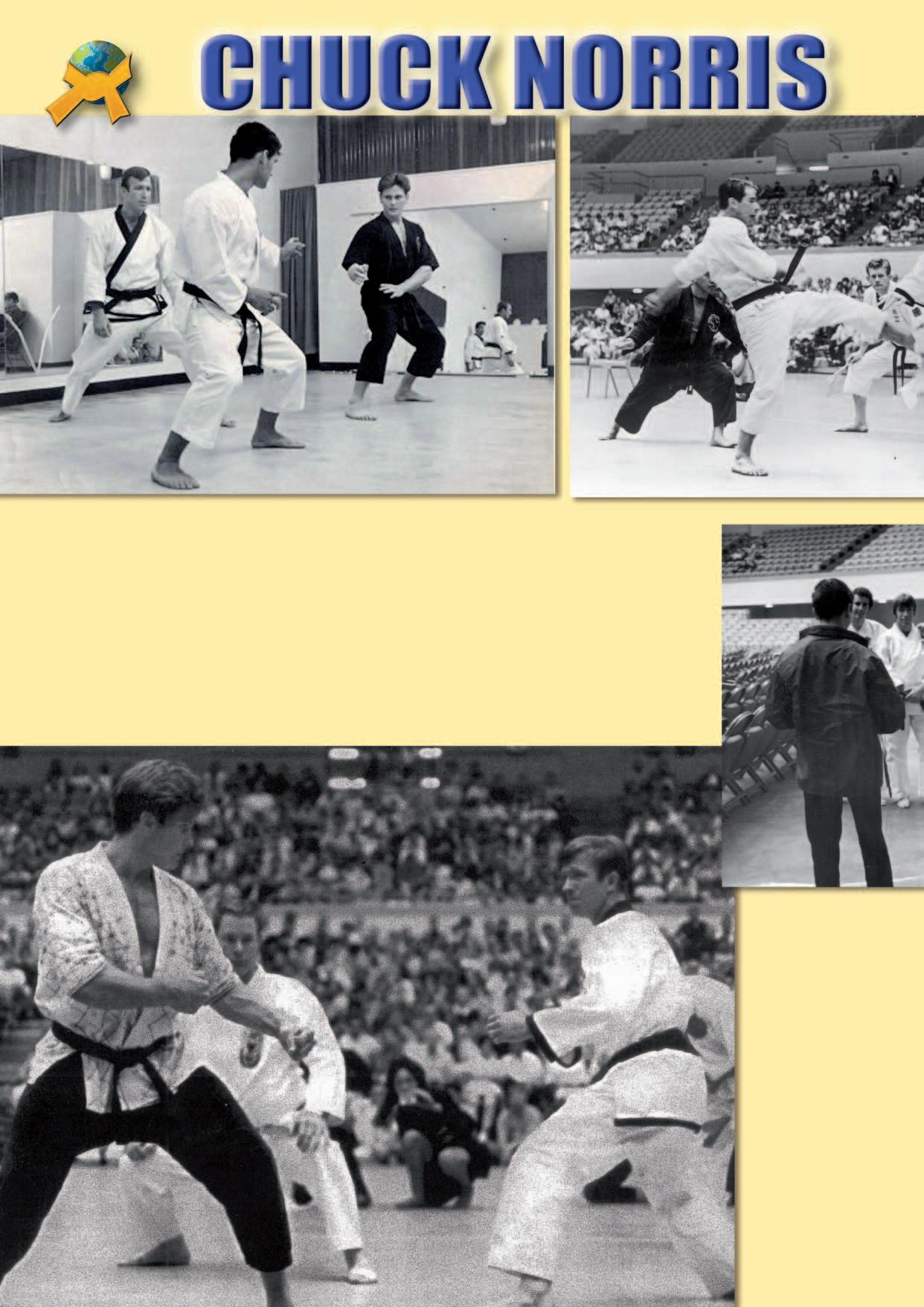
future of Chuck Norris. Nothing would be the same when he returned from Korea. "In the Osan military base there were only 4 activities to which you could devote your free time: play cards, go out drinking with other recruits, sign up for academic training classes or learn Judo. Most recruits chose the first two options, I chose the latter. The why is pretty simple: our military instructors cared very little whether we trained or we were in shape, at the earliest opportunity they crushed you physically to exhaustion. So I decided to practice Judo (the only Martial Art known at the time) to develop
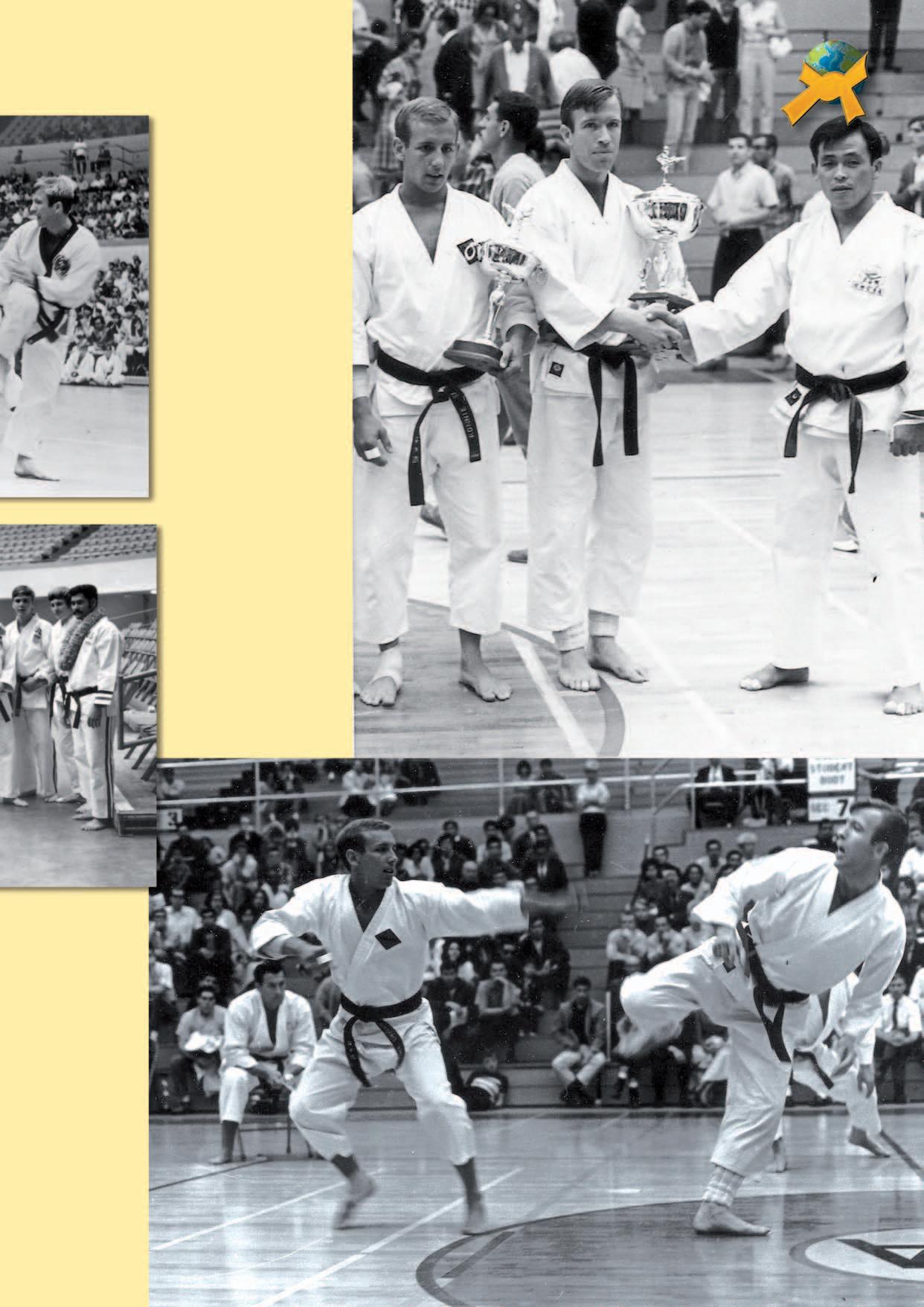
Curious pictures of a young Chuck Norris in his phase of competitor, when he was part of the elite of the Contact Karate revolution that, along with Mike Anderson and other big names of the time, "disjapanized" the Martial Art and gave birth to a new sport concept.
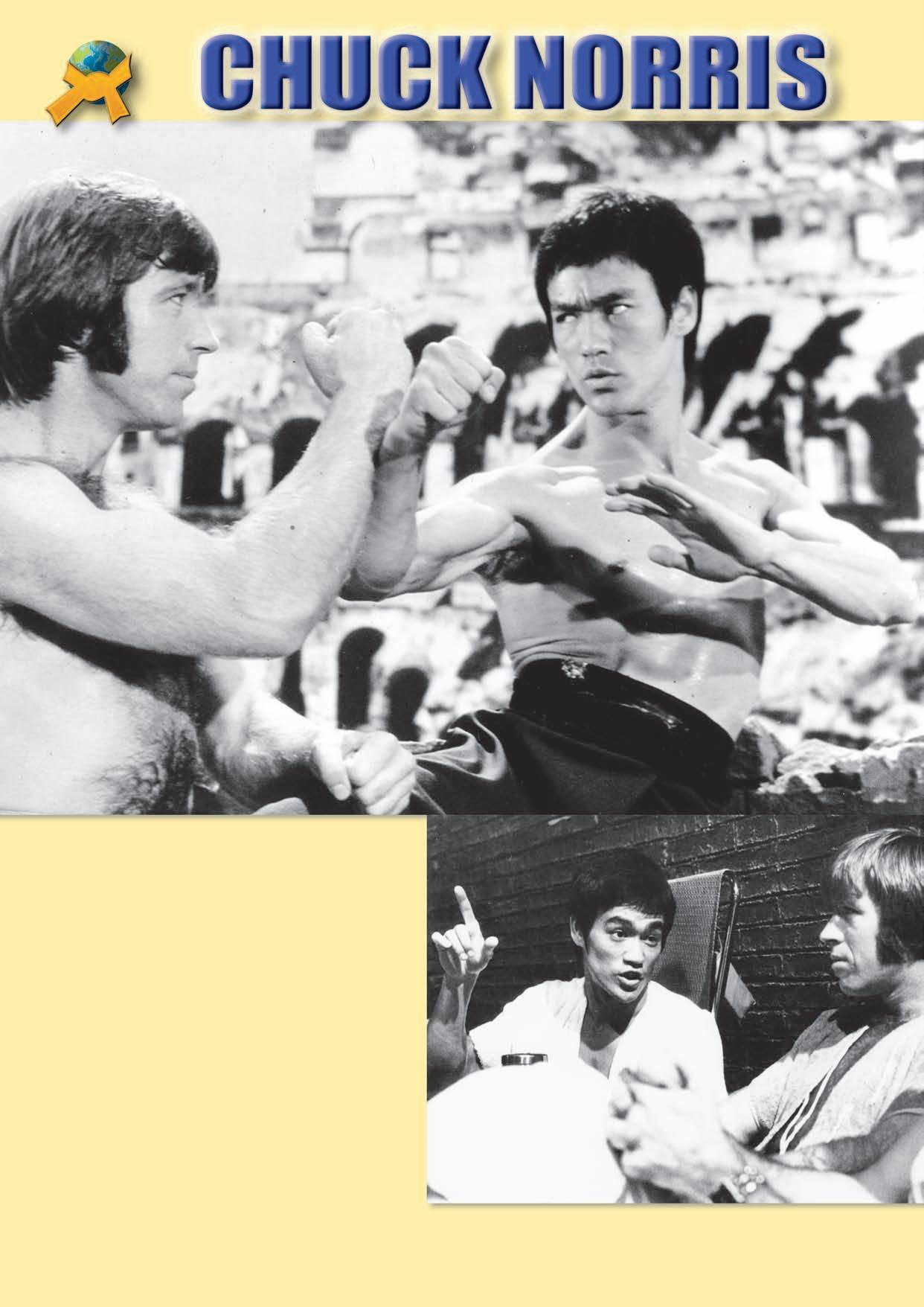
my physical abilities and, in turn, to overcome the insecurity that characterized me".
On a visit to the village of Osan, a strange sight caught his eye: surrounded by lots of curious, young Koreans were conducting a demonstration of Martial Arts, performing incredible kicks of all kinds, circulars, spinning, jumping, etc. Norris was really impressed by what he saw; he never thought the human body could achieve such feats.
After much prodding, Norris gained acceptance in Tang Soo Do classes (that was the Martial Art practiced by those youngsters) of the Korean master Jae Chul Shin. "Shin imparted his training in the traditional style - recalls Norris with a smile -. That is, five hours a day from Monday to Saturday. There were about 20 students, most of them Korean black belts, and a few Americans. The beginning was especially hard; Shin and his students knew little about educational psychology. There was no middle ground: either you liked and were passionate about it making the utmost effort in every workout or after a week you left cursing. Fortunately, from the beginning to the end I was and assiduous and persevering student. It can be
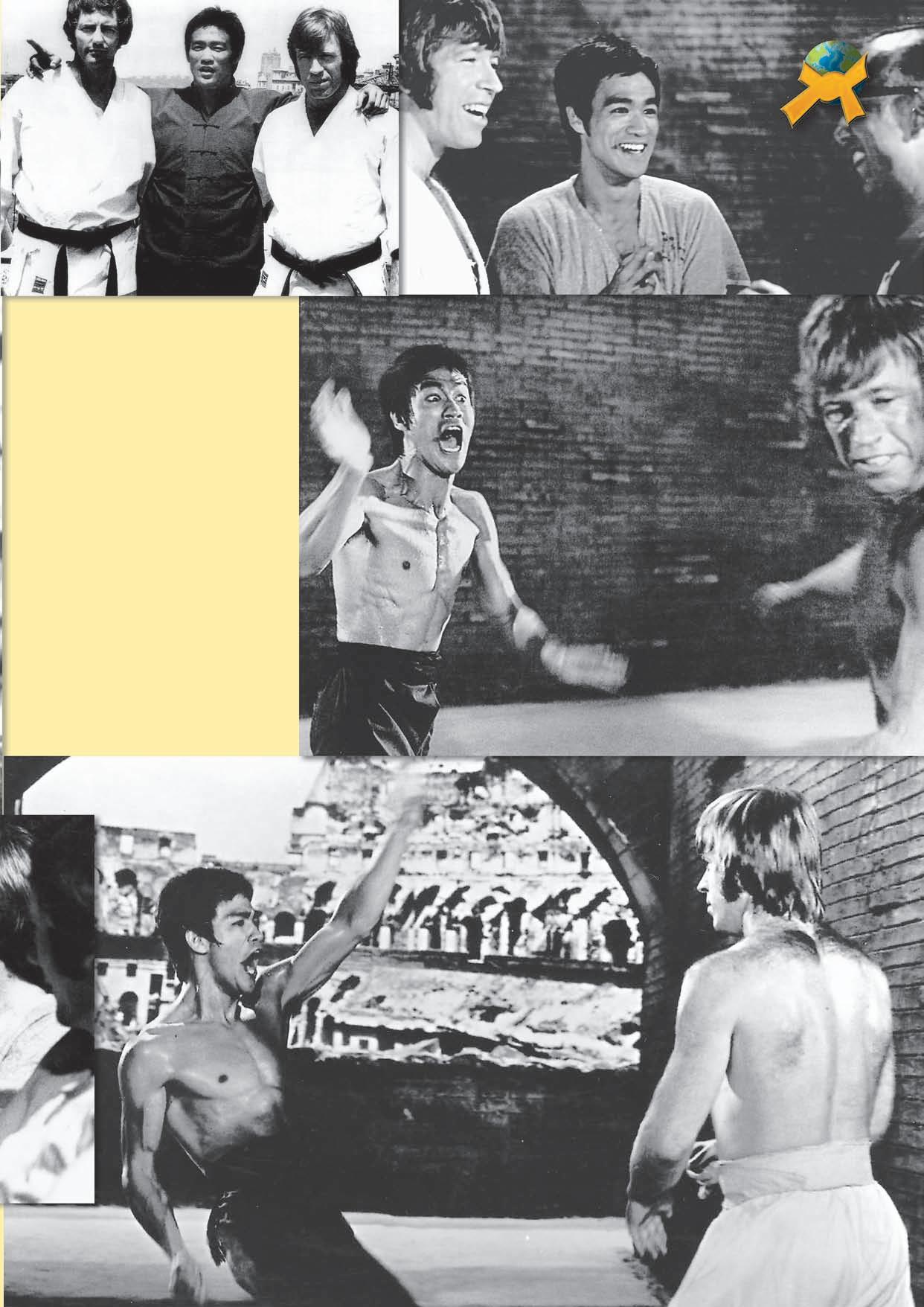
Bruce Lee launched his career in the Cinema, in which he has left a deep impression over a long and successful career. Pictures during recording, some of them curious as the outtake on the right. Above with Bob Wall, his friend for years.
said, without wishing to exaggerate, that the spirit of Martial Arts changed my life. Within a few months of training I started to feel much more self-confident and became more talkative and sociable with my base fellows. I even got to be elected once as "Soldier of the Month"!".
When Norris left Osan to return to the United States in March 1961, he already was TangSoo Do black belt and brown belt in Judo. Back home he was appointed Military Police sergeant at the airbase of Riverside. He then decided to combine his military career with his passion for Martial Arts. He continued to receive Judo classes (he even competed in different interstate tournaments) while he kept practicing TangSoo Do on his own, not knowing any master who taught this style.
He then began to impart classes of what he first called "Karate", since at that time, when you spoke of Tang Soo Do people assumed you were talking about some kind of oriental food, so Norris was compelled to look for a more familiar designation for his art, even if it was minimally known, as "Karate".
His first students were his brothers and cousins and military personnel from his base. He soon realized that there were many people interested in Martial Arts, so
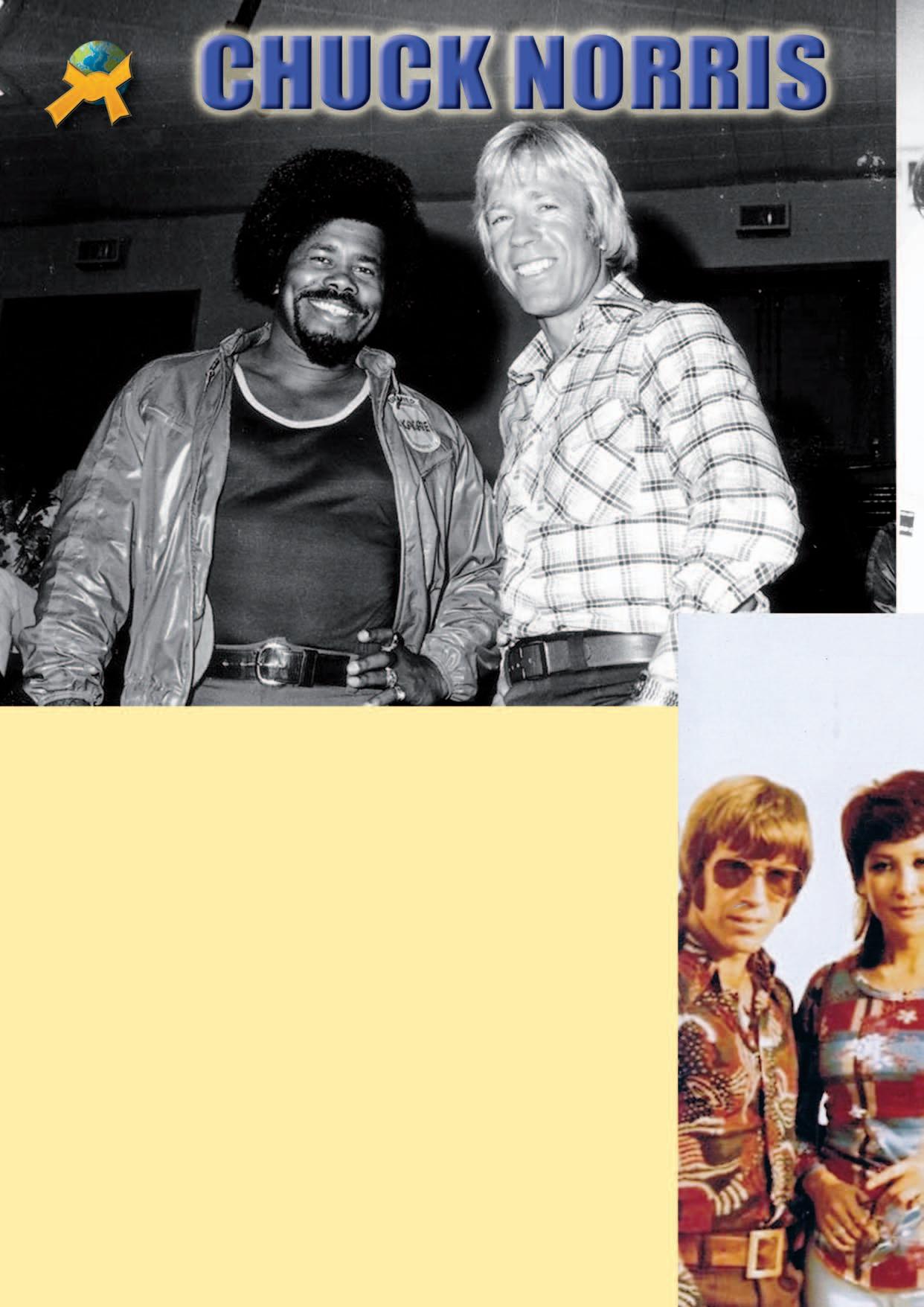
in 1962 he left the Air Force and decided to dedicate himself fully to teaching. He opened up a small gym but things didn't go as expected: "If I really wanted to succeed as a Martial Arts teacher I had to win a few national tournaments. It was the only way to make myself known in this world and capture the attention of the press."
Oddly enough Chuck Norris was defeated in his first two attempts to become a champion. Far from being carried away by discouragement, he proved once again that perseverance and faith in oneself, sooner or later, bear their fruits; this is how in 1964 was proclaimed winner of the tournament in Los Angeles. It was the beginning of an extraordinary career in which Chuck Norris soon made fashionable the spinning kick that gave him more than one title, and he and his students began to raze wherever they went. Finally, in August 1966, he was presented with the opportunity to compete in the most prestigious tournament of that time: The Long Beach International organized by Ed Parker, an opportunity he didn't let pass and returned home with the title of the middle weights in his pocket. That was when Chuck Norris realized that if getting to the top had made him
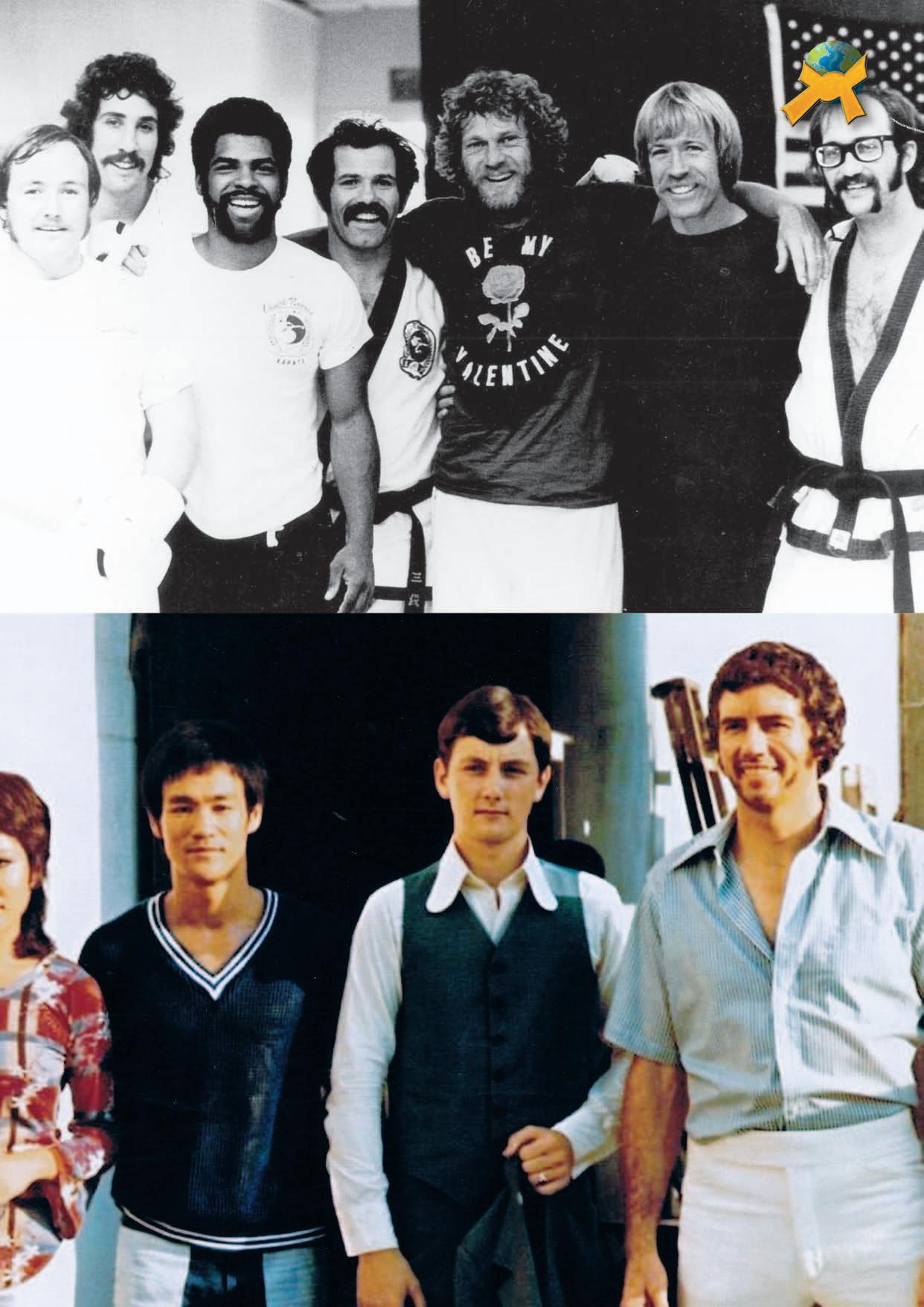

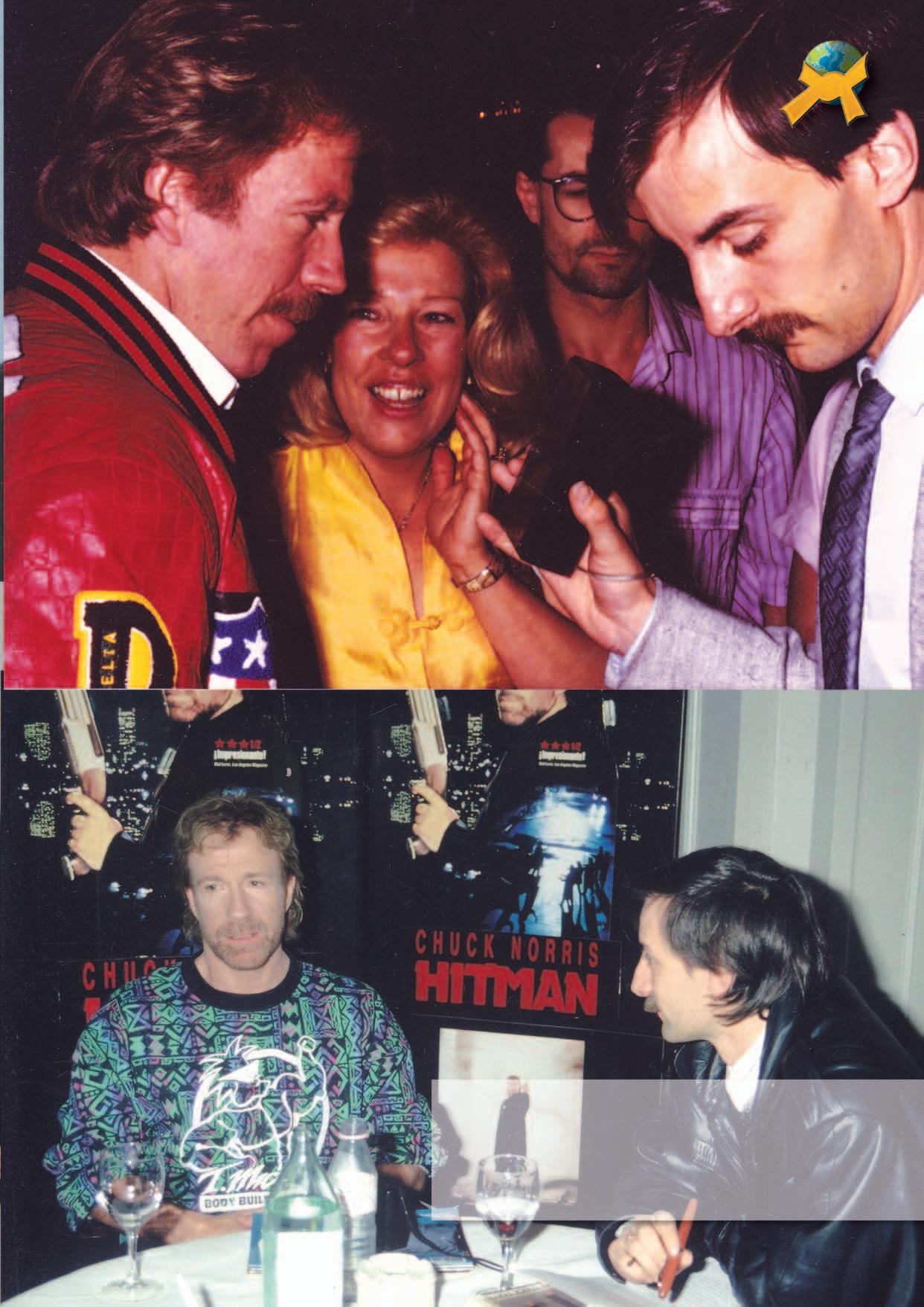
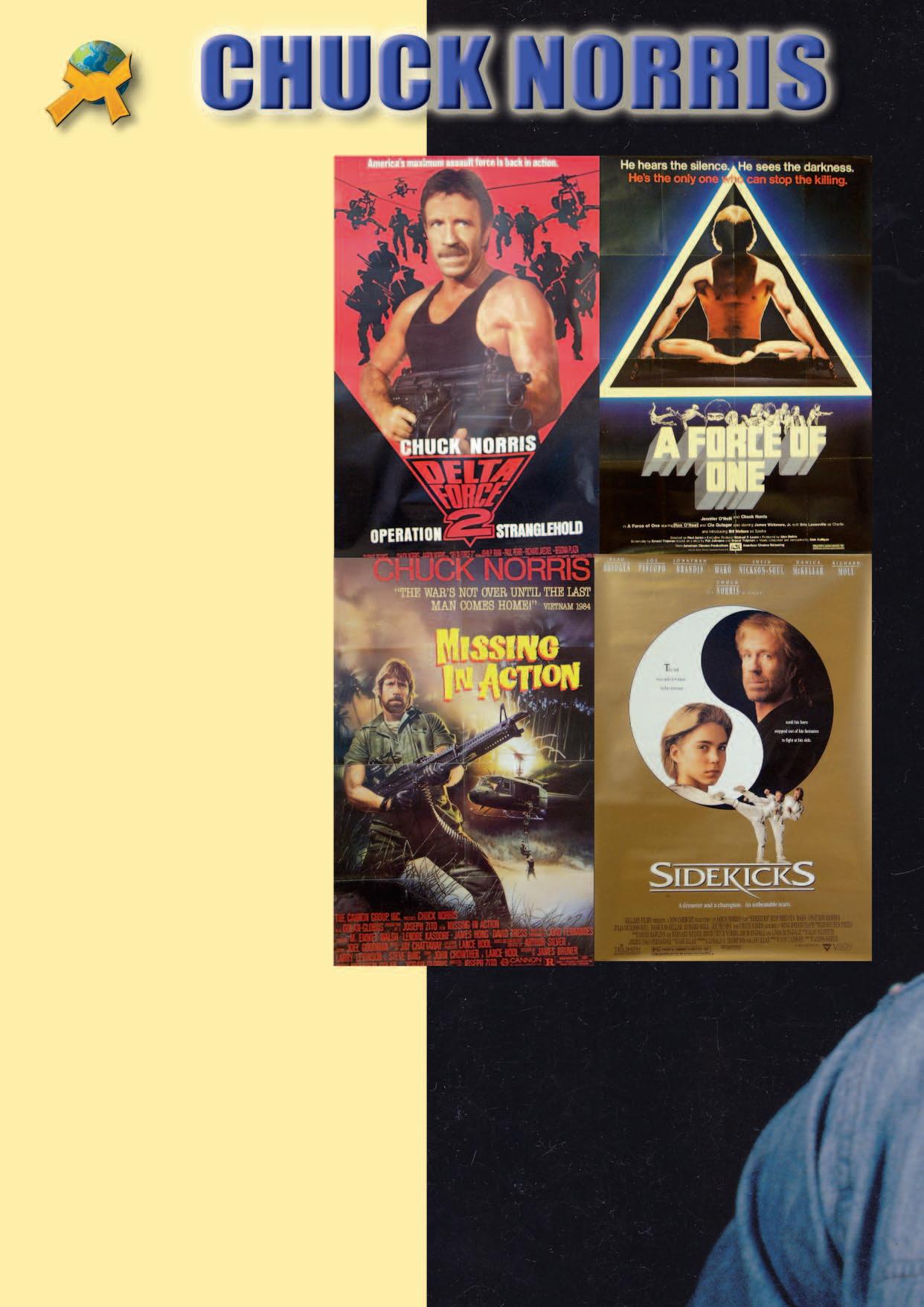
sweat blood, remain among the elite was going to cost him much more. So he decided to plunge himself body and soul into the study and practice of Martial Arts and started to train with the best Karate teachers of the American West Coast: Fumio Demura, Shito Ryu expert; Hidetaka Nishiyama, Shotokan Master, and Tsutamu Oshima, of which he has some very special memories: "Oshima was extremely tough. The level that he printed to his classes was really impressive; with him I learned to overcome the limitations that your imposes you, and to base the physical and technical progress in the power of the mind, through sacrifice and suffering." He also trained Hapkido and Aikido with Master Jun Chung, and Ju Jitsu with Al Thomas. Under the tutelage of Ed Parker he learned KenpoKarate, and Gene Lebell, an expert in American wrestling, Judo, Boxing and Karate, gave him a good combat basis in the short distance and ground fighting.
In 1967, his talent and the teachings of such masters enabled Norris to defend his title of middleweight champion, and also achieve the title of All Weights champion by defeating the famous Joe Lewis. It was in this tournament where he met Bruce Lee. This tournament was followed by many other victories, and Norris soon became the colossus of American competition. On his success in these sporting events he would declare: "There are three facets to be a winner: mental, physical and psychological. I prepare myself mentally trying to know the strong and weak points of my opponent so that I can take advantage of. When I am mentally ready, I can see and be aware of everything going on around me. I prepare myself psychologically believing in my ability to beat him. I prepare myself physically training hard so that I can execute my techniques in the best possible way. When I'm in excellent condition, I often hit my opponent even before my brain can register it. There where I see a gap, I go straight in."
As a result of meeting Bruce Lee, they both began to train three or four hours once or twice a week, thus a friendship developed. Bruce Norris managed to convince Bruce that knowing how to kick high could always be helpful (at that time, Bruce, heavily influenced by the Wing Chun, only kicked from the waist down) and taught him various techniques. In return, the Little Dragon explained to him the mechanics of the direct
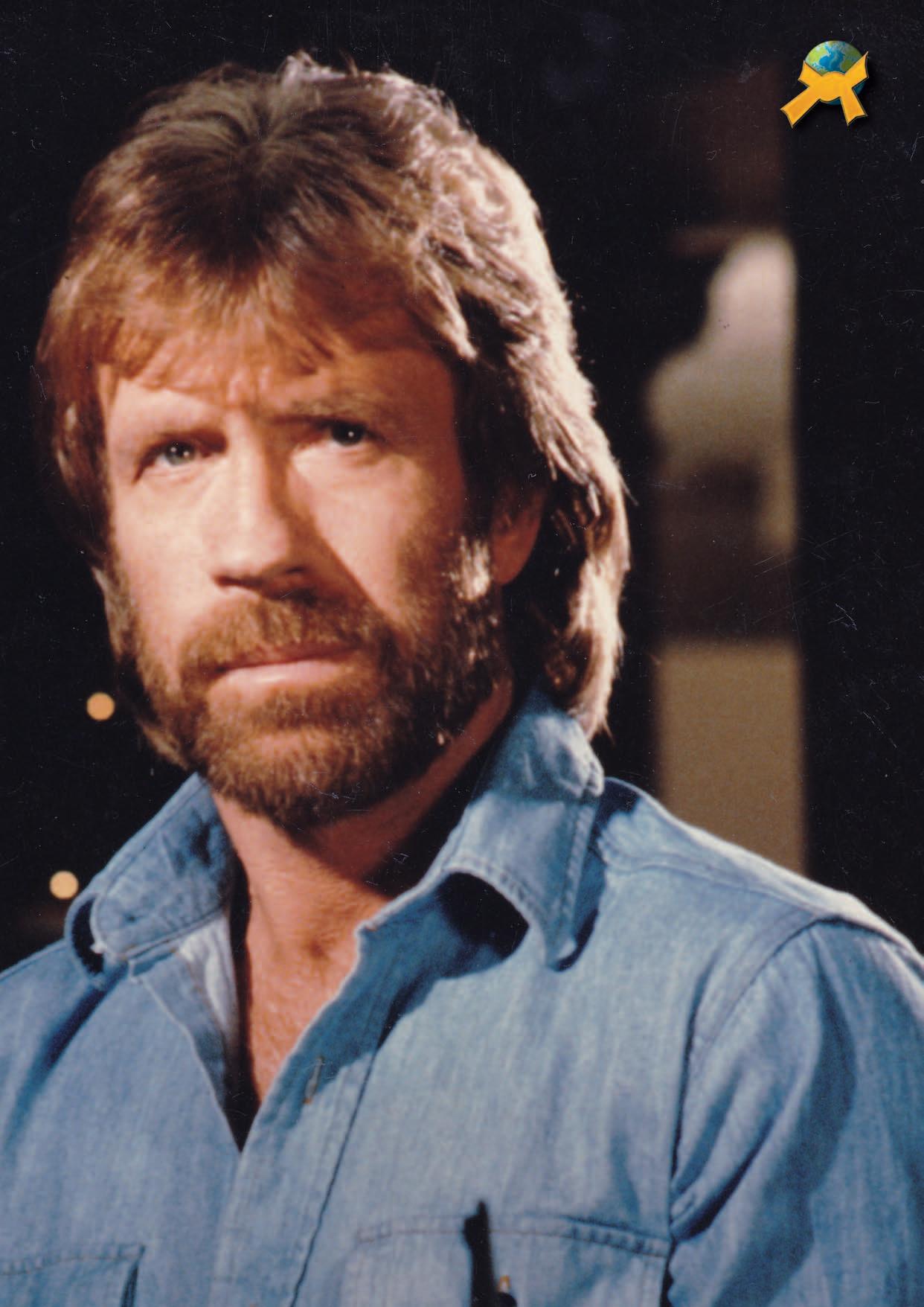
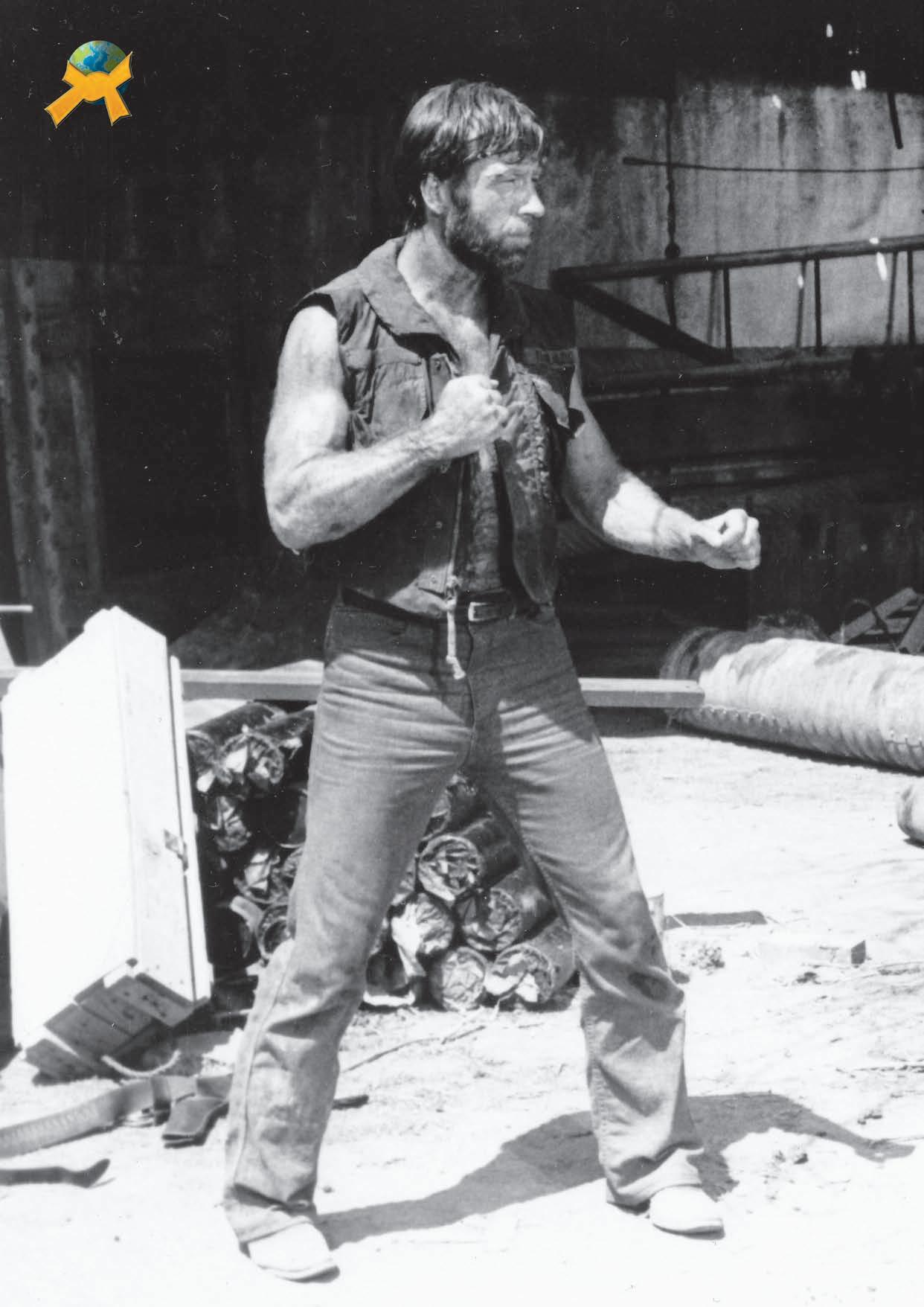
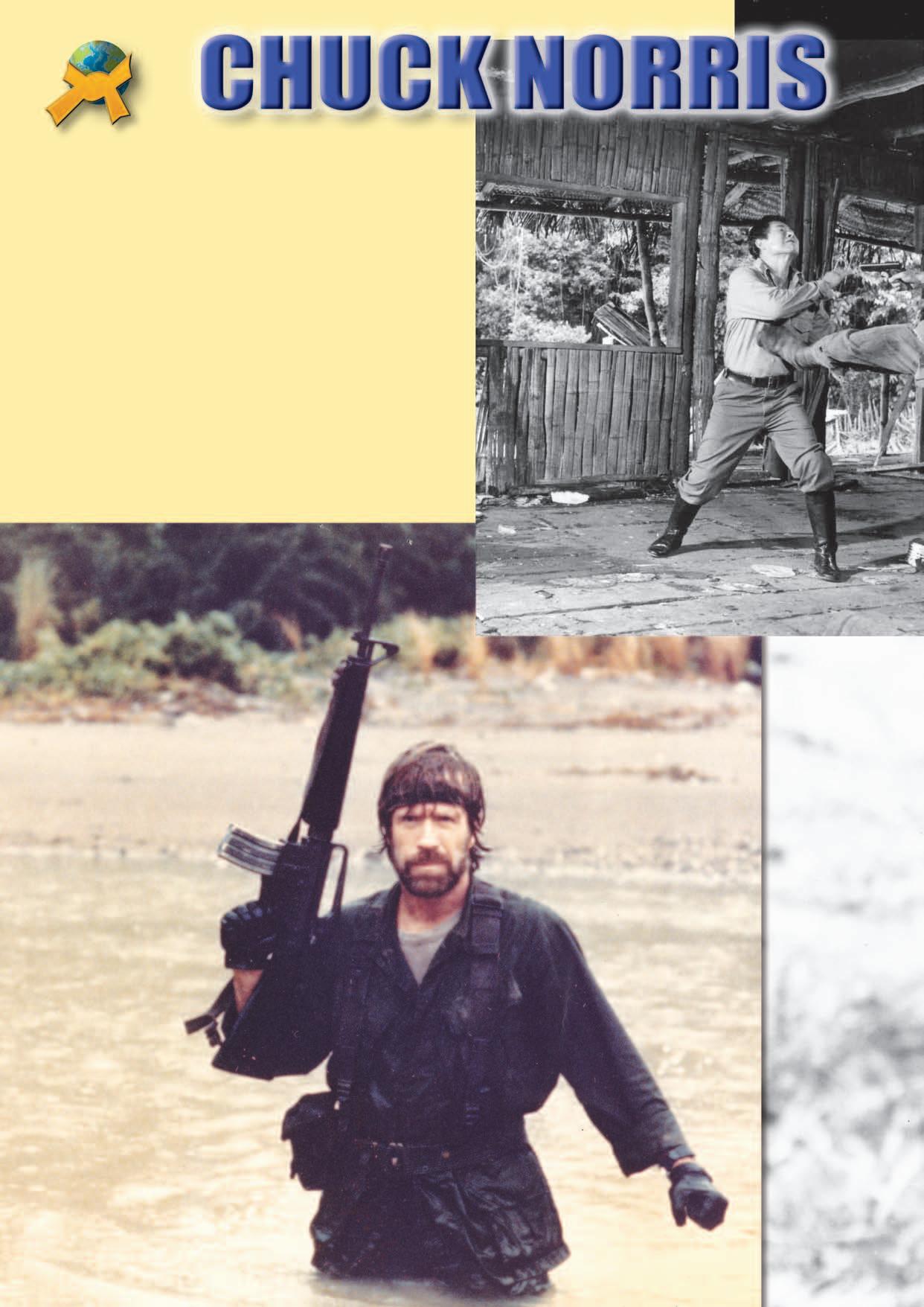
punch in Wing Chun, which Norris immediately included in his repertoire of combat.
Chuck Norris achieved his first role to act in a film through Bruce Lee, when one morning in 1968 he called him and said: "Chuck, I can get you a small role ideal for you: you'd have to make bodyguard of actress Elke Sommer in the movie 'The Wrecking Crew'. Are you interested?" In the film also acted Dean Martin and Sharon Tate... Obviously, Norris was enormously interested. But the first opportunity for a serious and important involvement in the world of the 7th Art did not come until 1972, when Bruce Lee called him from Hong Kong proposing him the role of co-star of his next film in "Way of the dragon" (titled “Return of the Dragon” in United States). Although Norris already enjoyed great popularity, he didn't miss the opportunity offered by Bruce Lee to become known throughout the world and entering the film industry. Norris traveled to Rome and then to Hong Kong to roll with Bruce Lee what has come to be called "the fight of the century", his duel at the Colosseum recalling the ancient gladiators.
Having won practically everything, Chuck Norris stopped participating in competitions in early 1974 to
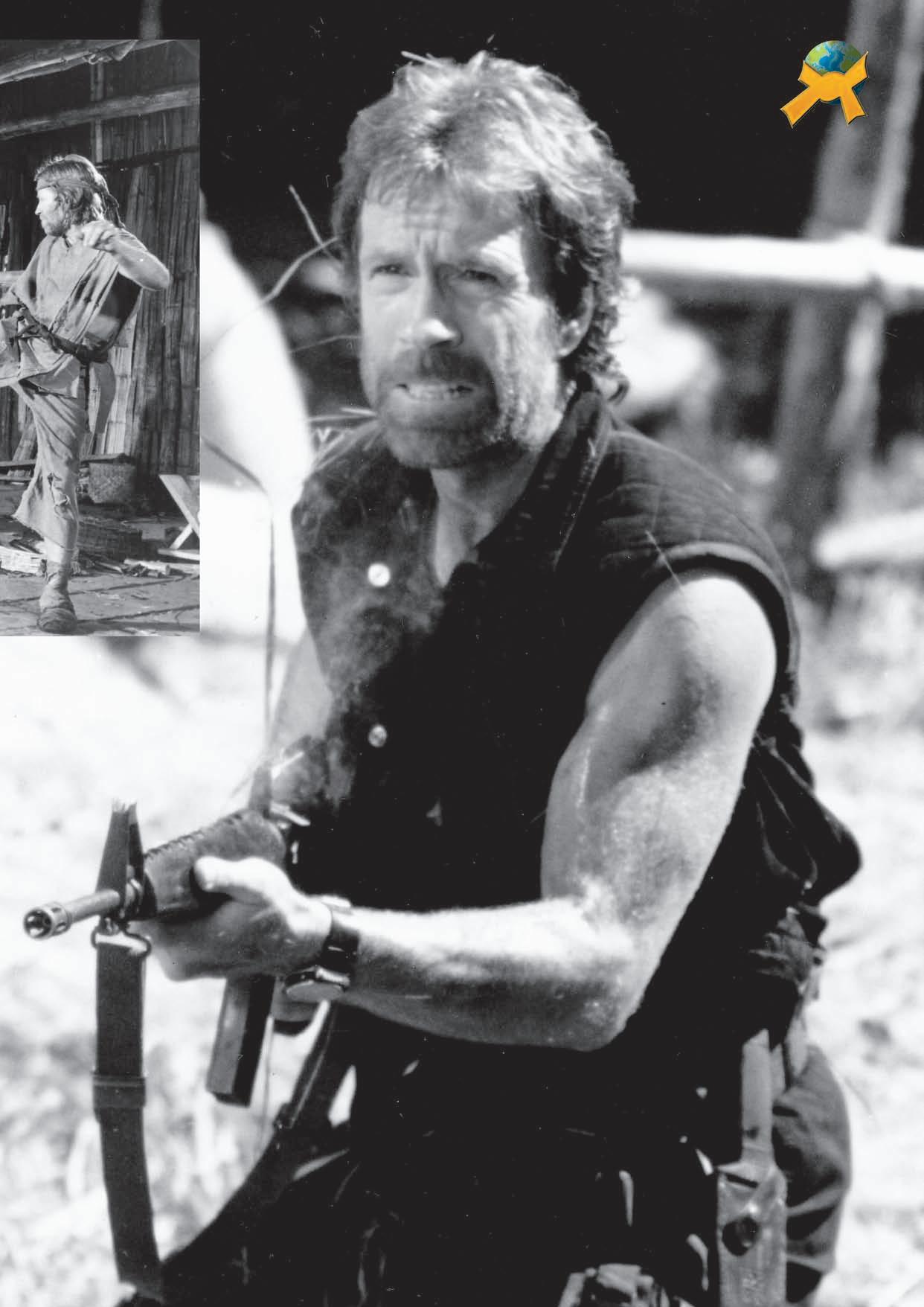
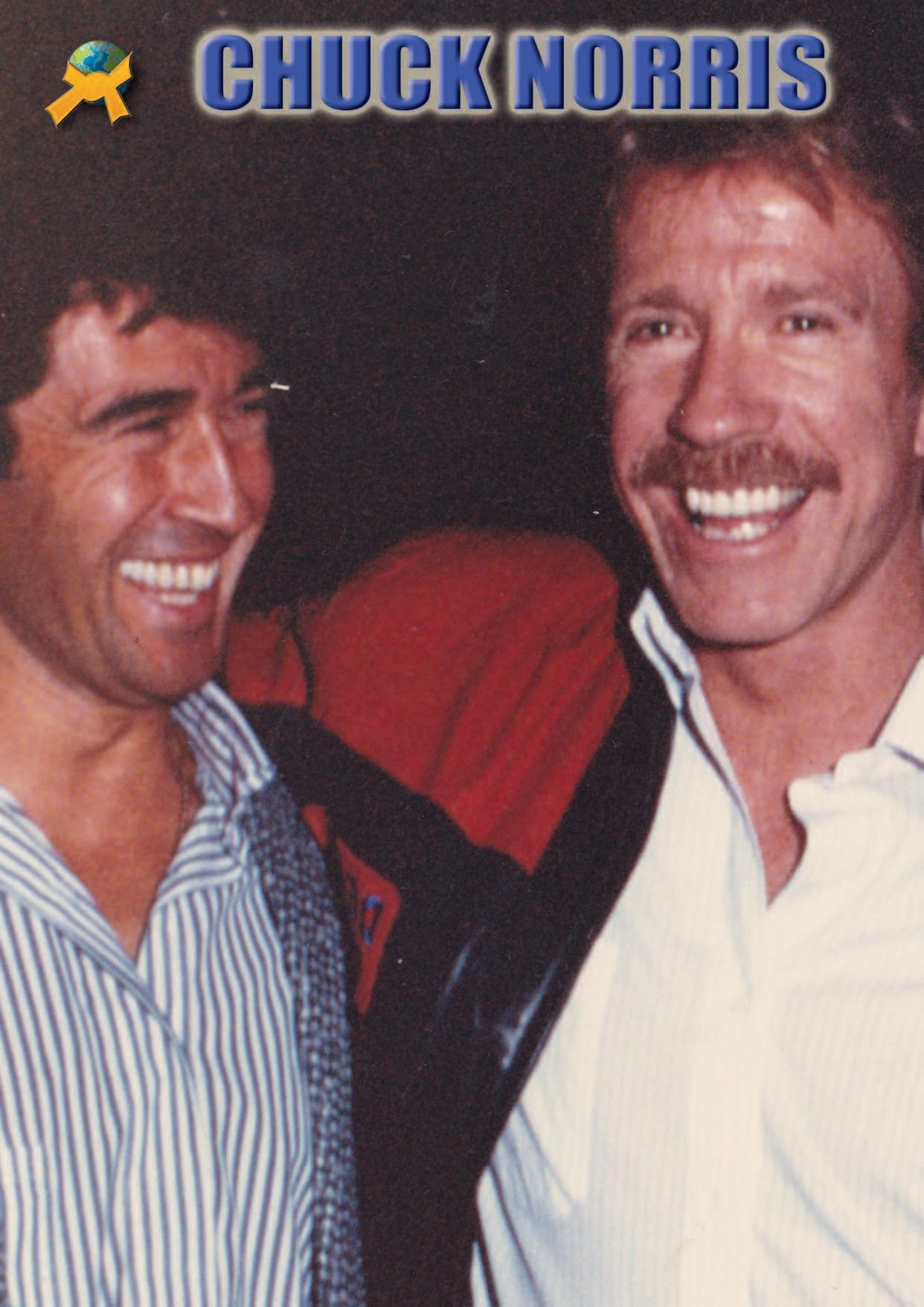
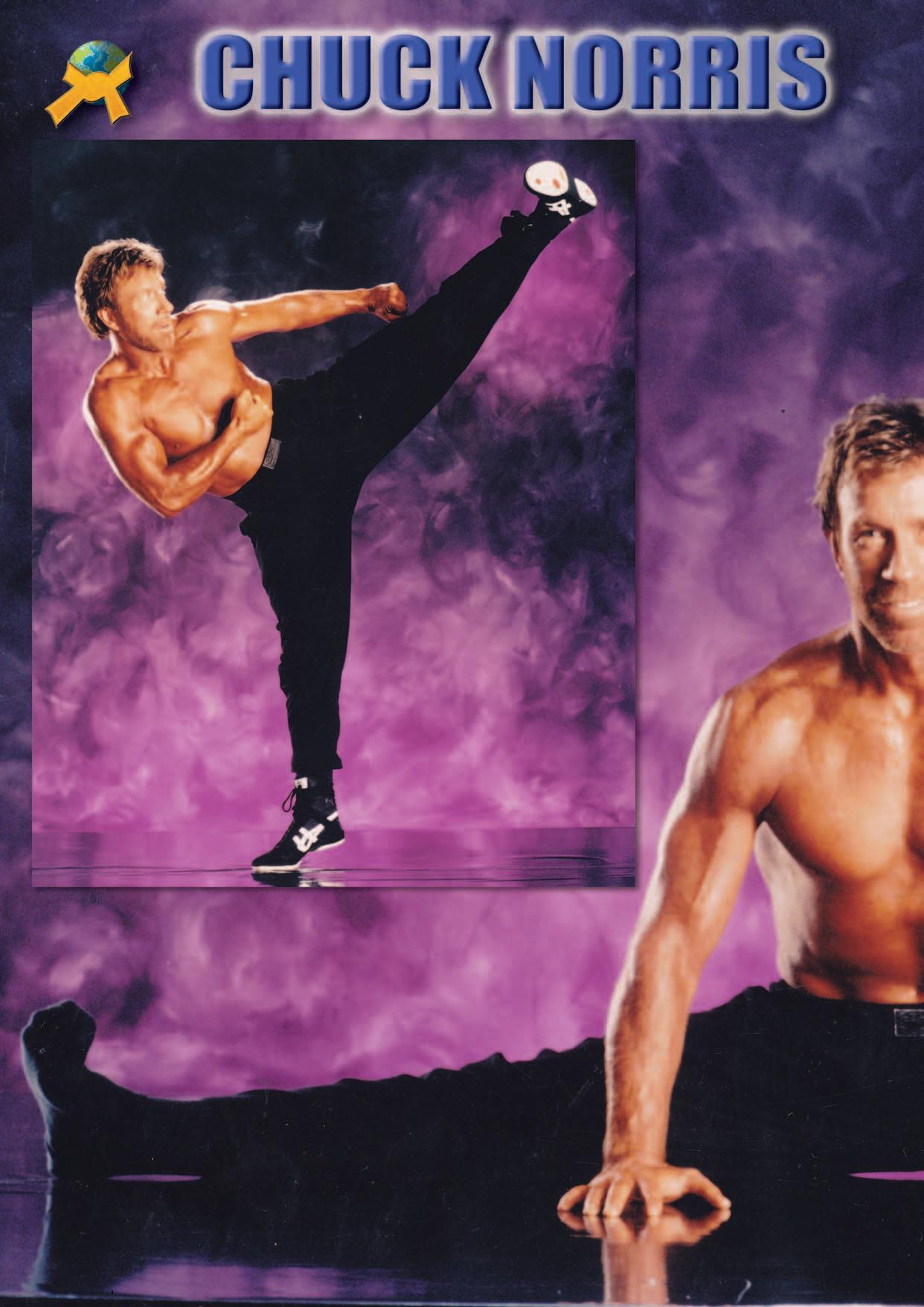
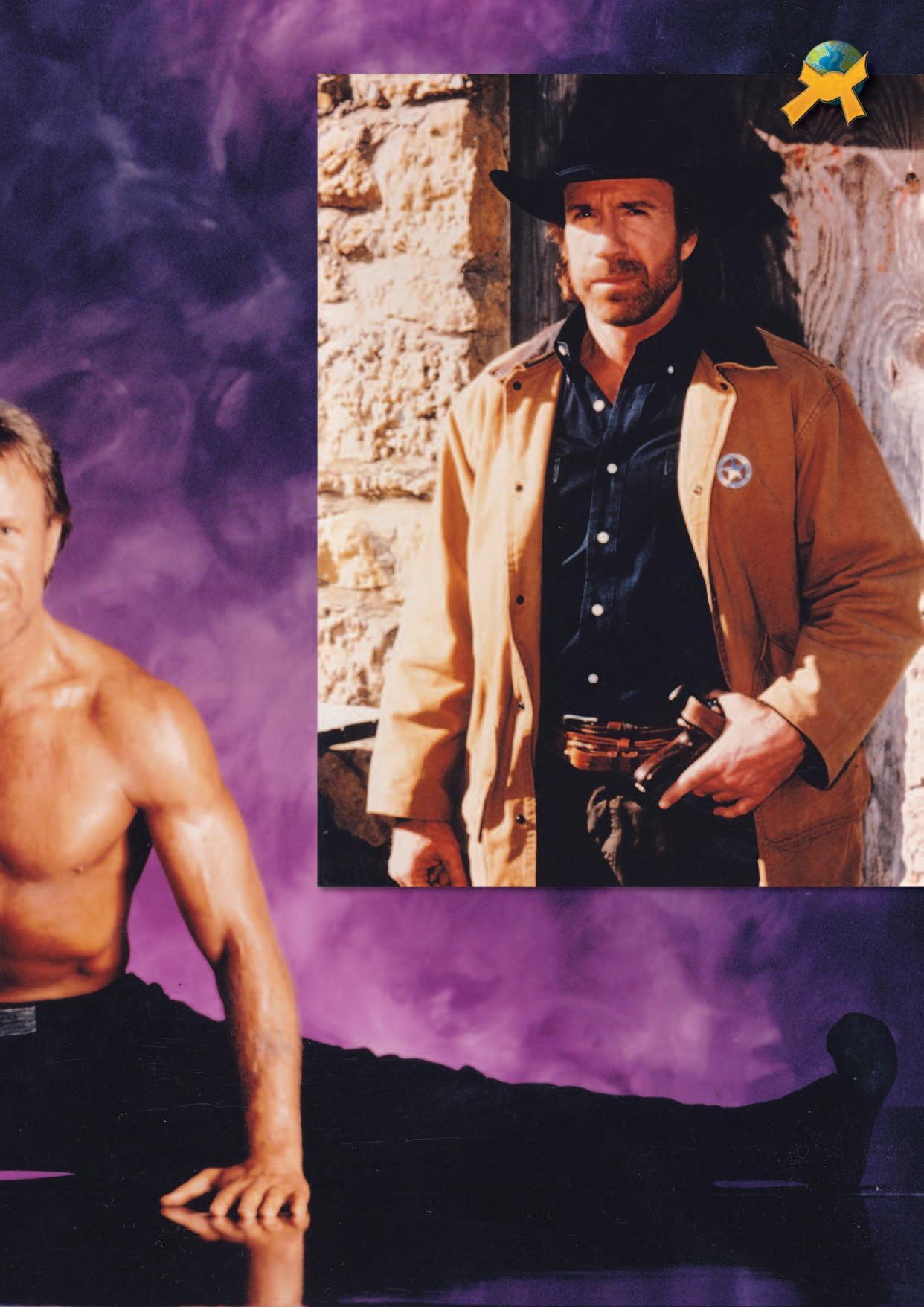
devote himself to his work as a teacher of Martial Arts. "Sometimes, knowing when to retire from something is almost as important as knowing when to start. At thirty four I had held the title of World Karate Champion for six consecutive years. I no longer had the necessary intensity to compete again, so I decided to get involved fully in teaching Martial Arts. Whether the decision was influenced by the death of Bruce Lee or simply by the desire to retire while I was on top, I'm not sure, but officially I retired from Karate championships in 1974, leaving the ring as six-time world professional middleweight champion."
After his retirement he teamed up with Bob Wall and they opened several schools, Norris took charge of
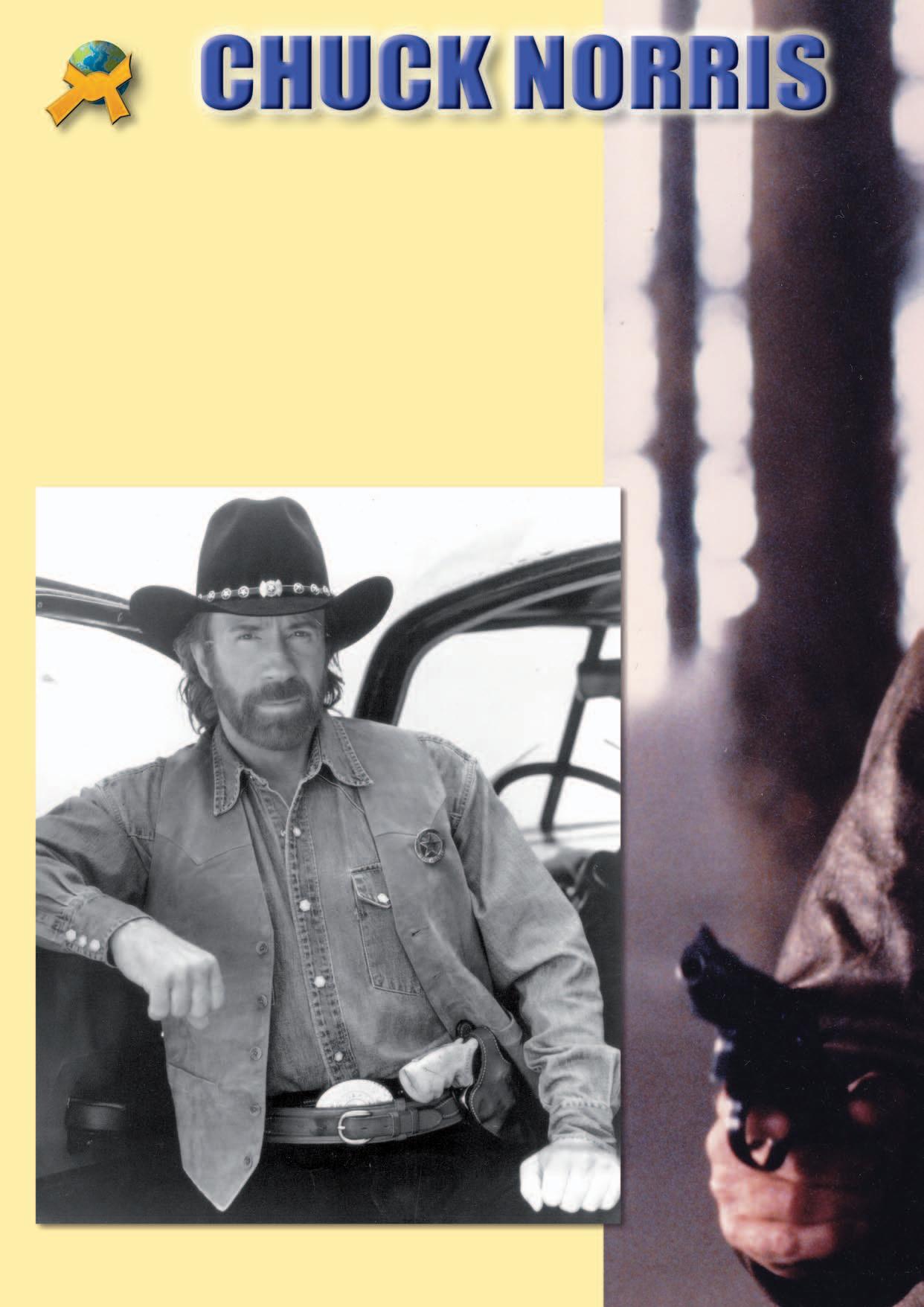
classes and Bob was responsible for running the business, but that did not work. After the premiere of "The wrath of the Dragon" in America, his fame grew and in 1977 starred in "Breaker! Breaker!” followed a year later by "Good Guys Wear Black ". After the death of Bruce Lee, the throne of the "King of the Martial Arts" became vacant; it seemed that there was no Oriental actor with sufficient talent to take his place, then, Hollywood sought an alternative. Logically, the only Westerner with fame and enough martial knowledge to occupy the position at the time was Chuck Norris. It was clear that the public was tired of so many oriental films, it was needed a Western actor with which the audience could feel
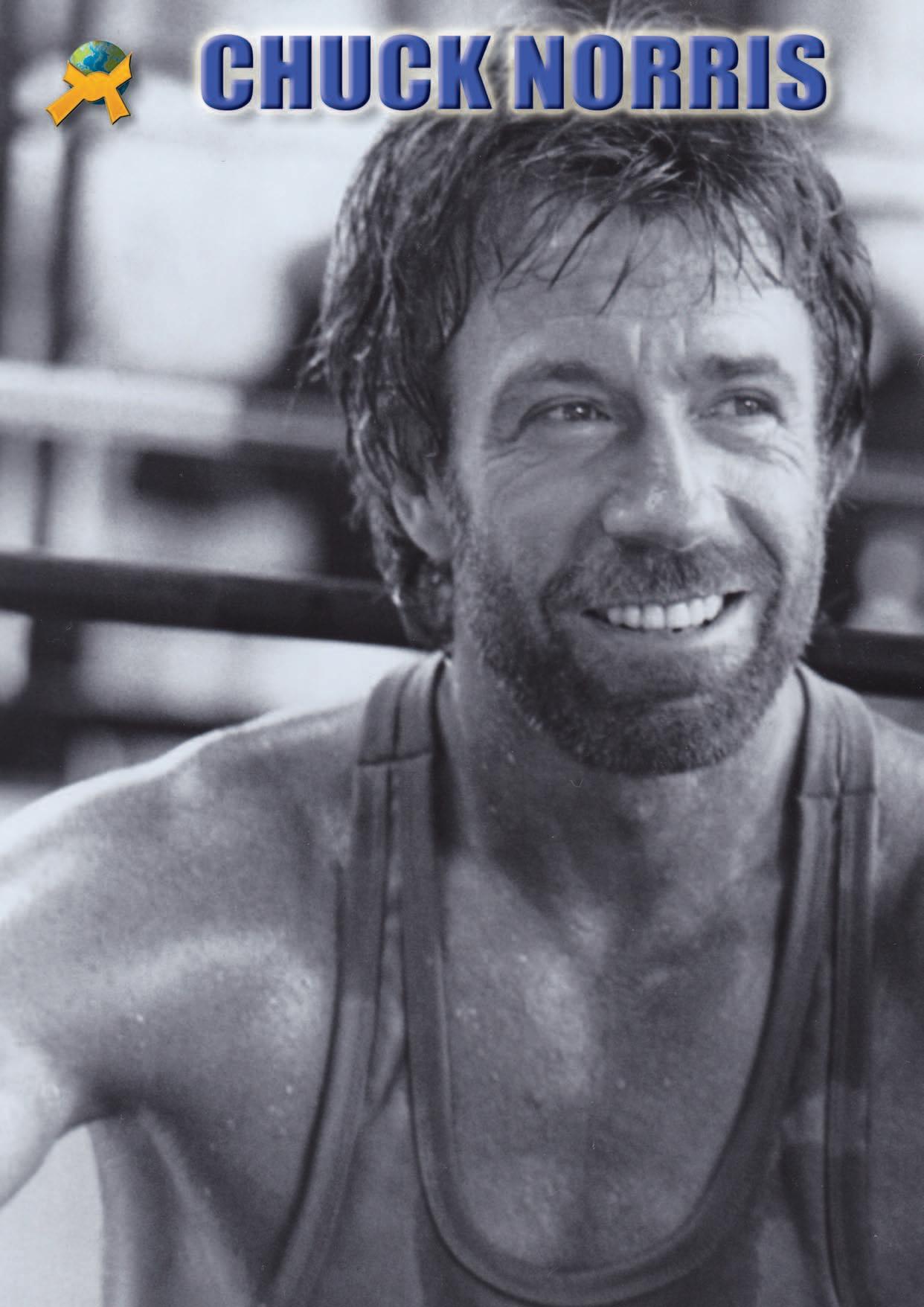
identified. "A Force of One" was his next job (in which he acts with Bill Wallace), "The Octagon", "An eye for an eye", among others. While the first stage of his filmography is basically reduced to Martial Arts films in the early 80s, Norris will try to change the roles on which he seems to be pigeonholed and pursue starring action films in the line Stallone or Schwarzenegger. "Missing in Action", "Invasion USA", "Lone Wolf McQuade", "Code of Silence" and "Delta Force" are good examples of the second cinematographic stage of Chuck Norris. Regarding this change Norris commented:
"A mid-70s, they immediately pigeonholed me as a Karateka-star. My purpose was to break with that topic and for that I had to zoom out enough of Martial Arts in films. I think I've managed to make a name for myself among the greatest of the action movie, and now I can think seriously about re-including many Martial Arts in my films."
In 1987, before the filming of "Braddock. Missing in Action III", Chuck Norris had an experience that completely changed his concept in Martial Arts. "Bob Wall and I traveled to Rio de Janeiro, Brazil, on a diving trip. While we were there I wanted to know about the different styles of Martial Arts practiced in the country. We trained at several schools wherever we went, someone told us about the amazing Gracie family, local icons of Jiu Jitsu. "Nobody messes with the Gracies", everyone said. "They are tough people!" Bob and I decided we wanted to know the Gracie family and so we started to look for their academy all over Rio. There we met Helio Gracie, the father of the clan, a short man in his seventies, and his son, Rikson, the leader of the young Gracies.
Bob and I asked them if we could train with them and the Gracies gladly accepted. I had learned some Ju Jutsu with Gene LaBelle in the United States and I am black belt in Judo, so I felt I could be on the level of these guys. But when we entered the tatami, I quickly discovered that all my Martial Arts moves were not effective against the Gracies. It was as if I had never done Martial Arts in my life! It was the most humiliating experience I've had as a martial artist. Those guys left me at rock bottom! Helio Gracie came into the mat and he wanted to have a combat with me. We fought all over the tatami and for a moment I could be on top of him.
Then Mr. Gracie said, 'Chuck, hit me.' 'Uh no, Mr. Gracie, I'm not going to hit you'. 'No, no problem. Go ahead, hit me', the old man insisted. So I said, 'Well ... okay', as I raised my arm ... and that was the last thing I remember. He knocked me off. When I woke up and looked around, I thought the old man had applied me a neck lock and I was knocked unconscious. I felt that my throat would be sore for days. Mr. Gracie smiled and told me: 'Chuck, stay here in Rio with us and will make one of you one of the best Jiu Jitsu practitioners in the world.' 'Thank you, Mr. Gracie, but I really have to go back to United States', I said as I tried to swallow. I was going to start shooting another movie so I couldn't stay longer in Brazil."
But that experience marked him to the point that as soon as he had the chance to do it he began training Brazilian Jiu Jitsu with the Machado brothers and, on occasions, with the Gracies ... "Since 1978 I have led an organization of black belt practitioners of Martial Arts known as Federation of United Fighting Arts. Every year in July, I invite all my black belt students to a convention in Las Vegas, where we train together for several days. For ten consecutive years starting from 1993, the Gracies and the Machado brothers have given seminars at the convention."
Referring to his film career, in the late 80s the figure of Chuck Norris as an actor and martial artist clearly went into
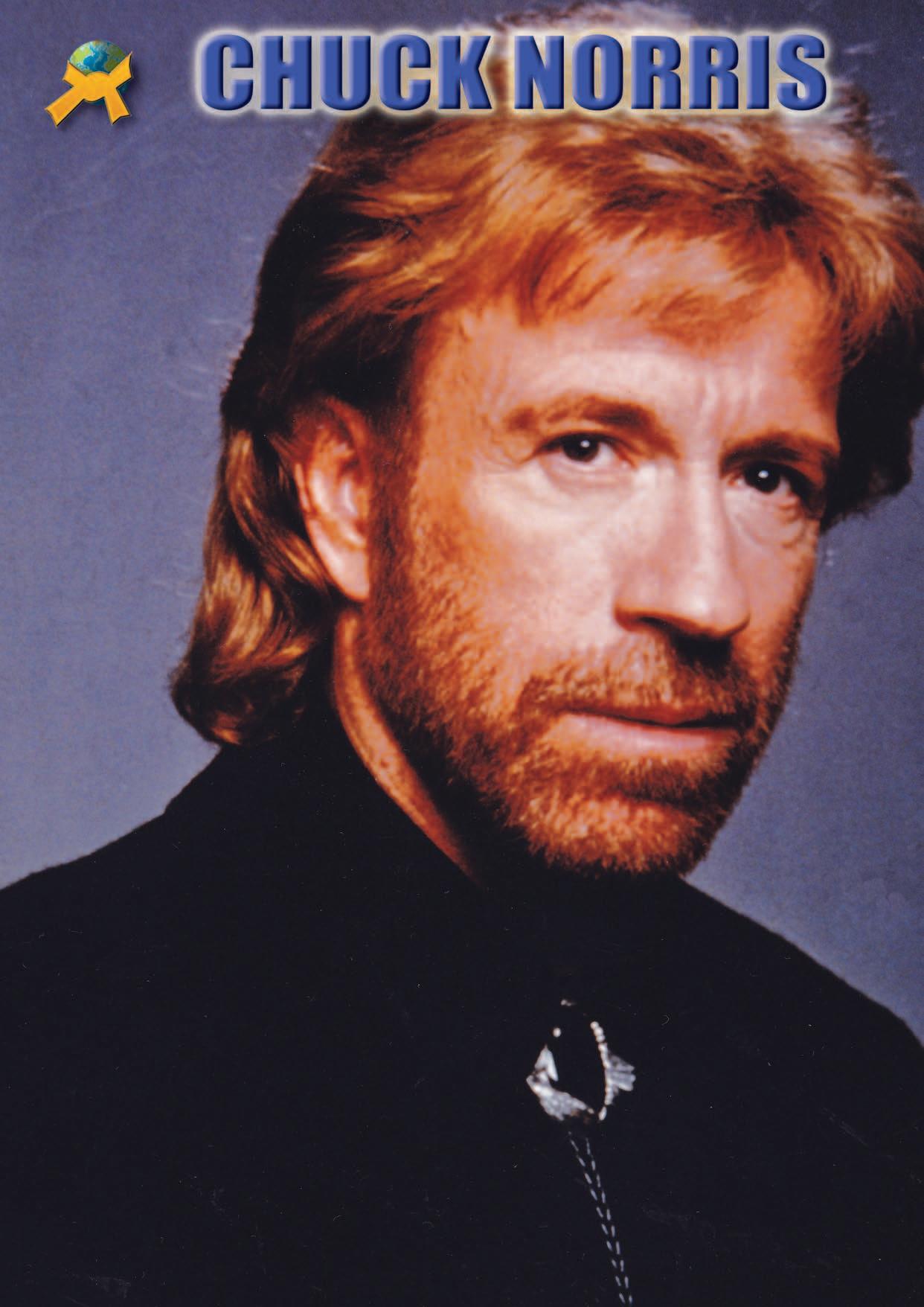
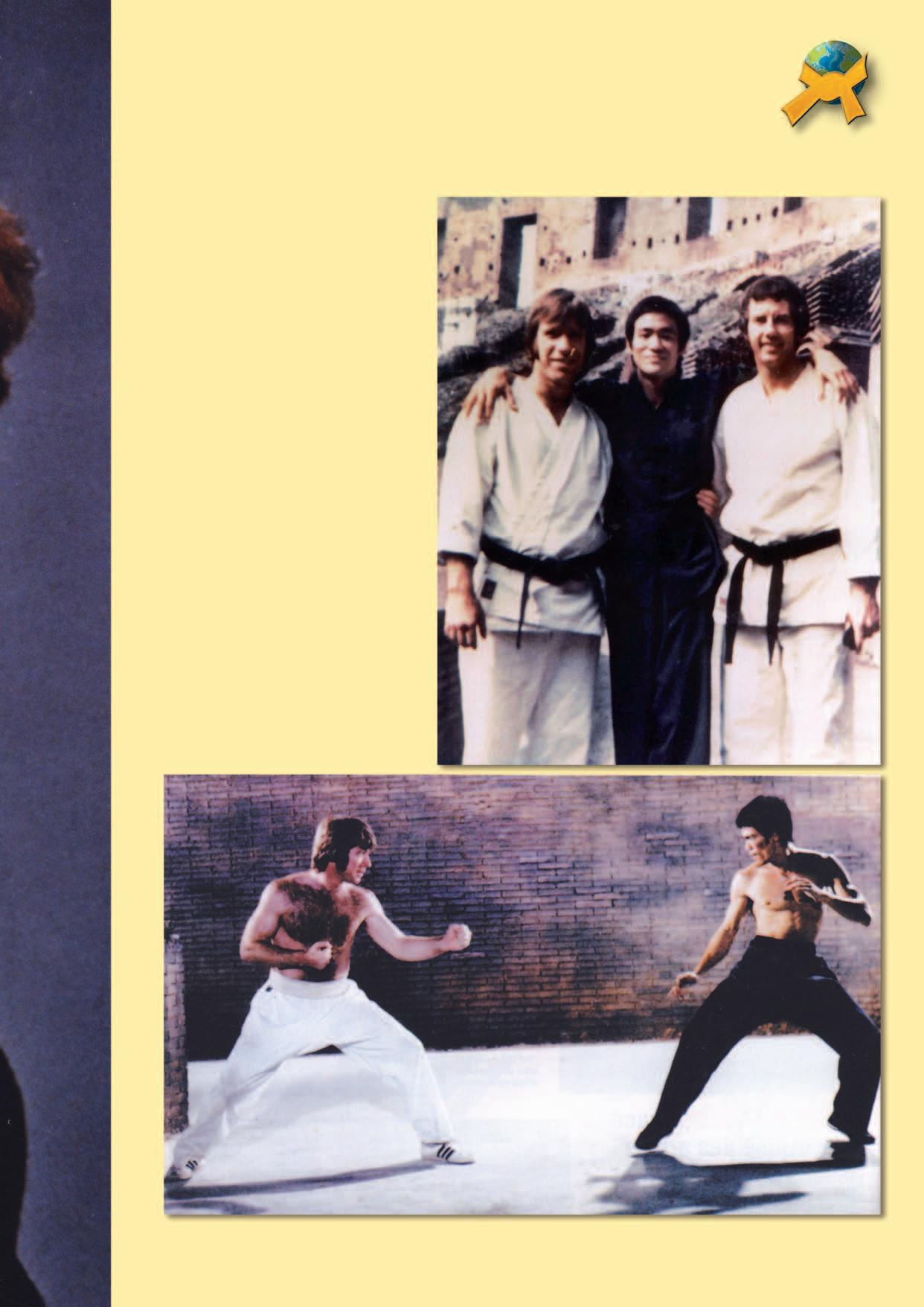
crisis. His last films ("Hero and the Terror," "The Hitman") did not get the expected success. In Spain for example these productions went straight to the video market without premiering in cinemas.
Nevertheless, he remained very popular in the United States: a personal friend of former President Bush, developing extensive against drugs program by teaching Martial Arts to the young people living on marginalized neighborhoods...
In 1992, when it seemed that other martial film "heroes" were taking the lead, he was proposed a risky project: a television series whose protagonist evoked the character he played in 'Lone Wolf McQuade'. "While in Israel filming the film 'Hellbound' in 1992, my agent, Mike Emery, called me and asked if I would be interested in doing a weekly series called 'Walker; Texas Ranger', with CBS, a modern story of a Texas Ranger with old-fashioned values, and represented good versus evil. At first, I wasn't too interested, but Mike encouraged me when he told me that the series was about a cowboy type law officer fighting crime in modern Texas. 'Let me think about it, Mike, I'm not sure I want to do television', I said, 'After all, it would be a big risk. Also, if the series is not successful, it could affect my film career."
Occasionally Chuck Norris had stated that he had identified and felt very comfortable with the character he had played in "Lone Wolf Mc". The idea of the series attracted him but if he did not get the expected success, being his career
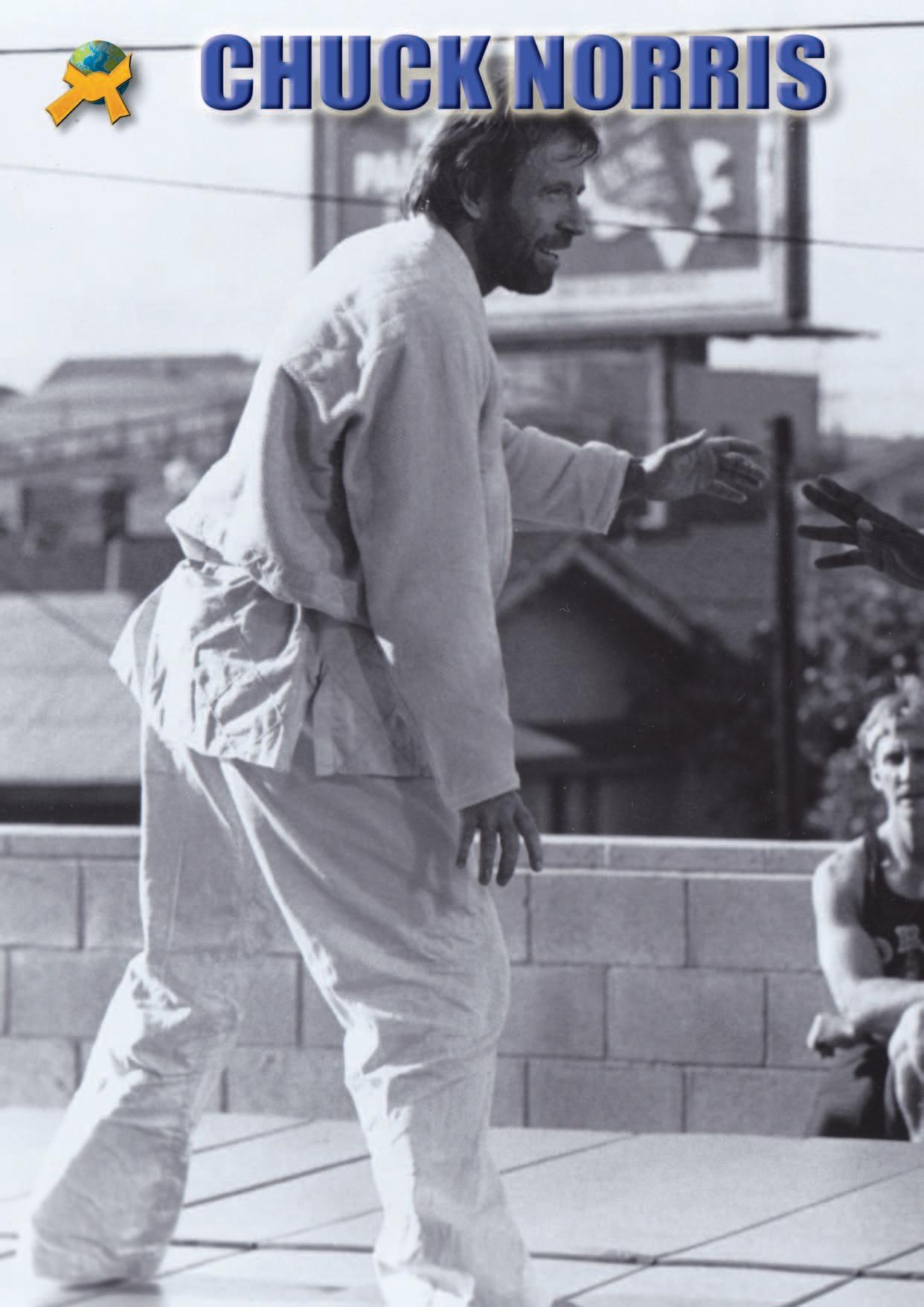
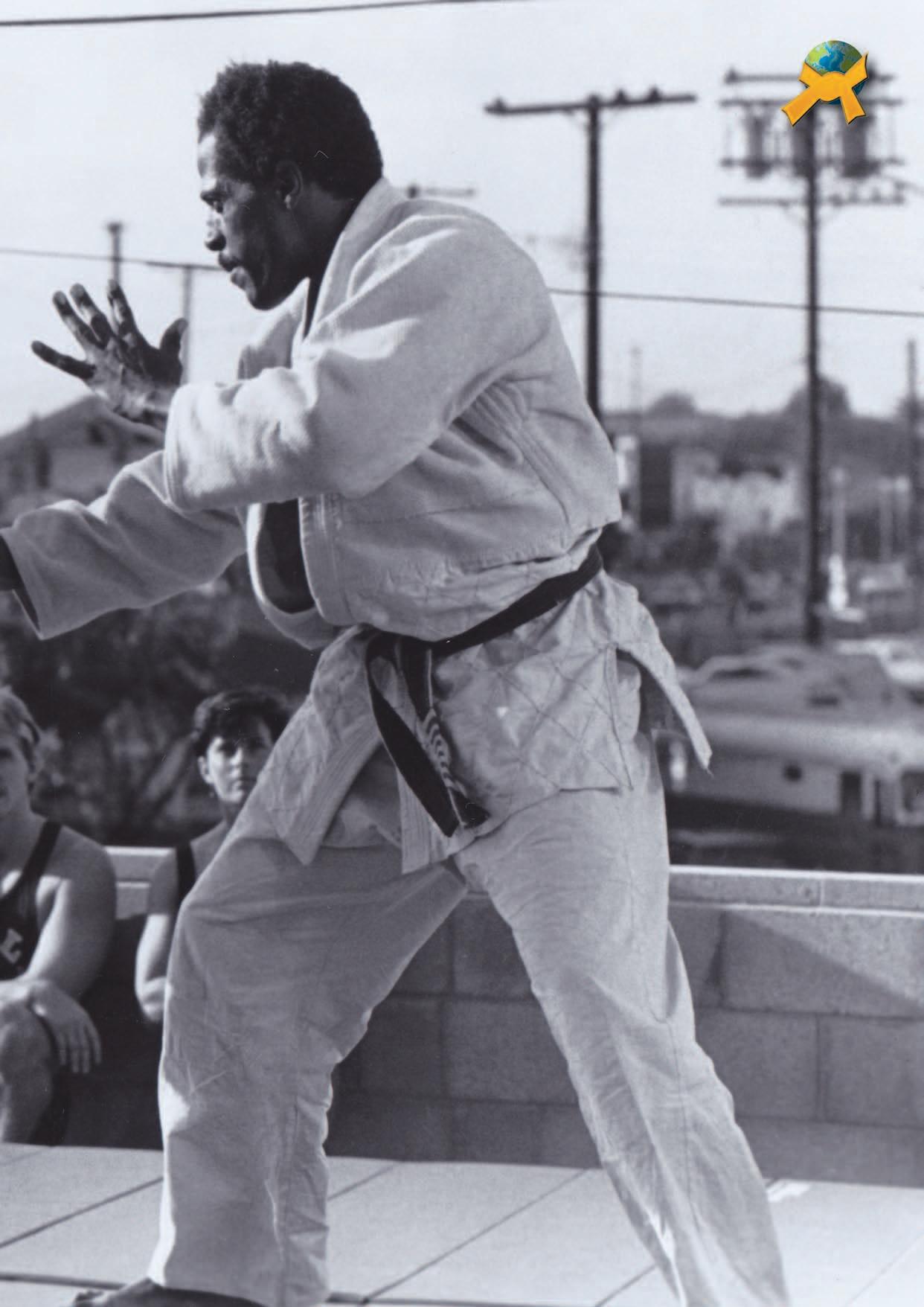
the way it was, a failure could bring fatal consequences. Chuck Norris had made many risky decisions throughout his life and "almost" always everything had gone well; that occasion was no exception, he agreed to star in the series ... “Walker became the most successful television series on Saturday nights, since the legendary Gunsmoke saga. It wasn't surprising that many television critics assessed the series as being very violent. I was disappointed but not upset. We had a yesteryear cowboy type atmosphere in the program and our characters often got into fights, firing guns and of course, Walker winning many fights by incorporating his Martial Arts knowledge. That made that he was seen as too aggressive by some people. What critics chose to ignore, of course, was the fact that the good guys in Walker never showed a violent behavior if there was another way to arrest criminals, and even in those instances, we always made clear that violence was used as a last resort and only as a means to overcome evil with the good.”
The series was a huge success not only in North America, but also in all the countries where it was released, turning Chuck Norris into the most famous character at martial level, his fame beating that of Steven Seagal or Jean Claude Van Damme .Walker, Texas Ranger, consisted of two hundred and three 45-minute episodes, aired between April 21, 1993 and May 19, 2001 by the American network CBS. Internationally, it was retransmitted in over 80 countries around the world with an average of one billion viewers per episode.
"The last episode of Walker, Texas Ranger, a grand finale of two hours, was on 6 April 2001. It was a very emotional moment for everybody. Many of us in the cast had worked together for eight seasons; we were like a family. When we finished our last day of work, I spoke briefly to the staff and the cast. I did not dare to talk too much for fear of ending in tears. However, there were many tears as we say our good-byes. When we shut the scenery of Walker, I looked at my wife Gena and I said: "Let's go home…!" When we started working for the show, I thought Walker had the potential to stay for three or four years... I never thought it could get up to eight! CBS might have continued for another year, but by then, Gena was pregnant and I didn't want to be tied to the rigid schedules of the series. Gena was having twins and I knew she would need my help."
After the birth of the twins, Chuck Norris practically retired, starring occasionally in films (TV premieres) linked to his series. In 2005 he shot the film "The Mediator", which passed virtually unnoticed. Since then he has barely left his ranch in Lone Wolf Napisota, Texas, just for some public events. In 2012 he agreed to participate in "The Expendables II", this being his last job.
At 74, he just wants peace of mind and enjoy his family. Those who have had the honor of meeting him know he is a gentleman; he is simply the great Knight, with a capital "K" letter, of the Martial Arts. Those who have had the privilege of knowing him and talking to him can corroborate that he has left the bar very high, both as a Person and as a Master, in the latter area, of the few which remain.
What Must a Warrior Do Once He Has Surrendered to Christ?
There is a moment in a man’s life that words can scarcely contain. It is not loud, though it may shake the heavens. It is not visible to the world, though it changes everything. It is the moment when a man, after spending his whole life fighting, striving, conquering, resisting, and enduring, finally comes to the end of himself and bows—not before another man, not before pain, not before failure, but before God.
That moment is not weakness. It is not defeat. It is not the collapse of strength, but the revelation of its limit. It is the shattering of illusion. It is the death of pride. It is the realization that no amount of power, intellect, discipline, or worldly accomplishment can fill the void within the soul that was made for God alone.
And after that moment—after the tears, after the breaking, after the surrender—there comes a question that rises quietly from the depths of the heart, yet carries within it the full weight of eternity:
Now that I have surrendered to Jesus Christ as my Lord and Savior, what do I do?
This question is not as simple as it sounds. In fact, it is one of the most difficult and important questions a person can ever ask. For it is one thing to be brought to your knees before God. It is another thing entirely to rise again and live the rest of your life in accordance with that surrender. Many people come to a moment of conviction. Many even come to tears. But to truly surrender means that the rest of your life no longer belongs to you. It means you are no longer asking what you want, what you prefer, what fulfills your ambition, or what serves your image. The only question that remains is: What is His will?
When I first came to Christ, I wrestled deeply with this question. I thought perhaps the answer was obvious. Perhaps, in order to truly serve God, I would have to abandon everything I had known and everything I had inherited. Perhaps I would need to relinquish my leadership in Hwa Rang Do®. Perhaps I would have to step away from the legacy of my father, the burden of my bloodline, and the path that had defined every breath of my existence since childhood. I contemplated whether I ought to join a seminary, become a pastor, and dedicate the remainder of my life to preaching from a pulpit. In my mind, this seemed to be the most direct and noble way to serve the Lord.
But that assumption, though sincere, was rooted in a narrow view of service. It was a human way of thinking, not a divine one.
As I remained isolated, immersed in Scripture, prayer, and countless sermons, I began to see something I had failed to understand before. I saw men and women from every walk of life being used by God. I saw preachers, yes, but I also saw broken people, ruined people, forgotten people— men in prison cells serving life sentences with no possibility of parole, men whom the world had cast aside as irredeemable, men who had committed grievous wrongs, and yet, after accepting Christ, they were preaching the Gospel behind bars and bringing other prisoners to God. There they were, enclosed in concrete and steel, outwardly condemned, yet spiritually freer than many who walked the earth. I saw that God had not abandoned them. He had not said, “Because you are here, you cannot serve Me.” On the contrary, He had transformed the very place of their judgment into the ground of their ministry.
And that struck me with tremendous force.
If a man in prison can serve God, if one with no worldly freedom can still fulfill divine purpose, then clearly there is not only one way to serve the Lord. There are many ways. The issue is not the form. The issue is obedience.
Then the words of Christ and the apostles came alive in a new way. We are told that the body of Christ is made up of many parts. The eye is not the hand. The hand is not the foot. The ear is not the mouth. Yet none is greater, none is dispensable, and none can say to the other, “I have no need of you.” The body is one because the Spirit is one, though the functions are many. This is a simple truth, yet one of profound consequence. We human beings are always trying to rank ourselves. We want to know who matters more, whose role is holier, whose contribution is greater. But God does not see as man sees. The one who preaches from a pulpit is not greater than the one who serves faithfully in obscurity. The one who teaches Scripture is not inherently above the one who embodies it through sacrifice, discipline, truthfulness, and courage. Every part has its place. Every soul has a calling. The question is not whether my calling looks like yours. The question is whether I am willing to do the will of God in the place where He has put me.
This realization began to open my eyes. Christ, when asked which of the commandments was greatest, did not give an answer centered on ritual, title, or institution. He brought everything down to its essence. Love the Lord your God with all your heart, all your soul, all your mind, and all your strength. And the second is like it: love your neighbor as yourself. On these two commandments hang all the Law and the Prophets. Everything rests upon love.
This is where many people misunderstand obedience. They think obedience means compliance under threat. They think to obey God is to act from fear—fear of punishment, fear of judgment, fear of hell. But fear can restrain behavior without transforming the heart. Love is what transforms the heart. A child who loves his parents does not merely obey because he is afraid of consequence. He obeys because he longs to please those he loves. He may fail. He may fall short. He may disappoint them. Yet if the love is real, then his desire is not to rebel, but to do better. And when he falls, loving parents forgive him, correct him, and love him no less. This, I came to realize, is but a dim reflection of our relationship with our Heavenly Father.
Christ says, “If you love Me, keep My commandments.” He does not say, “If you fear Me.” He does not say, “If you wish to avoid punishment.” He says, “If you love Me.” That changes everything. The motive is no longer terror, but devotion. We do not strive because we imagine ourselves perfect. We strive because we love. We strive because grace has broken us open. We strive because after seeing who He is and what He has done, how can we not desire to offer our very best?
Yet even as this was becoming clearer to me, there remained within my mind a knot I had wrestled with for many years—a question that had long served as fuel for my pride and a barrier to my surrender. It was the question of free will.

How can man possess free will if God is omniscient, omnipotent, and beyond time? If God knows all things—what we have done, what we are doing, what we will do, and even the thoughts we ourselves are not yet aware of—then in what sense are we truly free? Is our free will merely an illusion from our limited perspective? Are we simply acting out what has already been seen and known in full? This question haunted me. More than that, it fed my arrogance. I asked pastors, philosophers, intellectuals, and even a student of mine who was a professor at a prestigious Christian university. No answer ever fully satisfied me. And because I could not be satisfied, I clung to the question as though it were evidence of my own superiority. I took refuge in complexity. I hid behind intellect. I mistook unresolved mystery for grounds to resist God.
Then one day, alone, outside, I noticed an ant trail beneath my feet. It was a simple thing. So ordinary that most would never give it a second glance. The ants moved one after another in a single file. They were living in linear sequence, each in its own moment, traveling from beginning to end. But I, from my vantage point, saw the whole line at once—the front, the middle, the end. In a single glance I perceived what, from their perspective, unfolded only one step at a time.
And suddenly, something opened in my mind.
We live in linear time. That is the condition of our human existence. We move from past to present to future in a single direction and cannot escape it. But God is not within time as we are. He is outside of time. He sees all of it—the beginning and the end, the first and the last, all moments at once in an eternal simultaneity. Just as I could see the entire ant trail while the ants themselves moved within it, so also God sees all of history while we live within it. That does not mean the ants were not moving. It does not mean they were not choosing their path. It simply means my vantage point exceeded theirs. In the same way, God’s omniscience does not negate our experience of choice. It transcends it.
Then another thought came to me, more humbling still. As I watched those ants, I realized I had absolute power over them. I could crush them. I could drown them. I could destroy them at any moment. They were utterly helpless beneath me. And yet I let them live. In that moment I felt, in the smallest fraction, how powerless we are before God—and how patient He is with us. We defy Him, ignore Him, curse Him, exalt ourselves against Him, and still He allows us to live. We act as though we are sovereign, as though we are self-made, as though our defiance is strength, yet we are as helpless as ants before our Creator. And still, He loves us.
That realization broke me in a way no argument ever could. It did not answer every philosophical question, but it shattered the pride beneath them.
There was another issue I wrestled with intensely after my surrender, and that was the matter of faith itself. I met with the Korean Master who had once challenged me to read the Bible—the very man whom God used as an instrument in my path toward Christ. Our meeting itself felt providential. He had not intended to remain in Los Angeles, but due to a severe back injury he was unable to fly and had to stay for weeks. Thus, the door opened for us to meet in a small Korean restaurant in Koreatown. I was excited, overflowing with gratitude and questions. Yet among all the things we discussed, one point became the center of our disagreement: faith.
I argued what most people assume, that faith means believing in something that is not provable. That is how the world often defines it. I reasoned that this was my offering to God, my “leap of faith,” my willingness to trust even without proof. But he challenged me sharply. He insisted that if I believed without having answered my doubts and questions, then it was not true faith at all. That angered me. I argued passionately. I thought my willingness to leap despite uncertainty was noble, even beautiful. Yet his words stayed with me, because somewhere in my spirit I sensed there was something deeper he was trying to say.
So, I studied more. Far more. I immersed myself in debate after debate, argument after argument, exploring Christianity against atheism, Christianity against Islam, Christianity against Judaism, the claims for and against intelligent design, the theory of evolution, the fine-tuning of the universe, physics, biology, historical evidence, archaeological evidence, geological claims, philosophical objections—everything I could find. This was not a matter of a day or a week. It took years. I would not surrender my intellect. Every objection had to be faced. Every doubt had to be dragged into the light. And what I came to realize through all of it was something both simple and devastating: there is nothing in this world that has absolute proof in the way many demand of God. We do not live by absolute proof. We live by reasoned judgment, by evidence, by what stands beyond reasonable doubt.
Even in our justice system, men may be sentenced to death not because every possible doubt has been removed, but because the case has been established beyond reasonable doubt. Yet when it comes to God, people demand an impossible standard. Why? Because absolute proof would leave no room for the rebellion of the heart. The issue is not evidence. The issue is surrender.
This was another great turning point for me. I came to understand what that Korean Master had meant. Faith is not irrationality. Faith is not blind nonsense. Faith is not sentimental wishfulness. Faith is conviction established beyond reasonable doubt, while also recognizing that the human mind is finite and can never hold absolute certainty the way God does. Faith is not contrary to reason; it is the rightful conclusion of reason brought to humility.
At the same time, I began reading the Bible with unyielding discipline. I committed myself to reading at least one chapter three times a day. This was something I understood because of Hwa Rang Do. Discipline had been beaten into my bones through training and through my father. So, I applied that discipline to Scripture. Three times a day, no matter what. In truth, this was not the first time I had tried to read the Bible. I had attempted it before and failed. It seemed difficult, dry, incomprehensible. But this time was different. The words came alive. They leapt off the page and entered my heart. I began with the New Testament, and often I would find myself in tears. Christ says, “Let those who have ears hear and those who have eyes see.” We all have ears. We all have eyes. But not all truly hear, and not all truly see. He is speaking of the heart. Unless the heart desires truth, unless it is truly seeking God, the ears remain deaf and the eyes blind no matter how well they physically function.
Soon, one chapter three times a day became three chapters, then four, then ten. I moved into the Old Testament, which was harder—filled with history, geography, genealogy, law. Yet even there I began to see something extraordinary. The Bible was not merely moral instruction. It was history, prophecy, the unfolding record of humanity from creation to consummation. And the more I read, the more convinced I became—not by emotion alone, but by the totality of its coherence, profundity, and truth—that it was indeed the Word of God.
So, once I could finally say, not as sentiment but with conviction, I have faith in Jesus Christ, the question returned in even greater force: What, then, is my calling?
It is at this point that many people err. They assume that calling means choosing some new religious identity for themselves. But it is not we who choose God in the truest sense; it is He who calls us. We are given the freedom to receive or reject, to embrace or resist, but the initiative is always His. And if He has called us, then the purpose is not to escape who we are, but to become who we were meant to be under His lordship.
That realization led me not away from Hwa Rang Do, but back into it with new eyes.
For years I had taught, led, disciplined, written, built, corrected, and sacrificed through Hwa Rang Do. Yet now, after surrender, I looked again—more deeply than ever before—into its values, virtues, and purpose. And what I found was not contradiction, but alignment. The Way of the Hwarang, in its true and highest form, was not opposed to Christ. It was a preparation for understanding profound spiritual truths. Not salvation in itself, never that; but a vehicle through which discipline, sacrifice, courage, loyalty, truthfulness, and self-offering could be cultivated. These things find their perfection not in martial achievement, but in Christ.
And then I came to see something I had not fully understood before: the entire human struggle is rooted in free will. What separates man from other creatures is not merely intelligence in the practical sense, but the conscious awareness of self and the ability to choose contrary to instinct. An animal follows appetite, survival, impulse. But man may know what is good and refuse to do it. He may know what is evil and choose it anyway. This is the tragedy and glory of human freedom. We are capable of reason, conscience, aspiration, and self-transcendence, yet also of rebellion, corruption, cruelty, and self-destruction.
So what, then, is required for man to consistently do what is right?
One word: discipline.

Discipline is not punishment. Discipline is training to do what is right. It is the cultivation of the will so that right action becomes possible even when emotion, fear, desire, or convenience urge the opposite. This, I realized, is the heart of Hwa Rang Do. Beneath all the techniques, forms, combat training, and physical rigor, the true purpose is discipline. More specifically, self-discipline—the ability to govern oneself in accordance with what is right, without needing external force.
How do we teach self-discipline? We teach it by helping human beings understand that every choice has consequence. Good choices produce good fruit. Bad choices produce pain, destruction, loss, and corruption. If negative behavior is left unanswered, if wrong is ignored, condoned, or rewarded, then we are not loving—we are participating in evil. That is why discipline is one of the purest forms of love, though it is also one of the most misunderstood and most hated.
My whole life, I seemed to be placed into that role. Perhaps it began with my father, who was himself a true Hwarang—a fierce warrior who stood for justice and did what was right regardless of cost. As the eldest boy, I was given responsibility over my younger siblings. If they did wrong, I too would suffer consequence. At the time I hated it. But that burden shaped me. It taught me leadership, responsibility, and the price of guardianship.
I remember as a child in Korea, when my father was away in America working to bring us over, my mother was left to care for seven small children while working long hours. One freezing winter day, I gathered the children and decided we would help by doing the laundry. There was no washing machine, no indoor plumbing, just a manual water pump in the courtyard. We worked together and completed what seemed to us a heroic task, hanging the clothes outside in triumph. We waited eagerly for my mother to come home and praise us. Instead, when she returned, she found the clothes frozen stiff in the winter air. Without a word of rebuke, she changed, boiled water over a fire, soaked and wrung out every garment, and rehung them in the kitchen. For years I told that story as a boast about my childhood leadership. But after surrendering to Christ, I remembered it differently. I saw not the comedy, but my mother’s face. I saw the pain, the weariness, the quiet suffering written upon it. And I wept. I realized that she did not punish us because watching her bear the consequence of our mistake was punishment enough. That was measured discipline. That was sacrifice. That was love.
This is why discipline and love cannot be separated. Most people think love means being nice, affirming, permissive, liked. But real love sacrifices. Real love suffers. The measure of love is not sentiment. It is sacrifice. If you give what costs you nothing, there is no sacrifice. If you give when it is easy, there is no suffering. But when you give what you do not have, when you endure for the good of another, when you choose what is right though it costs you reputation, comfort, affection, relationship, even everything—then you begin to understand love.
And when we sacrifice, what do we receive in return? Suffering. That is the price of love. This is the way of Christ. "For God so loved the world that He gave His one and only Son, that whoever believes in Him shall not perish but have eternal life.” (John 3:16). The measure of His love was sacrifice, and the immediate experience of sacrifice is suffering. This is also the true way of the Hwarang. Every great account of the Hwarang knights is a story of sacrifice, loyalty, suffering, and self-offering for king, country, family, and brotherhood. Here, again, I saw not contradiction, but profound harmony with the Gospel.
This also brought me to a grim but necessary realization
regarding my own calling. The one who disciplines—whether parent, teacher, mentor, or leader—rarely receives gratitude. More often he receives rejection, resentment, slander, and abandonment. No one praises the one who must correct. No child says, “Thank you for your punishment.” No student delights in being exposed. The disciplinarian often becomes like a rag cleaning filth. The rag itself becomes dirty. Or like the men I remembered from Seoul carrying great buckets of human waste through narrow alleyways in the 1970s. They did the work no one wished to do, work absolutely necessary so others might live with some degree of sanitation and dignity, yet they themselves were shunned because they smelled of what they carried. This image haunted me because I recognized myself in it. For years, perhaps my whole life, I resisted accepting that this was my role. I wanted to be loved, admired, appreciated. Yet what God was showing me is that my task is not to be liked. My task is to do His will.
And so now I see it more clearly than ever: my calling is to discipline and to be disciplined. To teach and to embody what is right. To help others stay on the narrow path by becoming strong and courageous enough to endure the pain that comes with obedience. To lose the world, if need be, for the sake of the soul. “For what does it profit a man to gain the whole world and lose his soul?”
That is the true question before every warrior after surrender.
And, a final warning and reminder as martial artists who follow the path of the warrior: For many who walk the path of Christ, there is an immediate assumption that to follow Him is to abandon the way of the warrior—that to surrender is to lay down the sword entirely, to retreat from conflict, to become passive in the face of adversity. But this is not what Christ teaches.
Christ does not say, “Do not raise the sword.”
He says, “Those who live by the sword shall die by the sword.” (Matthew 26:52)
And in that distinction lies a truth so profound that it reshaped my entire understanding of what it means to be both a warrior and a servant of God. For I had lived by the sword. Not merely wielded it—but lived by it. There is a difference. To live by the sword is to place your trust in it. It is to believe—whether consciously or unconsciously—that your strength, your skill, your discipline, your will… are enough. That through mastery, you can control outcomes. That through force, you can shape destiny. That through sheer determination, you can overcome anything that stands before you.
I believed this. And for much of my life, it appeared to be true.
Every obstacle I faced, I attacked. Every challenge, I overcame. Every limitation placed before me became something to shatter. I thrived in adversity. I fed off resistance. I built my identity upon the unyielding belief that I could not be stopped. But what I failed to understand then—what I only came to understand through being broken, stripped, and brought to my knees—is that the sword can win battles… but it cannot save your soul.
And eventually, there comes a battle the sword cannot win. This is the inevitable truth every warrior must face.
As Hwarang, we are not called to weakness. That has never been our way.
We are forged through discipline, through hardship, through relentless training—not merely to become strong, but to become capable. Capable of standing when others fall. Capable of acting when others hesitate. Capable of bearing burdens that others cannot carry. But with that calling comes something far greater than strength. It comes with consequence.
To be Hwarang is to accept that every action carries weight. That every decision has a cost. That every time you raise the sword—whether physically, mentally, or spiritually—you step into a realm where outcomes are no longer yours to dictate. This is not theory. This is reality. And it is a truth I have lived.
There were times in my life when I believed that my role was indispensable—that without me, things would fall apart, that it was my responsibility to carry everything, to fix everything, to endure everything. But this too was an illusion—one born from ego, masked as duty. The warrior must confront this illusion. Because to believe that everything rests on your shoulders is not strength—it is pride. And pride is the very thing that binds you to the sword.
The deeper I walked this path, the more I began to see the paradox of the warrior. The world sees the sword as power. But the true burden of the sword is not power—it is responsibility.
To fight is to risk loss. To lead is to bear consequence. To discipline is to carry weight.
And to live as a warrior is to accept that you will be held accountable—not only by the world, but by God Himself. This is why Christ’s warning is not a condemnation of the sword—but a revelation of its limits. Because if your identity is rooted in strength, then when strength fails—you will fall. If your identity is rooted in control, then when control is taken—you will collapse. And if your identity is rooted in the sword… then when the sword is no longer enough, you will have nothing left.
I have seen this truth unfold not only in my own life, but in the lives of countless others. Men who were strong, but broken. Men who were disciplined, but empty. Men who achieved everything they set out to conquer… yet found no peace in their victories. Because they lived by the sword. And the sword, no matter how sharp, cannot cut through the emptiness of the soul.
This is where the path must change. Not in abandoning the sword—but in transcending it.
The immature warrior clings to strength. The seasoned warrior refines it. But the enlightened warrior… no longer depends on it. Because he understands that the sword is not his foundation. God is.
This is the transformation that must take place after surrender. The sword remains in the hand—but no longer in the heart. You still act. You still train. You still fight when necessary. But you no longer rely on these things as your source. Because the moment you do—you return to the same cycle. The cycle of striving, of control, of illusion. The cycle I lived for decades. The cycle that ultimately had to be broken. And breaking that cycle… requires something far greater than strength. It requires surrender.

Not the surrender of weakness—but the surrender of control. The surrender of ego. The surrender of identity. The surrender of the belief that you are the one who determines the outcome. Because the truth—the difficult, humbling, liberating truth—is this: You are not in control. You never were. And once you accept this… once you truly accept this… something extraordinary happens. The burden lifts. The pressure dissolves. And for the first time, you are free.
This is the path of the Hwarang after Christ.
Not weaker—but clearer.
Not passive—but aligned.
Not dependent on the sword—but no longer enslaved by it.
You still walk the path of discipline.
You still accept the consequences of your actions.
You still bear responsibility with honor.
“If you live by the sword, you will die by the sword.”
But if you live by God… Then even in death—you will have life.
For once Christ becomes Lord, you no longer belong to yourself. Your gifts are not yours. Your inheritance is not yours. Your strength is not yours. Your suffering is not yours. All of it becomes material for the will of God. Some are called to preach. Some to build. Some to protect. Some to lead. Some to write. Some to discipline. Some to serve quietly and unseen. But all are called to love God wholly, love others truthfully, and do what is right no matter the cost.
That, I now understand, is my calling through Hwa Rang Do.
Not to abandon it.
But to redeem it through obedience.
Not to set it above God.
But to place it fully beneath Him.
Not to seek my own glory through it.
But to use it as a way to cultivate discipline, courage, sacrifice, truth, and love in a world drowning in indulgence, cowardice, confusion, and self-worship.
Now I know that all that matters is what God thinks of me. Not what the world says. Not whether people understand. Not whether they praise or condemn. My duty is to do His will whether I enjoy it or not, whether it elevates me or humbles me, whether it gains followers or loses them. If, through my suffering, someone else may be corrected, strengthened, purified, or brought one step closer to God, then that suffering has meaning.
This is what I must do now that I have surrendered to Jesus Christ.
I must obey.
I must love.
I must sacrifice.
I must suffer well.
I must discipline.
I must endure.
And above all, I must remain on the path—not my path, but His.
For in the end, the warrior’s highest calling is not to conquer others, but to conquer himself through surrender to the Lord of all.
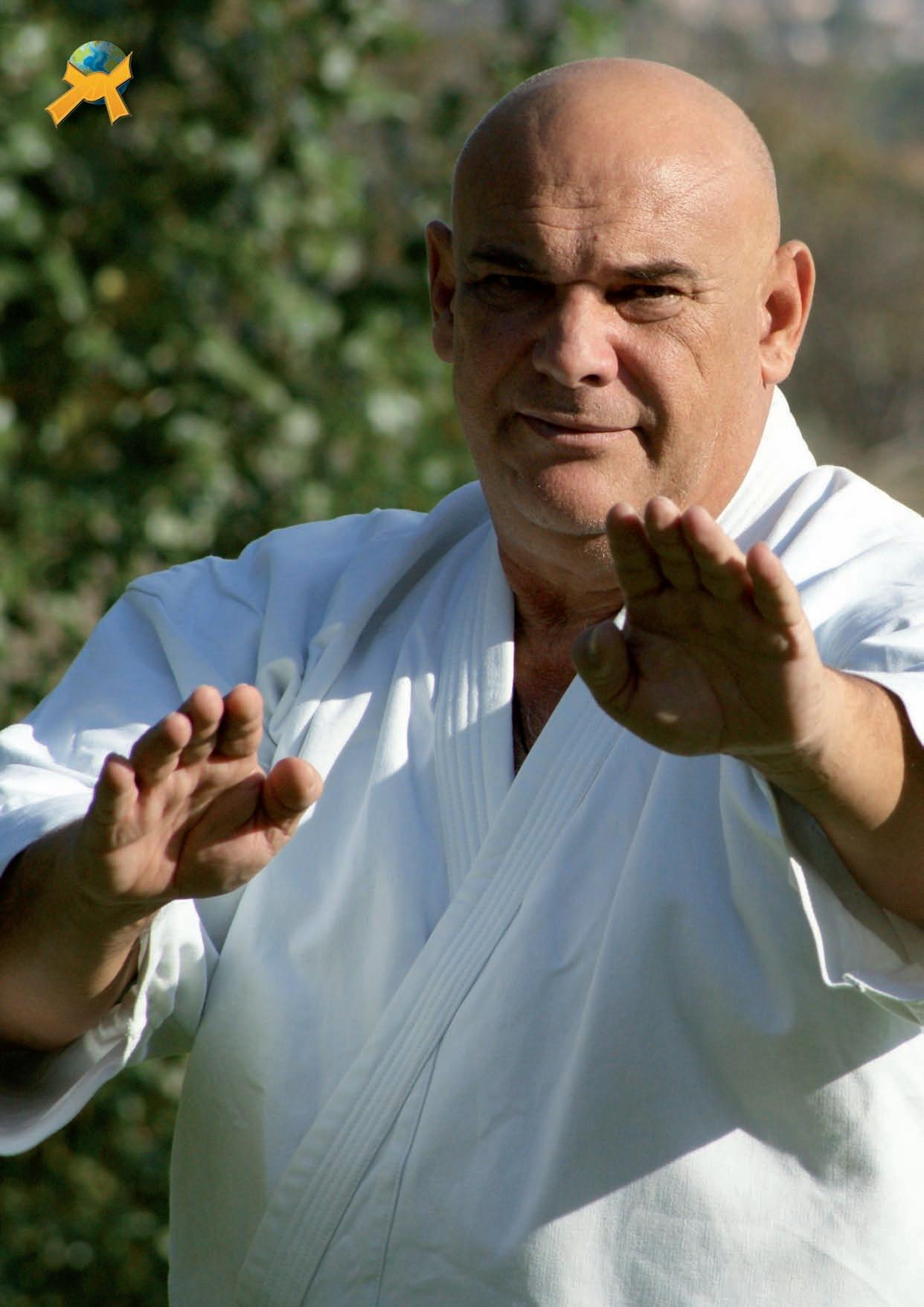

What I advocate and practice today does not stem from theory, but from a life dedicated to the study of combat under pressure. My nature is inherently functional and operational, and my experience is the technical result of thousands of hours of training at the highest level; all of this forged in scenarios where there was no room for error, from a joint operations base in the 1980s to the harsh reality of night operations.
My physical and mental resilience was tempered by the extreme demands of the CAI (Immediate Action Commando Units). That was no conventional training; they were days of peak performance that began with an 8-kilometer run and continued on the track.
However, the true measure of our level was the extremely high training volume we achieved through constant joint maneuvers. In those deployments, operating side by side with elite units from other armies, I learned the importance of coordination and adaptability. As a sniper in those maneuvers, I gained immeasurable experience in focus and heart rate control under real stress. That operational precision is the backbone of my methodology: maintaining absolute calm and effectiveness at the moment of impact.
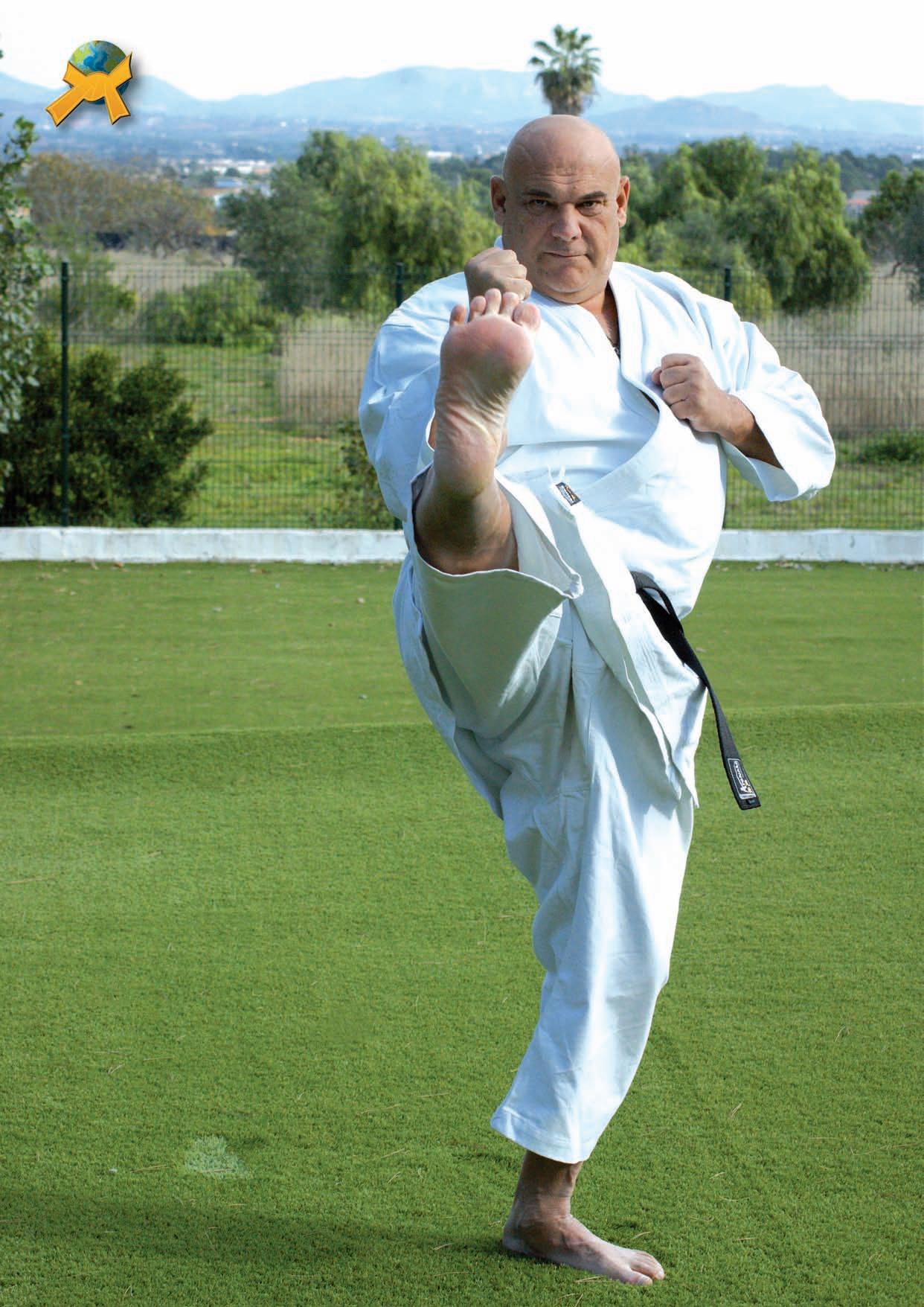
“My physique was forged by the extreme demands of the CAI (Immediate Action Commandos). That was no conventional training; they were days of peak performance that began with an 8kilometer run and continued on the track.”

My vision was shaped by the best. Training with the national team, sharing sessions with figures like Jean Pierre Carbila, Oscar Zazo, or the Torres brothers, taught me what pure technique is. But that background also made me quickly recognize what I hate about certain martial arts environments: the waste of time on flashy moves, the excessive rigidity that is useless in chaos, and the ego of those who believe that a rank or a belt protects you from a real blow.
At the local gym, alongside my partner Juan (Spanish Boxing Champion in the welterweight division), we passed the test of reality. We tested ourselves in a constant, allaround exchange against specialists in American Karate, Kenpo, Muay Thai, and Full Contact. There, unnecessary shouting and aesthetic poses were worthless; you were either effective or you were beaten. Those years of intense combat taught me to despise showy martial arts. I understood that karate is only useful if it is effective.
Added to this background is the experience of having worked at night. That is where character is truly forged and where cheap theory is most detested. The night forgives neither mistakes nor choreographed movements.
Night work taught me to read body language and to apply full contact selectively. I have seen how supposedly infallible systems crumbled due to a lack of realism. That is why my approach shuns the artificial; it is about mastering distance and managing stress when the situation becomes critical and the “heat” of the confrontation is real.
After decades of experience, my conclusion is straightforward: Sport Karate is just one facet, a game of rules and controlled distances. Functional Karate is the ultimate form of Karate, the point where technique becomes a real operational tool. But it is Effective Karate that truly gives you the reality of the heat—that truth found only when the confrontation is stripped of all frills and the only thing that matters is emerging victorious. My career is the legacy of that evolution: Always be ready, always be precise, and maintain an operational mindset above all else.