Research Notes SUMMER 2026
2
Research Notes | Summer 2026
Contents 3
Foreword
4
Introduction: Muhammad Akhtar (Associate Dean for Research and Knowledge Exchange)
5
Cognitive Resilience after Startle and Surprise in Commercial Aviation
6
Monsters of Paradise Exhibition
8
An Investigation into the Underrepresentation of Ethnic Minority Officers in Specialist Police Units in the United Kingdom
9
Encouraging Nurses to Publish: Unlocking the Value of Student Scholarship
11
Co-creating an Inclusive Physical Activity Programme for People with Intellectual Disabilities in Nigeria
13
Human and Machine: Exploring Student Nurse’s Experiences of using AI tools in their Academic Studies
15
Advancing HomeCare Innovation Through the ADA Project
Research at BNU 16
Conferences
16
Publications
Research Notes | Summer 2026
Foreword The research taking place at Buckinghamshire New University, as this edition of Research Notes shows, is varied and ever-evolving, but sometimes it’s important for a researcher to get back to their roots. I was reminded of this on World Social Work Day, marked this year on Tuesday 17 March – an opportunity to pause and reflect on the extraordinary work that social workers do across the UK and beyond and to recognise a profession too often overlooked, despite its central role in holding our society together. This year, I was honoured to be invited by Ian Byrne MP to speak in the House of Commons at the All-Party Parliamentary Group for Social Work, at an event cohosted with the Social Workers Union and the British Association of Social Workers. It was a timely reminder of both the challenges facing the profession and the deep commitment of those who work within it.
That message was powerfully reinforced by John McGowan, the General Secretary of the Social Workers Union, who spoke at the Group about the meaning and impact of the profession. As he noted, social work is demanding but is also one of the most meaningful careers in our society; social workers support individuals, families, and communities at times of crisis, inequality, and profound personal challenge. Despite growing pressures, limited resources, and increasing workloads, many remain deeply committed to promoting wellbeing, advocating for social justice, and empowering people to improve their circumstances. Through resilience, compassion, and strong ethical values, social workers build trusting relationships, challenge inequality, and help people achieve better outcomes. In doing so, they create lasting positive change – not only in individual lives, but across communities and society as a whole.
I speak to thousands of social workers each year, and I have spent much of my research career working alongside social workers and policy makers to better understand – and improve – their working conditions. That research consistently shows how demanding the role can be: high workloads, long hours, and significant emotional strain are a daily reality for many. Yet what stands out, time and again, is the dedication social workers bring to their work, and the difference they make every single day. Social work is often underappreciated, and yet without it, some of the most vulnerable members of our society would struggle to flourish. For that reason alone, it is vital that we recognise and value the contribution social workers make – and that we take every opportunity to say thank you.
As a researcher my research on social work is my passion – but as a researcher at BNU I’m also proud to be part of a community of diverse, committed and above all innovative researchers, and I hope you enjoy reading more about their work in this edition of Research Notes.
Professor Jermaine Ravalier Pro Vice-Chancellor (Academic)
3
4
Research Notes | Summer 2026
Introduction
Muhammad Akhtar Associate Dean for Research and Knowledge Exchange College of Leadership and Innovation Following the introductions by my colleagues in the previous issue of Research Notes I’d like to introduce myself as the new Associate Dean for Research and Knowledge Exchange for BNU’s College of Leadership and Innovation. My scholarly background is in Human Resource Management, organisational psychology and people analytics, with my research centring on leadership, high-performance work systems, and employee well-being, attitudes and behaviours – and I see in the College of Leadership and Innovation clear intellectual strengths alongside a significant capacity for growth. My priority is to harness that potential through a coherent and confident research strategy that raises both the quality and visibility of our outputs. This requires focus, clarity of purpose, and collective ownership. I am committed to working closely with colleagues to build thematic research areas, strengthen publication pipelines, and increase the scale and success of external funding applications. This is something I have extensive experience of, having secured and led competitive funding applications across national and international contexts, working with bodies such as the Chartered Institute of Personnel and Development (UK), the Higher Education Commission of Pakistan, and government partners including the Government of the Turks and Caicos Islands.
I bring to BNU an international research profile built across two decades that includes international collaboration and publications in leading peerreviewed journals alongside contributing to debates on responsible management and organisational effectiveness. At the heart of my approach is teamwork – a strong research culture is not imposed, but built collaboratively, and I aim to create an environment where colleagues feel supported, challenged and valued. A key part of this will be the fostering of structured mentoring for early career researchers, support for robust doctoral supervision, and scheduling regular research forums designed to encourage constructive dialogue. I also see it as equally important to strengthen knowledge exchange activities at BNU by deepening our partnerships with industry and professional bodies, ensuring that our research informs practice and addresses real-world organisational and societal challenges. This focus is also key to the laying of firm foundations for REF 2029 - and for sustained research excellence beyond it. Rather than treating REF as a periodic assessment exercise I see it as an opportunity to embed long-term research strength within the College. This means identifying areas of critical mass, aligning outputs with strategic priorities, planning for impact from the outset of projects, and ensuring robust, dynamic governance, mentoring, and development structures. I believe that high-quality research and real-world impact are inseparable. Rigorous scholarship earns credibility; meaningful engagement delivers relevance. Through stronger collaboration across disciplines and closer alignment with external partners, we can position the College as a trusted contributor to debates on leadership and innovation. My ambition is that, together, we establish Buckinghamshire New University as a recognised centre of credible, applied, and internationally connected research, known not only for academic excellence but for tangible contributions to organisations and society.
Research Notes | Summer 2026
Cognitive Resilience after Startle and Surprise in Commercial Aviation NAVEED KAPADIA SENIOR LECTURER College of Leadership and Innovation As commercial aviation becomes more automated, an important research question is being raised; how prepared are pilots to recover and adapt safely when routine performance is disrupted after an initial emotional reaction of ‘startle and surprise’? My ongoing PhD research at Buckinghamshire New University is exploring this question through the study of Cognitive Resilience (CR) in commercial aviation. The research does not centre on ‘startle and surprise’ as events in themselves; instead, it focuses on what follows, including the capacity to regain control, reorient attention, manage uncertainty and adapt performance under pressure. This post-disruption recovery space reflects a growing concern within highly automated flight operations, where opportunities to exercise recovery and adaptation in everyday line flying may be reduced. My research seeks to define and operationalise cognitive resilience in a way that is meaningful for commercial flight operations. Its concern is not simply whether pilots experience surprise, stress, or disruption, but with their preparedness to recover and adapt effectively once those reactions occur, giving the research a practical safety focus. This focus is important in increasingly automated environments where the issue is not only what technology can do in routine conditions, but how well commercial pilots are able to respond when the situation becomes uncertain, unexpected, or unstable. At the centre of the study is the proposed Crew Cognitive Resilience Index (CCRI), a composite research framework intended to support a more structured examination of resilience-related performance. Could such a framework help reveal whether recovery and preparedness to adapt vary across individuals, crews and scenarios rather than weakening in a single or uniform way?
A pilot may remain procedurally accurate yet struggle to adapt when conditions change, while another pilot may retain awareness of the wider situation but find it harder to manage workload or calibrate their reliance on automation. By examining these responses this research asks whether cognitive resilience is better understood as a pattern of strengths and vulnerabilities that will vary across individuals, crews, and scenarios. The wider significance of this research is found in what this enquiry might offer to training and safety. If the conditions that shape recovery and adaptation can be understood more clearly this could support more targeted training, more meaningful interpretation of performance and an earlier recognition of hidden brittleness before it contributes to safety events - and beyond aviation the research also speaks to a broader social question; how can human expertise be sustained in systems where technology performs more of the routine task load, but human judgement and recovery remain essential when the unexpected occurs?
5
6
Research Notes | Summer 2026
Monsters of Paradise Exhibition DR ELISAVET KALPAXI
DR NELA MILIC
SENIOR LECTURER
PROFESSOR IN ARTS PRACTICE
College of Art, Technology and Engineering
College of Art, Technology and Engineering
The Monsters of Paradise exhibition, curated by Elena Poka at the Lofos Art Project in Athens features two BNU Artists – Dr Elisavet Kalpaxi and Dr Nela Milic. The exhibition is an invitation to articulate contemporary variations of monstrosity in an age of intensity and immense transformation; according to Elena Poka, in the introduction of the exhibition catalogue/book, ‘this is precisely the moment when monsters emerge’. The exhibition, accompanied by a book published by Rodakio including messages by the contributing artists, as well as a series of talks happening at the gallery, focuses on conceptions of monstrosity by drawing on a variety of references for art rendered through the artists’ views in a contemporary context. The Monsters of Paradise exhibition represents an investigation of urgent and politically current questions. The artist delivered a presentation and participated in the discussion on the ‘Uncanny’ which took place at the gallery on the 27th of March 2026.
Nela’s film captures the recent political uprising in Serbia that started with the fall of the canopy at Novi Sad train station which led to the death of fifteen people. Hear the Fear is a practice-based research film which engages with the now 18-month long rebellion against the regime corruption in Serbia and, in particular, the protest in the Serbian capital Belgrade on the 15th of March 2025. This was the largest gathering the country has ever seen during which the government chose to use an acoustic weapon on protesters. Through survivor accounts, Nela captured the victims’ experience of this sound technology and created evidence of its use that the government denies. The film is made in collaboration with Professor Zoran Djukanovic from Architecture Faculty in Belgrade and has been supported by Tracts COST Action, European Commission and Bosch Alumni Network. Nela’s film was screened at The Gallery Kolektiv in Belgrade in March and it is part of another group exhibition at Zonderflag art centre in Buenos Aires in July 2026, at Memory Studies Association annual conference. The exhibition is curated by Mirta Kupferminc, Monika Gabriela Dorniak, Rebecca Harris and Olga Bubich.
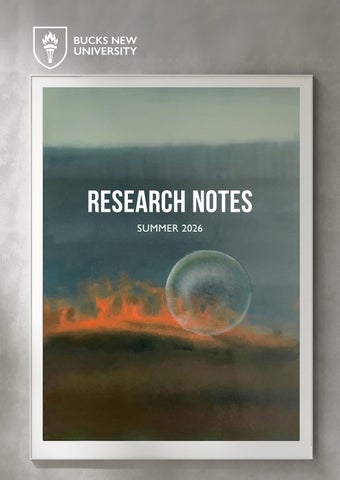
Elisavet Kalpaxi’s work proposes that monstermaking is not just about creatures that seem otherworldly or alien. It is not just about classification, monstrification is an ongoing transformation, an ever-present production of damage and alienation. It is also about how people distance themselves from their own actions, particularly the harm they inflict on the world. The work for the exhibition consists of a series of idealised, yet damaged landscapes, by exploitation, manipulation, and contamination. Monstrification in this series applies to the ongoing damage to the planet, to other species, and to people themselves, while remaining oblivious to the effects of the monstrous legacy they have created. Elisavet’s work at the exhibition engages with the notion of the sublime and draws emphasis from asking ethical and aesthetical questions related to environmental catastrophe. Elisavet Kalpaxi’s work was specifically made for the exhibition.
As artists and academics at BNU Elisavet and Nela both continue to explore differing fields. While Elisavet’s practice is often produced within community centres and workshops to challenge conventional associations between professional art practice and the studio, it also aims to bring visibility to community spaces. Both works depict the relationship with the world in its mediated condition using both printmaking and video. A book/catalogue was published under the Greek publisher Rodakio, which includes essays by the contributing artists. The exhibition was accompanied by a series of talks and presentations.
Research Notes | Summer 2026
7
8
Research Notes | Summer 2026
An Investigation into the Underrepresentation of Ethnic Minority Officers in Specialist Police Units in the United Kingdom MOHAMED OMAR MOHAMED SENIOR LECTURER College of Leadership and Innovation British policing has faced significant challenges in recruiting officers predominantly from ethnic minorities; despite efforts to improve diversity within the police, the police workforce data shows that white officers still constitute 91.1% of the police workforce, while ethnic minority officers make up only 8.5%. The 1999 MacPherson Report identified institutional racism within the police, recommending that the UK police force become more representative of the communities they serve, and in doing so to eradicate prejudice and disadvantage, improve recruitment and retention of ethnic minority officers and staff, and reduce racial disparities in the use of stop and search powers. Despite significant efforts of the type echoed by Baroness Casey’s report in 2023 and evidence of partial progress, however, challenges persist in recruiting ethnic minority officers, which impacts on the progression of such groups into specialist units. My research investigates how improving equality and inclusion within specialist units has implications for fairness, legitimacy, trust and confidence and operational effectiveness. Ethnic minority officers perceive specialist units as exclusive ‘closed shops’, accessible only to officers who fit a certain stereotypical profile; my research has identified key barriers to joining these units that include elitism, previous experiences of racial discrimination, inadequate support networks, and improper or lack of use of positive action strategies. A representative workforce fosters trust and confidence between the police and ethnic minority communities and in policing, and my research seeks to contribute to the existing knowledge surrounding this area – especially in respect of initiatives like the The Police Race Action Plan (PRAP), implemented in 2022 with the intention of improving recruitment of ethnic minority officers into the police.
This research uses a qualitative and interpretative design that integrates phenomenology and critical realism to explore officers experiences and comprehensively understand their voices as part of identifying solutions for improving diversity within specialist units. This dual lens approach is designed to provide a comprehensive understanding of the experiences of ethnic minority officers within specialist police units as part of an overarching discussion of representation with contemporary British policing informed by surveying and interviewing both serving and retired officers. The project has already produced several research outputs, including presentations at the British Society of Criminology Conference 2025 in Portsmouth, the University College London (UCL) Postgraduate Research Conference, the 2025 BNU Research Conference and the 2026 Annual Policing Conference at Canterbury Christchurch University. The findings of this research will be shared with professional associations such as the National Black Police Association with the intention of ensuring the findings and recommendations reach the widest audience of academics and police professionals possible.
Research Notes | Summer 2026
Encouraging Nurses to Publish: Unlocking the Value of Student Scholarship RUTH TROUT SENIOR LECTURER College of Health and Society Modern nursing education increasingly incorporates authentic assessments, including the development of patient information leaflets, posters, audits, and educational tools. When thoughtfully designed, these practitioner-developed resources can significantly enhance patient understanding, satisfaction, adherence to treatment, and engagement in shared decision-making. Research consistently demonstrates that well-constructed leaflets using validated readability measures such as the Flesch Reading Ease score improve patient knowledge, attitudes, and practices. While students do frequently produce high-quality assignments, audits, and educational resources, much of this work remains confined to assessment submissions and is never disseminated more widely. Encouraging the publication of these resources transforms academic exercises into meaningful contributions to practice, benefiting students, organisations, and ultimately patients. This research highlights the responsibility of academics and practice supervisors to promote rigorous evaluation methods and encourage dissemination of well-designed educational materials. Sharing such work more widely ensures that valuable, context-specific resources do not remain unseen. Students often underutilise these evaluation tools and rarely collect baseline data to measure impact, meaning it becomes the responsibility of academics and practice supervisors to promote rigorous evaluation methods and encourage dissemination of well-designed educational materials.
Publishing strengthens essential nursing competencies, including critical thinking, analytical precision, and the ability to communicate complex clinical information clearly. The peer-review process itself provides a powerful developmental opportunity, fostering resilience, reflection, and methodological rigour. Engaging with publication also deepens understanding of ethical principles such as confidentiality, consent, and governance. At the same time, however, students can be hesitant to approach peer-reviewed journals – making workplace dissemination often an accessible alternative. Publishing audits, quality improvement projects, or case studies internally can directly improve patient care while enhancing professional credibility, and can represent a stepping stone towards outputs like conference presentations, leadership opportunities, and early career advancement. This approach offers benefits to each stakeholder in the process. Universities can benefit from enhanced research profiles and visible research-informed education, while healthcare organisations can benefit from student-led audits and innovations that promote service improvement and interdisciplinary collaboration. Encouraging dissemination also helps embed a culture of evidence-based practice and continuous improvement across clinical settings.
9
10
Research Notes | Summer 2026
Despite the benefits, barriers remain – some of which may feel familiar to all researchers, including imposter syndrome, a lack of confidence, and constraints on time and available support. This research proposes practical strategies to address these challenges, which include embedding publication within both curricula and development plans, structured mentorship and peer writing groups, workshops on academic writing and the publication process and institutional recognition coupled with protected mentoring time. Normalising publication as a key part of professional nursing practice is key to this, alongside the provision of editorial and financial support for submissions and the encouragement of internal workplace dissemination – something which contributes to an organisation’s research culture as a whole.
This research aims to show that encouraging nursing students to publish is presented not simply as an academic aspiration, but as an investment in the profession’s future. Supporting dissemination strengthens individual capability, organisational learning, and patient care outcomes – and creating structured, supported pathways for publication should be considered a shared professional responsibility across academic and clinical leadership. Published alongside this article in the British Journal of Neuroscience Nursing is a stroke supplement containing two articles incorporating education tools, which have been co-authored with BNU students.
Research Notes | Summer 2026
Co-creating an Inclusive Physical Activity Programme for People with Intellectual Disabilities in Nigeria DR YETUNDE MARION DAIRO ASSOCIATE PROFESSOR OF PHYSIOTHERAPY College of Health and Society People with intellectual disabilities often experience poorer health outcomes and lower levels of physical activity than the general population. These inequalities are particularly evident in low- and middle-income countries such as Nigeria, where access to rehabilitation and inclusive physical activity opportunities can be limited. This research explores how a culturally adapted physical activity programme incorporating rebound therapy can be co-created with stakeholders to ensure it reflects local needs, thereby improving access, participation, and wellbeing for people with intellectual disabilities in Lagos State. The research seeks to address the question of how a sustainable and culturally appropriate physical activity programme can be developed through stakeholder engagement to support people with intellectual disabilities in Nigeria. Rebound therapy, a structured trampoline-based exercise approach, has been shown to improve balance, coordination, and social engagement in high-income settings however, there is limited evidence on how these programmes can be adapted for low-resource environments, where practical, cultural, and economic factors shape participation. The project adopts a participatory approach, meaning that those directly affected by the programme are actively involved in the project design process. Two stakeholder engagement events were held in Lagos State, bringing together a diverse group of stakeholders, including people with intellectual disabilities, caregivers, teachers, physiotherapists, school leaders, and community stakeholders, to actively contribute to shaping the programme design.
The discussions at these events focused on understanding the barriers to participation, accessibility needs, safety considerations, and preferred delivery models. Stakeholders highlighted the need for affordable, ongoing physical activity opportunities beyond hospital settings, alongside the value of rebound therapy as an enjoyable, motivating activity that encourages social interaction. They emphasised the importance of inclusive design so that individuals with a wide range of abilities, including wheelchair users and those requiring additional support, can participate. Practical challenges were also identified, including transport costs, limited space, and the need for durable and maintainable equipment. Caregivers and community members were recognised as central to sustaining participation, particularly where appropriate training and support are provided. These stakeholder insights directly informed the co-creation of a programme model that includes group-based sessions, flexible participation options, locally repairable equipment, and training pathways for caregivers and community volunteers.
11
12
Research Notes | Summer 2026
The research has important implications for inclusive health and rehabilitation. By placing stakeholders at the centre of programme design through a co-creation approach, the project supports more accessible, relevant, and sustainable services for people with intellectual disabilities. It also contributes to wider efforts to reduce health inequalities and promote social inclusion in lowresource settings. The programme has the potential to improve physical health, functional ability, and social engagement, while also increasing awareness of disability inclusion within communities. Importantly, it demonstrates how locally grounded, co-created solutions can address barriers that are often overlooked in traditional intervention design.
Future phases of the research will build on this co-creation approach to evaluate the programme’s feasibility, cost-effectiveness, and long-term impact, with the aim of refining and scaling up delivery across similar settings. This work forms part of an ongoing international collaboration between the United Kingdom and Nigeria Funding declaration: The stakeholder engagement activities informing this research were supported by local charitable funding from STL Trustees and Daystar Christian Centre, Lagos, Nigeria.
Research Notes | Summer 2026
Human and Machine: Exploring Student Nurse’s Experiences of using AI tools in their Academic Studies SHABANA ALI
JOSEPH OTOO
SENIOR LECTURER IN ADULT NURSING
SENIOR LECTURER IN ADULT NURSING
College of Health and Society
College of Health and Society
Since its introduction, universities have articulated fears about students using Artificial Intelligence (AI) tools such as ChatGPT tools to produce essays as part of the way by which AI has rapidly transformed the educational landscape. A primary concern is a potential overreliance by students on generative AI (GenAI) – an overreliance which leads educators to question how much independent thought and effort are being applied as part of the learning process.
Universities have responded by creating policies and guidance to regulate AI use, and educators are encouraged to integrate AI into their curriculum planning to teach responsible and ethical use.
As AI-driven tools begin to appear in clinical contexts (e.g., decision-support systems, automated documentation, digital triage platforms), familiarity with these technologies also becomes a professional imperative. Educating student nurses on safe, ethical and reflective AI use contributes to the development of a digitally competent workforce capable of delivering high-quality, technologically informed patient care.
The findings reveal that student engagement with GenAI is not simply a matter of accepting new educational technology, but rather a complex trajectory shaped by negotiation and emotional factors. While participants described GenAI as helpful, efficient, and supportive, they also expressed concerns about issues such as authenticity, over-dependence, and academic credibility. Many participants noted, though, that AI tools helped to reduce stress and manage workload during busy clinical placement periods. These findings highlight the need for clearer and robust institutional policies.
Students describe AI as a game-changing tool because it saves time and provides instant feedback, thus helping them study more efficiently and independently. For student nurses, who navigate the demands of academic study alongside clinical placements, employment, and personal responsibilities, these tools offer unprecedented access to personalised academic support. However, students’ also express concerns regarding the impact on their creativity, over dependence and authenticity; while they are comfortable using GenAI for tasks such as grammar checking and idea generation, they continue to place significant value on the feedback provided by human educators. Despite its increasing use, research into nursing students’ experiences with GenAI remains limited. As nursing students continue to adopt GenAI, it is paramount to understand how students embed GenAI into their studies, the challenges they encounter, and the ethical implication of its use.
The pilot study used in this research invited students to share their experiences of using GenAI tools in their academic learning through semistructured interviews.
The societal implications of this research extend beyond academic performance; by understanding how students engage with AI and the challenges they face, educators and policymakers can design curricula that foster responsible digital citizenship, reduce inequities in learning support, and prepare future nurses for an evolving healthcare landscape shaped by automation and data-driven decisionmaking. Empowering students to critically evaluate AI outputs, recognise limitations, and maintain professional judgement will, it is hoped, ultimately reinforce patient safety, public trust, and ethical standards within healthcare practice.
13
14
Research Notes | Summer 2026
GenAI is already integrated in students’ academic practices, bringing both opportunities and challenges. It is vital for nursing education not to question the fact of its use, but to shape the manner in which it is used. Educators must support students to engage with GenAI in ways that maintain critical thinking, support a clear sense of authorship, and uphold professional integrity. Achieving this requires explicit guidance, teaching on responsible use, and the fostering of open, reflective dialogue within nursing programmes in a way that ensures that students engage with GenAI mindfully, ethically, and with confidence. As GenAI technologies continue to evolve, it is essential that nursing education evolves alongside them, ensuring that the nurses of the future possess not only clinical expertise but also the digital competence required for modern healthcare practice.
This pilot study has already contributed to national discussions following its presentation at the Royal College of Nursing Education Forum and Exhibition in April last year and the Advance HE Healthcare Educators NET Conference in December 2025. Attendees engaged with the emerging questions surrounding AI ethics, assessment design, and the future of digitally supported clinical education and, building on this momentum, the research team intends to prepare a full-length manuscript for submission to a nursing journal.
Research Notes | Summer 2026
Advancing HomeCare Innovation Through the ADA Project LUISA CONTRERAS
DR BENJAMIN AZIZ
RESE ARCH ASSOCIATE IN DIGITAL HE ALTH TECHNOLOGIES
PROFESSOR IN COMPUTER SCIENCE
College of Creative Arts, Technology and Engineering
College of Creative Arts, Technology and Engineering
Buckinghamshire New University is contributing to the international Accelerated Digital Applications (ADA) project, a three year research initiative exploring how digital technologies can enhance the delivery of remote healthcare. The consortium brings together universities and industry partners from the United Kingdom, South Korea, and Türkiye and within the UK group, Buckinghamshire New University works alongside the University of York, Chilton Computing, and Flying River, with this team focusing on developing practical solutions that allow people receiving care at home to maintain independence while ensuring that their health is monitored safely in real time.
This robust digital infrastructure is essential for evaluating realtime monitoring systems, remote assessments, and groupbased remote care sessions under realistic conditions.
The ADA project seeks to understand how future healthcare services can be supported by fifth generation (5G) networks and artificial intelligence. A central aim is to reduce the risks associated with remote healthcare systems by ensuring that new technologies are reliable, secure, and responsive to the needs of both patients and professionals. The UK’s contribution is centred on homecare innovation, reflecting the growing number of individuals who wish to live independently for longer but require reassurance that support is available when needed. Through the development of personalised remote monitoring tools and coordinated homecare systems, the UK team is helping shape solutions that could strengthen safety, wellbeing, and confidence for people receiving care in their own homes.
Alongside this work, Buckinghamshire New University will continue collaborating with its ADA partners on software requirements gathering and analysis. This collective effort ensures that the digital tools being developed are safe, accessible, and genuinely useful for the people who depend on them. The University’s simulation facilities play an important role in supporting comprehensive endto-end testing, allowing the research team to assess how the technologies function in practice and how they can best assist patients, carers, and healthcare professionals.
Over the past year BNU has made important progress in preparing its facilities for the next phase of research. A portable 5G station was deployed across the Aylesbury campus to assess network performance in simulation wards and assistedliving environments. These assessments confirmed strong, reliable coverage in the areas where ADA demonstrators will be tested.
Looking ahead, the University will conduct the formal testbed trials during June and July. These summer trials represent a significant milestone for the project as it enters its third year. They will provide an opportunity to observe how the emerging ADA technologies perform in controlled but realistic settings, enabling researchers to refine designs based on practical insights before wider deployment.
As ADA moves into its third year, the project continues to demonstrate how international collaboration and usercentred design can shape the future of homebased care. By combining advanced technology with rigorous realworld testing, the project aims to create new ways for people to maintain independence while receiving continuous, technologysupported reassurance and support.
15
16
Research Notes | Summer 2026
Research at BNU Conferences Ali, Naz (2026) Sustainability and Innovation in the Hospitality Industry. In: Sustainability and Innovation in the Hospitality Industry, 5th February 2026, Mont Rose College. Ali, Naz and Constantinescu, Alexandra (2026) Locating Food (In)Security and Poverty in ‘Hospitality’: Asylum-seekers Experiences of Inhospitality and Inhospitableness in the UK. In: Research Seminar Series, 28th January 2026, University of Essex. Constantinescu, A. and Ali, N. (2025) ‘Improving access to nutritious food for migrants from disadvantaged backgrounds: A Rapid Evidence Assessment’. In Food for All: Media Communication and Food Democracy Conference, 10-12 September 2025, University of Lille, France. Depiver, Joshua Adeniyi and Mallik, Sabuj (2025) Hybrid Predictive Model for ThermoMechanical Reliability Assessment of Lead-Free Solder Interconnects. In: 2025 International Conference on Modeling, Simulation and Intelligent Computing (MoSICom). 2025 International Conference on Modeling, Simulation and Intelligent Computing (MoSICom) . IEEE, pp. 359-364. ISBN 979-83315-7391-
Durna, Tuncay (2025) Chair of plenary workshop. “International co-operation and role of international organisations in preventing financial crime” The Cambridge International Symposium on Economic Crime. 31st August – 7th September 2025. University of Cambridge. Durna, Tuncay (2025) Invited speaker at plenary session. “Police force to police force co-operation and the limits of the Law” The Cambridge International Symposium on Economic Crime. 31st August – 7th September 2025. University of Cambridge. Faye, Sainey and Khan, Adnan (2026) ICTEnabled Hybrid Entrepreneurship in Africa: An Empirical Single-Case Study of uLesson’s Digital Tutoring Ecosystem in Nigeria. In: 26th Annual Conference Academy of African Business and Development, Manouba, Tunisia, Tunisia. Fields, Paul (2026) Asking Strangers for Approval or: How I Learned to Stop Worrying if It’s Okay to Put the Ramones and Sum 41 on the Same Playlist. Reddit as a site of Contemporary Punk Discourse. In: For the Record: Punk Histories and Archival Practices, 7th March 2026, The Punk Rock Museum, Las Vegas.
Hayward, Melanie and Allan, E (2025) From vision to action. In: Innovate, Adapt, Thrive: The Next Decade of School Nursing., 10th December 2025, Anglia Ruskin University. Ishaku, Timothy, Dairo, Yetunde Marion and McCormack, Fiona J. (2025) Exploring perspectives of people with stroke living in the community about sedentary behaviour. In: Future directions in physiotherapy, 21st - 22nd November 2025, International Convention Centre Wales. Madarkar, R. and Mallik, S. (2025) Simulation-Driven Design of Ultrasonic Horns for Precision Micro-Grinding Applications, Presented euspen’s Special Interest Conference on Micro/Nano Manufacturing & AET Symposium in ACSM and Digital Manufacturing, Paris-Saclay, France. Nevin, JP. (2025). Optimising Warfighter Physical Readiness: A View from the Trenches. National Strength and Conditioning Association (NSCA), 2025 NSCA Tactical Annual Training presentation. Oni, Olusola, Dairo, Yetunde Marion, Soundararajan, Leo and Homer, Mark (2025) Assessment of Physical Activity and Quality of life in Individuals with Long COVID. In: Future Directions in Physiotherapy Chartered Society of Physiotherapy Annual Conference 2025, 21st and 22nd November 2025, International Convention Centre, Wales, Newport.
Publications Abouemera, Yasser and Alsararatee, Hasan H (2026) Reconciling the 2025 ESC/EACTS Valvular Heart Disease Guideline With ACC/ AHA Guidance: Convergence, Divergence, and Implications for Practice. British Journal of Hospital Medicine, 87 (1). p. 50387. ISSN 1759-7390 Adefila, Arinola (2025) Insights from International Students Studying in Brazil. International Education Journal: Comparative Perspectives. ISSN 2202-493X
Alsararatee, Hasan H (2026) Discontinuation of hormone replacement therapy. Journal of Prescribing Practice, 8 (3). pp. 126-128. ISSN 2631-8393 Alsararatee, Hasan H, Qamar, Imran, Ahmed, Kawser, Bilkis, Farjana and Sarwar, Muhammad (2026) How to Approach and Manage Orthostatic Hypotension. British Journal of Hospital Medicine, 87 (2). p. 50654. ISSN 1759-7390
for expanded roles. International Journal for Advancing Practice, 4 (1). pp. 49-50. ISSN 2753-5932 Alsararatee, Hasan H (2025) Evaluating Advanced Clinical Practitioners’ Engagement With the Four Pillars of Advanced Practice in the UK: A Scoping Review. British Journal of Hospital Medicine, 86 (12). pp. 1-21. ISSN 1759-7390
Alsararatee, Hasan H (2026) Ear, nose and throat assessment: history taking and examination of the ear. Journal of Prescribing Practice, 8 (2). pp. 76-84. ISSN 2631-8393
Alsararatee, Hasan H, Ahmed, Kawser and Elachola, Mohammed (2025) Unmasking pulmonary vein thrombosis: a rare mimic of pulmonary embolism. BMJ Case Reports, 18 (12). e267795. ISSN 1757-790X
Ali, Naz (2025) Yoga and Tourism. Routledge Focus on Tourism and Hospitality . Routledge, United Kingdom. ISBN 9781032901305
Alsararatee, Hasan H and Ahmed, Kawser (2026) How to approach and manage palpitations in clinical practice. Practice Nursing, 37 (2). pp. 62-69. ISSN 2052-2940
Alsararatee, Hasan H (2025) How to approach and manage Lyme disease. Practice Nursing, 36 (12). pp. 465-471. ISSN 20522940
Alsararatee, Hasan H (2025) The contribution of advanced practitioners to equitable and person-centred continence care. British Journal of Nursing, 34 (22). pp. 11101116. ISSN 2052-2819
Alsararatee, Hasan H, Yasir, Amean Ajeel, Hachim, Omer T, Mohammed, Abbas Diaa, Alkhikani, Saif Ali, Ajaj, Mohammed Ridha and Hamood, Haider Q (2026) Advanced nursing practice in Iraq: nurse-led clinics as a platform
Alsararatee, Hasan H (2025) The usefulness of Murphy’s sign and ultrasonography to diagnose acute cholecystitis: a case study. Gastrointestinal Nursing, 23 (10). pp. 390400. ISSN 2052-2835
Ali, Alisha, Wyld, Lisa and Gebbels, Maria (2026) Why hospitality skills can help all businesses adapt to the AI revolution. The Conversation.
Research Notes | Summer 2026
Alsararatee, Hasan H, Kawser, Ahmed and Elachola, Mohammed (2025) A Systematic Review of Burnout Among Nursing Students: Impact on Academic Performance, Psychological Well-Being, and Strategies for Prevention. British Journal of Hospital Medicine. pp. 1-23. ISSN 1759-7390
Durna, Tuncay and Gul, Zakir (2025). “Impact of Think Tanks: Can it be Measured?” International Journal of Management Academy. Vol:8, No:3, pp. 590-604. [“Düşünce Kuruluşlarının Kamu Politikalarına Etkisi Ölçülebilir mi?” Uluslararası Yönetim Akademisi Dergisi. Vol:8, No:3, pp. 590-604.]
Aziz, Benjamin (2026) Towards a SetTheoretic Model of Security Policies for Database-Defined Networks. Science of Computer Programming. p. 103463. ISSN 01676423
Gou, Junyi, Song, Zhenghao, Sun, Liangliang, Matsveichuk, Natalja, Sotskov, Yuri, Zhang, Qichun and Guo, Ge (2026) Cooperative coevolution based differential evolutional algorithm. Expert Systems with Applications, 307. p. 130876. ISSN 09574174
Bin Ammar, Albandari, Eltoum, Nagat, Rathinaraj Antony Soundararajan, Leo, Elhussein, Naawan, Fatima, Sayeda, Alkhalaf, Majid, Elshazley, Momen, Alammar, Abdullah, Mannickal Thankappan, Sreeja, Al-Faqiri, Ghosoun and Elkhalifa, Abd Elmoneim (2026) Nutritional Risk and Persistent Gastrointestinal Symptoms in COVID-19 Survivors: A Retrospective–Prospective Cohort Study. Gastroenterology Insights, 17 (1). p. 19. ISSN 2036-7422 Chalk, Fiona and Rai, Manu (2026) Improving pain assessment and management for patients with dementia after surgery for hip fracture. British Journal of Neuroscience Nursing, 22 (1). pp. 20-27. ISSN 2052-2800
Fawole, Henrietta O., Itua, Serena A., Idowu, Opeyemi A., Adandom, Israel I., Kolawole, Francis O., Adeniji, Tolulope, Obaseki, Chigozie O., Oni, Olusola and Akinrolie, Olayinka (2025) Effects of transtheoretical model of change-based interventions on physical activity among older adults: a systematic review of randomised controlled and non-randomised controlled trials. European Review of Aging and Physical Activity, 23 (1). p. 1. ISSN 18616909 Fordham Barnes, Abbie (2026) Learning from public inquiries to support student nurses in practice. British Journal of Nursing, 35 (2). pp. 121-122. ISSN 2052-2819
Chalk, Fiona and Agyeman, Chilonda (2026) The Role of Music in Supporting People with Dementia in Acute Hospitals. British Journal of Nursing, 35 (2).
Fordham Barnes, Abbie (2026) Leading with CARE: a values-based framework for higher education. British Journal of Nursing, 35 (1). pp. 70-71. ISSN 2052-2819
Chalk, Fiona and Palmer, Annette (2025) The Impact of Ageing and Frailty on Wound Healing. British Journal of Nursing. ISSN 0966-0461
Gray, Shona and Hayward, Melanie (2026) Improving school attendance through health support: A test-of-change project in a deprived Scottish primary school. Journal of Family and Child Health, 3 (1). pp. 17-21. ISSN 30495210
Coomber, Amanda Claire and Howard, Keelin (2026) Exploring the impact of “the knock” and its aftermath on non-offending partners of sex offenders and adequacy of available support. Journal of Children’s Services. pp. 1-15. ISSN 2042-8677 Constantinescu, A. (2025) ‘The women eat last: traditions, table manners and gender narratives at the Romanian dining table’, Research in Hospitality Management, pp. 1–9. doi: 10.1080/22243534.2025.2529310. Constantinescu, Alexandra and Wyld, Lisa (2025) Authentic Assessment Design for Hospitality Studies: An Investigative Case Study Approach. In: Rethinking Hospitality and Tourism Education: Disruptors and Transformations. Aspects of Tourism Series, 101 . Channel View Publications, Bristol, pp. 137-149. ISBN 9781845419424 Dong, Jie, Zhang, Minjie, Zhang, Qichun and Peng, Kaixiang (2026) MRS-Pyramid-TimeXer: A quality-related distributed monitoring framework for multi-rate industrial processes. Measurement, 267. p. 120658. ISSN 02632241 Dong, Jie, Wei, Tiankuo, Zhang, Qichun and Peng, Kaixiang (2026) AstraFormer: A Multi-performance Prediction Method in Manufacturing Processes with Irregular Sampling. IEEE Sensors Journal. p. 1. ISSN 1558-1748
Hayward, Melanie (2026) Right skills, right role, right time: Strengthening school nursing through skill mix and service delivery evidence. Journal of Family and Child Health, 3 (2). pp. 80-84. ISSN 3049-5229 Hayward, Melanie (2026) Commentary: Seen, Secure and Supported—the role of school nurses in navigating childhood grief. Journal of Research in Nursing. p. 17449871251407830. ISSN 1744-988X Hayward, Melanie and Jenkins, Madeleine (2025) Supporting student success in practice: A collaborative guide to the SCPHN school nurse proficiencies. Journal of Family and Child Health, 2 (12). pp. 548-549. ISSN 3049-5229 Hayward, Melanie (2025) “Brushing Up” The Dentist. The Dentist, 41 (11). ISSN 02663414 Henri, Dominic C. and Hubbard, Katharine E. (2026) Are all students getting maximum value from bioscience practicals? Exploring the benefits of inclusive competence-based design. Emerging topics in life sciences, 9 (5). ISSN 2397-8562 Heuboeck, Iran (2026) How international nursing students can achieve a smooth transition into their studies in the UK. British Journal of Nursing, 35 (2). pp. 114-115. ISSN 2052-2819
Hill, Barry, Mitchell, Aby, Machin, Alison Isabel, Derbyshire, Julie, Wamburu, Amsale, Lamichhane, Geeta, Ayo-Ajayi, Helen and Wade, James (2026) Get in Line: A Hermeneutic Phenomenological Study Exploring Moral Distress in UK Pre-Registration Student Nurses. Western Journal of Nursing Research, 48 (5). pp. 507-515. ISSN 1552-8456 Hossain, Abrar and Nweke, Uchenna (2026) Impact of UK Beverage Industry Online Advertising on Consumer Perceptions: A Localized Strategic Approach. Scientific Societal and Behavioral Research Journal, 2 (1). p. 33. ISSN 3080-2466 Hubbard, Katharine E. (2026) Making Metrics Matter: A more ambitious approach to tackling racial inequity in higher education. Hubbard, Katharine E. (2026) Inclusive Education in the Biosciences: What do we mean and how can we achieve it? Current Opinion in Physiology. ISSN 2468-8681 (In Press) Ieropoulos, Fil (2026) Uchronia. [Video] (In Press) Ieropoulos, Fil (2025) Avant-Drag! Voices of Memory. [Show/Exhibition] Jepson, Rachel, Sims, Michael, Ravalier, Jermaine and Brougham, Rachel (2025) Exploring the Mental Health Challenges of Music Industry Professionals: Recommendation for an Industry-Wide Code of Practice. Music & Science, 8. p. 20592043251394824 Kanojiya, Nilesh C., Sambare, Ritesh K., Dhage, Pratik V., Shahare, Achal S., Bisaria, Himanshu, Madarkar, Rajeshkumar, Wankhede, Bipin and Balki, Nilesh (2026) Performance Enhancement of Pyramid Solar Still Using Black Granite Gravels and Coarse Sand: A 3E and ES Comparative Analyses with SWH and PV Integrations. Water Conservation Science and Engineering, 11 (1). ISSN 2366-3340 Lamichhane, Geeta (2025) Shaping professional nursing practice using Benner’s novice to expert theory. British Journal of Nursing, 34 (22). pp. 1133-1137. ISSN 20522819 Li, Mingyu and Wang, Fengqiang (2025) “I thought I knew how to write in my own language …” unveiling vulnerability in NES university students’ English academic writing experience. Journal of English for Academic Purposes, 79. p. 101618. ISSN 14751585 Liu, Yefeng, Zhang, Zeyu, Song, Linze, Liu, Jingjing and Zhang, Qichun (2026) Distributed task allocation and collaborative obstacle avoidance in multi-AGV systems. IEEE Transactions on Consumer Electronics. p. 1. ISSN 1558-4127 Liu, Yefeng, Liu, Jingjing, Ma, Yanwei, Wang, Shuai and Zhang, Qichun (2026) A fusion sparse learning algorithm for fault identification of rolling bearings. PLOS One, 21 (1). e0339859. van Loenen, Tessa, Podda Connor, Marika, Wojczewski, Silvia, Tsereteli, Zaza, Korzh, Oleksii, Monteiro, Isabel, de Graaf, Pim, Ibrahiim, Kalimah, Güner, Sevil, Glasdam,
17
18
Research Notes | Summer 2026
McGorrian, Tom (2025) Emerald Nightingales. Irish Nurses in the NHS, Film 2025. [Show/ Exhibition] Milic, Nela, Kuburovic, Branislava and Rehorova, Irena (2025) Voices of Memory Exhibition and symposium. [Show/Exhibition] Nevin, Jonpaul, Suffield, Colin, Mutch, Stephen, Glass, Matthew, Sadler, Shane, McLay, William, Coonan, Lee, Penver, Ross and Beckingham, Jodie (2026) The Effectiveness of A 10-Week Concurrent Strength and Endurance Training Programme Upon the Physical Readiness of Trained British Army Soldiers. Journal of Strength and Conditioning Research, 40 (2). ISSN 1533-4287 Ou, Zhilin, Wang, Yanhong, Zhang, Jun, Tan, Yuanyuan and Zhang, Qichun (2026) Dynamic heterogeneous graph combined with reinforcement learning for solving job shop scheduling problem. Expert Systems with Applications, 299. p. 130249. ISSN 09574174 Pak, Jongwook, Ghaleh, Hossein Heidarian, Akhtar, M N, Butt, Shazaib, Courtney, Richard and Talat, Usman (2026) Frontline Managers’ Calling, Balancing Act in HR Implementation, and Team Performance: An Empirical Examination. Human Resource Management Journal (HRMJ). ISSN 1748-858 Palmer, Emma and Hubbard, Katharine E. (2025) An inclusive higher education framework caa reflect on community and belonging in Foundation Year. In: Student Belonging in Action: Practical Case Studies to Foster a Sense of Belonging Across the Higher Education Student Journey. Routledge, Oxford, pp. 92-100. ISBN 978-1041007760 Psarologaki, Liana, Vogiatzaki, Maria and Spiridonidis, Constantin Viktor (2025) From Xenomateriality to Xeniomaterialism: an architecture of climate responsive nature-technoculture continuums. International Journal of Architectural Research. ISSN 2631-6862 Psarologaki, Liana (2025) Interview about the research and their findings as they participate in “SIXTEEN-PAGE” Εμείς μιλήσαμε για την έρευνα και τις διαπιστώσεις τους όπως συμμετέχουν στο «ΔΕΚΑΕΞΑΣΕΛΙΔΟ». Elculture Psarologaki, Liana (2025) Spatial Sea – the landscape installation as a conflictual experience of political and cultural heritage, and everyday life. In: Sixteen Pages Academic Approaches to the Cultural Field of Greece. The Telos Society.. Rioga, Margaret, Hill, Barry, Anjoyeb, Mike, Rawcliffe, David, Wilcox, Heather and Ayo-Ajayi, Helen (2026) Innovating nursing education through peer enhanced e-placement. British Journal of Nursing, 35 (1). pp. 26-30. ISSN 2052-2819
Siddiqui, Yusra, Stafford, Prachi, Adukwu, Emmanuel, Freestone, Nicholas, Joshi, Lovleen Tina, Yhnell, Emma and Hubbard, Katharine E. (2025) Ethnic diversity in UK bioscience: Structural biases and recommendations for action. PLOS One, 20 (12). e0339301. ISSN 1932-6203 Singh, Gurpreet (2025) Sustainability Intelligence (SI): A Systemic Mindset Theory Transforming Global Denim Industry. In: Sustainability in Fashion: Creativity, Education and Innovation. Springer Nature Switzerland AG. (In Press) Trout, Ruth (2026) The profound value of learning at the Human Anatomy Unit. British Journal of Neuroscience Nursing, 22 (1). pp. 28-29. ISSN 2052-2800 Trout, Ruth (2026) The profound value of learning at the Human Anatomy Unit. British Journal of Neuroscience Nursing, 21 (6). ISSN 1747-0307 TrutA, Petru, Morar, Irina M., Truta, Alina M., Dan, Catalina, Viman, Oana, Arion, Iulia Diana, Ioras, Florin, Sestras, Adriana F. and David, Leontin (2025) Reproductive trait variability and seed germination responses to electric field and low-dose gamma irradiation in Larix decidua Mill. Notulae Botanicae Horti Agrobotanici ClujNapoca, 53 (4). p. 14811. ISSN 1842-4309 Vincent, Lauren (2026) Becoming an academic: professional identity development of dance lecturers in UK Higher education. Professional Development in Education. pp. 1-17. ISSN 1941-5257 Wamburu, Amsale (2026) Exploring the challenges faced by first-year adult nursing students without prior clinical experience. British Journal of Nursing, 35 (5). pp. 254-258. ISSN 0966-0461 Yan, Bing and Li, Mingyu (2025) EAL and L1 English-speaking postgraduate students’ conceptions of English academic writing: a comparative metaphor analysis. Applied Linguistics Review. ISSN 1868-6311 Yu, Yang, Yang, Guo-Dong, Zhang, Qichun, Sun, Liangliang, Pang, Xinfu and Liu, Yefeng (2025) A self-adaptive discrete artificial bee colony algorithm based on block swap for steelmaking and continuous casting scheduling problem. Applied Soft Computing, 184. p. 113768. ISSN 15684946
Zaman, Sadiyah, Revzy, Shahadate and Akib, Shatirah (2025) Enhancing Corporate Profit Margin Prediction with ESG and Sustainability Data – A Machine Learning Based Model. In: 8th International Conference on Algorithms, Computing and Artificial Intelligence (ACAI). IEEE, Nanjing, China, pp. 1-6. ISBN 979-8-3315-5584-9 Zhang, Dashu, Guan, Sihai, Zhang, Qichun, Meng, Chun and Biswal, Bharat (2026) Unveiling the robustness and utility of nonlinear functional connectivity in resting-state fMRI. Journal of affective disorders, 406. p. 121743. ISSN 1573-2517 Zhang, Yajun, Wang, Jingjing, Zhang, Junwei and Akhtar, M N (2026) Self-serving leadership and employee cyberloafing: a multilevel analysis. Current Psychology, 45. p. 98. ISSN 1936-4733 Ziblila, Mohammed H., Kaba, James S., Yamoah, Fred A., Acquaye, Adolf A. and Hashmiu, Ishmael (2026) Sacred groves for enhanced climate mitigation: Towards a framework for managing unintended externalities of environmental systems. Environmental Development, 57. p. 101351. ISSN 22114645
Editor: James Shelton COVER IMAGE: Elisavet Kalpaxi The cover image for this issue is taken from Elisavet’s recent work displayed at the Monsters of Paradise exhibition in March 2026. For more information on this exhibition, please see the article in this issue.
BF2978 Research Notes Summer Edition
This publication was produced by Buckinghamshire New University.