Senior Thesis | 2026

AHandsonInvestigationPrototyping,Testing,andIterating AxialFluxMotorsforWide-spreadIndustryAdoption.
KennethSebesta
Abstract:
Thisresearchinvestigatesthefeasibilityofaxialflux(AXF) motorsinthemaritimeandautomotiveindustries.Throughboth literaturereviewanditerativeprototyping&testing,thisstudyevaluates theperformanceadvantages,manufacturingdifficulties,andmaterial constraintsofAXFmotors.
Throughoutthestudyaseriesofprototypeswereconstructed progressingfromaninitial3Dprintedcorelessdesigntoanadvanced configurationusingcompositesmaterials,siliconsteellaminationsand N52gradeneodymiummagnets.Forexperimentaltestinganddata collectionaVedderelectronicspeedcontroller(VESC)ranthemotor.In additionaseriesofscopesincludinga4-channelindependentgroundand a2-channeluniversalgroundoscilloscopewereusedtodeterminethe prototype’sefficiencyaswellasthevoltage/rpm(KV)andcurrent/Nm (KI)coefficients.Thesetestsconductedonthefinalprototypeyieldeda KVmeasurementof112,arelativelylowcoefficientreflectingthe high-tourquenatureofAXFmotors,demonstratingtheirexpected characteristics.
WhileAXFmotorshaveobviousadvantagesoverthemore conventionalradialfluxmotor,hightorquedensity,greatercompactness, andenhancedefficiency,thestudypointsoutseveralkeyobstaclesin theirwide-spreadadoptionintoindustry:complexmanufacturing processesrequiredfortheconstructionoftheirstators,thehighstresses undergonebytherotors,andtheirrelianceonrareearthmetalssuchas neodymiumforhighstrengthmagnets Thefindingsofthisstudysuggest thattheyprovetobeanattractivealternativetotheconventionalradial fluxmotorswidelybutbeforetheirwidespreadadoptionlarge innovationstotheirmanufacturingmethodsandmaterialsourcingwillbe anecessity.
Introduction:
Axialflux(AXF)electricmotorsrepresentadistinctclassof electricmotor,differingingeometryfromthemoreconventionaland widelyusedradialfluxmotor.Withradialfluxmotorsdominatingthe automotiveandindustrialmarketsduetotheirmature,simple manufacturingmethods,AXFmotorshavegainedgrowingindustry attentioninthepastfiveyearsduetotheirunrivaledtorquedensity, compactformfactor,favorableheatdissipatingcharacteristics,and efficientuseofcopperandrare-earthmetalsforneodymiummagnets. Forthesereasons,AXFmotorsareanattractiveoptionwhentorque,
volume,compactformfactor,andefficiencyaredesired,suchasin automotiveandaerospaceapplications.
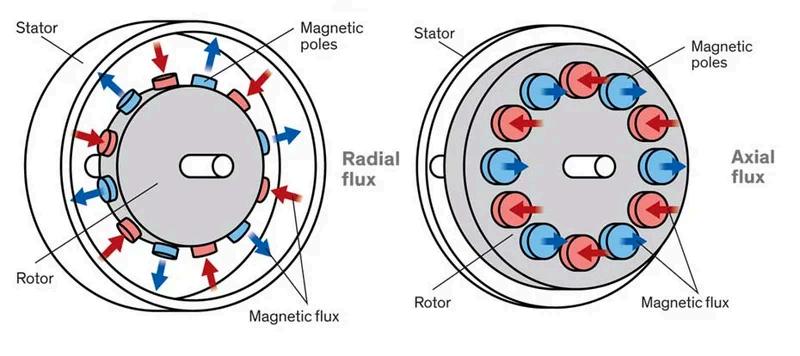
Fig1.IEEESpectrumDaanMoreels&PeterLeijnenFundamentalsofaxialflux motors
TheuniquegeometryofAXFmotorsstemsfromthedirectionof theirmagneticfield(magneticfluxes).Ratherthantheirmagneticfluxes runningperpendiculartotheaxisofthemotor’srotation,thefluxesrun parallel(asseeninfig.1).Intheconventionalradialfluxmotor,a cylinder(therotor)eitherrotateswithinacylindricalringof electromagnets(thestator)oraroundwiththemagnet’sand electromagnet’sfieldorientationtravelingperpendiculartotheaxisof rotation.Theaxialfluxmotorinsteadusesapancake-styleconfiguration whereastatorwithelectromagnetsorientedparalleltotheaxisof rotationpropelstherotorwithmagnetslikewisepointingparalleltothe axisofrotation.
Bothelectricmotorstylesconsistoftwoelementalcomponents: thestatorandrotor.Thestatorandrotoroperateonthesamefundamental principles.Thestator,asitsnamesuggests,remainsstationary,often mountedtothemotorframe,andcontainsanarrayofelectromagnets. Therotorlikewiserotates,propellingthemotor’saxlewithaseriesof magnetsthatareattractedandrepelledbytheelectromagneticfluxfrom thestator Theelectromagnetsofthestatorarecomposedofaseriesof enamelledcoppercoilsorganizedintothreeconnectedgroups(A,B,and C),oftenknownasphases(fig.2).Foranenhancedmagneticfieldand strongerelectromagneticfluxes,thecoilsareoftenwoundarounda “core,”usuallyamassoflaminatedsiliconsteelsheets.Siliconsteel
laminationsareoftenusedastheyreduceaphenomenaoftenknownas “eddycurrents.”Eddycurrentsarecreatedwithinthecoresofmotors whenanoscillatingmagneticfieldlikethatinamotorcreatesexcessive heatreducingthemotorsefficiency.Themagnetsmountedtotherotorin anAXFmotorarearrangedinaringaroundtheaxleinalternatingnorth andsouthorientations(alternatingpolarities).Forhightorqueand efficiency,neodymiumN52magnetsarepreferredforelectricmotors.
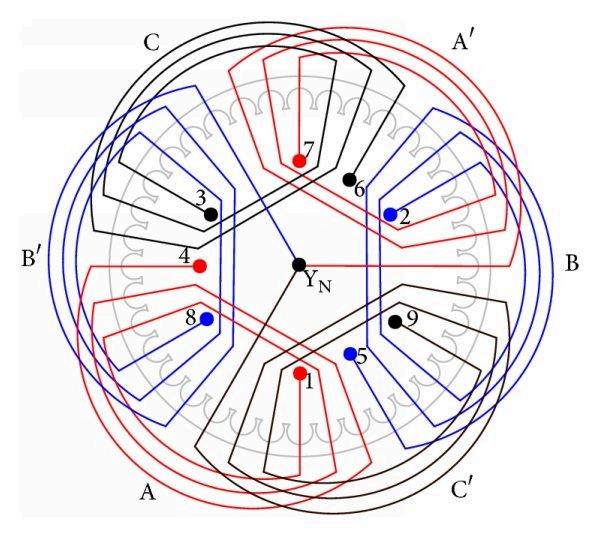
Fig2 Guevaraetal StatorFaultDetectioninInductionMotors
Whileconventionalradialfluxmotorsconsistofonerotorand onestator,AXFmotorscanuseeitheradual-rotor,single-stator configurationoradual-stator,single-rotorconfigurationasdepictedin fig3.Thefirstprovidesenhancedefficiencyduetothecontainmentof theelectromagnetsfieldswithmagnetsonbothsideswhilethelatter maximisestorqueandheatdissipationwithlargersurfaceareasand resultingdirectheatflowsawayfromthestators.Sinceboththemagnets andelectromagnetsinanAXFmotorareplacedequidistantfromtheaxis ofrotation,theyhaveagreatermechanicaladvantage,makingefficient useofthemagneticflux.ThesegeometricdifferencesgiveAXFmotors highertorquethanradial-fluxmotors.Asaresultofthisandthenatureof theirpancakegeometry,theyprovideathin&compactpackage,in
additiontotheirhighperformance,whilestilloutperformingradial-flux motors.
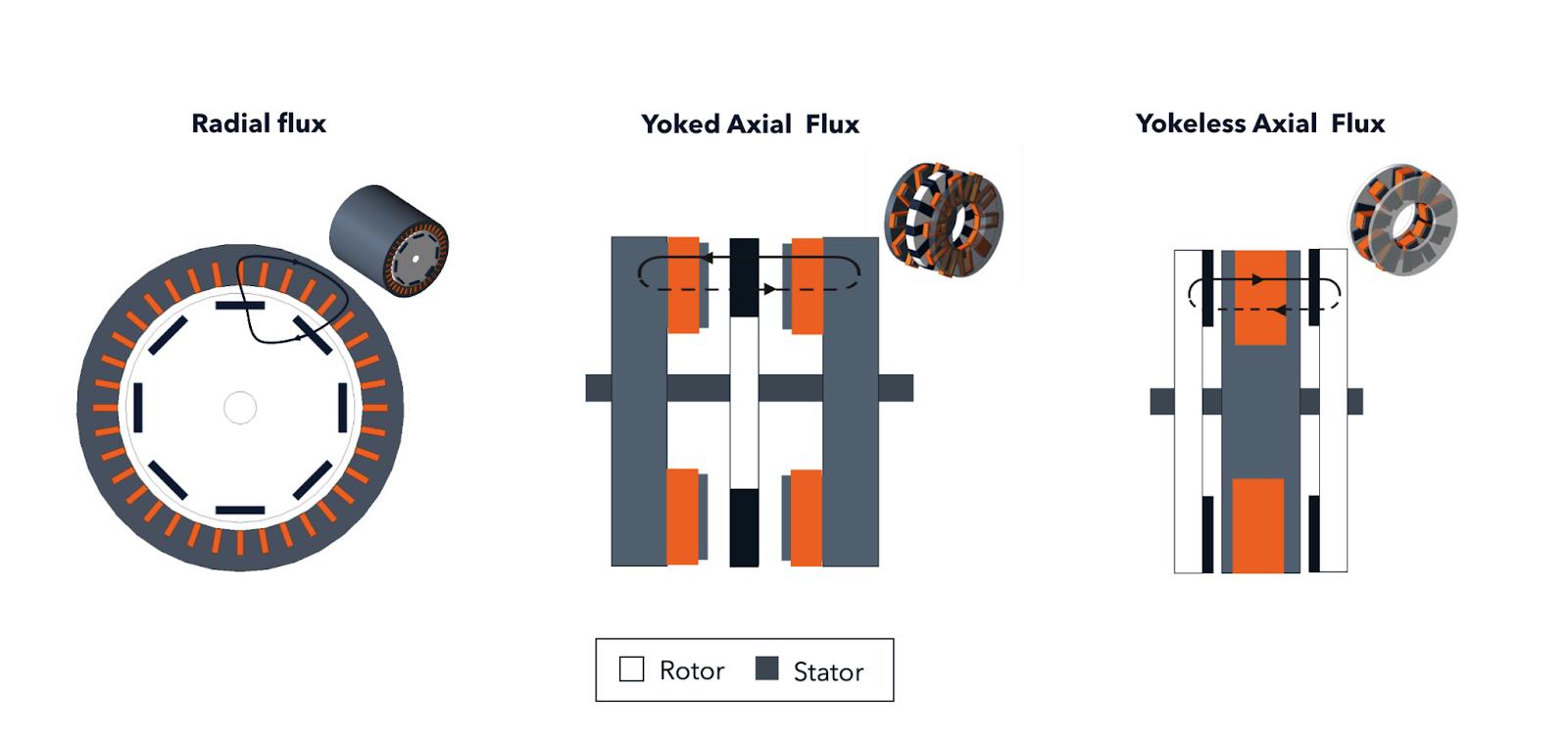
Fig3.Traxialmotors:axialfluxvs.radialfluxmotorgeometry
Despitetheadvantages,theAXFmotordesignintroduces significantchallengesfordesignandmanufacturing.Onesuchchallenge presentsitselfinthedesignandconstructionofstators.Aspreviously mentionedintheelectromagnetsofmotors,siliconsteellaminatesare usedtocreatecross-sectionalinsulatingdividesinthecorestoprevent eddycurrentsfromformingduringsaturationinthesteel.Inradialflux motors,thegeometrycreatesidenticalcross-sections,soallthesilicon laminatesthatcomposethecoresarematched,makingiteasytoproduce inmassthroughmethodssuchassheetmetalstamping.Ontheother hand,theaxialfluxmotor'sgeometrydoesnotlenditselftosuchaneasy manufacturingprocess.ThispaperarguesthatwhileAXFmotorsprovide asuperiortorqueandcompactnessincomparisonwithradialfluxmotors, theirwidespreadadoptionisconstrainedbymanufacturingcomplexity, materiallimitations,andheavyrelianceonunstablesupplychains.
Background:
TherenewedindustryinterestinAXFmotorsoverthepast decadereflectsabroadershifttowardsthewidespreadadoptionof electricpropulsion.Withtheautomotiveindustry,amongothers, transitioningtotheglobaladoptionofelectricpropulsion,thereisan increasingdemandforcompact,high-torquemotorsolutionswhile developingscalablemanufacturingmethodsandmaximisingrunning efficiency.Despitetheradialfluxmotor’smarketmonopolydueto maturesupplychainsandwell-establishedmanufacturingmethods,axial fluxmotorsarebecomingincreasinglycompetitive,enabledbynew
manufacturingprocesses,advancesinpermanentmagnetmetallurgy, finiteelementmodeling(FEM)analysis,andmotorcontrollers.These developments,suchasFEMsoftware,enableoptimisationofgeometry forspecificapplicationsduringthedesignphase,therebyminimising testingandmanufacturingcosts.
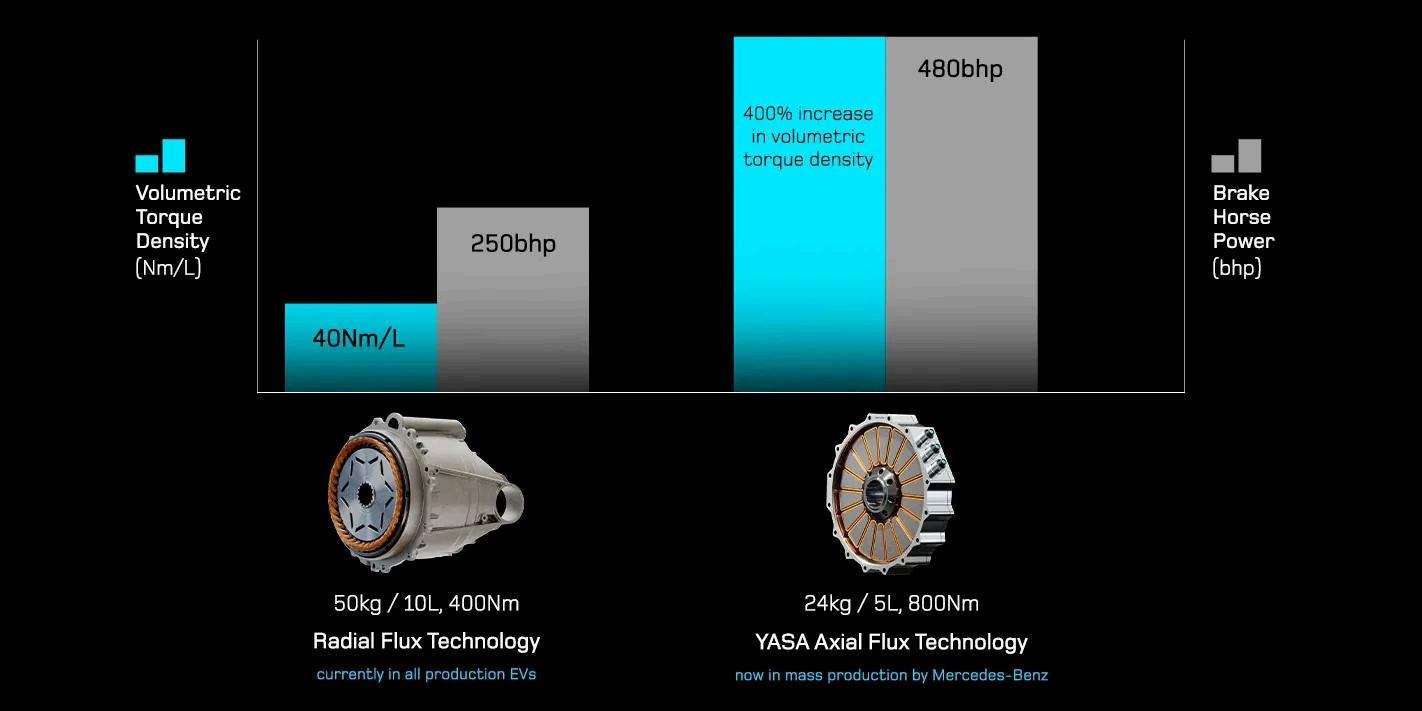
Earlyinvestigationsintoaxialfluxmotorsemphasizedtheir theoreticaladvantages:thegeometrythatallowsthemtogenerategreater torqueperunitmassortoachievethesametorqueinasmallerpackage thanconventionalradialfluxmotors.Thisadvantagecomesfromthe distributionofelectromagneticforcesonboththestatorandtherotor overalargereffectiveradiiwhichincreasesthesubsequenteffective torqueforthesamemagneticload.Shaoetal.(2021)provideoneofthe mostcomprehensivemodernreviewsofthiseffectinaxial-flux permanentmagnet(AFPM)motors.Theydrawonhistoricalresearchon AXFmotorsintheirpapertosynthesisefindingsonelectromagnetic design,structuralconsiderations,andapplication-specificoptimisation (e.g.,thenecessityoftorqueconverters,heatdissipation,etc.).They emphasizethatAXFmotorsexcelintorquedensityandaxial compactness,butalsoaddressthechallengestheycreate,suchas complexdesignconstraintsinthestator’score,heatdispersionissues, andmechanicalstressonthemotorduetoitspancakeshape.These challengesmaketheuseofFEMsoftwareanecessityforthedesignand developmentofAXFmotors,enablingthemtooutperformradialflux motorsintorque,efficiency,andpracticality.
ThepresentadoptionofAXFmotorsinindustrialapplications hasonlyvalidatedthesefindingsandemphasizedtheir limitations/challenges.YASA,anindustryleadingAXFmanufacturing
company,hasledthecommercialisationofaxialfluxmotorsand demonstratedtheirviabilityintheautomotiveandaerospaceindustries, inpartnershipwithestablishedautomotivecompanies(Rolls-Royce Aerospace,MercedesAMG).YASA’smotorsaredesignedaroundthe tworotorsinglestatorconfiguration,maximisingtheelectromagnetic flux“utilisation”ofthestatorbyemployingthefluxonbothsidesofthe stator’scores(YASA).Utilisingthisconfiguration,theirmotorsproduce exceptionallyhightorquedensitywhilemaintainingacompactform factor,makingAXFmotorsdesirable Ontheotherhand,YASA’smotors highlighttheneedforexpensivecomposites,rare-earthmetals,and complexmanufacturingprocesses.Onesuchexampleisthemagnetson therotorcomposedofhigh-gradeneodymium-iron-boron(NdFeB) magnetssourcedfromonlyafewsites,mostofwhicharelocatedin ChinaaspointedoutbyIEEEspectrumin Fundamentals of Axial flux motors.Furthercomplicatingthemanufacturingprocessistherotorthese magnetsaremountedto:aprecision-moldedsolidcarbonfiberrotorwith splinesdesignedtomaximisestiffness,reduceflexingandvibrations, minimizerotationalinertia,andreducetheoverallweightofthemotor. ThesedesignchoicesreflectthedifficultiesinscalingAXFmotors,costs, andmaterialavailabilityasdemandincreases.
Therelianceonneodymium-iron-boronmagnets(Neodymium magnets),amongotherrare-earthmetals,isespeciallyimportantinAXF motorsformaximumefficiencyandtorque,asemphasizedby Garcia-Guevaraet.al.in Stator Fault Detection in Induction Motors by Autoregressive. High-performanceAXFmotorsoftenuseN48&N52 grademagnets(commoninindustrialapplicationsfortheirhighTesla density)toachievethedesiredfluxdensity.Whilethesemagnetsare crucialtotheperformanceofthesemotors,geopoliticaltensions,price volatility,andsupplychaindifficultieshinderthepracticalityof widespreadadoptionofelectricmotors.Moreover,independentresearch suchasthatbySawnhey(2024, https://www.anhadsawhney.com/axial-flux-motor)emphasises Neodymium’simportanceinAXFmotors.SawnheyutilizedFEM softwaretostudyhowdifferingselectionsofmagneticmaterialswould affectanAXFmotor'storque ByusingFEM,hereducedmanufacturing costs,avoidingtheneedtobuyapriceyarrayofmagnetstoexperiment with.HisFEManalysisconfirmedthatmagnetselectiondirectlyaffected
themotor'storquedensity,efficiency,andheatdissipation.Sawhney’s researchisvaluabletobridgethegapbetweenthetheoreticalstudyof AXFmotorsandalab-designed,produced,andtestedmotorofhisown.
Themanufacturabilityofradialfluxmotorsisthekeyreasonit remainsthepredominantandmostattractiveoptionforcurrentand historicalelectricpropulsionapplications.Themanufacturingcomplexity ofaxialfluxmotorsnotonlymakesthemmoreexpensivebutalsomakes themhardertodesignforoptimalperformanceacrossvarying applicationsandconditions Thismanufacturingconstraintstemsfrom thesteellaminationsinthestator.Inradialfluxmotors,thestatorandits cores(essentiallyacylinder)areslicedperpendiculartotheaxleinto identicalcrosssections.ForAXFmotors,thesameslicingtechnique resultsinnon-uniformcross-sections,complicatingmanufacturing. Conversationswithindustrysuppliers,suchasProtoLam,provided detailedsolutionstothisproblemandtheirassociatedcomplexities (Sprague,Steve.15July2025).Theneedforspecializedandexpensive equipment,suchaswireEDMmachines,laminationpresses,and specializedtooling,makeseachpotentialsolutiondifficultinitsown way.Onesolutionusesaprocesswidelyadoptedintheproductionof itemssuchasrazorblades:individuallystampingouteachuniquesilicon steellaminateandthenusingadhesiveandapresstoassemblethem.The morepracticalandwidelyusedsolutionwastouseawireEDMmachine (athin,electricallychargedwirethatvaporizesmetaltomakea tight-tolerancecut)tocutapre-stackedcubeofsiliconsteellaminates. Whileeliminatingthearduousstampingandstackingprocess,it introducedthecomplexityofusinganexpensivewireEDMmachineand theattachedmachiningtimes.
ThermalmanagementisanotherchallengeassociatedwithAXF motors.TheAXFmotor’spancake-likegeometrycreatesalargersurface areatovolumeratiothanthatoftheconventionalcylindricalradialflux motor.Thishigherratiocan,intheory,maximizeheatdissipationby providingalargerheat-transferareatothesurroundingenvironment (XiaotingZhang,2022).Thisisimportantforelectricmotors,asheat buildsupinthecoilsaroundthecoresduringuse,reducingtheir efficiency,torque,and,consequently,overallperformance Terasawaet al.(2020)investigatedthethermalandstructuralcharacteristicsofAXF motorsinelectricvehicleapplications.Theyfoundintheirstudythat
AXFmotorscouldwithstandthethermalloadsofprolongeduseunder high-loadconditions.Ontheotherhand,theyalsofoundthatthelarge diameterofthepancake-likerotorledtohighstructuralloads,heatspots (mechanicalratherthanthermal).Theforceproducedbythe electromagnetsandmagnetsrepellingandattractingeachothernotonly flexedtherotorduetoitslarge,thindiameterbutalsocreatedalateral shearingforcethatthreatenedtosnaptherotor.Theserisksnecessitated structuralreinforcementandhigh-strength,low-flexmaterialssuchas carbonfiber Theirfindingsemphasizethebridgebetweenthermal, electromagnetic,andmechanicalengineeringrequiredforAXFmotor technology.
ComparativestudiesbetweenradialfluxandAXFmotorsallow ustotrulyunderstand,incontext,therealizedperformancegainsAXF motorsdeliver.WhilethetheoreticalperformanceofAXFmotors alreadyprovestheirdominance,manufacturingconstraintsalsohinder theirpracticalityinapplicationssuchastheautomotiveindustry.NSK Global’sstandardDCmotorsprovideausefulbenchmark,astheysupply industry-standard,reliableradial-fluxmotorsforawiderangeof applications.Usinggearreductions,aradialfluxmotorcanproducethe sametorqueasanAXFmotorbutatacost.Theaddedcomponentsadd mechanicalcomplexity,weight,volume,andmechanicallosses.The reviewedliteraturesuggeststhat,inapplicationswhereadirect-drive systemwithhightorqueisideal,suchastheautomotiveandaerospace industries,AXFmotors’designandmanufacturabilitychallengesare justifiedbytheirperformancegains.Usingcompositematerialssuchas carbonfiber,whileexpensive,canreducestherisksoflateralshearing forcesandenhancethestiffnessoftherotorsallowingfortheir commercialuse.
AcriticalcomponentofAXFmotortechnologyismotor controllers.Inorderforamotortospin,acurrentmustberunthrough theA,B,andCphasesasseeninfig2.(groupsofelectromagnetsonthe stator)overcertainoffsetintervalsinordertopolarize,depolarize,and fliptheirpolarizationsotheycanrepelandattractthemagnetsonthe rotor.Forthemotorcontrollertoknowwhentopolarizeaspecificphase, itmustknowtherotor'spositionandrotationalspeed Motorcontrollers haveseveraloptionsforfindingthesevalues:amagneticencoder,a Hall-effectsensor,andaback-emfcircuit.TheVESCopensource
projectusesMOSFETsandanopengatecircuitpatterntopushcurrent throughthephasestorunthemotor.Itusesanobservertomeasurethe back-EMF,thevaryingresistanceoftheindividualphasesduetothe magneticfield’srotation,toestimatethepositionoftherotorina feedbackloop,alsoknownasopenloopcontrol,torunthemotor efficiently.Withitsopensourcenaturethedevelopersofthesystemare easytocontactandquerymakingitidealforexperimentalresearch.
Methods:
Thisstudyusedaniterativedesignapproach.Ratherthan refiningasingledesign,atwo-designprocesswasused:thefirst prioritisingmodularityandrapidmanufacturabilitytoprototypequickly andcheaply.Ontheotherhand,theseconddesignwouldincorporate lessonslearnedfromthefirstprototype,suchastheidealwiregaugeand pole/slotconfigurations(numberofmagnetsandelectromagnets, respectively).Forbothprototypes,theVESCtoolisusedtogatherdata suchastheresistanceofthemotorR,theinductance(L),andtheflux linkage(λ).TheVESCtoolalsoenabledgraphingback-EMF (electromagneticfrequencysensedbythemotorcontrollerinresistance changes),whichallowedcomparativemeasurementstoestablishthe consistencyoftheelectromagnets’windings.
c s
a formotordesign:stiffnessof2860MPa(bendingmodulus-XY),great tensilestrengthof68MPa(bendingmodulus-XY),shearresistance,and dimensionalstability.Forasmaller-scaleprototype,theseproperties tacklethedesignchallengesassociatedwithAXFmotors.3D-printed componentseliminatedtheneedforexpensivemillingequipmentor accesstoamachinelabthatwouldotherwisehavebeenrequired.It additionallyeliminatedtheproductionofexpensivewaste,often associatedwithsubtractivemachiningofmaterialssuchasaluminiumor carbonfiber.Insteadofpartmanufacturingtakingseveralhoursorupto afullday,severalstatorandrotorprototypescouldbeprinted simultaneouslyforbetween30minutesandtwohours,dependingonthe printer’saccuracy,whileleftunsupervised.
F
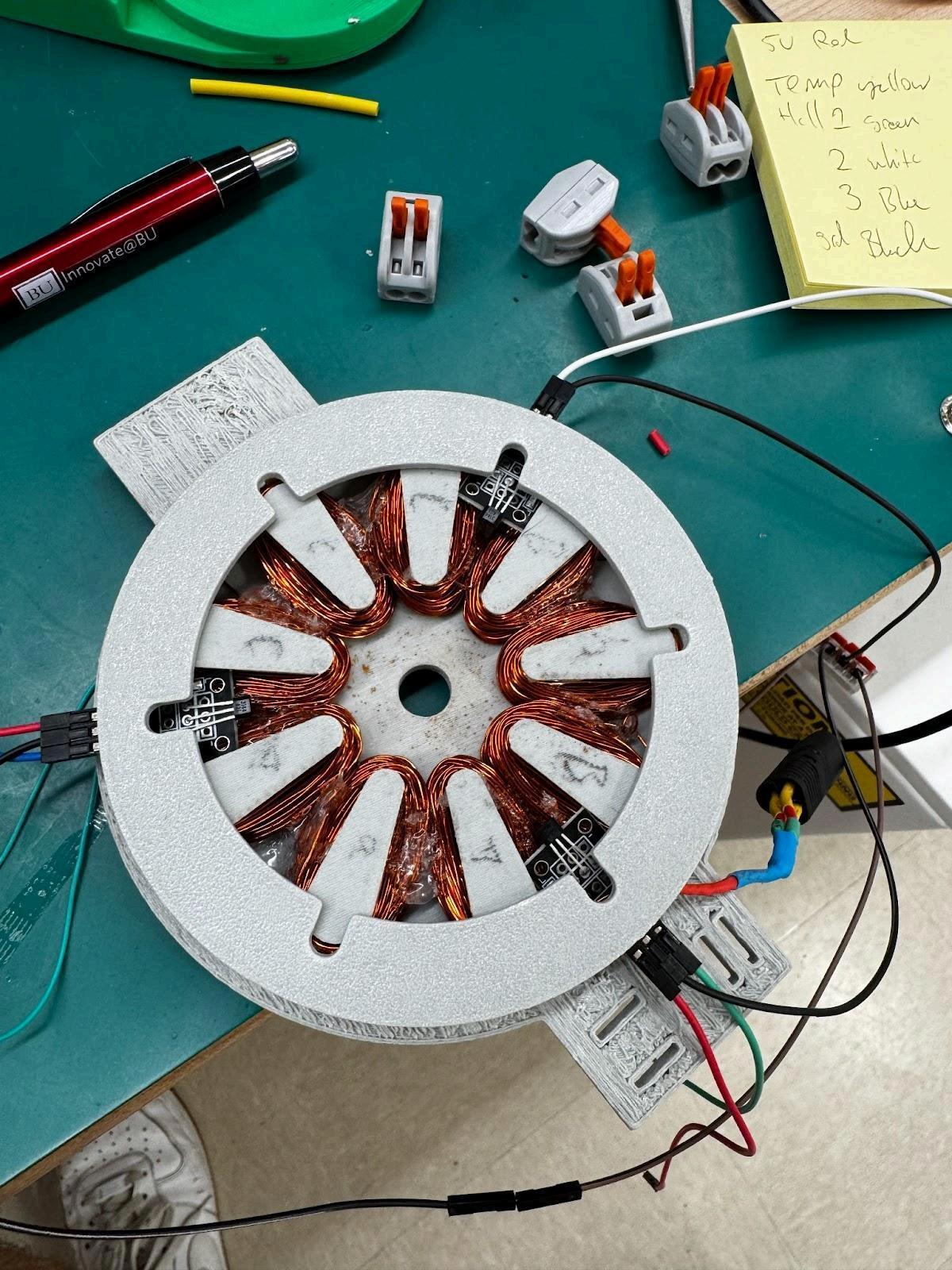
u a magnetisedwidth-wise,asealedradialbearing,a3D-printedstatorwith printedslotstoreplacesteelcores,anda3D-printedrotor.Todetermine thepole/slotratio(theratioofmagnetstoelectromagneticcoils),an onlinewindingcalculator(Emetor.“ElectricMotorDesignCalculators.” AccessedMarch6,2026.https://www.emetor.com)wasusedtoestablish thewindingscheme Forapole/slotratio,8polesto6slotswaschosen foritssimplicity.Themodulardesignallowedseveralalternativestators tobeproducedandtestedwithdifferentslotarrangementsandwire gauges.Thefirsttwostatorsproducedhadtwogaugesofcopperwire selectedtocompareheatdissipation,windingdensity,andeaseof manufacturability.Thewires,hand-woundaroundtheslotsprintedonthe stators,wereconsideredcoreless,asthePLAhadnometalcontentand wasnotmagneticormagneticallyconductive,unlikeconventionalsteel coresfoundinmanymass-producedmotors.Thiswasaclear inefficiency,but,forthesakeofsimplicityandpracticality,itmadethe
mostsensewhenprototyping.Betweenthetwogauges,eachslotofthe 18-gaugecouldachieve12wrapsforeachcoil;ontheotherhand the 24-gauge greaterc resistanc of 4.5ohms ltto workwit ier towindb
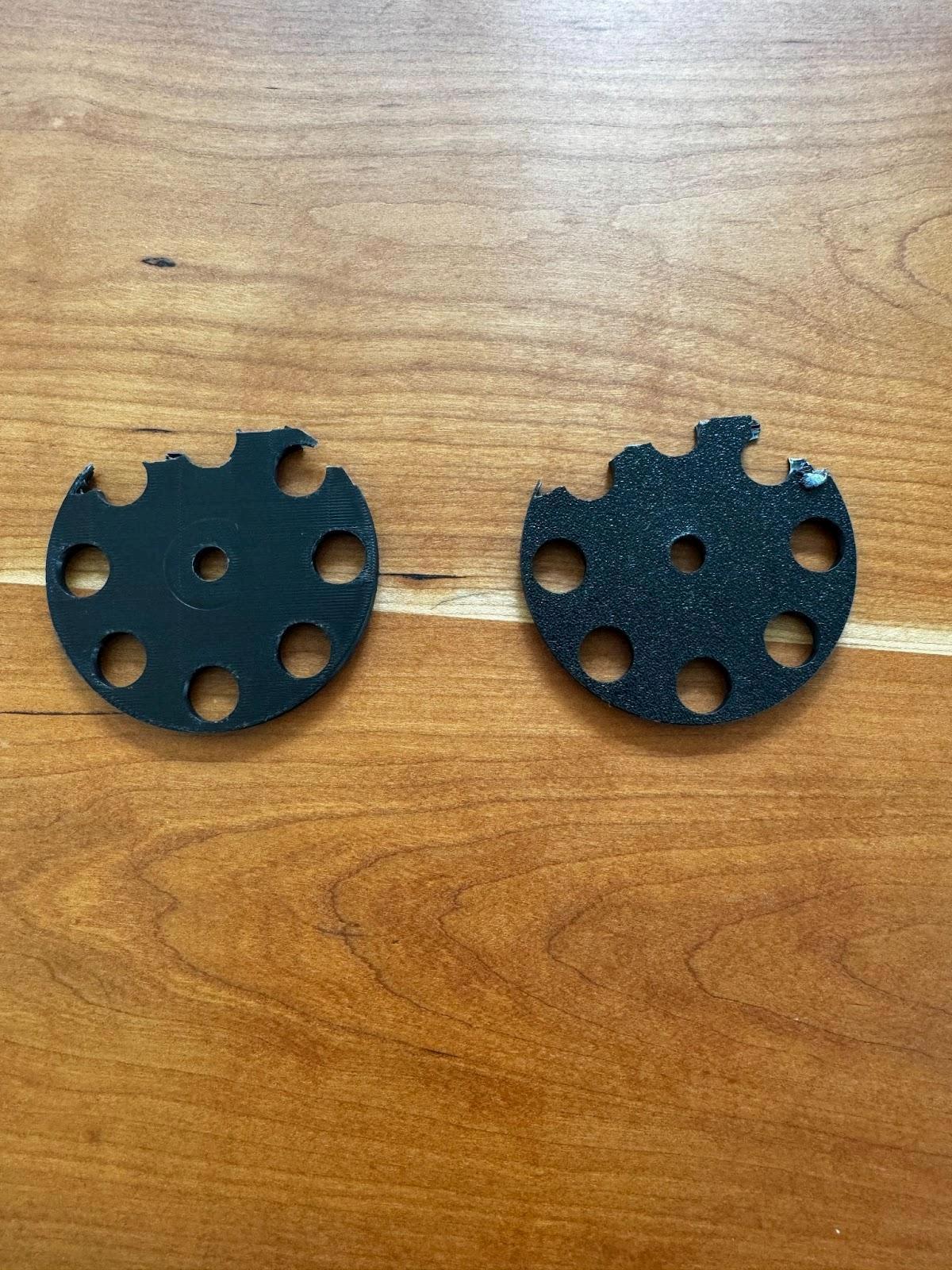
Fig7.Sh F configura torquean resultof hand-win . Duringtw 00 rpmwhil controller),therotorexperiencedaRUD(rapidunscheduled disassembly,fig.7).Themagnets,pressfitintotherotor,hadcreated suchacentrifugalforceastoshattertherotorradiallyandthrowthem acrossthelab.Afterthesetwoincidents,thePLAwasdeterminednotto besuitableforanycriticalcomponentsofthemotor,especiallytherotor andstator.Instead,thechoicewasmadetobeginprintingload-critical partswithABS-GFandtherotorwithacarbonfibercompositefilament (PLA-CF)toprovidegreaterrigidityandtensilestrength.
Alongsidethematerialupgrade,otherdesigntweaksweremade Inadditiontoafundamentalgeometrychangebringingthe electromagnetsclosertotherotor,reducingwhat'sknownasanairgap,a
clampingsurfacewasaddedtothehousingtoenablethemotortobe clampedtoatableorbeam,andanencoderwasaddedtodeterminethe exactpositionandrotationalspeedoftherotor.Theclampingsurface, whichallowsthemotortobeclampeddown,allowsittobeputbehinda shieldtoprotectusersinthelabwhilealsoenablingtestingunderhigh currenttopromoteheatdissipation.Theencoderwasusedtoenhancethe datacollectedbytheVESCmotorcontrollerandimproveits motor-controlcapabilities,enablingfasteraccelerationsandoverall greaterperformance
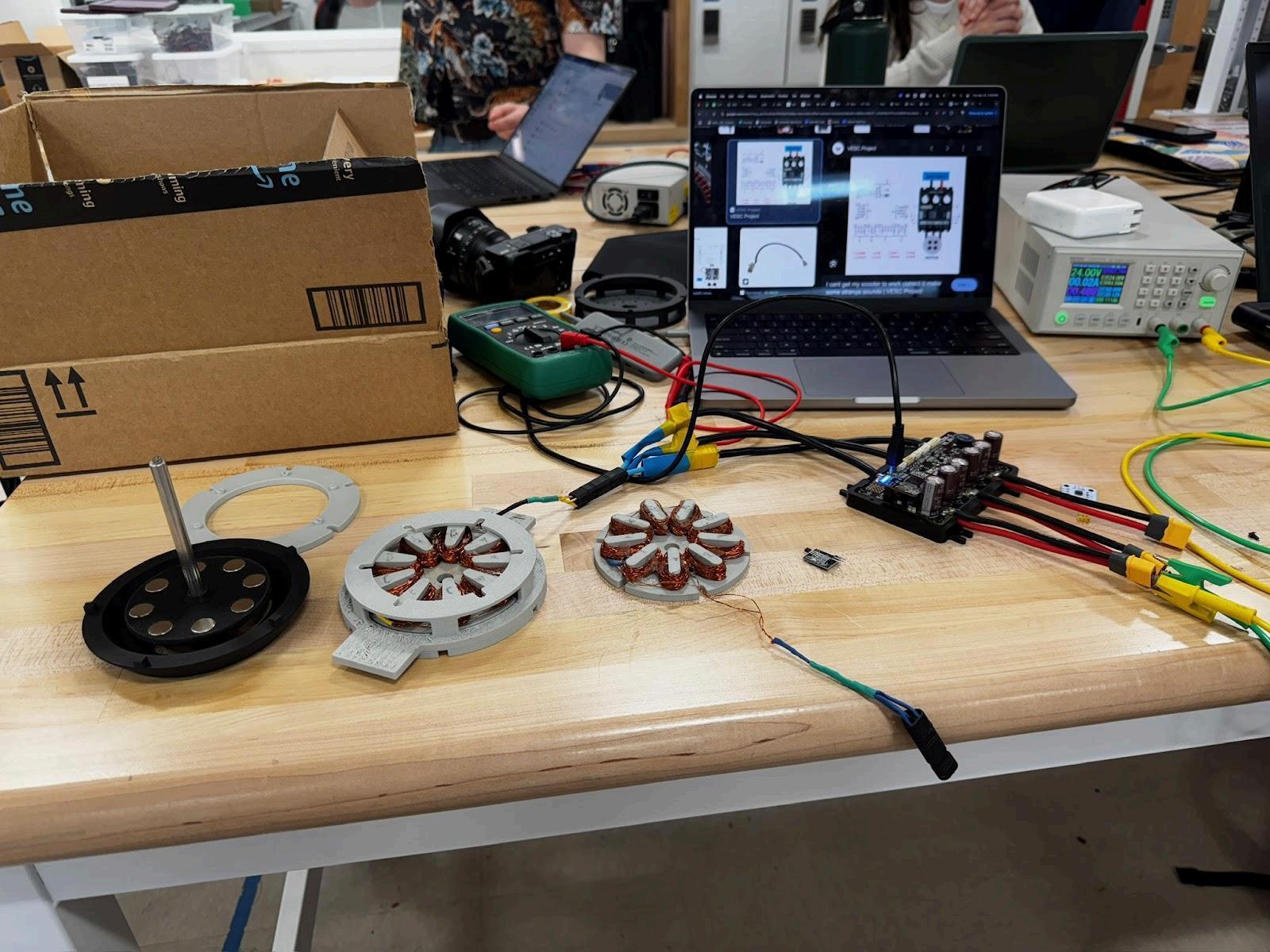
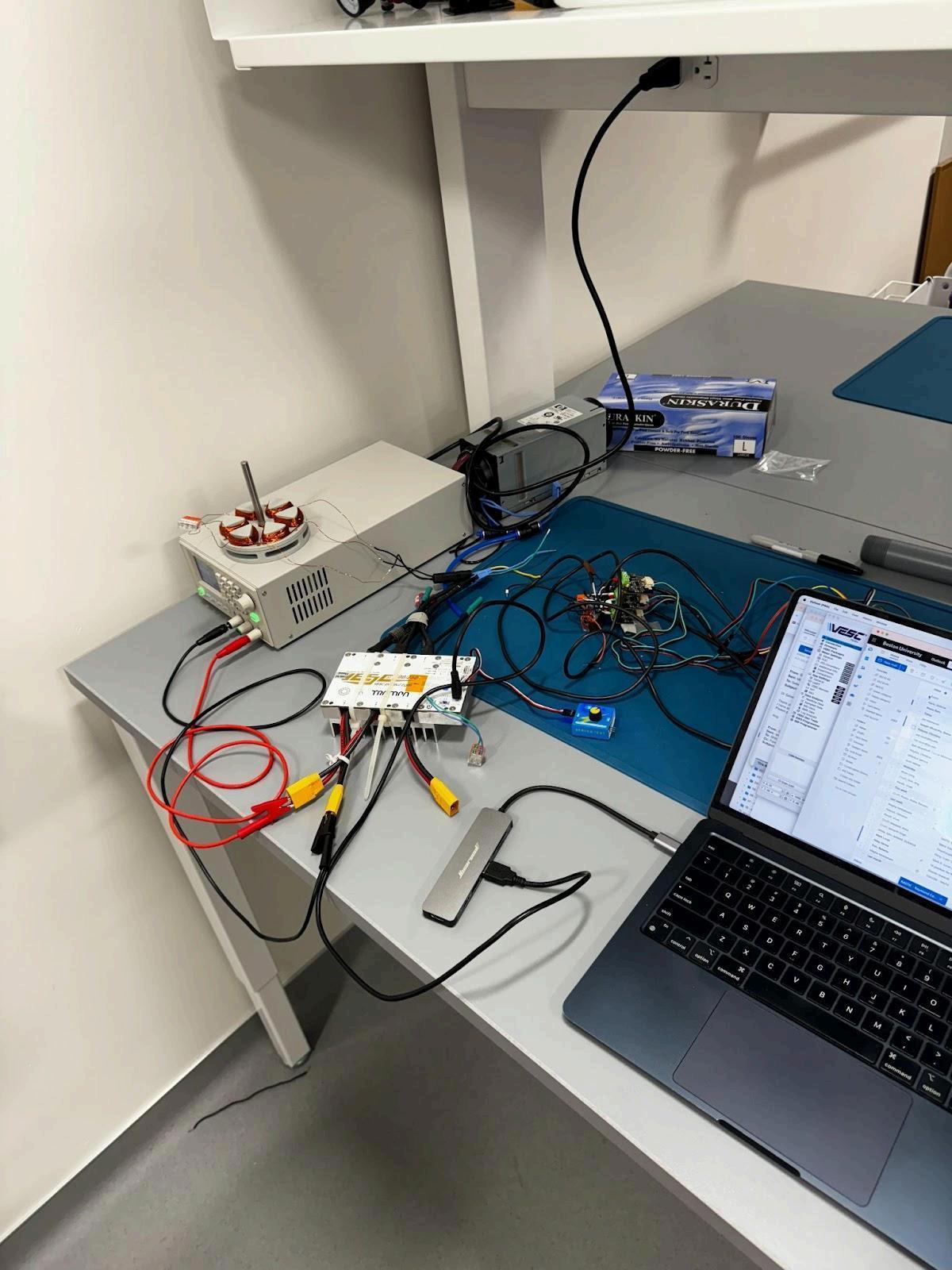
Fig8.3DprintedprototypesinfrontofVESCtoolandbenchpower supply.
Forthesecondandfinaliterationofthemotor,alarger,more polishedversion,a12-slot10-poleconfigurationwaschosen.Ratherthan 3Dprintingload-criticalpartssuchasthestatorandrotors,itwas decidedtousecompositematerialsandsubtractivemachiningonwater jetcutters,CNCmills,andwireEDMmachines.Othernon-criticalparts, suchasthemotor’syoke(aninternalhousingthatholdsthecoresin position)andhousing,wereselectedfor3DprintingwithPLA-CF. Althoughthe3D-printedprototypewassimpletoproduce,thesecond iterationposedseveralchallengesduringthedesignprocess Thefirst andsimplestwashowtomountthemagnetsontotherotor.Whileinthe original3D-printedprototype,themagnetswerepress-fittedintoholes
printedintherotor,amotorrunningathigherrpm,torque,andstructural loadswouldrequirethemtobebondedtoasurface.Fortherotor material,sinceitwouldexperiencehighstructuralstresses,thecomposite Garolitewaschosentosecurethemagnetswhilenotinterferingwith theirflux.Boundtotheback(non-stator-facing)sideoftherotorwould bea6061Aluminiumsheet,boundtotheGaroliteandmagnetsbya sheetof3Madhesive.AsAnhadSawhneyexplainedinhisFEM analysis,hefoundthatthealuminiumsheetwouldconducttheflux, essentiallyreflectingitbackfromthebacksideoftherotortowardsthe stator,increasingtheapparentmagneticfieldandthusthemotortorque.
Themostchallengingdesignhurdlewasthedesignoflaminated siliconsteelcores.DuetothecomplexgeometryofAXFmotors,Iwould needtoidentifyamanufacturingprocesstoproduceastackofunique sheets.Fortheproductionofelectromagnetcores,anysteelorironcan serveasapolarizablemass,increasingtheelectromagneticfluxandthus themotor'smagneticattractionandtorque.Siliconsteellaminates,in particular,createsubdividedsectionsofthecoreconductingthemagnetic fluxinthedirectionofthepoleswhilepreventingeddycurrents.Eddy currents,justlikeinwater,aredisruptionsinthefluxthroughthemetal thatcreateresistance,leadingtoheatandefficiency/performancelosses. Withstampingeachuniquelaminationandusinganadhesivetoassemble eachcorebeingimpracticalandtime-consuming,andmillingastackof laminationsimpossible,asitwouldleaveabrasionsbetweenthe laminations,defeatingtheinsulatednatureofthesheets,theonlyoption leftwasusingawireEDMmachinetocutacomplexgeometryina pre-assembledstackofsteellaminates.SinceawireEDMusesan electricalcurrentrunthroughathinwire,itrequiresthematerialitis cuttingtobeentirelyconductive:sincethesiliconsteellaminatesby natureareinsulatedanindustryprofessional,thegeneralmanagerat ProtoLam,StevenSprague,suggestedthatdrillingaholeinthecornerof thestackwithaconductorrunthroughthelaminationswouldallowfor thelaminationstobemachinedandtemporarilyconductivethroughtheir layers.
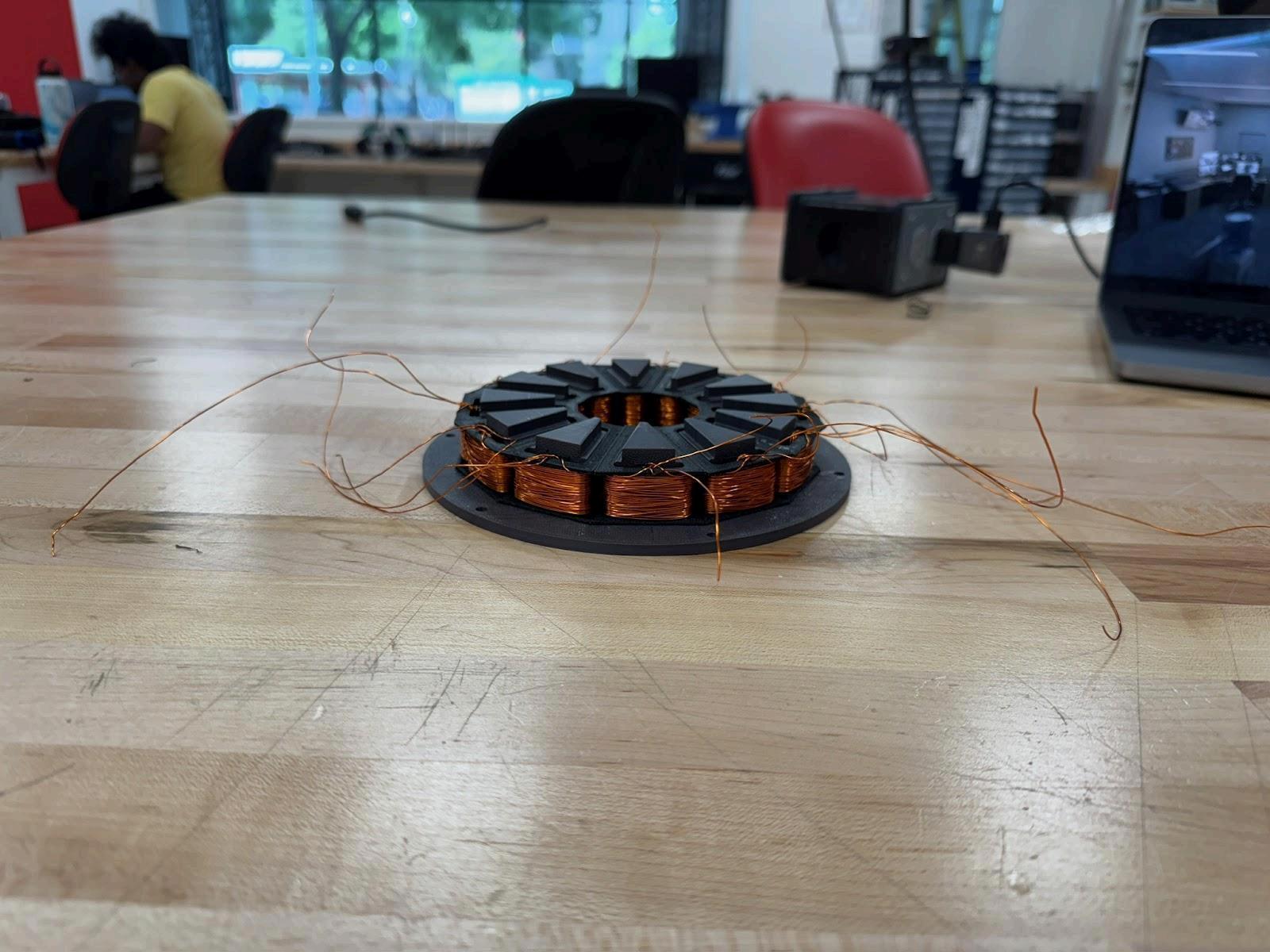
Finally,asthecopperwiresusedtoformthecoilsofthe electromagnetshaveathinenamelcoatingthatiseasilyscratchedoff,a thin3D-printedCF(carbonfiber)housingwasdesignedtosurroundeach core,insulatingthewiresfromthecore,protectingthemfromabrasion, andaidingheatdissipation.TheCFsheathsmadewindingthecoilsby handoronajigmountedtoadrillfareasier,helpingthemkeeptheir shapeandsecuretheendleadsofeachcoil.Byfollowingtheprovided windingschemefromthewindingcalculator,Ithensolderedeachphase (A,B,andC)toitsrespectiveconnectionandtheYconnection(aground forall3phases).
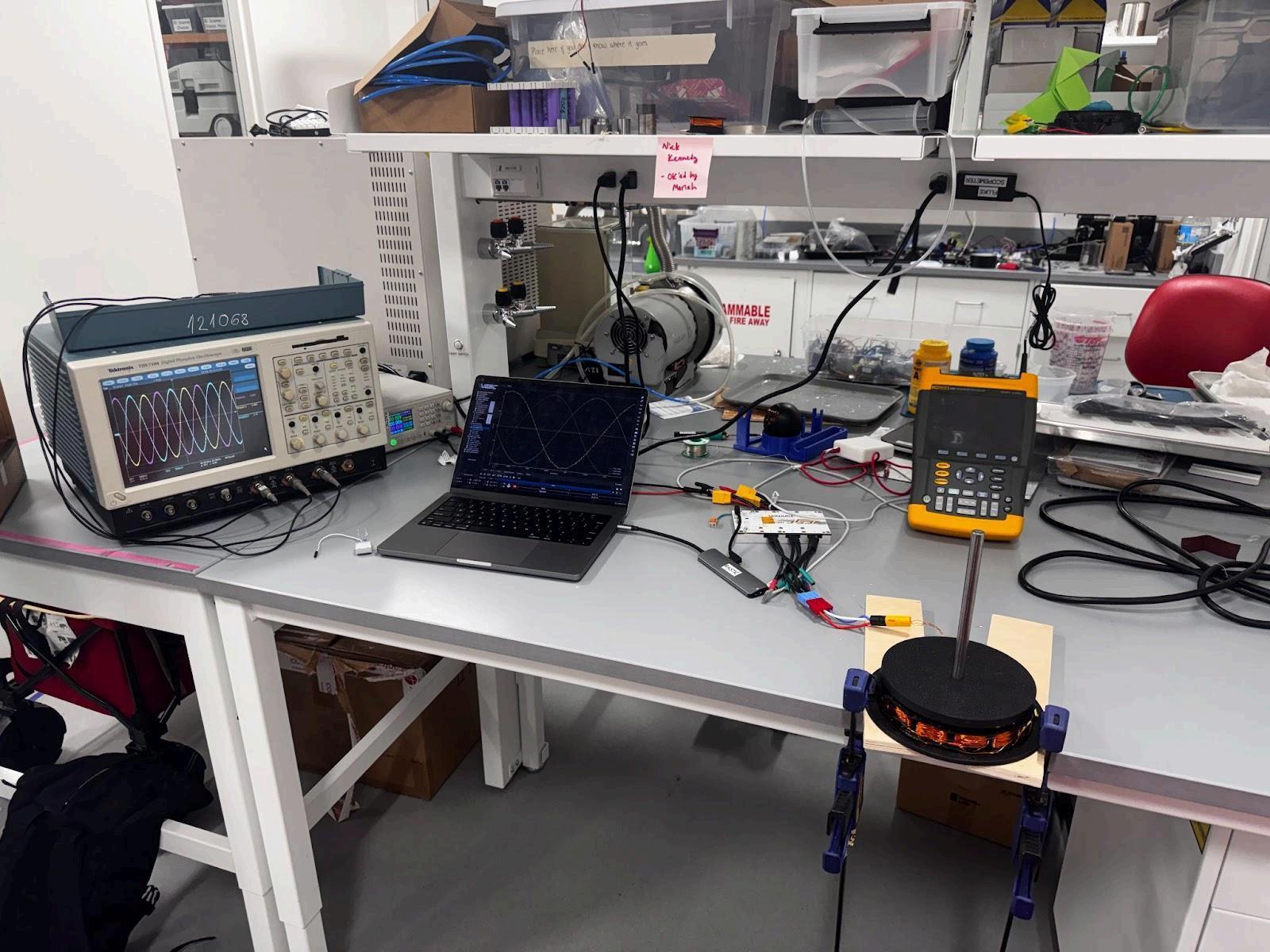
Fig10.ThefinalsetupofthemotoronthetestbenchwiththeVESCand 4chanelloscilloscope.
AfterthisasimplerotorwasprintedusingaBambuLabsH2D printeroutofacompositematerial,PA6CF20,providingexceptional rigidityandtoughness.TheN52Magnetswerethenpress-fitintoslotson therotorwithametaladhesiveattachingthemtothesurfaceand ensuringtheystayedinplace.Duetothealternatingpolaritiesofthe magnetsjigwasprintedtoassistinplacingthemagnetsintheirslots insteadofsnappingtogetherwithothermagnets Additionallyataper wasdesignedonthe3dprintedrotortoensuretherotorhadlateral stiffnessalongtheaxleandwouldn'twarpoutofshape.
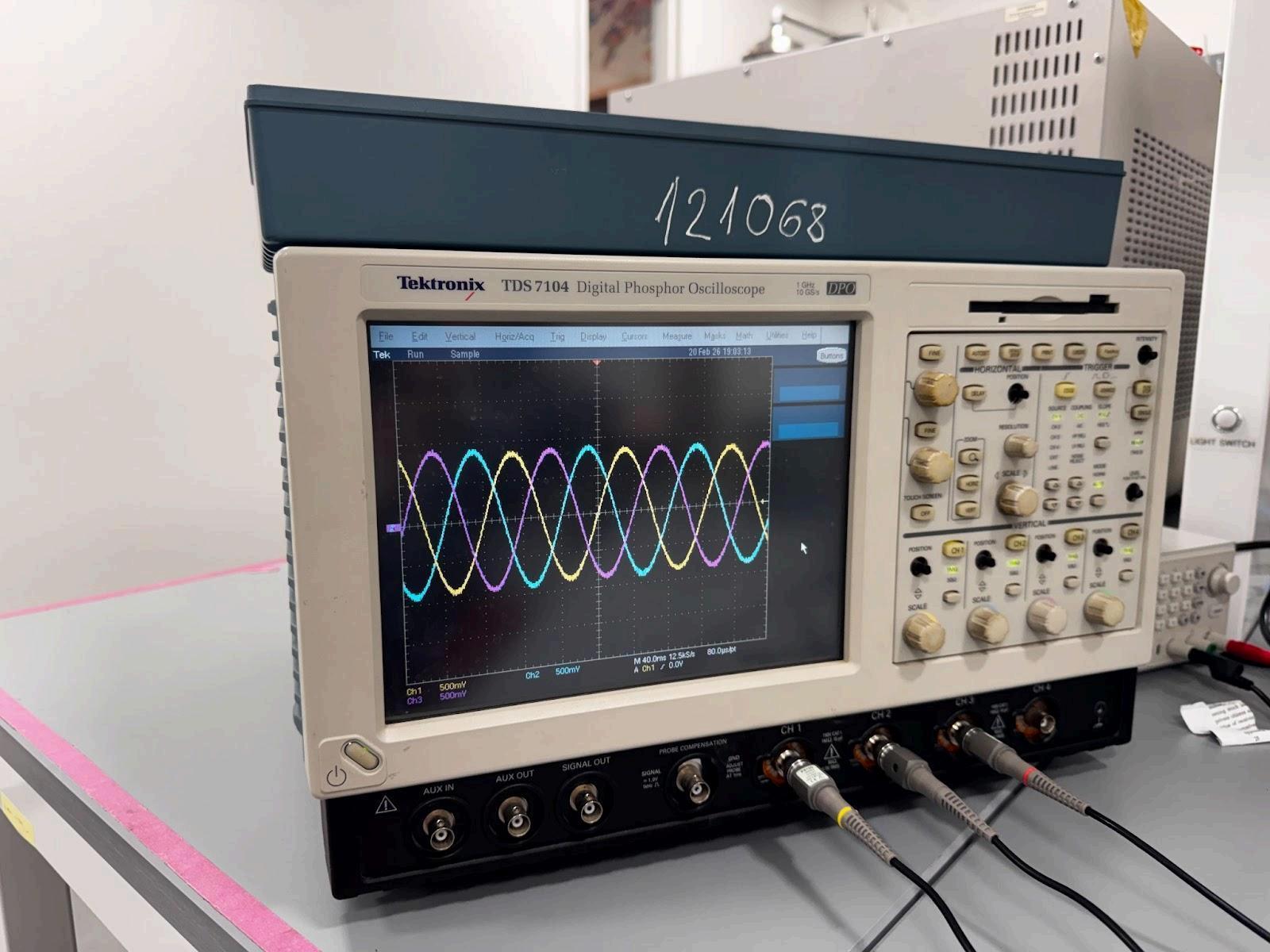
Fig11.Thesinusoidalwaveformgeneratedbythemotorbeingback spunisvisualisedona4channeloscilloscope.
FinallythemotorwasassembledandhookeduptoaTektronix TDS7104DigitalPhosphorOscilloscope(a4channeloscilloscopeused tomeasurethemotorparameters).Bybackspinningtherotor(spinning themotorbyhand)analternatingcurrentwascreatedthroughthecoils thatwasmeasurableandvisualizedontheoscilloscope.Bysamplingthe wavegeneratedbythecoresitwaspossibletotakethedistancebetween thepeaksofthesinusoidalwaveforms,todividetheiramplitudeand solveforaconstantofKv,theRPMpervoltofthemotor,112Kv.Using theVESCtoolthemotorcouldspinupusingBLDCmode,runningit withaPWM(pulsewidthmodulation)signalemulatingasinusoidal wavetorunthemotor’sphases.Unfortunatelywhentryingtorunitusing theFOC(fieldorientatedcontrol)systemthemotor,withoutthecores beinginstalled,failedtospinupreliably.Thisissuewillbefixedusing thesteelcorescurrentlybeingmachinedatthetimeofwriting.
Discussion&conclusion:
TheprototypingandresearchbehindthisAXFmotorhave highlightedboththepotentialofAXFmotorsforwidespreadadoptionas electricpropulsionandthepracticalchallengesassociatedwithit.The iterativedevelopmentthroughoutthisprojecthasconfirmedmanyofthe
advantagesdescribedintheliterature:acompactformfactorwitha comparativelyhightorque.Theassociatedhigh-torquefoundmakesa commerciallyproducediterationofthesecondprototypedesignviable forapplicationssuchasmarinepropulsion.Evenwiththeearliestand simplest3Dprototypes,themotorspunupsmoothly,apromisingsign thatthetheoryestablishedinliteraturereviewappliedtotheinitial iterations..TheinitialiterationsconfirmedtheviabilityofAXFmotors, encouragingthedevelopmentofasubsequentprototypewithexpensive compositepartsandcomplexmagnetarrays
Whilerapidprototypingconfirmedmanyknownbenefits,italso revealedpracticalchallengesassociatedwithAXFmotors,evenin small-scalelabproduction.Earlyfailures,suchastheRUDofthefirst tworotorprototypes,emphasizedtheneedformechanicalintegrityin AXFcomponents,especiallyrotors,giventheirlarge-diameterpancake nature,whichispronetowobblingandhighcentrifugalforces.These failuresalsoledtochangesindesignandmanufacturing,suchasashift awayfromPLApartstowardcomposites,improveddimensional accuracyandstability,andbetter-balancedrotors.
Manufacturabilitywasevidentlythemostdifficultchallenge, especiallyastheprototypesbecamemorecomplexandbegan incorporatingindustry-standardfeaturesinordertomaximize performance Asdiscussed,theadditionofsiliconsteellaminatedcores, forexample,madethedesignandmanufacturingofthesecondAXF motorfarmoredifficultthanitwouldhavebeenforaradialfluxmotor. ThenecessityofawireEDMmachinetocutthecoresfrom premanufacturedstackshighlightedtheexpenseandcomplexitythatis thebarrierbetweenAXFmotors,idealforhigh-performance applications,andpracticalityinbroaderindustry-wideapplications.One possiblesolutionistousecustom-mademachineryforlarge-scale stampingandautomatedmachiningthatcouldreducethecostandtime ofcoremanufacturing,butstillwouldstillrequiredevelopment.
Thesourcingofmaterialsfurthercomplicatesthedevelopment ofAXFmotors,makingitnotonlyexpensivebutalsotime-consumingto gofromdesigntomanufacturingandtesting.High-gradeneodymium magnetsandprestackedsteellaminateswerenotonlyexpensivetobuy, nearly$250perrotor,butalsodifficulttofindinthecorrectsizesand specifications,andevenrequiredseveralcustomorders,withmagnet
costsexceeding$300aloneforjusttworotorsoftheseconditerationof themotor.ThisreflectsthebroadercomplexitiestheAXFmotorindustry facesgoingforward:geopoliticaltensionsattheirhighestindecades, makingithardertobuyandimporttherare-earthmetalsrequiredfor neodymiummagnetsasexplainedinDepraiteretal.’s“GeopoliticalRisk andtheGlobalsupplyofRareEarthMagnets.
Despitethesechallenges,theimportanceofAXFmotorsin providingefficient,compact,andhigh-torqueelectricmotorsisgreater thaneverastheautomotiveindustrylooksforwaystodecarbonize Althoughtheseconditerationoftheprototypeisnotyetcomplete,the insightsitprovidesinitsdesignandmanufacturingprocessclearly highlightthenumerousbenefitsofAXFmotorsforwidespreadadoption. AlthoughachallengingpathliesaheadforAXFMotors,progressin magnetismresearch,manufacturingmethods,andsupplychain accessibilityiskeytoitsfuturesuccess.
References
Depraiter,L.“GeopoliticalRiskandtheGlobalSupplyofRare EarthPermanentMagnets.”EnergyEconomics,2025.
Garcia-Guevara,Francisco&Villalobos-Piña,Francisco& Alvarez-Salas,Ricardo&Cabal-Yepez,Eduardo&González, Mario (2016) StatorFaultDetectioninInductionMotorsby Autoregressive
Moreels,Daan,andPeterLeijnen.“FundamentalsofAxialFlux Motors.”IEEESpectrum.June17,2024. https://spectrum.ieee.org/axial-flux-motor
Modeling.MathematicalProblemsinEngineering.2016.1-7. 10.1155/2016/3409756.
Sawhney,Anhad.AxialFluxMotorResearch. https://www.anhadsawhney.com/#/axial-flux-motor/
Protolam LaminationandCoreManufacturingSolutions https://www.protolam.com
L.Shao,R.Navaratne,M.PopescuandG.Liu,"Designand ConstructionofAxial-FluxPermanentMagnetMotorsfor ElectricPropulsionApplications AReview,"inIEEEAccess, vol.9,pp.158998-159017,2021,doi: 10.1109/ACCESS.2021.3131000.
NSKGlobal.MotorProducts–SSB014FN508BrushlessDC Motor.https://www.nsk.com
X.Zhang,B.Zhang,X.Chen,andS.Zhong,“Thermalanalysis ofaxial-fluxpermanentmagnetmotorsforvehiclesbasedonfast two-waymagneto-thermalcoupling,” Mathematical Problems in
Engineering,vol.2022,Article1880912,2022, doi:10.1155/2022/1880912.
YASALtd.TechnologyOverview.https://yasa.com/technology/