2024
SOLID MILLING
Navigator (by workpiece material)
Tools for basic manufacturing, maintenance, repair, overhaul. Typically used with conventional machines. Suitable for low cutting parameters.
Solid carbide tools for mixed manufacturing. Suitable for moderate cutting parameters.
Solid carbide tools for process security and productivity. Typically used with CNC and automated manufacturing. Suitable for high cutting parameters.
ROTARY BURRS
Slotting
Roughing
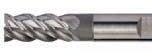
Semi-finishing
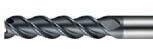
Finishing & Copy milling
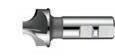
Form cutters

Disc and Shell mills
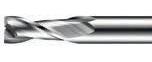
Basic carbide line
Slotting
Semi-finishing
Chamfering
Roughing & HFC
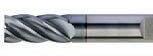
Trochoidal milling
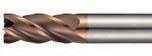
Semi-finishing
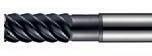
Finishing
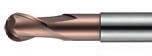
Copy milling
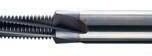
Thread milling
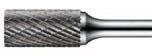
(by suitability)
INSTRUCTIONS
Thread forms: M, MF, UNC, UNF, G, NPT
How to read catalogue data? (ISO 13399, icons, navigation…)
Materials and coatings overview
HSS + HM endmills – Technical information
Feed rate charts, corrections
Thread mills – Hints
Burrs – Hints
Workpiece material groups (WMG)
Feed rate charts, corrections
Feed rate charts
Operating speeds
SOLID ROUND TOOLS – CONTENT

TOOLS FOR BASIC MANUFACTURING, MAINTENANCE, REPAIR, OVERHAUL. TYPICALLY USED WITH CONVENTIONAL MACHINES.
Material code (BMC)
Mill Profile
Number of flutes (NOF)
Cut length
Flute Helix (FHA)
Flute Helix (FHA)
Radial rake angle (GAMF)
Shank
Coating
Cutting diameter tolerance class (TCDC)
Direction
Basic standard group (BSG)





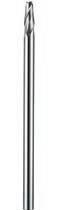

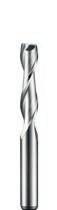






Product Family Code
PSF cutting diameters range
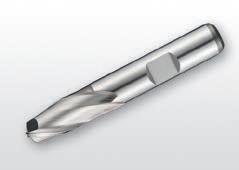
2-Flute HSS-E-PM Slot End Mill, Bright Finish
Extra short cut length, 2-flute design provides high rigidity. Suitable for milling shallow slots and ramping. The accurate diameter means the tools are designed for milling standard keyway slots to a P9 tolerance. Versatile and can be used in mild steels, non-ferrous materials and medium strength titanium alloys.
Workpiece material group suitability, starting values for cutting speed (m/min) and Alpha Code. Tables with feed per tooth and correction factors
DCON MS tolerance h6.
Product
1) DC tolerance h10; available in HSS-E only.
2) DC tolerance h10; slot not in P9 tolerance.
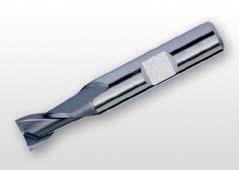
2-Flute HSS-E-PM Slot End Mill, TiCN Coating
Extra short cut length, 2-flute design provides high rigidity. Suitable for milling shallow slots and ramping. The accurate diameter means the tools are designed for milling standard keyway slots to a P9 tolerance. TiCN coating increases the tool life and improves performance when milling hard and abrasive materials.
Workpiece material group suitability, starting values for cutting speed (m/min) and Alpha Code. Tables with feed per tooth and correction
DCON MS tolerance h6.
Product
C159
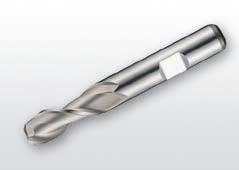
2-Flute HSS-E Slot End Mill, Bright Finish
Short cut length, 2-flute design with 40° helix for milling slots, profile milling and ramping in softer materials, whilst the accurate diameter means standard keyway slots to P9 tolerance can be milled. Designed specifically for milling in non-ferrous materials.
Workpiece material group suitability, starting values for cutting speed (m/min) and Alpha Code. Tables with feed per tooth and correction factors can be found starting from page 261.
MS tolerance h6.
DCON
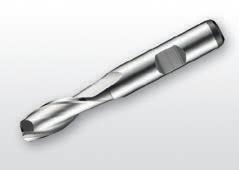
2-Flute HSS-E-PM Slot End Mill, Bright Finish
Short cut length, 2-flute design provides high rigidity. Suitable for milling shallow slots and ramping. The accurate diameter means the tools are designed for milling standard keyway slots to a P9 tolerance. Versatile and can be used in mild steels, non-ferrous materials and medium strength titanium alloys.
Workpiece material group suitability,
DCON MS tolerance h6.
Product
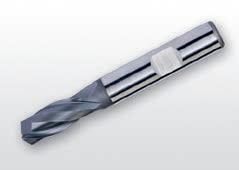
2-Flute HSS-E-PM Slot End Mill, TiCN Coating
Short cut length, 2-flute design provides high rigidity. Suitable for milling shallow slots and ramping. The accurate diameter means the tools are designed for milling standard keyway slots to a P9 tolerance. TiCN coating increases the life of the cutter and improves performance when milling hard and abrasive materials.
Workpiece material group suitability, starting values for cutting speed (m/min) and Alpha Code. Tables with
C13920.0
DCON MS tolerance h6.
Product
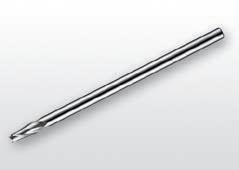
2-flute HSS-E Extra Long Reach End Mill, Bright Finish
Short cut length, 2-flute design without neck recess and with extra long reach for machining extra deep pockets in difficult to reach areas. Suitable for milling in mild steels and non-ferrous materials.
Workpiece material group suitability, starting values for cutting speed (m/min) and Alpha Code. Tables with feed per tooth and correction factors can be found starting from page 261.
DCON MS tolerance h6.
Product
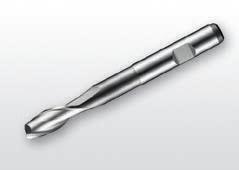
2-Flute HSS-E Extra Long Reach Slot End Mill, Bright Finish
Short cut length, 2-flute design provides high rigidity for milling standard keyway slots to a P9 tolerance. Provides increased strength and reduced vibrations in difficult to reach areas. This can be used in mild steels and non-ferrous materials.
Workpiece material group suitability, starting values for cutting speed (m/min) and Alpha Code. Tables with feed per tooth and correction
C13518.0
C13520.0
DCON MS tolerance h6.
Product
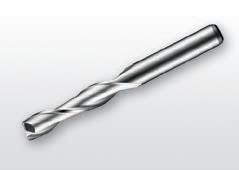
2-flute HSS-E Extra Long Series End Mill, Bright Finish
Long cut length, 2-flute design provides high rigidity for milling standard slots. Designed for machining deep slots in difficult to reach areas in mild steels and non-ferrous materials.
Workpiece material group suitability, starting values for cutting speed (m/min) and Alpha Code. Tables with feed per tooth and correction factors
DCON MS tolerance h6.
Product
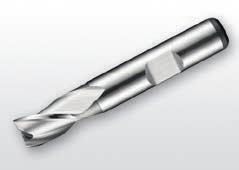
3-Flute HSS-E-PM Slot End Mill, Bright Finish
Extra short cut length, 3-flute design provides high rigidity and is suitable for milling shallow slots and ramping. The accurate diameter means the tools are designed for milling standard keyway slots to a P9 tolerance. Versatile and can be used in mild steels and non-ferrous materials.
Workpiece material group suitability, starting values for cutting speed (m/min) and Alpha Code. Tables with feed per tooth and correction factors can be found starting from page 261.
C30630.0
DCON MS tolerance h6.
Product
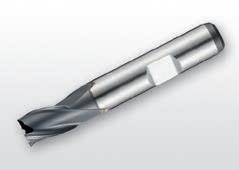
3-Flute HSS-E-PM Slot End Mill, Alcrona Coating
Extra short cut length, 3-flute design provides high rigidity and is suitable for milling shallow slots and ramping. The accurate diameter means the tools are designed for milling standard keyway slots to a P9 tolerance. Alcrona coating improves performance and extends the tool life.
Workpiece material group suitability, starting values for cutting speed (m/min) and Alpha Code.
C35325.0
DCON MS tolerance h6.
Product
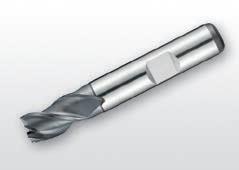
3-Flute HSS-E-PM Slot End Mill, Alcrona Coating
Extra short cut length, 3-flute design with a 40° helix. The sharp geometry is designed to machine mild steels, especially medium to high strength stainless steels and mild non-ferrous materials. The accurate diameter means that standard keyway slots to P9 tolerance can be milled. Alcrona coating extends tool life.
Workpiece material group suitability, starting values for cutting speed (m/min) and Alpha Code. Tables with feed per tooth and correction factors can be found
S1.1
C36720.0
DCON MS tolerance h6.
Product
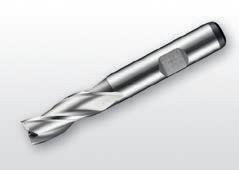
3-Flute HSS-E-PM Slot End Mill, Bright Finish
Short cut length, 3-flute design provides high rigidity for milling slots whilst the accurate diameter means that standard keyway slots to P9 tolerance can be milled. Suitable also for ramping and profile milling in mild steels, non-ferrous materials and medium strength high temperature alloys.
Workpiece material group suitability, starting values for cutting speed (m/min) and Alpha Code. Tables with feed per tooth and correction factors can be found starting from page 261.
DCON MS tolerance h6.
Product
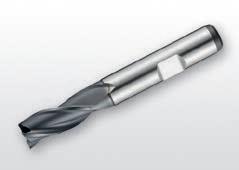
3-Flute HSS-E-PM Slot End Mill, Alcrona Coating
Short cut length, 3-flute design provides high rigidity for milling slots whilst the accurate diameter means that standard keyway slots to P9 tolerance can be milled. Suitable also for ramping and profile milling in mild materials. Alcrona coating improves performance and extends the tool life.
Workpiece material group suitability, starting values for cutting speed (m/min) and Alpha Code. Tables with feed per tooth and correction factors can be found starting from page 261.
DCON MS tolerance h6.
Product
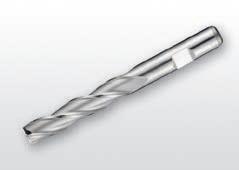
3-Flute HSS-E Long Series End Mill, Bright Finish
Long cut length, 3-flute design provides high rigidity for standard slotting and profile milling in mild steels and non-ferrous materials. Long series cutter designed for machining deeper slots and walls in places which are difficult to reach.
Workpiece material group suitability, starting values for cutting speed (m/min) and Alpha Code. Tables with feed per tooth and correction factors can be found starting from page 261.
DCON MS tolerance h6.
Product
Material code (BMC)
Mill Profile
Number of flutes (NOF)
Cut length
Flute Helix (FHA)
Flute Helix (FHA)
Radial rake angle (GAMF)
Shank
Coating
Cutting diameter tolerance class (TCDC)
Direction
Basic standard group (BSG)








Product Family Code
PSF cutting diameters range
C922
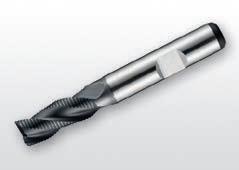
3-4 Flute HSS-E-PM Roughing End Mill, Alcrona Coating
Short cut length, 3 or 4 flute design with neck recess on big cutting diameter sizes and an HRA profile to break up the chips for efficient roughing application. A 35° helix reduces vibration and improves performance. Alcrona coating improves performance and extends the tool life.
Workpiece material group
C92222.0
DCON MS tolerance h6. Product
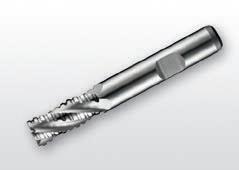
4-Flute HSS-E Roughing End Mill, Bright Finish
Short cut length, 4-flute design without center cut, for peripheral roughing operations only. The NF profile breaks chips for an efficient roughing operation. A 30° helix reduces vibrations and improves performance when roughing mild materials.
Workpiece material group suitability, starting values for cutting speed (m/min) and Alpha Code. Tables with feed per tooth and correction factors can be found starting from page 261.
DCON MS tolerance h6.
Product
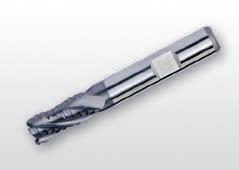
4-Flute HSS-E Roughing End Mill, TiCN Coating
Short cut length, 4-flute design for peripheral roughing operations only. The NF profile breaks chips for an efficient roughing application. A 30° helix reduces vibrations and improves performance in roughing. TiCN coating increases the life of the cutter and improves performance when milling hard and abrasive materials.
Workpiece material group suitability, starting values for cutting speed (m/min) and Alpha Code. Tables with
C41318.0
DCON MS tolerance h6.
Product
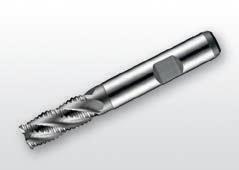
4-Flute HSS-E-PM Roughing End Mill, Bright Finish
Short cut length, 4-flute design with neck recess on big cutting diameter sizes and an NRA profile to break chips for efficient roughing applications. A 35° helix reduces vibration and improves performance in roughing operations.
Workpiece material group suitability, starting values for cutting speed (m/min) and Alpha Code. Tables with feed per tooth and correction factors can be found
C40718.0
C40720.0
DCON MS tolerance h6.
Product
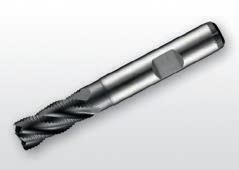
Multi-Flute HSS-E-PM Roughing End Mill, Alcrona Coating
Short cut length, 4 or 6 flute design with neck recess on big cutting diameter sizes and an HRA profile to break chips for efficient roughing application. A 35° helix reduces vibration and improves performance. Alcrona coating improves performance and extends the tool life.
Workpiece material group suitability, starting values for cutting speed (m/min) and Alpha Code. Tables with feed
C42830.0
DCON MS tolerance h6.
Product
C908
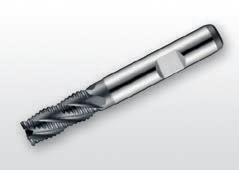
Multi-Flute HSS-E-PM Roughing End Mill, Alcrona Coating
Short cut length, 4 or 6 flute design with neck recess on big cutting diameter sizes and an NRA profile to break chips for efficient roughing application. A 35° helix reduces vibration and improves performance in roughing operations. Alcrona coating improves performance and extends the tool life.
Workpiece material group suitability, starting values for cutting speed (m/min) and Alpha Code. Tables with feed per tooth and correction factors can be found starting from page 261.
C90832.0
DCON MS tolerance h6.
Product
C492
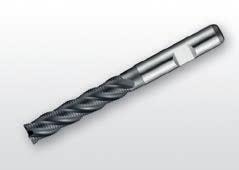
Multi-Flute HSS-E-PM Long Series Roughing End Mill, Alcrona Coating
Long cut length, 3, 4 or 6 flute design with an HRA profile to break chips for efficient roughing of deep profiles. Neck recess on cutting diameter equal to 10 mm and above. A 35° helix reduces vibration and improves performance when roughing. Alcrona coating improves performance and extends tool life.
Workpiece material group suitability, starting values for cutting speed (m/min) and Alpha Code. Tables with feed per tooth and correction factors
C49230.0
DCON MS tolerance h6.
Product
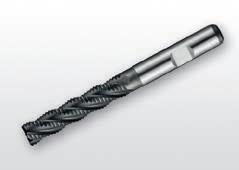
Multi-Flute HSS-E-PM Long Series Roughing End Mill, Alcrona Coating
Long cut length, 4 or 6 flute design with an NRA profile to break chips for efficient roughing of deep profiles. A 35° helix reduces vibration and improves performance in roughing operations. Neck recess on cutting diameter equal to 10 mm and above. Alcrona coating improves performance and extends tool life.
Workpiece material group suitability, starting values for cutting speed (m/min) and Alpha Code. Tables with feed per tooth and correction factors can be found starting from page 261.
DCON MS tolerance h6.
Product
Material code (BMC)
Mill Profile
Number of flutes (NOF)
Cut length
Flute Helix (FHA)
Flute Helix (FHA)
Radial rake angle (GAMF)
Shank
Coating
Cutting diameter tolerance class (TCDC)
Direction
Basic standard group (BSG)





Product Family Code
PSF cutting diameters range
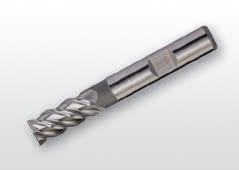
3-4 Flute HSS-E-PM End Mill, Bright Finish
Short cut length, 3 or 4 flute design provides high rigidity for general profile and ramp milling applications. With a 45° helix and designed for machining higher strength materials. Neck recess on cutting diameter equal to 10 mm and above.
Workpiece material group suitability, starting values for cutting speed (m/min) and Alpha Code. Tables with feed per tooth and correction factors can be found starting from page 261.
DCON MS tolerance h6.
Product
C907
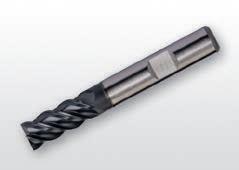
Multi-Flute HSS-E-PM End Mill, Alcrona Coating
Short cut length, 3, 4, 5 or 6 flute design provides high rigidity for general profile and ramp milling applications. With a 45° helix and designed for machining higher strength materials. Neck recess on cutting diameter equal to 10 mm and above. Alcrona coating improves performance and extends the tool life.
Workpiece material group suitability, starting values for cutting speed (m/min) and Alpha Code. Tables with feed per tooth and correction factors can be found starting from page 261.
C90732.0
DCON MS tolerance h6.
Product
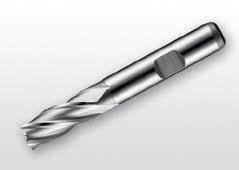
Multi-Flute HSS-E-PM End Mill, Brigh Finish
Short cut length, 4, 5 or 6 flute design provides high rigidity for general profile and ramp milling applications in mild steels and non-ferrous materials.
Workpiece material group suitability, starting values for cutting speed (m/min) and Alpha Code. Tables with feed per tooth and correction factors
DCON MS tolerance h6.
Product
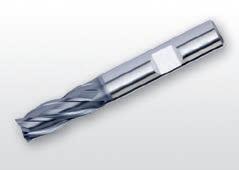
Multi-Flute HSS-E-PM End Mill, TiCN Coating
Short cut length, 4 or 5 flute design provides high rigidity for general profile and ramp milling applications. TiCN coating increases the life of the cutter and improves performance when milling hard and abrasive materials.
Workpiece material group suitability, starting values for cutting speed (m/min) and Alpha Code. Tables with feed per tooth and correction factors can be found starting from page 261.
C24625.0
DCON MS tolerance h6.
Product
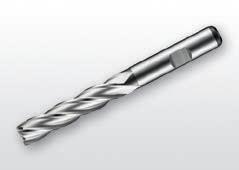
Multi-Flute HSS-E-PM Long Series End Mill, Bright Finish
Long cut length, 4, 5 or 6 flute design provides high rigidity for finishing deep profiles in mild steels and non-ferrous materials, such as aluminium and medium strength titanium alloys.
Workpiece material group suitability, starting values for cutting speed (m/min) and Alpha Code. Tables with
DCON MS tolerance h6.
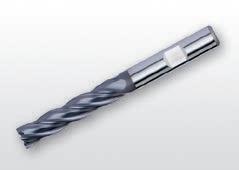
Multi-Flute HSS-E-PM Long Series End Mill, TiCN Coating
Long cut length, 4, 5 or 6 flute design provides high rigidity for finishing deep profiles. TiCN coating increases the life of the cutter and improves performance when milling hard and abrasive materials.
Workpiece material group suitability, starting values for cutting speed (m/min) and Alpha Code. Tables with feed per tooth and correction factors can be found starting from page 261.
1) Available in HSS-E only; no centre cutting.
C29540.0
DCON MS tolerance h6. Product
Material code (BMC)
Mill Profile
Number of flutes (NOF)
Cut length
Flute Helix (FHA)
Flute Helix (FHA)
Radial rake angle (GAMF)
Shank
Coating
Cutting diameter tolerance class (TCDC)
Direction
Basic standard group (BSG)


Product Family Code
PSF cutting diameters range
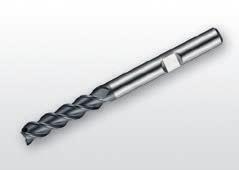
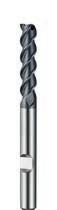
Multi-Flute HSS-E-PM Long Series End Mill, Alcrona Coating
Long cut length, 3, 4 or 5 flute design for high rigidity finishing deep profiles. With a 45° helix and designed for machining higher strength materials. Neck recess on cutting diameter equal to 10 mm and above to avoid work contact with the wall and extend reach. Alcrona coating extends the tool life.
Workpiece material group suitability, starting values for cutting speed (m/min) and Alpha Code. Tables with feed per tooth and correction factors can be found starting from page 261.
DCON MS tolerance h6.
Product
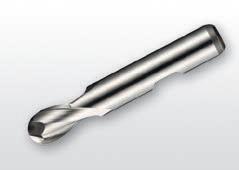
2-Flute HSS-E Ball-Nosed End Mill, Bright Finish
Extra short cut length, 2-flute design provides high rigidity for increased strength and reduced vibrations. Geometry designed for contouring complex surfaces on CNC m/c, suited for mild steels, mild non-ferrous materials and medium strength titanium alloys. Neck recess on cutting diameter equal to 14 mm and above.
Workpiece material group suitability, starting values for cutting speed (m/min) and Alpha Code. Tables with feed per tooth and correction factors can be found starting from page 261.
DCON MS tolerance h6; RE ±0.05 mm.
Product
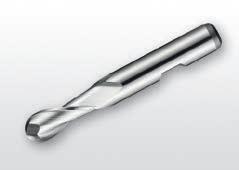
2-Flute HSS-E Ball-Nosed End Mill, Bright Finish
Short cut length, 2-flute design provides high rigidity for increased strength and reduced vibrations. Geometry designed for contouring complex surfaces on CNC machines, suited for mild steels, mild non-ferrous materials and medium strength titanium alloys. Neck recess on cutting diameter equal to 14 mm and above.
Workpiece material group suitability, starting values for cutting speed (m/min) and Alpha Code. Tables with feed per tooth and correction factors can be
C50522.0
C50530.0
3.001.506.008.0052.0
53.5019.50
DCON MS tolerance h6; RE ±0.05 mm.
Product
Material code (BMC)
Mill Profile
Number of flutes (NOF)
Cut length
Flute Helix (FHA)
Flute Helix (FHA)
Radial rake angle (GAMF)
Shank
Coating
Cutting diameter tolerance class (TCDC)
Direction
Basic standard group (BSG)

Product Family Code
PSF cutting diameters range
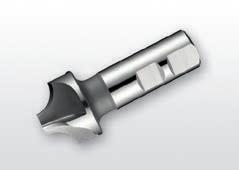
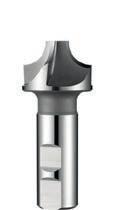
HSS-E Corner Rounding Cutter
With an accurate ground radius, suitable for producing accurate corner radii around the perimeter of components. The Weldon shank ensures stable holding to improve radius surface finish. Suitable for corner radius milling. Bright finish.
Workpiece material group suitability, starting values for cutting speed (m/min) and Alpha Code. Tables with feed per tooth and correction factors can be found starting from page 261.
DCON MS tolerance h6.
Product
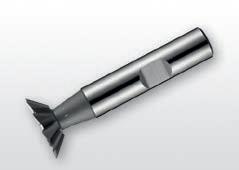
HSS-E Dovetail Cutter
Designed with the optional 45° and 60° angle and Weldon shank for accurate and stable holding, it is suitable for common dovetail forms. The bright finish prevents workpiece material from sticking to the cutting edges of the tool.
Workpiece material group suitability, starting values for cutting speed (m/min) and Alpha Code. Tables with feed per tooth and correction factors can be found starting from page 261.
DCON MS tolerance h6.
Product
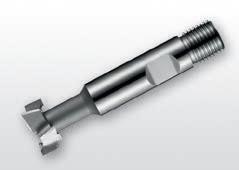
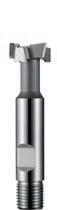
HSS-E T-Slot Cutter
Suitable for milling T-slots. For accurate and stable holding in all types of toolholder, it has a combination shank and is capable of milling T-slots to accept standard T-bolts. The bright finish prevents workpiece material from sticking to the cutting edges of the tool.
Workpiece material group suitability, starting values for cutting speed (m/min) and Alpha Code. Tables with feed per tooth and correction factors can be found starting from page 261.
DCON MS tolerance h6.
Product
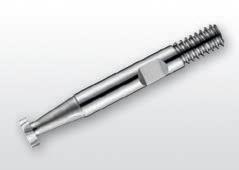
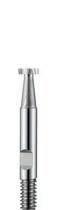
HSS-E Woodruff Cutter
Suitable for milling Woodruff keys in spindles and shafts. The combination shank provides stable and accurate holding in all types of holders. The bright finish prevents workpiece material from sticking to the cutting edges of the tool.
Workpiece material group suitability, starting values for cutting speed (m/min) and Alpha Code. Tables with feed per tooth and correction factors can be found starting from page 261.
C82232.5X8.0
C82232.5X10.0
DCON MS tolerance h6.
Product
Material code (BMC)
Mill Profile
Number of flutes (NOF)
Flute Helix (FHA)
Flute Helix (FHA)
Radial rake angle (GAMF)
Coating
Cutting diameter tolerance class (TCDC)
Direction
Basic standard group (BSG)

Product Family Code
PSF cutting diameters range
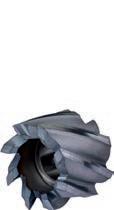
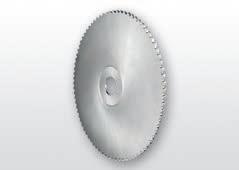
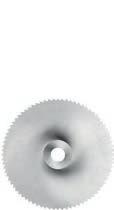
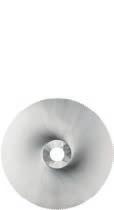
HSS Slitting Saw Coarse Pitch
Designed with a coarse pitch, ideal for narrow, deep slots, whilst the dish ground and neutral tooth geometry, helps control chips and prevents rubbing when milling deep slots. Suitable for horizontal milling of slots and parting-off applications. Bright finish.
Workpiece material group suitability, starting values for cutting speed (m/min) and Alpha Code. Tables with feed per tooth and correction factors can be found starting from page 261. Product
D745250.0X2.0
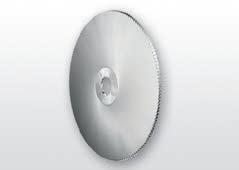
HSS Slitting Saw Fine Pitch
Designed with a neutral tooth geometry to help control chips and prevent rubbing when milling deep slots. The fine pitch design makes it ideal for narrow, deep slots, and can be used for horizontal milling slots and parting-off applications. Bright finish.
Workpiece material group suitability, starting values for cutting speed (m/min) and Alpha Code. Tables with feed per tooth and correction factors can be found starting from page 261.
Product
D747200.0X2.0

HSS Slitting Saw Fine Pitch
Designed with fine pitch, ideal for thin section components. Suitable for slitting and cutting. With ranges from 130 to 220 teeth, the neutral tooth geometry helps control chips and prevents rubbing when slitting tubes and pipes. The steam oxide finish acts to retain cutting fluid and prevent chip tool welding.
Workpiece material group suitability, starting values for cutting speed (m/min) and Alpha Code. Tables with feed per tooth and correction factors can be found starting from page 261.
Product
D750300.0X2.5
HSS Slitting Saw Fine Pitch
Designed with fine pitch, ideal for thin section components. Suitable for slitting and cutting. With ranges from 160 to 350 teeth, the neutral tooth geometry helps control chips and prevents rubbing when slitting tubes and pipes. The steam oxide finish acts to retain cutting fluid and prevent chip tool welding.
Workpiece material group suitability, starting values for cutting speed (m/min) and Alpha Code. Tables with feed per tooth and correction factors can be found starting from page 261.
Product
D751200.0X1.8X160
D751225.0X2.0X180
D751350.0X2.5X280
D751350.0X2.5X350
HSS Slitting Saw Coarse Pitch
Designed with coarse pitch, ideal for thin section components. The dish ground and neutral tooth geometry, in addition to helping control chips, also prevents rubbing when slitting tubes and pipes. Suitable for slitting and cutting. The steam oxide finish acts to retain cutting fluid and prevent chip tool welding.
Workpiece material group suitability, starting values for cutting speed (m/min) and Alpha Code. Tables with feed per tooth and correction factors can be found starting from page 261.
Product
D752350.0X2.5X180
HSS Slitting Saw Coarse Pitch
Designed with coarse pitch, ideal for thin section components. The dish ground and neutral tooth geometry, in addition to helping control chips, also prevents rubbing when slitting tubes and pipes. Suitable for slitting and cutting. The steam oxide finish acts to retain cutting fluid and prevent chip tool welding.
Workpiece material group suitability, starting values for cutting speed (m/min) and Alpha Code. Tables with feed per tooth and correction factors can be found starting from page 261.
Product
D753350.0X2.5 350.002.532.0014081208459501163
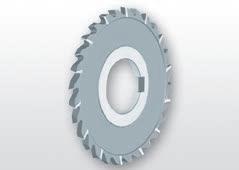
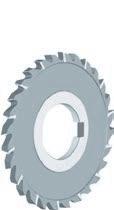
HSS-E Side and Face Fine Pitch Milling Cutter
Designed with a fine pitch, ideal for narrow, deep slots, where the staggered tooth geometry also helps control chips during milling. A very versatile tool which can be used for horizontal milling slots and parting-off applications. The bright finish prevents workpiece material from sticking to the cutting edges of the tool.
Workpiece material group suitability, starting values for cutting speed (m/min) and Alpha Code. Tables with feed per tooth and correction factors can be found starting from page 261.
Product
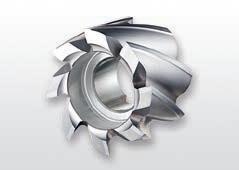
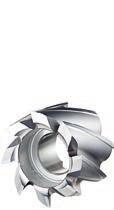
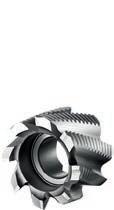
HSS-E Shell Cutter, Bright Finish
The standard bore sizes make it suitable for shell mill holders with a large diameter. Suitable for slotting and cutting. Bright finish.
l 30° g 12° Bright
Workpiece material group suitability, starting values for cutting speed (m/min) and Alpha Code. Tables with feed per tooth and correction factors can be found starting from page 261.
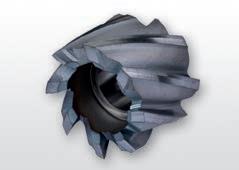
HSS-E Shell Cutter, TiCN Coating
The standard bore sizes make it suitable for standard shell mill holders and can be used for slotting and cutting. Available in a large range of sizes, with diameters up to 63 mm available. TiCN coating increases the life of the cutter and improves performance when milling hard and abrasive materials.
l 30° g 12° TiCN
Workpiece material group suitability, starting values for cutting speed (m/min) and Alpha Code. Tables with feed per tooth and correction factors can be found starting from page 261.
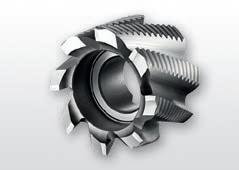
HSS-E Roughing Shell Mill Cutter, Bright Finish
Designed with a coarse pitch NR roughing profile, the tools are suitable for high metal removal roughing applications. The standard bore makes it possible to be used with standard shell end mill holders. Bright finish.
l 30° g 12° Bright
Workpiece material group suitability, starting values for cutting speed (m/min) and Alpha Code. Tables with feed per tooth and correction factors can be found starting from page 261.
Material code (BMC)
Mill Profile
Number of flutes (NOF)
Cut length
Flute Helix (FHA)
Flute Helix (FHA)
Radial rake angle (GAMF)
Shank
Coating
Cutting diameter tolerance class (TCDC)
Direction
Basic standard group (BSG) Product Family Code






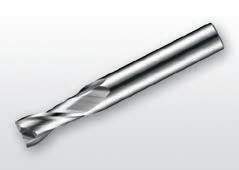
2-Flute Solid Carbide End Mill
Medium cut length, 2-flute design with 30° helix provides high rigidity for milling standard slots.
Workpiece material group suitability, starting values for cutting speed (m/min) and Alpha Code. Tables with feed per tooth and correction factors can be found starting from page 266.
S90216.0
DCON
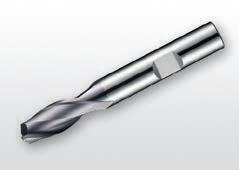
2-Flute Solid Carbide End Mill
Medium cut length, 2-flute design with 30° helix provides high rigidity for milling standard slots. Cylindrical shank for cutting diameter up to 5 mm. TiALN coating for higher temperature resistance and longer tool life.
Workpiece material group suitability, starting values for cutting speed (m/min) and Alpha Code. Tables with feed per tooth and correction factors can be found starting from page 266.
1) Cylindrical shank.
DCON MS tolerance h6; DC≤10.00 mm: CHW ± 0.03×45° mm; DC>10.00 mm: CHW ± 0.05×45° mm. Products from this series are also available in set. Please see S991.
Product
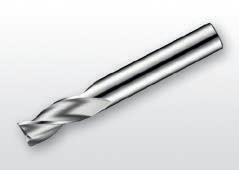
3-Flute Solid Carbide End Mill
Medium cut length, 3-flute design with 30° helix and provides high rigidity for milling standard slots.
Workpiece material group suitability, starting values for cutting speed (m/min) and Alpha Code. Tables with feed per tooth and correction factors can be found starting from page 266.
S90316.0
DCON
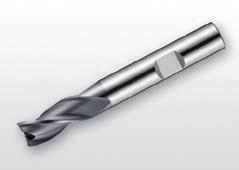
3-Flute Solid Carbide End Mill
Medium cut length, 3-flute design with 30° helix provides high rigidity for milling standard slots. Cylindrical shank for cutting diameter up to 5 mm. TiALN coating for higher temperature resistance and longer tool life.
Workpiece material group suitability, starting values for cutting speed (m/min) and Alpha Code. Tables with feed per tooth and correction factors can be found starting from page 266.
1) Cylindrical
DCON MS tolerance h6; DC≤9.00 mm: CHW ± 0.03×45° mm; DC > 9.00 mm: CHW ± 0.05×45° mm. Products from this series are also available in set. Please see S991.
Product
shank.
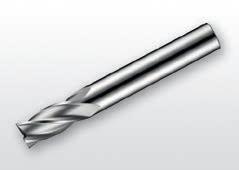
4-Flute Solid Carbide End Mill
Medium cut length, 4-flute design with 30° helix provides high rigidity for milling standard slots.
Workpiece material group suitability, starting values for cutting speed (m/min) and Alpha Code. Tables with feed per tooth and correction factors can be found starting from page 266.
DCON MS tolerance h6;
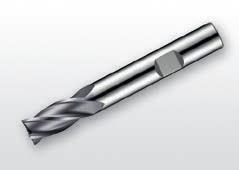
4-Flute Solid Carbide End Mill
Medium cut length, 4-flute design with 30° helix provides high rigidity for milling standard slots. Cylindrical shank for cutting diameter up to 5 mm. TiALN coating for higher temperature resistance and longer tool life.
Workpiece material group suitability, starting values for cutting speed (m/min) and Alpha Code. Tables with feed per tooth and correction factors can be found starting from page 266.
DCON MS tolerance h6; DC≤9.00 mm: CHW ± 0.03×45° mm; DC > 9.00 mm: CHW ± 0.05×45° mm. Products from this series are also available in set. Please see S991. Product
1) Cylindrical shank.
S991
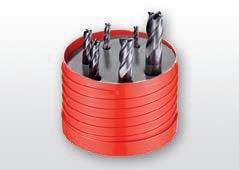
Set of Solid Carbide End Mills
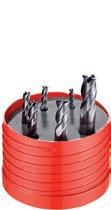
Sets of solid carbide End Mills with TiALN coating. Range of S922, S933 or S944 (2, 3 or 4 flute). Sets contain Ø3, 4, 5, 6, 8 and 10 mm. Carried in a plastic container for good overview.
Product
S991SET944
SOLID CARBIDE TOOLS FOR MIXED MANUFACTURING. SUITABLE FOR MODERATE CUTTING PARAMETERS.
Material code (BMC)
Mill Profile
Number of flutes (NOF)
Cut length
Flute Helix (FHA)
Flute Helix (FHA)
Radial rake angle (GAMF)
Shank
Coating
Cutting diameter tolerance class (TCDC)
Direction
Basic standard group (BSG)











Product Family Code
PSF
S802HA
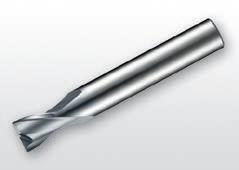
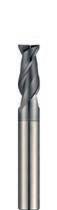
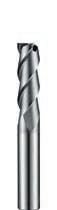
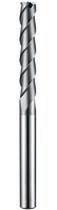
2-Flute Solid Carbide Slot End Mill, DIN 6535 HA Shank
Extra short cut length, 2-flute design provides high rigidity for milling shallow slots to a P9 tolerance and ramping operation. AlCrN coating improves performance and extends the tool life.
Workpiece material group suitability, starting values for cutting speed (m/min) and Alpha Code. Tables with feed per tooth and correction factors can be found starting from page 266.
DCON
S802HB
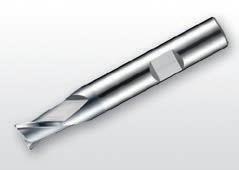
2-Flute Solid Carbide Slot End Mill, DIN 6535 HB Shank
Extra short cut length, 2-flute design provides high rigidity for milling shallow slots to a P9 tolerance and ramping operation. The Weldon shank prevents the end mill from slipping in the toolholder. AlCrN coating improves performance and extends the tool life.
Workpiece material group suitability, starting values for cutting speed (m/min) and Alpha Code. Tables with feed per tooth and correction factors can be found starting from page 266.
DCON MS
S812HA
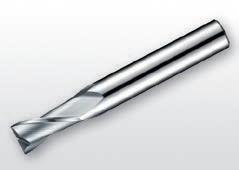
2-Flute Solid Carbide Slot End Mill, DIN 6535 HA Shank
Short cut length, 2-flute design provides high rigidity for milling standard slots to a P9 tolerance and ramping operation. AlCrN coating improves performance and extends the tool life.
Workpiece material group suitability, starting values for cutting speed (m/min) and Alpha Code. Tables with feed per tooth and correction factors can be found starting from page 266.
DCON
S812HB
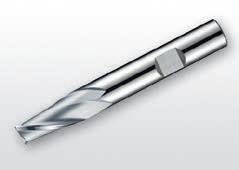
2-Flute Solid Carbide Slot End Mill, DIN 6535 HB Shank
Short cut length, 2-flute design provides high rigidity for milling standard slots to a P9 tolerance and ramping operation. The Weldon shank prevents the end mill from slipping in the toolholder. AlCrN coating improves performance and extends the tool life.
Workpiece material group suitability, starting values for cutting speed (m/min) and Alpha Code. Tables with feed per tooth and correction factors can be found starting from page 266.
S812HB20.0
DCON
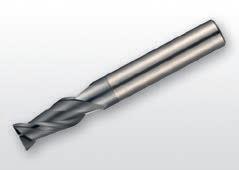
2-Flute Solid Carbide End Mill
Short cut length, 2-flute design with 40° helix provides high rigidity for milling standard slots. AlCrN coating improves performance and extends the tool life.
Workpiece material group suitability, starting values for cutting speed (m/min) and Alpha Code. Tables with feed per tooth and correction factors can be found starting from page 266.
DCON MS tolerance h6.
Product
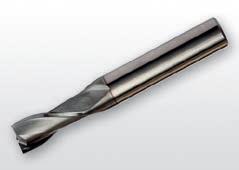
2-Flute Solid Carbide Slot End Mill
Medium cut length, 2-flute design provides high rigidity for milling standard slots to a P9 tolerance and ramping operation. AlCrN coating improves performance and extends the tool life.
Workpiece material group suitability, starting values for cutting speed (m/min) and Alpha Code. Tables with feed per tooth and correction factors can be found starting from page 266.
DCON
S803HA
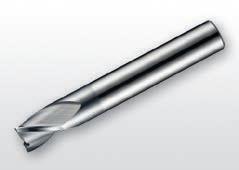
3-Flute Solid Carbide Slot End Mill, DIN 6535 HA Shank
Extra short cut length, 3-flute design provides high rigidity for milling shallow slots to a P9 tolerance. AlCrN coating increases service life and improves performance. Also suited for plunging and ramping milling.
Workpiece material group suitability, starting values for cutting speed (m/min) and Alpha Code. Tables with feed per tooth and correction factors can be found starting from page 266.
DCON
Product
S803HB
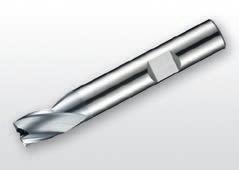
3-Flute Solid Carbide Slot End Mill, DIN 6535 HB Shank
Extra short cut length, 3-flute design provides high rigidity for milling shallow slots to a P9 tolerance. AlCrN coating increases service life and improves performance. Also suited for plunging and ramping milling.
Workpiece material group suitability, starting values for cutting speed (m/min) and Alpha Code. Tables with feed per tooth and correction factors can be found starting from page 266.
DCON MS tolerance h6; DC
Product
S813HA
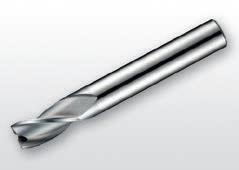
3-Flute Solid Carbide Slot End Mill, DIN 6535 HA Shank
Short cut length, 3-flute design provides high rigidity for milling standard slots to a P9 tolerance. AlCrN coating increases service life and improves performance. Also suited for plunging and ramping milling.
Workpiece material group suitability, starting values for cutting speed (m/min) and Alpha Code. Tables with feed per tooth and correction factors can be found starting from page 266.
DCON
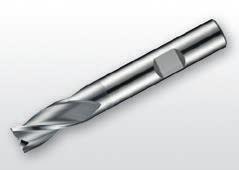
3-Flute Solid Carbide Slot End Mill, DIN 6535 HB Shank
Short cut length, 3-flute design provides high rigidity for milling standard slots to a P9 tolerance. The Weldon shank prevents the end mill from slipping in the toolholder. AlCrN coating improves performance and extends the tool life. Also suited for plunging and ramping milling.
Workpiece material group suitability, starting values for cutting speed (m/min) and Alpha Code. Tables with feed per tooth and correction factors can be found starting from page 266.
S813HB20.0
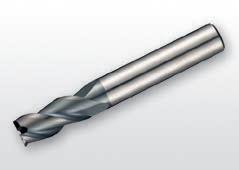
3-Flute Solid Carbide End Mill
Short cut length, 3-flute design with 40° helix provides high rigidity for milling standard slots. AlCrN coating improves performance and extends the tool life.
Workpiece material group suitability, starting values for cutting speed (m/min) and Alpha Code. Tables with feed per tooth and correction factors can be
DCON MS tolerance h6.
Product
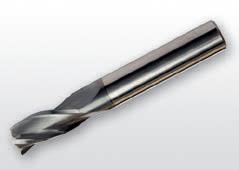
3-Flute Solid Carbide Slot End Mill
Medium cut length, 3-flute design provides high rigidity for milling standard slots to a P9 tolerance and ramping operation. AlCrN coating improves performance and extends the tool life.
Workpiece material group suitability, starting values for cutting speed (m/min) and Alpha Code. Tables with feed per tooth and correction factors can be found starting from page 266.
DCON
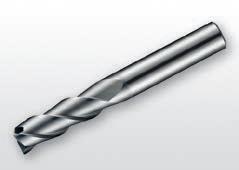
3-Flute Solid Carbide End Mill, Long Series
Long cut length, 3-flute design with 40° helix provides high rigidity for profile milling deep walls. AlCrN coating improves performance and extends the tool life.
Workpiece material group suitability, starting values for cutting speed (m/min) and Alpha Code. Tables with feed per tooth and correction factors can be found starting from page 266.
DCON MS tolerance h6.
Product
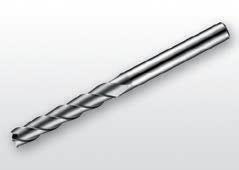
3-Flute Solid Carbide End Mill, Extra Long Series
Extra long cut length, 3-flute design with 40° helix provides high rigidity for profile milling extra deep walls. AlCrN coating improves performance and extends the tool life.
Workpiece material group suitability, starting values for cutting speed (m/min) and Alpha Code. Tables with feed per tooth and correction factors can be found starting from page 266.
S71518.0
DCON MS tolerance h6.
Product
Material code (BMC)
Mill Profile
Number of flutes (NOF)
Cut length
Flute Helix (FHA)
Flute Helix (FHA)
Radial rake angle (GAMF)
Shank
Coating
Cutting diameter tolerance class (TCDC)
Direction
Basic standard group (BSG)





Product Family Code
PSF cutting diameters range
S804HA
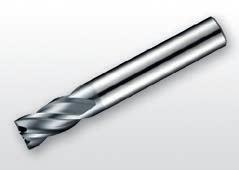
4-Flute Solid Carbide End Mill, DIN 6535 HA Shank
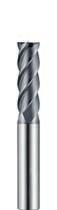
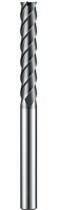
Extra short cut length, 4-flute design provides high rigidity for shallow profile and plunge milling applications. AlCrN coating increases service life and improves performance.
Workpiece material group suitability, starting values for cutting speed (m/min) and Alpha Code. Tables with feed per tooth and correction factors can be found starting from page 266.
DCON
S804HB
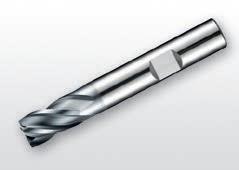
4-Flute Solid Carbide End Mill, DIN 6535 HB Shank
Extra short cut length, 4-flute design provides high rigidity for shallow profile and plunge milling applications. The Weldon shank prevents the end mill from slipping in the toolholder. AlCrN coating increases service life and improves performance.
Workpiece material group suitability, starting values for cutting speed (m/min) and Alpha Code. Tables with feed per tooth and correction factors can be found starting from page 266.
DCON
Product
S814HA
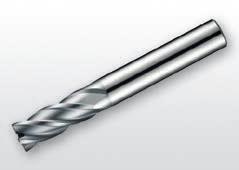
4-Flute Solid Carbide End Mill, DIN 6535 HA Shank
Short cut length, 4-flute design provides high rigidity for general profile and plunge milling applications. AlCrN coating improves performance and extends the tool life.
Workpiece material group suitability, starting values for cutting speed (m/min) and Alpha Code. Tables with feed per tooth and correction factors can be found starting from page 266.
DCON
S814HB
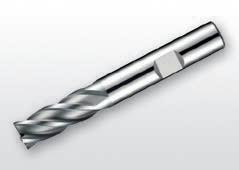
4-Flute Solid Carbide End Mill, DIN 6535 HB Shank
Short cut length, 4-flute design provides high rigidity for general profile and plunge milling applications. The Weldon shank prevents the end mill from slipping in the toolholder. AlCrN coating improves performance and extends the tool life.
Workpiece material group suitability, starting values for cutting speed (m/min) and Alpha Code. Tables with feed per tooth and correction factors can be found starting from page 266.
S814HB25.0
DCON
Product
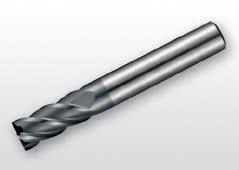
4-Flute Solid Carbide End Mill
Short cut length, 4-flute design with 40° helix provides high rigidity for standard profile milling. AlCrN coating improves performance and extends the tool life.
Workpiece material group suitability, starting values for cutting speed (m/min) and Alpha Code. Tables with feed per tooth and correction factors can be found starting from
S71614.0
DCON MS tolerance h6.
Product
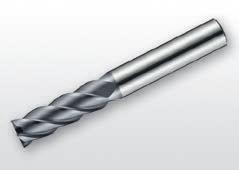
4-Flute Solid Carbide End Mill, Long Series
Long cut length, 4-flute design with 40° helix provides high rigidity for profile milling deep walls. AlCrN coating improves performance and extends the tool life.
Workpiece material group suitability, starting values for cutting speed (m/min) and Alpha Code. Tables with feed per tooth and correction factors can be found starting from page 266.
S71718.0
DCON MS tolerance h6.
Product
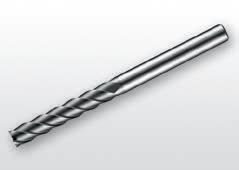
4-Flute Solid Carbide End Mill, Extra Long Series
Extra long cut length, 4-flute design with 40° helix provides high rigidity for profile milling extra deep walls. AlCrN coating improves performance and extends the tool life.
Workpiece material group suitability, starting values for cutting speed (m/min) and Alpha Code. Tables with feed per tooth and correction factors can be found starting from page 266.
S71818.0
DCON MS tolerance h6.
Product
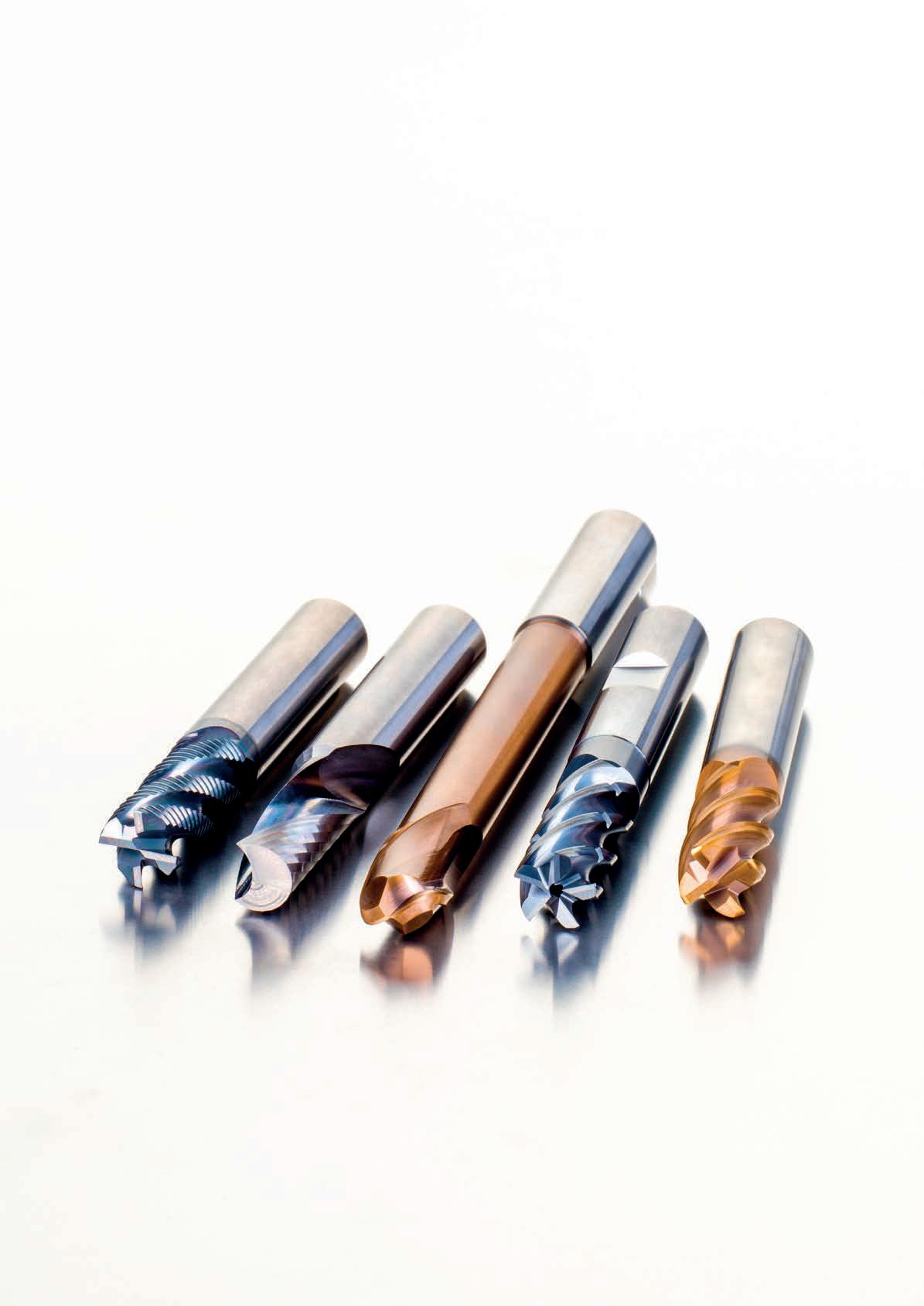
SOLID CARBIDE TOOLS FOR PROCESS SECURITY AND PRODUCTIVITY. TYPICALLY USED WITH CNC AND AUTOMATED MANUFACTURING.
Material code (BMC)
Mill Profile
Number of flutes (NOF)
Cut length
Flute Helix (FHA)
Flute Helix (FHA)
Radial rake angle (GAMF)
Shank
Coating
Cutting diameter tolerance class (TCDC)
Direction
Basic standard group (BSG)


Product Family Code
PSF cutting diameters range
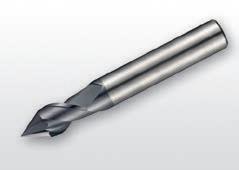
2-Flute Solid Carbide Chamfering End Mill, 60°
Short cut length, 2-flute design provides high rigidity and reduces vibrations. The 60° point is designed for chamfer milling on CNC machines. AlTiN coating increases tool life and improves performance.
Workpiece material group suitability, starting values for cutting speed (m/min) and Alpha Code. Tables with feed per tooth and correction factors can be found starting from page 266.
DCON MS tolerance h6.
Product
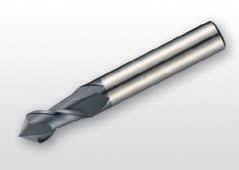
2-Flute Solid Carbide Chamfering End Mill, 90°
Short cut length, 2-flute design provides high rigidity and reduces vibrations. The 90° point is designed for chamfer milling on CNC machines. AlTiN coating increases tool life and improves performance.
Workpiece material group suitability, starting values for cutting speed (m/min) and Alpha Code. Tables
DCON MS tolerance h6.
Product
Material code (BMC)
Mill Profile
Number of flutes (NOF)
Cut length
Flute Helix (FHA)
Flute Helix (FHA)
Radial rake angle (GAMF)
Shank
Coating
Cutting diameter tolerance class (TCDC)
Direction
Basic standard group (BSG)




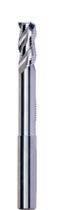
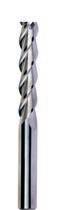
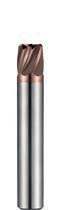
Product Family Code
PSF
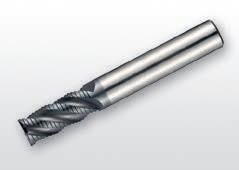
4-Flute Solid Carbide Roughing End Mill, DIN 6535 HA Shank
Short cut length, 4-flute design with 40° helix and differential pitch to reduce vibrations. The NRA profile is designed to break chips for efficient roughing applications. AlCrN coating improves performance and extends the tool life. Also suited for slotting and trochoidal roughing operation.
Workpiece material group suitability, starting values for cutting speed (m/min) and Alpha Code. Tables with feed per tooth and correction factors can be found starting from page 266.
DCON MS tolerance h6; CHW ±0.02×45° mm.
Product
S765HB
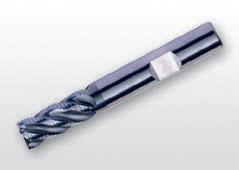
4-Flute Solid Carbide Roughing End Mill, DIN 6535 HB Shank
Short cut length, 4-flute design with 40° helix and differential pitch to reduce vibrations. The NRA profile is designed to break chips for efficient roughing applications. The Weldon shank prevents the end mill from slipping in the toolholder. AlCrN coating. Also suited for slotting and trochoidal roughing operation.
Workpiece material group suitability, starting values for cutting speed (m/min) and Alpha Code. Tables with feed per tooth and correction factors can be found starting from page 266.
DCON MS tolerance h6; CHW ±0.02×45° mm.
Product
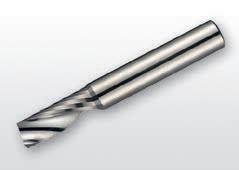
Single-Flute Solid Carbide End Mill
Short cut length, 1-flute design provides high performance when slotting and routing. The S637, with high hook geometry, is designed for high speed routing in thin walled non-ferrous materials. Polished surface prevents workpiece material from sticking to the cutting edge.
Workpiece material group suitability, starting values for cutting speed (m/min) and Alpha Code. Tables with feed per tooth and correction factors can be found starting from page 266.
DCON MS tolerance h6.
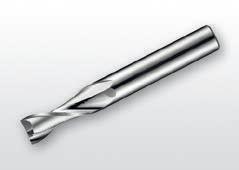
2-Flute Solid Carbide End Mill
Short cut length, 2-flute design provides high rigidity for milling standard slots and profiling. The S610, with high hook geometry, is designed for high performance machining in non-ferrous materials. Polished surface prevents workpiece material from sticking to the cutting edge.
Workpiece material group suitability, starting values for cutting speed (m/min) and Alpha Code. Tables with feed per tooth and correction factors can be found starting from page 266.
S6104.0XD4
DCON MS tolerance h6; RE ±0.02 mm.
Product
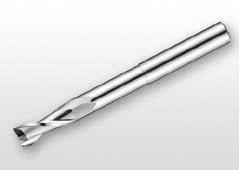
2-Flute Solid Carbide End Mill, Extra Long Reach
Short cut length, 2-flute design with neck recess provides high rigidity for milling and profiling in hard to reach areas. The S611, with high hook geometry, is designed for high performance machining in non-ferrous materials. Polished surface prevents workpiece material from sticking to the cutting edge.
Workpiece material group suitability, starting values for cutting speed (m/min) and Alpha Code. Tables with feed per tooth and correction factors can be found starting from page 266.
S6114.0XD4
DCON MS tolerance h6; RE ±0.02 mm.
Product
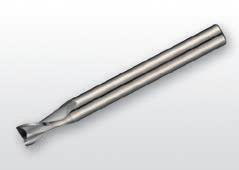
2-Flute Solid Carbide End Mill, Extra Long Reach
Extra short cut length, 2-flute reduced shank provides clearance when machining against deep walls. The S638, with high hook geometry, is designed for high speed machining in non-ferrous materials. Polished surface prevents workpiece material from sticking to the cutting edge.
Workpiece material group suitability, starting values for cutting speed (m/min) and Alpha Code. Tables with feed per tooth and correction factors can be found starting from page 266.
Reduced shank; DCON MS tolerance h6; RE ±0.02 mm.
Product
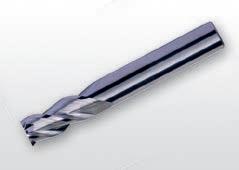
3-Flute Solid Carbide End Mill
Short cut length, 3-flute with differential pitch is designed to reduce vibrations, spindle load and improve surface finish when milling. The single chip divider helps to break swarf into manageable pieces for a better evacuation in non-ferrous materials.
Workpiece material group suitability, starting values for cutting speed (m/min) and Alpha Code. Tables with feed per tooth and correction factors can be found starting from page 266.
DCON MS tolerance h6. Product
1) No differential pitch and chip divider.
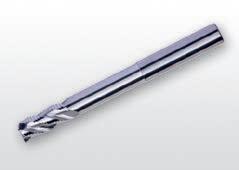
3-Flute Solid Carbide Roughing End Mill, Long Reach
Short cut length, 3-flute roughing design with neck recess and differential pitch to reduce vibrations and maximize productivity and tool life. The S654, with NRA profile, breaks the swarf into small manageable pieces. It is designed for high performance roughing in non-ferrous materials.
Workpiece material group suitability, starting values for cutting speed (m/min) and Alpha Code. Tables with feed per tooth and correction factors can be found starting from page 266.
S65412.0
DCON MS tolerance h6; RE ±0.02 mm.
Product
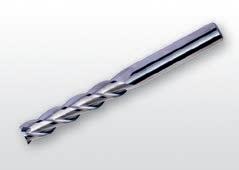
3-Flute Solid Carbide End Mill, Extra Long Series
Extra long cut length, 3-flute design for light profiling applications in hard to reach areas. The S614, with high hook geometry, is designed for high performance machining in non-ferrous materials.
Workpiece material group suitability, starting values for cutting speed (m/min) and Alpha Code. Tables with feed per tooth and correction factors can be found starting from page 266.
DCON MS tolerance h6.
Product
S536
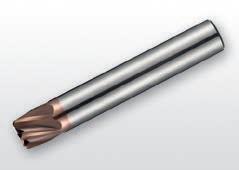
High Feed, Multi-Flute Solid Cabide Corner Radius End Mill Extra short cut length, 4 or 6 flute design with corner radius, 25° helix and specific geometry for high feed machining in hardened materials up to 63HRC. TiSiN coating increases tool life and improves performance.
Workpiece material group suitability, starting values for cutting speed (m/min) and Alpha Code. Tables with feed per tooth and correction factors can be found starting from page 266.
S53612.0XR2.0
DCON MS tolerance h6; RE ±0.01 mm.
Material code (BMC)
Mill Profile
Number of flutes (NOF)
Cut length
Flute Helix (FHA)
Radial rake angle (GAMF)
Shank
Cutting diameter tolerance class (TCDC)
Coating
Direction
Basic standard group (BSG)
Cooling (CSP)


Product Family Code
PSF cutting diameters range
S770HB
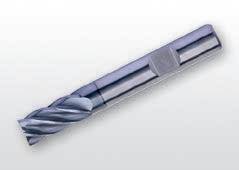
5-Flute Solid Carbide End Mill
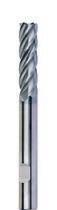
Short cut length, 5-flute design with unequal helix to reduce vibrations especially when using the cutter in dynamic milling strategies. AlCrN coating improves performance and extends the tool life. Suited for trochoidal and shoulder milling, ramping and helicoidal interpolation milling.
Workpiece material group suitability, starting values for cutting speed (m/min) and Alpha Code. Tables with feed per tooth and correction factors can be found starting from page 266.
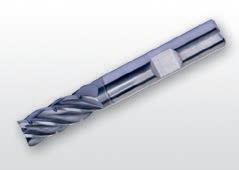
5-Flute Solid Carbide End Mill, Chip Dividers and Through Coolant
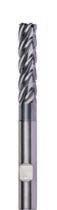
Short cut length, 5-flute design with neck recess and unequal helix helps to reduce vibrations especially when using the cutter in dynamic milling strategies. AlCrN coating improves performance and extends the tool life. Chip divider and through coolant improve chip evacuation in pocketing operation.
Workpiece material group suitability, starting values for cutting speed (m/min) and Alpha Code. Tables with feed per tooth and correction factors can be found starting from page 266.
DCON MS tolerance h6; RE ±0.01 mm.
S772HB
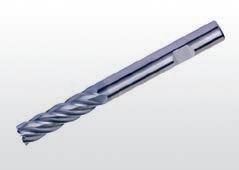
5-Flute Solid Carbide End Mill, Long Series
Long cut length, 5-flute design with unequal helix to reduce vibrations especially when using the cutter in dynamic milling strategies. AlCrN coating improves performance and extends the tool life. Suited for trochoidal and shoulder milling, ramping and helicoidal interpolation milling.
Workpiece material group suitability, starting values for cutting speed (m/min) and Alpha Code. Tables with feed per tooth and correction factors can be found starting from page 266.
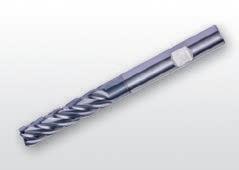
5-Flute Solid Carbide End Mill, Chip Dividers, Through Coolant, Long Series
Long cut length, 5-flute design with neck recess and unequal helix helps to reduce vibrations especially when using the cutter in dynamic milling strategies. AlCrN coating improves performance and extends the tool life. Chip divider and through coolant improve chip evacuation in pocketing operations.
Workpiece material group suitability, starting values for cutting speed (m/min) and Alpha Code. Tables with feed per tooth and correction factors can be found starting from page 266.
DCON MS tolerance h6; RE ±0.01 mm.
Material code (BMC)
Mill Profile
Number of flutes (NOF)
Cut length
Flute Helix (FHA)
Flute Helix (FHA)
Radial rake angle (GAMF)
Shank
Coating
Cutting diameter tolerance class (TCDC)
Direction
Basic standard group (BSG)











Product Family Code
PSF cutting
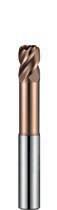

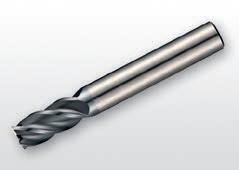
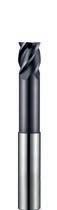
4-Flute Solid Carbide End Mill
Short cut length, 4-flute design with 40° helix and differential pitch to reduce vibrations and improve surface finish in profile milling. AlCrN coating improves performance and extends the tool life. Also suited for plunging, ramping and trochoidal milling.
Workpiece material group suitability, starting values for cutting speed (m/min) and Alpha Code. Tables with feed per tooth and correction factors can be found starting from page 266.
DCON MS tolerance h6. Product
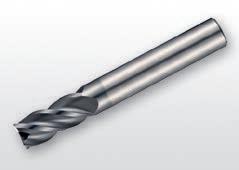
4-Flute Solid Carbide Corner Radius End Mill
Short cut length, 4-flute design with different corner radius available, 40° helix with differential pitch to reduce vibrations and improve surface finish, when milling contours where a corner radius is required. AlCrN coating improves performance. Also suited for plunging, ramping, z-level roughing and helical interpolation.
Workpiece material group suitability, starting values for cutting speed (m/min) and Alpha Code. Tables with feed per tooth and correction factors can be found starting from page 266.
S76320.0XR3.0
DCON MS tolerance h6; RE ±0.01 mm.
Product
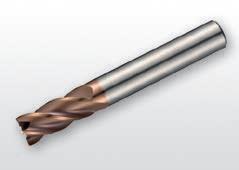
4-Flute Solid Carbide End Mill
Short cut length, 4-flute design with unequal helix and differential pitch to reduce vibrations and improve surface finish in profile milling. TiSiN coating increases tool life and improves performance. Also suited for plunging, ramping and trochoidal milling.
Workpiece material group suitability, starting values for cutting speed (m/min) and Alpha Code. Tables with feed per tooth and correction factors can be found starting from page 266.
DCON MS tolerance h6; CHW ±0.02X45° mm.
Product
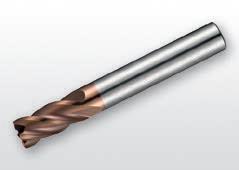
4-Flute Solid Carbide Corner Radius End Mill
Short cut length, 4-flute design with different corner radius available, unequal helix and differential pitch to reduce vibrations and improve surface finish when milling contours where a corner radius is required. TiSiN coating improves performance. Also suited for plunging, ramping and trochoidal milling.
Workpiece material group suitability, starting values for cutting speed (m/min) and Alpha Code. Tables with feed per tooth and correction factors can be found starting from page 266.
DCON MS tolerance h6; RE ±0.01 mm.
Product
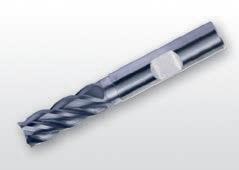
4-Flute Solid Carbide End Mill
Medium cut length, 4-flute design with 40° helix, differential pitch and Weldon shank provides high rigidity for profile milling deep walls. Neck recess to avoid work contact with the wall and extend reach. AlCrN coating improves performance and extends the tool life.
Workpiece material group suitability, starting values for cutting speed (m/min) and Alpha Code. Tables with feed per tooth and correction factors can be found starting from page 266.
DCON MS tolerance h6; RE ±0.02 mm. Product
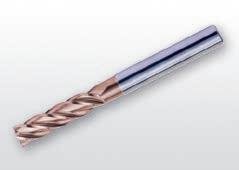
4-Flute Solid Carbide End Mill, Long Series
Long cut length, 4-flute design with unequal helix and differential pitch to reduce vibrations and improve surface finish when milling deep walls in profile milling. Neck recess to avoid work contact with the wall and extend reach. TiSiN coating increases tool life and improves performance.
Workpiece material group suitability, starting values for cutting speed (m/min) and Alpha Code. Tables with feed per tooth and correction factors can be found starting from page 266.
S76816.0
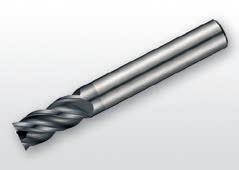
4-Flute Solid Carbide End Mill
Short cut length, 4-flute design provides high rigidity for standard profile milling. AlCrN coating improves performance and extends the tool life when milling difficult to machine materials. The 40° helix with differential pitch reduces vibrations and maximizes productivity and tool life.
Workpiece material group suitability, starting values for cutting speed (m/min) and Alpha Code. Tables with feed per tooth and correction factors can be found starting from page 266.
DCON MS tolerance h6.
Product
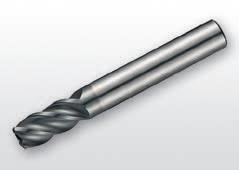
4-Flute Solid Carbide Corner Radius End Mill
Short cut length, 4-flute design with different corner radius available provides high rigidity for standard profile milling when corner radius is required. AlCrN coating improves performance when milling difficult to machine materials. The 40° helix with differential pitch reduces vibrations and maximizes productivity.
Workpiece material group suitability, starting values for cutting speed (m/min) and Alpha Code. Tables with feed per tooth and correction factors can be found starting from page 266.
S2624.0XR0.3
DCON MS tolerance h6; RE ±0.01 mm.
Product
S26220.0XR1.0
S26220.0XR4.0
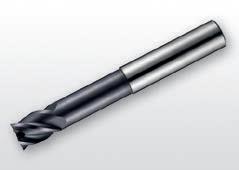
4-Flute Solid Carbide End Mill, Long Reach
Extra short cut length, 4-flute design provides high rigidity for milling and profiling in hard to reach areas. Neck recess to avoid work contact with the wall. AlTiN coating increases tool life and improves performance when milling difficult to machine materials. The 40° helix is designed for high performance machining.
Workpiece material group suitability, starting values for cutting speed (m/min) and Alpha Code. Tables with feed per tooth and correction factors can be found starting from page 266.
DCON MS tolerance h6.
Product
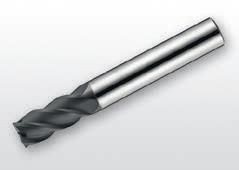
4-Flute Solid Carbide End Mill
Short cut length, 4-flute design provides high rigidity for standard profile milling. Diamond like coating increases service life and improves performance. For milling abrasive materials.
Workpiece material group suitability, starting values for cutting speed (m/min) and Alpha Code. Tables with feed per
DCON MS tolerance h6.
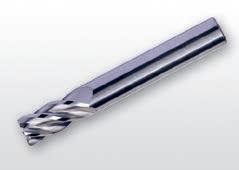
4-Flute Solid Carbide Corner Radius End Mill
Short cut length, 4-flute design with differential pitch and different corner radius available, for profile milling where a corner radius is required. The S662, with high hook geometry, is designed for high performance machining in non-ferrous materials.
Workpiece material group suitability, starting values for cutting speed (m/min) and Alpha Code. Tables with feed per tooth and correction factors can be found starting from page 266.
S6625.0XR0.3
S66220.0XR2.0
DCON MS tolerance h6; RE ±0.01 mm.
Product
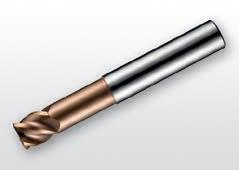
4-Flute Solid Carbide Corner Radius End Mill
Extra short cut length, 4-flute design with different corner radius available and neck recess provides high rigidity for milling contours when corner radius is required. TiSiN coating improves performance and 45° helix is designed for high performance machining in hardened materials up to 63HRC.
Workpiece material group suitability, starting values for cutting speed (m/min) and Alpha Code. Tables with feed per tooth and correction factors can be found starting from page 266.
S5214.0XR0.5
S5215.0XR0.3
S5216.0XR1.0
S5218.0XR0.5 8.000.508.009.0064.0
S5218.0XR1.0
S52110.0XR2.0
S52116.0XR3.0
DCON MS tolerance h6; RE ±0.01 mm.
Product
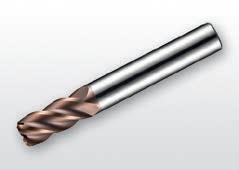
4-Flute Solid Carbide Corner Radius End Mill
Short cut length, 4-flute design with different corner radius available provides high rigidity for standard profile milling where a corner radius is required. TiSiN coating improves performance and 40° helix is designed for high performance machining in hardened materials up to 63HRC.
Workpiece material group suitability, starting values for cutting speed (m/min) and Alpha Code. Tables with feed per tooth and correction factors can be found starting from page 266.
MS tolerance h6; RE ±0.01 mm.
S5233.0XR0.3XD3
DCON
Product
S52316.0XR3.0
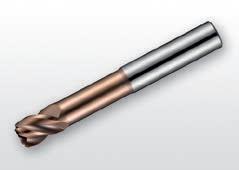
4-Flute Solid Carbide Corner Radius End Mill, Long Reach
Extra short cut length, 4-flute design with different corner radius available and 40° helix provides high rigidity for profile milling in hard to reach areas where a corner radius is required. Neck recess to avoid work contact with the wall. TiSiN coating improves performance machining in hardened materials up to 63HRC.
Workpiece material group suitability, starting values for cutting speed (m/min) and Alpha Code. Tables with feed per tooth and correction factors can be found starting from page 266.
S5244.0XR0.5
S5245.0XR0.3
S5246.0XR0.5
S5246.0XR1.0 6.001.006.0010.0075.0
S5248.0XR0.3
S5248.0XR1.0
S52410.0XR0.5
S52410.0XR1.0
S52416.0XR3.0
DCON MS tolerance h6; RE ±0.01 mm.
Product
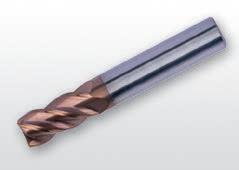
4-Flute Solid Carbide End Mill
Medium cut length, 4-flute design with 40° helix and gash-land to enable milling hard materials up to 70HRC. TiSiN coating improves performance and the differential pitch reduces vibrations, maximizing productivity and tool life. Square end design to produce sharp corners.
Workpiece material group suitability, starting values for cutting speed (m/min) and Alpha Code. Tables with feed per tooth and correction factors can be found starting from page 266.
DCON MS tolerance h6.
Product
Material code (BMC)
Mill Profile
Number of flutes (NOF)
Cut length
Flute Helix (FHA)
Flute Helix (FHA)
Radial rake angle (GAMF)
Shank
Coating
Cutting diameter tolerance class (TCDC)
Direction
Basic standard group (BSG)


Product Family Code
PSF cutting diameters range
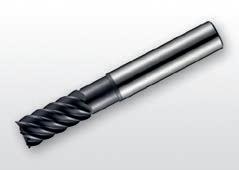
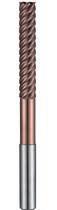
Multi-Flute Solid Carbide Finishing End Mill
Short cut length, 6 or 8 flute design provides high rigidity for profile finishing of deep walls. Neck recess to avoid work contact with the wall and extend reach. AlTiN coating increases tool life and improves performance when milling difficult to machine materials. The 50° helix is designed for high surface finish quality.
Workpiece material group suitability, starting values for cutting speed (m/min) and Alpha Code. Tables with feed per tooth and correction factors can be found starting from page 266.
S22518.0
DCON MS tolerance h6.
Product
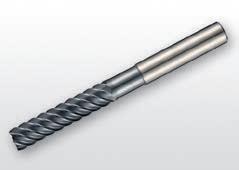
Multi-Flute Solid Carbide Finishing End Mill, Long Series Long cut length, 6 or 8 flute design provides high rigidity for finishing of deeper walls. Neck recess to avoid work contact with the wall and extend reach. AITiN coating increases service life and improves performance when milling difficult to machine materials. The 50° helix is designed for high surface finish quality.
Workpiece material group suitability, starting values for cutting speed (m/min) and Alpha Code. Tables with feed per tooth and correction factors can be found starting from page 266.
S22618.0
DCON MS tolerance h6. Product
S227
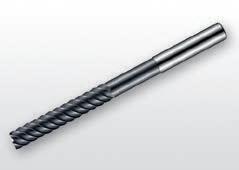
Multi-Flute Solid Carbide Finishing End Mill, Extra Long Series
Extra long cut length, 6 or 8 flute design provides high rigidity for finishing of extra deep walls. Neck recess to avoid work contact with the wall and extend reach. AlTiN coating increases tool life and improves performance when milling difficult to machine materials. The 50° helix is designed for high surface finish quality.
Workpiece material group suitability, starting values for cutting speed (m/min) and Alpha Code. Tables with feed per tooth and correction factors can be found starting from page 266.
DCON MS tolerance h6.
Product
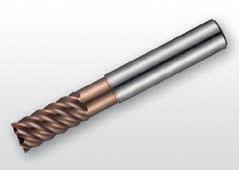
Multi-Flute Solid Carbide Finishing End Mill
Short cut length, 6 or 8 flute design with 50° helix provides high rigidity for finishing of deep walls. Neck recess to avoid work contact with the wall and extend reach. TiSiN coating increases tool life and improves performance when milling hardened materials up to 63HRC.
Workpiece material group suitability, starting values for cutting speed (m/min) and Alpha Code. Tables with feed per tooth and correction factors can be found starting from page 266.
S52520.0
DCON MS tolerance h6.
S526
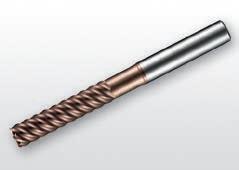
Multi-Flute Solid Carbide Finishing End Mill, Long Series
Long cut length, 6 or 8 flute design with 50° helix provides high rigidity for finishing of deeper walls. Neck recess to avoid work contact with the wall and extend reach. TiSiN coating increases tool life and improves performance when milling hardened materials up to 63HRC.
Workpiece material group suitability, starting values for cutting speed (m/min) and Alpha Code. Tables with feed per tooth and correction factors can be found starting from page 266.
S52620.0
DCON MS tolerance h6.
Product
S527
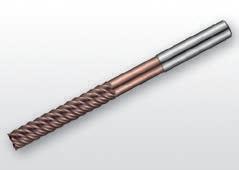
Multi-Flute Solid Carbide Finishing End Mill, Extra Long Series
Extra long cut length, 6 or 8 flute design with 50° helix provides high rigidity for finishing of extra deep walls. Neck recess to avoid work contact with the wall and extend reach. TiSiN coating increases service life and improves performance when milling hardened materials up to 63HRC.
Workpiece material group suitability, starting values for cutting speed (m/min) and Alpha Code. Tables with feed per tooth and correction factors can be found starting from page 266.
DCON MS tolerance h6.
Material code (BMC)
Mill Profile
Number of flutes (NOF)
Cut length
Flute Helix (FHA)
Flute Helix (FHA)
Radial rake angle (GAMF)
Shank
Coating
Cutting diameter tolerance class (TCDC)
Direction
Basic standard group (BSG)

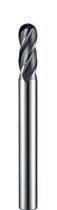

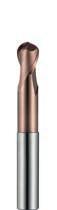
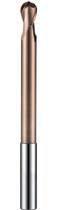
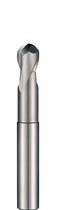

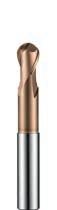
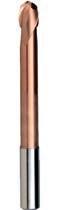

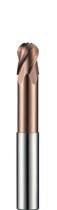
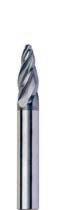
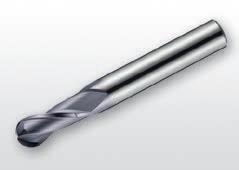
2-Flute Solid Carbide Ball-Nosed End Mill
Short cut length, 2-flute design reduces vibrations and provides increased strength. Ball nosed geometry is designed for high performance contouring of complex surfaces. The X-CEED coating provides improved performance for milling difficult to machine materials.
Workpiece material group suitability, starting values for cutting speed (m/min) and Alpha Code. Tables with feed per tooth and correction factors
DCON MS tolerance h6; RE ±0.01 mm.
Product
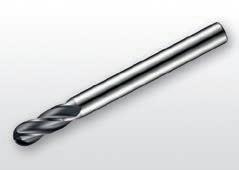
4-Flute Solid Carbide Ball-Nosed End Mill, Extra Long Reach
Short cut length, extra long reach, 4-flute design provides high rigidity for increased strength and reduces vibrations in deeper applications. Ball nosed geometry is designed for high performance contouring of complex surfaces. X-CEED coating provides improved performance for milling difficult to machine materials.
Workpiece material group suitability, starting values for cutting speed (m/min) and Alpha Code. Tables with feed per tooth and correction factors can be found starting from page 266.
DCON MS tolerance h6; RE +0/-0.01 mm.
Product
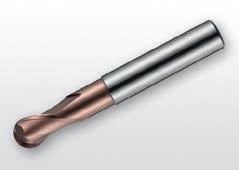
2-Flute Solid Carbide Ball-Nosed End Mill
Extra short cut length, 2-flute design with neck recess reduces vibrations and provides high rigidity. Ball nosed geometry is designed for high performance contouring of complex surfaces. TiSiN coating increases service life of the milling cutter and improves performance when milling difficult to machine materials.
Workpiece material group suitability, starting values for cutting speed (m/min) and Alpha Code. Tables with feed per tooth and correction factors can be found starting from page 266.
S2293.0XD3
DCON MS tolerance h6; RE +0/-0.02 mm.
Product
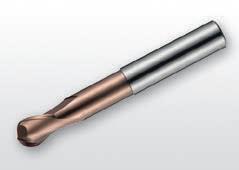
2-Flute Solid Carbide Ball-Nosed End Mill, Long Reach
Extra short cut length, long reach, 2-flute design with neck recess provides high rigidity and reduces vibrations. Ball nosed geometry is designed for high performance contouring of complex surfaces. TiSiN coating increases tool life and improves performance when milling difficult to machine materials.
Workpiece material group suitability, starting values for cutting speed (m/min) and Alpha Code. Tables with feed per tooth and correction factors can be found starting from page 266.
S2313.0XD3
DCON MS tolerance h6; RE +0/-0.02 mm.
Product
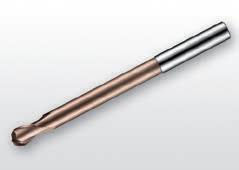
2-Flute Solid Carbide Ball-Nosed End Mill, Extra Long Reach
Extra short cut length, extra long reach, 2-flute design with neck recess provides high rigidity and reduces vibrations. Ball nosed geometry is designed for high performance contouring of complex surfaces. TiSiN coating increases tool life and improves performance when milling difficult to machine materials.
Workpiece material group suitability, starting values for cutting speed (m/min) and Alpha Code. Tables with feed per tooth and correction factors can be found starting from page 266.
S2333.0XD6
DCON MS tolerance h6; RE +0/-0.02 mm. Product
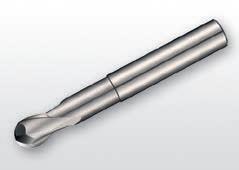
2-Flute Solid Carbide Ball-Nosed End Mill
Extra short cut length, 2-flute design with neck recess reduces vibrations and provides high rigidity. Ball nosed geometry is designed for high performance contouring of complex surfaces in non-ferrous materials.
Workpiece material group suitability, starting values for cutting speed (m/min) and Alpha Code. Tables with feed per tooth and correction factors can be found starting from page 266.
S6293.0
S62920.0
1) Rake angle 11°.
DCON MS tolerance h6; RE +0/-0.02 mm.
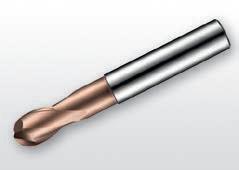
2-Flute Solid Carbide Ball-Nosed End Mill
Extra short cut length, 2-flute design with neck recess provides high rigidity and reduces vibrations. Ball nosed geometry is designed for high performance contouring of complex surfaces. TiSiN coating increases tool life and improves performance when machining hardened materials up to 63HRC.
Workpiece material group suitability, starting values for cutting speed (m/min) and Alpha Code. Tables with feed per tooth and correction factors can be found starting from page 266.
S5293.0XD3
S52916.0
DCON MS tolerance h6; RE +0/-0.02 mm.
Product
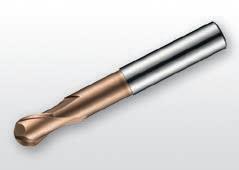
2-Flute Solid Carbide Ball-Nosed End Mill, Long Reach
Extra short cut length, long reach, 2-flute design with neck recess provides high rigidity and reduces vibrations. Ball nosed geometry is designed for high performance contouring of complex surfaces. TiSiN coating increases tool life and improves performance when machining hardened materials up to 63HRC.
Workpiece material group suitability, starting values for cutting speed (m/min) and Alpha Code. Tables with feed per tooth and correction factors can be found starting from page 266.
S5313.0XD3
S53116.0
DCON MS tolerance h6; RE +0/-0.02 mm.
Product
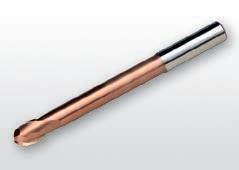
2-Flute Solid Carbide Ball-Nosed End Mill, Extra Long Reach
Extra short cut length, extra long reach, 2-flute design with neck recess provides high rigidity and reduces vibrations. Ball nosed geometry is designed for high performance contouring of complex surfaces. TiSiN coating increases tool life and improves performance when machining hardened materials up to 63HRC.
Workpiece material group suitability, starting values for cutting speed (m/min) and Alpha Code. Tables with feed per tooth and correction factors can be found starting from page 266.
S5333.0XD6
S53316.0
DCON MS tolerance h6; RE +0/-0.02 mm.
Product
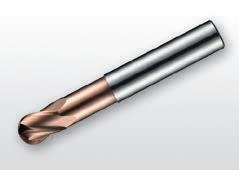
4-Flute Solid Carbide Ball-Nosed End Mill
Extra short cut length, 4-flute design with neck recess reduces vibrations and provides high rigidity. Ball nosed geometry is designed for high performance contouring of complex surfaces. TiSiN coating increases tool life and improves performance when machining hardened materials up to 63HRC.
Workpiece material group suitability, starting values for cutting speed (m/min) and Alpha Code. Tables with feed per tooth and correction factors can be found starting from page 266.
S5348.0
S53416.0 16.008.0016.0032.0090.0
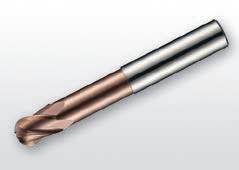
4-Flute Solid Carbide Ball-Nosed End Mill, Long Reach
Extra short cut length, long reach, 4-flute design with neck recess reduces vibrations and provides high rigidity. Ball nosed geometry is designed for high performance contouring of complex surfaces. TiSiN coating increases tool life and improves performance when machining hardened materials up to 63HRC.
Workpiece material group suitability, starting values for cutting speed (m/min) and Alpha Code. Tables with feed per tooth and correction factors can be found starting from page 266.
MS tolerance h6; RE +0/-0.02 mm.
DCON
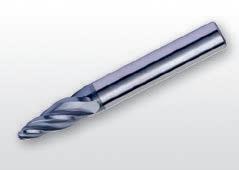
3-4 Flute Solid Carbide Barrel-Shape End Mill
Medium cut length, 3 or 4 flute design with large tangential radius and ball nosed to increase contact with workpiece to reduce cycle time and improve surface finish of steep walls. AlCrN coating improves performance and extends the tool life. For semi-finishing and finishing operation.
Workpiece material group suitability, starting values for cutting speed (m/min) and Alpha Code. Tables with feed per tooth and correction factors can be found starting from page 266.
DCON MS tolerance h6; RE ±0.01 mm; PRFRAD(2) ±0.01 mm.
Product
Thread form (THFT)
Basic standard group (BSG)
Usable length (ULDR)
Material code (BMC)
Flute Geometry (FDC)
Flute helix angle (FHA)
Hand (Cutting direction)
Coating Shank
Coolant exit style (CXSC)




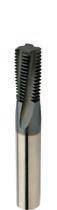
Product Family Code
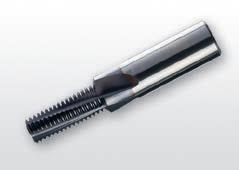
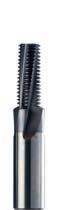
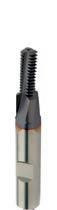
Solid Carbide Thread Mill with Countersink, Metric Universal high performance tool to machine same or bigger diameters than the TDZ with the same pitch. Left or right-hand, through or blind holes almost down to the bottom. With 60° countersink for chamfering in a single machining cycle. Alcrona Pro coated for the best machining result in a wide range of materials.
Workpiece material group suitability, starting values for cutting speed (m/min) and Alpha Code. Tables with feed per tooth and correction factors can be found starting from page 266.
Alcrona Pro DIN 6535HA
Internal Thread.
Product
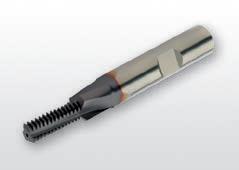
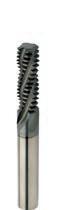
Solid Carbide Thread Mill with Through Coolant and Countersink, Metric Universal high performance tool to machine same or bigger diameters than the TDZ with the same pitch. Left or right-hand, through or blind holes almost down to the bottom. 60° countersink for chamfering. Alcrona Pro coated for the best machining result with through coolant for better chip evacuation.
Workpiece material group suitability, starting values for cutting speed (m/min) and Alpha Code. Tables with
Internal Thread. Product
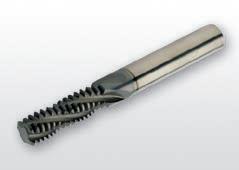
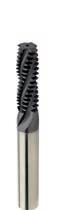
Solid Carbide Thread Mill with High Helix, Metric
Universal high performance tool to machine same or bigger diameters than the TDZ with the same pitch. Left or right-hand, through or blind holes almost down to the bottom. Alcrona Pro coated for the best machining result in a wide range of materials and 27° helix for a smoother cutting action.
Workpiece material group suitability, starting values for cutting speed (m/min) and Alpha Code. Tables with feed per tooth and correction factors can be found starting from page 266.
Alcrona Pro DIN 6535HA
Internal Thread.
Product
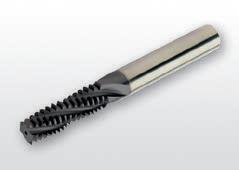
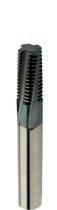
Solid Carbide Thread Mill with High Helix and Through Coolant, Metric Universal high performance tool to machine same or bigger diameters than the TDZ with the same pitch. Left or right-hand, through or blind holes almost down to the bottom. Alcrona Pro coated for the best machining result with through coolant for better chip evacuation and 27° helix for a smoother cutting action.
Workpiece material group suitability, starting values for cutting speed (m/min) and Alpha Code. Tables with feed per tooth and correction factors can be found starting from page 266.
Internal Thread.
Product
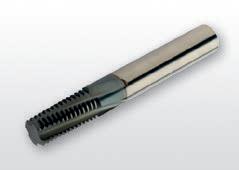
Solid Carbide Thread Mill, Metric Fine
Universal high performance tool to machine same or bigger diameters than the TDZ with the same pitch. Left or right-hand, through or blind holes almost down to the bottom. Alcrona Pro coated for the best machining result in a wide range of materials.
Workpiece material group suitability, starting values for cutting speed (m/min) and Alpha Code. Tables with feed per tooth and correction factors
Alcrona Pro DIN 6535HA
Internal Thread.
Product
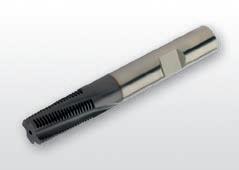
Solid Carbide Thread Mill with Through Coolant, Metric Fine
Universal high performance tool to machine same or bigger diameters than the TDZ with the same pitch. Left or right-hand, through or blind holes almost down to the bottom. Alcrona Pro coated for the best machining result and through coolant for better chip evacuation.
Workpiece material group suitability, starting values for cutting speed (m/min) and Alpha Code. Tables with feed per tooth and correction factors can be found starting from page 266.
Internal Thread.
Product
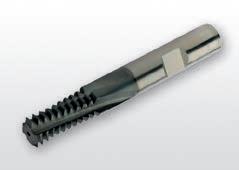
Solid Carbide Thread Mill with Through Coolant, UNC
Universal high performance tool to machine same or bigger diameters than the TDZ with the same pitch. Left or right-hand, through or blind holes almost down to the bottom. Alcrona Pro coated for the best machining result and through coolant for better chip evacuation.
Workpiece material group suitability, starting values for cutting speed (m/min) and Alpha Code. Tables with feed per tooth and correction factors can be found
Internal Thread.
Product
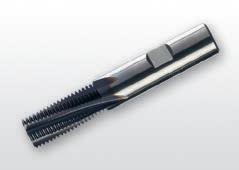
Solid Carbide Thread Mill with Through Coolant, UNF
Universal high performance tool to machine same or bigger diameters than the TDZ with the same pitch. Left or right-hand, through or blind holes almost down to the bottom. Alcrona Pro coated for the best machining result and through coolant for better chip evacuation.
Workpiece material group suitability, starting values for cutting speed (m/min) and Alpha Code. Tables with feed per tooth and correction factors can be found
Internal Thread.
Product
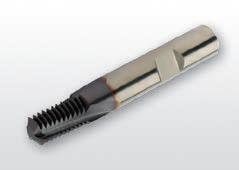
Solid Carbide Thread Mill, NPT
Universal high performance tool to machine same or bigger diameters than the TDZ with the same pitch. Left or right-hand, through or blind holes almost down to the bottom. Alcrona Pro coated for the best machining result in a wide range of materials.
Workpiece material group suitability, starting values for cutting speed (m/min) and Alpha Code. Tables with feed per tooth and correction factors can be found starting from page 266.
Alcrona Pro
Internal Thread.
Product
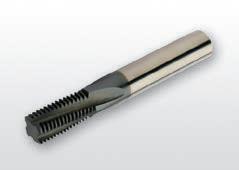
Solid Carbide Thread Mill, G(BSP)
Universal high performance tool to machine same or bigger diameters than the TDZ with the same pitch. Left or right-hand, through or blind holes almost down to the bottom. Alcrona Pro coated for the best machining result in a wide range of materials. Suited for producing internal and external threads.
Workpiece material group suitability, starting values for cutting speed (m/min) and Alpha Code. Tables with feed per tooth and correction factors can be found starting from page 266.
Alcrona Pro DIN 6535HA
Internal and External Thread.
ROTARY BURRS




















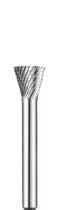
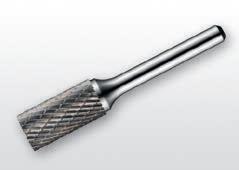
Rotary Burr – Cylinder without endcut, Shape A, Bright Finish DC double cut flute style with close spaced edges for trimming and deburring surfaces. Carbide design for cutting diameter up to 6 mm; above 6 mm carbide head with toughened and hardened steel shank.
Workpiece material group suitability. Recommended operating speed (RPM) on page 277.
P801C
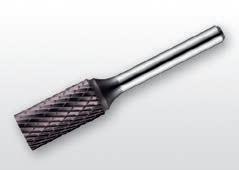
Rotary Burr – Cylinder without endcut, Shape A, TiAlN Coating
DC double cut flute style with close spaced edges for trimming and deburring surfaces. Carbide design for cutting diameter up to 6 mm; above 6 mm carbide head with toughened and hardened steel shank. TiALN coating for increased tool life, reduced friction and improved swarf evacuation.
Workpiece material group suitability. Recommended operating speed (RPM) on page 277.
DC ≤ 6.00 mm: DCON MS tolerance h6; DC > 6.00 mm: Brazed on steel shank with DCON MS tolerance h7.
1) Brazed on steel shank
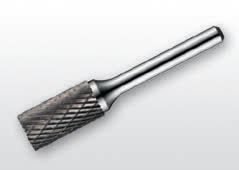
Rotary Burr – Cylinder with endcut, Shape B, Bright Finish DC double cut flute style with close spaced edges for trimming and deburring surfaces and right-angled corners. Carbide design for cutting diameter up to 6 mm; above 6 mm carbide head with toughened and hardened steel shank.
Workpiece material group suitability. Recommended operating speed (RPM) on page 277.
DC ≤ 6.00 mm: DCON MS tolerance h6; DC > 6.00 mm: Brazed on steel shank with DCON MS tolerance h7. Products from this series are also available in set. Please see P880 or P890.
Brazed on steel shank
P803C
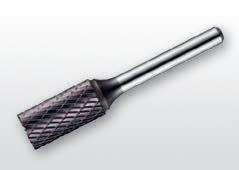
Rotary Burr – Cylinder with
endcut,
Shape B, TiAlN Coating
DC double cut flute style with close spaced edges for trimming and deburring surfaces and right-angled corners. Carbide design for cutting diameter up to 6 mm; above 6 mm carbide head with toughened and hardened steel shank. TiALN coating for increased tool life, reduced friction and improved swarf evacuation.
Workpiece material group suitability. Recommended operating speed (RPM) on page 277.
DC ≤ 6.00 mm: DCON MS tolerance h6; DC > 6.00 mm: Brazed on steel shank with DCON MS tolerance h7. Products from this series are also available in set. Please see P880.
Product
1) Brazed on steel shank
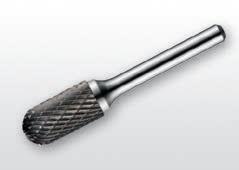
Rotary Burr – Ball Nosed Cylinder, Shape C, Bright Finish DC double cut flute style with close spaced edges for trimming and deburring contours and circular arcs. Carbide design for cutting diameter up to 6 mm; above 6 mm carbide head with toughened and hardened steel shank.
Workpiece material group suitability. Recommended operating speed (RPM) on page 277.
DC ≤ 6.00 mm: DCON MS tolerance h6; DC > 6.00 mm: Brazed on steel shank with DCON MS tolerance h7. Products from this series are also available in set. Please see P880 or P890.
Brazed on steel shank
P805C
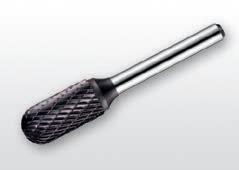
Rotary Burr – Ball Nosed Cylinder, Shape C, TiAlN Coating
DC double cut flute style with close spaced edges for trimming and deburring contours and circular arcs. Carbide design for cutting diameter up to 6 mm; above 6 mm carbide head with toughened and hardened steel shank. TiALN coating for increased tool life, reduced friction and improved swarf evacuation.
Workpiece material group suitability. Recommended operating speed (RPM) on page 277.
DC ≤ 6.00 mm: DCON MS tolerance h6; DC > 6.00 mm: Brazed on steel shank with DCON MS tolerance h7. Products from this series are also available in set. Please see P880.
Product
1) Brazed on steel shank
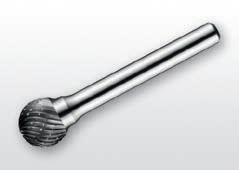
Rotary Burr – Ball, Shape D, Bright Finish DC double cut flute style with close spaced edges for intricate carving, metal engraving and welding preparation. Carbide design for cutting diameter up to 6 mm; above 6 mm carbide head with toughened and hardened steel shank.
Workpiece material group suitability. Recommended operating speed (RPM) on page 277.
DC ≤ 6.00 mm: DCON MS tolerance h6; DC > 6.00 mm: Brazed on steel shank with DCON MS tolerance h7. Products from this series are also available in set. Please see P880.
Brazed on steel shank
P807C
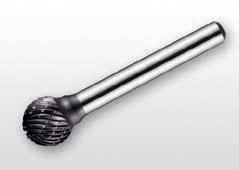
Rotary Burr – Ball, Shape D, TiAlN Coating
DC double cut flute style with close spaced edges for intricate carving, metal engraving and welding preparation. Carbide design for cutting diameter up to 6 mm; above 6 mm carbide head with toughened and hardened steel shank. TiALN coating for increased tool life, reduced friction and improved swarf evacuation.
Workpiece material group suitability. Recommended operating speed (RPM) on page 277.
DC ≤ 6.00 mm: DCON MS tolerance h6; DC > 6.00 mm: Brazed on steel shank with DCON MS tolerance h7. Products from this series are also available in set. Please see P880.
Product
1) Brazed on steel shank
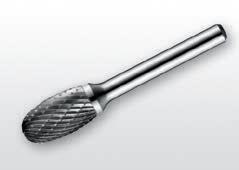
Rotary Burr – Oval, Shape E
DC double cut flute style with close spaced edges for round edge contouring. Carbide design for cutting diameter up to 6 mm; above 6 mm carbide head with toughend and hardened steel shank.
Workpiece material group suitability. Recommended operating speed (RPM) on page 277.
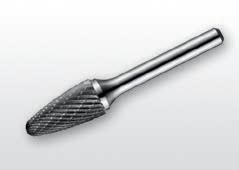
Rotary Burr – Ball Nosed Tree, Shape F, Bright Finish DC double cut flute style with close spaced edges for multi-angle contouring, rounding of edges and cutting into hard to reach areas. Carbide design for cutting diameter up to 6 mm; above 6 mm carbide head with toughened and hardened steel shank.
Workpiece material group suitability. Recommended operating speed (RPM) on page 277.
DC ≤ 6.00 mm: DCON MS tolerance h6; DC > 6.00 mm: Brazed on steel shank with DCON MS tolerance h7. Products from this series are also available in set. Please see P880 or P890.
Brazed on steel shank
P811C
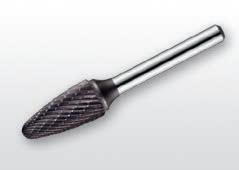
Rotary Burr – Ball Nosed Tree, Shape F, TiAlN Coating DC double cut flute style with close spaced edges for multi-angle contouring, rounding of edges and cutting into hard to reach areas. Carbide design for cutting diameter up to 6 mm; above 6 mm carbide head with tough hard steel shank. TiALN coating for increased tool life, reduced friction and improved swarf evacuation.
Workpiece material group suitability. Recommended operating speed (RPM) on page 277. DC ≤ 6.00 mm: DCON MS tolerance h6; DC > 6.00 mm: Brazed on steel shank with DCON MS tolerance h7. Products from this series are also available in set. Please see P880.
1) Brazed on steel shank
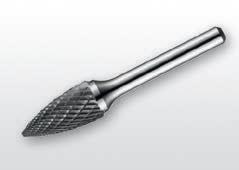
Rotary Burr – Pointed Tree, Shape G, Bright Finish DC double cut flute style with close spaced edges for multi-angle contouring and cutting narrow angles in hard to reach areas. Carbide design for cutting diameter up to 6 mm; above 6 mm carbide head with toughened and hardened steel shank.
Workpiece material group suitability. Recommended operating speed (RPM) on page 277.
DC ≤ 6.00 mm: DCON MS tolerance h6; DC > 6.00 mm: Brazed on steel shank with DCON MS tolerance h7. Products from this series are also available in set. Please see P880 or P890.
Brazed on steel shank
P813C
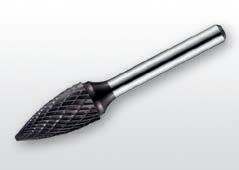
Rotary Burr – Pointed Tree, Shape G, TiAlN Coating DC double cut flute style with close spaced edges for multi-angle contouring and cutting narrow angles in hard to reach areas. Carbide design for cutting diameter up to 6 mm; above 6 mm carbide head with tough hard steel shank. TiALN coating for increased tool life, reduced friction and improved swarf evacuation.
Workpiece material group suitability. Recommended operating speed (RPM) on page 277.
DC ≤ 6.00 mm: DCON MS tolerance h6; DC > 6.00 mm: Brazed on steel shank with DCON MS tolerance h7. Products from this series are also available in set. Please see P880.
1) Brazed on steel shank
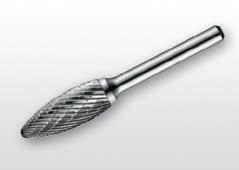
Rotary Burr – Flame, Shape H, Bright Finish DC double cut flute style with close spaced edges for round edge contouring and welding preparation. Carbide design for cutting diameter up to 6 mm; above 6 mm carbide head with toughened and hardened steel shank.
Workpiece material group suitability. Recommended operating speed (RPM) on page 277.
P815C
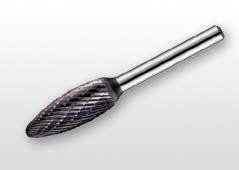
Rotary Burr – Flame, Shape H, TiAlN Coating
DC double cut flute style with close spaced edges for round edge contouring and welding preparation. Carbide head with toughened and hardened steel shank. TiALN coating for increased tool life, reduced friction and improved swarf evacuation.
Workpiece material group suitability. Recommended operating speed (RPM) on page 277.
Brazed on Steel Shank with DCON MS tolerance h7.
Product
Brazed on steel shank
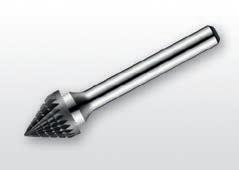
Rotary Burr – 60° Countersink, Shape J
DC double cut flute style with close spaced edges for chamfering, making v-cuts and welding preparation. Carbide design for cutting diameter up to 6 mm; above 6 mm carbide head with toughened and hardened steel shank.
Workpiece material group suitability. Recommended operating speed (RPM) on page 277.
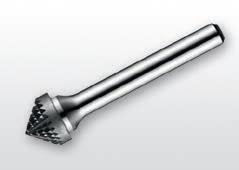
Rotary Burr – 90° Countersink, Shape K
DC double cut flute style with close spaced edges for chamfering, making v-cuts and welding preparation. Carbide design for cutting diameter up to 6 mm; above 6 mm carbide head with toughened and hardened steel shank.
Workpiece material group suitability. Recommended operating speed (RPM) on page 277.
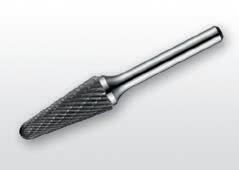
Rotary Burr – Ball Nosed Cone, Shape L, Bright Finish DC double cut flute style with close spaced edges for enlarging holes, rounding edges and surface finishing in tight narrow angles or other hard to reach areas. Carbide design for cutting diameter up to 6 mm; above 6 mm carbide head with toughened and hardened steel shank.
Workpiece material group suitability. Recommended operating speed (RPM) on page 277.
DC ≤ 6.00 mm: DCON MS tolerance h6; DC > 6.00 mm: Brazed on steel shank with DCON MS tolerance h7. Products from this series are also available in set. Please see P880 or P890.
Brazed on steel shank
P821C
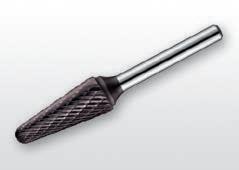
Rotary Burr – Ball Nosed Cone, Shape L, TiAlN Coating DC double cut flute style with close spaced edges for enlarging holes, rounding edges and surface finishing in tight narrow angles or other hard to reach areas. Carbide design for cutting diameter up to 6 mm; above 6 mm carbide head with toughened and hardened steel shank. TiALN coating for increased tool life.
Workpiece material group suitability. Recommended operating speed (RPM) on page 277.
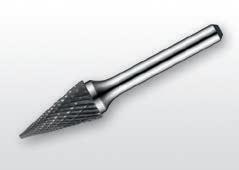
Rotary Burr – Cone, Shape M
DC double cut flute style with close spaced edges for enlarging holes, surface finishing and cutting narrow angles in hard to reach areas. Carbide design for cutting diameter up to 6 mm; above 6 mm carbide head with toughened and hardened steel shank.
Workpiece material group suitability. Recommended operating speed (RPM) on page 277.
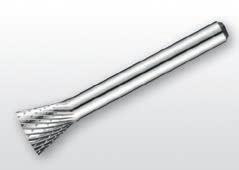
Rotary Burr – Inverted Cone, Shape N
DC double cut flute style with close spaced edges for making inverted v-cuts and rear side chamfering. Carbide design for cutting diameter up to 6 mm; above 6 mm carbide head with toughened and hardened steel shank.
Workpiece material group suitability. Recommended operating speed (RPM) on page 277.
1) Brazed on steel shank
Material code (BMC)
Burr Type Code (BTC)
Burr Shape
Coating
Basic standard group (BSG)
Burr end shot









Product Family Code
PSF cutting diameters range
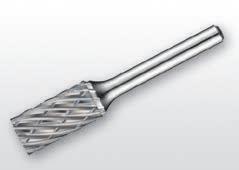
Rotary Burr – Cylinder without endcut, Shape A ST single cut flute style with chipbreakers and medium spaced edge for trimming and deburring surfaces. Carbide design for cutting diameter equal to 6 mm; above 6 mm carbide head with toughened and hardened steel shank. First choice for steels.
Workpiece material group suitability. Recommended operating speed (RPM) on page 277.
DC = 6.00 mm: DCON MS tolerance h6; DC > 6.00 mm: Brazed on steel shank with DCON MS tolerance h7.
Product
1) Brazed on steel shank
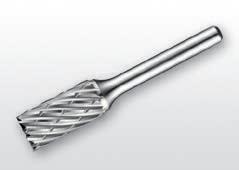
Rotary Burr – Cylinder with endcut, Shape B ST single cut flute style with chipbreakers and medium spaced edge for trimming and deburring surfaces and right-angled corners. Carbide design for cutting diameter equal to 6 mm; above 6 mm carbide head with toughened and hardened steel shank. First choice for steels.
Workpiece material group suitability. Recommended operating speed (RPM) on page 277.
DC = 6.00 mm: DCON MS tolerance h6; DC > 6.00 mm: Brazed on steel shank with DCON MS tolerance h7. Products from this series are also available in set. Please see P880.
Product
1) Brazed on steel shank
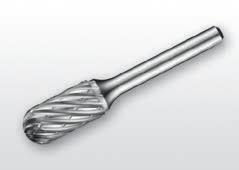
Rotary Burr – Ball Nosed Cylinder, Shape C ST single cut flute style with chipbreakers and medium spaced edge for trimming and deburring contours and circular arcs. Carbide design for cutting diameter equal to 6 mm; above 6 mm carbide head with toughened and hardened steel shank. First choice for steels.
Workpiece material group suitability. Recommended operating speed (RPM) on page 277.
DC = 6.00 mm: DCON MS tolerance h6; DC > 6.00 mm: Brazed on steel shank with DCON MS tolerance h7. Products from this series are also available in set. Please see P880.
Product
1) Brazed on steel shank
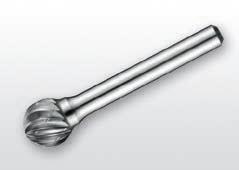
Rotary Burr – Ball, Shape D
ST single cut flute style with chipbreakers and medium spaced edge for intricate carving, metal engraving and welding preparation. Carbide design for cutting diameter equal to 6 mm; above 6 mm carbide head with toughened and hardened steel shank. First choice for steels.
Workpiece material group suitability. Recommended operating speed (RPM) on page 277.
DC = 6.00 mm: DCON MS tolerance h6; DC > 6.00 mm: Brazed on steel shank with DCON MS tolerance h7. Products from this series are also available in set. Please see P880.
Product
1) Brazed on steel shank
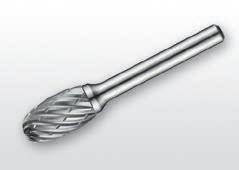
Rotary Burr – Oval, Shape E
ST single cut flute style with chipbreakers and medium spaced edge for round edge contouring. Carbide head with toughened and hardened steel shank. First choice for steels.
Workpiece material group suitability. Recommended operating speed (RPM) on page 277.
Brazed on Steel Shank with DCON MS tolerance h7.
Product
1) Brazed on steel shank
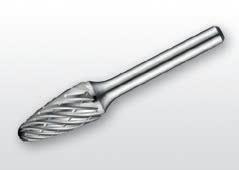
Rotary Burr – Ball Nosed Tree, Shape F
ST single cut flute style with chipbreakers and medium spaced edge for multi-angle contouring, rounding of edges and cutting into hard to reach areas. Carbide design for cutting diameter equal to 6 mm; above 6 mm carbide head with toughend and hardened steel shank. First choice for steels.
Workpiece material group suitability. Recommended operating speed (RPM) on page 277.
DC = 6.00 mm: DCON MS tolerance h6; DC > 6.00 mm: Brazed on steel shank with DCON MS tolerance h7. Products from this series are also available in set. Please see P880.
Product
1) Brazed on steel shank
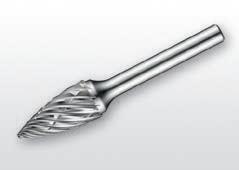
Rotary Burr – Pointed Tree, Shape G
ST single cut flute style with chipbreakers and medium spaced edge for multi-angle contouring and cutting narrow angles in hard to reach areas. Carbide design for cutting diameter equal to 6 mm; above 6 mm carbide head with toughened and hardened steel shank. First choice for steels.
DC = 6.00 mm: DCON MS tolerance h6; DC > 6.00 mm: Brazed on steel shank with DCON MS tolerance h7.
Brazed on steel shank
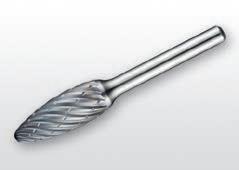
Rotary Burr – Flame, Shape H ST single cut flute style with chipbreakers and medium spaced edge for round edge contouring and welding preparation. Carbide head with toughened and hardened steel shank. First choice for steels.
Workpiece material group suitability. Recommended operating speed (RPM) on page 277.
Brazed on Steel Shank with DCON MS tolerance h7.
Product
1) Brazed on steel shank
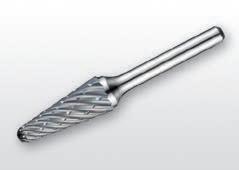
Rotary Burr – Ball Nosed Cone, Shape L
ST single cut flute style with chipbreakers and medium spaced edge for enlarging holes, rounding edges and surface-finishing in tight narrow angles or other hard to reach areas. Carbide head with toughened and hardened steel shank. First choice for steels.
Workpiece material group suitability. Recommended operating speed (RPM) on page 277.
Brazed on Steel Shank with DCON MS tolerance h7. Products from this series are also available in set. Please see P880.
Product
1) Brazed on steel shank
Material code (BMC)
Burr Type Code (BTC)
Burr Shape
Coating
Basic standard group (BSG)








Product Family Code
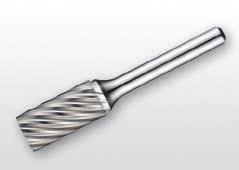
Rotary Burr – Cylinder without endcut, Shape A VA single cut flute style with medium spaced edges for trimming and deburring surfaces. Carbide design for cutting diameter up to 6 mm; above 6 mm carbide head with toughened and hardened steel shank. First choice for stainless steels.
Workpiece material group suitability. Recommended operating speed (RPM) on page 277.
DC ≤ 6.00 mm: DCON MS tolerance h6; DC > 6.00 mm: Brazed on steel shank with DCON MS tolerance h7. Products from this series are also available in set. Please see P880.
P60112.7X6.0 1)
Product
1) Brazed on steel shank
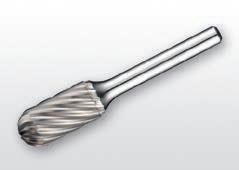
Rotary Burr – Ball Nosed Cylinder, Shape C
VA single cut flute style with medium spaced edges for trimming and deburring contours and circular arcs. Carbide design for cutting diameter up to 6 mm; above 6 mm carbide head with toughened and hardened steel shank. First choice for stainless steels.
Workpiece material group suitability. Recommended operating speed (RPM) on page 277.
DC ≤ 6.00 mm: DCON MS tolerance h6; DC > 6.00 mm: Brazed on steel shank with DCON MS tolerance h7. Products from this series are also available in set. Please see P880.
Product
P60512.7X6.0 1)
1) Brazed on steel shank
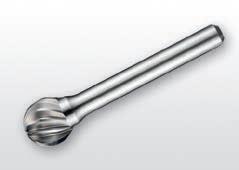
Rotary Burr – Ball, Shape D
VA single cut flute style with medium spaced edges for intricate carving, metal engraving and welding preparation. Carbide design for cutting diameter up to 6 mm; above 6 mm carbide head with toughened and hardened steel shank. First choice for stainless steels.
Workpiece material group suitability. Recommended operating speed (RPM) on page 277.
DC ≤ 6.00 mm: DCON MS tolerance h6; DC > 6.00 mm: Brazed on steel shank with DCON MS tolerance h7. Products from this series are also available in set. Please see P880.
P60712.7X6.0 1)
Product
1) Brazed on steel shank
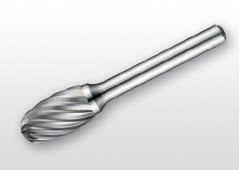
Rotary Burr – Oval, Shape E
VA single cut flute style with medium spaced edges for round edge contouring. Carbide head with toughened and hardened steel shank. First choice for stainless steels.
Workpiece material group suitability. Recommended operating speed (RPM) on page 277.
Brazed on Steel Shank with DCON MS tolerance h7.
Product
1) Brazed on steel shank
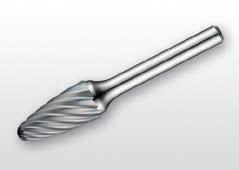
Rotary Burr – Ball Nosed Tree, Shape F
VA single cut flute style with medium spaced edges for multi-angle contouring, rounding of edges and cutting into hard to reach areas. Carbide design for cutting diameter up to 6 mm; above 6 mm carbide head with toughened and hardened steel shank. First choice for stainless steels.
Workpiece material group suitability. Recommended operating speed (RPM) on page 277.
DC ≤ 6.00 mm: DCON MS tolerance h6; DC > 6.00 mm: Brazed on steel shank with DCON MS tolerance h7. Products from this series are also available in set. Please see P880.
Product
P61112.7X6.0 1)
1) Brazed on steel shank
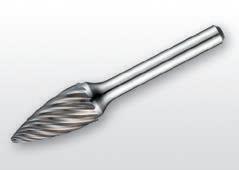
Rotary Burr – Pointed Tree, Shape G VA single cut flute style with medium spaced edges for multi-angle contouring and cutting narrow angles in hard to reach areas. Carbide design for cutting diameter equal to 6 mm; above 6 mm carbide head with toughened and hardened steel shank. First choice for stainless steels.
Workpiece material group suitability. Recommended operating speed (RPM) on page 277.
DC=6.00 mm: DCON MS tolerance h6; DC > 6.00 mm: Brazed on steel shank with DCON MS tolerance h7.
Product 1) Brazed on steel shank
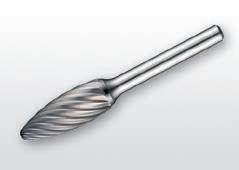
Rotary Burr – Flame, Shape H
VA single cut flute style with medium spaced edges for round edge contouring and welding preparation. Carbide head with toughened and hardened steel shank. First choice for stainless steels.
Workpiece material group suitability. Recommended operating speed (RPM) on page 277.
Brazed on Steel Shank with DCON MS tolerance h7.
Product
1) Brazed on steel shank
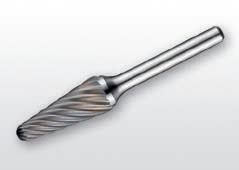
Rotary Burr – Ball Nosed Cone, Shape L
VA single cut flute style with medium spaced edges for enlarging holes, rounding edges and surface finishing in tight narrow angles or other hard to reach areas. Carbide head with toughened and hardened steel shank. First choice for stainless steels.
Workpiece material group suitability. Recommended operating speed (RPM) on page 277.
Brazed on Steel Shank with DCON MS tolerance h7. Products from this series are also available in set. Please see P880.
Product
1) Brazed on steel shank
Material code (BMC)
Burr Type Code (BTC)
Burr Shape
Coating
Basic standard group (BSG)
Application angle
Burr end shot






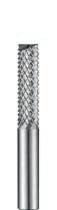
Product Family Code
PSF cutting diameters range
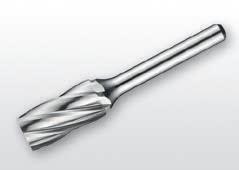
Rotary Burr – Cylinder without endcut, Shape A AL single cut flute style with wide spaced edges for trimming and deburring surfaces. Carbide design for cutting diameter equal to 6 mm; above 6 mm carbide head with toughened and hardened steel shank. First choice for non-ferrous materials and plastics.
Workpiece material group suitability. Recommended operating speed (RPM) on page 277.
DC = 6.00 mm: DCON MS tolerance h6; DC > 6.00 mm: Brazed on steel shank with DCON MS tolerance h7.
Product
1) Brazed on steel shank
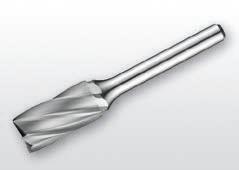
Rotary Burr – Cylinder with endcut, Shape B AL single cut flute style with wide spaced edges for trimming and deburring surfaces and right-angled corners. Carbide design for cutting diameter equal to 6 mm; above 6 mm carbide head with toughened and hardened steel shank. First choice for non-ferrous materials and plastics.
Workpiece material group suitability. Recommended operating speed (RPM) on page 277.
DC = 6.00 mm: DCON MS tolerance h6; DC > 6.00 mm: Brazed on steel shank with DCON MS tolerance h7.
Product
1) Brazed on steel shank
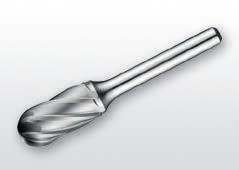
Rotary Burr – Ball Nosed Cylinder, Shape C
AL single cut flute style with wide spaced edges for for trimming and deburring contours and circular arcs. Carbide design for cutting diameter equal to 6 mm; above 6 mm carbide head with toughened and hardened steel shank. First choice for non-ferrous materials and plastics.
Workpiece material group suitability. Recommended operating speed (RPM) on page 277.
DC = 6.00 mm: DCON MS tolerance h6; DC > 6.00 mm: Brazed on steel shank with DCON MS tolerance h7.
Product
1) Brazed on steel shank
P837
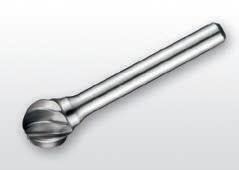
Rotary Burr – Ball, Shape D
AL single cut flute style with wide spaced edges for intricate carving, metal engraving and welding preparation. Carbide design for cutting diameter equal to 6 mm; above 6 mm carbide head with toughened and hardened steel shank. First choice for non-ferrous materials and plastics.
Workpiece material group suitability. Recommended operating speed (RPM) on page 277.
DC = 6.00 mm: DCON MS tolerance h6; DC > 6.00 mm: Brazed on steel shank with DCON MS tolerance h7. Product
1) Brazed on steel shank
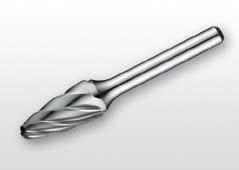
Rotary Burr – Ball Nosed Tree, Shape F
AL single cut flute style with wide spaced edges for multi-angle contouring, rounding of edges and cutting into hard to reach areas. Carbide design for cutting diameter equal to 6 mm; above 6 mm carbide head with toughened and hardened steel shank. First choice for non-ferrous materials and plastics.
Workpiece material group suitability. Recommended operating speed (RPM) on page 277.
DC = 6.00 mm: DCON MS tolerance h6; DC > 6.00 mm: Brazed on steel shank with DCON MS tolerance h7.
Product
1) Brazed on steel shank
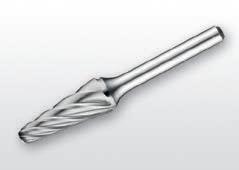
Rotary Burr – Ball Nosed Cone, Shape L
AL single cut flute style – wide spaced edges for enlarging holes, rounding edges and surface finishing in tight narrow angles or other hard to reach areas. Carbide design for cutting diameter equal to 6 mm; above 6 mm carbide head with toughened and hardened steel shank. First choice for non-ferrous materials and plastics.
Workpiece material group suitability. Recommended operating speed (RPM) on page 277.
DC = 6.00 mm: DCON MS tolerance h6; DC > 6.00 mm: Brazed on steel shank with DCON MS tolerance h7.
Product
1) Brazed on steel shank
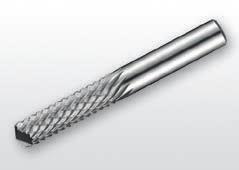
Diamond Cut Router – 135° Drill Point GRP diamond cut flute style with medium spaced edges for contouring, making cut-out shapes and holes. Solid carbide shank for rigidity. First choice for fibreglass and composite materials.
Workpiece material group suitability. Recommended operating speed (RPM) on page 277.
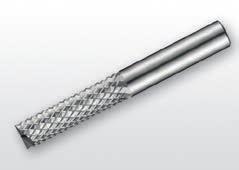
Diamond Cut Router – End Mill
GRP diamond cut flute style with medium spaced edges for contouring, groove and pocket milling and making cut-out shapes. Solid carbide shank for rigidity. First choice for fibreglass and composite materials.
Workpiece material group suitability. Recommended operating speed (RPM) on page 277. DCON MS tolerance h6.
Material code (BMC)
Burr Type Code (BTC)
Burr Shape
Coating
Basic standard group (BSG)









Product Family Code
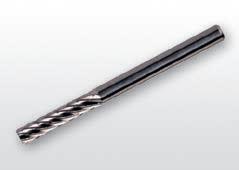
Rotary Burr – Cylinder without endcut, Shape A AS single cut flute style with light left-hand cross cut for trimming and deburring surfaces. Solid carbide shank for rigidity. First choice for superalloys.
Workpiece material group suitability. Recommended operating speed (RPM) on page 277.
DCON MS tolerance h6. Products from this series are also available in set. Please see P880.
Product
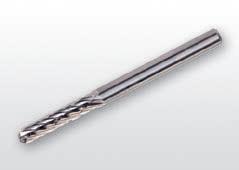
Rotary Burr – Ball Nosed Cylinder, Shape C AS single cut flute style with light left-hand cross cut for trimming and deburring contours and circular arcs. Solid carbide shank for rigidity. First choice for superalloys.
Workpiece material group suitability. Recommended operating speed (RPM) on page 277.
MS tolerance h6. Products from this series are also available in set. Please see P880.
Product
DCON
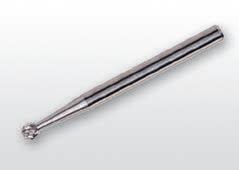
Rotary Burr – Ball, Shape D AS single cut flute style with light left-hand cross cut for intricate carving, metal engraving and welding preparation. Solid carbide shank for rigidity. First choice for superalloys.
Workpiece material group suitability. Recommended operating speed (RPM) on page 277.
DCON MS tolerance h6. Products from this series are also available in set. Please see P880.
Product
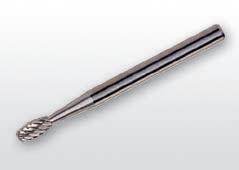
Rotary Burr – Oval, Shape E AS single cut flute style with light left-hand cross cut for round edge contouring. Solid carbide shank for rigidity. First choice for superalloys.
Workpiece material group suitability. Recommended operating speed (RPM) on page 277.
DCON MS tolerance h6. Products from this series are also available in set. Please see P880.
Product
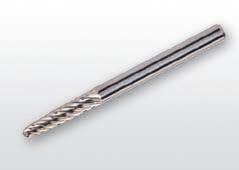
Rotary Burr – Ball Nosed Tree, Shape F AS single cut flute style with light left-hand cross cut for multi-angle contouring, rounding of edges and cutting into hard to reach areas. Solid carbide shank for rigidity. First choice for superalloys.
Workpiece material group suitability. Recommended operating speed (RPM) on page 277.
Products from this series are also available in set. Please see P880.
DCON MS tolerance h6.
Product
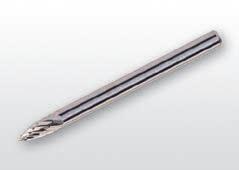
Rotary Burr – Pointed Tree, Shape G AS single cut flute style with light left-hand cross cut for multi-angle contouring and cutting narrow angles in hard to reach areas. Solid carbide shank for rigidity. First choice for superalloys.
Workpiece material group suitability. Recommended operating speed (RPM) on page 277.
MS tolerance h6. Products from this series are also available in set. Please see P880.
Product
DCON
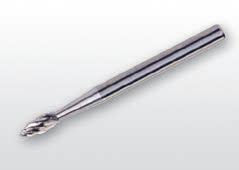
Rotary Burr – Flame, Shape H AS single cut flute style with light left-hand cross cut for round edge contouring and welding preparation. Solid carbide shank for rigidity. First choice for superalloys.
Workpiece material group suitability. Recommended operating speed (RPM) on page 277.
DCON MS tolerance h6. Products from this series are also available in set. Please see P880.
Product
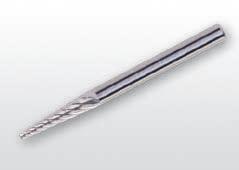
Rotary Burr – Ball Nosed Cone, Shape L AS single cut flute style with light left-hand cross cut for enlarging holes, rounding edges and surface-finishing in tight narrow angles or other hard to reach areas. Solid carbide shank for rigidity. First choice for superalloys.
Workpiece material group suitability. Recommended operating speed (RPM) on page 277.
MS tolerance h6. Products from this series are also available in set. Please see P880.
DCON
Product
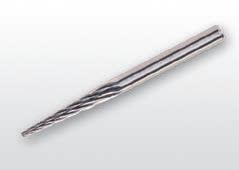
Rotary Burr – Cone, Shape M AS single cut flute style with light left-hand cross cut for enlarging holes, surface finishing and cutting narrow angles in hard to reach areas. Solid carbide shank for rigidity. First choice for superalloys.
Workpiece material group suitability. Recommended operating speed (RPM) on page 277.
MS tolerance h6. Products from this series are also available in set. Please see P880.
Product
DCON
Material code (BMC)
Burr Type Code (BTC)
Coating
Basic standard group (BSG)
Application angle
Burr end shot
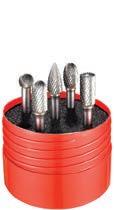


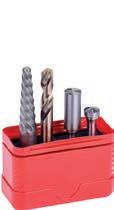
Product Family Code
PSF cutting diameters range
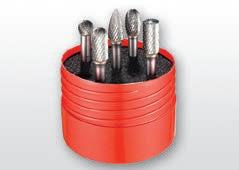
Rotary Burr Set Set of different rotary burrs in various shapes, sizes and forms.
P88001
P88002
P88003
+ P805 + P807 + P809 + P813
P8059.6X6.0; P8079.6X6.0; P8099.6X6.0; P8139.6X6.0
P7059.6X6.0; P7079.6X6.0; P7119.6X6.0; P72110.0X6.0
P88006 Nr06P501 + P505 + P507 + P509 + P511 + P513 + P515 + P521 + P52310 P5013.0×3.0; P5053.0×3.0; P5073.0×3.0; P5093.0×3.0; P5113.0×3.0; P5133.0×3.0×8.0; P5133.0×3.0×14.0; P5153.0×3.0; P5213.0×3.0; P5233.0×3.0
Rotary Burrs Display
Display of 40 pieces of solid burrs of the P8xx serie. DC double cut flute style with close spaced edges. Bright finish. A = Styles in Set, B = No. in Set, C = Rotary Burrs in Set.
Product
Nr. A B C
P89001EMPTY – – – –
P89001 Nr01P803 + P805 + P811 + P813 + P82140
P803(6.0X6.0; 8.0X6.0; 9.6X6.0; 12.7X6.0) X 2; P805(6.0X6.0; 8.0X6.0; 9.6X6.0; 12.7X6.0) X 2; P811(6.0X6.0; 8.0X6.0; 9.6X6.0; 12.7X6.0) X 2; P813(6.0X6.0; 8.0X6.0; 9.6X6.0; 12.7X6.0) X 2; P821(6.0X6.0; 8.0X6.0; 9.6X6.0; 12.7X6.0) X 2
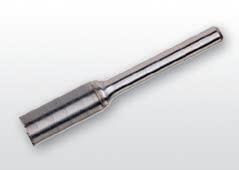
1st Stage Rotary Burr for Broken Bolt Removal, Cylinder with End Cut
First stage broken bolt removal solid carbide burr. When a bolt is broken and needs to be extracted, first use P100 to flatten the broken bolt surface. Secondly use P101. This series of burrs makes sure the threaded hole is not damaged when removing the broken piece.
Workpiece material group suitability. Recommended operating speed (RPM) on page 277.
Product
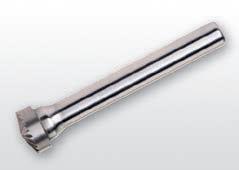
2nd Stage Rotary Burr for Broken Bolt Removal, 150° Countersink Second stage broken bolt removal solid carbide burr. When a bolt is broken and needs to be extracted, P101 creates a centerpoint into the flattened broken bolt. Prepare it for the 3rd stage, drilling the broken piece with a drill.
Workpiece material group suitability. Recommended operating speed (RPM) on page 277.
Product
M902
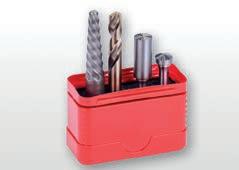
Bolt Removal Kit
Tools for removing broken right-handed bolts come in a set of four. First, use the P100 burr to flatten the bolt. Second, use the P101 burr to create a starting cone. Third, use the HSS-E stub drill A117 to drill a hole for the extractor. Finally, use the screw extractor in a counter-clockwise motion to remove the broken bolt without damaging the threads.
M902M6-M8
M902M8-M10
M902M10-M12
M902M12-M14
M902M14-M16
M6 – M8
M8 – M10
M10 – M12
M12 – M14
M14 – M16
M900, P100, P101, A117
M900, P100, P101, A117
M900, P100, P101, A117
M900, P100, P101, A117
M900, P100, P101, A117
P1014.9, A1173.0, M9002
P1016.4, A1174.0, M9003
P1009.3, P1019.3, A1176.0, M9004
INSTRUCTIONS
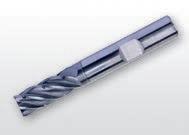
in pocketing operation.
Workpiece material group suitability, starting values for cutting speed (m/min) and Alpha Code. Tables with feed per tooth and correction factors can be found starting from page 266.
Product
Description
Designation of solid mills
Product description
Illustrative picture
Schematic drawing of tool
Product features Pos. Description
Material group recommendations incl. speed and feed guidance
Icons
Primary use
Mill Profile
General Purpose Cutter Type for Low to High Resistance Materials
Semi-finishing Profile Chipbreaker
Fine Pitch Asymmetrical Rounded Profile Chipbreaker
Coarse Pitch Flat Profile Chipbreaker
Number of flutes (NOF)
Number of Flutes = 1 (single tooth)
Number of Flutes = 2 (teeth)
Number of Flutes = 3 (teeth)
Number of Flutes = 3 (teeth) differential pitch
Number of Flutes = 3 – 4 (teeth)
Number of Flutes = 3 – 5 (teeth)
Cut length
Possible use
Coarse Pitch Asymmetrical Rounded Profile Chipbreaker
Coarse Pitch Rounded Profile Chipbreaker
Non-ferrous Cutter Type for Soft Malleable Materials
Non-ferrous Cutter Type with Coarse Pitch Asymmetrical Rounded Profile Chipbreaker
Fine Pitch
Coarse Pitch
Number of Flutes = 3 – 6 (teeth)
Number of Flutes = 4 (teeth)
Number of Flutes = 4 (teeth) differential pitch
Number of Flutes = 4 – 5 (teeth)
Number of Flutes = 4 – 6 (teeth)
Number of Flutes = 5 (teeth)
Cut Length, Short Cut Length, Medium Cut Length, Long Cut Length, Extra Short
Flute helix angle (FHA)
Number of Flutes = 6 – 12 (teeth)
Number of Flutes = 6 – 8 (teeth)
Number of Flutes = 8 (teeth)
Number of Flutes = 10 – 12 (teeth)
Cut Length, Extra long
50°
Radial rake angle (GAMF)
-26° Radial Rake Angle (cutting)
-10° Radial Rake Angle (cutting)
-6° Radial Rake Angle (cutting)
0° Radial Rake Angle (Neutral)
3° Radial Rake Angle (cutting)
4° Radial Rake Angle (cutting)
Shank
DIN 1835B Weldon Shank
DIN 6535 HB Weldon Shank
Cutting diameter tolerance class (TCDC)
d11 – Industry Standard Tool Tolerance Zone (based on diameter range)
e8 – Industry Standard Tool Tolerance Zone (based on diameter range)
h9 – Industry Standard Tool Tolerance Zone (based on diameter range)
h10 – Industry Standard Tool Tolerance Zone (based on diameter range)
Direction
Radial, Diagonal, Axial
Radial, Diagonal
5° Radial Rake Angle (cutting)
7° Radial Rake Angle (cutting)
8° Radial Rake Angle (cutting) 9° Radial Rake Angle (cutting)
Radial Rake Angle (cutting)
Radial Rake Angle (cutting)
13° Radial Rake Angle (cutting)
20° Radial Rake Angle (cutting)
15° Radial Rake Angle (cutting)
18° Radial Rake Angle (cutting)
DIN 6535 HA Cylindrical Shank
DIN 1835 – B (Weldon) or D (Threaded) Shank
DIN 1835A Cylindrical Shank
h11 – Industry Standard Tool Tolerance Zone (based on diameter range)
h12 – Industry Standard Tool Tolerance Zone (based on diameter range)
js14 – Industry Standard Tool Tolerance Zone (based on diameter range)
js16 – Industry Standard Tool Tolerance Zone (based on diameter range)
k10 – Industry Standard Tool Tolerance Zone (based on diameter range)
k12 – Industry Standard Tool Tolerance Zone (based on diameter range)
Basic standard group (BSG)
Dormer Standards
DIN 327 D – Slot Drill Standards
DIN 844 L – HSS End Mills Standards
DIN 844 K – End Mill Standards
DIN 6527 L – Carbide End Mill Standards
Application angle
60° Countersink
90° Countersink
Burr end shot
End Mill Burr End
Burr Shape
Cylinder Shape without endcut
Cylinder Shape with endcut
Ball Nosed Cylinder Shape
Ball Shape
Oval Shape
Burr Type Code (BTC)
Steel Cut Geometry
Stainless Steel Cut Geometry
Double Cut Geometry
DIN 6527 K – Carbide End Mill Standards
DIN 1880 – Shell Mill Standards
DIN 1837 – Fine Slitting Saw Standards
DIN 1838 – Coarse Slitting Saw Standards
DIN 850 – Keyseat Cutter Standards
Drill point 135°
Drill point 180°
End Cut Burr End
Ball Nosed Tree Shape
Pointed Tree Shape
Flame Shape
60° Countersink Shape
90° Countersink Shape
Aluminium Cut Geometry
Fibreglass and Composite Materials Cut Geometry
Superalloy Cut Geometry
ICONS OVERVIEW
DIN 851 – T-Slot Cutter Standards
DIN 885 A – Side & Face Mill Standards
DIN 1833 C – Dovetail Cutter Standards
Spot drill point 150°
Drill Point Burr End
Ball Nosed Cone Shape
Cone Shape
Inverted Cone Shape
Bolt Removal Cut Geometry
Material code (BMC)
High Speed Steel Tool Material
High Speed Cobalt Steel Tool Material
Coating
Bright (uncoated)
Polished Bright Surface Finish
Steam Tempered (Steam Oxide) Surface Treatment
Special AlTiN Coating (with highest oxidation resistance)
Operations deburring
Bolt removal operation 1
Bolt removal operation 2
Closed groove deburring and carving
Composite fibre routing
Other icons
HSS-E PM
High Speed Cobalt Powder Metal Tool Material
Hard Material (Solid Carbide)
Titanium Silicon Nitride Coating
Titanium Carbonitride Coating
Titanium Aluminium Nitride Coating
Diamond Like Coating
Aluminium Titanium Nitride Coating
Aluminium Chromium Nitride Coating
Aluminium Chromium Nitride Coating
Curved surface deburring and carving
Fillet radii deburring
Free hand deburring and carving
Chamfer deburring
Inverted back deburring
Plain surface deburring
Shoulder deburring
V-groove deburring
CUTTING TOOL PARAMETERS ACCORDING TO ISO 13399
All cutting tools are defined by a number of parameters according to the standard ISO 13399. This list contains all the parameters used in this catalogue and their definitions.
ISO 13399 is an international cutting tool information standard. It provides dimensions and parameters in a neutral format that is independent of any particular system or company nomenclature. When cutting tools are clearly defined according to a global standard, all types of soft ware can process the electronic data more quickly, improving the quality of communication and helping to make the exchange of information run smoothly. Supporting a common language in our cutting tool descriptions this will assist system to system communication. It will save you a significant amount of time, providing an easier gathering of high-quality data across our 40,000 solid and indexable tools. By using an ISO 13399 compliant system, there will be no need to manually interpret data and key-enter it into your system.
EXAMPLES ONLY!
ISO 13399 code Description
Depth of cut maximum
Body diameter
Body diameter maximum
Corner chamfer length
Wiper edge length
Connection bore depth
Insert cutting diameter
Cutting depth maximum
Cutting width
Connection size code machine side
Fixing hole diameter
Diameter access hole
Diameter access hole
Diameter access hole
Diameter bolt circle 1
Diameter bolt circle 2
Diameter bolt circle
Diameter bolt circle
Diameter bolt circle
Cutting diameter
Connection bore diameter
Counterbore diameter connection bore
ISO 13399 code Description
Cutting diameter minimum
Connection diameter
Cutting diameter maximum
Hub diameter
Neck diameter
Radial rake angle
Axial rake angle
Corner chamfer width
Inscribed circle diameter
Insert diameter
Insert length
Tool cutting edge angle
Keyway depth
Keyway width
Cutting edge length
Body length
Cutting edge effective length
Functional length
Head length
Usable length
Usable length maximum
M-dimension
Number of flutes
ISO 13399 code Description
Overall length
Pitch of the blade
Profile angle
Profile radius
Radius
Insert thickness
Insert thickness total
Thread diameter size
Thread pitch
Threads per inch
Insert width
Number of peripheral edges in the tool
MATERIALS AND COATING
Materials
High Speed Steel
Cobalt High Speed Steel
Sintered Cobalt High Speed Steel
Carbide Materials (or Hard Materials)
Surface Treatments/Surface Coatings
Bright (uncoated)
Steam Tempering
Polished Bright Surface Finish
Titanium Carbon Nitride Coating (TiCN)
Titanium Aluminium Nitride Coatings (TiAlN, TiAlN-Top & X-CEED)
Aluminium Titanium Nitride Coating (AlTiN)
Alcrona Coatings (AlCrN, Alcrona, Alcrona-Top & Alcrona-Pro)
Titanium Silicon Nitride Coating (TiSiN)
Diamond Like Coating (DLC)
A medium-alloyed high speed steel that has good machinability and good performance. HSS exhibits hardness, toughness and wear resistance characteristics that make it attractive in a wide range of applications, for example in drills and taps.
This high speed steel contains cobalt for increased hot hardness. The composition of HSCo is a good combination of toughness and hardness. It has good machinability and good wear resistance, which makes it usable for drills, taps, milling cutters and reamers.
Sintered Cobalt High Speed Steel (HSCo powder metal) is a substrate produced using powder metallurgy technology. Tools using substrates produced by this method exhibit superior toughness and grindability.
A sintered powder metallurgy substrate, consisting of a metallic carbide composite with binder metal. The most central raw material is tungsten carbide (WC). Tungsten carbide contributes to the hardness of the material. Tantalum carbide (TaC), titanium carbide (TiC) and niobium carbide (NbC) complements WC and adjusts the properties to what is desired. These three materials are called cubic carbides. Cobalt (Co) acts as a binder and keeps the material together.
Bright finish (uncoated surface) improves chip flow in soft or non-ferrous materials and maintains sharp cutting edges in abrasive materials.
Steam tempering gives a strongly adhering blue oxide surface that acts to retain cutting fluid and prevent chip to tool welding, thereby counteracting the formation of a built-up edge. Steam tempering can be applied to any bright tool but is most effective on drills and taps.
Bright polished surface finish greatly improves chip flow in soft or gummy non-ferrous materials. Polishing facilitates chip evacuation and prevents material from sticking to cutting edges and in flutes.
Titanium Carbon Nitride is a ceramic coating applied by PVD coating technology. TiCN is harder than TiN and has a lower coefficient of friction. Its hardness and toughness in combination with good wear resistance ensures that it finds its principal application in the field of milling to enhance the performance of milling cutters.
Titanium Aluminium Nitride is a multi layer ceramic coating applied by PVD coating technology, which exhibits high toughness and oxidation stability. These properties make it ideal for higher speeds and feeds, while at the same time improving tool life. TiAlN is used in drilling, tapping, and milling applications and can be suitable for use when machining without coolant. TiAlN-Top coating is the same as TiAlN but with a post-coating process designed to smooth out imperfections, enhance chip flow and reduce built up edge.
X-CEED type TiAlN coating, also known as Futura-Nano coating is a nanolayered coating designed for higher hot hardness and higher stress applications.
Aluminium Titanium Nitride (AlTiN) is a nanolayered broad based coating technology which is an upgrade to the conventional TiAlN coatings and can offer superior toughness, high hot hardness and oxidation resistance.
The Alcrona (AlCrN) family of coatings are aluminium chromium nitride coatings mostly used for milling cutters. The two unique properties of these coatings are high hot hardness and high oxidation resistance. When used on tools for machining applications involving heavy mechanical and thermal stresses, these properties translate into superior wear resistance. Multiple levels or specific versions of these coatings are available and specific for various tools and applications.
TiSiN is designed for extreme cutting conditions and high speed machining of hard materials. This multi-layered coating has a nano-composite outer layer with Si3N4 nano-crystallites in a crystalline TiN matrix and is engineered to protect the cutting edge from heat transfer, oxidation and abrasion. TiSiN coatings can perform well at minimum to zero lubrication conditions.
Diamond Like Coating, also known as Diamond Like Carbon (DLC) provides the highest lubricity when used on carbide tools and avoids built up edge when machining graphite or soft non-ferrous materials.
Nomenclature
Features Of The End Mill – Choosing The Number Of Flutes NOF
Number of flutes should be determined by:
• Milled material
• Dimension of workpiece
• Milling conditions
• Large chip space
• Eas y chip ejection
• Good for slot milling
• Good for heavy duty milling
• Less rigidity due to small section area
• Lower quality surface finish
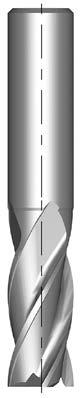
Shank
Helix Angle
Flute
Outside Diameter DC
Cutting Length AP
Overall Length OAL
Gash
Primary Relief Angle
Secondary Relief Angle
Heel
Cutting Edge
Rake Angle
Width of Primary Relief Land
Width of Secondary Relief Land
Undercut Face
• Chip space almost as large as for 2 flutes
• Larger section area – higher rigidity than 2 flutes
• Improved surface finish
• Highest rigidity
• Largest section area – small chip space
• Gives best surface finish
• Recommended for profiling, side milling and shallow slotting
Features Of The End Mill – Helix Angle
Increasing the number of flutes makes the load on the single tooth more homogeneous and consequently, this allows for a better finish. But with a high helix angle, the load FV along the cutter axis is increased too.
A high FV can give:
• Load problems on the spindle bearings
• Cutter movement along the spindle axis. To avoid this problem it is necessary to use Weldon or better Mechanical or Hydraulical Toolholder.

General hints on milling
Milling is a pro cess of generating machined surfaces by progressively removing a predetermined amount of material or stock from the workpiece at a relatively slow rate of movement or feed by a milling cutter rotating at a comparatively high speed. The characteristic feature of the milling process is that each milling cutter tooth removes its share of the stock in the form of small individual chips.
Type of milling cutters
The three basic milling operations are shown below: (A) peripheral milling, (B) face milling and (C) end milling.
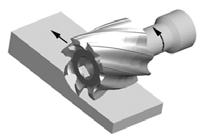
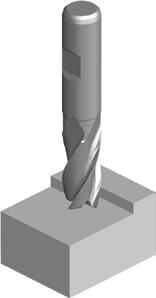
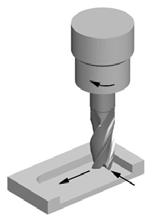
In peripheral milling (also called slab milling), the axis of cutter rotation is parallel to the workpiece surface to be machined. The cutter has a number of teeth along its circumference, each tooth acting like a single-point cutting tool called a plain mill. Cutters used in peripheral milling may have straight or helical teeth generating an orthogonal or oblique cutting action.
In face milling, the cutter is mounted on a spindle with an axis of rotation perpendicular to the workpiece surface. The milled surface results from the action of cutting edges located on the periphery and face of the cutter.
In end milling, the cutter generally rotates on an axis vertical to the workpiece. It can be tilted to machine tapered surfaces. Cutting teeth are located on both the end face of the cutter and the periphery of the cutter body.
Different applications for end mills
The Metal Removal Rate (MRR) and the applications are strongly related. For each different application we have a different MRR that increases with the engagement section of the cutter on the workpiece. The recent Dormer catalogue was produced with simple icons that show the different applications.
Milling
The radial depth of cut should be less than 0.25 of the diameter of the end mill.
Milling Effectively
Types Of Cuts
The radial depth of cut should be no more than 0.9 of the diameter, axial depth of cut less than 0.1 of the diameter.
Climb Milling Versus Conventional Milling
CLIMB MILLING
Chip formed max. thickness
Machining of a slot for keyways. The radial depth of cut is equal to the diameter on the end mill.
It is possible to drill the workpiece with an end mill only with the cutting centre. In this operation the feed has to be halved.
Both axial and radial entering into the workpiece.
CONVENTIONAL MILLING
Chip started zero thickness
In climb milling, the cutter revolves in the same direction as the table feed. The tooth meets the work at the top of the cut, producing the thickest part of the chip first. In horizontal applications the resultant force created by climb milling can act as a clamping force, acting towards the machine table.
It is important to make sure that the machine tool has no leadscrew backlash. Normally climb milling improves product surface finish and increases tool life.
In conventional milling, the cutter revolves opposite to the direction of table feed. Therefore the width of the chip starts at zero and increases to a maximum at the end of the cut. This can lead to accelerated tool wear under some conditions. Conventional milling may be advantageous when milling hot rolled steel, surface hardened and steels with a sur face scale.
PERIPHERAL (CYLINDRICAL, SLAB) MILLING
Peripheral Milling: The milling of a surface which is parallel to the end mill axis.
The radial depth of cut should be less than 0.1 of the diameter of the mill: ar < 0.1 DC .
Side
Face Milling Slot Milling
Plunge Milling Ramping
MILLING TECHNICAL INFO
Plunge Milling
The direct movement between the workpiece and the centre line of the end mill when the end mill sinks directly into the workpiece.
In order to be able to “drill,” i.e. mill with axial feed, an end mill must have an end face cutting edge that goes all the way to the centre. An example of such a solid drilling operation is keyway milling in the middle of a shaft. In boring, the depth of a hole may be up to 75 % of the cutting edge length. In solid drilling, however, it should not exceed 0.5 – 1.0 DC
Slot Milling
The radial depth of cut is equal to the diameter of the mill: ar = DC. All slotting applications are a combination of conventional and climb milling. Refer to adjacent section.
End Mill Selection
Utilize the shortest possible tool available for the application with the largest diameter permissible and the shortest flute length as depth of cut allows. Extra length end mills have excessive overhang, thus a reduction in feed up to 25 % may be required. Stub length end mills, due to their short overall and flute length, have more rigidity, thus an increase in feed rates of up to 25 % may be required.
Speeds
Solid Carbide end mills must be run at higher speeds than High Speed Steel end mills. Many times, lighter cuts at higher speeds can improve the finish of the workpiece.
When the application is a slotting cut, the speed should be reduced by approximately 20 %. Speeds should be decreased when milling hard or tough materials or when taking heavy cuts. Speeds should be increased when milling softer materials or when taking lighter cuts. Speeds should also be increased for finishing cuts.
Coolants
Coolants are recommended when milling mild steel and high temperature alloys. The purpose of the coolant media is to direct the chips away from the cutting tool and workpiece. This prevents damage to the cutting edges due to recutting the chips. When machining titanium, coolant flow must be heavy and directed at the area of cut to prevent overheating and assist in chip removal.
How to use this table to find the feed per tooth fz:
1. Find your Alpha Code on the product page (example: 48C, “C“ is the Alpha Code).
2. Find the closest diameter for your cutting application in the top row of the table.
3. Find your Alpha Code in the left column of the table.
4. The intersection (cell) of the Diameter and Alpha Code is the feed per tooth fz
SOLID HSS MILLS – FEED PER TOOTH TABLE
Feed per tooth fz (mm/tooth) depending on the working conditions it might be necessary to adjust these values ±25 %
ONLY if plunging into solid material with a centre cutting end mill the values in this table should be considered as fn (feed per revolution).
HSS, HSS-E AND HSS-E-PM MILLING CUTTERS ONLY
1.002.003.004.005.006.008.0010.012.016.020.025.028.032.036.040.063.080.0100.0
A
B 0.0030.0040.0040.0060.0060.0070.0090.0120.0140.0180.0230.0290.0330.0380.0410.0430.0540.0570.052
C 0.0040.0040.0050.0070.0080.0080.0110.0150.0170.0230.0290.0360.0420.0470.0510.0540.0670.0710.065
D 0.0050.0060.0060.0090.0100.0100.0140.0180.0220.0290.0360.0450.0520.0590.0640.0670.0840.0890.082
E 0.0060.0070.0080.0110.0120.0130.0170.0230.0270.0360.0450.0560.0650.0740.0800.0840.1050.1110.102
F 0.0070.0080.0100.0130.0140.0160.0200.0280.0320.0430.0540.0670.0780.0890.0960.1010.1260.1330.122
G 0.0090.0100.0120.0160.0170.0190.0240.0330.0390.0520.0650.0810.0940.1070.1150.1210.1510.1600.147
H 0.0100.0120.0140.0190.0210.0220.0290.0400.0470.0620.0780.0970.1120.1280.1380.1450.1810.1920.176
I 0.0120.0150.0170.0230.0250.0270.0350.0480.0560.0750.0930.1160.1350.1530.1660.1740.2180.2300.212
J 0.0150.0170.0200.0270.0300.0320.0420.0570.0670.0900.1120.1390.1620.1840.1990.2090.2610.2760.254
table is valid for end mills and shell mills.
(m/min) Cutting speed (ft/min) (rev/min) Spindle speed (rev/min) (mm/min) Feed rate (in/min) (mm/tooth) Feed per tooth (in/tooth) (mm) Cutting diameter (in) (–) Number of teeth (–) (mm) Depth of cut (in) (mm) Width of cut (in)
(cm³/min) Metal removal rate (in³/min)
ø DC (mm)
This
How to use this table to find the feed per tooth IPT:
1. Find your Alpha Code on the product page (example: 157C, “C“ is the Alpha Code).
2. Find the closest diameter for your cutting application in the top row of the table.
3. Find your Alpha Code in the left column of the table.
4. The intersection (cell) of the Diameter and Alpha Code is the feed per tooth IPT
SOLID HSS MILLS – FEED PER TOOTH TABLE
Feed per tooth IPT (inch/tooth) depending on the working conditions it might be necessary to adjust these values ±25 %.
ONLY if plunging into solid material with a centre cutting end mill the values in this table should be considered as IPR (feed in inch per revolution).
FOR HSS, HSS-E AND HSS-E-PM MILLING CUTTERS ONLY
A .0001.0001.0001.0002.0002.0002.0002.0003.0004.0004.0005.0006.0006.0007.0008.0009.0011.0012.0013
B .0001.0002.0002.0002.0002.0002.0003.0004.0004.0005.0006.0007.0007.0009.0011.0012.0014.0015.0017
C .0002.0002.0002.0003.0003.0003.0004.0004.0005.0006.0007.0008.0009.0011.0013.0015.0017.0019.0020
D .0002.0002.0002.0004.0004.0004.0004.0006.0007.0008.0009.0010.0011.0013.0017.0019.0021.0023.0026
E .0002.0003.0003.0004.0005.0005.0006.0007.0008.0010.0011.0013.0014.0017.0020.0023.0027.0029.0032
F .0003.0003.0004.0005.0006.0006.0007.0008.0010.0012.0014.0016.0017.0020.0024.0028.0032.0035.0039
G .0004.0004.0005.0006.0007.0007.0008.0009.0012.0014.0017.0019.0020.0024.0030.0033.0039.0042.0046
H .0004.0005.0006.0007.0008.0008.0009.0011.0014.0017.0020.0022.0024.0029.0035.0040.0046.0050.0056
I .0005.0006.0007.0009.0010.0010.0011.0014.0017.0020.0024.0027.0030.0035.0043.0048.0056.0060.0067
J .0006.0007.0008.0011.0012.0012.0014.0017.0020.0024.0028.0032.0035.0042.0051.0058.0067.0072.0080
This table is valid for end mills and shell mills.
ø DC (inch)
Correction factors for cutting speed vc and feed per tooth fz for square shoulder milling with < 50 % radial immersion.
We recommend to avoid milling with 50 % radial immersion.
Correction factors for cutting speed vc for plain copy milling at different depths of cut.
SOLID HSS MILLS – CORRECTION FACTORS
How to use this table to find the correction factor for the feed per tooth (fz or IPT) for plain copy milling:
1. Find the closest radial immersion (ae / DC) for your cutting application in the top row of the table.
3. Find your closest axial immersion (ap / DC) for your cutting application in the left column of the table.
4. The intersection (cell) of the radial and axial immersions is the correction factor for the feed per tooth.
Example for plain copy milling:
1. Applying an 8 mm ball nose cutter with a depth of cut of 0.8 mm (ap), the aim is to achieve a theoretical surface roughness of 32 μm.
2. The correction factor for cutting speed with an axial immersion of 10 % = 1.67 can be found in table 3a.
3. The step-over distance for a Rth of 32 μm = 1.01 mm can be found in table 3b.
4. The correction factor for feed per tooth with an axial immersion of 10% and a radial immersion of 1.01 / 8 = 12.6 % can be found in table 3c and is in this case 2.33.
Correction factors for feed per tooth fz for plain copy milling with a line offset < 50 % × DC at different of depths of cut.
To increase the surface quality, the tool or surface should be inclinded with a tilt angle of 10°– 15°.

Feed per tooth fz (mm).
Depended of the working conditions it might be needed to adjust these values ±25 %
Feeds fz shown are Metric (mm) only. SOLID HSS MILLS – FEED PER TOOTH
TABLE
How to use this table to find the feed per tooth fz:
1. Find your Alpha Code on the product page (example: 40V, “V“ is the Alpha Code).
2. Find the closest diameter for your cutting application in the top row of the table.
3. Find your Alpha Code in the left column of the table.
4. The intersection (cell) of the diameter and Alpha Code is the feed per tooth fz
Feed rates for mills: C800, C801, C810, C820, C822, C825, C830, C835, C837, C831, C700, C710, D745, D747, D750, D751, D752, D753, D200, D763. ø DC (mm)
10.012.016.020.025.032.038.050.063.080.0100.0125.0160.0200.0300.0350.0
P –––––0.200–0.2000.2000.2000.2000.2000.2000.2000.2000.200
Q –––––0.040–0.0400.0400.0400.0400.0400.0400.0400.0400.040
R –––––0.600–0.6000.6000.6000.6000.6000.6000.6000.6000.600
S 0.0200.0200.0200.0400.0400.0400.0400.0500.0500.0600.0700.0800.0900.1000.1000.100
Feed rates (mm)
T 0.0200.0200.0300.0500.0500.0500.0600.0600.060–––––––
U 0.0300.0300.0300.0500.0600.0600.0600.0600.060–––––––
V 0.0300.0300.0400.0600.0600.0600.0700.0700.0700.0800.0900.1000.1100.1200.1200.120
W 0.0400.0500.0500.0600.0600.0700.0700.0700.0700.0900.1000.1100.1100.1200.1200.120
X 0.0500.0500.0600.0700.0800.1000.1100.1100.1100.1100.1100.1200.1300.1400.1400.140
Y 0.0600.0600.0700.0900.1000.1100.1300.130––––––––
Z 0.0700.0700.0900.1100.1200.1100.150–––––––––
Tooth pitch choices for slitting saws D750, D751, D752, D753
2.534568
TABLES
2.534568
How to use this table to find the feed per tooth fz:
1. Find your Alpha Code on the product page (example: 199K, “K“ is the Alpha Code).
2. Find the closest diameter for your cutting application in the top row of the table.
3. Find your Alpha Code in the left column of the table.
4. The intersection (cell) of the Diameter and Alpha Code is the feed per tooth fz
SOLID HM MILLS – FEED PER TOOTH TABLE
Feed per tooth fz (mm) depending on the working conditions it might be necessary to adjust these values ±25 %
ONLY if plunging into solid material with a centre cutting end mill the values in this table should be considered as fn (feed per revolution).
1.002.003.004.005.006.007.008.009.0010.012.014.016.018.020.022.025.0
A 0.0020.0030.0040.0050.0060.0070.0080.0090.0100.0110.0140.0150.0170.0190.0210.0250.028
B 0.0020.0030.0040.0050.0060.0070.0080.0090.0100.0110.0140.0150.0170.0190.0210.0250.028
C 0.0020.0030.0040.0050.0060.0070.0080.0090.0100.0110.0140.0150.0170.0190.0210.0250.028
D 0.0020.0030.0040.0050.0070.0080.0090.0100.0110.0120.0140.0150.0170.0190.0210.0250.028
E 0.0020.0030.0040.0080.0090.0120.0130.0140.0150.0160.0190.0210.0240.0260.0280.0300.034
F 0.0020.0030.0060.0100.0130.0160.0170.0190.0210.0220.0260.0290.0320.0350.0390.0420.047
G 0.0020.0050.0080.0140.0180.0220.0240.0260.0280.0310.0350.0400.0440.0480.0530.0570.064
I 0.0030.0060.0110.0190.0240.0300.0320.0360.0390.0420.0490.0540.0610.0660.0730.0790.088
J 0.0040.0090.0140.0260.0330.0410.0440.0480.0530.0570.0660.0740.0830.0900.0990.1070.120
K 0.0060.0120.0190.0350.0440.0540.0590.0640.0700.0760.0880.0980.1100.1200.1320.1420.160
N 0.0080.0160.0250.0470.0580.0720.0780.0860.0940.1010.1170.1310.1460.1600.1750.1890.212
O 0.0100.0210.0340.0620.0780.0960.1040.1140.1240.1350.1560.1740.1950.2130.2330.2520.283
P 0.0140.0280.0450.0830.1040.1280.1380.1520.1660.1800.2070.2310.2590.2830.3110.3350.376
R 0.0180.0370.0600.1100.1380.1700.1840.2020.2210.2390.2760.3080.3450.3770.4140.4460.501
S 0.0240.0490.0800.1470.1830.2260.2450.2690.2940.3180.3670.4100.4590.5020.5500.5930.667
(m/min) Cutting speed (ft/min) (rev/min) Spindle speed (rev/min) (mm/min) Feed rate (in/min) (mm/tooth) Feed per tooth (in/tooth) (mm) Cutting diameter (in) (–) Number of teeth (–) (mm)
Width of cut (in)
Depth of cut (in) (mm)
(cm³/min) Metal removal rate (in³/min)
ø DC (mm)
How to use this table to find the feed per tooth IPT:
1. Find your Alpha Code on the product page (example: 653K, “K“ is the Alpha Code).
2. Find the closest diameter for your cutting application in the top row of the table.
3. Find your Alpha Code in the left column of the table.
4. The intersection (cell) of the Diameter and Alpha Code is the feed per tooth IPT
SOLID HM MILLS – FEED PER TOOTH TABLE
Feed per tooth IPT or (inch) depending on the working conditions it might be necessary to adjust these values ±25 %
ONLY if plunging into solid material with a centre cutting end mill the values in this table should be considered as IPR (feed in inch per revolution).
.0625.0938.1250.1563.1875.2188.2500.3125.3750.4375.5000.5625.6250.7500.87501.0000
A .0001.0001.0002.0002.0002.0002.0003.0003.0004.0005.0005.0006.0007.0008.0010.0011
B .0001.0001.0002.0002.0002.0002.0003.0003.0004.0005.0005.0006.0007.0008.0010.0011
C .0001.0001.0002.0002.0002.0002.0003.0003.0004.0005.0005.0006.0007.0008.0010.0011
D .0001.0001.0002.0002.0002.0003.0004.0004.0004.0005.0006.0006.0007.0008.0010.0011
E .0001.0001.0002.0003.0004.0004.0005.0006.0006.0007.0007.0009.0009.0011.0012.0013
F .0001.0002.0002.0004.0005.0006.0006.0007.0009.0009.0011.0012.0013.0015.0017.0019
G .0002.0002.0004.0006.0007.0007.0009.0010.0012.0013.0015.0016.0017.0020.0023.0025
I .0002.0003.0005.0007.0009.0011.0012.0014.0016.0018.0020.0022.0024.0028.0031.0035
J .0003.0004.0007.0010.0012.0014.0017.0019.0022.0024.0027.0030.0032.0037.0043.0047
K .0004.0006.0009.0014.0016.0019.0022.0025.0029.0032.0036.0040.0043.0050.0056.0063
N .0005.0007.0011.0019.0022.0025.0029.0034.0038.0043.0048.0053.0057.0066.0075.0083
O .0006.0010.0015.0024.0029.0034.0039.0045.0051.0057.0063.0070.0076.0088.0100.0111
P .0008.0014.0020.0033.0038.0045.0052.0060.0068.0076.0084.0094.0100.0117.0133.0148
R .0011.0018.0027.0043.0051.0060.0069.0080.0091.0101.0112.0125.0134.0156.0177.0197
S .0015.0024.0036.0058.0067.0080.0091.0106.0120.0135.0149.0166.0178.0207.0236.0263
ø DC (inch)
Correction factors for cutting speed vc and feed per tooth fz for square shoulder milling with < 50 % radial immersion.
We recommend to avoid milling with 50 % radial immersion.
Correction factors for cutting speed vc for plain copy milling at different depths of cut.
SOLID HM MILLS – CORRECTION FACTORS
How to use this table to find the correction factor for the feed per tooth (fz or IPT) for plain copy milling:
1. Find the closest radial immersion (ae / DC) for your cutting application in the top row of the table.
2. Find your closer t axial immersion (ap / DC) for your cutting application in the left column of the table.
3. The intersection (cell) of the radial and axial immersions is the correction factor for the feed per tooth.
Example for plain copy milling:
1. Applying an 8 mm ball nose cutter with a depth of cut of 0.8 mm (ap), the aim is to achieve a theoretical surface roughness of 32 μm.
2. The correction factor for cutting speed with an axial immersion of 10 % = 1.67 can be found in table 3a.
3. The step-over distance for a Rth of 32 μm = 1.01 mm can be found in table 3b.
4. The correction factor for feed per tooth with an axial immersion of 10 % and a radial immersion of 1.01 / 8 = 12.6 % can be found in table 3c and is in this case 2.33.
Correction factors for feed per tooth fz for plain copy milling with a line offset < 50 % × DC at different of depths of cut.
To increase the surface quality, the tool or surface should be inclinded with a tilt angle off 10° – 15°.
SOLID HM BARREL-SHAPE MILL – FEED PER TOOTH TABLE
How to use this table to find the feed per tooth fz:
1. Find your Alpha Code on the product page (example: 121F, “F“ is the Alpha Code).
2. Find the closest diameter for your cutting application in the top row of the table.
3. Find your Alpha Code in the left column of the table.
4. The intersection (cell) of the Diameter and Alpha Code is the feed per tooth fz
Feed per tooth fz (mm) depended on the working conditions it might be needed to adjust these values ±25 %
FOR HM S791
BARREL-SHAPE
MILLS ONLY
rates (mm)
THREAD MILLS – GENERAL HINTS
General hints on thread milling
1. Thread milling is the process of generating a thread by the circular interpolation of a milling cutter with a specific thread geometry ground around it’s periphery.
2. To be able to use a thread milling cutter it is necessary to have a CNC machine that can make circular paths.
3. Mos t modern CNC machines are equipped with machining cycles for thread milling.
4. Consult the manual or contact the machine supplier for information.
Features and benefits
1. Thread milling gives increased reliability and tool life.
2. Threadmills produce small chips resulting in problem free threading.
3. Tolerance adjustments can be made using exact co-ordinates.
4. You c an generate a complete thread to the bottom of the hole.
5. Capable of machining a wide variety of materials.
6. The same cutter can produce different size threads provided the pitch is the same.
7. Both right and left hand threads can be created with the same tool.
8. Some thread mills can also machine the entry chamfer (J200 and J205).
Choosing your tool
Thread milling cutters have an item code based on the type, diameter DC and pitch TP. The item code is the number to use when ordering your tool.
Always consult the catalogue to ensure you have the correct thread dimensions.
J22010.0X1.5
This thread milling cutter can be used for threads ≥ M12×1.5 (M14×1.5, M18×1.5 etc.)
Programming with Rprg
• For easy adjustment of the thread tolerance always program with radius correction.
• The Rprg value is the start value for a new cutter and is printed on the cutter shank. This should be entered in the tool memory offset.
• Rprg is based on the theoretical zero-line of the thread meaning that when you program using Rprg the thread is never oversize, but normally tight.
• This means that with a small modification to the program co-ordinates you can create the thread to the required size.
Recommendations
• Always use the correct cutting data.
• Use the recommended drill size for the thread diameter, as for conventional taps.
• For easy adjustment of the thread tolerance always start with the Rprg value printed on the shank of the threadmill.
• Use a gauge to check the tolerance on the first thread to establish if the radius needs to be corrected. The radius can be corrected 2 or 3 times before the threadmill is worn out.
• When dry machining, compressed air is recommended to help with swarf removal.
• When threading more difficult materials, it is recommended to take multiple passes.

The specified values are the recommended starting values for machining the full thread depth in one pass.
THREAD MILLS – FEED PER TOOTH TABLE
How to use this table to find the feed per tooth fz (mm):
1. Find your Alpha Code on the product page (example: 181B, “B“ is the Alpha Code).
2. Select the column matching your cutter diameter in the top row of the table with the Thread pitch P or TPI (in the rows with icons on the left).
3. Find your Alpha Code in the left column of the table.
4. The intersection (cell) of the Diameter + Pitch column and Alpha Code is the feed per tooth fz
Correction of the feed per tooth for multiple passes:
1. In case the thread is being machined in 2 passes the feed values mentioned in the table should be increased by 30 to 40 %
2. In case the thread is being machined in 3 passes the feed values mentioned in the table should be increased by 55 to 65 %
3. In case the thread is being machined in 4 passes the feed values mentionedin the table should be increased by 80 to 90 %
(Example: J2003.2X.7 machining WMG M4.1 with feed rate A in 4-passes the fz = 0.017 × 1.80 = 0.031 mm/tooth).
A 0.0170.0220.0230.024–0.024–0.0290.036––0.0400.0440.0470.053–0.0560.068–0.071––––––––
B 0.0220.0290.0310.032–0.032–0.0380.048––0.0530.0590.0630.070–0.0750.090–0.095––––––––
C 0.0280.0360.0390.040–0.040–0.0480.060––0.0660.0740.0790.088–0.0940.113–0.119––––––––
–
D –––0.044–0.0410.036–––0.057–––0.0750.0670.0790.071–0.0830.0710.0920.0810.0730.0670.096–E –––0.058–0.0550.048–––0.076–––0.1000.089–0.1050.094–0.1100.0950.1220.1080.0970.0890.128–F –––0.073–0.0690.060–––0.095–––0.1250.111–0.1310.118–0.1380.1190.1530.1350.1210.1110.160–
G
–––0.0190.023–––0.030–0.034–––0.0530.051–0.055––0.066–––––––H –––0.0250.030–––0.040–0.045–––0.0710.068–0.073––0.088–––––––I –––0.0310.038–––0.050–0.056–––0.0890.085–0.091––0.110–––––––
J –––0.023–0.026––––0.041–––0.062–––––0.083–––––––K –––0.030–0.035––––0.054–––0.083–––––0.110–––––––L –––0.038–0.044––––0.068–––0.104–––––0.138–––––––
123 1" 28 19 19 – 14 1411
–––––0.029––––––––0.064–––––0.080–0.083–––0.1160.131 N –––––0.038––––––––0.085–––––0.106–0.111–––0.1550.175 O –––––0.048––––––––0.106–––––0.133–0.139–––0.1940.219 123 1" 27 18 1411.5
Q –––––––––0.039–––0.044––––––0.0790.115––––––
ø DC (mm)
How to use the tables to find the depth increments per pass:
1. Select the table for your thread profile (example: “M12“ is a metric thread).
2. Find the column matching your thread pitch in the top row of the table.
3. Find in that column below the recommended number of passes and for each pass the increment radial depth of cut. (example: for a pitch of 1.75 the recommended number of passes is 5 and radial depth of the 1st pass is 0.277 mm, the 2nd 0.228 mm etc.).
4. It is recommended to increase the number of passes for more difficult to machine materials.
5. For super-finishing result it is best practice to repeat the final pass.
Recommended number of passes and radial depth of cut per pass for female metric thread (60°).
Radial depth of cut per pass (mm)
0.500.700.750.801.001.251.501.752.002.503.00
1 0.1580.2210.1680.2240.2240.2280.2370.2770.2830.3230.387
2 0.1310.1830.1380.1850.1850.1880.1960.2280.2340.2670.320
of passes
3 ––0.1270.1350.1680.1730.1790.2090.2140.2440.293
4 –––––0.1330.1380.1610.1640.1870.225
5 ––––––0.1160.1350.1380.1580.189
6 ––––––––0.1220.1390.167
7 –––––––––0.1250.151
depth
0.2890.4040.4330.5440.5770.7220.8661.0101.1551.4431.732
Recommended number of passes and radial depth of cut per pass for female unified thread (60°).
Radial depth of cut per pass (mm) No. of passes
1" 28242018161413121110
1 0.2030.2370.2320.2580.2510.2870.3090.2990.3270.328
2 0.1670.1950.1910.2130.2070.2370.2550.2470.2700.271
3 0.1540.1790.1750.1950.1900.2170.2340.2260.2470.248
4 ––0.1350.1490.1460.1660.1790.1740.1890.190
5 ––––0.1230.1400.1510.1460.1600.160
6 –––––––0.1300.1400.141
Depth
7 –––––––––0.128 0.5240.6110.7330.8150.9171.0471.1281.2221.3331.466
Recommended number of passes and radial depth of cut per pass for female G (BSP) thread (55°).
Radial depth of cut per pass (mm)
No. of passes
Acc. Depth
Recommended number of passes and radial depth of cut per pass for female NPT thread (60°).
Radial depth of cut per pass (mm)
No. of passes
Depth
General hints on carbide burrs
Carbide Burrs are widely used for preparing and finishing components in a wide range of materials. They are generally used by hand and mounted in air driven die-grinders.
Construction and Geometry
1. Toughened and hardened steel shanks improve rigidity and reduce the risk of bending or vibration.
2. Accurately ground shanks improve holding and reduce likelihood of spinning.
3. Special brazing elements prevent high temperature failure and also provide increased strength to withstand pressure and impact.
4. The universal Double Cut (DC) geometry is suitable for a wide range of materials and applications.
5. Material specific geometries are also available suited to Steel (ST), Stainless Steel (VA), Aluminium (AL), Super Alloys (AS) and Fibreglass (GRP).
6. Available with TiAlN coating to increase tool life in abrasive materials.
7. Ball nose burrs are ground with Skip Flute geometry. This provides active geometry towards the centre of the burr, improving the cutting action and reducing the chances of swarf build up and clogging.
Safety first
1. High speed rotating tools are hazardous and can be dangerous if miss-used.
2. Always disconnect the die grinder from the air supply before attempting to change the burrs.
3. Check the condition of the die grinder and if possible use low vibration versions.
4. Always use the appropriate protective equipment and ensure anyone working close by is also protected.
Personal protective equipment must be worn at all times!
Skip
Normal
ROTARY
ROTARY BURRS – GENERAL HINTS
Recommendations
• Always use the appropriate speed rated die grinder.
• Routine maintenance of die grinders is important, ensure they are oiled and bearings are not worn.
• Always clean the clamping nut, collet and internal taper of the die grinder when changing a burr.
• Try to avoid mechanical shock and heavy impact of the burrs.
• Try to avoid thermal shock by not allowing the burr to become overheated.
• Don’t plunge the burr too deep into the workpiece material or jam the bur into corners or channels.
Trouble shooting using burrs
Problem Cause
Chipping of Burr Teeth
Clogging of Burr Teeth
Premature Wear
Head
Running speed too low (revolutions per minute) can cause bouncing (chatter)
Eccentricity (worn spindle, collet or bearings)
Plunging and jamming the burr into the workpiece
Flute length or overall length too long
Incorrect geometry choice for workpiece material
Running speed too high (revolutions per minute) for size of burr and workpiece material
Eccentricity (worn spindle, collet or bearings)
Running speed too high (revolutions per minute) causing overheating
Running for prolonged periods causing overheating
Detaches from Shank
Free machining steel (carbon steels with increased machinability)
Plain carbon steel (steels comprised of mainly iron and carbon)
Alloy steel (carbon steels with an alloying content ≤ 10 %)
Tool steel
(special alloy steel for tools, dies and molds)
Ferritic stainless steel (straight chromium non-hardenable alloys)
Martensitic stainless steel (straight chromium hardenable alloys)
Austenitic stainless steel (chromium-nickel and chromium-nickel-manganese alloys)
Austenitic-ferritic (DUPLEX) or super-austenitic stainless steel
Precipitation hardening austenitic stainless steel
Gray iron or Automotive Gray iron (GG) (iron-carbon castings with a lamellar graphite microstructure)
Malleable iron (GTS/GTW) (iron-carbon castings with a graphite-free microstructure)
Ductile iron (GGG) (iron-carbon castings with a nodular graphite microstructure)
Austenitic gray iron (ASTM A436) (iron-carbon alloy castings with an austenitic lamellar graphite microstructure)
Austenitic ductile iron (ASTM A439 or ASTM A571) (iron-carbon alloy castings with an austenitic nodular graphite microstructure)
Austempered ductile iron (ASTM A897) (iron-carbon alloy castings with an ausferrite microstructure)
Compacted graphite iron CGI (ASTM A842) (iron-carbon castings with a vermicular graphite structure)
Commercially pure wrought aluminium
Wrought aluminium alloys
Cast aluminium alloys
Free-cutting copper-alloys materials with excellent machining properties
Short-chip copper-alloys with good to moderate machining properties
Electrolytic copper and long-chip copper-alloys with moderate to poor machining properties
Thermoplastic polymers
Thermosetting polymers
Reinforced polymers or composites
Graphite
Titanium or titanium alloys
Fe-based high-temperature alloys
Ni-based high-temperature alloys
Co-based high-temperature alloys
Chilled cast iron
Hardened cast iron
Hardened steel < 55 HRC
Hardened steel > 55 HRC
Sulfurized
Sulfurized and phosphorized
Sulfurized/phosphorized and leaded
Containing <0.25 % C
Containing <0.55 % C
Containing >0.55 % C
Annealed
Hardened and tempered
Annealed
Hardened and tempered
Annealed
Quenched and tempered Precipitation-hardened
Ferritic or ferritic-pearlitic
Ferritic-pearlictic or pearlitic Pearlitic
Ferritic
Ferritic or pearlitic Pearlitic
Ferritic
Ferritic or pearlitic Pearlitic
Ferritic Ferritic-pearlitic Pearlitic
Half hard tempered Full hard tempered
www.dormerpramet.com As