















































VOL. 105 ISSUE: 27
CONTACT THE DN
Newsroom: 765-285-8249, editor@bsudailynews.com
EDITORIAL BOARD
Meghan Braddy, Editor-in-chief
Katherine Hill, Managing Editor and Lifestyles Editor
Linnea Sundquist, News Editor
Kyle Stout, Sports Editor
Rylan Crum, Associate Sports Editor
Jayden Vaughn, Opinion Editor
Charlotte Jons, Associate Opinion Editor
Channing Matha, Copy Editor
Kyle Ingermann, Multimedia
Editor
Kadin Bright, Associate
Multimedia Editor
Ryan Fleek, Associate
Multimedia Editor
Brenden Rowan, Visual Editor
Jessica Bergfors, Associate Visual Editor
Raquel Ruffin, Associate Visual Editor
Corey Ohlenkamp, Adviser
The Ball State Daily News (USPS-144-360), the Ball State student newspaper, is published Thursdays during the academic year except for during semester and summer breaks. The Daily News is supported in part by an allocation from the General Fund of the university and is available free to students at various campus locations.
TO ADVERTISE
• (765) 285-8256 or dailynewsads@bsu.edu
• Hours: 8 a.m.-5 p.m. Mon-Fri. • ballstatedaily.com/advertise
TO SUBSCRIBE
Call 765-285-8134 between 9 a.m. and 3 p.m. Mon. -Fri.
Subscription rates: $45 for one year. POSTMASTER: Send address changes to Daily News, AJ278, Ball State University, Muncie, IN 47306
JOIN THE DAILY NEWS
Stop by room 278 in the Art and Journalism Building. All undergraduate majors accepted and no prior experience is necessary.
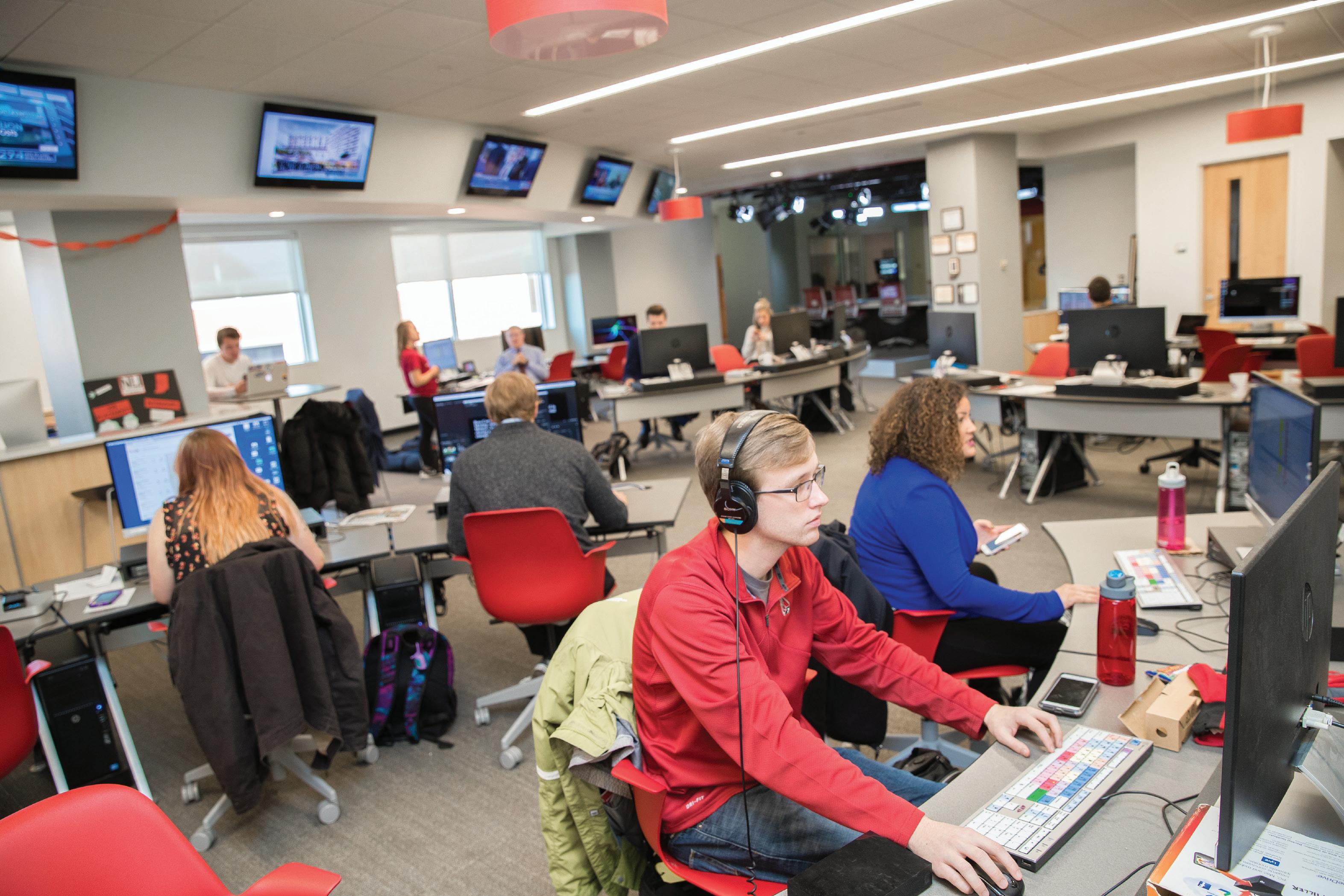
This is not a “goodbye” to print, we are simply scaling back to become digital-first.
Every week, The Ball State Daily News reports on a different news cycle. The distribution of that news cycle, however, has remained constant — as has the audience engagement with our print product. Thousands of newspapers are placed in racks across campus. And every week, most of them are still there, untouched, when the next edition arrives.
That reality is one of the reasons our editorial board recently voted unanimously to end the weekly print edition and transition to a digital-first newsroom starting fall 2026, in accordance with the upcoming academic year.
The photos in the “Harmony beyond the music” lifestyles story from Vol. 105, Issue 26 include incorrect caption dates. The performance photos at Be Here Now were taken Feb. 20, not Feb. 22, and the practice photos were taken Jan. 29, not Jan. 28.
This was not a quick decision, nor was it one that was made lightly or by administrators. It was made by students — the journalists who run this newsroom and see firsthand how our audience actually consumes the content we create.
Unlike other collegiate student-led publications, this is not an issue of censorship that was made without student input. The Ball State Daily News’ decision was made in response to financial realities, following multiple conversations between university staff and Daily News leadership.
Ultimately, the unanimous vote was made entirely by our editorial board, with no university staff members or administrative representatives present during the vote proceedings.
For years, the weekly print paper has cost the organization more than $25,000 annually to produce, while generating very little advertising revenue. At the same time, most of the 5,000 copies printed each week remain in racks by the next print cycle or end up in wastebins, which means the print content we have put our energy into goes unread on a weekly basis.
Continuing to invest in a product that few people pick up and retain not only limits our ability to invest in audience engagement, but it is simply irresponsible.
The shift away from print is not unique to Ball State. National research shows younger audiences consume news more digitally.
According to 2025 Pew Research Center data, the majority of adults ages 18 to 29 access news on digital devices. This indicates that social media and news websites are far more common sources for young adults than print newspapers.
For us, this poses an issue, as one of our main target audiences is students.
Moving to a digital-first model opens the door for more multimedia storytelling, including video, photography and more interactive reporting. It also better reflects the type of newsrooms today’s journalism students will enter after they graduate.
However, we are not cutting print entirely; we are simply scaling back to ease the financial burden of our current weekly print cycles. These drawbacks include shifting to “special editions” that will highlight Ball State’s campus population and the Muncie community in greater, more in-depth detail. The expanded time in between our print cycles will afford our staff more time to learn the inner workings of the editorial process while connecting with the population we serve on a more personal level.
The tradition of the Daily News has never been the physical paper itself. It is the reporting and the commitment to documenting life at Ball State. So what is changing is the platform, not the mission.
For years, newsrooms across the country have evolved as audiences and technology have changed, and it is time for us to do the same.
According to the Reuters Institute for the Study of Journalism’s 2025 Digital News Report, audiences are increasingly turning to social media, video platforms and online sources for news rather than print.
Per our namesake, we will continue to publish content online daily. Only the frequency of our print editions is changing, not the quality of our content.
The stories will still be told. They will just reach readers where they already are.
MEGHAN BRADDY, EDITOR-IN-CHIEF KATHERINE HILL, MANAGING EDITOR

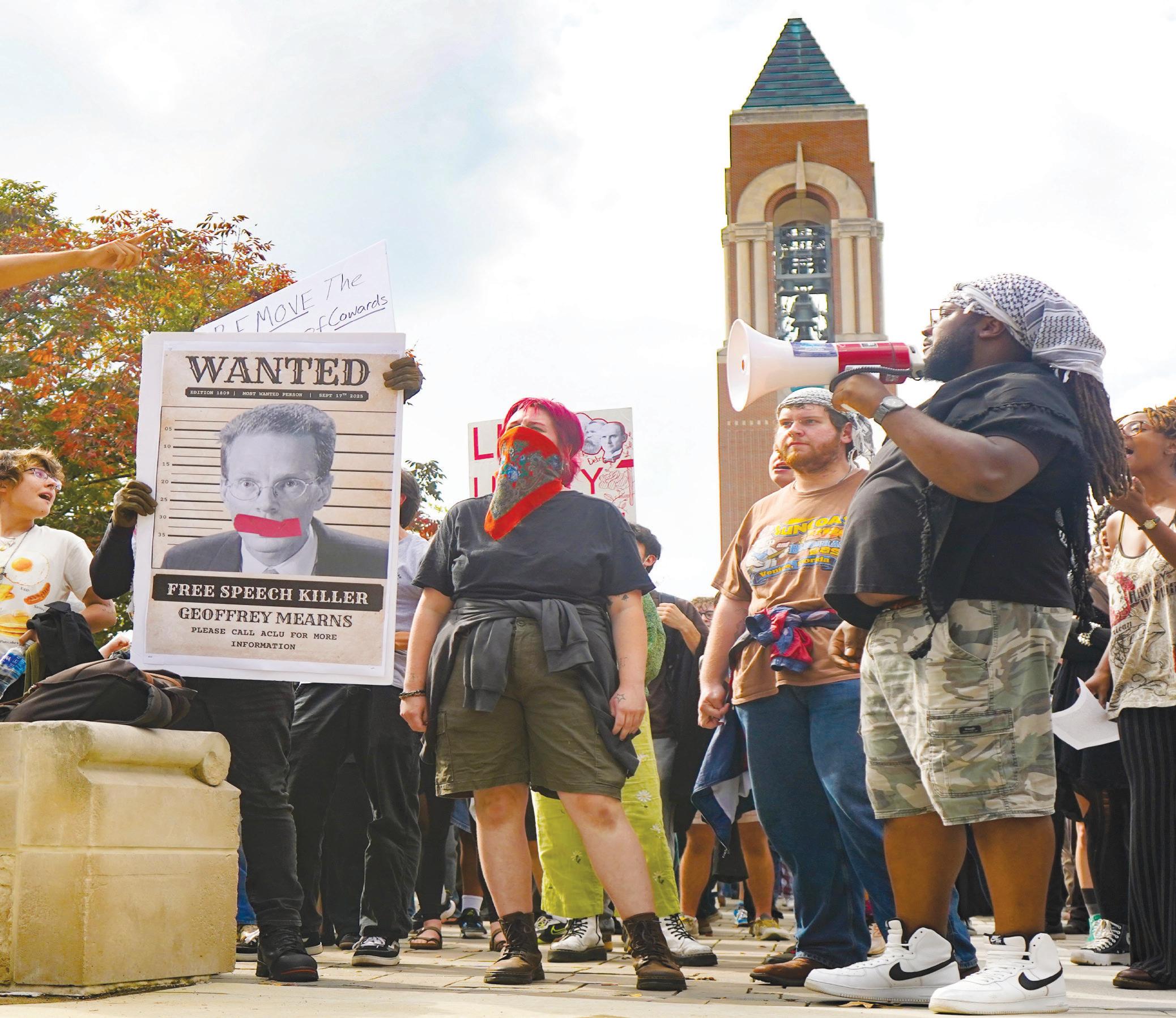
The American Civil Liberties Union of Indiana filed two federal lawsuits over Ball State’s 50-foot protesting policy. 4


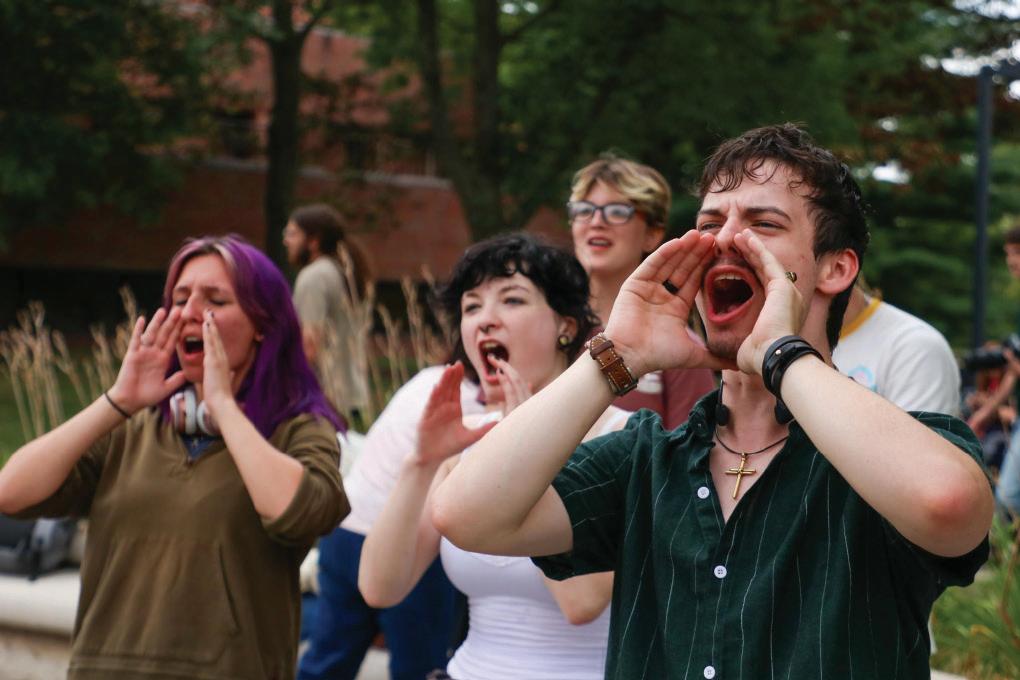
Ball State students shout at a protest August 2025 at the Ball State Peace Plaza. The protest was organized to speak out against police brutality. ADAM JONES, DN
On behalf of 11 Ball State students, the ACLU sued the university over its 50-foot protesting policy.
Linnea Sundquist News Editor
Editor’s Note: The Ball State Daily News reached out to Students for Justice in Palestine (SJP), but the organization declined to comment. Kaleigh Richardson’s first name was spelled incorrectly on the ACLU lawsuit. Her first name is spelled Kaleigh, not “Kayleigh.”
premises, while being allowed to remain in the hallway outside Mearns’ office. According to the lawsuit, the group left once the building closed at 5:00 p.m.
Ball State stated in its non-commercial expressive policy that “assemblies, protests, or other demonstrations are prohibited within 50 feet of any building having a classroom, laboratory, library, or similar instructional or research space.”
discipline, he has been suspended from campus for the remainder of the spring 2026 semester. He is also seeking damages against director of student conduct, Kaleigh Richardson, and vice president for people and culture, Mark Liebling, “the university officials responsible for the sanctions against him,” according to the lawsuit.
The second lawsuit, Allen et al. v. Mearns et al., was also filed after the events of Nov. 19, with all students listed in the lawsuit also violating the same policies as Archer. Each student received “a range of disciplinary sanctions,” according to the second lawsuit.
In Archer v. Mearns, the lawsuit argues that the plaintiff’s discipline for engaging in expressive activity was not disruptive to university operations and still violated the First Amendment. Allen et al. v. Mearns et al. lawsuit also argues that the other students did not disrupt university operations.
The policies that the group of students is accused of violating were alleged to be “unconstitutional” by the lawsuit, saying that the plaintiffs’ behavior “was fully protected by the First Amendment to the United States Constitution.”
Both lawsuits allege that the 50-foot policy violates the First Amendment and the Failure-toComply Provision, and that enforcing that policy violates the First and Fourteenth Amendments.
The second lawsuit said the group of students is also entitled to damages against Richardson, as well as to damages against T.J. Brecciaroli, associate vice president for student affairs and dean of students, and Melissa Rubrecht, director of employee relations, due to their being “the university officials responsible for the sanctions against them,” according to the lawsuit.
However, one of the plaintiffs, Cheyanne Watkins, brings no claim against Rubrecht.
“If students can’t test out the things they’re learning in their classroom and see how it applies to the real world without fear that they might be sanctioned by their university, that inhibits the ability for everyone to learn at the university.”
- MATTHEW HOTHAM, Vice president of the Ball State Chapter of the American Association of University Professors
Vice president of the Ball State Chapter of the American Association of University Professors (AAUP), Matthew Hotham, said that the university “seems to not be adhering” to its noncommercial policy.
He explained that AAUP is seeing more evidence that Ball State seems to be “limiting the ability of students and faculty to create a robust learning environment” due to possible fear of political reprisal.
“If students can’t test out the things they’re learning in their classroom and see how it applies to the real world without fear that they might be sanctioned by their university, that inhibits the ability for everyone to learn at the university,” Hotham said.
“[The policy] prohibits a wide array of First Amendment activity.”
- GAVIN ROSE, Deputy legal director of ACLU Indiana
The American Civil Liberties Union (ACLU) of Indiana announced in a March 2 press release that it filed two federal lawsuits against Ball State University regarding the university’s NonCommercial Expressive Activity and Assembly on University Property policy.
Deputy Legal Director of ACLU Indiana Gavin Rose said in a March 5 interview with The Ball State Daily News that the two lawsuits were filed on behalf of 11 students against Ball State officials. He said the organization decided to get involved after being contacted by “a couple of persons” who shared concerns about the consequences of several of those students’ attempts to meet with President Geoffrey Mearns.
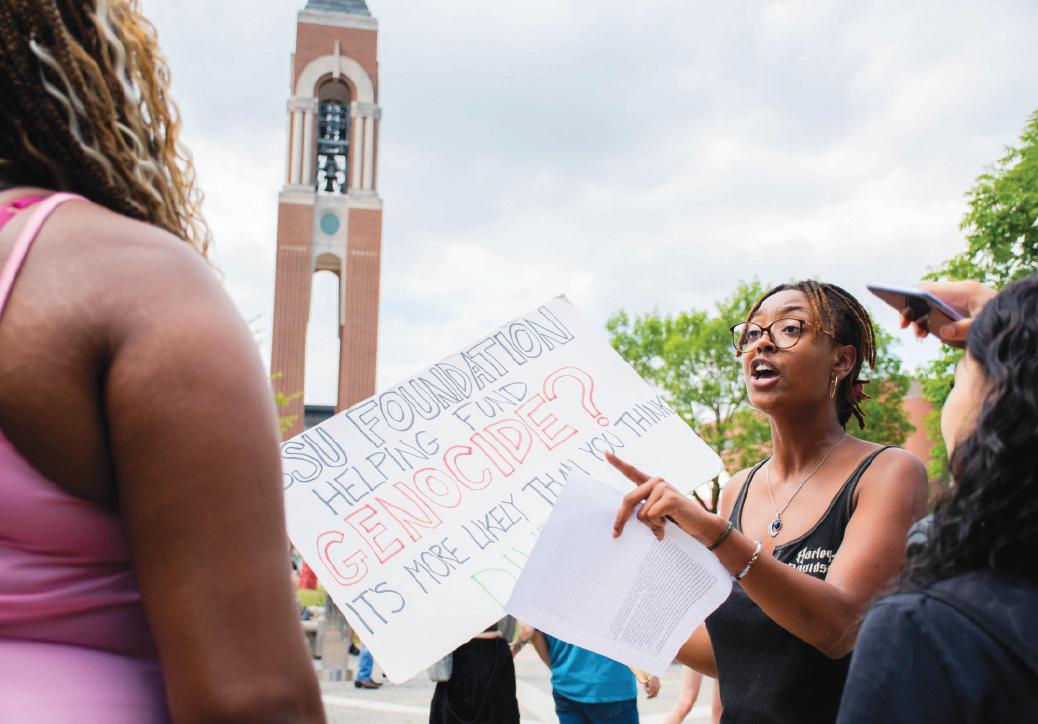
The group visited the Frank A. Bracken Administration Building on campus on November 2025 to leave notes for the president to express their “concerns regarding the university’s financial ties to Israel,” according to the lawsuit.
The group of students arrived during normal business hours but were asked to leave the
“[The policy] prohibits a wide array of First Amendment activity,” Rose said.
The policy also stated that individuals must stay within 50 feet of any indoor or outdoor experientiallearning facility, any building with a computer lab, any building with a testing or tutoring center, any building with an administrative office and any residence hall, family apartment or other university residence.
“Assemblers, protestors, or demonstrators who refuse to vacate any of the locations listed in this subsection upon request may be subject to suspension and/or arrest under applicable laws,” according to Ball State’s policy.
University officials declined to comment on the lawsuit.
“The university does not comment on pending litigation,” Associate Vice President of University Communications and Digital Strategy Greg Fallon said via email March 13.
The first lawsuit, Archer v. Mearns et al., was filed after Ball State student Cooper Archer, one of the 11 students in the activist organization Students for Justice in Palestine (SJP), along with other students, visited the Frank A. Bracken Administration Building in November 2025.
Archer was alleged to have violated two university policies: one for prohibiting protests or demonstrations within 50 feet of most buildings on campus, and one requiring students to comply with all directives from university officials, according to the lawsuit.
As a result of these actions and Archer’s prior
Rose explained that a large portion of the “heart of campus” exists between other buildings within 50 feet of each other because “that is what colleges look like.”
“It really is impossible to walk from point A to point B much of the time while march[ing],
Rose said he hopes that if the organization wins the lawsuit, students and anyone who is affiliated with the university will see a benefit in their right to exercise their constitutional rights.
“I think it’s a big deal anytime anyone stands up to the government and says, ‘you’re doing wrong, you’re violating my constitutional rights,’” Rose said. “It’s an even bigger deal when the people who are doing so are 20, 22 years old.”

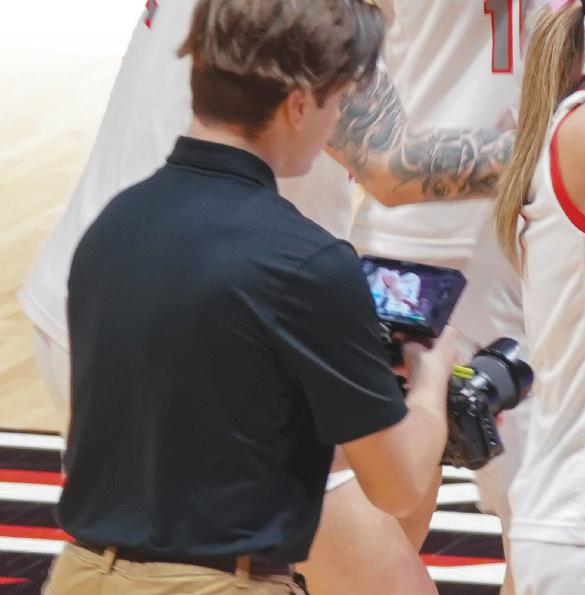
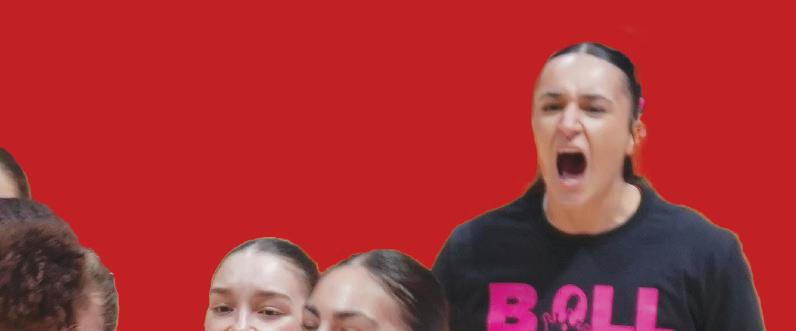
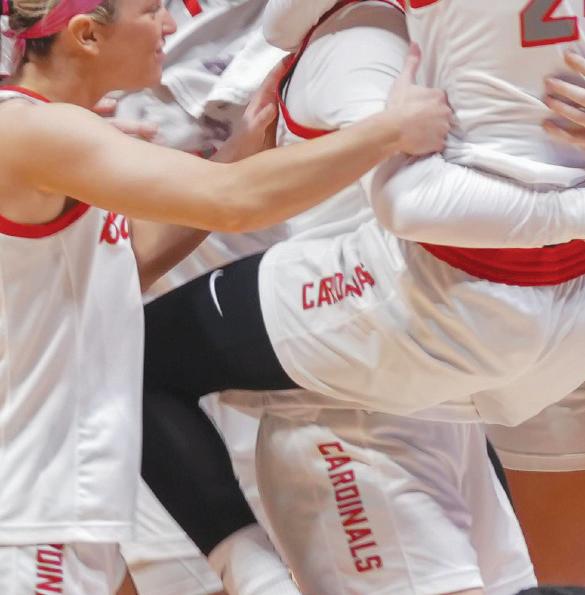
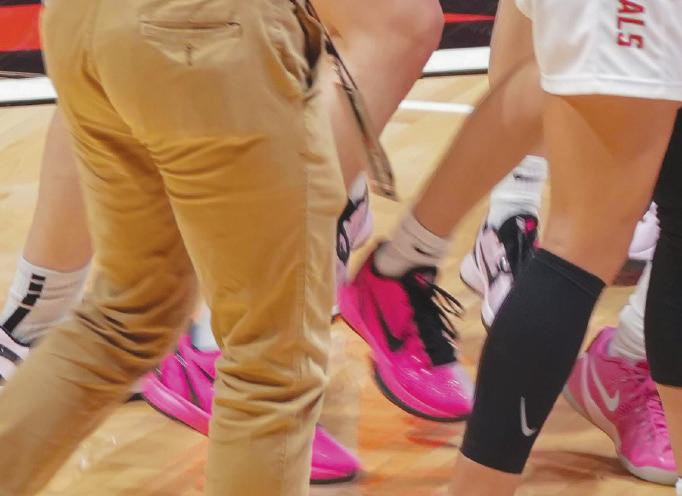
Ball State Women’s Basketball team rushes the court after beating Troy 87-86 Feb. 7 at Worthen Arena.
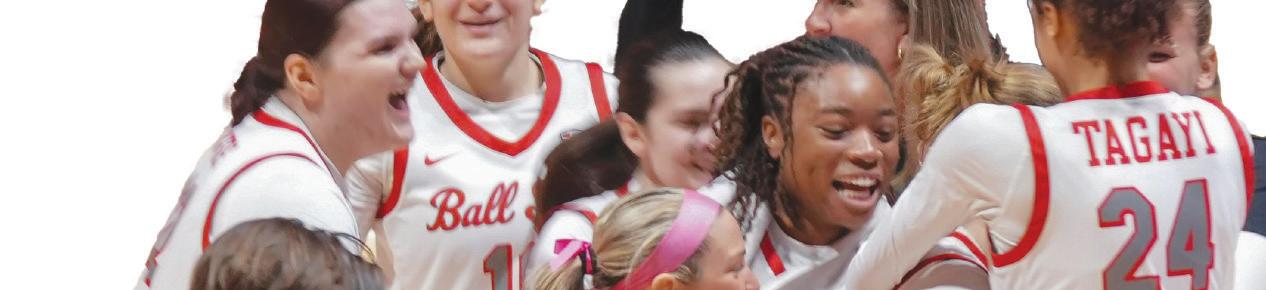
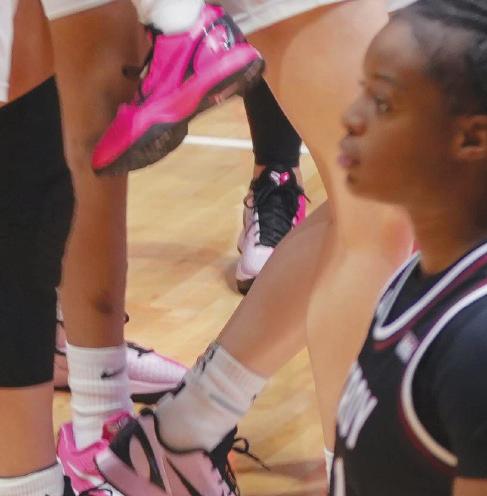
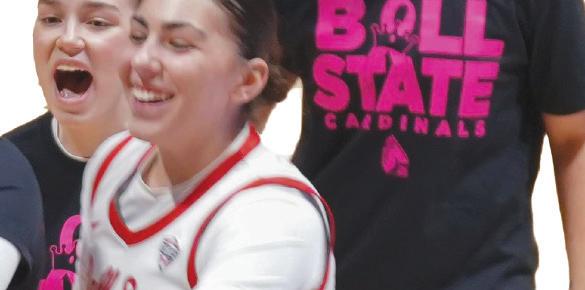
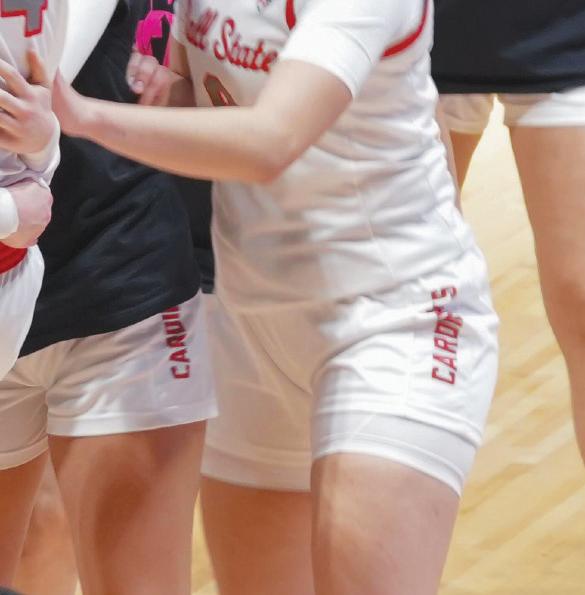



Ball State Women’s Basketball
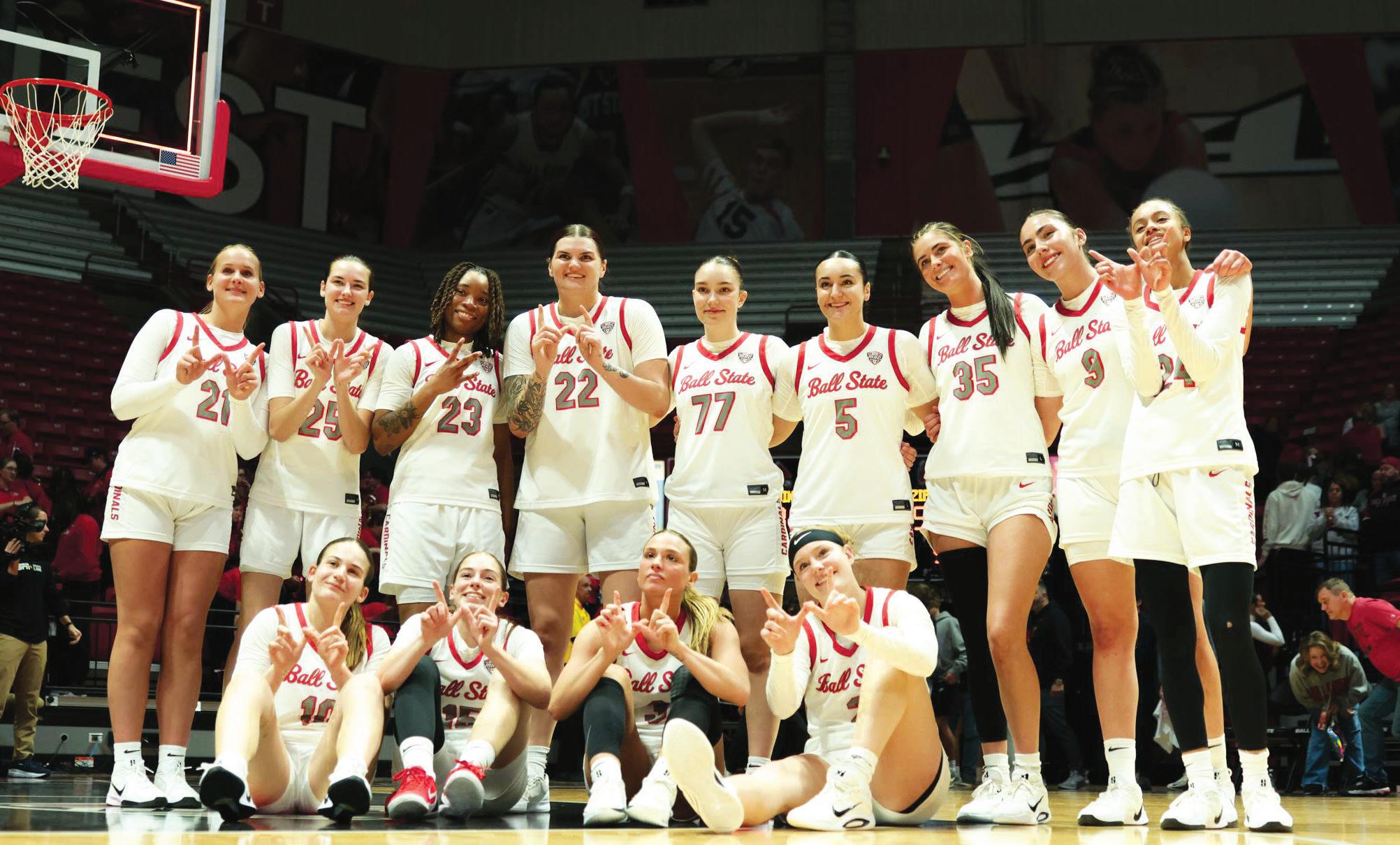
shattered preseason expectations this season with a 26-7 record.


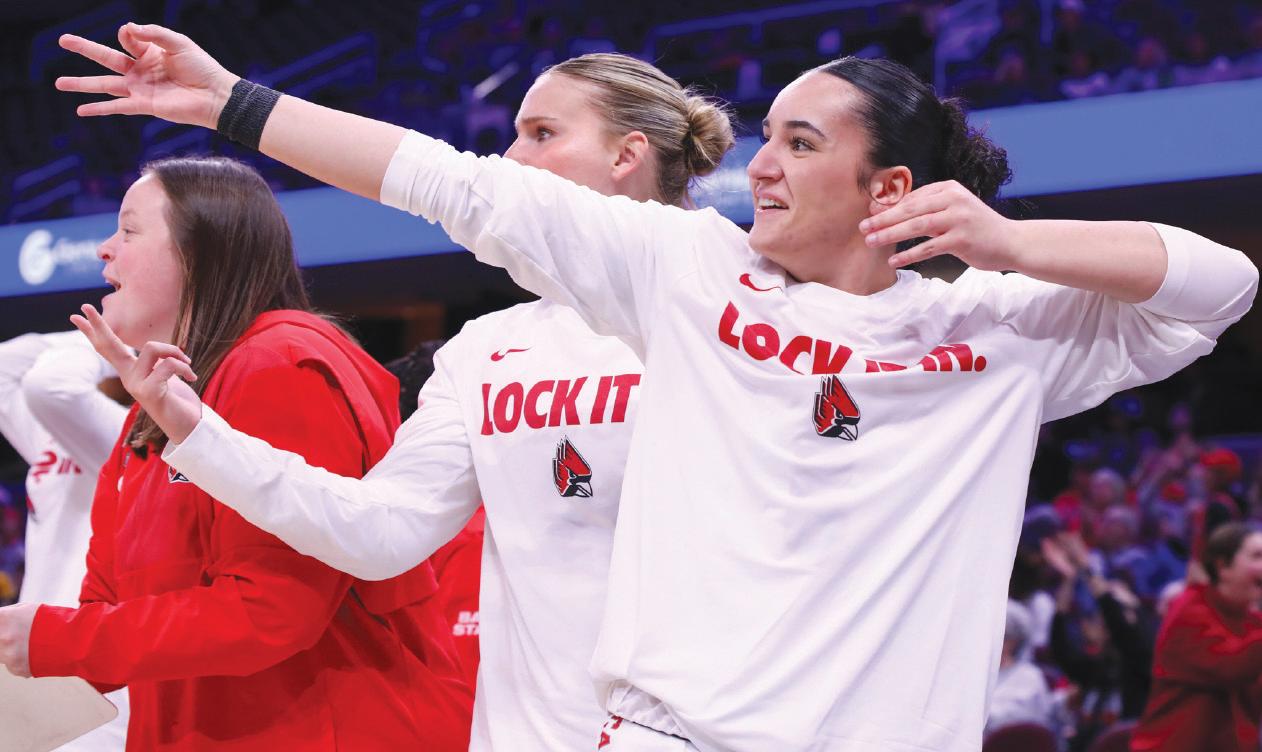
In a short amount of time together, this year’s Cardinals women’s basketball squad became one of the best ever at Ball State.
Kyle Stout Sports Editor
Unique, energetic, funny and caring. Those are some of the words junior guard Karsyn Norman used to describe this year’s Ball State Women’s Basketball team, and she said that there could be even more.
Ball State made history last season. The Cardinals won the Mid-American Conference (MAC) for the first time since 2009, and only the second time in program history. But the departures of some of the players from that team left big shoes to fill.
Head coach Brady Sallee only brought back four players from the previous season, and a lot of people thought it would be a rebuilding season in Muncie. But Sallee said he “wasn’t going to hear it,” and that he knew the talent he had on the roster.
Despite a number of new faces on the roster, Ball State ended the season with a 26-7 record, and tied Miami (OH) for first place in the MAC with a record of 16-2.
Sallee said that when he steps back and thinks
about what the team was able to accomplish, it is “mind-numbing.”
“In a very short amount of time, they became one of the best teams we’ve had come through here,” Sallee said.
The head coach said there are certain traits that he and his staff look for when recruiting new players to bring into the program. Sallee said that in recruiting, he and his staff do not always “bat a thousand,” but he said they did this season.
“You get a group of kids that want what comes with wearing this jersey and they buy in so quickly to what comes with wearing this jersey,” Sallee said. “It just kind of took off from there.”
Senior forward Bree Salenbien decided to use her last year of college eligibility at Ball State, as the forward decided to come back from a year of injury for one more season. Salenbien said she is in “awe” of what the team was able to accomplish this season.
Even with so many new players, the Cardinals soared to a 26-win season.
“We really took that time to bond, and I think that’s a really important part of basketball and team chemistry, especially when you haven’t played with everyone,” Salenbien said.

Norman came from Butler after entering the transfer portal, and she said she was looking for a place to win and a place to play for something bigger than herself.
“I definitely think I found that here,” Norman said. “We might not have won the tournament, but we did win a lot of games, and we were super successful, and I think there’s a lot more to come of that too.”
Despite all the success the team had, the season did not end how anyone expected
In a very short amount of time, they became one of the best teams we’ve had come through here.”
- BRADY SALLEE, Head coach
it to. The Cardinals fell to a Toledo team they had beaten twice in the regular season, 69-65, in the MAC semifinals, which ended their season.
After the game, Sallee, Salenbien and Norman said they were preparing to play more basketball, with them expecting an invitation to the Women’s Basketball Invitation Tournament (WBIT).
But the team did not receive an invitation.
The game against Toledo effectively ended Salenbien’s basketball career, and the forward said it was hard to swallow that the team was left out of the tournament.
“We do still not understand why we didn’t get picked, and I think it’ll forever go down as that,” Salenbien said. “It was just sucky for it to end like that.”
Although Sallee and his team did not agree with the NCAA’s decision to keep the Cardinals out of the WBIT, the head coach said the team still had to look in the mirror and not become a victim.
“We talked about owning our part in it,” Sallee said. “We didn’t play well in that semifinal game, and we certainly were in control of continuing our season.”
The part Norman said was hard was that
the team did not have closure on how the season ended. Although the decision was one that shocked the team, Norman said she has already talked to coaches and the rest of the team about how they can use it as motivation next season.
“They’re trying to get answers, but sometimes there’s just not an answer,” Norman said. “Just using that motivation going forward next year.”
The Cardinals have a lot to be excited about moving forward, as multiple key pieces are slated to return to the team. Salenbien is done due to graduating, and a few players have decided to enter the transfer portal, but for the most part, the team’s key pieces from this season will be back.
Norman said it is a huge blessing that the team connected so quickly this season, and the guard is excited for year two with the team with the ability to only build on this year’s success.
“We already have the foundation and all we have to do is build on it and keep getting better every day together,” Norman said.
Although Salenbien cannot be a part of the team next season, she said she is excited to see what the returning Cardinals can do next season.
“I think this year was such a good foundation for them to really bring them into the system, bring them into what coach Brady [Sallee] wants,” Salenbien said. “I think they have a lot of big things ahead of them.”
The closeness of the team is something that was evident in the way they played. Fans could see the fun the team was having on social media, whether it was in press conferences or videos from the locker room after games.
Sallee said throughout his career, he has coached some special groups, and he has seen almost year after year how close knit his teams can be.
But the head coach said that this season, it was “transcending” to see how close the team was from the oldest players on the team to the youngest.
Most of the team this season was entering their first season in Muncie, and the primary returners, sophomore guard Grace Kingery and senior center Tessa Towers, were in new starting roles. Sallee said the commonality of the team made them bond together.
from day one.
The forward led the team in scoring all year with 15.8 points per game. For a team that played through Salenbien so much, her absence next season will be evident.
“On top of having a great year and scoring a bunch of points, I think her legacy will be as much about her ability to lead 12 other brand new players and lead them to where she did,” Sallee said.
Although it will be tough to lose an impactful player like Salenbien, Sallee is confident in his team’s ability to keep winning. The head coach referenced when the program’s all time leading scorer, Nathalie Fontaine, graduated in 2016, which left a hole on the team.
The Cardinals kept winning after that season, and Sallee has that same expectation even after Salenbien’s departure.
“It doesn’t mean the job’s not big, it just means we know what to do and how to do it,”
Sallee said.
There is a lot to be excited about for what is brewing in Muncie. If the Cardinals won 26 games with a nearly brand new squad, it seems the sky is the limit next season for Sallee and company. Contact Kyle Stout with questions via email at kyle.stout@bsu.edu or on X @kylestoutdailyn.
“I think that made it a little bit easier to connect and to be empathetic and sympathetic at times and understand what everybody was going through because we were all going through it together for the first time,” Sallee said.
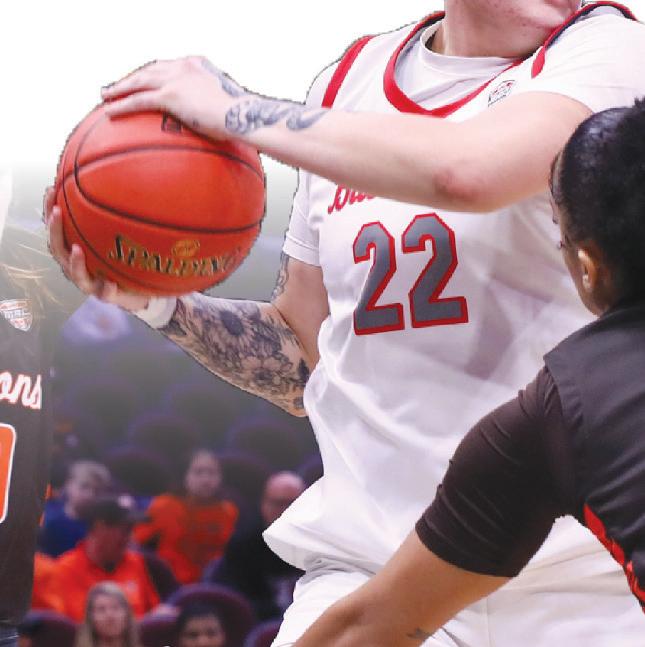
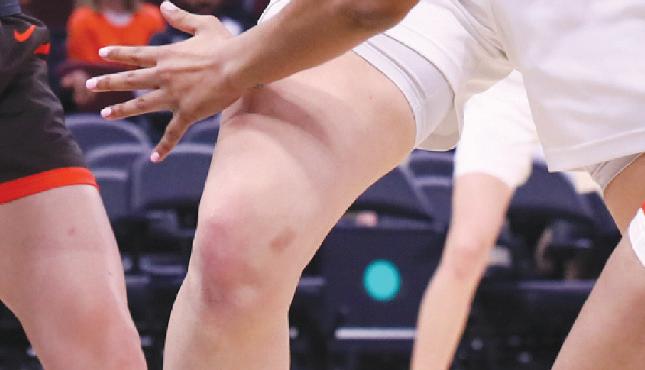
Salenbien will leave big shoes to fill for next season’s team. All season, Sallee talked about how Salenbien was always a calming voice for the team during games, and how he saw her step in as a leader of the team
Sallee said that if he went out and tried to get a carbon copy of Salenbien, he would set himself up for failure. The head coach said players like that are special for a reason, because it is next to impossible to find a player like them.
He said the thing it comes down to is how the system is.
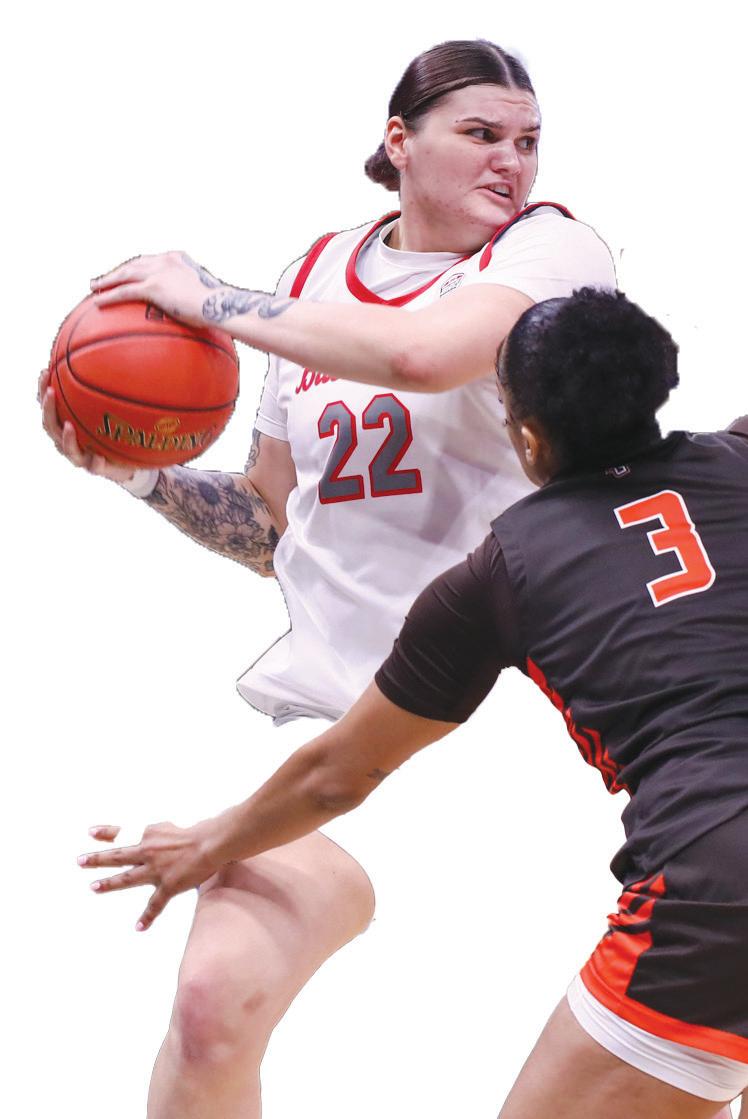
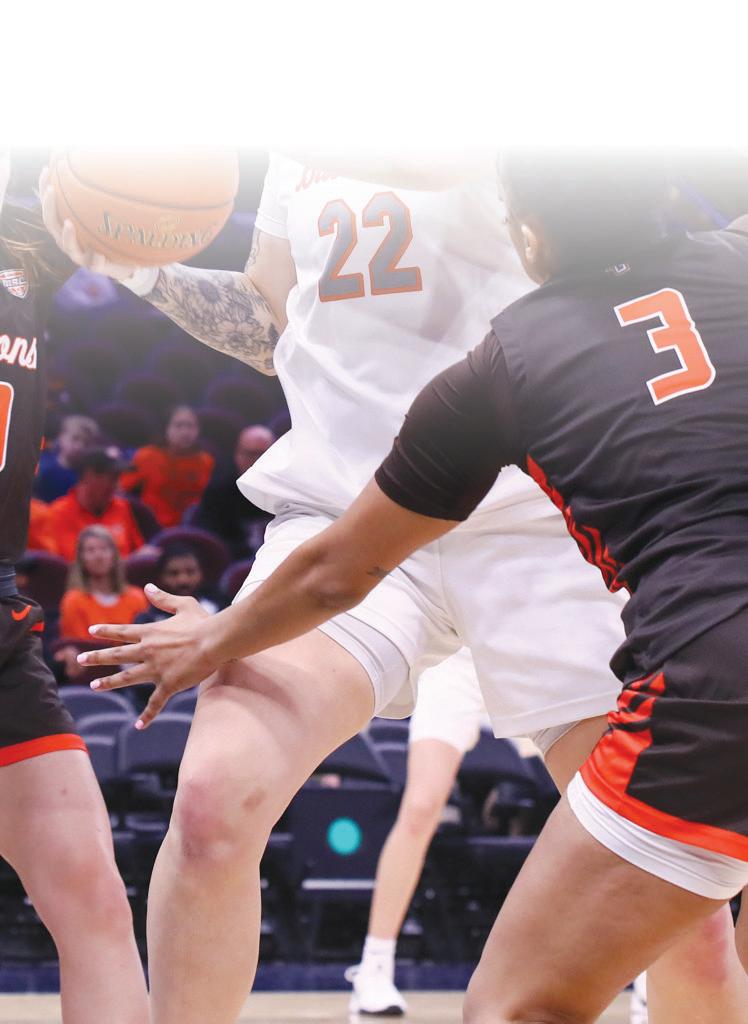

“I think the key is, can you have a system that you fill up with talent and then you figure out a way to use that talent,” Sallee said.
Salenbien said that Ball State’s system was a huge part in her finding her role on the team. The forward’s game grew significantly in her year at Ball State after a handful of injury riddled seasons at Gonzaga.
“The system here has something to do with it as well,” Salenbien said. “You’re not trying to fit players into a system here, you’re really fitting the system to the players you have.”
We really took that time to bond, and I think that’s a really important part of basketball and team chemistry, especially when you haven’t played with everyone.”
- BREE SALENBIEN, Senior forward
Ball State President Geoffrey Mearns, men’s basketball coach Chris Capko and Director of Athletics Jeff Mitchell poses with a gift from the university March 24 at the Alumni Center. KYLE INGERMANN, DN

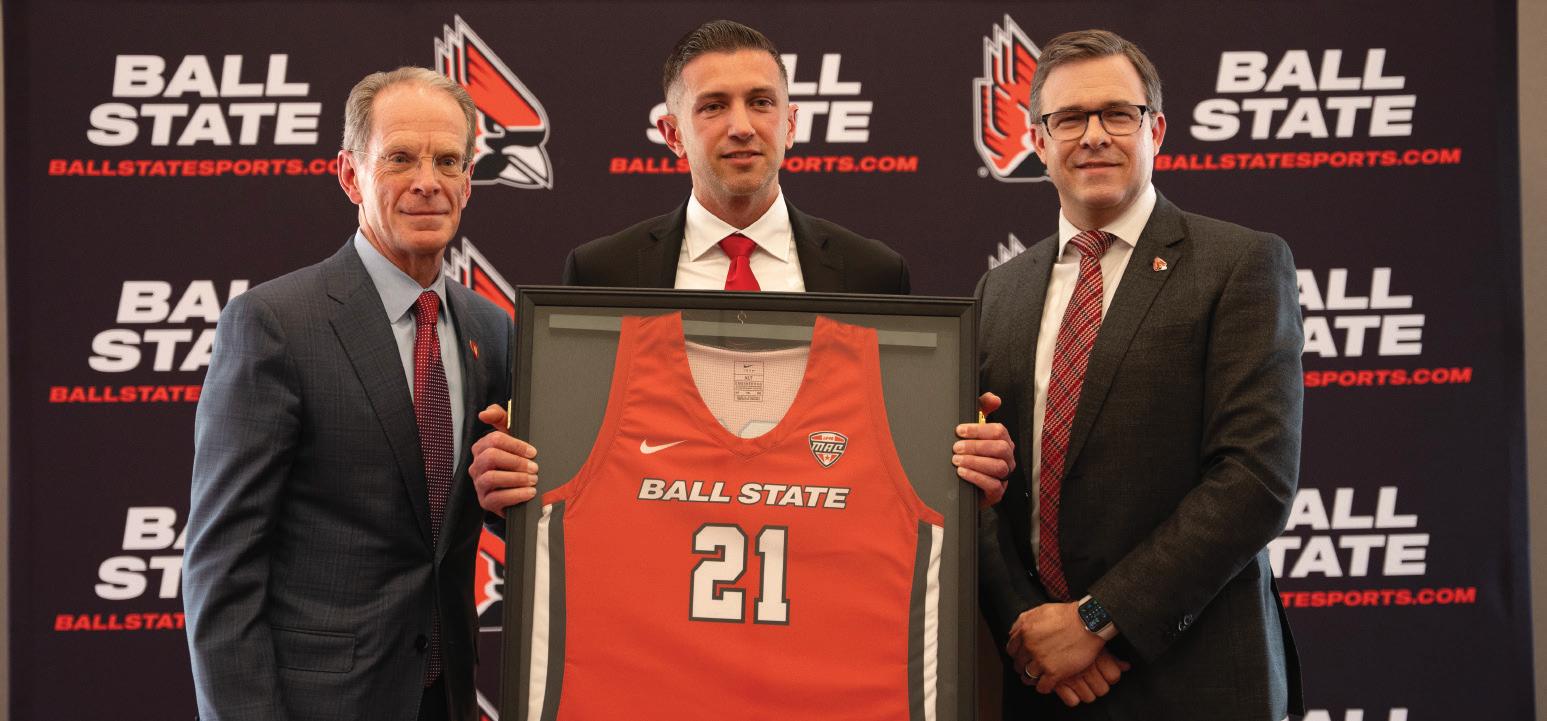
Chris Capko takes over as Ball State Men’s Basketball’s new head coach and is looking to revitalize the Cardinals’ program.
Kyle Stout Sports Editor
Hundreds of Ball State fans, alumni and community members all piled into the Ball State Alumni Center March 24, eagerly awaiting to hear from university President Geoffrey Mearns, athletic director Jeff Mitchell and the next leader of Ball State Men’s Basketball.
Mitchell described the head coaching search as thorough and thoughtful, and that still left him with a candidate pool of 45 head coaches just a couple of weeks after firing former head coach Michael Lewis.
That pool went from 45 to 16, then 16 to 10. Ten candidates for the position became three, and after long drawn-out conversations, Mitchell landed on Chris Capko.
Mitchell made sure to address the crowd directly when talking about Capko.
“Make no mistake, Chris Capko is a winner,” Mitchell said.
On the North Quad of Ball State’s campus sits the bronze statue of Beneficence, something that represents the university’s enduring values that Mearns spoke about in the press conference. He said he saw Capko possess those values in their first conversation.
So it was no surprise to Mearns that almost two weeks before Capko was announced as head coach, he and his wife had their third child and named him “Benny.”
“We’re pretty darn sure that we found our guy,” Mearns said.
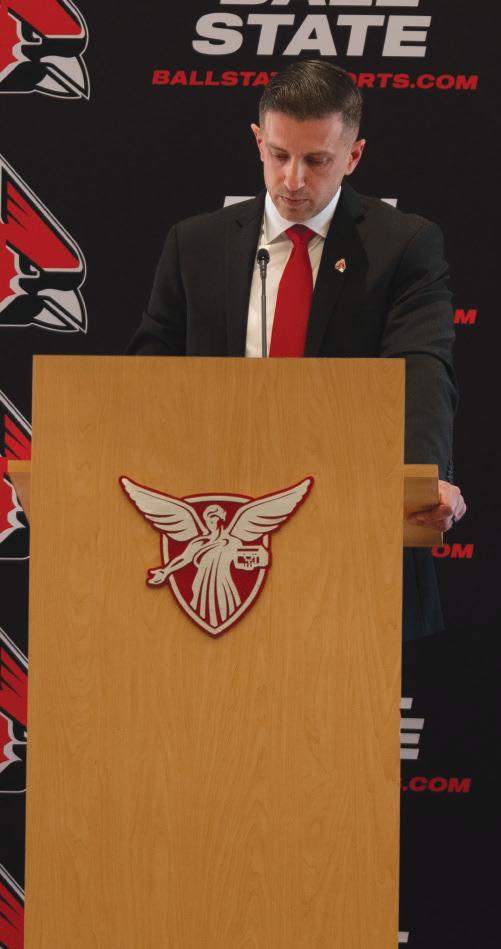
As Mearns and Mitchell’s introductions concluded, Capko was brought up to the podium in the midst of a standing ovation. The 21st head coach in Ball State Men’s Basketball program history addressed the crowd with gratitude and emotion.
This is Capko’s first head coaching gig, and
he said the moment walking up to the podium was “surreal.”
“I’ve been dreaming of this moment for a long, long time,” Capko said.
Capko began his career at Marshall as a graduate assistant and, after two years, he landed his first assistant coach job at Stetson. That job took him to Georgia Southern as an assistant coach for two years, and after that Capko spent two years at the University of Southern California (USC) as director of operations.
After a short one-year stint as an assistant coach at Florida International after that, Capko returned to USC where he spent his next eight years as an assistant and associate head coach, contributing to four NCAA tournament appearances and one trip to the elite eight.
His time at USC took Capko to Southern Methodist University (SMU) as associate head coach for two seasons, which then helped him land at Ball State.
Capko said he realizes the weight of the next step as head coach after zero years of prior experience in the position. He joked that he has been told he does not have head coaching experience more times than he has been told “no” by his wife.
Although being a head coach can be a daunting position in college basketball, Capko said he has been given all the confidence he needs from Mearns, Mitchell and other staff to lead Ball State as their next head basketball coach. Capko said there has never been an individual or team to accomplish something special that did not have confidence or belief.
“As a coach and a leader of young men, I am in the business of inspiration,” Capko said. “It is my job to instill confidence as well as conveying to my student athletes that I believe in them in order to inspire them to the best of my ability.”
Roster construction begins pretty fast for Capko, as the transfer portal opens in just a few weeks.
The priority for the head coach is to try to see what players from last season’s team want to return. Capko said every player from last year’s team is welcome back as long as they want to be in Muncie.
“I want guys that want to be here,” Capko said. “I think there’s some pretty talented players on last year’s team that can help us this year, if they want to be here, and they’re the right person and they have the right character.”
Capko said it will be important to figure out what players will return for next season, because then he can build around what he already has when it comes time to use the transfer portal. In the meantime, Capko said he is “fielding as many names as he can” while he settles in as head coach and continues to build his staff.
“The portal doesn’t open until [April] 7, so it gives me a little breathing room of just trying to track as many names as possible,” Capko said.
“Once I can finally get some of our staff here, [then] I can have more intimate conversations.”
A handful of players from last season’s team have already declared their intent to enter the transfer portal when it opens, and one of those players is redshirt sophomore guard Davion Hill.
Hill averaged 14 points per game on just above 46 percent from the field last season.
Capko said while he wants everyone back from last year’s team, he has had multiple conversations with Hill to attempt and get the star guard to return to Muncie.
“I do want to try to retain Davion Hill,” Capko said. “I’ve talked to him every day since I got the job.”
A big thing Ball State struggled with this past season was its ability to consistently score points.
The Cardinals ranked last in the MAC with 67.5 points per game. Capko said he wants to bring an exciting style of basketball that produces a lot of points.
The head coach wants every player on the floor
to have the ability to shoot the ball; he wants to have a true point guard who not only looks to score but also looks to set their teammates up with open shots and that wants to spread the floor out with his offense.
“When you watch one of our teams, I want you to see a team out there that can score,” Capko said.
To close the press conference, Capko had a simple message to Ball State players, both former and current: “I need you guys.” He said he wants to hold the university to the standard it deserves, and that starts with bringing back former players to talk to current and future players about what it means to represent Ball State and its community.
One thing Capko realized after his first conversation with Mearns was that Ball State can be a top program in the Mid-American Conference (MAC). He realized Ball State can be the program fans in the community expect it to be.
“Why not us? Why not now? Why not in the future?” Capko said.
Contact Kyle Stout with questions via email at kyle.stout@bsu.edu or on X @kylestoutdailyn.
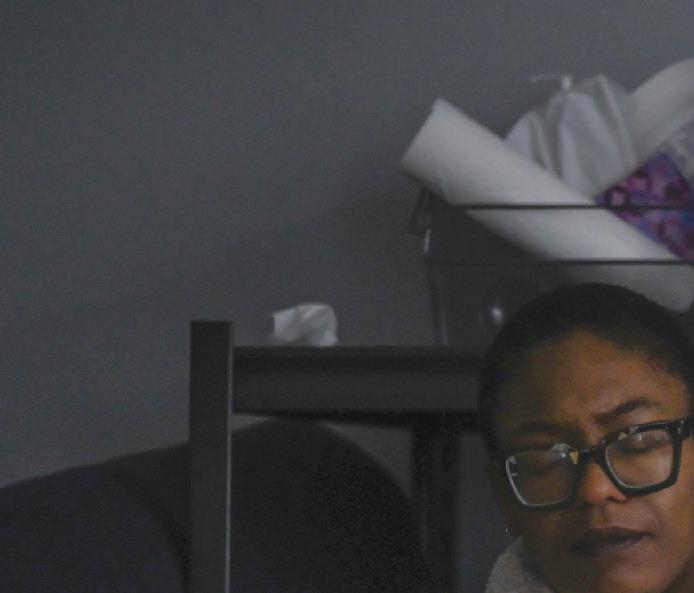



Indiana nonprofit provides resources for people with cancer, going beyond remission. 11










Nathan Litz Reporter
You have heard about this building before, an immersive place for the role playing table top game Dungeons & Dragons (D&D), with a curated play space to hire Dungeon Masters and much more.
You approach the mysterious black building with its red 20-sided die on top, so menacing yet so peculiar. You walk up to the front of the building and enter carefully, wary of any beasts lurking inside.
Upon entry, nothing looks out of the ordinary. It looks like a normal real estate building, but something compels you to go downstairs. As you do, darkness seems to surround you and shroud your vision. When you finally reach the bottom, you find a dungeon! But it is not just any dungeon; it is the D20 Dungeon, owned and operated by Lucius Conner. Conner, who is also the owner and operator of his real estate
company, Viking Realty, created the space with the goal of making it an immersive experience, allowing players to change the lighting, music and ambience to adapt the room to any imaginary space they may find themselves in.
“I’m a business owner. I’ve been in the real estate world for a decade. I’ve grown that from a one-man show to a 15-man brokerage,” he said.
“We are the smallest footprint in real estate in Muncie, but the third-highest volume. So we are a very small shop, but we’re competing against brokerages that are, you know, 30, 40 people wide,” Conner said.
The D20 building started as a real estate building, and Conner said it still is. However, as his vision became reality, Conner saw immense growth for the space, not only in his imagination for the project but also the “in-depth” services it could provide.
“We opened in October 2023. It started out as a venue you would rent. That was it,” Conner said.
Now, the business offers professional dungeon master (DM) services that allow players to rent a DM for a single session and attend weekly or biweekly campaigns lasting longer, as well. But more than that, it has a Youth Adventure League that takes place every Wednesday for players aged 8 to 12 and 13 to 15.
However, Conner doesn’t plan on stopping there.
“We are just now breaking into the party scene,” Conner said. “So we’re gonna be doing birthday parties or parties of any kind, making them special in the best way that we can.”
Still, hiring dungeon masters is one of the most prominent staples of D20 Dungeon, as gamers can rent an available dungeon master that can do a
“one-shot” style of play where the story and play unfolds over a single session, or can do something larger in scale, like a three month long campaign that keeps the players coming back to rent a certain dungeon master.
Conner said this can be highly appealing to previous dungeon masters and players alike.
“One of the things that we actually get most often is people who typically are the DM, and they just want to sit on the other side of the screen. They will hire a DM and bring their whole crew with them so that they can play the game also,” he said.
Now, dungeon masters have an entire arsenal of immersive elements to enhance players’ imaginations at D20.
“I actually had to call in professionals,” Conner said. “I think the combined experience of my DMs is somewhere almost around 80 years of combined experience playing Dungeons & Dragons.”
Conner also asked the experienced DMs to give him their “wish list” for a gaming respite.
“They wanted the ability to control the lighting, the sound effects and music,” he said.
The DMs also expressed a desire for “some way to take everything up a notch,” so visualizations could match imaginative expectations.
With D&D covered, Conner has also tried to expand the business in more ways than one, including tapping into other games and franchises at the forefront.
“We are barely scratching the surface with D&D. We took 800 square feet in a basement and turned it into something that generates about $1,500 a month in just people playing D&D,” he said. “We are now adding merchandise [and] a storefront. We are currently branching out into the Warhammer universe as well … It’s just gonna go


bigger and bigger. This building was built for real estate. It is cocooning into a game store because of the popularity of the space, so we have much bigger plans.”
Thomas Tran, otherwise known as Tojo, is the social media marketer for D20 Dungeon, so he has seen this growth of feedback in real time.
“Just this last week, our first video on TikTok, we’re just like trying out random stuff,” Tran said. “It had reached 100,000 likes and reached 700,000 different people and we’re looking through the comments and it was really cool to see so many people interested in D&D, not even just a bunch of fans.”
Tran also said this is a great opportunity for those who have yet to get into the medium.
“So many comments [on the video] were like, ‘I want to try it,’” he said. “There’s not a lot of places to provide a comfortable environment to play D&D or just to be, like, beginner-friendly. I think people are afraid to jump into things because of the small hoops of trying to find people as well as trying to find someone to tell a story.”
D20 Dungeon is holding a one-shot called “The Gladiator” April 6 at 6 p.m. for $25. According to the D20 Dungeon website, the event focuses on playing gladiators who “fight to the death daily” and are given an “opportunity at freedom.”
A One-Shot Mini Marathon Fundraiser is also being held April 18. According to D20 Dungeon’s Facebook account, the event is for people to join a game session and, in the process, make a donation to the Yorktown Friends of the Library.
Contact Nathan Litz via email at nathan.litz@ bsu.edu
all they can
Ryan Fleek
Associate Multimedia Editor
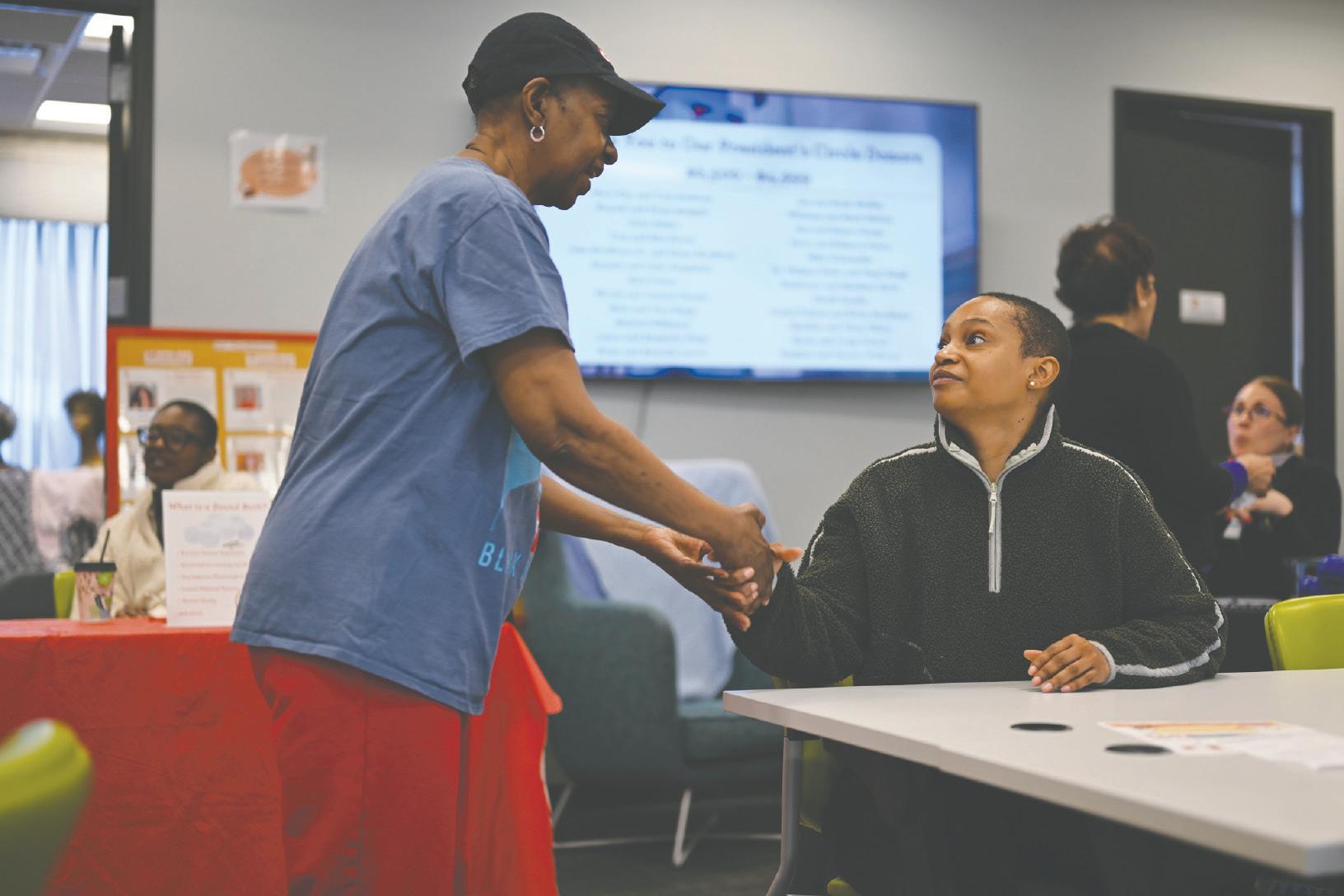
When 62-year-old Reneé Jackson-Lester realized she was struggling to put her thoughts into words in 2024, she visited her doctor. Two days later, she had her first seizure and was subsequently diagnosed with cancer.
To navigate her recovery, Lester now uses resources through Little Red Door Cancer Agency, a nonprofit organization that supports cancer patients and survivors during all stages of treatment and remission.
Upon her initial diagnosis, Lester’s doctors informed her of a large tumor they discovered in her brain, as well as numerous cancer cells spread throughout her body in the form of lymphoma, which Mayo Clinic defines as a cancer that affects the lymphatic system of the body.
After months of medication to prevent further seizures, Lester underwent an operation to remove the tumor from her brain. However, her doctor informed her that the surgery came with a sacrifice: she had to choose between keeping her hearing or her speech.
Her doctors said the operation would remove a significant portion of the tumor, and as a result, certain neural abilities could be affected.
To continue her work as a health advocate for Community Hospital, Lester chose to keep her hearing.
“I said I’d rather be able to hear because I can help people. I can hear their story, and I can help them,” Lester said.
When her family visited her in the hospital after the surgery, her daughters surrounded her for comfort, as the surgery was completed without the loss of Lester’s hearing or voice.
At that moment, Lester recalled how she raised a hand and said, “Thank you, Lord. I can hear. I can speak.”
Since her surgery, Lester has been on radiation and chemotherapy for a year for the remaining lymphoma in her body, but during the process, she sustained hair loss.
Before her treatments, Lester said she had never worn a wig before, but she was allowed to receive one from Michelle’s Boutique, completely free of charge.
Michelle’s Boutique is one of the many services provided by the Little Red Door Cancer Agency, where every client is granted one free wig upon a cancer diagnosis.
At its Indianapolis office, Lester said the boutique resembles any other hairdresser’s space. However, it is fitted with rows of wigs that are available only to clients of Little Red Door. Clients with lymphedema are also provided with a comfortable garment used to compress tissue
swollen from the cancer.
According to Mayo Clinic, this is because patients with lymphedema will have swelling in areas of the body that are often drained by lymph nodes, and these nodes can be damaged or removed during cancer treatments.
Clients can also try on as many wigs as they would like, and the agency does not require appointments in order to do so. The clients’ photographs are then taken and displayed on the boutique’s wall to commemorate the step in their survivorship journey.
“[Wearing a wig] gave me some confidence,” Lester said. “If you have a cap on, you can see [people] know something’s going on with you. I don’t want to be treated differently.”
Little Red Door has offices in Muncie and Indianapolis. At both locations, clients have access to Michelle’s Boutique, as well as free nutritionboosting drinks, paid ride services to doctor’s appointments, exercise programs and trained oncology massage therapists.
Angie Simon, a massage therapist working at the agency’s Muncie branch since 2024, said massage therapy is a popular service at Little Red Door.
Simon herself is a cancer survivor and was diagnosed with an aggressive form of breast cancer. With more than 20 years of experience as a massage therapist, she was inspired to seek certification for oncological massage therapy after going into remission.
seven years ago, after doctors discovered cancer forming on the lining of the organs, known as a carcinoma, in the back of his throat.
She said oncological massage therapy, in particular, is a form of pain relief requiring extra training to perform. Simon explained how caution and knowledge of the body’s process of circulating substances used for chemotherapy are needed for it to be successful.
Any improper massage movements to the body can also move these substances unnecessarily fast and cause discomfort for the client, she said, which can intimidate some massage therapists from learning.
Still, providing services to those who are in the same or similar circumstances as her means “everything” to Simon.
She said she finds satisfaction in her work from the effect it has on her clients, as she believes it gives them “a moment of peace” on days filled with anxious feelings.
Simon said she also sees the restorative nature of her work, since it replaces the common discomforting feelings associated with touch in the medical process.
“With massage, it kind of gives back the positive to touch so it’s not always a negative touch experience,” she said.
One of her clients, Earlie Dewayne Davis, has been receiving massage therapy for more than two months. Davis was diagnosed with throat cancer
After treatment, Davis’ cancer went into remission five years ago. As a survivor, he still has access to all the services Little Red Door offers.
“I’m learning that this service is very valuable to the community, and it offers a lot of programs I think the community is not aware of,” Davis said.
According to the organization’s website, Little Red Door offers programs for patients at every stage of their diagnosis and remission.
Its “Door to Wellness” initiative includes massage therapy as well as restorative yoga, sound baths and its “Strength After Breast Cancer” program, where survivors learn exercise techniques to reduce the “onset or worsening of breast cancerrelated lymphedema.”
However, the extent of cancer’s effect is not limited to adults. According to the American Childhood Cancer Organization, approximately one in 285 children in the U.S. under the age of 20 will be diagnosed with cancer.
Bearing the reality of the disease in mind, the agency also hosts a summer camp for children diagnosed with cancer, no matter the stage in their journey.
According to the agency’s website, Camp Little Red Door is a five-day experience in which children can bring a sibling or friend and meet other children facing similar circumstances. Activities
such as zip-lining, archery and boating are offered to participants as well as nurses and medical staff.
“We try to make [patients’] journeys easier as much as we can,” Rebecca Owen, a client navigator working for Little Red Door, said.
In her position, Owen helps direct clients to the organization’s services. She also provides referrals to other services that Little Red Door does not offer itself, such as services that offer assistance to clients struggling to pay their bills.
To Owen, survivorship is not a term designated only for clients who have entered the remission stage of their cancer. She said survivorship status should also be provided to clients at any point in their journey.
For clients who have been in remission for years, Owen said she believes that many of them still have “scanxiety” of their cancer returning, creating uneasy feelings about doctor checkups.
However, as someone in the process of survivorship, Simon said she believes Little Red Door takes charge in providing a service often overlooked by some service providers.
“I think there was a big step there that was missing where they didn’t take care of [patients] after the cancer, which I think [Little] Red Door steps up and does,” Simon said.
Contact Ryan Fleek via email at ryan.fleek@ bsu.edu.



Ella Humbert is a first-year communication studies major and writes “On Repeat” for the Daily News. Her views do not necessarily reflect those of the newspaper.
When I was in high school, I was in a district with two schools: my high school, Hamilton Southeastern (HSE), and our rival, Fishers High School. While the rivalry was incredibly intense, there was one area where the schools differed.
During my time there, HSE was known as the athletic school, while Fishers was known as the academic school. Fishers put more resources into their academic programs, clubs and extracurriculars, whereas HSE funneled more energy into its athletic programs.
Although I did not have a bad experience in high school, I still felt a bit left out. Fishers has a robust show choir, one of the best in the country, and countless other nationally recognized extracurriculars like Distributive Education Clubs of America (DECA), speech, debate and other academic ventures.
I wanted to be a part of those, too, but the fact that HSE chose to focus on sports left me feeling stranded. This is just one example of the prioritization that athletics has over academics in education. This affects not only high schools but also universities and higher education, meaning that the pursuit of profit from athletic ventures can dilute the focus of these institutions.
Even though the American college experience, which includes college athletics, has been romanticized, that does not mean athletics should be the sole focus of these universities.
According to figures from the Knight-Newhouse College Athletics Database at Syracuse University, the highest-valued collegiate athletic program in the United States is the University of Texas at Austin, valued at $1.4 billion. These universities are pouring huge amounts of money and resources into their programs, which raises the question: Why is just one part of the college experience — sports — placed on such a high pedestal when there are so many other just as meaningful activities on campus?
I have always been an avid reader and media consumer, and one of the genres that I turn to most often is romance. More recently, college-aged stories — or books that fall under the New Adult genre —




have exploded in popularity, especially in the subgenre of sports romance.
From hockey to soccer to Formula One racing, sports romance is an exploding niche. Readers, including myself, flock to the books where girls our age are swept off their feet by athletes in sweaty gear.
But as college athletics continue to come more into the public eye, its prevalence makes me want to turn to the opposite. Where are the stories about the speech kid declaring their love as part of an original program? About the co-stars of a school-sponsored musical? About the debate tournament that brings two unlikely partners together?
While romance novels are not necessarily related to the college experience, they do highlight another place where sports are starting to “take over.” According to a study done by George Mason University’s Institute for Immigration Research, 63.7 percent of respondents in multiple metropolitan areas watched or attended a college sports event in the last year.
Why can that level of attendance not transfer into activities like theater? Sports are fundamentally different from the arts, but that does not mean they are not equally important.
I was always a person who felt like I was in both worlds. I did a lot of academic extracurriculars, like speech and debate, and I was in the drama and choir spaces, as well. But I also love hockey, baseball and even football, thanks to my dad’s teachings while I was growing up.
Because of my passion for both sides, I noticed that in the eyes of many people, sports were the most important aspect of the college experience. Everyone talked about tailgating, who was going to win which game and whether this player was a “bust” because he did not score as many points as he had the game before.
These were largely enjoyable experiences, but I found myself wondering whether the same logic could be applied to my other hobbies. Could we discuss theater performances like this? Speech techniques?
Above it all, I really wanted to get back to what college is at its core.
According to a 1983 journal article published in The Role of American Colleges in the Nineteenth Century, which focuses on the history of colleges in North America, the first iterations of secondary education in the United States were religious institutions designed to train ministers; they were modeled after Oxford and Cambridge universities in England, as well as Scottish universities.
In the nineteenth century, secular colleges were established to help transition young men from the agricultural workforce of the past to the industrial labor
of the time.
While there may have been extracurricular activities then, they were more likely focused on current events, given that men were expected to work and provide for their families.
This balancing of education and preparation for life after school is what drew me to college in the first place. Both of my parents have multiple degrees, and I was always encouraged to go after as much knowledge as I could. Even when I was feeling overwhelmed after getting my first failing grade on a test in the fall, they reminded me that one failure was not the end of the world and would not stop me from pursuing my dreams.
And, if I am being honest, I did want that just-likethe-movies feeling. Sunset-soaked walks on the quad, laughing with my friends, always having plans for the night; college athletics colors a lot of those experiences. Who does not like being part of a group working together towards a common goal?
Humans are inherently social creatures. We want to be in a pack, so that we have the best chance of survival and emotional enrichment. Sports enhance that feeling. According to an article from George Mason University’s Center for the Advancement of Well-Being, sports serve as a social catalyst, bringing us together in settings like stadiums, sports bars and dorm rooms to share the experience of watching a game.
Today’s digital age also means that social media platforms have amplified this connectivity, allowing fans to interact in real time. The sense of shared experience extends beyond the event itself, creating long-lasting social bonds and a sense of belonging.
However, the arts and intellectual pursuits also bring this same community. In a 2019 article from the Americans for the Arts, Maureen Smith, chief creative officer of 4421 Productions, said that her grief over her mother’s passing was lessened by the art she was making and the art community that surrounded her.
Even in my own experience, whenever I was struggling with something, my friends in the arts always reached out to me and told me that they would be there for me.
I am not trying to say that participating in the college athletics experience is not incredibly meaningful. It was, and is, for me, and it will continue to be for many people on college campuses everywhere. I ask only that we go back to the books and the arts sometimes.
Buy a ticket to a local arts performance. Choose to focus on schoolwork. Do the public speaking that scares you. You might find you benefit from it.
Contact Ella Humbert via email at ella.humbert@ bsu.edu.
Ball State University Dining Services continues to provide students with events and services that support students of all walks of life.
with 12 options on campus.
Editor’s Note: Ball State University Dining Services declined to comment.
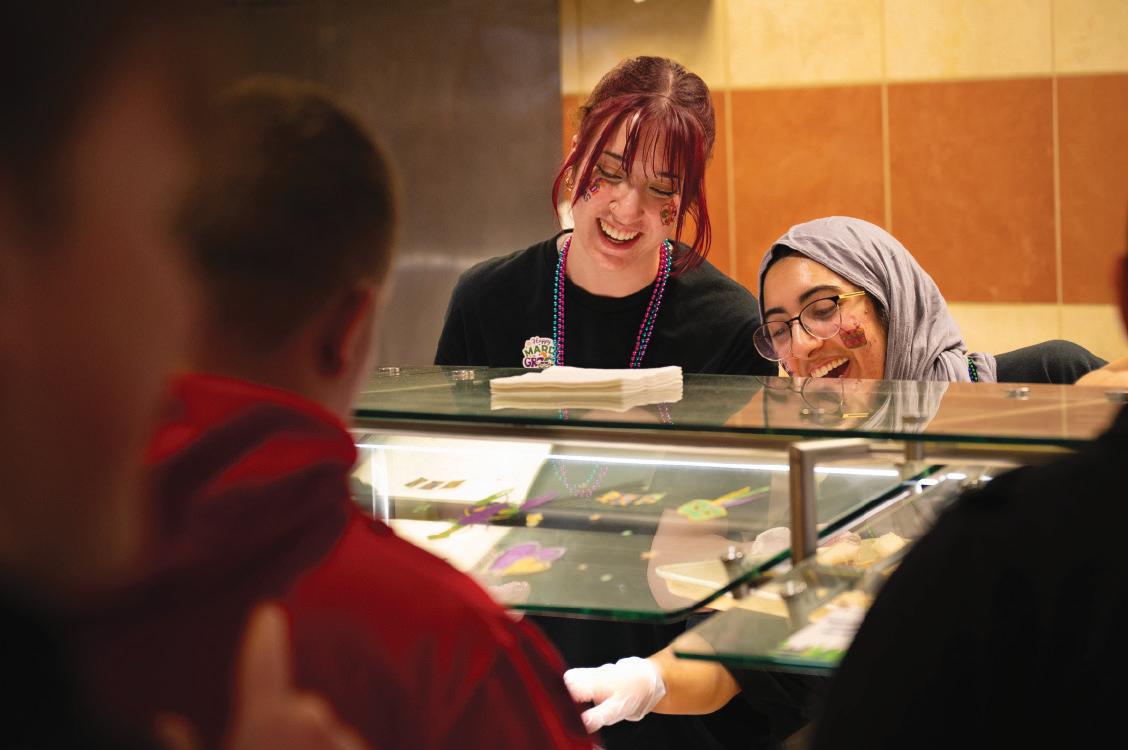
Bright, vibrant decorations cover the ceilings and walls, beads hang from people’s necks and the smell of food lingers in the air as lines of students fill the dining halls every day, bringing life to traditional spaces and bonding students with something everyone needs: food.
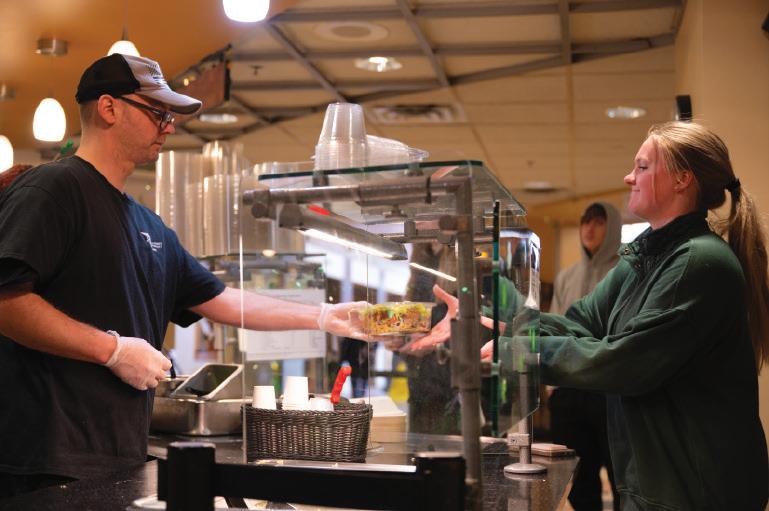
Ball State University Dining Services provides students, faculty and staff with accessible and diverse food options that are inclusive of all students, regardless of whether they live on or off campus.
From North Dining to the Tally Food Court, and from the Atrium to Studebaker West Micro Café, Ball State students and staff have a variety of locations to eat and maintain nutritional wellness,
However, Ball State Dining Services not only provides food options for students, faculty and staff, but also celebrates cultures through a variety of events held throughout the year that reflect cultural traditions and connect students to their heritage.
For example, in the first few months of 2026, dining services hosted events for students, faculty and staff to go out and connect with others, order themed meals and celebrate the culture and traditions of several holidays, such as serving Cajun food for Mardi Gras and Irish food for St. Patrick’s Day.
“I love seeing the students excited, seeing the staff excited, and having fun interactions and making it something more for everybody. Seeing everybody come together, connect, have fun and show off our creativity is so special. It really is, and I love all of that,” University Dining
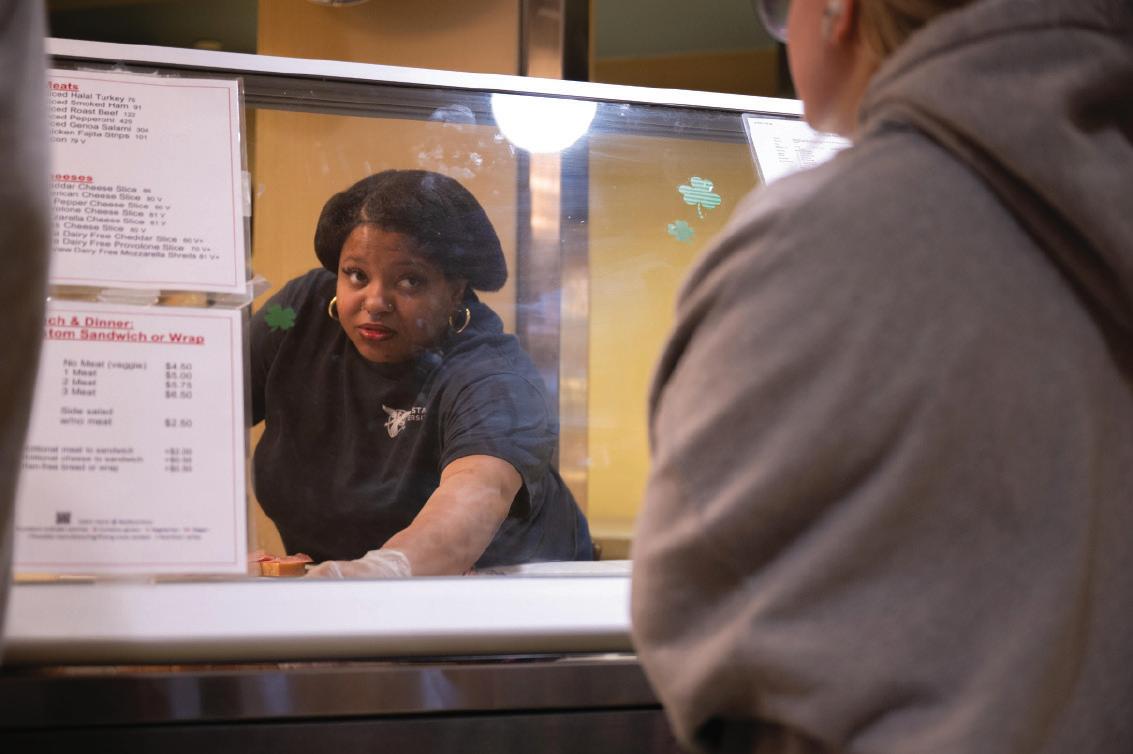
on Feb. 17 in the Atrium, featured dishes and food items not traditionally available, catering to the typical Mardi Gras fare. Students were able to find information online on the Ball State Dining Instagram about the featured foods, as well as on and around campus.
“Whether you’re craving jambalaya, a fried shrimp po boy, or vegan red beans and rice, we’ve got your Fat Tuesday lunch and dinner covered. Don’t forget to grab a slice of king cake for dessert,” according to a Feb. 10 Ball State Dining Instagram post.
Ball State first-year Moss Saavedra said the St. Patrick’s Day Meal reminded them of events that their high school would do. They said the foods featured at Ball State for the holiday were “legit and pretty cool,” such as tater tot Irish nachos.
Howard said events like the St. Patrick’s Day Meal have been fun to experience from the faculty side because she feels like it “bridge[s] a gap” between students and faculty.
“[The events have] definitely given students something to look forward to, and something for our employees to look forward to,” Howard said.
For Ball State exchange student Charlotte Hiebler, dining services also helps aid with college homesickness, especially when it comes to the cultural differences between the United States and France, her country of origin.
According to a study by World Metrics, college students experience homesickness from a variety of causes, such as distance from family, new locations and cultural changes.
“61 percent of college students experience homesickness symptoms during their first semester, 51 percent of students who move from a rural area to an urban college report homesickness due to cultural adjustment and 38 percent of firstyear college students report moving more than 100 miles from home,” according to the study.
Hiebler came to Ball State University to improve her preparation for her English studies. Despite the cultural differences, the dining options helped her feel comfortable during her transition, thousands of miles from home.
fact that everything is in the same location, the buildings in which I have classes, the different dining halls helped me get more comfortable in my everyday life and also in my studies in English,” Hiebler said.
Hiebler discussed how it is really easy for her to understand how the meal plans work and to keep track of how many she has left for the week.
“We don’t have meal plans in France, so it was a totally new experience, but I love how easy it is,” Hiebler said.
For Hiebler, the student-staff relationship also helps.
“I feel like people in the dining halls are all really welcoming, they often ask, ‘How are you?’ or ‘How was your day?’ which is really nice,” Hiebler said.
For students, faculty, and staff with dietary restrictions, the Top-9 Allergen-Free area offers accessible meal customization to suit students and their dietary needs, from pizza to stir-fry to sandwiches.
“I’m someone who needs to have a routine, to know what is planned each hour of the day, otherwise I can easily get overwhelmed; and the dining halls are the one place I know I need to get to every day, obviously to eat, so I am comfortable going there and eating there,” Hiebler said.
According to the Ball State Dining Services website, under “Menus, Nutrition and Dietary Assistance,” it prides itself on the work done to provide for Ball State students on campus.
“Ball State’s chefs are the heart of our studentfocused menus. From colorful fresh fruit and veggie bars to house-smoked meats to sustainable seafood, you’re never more than a few steps away from incredible variety at Ball State,” according to its website.
Students may not be able to find a real leprechaun on campus, but they are given opportunities to celebrate various cultures at Ball State. Still, they build lasting connections with students, faculty and staff who promote inclusion, discovery and accessibility for all.
Contact Kadin Bright via email at kadin.bright@ bsu.edu
The Mardi Gras Meal, an all-day event
“Since I’m not used to living on campus [because] in France no one lives on campus, the
Get cleaned up
“Dancing with the ___”
“Death and ___ Details”
“Unshaken”
Host of the 2014 Winter Olympics
Squeezed (out)
Literally, “tea”
Setting for “Gunsmoke”
“___ the word!”
Structure for burning
Variety show with a 2026 revival special
“Fate/stay night” voice
Lee
Laura Vandervoort’s “Smallville” role
33 Mike, to Marcia, Jan, and Cindy 36 Taylor Swift’s ___ Tour
“The Raven” or “The Tyger” 38 “___ Have I Ever” 40 Tabloid program since 1989 45 Counterpart to Goofus
R&B’s ___ Marie 47 First name of Dak Prescott 48 Creative, say DOWN
Feathery accessory 2 Right now, over text
“Yep, that’s me”
Noble trait 5 Talk show host André
“Sazae-___”, longest-
running animated series in history
“Star Trek” series before DS9 8 Accept, with “to” 9 Smells 10 Ice pellets, familiarly 12 Workplace in “My Adventures with Superman” 13 “The ___ Couple” 15 Cooking game show hosted by Ted Allen 18 “___ Crossroads” 19 “Wha?” 21 Feared
Soaked
Diamond authority
Twin sister to Scooter
Cains of “Bridgerton” 29 Rita ___, host of “ANTM” cycle 23
Existed 33 Certain submarine tech 34 Tech pioneer Nikola 35 “___ in Paris” 37 “Peppa ___” 39 PlayStation handheld 41 Levy of “Schitt’s Creek” 42 WSW opposite, on a compass 43 Slip-___ (some shoes) 44 Anti vote

The Daily News is a weekly, student-directed and nationally award winning newspaper. Its 100+ year history makes it the longest-standing student media organization on campus and one of the nation’s top college newspapers. Providing the campus community with breaking news and accurate, timely information both in print and online, students can get involved from day one by working on staff or just simply staying informed.