























































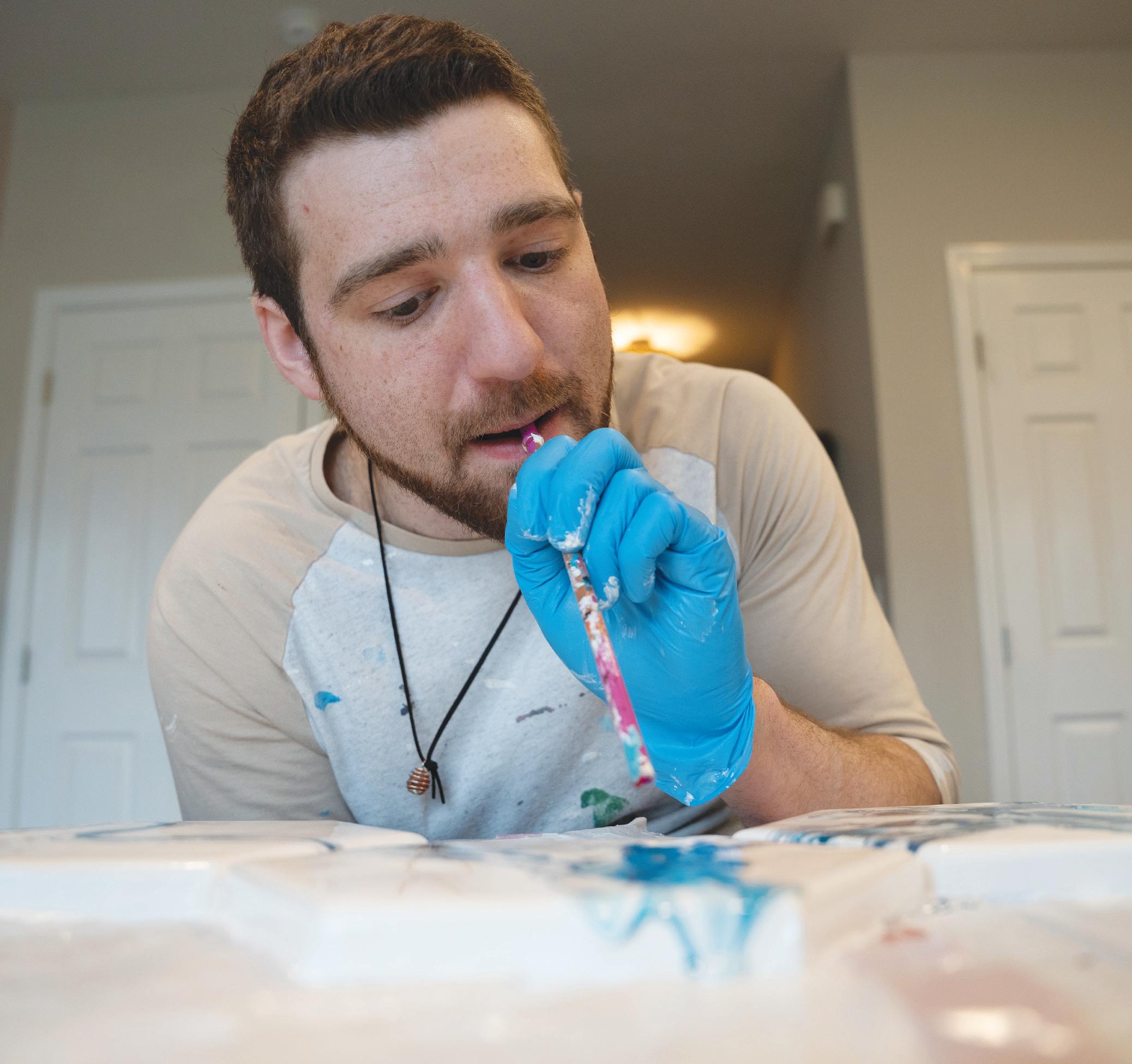

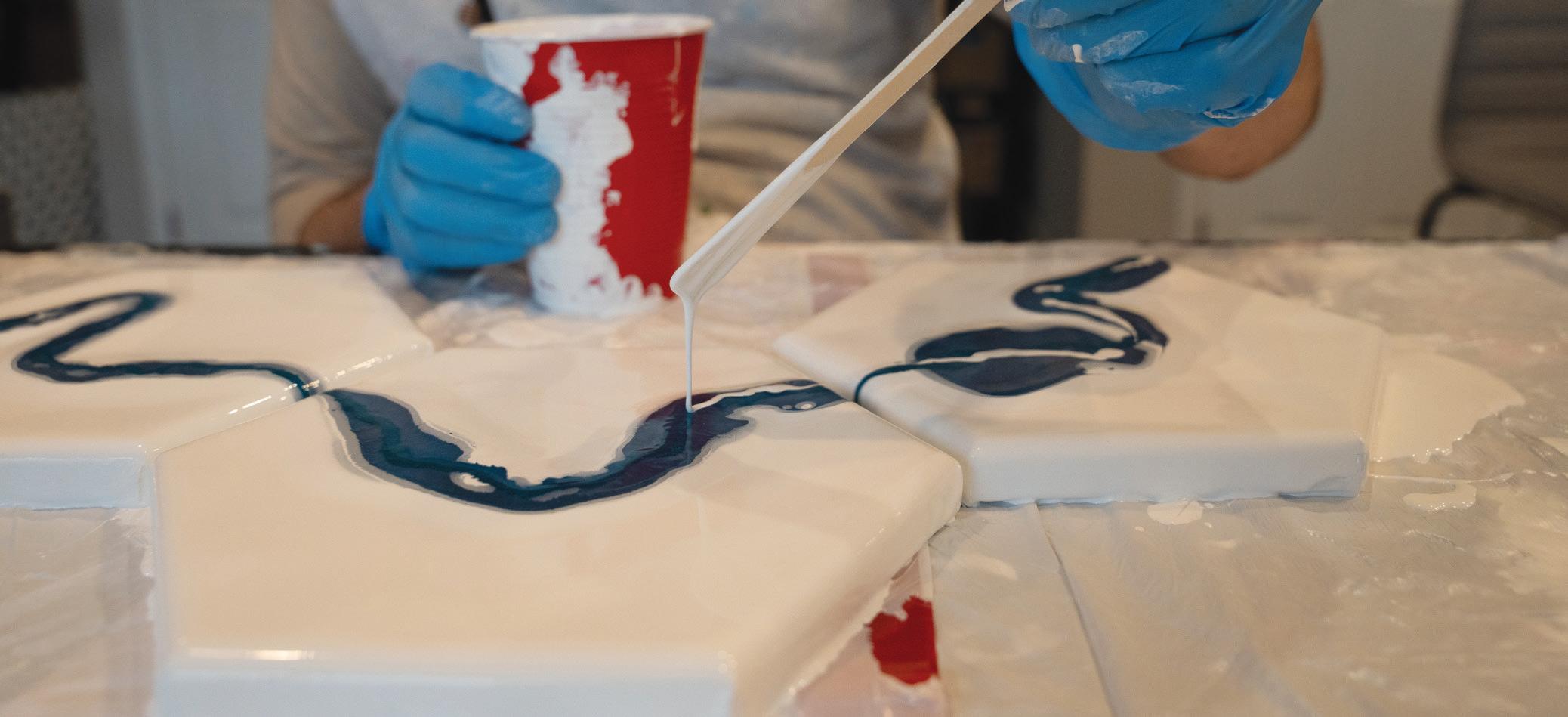
Austin Brammer paints using a straw to do a Dutch Pour method March 13 in Muncie, Indiana. KYLE INGERMANN, DN; BRENDEN ROWAN, DN ILLUSTRATION

VOL. 105 ISSUE: 25
CONTACT THE DN
Newsroom: 765-285-8245
Editor: 765-285-8249, editor@bsudailynews.com
EDITORIAL BOARD
Meghan Braddy, Editor-in-Chief
Katherine Hill, Managing Editor and Lifestyles Editor
Linnea Sundquist, News Editor
Kyle Stout, Sports Editor
Rylan Crum, Associate Sports Editor
Jayden Vaughn, Opinion Editor
Charlotte Jons, Associate Opinion Editor
Channing Matha, Copy Editor
Kyle Ingermann, Multimedia Editor
Kadin Bright, Associate Multimedia Editor
Ryan Fleek, Associate Multimedia Editor
Brenden Rowan, Visual Editor
Jessica Bergfors, Associate Visual Editor
Raquel Ruffin, Associate Visual Editor
Corey Ohlenkamp, Adviser
The Ball State Daily News (USPS-144-360), the Ball State student newspaper, is published Thursdays during the academic year except for during semester and summer breaks. The Daily News is supported in part by an allocation from the General Fund of the university and is available free to students at various campus locations.
TO ADVERTISE • (765) 285-8256 or dailynewsads@bsu.edu
• Hours: 8 a.m.-5 p.m. Mon-Fri. • ballstatedaily.com/advertise
TO SUBSCRIBE
Call 765-285-8134 between 9 a.m. and 3 p.m. Mon. -Fri. Subscription rates: $45 for one year. POSTMASTER: Send address changes to Daily News, AJ278, Ball State University, Muncie, IN 47306
JOIN THE DAILY NEWS Stop by room 278 in the Art and Journalism Building. All undergraduate majors accepted and no prior experience is necessary.
The Ball State Daily News is committed to providing accurate news to the community. In the event we need to correct inaccurate information, you will find it posted here.
To submit a correction, email editor@bsudailynews.com.
March 11: Indiana state attorneys are urging a federal judge to reject requests to block a state ban on using college identification cards to vote before the 2026 general election, according to Indiana Capital Chronicle (ICC). Attorneys argue that new court filings show that the law does not target young voters or make it harder for them to cast their ballots. The Indiana Attorney General’s Office, representing Secretary of State Diego Morales and other state defendants, asked Indiana’s Southern District Court March 6 to deny a preliminary injunction sought by student and voting rights groups challenging the policy. A request made in February by the plaintiffs for a preliminary injunction is still pending, according to ICC, with a status conference scheduled for June 9.


March 11: According to a March 11 press release from Ball State’s Communication’s Center, the university’s department of theatre and dance will premiere “Cats” at Emens Auditorium next week. The Andrew Lloyd Webber classic will feature choreography by Anne Beck with musical direction from Michael Rafter, according to the release. Showings will be March 20 and 21 at 7:30 p.m. and March 22 at 2:30 p.m. Advance tickets are only $15 for students and Ball State staff, according to the communications center.

March 11: Ball State Women’s Basketball defeated Bowling Green 75-63 to advance to the Mid-American Conference (MAC) Tournament semifinals at Rocket Arena in Cleveland. Sophomore guard Grace Kingery recorded her career high as she scored 25 points and made five threes. The Cardinals will play the winner of UMass vs. Toledo March 13 with a chance to go back to the MAC Tournament Championship.









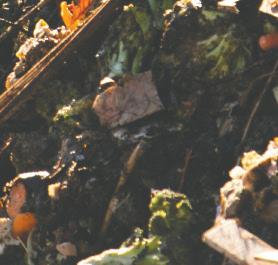
ScrapCycle can now consistently process organic waste from its 500 Delaware County participants, a first since launching in 2020.
Blake Chapman Cardinal Media
After five years of collection and growth, local composting organization ScrapCycle now has the means to finish the process in a single year.
For the first time since starting operations in the summer of 2020, ScrapCycle can reliably intake and process organic material into compost from its 500 total participants in Delaware County. By spring of 2026, the organization will have approximately 22 tons of finished compost to give back to customers or distribute through local organizations.
“Now, I finally feel like the entire life cycle of compost is managed by us. It’s just continuing to get volume and scale,” ScrapCycle founder Bob Mattax said.
The last few years have seen ScrapCycle grow in several ways as it moved from a manual backyard operation to a complete, accelerated process. In January 2023, Mattax moved operations to Brumond Smith Nursery to meet demands for space. Then, in February 2024 and June 2025, he began mechanically rotating, aerating and sifting collections with a windrow turner and an industrial trommel, respectively.
Both machines allow Mattax and his team of volunteers to better handle the voluminous 500,000 pounds of organic material they have collected thus far and process it faster.
dioxide — with wasted food accounting for 58 percent of that figure.
In 2024, only 17.8 percent of the approximately 1.3 million tons of surplus food generated in Indiana was composted. Almost half of that ended up in landfills, disposed of in a sewer, or incinerated.
Mattax has made agreements with local organizations like Second Harvest Food Bank to compost produce donations that have already spoiled and cannot be recovered. After negotiating rates and necessary upgrades to meet their demand, Second Harvest has diverted over 160,000 pounds of food waste from the landfill through ScrapCycle.
“We don’t want it to go back to the dump, but we have asked around and there doesn’t seem to be a lot of other people that have the capacity yet,” Second Harvest President and CEO Bekah Clawson said. “If nobody else is willing, then we’re going to be stuck if we don’t support Bob’s endeavor. It’s sort of like we’re patting each other’s backs.”
and rent the land.
Composting is also a sensitive and time -intensive activity. While processing from pickup to final sifting is estimated to take one year, open-air windrow composting is very dependent on moisture level and temperature. Plant-digesting microbes break down waste slower in periods of cold temperatures or extreme rain during late fall, winter or spring, and if unseasonably warm summer heat causes the mass to dry out, active microbes will be killed off.
Adoption and retraining individuals is the major hurdle in Mattax’s eyes as he is hoping to land contracts with more commercial customers over the next year. While banning food waste from restaurants or commercial businesses would drastically lower emissions, only one state, Massachusetts, has successfully implemented such legislation.

“Everything up to this point has been pretty slow… Just like a lot of chemical reactions, it comes down to surface area, so what we’re doing is we’re introducing more and more surface area, more and more oxygen,” Mattax said.
Composting is an alternative way to dispose of many organic materials including food scraps, yard trimmings and most paper products. Instead of getting thrown in the trash, the carbon and nitrogen-rich waste is broken down by fungi, bacteria and other microorganisms through proper aeration. The result is a hummus-like mixture, or compost, that can provide nutrients for home gardens and indoor plants.
According to the Environmental Protection Agency (EPA), 28 percent of the total waste deposited in landfills can be composted, and most of that compostable material is surplus food waste generated by grocery stores, restaurants and individual households. Those municipal landfills are also the third largest source of human-related methane emissions in the U.S. — a greenhouse gas with 84 times the global warming potential of carbon
Even though he has been able to handle much more organic material because of this and similar partnerships, Mattax said he understands that the larger issue exists on a systems level. As Second Harvest gets sent more food year-over-year, the likelihood for spoilage — and therefore waste — is much higher. The food bank sourced 11 million pounds of food in 2025 alone, and only 66,000 pounds (0.6 percent) of that total was diverted through Scrapcycle.
“They have put a lot of effort into reducing what goes to the landfill through us, but they are just a cog in the machine, too, where Walmart has ‘X’ amount of food and they try to sell it as long as they can. When they can’t, they give it to the food banks and then they’ve only got a week to try and figure out what to do with it,” Mattax said. “They’re not gonna try and process it or preserve it, even though you could, but our food system isn’t built to handle that. It’s built in a very rapid sort of way.”
ScrapCycle, as an LLC, can also not apply for grants or outside funding that would have made some of the expansion over the last five years easier. The business is currently profitable, but it has plateaued with only 40 percent of members paying for the service monthly and the other patrons naming their own price or electing not to pay. Even though the primary motive has always been to encourage and grow composting over making money, revenue is the core driver behind much of the operation because of the cost to run machinery, pay for maintenance

“The big message in all of this stuff is that we can’t defer this to somebody else. We can’t defer it to the government because they won’t take care of it. We can’t defer it to another organization. Nobody is going to come into our house and separate our stuff for us,” Mattax said. “We are just going to have to be responsible at the end of the day and say ‘This is my problem, I have to recycle, I have to compost.’”
ScrapCycle’s immediate future plans are to concentrate on advertising and partner with the Muncie Public Library’s gardening program to offer compost to local residents or sell the finished product through Brumond Smith Nursery. The ultimate goal for Mattax is to build a platform to empower entrepreneurs and communities elsewhere to make a simple change.
“At the end of the day, I’m doing this and I’m interested in spending my time doing this because I want to make a difference, to make a change, to leave things better than I found them for my kids,” he said. “I have four kids and they’ve been the motivation in a lot of ways; it started out with my garden but it turned into my kids at the end.”
This story was produced in part with financial support from Carbon Neutral Indiana. The reporting and production of this piece were overseen by faculty and/or staff within the Department of Journalism at Ball State University to ensure adherence to professional and ethical standards.
































Michael Lewis was fired after four seasons with the team. 08












Rylan Crum Associate Sports Editor
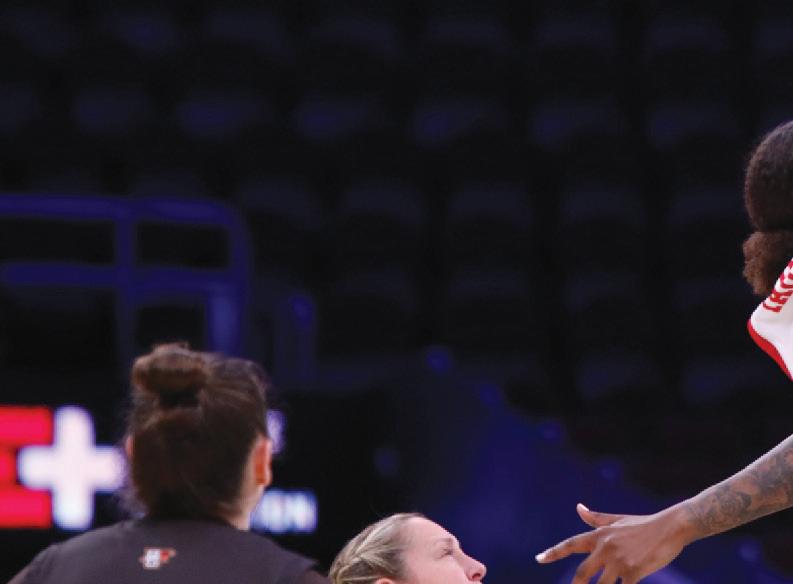
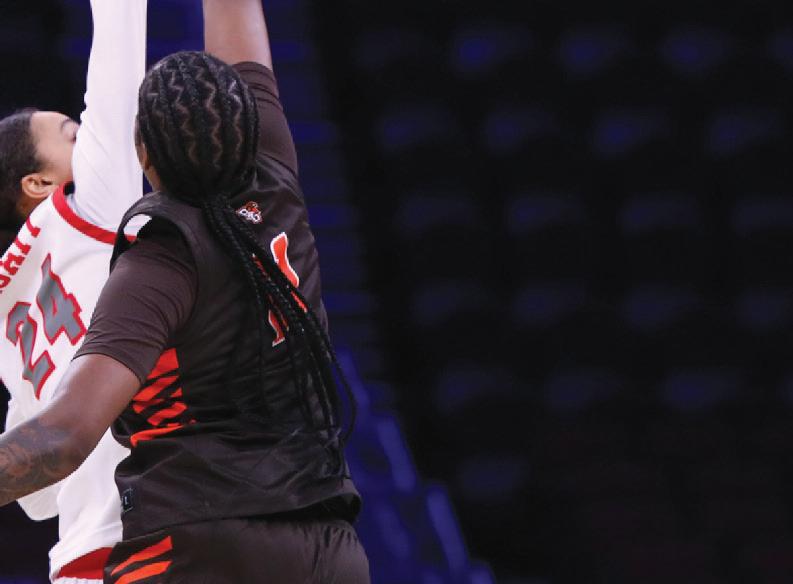
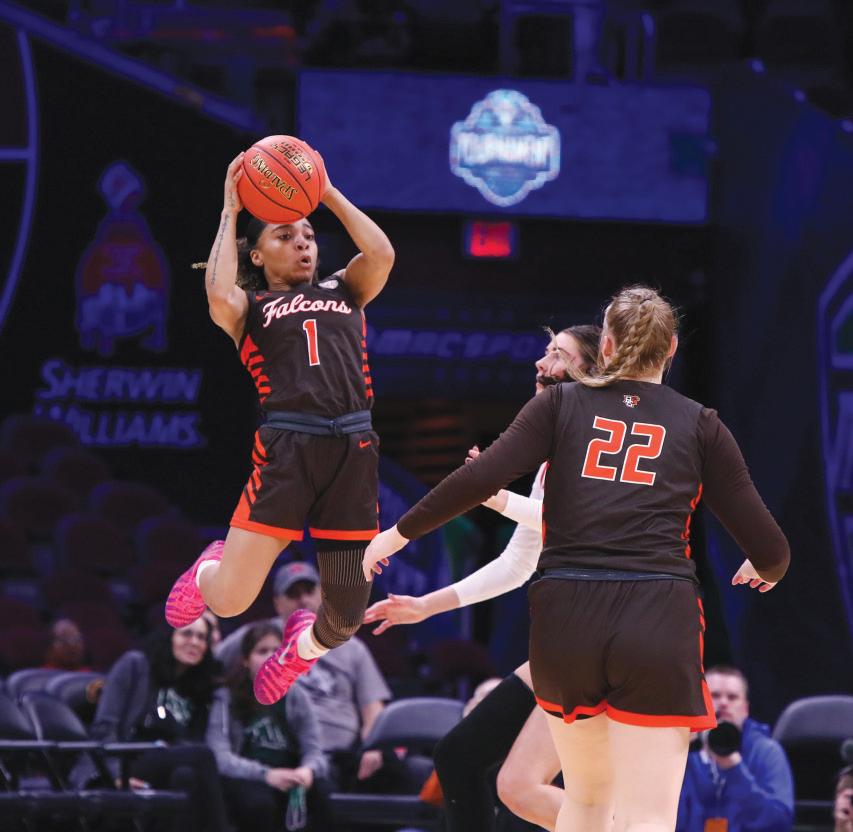
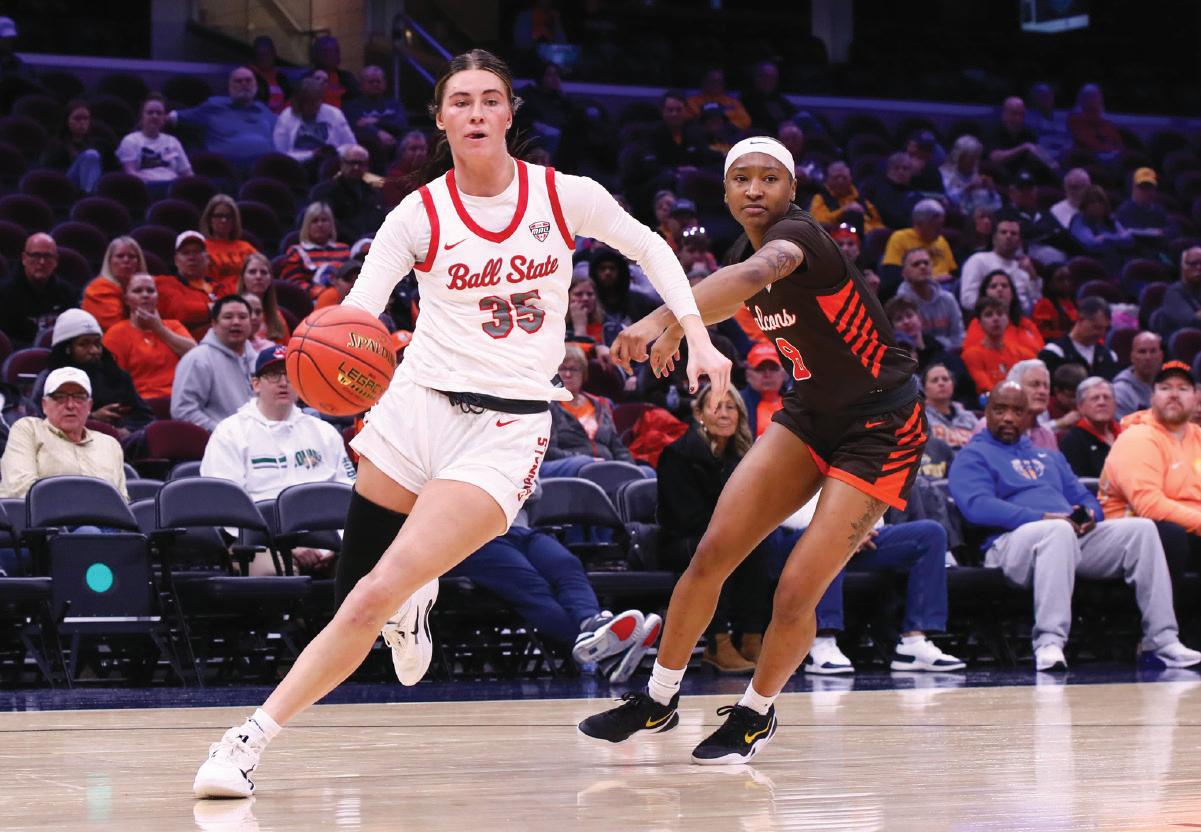
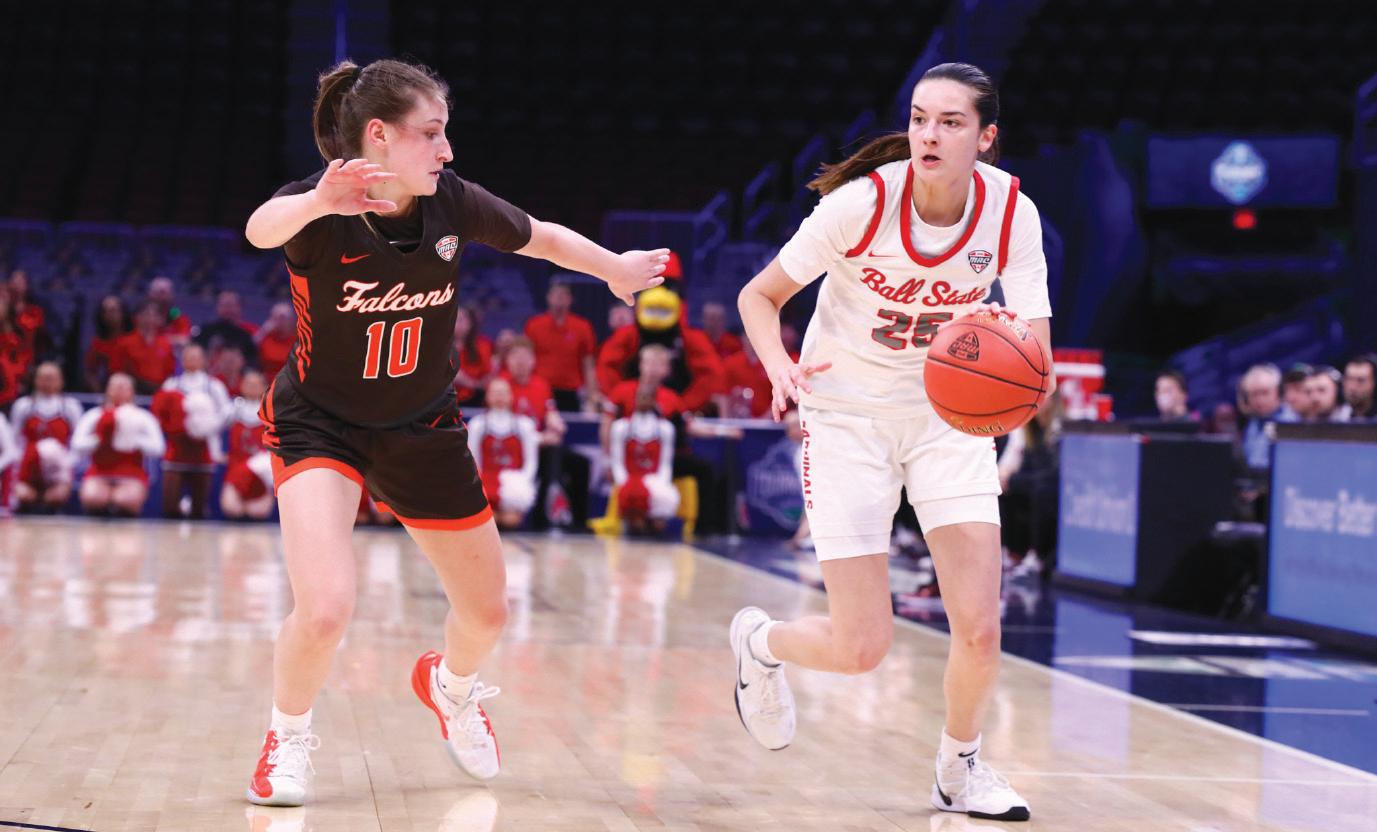
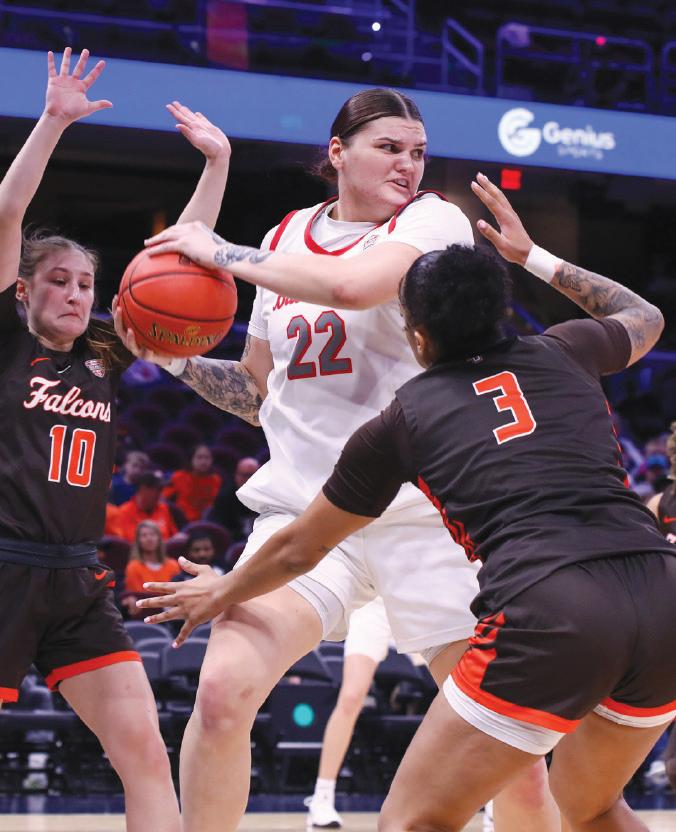
After winning a share of the Mid-American Conference (MAC) regular season title, the Ball State Cardinals were awarded the second seed in the tournament, where they faced off against Bowling Green in the opening quarterfinal round March 11.
Ball State defeated Bowling Green 75-63 and will advance to the semifinals where they will play the Toledo Rockets.
The key for the Cardinals against Bowling Green was the efficiency of sophomore guard Grace Kingery who scored a career high 25 points. Kingery shot an impressive 52 percent from the field and 50 percent from beyond the arc, while also racking up five rebounds and two assists. The team itself shot a solid 42 percent from the field and 50 percent from three.
Head coach Brady Sallee described the win as
a “heck of a game.” Sallee nodded his head at Bowling Green head coach Fred Chmiel for the closeness of the game.
“Fred [Chmiel]’s such a pro down on that other sideline,” Sallee said. “He started trying to exploit some matchups and they made a couple shots on some penetrate and kick situations.”
The Cardinals have played Toledo twice, beating them 72-68 and 78-71 in the two matchups.
Sallee is confident that the previous meetings will give Ball State an advantage. The head coach said he is so confident he could tell you what the other teams pregame meal is.
“It’s really about putting that in front of your team and making sure they understand the plan regardless of who you play. But I know whoever it is we play, it’s going to be a good one, and that’s just what MACtion is,” Sallee said.
As Ball State had to wait to find out who its next opponent was going to be, Coach Sallee had his scouting plan down to a tee
“I’m getting old, so I’ll go back to the hotel room and watch [UMass vs. Toledo] on the computer. My staff will stay behind and watch it. But at this time of the year, you know everybody inside out. I can tell you what they ordered for a pregame meal, you know,” Sallee said.
The key for the Cardinals as they take on Toledo is containing junior guard Kendall Carruthers. Carruthers is the leading scorer for the Rockets, averaging 12.2 points a game. In the two teams’ first meeting Jan. 7, Carruthers was the game’s leading scorer with 19 points, along with a pair of assists and a steal.
In their second meeting, the Cardinals kept Carruthers to 13 points, and Ball State’s rebounding was likely the key.
The Cardinals racked up 50 rebounds in that second meeting to the Rockets’ 38, 12 of those 50 coming from senior center Tessa Towers.
Ball State now has a day of rest before their semifinal game, and a chance to go to the
tournament championship for the second year in the row.
During the off day, the Cardinals are continuing a tradition they’ve had for some time as they are being hosted by a local high school for practice.
“We’ve had great luck since we’ve gone over there, so we’ll do that, then the superstition part of it will kick in and we’ll prepare the gameplan in front of them,” Sallee said.
Other than the practice aspect for the Cardinals, Sallee wants his team to do one thing on the off day: relax.
“At that point, it’s about kicking their feet up, resting, relaxing and enjoying each other,” Sallee said. “And this team has been really good at staying loose all year long. We’re going to try to keep them that way. We’re just going to put our best selves out there and see what we got.”
Contact Rylan Crum with any questions at rylan. crum@bsu.edu or on X @RylanCrum








Kyle Stout Sports Editor
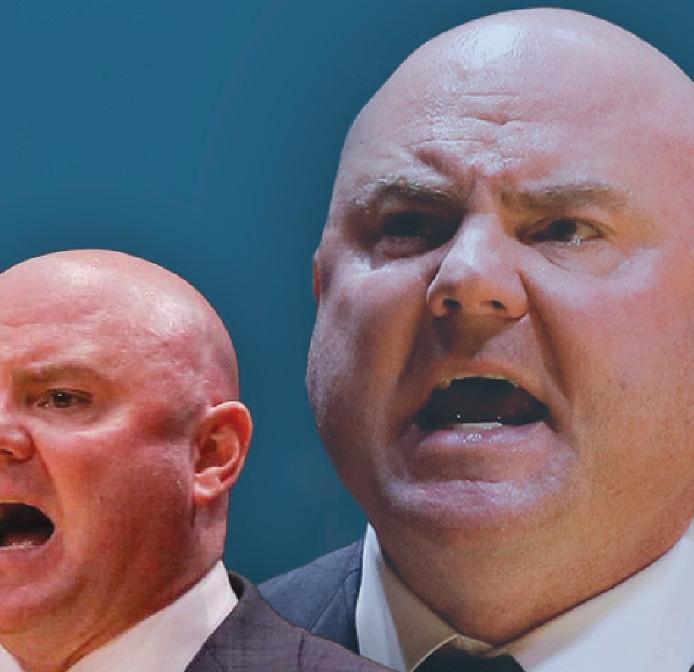
Michael Lewis’ first year as head coach for the Ball State Cardinals went smoothly. Lewis replaced former head coach James Whitford in 2022 and won 20 games for the first time since the 2016-17 season.
But the boat started to rock in the years following. 15 wins in his second season. Then 14 wins. And then in his fourth year with the team, Ball State went 12-19 and missed the MidAmerican Conference (MAC) tournament for the third year in a row.
Ball State decided to move on from Lewis, a year before the head coach would have entered the last year on his contract.
“As Coach Lewis and I talked about, it was a wins and losses deal,” Ball State Athletic Director Jeff Mitchell said. “The level of success after year one declined, year over year.”
This year marked the third straight year the Cardinals finished 7-11 in MAC play. This year’s team only took down one division one opponent with a winning record, and that was a 16-15 University of Massachusetts (UMass) team.
Aside from the numbers, Mitchell said the decision was not easy. The athletic director reiterated from his press release March 7 that the program appreciates the contributions Lewis made in his four years with the school.
“These decisions are always extraordinarily difficult,” Mitchell said. “It impacts people’s lives.”
The Cardinals had one of their worst starts to a season ever this year. The team started conference play 0-5 and saw themselves sitting at 4-13 overall. Rumors started to swirl online that Lewis may be in the hot seat.
Ball State continued conference play poorly, and saw themselves at 3-11 in the MAC after a loss to Akron Feb. 20 on the brink of elimination. But the Cardinals finished out the year with four straight wins, and found themselves in a three-way tie for seventh place in the MAC.
There were two bids to the MAC tournament on the table for Ball State — UMass and Buffalo — but the Cardinals were on the wrong side of a tiebreaker.
Mitchell said the evaluation of moving on from Lewis was an ongoing process, but it is part of the responsibility that he has as an athletic director. Mitchell said internal conversations started to happen as Ball State hit the back half of the conference schedule.
“These decisions are never made in a vacuum, not in operations at this level,” Mitchell said. “It’s a broad-based approach, [and] there was alignment on that.”
Even if Ball State was on the right side of a tiebreaker, Mitchell said that he “does not know” if that would have affected Lewis’ status.
“That wasn’t a fact that presented itself,” Mitchell said.
Mitchell took over as Ball State’s athletic
director in 2023 following the conclusion of Lewis’ first 20-win season. And as college sports have progressed, Mitchell has seen the negative effects of the transfer portal contribute to Ball State’s lack of success in his tenure.
The Cardinals only had four returning players this past season, and the program saw talent leave to bigger schools, like former star forward Basheer Jihad.
“Those were challenges that were beginning to surface and have intensified over the last several years,” Mitchell said. “I think there was a continuity of players where it was difficult to develop, but that’s not a Ball State issue; that’s an issue that’s pervasive across the landscape right now.”
The athletic director also recognizes that winning is not easy. Ball State was one of four MAC teams to fire their head coach, along with Northern Illinois, Eastern Michigan and Western Michigan.
“Coaching in today’s landscape is difficult,” Mitchell said.
Mitchell wants Ball State to be in the high-end of the MAC in men’s basketball, and he said that want of success is what precipitated the decision.
“I think that as we continue to find our footing in this new landscape, the more clarity we have about how we can proceed and how we can lean on the strengths of the university,” Mitchell said. “We have a chance to be successful.”
A big talking point online since the firing of Lewis is that Ball State’s resources do not give the program a chance to succeed.
Jeff Rabjohns, a publisher for peegs.com and a part of 247Sports Network, put out a statement defending Lewis on X that got over 75,000 views.
“Ball State’s resources currently allocated to men’s basketball aren’t close to what is needed to compete with the top MAC teams,” Rabjohns said in the post. “This is about resources, not coaching. Everyone knows Lewis can coach.”
But Mitchell said that the talk of resources and how to improve upon those is a near-daily conversation that the university has. He said it is a top priority for the program.
“That’s a constant conversation that we have at the institution about driving more revenue, enhancing budgets,” Mitchell said. “We have increased the level of support for basketball year over year, for the last three years.”
Mitchell said he wishes he could “snap his fingers and give [Ball State men’s basketball] more,” but the athletic director did emphasize the support the program already receives.
“In addition to financial resources, we have provided staffing assistance to men’s basketball, from a dedicated trainer to a dedicated strength and conditioning coach, to continuing to invest in our facilities,” Mitchell said.
The transfer portal for men’s basketball opens up the day after the national championship game in April, so it is go time for the Cardinals to try and find a new head coach before the portal opens up. Although Ball State is immediately in search
of a new leader for the men’s basketball program, Mitchell said it is “disingenuous” to put a timeline on it.
While that is the case, Mitchell said it will be his only focus for however long the head coaching search goes.
“It will be important that we have somebody prior to the final four,” Mitchell said. “But certainly my time frame is going to be to conduct a thorough and thoughtful search, and that process has begun.”
While the transfer portal is not open yet and nothing is official, there have been some players, like sophomore guard Davion Hill, who have put out on social media their intent to enter the transfer portal. Mitchell said he met with the team to acknowledge the difficulty of the situation and that he respects any decision they may make.
In terms of hiring a new head coach, Mitchell said there will be a five-day window where the new coach can talk to the team and make efforts to try and bring players back.
“I told them to their face, I respect [their decisions],” Mitchell said. “I also told them that we’re working diligently to find a new head coach, and I hope that they have the opportunity to visit with that new head coach to talk about their future.”
The Lewis era in Muncie is over. The Cardinals will look to the future with whoever Mitchell and his team decide is the best fit.
Contact Kyle Stout with questions via email at kyle.stout@bsu.edu or on X @kylestoutdailyn.











































Katherine Hill Managing & Lifestyles Editor
William “Austin” Brammer’s days are permeated with color.
The Muncie-based acrylic pour artist spends his days filling blank white canvases with layers of primary colors and metallic accents, splattering enough paint that even his once-neutral dining room curtains are considered works of art.
But his days were not always saturated with sunshine and the colors of the rainbow. One day, in particular, changed his life forever. After the fact, Brammer was narrowly consumed by the muted undertones of depression.
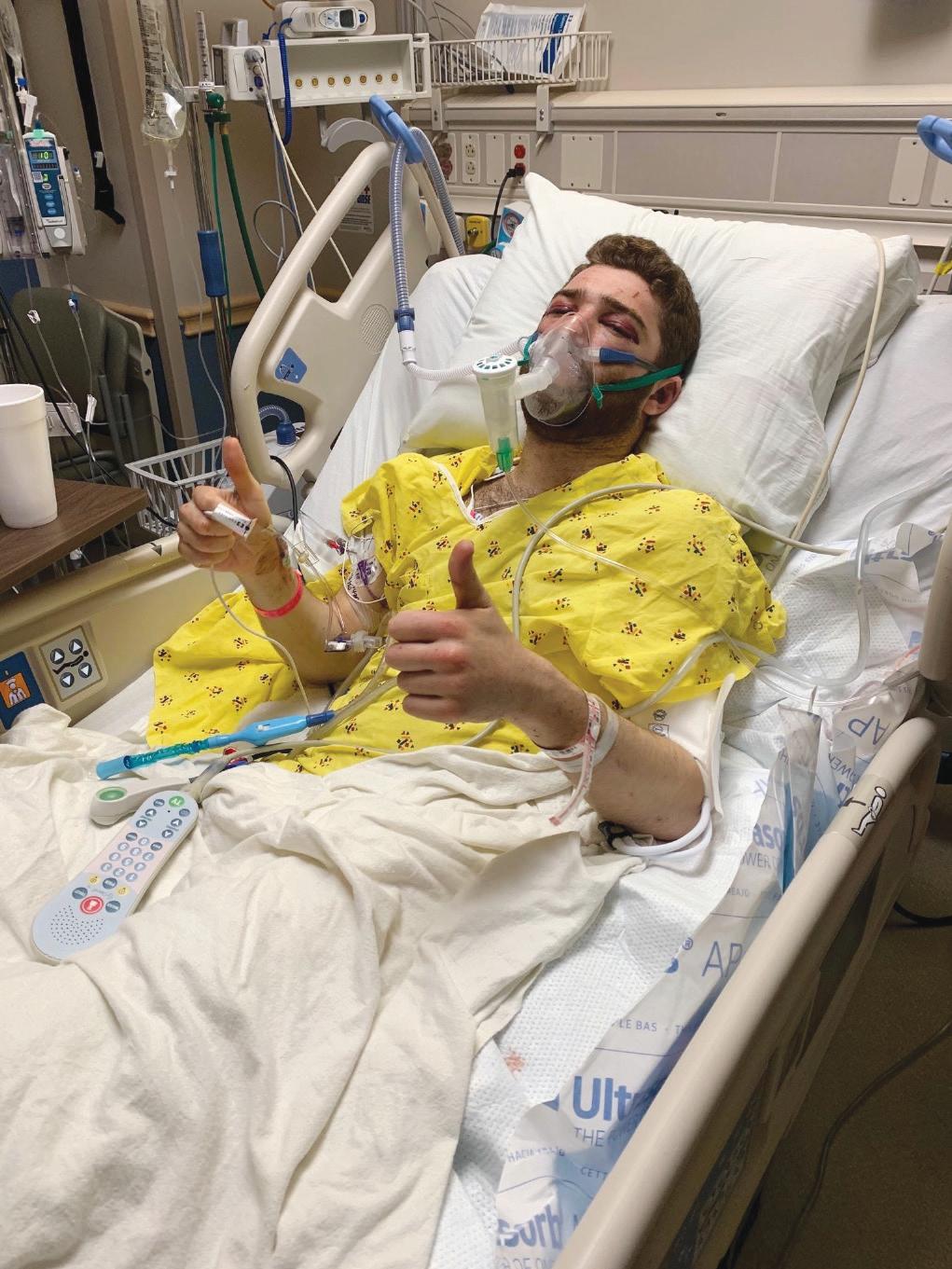
Brammer was driving on Interstate 69, halfway between Muncie and Fort Wayne, Indiana, when his car flipped five times in an automobile accident along the interstate. He sustained a “multitude” of injuries: a collapsed lung, a broken sternum, a broken scapula, three broken ribs, a “completely bruised up face,” and, “most notably,” a T6 incomplete spinal burst fracture.
The spinal cord injury at the T6 vertebrae, about halfway down his abdomen, rendered Branner paralyzed. As a result of the incomplete fracture, he still maintains “preserved motor function” in his lower body but is unable to bear weight on it.
Today, almost six years to the day since the accident, Brammer reflected.
“This accident was extremely life-altering for me in a multitude of ways. I barely survived. I have my hands; I have my head. That’s stuff that I am very grateful for, and that I should not even

probably have in the first place,” he said. However, he did not always feel so lucky. Alongside his art skills, gratitude took time to develop — and was far less tangible.
“The first year [post-accident], I was nowhere near as optimistic as I am now,” Brammer said. “I was not doing much of anything, really. I was just grieving…and grievance in itself doesn’t have a set time period…Everyone heals and makes their milestones of grievance at their own pace.”
His mother, Candace Brammer, said that as the middle child of the family, Austin fit the stereotype.
“When he was young, he was a strong-willed child, and I remember saying multiple times, ‘This obstin[acy] is going to come in handy someday. I don’t know how. I don’t know what [for] — it’s probably going to be for a job — but it’s going to serve you well at some point.’”
After the accident, she said she could not bear to witness the depressive personality shift in her youngest, once highly independent, son.
“It was so hard as a mom,” she said. “There’s so much more to being paralyzed than just being in a wheelchair, and I had never really thought about that too much.”
What made it especially hard, Candace said, was the timing of it all. The date of Austin’s car accident, April 4, 2020, was less than one month after the United States government declared the COVID-19 pandemic a national emergency and enforced lockdown restrictions in March 2020, according to The National Conference of State Legislatures.
Per quarantine protocol, loved ones and visitors were not permitted into hospitals. This meant
that Austin went through the earliest stages of his recovery process alone.
Austin’s older brother, Chase Brammer, said he does not remember a lot from the accident itself, having “blacked out the immense stress and pain of the whole thing,” but the bits and pieces he does remember “ranks in the top two worst days of my life.”
Growing up just two years apart from one another, the brothers had a close bond. They shared similar engineering hobbies, music tastes and even slept in bunk beds as children, which made the space between them post-accident all the more devastating for Chase.
“I was frustrated, personally, because I thought that the quality of care and the ability to communicate [within hospital networks] was as good as it was going to get, but it was not as high as I think it would have been if it wasn’t during COVID,” he said.
Switching between Lutheran Hospital in Fort Wayne and Rehabilitation Hospital of Indiana (RHI) in Indianapolis, Chase, Candace and the rest of Austin’s immediate family FaceTimed as often as they could, cheering him on through various therapy appointments.
But even through the computer screens, Candace’s motherly intuition told her that although Austin’s physical pain had been heavily numbed through medication on account of his “plenty” injuries, his anger — over circumstances far beyond his control — remained inconsolable.
By the time Austin was discharged from the hospital and returned to his childhood home in Muncie to live with his parents, they shared his sense of helplessness.
“We were just kind of thrown into ‘What
do we do now?’ and ‘How do we help you?’” Candace remembered.
These were questions none of the Brammers had answers to — but Candace looked inward to find them. The Ball State early childhood education alumna had worked as a preschool teacher in the years prior to that. After Austin’s accident, Candace quit her job, but her nurturing character held strong as she became his primary caregiver, a role she held for three years before returning to the workforce.
During this time, the mother and son formed an ironclad bond.
“We cried together…We both had a lot of anxiety about all the newness, trying to find a new way through the world and [how] to function, but honestly, it’s been really great,” Candace said. “We definitely got a lot closer than we ever had been, because I don’t think we were as close as I was with my other kids.”
Austin was 24 at the time of his accident. At that age, “He was big into independence, social life and experiencing the world the way young, 20-yearolds do,” Candace said.
That all changed in the blink of an eye, at about 60 mph.
Upon moving back into his childhood home, Austin became nearly comatose under a mixed cocktail of grief, anger and depression. Watching in real time as those emotions took over her son, Candace knew the pair could not spend their days sitting idly by.
“We have to find something to do,” she said, beginning her activity search.
As a child herself, Candace enjoyed crafting
and making pencil sketches with her best friend in the early 80s, but “was never good at it,” she said. “That was me as a kid; the end results were never good, but the process was fun.”
Then came Austin’s 25th birthday. He still fondly remembers the day his parents gifted him his first, premixed, acrylic fluid art set.
“My mom said, ‘Austin, you’re gonna do this with me, because I want to do it, and I want you to do it with me too,’” he said, reciting his mother’s matter-of-fact tone in the moment.
Austin described feeling “liberated” after creating his first painting. For him, the artistic craft was far more than just “something to do,” as Candace had initially set out to find.
Instead, acrylic pour art was “something I could do again,” Austin said. “It was something that was not a spinal cord injury. It was something that wasn’t the loss that I was dealt.”
Over the last half-decade, Austin has regained his independence. While Candace said Austin “doesn’t need much help anymore,” she was happy to step in when he needed it and cultivate his craft.
“I feel very happy that I was able to help him. That’s extremely gratifying, because of how hard [recovery] was and how much [a parent] wants [their] child — even though [Austin] was grown — to enjoy life, so it’s great to watch his [creative] process and how it’s affected him,” she said.
For about two years after receiving the art set, Austin said he did acrylic fluid art for fun. It was his close friends and family who helped turn his creations into cash flow.
His grandmother’s sister was the first person to ask for a commissioned piece in late 2023. Austin said he was hesitant to take up the request at first because “the art itself is very, very abstract, and it’s very hard to necessarily replicate certain pieces or certain images, and it’s very, very difficult to have a lot of control over. There’s always an aspect of randomness to this,” he said.
Nevertheless, Austin completed the commission and remembers the customer testimonial he received afterward.
“Austin, if you don’t do something with this, I feel like you’re wasting a really, really, really good talent and a really good story,” he recalled his grandmother’s sister telling him.
The positive, motivating feedback, coupled with the end of the 2023 calendar year — a time for new year’s resolutions — posed Austin with a decision to make.
“I was determining whether or not I was going to decide to actually go all in and try to become a vendor at certain markets and events for my artwork and have my own little side gig — or if I was going to get an administrator certification in Salesforce…You can kind of tell which direction I ended up going,” he said as he laughed.
In March 2024, Austin applied to be a vendor at Minnetrista Museums & Gardens weekly farmers markets and was later accepted.
“I love the Minnetrista. It’s a super accessible market, and I love that about it,” he said.
Through the years, as he has returned to the Minnetrista farmers markets and similar events like First Thursday boardwalks in downtown Muncie, “I just realized, ‘There’s something to be made here,’ whether it be money, a defining experience for people, [or] a powerful story,” Austin said.
His wheelchair, now an ingrained part of his story, has afforded him opportunities to connect with other disabled individuals — opportunities he recognizes he may not have if not for his car accident.
“There was a wonderful time,” Austin recalled, “where I met a family with a little girl who had spina bifida, so she was in an Ultralight wheelchair, akin to what I use.”
The family, as Austin’s anecdote went, was visiting from the Wisconsin area en route to the Children’s Museum of Indianapolis. The family’s daughter had done well in school and was heavily invested in art, so they made a pit stop to see the Bob Ross exhibit in Muncie, where they met up with Austin at a First Thursday event.
“I’ll do a lot of special stuff for kids if they’re interested in art, because I think it’s really important for kids to get into artwork…to encourage them to explore different mediums of expression,” he said.
Austin let the family’s daughter pick out a 3” by 3” easel painting to take home with her. In moments like those rooted in connection, “It’s not really so much about making a quick 10 bucks, or however much I sell [paintings] for. It’s about giving [customers] a memory,” he said.
As the years have passed, Chase said his brother’s sense of creativity is nothing new.
“[Austin’s] always been a creative person. I don’t think he’s had a medium to express it until this,” he said.
Austin said what draws him specifically to the acrylic pour medium is its abstract nature that reminds him of “the beauty of the absurd,” a strong parallel to the fact that he likely would never have discovered his artistic talent without his 2020 wreckage.
Although the car accident inevitably forced him to rethink and adjust, Candace said her son is still the same boy she has known and loved since his birth.
“He’s so kind and empathetic, and he was that way all his life. He was that way before his accident; the accident didn’t make him that way,” she said.
Austin shared similar thoughts about his evolution post-accident. To him, it was not so much a change in character as having to “overcome and adapt,” a standard of human existence.
“The long story short of it all is I suffered a very traumatic and tragic thing. It could always be worse, and I acknowledge that. But just like anybody else when they suffer a traumatic thing, we find ways to cope with it, and we find ways to overcome and adapt,” he said. “[Acrylic pour painting] was my first step in the direction of finding something that I can do again. It made me feel alive, and it put a smile back on my face that I hadn’t really had in a long time. I really do owe a lot of it to my mom, because she was pretty stubborn about it.”
Today, Austin’s creativity has earned him recent titles, including RoHo’s Martini Bar in Muncie’s February Artist of the Month and Savage’s Ale House’s current March Artist of the Month. Those interested in seeing his art or hearing his story firsthand can visit Austin at Minnetrista’s Saturday farmers markets or First Thursday events in downtown Muncie, both of which he is a frequent vendor at.
Contact Katherine Hill via email at katherine. hill@bsu.edu.










Isabella Kemper
Columnist, “Adventures Await“
Isabella Kemper is a fourth-year photojournalism major and writes “Adventures Await” for the Daily News. Her views do not necessarily reflect those of the newspaper.
When I asked people close to me how they would describe me, I got answers such as faithful, compassionate, independent, determined, adventurous and loving.
This is interesting because when you think of characteristics of those who struggle with mental health, the words that may come to mind are likely different. Many may think of words such as sad, removed, unmotivated and irritable.
There is an unspoken assumption that most people have about mental illness without realizing it. We walk through life assuming that if someone is social, smiling, laughing and showing up, that they must be fine and that mental illness only presents itself outwardly.
In reality, this is purely a myth.
I have been diagnosed with both depression and anxiety, but when people look at me, these are not the things they see. At times, that is a good thing, but other times, it can make me feel even more alone than I already am feeling.
My anxiety started in middle school, and my depression came around my second year of college. I am a perfectionist — someone who wants to be perfect for both myself and for others. That meant I had to learn how to function while hurting, and very few people actually get to see the behindthe-scenes.
I first started having panic attacks in high school. My legs buckle, I cannot talk, my fingernails dig into my palms and my face starts to get tingly and numb. It is terrifying.
Now imagine experiencing that while being yelled at by someone who does not understand what is happening or what you are going through. Imagine that you are curled up on a dorm bathroom floor at 2 a.m., crying out for it to stop, or alone in your bedroom, trying to breathe through it in silence.
In the morning, I wake up and everything hurts. Panic attacks drain your body. For days afterward, my muscles ache, and I can not hold in any of my emotions due to how drained I am.
Still, I let no one see. We are told mental illness is weakness, but surviving it requires so much strength.
My faith has a big role when it comes to my life and my mental health. I have a relationship with the Lord and with others who love Him.
According to a 2012 article published on Wiley Online Library, Christians statistically suffer less from mental health due to an increase of emotions such as happiness, hope, purpose and self-esteem. I have found so much peace through Christ to help me get through my life.
That said, the Church is not perfect. I have had moments in my faith where I felt like I was not good enough because of my mental health challenges. When others turn to faith and give it to God, their mental health struggles seem to go away, which was just not the case for me.
I went years feeling like all I needed to do was pray harder, when, in reality, I was not being truthful to myself or my doctors about how bad it had all gotten.
Once I got to that point, we started exploring medication. Unfortunately, medication is a long road to figuring out exactly what works for your body. I have been on at least four medications in the last six months, trying to find what works for me.
We are told mental illness is weakness, but surviving it requires so much strength.”
Some of the medications caused me to fall further into depression, whereas others had zero effects, to the point that it felt like I was taking Tic Tacs instead of a prescribed medication.
I so desperately want to find something that works, so I can feel like myself again. I would also love not to have to take pills for the rest of my life just to get through the day.
Mental health is often treated as a choice. Some people still insist it is not real at all. Yet a 2022 article by the National Institute of Mental Health found that roughly 59.3 million adults in the United States experienced some form of mental illness — but only about half received treatment. That is millions of people quietly fighting daily battles most of the world never sees.
You can not always see what a person is going through. In 2025, toward the end of the year, I fell into a really vulnerable episode. I had to become very open with the people in my life to make sure that I was safe.
I lost 15 pounds in the span of two weeks due to a loss of appetite; it was hard to get out of bed in the morning, I was falling behind in school and was struggling with suicidal ideation. But on the outside, I was going to class, hanging out with friends, looking put together and doing my normal routine.
On the inside, I was breaking.
Mental health is not something you can just snap out of. Believe me, I have tried. Anxiety and depression take over. Every thought that comes into my head spirals and sticks around for hours and sometimes even days. There have been times when I literally can not get out of bed because of how big a task it feels, and when I do, it takes hours just to find the willpower to get dressed and brush my hair.
For a while, I thought these feelings were normal. I thought, “Doesn’t everyone overthink things like this?” “I must just be tired because I am not sleeping enough.” “I must not be crying because my emotions have matured.”
I have learned over this past year that you do not always know you are mentally ill or the cause of why you may be. It took me two years of not feeling my emotions the way I normally did and of being constantly tired. This took around three different therapists to figure out that I had been in a state of high-functioning depression.
That is, unfortunately, the life of someone who is independent and strong in the presence of mental illness. Losing yourself during a battle with mental illnesses is one of the scariest parts of it all. It happens without you really noticing.
I have lost my laughter, joy, energy, passion and so much more throughout the years with anxiety and depression. For a while, I would listen to music just so I could feel something, but now that hardly even works anymore.
I started to doubt my reality, my worth and truly lost who I was. The person that people know now is not the full version of myself, and I hate it. I am now in a state of fighting to unbury myself from what mental illness has taken from me.
Mental illness is something that anyone could be dealing with. Those close to you could be struggling without you even noticing.
If there is one thing you take away from my story and experience, go and check on your friends, family, or even just the person always smiling in class, even if they seem okay.
It could be the one thing that makes them feel seen and gets them through the week.
Contact Isabella Kemper via email at isabella.kemper@ bsu.edu.
Ryan Fleek
Associate Multimedia Editor
Editor’s Note: The Ball State Daily News reached out to Incumbent J.D. Prescott (District 33), Incumbent Elizabeth Rowray (District 35) and Richard Ivy, who’s running for District 34, for comment. Both did not respond by the time of publication.
The public will soon select potential candidates to represent Delaware County in the Indiana House of Representatives in the May 5 primary election. Out of the 100 current representatives in the House, Delaware County represents parts of three districts: 33, 34 and 35. Of the three, District 34 comprises the majority of Muncie.
District 34 - Central Delaware County (Muncie)
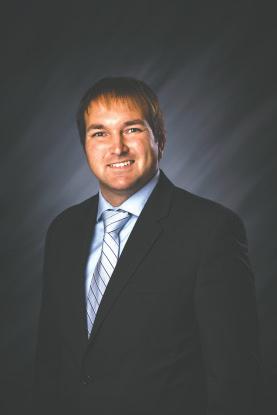
The seat for District 34 has been left open, following Democratic Incumbent Sue Errington’s retirement from office.
Errington was elected in 2012, but previously served on the Indiana Senate from 2006 to 2010. In a Dec. 31 Facebook post, Errington announced she would not return to her seat in the House, endorsing Democratic candidate Sara Gullion in her place.
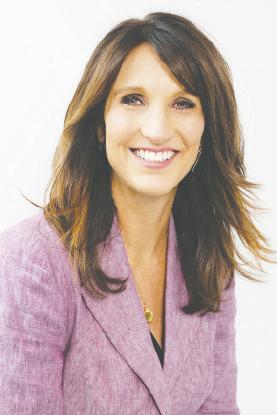
Gullion was elected to the Muncie City Council in 2024 and currently represents the 4th District. According to a Dec. 31 Facebook announcement of her campaign, Gullion’s key issues are centered on “housing availability, fair wages, accessible healthcare, and strong public schools.”
“I work at a law firm. We get a lot of calls from renters who have real issues with safe housing that costs too much, and there’s not really that much we can do to help them [at the city level],” Gullion said. “I think renters’ rights really hit District 34 hard.”
Gullion also said she believes that an increase in minimum wage would be “huge” for Delaware County.
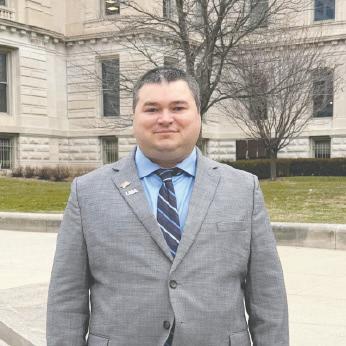
Currently, there are two candidates for the Republican primary in District 34: Randall McCallister and Richard Ivy.
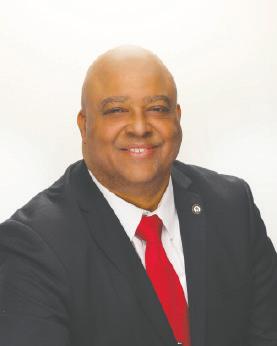
Ivy previously served as the deputy mayor of
Muncie, but later became the director of human resources for the Muncie Sanitary District after the city council voted to defund his position as deputy mayor.
According to Ivy’s campaign website, his focus includes “strengthening infrastructure, supporting public safety, [and] expanding economic development.” Ivy did not respond before the March 9 deadline for an interview.
While McCallister has not previously held public office, he said that housing reform is one of the central issues of his campaign.
McCallister said he believes that the income limits to low-income housing programs cause beneficiaries to remain fixed in low-earning jobs and discourage them from seeking better opportunities.
According to the Department of Housing and Urban Development’s (HUD) website, eligibility for public housing programs is determined based on an applicant’s income proportional to the median family income in the applicant’s county. In Delaware County, the income limit for a fourperson family designated as low income is 80 percent of the median family income, or $59,600.
“I think we should give people the opportunity to better themselves daily and not just say ‘This is the limit of income and if you don’t apply, you’re kicked off of it,’” McCallister said.
He also voiced his disappointment in the current leadership of the Republican Party. He feels that neither the Republican nor the Democratic Party are representing “everyday working class citizens.”
“I feel like a lot of them talk a big game, but they’re not actually putting it into action. They’re more focused on these big corporations coming into town instead of the small business guys,” he said.
Unlike District 34, the other districts within Delaware County have incumbent officials who are seeking reelection.
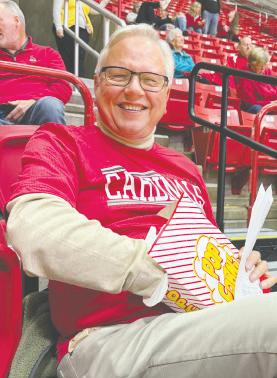
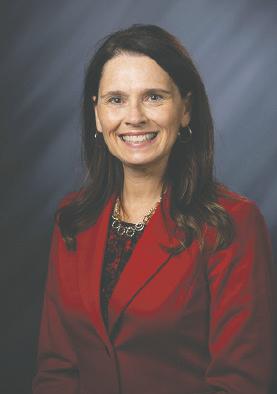
J.D. Prescott and Elizabeth Rowray from Districts 33 and 35 are both campaigning for reelection. Both representatives did not respond for an interview before the March 9 deadline.
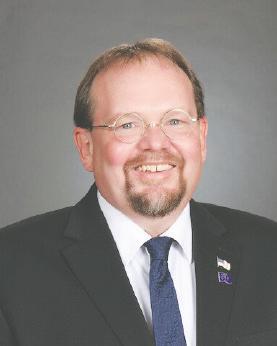
Prescott has maintained office in the 33rd District since 2018. Most recently, Prescott
In early May, community members will vote in the three districts representing Delaware County in the Indiana Statehouse.
sponsored SB0076, a bill outlining punishments to local law enforcement entities for not complying with federal immigration enforcement agencies.
According to an article from Indiana Capital Chronicle, the bill was signed into law by Indiana Gov. Mike Braun March 5.
Both Prescott and Rowray have also sponsored a concurrent resolution officially commemorating the life of Corporal Blake Reynolds, a former officer in the Delaware County Sheriff’s Office who was struck and killed by a vehicle while providing roadside assistance last November.
Prescott and Rowray are running unopposed in their Republican primaries, but both representatives will face opposition from Democratic candidates. In the 33rd District, John E. Bartlett is running as a Democrat against Prescott, while in the 35th, Phil G. Gift will oppose Rowray.
Bartlett was successful in securing the Democratic nomination for the 33rd District in 2022 and 2024, but was trumped in the general election by Prescott both years.
For Bartlett, the central issues affecting the 33rd District are healthcare and education. Bartlett said that Indiana lawmakers need to allow educators in the state to determine curriculum changes.
According to a July 21 Chalkbeat article, the Indiana State Legislature ordered an audit for all k-12 schools to find and eliminate diversity, equity and inclusion (DEI) programs and language promoted by the districts, which triggered cuts to several programs across the state.
Another law, SEA 442, requires any school that intends to teach sex education to publish materials online for review. It also requires those materials to be approved by the school board and that written consent forms be delivered to the parent or guardian of the children enrolled.
“We need to get the politicians out of dictating curriculum and let the teachers and educators decide how to do curriculum for education,” Bartlett said.
Bartlett also commented on the cuts to Medicaid
that were included in the One Big Beautiful Bill Act (OBBBA) in July 2025. According to an Associated Press article from May 2025, the OBBBA reduced nearly $700 billion in funding to Medicaid, creating new requirements for beneficiaries of the program.
Bartlett said he believes that these cuts to healthcare are harmful in rural areas, such as many areas in District 33. He referenced the closure of emergency and inpatient services at the Blackford County Hospital in 2023.
Bartlett believes that hospitals in counties closest to the Ohio border, such as Winchester, Portland and Decatur counties, will follow the same fate when the cuts to Medicaid go into effect.
“Rural healthcare in Indiana is at such a dangerous point right now,” Bartlett said.
Like Bartlett, Phil G. Gift, the Democratic candidate for the 35th district, represents a largely rural voting base in Delaware County. Gift also recognized the need for a change in the education system, as well as economic development.
Gift’s focus centered on the Choice Scholarship Program, which, according to the Indiana Department of Education’s website, provides Indiana families “access to quality educational opportunities” by awarding scholarships to offset tuition costs. The voucher program offers funds to students enrolled in both public and private schools.
“I’m very serious about making Indiana another beacon on the hill when it comes to education,” Gift said. “We need a strong public education system that everyone can have access to.”
Citizens in Delaware County can vote in the primary elections May 5.
Nov. 3, citizens will elect three officials to the Indiana House of Representatives who represent the three districts in Delaware County.
Contact Ryan Fleek via email at ryan.fleek@ bsu.edu.