







































VOL. 105 ISSUE: 24
CONTACT THE DN
Newsroom: 765-285-8245
Editor: 765-285-8249, editor@bsudailynews.com
EDITORIAL BOARD
Meghan Braddy, Editor-in-Chief
Katherine Hill, Managing Editor and Lifestyles Editor
Linnea Sundquist, News Editor
Kyle Stout, Sports Editor
Rylan Crum, Associate Sports Editor
Jayden Vaughn, Opinion Editor
Charlotte Jons, Associate Opinion Editor
Channing Matha, Copy Editor
Kyle Ingermann, Multimedia Editor
Kadin Bright, Associate Multimedia Editor
Ryan Fleek, Associate Multimedia Editor
Brenden Rowan, Visual Editor
Jessica Bergfors, Associate Visual Editor
Raquel Ruffin, Associate Visual Editor
Corey Ohlenkamp, Adviser
The Ball State Daily News (USPS-144-360), the Ball State student newspaper, is published Thursdays during the academic year except for during semester and summer breaks. The Daily News is supported in part by an allocation from the General Fund of the university and is available free to students at various campus locations.
TO ADVERTISE
• (765) 285-8256 or dailynewsads@bsu.edu
• Hours: 8 a.m.-5 p.m. Mon-Fri. • ballstatedaily.com/advertise
TO SUBSCRIBE
Call 765-285-8134 between 9 a.m. and 3 p.m. Mon. -Fri. Subscription rates: $45 for one year. POSTMASTER: Send address changes to Daily News, AJ278, Ball State University, Muncie, IN 47306
JOIN THE DAILY NEWS Stop by room 278 in the Art and Journalism Building. All undergraduate majors accepted and no prior experience is necessary.

The Ball State Daily News is committed to providing accurate news to the community. In the event we need to correct inaccurate information. you will find that printed here.
To submit a correction, email editor@bsudailynews.com.
Daphne Gibaud, Weather forecaster, Benny Weather Group
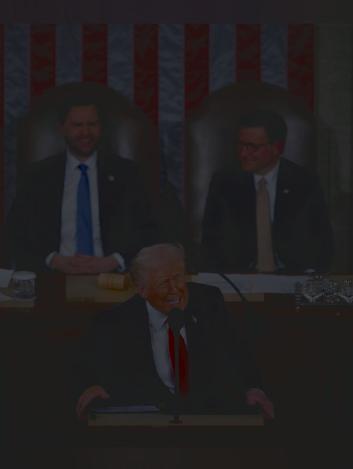
Feb. 25: President Donald Trump, Feb. 24, used his State of the Union address to “repeatedly attack” congressional Democrats as they objected to his immigration policies, according to Tribune News Service (TNS). Trump argued that his policies were putting more money in the pockets of Americans who have sourced on the economy. The address was the longest in U.S. history at 1 hour, 47 minutes and 43 seconds, with Trump and members of the Democratic Party raising their voices and directing insults at one another. Many Democrats sat silently, while others broke out in protest while the president was speaking, according to TNS.
Feb. 25: Ball State Men’s Basketball completed an 18 point overtime comeback against newly added Mid-American Conference (MAC) team UMass on Feb. 24. Redshirt sophomore guard Davion Hill scored his career high in points, along with leading the Cardinals in scoring with 26 points. This win breaks Ball State’s six-game conference losing streak and gives them momentum heading into their final three games of the season.
Editor’s Note: The Ball State Daily News requested comment from Ball State University for several stories in this special edition, including “The protocol for educators,” “A Facebook firing” and “‘It’s not bravery if you’re not afraid.’” We did not recieve a response by the time of publication.
Requests for comment were also sent to Indiana Attorney General Todd Rokita, a representative for Suzanne Swierc from the American Civil Liberties Union (ACLU), the Ball State University College Democrats and College Republicans. No responses were received by the time of publication.
For the “Students sanctioned” story, the university declined to comment, citing the Family Educational Rights and Privacy Act. Students for Justice in Palastine also did not provide a statement.
For the “Cuts to coverage” story, Sen. Todd Young and ACLU Indiana did not respond by the time of publication.
On Student Press Freedom Day, The Ball State Daily News confronts the realities of censorship in student media and reaffirms its commitment to protecting First Amendment rights.
Feb. 26, 2026, is nationally recognized as Student Press Freedom Day, a day defined by The Student Press Freedom Law Center as “a national movement to stand up for press freedom and recognize the essential role student journalists play in their communities.”
Though every piece of content in this Freedom of Expression special edition is tailored to illustrate the utmost necessity of freedom of expression across all professions, The Daily News has always believed in the importance of transparency, expression and the First Amendment with each article we publish.
Maintaining freedom of expression is a foundational principle of any newsroom. This adage rings especially true in a newsroom like ours, which resides on a college campus, a place designed to challenge ideas, push against norms and expose oneself to new concepts and ways of thinking.
The Daily News has been in operation since 1922. Over the years, our newsroom has worked diligently to ensure the sanctity of student voices, and we have continued to align with audience needs and interests as media trends emerge and landscapes change from decade to decade.
This edition is a primary example of the work we can accomplish through collaboration with sources within the campus and the Muncie and Delaware County communities we work to serve. We will continue to iterate that a free press is not merely a means of reporting events. It is also a safeguard against erasure, a platform for marginalized voices and a force for accountability.
All of us at The Ball State Daily News want to uphold the First Amendment in the articles we publish because without it, student journalism cannot exist in its truest form.
The First Amendment protects not only our right to report, but our community’s right to know. It ensures we can ask difficult questions while covering the stories that matter, even when they are controversial or critical of institutions in power.

This is extremely important to us because censorship in student media is a serious problem.
For example, in late 2025, media school administrators at Indiana University Bloomington abruptly halted the print edition of the Indiana Daily Student and fired the student media director after he refused to remove critical news content from a special print edition.
Although IU’s media school ultimately reversed the print termination, from our standpoint as a newsroom, the initial decision censored and violated editorial independence, and it was wrong.
This type of interference is why protecting editorial freedom matters, as it’s been happening for years. The Student Press Law Center has data dating back to 2014 that shows that, even then, administrative censorship was a frequent challenge for student journalists nationwide.
The organization released a survey in which a significant number of student media editors responded, reporting several instances of administrative pressure to alter or withhold stories.
At The Ball State Daily News, our constitution and bylaws explicitly say our “editorial content shall be determined solely by the student editorial staff. The newsroom retains full editorial control over what it publishes, free from censorship, prior review, or undue influence by university administration, faculty, advertisers, or other outside entities.”
Historically, we have always brought freedom of expression into the newsroom by practicing it daily. We have covered protests and policy debates, administrative decisions and student activism. We have reported on issues that directly affect our peers, even when doing so required navigating community pushback.
Freedom of expression is intrinsic to our reporting processes, our editorial discussions and our commitment to ethical journalism. As long as we continue to publish, we will continue to defend the right to do so freely.
Contact us with questions or comments via email at editor@ bsudailynews.com.



Swierc
Let me be clear: if you think Charlie Kirk was a wonderful person, we can’

can’t be friends.



A Ball State faculty firing over a private social media post has evoked concerns about academic freedom on campus.





1 hr ago



Charlie Kirk excused the death of children in the name of the second amendment
452 Comments
Channing Matha Copy Editor
Suzanne Swierc, then-director of health promotion and advocacy at Ball State University, was fired after posting comments about the assassination of a conservative political activist on her private Facebook account, prompting a lawsuit and sparking debate over free speech protections at Ball State.
After the assassination of Charlie Kirk, Swierc posted her thoughts on her private Facebook account, which quickly drew attention. Kirk, co-founder of Turning Point USA, was shot Sept. 10. while speaking at an event at Utah Valley University.
In her post about Kirk’s death, Swierc stated that if one believes Charlie Kirk was a “wonderful person,” she cannot be friends with them. She wrote that though it is “difficult,” she “prays for his soul” because she believes in the “Resurrection” and also stated that she feels for his wife and children. Furthermore, Swierc said, “Charlie Kirk’s death is a reflection of the violence, fear, and hatred he sowed. It does not excuse his death, AND it’s a sad truth.”
Her statement culminated with references to several victims of school shootings from
Minneapolis and Colorado, emphasizing that these tragedies also deserve one’s attention. Swierc concluded her Facebook statement with “Charlie Kirk excused the deaths of children in the name of the second amendment.”
Swierc received innumerable responses to her statement overnight and into the next day, including calls for her termination from Indiana Attorney General Todd Rokita and Randall McCallister, the Republican candidate for Indiana State House Representative in District 34.
Rokita referred to Swierc’s words as a “vile comment,” according to his Facebook post. He called comments such as hers “outrageous” and said that “they should make people question someone’s ability to be in a leadership position.”
McCallister pushed not only for Swierc’s firing but also for Felicia Gray’s, an assistant lecturer in elementary education at Ball State.
A screenshot provided by Adriene Cardin, a Muncie community member, displayed McCallister’s Sept. 12 request for a protest at Ball State University in which he said, “Fire Suzanne Swierc immediately! Fire Felicia Gray immediately!” Attached to the Facebook post were Swierc’s and Gray’s headshots paired with screenshots of their social media statements about Kirk’s death.
In another Facebook post, McCallister called for






Phyllis Riggs

Teaching should have some morals associated with it. I’m regret my kids were never a student there.


a vigil in honor of Charlie Kirk. He also referenced Gray’s and Swierc’s words, and said that educators must “uplift, not endorse murder and division.” In the same post, he said the community does not need, and should not permit, such “poison” in establishments.
... We need to denounce the violence and kind of cool the tempers on people, because both sides are getting very frustrated with each other, and they’re not really talking.”
- RANDALL MCCALLISTER, Republican candidate for Indiana State House Representative
On McCallister’s campaign website, under the “Issues” tab, he stated that he wants to “return education to state and local control, stand up for school choice, and keep woke ideology out of our classrooms” and that he “will always defend free speech, the Second Amendment, and [the] right to live free from government overreach.”
McCallister said in a Jan. 22 interview with the Daily News that, while yes, Swierc and Gray exercised their right to free speech, their speech should be held accountable by Ball State since there were “millions of people looking at Muncie” and the “university has staff members that encourage political violence.”
“That’s my main focus,” he said, “is we need to denounce the violence and kind of cool the tempers on people, because both sides are getting very frustrated with each other, and they’re not really talking.”
He also said he does not think professors can successfully facilitate healthy, opinionated conversations among students in the classroom, primarily because “it is very hard, especially if a


What a vile comment. So many hateful people are exposing themselves.






i have never been more ashamed to be a ball state student. 4 replys
3
I’m a senior year nursing student here and I think it’s unbelievable, it was on her personal account. 6



professor is non-neutral.”
McCallister said that although he encourages such discussions, specifically when politically based, they should be reserved for outside classrooms.
McCallister’s perspective about educators’ impact in the classroom is shared by Rokita, who introduced the Eyes on Education portal.
The portal, launched by the Office of the Attorney General, is “designed to give parents, students, and educators a way to share examples of what is being taught and promoted in schools and to provide transparency for parents and keep Hoosiers informed,” according to its website.
Swierc’s post received additional attention because a screenshot was shared on the portal.
Ball State fired Swierc Sept. 17.
The university announced her dismissal from her position via social media, citing “significant disruption to the university” as the reason.
The public notice elicited divided reactions. While some agreed with and praised the decision, others condemned it as a violation of freedom of speech.
Amid these polarized responses, Swierc said in a Sept. 22 press conference held by the American Civil Liberties Union (ACLU) that she did not regret her words.
The ACLU of Indiana disclosed it filed a lawsuit against Ball State University President







Now is the time to oppose political violencenot justify it. Comments like these are outrageous and should make people question someone’s ability in a leadership position.





Geoffrey Mearns for the infringement of Swierc’s First Amendment right to free speech in a Sept. 22 press release.
According to the statement, ACLU of Indiana argued that because Swierc spoke her views as a private citizen, her firing was unconstitutional.
In an Oct. 2 Ball State University Senate meeting, President Mearns said he would not attempt to explain his decision to fire Swierc or provide his opinion on the lawsuit. But Mearns recommended that everyone in attendance read Hedgepeth v. Britton (2025), a case that supported the firing of a public high school teacher for making “inflammatory” comments about the 2020 George Floyd protests on her private Facebook account, to understand his decision.
No further information regarding the lawsuit has been released at this time; however, studentled political organizations have weighed in on the topic.
Addressed to Ball State students, faculty, the community and other citizens, the Ball State College Republicans and the Ball State College Democrats released a collaborative statement about the firing through Instagram Sept. 23.
The statement said that both student organizations believe that political violence and any incitement or glorification of it do not belong within the university or society. The statement





Connie Clements
8 hr ago
I have never been prouder of Ball State!!



noted that higher education institutions “exist to foster inquiry, dialogue, and debate,” referring to them as the foundation of “academic freedom and the democratic process.”
The College Democrats and College Republicans stated that they are “gravely concerned” about the increase in individuals who attempt to “silence” others because of differing opinions, whether through means of “intimidation, disruption, or even violence.” The organizations said that doing so impairs the rights of people and “the collective pursuit of knowledge and understanding.”
The two groups maintained that freedom of expression is “essential” to cognitive advancement and civic duty, even when discomforting or challenging. They said that this “especially” applies to a college campus, where students are exposed to “ideas that form and shape the way they interact with our democratic society.”
In the same statement, they said that academic freedom must be “safeguarded” to secure that “scholars and students can research, teach, and learn without fear of retribution or censorship.”
Both organizations requested that “all members” of the Ball State community, including administrators, faculty, students and other citizens, recommit themselves to the “values of respectful discourse, open dialogue and peaceful disagreement.”
The joint statement said that these were “opportunities for growth and mutual understanding” rather than “threats.”
The Ball State College Democrats and College Republicans reaffirmed their commitment to continue to create spaces where opinions “may be freely exchanged, where disagreements are engaged in a civil way, and where the dignity of every participant is respected.”
Both organizations at Ball State were contacted for a statement, but neither responded before the Feb. 2 deadline. The Office of the Attorney General was contacted for a statement Jan. 8, but the Daily News received no response.
Though university officials have largely declined to comment beyond initial statements, Swierc’s case has sparked debate over freedom of expression and academic freedom, as the state’s university educators, faculty and staff adapt to or persist with regard to public perception and the implementation of the Eyes on Education portal.
Contact Channing Matha at channing.matha@ bsu.edu.



Channing Matha Copy Editor


view real examples of socialist indoctrination from classrooms across the state.”
implemented procedures that institutions must follow in pairing with “intellectual diversity.”

As debates over academic freedom and political influence in higher education continue across Indiana, new state policies and public reporting systems are reshaping conversations at public universities.
At Ball State University, those conversations have surfaced in the wake of a state-launched reporting portal, new legislation on intellectual diversity and the termination of a university employee over a private social media post, prompting faculty groups to question how freedom of expression is being upheld.
Launched by the Office of the Attorney General, the Eyes on Education portal was officially established and made accessible in February 2024.
The portal was developed to “give parents, students and educators a way to share examples of what is being taught and promoted in schools and to provide transparency for parents and keep Hoosiers informed,” according to the Office of the Attorney General’s website.
The page notes that the portal is not aimed to prompt legal action, but can “be used to initiate those conversations.”
According to the portal’s launch announcement post, marked as a press release event on the Indiana Attorney General website, the portal is designed as “a platform for students and parents to submit and
He stated that his office launched the portal because Indiana children must focus on “fundamental educational building blocks, NOT ideology that divides kids from their parents and normal society,” and because “The media and schools themselves have continued to deny that this indoctrination is happening” in the state.
The announcement states that it allows submissions from “colleges, universities and other affiliated academic entities,” in addition to “K-12 classrooms in Indiana.”
The portal also allows users to submit examples of content they deem “objectionable,” and access other submissions. It first lists “Charlie Kirk Submissions” by school. Ball State University has two submissions, including a screenshot of Suzanne Swierc’s Facebook post.
Swierc, then-director of health promotion and advocacy at the university, was fired after the university said she caused a “significant disruption to the university” when posting about the death of conservative activist Charlie Kirk on her private Facebook account.
Some topics of submissions are centered around conversations including gender identity, Black Lives Matter (BLM), race and ethnicity, privilege, sex and puberty and diversity, equity and inclusion (DEI).
Signed in March 2024, Senate Enrolled Act 202
The legislation defined “intellectual diversity” as “multiple, divergent, and varied scholarly perspectives on an extensive range of public policy issues.”
A main component is a mandatory reporting system that allows faculty and students to file a complaint about a staff member whose duties involve teaching students in an institution if these members do not meet the “intellectually diverse” criteria outlined in section 2(a)(1) through 2(a)(5). This system must be made known to university faculty and students through Ball State’s website.
Senior Program Officer Mark Criley from the American Association of University Professors (AAUP) Department of Academic Freedom, Tenure, & Governance said via email that universities and colleges can only serve the public if faculty members with the mission of “discovering and disseminating knowledge” are able to “follow their expertise and professional judgement.” He said that academic freedom “is the right of faculty members.”
“Without it, faculty members will only pursue ideas that are popular, safe, and comfortable, not the ones that are best supported by argument and evidence,” Criley said. “Society — and students — suffer as a result.”
An additional element mandated in the legislation incorporated tenure. According to SEA
202, if a faculty member is to be granted tenure or a promotion, they must follow the standards that encourage “intellectual diversity.” Every five years, the board of trustees of institutions must review faculty members who hold tenure and meet the criteria.
The law said that an applicant, an employee of or a person who teaches in an institution must not be required to “pledge allegiance to or make a statement of personal support” for any policies that treat people differently based on their identity or any “political or ideological movement.”
If an institution obtains a statement or pledge of such, including one that involves DEI or similar topics, the institution cannot grant “admission, enrollment, or employment; benefits; hiring, reappointment, or promotion; or granting tenure.”
Requiring institutions to establish a “diversity committee” is another facet of the legislation. These committees must review the documented policies about “cultural and intellectual diversity.” The diversity committees are required to provide an annual report that includes “findings, conclusions, and recommendations of the committee to the board of trustees.”
The AAUP’s mission is to “advance academic freedom and shared governance; to define fundamental professional values and standards for higher education; to promote the economic security of faculty, academic professionals, graduate students, postdoctoral fellows, and all
those engaged in teaching and research in higher education,” according to its website.
A June 2007 AAUP report titled “Freedom in the Classroom” discussed the organization’s stance on topics such as “indoctrination,” “imbalance,” worries for “hostile learning environments” and “persistent irrelevance.”
The report refers to the “1940 Statement of Principles on Academic Freedom and Tenure with 1970 Interpretive Comments,” in which it stated that educators “should be careful not to introduce controversial matter[s] which [have] no relation to their subject.”
In the “Freedom in the Classroom” report, the 1970 drafting organization added that the purpose of the prior statement is not to “discourage what is controversial” as “Controversy is at the heart of the free academic inquiry which the entire statement is desired to foster.”
The 2007 report clarified that the statement from 1940 “should not be interpreted as excluding controversial matter[s] from the classroom.” It also noted that the removal of controversial matters is against “the essence of higher education.”
Criley said he is not a historian and cannot provide “an informed comparison” of various periods since the AAUP’s founding in 1915.
But he said that the current “increase in attacks on academic freedom, institutional autonomy, and shared governance — including those coming from the state and federal government — is unlike anything most faculty members will have seen in their careers.”
In response to students and educators who may be afraid, Criley said the AAUP “encourage[s]” them to “speak up for themselves and for one another, and to recognize that there is strength in numbers and solidarity.” Additionally, Criley said that the AAUP recommends that faculty members join the organization and create a chapter “to protect academic freedom and higher education.”
As a chapter of the AAUP, the Ball State University AAUP (BSU AAUP) issues public statements affirming its position on related matters. Sept. 25, 2025, the organization published “AAUP Public Statement on Freedom of Expression at Ball State University” on its website.
The statement requested that the university “reaffirm their commitment to the BSU Freedom of Expression Statement.” The organization said, though it understands “that freedom of speech does not equal freedom of consequences,” the BSU AAUP believes that the choice to fire a Ball State employee for a post on a private social media account was “not in line” with the university’s “commitment to free expression.”
It cited the university’s statement announcing Swierc’s termination, explaining that the university does not have “the proper role” to “attempt to shield individuals from ideas and opinions they find unwelcome, disagreeable, or even deeply offensive.”
The BSU AAUP also included that the statement from the university “may restrict expression that violates the law, falsely defames a specific individual, that constitutes a genuine threat or harassment, that unjustifiably invades substantial privacy or confidentiality interests, or that is directly incompatible with the functioning of the university.”
The same section, Section 1.3, stated that these are “narrow expectations” of the university’s stance on freedom of expression. It said that it is incredibly significant that these instances “never” be used in an approach that is “inconsistent” with the university’s commitment to a completely free and open discussion of ideas.
The BSU AAUP release said that political figures like Indiana Attorney General Todd Rokita “use their political office to decry expressions of private opinion,” likely referring to Rokita’s personal posting choices in connection to his Eyes on Education portal.
Because of this, the statement also said that Ball State leadership yields to such policies, rather than its own.
The statement garnered 389 digital signatures from “97 BSU employees, 13 retired BSU employees, 74 BSU alumni, 146 BSU students, and many BSU friends and community members,” according to the document.
Those who signed “condemn the actions of BSU leadership” and implore them to admit they do not “value First Amendment protections” and to abide by their own policies and statements, or to “apologize” for breaching their Freedom of Expression statement and “reaffirm their commitment to it.”
The chapter published its “Faculty Council Resolution On Freedom of Expression at Ball State University” Oct. 23, 2025.
The release reiterated statements from its “AAUP Public Statement on Freedom of Expression at Ball State University.”
Its resolution included that the Ball State University Faculty Council “condemns the termination of Suzanne Swierc” because of statements from a private Facebook account; the BSU Faculty Council “joins” the BSU AAUP and endorsed its “Public Statement on Freedom of Expression.”
The BSU Faculty Council leaders “will publicize” its acceptance of the BSU AAUP’s statement; and that the BSU Faculty Council calls on Mearns to reassert the university’s allegiance to its “Freedom of Expression Statement,” to guarantee faculty and staff “will not be targeted or penalized” by Ball State’s administration “for exercising their academic freedom or First Amendment rights.”
The Ball State Daily News reached out to university spokespersons for comment but received no response.
As state-level policies continue to shape expectations for public universities in Indiana, Ball State now finds itself at the center of a broader debate over how intellectual diversity, institutional oversight and constitutional protections intersect. While state leaders argue that increased transparency and reporting mechanisms protect students and parents, faculty groups maintain that academic freedom is important to higher education.
Contact Channing Matha at channing.matha@ bsu.edu.
Signed in March 2024, Senate Enrolled Act 202 requires Indiana public colleges and universities to implement policies promoting “intellectual diversity.”
Defined as: “Multiple, divergent, and varied scholarly perspectives on an extensive range of public policy issues.”
• Create a formal reporting system
committee
‘It’s not bravery if you’re not afraid’
Ball State educators explain their professional and personal stances amid legislation enforcement and student concerns.
















Channing Matha Copy Editor
Kaia Recker, a fourth-year social studies education major, said that during the 2025 fall semester, she could read certain professors’ faces and tell when they were nervous while discussing topics such as current events.
She explained that when something appeared in the news, her professor seemed to pivot away from the topic rather than have an open discussion about it, as the class normally would.
“I think he was holding back,” Recker said. Recker said she saw this discomfort after the death of Charlie Kirk, a conservative activist and co-founder of Turning Point USA, who was assassinated Sept. 10, 2025. at an event at Utah Valley University. Kirk was active in Republican politics and often spoke on college campuses, and his death drew mixed reactions from faculty and students at Ball State.
After his death, Suzanne Swierc, who at the time served as director of health promotion and advocacy at Ball State, posted a message on her private Facebook account describing the situation as a “tragedy” while also saying his death is “a reflection of the violence, fear and hatred he sowed.”
The post was widely shared beyond its intended audience and sparked significant public backlash, leading the university to terminate Swierc Sept. 17 for “disrupting campus operations,” according to its initial statement announcing the termination.






I feel restricted by the political environment, by my fears about how the university might respond if something I said was disruptive.
- JESS HOFFMAN
Assistant clinical lecturer of social work


It takes courage to be willing to face the roars of the crowds that want immediate action, retribution [and] revenge, to allow tempers and the heat to cool,
- NATHANAEL SNOW, Assistant teaching professor of economics
When Recker and her classmates asked a professor how to approach the topic of Kirk’s death with high schoolers in their practicums, that discomfort remained. Recker said she believes Swierc’s firing caused this uneasiness because professors “don’t want to be next.”
Though Kirk’s death might have been a determinant for some, educators have indicated unease with potential controversy in the content they cover subsequent to the passing of Senate Enrolled Act (SEA) 202.
Madilyn Sams, a third-year social work major and honors student, said she noticed a difference in the manner her professors approached their usual curriculum.
She said she realized this shift “especially” after SEA 202 passed in March 2024. It is intended to ensure “the protection of free inquiry, free expression and intellectual diversity” in higher education. The legislation also requires universities to create formal processes for students or others to submit complaints if they believe an instructor has failed to promote those values.
Despite this, Sams said she prefers that, no matter what, professors are able to share their opinions even if students disagree.
Sams acknowledged that while unilateral conversations “are never going to get you anywhere progress-wise,” she said. “It just feels like any sort of legislation that is geared toward what you can and cannot say in a classroom is never going to lead to anything good.”
Barry Ramage, a fourth-year social studies


education major, said he has had some professors “straight up” tell the class they were scared of being targeted by the university and that, to avoid it, they would change their curriculum.
As some of his professors changed their teaching practices, Ramage said he felt he “missed out” on subjects that could have been discussed.
“To put it bluntly, we’re not getting our money’s worth,” Ramage said, referencing how restricting educators’ speech, specifically in higher education, affects students.
Recker said that in her first year, they had more “nitty-gritty conversations” in which deeper concepts could be discussed. Contrasted with now, she said she feels that “everyone’s always scared to speak out in the class discussion,” due to the current political climate.
Ramage said that though SEA 202 attempts to support intellectual diversity, it “in reality, is just hurting intellectual diversity.”
“We were already having those tough conversations,” Ramage said. “We were already having those ‘intellectually diverse’ conversations.”
As someone entering the education field, Ramage said he is “very worried” because he feels that presenting both sides can “hurt” what students take away from their classes, particularly social studies, because certain topics and incidents are “excused.”
“It’s like by watering down these past issues and, you know, not correctly talking about these past events, we’re allowing them to happen again and even worse, possibly right now,” said Ramage.


Ramage, Recker and Sams all said they feel for their professors — a feeling of worry.
Several Ball State educators declined to be interviewed about this topic, with some citing concerns about the future of their careers at the university.
“I don’t feel comfortable being interviewed,” said a source, via email, from the College of Sciences and Humanities, who wished to remain anonymous. “Professors are being surveilled and policed regarding their teaching.”
Assistant Teaching Professor of Political Science Johanna Maple said via text message, infull, “In response to your request for an interview re: freedom of expression at the University, I want to give you a response, in my personal capacity and not as a representative of the university, nor any constituent component of Ball State University, nor any other person or entity.
“I want to respond because as a citizen and as an attorney, I believe in the fundamental importance of the First Amendment to our democracy. I value deeply student journalism. I agree with the sentiments expressed in the university’s Freedom of Expression Statement, and with [the] President’s quote on the university webpage that ‘Freedom of expression is at the core of the First Amendment of the United States Constitution.’
“...because of the chilling effect of the University’s recent actions, and my concern regarding the impact that an action against me could have on my students’ course sequence and graduation timelines, and the corresponding
impact an action against me could have on my colleagues, I decline to be interviewed.”
An anonymous source from the School of Journalism and Strategic Communication said they are usually a “free-speaking person” both in and out of the classroom, and that they are “fearless” about the topics discussed in class, encouraging everyone to “speak freely.”
While the source said they are not “personally afraid,” they are “concerned” on behalf of other university faculty, particularly with possible “short-term repercussions.”
Sarah Vitale, an associate professor of philosophy in the psychological sciences department at Ball State, said she tries to create a space in class where students feel comfortable taking risks and saying things that may not be fully developed.
Vitale said that over the course of her teaching career, she has learned “how to facilitate” what she believes are “respectful, engaged conversations with students.”
However, Vitale said that after the passing of SEA 202, she “became nervous” that she could get reported, even though she is not breaking the law.
She said that she has to remind herself that she will not allow the state legislature to “bully” her into “avoiding what are considered controversial topics,” as these topics “are important to how we live together in the world.”
But she said she tells herself “that it’s not bravery if you’re not afraid.”
Ultimately, Vitale said that she is “most afraid of” what could happen to students, that they could be denied certain things in their college experience.
Associate Professor of Architecture Matthew Wilson said via email that within their curriculum, they do their best to inform students “that history is full of heavy and difficult subject matter.”
They said people may feel “less inclined, more uncomfortable and even increasingly unwelcome to speak their mind” due to the “onslaught on the humanities, critical thinking, contemplative inquiry, and intellectual diversity proper beyond a western canon.”
Wilson said that because students, faculty and others can report a professor, it can put these careers “on trial,” but despite this, they said they will continue to teach their area of knowledge the way it must be taught.
“To do otherwise would be a disservice to students, an offence to the past and present, and a betrayal of my beliefs and values,” Wilson said. An anonymous source from the English department said they try to keep classroom conversations student-driven, because they do not think talking about difficult or important subjects should be avoided.
They said what is mainly challenging at the university is that students are “just so polite” and often do not want to disagree with one another. Because of this, they said, they do not have problems with students getting angry or fighting.
“But I think it’s really important, and I think it’s important now not to avoid topics because we’re afraid we’ll get in trouble if we talk about certain things,” they said, even though they are sometimes hesitant to share an example relevant to class material.
While they said they are “not yet” afraid, they are aware that “there are things that could cause trouble,” so they are “worried” that something
perceived as such could become public.
Jess Hoffman, an assistant clinical lecturer of social work at Ball State, said that she has found herself feeling “more nervous” about heavy topics. Hoffman said she feels this way “especially” as she saw the public’s reaction to occurrences, “and then how that influences everybody else’s, like even Ball State’s response to things we’ve been doing in the classroom for a long time.”
She said she opens the floor to her students to share different views, and if she does not discuss something a student is curious about, she encourages them to bring those ideas into her classroom to “explore that together.”
Hoffman said that during the fall semester, students told her they were “more scared” or “more nervous” about bringing up specific things in the classroom.
As she adheres to her textbook, Hoffman said that she holds back on recommending external material. She said that about two or three years ago, when she worked part time for the university, she did not feel conflicted about it.
“I feel restricted by the political environment, by my fears about how the university might respond if something I said was disruptive,” Hoffman said.
Assistant Teaching Professor of Economics Nathanael Snow said he believes everyone
should think before speaking, and he tries to practice this to be “considerate” to those around him. He said that thinking twice should pertain to “every context.”
When issues emerge at the university, such as a professor saying something in a classroom that “seems inappropriate,” Snow said the proper way to respond is in a slow, deliberate manner with room for community participation.
“It takes courage to be willing to face the roars of the crowds that want immediate action, retribution [and] revenge, to allow tempers and the heat to cool,” Snow said.
Snow said that though others are “very skeptical” about using discussion as a means to attain “peace, reconciliation and agreement,” he is not. He said he understands it is difficult, but he “honestly and completely” believes everyone should be permitted to express their viewpoints and be heard.
“I don’t have to agree with anybody. Nobody has to agree with me,” he said. “But I think that that’s how we discover the world that we live in, the range of the world that we live in, and it can often encourage us to be more humble about our own perspectives.”
He said he is not scared, but he is “careful.” He said this is not done out of worry for himself, but for his students, his community and for society.
In an email, Snow said that, as an “expert,” he should not express his perspectives, and he makes a constant effort to heed when someone believes he is speaking as an expert. As a citizen, Snow said he expresses his opinions “as one voice among all the other[s]” and that his beliefs should not have a greater influence than others since he is in a teaching position.
“Because I hold an academic position, people sometimes attribute greater weight to my opinions than others. They should not,” he said.
The Ball State Daily News reached out to university spokespersons for comment Feb. 3, but received no response.
Ball State has stated on its website that freedom of expression is central to its mission and that it complies with state law. As SEA 202 remains in effect, its implementation and its impact on classroom experiences continue to unfold across Indiana’s public universities.
Contact Channing Matha at channing.matha@ bsu.edu.
... I think it’s important now not to avoid topics because we’re afraid we’ll get in trouble if we talk about certain things, - ANONYMOUS SOURCE, English Department

To [not continue teaching as normal] would be a disservice to students, an offence to the past and present, and a betrayal of my beliefs and values,
- MATTHEW WILSON Associate professor of architecture


















The AAUP and FIRE question how Ball State is applying its freedom of expression policies after student activists were charged with trespassing. 11



The organizations argued that the university disciplined students for protected expression and urged revisions to the policies.
Meghan Braddy Editor-in-chief
The Foundation for Individual Rights and Expression (FIRE) is calling on Ball State University (BSU) to drop disciplinary sanctions against 12 students involved in a November protest, arguing the university relied on “vague and overbroad school polices” that violate the First Amendment.
In a Jan. 29 letter to university President Geoffrey Mearns, FIRE said Ball State disciplined students for protected expressive activity and urged administrators to rescind sanctions and revise university policies.
The disciplinary cases stem from a series of demonstrations organized by Students for Justice in Palestine (SJP) this school year.
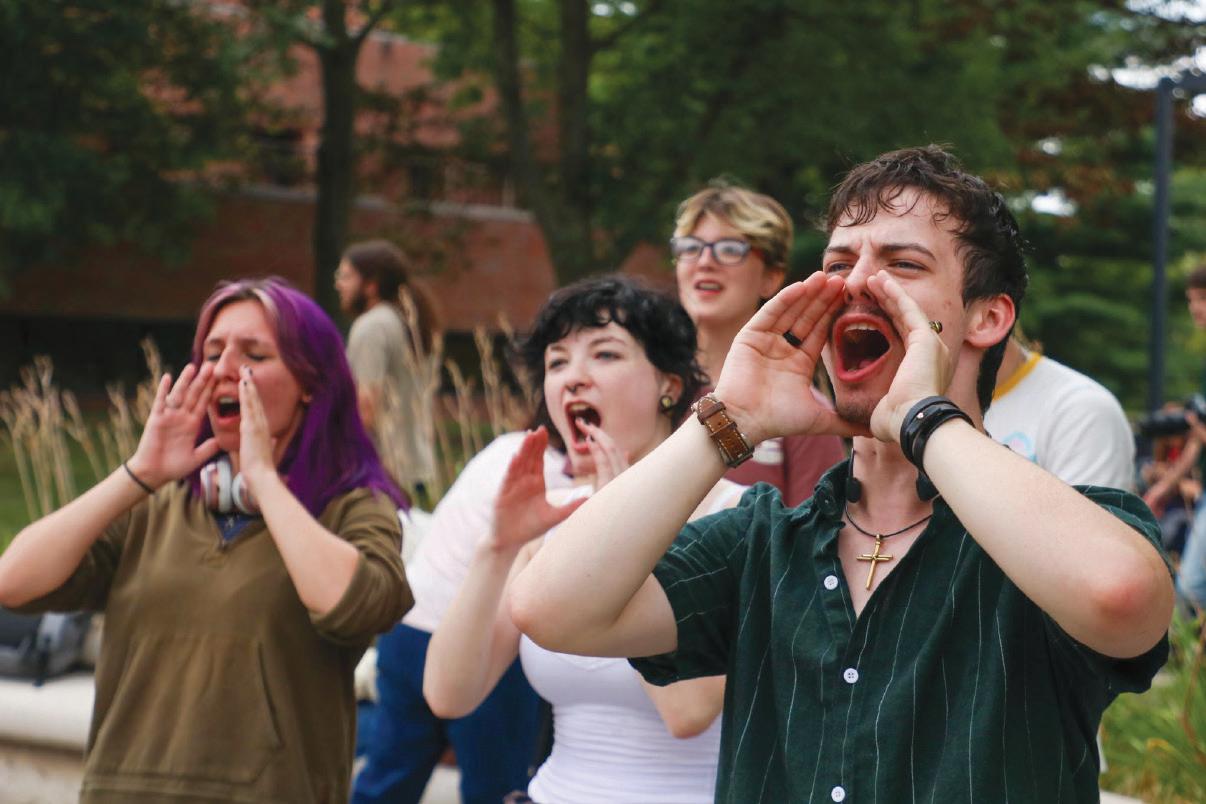
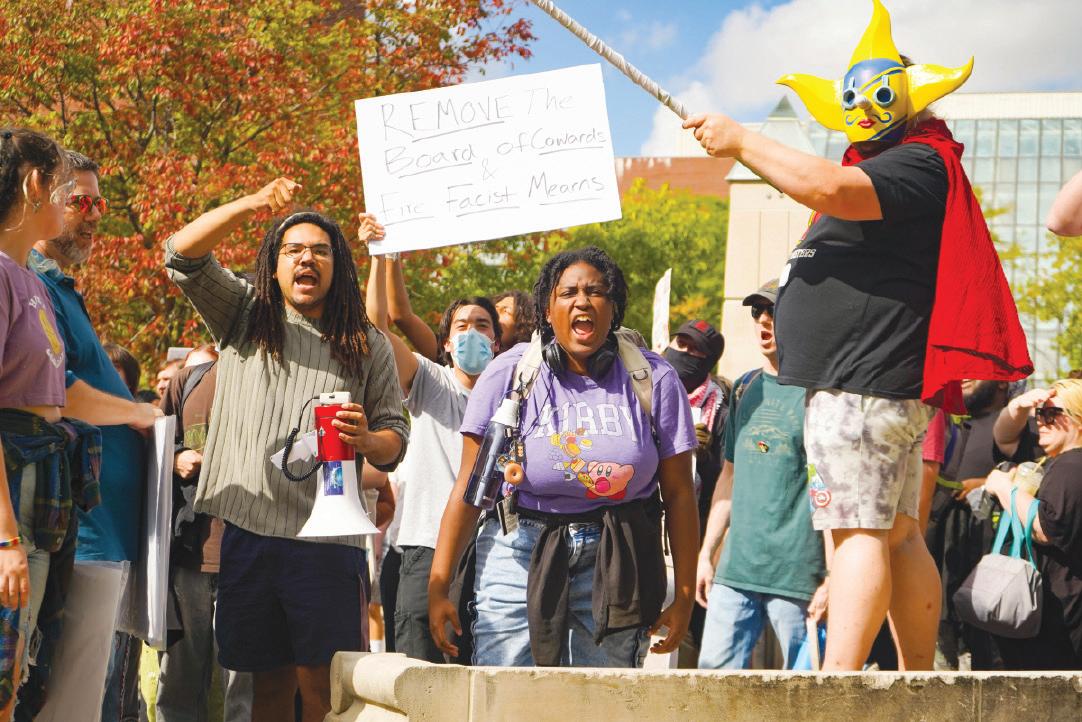
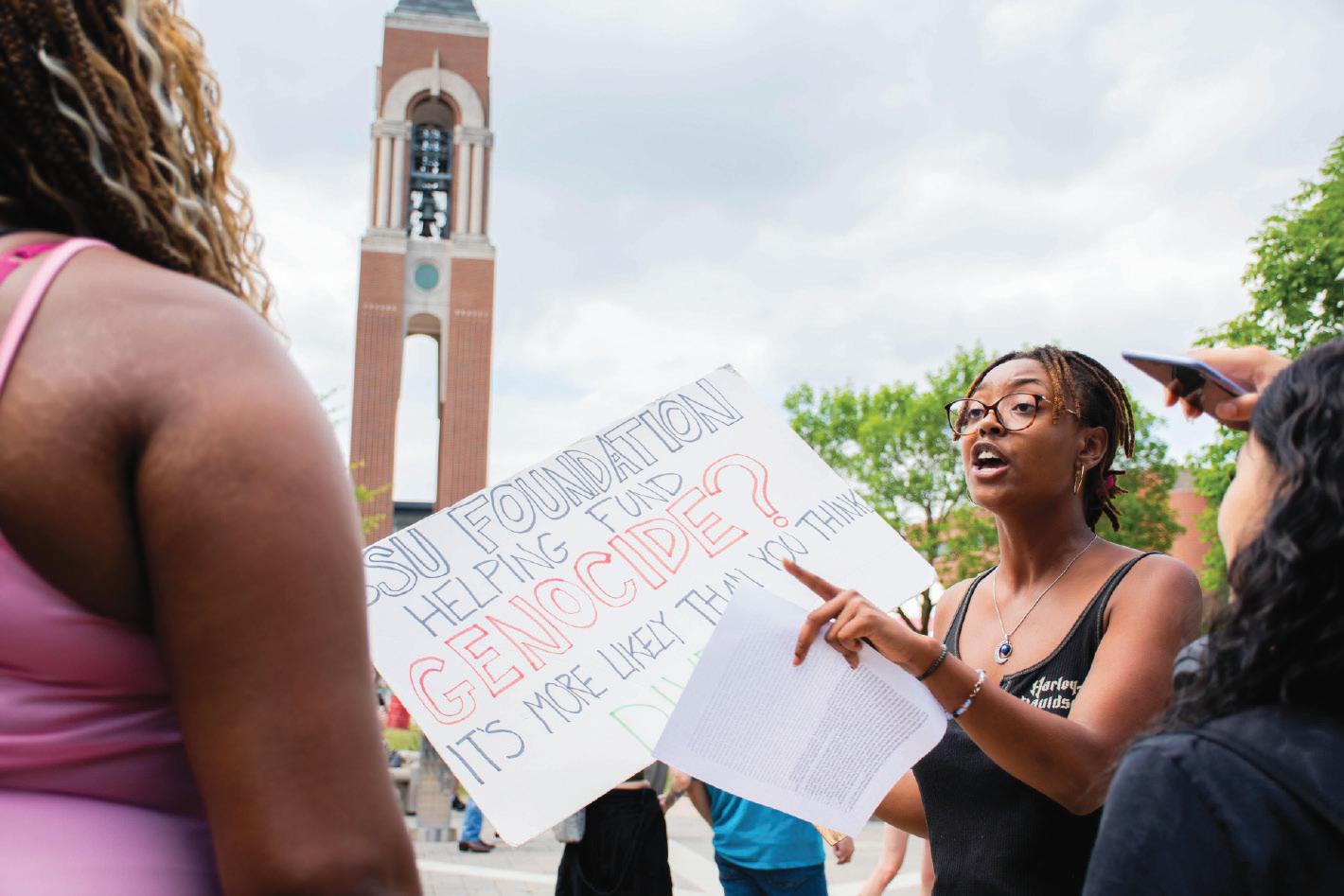
In November 2025, the group held a protest at the Scramble Light on campus, marking the first week of a hunger strike in which several members of the organization participated to protest the university’s investments in companies with ties to Israel.
The group of students said they were demanding the university “divest” from those companies and meet with them to discuss their concerns.
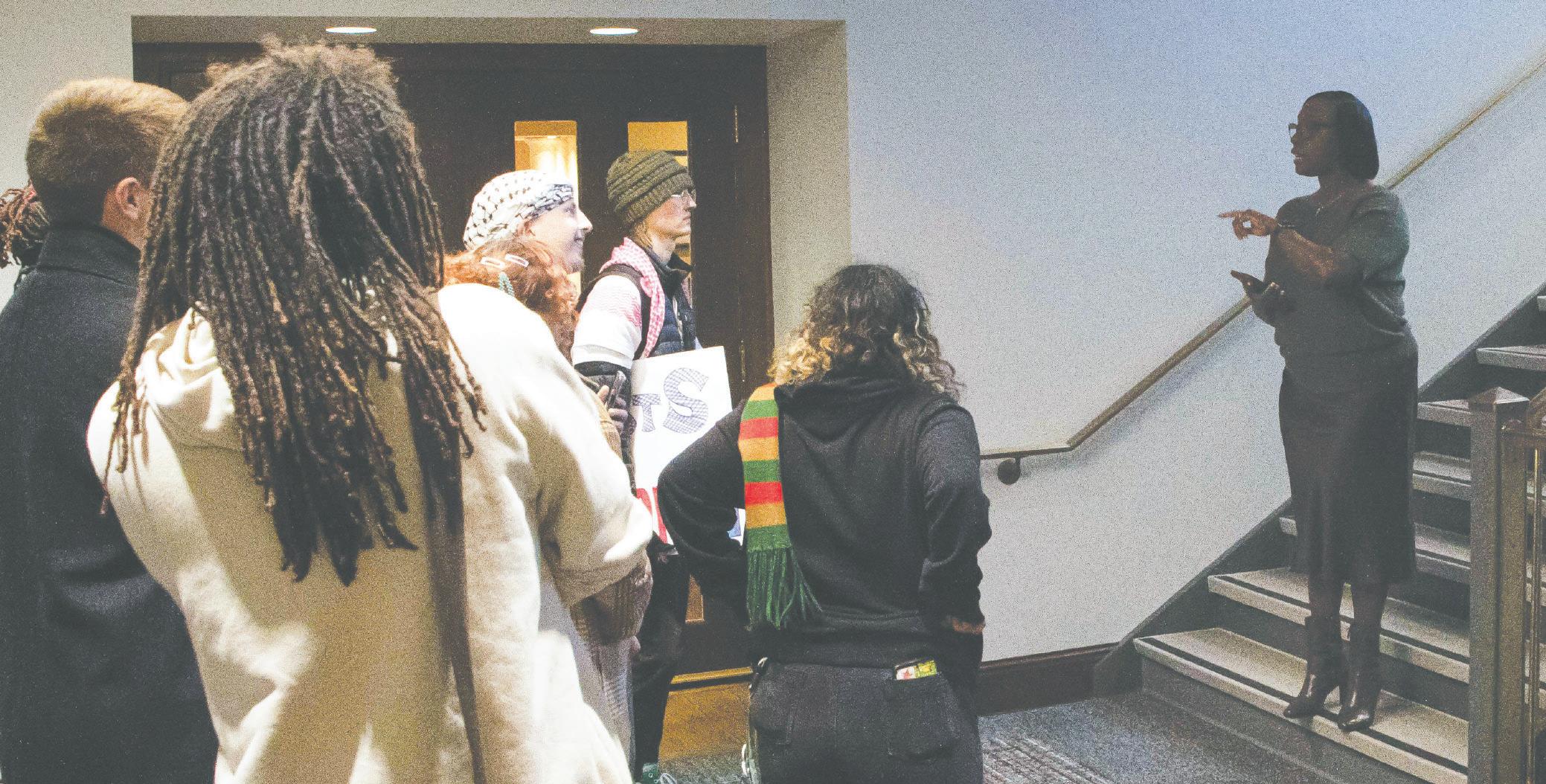
After speeches at the Scramble Light, protesters walked inside the Frank A. Bracken Administration Building, where Mearns’ office is located. According to prior Daily News reporting, protesters gathered outside the president’s office, chanted and attempted to enter, only to find the
room locked.
Vice President for Student Affairs Ro-Anne Royer Engle asked students to leave. Video posted on SJP’s social media later showed protesters outside the building as the University Police Department escorted Mearns to his car. The video showed that Mearns did not engage with the protesters before leaving.
However, FIRE’s letter focused on a similar but separate incident that occurred just days later in November 2025.
12 students returned to the administration building around 4:45 p.m. to speak with Mearns about university investments again, and some were holding signs in protest.
According to FIRE’s letter, the president’s office doors were locked. Engle and Assistant Vice President Tiffany Peters met the students in the hallways and directed them to leave. Students argued they had a right to be in the building and to be there during business hours. At 5 p.m., administrators asked them again to leave, and a YouTube video posted by FIRE showed the students complying.
They continued protesting outside the building, more than 50 feet away, until about 5:30 p.m., according to the letter.
In December 2025, Director of Student Conduct Kaleigh Richardosn notified seven students — Cooper Archer, Sam Allen, Scarlet Overfelt, Micah Pech, Alex Bordenkecher, Lilly Bass and Paige Otto — that they were being charged with failure
to comply, disorderly conduct and violations of the Non-Commercial Expressive Activity policy.
The University Review Board found Archer responsible for all three violations. Because Archer was already on conduct probation for disrupting a Board of Trustees (BOT) meeting in February 2025, he was suspended and barred from campus through May 8. His appeal for his suspension was denied Jan. 5 by Vice President for People and Culture Mark Liebling.
However, Archer also has separate a case under appellate review for disrupting the February 2025 BOT meeting. Indiana Attorney General Todd Rokita filed an appeal of Archer’s aquittal in December 2025 on two counts of disorderly conduct for disrupting an assembly and making unreasonable noise. The case is currently with the Court of Appeals.
His appeal for his suspension was denied Jan. 5 by Vice President for People and Culture Mark Liebling.
In late January, Associate Vice President for Student Affairs T.J. Brecciaroli found the remaining six students responsible for the same violations. They were placed on conduct probation and ordered to complete 10 hours of community service and write a 1,500-word reflection paper.
Two students’ probation extends through January 2027.
According to SJP’s social media posts, all 12 students involved have now been sanctioned.
Jessie Appleby, program counsel for campus
Student conduct proceedings are FERPA protected and, as a result, not something the university will comment on,”
- GREG FALLON, ASSOCIATE VICE PRESIDENT OF UNIVERSITY COMMUNICATIONS AND DIGITAL STRATEGY
rights advocacy at FIRE, said via email that the students’ group affiliations are irrelevant to the matter at hand.
“The students’ actions are protected regardless of whether they are or are not affiliated with any other group,” she said. “Students do not lose First Amendment rights simply because of their affiliation with any particular group.”
Appleby said the administration building is open to students during business hours and argued the students did not engage in disruptive behavior while inside.
“There is nothing in Ball State’s policies that would warn students that they cannot enter a building otherwise open to students during business hours simply because they are with other students,” she said.
The university charged the students with disorderly conduct under Ball State’s Code of Student Rights and Responsibilities, which prohibits “disruptive” behavior, and its NonCommercial Expressive Activity and Assembly on University Property policy, which prohibits protests, demonstrations and assemblies within 50 feet of certain campus buildings, such as administrative offices and classrooms.
“These two policies fail to define ‘disruption’ and ‘protest,’ which leaves students without clear guidance as to exactly what conduct is prohibited and incentivizes arbitrary and discriminatory enforcement by administrators,” Appleby said.
Greg Fallon, associate vice president of university communications and digital strategy, said via email that they would not comment on the student charges as they fall under student conduct.
“Student conduct proceedings are FERPA (The Family Educational Rights and Privacy Act) protected and, as a result, not something the
findings, sanctions and related correspondence — are generally considered education records under FERPA.
Because of this, Ball State cannot publicly discuss the identity of the students charged, specific allegations tied to a named student or the details of the investigation or disciplinary outcome.
Still, FIRE is urging Ball State to revise its disorderly conduct policy to define misconduct as “material and substantial disruption to university functions and activities,” a legal standard the organization said is commonly used in First Amendment cases and is already referenced in other university policies.
The organization also recommends that the university apply the same standard to activities restricted within 50 feet of certain buildings.
Appleby said FIRE has seen similar disciplinary actions nationwide and increased pro-Palestinian activism on college campuses following the October 2024 escalation of violence in the Middle East.
“As we saw a huge rise in pro-Palestinian activism on campus after Oct. 7, we also saw many universities investigating and/or disciplining students for various expressive activities, including protests and social media posts,” she said.
Ball State’s Freedom of Expression statement affirms that “freedom of expression is enshrined in the First Amendment” and guarantees members of the university community “the broadest possible latitude to speak, write, listen, challenge, and learn.” The statement says debate may not be suppressed just because ideas are considered offensive or wrong.
However, the policy also states that the university may restrict expression that breaks the law or disrupts campus operations and “may reasonably regulate the time, place and manner of expression to ensure that it does not disrupt the
thus had their rights as students and citizens violated,” a post Jan. 31 states.
In another post from Jan. 2, the group wrote that the university had suspended a student “who refused to be a silent accomplice,” and demanded the university “give these 12 students amnesty and divest from all companies profiting from the genocide being committed against the Palestinian people.”
Ball State’s chapter of the American Association of University Professors (AAUP) also raised concerns about how the university handled recent freedom of expression cases.
“In a number of recent cases, including that involving the 12 students who tried to schedule a meeting with President Mearns, Ball State does not seem to be ‘guarantee[ing]...the broadest possible latitude to speak, write, listen, challenge, and learn’ as promised in the university’s Freedom of Expression Statement,” the organization said via email.
Ball State’s AAUP chapter said policies like the university’s Freedom of Expression Statement are intended to guide decision-making during difficult situations. But applying those principles inconsistently, the group argued, leaves faculty, students and staff uncertain about what behavior is allowed and creates an atmosphere of fear.
“It also harms Ball State’s reputation, since we have repeatedly garnered negative national attention from places like The New York Times, The Chronicle of Higher Education, the ACLU, and now FIRE,” the organization said. “This could make it harder to recruit and retain students, faculty and staff in the future and undercuts the pride some people feel in being publicly affiliated with BSU.”
to be the case.”
Contact Meghan Braddy with comments via email at meghan.braddy@bsu.edu.
In a series of Instagram posts, the campus chapter of Students for Justice in Palestine criticized the
“... All 12 students who engaged in the action
FIRE had asked the university to respond by Feb. 12, confirming it will drop the charges, lift sanctions and revise its policies, but the university has not. Appleby said the organization hopes to resolve the matter collaboratively but is prepared
In a number of recent cases, including that involving the 12 students who tried to schedule a meeting with President Mearns, Ball State does not seem to be ‘guarantee[ing]... the broadest possible latitude to speak, write, listen, challenge, and learn’ as promised in the university’s Freedom of Expression Statement,”
-
BALL STATE’S CHAPTER OF THE AMERICAN ASSOCIATION OF UNIVERSITY PROFESSORS
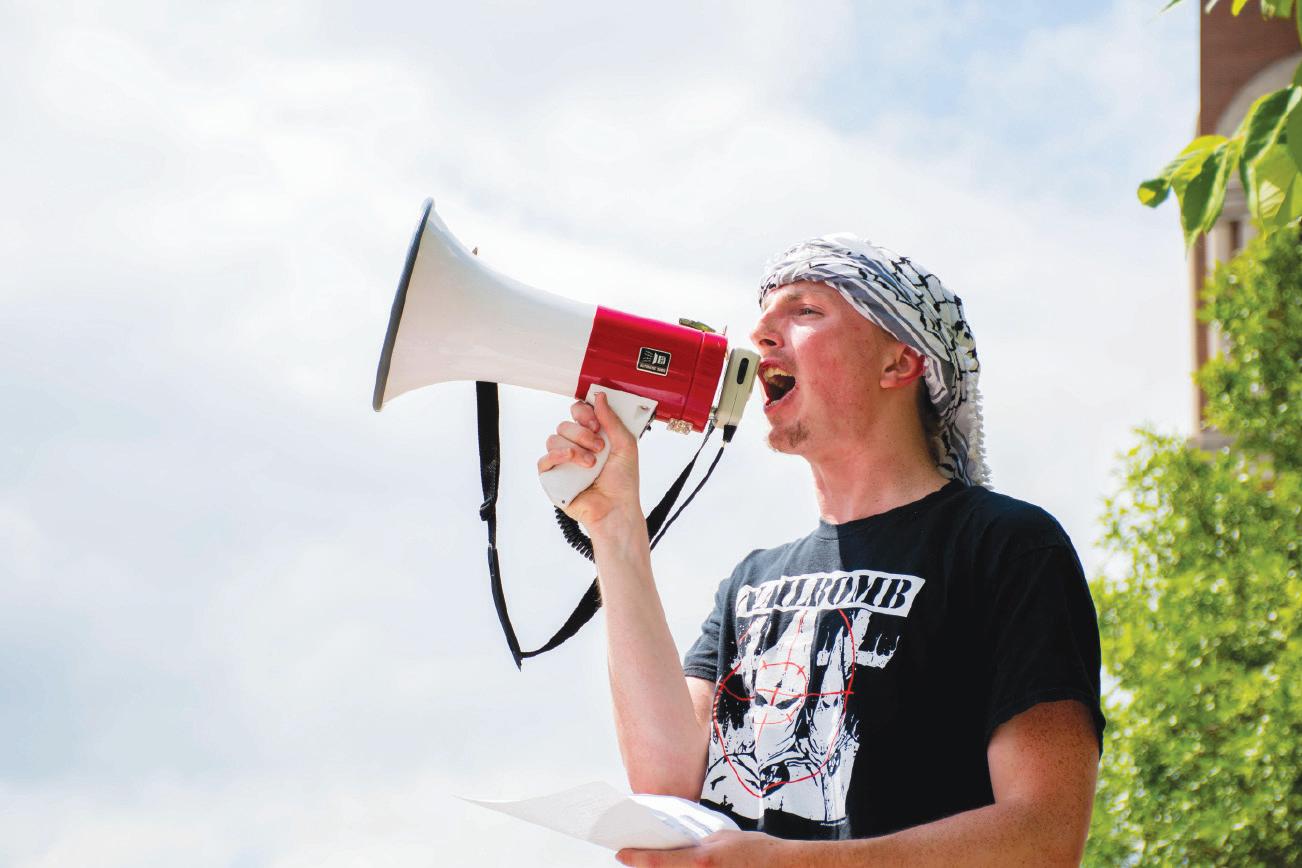

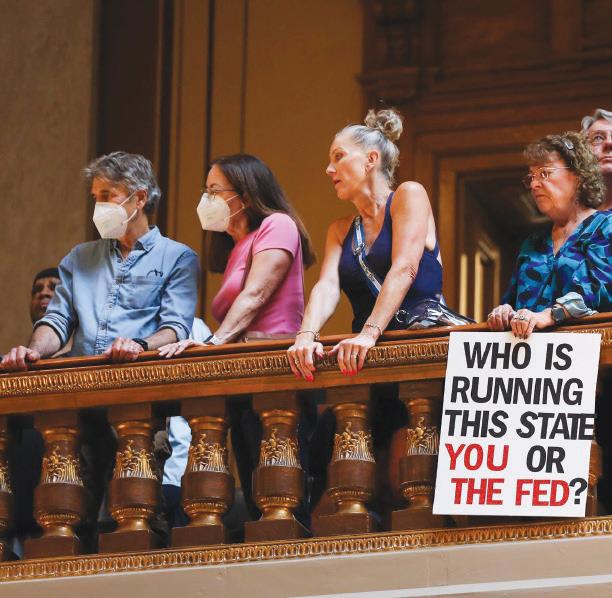
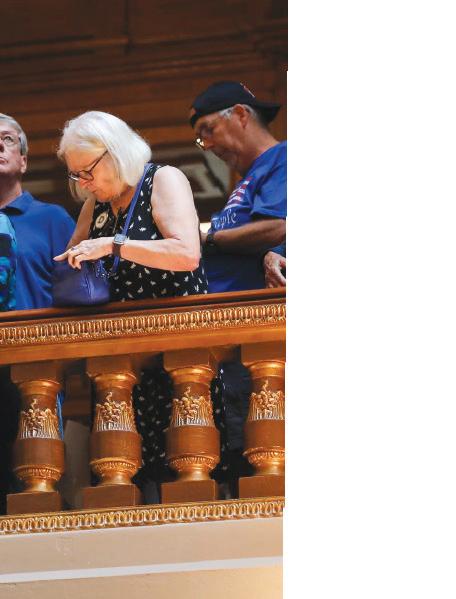
ndiana citizens protest at the Indiana Statehouse September 2025.

Cuts to public media outlets and restrictions on the youth’s use of social media changes access to information in Indiana.

Ryan Fleek Associate Multimedia Editor
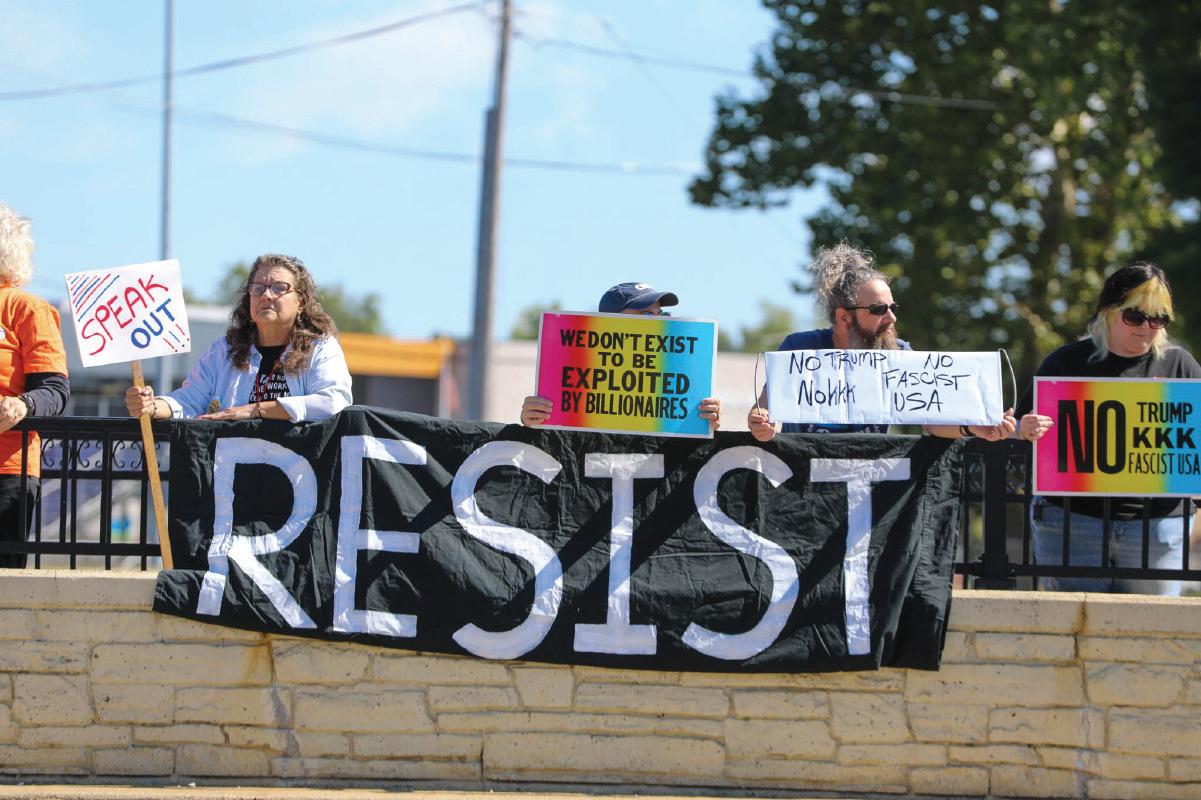
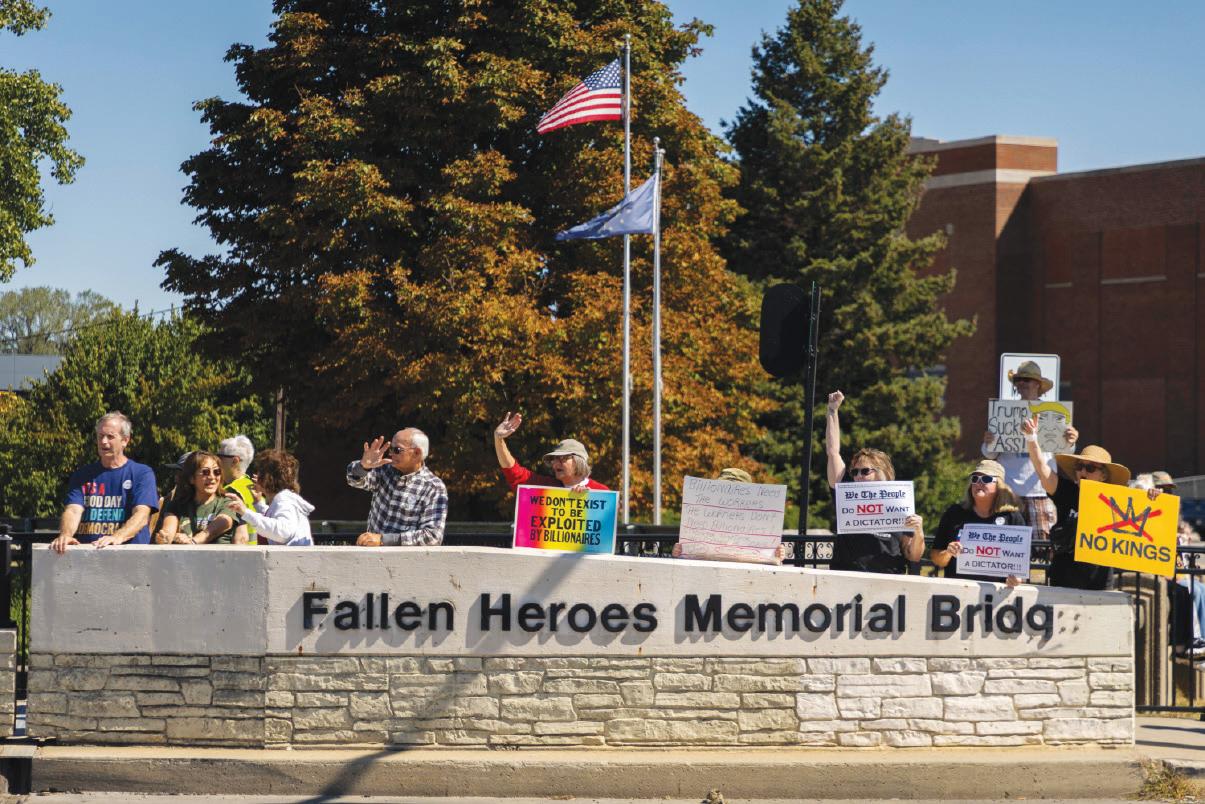
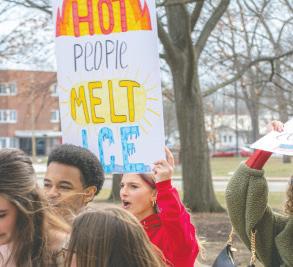
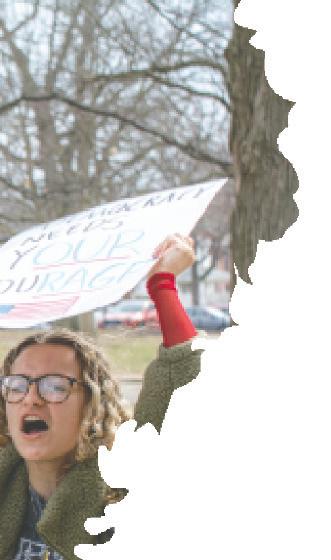
Thousands of students across Indiana performed walkout protests this school year against violence involving U.S. Immigration and Customs Enforcement (ICE). In Muncie alone, students from Muncie Central High School, Burris Laboratory School and The Indiana Academy all walked out of class this February in protest.
While many students were given the opportunity to freely perform the protest, it drew a considerable amount of attention from legislative officials.
Feb. 2, Republican Lt. Gov. Micah Beckwith posted on social media, saying it was “unacceptable” for publicly funded schools to allow students to distract from class time to protest ICE.
The walkouts were met with both resistance and cooperation from the school districts they happened in, according to a Feb. 11 article from Chalkbeat Indiana. In the article, students that participated in the protests were interviewed and spoke about their schools’ reactions to the demonstration, which ranged from coordination with parents and students to suspensions for students who participated.
These protests happened as the Indiana House Committee on Education voted on Senate Bills (SB) 78 and 199.
SB 78 outlines rules, regulations and exceptions for students to possess and use cellular devices in public schools during instruction hours, while SB 199, which advanced to the Senate, regulates social media monitoring of some underaged children in Indiana, according to the Indiana General Assembly website.



According to a 2025 study by Pew Research Center, just over half of adults in the U.S. say they receive news from social media sites. An AP-NORC poll reports that at least 74 perecent of Generation Z (Gen Z) get their daily news from social media platforms.
The same AP-NORC study found that 46 percent of Gen Z citizens still receive local news through newspapers, websites or apps, which is around the same rate they receive national news. This news diet is reflected in older generations, such as millennials, who are reported to show more of an appetite for local news.
Despite this, the recent legislative budget delivered public broadcast cuts to outlets that have provided coverage across Indiana for years.
In April 2025, the Indiana General Assembly passed a $44 billion, two-year budget that cut $3.68 million of funding to Indiana Public Broadcasting
Services (IPBS), according to an Indiana Capital Chronicle article. IPBS is a non-profit consortium responsible for 17 public radio and television stations, among other public news organizations. To support the whole of the non-profit organization, IBPS decided to cut its statewide team of news reporters and editors.
These cuts to IBPS and the cuts that, according to the White House Website, President Donald Trump signed revoking funding for the Corporation for Public Broadcasting (CPB), the channel through which media organizations such as NPR and PBS receive federal funding, signal that public news media is changing and the ability for local coverage has been reduced.
U.S. Sen. Todd Young (R-Ind.) talked about the effect of local journalism on the community Feb. 10 during a Senate Committee on Commerce, Science and Transportation hearing.

“What’s most at stake is our democracy,” he said, during a discussion about the loss of local coverage in smaller communities. “If I don’t know what’s happening in the school board meeting… It’s hard for me to cast informed votes at the ballot box.”
Despite the recent support Sen. Young has voiced for local journalistic efforts, the senator from Indiana voted last July, to rescind $1.1 billion funding for CPB.
Sen. Young was contacted for comment about his current position on local journalism but did not respond within the given deadline.
In the face of state and federal cuts to journalism and its effect on a citizen’s ability to stay informed, there are organizations, such as Free Press Indiana, that are finding ways to provide local journalism in the midst of gaps of federal funding.
Free Press Indiana is a nonprofit organization that organizes funding for local newsrooms and journalism projects. They recently, as of 2023, launched a nonprofit newsroom, Mirror Indy, which provides coverage of news in the area of Marion County and Indianapolis.
Along with local coverage, Mirror Indy is responsible for the Indy Documenters, a program where citizens are trained and paid to record local government meetings to report to the public.
“Free Press Indiana has a fantastic mission to make sure every Hoosier has the local news and information they need,” Liza Renze, the director of strategic partnerships for Free Press Indiana, said in a statement to the Daily News.
“We’re fortunate to get to do this work.”
Contact Ryan Fleek via email at ryan.fleek@bsu. edu.