


VOL. 105 ISSUE: 22
CONTACT THE DN
Newsroom: 765-285-8245
Editor: 765-285-8249, editor@bsudailynews.com
EDITORIAL BOARD
Meghan Braddy, Editor-in-Chief
Katherine Hill, Managing Editor and Lifestyles Editor
Linnea Sundquist, News Editor
Kyle Stout, Sports Editor
Rylan Crum, Associate Sports Editor
Jayden Vaughn, Opinion Editor
Charlotte Jons, Associate Opinion Editor
Channing Matha, Copy Editor
Kyle Ingermann, Multimedia
Editor
Kadin Bright, Associate Multimedia Editor
Ryan Fleek, Associate Multimedia Editor
Brenden Rowan, Visual Editor
Jessica Bergfors, Associate Visual Editor
Raquel Ruffin, Associate Visual Editor
Corey Ohlenkamp, Adviser
The Ball State Daily News (USPS-144-360), the Ball State student newspaper, is published Thursdays during the academic year except for during semester and summer breaks. The Daily News is supported in part by an allocation from the General Fund of the university and is available free to students at various campus locations.
TO ADVERTISE
• (765) 285-8256 or dailynewsads@bsu.edu
• Hours: 8 a.m.-5 p.m. Mon-Fri.
• ballstatedaily.com/advertise
TO SUBSCRIBE
Call 765-285-8134 between 9 a.m. and 3 p.m. Mon. -Fri.
Subscription rates: $45 for one year. POSTMASTER: Send address changes to Daily News, AJ278, Ball State University, Muncie, IN 47306
JOIN THE DAILY NEWS
Stop by room 278 in the Art and Journalism Building. All undergraduate majors accepted and no prior experience is necessary.
The Ball State Daily News is committed to providing accurate news to the community. In the event we need to correct inaccurate information, you will find that printed here.
To submit a correction, email editor@bsudailynews.com.

Feb. 11: “Let Kids Be Kids” bill was sent to Gov. Mike Braun’s desk Feb. 10, according to the Indiana Capital Chronicle (ICC). This bill would shield parents from child neglect allegations that allow their children to bike, walk or play outside without constant supervision. The Indiana Senate voted 48-0 on House Bill 1035, according to ICC, and remained unchanged from the version approved by the House in a 93-0 vote in January. Author of the bill, Rep. Jake Teshka (R-District 7) said the goal of the bill is to draw “clearer lines” between ordinary, age-appropriate independence and actual neglect, according to ICC.
Sawicki, Weather forecaster, Benny Weather Group


Feb. 11: According to Muncie Mission Minestries website, the city will host its 22nd annual “Walk a Mile in my Shoes” event Feb. 21, walking from Muncie Fieldhouse to the Muncie Mission. The routine event is intended to ring hope to the hungry, the homeless and those broken by addiction. “Your generous support can bring a moment of comfort to a stranger in desperate need,” according to the organization’s website. There is no fee to register and donations are encouraged. Doors open at 8 a.m. The opening ceremony begins at 9 a.m. Bus rides are available to return to the fieldhouse, according to Muncie Mission’s information page.

Feb. 10: Ball State Women’s Basketball kept to their winning ways Feb. 10, as they took down Eastern Michigan 83-68. The team’s 15 point victory was a major improvement from the last time they faced off against the Eagles, when they beat them by only four points Dec. 20. The win gave the Cardinals their 20th win of the season, and punched their ticket to the Mid-American Conference (MAC) tournament hosted in Cleveland at Rocket Arena. The team had a slew of high volume scoring in the game, with senior Bree Salenbien, senior Tessa Towers and junior Karsyn Norman all combining for 62 of the Cardinals 83 points.
If passed, Senate Bill 182 could prohibit transgender students from using the bathroom of their gender identity. 404

SB 182 concerns community members after the bill threatens to prohibit transgender individuals from using the bathroom associated with their gender identity.
Editor’s Note: The authors of Senate Bill 182, Sen. Liz Brown (R-District 15), Sen. Tyler Johnson (R-District 14) and Sen. Chris Garten (R-District 45) have declined to give the Ball State Daily News statements regarding the bill. All information regarding the authors has been sourced through additional news outlets. Additionally, Leo Caldwell’s views and statements do not reflect the university in this story.
Daisy Dale, board member of Muncie Queer Alliance and editor for Muncie Post-Democrat, is not “shocked” by the recent legislation made towards transgender individuals in the state of Indiana.
Muncie Queer Alliance was originally established in 2023 as a local nonprofit that “handles issues for Muncie’s local queer community,” Dale said. The organization has held various activities such as cookouts and film watch-parties for queer individuals to “have spaces too,” she said.
Dale explained that she has had to pay “very close attention” to each legislative session regarding any restrictions to the LGBTQ+ community, especially since coming out as a transgender woman in 2023.
Senate Bill (SB) 182 was recently approved by Republican Indiana senators Jan. 27, according to a Jan. 28 article from Indiana Capital Chronicle (ICC), which is a bill aimed at prohibiting transgender students at public K-12 schools and state universities from using bathrooms that match their gender identity.
Sen. Liz Brown (R-District 15), an author of the bill, said that women will continue to have their “private spaces,” along with saying that this bill is not “singling anyone out,” according to ICC.
“You can continue to identify any which way you want,” Brown said in a quote provided by ICC. “But if you’re born male, you’re going to use the male bathroom. Pretty simple.”
The bill has been endorsed by the Senate in a 37-8 party-line vote and has been sent to the House for consideration, according to ICC.
As the bill waits in the House, many individuals are concerned about the possibility of the bill being turned into a reality.
Executive director of Muncie OUTreach, Brett Ellison, explained that this bill makes it unsafe for many members of the queer community in Muncie. In terms of an organization, Muncie OUTreach is a local youth group in the state of Indiana that focuses on, similarly to Muncie Queer Alliance, creating a safe
space for LGBTQ + youth, according to its website. Ellison said from an organizational standpoint that Muncie OUTreach understands that SB 182 is a divisive bill, while also saying personally that the bathroom portion of the bill is “very damaging and demeaning” to Muncie OUTreach’s members.
“We’re trying to regress back into the 1950s,” he said. Ball State University assistant lecturer of media design, Leo Caldwell, is a transgender male educator on campus and wondered if SB 182 would pass, explaining that 90 percent of anti-LGBTQ+ legislation does not.
According to the Human Rights Campaign, 91 percent of anti-LGBTQ+ bills introduced in the United States fail
You’re creating a space that isn’t safe, because now I’m in the restroom with folks I’m normally not in the restroom with, and that’s really weird and disturbing,”
- LEO CALDWELL, Transgender lecturer at Ball State
to pass as of 2024 in the federal and state levels.
Caldwell explained that he was “very uncomfortable” with the idea of sharing a bathroom with women students and that he has never went to the women’s restroom.
“I found out what they did with it, and realized I would have to go to the women’s restroom. I was like ‘What?’” he said.
Beyond the possibility of having to use the women’s restroom on campus, Caldwell said that the gender inclusive bathrooms are “scattered” across the university, meaning it would take him extra time to try and find a bathroom.
SB 182 will also raise stricter restrictions on individuals changing their sex designation on their birth certificates, along with the bathroom portion of the bill.
Caldwell expressed his concerns regarding
individuals not being able to change their gender on their birth certificates, saying that it will negatively impact all students, regardless of whether they are transgender.
He added that having students and faculty assigned to the bathroom with the gender they were born with will not allow him to create safe places for those students.
“You’re creating a space that isn’t safe, because now I’m in the restroom with folks I’m normally not in the restroom with, and that’s really weird and disturbing,” Caldwell said.
In a Feb. 5 email, a Ball State University spokesperson said the university does not comment on pending legislation.
Dale said that SB 182 is setting a “dangerous precedent” for trans people, citing the example of individuals being sent to either a male or female prison that does not match the gender they identify with.
“[Indiana lawmakers] do not want to see us in public life. They want to contribute to the erasure of trans people,” she said.
Caldwell hopes that students and faculty will be able to use the bathroom they prefer without any issues, asking the question, “Who is going to be standing at the bathroom to enforce it?”
Ellison said that this bill will have an economic aspect as well. He said that having these laws geared towards transgender individuals, it will “drive them out of the state,” which will take away from general sales of companies, he said.
This will also make it difficult for allies to remain here, Ellison said, and there will be a level of concern from an investment standpoint, on top of concern from community members.
“We, as human beings and as individuals, do not deserve to be treated the way that people are treating the [trans] community,” he said.
Dale recommends that citizens of Indiana call their representatives if they wish to voice their concerns regarding the bill. She said she thinks Muncie will not always be a place for people to “stay away from” but a place that will “grow.”
“I think a lot of people in the queer community will tell you the same thing,” she said.
This story will be updated with more information online regarding the outcome of SB 182.
Contact Linnea Sundquist via email at linnea. sundquist@bsu.edu.




























Kyle Stout Sports Editor
In today’s day and age of college football, having almost an entire team turnover from season to season is a new normal. It is showcased on a high level, with the top athletes in division one football jumping from school to school.
But the transfer portal effect is still evident within the Mid-American Conference (MAC).
Ball State Athletics announced Feb. 4 that a total of 34 new Cardinals have enrolled for classes this semester, with 25 of those players coming from the transfer portal.
Head Coach Mike Uremovich said the “vast majority” of the transfers were guys that he or his staff already had a relationship with. The head coach said it is important to build relationships within recruiting, because previously recruited players can always come back in the transfer portal.
“There’s very few guys on here that we didn’t know anything about before they went in the portal,” Uremovich said.
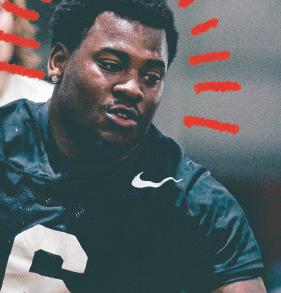
One of the transfers that came in is Tyler










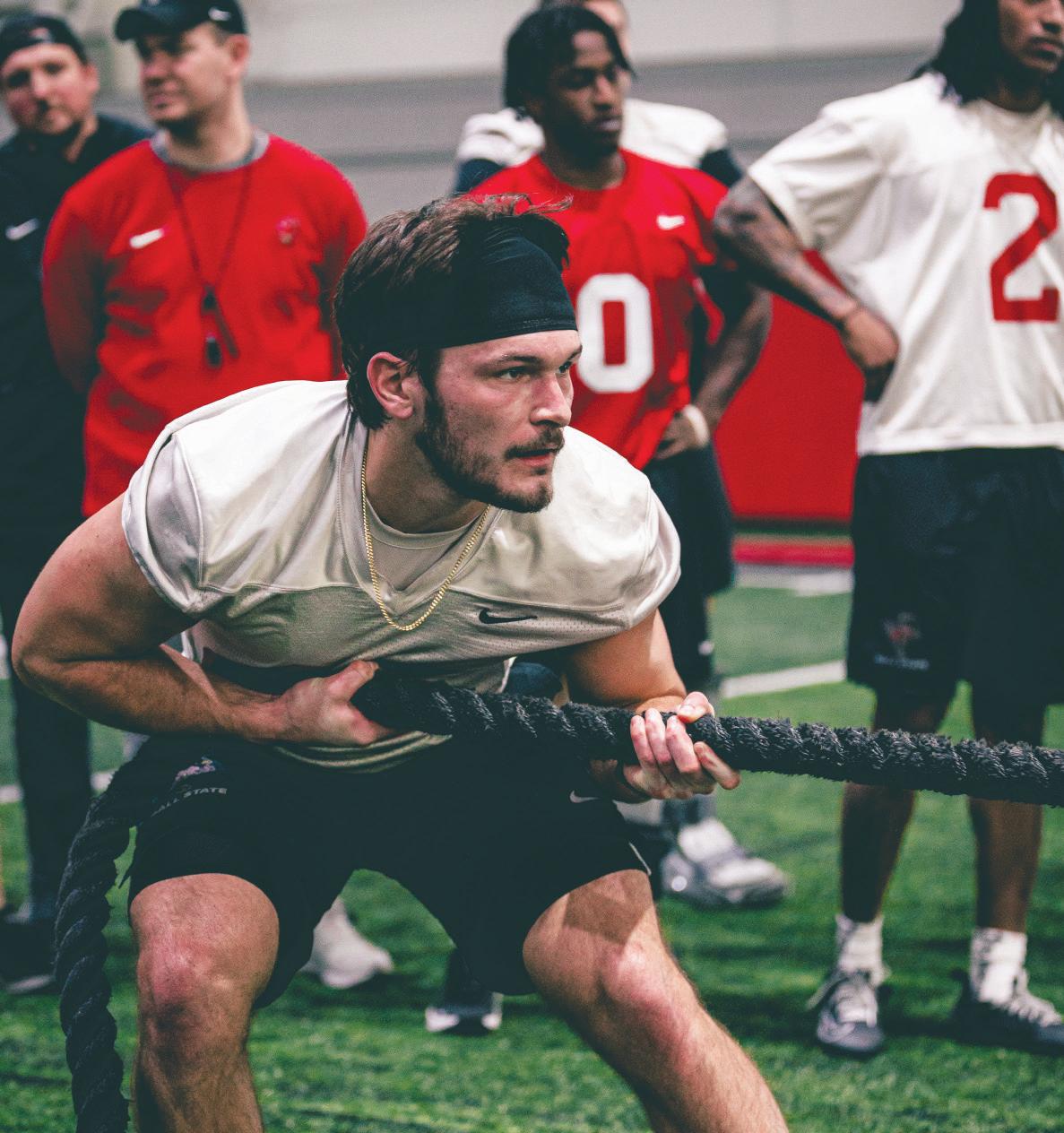
Mizzell. The redshirt junior quarterback played for Wake Forest his freshman year, and then played his sophomore season in the division two level at Concord University.
While Mizzell was in the transfer portal after his freshman year at Wake Forest, he said he built a relationship with Uremovich and Quarterbacks Coach Craig Harmon before deciding on Concord.
Mizzell said that college football today is very “transactional,” and building relationships can be difficult with that.
“It’s everything,” Mizzell said about the relationships he has built with the coaching staff.
“That is why Ball State was attractive, because I felt like I had a relationship with the coaching staff.”
Despite a portion of the Cardinals’ roster coming from the transfer portal, the team also brought back a slew of returners. Uremovich said the players returning to the program were some of their “best recruiters.”
“It shows that the guys are buying into what we’re doing, and [that] they’re happy here,” Uremovich said. “They like the direction we’re going when they’re actively recruiting their former teammates.”

All across the roster right now, there’s competition for every spot on our freaking team right now, which fires me up,”
- MIKE UREMOVICH, Head Coach

According to an article posted by the NCAA Jan, 17, there are over 10,500 college football players that enter the transfer portal across division one, two and three. That gives Uremovich and his staff a lot of athletes to look for when trying to fill over 100 roster spots.
But the head coach knows what to look for in the players he wants to suit up for Ball State.
“What we really like is guys that have played and produced at the college level,” Uremovich said.
The transfer portal is very different than it was last year for Uremovich and his staff. When Ball State brought in Uremovich Dec. 4 of 2024 to be the team’s new head coach, he had limited time to try and fill a roster before the transfer portal closed.
But this season, with an established staff, it is different.
In December of last season, Uremovich said he and his staff took some time to go through the depth chart and looked to see what positions they would need to address in the portal.
“I feel way better going into it this year knowing what we needed and what we have,” Uremovich said.
A big change for the Cardinals in the offseason
was the quarterback position. Senior Kiael Kelly graduated and declared for the NFL Draft, sophomore Aiden Leffler left the program via the transfer portal and junior Walter Taylor III transferred to Vanderbilt.
But the team brought in three new quarterbacks to fill those shoes, headlined by Mizzell, redshirt junior Keldric Luster and incoming freshman Mason Atkins.
Mizzell threw for 2,889 yards and 26 touchdowns last season at Concord, while Luster played limited snaps at Texas Southern University in his sophomore campaign.
Atkins played his high school career at West Aurora High School in Illinois, and the freshman gunslinger ended his career at the program with 4,467 passing yards and 62 touchdowns, both being program records.
But while the Cardinals have brought in three new quarterbacks to the program, Uremovich is excited for the quarterback competition everyday leading up to the new season.
The head coach said it will be a challenge to figure out who will be QB1 and QB2 on the depth



















chart, because only one quarterback is out on the field at once.
“Quarterback reps are extremely valuable because there’s a finite number of them,” Uremovich said.
Both Mizzell and Luster said they are going to control what they can control entering the quarterback competition, but the two both find value in becoming a close quarterback group, even off the field.
Luster said at the end of the day, while the quarterback room is competing, they are also helping each other out.
“As long as we can come out here and compete and leave here and still hang out with each other and still build that relationship and make it stronger, that’s what makes it great in the quarterback room,” Luster said.
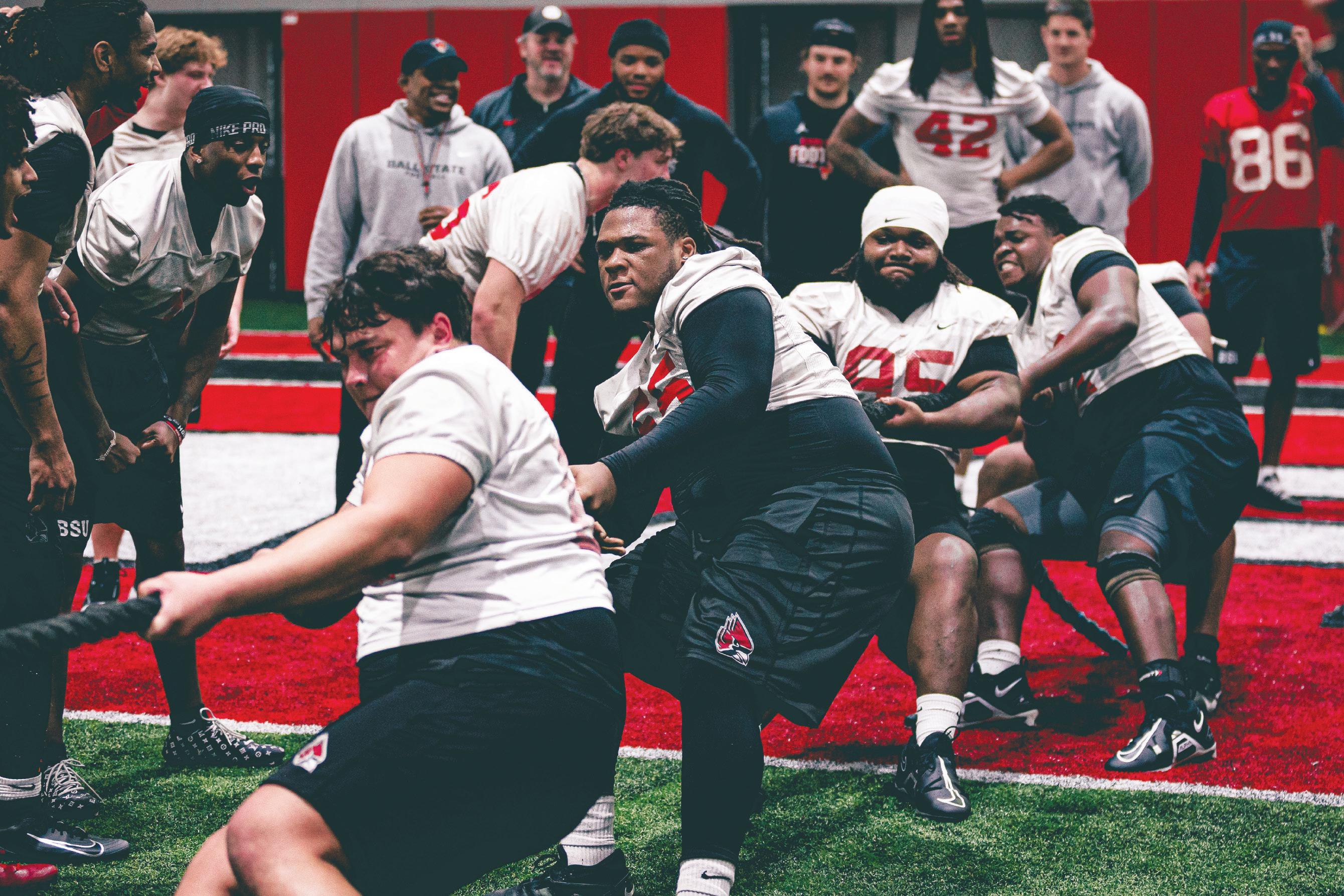
The new group for Ball State is now in Muncie as an entire team, and they are starting their offseason workouts as a full group.
Cole Earlewhine has been at Ball State all four years of his collegiate career. The redshirt junior defensive back is looking forward to the new
energy and competition that this new crop of Cardinals brings.
“When [you’re] building a program, you want new competition, you want new people, new faces to bring the best out of you,” Earlewhine said. “If you bring a new guy in that’s elite, you got to be elite if you want to play.”
The Cardinals completely revamped their defensive line in the offseason, as the team came out of the portal with seven new defensive linemen or edge rushers. But Defensive Lines Coach Adam Siwicki is confident in the team’s returners and expects the new group of guys to share those same characteristics.
“I know the type of people that we have in the room, which I’m excited to coach those guys each and every day,” Siwicki said.
While there are a lot of new faces in the defensive line unit, Siwicki has seen players step up as leaders so far, even through just a handful of offseason workouts.
“It’s starting to emerge, especially the returners, you see some guys that are becoming more vocal and becoming more confident,” Siwicki said.
Year-to-year, there is a competition at every position on the team. Uremovich said that no spot is guaranteed for a returning player, and everyone on the team’s new roster will have to earn their starting roles as the team shifts to spring and summer practices.
“All across the roster right, there’s competition for every spot on our freaking team right now, which fires me up,” Uremovich said. “When you have people competing to play, everybody gets better.”
But even with 34 new players on the roster, the team is starting to find a common goal. Mizzell, Luster and Earlewhine said the team is spending quality time with each other outside of football, and it is only growing the team closer.
Luster said the team goal of winning starts in the locker room. When he first arrived on campus a few weeks ago, the whole team was not on campus yet, as some players were still in the transfer portal deciding on their next school.
But with the whole team on campus, the energy has shifted.
“You felt the energy around here, in the future we’re going to have something, we got guys, we
got pieces,” Luster said.
Earlewhine said there were a lot of “unknowns” within the program a few weeks ago, with the entire team not being in Muncie yet. But now the team is getting to work, and the new group of Cardinals are gearing up for the 2026-27 season.
“Now that it’s here, this is us, we’re the Ball State Cardinals for 2026,” Earlewhine said. “There’s no more waiting, it’s arrived and you can just really pour into those people and get to know them and build from the ground up.”
The team’s Spring Showcase will be announced soon by Ball State Athletics, and that will be the next time fans can see the new Ball State football team in action.
Contact Kyle Stout with questions via email at kyle.stout@bsu.edu or on X @kylestoutdailyn.















also the play.
Rylan Crum Associate Sports Editor
Improvement is the name of the game for Ball State Softball Head Coach Helen Peña, as she enters her third season with the Cardinals. In Peña’s first year at the helm in 2024, Ball State went (29-29,12-13). In her second campaign, the Cardinals improved their record to (33-18,169) and won two games in the Mid-American Conference (MAC) tournament.
One thing she had during those two seasons was familiar faces, and people she came into the program with, but 2026 looks completely different as Ball State welcomes 11 new players to the squad. But despite a lot of new faces, Coach Peña has more than enough confidence with what she saw during the pre-season.
“The team looks really good right now. They’re really excited, and we’re putting things together. Our message in the fall was ‘iron sharpens iron,’ so that’s really been our theme throughout our training. Also, just competing one versus another, so that’s what’s fueling us right now. We’re really ready to get out there and beat up on someone else,” Peña said.
The fire to go out and win does not just come from the intensity Peña has seen at practice, but
as they head into the 2026
“But this year, it’s a really different team than last year and the years before when it comes to our strengths,” Peña said. “Offensively, we’re gonna bring different things. We’re going to be able to score in a lot of different ways.”
As Peña shed light on the new squad, so did one of the returners, Redshirt Junior Grace Spencer, who was sidelined all but the first four games last year due to a season-ending injury.
“Everybody is bringing something different to this team, so it’s a completely different team than we had last year, and I love it,” Spencer said. “Just getting to know everybody and seeing what they get to contribute to this team and just making Ball State softball better.”
Along with her excitement about the team, Spencer is more than excited to finally be fully healthy and get back out on the diamond after almost a full year off.
“It was definitely hard getting back in the beginning. I wasn’t with my teammates for a little while when I went back home to get my surgery, but once I was back with everybody, all of my teammates were really great at just lifting me up and keeping me in the loop with everything,” Spencer said.
As Spencer is now fully healthy, she is looking forward to not only getting back out on the field,
but also being able to be apart of road trips again.
“I’m most excited to just be with the team and travel this year. That was one of the hardest things, being back in Muncie while everybody was out playing. So, I’m just excited to be back with the team and traveling with everyone.”
With 11 new faces and 14 familiar ones, the key is building chemistry, not only with the returners, but with everyone on the team.
“The first day [the newcomers] stepped foot on campus, our main theme was connection. I think one of our separators this year is really going to be the bonds that they’ve developed all throughout the fall, [along with their] buy-in and commitment. That’s truly one of our strengths and our separators,” Peña said.
So far in the pre-season, the players have shown a true connection, even without playing a full length game together.
“They really have each other’s back every single day. They lift each other up, they use each other to lean on. I’m really confident about what they’ve put in and [I’m] just really eager to see how it pays off on the field.”
Peña said the team’s focus has to be on themselves, as the team still has 14 non-conference games before opening up MAC play against Akron Mar. 13. However, she recognizes the teams that play in these non-conference games and
tournaments will not be the same team that opens up MAC play.
“We’re just trying to get better every single day, and we’re trying to execute our systems and our processes to the best of our ability,” Peña said. “It’s really just about continuing to build and strengthen ourselves when it comes to our systems and just trying to compete at an elite level every single day.”
As the Cardinals season kicked off on Feb. 6 at the Florida Gulf Coast University (FGCU) Kickoff Classic, they now sit with a record of 2-3 through their first five games. Ball State was able to outlast Long Island twice, winning 10-5 in game one, and 12-2 in game two. The Cardinals then fell to Charlotte, FGCU and Southern Illinois.
Looking forward, Ball State will travel down south for the 901 Classic (hosted by Memphis) which kicks off on Feb. 13. The other participating teams include Southern Indiana, Memphis, Kansas City and Evansville.
Contact Rylan Crum with questions at Rylan. Crum@bsu.edu or on X @RylanCrum.
R h y t h m
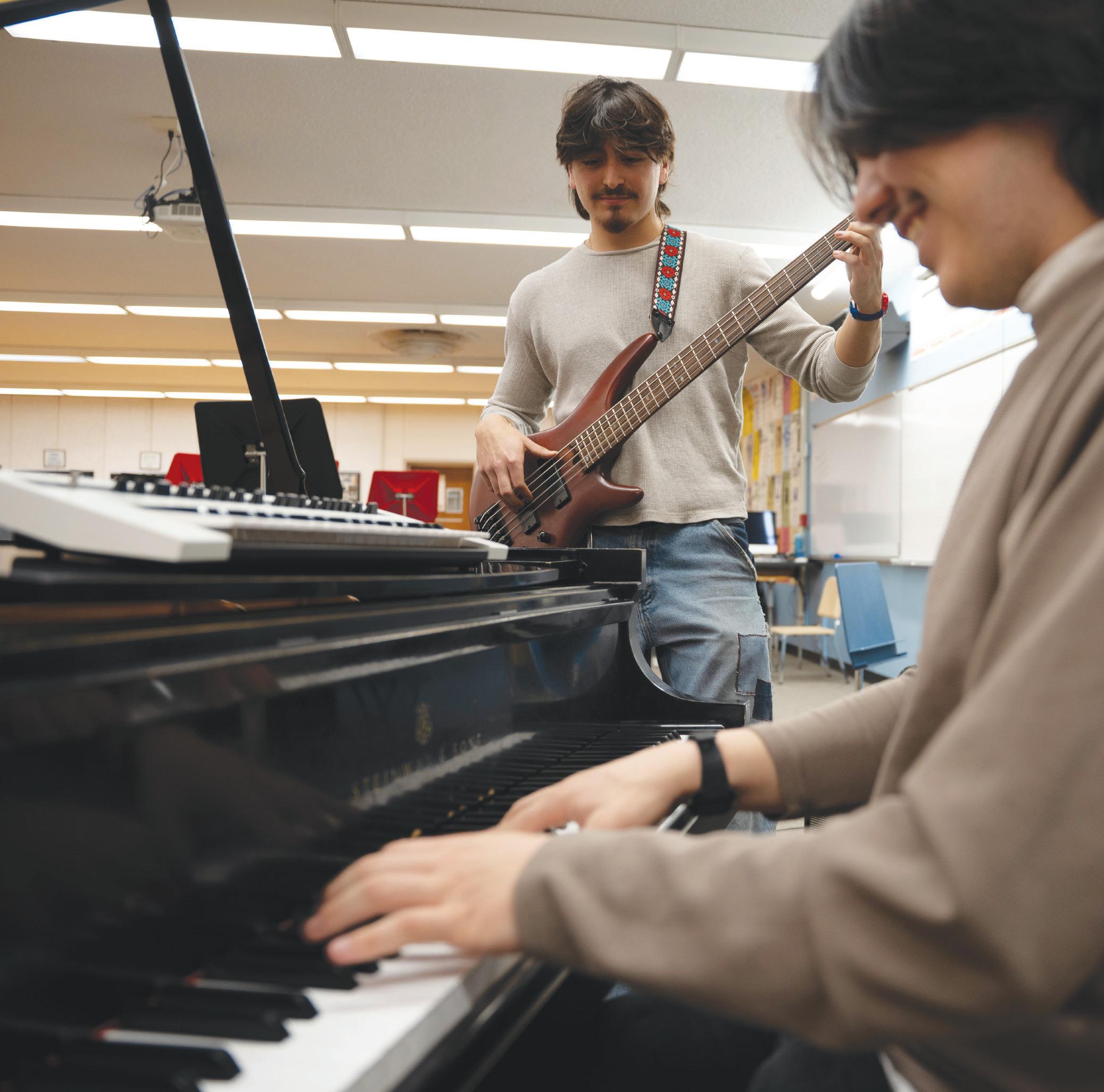
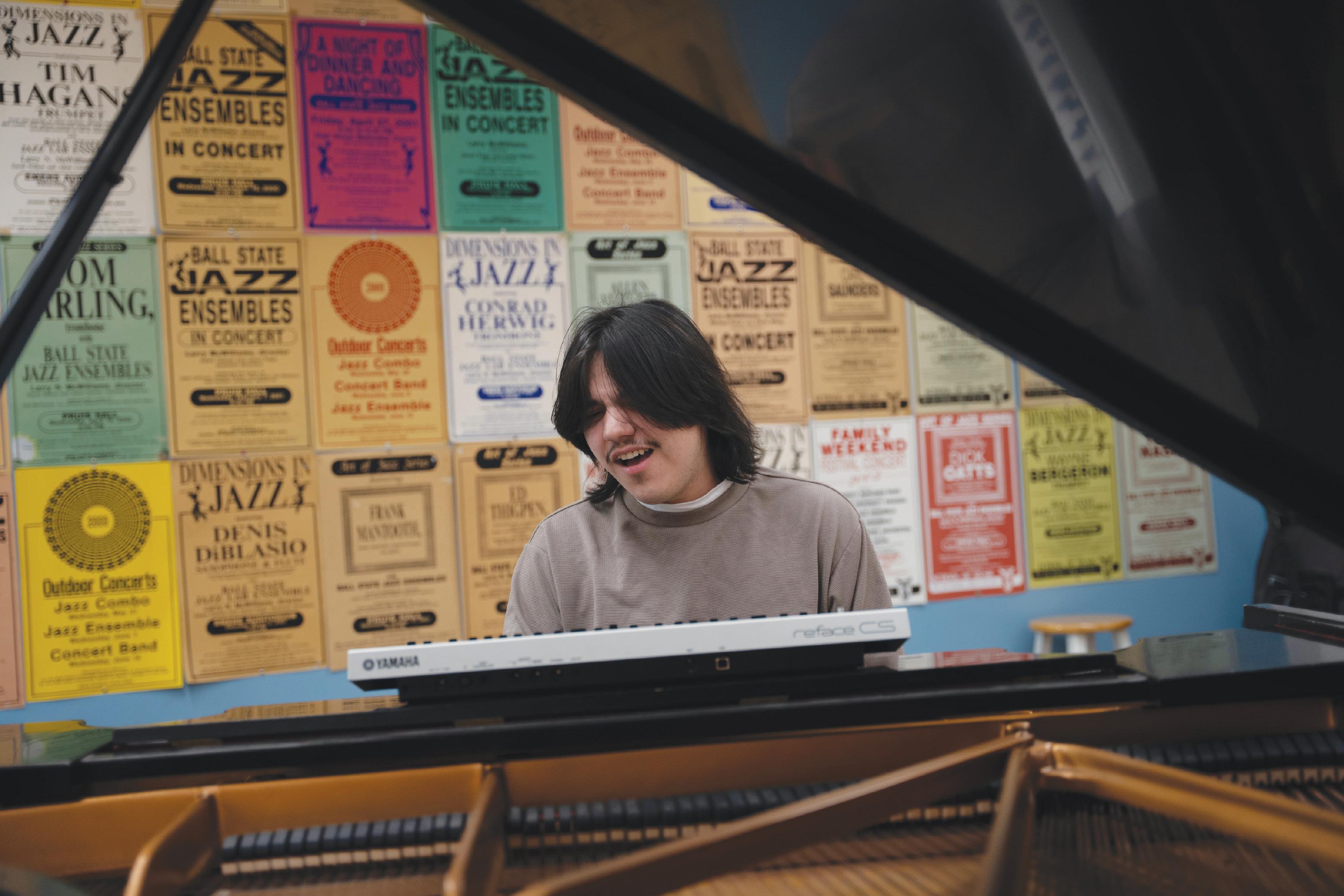
Performing under the project name “Noiroon,” Ball State’s Gino Trujillo used practice rooms and recording studios on campus to help create the debut EP “Night Dancer” with his fellow bandmates. 410
Ball State student Gino Trujillo and his bandmates utilized campus spaces to release a five-track EP: “Night Dancer.”
Meghan Braddy Editor-in-Chief
On a cold December night in Chicago 2025, Ball State first-year student Gino Trujillo stood on stage at Gman Tavern, preparing to share something deeply personal. His debut extended play (EP), “Night Dancer,” had officially dropped, and for the first time, the music he had written, recorded and refined over months was about to meet a live audience.
“I was extremely nervous,” Trujillo said. “My music is a personal part of me, so it’s weird to let that part of me out and let people hear that.”
Trujillo, a first-year biology life science teaching major from Valparaiso, Indiana, did not take a traditional path to Ball State. After high school, he moved to Chicago and attended Columbia College Chicago, where he studied music and spent two years focusing on piano and jazz performance.
His relationship with songwriting became more serious during his time in Chicago, when he began moving beyond piano performance and into composition.
In early 2023, he wrote “Clocking Out,” the first song he would release publicly. Though his first show at Columbia drew only a handful of listeners, Trujillo said he would “play for that crowd of three people, over and over again.”
But his plans changed abruptly when his stepfather — who helped fund his education — died.
“With that, I wasn’t able to afford going to Colombia, because it’s crazy expensive,” he said.
After stepping away from school and taking time to regroup, Trujillo eventually found his way to Ball State’s campus in 2025, drawn by the opportunity to study his other passion: science. Music, however, remained central to his identity.
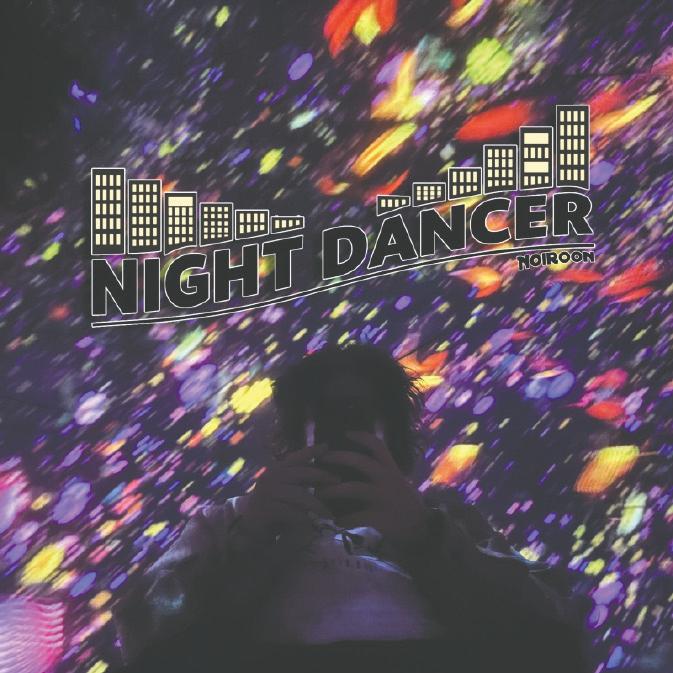
In December 2025, his persistence in pursuing his musical passion culminated in the release of “Night Dancer,” a five-track EP under the project name Noiroon. Blending indie pop and jazz influences shaped by his musical training, Trujillo said a lot of the themes presented in the EP are drawn directly from his own life.
“If I don’t have music, I don’t have anything,” he said. “Everything I crafted, I wrote, recorded … I don’t think I’d be anywhere without music.”
The EP’s title comes from its title track, which Trujillo described as a metaphor for a man with two lovers: one he loves and one who is a mistress.
“He’s yearning for the night dancer. It’s almost a metaphor for my actual life. A lot of my songs have metaphors to my personal life, whether they’re obvious or not, but it’s kind of … a metaphor of yearning for wanting something more, or going down the traditional path, rather than the path that would give me the most satisfaction,” he said.
Verse two of the song, he said, symbolizes his regret for not pursuing that satisfaction.
Though many of the tracks carry emotional weight, Trujillo said they do not fully reflect his day-to-day personality.
“I really am a happy guy, I promise,” he said.
Trujillo described his identity as split between two versions of himself: the focused science student and the expressive performer.
“My artist side is energetic, happy, … passion-driven. And my academic side is … tedious lab work, kind of [a] studious sort of thing,” he said.
While he spends his days doing lab work and attending classes, he said performing allows him to fully step into his extroverted personality.
“The performance [version of] me is where I can really shine,” he said. “I’m a big, big extrovert. I love talking to people. I love playing for people, and I love to see how people feel and react to my music.”
When he performs, he said he feeds off the crowd’s energy and allows himself to be “a little more loose” and expressive than he might be in a classroom setting.
The “Night Dancer” EP officially came together with help from fellow second-year Ball State student Anthony “Tony” Orta, a psychology major with a jazz minor, who played bass during the release show and assisted in the studio. Orta said the project pushed him creatively, especially as he transitioned from upright bass to electric.
“It was a really cool growing moment to figure out … my sound on the electric, and to be able to [be] there to support the great music that Noiroon was able to create.”
Orta said Trujillo’s piano playing was one of the first things that stood out to him as a collaborator.
“He had a very unique playing style with piano,” Orta said. “When he asked me if I wanted to play this gig in Chicago, I was like, ‘That sounds like a really cool opportunity.’”
Most rehearsals took place on Monday evenings, often the only time the group’s schedules aligned. Between Orta’s 19.5 credit hours, his responsibilities as a resident assistant on campus and Trujillo’s academic workload, time was limited.
“Sometimes we were able to play for three hours. Sometimes it was like an hour and a half,” Orta said, emphasizing how they would typically practice until someone kicked them out.
Before meeting, Trujillo would send chord sheets and recordings for them to study. Much of the preparation involved learning songs by ear, then experimenting with them in campus spaces.








“A lot of it was trying things over and over again,” he said. “[Gino] would tell [me] what sound he was aiming for and where we had room to express ourselves.”
Much of the EP’s rehearsal, recording and mixing took place across Ball State’s campus, from practice rooms in the Hargreaves Music Building to studios in Sursa Hall. Trujillo said navigating access to those spaces was not always easy, especially since they are not music majors. Still, the resources were instrumental in bringing the project to life.
“Utilizing those parts of campus really brought this entire show



together,” he said. “[Every time] we would go in there, people were so helpful.”
Trujillo said seeing photos of Sursa Hall’s recording studio before transferring to Ball State helped reassure him that he could continue making music at Ball State.
“It’s a really, really nice studio,” he said. “We’re talking like thousands of dollars worth of equipment in that studio.”
About 90 percent of the EP’s vocals were recorded in Sursa, along with several instrumental tracks, including keyboard parts. Rehearsals for live performances took place in practice rooms inside the Hargreaves Music Building.
When Trujillo and Orta entered those spaces, they never had key cards to access the studios. However, teachers and faculty there would let them in, knowing that they weren’t doing anything wrong.
“When we went in there, nobody would … ask questions. I mean, … we were doing what we were supposed to be doing. We looked like regular music students. And again … that’s a message I wish I could send [to] Ball State,” he said. “... I wish [Ball State could] make it accessible for … anybody [who] has passions in music … we shouldn’t let things be behind a paywall.”
The band’s lineup during rehearsals typically included Trujillo, Orta and drummer TJ Poole, a Muncie-area musician whom Orta met during jam sessions at Midnight Cafe in the village before the business closed.
For the Chicago performance, the group was also joined by Miguel Chavez, a guitarist from the Chicago area who learned several of the songs by ear in a single rehearsal before the show.
However, the Chicago performance came together during one of the most stressful times of the semester: finals week. Orta had a music theory exam the same day they were scheduled to leave for the show.
While Orta finished his exam, Trujillo rushed to prepare merchandise for the show.
“Gino was running around trying to make different t-shirts for the gig that we pressed,” Orta said, explaining that they had planned to print 10 shirts but pressed only six.
After packing up their equipment, the group drove to Chicago.
“It was so surreal being actually there and being in a band, in the sense of, ‘This isn’t for a school thing. This is a personal thing,’” he said.
When the band finally took the stage in Chicago, Trujillo remembers his nerves quickly gave way to relief. Audience members
approached him after the set, praised him and bought merchandise.
“I had a ton of people come up to me telling me, ‘Wow, your set was f***ing fantastic. Genuinely, your songs are really good. I love the ways you guys crafted them.’”
The night also marked a milestone for Orta, who is 20, as being paid to perform at a Chicago bar venue felt “really cool.”
“Was it much? No, but I think the first experience was amazing,” Orta said.
One of the most memorable moments of the night for him came during “Night Dancer” itself. The ending section, which he said is more interpretive, felt especially alive during the set.
“It felt more like a conversation,” Orta said. “There’s suspense, there’s build, but there’s calm too. You don’t always know where it’s going.”
After the show, the celebration was short-lived. Trujillo had a 7:30 a.m. exam the next morning back in Muncie.
The band left Chicago around midnight, but a snowstorm hit on the drive home. Orta took over driving for the final stretch while Trujillo attempted to sleep and study in the passenger seat.
They arrived back in Muncie around 5:10 a.m.
“To preface, I was 10 minutes late [to my final exam],” Trujillo said.
For Trujillo, the audience’s response at the show affirmed the risks he took in sharing his work publicly. As he continues balancing his science major with his creative pursuits, he said music will always remain at the core of his life.
“Music will always be my biggest thing,” he said.
Trujillo said he hopes listeners can experience the EP as something they can return to during everyday moments, whether walking to class, driving home from work or relaxing after a long day.
“I hope they can get a sense of enjoyment,” he said. “I want them to just be able to be like, ‘Yeah, that sounds like a good thing to listen to right now.’”
“Even when they’re simplistic, they’re fundamental,” he said. “Learning those lines really helped me explore the neck of my instrument.”
Looking ahead, Trujillo confirmed another EP is already in the works, along with a new single set to be released in April on all streaming services.
“The biggest thing I say is just to ‘just do it,’” he said, offering advice to other Ball State students balancing music with academics. “You can make a lot of excuses … but if you really want something to happen, you’ve got to put yourself first and be responsible.”
As the weather warms, he plans to host a small promotional event near the Scramble Light on campus, where they hope to give away merchandise to students who stream the EP, another effort to bring his music directly to the Ball State community that helped shape it.
For those interested in listening to Noiroon’s EP, the songs from “Night Dancer” can be streamed on any music service.
Contact Meghan Braddy via email at meghan.braddy@bsu.edu.
If I don’t have music, I don’t have anything. Everything I crafted, I wrote, recorded … I don’t think I’d be anywhere without music.”
-GINO TRUJILLO Lead singer
Beyond indie pop and jazz, Trujillo draws inspiration from yacht rock artists like Steely Dan and Toto, Japanese city pop musicians such as Miki Matsubara and Spanish rock bands he heard growing up. As a first-generation college student whose father is from Mexico, he said that cultural influences naturally make their way into his music.
For example, in his single, “Tuned In,” he included a dramatic Spanish-language monologue inspired by telenovelas.
“It’s just me talking there the entire time,” he said. “I really wanted to convey, like, you’re walking in and your parents are watching some dramatic show.”
Orta said his own musical influences also shape the EP’s sound. Alongside jazz training, he draws inspiration from artists like Stevie Wonder and Marvin Gaye, whose bass lines he studies closely.




show their significant other they love and care about them.

Jayden Vaughn is a third-year journalism major and writes “The Community Chronicle” for the Daily News. Her views do not necessarily reflect those of the newspaper.
For as long as I can remember, I have always loved romance. As a kid, I would always get invested in romantic comedies and obsess over the main couple in whatever book I was reading. Romance books quickly became a guilty pleasure of mine.
That fascination took a while to transition into my daily life.
Despite being in a happy relationship for over a year now, there are certain aspects of romance that I have maintained my firm beliefs about. I am not talking about the stereotypical beliefs that our society has, such as how men should always have to pay the bill, spend hundreds of dollars on flowers each month or plan elaborate dates — although some people are fond of all of those things.
My strongest belief, in terms of love and relationships, has always revolved around Valentine’s Day.
I am not a cynic. I am able to appreciate a couple going out of their way to show off their partner and make them feel as loved as possible. After all, that is the standard for couples on Valentine’s Day. Some people dress up, go on a fancy date, buy their partner an expensive gift and spend a whole 24 hours cherishing the person they might plan to spend the rest of their life with.
However, this is not the part about Valentine’s Day that irks me.
What bothers me is when people treat the holiday as nothing more than an obligation, when people in relationships only celebrate their partner because a date on the calendar tells them that they are obligated to, or when the only way someone can wake up to flowers, sweet words or random acts of love is because a holiday tradition told them that it is an expectation. If you need a holiday to push you into showing your significant other that you love and care for them, it ruins the authenticity of romance within relationships.
A February 2024 PsychologyToday article by Silva Neves, a psychosexual and relationships psychotherapist, references research studies that focused on the significance of creating a long-lasting relationship. According to the article, “The most important ingredient for enduring love in relationships is not the big things but everyday small things: how people feel appreciated and wanted.”
I have expressed to my boyfriend that I would rather receive flowers on any other day of the year, simply because they mean more when they are bought unprompted. Of course, that belief is not limited to only bouquets and expands to include all love languages.
Before entering my relationship, Valentine’s Day always looked the same to me. I would throw on my most comfortable pajamas, open a bag of cheap chocolate and turn on one of my favorite scary movies. I would spend my night curled up in a dark room, covered in blankets.
On occasion, I would even invite friends to celebrate with me. My version of the holiday might have looked different from most, but I had preferred it to elaborate, once-a-year affection that a lot of the people I knew were receiving at the time.
A March 2015 PsychologyToday article written by Jonathan Fader, a psychologist stationed in New York, reports, “bottling up all of our love for one special day doesn’t allow us to practice the daily things, like gratitudes and affirmations, that make relationships thrive.”
That same article goes on to suggest, “More often than not, partners use extravagant dinners and gifts as band-aids for chronic relationship issues.”
When my boyfriend and I first started dating, we spent our first Valentine’s Day together in the dorms. He cooked us dinner in the communal kitchen, which I ate with a pocket knife and fork because we did not have enough utensils, and surprised me with brownies as dessert. Then, we watched a movie on a futon under his roommate’s bed.
Considering it was my first ever Valentine’s Day with a significant other, it was special. But it was not special because of the acts of love he showered me with, but rather because I had spent the day with him. What made it so special to me was that none of what he did that night was out of the ordinary.
Cooking for me and watching movies with me is
something he does almost every weekend, and satiating my sweet tooth is something he constantly surprises me with. He even goes out of his way to make me coffee every morning that I am there, even if he does not drink it that often, simply because he knows I love to drink it first thing in the morning.
In a January 2023 PsychologyToday article, Cortney Warren, a board-certified psychologist, said that based on a study performed by Plenty of Fish in 2020, “51 percent felt pressure to be romantic, 43 percent to be in a relationship, 42 percent to go on a date, and 41 percent to act like the holiday is meaningful. In addition, 43 percent of respondents thought it was the most pressurefilled holiday and one-in-five wished that it could be cancelled all together.”
The pressure to be romantic on Valentine’s Day should not be as profound as it is today. The stigma surrounding the holiday has the potential to be more damaging to relationships than helpful. More than that, I believe that it can be damaging to one’s self-esteem.
If we correlated our worth in relationships to how often we are shown unprompted affection from our partners throughout the year, how many of us would feel confident enough to push back against a holiday that enforces romantic traditions we should already be experiencing every day?
People should not need a holiday in order to show their significant other that they love and care about them. Dates should not be saved for one night a year or for special occasions, and acts of love should not be conditional because of a date on the calendar.
If you cannot love your partner loudly on days when it is not expected from society, then what difference does it make if you pour all your effort into them on Valentine’s Day?
I do not know what my partner and I will do for Valentine’s Day this year, and quite frankly, it is not a top priority to me. The obligation to be romantic is nothing compared to the simplicity of genuine affection.
Love is not conditional on the time of year. It is not conditional on the date, the month or how long you have been together.
Your relationship is not an obligation, and it should never be treated like one.
Contact Jayden Vaughn via email at jayden.vaughn@ bsu.edu.







Non-enrolled individuals have disrupted English classes at Ball State this school year.










Meghan Braddy Editor-in-Chief
Ball State University English classes have been disrupted since the 2025-26 school year by individuals who were not enrolled in the courses, raising concerns among faculty and university groups about classroom safety and limited communication from administrators on how to address the situation.
Sean Lovelace, chair of the university’s English department, confirmed there were five incidents during the 2025 fall semester involving five different individuals, all appearing to be male, who entered an English 103 class without permission.
The Ball State Daily News has not received any confirmed reports of this happening at other colleges on campus, but is still investigating.
However, the incidents that did occur involved three instructors and occurred in three different campus buildings: the David Letterman Communication and Media Building, the Robert Bell Building and the Art and Journalism (AJ) Building. One instructor in particular experienced three of the five documented disruptions, including two that happened during the same class period in AJ 225.
During that class period, Lovelace said the first individual entered about 20 minutes in and refused to leave when asked.
“That person kept saying, ‘Why won’t you let me stay here? Why won’t you let me learn?’” Lovelace said.
Minutes later, an “older gentleman” entered the same classroom through a side door in the lecture
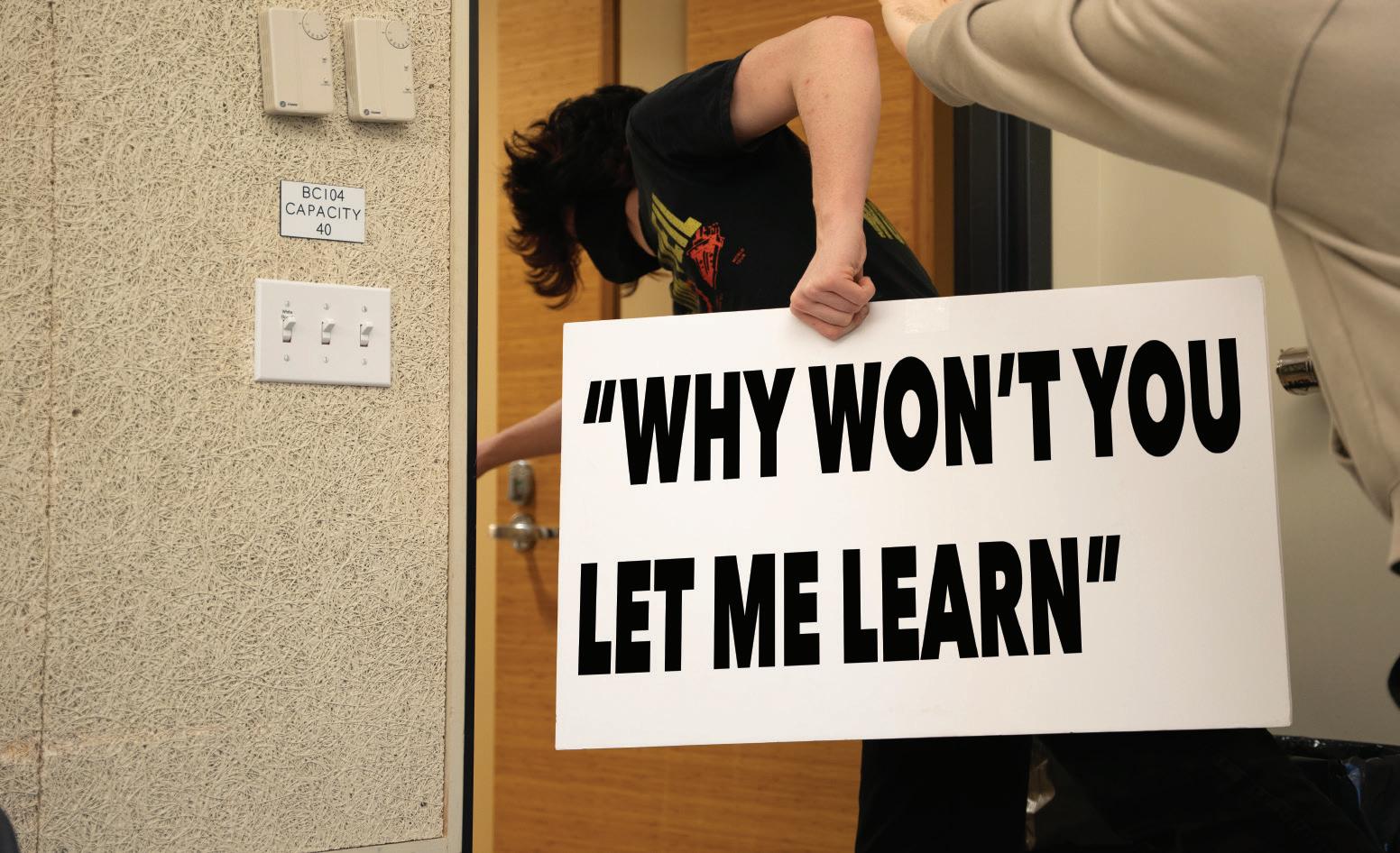


hall, “clutching a backpack.” After that individual was asked to leave, the instructor locked the classroom doors and continued teaching as normal.
Lovelace said none of the instructors canceled class, and all of the individuals eventually left after being asked.
“I think the great thing has been, so far — and I hope there’s no other incidents — they left,” Lovelace said.
He said their main priority is “to look out for students’ safety” and then provide “the best learning environment that they can have without all these disruptions.”
According to Ball State policy, classrooms are not open to the public. In an October 2025 email statement, a university spokesperson confirmed that only students enrolled in or auditing a class, or individuals invited by an instructor, are permitted to attend.
“If anyone who fails to meet one of those characterizations attempts to sit in on a class, the instructor will ask that person to leave, and the university expects that person to comply,” the spokesperson said.
Following the incidents, the dean of the College of Sciences and Humanities (CSH) distributed official guidance via email to department chairs on responding to classroom disruptions.
The guidance, titled “Response Guidance for Disruptions in Academic Spaces,” references Ball State University’s Non-Commercial Expressive Activity and Assembly on University Property policy, which states that “no person or group may disrupt teaching, research, administration, disciplinary procedures or any other university functions.”





According to the document, instructors are advised to follow a three-step response process intended to “inform, de-escalate, and allow the person or group to comply” with university policy.
If the individual does not comply, the guidance advises contacting the University Police Department (UPD) to escort them from the area.
However, the Ball State chapter of the American Association of University Professors (AAUP) has expressed concern about the incidents and how instructors are being advised to handle them.
Alicia Van Duyn, co-secretary of the chapter and a psychology graduate student at Ball State, said faculty members are concerned the issue is not being addressed proactively.
“I think it’s particularly concerning that [Ball State is] pushing it on to the professors instead of trying to make some statement publicly as a university,” she said. “That’s putting a lot of responsibility on instructors, who already have a ton of responsibilities, and honestly don’t necessarily get paid a ton, to also be policing their own classrooms and [be] vigilant.”
She believes the disruptions seem linked to Indiana’s requirement that public universities post course syllabi online. The law, included in House Bill 1001 and now Public Law 213, requires public access to course syllabi but does not specify what information must be included.
“Instructors weren’t necessarily taught or told … what exactly to include in their publicly posted syllabi, and so if you review syllabi, even from a single department, they vary so much between the amount of information that individuals include,” Van Duyn said.
While Van Duyn agrees that publicly available
syllabi can unintentionally expose classroom locations and meeting times, Lovelace said the English department has no evidence linking the disruptions directly to the requirement to post syllabi.
“This is the first [school year] we’ve had to post … our policy and syllabi [online], because that’s a state law. But we don’t know if there’s any connection between that and these people showing up in the class,” he said.
Lovelace said he forwarded the CSH guidance to the English faculty when the incidents happened in the fall, but he confirmed via email that the department has not experienced any disturbances since.
“It adds anxiety,” Lovelace said. “If you don’t feel you have a safe space, it’s really hard to learn.”
Still, Van Duyn said faculty members remain concerned the issue could eventually spread beyond English classes.
“This is an issue that could potentially impact just about every college on campus, and especially if it isn’t dealt with early on,” she said.
If you are a student or instructor who has experienced classroom disturbances similar to those described in this story, contact the Ball State Daily News at editor@bsudailynews.com.
Contact Meghan Braddy via email at meghan. braddy@bsu.edu.
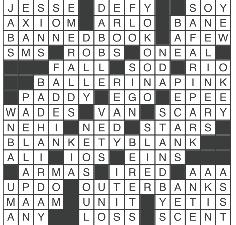
38 Sanaa’s country 39 Branch of Islam 43 The “B” of LBJ 44 Airbnb competitor 45 Tennis star Sharapova 46 Action __: post-meeting list 47 Baby beds 48 Peace Palace site, with “The” 49 Bozo 50 Devoured
stick of butter
5 “Catch my drift?” 6 “Run __ now!” 7 “Likewise!”
8 Stone or Iron follower 9 Berate
Puffer jacket filler, often
Still snoozing
Exhilarate
Twice four 18 Paint layer 22 Sings like Sarah Vaughan 23 Self-referential
Utter mess 25 Three Bears matriarch
Mil. truant
__ and rave
Nanny’s offspring
Grimace 32 Directional suffix
Amazed
__ Star State 35 River of Florence
36 Confidentiality contracts, for short
Con 54 The Badger St. 55 Suit to __: fit perfectly 56 Gomer of TV’s Mayberry 58 Extinct New Zealand bird 59 Food writer Drummond
Wednesday, February 25 10 a.m.- 1:30 p.m. in The Atrium