
Firefly Children & Family Alliance works to help families who have experienced all forms of trauma. 10

VOL. 105 ISSUE: 20
CONTACT THE DN
Newsroom: 765-285-8249
Editor: editor@bsudailynews. com
EDITORIAL BOARD
Meghan Braddy, Editor-in-chief
Katherine Hill, Managing Editor and Lifestyles Editor
Linnea Sundquist, News Editor
Kyle Stout, Sports Editor
Rylan Crum, Associate Sports Editor
Jayden Vaughn, Opinion Editor
Charlotte Jons, Associate Opinion Editor
Channing Matha, Copy Editor
Kyle Ingermann, Multimedia Editor
Kadin Bright, Associate Multimedia Editor
Ryan Fleek, Associate Multimedia Editor
Brenden Rowan, Visual Editor
Jessica Bergfors, Associate Visual Editor
Raquel Ruffin, Associate Visual Editor
Corey Ohlenkamp, Adviser
The Ball State Daily News (USPS-144-360), the Ball State student newspaper, is published Thursdays during the academic year except for during semester and summer breaks. The Daily News is supported in part by an allocation from the General Fund of the university and is available free to students at various campus locations.
TO ADVERTISE
• (765) 285-8256 or dailynewsads@bsu.edu
• Hours: 8 a.m.-5 p.m. Mon-Fri.
• ballstatedaily.com/advertise
TO SUBSCRIBE
Call 765-285-8134 between 9 a.m. and 3 p.m. Mon. -Fri. Subscription rates: $45 for one year. POSTMASTER: Send address changes to Daily News, AJ278, Ball State University, Muncie, IN 47306
JOIN THE DAILY NEWS
Stop by room 278 in the Art and Journalism Building. All undergraduate majors accepted and no prior experience is necessary.
The Ball State Daily News is committed to providing accurate news to the community. In the event we need to correct inaccurate information, you will find that printed here.
To submit a correction, email editor@bsudailynews.com.
Elizabeth Myers, Weather forecaster, Benny Weather 4-DAY WEATHER FORECAST

Jan. 27: Both Denmark’s and Greenland’s leaders are in Berlin and Paris this week to “shore up” European backing, according to Tribune News Service (TNS), after a framework deal with the United States made way for negotiations on Greenland. This comes after President Donald Trump and NATO Secretary General Mark Rutte agreed to a “framework” over Greenland, specifically focusing on areas such as mining rights, the North Atlantic Treaty Organization’s role on Greenland and the defense relationship between the U.S. and Denmark. President Trump wants control over the island for national security purposes, according to TNS, even though he has confirmed he will not force the takeover of the territory.

Jan. 27: According to Ball State’s event calendar, the university’s department of theatre and dance will debut “Balls, Balls, Balls” Feb. 6 at 7:30 p.m. in the campus Oakwood building, room 154. Written by awardwinning playwright Alice Tuan, “Balls Balls Balls” was commissioned by the Ball State Department of Theatre and Dance. “We’ll present the script as an on-book reading with choreography,” according to the university event calendar. Tickets are available through the College of Fine Arts Box Office located at Sursa Hall in person, by phone at 765-285-8749 or online.

Jan. 27 : Ball State Women’s Swim senior freestylist Payton Kelly won Mid-American Conference (MAC) swimmer of the week award this week, according to Ball State Athletics. The award is the second of Kelly’s senior season, and the seventh of her career. Kelly’s award efforts stem from this past weekend against IU Indy for the team’s senior day, where she placed first in the 50 and 100 freestyles. Against Eastern Michigan the following day, Kelly won both the 200 and 500 freestyles, while also taking home the 200 medley and 200 freestyle relay. The Cardinals’ women’s swim team will be back in action Jan. 30 to host Indiana State.
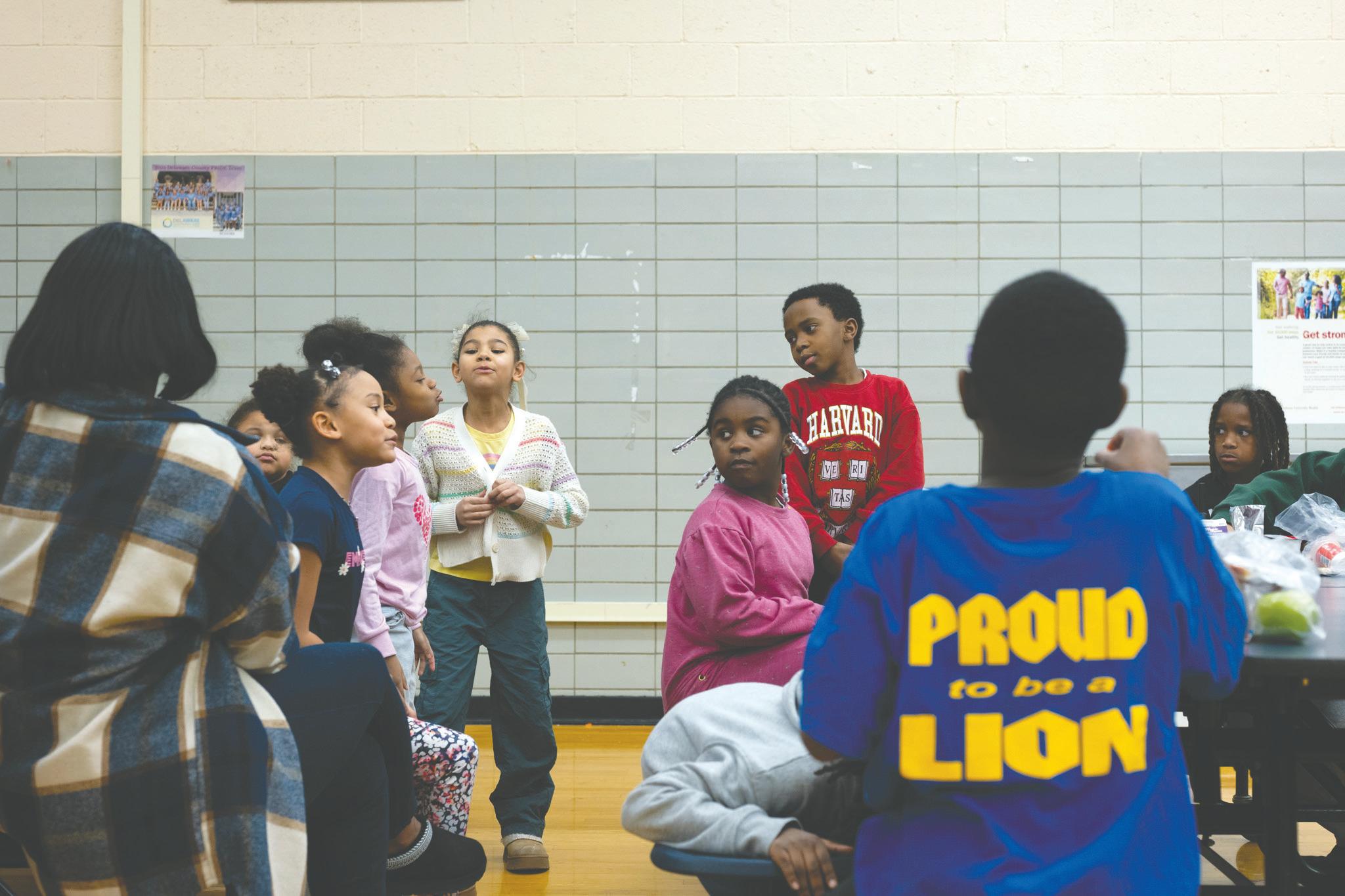
After-school program MuncieP3 strives to improve students’ literacy and reading skills, while building an engaging learning environment. 404

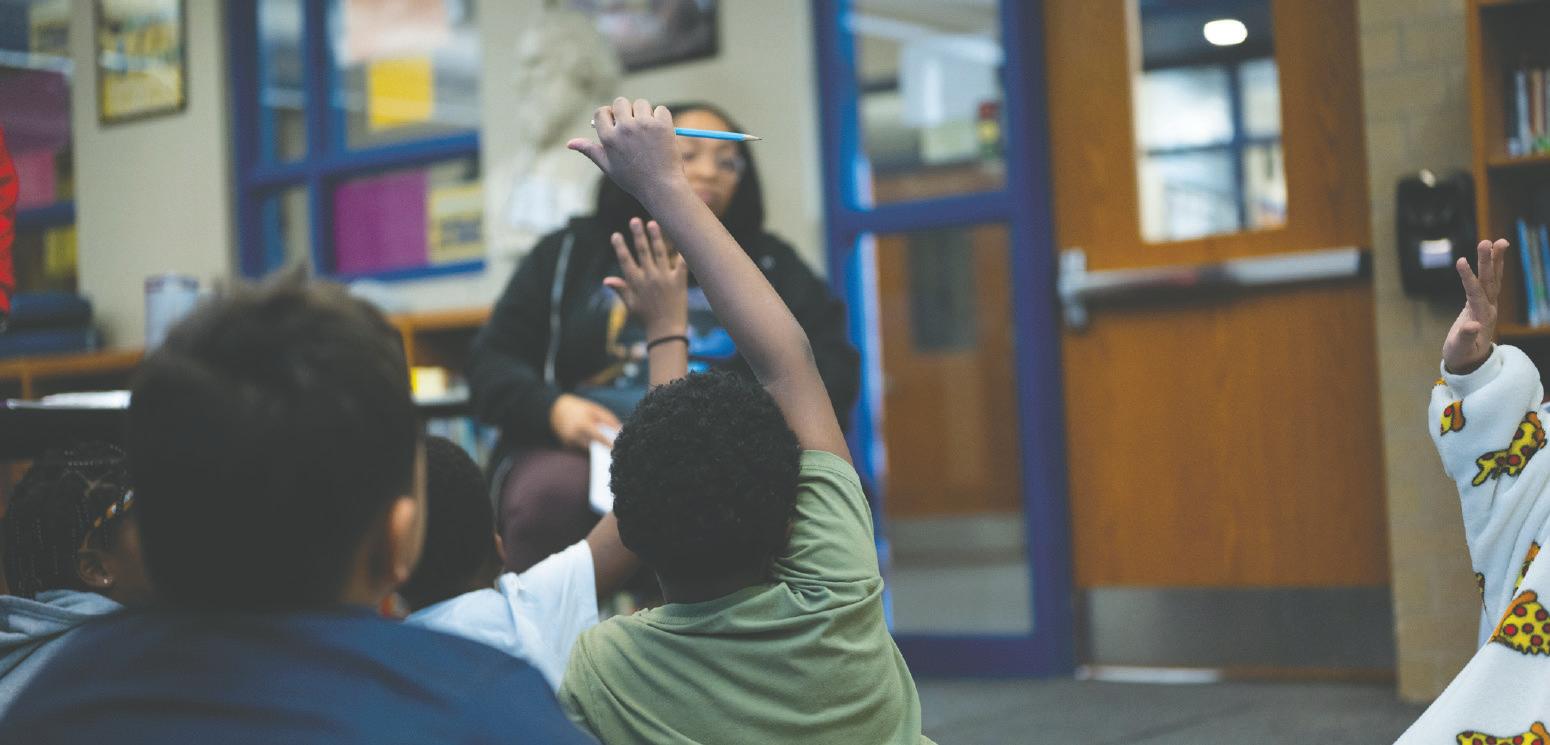


After receiving feedback to start an after-school program, MuncieP3 created an engaging learning environment for students in kindergarten through third grade.
Linnea Sundquist News Editor
Indiana recently recorded its “largest-ever single-year increase” in student literacy rates, according to the 2024-25 IRead results from the Indiana State Board of Education — and an afterschool program in Muncie is continuing to add to that statistic.
MuncieP3 (MP3) is an after-school and summertime program at Longfellow Elementary School, specializing in improving students’ reading and literacy skills.
Before the COVID-19 pandemic, Indiana’s literacy rates declined every year, with the pandemic “exacerbating” students’ literacy scores, according to data from Indiana’s IRead results. In response to this, the state has made “historic investments” in helping more students read, according to the Indiana Board of Education.
MP3 is one of those investments.
“The overall goal is to make sure that our students are reading and reading proficiently by third grade,” said program coordinator and director of the MuncieP3, Michael Long.
The program initially began after Ball State professor of early childhood, youth and family studies, Dr. Eva Zygmunt, wanted to start an immersive learning class in the community of Whitely, a neighborhood in Muncie.
In 2009, a “Mom’s Night Out” event was hosted by the university’s early childhood, youth and family studies department at Roy C. Buley Community Center. At the gathering, the department asked parents about their “hopes and dreams” for their children, Zygmunt said via email.
In response, parents said they valued education and wanted after-school and summer enrichment opportunities for their children to keep them on
track academically. Zygmunt officially made the decision to move forward with the program after hearing this feedback, as several of the parents said they wanted their children to be taught by “trusted community members and teachers.”
Two weeks after the program was in development, the Indiana Department of Education (IDOE) issued requests for funding new programs through the 21st Century Community Learning Center Grants, with grants estimated at $900,000 every four years. MP3 received a grant from the IDOE, allowing MP3 to begin a four-year grant cycle. Currently, the program is entering its fourth grant cycle, approaching 16 years in operation.
“[MP3] was birthed out of the need of the community, and right after that, the funding came,” Long said.
The program applied for its four-year grant cycle in February 2025, but was rescinded in March due to President Donald Trump dismantling the DOE, which cut funding to after-school programs.
“It has been almost a year, and the funding is still not approved,” Long said via email.
MP3 is still waiting for a decision from the DOE on whether grant money is still available in the department’s budget. Once the DOE knows the amount of funding available, Long said it will reopen applications for its grant program.
In the meantime, MP3 is talking with local foundations about possible funding, as well as continuing to explore state and federal funding to keep the program operating.
Long emphasized how the families are an important part of the children’s success with MP3. He said that, for a child to be enrolled in the program, the family would need to be interviewed. This determines what works best or “fits” well for either the family or the child.
But ultimately, the students who stay all four
years in MP3 become the “most successful,” Long claims, saying “there is no program in the state of Indiana like what we do.”
Recently, third graders IRead scores in the state of Indiana have improved from 2024-25, according to the 2024-25 IRead results. Students’ literacy data grew from 2023-24 from 82.5 to 87.3 percent, representing 73,500 third graders out of 84,163 in the state.
Success like this is what pushed curriculum coordinator Faith Serf to be part of the after-school program, having experienced how much the program helped her son.
“I knew I wanted to be a part of this community, because they were really embracing not only the student, they were embracing the families as well,” Serf said. “It was a very welcoming environment.”
First-grade co-teacher for MP3, Tyana Isomi, also experienced watching her own children go through the program. Both Isomi’s daughter and son attended MP3, and while her daughter was a quick learner, her son had an IEP, or an Individualized Education Program, and struggled academically.
Despite these challenges, her son received support from those around him. He made friends from the start of the program until the very end, and is still friends with them now as a sophomore in high school.
“His group of friends just took care of him,” Isomi said.
Once students are done at school and attend MP3, they can take a “brain break” to transition from the school day to after school. Serf said that students receive a small meal or snack to prepare them to learn.
Serf said students also have the opportunity to use a digital program called Lexia, a computer-assisted reading and literacy program that is developed to support student reading, writing and language arts
skills, with a “game approach” to its learning.
“We don’t look like a school day program. However, we are using the standards and the content, and we refined it so that it looks more engaging,” she said.
First-grade aide and second-year Ball State student Mackenna Johnson said they give students “wiggle breaks” to let them get all their “talkativeness out.”
Johnson explained that understanding a student’s individual needs makes it “easier for them to learn from [staff]” by recognizing when they are hungry or simply need to move around. Along with meeting the students’ needs, Isomi said the relationship with the student is a “big part” of the program.
Having grown up in Muncie herself, Isomi said she knows the families and children who are part of MP3. She said having these connections benefits the community in addressing any challenges that may arise with the program.
Isomi also described the program as having “good” communication with the families and being able to discuss problems with parents, describing the environment as “family.”
Serf said she wants MP3 students to know they are valuable and that they have something to offer. She wants them to “keep their head up” and look for others who will continue to support them after their time with MP3 is over.
“Find their next Faith [Serf], find their next Mackenna [Johnson], find their next Ty[ana Isomi] out there in the world. Because they’re out there. There’s a lot of them out there, but if we can equip them to do that, then I feel I’m at peace,” Serf said. Contact Linnea Sundquist via email at linnea. sundquist@bsu.edu.







Caroline Scheu elevated Ball State Women’s Basketball content creation to the next level. 06

Elijah Poe Reporter
In the Ball State Women’s Basketball locker room, you will find one empty locker with a small whiteboard in it.
No player sits there, but the whiteboard lets people know whose locker it is.
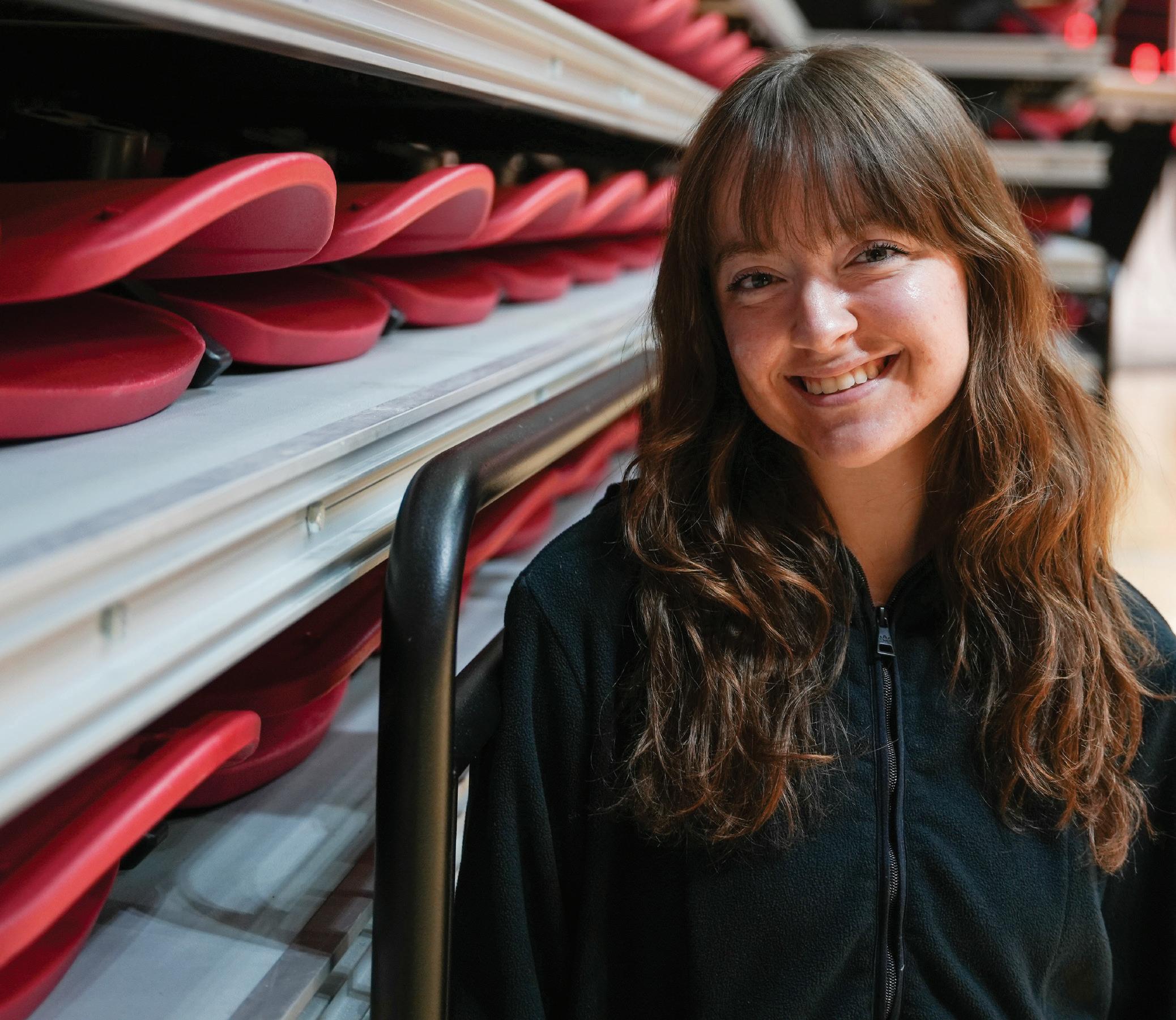
But it doesn’t say Caroline Scheu, it says the name she is known as inside the program: Carol.
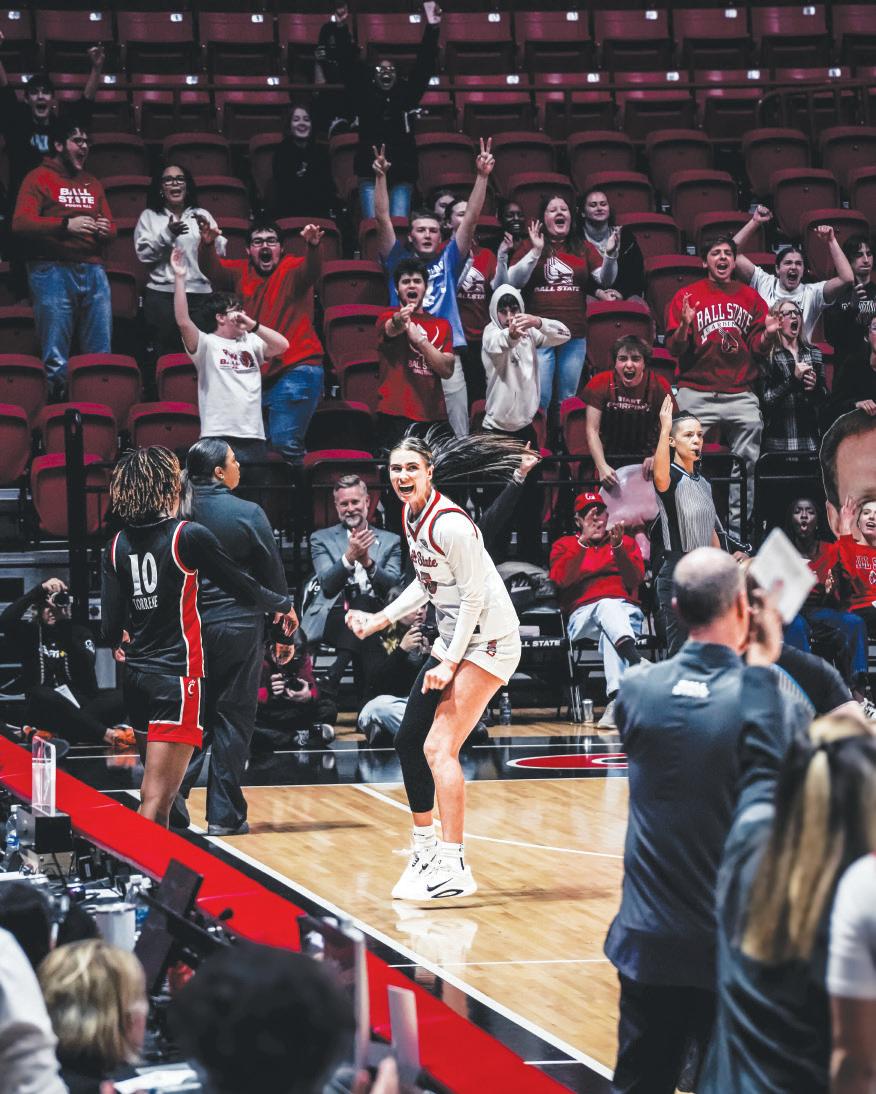
Chances are, you have seen the content creator donning bangs, decked out in Ball State merch, being swarmed by the Cardinals after a win in Worthen Arena.
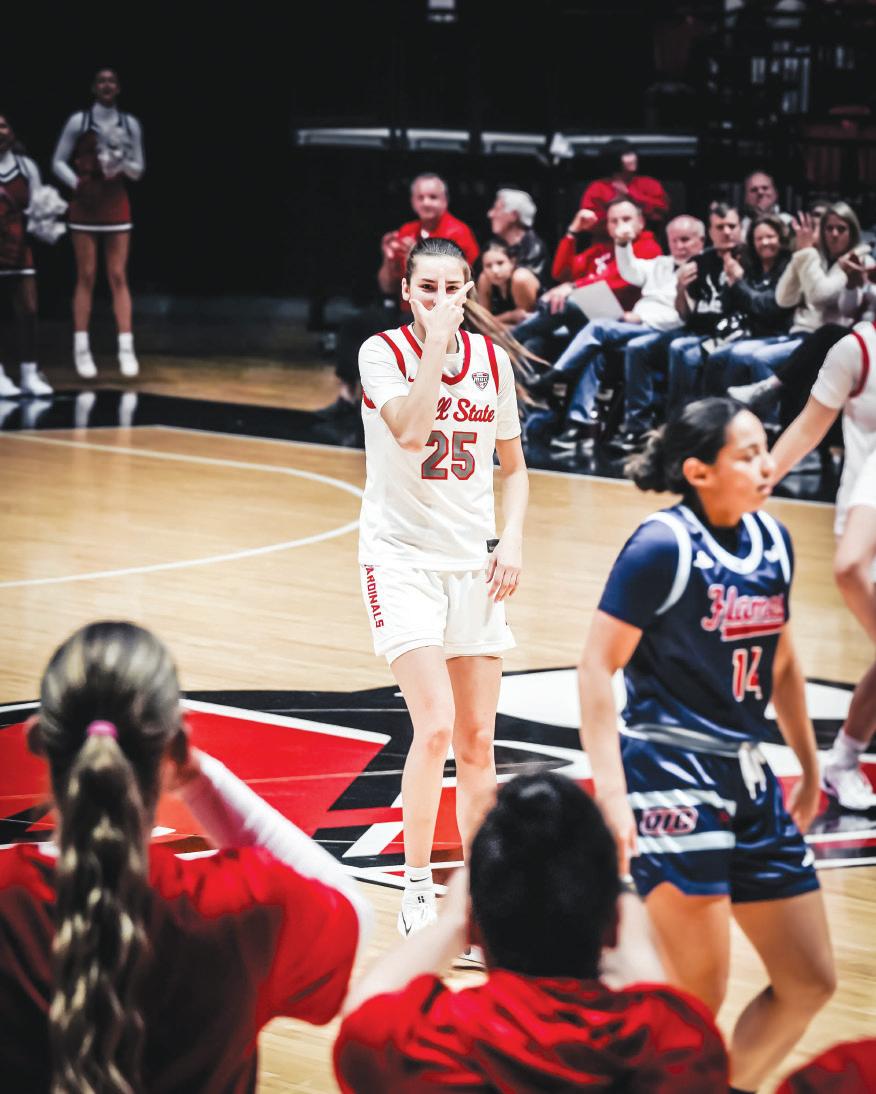
Scheu has been running the Ball State Women’s Basketball social media accounts as the Cardinals’ content creator and is currently in her fourth season with the program.
But four years ago, Scheu was not even considering joining the program.
“My personality at the time, I was not going to reach out,” Scheu said.
She was an anxiety-ridden, quiet person who overthought every interaction. She had social anxiety.
“I was a shell of myself,” Scheu said.
She was dealing with the death of her grandfather — a large proponent of why she pursued basketball media — and was in a new town, surrounded by little to no people she knew.
But Ball State Women’s Basketball reached out to her.
Scheu said she saw an email in her inbox about two weeks after coming to Ball State in the fall of 2022. While she still does not know how Head Coach Brady Sallee got her contact information, she toured the facility with Assistant Coach Casey Morrissette, who told Scheu the job was hers if she wanted it.
Initially, the role for Scheu was going to be helping out with recruiting and, maybe, using her skills here and there to market the program, Sallee said. But he soon figured out it could be so much more with Scheu.
“She’s taken it and turned it into something crazy,” Sallee said.
Scheu has grown the women’s basketball social media accounts from averaging 764,000 views per season to well over 5.3 million.
Turning nothing into something Women’s basketball is a part of Scheu’s identity.

She grew up in a basketball house and was always in the gym. While her sister enjoyed playing basketball, Scheu said she was obsessed with basketball media, always knowing it would be her career.
There was no binder on her desk when she took the job at Ball State in the fall of 2022.
“No one ran it, there was no brand, nothing,” Scheu said.
She said it felt like she was thrown into the fire her freshman year. Scheu had never worked in collegiate athletics, was not used to the schedule and it took her time to get adjusted to the coaches and players.
She felt those same feelings she had before taking the job.
Even if it felt like she was “in the fire,” the program always had her back. Scheu was integrated from day one.
She was always invited to team activities, was on every team trip and was constantly with the staff and players. Scheu said the team believed in her during a time when she did not even feel proven.
“It was something that I did not know I needed at the time, but I really did,” Scheu said.
her feet wet during her freshman year, Scheu started setting goals to grow the brand.
In her sophomore year, she started with consistency. She posted more frequently and tried new things. Everything she did was self-taught, and she worked relentlessly on her design skills. Then she started creating more videos, laying the foundation for a strong social media presence.
Post by post, Scheu was building an online persona for the Cardinals. More and more views, shares and interactions started to roll in.
Sallee said he believes social media accounts have helped with recruiting, putting “butts in the seats,” and have helped people understand what Ball State Women’s Basketball is all about.
“I think the knowledge that people have about how special our program and our players are comes directly from the work she puts into it,” he said. It has been through the posts, videos and interactions where Scheu has found herself genuine relationships with the staff and players. It is a large reason the Cardinals are so comfortable around her camera.
A majority of her time is spent without a camera

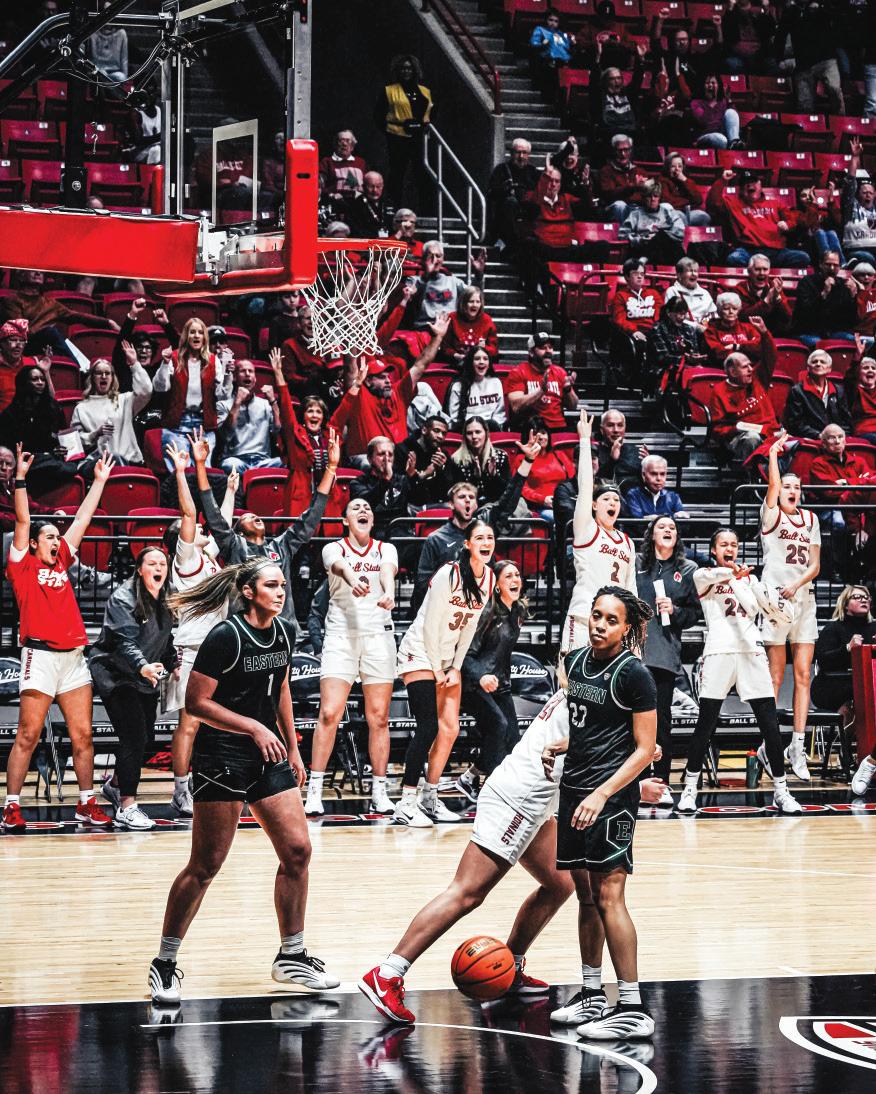

She is with the program so much that she said it feels like she is roster No. 14, almost like a player under Sallee.
“I don’t think they even realize how high they’ve set the bar,” Scheu said. “I think that’s just who he is and who this program is, but they don’t understand that a lot of people in my position are not treated as well as I am.”
She saw another opportunity to grow with the 2025 senior class, and she knew she needed to capitalize on their story. She created roughly 800 pieces of content last season.
Scheu said she always feels pressure to tell the players’ stories, especially last season with the senior class. But after feeling successful in telling their stories, Scheu felt pressure to match what she did last year for this season.
“I feel pressure, but I am also confident in myself,” Scheu said. “It drives me to do better. I like the pressure.”
That pressure is a reward to her because before she took over, there was no pressure at all for the Ball State Women’s Basketball social media to

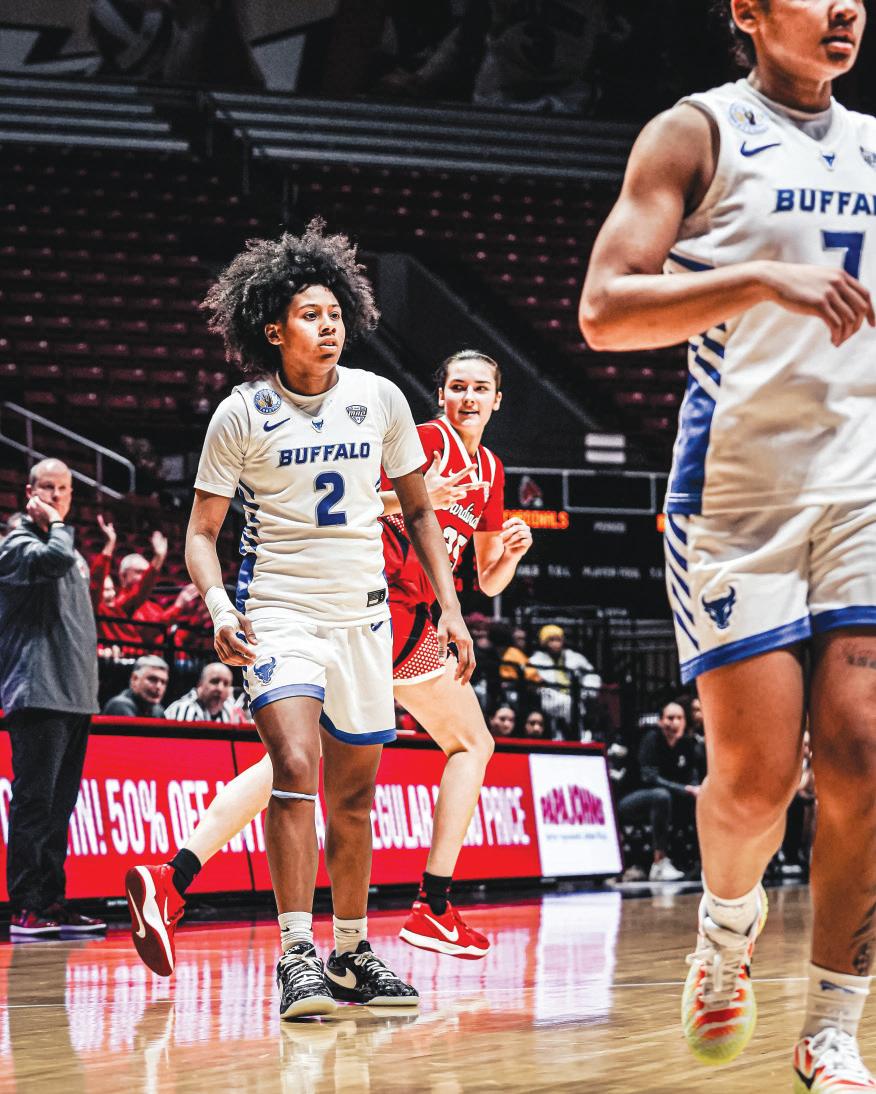
Scheu usually stops by every single practice, posts multiple times a day and continues to edit and plan content for the future. Through it all, each post has a meaning. For example, the Cardinals’ roster has completely changed since last season. So, for days on end, Scheu would post videos of riddles, questions and more, not to fill content, but so followers could get to know the athletes.
Sophomore guard Zuri Ransom said Scheu’s heartfelt love for the job can easily be seen in the content that is produced, and the sophomore said she believes it is a reason the fans care so much as well.
Ransom said she feels nostalgic when she views older videos on the women’s basketball pages because she can see relationships form through the content posted.
“She’s turned a 6-foot-5 kid that wears number 22, who’s a good basketball player, into someone that people feel like they know,” Sallee said. “That’s when you know you’ve got someone really good at what they are doing.”
The good times Sallee said players often enter the program
wide-eyed, unsure how to navigate the collegiate atmosphere. But over time, they settle in. He said Scheu has been the same way.
“If I did not have this, I have no idea who I would be,” Scheu said.
She has found herself in her work, alongside the encouragement and support from the program.
Scheu wants to leave a legacy of being known, not for herself, but for the Ball State Women’s Basketball team. She said she wants their values known and wants people to know the players for who they are.
But she knows her career might never look the way it does now.
“There’s that cheesy quote of, ‘you don’t know what you have till it’s gone,’ but I’ve always known what I’ve had here,” Scheu said. “A lot of the time you do not know you are in the good times until you leave, but I have always known.”
Scheu will never be 18-21 years old again, working with a team full of women her age. She will never experience coming into a program and college for the first time again, so she relishes this time.
“I will never be able to repay them,” Scheu said.
Sallee said the Cardinals are going to try to
create a position that would allow them to keep Scheu in the program after she graduates. He said there is no program that would not want Scheu, but in the age of the transfer portal, he is hoping she does not transfer.
Scheu said it has been confidence that has made her into a new person. Even if there are moments where she feels like an imposter, she has totally changed as a person from who she was just four years ago.
That confidence boost comes with the program, players and staff pouring into the work she has done. While it did not happen overnight, she still feels a real change.
“I feel like I belong here,” Scheu said. “My freshman and sophomore year I felt like it was handed to me. Once I proved to myself that I was meant to be here, it transformed me as a person. It brought my old self back. It gave me back a part of me I thought I had lost.”
Contact Elijah Poe via email at elijah.poe@bsu. edu or on X @ElijahPoe4.



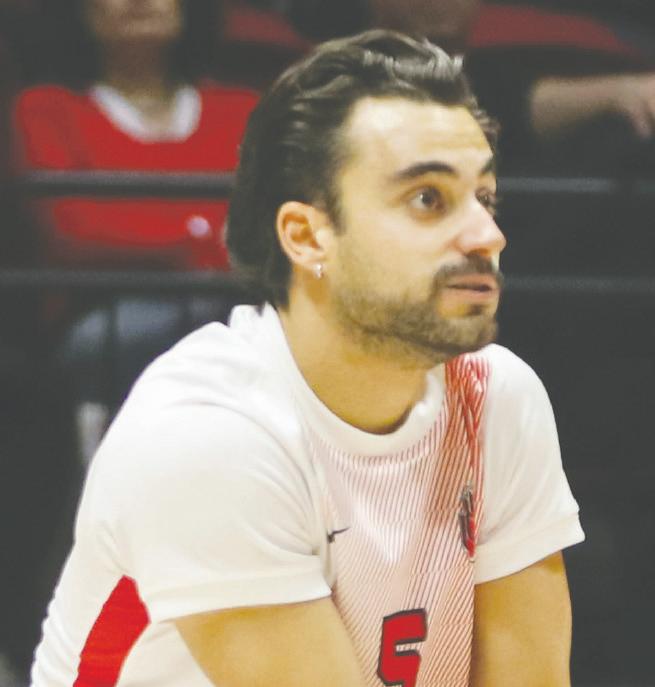

















Men’s volleyball is off to a phenomenal start to the season, with its only loss coming to the No. 1 ranked UCLA.
Kyle Stout Sports Editor

Ball State Men’s Volleyball is off to its best start to a season since its Final Four season in 2022. The Cardinals are 6-1 and are a pair of sets away from being a perfect 7-0.
The team claimed two ranked wins against Stanford University and Charleston, and competed well with the No. 1 ranked University of California, Los Angeles (UCLA), taking them to four sets and nearly winning.
Head Coach Mike Iandolo credited the team’s success and fight against their early-ranked opponents to a lack of errors.
“We’re just playing pretty clean volleyball,” Iandolo said. “When you’re playing tight matches against good teams, the ability to stay clean is pretty important.”
The 2025 Ball State Men’s Volleyball team got off to a less-than-ideal start to their season, with three losses in their first six games. The 2026 squad has completely flipped the script.
Sophomore opposite Ryan Louis said the team feels “more like a team” this season than it did last season after the team’s win over Maryville Jan. 22. Sophomore outside hitter Wil Basilio said the oncourt feeling among the team has been great, with everyone feeling connected.
“It’s been helping a lot in terms of making sure we all stay meshed and on the same page during games,” Basilio said.
There are a handful of returners from last year’s team, and Iandolo said those players did not want the same results this season.
“It’s a conscious thought of like, ‘hey we gotta be better than we were last year,’” Iandolo said.
A big strength for the team this season has been the setting and passing. Senior outside hitter Patrick Rogers credited his uptick in kills to the team’s passing after a win against Maryville Jan. 22.
Iandolo believes the team can end the season as one of the best passing teams in the country statistically.
“[It’s] where some of our skill really lies,” Iandolo said. “If you have a guy running the show, a setter who’s making good decisions and putting up a good ball, our offense is going to be pretty effective.”
Ball State has two more non-conference games coming up. The team will travel to Fairfax, Virginia, for a pair of games Jan. 30 and 31. The Cardinals will take on Maryland Eastern Shore in the first game and George Mason in the latter match.
Maryland Eastern Shore is a perfect 4-0 in the Northeast conference in their first season as a program. George Mason is 1-3 in the early season with losses to number 13-ranked Ohio State and number two-ranked Long Beach State.
So far in the early season for the Cardinals, the team has only played in front of its home crowd or on neutral-site courts. But their match with the George Mason Patriots will be the team’s first true road test of the season.


The head coach said the team has been doing a good job of supporting one another on and off the court. Iandolo said there is a lot of “good vibes” surrounding the group, which allows them to push each other hard on the court.

Iandolo was an assistant coach on last year’s team before becoming a head coach on this year’s team. There were seven seniors on last season’s team, and the head coach said there was uncertainty at times on who would take on what role.
Iandolo said that before the season, George Mason’s coach said teams would leave their gym “bloodied and bruised” because of the team’s style of play. The head coach said it will be a good test to play against a team of that nature in a true road environment.
“It’s not going to be a cake walk by any stretch, we’re going to go in there, we’re going to have to fight,” Iandolo said.
Basilio said the team sees the game against George Mason as another opportunity to get a win.
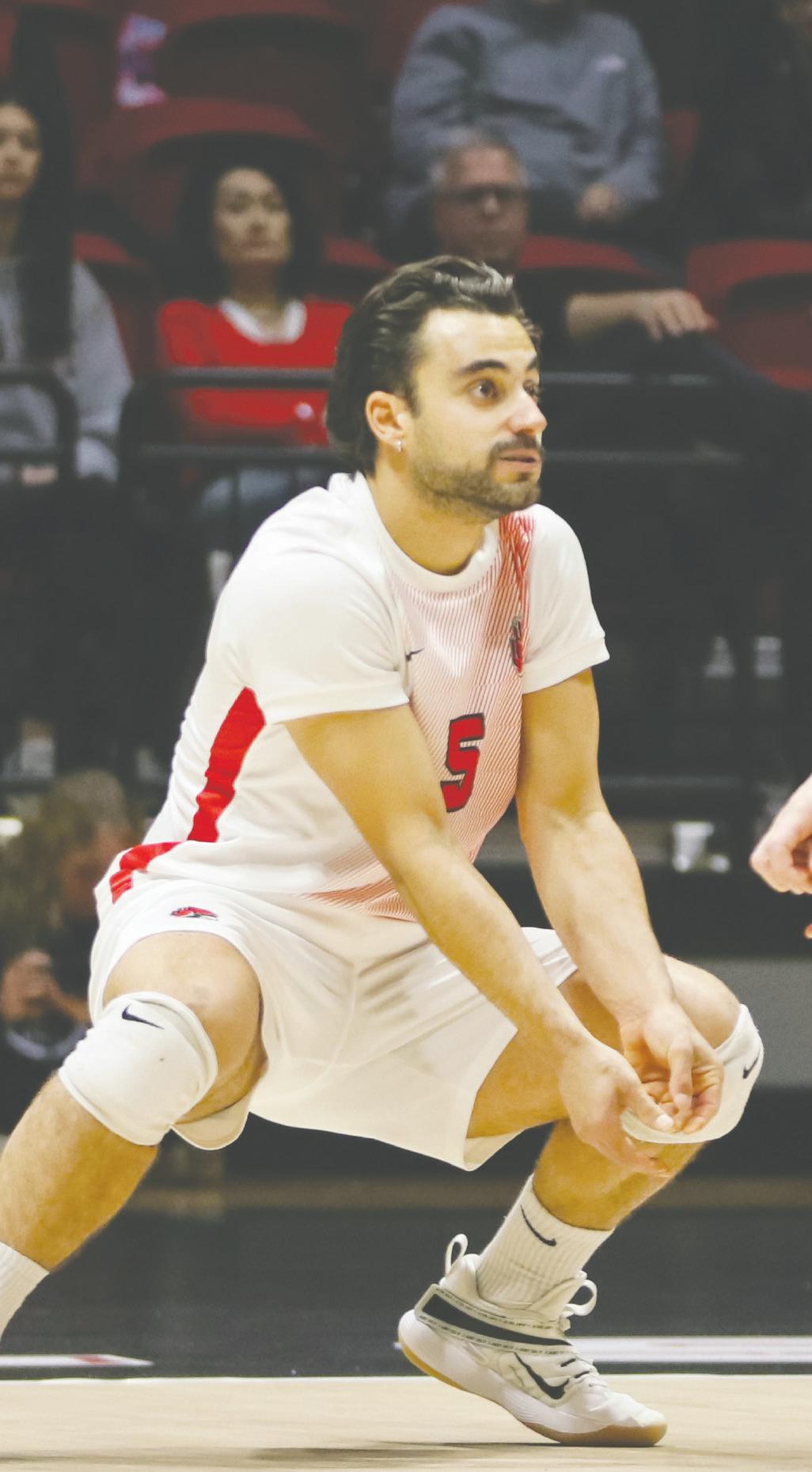
But Iandolo has seen the three seniors on the 2026 team ensure the team spends quality time together outside of volleyball and does the extra things to bring the team together.
“It’ll be fun to be in someone else’s gym and have some other people’s fans, but at the end of the day, we’re telling ourselves it’s another game and another opportunity to show what we got,” Basilio said.
With seven new players and a pair of new coaches, Iandolo knew things could go one of two ways, but the head coach is happy with the team so far.
“We just have a good group of guys,” Iandolo said.

Basilio believes the team has established an early standard on their trip to Arizona, where they played Stanford and UCLA. The outside hitter said the team needs to continue that standard in their next two games to prepare for Midwestern Intercollegiate Volleyball Association (MIVA) play to start.













With more youth on this year’s team, Basilio is one of many young Cardinals players to step up into bigger roles. The outside hitter said that, despite fewer seniors, there is no lack of leadership on a fairly young roster.
“The young guys have done a great job of really stepping up,” Basilio said. “The young guys that have come in have done a great job of following the steps of the older guys and doing it so much that they themselves have become leaders.”
Last year’s Cardinals squad lost three of their first four ranked games of the season, while this year’s team has won two of three ranked matches they have played in.
The sophomore said the team realized they could have success against high-level competition.
“We’ve done a good job so far, but just going into conference play, maintaining that high level and confidence that we got in Arizona,” Basilio said.
After the team’s next two games against Maryland Eastern Shore and George Mason, the team will have a chance to prove themselves in MIVA play, when they will go on the road to face Queens University Feb. 5 and 6.
Contact Kyle Stout with questions via email at kyle.stout@bsu.edu or on X @kylestoutdailyn.


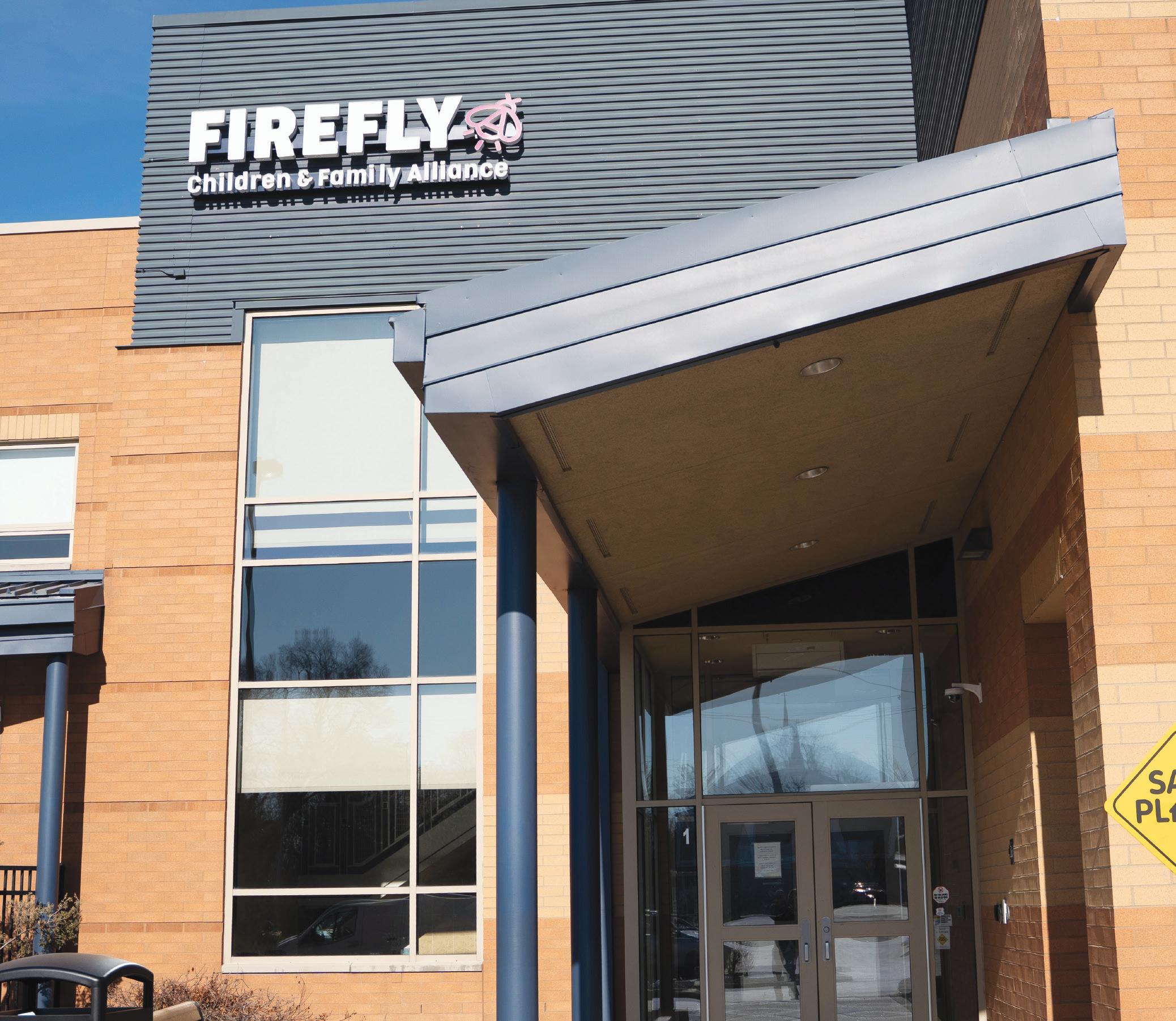

An Indiana-based organization helps families work through traumatic experiences. 10
Jayden Vaughn Opinion Editor
An
nonprofit organization works to help families recover and come back together after trauma.
Whether it is the sound of children laughing, a case manager discussing potential budgeting and prevention programs with stressed parents, or a grateful single mother receiving child care vouchers, the impact that Firefly Children and Family Alliance has on families across the state is too powerful to ignore.
As a nonprofit organization based in Indiana, Firefly has expanded its outreach across the country, opening new branches in multiple states and counties.
Firefly is one of the oldest businesses in Indiana and has opened over 20 locations across the state, including a recently opened shelter in downtown Indianapolis.
Not only that, but the organization has also grown from $13 million in revenue to $50 million in 2025, according to CEO and President Tina Cloer.
But it is not the number of locations or the amount of revenue they bring in that makes Firefly so special — it is the children and families that the organization has helped and continues to help.
“Firefly specializes in working with families that have experienced all forms of trauma,” Cloer said. “We do services to strengthen families, which are largely child abuse programs that are working with families that are at-risk and really trying to help get them the help they need.”
Firefly’s resources vary by case, offering educational resources and mental health services intended to help families and kids across the state avoid involvement with federal systems and services. The organization also provides services for survivors of domestic violence, domestic assault, sexual assault and human trafficking.
Even with the recent




which
November 2025 opening of Firefly’s new shelter in downtown Indianapolis, which contains single bedrooms for all the children who reside there, sensory integration systems, classrooms for teachers, an art therapy room and a place for therapists to perform their practice in a safe and secure environment, most of what Firefly does takes place in people’s homes.






“We go to them to remove the barriers of folks
“We are mostly home-based,” Cloer said. “We go to them to remove the barriers of folks getting help, because for many of the people we serve, transportation and child care are significant barriers to seeking services. So, we go to them and eliminate those things.”

Oftentimes, Cloer said, the Department of Child Services (DCS) will not remove kids from their homes but rather send them to Firefly. It is then Firefly’s job to assess the family’s lifestyle and determine how best to keep those kids safe in their home environment, despite any changes that may have occurred, she said.

Firefly.



Firefly’s job to assess the family’s lifestyle and occurred, hand to get by, Firefly is there to offer that help.
Whether it be because a parent believes their child has a neurological or physical disability and they do not know how to properly care for or discipline them, or a family is in need of a helping hand to get by, Firefly is there to offer that help.
Cloer said the organization manages to keep 90 percent of the families it works with together, but in the instances where “too many terrible things have happened,” there is a foster care program for kids who are removed from their families.


Firefly
During that time, Firefly works with both the children and the parents to resolve their issues, whether that be their mental health or substance abuse. While a case is open, Cloer said Firefly works to prepare the home for the child to return.
In the instances that a child does not go back home to their family, Firefly will even take care of the older youth who are aging out of the foster system.
workers go to people’s homes to work with them on
However, in most instances, therapists and case workers go to people’s homes to work with them on

We want to connect families to resources in the community and then break down those barriers preventing them from being readily accessible.”
- TASHIA WEAVER, Director of prevention services











As a single mom with three children in 2014, it was $600 a week for childcare services, and I was not making enough money to go to work and have my kids go to daycare. So, I signed up for the CCDF program.”



- JOANNE CROUCH, Member of Firefly’s Parent Advisory Committee









Firefly Children and Family Alliance’s classroom Jan 20. in Indianapolis. Firefly has an on-site educator. KYLE INGERMANN, DN
















an array of things, such as introducing families to prevention programs, helping them improve their budgeting and parenting skills and even helping them get employment and housing if necessary.
These house calls can be as frequent as once a month, and sometimes, especially in the beginning of cases, Firefly will visit their client’s homes approximately five to six times a week as they work to assess the situation at hand.
accessible,” said Weaver.
One of the most valued resources that Firefly administers is the Child Care Development Fund (CCDF), which provides subsidized childcare services across Indiana.
In most cases, Cloer said, Firefly tends to work more with children than adults. Their goal is to try to create an environment that is trauma-informed and a space where children are allowed to adjust to whatever has happened to them.
Joanne Crouch, a member of Firefly’s Parent Advisory Committee and a former Firefly client, was assigned a case manager in 2014 after being involved in a domestic violence situation. To keep herself and her three children safe, one of Crouch’s friends gave her Cloer’s phone number—a lifechanging lifeline.









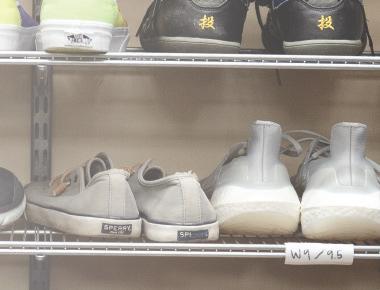
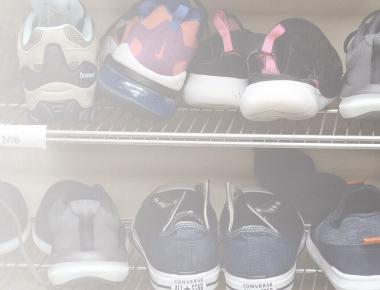
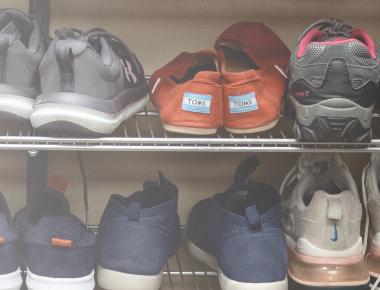
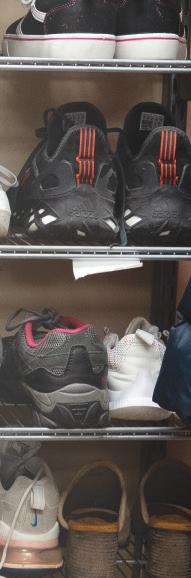
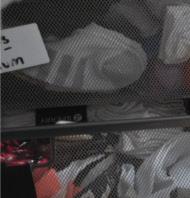
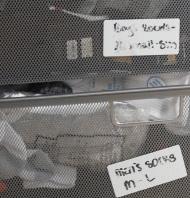
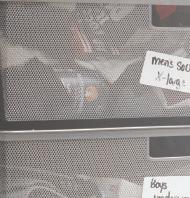
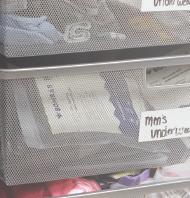
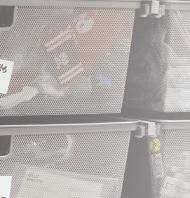
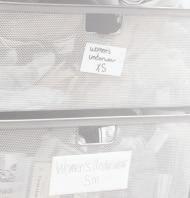
Firefly Children and Family Alliance’s clothing storage Jan 20. in Indianapolis. Everyone leaves with the clothes provided by Firefly. KYLE INGERMANN, DN



















“If you grew up in a reasonable home, you would think that the worst thing that could happen in your life is that somebody comes and takes you out of that,” Cloer said. “But for our kids, sometimes that is not the situation.”
In the instances where it is best for children to go to Firefly’s shelter, the non-profit organization uses an evidence- based model called “Teaching Family” in order to teach children social skills, how to manage anxiety and uncertainty, how to navigate change and how to deal with conflicts from their family and their peers.
Tashia Weaver’s job as the director of prevention services for Firefly allows her to oversee two of the organization’s main prevention programs — Community Partners for Child Safety and Strengthening Indiana Families Family Resource Center.
Community Partners for Child Safety is where liaisons meet families in need and provide them with the support and education they need.
Crouch received a case manager who went to her house and helped her with positively disciplining her children in a way that is acceptable for children who have been abused in the past. Crouch also recalled times when Firefly paid her electric bill because she could not afford it.
At the time, Crouch had to tread a fine line because she made too much money to get federal assistance, such as food stamps — but she did not earn enough to buy anything extra for her children — like Christmas presents
The main resource Crouch said she benefited from the most was the child care vouchers, which are available in 66 counties.
“As a single mom with three children in 2014, it was $600 a week for childcare services, and I was not making enough money to go to work and have my kids go to daycare,” Crouch said. “So, I signed up for the CCDF program.”
To this day, Crouch remains heavily involved with Firefly as a member of its Parent Advisory Committee and has used her position to share the organization’s resources with the rest of the world.



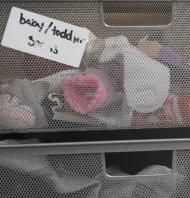
Firefly Children and Family Alliance’s toy storage Jan. 20 in Indianapolis. Firefly helped get toys for over 1,500 families last Christmas. KYLE INGERMANN,






“We want to connect families to resources in the community and then break down those barriers preventing them from being readily






“I just want so many people to know about Firefly’s services, and I thought that if I could get out in the community and spread the word, then sign me up,” Crouch said.
But more than anything, Crouch wanted the chance to offer hope to parents in desperate situations who think there is no way out — that there is light amid such darkness.
“We had reached out to a number of our clients and asked them what our organization meant to them and their family,” Cloer said. “And that is where the whole notion of bringing light to darkness came from, and that is how we became Firefly.”
In 2024 alone, 88,000 kids were impacted by Firefly’s services, with approximately 50,000 in Indiana, Cloer said.
“We do not have to change every family we touch,” Cloer said. “The reality is, if we can change one person in those 50,000 families, we are going to change the community for generations to come.”
Contact Jayden Vaughn via email at jayden. vaughn@bsu.edu.
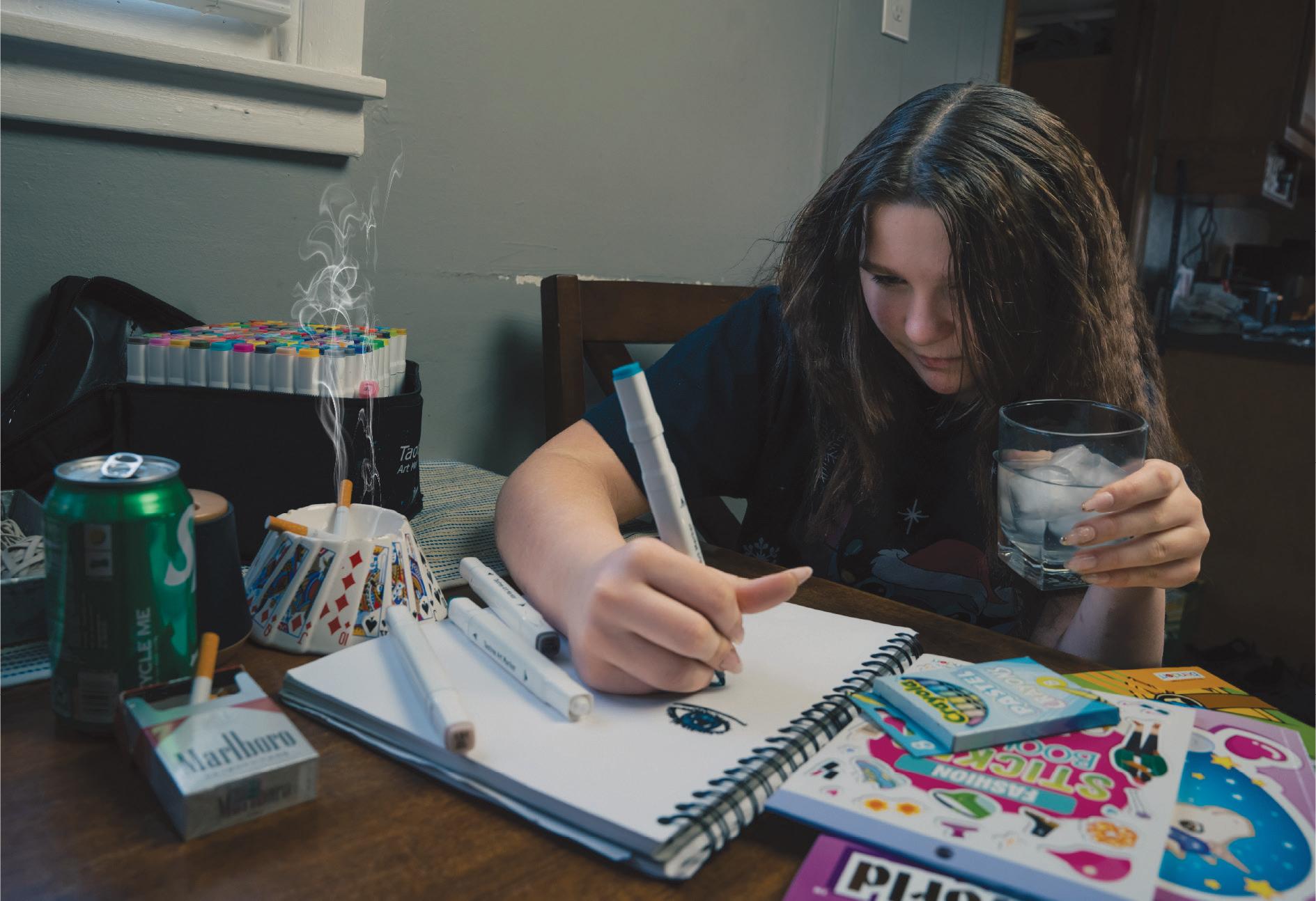
When playtime ends too soon, adulthood starts too early.

Charlotte Jons is a second-year journalism major and writes “The Peanut Gallery” for the Daily News. Her views do not necessarily reflect those of the newspaper. From the moment I was a little girl, I wanted to be a grown-up.
I would watch movies starring high school students and ponder what it might be like to be 17. I would read books about princesses and think about just how old I had to be to meet my Prince Charming or live in a castle. I would watch vlogs featuring extensive makeup tutorials or outfit ideas and wonder how I might do my makeup when I grew old enough to wear it.
I was not — and am not — alone in wondering.
In the last few years, the “Sephora kid” trend has taken over the internet, with a focus on kids and their deep interest in adult makeup and skincare. Social media was flooded with children, many younger than 13, sharing their $100 skincare or makeup routines. TikTok seemed to be swarmed with preteens imitating adults by showing off their skin-brightening serums and lash-extending mascaras to comment sections of people who questioned why a girl so young needed these products that were often used by adults.
For the most part, I agreed with these comments. Regardless, I learned that when I saw these “Sephora kids” in the wild, arguing with their parents in favor of the newest setting spray, there was real-world interest and demand.
In November 2025, Rini, a skincare brand targeted toward children aged 3 and up, catered to that demand. Actress and model Shay Mitchell created the childtargeted skincare line in response to her children watching her do her own makeup and skincare and asking to try it themselves — a popular trend with little kids who want to mirror their parents.
In their first three months, the brand has faced a polarizing response. Some are enthusiastic about a brand that is entirely child-safe and catered to little kids, perfect for their children who have an interest in beauty while also being moisturizing, skin-repairing and hypoallergenic.
However, others are enraged with the brand for placing yet another beauty standard on children, especially young girls, who are already overwhelmed with physical expectations for their entire lives. For this category of
consumers, children are too young for cosmetics and do not have skin problems that require repair.
“Call me crazy, but the only thing we should be putting on kids’ faces is sunscreen,” one of the most-liked comments under Rini’s brand announcement said.
“Healing serum? What [5-year-old] or even a [15-year-old] needs these products?” another said, making reference to specific healing ingredients advertised in Rini’s campaign, aligning with other skincare products that are made to solve potential skin issues society tells us need solving.
Children often grow up mimicking their parents’ activities and interests. After all, play kitchens have been a popular childhood toy for generations, allowing toddlers to play with plastic food while their parents cook dinner in the adult-size kitchen. However, pretending to make a snack with plastic fruits is not a proposed solution to a problem that does not exist. Skincare is often a remedy to adult facial flare-ups — something most toddlers and preteens do not have.
Today, children want to grow up faster than ever.
Teens in younger generations found comfort and a sense of belonging in spaces created specifically for teen girls, places like Justice or Claire’s, places I remember loving. Over time, those safe spaces have disappeared.
As tweens feel pressure to grow up at younger ages, places designed for their stage of life have closed their doors. With the loss of those spaces, the sense of wonder they fostered has also faded, disrupting what was once a gentler transition from girlhood to womanhood. Without spaces that promoted individuality through that change, young women have been pushed to grow up faster, jolted from stores designed for children into those meant for adult women, exposing them to adult styles, behaviors and expectations long before they were ready.
In a Manhattan Institute article published in 1998, Bruce Friend, a vice president of the kids’ cable channel Nickelodeon, stated, “The 12- to 14-year-olds of yesterday are the 10- to 12[-year-olds] of today.”
The article goes on to explain that sexual activity, drugs and alcohol consumption are becoming increasingly popular with younger age groups in the last few decades. Additionally, eating disorders are becoming more and more likely among late elementary school girls. Not only that, but with child suicide rates rising 8.2 percent annually from 2008 to 2022, according to research that was published in 2024 by the National Institute of Mental Health, the concern seems warranted.
There are numerous reasons why children may want to grow up as quickly as possible. As I mentioned, I often found my preteen self fixated on adulthood. The freedoms, opportunities and romance — what was not glamorous about a life beyond my childhood?
Now, with children gaining access to screens at younger ages and online pressures increasing, life beyond childhood seems to start sooner than ever.
The desire to grow up disguises itself as ambition or maturity, when in reality, it often stems from insecurity and comparison. As a child, I believed adulthood was achieved after abandoning any practice that felt immature to fix something that was never wrong with me.
Today’s children are being given the same message, only it is amplified by algorithms, marketing and constant exposure to the romanticized adult lifestyle. When skincare routines are branded as necessities rather than as play, the pressure to “fix” oneself emerges from an increasingly early age.
When I was younger, I felt similar pressures to grow up quickly so as not to be seen as childish. I remember, even without online influence, attempting to shrink my childhood interests upon entering middle school to try to seem as adult as possible to my new peers.
Yet, diminishing childhood excitement towards things that interested me did not make me any cooler or more accepted. I would later find a renewed interest in my childhood hobbies, such as arts and crafts and fashion, toward the end of my teenage years. Growing up quicker did not make me better, but growing into myself did.
A March 2025 article published by Medium echoes this call to action, urging us to talk directly to our youth.
“We can’t control everything, but we can guide them,” the article declared. “We can remind them that there’s no rush. We can help them see that adulthood is not a destination to be obsessed with — it will come, whether they like it or not.”
Ultimately, the question is not if children will grow up or not — they will — but how gently we allow them to do so. If we continue to treat childhood as something to grow out of as quickly as possible, we risk robbing youth of the space they need to discover who they are without judgment.
Childhood should not be sacrificed to adulthood before it even begins.
Contact Charlotte Jons via email charlotte.jons@bsu.edu.
Take a look at the upcoming deadlines regarding the 2026 election for the state of Indiana.
Linnea Sundquist News Editor
The 2026 midterm elections are steadily approaching. Although the Jan. 7 deadline for major political party candidates to file their candidacy has ended, other dates are coming up to watch out for.
In the state of Indiana, the deadline for declaring candidacy for a major political party nomination is noon Feb. 6, or for election as a Democratic Party precinct committeeman or state convention delegate of either major party at the primary, according to the 2026 Indiana election calendar.
Voting registration will open again May 19 for the general election taking place later in the year.
Individuals can submit applications for their registration by mail, fax, email or online on Indianavoters.com. This will be the first day when the circuit court clerk may receive absentee ballot applications from most voters for the general election, according to the 2026 Indiana election calendar.
Voter registration opens
Jul. 15
The Ball State Daily News has compiled a timeline of upcoming dates regarding the midterm elections. Not all events are listed, but all dates and deadlines can be found on the Indiana government website, displaying the 2026 Indiana election calendar.
Candidates who wish to withdraw from the upcoming elections must file their withdrawal by noon Feb. 13.
Once a candidate has withdrawn from an election, their name will be struck through on the ballot with the word “withdrawn” displayed in bold, red letters, according to Simply Voting.
Polls will be open from 6 a.m. to 6 p.m. May 5 for voters to vote in the primary election. To find a polling place, individuals can visit Indianavoters.com and click on “Find My Polling Place.”
For individuals who will not be able to vote in person on election day, voters can submit an absentee ballot in person or by mail. To vote early in person, each county has different locations for early voting, which voters can view by going to the Indiana government’s website and navigating to the “voter portal.”
For voters who wish to vote early by mail, they will need to complete an application stating their reason for not attending the primary in person, along with their personal information. A copy of the application can be found on the Indiana Secretary of State’s website.
Any candidates wishing to withdraw their candidacy from the general election in the fall will need to do so before the deadline at noon July 15.
This date also marks the deadline at noon for the Democratic, Libertarian and Republican Parties to file their certificate of nominations for candidates nominated at the state party conventions. Independent or minor party candidates need to file a consent and a petition of nomination by this date at noon, after county verification of petition signatures.
At the end of the year, voters can once again register to vote for the 2027 municipal primary election.
Absentee ballots can also be accepted Dec. 1, with both voter registration and absentee ballots could be submitted in person, by mail, fax, email or online at Indianavoters.com.
1
registration
To vote in the general election, the polls will be open from 6 a.m. to 6 p.m. Nov. 3. The location at which voters wish to vote will vary depending on their county, similar to the primary election.
Voter registration ends for primary elections
Voters need to register before the deadline at the voter registration office’s close of business by April 6. The deadline requires all voters applying to register or transfer registration, or for voters completing and submitting a voter registration application online by midnight. To register to vote, voters can do so online at indianavoters. com. After voters complete the steps, they should receive a voter registration acknowledgement card to confirm their registration.
5
Similar to the deadline for registering to vote in the primary elections, voters must apply to register by midnight Oct. 5 at the voter registration office’s close of business to vote in the general election.
The same goes for voters who wish to transfer their registration as well.
By noon, Nov. 2, all absentee ballots need to be received by the circuit court clerks from confined voters or voters caring for a confined person requesting delivery of a ballot by the absentee voter board. Absentee ballots can be submitted in person, by mail, fax, email or online at Indianavoters.com.
All information can be found on the Indiana government website about upcoming dates regarding the primary and general elections Contact Linnea Sundquist via email at linnea.sundquist@bsu.edu.
Nov. 2
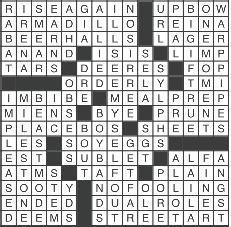
Pico de gallo pepper 26 Advance, as cash 28 *Armless furniture that
GI show gp. 39 *Play area with plastic
Forever and a day
Leonardo, Donatello, Raphael, and Michelangelo, for short 47 *Flavor of many fall lattes
51 __ Millions lottery
52 Lose one’s footing 56 One of the Manning brothers
59 A handful of
Bit of mint
1 Tech expo presentations
Share a view
Lowest point
Backbone-related
Delay in a livestream 6 “Kinda” 7 Gospel great James 8 Grapple, slangily 9 Neat and well-groomed
“Parks and __” 11 Poet of ancient Rome
12 Bodies of water 13 Exchange for cash
18 Like myths about Asgard 19 Walkway over water 24 Girl, in Guatemala 25 Autobahn auto 27 FedEx alternative
Fish sticks? 30 Basic particle
Mineral in leafy greens 32 River float
Camel feature
Biblical twin
Suite part 39 Pedaler’s perch
Opens, as a trunk
Still a competitor 44 LP fig. 46 Tantalize
48 Classical composer Stravinsky
62 Underdog’s feel-good narrative, and where to find the first words of the answers to the starred clues 66 Mombasa’s country
49 “Anything you want!”
Was a potty
60 Red friend of Grover 63 Henna, for one 64 Statute 65 Get on in years


The Daily News is a weekly, student-directed and nationally award winning newspaper. Its 100+ year history makes it the longest-standing student media organization on campus and one of the nation’s top college newspapers. Providing the campus community with breaking news and accurate, timely information both in print and online, students can get involved from day one by working on staff or just simply staying informed.