






Dear Parents,
Welcome to this very informative and enlightening edition of the Wellbeing Magazine. I would really like to highlight the concerns we have as a school regarding screen time. Please engage with the information shared in this issue. Diligence and parental control is
vital; please reach out to us should you need any further help or advice in this area
Elaine Rawlings Head of Primary
We have reorganised our articles, podcasts and videos in our One-Stop Shop to make it easier to access and find areas of wellbeing that you may be interested in.


Screens are part of everyday childhood, from learning platforms and games to messaging apps and videos. To help protect children’s wellbeing in this fast-moving digital world, the UAE introduced a Child Digital Safety Law in January 2026 The aim is not to ban screens or scare families, it is to make online spaces safer, healthier and more ageappropriate for children, especially for our youngest users
Talk little and often about what your child enjoys online
Check age ratings before downloading apps or games
Use built-in parental controls, they are there to help Model balanced screen habits at home
Keep trust at the centre so children speak up when needed
The law clearly outlines parental digital responsibility. In simple terms, it asks parents and caregivers to take reasonable steps to guide and protect their children online
This includes:
Knowing what children are accessing online
Using parental controls and privacy settings
Making sure apps, games and platforms are age-appropriate
Talking regularly about online behaviour and safety
Stepping in and reporting concerns when something feels wrong
For many families, this will feel like good parenting already put into words.
Do I need to monitor everything my child does online? No The law focuses on reasonable awareness, not constant surveillance. Could parents get into trouble if something goes wrong online? The emphasis is on guidance and protection, not punishment.
What if I’m not confident with technology? You’re not alone. Start small, parental controls and open conversations go a long way
Does this mean less screen time for children? Not necessarily. The focus is on safe, ageappropriate use, not banning screens
What’s the most important thing I can do? Keep communication open. A child who feels safe talking to you is far more protected than one relying on rules alone.
For many of us this will mean stronger protection for our children’s wellbeing and clearer guidance on what safe digital parenting looks like The emphasis on this being a shared responsibility, with platforms being required to do more, also brings reassurance The focus should be on encouraging open and and honest conversations with our children rather than being fearful of technology.
The law reinforces a simple message - young children shouldn’t navigate the digital world alone
focus is on education and awareness, not punishment

The reassurance? The law recognises that children need guidance, not perfection, and that digital safety works best when families feel supported and not judged
few common concerns some Parents worry about
Keeping up with fast-changing technology
Finding time to supervise digital use
Feeling blamed if something goes wrong
The UAE’s Child Digital Safety Law is a reminder that in a digital world, relationships matter most When adults stay curious, connected and involved, children are far better equipped to grow up safely both online and offline.
this
Primary age is when children learn:
Healthy screen habits
Kindness and respect online
How to recognise when something doesn’t feel right
Confidence to ask for help

Sam Fern Assistant Head Primary
Leanne Ashley Assistant Head Primary
Conversations about children and screen time often begin with one question: How much is too much? While time limits are important, research increasingly suggests that the more powerful question is: How are screens being used?
In the UAE, Federal Decree-Law No. (26) of 2025 has introduced a comprehensive framework to strengthen child digital safety. The legislation emphasises the responsibility of caregivers to monitor children’s digital activity, use parental control tools, and ensure that children do not have access to content that is not age appropriate It reinforces an important message: children’s digital lives require the same thoughtful guidance as their offline experiences
It is also important to state clearly that no primary-aged child should be using social media platforms. Most major social media services set a minimum age requirement of 13, and these platforms are not designed with younger children in mind. Exposure to social media at primary age can increase risks related to online safety, privacy, peer pressure, and emotional wellbeing. For this reason, primary school children should not have social media accounts, and families are strongly encouraged to delay access until children are developmentally ready and meet the legal age requirements.
Alongside legislation, a growing body of research highlights the impact of excessive or unregulated screen use Studies have linked high levels of recreational screen time with disrupted sleep, reduced physical activity, attention difficulties, and lower academic performance Blue light exposure can interfere with melatonin production and sleep cycles Prolonged sedentary use may affect posture, vision, and even appetite regulation.
However, research also makes something else clear: not all screen time is equal.
Passive screen use involves consuming content with little interaction, thinking, or creation. The child is primarily watching or scrolling rather than engaging. Examples include:
Watching videos on YouTube, Netflix, or television without discussion
Scrolling through short-form content or social media
Watching gameplay streams
Background screens left on while doing other activities
Repeated viewing without reflection
This type of screen use can displace physical play, reading, face-to-face interaction, and sleep. It is also often driven by algorithms designed to hold attention. For children, whose frontal cortex is still developing, regulating time and resisting high-stimulation content can be particularly challenging. Passive use is not inherently harmful in moderation, but when it dominates a child’s digital experience, it can crowd out the activities that support healthy development.


Active screen time, by contrast, involves thinking, creating, problem-solving, or communicating. Here, the screen becomes a tool rather than simply a source of entertainment. Examples include:
Coding and programming (e.g. Scratch)
Creating digital art, music, or videos
Researching and presenting information
Writing blogs or stories
Educational games requiring strategy
Language learning apps with speaking components
Purposeful communication, such as video calls with family
Active use supports ncourages children to produce rather th they are developing transfera Research suggests th mwork, and emotional regulation ces learning rather than replacing it.

Effective screen time is intentional, age-appropriate, monitored, and balanced with sleep, movement, and real-world connection. The key question for families is not simply how many minutes a child spends on a device, but what that time is replacing.
Are screens displacing outdoor play? Family conversation? Reading? Sleep?
Or are they being used to create, connect, and learn?
Our aim is not to demonise technology but to support healthy digital habits. By understanding the difference between passive and active screen use, we can make informed choices that protect children’s wellbeing while equipping them with the skills they need in an increasingly digital world
Screens are part of modern childhood Our role is to ensure they serve our children, not the other way around
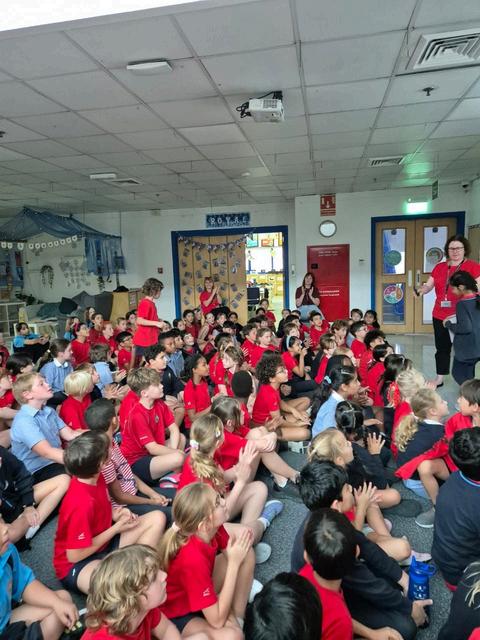
This term has been full of energy and positivity, thanks to the amazing work of our Student Leaders! They have been listening carefully to ideas shared through the suggestion boxes, making sure every pupil’s voice is heard and valued From introducing new play equipment to leading exciting games, they have helped make the playground a safe, fun and welcoming place for everyone.
Their commitment to BSAK’s Ready, Safe and Kind ethos shows in everything they do, including encouraging everyone to look after each other, making new friends and staying active. They have shown fantastic responsibility, teamwork and confidence, acting as positive role models for others across the school.

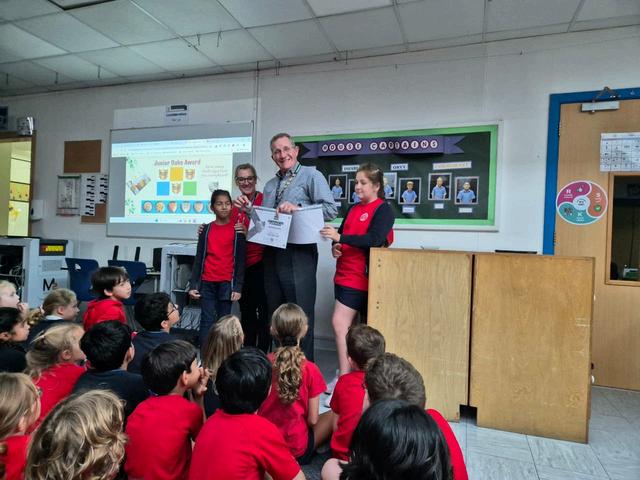
Have a look at our Student Leaders out and about in school: https://drive.google.com/drive/folders/1cbrUOYy9qH3fXfB3apys5iLdFxXae12l







TOM MORGAN - HEAD BOY
My favourite part of being Head Boy was leading school tours around the school I really enjoyed showing parents all the different areas and explaining what makes our school so special
MOLLIE MARLOW - HEAD GIRL
I was very proud to meet the teachers from the IAP schools and show them our school It was also great to work with Mrs Rawlings and I really enjoyed helping with the Remembrance Assembly.

MALIK ELGHOUDI - DEPUTY HEAD BOY

I felt proud to represent our school. I really enjoyed having more responsibilities, such as leading school tours and taking part in assemblies.
AFRA AL DARMAKI - DEPUTY HEAD GIRL
I really enjoyed talking about our sustainability activities in assemblies. I also loved leading tours and showing new parents and teachers from other schools everything our school does.


I’m excited to represent our school and promote the Ready, Safe and Kind values in everything we do I also am looking forward to working with different staff to share ideas and make a difference
I’m really proud to be representing our school and work with different staff members to help make our school even better.


I’m excited to make a positive difference in our school and contribute to school life, especially through Eco initiatives.
MANAAHIL RAO - DEPUTY HEAD GIRL
I am looking forward to showing the values of being ready, safe and kind everyday.

Sarah Bentley Head of House

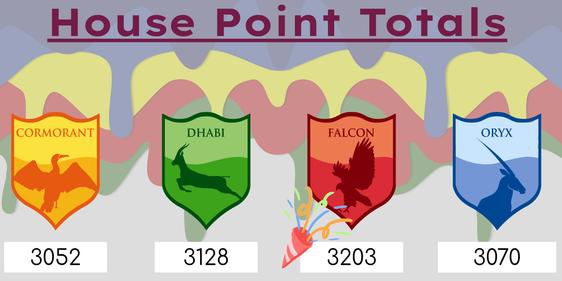
Our monthly house competitions have become a highlight, capturing the enthusiasm and creativity of our students.
There's something electric about House Assemblies – it's not just an ordinary gathering, it's a chance to feel the excitement and cheer for your House! A celebration of our victories, teamwork, and everything that make us proud to be part of our House! House Assemblies are full of energy and fun!
Starting with EPIC House Games Week! Friendly competition where everyone participates, from Sack races and Limbo to Chess matches and Twister Every activity is a chance to score valuable points! The best part is the final day - that’s right – our teachers will get in on the action too, competing in different activities to help you earn even more points for your House! Cheer on your teachers and encourage them to give their best! Every point counts, so get involved! The vibe is going to be electric!
Dressed in their respective house colors, the children radiate a sense of unity and team spirit, emphasising the importance of togetherness and teamwork. The assemblies not only recognise individual efforts but also reinforce the values of collaboration and teamwork that define our vibrant school community
Rachel Hinds Head of Inclusion


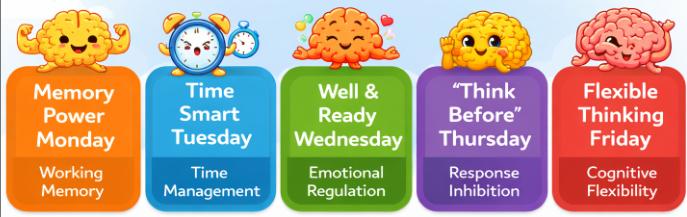
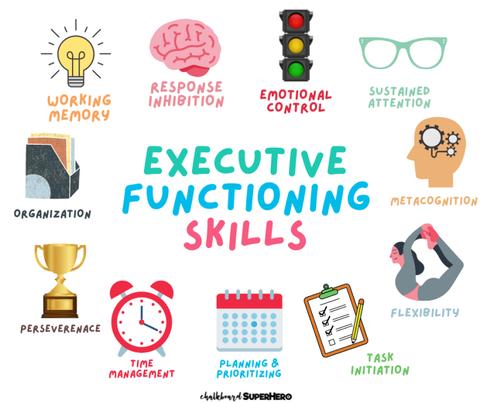
Executive functioning refers to the skills we use to manage tasks, emotions and goal-directed behaviour. Many neurodiverse students find aspects of executive functioning challenging. For example, a child with dyslexia may struggle with organisation or working memory, while a child with autism may find flexibility or reflection more difficult We all have strengths and challenges in this area. Most learning tasks from reading and writing to problem solving, rely on executive functioning skills.
Abbi Khwaja Librarian

The UK has declared 2026 to be The National Year of Reading, but today we ’ re going to talk about listening. The earliest evidence of storytelling includes cave paintings from 64,000 years ago, likely accompanied by spoken narratives intended to share knowledge. The earliest written storytelling dates from 3100 BCE, leaving a long period when oral storytelling dominated Here in the UAE there is a rich history of oral traditions, passing on family stories and regional events.
Learning to read is vitally important, but telling and listening to stories should not stop once children begin reading independently. Listening helps children internalise language patterns, tone and intonation, supporting emotional understanding and empathy A child’s listening comprehension is often several years ahead of their reading level, allowing them to enjoy more complex stories and helping bridge the gap between reading ability and understanding Listening to stories also supports wellbeing. It reduces stress hormones and strengthens bonds between storyteller and listener, creating a sense of calm which is why bedtime stories remain valuable even when children can read alone
One of our favourite and most important roles in the Primary Library is our weekly story time with Nursery to Year 2, with additional opportunities for older students. Listening to well-structured stories can improve memory, recall and focus, which is especially helpful as students prepare for the transition to secondary school Audiobooks, particularly when paired with creative activities, are an effective way to engage reluctant readers. Students may complete AR quizzes on books they have listened to, and listening encourages attention to every word without skipping ahead The benefits of listening to stories are long-lasting. For primary-age children, stories introduce new vocabulary and sentence structures in context, supporting comprehension and writing development
If you would like advice on choosing books to read with your child, please visit the library We are open to parents Monday to Thursday from 2.30pm until 3pm, and families can borrow up to four books at a time.
At BSAK, we are proud to partner with you in supporting your child’s health, energy, and academic success. To ensure every student has the best environment for learning, we are implementing the updated ADEK Food and Nutrition Policy Please see the file attached which has the updated policy and a short presentation

Food and Nutrition 25/26
These guidelines informed by the latest health research aim to improve student concentration, stabilise energy levels, and foster long-term wellbeing. Below is a summary of the new "Red List" items that are no longer permitted on school premises, including in home-packed lunchboxes.


Category
Deep-Fried Foods
Sweets & Desserts
Processed Meats
Unhealthy Drinks
Salty/Ultra-Processed
Prohibited Items
Fried chicken, french fries, fried falafel, samosas, and fried nuggets
Cakes, doughnuts, croissants, marshmallows, lollipops, and ice cream.
Hotdogs, sausages, mortadella, salami, pepperoni, and smoked turkey/salmon.
Soft drinks (including diet/zero), energy/sports drinks, iced tea, and hot/iced coffee
Potato chips, corn puffs, instant noodles, and popcorn with artificial flavors
Healthy Alternatives
Oven-baked or air-fried versions, grilled chicken, or roasted chickpeas
Fruit-based desserts, wholegrain muffins (low sugar), or dark chocolate (>50% cocoa).
Lean grilled chicken, boiled eggs, or chickpeas
Water, unsweetened fruit-infused water, or 100% natural juice (max 200ml)
Unsalted seeds (sunflower/pumpkin), plain popcorn, or vegetable sticks
High-Sugar Spreads
Specific Allergens

Ketchup (standard), mayonnaise, chocolate spreads (Nutella), and ready-made ranch
All nuts and peanuts, sesame seeds, and soy milk/soy-based sauces

Low-sugar/salt ketchup, hummus, avocado, or Greek yogurt-based dips
Sunflower or pumpkin seeds, oat milk, or coconut milk

Recent studies show that ultra-processed foods and high-sugar intake are directly linked to:
Energy Crashes: Sugary snacks cause "spikes" that lead to fatigue and poor concentration in the afternoon.
Behavioral Impact: Certain artificial colorings and high caffeine levels can increase hyperactivity and disrupt classroom focus. Long-term Health: Reducing sodium and saturated fats protects our children from metabolic issues and dental decay.
To maintain a consistent and inclusive environment for everyone, our staff will conduct routine lunchbox checks. If we find a prohibited item, we’ll provide a gentle reminder to your child and send home a note to you or call home. Please rest assured that our priority is ensuring no child goes hungry; we are happy to work with you to find nutritious alternatives your child enjoys. If your child is currently going through a 'picky eating' phase or struggling with food variety, please let their teacher know We can offer extra support and incentives to help you and your child navigate this transition
We want to reassure our community that our approach to monitoring will be supportive, respectful, and non-judgmental. Our goal is to work in partnership with parents to encourage and support healthy choices for every child.