All rights reserved by the respective artists. Original work used with the expressed permission of the artists. No part of this book may be reproduced in any form without permission from the publisher.
The opinions expressed in this publication, its associated website, and social media are not necessarily those of the University of Nevada, Reno or of the student body.
journal layout
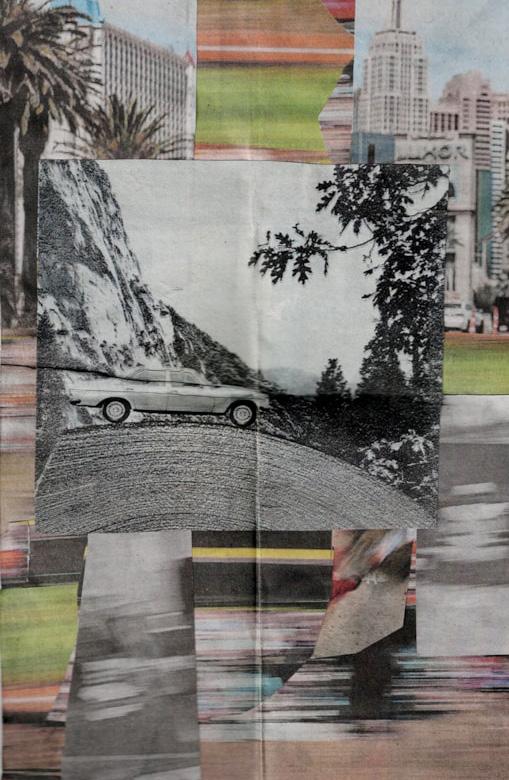
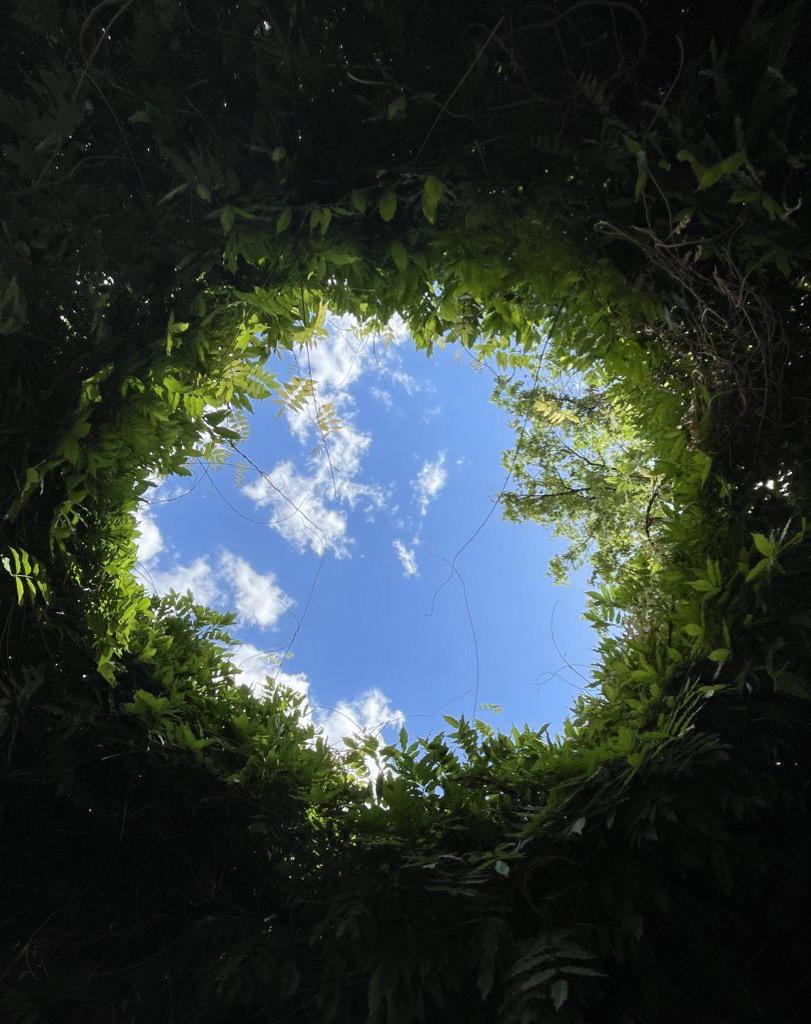
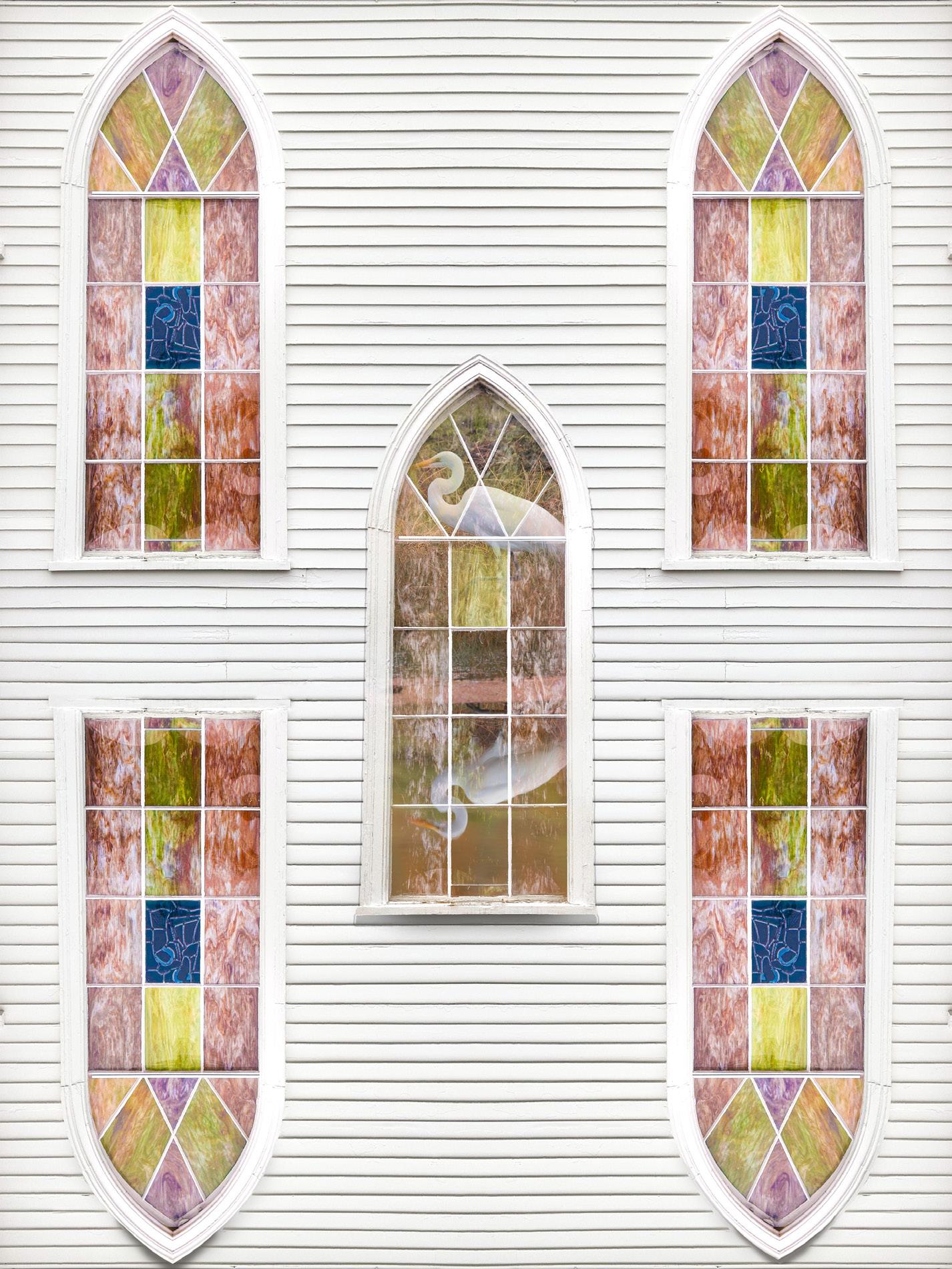
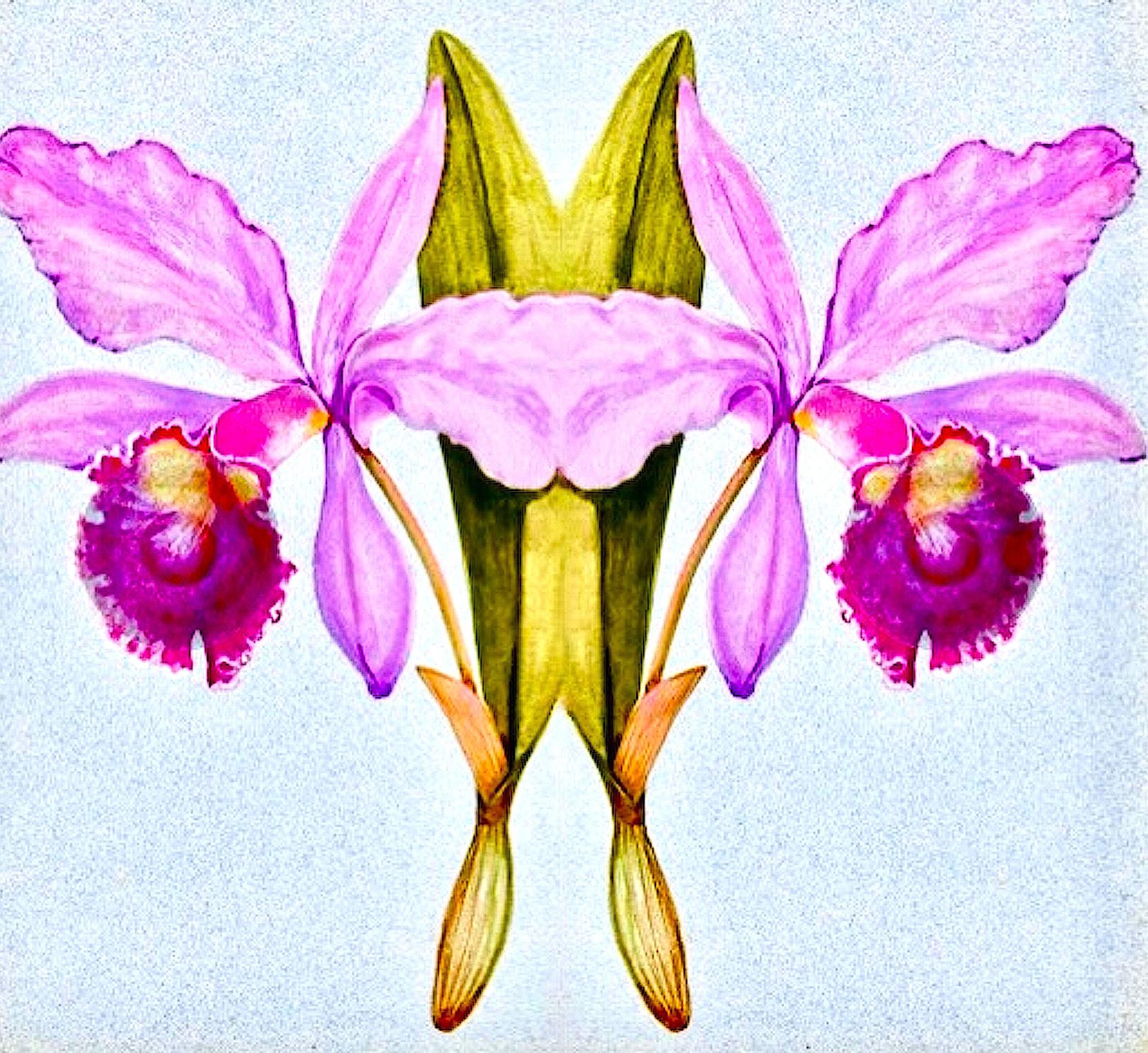
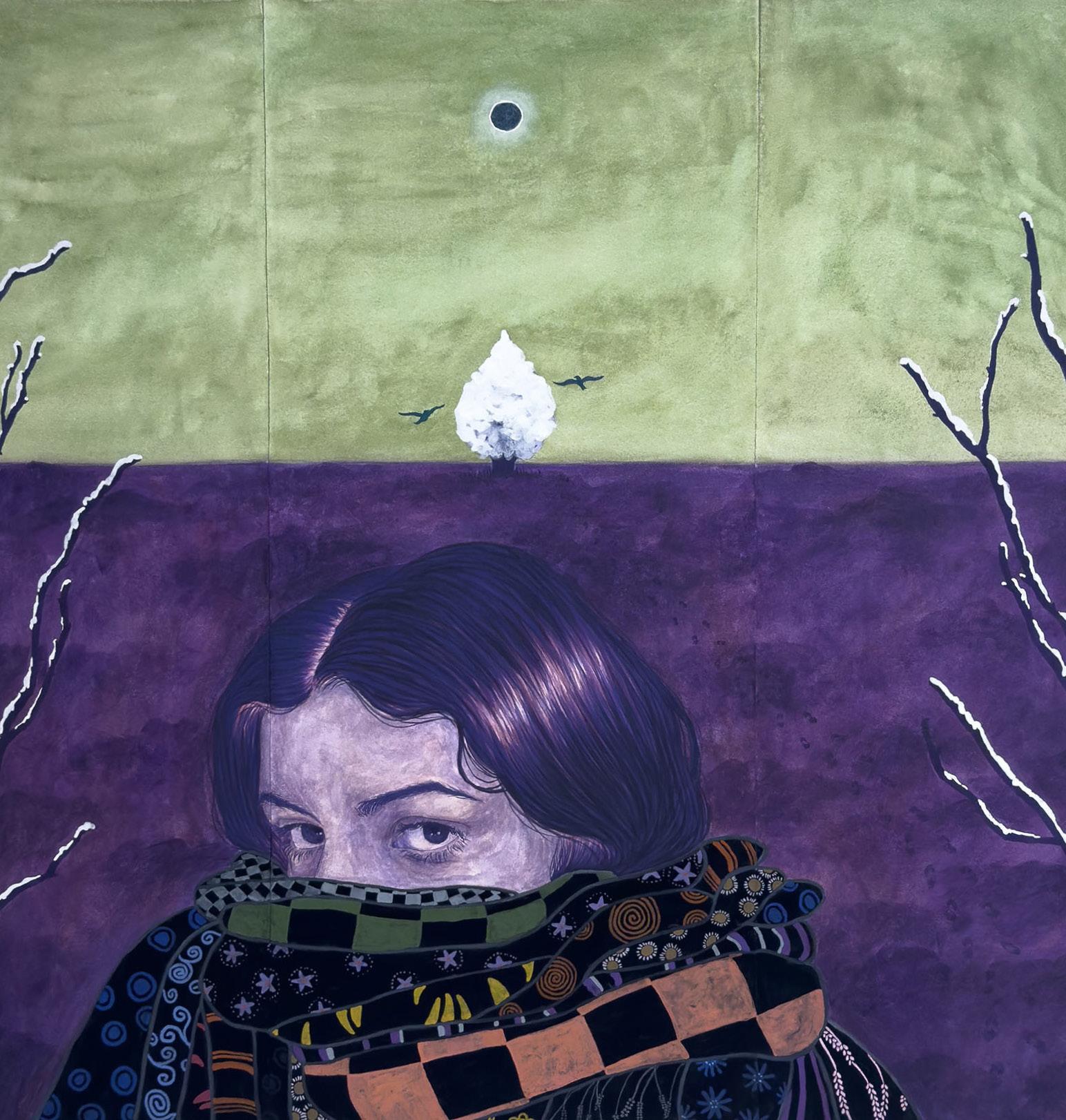
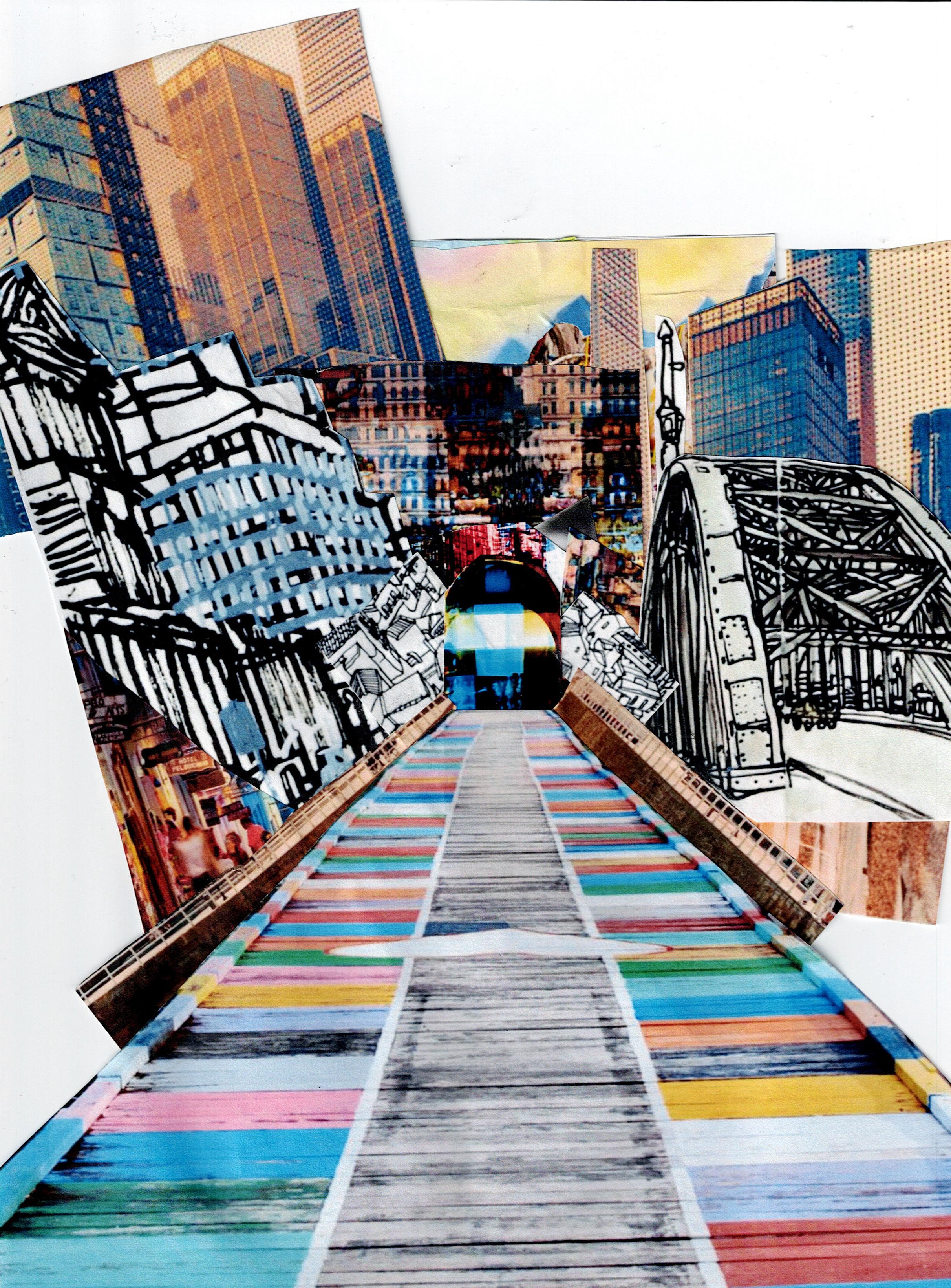
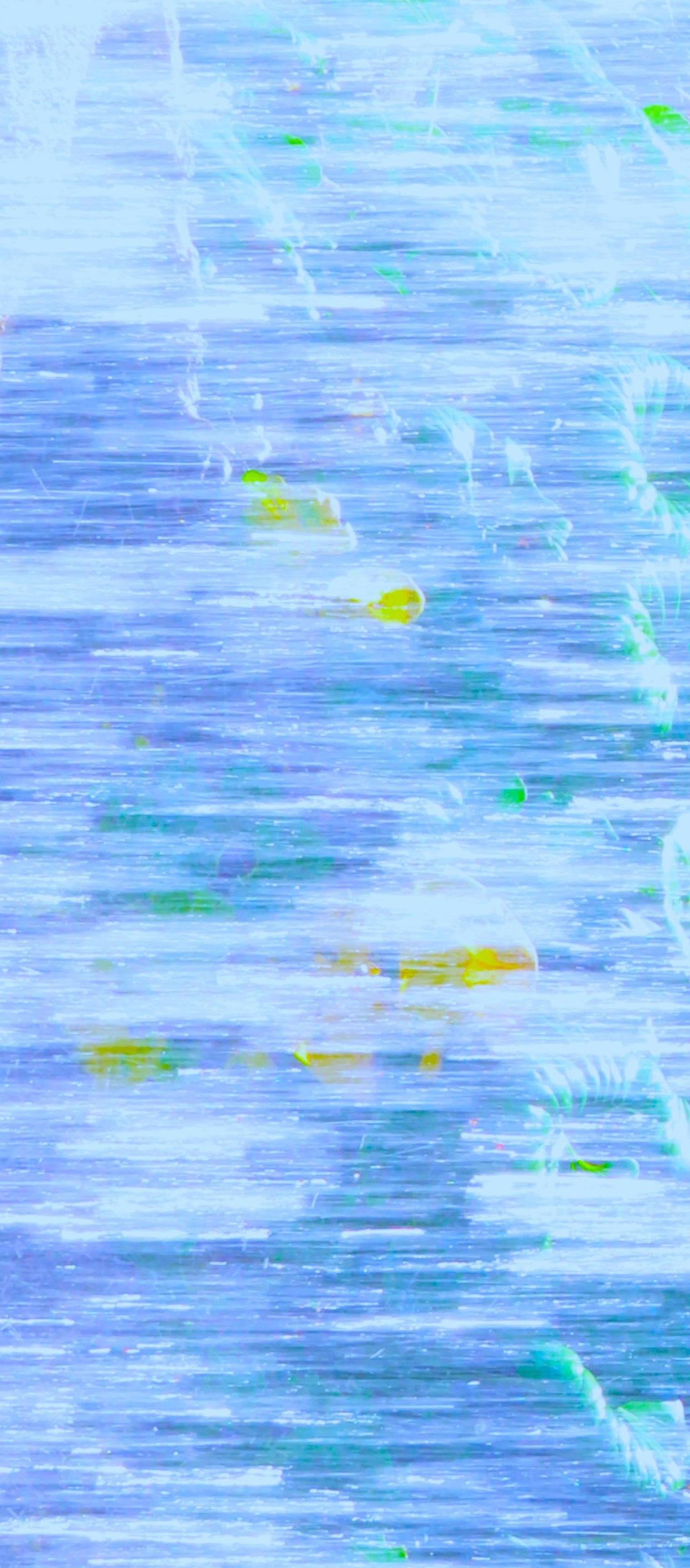
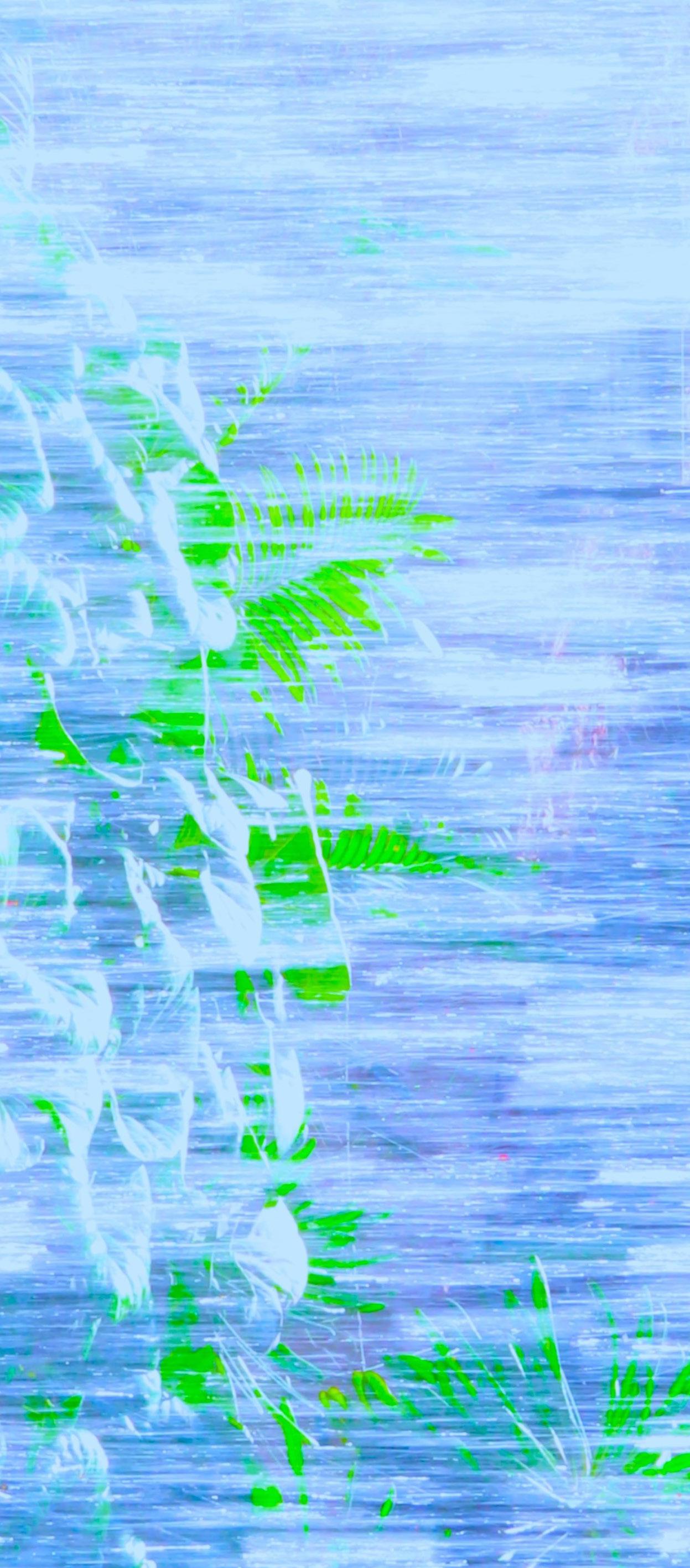
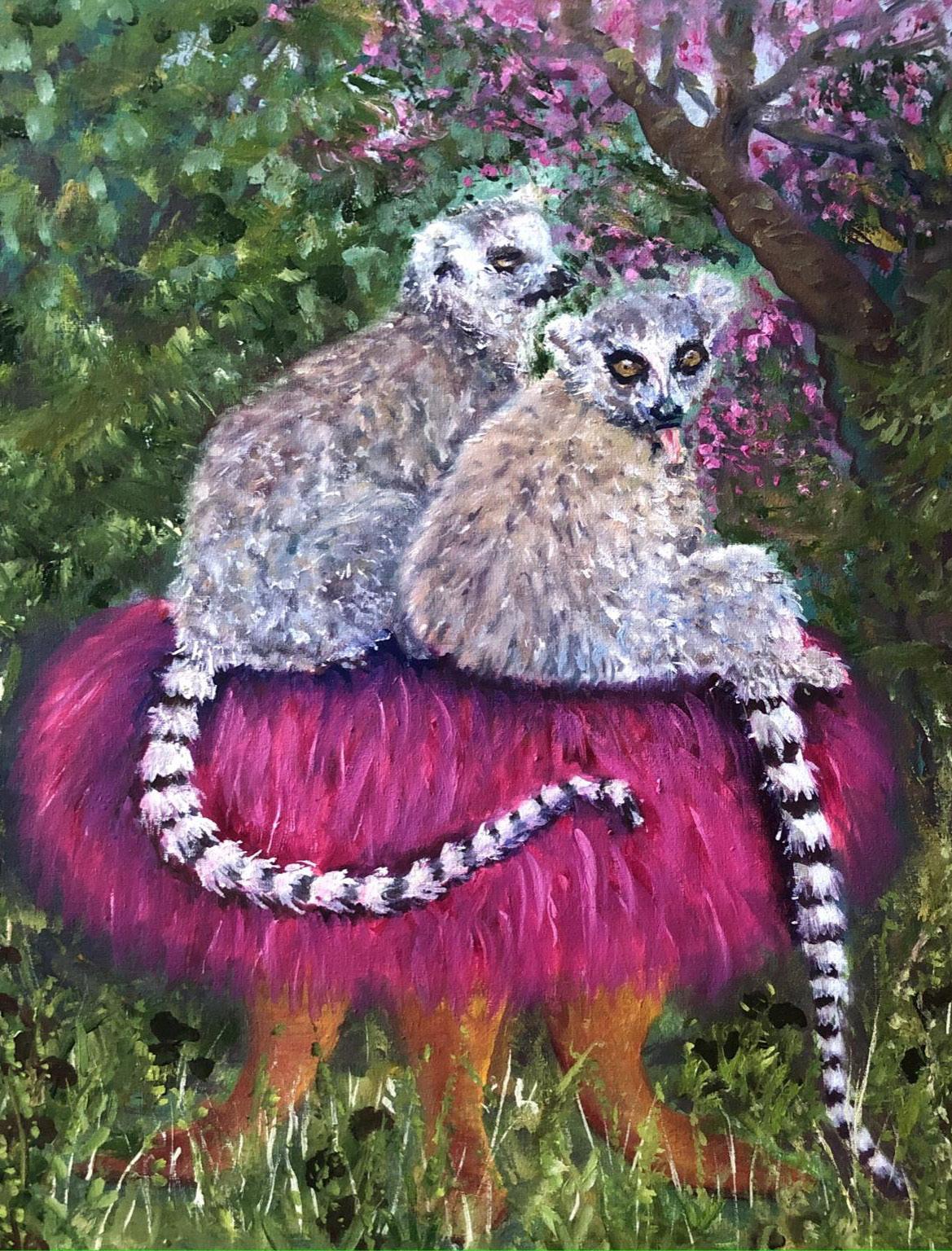
cover art artist Brushfire Staff The Fast Lane Kautriaun Singleton
Editor’s Note
The past three years have been a whirlwind, and I wouldn’t trade any of it for the world. But the time has come for me to pursue a new path. Stepping away from Brushfire was one of the hardest decisions I’ve made. I’m going to miss putting together the journal, getting to experience everyone’s writing and artwork, going to events, and all the wonderful people I’ve met through this job. And yet I know this is the right decision for myself— I can feel it. It’s a bittersweet moment, reminiscing on my time here while also looking towards my future.
Too often, people get trapped in what’s familiar. They become comfortable with what they know, even if it doesn’t feel right. Then one day, they wake up and ask themselves: Why do I keep doing this?
It’s important to recognize the choices you have, and to be willing to take risks. Start asking, Why can’t I do that? There are always fewer reasons than you’d think. If you want something, don’t just imagine it, go after it and stand strong. Time will pass regardless, so why overthink it? Instead of avoiding risk, take a chance for yourself, and mold your own happiness. Things have a way of working themselves out. Be present and active in your own life. You’ll never know the outcome unless you make the decision.
I’ll miss you, Brushfire. Thank you for everything.
— Paige Krueger Executive Editor
Table of Contents
visual
Kautriaun Singleton
Susan Pollet
Jillian Briare
Krystal Carter
Hannah Cockcroft
Cassidy Alcorn
Mikayla Fershin
Jillian Briare
Katherine Madden
Bill Wolak
Willey Conley
Katherine Madden
Henry Jones
Skylar Jory
Remi Fertal
Josephine Florens
Chelsea Empeno
Josephine Florens
Ai Ana Richmond
Christine Wilson
Cassidy Alcorn
Alaina Hammond
Kautriaun Singleton
Kautriaun Singleton
Mark Hurtubise
Eugene Melmani
Josephine Florens
Josephine Florens
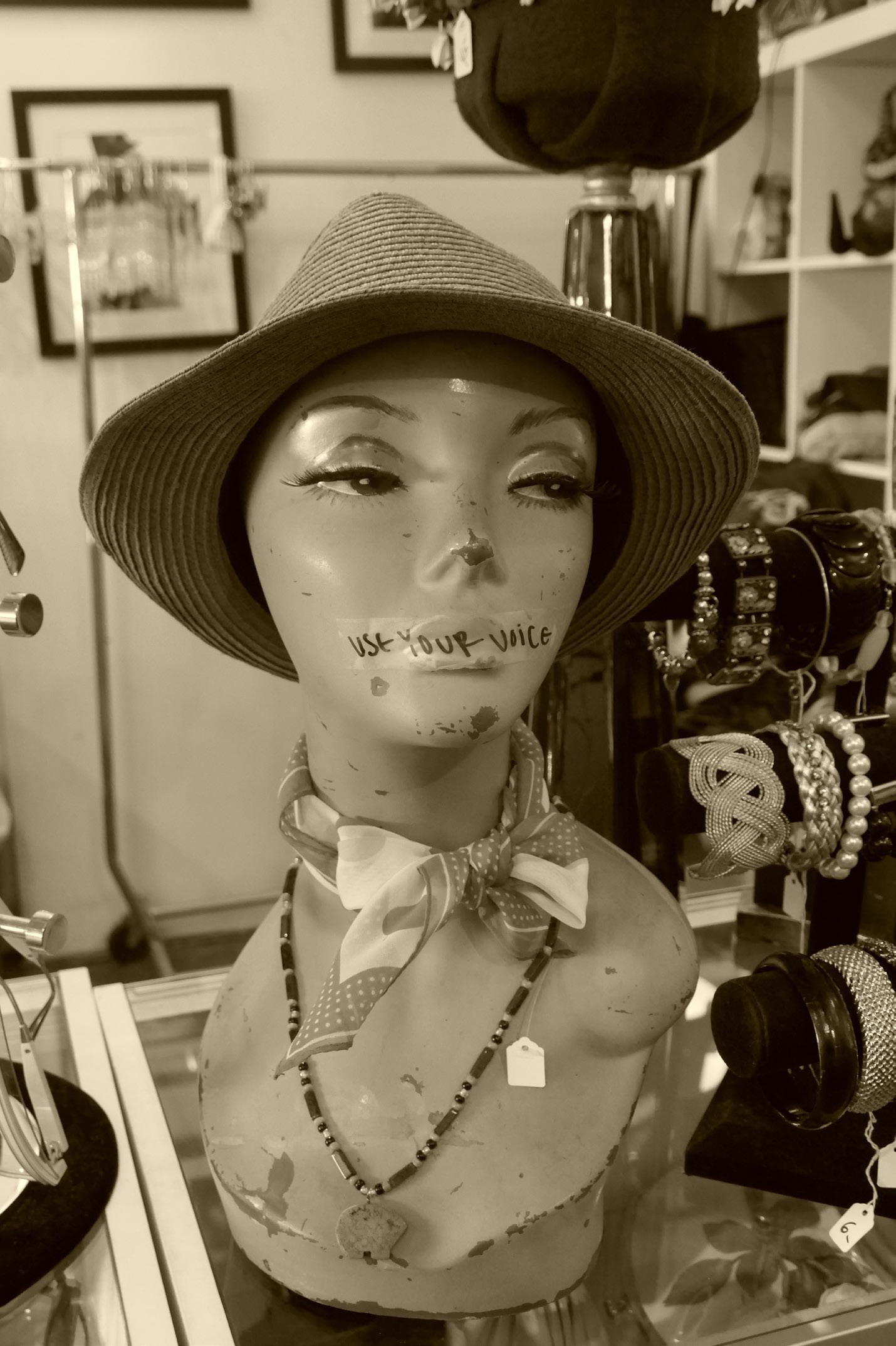
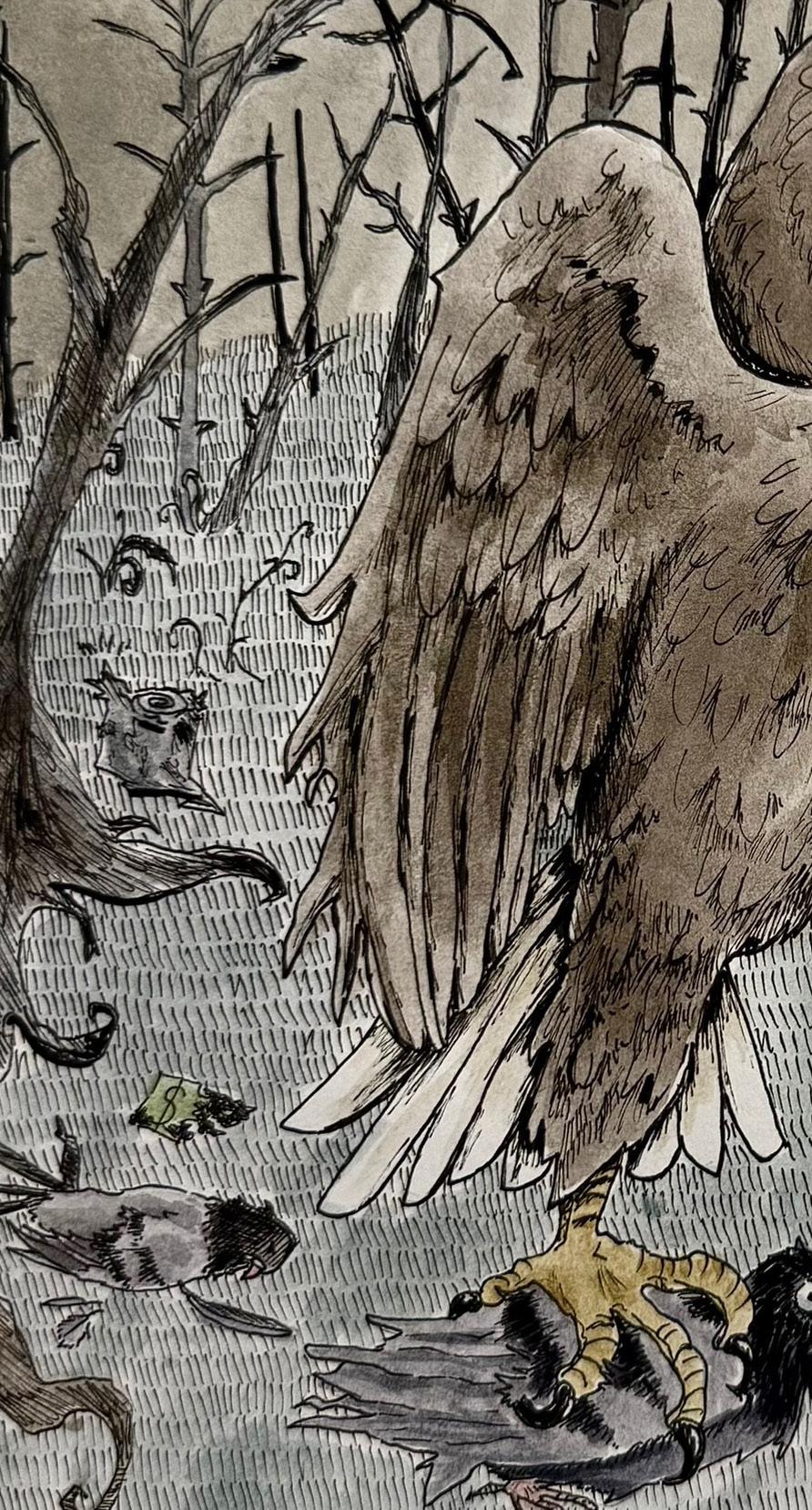
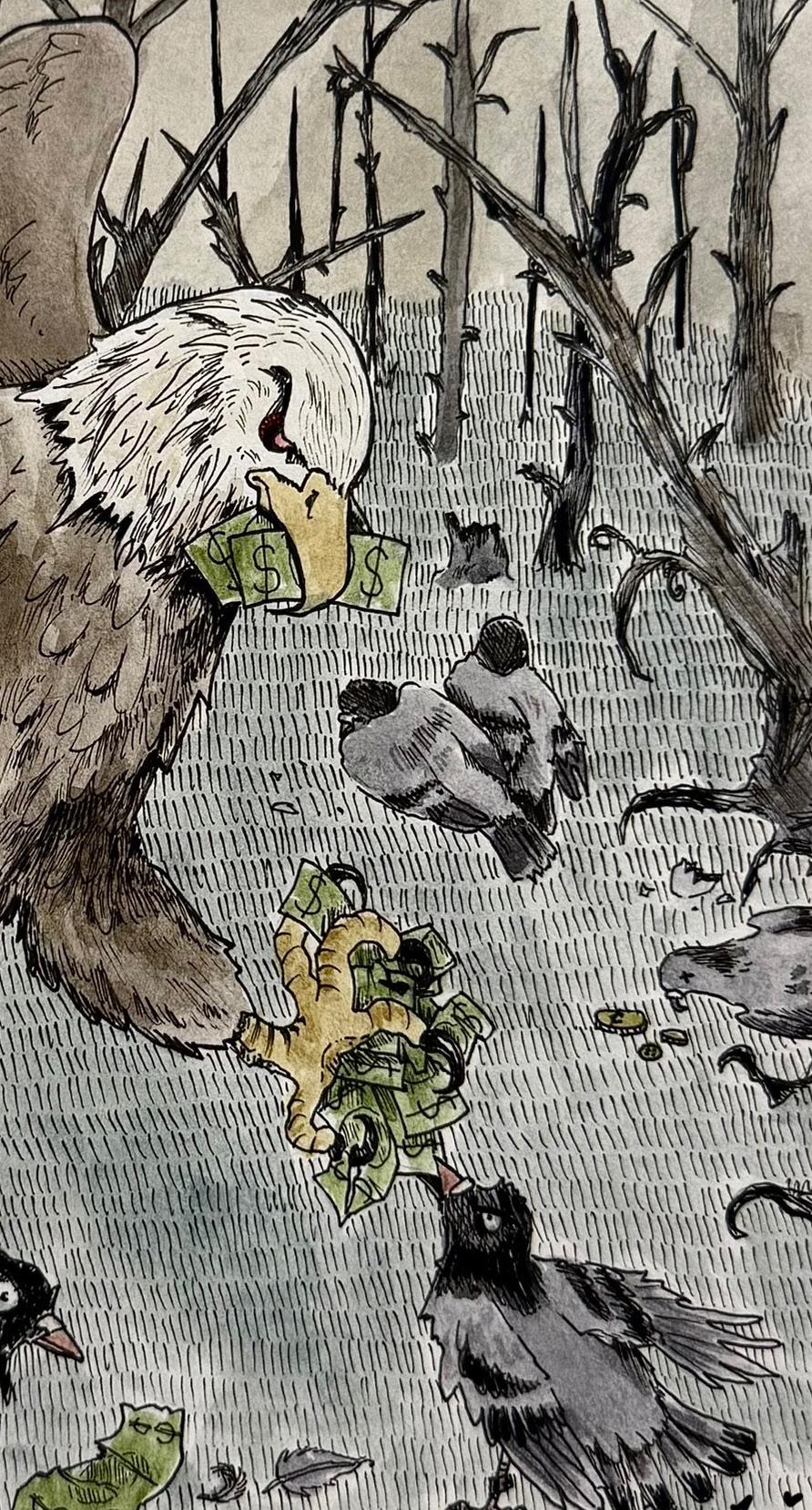
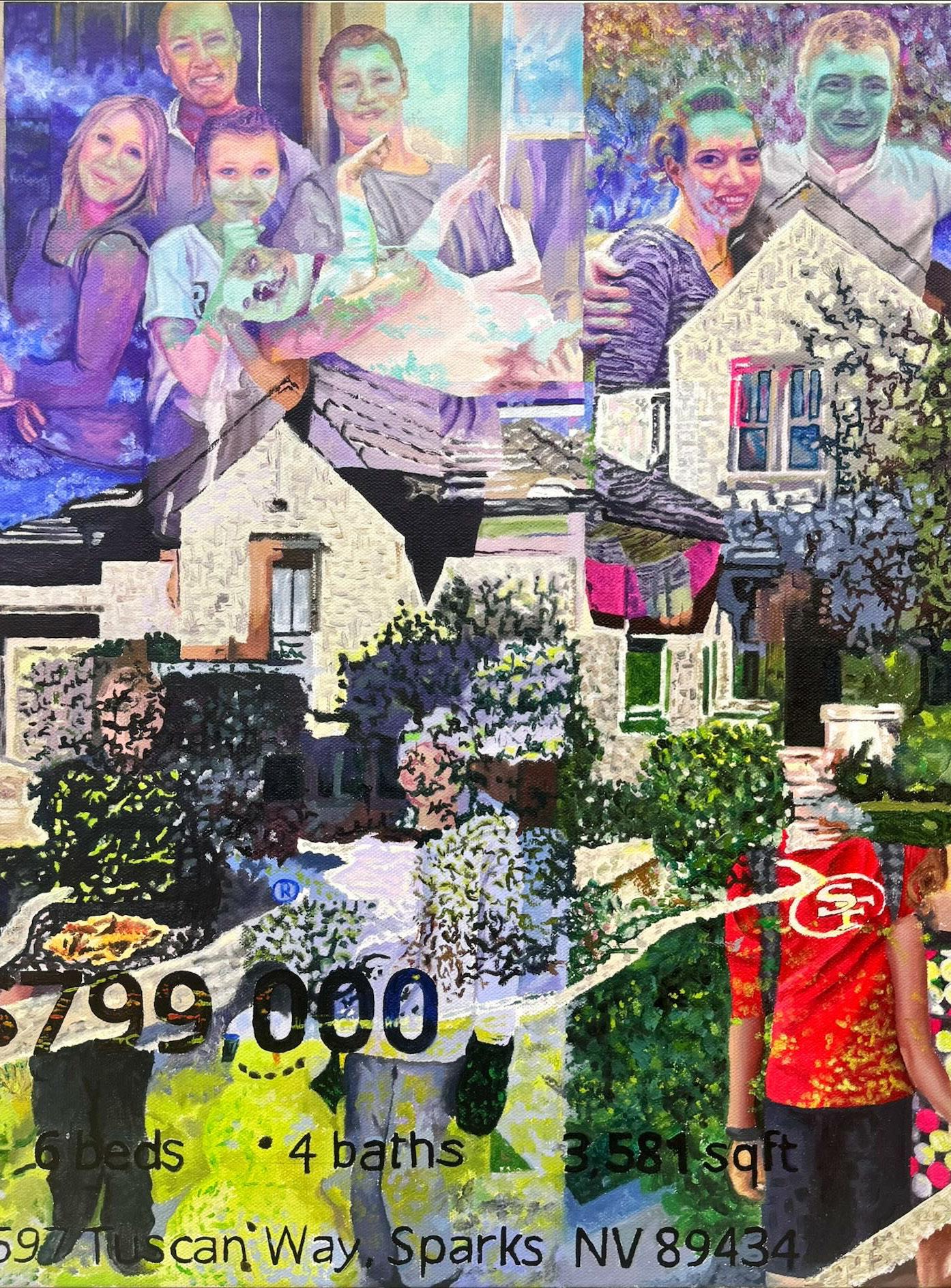
The Fast Lane Modesty Portal Don’t be silenced Old Money
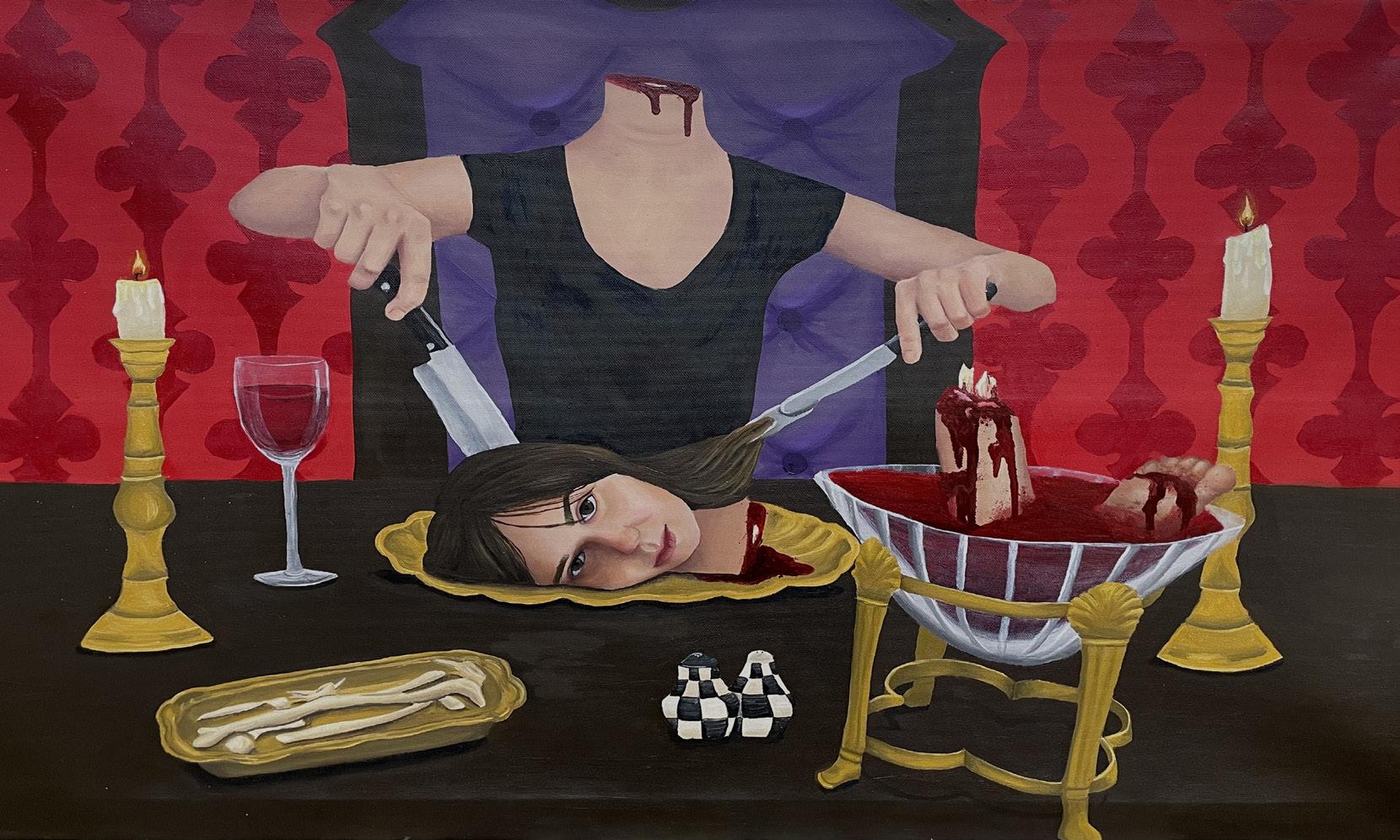
An Madra Rua (red-haired dog) caught in your mouth Dinner for One Revision
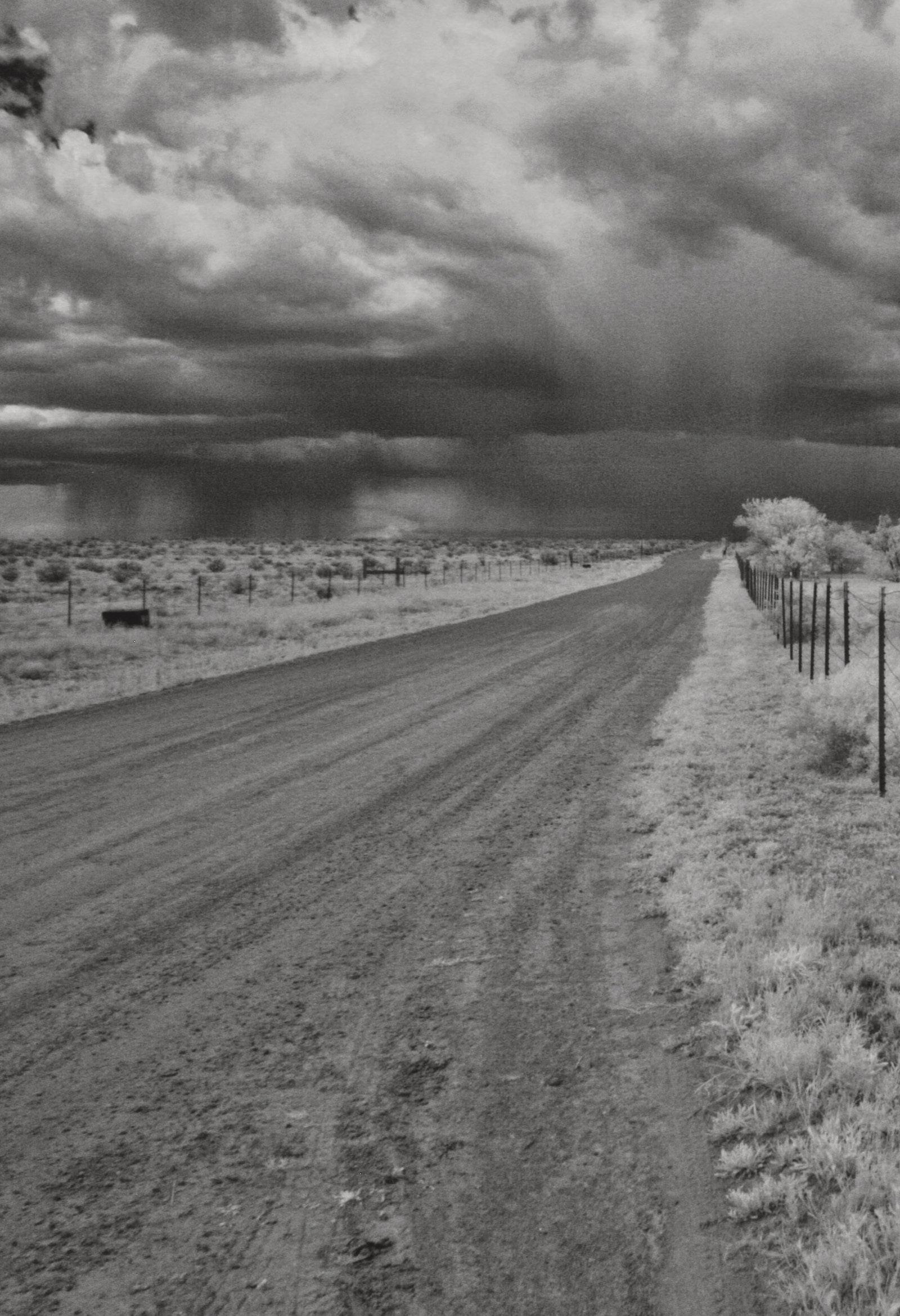
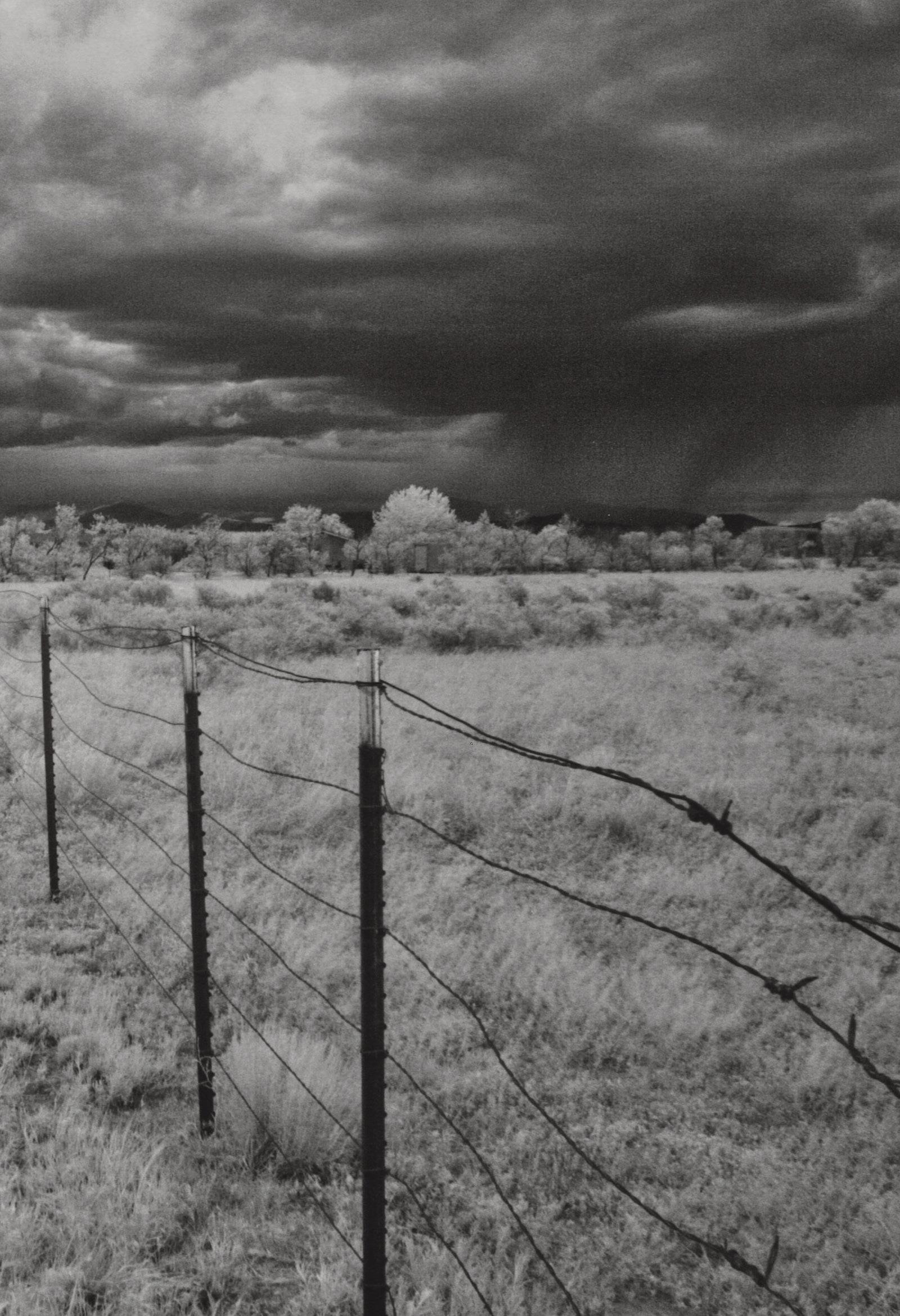
The Thrill of Unexpected Tenderness Storm Over Turquoise Trail
Birds of a Feather
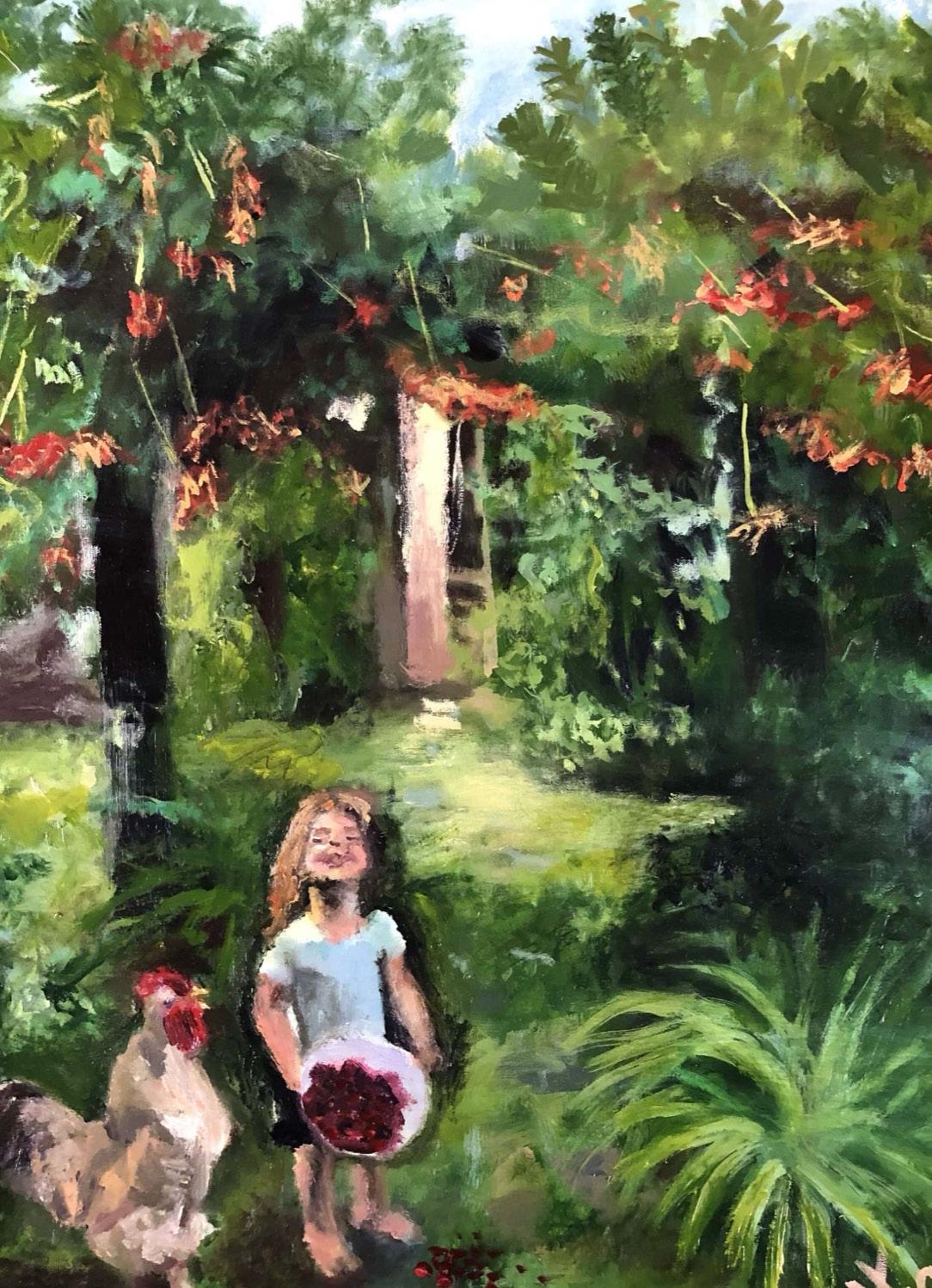
The Road to Hearthead Unspoken Equity needs title Rosalia and a Rooster
In the West of Ukraine Kostrycha Mountain
An Ecologist’s Love Letter to Nevada
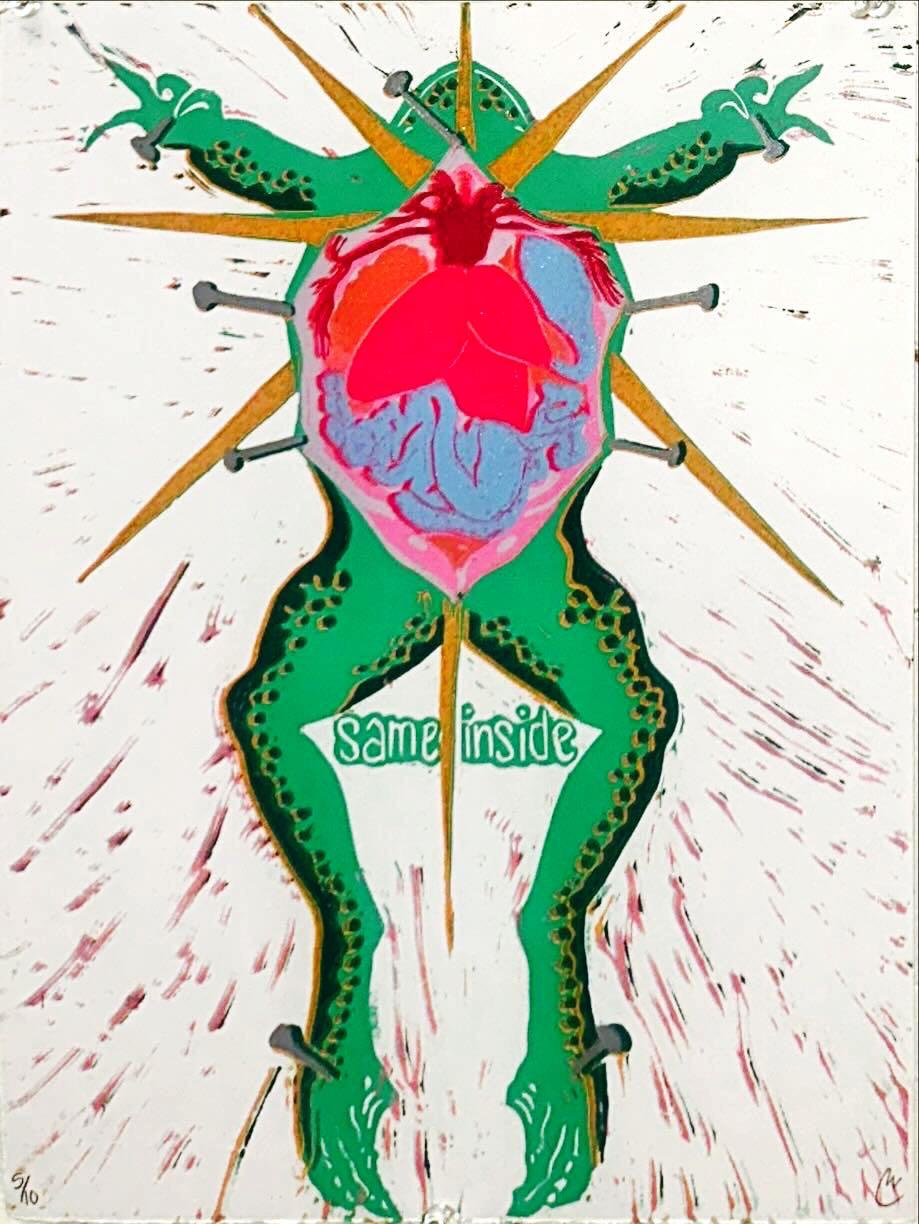
Same Inside
Murder
Student in Rainbow
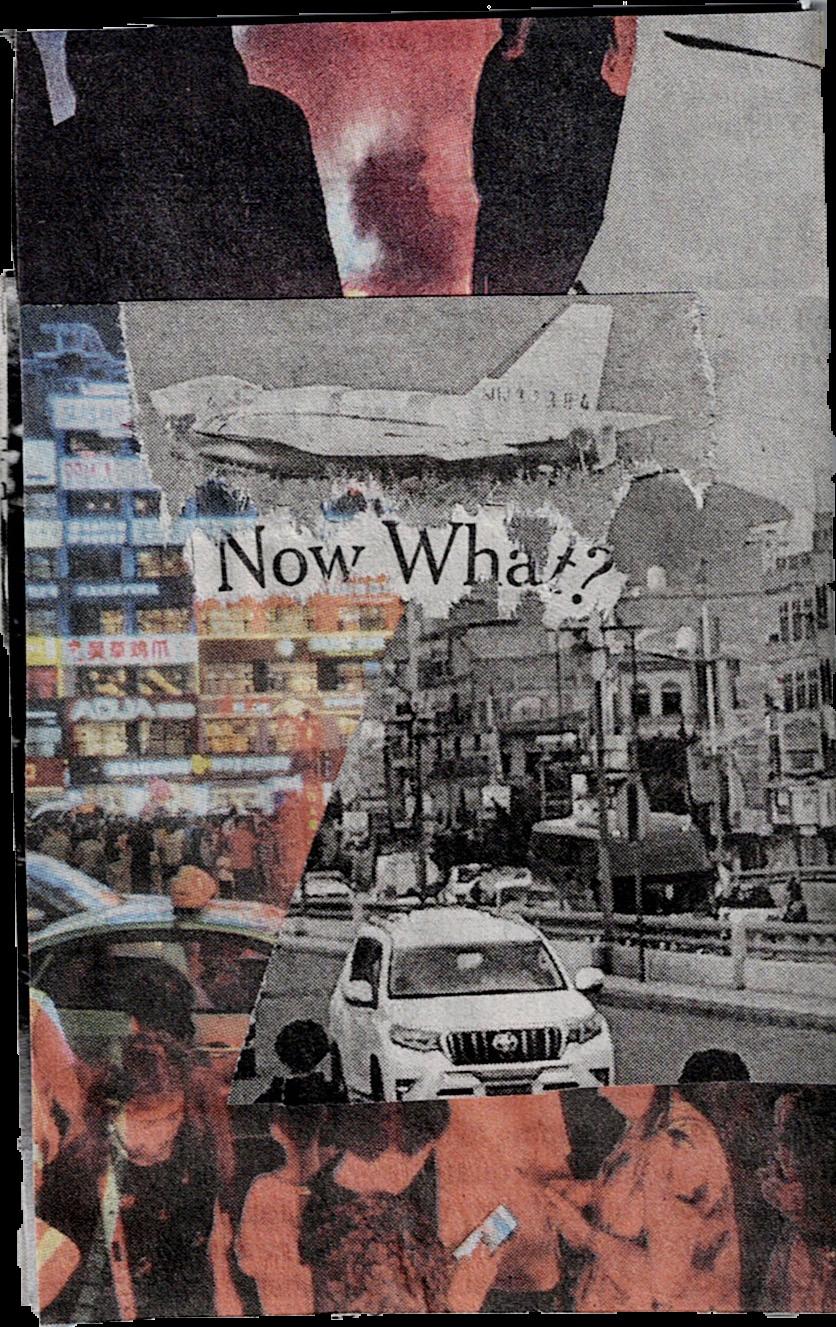
What Now? The Long Road
Table of Contents
poetry
Nina Bohlmann
George Yatchisin
Kathleen Johnson
Caroline James Emerson Branch
Josef Krebs
Miriam Manglani
Evelyn Griffith
Nichole Gavel
Preston Ham
Gabriella Belfiglio
Jennifer Ruth Jackson
Alexis Angelotti
David Harrison Horton
Miriam Manglani
Mukut Borpujari
Michael Friedman
Betsy Hinchey
David Mampel
Deborah Doolittle
My Coppertone Lines
The Coast is Clear
In Favor of Justice
Maggots / Gusanos
Distilling Myself in my Dreams
Spider Thoughts
Death of a Humming Bird
Flight
Flush Off
Swimming Pool
Softness Bruises Easily
Dear Mom
Ode to the Spork
Marvels of Muesum of Natural History
The Echo
Stress Dream No. 88
Winter Baby
Private Eye
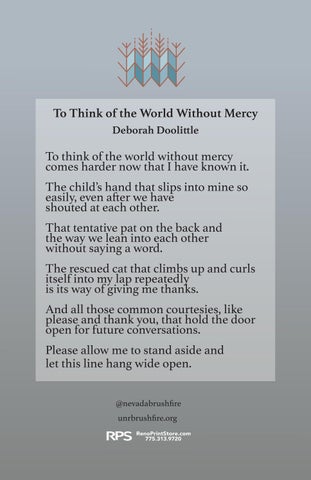
To Think of the World Without Mercy
The Coast Is Clear
George Yatchisin
The rhythmically waving kelp forest just off the coastal cliff seemed living. Sure I know, it is, but you know what I mean given the synchronously swinging stipes aren’t even plants, let alone sentient. Still, from 40 feet above, they dance, don’t they, as if waiting for Esther Williams to dive amongst their musical wash and wave.
Purpose can appear to be at the root of everything. Consider the light artfully staring at the clip of a handful of wave caps. Vanish can happen as you observe it. You did, didn’t you? If you could hear it, the kelp would clap for you in its grave of ocean, crashes of filling, filling, filling again.
In Favor of Justice
Kathleen Johnson
Notice the articulated gloves. Left hand first, now right. Fingers in cotton have a certain appeal, recall Mickey Mouse and flag ceremonies, Of Marines in dress blues. What is authentic today has been rehearsed. Real fruit, real pears
Belong to long orchards
Made by hand. Sun dunked with a green coat, waiting to turn pale yellow.
Maggots
Caroline James Emerson Branch
The bowl in which the mountains separate, It has existed before me, before you. Before the rules we impose. I live in the space within the peaks, in the ladle of the earth. I eat the food. I’m fed by the bodies. It has existed before the value of bodies. Before we decided that someone deserves more. That, of course, some deserve less.
The divine separation of our lives.
Have you been fed by those hands? Those broken backs? How easily you forget. How easy you walk and ignore that which gives you the energy to lift your feet.
My mother grew up in the fields. The route of her runs, weaving between the rows of crops. Between the plants we don’t recognize when they’re on our plates.
In the detention centers, there are reports there isn’t food for kids. That the fruit has maggots. That the bread has mold.
Have they worked enough?
Have they forgiven enough? Have they repented enough, for the accents, the skin, the identity?
They feed us. My mother and I grew up on the work of their hands. We deport them. Forgive us. We have not apologized enough. We have not worked enough. We have not fought enough. I am not going to separate myself. I am not going to forget. I see what happened. I see what happens. There are maggots in the bowls. There are maggots in the country.
Gusanos
Caroline James Emerson Branch
La cuenca en donde las montañas separan,
Ha existido antes de mi, antes de ti. Antes de las reglas impuestamos.
Vivo en la espacia entre de las cumbres, en el cucharón de tierra.
Como la comida. Alimento de los campos.
Ha existido antes del valor de los cuerpos.
Antes decidimos que alguna gente mercede más. Que, por supuesto, alguna merece menos.
La separación divina de nuestras vidas.
¿Te has estado alimentando de estas manos? ¿Estas espaldas rotas?
Como fácil olvidas. Como fácil andas y ignoras que te da la energía elevar tus pies.
Mi madre creció en los campos. La ruta de su corres, entrelazando entre de las filas de los cultivos. Entre las plantas que no recordamos cuando están en nuestros platos.
En los centros de detención, hay informes de que no hay comida para los niños. Que la fruta tiene gusanos. Que el pan tiene moho.
¿Han trabajado suficiente?
¿Han disculpado sufficiente?
¿Se ha arrepentido lo suficiente, por los acentos, la piel, por la identidad?
Nos alimentan. Mi madre y yo crecimos en el trabajo de sus manos. Los deportamos. Perdónanos. No nos hemos disculpado lo suficiente. No hemos trabajado suficiente. No hemos peleado lo suficiente. No voy a separarme. No voy a olvidar. Veo lo que ocurrió. Veo lo que ocurre. Hay gusanos en los cuencos. Hay gusanos en el país.
Hannah Cockcroft
Distilling Myself in my Dreams
Josef Krebs
Distilling myself in my dreams
As if damage could not be done by dreaming
And sleeping was not a risk
That might dismantle you
Trepidation often arises at night
And in the morning you must mop it up
Deal with and detangle complications
Caused by logic of subconscious brooding
Typical when you sleep
Or stay awake
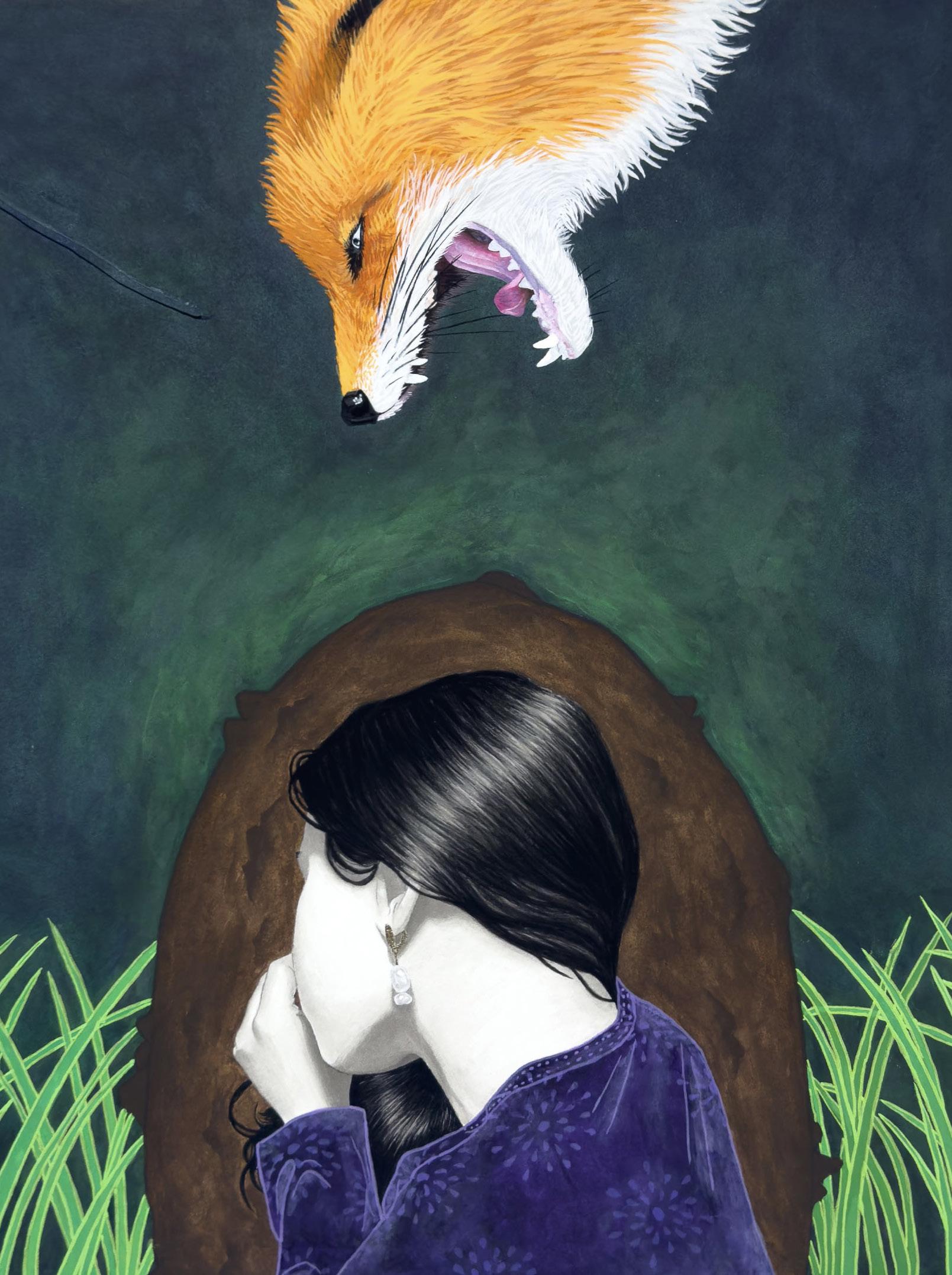
An Madra Rua (red-haired dog) Cassidy Alcorn
caught in your mouth
Mikayla Fershin
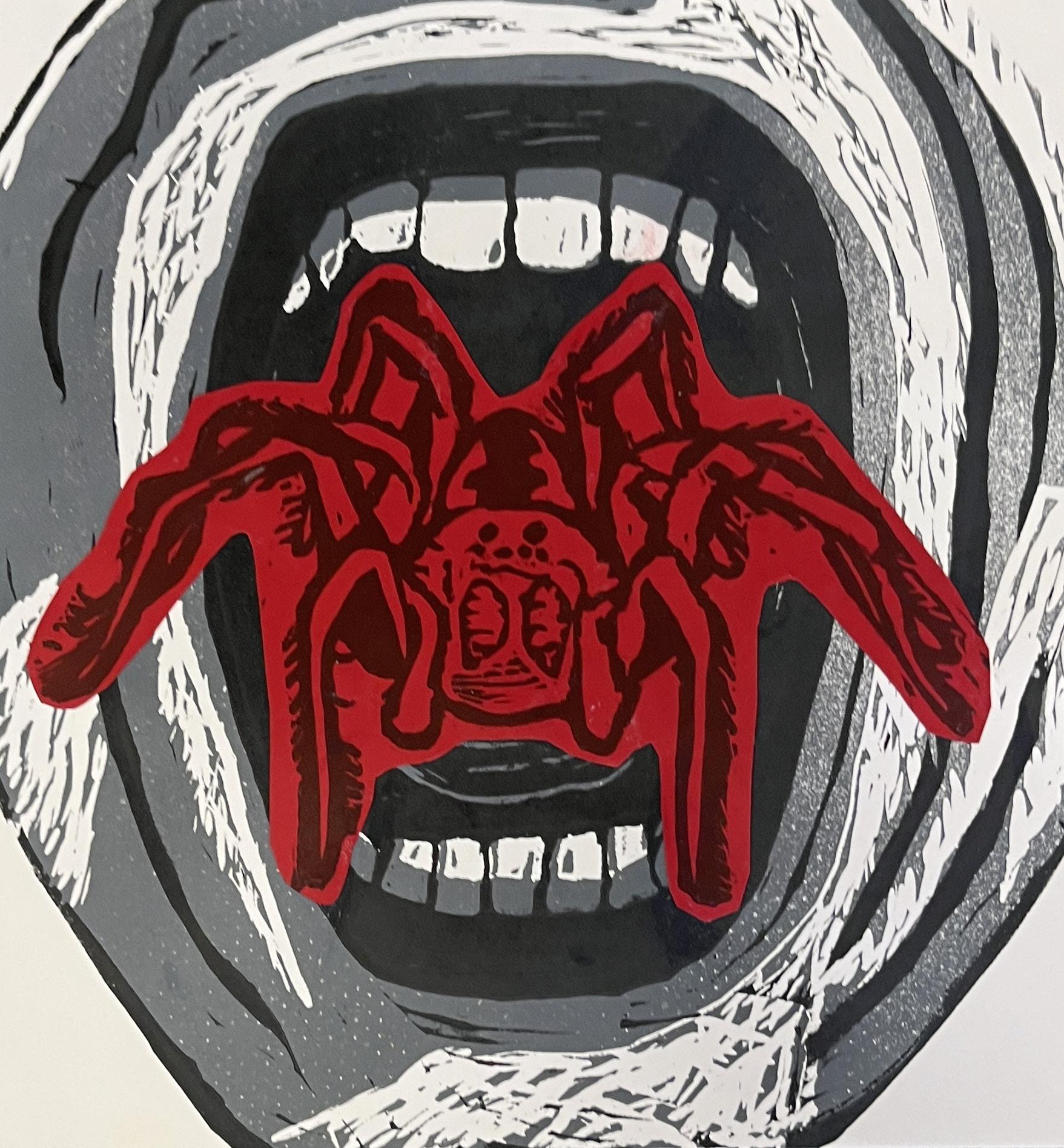
Spider Thoughts
Miriam Manglani
It hangs in a gravity of its own— its web, barely visible, glistens in a wash of sun.
A textile artist consumed with the art of death trap design, waits for the inevitable— an insect wrapped in gossamer. Are we the spider, weaving scintillating strands of memory and time together, or are we the victims of finely woven fate, waiting, breathless for consumption?
Doomscroll
Lily Mauk
Monday, 5:03 a.m. Still dark out. Laying on my side for the third hour in a row. Half of my face is all smushed into a pillow whose case should be dampened with drool. Unthinking. White fabric glowing blue beneath white, a screen inches from my face. My vision’s split between black and blue from hours of this stupid strain before the day’s begun. My thumb drones in an incessant scroll; I watch.
A video of some woman’s Sephora haul enters the screen that I immediately move away from. I watch the interaction between Barack Obama and Mitt Romney during the 2012 presidential debate. They shake hands, smile, and laugh. They address each other as Mr. President and Mr. Senator. It’s almost a turn-on. But then the video cuts to the 2016 debate; a much younger-looking Donald Trump spouts, despite the moderator’s attempts to mediate him,
“She doesn’t like Putin because Putin has outsmarted her at every step of the way—”
“Mr. President,” The moderator pleads, attempting to concede to debate rules, but Trump points directly to the man, narrows his eyes into a glare: “Excuse me!”
A swipe of a finger, and, thinking again, I like to tell myself he’s gone.
A photo carousel appears of a blonde. Sleek, blown-out hair. Not a frizz nor strand out of place and curled so effortlessly perfect. Her face is a mix of what one could call foxy and doe-like and there’s a sort of softness in her eyes behind the lust of the pose. Perfect, plump, parted lips. The dress is a garment made for physiques of her thinness. It is cut in the middle, revealing perfect contours beneath full breasts, but I’m not looking at those. It’s the way her head’s tilted back and to the side just the slightest, I think. The lines of her abs. A silver ring on a blurred finger. The artificial blue of my screen is so stark and blinding against the pitch blackness of the rest of my bedroom that I start to wonder if her silhouette will burn behind my eyes like a sunspot, tits and all.
My thumb is moving and I am Unthinking. I swipe, greeted by a swathe of neon words beginning with the acronym POV: (lines I don’t bother reading before continuing the scroll.) A meme about facism, one about phone addiction. I keep going. I scroll again. Then again. Then, once more. Just watching the motion of it all.
Dinner for One
Jillian Briare
When I watch myself depart to Reddit it’s as if the motion is automated. All this Unthinking, typing degenerative vulgarities into the search bar. More scrolling. Bodies and skin on the screen. Muted, noiseless, rolling like a strip of film in the dark room. My hand slinks between my legs but nothing really happens. And once I’m sick of the nothing really happening, I’m back on Instagram. Or Threads, or whatever Meta bullshit. And I spend my time this way until the sun rises. …
In my therapist’s office, there’s a plush, velvety orange loveseat that I sink into during each duration of our fifty-five minutes.
“How are things?” She asks.
I tell her about my morning of scrolling.
“That doesn’t sound very pleasant.”
“It wasn’t.”
A beat of silence.
“Scrolling first thing in the morning is one of the worst things for you. I’m guilty of it too—” The conversation kicks off with Small Habits To Lower Your Phone Usage. I sink deeper into the sofa, automatic nods, yeahs, mhms all drawn from me. Her words turn into a reel of film, like before, and like everything else, rolling on loop in the back of my head. And I see the man I saw in the waiting room only five or so minutes ago. He had a can of condensating-something in his hand. He was handsome. Had the sleeves of his sweater rolled up so one could see his forearms just right. I watched his muscles flutter as he lifted the can to his lips. A short, stubblish beard. A swallow of the drink. I traced his bobbing Adam’s apple with my eyes. I swallowed at the same time he did. My therapist poked her head into the lobby and called my name.
“I leave my phone in a different room at night. Works great. You should try it.”
I have to stop myself from chuckling at the irony. The whole reason I started coming here was ‘cause of the one time I did do that, that missed phone call. (But of course I woke to others. And voicemails. And I can still see the messages. I can feel the pilling of that guy’s stupid grey sheets and feel that crust between my eyes. I can hear the grogginess in his voice when he asked where I was going so early but it was so late, I was out the door, too late, like I’d been goddamn before. The only constant was the hospital room number my mother texted. Room 403. I’ll never forget thatt number ‘cause
it droned off my sandpaper tongue relentlessly on that grueling drive. Fouroh-three. Four-oh-three. Four-oh-three.)
“That doesn’t work for me,” I say. “I jump first thing to grab it.”
My therapist cocks her head. “Why do you think that is?”
I don’t want to talk about it. Actually I’d rather let her drone on so I can go back to thinking about that man with the condensating-something in his hand. So I get her to talk instead. I ask her what she thinks constitutes a porn addiction. She asks me if I think I have one. And so on and so forth. She’s talking, but then she stops.
“Why ask about porn addiction, though? Is this something you feel guilty about—watching porn?”
I shrug. “I dunno. What are your thoughts?”
She seems to save herself from a chuckle and offers a knowing smile. “Deflecting onto others is never going to help you.”
I offer her a smile in return, half-assed.
…
After the appointment, I see the man who had the condensating-something in his hand at his car. It’s parked next to mine. He stands outside the driver’s side idly, Unthinking, glued to his phone. I squint through the sun.
“Hey.”
He looks up at me, around the parking lot, then back at me, returning the Hey.
“Come here often?” I joke. And sooner or later the following twelve minutes are spent in the back of his car. And then I go home, hollow, back to the scroll.
Katherine Madden
Death of a Hummingbird
Evelyn Griffith
We can breathe under water. Didn’t you know?
As the trees sway by the pond and the night separates into strips of hummingbird pricked brightness, didn’t you know those things you call stars came from her? Strips of hummingbird pricked brightness that burst and bled.
Those things you call stars came and flickered out so we were left in the dark, because she burst and bled.
Didn’t you know, the hummingbird died and flickered out so we were left in the dark?
You and I, dearest, but you say, Didn’t you know the hummingbird died? I know.
It’s the story of you and I, dearest, but you say, drowning sounds better than a night without stars. I know!
We can breathe under water.
Flight
Nichole Gavel
Next to the sink where the girl scrubs pots, the phone on the wall rings. She won’t pick up, even though she will be of age in just six months, she lives by the rule set by Mom. She sees Mom reach from her armchair where she sits all day since she got sick a few years ago. Hears her say, “Hi,” and not in a kind way, “Who is this?” The suds make the pot slide through the girl’s hands and it falls in the sink with a crash. Mom says, “What did you say?” Sweat drips down the girl’s back. From down the street comes the sound of church bells. The finch with the orange beak chirps from his cage.
Face tight and stern, Mom holds the phone out to the girl and says, “It’s a boy.” The girl puts the phone to her ear and waits for Mom to leave the room, but Mom stays put and lights a smoke. The girl says, “Hi,” soft and sweet, and “I’m fine” and “No” then “Yes” and “See you then.”
The house is small. Just two rooms and a bath with dirt stains on the once-white walls and cracks in the tile floor. But this is home. This is where they cook, eat, pray, read, bathe, sleep. They have slept in the same bed since the girl was born and the dad left to look for work and did not come back. For years mom hummed the girl to sleep. For years they laughed, grieved, talked, and dreamed in the bed side by side. The girl had her first bleed in the bed and the mom cleaned it up, but she did not say a word. The girl thought she’d done wrong. And, with the blood came the buds of breasts and want for touch and thirst for love. All this her shame to bear.
The girl hangs up the phone and Mom says, “Well?” The girl can’t look at Mom. “Jack wants to take me to see a film the day after next.” Mom says, “No, I need you here to take care of me.” The girl pleads. Mom turns her face and no more words are said.
At night in the bed, the girl scoots to the far side. When she wants more space, she moves to the floor so she can breathe and think and make Mom feel her pain. I hate her, the girl thinks, I wish she were dead. Oh, the dread to have made this wish! She prays that God wipe the thought from her mind.
Mom snores. No sleep comes to the girl. She counts the beats of her heart. Then she steals out of the room, walks on toes to the bird cage, lifts it with care and brings it out of the house, into the night air. The girl opens the cage door so that at first light the small bird can take flight.
The Thrill of Unexpected Tenderness
Bill Wolak
Flush Off
Preston Ham
I no longer want to be born here where death is so young in the lingering rain after clouds not every drop catches the sun along in years I no longer speak dreams so regret can take its natural place as frey at the end
home from the nursery I read the directions:
moisten the ball of earth around the roots, but do it gently so the soil does not flush off.
Willey Conley
Swimming Pool
Gabriella Belfiglio
I’ve been covered too long, under the giant tarp of winter.
It’s spring— refill my basin, filter debris, fish out dead leaves. I’m ready to open.
Dip your toes in my shallow end,
stop any time: rise of calf, inner thigh, slope of waist,
hollow between collar bones. If you find me cold,
be patient, let your body acclimate another degree.
Come, float atop soft ripples,
let the round breath of belly rise and fall like sea.
If you want a rush, start at the deep end,
run, gather your limbs: plunge.
Push past edge let momentum guide you, your only swallow in through skin.
Let your blood remember the time it only knew a sac of liquid, before it was expected to take orders from your heart.
Road to Hearthead
Henry Jones
Softness Bruises Easily
Jennifer Ruth Jackson
I’m raw. I promise the wheat expelled from chaff. I’m chafed everywhere your love touched, pulled, rendered me rended from myself. Tender. Still the violent bruise blossomed from a needle’s kiss, a sting for puncture and burrow. Nights you call me to cry feel the same.
Dear Mom
Alexia Angelotti
You are like the delicate hues painted across an azure sky
Your beautiful burnt orange pierces the delicate blue
As the day turns to dusk, ashes turn to dust
Oh, my heavenly muse, your time has come up shy
Yet, you find me, your spirit a haunting symphony
You find me at dawn, as the new morning dew
Falls from the tree, landing on my cheek like a kiss
You find me in the breeze, as a whisper of perfume
It’s fresh, fragrant and too much all at once.
And I find you, in the fleeting faces of strangers
The flash of blonde hair on that woman or the next
The infectious laughter, of a room singing karaoke
Or in my face in the mirror, your creation, without its creator
Josephine Florens
Chelsea Empeno
Mirrors
Zary Fekete
In Japan I often see young men and women standing just outside the doors of classrooms or office buildings, holding their phones up in front of their faces. They are not taking photographs. The camera is simply turned inward, the screen serving as a small, glowing mirror. For a few seconds they study themselves...adjusting a strand of hair, smoothing the corner of a sleeve, tilting their heads slightly as if the right angle might reveal the person they intend to be that day. Then the phone disappears back into a pocket and they walk inside. Mirrors used to live on walls and bathroom counters. Now we carry them with us everywhere, ready to summon our own reflection at any moment. I notice these small rituals partly because they are so common, but mostly because, years ago, I made a quiet decision to stop looking at mirrors altogether. The decision was not dramatic at the time. It arrived quietly, almost as a practical matter. I had recently stopped drinking, and in the months that followed I became aware that my face seemed to have changed in ways I did not want to study too closely. Sobriety does many good things for a person, but in the beginning it also reveals things. The body adjusts slowly. The eyes look tired. The skin carries the history of nights that stretched too long. I found that looking in the mirror brought with it a small, familiar discomfort. So I stopped. I still washed my face, shaved when necessary, and occasionally checked my teeth before leaving the house. But the idle glances...the casual check-ins that most people perform without thinking...I let those fall away. At first this felt like avoidance. Later it felt like relief. Mirrors themselves are a surprisingly recent invention in the long history of human life. For most of human existence, if a person wanted to see their own face, they needed water. A pond. A riverbank. A still pool where the surface settled long enough to hold an image. Even then the reflection would have been uncertain, moving with the slightest ripple. The Greeks told a story about a young man named Narcissus who discovered his own face this way and could not look away. It was, perhaps, the first cautionary tale about reflection: the danger of falling in love with the image of oneself. What fascinates me about the myth is not the warning against vanity but the rarity of the experience. To see your own face clearly must once
have been unusual. Most people would have known themselves the way we know the back of our heads today...by inference, by the reactions of others, by memory. A reflection in water would have been fleeting, something stumbled upon rather than something consulted every few minutes.
Eventually we learned to polish metal into reflective surfaces. Later still, glass mirrors appeared in wealthy European homes, expensive and delicate objects that required careful handling. Only gradually did mirrors become ordinary household fixtures, hanging over sinks and bedroom dressers, waiting patiently for us to confirm ourselves each morning. Now, of course, the mirror has moved again. It has left the wall and entered the pocket. The front-facing camera on a phone has quietly replaced the bathroom mirror as the place where many people first encounter their own faces each day. What used to be a fixed object has become portable, immediate, always available. You can check yourself in an elevator, on a train platform, outside a café window. The mirror travels with you now.
This portability has changed something subtle about reflection. The old mirror required a kind of pilgrimage. You had to go to it. You had to stand still long enough for your own face to settle into view. The phone, by contrast, invites constant checking. A flick of the wrist and the image appears.
Watching those students outside their classrooms, I sometimes wonder whether the phone is really functioning as a mirror or whether it has become something slightly different...a rehearsal space. A place where a person adjusts not just their hair but their expression, their posture, the version of themselves they intend to present to the room they are about to enter.
Social media extends this idea even further. If the mirror once showed us what we looked like, our digital mirrors now allow us to decide what that image should be. Filters soften skin. Angles reshape faces. The reflection becomes editable.
For a long time I lived in a part of the world where mirrors were less common. The streets felt like the opposite of the tidy neighborhoods of Japan. The air carried the smell of heating oil and harsh cigarettes. Food carts appeared and disappeared throughout the day. Dogs slept wherever they found shade.
Life in that environment was full of negotiation. Boundaries were flexible. The lines between
private and public space shifted constantly. You learned to pay attention to people rather than to reflections.
Around that same time I heard a sermon that has stayed with me longer than I expected. The speaker told the story of a missionary woman who had spent most of her life serving a small community in a desert region far from modern infrastructure. In the place where she worked there were no mirrors. Not because someone had forbidden them, but simply because no one had thought to bring them there.
For years the woman had gone about her work without ever seeing her own face.
The speaker suggested that this absence might have been a kind of gift. Mirrors, after all, can be distracting objects. They invite inspection, adjustment, comparison. They ask us to think about how we appear rather than about what we are doing. In a place where the work was urgent and the conditions were difficult, a mirror would have offered very little practical value.
Whether or not the story was entirely accurate hardly mattered. The idea itself was enough. I began to wonder what a life might look like if mirrors were not central to it.
Over time I noticed something unexpected. Without the habit of checking my reflection, I began to forget about my face during the day. Not completely, of course. Other people still saw me. Photographs still existed. But my sense of myself shifted slightly inward. I paid more attention to how things felt than to how they looked.
Occasionally I still encounter a mirror by accident. A shop window catches the light just right. A train door reflects the interior of the car. For a moment I see someone looking back and it takes me half a second to recognize that the face belongs to me.
It is not an unpleasant surprise. Just an unfamiliar one.
Perhaps this is why the sight of those students in Japan stays with me. Their phones glow softly in the morning light as they prepare themselves for the day ahead. They adjust a sleeve, tilt their heads, confirm the image they will carry into the room.
Then the screen goes dark and the reflection disappears.
For a moment the mirror is gone again.
And the world continues without it.
Ode to the Spork
David Harrison Horton
The morning shower did little for the drought that’s been a decade or more in the northeast.
So, when I finally got my New Yorker rejection some three four years in the making I took it in stride.
I’ve been thinking about places like Winnipeg, Hong Kong etc as one does from time to time. Half my friends are in various stages of leaving, convinced a change of scenery will fix foundational flaws they refuse to deal with.
The other half are in a time cost fallacy cycle. The corn is knee high now. It should be chest level this time of season.
In the West of Ukraine Kostrycha
Mountain
Josephine Florens
1.
Marvels of the Museum of Natural History
Miriam Manglani
Galaxies sparkle in a towering purple geode. The arc of time layered in a slice of sequoia trunk.
34 ton meteor, its alien terrain cavernous from entering our atmosphere, when everything but its iron burned up.
Patterns of receding tide in the marking of a tiger’s fur.
Elk antlers like upside down tree roots. The horns of an oryx shaped like icicles.
2.
The way an orangutang hangs like the branches of a weeping willow tree.
A mountain goat’s stout, lower body scaling steep clips.
So many animals had to die, gutted and stuffed, just to satisfy human spectatorship.
3.
Their empty glass eye stare. But wait, there is still something there in the fluff of fur, the glint of talons, gleam of tusks and horns.
Same Inside
Christine Wilson
Do they escape their prisons when the crowds are gone?
Do they dance wildly in the exhibit halls when the lights are out?
Or perhaps it’s just my overactive imagination seeing life still in the most unnatural of homes, after dying several unnatural deaths.
Murder Cassidy Alcorn
The Echo
Mukut Borpujari
My native language presents certain limitations, making it challenging to express how something once was but no longer. You used to be here, but no more— the shuffle of your light steps like insect chimes; low, soothing, your hearty laughter reverberates eerily in these hollow rooms.
You are no longer here, but your memory fills these spaces. You were happy once albeit briefly, before leaving in despair. I can only hope that occupying these spaces brought you joy, as it was a place where you once lived, but no more
The Receptionist
James Hanley
The receptionist was an attractive woman in a way men might not realize, he thought. Her hair was a mix of colors: the remnant of applied blonde, patches of gray, and the brown hue of her younger years. Her skin was lightly tanned, her features were sharply defined, and she squinted as if needing glasses. After marking his name and arrival time on a lined sheet at the counter above the receptionist’s desk, he handed her the form. She smiled and took the paper from his hand. Returning to the waiting area and sitting in a hard chair in a row of spaced seats, he noticed that the magazines on the table in front of him were months old and of no interest to him. Glancing around, his eyes stopped on the receptionist with each sweep. She was writing at her desk, leaning over so all he could see was her forehead and untrimmed eyebrows. He guessed her age to be early forties, given away by the lines around her eyes and at the corner of her mouth. Before he could swing his gaze away, she glanced up and met his eyes. He counted three other patients waiting. The number was reduced to two as the assistant emerged from the inner offices, read the name on a chart, and held the door for a bentover man. When it was his turn, he followed the assistant past the reception desk. While he sat on the declining table, the physician, a short woman with oversized glasses and a pink frock, scanned his body for irregular moles. His mind wandered, reforming the implanted image of the receptionist.
After the examination, he stopped at the reception desk to schedule his semi-annual follow-up. She took a calendar from the lower desk drawer and offered several days and times. While she leaned over, he saw her nameplate pinned above her blouse pocket. Emma. As he turned to leave, she called his name. “Mr. Martin, you’ve never completed a patient questionnaire.” Her voice startled him, especially when she mentioned his name, and he imagined a familiarity in her tone, as if they’d known each other before that day. She handed him the lengthy paper with lines and check boxes beside the questions, attached to a clipboard with a dangling pen. As he marked every segment, he looked for a box to indicate marital status, so he could check “divorced.” Completing the document, he handed it to her. Emma was on the phone, and her undirected hand overlapped his finger as she took back the form. He hadn’t had time to react to the warmth of her unexpected touch on his cold hand, but on the drive to his apartment, he speculated as to whether her touch was deliberate, a subtle flirtation.
Student in Rainbow
Alaina Hammond
He thought about the receptionist often. When he returned for his annual appointment, he arrived 30 minutes early, hoping to speak with Emma. She took the sign-in sheet form from him, her expression unchanging.
“I’m early; didn’t want to get stuck in traffic,” he said. “Thank you for the phone message reminding me of my appointment; I’m sorry I wasn’t home to hear you directly. You have a lovely voice.”
She looked up at him and said, “It’s all part of the service.” Her smile lifted her cheeks, exposing her dull teeth. She licked her dry lips, and he blushed.
He sat in the waiting area, selecting a chair that would give him the best view of the reception desk. Staring at the receptionist, he noticed subtle changes in her appearance from the last time: the strands of gray had thickened, and the blonde coloring had disappeared in her dark, long hair. Lines that were previously confined to the edges of her eyes and mouth now formed across her forehead. She wore glasses, and her once-sharply formed features now seemed slightly softened. When she stood up and walked to the copier, he realized that he’d not seen her body below her neck previously. Her thighs were thick, and her midriff expanded the elastic waist of her pants.
His wait extended past the appointment time. He feigned impatience and asked the receptionist how much longer he had to wait. Approaching the reception desk, he asked Emma, “Do you know how much longer before I see the doctor?”
She shrugged her shoulders. “I don’t. She’s been behind schedule since early this morning. I’m sure it won’t be long.”
“I can wait a bit longer. I’m glad I found the doc. I initially chose her because she was close to my home, but I’m impressed with her care, the office, and the people who work for her, like you.”
“Thank you,” she said, the smile returning.
“That’s a nice sweater.”
He saw her shoulders pull back. The phone rang, and she lifted her left hand as a sign to wait while she picked up the receiver. He noticed that her ring finger was bare.
She frowned before she hung up. “That was a patient cancelling an appointment for that afternoon,” she explained. “It can be so frustrating, especially when I have to rebook a patient, and they later cancel the new date. Happens a lot. Most patients don’t honor their “commitment”.
“Do you remember me from my last time here?”
“Of course, Mr. Martin,” she lifted a brown folder, “It says so right here— annual follow-up.”
“Please call me Arnie.”
“Arnie,” she parroted as if testing the pronunciation of his name. “I’m Emma, as you can see from my name plate,” she said, pointing above her breast, drawing his eyes.
He shifted during the following silence and said, “I’ll sit and wait for my turn.”
As he walked toward the chairs, he heard the receptionist’s low voice. When he turned, he saw her waving her fingers inward. Reaching into a side drawer, she took out two magazines and handed them to him.
“The magazines in the waiting area are older issues. The latest ones are passed around to the staff first. These just came in.”
“Thank you. I’ll return them when I’m done. Don’t want to get you in trouble.”
The dermatologist’s assistant called him into the small examination room. The physician removed a mole from his shoulder, and he left, stopping at the receptionist’s desk.
She looked up at him, and he handed her the dermatologist’s instruction sheet.
“You’re coming back in three months?” she said.
“Yes, the doctor removed a mole and wanted to check out the area in a few months; nothing serious.”
She raised her index finger when the phone rang. After the call, she offered a date and time, filled out a business card with his next appointment date, and handed it to him.
“I’ll see you then,” Arnie said.
“I’m glad it was nothing serious,” Emma said.
He returned on the scheduled date carrying a small plant. Standing in front of the reception desk, he leaned over and placed the flower on the corner of her desk.
“Your work area seems so empty. I thought the plant would add some color.”
She smiled, gripped the pot’s base, and placed it on a file cabinet behind her.
“Thank you, Ernie. We have to be careful, you never know what people are allergic to. But I can still see the flower.”
She looked down at the schedule. “Oh. I’m sorry, Arnie. So many people come here that I get names mixed up. But I was close,” she added, smiling awkwardly.
“That’s understandable, although I was hoping you remembered my name. We talked at each appointment. I bet you don’t do that with everyone. You even gave me new magazine copies to read one time.”
“I remember, Arnie.”
The dermatologist’s assistant called his name, and he followed her to an examining room. As he waited for the doctor with the assistant, he said. “The receptionist is a nice person. Very friendly. Do you know if she’s married? I don’t see a ring. Just curious.”
The young woman shrugged. “Please put on the paper robe, wearing only your boxers or briefs, the opening to the back.”
The dermatologist entered the examining room and offered her limp hand, asking about his health as she examined his back, where the mole had been removed.
“Doctor, do you remember my ex-wife? She was a patient a few years ago, maybe still is. Her name is Ruth Martin, unless she changed her name, which wouldn’t surprise me. Her needs were cosmetic. She wanted the unpleasantness out of her life.”
The physician said, “The scar from the skin surgery has healed well, but we need to keep an eye on growths in other areas, so I’ll schedule you to come back again in three months, and if nothing shows, we can extend the examination periods. Please see the receptionist to schedule. I don’t remember your wife.”
After leaving the examining room, he stood in line behind a woman who was shifting from one leg to the other. When the woman stood before the receptionist, she handed in her form and rummaged through her pocketbook. Without turning her head, she gathered the appointment from Emma’s outstretched hand.
“I have to set time to return,” Arnie said. “The doctor said I’m healing well, but you can’t fool around with Melanoma.”
“Is July 15th good?”
“Could you write me down for midday, and maybe we could have lunch together afterwards?”
“Arnie, I’m never sure what time I can take lunch. I have to coordinate with the other staff, and that can fluctuate based on how busy we are.”
“I understand. You’ve been so nice to me. I don’t get kindness often. My boss was a hardass. Sorry about my language.”
She looked at him. “I’ll schedule you for twelve, and we’ll see that day.” After pausing, she added, “That would be nice. I’m just concerned my boss will disapprove of dating clients. She’s never said so, but I can’t risk her disfavor.”
On the day of his next appointment, she agreed to have lunch with him. “But we shouldn’t leave together, and I only get 45 minutes.”
They met outside the building and walked to a diner on the next street. Seating themselves at a table in the diner, Arnie waved to a waitress who shuffled between the kitchen and the crowded tables.
When the lethargic woman, wearing a soiled apron, approached, they gave her their orders. Arnie asked her to hurry the food, explaining they had little time.
He turned toward Emma and said, “I’m glad you agreed to lunch. I wasn’t sure you would.”
She smiled quickly. “Because you talk to me; no one else does. Maybe one day, I’ll be replaced by a talking machine,” she joked.
As they chatted, he asked her what she thought of the dermatologist, which ignited her vitriol.
“I call Doctor Rathman the skinflint physician. I asked her for a raise, saying the assistant makes much more than I do. She said no to my request, adding that I’m only a receptionist. I want to buy a car because I’m tired of riding the bus to work.”
Arnie laughed. Seeing her frown, he said, “I’m sorry. The name you gave her is funny. I could drive you to work some days. I don’t live far.”
Emma looked at her watch. “I don’t want to trouble you. I need to get back.”
While walking toward the doctor’s building, Arnie asked if they could meet again. Sensing her hesitation, he added, “Not a date, just lunch like this. Maybe next week we can meet in front of the diner.”
Arnie called her the following Thursday, and she agreed to meet at the diner. As they ate, he sensed she was distracted, and when asked, Emma shook her head. When he persisted, Emma admitted she was nervous about her meeting with the dermatologist later that day, where she would insist on a raise.
“Can I give you a call to hear what happened?”
She put her hand over his. “You shouldn’t call me at work. I got the lecture on personal phone calls. We can meet here tomorrow morning before I report to work.”
Before Emma went into the office building, she embraced Arnie. “I’ve enjoyed the times with you.”
He didn’t hear from her the next day or for the days that followed. An unfamiliar voice answered the phone when he called the dermatologist’s office. He showed up at the office the next week and confronted the young woman who sat at the reception desk, asking where Emma was. The new receptionist told him she didn’t know, and her nervous stutter drew the physician’s assistant’s attention.
“Mr. Martin, you don’t have an appointment today.”
“I know; I’m looking for Emma. Where is she?”
“She doesn’t work her anymore.”
“Why, what happened?”
“I don’t know, but Doctor Rathman insisted we refrain from talking about her dismissal.”
“Dismissal! You mean fired. Can I get her home phone number or at least her last name? We have been getting together at lunch and I ...”
“I can’t do that, but if you’ve been seeing her, you should have her number, certainly her last name.”
“You don’t understand, we’ve just started...”
“I have to get our next patient. I’m sorry.”
“Can I see the doctor?” he shouted as the assistant walked away. The next day, he called all the dermatologists’ offices in the area, but the answering voice was not Emma’s. He rode the bus route that passed the building of the dermatologist’s officeuntil the end of the line, looking out the large windows, hoping to find her walking.
Arnie never saw her on the main avenue or at the edge of the side streets. He gave up when the winter cold emptied the sidewalks.
Stress Dream No. 88
Michael Friedman
I know I must leave the tent revival before they find out I am not a believer.
Churning out of the gravel lot in my sun-damaged purple truck, I head toward the highway and away.
On the road, I crane forward against the steering wheel, squint into bleached brightness like a crazed chimpanzee with teeth bared.
In the blinding glare I pass my exit, careen toward the entrance to a long bridge with compound cloverleafs and no clear signs for where I need to go.
Long Road
Winter Baby
Betsy Hinchey
You’ll soon start to discover a world rediscovering itself — mornings that spin webs of bird song, curtains of fog that lift for the day’s play, cracked eggs that share no understanding of their sadness, grass, sky, beach still damp with dreams of seagulls. You too will learn to tell time through regret, then spend a lifetime trying to unlearn it. And I will spend what’s left of mine trying to freeze the winter of your birth, now a puddle in memory’s sand.
Always Hope Part 2
Mark Hurtubise
Private Eye
David Mampel
Today I will be a private investigator of enchantment. I will follow clues like breadcrumbs out of the dark forest of my misery until I shade my gaze upon a thousand stars sparkling off the whitecaps. I will wait for the water to become still and deduce the sky’s reflection if only my eye be single and fill the whole body with light. I will disguise myself as an ornithologist and record the song sparrow announcing her presence before sunrise reveals her simple seeds. I will be a marine biologist watching how wind curves over sand on the salty shore and eases into a whisper through the driftwood pile I lean against. I will be an aging archeologist dusting off fragments of discovery, shards of seashell treasure humming in the universal spiral of my ears. And of course, I will find the gold amulets of expanded vision, as I notice veins in a leaf when I slow down. And then, and only then, will I solve the crime of broken breath and praise the unsolvable mystery of this blue winter’s day.
Warmth of the World Eugene Melmani
Thank you for reading the second volume of Brushfire’s 78th edition. Our team hopes the poetry, prose, and artwork collected within these pages made you laugh, cry, and—most of all—think. It’s a big hectic world out there, but great art can bring us all a little closer together.
To all of our submitters: we greatly appreciate your creativity, dedication, love for the arts, and freedom of expression. You are what makes Brushfire unique.
Again, thank you for your enjoyment of the University of Nevada, Reno’s literature and arts. We’ve brought the Brushfire to you for 78 years and the fire continues blazing thanks to passionate readers like you.
With your support, many more editions of Brushfire await. We couldn’t be more excited.
—The Spring 2024 Brushfire Staff
AIN’T YOUR BUSINESS
Josephine Florens
SPRING 2026 BRUSHFIRE STAFF
The Publication Currently Employs 6 Part-Time Student Workers. Meet the Small Dream Team Below!
Executive Editor Paige Krueger
Director
Visual Arts
Ashton Nancarrow
Literary Editor Cheyenne McGregor
Staff Writer Madison Kitch
Audio Book Producer Emma Charles
Staff Editor Jayden Licanto
Lunchtime Remi Fertal
Interested in volunteering, upcoming gallery exhibitions, poetry nights, or other literature-and-arts-related events at the University of Nevada, Reno?
Want to check out e-book or audiobook versions of all your favorite Brushfire editions?
Visit our website: unrbrushfire.org
Never miss out on the latest Brushfire events and posts! Follow the University of Nevada, Reno’s Literature and Arts Journal on Instagram:
@nevadabrushfire
BE PUBLISHED IN OUR NEXT EDITION
Yearly, Brushfire publishes a spring and fall volume. We accept poetry, prose, and all printable forms of art from everyone, everywhere.