Brunswick and Greenwich Academy
Magazine of History
The Brunswick and Greenwich Academy Magazine of History
2025 Editor Dr. Brian Hoffman
Student Editor Pierce Crosby
Editorial Office
Department of History
Pettengill Campus
Brunswick School
100 Maher Avenue
Greenwich, CT 06830
E-mail:bhoffman@brunswickschool.org
Contents
Volume 22, 2025
National History Day Projects
Paper:
InvestWrite Essay, William Pallone ‘26
Bob Dylan and the Civil Rights Movement, Benjamin Burgess, ’28
Behavioral Economic Biases, Blake Levy ‘26
Documentary:
Title IX: Shaping America Through Women’s Rights, Arya Pelletier
Olympe de Gouges, Alice Beacham ’28 Anna Ciardi ’28
Website: A Nation’s Neglect, Elaine Cheng ’28
Roe v. Wade, Ella Fessenden ’28 and Ashley Presser ’28
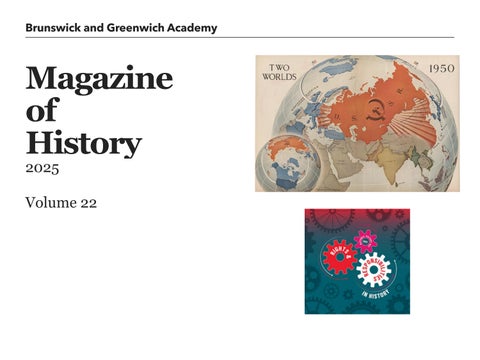
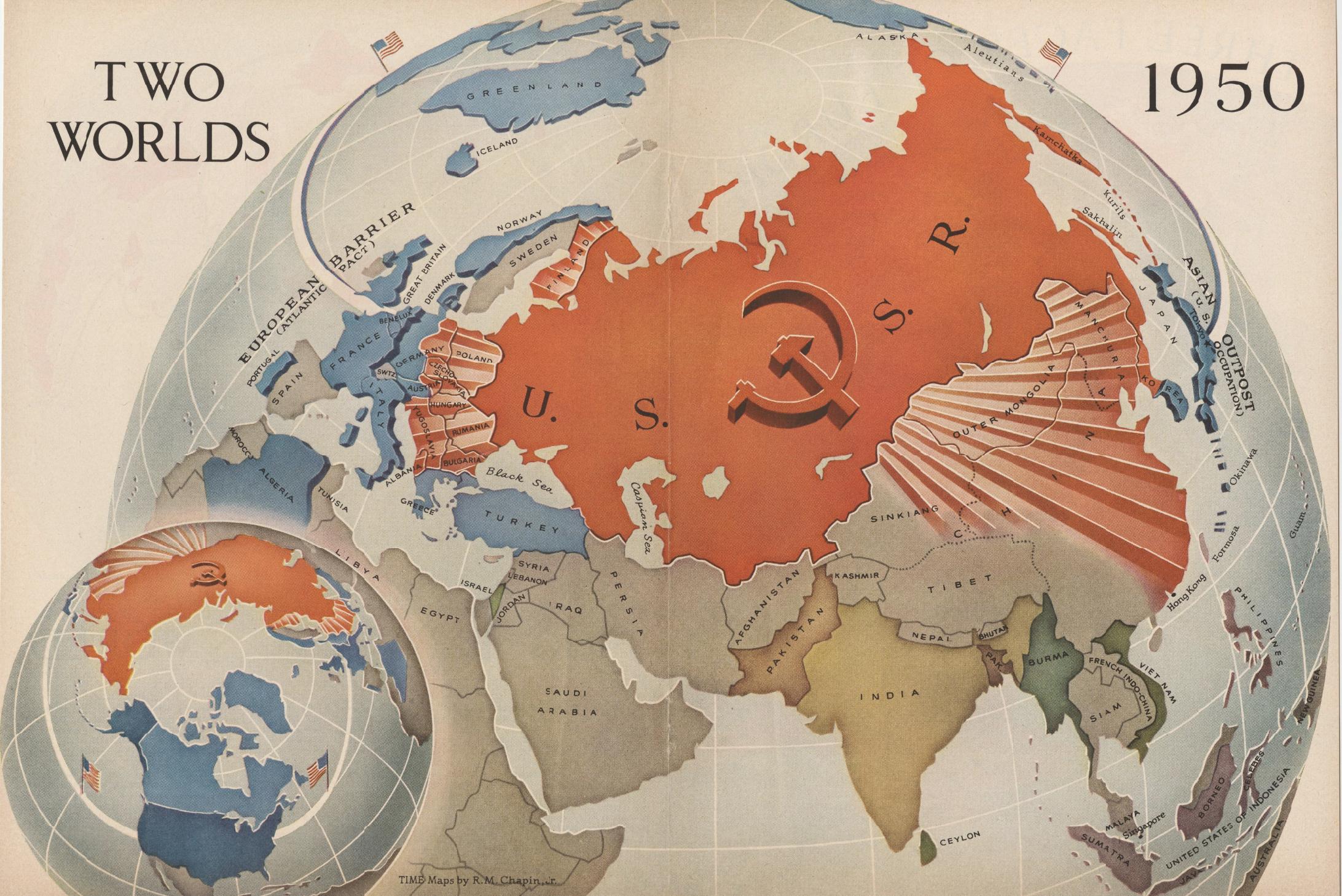
The Cold War, Téa Licon ’28 and Riley Scollans ’28
Loving v. Virginia, Aya Ragab ’28 and Hadley Stockton ’28
During the 2025 Spring Semester, the Brunswick History Department participated for the fourth time in the National History Day program. Created in 1974 to encourage the development of historical research skills, the National History Day program provides an opportunity for students to submit their research at local and state contests to win prestigious prizes and to advance to the National Contest. Over 500,000 Middle School and High School students compete each year around the nation. At Brunswick, freshmen, sophomores, and juniors enthusiastically selected their topics, spent weeks doing primary source research and then creating their projects. Exhibiting creativity, thorough research, and excellent writing, the work of several Brunswick and Greenwich Academy students advanced to the state level.
This volume of the Brunswick and Greenwich Academy History Magazine will highlight the many different ways that students presented their historical research. In addition to accepting the traditional history research paper, the National History Day program invites students to submit research as an “exhibit,” “documentary,” “website,” or “performance.” Each project category has its own unique rules while requiring all students to use research skills to work with primary sources, develop a strong thesis statement, and to carefully organize and present their conclusions. The exhibit category, for example, restricts the words students can include in their trifold and asks students to craft a narrative through the way they arrange their sources, similar to an installation in a museum. The documentary allows students to share their research as a dynamic ten minute video presentation narrated in their own voice. A website also restricts the words and multimedia students can use in order
to focus students’ efforts on formatting their research to be presented digitally. The Performance category asks students to act out their research, incorporating primary sources into their costumes, sets, and dialogue. Brunswick and Greenwich Academy students participated with great results in each category. This Volume of the Brunswick and Greenwich Academy Magazine of History, as a result, has adopted a new digital format to better present these highly interdisciplinary and creative projects.
All the projects engage the National History Day’s required 2025 theme of “Rights and Responsibilities.” The theme encouraged students to conduct research on a variety of historical events and debates in American and World history and to craft arguments about their significance in shaping history. Each student project published in this Volume includes a “process” paper, a 500 word explanation of their research and how it engages the year’s theme. Please enjoy reading and viewing the incredibly creative, interdisciplinary, and well-researched projects of the students at Brunswick and Greenwich Academy.
The 2025 Volume also features two outstanding economic essays. Will Pallone ’26 placed first in the State of Connecticut and Eighth Nationally for his InvestWrite essay reflecting on his experience participating in a stock market simulation. Blake Levy ’26 drew on the Brunswick Community to collect his data for his well-researched and documented essay Behavioral Economic Biases: A Comparison of Men Across Age Groups. The 2025 Academic Year saw students produce excellent research across a variety of disciplines and in several different formats. A true reflection of the strengths of the Brunswick School’s curriculum, faculty and students.
William Pallone ‘28
InvestWrite Essay
First Place, High School Division, Connecticut.
Eighth Place, High School Division, National.
My Stock Market Game experience has been shaped by adversity, arguments, and countless different strategies. My group's original plan was to make constant low risk and low reward investments through the duration of thegame. Upfront, this plan of action seemed like a great idea. Through constant research and level headed investments, we would maintain a steady increase in our portfolio week to week. Our ideology was that at the end of the game when everyone would begin to turn towards high risk and high reward investments we would have already built up enough profits to
relax and watch everyone else make uninformed rushed decisions.
Our first investment was a perfect example of this plan. Originally looking for large, steady, and low volatility stocks, we set out on a search. After combing through various other blue chip stocks we found it. GOOGL ended up being the very first investment that we made and more importantly, our most profitable one. Back in October Alphabet was being traded at a valuation which we viewed as underpriced. Google's advertising, cloud, and Artificial Intelligence all appeared strong, so that led us to the decision that the momentary dip was just temporary. This gave us the chance to buy an incredibly dominant company at an attractive price, while also aligning with our original long term investment philosophy, an offer we could not pass up. Our GOOGL investment has earned us over five thousand dollars and has risen about thirty percent. This investment gave us a large amount of confidence in our plan, however, as things normally go our original plan quickly went into shambles.
After our second and third investments did not produce the outcomes that we hoped for, my group members and I began to discuss a new plan. Although neither of them lost large amounts of money, they were too inconsistent, having one day in the negative percentages and a following day in the positives, to make a substantial effect on our portfolio. No matter how appealing the old plan looked on paper, having to
put all of our money into a couple stocks, regardless of their volatility, was difficult. From the point in which we bought the stocks, we could do nothing to drive the prices up or down, we were instead just forced to observethe markets and wait as our rankings in the game dropped day by day. Eventually, we began to grow frustrated as a result of seeing negligible results and decided to shift plans. Our new philosophy was to abandon our original ideals and target more volatile stocks that would provide us with quick results, allowing us to jump up in the rankings.
Our new strategy quickly made it apparent why it would have been smarter to stick with the original one. After investing in Cleveland Cliffs the flaws in the riskier plan became clear to us. We made the incredibly rash decision to invest a large sum of money into CLF, without doing a sufficient amount of research. This choice of ours was not thought out and instead a hail mary to help out our rankings. Hearing about Trump's tariff war with China, we had a feeling that this would shift the focus towards the United States companies. However, instead of doing our normal amount of research, which had proved to be sufficient, we threw too much of our cash into the company. After our investment we hoped for a quick price jump, instead, we were left with regret. Cleveland Cliffs eventually dropped close to twenty percent and lost us over five thousand dollars in a matter of days. This investment specifically made it crystal clear for us that chasing quick profits is almost all based upon luck, and investing with a more strategic, researched approach is far superior.
The Stock Market Game as a whole, but specifically my favorite and least favorite investments have given me much insight into how I would create a long-term, diversified portfolio. My key takeaway from this process was the importance of research. Currently, with thousands of websites, podcasts, newspapers, shows, and plenty more all dedicated to the stock market, it is the easiest it has ever been to research investments that you are curious about making.
My second takeaway from this process was to prioritize investments that have the highest probability of producing growth, regardless of the time period, instead of attempting to follow the big movers for a quick profit. Myexperience with the Stock Market game has shown me that long term success comes from research, patience, and the slightest bit of good luck
Benjamin Burgess ‘28
Poet and Prophet: Bob Dylan Process Paper
a historical artifact is so rarely addressed in textbooks that analyzing musical lyrics alongside historical events seemed like a complex but worthwhile idea.
Inspiration for this paper draws on my passion for guitar and how music echoes the issues of our time. After reading Bob Dylan’s memoir, Chronicles, it sparked my curiosity to learn more. What was most interesting about Dylan’s memoir was his refusal to acknowledge his role in the civil rights movement, though many would argue the opposite. I have been a guitar student for ten years, studying classical, folk and rock, so this year’s NHD theme, “rights and responsibilities,” and how folk music impacted civil rights was particularly meaningful. The idea that music can serve as
The 1960s is described as a revival period for folk music because it aligned with social and political movements. The songs, often characterized as anthems or protest songs, brought people together in a peaceful format to make the case for civil rights reform and a responsible government. I was curious to unearth why Bob Dylan continues to deny his role in advancing the civil rights discussion. My impression was that Dylan’s lyrics from his second album, The Freewheelin’ Bob Dylan, captured the voices of the oppressed and brought them to a wider audience. Yet, Dylan refused to take credit. I was not convinced that Dylan had little impact on the civil rights movement, so through my thesis, I wanted to see if I could prove him wrong. My thesis argues that Dylan, from his lyrical interpretation of the Emmitt Till tragedy to his protest anthem, “The Times they are a Changin’,” did play an important role in the historical events of the 1960s civil rights movement.
I began my research by revisiting Dylan’s memoir and researching primary sources of data – interviews, recordings, and speeches. I explored Dylan’s background, in particular his upbringing and musical influences. I came across songs that I had never heard or dismissed as simple folk and rock tunes. It was compelling to listen and visualize the imagery
the imagery that each song evoked. Secondary sources substantiated some of the arguments that I had developed in my detailed outline. There were a few dissenters who argued the opposite, but for the most part, most sources believed that Dylan’s lyrics spoke for a whole generation.
Somewhat unexpectedly, I chose the paper format for my research project. I had initially thought a documentary might be more suited to the topic but writing seemed to better represent the supporting facts I wanted to convey. I started assembling primary and secondary sources and annotating each of these to determine whether the source would be additive to the paper.
Bob Dylan’s musical role in civil rights is significant because the topic transcends time, place, social status and race. Dylan’s music brought racial awareness and the injustices of society to a wider audience. Without expanding the scope of the civil rights dialogue, I believe society would have struggled to make progress.
Benjamin Burgess ‘28
Third Place, Paper Senior Division Fairfield Region
Connecticut History Day
American history is reflected in the musical genres that emerged alongside social and political changes. Songs became anthems and anthems became the voices of change. On the heels of the blues and jazz movements arrived a more serious, mature sound that ushered in a whole new social agenda -- folk music. The folk music of the 1960s offered a bellwether of change during American history.[1] One man who appealed to many walks of life was Bob Dylan. Dylan’s lyrical masterpieces provide a lens into a period in American history that still resonates today. Did these songs serve a rhetorical function? [2] What, if anything, can be learned from these lyrical artifacts that continue to capture the attention of audiences today?
While refusing to take credit for providing a voice during the civil
rights and freedom movements of 1960’s America, Bob Dylan’s prophetic influence on rights and responsibilities is irrefutable. From his first protest ballad about Emmett Till penned in 1962, to his 1963 classic, “The Times They Are-A Changin’,” Dylan put into music, “everything he saw -- the pain, the promise, the yearning, the injustice.” As Dylan said, “There came a point where I had to write what I wanted to say, because what I wanted to say, nobody else was writing.” Dylan’s musical influence was twofold: his folk/rock tunes served as a platform to expand the message of civil rights to a broader audience and build awareness, while at the same time, called out government officials and urged them to take responsibility for the racial injustices that were plaguing American society.
Historical Background
During the time preceding Bob Dylan’s rise in popularity in the 1960s, the civil rights movement had already begun. The Truman administration set the civil rights movement on its course with Executive Orders 9980 and 9981 that desegregated the federal workforce and the military. Though politically risky, President Turman established that the government was responsible for the freedom of all citizens regardless of race. Truman’s commitment was further reinforced when he assembled the President’s Committee on Civil Rights, though the recommendations were never realized. The fight to eliminate discrimination based on race,
color, religion, sex, or national origin would define the coming years in American history.For African Americans this meant an end to segregation, equal employment and the right to vote among other rights and freedoms. In 1955, support for this movement spiked following the death of fourteen year old Emmett Till. This tragedy sparked widespread protests from both black and white Americans. Soon thereafter, Dr. Martin Luther King Jr. began the Montgomery, Alabama bus boycott, a nonviolent disobedience protest that drew interest from around the world. Increased focus on civil rights prompted a group of senators and congressmen from the south to sign the Southern Manifesto, “Vowing resistance to racial integration by all lawful means.” The battle lines had been drawn and only a broader dialogue would help advance civil rights and uphold the government’s responsibilities to grant equal freedoms to all citizens.
Bob Dylan's interest in folk music stems from his university days in Minneapolis, his own extensive reading, exposure to artists in the folk music scene, and introduction to the music of Woody Guthrie. Born Robert Allen Zimmerman into a middle class Jewish family in 1941, in Duluth, Minnesota, Dylan’s father owned an appliance store and his mother managed the household. He attended the University of Minnesota but instead of studying, Dylan played music and attended acoustical performances. He eventually dropped out of school and left home. As he writes in his memoir, Chronicles, his growing disconnect from rural life fuels his
desire to leave his hometown of Hibbing, Minnesota. When he turned nineteen, Bob Dylan moved to New York City. He found inspiration in New York City's vibrant and creative Greenwich Village neighborhood, where “he began performing in coffee houses near the university campus and changed his last name to Dylan.” He was an avid reader who frequently visited the New York Public Library where he explored poets, playwrights, philosophers and political works. John Hammond, a record producer, invited Dylan to sign a contract with Columbia Records and record his first album. This initial album garnered little attention and few sales. Nevertheless, with the release of his second album, The Freewheelin’ Bob Dylan, he earned the title, singer and songwriter for its reflective sentiments of the social issues of the time. A turning point in Bob Dylan’s life was in 1961 when he visited Woody Guthrie, who was dying from a hereditary degenerative disease. He was a longtime fan of Woody Guthrie and spent the early part of his career mimicking and playing Guthrie’s music. Guthrie’s songs were often a mix of both poetry and political activism, which is characteristic of many of Bob Dylan’s songs.
Bob Dylan’s Response
The social dynamic of the 1960s sparked a flurry of songwriting for Dylan. And the social and political environment in the 1960s further informed Dylan's interest in folk music as it was “one of the most tumultuous and
divisive decades in world history.” In reaction to the events surrounding him, Dylan wrote some of his most memorable civil rights anthems, though Dylan will deny his influence later in life. Three of Bob Dylan’s most influential protest songs include, “The Times They Are a-Changin“, "Chimes of Freedom”, and “Blowin in the Wind.” On January 13, 1963
Bob Dylan released one of his most well known songs, called “The Times They Are a-Changin.” In this song, Dylan, for the first time, connected the folk protest movement of the 1960's with the civil rights movement. “The shorter verses piled upon one another in a powerful way, and lyrics like, ‘There’s a battle outside and it is ragin’ / It’ll soon shake your windows and rattle your walls / For the times they are achangin,’ are iconic Dylan statements that manage to transcend the times.” The lines of the song that read, “Come gather ’round people/ Wherever you roam/ And admit that the waters/ Around you have grown,”seem to invite people, without prejudice, to take note of the calls to action that were unfolding before them, such as Rosa Parks who refused to give up her seat on a bus to a white man in 1955, the four black students who formed the “Little Rock Nine” and enrolled in Little Rock Central High School to protest educational segregation in 1957, the Woolworth Sit-In to encourage the boycotting of white-only stores in 1960, and the black and white freedom riders who traveled on buses to the American south to protest bus segregation in 1961. Dylan may not have written this song with civil rights in mind, but he seems to argue that society has a responsibility to take note of what is happening and participate in making it better;
participate in making it better; and people did indeed gather and take notice as Dylan advocates in his song. The culmination of these protests is John F. Kennedy’s civil rights speech on June 11, 1963.[1] Interestingly, Dylan rarely performed “The Times They Are a-Changin,” himself but chose to do so one last time after John F. Kennedy was assassinated on November 22, 1963.
Soon after he released “The Times They Are a-Changin,” Bob Dylan continued to signal the fight against injustice and inequality, which can be heard in the song, “Chimes of Freedom” which was released on August 8, 1964. Bob Dylan “uses imagery from natural disasters, like wind, lightning and hurricanes, to tell a bigger story. In 'Chimes of Freedom,' Dylan uses lyrics like, ‘Tolling for the rebel / Tolling for the rake / Tolling for the luckless / The abandoned an' forsaked / Tolling for the outcast / Burnin' constantly at stake,’ to draw parallels between those who were treated unjustly or were downtrodden.” The song “Chimes of Freedom,” written after President Kennedy’s assassination, signified the peak of Bob Dylan’s protest phase, and helped to foreshadow new directions in his music. Many claim that “Chimes of Freedom,” was a farewell song to liberty and a nod to all those denied freedom.
Perhaps Bob Dylan’s most famous song, “Blowin’ in the Wind” deservingly “became an anthem for the civil rights era.” The song asks several rhetorical questions of both
society and government on the topic of civil rights and responsibilities. Dylan’s intention with this song is not ambiguous but quite the opposite. He poses several questions for which the answer is quite clearly evident; a concept that is similar to the Constitution that states that “certain truths are self-evident.”For each question the answer is self-evident or as Dylan says, as obvious as the wind. So when Dylan asks, “How many roads must a man walk down/ Before you call him a man?,” one can interpret this to mean how many marches are necessary before all people are granted the same freedoms. Then Dylan seems to ask those in power, “And how many ears must one man have/ Before he can hear people cry?” The answer, according to Dylan, is straightforward and is simply blowin’ in the wind. The heartfelt meaning of this song is not obscured and is quite clear. It was so evident that it was performed at the March on Washington during the time Dr. Martin Luther King, Jr. delivered his “I Have a Dream” speech. The March on Washington, which was the largest gathering for civil rights of its time, was mainly focused on inequality “against African Americans, Latinos, and other disenfranchised groups, and support for the Civil Rights Act.” Those who supported the civil rights movement and some in the U.S. Government believed that “if there were any problems, the negative perceptions could undo the civil rights bill making its way through Congress” and ultimately affect the growing interest in the cause for freedom. However, the 250,000 strong protest remained nonviolent and, “in the end, the crowds were calm and there were no incidents reported by police.” This protest was extremely
This protest was extremely influential because the speeches delivered by civil rights activists, notably Dr. Martin Luther King, and songs performed by singers and songwriters, such as Bob Dylan and Joan Baez, attracted the attention of rich and poor, black and white, dedicated freedom fighters and the curious. Among the speakers was John Lewis, who said, “we do not want our freedom gradually but we want to be free now.” Most music performed at the March echoed this sentiment, except for one of Dylan’s songs. During this protest Bob Dylan sang four songs, the most notable being “Only a Pawn in Their Game.” [2] Bob Dylan had already performed this song multiple times in the past, however, he had never performed it for nearly as many people as he did during the March on Washington. The lyrics of this song are about how “poor whites do not deserve full blame for violent actions they committed against blacks.” [3] Bob Dylan says they can not be blamed fully for their action because “they, too, operate within a white-power system in which they fall to the bottom.” Dylan’s message was clear and targeted. According to Dylan, the government had masterminded a game and manipulated poor white people to direct their anger at African Americans. The song was not well received by all listeners as many people did not agree with Dylan’s interpretation. It is possible that Dylan wanted to deliver a shocking message during the March, capture the attention of a wider audience and embolden those who were not yet fully on board with the ideas of freedom and civil rights. Dylan’s use of controversial lyrics would invite discussion and dialogue and place a spotlight on the U.S. government. Dylan
seemed to suggest that there cannot be civil rights without a responsible and responsive government. The debate over the Civil Rights Act of 1964 is described as the “longest continuous debate in Senate history.”[5] President Kennedy’s proposed civil rights legislation was strongly supported by his successor, Lyndon Johnson. In his address to the Senate at the time, President Lyndon Johnson stated, “we have talked long enough in this country about equal rights. We have talked for one hundred years or more. It is time now to write the next chapter, and to write it in the books of law.”
President Johnson signed the Civil Rights Act into law on July 2, 1964.
The nature of Bob Dylan’s songs forever changed how future songwriters would write their music; from the Beatles to Bruce Springsteen, Dylan’s voice is heard in many of their songs. Bob Dylan did this by “infusing his lyrics with poetry and setting the standard for lyric writing.” Some people have even gone so far as to say that, “he was the ‘Shakespeare’ of his era and the ‘greatest poet’ of the second half of the 20th century.” This idea was reaffirmed when Bob Dylan won the Nobel Prize for Literature in December 2016. Though he failed to attend the award ceremony in person, Dylan wrote in his acceptance remarks, “hearing your songs on the radio meant that you were reaching a big audience…They seemed to have found a place in the lives of many people throughout many different cultures and I’m grateful for that.”
Bob Dylan reached people at poignant times in American history. Though he refused to formally enter politics, he used his words to lead others to take action. President Barack Obama recognized this when he awarded Bob Dylan with the Presidential Medal of Freedom in 2012. President Obama said that, “there is not a bigger giant in the history of American music. I remember…my world opening up because he captured something about this country that was so vital.”
Bob Dylan also inspired many artists who followed him. The Beatles point to Dylan as a great inspiration for them, “especially on their first foray into folk-rock, an entire genre attributed to Dylan.” Bob Dylan’s influence over John Lennon’s songwriting was clearly shown in the Beatles album “‘Rubber Soul', where the lyrics became more introspective and sophisticated.” In later years, Bruce Springsteen, hailed as the “next Bob Dylan,” described his idol as one of the greatest writers of human freedom
Conclusion
Bob Dylan’s folk ballads were never to incite a movement or protests but rather to bring together as many people as possible to hear and bear witness to the civil rights and social justice issues of the 1960s. His lyrical interpretation of historical events did just that and at the right moment in time. Without Dylan’s songwriting appeal across all walks of life, it is hard to imagine that the dialogue around civil rights
would have been so widespread. While Dylan disagrees with the prophetic nature of his music, he did consciously use his music to bring together people at rallies and marches across the country. Perhaps the most significant of these events was the March on Washington where Dylan was invited to perform. To this day, Dylan’s songwriting style and purpose is seen in his contemporaries as a way to bring people together to incite peaceful dialogue.
NOTES
Primary Sources
Chalamet, Timothée. A Complete Unknown. Directed by James Mangold. Searchlight Pictures, 2024.
Dylan, Bob. Chronicles: Volume One. New York City, New York: Simon & Schuster Paperbacks, 2005.
Dylan, Bob. "The Times They Are A-Changin.'" January 13, 1964.
Dylan, Bob. Interview by Ed Bradley. Northampton, MA.
Dylan, Bob. "Chimes of Freedom." August 8, 1964.
Dylan, Bob. "Blowin’ in the Wind." May 27, 1963.
Dylan, Bob. "Transcript of Bob Dylan's MusiCares Person of Year speech." LA Times (Los Angeles, CA), February 7, 2015. Accessed December 22, 2024. https://www.latimes.com/ entertainment/music/posts/la-et-ms-grammys-2015transcript-of-bob-dylans-musicares-person-of-yearspeech-20150207-story.html.
Morrow, E. Frederic. Black Man in the White House : a Diary of the Eisenhower Years by the Administrative Officer for Special Projects, the White House, 1955-1961. Place of publication not identified: Phocion Publishing, 2019.
Secondary Sources
Authors, History. “Civil Rights Movement Timeline - timeline & events.” History.com. Accessed December 21, 2024. https://www.history.com/topics/black-history/civil-rightsmovement-timeline.
Authors, History. "1960s: Counterculture and Civil Rights Movement." History.com. Accessed December 28, 2024. https://www.history.com/topics/1960s.
Bayles, Martha. "The Strange Career of Folk Music." Michigan Quarterly Review 44, no. 2 (2005): 304-17. eLibrary (232313887).
Dylan, Bob, and Jonathan Cott. Bob Dylan, the Essential Interviews. New York: Simon & Schuster, 2017.
Belletto, Steven, Damian Carpenter, Ronald Cohen, Mark Davidson, Kevin Dettmar, Florence Dore, Leigh Edwards, et al. "The World of Bob Dylan." Google Books, 2021. https:// www.google.com/books/edition/ The_World_of_Bob_Dylan/PzorEAAAQBAJ? hl=en&gbpv=1&dq=bob%2Bdylan%2Band%2Bthe%2Bcivil% 2Brights%2Bmovement&printsec=frontcover.
Billington, James H. "The Civil Rights Act of 1964: A Long Struggle for Freedom Civil Rights Era (1950–1963)." Library of Congress, October 10, 2014. https://www.loc.gov/ exhibits/civil-rights-act/civil-rights-era.html
"Bob Dylan Banquet Speech (Nobel Prize)." Video, 08:34. The Nobel Prize. Posted by Azita Raji and Bob Dylan, December 10, 2016. Accessed December 28, 2024. Bob Dylan – Banquet speech. NobelPrize.org. Nobel Prize Outreach AB 2024. Sat. 28 Dec 2024. <https://www.nobelprize.org/ prizes/literature/2016/dylan/speech/.
Cort, Mary Elizabeth. "The Power of Lyrical Protest: Examining the Rhetorical Function of Protest Songs in the 2000s." PhD diss., Rochester Institute of Technology, 2013.
Cox, Julia. "Sing It So Loudly': The Long History of Birmingham Sunday.'" Southern Cultures 24, no. 3 (2018): 62. http://dx.doi.org/10.1353/scu.2018.0032.
Davidson, Josh. "Key Events in 1963 History." Civil Rights Teaching, September 12, 2024. https:// www.civilrightsteaching.org/resource/key-events-1963.
Dunlap, James. "Through the Eyes of Tom Joad: Patterns of American Idealism, Bob Dylan, and the Folk Protest Movement." Popular Music and Society 29, no. 5 (2006): 549-573,637. eLibrary (208064953).
Flynn, Tyler. "The Political World of Bob Dylan: Freedom and Justice, Power and Sin." Scholarly Journals, August 2016. Accessed December 20, 2024. https:// explore.proquest.com/elibrary/document/1853751541? searchid=1734747988&accountid=40847.
Gale Family Library. "Libguides: Bob Dylan: Iconic Singer & Songwriter: Overview." Minnesota Historical Society Library, September 5, 2024. https://libguides.mnhs.org/ bdylan#:~:text=He%20moved%20from%20folk%20to,war% 20and%20civil%20rights%20movements.
Gelb, Matt, and Nick Matej. "Bob Dylan as Modern Day Prophet." Omnia, May 30, 2024. https:// omnia.sas.upenn.edu/story/bob-dylan-modern-dayprophet.
Gellman, Marc. "Civil Rights and the Sacred Truth." Civil Rights Journal 2, no. 1 (1997): 11. eLibrary (215212239).
Green, Jeffrey Edward. " Bob Dylan at the March on Washington: Prophet of the Bourgeoisie, March 14, 2019. https://www.polisci.upenn.edu/sites/default/files/ Green_%20Bob%20Dylan.pdf.
Harks, Becky Sherrick. "Top 10 Bob Dylan Protest Songs." Ultimate Classic Rock, November 3, 2012. https:// ultimateclassicrock.com/bob-dylan-protest-songs/.
Harry S. Truman Presidential Library Staff. President's Committee on Civil Rights, To Secure These Rights: Report of the President's Committee on Civil Rights, H.R. Rep. (1947). Accessed December 22, 2024. https:// www.trumanlibrary.gov/education/presidential-inquiries/ harry-s-truman-and-civil-rights#handouts.
Herman, Nick. "Bob Dylan Setlist at March on Washington 1963." setlist.fm, May 20, 2022. https://www.setlist.fm/ setlist/bob-dylan/1963/lincoln-memorial-washingtondc-63d62a07.html.
Herren, Graley, "The Twilight’s Last Gleaming: Dialogues and Debts in Bob Dylan’s"Chimes of Freedom"" (2019). Faculty Scholarship. 582.
https://www.exhibit.xavier.edu/english_faculty/582
Higgins, Bill. "Throwback Thursday: Bob Dylan Sang for Civil Rights in 1963." The Hollywood Reporter, April 29, 2023. https://www.hollywoodreporter.com/news/general-news/ throwback-thursday-bob-dylan-sang-728240/.
Kaiser, Charles. "March on Washington: The Day Mlk – and Dylan and Baez – Made Hope and History Rhyme." March on Washington: the day MLK – and Dylan and Baez – made hope and history rhyme, August 28, 2023. https://
www.theguardian.com/us-news/2023/aug/28/march-onwashington-martin-luther-king-bob-dylan-joan-baez.
Kemp, Sam. "What Made Bob Dylan Abandon Hibbing, Minnesota?" Far Out Magazine, September 23, 2022. https://faroutmagazine.co.uk/what-made-bob-dylanabandon-hibbing-minnesota/
#:~:text=Anyone%20who%20grew%20up%20in,and%20he %20wanted%20a%20taste.
Kolin, Philip C. "Forgotten Manuscripts: 'Blues for Emmett Till': The Earliest Extant Song about the Murder of Emmett till." African American Review 42, no. 3/4 (2008): 455-460,795. eLibrary (209803146).
Marqusee, Mike. Wicked Messenger. United States, New York : Seven Stories Press, 2011.
Music Junkie Press. "The Musicians Influenced by Bob Dylan." Music Junkie Press, March 19, 2021. https:// musicjunkiepress.com/music/the-musicians-influenced-bybob-dylan/. Rodnitzky, Jerome L. "The sixties between the microgrooves: Using folk and protest music to understand American history, 1963-1973." Popular Music and Society 23, no. 4 (1999): 105-22. eLibrary (208075643).
Schickling, Matt. "Bob Dylan on Whites within a White Power System." The Rhetoric of the Civil Rights Movement, June 2021. https://sites.psu.edu/civilrightsrhetoric/bobdylan-on-whites-within-a-white-power-system/ #:~:text=In%20August%20of%201963%2C%20he,united%2 0force%20of%20the%20movement.
Shields, Brigid. "Libguides: Bob Dylan: Iconic Singer & Songwriter: Overview." Overview - Bob Dylan: Iconic Singer & Songwriter - LibGuides at Minnesota Historical Society Library, September 5, 2024. https://libguides.mnhs.org/ bdylan.
Smolko, Joanna. "Springsteen and Human Rights: 'Chimes of Freedom'." The Avid Listener (blog), March 8, 2021. Accessed January 4, 2025. "https://theavidlistenerblogcom.wordpress.com/ 2021/03/08/springsteen-and-human-rights-chimes-offreedom/.
Stockman, Steve. The Rock Cries Out: Discovering Eternal Truth in Unlikely Music. Florida, Lake Mary: Relevant Books, 2004.
Taylor, Tom. "Bob Dylan Explains the First Song He Ever Wrote." Far Out Magazine, June 1, 2021. https://
faroutmagazine.co.uk/bob-dylan-first-song-he-ever-wrotewoody-guthrie/.
Thomas, Richard F. Why Bob Dylan matters. New York City, New York: HarperCollins, 2019.
U.S. Senate: Landmark Legislation: The Civil Rights Act of 1964,” December 2, 2024. Accessed December 22, 2024. https://www.senate.gov/artandhistory/history/common/ generic/
Wakeman, Gregory. "5 Ways Bob Dylan Influenced Popular Music." History.com. Arts and Entertainment Networks. Last modified December 9, 2024. Accessed December 23, 2024. https://www.history.com/news/bob-dylan-changed-music.
Whatley, Jack. "Revisit a Sprawling Letter from Bob Dylan about Money, Fame and Love from 1964." Far Out Magazine, June 6, 2020. https://faroutmagazine.co.uk/bob-dylanletter-to-broadside-rotolo-money-fame-love/.
The White House Office of the Press Secretary. "Remarks by the President at Kennedy Center Honors Reception." News release. December 7, 1997.
Wilentz, Sean. Bob Dylan in America. New York City, New York: Anchor Books, 2011.
Blake Levy ‘26
Behavioral Economic Biases: A Comparison of Men Across Age Groups
Present Bias, with a statistically significant difference of 11.1 percentage points compared to adults (p = 0.0068, 95% CI: 2.8–19.4%). While teenagers also showed higher frequencies of Loss Aversion and Sunk Cost biases (6.9 and 6.4 percentage points, respectively), these differences were not statistically significant. The findings suggest that certain decision-making biases, particularly those related to shortterm reward preference, decrease with age and experience. This study contributes to the understanding of how behavioral tendencies evolve over time and highlights the importance of considering development and experience factors in economic decision-making research.
What Is Behavioral Economics?
Abstract
This study investigates the prevalence of three behavioral biases, Loss Aversion, Present Bias, and Sunk Cost, among males across different age groups and levels of financial experience. Using a survey administered to 413 American males (209 teenagers aged 13–19 and 204 adults aged 20+), participants responded to scenarios designed to measure each bias in real-world decision-making applications. The results indicate that teenagers were more likely to exhibit
Behavioral economics is the science and exploration of economic decision-making by humans. These decisions can range from basic, everyday choices, to risky, high value actions that occur in the biggest businesses. Fueled by psychology-based studies and theories, it has become an increasingly popular concept in the business world. Founded by psychologists like Daniel Kahneman and Amos Tversky, along with economists like Richard Thaler, behavioral economics applies science to the observation that real people make irrational, biased, and emotionally-driven decisions. As Richard Thaler famously put it: “The lesson of my field, behavioral economics, is that we need to understand the ways in which we differ from the rational human assumed in
Putting these concepts into common, real world examples: A website with a product you like says it has a sale that ends tomorrow. Even if you don’t make the decision to buy the product, a part of you will be inclined to buy it. Similarly, you may search for a product you’re interested in and decide to buy one from a familiar brand rather than a cheaper alternative of the same thing. The most commonly seen and famously known example of bias in the behavioral finance field is taking a risk when loss is at stake, versus playing it responsibly and safely when you are winning.
The Definition and Role of Biases in Economic DecisionMaking
A storm of synapses fire across the brain; memory, emotion, and instinct are rapidly connected. Before we're even aware, neural circuits ignite in patterns shaped by past experiences and hidden biases, steering our choices in an instant. Thus, a decision is formed. Logic may step in afterward, but by then, the subconscious has already set the course. Kahneman’s recognition of two cognitive systems (2011) explains the connection between subconscious decision and logical reasoning. System 1 processes, which represent subconscious thinking and reflex, are fast, automatic, and intuitive. Many everyday decisions are made in this manner and are influenced by prior experience.
System 2, which represents logical reasoning, is, unfortunately for us, slow and strict. Because the two systems work at unequal speeds, every situation that a person doesn’t analyze carefully enough can suffer the consequences: a missed opportunity, a poor investment, or worse.
The Biases Examined Here
The purpose of this study is to determine whether or not certain biases present themselves equally across different age groups. More specifically, this study looks at survey responses from a group of 209 male, American teenagers with little to no economic knowledge, and a group of 204 male adults presumed to have greater exposure to financial decision-making and economic concepts. The data collected for this experiment revolves around three different biases: Loss Aversion, Present Bias, and Sunk Cost.
Loss Aversion is a well-documented behavioral bias in which individuals experience the psychological impact of losses more strongly than the utility of equivalent gains. Experimental evidence suggests that losses are weighted roughly twice as heavily as gains of the same magnitude. As a result, individuals tend to take greater risks to avoid losses than to achieve comparable gains. This phenomenon was formalized by Kahneman and Tversky (1979) as a central component of Prospect Theory.
The Study
Taking these three biases into account, this paper investigates the commonality of economic biases in men ranging from high school students with little or no business knowledge or experience compared with those of professionals in finance with years of experience and knowledge provided from college and working life. The purpose of this investigation is to see whether or not economic biases become less common over time and with experience in financial situations of the modern world.
To accomplish such an investigation, a survey was used. The survey was completed online by over four hundred American males, half teenagers aged 13-19, half adults aged 20+. While a broader gender mix would have been preferable, the teenage participants were sourced from a single private allboys school with institutional permission and oversight. As a result, the teenage sample was drawn from a single institution, which may limit generalizability due to shared educational or socioeconomic factors. To maintain consistency and comparability across age groups, only male respondents were included in the adult sample. The survey featured three key questions related to each individual bias defined earlier.
The Questions
Question One — Loss Aversion
Participants are presented with the idea of both winning and losing money
They were given two different scenarios:
Scenario A: Imagine you’re offered a choice between receiving $100 in hand, or flipping a coin to either win $200, or win nothing.
Scenario B: This time, you’re losing. Imagine you’re offered two new choices, one where you automatically lose $100, and the other, where you flip a coin to either lose $200, or lose nothing.
This question was adapted from Kahneman and Tversky’s (1979) Prospect Theory experiment on risk preferences, and tests the hypothesis that the participants here would play it safe when winning, but take risks where the context is a possible loss. A “rational” response would be consistent across both gain and loss scenarios, or choosing the same type of answer for both, whereas a “biased” response would reflect risk aversion for gains and risk-seeking for losses, as predicted by Loss Aversion.
Participants are presented with trade-offs between smaller, sooner rewards and larger, later rewards. They were given two different
exist. That left 413 responses in the data set: 209 were teenagers aged 13 to 19 years, and 204 were adults aged over 19.
Question One Results — Loss Aversion
Loss Aversion bias was analyzed by identifying participants in each age group who exhibited the classic loss aversion pattern predicted by Prospect Theory:
Choosing $100 for sure instead of flipping for $200 was interpreted as ‘risk-averse for gains’
Choosing to flip the coin rather than lose $100 for sure was interpreted as ‘risk-seeking for losses’.
Participants showing both behaviors were classified as ‘biased’.
Frequency of Biased Behavior
Teenagers displayed loss aversion bias more frequently than adults: they were 6.9 percentage points – or 22% – more likely to show the biased behavioral pattern than the adults were.
Tests of Statistical Significance — Loss Aversion
Given that the size of our groups was limited by our access to teenage respondents, we knew that it was important to test whether the results were statistically significant, rather than likely due to random chance. After all, 200 people does not necessarily accurately represent an entire population, whether teenagers or adults.
For each bias, we used two tests of statistical significance on the results: a chi-square test and a confidence interval. For more information on these tests, see the Glossary (pg. 20-21).
Results of the chi-square test for Question 1 were:
χ2 = 1.87
p = 0.171
Given p > 0.05, the difference is not statistically significant at the conventional level. In other words, the data suggests that teenagers show more loss aversion, but the evidence is not strong enough to confidently conclude that the behavior of the age groups differs in the broader population.
The 95% confidence interval for Question 1 was:
-2.2% to 16.1%
In other words, we cannot say with 95% confidence that
teenagers appear more likely to exhibit loss aversion than adults.
Question Two Results — Present Bias
Analysis of the Present Bias scenarios showed differences in consistency between teenage and adult respondents. Participants were classified as showing biased if they selected:
$45 today in the first question (preferring the immediate reward)
AND
$60 in 13 months in the second question (preferring the larger delayed reward when both options are in the future).
4 different response profiles were defined:
This pattern of preference for immediacy in the short term combined with patience in the long term is the classic sign of Present Bias in experiments around hyperbolic discounting: the tendency to prefer smaller, immediate rewards over larger rewards that come later.
Frequency of Biased Behavior
'Teenagers were 11.1 percentage points – or 66% – more likely to show Present Bias than the adults.
Tests of Statistical Significance — Present Bias
Results of the chi-square test for Question 2 were:
7.33
Given p < 0.05, the difference is statistically significant at the conventional level. In other words, the data provides strong evidence that teenagers are more likely to demonstrate Present Bias.
The 95% confidence interval for Question 2 was: 2.8% to 19.4%
In other words, the true difference in bias in the broader population is 95% likely to be somewhere between 2.8 percentage points higher in teenagers and 19.4 percentage points higher in teenagers. The fact that the interval does not cross zero supports the result that Present Bias is more prevalent in teenagers than adults.
Question Three Results — Sunk Cost
In the sunk cost scenario, participants were classified as biased if they chose to continue attending a movie they had already paid for, despite not enjoying it, reflecting the tendency to “sink” resources rather than cut losses. Unbiased responses involved leaving the movie, mirroring making financially rational decisions by avoiding further unnecessary investment.
Teenagers were 6.4 percentage points, or 12% more likely to display Sunk Cost Bias than adults.
Tests of Statistical Significance – Sunk Cost Bias
Results of the chi-square test for Question 3 were:
Given p > 0.05, the difference is not statistically significant at the conventional level. In other words, the data suggests that teenagers are more likely to show more Sunk Cost Bias, but the evidence is not strong enough to confidently conclude that the behavior of the age groups differs in the broader population.
The 95% confidence interval for Question 3 was: -3.2% to 16.0%
In other words, we cannot say with 95% confidence that teenagers are more likely to exhibit Sunk Cost Bias than adults in the broader population.
Conclusions
This study investigated whether behavioral biases in financial decision-making decline with age and experience by comparing responses from teenage and adult male participants. Across all three biases examined, Loss Aversion, Present Bias, and Sunk cost, teenagers exhibited higher rates of biased behavior than adults.
However, the strength of these differences varied substantially when evaluated through statistical testing. For both Loss Aversion and Sunk Cost Bias, the observed differences in bias rates were not statistically significant (p = 0.171 and p = 0.226, respectively), and the corresponding confidence intervals included zero, indicating that these results cannot be confidently applied beyond the sample. In contrast, Present Bias demonstrated a statistically significant difference (p = 0.0068), with teenagers considerably more likely to exhibit time-inconsistent preferences. This finding provides strong evidence that Present Bias decreases with age, and possibly with experience, potentially reflecting the
not biased) with the number we would expect if there were no difference between the groups.
Output: The χ² statistic measures the difference, and the pvalue tells us how likely it is that this difference occurred by chance.
Example from this study: For Loss Aversion, χ² = 1.87 and p = 0.171. Since p > 0.05, the difference between teenagers (38.3%) and adults (31.4%) is not statistically significant, meaning we cannot confidently say the difference would exist in the broader population.
Confidence Interval (CI)
Purpose: To provide a range in which the true difference between groups is likely to fall.
How it works: Based on the survey data, we calculate the lower and upper bounds of the difference in bias rates, giving a sense of uncertainty.
Interpretation: A 95% CI means we can be 95% confident that the true population difference lies within that range.
Example from this study: For Present Bias, the 95% CI was 2.8% to 19.4%, meaning we are 95% confident that teenagers are between 2.8% and 19.4% more likely than adults to show
this bias. Since the interval does not include zero, this supports a real difference in the broader population.
Frequency and Percentage Point Difference
Frequency: The count of participants showing a particular response or bias.
Percentage Point Difference: The difference in the percentage of participants exhibiting a behavior between two groups.
Example: If 58.9% of teenagers show Sunk Cost bias and 52.5% of adults do, the difference is 6.4 percentage points.
development of greater patience, improved impulse control, or increased exposure to long-term financial decisionmaking.
The absence of statistical significance in Loss Aversion and Sunk Cost Bias suggests that the two biases may be more persistent over time and less likely to decrease through experience alone, or that the sample size was insufficient to detect smaller effects. Future research could address these limitations by expanding the sample size, incorporating a more diverse participant pool, and improving the survey so it measures these biases more accurately and in greater detail. Overall, the results indicate that while certain behavioral biases, most notably Present Bias, appear to decline with age, others may remain relatively stable, highlighting the complexity of behavioral biases in economic decisionmaking.
Glossary
Bias – A systematic tendency in decision-making that derives from rational judgment. Biases can affect choices in predictable ways.
Survey Response – An answer given by a participant in a questionnaire or study.
Statistical Significance – A determination that a result is unlikely to have occurred by random chance alone, usually assessed using a p-value or CI.
p-value (p) – A measure of how likely it is that the observed difference between groups happened by chance. A small pvalue (commonly p<0.05 in similar research) indicates that the difference is statistically significant.
Confidence Interval (CI) – A range of values that likely contains the true population difference. A 95% CI means we are 95% confident that the true value falls within that range.
Rational vs. Biased Response – In this study, responses were classified as “rational” if they followed consistent, logically aligned choices, and “biased” if they reflected common behavioral biases.
Statistical Methods
Chi-Square Test (χ²)
• Purpose: To determine whether the differences in responses between groups (teenagers vs. adults) are likely due to chance or represent a real difference.
• How it works: The test compares the number of participants observed in each category (e.g., biased vs.
Agresti, A. (2018). Statistical methods for the social sciences (5th ed.). Pearson.
Kahneman, D., & Tversky, A. (1979). Prospect theory: An analysis of decision under risk. Econometrica, 47(2), 263–291. https://doi.org/10.2307/1914185
Ainslie, G. (1975). Specious reward: A behavioral theory of impulsiveness and impulse control. Psychological Bulletin, 82(4), 463–496. https://doi.org/10.1037/h0076860
Arkes, H. R., & Blumer, C. (1985). The psychology of sunk cost. Organizational Behavior and Human Decision Processes, 35(1), 124–140. https://doi.org/ 10.1016/0749-5978(85)90049-4
Kahneman, D. (2011). Thinking, fast and slow. Farrar, Straus and Giroux.
Kahneman, D., Knetsch, J. L., & Thaler, R. H. (1990). Experimental tests of the endowment effect and the Coase theorem. Journal of Political Economy, 98(6), 1325–1348. https://doi.org/10.1086/261737
McHugh, M. L. (2013). The chi-square test of independence. Biochemia Medica, 23(2), 143–149. https://doi.org/10.11613/ BM.2013.018
Moore, D. S., McCabe, G. P., & Craig, B. A. (2017). Introduction to the practice of statistics (9th ed.). W. H. Freeman.
Thaler, R. H. (1981). Some empirical evidence on dynamic inconsistency. Economics Letters, 8(3), 201–207. https:// doi.org/10.1016/0165-1765(81)90067-7
Laibson, D. (1997). Golden eggs and hyperbolic discounting. Quarterly Journal of Economics, 112(2), 443–478.
Levy, B. (2026). Decision-Making Preferences Survey [Survey]. Brunswick School. https://docs.google.com/forms/ d/e/
1FAIpQLSf8s2Y3Umzgo4dNzwmB0aWqHejDPMenfhEE7Gp xlcGp4f-rFQ/viewform?usp=dialog
Question Two — Present Bias
Participants are presented with trade-offs between smaller, sooner rewards and larger, later rewards. They were given two different scenarios:
Short-Term Scenario:
Would you prefer to receive $45 today or $60 in one month’s time?
Long-Term Scenario:
Would you prefer to receive $45 in twelve months or $60 in thirteen months?
This question was adapted from Ainslie’s (1975) research on hyperbolic discounting and examines how individuals value immediate rewards compared to delayed ones. A “rational” response would be consistent across both scenarios, choosing either the short-term reward in both cases or the long-term reward in both cases. A “biased” response would show inconsistency, specifically choosing the short-term reward in the first scenario but the long-term reward in the second scenario, even though the relative difference in time and reward is the same.
Question Three — Sunk Cost
To test for Sunk Cost bias, the participants were presented with a scenario in which they had to decide whether to continue investing in an activity after already committing resources that cannot be recovered:
Movie Scenario:
After paying for a movie ticket and realising you don't enjoy the movie, would you rather stay and finish watching it or go home to do something else?
This question was adapted from Thaler’s (1981) formalization of the Sunk Cost effect and the psychological interpretations by Arkes and Blumer (1985). A “rational” response would ignore past, unrecoverable investments and choose the option that maximizes future benefit, such as leaving the movie if it provides little enjoyment and investing your time into something more beneficial. A “biased” response would continue investing simply because of past expenditures - to stick it out at the movie, even though you’re not enjoying itdemonstrating the Sunk Cost effect.
The Results
A total of 452 survey responses were collected. Given that the teenage response pool was entirely composed of males, due to an accessibility constraint, adult female responses were excluded, in order to eliminate any gender bias that might
Arya Pelletier ‘28
Title IX: Shaping America Through Women’s Rights Process Paper
I chose my topic of Title IX because I am passionate about women’s rights, their fight for it, and equality for all. As a girl highly involved in athletics, I have seen first-hand the importance that Title IX has played in my ability to have equitable access to athletic programs. When I was younger, I was invited to play in boys’ hockey teams. Females playing in coed teams was uncommon before Title IX was passed. My topic relates to the annual theme because it covers rights and responsibilities, as Title IX connects to rights. After all, the act’s passing enabled women to have equal rights and the freedom to access programs that are a part of having equal rights. My topic relates to the theme of responsibilities because the passing of Title IX helped lower stereotypes
about women having the responsibility of being home caretakers and not being able to explore the world. Title IX also enabled women to have new responsibilities, such as the responsibilities that come with jobs and being a student earning a high degree. The passing of Title IX was also the responsibility of former representatives Patsy T. Mink, Edith Green, and former senator Birch Bayh, but mainly President Richard Nixon and the government body, to create a society where women have equitable rights and access to education and athletic opportunities.
I conducted my research using NHD’s site to help me find links to obtain both primary and secondary sources. I created a document with primary sources, images, and secondary sources organized to refer to either, mainly when citing sources in noodle tools. I worked on taking notes on three to four sources a day and made sure that each source was reputable. I also tried to find as many audible and video sources as possible, as I learned better that way and was able to find many images to use for my documentary.
I dedicated each day to doing a section of my documentary. For example, I dedicated two days to sorting my notes and filing them before and during the main event and the shortterm and long-term impacts. Then, I dedicated four days to writing out my speech, and now, I am dedicating a day to getting images, and from there, I will dedicate one day per two categories (an example being one day for intro and thesis
recordings).
My historical argument is that the passing of Title IX granted women equitable access to educational and athletic opportunities, which inspired more women to pursue careers, graduate with higher degrees, and participate in athletic activities that were once only available for men.
My topic is significant in history because it reduced discrimination based on sex for women and also enabled them to have better and more equitable access to educational and athletic programs. Since passing Title IX, the number of women athletes has increased by more than two million. Women also began earning higher degrees and were more inspired to be involved in the workforce.
National History Day Documentary by Arya Pelletier ‘28

3rd Place Winner Best Individual Documentary (Fairfield Region)
Senior Division
National History Day Group Documentary by Alice
Beacham ’28 Anna Ciardi '28
Olympe de Gouges: The Start of the Fight for Gender
Annachiara Ciardi ‘28 and Alice Beacham’28
Olympe de Gouges: The Start of the Fight for Gender Equality Process Paper
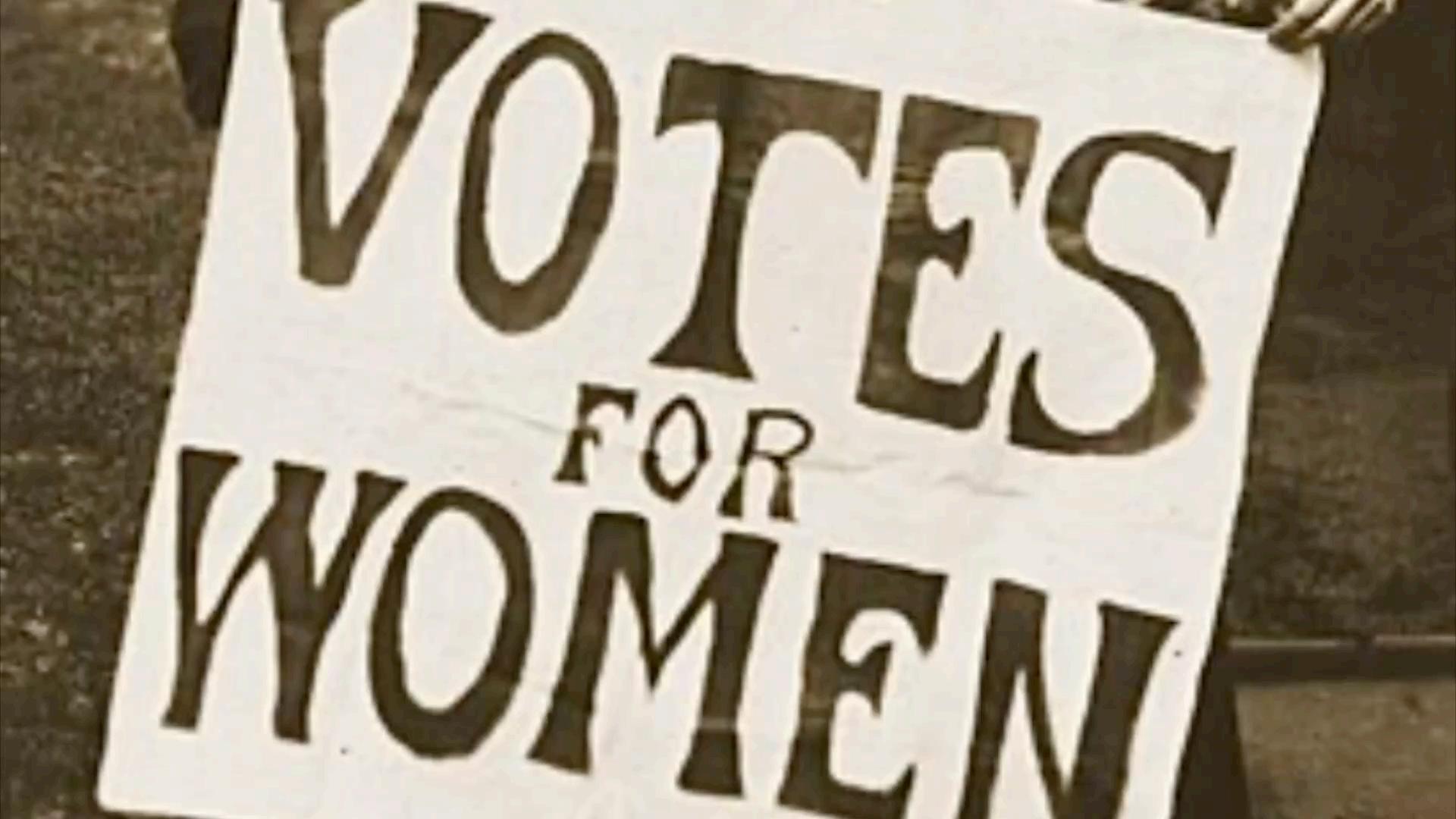
The fight for women’s rights has always been a struggle in our society. Many started the fight against this for us but only one came first, Olympe de Gouges. She was a French writer and activist who during the French Revolution, fought against the exclusion of women from The Declaration of The Rights of Man and of the Citizen. Her work The Declaration of the Rights of Woman and of the Female Citizen, laid the important foundation for future feminist movements as she inspired many important figures such as Mary Wollstonecraft and Susan B. Anthony. We chose this topic because despite the huge progress made since Olympe de Gouges gender equality is still not a complete reality today, and the fight for women's rights is still being fought. Studying figures like De
Gouges helps people understand how far we have come since then and how much further we can still need to go. The fight for gender equality has always depended on individuals to take a stand against it, even in the harder times. De Gouges risked a lot to fight against the idea that women should remain silent and be unimportant in society and at home. Her work set up a good beginning for future feminists who took on the responsibility of continuing the fight for equality.
The legacy of women like De Gouges, Wollstonecraft, and Anthony still remains and reminds us that to achieve equal rights we must work together, as no fight is ever won alone. For our research we began with a broad exploration of The Declaration of the Rights of Woman and how it impacted society during the French Revolution. From there we followed connections it may have had to any other key figures in the feminist movement. From there we found Wollstonecraft who wrote A Vindication of the Rights of Woman which further settled ideas on gender equality. This later led us to Susan B. Anthony who was a leader in the suffrage movement. Our research included a mix of many sources from our school’s recommended websites as well as additional academic materials to ensure we had a full understanding of the influence De Gouges left. For the final product of our project, we used iMovie to create a documentary which showed De Gouges’ role in the start of feminist thought. We carefully chose images which went with the historical accuracy of her work. Before putting the final pieces of the video together, we wrote a script to make sure our argument was clear, structured, and correct. The final
product followed the increase of feminist thought from De Gouges to later activists which demonstrated the great and lasting impact her work had. Our historical argument is that Olympe de Gouges and The Declaration of the Rights of Woman were fundamental building blocks when laying the foundation for the feminist movement, women’s suffrage, and gender equality. Her ideas influenced Mary Wollstonecraft whose writings furthermore inspired suffragists like Susan B. Anthony. This progression and increase in in importance of the feminist movement is ultimately what contributed to many major milestones like the 19th Amendment which gave women the right to vote in the United States. De Gouges managed to spark a movement that continues to shape the world today. Olympe de Gouges’ work still remains significant to this day as it challenged deeply ingrained gender roles at a time in which speaking out about it could lead to terrible consequences. Her courage in what she did managed to set the stage for many future activists who carried her ideas with them. While much progress has been made since her time gender inequality still continues in many forms from wage gaps to political underrepresentation. By studying the contributions of people like De Gouges we can not only recognize the struggles of the past in which many women lived in but also understand the importance of continuing the fight for true equality.
Elaine Cheng ‘28
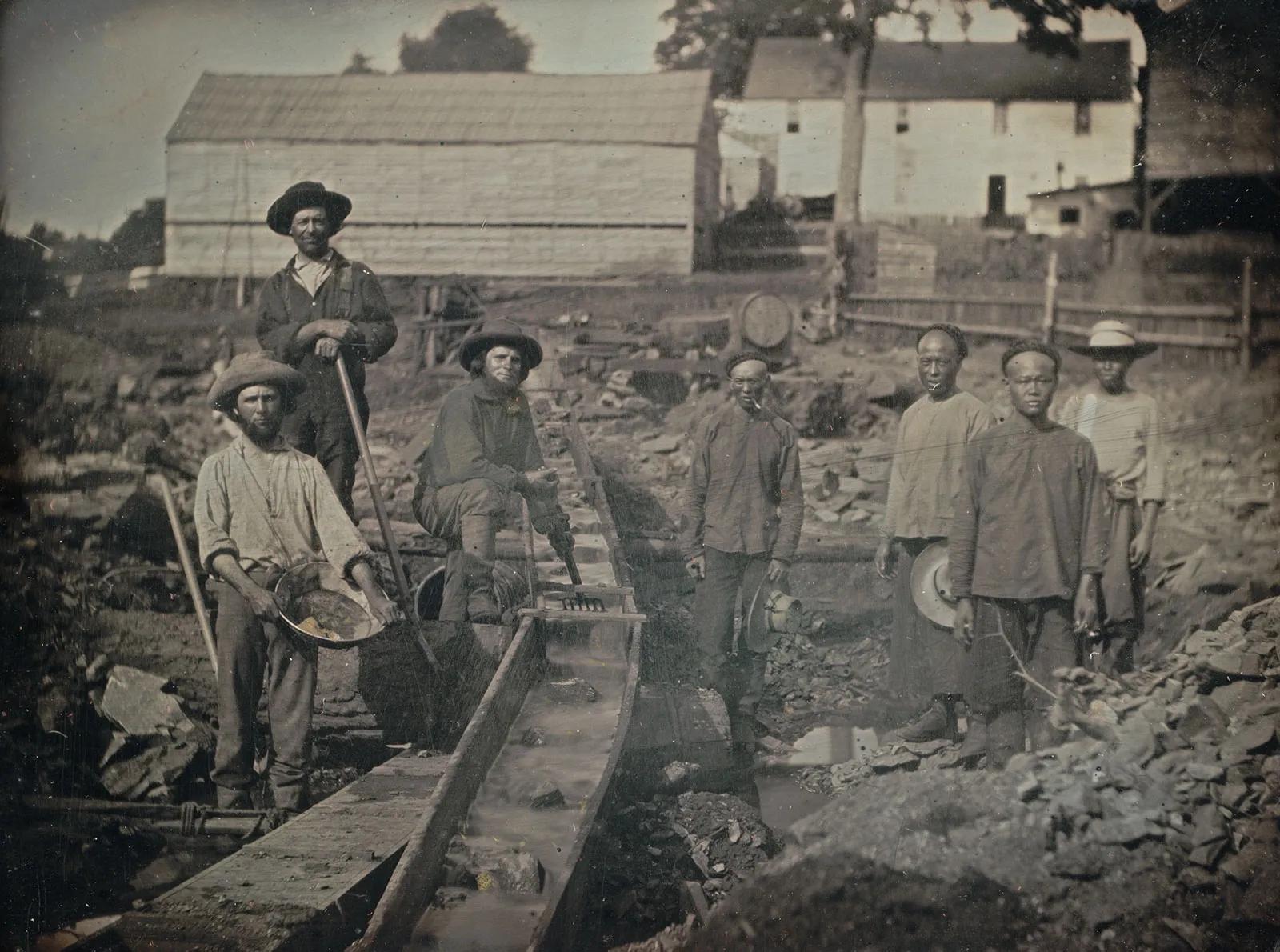
A Nation’s Neglect: America’s Initial Treatment of Chinese Immigrants Process Paper
During my research process, I focused on using primary sources. I used photographs, government laws, political cartoons, and more. I also used secondary sources from articles, journals, and books to learn about how Chinese communities were affected by discrimination and exclusion.
My most important piece of evidence was the Chinese Exclusion Act of 1882 because it displayed how the government specifically excluded the Chinese and deemed them unworthy of citizenship. Another strong piece of evidence was the letters between an immigrated Chinese husband and a wife still in China because it showed how the immigration policies prevented them from reuniting despite the wife being pregnant. I found that using primary sources was useful for this topic as I was able to find specific information that applied to Chinese immigration in the mid-19th century and because they presented direct evidence of discrimination from the United States.
The topic of my website is Chinese immigration. Specifically, how the United States neglected their responsibility of protecting the rights of immigrants and how it impacted the country. I chose my topic because I’m Chinese American and my parents are both immigrants. The history of discrimination towards Chinese immigrants has affected my entire life. The rise in anti-Asian hate during the COVID-19 pandemic has also made me realize that although the impact of racism has declined, it will continue to exist.
My research argues for the government’s negligence of Chinese immigrants being mistreated in the United States.
My research strongly proves this as I used direct government laws/documents that excluded Chinese immigrants from American society. Specifically, the Chinese Exclusion Act of 1882 that both prohibited immigration and citizenship of Chinese immigrants. I used political cartoons to prove that they were mistreated and discriminated against by nativists and many white Americans. Lastly, I also used direct quotes from activists that argued against anti-Chinese sentiment,
even using the principles of the Declaration of Independence, to prove how the mistreatment of Chinese immigrants was unjust.
My website fits into the NHD theme of rights and responsibilities as my thesis for the project is that the government neglected their responsibilities of protecting the rights of Chinese immigrants. I used laws in order to prove this negligence as they completely shut out Chinese immigrants from society. They were even spoken cruelly about by politicians and the Supreme Court while being discriminated against by nativists. Overall, they were discriminated against by the government which stole their rights and allowed them to be taken advantage of by society.
The discrimination towards Chinese immigrants left a lasting impact on the United States. Although the Chinese Exclusion Act of 1882 has been repealed, anti-Asian sentiment continues to thrive in American society. Although it is less common nowadays, it proved to remain alive during the COVID-19 pandemic where the Chinese were blamed and anti-Asian hate crimes rose. In conclusion, my website proves how the government’s irresponsibility to protect the rights of Chinese immigrants caused many destructive impacts on the country.
National History Day Individual Website by Elaine Cheng ‘28
Ella Fessenden ’28 and Ashley Presser ‘28
Roe v. Wade Process Paper
We chose the topic of the Supreme Court case of Roe vs. Wade because we wanted to choose something that was of interest to us and was related to women's rights and responsibilities. Currently, society has been noticing this Supreme Court case, as debates and disagreements over this issue have emerged in the US. The initial passing of Roe v. Wade in 1973 relates to the theme of Rights and responsibilities because providing women the right to an abortion and privacy gives women the responsibility of choice over their bodies. Furthermore, this topic interests us
because as women, we feel connected to this topic and the significant impact it has on women’s rights.
We conducted our research first by looking for sources that provided us the background information on the passing of an initial court case in 1973. After we obtained a good understanding of this court case as a whole, we researched how it positively and negatively impacted women’s rights and responsibilities, and how it impacted specific groups of women and society as a whole.
We created this project using a website and organized it by putting specific information under subtopics that resonated with our argument. After conducting all of our research, we organized each of our sources under 7 topics that we thought the source connected to and enhanced each idea. The 7 pages we decided to include on our website are labeled as first the “home page”, then “What is Roe v. Wade”, then the “background”, next “societies reactions”, then “impacts”, and finally “the current effect”. These pages provide the viewer with all of the information on this Supreme Court case and how it affects women’s rights and responsibilities throughout history.
Our historical argument is that the initial passing of Roe v. Wade was the most significant turning point for women’s rights in history. Also, we argued that it is the government’s responsibility to provide women the privacy and autonomy to
have full control over their bodies due to the Fourteenth Amendment. We argued that the case fundamentally transformed the United States society by establishing a woman's right to an abortion, therefore creating a law highlighting women’s reproductive rights, leading to societal debates over women's responsibilities and liberties, and how it affected states.
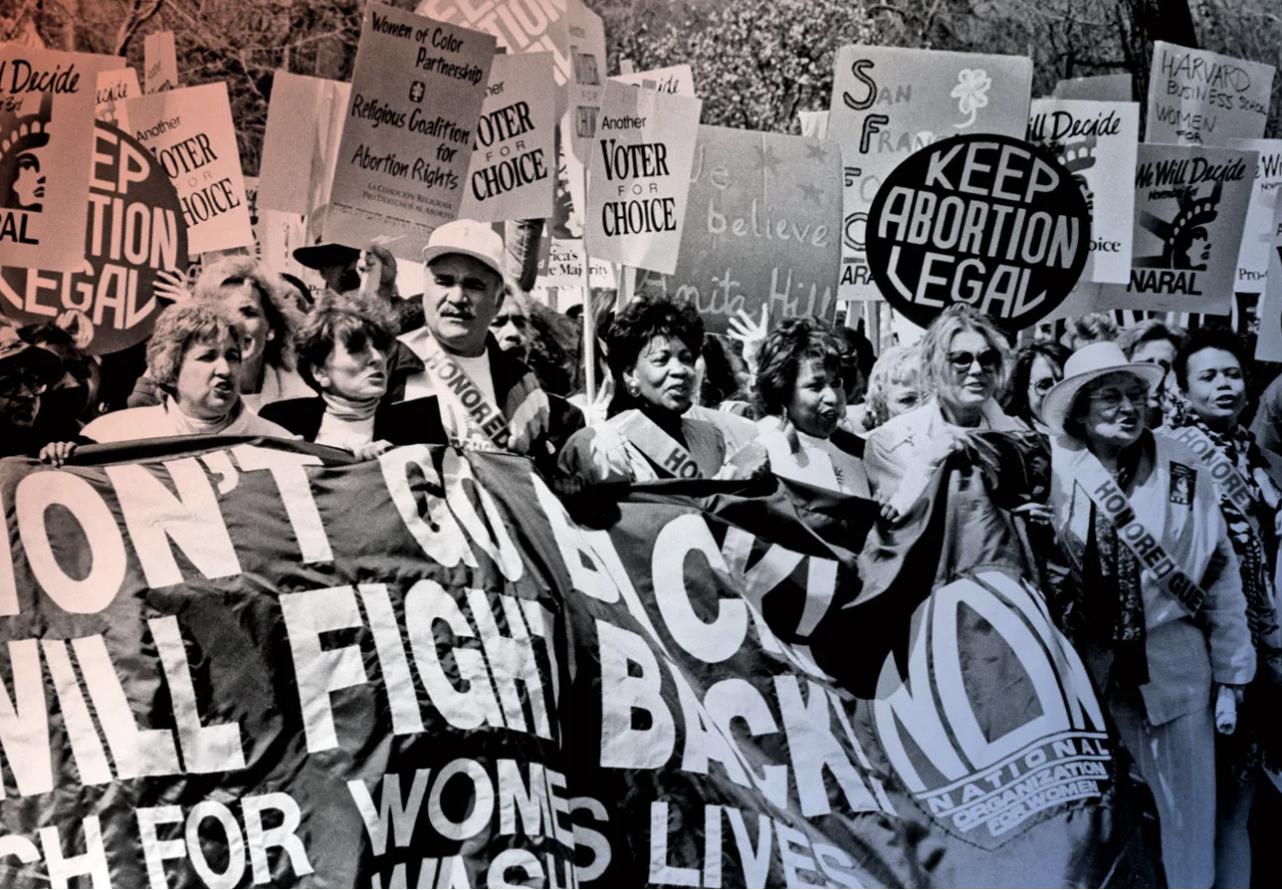
Winner First Place Group Website (Fairfield Region)
Senior Division
Roe v Wade
’28 and Riley Scollans ‘28
The Cold War: A Clash of Ideals Process Paper
We chose the Cold War as our topic because we were introduced to it last year, became fascinated, and wanted to explore it further. This year’s theme of Rights and Responsibilities directly correlates with our topic. Rooted in competing ideals, the Cold War pitted the United States’ promotion of individual liberties and democracy against the Soviet Union’s centralized authoritarianism. These differing perceptions of human rights and government responsibility
fueled the Cold War. Our project delves into how these contrasting ideals ignited the war, and how both superpowers ultimately recognize their mutual responsibility of limiting nuclearweapons to avoid the threat of global catastrophe.
To conduct our research, we found informative secondary sources to establish a foundational understanding of the Cold War’s historical background, context, and key events. We then began researching primary sources, overcoming challenges of abundant source material, complex language, and the sheer length of some sources. We researched speeches, political documents, and news articles to understand how they tied into the theme of rights and responsibilities and began developing our thesis. We also paid special focus to agreements involving nuclear arms control, which directly reflected the superpowers’ recognition of their shared responsibility.
We developed a website to display our research in an engaging and visually appealing format. We planned to structure our website by dividing and organizing our researched content. It features initial sections discussing our thesis, Cold War origins, and key events.
In another section, we have a page about how our project ties into the theme of rights and responsibilities. We then present pages featuring strategic agreements regarding nuclear weapons, the end of the Cold War, and our written work. We
utilized text, images, and primary source documents to emphasize our point and to deepen understanding of the Cold War.
Although US involvement in the Cold War intitially aimed human rights from government oppression, but evolved into a global strategy against communism to maintain peace and protect national interests. The United States actively supported countries that opposed communism, building strong alliances to prevent the USSR from gaining more influence. This was explicitly exemplified by the US Marshall Plan, which helped rebuild European nations in the hope that they would be less likely to turn to communism. The US also assisted in NATO’s establishment, which united several countries in defense of democracy and one another.
During the Cold War, the US viewed itself as a defender striving to uphold global liberty. However, as tensions escalated, the US and USSR realized that their ideological conflict could potentially result in global destruction. Their recognition of this resulted in agreements regarding arms control, such as SALT I and II.US History
With the eventual collapse of the Soviet Union due to internal issues, the war eventually ended. The Cold War emerged from a fundamental clash of ideologies regarding individual rights, yet in the interest of national security, both nations succeeded in recognizing their responsibility to regulate the
production of dangerous weapons, ultimately ensuring that their ideological pursuits did not jeopardize global peace.
National History Day Group Website by Téa Licon ’28 and Riley Scollans ‘28
Winner Second Place Group Website (Fairfield Region)
Senior Division
The Cold War: A Clash of Ideals
Aya Ragab ’28 and Hadley Stockton ‘28
Loving v. Virginia: Gaining the Fundamental Right of Interracial Marriage Process Paper
This year’s National History Day theme, Rights and Responsibilities in History, poses the question: How are rights exhibited and followed throughout history, and who is responsible for justifying these rights? After reading the prompt, our duo decided we should pursue a pivotal Supreme Court Case involving interracial marital rights. Knowing little about the logistics of the case, we were excited to explore more and deepen our understanding of a topic that is so important to U.S. history and changed the lives of all
Americans. During our time researching the Loving v. Virginia case, we read about Mildred and Richard Loving’s journey to achieving equal interracial marital rights. The push for equal rights was exceptionally impactful because, as a result, the case outcome changed American history and affects many lives to this day.
To start our research, we checked out various books on Jim Crow Laws and the Civil Rights Movement injustices and focused primarily on the pages that involved marriage rights. We then focused our research to websites, recordings of the case, and online sources regarding their legal case. As a result we gained a variety of primary and secondary sources, along with many visual sources like photos of the Loving’s arrest warrants and pictures of their family. We also attempted to reach out to Peggy Loving, Richard and Mildred’s youngest child. After thorough research we were able to analyze our information on digital notecards in NoodleTools, we began to construct our website using the National History Day WebCentral website builder.
The Loving v. Virginia trial was pivotal to American history, arguably one of the most significant Supreme Court decisions, but still gets overlooked by present day historians. It made a profound impact on the Civil Rights Movement and had strong influences on futurecases regarding discrimination. The ruling was that state restrictions on interracial marriage were unconstitutional because they
they violated the Constitution's 14th Amendment Equal Protection and Due Process Clauses. Outcomes of the Loving v. Virginia case included establishing marriage as a basic civil right, and it created a broader sense of equality in the US. This successful attempt at striking down unjust racial discrimination laws against interracial marriage influenced larger movements to dismantle other discriminatory acts.
The Loving v. Virginia case is still very relevant in today's society because it gives anyone the right to marry and form families regardless of racial barriers.
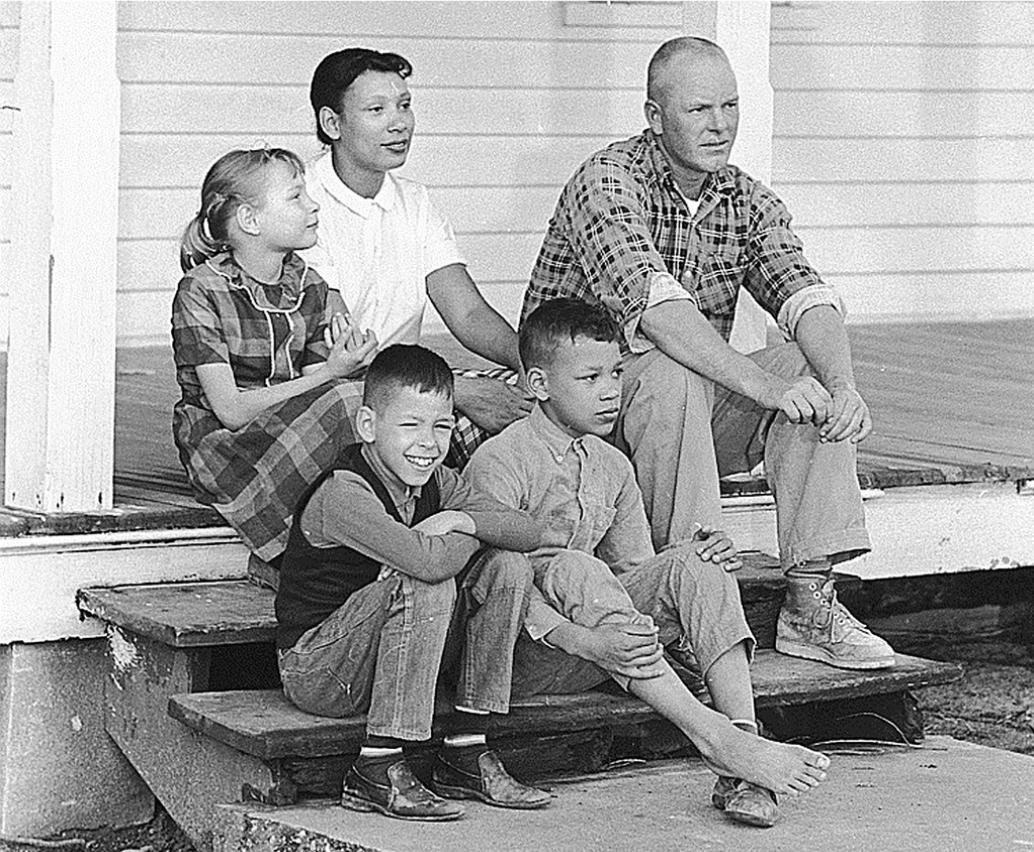
Winner Third Place Group Website (Fairfield Region) Senior Division
Loving v. Virginia: Gaining the Fundamental Right of Interracial Marriage