
THE BROWN DAILY H
WEDNESDAY, APRIL 25, 2018
Diane Guerrero talks immigration, identity
Actor, social activist discusses childhood, struggles with immigration system
By LIYAAN MASKATI SENIOR STAFF WRITER
Salomon Center erupted into overwhelming applause as Diane Guerrero stepped on stage. The acclaimed actress and activist addressed the audience in a talk sponsored by the Brown Lecture Board Tuesday evening, delivering a speech that elicited a palpable sense of excited emotion from the crowd.
“It was so hard for me to boil down, into just a few words, why I was so incredibly lucky to have Diane with us tonight,” said Daniela Valarezo ’18, as she introduced Guerrero to the audience.
“For starters … we love seeing her as Maritza in Orange is the New Black or as Selena in Jane the Virgin. Diane’s work reminds us of how beautiful it is to see ourselves represented on screen,” Valarezo said. But Guerrero’s contribution to society extends far beyond “adding desperately needed melanin in Hollywood,” she added.
The U.S.-born child of immigrant parents who were deported to Colombia

when she was only 14 years old, Guerrero has become a vocal activist. Her memoir, “In the Country We Love,” retells the story of Guerrero’s childhood and her family’s struggles with being undocumented.
UFB hopes to fill four open positions
At-large positions remain open, current representatives emphasize necessity to fill board
By MELANIE PINCUS SENIOR STAFF WRITER
The Undergraduate Finance Board will seek to fill four open at-large representative positions in the fall semester through special elections, said incoming vice chair of the board Julian De Georgia ’20.
Four students ran for the eight available at-large representative positions in March, when elections for UFB and the Undergraduate Council of Students occurred, leaving the remaining positions unfilled . “Having a full board (is) really important just because there are a lot of student groups that we are responsible for, and every student group deserves the attention of a UFB (representative),” De Georgia said.
Three positions on this year’s board were filled through an internal election at UCS’ third general body meeting in early October, while five were filled through the student body election the
previous spring. After one representative left the board at the end of the fall semester, the board continued through the spring with only seven representatives, De Georgia said.
Representatives contribute to discussions on how to allocate funds to student groups, according to De Georgia. The student activities fee, which all students pay in addition to their tuition, comprises UFB’s budget.
“The other part of the (representative) role is meeting with student groups and helping them understand our policies and helping them build effective budgets,” with each representative typically responsible for between 20 and 25 student groups, De Georgia added.
Having a full board fosters “diversity of opinion,” said UFB representative Alesandro Walker ’20, who will also be on the board next year. “Having more people definitely helps to make sure that … we’re not all saying the same things and then possibly making decisions that don’t represent the opinions of the Brown student body,” he added.
Further, filling the eight positions ensures that representatives can
WEDNESDAY, APRIL 25, 2018
» See UFB, page 3
“It takes a brave soul not only to follow (one’s) dreams of being an actress, but (to break) into a whitewashed industry and then, political and painful as it may be, … (to share one’s) story,”
» See GUERRERO, page 2
R.I. struggles to address lead poisoning problem
Advocates, government agencies propose opposing ideas to improve children’s well-being
By COLLEEN CRONIN SENIOR STAFF WRITER
As a toddler, Childhood Lead Action Project employee Antoinette Dow’s sixyear-old son, who has been diagnosed with autism, began chewing on window sills, walls and other non-food material around the house. The mouthing behavior was a result of pica, a condition that caused him to chew on anything around him. Dow did not realize the chewing posed a health threat until her mother-in-law instructed her “to get him tested” for lead poisoning. A blood test revealed a blood level of 15 micrograms of lead per deciliter of blood — 10 counts higher than what the Center of Disease Control deems safe. With that assessment, Dow’s son was diagnosed with lead poisoning.
“I felt awful,” Dow said. “You should be protecting your child, and you’re
doing everything you can, but something still happens. It’s kind of out of control of the parent unless they have the knowledge they need to look for the right things.”
After the diagnosis, Dow hired a company to come into her Attleboro, Massachusetts home, which was built in the 1960s, to make it lead safe. After spending two-and-a-half weeks in a hotel, the family returned to their house believing their troubles were over. But there was a board in a closet that had not been removed, and Dow’s son began biting on it.
“His blood levels shot up to 47, which immediately sent us to Boston Children’s Hospital, “ Dow said. “(That) was terrifying.”
Dow’s son’s lead levels decreased with chelation therapy, which binds a solution to lead in the blood and removes toxins from the bloodstream. But Dow’s fight to keep her son away from lead is far from over. Two years after the initial inspection, Dow said they “found a few more issues” in her home, which pose financial and
» See LEAD, page 2
Offshore wind farms concern fisherpeople
Plans to line the shore of Rhode Island with wind turbines threaten fisherpeople’s livelihoods
By CELIA HACK SENIOR STAFF WRITER
When Greg Mataronas steams out of Narragansett Bay as early as 3 a.m., he is headed for grounds he knew as an eight-year-old. A native Rhode Islander, Mataronas grew up lobstering in Little Compton. After college, he returned to the ocean, unable to resist a profession rife with memories of his childhood. But as a commercial lobsterman, Mataronas’ days are far from youthful. Early morning wakeup calls, 16-hour days and occasional bouts of seasickness take their physical toll, and he has watched the lobster population around him decline over the last two decades. But more than the grueling lifestyle, there is a new force threatening Mataronas’ ability to provide for his wife and children: offshore wind energy.
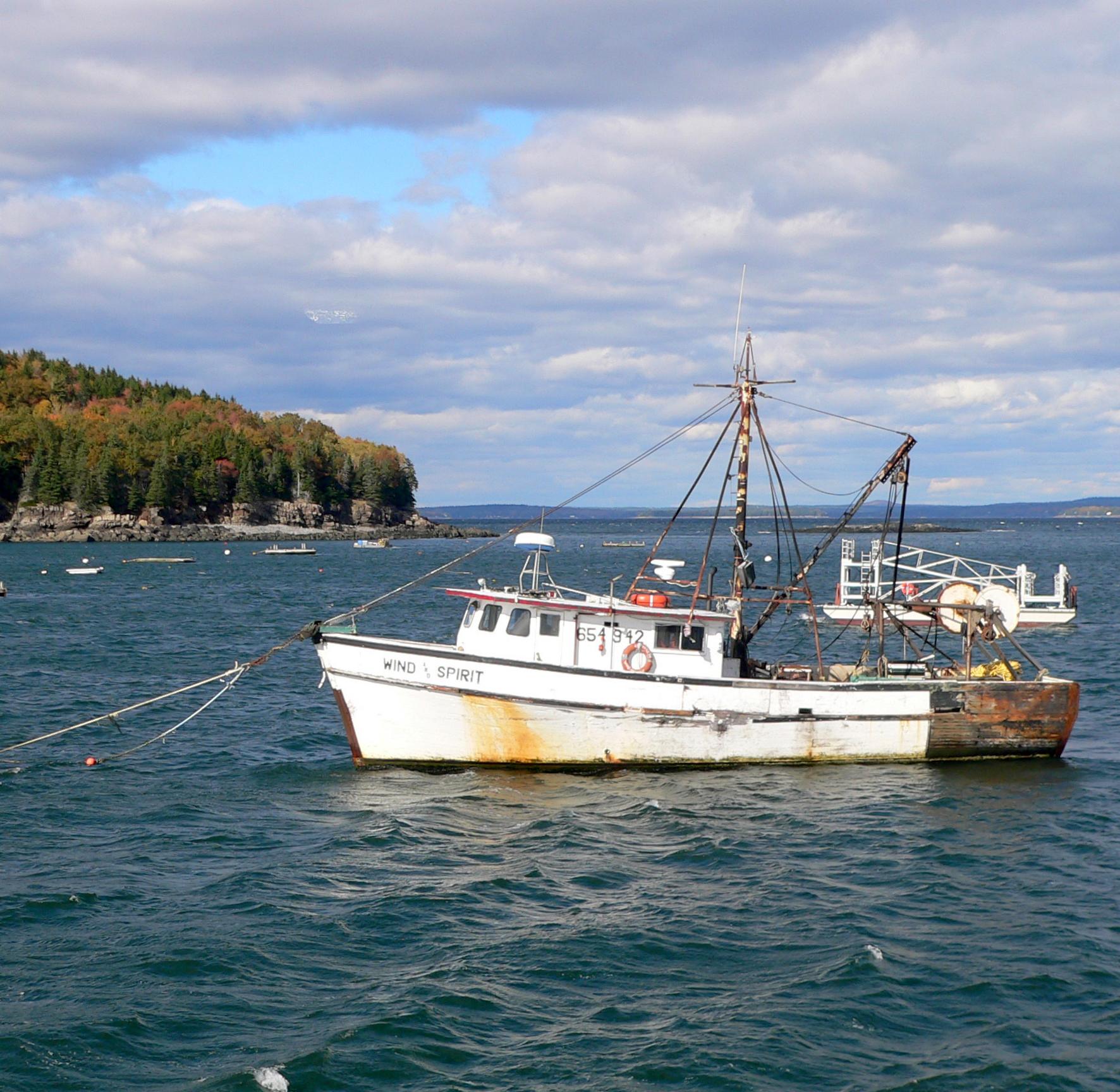
Permanent steel wind turbines lining the seafloor impose new barriers to the lobster industry, which is dependent on and accustomed to an open ocean.
“We’ve had other things come
through where it’s threatened to change the way we do things, but wind farms are different,” Mataronas said.
Many fisherpeople see a future where segments of their industry will ultimately disappear unless the federal government ensures their concerns are taken into account in the construction and development of wind farms. Fisherpeople’s fears include the incompatibility of certain types of fishing gear with the clustered placement of wind turbines and a lack of site-specific research

» See WIND, page 2

COURTESY OF LEE COURSEY
Permanent steel wind turbines lining the seafloor impose new barriers for the lobster industry, which is dependent on open ocean.
COURTESY OF LARRY D. MOORE
Dianne Guerrero addressed a packed Salomon Center Tuesday night. She aims to merge her acting career with a message of social activism.
» WIND, from page 1
regarding economic and ecological impacts of the turbines.
As companies move closer to achieving large-scale offshore wind farms, commercial fisherpeople are increasingly worried they will be left behind. Three wind energy projects, Bay State Wind, Deepwater Wind and Vineyard Wind, are leasing ocean area off the coast of Rhode Island and Massachusetts from the federal government. Vineyard Wind, the first and only project to submit a concrete plan for construction to the Bureau of Ocean Energy Management, is set to build up to 106 turbines off the coast of the two states once their plan is approved by BOEM, according to its Dec. 2017 proposal. BOEM concluded public meetings for comment on the plan Thursday at the University of Rhode Island.
One of the lawyers at the meeting, Tricia Jedele, representing the East Farm Commercial Fisheries Center of Rhode Island, told The Herald that the planned Vineyard Wind farm is “basically plopped right in the prime squid fishing grounds.”
“Our nets stretch one-fourth-mile wide,” said Stephen Bode, a fourthgeneration squid fisherman. “We need at least four miles between each wind farm to be able to fish in between them. So it’s excluding us. Our fishery will be 100 percent excluded from fishing in this area.”
Meghan Lapp, a fisheries liaison for Seafreeze Limited, an R.I.-based producer and trader of sea-frozen seafood, is also frustrated with a lack of
» LEAD, from page 1
logistical challenges.
communication between fisherpeople and wind energy companies. Though BOEM requires each wind energy company to construct and implement a “fisheries communication plan,” which details how the company will engage with and hear from the fishing industry, many fisherpeople complain that talk is not translating into action.
“All of our concerns fall on deaf ears,” Lapp said. “I personally have been meeting with BOEM for three years.” Lapp added that she gave “confidential business information” from over 20 fishing vessels to BOEM to demonstrate that there was heavy fishing activity on one particular lease site, but she said BOEM issued the lease regardless.
But according to Brian Krevor, BOEM’s environmental coordinator for the Vineyard Wind project, BOEM does listen to and consider the concerns of fisherpeople. As a result of “comments and concerns” from those in the fishing industry, they reduced the original chunk of sea they were considering for lease by 60 percent, Krevor said. “And from there we got more comments and concerns, we removed another area for fishing,” he added.
In more than one specific instance, BOEM has welcomed the voices of fisherpeople, Krevor said. Since 2009, BOEM has held over 20 public meetings in the Kingston region alone to engage with the fishing industry and create “a very interactive process,” Krevor said. BOEM has also responded to concerns surrounding wind turbines’ economic and ecological impact by conducting various
Dow is far from the only parent in the region to struggle with old housing stock and its risk of lead exposure. A high percentage of Rhode Islanders experience lead poisoning in comparison to other states. According to the Rhode Island Department of Health, 80 percent of homes in the state were built before 1978 and therefore contain a high level of lead paint. The state has also exceeded the Environmental Protection Agency’s recommended lead levels in the water “10 times or more”
Brown University Community Council (BUCC)
Monday, April 30, 2018
12–1:30 p.m.
Alumnae Hall Auditorium
The BUCC invites you to attend the Sustainability Study Committee Community Forum.
Pizza and Beverages will be served.
Learn more about the BUCC: brown.edu/about/administration/community-council
research studies.
Motivation to find common ground between the fisherpeople and the wind industry lies in the potential environmental and economic benefits. The clean energy and new job market created by wind energy is in line with a recent R.I. initiative: In March 2017, Gov. Gina Raimondo announced that she aimed to multiply clean energy in Rhode Island tenfold by the end of 2020. BOEM’s offer to lease areas offshore of Rhode Island and Massachusetts could reduce the states’ carbon footprint and add energy diversity, according to BOEM’s Chief of the Office of Renewable Energy Programs Jim Bennett.“We have a world class wind resource, we have a buildable environment with a shallow, sloping shelf and we have markets between Boston and New York like no other,” he said. “And all of these things combined make a really attractive future for wind energy.”
With more meetings and communication, several BOEM representatives believe the two industries have the potential to grow side by side.
“I think they can coexist, but there has to be a willingness to listen to each other and a willingness to work together,” Krevor said. “And we need to be here facilitating that.”
But some fisherpeople remain unconvinced that their industry will flourish alongside offshore wind.
“The only thing that could be done would be that the wind farms are initially sited not on commercial fishing grounds,” Lapp said. “That’s the only thing that could be done. I don’t think that the two could ever coexist.”
in the last 25 years, The Associated Press reported.
Providence Water’s 2016 Annual Water Quality Report revealed that Providence exceeded the maximum lead levels allotted by the EPA in the latter half of 2016 — an excess that “triggered public notification and treatment technique requirements,” according to the report. Over the past 10 years, Providence Water has spent $45 million replacing the city’s water pipes, The Providence Journal reported.
But according to Laura Brion ’04, executive director of the Childhood Lead Action Project of Rhode Island, the replacement of some Providence pipes is not enough to curtail lead poisoning in the community. When only some pipes are replaced, lead and nonlead metal pipes can interact and cause a corrosion in the pipes that adds more lead to the water, she added.
It is important to take a holistic approach when examining the lead problem, Brion said. For example, her group helped to pass a “universal screening program” that mandates all children under six years old be screened for elevated lead levels annually.
“There is no way you can tell that a child is lead poisoned unless you take a blood test,” Brion said. “Often kids are totally asymptomatic in the moment, even though permanent brain damage might be occurring as you’re just sitting there.”
In addition to fighting for more comprehensive diagnostic testing, Brion is focused on helping communities that are frequently affected by lead poisoning. “Lead poisoning has disproportionately affected poor families and people of color for many years,”
» GUERRERO, from page 1
Valarezo said. “True to her last name, which means ‘warrior’ in Spanish,” Guerrero has been successful in doing exactly that, she added.
Though punctuated with wit and humor, Guerrero’s speech addressed profound issues. “Today, I want to have a conversation about the importance of telling our stories, about bringing awareness to Latinx history” and the importance of voting and participating, Guerrero said as she launched into a powerful account of her personal struggles with the immigration system.
Guerrero described how her parents tried to become U.S. citizens and how they were scammed and then deported in the process. “This experience was so damaging for my family and so traumatizing that later on I experienced a lot of hardship,” Guerrero said, referring to the range of mental health issues she faced.
“My story is just one of millions, and (it) shows the need to update our immigration system,” Guerrero said. “We’re fighting to keep our families together. We’re fighting to preserve our American lives. We’re fighting to be treated with respect and dignity. We have to speak up. … We have to do everything in our power to stop the injustices going on around us, even though they seem so hard to stop.”
Evoking raw emotion, Guerrero reflected on how, for a long time, she was ashamed of her background and her story. “But after I started talking about my experiences, writing about my experiences and letting a little bit of that shame go, I started feeling happy that this was the way that my life went
she said, “although nobody is immune from the effects of lead.” Foster children are among the most vulnerable to lead poisoning, Brion said. Article 15 of Gov. Gina Raimondo’s FY 2019 Budget seeks to address the overall well-being of foster children, but it may risk their lead safety, Brion said. The article reduces the safety standards for the houses of foster families to a “visual lead inspection,” which is intended to increase both the number of children placed in foster homes and the federal grant money that the Department of Children, Youth and Family receives to certify homes for fostering, Brion added.
According to the Programming Services Officer for Rhode Island DCYF Kerri White, Article 15 will ultimately help children. “Child safety is our number one priority. One of the best ways to ensure that our children thrive is by placing them with loving, caring foster families, and preferably with kinship providers,” she wrote in an email to The Herald, adding that potential foster families will be notified of any problems found during the visual inspection and informed of resources to help mitigate lead hazards. A followup visit will inspect whether any action has been taken, White wrote.
“This proactive inspection work, along with Rhode Island’s requirement that all children receive two blood lead screenings by 3 years of age, will help us continue to lower our lead poisoning incidence rate while also reducing a substantial barrier to licensing our kinship foster homes,” she wrote.
But lead safety advocates stress that there are other ways to facilitate
because I wouldn’t be who I am today (otherwise),” she said. “My experiences don’t define me, but they certainly have shaped who I am,” she added.
Guerrero discussed her desire to be both an actor and an agent of social change, and how she has always felt as though she needed to pick one of the two. “It wasn’t until later that I realized that the best way for me to help my community was for me to follow my dreams and my desire to be an actor,” she said. Guerrero added that she sees her role in the entertainment industry as a way of telling the stories of those who are underrepresented and being a voice for those who go unheard.
Guerrero’s talk was followed by a moderated discussion led by Valarezo and questions from audience members. Guerrero addressed questions regarding the challenges she continues to face as a woman of color and as an immigrant, and the ways in which she breaks stereotypes.
“Societal constructs mean nothing,” Guerrero said. “You have to acknowledge that you matter. … It’s (your) duty to knock the walls (of societal constructs) down. It’s (your) duty to rip those ceilings apart.”
When asked by a student to describe her dreams for Latina women, Guerrero responded that she “wants to see (Latina women) writing more. I just want to see more stories written by women for women,” Guerrero said, adding that “every story is unique … and deserves to be told.”
“I’m also the girl next door,” Guerrero finished, with a flourish and a laugh. “There’s a lot of girls next door, so let’s start telling those stories,” she said.
more efficient lead certification for foster families without sacrificing high standards.
“You can’t set this so you are pitting helping children against helping children,” Brion said. “There has to be a better way.”
Peter Simon, associate professor of the practice of epidemiology and former pediatrician for the health department in Rhode Island, testified against the article at a House Finance Committee hearing. During the hearing, Simon told lawmakers that Article 15 is “a bad idea,” he told The Herald.
In a follow-up interview with The Herald, Simon said foster children are some of the most vulnerable in the state, and that “adding lead to what else they’re being exposed to makes me sick.”
Simon said people who don’t understand lead’s “impact on life course” cannot understand how this reduction in safety standards will affect children. A 2016 University study by Simon and Patrick Vivier, professor of health services, policy and practice and professor of pediatrics, showed that even low levels of lead can affect children’s test scores.
Despite laws and regulations, Dow said the most important component of prevention is educating parents and getting kids tested.
“What I see the most on my Facebook and with other parents is them not wanting their kids to get a finger prick or blood drawn because it’s not fun. No one wants to see their kid in pain,” she said. “But it’s so important that they go through with it. That two seconds of pain is much better than brain damage in the long run.”
Ban on ‘mitochondrial replacement’ dooms children, experts say
Research into therapy banned in the United States could help prevent diseases in children
By JEFF DEMANCHE SENIOR STAFF WRITER
Nestled within the 2016 federal spending bill is a brief unrelated provision, or “rider,” which became law in December of 2015. It has no known sponsor and underwent no public debate, yet this portion of the bill could have drastic implications for those born with mitochondrial diseases such as Leigh Syndrome or Alpers Disease, according to researchers.
The rider prohibits the Food and Drug Administration from approving research in which a human embryo is “intentionally created or modified.” This ban encompasses “Mitochondrial Replacement,” a technique in which a donor’s mitochondria are used to replace those in an embryo at risk of developing mitochondrial diseases, said Eli Adashi, professor of medical science and former dean of medicine and biological sciences.
In a commentary published in Obstetrics & Gynecology, Adashi and I.Glenn Cohen, professor of law at Harvard University, wrote that the benefits of MR outweigh its risks, and that research into the technique should be decoupled from the moratorium on editing the genes of human embryos.
Mitochondrial diseases are caused by “faulty mitochondria” in human cells, and estimates suggest they affect
» UFB, from page 1
effectively fulfill all of their responsibilities. With a significantly increased workload, “I wouldn’t necessarily be the best (representative) to every single (group) because I’m so worried about all of them,” Walker said.
UFB representative Daryl Polk ’19, who was elected in this year’s special election and will continue to serve on the board next year, echoed these sentiments. Having a full board ensures that “the responsibility isn’t on such a small group of people” and that “the power of
as many as 1,000 babies each year. To prevent these diseases from occurring, MR therapy involves substituting these mitochondria in the mother-tobe with those from a healthy donor, Adashi said.
While the technique is still the subject of research, it is “on the precipice of implementation,” Adashi said. In the United Kingdom, the first human trials have been approved for a limited number of women. That number could increase depending on how the trials progress, he said.
Criticisms of modifying embryos come from ethical and religious points of view, which were likely the reasons the rider was included, Adashi said. For one, the Catholic Church objects to in vitro fertilization, which is required to complete MR therapy.
Possible ethical objections to editing genetic data in embryos stem from the notion that genes in a child could be selected, said Arthur Caplan, professor of bioethics at New York University’s Langone Medical Center. “Many people don’t want to cross the line into making heritable changes by engineering,” Caplan said. “They worry about the slippery slope argument: If we let this mitochondrial DNA be repaired by moving genes from a donor, then we’ve crossed the line into making changes in what can be inherited by offspring and down the generation, and that’s going to lead us to eugenics.”
However, Caplan doesn’t believe these criticisms should keep research into MR therapy from progressing, citing the fact that mitochondrial DNA does not have a large impact
where the money goes isn’t on such a small group of people,” she said.
During their campaigns, both De Georgia and Lisa Schold ’19, chair-elect of UFB, emphasized the importance of increasing student engagement with the board. To this end, De Georgia said he and Schold are planning to engage in a “general publicity campaign” and to have a table for UFB at the activities fair for the first time in De Georgia’s memory.
By “printing signs, putting those all around campus, potentially table slipping, definitely emailing different
on traits.
“I understand that people are worried that something might happen that they don’t expect by manipulating the mitochondria,” Caplan said. “But I think we have enough experience to let the procedure be tried.” The procedure would not be common, and the amount of DNA being transplanted is small, he said.
“This is not an anti-life procedure. This is (a) pro-life procedure. That’s probably the most important thing,” Adashi said, adding that “the idea is to cure disease and bring healthy children into the world. That seems to most observers to be a fairly legitimate, ethically appropriate and religiously acceptable approach.”
“It’s indescribable, the suffering these children must go through,” Adashi said. Symptoms vary for those whose mitochondria do not function properly, depending on where the problem arises. “If it’s muscle, you can’t move; if it’s brain, you can’t think; if it’s heart, you can’t survive very long,” Adashi said, adding “there’s no cure, unfortunately. So the only approach to this is prevention, which is what mitochondrial replacement is.”
Adashi and Cohen believe the law to be misinformed rather than deliberate in its prohibition of MR therapy. “It was aimed more likely at germline gene editing, and MR (therapy) got swept up in that because of the way the rider was written,” Cohen wrote in an email to The Herald.
An expert in FDA law and “medical tourism,” among other areas, Cohen wrote that the United Kingdom’s
centers around campus and then just also reaching out to people we think might be interested,” De Georgia said they will work to find candidates to fill the four positions.
The open spots give first-years the opportunity to join the board, as De Georgia did in his first semester at the University. “It’s definitely something that freshmen can do, (and) we would love to have freshmen involved,” he said.
De Georgia anticipates that the positions will be filled in special elections. “I don’t think we’ll have any problems,” he said.

promotion of broad public debate and consultation is unusual in the United States, but would be a welcome addition. “In the absence of U.S. regulatory approval, we will likely see more medical tourism for these services,” Cohen wrote, pointing to a case in which a Jordanian family underwent the procedure in Mexico.
Adashi and Cohen state that
making the case before Congress is important in alerting lawmakers to this issue. “Nothing will happen unless some activism takes place,” Adashi said.
“By putting those parents in this position, the law essentially dooms up to 1,000 children to a life that is both severely compromised, and often very short,” Adashi said.

COURTESY OF ELI ADASHI
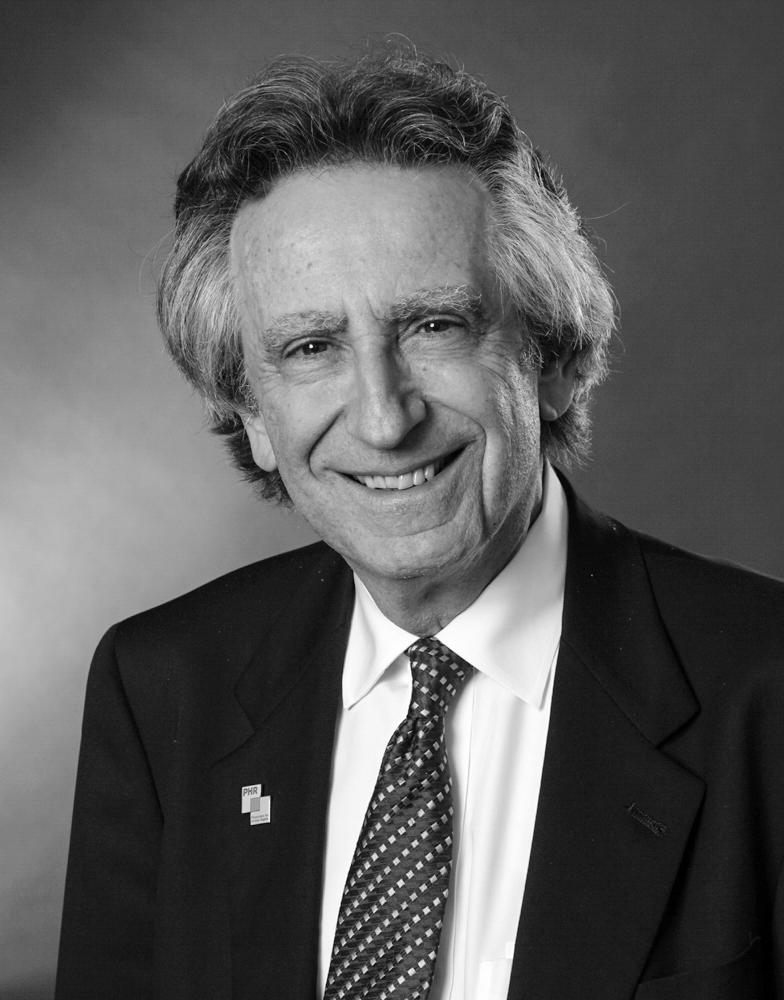
Eli Adashi, professor of medical science, co-authored a commentary criticizing a 2015 federal law that limits research on MR therapy.
University launches search for new dean of the college
Committee hopes to tap candidate by end of academic year, search begins with internal candidates
By LYDIA DEFUSTO SENIOR STAFF WRITER
The University has launched a search for the next dean of the college following the announcement of current Dean of the College Maud Mandel’s departure to serve as the president of Williams College, The Herald previously reported.
Provost Richard Locke P’18 is chairing the search committee, which comprises administrators, professors and students, according to an announcement sent via Today@Brown. Input from other committee members “throughout this process will make the search and our eventual selection of a candidate that much stronger,” Locke wrote in an email to The Herald.
For now, the search committee is only considering applicants who currently work at the University, Locke wrote in the announcement. “An
internal candidate is most likely to understand how unique Brown and our open curriculum” are, Locke wrote in the email to The Herald. Furthermore, “an internal candidate will be more
likely to engage with (the Building on Distinction Strategic Plan and the Diversity and Inclusion Action Plan) as they run the office.”
Reflecting on her position, Mandel
added that it is important that the next dean of the college is “a dedicated undergraduate educator and enthusiastic proponent of the open curriculum … who’s interested in thinking about
the best ways to expand and develop undergraduate education in the years to come.”
The search committee has solicited input from Mandel, staff of the Office of the Dean of the College, past deans of the college, students and faculty, Locke wrote to The Herald. Once finalists are selected, they will meet with more students, faculty and staff, Locke said.
Mandel’s successor will have the ability to build on programs that she has helped create during her time as dean of the college. “The person who occupies this seat is really going to have the opportunity to continue growing the really exciting new programs, such as BrownConnect or the Engaged Scholars Program or the Brown Learning Collaborative,” Mandel said. “That person arrives at a really exciting time in those initiatives and can really shape the direction of how they evolve.”
“We really want to find someone who has a joy for this role,” Locke said. Locke added that the committee hopes to have selected the next dean of the college by the end of the current academic year, with the chosen candidate assuming the position July 1.
School of Public Health appoints inaugural associate dean for research
Savitz to encourage collaboration among departments, expand research funding
By DANIEL STEINFELD
CONTRIBUTING WRITER
On April 10, Professor of Epidemiology
David Savitz was announced as the inaugural associate dean for research for the School of Public Health in a communitywide email. Savitz will play a key role in consolidating research efforts at the


lishing connections with other areas of research at the University.
Savitz cited increasing research productivity, creating opportunities for more collaborative research and fully utilizing the talents and resources at the School of Public Health as key goals of the position.
Dean of the School of Public Health
Bess Marcus stressed the amount of collaboration that the new role entails.
“I wanted to have someone with a big picture view of our strategic plan and … make sure we’re not missing any opportunities to do collaborative research,” Marcus said.
01234!/45671859:!;12<1=>!54!?2497>@A=9567!.9BC578!!


"#$!%!%!%!%!!&'(!)*+(#*(!,#$!-./&.0,/!1,*2304.#$!45!6+#$5./#(77! ,#$!6($+&,&+4#!+#!-8)9!:;::<


B)#-!CD!E!")F)4%!87A!C78G! 6+.-4!6A9!8>H7!E!D>C7!/.! $#4%&)*%'&>!!I1&'0(!9'%J! $#%&'()*%+'#!%'!%J-!#-?!K-0(!'L!,'#%-./01%+2-!3%)(+-4 L'*)4+#F!'#!+(-#%+LM+#F .-%J'(4 J).1# N-+#F4!J12-!L')#(A!1*&'44!*)0%)&-4!1#(!1*&'44!%+.-A!%'! *'#*-#%&1%- N&'1(-#!1#(!(--/-# *'#4*+')4 1?1&-#-44 P- ?+00 4%)(M ?J1% %J-4.-%J'(4!1#(!-Q/-&+-#*-4 -#%1+0A!J'?!%'!*&+%+*100M 1//&1+4- %J-.A!J'?!%'!-Q/-&+-#*%J-. ')&4-02-4A!1#(!J'?!%J-M!+#R)-#*-!%J-!(-2-0'/.-#%!'L!-./1%JMA!J-10%J!1#(! ?-00SN-+#F :'!T&-&-U)+4+%-4
6'!&-F+4%-&A!/0-14-!F'!%'!J%%/4>VV???ON&'?#O-()V1*1(-.+*4V4)..-&S4-44+'#V W'&!.'&-!+#L'&.1%+'#!'#!,536A!/0-14-!F'!%'!???ON&'?#O-()V1*1(-.+*4V
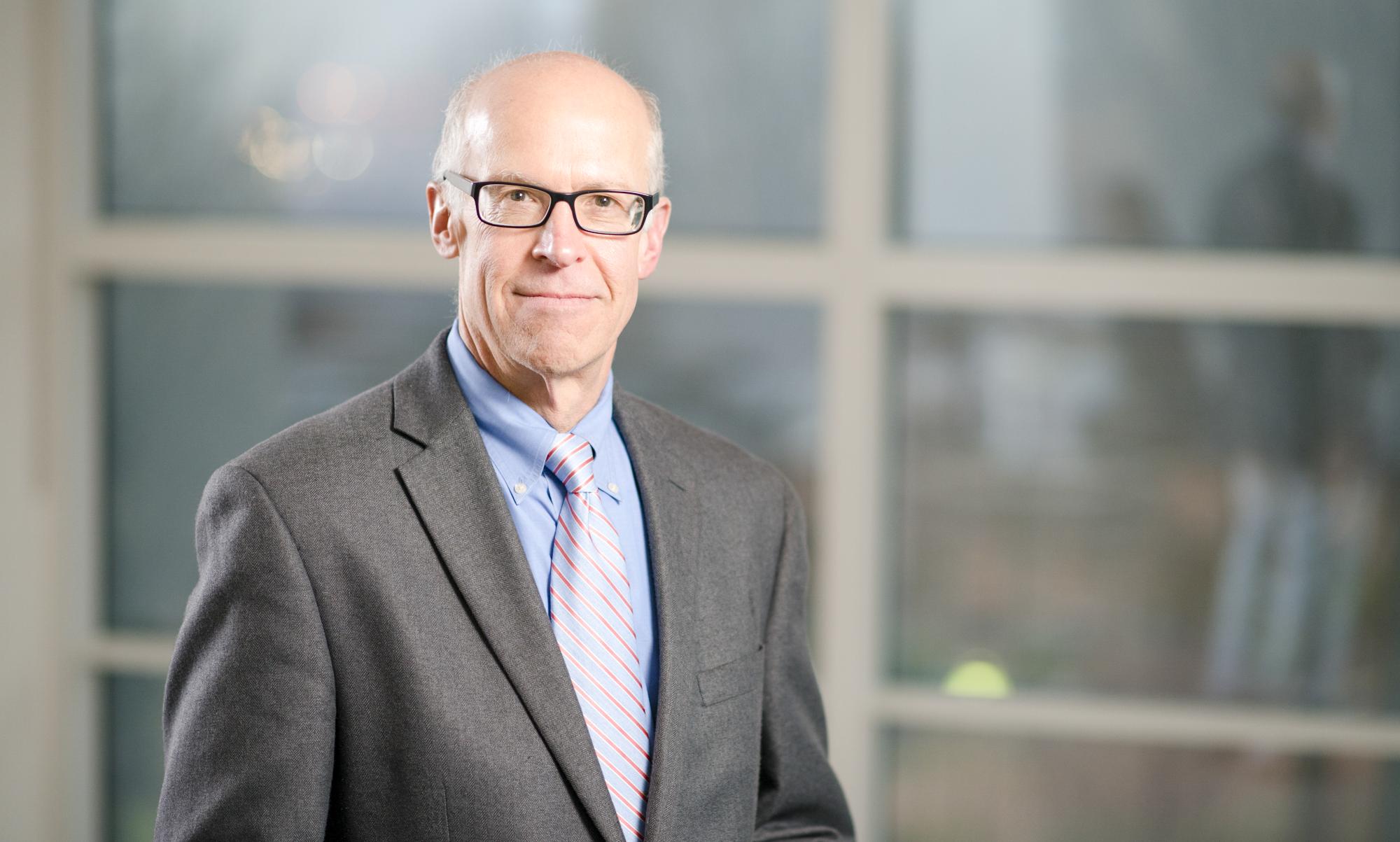
research centers with individual faculty members responsible for directing research at each center. Because of public health’s unique interdisciplinary nature, Marcus expressed a need for the school to have someone representing research at a higher level, while also establishing connections with other schools and departments within the University. She also said the person filling the new role had to be someone who was a successful researcher in their own right and was familiar with both the School of Public Health and the University in general.
Before his recent appointment, Savitz served four years as vice president of research for the University. In addition to his new role, he currently serves as associate director for perinatal research at the Alpert Medical School.
Savitz was unanimously chosen for the position via an internal search process, Marcus said. Faculty members praised Savitz’s selection and the experience he brings to the new role.
“Because of his former role as VP, he knows the players across campus,” said
Alison Field, chair of epidemiology. “One of the challenges at Brown is that there are other departments that we don’t interact with enough. … There needs to be more connecting of people, and (Savitz) is incredibly well suited for the role.” Field added that encouraging interaction between different departments within the University is essential for not only expanding research opportunities but also for creating a healthier school environment.
As vice president for research, Savitz was responsible for university-level functions, which he termed the “machinery of research.” This included areas such as the financial processing of grants, the institutional review board and the management of intellectual property. Savitz’s new role also encompasses a number of administrative responsibilities, such as increasing and diversifying research funding, a large portion of which currently comes from the National Institutes of Health.
While Savitz had a positive experience in his previous role as vice president
for research, he said he appreciates the different opportunities that the new position provides. His position should not be seen as an isolated administrative role, he added. “In comparison (with his previous VP role), this is dealing with a much more circumscribed substantive area, which actually is going to give me more of a chance for one-on-one engagement with faculty and working on individual projects,” Savitz said.
Besides serving as associate dean for research, Savitz said he will continue his previous teaching responsibilities and personal research projects, which focus on reproductive and environmental epidemiology. He sees his new role as being connected with his other positions. “Basically, I want to help the school foster an environment that I want to be in,” he said. “If it helps me get my grants out, it will probably help others as well. … So much of the generation of good ideas and the pursuit of successful grants really is about collaboration. There’s very little that we do by just sitting here, closing the door and thinking.”
COURTESY OF PETER GOLDBERG
Before this appointment, David Savitz served for four years as vice president of research for the University. In addition to his new role, he also serves as associate director for perinatal research at the Alpert Medical School.
PHOEBE AYRES / HERALD
SATELLITE DINING
ANDREWS COMMONS
Pizza: Assorted Roasted Mushroom, Spicy Sausage and Garlic Pho, Poke Bar
Candy Land, BBQ Pulled Pork Burger, Quesadilla Station
JOSIAH’S LUNCH LUNCH BLUE ROOM DINNER DINNER
Hearty Country Vegetable Soup, Broccoli and Cheddar Soup
DINING HALLS
SHARPE REFECTORY
Sweet Potato and Eggplant Tagine, Roasted Beets, Handmade Gnocchi
VERNEY-WOOLLEY
Korean Style
sudoku crossword the city on a hill menu

“ You can’t set this so you are pitting helping children against helping children. ... There has to be a better way. ”
— Laura Brion ’04, executive director of the Childhood Lead Action Project See lead poisoning on page 1. QUOTE OF THE
An earlier version of the caption accompanying the article “Former Australian prime minister talks China under Xi Jinping” stated that Kevin Rudd has previously served as president of the Asia Society Policy Institute and co-chair of the China Global Affairs Council of the World Economic Forum. In fact, Kevin Rudd currently serves as president of the Asia Society Policy Institute and co-chair of the China Global Affairs Council of the World Economic Forum. The Herald regrets the error.
HUAYU OUYANG / HERALD
Along with residential areas on Pratt St., the Providence skyline features prominent Rhode Island landmarks such as Providence City Hall and 111 Westminster Street, better known as the ‘Superman Building.’
Braised Beef Kebab Stew, Rice Pilaf, Romano Dijon Crusted Chicken, Bow Tie Pasta
Chicken Arrabiata Baked Pasta, Eggplant Parmesan Sandwich, Corn and Sweet Pepper Saute
Marinated Beef, Pudding Macaroni, Roasted Cauliflower with Red Onion


Advertising contact: 401-351-3372 advertising@browndailyherald.com
Submissions: The Brown Daily Herald publishes submissions in the form of op-eds and letters to the editor. Op-eds are typically between 750 and 1000 words, though we will consider submissions between 500 and 1200 words. Letters to the editor should be around 250 words. While letters to the editor respond to an article or column that has appeared in The Herald, op-eds usually prompt new discussions on campus or frame new arguments about current discourse.
All submissions to The Herald cannot have been previously published elsewhere (in print or online — including personal blogs and social media), and they must be exclusive to The Herald.
Submissions must include no more than two individual authors. If there are more than two original authors, The Herald can acknowledge the authors in a statement at the end of the letter or op-ed, but the byline can only include up to two names. The Herald will not publish submissions authored by groups. The Herald does not publish anonymous submissions. If you feel your circumstances prevent you from submitting an op-ed or letter with your name, please email herald@browndailyherald.com to explain your situation.
You can submit op-eds to opinions@browndailyherald.com and letters to letters@browndailyherald.com. When you email your submission, please include (1) your full name, (2) an evening or mobile phone number in case your submission is chosen for publication and (3) any affiliation with Brown University or any institution or organization relevant to the content of your submission.
Please send in submissions at least 24 hours in advance of your desired publication date. The Herald only publishes submissions while it is in print. The Herald reserves the right to edit all submissions. If your piece is considered for publication, an editor will contact you to discuss potential changes to your submission.
Commentary: The editorial is the majority opinion of the editorial page board of The Brown Daily Herald. The editorial viewpoint does not necessarily reflect the views of The Brown Daily Herald, Inc. Columns, letters and comics reflect the
RUTH FOSTER staff columnist
In 2017, the University undertook a massive fundraising campaign to remove financial barriers to accessing a Brown education. The Brown Promise initiative raised enough money to eliminate loans from undergraduate financial aid packages starting in the 2018-2019 school year. This is a fantastic step toward ensuring that students from middle-income homes can graduate without being saddled with student debt.
As our campus community reflects on the importance of access to education, it would serve us well to look outside of the bounds of College Hill. Earlier this year, members of the board of the Providence Public School District raised concerns about looming budget shortfalls. State funding increases will begin to level off over the next five years, and board members are not optimistic about the prospect of funding increases from the city due to budget constraints. PPSD is looking for ways to tighten its belt, attempting to slash expenditures in order to avoid a $3.7 million deficit in 2019 that is projected to balloon to $37 million by 2023. The cuts will hurt, but right now they seem inevitable.
As PPSD works to decrease their spending, we ought to consider ways to increase their funding.
A second Brown Promise
The University is a 501(c)(3) nonprofit — a status that confers substantial financial advantages. A 2015 report by Providence’s Internal Auditor showed that in 2015, the University owned over 150 tax-exempt buildings. Taken together, their valuation was a little over a billion dollars. Commercial property in Providence is taxed at 3.67 percent of its valuation. Based on these figures, it seems that Brown avoids paying roughly $37.8 million to the city of Providence each year due to its tax-exempt status. This number will increase yearly as Brown’s new
additional $1.3 million. And when Providence faced bankruptcy in 2012, Brown agreed to pay the city an extra $31.5 million over 11 years.
All told, this still means that Brown pays a fraction of what its taxes would be if it weren’t a nonprofit.
The University certainly benefits financially from its nonprofit status. And so it should — Brown is a cutting-edge research institution that adds substantially to the Providence landscape. But at the same time, Brown is a member of the Providence community, and this means that we
Perhaps it’s time for another promise — one that demonstrates a commitment to quality education access for young people in Providence.
property purchases are slowly removed from the tax rolls over a 15-year phase-out period. (It is worth emphasizing that not all of Brown’s properties are tax-exempt. In 2015, 23 of Brown’s 193 buildings were 100 percent on the tax rolls.)
Instead of paying property taxes on exempt buildings, Brown makes payments to the city of Providence through a PILOT — payment in lieu of taxes — program. In a 2003 agreement, Brown agreed to pay a total of $24.6 million to the city of Providence over a 20-year period. This number has grown over the years, with Brown making several additional agreements with the city. Between 2004 and 2007, Brown paid the city an
have responsibilities. The University is a tremendously wealthy institution that sits on valuable land in Providence’s East Side. We benefit from policies that allow us to avoid paying property taxes on the majority of University buildings. We occupy land that would otherwise be a valuable stream of tax revenue for the city of Providence.
Brown swiftly raised $30 million from alums for the Brown Promise initiative. Perhaps it’s time for another promise — one that demonstrates a commitment to quality education access for young people in Providence. As an institution dedicated to higher learning, Brown
has a role to play in making sure that every student in Providence, regardless of means, can access a quality public school education. As PPSD stares down a budget shortfall, we should seriously consider the ways Brown might wield its financial power for the good of our neighbors. Brown increasing its payments to Providence won’t solve all of PPSD’s budget problems, but we can and should be part of the solution. It might seem appealing to assert the claim that Brown isn’t obligated to do any of this. After all, we’re a 501(c)(3) with tax exemptions, we already make PILOTs and we’ve contributed to the character of the city since 1764. But we’re part of the fabric of Providence, which means that Providence’s interests are, to a large extent, our interests. Students across the nation deserve to attend adequately funded schools, but it would be especially egregious for students in the city to go without resources while the University up the hill works toward completing its $120 million financial aid fundraising project. As we renew our commitment to the accessibility of quality education, it’s our job to make sure we’re also looking beyond our gates.
Ruth Foster ’19 can be reached at ruth_ foster@brown.edu. Please send responses to this opinion to letters@browndailyherald.com and other op-eds to opinions@browndailyherald.com.