
THE BROWN DAILY HER ALD
VOLUME CLX, ISSUE 14
Brown alum Chloe Malle ’08 named editor of
Women’s soccer kicks off 2025 season with 3-1 record SPORTS

An interview with President Paxson
Community encouraged to focus on Brown’s future after deal
BY ROMA SHAH SENIOR STAFF WRITER
While Brown faced down investigations and unprecedented funding cuts masterminded by a White House looking to exert influence over American higher education, the campus’s gaze focused on the University’s top leadership, anxiously waiting to see whether they would choose to strike a deal or fight back.
On July 30, they got their answer. Over the summer, Brown had been privately negotiating with the Trump administration and the two parties had reached an agreement.
The feedback was swift. Some praised University leadership for extracting a comparatively noninvasive deal that did not give external officials on-the-ground oversight over campus matters — a power that had been granted by peer institutions. Others

decried the move, calling it an unacceptable bow to President Trump.
As the Brown community grapples with how this deal will shape the future of College Hill, The Herald sat down with President Christina Paxson P’19 P’MD’20 — now 13 years into an eventful tenure at the helm of the University — and Provost Francis Doyle in University Hall for their first interview since the deal was announced.
“I recognize there are people who are unhappy about the agreement,” Paxson told The Herald. “Finally, I can actually talk to them, and that’s something I really appreciate.”
Why enter negotiations?
In April, the White House confirmed plans to freeze $510 million of Brown’s federal funding. While Brown never received formal notice of the Trump administration’s plans, the spigot was dry. Every dollar from the U.S. National Institutes of Health funding was frozen — no new awards were granted, renewed or paid.
But that was just the opening salvo. Later that month, the U.S. Department of
Health and Human Services also placed the University under a Title VI investigation aiming to review allegations of antisemitism on campus.
“We were at a point where we knew that we had to take some action or it would have really dire consequences for the University,” Paxson said.
The University chose to start negotiations, in part, due to the lack of communication it received about the funding cuts from the federal government, Doyle said.
“We were in limbo,” he added, explaining that Brown is more reliant on federal funding than nearly all of its peer institutions.
But the University is keeping a keen eye on this vulnerability, aware that the current presidential administration has taken an adversarial posture against elite American higher education institutions, and it must safeguard its future.
Part of this plan, Paxson said, is weaning Brown off its reliance on the federal government by diversifying Brown’s funding sources through philanthropy, corporate engagement and foundation support.
“It’s been a wake-up call that there is a lot of intertwining of universities and the federal government,” Paxson said.
Commitment to workforce development organizations
Despite the federal government’s affirmation in the agreement that it found no instances of wrongdoing by the University, Brown will pay $50 million to Rhode Island workforce development organizations over the next decade.
Paxson stated that the University has the authority to pick which organizations receive grants but has not yet selected the organizations. The recipients will be chosen through a transparent application process, she added.
Paxson and Doyle declined to elaborate on the particulars of how the University reached this particular resolution, or any other provisions in the agreement, with the Trump administration.
Support for Jewish students and the wider community Paxson stressed that the University will
honor its agreement with the federal government to combat antisemitism and support Jewish students, but this “is not to the exclusion of our other commitments to other students,” pointing to “a good network and web of resources to support our students who come from very different identities.”
Brown plans to conduct a campus climate survey by the end of 2025. The survey will build on previous ones the University has conducted, but it will be expanded to include topics of interest for the federal government, such as the climate for Jewish students and social media harassment.
According to Doyle, the University’s last survey in 2023 was conducted using an external firm. The University plans to use a similar third party to administer this year’s survey to ensure high response rates while giving respondents confidence their answers will remain confidential.
While she reiterated the University supports research and education regarding Israel, Paxson noted that Brown also sup-
BY ETHAN SCHENKER UNIVERSITY NEWS EDITOR
About 15 incoming international students are “unable to reach” Brown’s campus for the start of the fall semester, President Christina Paxson P’19 P’MD’20 wrote in a Thursday morning Today@Brown announcement.
Most of these affected students were graduate students, Paxson wrote, adding that “many others” have decided to defer their studies. About a third of graduate
students and 14 percent of undergraduate students at Brown come from outside of the United States.
The challenges come amid a variety of new obstacles that the Trump administration has put in place for international students seeking to study in the U.S.
These students were impacted by delays in visa appointments and approvals, according to Amanda McGregor, a spokesperson for the University.
In May, the State Department ordered a halt to routine student visa interviews, and later announced that applicants’ social media accounts would be subject to review and scrutiny.
“In some cases, students who are from countries impacted by a travel restriction
announced by the federal government on June 4 have not received visas,” McGregor wrote in an email, referring to an executive order limiting the entry of travelers from 19 countries.
“We are deeply concerned about the difficulty international students have had in obtaining visas to study in the United States,” Paxson wrote. According to McGregor, fewer than 100 international students who were expected to start at Brown this fall are deferring their studies “for a variety of reasons.”
In her message, Paxson also acknowledged that international students currently in the United States face “the threat of losing their ability to remain in the U.S.”
For now, McGregor wrote that “Brown is not aware of any visa revocations for existing members of our international community, including current students and scholars,” but the University continues to monitor the Student and Exchange Visitor Program system, which houses visa records.
As of mid-August, the State Department has revoked over 6,000 international student visas. In April, at least one Brown student and several recent graduates saw their visas revoked. The visas were reinstated weeks later.
ANISHA KUMAR / HERALD
UNIVERSITY NEWS
UNIVERSITY NEWS
Brown admits more waitlisted students for fall 2025, Herald poll data suggests
No poll respondents admitted off waitlist received full financial aid
BY TEDDY FISHER SENIOR STAFF WRITER
While most incoming first-year students confirmed their decisions to attend Brown by May 1, a growing share of the incoming class accepted offers of admission in the early summer after originally being waitlisted, according to data from The Herald’s First-Year Poll.
Waitlists allow schools to admit students after the national May 1 deadline. As college admissions become more selective, schools have generally increased the sizes of their waitlists to manage yield rates — the percentage of admitted students who accept their offers to attend — said Alecia Mahato, a college admissions counselor at IvyWise and a former admissions officer at Duke University.
According to Brown’s Common Data Sets, 118 students were admitted from the waitlist for admission in fall 2024 compared to just 73 for the first-years entering in fall 2023. The Common Data Set offers standardized admissions information released publicly by Brown and other institutions each year. Only 15 students were admitted from the waitlist for fall 2022, the report states.
PAXSON FROM PAGE 1
ports research and education on Palestine, Southeast Asia and other regions globally.
Some students have expressed concerns about the future of affinity centers and groups.
The University has always required affinity centers and all other student organizations to be open to all students on campus, regardless of race, although this policy hasn’t “been enforced as vigorously” as it is now, Paxson said. “An affinity center can still exist, but it has to have programs and genuinely welcome all people who are interested.”
The Student Activities Office began conducting a vigorous review of affinityand identity-based events in the spring semester to ensure they are open to all students, The Herald previously reported.
Support for Brown’s transgender community
In the deal, Brown agreed to comply with the National Collegiate Athletics Association’s rules regarding transgender athletes that ban student-athletes not assigned female at birth from competing in women’s sports. They also agreed to prohibit
Although official waitlist admissions data for students accepted for fall 2025 is not currently available via the Common Data Set, The Herald’s first-year poll indicated a relatively high proportion of enrolled students coming from the waitlist. The Common Data Set shares details about students admitted from the waitlist, which is separate from the number of students enrolling from the waitlist.
One in four students who were deferred from early decision or applied during the regular decision cycle were waitlisted, poll data shows. About 13% of overall poll respondents, or 95 students, indicated that they were admitted off the waitlist. If that metric holds true for the entire first-year class, about 230 incoming students would be coming from the waitlist.
Since there are always fewer enrolled students than admitted students, the poll data indicates a likely uptick in students admitted from the waitlist, assuming the poll proportions are representative of the whole first-year class.
In The Herald’s First-Year Poll, none of the respondents who enrolled from the waitlist indicated they received full financial aid. This may be because colleges tend to be more need-aware when selecting students from the waitlist, Mahato wrote.
The University did not respond to a request for comment about financial aid considerations when admitting students from the waitlist.
Amanda McGregor, a University spokesperson, declined to share whether the University has increased the number of waitlisted applicants or the number of students admitted from the waitlist over the years.
gender-affirming care for minors, although few minors are enrolled at Brown.
Responding to concerns regarding the safety and inclusion of transgender community members, Paxson stated that University administrators are still emphasizing that they “care about our trans members of our community and our gender nonbinary members.”
As of right now, there are no specific actions the University is taking to reaffirm this commitment, she said.
“We need to really sit down and hear what people are saying and hear what would make them feel more comfortable,” Paxson said. But administrators have yet to start these conversations, she added, explaining that the semester has only just started and that they expect this effort to begin in earnest in the coming weeks.
Doyle acknowledged the loss of trust between the University and its transgender community as a result of the agreement and emphasized that administrators “endeavor to rebuild that.”
Implications for peer institutions
Other universities, such as Columbia and Penn, have also made deals with the federal government. As higher education institu-
Poll data also shows that domestic applicants were far more likely to have accepted offers from the waitlist than international students, which may reflect the “uncertainty around student visas” this year, Mahato said.
McGregor wrote in an email to The Herald that Brown’s “enrollment goals vary from year to year,” and “no matter when they are admitted, these incoming students will make exceptional contributions to the Brown community.”
Many students admitted off the waitlist had plans to attend other universities before they received their offer of admission from Brown.
Henry Roden ’29 was indecisive when choosing where to attend college, but ini-
tions enter into agreements, others, like Harvard and Northwestern University, find themselves under increasing pressure to restore their funding, as their peers have done.
But the fate of other institutions was not Paxson’s primary consideration.
“At the end of the day, we have to do what’s best for Brown,” Paxson said. “We’re all in somewhat different situations.”
Paxson added that these “different situations” mean that schools like Harvard are able to take different actions than schools with fewer resources. On Thursday, a federal judge ruled the cuts against Harvard were illegal.
She added that any pressure for other schools to accept similar agreements likely come from their own needs for federal funding, not Brown’s agreement itself.
“How long can they hold out and not have their research at the university just collapse?” she asked.
Further federal actions
While the agreement resolved three ongoing investigations against the University, it is only set to last for three years and does not prohibit the federal government from launching additional probes.
tially settled on the College of William and Mary, he wrote in an email to The Herald. He had already picked out a potential roommate at William and Mary when he received his offer to attend Brown on May 22.
Roden accepted his offer the same day, “exactly a week before I graduated high school,” he wrote. “The process was stressful.”
Eddie Ho ’29 was “unsurprised” when he was waitlisted at Brown, he wrote in an email to The Herald.
Ho did not have a top-choice school, but was heavily considering Brown. Once Ho received his offer from Brown, he withdrew his commitment to the University of Virginia, where he had initially planned to attend.
Paxson acknowledged this impermanence, but she said that the agreement allows the University to “think about how we respond to future federal issues, as they arise.”
“Just as the federal government still has options, we still have options too,” Paxson said. “We haven’t committed to not doing anything in the future.”
The University is currently anticipating where it may be impacted by further federal actions, Doyle said. He added that he is concerned about a decrease in federal research funding from sources including the U.S. National Science Foundation and the NIH, a phenomenon he described as “undeniably destined.” He also raised concerns about financial aid programs and international students having issues securing visas.
Other financial concerns include a higher endowment tax. Following the passage of the Republican’s landmark tax-and-spending bill, the University’s endowment tax remains at 1.4% but could increase to 4% in the near future if the endowment continues to grow at historic rates, Paxson said.
Looking toward the future
Both Paxson and Doyle encouraged Brown’s
For Phoebe Sohlberg ’29, her reaction to getting placed on Brown’s waitlist was “one of cautious excitement.” Although Brown was Sohlberg’s top choice, she had been admitted to Penn and planned to attend.
Less than three weeks after Ivy Day — when the Ivy League schools release their regular admission decisions — Sohlberg found out she was accepted to Brown. The offer came in time for her to attend “A Day on College Hill,” Brown’s admitted student day, which she said helped her finalize her college decision.
This article originally appeared online at browndailyherald.com on Sept. 4, 2025.
community to remain hopeful for the University’s future.
“This University has been around for 260 years. It’s going to be around for another 260 years, I hope,” Paxson said. “And so people have to keep looking over the horizon and not get too caught up in what’s right in front of us.”
The past year was filled with uncertainty that limited the University’s ability to further its mission and trajectory, Doyle said. Now, the agreement will allow the University to “concentrate proactively on the mission, on the excitement,” he said.
Paxson said that University administrators knew there would be changes in higher education after Trump was elected in November, but emphasized the need to take “the long view” and “keep moving forward,” she said.
“I hope that when people look back to this time period at Brown, they remember the advances in so many different areas,” Paxson said. “We have a new school. We’re building this great new life sciences program. Our students are phenomenal in so many different dimensions. That’s what I want people to focus on.”
Brown to honor financial commitments to grad students facing grant cuts, U. says
Reduced grad student admissions targets will continue next cycle
BY IAN RITTER SENIOR STAFF WRITER
Brown will honor financial commitments made to MFA and PhD students who experienced cuts to their externally funded research grants, said Janet Blume, interim dean of the Graduate School, at the first
Graduate Student Council meeting of the academic year.
The University’s reduced graduate student admissions targets — which came following federal funding cuts earlier this year — were also launched as a response to “the changing landscape and the uncertainty around federal grants,” Blume said at the meeting.
Research funding has become increasingly volatile under the Trump administration, with cuts to grants to support indirect research costs and National In-
stitutes of Health funding. In July, the University reached an agreement with the federal government to restore $50 million in NIH federal grant funding, in exchange for a number of resolutions.
“We want to make sure that we’re able to give each of you all of the attention and support that you need to get through comfortably (and) well-supported,” Blume said.
Blume said that the reduced targets will continue in the coming admissions cycle to ensure the University has “time to work out issues of the federal finan-
cial landscape and also shifts in the job market.”
Blume also said that the University plans to kick off its internal search for a permanent dean of the Graduate School with a call for nominations in the coming weeks. The University aims to have a candidate by the end of November to start in the role on Jan. 1, 2026, she added.
Blume assumed the role of interim dean following the departure of Thomas Lewis ’90 on July 31. The dean of the Graduate School typically delivers opening
remarks at the first GSC meeting of the academic year.
The GSC also passed its fall 2025 budget of $132,300, marking an increase from last fall’s budget of $118,000. The budget increase was funded by an increase in the student activity fee from $40 to $45, according to GSC President Kevin LoGiudice ScM’21 GS.
This article originally appeared online at browndailyherald.com on Sept. 3, 2025.
KAIA YALAMANCHILI / HERALD
According to Brown’s Common Data Sets, 118 students were admitted from the waitlist for admission in fall 2024 compared to just 73 for the first-years entering in fall 2023.
UNIVERSITY NEWS
ALUMS
Brown alum Chloe Malle ’08
Malle will succeed Anna Wintour as head of editorial content
BY KATE BUTTS AND TIFFANY XIAO
EDITOR
UNIVERSITY NEWS
AND SENIOR STAFF WRITER
Chloe Malle ’08 was named head of ed -
itorial content for American Vogue on Tuesday, taking over the flagship publication that was led by fashion icon Anna Wintour for the last 37 years. Wintour will stay on as Vogue’s global editorial director and as the global chief content editor at Condé Nast, Vogue’s parent company.
Malle began her career at Vogue in 2011 as a social editor before rising in the ranks to lead the magazine’s digital coverage as the editor of Vogue.com and a co-host of Vogue’s weekly podcast “The Run-Through.”
Malle grew up exposed to the limelight, raised by French director and screenwriter Louis Malle and actress Candice Bergen, who played the editor of Vogue in HBO’s “Sex and the City.”
named editor of American Vogue

She grew up in Los Angeles and New York City before heading to Brown in 2004. In a 2014 interview with beauty website Into The Gloss, Malle reflected on her time at Brown, where she studied
Editors’ Note:
A familiar buzz has returned to College Hill: the wheels of moving bins scraping against the pavement, families filing into stores and restaurants on Thayer Street, students ignoring traffic laws every time the campus bell rings. It’s almost like we never left.
But beyond the typical first-day-of-class jitters, our return to Providence has been accompanied by a new feeling in the air. From a congressional subpoena over allegedly illegal admission practices to an agreement with the White House to restore federal funding, this summer brought a barrage of federal actions with wide-reaching implications for the University. All the while, Brunonians are seeing their alma mater in na-
comparative literature and literary arts.
“I was so excited to be with an entire community of people who just loved reading, and our job was to read a bunch of books and then talk about them,” she
recalled. “I was like, ‘This is heaven.’” She remembered being “hesitant” to join the fashion industry, noting that “fashion is not one of my main interests in life, and I wanted to be a writer more
It’s almost like we never left
tional headlines, anxious to see how the Trump administration’s activities will impact the Brown community.
Over the summer, we’ve remained committed to producing journalism that you, our readers, can trust. Our ambitious reporters have chased early-morning and late-night stories to bring you important information as soon as possible, while our courageous columnists have been some of the first to weigh in on national news.
But just like many others, we have looked forward to the familiarity of classes, coffee runs and nightly Herald production.
Today’s paper marks the first print issue of The Brown Daily Herald for the fall 2025 semes-
ter — and the start of our final stretch as the 135th Editorial Board. At 88 Benevolent St., a fresh group of Herald staffers is learning how to write their first stories, take their first photos and design their first print spreads. And we look forward to learning the names and faces of the next cohort of Heralders.
This weekend, our offices will once again fill with students eager to join our news, opinions, multimedia and other teams. We commit to continuing The Herald’s longstanding tradition as a teaching paper. From covering University news to reporting on the latest developments in the Providence community, Brunonians of all years will be introduced to the expansive world of journalism.
THE BROWN DAILY HERALD
MULTIMEDIA
Leng
Luecht
Eastep Kaitlyn Stanton
Tacazon Director of Technology
Annika Singh
PRODUCTION
Copy Desk Chief
Daphne Cao
Assistant Copy Desk Chief
Chelsea Long

Design Chief Kaiolena Tacazon
Design Editors
Emily Bao
Maggie Ruan
BUSINESS
General Managers
Hans Xu
Sales Directors
Finance
Camila Valdes
than an editor, but I was so seduced by the Vogue machine that I couldn’t resist.”
Malle told the New York Times on Monday that she looks forward to making the head editor role her own, saying that “whoever took on this job would not succeed if what they produced was ‘Anna lite.’”
“Placing my own stamp on this is going to be the most important part of this being a success,” Malle added.
In her Vogue statement, Wintour wrote that Malle “is not so buried in the industry that she misses the world: Like the best designers, she understands fashion’s big picture, its role shaping not just what’s on the runway but the changing fabric of modern life.”
Wintour commended Malle on her “creative imagination” and “sense of fun,” noting that her colleagues “admire her startling acumen but also her warmth.”
According to Wintour, Malle’s “desk is a place of guidance and contagious joy.”
This article originally appeared online at browndailyherald.com on Sept. 2, 2025.
We cannot predict what the next four months will hold for Brown or Rhode Island, but we will be here to cover every development. All the while, our writers and staffers from across the world will be learning the foundations of reporting. Some of them will go on to dedicate their lives to this profession — and their journey will start right here.
We hope you follow along.
Editors’ notes are written by The Herald’s 135th Editorial Board: Tom Li ’26, Ryan Doherty ’26, Owen Dahlkamp ’26, Julianna Chang ’26, Anisha Kumar ’26 and Yael Wellisch ’26.
Submissions: The Brown Daily Herald publishes submissions in the form of op-eds and letters to the Op-eds are typically between 600 and 900 words and advance a clear argument related to a topic of campus discourse. You can submit op-eds to opinions@browndailyherald.com.
Letters to the editor should be around 250 words and respond to an article or column that has appeared in The Herald, or critique or commend The Herald’s editorial decisions. You can submit letters to the editor to letters@browndailyherald.com.
Submissions undergo multiple rounds of editing. These rounds of editing generally take place over the course of one evening, and you may have to respond to edits late in the evening. If you know you will be unable to do so, please mention that in your email, and we will do our best to work with you.
Submissions can build on reporting from The Herald, reporting elsewhere, official statements from the University or other groups and other reputable sources, but they cannot break news or contain information that The Herald cannot verify. Because we cannot publish unsubstantiated information, failure to provide appropriate sources may mean we have to modify or remove unverified claims.
The Herald will not publish anonymous submissions or submissions authored by organizations. Leaders of student organizations can be identified as such but cannot write under the byline of their organization. The Herald cannot publish all submissions it receives and reserves the right to edit all submissions. All submissions to The Herald cannot have been previously published elsewhere (in print or online — including personal blogs and social media) and must be exclusive to The Herald. Once your submission is published in The Herald, The Brown Daily Herald, Inc. owns the copyright to the materials.
Commentary:

The Brown Daily Herald, Inc. is a financially independent, nonprofit media organization bringing you The Brown Daily Herald and Post- Magazine. The Brown Daily Herald has served the Brown University community daily since 1891. It is published Monday through Friday during the academic year, excluding vacations, once during Commencement and once during Orientation by The Brown Daily Herald, Inc. Single copy free for each member of the community. Subscription prices: $200 one year daily, $100 one semester daily.
Copyright 2023 by The Brown Daily Herald, Inc. All rights reserved.
COURTESY OF JEFF HENRIKSON VIA VOGUE
Chloe Malle ’08 began her career at Vogue in 2011 as a social editor before rising in the ranks to lead the magazine’s digital coverage.
IMMIGRATION
PPD violated ordinance, departmental policy in ICE incident, oversight body finds
Civilian oversight body determined officers assisted ICE efforts
BY LEV KOTLER-BERKOWITZ SENIOR STAFF WRITER
The Providence Police Department violated several city ordinances and departmental policies during a July incident involving U.S. Immigration and Customs Enforcement agents, the Providence External Review Authority determined last month.
PERA, a civilian oversight body appointed by the City Council and mayor that investigates allegations of police misconduct, found that officers violated the Providence Community-Police Relations Act and a PPD policy, both of which prohibit PPD officers from supporting or assisting in federal civil immigration enforcement efforts. PERA found that PPD also violated a policy mandating the use of body-worn cameras in nearly all interactions with the public.
The investigation centered on a July 13 incident where PPD officers responded to reports of a vehicle collision caused by an ICE agent in pursuit of Ivan Mendoza Meza. According to ICE, Mendoza Meza is an alleged fentanyl trafficker and MS-13 gang member who immigrated illegally from Honduras.
PERA’s report, which was sent to the Providence City Council on Aug. 21, states that officers violated the city ordinance and PPD policies by establishing a perimeter at the request of ICE agents and relaying information about Mendoza Meza’s location and clothing to ICE agents. Officers also committed violations by negotiating Mendoza Meza’s surrender to ICE and failing to maintain continuous body camera recording during critical phases of the

PERA is unable to directly enforce its recommendations, which call for updated training and officer discipline.
incident, PERA’s report alleges.
Several evidentiary exhibits are attached to the report, including interdepartmental reports by two officers involved in the incident and two body camera footage summaries.
Body camera footage captured Sergeant Peter Salmons asking an ICE agent, “What do you need from us?” The footage also shows Salmons approaching the rear door of the house Mendoza Meza was in while Lieutenant William Brown conversed with ICE agents.
William Brown’s attached report stated his concern that a larger crowd control issue would arise without PPD intervention. “It was in the interests of the City to at least set up a little perimeter and try to minimize this from occurring,” he wrote.
PERA recommended the PPD estab-
lish clear guidelines and conduct department-wide training on responding to ICE and other federal agency requests for assistance. The report specified that department personnel “are not to render any services that directly or indirectly assist federal agencies in conducting civil immigration enforcement.”
The oversight body also recommended those who violated the PPD’s body-worn camera policy, including William Brown, Salmons and other officers, be disciplined.
PERA was created in 2002 and opened in 2005, The Herald previously reported. But the body only became fully operational in 2017 and lacks enforcement capabilities. Its mandate is to review PPD policies and allegations of misconduct and issue recommendations to relevant parties, but enforcement relies on other actors, including
the PPD and the City Council.
In its 2024 annual review, PERA noted that, as of February, “there has not been a response from the police department or the administration acknowledging PERA’s policy recommendations nor explaining whether they have been implemented.”
Anthony Vega, press secretary for the city of Providence, wrote in an email to The Herald that the PPD “will be formally responding to PERA’s recommendations in an email.”
Prior to the report’s release, Oscar Perez Jr., PPD chief of police, told the Boston Globe that officers hadn’t violated the policy prohibiting cooperation with ICE, but that he was reviewing the alleged lack of body camera footage.
Since then, PPD has “identified non-compliance with body-worn camera
activation parameters,” and four officers received verbal warnings, according to Vega.
The PPD is also developing a training bulletin to provide additional direction and to “reinforce consistent practices regarding interactions with federal agencies,” Vega wrote.
City Council President Rachel Miller (Ward 13) urged the PPD to take stronger action. “Chief Perez should accept PERA’s findings (and) immediately implement their recommendations,” Miller wrote in a statement to The Herald.
“This incident needs to be a learning moment that leads to a change of course for the department,” Miller continued. “We will make sure this is enforced, not ignored.”
The City Council is “currently researching and preparing improvements to city law,” wrote City Council Chief of Staff June Rose in an email to the Herald. “Strengthening enforcement when there are clear and independently verified violations of the policy is a key focus right now,” they wrote.
In January, several City Council members introduced an ordinance that would amend the Providence Community-Police Relations Act by adding a list of actions that PPD officers are prohibited from taking under the act, including sharing civilian personal data with federal agents.
The ordinance was referred to the Committee on Ordinances on Jan. 16 and has not been placed on a meeting agenda since.
Vega said the violations alleged by PERA fall outside the authority of the City Solicitor’s Office. The White House, ICE and PERA did not respond to requests for comment.
This article originally appeared online at browndailyherald.com on Sept. 2, 2025.
PPSD starts academic year in temporary buildings amid construction efforts
Hundreds of millions have been allocated to modernization efforts
BY AVA STRYKER-ROBBINS SENIOR STAFF WRITER
On Aug. 27, students throughout the Providence Public School District lined up in front of their school buildings to begin a new year of classes. But as multiple schools undergo major construction projects, hundreds of these students kicked off their semesters in temporary buildings known as “swing spaces.”
These projects are part of a larger collaboration between the PPSD, the Rhode Island Department of Education and the city of Providence to ensure that every student throughout the district is attending school in a “new” or “like-new” building by 2030, according to the Rebuild PVD Schools website. The average age of a Providence school building, the website states, is 75 years old.
“All of our students deserve school buildings and classrooms that are bright, inviting and have the technology needed for 21st century learning,” the website reads.
Among the schools under construction are the Harry Kizirian, Mary E. Fogarty, Asa Messer and Robert F. Kennedy elementary schools.
Since 2023, the PPSD has received $500
million dollars in construction funding backed by RIDE. In April, the city of Providence announced that they were partnering with the PPSD on a $1 billion capital project to modernize school buildings.
The plan will include updates to heating and air conditioning, the development of new green spaces and security improvements, according to the announcement.
Mayor Brett Smiley highlighted how these changes can benefit students, writing that “thoughtfully designed learning spaces, both indoors and outdoors, can enhance learning, engagement, creativity and well-being.”
Gabriel Long, a parent of a second grader at Asa Messer, is enthusiastic about these projects. “I think people get that when there’s a big fancy new building that has been built for them, that is really a sign that their community cares about them,” he said.
Long described the use of swing spaces as “a solid solution to a complex problem” that will “serve students well.”
“I think it’s smart of (the) PPSD to take advantage of this unique state funding opportunity to do as much construction as fast as possible,” he said.
But not all stakeholders are as happy about the construction efforts.
For its swing space, Harry Kizirian Elementary is using a former elementary school that has since been renovated, said second grade teacher Cindy Matracia.
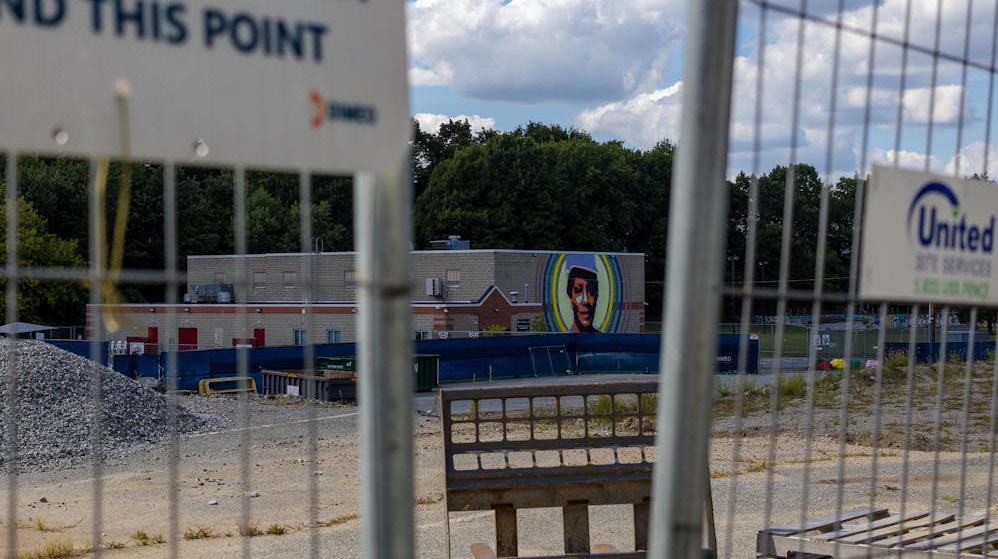
Although the school’s swing space is nice, teachers and families are upset about how the district has engaged families throughout the renovation process, she said.
To Matracia, the main issue is not teaching in the swing space itself. “It’s the fact that we (were) not asked for our input into the new building,” she said, arguing that the district failed to effectively engage teachers and parents in the planning process.
The location of the swing space has
also posed challenges for families, Matracia said. While many kids used to walk to school, Matracia said the majority now take the bus. Additionally, family turnout at school events has decreased now that parents can no longer easily walk to the school, she alleged.
Matracia also shared that in the school’s new building — scheduled for completion in summer of 2026 — sixth graders will be combined with elementary school students. Because of this, Matracia
alleged that the school will no longer be able to offer electives such as music and library for elementary school students due to a lack of resources.
The PPSD and RIDE did not respond to a request for comment about the community engagement process and the future availability of elective programs.
This article originally appeared online at browndailyherald.com on Sept. 3, 2025.
ANNA LUECHT / HERALD
MAX ROBINSON / HERALD
Harry Kizirian Elementary School on Tuesday. As of 2023, the average age of a Providence school building was 75 years.
OFFSHORE WIND
RI, Revolution Wind sue Trump administration over wind farm stop-work order
Wind farm construction 80% complete, project expected to finish in 2026
BY TALIA EGNAL SENIOR STAFF WRITER
Rhode Island is suing the Trump administration over its Aug. 22 order to halt construction on Revolution Wind — an offshore wind farm located 15 miles off the coast of R.I. — just hours after Revolution Wind filed a similar legal complaint.
R.I. Attorney General Peter Neronha P’19 P’22 announced the lawsuit in a Thursday press conference alongside Connecticut Attorney General William Tong ’95.
The halt of the $4 billion, 704-megawatt project — which was 80% complete — has drawn criticism from community organizations and some environmental experts. The wind farm, which was scheduled to be operational in 2026, would have powered 350,000 homes annually across R.I. and Connecticut and generated over 2,000 jobs nationwide.
“Revolution Wind is fully permitted,” Tong wrote in a statement. “Now, with zero justification, Trump wants to mothball the project.”
The complaint alleges the Trump administration violated the Administrative Procedure Act and the government’s authority under the Outer Continental Shelf Lands Act.
“Both laws demand reasoned decision-making, fidelity to statutory limits and respect for the settled expectations of sovereign states and regulated parties,” the statement continued.
According to Revolution Wind’s complaint, the project has been “consistent with federal and state law” and has been subject to extensive, multi-year reviews by the federal government.

Neronha and Tong condemned the administration’s stop-work order in a Thursday news release, emphasizing that Revolution Wind was integral to the states’ climate, economic and energy reliability goals.
Under its current 20-year power-purchase agreement with R.I. utility regulators, Revolution Wind could end up generating up to a quarter of the state’s electricity consumption, Stephen Porder — associate provost for sustainability and a professor of ecology, evolutionary and organismal biology and environment and society — wrote in an email to The Herald.
The agreement also fixes the cost for electricity at 9.8 cents per kilowatt hour,
significantly cheaper than the regional average. Last February, energy prices in R.I. reached about 16.4 cents per kilowatt hour, The Herald previously reported.
The Trump administration has targeted offshore wind since January, saying it will review federal licensing and permitting practices due to concerns over environmental impacts and national security. Eighteen attorneys general, including Neronha, filed a suit in May over the administration’s attempts to block wind energy development.
A letter from the Bureau of Ocean Energy Management cited protecting national security as a primary reason for halting development on the project. Porder de-
scribed this concern as “vague,” noting that the Department of Defense had previously cleared Revolution Wind.
The letter cited environmental concerns as another reason for the stop-work order. Local conservation nonprofit Green Oceans challenged Revolution Wind and BOEM on Tuesday for harm done to offshore aquatic habitats and fisheries.
A law firm representing Green Oceans and several other groups pressured Brown in August to retract research that linked anti-wind groups to the fossil fuel industry, the New York Times reported.
Other community members and organizations echoed similar sentiments.
Kat Burnham, senior principal at energy advocacy group Advanced Energy United, decried the stop-work order as undermining “years of planning, billions of dollars in private investment and thousands of jobs” in a statement written to The Herald.
David Langlais, the business manager of Iron Workers Local 37, estimated that the project has provided over 100,000 work hours for his union. He mentioned that around one-third of his union voted for the Trump administration, but with the stop-work order, many are now wondering how they are going to meet the number of work hours required for health care coverage eligibility.
“They tell themselves they’re the party of the working class, yet they’re literally potentially putting thousands of construction … people out of work,” he said about Republican leadership.
Langlais also emphasized the wide-ranging nature of the work, adding that the supply chain spans from shipbuilding yards in Louisiana to small businesses that build widgets in Providence. More than 40 states are involved in the project’s supply chain, according to a statement from Denmark-based Ørsted, a parent company of the Revolution Wind joint venture.
“At the end of the day, the work stoppage, should it continue or even lead to the removal of the turbines, would be a tremendous blow to Rhode Islanders’ wallets, air, water and future,” Porder wrote.
Federal legislators — including Senators Jack Reed (D-R.I.), Sheldon Whitehouse (D-R.I.) and Representatives Gabe Amo (D-R.I. 1) and Seth Magaziner ’06 (D-R.I. 2) — have condemned the administration’s attempts to obstruct wind energy development and expressed support for Thursday’s lawsuit in a statement shared with The Herald.
Additional reporting by Annika Singh
Thirty-eight other U.S. states were also set to receive grants from the $1.2 billion program before funding was rescinded nationally.
$32 million funding cut won’t affect planned transportation projects, RIDOT says
Low-carbon transportation material grants were rescinded nationwide
BY PAVANI DURBHAKULA SENIOR STAFF WRITER
Last month, the U.S. Department of Transportation cut nearly $32 million in federal funding for the Rhode Island Department of Transportation. But despite the cuts, “no impacts to current or planned projects
are expected,” wrote Charles St. Martin, a RIDOT spokesperson, in an email to The Herald.
RIDOT had been awarded this money through the Low Carbon Transportation Materials Discretionary Grant Program last November. As part of the Biden administration’s Investing in America agenda, the grant program aimed to implement greener construction materials in the transportation sector to reduce air pollution and greenhouse gas emissions.
None of the grant money had been
allocated at the time that the funding was cut, St. Martin wrote. The projects were “not set to begin until 2026, and RIDOT was awaiting further guidance from (the Federal Highway Administration) on its potential use,” he added.
Thirty-eight other U.S. states were also set to receive grants from the $1.2 billion program before funding was rescinded nationally with the passage of the One Big Beautiful Bill Act in July. But the USDOT did not communicate this change to RIDOT until mid-August, the Providence Journal
reported late last month.
RIDOT applied for the grant because the agency had previously used low-carbon materials in projects like Route 295’s Cranston Canyon and believed the grant could “provide opportunities to explore additional uses,” St. Martin said.
Reducing the carbon footprint of transportation materials “is an important initiative,” said Scott Wolf, the executive director of sustainable growth organization GrowSmartRI. “We know that the transportation sector, defined broadly, is the
single largest source of carbon emissions in Rhode Island.” As of March, the transportation sector generates nearly 40% of the state’s greenhouse gas emissions, according to the R.I. Office of Energy Resources.
“I’m glad that (RIDOT) and others in state government did pursue this funding of $32 million,” Wolf said. But “it’s very unfortunate that the funding has apparently been eliminated.”
When asked to comment on the impact of the funding cut, Governor Dan McKee referred The Herald to RIDOT.
SITA PAWAR / HERALD
SCOUT CHEN / HERALD
DEAL WITH TRUMP ADMINISTRATION Brown reaches deal with federal government to restore federal research funding
Agreement does not include any payment to the federal government
BY CATE LATIMER AND AVANI GHOSH UNIVERSITY NEWS EDITOR AND CONTRIBUTING EDITOR
Brown has reached a deal with the federal government to restore some federal research funding and address allegations of antisemitism on campus, President Christina Paxson P’19 P’MD’20 announced in a University-wide email Wednesday.
The deal comes after the Trump administration shared plans in April to freeze $510 million in federal funding to the University. Brown is the third Ivy League university to reach a deal with the federal government this month.
The agreement does not include any form of payment to the federal government, Paxson wrote in the letter. The federal government’s arrangement with Columbia required the university to pay a settlement of $200 million.
Instead, Brown will distribute $50 million over 10 years in state workforce development grants.
“It was important to Brown that any financial aspect to the agreement reflect Brown’s priorities while also achieving outcomes that the federal government has identified as essential for higher education institutions,” Paxson wrote. According to
Paxson
the letter, Brown will have full control over choosing the workforce organizations and distributing the agreed-upon funds.
The University has already been battling a $46 million budget deficit, implementing a variety of cost-cutting measures during the spring semester and early summer. In June, the University announced its staff hiring freeze would be extended “at least through the end of the summer.”
Officials added that additional cost-cutting measures, such as adjusting faculty hiring levels and changing graduate student admissions, would be announced later this summer. As of Aug. 1, no new measures
have been shared with the Brown community.
Brown also took out a $500 million loan in July, following a $300 million loan incurred in April after the Trump administration announced its plans to freeze portions of the University’s federal funding. The loan has a 4.4% interest rate and will mature in five years with the option to pay it off before it reaches maturity.
As part of the deal, Brown has agreed to not discriminate racially in its admissions practices or University programming, and the University will also provide its admissions data to the federal government. The
deal will also end reviews of the University conducted by the Department of Health and Human Services, the Department of Education and the Department of Justice.
The arrangement also binds Brown to engage an external firm to conduct a campus climate survey and social media study to collect information on the climate for students with shared Jewish ancestry, among other details. The resolution is part of the University’s broader commitments to support Brown’s Jewish community, which were codified in the agreement with the Trump administration.
The University also agreed to adhere to
NCAA rules for the participation of transgender athletes in intercollegiate sports, which state that only students assigned female at birth can participate in women’s sports.
Penn faced similar terms in its deal with the federal government, which was centered around transgender swimmer Lia Thomas. In April, the Department of Education found that Penn violated Title IX by allowing Thomas to compete. The university agreed to issue a statement saying it would comply with Title IX in exchange for the restoration of $175 million in federal funding.
Brown also agreed not to provide “gender reassignment surgery or prescribe puberty blockers or hormones to any minor child for the purpose of aligning the child's appearance with an identity that differs from his or her sex,” the agreement reads. The move will not affect medical teaching or training, and will not apply to clinical services provided by Brown University Health and Care New England.
The agreement affirms “that the government does not have the authority to dictate teaching, learning and academic speech,” according to Paxson.
“We will continue to foster free inquiry, discovery and innovation,” she wrote. “We will embrace free expression and academic freedom.”
This article originally appeared online at browndailyherald.com on July 30, 2025.
addresses federal deal, outlines University priorities ahead of 2025-26 year
Discovery Through Dialogue project expected to be expanded
BY SAMAH HAMID SENIOR STAFF WRITER
Despite reaching an agreement with the Trump administration to restore millions in federal funding late last week, Brown is anticipating staff layoffs and further cost-cutting measures to address a projected $30 million financial loss due to federal actions, University officials said in a Tuesday Today@Brown announcement.
The University aims to address the $30 million negative impact through reducing unrestricted campus expenditures by 2.5% and five budget actions, including monetizing real estate holdings, consolidating health plans and temporarily pausing spending related to campus initiatives aiming for net-zero emissions.
“Recent developments have improved the financial outlook for Brown's budget in the past month,” President Christina Paxson P’19 P’MD’20, Provost Francis Doyle and Executive Vice President for Finance and Administration Sarah Latham wrote in the Tuesday announcement.
The $30 million is “far better than the impact we feared a month ago, which ranged from $40 million to well over $100 million for (fiscal year 2026)” they wrote, citing both the government deal and the “One Big Beautiful Bill” as developments that would result in lessened costs for the University.
Last month, Brown took out a $500 million loan on top of an existing $300 million loan incurred in April.
“We felt it was prudent to have the capacity to sustain the University’s operations if we did,” the administrators wrote.
“We are evaluating whether we need to have as much debt as we currently have,
even as we plan for the persisting implications of federal actions affecting colleges and universities across the country.”
In June, the University announced it would extend its staff hiring freeze until “at least through the end of the summer.”
The freeze will end after University units implement plans for budget reductions, which will be shared in September. The salary freeze for the President’s Cabinet, announced in the spring, will also continue through fiscal year 2026.
Cuts to campus expenditures across various departments will also vary by department focus and area, culminating in an overall cut of 2.5%.
“Areas that are core to Brown’s academic mission of education and research, or that generate revenue supporting this mission, have been assigned smaller budget reductions than others, while some areas received larger budget reductions,”
administrators wrote.
Cabinet leaders will be in charge of allocating the budget reductions to “prioritize mission-critical activities.” Although they admitted that the cuts may result in some staff layoffs, they wrote that they are encouraging these leaders to eliminate vacant positions that have been budgeted for, rather than laying off current staff.
The University will “remain dedicated to engaging in the thoughtful and collaborative efforts needed to find new ways of working with fewer resources,” they wrote, “but always mindful of the reasons that members of our community have chosen to work, study and live at Brown.”
“By no means was embarking upon this agreement an easy decision for Brown,” Paxson wrote. But priorities like retaining faculty and maintaining externally funded research positions made it a necessary one, she added.
In April, the White House shared plans to freeze $510 million in Brown’s federal funding over alleged antisemitism on campus and diversity, equity and inclusion programs. The July agreement restored funding from the National Institutes of Health and concluded several federal investigations into the University. As part of the resolution, Brown agreed to provide $5 million per year over the course of 10 years to “workforce development organizations” in Rhode Island and committed to follow federal nondiscrimination provisions.
The agreement does not “change Brown’s firm and long-standing commitment to treat all members of our community with dignity and respect, including members of our trans and nonbinary communities,” Paxson wrote.
While the deal has “improved the financial outlook” for the current fiscal year’s budget, federal policies affecting
research funding and tuition revenue still pose issues, Paxson wrote. To help address a $30 million negative impact from federal actions, administrative and academic units across the University were asked to reduce expenses and brace for potential layoffs.
Paxson further indicated that Brown’s administration believes federal actions will “impose an annual burden” that may continue in fiscal year 2027 and onwards.
Despite budget difficulties, the announcement highlighted accomplishments from the last year, including a record eight University faculty members elected to the American Academy of Arts and Sciences. Brown researchers also identified a biomarker for the prevention of Alzheimer’s disease and organized an exhibit at the Smithsonian Institution’s National Museum of African American History and Culture.
The University has also undertaken several initiatives to “support a thriving academic community,” Paxson wrote, referencing the launch of the Thomas J. Watson Jr. School for International and Public Affairs, renovations of Pembroke Hall and the construction of the William A. and Ami Kuan Danoff Life Sciences Laboratories, which began this summer.
Vice President for Diversity and Inclusion Matthew Guterl will also lead the development of a new action plan for diversity and inclusion, while Paxson and Provost Francis Doyle are spearheading an initiative aiming to reinforce a sense of campus community among faculty and staff.
“This will be an exciting year as we continue to advance knowledge and understanding, embrace diverse perspectives and build an even greater sense of community,” Paxson wrote.
This article originally appeared online at browndailyherald.com on Aug. 5, 2025.
KAIA YALAMANCHILI / HERALD
As part of the deal, Brown has agreed to not discriminate racially in its admissions practices or University programming, and the University will also provide its admissions data to the federal government.
KAIA YALAMANCHILI / HERALD
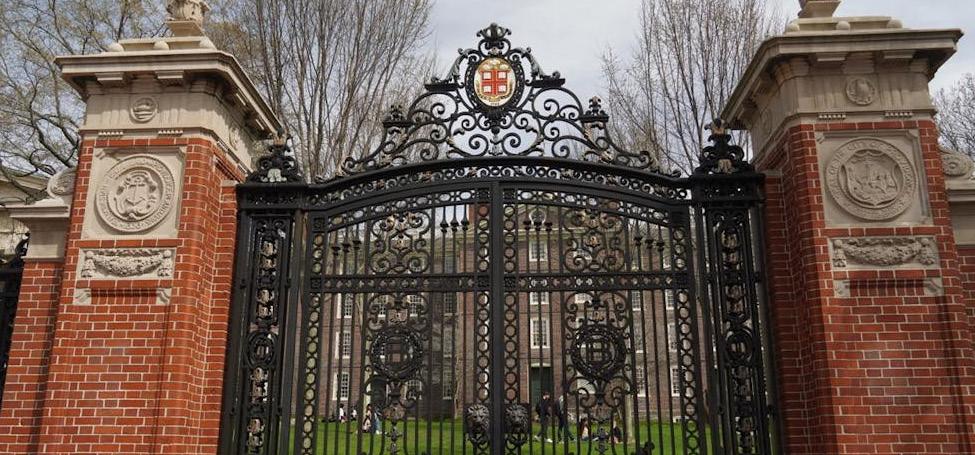
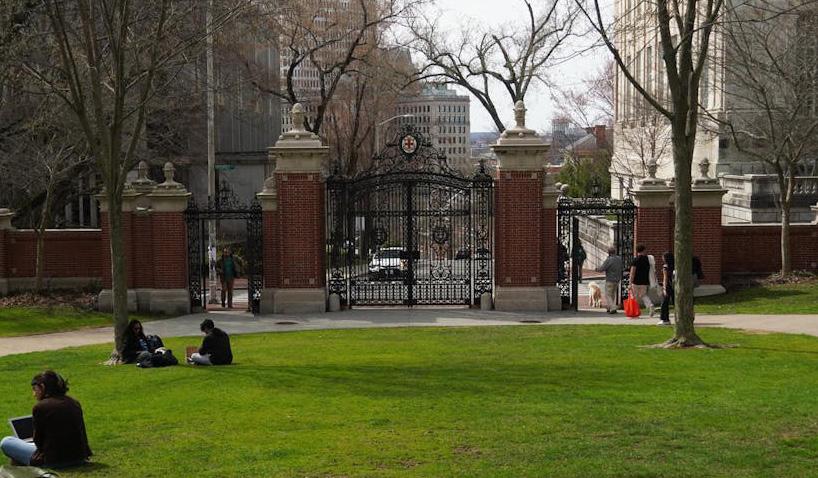
The announcement comes just days before incoming students walk through the Van Wickle Gates for convocation, and less than a week before classes for begin for the 2025-26 academic year.
DEAL WITH TRUMP ADMINISTRATION
First Penn, then Columbia, now Brown: Comparing deals across the Ivy League
Higher education experts weigh in on the key differences
BY CATE LATIMER UNIVERSITY NEWS EDITOR
When media outlets reported in late July that Brown was in discussions with the White House over the University’s federal funding, many community members’ first thoughts were about the Trump administration’s previous deals with Ivy League peers Penn and Columbia.
“The agreement between Columbia University and the Trump administration is not a settlement — it’s a shakedown,” wrote Daniel Souweine ’01, founder of alumni organization Stand Strong Brown, in a statement to The Herald after news surfaced regarding the discussions. “We call on Brown University to reject this model entirely.”
Less than a week later, Brown announced it had reached an agreement with the Trump administration to restore the University’s federal research funding and resolve government investigations into antisemitism on campus but not without a list of concessions.
Some, like eliminating discrimination in admissions or complying with NCAA policies on transgender athletes in women’s sports, mirrored the White House’s agreements with Columbia and Penn, respectively. Others, like distributing $50 million in workforce development grants to local organizations, seemed unique to Brown.
The Herald spoke to several higher education experts to unpack the key differences between the agreements and to understand how the future of higher education may change with the White House’s new practice of leveraging federal funding to strike deals with top universities.
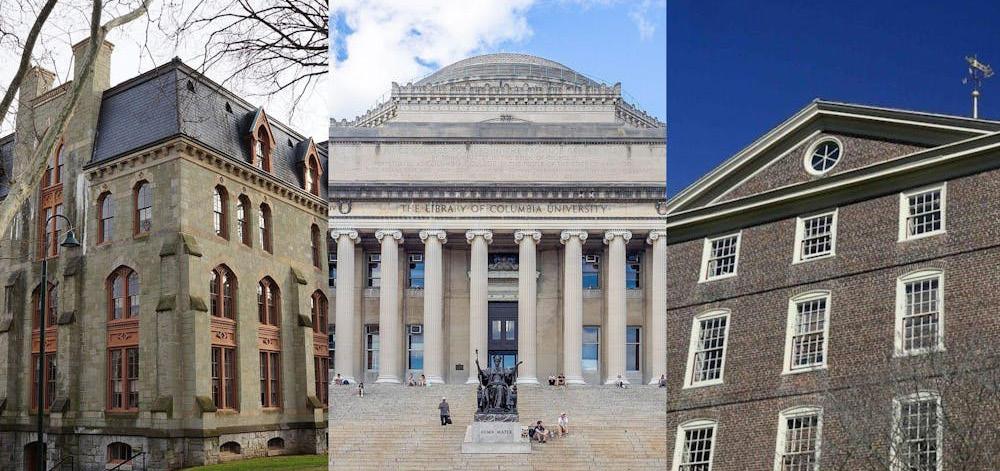
How Brown’s deal stacks up The Trump administration’s agreements with Brown and Columbia are very similar, multiple higher education experts told The Herald.
Specifically, Brown’s resolution to prohibit “unlawful” diversity, equity and inclusion programs and the University’s commitment to not consider race in ad-
missions mirrored agreements in the White House’s agreement with Columbia, wrote Sara Partridge, associate director of higher education at the Center for American Progress, in an email to The Herald.
Both agreements also outlined commitments to supporting Jewish life on campus, but Brown’s deal requires the University to engage with an external firm to conduct a campus climate survey and a social media harassment study by the end of the year.
According to University Spokesperson Brian Clark, the study will “collect information on the climate for students with shared Jewish ancestry.”
In a 2024 resolution of a Title VI complaint, the Department of Education raised concerns about antisemitism on campus and Brown agreed to implement a number of actions to improve its response to discrimination and harassment. The letter specifically noted instances of harassment via social media, namely Sidechat — a platform that allows members of the Brown community to post anonymously. This 2024 resolution also required the University to review its climate surveys and provide a report to the Education Department’s Office of Civil Rights.
The survey mandated by the new agreement “aligns with planning by the Office of Diversity and Inclusion to assess campus climate, and will build on campus climate surveys we have conducted in the past,” Clark wrote in an email to The Herald.
Both Brown and Columbia also agreed to disclose admissions data to the federal government. The concessions were followed by an executive order that requires all colleges and universities receiving federal funding to report their admissions data as well.
Brown was the second Ivy League university, following Columbia, to make a financial settlement to restore federal funding. Columbia will pay over $200 million to the federal government while Brown will pay $50 million to state workforce development organizations over the next decade.
None of this funding will go to the federal government, and Brown will maintain full control over fund distribution.
Penn — the first Ivy League university to strike a deal with the Trump administration — was not fined. Instead, the university’s agreement is “narrowly focused on
complying with Title IX,” wrote Jay Greene, a senior research fellow in the Center for Education Policy at the Heritage Foundation, in an email to The Herald.
Title IX is a federal statute that prohibits sex-based discrimination in educational programs or within organizations that receive federal funding.
Penn’s agreement centered around the university’s decision to allow transgender swimmer Lia Thomas compete in women’s swimming, which the Department of Education found violated Title IX. In exchange for the restoration of $175 million in federal funding, Penn issued a statement saying it would comply with Title IX.
Brown similarly agreed to comply with NCAA rules on transgender athletes, which ban student-athletes who were not assigned female at birth from competing in women’s sports.
The University also agreed to prohibit gender affirming care for minors, but few minors are enrolled at Brown, Clark explained, and Student Health Services does not have surgical facilities. He added that Health Services “does not typically prescribe” puberty blockers, because they are intended for pre-pubescent patients.
“New prescriptions for hormones for minors will now be provided by external medical providers,” Clark wrote. “The University will refer to area specialists those affected students who are minors who seek care from Student Health Services or the University Pharmacy.”
Academic freedom
Some higher education experts are split on the deals’ impacts on academic freedom — a major concern for many when federal funding freezes were first announced.
“The most striking thing about these three agreements for Brown, Columbia and Penn is that they do not do anything that affects academic freedom,” Greene wrote. “All of the over-wrought worries before the agreements were struck, as well as many of the criticisms afterward, raise alarms about problems that simply do not exist in these agreements.”
Greene added that the Brown and Columbia agreements have provisions that emphasize that academic freedom will not be impacted.
Brown’s agreement specifically states that the agreement will not allow the gov-
ernment “to dictate Brown’s curriculum or the content of academic speech.”
“There is nothing in them that represents an inappropriate intrusion on academic freedom,” Greene wrote.
For Partridge, Columbia’s agreement was the “most far-reaching of the three and the one that most clearly infringes upon academic freedom.” Despite the clause related to academic freedom, “there are ways that the implementation of this agreement may impede faculty members’ rights to freely teach and conduct research,” she wrote.
She cited the provision in Columbia’s agreement requiring administrators to review its programs in Middle Eastern studies, which “may represent an intrusion into academic curricula, particularly if decisions about what should be taught and how are made for political or ideological reasons.”
“Academic materials are generally assessed through peer review by other experts in the same field, not university administrators,” she added.
But Jonathan Butcher, the director of the Center for Education Policy at the right-leaning Heritage Foundation, believes the deal will level the playing field for academic freedom.
“All students, including Jewish students, should be protected from harassment, giving them the same academic freedom as other students on campus,” he wrote in an email to The Herald. “Universities can explore new issues and hold debates or lectures on a wide variety of topics, but harassment must be prohibited and students should be protected from it.”
The future of higher education Partridge believes that these deals could have a widespread impact on other universities and colleges navigating the Trump administration’s threats to higher education.
“Unfortunately, many institutions of higher education may follow suit and voluntarily take up practices adopted in these agreements in an effort to avoid being targeted by this administration,” she wrote.
When the Trump administration expressed its desire to eliminate DEI programs, many colleges and universities followed suit, changing or even eliminating mentions of DEI on websites or scrapping programs altogether.
“The administration may also use this same playbook against other institutions, in spite of its dubious legality, because it has so far proven effective in accomplishing some of its goals,” Partridge added.
Schools like Harvard and University of California, Los Angeles have reportedly remained in negotiations with the federal government over millions of dollars in federal funding.
For Greene, the deals are an “important step toward removing racial preferences from higher education and ensuring enforcement of Title VI protections for Jewish students and Title IX protections for female athletes,” he wrote.
But Partridge says she sees these changes as “unprecedented, targeted attacks on institutions of higher education that leverage the federal government’s role as a funder of scientific research in order to accomplish the Trump administration’s ideological goals.”
“Colleges and universities should not back away from their missions to provide equal educational opportunities to students from all backgrounds, and should not pre-emptively comply with dangerous and overreaching demands from the administration,” she added.
Luther Spoehr, senior lecturer emeritus in education at Brown, said that the “the unprecedented and arbitrary nature of these actions makes it more than difficult to project future events in these areas.”
He pointed to other Trump administration policies as potential signs of what is to come in higher education.
Last week, the White House announced plans to review the Smithsonian Institution’s exhibitions and materials to “ensure alignment with the President’s directive to celebrate American exceptionalism, remove divisive or partisan narratives and restore confidence in our shared cultural institutions.”
Spoehr worries that this move could be a warning sign for the administration intervening in areas of higher education, such as curriculum and faculty hiring.
“Things could get ugly very fast,” he wrote in an email to The Herald. “ Let’s hope it’s not a harbinger of things to come.”
This article originally appeared online at browndailyherald.com on Aug. 21, 2025.
KAIA YALAMANCHILI / HERALD
The Trump administration’s agreements with Brown and Columbia are very similar, multiple higher education experts told The Herald. Courtesy of Michel Alexandre Salim via Wikimedia Commons (Left). Courtesy of Ajay Suresh via Wikimedia Commons (Center).
FIRST-YEAR POLL
Sex, drugs and college admissions: The Herald’s First-Year Poll
The Herald polled over 700 incoming first-year students on everything from demographics to career aspirations
BY KATE BUTTS AND CIARA MEYER UNIVERSITY NEWS EDITORS
Amid an uncertain landscape of federal intervention in higher education, advancements in artificial intelligence technology and the start of a new semester, The Herald polled new undergraduate students on their background, worldview and some of the issues likely to define the semester.
The Herald polled 733 incoming first-year students between Aug. 8 and Aug. 15. Here are five key takeaways from The Herald’s first-year poll. Access and explore all the data on The Herald’s interactive data dashboard.

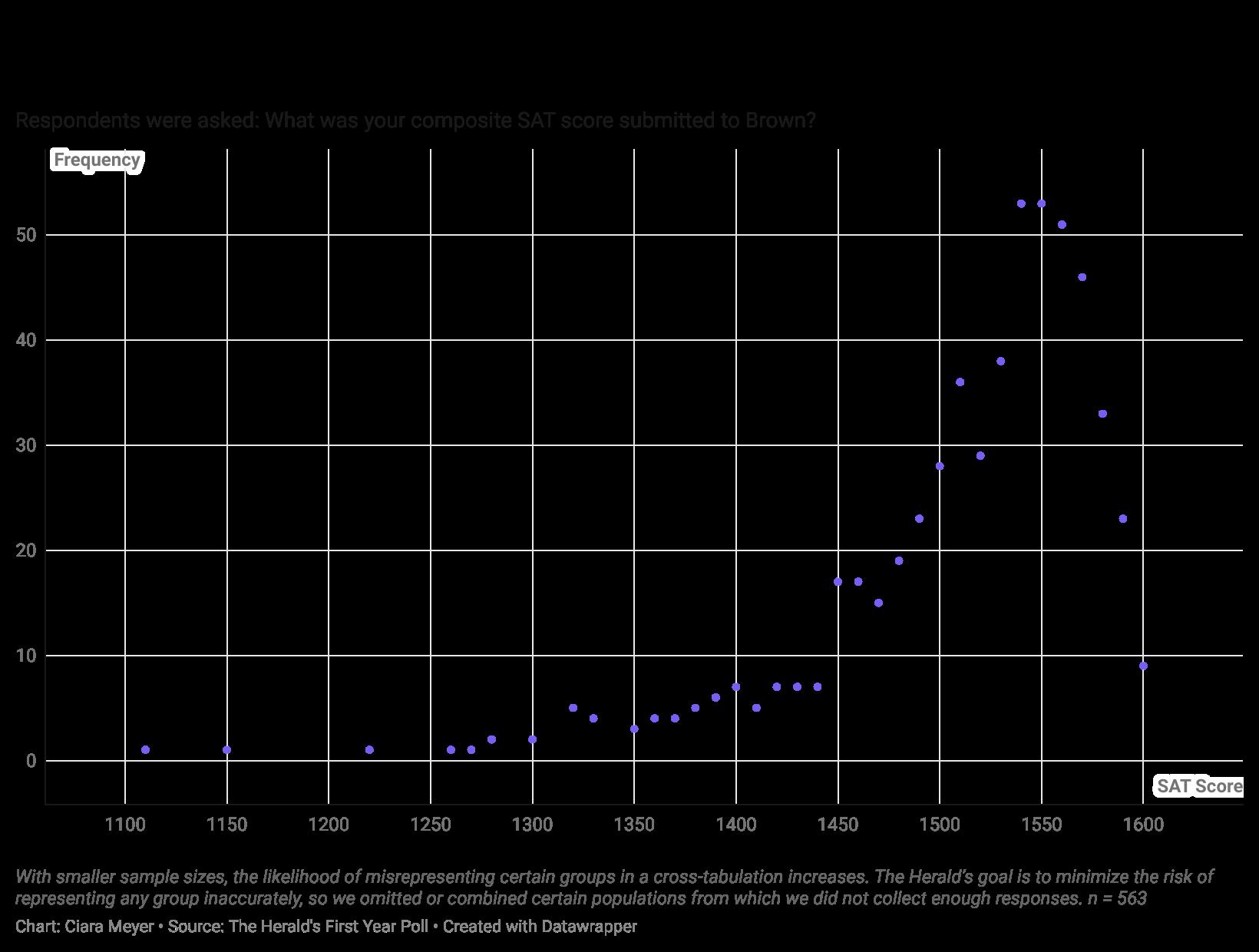
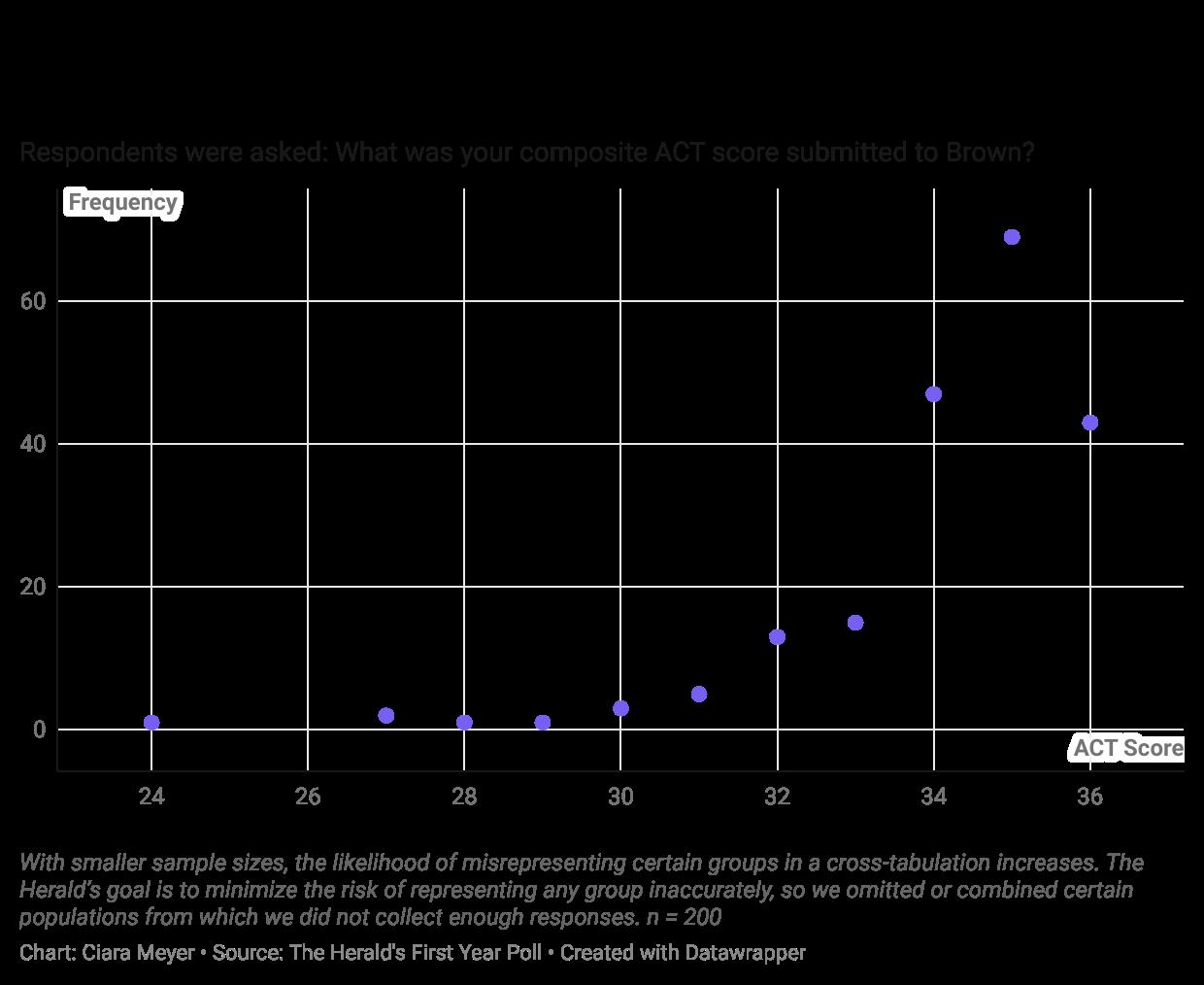
Over 70% of students scored higher than a 1500 on the SAT or above a 34 on the ACT
After a years-long hiatus sparked by the COVID-19 pandemic, Brown’s class of 2029 was the first class required to submit standardized test scores since the class of 2024. The Herald’s first-year poll indicates that the class of 2029’s average SAT score was a 1530, while
the average ACT score remained a 35.
The lowest self-reported SAT score was in the 1100s. No first-year student in the class of 2028 had an SAT score below a 1200, according to Brown’s Common Data Set.
According to The Herald’s poll, the median score for recruited athletes was 1455 compared to a 1530 for
non-athletes. Higher SAT scores were correlated with higher household incomes — the average student from a household earning less than $60,000 per year had a median SAT score of 1500, while the average student from a householding earning more than $400,000 per year scored 1550.
There is a strong correlation between income
and test scores among all students who take the SAT. According to the College Board, students from lowest income households have an average SAT score 887, while students from the highest income families score 1152 on average.
MAX ROBINSON / HERALD
Herald staff polling students in March. The Herald polled 733 incoming first-year students between Aug. 8 and Aug. 15.
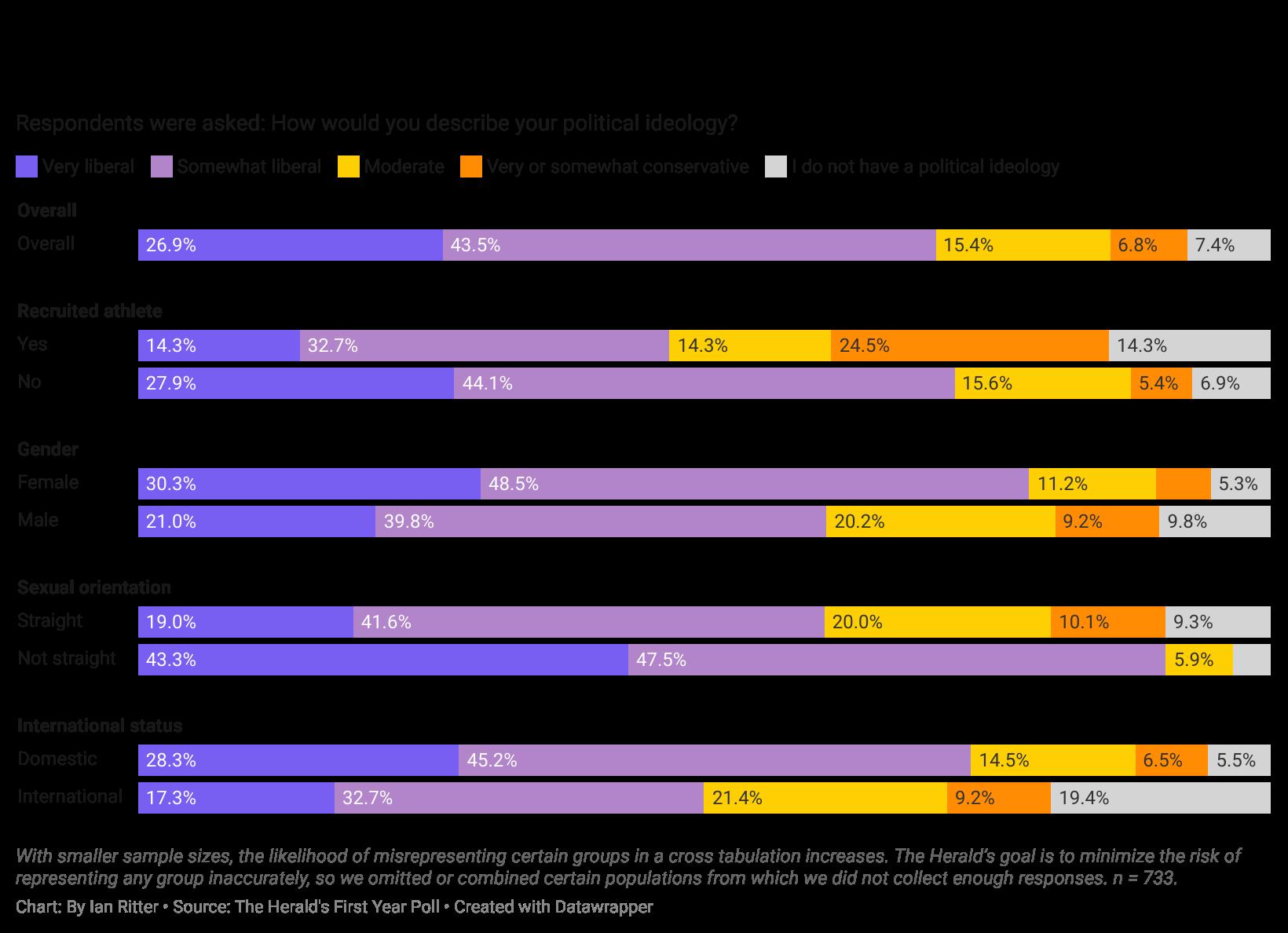
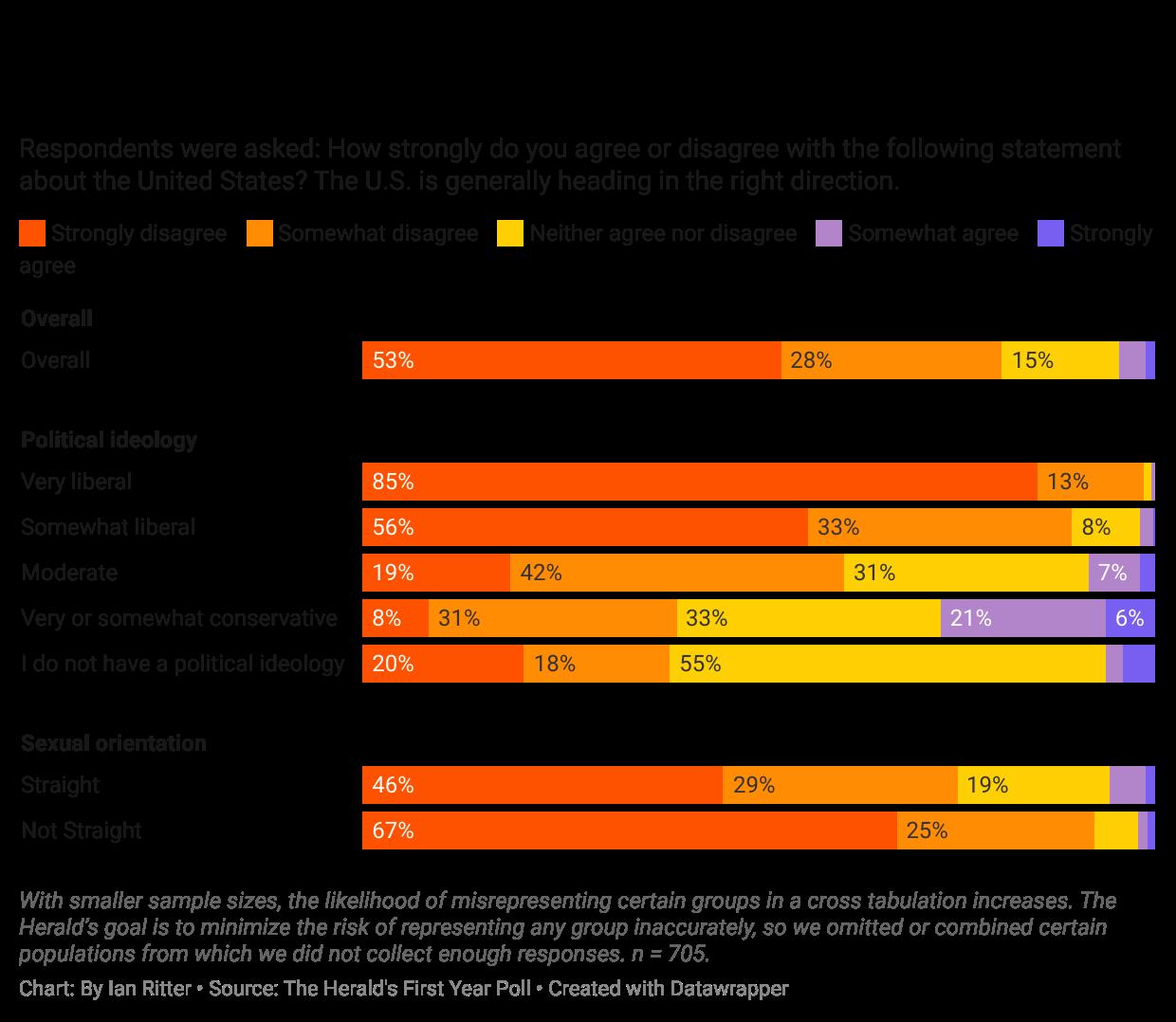
About one in four athletes identify as very or somewhat conservative, compared to just 1 in 20 non-athletes
Of athletes who responded to the first-year poll, almost one quarter identified as “very or somewhat conservative.” Comparatively, just 5% percent of non-athletes identified as conservative.
FIRST-YEAR POLL
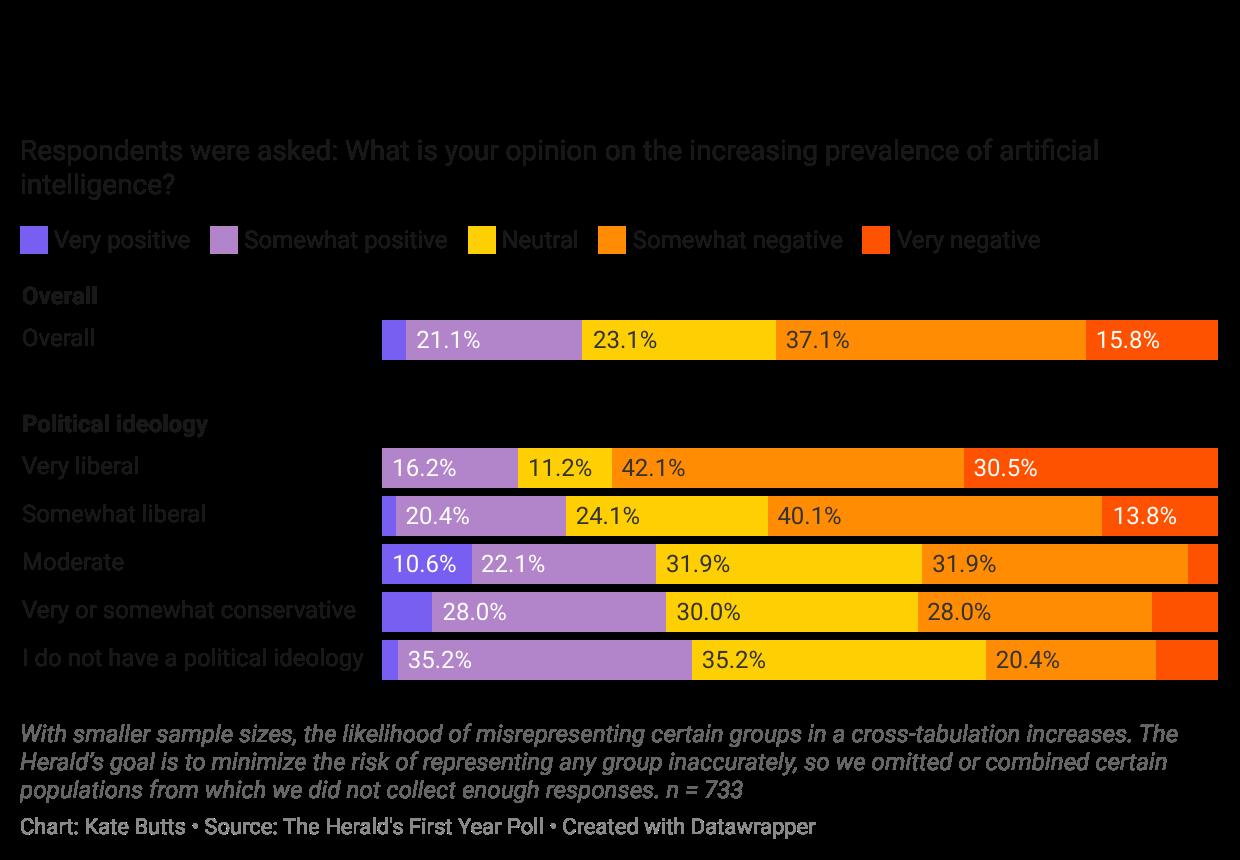
How first-year students use AI varies, but most are skeptical of its increasing prevalence
Ten percent of students who identify as straight responded that they were “very or somewhat conservative,” whereas no non-straight student said they were conservative.
Brown’s student body, as a whole, leans left with just over three-quarters of students identified as “very liberal” or “somewhat liberal,” according to The Herald’s Spring Poll of the entire student body.
Less than 10% of students think Brown’s tuition is fair
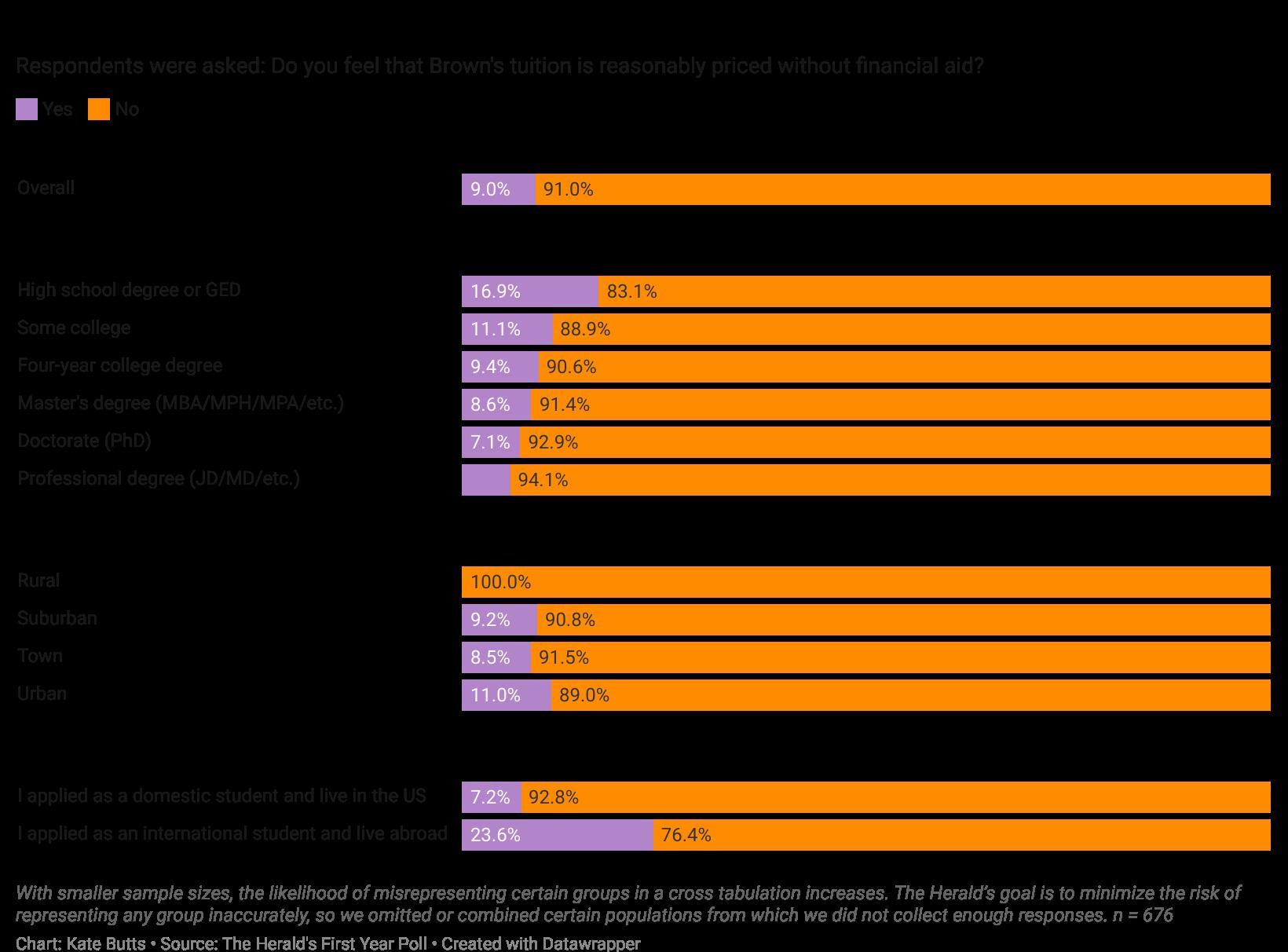
Brown’s tuition hit a record high of $71,700 for the 2025-26 academic year. The full cost of attendance rose over $10,000 in the last year. Fewer than one in 10 incoming first-year students think the cost is fair. With room and board, materials and other fees, Brown’s annual cost is nearly six figures. This rising price has drawn criticism from conservative lawmakers who opened a congressional investigation into alleged
price-fixing among the Ivy League. Last month, a class action lawsuit was filed against 32 colleges, including Brown, accusing them of inflating attendance costs through early decision admission cycles.
Just over half of incoming first years received some financial aid from Brown. 45% of students reported being satisfied with their financial aid packages, with dissatisfaction rates highest among middle-class students.
Although almost nine in 10 students report using AI, over half have a negative opinion of the increasing prevalence of the technology.
There is no clear consensus for how AI fits into Brown’s academic curriculum, but avoiding AI in the classroom is becoming increasingly difficult. More than three-quarters of incoming first-years report having used AI on their schoolwork in some capacity. Some professors worry that students will use AI to cheat on
assignments, but less than 5% of first-year students report having attempted to pass off AI-generated content as their own work.
AI use is more prevalent among conservative students compared to students who identified as “very liberal” at 96% and 77%, respectively.
Male first-year students also use AI more often with more than half using AI once a week or more, while less than a third of female students use AI that frequently.
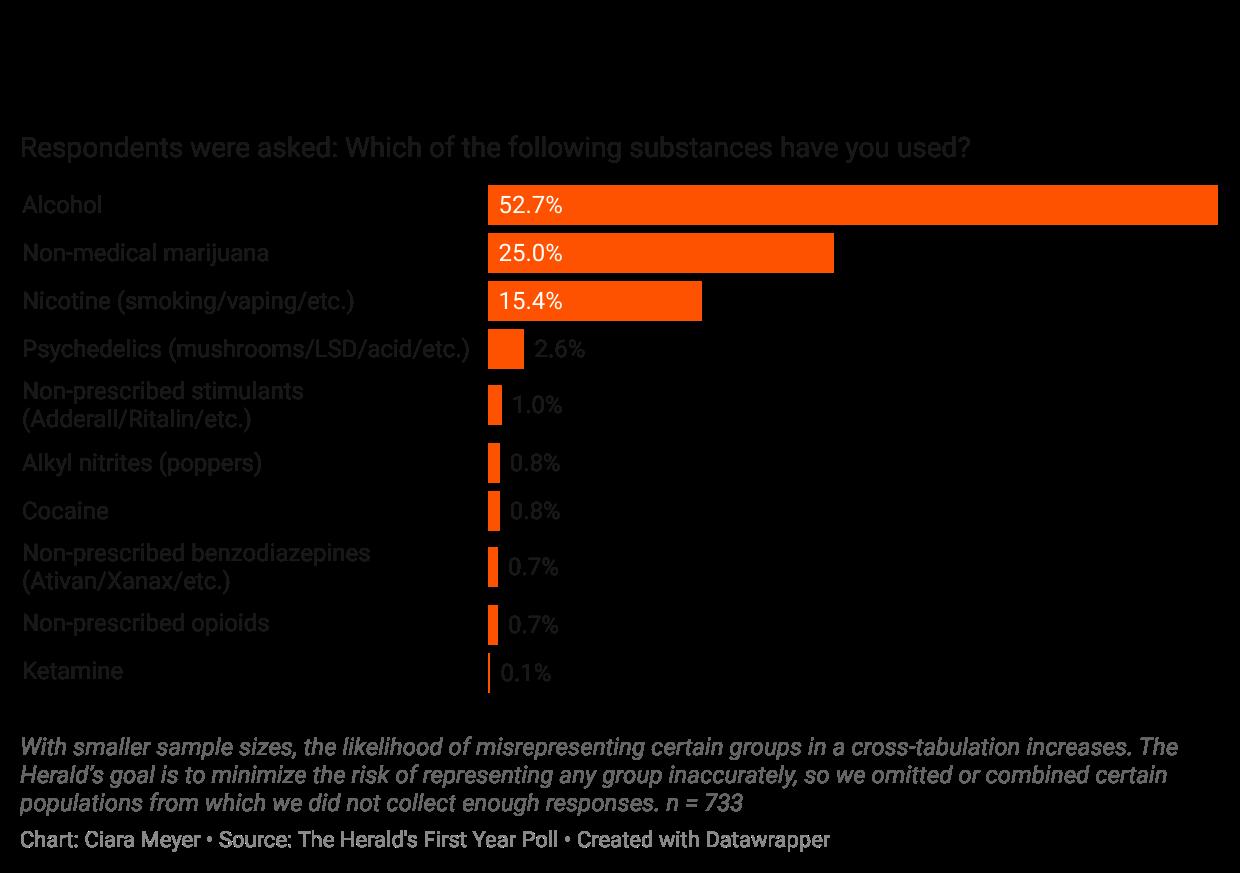
Wealthier students are more likely to consume non-medical marijuana.
Marijuana is prevalent on many college campuses, and Brown is no exception. According to The Herald’s 2024 poll, nearly two-thirds of Brown students had
used marijuana. A quarter of incoming students say they have used non-medical marjuana.
Wealthier students are more likely to use marijuana and report using it more frequently.
Brown secures $500 million loan amid federal funding uncertainty
The loan follows a $300 million loan incurred in April
BY CATE LATIMER UNIVERSITY NEWS EDITOR
Brown has secured a $500 million loan amid federal cuts to research and financial aid in recent months, marking at least the second major loan the University has taken out in the span of four months.
The University originally struck a deal for a $300 million loan in April after the Trump administration announced it would freeze $510 million in federal funding to the University.
The loans supplement a number of additional cost-cutting measures by the University, including a staff hiring freeze and the elimination of salary increases for the President’s Cabinet. Earlier this summer, the University warned of additional financial measures that may include adjusting faculty hiring levels and modifying graduate student admissions.
The most recent loan, incurred on July
CONGRESS
16, has a 4.44% interest rate and will mature in five years with the option to pay off the entirety of the loan before it reaches
maturity, according to a regulatory filing reviewed by The Herald.
“Given recent volatility in capital mar-
kets and uncertainty related to evolving federal policy related to higher education, research and other important priorities of
Brown, the University is fortunate to have a number of sources of liquidity,” University Spokesperson Brian Clark wrote in an email to The Herald.
He added that these sources include private and public debt markets and that they “are available to help Brown manage its finances and priorities.”
As of Friday, Brown is reportedly in talks with the White House to restore federal funding frozen by the Trump administration since this spring. When the freeze was first announced in April, White House officials pointed to alleged antisemitism on campus and diversity, equity and inclusion initiatives as justification for the freeze.
Before financial headwinds incurred from the Trump administration’s threats to higher education, Brown already faced a $46 million budget deficit. The University’s fiscal year 2026 budget — which was approved by the Corporation in May — projected that the deficit would decrease to $29 million.
This article originally appeared online at browndailyherald.com on July 28, 2025.
House Republicans subpoena Brown in Ivy League price-fixing probe
Penn was also subpoenaed by the House Judiciary Committee
BY CIARA MEYER METRO AND UNIVERSITY NEWS EDITOR
On Tuesday, the House Judiciary Committee subpoenaed documents from Brown and Penn as part of a broader investigation into alleged price-fixing among the Ivy League.
According to a letter sent to President Christina Paxson P’19 P’MD’20 and obtained by The Herald, the subpoena requires all documents requested in an April 8 letter launching the investigation to be turned over by July 22.
The letter alleges that Brown has not yet provided all the documentation initially requested by the committee on April 8. The University was given an initial deadline of April 22, on which they
provided 93 documents.
In an email to The Herald, University Spokesperson Brian Clark wrote that the University has made “multiple doc -
ument productions, providing information spanning a period of many years, and we have responded to date to more than 90% of the committees’ requests” since late April.
Clark added that the Tuesday subpoena was “unnecessary given our voluntary compliance” but added that Brown will continue to provide the committee with the requested information.
In the Tuesday letter to Brown, the committee wrote that they allowed the University to take additional time in providing the documents, but that over subsequent requests, “Brown’s response has been inadequate.”
The committee initially expressed a willingness to subpoena Brown on April 30.
“As we respond, we are demonstrating that Brown has and continues to make
decisions on tuition and financial aid independently as part of our commitment to making sure that no student’s family socioeconomic circumstances prevent them from accessing the benefits of a Brown education,” Clark added.
As part of the investigation, creator of Bloat@Brown Alex Shieh ’27 testified before a congressional panel, alleging that an excess of University administrators was at fault for rising tuition prices. Brown denied these allegations.
After his appearance, the committee requested documents relating to a student disciplinary investigation into Shieh at Brown. He was eventually cleared of all wrongdoing.
This article originally appeared online at browndailyherald.com on July 1, 2025.
Brown, universities sued over alleged tuition inflation through early decision
The suit also claims early decision applications are not legally binding
BY KATE BUTTS UNIVERSITY NEWS EDITOR
On Friday, a group of three students and a recent graduate filed a class action lawsuit against 32 colleges and universities, including Brown, accusing them of inflating the cost of attendance through early decision admissions in violation of antitrust laws. None of the plaintiffs are known to be directly affiliated with Brown.
Brown’s Senior Vice President for Communications Cass Cliatt wrote in a statement that the complaint has no merit and the University “is prepared to mount a strong defense to make this clear.”
“Brown has always made decisions about its admissions processes and financial aid independently as part of the University's longstanding commitment
to enhancing access to the benefits of a Brown education regardless of socioeconomic circumstances,” she wrote.
The suit also names two college application platforms — the Common Application and Scoir — along with the Consortium of Financing Higher Education as defendants.
The plaintiffs argue early decision practices are tantamount to collusion between colleges and universities who have “mutually agreed not to compete for students accepted through Early Decision, which both raises prices for tuition and other services.”
Under this system, the vast majority of students are not given the opportunity to compare financial aid offers from other schools. Since early decision offers high rates of acceptance, the plaintiffs argue that this puts price-sensitive applicants at a disadvantage.
If a student is accepted through early decision, they agree to rescind all applications to other universities and enroll at the school.
Colleges typically favor this system as it provides the chance to solidify the makeup of much of their first-year class before the less-restrictive regular decision application cycle.
The plaintiffs challenged the enforceability of such an agreement, saying the application “is presented in a form that resembles a contract, an applicant’s commitment is not actually legally binding.” Instead, they claim, it imposes an “honor-bound,” “ethical” requirement to attend that school.
Brown previously settled a separate antitrust admissions lawsuit in January 2024 for $19.5 million. They maintain no wrongdoing.
The Consortium of Financing Higher Education and Scoir did not immediately respond to a request for comment.
Common Application declined to comment.
8, 2025.
KAIA YALAMANCHILI / HERALD
In addition to federal concerns, Brown continues to face a structural budget deficit.
KAIA YALAMANCHILI / HERALD
KAIA YALAMANCHILI / HERALD
The committee initially expressed a willingness to subpoena Brown on April 30.
SUMMER NEWS
REAL ESTATE
Brown looking to redevelop, potentially sell 21 properties
Request for proposals from developers comes amid budget deficit
BY MAYA NELSON AND CATE LATIMER UNIVERSITY NEWS EDITORS
Brown is looking to redevelop — and potentially sell — a number of its properties on College Hill and in the Jewelry District, according to an official request for proposals shared with The Herald.
The sites up for potential redevelopment total almost 115,000 square feet and span 21 properties and lots, according to the RFP created by Dallas-based real estate firm CBRE, which appears to be aiding the University’s redevelopment procurement efforts.
The request, initiated earlier this month, comes amid the University’s deepening financial troubles, including recent threats to federal research funding and financial aid. Brown took out a $500 million loan earlier this week, and the University has continued to adopt measures — ranging from a staff hiring freeze to to modifications of graduate school admissions
ADMINISTRATION
MUKUL KHANNA / HERALD
The sites up for potential redevelopment total almost 115,000 square feet and span 21 properties and lots on College Hill and in the Jewelry District, according to the request for proposals.
— to manage its $46 million budget deficit.
The University will either choose to sell these “underdeveloped” and “underutilized” properties to or enter long-term lease agreements with qualified developers to streamline Brown’s real estate portfolio and promote housing development, University Spokesperson Brian Clark wrote in an email to The Herald.
Brown aims to “strategically align and right-size our real estate portfolio with our
operational needs, monetizing underdeveloped properties” while also starting residential projects to help lessen the long-term housing demands from students and community members, Clark wrote. Brown’s plans to redevelop the properties were first reported by local news outlet GoLocalProv.
According to the request, the University is open to outright sale for some sites, but prefers long-term ground leases for
Rashid Zia ’01 closes tenure as dean of
Zia will return as a professor of engineering and physics
BY HADLEY CARR UNIVERSITY NEWS EDITOR
When Dean of the College Rashid Zia ’01 was a student at Brown, his engineering textbooks — which still sit in his office — were among the most expensive items he had ever purchased, he said. Over a decade later, in his first year as dean of the College, Zia established the Book/Course Material Support program to incorporate textbooks into a student’s financial aid.
Zia will end his seven-year-long tenure as dean of the College on June 30 and go on sabbatical before returning as a professor of engineering and physics at the University.
The Book/Course Material Support program was one of many aimed at supporting undergraduate students that Zia undertook throughout his tenure.
He prioritized the development of the Meiklejohn Peer Advising Program, which has grown to include over 350 mentors, making it the largest student group on campus. Zia also re-launched the CareerLAB as the Center for Career Exploration, which now focuses on alumni networking opportunities and specialized career advising.
“I am most proud of those moments where we were able to use advice that folks shared with us, then work together to put that advice into practice to make (the University) a better place,” Zia said.
Zia takes “deep joy” in the expansion of the SPRINT Program, which now includes “winternships” and semester internship opportunities.
The program, which Zia helped develop, makes Brown one of few universities in the country to use a need-aware funding model for internship opportunities, he said. Other schools typically use a “one-size fits some” approach to distributing financial support, which makes funding less “accessible to all students,” Zia said.
Zia served as dean during the COVID-19
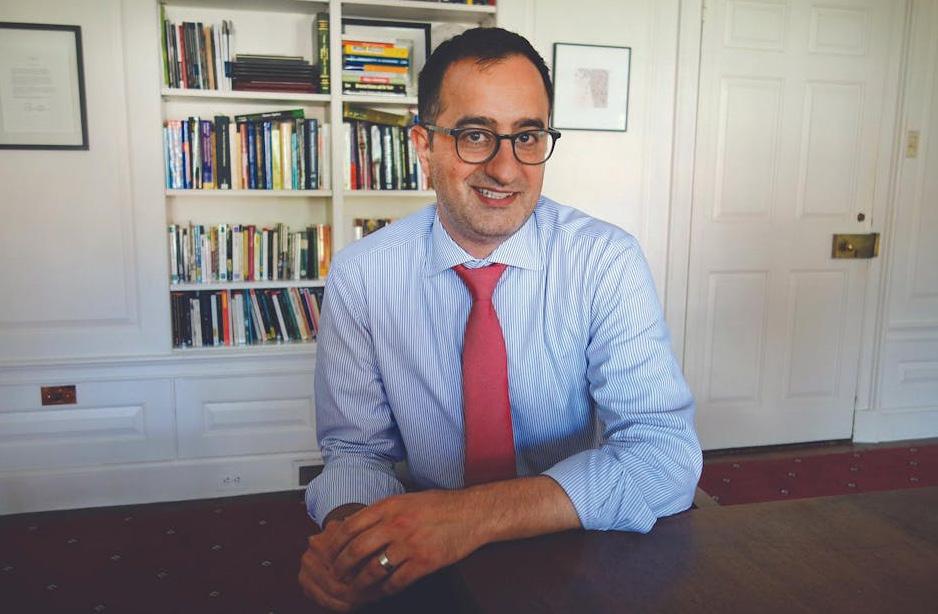
pandemic — a time when support and circumstances were “difficult,” he said. After the pandemic’s outbreak, many students had to go home on short notice, while others were unable to get home for 18 months or longer. To ensure a safe return to campus, Zia helped add an additional on-campus semester in the summer to the 2020-2021 academic year.
These support-oriented initiatives connect back to his time as a Brown student, Zia said.
“We’ve had a deep tradition of listening to students and staff and faculty and making that possible,” Zia said. As a student, Zia concentrated in both electrical engineering and English and American Literature. He went on to complete a master’s and PhD in electrical engineering before returning to Brown in 2006 as an assistant professor of engineering.
“Some of the best parts of Brown have stayed the same,” Zia said. “Everybody in our community cares deeply about the work that we do with one another.”
After 12 years teaching engineering, Zia was drawn to administrative work because of “issues of access and inclusion,” he said. In 2018, he stepped into the role of dean of the College.
123, 456: Countless lessons
During his tenure, Zia co-taught UNIV 0456: “Exploring Career Options” with
others — a model that allows developers to construct and own buildings while Brown retains land ownership.
The move follows scrutiny of Brown’s real estate footprint in Providence. In recent years, the University has rapidly acquired properties across the city, drawing concern from local residents and community members over Brown’s tax-exempt status.
These recent expansions were made in accordance with the University’s 2013 strategic plan, which included a goal to “reinvigorate” Brown’s physical campus “both on College Hill and off” while strengthening connections to Providence and Rhode Island.
The properties listed in the request include five sites on College Hill and two in the Jewelry District. Brown’s vision, according to the RFP, is to attract “highly amenitized, vibrant mixed-use” developments that complement its academic and research missions while boosting Providence’s housing stock and economic base.
The move also comes after Brown announced in March that it may “pull back” from its investment in a seven-story life sciences laboratory in the Jewelry District in light of federal threats. But the location
the College
eyes of someone who’s just arrived.”
In UNIV 0123, students also learn about what instructors called Brown’s “hidden curriculum,” which Stovall described as “knowledge about Brown or any institution that isn’t readily available.” She said that Zia’s office hours in the Ratty actively helped dismantle this “hidden curriculum” for students.
“It is remarkable how approachable he is,” said Meiklejohn Peer Leader Roberto Gonzalez Matos ’26. “He is always open to conversation. He is always open to helping everybody.”
Student-centered leadership
colleagues from the Center for Career Exploration. He also co-taught UNIV 0123: “Practical Introduction to Peer Advising” with two other instructors and the Meiklejohn peer leaders.
UNIV 0456 explores both the process of getting a job and the responsibility of students as they enter positions of leadership, Zia said.
Zia often begins the course with a game of Family Feud, asking his students to guess the most popular undergraduate concentrations among a group of 100 successful Brown alumni pursuing business. The number one answer was economics, but history came in second.
Zia said he hopes to teach students that “career paths are not straight lines.”
“They are nonlinear functions, and we try to help students plan for that,” he added.
Zia “sees the value in having students create tangible change,” said Sydney Stovall ’25, who took UNIV 0456.
As a Meiklejohn leader, Stovall would meet weekly with Zia and the other TAs to discuss UNIV 0123, a course that prepares first-year students to become Meiklejohns. Sometimes, these meetings took place at a table in the Sharpe Refectory.
“My favorite part of (UNIV 0123) is really … getting to know first year students,” Zia said. “It is a deep joy to be able to understand Brown every year through the
of the proposed facility — the William A. and Ami Kuan Danoff Life Sciences Laboratories — is not one of the sites included in the RFP.
Brown has invested more than $500 million in the Jewelry District over the past 15 years through acquisitions and new construction to support its expanding medical and research infrastructure, the RFP states.
The College Hill properties that are potentially up for redevelopment include 272 Thayer St. and 20 Olive St., a building across the street from the BioMed Center. The request also mentions four lots on Brook Street across from Stephen Robert ’62 Hall, as well three properties on Benevolent Street — including The Herald’s office at 88 Benevolent St., which the media organization leases through the University.
After receiving the proposals, Brown will decide whether any or all of the properties will proceed to redevelopment. Clark wrote that proposals will be evaluated based on factors like financial feasibility, sustainability and “opportunities for vibrant placemaking.”
This article originally appeared online at browndailyherald.com on July 30, 2025.
As an international student, higher education always felt “impersonal” to Marcelo Rodriguez Parra ’26. But Zia consistently provided advice and support when it was “needed most.” Rodriguez Parra, another Meiklejohn leader, recalls that he would often come to Zia with questions — ranging from internships to post-college plans — and Zia would always answer with reassuring words and a chocolate.
“I now know that there are people (in higher education) that actually care about students being able to access” resources, Rodriguez Parra said.
During Stovall’s Meiklejohn leadership orientation, the future Meiklejohn leaders sat in a park on the corner of Ives Street, listening to Zia share his personal experience with education, both as a student and as a child of immigrants. Zia was born in Iran, then moved to Rhode Island just before he turned five.
“Oftentimes administrators remain this elusive figure,” Stovall said. But Zia was “approachable through vulnerability and sharing his own lived experience.”
Zia is “so student-centered,” Stovall added. “It was really cool to see someone who is really the face of the undergraduate experience care so much about each individualized student experience.”
Gonzalez Matos saw this individualized experience working with Zia to create a program that mapped each course a student has taken to musical notes, creating
a chord for their semester, and a chord progression for their time at Brown. Gonzalez Matos had always been interested in music, but it was Zia who came to him with the idea and funding.
“He’s very good at interacting with students in a comfortable way,” said Meiklejohn Leader Carlson Ogata ’25. For Ogata, Zia has “bridged the gap between administration and student life.”
When Tejal Desai ’94, dean of Brown’s School of Engineering, came to the University in 2022, Zia became a resource during her transition. He had a “deep knowledge about Brown — its policies, procedures and history,” she said.
He “truly cares about students and the entire Brown community and this is evident in all he does,” Desai added.
The power of a name
After Ogata met Zia for the first time, Zia remembered his name. “It made me feel seen,” Ogata said, adding that Zia gets to know “people beyond their names and faces.”
In the first two or three weeks that Zia taught UNIV 0123, Stovall said, Zia took care to memorize every student’s name.
“If you feel seen in some space, it might actually change the level of engagement,” Zia said.
This practice of remembering names began before Zia became dean. In one of his first years teaching at Brown, Zia taught ENGN 0510: “Electricity and Magnetism,” a large engineering lecture course. In the beginning of the semester, a student asked a question in class. In his reply, Zia addressed the student by name.
After the end of the semester, the student gave Zia a card that is still on display in his office, recalling how Zia remembered their name. Since teaching that course and receiving that message, Zia has made an effort to learn the name of every student who took a class with him.
This article originally appeared online at browndailyherald.com on June 30, 2025.
COURTESY OF BROWN UNIVERSITY
During his tenure, Rashid Zia ’01 helped launch Brown’s Center for Career Exploration.
ARTS & CULTURE
REVIEW
Lorde’s ‘Virgin’ feels like a lit fuse that never quite ignites
Album’s fragmented nature mirrors Lorde’s identity explorations
BY AYANA AHUJA STAFF WRITER
“Meet me in the park / Tonight 7pm - x x” read the April 22 text message Lorde sent to her New York City fans the day of the impromptu Washington Square Park concert where she debuted “What Was That” — the lead single off her newest album, “Virgin.”
The artist consistently releases albums in four-year intervals, exiting the limelight between releases. Lorde’s musical evolution began with the minimalist and moody “Pure Heroine” (2013), transitioning to the lush theatricality of “Melodrama” (2017) before embracing the mellow, earthy tones of “Solar Power” (2021). While the first two albums were great commercial successes, “Solar Power” fell short of its predecessors, and fans clamored for a return to the familiar energy they had come to expect.
Her latest album is further proof of her familiarity with the concept of musical rebirth. On the surface, Lorde publicly rejects the pop-star persona and expectations of fame in “Virgin,” although the new album signals a return to synth-pop. It maintains the rawness and intimacy pervasive in Lorde’s discography, but this time with pared-down synths and industrial beats.
REVIEW

“Hammer,” the opening track, is an ode to city life and sexual empowerment. Listeners immediately become intimately familiar with Lorde’s journey towards self-acceptance. Throughout the song, she sings about how she “might have been born again,” setting the tone for the rest of the album’s contemplations on reinvention. Her lead single and the second song
off the album, “What Was That,” achieved virality due to its catchy and upbeat melody. Contrary to “Solar Power,” the song caves to the rigid demands of the pop charts: It’s accessible and grounded in the chaos of growing up.
“Shapeshifter” is uncanny, dreamlike and a perfect blend of the pop formula mixed with Lorde’s resistance to that blueprint. “No, I’m not affected. But tonight, I
just wanna fall,” Lorde sings. This line is uniquely vulnerable — a significant feat given the personal nature of her songs. Following the more upbeat song is a mournful tune titled “Man of the Year,” a shuffling, sometimes floppy piece on “ego death” and gender.
The next song, “Favourite Daughter,” functions as both a tribute and a confession with personal lyrics about Lorde’s mother and an intimate look into Lorde’s own desire to seek approval. The lyrics “Breaking my back just so you’ll say I’m a star” and “Panic attack just to be your favourite daughter” vividly convey the emotional toll of that quest.
In both “Favourite Daughter” and “Current Affairs,” Lorde writes about her mother, reflecting on familial relationships. Though neither exactly fit into the album’s stated focus of rebirth and reinvention, the songs both provide context for Lorde’s identity exploration and stand alone as strong, deeply self-exposing tracks.
“Clearblue” and “GRWM” are the weakest tracks on the album. “Clearblue,” a commentary on unprotected sex and a pregnancy scare, warps and filters Lorde’s voice in a way that strips the song of her signature emotional sound. “GRWM” attempts to convey sexual empowerment and confidence, but the lyrics are lost and muddled by the song’s over-production.
But Lorde comes back swinging with a heartbreaking direct narrative on her eating disorder in “Broken Glass.” In the
retrospective “If She Could See Me Now,” she sings “In the gym, I’m exorcising / All my demons, make ‘em keep ridin’.” She sings candidly about hopelessness and looking back upon her evolution. For fans who grew up alongside Lorde and her music, this combination of self-awareness and self-acceptance reaches a new level of vulnerability and maturity.
The concluding track, “David,” is written as a cathartic address to an ex. Although she’s unsure about who her partner is, she’s certain about the inevitability and endurance of that confusion — and her music conveys just that. The song ends with vibrating, cinematic beats that drown out her words.
All in all, Lorde’s fourth studio album is a rich exploration of her battle with her identity. Touching on themes of gender, bodily autonomy, sexuality and disordered eating, it’s emotional and messy. The album feels like a collection of bits and pieces, rich with fragments, musings and confusions that mirror the complexity of the topics she tackles.
Despite its undeniable hits, the album often feels like a bomb with a lit fuse that never quite explodes. But this lack of finality may be the point: The work places Lorde one step closer to the freedom she has loudly yearned for since her earliest releases.
This article originally appeared online at browndailyherald.com on Sept. 2, 2025.
Alessi Rose’s ‘Voyeur’ is a delightfully unapologetic breakup record
EP explores 21st-century dating with a healthy dose of rage and humility
BY ALYSSIA OUHOCINE SENIOR STAFF WRITER
On July 25, British singer-songwriter Alessi Rose released her third EP “Voyeur,” honing in on the quintessential experience of loving, leaving and letting go. At only 24 minutes, the alternative pop record showcases the best of Rose, weaving intimate lyricism with a hypnotic soundscape.
Rose is a relatively new face in the music scene, having just released her first single, “Say Ur Mine,” in 2023. Her 2024 song “oh my” went viral on TikTok and captured the allure of her brand: confessional lyrics that blend seamlessly with bold visuals and a pop-rock sound. While her past EPs reflected a singer-songwriter still finding her footing, “Voyeur” is an unwavering addition to her discography.
The EP opens with “Same Mouth,” which was also released as the record’s first single. The song’s rock elements are immediately apparent: listeners quickly sense a definite rage as Rose laments the back-and-forth nature of a relationship she knows isn’t going to end well. The song culminates in a passionate bridge that opens the emotional floodgates for the rest of the EP. Lyrics like “It’s kinda masochistic / I’ll hurt myself so you fix it / Say you’re not down / But you kiss me with the same mouth, same mouth” capture the charm of “Voyeur.” Rose manages to turn the painful and taboo aspects of intimacy into bedroom pop anthems that zero in on the heart of young adulthood.
“Take It or Leave It” is an instant classic, revealing the inner turmoil of diving
headfirst into a romantic relationship. Rose leans into the obsessive nature of a crush, with the revealing lyrics, “Watching you breathe, wish I could do it for you / I know it’s weird, but I think you’re the one for me.” The headiness of her feelings is amplified by the crashing drums she sings against.
The EP masterfully oscillates between romance and heartbreak, which appear to be inextricable in Rose’s world. “Everything Anything” and “That Could Be Me” explore the emotions that continue to rattle even when a relationship ends. The former is a pop masterpiece with memorable hooks and soaring vocals from Rose and bitterness in her voice as she bemoans the emptiness left by a former partner, even after she has moved on.
“That Could Be Me” is the angry sequel to “Everything Anything.” Whereas the first song situates Rose in a position of loss, “That Could Be Me” follows the artist as she envisions herself to be her ex’s new girlfriend. The song opens with a seductive electric guitar riff and has a fearless rock sound. Her vocals are distorted throughout the track, capturing the chaotic clash of desire, disgust and envy. Her talent at blending these three emotions together is evident in how she brackets her confident imaginings with confessions of heartbreak: “You’re going out, and I just write songs about you / Without a doubt, you couldn’t care less what I do.”
Despite showcasing Rose’s vocals, “Stella” is the album’s weak point. The song’s subject, Stella, is a typical villain in the narrative of female friendship: She’s catty, envious and dishonest. While the ballad is deeply personal, it is discordant with the rest of the EP’s content — and more importantly — sound. The exploration of female friendship is derivative,

and it lacks the nuance with which Rose typically portrays romantic connections. The EP ends strongly, though, with three consecutive triumphs for Rose. Even though “Bittersweet” is a sonically lighter track on the record, it’s haunting as Rose sings of the uncertainty that follows the end of a relationship. She describes the complications of holding onto romantic connections of the past, singing “Sometimes, I dream about you, don’t know what it means / I can’t erase you / I feel like a fuckin’ freak / I get defensive like you mean something to me.”
“RIP” creates a dreamy but unexpected setting for Rose’s biting and perceptive lyrics. This conflict is expressed in the song’s jarring opening: “I wanna die / When you say you love me /It’s cloaked in necessity / It’s not what you mean” is sung quietly
alongside a singular electric guitar. The contradictions continue as Rose’s love for her partner competes with the knowledge that she is not his first choice.
The EP closes powerfully with “Dumb Girl,” a self-aware track that soars and crashes with just a moment’s notice. Rose exposes herself fully here, bringing to light the fleeting nature of a romantic connection that lacks commitment. Her vocals are raw by the time she reaches the bridge, revealing a heightened awareness of her inability to untangle pain from desire: “Everytime I see you, I just wanna die / So in love, you’re acquitted from the crime.” The song lays bare what sits at the core of Rose’s songwriting: the idea that the messiness of 21st-century dating — label or not — doesn’t make the passion any less real.
Rose was one of the openers for the European leg of Dua Lipa’s Radical Optimism tour, but she has been quickly making a name for herself in her own right after performing on the main stage at Leeds Festival. Just a year ago, she sang on the BBC Introducing Stage, demonstrating her meteoric rise to popularity. “Voyeur” is Rose at her prime. In an interview with People Magazine, she said that the album “feels self-assured, formed through the sounds I have learned to love whilst spending more and more time in the studio working with my favorite people.” For listeners interested in discovering the next big star, Alessi Rose is an artist to look out for.
This article originally appeared online at browndailyherald.com on Sept. 3, 2025.
COURTESY OF WIKIMEDIA COMMONS
The work places Lorde one step closer to the freedom she has loudly yearned for since her earliest releases.
COURTESY OF CHUFFMEDIA
At only 24 minutes, the alternative pop record sees Rose at her best, weaving intimate lyricism with a hypnotic soundscape.
SOCCER
Women’s soccer kicks off season with 3-1 record
The team lost Monday afternoon to nationally ranked Minnesota
BY LYDELL DYER SPORTS EDITOR
After a magical run from 2019 to 2023, during which the women’s soccer team clinched four consecutive Ivy League titles and posted an impeccable conference record of 25-0-2, last year’s overall 7-5-5 season showed that the team was mortal after all. But with the fall semester picking up again, the Bears are back and aiming to succeed where they faltered a year ago.
Four games into the season, Brown (3-1) has already picked up three victories, besting the University of New Haven (0-2), the University of Rhode Island (4-1) and the University of Connecticut (1-2-1).
“Our team came into preseason in a really good place from a fitness, and general health standpoint,” Head Coach Kia McNeill wrote in an email to The Herald. That “allowed us to hit the ground running as a coaching staff to immediately start talking about our core pillars and (the) overall DNA of our program.”
Last year, the Bears took the pitch for the first time without the star-studded trio of Sheyenne Allen ’23.5, Ava Seelenfreund ’23.5 and three-time All-American Brittany Raphino ’23.5, the latter two of whom now play professionally in Portugal. Allen played in Portugal for a season and now plays for Fort Lauderdale United Football Club.
With a sizable portion of the team graduating the year prior, last year’s squad was incredibly young, McNeill explained. But “this year, you can just tell that we have a bit more maturity and leadership on the field,” she wrote. “A lot of freshmen got experience in meaningful games last season, and I think that experience is already
SOCCER
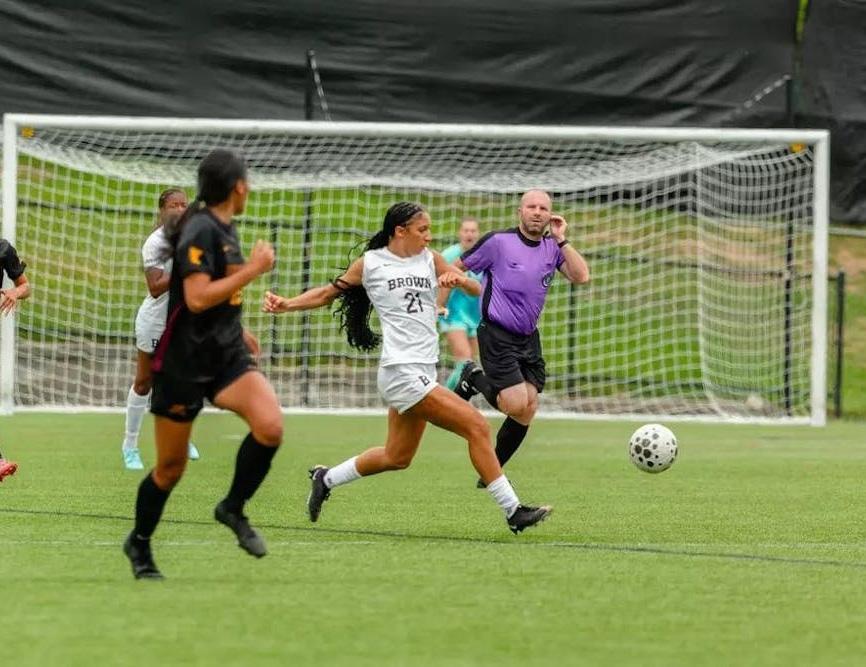
paying off for them as sophomores in terms of the impact, focus and confidence they are bringing to the table.”
The Bears dominated their season opener against New Haven. Joy Okonye ’27 was a master set-piece taker, scoring twice on free kicks. She slotted her first goal in the bottom corner in the 33rd minute, and after Ayla Sahin ’28 scored a goal to start the second half, Okonye netted her second free kick to cement the 3-0 victory.
“Our success has come from the work we’ve been putting in as a group since preseason,” Sahin wrote in a message to The Herald. “We’re really focused on playing
for each other, and when we connect and play our style, the chances come naturally.”
Brown carried this momentum into the second game of the season: the home opener against URI. In a heavily contested affair, the Bears fought their way to a well-deserved 3-2 victory.
Beneath the lights at Stevenson-Pincince Field, senior captain Naya Cardoza ’26 made quick work of the Rams’ defense, scoring the first goal of the game less than six minutes into the contest. Ella Weil ’28 built on that effort, scoring 13 minutes later.
Despite giving up a goal to round out
the first half, the Bears came back swinging in the second, with Sahin scoring the third goal. Under pressure from URI, who netted another goal of their own in the 75th minute, Brown stood strong, walking away with the victory.
“It was a dog fight, and we knew it would be, but it’s good to scrap out that win,” McNeill wrote in a message to Brown Athletics. “We’re a team that wants to be multi-dimensional in that attack — we want to be dangerous on set pieces, but we also want to be dangerous in the run of play … definitely something to build off of going forward.”
Concluding the three-game debut, Brown picked up a 1-0 victory over Connecticut last week. For the third game in a row, Sahin put on the afterburners to torch the opposing defense and find the back of the net. On Tuesday, she was named the Ivy League Offensive Player of the Week.
“She’s got unbelievable pace,” McNeill wrote. “It’s a huge weapon for us, getting behind defenses.”
“I came into this season wanting to be a more dominant player and really show how I have developed since last season,” Sahin wrote. “My teammates have done a great job creating opportunities.”
But after a picture-perfect start, the Bears tasted defeat for the first time this season on Monday night. After conceding an early goal, Brown was unable to overcome the deficit and lost 2-0 to nationally ranked University of Minnesota (4-1).
“We started the game a bit slow, and in that time we gave up a goal, which had us chasing … for the rest of the game,” McNeill explained.
“We’ve had 4 games in 11 days, so I think rest and recovery is important,” McNeill wrote after the loss, describing the team’s plans to watch film and plan for their next match on Thursday night against Northeastern University.
“This group is resilient so this loss is only going to make us stronger as a team which is exactly what we want as we continue to build to Ivy League play,” she concluded.
“Our mentality is really strong heading into Thursday,” Sahin wrote. “Losses are part of being an athlete: They test you, but they also make you stronger. I know our team will use this as motivation to keep pushing forward.”
This article originally appeared online at browndailyherald.com on Sept. 3, 2025.
Men’s soccer starts season undefeated following wins against Holy Cross, Fairfield
1-0 victory against Fairfield follows 2-1 win against Holy Cross
BY MILES MONROE SENIOR STAFF WRITER
On Monday night, the men’s soccer team (2-0, 0-0 Ivy) edged past Fairfield University (2-1, 0-0 Metro Atlantic Athletic Conference) 1-0 to kick off their 2025 campaign with a two-game win streak. Just three days earlier, the Bears hosted a home game against the College of the Holy Cross (0-21, 0-0 Patriot League) and took a decisive 2-1 opening victory.
“It’s really early in the season, but I can see the energy and passion that our team brings,” Lorenzo Amaral ’27, who was named First Team All-Ivy forward in 2024, wrote in an email to the Herald. “We always want more and don’t want to be satisfied.”
Last year’s 8-8-1 season, which was capped off by an appearance in the Ivy League tournament, only intensified the team’s hunger as they keep their eye on the title this year. After three weeks of preseason training — during which the team welcomed 10 new students — the Bears came prepared for their opening game against Holy Cross.
Not even four minutes into the match, Brown was awarded a throw-in dangerously near Holy Cross’s corner. In an incredi-

ble feat of strength, Greyson Mitchell ’26 placed the ball all the way into the box, where 2024 Second Team All-Ivy midfielder Mads Stistrup Petersen ’27 then sent a flying header into the back of the net. Down by one early in the game, Holy Cross put up a fight. Only eight minutes later, the Crusaders marched down the field to even the score. After another thirty minutes of back-and-forth play, the teams
entered halftime tied 1-1.
In the second half, the Crusaders peppered the Bruno defense, outshooting Bruno 12-2. But despite the Holy Cross onslaught, two incredible saves by goalie Henrik Weiper ’26 and stellar play by the back line kept Brown’s net clean.
For 75 minutes, the game remained in a stalemate. But just when a draw seemed inevitable, the Bears scored a miraculous
game-winner in the 87th minute. Charging down the right wing, Marshall Treese ’29 earned his first career assist with a beautiful cross to Jamin Gogo Peters ’26, who sent the ball flying over the Crusader’s keeper to cement Bruno’s victory.
On Monday, the Bears were back on the pitch, this time facing a talented 2-0 Fairfield team.
Throughout the first half, Brown sent
a flurry of attacks the Stags’ way. But even while outshooting Fairfield 7-0, Bruno couldn’t find the back of the net.
The tide finally turned in the 58th minute when Amaral intercepted a pass from Fairfield’s back line. Catching Fairfield off guard, Amaral rushed towards the box before crossing to a wide open Stistrup Petersen, who smoothly finished the play to make it 1-0 Brown.
“Lorenzo saw an opportunity to step to their defender and won the ball, and picked out a great pass for me to finish the goal off,” Petersen wrote.
Supported by an impressive defensive effort from Brown’s back line and goalkeeper Weiper, the Bears were able to walk away with the victory.
It was a “tight and scrappy game but we showed hunger to win and defend our badge,” Amaral wrote. “We had some good moments and capitalized on a mistake, and that’s what it took to come out with the win.”
Now, the Bears are looking ahead to a heavy-hitting contest at Boston University at 7 p.m. on Friday.
“We’ve won the two first games of the season, but we have to remain humble and work incredibly hard to beat BU on Friday,” Stistrup Petersen wrote. “If we continue to work hard and push ourselves, we will continue the momentum going into Friday’s game.”
COURTESY OF JAMIE FIEDOREK VIA BROWN ATHLETICS
Despite the Bears' Tuesday loss, Sahin was named Ivy League Offensive Player of the Week after strong performance against New Haven, URI and Connecticut.
COURTESY OF EMELINE MALKIN VIA BROWN ATHLETICS
In their matchup against Holy Cross, Brown's 2024 Second Team All-Ivy midfielder Mads Stistrup Petersen sent a flying header into the net to secure the win.
SCIENCE & RESEARCH
NEUROSCIENCE
Researchers’ new helmet technology helps determine impacts of trauma on brain
Brown engineers have developed a wearable sensor-laced helmet
BY JONATHAN KIM SENIOR STAFF WRITER
Whether it’s football players colliding on the field or military personnel exposed to explosive blasts in combat, traumatic brain injury is a prevalent — and potentially deadly — condition responsible for tens of thousands of deaths in the United States per year.
Yet despite its severity, the long-term effects of traumatic injuries on the brain are not fully understood, said Haneesh Kesari, an associate professor of engineering.
“We talk about all sorts of diseases — say fevers, infectious diseases, viruses — but something that doesn’t seem to be thought of as much as disease is something that is triggered by mechanical forces,” Kesari said. “The biology and the physiology (are) not well studied.”
Limitations in this field may stem largely from biological reasons, as the brain lacks pain receptors that call attention to potential damage, Kesari said. These injuries can arise from high-impact activities including football, military exercises and high-speed motor boat rides.
With these challenges in mind, Kesari’s applied mechanics research team has been developing an innovative wearable helmet designed to detect the impact of traumatic events on the brain. Known as the “accelo-hat,” the helmet consists of sensors that can measure the acceleration of the head following impact. When the
HUMANITIES
data is applied to a virtual model of the head, the team can determine the effects of the impact on the brain’s anatomy.
Kesari’s research was conducted within the PANTHER initiative, a national research program aimed to improve detection and prevention of traumatic brain injury, according to their website. The initiative was started in 2017 by Christian Franck, who was then an associate professor of engineering at Brown when the U.S. Department of the Navy’s Office of Naval Research provided a $4.75 million grant to the University.
For the Navy, the push for research like Kesari’s comes amid a time of growing concerns about the safety of the branch’s Special Boat Teams. These teams ride stealth boats at high speeds, which can result in repetitive impact from crashing into the ocean’s waves, causing neurodegenerative disease in some sailors.
“When (the Navy) asked me to look into this problem, we saw that there are all these devices in the market, but then I realized that the data given by these devices is not enough to figure out what is happening in the brain,” Kesari said.
To test their device, Kesari’s lab recruited participants at numerous Navy bases. The team also created a full-size dummy — named the “Accelo-Randy” — to evaluate their sensor technology in situations unsafe for human testing, such as riding a military stealth boat. Composed of 11 bodily sensors, the “Accelo-Randy” can mirror the impact of trauma on the human head. These efforts culminated in a lab presentation of their findings and technology at the White House in 2023.

The team also collaborated with other Brown researchers including Diane Hoffman-Kim PhD’93, an associate professor of medical science and engineering. This partnership helped both labs understand the corresponding biological consequences of traumatic injuries at the cellular level.
Hoffman-Kim’s lab created “mini brains,” small clusters of cells taken from the brains of mice which are then cultured and clumped to create a representation of a normal human brain. These mini brains, composed of 3,000 to 8,000 cells, are “really good standins for brains,” which normally consist of approximately 86 billion neurons, Kesari said.
Compared to traditional methods that directly apply mechanical forces to the heads of live mice, the mini brains enable researchers to apply small-scale, calculated forces by loading the mini brains into a fast-spinning centrifuge at varying speeds, Kesari said. As a result, the team can determine the level of forces that result in cellular damage in the short- and long-term, he added.
Beyond Kesari and Hoffman-Kim’s involvement, Associate Professor of Engineering David Henann and his lab have contributed to the PANTHER initiative by modeling the safety of foam liner materials in combat helmets using mathematical optimization and computer simulations.
“One of the things that has been very beneficial to this project, in particular, has been the tight collaboration with industrial collaborators who are in the business of producing combat helmets that are used by the military,” Henann said.
For Henann, his involvement in PANTHER has been rewarding because of the opportunity to apply his personal research interests in modeling material physics to an evolving, innovative field.
“The work is ongoing,” Henann said. “New threats are always being identified, and that motivates research problems.”
This article originally appeared online at browndailyherald.com on Sept. 4, 2025.
History Professor Seth Rockman’s ‘Plantation Goods’ named Pulitzer Prize finalist
Book seeks to reveal relationship between slavery, American economy
BY IVY HUANG SENIOR STAFF WRITER
In May, Professor of History Seth Rockman learned his 2024 book “Plantation Goods: A Material History of American Slavery” was named as a 2025 Pulitzer Prize finalist at the same time as everyone else — when it was announced live on broadcast.
“I didn’t even know that that was happening that day, and I was actually teaching a class here at Brown when this was announced,” Rockman said. “My phone started buzzing like crazy in my pocket because so many friends were texting me to say ‘congratulations.’”
The recognition, he said, is “the kind of thing that academic dreams are made of.”
But receiving a Pulitzer Prize finalist nomination in the history category was just one of the accolades “Plantation Goods” received. The book was also a finalist for the Mark Lynton History Prize, which celebrates books of narrative history, and it was one of 15 books longlisted in July for the Cundill History Prize administered through McGill University.
“Plantation Goods” also won this year’s Philip Taft Labor History Book Award, presented by Cornell’s School of Industrial and Labor Relations, making Rockman a twotime winner. His previous book, “Scraping By: Wage Labor, Slavery and Survival in Early Baltimore,” won the prize in 2010.
The term “plantation goods” refers to

the “very mundane things” — such as shoes and shovels — manufactured in 1800s New England that supported the American South’s “economy of slavery,” Rockman explained. In the book, Rockman traces the paths of these goods from the North to the South, as well as their connections to “opportunity and oppression” in the U.S. Rockman noted that the book, which took more than 15 years to write, explores these goods through a variety of perspectives.
“These goods might mean one thing to a New England mill worker who’s confronting the transformation of their life into wage labor,” Rockman explained, “and might mean something incredibly different to an enslaved seamstress who is tasked with sewing New England-made fabric into clothing for the men, women and children held in bondage on the same plantation.”
The idea for the book was born after
Rockman’s involvement in creating the University’s Slavery and Justice Report in 2006.
“It was my hypothesis that New England’s relationship to slavery didn’t simply end when the slave trade ended, but rather became different and took different forms,” Rockman said. “And so this book was a way of, in some sense, following up on the kinds of stories that you would find in the Slavery and Justice Report.”
While historical research typically involves studying letters, business records and other archival documents, Rockman said his research for this book took a more hands-on approach since he was studying material artifacts themselves.
“By looking at the design of a shoe, or looking carefully at the … weave structure of a given piece of cloth, you could learn some other things,” Rockman said. “And that’s one of the ways in which I was able to
tell a bigger story, and a more complicated story, than I would have been able to if I had just used written records.”
In addition to studying the material artifacts, Rockman devoted some time to conducting experiential research, like learning how to weave. He went to a school of historic weaving to recreate fabrics produced in New England two centuries ago, using archival records as a guide.
“Public historians and museum professionals are benefiting enormously from this book because of the objects as sources,” said Rebecca Brenner Graham, a postdoctoral research associate for the Brown 2026 initiative. “Many museums interpret objects, so it’s just invaluable for their work.”
Rockman incorporated this material research into HIST 0552A: “A Textile History of Atlantic Slavery,” a first-year seminar he began teaching in 2021 that explores
clothing as “a mode of self-expression for enslaved people,” he said.
“We had some really awesome discussions, and the reading list was super robust,” said Ellanora LoGreco ’27, who took the class in her first semester at Brown. “He’s so excited and happy to help students, especially when their interests align with his specific areas of study.”
Reflecting on his career, Rockman said he is especially proud of the success of his students. “To look at people who I’ve had the chance to teach … and see them go out into the world and do amazing things is the kind of thing that fills my heart at the end of the day,” Rockman said.
“For someone who is such a high-powered and celebrated historian, he is an extremely down-to-earth mentor,” said Nicholas Gandolfo-Lucia GS, a history PhD candidate. “It can’t be overstated how unique that is when you spend time in academia — those are not things that normally go hand in hand.”
Karin Wulf, history professor and director of the John Carter Brown Library, described the book as an “incredibly impressive work of deep and close research” that was also “so well-written.”
Rockman has already begun his next work: a book about the U.S. spanning from the American Revolution through the 1840s that examines “the new United States alongside nations that, in more recent times, we think about as developing nations,” he said.
This article originally appeared online at browndailyherald.com on Sept. 2, 2025.
COURTESY OF SETH ROCKMAN
Rockman’s book was longlisted for the 2025 Cundill History Prize in July.
CYNTHIA ZHANG / HERALD
OPINIONS
Lair ’28: The Jewelry District should be built for Providence, not just the ‘knowledge economy’
Last summer, Brown continued its expansion into downtown Providence, beginning construction on a seven-story lab with the approval of the Downtown Design Review Committee. This new construction, which followed several other Jewelry District projects, aligns with a greater vision that Providence leadership has latched onto for the past twenty years: the creation and expansion of a knowledge economy.
The relocation of the I-195 highway in the 2010s opened up several downtown-adjacent plots for development. The Jewelry District — or the 195 District — became the development hub of Providence’s knowledge-based future. The focus homing on institutions such as Brown, RISD and healthcare facilities. However, the city and the University shouldn’t seek to establish a knowledge economy microcosm in the 195 District — the area should also be developed for existing Providence residents. To enrich the city beyond the boundaries of university campuses, the downtown appendage must be built on a greater commitment to mixed-use development and economic diversity.
University expansion is not new. Brown has expanded far beyond its original plot. But these efforts weren’t without controversy or consequence. Neighborhoods on the East Side, such as Fox Point and Lippit Hill, experienced cultural overhauls and large-scale displacement as a result of city (re)development, including Brown’s campus expansion. Entire communities, many built by Providence’s vital immigrant workforce, were squeezed out of College Hill to make room for more students, faculty and staff.
This displacement and gentrification isn’t a oneoff occurrence. Universities across the nation, especially ones in urban areas, can dominate local policy to the point of overlooking the needs of native residents. Economic development can funnel some money into the city — such as encouraging consumption and providing customers to local businesses — but this economic activity is often restricted to campuses. Local residents rarely see economic revenue, and instead are left with rising prices and less housing. A classic example of this wealth consolidation can be seen in New Haven. Despite Yale’s abun-
dant wealth, the areas surrounding it face disproportionate poverty rates and worse standards of living.
Similar disparities can be seen among Brown students and Providence natives. This divide is especially obvious observing the struggles of Providence public schools. Steps away from campus, students and teachers are failing to receive adequate support, and local youth lack the resources to even learn at their grade level. Existing issues could be exacerbat-
Although
directly displacing many people — the Jewelry District is largely empty of long-term residents — an increase in student traffic will ripple throughout local markets.
The Jewelry District also presents an exceptionally unique development opportunity. Most of the new housing growth in the United States has depended on expanding existing suburbs. Although there is a push for mixed-use neighborhoods, most
“ “
the University has committed to putting money back into
Providence, that will not offset the wasted potential of new urban
development.
ed by ongoing federal education funding threats, further stratifying the city.A private knowledge economy solely based on higher education will hardly address these inequalities.
Brown is one of the most visible, resourced and impactful institutions in Providence — and all of Rhode Island, for that matter — and the University’s new expansion efforts will continue to impact our local economy and those who rely on it. Providence residents currently face one of the worst housing crises in the United States. Private institutions like Brown and Providence College occupy many renter-friendly homes, whether through explicit ownership or the influx of student renters. Members of the “knowledge economy” are taking over family neighborhoods and starter-level rental housing, forcing residents out or leaving them to fight against soaring rents. Although Brown’s recent expansion isn’t
of them are forced to develop as enclaves, still secluded by suburbia. The recently freed 195 District is urban planning gold: a large plot of undeveloped land that is already connected to the heart of a city.
In order to truly enrich Providence, the new development must incentivize both students and native Providence residents to traverse the new walkways, parks and public spaces.
In communications with the Brown community, administrators have repeatedly focused on how new construction can transform the student experience and how these goals align with the expansion of Providence’s economy. Russell Carey, the executive vice for planning and policy at Brown, said in 2023 “as we consider Brown’s investments and footprint in the Jewelry District, we continue to do so with city and state goals in mind, including significant promise for increased economic activity.”” However, these vague
promises of economic enrichment are not consequential — or beneficial — to the average Providence resident. Hosting new businesses in the Jewelry District is hardly a sacrifice or contribution from the University; it is simply a commitment to being a landlord for businesses that will likely cater to wealthier students and staff.
To responsibly follow through with the expansion into the 195 District, administrators and city leadership must consider the first-person perspective of someone who lives in the city. The average resident won’t benefit from the student-centered economic development in the district. But if city planners and University members collaborate to create a more dynamic neighborhood designed with the city’s residents in mind, the new area can be more than an extension of College Hill. Economic diversity and mixed-use housing won’t appear just because the area is targeted as a “mixed-use” zone — specific efforts from the city and the University are necessary. Reserving space for non-University or non-student housing, incentivizing developers not affiliated with Brown to build community resources next to academic buildings and creating open-use resource centers are all ways to encourage diverse foot traffic in the area.
Although the University has committed to putting money back into Providence, that will not offset the wasted potential of new urban development, not to mention the potential cost of living increases that could result from an influx of academically affiliated transplants all residing in one area. Creating a better, more expansive Providence is not only to the benefit of the city, but also Brown students. Flourishing city life that is independent of student activities will allow students, especially those in graduate programs, to make a deeper connection with their new home and the residents who were here long before them.
CJ Lair ’28 can be reached at craig_lair@brown.edu. Please send responses to this column to letters@browndailyherald.com and other opinions to opinions@browndailyherald.com
Guan ’27: Mamdani is not the answer to the Democratic Party’s woes
After a resounding defeat in the 2024 presidential election, members of the Democratic Party — from high-level strategists to registered voters — have had nearly a year to lick their wounds and regroup ahead of the next series of elections. But I fear that such re-
preme Court election over Republican-endorsed Brad Schimel in April, the Democratic Party often tied her opponent directly to Elon Musk, signaling that a vote for Schimel was a vote for Musk’s influence. It is too easy to imagine Republicans employ-
In the face of a president willing to push the limits of constitutionality, we have no choice but to abandon idealism in favor of electability. “ “
flection and reckoning among the Democratic electorate has produced the wrong conclusions.
This summer’s political news has been dominated by Assembly Member Zohran Mamdani’s stunning win in the New York City Democratic mayoral primary on an openly socialist platform fueled largely by young voters and a wide-reaching social media campaign. Yet embracing socialism and shifting even further left is not what the Democratic Party needs. Though support for socialism has grown over recent decades, particularly among younger Americans, a decisive majority of the electorate continues to view it unfavorably. I worry that through rising political stars like Mamdani, the socialist left has given Republicans exactly what they want: a dummy target they can attack to push moderate voters to the right.
Recall that when Democrat-endorsed Susan M. Crawford decisively won the 2025 Wisconsin Su-
ing this same strategy: They will claim that a vote for any Democrat nationwide is a vote for Mamdani’s socialism, and by electing him to such a prominent role, Democrats only encourage this narrative.
The Democratic Socialists of America also passed a series of resolutions last month that prohibit members from supporting law enforcement agencies and advocate for the abolition of criminal penalties for misdemeanors. While it’s still unclear how closely Mamdani intends to follow these resolutions, these positions can hardly be considered a stable foundation for a winning national platform when a plurality of Americans worry a “great deal” about crime.
This is not a question of whether or not we approve of democratic socialism itself. Rather, we must consider how even a local election can affect the chances of our democratic movement nationwide. In the face of a president willing to push the limits of
constitutionality, we have no choice but to abandon idealism in favor of electability. Frankly, I see Mamdani’s popularity as evidence that many in the leftwing movement have still not fully understood the gravity of the situation at hand. Why does it matter that New York City may get the policies of its dreams if such a development further estranges the moderate voters necessary for a national Democratic victory? We cannot afford to push any more potential supporters into the hands of the MAGA right.
I understand the deep frustration many feel ith the rightward shift of this country, and the hope that politicians like Mamdani might provide. But pushing even further left in the expectation that Americans will come to embrace socialism is not the answer. Instead, we must meet voters where they are, and if that means abandoning some of our values, so be it. It was a failure of the left-wing movement that not enough people turned out to vote against President Trump in November, and only by making concessions and broadening our coalition can we elect an
administration that is willing to consider enacting policies we believe in. That involves advocating for policies capable of winning votes not just in Brooklyn and Queens but also in suburban Atlanta and rural Minnesota.
When it comes time for the next election, we must not allow ourselves to dissolve into internal bickering and instead focus on our shared opponent. American elections have unfortunately become a choice between the lesser of two evils for many citizens across the political spectrum. But we must remember to clearly differentiate which of the two is the greater evil and vote against it accordingly, for if we do not act with full force against tyranny, we are only complicit in fueling it.
Lucas Guan ’27 can be reached at lucas_guan@brown. edu. Please send responses to this column to letters@ browndailyherald.com and other opinions to opinions@ browndailyherald.com.

CYNTHIA ZHANG / HERALD
UNIVERSITY NEWS
CONVOCATION
262nd Convocation ceremony celebrates diversity among incoming students
Paxson, Dean of the College Ethan Pollock gave speeches
BY ABIGAIL DONOVAN SENIOR STAFF WRITER
On Tuesday afternoon, the Van Wickle Gates opened to welcome incoming students during the University’s 262nd Opening Convocation. Thousands of new students proceeded through the gates, marking the beginning of their studies at Brown to the cheers of parents and community members.
The incoming classes include 1,753 first-year, 144 medical, 103 transfer, eight resumed undergraduate and 1,270 masters and doctoral students, according to opening remarks by President Christina Paxson P’19 P’MD’20. Paxson extended a particular welcome to incoming international students, who represent the first class admitted under need-blind admissions for international students. This welcome follows Paxson’s recent announcement that 15 undergraduate students were “unable to reach” campus this fall amid Trump administration visa policy changes, The Herald previously reported.
The convocation ceremony included an invocation by the Reverend Delphain Demosthenes, associate University chaplain for the Protestant community, as well as speeches by Paxson and Dean of the College Ethan Pollock, who is also a professor of history and Slavic studies.
Demosthenes began the invocation by giving thanks for the “rich diversity”
HOUSING

of the Brown community, “representing different cultures, languages, faiths, creeds, classes, genders and identities from across the globe.”
In their speeches, Paxson and Pollock both also highlighted the importance of diversity among the incoming student body. Pollock extended specific welcomes to “trans and gender non-binary students, and students of all socioeconomic classes, all races, all religions and all cultures.”
Paxson said that Brown students are united by a “distinctive” blend of characteristics including curiosity, humility, openness and resilience which make every incoming student “right for Brown.”
In her speech, Paxson also encouraged incoming students to “risk failure” during their time at Brown, from their class se-
lection to social situations. “Taking risks — trying things with uncertain outcomes — is part of learning. And learning is what you are here to do,” Paxson said.
She encouraged students to sit with an unfamiliar peer in the dining hall. “A stranger I sat down with in a college dining hall is now my husband of 43 years,” she said.
In his address, titled “Transitions and Transformations: Making the Most of Your Brown Education,” Pollock related his new professional role to the transition incoming students face. Pollock was appointed Dean of the College effective July 1.
“Transitions are hard, but they are made less hard when you are in community. I’m glad to be going through this with you,” he said.
He also emphasized the growth that incoming students will undergo throughout their time at Brown and beyond, comparing the experience to reading the same novel — “Fathers and Sons” by Ivan Turgenev — at various stages of his life. “A great book reads us as much as we read it. When we return to it later, and it strikes us differently, it is because we have changed.”
He concluded with questions for the incoming class to ponder. “What will your class of students do? How will Brown read you? How will you shape the world around you?” Pollock asked the crowd.
First-year student Talia Katz ’29 said that Pollock’s speech “resonated” with her, and that she has read the book he
mentioned. “I enjoyed the way he talked about rereading and how it has an impact on you every time you read it, and you see different things.”
Incoming masters students Natalie Mevises GS and Elyse Nelson GS said they enjoyed the “tradition” of walking through the Van Wickle Gates for convocation. “It feels very welcoming,” Mevises said. Jaime Hernandez ’29 said the moment felt surreal. “It’s happening, and we only have one more walk through the gates,” he said.
article originally appeared online at browndailyherald.com on Sept. 2, 2025.
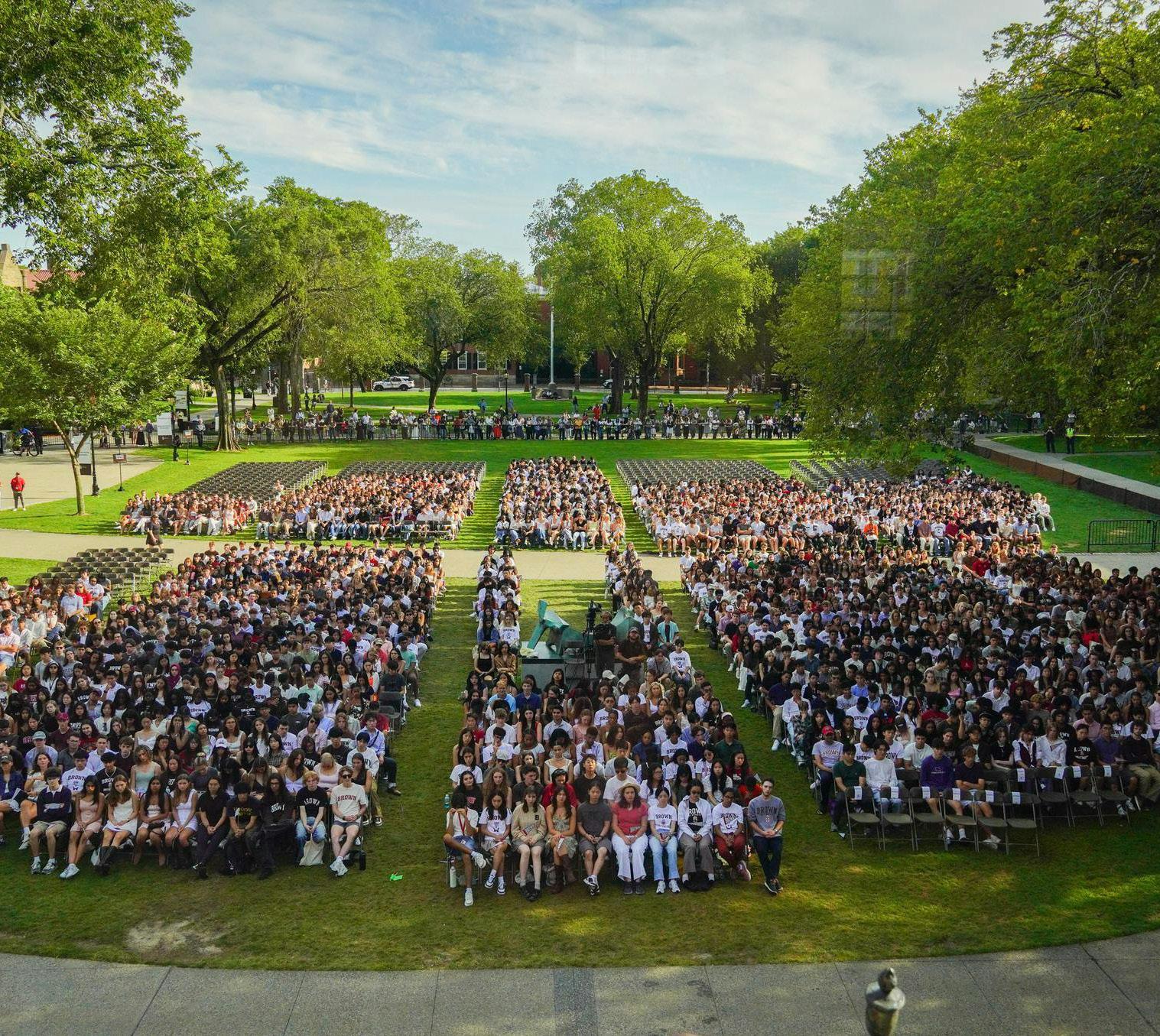
College Hill welcomes Brown’s class of 2029
Last Wednesday marked the first day of New Student Orientation
BY MARIA KIM STAFF WRITER
On Aug. 27, campus sprang to life. Cars packed the streets, and families gathered around the first-year dorms. They were greeted by teams of students sporting orange and turquoise T-shirts and banners reading “Welcome Home, Brunonians!” Brown’s newest group of first-year,
transfer and visiting students spent their first Wednesday on College Hill moving into their dorms. Both Meiklejohn Peer Advisors and Bruno Leaders — undergraduate students who help with first-year integration — were on call for move-in, greeting first-year students at check-in and providing rolling carts to help move personal belongings into dorms.
“The energy’s been really fun,” said Evan Heath ’28, a Bruno Leader stationed on North Campus, home to many first-year dorms. “We have a speaker going. It’s a really nice day, which I think we got lucky with,” he added. “There’s so many different

kinds of people, and I’m excited to meet them all.”
For many first-years, the day was full of nerves and excitement. Tommy Ma ’29, arrived on campus after a 4-hour drive from New York with his parents and two younger brothers. “I’m excited and nervous but looking forward to making friends,” he said.
“I’m excited about orientation and meeting new people,” Emily Shull ’29 said as she worked with her mom to pack her shelves with books. “I mean, I’m nervous as well, but I think the excitement sort of triumphs over the nervousness.”
Jessica Liu ’28, a Meiklejohn assisting with move-in at Keeney Quadrangle, the first-year housing hub on South Campus, said it was a “very welcoming environment, very energizing.”
“It was so fun being able to hold conversations and help the students settle their nerves as they came in,” she added.
For some students, the day felt surprisingly reassuring.
“The process was a lot more chill than I thought it would be,” said Ethan Zhang ’29, who spoke with The Herald right after moving into his Keeney triple. By the time he got back from getting his key, most of his luggage was already in his room.
“Moving in took 30 minutes,” said Max Leventon ’29, as he walked back to his dorm with an Andrews bowl. His goals for the semester? “To make good friends, do cool things (and) go to cool places.”
Later that day, the class of 2029 convened at their first orientation event: an Ice Cream Social on the Main Green. This marked the beginning of New Student Ori-

entation, a week-long orientation program for new students designed to ease their transition to Brown.
Approximately 1,750 first-year undergraduates comprise the class of 2029, according to University Spokesperson Brian Clark, with about 120 Resumed Undergraduate Education, transfer and visiting students rounding out the class.
Prior to orientation, first-year students could also elect into a variety of pre-orientation programs, from International Orientation to Mosaic+, a program centering minority students in computer science.
“During pre-orientation, there were a lot less people,” said Ben Huang ’29, who participated in the Third World Transition Program, which aims to cultivate community for incoming students of color. He recalled moving into a quieter campus with
guided tours peppering the Main Green.
“Seeing their kids come and pose with Bruno was a reminder that a lot of people want to come here,” Huang said. “I’m very lucky and fortunate to be here.”
Ivan Yu ’29, who also attended TWTP, noticed a clear surge of energy on campus with the arrival of the rest of their class.
“Now it’s a bit chaotic, hectic, but it’s still nice.”
The move-in experience also gave older students the chance to reflect.
“It feels really good to give back to the community,” added Meiklejohn Alicia Wu ’28. “Helping first years, you get a sense of deja vu, because that was you a year ago.”
This article originally appeared online at browndailyherald.com on Sept. 2,
This
KAIA YALAMANCHILI / HERALD
Incoming students marked the start of their academic career at Brown in the traditional procession through the Van Wickle Gates on Tuesday.
2025.
VALEN GARCIA / HERALD
Approximately 1,750 first-year undergraduates comprise the class of 2029, according to University Spokesperson Brian Clark.
President Christina Paxson P’19 P’MD’20 extended a particular welcome to international students in her address.
BOMI OKIMOTO / HERALD Outside Keeney Quadrangle, move-in volunteers distribute orientation lanyards and room keys at check-in.