
THE BROWN DAILY HER ALD

R.I. Attorney General releases report detailing decades of abuse in Diocese of Providence

75 clergy members were credibly accused of child sexual abuse
BY TALIA EGNAL METRO EDITOR
R.I. Attorney General Peter Neronha P’19 P’22 released a nearly 300-page report de-
tailing over seven decades of Rhode Island clergy members sexually abusing minors — and how the Diocese of Providence allegedly covered up the widespread abuse.
The report, which took almost seven years to produce, found 75 clergy members with credible accusations of sexual misconduct and over 300 documented victims of sex abuse at the hands of clergy members
since 1950. Four of the named clergy members have faced criminal charges.
“Child sexual abuse in the Diocese of Providence occurred on an abhorrent, staggering scale,” Neronha said in a press release emailed to The Herald. He accused the Diocese of Providence of “protecting the reputation of the Church and its priests over the welfare of children.”
Hegseth orders cancellation of attendance for troops in Brown graduate programs
The announcement follows a similar cancellation at Harvard earlier this month
BY IAN RITTER UNIVERSITY NEWS AND SCIENCE & RESEARCH EDITOR
The Pentagon will cancel all attendance for Department of Defense troops in graduate programs at Brown and other Ivy League institutions starting in the 2026–27 academic year, Secretary of Defense Pete Hegseth announced in a video on X on Friday.
“For decades, the Ivy League and similar institutions have gorged themselves on a trust fund of American taxpayer dollars, only to become factories of anti-American resentment and military disdain,” he said.
The University will see cancellations for four military students, according to a Pentagon memo outlining the order.
In the video, Hegseth accused the Ivy League of “toxic indoctrination” and perpetuating “wokeness and weakness.”
“They’ve traded true intellectual rigor for radical dogma, sacrificing free expression for the suffocating confines of leftist ideology,” he added.
Hegseth earned degrees at both Princeton and Harvard.
The order cancels enrollment for a total of 93 military students across 22 institutions, according to the memo, and proposes 21 institutions as new potential partners for military education. The memo also outlines criteria met by the proposed partners,

The diocese acknowledged “serious missteps” by church leadership “generally in the early recognition and handling of this awful period” in a statement shared with The Herald.
The report states that clergy often targeted “especially vulnerable” children, including kids who came from troubled homes, altar boys and those attending
UNIVERSITY NEWS
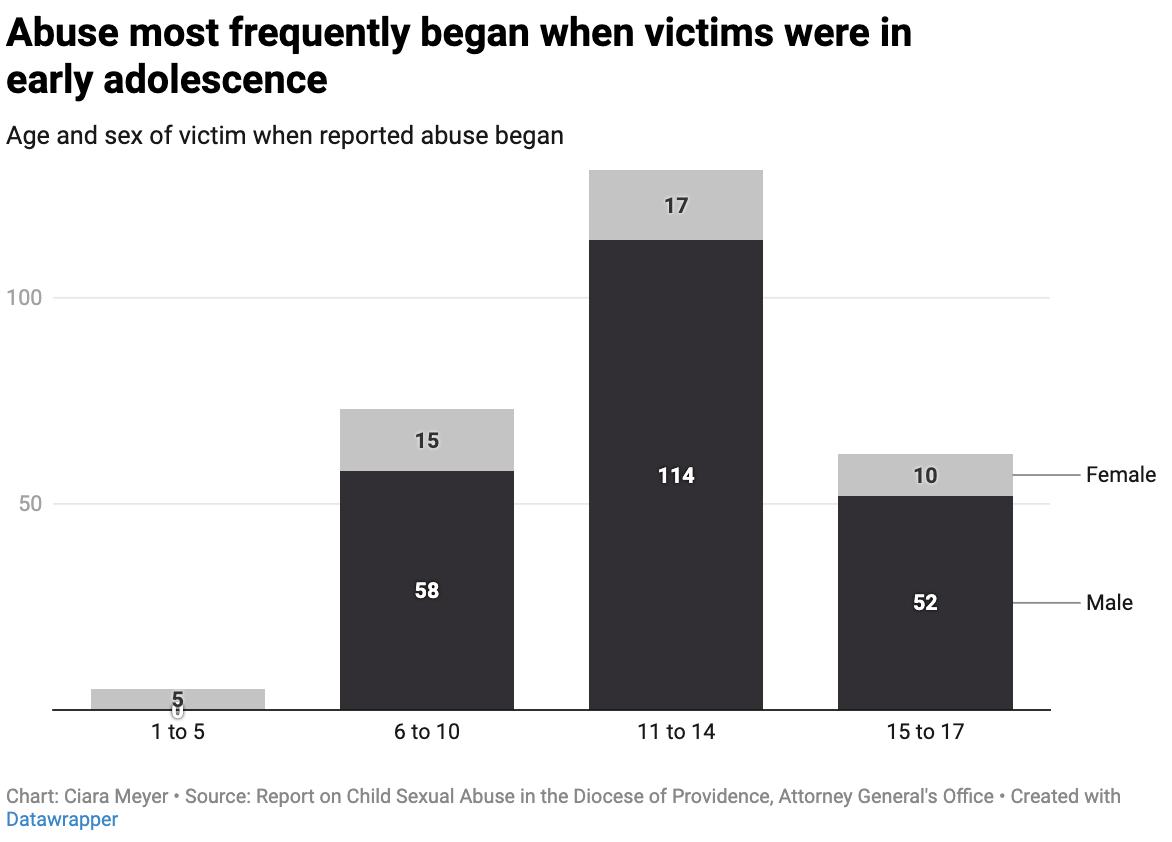
Catholic schools. The majority of cases were perpetrated against children between the ages of 11 and 14, and there was a fiveto-one ratio of male to female victims, the report found. Incidents peaked in the 1960s and ’70s, and victims took an average of 26 years to report their experiences.
Faculty vote to replace Paxson as faculty meeting chair
The chair of the Faculty Executive Committee will become the meeting’s leader
BY SEYLA FERNANDEZ SENIOR STAFF WRITER
At Tuesday’s meeting, faculty members narrowly passed a motion to replace President Christina Paxson P’19 P’MD’20 as the chair of the University’s monthly faculty meeting. The chair of the Faculty Executive Committee — Brown’s central faculty governance body — will replace Paxson as the meeting’s leader.
With a three-vote margin, 75 of the meeting attendees voted in favor of the motion, 72 voted against it and 21 abstained from voting.
“It will feel different,” said J. Timmons Roberts, a professor of environmental studies, so-
ciology and environment and society. “I think it might be quite a refreshing change to see who will participate in the meetings."
Nancy Khalek, an associate professor of religious studies and history, shared that when she’s participated in faculty meetings in the past, she’s received multiple emails from other faculty members thanking her for speaking because they “didn’t feel like (they) could talk.”
“I think that’s a problem,” she said. “My colleagues should not be afraid to speak freely at meetings.”
The proposed motion also included a clause stating that “the FEC should ensure that the conditions are created at faculty meetings for robust discussion and that agenda items pertain to mat-
PAGE 2

According to the report, the most recent disclosed instance of sexual misconduct was in 2011. The report counts nine victims of sexual abuse between 2000 and 2019.
ters of shared faculty concern.”
Former chair of the FEC and professor and chair of the German studies department Kristina Mendicino said that there was a gap between the title of “faculty meetings” and the extent to which faculty actually participate in the meetings, given “the way that they often unfold with lengthy reports from members of the senior administration.”
“If faculty members felt that the faculty meeting was more theirs — actually a faculty meeting rather than a briefing to the faculty by the administration — we might actually have more engagement,” said Professor of Holocaust and Genocide Studies and FEC Vice Chair Omer Bartov. “And that is what all of us should want to have: A university in
TWINS
which the faculty feel that they’re very much part of the whole process.”
According to Paxson, the Faculty Rules and Regulations delegate the FEC to create the agenda for the monthly meeting, not the chair. “If the goal is more discussion and fewer presentations, the FEC has the power to do that now, so changing the chair doesn’t really solve what is inherently a scheduling issue,” she said.
Because many motions considered at faculty meetings are proposed by the FEC chair, Paxson said it could create a “perceived conflict of interest” if the chair of the FEC leads the meeting.
It is a “basic principle” of the faculty meetings that “members of a committee bringing a motion shouldn’t chair
the discussion of that motion,” she added.
“If the chair of the meeting shouldn’t be someone who has too much business that’s connected with the issues under discussion, then the person in charge probably shouldn’t be either the president or the FEC chair,” said Brian Lander, an associate professor of history and environment and society. “But if it’s going to be either of them, and it’s called a faculty meeting, then I think it probably should be the FEC chair.”
But some faculty members also expressed concern about the perception of the change.
Carlos Aizenman ’93, professor of neuroscience and brain science, said
that the motion would not “change anything fundamentally” and is “purely symbolic.” But “symbolic change does make an actual change,” Lynne Joyrich PhD ’90, professor of modern culture and media, argued. “It can change the dynamics around something.”
Anne Hart, a professor and chair of the neuroscience department, said she does not believe the content of the meetings will change. “If people are afraid to speak because (President Paxson) and (Provost Doyle) are in the room, it’s not going to change because someone else is running the meeting,” she said.
She added that the committee may be “underestimating” how the decision may be “perceived from the outside.”
“I don’t think this is meant to devalue the President’s role,” Paxson said. “But fair or not, it’s going to be perceived that way. It’s going to be perceived as adversarial.”
By replacing the president as chair of the meeting, “you lose some of the accountability,” said Seth Rockman, a professor of American history and director of undergraduate studies. “The president chairing the faculty meeting assures that the president has to come and talk to their faculty, has to receive their questions, has to engage. It is a mode of accountability.”
This article originally appeared online at browndailyherald.com on March 4, 2026.
Finding twindependence: How twins navigate identity, connection at Brown
The Herald spoke to twins on campus about college life
BY RAJAA GHANDOUR SENIOR STAFF WRITER
At Brown, some students arrive already paired: near-identical faces, shared histories and a lifetime of inside jokes. For twins on campus, college is often a juggling act between individuality and built-in companionship.
For Marshall O’Callaghan ’28 and his twin Logan O’Callaghan ’28, that companionship is part of daily life. The pair, both history concentrators, have explored a wide range of activities together on campus, including mixed martial arts, ballroom dancing and tutoring.
The best part of having his twin on campus is having “a default hangout person,” Marshall O’Callaghan said.
“If I’m like, ‘You want to go to the gym?’ it’s pretty much always yes,” he said. “It’s a pretty practical benefit.”
But the pair haven’t always been on campus together. Marshall O’Callaghan enrolled at Brown first, while Logan O’Callaghan spent a year at the University of Alabama before transferring.
The year apart taught them independence, but being on campus together has strengthened their bonds with each other.
“Having done a year of college without him and a year of college with him,” Logan O’Callaghan said, “I would say with him is more fun.”
While the pair doesn’t share the ex-
act same social circle, there is a “huge overlap” between their friends, Marshall O’Callaghan said. “It’s like doubling the friend pool,” Logan O’Callaghan added. “We have two gigantic groups that kind of all come together.”
For Emily Cook ’29, proximity to their twin was intentional from the start. Their other half, Rex Cook, attends Rhode Island School of Design, and the twins both ended up in Providence by design.
Rex Cook had always been committed to attending art school, and once RISD became the plan, Emily Cook began researching nearby universities and built a college list centered on Providence and the greater Boston area.
During their first semester, they saw each other roughly three times a week, connecting through music and spending weekends together. “We also got matching tattoos in Boston,” Emily Cook added.
Now, even as Rex Cook is studying abroad in Florence, Italy, the twins remain closely connected.
When Rex Cook returns, both twins plan to take classes at their siblings’ respective universities. “I’ll be surprised if … Rex (didn’t) take a class with me at Brown,” Emily Cook said.
Ian Cressman ’28, a copy editor at The Herald, and Nicholas Cressman ’28 initially agreed they wanted to go on independent journeys when it came to college. In high school, Ian Cressman told classmates they would go their “own separate paths.”
Nicholas Cressman applied early decision to Brown, while Ian Cressman was admitted regular decision and found himself choosing between Brown and several
other schools. After visiting campus during A Day on College Hill, he reconsidered.
“I decided that just because Nicholas was here, that shouldn’t be a factor in determining whether I did or did not want to go,” Ian Cressman said. “Now I’m very happy that we’re both at the same college.”
about losing their identities by attending the same college.
“You’re automatically linked to someone else,” Lila Safer-Bakal said. “I was, like a bit, yearning for independence.”
The sisters deliberately separated their college decisions. They tried to take each

While mistaken identity remains part of daily life for identical twins on campus, moments of confusion often turn into new introductions.
The brothers have very different academic interests. Nicholas Cressman is studying physics and may also pursue mathematics, while Ian Cressman is concentrating in history and political science.
“Our schedules are quite different,” Nicholas Cressman said. “It never really feels like ‘Oh, we’re stuck together.’ It’s more like we get to be together.”
This question of individuality also affected twins Lila Safer-Bakal ’28 and Eve Safer-Bakal ’28, who were initially worried
other “completely out of the equation,” Lila Safer-Bakal said, asking themselves what school they really wanted to attend without the other’s choice influencing their own.
In the end, influenced in part by their older brother’s positive experience at Brown, they both decided they wanted to attend the University and were accepted through early decision.
Now sophomores, they say Brown has allowed them to redefine their relationship. “Rather than just out of circumstance, we
get to choose to hang out,” Eve Safer-Bakal said.
Living on different parts of campus and getting to know different groups of people has eased fears of being seen as a single unit, they both said.
Still, mistaken identity remains part of daily life for twins on campus.
“Sometimes, I’ll see people walking down Thayer and they’ll wave at me,” Logan O’Callaghan said. “And I’ll just (do) a polite nod because I have no idea who they are.”
Logan O’Callaghan had to show his Brown ID once during transfer orientation to prove he wasn’t his twin. Lila Safer-Bakal has to similarly convince classmates she isn’t her sister. But confusion isn’t always a drawback.
“I was definitely more worried that being a twin would be more of like a social inhibitor because people mix you up,” Eve Safer-Bakal said. “But I kind of find that it’s the opposite.”
Moments of confusion often turn into new introductions rather than awkward misunderstandings. “Because they know Lila, they’ll just … be very nice and comfortable with me,” Eve Safer-Bakal said.
For some, the greatest benefit is simple proximity. “It’s like having my best friend on campus,” Lila Safer-Bakal said.
“It’s nice being able to catch up in off moments more regularly,” Nicholas Cressman said, such as during walks back from the dining hall. Those moments could not be occur if they attended separate schools.
This article
2026.
COURTESY OF EMILY COOK ’29 AND REX COOK; LILA SAFER-BAKAL ’28 AND EVE SAFER-BAKAL ’28; MARSHALL O’CALLAGHAN ’28 AND LOGAN O’CALLAGHAN ’28; IAN CRESSMAN ’28 AND NICHOLAS CRESSMAN ’28
With a three-vote margin, 75 of the meeting attendees voted in favor of the motion, 72 voted against it and 21 abstained from voting.
CHRISTINE CHANG / HERALD
UNIVERSITY NEWS

including “minimal relationships with adversaries” and “minimal public expressions in opposition of the Department.”
The canceled programs “no longer meet the Department’s standards for rig-
SHOOTING
or, realism, and mission relevance,” Chief Pentagon Spokesman Sean Parnell wrote in a statement.
The order comes after Hegseth said the DOD would be ending its support of
“graduate-level professional military education” as well as fellowship and certificate programs for troops at Harvard beginning in the 2026–27 academic year in a Feb. 6 video on X. He also announced a review of
all graduate professional military education, fellowships and certificate programs for other Ivy League universities and private institutions.
The University did not immediately
respond to requests for comment.
This article originally appeared online at browndailyherald.com on Feb. 27, 2026.
University announces avenues for community engagement with post-shooting security review
The assessment is being conducted by global consulting firm Teneo
BY JEREMIAH FARR SENIOR STAFF WRITER
The University announced how the Brown and Providence communities can engage with a previously-announced campus-wide safety and security assessment following the Dec. 13 shooting in a Monday Today@Brown announcement. The safety and security assessment is be-
ing conducted by global consulting firm Teneo under the oversight of the Brown Corporation, the University’s highest governing body.
In the announcement, Executive Vice President for Planning and Policy Russell Carey ’91 MA’06 announced three avenues for community engagement with Teneo’s work on the security assessment.
This month, the Department of Public Safety and Emergency Management will send out an adapted version of its Public Safety Community Survey, the results of which will be shared with Teneo. “The
survey is anonymous and will assess community perceptions of safety and security, experiences engaging with Brown public safety,” Carey wrote in the announcement.
Teneo is also collaborating with the University to hold focus groups and “virtual listening sessions” with community members, Carey wrote. Teneo’s assessment will be used to inform long-term changes and “may contribute to current efforts if more timely opportunities are identified to strengthen security.”
Each of the nine focus groups will have up to 30 members who will be selected
through a nomination process. Teneo will work with leaders of various campus constituencies such as the Undergraduate Council of Students, the Faculty Executive Committee and the President’s Executive Committee to form the focus groups, Carey wrote. For one focus group, “local government, business and neighborhood leaders will be asked to assist in nominating and appointing individuals.”
Feedback will also be gathered at the next two Brown University Community Council meetings, which are “open to all community members,” Carey wrote. Those
Submissions:
THE BROWN DAILY HERALD
Design
meetings will be held on March 10 and April 14, and Teneo will be present to hear from attendees and provide information on the safety and security assessment. Brown public safety leadership will also attend to provide information on security enhancements.
“Brown is committed to working with our community to build an environment where members of our community can feel safe to work, live and learn,” Carey wrote.
This article originally appeared online at browndailyherald.com on March 2, 2026.
Opinions Editors Benjamin Aizenberg
Ethan Canfield
Isabella Gardiner Lucas Guan


MULTIMEDIA
Photo Chiefs
Annamaria Luecht
Kaia Yalamanchili
Illustration Chiefs
Kendra Eastep
Isabela Guillen
Video Chiefs
Cienna Cheng
Cody Cheng
Social Media Chiefs
Nate Barkow
Annika Melwani
Technology Chief
Annika Singh
CJ Lair Batisse Manhardt Tas Rahman Camila Valdes PRODUCTION
Data Desk Chief Caleb Ellenberg
Games Chief Paul Hudes
Podcast Chief
Talia LeVine
Multimedia Editors
Sophia Basaldua
Marat Basaria
Harry Guo
Horatio Hamilton
Selina Kao
Ella Le
Kenna Lee
JJ Li
Jake Parker
Jascha Silberstein
Rassul Toleugazy
BUSINESS
General Managers
Arjun Deshpande
Anum Azhar
Sales Directors
Arjun Ray
Hannah Han
Finance Director Sydney Wright
Office Manager Cary Warner
Submissions
email, and we will do our best to work with you.
Submissions can build on reporting from The Herald, reporting elsewhere, official statements from the University or other groups and other reputable sources, but they cannot break news or contain information that The Herald cannot verify. Because we cannot publish unsubstantiated information, failure to provide appropriate sources may mean we have to modify or remove unverified claims.
The Herald will not publish anonymous submissions or submissions authored by organizations. Leaders of student organizations can be identified as such but cannot write under the byline of their organization. The Herald cannot publish all submissions it receives and reserves the right
SARA RUNKEL / HERALD
Hegseth also ordered the cancellation at other Ivy League and peer institutions.
Roughly 100 Providence community members protest U.S. and Israeli airstrikes in Iran
The protest followed a similar demonstration held on Saturday
BY MICHELLE BI METRO EDITOR
On Monday, around 100 people gathered in front of the steps of Providence City Hall to protest the United States and Israel’s recent airstrikes in Iran. The protest was organized by the Party for Socialism and Liberation Rhode Island as a follow-up to a similar demonstration on Saturday.
Humanitarian group the Iranian Red Crescent Society has estimated that at least 555 Iranians have been killed since the beginning of the campaign on Saturday. Early Sunday, Iranian state media also confirmed that Iran’s Supreme Leader Ayatollah Ali Khamenei was killed in the airstrikes.
Sajo Jefferson, a PSL organizer, explained that demonstrators were protesting “criminal attacks launched by the Trump administration and Israel against Iran.” Jefferson also accused the Trump administration of carrying out the airstrikes in an attempt to gain control of Iran’s oil resources.
The White House and the Israeli government did not immediately respond to The Herald’s requests for comment.
The event began around 5:45 p.m. as organizers led a prayer for community members observing Ramadan. Food was offered at a nearby table for individuals to
SNOW

break their fasts.
Jefferson told The Herald that the prayer was held in order to emphasize “unity in the face of the attacks abroad.”
“It’s important that we create space culturally for our communities to be able to be here tonight,” they added.
After the prayer, community members climbed City Hall's steps to present speech-
es about the violence in the Middle East. Organizers held large signs behind them that read, “No more wars based on lies” and “Money for people’s needs, not for war with Iran.”
In a speech to the crowd, Jefferson decried the airstrikes as a “new chapter” of “U.S. imperialist meddling in Iran.”
“Intervention does not create democra-
cy,” they said. “It only brings devastation.”
Omar Bah, founder of the Refugee Dream Center, argued that “millions are going to be displaced” by the attacks on Iran.
Bah also noted that recent U.S. policies, including an expanded travel ban and asylum ban will make it more difficult for refugees to enter America.
The “minimum” the U.S. government
can do in light of bombing Iran is “give those people the chance to a second life,” Bah said. “But we don’t do that.”
The Department of Homeland Security did not immediately respond to The Herald’s request for comment.
Ashe Shirazi ’28 told the crowd that her parents immigrated to America to escape the Iran-Iraq war. She argued that Iranians “deserve freedom from both the brutal fascism of the Ayatollahs and the destructive hands of America and Israel.”
The Iranian government did not immediately respond to The Herald’s request for comment.
Shirazi called on Providence students and residents to continue fighting “alongside our communities to resist the oppressive grip of fascism.”
Adam Cioe, a Cranston resident who has previously organized with PSL, stated that attending the protest was “the least (he) could do.” Cioe said that protests like Monday's “are really just the beginning, just the spark for a much broader struggle.”
“Solidarity is our greatest weapon, and there is no greater honor than to fight with you all for our collective liberation,” Shirazi said in her speech.
The anti-war movement is “alive and growing,” Jefferson added in their talk, “and we will not be divided.”
This article originally appeared online at browndailyherald.com on March 3, 2026.
Nearly 50 years ago, R.I. received almost 30 inches of snow. This is what it looked like.
The snowfall left classes canceled for the remainder of the week
BY TALIA EGNAL METRO EDITOR
Last week, Providence received a record-breaking 37.9 inches of snowfall. Around 48 years earlier, the first snowflakes of the Blizzard of ’78 fell.
The snow began on Monday, Feb. 6 and over the next 36 hours, nearly 30 inches of snow blanketed the ground, sometimes at a rate of three inches per hour. In the wake of the snowstorm, cars were abandoned on the street, and classes were canceled for the rest of the week.
On Feb. 8, then-President Jimmy Carter declared Rhode Island a disaster area.
Hundreds of guardsmen were deployed to the state, where they helped dig out thousands of motorists and usher dialysis patients to treatment.
Former University President Howard Swearer attempted to resume instruction on Thursday but reversed the decision at the request of Gov. Joseph Garrahy. According to The Herald’s coverage at the time, Herald reporters called the governor for comment about classes resuming. The governor then called Swearer and asked him to refrain from beginning instruction.
At that time, dining hall workers slept in University housing and worked double shifts during the emergency. The Verney-Woolley Dining Hall resorted to stocking supplies using a toboggan, The Herald previously reported.
The storm may have come as a surprise to Brown students and Rhode Island resi-
dents. Meteorological forecasting was far less accurate at the time, wrote Frank Nocera, a meteorologist at the Boston/Norton office of the National Weather Service, in an email to The Herald.
He explained that less powerful computers meant forecasting in the 1970s had lower resolution. Now, satellites capture more detailed imagery that updates every 30-60 seconds.
“Seven-day forecasts today are about as accurate as three-day forecasts were in the 1980s,” Nocera wrote.
“The amount of snow in ’78 caught everyone by surprise, so there weren’t travel bans,” said Sam Fulcomer ’80, a High Performance Computing Information Technology architect at Brown. “Route 95 became a parking lot, impeding snow clearing/removal and shutting down the highway for much longer than our recent storm.”
Due to the surprise, several students were unable to return to campus. Robert Horton ’78, for example, was stuck in Cambridge, Massachusetts for the duration of the storm and its aftermath, he wrote in an email to The Herald.
“1978 was far worse,” Fulcomer wrote. “It’s not really close.”
In the aftermath of the storm, 65% of Brown students reported being infected with the flu, according to an informal campus survey conducted by University Health Services. Carrie Kuempel ’80 P’14 was a resident advisor in Keeney Quadrangle — then dubbed “West Quad.” In an interview with The Herald, she recalled bringing food from Sharpe Refectory back to some of the sick residents in her hall.
Kuempel said she also took trays from the dining halls to go sledding down College Hill. Some brave students even sled-

ded down the Graduate Center’s spiral staircase.
“It was very chill,” said Barbara Raab ’81, a first-year student at the time and former Herald writer. “There was nothing anybody could do. There was nowhere anybody could go.” Raab added that this was a time before personal computers or cellphones — she wrote her papers on a typewriter at her desk.
“Before smartphones, social media and the internet, when many at my age didn’t even have a television, the experience of the blizzard was more immediate,” Horton explained. “We wandered outside, chatted with strangers, climbed to the top of snowdrifts and looked into second-floor windows.”
Charles Kimes ’80 remembered “really nice snow sculptures,” he wrote in an email to The Herald. Kimes was one of the many students assisting in shoveling the University’s pathways.
Around 300 students, most of whom were fraternity members, helped shovel the campus as part of “Operation Digout.”
He also noted that some professors made up for the canceled classes during reading period.
Then-Dean of Faculty Maurice Glicksman announced that making classes up was expected but not required, The Herald previously reported.
The city and University resumed “normal operations” around Feb. 17, 1978. But the blizzard has long remained a part of Rhode Island’s history.
Michael Salzillo, a lifelong Providence resident, lived through Providence’s 2015 snowstorm. His family often talks about the Blizzard of ’78.
“It was folklore,” Salzillo said.
CHRISTINE CHANG / HERALD
The event began around 5:45 p.m. as organizers led a prayer for community members observing Ramadan.
HENRY WANG / HERALD
The blizzard resulted in a federal disaster status, announced by then-President Jimmy Carter.
The investigation reviewed 250,000 pages of documents from the past 75 years and involved 150 interviews. Over the course of the investigation, Rhode Island State Police attempted to contact over 300 victims and reached nearly 150 of them.
“Each survivor we spoke with recounted unthinkable trauma at the hands of trusted religious leaders, and yet what stood out most was their bravery, resiliency and commitment to accountability,” Neronha said in the statement. “I also want to honor those who could not come forward, whether due to trauma or because they are no longer with us.”
Rhode Island’s population is close to 40% Catholic — the highest percentage of any state in the nation. The diocese currently includes 364 priests, and nearly 12,000 children attend schools affiliated with the Diocese of Providence.
According to the report, the most recent disclosed instance of sexual misconduct was in 2011. The report counts nine victims of sexual abuse between 2000 and 2019.
“Today’s Catholic clergy here in Rhode Island are good and holy men, serving Christ and His people with devotion and
BUSINESS
out of genuine pastoral concern,” Bishop Bruce Lewandowski said in a Wednesday video shared by the diocese. He added that no “credibly accused” clergy currently serve in the ministry.
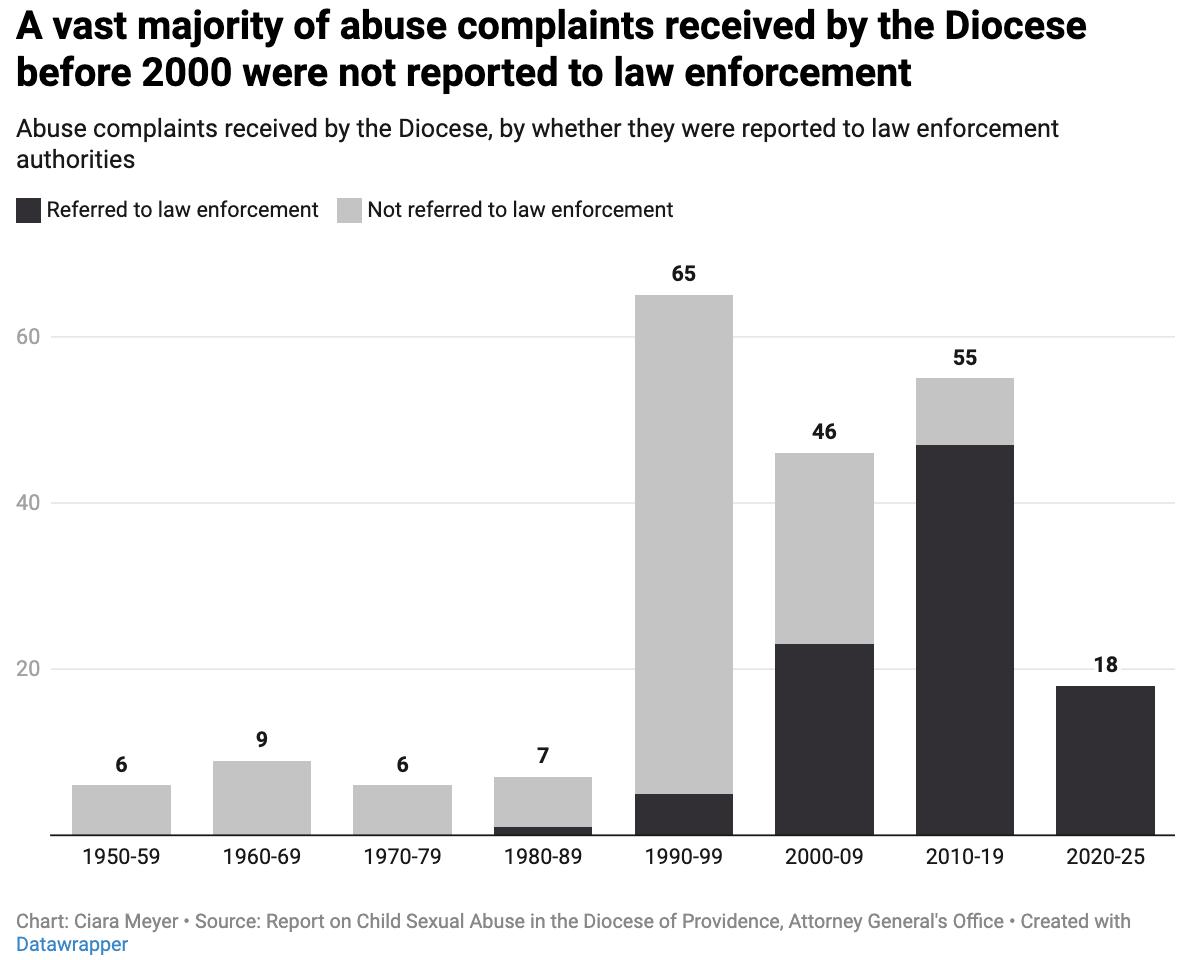
In 2019, then-Bishop Thomas Tobin agreed to turn over the diocese’s records going back to 1950. At the time, the diocese’s public list of credibly accused clergy included 51 names. The updated list from Neronha’s report — included as a 300-plus-page appendix — identifies 72 credibly accused clergy members. Only 10–15% of child sexual abuse cases are ever reported to law enforcement, according to the report.
Neronha criticized the diocese for failing to report the abuse to law enforcement, investigate internally and remove priests from positions where they could access children.
Those accused of sexual misconduct were often transferred to other communities by the diocese — a condemned practice known as “priest shuffling.” Thirty-six R.I. cities and towns were at one point assigned an accused clergy.
“The diocese’s historical failure to timely and appropriately respond to cler-
gy abuse complaints resulted in the sexual abuse of additional Rhode Island children,” the report reads.
The report also accused the diocese of withholding complaints and evidence of some incidents at its discretion, including those it “deemed not credible after an internal investigation” and those that “could be described as ‘grooming.’”
The Diocese of Providence contested in its statement that the report’s existence attests to the diocese’s cooperation in sharing the records, adding that there is “no evidence of recent child sexual abuse by clergy, no credible accusations against those in ministry today and no instances of the diocese’s failure to meet its legal reporting obligations.”
“The very existence of the Attorney General’s report is the result of the Diocese of Providence’s unprecedented and voluntary agreement to extraordinary transparency,” the statement reads.
The Diocese of Providence’s statement also pointed to changes implemented since the early 2000s to address systemic issues, including a zero-tolerance policy for those credibly accused.
The report alleges numerous holes in
the diocese’s current practices, including insufficient supervision of credibly accused clergy, nonstandardized internal investigations and inadequate documentation of those investigations.
Neronha called for the diocese to require regular background checks for clergy, create and support a survivor compensation program and increase transparency by editing the current list of credibly accused clergy members.
In the wake of the report’s publication, Neronha is pushing for legislative reform actions. One of these reforms, a grand jury reporting statute, would allow reports from grand jury investigations to become public even when they do not result in criminal charges.
Due to the lack of a grand jury reporting statute, according to the report, the investigation had to rely on the diocese’s cooperation. Neronha alleges that the diocese sometimes delayed turning documents over, slowing down the investigation.
In its statement, the Diocese of Providence wrote that it “set aside its valid legal objections and willingly endured six-and-a-half years of persistent requests
for over 75 years of material.”
Neronha is also advocating to raise the civil statute of limitations to allow victims to bring suit against institutions that covered up the abuse, and increase the criminal statute of limitations for second-degree sexual assault. He also proposed amending the R.I. mandatory reporting laws to include known or suspected clergy abuse.
The Diocese of Providence argued in its statement that the report was an effort to sway legislative debate in favor of Neronha’s reforms, noting that similar policies have led to the bankruptcies of dioceses in other states.
“The diocese would have you believe that this report is historical; that child sexual abuse by clergy members is a thing of the past and not worth drudging up,” Neronha said. “To that I say: the pain that survivors and their families suffer knows no statute of limitations, and history always has something to teach us.”
This article originally appeared online at browndailyherald.com on March 5, 2026.
Record-breaking blizzard causes closures, reduced traffic for local businesses
The storm also impacted businesses’ profits and caused facilities damage
BY PAVANI DURBHAKULA METRO EDITOR
Last week, the largest blizzard in Rhode Island history brought over three feet of snow to the state. With Rhode Island under a state of emergency and travel ban, roads across the state closed down, and so did many of the businesses they connect.
Seymour Foods, a locally-sourced grocery store in Providence, was one of those businesses. The shop closed from Feb. 23 to Feb. 25, and “the only reason we even reopened Thursday was because we had deliveries,” according to co-owner, Lisa Kellogg.
Even after re-opening, “our sales definitely suffered,” added Chloe Cartagena, the shop’s other co-owner of the store. This winter, Seymour Foods has also closed for a total of four days due to snow, and food deliveries have been delayed by up to a week due to weather, Kellogg said.
Long Lane Farm, a produce farm in Warren, has been “severely damaged” by the blizzard, wrote Camille Abdel-Nabi, an owner and manager of the farm.
“One of our greenhouses totally collapsed under the weight of the snow and
two others partially collapsed or experienced other damages,” Abdel-Nabi wrote.
Most of the farm’s tomatoes — their most important crop — were growing in the now-damaged greenhouses, “so we already know our tomato harvests will be significantly down this year,” she added.
They also lost many of their “early crops,” which the farm typically sells starting in April. As a result, “we expect that our farm stand will need to open later this year,” Abdel-Nabi wrote.
In addition to around $20,000 in crop losses, Abdel-Nabi wrote that fixing and rebuilding their greenhouses will cost roughly $60,000. The farm has launched a GoFundMe to help offset these costs.
Big Feeling, an ice cream shop in Providence, also closed Feb. 23 and 24 because of the hazards caused by the blizzard. They opened back up on Wednesday to “accommodate people on foot,” but around half of their employees had difficulties getting to work, said Alex Maddalena, the shop’s owner.
It was “a really slow week,” Maddalena said, adding that the ice cream shop saw “a lot fewer people than usual.” But by Friday, he said that foot traffic at Big Feeling had returned to normal.
For Maddalena, the City of Providence’s snow clearing process has been “a little frustrating” and “a little baffling.”
“Being in New England, I think it's totally
fair to expect that a city of our size would have invested in precautionary equipment that could deal with a scenario like this,” he said.
The city did not respond to a request for comment.
Challenges with storm clearance also impacted Seymour Foods’s ability to open.
“Normally, our part-timer works on Wednesdays and she walks to the store, and she couldn’t because the sidewalks weren’t shoveled along her route to the store,” Kellogg said. This also contributed to their decision to keep the store closed on Wednesday.
“Part of the snow that's blocking (the store) is here from the last storm,” Cartagena said. Providence “had a better response for the blizzard, but because there was still so much snow from the previous storm, it made it a lot harder.”
“We just really had to wait until (the city) plowed us out,” Cartagena said. She added that a nearby condominium association maintains the ground in front of their building, rather than the City of Providence.
Still, many local businesses made the best of the snowy weather. On Feb. 27 and 28, Seymour Foods offered a promotion where Providence and Pawtucket residents could get free grocery delivery over the weekend.
“We decided to do it because people can't get to the store, and also there's a parking ban going on,” Cartagena said, adding that

around a dozen people took advantage of this offer.
Providence’s parking ban was lifted at 5 p.m. on Saturday.
Brown Bee Coffee, a cafe and bakery in Providence, was one of few businesses that stayed open through the blizzard on Monday.
“Turnout was all walking traffic,” Brown Bee owner Waleed Ghazi said, adding that “people showed up on skis, on snowboards, everything.”
“Everybody in the neighborhood likes to go out and walk and really enjoy the historic district in the snow,” Ghazi said, so they wanted to “add a stop to everyone’s adventure that day.”
On Monday, it was just Ghazi and his wife operating the coffee shop. They offered a limited selection of pastries with a full drink menu.
“We felt the demand from the community that if we were open, they were going to come anyway,” he added. “We turned the corner of Benefit Street into Switzerland.”
Brown Bee is typically closed on Tuesdays, but per the request of Monday’s customers, “we made an exception for the first time since we’ve ever opened” and stayed open on Tuesday, Ghazi said.
Some employees were able to come in starting on Tuesday. “We've done everything we can to make sure that they are able to come in,” Ghazi said, including giving employees rides and ordering them Ubers.
“The line was down Benefit Street,” on Tuesday, Ghazi said. Brown Bee was shoveled out by a private team partway through the day on Tuesday.
Maddalena said that Big Feeling has taken advantage of their snow days to “figure out new hours, new products and new avenues to keep revenue coming in despite the weather,” he added. “This is not going to be the last blizzard we encounter.” This article originally appeared
SELINA KAO / HERALD
Brown Bee Coffee, a cafe and bakery in Providence, was one of few businesses that stayed open through the blizzard on Monday.
LACROSSE
Women’s lacrosse faces two early-season defeats in Florida
Brown lost to Jacksonville University and the University of Southern Florida
BY CHIUPONG HUANG SENIOR STAFF WRITER
Over the weekend, women’s lacrosse lost two competitive matchups in Florida where each game was defined by relentless backand-forth play.
On Friday, the Bears saw several strong offensive pushes against Jacksonville University, but they were ultimately unable to overcome a comeback surge from their foes after halftime, losing 10-16. The next day, the Bears stayed neck-in-neck with the University of Southern Florida before their opponents put up three goals to defeat Bruno 13-10.
Against Jacksonville, the decisive moment came during the third quarter when Brown was overwhelmed with an unanswered seven-goal run. The Dolphins’ offense was relentless, setting up shots quickly after gaining possession to shut out the Bears’ defense, securing Jacksonville’s winning blitz.
The Bears took advantage of minor fouls from Jacksonville to make six of the 10 goals scored from free position shots, but the team was outmaneuvered in the second half.
Minutes into the game, attacker Tessie Batchelder ’29 sent a free position shot to lock up the first point of the game. Moments later, defender Riley Peterson ’28 executed a nimble left dodge while rushing to
BASKETBALL
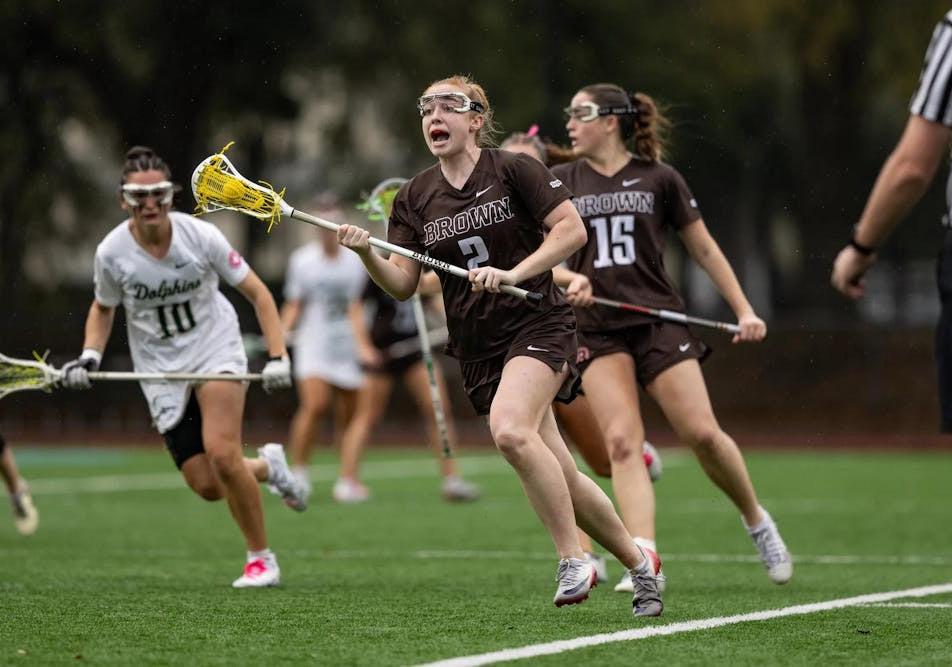
close distance to score Bruno’s second goal. While the Bears showcased coordinated offensive setups early on by cutting behind the goals and towards the wings, the team was unable to turn things around once Jacksonville adapted its offensive plays and accumulated momentum.
At the beginning of the second half, Bruno extended their lead to 8-5. But the next 20 minutes were a slaughter: Jackson-
ville found the net nine times. The Bears saw two unsuccessful free position shots that failed to materialize into conversions, accentuating a sharp contrast between the two halves of the matchup.
Closing out the final minutes match, Jacksonville’s offensive dominance waned — but not enough to give the Bears an upperhand. The match ended 10-16 Jacksonville.
Against USF, the Bears were able to put up defensive integrity with goalie Mackenzie Conway ’29 — who put up 10 saves, making a .435 save percentage and one caused turnover. With a .442 season save percentage four games into the season, Conway’s first year in front of the net shows promise for her career with the Bears.
USF mounted a formidable early offen-
sive push with Conway stopping six shots in the opening quarter. Yet Conway failed to stop all of USF’s efforts, as The Bulls outmaneuvered the Bears with a clean inside pass into a successful shot that marked the first goal of the game.
The Bears fought back with a well placed behind-the-net pass from Ruby Sliwkowski ’27 that allowed Bae Bounds ’28 to take a successful shot. Just under three minutes later, Caroline Nozzolillo ’29 scored the second goal for the Bears, again with an assist from Sliwkowski, to bring the score to 2-1.
But USF quickly reclaimed the lead, mounting a sustained and successful offense to open the second quarter in a four-goal run — that would eventually be answered by a goal from Adele Atherton ’27.
Down two points, the Bears did not count themselves out and managed to gather an 8-7 lead three minutes into the third quarter. After exchanging points with USF for the rest of the quarter, Bruno entered the final 15 minutes at 10-10.
There, USF put up three unanswered goals to lock Brown into its first goal-less quarter of the season, ending the match 10-13 USF.
Bruno will seek to close the holes exposed during the team’s Florida weekend at its conference opener against Cornell next weekend.
This article originally appeared online at browndailyherald.com on March 5, 2026.
Men’s basketball falls to Columbia, Cornell, eliminated from Ivy Madness contention
Brown will conclude the regular season on Friday against Penn
BY HARRY GUO SENIOR STAFF WRITER
On Friday night, the men’s basketball team (9-17, 3-10 Ivy) saw its postseason hopes officially come to an end, falling 80-62 to Columbia (16-11, 5-8) in New York City. The next day, the team lost again to Cornell (14-12, 7-6) 86-80.
Despite sitting at last place in the Ivy League standings, Brown entered the weekend on a two-game winning streak following a thrilling home win against Princeton last week. Bruno came out sharp against the Lions, looking to secure their third straight victory.
Brown won the opening tip, and guard Luke Paragon ’27 drilled a three-pointer immediately after. Following several empty possessions and turnovers from both sides, Columbia finally broke through with a layup to get on the board. Guard Isaiah Langham ’29 and Paragon answered with strong takes to the rim to keep the Bears in front at 7-2.
Less than eight minutes into the game, guard Malcolm Wrisby-Jefferson ’27 showed off his slick footwork in the paint, spinning past his defender and scoring just before the shot clock expired. Columbia responded with two drives of their own, but Paragon drew contact on a desperation three and calmly knocked down all three free throws to make the score 13-10 Bears.
Moments later, Paragon finished through traffic off of an impressive crosscourt pass from guard Jeremiah Jenkins ’28.
As back-and-forth play continued,
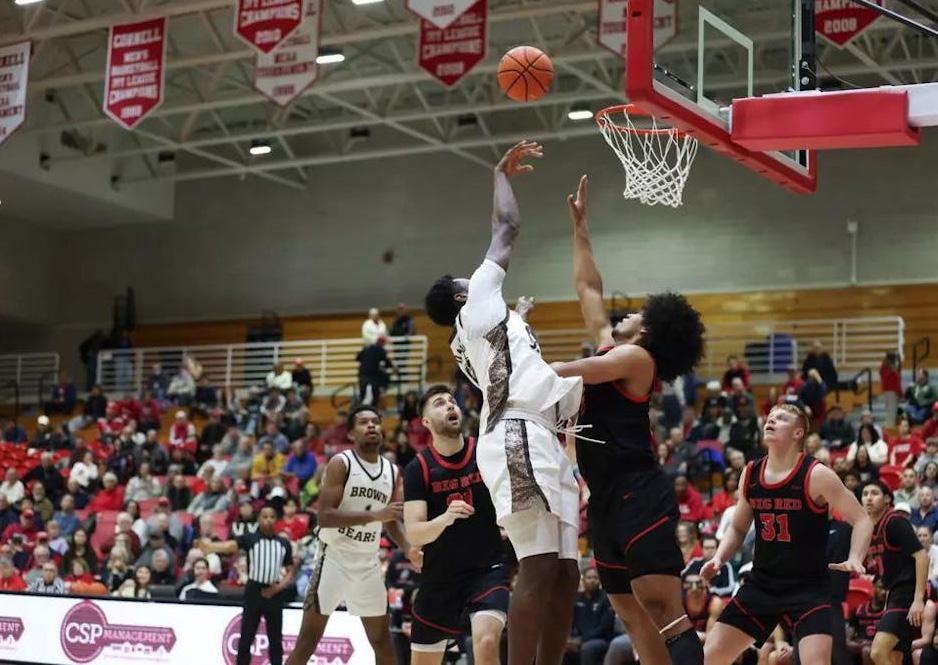
Langham added an and-one finish after Columbia missed a three. But he couldn’t convert the free throw, and the score read 26-19 Bruno with under five minutes to play in the first half.
The Lions responded with a three-pointer, but guard Adrian Uchidiuno ’27 countered with a smooth spin move and a clean jumper. With just over a minute left in the half, forward Landon Lewis ’26 floated a goal in after charging toward the basket.
Not going down without a fight, Columbia closed the half with a cross-court inbound pass that led to a buzzer-beating three-pointer, trimming Bruno’s lead to
just 32-31. The late bucket marked a clear shift in momentum in favor of the Lions.
The Lions opened the second half with a seven-point run. But Brown responded with an 11-point surge of their own, highlighted by a crafty jumper from Wrisby-Jefferson that left a defender stumbling and a thunderous dunk from Langham sparked by a Wrisby-Jefferson steal.
Columbia reclaimed a 48-43 advantage, and Bruno’s offense stalled. Brown went nearly four minutes without a basket before Langham finally found an open lane for a layup.
Trailing 48-45 with a little over 10 minutes remaining, Brown struggled to keep
pace. The Lions erupted on a 32-17 run to seal the game and officially end the Bears’ Ivy Madness hopes with a crushing score of 80-62.
Brown returned to the court the following night to face Cornell in Ithaca, New York.
Lewis opened the game with a strong layup over his defender. Minutes later, Paragon connected from deep and Wrisby-Jefferson followed with another triple to give Bruno a 10-3 edge.
After Cornell trimmed the deficit to two, Uchidiuno — who finished the game with a career-high 16 points — knocked down a contested jumper. With 12 min-
utes left in the first half, Lewis split two defenders for an and-one opportunity but missed the free throw.
The Big Red continued to chip away at Bruno’s lead, knocking down a pair of three-pointers to stay within striking distance. But Brown refused to falter — forward Charlie O’Sullivan ’29 answered with a three of his own from the top of the arc, and Langham added an and-one following another Cornell basket.
Late in the half, forward N’famara Dabo ’27 capitalized on a sloppy Cornell dribble, turning the defense into offense through Wrisby-Jefferson, who fired a cross-court pass to Uchidiuno for a transition layup.
Still, Cornell closed the half at the line, sinking two free throws to take a narrow 46-45 lead heading into the break.
Cornell opened the second-half scoring before Lewis responded with a basket in the paint. Bruno controlled the interior, outscoring the Big Red 18-12 in the paint. But Cornell found their rhythm from the perimeter and pushed the Big Red lead to 14 with just over five minutes remaining.
In the final seconds, Lewis finished off crisp ball movement with nifty footwork around the rim to pull Brown back within four.
Forced to foul, the Bears sent Cornell to the line. The Big Red converted both free throws to secure the 86-80 win, sending Bruno packing.
Brown will look to close out the season with a home win against Penn (15-11, 8-5) on Friday at 7 p.m. in the Pizzitola Sports Center. This
COURTESY OF BROWN ATHLETICS
On Friday, the Bears saw considerable back-and-forth momentum exchanges against Jacksonville University, but they were ultimately unable to overcome a comeback surge from their opposition after halftime.
COURTESY OF BROWN ATHLETICS
Brown looks to close out this season with a win against Penn on Friday.
ICE HOCKEY
Women’s hockey season ends with quarterfinal loss against No. 3 Quinnipiac
A loss in the ECAC quarterfinals ended the team’s strong season
BY ABIGAIL DONOVAN SENIOR STAFF WRITER
In a close three-game series over the weekend, women’s ice hockey (18-14-2, 12-8-2 ECAC) ended their season with a loss to No. 3 Quinnipiac (26-8-3, 14-6-2 ECAC) in the ECAC quarterfinals. After dropping their first game 6-3, the Bears rallied to a 3-2 overtime win on Saturday. But on Sunday, Quinnipiac stormed back to clinch the semifinals slot with a narrow 5-4 win over the No. 7 Bears.
The team ended their season with 18 wins, their most wins in 23 years, Head Coach Melanie Ruzzi wrote in an email to The Herald.
“This team deserved a different outcome given how resilient the women have been through so much adversity and the class with which they have represented Brown,” Ruzzi wrote. “I couldn’t be more proud of this team and just as sad to see the season come to an end.”
The Bears entered their first game hot off a 7-2 opening round victory against No. 10 seed Dartmouth last weekend. On Friday, Brown began their weekend-long battle against Quinnipiac.
The two teams exchanged points throughout the three periods with Brown outshooting Quinnipiac 40-29. Forward Margot Norehad ’27 scored twice and forward Jade Iginla ’26 once to bring the Bears’ goal count to three. But the Bobcats doubled Bruno points, finding the back of the net six times, marking the highest number of goals Brown had given up in a single game

The Bears now look onto the next season hoping to continue their strong team culture.
all season.
On Saturday, the Bears returned to the ice hungry to force the series into a deciding third game. With two minutes left in the first period, Iginla scored the first goal of the game on an impressive end-to-end rush.
But in the second period, Quinnipiac struck back with a goal in the eighth minute to even the score 1-1. Seven minutes later, Norehad raced down the middle of the ice and sent the puck high into the net to push the Bears to 2-1.
The Bobcats notched another goal on a power play in the third period, forcing the game to overtime at 2-2.
Four minutes into overtime, forward Sam Broz ’27 sent a pass from the left side to Norehad, who was centered on the goal.
Still racing down the ice, Norehad buried a quick goal — her fourth of the weekend —
to clinch the game and send the weekend to a decider.
Forward Monique Lyons ’28 said that the team “learned a lot” from the first game. “We focused on keeping pucks in front of us and not allowing any easy entries,” she wrote.
Goalkeeper Anya Zupkofska ’28, who recorded a remarkable 49 saves to keep the Bears ahead throughout the game, also deserves much of the credit for the win.
“After the first game, we gave the team some details that would lead to a tighter checking defensive game,” Ruzzi wrote. “We have a lot of speed in our forward group and skill to convert turnovers into grade-A scoring chances.”
Going into Sunday afternoon’s decider, it was anybody’s game.
Quinnipiac jumped to an early lead
OF BROWN ATHLETICS
with two goals in the first seven minutes.
But Brown struck back in the ninth minute when Lyons launched a sharp goal from the right side on the power play to narrow Quinnipiac’s lead to 2-1.
The battle continued in the second period. Just before the nine-minute mark, the Bobcats’ forward Kahlen Lamarche got ahead of the Bears’ defense to go one on one against Brown’s goalkeeper. Despite her team being down a player, she sealed an impressive goal.
Two minutes later, defender Isabella Gratzl ’29 passed from the left side to forward Olivia Fantino ’28, who sent the puck to Broz in front of the goal. Broz then snuck the puck to the right of the Bobcats’ goalie to bring the score to 3-2. But Lamarche struck back just moments later to restore the Bobcat’s two point lead.
Quinnipiac pulled even further ahead with a third goal from Lamarche at the beginning of the third period.
But even with a three-goal deficit and just 11 minutes left, the Bears refused to back down. Around three minutes later, Brown capitalized on a power play. After three near shots, Lyons sent a long pass to Iginla, who was perfectly placed in front of the net to seal the goal with a rapid shot.
Around five minutes later, forward India McDadi ’26 launched a stunning high backhand shot that narrowed the deficit to just one goal.
The Bears used this momentum to propel them in the final minutes, outshooting the Bobcats 9-1. But Quinnipiac’s early lead proved insurmountable, and the game finished at 5-4, ending the Bears’ championship hopes.
“We outshot our opponent and did a great job on the faceoff dot, but ultimately we failed to shut down their elite scorer,” Ruzzi wrote.
“I am proud of the team’s performance, continued effort and battle we gave Quinnipiac,” Lyons wrote. “We never gave up and continued to battle our way into the game.” Ruzzi credits the team’s seniors with establishing a team culture that she hopes will continue next season.
“The leadership of our seniors and the culture they established this year was perhaps the best I have ever coached,” she wrote. “Looking ahead, we will be looking for women to carry that culture forward in order to be in the position to compete at the top of the ECAC.”
This article originally appeared online at browndailyherald.com on March 3, 2026.
Jacquie Pierri ’12 recounts her journey to the 2026 Winter Olympics
BY REBECCA GOODMAN SENIOR STAFF WRITER
Jacquie Pierri ’12 has at least two things in common with Snoop Dogg: They were both at Spring Weekend in 2010 and at the Milan Cortina Winter Olympics 16 years later. In February, Pierri represented Italy — the games’s host country — as a defender for the women’s ice hockey team.
The first game in Milan was “magical,” Pierri said, adding that she had 45 friends and family members fly in to watch her play. Her fan club included teammates from her days on Brown’s women’s ice hockey team.
While at Brown, Pierri studied engineering. It was challenging to balance her studies with athletic commitments, but her degree “opened up a lot of doors” for her career in environmental sustainability, she said.
“We would jokingly refer to her as ‘Mother Earth,’ but she was really ahead of her time, particularly regarding climate
knowledge and activism,” former teammate Joy Joung ’11 wrote in an email to The Herald.
During Pierri’s time on the women’s ice hockey team, the team won the Mayor’s Cup twice and made it to the ECAC playoffs for the first time in six seasons during Pierri’s senior year.
“Jacquie had a fearless approach to competition, paired with a level of dedication and dependability that made her a constant source of trust and motivation,” former teammate Katelyn Landry ’12 wrote in an email to the Herald. “Whether it was showing up early to practice, encouraging

others or stepping up in high-pressure moments, she consistently embodied what it means to be a true team player.”
After her graduation from Brown, Pierri’s plans to travel were cut short by the passing of her father, a time Pierri described as “destabilizing.” Following a friend’s suggestion, she began playing for the Calgary Inferno of the now-discontinued Canadian Women’s Hockey League.
While living in Canada, Pierri worked at a natural gas company. She joined a sustainability group within the business but she eventually felt she had “hit a dead end in terms of feeling like (she) was having an impact with sustainability.”
Pierri had an “itch to live in Europe” and decided to get her master’s degree in a program that allowed her to spend one year in Barcelona and one year in Stockholm.
“I thought I was done with hockey, sincerely,” Pierri said.
But while she was abroad, she was contacted by SDE Hockey, a club team in the Swedish Women’s Hockey League, where she ended up playing for two years. During her time on the team, Pierri wrote her thesis on sustainable ice rink refrigeration.
After earning her master’s degree in sustainable energy systems, Pierri decided to move to Italy, where her father’s family lives.
There, she joined her regional professional team — the EVB Eagles South Tyrol, known as the Bolzano Eagles — in 2021. For the last two and a half years, she has also worked for Living Future, a sustainable building company.
In hockey, the first through ninth-
ranked teams at the Women’s World Championships qualify for the Olympics via their 2024 International Ice Hockey Federation world rankings or tournament play, and the tenth spot is given to the host country. Prior to the games, Italy was ranked 17th.
But at the 2026 games, Italy’s women’s ice hockey team finished in eighth place.
The team “in its entire history, has never won any games at the Olympics. And then we played in the quarterfinals,” Pierri said, noting that she is “really proud” of how the team performed.
Landry watched the games from the West Coast. For her, Pierri’s Olympic debut was before sunrise “but there was no chance I was sleeping through that,” Landry wrote. “I found myself getting emotional watching it; it was such a powerful reminder of what an extraordinary person she is, both on and off the ice.”
Now that the Olympics are over, Pierri will finish out the hockey season with the Bolzano Eagles before rejoining Italy’s national team for the World Championships in mid-April.
“I’m 35 this year, and so I never in a million years thought I would still be playing hockey at this age, let alone still remaining competitive,” Pierri said.
“People tell you, ‘Your body falls apart,’” she said. “Maybe that’s true for a lot of people. I haven’t found that to be true. I’m the strongest I’ve ever been.”
This article originally appeared online at browndailyherald.com on March 1, 2026.
Italy’s women’s ice hockey team finished in eighth place at the game
COURTESY OF BROWN ATHLETICS
Jacquie Pierri ’12 during her time at Brown. She earned a master’s degree abroad and decided to move to Italy.
having a heart- to-heart
by Sofie Zeruto
…Funnily enough, I realized this newfound change in my cognition at a bar in Atlanta with another friend from Brown over winter break. We had spent the entire day together, just us, so I joked that we should try to make a friend as we entered the bar. As we looked around, no one there seemed open to chatting with strangers. Then, really joking, I told my friend we should dial random numbers and try to make new friends that way. Ever one to commit to the bit, my friend pulled out his phone and actually started doing it.
“Hi! We’re dialing random numbers, and we were wondering if you would want to be our friend.” My friend prompted each phone call with frankness, while I tried to silence my laughter in the background at the ridiculousness of what we were doing. We called three numbers, and on the fourth call, a man picked up and, to our shock, answered our question with a cheeky “sure.”
We turned and stared at each other in silence, mouths agape, unsure where to go from there. After a moment, we began sharing some very general details about our lives (stranger danger) and asked him about his. He told us he was working from home and, clearly amused by us, put us on speaker so we could also chat with his wife.
You would think I’m making this up when I say that we ended up talking to this couple for two hours about everything under the sun. They were from California— around Los Angeles—and we learned all about their hobbies, how they met, what they did for work, and more…

EDITOR-IN-CHIEF
Elaina Bayard
FEATURE
Managing Editor
Chloe Costa Baker
Section Editors
Anika Kotapally
Gabriella Miranda
ARTS & CULTURE
Managing Editor
AJ Wu
Section Editors
Lizzy Bazldjoo
Sasha Gordon
NARRATIVE
Managing Editor
Gabi Yuan
Section Editors
Chelsea Long
Lucie Huang
LIFESTYLE
Managing Editor
Hallel Abrams
Gerber
Section Editors
Alayna Chen
Tatiana von Bothmer

POST-POURRI
Managing Editor
Tarini Malhotra
Section Editor
Christina Li
HEAD ILLUSTRATORS
Junyue Ma
Lesa Jae
COPY CHIEF
Jessica Lee
Copy Editors
Eve Kobell
Indigo Mudbhary
Kate Schuyler
Rebecca Sanchez
LAYOUT CHIEFS
Alexa Gay
Amber Zhao
Layout Designers
Emma Vachal
James Farrington
Joshua Rezneck
SOCIAL MEDIA
Rebecca Sanchez
Yana Giannoutsos
Yeonjai Song
1. The entire post- staff
2 You <3
3. Distant relative of John Carter Brown
4. Daveed Diggs
5. Clippy
6. My roommate, Katie
7 Underground baristas
8. Brown Band members
9. Bruno
10. The person who politely looked away when you slipped this week





1.Guest appearance
6.A squirrel's snack
7.Person who has the lead ro le
8.Voice inflection
9."So cool!"
1.Group of performers
2.Thesp i an
3.Polynesian Disney h eroin e
4.Made a mistake
5.Perched atop

“I think there’s a cosmic force behind it.” “Yeah, it’s called procrastination.”
“It brings out my motherly instincts.”
by Tseyang Dolma Arow illustrated by Angelina Feng
Cover by Sheryl lee

Dear Readers,

table of contents
Sofie Zeruto 1 3 5 7
edm as our chance for immortality
Katya Michkovskaia blood
AnnaLise Sandrich ways to celebrate chinese new year!
Ellie Kang having a heart-to-heart
“There's truly one thing in the world that frustrates me more than the current state of American politics: Roblox's viral multiplayer dress-up simulator, Dress to Impress. Whether during a particularly monotonous period of lecture or a restful moment of Mock Trial practice, I find myself consistently returning to the Roblox app to torture myself once again with a round of this infuriating game.”
— Ann Gray Golpira, “battle of the pre-teens”

letter from the editor
With the snow starting to melt and my trek to North Campus becoming routine once again, I’ve had more time to think about my life, as I tell myself not to look down at my phone and instead pay attention to my surroundings. As I try to dislodge the song lyrics that have inevitably taken hold in my head, I rewrite mental to-do lists—remembering tasks meant to be completed during snowweek—as I try to fit everything in one place, in one month.
And despite the hectic pace (writing cover letters and reading about memory, only to forget what I just read, and making the time to make lunch), I have been feeling a strange sense of calm. I know what the next few weeks will be like. I know how to endure a March. I know what I need to do, or at least the steps I’ve laid for myself to follow. We’ll see what actually happens.
This week has also been full of reflection for the writers at post-. In Feature, Katya writes of EDM and immortality, raising questions of time and intensity. In Narrative, AnnaLise contemplates her relationship with her brother and

“Emails make a relationship feel tangible. It’s time I dedicated to that person. It isn’t just a text that I sent while I was making breakfast. It’s an hour of picking the right things to say, the right poem to send, the right place to split paragraphs.”
— Eleanor Dushin, “i’m trying to tell you” 03.07.25
03.07.24
its growth over time…and nosebleeds. In A&C, Ellie shares some of her favorite parts of Chinese New Year, foods, traditions, and memories, while Sofie considers how being at Brown has encouraged her to think critically and engage with diverse viewpoints. Lifestyle continues the theme of retrospection: Indigo writes of her roommate and the importance of their “day debriefs,” and Yana explores her relationship with running and finding connection. And finally, ace your next audition with Tseyang’s crossword or use your own experiences this semester to win Jessica’s bingo!
March is bringing a lot of change, of fast-moving pieces to hold together. As we move forward (and inch towards spring break), let’s also remember to savor this time. It’s finally warm enough to be outside—maybe it’s time to take that hour on the Main Green and appreciate the strangers, the friends, and the occasionally harried professor walking past.
Now without the oversized jacket,
Hallel Abrams Gerber
Lifestyle Managing Editor
OPINIONS
Lair ’28: A case for the non-STEM problem set
Last semester, I got a taste of my pre-med roommate’s academic life: Every week, I spent a good chunk of my time working on assignments for IAPA 1401: “Economic Development in Latin America.” Typically, I had to answer six to ten questions about the reading — practically, a problem set. The questions were short and targeted, and they tested my ability to apply the concepts that we were going over in class, either by explaining the significance of historical events or the mechanisms of specific policies. Although they often required written responses, they didn’t demand external research or the big-picture analysis of an essay — they served as a concrete way to practice applying the course material.
When I first read the syllabus and saw this unfamiliar type of homework, I was suspicious. In my previous social science classes, our weekly assignments were made up only of readings and class participation. I had thought problem sets were only for STEM courses, with the notable exception of economics.
But despite my initial reservations, I quickly discovered that this problem-set format, most commonly found in STEM and economics classrooms — can be effective even in non-STEM classes without strictly quantitative content. Of course, every instructor should choose the weekly structure that best fits their teaching goals, but many courses outside of the typical problem-set disciplines could benefit from weekly assessments of concrete comprehension. Professors in the humanities and social sciences should seriously consider incorporating assignments that resemble the problem sets of STEM courses.
Many humanities and social science courses rely on students engaging deeply enough with assigned read-
Berkwits
ings before class to allow for more extensive analysis during lecture or discussion. For this format to work, though, students must have actually spent time rigorously thinking through the course content. Even for students who are truly motivated to get the most out of their classes, it is hard to prioritize readings over other work that has a clear penalty if not turned in on time. A regular, graded assignment related to the class’s reading would offer enough external motivation to encourage students to show up to class well-prepared.
Another benefit of problem-set-like assignments is the guidance they provide to students when it comes to parsing through hefty readings. Problem sets don’t just test a student’s grasp of concepts — they also clarify the most fundamental elements of a topic or unit. While professors could provide guiding questions, these still would not provide students the ability to practice and check their understanding. Non-STEM reading can include dense and lengthy theory, research and literature — students can misallocate their time analyzing themes that are less relevant to the course’s scope. Of course we already can, and should, dedicate ample time to readings, but “problem sets” that force students to assess their own knowledge help guide learning to meet course objectives.
This structure also helps students better prepare for larger assessments. Having a library of completed problem sets to refer to can be a massively helpful tool to organize the course’s contents when preparing for exams, writing essays or developing projects. It becomes increasingly impractical to revisit reading, lecture slide deck and set of notes as a course progresses. Problem sets can serve as an approachable starting point to or-

ganize the key concepts of a class. Weekly assignments also prevent students from falling behind, ensuring that themes can build in complexity and difficulty without becoming overwhelming.
Of course, this format might not work for every class. Problem sets would not make as much sense for courses that don’t follow a concrete outline, such as advanced capstones and intensive creative workshops. But a problem set can still be adapted to a range of subjects. For example, a political science assignment could ask about the implications of specific policy measures and students’ opinions on their efficacy. For an English class, graded discussion posts that ask specific but open-ended interpretations of scenes or language structures could fit this problem set bill. Regardless of the format they take, problem sets can be valuable for classes beyond STEM and economics.
Brown has not been scared to take innovative approaches to education for much of its history, and this spirit should extend to department-level decisions as courses are designed and revised. Our championed value of interdisciplinary studies should extend beyond the classes students are encouraged to take — it should also mean applying different modes of learning across disciplines. Even though “I have to lock in on my gender studies problem set” doesn’t exactly roll off the tongue, these weekly assessments offer structure that could benefit Brunonians’ learning.
CJ Lair ’28 can be reached at craig_lair@brown.edu. Please send responses to this column to letters@browndailyherald.com and other opinions to opinions@browndailyherald.com.
’29: It’s easier for men to get into Brown than women. The benefits are worth it.
Women outnumber men in higher learning institutions across the country. To combat historical gender inequality in higher education, Congress passed Title IX in 1972, which prohibited gender-based exclusion in educational programs that receive federal financial assistance. Through these efforts, female enrollment in universities surged, and in the late 1970s, women began to outnumber men. This trend has continued through 2025, when 57.3% of enrolled undergraduate students in the United States were female.
Despite this, Brown has worked to ensure that their gender enrollment remains equal. In the 2024–25 application cycle, over 10,000 more self-identified women than men applied to the university, and yet, 17 more men than women were accepted into the class of 2029. Based on each Ivy League’s 2024–25 common data set, Brown has the largest male-to-female acceptance rate gap of any Ivy, touting a 7% male acceptance rate in comparison to the female 4.4% — acknowledging that this binary perspective does not represent other gender identities. Why so many more women than men are interested in Brown warrants another column, but one thing is clear: Brown’s admissions process favors men, by a lot.
In his recent column, my colleague Tasawwar
Rahman ’26 argued that this favoring of men over women in admissions at Brown is unmeritocratic and sexist. While he does acknowledge the existence of “social and societal reasons why an even sex ratio… improves the college experience,” he fails to consider this parity’s importance for American society as a whole, beyond the college experience.
While Brown no longer considers race in its admissions process since the Supreme Court ruled that race-based affirmative action was unconstitutional, the University still prioritizes some types of applicants over others. The Supreme Court ruled based on the legal standard that race is subject to the highest level of judicial review, “strict scrutiny.”
But other forms of admissions preferences, such as gender and income, depend on classifications that are subject to weaker forms of legal scrutiny. Athletic recruits, who comprised roughly 14% of Brown’s student population in 2023, are already a discrete category in admissions. Legacy students also have an upper hand, and geography figures in, too: 9.9% of last year’s Brown applicants from Rhode Island were accepted, compared to the 5.4% acceptance overall. Though in essence discriminatory — as Rahman argues — admissions preferences are neither a unique nor illegal phenomenon. Plus, gender-based admissions preferences are pivotal in ac-

/ HERALD
tively encouraging men to pursue higher education, a benefit both men and society reap.
Men in their prime working years have been steadily dropping out of the workforce, with education proving a consistent predictor. This trend holds not only economic consequences, but it is also detrimental to mental health, an issue of utmost importance as men far outnumber women in the number of deaths by suicide in the United States. Furthermore, men who do not obtain a college degree exhibit reduced rates of marriage and parenthood, a measure of well-being. Our young male voters — who are increasingly susceptible to radicalism — are bringing these frustrations to the voting booths.
If we don’t encourage men into spaces that are female dominated — as we do with women for spaces that are male dominated — we risk perpetuating limiting historical stereotypes and boundaries.
The Women in STEM movement actively encourages female students into STEM fields in an effort to narrow the gender gap within the field. Accordingly, MIT’s admissions policy specifically aims to uplift female applicants. Such a policy has had beneficial impacts, not only in female equality but also in the scientific and technological advancements that have resulted from women’s involvement in these fields. Brown is the mirror image. While men continue to outnumber women in STEM-focused and trade institutions, women outnumber men in humanities majors. It takes policies like these, and Brown’s, to work toward a more egalitarian American society in the future.
My primary argument against Rahman’s conclusion on gender-based preferential admissions is his oversight of the importance college gender balance has for our country as a whole. But the benefits to the college experience itself, which Rahman acknowledges exist, are also worth considering and weighing. One might assume that the benefits only pertain to the male population, which may be made a minority at most colleges if gender-based affirmative action was outlawed. However, these benefits traverse gender boundaries as female students may experience more fulfilling social and romantic lives on campuses with gender parity. On campuses with greater percentages of women than men, female students view men as “less trustworthy,” resulting in strained romantic heterosexual relationships. It is not a big leap to assume this pervades into platonic cross-gender relationships as well. Having
more men on campus can make college more fulfilling for all.
Rahman argues that preferential admissions for men betray “the ideals of the American dream that if you work hard, you will reap the rewards.” But Brown admissions practices already betray this ideal of the American Dream: There are far more qualified candidates who apply than there are spots for acceptance. As long as Brown continues to be an elite institution, forced to exclude many capable applicants, it will never realize this hard-work-toachievement pipeline imagined by the American Dream. But importantly, Brown fosters another deep-rooted aspect of the American spirit in their holistic and thoughtful admissions process: diversity.
Men have not endured the same historical disadvantages as other identities uplifted through preferential admission. It is, therefore, disconcerting to feel that women, who historically have been denied education worldwide and at Brown, must advocate for the University accepting more men when so many qualified women apply. However, in our current state of affairs, the benefits of men in institutions of higher learning are critical not only for men, but for the social wellbeing of our country. That said, enforcing preferential admissions for men is not the final answer.
I share Rahman’s concerns that institutions of higher education have been, and continue to be, shaped by bias, and that their preference-based admissions can reflect this prejudice. If we are serious about addressing gender disparities in higher education, the solution must be structural rather than reactive. Just as meaningful equality requires sustained investment in disadvantaged communities, so too does it require intentional investment in boys’ early educational development. For example, we should pursue systemic reform such as having boys start school a year later than their female counterparts so that boys can thrive academically in accordance with their maturation.
But in the meantime, we cannot afford the costs of an ever-decreasing educated male population.
Talia Berkwits ’29 can be reached at talia_berkwits@ brown.edu. Please send responses to this op-ed to letters@ browndailyherald.com and other opinions to opinions@ browndailyherald.com.
HELEN BESCH / HERALD
Gold ’29: Brown, it’s time to bring the party back
It’s orientation week — the first Friday of the year. Outside Metcalf Hall, a horde of first-years have gathered. In the basement, partygoers pack shoulder to shoulder. The air is a hot, musty haze of cologne and nerves. The scene is gritty, but a palpable energy buzzes the room: the joy of Brunonians simply excited to be together.
But now, in the heart of the school year, the largest weekend gathering on campus is likely found in the Sciences Library basement. The rest of Brown seems to lie dormant, silent under winter snow — and less than half of Brunonians report that they go out at least once a week.
Brown’s students aren’t the only ones who seem to be losing their social spark. Across the nation, Americans of all ages are gathering less. This disappearance of party culture is accompanied by a host of mental and social health concerns arising from a national loneliness epidemic. It’s time that Brunonians take action — we should all make an effort to reignite Brown’s social scene.
Brown used to party, but many of the more iconic Bruno gatherings of the past have sadly dis-
appeared. One dinosaur of Brown’s social history, “Funk Night”, served as a boisterous gathering filled with music and dancing which ran weekly throughout the ’80s and ’90s. In 2022, there was an effort to revive the event (under the name “Funk Nite”), but the regular dance nights didn’t last.
The Underground also has a rich history of student revelry. Serving beer and armed with its very own sake warmer, the Underground operated as a student-run concert space through the ’80s. Following its move to the basement of Faunce House around 1989, the Underground lost its rock-androll vibe. Nowadays, it serves primarily as another space for studying on campus — a far cry from its rambunctious past. But thanks to the work of students managing the space, the Underground has once again begun hosting student performances and events.
Student efforts like this offer a glimmer of hope in an increasingly isolated social landscape, but the venue is just the start. Unless we endeavor to engage in these opportunities for large social gatherings, Brown students are at risk of joining

HELEN BESCH / HERALD
“ “
One thing we can learn from Brown’s wide and diverse social history is that there's no ‘right’ scene to seek out. It all comes down to taking on new experiences and meeting new people in an environment that feels right for you.
the global trend of solitude. Young adults are experiencing unprecedented feelings of isolation. Globally, 57% of adults aged 19-29 report feeling some level of loneliness — the highest rate of all age groups. In a recent Gallup poll of American college students, more than a third of respondents reported experiencing loneliness the previous day. The transition to college life requires a complete removal from all established social networks and familial safety nets. Living alone for the first time in a digital age, it can be easy to become isolated, choosing studies and screens over the effort of putting yourself out there.
However, while jumping into a new social scene can be intimidating, it holds potential for massive benefits. Clubbing, for instance, has been shown to stimulate brain function and improve human connection. Furthermore, the act of connecting with strangers and acquaintances, rather than just maintaining close friendships, improves sense of belonging and lowers risk of early death. Unsurprisingly, recent studies in the U.K. have found evidence of the social benefits of pubs, thanks to the regular social interaction that visiting a pub facilitates. Individuals who reported frequenting a local pub were more engaged, trusting and satisfied within their greater community than those who
Clampitt ’26: We must preserve the
We must preserve our mall to act as a space for congregation and social revitalization. “ “
Parking garages. Escalators. Fast food. Screaming children. These are just some of the staples of the American mall that are in danger of disappearing in Providence. In late 2024, it was reported that the Providence Place Mall, the state’s largest shopping center, was ordered into receivership, a state of limbo indicative of poor financial management that can act as an alternative to bankruptcy. And on Feb. 4, the Providence Preservation Society named the mall on its list of endangered properties in 2026. But the loss of our city’s iconic brick-laden building is not inevitable, and Providence must act to redevelop the space before it shuts its doors forever.
The precarity of Providence Place is not an unfamiliar story: Malls across the country have experienced closures throughout the last 20 years due to the rise of online shopping, with many more struggling following the COVID-19 pandemic. Yet as mall attendance declines, we must ask ourselves what has been lost as the era of shopping malls disappears.
Malls — much like parks, libraries and coffee shops — act as “third places,” locations beyond the home and workplace where people connect and build community. Third places foster strong senses of belonging, create new social networks and help alleviate feelings of isolation, ideally at little or no cost. For college students, the mall can act
as a space to connect with local residents while strengthening interpersonal skills and improving mental health through social interaction. There has been a decline in third places as a result of factors from the expansion of digital communities to reductions in organized religious gatherings. For this reason, we must preserve our mall to act as a space for congregation and social revitalization.
Admittedly, the framing of an argument for community building centered on malls may appear consumerist. Described by some as soulless gray retail behemoths surrounded by fields of concrete atop which a sea of metallic cars sit, malls are the perfect place for consumption-based expeditions across the country, including in Rhode Island. While I would argue that there are better third places than under the fluorescent lights of an air-conditioned retail site, preserving malls as third places is still vital. Indeed, such spaces are uniquely positioned given the wider audiences they attract, the range of services they provide and the place they have in the American ethos.
Perhaps, too, we could redefine what it means for a mall to be a mall. Malls across the United States are undergoing massive transformations to keep the sprawling spaces alive. Lakewood, Colorado replaced its anchor indoor shopping mall with an array of urban parks, offices and apartments; New-
didn’t have a regular social ‘watering hole.’
An article published in The Herald this fall outlines the uniquely open, diverse and welcoming culture that Brown parties hold. These aren’t University of Southern California frat houses: you don’t have to know five brothers in order to find a good time on College Hill. Not everyone needs to get sloshed, have a dance-floor make-out (DFMO — for short) or run to the local bars with their worst fake ID in hand. After all, the greatest part of going out is finding a community that fits your vibe and getting together more.
One thing we can learn from Brown’s wide and diverse social history is that there's no ‘right’ scene to seek out. It all comes down to taking on new experiences and meeting new people in an environment that feels right for you. I have no plans to return to the Metcalf basement anytime soon, but I think we could all benefit from a return to that sense of excitement. So do yourself a favor, and get out next Friday.
Reid Gold ’29 can be reached at reid_gold@brown.edu. Please send responses to this column to letters@browndailyherald.com and other opinions to opinions@browndailyherald.com.
Providence Place Mall
ark, New Jersey redeveloped a 400,000-square-foot retail space to include restaurants, grocery stores and an arts center. The possibilities for mixed-use in malls are endless, and Providence Place must undergo similar developments if it wishes to survive.
In the process, these projects have also improved local communities by creating both temporary and permanent jobs, as well as generating tax revenues that can improve local services, education and infrastructure. Some of these projects have also featured affordable housing units, offering Providence a possible solution to the housing crisis that has long gripped the city. There are significant hurdles that exist in embarking on such ambitious conversion projects, including rezoning and considerable investments. But it’s an incredibly attractive alternative when compared to losing a vital piece of our built environment.
However, maintaining these types of spaces does not just require intervention by external actors. People must exit their homes, occupy these places and socialize with members of their communities. Americans are already nostalgic for times when these spaces thrived and wish to see malls survive. Perhaps we ought to make this a modern reality.
To the careful observer, the mall is more than its walls and windows. It is the beginning of friendships, of families, of communities, of love. The various interactions happening around us as we stroll about scanning primped mannequins extend beyond the mall — through these spaces, we learn to build identities, foster connections and empathize with one another. We see individuals in a natural state of existence, battered by the stress of finding a birthday present or eased by the refreshing taste of a fountain drink.
Americans have, by and large, tapped out of their responsibility for civic engagement and community building, withdrawing from the social capital that built the world we know. If we are to repair the harm that everything — from technology to the pandemic — has done to the bonds of our society, let us begin by rebuilding our communities and reconnecting with one another in third places. And perhaps we should start by preserving our mall.
Nicholas Clampitt ’26 can be reached at nicholas_ clampitt@brown.edu. Please send responses to this op-ed to letters@browndailyherald.com and other opinions to opinions@browndailyherald.com.

ARTS & CULTURE
REVIEW
‘The Secret Agent’ is a poignant display of persecution during Brazil’s military dictatorship
The film is up for four Academy Awards and has earned several accolades
BY TALIA LEVINE ARTS & CULTURE EDITOR
Released in theaters late November and on streaming services earlier this week, “The Secret Agent” is a gripping political thriller that doubles as an unflinching meditation on life under military dictatorship. Directed by Kleber Mendonça Filho and set in 1979 during the bloody Brazilian military dictatorship, the Portuguese-language film — with English subtitles — fuses paranoia and memory to present a story that often feels closer to horror than history.
The film has earned widespread acclaim, including four Academy Award nominations — for Best Picture, Best Actor, Best International Feature Film and Best Casting — and major wins at the Cannes Film Festival and the Golden Globe Awards.
The film follows the life of Marcelo Alves (Wagner Moura), a former professor whose real name is Armando Solimões. After the death of his wife, Marcelo goes undercover and heads for a safe house in Recife, where the film was shot on location. Set against the fantastical backdrop of Brazil’s annual carnival, the narrative blurs reality and recollection, building a layered portrait of intellectual life under authoritarian rule. Even within the first 20 minutes of the 161 minute film, viewers are confronted with a gripping, albeit utterly
REVIEW

ådevastating, watch.
While most of the story unfolds in the late 1970s, the film intermittently flashes forward to the 21st century to follow Flávia (Laura Lufési), a university student in Brazil, as she listens to recordings of Marcelo’s interviews. Her handling of newspaper clippings and cassette tapes gives the film an archival feel. The way in which the movie looks back upon the time of dictatorship through this modern element seems to allude to the possibility of political change.
The film handles violence in a sophisticated but poignant way. The graphic nature
of much of the violence is chilling, particularly during a shoot-off when viewers see a man’s cheek nearly detach from his face.
The performances elevate what is already a formidable script. Moura captures Marcelo’s restrained terror and intellectual defiance with remarkable control, embodying the fragility of education in moments of political upheaval. Each actor helps paint a picture of authoritarianism, showing that the military dictatorship impacted every single facet of society and every person in it, regardless of their identities.
One of the film’s most illuminating
sequences occurs when Marcelo and his fellow academics show businessman Henrique Ghirotti (Luciano Chirolli) around their technology lab. Ghirotti is immediately drawn to the machines with commercial potential, threatening to withdraw funding when the professors resist his efforts to co-opt their work for his own profit. In response, Marcelo patents one of his own inventions, a decision that could cost him his life. The confrontation crystallizes the abuse of the regime. Even publicly funded universities, the film suggests, had no choice but to succumb to the whims of
the wealthy.
The world of “The Secret Agent” feels alarmingly tangible. Not only because the movie was filmed on location in Recife, but because the tension between government and institutions of higher education reverberates in the present day. Watching the film amid contemporary threats of funding revocation at American universities lends it an added urgency.
This article originally appeared online at browndailyherald.com on March 4, 2026.
In moving episode of ‘Famous Last Words,’ actor Eric Dane tells his daughters to persevere
The episode was filmed in November and held in the archive until his death
BY AMELIA BARTER SENIOR STAFF WRITER
On Feb. 20, the day after actor Eric Dane’s passing, Netflix released the second episode of its show “Famous Last Words” — a series of interviews with celebrities only released following their passing. In a display of impactful vulnerability, Dane lays himself bare in front of a global audience, choosing to impart a final message of perseverance.
Dane, who passed away after a battle with amyotrophic lateral sclerosis — otherwise known as ALS or Lou Gehrig’s disease — was famously known for his role as Mark “McSteamy” Sloan on the television show “Grey’s Anatomy.” But his conversation with the show’s host, Brad Falchuk, focused less on his career and more on Dane’s personal life.
Throughout the 50-minute episode, filmed in November, Falchuk was not shy with his questions. Early on, he delves into Dane’s difficult childhood and the loss of his father, who died from a self-inflicted gunshot wound when Dane was seven. Dane explained how this experience shaped the way he views himself and his
relationships with others — and his calm, thoughtful response sets the tone for the rest of the interview.
“Out of pure survival, I am forced to stay in the present. But I don’t want to be anywhere else. The past contains regrets. The future remains unknown. So you have to live now,” Dane said.
Having battled with ALS — which he first revealed publicly in April 2025 — Dane himself serves as an example of this tenacity. Throughout the interview, he expressed complete disbelief as to how he has managed to live out his sickness with acceptance and a sense of humor.
“I’m a complainer,” he said. “But my spirit has been surprisingly pretty buoy-
ant.” The conversation makes clear that ALS changed his outlook on life, and that knowing how little time he had left forced him into a state of positive reflection.
Over the course of the interview, Dane became increasingly open with Falchuk and spoke about how he never truly believed that he was “enough.”
In admiring his wife, Rebecca Gayheart, Dane comments on her perseverance, calling it proactive. But he contrasts this to his “resilience,” which he describes was a necessary “act of defense.”
Falchuk, far from a passive interviewer, takes the moment as an opportunity to challenge Dane’s beliefs about himself.
“When you describe really living every

moment up until the end … that feels like perseverance, not resilience. Resilience feels like survival,” Falchuk retorted. “Yeah, you’re right,” Dane replied. The viewer is moved watching Dane’s change in self-perception on camera, and the moment encapsulates the authenticity of the interview.
The beginning of the episode established that the specific goal of the interview was to leave a message for Dane’s children, who will not have the opportunity to fully get to know their father as adults. He said he hoped they would be able to gain insight into his life and maintain a tangible record of his advice through the interview.
At the end of the interview, Dane was allowed a moment alone with the camera, where he spoke directly to his children, listing things that he has learned from his disease that they should carry with them in their lives. While this seems like a startlingly public way to express a very personal message, it is incredibly moving and almost impossible not to internalise his lessons from behind the screen.
“I hope I’ve demonstrated that you can face anything. You can face the end of your days. You can face hell with dignity. Fight, girls, and hold your heads high,” he said. “Billie and Georgia, you are my heart. You are my everything. Good night. I love you. Those are my last words.”
This is not a Netflix show that can be used as background noise for passive scrolling — the unfiltered and undramatized intimacy makes it feel almost disrespectful to look away and not live in the present, just as Dane implores.
COURTESY OF NETFLIX
Eric Dane, who passed away from ALS, or Lou Gehrig’s disease, was most famously known for his role as Dr. Mark “McSteamy” Sloan on the television show “Grey’s Anatomy.”
Set in 1979 Brazil, the film follows former professor Marcelo Alves (Wagner Moura). COURTESY
REVIEW
BLACKPINK’s ‘DEADLINE’
BLACKPINK ends their three-year hiatus with a lukewarm mini-album
BY KENDRA EASTEP SENIOR STAFF WRITER
Last Friday, the most-streamed girl group in history, BLACKPINK, returned from a three-year hiatus with their highly anticipated third mini album “DEADLINE.”
While the group’s four members — Jennie, Jisoo, Lisa and Rosé — have focused on expanding their solo discographies during their break, the quartet has finally returned to the studio with a new record that mostly falls flat.
The five-track mini album opens with the pre-released single “JUMP,” which is easily the best song on the EP. Fast-paced and fluid, “JUMP” throbs with electricity. The song fuses club music, bass synths and guitar riffs to create an addictive dance track fit for music festivals and neon raves.
As the pre-chorus gradually accelerates, the section reaches its climax when Jennie counts to three in Korean. The chorus slams into the listener like a punch to the sternum, charging forward with a hard-hitting instrumental bookended by distorted adlibs. BLACKPINK is no stranger to beat drops, and the chorus of “JUMP” is their best yet.
Rosé carries this energy into the post-chorus, singing, “So come up with me, I’ll take you high / That prima donna spice up your life.” Bouncing between punchy
REVIEW
‘The
is now in your area — and it’s painfully predictable
lyrics and EDM explosions, “JUMP” excels in its mastery of timing and momentum.
Though “GO” has a similar sonic identity –– interrupting melodic verses with intermissions of heavy dubstep –– the mini album’s second track lacks fluid transitions. While the chorus’s production beautifully layers synths and rugged percussion, it ultimately feels hollow and leaves more to be desired.
The song regains its footing when the girls get a chance to sing. The track’s bridge is an oasis from the repetitive, scattered dubstep, ultimately softening the song’s sharp edges with sentimental vocals. Despite the dissonance between its EDM-heavy instrumentals and its soulful interludes, “GO” remains an enjoyable listen.
The album’s third track, “Me and my,” marks a shift from quality performance to generic pop. The girls rattle off lyrics like “Hide your man, we ain’t playin, just me and my girls, ayy” as they sing about female friendship and confidence. While the song is catchy, it sidelines Jisoo and Rosé in favor of what seems like Lisa attempting her best Cardi B impression.
“Champion,” another track about self-empowerment, is equally unoriginal.
The girls sing in unison, “And if I take a, take a ‘L’ I’ll still fight / ‘Til the bitter end, I’m strong, ‘cause I know I’m a champion” over slow claps. In the song’s last 30 seconds, “Champion” spirals into what sounds like a remix of the rest of the song as the members chant “BLACKPINK” before re-

hashing the chorus.
While admittedly uplifting, “Champion” lacks the pull to make the listener hit replay.
Finally, no BLACKPINK album is complete without a melancholy ballad about heartbreak. Featuring raw vocals and an acoustic guitar, “Fxxxboy” plays to Rosé’s
strengths with its stripped-down instrumentals. The chorus is delightfully airy and bittersweet, but the song in its entirety is not compelling.
While the album starts off strong with “JUMP” and “GO,” the last three tracks are predictable to a fault. Though fans of BLACKPINK’s previous work will likely enjoy a select few parts of the mini album, “DEADLINE” depends too much on formula and clichés. It begs the question: Was this really worth a three-year wait?
This article originally appeared online at browndailyherald.com on March 2, 2026.
Romantic’ is just like any Bruno Mars album in the very best way
BY ANN GRAY GOLPIRA ARTS & CULTURE EDITOR
There are only a handful of artists who can release a carbon copy of their prior work and get away with it — and Bruno Mars is one of them.
Featuring Mars’s trademark vocals and infectious instrumental lines, “The Romantic” — his fourth studio album — is a delightful mix of disco, R&B and Latin influences. Yet despite its captivating orchestration, the majority of the nine-song tracklist sounds more like a “Silk Sonic” cover album than a set of original work. With Mars’s distinctive style, a cohesive discography has its strengths — but a few songs on “The Romantic” push this consistency towards blatant repetition.
The album opens with “Risk it All,” a masterclass in music composition. Blending angelic vocals with melodious guitar lines, each element of the song’s production manages to perfectly complement its companions. The song is a strong and almost cinematic start to the record, treating listeners to a range of traditional Mexican bolero and mariachi sounds.
But it seems like Mars is betting that his compelling instrumentals and effortless vocals will distract listeners from the monotony of his lyrics — and, admittedly, they almost do. But with lyrics like “It’s crazy, but it’s true / There’s nothing I won’t do / I’d risk it all for you,” the song reads like a slightly reworked version of Mars’s 2010 single “Grenade” “I’d jump in front of a train for ya / You know I’d do anything for ya.” In “Risk it All,” Mars rehashes the same chorus with a slight, yet unimpressive, tweak.

“I’d jump in front of a train for ya / You know I’d do anything for ya,” Mars sang on “Grenade.” “I would run through a fire / Just to be by your side,” he sings on “Risk It All.”
Mars’s mastery of music arrangement is once again on full display on the album’s second track, “Cha Cha Cha.” With catchy congas leading the percussive line, the song’s intricate brass and orchestral riffs
make for a constantly unexpected — and continuously invigorating — listen. After Mars sings, “Hope you ain’t scared to fly,” the song enters a brief instrumental interlude that highlights Mars’s band at their best.
Up fourth, “God Was Showing Off” captures the iconic Bruno Mars sound while still feeling original. The verses’ call-and-response vocals give the song a dreamy feel, and Mars’s impeccably layered harmonies and long, drawn-out vocals make it sound like he, too, is “showing off” in the best way possible.
The cowbell in “Something Serious” gives the track a unique percussive undertone, offering a refreshing distinctiveness on an album that at times feels redundant. During the song’s refrain, the groovy instrumentals come to a striking halt before Mars sings the track’s title. There’s a stark, sonically addictive contrast between the energetic score and these briefly isolated vocals.
“Dance With Me” is the perfect conclusion to the album, and its slower tempo and sappy lyrics help the record live up to its name.
“I’m hoping / Hoping when the music ends / You and I will fall in love all over again,” Mars sings.
While much of the record sounds like a lightly reworked spin-off of Mars’s prior work, that leaves little to complain about with a discography as catchy as his. Mars has released an impressive catalogue of music over the years. As a result, saying that “The Romantic” sounds like “any other Bruno Mars song” is almost a compliment.
With its highly danceable rhythms and catchy instrumentals, “The Romantic” will captivate fans of Mars’s previous discography and connoisseurs of music composition alike.
This article originally appeared online at browndailyherald.com on March 4, 2026.
KENDRA EASTEP / HERALD
Bruno Mars’s fourth studio album is a masterclass in composition
COURTESY OF JOHN ESPARZA.
Featuring his trademark vocals and infectious instrumental lines, “The Romantic” is a delightful mix of disco, R&B and Latin influences.
SCIENCE & RESEARCH
Brown professor researches methods to support humans for 500 days on Mars
The project uses research on the moon to prepare astronauts going to Mars
BY ELIZABETH ROSENBAUM SENIOR STAFF WRITER
While he was still a graduate student at Brown, Research Professor of Earth, Environmental and Planetary Sciences James Head PhD’69 P’90 recalled seeing a job posting in a book that read, “our job is to think our way to the moon and back.”
After calling the listed number, Head got the job — a position at NASA under the Apollo program. At least six lunar missions and several decades later, he is continuing his work on the Artemis program, which aims to help build a foundation for a manned mission to Mars.
While Head is not directly employed under NASA to work on Artemis, he is currently involved in background research for the program.
Head is heading the 500-Day Design Reference Mission, which researches practices — such as growing food — that would be necessary for 500 days on the moon. What is learned on the moon will be implemented on the Mars mission,
PALEOCLIMATOLOGY
Head explained.
Head’s research for Artemis includes finding solar power on the moon during a lunar day — a month where there are fourteen days of darkness — and explor ing means for food production, nutrition and other support structures.
Another aspect of the mission in cludes training the astronauts, as they are unable to directly commu nicate with scientists on Earth once they are on Mars. “You (have) to go to the moon for two weeks at least” to be able to go to Mars, he added.
When Head was training as tronauts on the Apollo program, he followed the mantra, “train them, trust them and turn them loose,” he said. The training “really made them be able to make the decisions” in space, Head added.
Head noted that this research also offers a way to train “the next generation of students.”
WaTae Mickey ’26, a research assistant in Head’s lab, is researching the site where Apollo 15 landed. One of the reasons the landing site “would be a great place to go back to for 500 days” is because of the “unanswered questions”

glass samples” that have been found at
By returning to the moon, scientists will be able to better understand surface, including gathering information about why water might exist on these
“What this really allows us to do is test out everything we’re gonna do on Mars on the moon first (and) make sure things work, find things that don’t and train the astronauts to be able to handle all this research in lower gravity environ -
Logan Ramanathan ’28, another research assistant in the lab, is researching lunar surface power and surface interactions with rocket exhaust.
The research of lunar surface power focuses on accessing energy on the moon, which is most likely going to be obtained through nuclear reactors, according to Ramanathan. His work entails understanding the limitations of this
reactor system and developing backup systems to continue supporting life in the event that the reactor stops working.
Testing things on the moon first is easier, since “Mars is really far away, and if something goes wrong on Mars, there’s nothing you can do,” Ramanathan said. “Basically, we have no room for mistakes there.”
The Artemis program is also fundamental to helping to understand the Earth’s formative history, according to Head. Most of the Earth’s crust has been recycled multiple times due to plate tectonics, so scientists have a limited understanding of the first third of the Earth’s history, he said.
By looking at “smaller bodies” that don’t have plate tectonics, “we can actually study the kinds of processes that were operating in those formative years of our own history,” Head said.
“It’s wonderful that we get to go back and look at all this and make new interpretations and discoveries from here,” Mickey said. “I can only imagine what we’ll get once we’re actually there on the field.”
This article originally appeared online at
Ancient plant wax preserved in lakes reveals insights into climate patterns
Researchers investigated the chemical composition of plant wax
BY MAX DONOVAN CONTRIBUTING WRITER
In the past century, the western United States has faced rising temperatures and a decrease in precipitation. Some researchers are seeking out the ancient history of these patterns in a substance that may be unexpected to some: plant wax.
The study, coauthored by Daniel Ibarra, an assistant professor of Earth, environmental and planetary sciences and environment and society, investigated ancient plant waxes preserved in sediments from two Utah lakes: Bear Lake and Great Salt Lake.
Jessica Tierney, an author on the paper and a professor of geosciences at the University of Arizona, explained that the chemistry of this plant wax allows researchers to approximate the precipitation and
evaporation rates in the western United States over the last 240,000 years — covering the most recent two glacial cycles.
“We have found evidence of large changes in rainfall patterns over the Ice Age cycles that tell us that the American West is very sensitive to global climate change,” Tierney said.
According to Tierney, while paleoclimatologists — individuals who study past climates — “don’t have a time machine,” they do have “natural archives of climate change that preserve the past changes for us.”
Tree rings are one example of this natural archive, Tierney explained. The width of the rings can provide information about the temperature and rainfall patterns of the time when the tree was growing.
Rachel So, the paper’s first author and a graduate researcher in Earth sciences at the University of Southern California, explained that the “hydrogen isotopic signature” of plant wax can help inform ancient climate patterns.
“You only have two elements in a leaf
wax: carbon and hydrogen,” So said. The hydrogen that plants use to make its wax comes from “the water that it absorbed from its roots, which is usually rain,” she added.
Hydrogen isotopes are hydrogen atoms with different weights. Hydrogen atoms have just one proton in the atom’s nucleus, but some hydrogen atoms have one or more neutrons in addition to the proton.
According to So, the different proportions of hydrogen isotopes are affected by “a lot of mechanical and general chemical processes that happen in the world.”
For example, “lighter isotopes, like hydrogen that just has one proton, evaporates a lot easier than heavier ones, like the isotopes that have one proton and one neutron,” So explained. “These kinds of processes affect the isotopic signature of rainfall,” which is “preserved” in the plant wax.
Ibarra said that a key reason for analyzing these isotopes is to compare the climate patterns revealed by the plant

wax to the patterns predicted by current climate models.
“The climate models actually don’t do a great job reconstructing the isotope data that we obtain from the leaf waxes,” Ibarra said.
According to Tierney, the last interglacial time is a helpful time period to study as “an analog to what we’re experiencing now with global warming,” as it was “the last time that the planet was maybe even close to as warm as it is right now.”
Glacial cycles from hundreds of thou-
sands of years ago are still relevant because of what they reveal about water resources. Based on the rate of human civilization and industrialization, So estimates that water use has accelerated beyond the available resources.
“A lot of our water resources actually came from the last Ice Age,” So explained. “Once we basically use up all the water that was stored from the Ice Age till now, we can’t expect the world to naturally replenish these water resources because we’re no longer in an Ice Age,” she added.
SOFIA CICCOTTO / HERALD
BLACK HISTORY MONTH
‘Every month is
Campus organizations celebrated Black history with a range of events
BY RACHEL WICKER SENIOR STAFF WRITER
Throughout the month of February, many students on campus organized and attended events to celebrate Black History Month. From the Black Appreciation Dinner to the concert hosted by the Black Student Union, student leaders emphasized the importance of community celebration.
The Black Appreciation Dinner is an annual event historically hosted by the League of United Black Women with help from the Brown Center for Students of Color that “emphasizes how connected (the) community can be,” said Willow Stewart ’26, co-president of the League of United Black Women. This year, Black Men United also helped organize the approximately 200-person event.
For Isaiah Mars ’26, president and founder of Black Men United, attending the Black Appreciation Dinner during his freshman year was a “transformative” experience, he said.
At “dinners like that, that’s where you meet a lot of people who believe in you when you might not beliewve in yourself, and who can provide community for you where you couldn't have found that community elsewhere,” he added.
This year, the dinner’s theme was “Renaissance Unfolding,” referring to “famous Renaissance periods within black history” like the Harlem Renaissance,” Stewart said. She added that it centered around “finding joy in community” and how “joy can come through resistance,” Stewart said.
The meal — which included Caribbean, African and southern cuisines — came from
Black History Month’:
How student groups promoted community,

local, Black-owned businesses, according to Stewart. The dinner featured student performances and speeches, a keynote alum speaker and a video celebrating graduating seniors. There was also a voting-based awards ceremony held to spotlighted different student leaders in the community.
Mars said the dinner was “a really heartwarming night,” adding that the event highlighted “so many diverse voices.”
This year, the United League of Black Women also collaborated with the BSU to send 20 students to Yale’s annual Black Solidarity Conference, which took place from Feb. 5 to Feb. 7. At the conference, students connected with peers from across the country and attended talks by notable figures such as Angie Thomas, the bestselling author of “The Hate U Give,” and Ibram X. Kendi, the award-winning author
of “How to Be an Antiracist.”
“It was really cool to hear from figures you look up to or follow in that sort of way,” Stewart said.
On Feb. 26, the BSU hosted its annual Black History Month Concert, which featured a performance from American rapper KYLE and music from a student DJ. The concert aimed to “support and highlight Black community through music and culture,” said BSU President Olivia Baptiste ’26. She called the concert “a shining example” of music bringing community together, “specifically the Black community,” she added.
According to Baptiste, the BSU has also helped spread awareness of events from various student groups, including recruitment events for Harambee House, a residential community for Black students
on campus.
The house’s recruitment period lines up with Black History Month, according to Harambee House Co-President Madison Duff ’27.
Harambee is “always hosting events” — such as a Harambee history teach-in this month — throughout the year, Duff said. “For us, every month is Black History Month,” she added.
On Feb. 28, the African Students’ Association hosted its annual culture show, which aims to celebrate African culture through musical performances, food and fashion.
This year, the show’s theme was “Akoma, the heart of the people,” emphasizing community and unity, said AfriSA President Valerie Nyarko ’27.
Nyarko thought the event was “amazing” and “so high-energy” and ended Black
History Month “on a high note,” she said.
“Exploring the African diaspora is important,” Nyarko said. “Going back to those roots was very important in showcasing how rich the culture is.”
The night before the show, AfriSA also hosted an AfroJam party at Platforms Dance Club. Similar to the culture show, the event aimed to provide a space where students could be their “true, authentic” selves with people they trust and “have a great time,” Nyarko said.
Student leaders emphasized the value of student-driven and community-based programming during Black History Month.
“What’s beautiful about student-led initiatives is that they actually amplify the voices of students, and they actually represent the diversity of students,” Mars said. “It really does show how much care and how much passion there is in the community. It gives a lot of autonomy for students to grow as individuals,” he added.
Stewart said that she was initially worried people might be “disillusioned and uninterested” in the events, adding that Black culture is no longer celebrated in the same ways as a decade or so earlier.
But these worries did not come to fruition, according to Stewart. Even amid “everything politically,” her groups were still able to carry out successful events with high attendance and “hear from other people how much they enjoyed this year.”
“There’s a lot of pain and trauma within history of being anyone in the African diaspora,” Baptiste said. “So this month is to highlight voices that aren’t as talked about throughout the rest of the year, and just to celebrate past, present and future Black life.”
This article originally appeared online at browndailyherald.com on March 4, 2026.
SciLi shifts from weekday 24-hour access to 2 a.m. closure
Early morning occupancy rates accounted for less than 1% of yearly totals
BY MIRIAM DAVISON SENIOR STAFF WRITER
Starting Sunday, the Sciences Library will no longer remain open for 24 hours on weeknights. The building will now close at 2 a.m. and reopen at 8 a.m., except during reading period and finals when 24-hour access will resume.
In an email to The Herald, University Librarian Joseph Meisel cited rising security costs and associated budget considerations as the “primary drivers” behind the decision. Security services account for a substantial portion of the library’s operating budget. The costs of the services increased considerably, even before the University raised its security presence after Dec. 13, according to Meisel.
Since then, total security expenses “expanded significantly,” Meisel added, noting that guards are now stationed during all open hours, as well as in additional locations where they weren’t previously assigned.
Adjusting the hours will help offset cost increases and reallocate resources to meet new security needs, according to Meisel.
Library staff began considering a potential reduction in hours in late November and early December as part of annual
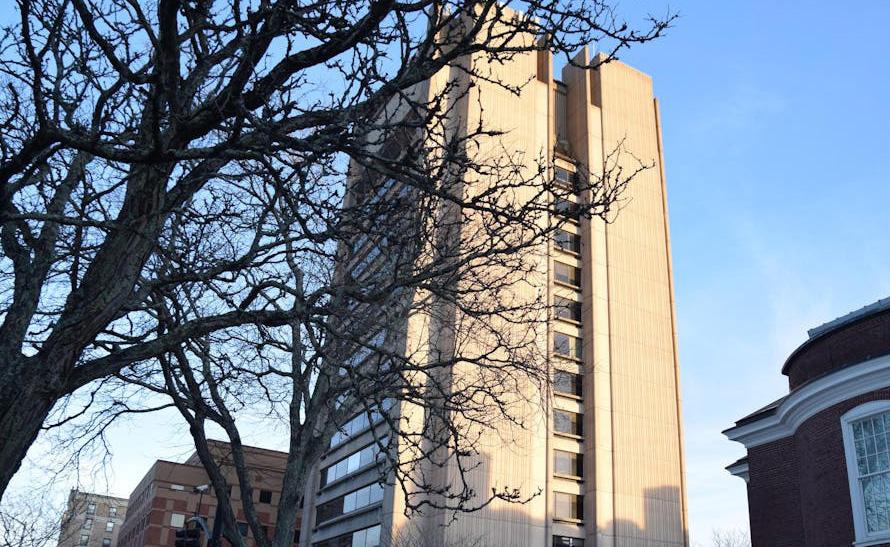
budget planning.
Entries during those early-morning hours are typically “in the single digits,” Meisel wrote.
According to data obtained by The Herald, the occupancy in the hours between 2 a.m. and 8 a.m. amounts to less than 1% of yearly total occupancy.
The new schedule also allows for nightly security sweeps of the building, which were previously conducted weekly, Meisel
wrote.
Mitchell Hanegan ’29 sees the change as a “net negative” because “it’s going to impact people who normally use this place to study.” Hanegan said he likely will not be personally affected by the change since he rarely studies past midnight.
But Pawel Odziomek ’29 said he spends roughly 75% of his study time in the SciLi and often works past 2 a.m.
“Initially I was quite annoyed, because
there’s not that many 24-hour spots you can stay to study,” he said. “If you want to study at this time, the only option you have is your room.”
Odziomek said the earlier closure will “force” him to adjust his study habits and reduce procrastination, but said that students may begin using more “random” study spots.
He added that students should have been consulted before the change was
made.
Students were not consulted on the question of changing library hours, according to Meisel. “Given the data on actual entries we judged that the actual impact on students would be limited,” he wrote.
“We don’t like letting anyone down, but hope that disappointed students will at least appreciate the reasoning behind the change,” he added.
Daniel Xu ’26 said he was unaware of the change, but also does not expect it to affect his study routine.
He noted that “having late-night hours at a library is always really nice for those times when people need it,” especially for those who “don’t have a nice dorm environment” to work in. But he said that the change is overall “positive,” noting that overnight hours require staff to remain on duty despite low traffic. “It’s better to respect everyone’s time involved,” he said.
Xu said that some of his “really good memories” have come from late-night work sessions with friends, which took place in spaces other than the library, such as dorm lounges.
The change is not necessarily permanent. Opening hours can be adjusted “up or down based on circumstances,” Meisel wrote. “We’ll know more after the University has been through its security reviews and decided on its overall approach.”
COURTESY OF HARRIS GALVIN AND MCKENZIE GREEN
On Feb. 26, the BSU hosted its annual Black History Month Concert, which featured a performance from American rapper KYLE.
ELLIS ROUGEOU / HERALD
The SciLi in February. Security services have increased considerably over the past few years, even before the University raised its overall security presence following Dec. 13.
UNIVERSITY NEWS
How students found lasting love through Marriage Pact
The Herald spoke to couples matched last year about their relationships
BY RACHEL WICKER SENIOR STAFF WRITER
For many students on College Hill, love is not in the air — 69% of students reported their relationship status as single in The Herald’s Fall 2025 Poll. But many are still searching to find their perfect match.
This February, more than 50% of on-campus students signed up for Marriage Pact — an online matching algorithm based on a personality survey — according to one of the platform's organizers, Felipe Barbosa ’27.
Marriage Pact started in 2017 as two Stanford University students’ final project for an economics course, The Herald previously reported. Since then, it has spread to over 100 schools. Last spring, the algorithm was brought to College Hill for the first time.
In 2025, 3,158 students signed up, and this year, that number climbed to 4,177. Barbosa called this response “mind-blowing,” saying that when he first brought Marriage Pact to Brown, he expected it to reach “500 people max.”
“There are people in other schools that got married off of Marriage Pact. So that’s my dream for Brown,” Barbosa said. So far, he doesn’t know of any marriages coming out of Brown’s Marriage Pact — but that doesn’t mean the algorithm hasn’t seen any success.
The Herald spoke to two couples who met through last year’s Marriage Pact algo-
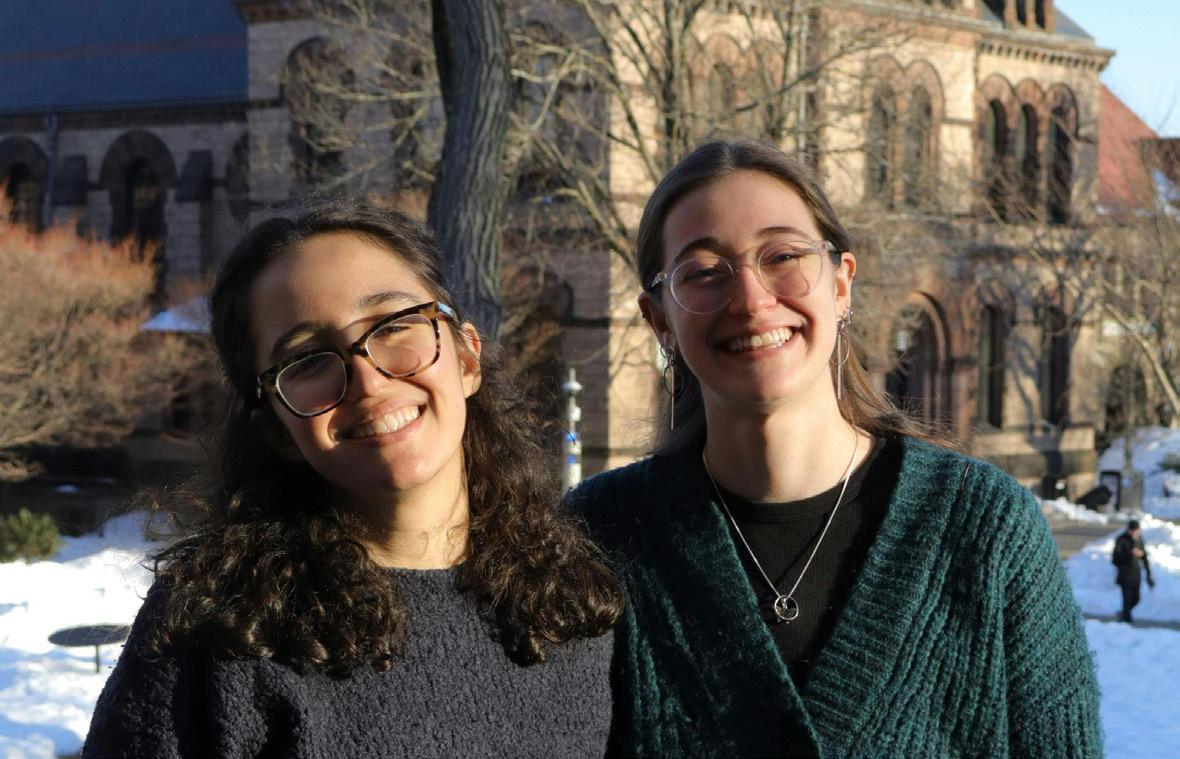
rithm and are still going strong a year later.
‘A quintessential college date’: Laila Muhanna ’28 and Julia ‘Shri’ Shrier ’28
When Laila Muhanna ’28 first heard of Marriage Pact, she wasn’t completely sold.
“I kind of thought it was just a gimmicky type thing,” she said. “I’m very much an in-person, let-things-happen-naturally type of person.”
But Muhanna decided to fill it out after a friend from another university encouraged her, and she “didn’t really think much of it.”
Julia “Shri” Shrier ’28 said that they filled out the survey for fun, open to “something serious” but with “very low expectations.”
When Muhanna and Shrier were matched with a 99.1% compatibility percentage, they were not complete strangers. Instead, the two had already met at a cappella auditions in September 2024. The two had a “really lovely conversa-
tion,” Muhanna said. “And then we never saw each other again because we were taking totally different classes.” But when the results came out, Muhanna recognized Shrier’s name immediately.
Muhanna said their prior interaction helped her feel less pressure going into meeting Shrier after the match. “If it had not worked out romantically, I knew that we were gonna be friends,” she said, noting that they had “definitely hit it off conversationally.”
Soon after the results came out, Shrier said they reached out through Instagram with a message their friends described as very “forward.”
“I was really concerned that because we’d already met that I might friend zone myself accidentally,” they said.
Muhanna and Shrier immediately set up a first date and began frequently messaging on Instagram. “We talked about everything,” Shrier said. They soon found out that Shrier was taking a class taught
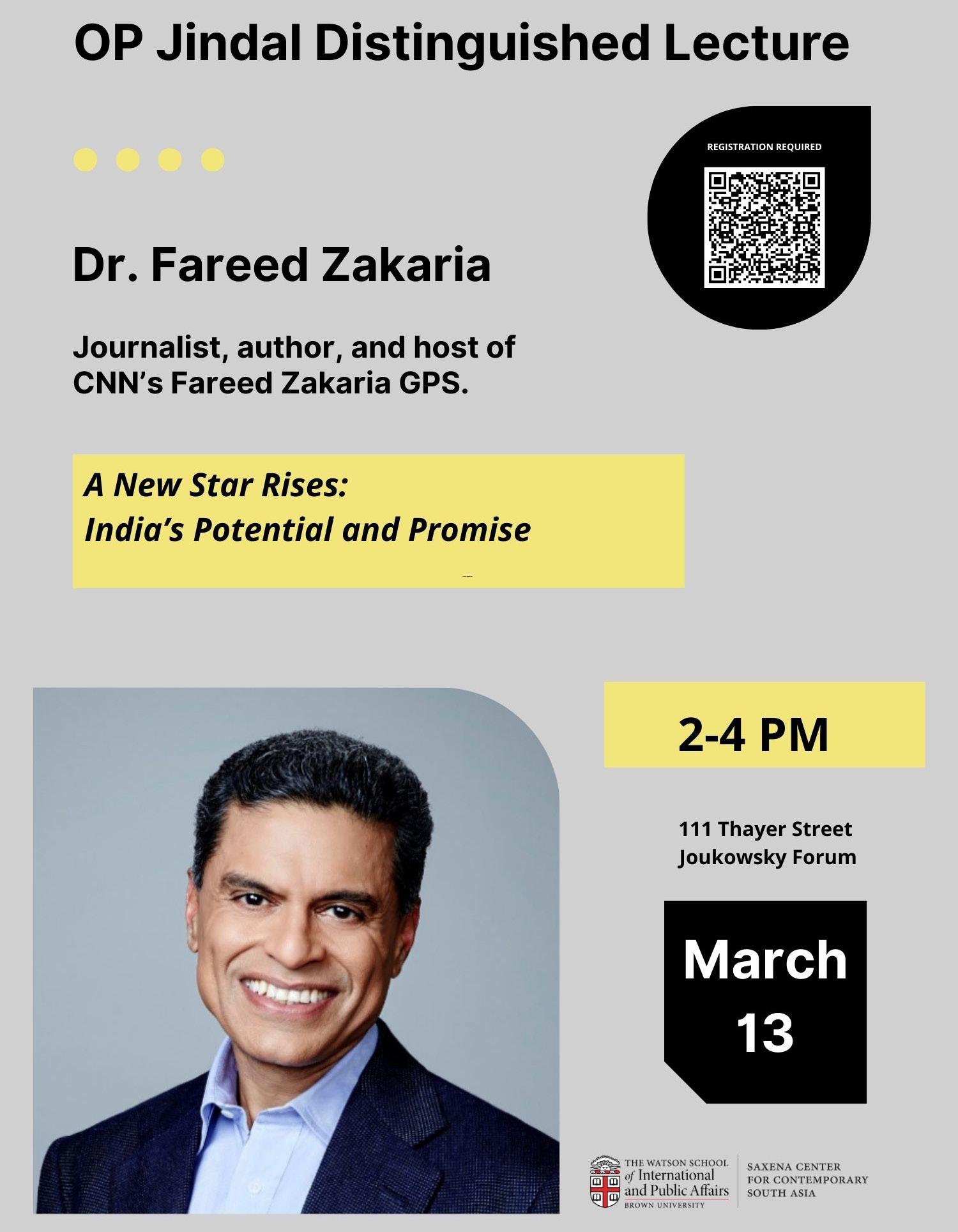

by Muhanna’s dad, who is an associate professor in comparative literature.
“I was like, oh I can’t fail this class now,” Shrier said.
Shrier called their first date “a quintessential college date.” They met at Ceremony and talked for two hours before eating dinner at Andrews Commons. “I think for both of us, it was pretty immediately a deeper level connection,” Shrier said, noting that there wasn’t much small talk.
When the date came to a close, they both wanted to see each other again as soon as possible, so the pair made plans to meet again two days later for dinner. “I just couldn’t fathom waiting for as long as we had waited for the first date to have another date,” Shrier explained.
From there, the two continued texting and hanging out until they made their relationship official soon after Valentine’s day.
Shrier said they are “a walking advertisement for Marriage Pact.”
Now a year into their relationship, Muhanna and Shrier have had many conversations about their future together.
“Whenever I envision five years from now, I can’t imagine (Shrier) not being there,” Muhanna said. The pair has discussed post-graduate plans and what season they would want to get married in. Muhanna says “definitely summer,” but Shrier isn’t sure.
“I’ve just found myself so grateful,” Shrier said. “The last year … has been so amazing.”
‘The resident experts’: Sofia Torre ’27 and Logan Suryamega ’27 Sofia Torre ’27 and Logan Suryamega ’27 both decided to fill out the Marriage Pact survey last year “for fun” and with no real expectations.
“All my friends were doing it, so I was like, 'What’s the harm in filling it out?'” Suryamega said.
Before revealing the full name of a match, Marriage Pact releases their initials and concentration. Suryamega and Torre said that “there was sleuthing on both ends” when they saw the other’s initials. They both were able to find each other before their full names were revealed.
“I have LinkedIn premium. So I was looking through my recent profile view-
ers, and I saw that she viewed my profile,” Suryamega said. Having recognized Torre’s initials and concentration, Suryamega determined “this is definitely her.”
Torre was at a tap dance rehearsal and Suryamega was at volleyball practice when the full results came out, and they officially confirmed each other as their match. Other than “one offhand interaction,” Suryamega said, they did not really know each other prior to Marriage Pact.
Torre took the first step, messaging Suryamega through Instagram soon after the results came out. “I was gonna reach out, but then she beat me to it,” Suryamega said.
After chatting online, they decided to meet at Dave’s Coffee. There, they talked for five hours straight. After that, Suryamega said it was “a little bit of back and forth” until they made it official in April.
Torre and Suryamega’s compatibility percentage was a high 99.98%. Suryamega said he thinks that number is “pretty accurate,” and Torre agreed.
Torre noted that they have “similar views on things, but (they) can still challenge each other in ways, in a good way.”
Now, their friends jokingly refer to them as “the resident experts” of Marriage Pact. As they look to the future, Suryamega said “regardless of what happens, I think that it'll work out.”
Both Torre and Suryamega encouraged anyone who does Marriage Pact to reach out to their match.
Sometimes, people can get “really shy” messaging someone “out of the blue,” Torre said. “But I feel like the fact that you’re paired with someone kind of makes it easier to do. So why not?” Torre said.
Torre also emphasized the importance of “being meaningful about how you communicate with a person,” and added that “casual hangouts” are always a great option for a date.
“It makes me feel very happy that people are actually meeting and getting to know one another” from Marriage Pact, Barbosa said. “It’s cheesy, but I think Brown needs more love.”
This article originally appeared online at browndailyherald.com on March 4, 2026

EMILY CHAO / HERALD MARRIAGE
KAI LA FORTE / HERALD
Laila Muhanna ’28 and Julia ‘Shri’ Shrier ’28
SIA GHATAK / HERALD
Logan Suryamega ’27 and Sofia Torre ’27