
U.permanently eliminates undergrad loans
BY NATALIE VILLACRES SENIOR STAFF WRITERThe University has completed its 2017 fundraising goal to eliminate loans from undergraduate student financial aid packages, officially making the Brown Promise initiative permanent, according to a Thursday press release.

In September 2017, the University announced the Brown Promise initiative, a $120 million fundraising campaign with the aim of eliminating loans from undergraduate financial aid packages. By that December, it had successfully raised $30 million, enough to replace all loans with grants for the 2018-19 academic year, The Herald previously reported.
Since then, loans have not been part of the University’s undergraduate financial aid packages — and nearly six years later, the University has reached its $120 million goal, making that elimination permanent, according to the
release.
Funded entirely by donors, the Brown Promise initiative has enabled the University to increase access and affordability — especially for moderate-income families who qualify for less aid than low-income families — while reducing the number of students who take out loans, according to the press release.
The percentage of incoming firstyear students from moderate-income families has increased from 54% in the 2017-18 academic year to 67% in the
UNIVERSITY NEWS
RISD students carve new legacy for historic tree
Students use wood from centuries-old tree removed due to fungal infection
BY HALEY SANDLOW & SOFIA BARNETT UNIVERSITY NEWS EDITORSAs Brown was growing through the centuries, so was a beech tree on Power Street.
Love, in a car with a friend, did a lap around the block and passed by the scene again. During her gap year, she had spent much of her free time under that tree’s shade in the garden reading, writing or spending time with friends — “the perfect place,” she called it.
2022-23 academic year, according to the release.
“Making Brown an affordable choice for extraordinarily talented students from every income level is nothing short of transformational,” President Christina Paxson P’19 P’MD’20 said in the press release.
Since its inception in 2018, over 3,500 students have been impacted by the Brown Promise, including 58% of all undergraduates in the 2022-23 ac -
Cat Love, a senior at the Rhode Island School of Design studying furniture design, had always loved the European Beech, more than 200 years old, planted in the garden of Nightingale Brown House.
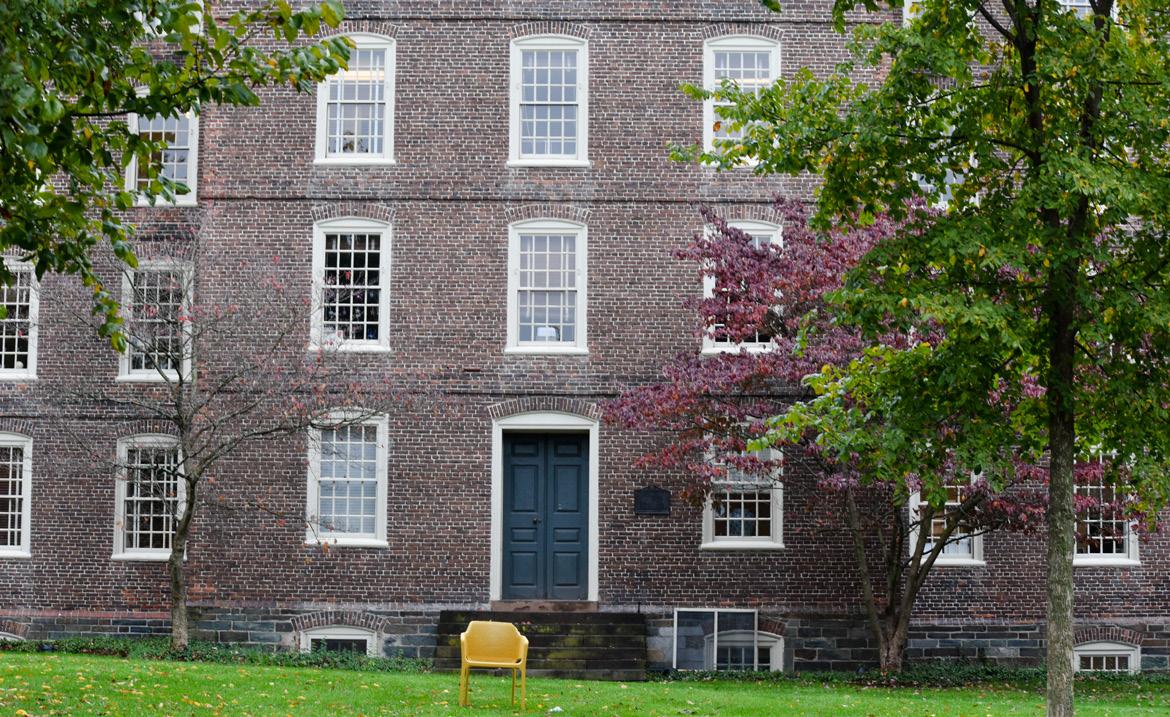
She passed it on her way to class her junior year, noticing the tree stretching well above the garden’s brick wall. But on a gray day in October 2021, Love was greeted by a crane and a lumbering team. A worker was strapped to the tree with a chainsaw, cutting it down branch by branch.
According to Ron Potvin, assistant director and curator at the John Nicholas Brown Center, the tree “was probably the oldest living organism on the grounds.” He recalled Brown students visiting the garden on sunny days, trying to scale “the very tempting climbing tree.” Love got out of the car and asked the workers what they were doing. Someone on the team told her: the tree had a fungus and needed to be taken down.
“I was just so distraught and just so emotional about it,” Love said. The Department of Facilities Management’s full-time arborist first discovered tree rot in the beginning of 2015, according to Paul
Student runs 10Ks for Nepali health care
UNIVERSITY NEWS Roshan Sapkota ’23 fundraises for global health project in Nepal by running 10Ks
BY JENNIFER SHIM SENIOR STAFF WRITEROn March 20, Roshan Sapkota ’23 ran a 10K — his 10th in a series of long-distance runs.
The runs were part of Sapkota’s effort to fundraise for a global health project based in Nepal that employs community health workers to “test if an innovative, trauma program will improve patient outcomes,” according to Ramu Kharel, assistant professor of emergency medicine at the Warren Alpert Medical School.
Sapkota became involved in the project last semester, after reaching out to Kharel, who has a “a big presence” in advocating for public health measures in Nepal, Sapkota said. “He was really accepting and inviting and he had a project centered around improving pre-hospital care that we wrote up a grant application for.”
UNIVERSITY NEWS
GLO, Brown continue contract negotiations
Sapkota explained that pre-hospital care is the treatment a patient receives before arriving at the hospital, specifically after experiencing traumatic injuries. “In the United States … you can dial 911 and have access to an ambulance in a very quick time,” he said. But Nepal’s hospital healthcare system and terrain pose “a very significant challenge to provide pre-hospital care.”
According to Sapkota, the project specifically aims to “supply the community health workers in a remote … city named Achham” with equipment such as cervical collars and long spinal boards, which are used to help stabilize patients and safely transport them to care.
“We realized a lot of patients, they’ll have a traumatic injury, and they’ll just walk to the hospital, which is sometimes 50 to 100 kilometers away.” This often further adds to their injuries, Sapkota said. “Our plan is to supply the community health workers with equipment to help … stabilize patients and to help them safely transport patients.”
To help fund the project, Sapko-


Worker position distinctions, safety among key issues at negotiation sessions
BY KATIE JAIN SENIOR STAFF WRITERThe Graduate Labor Organization and the University discussed workplace safety and accessibility, leaves of absence and discrimination policy at their fourth contract negotiation session Wednesday.
Since Feb. 15, the two parties have exchanged proposals while renegotiating GLO’s collective bargaining agreement, which is set to expire on June 30. In the meetings, GLO has proposed a number of new measures for the updated contract, including clearer distinctions between positions and new language on workplace discrimination.

At the second negotiation meeting, which took place March 1, GLO’s bargaining committee proposed that the contract more clearly distinguish between different graduate worker positions and include an express right to workplaces compliant with the Americans with Disabilities Act with stronger enforcement, according to GLO’s Twit-
ter updates for the meeting.
The bargaining committee also asked that the bargaining unit — and therefore the contract — expands to cover all graduate students, even when they are not actively teaching. Currently, the bargaining unit only includes graduate students who work as teaching assistants, teaching fellows, research assistants or proctors. This change would allow GLO to represent a more expansive graduate student population, GLO President Sherena Razek GS told
The Herald.
At the following meeting March 8, the University put forth a counterproposal agreeing to further distinctions between teaching assistant IIs and teaching fellows, according to GLO’s Twitter updates for that meeting. According to the existing contract, teaching assistant IIs “bear primary responsibility for instruction and grading of a particular course,” while teaching
SEE
PAGE 5

THE BROWN DAILY HERALD BROWNDAILYHERALD.COM SINCE 1891 F RIDAY, M ARCH 24, 2023 Protestors rally against use of pigs in physician training Page 2 Metro 37 / 55 34 / 44 TODAY TOMORROW DESIGNED BY TIFFANY TRAN ’26 DESIGNER JOYCE GAO ’24 DESIGNER SIRINE BENALI ’23 DESIGN EDITOR NEIL MEHTA ’25 DESIGN CHIEF VOLUME CLVIII, ISSUE 25
U.exceeds fundraising goal initially set in 2017 for implementation of Brown PromiseHERALD FILE PHOTO Since Feb. 15, the two parties have been exchanging proposals in an effort to renegotiate GLO’s collective bargaining agreement.
8
TREE PAGE 3
DANA RICHIE / HERALD Brown hit its initial $30 million goal for the Brown Together initiative in 2017 and reached the $120 million threshhold this winter.
SEE LOANS PAGE
SEE
SEE FUNDRAISER PAGE 9
reduction pilot Page 9 Metro
Page 7 Commentary Page 10
GLO
House passes extension for harm
Gupta ’25: How to handle mismatched sex drives
Physicians protest U. medical training practices involving pigs
Protestors called for passage of R.I. House bill prohibiting training involving live animals
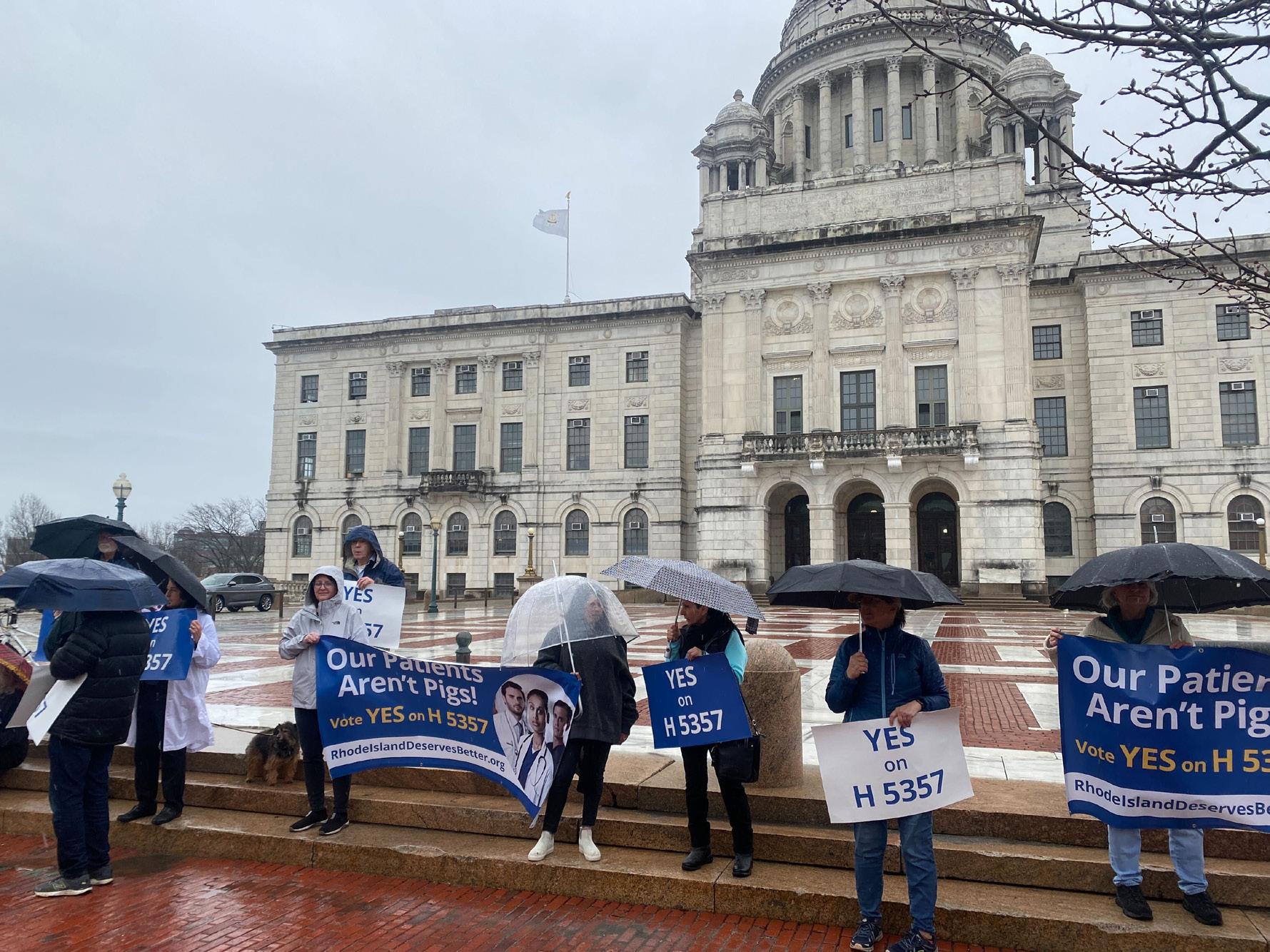
BY RYAN DOHERTY SENIOR STAFF WRITEROn Thursday afternoon, physicians and activists gathered outside of the Rhode Island State House carrying signs that read: “Our patients aren’t pigs.” The protesters were rallying in support of R.I. House Bill 5357, which would prohibit the use of medical training procedures on live animals if alternative training methods exist or comparable training programs in the state do not also utilize live animals.
Rhode Island Hospital — “the principal teaching hospital for the Warren Alpert Medical School,” according to its website — is one of eight medical centers in the United States and Canada, and the only one in Rhode Island, to have emergency medicine residency programs that use live animals, according to a PCRM report.
Currently, Brown uses live pigs to teach emergency medicine physicians. The University has previously been criticized for using animals in training procedures.
Ryan Merkley, director of research advocacy at the nationwide non-profit Physicians Committee for Responsible Medicine — which sponsored the protest — said that the goal of the protest was to “reach legislators … and get their attention on H5357.”
The bill is “very straightforward,” Merkley said. “It simply says: Look,
ARTS & CULTURE
if everybody else is doing it without animals, then you should, too.”
Bill 5357 was introduced to the House Feb. 3. At a March 2 hearing, the committee recommended holding the bill’s passage for further study.
Throughout the day, protestors circled Brown’s campus, Rhode Island Hospital and the State House, driving in trucks with flashing lights and billboards reading “Our Patients aren’t Pigs! Vote YES on H5357.”
State Rep. Rebecca Kislak ’94 (D-Providence), a co-sponsor of
the bill, spoke with The Herald at the protest. “We should not be causing suffering in other living beings and there should be a better way to do this,” she said. Kislak could not provide a projected timeline for the bill.
Lynn Taylor M.D. RES’00, who previously served as a faculty member at the University, attended the protest in support of the bill, which serves “to improve patient care (and) medical training for emergency medicine (and) physicians, and to alleviate the suffering of animals,” she said.
According to Taylor, the use of simulations in emergency medical procedure training that replicate human anatomy and physiology makes it so“there’s really no rationale for continuing to operate on pigs.”
Taylor described her residency training, which involved procedures on live pigs, as “traumatizing” and something that she regrets.
“Researchers and leaders at Brown University and Rhode Island Hospital are committed to the highest standards in the responsible use of animals in the limited instances they are
used for training medical professionals,” wrote University Spokesperson Brian Clark in an email to The Herald.
“It is necessary that the residents are able to quickly respond to and effectively treat the most complex situations,” Clark added. “As part of the Brown Emergency Medicine residency program, the training is overseen by physicians and a veterinarian, and is conducted in full compliance with all pertinent laws and regulations.”
Margaret Peppercorn, another physician who attended the protest, also has experience using live pigs in medical training procedures. “I regret it to this day,” she said. “I thought it was awful then but I didn’t see it as a choice.”
Peppercorn said that alternative training methods are also more medically rigorous. The procedure for pigs is different from humans because the “skin of a pig is much harder and more difficult,” she explained. “The training is substandard to be using pigs.”
Members of the Brown Animal Rights Coalition worked closely with PCRM to circulate an online petition calling on the University to end its practice of training on live animals. The petition has received close to 4,000 signatures.
“Students are in support of this bill,” said Hari Dandapani ’23, one of BARC’s student leaders who attended the protest.
Ruthie Cohen ’23.5, who also rallied in front of the State House, added that “as Brown students, it’s our responsibility to hold our administration accountable for the cruelty.”
Kali Uchis evokes chaos and beauty of love on album ‘Red Moon In Venus’
Album creates celestial scene, evokes self-affirming femininity
BY ISABEL HAHN STAFF WRITERIn early March, Colombian American soul and R&B singer Kali Uchis released her third studio album “Red Moon In Venus,” a fiery, starry-eyed interpretation of love and femininity. Consisting of fifteen songs that produce lush soundscapes detailing the fantasies and realities of an all-consuming romance, “Red Moon In Venus” shows Uchis at her most ethereal, celebrating the power of love and exploring the harsh realities of romance.
Contrary to the popular belief that a blood moon is a bad omen, Uchis’s red moon is a celestial body that guides her to a state of divine femininity. In an interview with NPR, Uchis revealed that the apocalyptic images a red moon evokes inspired her to assume control and power through her music. She intended to create an album that would “end the world.”
Uchis is certainly aware of her captivating energy throughout “Red Moon In Venus” — her alluring charisma acts as the driving force of the album. Uchis takes the playful and psychedelic energy that defined her

past albums, “Isolation” and “Sin Miedo (del Amor y Otros Demonios),” and shrouds them with the maturity appropriate for exploring themes of love, lust and heartbreak.
In “Red Moon In Venus,” she doubles down on her emotional vulnerability but retains the fluidity in her music that transports listeners to otherworldly realms of feeling. The result is an intimate, spellbinding journey that tracks the highs and lows of loving and being loved.
Dreamy instrumentals, silky vocals and affectionate voiceovers are
sprinkled throughout “Red Moon In Venus,” mesmerizing listeners from the first track. “in My Garden…,” a song under thirty seconds, kicks off the album with a breathy and suggestive love confession from Uchis. This introduction offers a smooth transition into the album’s lead single, “I Wish you Roses,” which depicts devotion and heartache competing for dominance in a relationship. Disguising the song as a declaration of faithfulness, Uchis subtly expresses the pain of wishing the best for a former loved one, sweetly repeating the lines: “But I
wish you love, I wish you well / I wish you roses while you can still smell them.” The lead single reveals Uchis’s composure and grace, as well as her journey toward self-acceptance.
Through the rest of the album, Uchis dives into the deep end of love and blends divine forces with her own raw emotions. “Fantasy,” a dance number that is both upbeat and sensual and features R&B artist and Uchis’s romantic partner Don Toliver, highlights the carefreeness that comes with infatuation. Their back-and-forth banter on the song is infectious: As Toliver invites her to dance, Uchis lovingly pleads, “On my body, don’t let go of me/I just want the fantasy, love it when you worship me.” Despite these professions, Uchis abruptly interrupts the song and declares it over, saying “Come on baby, let’s go home” as she walks away from her lover’s fantasy.
A similar tension between bliss and despair is at play in songs like “Hasta Cuando,” where Uchis taunts an ex-lover who continues to wrong her after their split. On a more somber note, “Blue,” a standout in the album, has Uchis hopelessly looking to the heavens for a cure to her unreciprocated lovesickness, asking, “What’s the point of all the pretty things in the world if I don’t have you?”
“Moonlight,” a defining track on
“Red Moon In Venus,” ties together the album’s theme of higher celestial powers and love’s transcendence. Uchis boasts her intuitive bond with the moon and the way she adopts its gravitational force, attracting those around her effortlessly. “I just wanna get high with my lover/Veo una muñeca cuando miro en el espejo, kiss kiss” she sighs. “Moonlight” is an enchanting track that not only showcases Uchis’s grace and allure but acts as the beating heart of “Red Moon In Venus.”
While tracks on “Red Moon In Venus” offer various interpretations of love, they are also Uchis’s warnings to past and future lovers to not underestimate her feminine sensitivity and drive. With a hypnotic tracklist of songs, Uchis softly reaffirms her right to stand up for herself and reclaims the pains and joys that love has brought her.
In the closing lines of “Happy Now,” the last song on “Red Moon In Venus,” Uchis determines to protect her peace. “Piece of mind/I’ve gotta free my mind/Just wanna remember all the good things,” she sings, trailing off as her voice is submerged into lulling background sounds of crashing waves. Learning to let go of her regrets, Uchis shows how she can govern her own destiny and become the red moon that controls love’s most unpredictable tides.
2 F RIDAY, M ARCH 24, 2023 THE BROWN DAILY HERALD | NEWS
METRO
RYAN DOHERTY / HERALD
Rhode Island Hospital — which serves as as a teaching hospital for the Warren Alpert Medical School — is one of eight medical centers in the U.S. to use live animals in emergency medicine residency programs.
SIMONE STRAUS / HERALD
Armas, assistant vice president of facilities operations. That August, a destructive thunderstorm brought wind gusts of nearly 70 miles per hour to Rhode Island, further damaging the centuries-old tree. The Grounds department in Facilities Management continued to monitor the tree’s declining health and eventually determined it should be removed “based on its condition and potential hazard to people and property,” Armas said.
Upon taking down the tree, Facilities arborists and Tree Tech, an outside company, discovered discoloration in the middle of the trunk. This meant that it likely had bleeding canker, a symptom of a fungal infection common in beech trees, said Carl Taylor, an arborist at Tree Tech.
And once bleeding canker or any infection takes root in a tree, it can be nearly impossible to cure. While treatments can help slow down its death, “it’s very difficult to help the tree a whole lot” when a disease gets a strong foothold, according to Heather Faubert, research associate at the University of Rhode Island’s Plant Protection Clinic.
“To see a really huge, living thing cut down … even if it is sick or dying and it’s technically what’s best, it’s really intense, especially if you love it,” Love said. And because of its size and rot, the tree was likely heading to a plant to be turned into mulch or paper pulp, according to Taylor, who was on site during the removal.
After hearing about plans for the tree, Love called Sarah Holloway, another senior studying furniture design at RISD. The pair spent the rest of the day traveling back and forth between the site and school, returning at least five times to check in with the removal team. A plan started to take form.
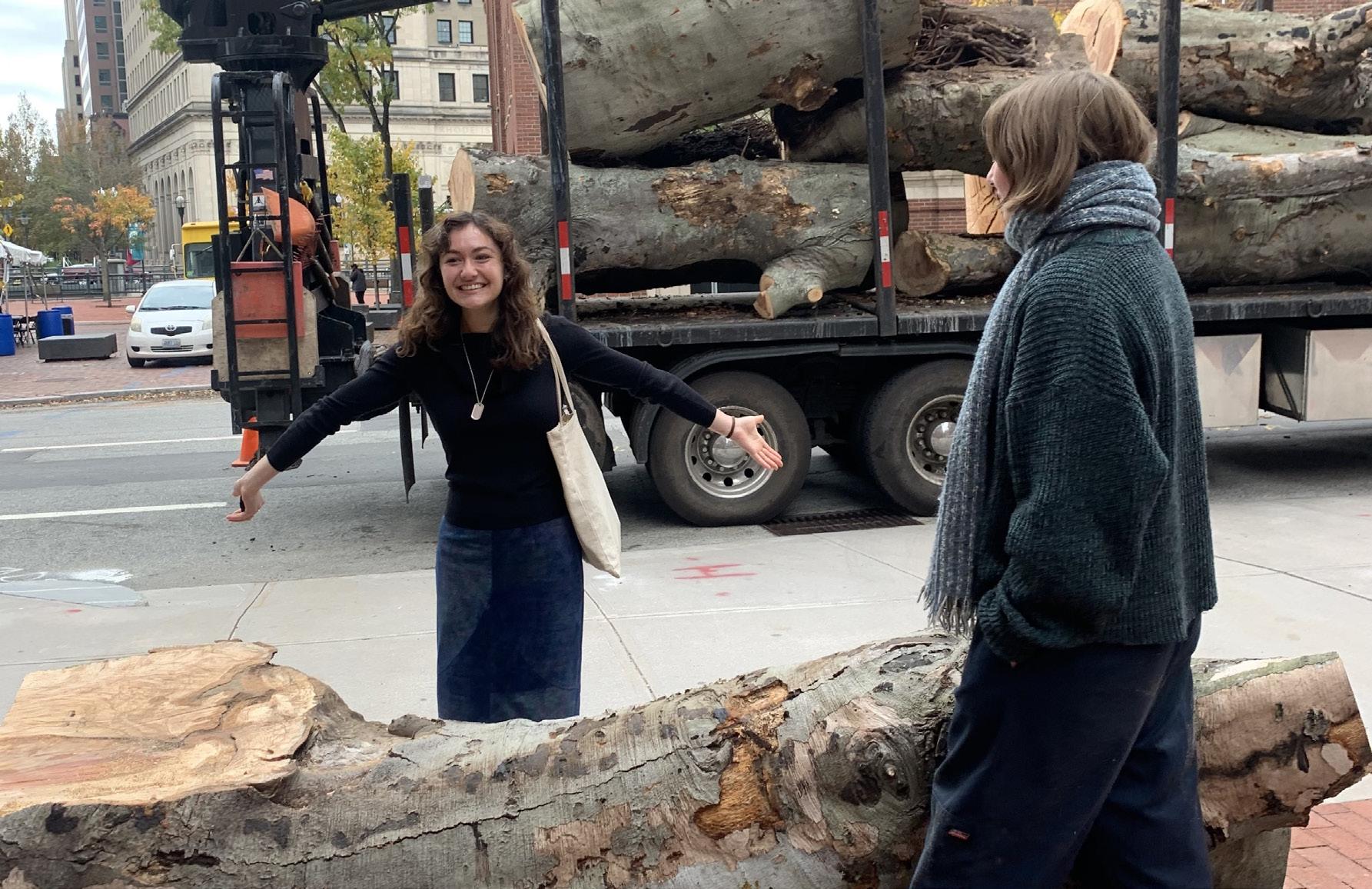
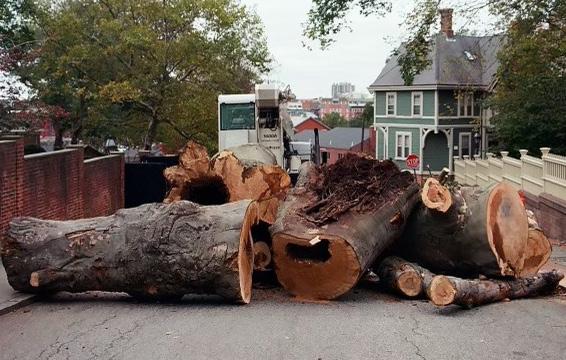
Holloway coordinated with the arborists from Tree Tech and Facilities Management to transport a large section of the tree to RISD’s furniture design studio on North Main Street. Then a RISD sculpture woodshop technician used a school forklift to move the one-ton piece, taken from a main limb of the tree, into the alley behind the shop.
The eight feet-long, two foot-wide log sat in the alley for seven months, its ends covered in blue latex house paint so the wood could retain its moisture. Love said the log started to grow mushrooms.
Love and Holloway planned to get the log milled, hoping to use the wood in their craft.
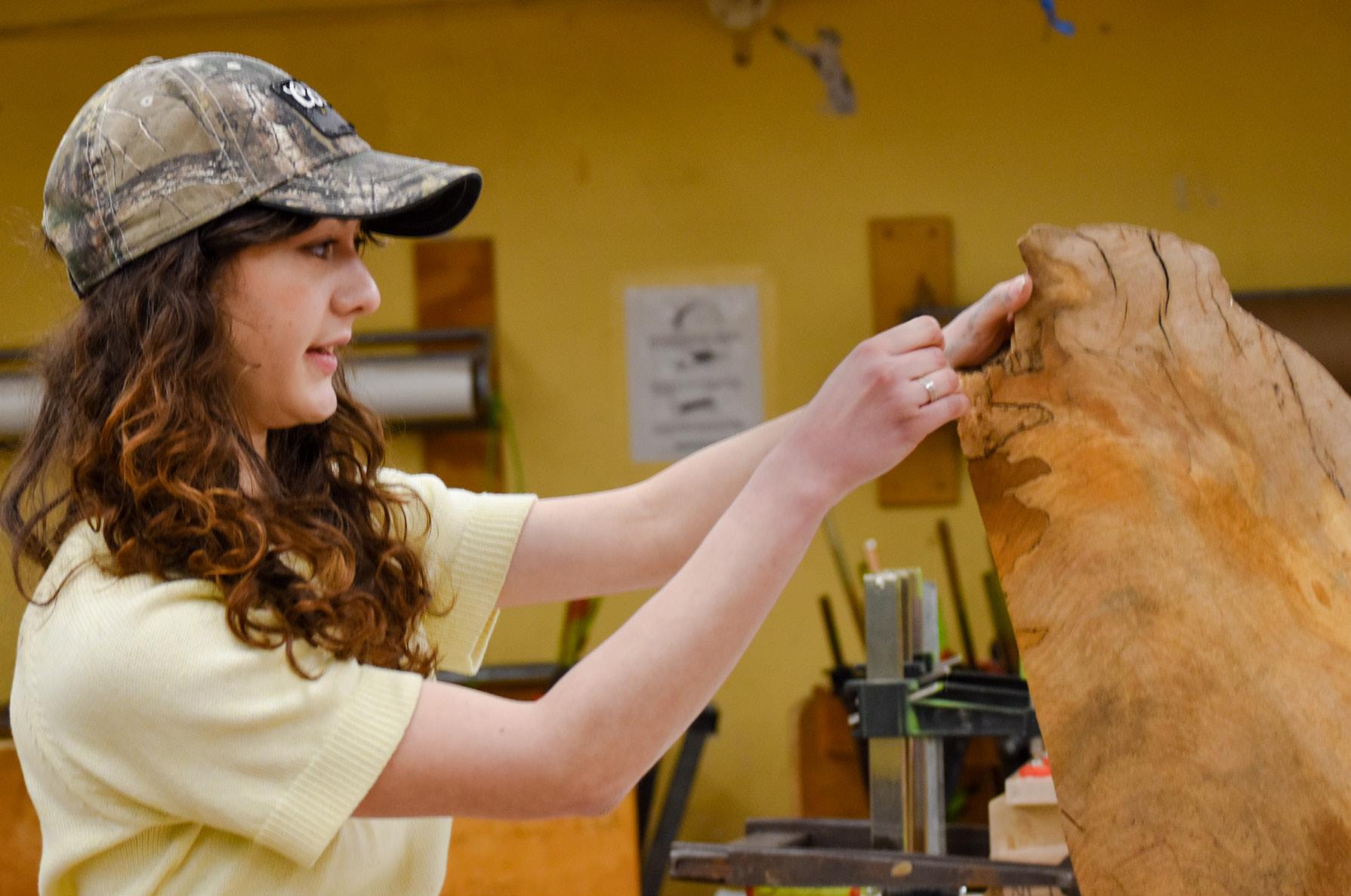
While most furniture design majors use wood purchased from lumber yards, others like Love and Holloway often look in alternative places. Currently, Love is working with walnut husks collected from her grandmother’s house to use in her senior thesis, and Holloway is connected with a Providence-based arborist who occasionally provides her with leftover tree limbs after removals, she said.
The furniture design department also collaborates with the National Park Service in the Witness Tree Project, the basis for an interdisciplinary RISD course combining a history seminar and furniture studio. A witness tree is one that was present for significant historic, cultural or material events in American history, according to Dale Broholm, senior critic in RISD’s Department of Furniture Design and instructor of the class’s woodworking section. The department receives these trees from the National Park Service, and students develop historically relevant projects
based on the tree’s context.
“I think it’s really valuable to understand where the wood comes from and what it means,” Broholm said, especially if it’s from a local source with ties to the community. “If you get the chance, through your object and through your work, to express that to your audience … it’s an opportunity for a broader conversation around trees.”
Wood is typically thought of as a commodity, Love said. But it is also a living thing — the Witness Tree project attempts to “connect people with where these resources are coming from.”
Even more impactful is when designers find the tree themselves or have a relationship with it — much like Love and Holloway’s connection with the beech tree. “It’s a really beautiful process,” Holloway said.
Before the tree was milled, there were “definitely some nerves,” Love said. As it sat exposed to the elements, the log’s interior could have been damaged or decaying. Another undesirable outcome, and something the pair’s professors prepared them for, was the possibility of cement inside the log.
“Old trees were sometimes repaired through cement, that was an arborist technique at one point,” Holloway explained. “So you never know when you’re milling the wood if you’re going to hit cement.”
In spring 2022, Love and Holloway enlisted eight other RISD students to raise enough cash to tow the tree to the R.I. Sawmill in Coventry.
The log sat in the sawmill’s wood pile for another five months. Then, at 8 a.m. on a rainy day in November, Love, Holloway and three others, wearing rain jackets and “jazzed on coffee,” watched the tree get milled into pieces, Love said.
“It was super exciting. I mean, it was nerve wracking,” she said. “We were just like, okay, maybe this will be terrible and horrible and we won’t be able to use any of (the wood).” But when they took off the top part of the log, “It was like kids on Christmas.”
There was no cement or rot. Save for a slight crumble around the edges, there was only clean, soft wood with a pink center and black, jagged lines where spalting had occurred. Spalting appears when trees react to fungus, producing coloration in the wood.
“It’s one of these things where you can’t really factory-produce it,” Holloway said. “It’s something that just happens naturally, it’s the story of the tree.” Spalted wood not yet structurally damaged by rot is rare, and prized by furniture designers for its unique, striking patterns.
One of their friends drove the milled slabs back to RISD, where they are currently drying in storage. Removing the moisture can take up to two years for slabs like this, but there are ways to use the greenwood before it has completely dried, Love and Holloway said.
Holloway recently made a stool with the wood, a test piece to understand the material. “It’s like looking at a cave painting,” she said. The piece showcases the tree’s spalting, where the “decay solidified in the material.”
The log produced 13 slabs of wood, around 288 board-feet. 12 board-feet, Love said, can make a single chair. The wood — too much for two people to use — will be split up between students who chipped in to transport and mill the log, as well as anyone else who has a connection to Brown or the tree, Love said.
Both Love and Holloway told The Herald they now plan on using pieces of the tree in their theses before graduating. The pair will continue to work
with the wood after graduation as well, potentially making a sink or countertop which would showcase the beech’s pink heartwood and spalting. Holloway called the whole process a “labor of love,” stemming from their desire to preserve a tree with such historic and emotional relevance.
“It feels like a big responsibility,” Love added. “You realize, ‘Oh, my hands did this.’ And now it has a life of its own again.”
Love said she recently read “Casting Deep Shade,” a book by the late Brown professor and Poet Laureate Carolyn D. Wright, which meditates on the poetic, personal and historical significance of beech trees. In the book, Love explained
that Wright tracks the entire cosmology of one specific tree, demonstrating the importance of trees in understanding her life.
“Reading it really elucidated something for me. Trees are very important to me,” Love said. They’re “giant, ancient beings that connect us, house us, allow us to build things. They’re background characters for our lives and also allow us to stage our lives.” Love wondered if Wright had ever met the beech tree at Nightingale Brown house.
Love and Holloway still both frequently spend time in the garden. But it’s different without the beech tree.
“It’s still lovely. I mean, you can definitely feel that a presence is gone,” Love
said. “It feels like the balance is off in the garden.”
“It was there for scenery, for fun … to evoke the natural landscape that stands on that part of the property. The neighbors used the grounds here for relaxing … and brought their dogs by the tree,” Potvin said. “It was a notable tree, and it was a sad day when we had to take it down.”
Now, Love and Holloway are planning to return some of the wood to the space where the beech stood. They hope to make a bench — possibly commissioned by the John Nicholas Brown Center — to keep in the garden, alongside the sapling that now grows in the tree’s place.
F RIDAY, M ARCH 24, 2023 3
THE BROWN DAILY HERALD | NEWS TREE FROM PAGE 1
COURTESY OF SARAH HOLLOWAY
DANA RICHIE / HERALD
The Rhode Island School of Design furniture designers took a one-ton piece of the tree by forklift to their workshop in order to repurpose it into something new.
COURTESY OF CAT LOVE
METRO
Providence councilors reflect on experiences as women in politics
ticular, must be taken more seriously.
‘Paved the way for us’: Representation in city politics
BY AVANI GHOSH SENIOR STAFF WRITEREarlier this year, the Providence City Council swore in its most diverse council to date with the majority of councilors being people of color and/ or women, according to The Providence Journal.
Politics in the United States have historically been male-dominated, with women politicians representing only 25% of elected city officials in cities across the country, according to the 2022 Gender Parity Index. With eight of the 15 Providence city councilors identifying as women, this council has come to signal a new era of representation in Providence politics.

Councilors Shelley Peterson, Helen Anthony and Mary Kay Harris are prominent leaders on the Providence City Council. Peterson represents Ward 14 — Elmhurst and Wanskuck — while Anthony represents Ward 2 — Blackstone, College Hill and Wayland — and Harris represents Ward 11, which consists of upper South Providence and West End. The Herald interviewed Peterson, Anthony and Harris about their paths to the council and their current work as elected officials.
‘Everyone can make a difference in the lives of others’: Entering politics
Anthony has been involved in politics since the 1990s, when she was elected to the Town Meeting in Needham, Massachusetts. She later served on the Planning and Zoning Commission and City Council in Columbia, Missouri. Before her election to the Providence City Council in 2019, Anthony served on the city’s Zoning Board of Review.
“I am a true believer that everyone can make a difference in the lives of others, and if you have the time and skill set, you should serve your community,” Anthony wrote in an email to The Herald. “I also believe that you can make the most change on the local level as the local issues have a direct impact on our everyday lives.”
Residents’ biggest issues in Ward 2 include the quality of public education, a lack of affordable housing, financial health and environmental sustainability, Anthony said. During her time on the City Council, she introduced the Building Energy Reporting Ordinance to Providence, a report that measures how much energy large local buildings use.
In an email to The Herald, Peterson wrote that she worked in development and nonprofit fundraising for over 20 years and currently has a small business to support local and out-of-state nonprofit organizations with grant writing.
According to Peterson, her experience helps her better understand the barriers faced by underserved communities. “I knew that for the most fundamental change, I would need to create or enforce (policies) that could actually benefit people and communities that are most underserved and that nonprofits work for,” she wrote.
Peterson wrote that she chose to run because of the prevalent inequities in her ward compared to the rest of the city — including gun violence, a lack of affordable housing, poor housing conditions and income disparities. “I wanted to start (in Elmshurst and Wanskuck) and work
toward bringing some of the equity and impact to my neighborhoods,” she wrote.
The income disparity between Elmhurst and Wanskuck is currently a major issue plaguing Ward 14. According to a report by Statistical Atlas, the median annual household income is $59,600 in Elmhurst and $36,100 in Wanskuck.
During her term, Peterson hopes to bridge this gap and address several structural and imminent issues in Wanskuck, including dumping and infrastructure issues. “These issues are concerns that can be resolved with some tenacity, and the impact is tremendous. It highlights the equity-related focus that I want to bring,” she wrote.
In an interview with The Herald, Harris said that she also became involved in politics to make Providence more equitable and improve the quality of life for all its residents. She began her advocacy journey with Direct Action for Rights and Equality, where she called for greater accountability for the Providence Police Department.
Through her experiences, Harris learned how to train people to stand up for social, political and economic justice and organized grassroots efforts for change, she said.
After 15 years in advocacy and organization, Harris decided to run for
CALENDAR
City Council to initiate further change with the support of her community members, residents and constituents. “I don’t believe a leader is the person. I believe the people behind you are all the leaders,” she said. “In leadership, you bring other people with you.”
Harris was recently appointed as chair of the Housing Crisis Task Force and hopes to enable open discussion with individuals experiencing homelessness about barriers to housing access. “If you speak to any (unhoused) person right now, they’ll tell you their stories” but they often aren’t given the platform to do so, she said. “What you’re doing is empowering them … they realize that you are the one who is able to speak up for them.”
Harris recalled her experience working in the welding industry, where her workplace was extremely male-dominated, she said. When she reported her coworkers’ misbehavior and lack of respect toward her, they shunned her and made her working conditions more difficult. But she turned the incident into her “first moment of organization.”
“I want to see that happen with … (unhoused) people. I want to see … invisible people to be able to … speak up for themselves,” Harris said, adding that violence against people experiencing homelessness, and on women in par-
TODAY’S EVENTS
Harris believes that the current City Council is well-suited to address these issues because of the diversity in voices and perspectives of the elected officials. While Providence has a variety of voices represented in city government, most cities across the U.S. lack this diversity. In fact, white men make up 62% of office holders on the national and state level despite being 30% of the population, according to the Guardian.
Anthony believes that the underrepresentation of women in politics is largely due to expectations imposed on women by society. There is a perception that women politicians will prioritize caring for the home and family over their political responsibilities, putting them at a disadvantage in elections, she wrote.
While recognizing the underrepresentation of women in politics, Peterson believes it is also important to consider the progress that has been made. “The women that I have met … in municipal government are women who have paved the way for us … to promote the balance” necessary for “progress for all,” she wrote. “Women of color … have put themselves on the front lines to not only fight for gender equity but also racial equity and (have) persevered.”
For Peterson, being a Peruvian-born immigrant and first-generation college graduate plays a key role in her advocacy on the council. “We had meager means but my parents wanted us to be successful and afforded every opportunity available to us to take our chances,” and reach success, she wrote.
“Poverty teaches you two things: (One) everything you’ll do differently and (two), an appreciation for what that struggle taught you,” Peterson added.
Harris hopes that new waves of activism, especially in feminism, are more inclusive of various positionalities and uplift the voices that have been at the backbone of the movement, focusing more on the collective strength in the voices of all people.
“The rich have the money, but we have each other,” and it is only with collective effort and power that an era of radical change and equity can finally come to be, she said.
TOMORROW’S EVENTS
Arash
4 F RIDAY, M ARCH 24, 2023 THE BROWN DAILY HERALD | NEWS
Lab Seminar
Fabio Mariani
p.m. - 1:00 p.m. Page-Robinson Hall American Democracy and Pandemic Security 12:00 p.m. - 1:00 p.m. Virtual Enabling Health Through Technology 1:00 p.m. - 2:00 p.m. Barus and Holley Physics-based Animation at Pixar 2:00 p.m. CIT
Growth
-
12:00
Day Corliss-Brackett House Brown University Men’s Tennis vs Merrimack 12:00 p.m. - 3:00 p.m. Pizzitola Memorial Sports Center Community Iftars 7:00 p.m. Champlin Hall Tarawih Prayer 9:00 p.m. Stephen Robert ’62 Campus Center MARCH S F Th W Tu M S 8 7 6 9 3 4 5 15 14 13 16 11 12 10 22 21 20 23 18 19 17 26 24 25 1 2 27 28 29 30 31
Abizadeh: Power, Subjection and Democracy All
Leaders discuss priorities, addressing inequities facing Providence residentsCOURTESY OF PROVIDENCE CITY COUNCIL From left to right, Helen Anthony (Ward 2), Mary Kay Harris (Ward 11) and Shelley Peterson (Ward 14) are part of the most diverse city council in history.
ARTS & CULTURE
‘Daisy Jones & The Six’ debuts on screens in new miniseries
Book adaptation captures character dynamics, fails to fully develop storylines
BY DAPHNE DLUZNIEWSKI SENIOR STAFF WRITERThis March, “Daisy Jones & The Six” transported viewers to the vibrant 1970s music scene. The miniseries, based on Taylor Jenkins Reid’s 2019 novel about a band of the same name, does a commendable job of capturing the drama-filled moments readers have been waiting to see on screen. The documentary-style series incorporates present-day interviews and flashbacks to Daisy Jones & The Six’s glory days, exposing the story behind the band’s rise to fame and ultimate demise.
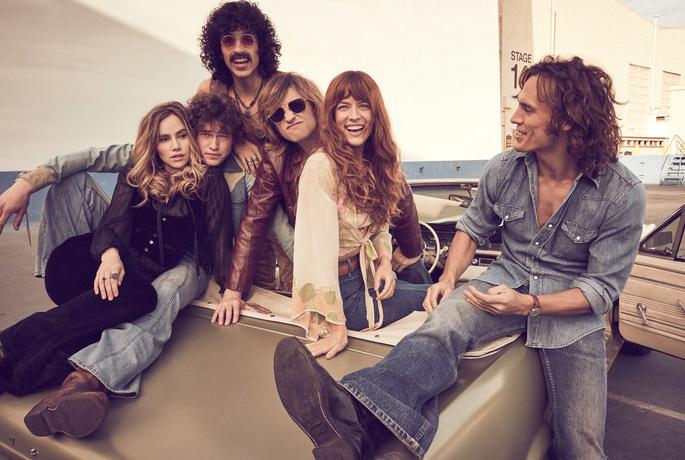
The first three episodes of the series were released March 3 on Amazon Prime Video alongside the fictional band’s album “Aurora.” Though the album was less than impressive, the show adds a thrilling dimension to a story beloved by many readers, bringing the novel’s characters to life and compelling listeners to find a new appreciation for its songs.
The first episode details the group’s origins in Pittsburgh. They emerged as a high school boy band called “The Dunne Brothers,” made up of lead singer Billy Dunne (Sam Claflin), Billy’s brother and three friends. After finding little fame performing at proms and small weddings, the band decides to move to Los Angeles to try and make it big.
L.A. brings on a wave of changes — the band starts booking bigger sets and onboards keyboardist Karen Sirko (Suki Waterhouse). Following the departure of Chuck Loving (Jack Romano), Billy’s wife, Camila Alverez (Camila Morrone), becomes the band’s unofficial sixth member, working behind the scenes to support her bandmates. Eventually, the band settles on a new name, “The Six,” and after a chance encounter with famous producer Teddy Price (Tom Wright), they finally get their big break.
Throughout the show, Billy struggles with infidelity and addiction. After his substance abuse causes him to miss the birth of his daughter, he decides to go to rehab and the band’s first tour is canceled. But after a few months’ hia-
fellows are “responsible for the design and teaching of their own course.”
The University also suggested the contract should not cover workplace conditions and that instead a working group to examine the situation should be created — a suggestion that GLO rejected.
This conversation continued into the fourth meeting Wednesday, when the University did not agree to GLO’s proposal for strengthened language around workplace accommodations as well as GLO’s request that the bargaining unit expand to all graduate students, Razek said.
The University “is calling what they brought to the table counterproposals, but they were outright rejections,” Razek said. “We’ve heard from grad workers that there are issues of mold and mildew in the spaces that are provided to us to teach, study, learn and live, and the University responded to that by saying that ‘all University spaces are ADA-compliant.’”
battle with addiction, are
tus, the band decides to come together again, this time with a new addition — free-spirited and flighty Daisy Jones (Riley Keough). Daisy’s influence brings Billy’s songwriting to new levels, shifting his hopeful lyrics into something darker and motivated by raw emotion. Daisy’s effect on the band’s music foreshadows her influence on the band: the initial fame she brings for The Six quickly disintegrates, strained by the romantic tension she shares with Billy.
One of the most captivating elements of the show is Keough and Claflin’s on-point portrayals of their characters. Keough perfectly actualizes Daisy’s carefree and confident persona. In pure Daisy fashion, Keough is most alluring when she is performing. Her stage presence appears so natural that viewers almost forget that Keough is only acting as the front woman of the decade’s biggest band. Next to Keough, Claflin’s gripping performance breathes life into a tortured artist. Where Keough
Kate Clark GS, GLO’s coordinator for communications, also noted that some buildings on campus are not wheelchair accessible.
According to Razek, at the third meeting, GLO also proposed two new articles for the contract, the first of which covers safety protections for graduate workers during pandemics and natural disasters.
The University rejected this proposal at the fourth negotiation session, calling it “unnecessary,” though the University did offer to “provide TAs with masks upon request,” Razek said.
“Our workplace safety is a working condition and our employer is obligated to bargain with us over those conditions because they have not been adequate,” she added. “Conditions of work under the COVID-19 pandemic have not been safe, and immunocompromised grads have not been safe.”
“We had a really touching testimonial from a grad last week,” Razek said. “It feels very discouraging that (the administration) would hear that
excels in embodying Daisy’s larger-thanlife nature, Claflin is adept at capturing his character’s subtle emotions.
The show makes a few departures from the novel, but most of the choices preserve the emotional quality of the plot while adding a new level of intrigue to the story. One character that receives more screen time is Daisy’s best friend and disco icon Simone Jackson (Nabiyah Be). While the novel’s version of Simone primarily serves as Daisy’s sidekick, she shines in the show. Her added relationship and partnership with a DJ named Bernie (Ayesha Harris) helps illuminate obstacles LGBTQ+ artists faced in the 1970s and continue to face today. Jackson’s storyline adds depth to the miniseries, which may have otherwise become too saturated in petty drama and trivial rockstar woes.
One of the most obvious differences between the show and its source material is that the interviews in the series are set only 20 years after the
personal story of being scared to live or die, and respond that the articles we were offering to protect people like that grad are unnecessary.”
Clark expressed frustration with the University’s counterproposals, noting that they lacked “substance” and were the “absolute minimum.”
“If bargaining continues with that level of imbalance between the negotiating parties at the table, that’s not acceptable, and I don’t think (graduate) workers will stand for that,” Razek said.
“We have no interest in negotiating contract terms through the news media,” wrote University Spokesperson Brian Clark in an email to The Herald. “Brown’s focus has been and remains on productive, good-faith collective bargaining sessions with union representatives, and we look forward to upcoming exchanges on proposals and our next negotiating sessions.”
Another article proposed in the third meeting would ensure any complaints of workplace discrimination or harassment go through GLO’s griev-
band splits — rather than the novel’s 40-year time jump. This is an interesting twist because the events of the band’s tour are fresher in the minds of the characters. Thus, their diverging accounts of what happened are less likely a matter of misremembering and more an issue of distorted narratives. The change encourages audiences to question the honesty of each character, which is what makes the show’s concept so compelling — you never know what the truth is.
Still, the unreliability of the narrators is a far more prevalent theme in the book, and the show fails to match this level of nuance. One of the biggest unanswered questions throughout the novel is whether or not Billy and Daisy actually have an affair during their time in the band. Though it may be unsatisfying for readers to never find out the truth, this obscurity reinforces the idea that the characters have things to hide, which makes them all the more
ance process, providing graduate workers who encounter discrimination a form of recourse separate from the University’s current procedures. This proposed process hasn’t been described in negotiations yet, but according to Razek, it will be discussed in future sessions.
This article aims to clarify the situations in which graduate workers are “explicitly entitled to seek a grievance procedure,” Clark added.
Razek and Clark emphasized that while the University has policies around some of the issues covered, like COVID-19 and discrimination, graduate workers weren’t involved in the development of those policies.
According to Razek, in some cases the proposed changes to the contract defer to University policy, “but we offer changes that serve grad workers’ interests and state in our articles that, where there are discrepancies, our union articles shall prevail.”
In the fourth meeting, GLO also proposed the contract extend paid medical leave and protections for
interesting. This is not the case in the show, as Billy and Daisy share a kiss outside the studio after getting into a fight about their song “More Fun to Miss.” By bringing their romantic feelings into the light, the show loses a level of mystique and complexity.
More generally, the show’s plot also feels rushed. As with many television adaptations of books, parts are removed or underdeveloped to condense everything into a single season. Important elements of the storyline, like Daisy’s journey as an independent musician before meeting The Six or Billy’s battle with addiction, are never fully explored. But it is still fun to watch the songs and characters from a beloved novel come to life on the screen. Ultimately, the show offers a passionate and meaningful portrayal of battling one’s desires and fighting for one’s voice to be heard.
The final two episodes of “Daisy Jones & The Six” air Friday on Amazon Prime Video.
pregnant graduate workers and expand the contract’s definition of discrimination and sexual harassment and misconduct, according to GLO’s Twitter updates.
Though there have been a number of areas of disagreement between GLO and the University so far, Kate Clark emphasized that the negotiations are just beginning. “I’m still and will continue to be extremely hopeful and excited to see what will unfold as negotiations continue.”
“We have the best bargaining committee we’ve ever had, because our union is stronger than it’s ever been,” Razek added. “It’s stronger every year.”
GLO’s bargaining committee has not yet solidified what issues will be discussed at the next negotiation session, set after the end of spring break, though Razek said they plan on addressing the University’s counterproposals in more depth.
“We have extensive remarks in response to those rejections that they call counter proposals,” she said.
F RIDAY, M ARCH 24, 2023 5 THE BROWN DAILY HERALD | NEWS
COURTESY OF AMAZON STUDIOS
Important elements from the “Daisy Jones & The Six” novel, such as Daisy’s journey as an independent musician before meeting The Six or Billy’s
largely omitted from the series —lacking the nuance and depth provided in the novel.
FROM
1
GLO
PAGE
Sender ’25: Effective activism requires combating consumerism
Brown has a long and proud tradition of student activist movements leading to notable achievements. One movement, opposed by top University administrators, led to the institution of the New Curriculum, coinciding with University President Ray Heffner’s resignation. In 1975, students in the Third World Coalition occupied University Hall for two days, successfully negotiating for better financial aid packages, a renewal of the University’s commitment to minority representation on campus and the establishment of what is now the Brown Center for Students of Color. University Hall was last occupied in 1992 when 253 students were arrested for not leaving the building while demanding greater financial aid and the establishment of needblind admissions, which would be implemented many years later.
However, since then, student activism seems to have become less fervent, so much so that the first undergraduate labor union at the University could hardly attract a crowd of 70 to the rally. The real issue is that students are stuck within systems of consumption that stifle activism and make cooperation more challenging. Students must embrace the radical lifestyles needed to create change at the University by rejecting these systems.
Throughout history, Americans have been subject to various forces of social control intended to mute objection to the status quo and ensure that policies can be enacted without serious opposition. For much of American history, these forces have been overt — such as state-sponsored racism, the carceral state and systems of disenfranchisement. However, since the 1950s, a new and particularly insidious form of social control has taken over as
the single most effective tool used to mute social discourse and foment hatred and distrust toward activists among the general public. This is the system of consumption, pioneered by the government partially in response to the threat of communism. The idea, in short, is that the great benefit of being an American is being able to buy any product — a contrast with the austerity of the communist lifestyle. This includes
campus, there is a startling lack of engagement in student governance. Nearly half of the University has no opinion on the way the Undergraduate Council of Students is governing the student body, and in the most recent election many positions had only one or even no students running. This incredibly important, albeit poorly run, organization receives surprisingly low levels of engagement from students. And this apathy toward the governing structures of their campus suggests that students hold a generalized apathy toward other campus issues. This is not to say there is no important work being done by activists on campus, but that their efforts can feel drowned out over students’ anxieties about landing internships.
it is a prerequisite for any other, and as such is the most important. Universities defuse movements by waiting for students to forget about their goals, by obfuscating the issue or by providing superficial wins. They know that when students are more focused on consumption than anything else, their attention will soon shift and the issue will be dropped. Adopting anti-consumerist lifestyles enables a sustained focus on important issues, ensuring they are not forgotten.Without them, we are unable to fight for other radical changes.
not just goods, but also media like television, movies and music.
This attitude has come to dominate modern American society. Everyone is pressured to consume as much and as frequently as possible, aided by massive conglomerates like Amazon, which provide endless products at the press of a button. At the same time, social media, which drives engagement with algorithms that promote consumption, has become one of the most ubiquitous forces in American life. The effect of this is that even the thought and effort directed toward the community or state is often seen through the lens of consumption. It is the pervasiveness of ideas of consumption that is used to mute opposition, as the need to consume becomes such an overriding force that one can hardly think through any other frame. This is not to say that this force has brainwashed Americans into consumption machines, but rather the focus of social efforts and thought generally is directed towards consumption rather than engaging with our communities and families.
This can be seen clearly in the Brown student body. Earlier this week, The Herald reported that just over half of Brown students who could vote in the midterm elections did. This is startling given Brown’s reputation as an extremely politically engaged institution. On
Fortunately, one can live a radical lifestyle by simply committing to not consuming beyond what is needed. By not keeping up with every trend and repairing possessions rather than throwing them out, one can take huge steps towards rejecting these systems of social control. When one does need to buy something, purchasing it locally to support a small business instead of a large, multinational one is another way to take back power. Furthermore, rejecting
All of the important activist movements of Brown’s past demonstrate this. Students risked arrest, and their future at the University, but most importantly they maintained pressure for years in search of aims like a freer curriculum or need-blind admissions because they did not forget what they were fighting for.
Restoring student activism is no straightforward task and will require grappling with major forces beyond Brown. But with higher education facing challenges like the likely end of affirmative action and rising tuition costs, student activism is more important than it has been in decades. To bring a renewed focus to the issues
social media and the distant, often consumption-driven picture it paints is an essential way for young people to reengage with the real world. While these suggestions have been offered countless times, it seems the impacts of widespread adoption are not fully understood — the entire edifice of the modern American system rests on promoting the overconsumption of media and goods, and rejecting it is the first step to creating radical change.
While adopting these lifestyles is not the only step to ensuring a future of radical change,
SINCE 1891
THE BROWN DAILY HERALD
133rd Editorial Board
Editor-in-Chief
Will Kubzansky
Managing Editors
Katy Pickens
Alex Nadirashvili
Senior Editors Augustus Bayard
Caleb Lazar
Peter Swope
Kaitlyn Torres
Post- Magazine
Editor-in-Chief Kimberly Liu
News Metro Editors
Emma Gardner
Rhea Rasquinha
Jacob Smollen
Julia Vaz
Science & Research Editor

Haley Sandlow
Senior Science & Research Editor
Gabriella Vulakh
Arts & Culture Editors
Aalia Jagwani
Finn Kirkpatrick
Rya Vallabhaneni
Sports Editor Linus Lawrence
University News Editors
Sofia Barnett
Charlie Clynes
Emily Faulhaber
Grace Holleb
Sam Levine
Neil Mehta
Haley Sandlow
Kathy Wang
Digital News Director of Technology
Swetabh Changkakoti
Opinions
Head Opinions Editor
Alissa Simon
Opinions Editors
Anika Bahl
Bliss Han
Melissa Liu
Jackson McGough
Multimedia
Illustration Chief
Ashley Choi
Photo Chiefs Elsa Choi-Hausman
Dana Richie
Photo Editors
Mathieu Greco
Claire Diepenbrock
Rocky Mattos-Canedo
Lilly Nguyen
Kaiolena Tacazon
Social Media Chief
Sahil Balani
Emily Faulhaber
Kaiolena Tacazon
Production Copy Desk Chief
Brendan McMahon
Design Chief
Neil Mehta
Design Editors
Sirine Benali
Maddy Cherr
Ashley Guo
Gray Martens
Business General Managers
Joe Belfield
Andrew Willwerth
Sales Director
Alexander Zhou
Finance Director
Eli Pullaro
facing our institutions, we must be willing to set aside our socially instilled tendencies. Doing so will not only reinvigorate activism on campus, but may open up entirely new ways of organizing in the modern university.
Gabe Sender ’25 can be reached at gabriel_sender@brown.edu. Please send responses to this opinion to letters@browndailyherald.com and other op-eds to opinions@browndailyherald.com.
Submissions: The Brown Daily Herald publishes submissions in the form of op-eds and letters to the
are typically between 600 and 900 words and advance a clear argument related to a topic of campus discourse. You can submit op-eds to opinions@browndailyherald.com.
Letters to the editor should be around 250 words and respond to an article or column that has appeared in The Herald, or critique or commend The Herald’s editorial decisions. You can submit letters to the editor to letters@browndailyherald.com.
Submissions undergo multiple rounds of editing. These rounds of editing generally take place over the course of one evening, and you may have to respond to edits late in the evening. If you know you will be unable to do so, please mention that in your email, and we will do our best to work with you.
Submissions can build on reporting from The Herald, reporting elsewhere, official statements from the University or other groups and other reputable sources, but they cannot break news or contain information that The Herald cannot verify. Because we cannot publish unsubstantiated information, failure to provide appropriate sources may mean we have to modify or remove unverified claims.
The Herald will not publish anonymous submissions or submissions authored by organizations. Leaders of student organizations can be identified as such but cannot write under the byline of their organization. The Herald cannot publish all submissions it receives and reserves the right to edit all submissions. All submissions to The Herald cannot have been previously published elsewhere (in print or online — including personal blogs and social media) and must be exclusive to The Herald. Once your submission is published in The Herald, The Brown Daily Herald, Inc. owns the copyright to the materials.
Commentary: The editorial is the majority opinion of the editorial page board of The Brown Daily Herald. The editorial viewpoint does not necessarily reflect the views of The Brown Daily Herald, Inc. Columns, letters and comics reflect the opinions of their authors only.
Corrections: The Brown Daily Herald is committed to providing the Brown University community with the most accurate information possible. Corrections may be submitted up to seven calendar days after publication. Periodicals postage paid at Providence, R.I. Postmaster: Please send corrections to P.O. Box 2538, Providence, RI 02906.
Editorial Page Editor Kate Waisel
Social Media Editors
Julian Beaudry
@the_herald facebook.com/browndailyherald @browndailyherald @browndailyherald
Advertising: The Brown Daily Herald, Inc. reserves the right to accept or decline any advertisement at its discretion. 88 Benevolent, Providence, RI (401) 351-3372 www.browndailyherald.com
Editorial: herald@browndailyherald.com Advertising: advertising@browndailyherald.com
6 F RIDAY, M ARCH 24, 2023 THE BROWN DAILY HERALD | COMMENTARY
The Brown Daily Herald, Inc. is a financially independent, nonprofit media organization bringing you The Brown Daily Herald and Post- Magazine. The Brown Daily Herald has served the Brown University community daily since 1891. It is published Monday through Friday during the academic year, excluding vacations, once during Commencement and once during Orientation by The Brown Daily Herald, Inc. Single copy free for each member of the community. Subscription prices: $200 one year daily, $100 one semester daily. Copyright 2023 by The Brown Daily Herald, Inc. All rights reserved.
“The real issue is that students are stuck within systems of consumption that stifle activism and make cooperation more challenging.”
Op-eds
“To bring a renewed focus to the issues facing our institutions, we must be willing to set aside our socially instilled tendencies.”
Brand ’26, Lew ’26, Larkin ’26: Brown is failing to support the Providence community
As first-years, we had no idea what it really meant when we stepped through the Van Wickle Gates and, finally, into Brown for the first time. For so long, getting here had been the mission that defined our lives. We all came from unique backgrounds, but one unifying goal tied us all together: making it to Brown. So, in that moment as we stepped through the gates, we celebrated.
Little did we know, we had less reason for celebration than we thought.
We thought we were joining a university dedicated to its mission of serving the community. In reality, we became part of an institution that, for its entire history, has been a parasite on the city it resides in. This ugly truth found us first-years in a myriad of ways. For some of us, it was during the Third World Transition Program, listening as our minority peer counselors told us about their personal journeys within Brown. For others, it was in affinity spaces or through mentorship from the student activists who have carried the fight for University accountability before us. In any case, we all quickly became disillusioned by Brown as its truth became apparent.
Since its founding, Brown has rapidly acquired land in Providence, with its present land assessments valued at over $1.3 billion. However, Brown’s nonprofit status makes most of the University’s property tax-ex-
dollars it desperately needs for its schools, pensions and infrastructure — and Rhode Island taxpayers are forced to pay the difference.
This lack of financial compensation has devastating impacts — as seen in 2019’s damning report from Johns Hopkins University that led to a state takeover of the underfunded Providence Public School District. Brown’s behavior in Providence has other impacts, too: The restless expansion of its student body contributed to residents of majority-immigrant neighborhoods like Fox Point losing their homes and community they once held dear, all while housing prices in the city have skyrocketed.
It’s easy to miss what is going on around us when we are surrounded by Brown’s abundant resources and opportunities. As we learn about the vile hypocrisy of this institution, it is imperative that we remember that these are not just abstract inequities that we bring up in discussion seminars or incorporate into argumentative essays. These injustices affect people: the people looking up at the bubble on the hill with hardened eyes, watching generations of students crusade through Brown’s institutional machine of extraction from Providence.
Some of us work as outreach volunteers from Brown’s campus, and have witnessed these injustices firsthand. From conversations with the most vulnerable outside of the bub-
and other band-aid solutions to provide shortterm fixes to the larger problem at hand. But when individuals understandably ask for more help, Brown’s insufficient investment in its community suddenly becomes tangible. We end up with a stream of excuses:
empt. This means that instead of the nearly $50 million that Brown would pay in taxes if it were not tax-exempt, the University is only paying the city about $2.4 million in commercial taxes and around $2-4 million in voluntary payments annually. Every year, Providence misses out on tens of millions of
ble — unhoused residents of Providence from Kennedy Plaza to Southside — Brown’s lack of accountability in its relationship with the city becomes strikingly clear. Offering whatever we can afford from Housing Opportunities for People Everywhere’s funds, we haul backpacks full of crackers, water, heated blankets, gloves
“No, I can’t help because my club can’t afford it.”
“No, I can’t help because Brown only feeds and provides shelter for those with an ID card.”
“No, I can’t help because I’m just a student.”
But as much as these failings disappoint us, we still love Brown. We love the school for the opportunities it gives us, and because we believe in its stated mission of serving the community. That’s why it’s so hard for us to watch the school fall short of its promises. Brown prides itself as a place committed to preparing students to change the world for the better, but does not hold itself to that same standard. All we want is the Brown we were promised: a university free of hypocrisy and courageous enough to solve problems in its community, not cause them.
And though this ideal is far from reality today, it is not unreasonable to fight for a Brown that fosters the holistic equity that its students advocate for. We can make the university pay its fair share. We can make noise and show Brown that we want accountability. And if we act now, our ideal university won’t be so far away. Let’s push Brown to open its physical space to all of Providence: campus buildings can and should be used as warming and cooling spaces; access to every library can and should be extended to students across the city. Beyond our campus, let’s get
Brown to increase its voluntary payments to at least $15 million annually. The vast resources of this institution must be distributed equitably and fairly. As much as these changes are on Brown to make, we as students must demand immediate action towards these goals.
This week, the Brown Activist Coalition — an alliance of on-campus student activist groups that holds conferences and seeks to build solidarity — released a list of demands for a better Brown. We are calling for Brown to redistribute its wealth, enhance its contribution to the city’s education system and commit to supporting the Providence community. We urge you to support our efforts by signing our petition. As students, our voices are our most powerful tools – let’s use them.
It is up to us to make this University better. But a better Brown is only possible if we collectively acknowledge its problems and put the pressure on the University to adhere to these demands.
Even as first-years, it is our responsibility to uphold these values and educate ourselves so that we may hold Brown accountable throughout our time on campus. We are the future leaders of this school, and our work to better Brown has to start now.
Garrett Brand ’26 can be reached at garrett_ brand@brown.edu. Henry Lew ’26 can be reached at henry_lew@brown.edu. Christelyn Larkin ’26 can be reached at christelyn_ larkin@brown.edu. They are all members of the Brown Activist Coalition. Please send responses to this opinion to letters@browndailyherald.com and other op-eds to opinions@browndailyherald.com.
In the bubble of college, relationships may seem easy or uncomplicated. What is difficult about two young people falling in love? Turns out, a myriad of issues can arise. I received a question through my virtual anonymous questions form that piqued my interest: How do you address a difference in sex drive in a relationship? A recent study showed that up to 80% of couples struggle with this issue — a situation where partners’ sexual desires are misaligned. But this mismatch doesn’t need to mean the end of a relationship, so long as both partners commit to open, honest and empathetic communication.
Any level of sex drive is perfectly normal. Everybody has different and fluctuating levels of desire. It can be difficult to express our needs to a sexual partner, but communication is paramount. A healthy relationship does not involve one partner pressuring the other to have sex. While one partner may feel sexually frustrated, it is never okay to take out that frustration on the other person. It might be valuable to want to please a romantic partner, but it is important to be able to distinguish our own sexual desire from a desire to satisfy someone else.
If your partner has a lower sex drive than you, it may feel like you’re the problem. A sexual desire discrepancy can sometimes be symptomatic of larger issues in a relationship. Figuring out if this is the case is difficult but necessary for long-term happiness. However, it is not always true that a larger problem is causing a
desire mismatch, especially if your partner has expressed otherwise. There are many factors that can cause lower or higher sex drives. Some of them are innate to a person, while other factors, such as fluctuating stress levels, health conditions, overall well-being, hormone levels and certain medications, are not. Investigating what external factors might be affecting your sex drive could allow you to clarify what might
the higher sex drive can feel undesirable or unwanted. Both of these insecurities stem from feeling that you’re not enough, and acknowledging that this issue affects both partners can be a good thing. It is important to be able to talk about your emotions and desires openly, especially in the context of an intimate relationship.
When your partner becomes synonymous
dividually brings you and your partner sexual pleasure and how you can incorporate some of those things into your sex life together. Sex does not have to meet one set definition. Maybe your partner is uninterested in one type of sex, but not in another. There are certain things that you cannot know about your partner’s desires without discussing them.
And just remember, while sex is important, it is not everything in a relationship. There are many factors that contribute to a healthy relationship, including quality time together. Sex is not the only way to feel physically and emotionally close to your partner. Figuring out what else you can do together that makes you feel that way is important. And partners with mismatched sex drives can work through the issue. Communicating about desire will only strengthen an already healthy relationship. It should not be seen as something to be afraid of, but rather embraced as an opportunity to deepen your connection with your partner.
be causing a desire discrepancy in your relationship.
A mismatched sex drive can be frustrating for both partners in an otherwise fulfilling relationship. When the only big point of contention in a relationship is a factor that neither partner can control or reliably change, it can feel like a dead end. The partner with the lower sex drive can feel like they are not giving their partner what they need, while the partner with
with your own feelings of not being enough, it can be difficult to focus on your relationship outside of that negativity. However, I don’t think this issue is inherently relationship-ending. Be sure to constantly check in with yourself about your emotions and express how you are feeling instead of pushing them under the rug. This is the first step to creating a healthier bond between you and your partner.
It can also be helpful to figure out what in-
If you have questions about sex or relationships that could be discussed in a future column, please submit questions to an anonymous form at https://tinyurl.com/BDHsexcolumn. Anusha Gupta ’25 can be reached at anusha_gupta@brown.edu. Please send responses to this opinion to letters@browndailyherald.com and other op-eds to opinions@browndailyherald.com.
F RIDAY, M ARCH 24, 2023 7 THE BROWN DAILY HERALD | COMMENTARY
“It is not unreasonable to fight for a Brown that fosters the holistic equity that its students advocate for.”
Gupta ’25: What to do when your partner wants to have sex — and you don’t
“Communicating about desire will only strengthen an already healthy relationship.”
“Beyond our campus, let’s get Brown to increase its voluntary payments to at least $15 million annually.”
U. researchers create improved system for antidepressant drug detection
mation-unfriendly it was,” Fariha wrote in an email to The Herald. “As a result, we took matters into our own hands and developed our own prototype kit from scratch.”
BY ROBAYET HOSSAIN STAFF WRITERA team of biomedical engineers in the Tripathi Lab for Microfluidic Diagnostics & Biomedical Engineering at the University published a paper last month detailing the results of a two-year study that developed a more efficient technique to detect the level of antidepressants in biological samples, according to a Feb. 10 news release — and potentially the detection of drugs in any biological sample.
Drug detection in biological samples usually requires a procedure known as liquid chromatography tandem mass spectrometry, abbreviated to LC-MS/MS, a relatively complicated process according to the release.
The project of simplifying that process first began in 2021, when the lab had the job of evaluating a European test kit that uses LC-MS/ MS for drug detection.
This evaluation led Ramisa Fariha GS, lead author of the study and a third-year PhD student in the lab, and her team to design their own test kit after identifying commonly-detected drugs and refining the LC-MS/MS techniques.
“As we started investigating, the (European) kit failed to produce the results it claimed and as we tried to automate it on the robotic liquid handler, we realized how auto -
To prepare liquids for the drug detection process, the team refined the process of LC-MS/MS so that they could break it down into multiple steps programmable into a machine. The method was made simple enough so that other clinics can replicate their process, according to the study.
Benefits of the study
LC-MS/MS often presents challenges surrounding the availability of the analytes — the drug measured by the test — within the sample, the length of analysis, the process’s complexity and other factors.
To see if they could combat these flaws, Fariha’s team worked to accurately measure and identify eight antidepressants most commonly prescribed to women from small biological samples — 20 microliters, or the amount of blood taken from a prick.
She explained that liquid chromatography causes physical separation of the analytes in the fluid, whereas mass spectrometry detects these analytes based on their mass-to-charge values, as they flow through the detectors as ions.
The mass spectrometer then took in the patients’ samples and broke them down into tiny pieces that identified drugs the research team was looking for: An accurate, easily automated process that requires a minimal sample.
LC-MS/MS can be used for quantifying steroids, drugs, metabolites,
raise $4 billion total, including $500 million to expand undergraduate financial aid.
ademic year, according to the press release. Prior to its implementation, some financial aid packages included federal and Brown institutional loans.
“The Brown Promise sends a clear signal to families about our commitment to affordability and access to students from all income backgrounds,” Logan Powell, associate provost for enrollment and dean of undergraduate admission, said in the press release. “Brown is now attracting families who in the past might not have imagined that Brown would be accessible.”
The Brown Promise is part of the overarching BrownTogether fundraising campaign that is seeking to
“The thousands of dedicated donors who supported the Brown Promise truly understand the importance of building a generous financial aid program for our students, who will be the next generation of leaders in our community and across the world,” Paxson said in the release.
Students interviewed by The Herald expressed a mix of excitement and optimism, citing the importance of increasing affordability.
Niyanta Nepal ’25, co-president of Students for Educational Equity, saw the announcement as a sign that the University is moving toward admitting more students from diverse
proteins and even small molecules. Fariha described it as a “versatile instrument when used right.”
The improved technique has the potential to be broadly translated to clinical settings and monitor how prescribed medications impact patients with depression, she added, especially given the need to monitor postpartum depression.
“There are more women now on prescribed antidepressants than there were a decade ago,” wrote Fariha, whose team works on developing clinically relevant diagnostic procedures for female reproductive health disorders.
“The main goal of this study was to work with a sample volume so small that mothers of newborns would not have to travel to clinical facilities to get their blood drawn,” she wrote.
Student assistants discuss project Emma Rothkopf ’23, an undergraduate research assistant on Fariha’s team, wrote in an email to The Herald that her favorite aspect of the study was creating the prototype kit.
Rothkopf helped perform the optimization experiments, operating the LC-MS/MS and completing data analysis. She noted that the ultimate goal of the study was to improve the general treatment of mental illnesses.
“There is not a lot of quantitative data for the individual patient to understand how much of the antidepressant is actually present in the body,” Rothkopf wrote, stating that the new technique helps address the void in the field.
socioeconomic backgrounds.
“I think that the news release is exciting and a step in the right direction,” she said. “It is good to hear that the promise is being finally fulfilled and will definitely have a positive impact on making the University become more accessible to middle-class and low-income students.”
Centered around access and equality, SEE is a student-run organization on campus dedicated to the redistribution of Brown’s institutional funds to local youth groups, in addition to improving student experiences and accessibility on College Hill. Nepal believes that the initiative aligns well with her organization’s mission and hopes to see the administration take further steps to improve financial aid packages for
“At present, the efficacy of an antidepressant drug is measured qualitatively,” Fariha wrote. “Therefore, there is a need for a quantitative solution for it in the healthcare market.”
Adam Spooner ’23, another undergraduate research assistant on Fariha’s team, wrote in an email to The Herald that he particularly enjoyed the first few automated sample preparation runs on the JANUS work deck, the machine that took in the team’s broken-down procedure steps.
“Automating the entire process for technicians improves the efficiency and accuracy of the test, allowing for the testing of more samples in a shorter amount of time with more accurate results,” Spooner wrote.
all students.
“We are also looking forward to a future where Brown is need-blind for international students, which they recently committed to, and want to acknowledge that the commitment towards creating a more affordable and accessible University does not end here,” she added.
Javier Nino-Sears ’25, a moderate-income student from California, believes that it is “fantastic that Brown is expanding financial aid overall” but still believes that the University’s initiatives can go further.
“There’s still a lot Brown could do to continue down the path of ensuring affordability for every Brown student,” he said.
In an email to The Herald, Paxson reflected upon the various initiatives

“Allowing physicians to simply and effectively monitor patients on antidepressants improves the outcomes for patients,” he added, emphasizing the significance of using the new LC-MS/MS technique to ensure patients receive the correct dosages of the correct medications. Rothkopf wrote that her experience in the study was eye-opening because she was able to actively apply the concepts she learned in her engineering classes to her experiments while solving pressing medical problems.
Spooner added that the presence of this “amazing team of researchers” enhanced the pride that he felt while working on this project, making it a “fun and rewarding experience each time I stepped foot in the lab.”

already underway to strengthen the financial aid offered to families of students who are considering attending Brown, breaking down barriers for a wide range of students.
Coupled with the Brown Promise, the University has “also removed home equity as a factor in financial aid calculations, which benefits students from lower- and moderate-income families,” Paxson wrote.
In looking toward the future, Paxson hopes to expand financial aid efforts for other groups of students.
“What’s next is fully funding initiatives to move toward need-blind admissions for international students and to double the number of military veterans enrolled as undergraduates by 2024,” she wrote.
8 F RIDAY, M ARCH 24, 2023
SCIENCE & RESEARCH
COURTESY OF RAMISA FARIHA
The new technique has the potential to be translated to clinical settings and help monitor the impact of prescribed medications.
THE BROWN DAILY HERALD | NEWS LOANS FROM PAGE 1
New technique is costeffective, more accurate than previous methods of detection
ARTS & CULTURE
Badmaash places second at annual Cleveland fusion dance competition
Members discuss path to award, sense of community in dance group
BY SWARAJ AGARWAL SENIOR STAFF WRITEROn March 4, Brown Badmaash Dance Company — the University’s South Asian fusion dance team — won second place at Case Western Reserve University’s annual Naach Di Cleveland dance competition.

Founded in 2005, Badmaash has around 40 members, according to co-captain Simran Saxena ’25. Members described the club as a diverse and welcoming community, featuring several different styles of dance.
The Herald spoke to Badmaash members about their path to the win in Cleveland and the group’s strong sense of community for South Asian dancers from various backgrounds.
Hard work ‘finally paying off’
According to Naveen Abraham
’23, one of two head captains for Badmaash, there are four competition circuits in America for South Asian dance teams — classical Indian dance; Bhangra, another dance style native to South Asia; rock; and fusion, which is the “biggest circuit of all,” he said.
“This year, Badmaash competed at three smaller” competitions, Abraham explained. The last of the three competitions was Naach Di Cleveland.
He detailed the group’s months of preparation before the contests. The team began choreographing for video auditions to submit to the competitions in September and spent the next two months recording.
Then, in January, members arrived on campus one week early to take part in the group’s boot camp. During the boot camp, the members “basically (danced) all day, every day, for a whole week,” said Abraham.
Badmaash members ended their competition season at Naach Di Cleveland and were “shocked” when
to convey what his project was trying to achieve.
COURTESY OF SIMRAN SAXENA
Since 2003, Brown Badmaash Dance Company has been a key place of community for many of the University’s South Asian dancers.
awarded second place, Saxena said.
“They called our name … and we’re all just looking at each other like, ‘What just happened?’” Saxena recalled. “It was very funny, to say the least.”
But the win also reflected “all of our work that we’ve been putting in for the past three weeks finally paying off,” she added. “People started crying.”
this running, after 62 miles of running, they were finally able to get care.”
‘A special bond that I really value’: Badmaash fostering community
For Abraham, Badmaash is special because “there is a home for everyone, regardless of where people come from.” He said that because Badmaash is a fusion dance team — combining a variety of South Asian dance traditions with some Western dance elements — people bring several dance styles to the team.
Badmaash lets members express their cultures while participating in a larger community, Saxena added.
“South Asia represents many different cultures and countries, and having a diverse team really is a privilege because people bring in their own backgrounds and you get to learn so much from them,” Abraham added.
Workshop coordinator Rohan Zamvar ’25, who is also part of the group’s competitive team, said he joined Badmaash because he wanted to be part of a strong South Asian community that could help him embrace his culture.
“I auditioned in fall 2021 and was lucky enough to get in,” Zamvar said.
He said that the members’ dedication to Badmaash’s larger mission, along with the sense of community the club brings, makes it special.
“Everyone cares so much about each other so deeply, and we have been through a lot of things together,” Zamvar said. “That just creates a special bond that I really value.”
ta and Kharel applied for the Edward Giuliano ’72 Fellowship, which funds “transformative” opportunities for undergraduate students, according to the University’s website.
But while the grant money was able to cover travel expenses, it was “insufficient to really finish the project with quality” and unable to cover equipment costs, Sapkota said. This led him to seek out other grants and fundraising opportunities to fill the funding gap.
Sapkota said that he was thinking of ways to make the fundraiser meaningful
METRO
“I came across a story of a young man and his daughter who had to travel up to 100 kilometers just to get care,” Sapkota said. “His daughter had an arm injury that you’d want to get immediate care for, but they had to travel by foot and off-road transportation.”
Inspired by this story, Sapkota decided to fundraise by running 10 kilometers 10 times, posting updates on his Facebook. He ran rain or shine, and was joined by friends for some of his runs.
“I was really (trying to) put it into perspective for people who are following my donations,” Sapkota said. After “all
Sapkota also talked about the impact his fundraiser had on his donors. “I remember seeing a comment from one of my relatives being like, ‘Oh, wow, after this whole challenge is only when they would get access to care.’”
Since he launched the fundraiser on GoFundMe, Sapkota has raised over $3,100, exceeding the target goal of $2,500. He added that each donation averaged $60 to $70 per person.
Upon receiving the donations, Sapkota said that he was “filled with overwhelming emotions to see that amount of support by random strangers.”
“I just thought it was cool that he actually followed through on this,” said Abhinav Sriram ’23, Sapkota’s friend.
Sriram said that at the age of five, Sapkota and his family sought asylum in the United States after fleeing the Nepalese Civil War. “He’s always wanted to go back and do something back home,” Sriram said. “It’s kind of always been a big part of why he wants to be a doctor.”
“I would say he really likes giving to others and helping others,” Sriram added. “Even though he didn’t grow up with much … (his) attitude toward giving and helping others is very generous.”
“He’s a caring guy who looks out for his community, both nearby and far
away,” said Matthew Yee ’23, another friend of Sapkota.
Kharel wrote that Sapkota is a “hard-working” student who is very “passionate” about supporting Nepal and its inhabitants. “I’ve been very proud, watching him run every day,” he wrote. “I’ve also seen how this has inspired other folks.”
Tuesday, Sapkota traveled to Nepal to begin his work. With the additional funding, Kharel wrote that he and Sapkota will work on procuring the equipment in a “sustainable fashion,” and helping to establish a “continuous supply” of pre-hospital care equipment to Nepal.
R.I. House passes bill proposing harm reduction pilot extension
BY JACOB SMOLLEN METRO EDITOROn Thursday, the Rhode Island House of Representatives voted 51-13 to pass a bill that proposes extending the state’s harm reduction pilot program for an additional two years from its current end date of March 1, 2024. Eleven representatives did not cast a vote.

The Health and Human Services Committee previously discussed the legislation in a Feb. 28 hearing and a March 15 meeting when the committee recommended passing the bill and sent it to the House floor for a vote.
For the pilot extension to take effect, the Senate must also pass a companion bill.
In July 2021, Rhode Island became the first state to license harm reduction centers, also commonly referred to as overdose prevention centers or supervised injection sites. At these
locations, individuals can consume illicit drugs under the supervision of medical professionals, who may also provide forms of recovery assistance, The Herald previously reported. No overdose prevention centers have opened in the state to date. Project Weber/RENEW, which provides Rhode Islanders with “harm reduction and recovery support” services, is currently working in partnership with CODAC Behavioral Healthcare to potentially open a site in Providence, The Herald previously reported.
According to State Rep. John Edwards (D-Portsmouth, Tiverton), harm reduction centers would be funded by opioid settlements.
In an email to The Herald, Annajane Yolken ‘11, director of programs at Project Weber/RENEW and overdose prevention center liaison, wrote that the extension “gives us more time to figure out all the necessary details to open a location.”
“This is something that has never been done in a regulated way across the whole United States,” Yolken told lawmakers during the Feb. 28 hearing.
“Every protocol we’re developing, every memorandum of understanding, everything, is being created from scratch.”
MATHIEU GRECO / HERALDThe American Civil Liberties Union of Rhode Island has expressed their support for the bill in testimony while also calling for amendments.
The American Civil Liberties Union of Rhode Island also testified in “strong support” of the bill. Steven Brown, executive director of ACLU R.I., said that the organization wanted to see an amendment to the legislation that would extend the pilot program through July 1, 2026, instead of March 1 of the same year.
Legislation rarely “moves in the first few months of the session, so we just wanted to make sure that the program didn’t sunset before the General Assembly was able to pass more legislation on it,” Hannah Stern, a policy associate for ACLU R.I., said
in an interview with The Herald. The bill was not amended before passage.
Edwards (D-Portsmouth, Tiverton), who is the lead sponsor for the legislation in the House, advocated for the bill’s passage, noting that he has lost family members to overdoses.
“Why did they die? They died because they were alone,” he said. “No matter what you think about using drugs, this place, when it opens, will keep people alive.”
State Rep. Enrique Sanchez (D-Providence) said the pilot program affects Rhode Islanders from all walks of life and is particularly
needed in the communities he serves. “These folks need help, these folks are human beings,” he said. “I have seen firsthand that (they) do not choose this lifestyle.”
Several representatives opposing the bill raised concerns about the legislation. State Rep. Charlene Lima (D-Cranston, Providence) said it was “absurd” to give government approval to support illicit drug use.
House Minority Whip David Place (R-Burrillville, Glocester), who opposes the legislation, said that he could support the bill if it was combined with broader drug de-stigmatization, such as the legalization of all Schedule I drugs including heroin, LSD and marijuana.
“This is a half measure,” Place said.
State Rep. Patricia Morgan (R-West Warwick, Coventry, Warwick) said she was opposed to the bill because it lacked a treatment component. “There is nothing that helps (individuals) break out of” addiction, she said.
The original pilot legislation states that each harm reduction center “shall provide referrals for counseling or other medical treatment that may be appropriate” for those using the centers, The Herald previously reported.
F RIDAY, M ARCH 24, 2023 9
Bill still requires Senate passage to take effect, lawmakers express support, opposition
THE BROWN DAILY HERALD | NEWS
FUNDRAISER FROM PAGE 1



F 11
Biomedical Center restorations following pipe bursts to last until April
Renovations cause office displacement, reduced research capacity for some
BY ROBAYET HOSSAIN STAFF WRITERThe weekend of Feb. 3 saw a cold snap that caused damage to the Biomedical Center on 171 Meeting Street. Restoration efforts for the complex are currently underway and are expected to be complete by the end of April — a roughly eight-week period of repairs, according to an email sent to The Herald by Vice President of Facilities Management Michael Guglielmo Jr.
Damages occurred on floors one through three of the building, according to Guglielmo. Several pipes froze, resulting in leaks and water damage to the drywall and flooring.
The Department of Facilities Management partnered with the Division of Biology and Medicine’s Facilities Planning & Operations team and the University’s Environmental Health & Safety office to evaluate the damage and develop a plan to restore the affected areas, Guglielmo wrote. Significant renovations include removing wet materials and replacing damaged equipment. The building houses four floors of research space and two for teaching and laboratories.
“The work includes ongoing drying and moisture monitoring,” Guglielmo wrote. “Once restoration is complete and the spaces are ready for re-occupancy, air clearance testing will be performed per EH&S guidelines and all furniture will be cleaned and returned.”
“Although it is unfortunate that this incident occurred … staff across Facili-
ties, as well as FPO and EH&S, jumped in quickly to support the academic mission of Brown,” Guglielmo wrote.
FPO acted as first responders, “finding and isolating the damaged pipe” and “providing oversight during the initial clean-up and system repairs,” according to Guglielmo.
The restoration plan calls for areas on the third floor to be repaired first, followed by the second and first floors.
Rebecca Kartzinel, lecturer in biology, ecology, evolution and organismal biology and director of the Brown University Herbarium, wrote in an email that her working space faced the effects of the damage. Following the extreme weather, water leaked through the ceiling of the Herbarium’s front workroom, though most of the damage in the suite occurred to the infrastructure of the building itself, with water in the floors, walls and ceiling tiles.
SCIENCE & RESEARCH
Kartzinel wrote that she feels fortunate that “very little” was lost in the way of materials, books and equipment.
“The main impacts to me and the Herbarium staff have been the time lost to cleaning up after the flooding itself and moving out of the workrooms and offices” while restorations continue, Kartzinel wrote. As of last week, the offices and workroom were “completely emptied for repairs.”
While she waits for repairs to complete over the next one to two weeks, Kartzinel has used “alternative places” to work. Some Herbarium staff have set up a temporary workspace elsewhere within the Biomed Center, while also completing some of their work from home.
The Division of Biology and Medicine’s FPO team is an “integral part of managing the needs of faculty and helping to plan the work so that it doesn’t
impact research activities,” Guglielmo wrote, noting that FPO has worked to relocate researchers.
Edith Mathiowitz, professor of medical science and engineering in the Department of Pathology and Laboratory Medicine, works on the third floor of the Biomed Center. Although Mathiowitz’s lab space was not affected by the cold snap, her office was put out of use. This makes meetings with students difficult, as there is only one functioning seminar room available for all of the faculty in the department, she said.
Mathiowitz said she thinks the space most “terribly affected” for research purposes is the special area set aside for expensive microscopes used in the labs.
Eric Darling, associate professor of medical science, engineering and orthopedics, has a lab, office and secondary workrooms spread through the third
floor of the Biomed Center. Darling wrote in an email to The Herald that flooding from broken pipes primarily affected his office, requiring the removal of all furniture, carpeting and lower sections of the walls.
Darling’s research group was “largely unaffected in our ability to pursue” its projects, though his group has experienced delays in “using collaborators’ equipment that was in affected spaces,” he wrote.
“Not being in my normal office over the past couple months has also slowed a lot of things down that needed to go through me,” he wrote.
Although the cleanup and restoration of offices within the building led to displacement, which has been difficult, “we’re all doing the best we can to keep everything moving forward while the repairs are being completed,” Darling wrote.
Darling added that his research group was “very fortunate” because their primary lab space was not affected by the water damage, though other researchers in the building had to move their equipment so damaged walls could be replaced.
“It’s a pain, but this is not something we could plan in advance,” Mathiowitz said. “And hopefully they will take in all of the isolation systems so that this won’t happen again.”
“I don’t think I can blame anyone but nature,” she added.
“It was remarkable the building still managed to be reopened within a day of the flooding,” Kartzinel wrote. “I’m sure the building would be in much worse shape if not for (Facilities’s) efforts.”
“We are all managing. Everyone is working under a lot of stress right now,” Mathiowitz said. “I don’t know all the details of the restoration, but I do see progress.”
Brown, CNE sign agreement to integrate, support biomedical research
BY RYAN DOHERTY SENIOR STAFF WRITERThe University and Care New England, a Rhode Island health care provider, signed an agreement to bring together the two institutions’ biomedical health services research, according to a March 14 press release.
Through the agreement, the University’s Office of BioMed Research Administration will work to “administer and support” CNE’s research efforts by expanding their efficiency and capabilities, according to the press release.
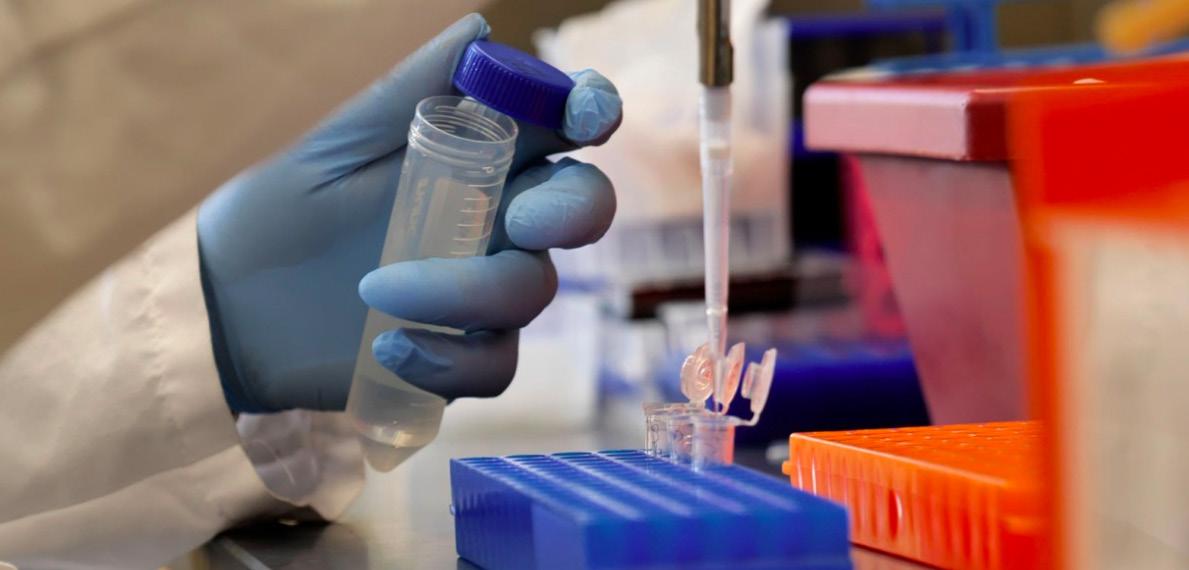
“Together, we can expand best practices, eliminate duplication of efforts, improve investigator support and eliminate administrative burden” at the two institutions, said Mukesh Jain, senior vice president for health affairs and dean of medicine and biological sciences, in the press release.
“We’re excited … at Care New England,” said Mary Marran, president and COO of Butler Hospital, which is owned by CNE. “Like every administrative core, (we) are struggling with resources, so we don’t want to invest in technology on this side if we’re heading
to an integrated program with Brown and Lifespan.”
Jain added that the agreement will also make the institutional board process more efficient for human subjects researchers by making it so they “only have to go through one (Institutional Review Board) versus one at the hospital and one at Brown.”
“At Care New England, we have a
lot of dedicated investigators and we want to make their lives easier,” Marran added.
In November, the University signed an aligned research collaboration agreement with CNE and Lifespan, which aims to help the three institutions “compete for larger funding opportunities by combining strengths in state-of-the-art research infrastructure, core facilities and
specialized equipment,” Kathleen Hart, director of public relations at Lifespan, wrote in an email to The Herald.
But given the “size and complexity” of the November agreement, Jain anticipates that the three-way integration involving Lifespan may take up to 12 months before being operational.
The interim period during the three-party agreement’s ongoing in-
tegration — which involves a “series of working retreats and meetings,” according to the press release — motivated the second agreement between the University and CNE.
Jain wrote that he hopes this agreement will remove barriers, “help researchers become more productive” and “foster collaborations between hospitaland campus-based researchers.”
12 F RIDAY, M ARCH 24, 2023 THE BROWN DAILY HERALD | NEWS
UNIVERSITY NEWS
KAIOLENA TACAZON / HERALD
Professor Edith Mathiowitz said she thinks the space most “terribly affected” for research purposes is the special area set aside for expensive microscopes used in the labs.
Brown, CNE continue to operationalize separate three-party agreement with LifespanCOURTESY OF BROWN UNIVERSITY Through the agreement, the University’s Office of BioMed Research Administration will work to “administer and support” Care New England’s research efforts by expanding their efficiency and capabilities, according to a March 14 University press release.