
THE BROWN DAILY HER ALD
Hundreds in Providence rally against ICE activity
College Hill community members joined protesters at the R.I. State House
BY ZARINA HAMILTON AND MICHELLE BI UNIVERSITY NEWS AND METRO EDITORS
On Friday, over 1,000 demonstrators rallied in Providence as part of a nationwide day of protest against recent escalations in federal immigration enforcement in
Brown ranks
No. 2 nationally for 2025–26 Fulbright
Minneapolis — including the deaths of two U.S. citizens at the hands of immigration officials earlier this month.
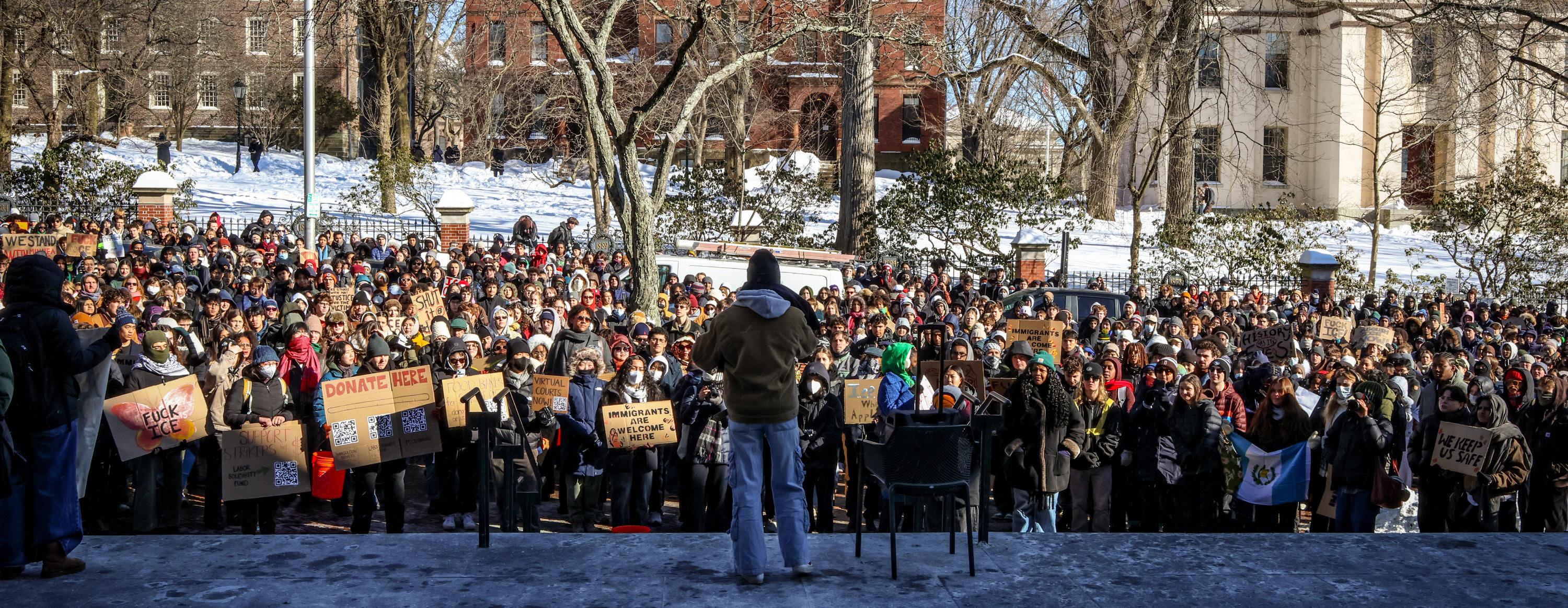
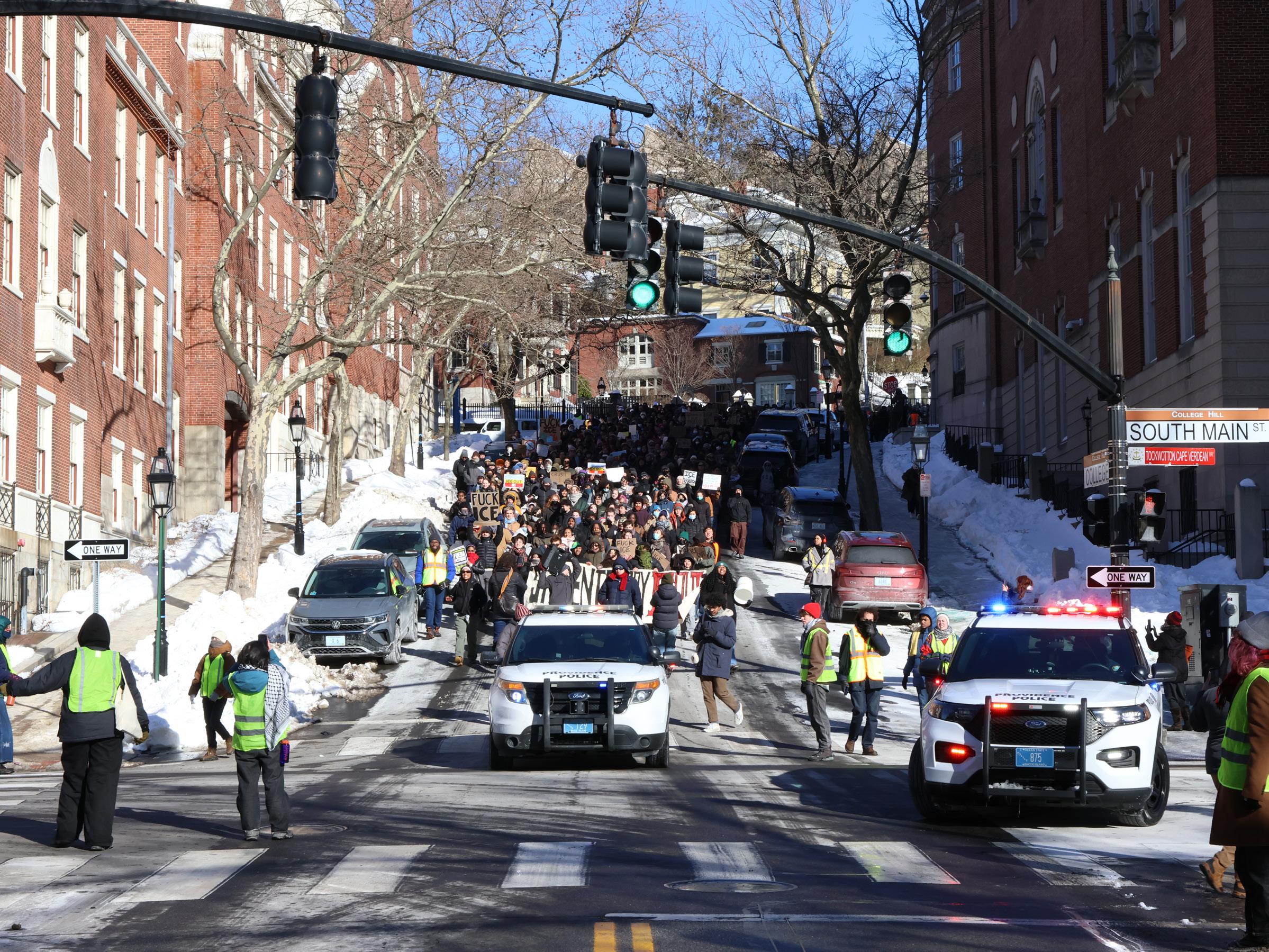
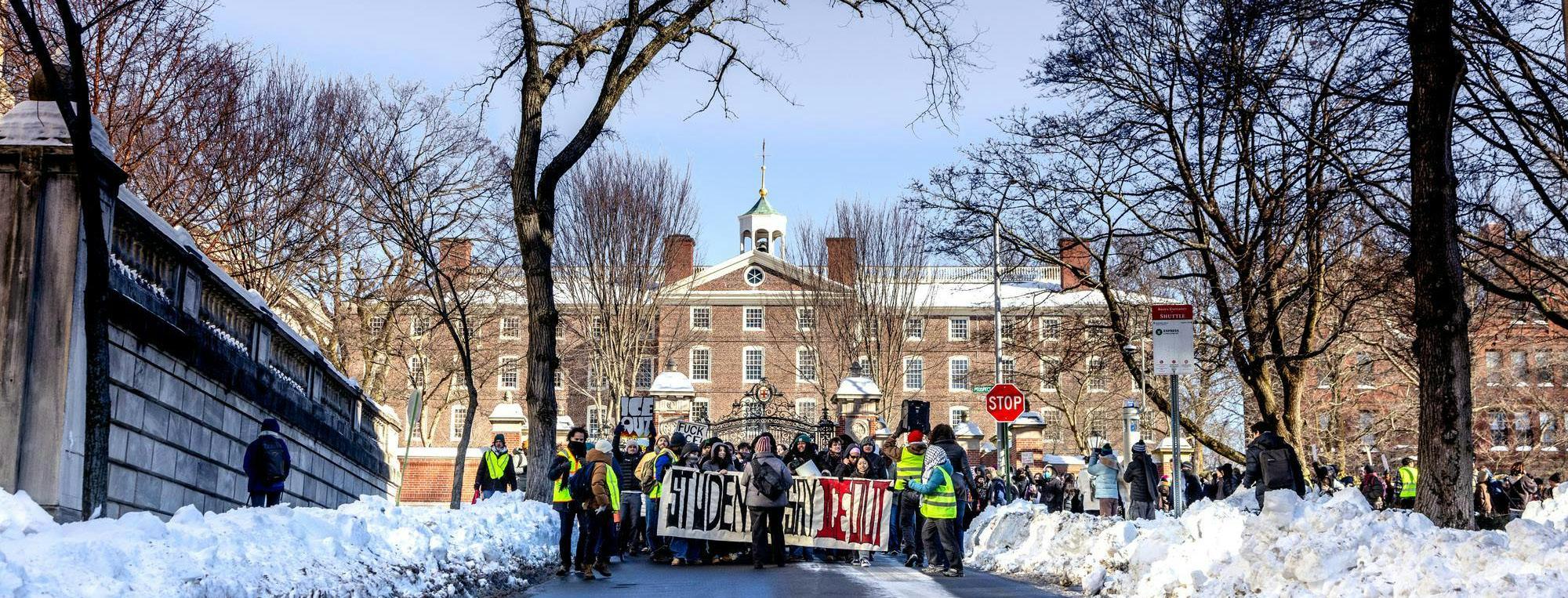
At Brown, students and community members gathered on the steps of the John D. Rockefeller, Jr. Library at 1 p.m. as part of a student walkout. In sub-freezing temperatures, organizers led around 1,000 protesters in chants, yelling “All unite for immigrants’ rights” and “ICE is not welcome here.”
In an attempt at “shutting down business as usual,” student leaders called on the College Hill community to join the
walkout rather than attend class on Friday afternoon, said Brown Rise Up Co-President Simon Aron ’28. The walkout was organized by a coalition of activist groups, including BRU, Sunrise Brown, the Deportation Defense Network and the R.I. Student Climate Coalition.
Dakota Pippins ’29, a spokesperson for Brown Rise Up, told The Herald that the activist groups held the student walkout to call for the end of “ICE brutality across the nation” and the “ever-increasing authoritarian takeover of the government by the Trump administration.”
Women’s ice hockey overcomes early stumble to rout Union, Rensselaer
The White House did not immediately respond to a request for comment.
Friday’s rallies come in the wake of the fatal shooting of Alex Pretti on Jan. 24. Pretti was the second person to be killed by immigration officials in Minneapolis this month, following the shooting of Renee Good on Jan. 7.
In a speech to the crowd, Laurence Nunes ’27 spoke on behalf of fraternity Beta Omega Chi and condemned the murders of Pretti and Good as “the latest in a long series of attempts to quell the flames of the masses.”
Brown contributes $3M in grants to Rhode Island workforce GRANTS
Grants awarded as part of Brown's agreement with the federal government
BY ROMA SHAH UNIVERSITY NEWS EDITOR
On Jan. 29, the University announced it awarded $1.5 million each in grants to the Community College of Rhode Island and Building Futures — an apprenticeship program that supports low-income workers with finding employment.
The announcement marks Brown’s “first public step” toward fulfilling its commitment to invest $50 million in state workforce development as part of its agreement with the federal government, according to a University press release.
In April 2025, the Trump administration announced plans to freeze $510 million in
federal funding to the University. In July, Brown reached a deal with the federal government that restored some of the University’s research funding and halted the Trump administration’s investigation into antisemitism allegations on campus.
In exchange, the University pledged to distribute $50 million over 10 years to promote Rhode Island workforce development.
To comply with the agreement, the University plans to award more grants over the next decade through a review process led by Brown’s Office of Community Engagement.
Anchor grants of up to $1.5 million will be awarded to “established workforce development initiatives,” while innovation grants of up to $200,000 will be given to “new ideas and pioneering programs,” according to a University press release.
The grant given to CCRI will help launch Providence’s first bilingual credential program “to expand the number of early child-
hood educators in the Providence Public School District” by up to 180 teachers over the next three years. The college plans to enroll five cohorts of new students in the program, the press release reads.
The bilingual credential program requires no previous college experience, and the PPSD has committed to hiring graduates of the program to fulfill the city’s need for early childhood educators and teaching assistants.
The funding will also provide over $1 million in scholarships and support like language tutoring, mentorship and transportation to help eliminate barriers standing in the way of program completion for “low-income, multilingual and first-generation college students,” according to the press release.
Building Future’s $1.5 million grant will aid the organization in helping over 250 Rhode Islanders find careers through apprenticeships across fields such as healthcare and manufacturing.

The grant will specifically support “a contractor incentive program; an apprenticeship readiness program for incarcerated individuals to support community reintegration and careers in the building trades; and partnerships with private employers to create new apprenticeship programs” to expand Building Future’s workforce development across more career sectors, the press release reads.
The “contractor incentive program” will encourage contractors to hire Building Futures graduates by offering them the “equivalent to 50% of an apprentice’s wages for up to 400 hours,” according to the press release. It commits to ultimately supporting 120 apprentices into establishing their careers over the next three years.
Another new initiative backed by Brown’s grant, Building Futures Inside, will work in partnership with the Rhode Island
“They want to use their violence to scare us into silence, into inaction,” he said in his speech. “But we know that our power to shut down our schools, our power to shut down our cities, will always be greater than them.”
Over the past several months, U.S. Immigration and Customs Enforcement agents have been active in Providence. In November and September, individuals were detained on College Hill. Two weeks ago, several agents breached security at Garrahy
Department of Corrections to provide 120 hours of training to incarcerated individuals. After their release from state correctional institutions, inmates will be able to participate in Building Future’s pre-apprenticeship program.
The grant funding will also expand the organization’s Apprenticeship Rhode Island initiative, which is led in conjunction with the Rhode Island Department of Labor and Training. The program “provides employers with technical assistance to create and implement registered apprenticeship programs in new industries and occupations,” the press release reads.
The University plans on awarding three more anchor grants and innovation grants each in 2027.
This article originally appeared online at browndailyherald.com on Feb. 2, 2026.
JAKE PARKER / HERALD
UNIVERSITY NEWS
FACULTY
Paxson shares hopes to keep Brown both open and secure at February faculty meeting
Faculty members gave feedback on new University security initiatives
BY SEYLA FERNANDEZ AND SAMAH HAMID SENIOR STAFF WRITER AND UNIVERSITY NEWS EDITOR
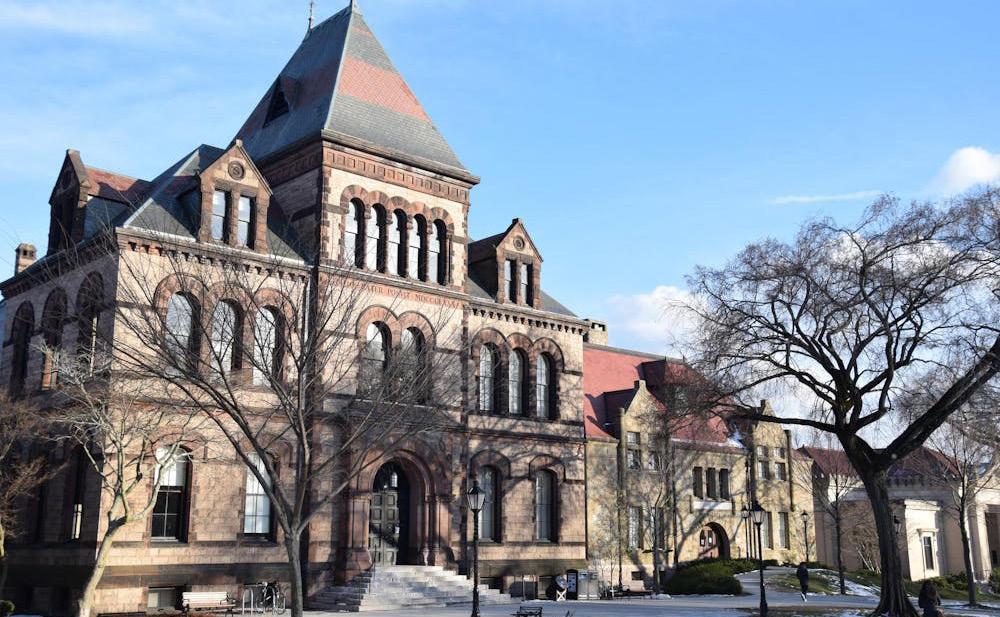
President Christina Paxson P’19 P’MD’20, emphasized the importance of maintaining the University’s core values while navigating security questions following the shooting on Dec. 13 at Tuesday’s faculty meeting.
Paxson updated faculty members on a new community initiative called “Brown Loves Providence,” new security initiatives and the post-shooting reviews.
The University expedited its process of adding blue light phones and panic buttons to classrooms, Paxson said, especially in places where staff handle cash, so that they “feel more secure.”
“I would like us to make sure that when we think of security, we think about it in a holistic manner,” Nadje Al-Ali, professor of international studies, anthropology and Middle East studies, said at the meeting. Recalling an event she attended last week,
IMMIGRATION
Paxson updated faculty members on a new community initiative called “Brown Loves Providence,” new security initiatives and the post-shooting reviews.
Al-Ali said that increased security presence does not always “generate safety” and can instead entail “very scary” behavior from officers for the community.
Paxson acknowledged Al-Ali’s concerns, emphasizing the importance of maintaining a sense of “openness” on campus.
“When people go to an academic seminar, they shouldn’t feel like they’re going through TSA to board an international flight,” Paxson added.
This spring, the University will be conducting “trauma-informed active shooter training,” Paxson added.
“This is hard for people who’ve been through an active shooter experience,” she said. “We have to do it in a sensitive way.”
Paxson outlined the two reviews Teneo is conducting: one after-action review and one comprehensive campus safety and security assessment.
She explained that the after-action review will be conducted first, and the
Brown Rise Up shifts focus to anti-ICE activism
The shift comes following the killings of Renee Good and Alex Pretti
BY ZARINA HAMILTON AND MARAT BASARIA UNIVERSITY NEWS EDITOR AND SENIOR STAFF WRITER
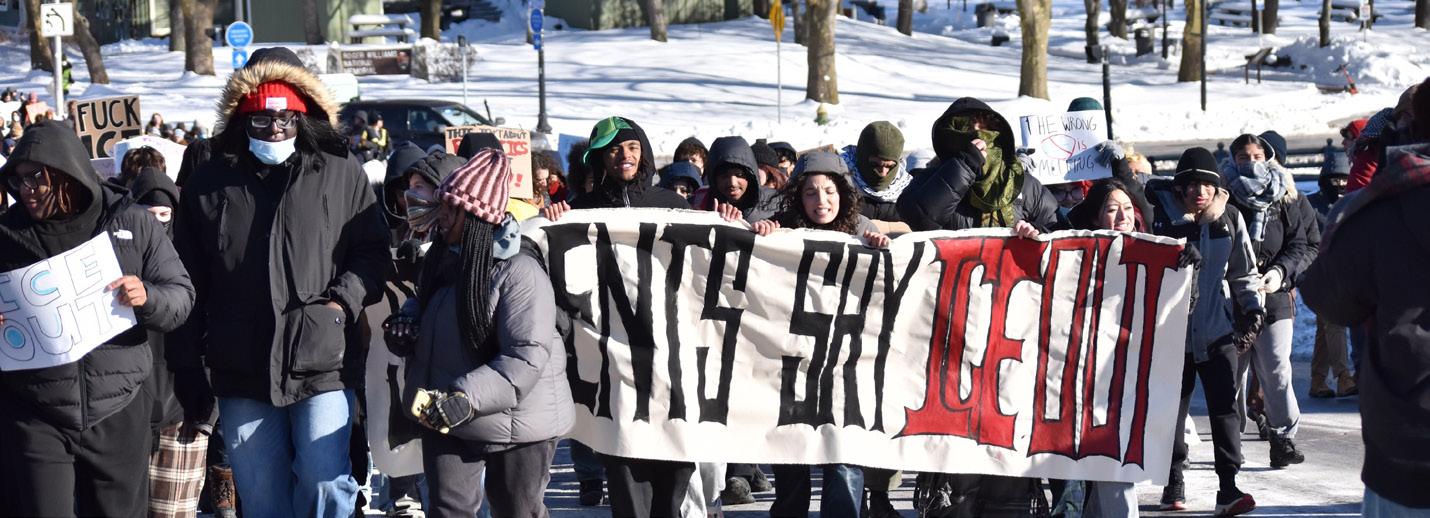
On Jan. 30, over 1,000 Brown students chanted in front of the John D. Rockefeller Jr. Library steps in protest of U.S. Immigration and Customs Enforcement. One of the groups behind the walkout was Brown Rise Up, a student activist organization that previously organized a protest against the Trump administration’s compact, and has since shifted its focus to protesting the actions of immigration enforcement officials.
Dakota Pippins ’29, the press liaison for BRU, said that the killing of Renee Good and Alex Pretti by immigration officials in Minneapolis inspired the group’s shift to activism against ICE.
“There was this call from the Somali Student Association and the Black Student Union of the University of (Minnesota) for a general strike nationwide,” he said. “What that call meant in our context was to hold a strike in the city and a student strike at Brown.”
Pippins added that he has noticed an increased presence of ICE in Providence, pointing to the attempted detainment of a 16 year-old intern in November in front of the Rhode Island Superior Court.
“They’re at the courthouses basically every single week, multiple times a week,” Pippins said.
On campus, BRU is advocating for “an official policy that federal law enforcement, ICE, cannot enter campus buildings without a judicial warrant,” said BRU Co-President Simon Aron ’28. He added that he and others from the group met with President Christina Paxson P’19 P’MD’20 to discuss the matter last semester.
Pippins said he believes that students can be a “critical” part of protesting against
comprehensive review will “ramp up” in March and April.
For the comprehensive review, Teneo will be collaborating with the Faculty Executive Committee and the Medical Faculty Executive Committee, Paxson said. The comprehensive review will also rely on input from students, alums and other community organizations.
“We spent a lot of time thinking about the external communications in a moment like this,” Provost Francis Doyle said. He added that peer universities advised Brown administrators to have strong internal communication during this period.
“We’re endeavoring to do better,” he added. “We know that it was bumpy for all of us in the beginning.”
Katie Biello, chair of the epidemiology department and a professor of behavioral and social sciences, said that the shooting “didn’t happen in a bubble” and that “we can’t blame the University for everything.”
Biello added that consideration should be given to whether security changes are “really going to do anything.”
She believes that Brown should examine how to “make broader impacts in the world” on the issue of mass violence
now that the University has been “unfortunately thrown into it.”
In addition to instating increased security measures, the University will be launching a local campaign called “Brown Loves Providence” from Feb. 10 to 14, to “publicly express gratitude to Providence’s businesses, community organizations and neighbors for their support during and following Dec. 13,” said Anna Lysyanskaya, chair of the FEC and computer science professor.
On Valentine’s Day, the words “Brown Loves Providence” will be projected on the Lindemann Performing Arts Center, Paxson said, noting how some restaurants on Thayer Street provided free food to students.
“This is part of our history,” Paxson said. “It’s going to shape how we think about ourselves, how we act, how we balance openness with security (and) how we support and protect the well-being of all members of our community.”
Even after the shooting, Brown received an increase in applicants this year, she added. “People want to come to Brown.”
This article originally appeared online at browndailyherald.com on Feb. 4, 2026.
Brown Rise Up, a student activist organization that previously organized a protest against actions by the Trump administration’s
has since shifted its focus to protesting the actions of immigration enforcement officials.
the agency.
“We’re younger, we have a certain amount of flexibility that a lot of Americans don’t have, and we’re also in an environment that’s encouraging us to learn and to think critically and to put that knowledge into action,” he said.
In addition to organizing protests, BRU Narrative Team Co-Coordinator Raya Gupta ’29 wrote in a text to The Herald that members of BRU and the Deportation De-
fense Network “have been doing regular ICE watch shifts since last semester.”
“Both BRU and DDN are part of the same struggle, and we’ve started to build real student power together,” Gupta added.
Aron recently traveled to Minneapolis to assist high schoolers organizing in response to increased ICE activity in the city.
“If they can do it, we can do it,” he said, noting that he was inspired by the students’
mutual support and energy in mobilizing.
He added that the community he saw in Minneapolis was similar to the community he had seen at Brown in the wake of “someone dying unexpectedly because of gun violence.”
“I think that everything changed right after, after the shooting, and we’re, frankly, still resting with what that means for activism on campus,” Aron said. But he feels confident that if “we’re under threat again,”
that students will be able to “rise up.”
“I really do feel like the tightness of this community has just increased,” he added, noting that he and others are trying to check in and take care of one another.
“It can feel daunting, but social movements have been able to overcome immense odds in the past,” Gupta said. “When people come together to fight for it, our possibilities open up into a radically better future.”
ELLIS ROUGEOU / HERALD
JAKE PARKER / HERALD
actions on higher education,
UNIVERSITY NEWS
SCHOLARSHIP
Brown ranks No. 2 nationally for 2025–26 Fulbright recipients
The Herald spoke with five of the scholars about their experiences abroad
BY IVY HUANG UNIVERSITY NEWS AND SCIENCE & RESEARCH EDITOR
Brown produced the second-highest number of Fulbright scholars in the nation for the 2025-26 academic year, remaining in the top three nationally for the tenth consecutive year, according to data released from the U.S. Department of State on Tuesday.
Brown’s 41 scholarship winners, including current graduate students and recent alumni, were awarded funding to teach or conduct research across 160 countries. According to the University’s press release, 37 of the 41 scholarship offers were accepted.
“Our record is reflective of the excellence of our students and what they are prepared to do after their time at Brown,” Associate Dean of the College for Fellowships Joel Simundich wrote in an email to The Herald. “The adaptability, intentionality and creativity of our students resonates with what Fulbright looks for in applicants.”
The Herald spoke with five of the 202526 Fulbright scholars about their experiences abroad and how the experience will inform their future plans.
Spreading the joy of reading: Chloe Fatsis ’25
After studying Greek all four years at Brown and spending a semester abroad in Greece, Chloe Fatsis ’25 applied to the Fulbright program as a way to return to the country after graduation.
“I had spent a summer working at a small program for high schoolers in Alaska, which really made me love working with students and everything surrounding educational environments,” she said in an interview with The Herald. While Fatsis has tutored students, she said this opportunity in Greece has provided her with “hands-on

teaching experience in the classroom.”
Currently, Fatsis works with middle schoolers as an assistant English teacher, guiding them through novels she read as a child.
One moment that stuck out during her time in Greece so far was when an eighth-grader who wasn’t the “most participatory in class” approached Fatsis and told her, “Miss, this is the second book I’ve ever read that I’ve actually enjoyed reading.”
“That was really heartwarming,” Fatsis said, adding that her goal for this teaching experience abroad was to “inspire children and teens to love reading” and help them realize that “reading is not always a chore.”
Fatsis said she would “love” to spend another year in Greece after the program ends. “Even if I don’t, I think I’ll still look for education or education-adjacent roles wherever I end up next,” she added.
Connecting with family history: Naomi Gutierrez ’24
As an ethnic studies concentrator who studied her family’s history in Mexico while at Brown, Naomi Gutierrez ’24 saw the Fulbright scholarship as a chance to further connect with her culture.
As a Fulbright scholar, Gutierrez helps teach English at a university in Mexico,
assisting teachers in planning activities and working with students. “I genuinely love it — I feel like I got really lucky,” Gutierrez said. “I’m definitely in a place where they know what to do with me and how to support me.”
Navigating Mexico on her own has helped Gutierrez “learn a lot” about herself, she said. “I have a better sense of who I am, and I know that I can do things on my own, and I definitely feel a lot more confident (about) what I want in the future.”
After the program, Gutierrez does not plan on “touching teaching for a while” but is interested instead in the field of history. While the Fulbright program doesn’t exactly align with her goals for the future, Gutierrez said she has gained useful skills, like communicating effectively and presenting topics to a wide variety of students.
Researching democratic institutions: Michelle Alas Molina ’25
As an immigrant from El Salvador, Michelle Alas Molina ’25 said her “deep reverence for studying Latin America” and desire to pursue opportunities in her home region led her to apply to the Fulbright scholarship.
Alas Molina’s Fulbright grant has allowed her to conduct research on demo-
cratic institutions — an extension of her senior thesis at Brown, she said. “Now, while in Brazil, I’m examining government structures and processes that make participatory institutions possible.”
At Brown, Alas Molina was involved in the Student Clinic for Immigrant Justice. She said she hopes her experience abroad in Brazil will help her better understand the “push-and-pull factors” of migration.
“I’m hoping that that informed perspective I can take back with me to the United States as I pursue a law degree and hopefully a career in immigration law,” she added.
Gaining confidence in German: Gabrielle Steinbrenner ’25
For Gabrielle Steinbrenner ’25, the Fulbright program was an opportunity to meet new people and gain experience living in another country.
“You’re basically getting paid” to get to know the people, language and culture of another country, Steinbrenner said. “I thought, that sounds amazing — why on earth wouldn’t I want that?”
Steinbrenner’s grant has allowed them to teach in Germany. While the first couple of months were “tough” for Steinbrenner, whose German was not the best, this experience abroad taught them that they “can’t
Submissions:
THE BROWN DAILY HERALD
Multimedia Editors
Marat Basaria
Harry Guo
Horatio Hamilton
Selina Kao
Ella Le
Kenna Lee
JJ Li
Jake Parker
Jascha Silberstein
Luecht
Kaia Yalamanchili
Illustration Chiefs
Kendra Eastep Isabela Guillen
Video Chiefs
Cienna Cheng
Cody Cheng
Social Media Chiefs
Nate Barkow
Annika Melwani
Technology Chief Annika Singh
Data Desk Chief Caleb Ellenberg


Rassul Toleugazy
BUSINESS
General Managers
Arjun Deshpande
Anum Azhar
Sales Directors
Arjun Ray
Hannah Han
Finance Director
Sydney Wright
Office Manager
Cary Warner
Submissions
be embarrassed or afraid” to make mistakes when learning a new language.
“I was never able to learn and feel confident in another language until I got here and (had) to speak it,” Steinbrenner added. “So I guess immersion is the only way to do it.”
After the program, Steinbrenner plans to enroll in a master’s program where they will be required to teach beginner German classes. Being abroad in Germany through the Fulbright scholarship is a “fantastic chance for me to really get confident enough to do that,” Steinbrenner said.
Drawing connections between American and Spanish culture: Spencer Lorin ’25
Spencer Lorin ’25 saw the Fulbright program as an opportunity to improve his Spanish before pursuing a career in medicine.
For Lorin, the ability to teach in Madrid through the grant has been “very rewarding, both professionally and personally” and has allowed him “to engage with a very different educational system.”
Currently, Lorin works with 15 groups of students throughout the week. In his classes, he teaches English and helps students draw connections between American and Spanish culture.
“Working with a student population, I’d say, has reinforced my commitment to service and reminded me of the importance of education,” he said. “Fulbright has helped to shape the kind of responsible and culturally informed, culturally sensitive professional that I hope to become.” Lorin encourages students hoping to pursue the Fulbright program to approach it with openness and humility. “The most valuable growth, I think, that I’ve experienced here has been being forced out of my comfort zone and learning from people around me,” he added.
This article originally appeared online at browndailyherald.com on Feb. 4, 2026.
email, and we will do our best to work with you.
Submissions can build on reporting from The Herald, reporting elsewhere, official statements from the University or other groups and other reputable sources, but they cannot break news or contain information that The Herald cannot verify. Because we cannot publish unsubstantiated information, failure to provide appropriate sources may mean we have to modify or remove unverified claims.
The Herald will not publish anonymous submissions or submissions authored by organizations. Leaders of student organizations can be identified as such but cannot write under the byline of their organization. The Herald cannot publish all submissions it receives and reserves the right
SCOUT CHEN / HERALD
Brown remains in the top three Fulbright producers nationally for the tenth consecutive year.
METRO
Judicial Complex as they pursued two men through the building.
“I feel like it’s a responsibility for all of us to show up,” said Jomar Canales Conde GS, a first-year MFA student who attended the protest at the Rock. As a student from Puerto Rico, he said the purpose of the walkout feels “personal” to him.
Noah Cohen ’27 and his friends chose to skip class to attend the rally, he said. He added that showing support for vulnerable community members is “the right thing to do to be an active citizen.”
“I hope that people at Brown and across the nation will finally stop being so complacent with everything that's going on,” Cohen added.
Diego Castillo ’27, an organizer with the College Hill chapter of the Deportation Defense Network, called the strike “a way to show the billionaire elite that we’re not going to stand by.”
He criticized the actions of immigration enforcement agents who he said “terrorize” immigrants and the working class.
ICE did not immediately respond to a request for comment.
Just before 2 p.m., protestors marched down College Hill and along Main Street to join a citywide protest at the Rhode Island State House, stopping traffic along the way. There, they met with around 1,000 additional protestors.
The rally at the State House was orga-
nized by local groups such as the Rhode Island chapter of the Party for Socialism and Liberation, Alliance to Mobilize Our Resistance and the Providence Student Union.
After several speeches, the crowd marched along Canal Street and through downtown Providence, chanting “ICE off our streets” and “shut it down.”
Laurel Bestock ’99, an associate professor of the history of art and architecture, archaeology and the ancient world and Egyptology and Assyriology, attended both the rally at the Rock and the march in downtown Providence.
“I am deeply disturbed by what is happening in Minneapolis and in Rhode Island.
This is not the country I wanted to be,” she said. “We have to protect immigrant rights. We have to reclaim our country.”
Bestock added that she was “psyched” by the number of protestors at the rally, particularly the amount of students. “I’m psyched to see the amount of people not in my class today,” she added.
A crowd of protesters cheer in front of the State House.
Malcolm Davidson, a seventh grader at the Wheeler School, said he left class early to attend the rally with his mother and a friend.
“The youth have very powerful voices in matters like this,” Davidson said. “We’re not afraid to speak up.”
Stefanie Gallo, a volunteer for the Deportation Defense Network, attended the rally at the State House with her two young children. She called for “due process for people that are standing on American soil.”
“I am exercising my First Amendment rights and showing my children that they should do the same,” Gallo added.
“Non-cooperation is one of the most effective tactics we’ve seen that students and workers can use to force governments who don’t care about us to act,” Aron said. “And what today is, is the start of that.”
This article originally appeared online at browndailyherald.com on Jan. 30, 2026.

Man
stabbed on Thayer Street, suspect taken into custody
The incident was not related to Brown, according to a PPD spokesperson
BY MICHELLE BI METRO EDITOR
A stabbing occurred at the intersection of Thayer Street and Angell Street on Monday afternoon at approximately 3:30 p.m.
A video obtained by The Herald shows two individuals physically fighting on Thayer Street. The men circle each other briefly and exchange blows before one individual stabs the other’s back with what appears to be a small knife. The man with the knife then tackles the other individual into a nearby bank of snow.
A 38-year-old man sustained non-life-threatening injuries during the

stabbing, according to Kristy dosReis, Providence chief public information officer for public safety. A 28-year-old male suspect was taken into custody following the incident, dosReis wrote in an email to The Herald.
“This appears to be an isolated incident and not related to Brown University,” dosReis wrote. “There is no ongoing threat to the public.”
The victim was transported to Rhode Island Hospital for treatment, according to a 9:27 p.m. message sent by Brown’s Department of Public Safety and Emergency Management. The message added that “Providence Police acted quickly to apprehend the other individual involved,” and that neither individual is affiliated with the University.
Alex Goldfarb ’28 told The Herald
that, while walking down Thayer Street, he witnessed the arrest of the individual. He said he saw about three police cars stop at the scene of the incident as several officers “quickly confronted and handcuffed a man.”
He added that it seemed as if the individual the police confronted was “being very physical,” “shouting profanities” and “struggling with his arms.” Goldfarb said he believed that the entire arrest took “under two minutes.”
Brown DPSEM “remains in close communication with local law enforcement to monitor the area,” according to the 9:27 p.m. message.
2, 2026.
ANNAMARIA LUECHT / HERALD
According to Providence Chief Public Information Officer for Public Safety Kristy dosReis, a 38-year-old man sustained non-life threatening injuries during the stabbing.
ANNAMARIA LUECHT / HERALD
HORATIO HAMILTON / HERALD
STATE POLITICS
R.I. officials introduce legislation to mandate public colleges arm campus police
Brown and URI are the only campuses in R.I. that arm public safety
BY ANNIKA MELWANI SENIOR STAFF WRITER
Following the Dec. 13 mass shooting at Brown, State Sen. Peter Appollonio Jr. (D-Warwick) and State Rep. William O’Brien (D-North Providence) have introduced legislation that would mandate public Rhode Island colleges and universities to arm their campus police officers.
While public colleges in Rhode Island are permitted to arm their campus police, the University of Rhode Island is currently the only one that does. The Community College of Rhode Island and Rhode Island College do not choose to arm their campus officers with “firearms or tasers” and are the only colleges in New England that choose not to do so, according to a press release from O’Brien.
Private colleges in the state have the same right, but Brown is the only one that provides campus officers with firearms.
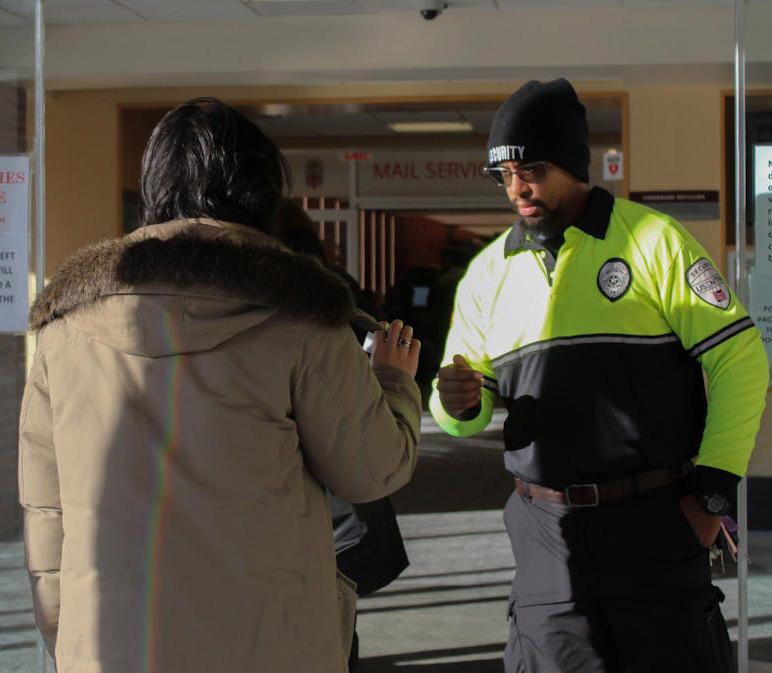
“The shooting at Brown University makes it clear that Rhode Island’s schools are not immune to the terrible tragedies occurring far too frequently throughout our country,” Appollonio said in the press release. “While I pray that such a terrible situation does not occur again in our state, we must equip our campus police officers with the tools they need to protect innocents if evil once again attacks one of our schools.”
CAMERAS
O’Brien first introduced similar legislation in the 2019 legislative session, and has reintroduced the bill or comparable legislation several times. The current iteration of the bill has been co-signed by 37 house members.
“Our campuses need a faster response (to active shootings) and the only solution is armed campus cops,” O’Brien said in a 2023 press release.
“We cannot afford to wait any longer to make the necessary changes to keep our
state campuses safe,” O’Brien said in the 2026 press release.
At CCRI, “focus has been and continues to be maintaining a safe campus environment every day, not in response to any given moment,” according to CCRI Chief Marketing Officer Keith Paul.
He added that the college is currently participating in an “independent review” with the R.I. Office of the Postsecondary Commissioner so that their decisions “are informed and aligned with best practices.”
Paul shared that CCRI currently equips their campus officers with radios, handcuffs, expandable batons, pepper spray and rubber gloves.
Appollonio, Senate sponsor of the legislation, wrote in an email to The Herald that the State Police report suggests that the “immediate response options to a serious threat” for unarmed officers are “limited” and often “ineffective.”
Appollonio — a former captain with the West Warwick Police Department who helped “develop school emergency and response plans” and an RIC parent and alum — sees the issue of campus safety as both “professional and personal.”
“Before students even arrive at college, many of them have spent their high school years in buildings protected by trained and armed school resource officers,” Appollonio wrote. “It’s reasonable to consider whether a similar level of protection should exist when those same students move into higher education.”
Both Paul and Appollonio also noted that CCRI’s and RIC’s campus officers are already sworn officers, many of whom are coming from various municipalities.
“This bill is about equipping trained professionals, not creating a new police presence on campus,” Appollonio wrote.
Before being able to carry firearms, officers would have to undergo training certified by the Rhode Island Police Officers Commission on Standards and Training and meet the state’s qualification standards, Appollonio added.
But critics say that adding firearms to campuses will cause more harm than good. “We have opposed this legislation for a number of years. There is a tremendous danger inherent in promoting the presence of guns on college campuses,” Steven Brown, the American Civil Liberties Union of Rhode Island’s executive director, wrote in an email to The Herald.
“Introducing weapons to college campuses brings with it the very real danger of accidental discharges and tragic cases of misunderstandings and misidentifications,” he added.
Steven Brown also mentioned their wariness of the fact that campus police officers would become included under Rhode Island’s Law Enforcement Officers’ Bill of Rights, a law that “makes it very difficult to discipline officers who have engaged in misconduct.”
“While no method is foolproof, one can clearly strengthen security without reliance on armed police officers,” Steven Brown added. He also noted that “the presence of armed officers on Brown’s campus was unable to prevent December’s tragic shooting from happening.”
But to Appollonio, the shooting solidified the need for this legislation. “The hypothetical risk is no longer theoretical,” he wrote. “The question is whether we act before a tragedy or after one.”
This article originally appeared online at browndailyherald.com on Feb. 4, 2026.
Data privacy concerns spark debate on the future of Flock cameras in R.I.
The cameras helped identify the perpetrator of the Dec. 13 shooting
BY KELLY DING SENIOR STAFF WRITER
On Dec. 12, a camera on North Main Street captured a picture of a grey rental car. The renter of the car was Claudio Neves Valente, the suspect in the Dec. 13 mass shooting at Barus and Holley.
That picture of Valente’s license plate was “instrumental” in the ensuing police investigation, according to Kristy dosReis, Providence’s chief public information officer for public safety.
The image was captured by one of Rhode Island’s Flock cameras — automated license plate readers designed to record the make, model, colors and other details of passing cars. According to the American Civil Liberties Union of Rhode Island, there are at least 193 cameras in the state.
Law enforcement agencies have access to a database that stores the information collected by the cameras. This data has been used for investigating crimes such as missing persons cases and vehicle thefts according to dosReis.
In addition to fostering efficient and responsive policing, Flock cameras could serve as a deterrent for would-be criminals “considering committing crimes using vehicles,” dosReis wrote in an email to The Herald.
But some advocates and researchers are wary about the implications of Flock camera’s extensive data collection.
The ACLU of R.I. has opposed the installation of Flock cameras since 2021.
According to Madalyn McGunagle — a policy associate at the ACLU of R.I. — camera

data in other states has been shared with immigration enforcement officials and used to track down people suspected of crossing state lines to seek reproductive care.
Flock does not have a contract with ICE or any sub-agency of the Department of Homeland Safety, according to Paris Lewbel, the public relations manager for the company. “Non-customers cannot directly access the Flock platform,” he added.
While the cameras can be useful in targeted police investigations, the “larger issue with these cameras is that their use is not targeted, as the cameras take a photo of any car that happens to pass by,” Mc-
Gunagle wrote in an email to The Herald.
DosReis wrote that cameras “are installed only in public spaces where there is no reasonable expectation of privacy.”
The cameras were first installed in Woonsocket, Cranston and Pawtucket in 2021, according to the ACLU of R.I. They were then introduced in Providence in 2022 for a one-year free trial program.
After a few months, Providence officials approved the installation of 60 additional cameras. Each camera costs approximately $2,500 per year, according to the Flock website.
Timothy Edgar, professor of the prac-
tice of computer science who helped launch Brown’s cybersecurity master’s program, said that the Flock trial period is the “best time” for government officials to determine if the safety benefits are worth the potential harms caused by increased surveillance.
Late last year, the R.I. State Police urged 22 municipalities to approve the installation of 39 more cameras across the state.
A federal grant awarded to the state police designated nearly $600,000 to the cameras. Nineteen municipalities approved the request without hearing the request publicly, according to the ACLU of RI.
The Providence City Council voted
to prohibit the use of Flock data to aid in federal immigration enforcement in October. But there are no other legislative frameworks regulating the usage of Flock data, McGunagle wrote.
“Flock never sells data. Our customers own 100% of their data,” Lewbel wrote in an email to The Herald. Current privacy protections listed on Flock’s webpage also include data encryption, sharing restrictions and deletion of data after 30 days.
The Warren Town Council voted against the installation of Flock cameras in December and Portsmouth followed suit last Tuesday. Their respective police departments are currently not on the list of police departments granted access to Providence’s Flock data.
The councils of Warren and Portsmouth declined to comment.
Jessica Katzenstein MA’16 PhD’22, an assistant professor at the School of Social Transformation at Arizona State University, noted that “centralized, cross-jurisdictional data sharing” is a “central value proposition for customers” of Flock.
Katzenstein warned that photos could be used to identify individuals in protests. “Harms from mass surveillance will always fall disproportionately on specific groups, including immigrants and people of color,” she said.
Legislation “reigning in” the use of automated license plate readers has been introduced and defeated in the last four legislative sessions, according to McGunagle. She emphasized that nothing in these bills would have hindered or changed the Brown shooting investigation.
PHOEBE-GRACE ASEOCHE / HERALD Brown is the only private college that provides campus officers with arms in R.I.
ANNAMARIA LUECHT / HERALD
Flock data is prohibited to be used by federal immigration enforcement in Providence as of October 2025.
ICE HOCKEY
Women’s ice hockey overcomes early stumble to rout Union, Rensselaer
The Bears scored 11 times during two away games this weekend
BY SAJIV MEHTA SENIOR STAFF WRITER
Three minutes into the second period of the women’s ice hockey team’s (14-10-2, 10-6-2 ECAC) game against Union (9-17-3, 2-15-1) on Friday, Brown found itself in a 2-0 deficit reminiscent of last week’s 4-0 collapse to RIT. But staring down a potential bleak defeat at the hands of the Garnet Chargers, who are ranked last place in the Eastern College Athletic Conference, the Bears roared back.
Bruno utterly overpowered their opponents over the rest of the game, scoring seven goals to Union’s one. The next day, the team traveled to nearby Troy, New York, where Brown blanked Rensselaer (624-0, 3-15-0) in a 4-0 victory. The dominant weekend propelled the Bears to No. 5 in the conference.
“On Friday, I think we showed some swagger in that we went down by 2 but never got rattled,” Head Coach Melanie Ruzzi wrote in an email to The Herald.
“The team scored five unanswered goals ... that type of belief in each other and our preparation is critically important at this stage of the season.”
Union forward Maddie Leaney dominated the opening stages of Friday’s contest. During a two-on-one breakaway in the first period, Leaney flicked the puck across the crease into the top-right corner of the net. On a power play and all alone with Brown goaltender Rory Edwards ’27 at the beginning of the following period, the star attacker backhanded the puck homeward to create a two-goal lead.

SAJIV MEHTA / HERALD
Bruno utterly overpowered Union on Friday, scoring seven goals to their opponent’s one. Courtesy of Brown Athletics.
But less than a minute later, Brown captain Jade Iginla ’26 stole the spotlight. Handling the puck all the way from Bruno’s defensive zone, Iginla weaved through Garnet Chargers to the high slot. Flashing her wrist almost imperceptibly, she sent the puck searing across the ice and under Union goalie Emily Evans for a crucial power play score.
“Jade just decided enough was enough,” Ruzzi wrote. “She flipped a switch ... the team followed her lead, and we got rolling from there.”
Intent on evening the score at two goals apiece, fellow captain India McDadi ’26 rushed up the left of the rink and leveled a wrist shot on goal. Bouncing off a sliding Union defender’s skate, the puck tumbled into the net.
Not only was the offense sparked by Iginla’s score, but the defense was revitalized as well. After allowing a short-handed goal with seven minutes left in the period, the defense allowed only thirteen more shots. Edwards served as a staunch goal-protector, keeping each of the Gar-
net Chargers’ 11 on-target attempts from crossing the goal line.
Edward’s key adjustment after the early lapses was to “simplify,” she wrote in an email to The Herald. “My self-talk was all about keeping my movements clean, trusting my reads and tracking pucks all the way to my hands,” Edwards added.
As they entered the final third of the period, the Bears’ attack increased their pressure. Flying down the rink, defender Victoria Damiani ’28 gathered momentum before effortlessly sending the puck past Evans and matching the Garnet Chargers’ total of three goals.
After drawing a power play two minutes later, defender Isabella Gratzl ’29 sent a stretch pass from Bruno’s left end zone circle to forward Monique Lyons ’28, who had snuck past Union’s defensive line. Finding herself alone with the Union goaltender, Lyons shot the puck inside the right post and collected Bruno’s first lead of the evening.
When Bruno earned a third power play a minute and a half later, they took the
opportunity to demonstrate their superior puck movement. Having already successfully taken advantage of two power plays, a score became the standard.
From the center of the rink, Gratzl dished the puck to Lyons at Union’s left face-off circle. Taking just half a beat to collect, Lyons delivered a precise pass to the low slot, where forward Olivia Fantino ’28 redirected the puck into the net.
Heading into the final period, the Bears had established themselves as firmly in command, with a 5-3 edge over the Garnet Chargers. Their success had a snowballing quality, and finding the back of the net seemed like an inevitable conclusion to the Brown attackers’ shots.
With 16 minutes left, McDadi found forward Margot Norehad ’27 on the right edge of the crease, magically sending the puck through a cage of three defenders’ sticks. Immediately, Norehad flipped the puck upwards and into the net’s ceiling.
Strengthening their lead, the Bears scored once more six minutes later. From a sharp right angle, forward Martina Accardi ’29 sent a shot at the Union goal. The puck ricocheted off Evan’s leg pad into the doorstep, and forward Zoe Li ’29 pounced.
Li’s goal — her second of the year — guaranteed Brown’s highest single-game goal tally this season. Li became the seventh player to score that day. Undoubtedly, the Bears’ team chemistry was on full display.
Saturday’s shutout of Rensselaer featured more of Brown’s high-quality hockey. From the opening puck drop, it was all Bruno.
Just over five minutes into the competition, Lyons sent the puck towards Iginla, which found its way across the goal line and gave the Bears a lead they never relinquished.
On a power play with six minutes remaining in the first period, Iginla broke through the Engineers’ defense again, sending an astoundingly accurate long-range screamer past all four RPI defenders and into the goal.
From there, the Bears knuckled down and held onto their advantage, relying on their defensive play.
Edwards credited Brown’s wingers and defense in holding the Engineers without a goal, adding that they recorded “some huge blocked shots.”
The match’s slower pace extended into the second and third periods, and the game’s next goal was scored with less than six minutes remaining in the contest.
While shorthanded on a penalty kill, Lyons and Ella Muralt ’28 created a twoon-two rush. Furiously skating towards the Rensselaer net, Lyons sent a wrist shot directly at RPI goalie Reese Keating. Though Keating managed to block Lyons’ attempt, Muralt closed in and finished the job on the rebound, effectively securing the victory for the Bears.
An empty-net goal by McDadi in the match’s final minute sent the official tally to 4-0
The Bears will need to continue to bring an inspired level of play when they host St. Lawrence and No. 2 Clarkson this weekend at Meehan Auditorium.
“The talent on those two teams is deeper than what we faced this weekend,” Ruzzi wrote. “Clarkson, in particular, is a team that knows how to play in tightly contested games and will make us work for our offensive opportunities.”
This article originally appeared online at browndailyherald.com on Feb. 3, 2026.
Men’s basketball falls to Harvard, stumbles against Dartmouth in overtime
Sitting in last in the Ivy League, Brown will play first-place Yale on Friday
BY HARRY GUO SENIOR STAFF WRITER
This weekend, Bruno fans filed into the Pizzitola Sports Center in hopes of seeing the Bears overcome their three-game losing streak. But the men’s basketball team (7-13, 1-6 Ivy) lost 69-59 to Harvard (12-9, 5-2 Ivy) and fell to Dartmouth (10-10, 4-3 Ivy) in a 77-70 overtime defeat.
Entering the weekend ranked last in Ivy League standings, the Bears were eager to topple the Crimson — especially after last weekend’s narrow loss to Princeton. But Harvard proved a stout opponent and the Bears were met head-on from the be ginning.
With seven even scores over the 20-minute period, the first half was marked by constant shifts in momentum.
After a quiet opening minute with missed opportunities on both ends, guard Isaiah Langham ’29 set the game into mo tion, recovering a rebound from a missed layup and dishing the ball to forward N’famara Dabo ’27 for a powerful dunk.
Moments later, two Harvard free throws and a Bruno turnover led to a Har vard layup for a 4-2 Crimson lead. But the Bears responded with a crisp offensive sequence: Forward Landon Lewis ’26 set
a screen for Langham, who found his way into the paint before passing the ball back to Lewis for a smooth jumper
the next six minutes, the teams traded a series of free throws and three-pointers, keeping the game tight.
out to Jenkins for a nifty three. Harvard answered with a tough and-one layup in traffic, but a string of points by Lewis cut

with polished foot- work and a midrange jumper to knot the score once again. For
first in the second half — Lewis grabbed a rebound and kicked the ball
on, it seemed like there was hope for a Bruno win. But this proved to be Bear’s
largest lead of the game, and Brown found itself down 37-26 when the first half buzzer sounded.
Similar to Friday’s game, the second half saw a series of possession changes and scoring runs. Bruno began the second half with a 4-0 run to cut Dartmouth’s lead to five, but the Big Green responded with their own 5-0 run, bringing the score to 42-32 Dartmouth.
For the entire half, Dartmouth pulled away only for Brown to pull the Big Green right back into arm’s reach. With 12 minutes to go, Brown was within one point of a tying score before the Big Green once again bounced back to extend their lead to five. Dartmouth used its momentum to propel them to 63-54 with just under three minutes to play.
Down but never out, Brown summoned a whopping 11-2 run thanks to clutch threes by forward Charlie O’Sullivan ’29, and guard Luke Paragon ’27, aided by buckets from Jenkins. For one of the first times in the game, a win was in sight: The score sat at 65-65, sending the game into overtime.
But sloppy turnovers opened the door for Dartmouth, and the Big Green cruised their way to a 77-70 overtime victory.
The Bears will look to beat their losing streak this Friday as they travel to New Haven to play first-place Yale (16-4, 5-2 Ivy) at 7 p.m.

Wrestling loses tepid battle to Penn, puts up valiant effort against Princeton
The team presented upand-down showings in last weekend's matches
BY CHIUPONG HUANG SENIOR STAFF WRITER
Last weekend, Bruno wrestlers were outmatched and defeated, falling 35-6 to No. 17 Penn and 27-18 to the unranked Princeton at home on Saturday and Sunday, respectively.
Head Coach Jordan Leen expects his athletes to put up their best fight and outwork their opposition, he said in an interview with the Herald. According to Leen and multiple athletes, this expectation for tenacity and aggression on the mat was not met in the team’s tepid showing against Penn.
Even after the prior weekend’s losses to Cornell and Binghamton, for Leen, last Saturday marked the first time he felt the team did not perform well. The team’s trouble against Penn centered less around particular technical deficiencies and more around their timidity and risk aversion, according to Leen and some players.
“Sometimes when the match got tough, I wouldn’t say we gave up, but we didn’t make the hardest decision every time,” No. 22 Andrew Reall ’28, one of two players who won their matches against Penn, said in an interview with The Herald.
Reall explained that as a whole, the team balked from staying on the defensive when they were behind a superior opponent. “Instead of fighting all three periods, (some team members) chose to sit on bottom and just let the match finish out,
instead of trying to score the next position or score the next point,” he explained.
Despite winning his own match against Penn’s Martin Cosgrove with a score of 4-0, Reall noted he did not take opportunities to widen his lead by attempting more attacks.
No. 28 Alex Semenenko ’26 showcased superior speed and timing throughout the bout against Penn’s John Pardo, putting up the Bears’ only other win on Saturday. In one sequence, Semenenko capitalized on Pardo’s forward pressure, executing a rear body lock takedown.
Reall emphasized the importance of “no matter if you’re winning or losing,” always trying to gain another point — a mindset that the team lacked against Penn, but improved when facing Princeton.
The Bears were able to somewhat recoup themselves by Sunday, giving trouble
to Princeton even though Bruno ultimately fell. With four players winning their matches to an electrified Rumble and Tumble crowd, Bruno showcased the ferocity that was missing against Penn.
Khimari Manns ’29 continued to shine as a promising first-year student, picking up Bruno’s first arm raise against Princeton. Manns turned up the crowd volume with two explosive takedowns — one of which entertained the audience with a hard fought, well-timed single leg takedown.
Another standout performance came from Austin McBurney ’26, bringing an upset into the horizon against Princeton’s No. 10 Eligh Rivera. McBurney racked up two escape points and came close on several re-attacks. Despite the loss, the performance seemed a promising sign for
McBurney’s career.
“I’m super close (to beating) these top 15 guys … I’m right on the cusp,” McBurney told The Herald. “I just need to break through.”
Reall and Semenenko finished the meet with a pin and a forfeit win respectively, bringing the score to 27-18 in Princeton’s favor. Reall’s win raised the crowd volume in the Pizzitola Sports Center, finishing a powerful double leg takedown to force the pin and seal his victory.
The team looks to face-off against Columbia on Feb. 15 at an away game in New York.
This article originally appeared online at browndailyherald.com on Feb. 4, 2026.

VANSON VU / HERALD
VANSON VU / HERALD


Dear Readers,
I had a lot of ideas for my first editor’s note as editorin-chief—New Year’s Eve plans gone wrong; awkward but wholesome family gatherings; all the airports I have come to hate. But, of course, none of that seems appropriate now. Although it has been nearly two months and a full winter break since our community had our comfort and safety shaken to its core, I still feel it everywhere on campus. I find myself lingering at the flowers in front of Barus and Holley and staring at PVD <3 Brown posters along Thayer. And I find myself thinking of resolve.
Every new year, we make resolutions. We resolve to change something about ourselves, our lives, the world around us. I feel that same sense of resolve around campus: a resolve to be closer, a resolve to make change, a resolve to do all we can to make sure these tragedies never happen again. It’s those feelings of community and hope that I try to carry with me right now.
Our writers have also been exploring resolve, community, change. AnnaLise examines the stereotypes around different female fitness groups in this week’s Feature article. For Narrative, Samaira questions the idea of change and Danielle reflects on a childhood moment of resolve. In A&C, Grace confronts the conflict between prestige and community in Animal Crossing and Sasha learns not to fear fiction. Finally, Ina catalogues the changes on campus in post-pourri and Lily treats us all to a winter-themed crossword.
The snow that wets our shoes and piles up on our sidewalks will melt in the coming months, and flowers will bloom in all colors. The world shows its resolve, just like we show ours.
I hope we can all keep each other warm out here in the cold.

Ina Ma

“Me and babies got beef.”
“We’re in different IQ brackets.”

1. Tonya Harding vs. Nancy Kerrigan
2. Me vs. the patch of ice I slipped on
3. Snow Miser vs. Heat Miser
4. Elsa vs. Anna
5. Elsa vs. her country’s history of colonialism #Frozen2
6. Scrat vs. his acorn
7 Kevin McCallister vs. the wet bandits
8 The man from “Baby It’s Cold Outside” vs. the woman from “Baby It’s Cold Outside”
9 Frozone from The Incredibles vs. his wife
10. Aslan vs. the White Witch
5

9
“It is freshman year and every day I feel as though I am stranded in a whiteout, the world empty save for the roar of the wind and voices too dim to distinguish. It’s that particular brand of loneliness exacerbated by the cold, and when a blizzard rolls around, heaping buildings in mounds of snow and dulling the afternoon sun to twilight, what else is there to do but go outside?”
— Sydney Pearson, “treasure under our feet”


“The prospect of that, the expectation of it all, excited me as a child. It’s sickening that the same feeling that once inspired me today weighs on me, crushes me under the pressure of what it means to leave a legacy— to leave and have people know that you were once there, that your name means something, that you are carrying on all that it meant before.”
Lesa Jae 1
— Joe Maffa, “maffa way” 2.07.25 4
EDITOR-IN-CHIEF
Elaina Bayard
FEATURE
Managing Editor
Chloe Costa Baker
Section Editors
Anika Kotapally
Gabriella Miranda
ARTS & CULTURE
Managing Editor
AJ Wu
Section Editors
Lizzy Bazldjoo
Sasha Gordon
NARRATIVE
Gabi Yuan
I've Got My Crossword
by
Across
1.Icy precipitation that covered the country last weekend
5.Chocolate coffee drink
7.None of the above
8.Like a slightly underbaked brownie
9.What 1-Across does
Down
1.Urban pollution
2._____ this world
3.First Hispanic woman to go to space
4.It doesn't need reinventing
6.Chemical group derived from benzene
Section Editors
Chelsea Long
Lucie Huang
LIFESTYLE
Managing Editor
Hallel Abrams
Gerber
Section Editors
Alayna Chen
Tatiana von Bothmer
POST-POURRI
Managing Editor
Tarini Malhotra
Section Editor
Christina Li
HEAD ILLUSTRATORS
Junyue Ma
COPY CHIEF
Jessica Lee
Copy Editors
Eve Kobell
Indigo Mudbhary
Kate Schuyler
Rebecca Sanchez
LAYOUT CHIEF
Alexa Gay
Amber Zhao
Layout Designers
Emma Vachal
James Farrington
Joshua Rezneck
SOCIAL MEDIA
Rebecca Sanchez
Yana Giannoutsos
Yeonjai Song
Lily Coffman illustrated by Ariana Jimenez
OPINIONS
Lair ’28: Gay Brunonians shouldn’t abandon the queer community
Since I first set foot on College Hill, I’ve relished the gayness of Brown’s campus. In stark contrast to my rural high school, nearly 40% of Brown’s undergraduate student body doesn’t identify as straight — more than four times the national average. Although being at Brown does not completely shield gay students from the harsh realities of homophobia, gayness is uniquely normalized on our campus.
But allowing ourselves to get too comfortable in an environment like Brown risks disarming and fracturing the LGBTQ+ community at a critical moment in American and global politics. In the current political climate, conversations about the rights of genderqueer youth are commonplace, but the pendulum of public opinion could easily swing against gay people once again — in fact, it has already begun.
Even in an age where being gay at Brown doesn’t feel like it has to define our college experience, gay men have a responsibility to construct queer alliances rooted in our identity — not only because relying on our current social clout and acceptance is a precarious foundation for our own political protections, but because we owe it to the rest of the LGBTQ+ community.
When being gay is not a big deal, it is much easier to let yourself forget about it completely. There’s a very rational temptation to let our sexuality become a very small part of our lives — in essence, you can shed the collective queer identity.
In some ways, this is a good sign — there is less of a common enemy to unite against in a fight for basic rights. But in the current political landscape, no gay Americans should feel so secure in their social and political standings. Not only have groups organized to overturn the landmark Obergefell v. Hodges decision, but a general resurgence in conservative social conventions is sweeping across younger generations. Gen Z support for gay and lesbian marriage dropped more than 10 points between 2021 and 2023, lowering youth support below millennials and practically on par with Gen X. But beyond the threats these social swings pose
to us, gay people have an obligation to the rest of the queer community. Being able to simply exist as someone who happens to be gay is a privilege that cannot go unwasted. The fight for gay liberation began with the uprising of all different types of queer people.
The Stonewall Inn — the iconic site of the Stonewall Riots which marked the beginning of the gay liberation movement — didn’t limit its membership to certain queer identities. It offered refuge to all who needed it. For gay men to use our newfound social standing to leave others behind is not only impractical, but a betrayal of those who have supported us the most throughout the last half-century.
The fragmentation of the LGBTQ+ community is not a natural divergence, but an intentional political ploy that demonstrates a global shift toward right-wing sociopolitical agendas. Alice Weidel, the most prominent member of Germany’s far-right party, has continuously downplayed her own lesbian marriage to fit her party’s anti-gay agenda. In the U.S., organizations like Gays Against Groomers intentionally pit gay people against trans members of our community, encouraging us to reject gay “propaganda” and restrict pride to adults.
These political stunts — like many efforts of the extreme right — rely on ignorance to succeed. A five-minute deep dive into the 20th-century gay rights movement would show how the culture and freedom of gay and trans people can never be disjoined. Below the current successes of the gay community, there is a foundation of a queer movement based in communal struggle — a movement that preached radical acceptance for all who were rejected by society.
Without recognizing historical and cultural context, we forget our long history of unity and lose the ability to collectively protect ourselves from threats to our freedoms. We can honor our roots by consuming media from the era of gay liberation, which is not only artistically profound but a crash course in resistance. “Paris Is Burning,” a documentary that follows the origins of ballroom culture in New

York City, shows us where terms like “realness,” “shade” and “voguing” come from: an urban subculture that was built to guard its members from racism and homophobia. It is fun to watch “RuPaul’s Drag Race,” but nothing can supplement the history from which queer culture originated. The community we build doesn’t have to be based in collective fear. Drag and other forms of queer art were born out of a desolate political reality, but LGBTQ+ artists found strength in hosting events that were fun and joyful. We can build this kind of unity on and off campus: attending info sessions and art exhibitions, volunteering at the countless Providence-based nonprofits aimed at queer activism or even just discussing identity and culture with our peers. Implementing lessons from our forebearers allows political awareness to persist without pessimism.
Aizenberg ’26: Call your grandparents
I have a seminar that meets on Sundays at 5 p.m. I’m the only student enrolled in it. The professor and I spend most of it talking, and she asks a lot of questions. Though we cover different topics each week, the format is largely the same: an icebreaker about our days, a debate about current events and, to end it, some lighthearted conversation about sports. It’s not rigorous, but I have still learned a lot. The professor is my grandma.
Admittedly, I used to skip LIFE 101 too often. But for the past few years, my attendance has been stellar — and both my grandma and I have both benefitted from it. I have learned wisdom that only someone older than me could impart, and she has gained much-needed company on cold, gray days in the Chicago suburbs. We talk for only one hour, but it makes our entire weeks better.
Though everyone has a different relationship with their family, the vast majority of us would
also benefit from calling our grandparents more often. So take this column as an order: Call them. It’s a cliche that the elderly are wiser, and research shows that it is only sometimes true. It is undeniable, however, that they are more experienced, which makes them uniquely equipped to offer practical life advice. For every disagreement you’ve had with a friend, your grandparent has had 50; for every rough day you’ve faced, they have endured a hundred. While your grandparents may not always handle these situations better, simply hearing about their experiences and reactions can help you navigate your own challenges.
Even if their advice does not end up being helpful, asking for it is still worthwhile; in fact, calling your grandparents is one of the best things you can do for their health. Sharing advice and “grandparenting” gives older people a sense of purpose and keeps their memory and cognitive

We can’t ignore the genuine political challenges that demand strategic action — there are tough conversations that are needed now more than ever. But the question can’t be if we support each other, but how we can. This isn’t an easy question to answer, but it is easy to love one another regardless. Pragmatism is essential, but it’s less effective without a basis of unconditional camaraderie, no matter who is cool or politically advantageous.
If nothing changes, the queer community will have no meaningful defense against oppression because we will not have each other.
CJ Lair ’28 can be reached at craig_lair@brown.edu. Please send responses to this column to letters@browndailyherald.com and other opinions to opinions@browndailyherald.com.
“ “
It’s an easy A — the professor loves you and just wants to hear your voice.
abilities sharp. Additionally, almost a third of older Americans feel lonely and isolated. The health implications are frightening: Social isolation is associated with a 50% increase in dementia risk, a 32% increase in the risk of stroke and a 29% increase in the risk of heart disease. A one-hour call can meaningfully reduce these feelings of loneliness and, in turn, could ward off health issues.
But the best reason to call is simple: It’s fun. Few people will be as genuinely interested in your life as your grandparents are. My grandma makes me painstakingly recount everything that happened over the past week. She asks what I ate in the dining hall (and makes sure I had enough). She takes careful notes on who my friends are and what they’re up to. Whenever I travel, she asks me for photos and tells me that I could have a future as a photographer (believe me, I do not). She cuts out articles from the Chicago Tribune that I might be interested in and gives them to me when I come home.
After debriefing your personal life, it’s fascinating to trade perspectives on the past and the present with your grandparents. Some of them have lived through wars, sweeping technological change and political upheaval. Sure, you can read about these things on your own, but talking to someone who experienced them makes the
history feel immediate and real. After I watched a documentary about World War II, I asked my grandma what she remembered from that time. She told me about her brother fighting in the war and the shock of visiting him at his military base in the segregated American South.
The exchange goes both ways. Just as I listen closely to her stories, she listens with the same intensity when I explain parts of the modern world with which she is less familiar. I set up Spotify on her iPad and slowly went through the steps to create a playlist. I once showed her how to use ChatGPT. The last time we talked, I tried to explain prediction markets.
I’m sure some of you talk to your grandparents often. But if this is not the case, I implore you: Please go on your mental “Courses@Brown” and at least add LIFE 101 with your grandparents to your primary cart. The syllabus is unique: historical perspectives, personal advice and a lot of talking about yourself. It’s an easy A — the professor loves you and just wants to hear your voice.
Ben Aizenberg ‘26 can be reached at benjamin_aizenberg@brown.edu. Please send responses to this column to letters@browndailyherald.com and other opinions to opinions@browndailyherald.com.
CIARA MEYER / HERALD
KENDRA EASTEP / HERALD
Editorial: Brown’s workforce development grants are an opportunity to invest in the future of R.I. education
Last week, Brown announced the distribution of the first $3 million of the $50 million in workforce development grants the University agreed to pay in its July agreement with the federal government. $1.5 million of the initial grants will go toward the Community College of Rhode Island to increase the number of bilingual early childhood educators through the city’s first bilingual credential program. The CCRI’s program is expected to produce as many as 180 more teachers for the Providence Public School District. The support provided by Brown’s grant will not only serve Rhode Island’s workforce but also the students and families who depend on the PPSD. We applaud the University for investing in a program that will have such a crucial and enduring impact on the Providence community.
Brown should continue to support educator training programs so the University’s dollars will be working twice as hard by both generating stable employment in the present while shaping a more educated Rhode Island for the future.
Providence is currently experiencing a shortage of new teachers. The PPSD is facing issues with outstanding vacancies and a lack of educators who are equipped to serve the rapidly in-
creasing multilingual student population. Rhode Island also had the highest growth of multilingual language learners in America from 2010 to 2020. Yet, multilingual teachers only make up 5% of the state’s workforce of educators, potentially because of the high costs of becoming certified as a multilingual teacher. Additionally, Rhode Island has made minimal progress towards its goal of increasing diversity in teacher recruitment, and the school system is overly reliant on underpaid substitute teachers. Faced with this data, it is more important than ever for Brown to focus on funding the training of new teachers.
Any Brown grant to workforce development programs in Rhode Island would help stimulate job growth in important sectors in the state. The best teachers inspire their students to pursue careers in service, arts, science and business. A strong K-12 education prepares individuals to attend college, which is one of the most important factors in ensuring financial success. According to data from the United States Census Bureau, the median household income in 2024 for those with a bachelor’s degree or higher was $132,700. This was more than double the $58,410 medi-
an household income of those with only a high school degree. Brown should consider the outsized impact that its grants could have on shaping Rhode Island’s future leaders.
One such program that would benefit from these grants is ExcEL Educators Leadership Academy, a nonprofit that supports training for multilingual educators across PK-12 classrooms. Brown’s recent investment in the CCRI’s multilingual educator credential program will expand access to initial certification and degree pathways, including for current teacher assistants seeking career advancement. Through a preparation program for veteran educators to receive multilingual teaching credentials as well as resources for teachers to support English language learners, ExcEL helps educators who are already working better serve their rapidly diversifying classrooms.
Another development program that should be considered is the Rhode Island School for Progressive Education, led by Christine Wiltshire Aves ’98 MAT ’01, which aims to diversify Rhode Island’s teacher workforce. In a state where 40% of the student body are students of color, fewer than 5% of their teachers identi-
fy as such. Faced with a 26% loss of their total funding after state budget cuts, a financial award from Brown would help the RISPE continue to train and certify new educators.
Brown has an outsized impact on the Rhode Island community and a responsibility to drive the state’s economic development and support its workers. In July, the editorial page board applauded the University’s voluntary agreement with the federal government, and the stipulation that Brown invest in Rhode Island’s workforce was one of the reasons why. As Brown allocates the remaining $47 million to state workforce development, we urge these organizations and other teacher training programs to apply for grants and for the University to consider their value.
Editorials are written by The Herald’s editorial page board, and its views are separate from those of The Herald’s newsroom and the 136th Editorial Board, which leads the paper. A majority of the editorial page board voted in favor of this piece. Please send responses to this column to letters@browndailyherald.com and other opinions to opinions@browndailyherald.com.
The Philosophy Concentrator with Avery Kaak ’29: Are international students obligated to protest?
This is the first installment of “The Philosophy Concentrator” — a series where Avery Kaak ’29 responds to the Brown community’s ethical dilemmas. Find the submission link on The Herald's website.
“Is it morally correct for international students to not protest, given both the risk of deportation and the immense privilege we have in being able to study in the US?” – Anonymous Inquirer
The fundamental issue at stake here is not simply whether people have an obligation to protest, but whether that obligation is conditioned by circumstance. This question has become especially fraught in light of recent federal actions that have rendered political participation riskier for certain groups than for others. Still, the claim that it is “an immense privilege” to be able to study in the United States offers a useful point of entry to your conundrum.
To assess whether there is a moral obligation, I think it would be beneficial to begin with understanding how protest is situated within the unique context of the United States. The First Amendment guarantees the right to free assembly of all peoples, citizens or not. For many Americans, the right to protest is embedded within the very framework of the country’s existence. Colonial acts of protest like the Boston Tea Party of 1773 are often taken up as part of a uniquely American mythos. Other significant examples of protest in U.S. history include the 1963 March on Washington, the 2011 Occupy Wall Street protests and the 2018 March for Our Lives protests. Time and time again, Americans have taken to public political demonstrations to make their voices heard.
Given this history, engaging in protest — and more broadly civic life — can be understood as a part of fully inhabiting the American political experience, whether you’re a citizen or not. I would argue that in order to get the most out of your experience studying here as an international student, you should engage in some form of protest, or find your niche to civilly engage with the American political system.
Of course, this historical context does not necessarily establish a moral obligation. For that, we must shift into the realm of ethics. Ethics con-

cerns itself with questions of what one ought to do. Within an Aristotelian framework, moral obligations are the actions which contribute to human flourishing. Rosalind Hursthouse, a contemporary virtue ethicist, builds on this idea by arguing that virtuous action both benefits the virtuous actor and helps them be a better human. Aristotle himself describes ethics as a branch of political science, suggesting that the cultivation of virtue is inextricable from life in a political community.
If the aim of moral action is the creation of a better political society, then protest — as a means of collective moral expression — becomes paramount to flourishing as a human being. And so there is a genuine obligation to engage politically, given that political disengagement undermines both individual virtue and flourishing.
But does this obligation to protest persist in spite of the risks posed by being an international student? This is obviously a more tricky issue to unpack. International students are in a particularly precarious position right now in the United States.
Rümeysa Öztürk — an international Ph.D. student at Tufts University — was detained after co-au-
thoring an opinion piece that demanded Tufts divest from companies with ties to Israel. Recently unsealed government documents demonstrate that Marco Rubio and the Trump administration have been unlawfully targeting international students for deportation in response to their expressed political views. These realities cannot be ignored in our calculations.
So where do we draw the line? What forms of protest are international students recused from being obligated to engage in? Virtue ethics provides us with a useful tool: prudence. Typically this is posited as utilizing lived experience in order to make decisions that are the most virtuous. In our consideration, prudence suggests that international students should engage in political engagement that does not pose an imminent threat to their legal status, and of course their safety.
The protest that occurred on Brown’s campus this past Friday offers one such example of prudent political engagement. Protestors neither approached U.S. Immigration and Customs Enforcement detention centers, and there were no reports of interactions with federal agents. Additionally,
police cars were present to make sure that protestors were acting safely when crossing streets. By contrast, during the 2023 University Hall sit-in, 41 students were arrested. The consequences for international students at such a protest in today’s political environment would be disproportionately severe. In such cases, the moral obligation to protest is reasonably alleviated given the substantially unequal burden.
Civic engagement must not be confined to protest alone. Campaigning in the upcoming midterm elections or joining non-public facing roles at a school paper are all forms of political action that preserve the civic values at the heart of democratic life, but also carry low legal risk. These avenues still allow individuals to exercise the capacities that distinguish human political life, that honor the “immense privilege” of studying in the United States.
Avery Kaak ’29 can be reached at avery_kaak@brown. edu. Please send responses to this column to letters@ browndailyherald.com and other opinions to opinions@ browndailyherald.com.
EMILY MCSHANE / HERALD
ARTS & CULTURE
EXHIBIT
‘I left the room and it came with me’ showcases the talent of the Brown-RISD Dual Degree community
The exhibition depicts the program's tight-knit community
BY AMELIA BARTER SENIOR STAFF WRITER
From now until Feb. 15, the 18th annual Brown-RISD Dual Degree Student Exhibition is on display in the Granoff Center for the Creative Arts. The exhibit, the culmination of months of work by the artists and curatorial committee, opened on Jan. 20 and highlights the talent of BRDD students — and the tight-knit community they have formed.
The exhibition, titled “I left the room and it came with me,” explores “how the physical connects with the mental, emotional and natural realms,” said Mera Foster ’30, a BRDD student and member of the exhibition’s curatorial committee — a group of students that helps select displayed works.
The first step in selecting works for the exhibition is “gathering words that we want the theme to reflect, sort of as an entry point,” Foster said. Those words are then included in the call for submission.
This year, those thematic words included “borders,” “permeability” and “rupture,” she said.
Each member of the committee independently scored each submission on a scale from one to five, said BRDD student and curatorial committee member
REVIEW
Maximos Spatharakis '29. The committee then reconvened to discuss the works and ensure that the selected pieces are both diverse and harmonious.
“I really like the opportunity of being highlighted in the community,” Spatharakis said. “It’s wonderful to be able to show my art to other people who I respect a lot,” he added.
In addition to her curatorial role, Foster also has works in the exhibition: two paintings entitled “The Colour of Time” and “Glowstick Composition.” For these, she elected not to write labels, explaining that she likes “to have people sort of find their own meaning in them” and “get lost in everything that’s going on.”
For third-time participant in the BRDD exhibition Sofia Ruiz ’27, the showcase demonstrates the program’s strong sense of community. “There’s only, like, around 15 students per year,” she said. “People (are) typically pretty close.”
For Ruiz, this tight-knit community has been particularly important following the mass shooting on Dec. 13. Since the Dual Degree program lasts five years, her “close friends at both schools are graduating,” Ruiz said. She has leaned on her BRDD cohort for support, and the group has been “meeting up a lot more frequently.”
The exhibition’s Jan. 22 reception was “a lovely time to kind of catch up with people and also just see what everyone's doing,” Ruiz added.
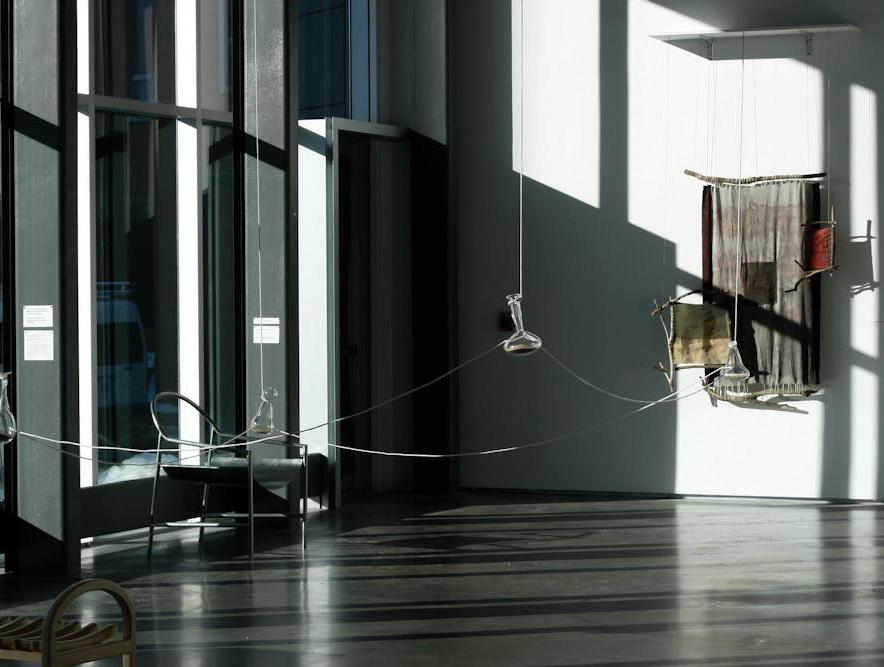
BRDD student Daniella Pozo ’27 has had work displayed in the exhibition every year since her arrival on College Hill. “It’s always just a really great opportunity to see what everyone is up to.”
on words including “borders,” “permeability” and “rupture."
This year, Pozo’s work centers around “trying to develop a language for myself that can reflect what I’m seeing in the world” and drawing historical connections to the present.
“As you get older you tend to have less connection with the younger years,” she said. “It’s really nice to see everyone’s work come together.”
“People should make sure to go to all the floors,” Pozo said. “I'd love for more people to come see it before it comes down.”
This article originally appeared online at browndailyherald.com on Feb. 5, 2026.
From tacky soundabites to soothing melodies, three girl groups' singles set this year’s pop scene
January saw singles from pop sensations KATSEYE, i-dle and no na
BY KENDRA EASTEP SENIOR STAFF WRITER
Only one month into the new year, girl groups across the globe are already expanding their discographies, laying the foundation for another year of iconic pop music. Three singles in particular have made ripples in the industry.
“Internet Girl” by KATSEYE
Despite leaving last week’s Grammys empty-handed after receiving two nominations, the girl group KATSEYE has dominated pop culture and the Billboard charts ever since their 2024 debut. Capitalizing on the commercial success of their absurd — yet addictive — single “Gnarly,” the international pop phenomenon released the studio version of their newest single “Internet Girl” on Jan. 2.
While the group’s sheer starpower makes the song’s nonsensical lyrics and repetitive melody almost charming, “Internet Girl” is better suited for a 2000’s Disney Channel sitcom rather than mainstream pop.
The production tries to be experimental –– for instance, by cueing the chorus with a toddler garbling, “I’m getting out of here” –– but the hodgepodge of vocal textures is ultimately awkward and uninspired. The track is neither smart nor tastefully ironic, instead shamelessly and brazenly chasing virality. Manufactured to be parroted and reposted, “Internet Girl” throws awkward lines like “Do you read me? / Like the emoji?” at the wall hoping

that they stick.
The catchy melody of “Internet Girl” may have you chanting “eat zucchini,” KATESEYE’s continued use of cheap gimmicks and tacky soundbites is certainly an ill omen for their future. While the talent, beauty and charisma of the six group members help distract from the song’s lackluster quality, the girls’ innate talent can only go so far in saving the single — and the group — from total mediocrity.
“Mono (feat. skaiwalker)” by i-dle
Unlike KATSEYE, i-dle made a strong and elegant comeback with the release of their highly anticipated single, “Mono (feat. skaiwalker) ” on Jan. 27. Rather than leaning on the flashy props and bizarre cacophonies of sounds plaguing “Internet Girl,” i-dle’s new single embraces its simplicity. Sleek and stylish, the track is an easy listen, delighting fans with its minimalist soundscape and soothing melody.
“Mono” urges the listener to honor their inner self by muting external pressures, unwanted voices and static noise. Championing self-love and acceptance, i-dle gestures to the LGBTQ+ community, singing: “Whether straight or gay / Every day and night / Dance to your real vibe.”
The message hits when, after the audience is submerged in silence following the song’s climax, one of the members softly whispers: “For sure / When you love yourself, you can
love everyone.”
In a world not often welcoming to queer identities, i-dle proves they have the courage to challenge and transform the K-Pop industry. Preaching self-actualization, the song strips down layers of sound and reveals a beating heart. For both its message and its craftsmanship, “Mono” is an excellent start to the 2026 pop scene.
“work” by no na
Despite its short runtime, no na’s “work” packs a fiery punch. Released on Jan. 23, the song is a rush of adrenaline. Dripping with attitude and glowing with heat, the song pulses forward with fierce drum beats and Gamelan rhythms.
The Indonesian girl group’s newest single experiments with a more sultry sound. The music video opens with member Christy clapping a ceng-ceng –– a traditional Balinese cymbal. As if daring the audience, she makes direct eye-contact with the camera and before coolly saying, “Get into it.” Christy then bends her back, pauses to yawn, and rolls backward.
This iconic moment launches the song into a high-energy frenzy. The girls begin trading verses, flipping their hair and building momentum with boastful lyrics. By the time the song reaches its chorus, the members’ strong voices are on full display. The girls yell: “F*ck it up, girl, put in that work / F*ck it up, b*tch, put in that work.”
“work” captivates listeners with its mastery of percussion and performance. The song exudes raw feminine power — artfully melding mesmerizing dance moves with abrasive chanting. Though a stranger to some of their previous music, “work” adds an exciting new flavor to no na’s evolving identity.
LIANO VALENZUELA / HERALD
This year, the exhibition's theme centered
KENDRA ESTEP / HERALD
& CULTURE
68th Grammy Awards heavy on political commentary, rich with electric performances
This year marks the final year the awards will be hosted by Trevor Noah
BY TALIA LEVINE ARTS & CULTURE EDITOR
Often considered the most prestigious honor in music, the Grammy Awards are cultural crowning achievements given to a small selection of talented musicians. On Sunday, viewers tuned in from around the world to watch the 68th Grammy Awards live from Los Angeles.
Hosted by Trevor Noah for the sixth and final time — because, in his words, he believes in term limits — the show was funny, apart from the painfully scripted teleprompters. With a dig at Nicki Minaj and an impression of Trump, Noah brought humor that sustained the show, which lasted more than three hours.
Every year, the award show manages to be quite the spectacle, with performances from the year’s standout artists. This year, the ceremony also served as a platform for artists to make explicit political commentary. From speeches calling for the abolition of U.S. Immigration and Customs Enforcement to stars donning black and white pins saying “ICE OUT,” the state of the nation was an ever-present theme.
After music legend Carole King presented Billie Eilish and Finneas O’Connell the award for song of the year for “Wildflower,” Eilish focused her speech on condemning ICE.
“No one is illegal on stolen land,” she said.
Continuing the political theme of the night, when accepting the award for best música urbana album for “DeBÍ TiRAR MáS FOToS,” Bad Bunny, who is Puerto Rican, began his speech by
REVIEW

speaking out against ICE. “We’re not savage. We’re not animals. We’re not aliens. We are humans and we are Americans,” he said.
Bad Bunny also took home the award for album of the year for “DeBÍ TiRAR MáS FOToS,” making it the first Spanish-language album to win the award. In the last moment of the night, he delivered most of his acceptance speech in Spanish, which was the perfect note to end on.
The best performance of the night was by Tyler, The Creator, whose set was the perfect combination of political, aesthetic and sensual. With a clear passion
for performing, Tyler, The Creator used the Grammy stage as it should be used: to make a statement. That statement was accentuated by an actual explosion onstage that reportedly took over 10 stagehands to clean up.
While Tyler, The Creator was nominated for six Grammy awards, including best rap album, the coveted title ultimately went to Kendrick Lamar. In winning, Lamar became the most-awarded rapper in Grammy history. He also took home record of the year for “Luther” with SZA.
But Tyler, the Creator was not snubbed — he became the first-ever winner of the brand new award for the best album cover for CHROMAKOPIA.
Olivia Dean, who took home the title of best new artist — one of the night’s most coveted awards — gave the audience the performance they needed. Her performance, while simple, was a testament to her vocal talent. Her love for music emanated from the Grammy stage to screens across the globe.
Among the big names in music, Supreme Court Justice Ketanji Brown Jackson — who was nominated for best audio book, narration and storytelling recording — was also in attendance. While she didn’t win, her presence did not go unnoticed, with Noah joking that “if you lose a Grammy,
‘The Housemaid’ keeps audiences at the edge of their seats
Interesting audio and phenomenal performances strengthen the film
BY SONIA CHU CONTRIBUTING WRITER
Based on Freida McFadden’s psychological horror novel of the same name, “The Housemaid” tells a dark and twisted story that is sure to leave viewers on the edge of their seats. Released in theaters on Dec. 19, 2025, the film exceeded box office expectations — garnering over $300 million in gross revenue despite a budget of just $35 million.
The film follows Millie Calloway (Sydney Sweeney), a former convict who, desperate for work, takes a job as a housemaid for the Winchesters, a rich, “picture-perfect” family in New York. But as Calloway settles into her new job, she begins to uncover the dark secrets of the Winchester family and the tortured history of her room in their mansion’s attic.
The film maintains a strong sense of suspense throughout, largely due to stellar performances from its cast. Amanda Seyfried’s performance as Nina Winchester — the explosive, unpredictable and manipulative housewife — especially stands out. As convincingly unreasonable and mean as Seyfried’s Nina is in the first half of the
movie, her performance still manages to invoke a sense of pity for her character in the film’s latter half.
Beyond the strength of its cast, the film’s sound design does a lot to keep the tension.
Sudden and loud noises throughout the film keep the audience from ever knowing if they can relax. Scenes featuring upbeat music can be interrupted by a crash just as easily as scenes of incredible tension.
Meanwhile, the filmmakers’ visual choices add to the psychological horror of the movie. The camera angles are eerie to the point of feeling intensely watchful, as though the viewer is carefully watching Calloway while she climbs up stairs or leaves the house. Sometimes, the camera angles even give way to mini-jumpscares, such as in one scene where Calloway closes a mirror only to find that someone was behind her the whole time — forcing the audience into Calloway’s uneasy position as a live-in housemaid.
The greatest strength of the film lies in its ability to lightly foreshadow. At the beginning of the movie, small hints like the placement of objects and the camera’s odd concentration on the window at the door to Calloway’s room seem odd. But the movie encourages viewers to pay attention to the small cracks of imperfection in the Winchesters’ facade.
While the movie’s foreshadowing is
able to lure in viewers, the film struggles in other aspects. The story fails to emphasize the importance of certain characters like Nina’s husband Andrew Winchester (Brandon Sklenar) and his mother (Elizabeth Perkins), despite their significant influence on the plot. The ending also disappoints
viewers, as an absurd convenience shifts the plot in a way that feels out of place and unrealistic.
Despite these small flaws, the movie does a great job shocking its audience for just over two hours. Watching “The Housemaid” feels like piecing together a
you can appeal directly to the Supreme Court.”
Toward the end of the evening, Lauryn Hill, who has won eight Grammy awards — more than any other female rapper — performed a beautiful tribute to the late musicians D’Angelo and Roberta Flack, who both passed away last year. The touching performance featured many other artists, including Jon Batiste, who was awarded an honorary doctorate at Brown’s commencement in 2025.
This article originally appeared online at browndailyherald.com on Feb. 2, 2026.
complicated puzzle, and the film brings all the impact a viewer could want from a horror-infused thriller.
This article originally appeared online at browndailyherald.com on Feb. 2, 2026.

COURTESY OF GETTY IMAGES FOR THE RECORDING ACADEMY® Bad Bunny took home the award for album of the year for “DeBÍ TiRAR MáS FOToS,” making it the first Spanish-language album to win the award.
COURTESY OF DANIEL MCFADDEN/LIONSGATE
Sydney Sweeney stars as a housemaid in the film, working for the rich Winchester family in New York.
SCIENCE & RESEARCH
Federal rule change requires open access to research papers
The change has elicited mixed responses from Brown researchers
BY ANGEL LOPEZ SENIOR STAFF WRITER
Effective Dec. 31, 2025, all federally funded research must be made freely available upon publication. The change — originally made by the Biden administration in 2022 — did away with the option for researchers to keep their federally funded work behind journal paywalls for 12 months before making it openly accessible.
Much of the research conducted at universities like Brown is funded through federal grants, which are supported by tax dollars. But since 2008, the allotted 12-month embargo period has allowed publishers to enjoy “exclusive access” to the papers that are funded by these federal grants, said Andrew Creamer, the open science librarian at the University Library.
Publishers have long been able to make a profit by charging fees or requiring subscription payments for access to new papers before the 12-month period ended. If researchers want their papers to be made free to the public immediately, they must pay the publisher — and to publish in some of the most prestigious journals, this can cost the researcher “thousands of dollars,”
DISEASE
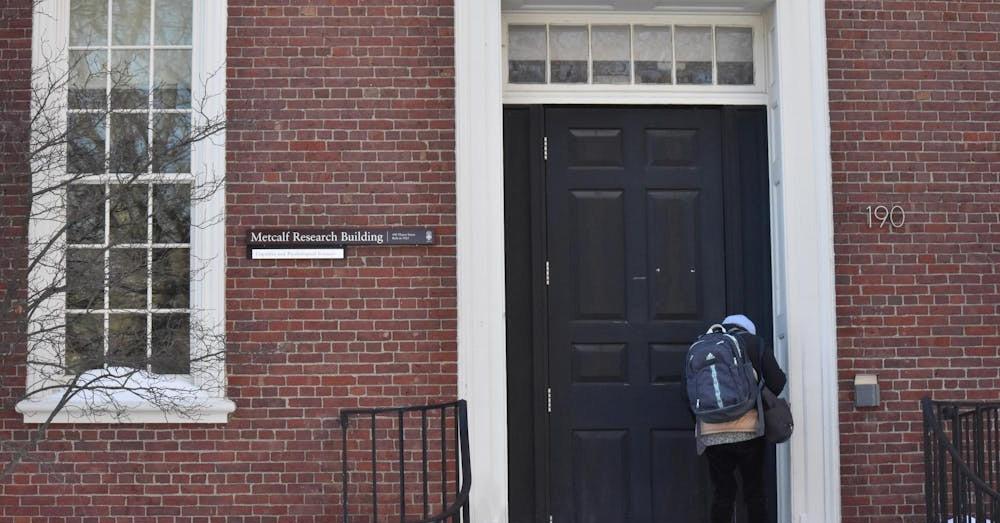
Creamer said.
Despite the federal rule change, many publications have not yet removed their open access fees, leaving the burden on the researchers using the federal dollars to ensure open access by paying for it.
The University has been negotiating with publishers to waive fees for authors, ensuring compliance with the new policy, Creamer told The Herald. He added that agreements have already been reached with several publishers, including Elsevier and
Cambridge University Press.
For articles that are well-received and reviewed favorably, authors sometimes may receive a fee waiver from journals if they are unable to pay the cost for open access, said George Lisi, an associate professor and co-director of graduate studies for the department of molecular biology, cell biology and biochemistry. He said “private foundation grants” and “internal money” from the University may also be used to pay for those fees.
Some researchers at Brown see the federal rule change as a possible step toward open access science.
According to Karthikeyani Chellappa, assistant professor of molecular microbiology and immunology, researchers are “happy that they have put in this rule.” Similarly, Lisi believes the rule change will be “good for science” but that it may cause “a little bit of angst in the beginning” as researchers adjust to the additional cost.
“If the taxpayers pay to fund this, they
should have access to the information,” Lisi said. “But in the ecosystem of how folks run labs, there will be challenges.”
Despite overall supporting the rule change, Allan Just, associate professor of public health and epidemiology and environment and society, voiced concern about requiring researchers to pay for open access. He noted that the change requires researchers to build the open access fees into their budgets when they write their grant proposals.
Just added that the rule change could cause problems for junior researchers if they want to publish research that has open access costs “not within the scope of” their original grant proposals. He also believes the rule change does not address the root of the issue for open science access and does not “challenge the current publisher model.”
Chellappa raised uncertainty regarding how the rule change will affect the future of research.
“Are they going to increase the fees further?” she asked. “At the end of the day, there should be some sort of talk between academics, government and publishing companies to make it a more feasible model.”
This article originally appeared online at browndailyherald.com on Feb. 1, 2026.
Brown experts discuss measles amid potential loss of eliminated status in the US
Experts discussed complications and prevention of the disease
BY TIFFANY PHAN CONTRIBUTING WRITER
As measles cases continue to rise, the United States is at risk of losing its measles elimination status.
According to a spokesperson from the Pan American Health Organization, which will oversee the review of the United State’s measles elimination status on April 13, the “reestablishment of endemic transmission would be defined as a continuous chain of transmission lasting through or beyond” Jan. 20.
The Herald spoke to experts at Brown to better understand measles, its potential threats and the possibility of the United States losing its elimination status.
The spread of Measles in the United States is largely due to “falling immunization rates,” according to Interim Associate Dean of Education at the School of Public Health Scott Rivkees. “Because measles is so contagious, you really have to have 95% of the population vaccinated to stop spread.”
Currently, the United States has around a 92% vaccination rate against the disease, he added.
Elimination status is assessed by the PAHO’s independent Regional Monitoring and Re-Verification Commission. The PAHO serves as the World Health Organization Regional Office for the Americas, but the two organizations remain legally distinct. This means that the United States’s recent withdrawal from the WHO does not affect the country’s PAHO membership.
Losing elimination status “does not carry formal sanctions,” according to a PAHO spokesperson, but it does illustrate a country’s “gaps in vaccination coverage,

surveillance, outbreak response or access to health services.”
Rivkees attributes falling vaccination rates in parts of the United States to “growing expansion of exemptions” for immunization and the “erosion of vaccine confidence,” a belief he says increased in popularity during the COVID-19 pandemic.
“In addition to the pushback against COVID-19 vaccines, there was a spillover into routine childhood vaccines,” Rivkees added.
Children typically receive the vaccine for measles, mumps and rubella at one year of age, and a second dose between the ages of four and six, according to Professor of Pediatrics Michael Koster, who is also direc-
tor for the Division of Pediatric Infectious Diseases at Hasbro Children’s Hospital.
“Unfortunately, there’s no antiviral for measles, the way there are for things like flu or COVID-19,” Koster said. Doctors can only provide “supportive care,” he added.
“If a child has measles, there’s about a 20 to 30% chance that child will have to be hospitalized for pneumonia,” Rivkees said.
“About one in 500 children will get measles encephalitis, which can lead to permanent brain damage. Up to 10% of children who have measles will end up having permanent hearing loss.”
“To be clear, we’re never going to be able to stop vaccinating against mea-
sles,” said Jennifer Nuzzo, the director of Brown’s Pandemic Center. “Measles elimination is more about driving the incidence, meaning the number of new cases that occur to a very low number of theoretically, domestically speaking, zero.”
Rhode Island has only reported one measles case since 2013, The Herald previously reported.
The United States received their elimination status in 2000 and nearly lost it in 2019 after outbreaks in New York persisted for nearly a year. Last year, Texas experienced an outbreak of measles that lasted from January to August. An outbreak in South Carolina, which began October 2025,
has reported 847 total cases as of Jan. 30. In an effort to avoid the loss of elimination status, the United States may argue that the measles outbreaks in Texas and South Carolina are not related.
For Nuzzo, trying to disapprove this connection is like “trying to be graded on a curve,” she said. “It’s contrary to the whole spirit of what the point of measles elimination as a goal was, which is to protect people from measles, and we’re clearly, by no measure … doing a good job of that.”
SELINA KAO / HERALD
The Metcalf Research Building on Jan. 29, 2026. The University has been negotiating with publishers to allow fees to be waived for papers’ authors, ensuring compliance with the new policy.
ISABELA GUILLEN / HERALD
‘Think hemispherically’: New library exhibit offers a glimpse into life across the Americas in 1776
The exhibition features artifacts that speak to the year 1776
BY ELLA PISCATELLO STAFF WRITER
A new exhibition at the John Carter Brown Library aims to “think hemispherically” about American history, according to Director of the JCB and Professor of History Karin Wulf. On Friday, the John Carter Brown Library held an opening ceremony for its new exhibition, “1776 Across the Americas: A Hemispheric History from the Collections of the John Carter Brown Library,” which aims to extend historical perspectives beyond the 13 colonies that are traditionally studied.
The exhibit is part of the JCB’s “2026 and Beyond” initiative, which celebrates the semiquincentennial anniversary of the United States, according to Wulf. The yearlong exhibit features around 40 artifacts and is a culmination of more than two years of research, said JCB 2026 postdoctoral coordinator Kathleen Telling.
When organizing the layout of the exhibition, the curation team ultimately decided to highlight “geographic and linguistic breadth and diversity,” Wulf said. The exhibit opens with artifacts from Rhode Island, then progresses to the rest of the North American continent and then reaches to the Caribbean and Central and South America.
“As you move about the room, it expands hemispherically,” Telling told The Herald. “We end it by thinking about what happens next.”
Some objects in the exhibit were donated by Brown alums, such as the diary of Samuel Harris, an American Revolutionary War soldier who fought in the Battle of Saratoga in 1777, a turning point in American history, Wulf said.
“It’s an amazing diary,” Wulf said. “I love it that a Brown alum thought, ‘My family should give this to the JCB.’”
Another item on display is the JCB’s copy of the Declaration of Independence, and she hopes readers will view the docu-
BOOK TALK
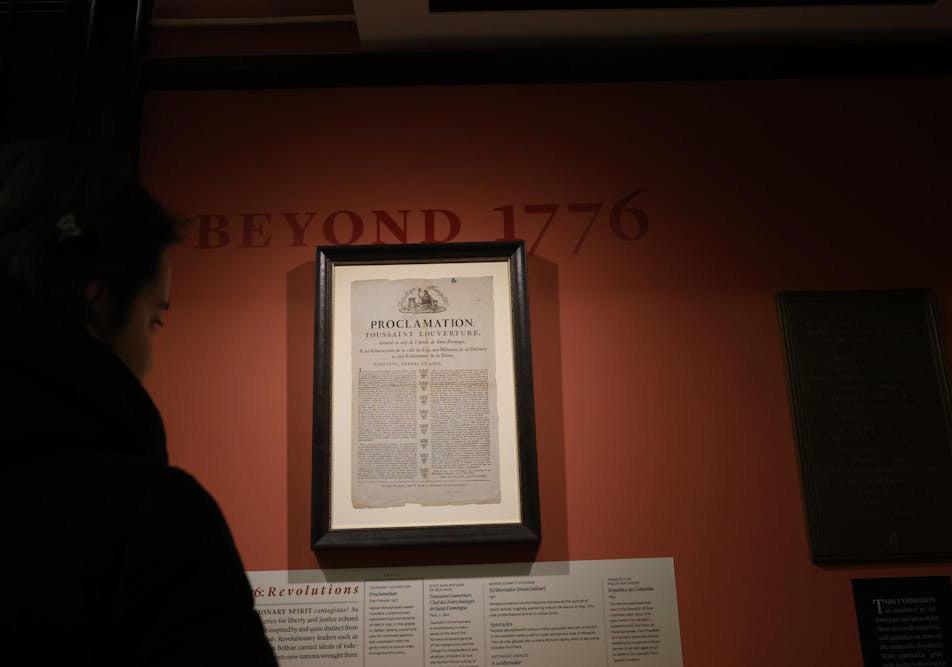
ment as “having lived a life.”
“The Declaration of Independence was not this pristine thing that lives in Washington,” she said. “It was words that traveled around in July of 1776 to ordinary people.”
Artifacts ranged from official documents to everyday historical records, including smallpox inoculation cards for the children of Nicholas Brown, the University’s namesake.
These artifacts share “an element of dealing with daily life amidst … this huge historic transformation,” Telling added, citing a letter in the exhibit from a group of women to Newport Governor Nicholas
Cooke asking if they could visit their friends in the “British-occupied” town in 1777.
“1776 was both very explosive and dynamic and also very mundane,” Telling said.
Telling, who joined the curation team last June, said she examined over 100 artifacts physically and even more digitally before selecting the final objects for the exhibition.
The curation team then met with the conservation team to discuss the conditions of the objects, paying special attention to materials with sensitive pigments that are at high risk of color change, Head of Libraries Conservation Roger Williams
said.
In these cases, a facsimile, or copy, is on display. But whenever possible, the original is featured, especially during high traffic periods like the first and last month of an exhibition, Williams told The Herald.
The conservation team is also responsible for structurally stabilizing the objects by creating mounts and book cradles, Book and Paper Conservator Terra Huber said.
The JCB’s collection “is a living thing,” Telling said. “We want people to come and engage.”
In Wulf’s view, the year 2026 provides an opportunity to reflect on the country’s early history.
The exhibit offers a “complicated view that helps us understand the complicated world we live in right now,” Wulf said.
This article originally appeared online at browndailyherald.com on Feb. 2, 2026.
“It’s important to have exhibits that show just the richness and depth in the materials that are here,” said President Christina Paxson P’19 P’MD’20, who attended the exhibit preview Friday evening. “For someone who’s not a historian, it makes history so alive and so exciting.”
Classicist Harry Tanner links homophobia in ancient texts to moments of socioeconomic upheaval
During a Monday talk, Tanner discussed his book on homophobia
BY IVY HUANG UNIVERSITY NEWS & SCIENCE & RESEARCH EDITOR
During a Monday talk in the Petteruti Lounge, author and classicist Harry Tanner traced instances of homophobic rhetoric and the acceptance of queer people throughout ancient civilizations. At the event, which was sponsored by the Department of Classics, Tanner discussed his 2025 book, “The Queer Thing About Sin: Why the West Came to Hate Queer Love.”
Today, there is a “well-established” correlation between “poverty and attitudes to same-sex desire,” Tanner said. For every $2,000 increase in gross domestic product per capita, there is a “point rise in an eightpoint scale of tolerance for same-sex desire in countries around the world,” he added.
This correlation between heightened homophobia and times of social disruption can be traced back to the ancient world,
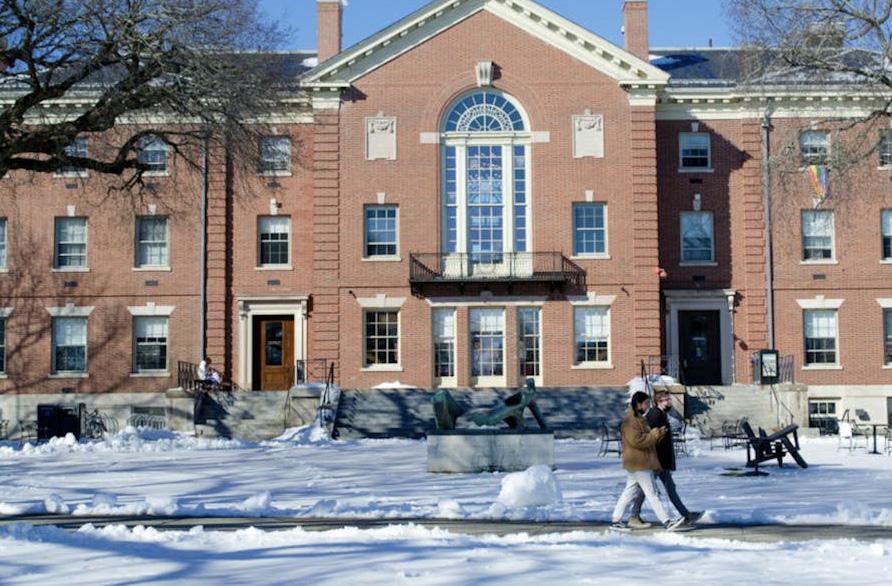
Tanner explained during the talk. Homophobia in ancient Greece and Rome was constructed by “economic changes and specifically rises in mass inequality and debt,” Tanner said in an interview with The Herald after the event.
“Plato’s increasingly homophobic interdictions roughly track with the literature on increasing wealth inequality in Athens,
Rome, one of the most wealth-unequal cities in human history,” Tanner said. Additionally, the law codes of Leviticus in the Old Testament of the Bible can be “tied to moments of great social upheaval, such as the Babylonian invasion,” he said.
Some Leviticus verses — such as Leviticus 18:22, which is translated as “Do not have sexual relations with a man as one does
with a woman; that is detestable” by the New International Version of the Bible — are often used to justify opposition to same-sex relationships.
Tanner also pointed to how “ancient Athens stopped producing same-sex scenes on pottery and staging plays which celebrated same-sex desire.”
As a teenager, grieving the deaths of his father and godfather, Tanner turned to an “evangelical Christian group” that “weaponized ancient texts” to make him think that his sexual orientation was a “curse, not a blessing,” he said.
“I had no means to fight back against it, I had no means to understand it,” Tanner said in an interview with The Herald. After training in Greek linguistics and ancient texts, he said he wrote the book to answer questions he had about homophobia during his teenage years.
Tanner hopes that readers of his book who have “suffered from queerphobia” can better understand that homophobia arises from a systemic issue rather than just “arbitrary hatred,” he told The Herald.
For Ella Hochstadt ’26, the talk was
“super eye-opening and very approachable” and made her want to read Tanner’s book. Conversation around homophobia is “really poignant nowadays, so I’m excited to see that it’s coming more into academia, moving into classics,” said Erin Finn ’27, who also attended the event.
Kiran Mansukhani GS, a doctoral candidate in classics who has read Tanner’s book, found the text “quite accessible as someone who isn’t a specialist” in the material.
The book raised an “interesting thesis about how we perceive homophobia and how it changes the future across different times,” he added.
Tanner concluded the talk by imploring academics to publish works that challenge interpretations of texts “which have been used to justify illiberal doctrines.”
“You get out there and you publish it,” Tanner said. “Write it in the trade press, get it in the New York Times and make sure the world knows about it.”
This article originally appeared online at browndailyherald.com on Feb. 2, 2026.
JAKE PARKER / HERALD
A document on exhibit at the John Carter Brown Library on Jan. 30. This event is part of the JCB’s “2026 and Beyond” initiative, celebrating the semiquincentennial anniversary of the United States.
ROSLYN CORIZ / HERALD
The event, which was held in the Petteruti Lounge, was sponsored by the department of classics.

Anti-ICE protest in photos

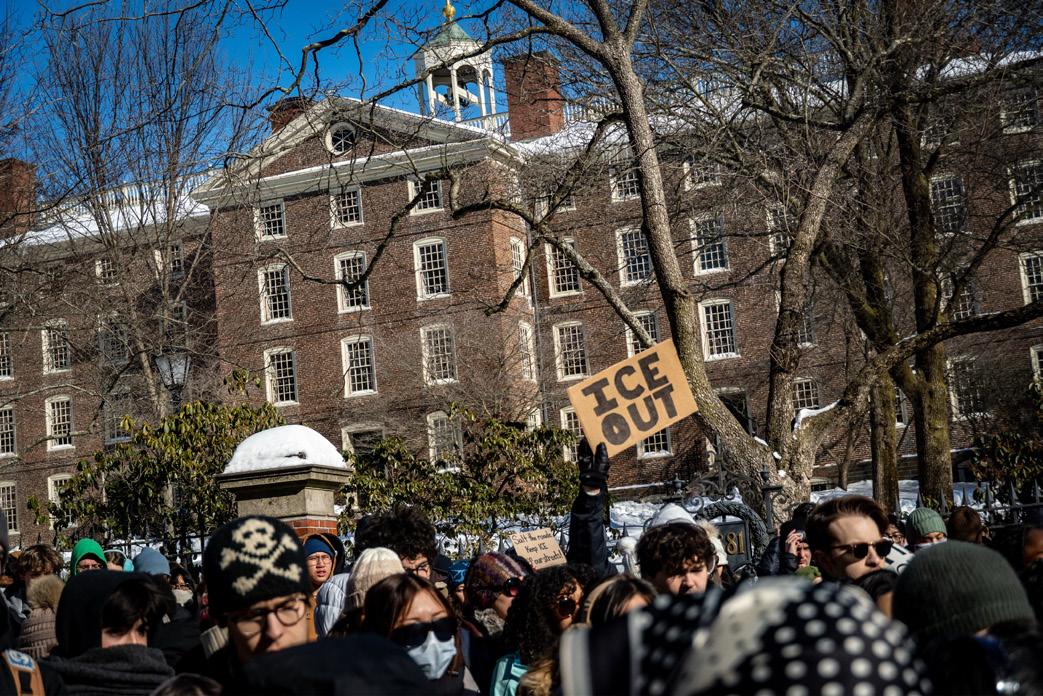


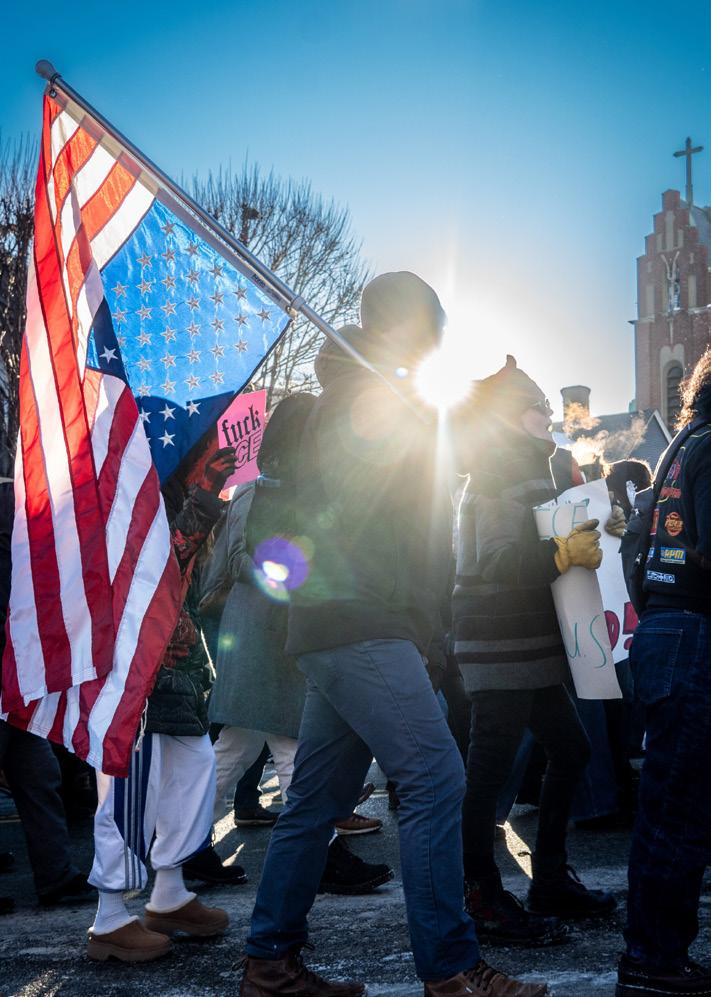





KAIA YALAMANCHILI
MARAT BASARIA
SELINA KAO
KAIA YALAMANCHILI
ANNAMARIA LUECHT
On Friday, over 1,000 community members gathered in Providence to protest recent escalations in immigration enforcement. In January, two U.S. citizens were killed by federal agents in Minneapolis. At Brown, students gathered on the steps of the John D. Rockefeller, Jr. Library. Across the state, high school and middle school students walked out of their classrooms to join the protest.
Protesters marched down city streets, blocking traffic and chanting.
Eventually, Providence community members arrived at the Rhode Island State House. On top of the involved in the walkout, the citywide protest had about 1,000 additional attendees.
KAIA YALAMANCHILI
The protest comes amid increasing U.S. Immigrations and Customs Enforcement activity in Providence. Last fall, multiple individuals were detained on College Hill. In January, several agents breached security at a Rhode Island courthouse while pursuing two men.
Last week, State Senate Majority Leader Frank Ciccone III (D-Providence, Johnston) told The Herald he is pursuing legislation to ban immigration enforcement activity on state property without a judicial warrant. On Jan. 20, Mayor Brett Smiley released an executive order prohibiting civil immigration enforcement on city property.
JAKE PARKER
MARAT BASARIA
JAKE PARKER
The Herald captured photos of the student walkout and State House rally protesting recent escalations in federal immigration enforcement.
Reporting by Zarina Hamilton and Michelle Bi UNIVERSITY NEWS & METRO EDITORS