Meredith M. Verdone ’81, P’19 Newton Center, Mass.
Christopher T. Wood ’85 Los Angeles, Calif.
ALUMNI TRUSTEES
Carolina C. Clark ’15
West Hartford, Conn.
Aron Xie ’15
Hong Kong, Hong Kong
TRUSTEES EMERITI
William N. Booth ’67, P’05 Chestnut Hill, Mass.
Henry M. Buhl ’48 New York, N.Y.
Steve Forbes ’66, P’91 Bedminster, N.J.
Steven R. Gorham ’85, P’17, P’21 Ipswich, Mass.
H. Anthony Ittleson ’56, P’84, P’86
Green Pond, S.C.
Michael B. Keating ’58, P’97 Boston, Mass.
Frank A. Kissel ’69, P’96, P’99 Far Hills, N.J.
Peter A. Nadosy ’64 New York, N.Y.
Eleanor R. Seaman P’86, P’88, P’91, GP’18 Hobe Sound, Fla.
David R. Williams III ’67 Beverly Farms, Mass.
Head of School
John R. Packard H’87, P’18, P’21
Associate Head of School
Nina Freeman
Director of Institutional Advancement
Gage S. Dobbins P’22, P’23
Director of Alumni and Family Programs
Sara Bird
Director of Family Engagement and Giving
Mary Merrill
Dean of Enrollment and Financial Aid
Bini W. Egertson P’12, P’15
Director of Communications and Marketing
Kate Moran
Design Aldeia www.aldeia.design
Director of Editorial and Multimedia Services
Emily Williams
Assistant Director of Alumni Programs and Communications
Molly Kueter
Unsolicited manuscripts are welcome. Opinions expressed in the Bulletin are those of the authors and not necessarily of Brooks School. Correspondence concerning the Bulletin should be sent to editor Emily Williams: mail
Editor, Brooks Bulletin 1160 Great Pond Road North Andover, MA 01845 email ewilliams@brooksschool.org
Choosing to Serve
The motivation and path toward military service has shifted for Brooks School students throughout its nearly 100 years; however, a small, distinguished group still draws on Brooks values as they pursue military academies and service today.
Read an extended version of the feature on our website.
“Winter Term has served our mission since its inception, supports the pillars that are driving what we hope to achieve moving into and through our centennial year and provides time and space for experiences that go so far beneath the surface.”
Head of School
John Packard H’87, P’18, P’21
A MESSAGE FROM JOHN R. PACKARD JR. HEAD OF SCHOOL
Winter Term’s Reach
We like to say at Brooks that there are no boarding school students in New England, or anywhere, for that matter, who return to school following Winter Break in early January with as much enthusiasm as our students do with Winter Term awaiting them. It has now been 14 years since we launched with the hope of spending the better part of these three mid-winter weeks engaged in short and immersive courses with pairs of colleagues and a group of students all centered on a shared passion. We have been free to pursue interests beyond our core disciplines and aim to get our students on their feet and into a different learning mode — project-based, experiential in nature and beyond the bounds of campus. As the program has been refined and improved over the years, one constant has remained: Winter Term’s important role helping our school realize a mission aimed at delivering the most meaningful educational experience our students will have in their lives.
During this year’s Winter Term, I found myself thinking about how this relatively short three-week stretch of time supports our mission and the work we are engaged in with our 100th year now very much in view. While in the depths of Winter Term, one cannot help but be overwhelmed by the ways in which our campaign pillars come to life. We are in pursuit of Immersive Learning opportunities all the time, are constantly in a mode emphasizing our Culture of Exploration and feel Genuine Belonging in the groups we spend so much time getting to know. Winter Term is entirely mission-driven and underlines the case for pursuing a centennial campaign centered on these pillars. The academic master plan we are moving forward aims to bring all of our academic facilities up to
a standard we currently enjoy in the arts and sciences. As we begin construction on the first phase of this plan, our Academic Commons within Luce Library, we do so mindful of what this facility has the potential to be if we pour ourselves into it in “Winter Term” ways: immersive, exploratory and intent on fostering belonging. It will be exciting to open this space at the end of the summer.
Yet, beyond the ways in which Winter Term serves our mission and models the campaign’s pillars, it also allows us time to connect beyond the immediate school community. In this edition of the Bulletin, you will find an extensive piece on our school’s distinguished record of service to this country. In my Winter Term course, Hawks & Doves, we spend the three weeks immersed in American politics. In the final week, we are able to take a three-day trip to Washington, D.C. Two staples of these trips have been visits to Arlington National Cemetery and the Vietnam Veterans Memorial. This year, we made a point of visiting the headstone of George Alexius Whitney ’96, who died in Afghanistan, and finding the name of George Whitney Carpenter ’64, who died in Vietnam. A hallmark of our school is that we remember well and my hope is that this year’s students now see these two names differently when moving through Chapel and passing the tablets displaying their names and honoring their sacrifice.
Winter Term has served our mission since its inception, supports the pillars that are driving what we hope to achieve during our centennial year and provides time and space for experiences that go so far beneath the surface. What a gift.
Have a wonderful start to summer and Brooks’ 100th year!
SOARING HIGH
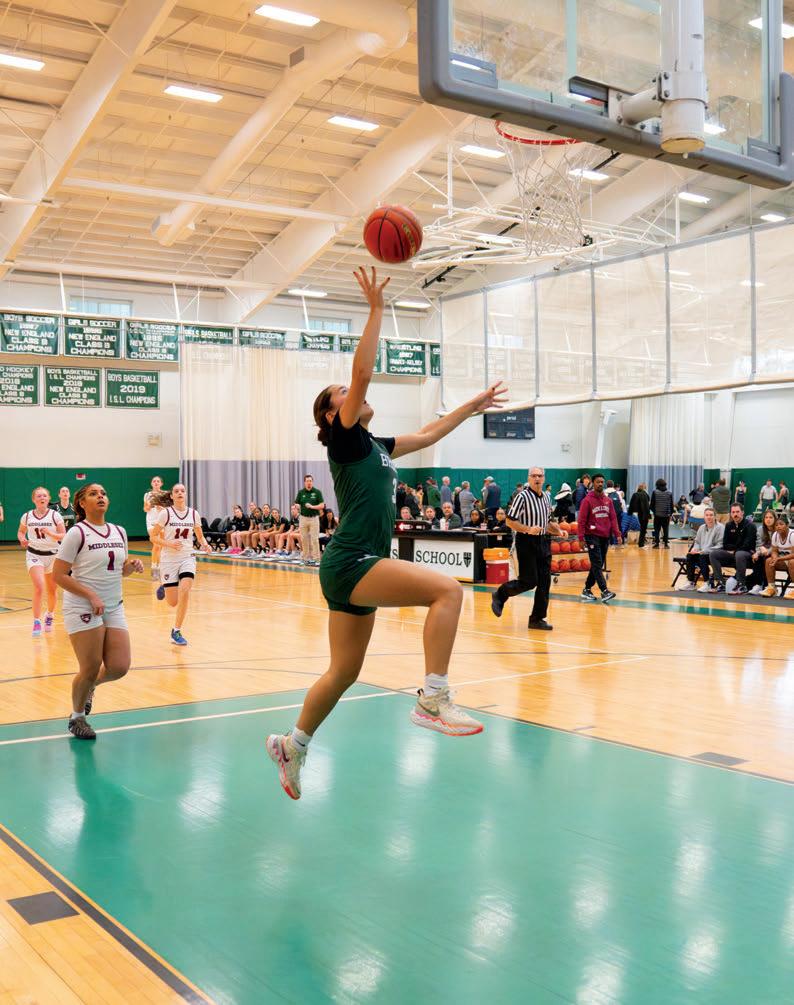
Maile Lung ’26 (seen soaring towards the hoop) helped the girls 1st basketball team beat Middlesex School 51-23 earlier this winter. She also was instrumental this past fall on the girls 1st soccer team and was named Independent School League Defensive Player of the Year, ISL First Team, and Class B All-New England Preparatory School Athletic Council.
Going Digital
New course, Public Voice: Mass Media and Journalism, is reviving the school’s student newspaper, The Shield.
The Shield is back! After a brief hiatus, the long-standing student newspaper is once again being produced by current Brooks students, now in a digital format through the English/Arts elective, Public Voice: Mass Media and Journalism, taught by Brooks alumnus and English Teacher Ian Speliotis ’14.
Print journalism on campus dates back to the 1931 first edition of The Bishop, a student-produced literary magazine. For many years, beginning in 1937, faculty members produced a quarterly magazine called The Archbishop. Back when Brooks maintained a middle school, third-formers (or seventh-graders) produced the school’s first newspaper on a mimeograph machine in 1940. An upper-school newspaper, better known as The Shield, printed its first edition on February 22, 1958.
“Every school needs a student newspaper,” Speliotis said about his desire to revive The Shield. Current sixth-formers in Speliotis’ semester-long class are divided into two groups, in which each student is responsible for writing an article every other week in the digital newspaper, brooksschoolnewspaper.org.
Angeline Benjavitvilai ’26 opted to take on additional responsibilities in the class as one of three chief editors during the first semester course. Also the president of Brooks’ Journalism Club, Benjavitvilai said she enjoyed providing feedback on articles written by staff writers, like classmate Trokon Harris ’26.
“I felt like taking this class would be an opportunity for me to learn more about the school while sharing my own opinions,” Harris said. “I’ve been writing about the history of the ISL, use of AI in schools and collegiate baseball. I’ve learned a lot about the school, conducted many interviews and written
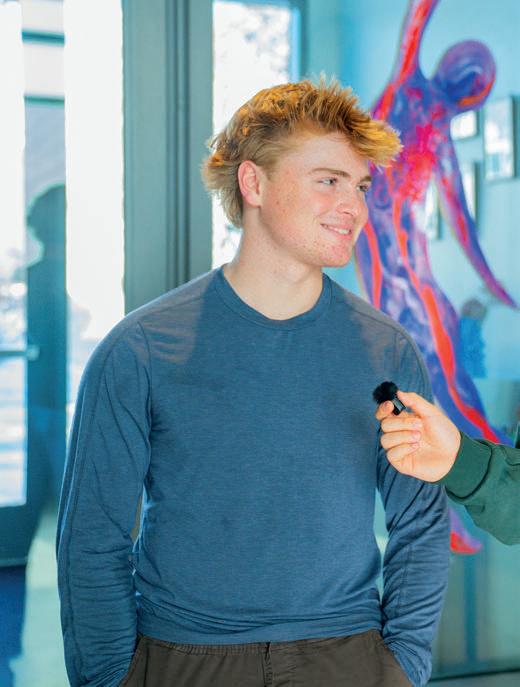
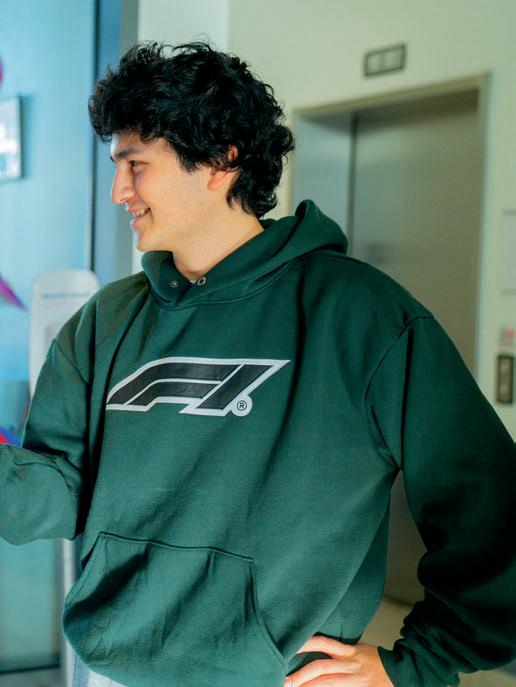
practices his interview skills with classmate James Sullivan ‘26 (left). Opposite: From left to right: Editors-in-Chief Niki Shoko ’26 and Brianna Mungai ’26.
COURSE DESCRIPTION
PUBLIC VOICE: MASS MEDIA AND JOURNALISM
The role of independent media is more pertinent than ever. In this multidimensional course, students will have the opportunity to explore and apply the principles of civic journalism across a variety of media platforms. Citizen-centered reporting and reputable news is the cornerstone of a strong democracy. As these institutions are threatened by social media, political turbulence and fake news, it will be young people’s responsibility to preserve the ways in which people get their information. Public Voice will empower students to use media as a means for informed public engagement, meaningful conversation and constructive debate in an increasingly polarized world, and as tools to hold leaders and institutions accountable. Through hands-on experience, students will collaborate to produce some combination of media projects, including a Brooks School newspaper (online and print), a podcast series, and programming and video broadcasts for school meetings. By the end of the course, students will have a comprehensive introduction to the challenges of modern journalism, media literacy, communication and critical thinking skills, and the power of storytelling, all within the context of a fast-paced, realworld environment.
about issues both on campus and around the world.”
Speliotis and his students have been thumbing through old editions of The Shield from Speliotis’ time as a Brooks student. He is planning for this year’s students to produce one commemorative print edition at the end of the year, featuring the best work from each student in both sections, and incorporating work from Brooks artists through a few comic strips.
“This class centers on community,” Speliotis said. “It’s fun to see the students explore the campus as journalists, interacting with teachers and kids through their interviews. These are all sixth-formers in the class, so this work is a bit of a final hurrah for them and it really is nice to see them so engaged in this campus community.”
WINTER TERM 2026
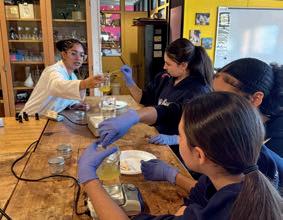
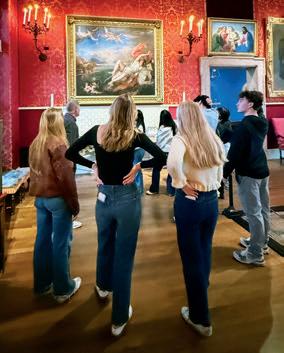
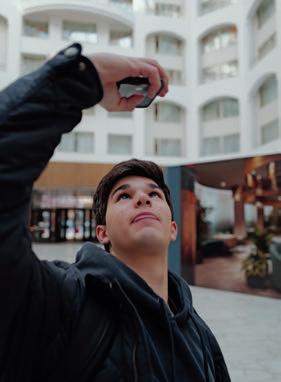
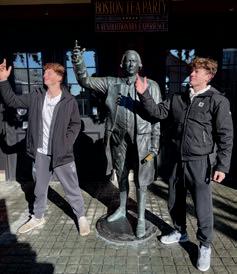
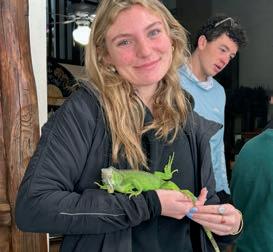
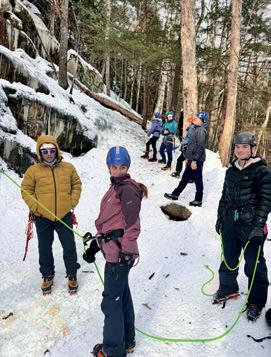
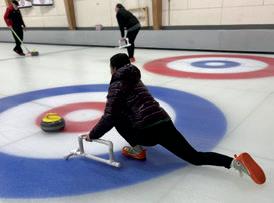
Now in its 14th year, Winter Term — when students focus on one, in-depth topic through engaging, experiential-based courses for three solid weeks — featured even more off-campus learning opportunities in locations both near and far, far away.
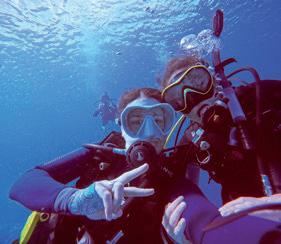
01 GUARDIANS OF THE SEA: Students earned open-water scuba certifications and enjoyed a trip to Bonaire.
02 TEENAGE MUTANT NINJA TURTLES: Students performed a parody of the 1990s film, “Teenage Mutant Ninja Turtles.”
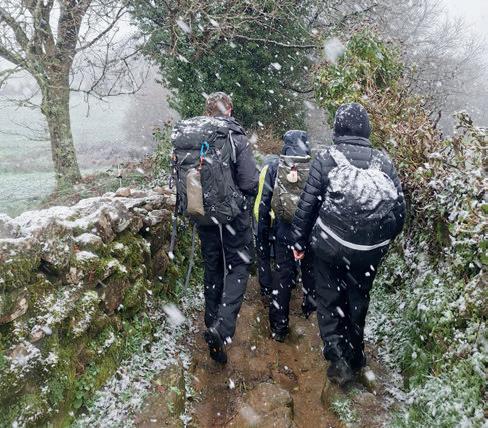
03 EL CAMINO: While walking a challenging, 80-mile route along the iconic “El Camino de Santiago,” students immersed themselves in Spanish culture.
04 FAIR WINDS AND FOLLOWING SEAS: While sailing in the Florida Keys, students learned about maritime life.
05 PASSION TO PASS IT ON: This course focused on the important work of numerous nonprofits.
06 HAWKS AND DOVES: A deep dive into American politics, this class featured a three-day trip to Washington, D.C.
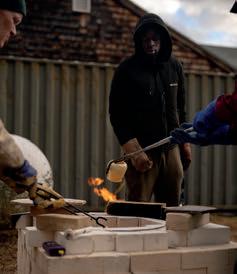
07 RAKU 6.0: THE LAST FIRING: While exploring the ancient technique of Raku, students developed ceramics skills during outdoor firings.
08 ERIN GO BRAGH: DISCOVERING THE CULTURE AND HISTORY OF IRELAND: This class focused on Irish history and heritage, while featuring a trip to Ireland.
09 GREAT OUTDOORS: Students developed winter survival skills in New Hampshire’s White Mountains.
10 ITALIAN ART & CULTURE: EXPLORING THE HIDDEN GEMS OFF THE BEATEN PATH OF SICILY, ITALY: In addition to taking a trip to Italy in March, students studied Italian art and culture.
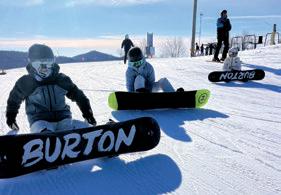
11 SHREDDING 101: Students with no snowboarding experience learned the sport.
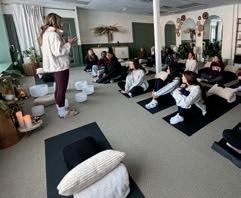
12 MINDFULNESS: This course explored diverse approaches to mindfulness.
13 AMERICAN REVOLUTION 250: ON FILM AND IN PERSON: In addition to an exclusive tour of the production studio of filmmaker Ken Burns, who recently produced a documentary on the American Revolution, students visited historical sites in Massachusetts and Pennsylvania.
14 WINTER IN NEW ENGLAND: This course provided insight into how New Englanders throughout time have endured harsh winters.
Roomies!
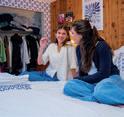
Brooks’ thoughtful pairing process often leads to students living well with one another, including three-year Brooks roommates Sloan Hayden ’26 and Tilly Crosby ’26.
Three-year Brooks roommates Sloan Hayden ’26 and Tilly Crosby ’26 didn’t exactly get along right off the bat.
Hayden attended Boston Latin School during her freshman year, but found it, with 460 grade-level classmates, too big. The workload, on top of a two-hour commute from her home in Charlestown, Mass. (one that required her to take three trains to get to her after-school lacrosse practices), was also just too much.
Crosby previously attended Cape Cod Academy, a tiny school near her home in Osterville, Mass., with just 300 kids in kindergarten through 12th grade. After her freshman year, she wanted a slightly larger community with better athletic opportunities.
The pair each received an email with their rooming details toward the end of the summer before their fourth form. Once armed with a name, the girls were able to look each other up via social media and started direct messaging through Snapchat before meeting one another on campus. They discovered they had mutual acquaintances and both play club lacrosse.
But for their first few months on campus, and in their shared space, the pair just didn’t click. It wasn’t until they found themselves teammates on the girls 2nd ice hockey team that they finally bonded. “Mostly, it started with doing small favors for each other, like filling water bottles for each other, and realizing that even though we were really different, we worked well together,” Hayden said.
Around February, Crosby and Hayden found themselves a bit more chatty about commonalities and a bit less competitive as two new fourth-formers on the 1st girls lacrosse team with a shared group of friends. Once they broke that ice, the girls have been the best of friends, residing with one another for their remaining time on campus. When naming characteristics of a good roommate, the pair place being able to let things go, as well as being a good listener, thoughtful and nonjudgmental, at the top of the list.
“It’s important to feel comfortable in your room,” Crosby said. “At boarding school, you need a place to decompress and we can do that even when we’re both in the room.”
The girls’ success story has everything to do with Brooks’ housing process. The students affairs team begins the process by placing returning sixth-form students as closely to their top picks as
From left to right: Roomates Sloan Hayden ’26 and Tilly Crosby ’26.
possible in vertical housing — meaning multiple forms are represented in each dorm, explained Director of Student Affairs Ingrid Knowles. They then tackle the lower, returning forms before assessing how many beds remain in each dorm and determining how many new students can best fit in both singles and doubles across campus.
New students share their lifestyle preferences — whether or not they listen to music while studying; whether they keep a neat or messy room; whether they like to go to bed early or late — through a housing preference form, where they also can indicate whether they prefer a single, double or are open to both options.
During the summer, a small team from student affairs then works hand in hand with folks from the admission office — who know the most about Brooks’ incoming students through interviews, application essays and personal recommendations — to match new students together as roommates.
“We’re not trying to match you up with a new best friend,” Dean of Enrollment and Financial Aid Bini Egertson P’12, P’15 said. “We’re trying to match you up with someone who you can successfully share a space with.”
Q & A
Did your room look this nice when you first arrived in the fourth form? Hayden: It’s definitely evolved. Crosby: We did have wallpaper in the fourth form. And we didn’t plan it, but we both arrived with blue bedding.
Who’s messier? Hayden: Tilly. Crosby: I just try on a lot of outfits and if I don’t like them, I toss them on the side of my bed. There’s usually a pile.
Do you consult each other about outfits? Hayden: Sometimes. This year I usually sleep in later, so she’s up before me.
What time do you go to bed?
Crosby: Never early — maybe 11 or 11:30 p.m.
Do either of you snore?
Crosby: No. Hayden: Tilly sometimes does.
Who gets the snacks?
Hayden: Tilly usually does — her mom brings snacks a lot. Crosby: Our moms are good friends too; they roomed together on our spring break trip.
Share a funny story from living together. Hayden: Once Tilly was sleep-talking about donuts and I thought we were having a full conversation. She doesn’t remember any of it.
Calista Tangney ’26
FOUR-YEAR DAY STUDENT
BUCKET LIST
We asked a few school prefects from the class of 2026 what they were sure to accomplish at Brooks before crossing that Prize Day stage on May 31.
✔ Accomplished! Something that I always wanted to do during my time at Brooks was find a way to participate in the theater department. I’ve always thought it was amazing how a group of students could come together to create something the entire school can enjoy. Looking back now, after being part of three fall musicals, I’m so grateful that I took that step outside my comfort zone. What once felt intimidating has become one of my favorite parts of the Brooks experience.
❑ Must Do! During my final spring at Brooks, one of my goals is to learn every student’s name in the school by the end of the school year. I think one of the things that makes Brooks so special is the tight-knit community we build here and I want to challenge myself to truly be a part of it. Knowing everyone by name might seem like a small thing, but to me, it represents the appreciation for the people who make Brooks such a great place.
Tristan Yepdo ’26
SENIOR PREFECT
FOUR-YEAR BOARDER
✔ Accomplished! Ever since coming to Brooks, I’ve always wanted to travel for the Winter Term. When my brother was at Brooks, I always saw pictures and videos of people traveling and having fun in the midst of January. So when I got the opportunity to travel to Italy last March, I jumped at the chance. That trip might be the greatest experience I have ever had in my life.
The Wheeldens [Chair of the Arts Department Babs Wheelden P’22 and Assistant Athletic Director Todd Wheelden P’22] did a great job of making the trip family-oriented. The relationships that I built on the trip with my fellow students are bonds that are going to last a lifetime. If I could go back and change something about the trip, I wouldn’t change a thing. Everything about that trip and experience was perfect.
❑ Must Do! Before I leave, I definitely want to give a senior speech with my roommate. My roommate and I have very different, but oddly similar, backgrounds and I think that’s why we work so well together. This is important to us because we feel like people here already have an idea of who we are here at Brooks. But we have a bunch of experiences that no one knows about us and it might change their point of view. So that is something I definitely want to do before I graduate.
Harryns Cantave ’26
THREE-YEAR BOARDER
✔ Accomplished! Before arriving at Brooks, I knew that we had to do an afternoon activity for every season. At first I was skeptical because I thought this meant I would have to play a sport every season. During my fourth form, I did play third soccer and got to be around a great group of people. But during these past two years, one of the afternoon activities I got to be a part of was Community Service. Being able to go to different Boys and Girls Clubs and play games with the children, help them with their homework, or even getting to hear how their day went was always a highlight of my day and it also led into the highlight of my summer. While being out in Lawrence, Mass., one day playing an outdoor basketball game, a kid I had seen frequently at the Haverhill Boys and Girls Club came up to me asking if I remembered him, to which I said, “Of course!” That small interaction showed me how meaningful Community Service was to him and the impact that I, and others who did Community Service, had on some of these kids.
✔ Also Accomplished! This fall semester, I enrolled in acting and for our Exhibitions of Learning, we performed a Christmas play. Completing this play was something that was one of my top goals for the semester because being able to partake in a play directed and acted by my friends and classmates is a memory I know will last a lifetime. Another reason I wanted to do this is to show that when people come to Brooks, they can be more than just an athlete. I never thought that when I came here I would ever take an acting class, but after being a part of it I can easily say it’s one of my favorite classes and that everyone who comes here should take it if they are able to get in it.
Abigail Nam ’26
FOUR-YEAR DAY
STUDENT
✔ Accomplished! During the fall of my third form, I made a goal for myself to make the most of my Brooks experience and to get involved in every way possible. Four years later, I am still achieving this goal! The countless clubs at Brooks have led me to find new interests and new friends, and they’re the highlights of my Brooks experience. I ran for student government in my third form, something I am so grateful for joining and for showing me how to be a student leader. I was a tour guide and a Chapel
GrainneRolfe’26+HarrynsCantave’26
prefect, a role that makes me appreciate our time in the Chapel and the way it brings our community together. I even went abroad to Scotland during the spring of my fifth form, something I never imagined myself doing, but has become one of my favorite memories at Brooks. There are endless opportunities everywhere at Brooks, endless chances to find new interests and learn more about yourself. I wanted to find my place as a third-former and I’m so grateful for the clubs and activities at Brooks that brought me into the community and helped me make the best memories.
❑ Must Do! Although I’ve completed most of my bucket list, a non-serious item I still have is to do a TikTok dance with Mr. Packard! I would love to run the school’s social media for a day and interview students around campus. I’ve seen other schools create cool videos and I think it would be so fun to do the same. A more serious item I would like to accomplish is editing and publishing an edition of Still Waters. I love to read and write, and when approached by Mr. Charpentier (English Teacher Dean Charpentier P’20), I
was so excited to join and be able to work on the school’s literary journal. Some of my work has been included in other editions and I’m excited to be on the other side of things, producing a collection that highlights students’ work and shows the talent at Brooks!
Grainne Rolfe ’26
FOUR-YEAR BOARDER
✔ Accomplished! Since I started at Brooks, I always wanted to take a travel Winter Term, which I was able to do last year when I went to France. We explored Paris and small suburban towns, which was a unique experience I wouldn’t have been able to do outside of this Winter Term.
❑ Must Do! Before I graduate, I hope to explore the spots on campus I haven’t been to, like the observatory and the Science Building green roof. I want to see these places because they have been so close to me during the past four years and I haven’t been able to see and appreciate these special areas of campus.
Abigail Nam ’26, Tristan Yepdo ’26, + Calista Tangney ’26
Summer Warren ’26
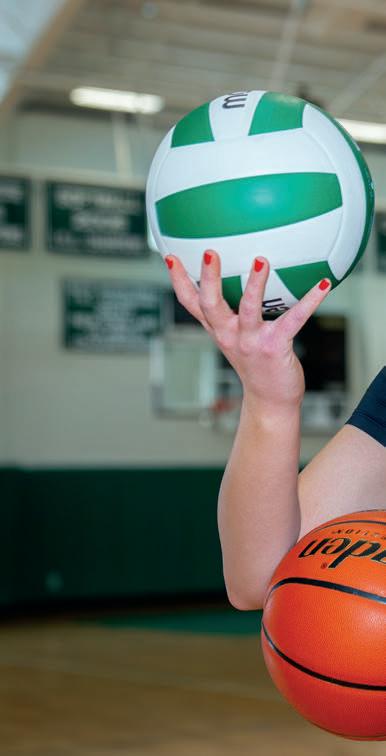
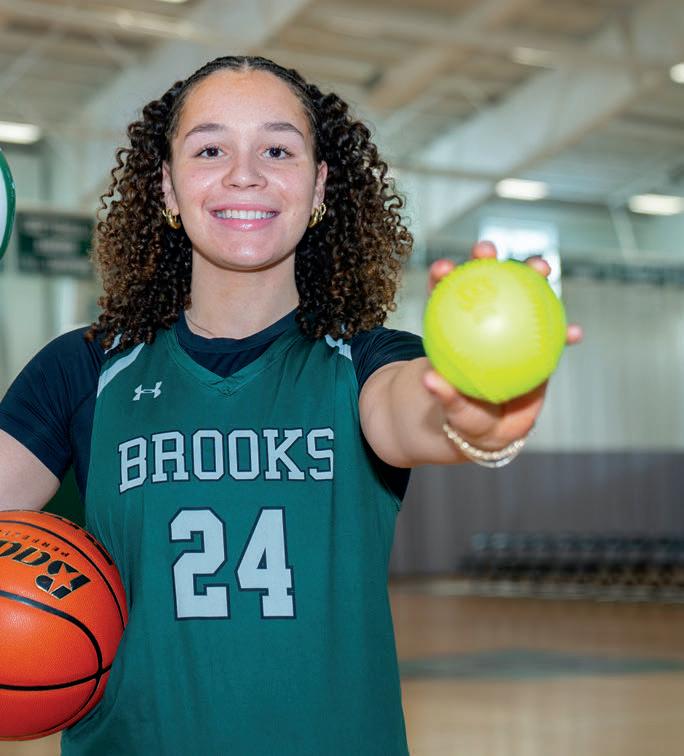
During a time of athletic specialization, Summer Warren ’26 is a throwback, triple-threat on the 1st volleyball, basketball and softball teams.
Sixth-former Summer Warren’s athletic record is an anomaly these days. She’s earned 11 varsity letters in volleyball, basketball and softball and is one of very few sixthformers presently on three 1st teams at Brooks. She’s rung up a string of accolades during her four years boarding at Brooks, serving as captain for the 2024 and 2025 1st volleyball teams and the 2025-2026 girls 1st basketball team. She committed early to continue her basketball career at Smith College.
“Playing three varsity sports has never felt overwhelming or challenging to me since I genuinely enjoy and love what I am doing, and the people I am doing it with,” Warren said. “Third form, I decided to play on the 2nd girls lacrosse team instead of softball so I could focus more on my club basketball commitment. By the end of that spring, I realized I had regretted not playing softball and how I missed being a part of a competitive winning team.”
Basketball is Warren’s first love, dating back to the fourth grade, as she enjoys the fast-paced game because it demands a combination of athleticism, strength and basketball IQ.
With a steadfast eye towards college basketball, she dedicates a part of her Sunday to her club basketball team yearround and trains independently before or after volleyball or softball practices.
“Basketball and sports in general allow me to show my competitive side,” Warren said. “Along with volleyball and softball, basketball has always been an outlet for me to forget about everything else, clear my mind and just go out and compete while being a part of something bigger than myself.”
However, Warren hasn’t allowed this commitment to take away from her dedication as an all-around outside hitter for Brooks’ 1st volleyball team and as an outfielder for Brooks’ 1st softball team, both of which remain her top priority when in season.
“While each team has its own unique vibe with different personalities and energy, the common thread among all the teams is a sense of trust, support and competitiveness,” Warren noted. “Each team holds its players accountable, celebrates each other’s success and genuinely enjoys being together. I think that shared team culture that turns into close friendships is what makes being a part of three varsity teams so rewarding for me.”
With Prize Day on the very near horizon, Warren is sure to miss the rhythm and routine of all three teams. As a favorite ritual, she named the basketball team’s pregame dance party in the team room because “it is always the perfect way for us to let loose and to remind ourselves to have fun before stepping onto the court and competing at a high level.”
ATHLETIC ACCOLADES
2023 Independent School League (ISL) Honorable Mention, Basketball
2023 New England Preparatory School Athletic Council (NEPSAC) Honorable Mention, Basketball
2024 NEPSAC Class B AllStar, Basketball
2024 All-ISL, Basketball
2024 All-NEPSAC, Basketball
2025 ISL Honorable Mention, Volleyball
2025 ISL All-League, Basketball
2025 NEPSAC Class B All-Star, Basketball
2025 All-NEPSAC, Basketball
2025 Surpasses 1,000 career points for the girls 1st basketball team.
2026 NEPSAC Class B Player of the Year nominee, Basketball [Editor’s Note: Winner announced after the Bulletin’s editorial deadline]
Most of all, she says, she will miss the bonds she’s developed with her coaches and teammates during the past four years. “I am obviously going to miss putting the uniform on and competing, but I think the hardest thing will be stepping away from the friendships I have made on these three teams,” Warren said. “The small moments in the locker room, dining hall or on the bus will be something that I miss deeply.”
Fast 5 / Q+A
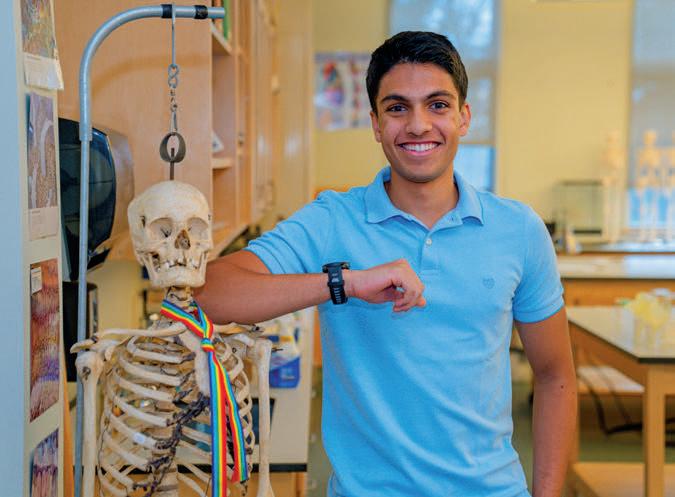
One student who has taken advantage of all that the Brooks community has to offer is Rohan Amin ’26, a day student from North Andover. Presently enrolled in five AP-level courses, he took four APs last year. He created his own independent courses of study in mathematics and science this academic year. Last year, he collaborated with a Merrimack College professor of environmental chemistry on a research poster and did a significant amount of experimentation with classmate Julian Wei ’26 that led to the design of an electrolysis experiment they presented at the Massachusetts State Science Fair at Gillette Stadium in March 2025.
Amin’s current leadership roles include school prefect, head of the Science Olympiad team, peer tutor on the Learning Center Leadership Team and Beloved Community ambassador. Amin conducted laboratory research at Boston University School of Medicine’s department of pathology last summer through the Students on the Forefront internship program. He is a longtime member of the drama stage crew and boys 1st crew team.
1How do you balance such a challenging academic schedule with all of your extracurricular activities? I’m pretty deliberate with how I use my time. I try to group work so that I’m not constantly switching between things and I plan my weeks out in advance so nothing sneaks up on me. I also make sure to commit time to activities I genuinely enjoy, which makes me feel energized rather than drained. When I care about what I’m doing, balancing everything gets much easier.
2
Tell us more about your math and science independent studies. I am currently involved in two independent studies: one in math and one in science. In my math independent, I’m studying an overview of differential equations, focusing on how they can be used to model change and describe real-world systems. The work involves a lot of reading and grappling with abstract ideas that end up connecting back to real applications. For my science independent, Julian Wei ’26 and I are converting an ergometer (rowing machine) into a source of
electricity, combining principles from physics and engineering. This project has taught me the importance of trouble-shooting and persistence, especially when designs do not work as planned and require repeated adjustment. Both projects are faculty supervised, with Mr. Kihak Nam ’99, P’26, P’29 guiding the math study and Mr. Robert Bauer P’26 advising the science one. But the responsibility for progress largely falls on us, making the experience very different from a typical class.
3You’ve gone on some fantastic trips during all four of your Winter Term classes: Washington, D.C., Cooperstown, N.Y., Portugal and Bonaire. How has Winter Term enriched your overall Brooks experience? Winter Term has transformed my Brooks experience by changing how and where learning happens. Stepping out of the classroom makes learning feel more personal and immersive, whether that means discussing history and politics in Washington, D.C., navigating a new language and culture in Portugal, or applying science firsthand while scuba diving in Bonaire. I also feel that Winter Term builds a stronger Brooks community, since spending extended time traveling and learning together creates connections that carry back to campus. These experiences have taught me to be more curious, adaptable and open to new challenges, and they have been some of my best memories at Brooks.
4
What do you think you’ll focus your time on next year at college? Next year, I want to focus on building a routine that balances challenging academics with the parts of college life that make it meaningful. I’m excited to keep exploring math and science through research and projects, but I also want to invest time in communities that value teamwork, such as rowing, where I can challenge myself and grow with others. More than anything, I want to use college as a chance to push myself in new environments while staying true to myself and the things I enjoy.
5
What advice would you give to an incoming third-former? I would tell an incoming third-former to try things before deciding whether they’re “good” at them. If I had decided I wasn’t good at rowing and shouldn’t do it my third form, I would have missed out on one of the closest and most meaningful communities I’ve ever been lucky enough to be part of. Stepping into activities that feel unfamiliar can lead to unexpected growth, friendships and experiences. I’d also say don’t be afraid to ask questions and seek help; teachers and classmates want to support you, and leaning on their guidance can make a huge difference.
“I also make sure to commit time to activities I genuinely enjoy, which makes me feel energized rather than drained. When I care about what I’m doing, balancing everything gets much easier.”
Rohan Amin ’26
Reading Recs
Some of our academic department heads shared the books they think should be on everyone’s summer reading lists.
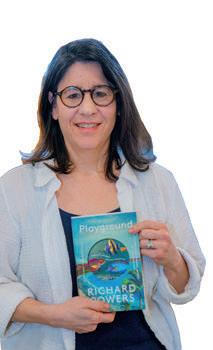
“Playground”
by Richard Powers
Personal Review: “Playground” follows the lives of Todd and Rafi, high school friends whose paths diverge as they grow up. One becomes a tech mogul who creates a lucrative AI platform called Playground; the other becomes a novelist who explores the emotional and moral aspects of human existence that technology can’t capture. If you know me, you know this is right up my alley! Written in prose that makes you marvel at what the human mind is capable of, this novel explores the ocean, climate change and AI with the insight and clarity we so desperately need. It is a love letter to humanity and the beautiful world we inhabit, and it culminates in a shocking turn that shook me.
DANIELLE CORIALE
Chair of the English Department
“The
Hare with Amber Eyes: A Hidden Inheritance”
by Edmund de Waal
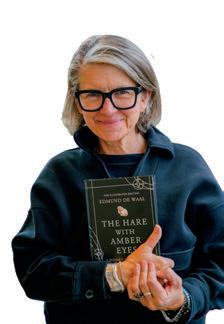
Personal Review: As an artist, ceramicist and fan of Edmund de Waal, it is not shocking that I find his words as gorgeous as his porcelain. This novel is a path of poetry. I love how visual it is, how the netsuke takes us on a journey of storytelling and memories. This book is a thoughtful exploration of what objects mean, how they connect us across generations and how the things we choose to keep might shape who we are. It is a memoir about the impact of war woven with family history, an appreciation for the role of art in our lives and a genuine love of beauty. As an artist, as well as an art and art history teacher, I assigned this book for bonus reading over holiday breaks. This and Donna Tartt’s “The Goldfinch” are two of my top books for the places they take us, the time we traveled to and the narrative around such extraordinary works of art.
BABS WHEELDEN P’22
Chair of the Arts Department
“Project Hail Mary” by Andy Weir
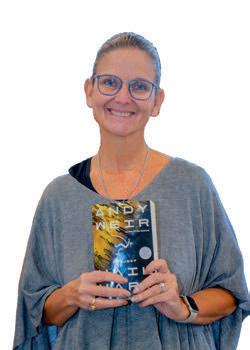
Personal Review: I loved how “Project Hail Mary” mixed real science with humor, suspense and an unexpected friendship. It’s exciting, emotional and impossible to stop reading.
LAURA HAJDUKIEWICZ P’15, P’17, P’19
Chair of Science Department
“In Search of Klingsor” by Jorge Volpi
Personal Review: Volpi exploded onto the literary scene with his masterful novel, “In Search of Klingsor,” in which the main character, Francis Bacon, pursues Klingsor, the secretive head of Hitler’s nuclear program. The novel, however, becomes so much more than just an espionage thriller, as it pits philosophy, political pragmatism, the science required to create a nuclear bomb and the ethics of what it means to have the “bomb.” Volpi is one of the best Latin American writers crafting fiction today.
PETER NEISSA P’28
Chair of the Languages Department
“Katabasis” by R. F. Kuang
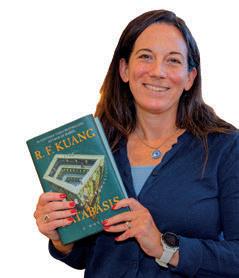
Personal Review: The book follows two scholars on a journey into hell to rescue their graduate advisor. I love the book for its rich references to scholars and knowledge in our world and how it delves into the beauty of knowledge for knowledge’s sake. At the same time, the book also touches on the idea of feeling like an outsider, the struggles for women in a male-dominated field and finding belonging with others who are as quirky as you are. It is also a fascinating magical world where magic derives from the contradiction of paradoxes.
MICHELE MUSTO P’26
Chair of the History Department
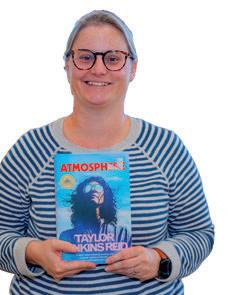
“Atmosphere”
by Taylor Jenkins Reid
Personal Review: I really enjoyed reading “Atmosphere,” featuring an LGBTQ+ protagonist on a journey of personal and professional self-discovery. It also offered an insightful glimpse into the experience of being a female astronaut in a predominantly male-dominated field.
ASHLEY JOHNSTON
Chair of the Self in Community Department
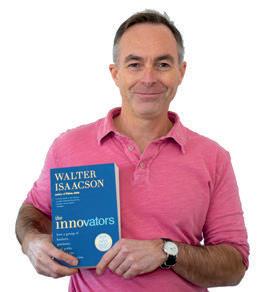
“The Innovators: How a Group of Hackers, Geniuses and Geeks Created the Digital Revolution” by
Walter Isaacson
Personal Review: Not only is the history of technological innovation interesting, but Isaacson explores the human side of what made it possible. Was it lone geniuses, or organized teams that really created computers, networks and the groundbreaking technology we depend on? And why is it often hard to identify the inventor of these breakthroughs? This book is an engaging look at the past 150 years of innovation and how they relate to today.
CRAIG GORTON P’26
Director of Computer Science
IN THE LEHMAN
Fantastic Art
The Robert Lehman Art Center continues to be a hub of artistic activity on campus, as painter Jorey Hurley P’27, P’28 and ceramist Roberto Lugo spent time with students, in addition to showcasing their works, during Winter Term and second semester.
WINTER + SPRING EXHIBITS 2026
JOREY HURLEY P’27, P’28
Born and raised in California, current Brooks parent Jorey Hurley P’27, P’28 now draws inspiration from her coastal Massachusetts home. Her work functions as a visual memory of domestic life and through both color and pattern, it celebrates the daily rhythms of home, capturing fleeting moments before they disappear.
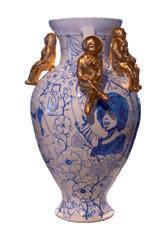
ROBERTO LUGO
Through the curation of current parent Kiki Connell P’26, not only did the RLAC present an exhibit by ceramics artist Roberto Lugo, but students and community members were able to engage with Lugo through a variety of discussions and art-making sessions. Known for his powerful fusion of classical ceramic forms with graffiti, portraiture and traditional classical, European and Asian arts, Lugo transforms clay into a language of cultural storytelling — one that reclaims beauty, ancestry and history from the margins.
Farewell, Lynn!
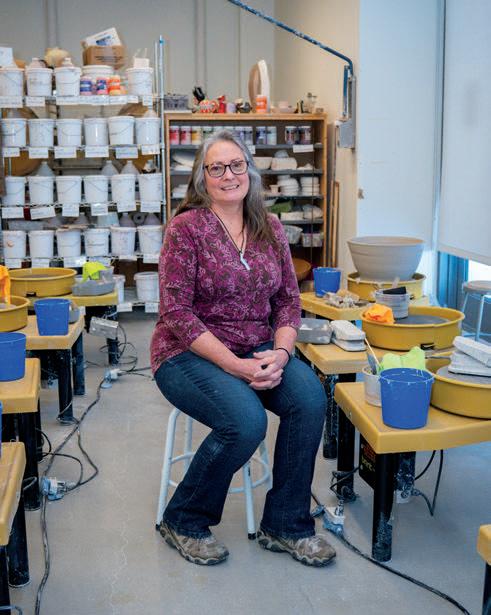
Art teacher Lynn Evangelos McLoughlin P’11, P’16 is set to retire at the close of this year. “Lynn has shared her beautiful, creative spirit with Brooks through a wide range of contributions over the past 50 years. Her gifts are lasting,” Chair of the Arts Department and Director of the Robert Lehman Arts Center Babs
Wheelden P’22 said. “We will continue to provide a joyful and safe place for students to thrive in the arts, to find themselves or to get lost in the creative process, all in honor of Lynn. While she may not be here physically teaching in the years ahead, she will never be far. She will continue creating and we will follow her and her artistry as
she embarks on the next chapter of a well-earned retirement.”
While McLoughlin joined the Brooks faculty back in 2010, it was not her first job on campus. She was just 15 when she began doing the calligraphy for the Brooks School diplomas back in 1975. A year later, she began teaching art at Brooks School Day Camp.
In fact, McLoughlin’s ties to the Brooks community date back to the 1950s, as her father, Faculty Emeritus Nick Evangelos H’77, P’74, GP’11, GP’16 (d), taught biology and coached numerous teams for nearly four decades. Her mother organized the uniforms down at the athletic center. Her ex-husband, John McLoughlin P’11, P’16, was the director of Brooks’ Exchange Program and a history teacher for about a decade. And her children, Annie McLoughlin ’11 and Lee McLoughlin ’16, brother, Scott Evangelos ’74, and cousin, Steve Howard ’69, are all graduates of the school.
The visual artist obtained her bachelor’s degree from Framingham State College and her master’s degree in education from the University of Massachusetts Lowell. McLoughlin has run her own art school, PassionArt Studio, for roughly 30 years. Her resume also includes a number of positions in the fields of arts and education: She ran North Andover’s summer playground programs; she taught English in China; she taught preschool; and she taught art in both local nursing homes and area public schools.
Currently a New Hampshire resident, McLoughlin and her partner presently (and physically!) are building a timber frame home and art studio in Newry, Maine. Retirement plans include volunteering at local maker space and pottery studios; substitute teaching in nearby Bethel’s schools; becoming a certified death doula; practicing Reiki; and skiing after a long hiatus from the slopes.
Goodbye, Lillian!
World Languages Teacher Lillian Miller P’14, P’17, P’20 also is set to retire at the close of this academic year.
“She is fair and kind and completely devoted to ensuring this community continually expands to reach the full breadth of all who are members of it,”
Head of School John Packard H’87, P’18, P’21 said of Miller when presenting her the Richard F. Holmes Chair.
“She is an inspiration in this regard and walks the walk every single day she is here. She is exuberant and joyful and generous beyond measure.”
Miller, who has taught the full range of Spanish classes since arriving
at Brooks in 2006, was named the Richard F. Holmes Chair in 2019. She has been the advisor to campus affinity group Alianza Latina since it began in 2009 and in 2012 started the student volunteer program with Bellesini Academy in Lawrence, Mass.
Originally from Lima, Perú, Miller moved to the United States with her family in 1987. She presently resides in North Andover, Mass., with her husband, Paul. The couple have three children: Alesandra ’14, Paul ’17 and Isabela ’20.
Miller holds a bachelor’s degree in business administration, with a
concentration in finance, from Boston University and a master’s degree in education from Boston College’s Lynch School of Education. Prior to her arrival on campus, Miller worked in business for eight years in addition to teaching at Meritor Academy and Merrimack College.
For years, Miller and students in her Winter Term class, “Passion to Pass it On,” have volunteered for several nonprofit organizations in Lawrence, Mass., including Lazarus House, Youth Development Organization and Habitat for Humanity. During her retirement, Miller plans to continue this volunteer work. She will also keep up her philanthropy efforts, namely as a member of the board for Bellesini Academy in Lawrence, Mass.
CHOOSING TO SERVE
While the number of Brooks community members to pursue the military after Prize Day has waxed and waned throughout the school’s nearly 100 years, a small, distinguished number of students continue to draw on Brooks values when seeking out opportunities in military academies and the armed forces today.
DISCIPLINE. TEAMWORK. ACCOUNTABILITY. COMMUNITY.
During this year’s Veterans Day Chapel Address, United States Navy SEAL Nate Gibeley ’14 spoke of the importance of these values, obtained while a Brooks student himself, that have carried him through his entire military career.
“It was here that I built connections with my peers. They gave me energy and empathy. It was here that I learned to push through things I didn’t want to do and to keep showing up, no matter what. Many of these same habits carried me through SEAL training, through my time in the Navy all over the world, and now, through everything I’ve faced since,” Gibeley told the
Brooks community in Chapel. “Service isn’t about glory; it’s about gratitude. Gratitude for the people beside you, for the truth that life has no ceiling — and the freedom in that. Veterans Day is about honoring those who are willing to stand in the fire and about remembering that everyone can choose to serve in their own impactful way.”
Gibeley is one of Brooks’ distinguished graduates who have opted to serve the country at either a military service academy or the armed forces. The percentage of a form to pursue military service post-Brooks has waxed and waned during the school’s near century, from 91 percent of the student body during World War II to just this year’s sixth-former Jill Hamiliton ’26, who is matriculating to the United States Military Academy at West Point in June. While motivation and preparedness vary among the two dozen alumni and community members interviewed for this article, almost all claim support
for their military decisions from classmates or faculty.
“My friends are very excited and happy that I found a school that ties together everything I want,” said Hamilton, who will play for the women’s rugby team at West Point next fall. “Brooks has helped prepare me in many ways; it’s a very supportive community that wants to help with everything it can. Brooks has taught me independence
Navy SEAL Nate Gibeley ’14 (left) gave the 2025 Veterans Day Chapel Address and met with current students in the Building the American Republic history class, taught by history teacher Alex Konovalchik P’14, P’17 (right).
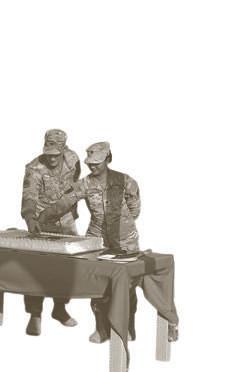
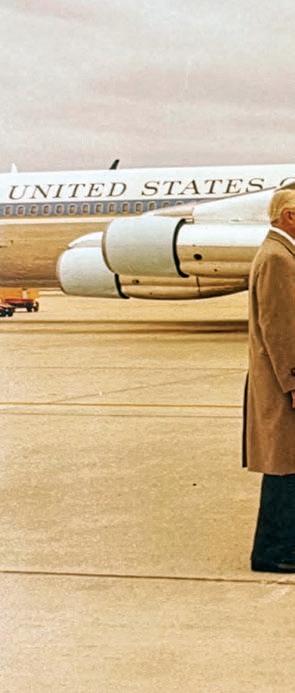
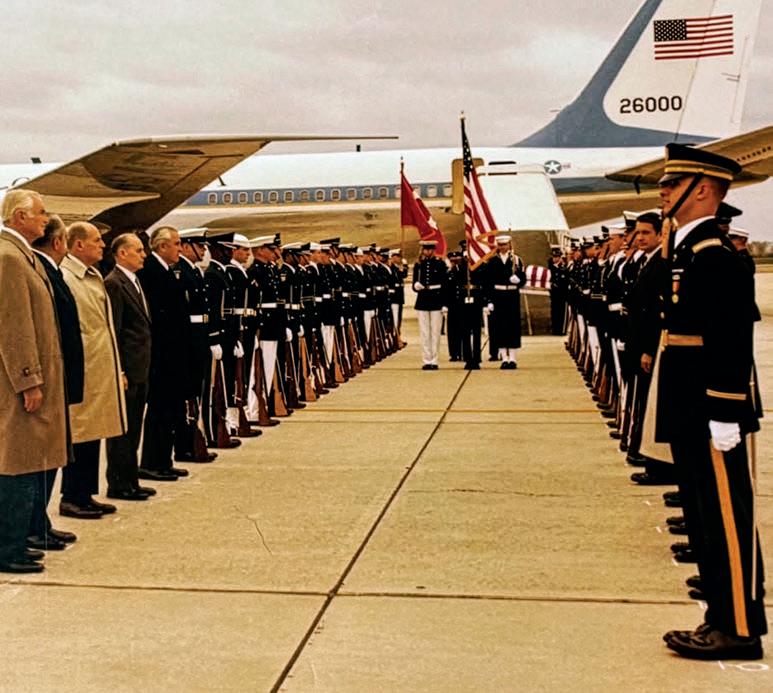
Above: “Brooks gave me a great secondary education, putting me way ahead of my peers in areas like writing and foreign languages. And for a scholarship kid from North Andover, it gave me a window into a very different world. West Point and the Army gave me leadership training and experience, perseverance, a much-needed thick skin, a very broad undergraduate education and the joy and demands of being involved in something bigger than myself,” said Mark Shields ’74, the first Brooksian to graduate from West Point in 1978 and who subsequently served five years as an infantry officer. For three of those years, Shields was a member of the Army’s presidential escort in the 3rd United States Infantry Regiment. In this photo, Shields (far right) commanded the honor guard when meeting General of the Army Omar Bradley’s remains at Andrews Air Force Base in April 1981 prior to his burial in Arlington National Cemetery. Bradley was the last surviving five-star general. The older men in civilian clothes include prominent World War II General Matthew Bunker Ridgway and General Lyman Louis Lemnitzer.
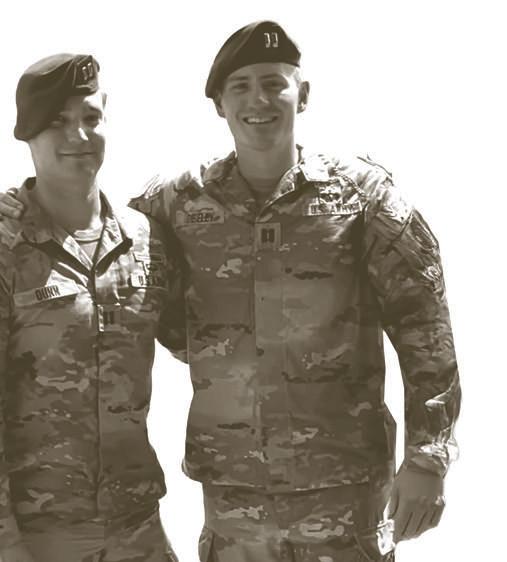
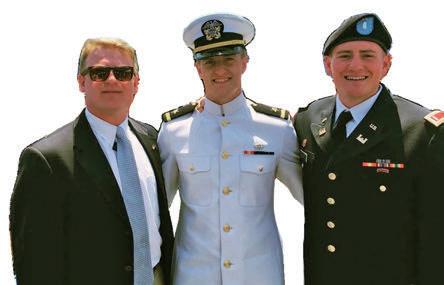
Right: The Gibeley brothers, from left to right: California National Guard First Lieutenant Will Gibeley ’17, United States Navy SEAL Nate Gibeley ’14 and United States Army Engineer Officer Ryan Gibeley ’11 at Nate Gibeley’s graduation from the United States Naval Academy.
and responsibility, since this is the first time I am not living at home. Through all of the alumni that come back and all the ways they support the school, Brooks taught me that I should value the connections I make. Brooks also taught me how to advocate for myself and the importance of self-advocacy. This will continue to be useful throughout my whole life and, according to my future teammates, especially if I want to succeed at West Point.”
UNIVERSAL SERVICE
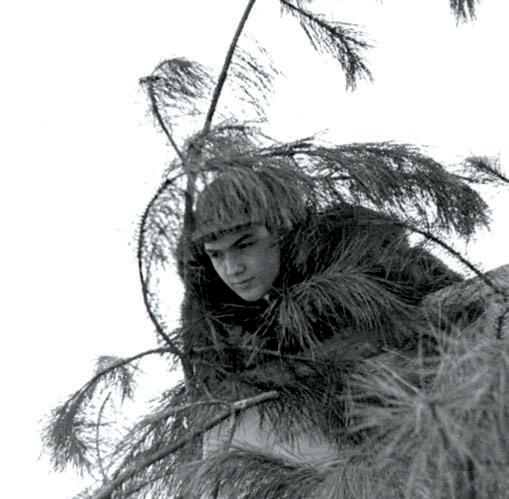
Brooks School was still in its infancy when fighting in Europe broke out during the summer of 1939. On campus, patriotism quickly was in full effect. A battalion, complete with a band, flags and wooden guns, organized and drilled the manual of arms. Faculty and students built a wooden airplane observation post that they manned around the clock for many months after the attack on Pearl Harbor (and before the campus community enlisted the help of additional North Andover residents). Due to nation-wide food rationing in 1942, Brooks created its own victory garden on a couple of acres by Russell House, canning and freezing a portion of the summer and fall harvests during the winter months.
Numerous faculty members took a leave of absence from campus life during World War II to serve in the armed forces and it became common practice for many fifthformers to graduate a year early, the vast majority of them serving in various branches of the military before heading off to college. For example, 13 members of the class of 1944 received their diplomas along with 27 members of the class of
1943; and 15 members of the class of 1945 graduated with the remaining 10 members of the class of 1944.
“The first fifteen graduating classes really set a standard of service, which was almost universal during World War II,” Head of School John Packard H’87, P’18, P’21 said. “During subsequent periods of conflict, Brooks alumni did serve in significant numbers: Korea, Vietnam, Iraq, Afghanistan. Vietnam was complicated by the draft, of course. But that high level of participation didn’t continue in the same way after World War II, which simply reflects the different times and circumstances. In recent decades, service has been almost entirely voluntary. That said, we’ve
had a steady — though not annual — stream of students attending service academies.”
MOTIVATIONAL FACTORS
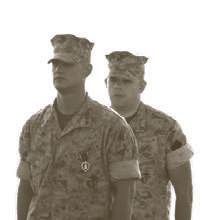
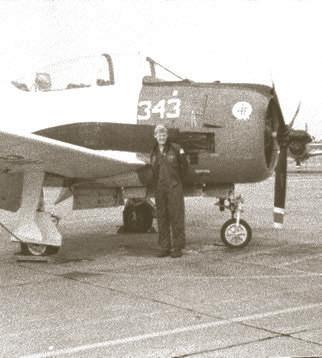
While a sense of patriotic duty was universal among Brooks’ earliest veterans, the motivational factors for pursuing a life of service have become increasingly varied and personal. Soon-to-be United States Air Force Pilot Christian Duran ’22 initially enrolled in the United States Air Force Academy in order to avoid hefty debt after college. Former platoon sergeants Charlie Bascom ’60, Charlie Hunt ’60 and John Rowland ’60 signed up for the Massachusetts Army
Round the clock, Brooks students manned an observation tower they built during World War II.
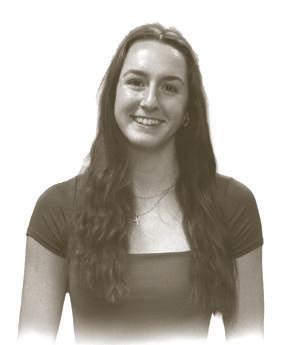
Jill Hamilton
National Guard in order to avoid the draft for the Vietnam War. The Reserve Officer Training Corps was a mandatory component for former United States Army Corps of Engineers Airborne Ranger Officer and Nuclear Weapons Demolitions Officer Richard de Neufville ’56 when enrolling at his first-pick college, the Massachusetts Institute of Technology, where he is now a professor of engineering systems.
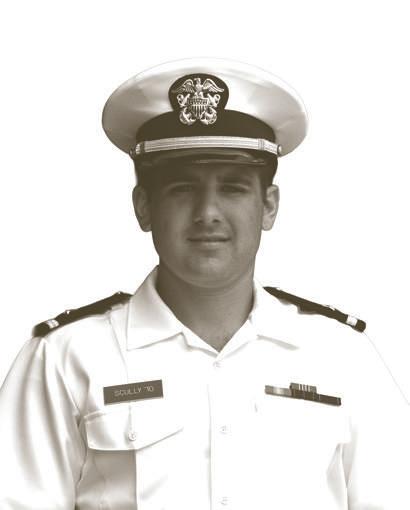
“As a third-former, witnessing the events of September 11, 2001, sparked a deep desire to serve something greater than myself. That motivation led me to pursue the Naval Academy,” former United States Navy Ensign Jay Scully ’05 said. “Brooks School played a critical role in preparing me for that experience — challenging me academically and physically, while also shaping my moral compass and sense of duty.”
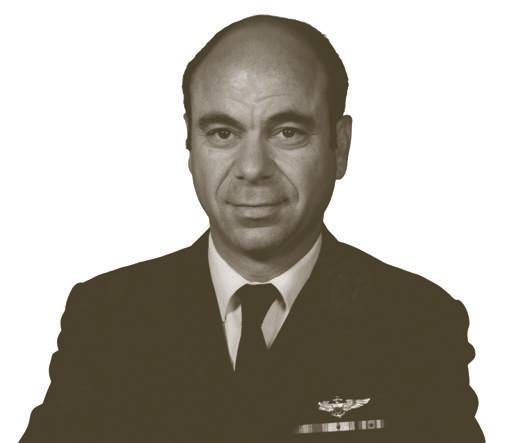
A family history in the military is also a common trait among interviewed alumni, including former United States Army Corporal George Rieger ’56, former United States Navy Ensign Richard Gardiner ’69, former United States Army Infantry Officer Mark Shields ’74 and former United States Marines Corporal current Veterans Advocate Andrew Farrer ’96: “From 900 CE to our present day, a Farrer has fought for what’s right.”
“One
unique thing about Brooks that has resonated throughout my career was working with others, specifically those of different backgrounds. Brooks exposes you to peers from all over the country and world, and this is similarly a big part of the military. I’ve worked with others of very different backgrounds and life experiences, both within the United States military and with foreign counterparts — including those from the United Kingdom, Norway, Poland, Korea, Germany, Afghanistan and Australia. Working well with others is a hallmark of military service and my first exposure to this sort of collaboration was as a student at Brooks.”
service,” Ryan Gibeley said. “They inspire me daily to be a better leader and are the individuals who encourage me the most to continue service and make the Army a career.”
CAMPUS SUPPORT
A strong lineage of familial service — including their great-grandfather, grandfather, two uncles and father — greatly impacted the military paths of brothers Nate Gibeley, United States Army Engineer Officer Ryan Gibeley ’11 and California National Guard First Lieutenant Will Gibeley ’17.
“Family members are the ones that remain my azimuth in
Ryan Gibeley found support for his budding interest in the military among a tight group of faculty and students, including classmate United States Army Infantry Officer Matt Dunn ’11 and history teacher and former wrestling coach Alex Konovalchik P’14, P’17, just as numerous other alumni received emotional backing for their personal military decisions regardless of popularity across the country at the time.
“Matt and I planned visits with each other quarterly in college, compared military training paths and discussed future military roles
together. Then we commanded together at Fort Bragg, N.C. Our friendship development at Brooks served as a vessel for passion toward military service,” said Ryan Gibeley, adding that “Coach K turned a terribly shy kid into a confident leader of character by exercising my mental toughness on the mat in wrestling, giving me the tools and opportunity to lead on the gridiron and challenging me to be at my best in the classroom. Many times in the Army when faced with severe challenges, I looked back to the tough times in the wrestling gym and would tell myself to never quit and make the harder right over the easier wrong choice.”
Most younger alumni — including Hamilton, Shields, former United States Marine Corps Air Defense officer Mike Blake ’89 and retired United States Army Colonel Greg Griffin ’90 — weren’t as lucky as Gibeley and Dunn to have such a close campus ally with similar aspirations. Regardless,
UNITED STATES ARMY INFANTRY OFFICER MATT DUNN ’11
they claim nothing but support from members of the Brooks community for taking a path far less common among contemporary students at Brooks and similar secondary schools.
“In Massachusetts at the time, it was very fashionable to be anti-military, in a way that would be difficult to understand now, in the sense that being anti-Vietnam War — which many military people were — and anti-military were commonly conflated,” said Shields, who has the distinction of not only being the first Brooksian at West Point, but one to enroll during the highly contentious time in American history. “While the cultural milieu was pretty unsupportive, relationally I experienced little disrespect or contempt within the Brooks community. Mr. Ashburn’s father had been a career army doctor; probably half of the faculty had served in uniform. Lots of my classmates’ parents were veterans. So there was a base of people who understood my interest.”
PREPARED FOR SERVICE
For decades, Head of School Frank D. Ashburn quite literally taught Brooksians like Rieger the presentation of arms and parade formations in preparation for basic training. While some alumni like Hunt noted Brooks could offer little to prepare for future military service, transcendent school values — like discipline, responsibility, collective conscience, critical thinking and teamwork — have resonated with other alumni who pursue a military path.
“I think there’s an encouragement and an appreciation for service in general at Brooks,” Packard noted. “Whether it’s community service or another kind of service, it’s something that has mattered to the school for a long time. We try
“Working
for the White House as an intern for Secretary of Defense Robert McNamara was a real eye-opener!
It drove me to recognize the big
gap between politics and technology.
It led me
to establish a graduate education program to develop leaders’ understanding and being able to navigate overlapping issues. This is the MIT Technology and Policy Program, which just celebrated its 50th anniversary in 2025.
FORMER UNITED STATES ARMY CORPS OF ENGINEERS AIRBORNE RANGER OFFICER AND NUCLEAR WEAPONS DEMOLITIONS OFFICER RICHARD DE NEUFVILLE ’56, WHO WAS ONE OF THE FIRST 15 WHITE HOUSE FELLOWS APPOINTED BY PRESIDENT LYNDON JOHNSON IN 1965.
to emphasize an appreciation for the fortunate nature of our circumstances and the different ways service can lift others up. We value those who serve — not just in a military sense, but also in other civic roles and responsibilities. So while it may not be explicit or amplified with a megaphone, we do promote service here.”
For Farrer, who received a Purple Heart Medal for an injury sustained during Operation Iraqi Freedom, Brooks prepared him for the unknown; to take risks, to follow his heart and keep to what is right. For Duran, he developed critical-thinking skills at Brooks to solve problems without clear solutions. For Griffin, Brooks’ emphasis on community service and putting others before oneself resonated throughout his 25 years in the Army.
“In the Army, you are driven by two things: Service to the nation and making sure you don’t let down the soldiers next to you,” Griffin said. “The drive for service and the bond of friendship is something that Brooks strives to instill in you as a teenaged student going through rapid growth. I am not sure I could have had a better preparatory experience for a military academy than Brooks.”
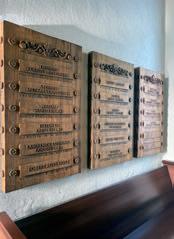
Around campus, there are numerous plaques, stones and buildings commemorating Brooks’ fallen soldiers. For example, carved on the tablets at the rear of the Chapel are the names of the 16 Brooksians to die in military service. Initially the tablets were presented to the campus community during a memorial service in June of 1946. “The Ashburn Chapel echoes and flows with feeling and sentiment and long-term memory that should buoy us,” Head of School John Packard H’87, P’18, P’21 said during the celebration of life of fallen serviceman Alexi Whitney ’96 in the Frank D. Ashburn Chapel in 2016.
“I believe the measure of a truly great school is the degree to which it matters and inspires and means something to its students well beyond time spent here in adolescence. And by how it remembers. Brooks School remembers incredibly well. Perhaps better in this space than anywhere on our campus.”
FALLEN ALUMNI
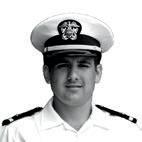
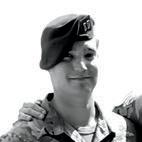
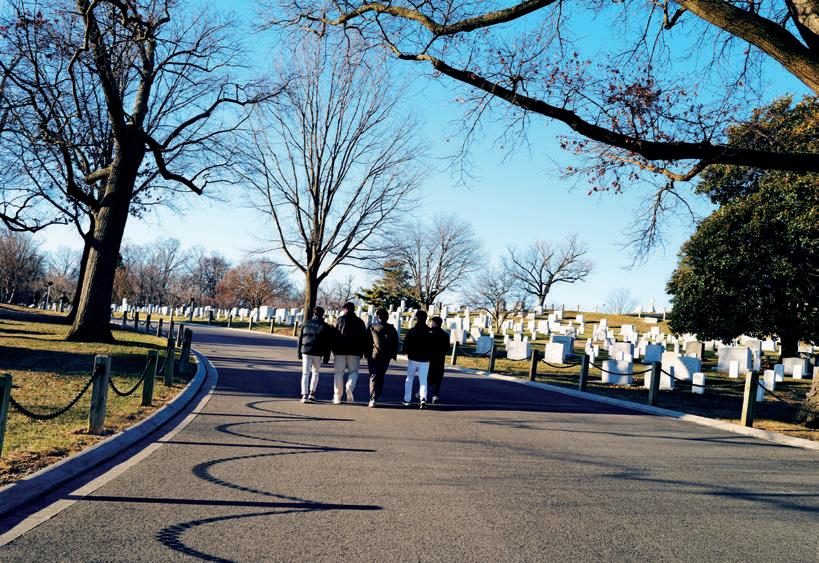
Head of School John Packard H’87, P’18, P’21 always aims for current Brooks students to search for two names during his annual Winter Term field trip to Washington, D.C.: United States Marine Corporal George Carpenter ’64 (d) at the Vietnam Veterans Memorial and United States Marine Captain and Paramilitary Officer for the CIA George “Alexi” Whitney ’96 (d) at Arlington National Cemetery.
“We love knowing that current Brooksians are visiting him,” said Alexi Whitney’s brother, Max Whitney ’01. “Arlington is such an incredible, important and beautiful place. He’d be thrilled knowing he’s helping to broaden the Brooks’ experience.”
Alexi Whitney, who was shot on a Taliban compound during a 2016 voluntary mission in Afghanistan, is the most recent of 16 Brooksians to die during active military duty. United States Marine Lieutenant Colonel Peter Nicholson ’79 died during a 2004 training accident during active duty while stationed as an air field operations officer at California’s Marine Corps Air Station Miramar. Drafted United States Marine Corporal George Carpenter ’64 died in 1967 from a land mine blast at age 20 just five months
after his arrival in Vietnam during the war. United States Army Lieutenant William Barr ’57 perished in a 1965 airplane crash in the Andes Mountains while en route to his new assignment in Bogotá as a bilingual intelligence instructor.
An additional dozen Brooksians died during World War II, when 91 percent of the student body served in the armed forces: Thomas Perkins Brooks Jr. ’41; Stephen Metcalf Danforth ’39; William Ward Frick II ’42; Fletcher Ladd Gill Jr. ’42; Lawrence Cushing Goodhue Jr. ’46; Robert Ross Hotz ’41; David Lapsley ’38; Oliver Ames Parker ’39; James Neale Thorne ’38; Richard Mortimer Tuckerman ’40; Peter Van Pelt ’36 and DeForest Van Slyck Jr. ’39.
The Whitney family held Alexi Whitney’s service in the Frank D. Ashburn Chapel, where the names of the 16 Brooksians to die in military service are carved on memorial tablets at the rear of the building.
“Seeing his name there meant so much,” sister Larissa Whitney ’98 said. “It brings our adolescence full circle in a really special and poignant way. Alexi found his way at Brooks. We think he’d be happy knowing he has a place there forever.”
Large photo: Students in the Winter Term American politics class searching for the names of fallen Brooksians United States Marine Corporal George Carpenter ’64 (d) and United States Marine Captain and Paramilitary Officer for the CIA George “Alexi” Whitney ’96 (d) at the Vietnam Veterans Memorial and Arlington National Cemetery respectively.
Photo credit: Steven Jin ’28.
Inset: The Whitney family at Brooks School Prize Day 2001, from left to right: Caryn Whitney P’96, P’98, P’01, Max Whitney ’01, George Whitney P’96, P’98, P’01, Larissa Whitney ’98, Alexi Whitney ’96.
“I think that one thing about becoming older is that you really reflect on major moments or experiences in your life that are transformative. I have two main takeaways about Brooks and the first is that Brooks created a ‘spark.’ I developed a curiosity about the world. Second, I developed some courage and confidence to explore and do less comfortable but exciting things. I was fortunate to attend the Alliance School as an African Exchange student and it was life changing, even though I didn’t realize it at the time. I was so excited to be selected to go and it was such an amazing, challenging experience. Eye-opening for sure. It also helped increase my confidence to pursue other new, uncomfortable but exciting things like the United States Marine Corps. Throughout life, I have had opportunities to live, study and travel all over the world, including within the United States, and I think the big, initial spark was due to Brooks and the African Exchange program.”
FORMER UNITED STATES MARINE CORPS AIR
DEFENSE OFFICER MIKE BLAKE ’89
LASTING IMPACT
Brothers Peter ’60 and Charlie Eaton ’60 and classmate Hank Alexandre ’60 all enrolled in the Reserve Officer Training Corps at Washington and Jefferson College before serving two active years in the military. Alexandre and Charlie Eaton managed to stay out of the Vietnam War. However, Peter Eaton experienced much death and destruction during numerous combat missions that heated up within days of his in-country arrival as an infantry platoon leader that resulted in the awarding of two purple hearts and a Bronze Star with “V” Device for valor.
More than once, Peter Eaton ’60 spoke about these brutal experiences to students in a Winter Term course about the Vietnam War taught by Head of School John Packard H’87, P’18, P’21. He even
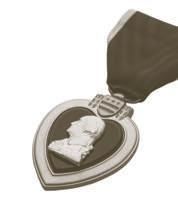
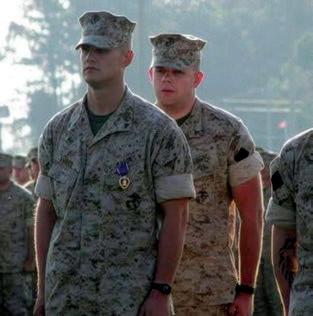
During his four years and three deployments as a United States Marines Corporal, current Veterans Advocate Andrew Farrer ’96 received the Purple Heart Medal for sustaining injury in Ramadi, Iraq, during Operation Iraqi Freedom.
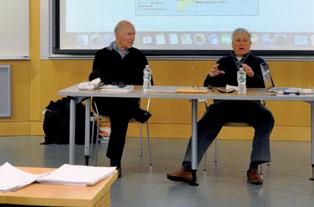
From left to right: Former United States Marine Captain Gene Record ’59 and former United States Army Infantry Platoon Leader Peter Eaton ’60 are seen here speaking to Brooks students in 2016.
shared his personal diary from his time in combat, which Packard described as “God awful; unimaginable, actually.”
“We talked a lot about Vietnam when he returned because we both completed our military obligations and came home at about the same time. However, he did not share any of the most difficult experiences he had because his mind had suppressed them, which he didn’t even remember or realize until he had a breakdown five years later after suffering from quite a few months of nightmares that turned out to be the real experiences,” Charlie Eaton said.
Peter Eaton has gone on to have “a wonderful life with a large family, many great friends and a nice career in finance,” brother Charlie Eaton noted, despite suffering from severe post-traumatic stress disorder. For the past 11 years, former United States Marines Corporal Andrew Farrer ’96 has tried to help many other veterans similarly traumatized by their combat experiences through his two podcasts and a variety of nonprofit organizations, including Veterans of Foreign Wars, the American Legion and the Military Order of the Purple Heart.
“War’s imprint on veterans is lasting and multidimensional — physical, psychological and spiritual. It teaches endurance while teaching grief, forcing courage to coexist with pain. The scars may not vanish, but they tell stories of survival, community and the drive to heal. In their continued service to others, veterans transform their wounds into wisdom and strength,” Farrer said. “Hearing stories that need to be told and remembered; this retelling of stories is very cathartic for the veterans and for those listening.”
TOP HONORS
Numerous Brooksians have received prestigious medals during active duty. Brooks School is aware of the following alumni who have received some of the most distinguished military awards, though it is nowhere near a definitive list.
HIGHEST HONORS + VALOR AWARDS
UNITED STATES ARMY
Silver Star Medal
The third-highest U.S. military decoration for valor in combat. It is awarded for gallantry in action against an enemy of the United States.
Daniel Ladd ’37
George Haas ’38 Stelio Salmona ’47
Bronze Star Medal
Awarded for heroic achievement, heroic service, meritorious achievement or meritorious service in a combat zone. When awarded with the “V” Device, it denotes acts of valor in direct combat.
Charles Sanders ’35
Amory Parker ’37, P’76, P’75, GP’14
Charles Spencer ’38, P’69, P’72 (two)
Leonard Woods ’38
William Holloway ’39
John Ware ’40, GP’91
Lawrence White ’41
Harold Bell ’60
Peter Eaton ’60 (two, with “V” Device for Valor)
Robert Simmons ’61 (two)
Philip Dearborn ’62
George Sargent ’62
Samuel Plum ’63
Brian Luti ’94
Andrew Paul ’97 (with “V” Device for Valor)
Soldier’s Medal
Awarded for acts of heroism not involving direct combat with an enemy, often involving risk of life under extraordinary circumstances.
Leonard Woods ’38
UNITED STATES NAVY/ MARINE CORPS
Navy Cross
The second-highest U.S. naval decoration for valor in combat, awarded for extraordinary heroism against an armed enemy.
John Amussen ’36
WOUNDS RECEIVED IN ACTION
ALL MILITARY BRANCHES
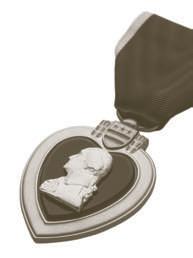
Purple Heart
Awarded to service members wounded or killed as a result of enemy action while serving in the U.S. Armed Forces.
Walter Camp ’35
William Lidgerwood ’35, P’91
George Haas ’38
Charles Spencer ’38, P’69, P’72 (two)
Leonard Woods ’38
Stephen Danforth ’39
Peter Van Ness Philip ’42
Stelio Salmona ’47 (two)
Harold Bell ’60
Peter Eaton ’60 (two)
Andrew Farrer ’96
American Defense Service Medal
Awarded to service members who served honorably during the pre-World War II national emergency period (1939-1941).
Harry Darlington ’38
AVIATION VALOR & ACHIEVEMENT
UNITED STATES ARMY AIR FORCES/U.S. AIR FORCE/ NAVAL AVIATION
Distinguished Flying Cross
Awarded for heroism or extraordinary achievement while participating in aerial flight.
Edwin Jameson ’33
John Thorne ’34
John Woods ’36
Insley Pyne ’37 (three)
Thomas Brooks ’41
Peter Van Slyck ’43
Bradley Gaylord ’46
Air Medal
Awarded for meritorious achievement or heroism while participating in aerial flight. Oak Leaf Clusters denote additional awards.
Edwin Jameson ’33 (with Oak Leaf Cluster)
John Thorne ’34 (with three Oak Leaf Clusters)
Walter Camp ’35
John Woods ’36
Insley Pyne ’37 (five)
Thomas Brooks ’41
Peter Van Slyck ’43 (with Bronze Oak Leaf Cluster)
Bradley Gaylord ’46 (with Oak Leaf Cluster)
Samuel Plum ’63
Peter Nicholson ’79
Did you, too, receive a military award? Let us know by emailing Assistant Director of Alumni Programs and Communications Molly Kueter: mkueter@brooksschool.org.
BLEEDING GREEN
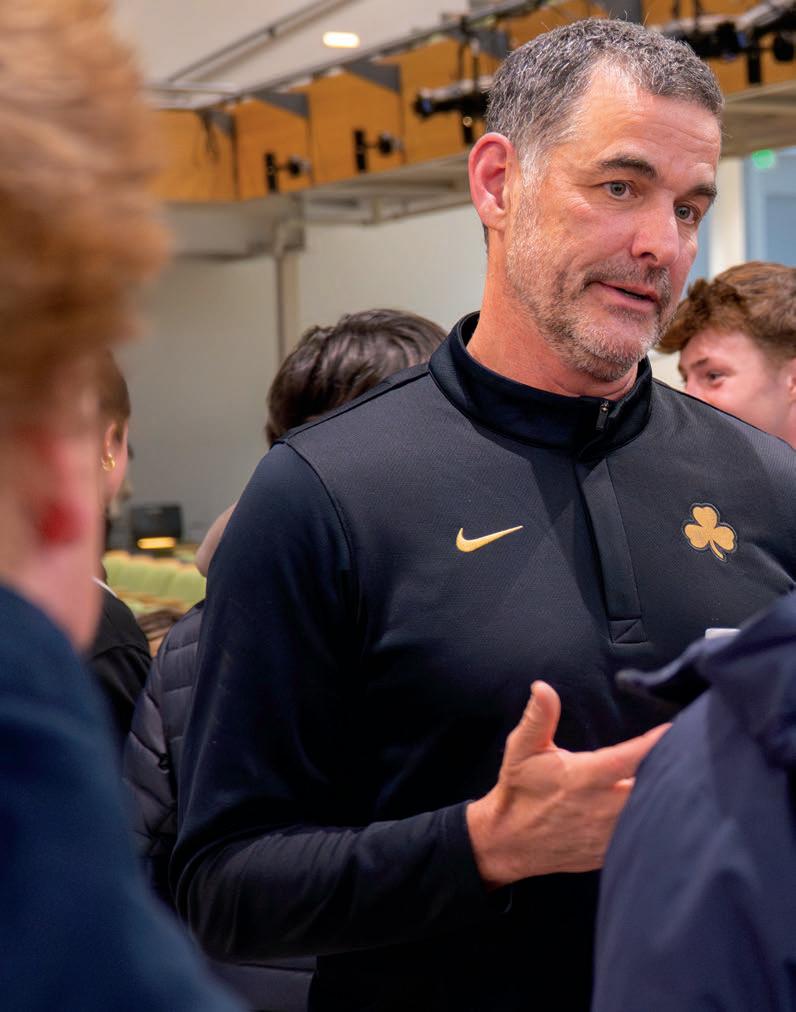
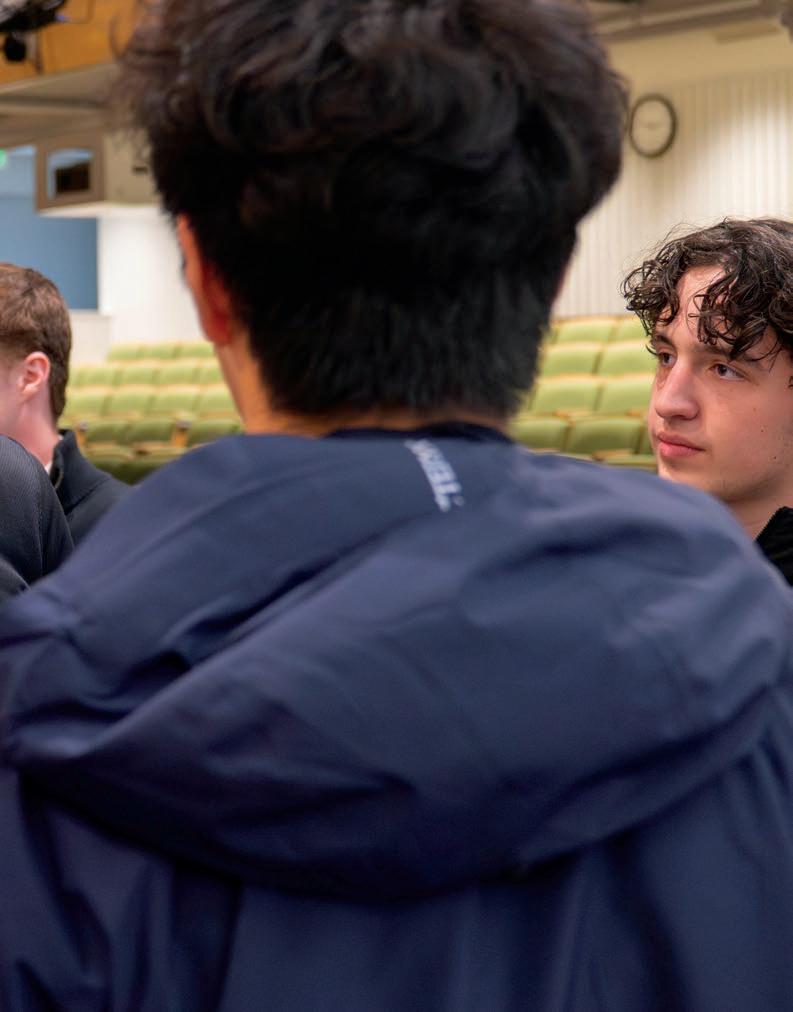
Boston Celtics owner Bill Chisholm ’87, who is also the co-founder and managing partner of Symphony Technology Group, spent a day with students on campus this winter. The boys 1st soccer team enjoyed lunch with Chisholm, who holds the title of 1986 Independent School League Soccer Player of the Year, before taking a campus tour. Alongside Brooks School Board of Trustees President John Barker ’87, P’21, P’23 and current soccer player Oliver Harris ’28, Chisholm offered a school-wide question-and-answer session. Time was properly set aside for signing jerseys and taking selfies with students. “Attending Brooks really opened my eyes to a world of possibilities,” Chisholm said. “I’m so grateful to have had the chance to go to school here.”
Athletic Leadership
Several alumni have built upon leadership skills they developed at Brooks to serve their collegiate athletic teams as captains.
“These student athletes were all leaders at Brooks, be it on the field, the ice, in the dorms or in the community in general,” Director of Athletics Andrea Heinze P’19 said. “Their work ethic, ability to connect with teammates, their passion for their sport and their ability to demonstrate great sportsmanship are characteristics of a great leader; it is no surprise to see them continue these qualities at the collegiate level.”
The Bulletin editorial team is aware of seven Brooksians currently serving as collegiate captains, including graduate student Martrell Stevens ’21, a five-year captain of the men’s wheelchair basketball team at the University of Illinois.
“It has been an honor to lead the Illinois men’s wheelchair basketball team these past few years and it kind of feels like it flew by in a blink of an eye,” said Stevens, who was featured in the Fall 2025 edition of the Bulletin. “Being selected captain for such a long stretch of my college career has helped me develop into a well-rounded leader; but I think this started way back at Brooks. Whether it was when I was a football manager during my third form or being a part of the Brooks basketball team, my experience seeing firsthand what amazing culture and high-level competition looks like has helped me instill that in my teammates and further into the program here at Illinois. I attribute much of my continued growth as a person and as a leader to the relationships I developed at Brooks.”
Director of Rowing and Mathematics Teacher Tote Smith P’18, P’20, P’22 attributed the success of all the college team captains — including three rowers — to the fact that Brooks alumni already pursued athletic excellence within a close-knit community that shares classrooms and dormitories alike.
“They know the success of their teams doesn’t start and stop when the whistle blows,” Smith said. “These athletes in particular helped us get through the COVID-19 years, when so many teams in our league lost their way. They attended to the legacy they were fortunate to inherit, leaving a legacy of their own that we still feel today.”
Scan this QR code to read the article published in the Brooks Bulletin Fall 2025 edition on Martrell Stevens ‘21, a five-year captain of the men’s wheelchair basketball team at the University of Illinois.
Lucy Adams ’22
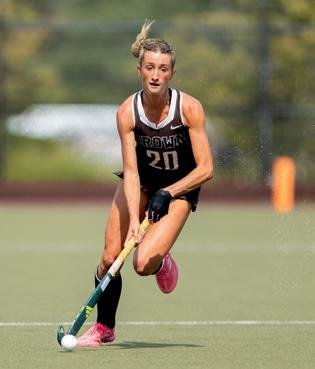
FIELD HOCKEY, BROWN UNIVERSITY
Brown University senior and field hockey captain Lucy Adams ’22 is a member of the United States Women’s National Field Hockey team. She has racked up numerous honors for her stellar athletic performance at Brown, including the National Field Hockey Coaches Association’s 2025 Division I Watchlist in 2025. In 2024, she was named to the First Team All-Ivy, Ivy League All-Tournament Team, NFHCA All-Northeast Region First Team, NFHCA Second Team All-American, NFHCA Division I National Academic Squad and was a NFHCA Division I Scholars of Distinction. Adams received Brown’s Marjorie Smith Award for outstanding female athlete. At Brooks, the school prefect received both the Athletic Prize at Lawn Ceremony and the Faculty Prize at Prize Day. A four-year, tri-first team athlete, Adams captained the 1st field hockey team in her fifth- and sixthform years, leading Brooks to a New England championship in fall 2021.
Athletic Highlight: My first athletic highlight was winning a gold medal at Junior Pan American Games against Argentina. My second athletic highlight was qualifying for the Ivy League tournament last year in an exciting win against the University of Pennsylvania.
Leadership Style: I try to lead with honesty and compassion. My goal is to create an environment where, regardless of year on the team, all individuals feel equal in their contribution and capability.
Brooks Mentors: Associate Director of Admission Jenelle Ries ‘99, P’28, Mathematics Teacher Tote Smith.
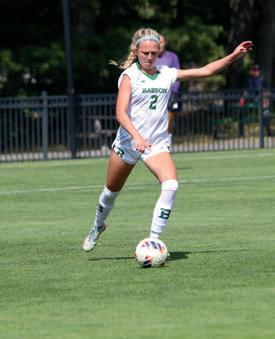
Caroline Sutherland ’23
SOCCER, BABSON COLLEGE
Named captain of the Babson College women’s soccer team during her junior year, Caroline Sutherland ’23 made the All-New England Women’s and Men’s Athletic Conference (NEWMAC) second team in 2024 and was named captain in 2025 as a junior. She was voted 2025 NEWMAC Defensive Player of the Year and named to all-conference First Team 2025. Sutherland, who was both a school prefect and school spirit prefect during her sixth form, won the 2022 Amy E. Broadhead Award for her contributions to the Brooks soccer team. Additional accolades during her Brooks days include New England Preparatory School Athletic Council (NEPSAC) All-League in 2022, and NEPSAC and Independent School League Honorable Mention and NEPSAC Junior All Star in 2021.
Athletic Highlight: I was the 2025 NEWMAC Defensive Player of the Year. Additionally, I was a starter for NEWMAC finals and NCAA first round appearance freshman year: 2 career goals; 2 assists.
Leadership Style: My junior captainship was awarded through hard work and team first mentality. I lead the team by example.
Brooks Mentors: Former Girls 1st Soccer Team Coach Kerry Baldwin, Dean of College Counseling Andy Campbell P’28, Science Teacher and current Girls 1st Soccer Team Coach Alex Sacco.
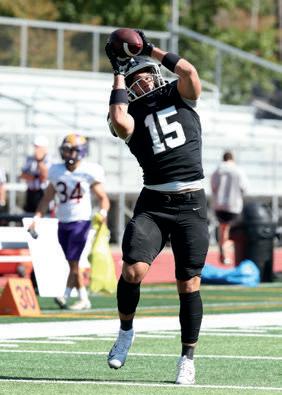
Michael Wolfendale ’23
FOOTBALL, BOWDOIN COLLEGE
Captain and quarterback for Bowdoin College’s football team, collegiate junior Michael Wolfendale ’23 was named to the 2024 New England Preparatory School Athletic Council (NEPSAC) AllAcademic Team. While the 2022 Brooks 1st football team was named NEPSAC Champions and received the Independent School League (ISL) Flaherty Rorke Sportsmanship Award and All-NEPSAC Honorable Mention, that year Wolfendale himself received Brooks School’s Coaches Award and was named ISL All-League and All-NEPSAC teams.
Athletic Highlight: My athletic highlight has been being used at multiple positions this year. Specifically, playing receiver and scoring a 78-yard touchdown to contribute to the team’s upset win versus Wesleyan College.
Leadership Style: I try to lead by example and consistency. I want my teammates to be able to trust that I will give full effort and stay composed in any situation. I focus on setting the standard through preparation and accountability.
Brooks Mentors: Associate Director of Admission and Director of Financial Aid, and 1st Football Team Coach Pat Foley. Coach Foley had a huge influence on me. Having a coach who cared so deeply about his players both on and off the field really showed me the importance of commitment and integrity.
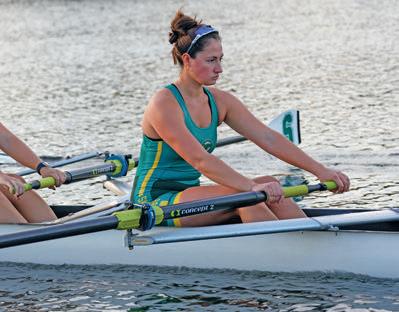
Camilla Johnson ’22
CREW, SKIDMORE COLLEGE
At Skidmore College, senior Camilla Johnson ’22 is a women’s crew team captain and member of the varsity eight boat, which has been named Liberty League Boat of the Week three times. The nationally-ranked rower has actively helped double the team size at Skidmore. A program-high finish at the National Invitational Rowing Championships, which was in fact the fastest time in the program’s history, capped the team’s spring 2025 season. While at Brooks, Johnson’s boat set the fastest time in program history, as well as a program high finish at New England Interscholastic Rowing Association Regatta.
Athletic Highlight: We won Knecht Cup Regatta three years in a row and medaled at New York State Championships.
Leadership Style: My leadership style is mainly leading by example and emphasizing collaboration and mutual respect. I prioritize open communication, actively seeking input from all team members and integrating all perspectives to make decisions that best serve the collective goals of the team.
Brooks Mentors: Director of Rowing Tote Smith is one of the kindest and most caring coaches and teachers I’ve ever had. He always goes the extra mile for his team and students and pushed me to be a better athlete and student. I wouldn’t be where I am today as an athlete without Tote believing in me.
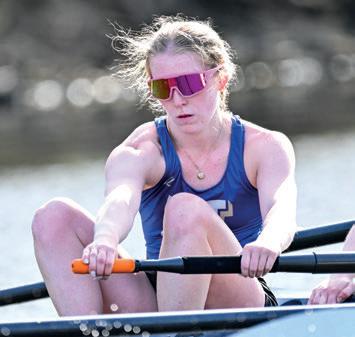
Jamie Munroe ’22
CREW, HAMILTON COLLEGE
A senior at Hamilton College, Jamie Munroe ’22 is a captain of the women’s crew team and member of the varsity eight boat. Munroe won Hamilton Rowing Athlete of the Month in May 2025. This fall, the boat won a silver medal at the Mohawk Fall Classic Regatta. Munroe had the opportunity to race at the varsity level during her inaugural, third-form season at New England Interscholastic Rowing Association Regatta, as well as at the Youth National Championship Regatta in Sarasota, Florida, during her fifth and sixth forms.
Athletic Highlight: One of my favorite parts of rowing at Hamilton is our spring training trip. Like we did at Brooks, we spent spring break in Clemson, S.C., training. A couple of years ago, I actually had the opportunity to meet up with the Brooks team during my time there. It’s also a great chance to scrimmage some competitive Division I teams and bond with those who are newer to rowing at Hamilton.
Leadership Style: I have always been someone who leads by example, but serving as a captain has pushed me to develop more initiative, particularly by voicing my goals to my team and my coaches.
Brooks Mentors: Director of Rowing Tote Smith was a huge mentor for me. He encouraged me, along with Ashley Brzezenski ’22, to try rowing my third form. I tried it out even though at the time I wasn’t sure crew was for me. His passion for the sport is contagious and I found myself extremely motivated and competitive, working to pursue a collegiate rowing career and to help push the Brooks program as far as I could.
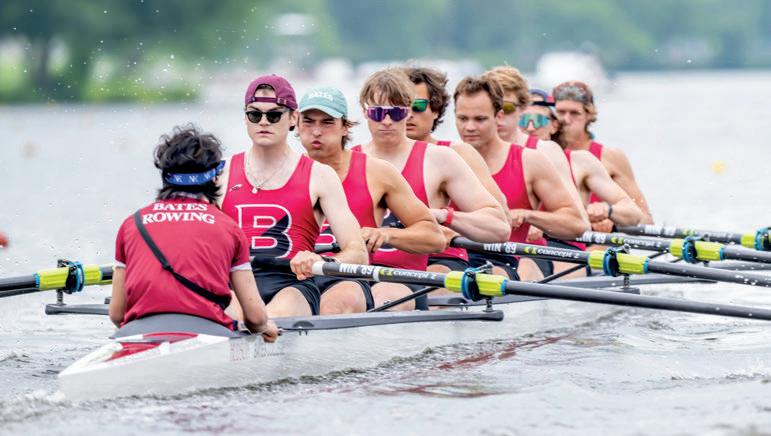
Luke Desmaison ’22
CREW, BATES COLLEGE
Last year at Bates College, Luke Desmaison ’22 was a part of the first varsity eight boat that secured silver at the National Invitational Rowing Championship and bronze at both the Intercollegiate Rowing Association National Championship and New England Rowing Championship. Additionally, the captain, who is currently a senior, earned honors as First-Team Empacher All-American and First-Team All-New England Small College Athletic Conference. The former school prefect and Brooks crew captain received the 2022 Howard “Ox” Kingsbury Rowing Cup.
Athletic Highlight: Grand final race at the National Invitational Rowing Championships. In the week leading into NIRC, we lost a second key man in our lineup, so we were a little unsure how we would stack up against our competition. We got second in our morning heat in a tight contest with Tufts. I remember feeling a great sense of calm on the start line for the final, knowing that the guys behind me were fully committed to each other and achieving the best result possible. The race was almost perfectly executed.
We sat towards the back of the pack for the first third and really turned on the heat through the body of the race, moving comfortably through Wesleyan and MIT. We managed to close really hard to claim second, a really awesome result after getting third the week before. The race was an exercise in patience and commitment and was an illustration of our crew’s resilience and dynamism that year.
Leadership Style: I really try to ask myself, how can I make my teammates,
or crewmates, better in any given situation? The way we do one thing is the way we do everything, so I try to hold a high standard and push my teammates to be excellent in all the little things we do, on and off the water, equally. I tend to be a very serious person, so while I am driven by hard work and accountability, I do try to take myself a little less seriously as much as possible and bring as much fun to rowing as possible.
Brooks Mentors: Mathematics Teacher and Director of Rowing Tote Smith, my advisor, coach and teacher. Tote taught me not only how to row, but how to use rowing principles in every facet of my life. He pushed me to excel on Lake Cochichewick, drove me to be a better student in the classroom, and helped me become the leader I was at Brooks and am today. Tote’s mentorship helped me realize what my priorities are and how to manage them as a young adult. His mentorship has been absolutely formative and was central to my Brooks experience.
PERSONAL PERSPECTIVE
California Wildfires
Josh Bingham ’88 shares his personal story of living through the devastating wildfires that ravaged California last January.
It was a Tuesday. My wife and I both work from home so we were there, as was a contractor and his team. The fall prior had been defined by our daughter’s monumental decision to apply to east coast boarding schools, and when it became clear that we were about to send our beloved 14-year-old across the country for the remainder of her adolescence, we made the decision to pull up stakes and follow her. We weren’t sure yet where we’d land, but we needed to start preparing for the move. It was early January in 2025; we figured we’d move in August, so we had barely enough time to make a run at it. After 30 years in Los Angeles, and 17 in our home, we had a lot of stuff.
The workers were there beginning Day 1 of phase 2 of “Project Prepare the Home for Renters.” We were replacing a side patio and wraparound deck, and the jackhammers were rattling my molars.
I went out front to check in with the contractor and as I turned, I noticed a plume of smoke. It looked to be a couple miles away and was light and wispy. But people don’t burn brush in Southern California. Especially not when there are sustained winds of 30 miles per hour and we’re in the midst of extreme fire danger, drought and weather.
The wind was blowing the smoke directly at us. I went inside to check with my wife. In life, I am the risk taker, the cavalier one; and she is cautious, diligent, risk averse. But when it came to fire, we switched
roles. I suggested we should start packing, she said, “Let’s wait and see.” She had already received a text on her neighborhood chat thread from a woman who lived much closer to the point of origin and for the moment the fire seemed manageable.
Ten minutes later, the plume had tripled in size and the chat thread was blowing up. We made the decision to start packing “some things.” Spooked by the recent Woolsey Fire in Malibu, we had consolidated some bins on garage shelves with “musts” — birth certificates, citizenship documents, all our loose actual photos, high school yearbooks and a few childhood mementos. We loaded those into our two cars along with the other items from a list we made. We did grab laptops, drives, cameras, passports, jewelry, each kid’s favorite possession, dog food, travel crate and supplies.
In the ensuing hour, the plume continued to thicken and darken, the wind kept blowing and we received our first “prepare to evacuate” text from the city. It wasn’t long before the kids’ schools notified us to come collect our children and by that time air tankers were leveling overhead like WWII bombers having emerged from the smoke at the end of their PHOS-CHEK runs.
About 90 minutes after I first saw the smoke, my wife pulled away to go pick up our daughter. I lingered for a few minutes to snap some pictures, collect the dog and grab a
few last-minute items. I locked up, shouldered my bag and even threw in a load of dark laundry as I left for our son’s school. The mandatory evacuation text wouldn’t come until quite a while after I drove away. It was snowing ashes as I wound through the otherwise eerily normal-feeling neighborhood down to the Pacific Coast Highway (PCH). A tanker plane skimmed the bay
off to my right, scooping water to circle back and drop on the fire. At the bottom of the hill, I made a left, heading south towards Santa Monica. It was at the intersection of PCH and Sunset Boulevard that I had my first true, “Oh s**t” moment of the morning. PCH and local officers had blocked all northbound traffic on the highway and packed lines of stopped cars snaked
up the hill and around the corner on Sunset. Thankfully, southbound was free and clear, but as I rolled through the intersection, I was literally witnessing that scene in the alien invasion or disaster movie right before everything went completely sideways. Frustrated motorists were standing outside of their cars with their doors open, shouting, waving
their arms and gesturing at the poor cops to let them get through. A little further down PCH, I glanced in my sideview mirror and my heart stopped. The cloud behind me looked like the eruption of Mount St. Helens. I didn’t admit this to my family until much later
The remains of the Bingham family home immediately after the California wildfires of January 2025.
when we knew the outcome, but I understood right then that I would never see my house or anything in it again.
That first night, we went to a hotel in Santa Monica. The lobby and hallways were filled with refugees like us. Nobody knew what to think, but we could all see the glow of flames from our beloved neighborhood just a few miles to the north. The four of us huddled with our dog on the beds of our room and watched the news.
By the following day, the Palisades where we lived and Altadena, northeast of downtown, were wiped off the map in the most destructive urban wildfires in Southern California history. We confirmed in person the next day that our house didn’t survive.
The first lesson you learn when your house and everything in it burns down comes startlingly quickly — it’s just stuff. Even hours after losing it all, we had that perspective. Most of what we had saved, collected, curated, filed, stored and shelved away … a lifetime’s worth of things … is replaceable.
Of everything lost, only about 10 percent is what amounts to the hard part. That small percentage is made up of the things with high sentimental value, things that can’t be replaced. My wife’s wedding dress, the watch and cufflink box my dearly departed mom gave me, carefully curated mementos and artwork by the kids. Those are the losses you cry about.
We moved into our house in 2008. We got married in 2010 and our daughter came along a year later. Our son was born in 2014. It was a house filled with many, many
happy memories. It was our family home, the only home our kids would know. It was a home filled with love, laughter and light. It was a home we cherished.
There are no words to describe the experience of losing it except utter devastation. We lost our ancestral family home, which was like a beloved and cherished member of our family. Part of processing the loss was to witness it. For the kids, who had gone off to school on a normal Tuesday, only to be picked up in a flurry of panicked activity and whisked off to a hotel, then simply told the terrible news that our house was gone … the whole thing was horribly detached and surreal.
A week or two after the fire, when it was deemed safe to do so, we
loaded up the kids and took them back. As we rolled slowly through the devastated neighborhood, my 11-year-old son was ghost white, mute. When we approached the property, he opened his mouth trying to speak, but was unable to do so. With effort his voice creaked out, “I don’t know if I can do this.” When we arrived, it was clear that he needed to take his time. From the car to the back of our property, I basically had to carry him. When we got to where his room stood, I gently coaxed him to look. And he did. He said nothing, but he kept looking. And he grew calmer by the moment. When he was ready, he asked me to help him back to the car. As we walked, he started to cry, but he walked on his own.
Left: Josh Bingham ’88 and his family. Right: After being cleared by the Army Corps of Engineers, the empty lot where the Bingham family’s California house once stood.
We got back to the car, and he sat down in the back, the tears streaming down his face. But then he looked at me and with a wisdom so beyond his years he said, “I needed to do that. I needed to see that.” My own torment was lifted by an injection of pride and awe.
Three weeks after the fire, we relocated to Connecticut, where I grew up. We were already planning on it pre-fire, so it was an easy call.
While the move has obviously contributed to a great sense of displacement — we’ve had to move multiple times between rental properties; the kids have had to start from zero in new schools where they don’t know a soul and have no friends or acquaintances — for us, it was undeniably the right thing
I am immeasurably grateful to all of my family, friends and members of the Brooks community whose immediate generosity helped us with necessities and recovery in the aftermath of the fire.
to do. In the process of finding our footing, I was introduced to a guy who does consulting overseas and his outlook on life was shaped by his many experiences with non-western cultures. His unsolicited advice to me was “crisis is opportunity.”
It’s not a profound revelation that we grow the most during times of hardship. If anything, this experience has brought our family closer together and granted us an immeasurable perspective on what’s really important in life. Hold your people
close and let every one of them know how you feel about them, be grateful for all that you have and all that you have experienced, and treat each day as if it is your last. Finally, I am immeasurably grateful to all of my family, friends and members of the Brooks community whose immediate generosity helped us with necessities and recovery in the aftermath of the fire. Thank you. Your help and support meant the world.
COME TO AN EVENT
Brooks School hosts numerous events throughout the year. Some events are here at Brooks, but others could be closer to you. Please visit www.brooksschool. org/alumni/events to find out more.
NEW YORK RECEPTION
The greater Brooks community gathered earlier this fall at Brooks’ annual New York Reception at The Union Club of the City of New York. Special thanks goes to our event hosts, Catharine and Alan Osborne P’26.
01 Claire O’Laughlin and Rob Whirty ’09.
02 From left to right: Jamey Gaston ’05, Mike Leone and Caroline Tamposi ’07.
03 Clarke Shipley ’13 and Dean of Faculty Tim Benson P’29.
04 From left to right: Gabby Weissman ’15, Head of School John Packard H’87, P’18, P’21 and Natalie Palmer ’13.
05 From left to right: Harriet Kumah ’21, Nicole Li ’21 and Director of Athletics Andrea Heinze P’19.
06 From left to right: Kevin Jin ’16, Erinn Lee ’16, Emmarie Toppan ’16 and Rowan Beaudoin-Friede ’17.
07 From left to right: Max Charlamb ’18, Lydia Barker ’21 and Elizabeth Packard ’21.
08 Tony Milbank ’59 and Director of the Brooks Fund Lauren Marquis.
09 Theo Papapetros ’13, Rosiee Gomez ’12 and Adrian Brown.
10 Tom Barr ’73 and Catharine Osborne P’26.
11 From left to right: Nick Carabatsos ’20, Herbert Liu ’20, Jack Quinn ’20 and Andrew Fair ’22.
12 Lily and Prince Nuamah P’27.
Q&A WITH AUDREY RYAN ’97
Landing the Big Catch
An unlikely tale of crime in Downeast Maine brought one alumna closer to her childhood community.
Audrey Ryan ’97 was in graduate school in 2009 when her father, a longtime fisherman on Maine’s Mount Desert Island, told her an incredible story of dredging up Afghan hashish from the bottom of Little Machias Bay. While being hunted down by the Coast Guard, Californian drug traffickers who had relocated to Downeast Maine in the late 1970s dumped as much as six tons of the then-illegal substance off the coastline. Numerous fishing vessels reaped the benefits for several years, often hauling in 20 to 50 pounds of hash along with their scallops. Ryan, a psychotherapist who now resides in Newton, Mass., spent several years interviewing fellow fishermen from that era, as well as one of the drug smugglers who spent two years in federal prison for his involvement with the case. Globe Magazine published her piece on the caper, “The Big Catch,” back in 2023 and just this fall, a podcast called “Criminal” interviewed Ryan. She is currently working on a book, which she expects to be published next year.
Did you commence your interviews with the goal of producing an article? When I first began interviewing fishermen, I didn’t have a specific goal beyond trying to understand what really happened. That curiosity snowballed into more and more stories, which eventually led me to interview law enforcement involved in the case — and even one of the smugglers. Somewhere along the way, I realized I was actually writing a book.
I later wrote the Globe Magazine article as a way to bring the story to a wider audience and it ultimately connected me with a literary agent and publisher. The book is now forthcoming and should be out in about a year.
What was it like interviewing so many individuals that you knew as “grown ups” during your childhood? Many of the people I
interviewed were the parents of kids I grew up with; one of them was my uncle. So I had known them in a very different capacity. It felt a little strange to track them down decades later and ask them to revisit a story that unfolded when I was still a toddler. But most were surprisingly willing to share their “war stories” from the water.
Their familiarity with me actually made a big difference. Because they had known me as a kid, they trusted my intentions and were open in a way I don’t think they would have been with an outsider. In Maine, people can be pretty wary of anyone from “away,” so being from the community mattered.
How did uncovering the complete story impact your feelings about that time in Maine? As a child, I had no memory of what happened. To me, my father was
simply a fisherman. Researching this story pushed me to dig back into my childhood and in doing so, I uncovered memories and other threads that eventually shaped the book. Brooks was, in many ways, my escape from Maine, and once I left, I never moved back. I’ve spent my adult life in the Boston area.
But uncovering the full story allowed me to reconnect with where I came from. It helped me make sense of my past and ultimately embrace the coastal community that shaped me. In writing this book, I moved from distance
and confusion to a much deeper understanding — and even pride — in the place that raised me.
What was the reaction to the article within the Mount Desert community? The response was overwhelmingly positive. After the article came out, I was invited to give talks at historical societies and other nonprofits and foundations interested in Maine’s history and coastal stories. Even more accounts surfaced as people reached out with memories of their own.
The article also ended up opening unexpected doors as it helped
Because I’m a psychotherapist with a Ph.D. in counseling psychology, I couldn’t help noticing the parallels between my clinical work and this project. In many ways, I’ve been processing my own childhood through the reporting and writing.
I’m also working on a limited-series podcast with journalists from public radio, which will lean more into the perspectives of the fishermen. The “Criminal” episode focused more on the smugglers, so this new project will bring a different dimension to the story.
lead to the book deal and ultimately the “Criminal” episode.
What was it like having the tables turned and being the subject of an interview on the podcast? I really didn’t know how the “Criminal” episode would turn out. The interview was long and I had no idea which version of the story they would ultimately tell. But being on the receiving end of the questions actually helped me articulate the arc of this passion project. It’s been a wild journey that’s required a lot of digging, both into the past and into myself.
Was there a class or a faculty member at Brooks who prepared you for your career as a journalist? I had three particularly memorable advisors at Brooks. Rob Humphreville was the one I stayed in touch with and who had the most long-term impact. He was the music teacher and organist while I was there (and still is Brooks’ organist). Rob helped me learn how to write papers at Brooks, which was crucial for me — I wasn’t especially well prepared academically coming from a public school in rural Maine.
Sue Campbell was also a wonderful English teacher who introduced me to a wide range of international literature and I stayed in touch with her after Brooks.
After Rob Humphreville stopped teaching at Brooks, my advisor was [Faculty Emeritus] Michael McCahill H’07, P’91, P’97, my history teacher. I remember him well and was also close with his wife. All three played important roles in helping me find my footing academically and intellectually during that time.
PHOTO: KYLE LAMONT
Scan the QR Code to read Audrey Ryan’s 2023 Globe Magazine article, “The Big Catch.”
From the Archives
In preparation for Brooks’ centennial year in 2026–2027, Archivist Lance Latham P’17 highlights a few important — and just fun! — items that live among the school’s extensive historical records in the Henry Luce III Library.
Original model of proposed Brooks campus. During the mid1920s, Groton parent Richard S. Russell donated 65 acres of his family’s North Andover estate for a new school proposed by Rev. Endicott Peabody, the longtime headmaster of Groton School. The founders hired architects to design a new campus, primarily made of brick, that looked quite like Groton. However, due to financial constraints that later were augmented by the Depression, little from the architect’s designs came to fruition. Instead, the physical plant included a total of six buildings — the Russell’s family residence, the farmhouse, the barn, the superintendent’s cottage and the garage, as well as a newly-built structure for classrooms and dormitories — when Brooks opened its doors to 14 boys on September 27, 1927.
Typewriter of Faculty Emeritus Nick Evangelos H’77, P’74, GP’11, GP’16. Evangelos, who became the face of the biology program after faculty member Oscar Root’s passing, also served as a longtime coach and athletic trainer during his tenure from 1953 to 1992. He carefully planned every class, where students developed strong executive-functioning skills in addition to an understanding of the subject matter at hand. Some of the lab work he designed for his AP Biology students was subsequently incorporated in the National AP curriculum and, with the aid of Brooks parent (and later grandparent!) Dr. Rudolph Muto P’74, P’79, GP’08, GP’11, GP’12, GP’14, Evangelos launched the still-active AP Biology surgery visit program back in the 1970s.
Football jersey worn by James Neale Thorne ’38. Brooks became one of eight founding members of the Independent School League in 1948. In the school’s early years, football, ice hockey, baseball and crew were the four recognized sports played competitively, though crew commenced on campus as early as 1930. Thorne, who served as captain of the Brooks hockey and crew teams, matriculated to Yale University before enlisting as a Royal Air Force pilot. He is one of 16 alumni veterans to die in war, as a German anticraft shot down his plane in September 1944 during a bombing mission in Holland.
Binoculars of longtime biology teacher and ornithology enthusiast Oscar Root H’58. One of the early giants of the Brooks faculty from 1933 to 1969, Root maintained a deep passion for the birds living on campus. Root and his students are believed to have banded more than 20,000 birds during three decades of early-morning excursions, encouraging many to nest on campus by planting many beautiful trees and building bird houses. He was involved in several national ornithological clubs, in addition to serving as founder of the Merrimack Valley Bird Club and the New England Wild Flower Preservation Society.
Class of 2017 senior gift. For several decades, it’s been a tradition for those in the graduating class to leave a small memento on the Prize Day podium. The class of 2017 gifted Head of School John Packard H’87, P’18, P’21 toy cars, a nod to that year’s revised student driving policies.
Souvenir from the 1989 wedding of faculty emeriti Doug Burbank H’98, P’11 and Bobbie Crump-Burbank P’11. The couple’s engagement was announced at Chapel and followed by a Head’s Holiday. At least 35 faculty received commemorative hats at the July wedding in Manomet, Mass. The couple met in 1986 when Burbank joined the faculty. He chaired several departments while teaching a variety of courses in the mathematics, sciences, studio arts and technology disciplines during his 33 years on campus (and more recently he has covered math classes for a few teachers out on family or medical leave). CrumpBurbank had joined the faculty a year earlier in 1985 as Spanish teacher and both the field hockey and lacrosse coach (she also served as a softball and basketball coach, dean of students, director of athletics and director of Auxiliary Programs during her 38 years at Brooks). The couple resided in Hettinger East dormitory after they married for many years.
first of four headmasters, Frank D. Ashburn H’73, GP’69, GGP’96, GGP’97. Ashburn was a 23-year-old graduate of Groton School and Yale College when he accepted the position of headmaster. Serving the school community from the ages of 23 to 70, he was routinely seen with his beloved corncob pipe. While never ordained as an Episcopal minister, Ashburn’s sermons provided a moral compass for decades of students and he always took the time to shake hands with every student after evening Chapel.
SAVE THE DATE
Centennial Celebration June 11–13, 2027
Brooks School Campus
OBITUARIES
Robert S. Walker ’53, H’66, GP’18
At the age of 91, former faculty Robert S. Walker ’53, H’66, GP’18 of Newport, R.I., passed away on December 30, 2025.
Walker resided in Providence, R.I., when he arrived on campus for the second form in the fall of 1948. During his time as a student at Brooks , Walker was heavily involved with a variety of clubs and activities. He was a member of the athletic advisory committee, the choir, the current affairs club, the dance committee, the Phillips Brooks Society and the student council. He was also on the football, squash and tennis teams. Additionally, Walker was the managing editor of the Middle School Record during his fourth-form year, a Chapel attendant during his fifth- and sixth-form years and a school prefect during his sixth-form year.
After graduating from Brooks, Walker earned a bachelor’s degree in history from Yale University in 1957 and then a master’s degree in history from Brown University in 1963. He began his professional life as a secondary school teacher at New England boarding schools, working at Brooks from 1961 to 1970. While on the faculty at Brooks, Walker taught history, coached football, hockey and squash and worked in the admission office, among many other responsibilities. At Walker’s memorial service, his brother, Stow Walker ’71, remarked that what Walker taught in the classroom covered his own broad interest in European and Chinese history and architecture, as well as a humanities course that covered history, art and music.
Stow Walker also shared that he loved visiting his big brother at Brooks when he was on the faculty. Stow would visit during the winter holiday and his big thrill at age eight was having the school’s outdoor rink all to themselves. They would stay on the ice, skating, passing and shooting until their feet were numb. Stow Walker also remembered his big brother’s annual New Year’s parties with other young teachers, including Becky and Faculty Emeritus Mike King H’66, P’87, Binny and Kim Smith, and Tom Venum H’66, all of whom “folded Stow into festivities as Rob’s younger brother.” Stow Walker later learned that the young faculty were in cahoots with his older brother, setting the clocks back three hours so he could have his own New Year’s celebration, unaware it was only 9 p.m.
Although he changed careers in the 1970s, Walker remained a teacher at heart throughout his life and regarded this early vocation as the most meaningful and satisfying of his professional pursuits. He continued his love of learning throughout his entire life; he was ever curious and read voraciously.
For the remainder of his career, Walker focused on real estate brokerage and historic preservation
Walker on campus at his class gathering in 2023.
development. In retirement, he and his wife, Izabella Z. Walker, traveled worldwide and often, including spending many Marches in their beloved Nice, France, and wintering for 25 years in Manhattan. His passions included travel, sailing, gardening, the visual arts, classical and jazz music, singing and dancing.
Walker remained in close touch with Brooks and the class of 1953 during the decades since Prize Day. As a longtime volunteer, he served on the alumni board for 14 years, several reunion committees and as both a class agent and correspondent. He also was an incredibly generous donor to Brooks and is a member of the Frank D. Ashburn Society.
Walker is survived by his four children and their spouses; seven grandchildren, including Thomas Walker ’18; four great-grandchildren; his brother, Stow ’71, and several nieces and nephews, including Emily Walker ’06. He is predeceased by his wife, Izabella, and his brother, Dan Walker ’55.
KINETIC ARTIST
Thurlow
M. Prentice Jr. ’49
Cornwall, Conn., resident Thurlow M. Prentice Jr. ’49, better known to all as Tim, passed away on November 25, 2025, at the age of 95.
Prentice also resided in Cornwall when he arrived on campus for the third form in the fall of 1944. During his time at Brooks, Prentice was heavily involved in the arts. He was a member of the camera club, glee club and jazz society. He was also in the choir and current affairs club and played on the soccer team.
After graduating from Brooks, Prentice obtained a bachelor’s degree from Yale University in 1953 and then served in the United States Navy from 1954 to 1958. Following his time in the service, Prentice returned to Yale and earned a master’s degree in architecture in 1960. After completing his architectural apprenticeship, Prentice received a cultural exchange grant from the State Department. Through this grant, Prentice and his wife, Marie, traveled to Thailand, India and East Africa to perform folk songs in English and the native languages. Upon their return to the United States in 1964, Prentice opened his own architecture office.
Although Prentice spent the first part of his career as an architect, he gradually left architecture to become a kinetic sculptor. Beginning in his 40s, Prentice made small-scale kinetic works, as well as large-scale sculptures for public and corporate institutions. Assisted by his artistic partner and a small team of local artists and artisans, all of Prentice’s works, some of which were quite massive, were built in his workshop in Cornwall. As was palpable to everyone who knew him, Prentice loved making “Toys for the Wind,” as he called them. When he learned in 1996 that he had macular degeneration, it scarcely affected his career. As his sight gradually worsened, he adapted by using different degrees of magnification in the glasses he wore and learning to rely on body memory.
In 2024, the American Macular Degeneration Foundation produced a short film about Prentice, entitled “The Air Made Visible.” This short film (bit.ly/ TimPrentice) follows Prentice’s journey from architect to sculptor of dynamic, moving, three-dimensional forms inspired by nature.
Prentice is survived by his two daughters, Nora and Phoebe. He is predeceased by his wife of 58 years, Marie Bissell, and brother-in-law, John Bissell ’48.
Prentice was on campus back in 2008 to install one of his pieces in the science building.
THE PLACE OF THE GREAT CASCADE
While the history of Brooks School encompasses nearly an entire century, its physical footprint — the land and the lake — date back well beforehand. Native Americans first inhabited the agriculturally rich land next to what used to be a much smaller body of water that formed when surrounding drumlins dammed up one of two natural outlets and subsequently trapped glacier melt. Lake Cochichewick, named “the place of the great cascade” by the Pennacook people who first inhabited the area, was later listed as the Great Pond of Cochichewick on all maps produced between 1604 and 1906, explaining the school’s mailing address.
GIVING DAY
2026
Our annual Giving Day on Thursday, February 12, was a tremendous success. We met our goal with the support of more than 1,000 generous donors. Together, we raised $466,074 for the Brooks Fund, strengthening our ability to support the Brooks community. Thank you to everyone who showed their love for Brooks with a gift. We are deeply grateful for your generosity and commitment.
1,064
Total Donors
6 Challenges Met
1973 Alumni Class with the Highest Participation
1985 Alumni Class with the Most Donors
1985 & 2006 Reunion Challenge Winners
As we race toward the end of our fundraising year, you can help us finish strong by making a gift to the Brooks Fund. Our goal is to raise $2,665,000 by the close of our fiscal year on June 30, 2026. We are deeply grateful to all those who have already supported Brooks this school year and have empowered us to fulfill our mission on a daily basis. Please join us in this final stretch — every gift counts and together we can go the distance for our students.
WAYS TO GIVE
Online: brooksschool.org/giving
Mail: 1160 Great Pond Road, North Andover, MA 01845
Venmo: @Brooksschool
Securities and wire transfers: Contact the Advancement Office at (978) 725-6243 or lmarquis@ brooksschool.org for more information
An aerial photo of our campus grounds taken around a century ago, when Richard S. Russell donated 65 acres of his family’s North Andover estate for the proposed creation of Brooks School.